Culture

New Life Rising

The journey through Lent and Easter allows us to wonder what needs to die in order to lead to vibrant life.

Illustration by Bethany Cochran

Welcome. This year, you are invited on a journey through the somber season of Lent, into the dark depths of Good Friday, and out into the marvelous light of Easter and the resurrection of Jesus Christ. In these pages, you will be led through the landscape of Jesus’ homeland and the journey he takes through times of confusion, despair, hope, and into everlasting joy.

As you know, the church is at a pivotal point where it seems like familiar ideas, methods, and comforts are dying. It is natural to fear a sense of decay—whether physical, moral, political, or relational—but the season of Lent and Easter show that sometimes things must die in order to bear a new fullness of life.

Through the devotional writings and artistic illustrations in this special issue from Christianity Today, a variety of pastors, theologians, and thinkers offer their perspective on what we must let die in our day and age, in order to come to terms with reality and live in the renewal that Easter promises. The term “memento mori” is a Latin expression symbolizing the reminder that death is inevitable. As we journey through this season of Lent and Easter together, let’s wonder about and discuss what we believe needs to die in order to lead to vibrant life in our unique contexts of vocation and community. We hope this helps you embrace the gift of the gospel and leads to deeper life and love, both in this world and the one to come.

This article is part of New Life Rising which features articles and Bible study sessions reflecting on the meaning of Jesus’ death and resurrection. Learn more about this special issue that can be used during Lent, the Easter season, or any time of year at http://orderct.com/lent.
News
Wire Story

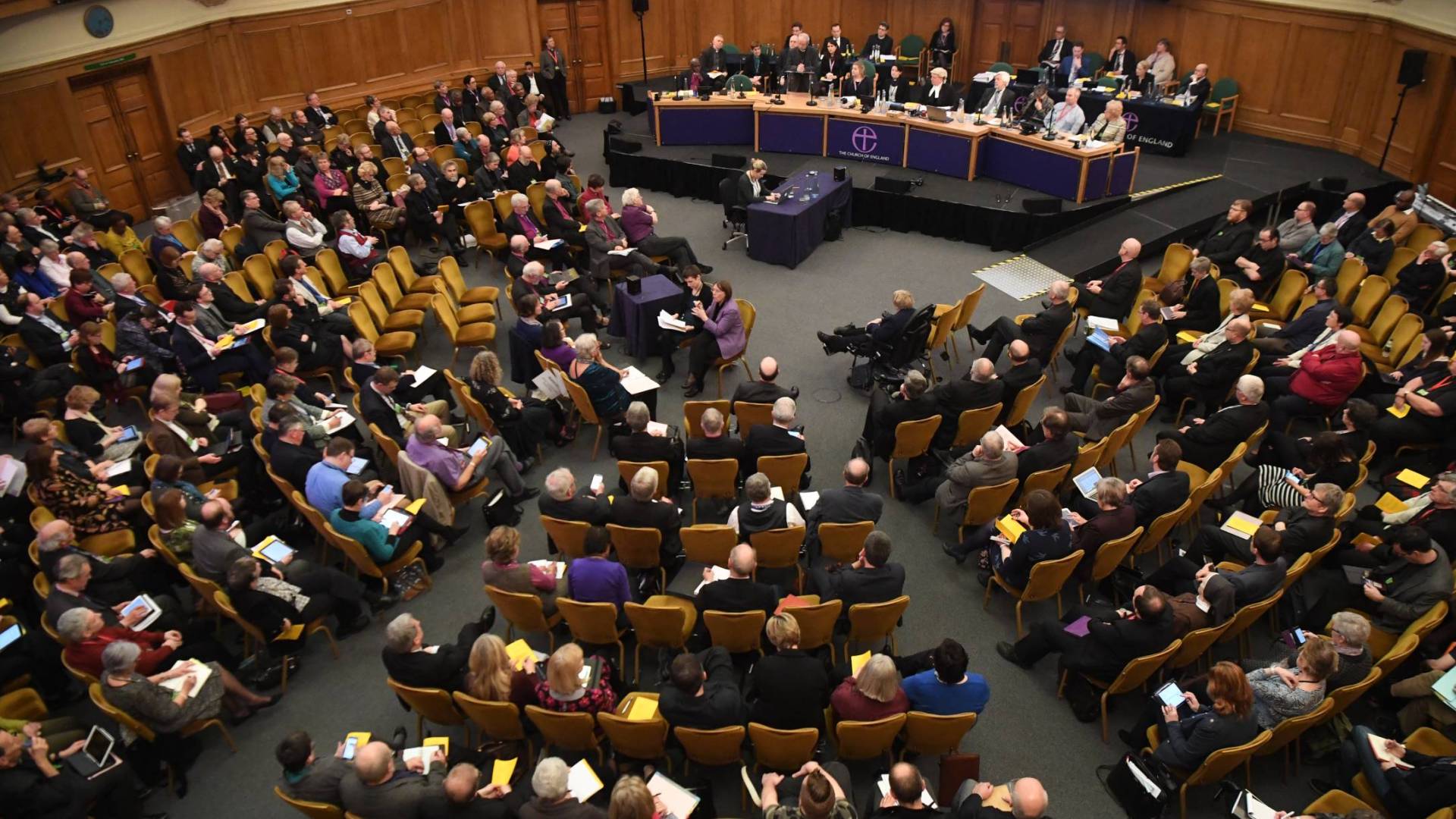
Evangelicals Fear LGBT Blessings Proposal Would Split the Church of England

Tensions are high at this week’s General Synod, with leaders on both sides frustrated with the suggested compromise on same-sex marriage.

Christianity Today February 6, 2023
Victoria Jones / PA Images / Getty

This coming week promises to be one of the most historic—and controversial—in the life of the Church of England, as its governing body, General Synod, heads toward a resolution of a long debate over blessings of same-sex couples.

After years of wrangling over how the church should deal with homosexuality, its bishops announced in mid-January that they would not agree to same-sex marriage but were prepared to bless civil unions. They followed with an apology for the way that LGBTQI+ people were treated by the Church of England.

Beginning Monday, the three voting houses of bishops, clergy, and laity will discuss and vote on the proposals in an all-church body known as Synod.

The deepest split on the issue has been between evangelicals vehemently against moving away from what they call the biblical concept of marriage as being between a man and a woman and those campaigning for full equality, who are frustrated by the bishops’ willingness to recognize their mistreatment of LGBT members while being unwilling to offer them marriage.

Also frustrated are members of the House of Commons advocating for the established church to endorse marriage for same-sex couples, which has been legal in England and Scotland since 2014. (Northern Ireland followed in 2020.) Last week 14 MPs met with Archbishop of Canterbury Justin Welby to express dismay at what they see as the church’s lack of equality.

The debate has grown so tense as Monday’s meetings begin that facilitators have been hired to help navigate the discussions.

The current proposal for blessing new civil unions and praying for those already in them comes after a six-year discussion project within the church, called Living in Love and Faith. The Archbishop of York, Stephen Cottrell—the English church’s second-highest ranking prelate—said that the bishops had opted for a pastoral rather than a legislative way forward: changing the church’s canon law on marriage would take years, he pointed out.

“I hope that these prayers of love and faith can provide a way for us all to celebrate and affirm same-sex relationships,” he said.

Welby, the primate of the Church of England and the ceremonial head of the worldwide Anglican Communion, acknowledged that the proposals were a compromise. “I am under no illusions that what we are proposing today will appear to go too far for some and not nearly far enough for others,” he said in a January 18 statement.

The bishops also urged congregations to welcome same-sex couples unreservedly in their churches, advising that inclusion is founded “in Scripture, in reason, in tradition, in theology and the Christian faith as the Church of England has received it.”

Though the bishops’ middle course of blessing unions avoids the legislative wrangling of changing church doctrine, they are keen to win Synod support for the proposals, which can be bestowed with a simple vote. Heading into the week, the count looks tight. According to the Rev. Neil Patterson, chair of the General Synod gender and sexuality group, reformers will begin the week with 167 yes votes out of a total of 467, based on subscribers to the group’s pro-reform email list.

The challenge will be convincing enough pro-LGBTQ members that the proposal goes far enough.

“We would have liked rather more than the limited way that the prayers have been framed,” said Patterson. “But this is a step forward worth supporting. My philosophy is that we have to have a gradualist approach if we are to eventually accept same-sex marriage. If we have celebratory services at this stage we can get there.”

Evangelicals, for this reason, refuse to go even as far as blessings. The Church of England Evangelical Council has warned that the proposals will lead to what it calls “broken fellowship” and “a greater tearing of the fabric of the worldwide Anglican Communion” while also “compromising with prevailing culture.”

Earlier this week the CEEC’s director of strategy and operations, Canon John Dunnett, called the proposals a “lose-lose situation,” explaining, “The liberals don’t get what they want, and we have been dragged into a place that we can’t accept.”

General Synod member Jayne Ozanne, a long-standing campaigner for marriage for all, said she could not accept the bishops’ plans as a halfway house and will offer an amendment calling for debate of same-sex unions in the near future, but others who support equality are willing to accept the blessings for now. Dr. Charlie Bell, a psychiatrist, Anglican priest and author of the recently published book Queer Holiness, urged members of Synod to accept the bishops’ proposals.

“For me this is a clear stepping stone to equal marriage. Is it enough? Absolutely not,” Bell told Religion News Service.

Beyond the Church of England’s decision looms a broader fight with other churches in the Anglican Communion. Bell wants the church hierarchy, especially Welby, to be more courageous in taking on conservative Anglicans who are not only opposed to same-sex marriage but condemn people for being gay.

The 14 MPs who met with Welby for private talks indicated that the issue raised the question of whether a church that rejected the legal status of married people in England could continue to be the established faith. Welby recently said he would rather accept disestablishment than to split the church itself.

Ian Paul, a theologian and vicar who is opposed to marriage reform, said, “The idea that the government should tell a Christian church what its doctrine should be is unprecedented.

“The Church of England is the established church but it has been self-governing since 1919. An intervention like this would be implausible, provoking a constitutional crisis,” he said.

News

Report: 500 Ukrainian Churches and Religious Sites Damaged by Russian Military

One out of three destroyed or looted buildings tallied by Institute for Religious Freedom belong to evangelicals, accused of being “American spies.”

A fallen dome lies near the Church of the Holy Mother of God (‘Joy of All Who Sorrow’), destroyed by a Russian aerial bomb last spring, on January 18, 2023 in Bohorodychne, Ukraine.

A fallen dome lies near the Church of the Holy Mother of God (‘Joy of All Who Sorrow’), destroyed by a Russian aerial bomb last spring, on January 18, 2023 in Bohorodychne, Ukraine.

Christianity Today February 4, 2023
Serhii Mykhalchuk / Global Images Ukraine / Getty Images

The Russian military has disproportionately attacked evangelical Christians and “destroyed, damaged, or looted” at least 494 religious buildings, theological institutions, and sacred sites in Ukraine since invading the neighboring nation almost a year ago, according to the Kyiv-based Institute for Religious Freedom (IRF).

The independent research institute presented its latest report this week during the third international religious freedom summit in Washington.

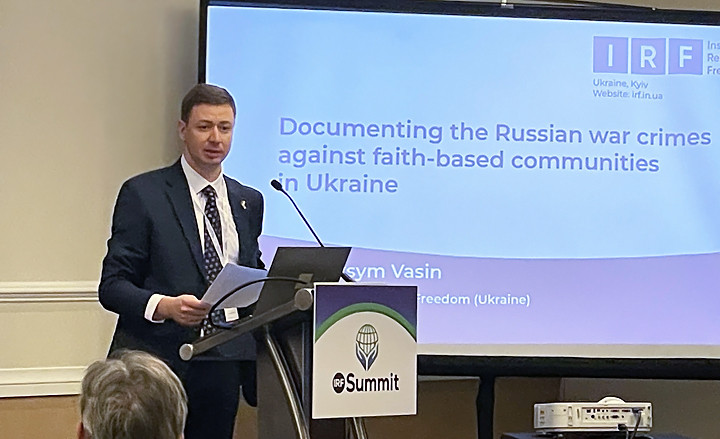
The IRF aims to catalog evidence of Russian war crimes against Ukrainian religious communities. The destruction of religious sites is often intentional and happening in tandem with attacks on civilian believers and pastors, said executive director Maksym Vasin.

Russian soldiers have repeatedly threatened to destroy evangelical Christians in Ukraine, calling them “American spies,” “sectarians,” and “enemies of the Russian Orthodox people,” said Valentyn Siniy, rector of the Kherson-based Tavriski Christian Institute—one of scores of damaged sites belonging to evangelical groups.

Russian forces seized the seminary’s building as a headquarters, looted it, and then left it destroyed, he said.

“One Russian officer told an employee of our institute that ‘evangelical believers like you should be completely destroyed … a simple shooting will be too easy for you. You need to be buried alive,’” said Siniy, according to the IRF report. In a translated video played during the panel, he elaborated, “During a telephone conversation, one of our employees was told, ‘We will bury [Baptist] sectarians like you.’”

The IRF report found that “the scale of destruction of evangelical church prayer houses is immense.” It tallied at least 170 damaged evangelical sites—including 75 Pentecostal churches, 49 Baptist churches, 24 Seventh-day Adventist churches, and 22 “other” evangelical churches—comprising a full third of the total, even though evangelicals comprise less than 5 percent of Ukraine’s population.

Among Orthodox Christians, who comprise about 80 percent, at least 143 damaged buildings belong to the Ukrainian Orthodox Church (UOC), long affiliated with the Moscow Patriarchate of the Russian Orthodox Church (ROC), while 34 belong to the newer and smaller independent Orthodox Church of Ukraine (OCU). (The UOC’s own tally numbers 300 churches damaged by shelling, including 75 “destroyed.”)

The regions of religious sites damaged by Russian military shelling or looting, according to the latest report by the Kyiv-based Institute for Religious Freedom.

The IRF also tallied damage at 94 Jehovah’s Witness, 29 Catholic, 12 Jewish, 8 Muslim, and 4 Mormon religious sites. The institute expects the pace of destruction to soon increase in eastern and southern Ukraine amid ongoing hostilities.

The IRF report documents targeted shelling, missile attacks, vandalism, and looting of religious buildings as well as the torture and killing of religious leaders and believers of many faiths. In many cases, members of destroyed churches also found that Russian forces burned all of their Ukrainian-language Bibles, books, and tracts.

During his speech, Vasin stated that Russian authorities often target clergy and ordinary believers for speaking Ukrainian, exhibiting Ukrainian identity, or belonging to a different denomination than the Moscow Patriarchate. He hopes that the evidence his institute has collected will encourage international bodies such as the International Criminal Court to investigate and charge Russian authorities not just with the war crime of attacking religious sites but also with crimes against humanity and genocide.

“In their entirety, Russian war crimes committed in Ukraine may indicate the existence of a special genocidal intent aimed at destroying the Ukrainian people, which is a distinct crime under international humanitarian law,” Vasin said.

The denomination of religious sites damaged by Russian military shelling or looting, according to the latest report by the Kyiv-based Institute for Religious Freedom.

The IRF report concludes that examples of mass destruction in Bucha, Irpin, Mariupol, and Kharkiv show that Russia would rather eliminate whole cities and destroy Ukraine’s historical and spiritual heritage than accept the right of the Ukrainian people to self-determination and sovereignty. The report recommends that the US and other nations create an international body to independently investigate war crimes committed in Ukraine, as well as demand access to Russian-occupied Ukrainian territories, including Crimea in order to monitor human rights and religious freedom there.

Pastor Dmitry Bodyu of Word of Life Church in Melitopol, in the southeastern Zaporizhzhia region occupied by Russia since March 2022, recounted for summit attendees how he survived Russian captivity. He said the Russian military seized his church building, imprisoned him, and told him he would be killed. The IRF report noted that Bodyu escaped from prison yet local evangelicals continue to face deadly threats. In addition, two Ukrainian Greek Catholic priests have been imprisoned for three months in Melitopol and routinely tortured, he said.

Russian forces have also abducted Ukrainian pastors and tried to enlist them as Russian spies and propagandists, according to the IRF report. From February 24 to July 15, 2022, the institute recorded 20 cases of illegal imprisonment of Ukrainian religious leaders, accompanied by attempted rape, mock executions, deprivation of water, food, and access to a toilet, and threats of violence against family members.

At the end of last year, Ukraine stepped up efforts to retake Melitopol, a vital Russian link to Crimea. The attempt to expel Russian forces from southern Ukraine is expected to be the next major phase of the war and hinges largely on retaking the southeastern city with a pre-war population of 150,000 residents.

Maksym Vasin, executive director of the Kyiv-based Institute for Religious Freedom, speaks at the 2023 IRF Summit in Washington DC.

At a summit side event focused on Ukraine, panelists including Vasin, Siniy, Igor Bandura, first vice president of the Baptist Union, and Andriy Dudchenko, OCU archpriest and lecturer at Kyiv Orthodox Theological Academy, urged the continuation of military support to Ukraine. Wherever Russia controls Ukrainian territory, all religious organizations come under the control of counterparts loyal to Moscow or they are disbanded or destroyed, panelists said.

The Ukrainian government has moved to restrict the activities of Orthodox churches affiliated with the Moscow Patriarchate due to the ROC’s support for the Russian invasion and collaboration with the Russian government, said Lauren Homer, president of Law & Liberty International and moderator of the panel.

In December, Ukraine’s President Volodymyr Zelensky endorsed a draft law calling for members of parliament to “make it impossible for religious organizations affiliated with centers of influence in the Russian Federation to operate in Ukraine.” If passed, the law could halt the activities of the UOC.

The UOC took steps to distance itself from the Moscow Patriarchate in May, including calling for holy myrrh produced in Ukraine to replace sanctification oil from Moscow in services. Yet this week, Ukrainian officials concluded that the UOC is not autonomous enough (having failed to pursue autocephaly like the OCU) to avoid sanctions.

Zelensky’s draft law followed raids by the Ukrainian security service on 350 UOC buildings including the 11th-century Kyiv-Pechersk Lavra, a UNESCO site known as the Monastery of the Caves that both Russia and Ukraine claim as their spiritual heritage.

Russia’s deputy chairman of the security council and advisor to President Vladimir Putin, Dmitry Medvedev, reacted to Zelensky’s proposal by calling Ukrainian authorities “enemies of Christ and the Orthodox faith” in a statement posted on Telegram.

Meanwhile, Ukrainian evangelicals hope for peace and religious freedom for minorities as promised in Ukraine’s constitution.

“People are devastated there [in Melitopol],” said Bodyu in recorded testimony from Poland, where he has relocated with his family. “We are waiting for the Ukrainian army to take those territories back so we can have our church buildings and our ministry back, and we are praying about this.”

Editor’s note: CT now offers select articles translated into Ukrainian and Russian.

You can also now follow CT on Telegram: @ctmagazine (also available in Chinese and Russian).

News

Let My People Come and Go, Karabakh Christians Tell Azerbaijan

As blockade begets an emerging humanitarian crisis, Artsakh’s Armenians receive groundswell of support.

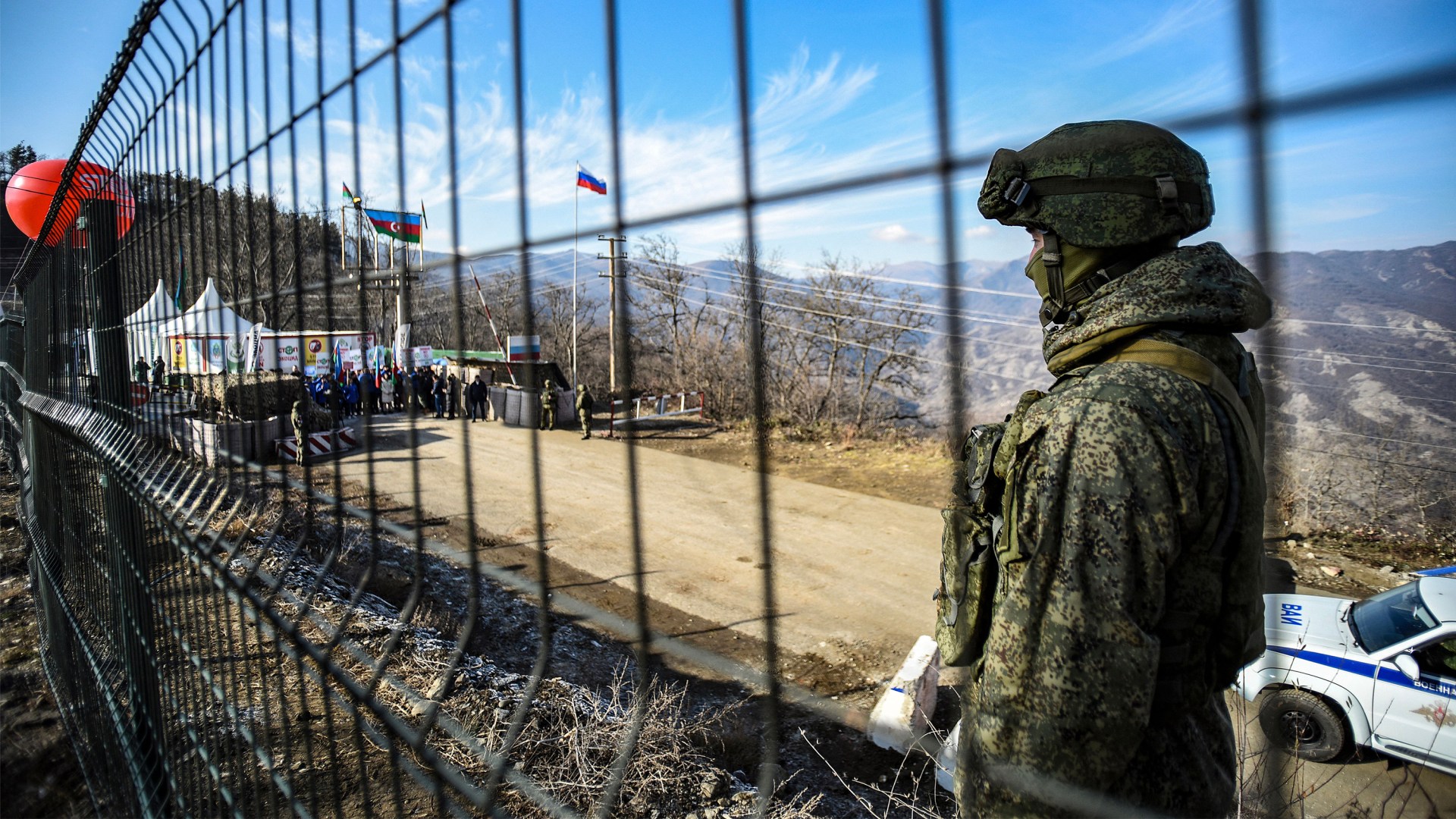
A Russian peacekeeper guards the Lachin corridor as Azerbaijani environmental activists protest against what they claim the illegal mining.

A Russian peacekeeper guards the Lachin corridor as Azerbaijani environmental activists protest against what they claim the illegal mining.

Christianity Today February 3, 2023
Tofik Babayeb / Getty

Armenian Christians have been calling for help. As their ethnic kin in the Caucasus enclave of Nagorno-Karabakh approach two full months under a near-complete blockade imposed by alleged eco-activists from Azerbaijan, the voices have amplified.

“Everyone knows this is the Aliyev regime,” stated Biayna Sukhudyan, a pediatric neurologist trapped inside the Delaware-sized mountainous region, which Armenians call Artsakh. “There is no time to wait and allow the next genocide, because this is genocide.”

The doctor referred to Azerbaijani president Ilham Aliyev, and several investigations have linked the protesters to his government. When the blockade began on December 12, official statements attributed the long-haul demonstration to illegal gold and copper mining on their still-occupied but internationally recognized sovereign territory.

In 2020, Azerbaijan launched a 44-day war to retake a region under three decades of de facto control by ethnic Armenians. Following the dissolution of the Soviet Union, Artsakh declared itself an independent state, and with Armenian military assistance was able to hold Nagorno-Karabakh and additional Azeri territories—pending peace negotiations.

A vastly improved Azerbaijani force, aided by drone technology from Turkey, recaptured three-quarters of the land through bloody combat. Russia mediated a ceasefire, and its peacekeepers guard the Lachin corridor—the one road connecting over 100,000 beleaguered Artsakh residents with Armenia and delivering the 400 tons of daily food and medicine that supply their needs.

Since the end of the war, Sukhudyan has traveled every two months to Nagorno-Karabakh, which lacked specialist doctors. This time, amid acute shortages in the market, she was compelled to stay.

Others, including children, are prevented from returning.

“I came to Yerevan for eye surgery,” stated 13-year-old Maral Apelian, who lives in Artsakh, last month. “All I want is to go back to my family at home.

“Let my people go,” she shouted, recalling Moses. “Let my people go!”

The cry was taken up immediately by Armenian hierarchs.

“Artsakh Armenians [are] in front of a humanitarian disaster,” stated Catholicos Karekin II, supreme patriarch of the Armenian Apostolic church, on day three of the blockade. “Such provocative actions are aimed at ethnic cleansing.”

One day later, his ecclesial colleague in Lebanon invoked the crucial label.

“We are witnessing deliberate and concrete steps toward the ethnic cleansing and genocide of the Armenian population of Artsakh,” stated Catholicos Aram I, whose Holy See of Cilicia represents survivors in the Levant who fled the original Armenian Genocide in Turkey. “The need for immediate humanitarian action is critical.”

Karekin also stated he was reaching out to ecumenical colleagues.

Pope Francis led a prayer for Nagorno-Karabakh on December 18. A consortium of advocacy organizations issued a genocide warning the next day, arguing that all 14 of the United Nations risk factors were present.

Mainline leaders responded next. Without repeating the severe term of warning, a joint statement by the World Council of Churches and the Conference of European Churches demonstrated their active sympathy.

“This follows a clear pattern of behavior by Azerbaijan that contradicts any claims of goodwill,” they wrote on December 20. “In these circumstances, Armenian fears of renewed genocide against them cannot be discounted.”

A day later, the National Council of Churches framed it in religious terms.

“In a season where we celebrate the birth of Jesus in a cold stable,” it stated,” it is particularly horrific that civilians are being cut off in the middle of winter.”

One month later, many are increasingly sounding the alarm.

On January 13, Barnabas Aid put out a call to help, lamenting the issue was “rarely reported by the international media.” And on January 17, Christian Solidarity International (CSI) joined the UK’s Baroness Cox in penning a letter to President Joe Biden.

“You are the first American president to recognize the Armenian Genocide,” they stated. “We urge you not to allow another Armenian Genocide to occur on your watch.”

The missive also noted the cultural and religious heritage at stake. Churches and monasteries dating back hundreds of years populate the region, as Armenia in 301 A.D. was the first state to adopt Christianity as its official religion. Azerbaijan, however, states that many of these buildings are not Armenian at all, belonging to a related but ethnically separate Caucasian Albanian people.

Scholars reject this claim, while reports identify Azerbaijan’s efforts to destroy or alter this heritage.

One week later, the Philos Project also wrote Biden in more political terms.

“Your administration promised to put human rights at the center of its foreign policy,” it stated. “We urge you to make good on that promise, and that you avert a second Armenian genocide by taking decisive action now.”

That same day, on January 25, Philos joined CSI, International Christian Concern (ICC), In Defense of Christians, and 10 other organizations to announce the Save Karabakh Coalition (SKC). Two days later, they hosted a press conference and proceeded to demonstrate in front of the Azerbaijani embassy in Washington.

“While the world remains mainly silent,” stated Justin Murff, executive director of the Anglican Office for Government and International Affairs, “the Azerbaijani forces are aggressively trying to expel the historic Christian community from their centuries-old homeland.”

Political figures also made a bipartisan appearance, led by Brad Sherman, a Democrat from California.

“Azerbaijan [is attempting] to force Artsakh’s ethnic Armenian population out of their homes by making life … impossible,” he stated. “The tactic is blockade. The effect is civilian deprivation. The object is ethnic cleansing.”

Sam Brownback, the former US ambassador-at-large for international religious freedom, lamented his earlier efforts as a Kansas senator to repeal section 907 of the 1992 Freedom Support Act, signaling Azerbaijan as the only post-Soviet state barred from receiving direct American aid.

Many participants of last week’s press conference called for a humanitarian airlift.

“I simply can’t imagine,” stated Jeff King, ICC’s executive director, “that they will dare to shoot down the American planes.”

Azerbaijan has consistently called these accusations “baseless.” The day the SKC was announced, Aliyev told US Secretary of State Antony Blinken that more than 120 Red Cross vehicles had used the road since the alleged blockade began. Video has shown Russian peacekeepers distributing aid at a maternity clinic, while emergency cases are being facilitated.

One such case was of Gayane Beglarian, who coordinated with the Red Cross to get her 5-year-old daughter from Artsakh to Armenia to Germany, for cancer treatment. But she belied the Azerbaijani rhetoric in relating that local vegetable markets are closed and food is being rationed.

“The first few days we didn’t feel it, but it is getting worse and worse every day,” she stated. “We want to go back home … but we will see if [the road reopens].”

In a recent op-ed, the assistant to the first vice president of Azerbaijan recounted Armenian atrocities during its occupation of Nagorno-Karabakh, all the while painting themselves as the victim. This campaign is designed to scuttle ongoing peace negotiations, as he accuses Armenia of doing the past three decades.

“Armenia played for time, just as it is doing now,” stated Elchin Amirbayov. “Talking about peace, preparing for war, and spreading misinformation.”

His comments infer that it is indeed Azerbaijan that is imposing the blockade, as it permits the Red Cross vehicles to enter. But he also called on Armenia to stop its illegal mining, as well as use of the road to import weapons and land mines.

Other analysis has accused Russian meddling of causing the crisis, with Artsakh leadership in close collaboration. Armenia’s prime minister, frustrated by the failure of peacekeepers to intervene, called putative ally Russia a source of “security threats” and canceled scheduled joint military drills in protest.

Russia responded by calling Armenia to return to peace negotiations. Aliyev warned 2023 will be the last year Azerbaijan entertains them. The two leaders met last year in Prague, Moscow, and Washington, following an unusual dual-track negotiating process alternating between Russian and Western sponsorship.

At one, for the first time Armenia agreed to seek a solution based on a 1991 UN declaration recognizing each other’s territorial integrity—easily interpreted as accepting Azerbaijani sovereignty over Nagorno-Karabakh. An announcement was made expecting a final peace deal by the end of 2022.

It didn’t happen. And a Gallup poll last month found that ceding the enclave would be deeply unpopular back home, with 97 percent of Armenians finding it “unacceptable.”

An Armenian Missionary Association of America (AMAA) appeal illustrated the sentiment.

“There are only vain calls to live together with the Turk,” stated Viktor Karapetyan, the AMAA representative in Nagorno-Karabakh, of the Turkic Azeris. “No, my friends, no, because they are them, and we are Armenians, Artsakh Armenians.”

Despite the difficulties of the blockade, he said AMAA educational, social, and development programs have continued uninterrupted, relying on local resources.

Rene Leonian, president of the Armenian Evangelical Union of Eurasia, signed the December 19 genocide warning on behalf of his organization of churches. He spoke with Karapetyan and relayed a similar message that the people of Artsakh remain strong.

“They are aware of the danger, but have decided to stay because it is their ancestral land,” Leonian told CT. “Even if they lost some territory, they feel they can take it back, however long the process.”

He prays for peace every day, and good relations with Turkey and Azerbaijan. But he also put in context the remarks of his Artsakh colleague.

“If Azerbaijan is sincere, perhaps the peace process could give positive results,” he said. “But how can we believe in the words of these leaders?”

Aliyev has consistently stated that Armenian residents of Nagorno-Karabakh will be treated as citizens within a multicultural nation. But he has also threatened taking sovereign Armenian territory by force. And in the context of the blockade, he indicated it does not exist—in one direction.

“Whoever does not want to become our citizen, the road is not closed, it is open,” Aliyev stated. “They can leave … no-one will hinder them. They can go under the awning of peacekeepers’ trucks, or they can go by bus. The road is open.”

Presumably, this also applies to Sukhudyan, the pediatric neurologist. But knowing that no other specialists are able to replace her in rotation, she will keep dealing with the lack of medicines and overall shortages of food.

She is even at peace being separated from her daughter, who is visiting Armenia on university break from Austria. Just do not make Sukhudyan into a hero for doing so, as she admires the strength of the local people she is serving.

“There are children here in need,” she stated. “I have to stay, and help them.”

Theology

Supernatural Signs Alone Cannot Save

As “The Chosen” reminds us, Jesus performed many miracles—and yet still some failed to believe.

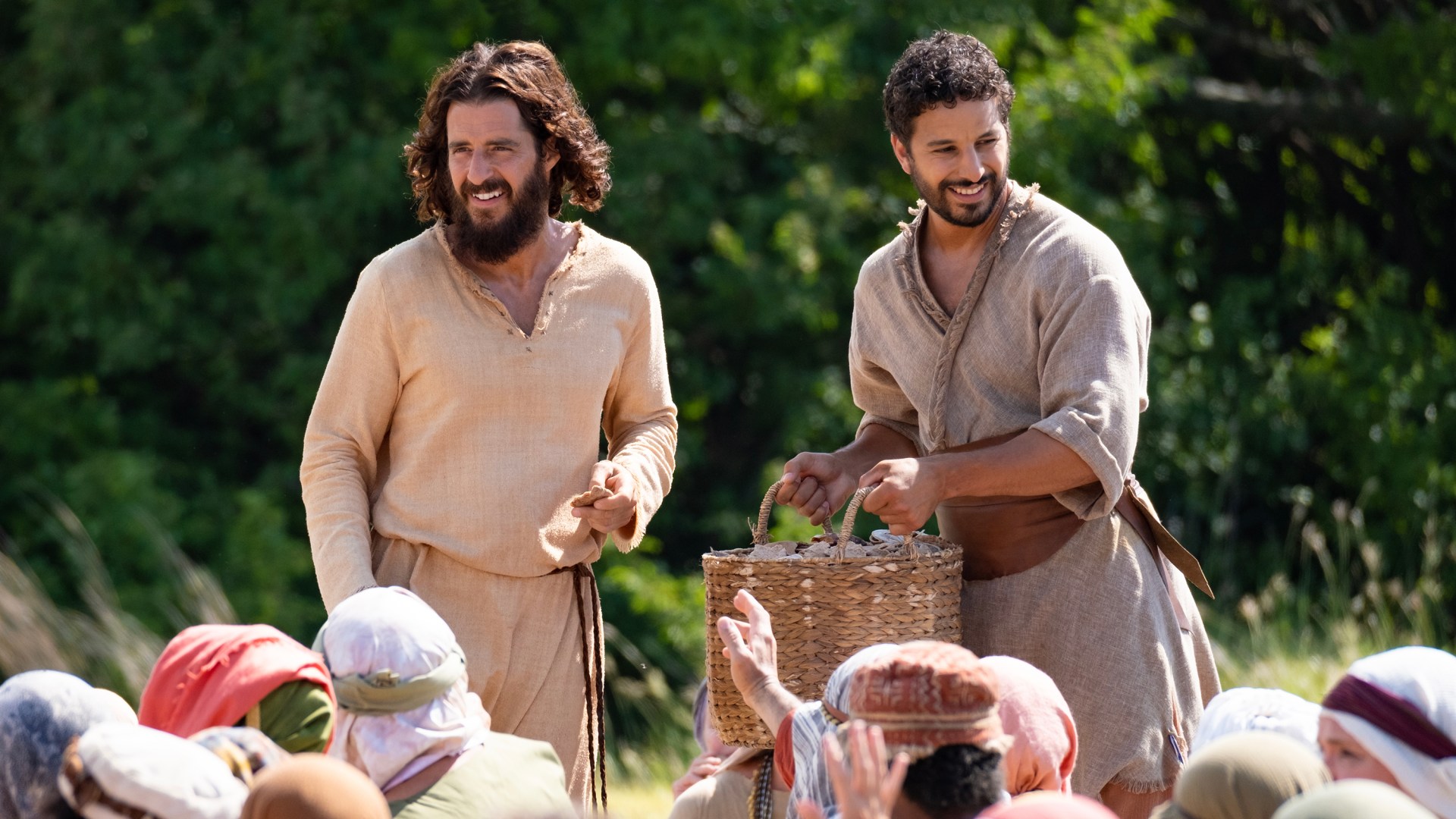
Jesus and Simon the Zealot feed the hungry crowd.

Jesus and Simon the Zealot feed the hungry crowd.

Christianity Today February 3, 2023
Angel Studios

With the third season of The Chosen now airing, many Christians are once again enthralled by the topic of miracles.

In one scene from episode 6, Jesus begins performing miracles in a public square—healing the blind, the mute, and the lame. He is quickly confronted by an angry Pharisee who seems to see his works as malicious tricks rather than divine interventions. This same religious leader almost prevented Jesus from raising Jairus’ daughter from the dead; and despite witnessing the undeniable, he persists in his hatred of Jesus and all Jesus stands for.

My wife, son, and I have been watching the show together, and it’s extraordinary to think about Jesus and his apostles performing signs and wonders for all the world to see. What must it have been like to witness Jesus perform a miracle firsthand? What must it have felt like for the apostles themselves to be granted the same supernatural authority?

What’s even more astonishing is that such wonders did not bring universal adoration. Romans and Pharisees alike watched Christ heal people by the dozens—and instead of believing him to be the Son of God, they chased him from town to town, criticized him, and ultimately crucified him.

Would it be any different today?

Much of American society believes in miracles, theoretically. According to the most recent Gallup surveys, 81 percent of American adults believe in God (though down from 87 percent a few years ago), and of those, 42 percent (including most Christians) believe God hears prayer and intervenes.

Author Lee Strobel (who wrote a seminal book on the topic) found in his surveys that roughly half of American adults believe the miracles of the Bible happened as described and two-thirds believe miracles happen today. And his estimates are conservative compared to prior Pew surveys showing as many as 80 percent of US adults believe in miracles. More impressively, according to Strobel’s work, 38 percent say miracles have happened to them personally.

Anecdotally, many individuals and institutions often act and speak as if divine interventions in daily life are true. The Catholic church methodically and structurally investigates evidence of supernatural activity as a qualification for sainthood.

Pentecostal churches and other charismatic denominations regularly claim to witness healings and other miraculous works of God in their congregations. Even Francis Collins, a distinguished scientist and the former director of the National Institutes of Health in the United States, said he believes in miracles.

Belief in signs and wonders is more commonplace than you might think—and yet there are limits to this belief for most of us.

The average Christian seems to have confidence in certain types of miraculous interventions (healing for loved ones, for example, or the restoration of broken marriages). But we tend to blush if someone implies dramatic and overtly supernatural occurrences—for instance, dreams revealing the future, sight restored, or leprosy healed. We are reluctant to accept these more obvious and undeniable happenings, even though they occur throughout the Bible.

Perhaps part of our hesitation, in the modern age, is that we think miracles like these would leave behind a trail of evidence impossible for anyone to ignore. Many Christians and non-Christians alike ask, quite reasonably, why miracles aren’t going viral online every day—especially in an age of smartphones and social media. If they were genuinely happening, we wonder, wouldn’t the proof be so ubiquitous we’d all be forced to believe?

And yet there is overwhelming evidence for miraculous events today.

Craig Keener, perhaps the foremost authority on miracles in the modern world, has written a two-part book series of more than 1,100 pages documenting historical evidence for miracles, complemented by a new (and more accessible) volume in 2021 called Miracles Today.

What makes Keener’s work unique—alongside his brilliant articulation of the types of miracles that occur, the theological reasons for them, and even how they accord with our modern understanding of science—is the meticulous and extensive ways in which he documents these events. He draws parallels between the eyewitness accounts in the New Testament and how we can record similar accounts today.

These are not fanciful or mystical but recorded in great detail from multiple eyewitnesses, and Keener even claims to have witnessed at least two acts of what he calls “special divine action” himself. He counsels us to have discernment regarding miraculous accounts and cautions us not to approach with skeptical disbelief even when some of them are falsified.

Beyond Keener’s perspective are many other accounts, including cases fully documented in medical journals—like the woman who was restored from her blindness or the man who recovered from a gastrointestinal disorder, both after intercessory prayer. There are also numerous YouTube videos of supposed interventions.

People all over the world have recorded stunning supernatural events through videos and eyewitness testimony. Countless churches have attested to the existence of the unexplainable. Some of these stories have even been amplified by best-selling authors like Lee Strobel and Eric Metaxas.

Yet many people, including Christians, continue to ignore or discount such testimonies. It’s hard to blame us for preferring the comfort of skepticism and disbelief. We live in a “post-truth” world where everything seems worthy of doubt. And in this context, it’s often difficult to know what to believe—perhaps even more so today than it was 2,000 years ago.

I became fascinated by this topic when I began writing my new novel, Miracles. I tried to imagine what would happen if a series of supernatural events impossible to ignore were to happen right before our eyes. And one of my conclusions is that such incidents would inspire at least as much anger as adoration and as much division as unification.

Just as those who witnessed miracles in Jesus’ time disagreed over them, and just as Pharaoh ignored the signs and wonders performed through Moses, we are equally as likely to discount rather than embrace the miraculous work of God—both as a society and as individuals.

In truth, supernatural interventions can point us to God, but they cannot make us trust or embrace him. Miracles can spark in us the idea that there is something beyond the veil of our physical world, but they can’t make us pursue that truth faithfully.

My son, as he’s watched the latest season of The Chosen, has been asking me how anyone could watch Jesus perform signs and wonders and still not believe in him. Perhaps that question—and the truth it reveals about our human nature—is as relevant now as it was in the first century.

Do we really believe in miracles? In your heart of hearts, do you?

John Coleman is a writer in Atlanta, Georgia. His most recent novel, Miracles, explores the topic of miracles in the modern world.

News
Wire Story

‘He Gets Us’ Super Bowl Ads Part of Billion-Dollar Campaign

Hobby Lobby’s David Green and other Christian funders back three-year effort to reintroduce people to Jesus.

He Gets Us

He Gets Us

Christianity Today February 2, 2023
Courtesy images / RNS

The first time she saw an ad for “He Gets Us,” a national campaign devoted to redeeming the brand of Christianity’s savior, Jennifer Quattlebaum had one thought on her mind.

Show me the money.

A self-described “love more” Christian and ordinary mom who works in marketing, Quattlebaum loved the message of the ad, which promoted the idea that Jesus understands contemporary issues from a grassroots perspective. But she wondered who was paying for the ads and what their agenda was.

“I mean, Jesus gets us,” she said. “But what group is behind them?”

For the past 10 months, the “He Gets Us” ads have shown up on billboards, YouTube channels, and television screens—most recently during NFL playoff games—across the country, all spreading the message that Jesus understands the human condition.

The campaign is a project of the Servant Foundation, an Overland Park, Kansas, nonprofit that does business as The Signatry, but the donors backing the campaign have until recently remained anonymous—in early 2022, organizers only told Religion News Service that funding came from “like-minded families who desire to see the Jesus of the Bible represented in today’s culture with the same relevance and impact He had 2000 years ago.”

But in November, David Green, the billionaire co-founder of Hobby Lobby, told talk show host Glenn Beck that his family was helping fund the ads. Green, who was on the program to discuss his new book on leadership, told Beck that his family and other families would be helping fund an effort to spread the word about Jesus.

“You’re going to see it at the Super Bowl—‘He gets Us,’” said Green. “We are wanting to say—we being a lot of people—that he gets us. He understands us. He loves who we hate. I think we have to let the public know and create a movement.”

Jason Vanderground, president of Haven, a branding firm based in Grand Haven, Michigan, that is working on the “He Gets Us” campaign, confirmed that the Greens are one of the major funders, among a variety of donors and families who have gotten behind it.

Donors to the project are all Christians but come from a range of denominational backgrounds, said Vanderground.

Organizers have also signed up 20,000 churches to provide volunteers to follow up with anyone who sees the ads and asks for more information. Those churches are not, however, he said, funding the campaign.

The Super Bowl ads alone will cost about $20 million, according to organizers, who originally described “He Gets Us” as a $100 million effort.

“The goal is to invest about a billion dollars over the next three years,” he said. “And that is just the first phase.”

One of the ads that aired during the NFL playoffs was titled “That Day” and tells the story of an innocent man being executed.

“Jesus rejected resentment on the cross,” the ad says. “He gets us. All of us.”

A billion-dollar, three-year campaign would be on a par with advertising budgets for major brands such as Kroger grocery stores, said Lora Harding, associate professor of marketing at Belmont University in Nashville.

“This is a really remarkable ad spend for a religious organization or just a nonprofit in general,” said Harding, who worked on the “Open hearts, open minds, open doors” campaign for the United Methodist Church.

Religious-themed ads have been relatively rare at the Super Bowl. The Church of Scientology has run ads in the past, and in 2018 Toyota ran an ad with the message “We’re all one team,” featuring a rabbi, a priest, an imam, and a saffron-robed monk headed to a football game, where they sat next to some nuns.

Closer to the “He Gets Us” model was the Christian Broadcasting Network’s $5 million national campaign to promote “The Book,” a repackaged version of The Living Bible translation, with a catchy theme song sung by country legend Glen Campbell.

Harding said that despite the cost, advertising at the Super Bowl makes sense for “He Gets Us.” Organizers want to reach a mass audience that is paying attention. Super Bowl ads have become part of the pageantry of the big game.

“There just aren’t ways to reach an attentive, engaged audience that size anymore,” she said.

She also said that the anonymity of the group behind the ads plays to the group’s advantage. It would be easy for viewers to dismiss an ad coming from a faith-based organization or religious group. The “He Gets Us” ads wait until the end to mention Jesus and don’t point to any specific church or denomination.

“That makes it even more powerful, and hits the message home in a really compelling way,” she said. “I think it does make Jesus more relevant to today’s audiences.”

Some viewers, including some evangelical Christians, are skeptical. Author and activist Jennifer Greenberg supports the idea of trying to reach those outside the faith and wants people to understand that Jesus gets them. But that’s not the whole message of Christianity.

“Yes, Jesus can relate to you,” she said. “But what did Jesus come primarily to do? He came to die for our sins.”

Connecting emotionally with Jesus is great, she added. But that won’t save your soul.

“I can look at Buddha or Sarah McLachlan or Obama and I can find things in common with them,” she said. “But that does not mean they are going to save me.”

Michael Cooper, an author and missiologist, agrees. While Cooper is a fan of the ads, saying they powerfully communicate the human side of Jesus, they leave out his divinity.

“I began to wonder, is this the Jesus I know?” he said.

Cooper and a colleague offer what he called a “constructive critique” of the campaign in an upcoming article for the Journal of the Evangelical Missiological Society. That article calls for clearer messaging about the divine nature of Jesus.

“This wasn’t just a great teacher or preacher who was incarnated,” he said. “This was God himself.”

News
Wire Story

In Kenya, Sign Language Choir Helps Churches Embrace Deaf Culture

Over three decades, the Zion Praise Team has put its faith on display and challenged misconceptions around people with disabilities.

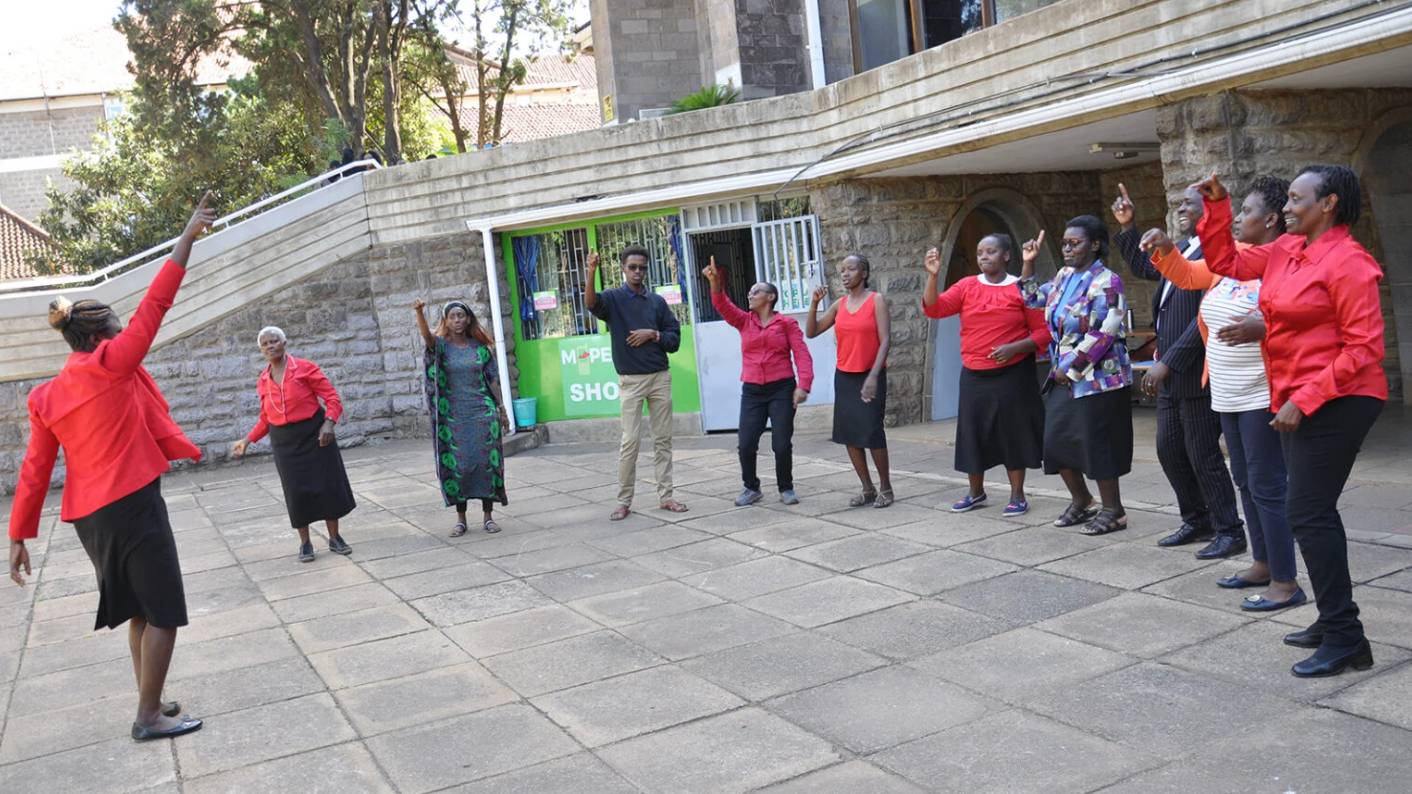
Zion Praise Team

Zion Praise Team

Christianity Today February 2, 2023
Fredrick Nzwili / RNS

On a recent afternoon on the grounds of St. Andrew’s Church, young men and women danced in a semicircle, swinging to the beat of drums. The group’s leader gestured intently as she marched, signing to the dancers, all silent but for a few muted sounds as they rehearsed the hymn “Oh How He Loves Me.”

The group belongs to St. Andrew’s deaf choir, known as the Zion Praise Team. The choir masters hymns and worship songs in American Sign Language, thrilling congregations at worship services in the Presbyterian church and other Christian churches around this East African country.

“The group knows its strength is in the music,” said Judy Kihumba, 32, a hearing disability ministry coordinator at the church. “When practicing on this ground, they find more space to move freely.”

The deaf singers are freed spiritually as well. “When they sing, it’s a soul-edifying activity, its therapy for them and it’s also a way of worship. They feel closer to God through this,” said Kihumba.

Kihumba, who was named to the BBC’s list of 100 top inspiring and influential women in the world last year, is the founder of Talking Hands, Listening Eyes on Postpartum Depression, an organization that helps deaf women navigate motherhood, advocating for their maternal and mental health.

Participation in the choir is also an avenue of religious education for its members. Being deaf, Kihumba explained, “means they don’t interact and understand the Bible at a young age because their family members don’t know sign language.”

It’s also liberating simply having the stage to themselves. “The deaf love singing since it’s the only way they don’t get interruptions. It also comes from the deepest point of their hearts,” she added.

Among the group’s most popular songs, according to choir members, is “Amazing Grace,” which they say shows how God always cares for them.

Priscah Odongo, an IT technician who has been the choir’s leader for the last five years, said her tasks include ensuring that the singers’ signs stay in sync with the chords being played. Odongo joined the choir in 2015, she said, to worship through singing.

“I also wanted to prove to the world that people with hearing impairment have talents and can do things just like the hearing,” said Odongo, 36. “I feel good when leading the choir during Sunday worship services or any other place we are called to.”

The deaf choir’s success is clarifying widely held misconceptions that people with disabilities are a burden to society.

“The ministry of Zion Choir debunks the myth that persons with disabilities are there to receive without giving back to the community,” said Sudan Nderitu, a long-serving hearing member of the choir, who works with people with disabilities professionally.

She explains that the choir members have a variety of talents and skills—they are electrical technicians, carpentry workers, and IT experts, as well as dressmakers and tailors. “We wear uniforms made by one of us,” said Nderitu, who adds that she advises the deaf members to introduce themselves in full. “I tell them to say who they are, what they can do and what skills they possess.”

The choir was started in 1992 by Kum Hee Moon, a Korean missionary who had founded Young Nak Church of the Deaf in Nairobi. Five years later, that congregation moved to St. Andrew’s, and the choir was integrated into St. Andrew’s music ministry, participating in parish events such as the Music Week.

Lucy Kahaki has been singing with the choir since its founding, when she was barely in her 40s. Now 71, Kahaki finds peace singing with people half her age. Age doesn’t count, she said, as her energy when singing matches that of youthful members.

“Singing is my passion. I sing to praise God. I joined the choir so that other young deaf persons can get the courage to sing for the Lord,” she told Religion News Service.

The Rev. George Obonyo, a choir member and special minister for the deaf in the Nairobi Presbytery of the Presbyterian Church of East Africa, said the choir’s example has helped convince Kenyan churches to embrace deaf culture.

“I am grateful to churches in Kenya … for practicing inclusion,” he said. “I know this will do more in future regarding the inclusion.”

Theology

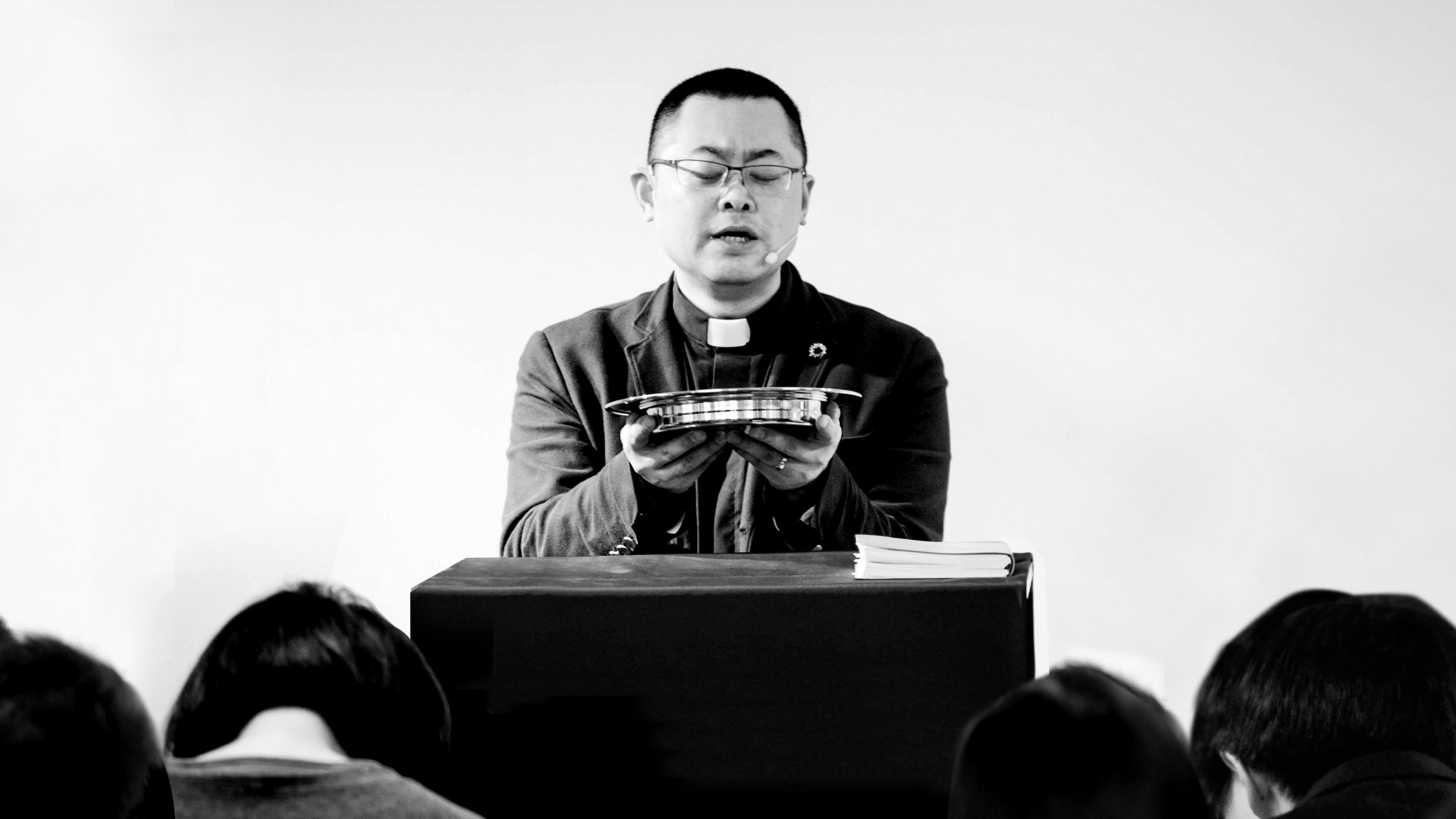
Wang Yi: The Faithfully Disobedient Chinese Pastor

A new book records the reflections on church and state in China by the imprisoned pastor and other house church leaders.

Christianity Today February 2, 2023
Courtesy of Timothy Lee / Edits by CT

This article is the foreword of

Faithful Disobedience

by Wang Yi, editors Hannah Nation and J. D. Tseng, ©2022, winner of 2022 IVP Reader’s Choice Award. Excerpt used by permission of IVP Academic.

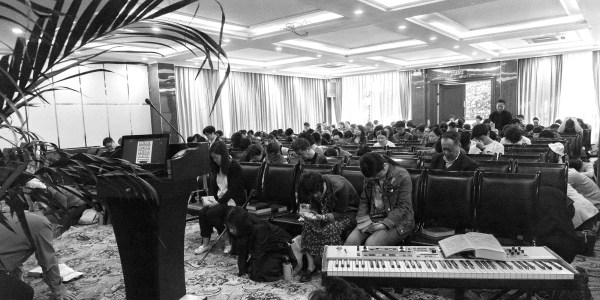
When I first met Wang Yi, he ushered me into a conference room overlooking a landscape of old and slightly run-down office buildings in central Chengdu, western China’s most important metropolis. It was 2011, and his church was then called Early Rain Reformed Church, later taking the name Early Rain Covenant Church. Like many churches that weren’t registered with the government, it was housed in an office building. This one was fairly old, with one functioning elevator that groaned its way up to the 19th floor. I had taken one look and walked up.

Faithful Disobedience: Writings on Church and State from a Chinese House Church Movement

Faithful Disobedience: Writings on Church and State from a Chinese House Church Movement

IVP Academic

288 pages

$17.43

I explained that I was working on a book about the revival of religion in China. I had been to many rural churches in traditional Christian heartlands of China, such as the province of Henan, but felt that big, urban churches like his were becoming more important. Would he let me sit in on his services and talk to congregants?

Pastor Wang immediately agreed on two conditions: First, no photography in the church; and, second, if I wanted to quote anyone, I was welcome to do so but needed their permission. His reasoning was simple: Early Rain had nothing to hide. It was a public institution. All were welcome, and no one should be restricted in what they wrote. So if I wanted to visit his church that was my right. And if I wanted to write something, that was also my right as a free person. His restrictions were simply means to respect the privacy of those who attended, and to keep the service dignified.

At that point I had worked in China off and on since the mid-1980s. I knew that for me to visit his church regularly carried inherent risks. I asked him about the building security guards downstairs and whether they would report to the authorities that a foreigner was regularly entering the building and trudging up to the 19th floor.

“Yes,” he said. “But foreigners aren’t banned from attending church. We are an open organization. We have nothing to hide. Come and worship with us.”

We talked a bit further and I realized that compared to the many challenges that Early Rain faced, I was probably insignificant. And so I agreed to his conditions and began attending the church regularly, spending hundreds of hours in services, seminaries, prayer groups, and conversations with congregants, almost all of whom were happy to share their experiences.

That began what for me was an unusual religious experience. I was raised a Christian, in Canada, as an Anglican (Episcopal in the United States) and felt pretty comfortable going to church. But to me the beauty of the service largely resided in the music and the Shakespearean language of the King James Bible or the Book of Common Prayer. Most priests I had encountered didn’t really make convincing sermons, and church seemed little more than a worthy Sunday-morning ceremony that contained important lessons about living a good life.

Early Rain Church worshiped on the 19th floor of an office building Courtesy of Timothy Lee
Early Rain Church worshiped on the 19th floor of an office building

Sitting in on Wang Yi’s services was something else. His sermons were not homilies he squeezed into the service quickly so everyone could get to the parish hall for coffee and donuts. They were beautifully crafted, logically organized, educational experiences in Christianity. Mostly they were long. It was nothing for him to talk for half an hour and most sermons went on for 45 minutes. And yet they didn’t seem long. He didn’t present Christianity as an obligation or chore but an essential part of making sense of the society around us. At the time he was 38 years old and had only converted six years earlier, in 2005, and so he was on a journey too—learning the Bible and teaching it to us.

This isn’t a paean to Wang Yi. Like many leaders of unregistered churches in China, he was an autodidact, who had memorized the Bible but saw things in, at times, dogmatic ways. His views on women (they could not serve as presbyters, let alone be pastors) were also not mine. And he had knockdown-dragout battles with people with whom he disagreed, which didn’t seem like the most Christian approach to problem-solving. I think other congregants had similar concerns—some would roll their eyes at his battles or joke about his fiery temperament.

But for them, and me, attending Wang Yi’s church was a profound experience. Part of it was that people felt that they were participating in something completely clear and open—something they could participate in and help manage. This is a radical idea in China, where someone else, usually the Chinese Communist Party, is running one’s life.

Part of it also was his personal charisma, speaking skills, and sharp mind. His sermons were electrifying, not in the sense of rhetorical histrionics but because of the clear, insightful way he explained the Bible, so that it made sense to the daily life of someone living in China. He discussed real problems and related them back to this religion, which he didn’t see at all as “Western” or “foreign,” but a universal faith that just happened to have been founded in the part of the world that we today call the Middle East.

My book included other faiths practiced by ethnic Chinese or “Han” people in China, and so I also spent time with Buddhists, Daoists, and folk religious practitioners. These were also idealistic people who were trying to bring a moral structure to their followers. This goal remains important to many Chinese, who feel buffeted by the essentially amoral world that the Chinese Communist Party has erected since taking power in 1949. Many of these other religious leaders also had committed followers who found meaning and value in their spiritual messages.

But Wang Yi—and other unregistered Protestant churches—connected the most directly with their followers. They offered the most help and advice, and were best-organized, often setting up schools, seminaries, and youth groups. This helps explain why Protestant Christianity was widely regarded as China’s fastest-growing religion until a crackdown began in the 2010s.

Wang Yi was clear-eyed about these risks. He knew that he could be arrested at any time, but he refused to be drawn into the culture of secrecy that the Chinese Communist Party cultivated. This is why he rejected the term underground church. His was simply a church and had the same right to exist as the official churches. It was unregistered because it chose to be unregistered. I found this logic compelling and in my writing prefer the term unregistered because it is more accurate than “underground” churches, which often are not underground, or “house” churches, which imply small groups of a dozen or so people. Rather, these were churches that leased office space, ran kindergartens, seminaries, and even bookstores. They were what political scientists called “civil society”—groups that exist outside of government control.

Not all faiths around the world face these same problems. Some are fortunate to exist in open societies that allow freedom of religion. Others are state-sanctioned religions that enjoy the blessings, but also the obligations, of state support. But to some degree all people of faith have to decide how to interact with authorities. Wang Yi and the other leaders of China’s unregistered churches thought deeply about this and tried to fashion answers through statements and manifestos, many of which are documented in this book.

These essays can be seen as specific to China but are also reflections of a remarkable explosion of faith that is taking place in many countries. In China, faith was long banned but is now on the upsurge, perplexing authorities. Some faiths have been co-opted, especially Buddhism and China’s indigenous religion, Taoism, which enjoy state support but also tight state control. Others face outright repression, such as Islam, against which the government has engaged in a brutal campaign of control, especially in the western region of Xinjiang. Still others, such as Catholicism, have been part of delicate negotiations over how bishops are ordained. As for Protestants, the government’s aim has been to force all churches into the state-controlled organization. Those that refuse, like Wang Yi’s, face destruction or at least a radical reduction in size.

Many of these battles inside China have global repercussions. China is now the world’s largest Buddhist nation and tries to use it as a form of soft power in other Buddhist countries. Its suppression of Islam has met with international condemnation and caused partial boycotts of prestige events in China, such as the 2022 Winter Olympics. And its negotiations with the Vatican are closely followed by the roughly 1.2 billion Catholics around the world. Meanwhile, the crackdown on Protestantism has attracted widespread attention, in part due to social media.

Inside China, this campaign to control religion has been implemented through new laws. These do not protect religious freedom but curtail it. This reflects a broader point in China about the legal system. Ideally, laws should be above the whims of a ruler—rule of law. But in China and many other countries, the law is a tool of oppression—rule by law. It is this kind of state-controlled legal system that for the past decade has taken aim at China’s unregistered churches and resulted in Wang Yi’s arrest in 2018. Some saw in the crackdown against Wang Yi and his church as something specific, arguing that he was too outspoken. But these criticisms miss the point that the state is nervous about all religions and that all would eventually be targeted, which is what has come to pass.

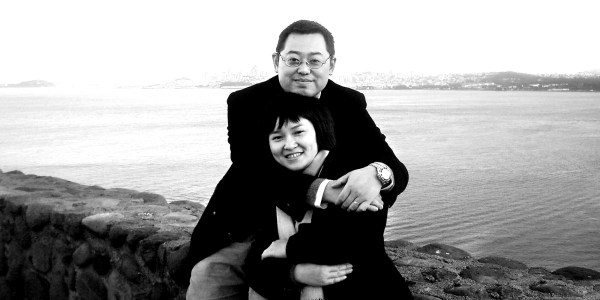
Wang Yi and his wife Jiang RongCourtesy of Timothy Lee
Wang Yi and his wife Jiang Rong

All of these risks were clear to Wang Yi when I met him a decade ago. He often wrote about the potential for arrest and how to behave in the face of an oppressive state. But his conclusion was to follow a course of radical openness. He had his sermons recorded and a library of them made available to anyone who visited: worshipers or police. People at Early Rain didn’t come furtively through the back door but dressed in their Sunday best and wore name tags. They were proud of attending his church and did so openly. This was their church, a small island of self-determination in a sea of state control, led by an energetic idealist.

“There is a risk of being so public,” he told me that morning. “But I feel that the bigger risk is being underground. We won’t have a free attitude if we don’t act free. A basic attitude of being a Christian is to be free. But you can’t act free if you think you’re a criminal. So we try to walk the path of being open.”

Wang Yi walked that path in good faith until it became impassable. Now that he is in jail, I think of something else that he once wrote recounting one of his conversations with his wife, Jiang Rong, about what to do if he is arrested. This is what he said:

I am still a missionary, and you are still a minister’s wife. The gospel was our life yesterday and it will be our life tomorrow. This is because the one who called us is the God of yesterday and the God of tomorrow.

Ian Johnson is a Pulitzer-winning author and journalist and a senior fellow for Chinese studies at the Council on Foreign Relations.

The Bible Condemns Police Brutality

The Scriptures denounce officials who abuse their authority to harm rather than protect the people they serve.

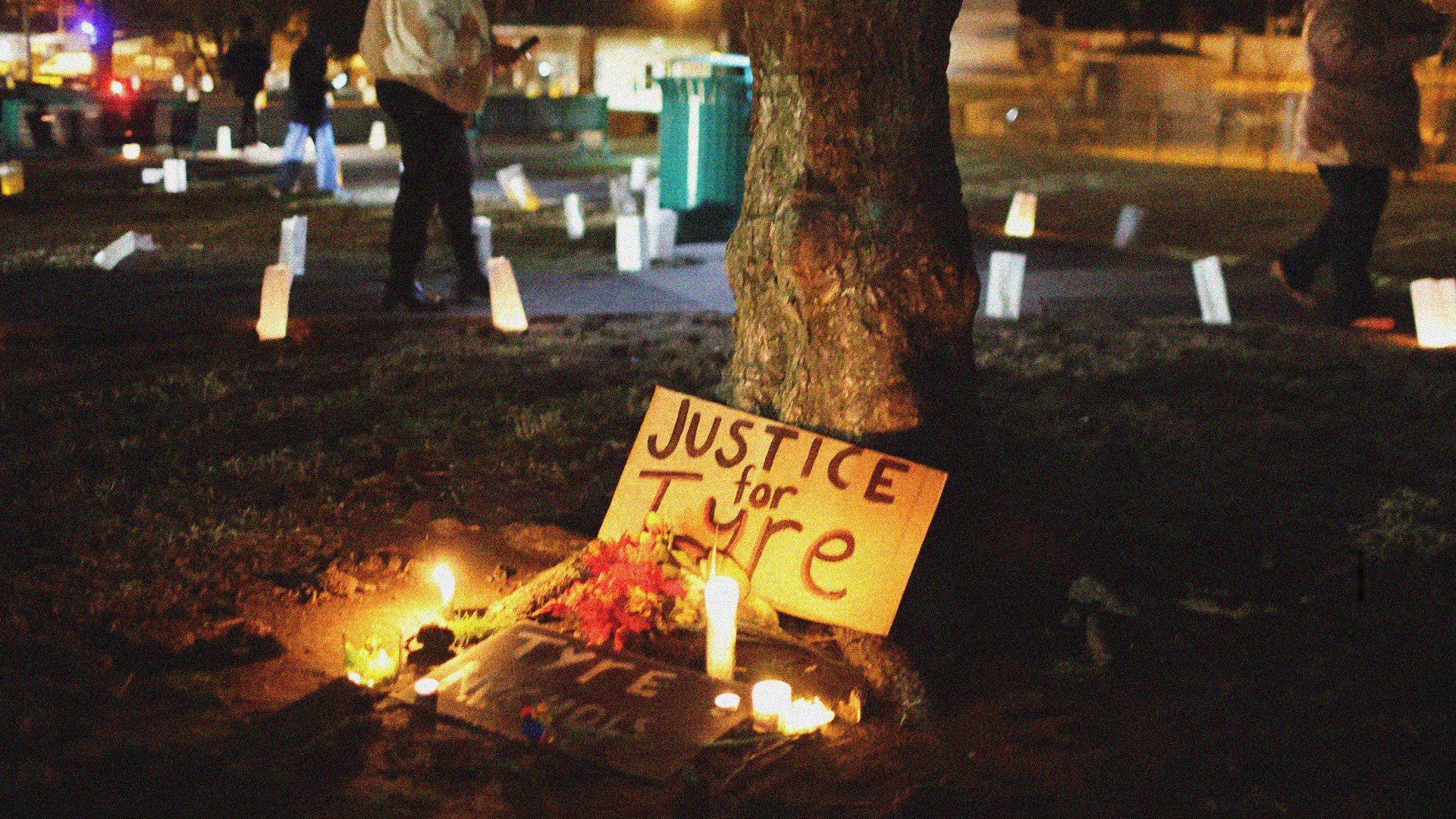
People attend a candlelight vigil in memory of Tyre Nichols in Memphis, Tennessee.

People attend a candlelight vigil in memory of Tyre Nichols in Memphis, Tennessee.

Christianity Today February 2, 2023
Scott Olson / Getty

This piece was adapted from Russell Moore’s newsletter. Subscribe here.

The nation stands shocked, once again, by a video of horrific violence by police officers against a young Black man beaten to death—this time Tyre Nichols of Memphis.

We instinctively flinch from watching this video because most people with a functioning conscience intuitively know it to be evil. At this moment, Christians should acknowledge not only that the Bible condemns this sort of police behavior but also why.

Whenever a violent revelation like this occurs, some are immediately defensive, saying, “Not all police officers are like this; most are good.” And, of course, that is true; but that truth makes such actions even worse.

That’s why, among those I know, police officers are some of the angriest of everybody at this kind of behavior. They see it in the same way I might view preachers using the Bible to “justify” their financial grifting or sexual predation. I realize what they’re doing and, even further, how awful it is. Good police officers see such horrors the same way.

This killing would be a grave moral evil no matter what group of people carried it out. Tyre Nichols was a human being made in the image of God, and to take his life not only robs his family of their loved one but also assaults his Creator. But the fact that this violence was carried out by those entrusted with maintaining justice perverts the situation even more.

Police brutality is wrong not because the idea of policing is wrong. However one interprets Romans 13, we can all agree the apostle Paul acknowledged the legitimate authority of those charged with keeping order and restraining injustice. Paul recognized this in his own life.

However, when he was unjustly imprisoned, Paul refused to go away quietly, as the police asked. Instead, he challenged them to send a message back to the magistrates for whom they worked: “They beat us publicly without a trial, even though we are Roman citizens, and threw us into prison. And now do they want to get rid of us quietly? No! Let them come themselves and escort us out” (Acts 16:37).

When police officers—or anyone else charged with public responsibility—carry out unjust atrocities, they are misusing power. This is not of incidental concern to the Christian life.

When John the Baptist preached by the Jordan, some of those who repented and got baptized were Roman centurions and tax collectors. Tax collectors were reviled by their fellow Israelites, and for good reason. After all, they collaborated with a pagan empire that occupied a throne that belonged to the house of David by the covenant of God.

When we hear the term tax collectors, we often think in contemporary, bureaucratic accounting terms, like the equivalent of Internal Revenue Service agents. But in the first century, tax collectors were feared for their potential to defraud people and do grave harm. After all, they worked for an empire that displayed its power and bloodthirstiness by crucifying people—especially would-be rebels—and posting their bodies along the roadways.

Not only that, but tax collectors and Roman soldiers often used their given authority to satisfy their own appetites. When they were baptized, they asked John the Baptist, “What should we do?” (Luke 3:12, 14). His response to the repentant taxmen instructed, “Don’t collect any more than you are required to” (v. 13).

And to the soldiers, John said, “Don’t extort money and don’t accuse people falsely—be content with your pay” (v. 14). For both groups, the call to repentance was a call to stop using their authority—and with it the implicit threat of violence—to do wrong.

Jesus did the same when he encountered Zacchaeus, another tax collector who repented and gave back four times the money he’d taken from those he defrauded (Luke 19:8). Jesus also raged when religious authority was used to do the same thing—accusing the officials of turning the temple of God into a “den of robbers” (Matt. 21:13; Mark 11:17; Luke 19:46).

Part of the old life Paul grieved over and left behind on the road to Damascus was his misuse of authority. “On the authority of the chief priests I put many of the Lord’s people in prison, and when they were put to death, I cast my vote against them,” he said while later on trial for his Christian beliefs. “Many a time I went from one synagogue to another to have them punished, and I tried to force them to blaspheme. I was so obsessed with persecuting them that I even hunted them down in foreign cities” (Acts 26:10–11).

Perhaps this is why Paul was especially sensitive to the fact that the apostolic authority Jesus gave him was “for building you up rather than tearing you down” (2 Cor. 10:8). When authority is perverted, those who are without power are devoured.

In his book Corruptible: Who Gets Power and How It Changes Us, political scientist Brian Klaas writes that the stakes are high when those with law-enforcement authority cannot be trusted: “Who do you call if your abuser is the police?” The way to deal with these abuses, he argues, is not just through better training and legal accountability—as necessary and important as those are.

Klaas mentions a video that went around of a small-town police department proudly displaying a military-style armored vehicle. The problem wasn’t the technology but the message it communicated to people who might be good police officers, as well as to those who might not be. Most people who see that video, he writes, think This is insane. He continues, “But others watch it and think, ‘Sign me up!’”

Such a show of strength draws people who think of policing as an occupying army at total war with an enemy, as opposed to those who recognize law-enforcement authority as a responsibility to protect and serve their community. The former are the kind of people whose civilian cars bear decals of Marvel’s the Punisher—another symbol of violent vigilantism that is totally at odds with the vocation of law enforcement.

Maybe even more importantly, Klaas argues that the display of aggressive power in the armored-car video might weed out prospective police officers who have a balanced sense of integrity in authority.

“Departments are thinking too much about how to change the behavior of police officers they already have while thinking too little about the invisible would-be police officers they don’t have,” Klaas writes. “To fix policing, we need to focus less on those who are already in uniform, and more on those who’ve never considered putting one on.”

The unhinged violence we watched in that video from Memphis is immoral and unjust beyond words. It’s made worse by the fact that those carrying out such evil aren’t hiding from the authority meant to restrain them. Instead, they are using that very authority to carry out these atrocities. Our consciences know this is wrong, and the Bible says so too.

Russell Moore is the editor in chief and leads the Public Theology Project at Christianity Today.

2022 Year in Review

Thank you to our ministry’s 1,750 donor partners in 2022.

2022 Year in Review

Download an infographic to see key CT highlights in 2022 and what our ministry’s donor partners made possible. Download now.

Apple PodcastsDown ArrowDown ArrowDown Arrowarrow_left_altLeft ArrowLeft ArrowRight ArrowRight ArrowRight Arrowarrow_up_altUp ArrowUp ArrowAvailable at Amazoncaret-downCloseCloseEmailEmailExpandExpandExternalExternalFacebookfacebook-squareGiftGiftGooglegoogleGoogle KeephamburgerInstagraminstagram-squareLinkLinklinkedin-squareListenListenListenChristianity TodayCT Creative Studio Logologo_orgMegaphoneMenuMenupausePinterestPlayPlayPocketPodcastRSSRSSSaveSaveSaveSearchSearchsearchSpotifyStitcherTelegramTable of ContentsTable of Contentstwitter-squareWhatsAppXYouTubeYouTube