Books

Carl Henry’s Temptation (And Ours)

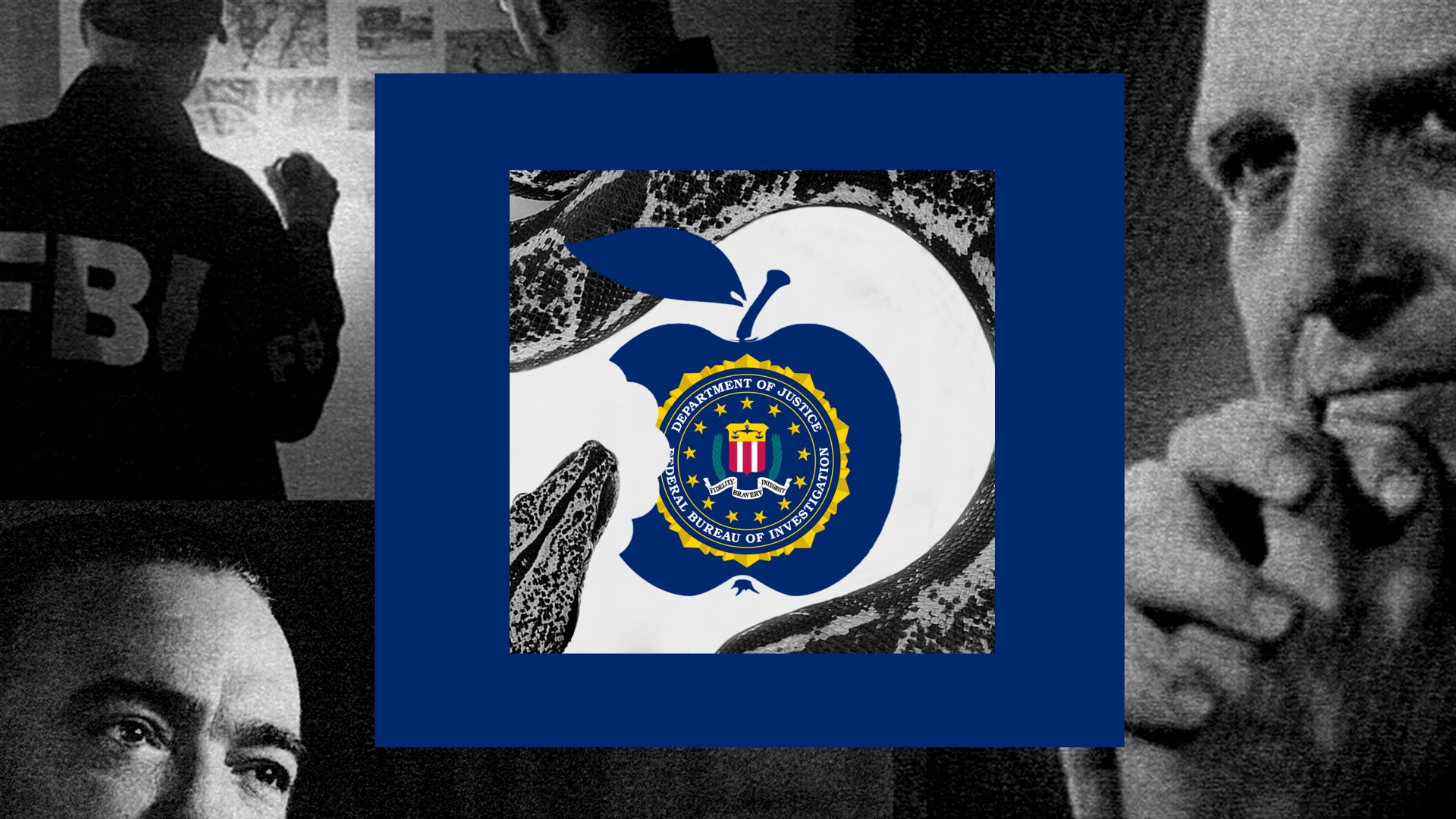
What we can learn from Christianity Today’s troubling history of working with J. Edgar Hoover.

Christianity Today April 11, 2023
Illustration by Mallory Rentsch / Source Images: WikiMedia Commons / Getty

Billy Graham tried.

He preached in the White House the first Sunday after Richard Nixon was inaugurated in 1969, and he tried to preach clearly enough that the new president would hear his message. Graham engaged directly with Nixon’s inaugural address and said Nixon was wrong to rely so much on himself, his own ingenuity, his own goodness. Nixon was wrong when he said, “We need only look within ourselves” to solve the country’s most pressing problems. The president and the American people, Graham preached, should humble themselves, turn, and put their trust in God.

Or at least that is what he meant to say. His critique was so subtle that no one in the East Room of the White House noticed. After the service, they all drank orange juice and coffee and commented how nice it was, winning an election, taking control of the White House, and having a worship service under the famous portraits of George and Martha Washington. They completely missed the call to humility, because Graham couldn’t quite bring himself to make it.

What the founder of CT was really saying is only clear if you look at what he quoted from the inaugural address and then look at what Nixon said next and compare that to what Graham said next and see Graham is directly countering the president. No one did that though, so no one noticed. Not even the notoriously sensitive Nixon.

The new president just felt affirmed. Graham’s message was missed. And he kept getting invited to the White House, where he had access to power, as long as he continued to make morally devastating compromises.

The temptation to appease people in power is a strong one. The temptation to compromise for the sake of access isn’t new. For white evangelicals, it didn’t start with Donald Trump.

This was Graham’s temptation. This was CT founding editor Carl Henry’s temptation. And it is also ours.

Recent American evangelical history has been explained, frequently, with what historians call a declension narrative—things were good, and then they declined. Evangelicals used to hold high moral standards, the story goes, and then they enthusiastically embraced a lying, cheating reality TV star for president.

But we didn’t just suddenly jump the tracks. Historian Lerone A. Martin makes this clear in his new book, The Gospel of J. Edgar Hoover.

“From the beginning,” Martin writes, “the founders of modern white evangelicalism preached that American politics needed Christian piety and traditional morality while their political practice was marked by the gospel of amoral pragmatism.”

Martin specifically looks at evangelicals’ relationship with the man who led the FBI for almost half a century. Hoover was incredibly powerful, forcing successive presidents to cede him authority. He fashioned himself into America’s indispensable defender, as if he alone stood between the country and communism, crime, revolution, and all manner of chaos and disorder. He used that reputation to accrue more power and push a moral vision of America that maintained unjust hierarchies and brooked no criticism, especially not criticism from Black people long denied their civil rights.

Evangelicals came alongside Hoover in this project. The founding editors of CT, in particular, embraced Hoover as a moral leader and eagerly associated the magazine that was meant to define evangelicalism with the head of the FBI. They sought out and published multiple articles carrying Hoover’s byline and used them to promote the magazine.

Editors like Carl Henry were under no illusions that Hoover had been born again or had a personal relationship with Jesus. He preached a kind of patriotic deism. But that didn’t seem to matter.
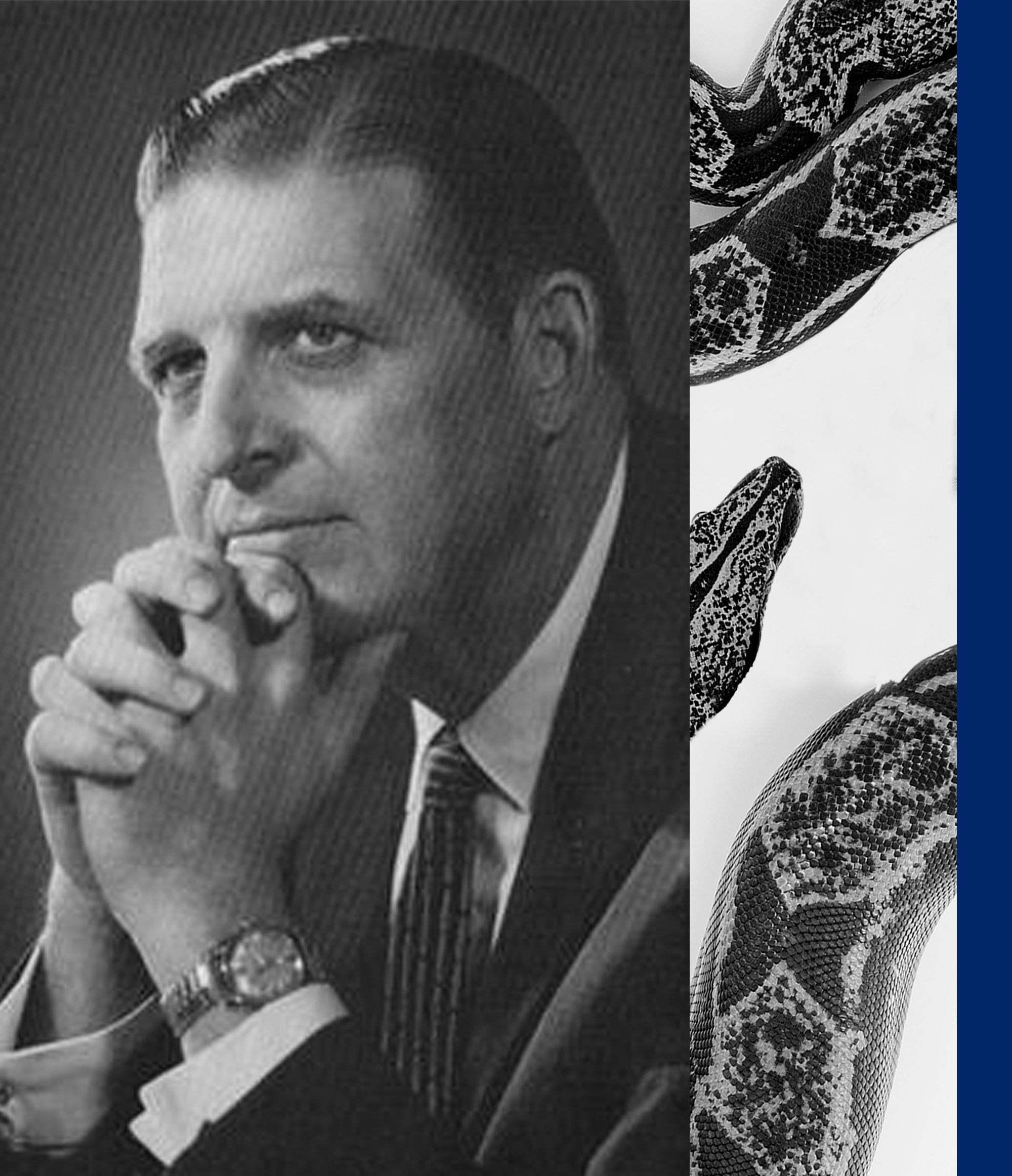
Carl HenryWikiMedia Commons / Edits by CT
Carl Henry

Henry, normally the more discerning member of the first editorial team, even fawned over Hoover in their correspondence.

“It is always a privilege and pleasure to carry your essays in Christianity Today,” he wrote. “You have a part not only in the message of Christianity Today but in its mission.”

Martin interprets this to mean that the magazine’s real aim was political: establishing white Christian nationalism. He even suggests evangelicalism is at bottom, at its core, in its essence white Christian nationalism.

I’m not convinced that part is right. For one thing, I don’t think it makes sense to talk about the essence of evangelicalism. It is not unchanging or unchangeable. Evangelicalism exists in the contingency of history. Reckoning with the past, as Martin challenges evangelicals to do, has the potential to bring reform.

I’m also not convinced that the CT editors were embracing Hoover’s full vision of what America should be. A close look at the record shows something sadder and smaller than that. They weren’t responding to Hoover’s grand political agenda, but just a little bit of flattery.

Graham, Henry, and others in those Cold War days certainly wanted evangelicalism to serve as a spiritual resource in the conflict with global communism. They called America “back to God.” In the process, they sometimes confused the nation and the church. But the aspect of Hoover’s vision for America emphasized the most in CT’s archives is the importance of ministers. That’s what they were so enthusiastic about.

“The clergymen of America have a vital role,” Hoover’s first article said. “The Church is the heartbeat of America.”

A year later, almost plagiarizing himself, he said, “The ministers of America hold a vital place,” because “each Sunday morning literally millions of Americans listen to church sermons. Sermons represent one of the most potent forces for good in the nation today.”

These banalities are what pulled them in. This promise of importance—a powerful man saying they mattered to the fate of the nation, the fate of the free world—was seductive.

That flattery worked on a lot of people. Martin’s research is meticulous, if marred somewhat by claims and conclusions that go beyond the evidence. His book shows Hoover wasn’t working uniquely with evangelicals. Hoover collaborated very closely with Catholics—so closely that many people thought the FBI director himself was Catholic. He also worked with fundamentalists and creedal conservatives who didn’t like Billy Graham. He lured at least one Black minister to his cause. He had no trouble winning over liberal mainline Protestants, including the nation’s most elite Episcopalians and a United Church of Christ minister who offered to spy on the American Civil Liberties Union to prove his allegiance to Hoover.
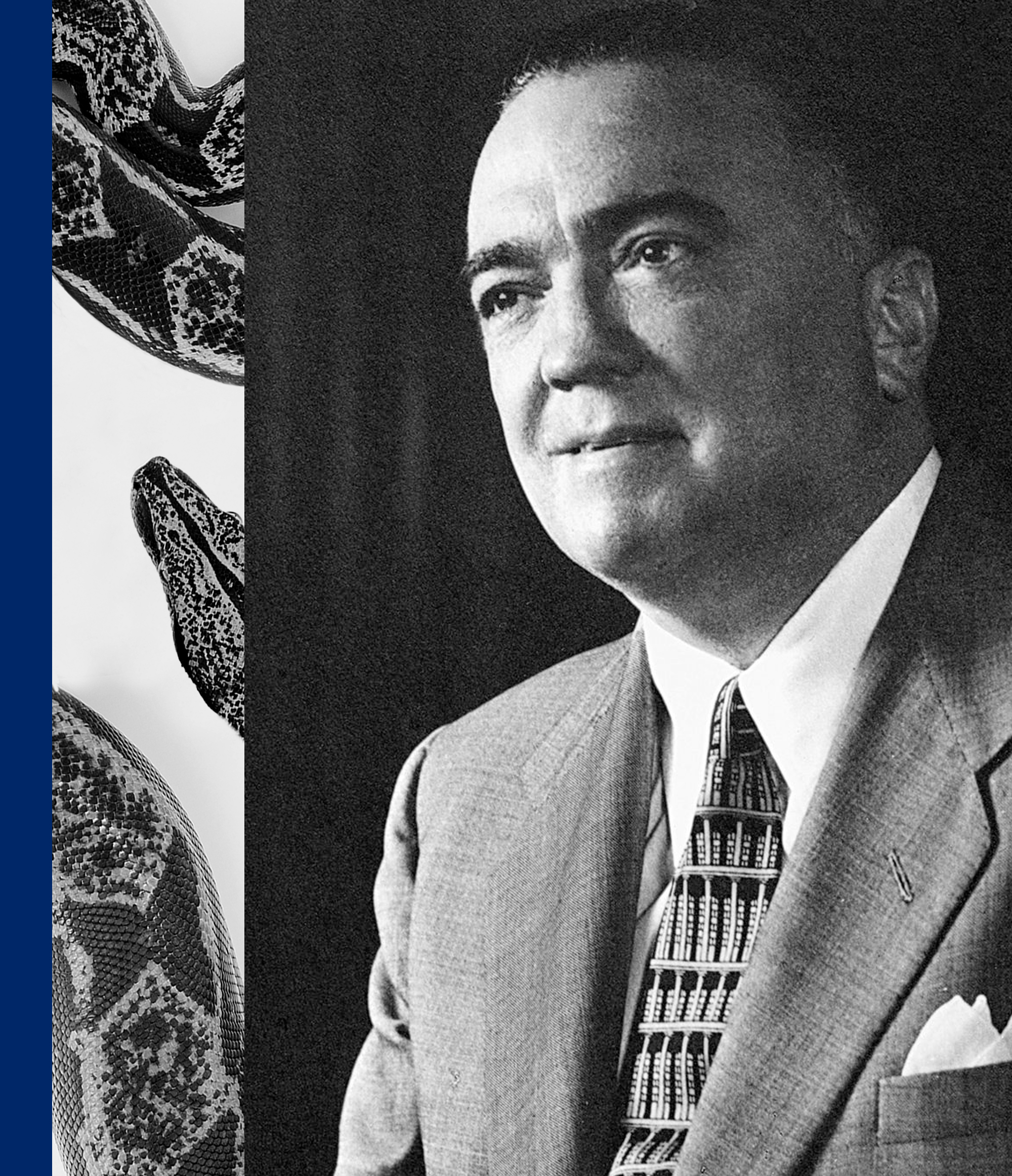
J Edgar HooverWikiMedia Commons / Edits by CT
J Edgar Hoover

Anybody who wanted a little more respectability in Cold War America wanted an approving word from J. Edgar Hoover. The FBI director made use of that.

“The Bureau had virtually every white Protestant congregation in the metro DC area bidding for the privilege of hosting and worshipping with the FBI,” Martin writes.

I suppose it’s possible to see all of them as white Christian nationalists, depending on how you define the term, but what Martin documents is probably better described as what sociologist Robert Bellah called “civil religion.” The religious groups lent symbols and ceremonies, pulpits and magazine pages to proclaim America and the FBI’s defense of America as sacred causes. Hoover, reciprocally, granted access to power (though it was mostly symbolic) and respect.

This isn’t to exculpate the religious leaders who lent their faith to causes of inequality and visions of exclusion. But it is accurate to note that many were succumbing to a much more basic temptation. They wanted respect. They wanted access. They wanted someone, sometime, to throw them a parade.

This means, though, that evangelicals who abhor white Christian nationalism today and are appalled at the idea of spreading the gospel through state power are, nonetheless, susceptible. We, like Carl Henry, can be tempted. We evangelicals who want to be relevant and winsome will find the incentive to compromise is always right there.

Correct views are no protection against this temptation. Which is why it is also not, as some would have it, a uniquely evangelical problem. Go back to the church service in Nixon’s White House: Maybe Graham struggled to clearly critique the new president because he was evangelical. But the same thing happened over and over to ministers across traditions who were invited to Pennsylvania Avenue. Mainline clergy would start out bold, imagining what they would preach to the president in his own home, and then they would think better of it. One threw away a draft defending radicalism and instead talked about the nobility of the human spirit. Another wrote a sermon directly addressing Nixon, but then edited out every instance of the phrase “Mr. President,” lest his words seem too pointed.

A rabbi went even further, ending his sermon by saying, “The finger of God pointed to Richard Milhous Nixon, giving him the vision and wisdom to save the world and civilization.”

From what I can tell, it’s not a specific theological inclination that makes someone susceptible to political idolatry. Seeing power as anointing and mistaking a president for a messiah is a danger for us all. Like most sins, it’s easier to spot when someone else does it. But the desire for a political champion and the willingness to accept amoral pragmatism for a little access to power infects us all.

That means, though, that Martin is right that we can’t neatly separate “good evangelicals” from “bad evangelicals.” We are wrong to imagine that being more like Carl Henry or Billy Graham will simply inoculate us. We are wrong to imagine that there was some “before” time, when we did not have this problem. This is not just an issue for evangelicals who supported Donald Trump. Nor will it go away when the former president’s influence in American politics ultimately fades. The temptation we will always have with us.

CT’s embarrassing history of publishing the FBI director’s pablum should stand for evangelicals as a reminder of the dangers of appeasing powerful people. It might also redirect us to the wisdom of the sermon that Billy Graham tried and failed to preach to Richard Nixon: We too are wrong to rely so much on ourselves, our own ingenuity, and our own goodness. We too should be humble. We too need to be aware of our inclination to pursue power instead of trusting God.

Christ taught us to pray for a kingdom to come. He also showed us how it does: not through nationalism, or cooperation with the FBI, or publishing articles that will be loved by people in places of privilege, but by taking up a cross and proclaiming the Good News.

Daniel Silliman is news editor for Christianity Today and a historian with a doctorate from Heidelberg University. He is currently working on a religious biography of Richard Nixon, forthcoming from Eerdmans.
Church Life

Youth Pastors Ditch Gross-Out Games and Help Student Ministry Grow Up

Today’s groups are becoming more integrated with the rest of the church.

Christianity Today April 11, 2023
Illustration by Abigail Erickson / Source Images: Getty

In the 1990s and early 2000s, youth group culture relied on delivering fun and entertainment by any means possible: gross-out games, Christian rock concerts, hip hangout rooms, and pizza-party blowouts.

The activities were seen as vehicles to get kids in the door before sharing the gospel or offering Bible lessons.

Things have changed a lot since Jeremy Engbers grow up “playing games, getting dirty, and drinking blended Happy Meals” in church youth ministry.

Engbers, the 31-year-old director of worship, youth, and family at Olympia Christian Reformed Church, is trying to be the youth pastor he needed back then.

Like other pastors working in youth ministry today, Engbers focuses on relationship-building, intergenerational discipleship, and partnership with parents. His studies at Fuller Theological Seminary and access to resources at Fuller Youth Institute were helpful in building his current approach. Engbers also noted books like Sticky Faith and Growing Young as influential for him.

Prior to the past five or ten years, youth groups generally operated on their own schedule and programming within the church. In some churches, that even meant separate meetings during the church service on Sundays.

The siloed activities often isolated youth from the larger congregation, making it harder for them to integrate into grown-up ministry as a college student or adult. Engbers called it a kind of “spiritual daycare.”

Churches across denominations have seen young people stepping away from faith, and researchers at the Fuller Youth Institute say they don’t need a pastor in skinny jeans or a hip meeting space to make them stay. They need practices to root them in faith and community in a way that sticks.

Heather Kenison, youth director of student ministries at St. Luke’s United Methodist Church in Indianapolis, noticed the deep disconnect between students and congregants at her church. It affected the sticking power of the church once youth group days were over, she said.

“We had our high school small groups at the same time as ‘big church,’” Kenison told CT. “Then they would graduate and never want to go to ‘big church.’”

St. Luke’s changed its strategy in 2019 to allow students to attend the regular church service on Sunday mornings, giving them the opportunity to connect with the rest of the church and not just the youth group. Now, the youth group is decentralized, meeting in small groups weekly and convening as one larger body once a month.

Giving students the chance to make the “conscious decision” to be a part of the larger church is vital, in Kenison’s mind.

Youth ministry parachurch organizations have noticed the same trends.

Shane Pruitt, national next gen director with the Southern Baptist Convention’s North American Mission Board (NAMB), said he now educates pastors to involve youth more organically with the larger church. Before, he felt like they were asking youth to join an entirely new church after high school.

The NAMB speaks to both senior pastors and youth pastors, through the Youth Leader Coaching Network, about how they can equip and empower teens to serve the church as a whole.

This could mean partnering teens with adult volunteers in doing church work like sound setup or teardown, with the ultimate goal of a discipling relationship and contribution to the church.

“We cut discipleship legs out from under us when we’re separating people by ages and demographics,” Pruitt said, adding that one of the “greatest untapped resources” is senior adults and empty-nesters within the church.

Pruitt said that volunteer opportunities and serving together on mission trips are two ways he encourages churches to integrate more functionally and intergenerationally.

Gen Z, he said, often identifies with their grandparents’ generation more than their parents’. This is a significant opportunity for intergenerational faith formation that was absent from prior youth group approaches.

“The pendulum shifts from generation to generation,” Pruitt said. “Each generation is a reaction to the previous, and a lot of those senior adults have more time on their hands, too.”

How youth ministry got here

Prior to the 1970s, youth ministry didn’t really exist within the local church. Coming off the fervor of the youth-focused movement encapsulated by organizations like Youth for Christ (YFC), that began to change. YFC informally began in 1940, famously hiring Billy Graham as its first employee. Its mission was evangelism toward “relevant, relational evangelism to unchurched youth.”

Churches picked up on the draw of YFC’s youth rallies and adopted their own versions. But as culture shifted toward mass media and entertainment, youth group culture became defined by amusement-focused methods like eating challenges, trust falls, Christian ska music, and end times fiction.

Simultaneously, youth were slowly carved out of the local church’s family-focused approach and separated in ways that would not bode well for them. Today, youth ministries are seeking to remedy that.

For example, more youth-pastor-specific resources that emphasize the role of parents are popping up. Organizations like Rooted Ministry and Youth Pastor Theologian exist to equip youth ministries and parents to work together.

In the 2021 book Handing Down the Faith: How Parents Pass Their Religion to the Next Generation, researchers found that the most powerful influence on the faith lives of American teenagers and young adults “is the religious lives of their parents.”

The authors identified three factors in determining whether an adult child remains in their faith past high school. Those factors include:

  1. If the family attends church at least once a week
  2. If the parents reported that their religious faith was “extremely” important
  3. How often they have conversations about religious matters

In other words, keeping kids in their faith into adulthood is nearly impossible without parental commitment.

“If parents would increase the frequency of those conversations by just one standard deviation,” said Andrew Zirschky, research professor in youth ministry at Austin Seminary. “They will have a 66 percent reported increase in their reported level of faith in 10 years.”

The third predictor, according to the research, is the most important. It shows that the strongest tie to lasting faith is related to how often parents talk to their children about religious matters “as a part of ordinary life.”

Thus, youth groups partnering with parents will have the strongest outcomes for lasting faith. According to research from Back Pocket God: Religion & Spirituality in the Lives of Emerging Adults, which documents results from the latest National Study of Youth and Religion, there is no clear correlation between kids who attended youth group or went on mission trips and the strength of their faith later in life.

“If there’s a youth pastor out there thinking that his efforts, programs, trips, and teaching alone are likely to solidify the faith of young people, he’s believing this against all evidence to the contrary,” Zirschky said.

Jack Fitzgibbons, associate pastor of families at Pinecrest Baptist Church in Cordele, Georgia, said he recognizes the new model of training instructs youth ministers to cultivate the spiritual formation of children with parents, rather than “just teaching youth pastors how to pull off the next big event.”

However, the effects of divorce, single parenting, and an increase in stressful, busy lifestyles has kept more families away from church and parents drifting from their own faiths. This has a substantial impact on the impressionable faith of their children, given that most teenagers share a “religious identity” with them. When parents don’t attend church, children usually don’t either.

Parents are also more important because an increasing number of youth pastors are bivocational. Youth ministry is not a lucrative profession, and most churches don’t have the budget to pay for a full-time staff member.

Ministry Architects found that churches usually hire one full-time youth worker for every 50 kids. Given that most churches have a median membership of 200 or less, most don’t have the demand or resources, so incorporating volunteers and family involvement is essential.

Beyond parents: Mentorship matters

As director of operations at Youth Worker Community in New Brunswick, Canada, Jeremy MacDonald works to provide “relational support” to youth ministers. While families are the number one influence, MacDonald said the best way to influence the faith of the next generation is through mentor relationships.

Rather than youth groups being centered on one particular adult leader—the youth pastor—Youth Worker Community encourages churches to gather a diverse group of adults and volunteers to minister to youth. Meaningful interactions and connections with adult mentors beyond the youth pastor is key in turning out faith in young adulthood, MacDonald told Christianity Today.

“If those [mentors] journey with them, check in, help them land in a faith community past high school, the chance that their faith continues skyrockets,” MacDonald said.

A 2018 research report on the Canadian church from Youth for Christ and InterVarsity Christian Fellowship found that 77 percent of young adults stayed connected with a local church past high school if they were in regular contact with a mentor from their childhood church who helped them make a connection in a new congregation.

Without such connections, the chance of a young person joining a new local church was just 17 percent. When mentors communicate with kids as they move on to college communities, faith formation moves in a positive direction.

This “handoff” mentality is a focus for Pruitt at NAMB. Its most recent project, GenSend, aims to train youth group and college ministry leaders to better communicate with one another, through coaching cohorts.

“We are starting to bridge the gap between high school and college,” Pruitt said.

The idea is to give leaders from both sides of a young person’s life access to one another. High school leaders can then prepare them for college experiences and college leaders can anticipate the needs of incoming freshman, Pruitt explained.

“When high school leaders hear what college leaders are seeing,” Pruitt said, “they can almost reverse engineer the mindset starting in seventh grade to prepare them to go out and be missionaries on their college campuses.”

Megan Faulkner has been the director of Anchored Student Ministries at St. Paul’s Ocean Grove Church in Ocean Grove, New Jersey, for 15 years. She said integrating youth ministry into a larger church vision has been “paramount to overall church health.” It’s been a struggle to fuse together, but Ocean Grove is committed to staying focused on serving students within the context of their families and the entire church body.

The church does this by communicating youth ministry successes, struggles, and events to church leadership and the congregation, often asking for prayer and bringing in adult volunteers for student and family events.

The mentorship and discipleship piece that comes with this integration is vital for young people, who are “ravenous for absolute truth,” Faulkner said.

“The world is constantly lying to them, and they know that, so they’re searching for what is true and right,” she said. “We noticed the change in their question-asking and what was important to them, so we changed our teaching strategy dramatically and have seen incredible impact.”

Where we go from here

Not everyone left youth group culture of the 1990s and 2000s with a dying faith. Many who serve in youth ministry today are products of that time, did their share of scavenger hunts and gross-out challenges, and want to see this generation of young people supported and equipped in different ways.

Some have continued the focus on church-adjacent youth ministries that could be a more powerful route to a lasting faith. The Urban Youth Worker’s Institute exists to provide positive role models and mentors to youth in specific geographic areas. Others see empowering youth leaders within the youth group as vital, viewing time together as a “leadership laboratory” for empowering youth in the future.

Youth ministers and researchers agree that partnering with parents, bringing in a diverse group of mentors, and communicating with college connections in the immediate aftermath of high school are key to helping teenagers continue walking a path of faith.

“The relational capital that our students are building is what holds them in the future, not necessarily the charisma of the youth pastor,” Engbers said.

Books

The Bible Does Everything Critical Theory Does, but Better

Scripture offers a deeper analysis of modern society than modern society could give itself.

Christianity Today April 11, 2023
Illustration by Mallory Rentsch / Source Images: WikiMedia Commons / Pexels

Many people become suspicious at the mention of critical theory, especially as it applies to controversial matters of race, gender, law, and public policy. Some see the ideologies traveling under that banner as abstruse frameworks only minimally related to real-world affairs. Others see critical theory as a ruse meant to confer unearned scholarly legitimacy on highly debatable political and cultural opinions.

Biblical Critical Theory: How the Bible's Unfolding Story Makes Sense of Modern Life and Culture

Biblical Critical Theory: How the Bible's Unfolding Story Makes Sense of Modern Life and Culture

HarperCollins Children's Books

672 pages

Christopher Watkin, an Australian scholar on religion and philosophy, wants to reorient discussions of critical theory around Scripture’s grand narrative of redemption. In Biblical Critical Theory: How the Bible’s Unfolding Story Makes Sense of Modern Life and Culture, he shows how God’s Word furnishes the tools for a better, more compelling critical theory—one that harmonizes the fragmentary truths advanced by its secular alternatives. Mark Talbot, professor of philosophy at Wheaton College, spoke with Watkin about his book.

Let’s begin with a basic question: How do you define critical theory?

There’s more than one answer to that question. There’s a narrow sense and a broad sense. The narrow sense is probably the one that most people come across first today. People have heard of things like critical race theory that involve very particular ways of critiquing society through a specific lens. But critical theory, more broadly conceived, is a way of engaging with society that points out what’s wrong with the world on a deep level and then suggests what needs to change to make it better.

As I’ve studied critical theories over the years, I’ve noticed that almost all of them do three things. First, critical theories make certain things viable so that you begin to think those things are possible—like Marxist revolution, for example. Second, they make things visible, like the unequal treatment of women in society that many people ignored or simply didn’t see for a long time. Third, they make things valuable. They catechize us about what to desire and what to condemn.

You mention critical race theory, which has become a flash point for some Christians and a big reason why critical theory has a bad name among them. Where do we tend to go wrong in our attitudes toward critical theory?

Critical theory does have a particularly bad name among certain groups of Christians. It also has an unusually good name among others. Both responses are problematic because Christians should not expect worldly ideology to represent either a perfect ideal for the church or the Devil incarnate.

There are very important theological reasons for that. First, only God is good, and so we should expect everything in the world to be a mixture—a shadow of God’s good creation but also somehow twisted, misunderstood, and distorted because sin has pulled it out of shape. That’s true of critical theory and other ideologies as well. There are some things that critical theory seeks to do that I think Christians should also want to do—upholding justice and fairness, for example. Yet the ways critical theory goes about doing those things are different from biblical ways, and that’s part of how critical theory has taken biblical principles and distorted them and misunderstood them to some extent.

But the problem for the church is when Christians see critical theory as the only thing that must be opposed, as if everything else is either neutral or positive. It becomes the single thing that Christians must fight tooth and nail. There’s a naiveté in thinking, If we just get rid of this one thing, then society will be wonderful. So that’s how I think some Christians have gotten unsettled about critical theory, by either utterly embracing it or utterly rejecting it.

How do you see the biblical narrative functioning as a kind of critical theory?

Starting with those categories I’ve already laid out, a critical theory makes things viable, visible, and valuable. The Bible is of course the Word of God, the sword of the Spirit that makes us wise for salvation. But it also makes certain things viable. Many today would laugh at the idea of trusting God’s promises. But when you read enough of the Bible, you begin to see what it would be like to trust this sort of God. Trusting him then becomes viable.

The Bible also makes things visible. You may have seen many sunsets, for instance, but as you read from Psalm 19:1 that the heavens declare the glory of God, you learn to see that glory in beautiful sunsets. His glory is made visible for you.

And the Bible also makes things valuable. Here’s an example from my own life. Before I was a Christian, I would have looked at you very quizzically if you had told me that I should seek to serve other people. It would have made no sense to my 14-year-old self. But you can’t read far in the Bible without coming across exhortations to serve others, especially from Jesus’ lips. So service becomes something you value if you’re seeking to conform your view of the world to the biblical view.

In all these ways, then, the Bible is acting like a critical theory, in that it makes things viable, visible, and valuable.

What is the relationship between your project and Augustine’s project in his great City of God?

Augustine’s book provides the pattern that I, very falteringly, have sought to follow. What I found in City of God was a breathtaking example of someone surveying the whole of the culture in which he lived. Augustine leaves no stone unturned. In the first half of the book, he overviews the whole of Roman society, which is incredibly important because cultures are ecosystems and you can’t understand one part in isolation from the whole.

In the second half of the book, Augustine then travels through the Bible, from Genesis to Revelation, as a way of engaging with late Roman culture. And he does so with the aim of telling a more convincing and richer story about both God and Rome than Rome could tell about itself. I found that pattern incredibly compelling, and I knew that if I wanted to bring late modern culture into conversation with the Bible, this was the blueprint to follow.

What is the ultimate goal of developing a biblical critical theory?

The ultimate goal must be loving God and neighbor. Now, of course, there are millions of ways to do that, so that doesn’t tell you anything very specific about the ultimate goal of biblical critical theory. But unless that’s your highest goal, you have to ask as a Christian whether what you’re doing is really worthwhile.

More specifically, this project helps us love God and neighbor like this: It’s hard to love God well in a culture that’s catechizing you in ways you aren’t aware of or don’t understand. If we don’t realize how contemporary Western society is shaping us, then we won’t know which aspects of that shaping are more or less benign, and which aspects we should resist or transform.

And in leading Christians through the biblical story from Genesis to Revelation, biblical critical theory is also teaching us the wonderful big picture of God’s plans for us. There’s a “wow” that comes from seeing the big sweep of redemptive history and seeing how God’s complex, multilayered story makes sense of our world and our own lives within it.

In your introduction, you describe your experience writing grant proposals. Sometimes, when you figured you had written a slam-dunk proposal, the grant committee would come back with the question, So what? In the context of your book, you explain how asking, So what? is different than asking, say, What is this doctrine? or Why should we believe it? Could you explain that difference more fully?

Take the Bible’s first verse: “In the beginning God created the heavens and the earth.” A doctrinal approach would seek to understand things like: Who is this God? And how does this creation account differ from other ancient creation accounts? A traditional apologetic approach would seek to justify the claim in the verse and to demonstrate why this is a reasonable thing to claim and why the alternatives may be less reasonable.

Both of those are great approaches. They’re just not the approach I’m taking in the book. The “So what?” approach to that verse would ask: What difference does the fact that God created the heavens and the earth make to the way we understand reality, our culture, and ourselves? One difference is that, given this universe was made by one God alone, there’s a coherence to it. It’s not the result of a war between different gods or a chance occurrence with no intention behind it. There’s a purposefulness to this world. That shapes the way we engage with other people and understand ourselves and our purpose as well.

Another difference is that it is very clear in the Bible that nothing compelled God to create. He was not following some iron law of necessity; he was not bowing to some greater principle. As far as we can tell from the Scriptures, he made the world because he loves us, as strange as that may seem to modern ears. And that means that right at the heart and origin of the universe is not necessity or law but gift, grace, overflow, and superabundance. And if that’s how our universe began, then it’s a very different place to live in than a place governed by iron necessity and endless chains of causality. It affects the way that we live in modern society in all sorts of ways, some of which I tease out in the book.

You highlight two tools that help you develop a biblical critical theory, the first of which you call diagonalization. In your view, diagonalizing helps us avoid the mistake of treating Christianity and contemporary culture as completely distinct in their patterns and rhythms. Could you say more about how diagonalization works?

The principle begins from the beautiful reality that a biblical view of the world holds together in harmony things that the modern world has wrenched apart from each other and put into conflict. Take the image of God as an example. There are two beautiful, complementary truths held together in this language: a human dignity that comes from being made in the image of God, and a humility that comes from being reminded that we are not God himself. Both our dignity and our humility come from the same source.

But if you then look to the modern world, you’ll see that these two beautiful, harmonic biblical principles have been ripped apart from and opposed to each other. On the one hand, you have the idea that we are nothing more than machines or animals, which very imperfectly captures something of the humility of human beings in Genesis. We were even created on the same day as the other animals.

But then some modern anthropologies also treat us as if we were gods, suggesting that nothing should stand in the way of our will. This comes through in thousands of catch phrases: “Set your heart on whatever you desire, and you can get it.” “You can be whoever you want to be.” “You do you.” And other language in that vein.

Modernity awkwardly gives us these two anthropologies and says, “You’re a machine and you’re also a god; now go and live your life in peace and harmony.” Psychologically, it’s incredibly burdensome to sit on the horns of that dilemma. To diagonalize is to say that both aspects of modern anthropology are actually dismembered limbs of a beautiful biblical whole where they harmonize perfectly. So we need to recover the biblical harmony.

What we mustn’t do is split the difference and say I’m half machine and half god. That’s ridiculous and not biblical. So to diagonalize doesn’t mean compromising and meeting in the middle. It means showing that the two alternatives are both derivative and partial when compared to the biblical whole.

The second tool is something you call out-narrating. You talk about Scripture “out-narrating its cultural rivals.” And you show, for instance, how Christianity out-narrates the late-modern answer to the question Who am I? which traces back to René Descartes, the father of modern philosophy. How does the Christian understanding of personal identity make more sense than the late modern position?

Of course, it’s not the case that everything was perfect until Descartes. Right from the earliest philosophers, there were problematic ways of thinking about ourselves. It’s just that the particular story that I’m telling begins with Descartes.

What Descartes does with identity is to ground our understanding of ourselves inside ourselves for the first time. This is the upshot of his famous saying Cogito ergo sum, or “I think, therefore I am.” The idea then develops and changes, and by the time that you get to John Locke you have this idea that political scientist C. B. Macpherson calls Locke’s “possessive individualism.” It is the odd idea that we own ourselves, we possess ourselves, and therefore we can do with ourselves what we would do with any other possession. In Locke’s thinking, this has various caveats around it, but the Western tradition has tended to drop those caveats as time has gone on, so that we’ve come to see our bodies and our very selves as a possession.

If I possess myself, I can do what I want with myself because I own myself. Therefore, you get an emerging idea that nobody can tell me either who I am or how I should be. Nobody else has a claim on me. Nobody else can legitimately make me do anything that I don’t want to do, in the same way that they can’t just take one of my possessions.

This leads to a view of the self that is incredibly liberating on the surface. There’s something beguiling and attractive about it, especially to people who have lived in societies where they are always told what to do and where they have no autonomy. But one problem with this view of the self is that it inscribes identity into a logic of the market. I buy myself—and this is what we’ve found in recent decades: We construct our identities through our purchases. On one level, it’s the brands that we choose to adorn ourselves with, but it’s also the indie philosopher or theologian we want to be overheard namedropping. What new trend do we want to be out in front of?

From there, it’s not much of a jump to identity being a commodity that is bought and sold. I guess the most vivid place to see that today is online, where we curate particular identities. We market them to gain likes and follows and ultimately financial and reputational rewards.

The biblical view of identity is a profound subversion of that market paradigm, because in order to know who I am biblically, I don’t start within myself. I reach outside myself. Augustine’s Confessions is a beautiful example of this. It’s been called the first autobiography in the Western tradition, but of course it’s not written as a normal autobiography. It’s written as a prayer, in the second person. To find out who he is, Augustine knows that he must reach outside of himself to the God whose he is. The philosopher Michael Hanby, in his book Augustine and Modernity, has a very helpful way of putting this. He says that Christian identity is constructed as what he calls “doxological dispossession.” Doxological in the sense that I find myself as I adopt an attitude of praise to God. Dispossession in the sense that the way to find myself is to lose myself in knowing Christ. In the Gospels, he who seeks to save his life will lose it, but he who loses his life, for Christ’s sake and for the sake of the gospel, will find it.

Augustine has a very rich way of putting this in the Confessions. He says, If I look inside myself, what I find is a mess—an impenetrable swirl of different desires and ideas. There’s no coherence, no stable identity there. But then he says that when he reaches outside himself to God, he’s gathered together. He uses this beautiful imagery of being gathered as a self.

This frames Christian identity not as a possession that is bought and sold, but as a gift, a superabundant gift from God. And it makes us fundamentally relational beings as well. I can’t think of myself as an atom isolated from everyone else. There’s something incredibly healthy, both individually and socially, in this view of identity that isn’t subject to the vicissitudes of the market, that sends me outside myself and points me toward God and others.

What is your greatest hope for how developing a biblical critical theory can strengthen our posture and witness as believers?

I think it will, by God’s grace, equip and empower Christians to be shaped by biblical patterns and rhythms in the way we live, think, and engage with the world, rather than unthinkingly being shaped by the patterns and rhythms of late modern society. As Christians, we want to be people of the Book. We want to be people who love God with all our heart, soul, mind, and strength, and who love our neighbor as ourselves. In the terms of Jeremiah’s letter to the exiles in Babylon, we want to be people who work for the peace and prosperity of the city where God has put us. Yet all those things are incredibly hard if we have no sense of the distinctive patterns and rhythms of the Bible and how they might stand against—or in some cases even sit alongside—the patterns and rhythms of our society.

News

Myanmar Releases Imprisoned Baptist Leader

UPDATED: After serving more than a year in prison, Kachin pastor and human rights activist Hkalam Samson is free.

Hkalam Samson (center), a prominent Kachin Baptist leader, and other survivors of religious persecution meeting President Donald Trump in 2019.

Hkalam Samson (center), a prominent Kachin Baptist leader, and other survivors of religious persecution meeting President Donald Trump in 2019.

Christianity Today April 10, 2023
WikiMedia Commons / White House

Update (July 26, 2024): Authorities released Hkalam Samson Monday after the former head of the Kachin Baptist Convention spent 16 months in prison, according to a leading member of a Kachin peace organization. Last April during Thingyan New Year, officials released Samson under general amnesty but then detained him again hours later. At the time, Maj. Gen. Zaw Min Tun, spokesperson of the ruling military council, told the BBC that Samson had not been rearrested, but they had taken him back in “for cooperation and discussion about the peace process.” Lamai Gwanja, a member of the Kachin-based Peace-talk Creation Group, told the Associated Press that Samson had been living at a house in the prison compound. Gwanja added that Samson had not taken part in any activities related to peace talks while in detention. The US State Department welcomed the news in a statement, calling Samson “a prominent, well-respected religious leader whose courageous work includes advocating for freedom of religion or belief for all.”

Update (April 10, 2023):

On Good Friday, Myanmar’s military junta sentenced Hkalam Samson to six years in prison on charges of terrorism, unlawful association, and inciting opposition. Hkalam denies the charges, which international rights groups and the Kachin diaspora believe to be politically motivated.

The first two charges stem from Hkalam’s 2022 trip to Laiza in Kachin state, where he met with Kachin leader Duwa Lashi La, the head of Myanmar’s government-in-exile, and General Sumlut Gunmaw, the vice chief of staff of the Kachin Independence Army, which has long fought against the Myanmar military.

The third charge is the result of a Zoom prayer meeting with Kachin Christian where he called the young people to build “the nation in Christ,” according to the The New York Times.

“He is a man who knows God and loves God,” Hkalam’s wife, Zung Nyaw told the Times. “He is a preacher, so he has no enemies. He is a person who sacrifices himself and helps others.”

In July 2019, Hkalam Samson, a pastor from a predominantly Christian ethnic group in Myanmar, met with President Donald Trump at the Oval Office. Standing with a group of victims of religious persecution from around the world, he shared how the Kachin people were “oppressed and tortured by the Myanmar military government” and thanked the Trump administration for placing sanctions on four top generals.

Three and a half years and one military coup later, Hkalam was arrested at the Mandalay International Airport on December 4. The junta charged him with unlawful association and breaking the country’s counterterrorism law for meeting with Kachin armed forces and praying with the leaders of Myanmar ’s government in exile, the National Unity Government. Hkalam, the former head of the Kachin Baptist Convention (KBC), faces up to 13 years in prison.

At the time of his arrest, 65-year-old Hkalam was traveling to Bangkok for medical appointments. His family is now concerned for his health: In January, his wife said he was suffering from pneumonia and high blood pressure, and she had not been allowed to send him medicine or food.

Known internationally for his diplomacy and peacemaking skills, Hkalam has been a leading advocate for the Kachin people, who have been engaged in an ongoing civil war with the military junta for decades. Calls for Hkalam ’s release have sounded from around the globe, including from the U.S. State Department, human rights groups, and the Kachin diaspora.

“He's the image of Kachin Baptist churches, and he's the image of the Kachin people,” said Labya La Seng, the pastor of Dallas-Fort Worth Kachin Baptist Church and president of the Kachin American Baptist Association.

A voice for the Kachin

The Kachin are predominantly Baptist due to the work of American Baptist missionaries in the 19th century. While Adoniram Judson was the first Protestant missionary to arrive in Myanmar in 1813, mission work among the Kachin began in 1877. William Henry Roberts baptized the first seven Kachin Christians in 1882 and they started the first Kachin church later that year. The KBC was founded in 1910 and now includes more than 300 churches.

Before his arrest, Hkalam advised the KBC and served as the chairman of the Kachin National Consultative Assembly, a platform for the Kachin people to congregate and hold intercommunity dialogue.

A longtime representative of the Kachin, Hkalam met with not only Trump but also President Barack Obama, Secretary of State Hillary Clinton, and former president Jimmy Carter (in 2013) when they visited Myanmar, according to The New York Times.

His comments at the 2019 meeting with Trump caught the attention of military officers in Myanmar, leading Lt. Col. Than Htike to file a complaint against Hkalam. The pastor said he changed his prepared comments last minute to include calling out the military junta ’s abuses due to a move of the Holy Spirit, according to Frontier Myanmar.

Before his scheduled court date, Hkalam refused to apologize even as he was told the case would be withdrawn if he did so.

“I do not want to trade off the truth for my own individual escape,” Hkalam told Frontier Myanmar. “I would like to give respect to all who are murdered, raped, and tortured wrongfully during 60 years of blood-shedding oppressions,” Hkalam said.

The military later withdrew the complaint—without an apology from Hkalam.

Since the February 2021 military coup, fighting between the Kachin armed forces and the Myanmar military has intensified. In October 2022, a junta airstrike targeting a Kachin Independence Organization concert in Hpakant township killed 60 people. Hkalam coordinated medical aid for those injured and helped arrange the funerals of the victims. Later he held a prayer meeting in the Kachin state capital of Myitkyina for those killed.

In a press briefing in February, State Department spokesman Ned Price condemned Hkalam ’s arrested and called for his immediate release.

"We are extremely concerned for his well-being and safety and urge our partners and allies to join us in calling on the regime to drop all charges and immediately and unconditionally release Reverend Samson," Price said.

He also noted that the pastor ’s “incredible work advocating for religious freedom, justice, peace, and accountability should be celebrated and replicated, not condemned.”

‘Anybody could be the next victim’

When Labya, who immigrated to the United States in 1999, heard the news of Hkalam ’s arrest, he was shocked that the junta “dare to touch Dr. Hkalam without any hesitation.” At the same time, he was not surprised because of the junta ’s brutal actions since the coup.

“I’m not yet ready to accept the fact that a man like Dr. Hkalam was detained. He is not an ordinary person; he is a man who met the US president,” Labya said. “This simply shows the defiance of the military council and [its challenge to] the free world.”

While Labya differed with Hkalam on views of ecclesiastical polity among Kachin Baptist churches, he has great respect for Hkalam and applauded his relentless advocacy for justice in their homeland. He remembers in 2011, Hkalam visited Labya ’s church and preached a message from Amos 5:24, “But let justice roll on like a river, and righteousness like an never-failing stream,” encouraging the church to demonstrate their faith through love, mercy, and justice. This verse has become the battle hymn of Kachin Baptists in the US.

“Justice is not a matter of self-interest but of a humble commitment to the well-being of all who are made in God ’s image,” Labya said.

Gum San Nsang, president of the Kachin Alliance (a network of US-based Kachin communities) and chair of the World Kachin Congress, worked with Hkalam over the years on projects relating to internally displaced people, drug eradication, religious liberty, and the peaceful coexistence of ethnic groups in Myanmar. Nsang, who is based in Washington, D.C., helped arrange Hkalam ’s meeting with Trump, and on the same trip, the two attended the International Religious Freedom summit.

Since his friend ’s detainment, Nsang has urged the United Nations and the US government to use diplomatic leverage to help release Hkalam. “We have not directly engaged the coup regime, because they are using Rev. Samson's detention as a political tool,” Nsang said.

Nsang described the grim reality of his homeland today, where airstrikes, bombing raids, and “every crime known to men” are common occurrences. As recently as last week, soldiers entered a tea shop in Hpakant township and beat the owner, his wife, his daughter, and four customers before arresting them. The military claimed they heard a report that the owner ’s daughter made political posts on Facebook.

“The entire Kachin region’s population is on emergency alert,” Nsang said. “Everyone is in fear of being detained, arrested, or killed. When a prominent religious leader like Rev. Samson could be picked up, snatched away, and secretly interrogated for over 20 days with no news, anybody could be the next victim.”

Remembering their homeland

For the Kachin in the US, returning to their homeland has now become a perilous undertaking and a trip most wouldn’t dare make as the war rages on. Labya said he ’s afraid to fly into the country after what happened to Hkalam, and the reality of not being able to freely travel to Myanmar is difficult to face.

Still, Kachin Christians “need to remember we are to play the role of our brother ’s keeper,” Labya said, referring to Genesis 4:9. “We're not in a position to keep our brothers absolutely safe, but we are mandated to do whatever we can to speak up for them, making sure that we are going to reach out to them in their needs, in their distress.”

That means writing members of Congress to use their diplomatic power to ensure the Myanmar government respects the rights of all ethnic minorities, not just the Kachin. It also means working with other Kachin diaspora groups to advocate for Hkalam.

On March 12, Labya gathered with four other Kachin churches in the Dallas-Fort Worth area for an interdenominational service. The immigrants and refugees joined together to worship, hear a pastoral message on justice, and pray for peace in Myanmar. The service included calls for prayer and solidarity with those who are imprisoned unjustly for a righteous cause.

The newly formed DFW Kachin Christian Network plans to continue the joint services with different churches hosting.

“We are really, really praying that our churches back home, even [those] in the US, will be working together and holding to the Word of God and sharing in the legacy those American missionaries left behind,” Labya said.

News

Online Church Attendance Retains Some of Its Pandemic Boost

While most regulars are back in-person, pastors are rethinking how to minister to the higher numbers of digital worshipers.

Christianity Today April 7, 2023
Joshua Hanson / Unsplash / Edits by CT

It’s been three years since Easter set records for church streaming, with churches canceling in-person worship during the early weeks of COVID-19. Though church doors have long reopened for services in the United States, the pandemic has had a lasting effect on attendance.

A multisite church based in Riverside, California, Sandals Church had about 80,000 people watch its services over the 2020 holiday weekend, up from around 3,000–4,000 before. Like churches across the country, Sandals saw online attendance numbers drop and level out once it resumed gathering, but it was still drawing in three to four times as many online participants as before.

The congregation has since launched a dedicated online campus—Sandals Church Anywhere—designed to be watched in small groups in people’s homes.

“Sandals Church Anywhere is an opportunity for a group to meet in person, but they’re not near a Sandals Church location,” said pastor Alfredo Ramos. “They can watch the service together, process it together, have a meal together, and have time to facilitate through the group questions. These are groups that I get to directly oversee and offer pastoral care to.”

Staff at Sandals are looking into the microchurch model for the 12,000–13,000 people in their online community and have adapted the service itself. Instead of the typical structure of a few worship songs before the sermon and a few after, the online Sandals service has a shorter intro and clear call to giving before quickly getting into the sermon. The digital service then concludes with only one or two songs.

“We’ve just tried to figure out how do we give an honest service that actually makes sense to that particular environment or platform,” Ramos said.

While online church participation isn’t as high as during lockdowns, 22 percent of Christians said they watch online services more often than before the pandemic, according to a Pew Research Center report released last month.

Pew found that the overall percentage of Americans going to church regularly has dropped slightly. But the demographics most likely to attend church before the pandemic saw more dramatic declines, with white evangelicals down 5 percent between 2019 and 2022 and Black Protestants down 15 percent.

There aren’t as many people showing up on Sunday mornings at Woodland Park Community Church, according to Pastor Kirk Greenstreet. Before the pandemic, the Woodland Park, Colorado, congregation usually drew 550–600 people between its two services on a Sunday. Three years later, average attendance is around 500–550.

At the start of the pandemic, the church had already been moving toward offering a livestream service, and once shutdowns began, the staff was able to quickly get the technology in place so they could offer their Easter 2020 service online. Though Woodland Park reopened in June 2020, it’s kept the livestream for about 100–150 people each week.

The hybrid model has become a new normal for churches. Pushpay’s State of the Church Tech report, released in January, found that 89 percent of churches surveyed offered services through a hybrid model. But adding a streaming component or digital campus also brings news challenges, even without the complications of shutdowns and social distancing.

Whether they added online options for the first time over the past few years or saw a boost in engagement due to the pandemic, churches must consider technology costs, staffing hours, and ministry philosophy for those they serve through screens. They have to think about what they are aiming to do through their presence online.

“How many people sat in our building on Sunday? How many people consumed our product online? It's easy to judge the spiritual success of our church by having the usher stand in the back and count heads,” wrote Jeff Reed of theChurch.Digital, whose experience in Internet ministry dates back to an online Bible study in 2000. “Nickels and noses is a great way to measure success of a corporation. But Matthew's 28's Great Commission holds us to a different standard, one that takes more time and is proven far more effective.

Reed has spent the past three years helping churches implement new strategies and technology for digital ministry: how to make sense of analytics and numbers, what to do combat burnout while always connected, ways to rethink small groups, and strategies reach kids and teens. One common issue is how to lead online participants to spiritual transformation and discipleship.

“Digital is a consumeristic mindset,” said Reed. “The standard [for churches] is online to offline. The gospel we hear in our online world has to influence our offline relationships. Otherwise, all we’re doing is creating consumers.”

Both Greenstreet and Ramos have seen this firsthand. While many new members who have come to his church since the pandemic first connected by watching services online, Greenstreet said that fewer congregants are joining small groups and serving. He believes that digital church has contributed to these trends.

“It's just so easy to be at home, stay in your pajamas, sip your coffee, watch the livestream and feel like you did church but not ever be connected with other believers, encouraging one another and loving one another,” Greenstreet said. “It's been one of the biggest dangers of the online [services] that I’ve seen.”

For Ramos, who is shepherding a congregation where most of the members never set foot on a physical campus, these challenges are perhaps even more pronounced.

“The challenging thing continues to go back to how we effectively measure discipleship amongst our viewers and help people take steps beyond just attending or consuming,” he said.

To this end, Ramos and the staff at Sandals Church have created a lot of short-form video content around different spiritual practices to help viewers grow in their faith. Additionally, they’ve tried to get people connected in small groups and tried to ensure people have clear opportunities to give to the church and hear stories about how God is working in the church.

With all of these strategies, the hope is those attending the church virtually won’t just consume content but actually participate in the church, and that the new models will lead to more opportunities to evangelize and make disciples.

“There’s a whole mission field in digital. Missions for the next 10 years can be found in virtual reality,” said Reed, whose site and podcast discusses church involvement in the metaverse and streaming platforms like Twitch. “It’s unbelievable, the opportunities that we have to engage in dialogue with people in this space.”

Both Reed and Ramos brought up the decline in institutional trust, especially in recent years. Many who have spiritual questions are no longer turning to churches or pastors for answers but instead look to the internet. With this in mind, Ramos also believes the digital space offers an important platform for evangelism.

“The digital space then becomes a really natural place for people to go to as sources of authority, so why not get ourselves in those places and be curious, honest, and helpful in the way that we offer content to try to reach people who may never step foot in your church but happen to scroll across something that moves them,” he said.

Churches are still navigating how to best engage in the digital space, remaining faithful to both the standards the Bible sets for a church and the commands it gives to reach the lost. Yet, the pandemic made it abundantly clear that ignoring the digital components of church attendance and discipleship is no longer an option. In the years to come, the church needs both.

“We need the digital, and we need the physical,” Reed said. “We need both of these for the Great Commission.”

Theology

Asian American Theologian: Our ‘Culture’ Is Not to Blame

When it comes to the community’s response to trauma and anxiety, Daniel D. Lee calls for a closer look at the dynamics of racism and the migrant experience.

Christianity Today April 7, 2023
Jason Leung / Unsplash

The past several years have seen a sharp rise in violence against Asian Americans.

In 2020, the FBI recorded a 73 percent increase in anti-Asian hate crimes. Over the next two years, the Stop AAPI Hate reporting center documented over 11,000 self-reported discriminatory incidents, two-thirds of which were categorized as harassment.

Acts of violence against Asian Americans, including a rash of physical assaults in New York City and the 2021 Atlanta spa shooting, have captured the national media. And a recent shooting in Monterey Park, California, by a Chinese American man stirred up similar sentiments of stress and anxiety.

But that heightened anxiety is contrasted against a sense of personal and cultural sublation among the diaspora that can make both verbalizing and addressing these stressors difficult.

While a wide majority of Asian Americans believe that violence against them is increasing, they are also the least likely of all US racial groups to report incidents of hate or utilize mental health services. Instead, many Asian Americans slouch into a form of cognitive dissonance, often defaulting to criticisms of themselves and their own cultural values while struggling to fully acknowledge the racialization they face—a result of what author Cathy Park Hong calls “minor feelings,” or “the racialized range of emotions that are negative, dysphoric, and therefore untelegenic.”

For Asian American Christians to address the increased stressors within their communities, Daniel D. Lee, a professor of theology and Asian American studies at Fuller Theological Seminary, believes they’ll need to more fully embrace and examine their own heritage and theology—understanding the way both have been shaped by their racialized experiences in the United States.

“If you think the only problem that arises within the Asian American community is cultural, then everything will be a cultural problem. It’s Asian shame. It’s Asian values. It’s something wrong with our family dynamic. It’s indirect communication,” Lee said. “But what if it’s racial? We’re a racial minority. What if it’s internalized racism? What if it’s self-hatred? What if it’s actually how we evaluate our cultural values based on a white norm?”

“Maybe it’s something that comes out of the migration experience; maybe it’s your family. How do you tease this out? If you are actually proficient in multiple categories, you can say, Oh, it’s not this; it’s that.

Author of the new book Doing Asian American Theology: A Contextual Framework for Faith and Practice, Lee spoke with Christianity Today about distinguishing racial trauma from cultural values, contextualizing Asian American history, and bringing ethnic identity under the lordship of Christ.

This conversation has been edited for length and clarity.

Are there particular ways that Asian American Christians tend to grieve difficult situations?

When we talk about [Asian American] churches in general, there’s a kind of contextual confluence, certain things within the context that overlap and stress each other. You have the Christian thing, and you have the Asian American Christian thing. On top of all that, sometimes cultural values of shame and collective identity can play a role.

I say it that way because people are too quick to blame their Asian heritage based on more of a white norm of what it means to be human. That becomes very toxic for Asian Americans because, compared to white normative communities, everything we do is wrong: We’re too quiet. We’re too indirect. Something’s wrong with us. We’re not assertive enough.

All those [presumptions] are based on a norm that isn’t beneficial for us, but how do you know that this is racism as opposed to our culture being at fault? There are layers and layers that play against each other, and they can create a nice cocktail to where it’s difficult for Asian Americans in certain spaces to navigate and find the right kinds of resources that can really nourish and heal our community.

You talked about this confluence of layered ideas—the white normative culture, the Asian American subculture within that, and the Asian American Christian framework within that—but in your book you argue that a lot of Asian Americans don’t realize that those dynamics are playing out. Why is that?

A lot of Asian American churches are relationally and societally Asian American, but they have no idea how to consciously be theologically or spiritually Asian American. I don’t mean you have to put the word Asian American on a sign above your church. I’m just saying that these are the people you are ministering to; these are what their issues are.

It doesn’t mean we erase individuality. People have different experiences, but there are some themes we should at least be aware of. Not everybody might fit some of those themes, but at least you have an idea that because of societal forces, because of historical forces, these are some of the things in the waters. Average Asian Americans don’t know those things. Our leaders don’t know them.

The problem is, they have a white normative education that basically doesn’t talk about Asian American stuff—or maybe some of these people learned all their rhetoric and concepts from the Black community, which is obviously very beneficial, but that’s not necessarily particularly Asian American. If you use somebody else’s categories that are normative to them, then you start distorting your experience. You start distorting your experience so that it fits more of their understanding, and that’s basically where stereotypes come from.

When we internalize [those stereotypes] for Asian Americans, we describe ourselves the way other people would describe us—in a very crude way. And that’s what’s taking place devoid of [an understanding of Asian American culture and theology]. We typically say, “Oh, it’s because of our Asian shame,” but some things are not cultural; they’re actually racial. We’ve experienced racism, and we’ve turned this way as a result of it.

How does that intersect with the faith of Asian American Christians?

So much of evangelical Christianity has been colorblind. In my book, I talk about the fact that it started out with this kind of supersessionist theology where we forgot the fact that Jesus is Jewish; we forgot that Jesus’ Jewishness has soteriological significance. And Jesus wasn’t just fully human, fully divine—he was actually Jewish, and that covenantal relationship actually mattered to God. That’s why the Bible has all these genealogies, right? Now, we think that no matter who you are, you are in Christ, but no. You’re in a Jewish Christ. So it means that I can’t just come to God in my generic humanity, because that’s not how the Bible talks about what it means to be human.

Sometimes Asian American identity can be fraught; it can be painful, because society makes it very painful, or even our common community can make it very painful. So we say, “Oh, you know what, I don’t want to deal with this painful identity. I am a child of God.” It’s a shortcut. It’s a simple answer. It’s a Band-Aid. Is it true? Yes, it is true. But it’s not like there’s a self that can be extracted out of or separated from my body and my culture and who I am. Who would that be, right?

The one that God loves is all of me—with the Asian American, Korean American male aspects of who I am. I am in Christ, because I’m in a Jewish Christ, not just some generic human Christ. If we have a generic human Christ, maybe I can be generically human, but that’s not what the Bible says. So I am in Christ as all of who I am, not in spite of who I am.

What does it mean to embody ourselves as Asian American Christians more holistically?

I always clarify that I don’t actually think that our goal is to become “more Asian American.” I don’t know what that means—like should we eat more Asian food or learn our language or only marry another Asian? What it actually means is that I allow God’s presence and God’s shalom to fully impact that aspect of my life.

But to do that, we have to own that part of ourselves. The fact that we’re Asian Americans isn’t all of who we are. I mean, we have other identities, right? I’m a theologian. I’m a son. I have my personality. I have my family identities. I’m an Angeleno. All those things matter, but being Asian American intersects with everything else, and it’s a significant part of who I am, just like other identities that I have. And all these identities need to be reconciled because I want Jesus to be Lord over all these identities. Otherwise, they will have a life of their own apart from Christ’s lordship.

What that looks like it’s hard to say. There’s no template for what being an Asian American Christian looks like.

Asian Americans are such a broad pantheon of cultural groups from different backgrounds that the application of being more embodied may vary quite a lot.

A lot of people will talk about the fact that the Asian American category is inadequate, but the white category is inadequate. The Black category isn’t adequate. Every racial category is inadequate, but it’s part of how the US decided to organize society. You can’t just get rid of it, because it’s baked into our society.

Now, we have to hold [these categories] lightly; we have to make sure we don’t use them toxically. But there is a way in which these categories have some function, and it doesn’t mean that every use of them is toxic.

The Asian American category—same thing. Sometimes I’ll walk into a room, and it doesn’t matter that I’m Korean American. Everybody’s stereotypes about a general East Asian American–looking man will be projected on me whether I like it or not. I still have to navigate that. Whatever happens in China might impact me. I’m not Chinese. It doesn’t matter. It’s part of how implicit bias works. That’s just navigating the world, and that’s not going to just go away because I want it to.

So, I always tell people, “Yeah, I’m Korean American, but I’m also Asian American.” And I have to make sense of that. I have to actually own that to some degree.

News

Chinese Christians Seeking Asylum Fly to US

UPDATED: After arrest in Bangkok, the “Mayflower church” leaves for America.

Members of Shenzhen Holy Reformed Church in China prepare to submit their applications for asylum at the United Nations refugee office in Bangkok, Thailand in September 2022.

Members of Shenzhen Holy Reformed Church in China prepare to submit their applications for asylum at the United Nations refugee office in Bangkok, Thailand in September 2022.

Christianity Today April 7, 2023
Sakchai Lalit / AP Photo

Update (April 7):

Nearly all 63 members of the Shenzhen Holy Reformed Church (SHRC) will celebrate Easter in the United States. A week after the Bangkok police arrested the congregation’s 28 adults and 35 children, 59 of the members are flying to their new home in America. One pregnant woman and her family will stay in Bangkok until the baby’s birth, which is expected to be April 20. They are also released and staying in a hotel now.

The Wall Street Journal confirmed the group’s departure from Thailand through a spokeswoman for the United Nations’ refugee agency and a Thai police official.

Thai officials had intended to deport church members who they had detained for overstaying their visas, according to the Journal. The congregation had relocated to the country after they were unable to gain asylum in South Korea, which they fled to in late 2019 and early 2020.

Now, the community will arrive in Dallas on Good Friday and then travel to the city of Tyler, where religious persecution advocacy group Freedom Seekers International has been working to resettle them. US activists credited the State Department for ensuring that the community arrived in America, rather than China.

SHRC members had long hoped to resettle in the United States, an outcome that had secured the backing of former Representative Frank Wolf, head of the US Commission on Religious Freedom, and ChinaAid’s Bob Fu.

As early as last year, churches in Texas had agreed to sponsor the congregation after their arrival, including providing housing, living expenses, and help settling in. The US has often provided resettlement or humanitarian parole for people facing persecution from the Chinese government, including formerly detained Uyghurs, human rights activists, and house church Christians (including a family from Early Rain Covenant Church.)

SHRC pastor Pan Yongguang told CT last year that the time in South Korea and Thailand had been “the hardest time in my pastoral ministry.”

“On earth, Christians are sojourners. We can keep moving forward, but Thailand isn’t my destination; neither is the United States. We are walking toward our heavenly home.”

Members of a Chinese house church spent the night at a Bangkok police facility Friday after paying fines for overstaying their visas. Human rights groups fear that the 28 adults and 35 children who were detained Thursday could be repatriated to China where they would likely face prison time.

On Friday, a Thai court in Pattaya released the church members after they paid their fines. Deana Brown, one of two Americans staying with the group, told The Associated Press they expected to be able to return to their hotel nearby. Instead, they were put on two buses with police escorts and taken to Bangkok. A Thai police officer told the AP it was normal to bring violators of the immigration law to Bangkok for processing.

Yet confusion spread when one police officer told some church members that they were headed to the airport in Bangkok where they would be sent back to China, according to ChinaAid’s Bob Fu. Frightened, they forced the bus to stop and disembarked. Videos showed the church members, some crying, on the side of the road as two women said they had been hit and stepped on by officers.

Only after they were given reassurances by phone that they would not be taken to the airport did they reboard the bus and resume their journey, the AP reported. They were then taken to the Police Club in northern Bangkok—as the city’s Immigration Detention Center is notoriously overcrowded—where they will stay until they can get bailed out.

Their fears of being taken to the airport are not unfounded: In past cases concerning Chinese dissidents, the Chinese government has repatriated asylum seekers in Thailand immediately after their trial. If Pastor Pan Yongguang and his congregants are sent back to China, they will face retaliation, abuse, and prison time for speaking out about religious persecution, said Fu.

Members of Shenzhen Holy Reformed Church, known as the “Mayflower church,” left China in 2019 due to religious restrictions and tried unsuccessfully to gain asylum in South Korea before coming to Thailand and applying for refugee status at Bangkok’s UN refugee office.

Fu said that the raid didn’t come as a surprise: Last week, the congregation noticed one member had been acting strangely. When confronted, he admitted to working with China’s state security and had been coerced into revealing the group’s location. Fu said church members last saw the man being escorted away by Chinese operatives, leaving behind his wife and daughter, and he hasn’t been seen since.

Pan and the group went into hiding for a few days, then returned to their hotel. At about 11 a.m. on Thursday, about 20 Thai immigration police showed up and asked to see their passports and visas, which had expired in October.

Brown of Freedom Seekers International, an NGO that helps persecuted Christians, had just arrived that morning to help the Mayflower church members when the police arrived, some taking photos and videos. Around 2 p.m., they transported the entire group to an immigration center 30 minutes away.

Officials interrogated Pan and other church members. As night fell, Brown said the officials debated bringing the group to the Bangkok detention center, but ultimately decided to bring them to a nearby police station instead.

Concerned about the women and children sleeping on the floor, Brown said officials agreed to let them return to their hotel as long as they signed a form and agreed to be fingerprinted. However the church members feared that signing the forms could send them back to China, so they ended up spending the night at the station.

“In the past, the Chinese government engaged transnational repression activities by abducting Chinese dissidents from Thailand,” said Abraham Cooper, vice chair of the US Commission on International Religious Freedom, in a statement. “We urge the US government to use all feasible tools at its disposal to ensure Mayflower Church members’ safety.”

Fu noted that top US officials have been briefed on the Mayflower church’s situation and are deliberating what to do next, while lawmakers have been calling the Thai embassy telling them not to send the Christians back to China. ChinaAid and other groups have pushed the Biden administration to grant the 63 people immediate emergency asylum, as it has for fleeing Ukrainians and Afghans, as they face imminent danger from the long arm of China.

Since the church left China two years ago, it has drawn support from rights groups and American officials, including Rashad Hussain, the US ambassador-at-large for international religious freedom. Freedom Seekers International and ChinaAid had already found six Texas churches that have agreed to support Mayflower church families for a full year after they arrive in the United States.

Led by Pan, the unregistered congregation held a vote and decided to leave China after facing increased monitoring and interrogations. Police insisted that Pan shut down both the church and the Christian school it ran, as well as ending contact with churches in the West. The congregation first flew to Jeju Island in South Korea in hopes of gaining asylum, only to find their appeals repeatedly rejected. (The Korean government typically rejects nearly all asylum claims from Chinese nationals.)

The group voted again to relocate to Thailand in hopes of gaining refugee status from the UN. Once in Bangkok, they found themselves tailed and harassed by CCP agents as they waited to go through the refugee approval process, which could take two more years.

“Pray that the right people in the US government see their plight and allow Americans to rescue them—just give us that opportunity,” Brown said early Friday morning from the Pattaya police station where she had spent the night with the Mayflower church members.

“Pray for the church: They are all stretched, they all have PTSD,” she said. “Pray that they would be encouraged and have hope. It gets hard hiding for such a long time.”

Theology

Jesus Christ Is Not a Superstar

Popular portrayals of the God-Man can draw admiring crowds, but they can’t create imitating disciples.

Photo from a production of Jesus Christ Superstar.

Photo from a production of Jesus Christ Superstar.

Christianity Today April 6, 2023
Edits by Christianity Today / Source Image: WikiMedia Commons

In the past couple of weeks, people have been talking once again about Jesus Christ Superstar.

Not only did a recent Ted Lasso episode feature a song from the 1970s musical, but the original film is airing on BBC—prompting countless reactions, including many from first-time viewers. It is also celebrating a 50th anniversary tour in both the UK and the US.

Taking place during Holy Week and ending just before the Easter resurrection, the production “casts a skeptical, and at times flamboyantly irreverent, light on the story of Jesus.” It reflects society’s fascination with the Jesus movement of the ’70s, just as Jesus Revolution and The Chosen reveal a growing resurgence of interest in the person of Jesus.

As believers, it is satisfying to see Christ brought to the forefront of the public’s consciousness. And as author Luke Burgis explains, these popular portrayals of Jesus can make us want to conform our desires to his. But memorializing any version of Jesus that appeals to a mass audience, whether in church or in culture, also comes with the risk that we might do the exact opposite and model Christ after our own desires.

That is, we’re in danger of casting Christ as whatever kind of superstar or superhero we value at any given time—a temptation faced by even Jesus’ earliest first-century followers.

The script for Jesus Christ Superstar is told from the viewpoint of Judas, “who thinks highly of Jesus as a political revolutionary figure but is disturbed by the idea of Jesus’ divinity.” In the play, the Judas character sings the famous song lyric, “Jesus Christ, Superstar, do you think you’re what they say you are?”—referencing the scriptural passage in which Jesus asks his disciples, “Who do people say the Son of Man is?” (Matt. 16:13).

Judas and the Zealots hoped Jesus would be an earthly messiah that freed the Jewish people from Roman rule. But there were others who thought Jesus was John the Baptist, Elijah, Jeremiah, or one of the revered prophets reincarnated (Matt. 16:14).

After seeing Jesus feed the 5,000, the crowd thought he was the great Mosaic leader foretold in the Old Testament: “Surely this is the Prophet who is to come into the world” (John 6:14). Some were so enamored by Jesus’ supernatural feat that they were going to “make him king by force” (v. 15), but he escaped their clutches.

When some of this same crowd find Jesus later that day, Jesus rebukes them for seeking him out merely for what he could do for them—and yet they still ask him to perform more signs (vv. 26, 30-31).

He responds with a sermon: “I am the bread of life” and “unless you eat the flesh of the Son of Man and drink his blood, you have no life in you” (vv. 35, 53). This “hard teaching” offended his audience and caused a great deal of grumbling, even among his closest followers: For “from this time many of his disciples turned back and no longer followed him” (v. 66).

When Jesus asked the disciples if they wanted to leave too, Peter said, “To whom shall we go? You alone have the words of life.”

Here we see a divergence in Christ’s followers. Many were offended by his words, and some left while others stayed. Jesus knew that many in the crowd did not believe and that some would even betray him—yet his most devoted disciples stood by him.

It’s clear that Jesus seemed more interested in discipling the faithful few than in amassing large crowds. And while he never turned away those who were drawn to him, he didn’t shy away from testing their loyalty either.

His sermon clearly seemed to separate the wheat from the tares, but what set these two groups apart? The answer lies in the passage mentioned at the beginning of this piece.

After hearing how others view him, Jesus asks his disciples, “Who do you say I am?” (Matt. 16:15). When Peter replies, “You are the Messiah, the Son of the living God,” Jesus tells him that only God the Father could have revealed this truth to him. He then declares it as the eternal and unshakable bedrock of his church. Those who hold fast to who Jesus says he is—rather than what the crowd says—belong to him, and those who don’t will fall away.

In the 1800s, Christian philosopher Søren Kierkegaard talks about the difference between admirers and imitators of Jesus: “An imitator is or strives to be what he admires, and an admirer keeps himself personally detached, consciously or unconsciously does not discover that what is admired involves a claim upon him.”

He points out that Judas was such an admirer, which is why he later became a traitor—for “the admirer is only spinelessly or selfishly infatuated with greatness; if there is any inconvenience or danger, he pulls back.”

Kierkegaard’s problem with Christendom was that it produced admirers but failed to create imitators of Jesus. Imitating Christ faithfully is still a struggle today, especially in cultural Christian contexts—because, as Kierkegaard says, “When everything is favorable to Christianity, it is all too easy to confuse an admirer with a follower.”

Just like those who wanted to crown Jesus as a prophetic king in the first century, we are still tempted to force Jesus to fit into our cultural, political, or religious molds. Some venerate a conquering Christ, like the gun-toting John Wayne, while others honor a gentle Jesus, like the kindly and inoffensive Mister Rogers.

And whether it’s Jesus Christ Superstar or the Super Bowl ad campaign “He Gets Us,” efforts to make Jesus more accessible to our generation have value, for sure. But they risk casting Christ as a cheap caricature who can draw an admiring crowd but can’t generate imitating disciples.

A. W. Tozer describes a Jesus who is “marvelously adaptable to whatever society He may find Himself in.” Such a figure is “patronized by pro tem celebrities and recommended by psychiatrists.” He can be “used as a means to almost any carnal end, but He is never acknowledged as Lord.”

The problem with a fashionable Jesus is in his followers, not in his fame.

Jesus was famous from the moment he was born. When a group of esteemed wise men told Herod of Jesus’ existence, Herod considered him a rival and enemy of the state. Herod was so afraid that he committed genocide to try and eradicate him.

But what I find fascinating is that the Magi followed a literal superstar to find Jesus. These cultured travelers expected to meet the next Judean king in line for the throne, but they arrived to find a baby, perhaps still lying in a cattle trough, born to a family of no consequence.

In that moment, they could have turned right back around, thinking they made a grave astrological miscalculation. But instead, they knelt down to worship this unexpected king of unconventional glory—honoring him with their gifts and returning home to share the Good News of his kingdom.

In other words, the Magi came for a royal Superstar, but they stayed for the lowly Savior.

Just like the supernova that hung over Bethlehem on Christmas Eve, media and literature can point an unbelieving world toward the shining example of Jesus Christ. They can inspire our respect and admiration and even whet our thirst to seek him.

Superstars can guide us to the manger—but only the Spirit can lead us to eat the Bread of Life and drink the Living Water.

Stefani McDade is an associate editor at Christianity Today.

News

NASA Astronaut Asks for Prayer for Moon Mission

From 2023: A Christian who wants to see God’s will done “on earth as it is in heaven” is piloting the first lunar flight in more than 50 years.

Astronaut Victor Glover stands in front of the Orion capsule that he will pilot around the moon as part of the Artemis 2 mission.

Astronaut Victor Glover stands in front of the Orion capsule that he will pilot around the moon as part of the Artemis 2 mission.

Christianity Today April 6, 2023
NASA / Kim Shiflett

This article originally published in April of 2023. We are resharing it in light of the Artemis II spaceflight mission in the spring of 2026.

Victor Glover will pray his way to the moon.

When the Artemis II takes off sometime late next year, four astronauts will strap into a gumdrop-shaped capsule atop a tower of rockets taller than the Statue of Liberty. Mission control will count down—10, 9, 8, …—and a controlled explosion with 8.8 million pounds of force will fire, throwing the four astronauts from the coast of Florida into high-earth orbit, where another engine, setting spark to a mixture of liquid hydrogen and oxygen, will thrust them beyond the bonds of Earth for the first time in more than half a century.

And Glover, the pilot of the spacecraft, will say a few words to God.

He told CT he will listen to God, too, attending to the quiet stillness in his mind where he can lay down his own personal interests and desires and truly say, “Thy kingdom come, thy will be done, on earth as it is in heaven.”

“I know that God can use us for his purposes,” Glover said. “When Jesus was teaching the disciples to pray, he used that very specific prayer that we all know, ‘Our father who art in heaven, hallowed be thy name …’ So, listen, I am a messenger of his kingdom; his will be done.”

Glover was named Monday as one of the four people who will lead humanity’s return to the moon more than 50 years after we stopped going. The other members of the crew are Reid Wiseman, Jeremy Hansen, and Christina Koch, who will be the first woman to go to the moon.

Glover, 46, is a Navy captain who flew combat missions in Iraq before becoming a test pilot, a NASA astronaut, and a crew member of the International Space Station. He will become the first Black man to go to the moon, breaking a racial barrier the American space agency set up without explanation in the 1960s.

He is also a committed Christian, a member of a Church of Christ who occasionally teaches Sunday school. He packed prepackaged Communion cups and a physical Bible when he first went to space in 2020. He mentioned God at both the beginning and end of his statement at the press conference Monday when the Artemis II crew was introduced.

“I very intentionally put God at the front, in the very first comment, and at the end,” he told CT. “It’s the way I try to live my life as well. The beginning, the end, and all the way through.”

If this mission to the moon is successful, the Artemis II will be followed by Artemis III, which will land on the moon and set up camp. More astronauts will follow, with plans to develop the infrastructure and further the science that could, soon, allow humans to launch from the moon to Mars.

Glover, speaking at the press conference, imagined the mission as a relay race, a baton of discovery passed generation to generation, crew to crew, deeper and deeper into space.

The Artemis II mission, however, doesn’t seem like an extension of Apollo 17 in 1972, the last mission to the moon, when astronauts explored the lunar surface with a rover and ran tests on the effects of cosmic rays on mice. It has more in common with Apollo 8, the first crewed spacecraft to leave low orbit. Frank Borman, Jim Lovell, and William Anders flew around the moon, proving all the equipment worked and surveying the surface for potential landing sites, and looking back at Earth for the first time from that vantage point.

Artemis II is also scheduled to do a flyby—traveling more than 200,000 miles to loop around the moon, going about 4,600 miles to the far side before gravity catches them, pulls them around, and points them back to Earth for the return journey.

One space journalist said, “Their job is to break in a new transportation system and come home to tell everyone all about it.” This is true, but “breaking it in” involves testing whether a craft that has never flown with people in it can sustain life. In the words of NASA, they have to “prove the … life-support systems, and validate the capabilities and techniques needed for humans to live and work in deep space.”

Glover will specifically test how well the gumdrop-shaped capsule, the Orion, can maneuver in space under human control.

As he waited to hear whether he was going to be assigned to the Artemis II, though, Glover found his prayers turning less toward what would happen in space and more toward what would happen on Earth. He worried that being Black would be divisive.

“I don’t want to be divisive,” he told CT. “I want to represent the American people.”

He tapped the American flag emblem sewn onto his left sleeve. “I wear this,” he said, “very intentionally. So I prayed a lot about that. More than whether I would be on the mission, I prayed about how to navigate that.”

Glover believes in the importance of diversity and says it’s essential for the future of NASA, which needs to represent all America and the aspirations of all humanity. But he wishes someone else had already broken the racial barrier. It could have been Ed Dwight, a Black astronaut candidate in the 1960s who wasn’t chosen for any of the Apollo missions. It could have been Guion Bluford, who became the first Black man in space in 1983, or Mae Jemison, the first Black woman in 1992, if only NASA had been going to the moon in those years. Instead, it’s the 21st century, and it’s him.

“I had a conversation with my boss,” Glover recalled. “I said, ‘I really hope NASA doesn’t say, “We’re going to send the first Black man to the moon.”’ I told them I might put my wings on the table. The reason is not because that’s not important. That is actually vital for today’s space agencies to consider. But the messaging could be divisive, and I don’t want to be divisive.”

When the announcement came, shortly after Joe Biden became president, the language was “first woman” and “first person of color.”

“That’s not exactly what I said, but it’s so close,” Glover said. “It’s like toes on the line.”

But he decided not to resign. As he prayed, he thought about how he could represent America and, he hoped, add esteem to the emblem of the American flag. He asked God to help him navigate the culture and politics.

Glover was still nervous about this when he stood on the stage at the NASA space station in Houston on Monday. The other astronaut candidates who could have been selected for the mission were in the room for the announcement. Would they begrudge him his spot on the Artemis II? Diminish his years of training and experience—24 combat missions, 3,000 flight hours, three graduate degrees, four spacewalks—because of the color of his skin? Would their expressions say, ‘It should have been me’?

“That kind of worried me, the idea of standing on the stage and looking at my colleagues’ faces,” Glover said. “But looking at the love and support—I could see it in their faces. That, to me, was the most significant thing of the announcement. Getting through yesterday alleviated a lot of fear.”

Now, seven months before the scheduled launch, his thoughts can turn fully toward the mission and the moon.

The last time he was in space, Glover said, he really felt closer to God. Not because he was above the sky but because, as James 4:8 says, when you submit yourself to God and come near to God, God comes near to you.

Reading the Bible in space was a powerful experience. Glover remembers being in weightlessness in his quarters on the International Space Station and reading Philippians 4. Some of the words were so familiar to him, like verse 13, which says in his New King James Version, “I can do all things through Christ who strengthens me.” But there were other passages he felt like he was seeing for the first time. Like in verse 12, where Paul writes, “I have learned both to be full and to be hungry.”

Glover had never noticed that before. It expressed exactly how he felt about himself and his training and mission.

“My wife asked me if I was nervous before going on my first spacewalk. I said no, I have truly done everything I can to prepare, including praying and reading my Bible. I told her about that verse,” he recalled. “I am satisfied with my studying, my preparation. I can be calm. But I can also still be hungry for what I’m going to do tomorrow.”

Glover hopes to bring his physical Bible to space again, though he doesn’t know yet if that will be possible. He could also have the Scriptures on a tablet computer, to better meet weight requirements, but he prefers a real book.

He hopes to be both hungry and full again, when the time comes. There’s a lot still to be figured out for the mission. The challenges—the danger—are rising before him.

“We know the risks we’re talking about. This is the first flight of the vehicle,” he said. “My biggest fear—I may still be processing that.”

So he will say a few words of prayer when the Artemis II’s rockets fire and the four astronauts lift off. He hopes that other Christians will pray too as they watch the launch, follow the mission, and read about the plans to return to the moon and push past it to explore Mars.

“Pray for our crew,” he said. “Pray for the hardware. Pray for the team all around the world that support this. And the hardest mission of all is the one our families are about to embark on. If you could pray for our families, that would be amazing.”

Culture

Seven-Hour Oratorio Sings the Gospel of Mark Word for Word

If any man have ears to hear, let him hear: “The KJV actually sang quite well.”

Christopher Tyler Nickel

Christopher Tyler Nickel

Christianity Today April 5, 2023
Courtesy of Christopher Tyler Nickel

When composer Christopher Tyler Nickel set out to create an oratorio of Mark’s gospel, he made an ambitious decision to set not just the narrative but the whole text to music, word for word.

The resulting work is an expansive, seven-hour musical. Nickel’s composition leads the listener through Mark’s account of Jesus’ ministry, sculpting and shading the story through the use of voices, timbre, theme, and meter.

As many Christians around the globe observe Holy Week, The Gospel According to Mark offers a musical addition to the canon of artistic meditations on the suffering, death, and resurrection of Christ. The work will be released in its entirety on Good Friday by Avie Records, and excerpts are available in three EPs: Salvation, Prophecy, and Death and Resurrection.

Nickel’s composition contributes to a genre with historical roots dating back to the 17th century; Handel’s Messiah is one prominent example of a sacred oratorio, as is Bach’s St. Matthew Passion. Besides its length, The Gospel According to Mark differs from these older works in its exclusive use of the gospel text, without poetic elaborations or additions.

Nickel’s work invites listeners to meditate on the gospel text and open themselves to the ways that the marriage of the music and Scripture might move their emotions.

The conclusion of the work, “The Ascension and Amen” (Mark 16:19–20, KJV), isn’t a glorious crescendo or grand chorus. The orchestra and voices weave together, swelling and retreating as the amen repeats over and over, accompanied by deliberate and steady open chords. The voices and instrumentation subtly, peacefully fade away.

The passage “leaves the listener with an unfinished story, with something that we must take with us, in our hearts, souls, and minds,” Nickel wrote in the album notes for The Gospel According to Mark.

For the Canadian Christian, the process of composing the oratorio was a personal, spiritual journey. Much of Nickel’s career has been concentrated in film and television; he created scores for Discovery, CBC, Lifetime, A&E, and Hallmark.

The Gospel According to Mark was a departure from commercial music and has reacquainted Nickel with his lifelong faith. The project inspired him to consider—and invite others to consider—the connection between music and prayer, as well as music’s ability to deepen our perception and experience of the divine.

What was the catalyst for The Gospel According to Mark?

I wanted to come back to music that serves something, serves a higher purpose. And for me, it’s been a way of reacquainting myself a little bit with elements of my faith. I understand the world through music, and this is sort of my way of giving something back from my viewpoint as a composer.

Initially my idea was to distill the text and do something closer to a Bach Passion. But it’s been done. Does it need to be done again by me? No, not really. But I like big challenges. I think the catalyst was just an exercise for myself to go back to the Gospels and dig a little bit deeper into them, musically at least.

I’ve noticed that there’s a bit of a gap between liturgical works of Bach, Monteverdi, Haydn, and even contemporaries like James MacMillan, and contemporary Christian music. There are two different audiences there. As a Protestant Christian, I feel like this kind of work just hasn’t been there. I wanted to create something that allows a certain taking in and understanding of the gospel in a way it hasn’t really been approached before.

https://open.spotify.com/embed/album/3C03g5siKXxIHa78Zk9cpz?si=EWBu5FPDQ9ebGvuN2LQ2Nw

Many Christians may not be familiar with the oratorio genre; if they are, it’s likely through very famous works like Handel’s Messiah or Bach’s St. Matthew Passion. What was it that drew you to participating in and contributing to this genre?

The historical side of this is daunting. Bach was a genius. As a composer, you almost have to say, “Bach lived; we’re done. Why write a note?” I’m never going to put myself in the league of these great composers. But you have to say, “Bach and Handel lived.” Their music isn’t irrelevant, but you have to put it out of your mind. It messes with your creative process.

My musical language is not the language of Handel or Bach. And I think there’s something more, something more contemporary that can be added.

Traditionally, an oratorio would include Scripture and some poetic texts or libretto added by the composer or another writer. Why set the gospel text in its entirety? I imagine it was limiting as well as challenging.

Limits help. Part of it is that I didn’t want to meddle with the text. I think it should exist as it exists; when you start excerpting it, you’re leaving things out and changing meaning essentially through the juxtaposition of different texts. I didn’t want to do that.

The King James Version sang really well, compared to other translations. On the practical side, the translation is public domain, so that helps. I didn’t have to license it. The copyright issue limits part of what you can use, but the KJV actually sang quite well.

It’s not uncommon for contemporary musicians to set Scripture in song—worship artists often turn to the Psalms, for example. Your work is in an entirely different genre. Do you think that an orchestral work uniquely illuminates the gospel text?

I think so. The musician side of me first goes to structure—it’s easier to create a longer-form structure writing in an orchestral idiom. I started by going through the text and highlighting it in different colors thematically, breaking down the verses by color, so I could see the overarching themes. There is a miracle theme, which is heard in the beginning and comes back. There is a theme for any reference to death, which in its reversal becomes a resurrection motif.

[The orchestra] also gives a lot of flexibility in how you’re going to use color and how you’re going to paint or not paint the text. Especially for a text that doesn’t sit in metrical units, if you actually started trying to break this text down into eight-bar phrases or four-bar phrases, it would drive you insane. I’m not bashing songs; it’s just, as a structure, [a song] is more limiting.

I’m biased because it’s the music I write and love. A huge chunk of my life is film and TV music, which is underscoring. Throughout history, most film and TV music has been played by an orchestra. Why is that? Because the color possibilities are endless. You can tell the story in so many subtle or not so subtle ways using the orchestra.

It saddens me that [the orchestra] is seen as a bit of a dinosaur. People don’t connect with it in the same way anymore. But it’s actually not that intimidating if you approach it asking “How is this emotionally affecting me?” rather than looking for a chunk of meaning quickly delivered.

Do you think a case can be made that there is spiritual value in expanding your musical diet to include music—orchestral music, for example—if you normally don’t listen to it?

I guess I can really only talk about my own experience, but there is so much beauty that can be created [in music]. It’s transcendent. I guess I would say, don’t worry about genre. Don’t worry about whether this is your thing or not, and just let it wash over you. Just pay attention to the emotional journey of it. If you can free yourself of any expectation and just let go a bit—in my mind, in that way it’s like prayer.

The musical moments of my life that made me go “I have to do this” are those moments where you just sit back and this music just washes over you in a way that nothing else does. It is an acoustic, organic creation that physically connects to us; we feel it.

You said earlier that the process of composing this work helped reacquaint you with elements of your faith. What do you mean by that?

I was raised in the United Church of Canada. I went to Sunday school, did all that. It’s always been there. It;s not that I ever didn’t believe, but life kind of gets in the way. You go to university, do all this other stuff, and it falls by the wayside.

I say I’m a frustrated particle physicist; that is actually where I would’ve gone in terms of career if music hadn’t bitten me and taken me in. Part of my journey has been reconciling things that appear disparate but really aren’t. It’s interesting talking to Christian physicists; I remember one of them saying something like “Every time we discover something, we’re seeing God’s genius. God’s fingerprint is in all of this.”

That’s why I say “reacquainting” rather than “returning to” [my faith]. I want this to play a more active role in my life. And I really would like it to play an active role in my music.

When I dig into it and try to articulate the emotional experience of it, I come away saying I’m humbled—humbled by the depth of God’s love, of his grace, of Jesus’ love for us, the sacrifice he made for us. It’s beyond imagination.

addApple PodcastsDown ArrowDown ArrowDown Arrowarrow_left_altLeft ArrowLeft ArrowRight ArrowRight ArrowRight Arrowarrow_up_altUp ArrowUp ArrowAvailable at Amazoncaret-downCloseCloseellipseEmailEmailExpandExpandExternalExternalFacebookfacebook-squarefolderGiftGiftGooglegoogleGoogle KeephamburgerInstagraminstagram-squareLinkLinklinkedin-squareListenListenListenChristianity TodayCT Creative Studio Logologo_orgMegaphoneMenuMenupausePinterestPlayPlayPocketPodcastprintremoveRSSRSSSaveSavesaveSearchSearchsearchSpotifyStitcherTelegramTable of ContentsTable of Contentstwitter-squareWhatsAppXYouTubeYouTube