Church Life

Have Popular Carols Lost Their Sense of Worship?

Even with today’s nonstop Christmas soundtrack, churches can still embrace the storytelling and nostalgia that comes with seasonal hymns.

Christianity Today December 16, 2022
Katie Treadway / Unsplash

“Once a year,” wrote Brennan Manning in Reflections for Ragamuffins, “the Christmas season strikes both the sacred and secular spheres of life with sledgehammer force: suddenly Jesus Christ is everywhere.”

It’s true. When I walk through the grocery store, trying to remember if I have vanilla extract in the pantry, I hear Nat King Cole crooning, “O Come All Ye Faithful” in the background. My daughter comes home from preschool singing, “Joy to the World” (they have been practicing for next week’s school Christmas performance). On Sunday mornings, the hymns include “O Come, O Come, Emmanuel” and “Come, Thou Long Expected Jesus.”

Christmas music is the soundtrack to my life in December. Yet those of us who try our best to center the Incarnation throughout the season experience both joy and exasperation as we hear rich carols shuffled together with “Santa Baby” and “Rockin’ Around the Christmas Tree.”

We worry that the saturation of Christmas music in everyday December life has watered down the meaning and worshipfulness of spiritual carols. It’s hard not to wonder: Has the singing of Christmas carols become an exercise in sentimentality and nostalgia? Do they still have a place in congregational worship?

During the first week of December this year, the most popular songs used in US churches, according to Christian Copyright Licensing International (CCLI), were all Christmas carols. The top five were “O Come All Ye Faithful,” “Joy to the World,” “O Come O Come Emmanuel,” “Hark the Herald Angels Sing,” and “Joy to the World (Unspeakable Joy)”—Chris Tomlin’s 2009 arrangement.

Most churches continue to embrace the carols we know and love, yet some leaders are ambivalent, worried that too-familiar tunes are distracting from worship instead of adding to it.

A few years ago, I visited my parents’ church in early December. The foyer and auditorium stage were decorated with poinsettias; Christmas trees with shimmering ornaments and white lights; and trendy wreaths with matte, dusty-green leaves.

Before the service, my mom mentioned that the church wouldn’t include many Christmas carols for December services. Leaders had decided that Sunday services ought to remain focused on worship-as-usual rather than becoming carol sing-alongs.

Bob Kauflin, director of Sovereign Grace Music and author of True Worshipers: Seeking What Matters to God, addressed a similar concern earlier this month. In an article titled “Reclaiming Christmas Carols for our Worship,” Kauflin wrote, “There’s a difference between songs that focus on the arrival of a season and ones that focus on the arrival of a Savior.”

The church, Kauflin argues, can “fight against becoming numb to the stunning truths of Christmas carols” by paying attention to the lyrics, which may spill from our mouths on autopilot but actually tell the story of one of the most profound parts of the gospel.

Carols like “Away in a Manger” are easy targets for carol critics who believe they may not be theologically rich enough to begin with. Lyrics like “little Lord Jesus, no crying he makes” are sweet but liberally poetic (surely the fully human baby Jesus cried, as any parent will attest).

But even this Christmas lullaby moves me to tears when I snap out of the holiday music trance and consider the utter vulnerability, nakedness, dependence, and intimacy of the Word made flesh, poured into the form of a newborn. Perhaps we discount the value of the storytelling and imagination that carols can bring to worship.

The most popular worship songs of the past year, hits like “The Goodness of God” and “Build My Life,” for example, are self-reflective and self-referential. They invite the worshiper to sing, “All my life you have been faithful” and “I will build my life upon your love.” They are explicitly personal and set in the here and now of the singer’s life.

Some carols similarly invite singers to reflect on the meaning of Christmas individually, and some don’t. The first three verses of “O Little Town of Bethlehem” imagine the night and setting of the Nativity; the fourth brings the singer and historical moment together:

O holy Child of Bethlehem, descend to us, we pray,

cast out our sin and enter in, be born in us today.

We hear the Christmas angels the great glad tidings tell;

O come to us, abide with us, our Lord Immanuel!

“Silent Night,” a staple of most Christmas Eve services, doesn’t have a directly personal turn. The closing stanza is simply an imagined encounter with the Christ child:

Silent night, holy night!

Son of God, love’s pure light

radiant beams from thy holy face

with the dawn of redeeming grace,

Jesus, Lord, at thy birth,

Jesus, Lord, at thy birth.

The Incarnation is mysterious, but it is grounded in a physical event, time, and place. Singing the account of the Incarnation—even the imagined details—is an exercise in worship that centers that story, assuming that the worshiper knows the implications without needing to sing “I” or “me.”

One objection to the overuse of Christmas carols in worship is not that their lyrics lack depth or meaning; it is that their appeal is primarily nostalgic. Perhaps, even if the texts themselves are valuable, they resonate with congregations primarily because of their association with the Christmas season, reaching back into memories of our childhoods.

“Let us consider why people are in a rush to sing Christmas carols anyway,” wrote theologian Marva Dawn in A Royal Waste of Time. “Unfortunately, it is often merely for sentimental reasons or because they are not as morally convicting as are the texts of Advent. To rush the season is to cater to our penchant for instant gratification.”

Ouch. I have to admit, I bristle a little at the suggestion that my love of congregational carol-singing is tied to empty sentimentality or a preference for therapeutic spirituality. Personally, I would welcome the introduction of Christmas carols to Sunday worship throughout December.

I wonder, though: Is nostalgia the best description of our emotional relationship with carols? And whatever that emotional relationship is, nostalgia or not, is it necessarily at odds with worship?

Nostalgia has a bad reputation as an out-of-touch longing for bygone days when things were easier, better, more comfortable, more familiar. And when we say something has “sentimental value,” we imply that its only usefulness is in its ability to appeal to emotional attachment. It is only a cheap approximation of beauty. But nostalgia can also be a natural, healthy return to a meaningful memory.

“Like an article of clothing or an aroma,” wrote sociologist and music scholar Tia DeNora in Music in Everyday Life, “music is part of the material and aesthetic environment in which it was once playing, in which the past, now an artefact of memory and its constitution, was once a present.”

DeNora refers to music’s ability to act as a “container” for past experience, one that is a source of meaning in the present. But the experience of feeling an emotional tie to the past through music isn’t inherently escapist. On the contrary, it can add meaning to the present. That God-given emotional response can enhance musical worship.

Is it possible that someone singing “Silent Night” on Christmas Eve can mentally escape to a past memory or bask in self-centered emotion? Of course. Is it also possible for me to do the same thing when I sing, “This Is My Father’s World” on any other Sunday? Yes. The tune of that hymn stirs my heart without fail.

There is danger in allowing insidious sentimentality to invade musical worship. In A Peculiar Orthodoxy, theologian Jeremy Begbie warns of sentimentality that “evades or trivializes evil,” is “emotionally self-indulgent,” and “avoids costly action.” When the music of our congregational worship becomes a means by which we cheapen, trivialize, or over-individualize the present, there is a need for reorientation.

Perhaps you are feeling a need to “reclaim” carols in worship, that they have been detrimentally commandeered by sentimentality and consumer culture, that they have been stripped of their meaning and significance.

Bob Kauflin suggests that, while our feelings about Christmas music may be complicated, love for our neighbors can help us navigate the season: “Our eagerness to join in with gusto as our neighbors belt out ‘Dashing through the snow in a one-horse open sleigh’ shows we want to rub shoulders with them, share their joys and sorrows.”

The words and music of Christmas carols, whether sung by a congregation or by Pentatonix over the radio, proclaim the arrival of Christ. The warm, joyful feelings you have while singing “Angels We Have Heard on High” are a response to a wondrous truth and an emotional response to the music and everything that surrounds it.

“Remotely or proximately,” wrote Brennan Manning, “He is toasted in every cup of Christmas cheer. Each sprig of holly is a hint of his holiness, each cluster of mistletoe a sign he is here.”

Church Life

World Cup Showcases Christian Athletes and Actions in Qatar

Remembering the heroics and good works of athletes, coaches, and fans.

Christianity Today December 15, 2022
Associated Press

While millions of Christians worshiped this third Advent Sunday, millions were also glued to a screen, anxiously watching as the Argentinian GOAT at long last lifted the World Cup trophy. Though past his prime, the 35-year-old team captain Lionel Messi was sublime in the competition, with seven goals and four assists under his belt and won the Golden Ball in his fifth World Cup.

Although the reserved Messi, whose right arm bears a tattoo of Jesus crowned with thorns, has not expressed his faith openly beyond pointing to heaven after his goals, this World Cup has featured numerous heroics of confessing Christians.

Leading the freewheeling French attack against Argentina was 36-year-old striker Olivier Giroud, who has Psalm 23’s “The Lord is my shepherd. I shall not want” tattooed in Latin on his right arm. During this World Cup, Giroud became the all-time top scorer for France with four magnificent goals.

https://twitter.com/FOXSoccer/status/1599429835532783616

While the team’s talisman Kylian Mbappé has lived up to the hype with his blistering speed and lethal shooting, Giroud has provided a reliable focal point on offense and his selfless play has created openings for his teammates. “I try to speak about my faith whenever I can,” he said after winning the World Cup in 2018. “I feel I have to use my media profile to talk about my commitment to Jesus Christ.”

During most of the past decade when Giroud played for two clubs in London, he attended St. Barnabas Church in Kensington, which belongs to the evangelical wing of the Church of England. During France’s quarterfinal against England, when he netted a header to secure a 2–1 win for Les Bleus, he faced an upcoming generation of English wingers who are living out their Christian faith with grace.

With three goals each, Marcus Rashford and Bukayo Saka were stellar in Qatar. Both were nurtured in Black Pentecostal churches, and 25-year-old Rashford has already made a name for himself as an activist and philanthropist against racism and homelessness. At 21 years old, Saka has graced the cover of Time after winning England’s mens player of the year, and he shared that he reads the Bible every night to gain “peace and happiness.” Although Rashford and Saka received racist abuse online after missing the penalties in the final of Euro 2020, both have been praised for their resilience and for fostering wholesome camaraderie in the English squad.

England faced the US men’s national team (USMNT) in the group stage, and the stalwart American defense led by pastor’s kid Walker Zimmerman gave the underdogs a respectable 0–0 draw against formidable England. A Georgia native who brings his one-year-old son to practice, Zimmerman has been a towering leader at the back and an advocate for gun control and racial and gender equality, especially for equal pay at the US women’s national team.

Zimmerman has a fellow believer in Christian “Captain America” Pulisic, who scored the winning goal against Iran to send the USMNT to the knockout stage while suffering an abdominal injury after crashing into the opposing goalie. Pulisic told GQ last year that his $73 million move to Chelsea F.C. brought him closer to God despite steep competition for his playmaking position and injuries he suffered there. Two months prior to the World Cup, he posted Psalm 147:11 as an Instagram caption. The verse reads, “The Lord delights in those who fear him, who put their hope in his unfailing love.”

At the other end of the field, Brazil’s No. 1 keeper Alisson Becker has made some spectacular saves to record two clean sheets and concede just two goals in four games. Although an unfortunately deflected Croatian strike in the 117th minute knocked out the favorites in the quarterfinals, Alisson will be returning to Liverpool F.C. where he is surrounded by faithful brothers in Christ. His charismatic coach Jürgen Klopp is a vocal Christian, and Alisson baptized his teammate Robert Firmino at a pool in his house. Their teammate Virgil van Dijk has even dubbed Alisson, who is a member at a Hillsong church in Liverpool, a “holy goalie.”

Despite the disappointment of a quarterfinal exit, outgoing Brazilian coach Tite gave his team plenty to cheer for. A devout Catholic, Tite gave all 26 players on his roster playing time in Qatar and danced with his players to celebrate the cascade of goals during Brazil’s 4–1 trouncing of South Korea. During the 2018 World Cup, he attended mass in Russia and was seen with a rosary during training in Qatar.

https://twitter.com/septimusajprime/status/1599848926206578689

Perhaps the most devout team has been Ecuador. A day before the tournament began, midfielder Carlos Gruezo shared a video of him and his teammates praying. “Today begins a new story and who guides our steps is God,” he wrote in the caption. “Without you we can’t do anything. We give you all the glory and honor.”

https://www.instagram.com/p/ClLWSLJvyvb/

After Guerzo’s teammate Enner Valencia converted a penalty in Ecuador’s opening match of the World Cup against host Qatar, he and his teammates gathered in a circle on their knees, raising their hands to praise God.

As many hoped to derail the dominance of European teams in recent World Cups, Moroccan coach Walid Regragui made headlines for leading the first Arab or African nation to a semifinal. Though his faith is unknown, he certainly embodied the biblical imperative to honor one’s father and mother by inviting the families of his players to join them for free in Qatar. One of the most moving images during the World Cup was Moroccan right back Achraf Hakimi running over to his mother in the stands to give her a kiss after Morocco’s historic victory over Belgium. “Our success is not possible without our parents’ happiness,” said Regrarui.

While Moroccan fans joined the ranks of Argentinian and Brazilian fans as some of the world’s most fervent during this World Cup, the most beloved were Japanese fans. Their cleaning of stadiums with blue trash bags following their country’s upset wins over heavyweights Germany and Spain went viral and inspired similar acts of tidiness. The Samurai Blues also left their locker rooms spotless after each game, which earned the respect of FIFA.

Qatar’s World Cup would not have been possible without the hundreds of thousands of migrant workers from South Asian countries who built the stadium, often at a significant cost to themselves. More than 2,000 Nepali workers have died in Qatar since 2010 while building extravagant stadiums in torrid heat and atrocious conditions. Others will suffer chronic pain for the rest of their lives while their families remain mired in debt and poverty.

“Their [the migrant workers’] deaths were accepted and not investigated, their families are not adequately compensated,” wrote 2014 World Cup winner and former Germany captain Philipp Lahm, a Christian, on why he boycotted visiting Qatar.

Among the last words of American soccer journalist Grant Wahl, who passed away during the World Cup, was a scathing rebuke of apathy to the suffering of others.

“They just don’t care,” he wrote, referencing the death of another migrant worker at one of the team’s training resorts that occurred during the tournament.

As we return to worship after cheering for Messi’s victory this Sunday, perhaps we could pause to ponder whether Wahl’s indictment applies to us.

J. Y. Lee is a PhD student at Princeton Seminary and a freelance writer who reported from Brazil during the 2014 World Cup.

Videos

Welcoming the Promised One

From Advent meditation to Christmas celebration. In this special webinar, writers from CT’s “The Promised One” devotional share the stories behind their devotions and reflect on scriptural themes of the season.

Christianity Today December 15, 2022

Advent—which means “arrival”—is a season of anticipation and it has been throughout church history. In our contemporary context, we immediately think of preparing our hearts for Jesus’ first Advent—his birth which we celebrate at Christmas. But in church history, this season has also been focused on preparing for Jesus’ second advent: his promised return and reign which we anticipate with great hope and joy. That is why, in many churches around the globe, traditional Scripture readings for Advent focus just as much on his return as on preparation for his birth.

In CT’s 2022 Advent devotional, The Promised One, a diverse lineup of Christian thought leaders delves into the multilayered promises and prophesies about Jesus that speak truth about his first coming—his birth in Bethlehem—and also about his Second Coming that we await. These promises drawn from Isaiah speak powerfully about who Jesus is, painting an expansive picture of Jesus’ identity and purpose.

CT recently convened four of The Promised One’s writers for a live event inspired by the devotional. The panelists, including pastors Glenn Packiam and Adriel Sanchez, bestselling author Dorena Williamson, and New Testament scholar Madison N. Pierce, expounded on what they wrote, discussed key scriptural and spiritual themes of Advent, and shared personal experiences and ideas for marking this season leading up to Christmas.

A video recording of the webinar can be found above. Hosted by CT’s print managing editor, Kelli B. Trujillo, this virtual discussion invites viewers to ponder both the joy and mystery of the Advent season. Why is waiting such a key part of spiritual formation? How do we prepare our hearts for Jesus’ promised arrival? What does “God with us” mean for the church today?

“Throughout church history, Advent has been a season of anticipation,” writes Trujillo in her introduction to The Promised One. “This Advent, as we prepare to celebrate the birth of Jesus, may we deeply contemplate Scripture’s promises of who he is and what he came to do.”

The Panelists

Glenn Packiam

Glenn Packiam is the Lead Pastor of Rockharbor Church in Costa Mesa, California. Glenn is the author of several books, including The Resilient Pastor, Blessed Broken Given, and the forthcoming book he co-authored with his wife, Holly, The Intentional Year: Simple Rhythms for Finding Freedom, Peace, and Purpose.

Madison N. Pierce

Madison N. Pierce is an associate professor of New Testament at Western Theological Seminary in Holland, Michigan. She joined the Western faculty in 2022. Her research areas include the book of Hebrews, the use of Scripture in Scripture, and the Catholic Epistles. Her books include Divine Discourse in the Epistle to the Hebrews.

Dorena Williamson

Dorena Williamson is a Nashville-based church planter, speaker, and bestselling author who is passionate about showing children—and adults—that differences can be curiously explored and joyfully celebrated. Using a graceful approach, her books tackle tough subjects with faith-filled storytelling that enrich young hearts and minds. Her children’s books include The Celebration Place and Brown Baby Jesus.

Kelli B. Trujillo

Kelli B. Trujillo is the print managing editor of Christianity Today and served as editor of CT’s Advent devotional for many years. She is a lay leader in a small Anglican mission in Indianapolis and the author of several books focused on spiritual formation, including The Busy Mom’s Guide to Spiritual Survival and Rediscovering Lent.

Adriel Sanchez

Adriel Sanchez is the pastor of North Park Presbyterian Church (PCA). In addition to his pastoral responsibilities, he serves the broader church as a host on the Core Christianity radio program. He and his wife, Ysabel, live in San Diego with their five children.

Theology

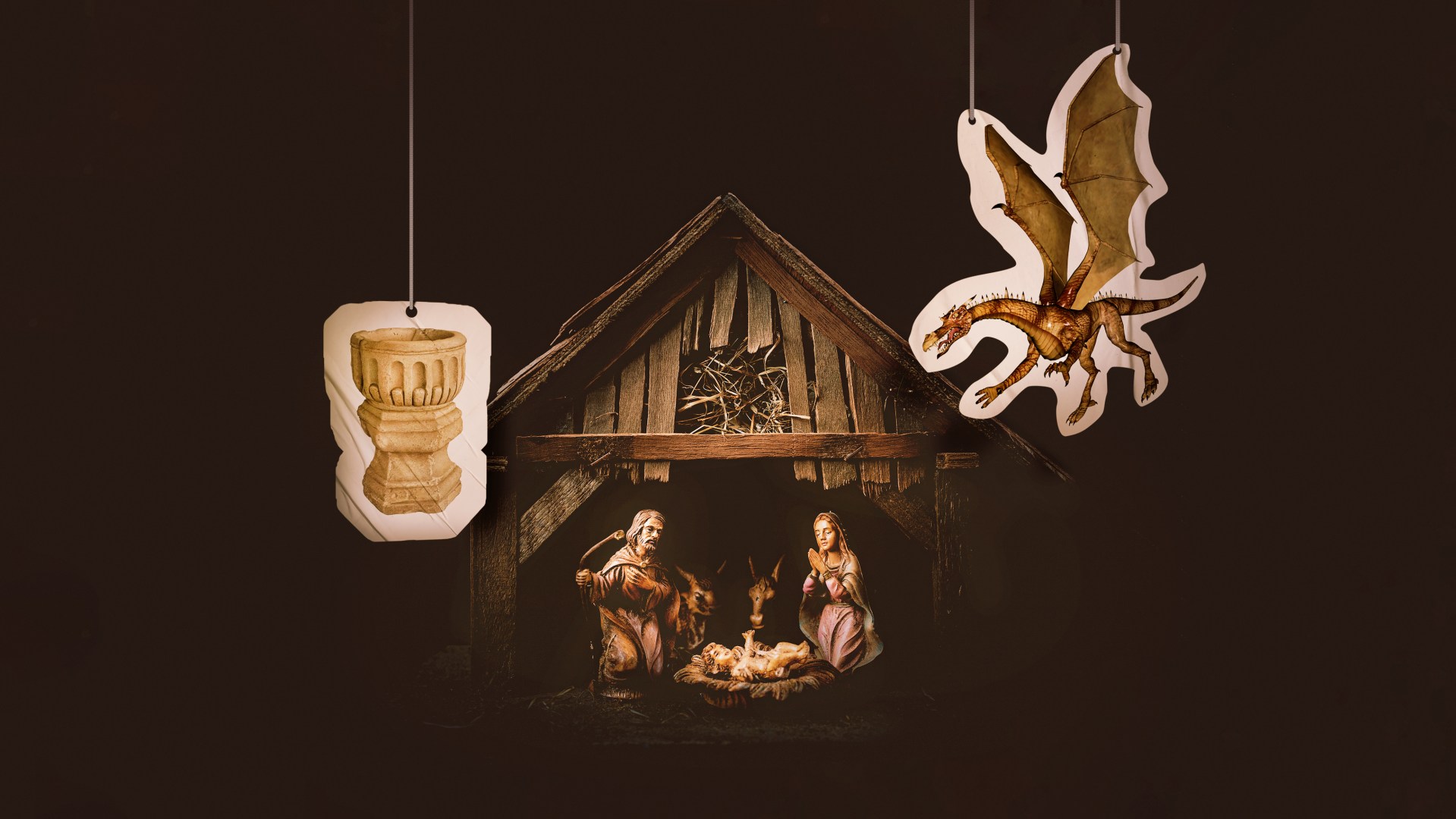
For Your Next Nativity Scene, Add a Dragon and a Baptismal Font

In the story of the Incarnation, symbols of death and danger remind us of God’s renewal.

Christianity Today December 15, 2022
Illustration by Rick Szuecs / Source Images: Julie / Lightstock / RawPixel / WIkimedia Commons

The next time someone wants a good Advent book, Fleming Rutledge recommends Cormac McCarthy’s The Road, which deals with the total breakdown of society. There is no hope in sight, only cruelty. Like voices crying in the wilderness, a father and son travel through the ravaged wasteland of what used to be the United States, stewarding the one thing they have left: tender love for one another.

“Advent,” Rutledge notes, “is not for sissies.”

What can apocalyptic bloodbaths teach us about Christmas? How can they prepare the way for Christ’s coming?

Stories like The Road invite us into the stark realism of what Mary and Joseph faced under the cruel inflexibility of Roman rule and the hopelessness that all of humanity has faced to varying degrees over time. Their literary genre confronts us with death, judgment, apocalypse, and hell—just as Scripture does.

Exhibit A: The Book of Revelation, known in the King James era as the Apocalypse. Some scholars place John’s writing of the book as prior to the Gospels. That would mean his “nativity” would have been the first one told.

His Spirit-inspired perspective on the birth of Jesus might surprise us: “The dragon stood in front of the woman,” he writes, “who was about to give birth, so that it might devour her child the moment he was born” (Rev. 12:4).

The dragon of Revelation has indeed invaded our nice, tame Nativity scenes. Perhaps we need The Road, or McCarthy’s other masterpiece, Blood Meridian, to shake us out of our stupor and remind us that we too have been faced with a spiritual desolation of apocalyptic proportions. Or perhaps we need the literal voice of one calling in the wilderness.

John the Baptist still stands at the crossroads and calls to us to “prepare ye the way of the Lord.” Every December, baptism is part of our entrance into Advent expectation and hope. It’s how we step into the church calendar. It immerses us in Christ’s life, death, and resurrection. And it plunges us into the Jesus-reality now, which has been flung open to us.

In the early church, people were baptized in a church-adjacent building called a baptistery, shaped like a Roman funeral building. With a twinkle in their eye, early Christians built these baptismal houses to remind their converts: You are coming here to die! You have already died. Sin has killed you! You are just enacting your death that has already happened. And in this place where you are joined to Christ’s death, you will rise.

Some fonts were shaped like crosses, where the new believer descended into the cruciform shape and came out reborn. Others were shaped like wombs, echoing Cyril of Jerusalem’s comment that in baptism, “you died and were reborn, and that saving water became both grave and mother for you.”

John the Baptist stands at the gateway to Advent because baptism is our way into life in Christ, and the church calendar invites us into that drama. Because of who Jesus is, the historical events of his life are also part of eternity—our present and our future. We don’t just watch Jesus fast; his fasting makes it possible for our fasts to have meaning. We don’t just celebrate Jesus being born; his birth makes it possible for our human nature to receive God. We don’t just watch Jesus obey; we now can obey.

We think the church calendar is about simply having an alternative sense of time, and in some ways it is. But it’s more about becoming. It’s anthropology, not chronology. It’s the lived drama of being in Christ.

Just as our entry into Christ’s life is through our symbolic death in baptism, so Advent and Lent continue to draw us toward the reality of Christ’s death and resurrection. Early church icons of Jesus’ birth are riddled with images of death—a baby located in a tomb-like cave, wrapped in white linen—all to remind us of that later cave and shroud that brought the entire world back to life.

In his poem “Nativity,” the poet Scott Cairns calls the nativity scene “the core / where all the journeys meet / appalling crux and hallowed cave and womb.”

Advent isn’t just a private spiritual practice meant to get us ready to celebrate Christmas, nor is it a solo journey that we undertake by ourselves. It puts us in touch with the apocalyptic suffering that’s happening right now, as well as the immediate, frantic need for relief. We participate in it together with the global body of Christ.

Terry Waite, a hostage negotiator who himself was taken hostage for five years, speaks to the power of a global community intimately anchored in Christ. Chained for 23.5 hours a day to a basement wall in Lebanon in utter darkness, he anchored himself to the rhythms of the world church.

“I fell back on the language of the Prayer Book,” he says. “I saved a little bread and water in my beaker and I said to myself the communion service. … In my imagination, I was taking part in this act with congregations across the world, in parts of England or America. I joined with them.”

The small bit of bread and water given to him daily became his connection to a community gathering around the broken body of their Lord. Annually, as his basement cell made its slow journey around the sun again, the worldwide church was also making its slow journey in the footsteps of their Lord, from Advent to Easter.

These ways of staying connected to his Lord and his Lord’s body gave Waite a sense of solidarity that moved him beyond his confinement. His solo experience of these ancient church practices moved him into community and profound connection.

For the early Christians, too, caught in an apocalyptic landscape of their own, Christ’s birth pointed forward to death—both his and their own. They knew that following him might require suffering and, if not physical death, the inner agonies and ecstasies of death to self. But in this journey, they were never alone.

If indeed the Book of Revelation predates the Gospels, as some believe, then the very first Christmas story tells of a helpless woman fleeing a dragon. And if indeed Advent does “begin in the dark,” as Fleming Rutledge reminds us, we are all together awaiting the light that can only come from outside of us. We need to listen for the voice of one crying out in our personal apocalypses, reminding us of our baptisms and the way through our damaged landscapes.

Julie Canlis is the author of A Theology of the Ordinary (2017) and Calvin’s Ladder (2012), winner of a Templeton Prize and a Christianity Today Award of Merit.

News
Wire Story

Urbana 22 Attendance Expected to Drop to the Lowest in Decades

InterVarsity leadership says the upcoming missions conference will draw around 6,000 people, a fraction of pre-pandemic crowds.

Urbana 18

Urbana 18

Christianity Today December 15, 2022
Courtesy of InterVarsity Christian Fellowship / RNS

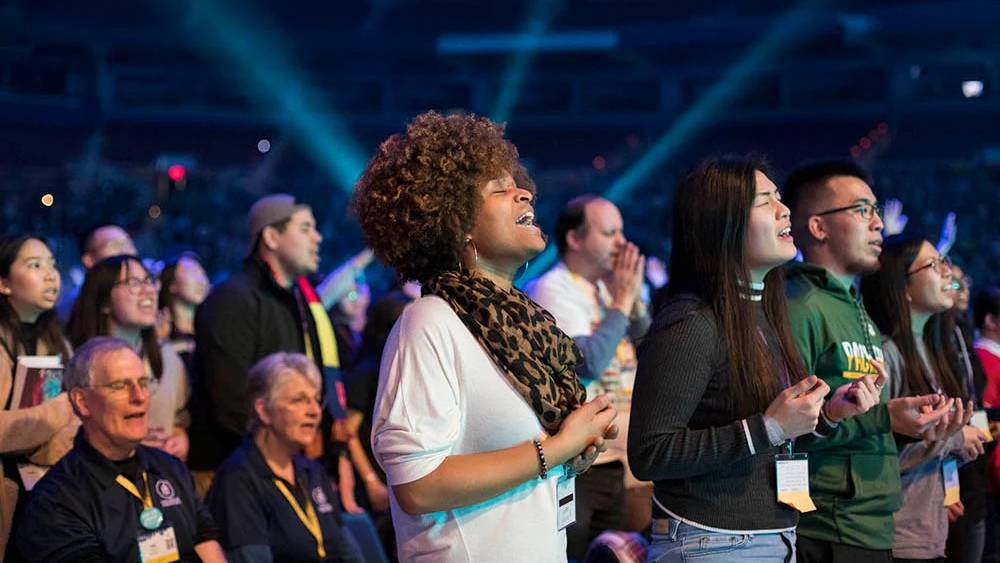
For the first time since 2018, thousands of college students will gather a few days after Christmas to talk about God’s mission to the world and their place in it.

Organizers of Urbana 2022, a missions conference run by the evangelical campus ministry InterVarsity Christian Fellowship, expect about 6,000 at the conference, to be held December 28-31 in Indianapolis.

That’s about 3,000 fewer students than organizers had first hoped for, said Greg Jao, chief communications officer for InterVarsity, and about 4,000 fewer than attended the Urbana 2018.

Founded in 1946, the Urbana conference has long been a highlight of evangelical ministry to college students. From 1948 to 2003, the conference was held on the campus of the University of Illinois at Urbana-Champaign.

In 1970, Urbana drew about 12,000 students, and by the 1980s and 1990s, it was drawing more than 18,000. Urbana 2000, the largest conference to date, drew more than 20,000. (CT reported that the event drew around 10,000 attendees in 2018 and 16,000 in 2015.)

Past conferences have included evangelical legends such as Billy Graham, Elisabeth Elliot, Francis Schaeffer, Rick Warren, and John Stott as speakers.

Jao said that lingering concerns over COVID-19 and the country’s economic woes are helping to drive projected attendance down for the conference, usually held every three years, but delayed until this year by the pandemic. Like many churches, he said, InterVarsity and other campus ministries are still rebuilding their attendance.

With the first normal school year since the pandemic started in 2020, many students are taking their accustomed Christmas break at home for Christmas. Others are still wary of large gatherings, especially one that lasts several days.

“COVID has had an effect,” said Jao, “in the sense that people aren’t sure if they want to gather with large groups of strangers. Some also just think, ‘I want to be home for Christmas.’”

Inflated travel costs likely play a role as well. Jao said he’s heard from students who were planning to come but balked when they saw airline tickets running twice as high as in 2018.

Jao said InterVarsity leaders have known for months that attendance would likely be down. They’ve been focusing on getting students to come to local conferences or back involved in regular activities at InterVarsity’s 700 chapters across the country

Getting students to sign up for the conference has been a challenge as well. Generation Z students, he said, like to keep their options open and appear less willing to sign up in advance. So past recruitment strategies for the conference, such as offering “early bird” discounts, haven’t worked as well as they have in the past, said Jao.

Urbana has long been known for its focus on addressing the changing role of missionaries in the world, and in addressing social issues in the US. The 1970 conference included addresses from African theologian Byang Kato and Indian evangelist Samuel Kamaleson as well as a speech from Tom Skinner about the connection between social issues and the Christian faith.

“There is no possible way you can talk about preaching the gospel if you do not want to deal with the issues that bind people,” Skinner told students in 1970. “If your gospel is an ‘either-or’ gospel, I must reject it.”

The 2015 Urbana conference caused some controversy after speakers expressed support for the Black Lives Matter movement.

Jao said that the 2022 conference will feature speakers and music from the church outside the United States, designed to help students experience worshipping a “global God.”

“The goal is not to have a Westerner up there saying, ‘Go,’” he said. “It’s actually to have the global church say, ‘We welcome you. Come.’”

He suspects that the decline in 2022 is more of a blip than a long-term trend. And he said that missions remain a core focus of InterVarsity, which serves more than 45,000 students in its chapters. About half the students involved in InterVarsity are students of color.

“We believe God’s bringing a group of core college students who need to hear his invitation,” he said. “Inviting people to God’s global mission has been part of our history from the very beginning, and we’re going to keep doing it.”

Theology

Christmas Grafts Us into God’s Nontraditional Family

After losing my father as a child, I learned to see the Incarnation as my true lineage.

Christianity Today December 14, 2022
Illustration by Mallory Rentsch / Source Images: WikiMedia Commons

As a kid, I loved combing through the Christmas cards my family received each year. In the days before social media, those annual pictures in the mailbox helped me feel connected to long-distance friends and family.

After my father died, however, Christmas cards served as a reminder of what I’d lost. Photos of smiling, intact families and their cheerful greetings were like salt in a wound. Holidays are always hard for the bereaved. But for me, they added a layer of shame to the grief I carried year-round. As a hurting child, I intuited: My siblings and I were no longer Christmas card material, because our family was no longer whole. For that reason, we never sent another holiday greeting after my father’s death.

Our cultural fixation with the nuclear family takes on a religious tone around Christmas. We conflate Mary, Joseph, and Jesus nestled in the crèche with our own sentimental notions of family togetherness. We invite families up to light the Advent candles in church. We gather around extended family tables to celebrate. In all the hype, it’s easy to assume that “peace on earth” comes exclusively in the form of a whole and healthy family in front of a Christmas tree.

To be clear, family is a gift from God worth celebrating and supporting. God created the family in part to teach us how to love and be loved. The world needs to see families doing the hard and holy work of togetherness. But as New Testament scholar Esau McCaulley writes, “Our image of family at Christmas—well-decorated, wealthy, happy, and intact—actually sits uneasily beside the gospel of the first [Christmas].”

Jesus’ own family was not exactly Christmas card material. His first “Christmas” (his birth) was not spent in a cozy home with a traditional family but in an outhouse for animals with an unwed mother and an adoptive father. His childhood was marked by the social shame of his mother’s pregnancy (Matt. 1:18–19), the terror of his family’s displacement in Egypt (Matt. 2:13–15), and the realities of poverty (Luke 2:24).

Moreover, Jesus didn’t grow up to have a traditional family himself. He remained single and celibate until his death.

As someone who lost my dad when I was young, I’ve found great comfort in the fact that Jesus’ family story is so complex. From the moment of his conception, Emmanuel demonstrates that he is God with all of us—including the disenfranchised, the poor, the unwed, and the bereaved. The magic of Christmas, of Christ’s nearness, is that it belongs precisely to those who seem excluded from it. Jesus’ own family is proof of this truth.

But Jesus and his parents—named in church history as the holy family—also model for us a new, broader framework that Jesus himself inaugurated. When questioned about his familial loyalties, Jesus taught, “Whoever does the will of my Father in heaven is my brother and sister and mother” (Matt. 12:50). Jesus’ human parents were the first characters in the gospels to demonstrate this obedience.

Mary’s famous “yes” to Gabriel’s message is what made her Jesus’ mother. She consented to God’s will and welcomed him in the most personal, costly, and embodied way. This makes Mary a unique person in salvation history as well as an example for all Christians.

Similarly, Joseph obeyed the angelic command to take Mary as his wife and welcome her son as his heir (Matt. 1:18–25). Joseph’s profound humility and servanthood illustrate God’s countercultural kingdom and remain a prophetic witness for us today.

In their collaborative obedience to God, Mary and Joseph lived together the way that Adam and Eve were intended to. Their partnership represents the beginning of redeemed humanity—the family of God. In other words, the main characters in the Christmas story don’t just give us a model for the nuclear family. They give us a model for the church.

In my own childhood, during and after my father’s death from cancer, the church became to me a holy family—a community that fathered and mothered me in obedience to God. They surrounded and supported my mom as she learned how to raise six children as a widow. Christians fed, clothed, and—for a season—housed my siblings and me. In particular, a handful of men faithfully discipled us as spiritual fathers. Their sustained presence was life-changing for me.

These years later, the influence of those men makes me think of Joseph, a man whose fatherhood was not limited by biology. As Pope Francis writes of Joseph’s ministry, “Fathers are not born, but made. … Whenever a man accepts responsibility for the life of another, in some way he becomes a father to that person.”

Jesus did not come to abolish the family. But he did come to expand it. He came so that we could share in his sonship and sit at his family table. He came to turn strangers into siblings and childless men and women into spiritual fathers and mothers. This doesn’t erase the ache of familial estrangement, bereavement, or unwanted singleness. But it does reframe that ache. And it should reframe the way all Christian households understand the ministry of their common life.

In his book Habits of the Household, Justin Whitmel Earley challenges nuclear families to embrace hospitality as a form of mission.

“We don’t care for our household because our responsibility is to our bloodline and no one else—that is a cloaked form of tribalism,” he writes. “Rather, we care for the family because it is through the household that God’s blessing to us is extended to others.”

As Christmas approaches, we can reflect on the small, nontraditional household that extended God’s blessing to the world through the birth of Christ. And we can marvel at how that household expands to encompass each of us.

I marvel at that truth every time I look at an icon of the holy family that sits on my desk. It was given to me by a friend when I was pregnant, and it usually inspires me to pray for my own ministry as a mother to three children. But occasionally, I think of it as a family portrait in which I’m somehow mysteriously present, as well.

To be clear, Jesus’ human family was and is distinct. But his spiritual family includes those who are born “not of blood nor of the will of the flesh nor of the will of man, but of God” (John 1:12–13, ESV). This family is made from every tribe and language and nation, and its destiny is eternal fellowship with the Father (Rev. 7:9–10).

One particularly difficult Christmas a few years ago, when I was grieving the sudden loss of my brother, I discovered another image that features the holy family. In a drawing called “Mary and Eve,” Eve is naked, sorrowful, and entangled by the serpent at her feet. Mary is pregnant, dressed in white, and stepping on the head of the same serpent.

That image has become a personal sort of Christmas card. It reminds me not to look for ultimate fulfillment in any iteration of the nuclear family but to entrust myself and my loved ones to the Son who makes us all sons and daughters.

In the face of profound loss and enduring loneliness, this unbreakable family lineage sustains us. It teaches us how to live together as a community of brothers and sisters until the Lord comes. And it embeds our grief in a larger hope of the reunion—and resurrection—that awaits.

Hannah King is a priest and writer in the Anglican Church of North America. She serves as an associate pastor at Village Church in Greenville, South Carolina.

Culture

Unitarians and Episcopalians Created American Christmas

Contributor

But evangelicals have rightly made it more gospel centered.

Christianity Today December 14, 2022
The New York Public Library / CCO / Raw Pixel

Conservative evangelical Christians have sometimes been eager advocates of the modern campaign to “keep Christ in Christmas” and preserve the traditional religious meaning of the holiday.

There’s one major problem with this campaign: The original religious message behind the American Christmas was not evangelical at all.

Instead, it was the creation of Unitarians, Episcopalians, and other liberal Protestants who had little interest in several key tenets of the evangelical understanding of the gospel.

Those of us who are evangelical in our faith can still have a merry Christmas. But if we want to do so in a way that foregrounds the gospel, we may have to discover a new approach to the holiday that does more than simply preserve the old.

Here’s the story.

Among the 17th- and 18th-century American colonists, the Christians who most closely resembled modern evangelicals uniformly refused to celebrate Christmas. The New England Puritans were strong opponents of Christmas, not only because of its connections with Roman Catholicism but also because, in 17th-century England, it had become a day known more for excessive drinking and gaming than for any religious observance.

Even at the beginning of the 19th century, long after the Puritan religious fervor had largely dissipated in New England, Congregationalists in the region continued the Puritan practice of not observing Christmas in their homes or their churches. Massachusetts, which in the Puritan era punished those who dared to celebrate Christmas, did not recognize it as a state holiday until 1855.

Though perhaps slightly less hostile to Christmas than the Puritans, the major American evangelical denominations of the late 18th and early 19th century likewise showed no interest in the holiday. Baptist, Methodist, and especially Presbyterian churches of the early 19th century shunned the idea of Christmas services.

It was therefore left to the Episcopalians to celebrate Christmas—which they proudly did. In the South, they celebrated the same way they did most holidays: by drinking copious amounts of alcohol and shooting guns. And in the Northeast, they did so by going to church.

As Penne Restad describes in Christmas in America: A History, early 19th-century New England Congregationalist children whose parents ignored Christmas marveled when the Episcopalians in their towns wrapped their church buildings in garlands of greenery and gathered to sing on Christmas morning. Some of them expressed a longing for a little of this Christmas cheer. The yearning became more acute when German Lutheran immigrants brought new Christmas traditions to America—especially the Christmas tree and Santa Claus.

At that moment, anti-Calvinists in the Northeast decided the time was right to bring some Christmas jollity into their communities while avoiding the excessive drinking and loud revelry of holiday celebration elsewhere. It was time, in other words, to invent a new, family-friendly, explicitly religious tradition—but in ways that Calvinists and other evangelicals wouldn’t have necessarily found reassuring.

Nearly all the promoters of Christmas in the early 19th century were Episcopalians or Unitarians who saw in the holiday an antidote to the allegedly dour Congregationalism they identified with Puritan Calvinism. The blessings of Christmas, they thought, must be universal, just as they believed God’s offer of salvation was. And Christmas must be a time of joy, not a moment to reflect on the sinful condition of humanity.

Some American promoters of Christmas were influenced by the popular British author Charles Dickens, whose story A Christmas Carol portrayed the holiday as a time when the cantankerous, miserly Ebenezer Scrooge discovered the joy of generosity.

Dickens, who was raised a nominal Anglican but joined a Unitarian chapel as an adult, believed in the humanitarian teachings of Jesus. He used his fiction to promote the idea of Christmas as a day for all people to follow their better impulses, become a little less selfish, and adopt a charitable disposition toward all.

Unitarians, some of the most anti-Calvinist of the early 19th-century Protestants, were optimists about the possibility of moral reform through human effort. They envisioned Christmas as a day that would unite Christians across the theological spectrum and encourage loving attitudes that would improve society.

In Dickens’s A Christmas Carol, Scrooge experiences what amounts to a Unitarian Christmas conversion: He becomes a better man. If Jesus is necessary for such a conversion, he’s needed only as an inspiring moral example of human possibility, not as an atoning savior.

Unitarians, after all, didn’t accept the idea of substitutionary atonement, and they likewise rejected the idea of Jesus’ divinity and all aspects of Trinitarian theology. Yet many became passionate advocates of Christmas in the mid-19th century because they saw in the holiday a story of God’s love for the world and the optimistic hope of universal human brotherhood.

The best-known 19th-century Christmas hymns penned by Unitarians have become beloved classics because they appeal to our longing for a world of love, beauty, peace, and justice.

“O Holy Night,” translated from the French into English by the liberal Massachusetts Unitarian and antislavery advocate John Sullivan Dwight in 1855, honors Jesus as a great teacher of social ethics and emancipation—a popular theme among New England abolitionists in the years leading up to the Civil War.

Likewise, another 19th-century New England Unitarian Christmas hymn, Henry Wadsworth Longfellow’s “I Heard the Bells on Christmas Day,” expresses optimism in the midst of the Civil War that God’s peace and righteousness will eventually prevail.

Christmas hymns penned by 19th-century Episcopalians gave much greater recognition to Jesus’ divinity and saving power than Unitarian carols did. But rather than highlight Jesus’s saving work on the cross (as evangelicals wanted), they presented a more peaceful, quiet image of the sleeping Jesus who could be encountered through tranquil contemplation.

This was the message of “O Little Town of Bethlehem,” written by Boston Episcopal rector Phillips Brooks in 1868, and “Silent Night,” which was translated into English by a New York Episcopal minister in 1859.

By contrast, early 19th-century evangelical Protestant hymnals had focused far more attention on the atoning death of Jesus than on his birth. And the few hymns that did touch on his birth—such as Charles Wesley’s “Hark the Herald Angels Sing”—gave extensive treatment to Christ’s saving mission, his kingship, and the “second birth” that he would bring to humanity.

Yet in the late 19th century, many evangelicals who had not celebrated Christmas in their churches began singing the Episcopal Christmas hymns as eagerly as anyone else. By 1870, when Christmas officially became a federal holiday in the United States, Protestant churches across the theological spectrum observed the day with at least a Christmas sermon—if not an entire Christmas service.

Without realizing it, then, many evangelicals absorbed much of the theology of the 19th-century Unitarians and Episcopalians because it pervaded most of the traditional hymns and Christmas readings they had come to adore.

Yet over the course of the 20th century, the “Christmas spirit” became increasingly separated from the historical Jesus in American public life.

In the mid-19th century, even the Unitarians affirmed the teachings of the historical Jesus and believed they would lead to a happier, more emancipated society. But by the mid-20th century, some public figures who welcomed the chance to talk about the “Christmas spirit” shied away from any specific invocation of Jesus.

In numerous Christmas messages, for example, US presidents echoed the phrase “peace on earth and good will to men.” But it was often separated completely from any mention of Jesus Christ.

Today, even the oldest Americans can’t remember a time when public expressions of “Merry Christmas” were grounded in anything more substantive than an ahistorical, vaguely Unitarian wish for a universal “Christmas spirit” of peace and goodwill.

Evangelicals who believe in the gospel of the Incarnation cannot therefore find much comfort in public campaigns to replace “Happy Holidays” with “Merry Christmas” or set up creches in the town square. What we need is not a return to the 1950s or even the Victorian era but rather a recovery of wonder at the incarnate God coming to earth in the form of a baby in order to save humanity.

For better or worse, evangelical Christians didn’t play much of a role in creating American Christmas, and as a result, the form of the holiday wasn’t very evangelical. But that’s okay, because it points to the gospel anyway—not by what it says but by what it’s missing.

The 19th-century Unitarians who wanted Christmas because they longed for better social relations were right to earnestly desire this aspect of the kingdom of God. But as evangelicals know, for this to work, people need a Jesus who was just as divine as he was human, and they need his atoning death.

The Victorian Episcopalians who became sentimental in their reflection on the sleeping Christ child were right to bow their knee to the baby in the manger. But maybe the night when he entered a world of pain and sin was a lot less silent than they imagined.

And the 20th-century liberal Protestants who tried to appeal to a universal “Christmas spirit” were right about the invisible power at work on that day. But maybe it could be better identified as the Holy Spirit rather than as some universal human beneficence that could save the world apart from Jesus.

This Christmas, believers in the gospel will gather together. They’ll marvel at the incarnate Son of God, whose entry into the world made possible the “Christmas spirit” that numerous people across the theological spectrum have longed for.

But Christ’s birth marks more than a humanitarian project or a sentimental story. It’s about the ultimate divine gift to a sinful world—a world that in the 19th century, as in the first and the 21st centuries, comprehended it not.

Daniel K. Williams is a professor of history at the University of West Georgia and the author of Defenders of the Unborn: The Pro-Life Movement Before Roe v. Wade.

Books

Apathy Used to Be a Virtue. But It’s Our Culture’s Hidden Vice.

How acedia became the enemy of our souls.

Illustration by Chidy Wayne

The concept of apathy has a long history in the Western world. We are not the only culture to treat it as “cool.” The great philosophers of the past debated its meaning and value. In fact, among certain Greek philosophers, apathy was one of the greatest things one could aspire to. The Greek term apatheia means “without pathē” (passions), and in the thought of some philosophers, passions often referred to violent emotions such as love, fear, grief, anger, envy, lust, pain, or pleasure that arise as responses to the outside world.

Overcoming Apathy: Gospel Hope for Those Who Struggle to Care

Overcoming Apathy: Gospel Hope for Those Who Struggle to Care

Crossway

192 pages

$9.36

According to the Stoics, for instance, the wise—those who desire a life of flourishing—are totally free from passions. In other words, the wise are not vulnerable to the ups and downs of life in this world. They are self-sufficient; the external happenings of life “merely graze the surface” of their minds, as Martha Nussbaum observes in The Therapy of Desire. The goal of life is what we might call “equanimity,” or a calmness of soul. Even great non-Stoic philosophers such as Aristotle acknowledged the value of limiting the passions, for the good life was thought to await the apathetic.

Early Christian thinkers were well aware of the ancient philosophical tradition of thought that valued apathy. Interestingly, like their philosophical forebears, they sought to apply the concept of apatheia not only to human beings, but also to God.

Those who have taken an introductory course in theology might have encountered the term impassibility in discussions about God’s attributes. Impassibility is a Latin translation of the Greek term apatheia, and it was a concept much discussed among the church fathers.

According to theologian Pavel Gavrilyuk, to speak of God as impassible is to say that “he does not have the same emotions as the gods of the heathen; that his care for human beings is free from self-interest and any association with evil.” Impassibility means that God is not overwhelmed by emotions, and neither are his emotions affected by anything outside himself.

While it may be appropriate to ascribe “emotions” to God, impassibility (or divine apatheia) rules out those that are unbecoming of him. So, for example, when we speak of God as love, we really are speaking of a passionate God. But it is an impassible passion, a love not dictated by the outside world. In other words, God is not subject to violent passions as we are. Apatheia is another way of speaking of the unchangeableness and steadfastness of God’s affection for all that he is and all that he has made.

According to some thinkers in the ancient church, human apathy is a virtuous state of being and an imaging of God’s own virtue. A person who has apatheia has ruled his or her passions through discipline and attained a true love of God. According to Evagrius of Pontus, a fourth-century monk, “Love is the offspring of impassibility.” Apatheia was something to be sought, the culmination of an examined, chastened, and well-ordered life.

Yet the kind of apathy we deal with is not about consciously trying to steel ourselves against the ups and downs of life or about trying to cultivate a detachment from the world that produces a love for God. I believe the early Christian concept that best overlaps with what we would call apathy is not apatheia, but a less-than-savory term—sloth (or acedia).

When we think of sloth, we may think of a slow-moving creature or a couch potato who spends all day in pajamas eating pints of Ben & Jerry’s. However, Christians have described sloth in a far richer way.

Acedia is a Greek term that literally means “indifference, lethargy, exhaustion, and apathy.” One of the earliest and most influential thinkers on acedia was Evagrius of Pontus. He compiled a list of eight deadly temptations that later morphed into what we know as the seven deadly sins. Although he is unknown to many of us, his reflections are insightful into the spiritual dimensions of apathy:

Acedia is an ethereal friendship, one who leads our steps astray, hatred of industriousness, a battle against stillness, stormy weather for psalmody, laziness in prayer, a slackening of ascesis [strict self-discipline], untimely drowsiness, revolving sleep, the oppressiveness of solitude, hatred of one’s cell, an adversary of ascetic works, an opponent of perseverance, a muzzling of meditation, ignorance of the scriptures, a partaker in sorrow.

Acedia is a constant companion. It targets the spiritual practices that are supposed to bring us life, such as prayer, stillness, Scripture reading, hard work, and perseverance in doing good. In his practical instructions to fellow monks about various vices, he devotes more space to describing acedia than any other.

Similarly, another monk and important thinker, John Cassian, describes acedia as a restlessness that entices us to pursue everything but our most important duties. Acedia distracts. It makes us lazy and sluggish toward our spiritual and practical responsibilities. It is a selective laziness that makes everything else appealing.

One recent writer, Nicole M. Roccas, helpfully sums up acedia in Time and Despondency, pointing out that it can take different forms in different people. For example, it can manifest as (1) restlessness, the inability to complete a book, pray at length, or finish a task; (2) productivity accompanied by anger or boredom over the things one is doing; or (3) an inclination to sleeping, eating, worrying, and distraction.

A common thread weaving these various manifestations together is purposelessness or aimlessness. Things are either left undone, done for the wrong purpose, or done for no purpose whatsoever. As Rebecca Konyndyk DeYoung observes in Glittering Vices, the heart is numb to the “demands of love”—that is, the things God has called us to.

In Creed or Chaos?, Dorothy Sayers calls acedia “the sin which believes in nothing, cares for nothing, seeks to know nothing, interferes with nothing, enjoys nothing, loves nothing, hates nothing, finds purpose in nothing, lives for nothing, and only remains alive because there is nothing it would die for.” This is purposeless, aimless indifference.

Acedia, as Christians have thought about it through the ages, is really a helpful category for understanding what we know as apathy. As a diagnosis of the soul, it points to the fact that whatever is going on in us is not merely psychological or emotional, but also spiritual. In fact, acedia seems to be characterized most by its resistance to the spiritual. And isn’t that what we find so troubling about apathy?

There has been significant psychiatric research on apathy, especially among people with severe illnesses such as Alzheimer’s or Parkinson’s disease.

However, the research may have a broader application to all who are trying to make sense of apathy. One of the most commonly cited definitions describes apathy as a lack of motivation that “is not attributable to a diminished level of consciousness, an intellectual deficit, or emotional distress.”

If the lack of motivation is accompanied by a lack of effort, lack of interest in learning, or lack of emotion, then the patient might be clinically diagnosed with a real condition. Some patients simply report apathy as “the get up and go that got up and went” or “the spark is missing.” These phrases do a great job articulating a feeling many of us share.

However, the value of clinical precision is that, as we get better at defining the ailment, we are better positioned to deal with it. For instance, apathy overlaps with other conditions, such as depression.

Also, studies on apathy have been able to narrow down the various factors that contribute to it, such as environmental or biological factors. For example, immigrants or members of ethnic minorities sometimes adapt to differences in culture or language by becoming apathetic. The change in culture, or a feeling of being isolated within a culture, interferes with the pursuit of their values or goals, and apathy is just one way of coping or adapting to their environment.

Studies also show that the kind of apathy we’re concerned with is largely an acquired response to the world. It is not necessarily something you’re born with and, therefore, destined to have for the rest of your life. Relatively healthy functioning people who are apathetic have lost interest in things—but only in some things. In fact, psychologist Robert S. Marin defines typical forms of apathy as “selective apathy.”

Our apathy is the exact opposite of the apathy our forebears lauded.

What, then, is apathy? Who exactly is this enemy that stands against us? We are miles (and hundreds of years) away from the ancient virtue of apatheia. Our apathy is the exact opposite of the apathy our forebears lauded. Ours is loveless; theirs was defined by love. Ours denounces self-discipline; theirs required it.

Apathy is neither deep depression, despair, nor discouragement. It is not the mysterious movement of the faithful Christian groping in the darkness toward God. Rather, it is a middling posture that flits between confusion and disengagement.

Apathy, as the psychological literature has made us aware, is at root a deficit in motivation, effort, interest, initiative, and desire toward things we formerly found meaningful. It is a psychological disorder, possibly not of the same magnitude as clinical depression, but still debilitating in its own way. Acedia merely describes the blahness we feel toward the things of the Spirit; it is a name for the spiritual dimension of apathy.

Apathy is a psychological and spiritual sickness in which we experience a prolonged dampening of motivation, effort, and emotion, as well as a resistance to the things that would bring flourishing in ourselves and others.

It is a sin that expresses itself as restlessness, aimlessness, laziness, and joylessness toward the things of God. It is not just a part of highly evolved adult behavior, something like being too cool to care. It is an illness.

Scripture speaks of sin as a sickness that spreads to all people from its source in Adam (Rom. 5:12) and remains alive in us, producing all kinds of evil (7:8, 20). It also declares that we were slaves to sin, needing release from captivity (John 8:34–36; Rom. 6:6). Finally, sin is described as lawlessness (1 John 3:4), bringing condemnation (Rom. 5:18; 6:23), and requiring propitiation (3:23–25; 1 John 2:2).

In Not the Way It’s Supposed to Be, Cornelius Plantinga describes sin as the “vandalism” of shalom. Shalom, biblically speaking, means “universal flourishing, wholeness, and delight”—the way things were meant to be. We violate shalom when we turn against the very good order God has established. We subvert it when we live in such a way that undermines our and others’ well-being and joy. And because shalom is ultimately about our relationship to our maker, its vandalization is directed toward God.

As Plantinga writes,

Sin is not only the breaking of law but also the breaking of covenant with one’s savior. Sin is the smearing of a relationship, the grieving of one’s divine parent and benefactor, a betrayal of the partner to whom one is joined by a holy bond.

This smearing happens through our actions as well as our attitudes. Apathy is a sickness of the soul; it is a deformity of heart that needs healing. Apathy, as many of us experience it, is a form of bondage. We can’t seem to lift ourselves out of it, finding ourselves regularly surrendering to its advances.

Ultimately apathy, as a refusal to love the one who is most loveable, is a moral and spiritual crime. It is a sin in the most basic sense. Its origins may be mysterious, but its orientation is not. It is a coldness to God and an indifference to the things that bring shalom—both of which need to be forgiven, conquered, and healed.

We ought to grieve our apathy, but we do not grieve it as those who have no hope. God is with us and for us in our apathy.

Uche Anizor is an associate professor of theology at Talbot School of Theology. Content taken from Overcoming Apathy: Gospel Hope for Those Who Struggle to Care by Uche Anizor ©2022. Used by permission of Crossway, a publishing ministry of Good News Publishers.

Cover Story

Christianity Today’s 2023 Book Awards

Our picks for the books most likely to shape evangelical life, thought, and culture.

Illustration and Lettering by Chidy Wayne

[Editor’s note: The 2024 CT Book Awards are now live! They can be found here.]

When my alarm buzzes on the morning of an especially busy day, I often respond with a strange lack of urgency. A low rumble of dread builds as I ponder all the chores, errands, or work tasks that need completing. But instead of resolving to get up and get cracking, I linger in bed, nearly paralyzed by the weight of responsibility. I know what I need to do, but for some reason I can’t summon the willpower to do it.

Something similar plays out in the lives of many Christians, according to Uche Anizor, a professor at Biola University’s Talbot School of Theology. They know they’re supposed to love God, study Scripture, and pursue a life of holiness, but they can’t escape the clutches of spiritual indifference. In Overcoming Apathy: Gospel Hope for Those Who Struggle to Care, Anizor appeals to lukewarm believers, not with an accusing glare or a motivational speaker’s bullhorn, but with the compassion of someone who has fought this battle himself.

It’s a worthy choice for CT’s Book of the Year. Across the board, the judges who read and evaluated it commended Anizor for putting his finger on a problem that routinely flies under the radar, even as it sinks so many of God’s people into a spiritual quagmire.

Like Overcoming Apathy, all of our Book Awards winners have the capacity to awaken slumbering souls, whether they ring out with theological wisdom, literary beauty, pastoral warmth, or everyday encouragement. Don’t sleep on any of them. —Matt Reynolds, CT books editor

Apologetics & Evangelism

The Air We Breathe: How We All Came to Believe in Freedom, Kindness, Progress, and Equality

Glen Scrivener | The Good Book Company

The Air We Breathe is a book for this moment. Western society increasingly seeks to break free from its Christian moorings, yet at the same time it holds in high regard such values as equality, freedom, science, and compassion. Scrivener shows that these values (and more) are in fact thoroughly Christian. They appear self-evident to our 21st-century thinking, but they were certainly not the norm in the ancient world. Scrivener writes in an engaging and powerfully persuasive way, connecting with key cultural reference points from the past and present and combining apologetic arguments with compelling appeals to believers and seekers alike. His book is honest, eloquent, and at times shocking, but all in the interest of getting to the heart of the matter. —Sharon Dirckx, freelance speaker, author, and adjunct lecturer at the Oxford Centre for Christian Apologetics

Award of Merit

Is God a Vindictive Bully?: Reconciling Portrayals of God in the Old and New Testaments

Paul Copan | Baker Academic

Many Christians struggle to understand how a loving God could command some of the things he commands, and this book is the best single volume on the subject. Its scope is amazing. Most of us are familiar with what Copan calls “critics from without,” namely those, like Richard Dawkins, who argue that the God revealed in the Old Testament is evil. Copan forcefully answers their charges. But the real challenge today comes from “critics from within,” those who want to “unhitch” the Old Testament from the New, or worse, who wonder if the God of the Old Testament is different from the God of the New. Copan addresses questions about polygamy, “divine smitings,” foreign slaves, the Canaanite conquest, and much, much more. His work is well argued, discerning, and refreshing. —Clay Jones, chairman of the board of Ratio Christi

Finalists

Why Believe?: A Reasoned Approach to Christianity

Neil Shenvi | Crossway

Logic and the Way of Jesus: Thinking Critically and Christianly

Travis Dickinson | B&H

Biblical Studies

The Gospel and the Gospels: Christian Proclamation and Early Jesus Books

Simon Gathercole | Eerdmans

People are surprised when they first hear there are other gospels besides Matthew, Mark, Luke, and John. Why are these not in our Bibles? Various arguments have been proposed. One of the top New Testament scholars in the world, Simon Gathercole, brings all canonical and noncanonical gospels together and argues that the four canonical gospels share key theological elements that differentiate them: Jesus’ messiahship, his death, his resurrection, and his fulfillment of the Old Testament. While this book is geared toward scholars, it is an important argument for differentiating the canonical gospels from all the others. —Patrick Schreiner, associate professor of New Testament and biblical theology at Midwestern Baptist Theological Seminary

Award of Merit

The Book of Jeremiah

John Goldingay | Eerdmans

While it is difficult to get excited about a Bible commentary these days, Goldingay’s volume is a treasure trove of explorations into the text, traditions, and theology of the Book of Jeremiah. As a modern commentary, this volume interacts with an enormous amount of recent research and reveals Goldingay’s years of Old Testament scholarship. Without a doubt, The Book of Jeremiah will be a new standard reference for all researching and teaching the message of the Weeping Prophet. —William R. Osborne, associate professor of biblical and theological studies at College of the Ozarks

Finalists

The Samaritan Woman’s Story: Reconsidering John 4 After #ChurchToo

Caryn A. Reeder | IVP Academic

The Gospel of John: A Theological Commentary

David F. Ford | Baker Academic

Bible & Devotional

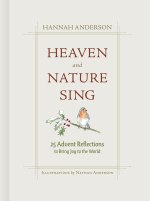
Heaven and Nature Sing: 25 Advent Reflections to Bring Joy to the World

Hannah Anderson | B&H

Written with creative eloquence, this book invites readers to pause and reflect on the hope, faith, joy, and love communicated through the coming of our Savior. Anderson uses ordinary, everyday moments as a lens through which to gain insight into parts of the Advent story we often overlook. While each devotional runs only a few pages, all are full of wisdom. In a time when Christmas tends to be tainted by commercialism, Heaven and Nature Sing is a breath of fresh air. —Elizabeth Woodson, author and Bible teacher

Award of Merit

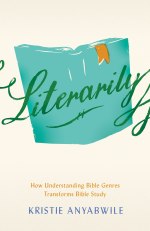
Literarily: How Understanding Bible Genres Transforms Bible Study

Kristie Anyabwile | Moody

Gaining tools to understand the Bible can feel like getting your prescription glasses updated: Things you didn’t realize you were missing suddenly emerge to your joy. That’s what happens when one uses the strategies Anyabwile recommends in this book. Her accessible writing is a helpful starting point for understanding the various forms of writing we find in the Scriptures, and her warm and passionate tone reminds us that our goal is not just knowledge, but transformation under the Word. —Taylor Turkington, author and director of BibleEquipping

Finalists

Scribes and Scripture: The Amazing Story of How We Got the Bible

John D. Meade and Peter J. Gurry | Crossway

Sheltering Mercy: Prayers Inspired by the Psalms

Ryan Whitaker Smith and Dan Wilt | Brazos Press

Children

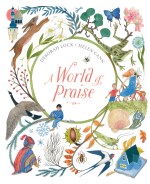
A World of Praise

Deborah Lock | Eerdmans

There’s beauty in this book, not only in its captivating pictures, but in its affection for the places and people that span God’s world. It makes us marvel at the earthly home God has created for us and long for the day Jesus returns to make it all flawlessly, sparklingly his. This book has a song-like quality. It’s a carol to the Lord of all the earth. Read it alongside a psalm that sings of how the world bursts with the Creator’s glory. Or read it alongside the prophets, who gaze at distant lands with the good news that the Savior is coming to restore all beauty and be the delight of all nations. —Jack Klumpenhower, author of Show Them Jesus: Teaching the Gospel to Kids

Award of Merit

How to Fight Racism Young Reader’s Edition: A Guide to Standing Up for Racial Justice

Jemar Tisby | Zonderkidz

How to Fight Racism gives a challenging overview of the history of racism in the US, opening the eyes of young people to the inequalities and segregation existing today. With practical advice and inspiring stories, Tisby empowers children to engage with the reality of racism and change things for the future. It’s great to see a book encouraging young people to seek out relationships across racial divides, armed with the humility of Christ’s example and the truth that all people are made in God’s image. —Steph Williams, children’s writer, illustrator, and graphic designer

Finalists

Bare Tree and Little Wind: A Story for Holy Week

Mitali Perkins | WaterBrook

Fly High: Understanding Grief with God’s Help

Michelle Medlock Adams and Janet K. Johnson | End Game Press

Young Adults

Who Am I and Why Do I Matter?

Chris Morphew | The Good Book Company

In the latest installment in his Big Questions series, Morphew asks—and answers—what are perhaps the primary questions adolescents wrestle with: Who am I? Why do I matter? Relatable and accessible, the book never talks down to its young readers. Rather, their concerns are taken seriously, whether fitting in with friends, grappling with social media, or simply wondering if they can be themselves without social repercussions. Morphew takes readers back to Scripture, offering examples from the Bible and plenty of reminders that we are made in God’s image, that we have worth based on that simple fact, and that we are called to follow Christ. Even better, he offers the hope of the gospel, so that past mistakes don’t define current self-worth or the future. —Betsy Farquhar, managing editor and staff writer at Redeemed Reader

Award of Merit

The Dragon and the Stone (The Dream Keeper Saga, Book 1)

Kathryn Butler | Crossway

With nods to Narnia and The Neverending Story, Butler has crafted a portal fantasy adventure with charm and wisdom for middle-grade readers. After encountering a dragon slurping chili in her kitchen one afternoon, main character Lily McKinley is led by the creature into the Realm, a new dimension where dreams live and the nightmarish Shrouds threaten at every turn. It’s a timeless formula, and Butler captures the high-stakes quest with a confident knowledge of her own world, as well as humor and a truly engaging voice. —Glenn McCarty, author of the Tumbleweed Thompson series

Finalists

You’re the Worst Person in the World: Why It’s the Best News Ever that You Don’t Have It Together, You Aren’t Enough, and You Can’t Fix It on Your Own

Scarlet Hiltibidal | B&H

Your New Playlist: The Student’s Guide to Tapping into the Superpower of Mindset

Jon Acuff | Baker

Christian Living & Spiritual Formation

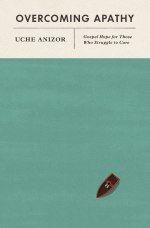
Overcoming Apathy: Gospel Hope for Those Who Struggle to Care

Uche Anizor | Crossway

One of the more surprising temptations I’ve experienced in recent years isn’t toward overt or egregious sin, but toward numb inaction. In a postpandemic world where politics are polarized and the news cycle constantly yells, “Fire!”, many followers of Christ are too overwhelmed to care. We’re paralyzed and unsure how to hold all the sorrows in our hearts. Anizor graciously meets Christians in their apathy, helping readers discover the origin of their own numbness and offering gospel-rooted reasons for renewed passion. He challenges us to love deeper, with a Christlike affection that throws off apathy and propels us to action. —Emily Jensen, cofounder and content director of Risen Motherhood

(Read CT’s interview with Uche Anizor.)

Award of Merit

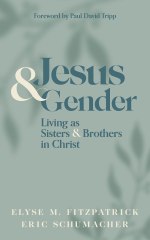
Jesus and Gender: Living as Sisters and Brothers in Christ

Elyse Fitzpatrick and Eric Schumacher | Lexham Press

Jesus and Gender is an incredibly timely book. There is much debate in evangelical circles surrounding the roles of men and women in the church, with complementarianism and egalitarianism the two common categories. But Fitzpatrick and Schumacher tackle the subject with fresh language, calling us to be “Christic” men and women who seek to “cooperate together for [God’s] glory” rather than “compete for glory amongst themselves.” —Vance Pitman, president of Send Network and founding pastor of Hope Church Las Vegas

(Read CT’s review of Jesus and Gender.)

Finalists

Good and Beautiful and Kind: Becoming Whole in a Fractured World

Rich Villodas | WaterBrook

(Read an excerpt from Good and Beautiful and Kind.)

How to Inhabit Time: Understanding the Past, Facing the Future, Living Faithfully Now

James K. A. Smith | Brazos Press

Church & Pastoral Leadership

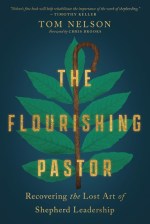
The Flourishing Pastor: Recovering the Lost Art of Shepherd Leadership

Tom Nelson | InterVarsity Press

Without attempting to be novel or imposing unreasonable expectations, Nelson sets out to recover what he considers the lost art, among pastors, of shepherd leadership. Refreshingly, he doesn’t come off as superior or the lone expert in the field. He admits mistakes in his personal walk, ministry habits, and pastoral labors. I found plenty of pastoral encouragement, practices to ponder, and workable habits for shepherd leadership. —Phil Newton, director of pastoral care and mentoring for the Pillar Network

Award of Merit (TIE)

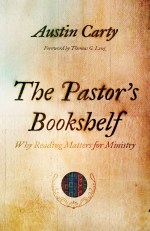
The Pastor’s Bookshelf: Why Reading Matters for Ministry

Austin Carty | Eerdmans

As a lifelong reader, I’ve seen the value and richness that come from reading widely and deeply. A pastor whose mind and heart are formed by deep engagement with books can understand and communicate capital-T truth more clearly, creatively, and insightfully. By giving pastors permission to include reading as part of their regular schedules, Carty offers the gift of slowing down to think deeply and the opportunity for timeless spiritual themes to take root in their hearts. This is a recipe for greater wisdom, empathy, and love—qualities that in turn benefit the people God has called them to shepherd. —Kelley Mathews, author and editor

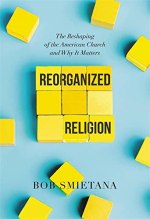
Reorganized Religion: The Reshaping of the American Church and Why It Matters

Bob Smietana | Worthy

Smietana helps church leaders face the sobering reality of the religious landscape in which they serve. Drawing on statistics and real-life stories, he demonstrates the waning influence of organized religion in many people’s lives. Alongside pictures of churches in decline, however, he shows us churches that have turned the corner toward growth and relevance in their communities. And he reminds us of the positive contributions churches make in American life and the negative impact our culture will experience as they decline or cease to exist. —Michael Duduit, dean of Clamp Divinity School and executive editor of Preaching magazine

Finalist

On Earth as in Heaven: Theopolis Fundamentals

Peter J. Leithart | Lexham

Culture & the Arts

Christian Poetry in America Since 1940: An Anthology

Edited by Micah Mattix and Sally Thomas | Iron Pen

I was very impressed with this anthology, which has a detailed and thoughtful introduction, helpful introductions to each poet, a few well-placed and appropriate footnotes, and amazingly good poems: challenging, diverse, and unsentimental. There is a great balance between famous and lesser-known poets, denominational backgrounds, and formal and free-verse poetry. A colleague of mine, who teaches on Christianity and literature, told me he has never encountered a resource like this and that he would find it very useful for his class. —Eleanor Nickel, English professor and program director at Fresno Pacific University

Award of Merit

The Scandal of Holiness: Renewing Your Imagination in the Company of Literary Saints

Jessica Hooten Wilson | Brazos Press

Wilson deftly plows the fertile field of literature, wonder, and the Christian mind. The book reads as both journal and love letter to her own past and her passion for literature. Her chapters brim with wonderment and awe, and I enjoyed the feeling of longing to read the books she celebrates. In the hands of another author, this book could have felt academic and stuffy. But Wilson’s prose is elegant and clear while retaining the warmth of a voice inviting you to come sit by the fire and listen to a story. —John Hendrix, illustrator and children’s author

(Read an excerpt from The Scandal of Holiness.)

Finalists

A Supreme Love: The Music of Jazz and the Hope of the Gospel

William Edgar | IVP Academic

(Read CT’s review of A Supreme Love.)

Reading Black Books: How African American Literature Can Make Our Faith More Whole and Just

Claude Atcho | Brazos Press

(Read CT’s interview with Claude Atcho.)

Fiction

Count the Nights by Stars

Michelle Shocklee | Tyndale

In this dual-timeline novel, Shocklee tackles challenging topics like immigration, discrimination, and human trafficking with grace and hope, and her vivid use of historical detail adds intrigue to the story. Her writing is smooth and engaging, and I found myself pulled into the storylines of both time periods, which rarely happens with books of this sort. The way this book opens hearts and minds to the trauma experienced by victims of human trafficking is truly commendable. —Christina Suzann Nelson, author of What Happens Next , Shaped by the Waves , and other novels

Award of Merit

The Book of Susan

Melanie Hutsell | Paraclete

My reaction to this book might be biased by the fact that I watched the wife of a close friend endure the anguish of being diagnosed with bipolar disorder after the birth of their first child, an experience that shattered their marriage. The Book of Susan stirred memories of that time, reminding me how vital it is to embrace compassion and tenderness toward those suffering the ravages of this illness. Hutsell’s writing is raw, real, and beautiful. While taking us inside a journey few can truly understand, she guides readers into the reality that all of us are flawed, bruised, and broken. Within that admission, there is hope and the chance for healing. —James L. Rubart, novelist and professional marketer

Finalists

Absolute Music

Jonathan Geltner | Slant

The Baxters

Karen Kingsbury | Atria Books

History & Biography

An Odd Cross to Bear: A Biography of Ruth Bell Graham

Anne Blue Wills | Eerdmans

This is historical biography at its finest. Wills has a profound empathy for Ruth Graham, born of meticulous research and the insights of gifted scholarship. Graham was a critic of second-wave feminism, and yet, as Wills shows, she also “devised her own ethic of Christian womanhood, characterized by ‘adjusting’ to” her famous evangelist husband. This concept of “adjustment” becomes a central thread of the book, not only clarifying how Graham negotiated her own womanhood but also illuminating the complex relationship between evangelical womanhood and feminism. Both moving and captivating, An Odd Cross to Bear will be the standard work on Ruth Graham in her own right, as well as essential reading for anyone wishing to better understand Billy Graham, Ruth Graham, and their movement. —Sarah Irving-Stonebraker, associate professor of history and Western civilization at Australian Catholic University

Award of Merit

Denmark Vesey’s Bible: The Thwarted Revolt That Put Slavery and Scripture on Trial

Jeremy Schipper | Princeton University Press

Schipper’s book offers a concise but comprehensive look at how the Bible was litigated by enslaved people and white slaveholders before, during, and after Denmark Vesey’s planned 19th-century slave rebellion. It was common, in early American history, for debates on morality and criminality to involve dueling interpretations of Scripture, and Schipper illustrates how biblical language was co-opted by whites not only to strengthen slavery in the abstract but also to aid white legal responses to Vesey and his coconspirators. —Miles Smith IV, assistant professor of history at Hillsdale College

(Read CT’s review of Denmark Vesey’s Bible.)

Finalists

A History of Contemporary Praise & Worship: Understanding the Ideas That Reshaped the Protestant Church

Lester Ruth and Lim Swee Hong | Baker Academic

Cotton Mather’s Spanish Lessons: A Story of Language, Race, and Belonging in the Early Americas

Kirsten Silva Gruesz | Harvard University Press

Marriage & Family

Teach Your Children Well: A Step-by-Step Guide for Family Discipleship

Sarah Cowan Johnson | InterVarsity Press

No parents can guarantee their children will walk in faithfulness to Christ. Our children’s eternal souls are first and foremost in the hands of God. But God, in his sovereign design, has not only given parents children, but given children parents. Johnson encourages and challenges parents with the call to be the primary disciplers of their children. She offers practical help supported by experience, research, and Scripture alike. —Curtis Solomon, assistant professor of biblical counseling at Boyce College

Award of Merit

Habits of the Household: Practicing the Story of God in Everyday Family Rhythms

Justin Whitmel Earley | Zondervan

There is no shortage of parenting books on the market, but Earley manages to break through the noise and offer a timely (and timeless) appeal to the power of liturgy within the home. The household rhythms and practices he advocates are neither onerous nor ridiculous, but simple ways for parents to lovingly disciple their children through the power of habit. Earley’s humor and honest vulnerability shine through, and the reader has a sense of getting to know his lovely family on each page. I’ll be returning to this book with joy for many seasons. —Jonathan Holmes, founder and executive director of Fieldstone Counseling

Finalists

It Takes More Than Love: A Christian Guide to Navigating the Complexities of Cross-Cultural Adoption

Brittany Salmon | Moody

The Race-Wise Family: Ten Postures to Becoming Households of Healing and Hope

Helen Lee and Michelle Ami Reyes | WaterBrook

Missions & Global Church

No Shortcut to Success: A Manifesto for Modern Missions

Matt Rhodes | Crossway

This volume provides a thorough appraisal of methods in American missionary circles that have gained massive popularity because they promise a vast harvest of new converts in the shortest possible time, with minimal effort or preparation from the missionaries themselves. For Rhodes, the appeal of these “silver-bullet” formulas reflects a “distaste for professionalism” and the abandonment of the painstaking training associated with earlier Western missionary heroes like William Carey and Adoniram Judson. His assessment is careful but devastating. He weighs in on erroneous obsessions with statistics, disparagement of traditional missionary methods, false or misleading representations of success, and distorted (or defective) biblical understandings of mission work. Most of the book, however, is devoted to making an energetic case for the missionary vocation as a profession, with the Pauline phrase “ambassadors for Christ” as a centerpiece. —Jehu J. Hanciles, director of the World Christianity program at Candler School of Theology and author of Migration and the Making of Global Christianity

Award of Merit

Faith in the Wilderness: Words of Exhortation from the Chinese Church

Edited by Hannah Nation and Simon Liu | Lexham

The Chinese church has long been a model of how to chi ku (eat bitterness) while still walking faithfully with God. This book affirms that in the face of persistent persecution and suffering, the Chinese church, broadly speaking, continues to forge ahead in spreading the gospel throughout China and beyond. The personal reflections gathered here will humble readers and, hopefully, expand their understanding of the global church. There is much to learn from the Chinese church, and Faith in the Wilderness offers a good place to start. —Jamie Sanchez, associate professor of intercultural studies at Biola University

(Read an excerpt from Faith in the Wilderness.)

Finalists

The Realities of Money and Missions: Global Challenges and Case Studies

Edited by Jonathan J. Bonk, Michael G. DiStefano, J. Nelson Jennings, Jinbong Kim, and Jae Hoon Lee | William Carey Publishing

Virtuous Persuasion: A Theology of Christian Mission

Michael Niebauer | Lexham

Politics & Public Life

Beyond Racial Division: A Unifying Alternative to Colorblindness and Antiracism

George Yancey | InterVarsity Press

Yancey proposes a compelling alternative to our current racial stalemate that—dare I say it?—actually gives me hope. Instead of touting colorblindness or antiracism, Yancey asks us to consider how we approach this issue instead of focusing on a desired outcome. Attempts to thread the needle between two extremes so often get the worst of both or simply fail spectacularly. They call it the mushy middle for a reason. But Yancey is not mushy. On the contrary, he writes clearly and persuasively, and he advances an argument that is internally coherent and backed by social science. Finally, Yancey writes movingly about his own experiences, demonstrating that he, like all of us, has much to learn. —James E. Bruce, professor of philosophy at John Brown University

(Read CT’s review of Beyond Racial Division.)

Award of Merit

Untrustworthy: The Knowledge Crisis Breaking Our Brains, Polluting Our Politics, and Corrupting Christian Community

Bonnie Kristian | Brazos Press

There is a discernment crisis in pulpits and pews across the nation: We have lost the ability to name truth. In a climate where conspiracy theories and half-truths abound, Kristian writes with piercing insight into the epistemological crisis facing the church and the broader society. She examines the issues that have brought us to this state of affairs and offers wise counsel for navigating our current media and information envi- ronment. —Kathryn Freeman, writer, speaker, and cohost of the podcast Melanated Faith

(Read CT’s review of Untrustworthy.)

Finalists

What Are Christians For?: Life Together at the End of the World

Jake Meador | InterVarsity Press

(Read CT’s review of What Are Christians For?.)

Uncommon Unity: Wisdom for the Church in an Age of Division

Richard Lints | Lexham

(Read CT’s review of Uncommon Unity.)

Theology (popular)

You’re Only Human: How Your Limits Reflect God’s Design and Why That’s Good News

Kelly M. Kapic | Brazos Press

Some theology books offer in-depth treatments of a particular doctrine. Others seek to serve as guides for studying theology. You’re Only Human might seem much more practical than either of these, since it calls us to accept the limitations of being human as good gifts from God. But Kapic manages to convey incredible depth of doctrinal insight and teaching for such a supposedly “practical” book. From the nature of the Incarnation and the proper understanding of Mary to our union with Christ and the work of the Holy Spirit, Kapic covers enormous theological ground with detail and nuance, all while keeping the discussion alive and intimately connected to our own lives. Each chapter could be a book in itself. —Emily G. Wenneborg, Pascal Study Center director and assistant professor at Urbana Theological Seminary

(Read CT’s interview with Kelly Kapic.)

Award of Merit

The Thrill of Orthodoxy: Rediscovering the Adventure of Christian Faith

Trevin Wax | InterVarsity Press

This book presents a well-written, accessible, and winsome apologetic for recapturing and embracing the orthodox and historic Christian faith in the modern world. The church desperately needs to read and heed books like this. I plan on using this book in the context of my local congregation. Superb! —Anthony Selvaggio, senior pastor of Rochester Christian Reformed Church

(Read CT’s review of The Thrill of Orthodoxy.)

Finalists

Fruitful Theology: How the Life of the Mind Leads to the Life of the Soul

Ronni Kurtz | B&H

Reading Theology Wisely: A Practical Introduction

Kent Eilers | Eerdmans

Theology (academic)

Jesus and the God of Classical Theism: Biblical Christology in Light of the Doctrine of God

Steven J. Duby | Baker Academic

In this erudite and substantial volume, Duby examines New Testament Christology and how it relates to the doctrines of so-called classical theism. It is an important work, especially at a moment in evangelical theology, and in Christian theology more broadly, when contemporary theologians are rediscovering and reappraising the rich resources of the Christian past. Duby interacts with a wide range of sources: ancient philosophers, church fathers, medieval doctors, Reformers, and post-Reformation scholastics, as well as modern theologians and biblical exegetes. But most impressive is Duby’s deep engagement with the text of Scripture itself, which he treats with exegetical care and theological earnestness. —Luke Stamps, professor of biblical and theological studies at Oklahoma Baptist University

Award of Merit

Trinitarian Dogmatics: Exploring the Grammar of the Christian Doctrine of God

D. Glenn Butner Jr. | Baker Academic

This book helpfully lays out the landscape of Trinitarian dogmatics. Butner does a fine job at presenting the major issues and carefully defining the edges of orthodoxy from the vantage points of Scripture, history, and philosophy. He is refreshingly reserved, too, on many difficult issues on which orthodox theologians have historically differed. In that sense, while Butner is clear, persuasive, and convictional, he is also modest in his aims. I predict this book will become standard in the classroom for a long time. The truly curious reader will not walk away empty-handed. —Samuel G. Parkison, assistant professor of theological studies at Gulf Theological Seminary in the United Arab Emirates

(Read CT’s review of Trinitarian Dogmatics.)

Finalists

Justification by the Word: Restoring Sola Fida

Jack D. Kilcrease | Lexham Press

God in Eternity and Time: A New Case for Human Freedom

Robert E. Picirilli | B&H

Book of the Year

Overcoming Apathy: Gospel Hope for Those Who Struggle to Care

Uche Anizor | Crossway

“Meh” may be the spirit of the age in which we live, but it is more than mere indifference—it is a spiritual sickness that infects believers, churches, and cultures alike. Even if we feel like our lives are unending episodes of Seinfeld, that famous “show about nothing,” Anizor calls us from our spiritual slumber to wake up and care again. —Douglas Estes, associate professor of biblical studies and practical theology at Tabor College

Overcoming Apathy addresses an issue that feels quite prevalent in the American church, even if we hardly talk about it. Anizor succeeds in taking a vague, somewhat hard-to-define issue and turning it into a readable, immensely practical book. The real problem, as he observes, is not that believers care too little but that we care about the wrong things, while often showing indifference toward God and matters of the Spirit. I plan on recommending this book to fellow church members. It was refreshing and convicting. —Andrea Burke, women’s ministry director and host of the Good Enough podcast

(Read an excerpt from Overcoming Apathy.)

News

State Finds ‘Substantial Evidence’ for Retaliation Charge at Illinois Church

A firing at Dane Ortlund’s Naperville Presbyterian Church spurred a rare legal determination that could be a useful case study for churches.

Christianity Today December 12, 2022
Courtesy of Naperville Presbyterian Church

A 2021 firing of a female staff member from a Chicago-area church led by pastor and author Dane Ortlund was determined to have “substantial evidence” of retaliation, according to an investigation into alleged discrimination by the state of Illinois.

The former director of operations at Naperville Presbyterian Church, Emily Hyland, said her termination came days after privately complaining to two elders about gender discrimination from Ortlund. At the time, she had worked at the church for eight years, and he had been senior pastor for six months. After her firing, she filed charges over gender discrimination and retaliation at the state agency.

The Illinois Department of Human Rights (IDHR) did not find evidence that the church or Ortlund discriminated against her based on her gender. Evidence shows that “Ortlund … never made any discriminatory remarks directly related to [Hyland’s] sex,” the report said, nor was there evidence of discrimination that rose to the level of a “hostile work environment.”

The church insists that Hyland did not frame her complaint as gender discrimination until after her termination. But the agency found there is “substantial evidence” to support her charge that she was fired “in retaliation for having engaged in prior protected activity.”

Even if there is no “actionable” discrimination found, employers cannot retaliate against an employee for making a report, said employment lawyer Ed Sullivan.

Ortlund, a pastor in the Presbyterian Church in America, is the author of Gentle and Lowly, a bestseller. A longtime member of the Naperville congregation, he became its pastor in October 2020, with Wheaton College president Philip Ryken leading the installation.

Ortlund declined to comment to CT on the allegations, but in the state filing, the church said that Hyland was fired because of “her unwillingness to grow out of insubordination and lack of performance.”

Ortlund became the pastor in October 2020, and he and the associate pastor met with Hyland to discuss their concerns about her job performance in January 2021. She was fired in March 2021.

The state agency report says it is an “uncontested fact” that Hyland reported gender discrimination nine days before her firing. Several days later, Hyland said, the elders shared her complaints with Ortlund, and two days before her firing she and Ortlund met to discuss her complaints. The church said in the report that there was no connection between her complaint about discrimination and her firing.

Hyland said she felt bullied, adding that Ortlund disregarded her experience, micromanaged her, and slowly removed her responsibilities. “I was watching my role disappear in front of me,” she told CT. Ortlund in the case documentation emphatically denied all the charges against him, saying it was a basic dispute over professional performance and that he was never angry or discriminatory toward her.

After her firing, she said she was not treated with adequate pastoral care despite being a longtime member of the church, the elder board (known in the PCA as the session) declined to meet with her, and staff were instructed not to talk to her.

Employment disputes are common, but this case might offer useful lessons for churches in similar disputes–both in terms of legal complexity and in terms of navigating pastoral care of a terminated staffer who is also a church member. Employment lawyers say it’s rare for an agency to issue a finding of substantial evidence of retaliation, making Hyland’s case a significant one.

The state agency through a spokesperson confirmed to CT that it finds a “lack of substantial evidence” in the majority of its cases, but emphasized that employees should not see that as a reason to avoid reporting discrimination.

An IDHR spokesperson, who was not authorized to speak publicly, said on background that in general the agency takes retaliation seriously because even if there is no discrimination, retaliation “creates a culture of silence.” Retaliation is the leading basis for charges at the agency.

At the federal Equal Employment Opportunity Commission (EEOC) in 2021, these types of findings were rare too: Only 2.1 percent of retaliation charges resulted in a finding that there is “reasonable cause” to believe discrimination had occurred. Most charges are dismissed as having “no reasonable cause,” and a smaller percentage are resolved through a process like conciliation before the EEOC makes a determination.

Employees can file charges with state or federal agencies or both, and Hyland filed charges with both the IDHR and the federal EEOC. If the state takes the lead on the charges, then the EEOC usually does not get involved, lawyers said.

Churches are shielded to some extent from employment discrimination litigation because of First Amendment protections on hiring and firing religious staff. The Supreme Court’s unanimous Hosanna Tabor v. EEOC ruling in 2012 established a broad “ministerial exception,” that a teacher at a Christian school counted as a “minister” and therefore could not sue her employer over her firing.

It’s not clear if courts might consider Hyland, who managed church buildings and budgets, to be a “minister.” A more recent Supreme Court ruling broadened the exception to include anyone who is central to the religious organization’s mission.

One of the two elders who fired Hyland alongside Ortlund, Dave Veerman, said he regretted the handling of the firing and said he should have listened to Hyland before taking action. When Ortlund became the pastor, Veerman was excited, he said, because he liked Ortlund’s writing and teaching. Now, Veerman told CT, “I tend to believe Emily’s side of things,” though he thinks Ortlund “wants to do the right thing.”

Veerman, who belonged to Naperville Presbyterian for 36 years and was its longest-serving elder, wrote a statement defending Hyland to the presbytery and has since left the church—though his departure was not directly related to Hyland’s case.

“In church that long, you see a lot of stuff,” he told CT. “Churches are messy at times.”

Veerman was on the personnel committee, made up of three elders. In 2021, when Ortlund came to talk to them about a personnel issue, Veerman was “shocked” when he heard the issue was with Hyland.

“I’ve known Emily as a very competent person,” Veerman said. But he added, “I never worked with her. I’m trying to be supportive of Dane, our new pastor. So we listened to everything, he gave this history of their relationship. … I just took Dane’s word for everything.”

After the meeting, Veerman said he called three or four elders to tell them the plan to fire Hyland and they were all surprised but accepted it.

When Veerman later resigned from the session (the elder board), he apologized to Hyland.

After her firing, Hyland also brought her complaints about Ortlund to the local presbytery in the Chicago area, which investigated. The presbytery concluded in a private action this fall that “the reports from Emily Hyland do not create a strong presumption of guilt against the character” of Ortlund. The presbytery report focused on her professional performance issues as justification for her firing.

Hyland said no one had complained about her work or behavior before Ortlund joined the staff. The firing was devastating to her personally. “It was so catastrophic to lose all my Christian community in Naperville,” she said. “Just gone.”

The presbytery said her legal actions following her firing created a “challenging environment” for church leadership to provide her with “pastoral care.”

Another elder, who has struggled to transition to a new church and asked not to be named, said he felt pushed out of the church after he helped Hyland remove some of her office items from the church following her firing. He said Ortlund was angry with him about helping her move and questioned him extensively about it.

Though his departure a few months later was not directly related to Hyland’s, he said he felt like he was on Ortlund’s bad side after that incident. He no longer attends a PCA church.

In the church’s responses to charges in the state investigation, Ortlund stated the elders believed the “reality” was different than Hyland’s characterizations and that her “unwillingness to grow” made it impossible to continue working together.
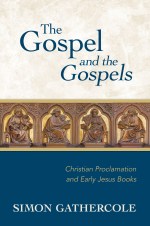
Before he became a pastor at Naperville Presbyterian, Ortlund was a publishing executive at Crossway. His hit book Gentle and Lowly is about Christ’s tenderness toward sin and failure. He is a third-generation pastor—the brother of pastor Gavin Ortlund and the son of pastor Ray Ortlund Jr. Naperville Presbyterian, a church of about 500, had been searching for a pastor externally for more than two years before it decided to make Ortlund, a member, its pastor.

Hyland now can either decide in the next 30 days whether the Illinois antidiscrimination agency will pursue a case against the church, whether she will file a suit herself, or whether she’ll pursue mediation.

This article has been updated to clarify language about the IDHR report.

Apple PodcastsDown ArrowDown ArrowDown Arrowarrow_left_altLeft ArrowLeft ArrowRight ArrowRight ArrowRight Arrowarrow_up_altUp ArrowUp ArrowAvailable at Amazoncaret-downCloseCloseEmailEmailExpandExpandExternalExternalFacebookfacebook-squareGiftGiftGooglegoogleGoogle KeephamburgerInstagraminstagram-squareLinkLinklinkedin-squareListenListenListenChristianity TodayCT Creative Studio Logologo_orgMegaphoneMenuMenupausePinterestPlayPlayPocketPodcastRSSRSSSaveSaveSaveSearchSearchsearchSpotifyStitcherTelegramTable of ContentsTable of Contentstwitter-squareWhatsAppXYouTubeYouTube