News

Russian Christians Make Theological Case for Peace

Anonymous Christmas condemnation of invasion offers insight into antiwar movement as it seeks reconciliation with Ukrainian believers—who want names.

An Orthodox church stands damaged from artillery on February 27, 2023 in Bogorodychne, in the Donbas region of eastern Ukraine. The church grounds had reportedly been used as a headquarters for occupying Russian forces and was the scene of intense fighting with Ukrainian troops, who liberated the town last fall.

An Orthodox church stands damaged from artillery on February 27, 2023 in Bogorodychne, in the Donbas region of eastern Ukraine. The church grounds had reportedly been used as a headquarters for occupying Russian forces and was the scene of intense fighting with Ukrainian troops, who liberated the town last fall.

Christianity Today March 17, 2023
John Moore / Getty Images

On an Advent Sunday in a small Protestant church in St. Petersburg, a Russian pastor nervously approached the pulpit. While his senior leadership was publicly neutral about the war, he was about to preach from the Sermon on the Mount against the invasion of Ukraine.

And in the pews before him was another potential land mine.

A congregant had been bringing along a childhood friend, who happened to be a Wagner Group mercenary. Wounded during combat for Russia’s private paramilitary company, the man was not there to spy. Yet while the pastor knew his close-knit congregation well, he could not predict the fallout from his message.

Relations remained good with the pastor’s mentor afterward, while the mercenary recovered and returned to the front lines. For now, the pastor has been left free to continue in ministry and—whether known to the intelligence services or not—in clandestine theological work against the war.

“Of course, we could go out and protest, but this would get you in jail,” he said, requesting anonymity. “For us, the most effective means are to work within your spheres of influence—and ours are very small.”

Over the course of the yearlong conflict, only a tiny minority of Russian Christian leaders have voiced complaint publicly. The response from authorities has been uneven: Minor church figures have been fined or jailed, while others continue to use their names on social media.

But no major denomination in Russia has condemned the war outright.

The St. Petersburg pastor, along with about 25 of his scattered multifaith colleagues, desired to confront their silence at the biblical source. Christianity Today spoke with three of them, on condition of anonymity, for insight into the antiwar movement.

The group released its declaration to “all Christians of Russia” in advance of Christmas.

“We are terrified by the fact that many church officials and theologians … are distorting the truth of the Holy Scriptures,” the Russian Christians stated via their Christians4Peace website and Telegram channel. “[But] we are convinced that participation in this war—on the side of the aggressor—is unacceptable for any Christian.”

The provided Russian and Ukrainian downloads of the declaration include an appendix with an extended theological treatise.

Last summer, the pastor and a few like-minded friends began a study group on Dietrich Bonhoeffer, the German dissident theologian executed for his opposition to Adolf Hitler. But it was no mere Western appropriation; though concentrating on a Protestant, they could also have drawn from celebrated Russian author and pacifist Leo Tolstoy, or the 16th-century Saint Philip II of Moscow, murdered for condemning Ivan the Terrible’s massacres.

The pastor named his son Philip to honor this heritage, inspired by the arrest of Alexei Navalny. (A film focused on this Russian opposition leader’s 2020 poisoning and subsequent jailing won the 2023 Oscar for best documentary.)

By fall, the group had grown to ten people. Three Protestants and one Russian Orthodox priest then decided to pen their declaration, soliciting feedback from about two dozen mostly Orthodox laypeople and clergy. And the website launched with a YouTube video in which unnamed Russians abroad read the text with their faces visible.

“The church has a right and a duty to exercise not only a liturgical but also a prophetic ministry … to modestly but firmly rebuke those who violate the commandments of Christ,” continued their theological justification. “The realm of politics cannot be excluded.”

None involved are significant public figures, but most had already been quietly working against the war. Some, early on, put up stickers and graffiti. Others engaged their students in the classroom. Priests changed the wording of official pro-war prayers added to the liturgy.

The Christmas declaration called all believers to pray for the repentance of Russian leaders, to resist mobilization, and to serve Ukrainian refugees with humanitarian aid. But in shielding their identities, the authors stopped short of full commitment to the declaration’s most difficult exhortation—in accordance with the discernment they impress on readers.

“Stand up against the war,” it states. “Taking into consideration all the risks involved, we urge you to condemn this evil.”

This decision took the attention of Russians and Ukrainians alike.

“I am always suspicious when no names are cited,” said one Protestant ministry leader, requesting anonymity because of the overall climate in Russia. “This letter could be anything.”

Ruslan Maliuta was less doubtful, but still cautious.

“The fact that they decided to stay anonymous is a big downside,” said the task force leader for the World Evangelical Alliance’s coordination of Ukraine relief. “While I may understand the reasons, it significantly weakens the message.”

Vitaly Vlasenko, general secretary of the Russian Evangelical Alliance, said that the dozen-plus leaders and invited guests present at the Consultative Council of the Heads of Protestant Churches meeting in late December had no information about the declaration. He commended it as being well written in literary Russian, noting the Orthodox terminology throughout.

Anton Ponomarev, a Russian Orthodox leader serving with a network of evangelical agencies, said the statement was “risky” but also odd. The declaration cited Christmas but coincided with its Western date, not its Russian celebration of January 7. And an odd phrase written with the non-Russian letter I made him suspect Ukrainian hands were at least partially at play.

The St. Petersburg pastor acknowledged the declaration was reviewed by a few Ukrainian friends, but said the product was written by Russians, for Russians. And the phrase in question reflected the Old Church Slavonic liturgy—“Pray for peace for the whole world”—to undermine the concept of “Holy Rus.”

Following the invasion of Ukraine, Russian Orthodox Church patriarch Kirill modified official prayers to link the two Slavic nations as one, petitioning God for “victory”—reflecting the ideology of Russki Mir, the Russian World. But the dissidents’ use of Slavonic not only hearkens back to an earlier era but also distinguishes the homophone мiр, which means both “world” and “peace.”

But their theological treatise went further still. It said that nationalism hinders the spread of the gospel, condemning the 2014 Russian-backed separatist movement in Donbas. They knew this latter step would cost them supporters, given popular sentiment against Ukraine’s alleged restrictions on its ethnically Russian citizenry concentrated in its east.

“You don’t get people to speak Russian by bombing their cities off the face of the earth,” said the pastor’s Orthodox colleague. “Before February 24, these restrictions bothered me. Now, they don’t at all.”

Sergey Rakhuba was appreciative of the effort, but lamented the lack of identifying names.

“I commend this appeal for its firm position and the hard work in putting it all together,” said the president of Mission Eurasia and a former Ukrainian church planter in Russia. “But being anonymous, it won't have much power.”

The overarching critique was made by Ponomarev.

“Rather than a sign of a brewing protest movement, it is a channel for those who are against the war to have their voice heard,” he said. “Quite a few people I know post similar declarations but mostly on encrypted social media platforms like Telegram.”

Roman Lunkin said the protesters’ number is very small. Counting subscribers to the most popular channels, such as Meduza and We Can Explain, and recognizing that many of these have left the country, he tallies an estimate of half to 1 million peace activists in Russia.

Nevertheless, antiwar views are fairly widespread among the educated elite, said Lunkin, head of the Center for Religious Studies at the Russian Academy of Science’s Institute of Europe. But citing the declaration’s failure to address Russia’s legitimate grievances against NATO expansion, he had harsh words against what was otherwise a “well-written” document.

“The statement is hypocritical and will not lead to peacemaking,” he said. “It is a political declaration disguised as a theological text.”

Andrey Kordochkin disagreed, but only in part.

“I haven’t seen anything so deeply theological,” said the dissident Russian Orthodox priest, appointed to serve in Madrid. “But an antiwar movement, as such, does not exist.”

He did his part to identify one. A key figure in the March 2022 campaign by Russian clergy that gathered a few hundred signatures, Kordochkin said there was no effort to build a network—especially after the law forbidding use of the word war. While many remain in communication, there is no organized agitation. No cosigners have been arrested, he said, but others have been ecclesiastically censured, and several are now abroad.

He does not fault anyone for staying anonymous.

In agreement with Lunkin’s assessment of the elite, Kordochkin also characterizes antiwar attitudes as generational—and anticlerical. Yet as the institutional church loses trust, there are some signs of young people seeking Christ on their own terms, as among the friends of his 19-year-old daughter.

But many families have been torn apart, as seen in the documentary Broken Ties.

For those over 45 years old, there is the “learned helplessness” that recalls a similar Soviet mentality. For those younger, there are VPNs to connect with the outside world.

In addition to Meduza, Kordochkin subscribes to Christians Against the War, which runs the website Shalt Not Kill. But while news channels on Telegram attract thousands of subscribers, like the BBC (400,000), Novaya Gazeta (262,000), and the Moscow Times (30,000), the religious effort has only 2,600 in its virtual network.

As such, the Christmas statement’s orientation somewhat misses the mark.

“Most Russians who are uneasy with the war are not facing theological questions, but existential,” said Kordochkin. “They are asking, ‘How can I continue as a Christian in a church that is like this?’”

To answer, the unassuming Alexey Markevich speaks with quiet clarity.

Publicly known for his signature on a March 2022 evangelical declaration, he has suffered no consequences from either the Russian authorities or his Baptist leadership. His church prays against the war, and he discusses Martin Luther King Jr. in his classroom.

“All I can do is express my position,” said the vice rector for academic affairs for Moscow Theological Seminary. “We don’t need to be political, but we must make theological and ethical statements.”

He commends the Christmas document.

But Markevich somehow avoids controversy. In January, he was invited to participate in a major denominational youth conference and was even assigned the topic “The Confessing Church of Nazi Germany.” The room was packed.

Discussing Barth and Bonhoeffer, he made no direct connection to the war in Ukraine. Yet afterward he was barraged with questions: What should we do now?

“I don’t have a good answer,” Markevich said. “But the confessing church is a template for us, doing what it could according to its convictions.”

Young adults queried how to avoid mobilization. Some spoke of going on missionary service to Central Asian nations. Others just wanted to know how to keep their jobs.

And many, like Markevich’s wife, are serving Ukrainian refugees.

He commended Home with a Lighthouse as a reputable agency with many evangelical volunteers. His family has hosted several displaced Ukrainians, helping them transition to residence in Europe. And his church has sent supplies to assist in the ruined city of Mariupol, along with other sites in the occupied Donbas.

Markevich knows it is a controversial initiative and blames Sergey Ryakhovsky for soiling the reputation of simple humanitarian aid. The Pentecostal Union leader advocates for the integration of these churches into Russian denominational networks, similar to what was done in occupied Crimea.

In January, Ukraine sanctioned him, along with 21 officials from the Russian Orthodox Church.

“Ryakhovsky is louder than we are, and this is why Ukrainians don’t like it,” said Markevich. “But most of us feel like this is the extent of what we can do.”

Public demonstrations are impossible, he said, and wouldn’t help.

So instead, some vote with their feet.

Upper estimates of emigrants since the announcement of mobilization reach 700,000. Even earlier, Lutheran archbishop Dietrich Bauer spoke out against the war before leaving for Germany.

And last summer, Vitaly Kogan, a Pentecostal bishop in Siberia, resigned his position and left Russia in protest. His anonymous colleague, also in opposition, tried to put in context his church’s stance in line with the Russian authorities.

“They have something to lose—the church, the people, and the ministry,” reported Shalt Not Kill. “Today it is very easy to make a case against Pentecostals as an extremist organization, as has been done with Jehovah’s Witnesses.”

Last December, Russia jailed four church members, for seven years each, for illegal meetings. And last summer, raids were conducted among the Pentecostal New Generation churches, unaffiliated with Ryakhovsky, which were accused of collaboration with Ukraine’s controversial Azov Battalion.

In Ukraine, the Word of Life Pentecostal churches broke with their Russian denominational colleagues, frustrated by the failure of senior leadership to condemn the war.

Markevich keeps good relations with his Ukrainian evangelical friends, but some have distanced themselves, lumping him in with the claim that “all Russians are guilty.” Kordochkin reports the same, though one Ukrainian in the Spanish parish left frustrated that his priest was not praying for his nation’s victory.

But the onus, Kordochkin said, is on Russians to confess their sense of moral superiority against an allegedly decadent West. Germany was able to confess its ethnic superiority after World War II, and he feels that Russian relations cannot be restored with Ukraine without it.

And thus, the Christmas declaration.

“This text aims to build a future together, showing that some Russians have spoken out against the war—and why,” said the St. Petersburg pastor.

“It is a tiny step toward reconciliation.”

Editor’s note: CT offers select articles translated into Russian and Ukrainian.

You can also now follow CT on Telegram: @ctmagazine (also available in Chinese and Russian).

Books
Review

Can Westerners Atone for Their Sins Without Breeding Resentment and Ingratitude?

An imaginary soirée with Douglas Murray, the Christian-friendly agnostic author of “The War on the West”.

Christianity Today March 17, 2023
Illustration by Mallory Rentsch / Source Images: Getty

Run this thought experiment: If you could split a bottle of fine wine and converse at leisure with a contemporary author that you respect, who would it be—and why? My own short list would include Douglas Murray, associate editor of The Spectator and best-selling British author of The Strange Death of Europe: Immigration, Identity, Islam and The Madness of Crowds: Gender, Race, and Identity. Watching videos and listening to podcasts that feature Murray, my hunch is that a tête-à-tête with this man would prove fascinating.

The War on the West

The War on the West

Broadside Books

320 pages

Associated with the so-called “intellectual dark web,” which Jonah Goldberg describes as “a coalition of thinkers and journalists who happen to share a disdain for the keepers of the liberal orthodoxy” (e.g., Sam Harris, Jordan Peterson, Ayaan Hirsi Ali, Michael Shermer, Christina Hoff Sommers), Murray intrigues me as a sagacious conservative (à la public intellectual Roger Scruton), a nonconformist gay man (à la commentator Andrew Sullivan), and a Christian skeptic (à la Victorian novelist Thomas Hardy). The last two epithets need further elaboration: As a “nonconformist gay man,” Murray eschews the narcissism of sexual identity and the tribalism of identity politics; as a “Christian skeptic,” his questioning has a decidedly Christian coloration, owing to his upbringing and sympathies, even though he is not currently a practitioner. It seems God is so near to Murray that he does not yet feel him at his shoulder.

Watch the video of Justin Brierley, host of the podcast Unbelievable, moderate a conversation between New Testament scholar N. T. Wright and Murray on how we live in a post-Christian world. Murray confesses his discomfort as both an agnostic who recognizes “the values and the virtues” of Christianity in Western civilization and “a nonbeliever who is disappointed by the behavior of the believing church,” which, he reckons, has ceased preaching the gospel in favor of the latest social and political tropes.

Murray’s latest title, The War on the West: How to Prevail in the Age of Unreason, strikes me as a coda to his previous books. He culls the dizzying number of stories from current events into a bricolage confirming our intuition that denizens of the West are practicing an extreme form of self-flagellation to atone for the sins of white supremacy, colonialism, patriarchy, and heterosexism. Worrisomely, this masochism appears to have no terminus of forgiveness, healing, or reconciliation because the inexhaustible will to power is at stake for the new masters. The juvenile chant of a marginal protest more than 30 years ago at Stanford University—“Hey hey, ho ho, Western Civ has got to go”—has mushroomed into the pseudosophistication of today’s woke herd.

Any attempt to make Western civ optional or obsolete is a fool’s errand. We are inescapably bound up in its heritage. Instead of engendering the vanity of self-hatred, our geographic location should propel an earnest inquiry into the failings and glories of Western civilization and an appreciation for its gifts. Failure to do so results in ignorant enlightenment (not knowing the genealogy of ideas) and ungrateful achievement (not crediting our forebears who cleared the way to progress). Given the historical mistreatment of ethnic, sexual, and gender minorities in the West, Murray acknowledges the need for honest reckoning, but it is not as if the reckoning never occurred before. The pendulum has now “swung past the point of correction and into overcorrection,” he says, even igniting a thirst for revenge in formerly disenfranchised groups.

It is not my goal to recount dispatches from the war zone, which the author vividly narrates and whose cumulative force increases the plausibility of his thesis. If I were sharing a bottle of wine with Murray, I would focus on three aspects of his engrossing book: first, the appropriateness of invoking a metaphor of war to describe our contemporary upheaval; second, the centrality of antiwhite animus in his account; and third, the oddity of an exhortation to gratitude as a (partial) remedy to the pathology afflicting the secular West.

Wars old and new

At the start of the evening, I would question the framing of Murray’s book: Is there actually a war on the West? American poet Carl Sandburg delineates the evolution of war:

In the old wars clutches of short swords and jabs into faces with spears.

In the new wars long range guns and smashed walls, guns running a spit of metal and men falling in tens and twenties.

In the wars to come new silent deaths, new silent hurlers not yet dreamed out in the heads of men.

Obviously, the war Murray has in mind does not belong to “the old wars” or “the new wars.” Perhaps “the wars to come” have already arrived; their “new silent deaths” are the casualties of cancel culture, typically anyone (Aristotle, Thomas Jefferson, Winston Churchill) or anything (math, logic, classical music, opera) that is redolent of Western hegemony. Black, indigenous, and people of color are the new white; female is the new male; gay is the new straight; secular is the new Judeo-Christian. These “new silent hurlers” use violence that is less physical than ideological, cultural, and political.

As an unapologetic defender of the West—“the side of democracy, reason, rights, and universal principles”—Murray fights admirably. “To assess the natural quality of even the cleverest heads,” Friedrich Nietzsche says in Daybreak, “one should take note of how they interpret and reproduce the opinions of their opponents. … The perfect sage without knowing it elevates his opponent into the ideal and purifies his contradictory opinion of every blemish and adventitiousness: only when his opponent has by this means become a god with shining weapons does the sage fight against him.” Even by his own standard, Nietzsche failed to apotheosize his enemies, such as Plato and Paul. Murray approximates the status of sage by directly engaging with the words and actions of his opponents, whether critical race theorists, antiracist ideologues, education administrators, federal bureaucrats, Antifa-BLM rioters, the 1619 Project revisionists, statue topplers, anticolonialists, Enlightenment foes, and trendy clergy.

Some perspective is in order. War has been written into the cosmos ever since Lucifer, the bearer of light, esteemed himself equal to the Light, “and with ambitious aim / Against the throne and monarchy of God / Raised impious war in Heaven, and battle proud / With vain attempt,” as John Milton puts it in Paradise Lost. War moved from its cosmic battlefield to earth, but it will ultimately suffer the fate of the one who started it: defeat.

In the meantime, spiritual warfare animates every conflict—a reality not lost on previous generations of the church who recognized that “the sloth of disobedience,” or a failure to keep our zeal serving the Lord, is the ultimate cause behind war. In the opening of his sixth-century guide to monastic life, The Rule, Saint Benedict invoked martial imagery: “This message of mine is for you, then, if you are ready to give up your own will, once and for all, and armed with the strong and noble weapons of obedience to do battle for the true King, Christ the Lord.” As everyday monks, Christians belong not inside the walls of a cloister but to the church militant, which vigilantly campaigns against evil in the world and, more lamentably, in ourselves—not afraid, “for the Lord [our] God is the one who goes with [us] to fight for [us] against [our] enemies to give [us] victory” (Deut. 20:4).

The decisive battle in the Great War, which vanquished “the prince of this world” (John 12:31), was fought at the skull-shaped hill in ancient Jerusalem. Everything that follows Golgotha is a skirmish, including the cultural war against the Western tradition that Murray chronicles. Exaggerating the scale and severity of this war, Murray writes, “If we allow malicious critics to misrepresent and hijack our past, then the future they plan off the back of this will not be harmonious. It will be hell.”

No, hell occurs on the cross when “Christ’s body was given as the price of our redemption,” as John Calvin interprets the claim “He descended to hell” in the Apostles’ Creed. Besides the excruciating physical pain, “he paid a greater and more excellent price in suffering in his soul the terrible torments of a condemned and forsaken man.”

‘What do you like about being white?’

Midway through the bottle of wine, I would turn to a second aspect of interest in The War on the West: the antiwhite animus. What all of Murray’s enemies hold in common is a contempt for how the West underwrites the “parasitic-like condition” of whiteness, which does not yet have “a permanent cure,” according to psychoanalyst Donald Moss. “To delegitimize the West, it appears to be necessary first to demonize the people who still make up the racial majority in the West,” observes Murray. “It is necessary to demonize white people.” Murray correctly perceives internecine strife in the West, which makes Europe and North America weak as China vies to become the world’s unipolar superpower, but should we frame this strife primarily as a racialized conflict?

It is certainly worth asking how any white person today could answer Marc Lamont Hill’s gotcha question to a guest on the Black News Channel—“What do you like about being white?”—without setting off a tripwire. After all, society celebrates just about every species of identity pride except for white pride, which is judged inherently evil. Murray imagines two soft options for answering Lamont Hill’s question: either a colorblind outlook, which repudiates racial essentialism, or a reinterpretation of “white culture” as “a part of a universal culture,” open to all human beings, regardless of race. Though respectable, critics would still claim these answers betray white privilege.

At “the very edges of permissible sayability” is what Murray calls “the nuclear answer,” which takes stock of the good things that come from being white (read: Western). These include “almost every medical [and scientific] advancement”; “most of the world’s oldest and longest-established educational institutions”; “the invention and promotion of the written word”; “interest in other cultures beyond [one’s] own”; “the world’s most successful means of commerce, including the free flow of capital,” which has “lifted more than one billion people out of extreme poverty just in the twenty-first century thus far”; “the principle of representative government, of the people, by the people, for the people”; “the principles and practice of political liberty, of freedom of thought and conscience, of freedom of speech and expression”; “the principles of what we now call ‘civil rights,’ rights that do not exist in much of the world”; the music, philosophy, art, literature, poetry, and drama “that have reached such heights that the world wants to participate in them”; America as “the world’s number one destination for migrants worldwide”; and finally, “the only culture in the world that not only tolerates but encourages” self-criticism.

While this nuclear answer carries some truth, it also returns us to modern tribal lines of racial identity that are deeply problematic from a Christian point of view, which holds that there are only two “races” of human beings: the old creation of the first Adam and the new creation of the second Adam (2 Cor. 5:16–17). In an article for First Things, Anglican theologian Gerald McDermott, editor of Race and Covenant, claims the apostles taught that “the work of Jesus does not destroy the old creation unity of the one human race but redeems it and brings it to its God-given destiny by the power of the Spirit.” In another article for Public Discourse, McDermott disabuses evangelicals of racial essentialism because “there is a broad consensus among biologists and anthropologists that race as a clear distinction separating groups and individuals is a notion of modern origins without solid grounding in biology or genetics.” Moreover, biblical authors “grouped people by nations and cultures,” not by skin color. If skin color is only skin deep, then accident is not essence, lest Christians make a categorical mistake and sacralize the secular.

Gratitude and resentment

Near the end of our bottle of wine, I would address a third aspect of The War on the West. Of all strategies to fight this war, it is peculiar that Murray, as a lapsed Christian, exhorts his readers to wield the weapon of gratitude, which belongs to the arsenal of theists more than nontheists. Murray takes “an unauthorized loan from the theistic capital that he officially repudiates,” to borrow the words of philosopher John Cottingham. “True thankfulness has no really secure place in a worldview where ‘gift’ is nothing but a specious metaphor.”

To understand why gratitude plays a role in Murray’s account, we must first consider its opposite: resentment. Drawing on Nietzsche’s psychological insight that people “sanctify revenge with the term justice,” Murray avers that a disconcerting number of today’s social-justice warriors are motivated by resentment; they aim “to turn happy people into unhappy people like themselves—to shove their misery into the faces of the happy so that in due course the happy ‘start to be ashamed of their happiness and perhaps say to one another: “It’s a disgrace to be happy! There is too much misery!”’”

How can we be happy while watching a theatrical production of William Shakespeare’s Othello if we know his works are “full of problematic, outdated ideas, with plenty of misogyny, racism, homophobia, classism, anti-Semitism, and misogynoir,” according to a touchy librarian? How can we be happy while listening to George Frideric Handel’s Messiah if we know he “invested in a company that owned slaves”? How can we be happy strolling the world-famous Kew Gardens in London if we know its “plants were central to the running of the British empire,” as one botanist bemoaned? Behind calls to diversify and decolonize, the author detects “a pathological desire for destruction.”

People of resentment forbid “the best emotions,” and in Murray’s estimation, “the most important, without doubt, is gratitude.” He writes:

Without an ability to feel gratitude, all of human life and human experience is a marketplace of blame, where people tear up the landscape of the past and present hoping to find other people to blame and upon whom they can transfer their frustrations. Without gratitude, the prevailing attitudes of life are blame and resentment. Because if you do not feel any gratitude for anything that has been passed on to you, then all you can feel is bitterness over what you have not got. Bitterness that everything did not turn out better or more exactly to your liking—whatever that “liking” might be. Without some sense of gratitude, it is impossible to get anything into any proper order.

To be sure, resentment crowds out gratitude, which explains why the implacable critics of the West make woebegone society. But Murray’s notion of gratitude as an emotion is thin compared to the thick conceptualization in Christian ethics, which regards gratitude as a virtue that involves affection between a poor recipient and a prodigal giver, namely humankind and their Maker. Since God owes us nothing, everything he does give us—including himself—is gratuitous, consistent with his nature of gratuitous love.

In Learning the Virtues, Catholic priest Romano Guardini lamented how the virtue of gratitude has receded in the modern world, where democratic rights and economic transactions suppress the relational dynamic that is essential to gratitude. Guardini sets forth three conditions to gratitude:

Gratitude can exist only between an “I” and a “thou.” As soon as the consciousness of the personal quality disappears and the idea of the apparatus prevails, gratitude dies. Gratitude can exist only in the realm of freedom. As soon as there is a “must” or a claim, gratitude loses its meaning. Gratitude can exist only with reverence. If there is no mutual respect, gratitude perishes and turns to resentment. Anyone who gives assistance to others should think about that. Only the assistance which makes gratitude possible really deserves the name.

All three of these conditions have a theological character that Murray overlooks.

Is Murray guilty of what Nietzsche derisively calls “English logic,” as typified by Victorian novelist George Eliot: “They have got rid of the Christian God, and now feel obliged to cling all the more firmly to Christian morality”? In Twilight of the Idols, Nietzsche castigates this kind of sophistry with reasoning that is strikingly orthodox for a putative atheist:

When one gives up Christian belief one thereby deprives oneself of the right to Christian morality. For the latter is absolutely not self-evident: one must make this point clear again and again, in spite of English shallowpates. Christianity is a system, a consistently thought out and complete view of things. If one breaks out of it a fundamental idea, the belief in God, one thereby breaks the whole thing to pieces: one has nothing of any consequence left in one’s hands. Christianity presupposes that man does not know, cannot know what is good for him and what evil: he believes in God, who alone knows. Christian morality is a command: its origin is transcendental; it is beyond all criticism, all right to criticize; it possesses truth only if God is truth—it stands or falls with the belief in God.

More than just “a fundamental idea,” gratitude is a vital practice of Christian living because of the gift economy that God set into motion with the creation of the universe and humanity, where “every good and perfect gift is from above, coming down from the Father of the heavenly lights” (James 1:17). “Giving and thanking, which lift man above the functioning of a machine or the instinct of animals, are really the echo of something divine,” writes Guardini. “For the very fact that the world exists and embraces such inexhaustible profusion is not something self-evident; it is because it was willed; it is a deed and a work.”

Divine logic, contrary to unsound “English logic,” holds that gratitude is not possible without recognition, even adoration, of the ultimate Giver. If there is no Giver, to whom do we express gratitude? It is rather silly to thank the Earth, as if a plausibility structure in the secular West makes room for Gaea. It is silly to thank dead geniuses because the secularist, unlike the Christian, is not surrounded by “a great cloud of witnesses” (Heb. 12:1).

So, I heartily agree with Murray that the weapon of gratitude is needful in these sour times, but we cannot rely on the vagaries of an emotion. The virtue of gratitude swims against “the corrupted currents of this world,” which is how Hamlet describes the rotten state of Denmark. Strength for exercising this virtue does not reside within us, as if we could retard the flow of water, but comes to us as another gift for which we give thanks to God.

Our gratitude, then, must go well beyond the blessings of the Western tradition to the inexpressible joy of salvation made available by the Man of Sorrows. Jesus has given us an identity and mission far nobler than custodians or saviors of Western civilization. We are his “chosen race”—notice the premodern and biblical sense of the word race—“a royal priesthood, a holy nation, a people for his own possession, that [we] may proclaim the excellencies of him who called [us] out of darkness into his marvelous light” (1 Pet. 2:9, ESV).

Christopher Benson is the director of culture and instruction at Augustine Classical Academy in Lakewood, Colorado. He worships at Wellspring Anglican Church in Englewood and blogs at Bensonian.

Theology

Buddhism Went Mainstream Decades Ago. US Churches Still Aren’t Ready.

Why Christians need to learn about the religion Asian immigrants brought to the US.

Christianity Today March 16, 2023
Illustration by Mallory Rentsch / Source Images: WikiMedia Commons

This is the first article in the Engaging Buddhism series, which will explore different facets of Buddhism and how Christians can engage with and minister to Buddhists.

Churches dot Linwood, a predominantly Black neighborhood in Columbus, Ohio. Yet drive down a quiet road past Holy Spirit Church of Columbus and Christ Centered Apostolic Church and you’ll find an unexpected sight: a brightly colored Buddhist shrine with ornate gold accents and a pointed roof typical of Laotian architecture.

Twin red dragons guard the pathway to the shine, surrounded by reflections ponds. In the same compound is the Watlao Buddhamamakaram Buddhist temple, built in 2009 by Laotian immigrants. Inside, monks in saffron robes pray in front of golden statues of Buddha.

This Buddhist temple is a visible marker of the changing landscape of the United States. Since the 1965 Immigration and Nationality Act ended national origin quotas, the number of immigrants from Buddhist-background countries has grown drastically.

Today, Asians are the fastest-growing ethnic group in the United States, making up 7 percent of the US population, or 22 million people. Arriving to pursue higher education or job opportunities or to escape wars and turmoil, Asians will continue moving to the US, and demographers project the community will grow to 46 million by 2060.

This trajectory means US churches and Christians will more likely encounter neighbors who are Buddhist or from a Buddhist-influenced culture, as the religion significantly influences more than a billion people worldwide. Around 500 million people practice Buddhism, most of whom live on the Asian continent. China has the largest number of Buddhists (with about 245 million adherents), while seven countries have Buddhist majorities, most in Southeast Asia.

This provides ample opportunities for US churches to minister to Buddhists, yet most Christians are ill-prepared to reach out to them, said Sam George, director of the Global Diaspora Institute at the Wheaton College Billy Graham Center. A 2019 Pew study found that 58 percent of Americans said they knew nothing or not much about Buddhism, the second least understood religion behind Hinduism.

“We need to get every member of our church exposed and equipped to some level of knowledge and cross-cultural skills and comfortability to engage people from a Buddhist background,” said George.

To help the church better understand Buddhism, CT is launching Engaging Buddhism, a biweekly series that will look at different facets of the religion and how Christians can engage and minister to Buddhists. First, we will explore Buddhism’s spread through Asia to America’s shores, its influence in the US, and the opportunities churches have to reach the Buddhist diaspora.

‘Go now and wander’

Buddhist beliefs vary based on country and tradition, but all adhere to several fundamental doctrines: The religion centers on the teaching of Siddhartha Gautama, also known as the Buddha, who was enlightened to see the dharma or the truth. Buddhists don’t believe in a creator God but rather seek to end suffering in this life and the cycle of rebirths by following the Eightfold Path to reach nirvana (see sidebar for more on Buddhist beliefs). Humans are impermanent; instead, one’s karma—or tally of good and bad deeds—remains after death, dictating one’s place in the next life.

After Buddha’s death in 483 B.C., his teaching spread through his disciples, whom he called to “go now and wander for the welfare and happiness of many, out of compassion for the world. … Let not two of you proceed in the same direction. Proclaim the Dhamma that is … utterly perfect,” according to the Pali Canon, the Buddhist scripture.

The first Buddhists followed their teacher’s instructions and found a receptive audience. In caste-conscious India, Buddhism’s emphasis on the equality of all human beings attracted people in low castes and women. In the third century B.C., India emperor Ashoka converted to Buddhism and used state funds to send Buddhist missionaries to China and the rest of the world through the Silk Road.

When Buddhism entered different countries, the religion’s elasticity allowed it to integrate with local religions. Because it rarely challenged local norms, many could easily accept Buddhism alongside their existing faiths. This practice of syncretism led the religion to look quite different depending on the country. In China, Buddhism was mixed with Daoism and traditional ancestor worship. In Cambodia, its cosmology includes ghosts and spirits, ancestors and Brahma deities.

By combining with local religions, Buddhism created a strong bond with people’s nationalities. Often when trying to minister to Buddhists, Christians find that the greatest barrier to evangelism is the mindset that “to be Thai (or another nationality) is to be Buddhist.”

Appealing to the disillusioned

As Asians moved to the West, migration trends brought Buddhists into all regions of the United States. Americans’ first official introduction to Buddhism was at the 1893 Chicago World’s Fair, where the World’s Parliament of Religion invited Buddhists from Sri Lanka and Japan to explain their beliefs. Zen master Soyen Shaku argued that the idea of karma was compatible with modern science, while Buddhist reformer Anagarika Dharmapala spoke about the Buddha’s ideals of tolerance and gentleness.

Today the United States has around 1,000 Buddhist centers, and about 3 million Americans identify as Buddhists (although the number of those who practice some form of Buddhism is higher). Westerners who have “postmodern disillusionment with the church and Christianity” are easily drawn to Eastern mystical experience, George said. Today, Buddhist ideas have influenced American culture, from Star Wars to meditation retreats to mindfulness self-help books. Celebrities like Robert Downey Jr., Steve Jobs, and George Lucas have turned to Buddhism, while the Dalai Lama is quoted and revered.

“The materialistic world leaves us empty and wanting more,” George said. “Augustine said that we all have a God-shaped vacuum inside of us and we are trying to fill that with something.” When money and sex don’t fill that deeper need, some turn to the alternative provided by Buddhist evangelists.

Yet while Westerners view Buddhism as a philosophy, Paul De Neui, a former missionary to Thailand and professor of missiology at North Park Theological Seminary, noted that this concept isn’t embraced by Buddhists in the East, who see Buddhism as a cultural identity. This means they are Buddhists because their parents are Buddhist.

“That is not so appealing to the West,” De Neui said. Collectivist values “clash with a lot of the independent individualism that we have in this country.”

Instead, Americans often pick and choose aspects of Buddhism—such as meditation or veganism—that align with their worldviews, while rejecting ideas such as celibacy or abstaining from intoxicants.

Buddhists in the East don't see a problem with this “as long as nothing is spoken badly about Buddhism,” De Neui said, noting that the lack of orthodoxy is what makes the religion appealing. “Buddha not only approved that but mandated that: Go find it, go do it your own way.”

Opportunity in reaching the diaspora

At the same time, Christians have a unique opportunity to minister to the influx of the Buddhist diaspora in a way missionaries to Asia don’t have, George said.

“They are more open to the Christian gospel witness than in their home country,” said George. “Displacement causes longing and struggles—‘How do I see myself in light of being new people in this land?’ … That process deepens the longing for spirituality.”

Asian culture is also much more communal, so spiritual conversion in Asia often entails going against the family, the community, and even one’s nationality. But in the US, “now you are individually pursuing truth … so you don’t have to fight social and communal pressures you would face back in India” or other countries, George said.

For churches interested in engaging Buddhist neighbors, George proposes several practical steps:

1. Prepare spiritually: If this is something your church feels called to because of the Buddhists who live in the neighborhood, start by praying. Ask for a heart to care for Buddhists and for opportunities to reach out to them.

2. Do your homework: Read about the basics of Buddhist faith, but also seek to understand what Buddhism looks like in the country and culture your neighbors are from. Gather a core team of people in your church to do a study about Buddhism.

3. Visit Buddhist temples: Be curious and get to know the monks in your local area. It’s important to spiritually prepare yourself before you put yourself in an environment of that sort. Build relationships, get to know who they are, and be genuinely interested. Don't focus on just converting them or turning them into a project.

4. Love your Buddhist neighbors: As you get to know them, find ways to love and serve them. Earn the right to share your faith in Jesus Christ. They need to see something worthwhile in our faith: a genuine love for Jesus and love for others.

George noted that at times this can take months or years of relationship.

“There’s no quick fix, no magic wand,” he said. “There are many genuine followers of Buddha. … So they’re not very attracted unless your Jesus is more compelling. We need to make Jesus look real and relevant and attractive to those who have come from a very high spirituality of Buddhism in Asia.”

Next time in the Engaging Buddhism series, we will take a look at karma: what it means, what it doesn’t mean, and how Christians can engage with its implications.

The 411 on Buddhism

Siddhartha Gautama, commonly known as the Buddha, was born in 564 B.C. into an affluent royal family in what is now Nepal. Protected and closed off from the world, he was 29 before he went outside his palace and saw death and suffering in the world. Shocked, he decided to renounce his wealth and live as an ascetic: fasting, begging, beating his body, and meditating. Yet he still didn’t find satisfaction.

According to tradition, while meditating under the Bodhi tree (the tree of awakening) in what is today Bihar, India, he reached enlightenment. Suddenly he understood his past lives, how karma works, and how to end suffering. He began teaching “the middle way” between indulgence and asceticism’s deprivation, bringing the dharma to the Indo-Gangetic Plain. After his death, his disciples continued to spread his teachings in northern India and beyond.

Gautama’s teachings could be summed up in the Four Noble Truths: (1) Suffering is a basic human condition. (2) It is caused by desire and passion. (3) By eliminating desire, one can stop the endless cycle of rebirth, suffering, and dying. (4) To do this, one must follow the Noble Eightfold Path, which includes having the right wisdom, morals, and meditation.

Buddhists believe that there is no creator God; rather, Buddha was a human who pointed people toward enlightenment, which is the end of suffering and samsara, the circle of rebirth. Humans are temporal and impermanent; the only part of them that transfers to the next life is their karma. Karma determines the quality of one’s next life.

Individuals can make merit not only by having good intentions and living good lives but also by having merit transferred to them when they give money to monks. People can also transfer merit to living and dead family members. The goal is to work your way up to nirvana, which means “blowing out” or “becoming extinguished,” where the cycle of desires, suffering, and rebirth ends.

Today there are three main schools of Buddhism: Theravada Buddhism, which is practiced in Southeast Asia and Sri Lanka, is the oldest school and believes that only true believers, or monks, can reach enlightenment. Mahayana Buddhism, common in China and East Asia, believes that bodhisattvas are higher-level beings who stay behind to help others reach nirvana. The third school is Vajrayana Buddhism, widely known as Tibetan Buddhism, which mixes tantric practices to reach enlightenment.

Within these broad categories are many different types of Buddhism. For instance, Mahayana Buddhism includes Zen Buddhism (focused on mindfulness meditation) and Pure Land Buddhism (which teaches that by repeating the name of the Amitabha Buddha, one can reach Pure Land, where it’s easier to reach enlightenment).

Theology

Rick Warren: The Great Commission’s ‘Go and Teach’ Applies to Women

The former pastor of ex-SBC Saddleback shares why his views on women changed.

Rick Warren

Rick Warren

Christianity Today March 16, 2023
Edits by Christianity Today / Source Image: Getty

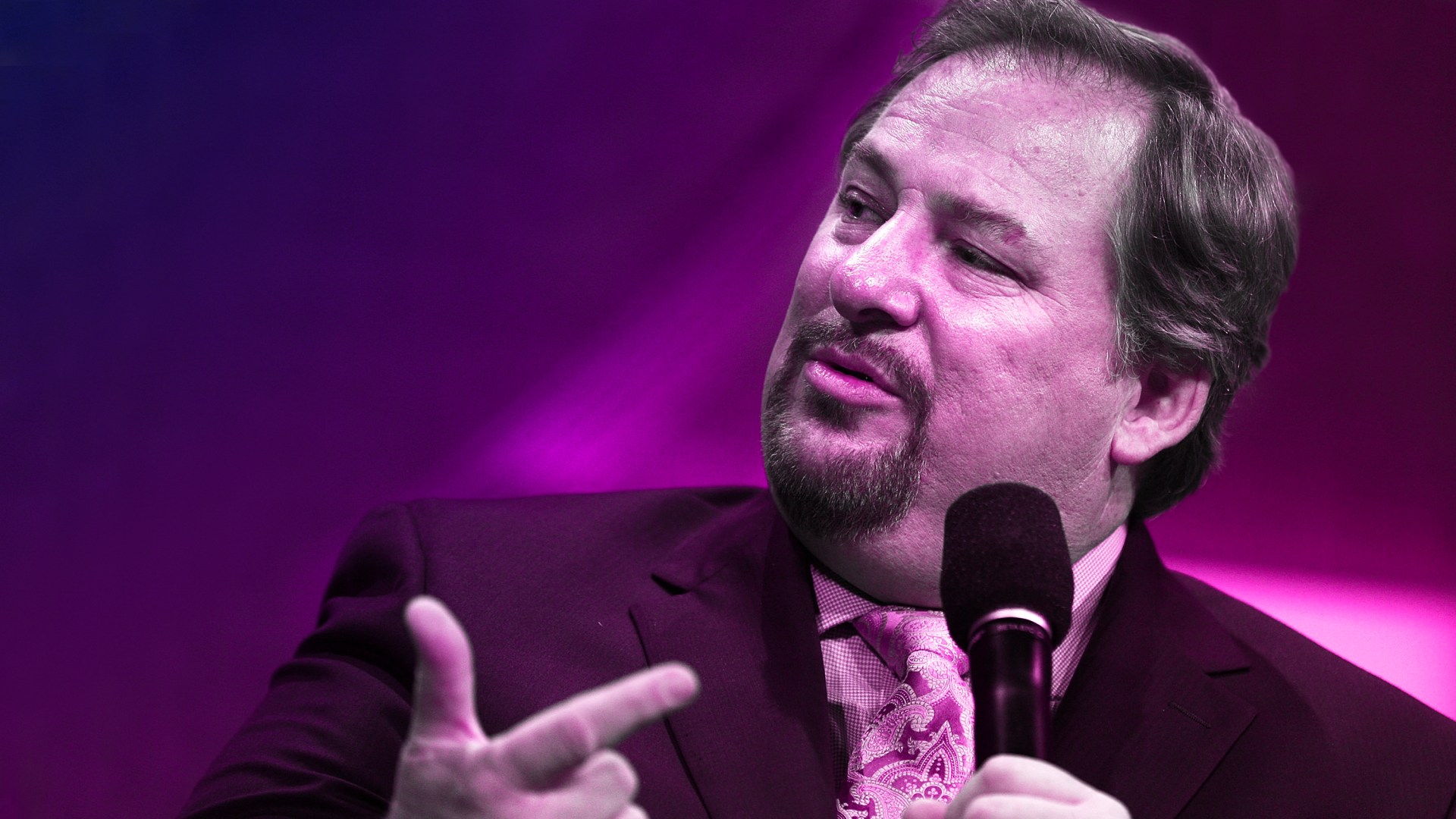
Last week, Russell Moore interviewed the recently retired pastor Rick Warren—author of The Purpose Driven Life—on his show.

They discussed his pastoral transition and plans for the future, as well as the disfellowshipping of Saddleback Church from the Southern Baptist Convention (SBC) for hiring a female teaching pastor on its staff.

As the planter and former pastor of the well-known congregation, Warren shared how his views on women in church leadership changed when he re-examined certain scriptures like the Great Commission.

The following excerpt is adapted from the original audio, which can be listened to here.

Rick: I’m ready here to join in the former Southern Baptist support group with Beth Moore, with Russell Moore, and a few others. This last week I got kicked out. It’s not a surprise to me actually. I started Saddleback Church 43 years ago—I am a fourth-generation Southern Baptist, and my grandfather Chester Armstrong was related to Annie Armstrong …

My great-great-grandfather was led to Christ by Charles Spurgeon and sent to America to plant churches in the 1860s. So, I have a long Baptist background. But you know what? We’ve done so many things not by the book. [Back] in 1980 when I started the church, we didn’t put Baptist in the name—now that was unheard of 40 years ago. … It’s a different Convention than it was when we’re missing those great statesmen that used to be here….

Russell: You said you weren’t surprised. I was bowled over. Just because I would think—with all of the crises involving the treatment of women and sexual abuse within the SBC—that saying a church is giving women too much is really not the problem in the SBC [as I see it. I couldn’t believe that is what they were taking up. …]

Rick: Lemme say a word about that. It’s not an accident that the same voices that said, “We cannot protect women from abuse because of the autonomy of the local church” are the same voices that are saying, “But we can prevent them from being called pastors in the autonomy of the local church.” So, the autonomy only matters if it’s convenient for you.

In other words, they clearly think, We have a say in your church over staff titles, but it was a misnomer to say, “We can’t do anything—we’re not responsible for this abuse that’s going on because they’re all independent autonomous churches.” Nonsense.

Russell: Some of them would probably say the confession of faith says that the office of pastor [is] to be held by men [as] qualified by Scripture. And Saddleback now has women pastors. How do you see that?

Rick: Well, in the first place, Southern Baptists have always been anticredal. I grew up with the phrase, “We have no creed but Christ; we have no book but the Bible.” This is not a battle between [theological] liberals and conservatives. [The] liberals left a long time ago. Everybody in the SBC believes in the inerrancy of Scripture. Now we’re talking about difference of interpretation. Those particular passages—Titus, Timothy, and Corinthians—have hundreds, literally hundreds, of interpretations.

We should be able to expel people over sin, racism, sexual abuse, other sexual sins, things like that. But this is over … You mean, wait a minute, we can disagree over the Atonement; we can disagree over election; and we can disagree over dispensationalism; we can disagree over [the] Second Coming; we can disagree over the nature of sin; but we can’t disagree over what you name your staff?

Here’s the difference: This is the same old battle that’s been going on for a hundred years in the SBC … between conservative Baptist and fundamental Baptist. Now fundamentalism is a word that has changed meaning.

A hundred years ago, I would’ve called myself a fundamentalist. Because in the 1920s, it meant you hold the historic doctrines of the church, the blood atonement of Christ, the authority of Scripture—all of the basic cardinal doctrines of evangelical Protestantism. But that word has changed, because now we have fundamental Muslims, fundamental Buddhists. We have fundamental atheists. We have fundamental communists. We have fundamentalists who are secularists. Today, a fundamentalist means you’ve stopped listening…

So, number one, I believe in the inerrancy of Scripture. I do not believe in the inerrancy of your interpretation—nor of mine for that matter. Which is why I have to say I could be wrong. We have to approach Scripture humbly, saying, “I could be wrong.” You’ll never hear a fundamentalist say that: “I could be wrong.” … A conservative Baptist believes in the inerrancy of Scripture. A fundamentalist Baptist believes in the inerrancy of their interpretation. That’s a big difference.

Russell: But you of course would agree that if Saddleback had baptized babies, for instance, that other churches would say, “Okay, we have all kinds of churches that do that, but Saddleback’s not a Baptist church if they do that.”

Rick: Exactly, yeah. Here’s the thing: I believe the church at its best was the church at its birth. And honestly, I have to say this—I wasn’t planning on talking about this with you, Russell.

First, I understand why people get upset about this because I believed the way they did until three years ago. And I actually had to change because of Scripture. Culture could not change me on this issue. Anecdotes could not change me on this issue. Pressure from other people would not change me on this issue. What changed me was when I came into confrontation with four scriptures nobody ever talked about that I felt had strong implications about women in ministry, and nobody had ever shown it to me.

I knew the Titus passage. I knew the Timothy passage. I knew 1 Corinthians, and every time people [would] say, “Why don’t you have women pastors?” I would say, “Show me a verse. [If] you gimme one verse, I’ll consider it because I’m a Bible guy.” You can’t just say, “Everybody’s doing it.” Or “I’ve been to 165 countries, and I’ve seen churches of 30-, 40-, 50,000 people led by a senior pastor who’s a woman.” That’s not enough for me. I have to have a biblical basis.

Three years ago, right after I had taken the leadership of Finishing the Task—and that’s something else I hope we can talk about later on—when COVID[-19] hit, I started reading every book I could find on the Great Commission and on church history. I read over 200 books on the Great Commission and on the history of missions, and I was asking two questions.

One, why did the church grow fastest in the first 300 years? We went from 120 people in the upper room to becoming the official religion of the Roman Empire in 300 years. In my library, I have a Roman denarius of 87 with Caesar on the coin, but in 320, I’ve got a picture of a denarius with a cross on the coin. That’s major cultural change.

And the church grew about 50 percent a decade for the first 300 years. And I made a list of about 25 things that they did that we’re not doing today as a church. I also made a list of the things that we have that we think we have to have [but] that they didn’t have. They didn’t have planes, trains, automobiles; they didn’t have church buildings.

There were no church buildings in the fastest period of growth of the church. For the first 300 years—I’ve been in the oldest church in Maaloula, Syria, in a small little church that seats about 50 people—they had no pulpits. The idea that one guy would stand behind a pulpit preaching—that wasn’t New Testament worship.

Paul says, “Everybody has a song; everybody has a Scripture; everybody has a teaching.” It was in a house, and everybody shared—it wasn’t one guy who sits still while I instill. That’s our cultural imposition. And so, what did they do?

They didn’t have a printing press. They didn’t have the internet. They didn’t have radio, TV, and yet they grew faster in the first 300 years than any other period of time.

Then in the next 1700 years, I was asking, what went wrong? In 1988, the IMB (International Mission Board) hired an Anglican scholar, David Barrett … And he wrote a book called the 700 Plans to [Evangelize the World] and complete the Great Commission from AD 0 to 1988.

I’ve used that book for the last three years as an index to study why we didn’t get it done, what went wrong. And it even tells you the Catholics had this many plans, and the Anabaptists had this plan, and the Lutherans and Methodists there, and you can look at them all. And I’ve seen all the things they did wrong.

Anyway, that study caused me to change my view about women. Nothing else could have [changed] it as I came upon three different scriptures. First, the Great Commission. Now Baptists—Southern Baptists—like to call ourselves “Great Commission Baptist,” and we claim that we believe the Great Commission is for everyone, [that] both men and women are to fulfill the Great Commission.

Well, not really—you don’t believe that, because it says there are four verbs in the Great Commission: “Go, make disciples, baptize, and teach.” Women are to go, women are to make disciples, women are to baptize, and women are to teach, not just men.

Now, this is one of the reasons why Saddleback has baptized more people than any church in American history: 57,000 adult baptisms in 43 years. Why? Because in our church, if you win them to Christ, you get to baptize them. So, if a mom wants to baptize her child or a wife wants to baptize her husband that she led to Christ—anybody can baptize anybody they led to Christ…

It’s the liberation, the emancipation of “every member is a minister,” that … truly, we believe in the priesthood of the priests most of the time instead of the priesthood of the believer.

Now, the Great Commission: go, make disciples, baptize, teach. You can’t say the first two are for men and women [and] the last two are only for men—or maybe just ordained men. That’s eisegesis. You got a problem.

Who authorized women to teach? Jesus. “All authority is given to me; therefore, teach. All authority is given to me; therefore, baptize.” You got a problem with the Great Commission. I had to repent when I actually looked at the Great Commission. I had to say, “It’s not just for ordained men; it’s for everybody.”

The second thing that changed my mind was the Day of Pentecost. Two things happened on that day. We know the first day of the church is its birth, is the church at its best. On that day at Pentecost, we know women were in the upper room. We know women were filled with the Holy Spirit; we know that women were preaching in languages that other people couldn’t [understand], to a mixed audience. It wasn’t just men—women were preaching on the Day of Pentecost.

How do we know that? Because Peter felt obligated to explain it. And so, in Acts chapter two, verses 17 and 18, he goes, “Hey, guys, these people aren’t drunk. What you’re seeing was foretold by Joel. It was gonna happen.” And so he explains why you’re now seeing women preaching on the very first day of the church. He explains it and he says, “This is that, that Joel predicted.”

And here’s what he says. “In the last days”—and clearly that means Peter thought the last days began with the birth of the church; we’re in the latter of the last days. Now, we don’t know how many more there will be, but the last days began with the birth of the church. Peter says, “In the last days, I will pour out my Spirit on all flesh.” All flesh. “Your sons and daughters will prophesy.”

That’s different than the Old Testament. I’ve looked at over 300 commentaries on those verses, and it’s interesting to me that almost everybody goes, “Yep, in the church, everybody gets to pray, everybody gets to preach, everybody gets to prophesy.” And the people who don’t like that ignore that verse. John MacArthur doesn’t even cover that verse. He just skips over it.

And then the third thing that changed my mind—see, none of this had to do with culture; it had to do with Scripture—and then all of a sudden, I noticed that the very first sermon, the very first Christian sermon, the message of the gospel of Good News of the Resurrection, Jesus chose a woman to deliver it to men.

He had Mary Magdalene go and tell the disciples. Now, that clearly wasn’t an accident. It was intentional. It’s a whole new world. Now he has a woman go tell the apostles. Can a woman teach an apostle? Evidently. [Jesus] did it on the first day—he chose her to be the first preacher of the gospel.

Russell: So, you would—after the last three years—you would support men and women as elders, as senior pastor, as everything within the church?

Rick: I would. But here’s what I say—because I have to say, this is my interpretation. I have to say with humility, it doesn’t bother me if you disagree with me.

For 2,000 years, the church has debated the role of women in culture, but to make it the litmus test for “Are you a Baptist or not?” is nonsense. Because the very first Baptist confession, the 1610, says the officers of the church are elders, not pastors, and deacons and deaconesses. That’s the original Baptist confession. So, do you wanna go back to the original or not?

And so, go read the preamble of the Baptist faith message, which it says, “This is not binding on anybody.” It says it in the preamble: this is not binding on any church. But now we’re turning it—a confession—into a creed, and we’re weaponizing it. We’re starting an inquisition. And if this now falls into place, any pastor each week can stand up and say, “I wanna kick out that church because they disagree on dispensationalism.”

We should kick out churches for sin. We should kick out churches that harm the testimony of the convention. This isn’t harming the testimony of anybody. And it’s what’s a disputable issue, as Paul says in Romans 14. The problem with fundamentalists is there are no disputable, no secondary issues with them. Every one of them matters.

Theology

We Lose Culture Wars by Putting Them On Trial

Instead of prosecutors trying to win arguments, we’re supposed to be defending what actually matters.

Christianity Today March 16, 2023
Illustration by Mallory Rentsch / Source Images: Getty

This piece was adapted from Russell Moore’s newsletter. Subscribe here.

“Why are we on defense,” one frustrated culture warrior asked me, referring to some religious freedom issue, “when we should be on offense?” As I’ve written elsewhere, I find this metaphor telling. It assumes that what really matters is the church’s state rather than its mission.

The more I’ve thought of it, though, the more I’ve come to believe that—in one sense—“defense” is exactly what we’re called to do.

Metaphors matter. They shape the way we see who we are, where we are, and what we do. Even though we use the metaphor “culture war” for what some would call “worldview conflicts,” underneath all the military imagery is an unspoken legal metaphor that might be even more controlling. We lose ourselves in culture wars when we think we are prosecutors. But we’re not—we’re attorneys for the defense.

The image of culture war as prosecution makes sense. After all, we are often dealing with principles of righteousness and unrighteousness, of morality or immorality. We make the case for who’s wrong and who’s right, and having won the argument, we thus win the case. This sense of purpose has the additional benefit of being fully in step with the times.

From the social-justice advocate on TikTok policing pronouns and cultural appropriation to the “own the libs” right-winger showing how “wokeness” will make everywhere like Portland, almost everyone can find people or movements to prosecute their cases. And we cheer our favorites on from the courtroom benches.

The problem is that the Bible tells us the role of prosecuting attorney is already filled. Scripture reveals that the devil has two fundamental powers: deception and accusation (Rev. 12:9–10). It says the devil has “the power of death” precisely because the slavery common to humanity is the “fear of death” (Heb. 2:14–15). If the mission involved winning arguments and condemning opponents, the devil does that better than we ever could.

But Jesus’ mission is different. The apostle John writes, “For God did not send his Son into the world to condemn the world, but to save the world through him” (John 3:17).

The world, John explains, is “condemned already” (v. 18). We all have sinned; we all fall short of the glory of God. People find different ways to do that, but whether through self-indulgence or through self-righteousness, we all are found guilty before our own consciences and before the judgment seat of Christ.

Yet we are part of a “ministry of reconciliation,” announcing the possibility of forgiveness of sins and peace with God. “We are therefore Christ’s ambassadors, as though God were making his appeal through us,” Paul wrote. “We implore you on Christ’s behalf: Be reconciled to God” (2 Cor. 5:20).

Returning to our metaphor, we might assume that the prosecuting attorney is the one devoted to justice and to calling things what they are. But the defense attorney must be just as rigorous in defining a crime, if not more so.

A defense attorney does not say to his or her client, “Well, who among us hasn’t embezzled a widow’s retirement fund?” Instead, the defense attorney will explain exactly what kind of jeopardy the accused is in and will usually say to the defendant behind closed doors, “You have to tell me the truth about what we’re dealing with here.”

Sometimes in those closed-door meetings, the defense attorney asks even tougher questions than the prosecuting attorney ever would. The difference is the end goal. The defense attorney is tough precisely because he’s on the side of the accused.

Several years ago, a friend of mine was being considered for a ministry position. I knew he would serve the ministry well, but I also knew the search committee was unsure about him. So I suggested we meet and do a practice run to prepare him for the interview. I said, “I’ll pretend to be the questioners, and you answer me.”

I then proceeded to ask the toughest, most hostile questions I could possibly ask—taking the worst view possible of every controversial thing my friend had ever done. He gave me a look of anguished disappointment: “Russell?”

“I’m not Russell Moore,” I said. “I’m not your friend here. I’m so-and-so on the search committee.” After that momentary confusion, my friend loosened up and answered my machine-gun round of obnoxious questions. He could then see that my questions weren’t to trip him up or humiliate him. Just the opposite—I was on his side.

Imagine a team of defense attorneys arguing their case before the jury. If one of them began referring to the accused as “our client, the obvious embezzler” or “our client who—if you have any sense at all—will rot in jail” or remarked, “There’s nothing as relaxing as some good old-fashioned embezzlement,” that would be a crisis. Some in the jury might say, “This defense attorney isn’t rebuking the embezzler; he’s rebuking his own team in front of the judge!”

The defense attorneys are on the same team only to the degree that they have the same mission. If one of them starts thinking he or she is a prosecuting attorney or a coconspirator with the accused, the group is no longer a team of defense attorneys.

That’s partially why the apostle Paul—like Jesus before him—speaks far more harshly to those inside the church than those outside. He doesn’t denounce the people who would say “I am of Zeus” or “I am of Artemis” the way he does those who would say “I am of Paul” or “I am of Cephas.” Why?

It’s because the church is called to a higher accountability than the world—and because a divided church speaks something untrue about Christ and the gospel. Paul specifically announced, “What business is it of mine to judge those outside the church? Are you not to judge those inside? God will judge those outside. ‘Expel the wicked person from among you’” (1 Cor. 5:12–13).

If there is no eternity, then we should just fall into the same old culture-war patterns as the rest of the world. We should find an in-group and justify whatever they do—and we should identify an out-group so we can relentlessly hound them as stupid and wicked. But if there is a heaven and a hell and a Holy Spirit, then that posture is not just wrongheaded; it’s satanic.

If we are gospel Christians, entrusted with the genuinely Good News that “God was reconciling the world to himself in Christ” (2 Cor. 5:19), then our end goal cannot be to “win” an argument, much less to humiliate our opponents. Our end goal is to see people reconciled to God and to each other. Success for us isn’t defined by getting a “successful conviction” of our “enemies” on the Day of Judgment. Success is their acquittal through the blood of Christ and—even more so—their adoption into the family of God.

The frantic rage we can often display in supposedly protecting “Christian” values might feel like strength, but the world sees it for what it is: fear, anxiety, and lack of confidence. They can also see that it’s nothing like the confident tranquility of Jesus—who overturned tables inside the religious establishment but was indescribably calm before those with the authority to crucify him.

None of the prostitutes and tax collectors around Jesus were confused about his stance on sex trafficking or imperial extortion. And yet none of them were confused about the fact that he loved them—and that he did not fear being put out of the “in-group” for being associated with them.

If that doesn’t feel “offensive” enough for you, then maybe you’re playing a different game.

Russell Moore is the editor in chief at Christianity Today and leads its Public Theology Project.

Theology

Engaging Buddhism

A biweekly series exploring different facets of the religion and how Christians can engage with and minister to Buddhists.

Christianity Today March 16, 2023
Illustration by Mallory Rentsch / Source Images: Unsplash / Pexels

Buddhism, which originated 2,500 years ago in ancient India, significantly influences more than a billion people worldwide, most of whom live in Asia. The Eastern religion has increasingly spread to the West with the popularity of meditation and mindfulness as well as the continued growth of the Asian population in places like the United States, Canada, Australia, and some European countries.

Yet American churches still are unprepared to reach out to their Buddhist neighbors. A 2019 Pew study found that 58 percent of Americans said they knew nothing or little about Buddhism, the second least understood religion behind Hinduism.

To help the church better understand this complex religion, CT has launched the Engaging Buddhism series. Every other week, we look at a different aspect of the religion and how Christians can interact with and minister to people who hold a Buddhist worldview. Browse through the stories in the series so far in the right-hand column.

Books
Review

Basketball Is a Beautiful Game, but Not a Blueprint for Society

Treating the sport as a comprehensive social and political model misunderstands the vision of its Christian founder.

Christianity Today March 15, 2023
Illustration by Mallory Rentsch / Source Images: Getty / Unsplash

There is no sport whose origins are as deeply entwined with Christianity as basketball. Created in 1891 by James Naismith while he was studying at the YMCA’s International Training School, the game is a product of the “muscular Christianity” movement that sought to connect church and sports at the turn of the 20th century.

How Basketball Can Save the World: 13 Guiding Principles for Reimagining What's Possible

As a sports historian, I know there’s supposed to be no cheering in the archives. Yet, as a Christian and a lifelong basketball fan, I’ll admit to at least a small sense of pride when I talk about the origins of the game. My favorite sport, I like to point out, doesn’t exist without Christian ideas and institutions.

Given this background, I was immediately intrigued when I heard about David Hollander’s new book, How Basketball Can Save the World: Thirteen Guiding Principles for Reimagining What’s Possible. A professor with the Tisch Institute for Global Sport at New York University, Hollander’s premise is simple: The principles embedded within basketball by James Naismith can help us solve the problems of our world today.

A new ‘ism’

Hollander is not writing from a Christian perspective, but he does believe basketball has a deeper meaning that can shape the way we live. Amid profound disruption and fragmentation, with the failure of various “isms”—Hollander names capitalism, socialism, theism, and nationalism, among others—he suggests that basketball can offer a new “ism,” a system for making sense of the world.

“No more of the same old mistakes, from the same old thinking, by the same old leaders,” he writes. “Those systems have demonstrably failed. Basketball has given us a nearly century-and-a-half proof of concept. Basketball works.

Hollander makes his case with 13 principles that are “inspired by and deeply connected to Naismith’s vision.” (Thirteen matches the number of original rules Naismith set down for the sport).

The first three principles focus on cooperation (principle 1) and the balancing act between the individual and collective (2) and force and skill (3).

The next seven emphasize the expansive and boundary-breaking potential of basketball. Beginning with the principles of “positionless-ness” (4) and “human alchemy” (5), Hollander connects basketball to globalism (6), gender inclusion (7), open access (8), immigration (9), and bridging the rural/urban divide (10).

The next two principles describe basketball as the antidote to isolation and loneliness (11) and a source for sanctuary (12), while the final principle, “transcendence” (13), brings Hollander back to his favorite theme: basketball’s limitless possibilities.

Hollander’s general pattern is to begin each chapter with reflections on Naismith’s intention for the game, then to connect those ideas with current examples and ideas. Basketball, he repeats in nearly every chapter, provides a space to bring people together.

Basketball is also presented as a metaphor for social policies and experiments. For example, the “open run” style of pickup basketball, in which players join a team of random players at the gym, is connected to Yale political scientist Hélène Landemore’s idea of “open democracy,” in which elections are eliminated in favor of randomized representation.

Other ideas Hollander advances include codifying within government and constitutions the right to sanctuary; ensuring that every new institution and policy is inclusive “across the full spectrum of gender identity”; and combating predatory lending by having local post offices provide basic banking services.

How does basketball make these changes happen?

Hollander does not exactly say, aside from making the point that basketball brings people together. Instead, he offers plenty of you-can-do-it enthusiasm. We must “commit to cooperation as our duty to one another,” he declares. “Each of us must answer the call of this world. We can no longer be who we were,” he writes.

There are some moments where Hollander’s book truly inspires. His passion for basketball is apparent, with compelling passages about the joys of the sport. He presents several intriguing ideas that are worth considering. And he is exactly right to note the wonderfully inclusive history of basketball, a game embraced by men and women, immigrants and outsiders, and a wide range of religious, ethnic, and racial communities.

Yet too often it reads like a TED Talk masquerading as a book. It’s a Big Idea backed up with shallow platitudes, revealing a limited understanding of the complexity of history and Naismith’s own hopes and dreams for the sport.

Winning men for the Master

We can start with Hollander’s treatment of Naismith’s faith. He admits that Naismith was inspired by Christian commitments but assures readers that Naismith left Christian ministry behind and adopted “a more ecumenically humanistic drive and perspective.” As evidence, Hollander cites Naismith’s application to the YMCA Training School, quoting him writing that his goal in life was “to do good. … Wherever I can do this best, that is where I want to go.”

The ellipsis tells the story. Naismith’s full quote (emphasis mine) reads, “To do good to men and serve God. Wherever I can do this best, that is where I want to go.” And on the same application (unmentioned by Hollander), Naismith describes the purpose of his future work this way: “to win men for the Master through the gym.”

Of course, it does not follow that Naismith’s Christian motivations stamped the game with an inherent Christian identity. Naismith did not hold basketball close but gave it away for people of all faiths to enjoy. Yet, while Hollander sees Naismith’s decision to pursue a career in physical education as evidence of a man leaving Christian ministry, in truth Naismith wanted to expand Christian ministry outside the walls of the church. He saw sports as a way to do this.

So, too, Naismith’s Christian vision included a conception of sin and human frailty that is entirely absent from Hollander’s narrative. This comes through best in a detail that Hollander never mentions: Naismith’s favorite role in basketball was not the player or the coach but the referee. He loved witnessing the creativity of individual players, but he also wanted the game to be a laboratory of character development—a place for people to be formed—and he recognized that this would not happen automatically. The job of the referee was to enforce rules and boundaries, to create the conditions in which moral development could take place.

Hollander’s naiveté about the shadow side of the human condition plays on throughout his narrative. In his chapter on “Human Alchemy,” he praises basketball players for “transforming” into something new by speaking out on social issues. Lebron James, for example, is described as someone who “alchemiz[ed] into a national voting rights advocate.”

But “alchemy” is not in and of itself a positive good. The question is always, Toward what end? While it’s a great thing for players to speak out for justice, Hollander never acknowledges that athletes will inevitably support competing and contradictory goals—that some, like NBA player Kyrie Irving, might “alchemize” with anti-vaccine rhetoric and support for an antisemitic film.

Even when Hollander does nod to the presence of tension, his response is far too simplistic. In a section praising basketball’s global spread, he writes about China’s response in 2019 when Daryl Morey, then general manager of the Houston Rockets, tweeted, “Fight for freedom, stand with Hong Kong.”

Morey’s tweet created an international firestorm, with NBA games taken off the air in China. Instead of rushing to Morey’s defense, most NBA leaders were more critical of his tweet than they were of China’s policies in Hong Kong—to say nothing of the credible evidence that China is committing genocide against the Uyghur people.

So how does Hollander address this? He presents it as a both-sides issue, saying only that there were “great differences” in perspective. He laments not that China cracked down on Morey but that the whole affair was a “missed opportunity” to unite around basketball. “No one recognized the opening to say, Okay, what can we all agree upon? The game. That was the basic starting point.”

Starting points can be helpful, but it all depends on the destination. They don’t inevitably lead to good. The unifying power of sport can just as easily be used to provide cover for human rights abuses (including in the United States) as it can be mobilized for human flourishing and cooperation.

Freedom and cohesion

There are numerous other questionable assertions throughout the book. In one section Hollander suggests that Naismith embraced a “radical notion of full gender inclusion” and wanted to “explode the gender paradigm.”

While Naismith did support women’s participation in basketball, he did this at least in part on the grounds of preserving gender distinctions. He supported different rules for the women’s game and expressed concern when some women began playing using the men’s rules. Rather than exploding the gender paradigm, Naismith saw basketball as a way to uphold it.

No single chapter highlights Hollander’s shallow analysis more than his fourth chapter, titled “Positionless-ness.”

He centers the chapter on John McLendon, a Hall of Fame basketball coach who studied directly under Naismith while attending the University of Kansas. McLendon is best known for two things: his trailblazing work as a Black basketball coach advocating for racial integration, and his innovative full-court, fast-break style of basketball.

To Hollander, McLendon’s fast-break system exemplifies the way we need to live in the modern world. Hollander tells us that rather than accepting limitations and remaining rooted in particular communities and vocations, we need to embrace the constancy of change, always seeking to reinvent ourselves. McLendon’s system modeled this, in Hollander’s view, because it “was free, unstructured, unassigned, and self-determined.”

“In McLendon’s vision,” Hollander writes, “basketball is the language of freedom—the freedom to be who you are and to create in the space you’re in without someone else, without society, assigning permission or prescriptive roles to you.”

Read McLendon’s book Fast Break Basketball (1965), however, and precisely the opposite is true. The fast break, McLendon wrote, required “the assignment of certain definite and equally important responsibilities to each player.” McLendon gave his players positions and assigned them different lanes on the court to fill. In short, his system encouraged players to sacrifice some of their individual freedom to gain a different type of freedom—a freedom experienced through the joy of working in cohesion as part of a team.

It is true, of course, that in modern times basketball has moved in a positionless direction. In the NBA, players increasingly have a similar profile: tall, rangy, with the ability to shoot threes, handle the ball, and guard multiple positions.

This may well be a great thing for the game, but there are still consequences. Adopting a positionless approach necessarily forecloses some possibilities, leaving some people behind: the slow big man or woman who can block shots and score in the low post; the scrappy defender with a poor shot who can hound the ball.

Basketball’s positionless revolution is good for the scoreboard, but the uniformity that it promotes is not necessarily a good model for our economy or social life together. Hollander’s inability to see that sometimes the lessons we learn from basketball are examples of what not to do is one more flaw in his well-intentioned book.

Moral formation and human development

From the beginning, basketball was designed with clear limits. It was a game for the in-between, meant to fill the gap from the fall football season to the spring baseball season. It was not an all-encompassing vision for life—certainly not for its founder, who quickly turned over stewardship of the game to others.

But basketball does have something to say about moral formation and human development. And this, it seems, is one part of Naismith’s legacy that Christians can and should embrace.

This is also a reason that Hollander’s book is not a total miss. If it helps us reflect on the social worlds we seek to imagine and create—the type of people we want to become through the sports we play—then it is worth the read. Just keep in mind the sport’s limitations and our own. Basketball is a beautiful game, but it was never intended to carry the world in its hands.

Paul Emory Putz is assistant director of the Faith & Sports Institute at Baylor University’s Truett Seminary.

News

Evangelicals Are the Most Beloved US Faith Group Among Evangelicals

And among the worst-rated by everybody else.

Christianity Today March 15, 2023
Daniel Gutko / Unsplash

When asked about their views of the country’s biggest religious groups, most Americans don’t have strong feelings either way—except when it comes to evangelical Christians.

In a Pew Research Center report released Wednesday, 27 percent of Americans expressed an unfavorable view of evangelicals, compared to 10 percent who have a negative view of mainline Protestants or 18 percent who have a negative view of Catholics.

About as many have a favorable approach to evangelicals—28 percent—but that’s mostly due to positive sentiment from American evangelicals themselves, about a quarter of the population.

The findings follow a trend from Pew. Six years ago, researchers reported that Americans were warming up to each major religious group in the US, from Mormons to Muslims, except for evangelicals.

Other surveys over the past year have pointed to Americans’ negative perceptions of certain evangelical denominations and traditions.

When asked about 35 specific “religious groups, organizations, and belief systems” in a 2022 YouGov poll, Americans gave the best ratings to Christianity and Protestantism, the biggest religious affiliations in the US.

YouGov respondents weren’t asked about evangelicalism as a category, but traditions with mainline denominations—Presbyterianism, Methodism, Lutheranism, Anglicanism, and the Episcopal Church—were ranked favorable, while those that fall more squarely in evangelicalism—Pentecostalism and the Southern Baptist Convention—skewed negative. (The worst ratings, though, went to Jehovah’s Witnesses, Scientology, and Satanism.)

Additionally, just over half of Americans are turned off by Pentecostal churches, more than any other denomination, in a Lifeway Research survey from last year. Other denominational names also carry some baggage, but the researchers found people were most open to nondenominational and Baptist churches.

In the recently released Pew report, evangelicals’ critical reception wasn’t the result of a lack of familiarity. Nearly two-thirds of Americans say they personally know someone who is an evangelical Christian, a number that has held pretty steady since 2019.

“While those who know an evangelical Christian are more likely than those who do not to express a positive view of the group (24% vs. 9%), they are also slightly more likely than those who do not personally know an evangelical Christian to express a negative view of evangelicals (35% vs. 29%),” the report wrote.

Many evangelicals can speculate the reasons behind the negative reputation. Evangelical identity in the United States became associated with additional political baggage in recent years, as more supporters of President Donald Trump took on the label.

Back in 2020, National Association of Evangelicals president Walter Kim raised concerns about politicized perceptions of the faith, stating, “We are in a season in which the evangelical faith is being narrowly defined and misunderstood by many, with long-term ramifications for our gospel witness.”

“Too many, especially young people and people of color, have been alienated by the evangelical Christianity they have seen presented in public in recent years,” he said.

Evangelical institutions have continued to reckon with racism, sexism, and abuse, past and present. Some leaders have spoken of “ministry from the margins” as some traditional, conservative Christian stances on issues around marriage, gender, and family are falling out of favor in mainstream society. Plus, Christianity is aging and declining in the US as more leave the church or don’t follow their parents’ faith to begin with.

Among nonevangelicals in the US, just 18 percent view evangelicals positively and 32 percent view them negatively, Pew found.

“As someone who cares a lot about apologetics, it can be easy to shrug this off as merely the price of doing evangelism in a secularizing context. But if we take Paul’s words seriously, we should care about our reputation with those outside the church,” said Dan DeWitt, executive director of the Center for Worldview Analysis and Cultural Engagement at Southwest Baptist University. “These statistics should grieve us. While we cannot water down our beliefs to make people like us, we need to listen to how the world perceives us.”

DeWitt referenced Scripture’s call to be friendly to those outside the faith. Colossians 4:5–6 instructs Christians to “be wise in the way you act toward outsiders; make the most of every opportunity. Let your conversation be always full of grace, seasoned with salt, so that you may know how to answer everyone.” In 1 Timothy 3:7, elders are required to “have a good reputation” with those outside the church.

Questions and concerns around evangelicals’ reputation in America are nothing new. More than a decade ago, CT dedicated a cover story to the topic, with sociologist Bradley Wright writing that “The feeling of being disliked and alienated has worked its way deep into the evangelical consciousness. We feel it in our bones.”

Indeed, America evangelicals continue to report experiences of discrimination based on their Christian convictions and debate to what extent the pressures of “post-Christian culture” amount to persecution or marginalization in their country.

In the Pew survey out this week, it’s atheists and agnostics who have the worst views of evangelicals, followed by Jews and those who identify as “nothing in particular.” (For their part, evangelicals hold their strongest negative views against atheists but feel warmly toward Jews as well as mainline Protestants and Catholics.)

“Christian leaders should take findings like these to heart and seek to season our worlds with salt in order to know how to better answer each person,” DeWitt said.

“Polls like this should give us pause. Since having a good reputation with outsiders is a requirement for leadership in the church, the church in America could well be facing a leadership crisis in the area of our public witness. But that’s old news. The Pew study is yet another reminder: We can’t ignore the problem any longer if we care about our commitment to the Bible, the Great Commission, or our neighbor.”

Theology

John Stott: ‘Evangelical Traditions Are Not Infallible’

The late theologian’s sermons are going digital, thanks to one of his family friends.

John Stott

John Stott

Christianity Today March 14, 2023
Illustration by Christianity Today / Source Images: Getty / Photo Courtesy of johnstott.org

The public will soon have access to a digital collection of hundreds of John Stott’s recorded sermons and transcripts spanning five decades.

The influential theologian in the modern evangelical movement adhered to the principle of what he called (23:53) the “double obligation” of Bible expositors: “to open up the text of Scripture with faithfulness to the ancient word and sensitivity to the modern world.”

“John was very involved with what he called double listening—listening to Scripture and listening to the world. And [he taught] that when you preach, you need to have both,” Mark Hunt, an executor of Stott’s literary estate, told CT.

Hunt was the main coordinator of a small team tasked with the yearslong project of organizing Stott’s sermons. His main job was listening to and editing nearly 650 recordings made over the decades Stott served as a preaching pastor at All Souls Church in London and traveled the world speaking.

Stott was influential in Hunt’s life and career as a family friend turned mentor, inviting him to serve on the boards of his nonprofits and accompany him on global trips.

Faithlife, the company known for its Logos Bible study software, first approached the literary executors of John R. W. Stott about the sermon project in 2016. But it wasn’t until 2020 that Hunt began the process of refining the late evangelical leader’s audio recordings. That included cutting out coughs, long pauses, and paper rustling. He also increased the audio speed.

“John was very deliberate in his preaching, which was great, giving people a chance to reflect. But it didn’t make for the greatest audio listening experience,” Hunt explained.

He finally finished editing in December 2022 and passed the baton to Faithlife. The company now has the John Stott Sermon Archive available for preorder—though it is still working to complete the project.

“We don’t currently have a release date,” Ben Amundgaard, senior director of Faithlife’s Bible study products, told CT. “While the audio is complete, we are creating transcripts of all the audio sermons.”

Overall, Hunt described his two-year listening experience as a labor of love.

“I hope it will prove to be a gift to the church and a small token of my gratefulness for Stott’s impact on my life,” he said.

In an interview with CT, Hunt shared what he learned from listening to hundreds of Stott’s sermons. The transcript has been edited for clarity and length.

How was it listening to John Stott preach through the decades, particularly amid the onset of COVID-19 when much of the United States was in lockdown?

The trouble with editing of any sort is, it’s like you’re sanding a door and you can just keep seeing imperfections. Sometimes, somebody’s got to come and take it away.

And there was a sense of “I’m on a timeline; I need to get this done. Yet I want to treat it with care.” Then on top of that, as I [kept] pushing forward, [was] this sense of hearing John and hearing the truth that he’s speaking from Scripture and, some days, just [feeling] like, “That’s it. I can’t take any more.”

I’d go down to my wife, and she’d patiently listen to me kind of go through what it was that I’d seen afresh in the work for that day. So yeah, it was quite a demanding process and quite an emotional process. And it was a sense of relief and sadness when it was over.

Were there any particularly transformative moments for you while listening?

I think that, first of all, the depth of Scripture and theology was amazing. There were times that I would stop and say, “Boy, this church had decades of teaching at this level.” This immersion just comes up in his preaching all the time. He gets the big picture.

He sees how things go together at a level of depth that you would go, “That’s not profound.” But the profoundness is that he puts the pieces together. There was a sense that he wasn’t preaching at but … was standing alongside and that we are together learning under the authority of Scripture.

In one sermon, he said, “I think the great difficulty any Christian communicator or preacher has today is to have the courage to face the applications of Scripture in their own lives.” He applied Scripture to himself before he came to anyone else.

Then, in another sermon, he talks about the hallmark of authentic evangelicalism. And I’d be curious to know how John would deal with that today, given what’s happened to the term. But back then, it was the high view of Scripture and Scripture being applied to the realities of the current world.

He would say, “The hallmark of authentic evangelicalism is not that we maintain the traditions of the evangelical elders. It is rather that we are prepared to reexamine even the most long-standing evangelical traditions in the light of Scripture, in order to allow Scripture, if necessary, to judge and reform our traditions. Evangelical traditions are not infallible; they need to be reexamined. They need to be judged. They need to be reformed.” Well, that’s a statement that I think rings true today.

The third thing that strikes me is his sense of God’s generosity. He said, “Our God is a generous God. So generosity must be the mark of all followers of Christ.” These are things that don’t come up in one sermon series. But you hear them come like waves on the ocean, just repeating themselves.

How did Stott impress you—not just as a mentor and friend but as a pastor, an evangelical leader, and a man?

I think the first thing that strikes me in looking at him is his discipline. It was just sort of legendary that he would get up in the morning and he would spend an extended time in Scripture and prayer. But he would do this even when he had crossed multiple time zones. I mean, it was that kind of drive, the way that he would set aside time on a regular basis to think through the strategies in the priorities for his work in the church and then later for his work in international speaking.

Then his immersion in Scripture. That truly to him was the source of what God was calling him and calling the church to do, and if Scripture said it, then we’d better get in line with it. That was a driving force. It wasn’t just a formality—“I’m gonna have a quiet time today.” He really spent time there. His prayer life was built around Scripture. Every morning he would pray through the fruits of the Spirit and ask that God would be active in his life that day, making those become a reality.

Then lastly, the thing that strikes me is his relentless and unswerving desire to see the person of Christ glorified. In fact, almost all his sermons finished with that phrase—you know, “I’m praying these things that the name of Christ will be glorified.” So it was a remarkable combination of things in a single individual. And he was not to be distracted, not being married and having a physical family. He had this huge spiritual family. But he also focused his life to accomplish what he felt he was called to.

What do you hope people will get from having access to Stott’s sermons in this way?

My hope is that this will be a project that not only [is] of some devotional benefit to people but one that might be of some use to people who are interested in the whole question of sermon preparation and homiletics—and even “How do I structure series and what kinds of topics might be useful?”

Then I hope that it also is useful for the historical aspect. I’m aware of two or three people that are doing PhD dissertations on the theology of John. This provides a way not just to deal with what he’s written but to be able to easily access his sermons and get clarification on what his thinking was on certain topics.

Nicola A. Menzie is a religion reporter who has written for Religion News Service, CBS News, Vibe.com, and other publications. She is also managing editor at faithfullymagazine.com.

News

Boarding School Alumni Push for a New Kind of Abuse Investigation

Uncovering decades of allegations out of the Christian Academy of Japan, investigators tried new tactics to facilitate repentance and healing.

The Christian Academy of Japan student body from the 1974 yearbook.

The Christian Academy of Japan student body from the 1974 yearbook.

Christianity Today March 13, 2023
Courtesy of Deborah Rhoads

Decades after dozens of missionary kids suffered physical and sexual abuse at the Christian Academy of Japan (CAJ), mission agency leaders associated with the Tokyo school fell prostrate on the ground to perform dogeza, Japan’s deepest form of apology.

The 13 leaders met with victims at a private retreat in Colorado last fall to hear their stories and offer a formal apology.

“On their knees, heads on their hands, sobbing,” recalled Janet Oates, a 1963 alum of the academy, which was founded in 1950 as a boarding school for missionary children. “Alumni were sobbing too … one moment of justice.”

The moment of repentance followed an unconventional abuse investigation process that involved CAJ alumni acting as consultants and advocates. Alumni like Oates pushed the school and its founding mission agencies to investigate historic abuse in the first place.

The results of the investigation were devastating—turning up 72 cases of alleged abuse from 1957 to 2001. But the recent response has brought a degree of healing for some victims and could demonstrate a new approach for other organizations facing historic abuse allegations.

A number of boarding schools for missionary children have faced records of abuse. Investigations have uncovered mistreatment and mismanagement at a New Tribes Mission school in Senegal, the Christian and Missionary Alliance’s school in Guinea, and Hillcrest School in Nigeria. Few of the 150 schools serving missionary children around the world still offer boarding.

Four years ago, CAJ alumni and survivors said they wanted accountability and an apology from the school and the six mission agencies that founded it.

At the retreat last fall where leaders apologized, “the mission reps there weren’t somebody’s assistant down the chain. It was top leadership,” said Deborah Rhoads, another alum whose two brothers were abused at the school.

Along with the school, five of CAJ’s founding organizations—Resonate Global Mission, ECC-Serve Globally, The Evangelical Alliance Mission (TEAM), WorldVenture, and One Mission Society—covered the cost of the extensive investigation, which was conducted by Telios Law and reviewed by an outside team of experts. The sixth group, SEND US, did its own narrower investigation.

Dave Hall, the CEO of TEAM, was one of the leaders at the retreat. He told CT that he felt it was important to accept responsibility even if abuse didn’t happen during his tenure.

“If we need to show up and just get punched in the face, it might be because we deserve to get punched in the face over this,” he said. “We failed as an organization. We didn’t protect kids who needed to be protected. We can’t just say, ‘That was a different generation.’ It’s maybe convenient for organizations, but it’s not very helpful or therapeutic for victims. They’re left with no one who is accepting responsibility anymore.”

The five agencies also pledged $1 million together to create a fund for counseling resources for victims.

The investigation, retreat, and other responses largely came about by the insistence of a group of tenacious alumni, several of whom met regularly and gave thousands of hours to the multiyear process. Though initially skeptical of the outside firm the mission agencies hired, those alumni also consulted with investigators throughout the process, addressing ongoing concerns and ensuring sensitivity.

“In the Southern Baptist denomination or … the US gymnastic committee, what happens is that allegations are brought forward and an investigation commences, and the people who brought the allegations are reduced to witnesses only,” Brenda Seat, a survivor and an alumna of CAJ, told CT. “They are not allowed to choose who the investigators are going to be. They don’t have any input into what law firms are going to be used.”

In 2017, alumni began sharing accounts of abuse they experienced decades earlier on a private Facebook page. The school initiated an investigation in 2019, after alumni like Oates gathered multiple first-person accounts of abuse and sent them to the school. The school and mission agencies hired Telios Law to investigate.

Rhoads said survivors were “reactive,” “distrustful,” and “angry” after so many years of neglect and betrayal by authorities. That made communication between the sides difficult sometimes. Rhoads, Seat, and Oates tried to bridge the divides as alumni representatives.

Rhoads created a presentation for investigators, mission agency leaders, and others to help them understand the history of the school and what cultural factors contributed to the perpetuation of abuse. Alumni later noted in a statement a culture where “obedience, sacrifice, silence, and endurance were expected of women and especially children.”

The investigation had the institutions and survivors “inching out on ice on both sides,” said Rhoads. Because the alumni representatives maintained communication with the investigators throughout the process, over time they developed a more trusting relationship with the coordinating investigator at Telios, Theresa Sidebotham—herself a fellow missionary kid. These alumni gave real-time feedback to investigators when tensions flared with survivors.

Rhoads “flagged one or two situations that were getting pretty messy with misunderstandings and miscommunications,” Sidebotham said.

When certain investigators were acting too much like FBI agents toward people recounting childhood trauma, the alumni representatives shared that with Sidebotham. Seat explained how difficult it is for adults to recount childhood abuse; as children they might not have even understood what was happening to them. The process is delicate and requires an interviewer “trained to do that kind of interviewing,” she said.

Investigators allowed survivors to bring a support person to interviews. Rhoads went with her brother and knew by looking at him when to ask for a break for water or a walk. They also allowed interviewees to bring a recording device to have their own record of the conversation.

“Imagine being a 9- or 10-year-old molested by your teacher, then you’re 65; how do you talk about that? Your memories begin to blur a little bit. … At some level the investigators had to be really pointed—‘Are you sure that’s what happened? Tell me again,’” Rhoads said.

“Some said, ‘That was an interrogation.’ There is a subtle difference in what that feels like emotionally.” But some survivors appreciated the interviews “because it put words to something they hadn’t articulated.”

For the survivors, Rhoads and the others worked to set expectations of what the investigation could accomplish—like that the final report might not include that person’s particular story or describe their story as “corroborated.” She and the other representatives reached out to alumni about doing interviews with investigators, so investigators got more cooperation than they might have otherwise.

Organizations have a hard time making investigations by outside firms like Telios truly independent because the organization is the one paying for it; the organization is the law firm’s client rather than victims’.

In this case, the Telios investigators assembled an independent panel of child abuse experts who would review the findings and offer recommendations based on the report. Sidebotham doesn’t think a review panel is “practical except with a really big investigation.” But she said it serves as a “corrective for one’s own possible bias.”

For this investigation, “there were a lot of curtains. We couldn’t see into stuff,” said TEAM’s Hall. “We were just paying the bills. I don’t think I have a clue who was on that council.”

Telios released its report in 2021, uncovering 72 cases of alleged abuse over 44 years. Most of the allegations were of sexual abuse but also included physical abuse, emotional abuse, and child-on-child abuse.

The investigators said 25 cases of sexual abuse were substantiated by a preponderance of evidence. The substantiated cases involved four CAJ teachers and administrators—including 18 involving a fourth-grade teacher in the 1960s who has since died. Victims said this teacher would openly fondle children in his classroom and in their beds when he served as a dorm parent.

Victims who reported their abuse as students rarely saw action, and they were sometimes punished. Some had their mouths washed out with soap for “lying” and were whipped with a belt. Some felt pressure to keep it secret, worried that if they reported their abuse, their parents would be sent home from the mission field.

Children felt that the mission work of their parents came before their needs. One alum in the report said going away to boarding school as elementary-age children left children with a “profound” sense of abandonment.

CAJ enacted a new child protection policy in 2002 to screen and train staff and create better reporting standards. The investigators received no reports of abuse after 2001. The school ended its boarding program in 2009, and the majority of the school’s students now are no longer children of missionaries.

When the law firm released its investigation findings in 2021, it also released a statement from alumni that outlined their response to the report, including their concerns with it.

The alumni representatives saw weaknesses, like that the report sidestepped the failures of school administrators who did not report abusers. They were frustrated with some of the standards for saying abuse was “corroborated” in the report. But overall they found it was beneficial to work with investigators rather than criticize them.

Some alumni, though, are still angry about the investigation—on one side that it was done at all and impugned the school, and on the other that not enough had been done to bring justice for survivors.

Seat argues that without the investigators, survivors like her would not have gotten a report. And without the victim representatives, the investigators would not have gotten the level of cooperation they did for interviews.

Sidebotham, who has worked on other major investigations, said it was the first time she worked with survivor representatives in the process itself—giving feedback on interview styles and communication.

In some investigations, she told CT, a survivor representative might not be feasible if an investigation is “too diffuse” or if there is too much mistrust. This time, the alumni representatives met every other week for two years, Seat said.

After the report was published, the five mission agencies supporting the investigation as well as the school all issued separate public apologies for their role in perpetuating abuse at the school. The five agencies also endorsed all of the independent review panel’s recommendations, which were listed in the final report.

One of those recommendations was the retreat for survivors to meet and for mission leaders to apologize—with certain protocols set by alumni and the abuse experts. Alumni had separate hotels and arrivals from mission agency leaders, ensuring that they wouldn’t run into someone unexpected or feel trapped. The organizers also honored a request that the meetings not use religious language in official sessions, since some survivors associated that with their abuse.

Hall, the head of TEAM, said the agencies followed the alumni’s requests for the structure and format of the retreat. “We wanted to avoid any possibility that this was in reality or appearance an image management strategy,” he said.

A key from Sidebotham’s experience is for organizations to give investigators “a mandate to find out the truth,” she said. Sometimes she encounters a “defensive, ‘We’re fine,’” attitude in organizations, rather than the sense of humility that’s necessary for healing to take place.

“When the head of my mission said he believed my story, I can’t tell you how much I needed to hear that, even though he was not responsible,” said Seat, with tears. “I think that one of our learnings was that when there is true and full repentance, it really makes a difference.”

addApple PodcastsDown ArrowDown ArrowDown Arrowarrow_left_altLeft ArrowLeft ArrowRight ArrowRight ArrowRight Arrowarrow_up_altUp ArrowUp ArrowAvailable at Amazoncaret-downCloseCloseellipseEmailEmailExpandExpandExternalExternalFacebookfacebook-squarefolderGiftGiftGooglegoogleGoogle KeephamburgerInstagraminstagram-squareLinkLinklinkedin-squareListenListenListenChristianity TodayCT Creative Studio Logologo_orgMegaphoneMenuMenupausePinterestPlayPlayPocketPodcastprintremoveRSSRSSSaveSavesaveSearchSearchsearchSpotifyStitcherTelegramTable of ContentsTable of Contentstwitter-squareWhatsAppXYouTubeYouTube