News

One of India’s Most Christian States Legalized Gambling. Church Leaders Said No.

Meghalaya’s decision to open casinos brings together faith groups and social organizations against the government.

Christianity Today December 2, 2022
Associated Press

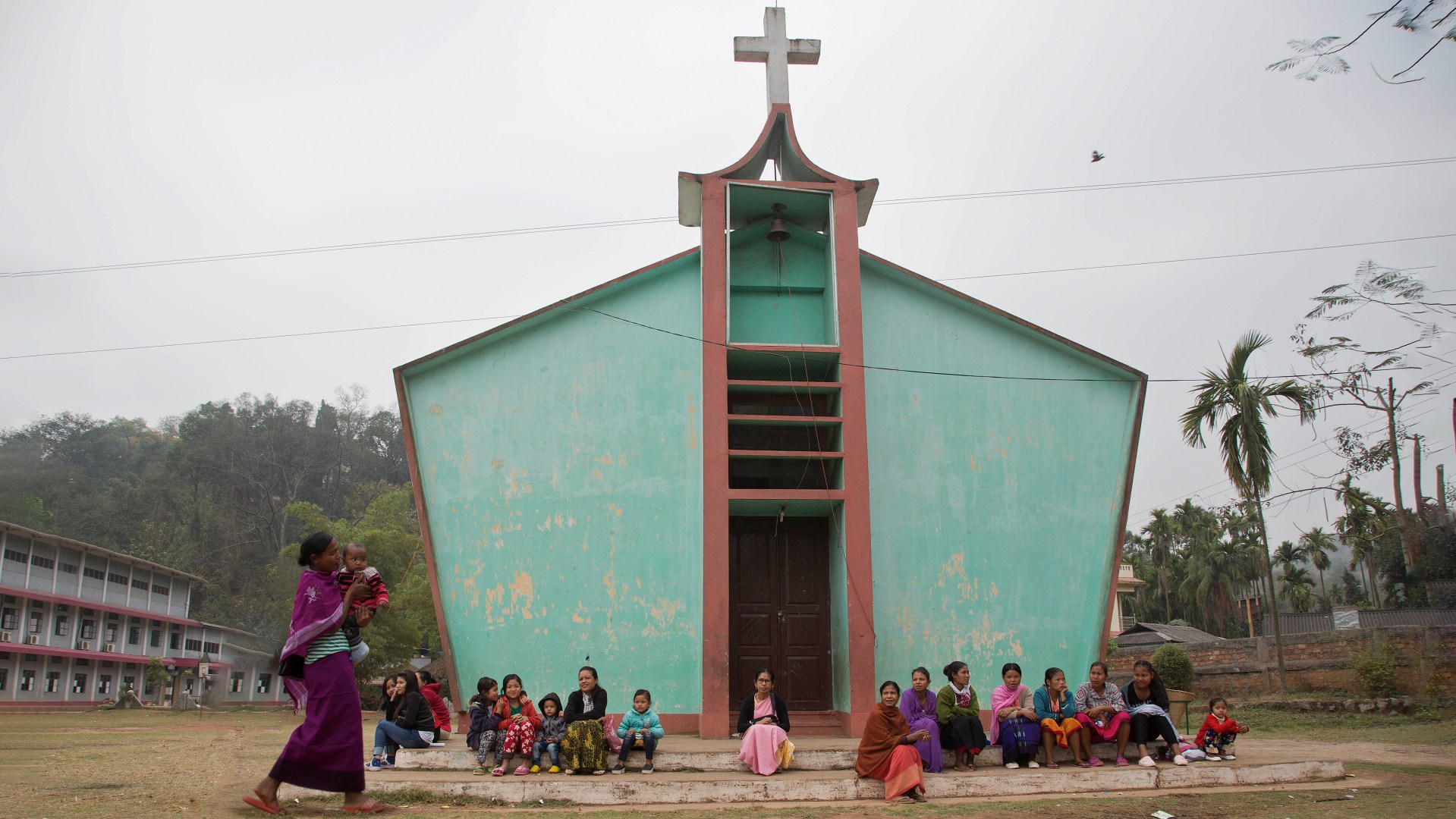
An Indian state known for its scenic waterfalls, mountain ranges, and plateaus has reversed its decision to legalize gambling after stiff opposition and protests by the church and social organizations. Last month, the government of the northeastern state of Meghalaya passed an ordinance to repeal legislation that had legalized gambling, online betting, and gaming since March of last year.

“We rejoice with the people and thank the government for its concern and understanding of the long-term effect of the act,” said Allen Brooks, at the Assam Christian Forum.

Though Christians make up the majority of Meghalaya residents and many leaders opposed this legalization, the government chose to not allow their input before carrying out this change. Instead, it passed the gambling measure by enacting it first as a temporary law, or ordinance, which can remain in effect until it is replaced by a law.

Had the government chosen to legalize gambling by moving legislation through both houses and receiving the approval of the governor, the church and other civil society groups would have been able to offer preliminary feedback.

After the initial announcement, the Khasi Jaintia Christian Leaders Forum (KJCLF) condemned the government’s move, calling on churches, concerned organizations, and the general public to condemn the action. The Roman Catholic Church, the North East India Fellowship of Charismatic Churches, and civil society groups joined in disagreement with the legislation.

twitter.com/JamesSangma1/status/1580438091776815104

“The casinos will open a plethora of crime and criminal activities,” said KJCLF’s Edwin H. Kharkongor. “It will promote different activities from drug addiction to prostitution, to fights and violence, robberies, and many more crimes.”

The government had argued that the law would generate employment opportunities and increase state revenue.

Meghalaya is the country’s fifth-poorest state (out of 28) and the poorest in a region known as the “Seven Sisters,” a nickname coined for the northeastern states that share a natural landscape and are highly interdependent. All are geographically isolated from the rest of India (save for a tiny sliver of Assam).

“There are huge competitions to attract the tourists. The other Northeastern states have a similar topography like Meghalaya and the states also have historical and archaeological sites,” James P. K. Sangma, a government minister, told the state assembly in September. “To attract the tourists, we have to give them some additional amusement.”

But Christian leaders didn’t buy it.

“I am totally against the law that has been enforced,” Leaderwell Pohsngap, a senior leader with the Church of God, said before the ordinance was repealed. “I don’t believe it has anything to do with tourism. It is just an excuse. They say that casinos will only be for outsiders and not for locals, but it is very hard to implement. Once you legalize casinos, which is one form of gambling, others will follow.”

More than tourism, the region’s economy relies on agriculture. Neighboring states Nagaland, Mizoram, Tripura, Assam, and Arunachal Pradesh do permit some sort of gambling, making Meghalaya an exception.

But others feel that Meghalaya already has what it needs to stand out. The town of Mawsynram is the wettest place on the planet, and the state is known for its unique living-root bridges.

“It has many tourist attractions, and the excuse of legalizing gambling to attract tourists is completely bogus,” said Mismola Mawlomg, a leader at Mawkhar Presbyterian Church.

Meghalaya is one of the three states with a majority Christian population in Northeast India. More than 85 percent of the populations of Nagaland and Mizoram are Christian, while Meghalaya’s sits at 75 percent (The only other Northeast Indian state with a sizable Christian population is Arunachal Pradesh, where 30 percent of the population is Christian.)

Christianity arrived in the region through American Baptist and Welsh Presbyterian missionaries in the late 19th century and was embraced by many of the tribal communities, like Khasis and Garos in Meghalaya. These communities are considered adivasis, aboriginal hill people who have never been part of the Hindu mainstream.

Meghalaya’s leader of the state’s coalition government, Conrad Sangma, is himself a Christian and led the government that introduced the gambling measure. His Meghalaya Democratic Alliance includes other Christian ministers and also includes the BJP, a dominant Hindu nationalist party at the federal level but a minor player in the state.

The latest ordinance will go into effect long term only after the state assembly approves it—a situation that could be influenced by the state’s March 2023 elections.

“When the church body and the NGOs raised their voices against the legislation, the government’s response was subtle,” said Leaderwell. “It is quite evident that the government immediately responded affirmatively because of the upcoming elections. There may be a possibility that post-election the government, whichever party forms it, may try to bring back the legislation.”
Church Life

A Southern Baptist Pastor’s Plea: Please Listen

Why Johnny Hunt’s “restoration” convinces me we don’t have ears to hear.

Christianity Today December 2, 2022
Associated Press

I have seen this before.

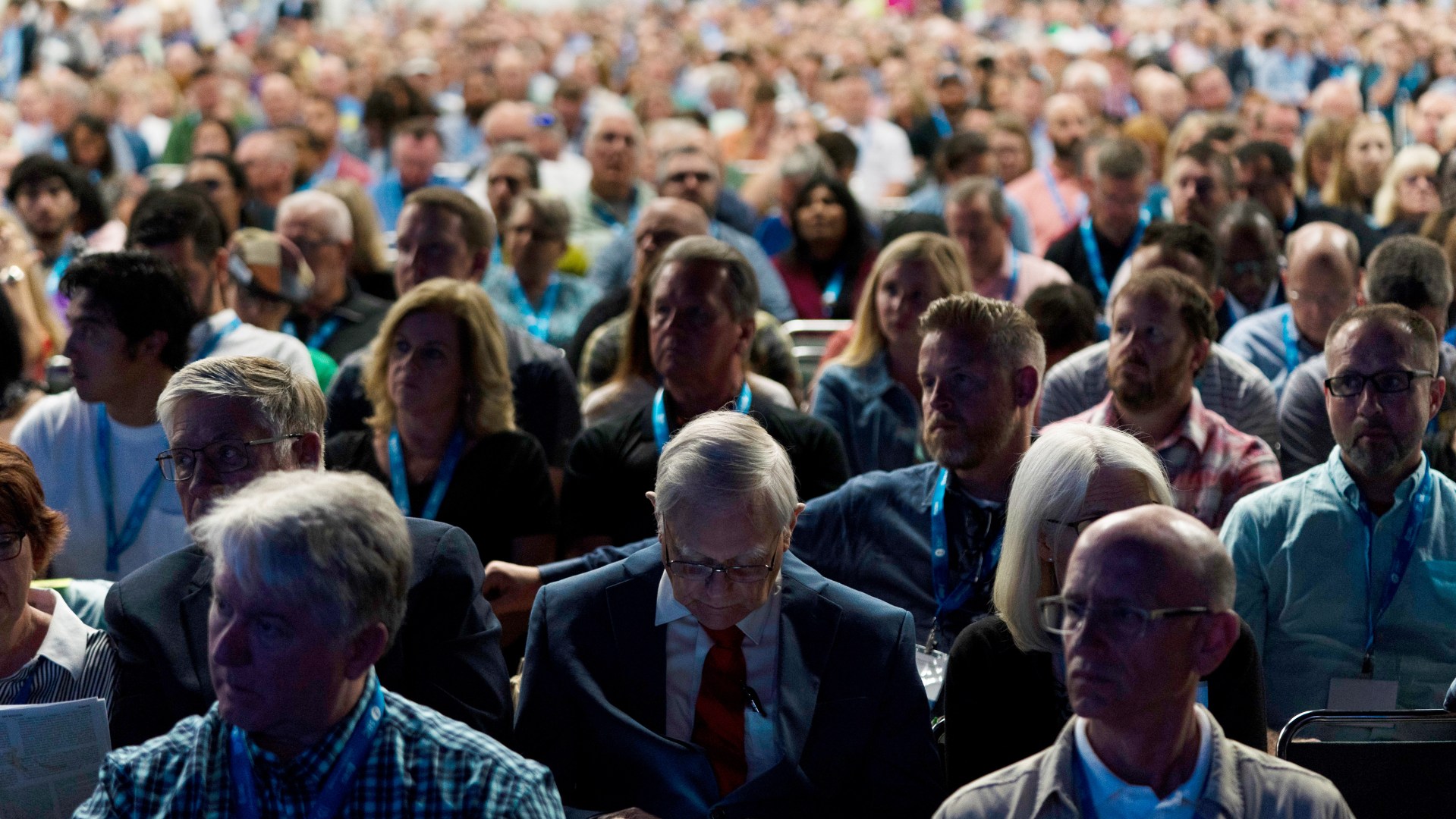
As I watched four pastors (two of them belonging to the Southern Baptist Convention) declare former convention president Johnny Hunt restored to ministry—six months after he was put on leave when a third-party investigation found he was “credibly accused” of sexual assault—I realized I knew what I was seeing. I hadn’t watched this exact 14-minute video, of course, with four men offering assurances of repentance, but I had seen it.

I’d seen it at the church where leaders gave their assurances that a young man would not abuse any more girls. “We gave him a stern talking to,” they said. “This won’t happen again.”

I’d seen it when a pastor told a woman whose husband had created a psychologically and spiritually abusive home that she shouldn’t leave. “Let the pastors work with him,” he said. “We’ll be like watchdogs.”

And here it was again.

The most terrifying thing about these scenes is that these leaders are not bad men. I don’t know Johnny Hunt’s quartet of supporters, but I know the leaders of the church where abuse took place. And I know the pastor who gave that bad marital counsel: It was me.

So as eager as I was to go online and denounce all that was appalling about this video—the misuse of Scripture, treating the abuser as the victim, and failing to even mention the real victim—I realized I couldn’t train my sights on this group of men. No, for a Southern Baptist pastor like me, the video is not a target but a mirror.

It is a mirror that shows us what happens when our convictions about complementarity rot into misogyny. It is a mirror that shows us how the can-do, we-got-this pluck of Southern Baptist leaders devolves into arrogance and presumption. It’s a mirror that reveals how, in our concern to preserve institutions, we don’t listen.

We don’t listen to survivors.

That, after all, was the aim of the Guidepost Solutions investigation into the SBC Executive Committee: to listen to survivors of sexual abuse at the hands of Southern Baptist leaders. But by releasing this video, Johnny Hunt’s “restoration team” has said to the woman he abused, We dont want to listen to you. We want to replatform our friend.

We don’t listen to women. The absence of any women’s voices in this 14-minute video was deafening.

But that silence compels me to ask: How well are female voices represented in the Southern Baptist Convention? We are a thoroughgoing complementarian denomination. But in practice, women are not just barred from pastoral positions. We are also not proactive in welcoming women into leadership positions that do not involve preaching and teaching. Just look at the low percentage of women that serve on our boards. In Christ there is not Jew or Greek, male or female. But in the Southern Baptist Convention, there is.

I wish that were all, but it doesn’t stop there. We also don’t listen to people of color. Two years ago, our six seminary presidents made a public statement that denounced critical race theory, saying it was incompatible with the Baptist Faith and Message. There is a vibrant National African American Fellowship in our convention and many trusted Black leaders in our churches. They were not consulted or even alerted about this announcement on the limits of acceptable Baptist views on the problem of racism. No seminary president could be ignorant of our convention’s racist roots or our poor record of handling what used to be called “the race problem” or the national uproar in the summer of 2020. But they didn’t make any effort to listen.

I write this as a Southern Baptist pastor who holds to the inerrancy of the Scriptures and a complementarian view of church leadership. I’m not winding up to make a pitch for progressivism. But surely there’s nothing in the Baptist Faith and Message that says that pastors can’t listen?

Can I listen to Black pastors, who might know more about the right way to respond to racism than I do? Can I listen to abuse survivors, who have long known the truths most of us have denied? Can I listen to women who have faithfully sustained the work of the church for so long?

And what about our institution? What will happen if we listen to survivors, to women, and to people of color? Will this cause our convention to fracture?

Our convention is already fractured. Following the CRT announcement, some prominent Black pastors left the convention. Abuse survivors are perpetually discouraged by how abusers and their protectors are still platformed. And women are finding that the convention is more interested in assuring they never become pastors than protecting them from abusers. The ship is already sinking.

I think we could fix it, if we would just listen. But we don’t want to listen.

You can only plug your ears for so long, though. The church that gave their reassurances a man would not abuse girls again learned to listen—but only after the abuser hurt another person, another person, and another, and then was arrested by the police.

The psychologically and spiritually abusive husband learned to listen. But only after his wife divorced him and he came to the end of himself.

Lord, I want to listen before it’s too late.

What will it take for the Southern Baptist Convention to have ears to hear?

Chris Davis is senior pastor of Groveton Baptist Church in Alexandria, Virginia, and the author of Bright Hope for Tomorrow: How Anticipating Jesus’ Return Gives Strength for Today.

Speaking Out is Christianity Today’s guest opinion column and (unlike an editorial) does not necessarily represent the opinion of the publication.

News

Missionary Pilot Imprisoned in Mozambique

MAF’s Ryan Koher and two South African volunteers have been detained since November 4 on suspicion of helping Islamist insurgents in Cabo Delgado.

MAF missionary pilot Ryan Koher and family

MAF missionary pilot Ryan Koher and family

Christianity Today December 2, 2022
Courtesy of Mission Aviation Fellowship

An American missionary pilot has been detained for nearly a month in Mozambique on suspicion of supporting insurgents in the southern African nation.

Ryan Koher, 31, serving with Mission Aviation Fellowship (MAF) through its Mozambican partner Ambassador Aviation Ltd. (AAL), had been due to fly vitamins and other supplies to church-run orphanages in the Montepuez district in the troubled Cabo Delgado Province in the far north.

But he was detained November 4 along with two South African volunteers in the coastal city of Inhambane, far to the south.

The two South Africans, 77-year-old W. J. du Plessis and 69-year-old Eric Dry, had brought in the supplies but police stopped them from being loaded aboard Koher’s Cessna aircraft.

Koher has now been moved to a maximum security prison in Maputo Province, southern Mozambique.

MAF says Koher is innocent. Its president and CEO, David Holsten, called today on the Mozambican authorities to release the pilot so that he can be reunited with his wife and two sons before Christmas.

“I urge Christians around the world to pray for Ryan’s safety and swift release, and call on those in power both in Mozambique and here in the US to do everything they can to resolve this wrongful detainment,” said Holsten in a statement.

“Ryan is a caring and gentle individual,” he added. “Over the last couple of years, he and his wife have worked hard to learn the language and culture of Mozambique to better serve those who rely on our service.”

A profile of the family on MAF’s website says the couple takes inspiration from Matthew 12:21 by wanting “to share the hope of Christ with isolated people.”

Koher’s wife, Annabel, and two sons, Elias and Hezekiah, have now returned to the US in line with MAF security protocols.

MAF pilot Ryan Koher and family

AAL has been flying supplies to Montepuez orphanages on an annual basis since 2014, according to MAF.

But this time, airport security took an interest in the supplies as they went through a scanner and detained Koher and the two South African volunteers. It’s unclear what charges they’re facing, though they appear to be linked to “supporting insurgent activity.”

Tensions are running high in the gas-rich coastal province that was Koher’s destination.

Since October 2017, Cabo Delgado has been gripped by violent unrest that has killed more than 4,000 people and displaced nearly a million others.

The conflict grabbed the world’s attention in March 2021 when insurgents attacked the town of Palma, a hub for international staff working on the province’s large liquid natural gas projects. Dozens of civilians were killed in that attack, and a number of them were beheaded.

The insurgents call themselves Islamic State Mozambique (ISM) or alternatively Ahlu-Sunnah Wa-Jamaah. The Mozambican army, along with troops from Rwanda and the regional Southern African Development Community, have been fighting back with support from the international community.

On Thursday, the European Council announced $21 million in support of the Rwanda Defence Force, which has 2,500 soldiers stationed in Cabo Delgado.

But the unrest continues to take its toll. Last week, two soldiers in the regional force—one from Tanzania and one from Botswana—were killed during fierce clashes that left more than 30 insurgents dead in Nangade district, on the border with Tanzania.

Days earlier, five members of a local militia group that tried to repel the insurgents from Montepuez district to the south of Nangade were captured and beheaded by the insurgents near Montepuez town.

Observers say the ISM fighters have been forced to split up in the face of the international military intervention but have regrouped in districts that are weakly policed, such as the marshy and forested Nangade district. They have also opened up new operations in a number of districts in the south of the province.

“Civilians are once again the primary victims as insurgents plunder to survive,” stated Cabo Ligado, an independent group gathering real-time data on the conflict.

The ISM insurgents have threatened to slaughter all Christians and Jews unless they convert to Islam or pay a tax, the independent Zitamar News Agency reported last month.

In a handwritten message circulated on social media, ISM also threatened Mozambique’s army.

“Our desire is to kill you or be killed, for we are martyrs before God, so submit or run from us,” it said.

As the conflict ratchets up, MAF’s pilots have been helping civilians caught in the crossfire.

AAL’s aircraft, which include a Cessna Grand Caravan, evacuated 800 civilians in the wake of the Palma attack. It also flew medics, aid workers, and more than 24 tons of food, medicine, and relief supplies into the area.

“Medical evacuation flights were conducted in the area for several months in late 2021 and early 2022 as the region recovered from the attacks,” stated MAF.

Meanwhile, US embassy staff in Mozambique have been allowed to visit Koher at the Machava prison facility. His lawyer, Danilo Mangamela, says the pilot is keeping up his spirits.

“He is well and keeping strong in faith and praying to God for an immediate clarification of the case,” Mangamela told CT.

He said it is still unclear when Koher will be brought to court, saying this depends on how long the state prosecutor takes to complete an investigation in order to file a formal charge.

“The minimum period for investigation is four months, but the prosecutor can request its extension depending on the particular complexity of the case,” he said.

A lawyer for the two South Africans, Abílio Macuácuá, told the Lusa News Agency last week that his clients would have needed to be “very naive” to attempt to pass goods intended for terrorists through Inhambane’s airport scanners.

“From what I’ve been told and what I’ve learned from other sources in Inhambane, my clients are paying the price of philanthropy, because they only wanted to help.”

News

Evangelical Activists Push for Solitary Confinement Reform

As Virginia legislators study the issue, faith groups point to evidence isolation is unfair and ineffective.

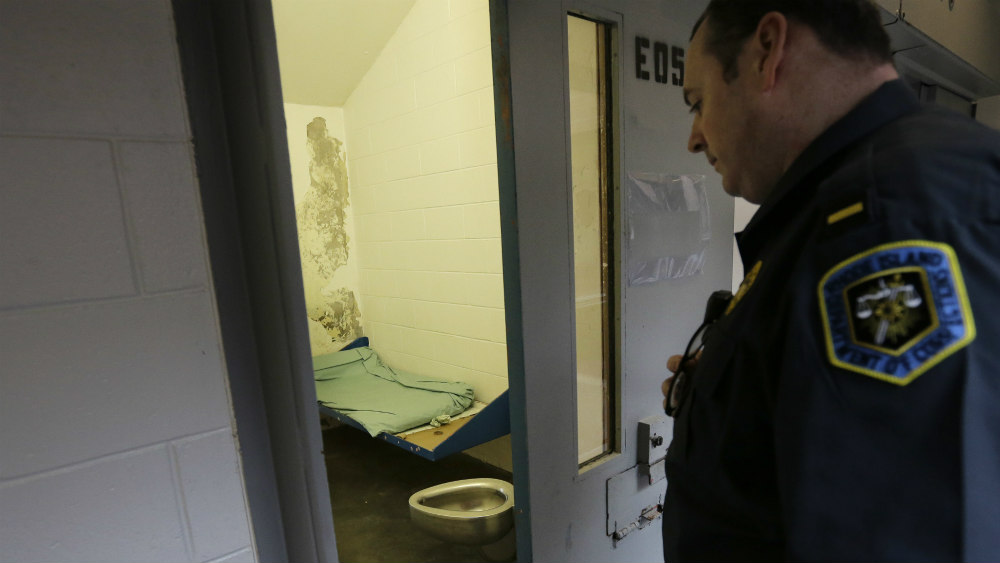
A prison guard looks into an isolation cell.

A prison guard looks into an isolation cell.

Christianity Today December 2, 2022
AP Photo/Steven Senne

Natasha White wants to remind Christians of Hebrews 13:3: “Remember those in prison as if you were together with them in prison.”

She remembers those who are in prison, personally, because she actually was a prisoner. She was released in 2016 after serving 15 years for drug-related crimes.

Now, she’s telling groups of Christians in Virginia about her experience, in hopes of mobilizing them against the state’s common practice of putting people in solitary confinement.

She started her sentence in solitary confinement, she told church leaders during a virtual event in October, hosted by Equal Justice USA (EJUSA). Her husband was allegedly affiliated with a gang, which allowed the warden to classify her a security risk and deny her human contact. The warden said she would stay there her entire sentence.

“I stayed in that exact cell for four years until I was finally transferred to another prison,” White said. “It’s spirit breaking.”

Today, she is the coordinator for the Virginia Coalition on Solitary Confinement, a coalition of faith-based organizations, prison reform advocates, and civil rights groups working to end solitary confinement in the commonwealth. The coalition is part of InterFaith Action for Human Rights (IAHR), which advocates for rehabilitation.

The three groups said 30 churches were represented at the October event. Organizers hope each will work to raise awareness about the issue of prison isolation. Many states, including Virginia, say they do not practice solitary confinement, but activists object they have just given it a different name. Studies show that 80,000 inmates in America are held in some form of isolation on any given day.

EJUSA’s evangelical arm hopes to mobilize Christians to get involved, contact their state legislators, and urge them to support reform.

“Solitary confinement is itself an act of violence,” said Sam Heath, who leads the group’s Evangelical Network. “Christians are in the business of seeing and helping people be healed, not perpetuating violence.”

The opponents of solitary confinement face an uphill battle, though. Most Americans support solitary confinement. Most, in fact, seem to like the idea of prison being punitive. Sixty percent support the death penalty for people convicted of murder, and more than half of likely voters told Data for Progress that they think prisons should continue the practice of putting people in small, isolated cells for 22 to 24 hours per day.

However, a lot of people also said they didn’t know much about the practice, and large majorities said they would approve of sharp limits. Seventy-four percent want all people in prisons to be allowed weekly visits from friends and family. Sixty-nine percent said people with mental illness shouldn’t be put in solitary confinement. And 68 percent said no one should be kept in solitary long term.

The Christian activists see an opening in the polling data. If they can raise awareness about the reality of solitary confinement, they believe they can move people to oppose the practice. Personal stories and in-depth information about the reality of solitary can change minds.

Many people don’t know, for example, that solitary confinement often includes sensory deprivation and few to no educational, vocational, or rehabilitative programs. Many think it’s used only when incarcerated people are violent. But studies show one of the most common reasons people are put in solitary is for low-level disciplinary infractions. One of the top reasons listed in North Carolina is smoking. In Nebraska, many people are put in solitary for swearing. Oregon prison officials listed “disobedience” as the number one reason, while a survey of Utah prisons found roughly 20 people were isolated from human contact after suicide attempts one year.

The isolation cells themselves are often no bigger than a parking space, built with gray concrete and without windows or clocks. And the practice of solitary confinement itself is associated with numerous negative outcomes, including hallucinations, post-traumatic stress disorder, and even increased mortality after release. Isolation can range from multiple days to yearlong periods, even decades.

“Anybody who sits through one of [our] presentations normally gets involved,” said White, who still lives with the long-term impacts of her years of isolation. “Whatever you did to get in prison, your underlying issues are never being addressed in solitary confinement. We’re just adding and piling trauma on top of trauma on top of trauma, and then they release the person into the community.”

The death penalty was abolished in Virginia in 2021, allowing opponents to shift their focus to other practices they see as “unnecessarily punitive.” They pushed legislation that would have banned long-term isolation, limiting solitary confinement to 15 days every two months. The legislature decided, instead, to study what the prison system calls “restorative housing.” A report is due back to the Virginia General Assembly this week.

One reason for Christians, specifically, to take up this cause, according to evangelical historian Aaron Griffith, is that solitary confinement is “a legacy of the Christian belief.” Prisons themselves largely emerged from Christian reform movements around the turn of the 19th century, as believers promoted programs of “penance and reformation” to replace brutal corporal punishment. Solitary confinement was one disciplinary tool the Christians put in place.

“The hope is that by being isolated, criminals will be immune from negative influences to focus on their own inner spirituality and, as a result, change,” said Griffith, author of God’s Law and Order and a member of EJUSA’s Evangelical Network advisory board. “The hope is reformation, but they end up being really brutal and awful places.”

Today, Griffith said, while many Christians support the death penalty and law and order, there are few who would make strong arguments for solitary confinement. Most people seem open, at minimum, to concerns the system is abused and ought to be reformed. More than 60 percent of likely voters support some alternatives to isolation, including de-escalation rooms, good-behavior incentives, and increased mental health treatment.

That’s encouraging to Heath.

“We also want to add in and reimagine something else,” said the evangelical networking manager of EJUSA. “Punishment doesn't lead to the healing that we as Christians promise to other people.”

Theology

God Doesn’t Use the Elf on the Shelf Method

It’s not the threat of divine surveillance but the extension of divine love that changes our hearts.

Christianity Today December 1, 2022
Illustration by Mallory Rentsch / Source Images: WikiMedia Commons / Getty

Around this time of year, some people argue about whether the baristas at their local coffee franchises should say “Happy Holidays” or “Merry Christmas.” Others argue about whether their churches should hang Christmas wreaths before the end of Advent. Still others focus on more hotly debated points—such as whether Die Hard is a Christmas movie or whether Mariah Carey’s “All I Want for Christmas Is You” is festive or annoying.

All the while, we are leaving unattended a debate that might tell us something about the state of American religion. I’m referring, of course, to the Elf on the Shelf.

Sold alongside a book of the same name, first published in 2005, the Elf on the Shelf is a plastic figure, bedecked in a long cap, that perches on the mantles (and various other spots) of some American homes. The elf is said to be a scout for Santa Claus, helping him determine who’s naughty and who’s nice. For some, the elf is uncannily eerie—the way creepy children in horror movies can be.

A decade ago, journalist Kate Tuttle argued in The Atlantic that the Elf on the Shelf is “a marketing juggernaut dressed up as a ‘tradition.’” She listed many reasons she hated the practice, but her most pointed one was the conceit behind the whole thing: teaching children that it’s all right to be spied on. The elf, after all, sits on his perch from Thanksgiving to Christmas to see whether kids keep the rules and behave.

While Tuttle might be right that there’s “something uniquely fake about the Elf,” the idea of controlling behavior with the notion that someone “sees you when you’re sleeping” and “knows when you’re awake” is rooted in something far older and deeper in human history. In fact, one writer argues that the impulse behind the Elf on the Shelf explains human civilization itself.

In his book Corruptible: Who Gets Power and How It Changes Us, Brian Klaas (no relation to Santa) writes that civilizations without some sort of shared moral order don’t survive. Citing the work of psychologist Ara Norenzayan, Klaas argues for a “survival of the holiest” thesis of civilizations. The idols of the hunter-gatherer clans weren’t concerned about personal moral transgressions, and they typically weren’t all-knowing. The societies with “Big Gods”—who would conduct moral surveillance even of hidden behavior—were the ones that built up social trust.

That is, a state of constant vigilance to make sure others weren’t stealing or cheating wasn’t necessary if there was an ongoing “divine surveillance” of one’s neighbors and oneself. Even if there’s no justice in this life, such societies would teach, there would be in the next.

“Just as nuclear weapons act as a deterrent because of ‘mutually assured destruction,’ religion produces another form of MAD: mutually assured damnation,” Klaas argues. “Shared belief creates social cohesion.”

To build the kind of trust needed to get an evolutionary edge, Klaas suggests, a society would need “moralizing omniscient gods.” Citing the Big Gods thesis that “watched people are nice people,” Klaas writes that studies bear out the fact that human beings behave more morally when they believe they’re being observed.

That’s where the Elf on the Shelf comes into the picture.

Klaas notes that “abstractions are less effective than physical reminders of a watchful overlord,” which explains “why parents who found the threat of Santa Claus insufficient to turn their naughty children nice have innovated.” The Elf on the Shelf, he argues, serves as another watchful eye “to extract slightly better behavior from their mischievous children.”

This might be true, but even that innovation gets boring after a while. That’s why, as the years go by, parents find accelerating ways to pose the elf at night while the children sleep, such as propping him next to an overturned bag of flour. I’ve even heard of posing the Elf on the Shelf to appear as though he wrecked the family’s Nativity scene—which raises all sorts of theological problems.

Apparently, the elf can be as mischievous as he wants. The key is that he is watching and will report what he surveils to the one who doles out the gifts.

What’s interesting is that behind this argument is a critical question about what religion is. Is it merely an evolutionary adaptation whose purpose is to bind societies together? If so, then the Elf on the Shelf and other such games are simply pantomiming in miniature the way grown-ups are manipulated into behaving—just with a cosmically more significant “Elf.”

We can and should learn a great deal from these observations. Certainly, religion is often created and used this way. We’ve seen that repeatedly when political, tribal, or religious leaders use a form of religion to keep the masses accountable but make themselves out to be unquestionable. Those of us who are Christians obviously believe that the gospel is much more than that.

Love can be manipulated too, as we’ve seen countless times throughout human history. Yet most of us intuitively know that love is not just a firing of hormonal sensors to keep people reproducing and deter them from killing their own children.

Jesus repeatedly refused to provide a “useful” religion. The Sermon on the Mount can hardly bind societies and tribes together when it’s paired with “If anyone comes to me and does not hate father and mother, wife and children, brothers and sisters—yes, even their own life—such a person cannot be my disciple” (Luke 14:26).

The Bible indeed reveals a God who is concerned with personal—not just public—behavior. This is why, the apostle Paul argues, every human being has some sense of morality grounded not just in societal expectations but in conscience (Rom. 2:14–16). And yes, those consciences are signposts to a greater accounting yet to come: “the day when God judges people’s secrets through Jesus Christ” (v. 16).

Sometimes this aspect of God’s seeing must be emphasized. Upon showing the prophet Ezekiel the idols in the sanctuary of the temple, God asks, “Son of man, have you seen what the elders of Israel are doing in the darkness, each at the shrine of his own idol? They say, ‘The Lord does not see us; the Lord has forsaken the land’” (Ezek. 8:12).

What stands out to me, though, is how strikingly more comprehensive the seeing of the God of the Bible is. Hagar—a servant woman in exile because of the mistreatment of Abram and Sarai—encounters God in the wilderness. “She gave this name to the Lord who spoke to her: ‘You are the God who sees me,’ for she said, ‘I have now seen the One who sees me’” (Gen. 16:13). This is a woman who is considered dispensable, no longer useful, and thus invisible to her community. But God sees her. She is not alone in the cosmos. His eye is on the sparrow, and his eye is on her.

Perhaps that’s why one of the most remarkable things about Jesus in his encounters with people—especially in the Gospel of John—is his seeing them as they are, such as the private character of Nathanael: “I saw you while you were still under the fig tree before Philip called you” (John 1:48). After Jesus’ conversation with the woman at the well, she tells her fellow villagers, “Come, see a man who told me everything I ever did. Could this be the Messiah?” (4:29).

In our current cultural context, people will sometimes say, “I feel seen.” What they usually mean is that someone is paying attention to them—someone understands who they really are. The God of Abraham and Jacob and Jesus is a God who sees. This seeing is more than moral control, more than social cohesion.

This is not an Elf-on-the-Shelf religion; this is good news of great joy.

Russell Moore is editor in chief at Christianity Today.

News

Evangelical Giving Goes Up, Despite Economic Woes

Report: Nonprofits saw a sizable increase in donations, while many megachurches struggled.

Christianity Today November 30, 2022
Alexander Gray / Unsplash

Needs rose last year. But so did giving to evangelical ministries.

The annual State of Giving report from the Evangelical Council for Financial Accountability (ECFA) found giving to ministries increased more in 2021 than it had any year out of the last 10. Inflation and the pandemic both raised real concerns for ministry leaders trying to make ends meet, but evangelicals responded to the crises with generosity.

The ECFA survey of about 1,800 members found they received more than $19 billion in donations in 2021. Adjusting for inflation, giving went up by about 3 percent. In the last 10 years, the increase has been closer to 2 percent.

“Contrary to what many expected, giving during the pandemic to ECFA members was strong,” Michael Martin, ECFA president and CEO, wrote in the report. “The findings we unveil emphasize the good work that ECFA members are doing to serve and expand their services in the face of inflation and other challenges.”

If Christians are excited and optimistic about the work of parachurch organizations, though, the numbers reveal a different story when it comes to megachurches. The ECFA surveyed 87 churches that belong to the financial accountability organization. Giving to those congregations dropped by 6.6 percent in 2021, following a decline of 1.1 percent the year before.

Jake Lapp, ECFA vice president of member accountability, attributed the decline to the COVID-19 pandemic. Some churches have reported that they are still only at 50 percent of pre-pandemic attendance.

“One of the big impacts is with churches not being able to meet or maybe meeting with limited capacity again,” Lapp said. “Congregants had been slow to return to the pews.” The decline in giving has not hit all churches equally, the study showed. Congregations with annual budgets over $20 million saw giving decline by only about 2.5 percent. But those surveyed with budgets under $2 million saw giving drop 8 percent. The hardest hit were megachurches with between 4,000 and 8,000 people in weekly attendance.

Almost 10 percent of Protestant churchgoers attend a megachurch, but those churches represent less than 1 percent of the roughly 320,000 Protestant churches in the United States, according to another ECFA study. Small churches do not show up in the ECFA giving survey.

The decline in giving is not really surprising, given the economic situation and the long stretches where many churches faced challenges with church attendance. The fact that nearly 80 percent of nonprofit ministries saw their giving increase, on the other hand, is remarkable.

“I find it to be earthshaking news,” Lapp said, “that in the midst of record inflation at the end of 2021 and economic uncertainty that donors were extremely generous.”

Some of the increased giving went directly to meet the needs caused by economic hardship. Every orphan care ministry included in the survey saw an increase in donations, as did 93 percent of homeless ministries.

Nearly eight out of 10 pregnancy resource centers saw an increase in financial support in 2021, as many evangelicals anticipated the Supreme Court’s overturning of Roe v. Wade. Donations to anti-human-trafficking ministries increased by 29 percent. Giving to K–12 education went up by 18 percent. Giving to church planting went up by 12 percent.

Individual giving to US charities overall increased by only 0.2 percent, according to data from Giving USA.

Two ministry categories saw giving declines this year: Alcohol and drug rehabilitation saw donations go down by 2.7 percent; student and youth ministry giving declined by 2.9 percent.

The State of Giving report, which is based on members’ financial information from the 2021 fiscal year, looks at cash giving, which includes cryptocurrency and stock options. It does not include nonfinancial gifts like donated services or other forms of income like tuition or program fees.

The number of ministries that reported being forced to dip into their cash reserves increased in 2021. The first year of the pandemic, only one out of every four ECFA ministries surveyed said they had to pull from their savings. Last year, one out of every three had to pull from reserves. Very few, however, said they had completely depleted their savings.

Overall trends, however, are looking good for evangelical nonprofits.

“Historically, cash giving to ECFA members has outpaced giving to all charities three of the last five years,” Lapp said.

The trend looks like it will continue when the 2022 data is crunched. Nearly half of ECFA members say year-to-date donations are currently higher than this time last year.

The annual inflation rate is currently at about 8 percent, according to the most recent US Labor Department data. Among ECFA members, the median salary increase planned for 2023 is 5 percent.

Culture

Hark! It’s CT’s 2022 Christmas Music Playlist

Our festive favorites this year span from kids’ carols to heavy metal.

Christianity Today November 30, 2022
Illustration by Christianity Today

It’s that time of year again—I’ve removed the decomposing pumpkin from my front porch, my family has watched The Polar Express several times, and my kids ask to walk through the “forest” of lit Christmas trees when we’re shopping at Target or Home Depot.

It’s time to build our Christmas 2022 playlists. This year brings new albums from prominent artists like Joss Stone, the Backstreet Boys, Michael W. Smith, and Switchfoot. After listening through the latest holiday releases, I’ve put together a list of seasonal tunes that spans multiple genres and styles and highlights albums that you might have missed.

The seven albums on this list include music that is festive, worshipful, traditional, sentimental, merry, and heavy (metal, that is).

December Songs, Resound Worship

December Songs from Resound Worship is a set of four theologically rich, thoughtfully arranged original songs, written with the congregation in mind.

The first track, “Do Not Be Afraid,” is a contemplative refrain that builds slowly, adding instrumentation and voices to each repetition of the phrases “Do not be afraid, God is here. / Do not be dismayed, O my soul, / For the Lord your God is with you wherever you go.” It’s a beautifully meditative and simple song that so perfectly expresses the posture of waiting in the darkness for the Light we know is coming.

December Songs is intended to be a resource for worship leaders. Resound Worship makes lead sheets and chord charts available for free. Full scores, videos, and backing tracks can be purchased as well.

Appalachian Christmas, Chosen Road

Chosen Road has a strong track record of reimagining favorite songs of the church for their albums Appalachian Worship (2020) and Appalachian Hymns (2021). As expected, the quartet’s Appalachian Christmas is an album full of rich harmonies and fresh bluegrass string arrangements of carols and popular classics.

There are gentle renditions of “Away in a Manger” and “Oh Holy Night” and dance-like versions of “Joy to the World” and “Oh Come All Ye Faithful.” Each track showcases the vocal and instrumental virtuosity of the group’s members.

It was also a fun surprise to find that the last track is a cover of Selah’s “Light of the Stable,” featuring Allan Hall, one of Selah’s founding members. The cover has the drive and energy of the original, with new bluegrass styling.

The Christmas Collection, Vol. II, Marc Martel

Marc Martel’s second Christmas collection offers exactly what many of us want in a new holiday album: fun and original performances of Christmas standards.

Martel leans into Christmas camp for tracks like “Run Run Rudolph,” “Blue Christmas,” and “The Grinch.” These lighthearted covers freshen up Christmas radio standards—I can’t be the only one who doesn’t need to hear Elvis sing “Blue Christmas” again.

“What Christmas Means to Me” is a perfect addition to a Christmas party playlist; Martel’s vocal power and range are on display, with a full complement of brass and vocal backing.

Alongside the pop covers are heartfelt renditions of spiritually oriented songs and carols like “Welcome to Our World,” featuring Leigh Nash, and “Hark! The Herald Angels Sing.” It’s a compilation with a range of style and affect, encompassing the kitschy and the reflective.

A Merry Rockfest Christmas, Rockfest Records (various artists)

If you’ve been waiting for a rock-meets-hip-hop cover of Mariah Carey’s “All I Want for Christmas Is You,” this is your year. You’ll find it on A Merry Rockfest Christmas from Rockfest Records.

The compilation features artists like Seventh Day Slumber, Relent, Living Scars, Dawn Michele, and Matt Sassano.

Relent’s cover of “All I Want for Christmas Is You” showcases lead singer Miggy Sanchez’s impressive vocal range and agility on a track that also exemplifies the band’s unique fusion of metal and hip-hop. And Living Scars’ cover of Paul McCartney’s “Wonderful Christmastime” is proof that metal can absolutely be festive.

The final track is a resonant, pulsing arrangement of the carol “In the Bleak Midwinter” by Seventh Day Slumber. As someone who loves the traditional English carol, I was not expecting to enjoy the rendition as much as I do. I’ve found myself returning to it—it’s on my annual playlist.

Into the Light, Cantus

My Christmas playlists always include a generous selection of choral or vocal chamber music. Usually, I start with excerpts from Handel’s Messiah, settings of traditional carols, and First Call’s 1985 Christmas album An Evening in December. (I don’t know whether it’s a work of genius or I’m just nostalgic, but I will always spend at least a day or two listening to this album on repeat during the Christmas season.)

This year, Into the Light from Cantus, a low-voice chamber ensemble, offers sonorous arrangements of eclectic choral repertoire. Most of the tracks are a cappella. The original arrangement of the French carol “Noël Nouvelet” by Sofia Söderberg shimmers with clustered harmonies and tempo shifts that effortlessly ebb and flow.

More-upbeat tracks include a lilting jazz arrangement of “I Saw Three Ships” and a lively version of the spiritual “Children, Go,” accompanied by a guitar-led instrumental ensemble.

Worship in the Word, Christmas, Shane and Shane and Kingdom Kids

My kids love Christmas carols. When we sing songs at bedtime, “Silent Night,” “O Come, All Ye Faithful,” and “O Little Town of Bethlehem” are common requests, even in the middle of the summer. This live album from Shane and Shane and Kingdom Kids was a welcome addition to our family Christmas music rotation. It’s an accessible, singable, musically interesting collection of familiar carols.

The songs are led by Shane and Shane and prominently feature the voices of a children’s choir, but the selections feel more multigenerational than childish. And it’s apparent that folks at The Worship Initiative and Kingdom Kids have thought through the logistics of how kids sing carols.

“Come Thou Long Expected Jesus” is one of my favorite Christmas hymns, but songs like this can be challenging for children (and the rest of the congregation) because of their wordiness and potentially unfamiliar language (“Israel’s strength and consolation, / Hope of all the earth Thou art,” “By Thine all sufficient merit, / Raise us to Thy glorious throne”). But the arrangement is thoughtful, slow, and deliberate. You can hear the children’s choir sing every word, inviting listeners and singers to pause and linger a little longer on the powerful lyrics.

It’s exciting to see artists and worship leaders modeling practices and creating music that facilitate worship that can include the full range of ages in a congregation.

Milk and Cookies, Crowder

David Crowder’s decades-long career has shown us that we can always expect something new, eclectic, and surprising when he releases new music. Milk and Cookies is original, a little experimental, a little country, a little rock-and-roll.

I can guarantee that your current Christmas music collection does not have a song about the plight of the worker elf: unfair wages, punishing hours, etc. The clever lyrics and infectious groove of “The Elf Song” make it a fun listen. (You may even end up deciding to offer your Elf on the Shelf fair compensation if you don’t already.)

There are moments when listening to Milk and Cookies may give you a little whiplash. “Your Praise Goes On,” a worshipful ballad, leads into an upbeat country/bluegrass arrangement of “Go Tell It on the Mountain” featuring Ricky Skaggs. The next track is a pop-punk cover of “White Christmas.”

I don’t mind the whiplash. My own Christmas playlists are always like this: collections that put the worshipful, cheesy, reverent, and celebratory together to be played on shuffle.

You can listen to a playlist featuring selections from all seven albums here:

Kelsey Kramer McGinnis is CT’s worship music correspondent. She is a musicologist, educator, and writer who researches music in Christian communities.

News

Amid China’s Rare Protests, Christians Wrestle with Their Role

Chinese church leaders hold differing views on political participation but stress the need for prayer and evangelism 

Protesters hold up pieces of paper against censorship and China's strict zero COVID measures in Beijing, China.

Protesters hold up pieces of paper against censorship and China's strict zero COVID measures in Beijing, China.

Christianity Today November 30, 2022
Kevin Frayer / Stringer / Getty

During the unexpected protests in China last weekend, a student approached Zhu Jianshe with concerns that a classmate who had posted a protest slogan on campus would be severely punished. Zhu, a professor at a university in Shanghai and a church elder, comforted her and vowed to do his best to protect the student.

“I have been preparing in my mind for the past two days that I may have to sacrifice something to protect the students if the situation calls for it,” said Zhu. (CT has changed all the names in this article for the individuals’ security)

As demonstrations in several cities around the country have made international news, Zhu has been thinking through how Christians can engage with the current moment. One area where he knows he can help: using his position to help those unable to speak for themselves.

It’s a question Christians in China are now grappling with as the country has experienced the largest protests in 33 years since Tiananmen Square. While typically the Chinese government quashes any nascent movement, a deadly fire in an Urumqi apartment building led to a national outpouring of frustration over China’s “zero COVID” policy. In major cities like Shanghai, Beijing, and Chengdu, hundreds of people took to the streets. At times, calls expanded to freedom of speech and even an end to Chinese leader Xi Jinping’s rule.

Christians in Chinese house churches have long faced government persecution but historically tended to stay away from politics, focusing on shepherding believers and evangelism. Yet especially among the urban house churches influenced by Reformed theology, this attitude is changing.

This past weekend, members of a banned house church in Chengdu held up paper signs scrawled with Bible verses: “The Truth shall set you free” and “Act justly, love mercy, walk humbly with the Lord.” Over in Shanghai, a young woman stood under the Urumqi Road sign—which was later removed by the government—and read her Bible aloud to passersby.

In CT’s interviews with seven Chinese leaders–most of whom are in their 40s and 50s and from a Reformed background–some said they believe Christians need to stay focused on the Great Commission. Others see the need for pastors to bring up current events in their churches. Most see differences between how they approach the topic from the pulpit and how they approach it in individual discipleship.

Two areas all these Chinese Christians agreed on were the importance of prayer for the country, the government, and its people and the urgency of evangelism in a time of crisis.

Christians in the midst of protests

This isn’t the first time Chinese Christians have demonstrated, although it’s a rare occurrence. In 2015, Christians in Wenzhou protested the demolition of crosses from atop their churches by blocking bulldozers, staging sit-ins, or protesting outside government offices. Chengdu’s Early Rain Covenant Church formerly led by Pastor Wang Yi has held small demonstrations denouncing abortion as well as remembering the Tiananmen Square Massacre. After the government passed new religious regulations in 2018, Wang published a statement, signed by nearly 450 church leaders, criticizing the church persecution. Wang was later arrested and sentenced to nine years in prison.

Ruth Lu, a Christian multimedia creator, believes that for Christians to be a light in the world, their faith cannot remain restricted to the church building. The current frustrations about COVID-19 restrictions, lack of freedoms, and lack of trust in government are issues that touch on all aspects of Chinese people’s lives and are impossible to ignore in church sermons and prayers.

“To be influential in the world, we should be actively involved in public affairs,” said Lu, who returned to China a few years ago after completing graduate study overseas. “When we see our neighbors being treated unjustly or suffering, Christians should actively speak up for them.”

https://twitter.com/tudou522525/status/1596865683870339074

Yet pastors often feel the need to remain more conservative in their approach.

In Chengdu, chants of “Freedom of press, freedom of expression,” rang out during a candlelight vigil for the Urumqi fire victims Saturday night. Earlier that day, Fu Jie, an elder of a house church in the city, said that a young man in his church posted in the church's social media group information about the event and called congregants to join him.

As the group administrator, Fu quickly deleted the post and told the young man that while the church wouldn’t stop members from participating, it wasn’t the church’s role to promote political actions. But the congregant could ask the church to pray for him.

That night, several of Fu’s congregants participated in the vigil by praying, singing, and preaching the gospel to those around them. Fu and others in the church prayed for their protection and made preparations in case they were arrested and needed church members to help them and their families.

“Christians in the protesting crowd should take the gospel as their starting point and try to be ambassadors of peace instead of only venting their emotions and anger,” Fu said.

In Shanghai, house church pastor Han Dawei said some of his parishioners also joined the Urumqi Road protests on Saturday. The next day, as they were sending out members of the church to plant a new church during their worship service, they looked out the window to see about 100 police cars parked along the road, evidence of government efforts to prevent more protests.

Preaching in an age of turmoil

Han said he struggles with how to discuss the current turmoil from the pulpit, as many of the congregants in his church expect him to address it. His 300 congregants are of diverse ages and differing educational backgrounds, and they get their news from different sources.

“Being a pastor requires wisdom from God, familiarity with one’s flock, and the understanding that one does not need to teach all the things one knows well on all occasions,” Han said.

He believes that his preaching should focus on the gospel of Jesus Christ, but in private pastoral counsel, he needs to let his congregants know he is “concerned about the political standing of the congregation and that the gospel will give us a fresh perspective on political events.”

https://twitter.com/tudou522525/status/1596787945507524608

Chengdu house church leader Wang Mali is concerned that if pastors share protest videos on social media or speak about politics from the pulpit, people could accuse them of using religion to subvert the Chinese regime. This would give the government an excuse to incriminate them with a political crime and prevent them from their primary goal of sharing the gospel. She compared Chinese house churches’ situation to that of the early church.

“Jesus told his disciples to carry out the Great Commission,” Wang said. “He did not command them to preach that Christians should have freedom of movement and body and the right to preach without restriction.” Rather, Wang believes pastors should pray for the gospel to spread in China and “trust God to care and reign in all things in the midst of all the turmoil.”

Zhang Yading, a US-based pastor from China who has trained and counseled many house church pastors over the past 10 years, believes the church needs to care both about people’s afterlife and for their “spiritual, political, and physical needs.” Zhang doesn’t think the church should avoid politics, but it needs to be careful about its testimony. His concern is that Chinese Christians would get so caught up in being involved in political activities and shouting slogans that they lose their Christian witness.

He points to how the early church overcame 300 years of Roman culture by two means: “the proclamation of truth and the testimony of virtues.”

Similarly, China has a long history that includes a thousand years of imperial rule as well as the upheaval in the last two centuries from Western forces, world wars, and Communist rule. He doesn’t think many of China’s deep-rooted problems will be resolved in his lifetime.

“This means that we need to learn the virtue of patience—not seeking quick redress for our own grievances, but learning to live the life of Christ…and looking after our neighbors,” he said.

Opportunity for evangelism

For Lu, the multimedia creator, this is a personal call. She said that strict COVID-19 restrictions in China have left her college-aged friends in despair: Their world has been thrown into perpetual uncertainty as the youth unemployment rate rises and life is constantly put on hold during lockdowns. She said they are asking where they can find hope in this bleak world. They feel that some of the police and COVID-19 prevention workers have become a tool for a corrupt system, where their only function is to perform tasks, not to do good.

She echoed other pastors who stressed the role Christians can play in pointing to true lasting hope.

“But how to restore one’s compassion, empathy, and goodness?” Lu asks. “I hope more Chinese people will realize that only the gospel can redeem people. The political system cannot redeem people from such alienation.”

Church Life

In England and Wales, Christianity Falls Below Half the Population

Analysis: The rise of the nonreligious raises questions for the faithful in a new era of pluralism and diversity.

Christianity Today November 29, 2022
Luca Vavassori / Unsplash

Remember those math puzzles you used to do as a kid? What’s the next number in this sequence: 2, 5, 11, 23, … ? Or maybe try this one: 2, 4, 10, 28, … ?

Well, I’ve got another one for you: 71, 59, … ?

I’ll admit this one is trickier as you’ve got only two numbers to get going, but if you said “47,” you’d be on the right track.

The true answer is, in fact, 46—that being the percentage of people in England and Wales who, in the 2021 census, ticked the Christian box. Having been 71 percent in 2001 and 59 percent in 2011, it’s now 46 percent. Anyone want to take any guesses for 2031?

The decline in the proportion of adults in England and Wales (and in Scotland and Northern Ireland too) calling themselves Christian should shock no one who hasn’t been on Mars these last two decades.

Nor should the rise of the nonreligious category, reaching 37 percent this time and set to become the biggest single group in the country next time.

The demographic and cultural trends have been pointing in this direction for over half a century. What the census has done is clear up some of the uncertainty that always swirls around polling data, while also giving us a level of granularity that reveals how minority religious groups—Buddhists, Hindus, Jews, Sikhs, and others—have all increased in numbers over the last decade.

https://datawrapper.dwcdn.net/CUeWJ

At this point, the usual lines of argument from the usual suspects will go forth and multiply. Some religious groups will try to claim that the nonreligious are actually, in fact, religious; they just don’t know it. That won’t wash. People tick the no-religion box for a reason. Nonreligiosity may be complex—but it isn’t religiosity.

Other religious groups will say that the census measures only affiliation and that what really matters is belief and attendance. Well, that’s true, but it’s not exactly a wise path to go down if you want to make a case for the continued significance of Christianity in contemporary public life.

By contrast, some nonreligious groups will claim that the public is now firmly in their camp and that they now serve as their de facto representatives, their interests to advance. Given that these groups have membership levels in the thousands rather than millions and that the nonreligious are not the kind of unified group that has cohesive interests in this matter, this line doesn’t convince either.

Still other organs of public discourse will highlight the fact that 6.5 percent of the population, or nearly 4 million people, tick the Muslim box, a remarkable 44 percent increase from 2011.

And then there are the entertaining subplots.

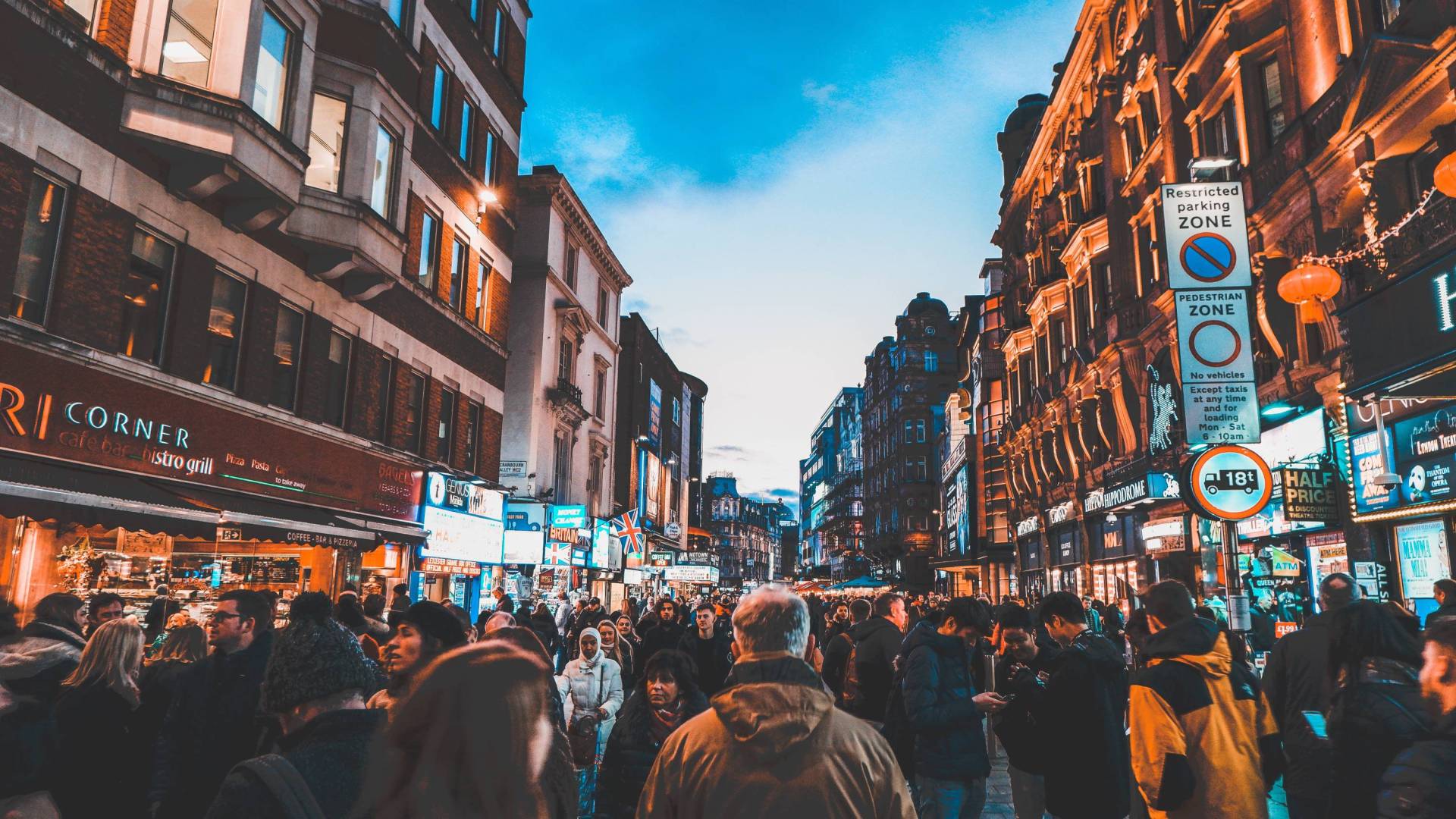
Was it the public eloquence of the “QAnon Shaman” that effected the tenfold rise in shamanism (up from 650 in 2011 to 8,000 today)? Should we see London—“the most religiously diverse region of England” according to Census 2021—as a model for, or an outlier from, the rest of the country?

Why are people in Knowsley, Ribble Valley, and Copeland in the North West so godly (respectively 67%, 66%, and 65% Christian), whereas those in Caerphilly, Blaenau Gwent, and Rhondda Cynon Taf are so godless (57%, 56%, and 56% no religion)?

And whatever happened to the Jedis? They were so full of energy and potential in 2011.

So many questions. No doubt we will be chewing over them for months to come. But here are a few quick apéritifs.

  1. The nonreligion category is now large and merits serious academic attention, which it is slowly receiving. My colleague Hannah Waite has made her own contribution to this by analyzing data from a large survey we conducted at the time of the 2021 census. The study asked people’s religion but also multiple other questions about what they believed and what were their religious opinions. The results are fascinating and underline the fact that ticking the nonreligious box does not mean that you are antireligious or even (in some cases) that you lack “religious-style” beliefs. Nones are a complex group.
  2. The rise in nonreligiosity will naturally be used by antireligious campaigning groups to further their longstanding objectives around schools, disestablishment, or the composition of the House of Lords. The arguments shouldn’t be dismissed merely as opportunism but weighed seriously. Whatever else is happening in our society, the historic role of Christianity is changing, and it would be better for Christians to acknowledge and shape that creatively and positively rather than (be perceived to) cling to the wreckage of Christendom.
  3. We need to learn to live with difference. For the foreseeable future, the UK will be a mosaic of religious beliefs, commitments, and cultures, with no single affiliation hegemonic. (This is reflected in some of the census data on ethnic makeup too.) Even when, in 2031, nonreligion becomes the largest single group or, a few years after that, it becomes the majority group, we will still be superdiverse as a nation, if only because, as Hannah’s research shows, the nonreligion group is really a miscellany of different positions—some angrily antireligious, some culturally or ethically or spiritually sympathetic, and others simply disinterested. Difference is here to stay.

In truth, as any historian will tell you, there has long been considerable variety at the ground level in the UK, even when Christianity was thoroughly hegemonic (church vs. chapel, anyone?). Without the centripetal forces of an overarching religious tradition, however, that diversity will be harder still to negotiate.

Moreover—and here’s the crucial point—for the first time ever, Census 2021 was able to provide insight into religious composition within those UK households (all 17.3 million of them) that had more than one person living in them. Of these, only 13.7 percent reported a combination of a religion and “no religion,” and a mere 1.1 percent (285,000) more than one religion. In other words, difference of this nature is not something we are going to learn at home.

So, if we are crass enough to want to know the real winners from the religious data of Census 2021, I would humbly suggest it is religious education teachers and the BBC Religion and Ethics department. Or indeed anyone who is willing and able to help us honestly understand, respect, critique, and value the various nonreligious and religious commitments that now map the UK.

Nick Spencer is senior fellow at the London-based evangelical think tank Theos. This commentary originally appeared on the Theos site.

P.S. The answers to the math questions are 47 and 82.

Church Life

There Is No Such Thing as a ‘Safe Space’

Our culture values self-protection. But true love demands that we move toward each other.

Christianity Today November 29, 2022
Illustration by Mallory Rentsch / Source Images: Getty

One particular argument will figure in our family lore for generations: the adults upstairs, lancing one another with loud accusations, while the children downstairs slowly realized the holiday movie, planned for the afternoon, would not be.

Years later, I can’t remember the reasons for our conflict among extended family members. I only know the conditions were right. The “most wonderful time of the year” was upon us, and expectations were at a fever pitch.

It’s a risky business, this thing we call love. Unfortunately, in our cultural environment today—when personal safety is prized so highly—I fear we grow less and less tolerant for the normal bruising that happens in the contact sport of human relationships. We will love insofar as we are never hurt.

A quick swipe through social media reveals a lot of relationship advice centered on self-protection. We are taught to be vigilant against injustice, to repudiate toxicity, and to avoid situations that make us feel unsafe. The law of no trespass has become inviolable.

To be clear, I celebrate the growing emphasis on accountability. It is good and right to protect victims from abusers, and I welcome the more precise ways we’ve come to name the violations of human trust. Importantly, the Christian gospel never diminishes the trauma of sin and the necessity of repair. With a crucified Messiah at its very center—a scapegoat made to suffer for the sins of the world—it is a story that upholds the necessity of justice.

Still, I worry we are growing unrealistic in our expectations for human relationships. We seek safety, by which we often mean invulnerability. We imagine that incurring wounds in a relationship signals reasons to quit, not hazards of very good work.

In recent years, relational fracturing, especially in the United States, has become pandemic, and it grows harder and harder to work toward relational repair in our friendships, families, and churches. With growing mistrust of institutions, we have fewer authorities to arbitrate conflict. In a digital age that promotes the self-selection of “truth,” we confirm different ways of seeing the world, even different worlds altogether.

This is to say nothing of the reigning spirit of malaise, which the desert fathers and mothers called acedia. We are put out by the effort conflict resolution will require of us—resistant to love’s demands, as Rebecca DeYoung has defined it.

We imagine that incurring wounds in a relationship signals reasons to quit, not hazards of very good work.

As seems clear from the Bible, conflict is both an inevitable aspect of human relationships and a reality that demands wisdom. If conflict were more rare than common, it would seem Paul overstated the need to put off sins like “hatred, discord, jealousy, fits of rage, selfish ambition, dissensions, factions, and envy” and put on instead “love, joy, peace, forbearance, kindness, goodness, faithfulness, gentleness and self-control” (Gal. 5:20–23).

If conflict were the exception and not the rule, perhaps Jesus himself was given to exaggeration when he said that forgiveness in human relationships would be a persevering decision of “seventy-seven times” (Matt. 18:22).

But no, these persistent injunctions to get along (see Paul’s plea to Syntyche and Euodia in Philippians 4:2) reveal that we must expect conflict. Conflict is the spark—and sometimes the powder keg—of human connection. To love (or try to love) is to fail, sometimes even to intentionally wound. God’s love is patient and kind, and we are not God.

As we learn to expect conflict in our relationships, we can commit ourselves to growing in the wisdom conflict will require. To be clear, wisdom, as a biblical category, is not the product of relationship hacks. You can’t learn it by watching YouTube videos, by reading self-help books, or even by following mindfulness routines. Wonderfully, wisdom is practical—but its practical expertise is not simply about know-how. Wisdom grows first from a Godward orientation of the heart. The first principle of wisdom is the fear of the Lord (Prov. 9:10).

Being rightly related to God is a first step toward being rightly related to our fellow humans. The Lord’s Prayer highlights this dynamic when it teaches us to pray first for forgiveness for our own sins, then for capacity to grant forgiveness to others. This forgiveness we seek and grant isn’t merely therapeutic, as Tim Keller explains in his most recent book, Forgive. We hope and work for repair and restoration.

I grew up in a home where the absence of conflict was cited as relational health. And while I matured to better understand that conflict, handled lovingly, suggests the risk and reward of intimacy, this isn’t to say I knew how to handle it. I had to do what wisdom asks of any of its students: Find teachers and learn. Practice and admit mistakes.

My husband and I tried teaching our children the skills for addressing personal hurts incurred in relationship. They would sin and be sinned against, and this was never a surprise. We taught them a simple framework for dealing with relational breakdown: Say you’re sorry. Name your fault. Ask for forgiveness. No one step could be omitted, and it was best to say them in that order.

Yes, too many times to count, the apologies were perfunctory—“I’m sorry,” exacted with a huff. And no, this teaching alone did not cover all the bases of appropriate conflict resolution. But the receiver of the apology also had an important role to play. He or she was encouraged to never diminish the fault (with “It doesn’t matter” or “No big deal”) but to simply say, “I forgive you.”

Together, my husband and I practiced those skills during the pandemic, when we finally signed up for four sessions of marriage counseling. Twenty-six years of marriage had still not taught us the inherent dangers of conflict—into which I was too hasty to run and my husband hasty to flee. We needed better skills, and we also needed to shore up the steadfastness that all relationships require. Gratefully, it’s our vows that keeps us bearing and believing, hoping and enduring; it’s our faith that sobers us to think of ourselves rightly.

Not all relationships are safeguarded with a binding commitment, of course, and sometimes patterns of conflict can indeed suggest that a friendship should end. But perhaps Christian discipleship must now emphasize (against the cultural Zeitgeist of fragile self-protection) the patience and perseverance that love demands, the work that all relationships engender. I am not safe to love others if by this I mean that I will never experience pain. But I can learn to live with less defensiveness, less fear, admitting my sin and taking the steps toward repair.

“I’m sorry. I was wrong to hurt you. Will you please forgive me?”

I’m sure that’s how the scene all those years ago ended, children and adults alike relieved. We missed the movie but managed the holiday celebration. It was one more occasion for learning that love is far riskier than we think—and far more resilient.

Jen Pollock Michel is the author of five books, including In Good Time: 8 Habits for Reimagining Productivity, Resisting Hurry, and Practicing Peace (Baker Books, December 2022).

Apple PodcastsDown ArrowDown ArrowDown Arrowarrow_left_altLeft ArrowLeft ArrowRight ArrowRight ArrowRight Arrowarrow_up_altUp ArrowUp ArrowAvailable at Amazoncaret-downCloseCloseEmailEmailExpandExpandExternalExternalFacebookfacebook-squareGiftGiftGooglegoogleGoogle KeephamburgerInstagraminstagram-squareLinkLinklinkedin-squareListenListenListenChristianity TodayCT Creative Studio Logologo_orgMegaphoneMenuMenupausePinterestPlayPlayPocketPodcastRSSRSSSaveSaveSaveSearchSearchsearchSpotifyStitcherTelegramTable of ContentsTable of Contentstwitter-squareWhatsAppXYouTubeYouTube