Books
Review

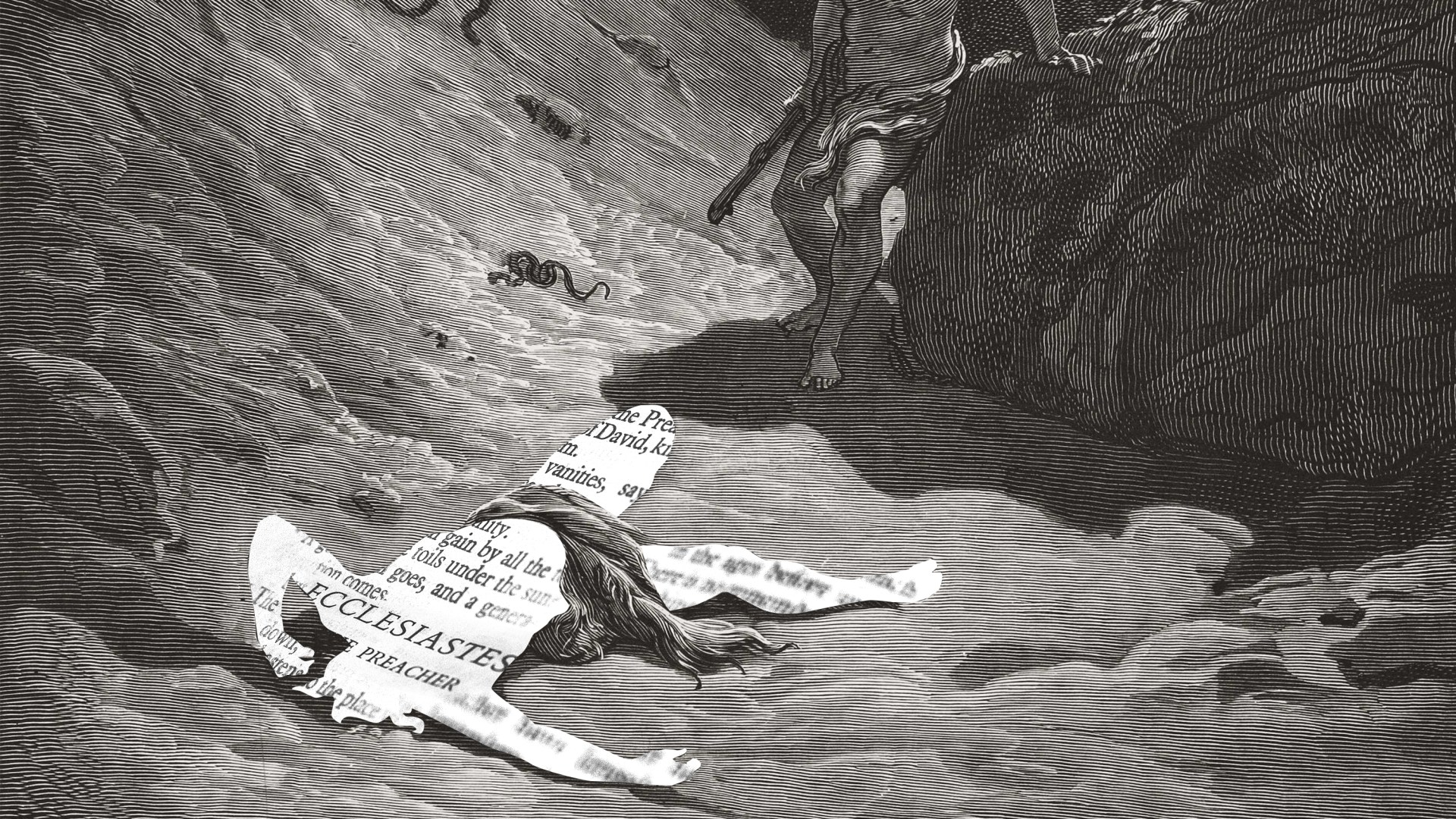
Ecclesiastes Is the Story of Abel Writ Large

Biblical Hebrew uses similar names for “vanity” and the slain brother. That’s no accident.

Christianity Today May 26, 2022
Illustration by Mallory Rentsch / Source Images: WikiMedia Commons / James Coleman / Unsplash

“Meaningless! Meaningless!” So says Qohelet, the author of Ecclesiastes, as he begins his reflections. “Utterly meaningless! Everything is meaningless.”

Ecclesiastes and the Search for Meaning in an Upside-Down World

Ecclesiastes and the Search for Meaning in an Upside-Down World

Hendrickson

80 pages

$14.93

For many, these words resound with a skeptical and, some may say, nihilistic tone. But must they? Russell L. Meek, a gifted Old Testament scholar at Moody Theological Seminary, has endeavored to answer this question in his new book, Ecclesiastes and the Search for Meaning in an Upside-Down World.

Meek seamlessly weaves together scholarly insight, theological profundity, pastoral tact, and moving anecdotes drawn from his own experiences with pain, abuse, sin, and ultimately redemption in Christ. His work is quaint and accessible. I believe it will bless discouraged ministers and laypeople alike, and perhaps would make an excellent guide for a small group study or Sunday School class working through the book of Ecclesiastes.

Well-acquainted with ‘Abel-ness’

Meek begins by observing how Qohelet portrays our upside-down world—one tainted by human sinfulness and still reeling (to borrow from John Milton) from paradise lost. Meek suggests that Qohelet uses the creation narrative of Genesis “to remind us that sin is the ultimate cause for death and injustice in life.”

And yet, as Meek puts it, Qohelet teaches that when we enjoy “fleeting gifts from God,” we “return to the good that once was,” with “God’s gifts represent[ing] a portion of life before sin.” He further notes that, for Qohelet, even in a fallen world, God’s justice may be delayed (Ecc. 8:11), but it is never denied (3:17, 8:12, 12:14).

As for the time between the lost paradise of Eden and the arrival of God’s final justice, Ecclesiastes tends to sum it up with the word vanity. Meek devotes a helpful section to exploring Qohelet’s use of this notoriously difficult term. The Hebrew is hebel, which doubles as a word both for futility and the name of the slain brother in Genesis 4. Meek has coined (at least, to my knowledge) a neologism to capture more fully and faithfully the stark picture of the human predicament painted in Ecclesiastes: “Abel-ness.”

“Abel’s life illustrates Ecclesiastes in living color,” Meek writes. Ecclesiastes teaches us that Abel’s predicament is our predicament. Just as his life was marked by “transience, the broken relationship between actions and rewards, the injustice suffered, the inability to attain lasting value,” and “the failure of the retribution principle,” so too are our lives irrevocably stamped by various abuses and injustices.

Meek is well-acquainted with this “Abel-ness.” Part memoir and part exegesis, his book records his own struggles with this twisted, sin-laden, and upside-down world. Recounting his experience of coming to terms with being abandoned by his now deceased father, grieving the loss of his grandmother, and turning to a life of alcohol and substance abuse, he demonstrates that his words are not merely theoretical. They are marked by real suffering that calls to mind the senseless cruelty visited upon Abel.

It was difficult for me to read these words without being thrown back on my own experiences with abuse, injustice, and sin. After an abusive sexual encounter at the age of four, I wrestled (and will likely continue to wrestle) with feelings of guilt and sexual confusion. At five, social workers dragged my older brother and me from our home. At ten, my brother (who was 18) senselessly died in an accident. Then, on the day of his funeral, my grandparents were tragically killed in a car accident on their way home after the service.

Meanwhile, I clung to bitterness and resentment, and I despised the legalism that surrounded me in church. During my time at a Christian college, as I attempted to work through issues of sexual guilt and confusion, my trauma gave way to egregious patterns of sinfulness. This included jesting and time-wasting with a company of foolish so-called friends, along with the abuse of alcohol. I, too, have experienced the incredibly senseless, cruel, and debilitating “Abel-ness” of life.

Because human life is marked by this “Abel-ness,” perhaps we are all tempted to despair of life itself and, in the spirit of our age, conclude that this is all an exercise in futility. John Stott powerfully took note of this in his classic 2003 work, Why I Am a Christian. Stott argued that what he and others have called “the technocratic society” is marked by a “social disintegration” that “diminishes and even destroys transcendence and significance.” Must we despair, then, in a floundering human society in which it is easier to rage at our fellow image-bearers than to suffer lovingly with them?

The end of the matter

Qohelet does not offer an exhaustive to-do list, a comprehensive framework for handling suffering, or a convenient coping mechanism. All the same, Meek argues that he “guides us through the vagaries of life in this fallen world, offering the solution for how to navigate such a dark and twisted place.” And where, ultimately, does our inspired guide lead us? Back to the twin foundations of biblical righteousness: fearing God and keeping his commandments (Ecc. 12:13).

As Qohelet teaches, when we trust that God directs us our lives and gives us commands in his fatherly providence, we are free to enjoy God’s good gifts of food, drink, vocation, and friendship. When we live our lives acknowledging God’s reign—even over our “Abel-ness”—we experience what Meek calls an ever-so-brief “reaching back to Eden.”

But the story of Ecclesiastes remains incomplete on its own. It is one thing to reach back to Eden. It is another to look forward to a better one. Where Meek’s book shines brightest, in my opinion, is in its ringing affirmation that Jesus Christ is the ultimate key to understanding Ecclesiastes—and indeed all of Scripture.

In the book’s final section, Meek presents a Christ-centered interpretation of Ecclesiastes, which alone makes the book well worth the price.

“We know the harsh reality of living in the upside-down Abel-ness of this world,” he writes, “but we can also enjoy the temporal gifts God gives to us and more fully understand what it means to fear God—to trust him as our Father—because we know that God became man. By his life, this God-man, Jesus Christ, showed that this world is indeed turned upside down, and like Abel (Gen. 4:10), Jesus’ blood cries out. Unlike Abel, however, Jesus’ blood doesn’t cry out for justice. His blood cries out as justice, justice that reconciles sinners to God, that makes brothers out of enemies, that secures our place in God’s great family.”

This truly is the end of the matter!

David Bumgardner is a writer and minister located in New Orleans, Louisiana. He is a pastoral intern at Canal St. Church, a parish in the Anglican Mission International, and an ecumenical contributor to Baptist News Global.
News

Nigerian Christians Protest Deborah’s Death

Blasphemy killing of Sokoto student and ISWAP execution video are latest examples of sectarian tensions in Africa’s largest nation.

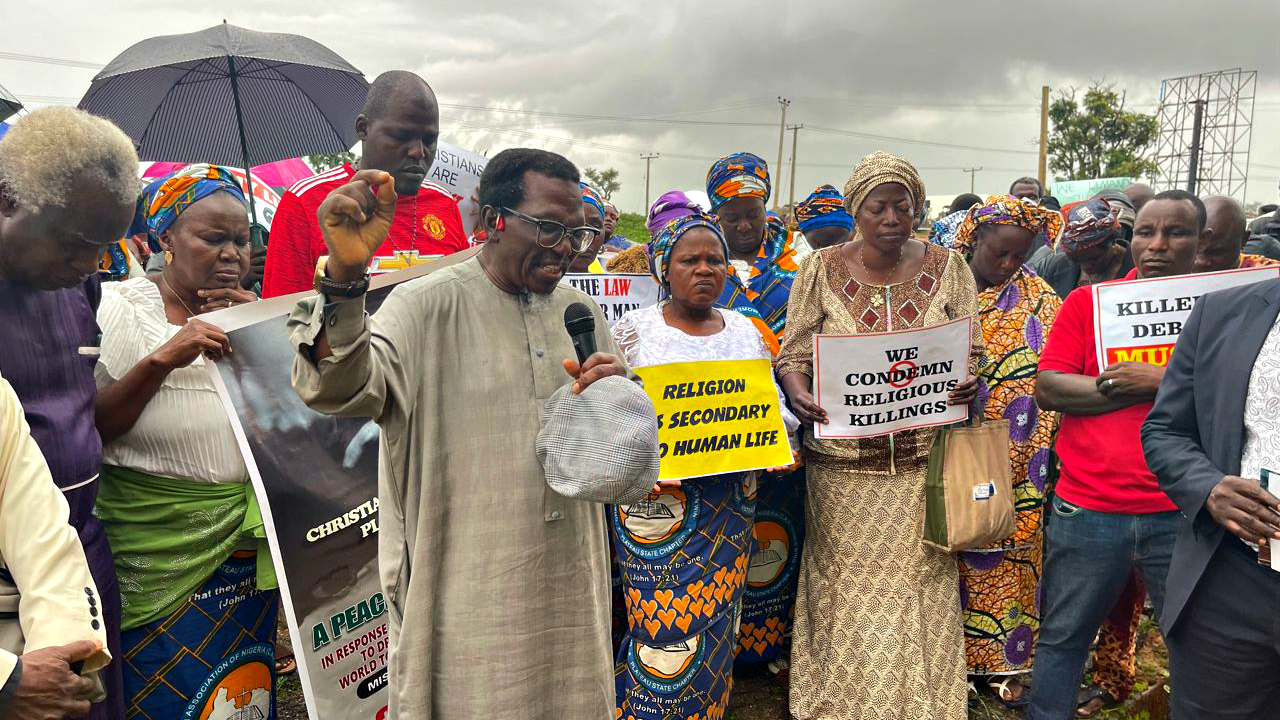
Nigerian Christians protest the death of Deborah Samuel, a Sokoto university student killed by a mob after being accused of blasphemy.

Nigerian Christians protest the death of Deborah Samuel, a Sokoto university student killed by a mob after being accused of blasphemy.

Christianity Today May 25, 2022
Courtesy of Gideon Para-Mallam

Thousands of churches across Nigeria demanded an end to sectarian killings on Sunday, horrified by the mob assault on a female university student accused of blasphemy. But fearful of more violence, their approach differed significantly—by geography.

“The overwhelming majority of our churches in the south participated, many going to the streets in peaceful protest,” said Testimony Onifade, senior special assistant to the president of the Christian Association of Nigeria (CAN). “Gathering together, we condemned this gruesome act and demanded the government identify, arrest, and prosecute the culprits.”

But in the north, where Muslims represent the majority of Nigerians, John Hayab described 20 minutes set aside to pray for divine intervention. The president of CAN’s Kaduna state chapter lauded the “solemn” ceremony observed by all northern denominations, amid a ban on protests by local authorities as some Muslims had threatened counterdemonstrations.

Instead, a select group of 120 Christian leaders gathered in a Kaduna city church, guarded by police and security agencies.

There was good reason for caution.

Two weeks ago, in Nigeria’s northwestern-most state of Sokoto, Deborah Samuel was beaten to death and set on fire by fellow students at Shehu Shagari College of Education. Officials and police intervened in vain.

Two students were arrested. Protesting for their release, Muslim supporters proceeded to destroy an additional 11 buildings, descended on Christian shops in the city, and besieged the palace of the sultan of Sokoto who had condemned the May 12 murder.

According to her friend Rakia, Samuel’s last words were, “What do you hope to achieve with this?”

After a colleague shared Islamic material on an exam-prep social media group, Samuel posted an audio recording asking him to remove it. Friends who overheard some Muslim students deeming her response to be blasphemous urged her to retract the statement.

Instead, she responded, “Holy Ghost fire. Nothing will happen to me.”

Gideon Para-Mallam, the former Jos-based Africa ambassador for the International Fellowship of Evangelical Students, joined demonstrations in the middle-belt Plateau state.

He called for peace and restraint. But also, for an explanation.

“How is it that our young people behaved in this way?” he asked. “All those dreams and hopes for the future, destroyed in a few moments of profound evil.”

Nigerian Christians circulated the video response of a radical imam with a picture of the slain former leader of Boko Haram in the background.

“Anyone who insults the prophet of God, kill him,” the imam said. “Don’t waste time telling the authorities, just kill him.”

It has been a bloody year.

Open Doors, which ranks Nigeria No. 7 on its World Watch List of the 50 countries where it is hardest to be a Christian, tallied 896 civilians killed by Islamic extremists in the first three months of 2022.

Abubakar Shekau was confirmed dead last June, killed in a firefight with the Islamic State West Africa Province (ISWAP). Over 40,000 militants surrendered to the Nigerian government, while a large but unknown number of commanders joined their jihadist rivals.

The same week as Samuel’s murder, ISWAP released a video depicting the execution of 20 Christians.

“Christians around the world should be in awe of the testimony of these men,” stated Jo Newhouse, spokesperson for Open Doors in Sub-Saharan Africa, “who, to the best of our knowledge, held on to their faith even in the face of execution.”

Formed in 2014 to confront ISIS in Syria and Iraq, an 84-nation coalition announced alarm in Africa, where the tempo of affiliate attacks far outpaces the parent organization in the Middle East. The 3,461 sub-Saharan killings in 2021 represent 48 percent of the terrorists’ worldwide total.

And in mid-April, Muslim Fulani herdsmen killed more than 150 Christian farmers in 10 Plateau state communities. While some attribute the attacks to a shortage of resources, Nigeria’s information minister Lai Mohamed stated there is now a “sort of holy handshake” between bandits and Boko Haram.

Last year, Open Doors ranked Nigeria an ignoble No. 1 in the categories of Christians killed (4,650) or abducted (2,510), as well as Christians’ homes and shops (a symbolic tally of 1,000 each) attacked, for faith-based reasons.

Deborah Samuel put a face on the crisis.

“We see this wicked act as having been facilitated by successive governments failing to respond effectively to religious extremism and violence,” said Para-Mallam. “This impunity has gone on for too long.”

He called for the end of “jungle justice.”

Nigerian President Muhammadu Buhari promptly criticized those who took the law into their own hands, promising an independent investigation. But former vice president and likely 2023 presidential candidate Atiku Abubakar deleted a tweet in which he condemned the killing.

One comment claimed he would lose one million votes in Sokoto.

The original post was shared without his authorization, he said. But while his explanatory statement asserted his ability to take strong stands on issues—including sharia law—he did not comment on the victim.

CAN’s youth wing vowed to withhold votes from any candidate who does not clearly condemn Samuel’s murder. The nonreligious Southern and Middle Belt Alliance stated Abubakar’s insensitivity was “not fitting” for a president.

Under the auspices of Muslims United for Peace and Justice, 13 groups condemned the killing. Para-Mallam expressed appreciation for such sentiment. Hayab said that in the north, such leaders are few and unpopular.

But one of the 13, Muslim Rights Concern, used the opportunity to call for greater implementation of the blasphemy law, and asked for “deep introspection” by Nigeria’s Christian community to ward off intolerance.

It also asked for an investigation into a pastor in the southwest state of Osun, whose remarks in response to Samuel’s killing allegedly insulted Islam and could plunge the entire region into chaos and religious war, according to the Muslim group.

One government official, while condemning the murder, blamed Samuel herself.

“Muslims don’t take insults against [our] beloved prophet,” said Anas Sani, assistant to the finance minister in Sokoto. “May the recklessness of our tongues never drive us to [an] early grave.”

While a manhunt for suspects is ongoing, the two students charged so far face only a two-year jail term for conspiracy and inciting public disturbance.

Regarding blasphemy allegations in Nigeria, Mubarak Bala was sentenced to 24 years in prison in April after pleading guilty. In 2020, Omar Farouq received a 10-year sentence, while Yahaya Aminu was sentenced to death.

All three are Muslims, and the Nigeria Supreme Court overturned the latter two convictions. But it has recognized blasphemy as an offense, punishable by death if established by a court of law.

Onifade chided his nation’s constitution for including sharia law.

“The blasphemy agenda is the latest plot to destroy vulnerable Christian minorities,” he said, placing it in line with Boko Haram terrorists and Fulani herdsmen extremists. “Crafted by Islamists and violent Quran teachers, this conspiracy cannot be ignored by the international community.”

Both Muslims and Christians have fled their homes due to extremist violence, stated the United Nations, with 8.4 million in need of humanitarian assistance in Nigeria’s northwest alone. Half of these face a food crisis.

In response, Hayab called on citizens to arm themselves.

“Nigerian Christians, especially those of northern extraction, have no other option than to defend themselves—from bandits, terrorists, and now religious fundamentalists,” he said, citing previous spurious examples. “They will use every opportunity to kill, on the slightest allegation of blasphemy.”

Para-Mallam, who has founded an eponymous peace foundation, agreed the law licenses certain weapons in certain situations. He has advocated for communities to protect themselves against aggression.

But all must conform to the teaching of Jesus.

“There is a thin line between self-defense and retaliation,” he said. “Just peacemaking must be emphasized first, to promote co-existence.”

The opposite produced a tragedy.

Samuel’s classmates called out desperately for help. Police fired tear gas into the melee, and then shots into the air. They retreated, witnesses stated, when students threw stones and beat them with sticks.

Which were then turned on the accused.

“She pleaded for mercy, but it was far from her,” said Rakia, her friend. “What a cruel way to die.”

News

Southern Baptists Release Pastor List, Repudiate Old Approach to Survivors

More change needed, survivors say, but new lawyers bring signs of hope.

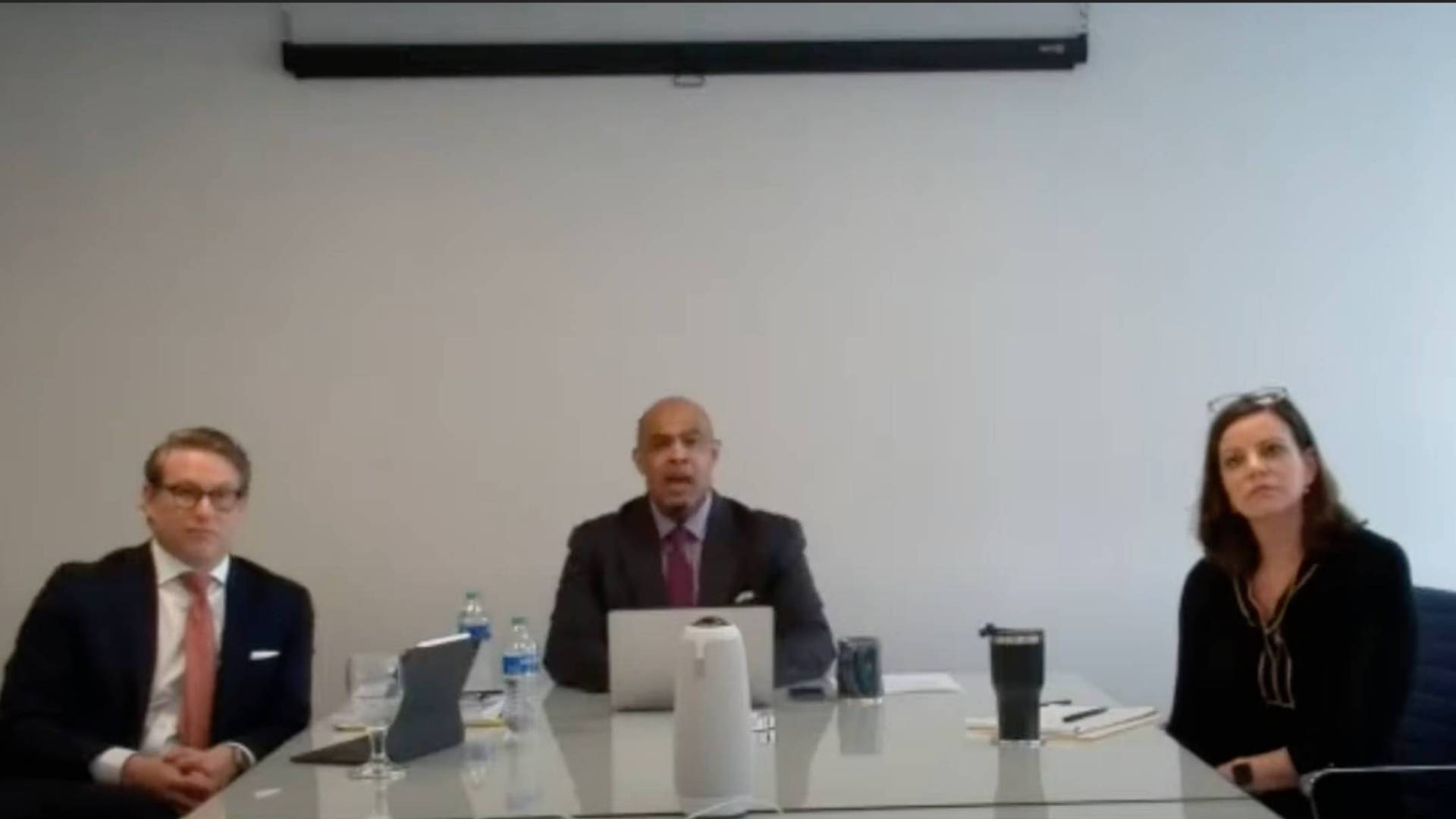
Lawyers Gene Besen and Scarlett Singleton Nokes with EC interim president Willie McLaurin (center)

Lawyers Gene Besen and Scarlett Singleton Nokes with EC interim president Willie McLaurin (center)

Christianity Today May 25, 2022
SBC EC / YouTube

Update (May 27): The Executive Committee (EC) released a 200-page list of alleged abusers, kept in secret by former leaders, late Thursday night.

Many of the names appeared in the

Houston Chronicle

’s 2019 investigation. Unverified accounts—where it couldn’t track down an admission, confession, guilty plea, conviction, judgment, sentencing, or inclusion on a sex offender registry—were redacted. A few entries were names of victims and witnesses, and they were also blacked out.

“This list is being made public for the first time as an initial, but important, step towards addressing the scourge of sexual abuse and implementing reform in the Convention,” the EC said in a statement. “Each entry in this list reminds us of the devastation and destruction brought about by sexual abuse. Our prayer is that the survivors of these heinous acts find hope and healing, and that churches will utilize this list proactively to protect and care for the most vulnerable among us.”

Days after a bombshell investigative report, the Southern Baptist Convention’s Executive Committee (EC) decided to do what previous leaders refused to for 15 years: release a list of pastors who had been credibly accused of abuse.

Sitting on either side of interim EC president Willie McLaurin during a meeting over Zoom on Tuesday, a new pair of lawyers discussed the EC’s initial response. They proposed immediately issuing a statement repudiating the dismissive stance EC leaders had taken toward victims in the past and making public a list of 700 alleged abusers that former leaders kept in secret.

The quick moves contrast with the historic approach captured in the investigative report and in last year’s meetings, where ascending liability was a common talking point and lawyers defaulted to closed-door session to advise the trustees.

“We have become too familiar with using techniques to slow processes down,” said SBC president Ed Litton. “We need to be very mindful that the world is watching, and they don’t need to see business as usual… we have to do this right.”

The two lawyers from Bradley Arant Boult Cummings LLP—Gene Besen and Scarlett Singleton Nokes—began as outside legal counsel at the start of the year. They spoke openly in the meeting, with Nokes reflecting on her faith and the need for the fruit of “gentleness” to drive the EC’s work on this issue going forward.

On Twitter, survivor Jennifer Lyell called them “the most positive consequential thing to happen in the @sbcexeccomm in the past 20 years.”

It’s the first time in a generation the EC has been represented by attorneys other than Jim Guenther and Jaime Jordan. They were part of a three-person Nashville firm that worked closely with the Southern Baptist Convention since 1955 but withdrew during the investigation. They had advised the EC against allowing Guidepost Solutions to access material covered under attorney-client privilege.

“With their 2021 vote, SBC messengers demanded the EC deal with the awful reality of sexual assault and stop stiff-arming survivors. The two lawyers from Bradley representing the EC have subject-matter expertise and are offering counsel consistent with the mandate of the messengers,” said Adam Plant, an Alabama attorney who has followed the saga. “But let’s be clear, this report exposed deep rot that can’t be overcome just by getting different legal advice—that will take systemic change.”

Still, the meeting signals what trustees hope will be a turning point for the Southern Baptist body. One of the new lawyers, Besen, referenced “changing the direction,” and the new interim president, McLaurin, talked about “changing the culture.” Multiple trustees called it an opportunity to do the right thing.

Besen and Nokes come from Bradley, a national firm based in Birmingham. Nokes served a dozen years as an assistant US Attorney and specializes in Title IX and sexual assault investigations.

The previous attorneys, Guenther, Jordan & Price, had been focused on nonprofit, college, and estate law, with the SBC as a major client over half a century. Guenther was 87 when his firm resigned from representing the EC last year. This week, its website—gpjlaw.com—was made private.

Guenther and Jordan have criticized the Guidepost Solutions report for misunderstanding the role of legal counsel and, they say, mischaracterizing the motives of the EC leaders they worked alongside for decades.

“The report repeatedly attacks our firm for advising the Executive Committee and the Southern Baptist Convention regarding the risks which could arise from various courses of action,” they said in a statement to Baptist Press.

According to the report, they proposed possibly making a list of abusive pastors public. Guidepost recounts how Jordan had advised former EC leader and general counsel Augie Boto in 2006 that the EC “could consider” a national list of abusive pastors and that “it may be time for policy-makers in the SBC to have the discussion.” Guenther too suggested a plan to link a database from the SBC website. Boto quashed efforts to follow up on the suggestions, despite keeping his own list of hundreds of names.

Before his decades-long involvement with the EC, Boto was a Baylor University graduate and a lawyer in Dallas in the 1980s. At that time, he connected with Paige Patterson at First Baptist Church Dallas as the Conservative Resurgence began.

Boto told investigators he continues to oppose the idea of an SBC database for liability reasons. But many SBC leaders, including presidents J. D. Greear and Ed Litton, were frustrated with the liability line.

“Repeatedly withholding information that could stop known predators from harming future victims was both a riskier legal strategy and totally opposed to the example of Christ,” said Plant, who practices law in Alabama.

The EC’s new counsel didn’t see potential liability as a reason for continuing to withhold Boto’s list. They obtained a copy from Guidepost and plan to release it on Thursday.

“My advice to this body, to my client the Executive Committee, is that promptly releasing that list is in our best interest. It’s important. It’s of immediate concern to the public and the survivor community, and we’re going to do it right away,” Besen said.

Releasing the list is a move toward transparency but likely won’t expose many alleged abusers for the first time, since it was compiled mainly using news reports. Of the hundreds on the list, Guidepost found that just nine of the pastors are still active in ministry, and just two of those are at SBC churches.

Besen also said the attorneys hope the EC trustees will provide unanimous support at next month’s annual meeting for the recommendations made by the Sexual Abuse Task Force, which oversaw the Guidepost investation.

At the EC’s direction, Guidepost is continuing to accept reports through a hotline (202-864-5578 or SBChotline@guidepostsolutions.com) now through June, when the convention will consider potential long-term solutions to reporting abuse.

Earlier this week, the EC also condemned a 2006 letter from Boto to survivor Christa Brown where he wrote that it would “not be positive or fruitful” for the EC to work with survivor advocates.

The EC, the statement said, “rejects this sentiment in its entirely and seeks to publicly repent for its failure to rectify this position and wholeheartedly listen to survivors.”

Brown told CT she was “grateful” for the statement, as well as other moves being made by the EC and its attorneys, including to consider pulling Boto’s retirement.

“It’s been a long time coming, and it is just one very small step, and so much more is needed,” she said, “but I hope that this may be the start of a new era in how the EC relates to SBC clergy sex abuse survivors.”

The SBC Ethics and Religious Liberty Commission was also named in Boto’s 2006 letter to Brown, and its current president Brent Leatherwood joined in repudiating and rejecting it.

“This entity long ago parted with the past advice of Mr. Boto, as we have sought to learn from, serve, and be an advocate for survivors. With what we now know, it is appalling this was ever advanced as legal counsel,” he said in remarks to CT. “But this is what you get when you view individuals crying out for help as ‘potential plaintiffs,’ rather than as neighbors who deserve our care and support.”

But survivors want more than the apologies they’ve received in the past and are awaiting bold changes at the annual meeting if not before. The initial signs, however, are encouraging.

“The outcome … is as good as we could have hoped for in this kind of meeting,” said Todd Benkert, an Indiana pastor and survivors’ advocate. He sees need for futher change, but also signs of hope, calling out the statement as an “important step” and describing the new lawyers as “excellent.”

Tuesday’s EC meeting began as an informational one, but trustees voted to make it a business meeting so they could officially approve the statement presented by the lawyers and stand by the response. Normally there are 86 trustees, who are elected to four-year terms, but the committee is down to 68 members after a wave of resignations over the scope of the Guidepost investigation. Sixty were at the meeting.

Besen, the attorney, has also urged the body to focus on next steps.

“The path that led us to this moment was ugly. There was lots of bad judgment and poor leadership that brought us here. But I believe arguing about past votes and replacing trustees would not serve us well. Arguing over privileged materials and whether or not the waiver was proper or not is not the issue we need to face today,” he told the trustees. “We are here. We have the report. That’s what we need to focus on and how we move forward from here.”

Theology

Why Christ’s Ascension is Essential

Jesus’ return to heaven was not an awkward stage exit but the climax of our redemption story.

Christianity Today May 25, 2022
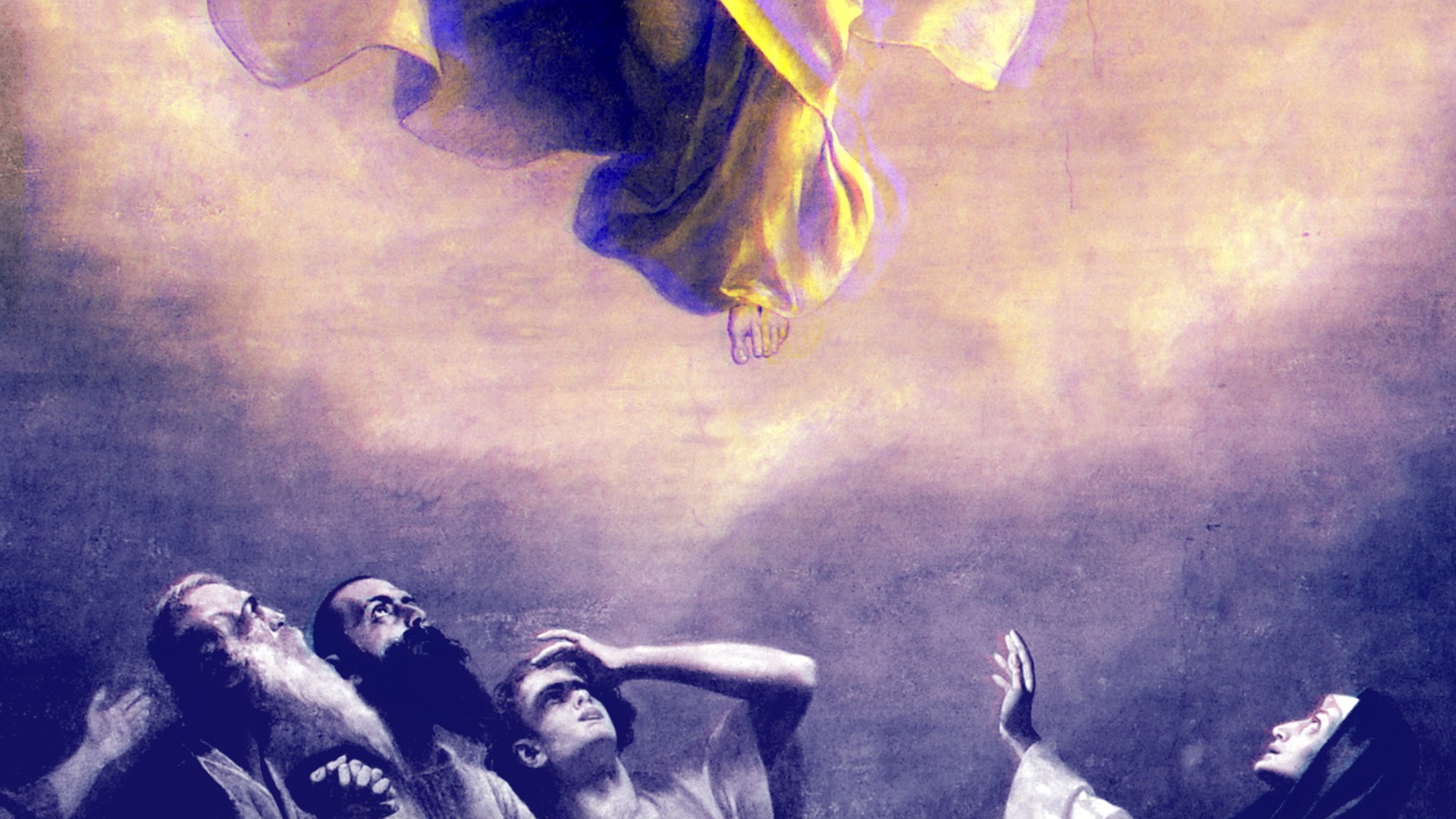
Edits by Christianity Today / Source Image: WikiMedia Commons

For a long time, I never really understood the Ascension.

To me, the disciples’ question in Acts 1:6 seemed eminently reasonable. Why did Jesus have to go? Why not just usher in the fullness of the kingdom then and there, and start wrapping the whole thing up? Wouldn’t it be a great asset to our labors in missions and apologetics to have Jesus still around?

As it stands, the Ascension plays right into the skeptic’s darkest doubts about the gospel narrative. How convenient that the supposedly risen Messiah should vanish without showing himself to anyone other than his friends and family!

The Bible, however, stubbornly refuses to agree with my sensibilities. Far from treating the Ascension as a weird stage exit whose main function is to explain why Jesus isn’t around anymore, Scripture speaks of it as a necessary part of God’s plan. Not only is it necessary, but the disciples even refer to it as a primary proof of Jesus’ messianic identity.

Rather than trying to explain away his absence, they tout it with vigor. The Ascension stands on equal footing with the Crucifixion and Resurrection in the earliest declarations of the gospel (Acts 2:33–36; 3:18–21; 5:30–31).

Even Jesus connects the Ascension with his work of dying and rising again. When Mary Magdalene sees him in the garden after his resurrection, he’s not simply strolling about, enjoying the fact that everything has been accomplished. No, he’s a man on a mission, and there is still another: “Do not hold on to me, for I have not yet ascended to the Father” (Jn. 20:17).

Yet in my experience within evangelical churches, I have seldom heard the Ascension preached with emphasis anywhere close to equal with that placed on the Cross or the empty tomb.

In trying to explain the Ascension, theologians are quick to point out the things Jesus does afterward: it is the gateway to his priestly work of intercession, a prerequisite for his sending of the Holy Spirit, and the commencement of his heavenly reign. That’s all true.

Still, I never quite understood why Jesus had to leave to do those things. Intercession, bestowing the Spirit, and even reigning—all these things could be realized in the earthly ministry of a vindicated, glorious Messiah. So why did he have to go?

Biblical theology offers us startlingly clear answers to that question, answers that enable us to see the Ascension in its proper context. The Ascension is not some strange vanishing act Jesus does at the end—like a magician finishing his show in a puff of smoke—but the capstone of everything he has done in his passion.

The Ascension is the triumphal act that crowns both the royal and priestly ministries of the Messiah: in which David’s heir ascends to reign, and the great high priest completes the presentation of the atoning sacrifice.

First, consider the royal angle. The Ascension appears to be an exact fulfillment of the prophetic vision of Daniel 7:13–14. In that vision, the Son of Man, surrounded with clouds, approaches the throne of the Ancient of Days and is given the dominion of an everlasting kingdom. Notice that the prophecy does not show the Messiah’s rule beginning with an earthly reign, but quite specifically with a heavenly one.

If Jesus had remained on earth and tried to claim his kingship, then he could not have been the Messiah—for the true Son of Man had been prophesied as ascending into the presence of God, there to be given his reign.

The Ascension is the triumphal coronation of the messianic king. Jesus has done what good kings in the ancient world were expected to do: he has saved his people from their enemies. He has defeated the powers of sin, Satan, and death, and now he makes his ascent to the throne—just as the Davidic kings of old made their ascent back to Jerusalem after a successful military campaign.

Having accomplished these kingly acts, Jesus approaches the Ancient of Days and is crowned with splendor and honor. And although we still await his return, along with the full and final manifestation of his reign, that reign has already begun.

Now that he is on the throne, seated at the right hand of the Father, the signs expected of the messianic age are being fulfilled before our eyes: the Spirit has been poured out and the nations have begun to turn their hearts to the worship of Israel’s God.

An even more compelling array of biblical images connects Jesus’ Ascension with the priestly work of the Messiah. Early Christians considered Jesus’ death on the cross to be a sacrifice of atonement (Rom. 3:25), an act whereby our sins are fully and finally forgiven.

However, coming from the context of Israel’s temple culture, it would have struck most Jewish believers as oddly incomplete to say that the Cross was all there was to Jesus’ ritual of sacrifice. As anyone in the ancient world knew, the penitent sinner needed a further step in the ritual of atonement: a sacrifice to be slain and a high priest to bear the sacrificial blood into the presence of God.

The clearest parallel is the annual ritual of the Day of Atonement, when the sacrifice for the people’s sin was killed on the great altar outside the temple doors. But that was only the first part of the ritual. To Jewish ears, the claim that the Crucifixion alone was the sacrifice of atonement would have sounded like saying that the sacrifice had been slain on the altar and no more.

What about the next step of the ritual? The high priest was to take the blood of the sacrifice and ascend the steps of the temple—to enter into the sanctuary of the Lord surrounded by billowing clouds of incense (Lev. 16:11–13).

The high priest would step up into that cloud, vanishing from the sight of the watching throngs in the temple courts, and then proceed into the Holy of Holies. There, in the presence of God, the high priest would present the blood of the sacrifice, completing the ritual of atonement and interceding for the people. Then he would emerge, coming back down through the cloud of incense in the same way the crowds had seen him leave, bearing the assurance of salvation back to the people of God.

This is precisely what the book of Hebrews says happened in Jesus’ heavenly ascent. Hebrews 6–10 paints a picture of the scene enacted when Jesus made his entrance into the presence of God, drawing on Day of Atonement imagery to portray Jesus as both the offering and the offerer. While the Holy of Holies was merely an earthly representation of the heavenly reality, Jesus enters the heart of that reality—into the very presence of the Father.

The theological implication here is that the Ascension was the next necessary step in the ritual after the Cross. This does not imply any insufficiency in what Jesus did in his saving work on the Cross—only that this completed sacrifice was always intended to be followed by another step in the process, which was bearing his sacrifice into the true Holy of Holies.

It’s not just Hebrews that paints this picture. If you know what you’re looking for, you can see priestly symmetries in most of the portrayals of the Ascension. The Ascension is preceded by a period of 40 days (Acts 1:3), just like the Day of Atonement in rabbinical Jewish tradition.

Before his ascent, Jesus lifts his hands to bless his disciples, and then goes up into the presence of God (Luke 24:50–51)—which is the same set of actions Aaron performed before entering the tabernacle to complete the first great ritual of sacrifice (Lev. 9:22–23).

Special mention is made of the cloud into which Jesus vanishes (Acts 1:9), which echoes both Daniel’s prophecy of the Son of Man and the visual imagery in the Day of Atonement. If Jesus was the Great High Priest presenting a sacrifice in the heavenly tabernacle, he would have to ascend to perform that very function.

This perspective adds a new layer of meaning to our current period of history. The Day of Atonement ritual wasn’t a matter of just going up into the temple and God’s presence, but also coming back again. The present age of Jesus’ absence, then, is the period of his active priestly service, as he continues to intercede for us in the presence of God the Father.

Likewise, the promised second coming of Jesus is not some future event that stands on its own, but the long-awaited culmination of everything he has already been doing, just as was foreshadowed in the ancient priestly ritual (Heb. 9:24–28). The disappearance-and-return narrative of the Ascension and Second Coming thus ceases to be something odd or surprising. Rather, in the light of Scripture, it is precisely what one would expect the Messiah to do.

For Jesus to be the true messianic king—the prophesied one who comes to defeat humanity’s enemies and returns to claim his throne in the manner described in Daniel 7—then he must ascend. For Jesus to be the Great High Priest, foreshadowed in the rituals of Israel’s temple, he must complete the ritual by bearing his sacrifice into God’s presence.

The Ascension is no mere footnote to the gospel narratives; it is not an awkward absence to be explained away. It is nothing less than the climax of the Messiah’s passion—and the setup for the finale of his great drama of redemption.

Matthew Burden is a PhD candidate in theology and the author of Who We Were Meant to Be and Wings over the Wall. He pastors a church in eastern Maine, where he lives with his wife and three children.

News

After 2,000 UK Church Buildings Close, New Church Plants Get Creative

In England, some rally to restore aging and emptying Anglican sites, while diverse congregations look beyond traditional sanctuaries.

With declining church attendance and shifting demographics, thousands of British churches have closed in the past decade.

With declining church attendance and shifting demographics, thousands of British churches have closed in the past decade.

Christianity Today May 25, 2022
Graham Custance Photography / Getty Images

A survey released by evangelical organizations in the United Kingdom last month found that, while around half of the country’s population identify as Christian, only 6 percent are “practicing” and active enough in their faith to attend church at least once a month.

The attendance decline is one reason over 2,000 churches have closed during the last decade. Communities are grappling with whether or how to save the historic buildings as new expressions emerge through church planting.

“If you were running a commercial organization, and you had a branch on every single High Street in the country but dwindling numbers of people visiting them, you would go bust if you didn’t close some branches,” said Theos senior fellow Nick Spencer. “That is the reality facing the church.”

The number of churches in the UK fell from 42,000 to 39,800 in a ten-year span, according to a 2021 report from the Brierley Research Consultancy.

“If you have churches in rural areas, and there are fewer people going into them, and indeed fewer people living in rural areas, and you don’t have the money to keep churches going, then they’re likely to close,” Spencer said.

A recent report from the Church of England found that up to 368 churches could be at risk for closure in the next two to five years, though the church said the rate of closure is slowing. These numbers of course don’t take other denominations into account, but many of the buildings belong to the Anglican Church.

Declines in attendance—and, in turn, involvement and giving—have left churches with fewer resources to maintain their aging buildings. Even churches with a fairly large worshiping body might not be able to afford repairs and restoration for churches that are hundreds of years old.

National Churches Trust and other nonprofits can help bridge this gap, eager to preserve the spaces that have played such a meaningful role in people’s lives and communities.

“A historic and beautiful church building reminds you that you are part of a bigger story than your own life, one that spans the centuries,” wrote Lucy Winkett, rector of St. James’s Church in Piccadilly. “The truth is that as people and as a society we need church buildings. At their best, they are public spaces with low barriers to entry (thresholds), that are open just because they’re open, free and easy to enter, inclusive, adaptable, beautiful, with a strong tradition of connection across time and space.”

The history and tradition that Winkett describes are of great importance to many across the UK who want to see local church buildings preserved even if they don’t attend.

“We would very much like as many churches as possible to remain open because of that local [connection],” Eddie Tulasiewicz of National Churches Trust explained. “[The church] means something to the people who live there. People are buried in the graveyard. There are memorials to people who may have done something important or lived there. It’s the history, which could be 50 years old, could be 200 years old, could be 1,000 years old.”

Urbanization has affected churches that once had a village to sustain them. Spencer explains that, for some rural churches, this local connection and history might be about all that’s left in a village.

“In many of the villages in which the church still exists, the local post office, the local bank, the local shop and the local pub have closed, and the church is often the last public building there,” he said. “The church is synonymous with the history and identity of these villages.”

Back in 2019, Brierley found that churches outnumbered pubs in the UK, since they too had been steadily closing.

Grants help struggling churches make repairs, but not all are able to remain open. Sometimes smaller churches close and consolidate with a larger church at a central location. Other times church buildings can be repurposed for other uses.

Meanwhile, churches themselves are meeting in new spaces according to community needs.

“I’ve never known such innovation in the UK, with church planting in different places in different communities,” said Gavin Calver, CEO of the Evangelical Alliance UK. “People are planting churches in coffee shops or in homes, and a lot of this church planting wouldn’t be measured. I’m excited about a fresh move of God in the UK, and the measure for that will not be how many church buildings we have, it’ll be how many active disciples we have, and I’m not sure those two things give you the same answer.”

With the exception of some larger Anglican churches, research has shown that immigrant churches and Black-majority churches are growing fastest as British demographics shift.

“Immigration is changing the face of religion in Europe, religion in the UK and Christianity in the UK,” Spencer said. “Migrant churches will meet in the school halls or cinemas. They are more focused on the people and community element than the building element.”

A Theos report found that London is one of the most religious places in the country, largely because of the immigrant population.

“The challenge and opportunity remain with younger generations because 86 percent of people that come to faith in the United Kingdom are under 25,” Calver said.

Church buildings will continue to decay. Some will be saved, while others will be repurposed or demolished. However, Calver firmly believes God has given the UK church a tremendous opportunity.

“We’re living in an incredible moment. I’m not going to deny that buildings have been closed or closing, but I’m excited about new expressions of church,” he said.

“I’m not going to deny that the number of people in the UK that would normally call themselves Christian is going down. But I’m excited about the number that might come to know Jesus in a powerful, personal way. We’re living in an incredibly exciting time where the spiritual temperature of the United Kingdom could be transformed.”

News

Theologians Craft Wesleyan Agreement for a Divided Methodist Era

64 scholars sign document they hope will ground more Christians in holiness doctrines.

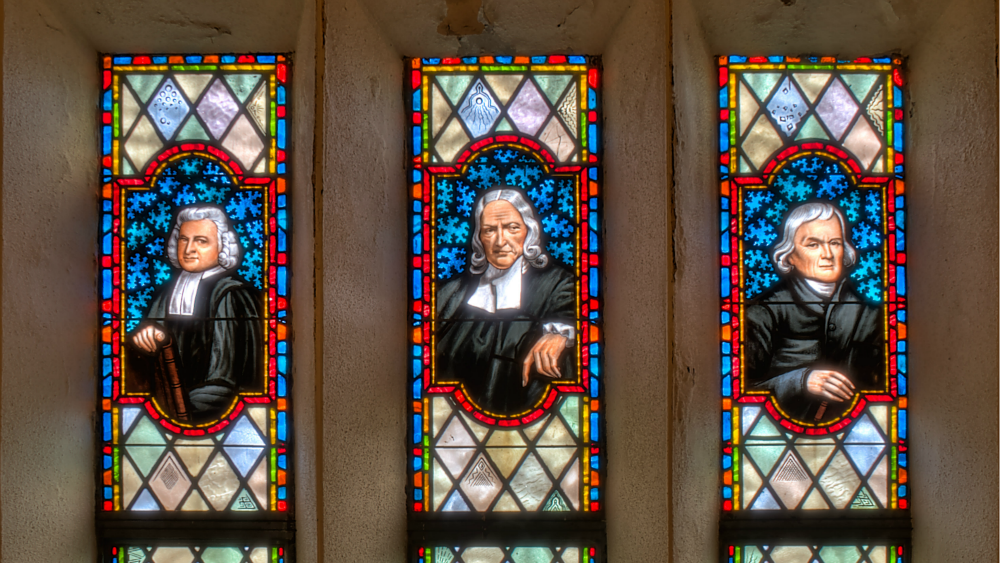
Charles Wesley, John Wesley, and Francis Asbury depicted in stained glass at a church in Lake Junaluska, North Carolina.

Charles Wesley, John Wesley, and Francis Asbury depicted in stained glass at a church in Lake Junaluska, North Carolina.

Christianity Today May 24, 2022
Dsdugan / Wikimedia Commons

Sixty-four scholars and theologians have signed on to a “Wesleyan witness,” a six-part, 62-page document they hope will shape the future of Methodism, define orthodox Wesleyanism, and ground more Christians in the story of sanctification and restoration through grace.

“This is classic, orthodox Wesleyan theology,” said Asbury University New Testament professor Suzanne Nicholson, who is one of the authors. “The power of the Holy Spirit is greater than the power of sin. It doesn’t matter your class, your race, your gender, God is at work among the faithful, and that leads us to a full-orbed devotion to who God is.”

“The Faith Once Delivered” was first drafted in January at a summit for “The Next Methodism.” Scholars allied with the evangelical wing of the United Methodist Church, as well as holiness and Pentecostal denominations, came together, formed five working groups, and co-wrote statements on five theological topics: the nature of God, Creation, revelation, salvation, and the church. A sixth section on eschatology or “the fullness of time” was added later.

Three editors—Wesleyan scholars Ryan Danker, Jonathan Powers, and Kevin Watson—revised the final document. It was published online by the John Wesley Institute on Monday.

Danker, who is director of the institute, told CT the document is not intended to be polemical, or even really original. The hope is to offer “a constructive voice” that clearly articulates the Wesleyan understanding of Christian orthodoxy.

“These are faithful Wesleyan scholars who are committed to the faith once delivered, to Nicene Christianity,” he said. “Methodism is entering a period where it’s going to need to divide itself again, and this happens any time there’s a division. We go back to the Scriptures and the church fathers.”

The United Methodist Church (UMC), which has about 31,000 congregations in the US, is currently dividing over LGBT issues. The denomination agreed to a division plan in 2020, but has twice delayed the meeting where the split could occur, citing COVID-19 concerns. In May, some traditionalists decided not to wait any more and launched the Global Methodist Church (GMC). So far, nearly 100 congregations have begun the process of leaving the UMC and joining the GMC.

According to Danker, the division stems from competing understandings of holiness. The traditionalists connect the doctrine to purity and questions of sexual ethics. The progressives connect it to inclusivity and acceptance.

The bigger problem, from his perspective, is the Methodists who have prioritized institutions and organizational structures over everything else.

“In the middle you have an institutionalist, moderate core who have really lost a vision for holiness,” he said. “They’re interested in creating an umbrella under which various viewpoints can exist in unity and harmony, but what actually unifies is simply having people under the umbrella.”

“The Faith Once Delivered,” on the other hand, attempts to bring Christians together around the theological narrative of the restoration of the image of God in humankind. It does not mention homosexuality and only speaks of marriage once.

The document starts with the attributes of God. The subsequent sections spell out how the image was given in creation but marred through sin; how it is revealed in human history through the incarnation of Christ and the testimony of Scripture; restored in us through salvation and sanctification; can be lived out in the church; and is ultimately glorified in our resurrected unity with Christ.

“Finish, then, thy new creation,” Charles Wesley once wrote, “pure and spotless let us be. / Let us see thy great salvation, perfectly restored in thee.”

This theological articulation isn’t just for Methodists dealing with division, according to Pentecostal theologian Dale Coulter.

“The immediate catalyst of it was what was happening in the UMC,” he said, “but when we got together, everyone was in agreement we’re not writing this to address that. We’re writing this in hopes of articulating an orthodox Wesleyan witness.”

Coulter hopes it will be used by his own denomination, the Cleveland, Tennessee-based Church of God, and by a wide range of other Christians as well. The document is small-c catholic, he said, and frequently references early church fathers and medieval theologians in addition to the Bible and the writings of John and Charles Wesley.

It is also deeply Trinitarian, talking about Creation and restoration as the work of the Father, Son, and Holy Spirit. Coulter, who worked on the Trinitarian language in the document, said it sets out a robust “Christological and pneumatological” vision, rooted in Scripture, tradition, and spiritual experience, and has an expansive view of salvation.

“This statement attempts to show that salvation is, in the words of John Wesley, ‘from the dawn of grace in the soul to its restoration in glory,’” Coulter said. “We’re not fixated on justification, which leads to this dichotomy between evangelism and social justice. We’re focused on holiness. Wesleyanism tries to articulate a holistic theology centered in holiness.”

Some supporters of “The Faith Once Delivered” hope the document will raise the visibility of Wesleyan theology among evangelicals, offering them an alternative to the more dominant Calvinism. Mark Tooley, a conservative Methodist commentator, jokingly called the document “our synod of Dort,” referring to the 17th-century meeting where Reformed theologians came together to articulate the five points of Calvinism.

“They crafted a document that was approachable and accessible,” Tooley said. “It clearly articulated Calvinist ideas and it’s had influence for 400 years. Hopefully this document will have 400 years’ influence.”

Today, many evangelicals can’t name any of the specifics of Wesleyan theology. When Reformed evangelicals fight over women in ministry, social justice, structural racism, and even whether or not empathy can be a sin, few turn to the Wesleyan tradition for another perspective.

Wesleyanism is more egalitarian, with a long tradition of women in ministry. It’s more optimistic, and stresses the availability of God’s grace to everyone. But, according to Tooley, even young Methodists often don’t know that and don’t know where to turn for a Wesleyan view.

“They know who John Piper is, but they can’t name an orthodox Methodist thinker,” he said. “And that’s Methodism’s fault. It’s not the Reformed’s fault. It’s Methodism’s.”

“The Faith Once Delivered” could change that by elevating Wesleyan scholars. The John Wesley Institute is also planning more summits, including one this summer focused on social witness.

The document is also designed to be used in churches. It is broken down into short sections with numbered paragraphs. A small group or Sunday school class could read the document alongside John Wesley’s sermons, Charles Wesley’s hymns, and the Bible verses referenced in the text.

After she finished grading papers at the end of her semester at Asbury, Nicholson sat down with “The Faith Once Delivered” to read it in one sitting.

“I think what this does is provide a grounding and breath of fresh air,” she said. “It really led me to praise God. This is a document that should lead people to joy at what Christ and the Spirit and the Triune God has done for us. That’s beautiful.”

Ideas

Pastors in the Valley of Death Row

While a win for religious liberty, the Ramirez ruling will take a traumatic toll on an already burdened profession.

Christianity Today May 24, 2022
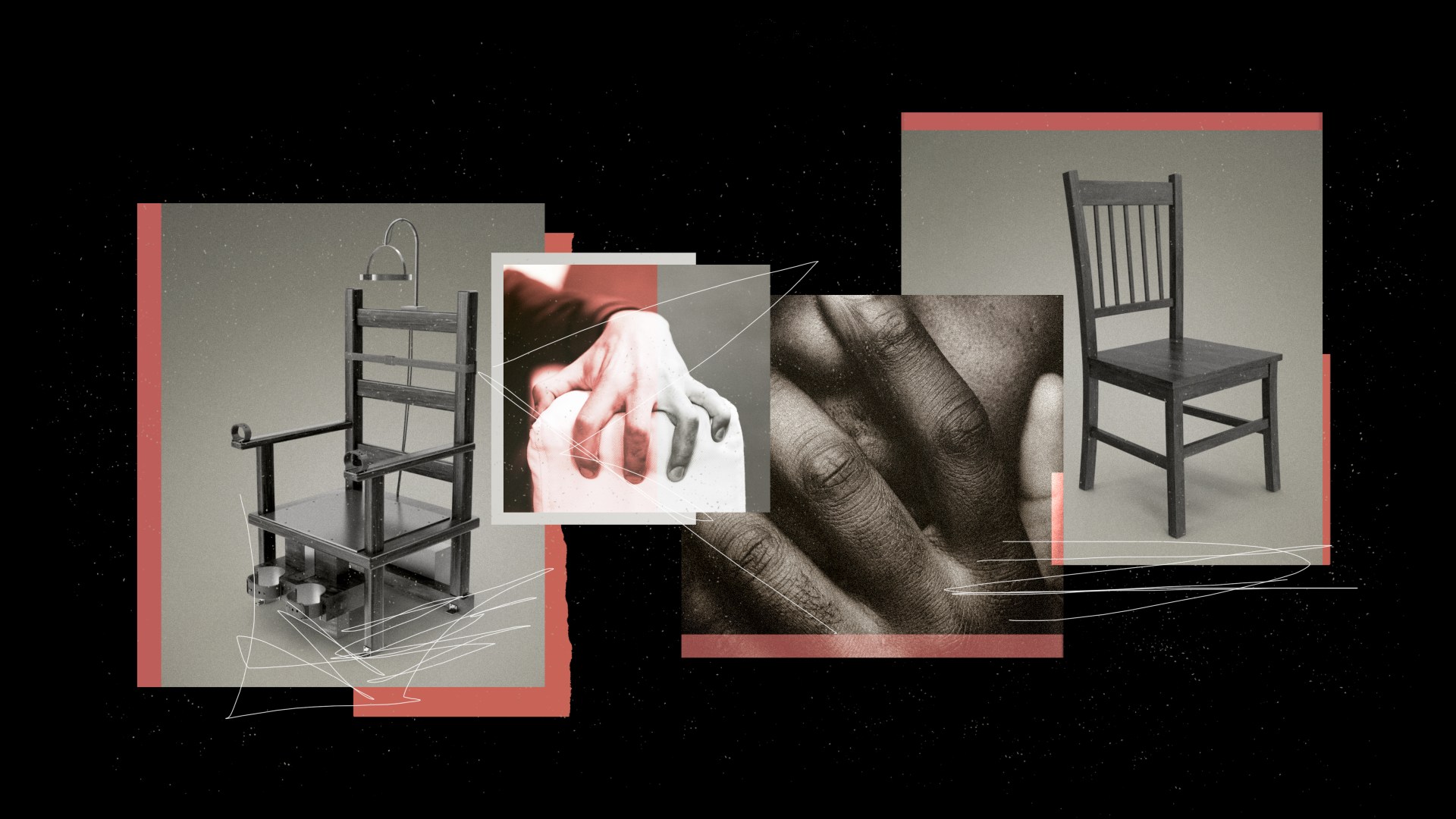
Illustration by Rick Szuecs / Source Images: Envato elements / Emiliano Bar / Nsey Benajah / Unsplash / Image Source / Getty

On April 21, 2022, the state of Texas executed 78-year-old Carl Buntion, who shot and killed police officer James Irby in 1990.

But Buntion wasn’t alone when he died. Beyond the usual prison staff, his spiritual adviser Barbara Laubenthal was also in attendance at his execution. She had come to know “Carl” as the man he became after serving three decades behind bars.

Later, Laubenthal admits she felt deeply affected by her experience. In a statement on Twitter, the political activist said: “After witnessing tonight how a human being was killed in front of our eyes, we are convinced more than ever that the death penalty is inhumane and has no place in a democracy in the 21st century.”

Her shock is not unique—even among those who support the death penalty. And with a recent Supreme Court decision, this traumatic experience will soon be shared by many other faith leaders across the nation.

Thanks to the March 24, 2022, ruling in Ramirez v. Collier, death row inmates will now have more access to a spiritual adviser of their choosing in their final moments.

As a pastor of 17 years, I have witnessed death firsthand in hospitals and homes. The ministerial calling often requires going into uncomfortable or difficult situations that I will never forget. The moment I read about the religious liberty victory of the Ramirez ruling I was conflicted. What if I was asked to be there?

In 2004, Texas inmate John Henry Ramirez robbed and then stabbed convenience store cashier Pablo Castro 29 times. Texas law has fluctuated regarding access to chaplains, but the Ramirez case was unique in that he requested his pastor maintain physical contact with him as he passed. He won.

The case is widely hailed as a victory for the religious liberty of the condemned. And yet few are talking about the negative effects this case will have on the many faith leaders who will increasingly be called upon in these situations. Experiences like Laubenthal’s will surely take a psychological toll on an already burdened pastoral profession.

A recent Barna Group study cited “the immense stress of the job” as the reason 56 percent of pastors considered leaving full-time ministry in the past year. The personal impact of seeing someone executed will greatly add to this stress for those who experience it.

However, this is hardly a new debate.

The historical church has had a long and complicated relationship with capital punishment. The early church was typically against the practice, but views evolved as Christianity became more mainstream in the culture.

Icon of medieval theology Thomas Aquinas famously defended the practice as a biblical response to injustice stating: “If any individual becomes a danger to society and if his sin is contagious to others, it is laudable and beneficial to put him to death on behalf of the common good.” His statement summarizes most Christian defenses of the practice today.

Modern Christian ethicists continue to debate the issue—including former Ethics and Religious Liberty Commission leader Russell Moore, who famously defended the practice against Pope Francis’s opposition in 2016.

Regardless of their views on the ethics of the practice itself, Christian leaders have been regularly present in the final moments of those about to be executed. And there is no question that the final minutes of one’s life is a unique opportunity for appealing to faith.

In some cases, a priest or pastor will invite the condemned to repent, convert, or recant. Others will spend hours in prayer with and for them. Often, these faith figures are entrusted with the inmate’s final words to be recorded for history or passed on to their loved ones.

With executions generally rare, these few faith leaders with increased access often form an isolated fraternity. It is difficult to find others who share their experiences with whom to discuss potential trauma. In this aspect, they have more in common with the experiences of prison staff, many of whom report never being comfortable with the execution process.

“Guards can feel mentally tortured by their participation in executions, both before and after,” wrote Dr. Robert T Muller, a trauma treatment specialists and educator who addressed the psychological impact of executions on the executioners themselves.

“Complicating matters, human connections are frequently formed between guards and prisoners,” he adds. Muller then goes on describe the instances of PTSD reported and treated among prison staff.

These issues raise similar questions regarding faith leaders and the burden of participation. Does being present signal their approval of capital punishment? Most faith leaders do not think so.

I interviewed Pastor Shane Claiborne, who leads non-violent direct action against the death penalty and says he sees a role for faith leaders in even the worst situations.

“I have not personally witnessed an execution, but I have been with many people who have, before and after,” said Claiborne in response to my question about the Ramirez ruling. “I have accompanied many death row prisoners leading up to the execution. I do not believe being present in the execution is a form of endorsement.”

He believes that there is a place for pastors in this tragic moment even as he fights to end the practice entirely.

Claiborne’s experiences echo many others who come to know inmates for more than their offense. And just as prison staff often comment on the relationship built over time with these long-term residents of death row, faith leaders’ experiences can often go even deeper.

A big part of being a spiritual adviser is building a relationship with their parishioner. They must get to know them to truly care for their soul. The Bible often compares church members to sheep within a flock.

In the death chamber, the shepherd must watch one of their sheep be killed. This experience is traumatic—even if they believe the convicted is executed with just cause.

In 2015, The Week highlighted the psychological impact of witnessing executions. They profiled reporter and spokesperson Michelle Lyons, who spent a decade watching 278 executions. Lyons reported a wearing down over time as she got to know the inmates.

In their survey of San Quentin State Prison employees, many reported anxiety and said they “felt estranged or detached from other people.” Data published by The American Journal of Psychiatry also showed that witnessing an execution had a strong psychological impact on journalists—and could “cause symptoms of dissociative disorder… in the weeks following.”

These journalists often had no close connection to the condemned and actively tried to remain detached throughout the process. They also had no physical contact with the individual, and yet they still showed the same signs of social detachment afterwards.

This means that without the proper care, spiritual advisers will see an impact in the very area that is most required of their ministry: connecting with people. Ironically, that sense of human connection—which causes them pain in watching their parishioner executed—is the very thing that could undermine their ability to be effective in that role in the future.

Death already takes a major toll on faith leaders. Where the average layperson deals with the grief of a lost loved one once every few years, the faith leader may walk through this process multiple times in a single month. One of the traits of a good faith leader is to learn how to deeply love all those under one’s care—including the guilty and hard to love. The depression that can come from losing so many of one’s parishioners is very real.

In Muller’s article, one prison executioner confessed: “You can’t tell me I can take the life of people and go home and be normal.” Neither can someone go home normal after holding their hand and watching them die—and yet caring for the dying is seen as an integral part of the pastoral calling in all faith traditions.

It is fair to argue that this is what faith leaders agreed to when they signed up for the role. And indeed, they are responsible to be there on the good days and the hard days. In fact, most pastors have been in the presence of the dying many times.

And yet the intentional and calculated nature of a scheduled execution adds a deeper level of ethical confusion.

Faith leaders have witnessed the execution of their parishioners countless times in premodern eras. However, there is an increasing debate about what it means to be “pro-life,” whether the faith leader’s personal views on the act matter, and how rare executions should be. All these factors have been building toward a new cultural moment in light of this 8-1 court decision.

Few pastors who walk into the chamber pro-death penalty will leave it with the same clarity.

As Michelle Lyons, the woman who witnessed 278 executions, acknowledged: “There is a difference between supporting the death penalty as a concept and being the person who actually watches its application.” This verifies a 1995 study that showed witnessing an execution moved 57 percent of people toward opposition.

John Henry Ramirez himself found reprieve after the case delayed his original execution date in the fall of 2021. The District Attorney of Nueces County Mark Gonzalez withdrew the death warrant citing a personal objection to capital punishment. Ramirez remains on death row, and his sentence could be reinstated if a future officeholder feels differently.

Political activists like Barbara Laubenthal continue to be outspoken voices against capital punishment, just as pastors like Shane Claiborne remain resolute in their efforts to end all executions.

Modern execution policy is almost always decided by people who are not present in the execution room themselves. They send others to represent law enforcement, the courts, and lawmakers. Now another group will be increasingly called to represent God himself—and if their right hand is on the dying, who will hold their left to support them afterwards?

While this is a victory for religious freedom, the aftermath of the Ramirez v. Collier case will forever change the pastors who walk out of the death chamber and back to the pulpit.

As far as answering my own instigating question? Yes. I would be there if asked. The calling is to compassion. It is to care for the hurting and dying. I would go, but I would go counting the cost, knowing that I would never be the same.

Mark Fugitt holds a PhD in Historical Theology and is a pastor and adjunct professor of religion, ethics, and history for Missouri State University and Spurgeon College.

Speaking Out is Christianity Today’s guest opinion column and (unlike an editorial) does not necessarily represent the opinion of the publication.

News

Church of Scotland Approves Same-Sex Marriage

(UPDATED) Traditionalist minority worry disagreement on the issue will make it harder to work together on mission.

Church of Scotland Fairmilehead Parish Church in Edinburgh

Church of Scotland Fairmilehead Parish Church in Edinburgh

Christianity Today May 23, 2022
Jane Barlow / PA Wire / AP

Update (May 23): Church of Scotland ministers are now permitted to perform same-sex marriages if they choose.

The church’s General Assembly approved an overture that allows parish ministers and deacons to apply for authorization to marry same-sex couples. It passed on Monday by a 274-136 vote.

The Presbyterian denomination is preparing new suggested liturgy to bless same-sex marriages as well as guidance for the change in church law.

Those in favor of same-sex marriage have celebrated the move as welcoming, but others in the church fear that even though they would not be forced to participate, the move puts pastors who oppose same-sex marriage in a more difficult position.

“When asked, ‘Can you marry us?’, the answer will have to be, ‘No, because I choose not to,’ rather than, ‘No, that’s something that I cannot do,’” Ben Thorpe, a minister at Sandyford Henderson Memorial Church in Glasgow told The Independent, “and that creates pastoral difficulties as well for everyone on both sides of the debate.”

The moderator of the Church of Scotland General Assembly, Iain Greenshields, acknowledged the diversity of beliefs on the issue among the church, which has debated the move for years, as well as the pastoral implications.

He advised that “all celebrants would be expected to take account of the peace and unity and pastoral needs of the congregation and any parish or other grouping of which it is a part while considering to conduct a same-sex marriage ceremony."

——–

Original post (April 29): The Church of Scotland—the largest Protestant church in the country—is another step closer to allowing its ministers to officiate same-sex weddings.

The majority of the denomination endorsed draft legislation to let clergy marry same-sex couples, with 29 presbyteries in favor and 12 opposed. The proposal will go before its General Assembly gathering in Edinburgh in May for approval.

While clergy will not be required to marry same-sex couples, the move makes the minority who oppose the national church’s involvement in gay marriage worried about further division.

“There’s still a continued struggle within the Church of Scotland,” Mike Goss, a minister in the presbytery of Angus who opposed the change, told Premier Christian News. “The group of folk are called traditionalists, folk who stand by the Bible, we’re not going away. We’re still there.”

The traditionalist wing of the church has debated its response to the moves toward affirming same-sex marriage for years. Even as the Presbyterian church prepares to allow the practice, the denomination’s official stance recognizes the tension.

“The Church recognises that there are diverse views on the subject of same-sex marriage,” it says. “We are committed to ensuring that debates on this subject are held in a spirit of humility and grace, that the tone and tenor of discussions are civil and people are respectful of those who hold opposing views.”

Scotland legalized civil partnerships for same-sex couples in 2005 and marriage in 2014. The Church of Scotland—also known by its Scottish name, Kirk—endorsed clergy in same-sex relationships back in 2009 but so far has not allowed ceremonies to take place in its churches.

The Scottish Episcopal Church, another mainline denomination, began allowing same-sex marriage ceremonies in 2017, a year after the Episcopal Church USA. To the south, the Church of England does not officiate same-sex marriages. Last year, the Methodist Church became the largest denomination in Britain to marry same-sex couples.

Nigel Kenny, the Scotland officer for the UK-based Christian Institute, criticized the Church of Scotland’s move away from defining marriage as between a man and woman. “This is a very sad development in the life of the National Kirk, which has in its constitution a commitment to the Bible as the supreme authority in all matters of faith and practice,” he stated.

The trend toward LGBT inclusion among Europe’s mainline churches, including the Church of Scotland, has corresponded with ongoing membership decline, according to Evangelical Focus.

According to government statistics, half of adults in Scotland report no religious affiliation and just under a quarter (22%) say they belong to the Church of Scotland, which is the national church but is not state run. The report also showed just 2 percent of the population claiming LGBT affiliation.

But church attendance is aging and shrinking. Back in 2002, 12 percent of the Scottish population attended Church of Scotland services; by 2016, it was 7 percent, according to the Scottish Church Census by UK-based Brierley Consultancy. Meanwhile, turnout at Pentecostal churches doubled—standing out as the only tradition to see growth.

Even with the decline among the Church of Scotland, it remains ten times larger than any other Protestant body. The Free Church of Scotland (formed by a schism with the national church in the 19th century) is a smaller evangelical Presbyterian denomination of over 100 congregations and holds to a traditional view of marriage.

Within the Church of Scotland, traditionalists worry that disagreement over same-sex weddings will affect other areas of church life. Faced with continued decline, the church has been reassessing its mission by considering new expressions of church and new approaches to engagement that involve restructuring its presbyteries.

“I guess the struggles will be with the continued relationships between congregations and between ministers,” Goss said. “We’re in the middle of a vast process of change that's been called the Presbytery Mission Planning process, and that’s going to require a lot of ministers working together, and this is just another spanner in that process, making it harder to know how we work together.”

News

Pro-Life Ob-Gyns: Ectopic Pregnancy, Miscarriage Care Will Continue After Roe

Even if the pills and procedures seem similar to elective abortion, doctors know the difference between treatment when a pregnancy ends and treatment to end a pregnancy.

Christianity Today May 23, 2022
Illustration by Mallory Rentsch / Source Images: Raimund Koch / Getty

Roughly 10 percent to 20 percent of known pregnancies end in miscarriage, and one in 50 pregnancies will be diagnosed as ectopic pregnancies, a potentially fatal condition in which an embryo develops outside the mother’s uterus.

Both miscarriage and ectopic pregnancy can be physically and emotionally painful. For Christians who believe human life begins at conception, losing a baby even early in pregnancy is a singular kind of grief. There are ministries for families suffering miscarriages, and many churches hold funerals or memorial services for babies who have died before they were born.

But pregnancy losses aren’t merely a spiritual matter. They also have a clinical term: abortion. Miscarriages are described in medical language as “spontaneous abortions.”

That can lead to confusion as Americans debate abortion policy after a leaked draft opinion from the US Supreme Court signaled the possible overturning of Roe v. Wade. Outside of a medical context, “abortion” is used colloquially to describe “elective abortion,” or the intentional killing of a healthy and growing preborn child.

In the aftermath of the leaked opinion, some abortion advocates have suggested that new abortion restrictions enacted could endanger health care for pregnant women. They worry that pregnancies that end through miscarriages or as a result of ectopic pregnancies will be wrapped into the new state laws.

But many Christian ob-gyns, including those at major antiabortion institutions, such as the Charlotte Lozier Institute and the American Association of Pro-Life Obstetricians and Gynecologists (AAPLOG) say restrictions on elective abortions have nothing to do with miscarriage care.

There are roughly 50,000 practicing ob-gyns in the United States. Less than a quarter of them perform abortions currently. On the other hand, treating both ectopic pregnancies and early miscarriages is a routine, though tragic, part of their practice, according to Dr. Donna Harrison, a Christian ob-gyn and CEO of AAPLOG.

Both Harrison and Dr. Ingrid Skop, also a Christian ob-gyn and the director of medical affairs at the Charlotte Lozier Institute, said abortion restrictions would have no effect on ectopic pregnancy removal or miscarriage care because those situations are different, both medically and morally, from elective abortion.

Ectopic Pregnancy Care vs. Elective Abortion

But confusion persists. A few years ago, the Ohio state legislature considered a bill to prohibit health insurance companies from covering abortions. The bill never passed, but its sponsor, Republican Rep. John Becker (who no longer holds state office), suggested during a hearing that in cases of ectopic pregnancies, doctors should simply “remove that embryo from the fallopian tube and reinsert it into the uterus.”

But that’s not medically possible.

Representative Becker’s gaffe naturally made headlines. So did an Oklahoma Republican lawmaker during hearings for an abortion ban under consideration in that state last month. Senator Warren Hamilton suggested that including exceptions to the ban for “medical emergencies” such as ectopic pregnancies could violate the spirit of “justice for all.”

Many states have enacted or are considering laws to prohibit abortion earlier in pregnancy than was previously thought to be legal under Roe. Most explicitly include provisions allowing for exceptions for medical emergencies, which would include ectopic pregnancies. But the evident confusion about ectopic pregnancies and abortion more generally has muddied the waters that pro-life advocates are trying now to navigate.

Dr. Skop said the confusion in terms—between using “abortion” to describe the medical procedure after a miscarriage or ectopic pregnancy versus using it to describe an elective abortion—exists only in the public’s imagination and not in medical practice.

“Even the most pro-life obstetrician will care for a woman with an ectopic pregnancy,” she said. In fact, existing laws already protect women in such a situation from being denied care. “That is medical malpractice,” Skop said. “Period.”

Harrison said that in about 5 percent of ectopic pregnancy cases, the baby’s heartbeat is detectable even at the time of removal. Nevertheless, the baby has no chance of survival and could cause the mother’s death if it is not removed.

Harrison, who trained at a Catholic hospital and later worked at a Catholic medical practice, said she’s never seen or heard of a single patient turned away from care for an ectopic pregnancy.

Harrison and Skop said the critical difference between ectopic pregnancy removal and elective abortions is the medical intent of the procedures—and the standards by which they are deemed successful.

“A ‘failed’ abortion is when the child fails to die,” Harrison said. “The purpose of an elective abortion is to produce a dead baby. In treating an ectopic pregnancy…we can separate the mom and the baby so that the mom lives. Even though we know that the baby is going to die, our intent is to save the life of the mom. Our intent is not to produce a dead baby,” she said.

Before treatment for an ectopic pregnancy can begin, however, ob-gyns must first diagnose it. That requires a scan, which isn’t possible unless doctors see their patients in person. That’s why Harrison, Skop, and many other antiabortion advocates oppose the newly relaxed rules surrounding what’s known as the “abortion pill.”

Miscarriage Care vs. Elective Abortion

Skop said there are three common clinical responses to a miscarriage, depending on multiple medical factors. Some women can wait and allow their bodies to naturally expel the baby. Others will require surgery. And some can take medication to induce labor.

One medication commonly used in this situation is misoprostol, which is also the second drug prescribed as part of the two-drug regimen commonly referred to as the “abortion pill.” When doctors prescribe an abortion pill regimen to women seeking an elective abortion, they first prescribe mifepristone (also known as Mifeprex), which starves the growing baby of the progesterone her mother’s body makes to feed her. Misoprostol is then taken hours or days later to induce labor.

During the coronavirus pandemic, the Food and Drug Administration (FDA) temporarily relaxed the rules governing the prescribing of the abortion pill regimen by allowing doctors to prescribe the pills via telemedicine without having examined a woman in person first. A few months ago, the FDA made that change permanent.

The problem, said Harrison, is that without an in-person visit, abortionists can’t determine the age of a women’s pregnancy, which affects the safety of the drug. Neither can they determine whether that pregnancy might be ectopic.

“The symptoms of a rupturing ectopic pregnancy…bleeding, pain, those are the same symptoms as a Mifeprex abortion,” Harrison said. The FDA reports that at least two women have died after their ectopic pregnancy ruptured following the abortion pill regimen.

So far, 19 states have enacted further restrictions on the abortion pill regimen. Some require doctors to see patients in person before prescribing the pills. Others have banned outright sending the pills by mail.

Skop said the inherent risks of Mifeprex, including hemorrhage, make it subject to an FDA protocol called the Risk Evaluation and Mitigation Strategy. Doctors who want to prescribe Mifeprex, like any other drugs under this classification, have to undergo training and qualify for a specific certification. Skop said those FDA-imposed hurdles cost both time and money. As a result, she opted not to register to prescribe the drugs in her private practice.

“We have many other interventions” for women who are suffering a miscarriage, she said.

Still, there has been some media coverage suggesting that pro-life pressure, not FDA regulations, have kept providers from prescribing the abortion pills, even in cases of miscarriage.

Harrison said it is not clear whether taking the first pill, Mifeprex—which starves the baby of progesterone—in addition to the misoprostol offers any clinical advantage in a miscarriage.

“There are a couple of studies where they found that the Mifeprex makes the woman’s womb a little more sensitive to the second drug,” Harrison said. But a known side effect of Mifeprex is increased bleeding, and Harrison said that danger outweighs any potential benefit in treating miscarriage.

Ultimately, Harrison said, restricting abortion—including the prescribing of the abortion pill regimen for an elective abortion—would have no legal impact on a doctor’s ability to prescribe the drugs to treat miscarriage.

“That’s like saying, ‘If you say that we’re not going to have surgical abortion, then you cannot use a curette for anything else,’” Harrison said, referring to a metal instrument commonly used in surgeries and dentistry. “They’re not restricting the use of Mifeprex and misoprostol. What they’re restricting is doing an act, either with surgery or medication, with the primary purpose of killing the baby.”

Ectopic pregnancy, miscarriage, and abortion do have three things in common: a woman, a baby, and a death. Harrison, Skop, and scores of other pro-life ob-gyns and activists believe that to intentionally cause the death of a woman’s baby serves neither the baby nor the woman.

But—in keeping with the Christian ethic of treating the sick and vulnerable with care and dignity—they also believe that a woman facing the natural death of her baby needs compassionate and careful medical care. They insist that care will continue even under legal restrictions on elective abortion.

Books
Review

Switzerland’s Original Reformer Was Creative, Combative, and Frequently Controversial

A new biography captures the misunderstood faith of Huldrych Zwingli.

Marburg Colloquy, a meeting between Martin Luther and Huldrych Zwingli, leading figures of the Protestant Reformation in 1529.

Marburg Colloquy, a meeting between Martin Luther and Huldrych Zwingli, leading figures of the Protestant Reformation in 1529.

Christianity Today May 23, 2022
Edits by Christianity Today / Source Image: Wikimedia Commons

Huldrych Zwingli (1484–1531) has not usually fared well at the hands of historians. Whether cast as Martin Luther’s antagonist or as John Calvin’s (largely forgotten) understudy, the Zurich reformer has been widely misunderstood, oftentimes vilified, and frequently ignored. Even in death, Zwingli proved to be controversial: Though a fierce opponent of the Swiss mercenary system, he perished in battle, sword in hand, seeking to extend Reformed Christianity to neighboring Catholic territories.

Zwingli: God’s Armed Prophet

Zwingli: God’s Armed Prophet

Yale University Press

376 pages

$32.50

In his insightful new biography, Zwingli: God’s Armed Prophet, historian Bruce Gordon offers a compelling interpretation of this 16th-century preacher, theologian, political strategist, and self-styled prophet, demonstrating that Zwingli’s creative vision of church, sacrament, and sacred community forged a new form of Christianity that came to be known as the Reformed faith. For Gordon, Zwingli’s creative but combative leadership in Zurich proved to be “remarkably generative, fecund, and destructive.”

The embattled reformer

Born in the high Alpine village of Wildhaus on January 1, 1484, the boy Huldrych Zwingli grew up in a world of subsistence farming, Catholic piety, and stunning natural beauty. From an early age, he developed a deep attachment to the Swiss Confederation, its land and people.

Zwingli’s formal schooling took him to Basel, Bern, Vienna, and then back to Basel (where he earned a bachelor’s degree in 1504 and a master’s in 1506). This academic journey instilled in him a permanent love for humanistic learning, including the study of classical Greek and Roman literature, the mastery of the biblical languages, and the application of Scripture for the renewal of church and society. Somewhat later, in 1514 or 1515, Zwingli was introduced to the writings of the famous Dutch humanist Desiderius Erasmus, whose biblical scholarship and Christ-centered piety played a significant role in Zwingli’s emerging reformist convictions.

Ordained to the priesthood in 1506, Zwingli served parishes in Glarus and Einsiedeln over the next 12 years. During this period, he witnessed firsthand the brutality of war and became an outspoken critic of the mercenary system and the pensions paid to wealthy Swiss citizens who recruited the mercenaries. Zwingli also cultivated a growing network of friends and fellow humanists, including Joachim Vadian, Heinrich Glarean, and Erasmus.

Zwingli was known as a conscientious priest who supported the papal party, studied early-church writings, loved music, and excelled as a preacher. He also had the reputation for being promiscuous, a frequent visitor to the local brothel. According to Gordon, it was during his years in Einsiedeln that Zwingli experienced a kind of religious conversion when, following Erasmus’s lead, he began looking to Scripture as the highest authority in the Christian life. It was Erasmus more than Luther who contributed to Zwingli’s religious awakening.

Zwingli’s popularity as a preacher gained the attention of Zurich’s magistrates, and on January 1, 1519, he assumed his new duties as the people’s priest in the city. In this capacity, Zwingli preached successively through texts of Scripture several times each week from the pulpit of Zurich’s Grossmünster Church. Over the next six years, the pulpit served as Zwingli’s primary platform for promoting religious change, as he became increasingly critical of medieval devotional practices, including the veneration of Mary and the saints, Lenten fasts, the use of religious images, clerical celibacy, and transubstantiation.

In 1522, Zwingli took the fateful step of marrying Anna Reinhart and then resigned from the priesthood—only to be reappointed as a city preacher. Gordon shows that, throughout this dramatic period, Zwingli demonstrated real skill as a political strategist: While staging public provocations with his combative sermons and inflammatory published writings, he and his allies consistently submitted to the leadership of Zurich’s political authorities. Thus, it was the magistrates, not the bishop or city clergy, who convened and judged the First and Second Disputations, held in the summer and fall of 1523—at which Zwingli and his views emerged victorious. As Gordon notes, “The Reformation [in Zurich] was a movement not of the people, but of educated men working within the system.”

Once the mass was abolished and Zurich became an evangelical city in the spring of 1525, Zwingli encouraged and cooperated with the magistrates as they moved swiftly to stamp out religious dissenters, both Catholics and Anabaptists. Throughout these years, his self-perception as God’s prophet took shape: The prophet was one whom God called, and the Spirit illuminated, to defend divine righteousness and instruct the community through the public exposition of the Scriptures. This prophetic ideal took institutional shape in 1525, when Zwingli inaugurated the Prophezei, a regular gathering of ministers and theological students who studied the Scriptures together in the original languages.

During the 1520s, Zwingli gradually developed his original version of Christianity, articulated in works such as the Sixty-Seven Articles (1523) and the Commentary on True and False Religion (1525), and expressed in Zurich’s religious establishment. According to Gordon, this reformed vision included several distinct aspects: The temporal and the sacred spheres formed a single religious community (corpus Christianum), with the visible church under the authority of the city’s godly magistrates. Moral renewal required purging the churches of “idols” and adopting a simple form of worship following the pattern of Scripture. The two sacraments, baptism and the Lord’s Supper, were no longer thought to impart grace but were understood as symbols of God’s work in Christ. Undergirding this theological vision were two of Zwingli’s bedrock convictions: that God’s timeless covenant with his elect people entailed the positive use of divine law in the Christian life, and that God’s Word was powerful to transform both individuals and society.

More than the pastor of a single city, Zwingli emerged after 1525 as a leading figure in a network of like-minded reformers (including Vadian, Johannes Oecolampaius, Martin Bucer, and Wolfgang Capito) who were intent on bringing religious change to southern Germany as well as to the Swiss Confederation. What Gordon calls the “commanding moment” for Zwingli was at the Disputation of Bern (1528), when he and his colleagues convinced the Bernese magistrates to abolish the mass and embrace the evangelical faith. The next year, Zwingli and Luther locked horns at the Marburg Colloquy, failing to find consensus on the contentious question of the nature of Christ’s presence in the Lord’s Supper. Gordon does not take sides in this debate, but does observe that the Reformation, even in its earliest years, “never enjoyed an arcadian age of peace and unity.”

In the last years of his life, Zwingli became increasingly isolated both theologically and politically as he refused all compromise and aggressively pursued the expansion of the Reformed faith to Catholic territories through force of arms. His death on the battlefield of Kappel on October 11, 1531, was the tragic consequence of his own belligerence. Indeed, as Gordon observes, Zwingli’s violent death “cast a long shadow over his legacy … for centuries to come.”

Gordon devotes his final chapters to tracing this troubled legacy, describing the variety of ways that 16th-century contemporaries as well as modern scholars and filmmakers have sought to make sense of it. For Gordon, Zwingli is best remembered as neither a hero nor a martyr, but as an embattled prophet.

A reformer remembered

For too long, the Zurich Reformation and the life of Zwingli have remained unfamiliar territory for English-speaking readers. Gordon’s magisterial biography does much to fix this shortcoming.

Gordon’s skills as a first-rate historian are on display throughout this volume as he explores the dynamic relationship between high theology, political factors, and everyday social realities that shaped Zwingli’s experience and leadership as a reformer. This rich contextual reading provides a portrait of Zwingli that is noteworthy for its jarring inconsistencies, complexity, and sheer fascination.

The book takes seriously Zwingli’s development and contribution as a theologian. Gordon devotes one of his chapters to providing a succinct and insightful summary of Zwingli’s theology through the lens of his most comprehensive work, the Commentary on True and False Religion. Gordon is especially helpful in showing ways that Zwingli’s distinctive theological views—his commitment to moral renewal, simple worship, sacramental symbolism, and a town hall-centered reformation—appealed to the civic ideals of many of Zurich’s inhabitants. Clearly, Zwingli’s theology not only shaped, but was shaped by the urban context in which he served. (At the same time, one is left wondering about the exegetical and patristic sources underlying his distinctive theological views.)

Another strength of Gordon’s analysis is the manner in which he situates Zwingli’s reform efforts within the extensive network of friends and allies who served alongside him in Zurich and beyond. Even in his dramatic confrontation with Luther at Marburg, Zwingli was not a solitary reformer.

In the end, Gordon’s portrait of Zwingli as a self-styled prophet leaves the reader with questions about the nature of this office. Did the Zurich reformer distinguish his prophetic gifts from those of other reformed pastors? If Zwingli believed that he had received the Word as divine illumination through the Spirit (as Gordon indicates), in what ways did he distinguish his prophetic gift from those of the Old Testament prophets—if at all?

Clearly, the greatest strength of Gordon’s outstanding biography is that it allows readers to discover this complex reformer on his own terms—as a charismatic preacher, a creative theologian, a political strategist, a flawed reformer, and, to the end, an embattled prophet.

Scott M. Manetsch is professor of church history at Trinity Evangelical Divinity School. He is the author of Calvin’s Company of Pastors: Pastoral Care and the Emerging Reformed Church, 1536–1609.

Apple PodcastsDown ArrowDown ArrowDown Arrowarrow_left_altLeft ArrowLeft ArrowRight ArrowRight ArrowRight Arrowarrow_up_altUp ArrowUp ArrowAvailable at Amazoncaret-downCloseCloseEmailEmailExpandExpandExternalExternalFacebookfacebook-squareGiftGiftGooglegoogleGoogle KeephamburgerInstagraminstagram-squareLinkLinklinkedin-squareListenListenListenChristianity TodayCT Creative Studio Logologo_orgMegaphoneMenuMenupausePinterestPlayPlayPocketPodcastRSSRSSSaveSaveSaveSearchSearchsearchSpotifyStitcherTelegramTable of ContentsTable of Contentstwitter-squareWhatsAppXYouTubeYouTube