Church Life

Inside a Ukrainian Baptist Church at War

Christians in Lviv work and pray for victory as they face their nation’s crisis head-on.

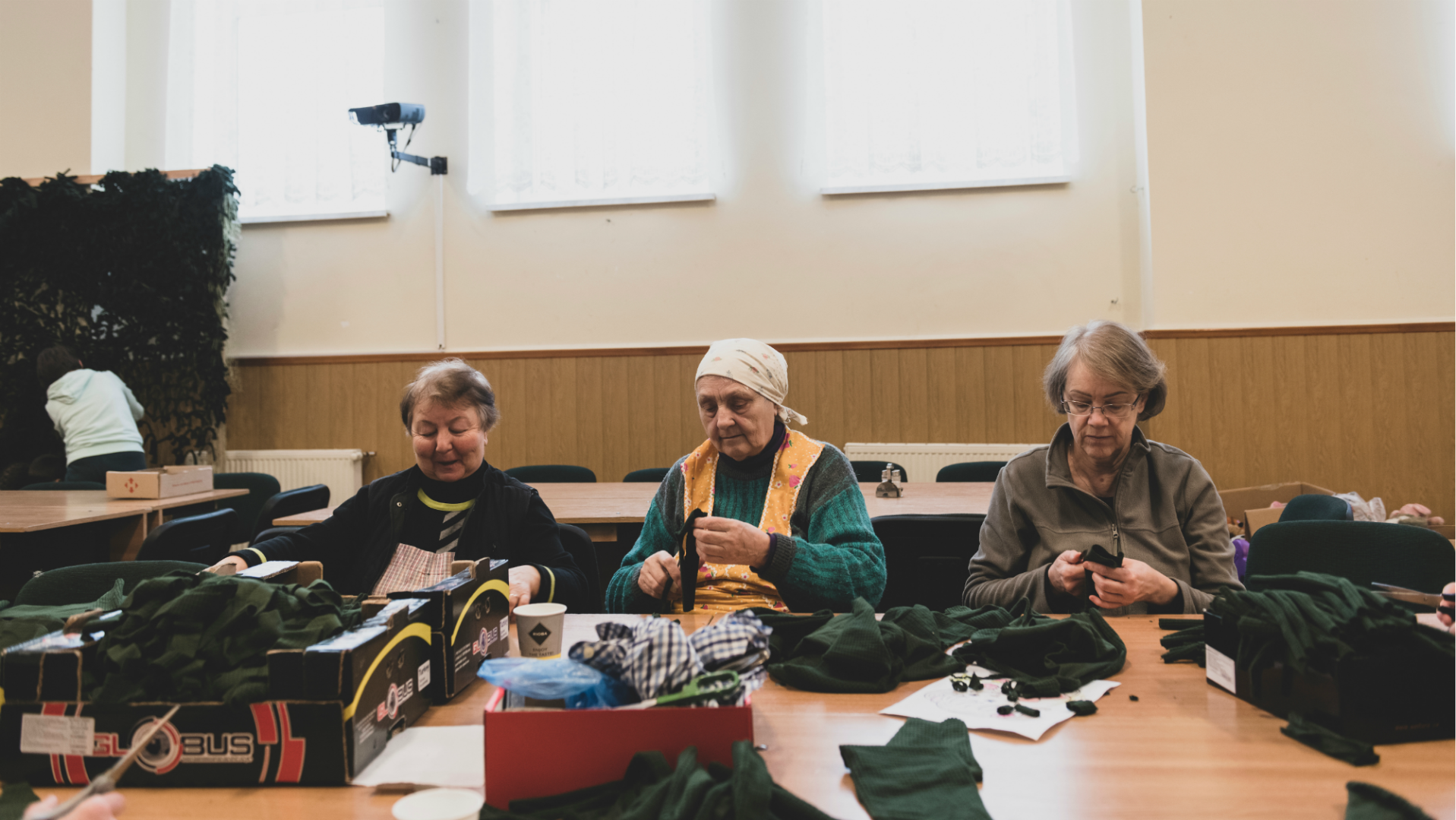
Baptist women in Lviv cut up cloth for military camouflage.

Baptist women in Lviv cut up cloth for military camouflage.

Christianity Today April 1, 2022
Joel Carillet

First they had to get a car.

As the threat of a Russian invasion grew on the horizon, some shrugged it off, thinking it unlikely. But Vika Aharkova, who ministered alongside her husband Vasyl among the 20,000 international students in Kharkiv, near the Russian border, “kind of knew it was going to happen,” she said.

It’s easy to delay when crisis is coming. It’s easy to think of the many plausible reasons the worst won’t happen. They were still praying for peace. But they also knew they needed to be prepared.

They needed a car.

“If we know there is going to be a war, we need to buy a vehicle,” Vika said. “So we can evacuate fast.”

Vika and Vasyl appealed to supporters for funds to buy a car, and two days later, funds in hand, Vasyl traveled to Lviv, in western Ukraine, to purchase the vehicle. He immediately drove back to Kharkiv—a 14-hour journey.

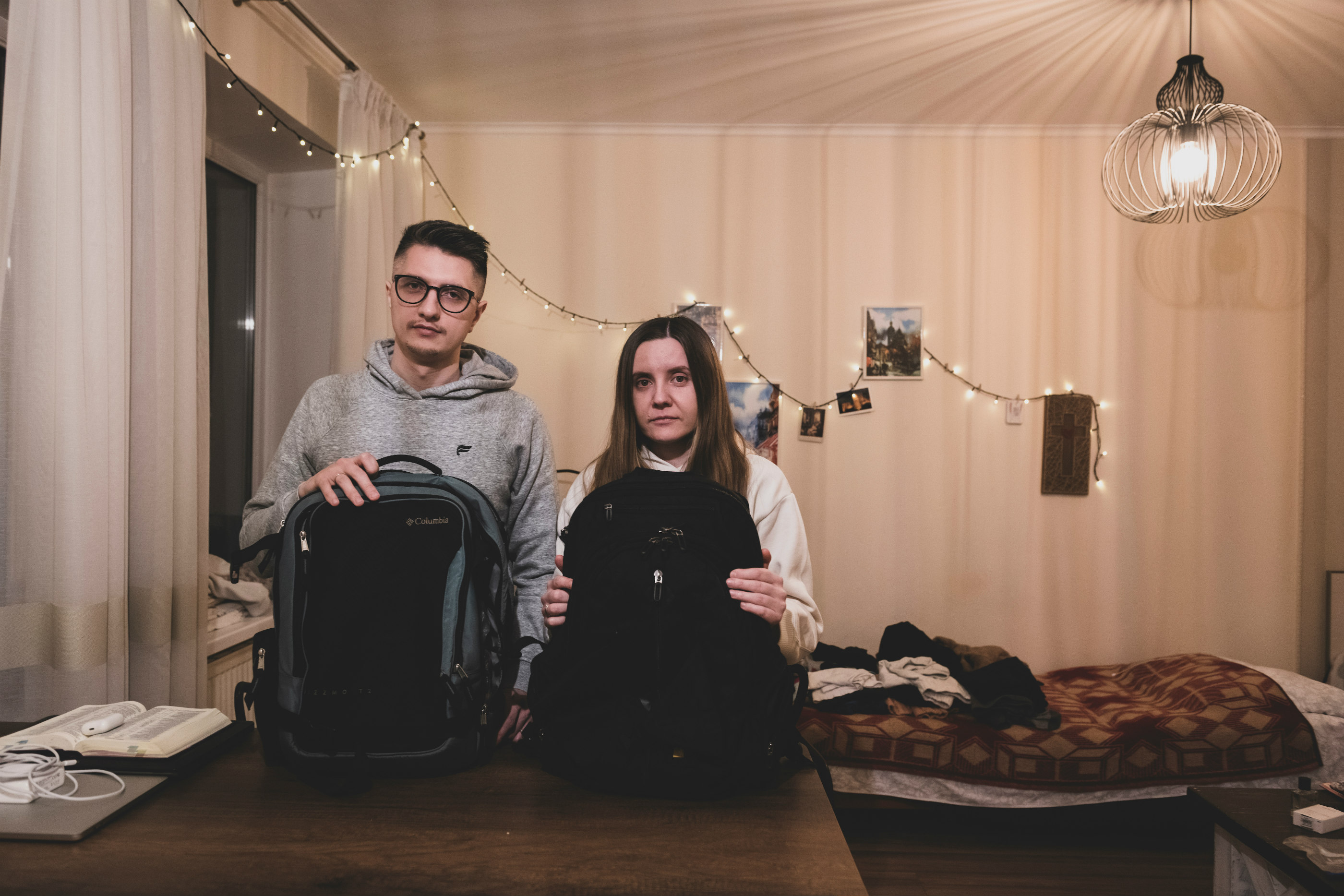
The invasion started eight days later, at 5 a.m. on February 24. At 5:30, Vika and Vasyl were in the car, each carrying just a single backpack.

By the time they left the city, they had five more people, with five more backpacks: Vasyl’s sister, a couple from their church, an elder’s teenage daughter, and a student from the medical university.

No one took any extra luggage, but they did make room for a cat.

They would drive nonstop to Lviv—this time a 36-hour journey. Many people from all over the country have fled to Lviv now. In the West, near the Polish border, it’s more secure.

Here many churches, and many evangelicals like the Aharkovs, have turned to face the crisis head-on.

Vasyl and Vika Aharkova, campus ministers with the International Fellowship of Evangelical Students in Kharkiv, fled their home within an hour of the Russian invasion.Joel Carillet
Vasyl and Vika Aharkova, campus ministers with the International Fellowship of Evangelical Students in Kharkiv, fled their home within an hour of the Russian invasion.

Step onto the grounds of the Central Baptist Church, for example, and the place is abuzz. Parked in front is a bus that will take evacuees to the Polish border. Inside are several rooms serving as temporary shelter for displaced people—those like Irina Malko, 38, and her dog, Zaya, who also fled from the city of Kharkiv.

Walk down the stairs a couple floors and you’ll find several women cutting up cloth to be used for camouflage netting for the military. Walk a little farther, to the church’s kitchen, and you’ll find women preparing meals—for the guests who are leaving in the bus out front and some who are staying longer.

The church is the new, temporary denominational headquarters, home to the staff of the Ukrainian Baptist Union. The union was located in Irpin, a suburb of Kyiv that quickly became a battlefield. Now it’s at Central Baptist Church in Lviv.

Irina Malko, 38, and her dog Zaya fled the city of Kharkiv and found temporary shelter at Central Baptist Church in Lviv.Joel Carillet
Irina Malko, 38, and her dog Zaya fled the city of Kharkiv and found temporary shelter at Central Baptist Church in Lviv.

In one room of the church is a large map of Ukraine, multicolored thumbtacks indicating distribution points—churches of various denominations, mission organizations, and so forth—where humanitarian aid from Haus der Hoffnung, a German Christian organization, can be sent.

Down the hall, Igor Bandura, vice president of the union, is worried about what happens if the Russian military succeeds in taking Ukraine.

“The battle is huge, and it is not only about Ukraine,” he says. “If Ukraine would be taken, it is just a matter of time before Putin would move forward. Poland understands this. The Baltic states understand this. Romania understands this.”

He has stopped praying for peace. Now he prays for victory. He prays he and other Christians and the country as a whole will face the crisis head on. He prays that the Russian people will see the invasion for what it is.

“The majority of people just don’t want to know the truth,” he said in a sermon a few weeks ago. “They are easily attracted by state propaganda. Even our own Christian brothers and sisters are overwhelmed with fears.”

Inside this church, though, there doesn’t seem to be any fear. These are the faces of determination. Like so many people around Ukraine, the Baptists here, in this one church in Lviv, are stepping up to meet the challenges with a sense of solidarity and sacrifice. The church, like the rest of the country, is operating in a crucible, and a sense of unity is being forged—not in some abstract sense but in a blood, sweat, and tears sense.
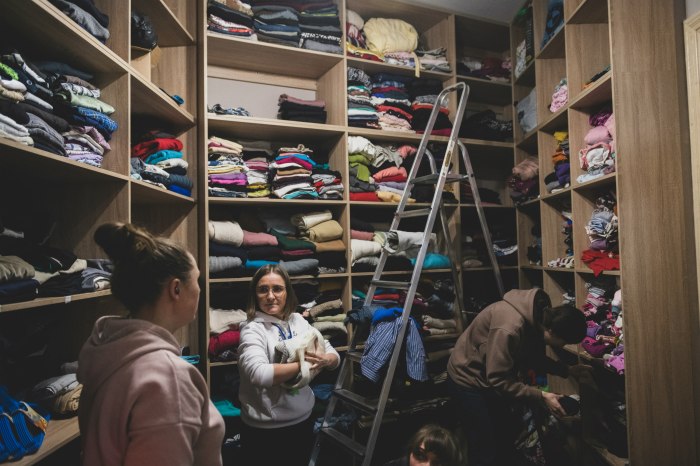
Baptist women organize clothes to give to those in need. At a nearby warehouse, they collect and sort humanitarian aid from Poland.Joel Carillet
Baptist women organize clothes to give to those in need. At a nearby warehouse, they collect and sort humanitarian aid from Poland.

They are choosing, every day, to face the crisis and make the necessary decisions, from buying a car that can carry seven from Kharkiv to sorting donated clothes in a storage room in the church in Lviv.

What will they think about this time, when it’s all over?

“In the end, after the victory,” Bandura said, “we will look back and say, ‘God, it was painful, but it was so precious, so valuable.’”

Editor’s note: CT’s coverage of the Russia-Ukraine war includes select articles in Russian and Ukrainian.

You can now follow CT on Telegram: @ctmagazine (also available in Chinese and Russian).

News

What Ukraine’s Evangelical Women Want Known About Russia’s War

From preparing food to making Molotov cocktails, Christian women contribute to resistance, while some fear the divide between those who stayed and those who fled.

Christianity Today March 31, 2022
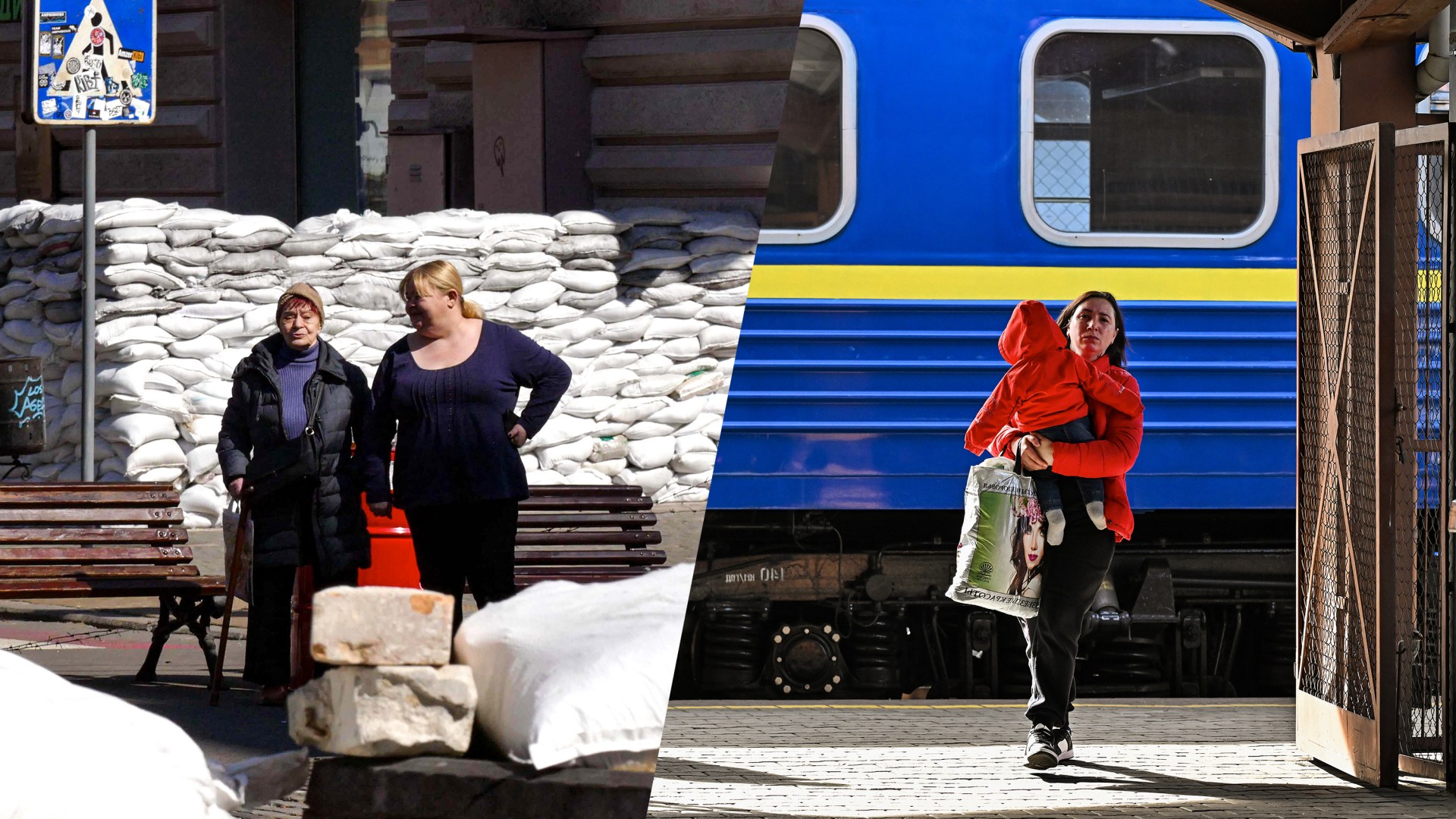
Edits by Christianity Today / Source Images: NurPhoto / Jeff J Mitchell / Getty

Of Ukraine’s more than 4 million refugees, 90 percent are women and children. Of the 6.5 million internally displaced Ukrainians, 54 percent are women. Men ages 18–60 are required to stay and resist the Russian invasion. And thus it is men who usually tell the public tales of war.

Women are often kept to private forums such as their journals:

32 days of war.

Fall asleep while checking the news on your phone.

See nightmares about concentration camps, bombing, dead people.

Wake up from a nightmare and remember it is not just a bad dream.

Check your phone with the thought, I hope everyone I love is alive.

Kiss a sleeping husband thinking about the fragility of life.

Wash your face. Put your clothes on.

Go to work. Wear a smile as a mask. Distance your emotions from pain. Physically hear pain turn into white noise in your head.

Check on your family during a 15-minute break at work. Cry on your break.

Six seconds: breathe in. Eight seconds: breathe out.

Feel grateful for being away from your phone eight hours a day at work. Feel helpless about being away from your phone eight hours a day at work.

So began the March 27 entry of Tetiana Dyatlik Dalrymple, suffering vicariously from afar in Washington, DC. Her father, Taras, sensed that such female perspectives have been missing from coverage of the war.

As Overseas Council’s regional director for Eastern Europe and Central Asia, he recruited six Ukrainian women leaders who could tell their stories. In partnership with the Eastern European Institute of Theology, ScholarLeaders International, and four affiliated seminaries, they sought to counter the critical observation of Svetlana Alexievich, a Belarussian novelist who won the Nobel Prize for literature in 2015:

“Everything we know about war,” Alexievich wrote in The Unwomanly Face of War, “we know with ‘a man’s voice’ … ‘men’s’ words.”

Too few international supporters care to notice the gender gap. The theological educators’ second webinar, “The Russia-Ukraine War: Women Voices,” drew only about 200 registrations yesterday, less than half that of the first webinar, which featured male seminary leaders.

Marina Ashikhmina, vice rector for educational work at Tavriski Christian Institute, said the distinction is patently unfair. Women in war have a “double responsibility.”

Underappreciated in society is their behind-the-scenes work to cook meals, transport aid, and knit camouflage nets. But at the same time, said the licensed psychologist, they are expected to maintain the mental and emotional health of society. Ukrainian children will be the most affected, she said, as the vast majority are likely to experience PTSD or depression.

But though war dehumanizes men, Ashikhmina believes this is impossible for women. The balance of vulnerability and mettle protects them—and even causes them to utter the true sound of conflict.

“War is oppression, abasement, and discrimination, as it stems from a patriarchal worldview,” she said. “And yet, if war had a voice, it would sound like a woman’s lament, a child’s fearful cry, a mother’s quiet prayer.”

This is the service needed and provided by women like Valeriia Chornobai.

“The refugees are destroyed in their inner being; as they come to us, they often are not able to speak,” said the professor of sociology and Christian ethics. “You don’t need to talk to them, but just sit in silence and share their pain.”

She remained with her husband in Dnipro, 300 miles southeast of Kyiv.

Practically every day is the same for her. A truck arrives with humanitarian aid. She helps package it into individual parcels and then distributes the aid to displaced people taking shelter in church basements. Where possible, she helps find employment for those willing to stay.

But amid the emotional toil is joy. Six women slept in what used to be her office; all six accepted Jesus. She even saw God’s healing when she prayed for one woman’s injured leg.

It is Bible reading that keeps her going. But she also avoids pointless debate—too many are arguing about why this happened or about the divisions between Christians, she said. Such discipline helps her balance.

“Stay focused on God’s love, not people’s pain,” Chornobai said. “I want to be with the Good Samaritans.”

So does Olga Dyatlik, Dalrymple’s aunt. An associate regional director at Overseas Council with her brother, Taras, she experienced burnout while helping those who suffered over the past eight years of Russian occupation in the Donbas region. She knows now that she must take care of herself first.

“But how can I,” she said, “when I am flooded with thousands of text messages saying, ‘Please help us’?”

Much of her pain is connected to Russia. Those eight years also involved much effort to strengthen cross-border relationships with fellow evangelicals.

Yet not one of her received texts was a message of apology.

“I then understood, I don’t have Russian friends,” Dyatlik said. “We were building bridges for eight years. Now it is their turn.”

But peace is still needed, said Tetiana Kalenychenko, even if she gets blamed for saying so. A facilitator working for conflict transformation with the Dialogue in Action initiative, she has partnered with Muslims, Jews, and the evangelical seminaries in interfaith peace building.

Still in contact with her Russian colleagues, she admits that a “bridge” cannot be at peace with everyone. But to play its role, it must be at peace with itself—and with God.

She has a dream that Ukraine’s churches will welcome the coming waves of the traumatized, where they can sit in silence and listen for God’s voice. But to be effective, silence is not enough.

“Under shelling, ready to shout, we must be brave and honest with ourselves, and especially in our prayers,” Kalenychenko said. “In anger and grief, we keep our hearts soft enough to feel God’s love.”

But they also keep their hearts firm enough to combat Russian propaganda, said Olga Kondyuk, head of the department of communication at Ukrainian Evangelical Theological Seminary. After evacuating from its campus in Kyiv, she does her best to maintain normal operations online.

“Not only do we have to fight to survive,” she said. “We have to fight to preserve what we have built.”

This refers not just to seminary education but also to the values, economy, and independence of Ukraine. While Russia is doing its best to tear them down, Kondyuk exposes its false rationale.

One frequent idea is that the two Slavic nations are “brothers.” Honorable in concept, it is misused to turn them into one nation and thus portrays Ukraine as having no sovereignty.

Another concept that finds favor among many Christians is that President Vladimir Putin’s “Russian world” ideology is combating the moral degradation of the West. But a simple comparison finds worse rates of divorce, abortion, alcoholism, and crime in Russia.

“Unlike the ‘Russian world,’ Christ saves people through relationship and love,” said Kondyuk. “The job of theology is to root out and condemn such heresy.”

Tanya Gerasimchuk hurts for those taken in.

“People that I used to respect—who are intelligent and well educated—they sincerely believe that what Russia is doing is right,” said the public relations assistant at Odessa Theological Seminary. “I pray that God would open their eyes.”

She was commenting from Moldova, where she evacuated to her mother-in-law’s home. But she is mindful that as the days go by, her status changes from guest to refugee.

“No matter how many good and kind people you meet on your way or how comfortable your conditions are at the moment,” Gerasimchuk said, “the feeling of detachment seems to be the most prevalent one. It gets its hold on you and never leaves.”

But even so, these women are not the classic picture of helpless victims fleeing war. They are active volunteers, helping others and teaching the Bible.

Still, Matthew 24 is a poignant reminder: “How dreadful it will be in those days for pregnant women and nursing mothers!” (v. 19). Such women are present in 1 out of 10 internally displaced Ukrainian families.

Gerasimchuk, at least, is safe. But it is cold comfort.

“You feel helpless, and you feel guilty,” she said, “because you are fine and comfortable, while others are suffering immensely.”

It is a divide that could tear Ukrainian women apart.

“It is becoming increasingly difficult for women to communicate with each other, given the very fundamental differences between their positions,” said Ljuba Pastushenko, Dalrymple’s aunt, a refugee in Poland. “The war cut us to pieces like a pie.”

But it is not simply those who fled versus those who stayed.

Differences have appeared between those who had a backpack and those who left with nothing. Some are with family while others rely on strangers. And of those still in Ukraine, some chose to stay while others had no opportunity to leave.

Suffering the tension, some have cut off communication with each other. But she urges understanding.

“Each of us has her own threshold of sensitivity, her own mechanism of living through panic, fear, and change,” said Pastushenko. “Each of us did the right thing, guided by our heart.”

Weathering the turmoil involves keeping others calm when fear abounds, said Kondyuk. It means talking to journalists and lawyers, said Dyatlik. It even includes making Molotov cocktails, said Ashikhmina.

But whatever voice women give to war, their hearts often need to be expressed in private first. The pressure is tremendous, and journaling helps.

It did for Dalrymple:

Forget to eat. Forget to drink water. Pray for people who don’t have food and water in Ukraine.

Get used to the pictures of dead bodies. Hate Russian murderers. Remind myself there are some good people in Russia. Get a message that my friend’s house was hit by a Russian missile. Feel hate melt into helplessness.

Come home.

Translate documents for refugees. Send an update to donors.

Call family. Be strong for family. See family being strong for me. Tell my brother I love him. Wish my mom and dad “goodnight.” See them online at 4:30 a.m. their time because of air alerts. Text them: “Please make sure you are hiding.”

Pray the missiles don’t hit my hometown. Read the news that the missile hit my town. Feel scared. Feel angry. Feel numb.

Pray.

Pray.

Pray.

Fall asleep while checking the news on your phone.

Follow CT’s Russia-Ukraine war coverage on Telegram: @ctmagazine (also available in Chinese and Russian).

Select articles are offered in Russian and Ukrainian.

Why Max Lucado Has Always Loved CT

How a best-selling author from Texas came to love CT as a young minister.

Why Max Lucado Has Always Loved CT
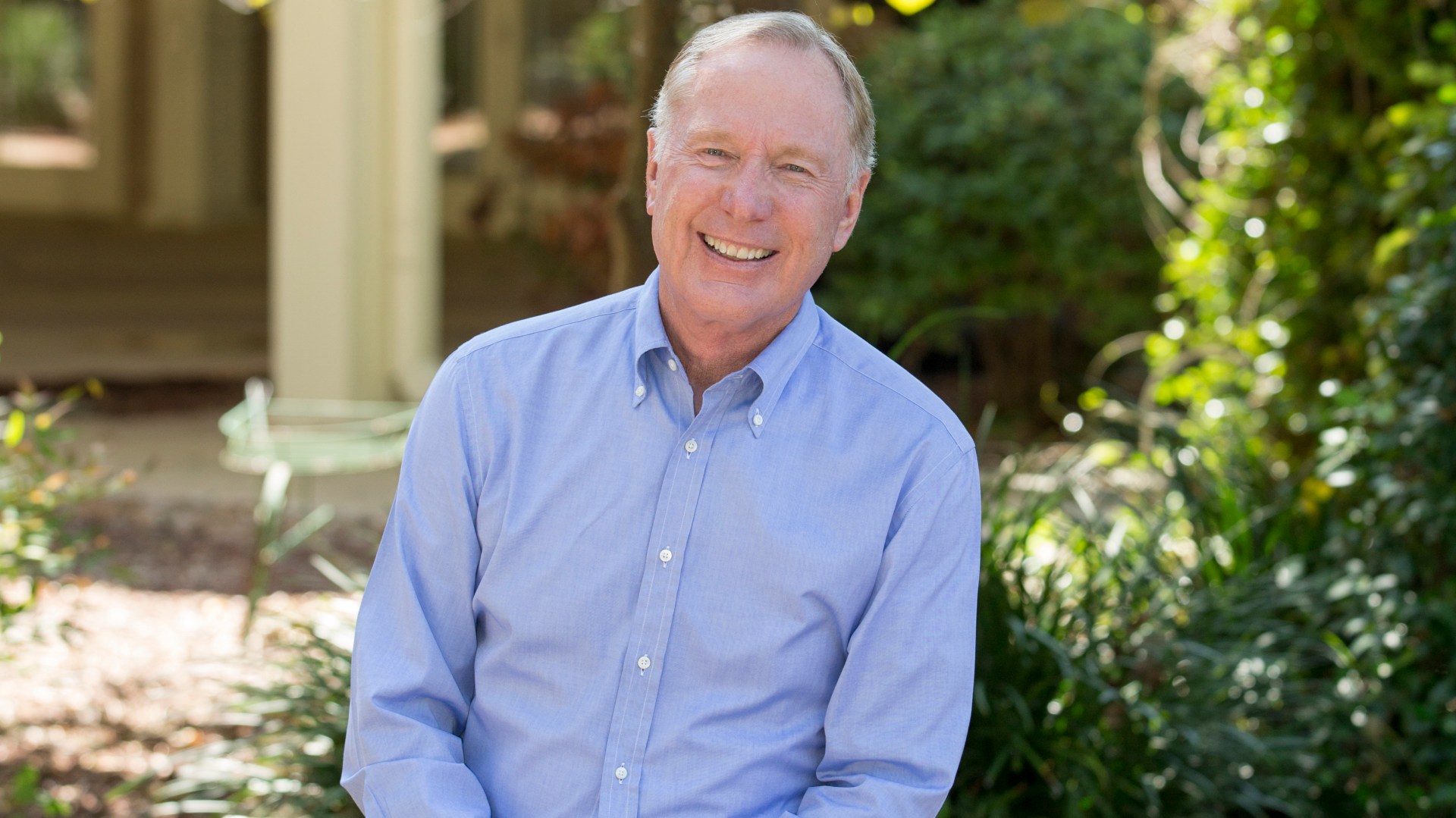
KarenJames.com. HarperCollins Christian owns all rights to this photo.

Pastor and best-selling Christian author Max Lucado has been reading CT Magazine for 34 years since he became a pastor at Oak Hills Church in San Antonio, Texas. “I was a young minister and found CT informative and encouraging,” Lucado said.

CT published an article in 2004 calling Lucado “America’s Pastor,” where Cindy Crosby stated “with Max Lucado, what you see is what you get.”

“I’m just a simple pastor. I want to love people. I want to pray for the sick. I want to help people come to Christ, but then I get asked these difficult questions,” he said.

CT consistently helps Lucado think through complex cultural issues affecting Christians and the church. “CT has tackled tough issues like critical race theory, has helped us navigate the controversy around the Trump administration, and then vaccines or no vaccines,” he said.

A CT interview with Lucado from 2016, “Why Max Lucado Broke His Political Silence for Trump,” was the most read article that year with 1.2 million readers.

“CT is my go-to place to help me understand how to generate well thought out answers in a way that’s non-polemical.”

He has also written other articles for CT including “Christmas Immigrants: A Story by Max Lucado”; “Immanuel: Is God Still with Us?”; “Max Lucado: Dangerous Voices”; and “Coming Clean” that tells the story of confessing his own drinking problem to his elders and church body.

Last year, Lucado preached a sermon series on the Old Testament character Jacob, and now he’s turning those sermons into a book. “I write a sermon series, eventually knowing it will become a book,” he said.

Lucado is the author of more than 40 books that have sold 120 million copies. He said, “the people I seem to connect with don’t have time or an interest in reading. That’s fine with me. When I write, I try to use a lot of stories, illustrations, and humor.”

How has CT affected your life and ministry?

Can I just say I love CT? I have always loved CT. I can remember as a young minister in 1988 when I came back from Brazil. I began receiving the magazine on a regular basis and found it so informative and encouraging. It helped me think. I don’t consider myself a real bright person. I really don’t. There are some academics like John Stott that I’ve admired and some of my college professors that seem to inhale an air of academia. Chuck Colson had a big impact on my life in my early ministry years. CT is a collection spot for these great men and women of faith who help those of us who need help by thinking through some difficult questions.

When CT’s founder Billy Graham passed away you wrote a beautiful article, “Farewell, Mr. Graham.” Can you share the impact that Billy Graham had on you?

Here’s what I loved about Dr. Graham. He kept it simple. He made it crystal clear. He remained humble. I love that about him. One time he came to San Antonio for a crusade. I was invited to be a part of his prayer team.

I was just so overwhelmed at that invitation. The invitation included “arrive early at the stadium. Go backstage. Meet with Dr. Graham and pray.” I did. I put on my best suit and tie. I arrived early. I walked backstage, and there was Dr. Graham.

I fully expected to go in and find Dr. Graham flat on his face, crying out to God, begging the Lord. I half expected to see the angels in there ministering to him. As I walked in, I heard these two men laughing. I mean they were laughing. There was Dr. Graham and another man he introduced to me as his brother.

I walked in and he said “Oh, you must be Pastor Max. Let me introduce you to my brother. He just told me the best joke.” Here’s a guy who’s 10 minutes away from going out and preaching to sixty thousand people, and he’s so relaxed, so happy, so at peace that he could say “Tell him that joke again.” His brother had an accident and had a steel plate in his head. He said, “Max, I want you to feel the steel plate in my brother’s head.” I just found him to be so delightful, so unassuming and engaging. He had counseled every president from Eisenhower to Obama, and yet he’s just so kind. I’ve got two letters that hang in my office, and one of them is from Dr. Graham.

What advice would you have as CT expands its global outreach, stories, and audience?

I’m happy and thrilled about that. It’s exciting to see the expansive and increased growth of God’s kingdom in foreign countries. It does seem to me like the real hope of revival is happening in other countries ahead of the United States, though we continue to pray for revival here. What we’re seeing in Brazil, China, in parts of Africa is so very encouraging. This is an opportunity for us to learn more about what’s happening in other countries, and then learn from the thought leaders there who can truly help us.

CT’s President and CEO Dr. Dalrymple strikes me as the perfect person to lead the ministry into the next generation.

In another CT interview, you said you like to write books for people who don’t like to read. Can you elaborate on that?

My target audience is comprised of people who seldom have the time, or perhaps the interest, in reading books. I didn’t set out to write books for people who don’t like to read books, but I discovered that. After about ten books, I saw that common theme. And the response of people who would contact me about a book would often read like “my husband never reads a book, but he picked up __________, and he really liked it.”

Or “I just don’t have time to read books, but I find that your chapters are brief enough, simple enough.” I thought, “wow, that’s alright with me.” That’s my audience. I’m not an academician. I was a B student in seminary. I loved studying, but I don’t think I articulate and operate in that world. But I love that world. People might say, “Max, your humor is not very good.” I get that. I do the best I can. I love to make people laugh because people have so much to worry about. A good laugh is helpful.

I try to only make references to research or Greek and Hebrew when necessary. That kind of talk can intimidate somebody who doesn’t do much reading. Every so often, though, it’s helpful. I don’t want the reader to think “Lucado is just trying to impress me.” I want to do the research, but I don’t want them to think I have. They lean on me to do the hard work. I’m happy to do the heavy lifting, but I’m not trying to come across as a know it all.

You’ve written extensively on prayer. What role does prayer play in your own walk with God?

I don’t pray as much as I should, but I pray more than I think. I don’t know anybody who says they pray as much as they desire to. But I do believe that all of us pray more than we think, because prayer is much more than what we say between our father and Amen.

Prayer is unspoken utterances that you have, longings that you have throughout the day like when you see the homeless man on the street corner or when you think about the lunch you’re going to have tomorrow with the people who are struggling. All those thoughts I believe are received by God as prayers.

I would like to say I pray a lot. In a way I do because I have a lot of longings in my heart. I have a morning ritual where I go downstairs in my pajamas with a cup of coffee, a journal, and a Bible. I really try to encounter God. Some of those days it’s rich and life changing. Some days it’s a bit dry, and I can’t get my mind focused. I don’t beat myself up for the days that it’s dry. And I don’t give myself any false accolades on the days that it’s rich. I try to have a rhythm to my prayer time. I do believe the greatest gift we can give to people is to just offer a prayer for them.

If you could offer a prayer for CT this year, what would it be?

There’s a tendency for the church to preach messages or be known for messages less than the gospel, maybe it’s political, sociological, or controversial. And I believe in the last few years, the church has struggled to stay focused on the highest call to preach the death, burial, and resurrection of Jesus.

May the Lord use CT to help the church on her highest call—the preaching of the gospel. Lord, help Dr. Dalrymple, the team, and all those who participate to stay focused. On all the things they talk about, may they talk the best and the most about the love of Jesus: his death, his burial, his resurrection, and his pending return. Amen.

Kelsey Bowse is a UX Strategist at Christianity Today. Follow Kelsey on Twitter @ kelseybowse

Theology

Orgies, Cocaine, and the Dangers of Boring Sins

The temptations of the flesh don’t have to be dramatic to be detrimental.

Christianity Today March 31, 2022
Illustration by Mallory Rentsch / Source Images: Akiyoko / Assalve / Getty

This piece was adapted from Russell Moore’s newsletter. Subscribe here.

“No one’s ever invited me to a cocaine party or an orgy, and I’ve been working in Washington for years.”

I never thought I’d say those words, but I did recently when a younger Christian asked me, in hushed tones, whether it’s true that members of Congress are snorting cocaine and organizing sex parties. I stared back blankly, wondering if this man knew that Congress resembles more a senior adult bingo night than a fraternity house.

I quipped that I’ve never heard of much of that going on but that maybe I just wasn’t invited— people aren’t likely to invite a Baptist preacher if they want to put together a coke-fueled bacchanal.

This week US Rep. Madison Cawthorn (R-NC) described people he once respected inviting him to do such things, speaking of the series House of Cards as an accurate depiction of life in Congress—controversial allegations that were swiftly refuted by House Minority Leader Kevin McCarthy (R-CA) and others.

Personally, I don’t recall ever hearing anyone who works in government describe the situation in such terms. However, I know that many people—namely, Christians—assume that any place with a lot of non-Christians who have a whole lot of power will be like that.

One reason for this, I think, is that we often don’t understand just how boring the path to sin usually is.

The Bible speaks nowhere directly of cocaine, but it does address orgies in several places. The apostle Paul warns the church at Rome to walk away from “carousing and drunkenness, … sexual immorality and debauchery,” following up with the same warning about “dissension and jealousy” (Rom. 13:13). Both, he writes, are manifestations of the “desires of the flesh” (v. 14).

In contrasting the “works of the flesh”’ with the “fruit of the Spirit” in Galatians 5, Paul warns not only about sins such as drunkenness, orgies, and witchcraft but also—in the same list—about much more “respectable” and “boring” desires of the flesh such as “jealousy, fits of rage, selfish ambition, dissensions, factions, and envy” (vv. 20–21).

Nowhere else have I seen a reference put jealousy and envy in the same category as “orgies, and the like.” When we think of “the flesh,” we tend to think of dramatic rebellion—the kind that people would want to gossip about—not about matters as dull and (we think) innocuous as jealousy or envy.

In many cases, sin does express itself in shocking debauchery—but most often it expresses itself in more invisible or easily justifiable ways of “walking in the flesh.”

Is Washington filled with sex-and-drug parties? There are probably a lot fewer of them than you think. But is Washington filled with the sins of the flesh? Absolutely, that’s the case.

This shows up more often, though, in careerists drinking alone in their offices late at night than it does in wild parties. It shows up more in people whose flesh burns for the external validation of election wins and media hits than in anything resembling a night in Caligula’s court.

The greatest temptations in Washington are seldom for those who want to fight for their right to party but for those who perhaps joined politics precisely because they weren’t invited to parties back in high school or earlier.

Most enticements on Capitol Hill are to lie in order to undercut a partisan “enemy” or to simmer in resentment over not being as high profile as another politician or bureaucrat. In other words, the typical temptations are not as glitzy and obviously transgressive as much as they are sad and lonely.

Even in the realm of ordinary work in Washington, most people expect that the biggest problem is hypocrisy—people calling someone whom they privately hate “my good friend” so-and-so in public. That is a problem, but it’s a much bigger issue within partisan and ideological tribes than between them.

In what Freud called the “narcissism of small differences,” many people are far more resentful of those who are like them, whom they perceive as rivals, than of people they denounce on television or in fundraising emails.

In fact, the big secret in Washington is often that there are people who actually like each other but could never be seen shaking hands or laughing together in public. In a tribalized America, that sort of basic human connection looks like disloyalty. So what ends up being theatrical is not just the “unity” of the partisan solos but also their divisive animosity toward the other side.

Sometimes, stark and dramatic assumptions about other people’s sin can lead to horrific consequences. The people spreading conspiracy theories about politician-led, Satan-worshiping pedophile rings know these things are lies. But they market such to people who don’t, which has led to actual threats of violence.

At other times, the result is more subtle—an erosion of truth that leads to even more cynicism and a disconnect between authority and power.

But even in the more benign cases, Christians can err by assuming that the line between Spirit and flesh is always dramatic, when it is often far more subtle. This shows up in the church as much as, if not more than, it does in the world. The Bible tells us that too: At one point the sin within the church at Corinth was, Paul wrote, “of a kind that even pagans do not tolerate” (1 Cor. 5:1).

If we don’t see this, then we will be rattled—not so much by the outside world engaging in obvious sin but by people who really don’t seem to be supervillains and who genuinely want to do the right thing giving in to desires of the flesh.

And we’ll be shaken when those who tell us we must ascribe to a certain “Christian” worldview to withstand the barbarians outside are themselves revealed to be filled with envy, rivalry, jealousy, fits of anger—and sometimes with orgies and cocaine too.

Russell Moore leads the Public Theology Project at Christianity Today.

News

Azerbaijan Adds Fuel to Armenian Concerns in Karabakh

With Russian peacekeepers distracted by war, Armenian activists, clergy, and officials debate how best to secure ancient churches and human rights in Artsakh.

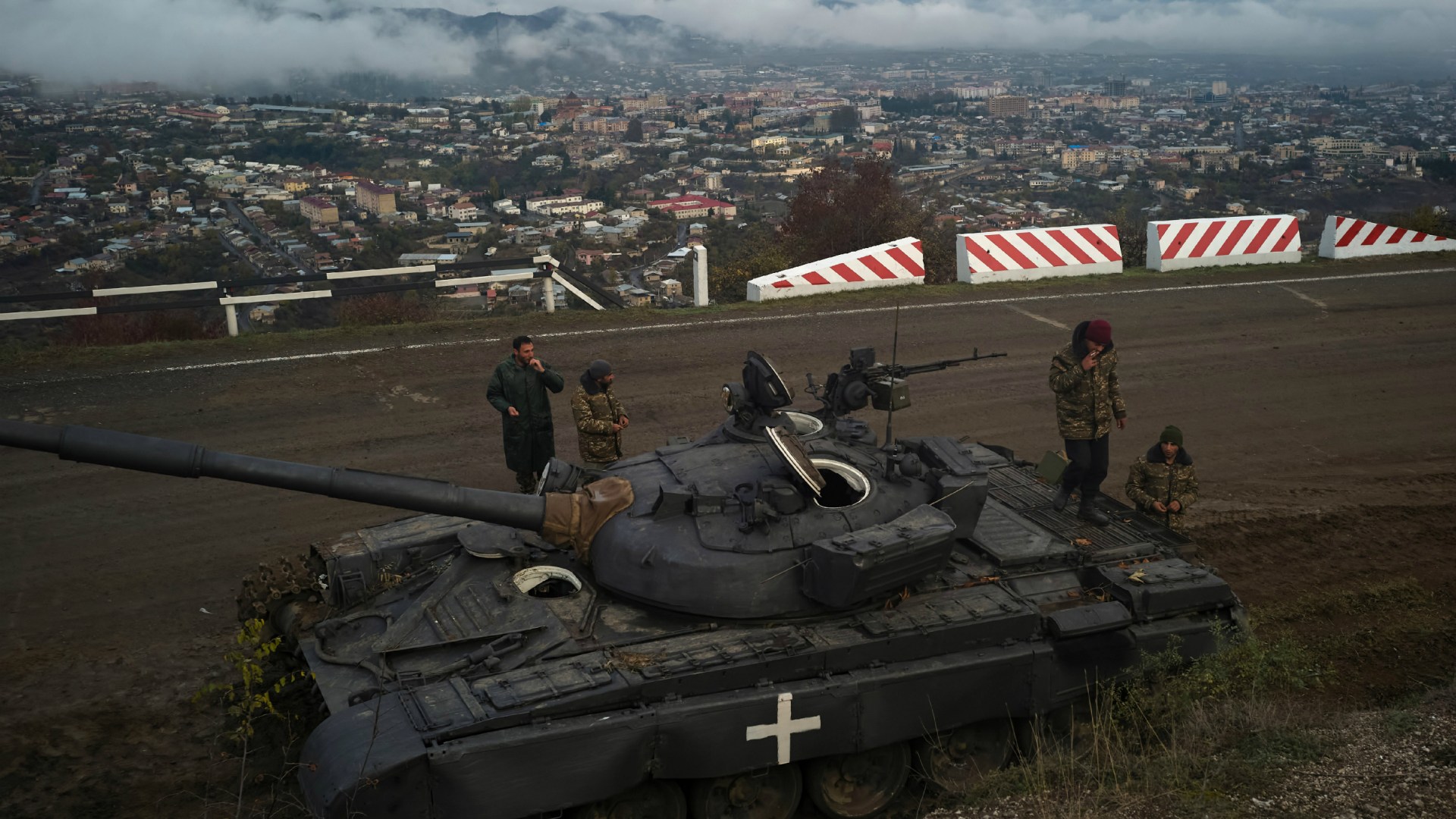
Soldiers keep guard on November 13, 2020 in Stepanakert, Nagorno-Karabakh, following the November 9 ceasefire between Armenia and Azerbaijan.

Soldiers keep guard on November 13, 2020 in Stepanakert, Nagorno-Karabakh, following the November 9 ceasefire between Armenia and Azerbaijan.

Christianity Today March 31, 2022
Alex McBride / Getty Images

Suffering freezing temperatures during the long winter cold in the Caucasus Mountains, this month Armenians in Nagorno-Karabakh had no heating for three weeks. The natural gas “malfunction,” stated Azerbaijan’s state-run energy distribution company, has now been repaired.

It is not often that pipeline maintenance draws international concern.

The European Union and Freedom House both called for quick resumption of the supply in order to avert a humanitarian crisis. Over 100,000 residents in the contested enclave rely on Armenian natural gas that passes through Azerbaijani territory.

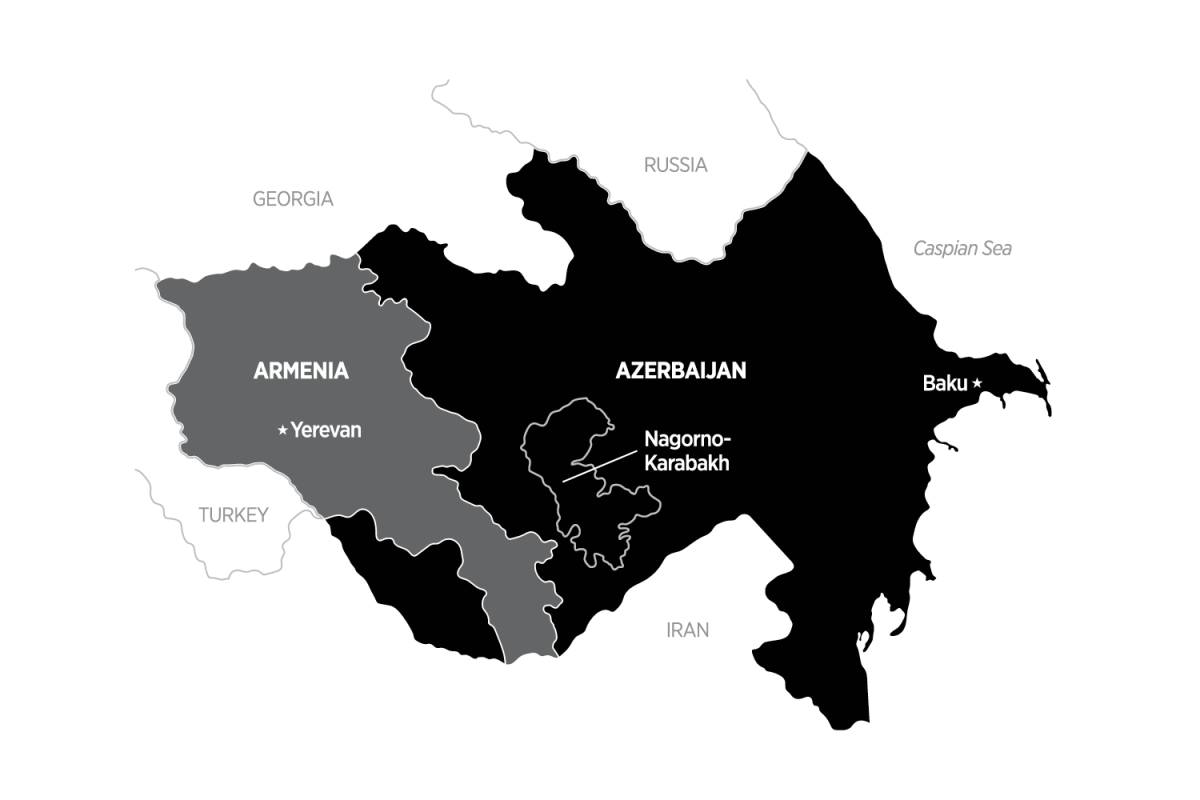
Nagorno-Karabakh, which Armenians call Artsakh, lies within the internationally recognized territory of Azerbaijan. Armenians accused Azerbaijan of deliberate disruption, prevention of repair, and installation of a new valve with which they can shut off gas flow at will.

Secured by Armenians backed by Armenia’s military following the fall of the Soviet Union, Artsakh sought independence for three decades while controlling six buffer zones in depopulated Azerbaijani lands. Negotiations failed to resolve the dispute, until Azerbaijan launched a 44-day war in 2020 that recovered significant territory.

A Russian-brokered ceasefire ended active hostilities.

Yet skirmishes continue, and Azerbaijan accuses Armenia of instigation. Last November, Armenia stated an Azerbaijani incursion occupied 15 square miles of sovereign territory. Christianity Today was reporting from one of the liberated buffer territories at the time.

Nagorno-Karabakh
Nagorno-Karabakh

And in the month prior to the pipeline issue—with the world’s attention focused on Ukraine—Russia officially accused Azerbaijan of breaking the terms of the ceasefire. Monitors recorded at least four incidents of firing toward Armenian villages. Three soldiers were reportedly killed by an Azerbaijani drone; another was shot by a soldier across the border.

After years of holding the upper hand in Nagorno-Karabakh, the reversal suffered in the war has Armenians fearful of genocide. Now victorious, Azerbaijan President Ilham Aliyev has pledged to develop the area economically and to treat Armenians as equal citizens.

The recent conduct makes many doubt these promises.

“They openly can’t go for a full-blown war today since Russian peacekeepers are deployed here,” stated an Armenian journalist. “So they do everything to disrupt normal life and make people leave their homeland.”

But it goes beyond “Artsakh.”

To emphasize its sovereignty over the region, Azerbaijan has mandated that the designation “Nagorno-Karabakh” no longer be used. Armenians see this as erasure—similar to what they allege is being done to their nation’s cultural heritage.

The ninth-century Dadivank Monastery, called Khudavan by Azerbaijan, is now labeled to be Caucasian Albanian, a defunct Orthodox sect traced to the Udis, a tiny Christian minority group still present today. Priests from this recently revived church were appointed to administer the monastery, with several other worship sites delinked from their Armenian origins.

After the war, the Armenian Apostolic Church created a department to preserve its historic churches in the territories that changed hands. Monitoring satellite imagery and Azerbaijani social media feeds to document violations, the department also tracks examples of pilgrims denied access to once-active religious sites.

“We call on the international community, and give them the facts,” said Garegin Hambardzumyan, head of the Department for Preservation of Cultural and Spiritual Values of Artsakh. “The world needs to know the truth.”

An Apostolic priest, Hambardzumyan works with institutions such as UNESCO, which has still not been granted investigative access to the contested territories by Azerbaijan. He informs the widespread Armenian diaspora, which plays an active role in lobbying foreign governments. And his department’s reports also go to the Armenian government, whose lawyers determine the best course of action.

International outcry led to Azerbaijan backtracking last month on an announced committee to remove alleged Armenian forgeries from historic churches. Armenia also won a provisional judgment from the International Court of Justice, calling on Azerbaijan to prevent and prosecute incidents of vandalism and desecration.

But is this enough?

Some Armenians have floated the controversial idea of remedial secession, a theory in international law in which a nation loses its right to territory if it oppresses the resident people. Bangladesh (from India) and Kosovo (from Serbia) are sometimes given as examples.

The legal strategy is being considered at the highest levels.

“When the life of a people in a larger entity is no longer possible because there is an existential threat,” said Maria Karapetyan, a member of Armenia’s parliament, “the only way to secure their existence is secession, to live as a separate entity.”

While the idea has not been adopted as official policy, Karapetyan, also the English-language spokeswoman for Prime Minister Nikol Pashinyan’s Civil Contract party, stated that Artsakh has been a human rights issue from the beginning. In 1991, an independence referendum was overwhelmingly approved amid a boycott by its Azerbaijani minority and met with violent rejection by authorities, she said.

Mutual ethnic atrocities followed for the next three years, as thousands were killed and over 1 million people displaced from their homes.

Since then, the general strategy for peace—though never enacted—was for Armenians to trade the buffer zone territories in exchange for Azerbaijan granting special status, even independence, to Nagorno-Karabakh. The 2020 war voided this option.

Today, the Civil Contract party holds to the necessity of negotiations, while insisting on a formal demarcation of borders and the removal of military forces from the frontlines. Communications must be resumed with Azerbaijan, which can then open paths for trade.

Despite the military defeat in 2020, Karapetyan’s party overwhelmingly won a majority share of parliament in early elections last June, running on a platform of peace. With its mandate renewed, Pashinyan’s government has surged forward with the controversial task of normalizing relations with neighboring Turkey—which strongly backed Azerbaijan during the war.

Prior to this development, in December Karapetyan dismissed Aliyev’s promise to integrate the Armenians of Nagorno-Karabakh, calling it a “fairy tale.” But Pashinyan continues to hope for a negotiated solution, and yesterday announced a meeting with Aliyev next week to iron out steps toward a lasting peace agreement.

Others have been looking at strategies to intervene.

Clerics at Hamdarzumyan’s conference last September heard a geopolitical rationale. The Responsibility to Protect (R2P) principle, adopted by the United Nations in 2005, seeks to ensure the international community never again fails to prevent war crimes and ethnic cleansing—such as in the 1994 Rwandan genocide.

“If you can frame the destruction of cultural heritage as a war crime,” said Sheila Paylan, an international lawyer, “there’s no reason why we can’t push forward the R2P envelope.”

It is warranted, said Eric Hacopian, an Armenian analyst. In the early 2000s, Azerbaijan destroyed thousands of ornate funeral khachkar cross-stones in Nakhchivan, erasing the historic marker of Armenian residence.

The only comparable modern precedents, he said, are the Taliban’s demolition of Buddha statues, the Islamic State’s damaging of Palmyra, and the Chinese government’s desecration of Uighur mosques.

“This is the league that Aliyev is in,” said Hacopian. “You’re dealing with a state that systematically destroys cultural sites in Europe.”

But regardless of the status of Nagorno-Karabakh, many Armenians are worried simply by the terms of the ceasefire. Point 9, the final one listed, called for the unblocking of all economic and transportation routes.

While consistent with Pashinyan’s mandate, a key application pertains to a southern corridor connecting noncontiguous Nakhchivan with the rest of Azerbaijan. It would be overseen by Russian peacekeeping forces, who currently monitor the Lachin corridor between Armenia and Nagorno-Karabakh.

The idea has been championed by Turkey, where President Recep Tayyip Erdoğan sees it as a way to connect the entire Turkic world. Armenia is the only interruption, which worries those who fear for more than a mountainous enclave.

The proposed corridor would pass through Armenian sovereign territory, and it puts some residents ill at ease.

“If they are going to take my village for peace, that already is not peace,” said Alen Avedisyan, who lives near Meghri, 230 miles southeast of Yerevan on the Iranian border. “Erdoğan wants to be Saladin, ruling from the Mediterranean to China.”

A history teacher and father of three daughters, he recalled the day three decades earlier, when the 12 Azerbaijani families in his village fled. Armenians, with tears in their eyes, helped them load their worldly goods into trucks. The wives who stayed behind changed their Azeri names.

His province of Syunik, also known as Zangazur, is only 25 miles across at its narrowest point. In January 2021, a joint Armenian-Azerbaijani-Russian committee was formed to reopen routes per the ceasefire agreement, but little progress has been made.

Aliyev has threatened to take it by force, if necessary. But his rhetoric goes further. He has highlighted Zangazur as Azeris’ ancestral land—to which they will definitely “return.” He even described Yerevan as a “political and strategic goal,” which Azeris “must gradually approach.”

Some analysts have posited that such language is meant to give Azerbaijan domestic room to negotiate over Nagorno-Karabakh or Lachin, in order to “trade” these historical claims in any future settlement.

“We want communication, not land,” said Mubariz Qurbanli, chairman of Azerbaijan’s state committee on religious associations, when CT asked about Zangazur in December. “We will recognize each other’s boundaries.”

But for many Armenians, Aliyev’s statements prove the problem is far deeper than a pipeline.

And whether the solution lies in negotiation, lobbying, arbitration, or even remedial secession, it is clear to them that Nagorno-Karabakh must be made an international issue.

“With all we have gone through in the world today, we should be done with war,” said Avedisyan. “But small countries are in the hands of big countries, and big countries must play a role for peace.”

Ideas

Why I’ve Gone Soft on Welfare

Staff Editor

Can we truly do mercy ministry if we lack compassion?

Christianity Today March 31, 2022
Illustration by Mallory Rentsch / Source Images: WikiMedia Commons

In one of my final classes at seminary, I was—as usual—the only libertarian. We were talking poverty and social welfare, and I found myself rushing to explain mine wasn’t the dismissive attitude some classmates expected libertarianism to entail, nor was it born of ignorance of the needs at hand.

If I had that same conversation today, it wouldn’t play out quite the same way. In some ways, nothing would be different: None of the principles that then informed my position have changed. But subsequent years have reshaped my assumptions about how Americans would handle poverty if left to do it voluntarily.

Of course, many Christians, churches, and ministries would be eager to help, but I’ve become skeptical that our national voluntarism would adequately rise as welfare receded, more pessimistic about whether a nation in which most profess Christianity would act like Christ if given this chance, more convinced of our selfishness and oblivion toward the common good. I’ve gone soft on welfare.

Let me begin by saying what isn’t altered in my thinking. First is my understanding of what Scripture says on poverty. There are few simpler exegetical tasks than demonstrating that God cares for the poor and expects his people to do likewise until the redemption of creation is complete.

Israel was commanded to be generous to the poor (Deut. 15:10–11); Job cites sympathy for the poor as proof of righteousness (30:25); the Psalms praise God as a defender of the poor (e.g., 12:5; 14:6). “Whoever oppresses the poor shows contempt for their Maker,” says Proverbs 14:31, “but whoever is kind to the needy honors God.” The prophets condemn “grinding the faces of the poor,” as God says in Isaiah 3:15, and God’s victory over evil will bring plenty for the poor (e.g., Isa. 14:30).

By Luke’s account, Jesus began his ministry announcing “good news to the poor” (4:14–30), and he reiterated commands of generosity, both explicitly (Matt. 25:31–46) and in broader words (Matt. 7:12). The church in Jerusalem kept a common purse and “sold property and possessions to give to anyone who had need,” (Acts 2:42–47), and Christian responsibility to the poor is an assumption running through the Epistles (e.g., Rom. 15:26; Gal. 2:10; James 2:1–6). Scripture’s final vision of a rescued Earth is one of abundance (Rev. 21:1–4; 22:1–4).

But the Bible doesn’t settle how, exactly, Christians should relieve material poverty—especially in a context like ours, where a midsize welfare state stands willing and able to forestall the extreme privation of other times and places. Scripture doesn’t explicitly answer the question of individual versus government role in alleviating poverty that divides American Christians.

Is it true, as politically conservative and libertarian Christians tend to say, that offloading care for the poor to the state is a shirking of Christian duty to relational, charitable care and that welfare programs muffle a guilty conscience? That the state can never be charitable? And, as Billy Graham’s father-in-law, L. Nelson Bell, wrote in CT in 1968, the “meeting of human need should not be left to the politician” but rather to “Christian compassion”?

Or are more politically progressive Christians correct that welfare and individual voluntarism are two separate goods, the former a matter of justice and the latter generosity, and that both, if pursued by Christians, can be an outworking of God’s command to love? That Christians can support a welfare state and engage in voluntary, relational charity much as, say, we have a state justice system and refrain from crime ourselves or even intervene to stop a crime if we see it?

In my seminary conversation, I landed close to that first sketch. I wasn’t arguing for harsh hyperindividualism or trafficking in derogatory stereotypes of those who rely on welfare. I didn’t deny these programs fill real needs—more than half of the 37 million below the US poverty line are children, elderly, or disabled—not able to be met by market competition. Nor did I believe it could be prudent or humane to cancel social programs overnight or that welfare spending was the most urgent thing to cut. But I argued state programs aren’t the most efficient or most effective solutions, and I questioned whether a tax-funded subsidy fulfilled the mutual love Jesus commands of us as Christians.

Most significantly, I also argued that were welfare slashed, particularly with some warning, we could and would step in to pick up the slack. And by “we” I meant any Americans with means to spare, but mostly I meant the American church, the two thirds of our population who profess Christianity, or the almost half who claim church membership.

But the last half decade—the pandemic years most of all—has changed my mind. The pandemic revealed a sheer callousness and, as positions hardened, malice within disagreement. Some of the loudest voices touting “faith” as their sole pandemic precaution seemed to have no interest in valuing others and their interests above themselves (Phil. 2:3–4). Some self-proclaimed protectors of life and health started handing out the Herman Cain Award, dancing on the graves of people who died after critiquing vaccines (cf. Rom. 12:15–16) or seriously recommending unvaccinated people be denied medical care.

Even if I’m overestimating the significance of how our country has handled COVID-19, these behaviors are at the very least a signpost, and it points nowhere good. “For the mouth speaks what the heart is full of,” and “whoever is dishonest with very little will also be dishonest with much” (Matt. 12:34; Luke 16:10). We’ve gone through the biggest challenge to our public character in decades, and the character exposed left much to be desired. After surveying two years of pandemic life, plus the growing political bitterness of several years before, I’m no longer confident we’d voluntarily sacrifice our time and funds for one another en masse and long-term in that no-more-welfare hypothetical.

Perhaps I should end with even more caveats than I had at the start: that millions reject the malice I’m describing and still seek the common good; that this shift in my thinking has changed neither my basic political principles nor my hope in Christ, commitment to the church, and expectation of the redemption of the world; that maybe this is merely a predictable move away from youthful idealism.

For all that, however, I can’t deny my perspective has changed. The last few years’ deluge of public enmity has decimated my enthusiasm for making baseline provision for the poor a responsibility of the American public.

Inkwell

The Dust is My Home

Inkwell March 31, 2022
Photography by Lazar Mihajlovic

The dust is my home, my beginnings and end.
Nose to the earth, inhaling low and slow,
I breathe powdery belonging, fine rubble of the heavenly,
coal-colored traces of what was and what will be.

Nose to the earth, inhaling low and slow,
I smell fruity green, original gardens,
carbon traces of what was and what will be,
places where I long to live again.

I smell fruity green, original gardens.
I breathe powdery belonging, fine rubble of the heavenly,
places where I long to live again. 
The dust is my home, my beginnings and end.

Kate Chupp is a writer and human rights student has been published in Opus Magazine and has written for The Anchor . More of her work can be found at katechupp.com.

News

Christian Condemnations of LGBT Not Hate Speech in Finland, Court Rules

A politician who tweeted Romans 1:24–27 and a bishop who published a pamphlet win unanimous decision.

Päivi Räsänen, a parlimentarian, consulting with lawyers. She expects the case against her to be appealed.

Päivi Räsänen, a parlimentarian, consulting with lawyers. She expects the case against her to be appealed.

Christianity Today March 30, 2022
Screengrab / Alliance Defending Freedom YouTube

Helsinki district court judges have dismissed hate speech charges against a Finnish politician who tweeted out Bible verses and the bishop of the Evangelical Lutheran Mission who published a pamphlet on gender roles.

In a unanimous decision, the judges ruled on Wednesday that Päivi Räsänen, a parliamentarian who faced a potential sentence of 120 daily fines, said things that were “partly offensive, but not hate speech.”

In a related decision, Bishop Juhana Pohjola, who faced a potential 60 daily fines, was found “not culpable” for the publication of Räsänen’s 23-page booklet, Male and Female He Created Them.

The ruling is being hailed as a victory for free speech and freedom of religion by Räsänen and her supporters.

“I greatly appreciate that the court recognized in its ruling the importance of free speech. I hope that this ruling will help prevent others from having to go through the same ordeal,” she said. “This has been my honor.”

The judges found that the purpose of Räsänen’s writing was not to insult or harm LGBT people but to defend what she believed to be the biblical concepts of family and marriage. In its decision, the court said that Räsänen’s comments included both value judgments and factual statements that might be considered offensive, but the statements did not amount to “incitement to hatred,” and should thus be considered legal.

Significantly, the court also stated in its decision that it is not its job to interpret biblical concepts. Under Finnish law, the judges said, they are not able to determine whether a particular interpretation of a scriptural passage is correct.

Though both the prosecutor and judges stated from the outset that the trial was about rights and freedoms—not biblical interpretation—the Bible played a prominent role in the courtroom.

According to Finnish media, both parties cited biblical texts so frequently that the court’s chairman had to remind them that the judges would decide the case on the basis of Finnish law and not Christian Scripture.

The Evangelical Lutheran Mission is independent from the national church. It formed in 2013 and has about 2,000 members. Most Finns are members of the national church, though membership has declined from nearly 90 percent of the population to about 67 percent in 2020. The No. 1 stated reason for leaving in recent years has been conservative statements about homosexuality and same-sex marriage.

More than 70 percent of Finns support same-sex marriage, which has been legal in the country since 2017. Many see defending the dignity of LGBT people as the critical civil rights issue of the day.

Räsänen has warned the ruling could set a precedent across Europe and around the globe, as many nations consider whether the human rights of minorities require new restrictions on free speech and limits on freedom of religion. She urged the court to carefully consider “the interrelationship between different fundamental freedoms.”

LGBT advocates were more equivocal about the verdict’s significance, on the day it was handed down. It is not yet clear, they say, how the court’s rulings will be used to evaluate the harm done by religious speech.

Kerttu Tarjamo, secretary general of the LGBT rights organization Seta, was encouraged that the court agreed that “Räsänen’s public opinions regarding gay people are deeply offensive to many persons belonging to sexual minorities.”

According to Tarjamo, the trial signaled that hate speech against LGBT people is being taken more seriously in Finland and the court’s decision “does not mean that freedom of expression or freedom of religion can be freely used to justify discrimination or hate speech.”

Not all hate speech is punishable under Finnish law, Tarjamo said, but offensive statements can be considered harassment and the national non-discrimination act could be revised to include statements that target groups of people, and not just individuals.

Despite the unanimous verdict, prosecutors may go to a higher court. Speaking to reporters, prosecutor Mantila said it is highly probable that the case submitted to the Court of Appeals.

Räsänen and Pohjola, though they are celebrating today, have said they expect the fight for the right to express their beliefs will have to go all way to the European Court of Human Rights.

Theology

Defining ‘Woman’ Starts with Humanity, Not Femaleness

The debate about the “second sex” brings us back to biology, humility, and Genesis 1.

Christianity Today March 30, 2022
Rakah Miftah / Pexels

Supreme Court nominee Ketanji Brown Jackson made waves last week with her refusal to provide a definition for the word woman. Responding to Senator Marsha Blackburn, Jackson sidestepped the question, stating, “I’m not a biologist.” Senator Ted Cruz returned to the line of inquiry by asking who Jackson would include in a gender-based discrimination lawsuit. Jackson again deferred, citing the fact that such cases are currently making their way through the lower courts.

Conservatives quickly memed Jackson, portraying her refusal to answer the question as clear indication of progressive nonsense. After all, anyone should be able to define what a woman is. The only problem with this, of course, is that we’ve struggled to define what a woman is for thousands of years. Whether it was the ancient Greeks who saw woman as a “mutilated male” or church fathers who did not believe women were made in the image of God as men were, the record of history shows people not quite knowing what to make of women. Even within our own country’s past, women have struggled to gain those “inalienable rights” that are ostensibly the birthright of every human being and “endowed by their Creator.” In her 1947 essay “The Human-Not-Quite-Human,” Christian apologist and scholar Dorothy Sayers reflects on the inadequacy of our working definitions of woman:

The first task, when undertaking the study of any phenomenon, is to observe its most obvious feature. … It is here that most students of the “Woman Question” have failed, and the Church more lamentably than most, and with less excuse. … No matter what arguments are used, the discussion is vitiated from the start, because Man is always dealt with as both Homo [human] and Vir [male], but Woman only as Femina [female].

For Sayers, an accurate definition of the word woman must include both her femaleness and her humanity, with human acting as the noun and female, the adjective. After all, many things are female—cats, birds, even some trees—but a woman’s rights and responsibilities stem from her common humanity, not her sex. Female cats do not have civil rights. Female trees do not have civil rights. Female humans do. In other words, unless we have a working definition of women as image bearers in their own right—and not simply as whatever is the opposite of men—we can end up failing the question too.

Admittedly, it may appear that Sayers is highlighting a different dilemma from the one our society is currently facing. After all, the question behind Senator Blackburn’s inquiry is whether transgender female athletes can participate in women’s sports.

Can transgender women legally claim to be “women”? Are they part of the class protected from gender-based discrimination? Unlike Sayers, who is arguing for the individual personhood of women, we are struggling to define who can claim membership in the class of woman. But I believe Sayers’s underlying formulation is still relevant because by failing to protect women’s human rights, we unwittingly created a context that requires the concept of female to take on political dimensions. Lacking a category for woman as Homo [human], Femina [female] must do all the work.

Indeed for the last century, women have had to rally around their femaleness to fight for their human rights so that in this current moment—and to Judge Brown Jackson’s point—the question of “Who is a woman?” has profound legal and political ramifications.

But this is where that question “Who is a woman?” gets especially dicey for conservatives: Insofar as we have leaned hard on definitions of womanhood that emphasize femaleness and deemphasize our shared humanity with men, we’ve minimized the very category that is the source of civil rights. In other words, conservatives will struggle to argue convincingly that they are fighting to protect women’s rights in the current debates if their working definitions of woman do not include the assumption of rights to begin with. This is especially true of those who have resisted reform movements, who minimize sexual harassment and abuse as “locker room talk,” and who have historically opposed legal categories that protect women on the basis of sex. I can’t help but wonder how today’s conversation would be different had we spent the last 100 years establishing legal precedent for defining woman—not as a special-interest group based in gender but as a biological human reality. How would today’s conversation unfold had we spent the last century seeing women as the image bearers they are? But what-ifs are no match for what is. And as a society, we are now struggling to agree on something as fundamental as what makes us who we are. How should we respond to the chaos of the current moment? First, I think we must acknowledge the flaws in our own working definitions of woman—how often they are not based in the imago Dei and instead amount to “whatever is not a man.” We do not need to exchange female for human, as these categories are different and one cannot replace the other. We need both. But we must develop a robust understanding of women as being made in God’s image because it is from this space that we derive corresponding rights and responsibilities. Instead of beginning our theories of male and female in Genesis 2 or Ephesians 5, we must root them in Genesis 1, affirming our shared humanity as the context in which our differences play out. Our differences are real and true, but sexual differentiation cannot answer what makes us human. And insofar as maleness has become the default definition of what it means to be human in our subcultures, we must repent.

Second, we need to recognize the vulnerability of this moment. How people conceive of gender and even biological sex is rapidly changing. So rapidly, in fact, that many experience it as an escalation that must be checked before it overwhelms them. And while this moment certainly has cultural power, I’d argue that we’re actually seeing the weakness of modern categories on display—not just about gender but about personhood and the limitations of self-creation.

The conversation is changing rapidly in the same way a wave changes rapidly when it is about to crest and break. Sayers addressed this phenomenon in her 1942 essay “Why Work?,” noting that society has built-in cycles of self-correction that often end in cataclysmic ways:

People who would not revise their ideas voluntarily find themselves compelled to do so by the sheer pressure of the events which these very ideas have served to bring about. … The root causes of conflict are usually to be found in some wrong way of life in which all parties have acquiesced, and for which everybody must, to some extent, bear the blame.

If this is the case, principled leaders need to carefully consider how they respond to this moment. They must identify the true loci of the debate and avoid perpetuating the conditions that created it—including our failure to honor the humanity of women. And finally, we must pursue a process of questioning and inquiry that honors the humanity of our interlocutors as well as our own. While you may think the answer to “Who is a woman?” is a simple one, your neighbor increasingly does not. Living at peace with all people means learning to navigate such differences with grace and truth, affirming the humanity not simply of those who agree with us but also of those who disagree. In the current moment, this may seem impossible. And if you’re taking your cues from politicians, it is improbable. But for those who are being actively transformed into the likeness of Christ, whose very humanity is being redeemed and fulfilled through union with him, such a posture will be the most natural thing in the world.

Hannah Anderson is the author of Made for More, All That’s Good, and Humble Roots: How Humility Grounds and Nourishes Your Soul.

Theology

‘Turning Red’ Teaches Kids to Feed, Not Tame, the Beast Within

The film departs from biblical wisdom on how we should deal with our inner mess.

Christianity Today March 29, 2022
© 2022 Disney/Pixar

“As Gregor Samsa awoke one morning from uneasy dreams he found himself transformed in his bed into a gigantic insect.”

So begins Franz Kafka’s “The Metamorphosis,” in which Samsa is reviled for his transformation into a mammoth cockroach. His family hides him away until he dies. Then they go on with their lives, thankful to not deal with that problem anymore.

What do we do with this absurdist 20th-century story? It’s a tale that compels readers to question our own metamorphoses or changes. Over the course of our lives, we all change and grow, so how do these developments (or, in the case of Samsa, mutations) affect those around us? After all, we do not belong to ourselves. We cannot become beasts or angels without it hurting or helping our families, friends, and neighbors.

If you’re Meilin Lee in Turning Red, however, such wisdom of age-old philosophy is seemingly disregarded.

Philosophy is about the love of wisdom, and our culture is training us to either desire or disdain wisdom. Every world religion has a different conceptualization of wisdom, but for Christians, Wisdom is Jesus Christ.

When watching Disney films, I don’t expect the animation to move my family toward that highest end (although I was surprised by Encanto), but I do hope their movies don’t persuade my children against the grain of conventional wisdom. Unfortunately, Turning Red is a film that departs from that wisdom and embraces a messy philosophy.

I had high hopes for the movie, and I watched it with my children on the day it was released. I could not wait to see a contemporary Asian hero and the foregrounding of the mother-daughter relationship. (I enjoyed Brave, and I consider it a win when Disney doesn’t kill off the parents of the heroes.) Granted, the movie is not aimed at my children, who are all under eight; parents should aim to watch it with their 10- to 12-year-olds.

From the opening monologue of the protagonist, Mei, I could see where the movie was headed:

The number one rule in my family? Honor your parents. … Of course, some people are like, “Be careful. Honoring your parents sounds great, but if you take it too far, well, you might forget to honor yourself.” Luckily, I don’t have that problem. … I’ve been doing my own thing. Making my own moves … I wear what I want, say what I want, and I will not hesitate to do a spontaneous cartwheel if I feel so moved.

The humorous conclusion to this opening narrative can distract the audience from the problematic assumptions it conveys. From this moment forward, audiences realize that Mei is not free to wear, say, or do what she wants because her mother Ming is an overbearing control freak. The audience is then set to cheer Mei on toward freedom from her mother to get her own way and to be able to wear, say, and do whatever she so desires.

America has been divided over the past two years during the pandemic between those who proclaim their freedom to wear what they want (i.e., to not wear masks) and those who believe that we should be responsible to our neighbors and wear masks. Yet people are rooting for Mei to have the opportunity to wear whatever she wants.

Of course, that is not reality. We all must wear certain things in certain places: You cannot go shirtless on airplanes; you cannot teach public school with low-cut blouses or miniskirts; you cannot dress up as the murderer from Scream and preach from the pulpit. We have all had to learn to place restrictions on our personal autonomy to function well together in society.

The impetus for Mei’s freedom comes from an unexpected source: her inherited ability to transform into a red panda whenever she experiences a strong emotion. From the perspective of the director (Domee Shi, who cowrote the story with Julia Cho), the panda transformation symbolizes coming of age: “this experience of growing up, of suddenly waking up one day and realizing you grew a couple of feet, you’re covered in body hair, and you’re hungry all the time.”

Normally when teenagers begin this process of metamorphosis, the adults in their lives (parents, teachers, etc.) teach them how to control their urges. In the movie, Mei expresses her newfound sexual desires by fantasizing about half-naked boys with mermaid tails. By contrast, in a Christian sexual ethic, we submit our desires to God. Under a self-disciplined will, we wait and look forward to their fulfillment in the proper time and place.

Instead, Turning Red portrays the limitation of our urges as a form of oppression, denouncing any attempts to regulate another’s actions. The enemy is the mother, who explains to Mei, “There’s a darkness to the panda. … You only have one chance to banish it. … Otherwise, you’ll never be free.” This belief—that self-mastery leads to freedom—follows millennia of tradition.

Turning Red opts for a different approach. Mei says, “We’ve all got an inner beast. We’ve all got a messy, loud, weird part of ourselves hidden away. And a lot of us never let it out.” The goal, the film suggests, is to let out the beast.

Yet only Mei exercises the privilege to let out her beast. The film would have fallen apart if her mother Ming were permitted the same freedom to let out her inner beast, which is the size of King Kong and destroys much of the city in one night. Apparently, there’s an unknown standard for who gets to release the beast within.

The film ends with a call for viewers to do like Mei and free their beasts within. “People have all kinds of sides to them. And some sides are messy,” Mei reflects. “The point isn’t to push the bad stuff away. It’s to make room for it, live with it.”

We can pretend that children’s films don’t deal with philosophy, but these explicit claims in the film are hard to ignore. While I applaud the realistic admission that we all have inner mess, the encouragement should be toward self-control and social harmony. This film does little more than normalize our #momfail culture.

Children repeat what they see and hear. In Frozen, I was grateful when Elsa’s victorious belting of “Let It Go” was shown to be disastrous for the community and not a laudable theme song, so I don’t grimace every time my kids dance to it.

However, I was not happy when Frozen II pretended that the answer to Elsa’s discomfort in her life was that “you are the one you’ve been waiting for … all of your life.” You cannot be waiting to meet yourself. The story is much better than that: You’re waiting for the One who made you. When choosing films for our children, as Christians, we need to consider the worldview being broadcast to their imaginations.

I expected Turning Red to be about a young girl learning to be a proud Asian teenager growing up in Toronto. Instead, the story shows a preteen discovering the benefits of capitalism, exploitation, and hedonism. When Mei wants to go to a boy band concert against her controlling parents’ wishes, she disobeys and lies to them, extorts money from her schoolmates, sells her image like a wannabe influencer, and embraces the part of herself that always wanted to twerk.

By the movie’s end, Mei has degraded the ancient practices of her ancestors into a money-making endeavor and transformed her family temple into an irreverent, Disneyesque tourist site. When her mother tries to advise her, she responds, “My panda, my choices” (a vaguely veiled affirmation of the pro-choice movement slogan “My body, my choice”).

Although Mei’s mother is a caricature of a helicopter mom, her poor parenting should not excuse Mei’s bad decisions. Nor should Mei’s choices be seen as though they could occur without negative consequences.

If parents want to show Mei as a model because she is an Asian girl hero coming into her own, in spite of her unbiblical projections, they should at least consider the costs and talk about her failings.

After watching Turning Red, I discussed with my children the characteristics in her that I considered unworthy of imitation. While none of us is perfect, we should all look to imitate models of people who pursue goodness.

When I ask my children, “Whom do you want to be like when you grow up?” I want the answer to be Jesus. Instead of liberating the messy beast within them, I hope that the films they see, the books they read, and the music they listen to will be pointing toward a higher end.

Jessica Hooten Wilson is the Louise Cowan Scholar in Residence at the University of Dallas and author of several books, including The Scandal of Holiness.

addApple PodcastsDown ArrowDown ArrowDown Arrowarrow_left_altLeft ArrowLeft ArrowRight ArrowRight ArrowRight Arrowarrow_up_altUp ArrowUp ArrowAvailable at Amazoncaret-downCloseCloseellipseEmailEmailExpandExpandExternalExternalFacebookfacebook-squarefolderGiftGiftGooglegoogleGoogle KeephamburgerInstagraminstagram-squareLinkLinklinkedin-squareListenListenListenChristianity TodayCT Creative Studio Logologo_orgMegaphoneMenuMenupausePinterestPlayPlayPocketPodcastprintremoveRSSRSSSaveSavesaveSearchSearchsearchSpotifyStitcherTelegramTable of ContentsTable of Contentstwitter-squareWhatsAppXYouTubeYouTube