Watch and Pray

An Advent reading for November 29.

Advent Week 1: Christ’s Return and Eternal Reign


This week, we focus on the Second Advent: our sure hope in Christ’s return. We explore Scripture’s portrayal of Christ’s power and righteous judgment, and the glorious future we await with God in the new creation.

Read Luke 21:25–36.

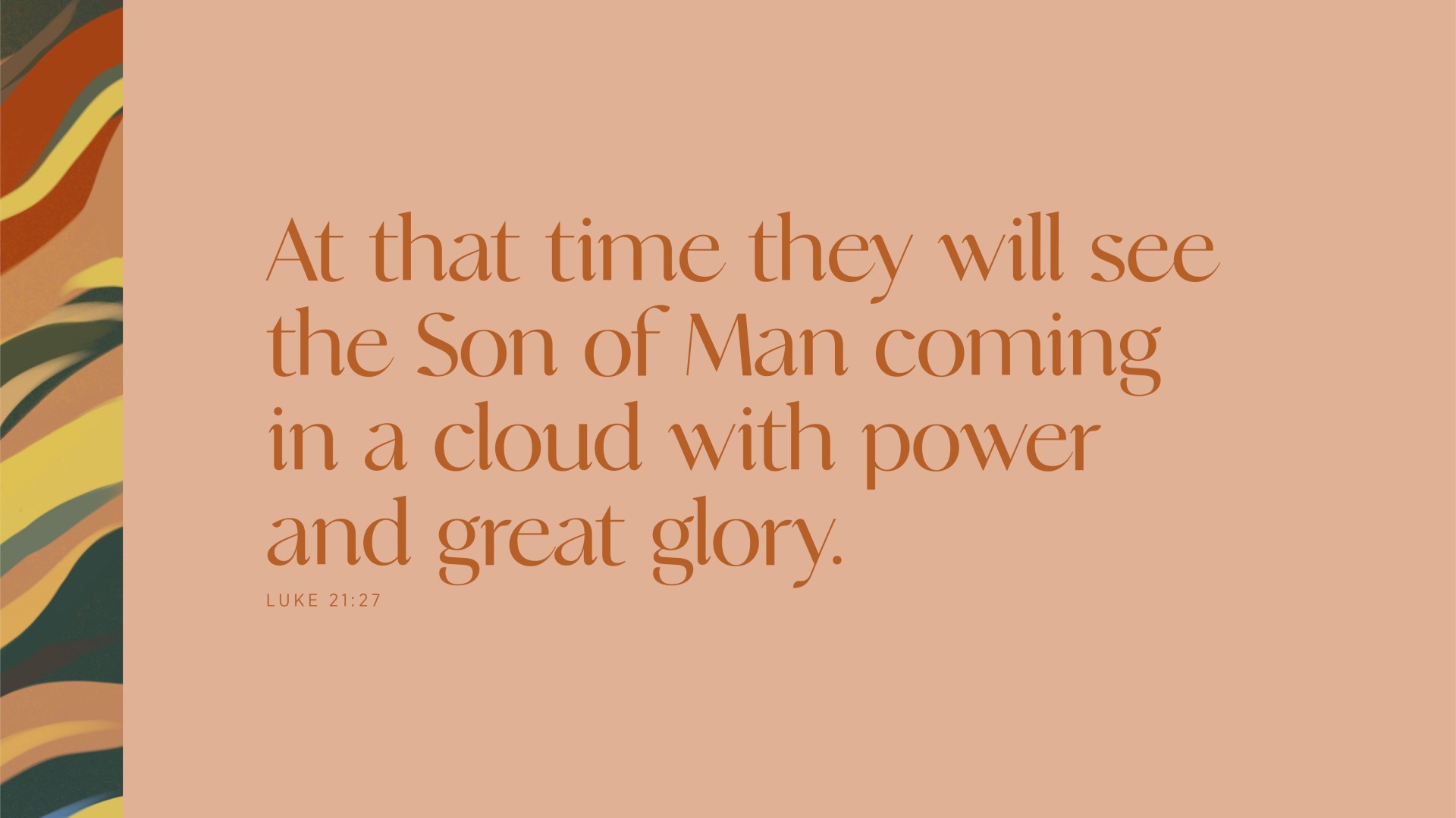
The second coming of Jesus will be in no way subtle. The totality of creation, from the heavens down to the roaring seas, will spasm; the totality of the peoples of the world will see and despair. There will literally be nowhere to hide, nowhere to find safety from the One who will finally come to bring justice. Nowhere, except in him who comes again to judge the living and the dead. While the nations will anguish, the followers of Jesus are told not to duck and cover, but to stand and lift their heads. Because they have hidden themselves in Christ seated in heaven, they need have no fear when he returns to earth.

Jesus wanted his disciples to understand that this event would come quickly and surely. There is immense debate about who “this generation” is (Luke 21:32). Perhaps it refers to Jesus’ immediate listeners, for whom the fall of Jerusalem would be a sign and type of the coming end. Perhaps it means the generation who will see the signs of the coming, meaning that Christ’s return will shortly follow these metaphorically sprouting leaves. Either way, Jesus promises that the event is more firm than the natural world itself.

What are disciples to do in the meantime—in the waiting? Those of us from certain church backgrounds may expect a call to evangelize and disciple others because people must know about this coming calamity. And yes, we must. Those of us from other church backgrounds might expect a call to practice justice because we are called to love the things God loves and hate what he hates. And yes, we must.

However, in this specific moment in Luke 21, Jesus called his disciples to be careful, to watch. The suddenness and ferocity of the end make a springing trap the appropriate image. Who is so arrogant to assume they will escape? The mundane temptations of wild partying or undue apprehension are both examples of how any human heart can be weighed down. And a heavy thing, carrying heavy burdens, cannot quickly enough jump out of the way.

Neither escapism nor worry can deliver what they promise. The first doesn’t make reality go away; the other doesn’t truly prepare us. Jesus calls us instead to watch and to pray. To pay attention, completely reliant on the God who is truly coming. Jesus wants his disciples to be able to stand before him then; he will answer that prayer.

Rachel Gilson serves on Cru’s leadership team for theological development and culture. She is the author of Born Again This Way: Coming Out, Coming to Faith, and What Comes Next.

Reflect on Luke 21:25–36.

What emotions or reactions does this passage stir up in you? How does it convict or inspire you? What does it emphasize about Jesus and the gospel? Invite Jesus to help you obey his call to watch and pray.

Theology

Right or Left?

An Advent reading for November 30.

Advent Week 1: Christ’s Return and Eternal Reign


This week, we focus on the Second Advent: our sure hope in Christ’s return. We explore Scripture’s portrayal of Christ’s power and righteous judgment, and the glorious future we await with God in the new creation.

Read Matthew 25:31–46.

In Matthew 24–25, Jesus teaches about his return and uses several parables to describe what “the kingdom of heaven will be like” (25:1). Perhaps the most unsettling element of Jesus’ teaching in 25:31–46 is the surprise of both groups who are being judged. They don’t protest about being judged per se; after all, the Son of Man has come in glory, attended by an immense gathering of heavenly beings, and even his throne is glorious. This entrance confirms and conveys his authority to judge. He has the right to call every nation before him, and come they must.

The surprise is not about the fact of judgment nor the rights of the judge. Instead, both those on the right and on the left are confused about the evidence. The sheep are looking at this King of glory and thinking, Surely we would have known if we had served him. He is unmistakable. The goats were thinking the same, but in reverse. When would they ever have refused such a one? They couldn’t think of an instance.

In response, the glorious Christ reveals the key: He has always been identified, unified, with his brothers and sisters. This is more than mere affiliation; it is true identification. Who are his brothers and sisters? Jesus taught plainly, “Whoever does the will of my Father in heaven is my brother and sister and mother” (Matt. 12:50). No matter a person’s station, ethnicity, gender, or nationality, if they are united with Christ, then caring for them is caring for Jesus himself.

This is not works-righteousness, where each person gets a reward or punishment based on his or her deeds. This is a revealing of allegiance to or rebellion against King Jesus—which is why there are only two destinations.

It would be easier, perhaps, to obey the glorious Christ—because we’d see his power with our own eyes. But God calls us to faith, not sight. In fact, at Christmas, we remember that he came almost in disguise. Even today, he is identified with his frail and foolish people.

Lip service won’t do. Real trust in Jesus moves our allegiance to him and results in obedience. Do we believe him that service to lowly and despised Christians is better proof of our discipleship than even miracles and prophecy (7:21–23)? That we can’t have the greatest commandment without the second, nor the second without the first (22:37–40)? The true allegiance of all will be revealed; let us put our faith in him.

Rachel Gilson serves on Cru’s leadership team for theological development and culture. She is the author of Born Again This Way: Coming Out, Coming to Faith, and What Comes Next.
Ponder Matthew 25:31–46. (Option: Also read 7:21–23 and 22:37–40.)

How does this teaching about Christ’s return and judgment shape your understanding of what it means to know and follow Jesus? How does the idea of true allegiance challenge you in your own daily discipleship?

Theology

All Things New

An Advent reading for December 1.

Advent Week 1: Christ’s Return and Eternal Reign


This week, we focus on the Second Advent: our sure hope in Christ’s return. We explore Scripture’s portrayal of Christ’s power and righteous judgment, and the glorious future we await with God in the new creation.

Read Revelation 21:1–6.

How have you coped with the pandemic? What has it done to your relationship with God? Some people have drawn closer to God and found the strength to get through difficult times. But for some, who perhaps lost loved ones or who shuddered at the scale of the suffering worldwide, the pandemic raised questions.

How can a loving God allow such things to happen? It’s the age-old “problem of suffering”—at least as old as the Book of Job. The Bible has no single answer to it; instead, it gives us several different angles on it.

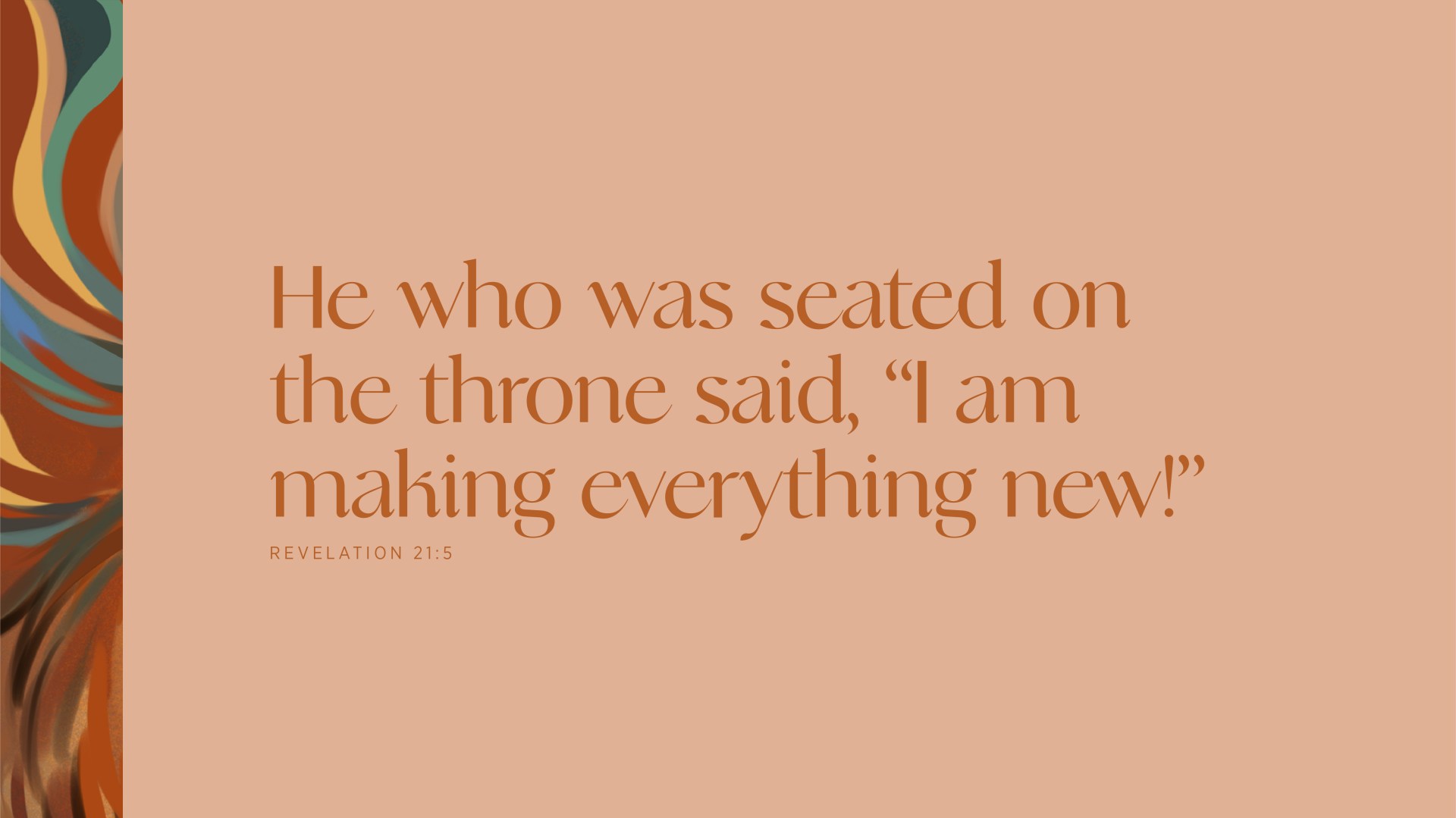
Then right at the end of the Bible, we find this message: “‘There will be no more death’ or mourning or crying or pain” (Rev. 21:4). God is going to heal his creation of all that spoils and damages it.

People sometimes complain that there isn’t much evidence of God’s love in the Book of Revelation. Some might say the same of the pandemic. But can you imagine a more beautiful image of the love of God than this: God “will wipe every tear from their eyes” (v. 4)?

Revelation certainly does not stint in its portrayals of the horrors of history. But hope runs through it all and blossoms in this final vision that the prophet is given. God will make all things new. God has a new future for his whole creation.

When we think about the future, we most often think of where the past and the present will lead. But this is different. As only God can create, only God can renew his whole creation. It started with the resurrection of Jesus—one new thing that changes everything. In lives transformed by the Spirit of Christ, we have a foretaste of the new future.

That future itself goes far beyond what we can imagine. But John’s vision invites us to also raise our eyes to that high mountain (v. 10) where the New Jerusalem comes down from heaven. With his eyes we can look much farther than we normally can see.

At the heart of the new future is God: “God’s dwelling place is now among the people, and he will dwell with them. They will be his people, and God himself will be with them” (v. 3). This has always been God’s purpose for his creation, and it is what will make all the difference.

Sharing John’s vision is not just pious daydreaming. It gives us hope to live by. We can start living toward what God promises, and that will make all the difference to our lives now.

Richard Bauckham is senior scholar at Ridley Hall, Cambridge, and the author of many books, including Who Is God? and Theology of the Book of Revelation.

Meditate on Revelation 21:1–6.

How does this passage speak to pain and hardship in your life? In the world? How does it orient your spiritual perspective? Respond to God in a prayer of worship and trust.

Theology

City of Light

An Advent reading for December 2.

Advent Week 1: Christ’s Return and Eternal Reign


This week, we focus on the Second Advent: our sure hope in Christ’s return. We explore Scripture’s portrayal of Christ’s power and righteous judgment, and the glorious future we await with God in the new creation.

Read Revelation 21:9–22:5.

When I moved from England to live in Scotland, one thing I found difficult was the shorter periods of daylight in the winter. On dull days, it could seem like it never got light at all. I found this mildly depressing, but some people are seriously affected by it and have to sit with lamps that imitate sunlight. We are all dependent on sunlight for our physical health and our mental well-being.

It is not surprising that in many cultures people have worshiped the sun, and sometimes the moon, too. Why does a sunny day lift our spirits? Why do many people love to bask in the sun? Science confirms that our planet’s distance from the sun, with the light and heat that it provides, is essential to life on earth.

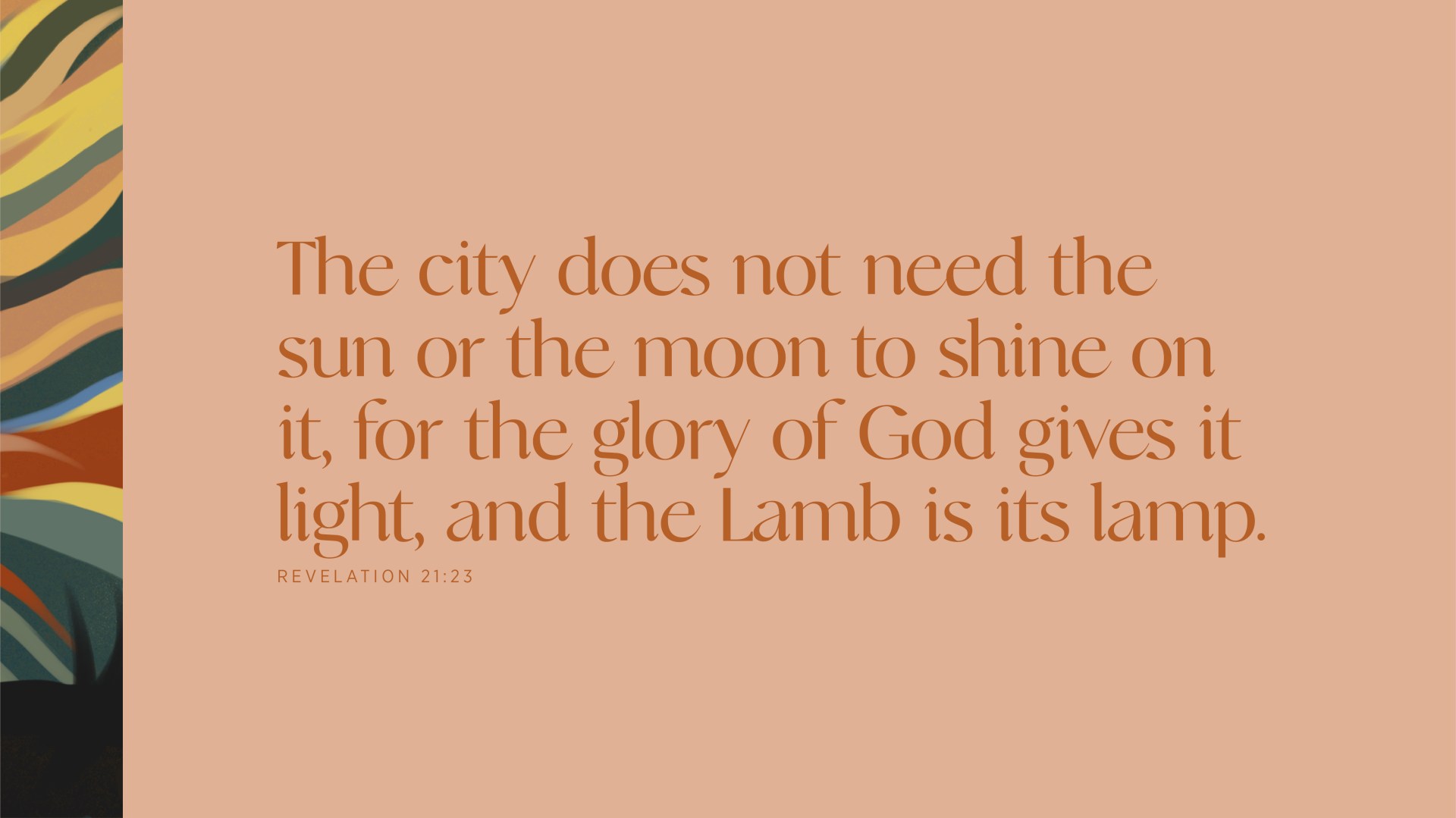
In this creation, God’s blessings are mediated to us through creaturely means, sunlight among them. In the new creation, we shall live in God’s immediate presence, immersed in it as we now are in daylight—and there will be no night.

Imagine it: a city filled with light. Imagine it like a brilliant crystalline jewel (Rev. 21:11), the light reflected in all the precious stones of many colors listed in verses 19–20. Imagine, if you can, the way the light shines through the transparent gold of which the city is made (vv. 18, 21). Get a view of the city from a distance. It stands atop a mountain (v. 10) and shines out over all the surrounding country. It is the sunlight of that world. It is the light by which people live (v. 24).

Think, now, of a stained-glass window in a church with vivid depictions of biblical or other figures. The window itself is beautiful enough at all times, but when the sun shines through it, it glows. Its intense colors light up! In the New Jerusalem, the loveliness of all God’s creatures will be a delight for all. We shall see them in their true colors. The light of God’s immediate presence will not cancel out their shapes and colors, their created reality, but it will light them up, transfiguring them.

All through the Bible, light is a symbol of God and of Jesus (who said, “I am the light of the world” in John 8:12). Think about the ways God’s light shines already into our lives in this world—how it lights up our lives, how we can walk in that light. If we see the light now, it will light up the path we can walk to the city of light. What can we take with us to present to God and to contribute to the life of that eternal city (Rev. 21:24, 26)?

Richard Bauckham is senior scholar at Ridley Hall, Cambridge, and the author of many books, including Who Is God? and Theology of the Book of Revelation.

Contemplate Revelation 21:9–22:5.

What strikes you most about this beautiful imagery? What truths do the descriptions of shining light and illuminating glory convey about God? About the new creation? About our ultimate hope?

Theology

Come, Lord Jesus!

An Advent reading for December 3.

Advent Week 1: Christ’s Return and Eternal Reign


This week, we focus on the Second Advent: our sure hope in Christ’s return. We explore Scripture’s portrayal of Christ’s power and righteous judgment, and the glorious future we await with God in the new creation.

Read Revelation 22:12–20.

The Bible ends with the prayer: “Come, Lord Jesus.” It is a prayer that is echoed in many of our Advent hymns, such as “O Come, O Come, Emmanuel” and “Come, Thou Long Expected Jesus.”

Christians have prayed it from the earliest days; it is the oldest Christian prayer we know (not counting the Lord’s Prayer). We know this because Paul quotes the original Aramaic version, Maranatha, meaning “Our Lord, come!” (1 Cor. 16:22). For Paul to expect his Greek-speaking readers in Corinth to recognize this Aramaic phrase, it must have had a key place in early Christian worship.

In Revelation 22:20, it is a response to Jesus’ promise to come. In verse 12 and again in verse 20, Jesus himself says, “I am coming soon.” This promise runs through the whole Book of Revelation (see 2:5, 16; 3:11; 16:15; 22:7, 12, 20), promising judgment for some and blessing for others, until at last it evokes an answer: “Come!”

We hear that answer first in verse 17. It is the prayer of “the Spirit and the bride.” By “the Spirit,” what is probably meant is the Spirit speaking through Christian prophets in worship. The bride is the church as she joins this prayer of the Spirit.

We can picture the bride waiting for the Bridegroom to arrive. She is adorned and ready for him (see 19:7–8). The bride is not the church as such, but the church as she should be, expectant and prepared for the Lord’s coming. She is the church that prays, “Come, Lord Jesus!”

We must imagine the Book of Revelation being read aloud in Christian worship. When the reader read the next sentence, “Let everyone who hears say, ‘Come!’” (22:17, NRSV), the whole congregation would join in the prayer, shouting, “Come, Lord Jesus!” Their heartfelt prayer identifies them as the bride of the Lamb.

But in the second half of verse 17, the use of the word “come” shifts. Now it is the hearers, “everyone who is thirsty,” who are invited to “come” and receive from God “the water of life” (NRSV). The water of life belongs in the new creation (21:6) and the New Jerusalem (22:1). But it is available already in the present to those who are awaiting the coming of Jesus.

It is as though he comes to us already, ahead of his final coming, and gives us a foretaste of the new creation. For that is what salvation is. We wait for him because we have met him already.

Richard Bauckham is senior scholar at Ridley Hall, Cambridge, and the author of many books, including Who Is God? and Theology of the Book of Revelation.

Reflect on Revelation 22:12–20.

What does it mean to pray, “Come, Lord Jesus”? How does this prayer challenge or change you? Join Christians around the globe and through the centuries as you pray this ancient prayer today.

Theology

The Gospel Life in Person

An Advent reading for December 4.

Advent Week 1: Christ’s Return and Eternal Reign


This week, we focus on the Second Advent: our sure hope in Christ’s return. We explore Scripture’s portrayal of Christ’s power and righteous judgment, and the glorious future we await with God in the new creation.

Read 1 Thessalonians 3:9–13.

Have you ever missed someone badly and wanted to see them again? Over these long, seemingly endless months of the pandemic, there are many loved ones we’ve been unable to see, greet, and hug in person. Zoom and FaceTime simply don’t cut it. We desire to be in the same space, same room, same place. We long to see them face to face.

The Apostle Paul also yearned to see the Thessalonian believers in person. He is overjoyed at Timothy’s report of confidence that they were embodying the gospel, living it in action, by “standing firm in the Lord” (3:8). He desires to visit in person and yet this letter must suffice for now. What is his message to them? That the Good News must be lived out in person until we see Jesus face to face. What does this look like? The same Good News of Jesus’ love is to “increase and overflow for each other and for everyone else” (v. 12).

This type of love is not easy to embody in our divided world. Many today have allowed worldly values to creep in and supplant Christian love and gospel witness. We may be more divided as a church than ever before.

This timely reminder from Paul to increase and overflow in love for others is not something we can achieve on our own. Rather, Paul says, “May the Lord make your love increase” (v. 12).

The implications of the gospel are lived out through our Christ-like love, particularly for those we consider to be in the “everyone else” category. We cannot claim that we eagerly wait to see Jesus at the Second Coming—the consummation of the gospel story—when we can’t stand the sight of our brothers and sisters in the Lord today!

As we await Jesus’ return, Paul urges believers to “be blameless and holy” (v. 13) in a society that celebrates compromise and sin. Our hopeful anticipation of the Second Coming challenges us to always pursue holy lives to the glory of God. This includes bearing with one another and being patient with those with whom we disagree, relying on God’s power to do so.

Paul urged the Thessalonians to live this way in light of Jesus’ return: to let their present discipleship be shaped by their future hope. Like them, we long to see Jesus face to face. Advent reminds us that one day we will. May we strive to be people of love and holiness in the meantime. Come quickly, Lord Jesus!

Matthew D. Kim is the George F. Bennett Professor of Preaching and Practical Theology at Gordon-Conwell Theological Seminary and the author of Preaching to People in Pain.

Consider 1 Thessalonians 3:9–13.

How does anticipation of Christ’s return shape your daily life? How do you desire as you live out the gospel life in person? Pray, inviting God to strengthen your heart and deepen your love for others as you await Christ’s return.

Theology

He Won’t Leave Us Alone

An Advent reading for December 5.

Nicole Xu

Advent Week 2: Sin and Redemption


John the Baptist played a crucial role in preparing people for the Messiah. This week, we consider what Scripture says about John’s purpose. We reflect on how his teachings about sin and repentance can speak to our own lives of Christian discipleship.

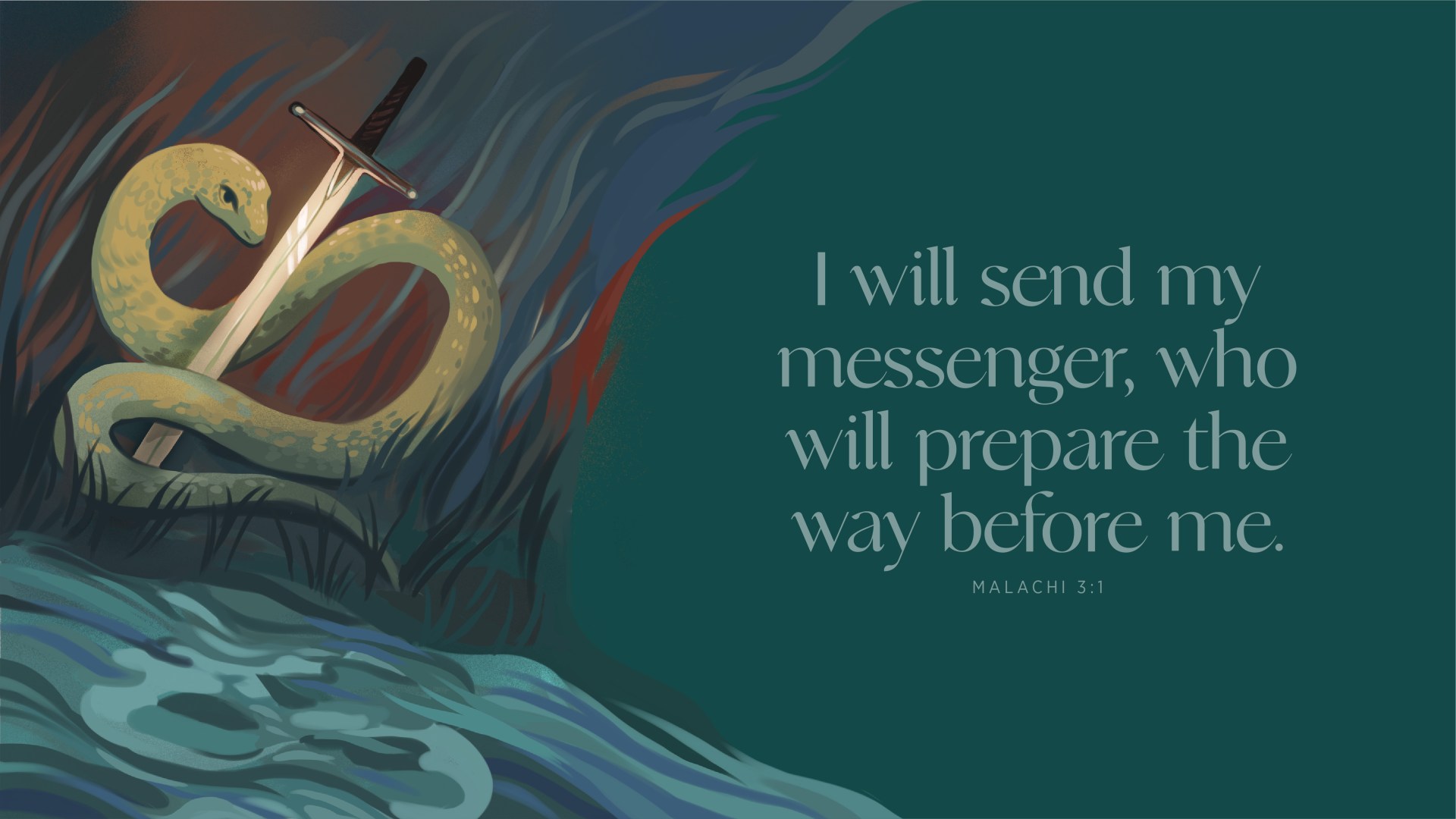
Read Malachi 3:1–4.

Today we read from the last book of the Old Testament, just before we flip the page into the first chapter of Matthew. The Israelites have returned from the Babylonian exile, the Jerusalem temple has been rebuilt, and yet their relationship with God is still … complicated.

The Book of Malachi is structured around a series of declarations by God, which are met by questions and accusations from the people of Israel. As these dialogues unfold, Israel’s ongoing sin and rebellion are laid bare, as is the steadfast character of Israel’s God. Our passage in chapter 3 is introduced by Israel’s pleading for the God of justice to show up (2:17), and God’s promise to send a messenger who will prepare the way of the Lord (3:1). After that, God himself will come to the temple. What a hopeful promise! The God who has chosen the Israelites as his treasured people will come, demonstrating anew his commitment to his people.

This hope, however, is given a sharp edge in the next verse. Yes, God is coming—but who can endure the day of his coming? God will not pat the Israelites on the back for their half-hearted temple service or refusal to honor God fully. Indeed, the God who is coming is like a refiner’s fire and a launderer’s soap, putting the Israelites on trial for their injustices and waywardness.

During Advent, as we await the birth of the Messiah and long for God’s coming yet again, the yearning is palpable. Our world is broken, and we need a savior. But, like the Israelites, the savior we await may not be exactly as we expect. He may not pat us on the back either. Rather, our shortcomings will be laid bare, and we too will be called to repent and change our ways.

But this is precisely the point. Our God is not a God who leaves us alone and lets us be just how we are. He is a God who changes us, and this change can only come about through an awakening to the parts of our lives that are in desperate need of reordering. It is this reordering, this opening of ourselves to the refining hand of God, that will indeed draw us nearer to God and closer to the people we were made to be.

Let us be open to God entering into our lives, and let us embrace that God showing up may not look exactly how we may have imagined. What can be trusted is the goodness and gentleness of this great God, the God of faithfulness, the God who will not leave us alone.

Jen Rosner is affiliate assistant professor of systematic theology at Fuller Theological Seminary and the author of Finding Messiah: A Journey Into the Jewishness of the Gospel.

Read Malachi 3:1–4.

Consider its meaning in several possible layers: its original historical and cultural context, John the Baptist’s and Jesus’ coming, and Christ’s return. What does this prophecy reveal about God’s character and love? Pray, inviting God’s refi ning work in your life.

Theology

Comfort My People

An Advent reading for December 6.

Advent Week 2: Sin and Redemption


John the Baptist played a crucial role in preparing people for the Messiah. This week, we consider what Scripture says about John’s purpose. We reflect on how his teachings about sin and repentance can speak to our own lives of Christian discipleship.

Read Isaiah 40:1–5.

As we seek to gain insight on this beautiful passage, a window into its meaning for the Jewish community can help us better understand its context and significance. The Jewish people worldwide move through a weekly biblical reading cycle, similar to the Christian lectionary. The darkest weeks of the cycle fall in midsummer, leading up to Tisha B’Av, the saddest day in the Jewish calendar. It commemorates the destruction of both the first and second temple in Jerusalem. Tisha B’Av also marks numerous other tragedies throughout Jewish history. It is a day of fasting and mourning. The Book of Lamentations is read publicly and Israel’s sin before God is laid bare.

But that is not the end of the story. Immediately following Tisha B’Av, the reading cycle enters seven weeks of consolation, leading up to Rosh Hashanah, the Jewish New Year. Isaiah 40:1–26 is the designated reading for the week after Tisha B’Av, offering a reminder that judgment is not the final word. Each year, the Jewish people walk through the darkness of divine rebuke and are then reminded that God’s grace and forgiveness ultimately carry the day. They emerge from a time of ashes and despair into a new promise of God’s unyielding love.

Isaiah wrote during the expansion of the Assyrian empire and the demise of the kingdom of Israel (and eventually Judah). It was a tumultuous and tragic time, which Isaiah paints with haunting imagery. Yet Isaiah knew that this would not be Israel’s ultimate destiny. His description of restoration is equally visionary, instilling hope and perseverance in a battle-sieged people who doubted God’s presence in their midst.

Isaiah’s words also point forward to the pinnacle of divine revelation in the New Testament and the role played by John the Baptist, who’s identified as “one calling in the wilderness” (Matt. 3:3). The reference to Jerusalem’s hard service being completed and her sin being paid for (Isa. 40:2) would one day become true for all nations, as Jesus proclaimed that all people on earth are now invited into a covenantal relationship with God.

The contours of this new covenant inaugurated by Jesus’ life, death, and resurrection mirror the covenant Israel had long known. While there are repercussions for sin, God’s forgiveness and commitment to his people are renewed again and again, like waves crashing on a shore. May we press into the comfort of God’s presence and promises as we await the full revelation of his glory, even as Isaiah prophesied.

Jen Rosner is affliate assistant professor of systematic theology at Fuller Theological Seminary and the author of Finding Messiah: A Journey Into the Jewishness of the Gospel.

Contemplate Isaiah 40:1–5. (Option: Also read vv. 6–26.)

How does the context of tragedy and sorrow—in the Jewish scriptural reading cycle and in Isaiah’s day—enrich your reading of this passage and the comfort it offers? How might it deepen your understanding of John the Baptist’s purpose?

Theology

The Rising Son

An Advent reading for December 7.

Advent Week 2: Sin and Redemption


John the Baptist played a crucial role in preparing people for the Messiah. This week, we consider what Scripture says about John’s purpose. We reflect on how his teachings about sin and repentance can speak to our own lives of Christian discipleship.

Read Luke 1:67–79.

In my branch of the church, we pray the words of the song of Zechariah each day during the service of Morning Prayer. As the new day begins, we say or sing: “The sunrise shall visit us from on high to give light to those who sit in darkness and in the shadow of death, to guide our feet into the way of peace” (vv. 78–79, ESV).

Anyone who has taken the trouble to get up early and climb a hill or tower to watch the burning cusp of the sun swell into a cheering, blazing ball on the horizon will know how easy it is to treat a sunrise as a metaphor for hope. The rising sun says, “Whatever happened yesterday, here is a day of new possibilities. There is life beyond darkness and peace beyond strife.”

Maybe the most famous use of the metaphor comes from the Old Testament prophet Malachi, who pictures the sun as a peaceable bird whose flight path showers mercy on those who look up to see it. In Eugene Peterson’s memorable paraphrase, Malachi 4:2 reads, “For you, sunrise! The sun of righteousness will dawn on those who honor my name, healing radiating from its wings” (MSG).

What we hope for when we say these words morning after morning is that the sun’s warm light would simply remind us of God’s light that shines in our hearts with fresh grace for the day ahead (2 Cor. 4:6).

One of the things that’s always a bit jarring to me, though, when I pray the song of Zechariah is that the somewhat gauzy, universally recognizable symbol of the rising sun sits side by side with a stubbornly concrete reference to a specific child from history: the cousin of Jesus, the one we know as John the Baptist. “You, my child,” sings Zechariah, breaking away from his grandiose imagery to focus on one particular human being, “will be called a prophet of the Most High; for you will go on before the Lord to prepare the way for him” (Luke 1:76).

What this means for my prayer life, I’ve come to think, is that all the beautiful but somewhat underdetermined talk about divine light, health, peace, and so on comes into sharp focus in the events surrounding one particular first-century Israelite prophet who would one day, pointing away from himself, declare about Jesus: “Look, the Lamb of God, who takes away the sin of the world!” (John 1:29). The sun is meant to remind us of hope, yes—but, particularly, the hope of the Son himself.

Wesley Hill is a priest serving at Trinity Episcopal Cathedral, Pittsburgh, Pennsylvania, and an associate professor of New Testament at Western Theological Seminary in Holland, Michigan.

Meditate on Luke 1:67–79.

What is God drawing your attention to in Zechariah’s prophecy? What does this song emphasize about God? About humanity? About John’s purpose and God’s plan?

Theology

Repentance Made Possible

An Advent reading for December 8.

Advent Week 2: Sin and Redemption


John the Baptist played a crucial role in preparing people for the Messiah. This week, we consider what Scripture says about John’s purpose. We reflect on how his teachings about sin and repentance can speak to our own lives of Christian discipleship.

Read Luke 3:1–6.

We’re tempted to imagine the ancient world of the Bible as far more foreign than familiar. In phrases like, “In the fifteenth year of the reign of Tiberius Caesar” (Luke 3:1), we hear the yammering of our high school history teacher. But Luke’s gospel introduces us to a recognizable world. A world where lust for power, celebrity, and wealth reigned supreme. In this world, political might made right. In AD 19, for example, Tiberius Caesar exiled the Jewish community from Rome—because he felt like it. In this world, religious loyalties were corrupted by political compromise. Archaeologists believe they may have found Caiaphas’s house—its multiple stories, water installations, and mosaic floors all bearing witness to the high priest’s coziness with the ruling party. Much like ours, this world was waiting for rescue.

John the Baptist may have been a member of one of the small holiness communities that fled Jerusalem because of the corruption. From the wilderness, John preached his “baptism of repentance for the forgiveness of sins” (v. 3) and announced a loud cry of salvation (v. 6). As the forerunner of Jesus, John was making a way for people to see what Rome, despite its promises, could never provide.

In the Jewish imagination, repentance was a means for restoring the blessing of God. Although repentance reminded people of their sin, it was nevertheless emphatically good news. We see this clearly in the book of Deuteronomy. As Moses reprised the terms of the covenant God made with Israel, he reminded God’s people that sin would always be their ruin. To their own peril, he said, they “invoke a blessing on themselves, thinking, ‘I will be safe, even though I persist in going my own way’ ” (29:19). But despite the pleasure people may think sin affords, it is always cause for eventual catastrophe—as Israel learned the hard way.

Repentance is a call to turn from our sin and turn toward God. To say it differently, repentance is a call to turn from self-harm and turn toward self-preservation. Repentance is a lifesaving measure.

But as the message of John reminds us, this turning is only made possible because God sent a “word … to John son of Zechariah in the wilderness” (Luke 3:2). The good news announcement is that God himself has prepared the way for God’s people to return to him. During Advent, we remember that repentance is made possible because God enfleshes a Word—and sends him to speak, to serve, to save.

Jen Pollock Michel is a writer, podcast host, and speaker based in Toronto. She’s the author of four books, including A Habit Called Faith and Surprised by Paradox.

Consider Luke 3:1–6.

How is John’s emphasis on repentance essential in preparing the way for Jesus? When have you experienced repentance as “a lifesaving measure”? Pray, inviting God to deepen your understanding and practice of repentance.

Apple PodcastsDown ArrowDown ArrowDown Arrowarrow_left_altLeft ArrowLeft ArrowRight ArrowRight ArrowRight Arrowarrow_up_altUp ArrowUp ArrowAvailable at Amazoncaret-downCloseCloseEmailEmailExpandExpandExternalExternalFacebookfacebook-squareGiftGiftGooglegoogleGoogle KeephamburgerInstagraminstagram-squareLinkLinklinkedin-squareListenListenListenChristianity TodayCT Creative Studio Logologo_orgMegaphoneMenuMenupausePinterestPlayPlayPocketPodcastRSSRSSSaveSaveSaveSearchSearchsearchSpotifyStitcherTelegramTable of ContentsTable of Contentstwitter-squareWhatsAppXYouTubeYouTube