News

Bible Translators Add 400 Sign Languages to To-Do List

First finished Scripture for deaf people prompts attention to global need.

Christianity Today January 3, 2022
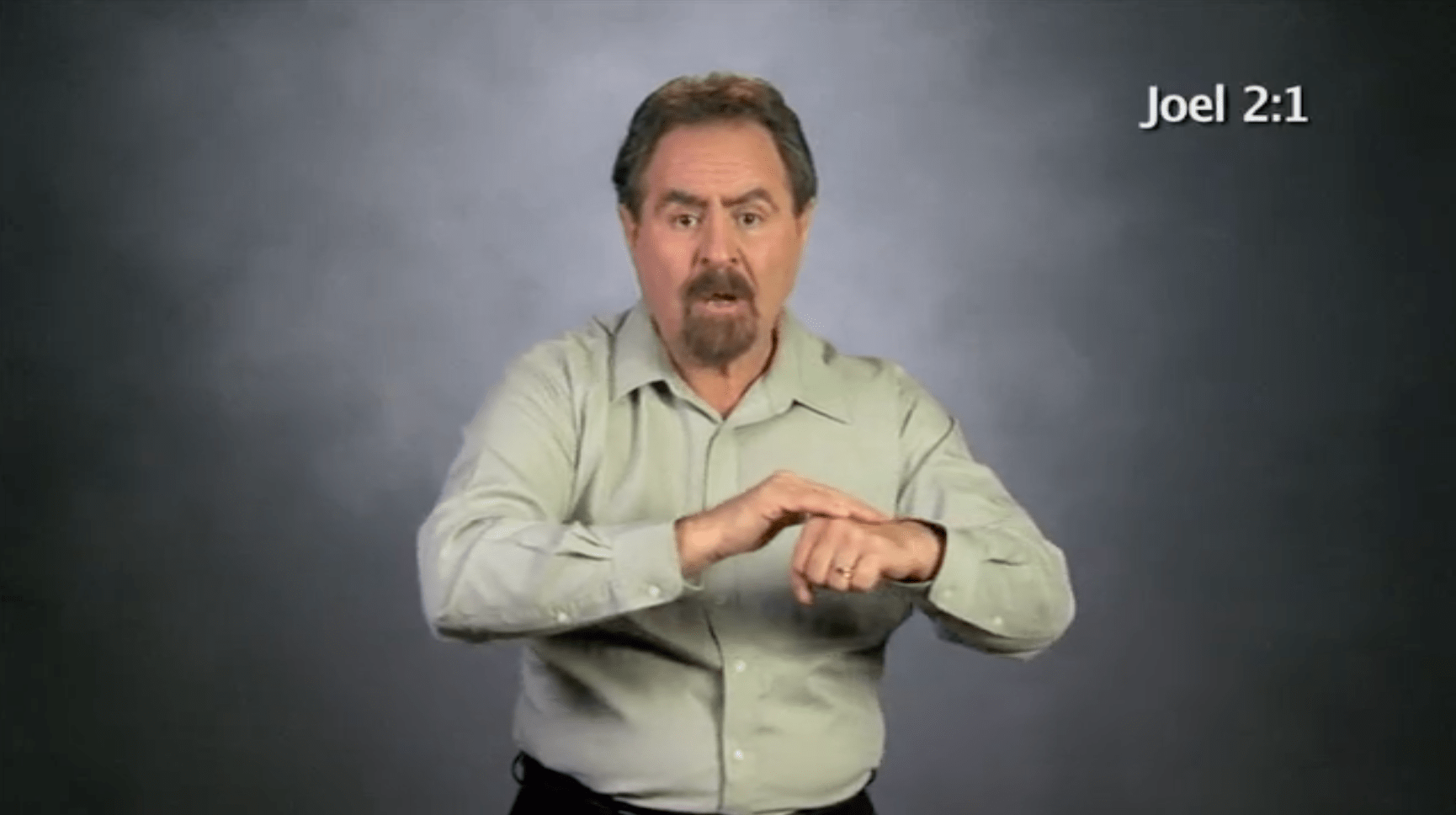
Photo screenshot used with permission from Deaf Missions

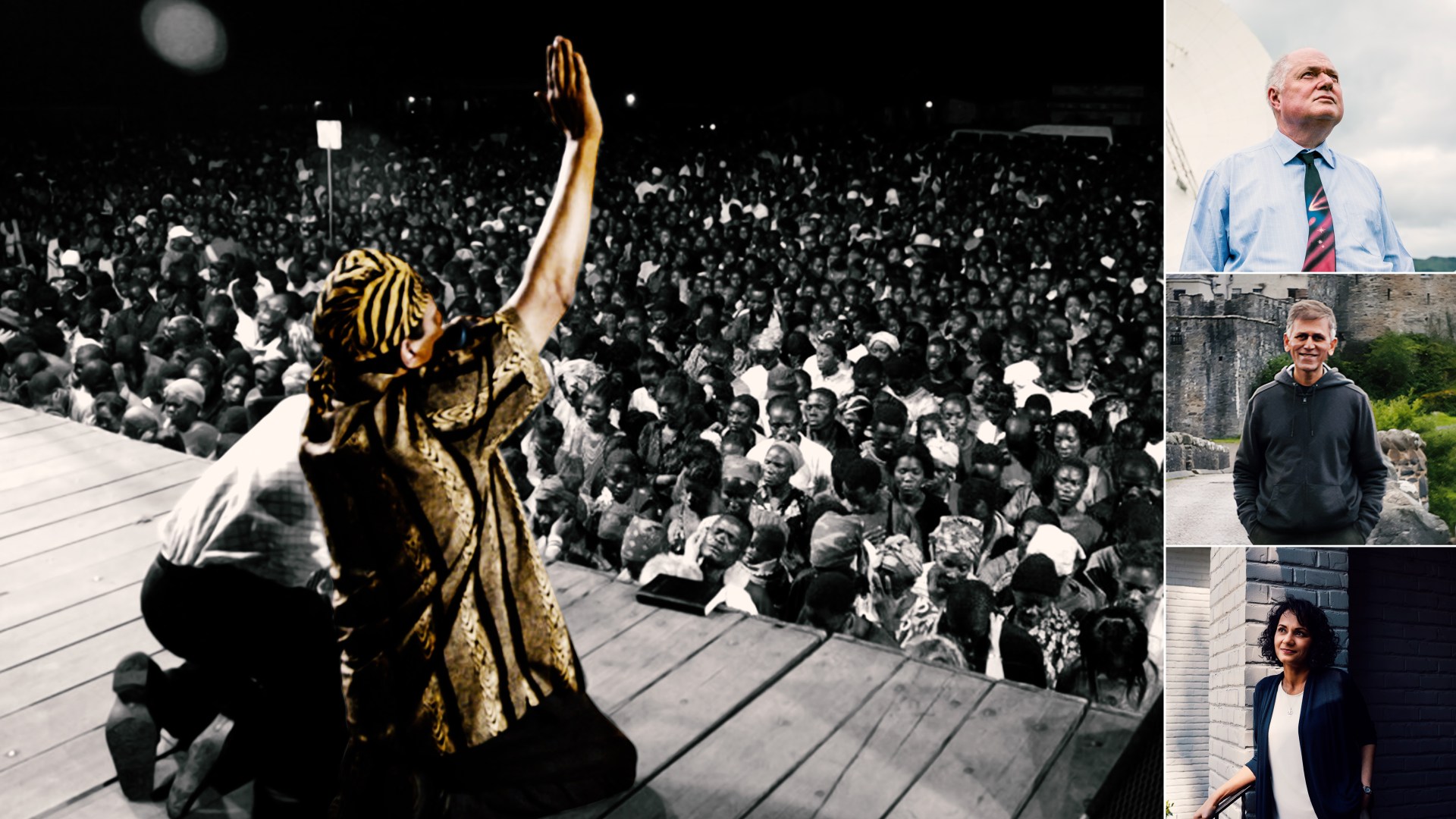
The completion of the first sign language Bible translated from the original languages prompted cheers and celebrations in the fall of 2020.

It took nearly four decades for more than 50 translators to finish the American Sign Language Version (ASLV), and the project started by Deaf Missions received crucial support from the Deaf Bible Society, DOOR International, Deaf Harbor, the American Bible Society, Wycliffe Bible Translators, Seed Company, and Pioneer Bible Translators.

But for the deaf, it’s one down, more than 400 to go.

“Still only one sign language of the over 400 has a complete Bible,” said J. R. Bucklew, the founder and former president of the Deaf Bible Society, who now works as director of major gifts at Pioneer Bible Translators. “And still, no other sign language outside of the American Sign Language has a full New Testament. There’s a lot of work ahead of us.”

Bucklew doesn’t diminish the significance of the completion of the ASLV. As a hearing person born to deaf parents, he sees the translation as a major historic event. And as an advocate for sign language Bible translation, he sees the ASLV as the “great accelerator” that is helping build the momentum necessary for the translation work that remains to be done.

IllumiNations, an alliance of 11 Bible translation organizations, has set a goal of rendering Scripture in every known language by 2033. There are, according to the group, about 7,000 known languages in the world, and roughly more than half have little or no Bible. While people may access Scripture by learning English, Spanish, or a dominant trade language, the evangelical organizations believe everyone should have equal access in their “heart language.”

Including sign language.

Many hearing people think sign language is only an alternate rendering of vocabulary—similar to how Braille reproduces written text in a code of raised dots. Sign language, however, has its own vocabulary and its own grammar, and linguists consider it a distinct language.

The leadership of illumiNations has added more than 400 sign languages to its list of thousands needed Bible translations, despite already facing the challenge of meeting that 2033 goal.

If sign languages were left off that list, the translation alliance would have missed a lot of deaf people throughout the world. No good data is available on how many people know each of the hundreds of sign languages. But reportedly, more than half a million each sign in Indo-Pakistani, Indonesian, Russian, Brazilian, and Spanish, and more than 100,000 use another half-dozen sign languages.

The ASLV Bible made the entirety of Scripture accessible to the 3.5 million people for whom ASLV is their heart language. Translator Jose Abenchuchan does not need to look far to understand the impact of his work. On a shelf in his home, he keeps a copy of the Bible his deaf mother used before she died.

The cover is missing, from extensive use. The pages inside are marked with the copious notes she made as she struggled to understand written English.

“I cherish it because it helps me remember the fight my mom had,” Abenchuchan, who is also deaf, signed to CT through an interpreter. “And that’s why I’m involved in Bible translation now.”

Abenchuchan started working on the ASLV in 1995 and stayed through to the completion, helping with more than 30 books of the Bible. He currently works as the coordinator of deaf field projects for Pioneer.

“You couldn't ask the Spanish people to read an English Bible, right? It would be like reading a foreign language,” he signed. “That’s why the ASLV was so significant, because it’s in our heart language. And it’s changed so many lives.”

IllumiNations describes the lack of Scripture as “Bible poverty.” Erle Deira, director of partnerships at American Bible Society, says that’s a good way to think about it.

To understand the significance of the ASLV, Deira said, “you have to create an image of standing in front of a river, and on the other side of the river, you have all the food that a population would need to nourish itself and live well. But there is no bridge to cross that river.”

Building a bridge won’t be easy, though. The first problem is money. Translating the ASLV—which required video production, in addition to humans who knew the biblical languages well enough to translate them—cost about $195 per verse. The project would have taken an additional 13 years without support from all the Bible societies, translation organizations, and Christian groups coming alongside Deaf Missions.

Translating 400 more sign language Bibles could cost an estimated $350 million, Bucklew said. Christian groups like Passion have already started raising money for the work.

Another challenge is finding the multilingual deaf people who can translate the Scripture from the original languages or from American Sign Language. Many deaf people are denied any education and only a fraction of those who receive an education are taught sign language. This is partly due to the fact that hearing parents don’t know how critical sign language can be to a deaf child and worry the skill will separate them from society.

Tanya Polstra, executive director of Silent Blessings Deaf Ministries, said she understands that concern. Most hearing adults don’t know a deaf person, and if they do, the first one they met was their own child. About 90 percent of deaf people are born to hearing parents.

“God has chosen that family to learn about deaf culture and language so that we can all come together to be a body of Christ, not to be separated,” Polstra, who has been deaf since age three, signed through an interpreter.

Sign language Bibles may encourage more people to teach deaf children to sign, and Polstra hopes it will also help deaf people embrace their identity in Christ.

Some deaf people, she said, have been hesitant to turn to the ASLV Bible or the kinds of resources that Silent Blessings Deaf Ministries offers.

“Because they haven’t owned their identity yet,” she said. “Right now, they’re still questioning, ‘Why am I deaf? Why am I suffering in this world?’ Their struggle to be involved in the church, the neglect—maybe they’re wanting to be involved in the church, and people say no because they can’t communicate. So, they associate God as a hearing God.”

There may be many other challenges as well, but the time to start meeting them is now, Bucklew said.

He is encouraged, though, that it’s no longer just deaf ministries working on the project. There is a lot of support, and Bible translation agencies and societies are now including sign languages when they strategize to give the whole world Scripture.

Deaf ministries are increasingly cooperating, and more deaf leaders are emerging within the Bible translation movement and becoming part of the problem-solving processes, according to Bucklew.

He’s hesitant to project precise dates, but Bucklew expects the next two completed translations will be for Colombian and Japanese sign languages.

That will be three down, more than 400 to go.

But Christians are laying aside “logos and egos,” Bucklew said, and the translations are underway.

“Through a bunch of imperfect people and imperfect institutions,” he said, “a holy God is doing a perfect work.”
News

Finnish Bishop and Politician Face Trial for LGBT Statements

For the country’s diverse Lutherans, the case tests the resolve to speak up, the boundaries of tolerance, and Christians’ ability to communicate.

Christianity Today January 3, 2022
International Lutheran Council

Some Finnish Lutheran leaders, their families, and a few politicians gathered under a tent in August 2021 for the elevation of Juhana Pohjola to bishop of the Evangelical Lutheran Mission Diocese of Finland (ELMDF).

The canvas protected them from the summer sun, but as they celebrated Pohjola’s investiture, they worried about facing a different kind of heat. Pohjola, 49, and one of his guests, politician Päivi Räsänen, 62, are facing criminal charges. According to the nation’s top prosecutor, the two people are accused of violating the equality and dignity of LGBT people.

Though Finland has legal protections for free speech and the free exercise of religion, Prosecutor General Raija Toiviainen says Räsänen and Pohjola’s actions are criminal incitement against a minority group—hate speech.

According to the prosecutor, Räsänen has fueled intolerance and contempt of LGBT people three times: in comments she made on a nationally syndicated talk show on Finnish state-supported radio; in a 2019 tweet where she quoted Romans 1:24–27 to criticize the Evangelical Lutheran Church of Finland (ELCF)—one of Finland’s two national churches—for its affiliation with Helsinki Pride; and in a 23-page booklet that Räsänen wrote titled Male and Female He Created Them.

Pohjola is being charged for publishing Räsänen’s booklet, which argues against same-sex marriage, contrasts LGBT identities with the Christian notion of what it means to be human, and describes same-sex attraction possibly as being inherently sinful and possibly the result of a “negative developmental disorder.” It was released in 2004 by Luther Foundation Finland, the legal entity behind the ELMDF.

The bishop is not too worried for himself, but he does worry about the long-term impact if the courts rule that Räsänen’s quoting Romans and publishing a book about the Bible and sexuality are considered criminal incitement.

“I do not so much fear the outcome of the court case,” he told CT, “but the strong signal it gives to many: to be silent. I fear self-censorship and intimidation.”
The trial, due to begin on January 24, has stirred strong feelings in Finland. More than 70 percent of Finns support same-sex marriage, which has been legal in the country since 2017, and many see defending the dignity of LGBT people as the critical civil rights issue of the day.

This is even true in the state church, which does not allow same-sex marriages. Around two-thirds of Finland’s 5.5 million inhabitants belong to the ELCF, and according to a recent study, 54 percent of them agree that “the church should also marry couples of the same sex.”

Despite the ELCF’s position on marriage, a small group of pastors broke away from the national church in the early 2000s, in part because of the growing acceptance of LGBT people, as well as other issues such as the ordination of women. These churches later organized as the ELMDF, which became a separate body in 2013.

“I confess the God given dignity, value and human rights of those who identify themselves as homosexuals but at the same time call homosexual acts sinful and in discordance with the created order and the will of God as found in the Bible,” Pohjola said. “We are all called to live according the good order of creation. According to the Christian view sexual life is meant to be in the confines of marriage between one man and one woman.”

Räsänen has consistently voiced opinions in keeping with the ELMDF’s position on same-sex marriage, principally that the Bible teaches that marriage is between a man and a woman and that “homosexual acts” are “sin and shame.” As former chairperson of Finland’s Christian Democrats and former Minister of the Interior from 2011 to 2015, Räsänen led the opposition against the passage of a law recognizing same-sex marriage in Finland.

She knew that position was unpopular with many, but Räsänen was shocked to find out she was facing criminal charges.

“Being criminally charged for voicing my deeply held beliefs in a country that has such deep roots in freedom of speech and religion feels unreal,” she told CT. “I do not see I would have in any way defamed homosexuals whose human dignity and human rights I have constantly said to respect and defend.”

The case has also caught international attention, stirring strong support for Pohjola’s and Räsänen’s right to free speech and religious freedom.

The International Lutheran Council (ILC), the global association of confessional Lutherans, released a signed statement in June entitled “A Protest and Call for Free Religious Speech in Finland.” Fearing the case will be appealed and end up in the European Court of Human Rights, the ILC objected to “the unjust treatment” of Pohjola and Räsänen and warned the case portends a slippery slope that may lead to the curtailing of other fundamental rights, religious and otherwise.

“Faith must remain free,” the statement said. “Indeed, if government oversteps its bounds and encroaches on religious freedom and religious speech, what other rights shall it take away?”

A recent open letter addressed to the Finnish prosecutor and signed by more than 227,000 supporters further argues that “punishing individuals such as Räsänen sets a very dangerous precedence apart from the fact that it shuts down honest, open public dialogue” and “effectively makes following Jesus a criminal act.”

Pohjola also sees this as a matter of faith. “For me this is not primarily a legal issue,” he said. “The gospel of Jesus Christ is at stake.”

ELCF-affiliated theologians have for the most part resisted the argument that the prosecution is essentially about theology and the state deciding that some theological ideas are unacceptable in Finland. Niko Huttunen, for example, a theologian with the ELCF’s Church Research Center, said the case is really about whether LGBT people are adequately protected from intolerance in Finland.

Huttunen believes that Räsänen’s reading of the Bible is “hermeneutically näive,” and he wonders how educated Christian leaders in the ELMDF—such as Pohjola—can uncritically accept a politician’s interpretation of Scripture.

But he hurries to add, “My aim is not to say how Räsänen must or must not read the Bible. Räsänen is being prosecuted for inciting hate towards homosexuals, one of the minorities which are seen to be in need of a special protection under Finnish law.”

According to a press release from the Office of the Prosecutor General, Räsänen's statements are more than offensive; they actually endanger people and are “likely to cause intolerance, contempt and hatred towards homosexuals.” Thus, the prosecutor concluded, Räsänen’s statements “violate the equality and dignity of homosexuals and thus transcend freedom of speech and religion.”

Sakris Kupila, chair of the Finnish LGBT rights group Seta, said the January trial is mainly important as a kind of test case.

While Kupila believes Finland has seen a lot of progress toward protecting minorities in recent years, the prosecution of a politician and a bishop will show how far the country has really come.

“We want the justice system to do its work in peace,” Kupila said. “This has been compromised by the international campaign.”

According to Kupila, international information about the case has often been permeated with false claims and filled with “homophobic and hostile” messages. He said the pressure could convince other prosecutors in the future that protecting the dignity of LGBT people is not worth it, and they will decide not to enforce the law.

Some Lutherans in Finland who hold to traditional Christian teachings on homosexuality nonetheless are uneasy with the international campaign to defend Räsänen and Pohjola.

Samuli Siikavirta, the 36-year-old pastor of an ELMDF congregation Pohjola founded in Helsinki, said some conservative Christians are apprehensive about the use of the term “persecution.”

“This is opposition to the freedom to be a Christian and to teach according to holy writ,” he said. “However, it makes me a bit uneasy to say that we are being persecuted.”

Siikavirta said the real challenge for Christians in the ELMDF and other conservative traditions will not be facing fines or even possible imprisonment. The real challenge will be figuring out how to teach Christianity to a culture that finds it so strange.

“It’s very clear from this case that people are estranged from Christian terminology,” he said. “We are not trying to conform law to our beliefs, but now, even basic Christian language sounds a lot more hateful than it would if people understood the context.”

Christians will need to become much more skilled at communication.

“The church has a gift to offer the world,” he said, “but we can’t assume people will understand it.”

Books

Kids Bible Stories Get the Kickstarter Treatment

The bespoke ‘Book of Belonging’ aims to highlight more women from Scripture and spur imaginations with unique illustrations.

Christianity Today January 3, 2022
Courtesy of Mariko Clark

At the center of publishing trends toward more aesthetically beautiful Bibles and more theologically rich children’s books lies The Book of Belonging.

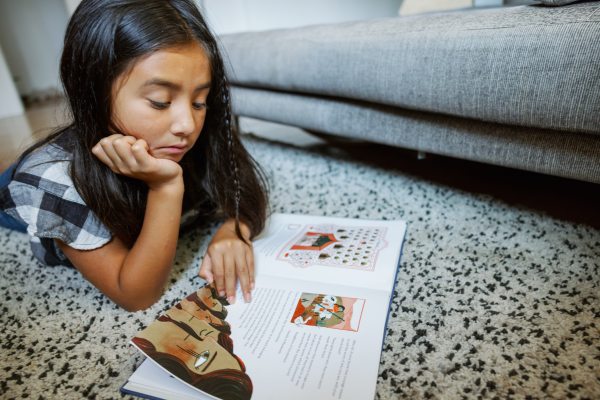
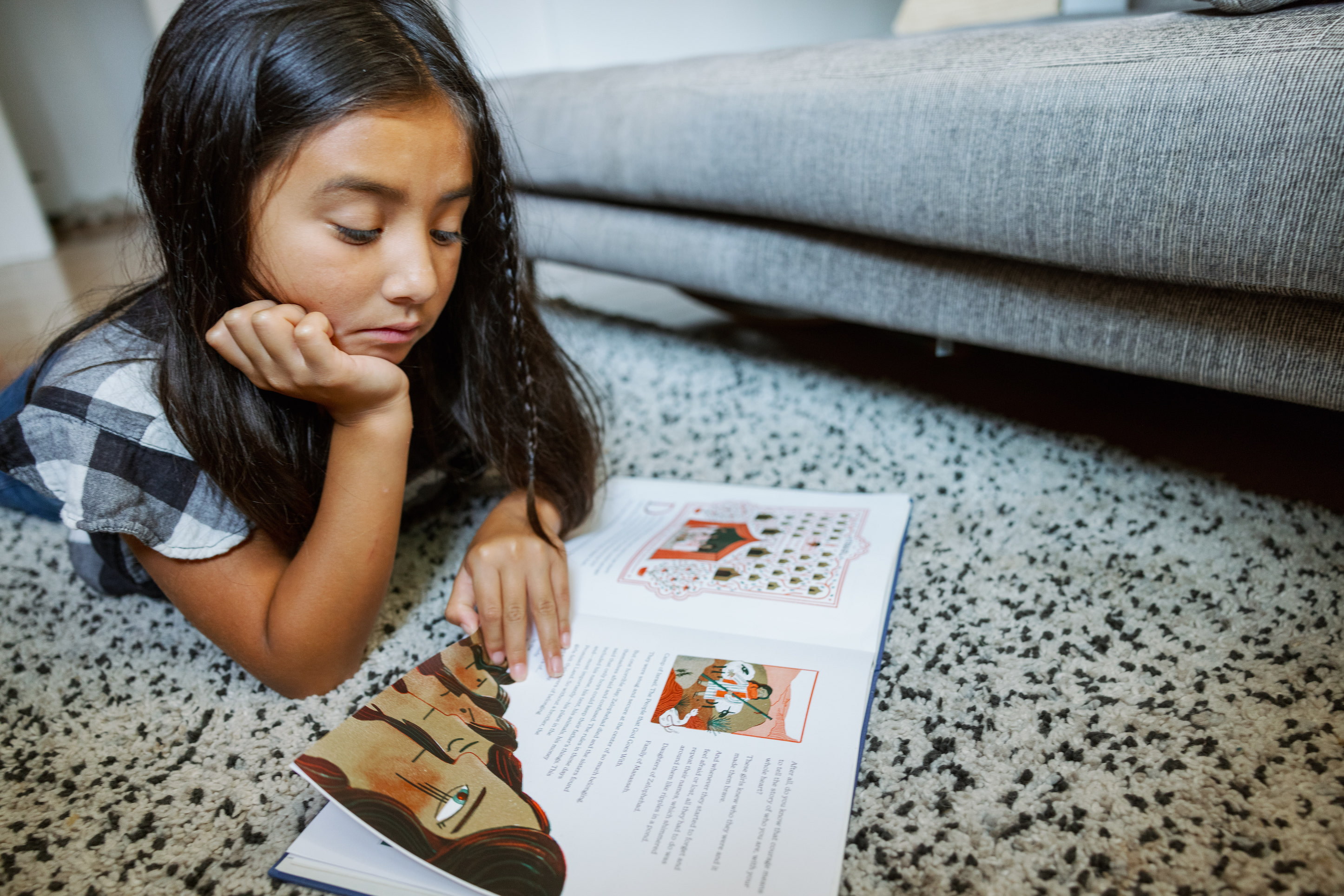
A Kickstarter venture by writer Mariko Clark and illustrator Rachel Eleanor, the project was inspired by Clark’s six-year-old daughter, who noticed the lack of female characters featured in her children’s Bible and asked, “Does God love boys more than girls?”

Among the best-selling children’s story Bibles on Amazon, 7 percent of the stories featured a female main character, 19 percent mentioned a woman, and only 23 percent depicted a woman in the illustrations, according to Clark’s analysis.

I know I’m not the only parent resolving these issues with homemade curriculum, Mariko Clark thought to herself. What if I just created the book I’m already creating?

The Book of Belonging, scheduled to release in 2023, is a story Bible for “modern and mindful kids.” It will feature imaginative retellings of 30 scriptural accounts—selected to feature more women than typical children’s Bibles—and unique, whimsical illustrations designed to depict a fuller cast of characters from biblical history.

“I think how the images I make will affect people’s beliefs and values,” said Eleanor, who drew the scenes in teal, gold, and orange hues. “Gaps in our perspective later grow into conscious and unconscious beliefs. … We might say we believe everyone is included, but do we show it?”

Scripture includes males and females from the beginning (Gen. 1:27), and Christians celebrate female figures like Deborah, Miriam, Esther, Mary, and Dorcas—in addition to the women involved in the gospel stories. Even when Bible stories focus on men, illustrators can take the opportunity to include women in the scenes; modern biblical scholarship and the stories themselves point to a historical context that includes women. (How many times do we see Noah building the ark without his wife?)

“I want my girls to know that when it comes to God’s table, they’ve always got a seat. And I want my son to know that if he ever looks around a table and doesn’t see a seat for his sisters, he’d better pull up a chair,” Clark said.

To launch The Book of Belonging, Clark and Eleanor chose to self-publish to maintain their creative vision and artfully design a book to last for generations. They used Kickstarter, a crowdfunding platform, to resource the work. To their surprise, they raised 40 percent of their funding goal on the first day of the campaign and overall raised almost $95,000, more than $21,000 over their target.

They’ve sold supporters on quality and details: The book will be printed in small batches, hardbound with a green linen and gold-foil cover.

“One of the reasons I’m excited about The Book of Belonging is because I share a passionate vision for freeing Scripture from some of the limiting expressions to which it has been confined,” said Adam Lewis Greene, who crowdfunded over $1.4 million to create Bibliotheca, a library of the biblical text, separated into volumes and free of all numbers and notes.

“Mariko saw that the most widely available Bible storybooks … can leave kids with the impression that God isn’t all that interested in those who aren’t patriarchs or kings. She’s bringing something into existence that rightly challenges that tendency.”

The crowdfunding trend can be the right option for unique projects and creators who value the freedom to decide the details.

“Kickstarter works for a particular quantity with high production value,” said Shannon Marchese, publisher at Tommy Nelson. “But there are other things to consider for a project to reach a larger market.”

The creators of The Book of Belonging said they are now talking to several publishers about future partnership. But for the first release , they are undertaking much of the process on their own. For example, it’s up to Clark, who hosts a devotional podcast, to research and consult with other theological perspectives in the writing process.

“I use a nerdy mishmash of commentaries and textbooks and secular historical sources and podcasts,” she said. “Plus, I’ve met incredible pastors, priests, rabbis, researchers, theologians, and historians. I track down everything they recommend to me.”

Publishing houses often have their own biblical experts to review materials, even down to the details of the illustrations, according to Michelle Freeman, publisher at B&H Kids.

The Book of Belonging focuses on three themes: naming (who does God say he is and what does that say about you?), wonder (promptings to help readers imagine for themselves), and contemplation (moments to experience God through silence in various forms).

One chapter follows “five fearless sisters,” telling the story of the five daughters of Zelophehad—Mahlah, Noah, Hoglah, Milkah, and Tirzah—from Numbers and Joshua. When Zelophehad died, the book’s telling goes, “they knew that even without boys in their family, God was still with them.” A “wonder moment” in a sidebar prompts readers to imagine what it was like for Moses to hear from God about the sisters.

The setup is designed to give “more freedom to explore and question, allowing kids to discover a connection to their Creator.”

The book also wants to convey the message that everyone belongs, through “diverse stories and illustrations, including lots of women, men with feelings and people of color.”

The need for more diversity in Christian children’s books has been a conversation across the industry in recent years.

“I feel like there is a trend to include all types of skin, ethnicities, males and females in Christian children’s books,” mom and book reviewer Bailey T. Hurley said. “I also think the illustrations have become more historically accurate to biblical characters than the very white pictures I grew up on.”

Freeman at B&H noted that a lack of diversity among creators (authors, editors, and illustrators) had historically led publishing teams to assume their readership looked exactly like them.

“I am grateful we are now holding our products and ourselves to a higher standard,” she said. “Our team is actively pursuing ways to connect with [Black, indigenous, and people of color] authors and illustrators and provide industry opportunities where once there were walls.”

Publishers are expanding their offerings for children, as CT reported this month, and new books are more likely to depict kids of color as well as discuss diversity from a biblical perspective. Author Dorena Williamson appreciates being able to work with Black editors who understand cultural considerations. “I have seen some increase in inclusion and diversity in children's books, especially in the Christian market. … We (still) have a way to go.”

Those interested in The Book of Belonging can be added to the waiting list for future printings; its first run will go to Kickstarter supporters in 2023.

Theology

Ten Prayers for the New Year

This past year was filled with trials and troubles for many. Let’s start this next one on our knees.

Christianity Today December 29, 2021
Annie Otzen / Getty

1. A prayer for a fresh start:

Lord, thank you for another year of life and all that you provided for us last year. We lay before you all the disappointments and unfinished work, and we ask for your mercy, peace, and joy as we look to the year ahead. May we delight in the gift of your presence as we discern the journey you have for us in this new year.

2. A prayer for our habits:

Lord, we confess that we spend much of our day thoughtlessly consuming the things around us. Our habits often lack intention and cause us to live distracted, self-focused lives. Would you bring to our attention the unhealthy ways we spend our time, energy, thoughts, talents, and money? Show us old habits to turn away from and new habits to practice. Shape us by your Spirit into more merciful people who love you and neighbor with greater intention.

3. A prayer for relational healing:

Lord, there are many ways we fall short in our relationships. We failed to carry each other’s burdens, we harbored offenses, and we judged each other’s motives. Help us to confess our sins against each other. Help us to forgive and seek forgiveness. May your Spirit heal wounds and bring unity to fractured relationships—that we might love one another as you love us.

4. A prayer for the weary:

Lord, the last few years have been filled with sickness, death, job loss, isolation, anxiety, fear, and division. We are weary. In our weariness, we confess our cynicism and our skepticism and we ask for your renewal. Give us eyes to see the kingdom life Christ has promised—and fill us with a hope that allows us to live each day with soberness, generosity, and joy.

5. A prayer for the lonely:

Lord, you are the father of the fatherless, and you place the lonely in families. This year, help us join you in that work. Give us eyes to see those around us who may feel alone. Help us to notice the orphans, single parents, the elderly, the incarcerated, the homeless, and the refugees in our midst. Expand our capacity to be hospitable to those who desire belonging and family.

6. A prayer for those suffering:

Lord, bring to mind those in our lives who are suffering, and help us to be faithful in prayer for and service to them. We also ask that you strengthen your servants, scattered around the world, to be the hands and feet of Jesus—especially in places where war, violence, famine, and sickness are devastating families and communities.

7. A prayer for our neighbors:

Lord, help us to notice our neighbors more this year. May we learn the names of those who live next door to us, the people who serve us coffee and gas each week, and the families we run into at the park. Remind us to be a source of blessing, even in the most ordinary and simple ways, as we learn to abide in your love and extend it toward our neighbors.

8. A prayer for our work:

Lord, you have placed Christians in every industry and city. Help us to steward our work this year—not only for our families, but also for the flourishing of others. Allow us to be a restorative presence in our places of work. Align our organizations to reflect your creativity, goodness, and justice. Help us to act righteously and generously to those whose work is often marginalized by society.

9. A prayer for Christian community:

Lord, help us not to be consumers in our local churches, or to think transactionally about our fellow brothers and sisters in the faith. Instead, show us how to nurture true Christian community in our lives this year. Give us the initiative and insight to know how to cultivate a greater love for God’s people. Help us to share our lives with one another in such a way that the people we meet are ultimately drawn closer to you.

10. A prayer for our hands and feet:

Lord, bless our hands to serve you more faithfully in the year to come. Guide our feet to walk in your steps, imitating the example you set for us during your time on earth. Help us to follow and obey you. Empower us by your Spirit to love one another in consistent and creative ways.

Dennae is the co-director for The Crete Collective, Surge Network, and City to City North America. She serves at Roosevelt Community Church in Downtown Phoenix, Arizona. Dennae and her husband Vermon have 5 children.

There’s No Such Thing as Time Management

Maybe productivity doesn’t matter to God in the frantic ways I’ve imagined.

Christianity Today December 29, 2021
Illustration by Mallory Rentsch / Source Images: Stas / Unsplash / Patrick Strattner / Getty

I used to be a lifetime reader of time management books. After the world shut down in March 2020, I got out of my pajamas to meet the challenge of an open schedule. I believed every article telling me that this was the propitious moment for cleaning out my closets, for organizing my pantry, for culling my photos.

And early in the pandemic, I loved my newly organized garage; I was glad to have tackled the towers of paperwork I usually avoided. Productivity is, of course, a modern source of existential consolation. A good day is the day you get things done.

But this new year, I won’t be hunting for a better planner. Nor will I be searching for the best new productivity app. For the first time, I will suffer no illusions this January that a new technique or a better consumer product will help tame the wild beast of time.

Time management is illusory. Though time might be money, as Benjamin Franklin famously said, we cannot grow our portfolio. Sure, we can try to maximize the yield of the minutes, but as the pandemic continues to teach us, tomorrow is never guaranteed. Rather, we must steward our attention.

Despite all my renewed productivity efforts early in the pandemic, I never managed to silence the beating bass of my anxious heart. I had plenty of time, productive time—and still suffered time-anxiety.

As a Christian, I know time matters to God, but I’m beginning to think it matters less to him in the frantic ways I’ve imagined. It’s certainly true we’ve only recently conceived of time as measurable and instrumental, as something to be used or wasted, saved or spent. But even before the invention of the clock—in the medieval monastery—human beings have long been time-anxious creatures.

As David Rooney writes in About Time, a few years after the first sundial was installed in Rome in 263 B.C., a character in a play exclaimed, “The gods damn that man who first discovered the hours, and—yes, who first set up a sundial here, who’s smashed the day into bits for poor me!”

Time management can’t solve the crisis of mortality, this foreboding sense that the days and the years prove short. To be sure, I’ve developed some helpful skills from the many time management books I’ve read: planning ahead, breaking down larger projects into smaller tasks, ruthlessly eliminating the nonessential. But as Melissa Gregg argues in Counterproductive, it’s probably also true that I could have read one good time management book, given how few new ideas have been proposed since the early 20th century.

What seems far more important than disciplines of time management are disciplines of attention management. The minutes are not ours to multiply. We receive them as a gift. What we can do, however, is cultivate the ability to inhabit those minutes with attention, or undiluted unfragmented presence. Simone Weil noticed the gains of attention in her spiritual life, when she began repeating the Lord’s prayer in Greek every day. Whenever her attention wandered, she started over again. “It was during one of these recitations that … Christ himself came down and took possession of me.”

Many have noted we live in an attentional economy, which is to say that what is most valuable today are the seconds, the minutes we linger online—time that is sold to someone for profit. When Facebook went public in 2012, for example, they did not have a clearly articulated plan for generating revenue, but they knew that they owned the world’s time.

Matthew Crawford notes in The World Beyond Your Head that one challenge in modern life is that our attention is not always ours to direct. We sit in an airport, stand in the line at the grocery, browse the daily headlines—and someone is there to blare their aggressively loud bullhorn, begging us to buy, subscribe, believe. Attention is a contested resource, and like a city without walls, it will be overrun unless we build walls and post sentries and fortify it against attack.

The conditions today make it hard to attend, especially with a smartphone buzzing in our pocket. But just as time-anxiety is old, so too is the fight for attention. It was attention the apostle Paul admonished the Philippians to cultivate: “[W]hatever is true, whatever is honorable, whatever is just, whatever is pure, whatever is lovely, whatever is commendable, if there is any excellence, if there is anything worthy of praise, think about these things” (Phil. 4:8, ESV, emphasis added).

Paul was saying: Your attention is valuable. Develop it for the good. When Paul instructed the Corinthians to “take every thought captive” (2 Cor 10:5), I don’t think Paul believed that attention was merely a rational faculty. I think he was more broadly gesturing toward the moral exercise of attention of loving the good and habituating ourselves toward it: “What you have learned and received and heard and seen in me—practice these things” (Phil 4:9).

Crawford argues that attention requires submission, which seems like a peculiarly Christian understanding. He knows the word is jarring, given that autonomy is often considered the highest good in modern life. Attention requires “submission to things that have their own intractable ways,” he writes, “whether the thing be a musical instrument, a garden, or the building of a bridge.” For Crawford, attention is never self-enclosed. It is not self-gaze. It is a form of devotion to the other. Attention requires not simply that we look up (from our phones) but that we look out—beyond ourselves.

I’ve become more interested in projects today that are preoccupied with the cultivation of attention—books like Justin Whitmel Earley’s The Common Rule, which our church small group is reading together. Earley’s book isn’t devoted to the management of time. Instead, it suggests regular rhythms—in time—that call us into submission to our Creator, the one to whom all time belongs: daily habits like kneeling prayer and digital ascetism and weekly habits like Sabbath and fasting.

This framework—of habits and a governing rule of life—is monastic. It’s an attention project. It’s not simply an individual exercise, however; it’s a communal one. Which begs the question of what churches can do to help their congregants cultivate the faculty of attention. In my own church context, I’d love for us to become less reliant on phones for operational business on Sunday mornings, making it possible, especially for those involved, to leave them at home, or at least silenced and effectively ignored. I’d love to see us corporately endeavor to think more carefully about our digital habits and practices throughout the week—because attention seems like an analog skill.

I think attention is what Brother Lawrence learned to practice in the monastery kitchen, as he washed plates. He didn’t concern himself with time and its elapsing, but rather considered that all time was valuable insofar as it was inhabited with devoted attention:

The time of business does not with me differ from the time of prayer; and in the noise and clatter of my kitchen, while several persons are at the same time calling for different things, I possess God in as great tranquility as if I were upon my knees at the blessed sacrament.

Time management marketing preys on existential dread: that life is short, that we are mortal. Its tips and tricks might help us manage some of the unwieldly aspects of contemporary life and work, but it will not teach us how to, as Brother Lawrence said, “do all things for the love of God.” For that, we will need practice in attention.

Jen Pollock Michel is a writer, podcast host, and speaker based in Toronto. She’s the author of four books and is working on a fifth: In Good Time: 8 Habits for Reimagining Productivity, Resisting Hurry, and Practicing Peace (Baker Books, 2022).

Top 10 CT News Stories of the Year

From CRT clashes to abuse investigations, we rank the most significant evangelical headlines of 2021.

Christianity Today December 29, 2021

Some of the biggest topics of 2020—the coronavirus, racial justice, Donald Trump, and Ravi Zacharias—continued to make news this year. See which new developments show up on our list of important stories for evangelicals in 2021.

10. Myanmar Coup

The Christian minority in Myanmar rallied in prayer and protest after a coup in February, which has spurred ongoing military violence, including attacks that have destroyed churches and killed pastors, as the country longs for peace.

9. Josh Duggar’s Conviction

Fifteen years after he molested younger girls as a teenager, Josh Duggar was convicted of downloading and possessing material depicting the sexual abuse of children. Christian advocates, including in conservative homeschooling circles, see the case as reflecting larger concerns around how their communities address sexual abuse.

8. Climate Change Activism Around COP26

The United Nations put out a dire summary of the science on climate change—dedicated to an evangelical—and Christians prayed, worked, came together, and walked to Glasgow, Scotland, to pressure the world’s governments to reduce the use of carbon fuels.

7. Reckoning Over Donald Trump’s Defeat

Even though Donald Trump lost the presidential election back in 2020, a prolonged challenge to the results—leading to the January 6 mob at the Capitol—had lingering effects among evangelicals, with some pastors combatting conspiracy theories in their congregations and charismatic prophets questioning the basis for their claims favoring reelection.

6. Abortion Case Before Supreme Court

Evangelicals are awaiting a major turning point in the pro-life movement, as the Supreme Court appears poised to uphold a 15-week abortion ban in Mississippi in a historic case that threatens the future of Roe v. Wade. The court heard arguments in Dobbs v. Jackson Women’s Health Organization in December, months after new abortion restrictions went in place in Texas, effectively banning abortion after six weeks.

5. Critical Race Theory

Approaches to racial diversity and racial justice became a firing rod dividing ministries and churches, with fights over the alleged influence of “critical race theory” emerging within the Southern Baptist Convention, Cru, David Platt’s McLean Bible Church, Bethlehem Baptist Church, and other areas of evangelicalism.

4. COVID-19 Religious Freedom Claims

Christians cited First Amendment freedoms as they challenged additional restrictions on worship during the pandemic, with John MacArthur’s Grace Community Church in California and Mark Dever’s Capitol Hill Baptist in DC winning legal settlements. Some Christian individuals and institutions also pushed back against vaccine requirements, mask mandates, and other COVID-19 precautions, citing religious freedom and personal convictions.

3. Southern Baptist Convention Abuse Investigation

The SBC Executive Committee (EC) engaged in a protracted fight before agreeing to turn over privileged documents in a major abuse investigation, a dispute that led its president Ronnie Floyd and more than 10 members to leave the EC. The investigation was approved at the SBC annual meeting last June, following leaked information—suggesting the EC mishandled reports of abuse—that came out weeks after Russell Moore and Beth Moore each announced they were leaving the denomination.

2. RZIM investigation and fallout

An independent investigation confirmed allegations that apologist Ravi Zacharias sexually abused women. The fallout started immediately, with books pulled from distribution and an announcement that Ravi Zacharias International Ministries (RZIM) would change its name and purpose. It continues with high-profile departures and a donor lawsuit in federal court, as other ministries try to learn from RZIM’s mistakes.

1. Afghanistan

Twenty years after the terrorist attacks of 9/11, pastors in New York City were still ministering to the needs of those who rushed toward the towers. The US withdrew from the “forever war” in Afghanistan, raising dire questions about those left behind, the future of humanitarian work in the country, and America’s willingness to accept Afghan refugees.

Check out the rest of our 2021 year-end lists here.

News

Evangelicals a Rising Force Inside Argentina’s Prisons

Authorities have allowed the creation of prison units effectively run by evangelical inmates.

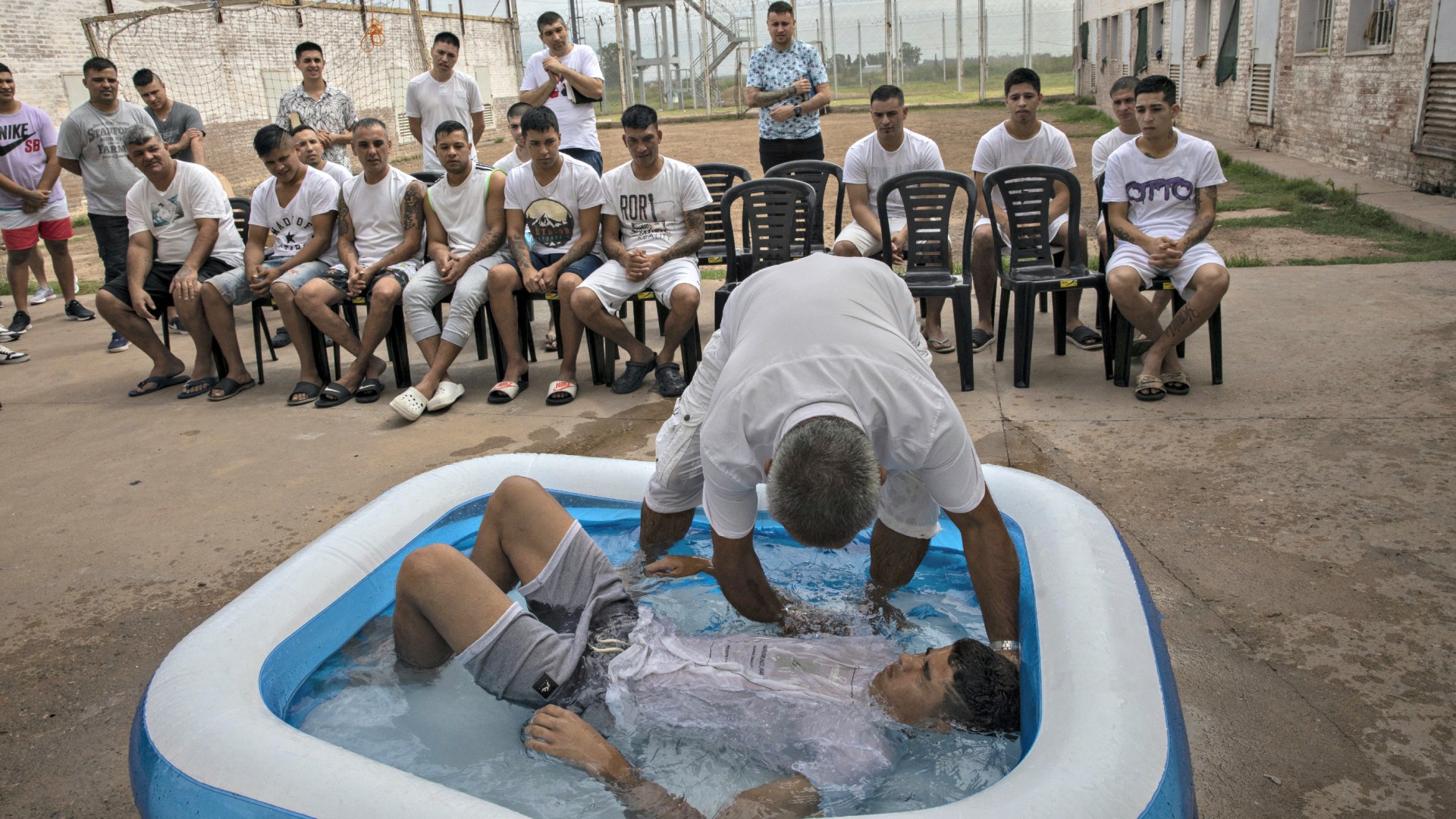
Ruben Munoz, an evangelical pastor from the church Puerta del Cielo, or "Heaven's Door," who served two years in prison for robbery, baptizes an inmate in a kiddie pool, at an evangelical cellblock inside Penal Unit N11 in Pinero, Santa Fe province, Argentina on December 11, 2021.

Ruben Munoz, an evangelical pastor from the church Puerta del Cielo, or "Heaven's Door," who served two years in prison for robbery, baptizes an inmate in a kiddie pool, at an evangelical cellblock inside Penal Unit N11 in Pinero, Santa Fe province, Argentina on December 11, 2021.

Christianity Today December 28, 2021
Rodrigo Abd / AP Photo

The loud noise from the opening of an iron door marks Jorge Anguilante’s exit from the Pinero prison every Saturday. He heads home for 24 hours to minister at a small evangelical church he started in a garage in Argentina’s most violent city.

Before he walks through the door, guards remove handcuffs from “Tachuela”—Spanish for “Tack,” as he was known in the criminal world. In silence, they stare at the hit-man-turned-pastor who greets them with a single word: “Blessings.”

The burly, 6-foot-1 man whose tattoos are remnants of another time in his life—back when he says he used to kill—must return by 8 a.m. to a prison cellblock known by inmates as “the church.”

His story, of a convicted murderer embracing an evangelical faith behind bars, is common in the lockups of Argentina’s Santa Fe province and its capital city of Rosario. Many here began peddling drugs as teenagers and got stuck in a spiral of violence that led some to their graves and others to overcrowded prisons divided between two forces: drug lords and preachers.

Over the past 20 years, Argentine prison authorities have encouraged, to one extent or another, the creation of units effectively run by evangelical inmates—sometimes granting them a few extra special privileges, such as more time in fresh air.

The cellblocks are much like those in the rest of the prison—clean and painted in pastel colors, light blue or green. They have kitchens, televisions and audio equipment—here used for prayer services.

But they are safer and calmer than the regular units.

Violating rules against fighting, smoking, using alcohol or drugs can get an inmate kicked back into the normal prison.

“We bring peace to the prisons. There was never a riot inside the evangelical cellblocks. And that is better for the authorities,” said David Sensini, pastor of Rosario’s Redil de Cristo church.

Access is controlled both by prison officials and by cellblock leaders who function much like pastors—and who are wary of attempts by gangs to infiltrate.

“It has happened many times that an inmate asks to go to the evangelical pavilion to try to take it over. We need to keep permanent control over who enters”, said Eric Gallardo, one of the leaders at the Pinero prison.

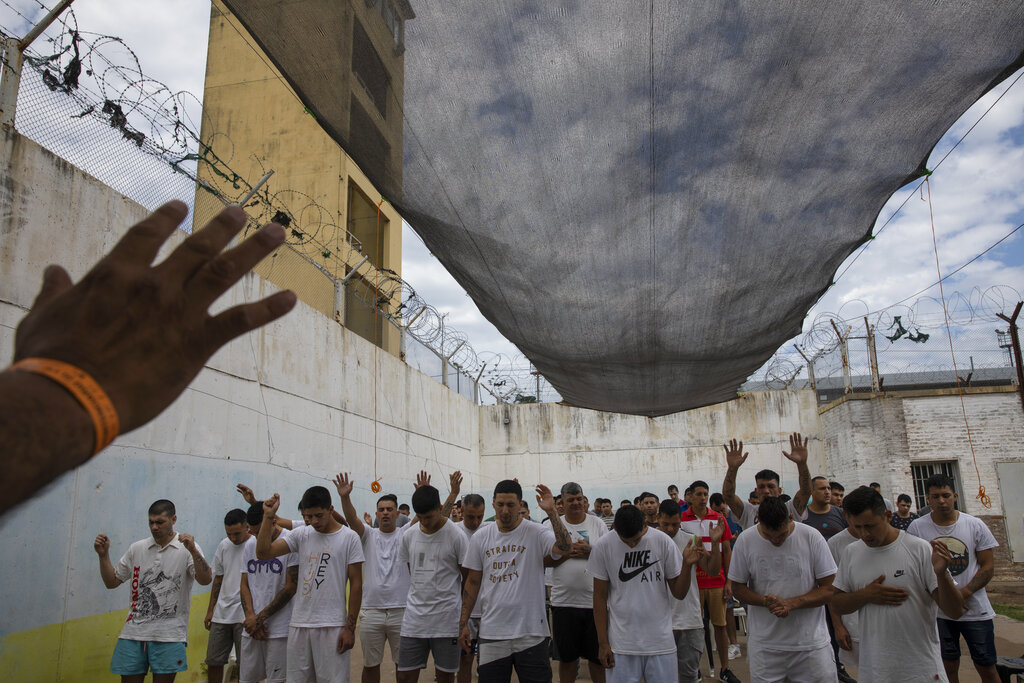
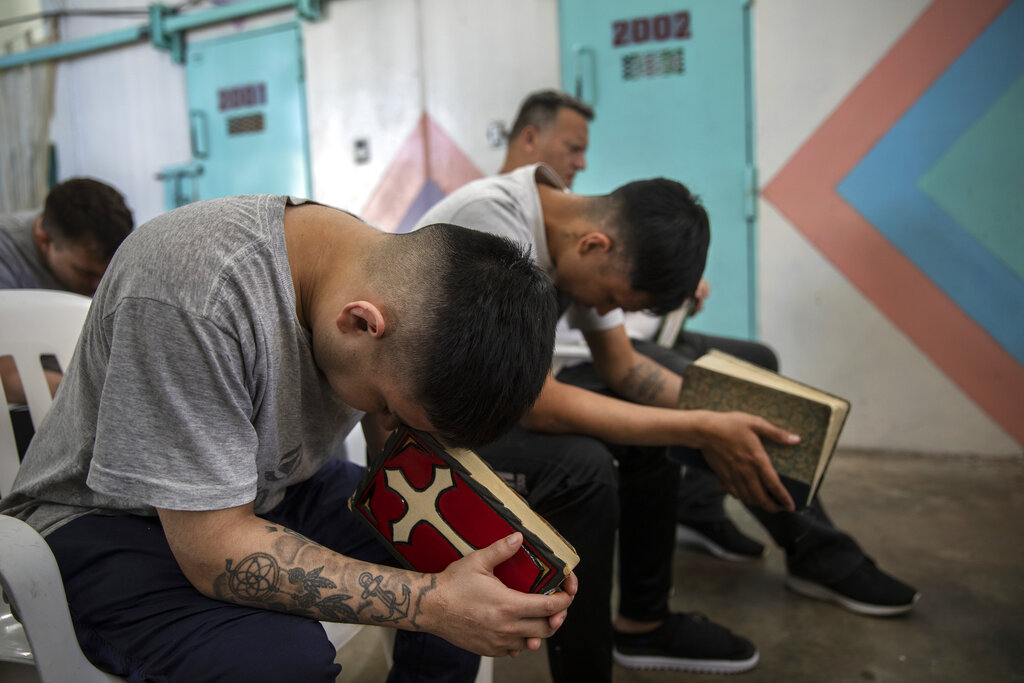
Prisoners pray inside an evangelical cellblock at the Penal Unit in Pinero, Santa Fe province, Argentina, Thursday, Nov. 4, 2021. Access to evangelical cellblocks is controlled both by prison officials and by cellblock leaders who function much like pastors.

Rosario is best known as a major agricultural port, the birthplace of revolutionary leader Ernesto “Che” Guevara and a talent factory for soccer players, including Lionel Messi. But the city of some 1.3 million people also has high levels of poverty and crime. Violence between gangs who seek to control turf and drug markets has helped fill its prisons.

“Eighty percent of the crimes in Rosario are carried out by young hit men who provide services to drug gangs, whose bosses are imprisoned and maintain control of the criminal business from jails,” said Matías Edery, a prosecutor in the Organized Crime Unit in Santa Fe province.

Anguillante says that his life as a contract killer is behind him; God’s word, he says, turned him into “a new man.”

In 2014, he was sentenced to 12 years in prison for killing 24-year-old Jesús Trigo, whom he shot in the face. Anguillante says that face haunts him at night, and he tries to chase the memory away by praying in his small prison cell.

About 40% of Santa Fe province’s roughly 6,900 inmates live in evangelical cellblocks, said Walter Gálvez, Santa Fe’s undersecretary of penitentiary affairs, who is also Pentecostal.

As in other Latin American countries, the spread of evangelical faith in Argentina took root especially in the “most vulnerable sectors, including inmates,” said Verónica Giménez, a researcher at the National Council for Scientific and Technical Research of Argentina.

In Pope Francis’ home country, the Roman Catholic Church is still the dominant religion. But a survey by the council found that the percentage of Argentine Catholics fell from 76.5% to 62.9% between 2008 and 2019 while the share of evangelicals grew from 9% to 15.3%.

“This increase in the faithful took place even more in prisons,” Gálvez said.

Prisoners pray with their Bibles inside an evangelical cellblock at the prison in Pinero, Santa Fe province, Argentina on Nov. 18, 2021.

Gimenez, the researcher, said that is echoed in other parts of Latin America, such as in Brazil, where the huge Universal Church of the Kingdom of God has 14.000 people working with prisoners.

The growth is remarkable in a country where Catholics had a near-monopoly on prison chapels until a few decades ago.

“There are still Catholic chapels inside prisons but their priests are almost without any work to do,” said Leonardo Andre, head of the prison in Coronda, about 50 miles (80 kilometers) north of Rosario.

Catholic priest Fabian Belay, who runs the Pastoral of Drug Dependence, said that priests are indeed active, but use “different methods” than the cellblock strategy.

“We disagree with the invention of religious cellblocks because they create ghettos inside prisons,” he said. “We bet on integration and not a religious segregation.”

Deacon Raul Valenti, who has been working in the Catholic pastoral for three decades, said, “The evangelicals do their work in the religious cellblocks, while we do them in the other ones, the ones that are called hell.”

He insisted they are not in conflict: “We just have different views. We share, a lot of times, religious activities inside the prison.”

The Correctional Institute Model U.I, Dr. Cesar R Tabares, known as Penal Unit 1, stands in Coronda, Santa Fe province, Argentina, Friday, Nov. 19, 2021. About 40% of Santa Fe province's roughly 6,900 inmates live in evangelical cellblocks, said Walter Gálvez, Santa Fe’s undersecretary of penitentiary affairs, who is also Pentecostal.
The Correctional Institute Model U.I, Dr. Cesar R Tabares, known as Penal Unit 1, stands in Coronda, Santa Fe province, Argentina, Friday, Nov. 19, 2021. About 40% of Santa Fe province’s roughly 6,900 inmates live in evangelical cellblocks, said Walter Gálvez, Santa Fe’s undersecretary of penitentiary affairs, who is also Pentecostal.

The Puerta del Cielo (“Heaven’s Door”) and Redil de Cristo (“Christ’s Sheepfold”) congregations are among those that exert strong influence in Santa Fe’s prisons. They began to evangelize inmates in the late 1980s and today have more than 120 pastors working inside prisons.

During a recent service at the Redil de Cristo church in Rosario, the Rev. David Sensini asked those who had been imprisoned to identify themselves. About a third in the room raised their hands. They then closed their eyes and lowered their head in prayer.

Víctor Pereyra, who was wearing a black suit and tie, served time at the Pinero prison. Today, he owns a produce shop and also works maintenance jobs.

“I don’t want to go back (to prison). Today I have a family to look after,” he said.

Pop-style hymns blared from loudspeakers while three TV cameras recorded the ceremony for other worshippers watching at home via a YouTube channel.

“No one else is going to jail. Not your children, not your grandchildren,” the pastor shouted to the crowd. “Change is possible!”

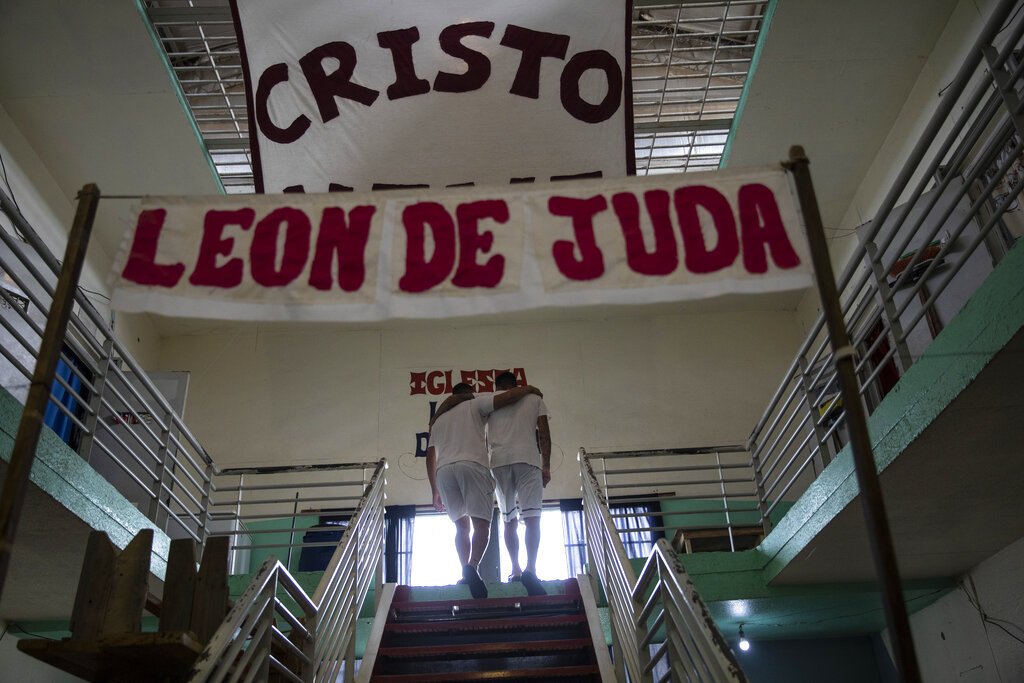
Inmates Ruben Luna, right, who is serving a 14-year sentence for murder, embraces Sebastian Monje, who has been in prison for eight months for attempted murder and robbery, before being baptized inside an evangelical cellblock at the penitentiary in Pinero, Argentina, Saturday, Dec. 11, 2021. The signs read in Spanish "Christ lives. Lion of Judah."
Inmates Ruben Luna, right, who is serving a 14-year sentence for murder, embraces Sebastian Monje, who has been in prison for eight months for attempted murder and robbery, before being baptized inside an evangelical cellblock at the penitentiary in Pinero, Argentina, Saturday, Dec. 11, 2021. The signs read in Spanish “Christ lives. Lion of Judah.”

Those who refuse to change are soon ousted from the evangelical cellblocks, said Rubén Muñoz, a 54-year-old pastor at Puerta del Cielo who served two years in prison for robbery.

While there are allegations of unrepentant drug bosses bribing their way into the cellblocks, Eduardo Rivello, the congregation’s lead pastor, denied that.

But he acknowledged that several members of the Los Monos gang have lived in those units and said some who come are looking for protection rather than a desire to follow their faith. “We work with everyone,” he said, adding that he also lives under constant threat.

“Drug traffickers want to take over the evangelical units because for them it’s a business,” he said. “From here crimes can be ordered and drugs sold.”

Each evangelical unit at Pinero is run by 10 prisoners who have about 15 assistants for the 190 inmates. “They’re in charge of controlling everything and keeping the peace,” Gallardo said.

“We don’t use knives, but the Bible to take over a cellblock,” said Pentecostal pastor Sergio Prada. Prisoners who want to be allowed in, he said, must comply with rules of conduct, including praying three times a day, giving up all addictions and fighting.

As he led a recent meeting for 90 prisoners at an evangelical unit in Pinero, Prada told them to put their old criminal lives behind.

“That old man has to die!” he shouted, referring to their previous identities.

As he heard these words, Anguilante closed his eyes and cried. He later would say that he already “buried” his old self, the one who murdered and who has been imprisoned for seven years.

“Not everyone can, but you have to try,” he said.

Prisoners pray before getting baptized inside an evangelical cellblock at the Penal Unit N11 penitentiary in Pinero, Santa Fe Province, Argentina, Saturday, Dec. 11, 2021. Prisoners who want to be allowed in an evangelical cellblock must comply with rules of conduct, including praying three times a day, giving up all addictions and fighting.

At Penal Unit No. 1 in Coronda, the day in the evangelical units begins and ends with prayer.

One of those praying is Juan Roberto Chávez, who was imprisoned for 16 years in various jails in Argentina and served the last eight years in Coronda. “I hated the world,” he said. “I wanted to destroy it.” He recalled that he lived mostly confined in punishment cells.

“The kids who would arrive would turn into monsters” in prison, Chávez said. He tried and failed to escape. Desperate, he stitched his mouth shut and went on hunger strike.

“Then I got tuberculosis. I was dying,” he said. “I hit rock bottom and I had a revelation.”

On a recent day, Chávez embraced 37-year-old José Pedro Muñoz, who expected to be released on parole after serving an 18-year-sentence.

“Now, you have to be stronger than ever,” Chávez told him.

Muñoz was nervous; the wait for release seems endless. He was a hit man for the Los Monos gang and his body is a testament to Rosario’s drug war. Scars from two shotgun blasts mark his chest. Another from a 9mm bullet crosses his abdomen.

“I set fire to bunkers (armored places where cocaine is sold) with people inside. We did it to drive out the (rival) drug dealers,” he said.

But soon came bad news. A guard arrived and told him that he would remain in prison because other charges had been filed against him.

A few minutes later, he joined other prisoners in prayer.

13 CT News Stories That Made Us Happy in 2021

It was another hard year on many fronts, but it wasn’t all bad news.

Christianity Today December 28, 2021

2021 brought more headlines about COVID-19, religious persecution, division, and spiritual abuse. Amid the heaviness, we saw God at work through his people in big ways and small, from signs of hope for Christians in the Middle East to a surprise worship leader at a church in California.

Here are 13 of our favorite good-news stories covered by CT this year, listed in chronological order.

Read all of our year-end lists here.

News

India Blocks Foreign Funds for Mother Teresa’s Charity on Christmas

Kolkata order’s troubles come in the wake of a string of attacks on Christians by Hindu right-wing groups, who accuse pastors and churches of forced conversions.

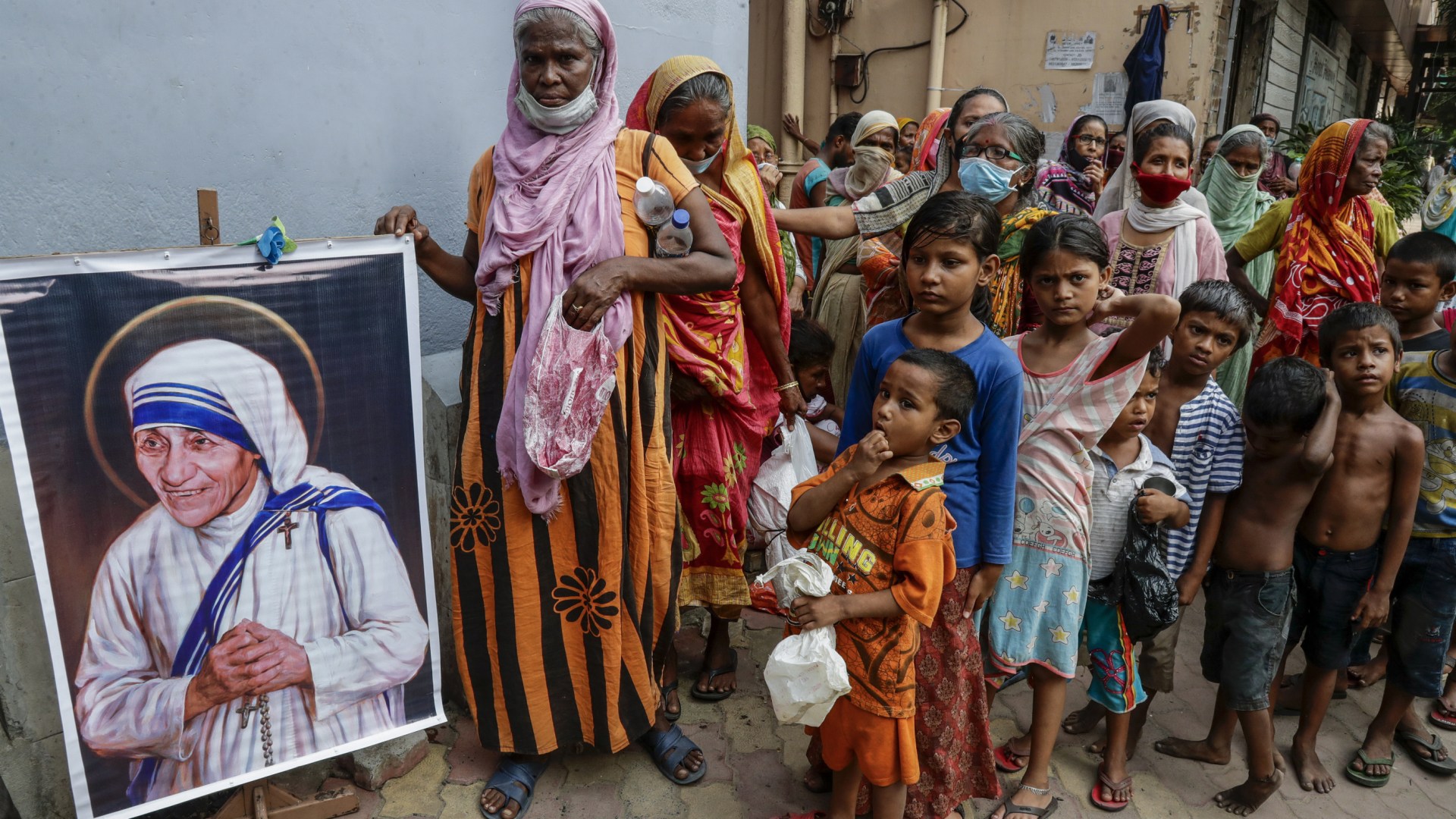
Homeless people gather beside a portrait of Mother Teresa, founder of the Missionaries of Charity, to collect free food outside the order's headquarters in Kolkata, India, on August 26, 2021.

Homeless people gather beside a portrait of Mother Teresa, founder of the Missionaries of Charity, to collect free food outside the order's headquarters in Kolkata, India, on August 26, 2021.

Christianity Today December 27, 2021
Bikas Das / AP Photo

India’s government has blocked Mother Teresa’s charity from receiving foreign funds, saying the Catholic organization did not meet conditions under local laws, dealing a blow to one of the most prominent groups running shelters for the poor.

The Home Ministry said in a statement Monday that the Missionaries of Charity’s application for renewing a license that allows it to get funds from abroad was rejected on Christmas.

The ministry said it came across “adverse inputs” while considering the charity’s renewal application. It did not elaborate.

Its troubles come in the wake of a string of attacks on Christians in some parts of India by Hindu right-wing groups, who accuse pastors and churches of forced conversions. The attacks have especially been prominent in the southern state of Karnataka, which has seen nearly 40 cases of threats or violence against Christians this year, according to a report from the Evangelical Fellowship of India.

Earlier on Monday, the chief minister of West Bengal state, Mamata Banerjee, sparked outrage when she tweeted that the government had frozen the bank accounts of the charity. But the government soon clarified that it had not frozen any accounts.

The charity confirmed in a statement that the government had not frozen its accounts but added that its Foreign Contribution Regulation Act (FCRA) renewal application had not been approved.

“Therefore … we have asked our centers not to operate any of the (foreign contribution) accounts until the matter is resolved,” it said.

Earlier this month, the Missionaries of Charity, which Mother Teresa started in Kolkata in 1950, found itself under investigation in the western state of Gujarat following complaints that girls in its shelters were forced to read the Bible and recite Christian prayers. The charity has denied the allegations.

The charity runs hundreds of shelters that care for some of the world’s neediest people who Mother Teresa had described as “the poorest of the poor.”

India is home to the second-largest Catholic population in Asia after the Philippines, but the roughly 18 million Catholics represent a small minority in the largely Hindu nation of nearly 1.4 billion. Critics say religious tensions have grown under Prime Minister Narendra Modi’s Hindu nationalist government, with more frequent attacks against minorities.

Mother Teresa received the Nobel Peace Prize for her work in 1979, and Pope Francis declared her a saint in 2017, two decades after her death.

Theology

Christianity Today’s Top Testimonies of 2021

The Christian conversion stories that CT readers shared most.

Christianity Today December 27, 2021

In each print issue, Christianity Today devotes the back page to stories of Christian conversion—from the quiet to the highly dramatic. If you missed any, here are CT’s top testimonies of 2021, including some online exclusives, ranked in reverse order of what people read most.

12.

11.

10.

9.

8.

7.

6.

5.

4.

3.

2.

1.

Check out the rest of our 2021 year-end lists here.

addApple PodcastsDown ArrowDown ArrowDown Arrowarrow_left_altLeft ArrowLeft ArrowRight ArrowRight ArrowRight Arrowarrow_up_altUp ArrowUp ArrowAvailable at Amazoncaret-downCloseCloseellipseEmailEmailExpandExpandExternalExternalFacebookfacebook-squarefolderGiftGiftGooglegoogleGoogle KeephamburgerInstagraminstagram-squareLinkLinklinkedin-squareListenListenListenChristianity TodayCT Creative Studio Logologo_orgMegaphoneMenuMenupausePinterestPlayPlayPocketPodcastprintremoveRSSRSSSaveSavesaveSearchSearchsearchSpotifyStitcherTelegramTable of ContentsTable of Contentstwitter-squareWhatsAppXYouTubeYouTube