
In this series
Here are our most popular book reviews of 2021, ranked in reverse order of what our online audience read most.
15.

14.
13.
12.

11.
10.
9.
8.
7.

6.
5.
4.
3.
2.
1.
Check out the rest of our 2021 year-end lists here.
Philip Yancey’s memoir, Trinitarian revisionism, evangelicals debating “evangelical,” and much more from the year in books.
Here are our most popular book reviews of 2021, ranked in reverse order of what our online audience read most.
Check out the rest of our 2021 year-end lists here.
South African activist said a disciplined prayer life sustained him.
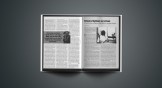
South African archbishop emeritus Desmond Tutu makes an address at Westminster Abbey in London during the memorial service for former South African president Nelson Mandela on March 3, 2014.
Retired Anglican Archbishop Desmond Mpilo Tutu, the man who became synonymous with South Africa’s nonviolent struggle against apartheid, died Sunday at the age of 90.
Tutu was diagnosed with prostate cancer almost two decades ago.
The feisty spiritual leader of millions of Black and white South Africans seized every opportunity at home and abroad to rail against the racially oppressive regime that stifled his country for decades. His struggles earned him the Nobel Peace Prize and appointment to the leadership of a commission that sought to reveal the truth of apartheid’s atrocities.
Nicknamed “the Arch,” the diminutive Tutu became a towering figure in his nation’s history, comparable to fellow Nobel laureate Nelson Mandela, a prisoner during white rule who became South Africa’s first Black president. Tutu and Mandela shared a commitment to building a better, more equal nation.
Tutu’s death “is another chapter of bereavement in our nation’s farewell to a generation of outstanding South Africans who have bequeathed us a liberated South Africa,” said South African President Cyril Ramaphosa.
“From the pavements of resistance in South Africa to the pulpits of the world’s great cathedrals and places of worship, and the prestigious setting of the Nobel Peace Prize ceremony, the Arch distinguished himself as a nonsectarian, inclusive champion of universal human rights,” he said.
Former US President Barack Obama hailed Tutu as “a moral compass for me and so many others. A universal spirit, Archbishop Tutu was grounded in the struggle for liberation and justice in his own country, but also concerned with injustice everywhere. He never lost his impish sense of humor and willingness to find humanity in his adversaries.”
“His legacy is moral strength, moral courage and clarity," Anglican Archbishop of Cape Town Thabo Makgoba said in a video statement. “He felt with the people. In public and alone, he cried because he felt people’s pain. And he laughed—no, not just laughed, he cackled with delight—when he shared their joy.”
A seven-day mourning period is planned in Cape Town before Tutu’s burial, including a two-day lying in state, an ecumenical service, and an Anglican requiem mass at St. George’s Cathedral in Cape Town. The southern city’s landmark Table Mountain will be lit up in purple, the color of the robes Tutu wore as archbishop.
In later years, Tutu carried his work for justice into other areas beyond racial reconciliation—from AIDS to poverty to gay rights.
“All, all are God’s children and none, none is ever to be dismissed as rubbish,” he said in 1999 to the “God and Us” class he taught as a visiting professor at Emory University’s Candler School of Theology. “And that’s why you have to be so passionate in your opposition to injustice of any kind.”
Long before South Africa elected its first democratic government in 1994, Tutu dreamed of and spoke fervently about “what it will be like when apartheid goes.”
But there were times in public speeches and in interviews when the cleric doubted whether, after decades of agitating for social justice, he would live to witness the decay of apartheid.
During the 1970s and ’80s, when other Black leaders critical of white majority rule were being violently snuffed out or silenced, Tutu’s prominence in the church made his one of the few Black voices strong enough to resonate around the world.
But at times, not even his stature in the church or powerful international religious connections were enough to keep the government at bay or from confiscating his passport. Protests by the world’s leading clerics, including the Archbishop of Canterbury, came but failed to buffer Tutu from the brutal regime.
Tutu said a disciplined prayer life helped him through apartheid and continued to sustain him decades later.
“I could myself not have survived had I not been buttressed by my spiritual disciplines of prayer, quiet, and regular attendance at the Eucharist,” he told Religion News Service in 2011.
In a 1992 interview with Christianity Today, Tutu explained his biblical basis for political activism on behalf of the oppressed.
“What is true religion?” he said. “In Isaiah 1, God says, ‘I will not accept a religion merely of outward observances. If you want to repent of all the wrong you have done, show it by doing justice—not just to anybody, but to the widow, the orphan, the alien, the most voiceless of the voiceless.’
“And what is the true fast?” he told CT. “In Isaiah 58, God says, ‘The fast I want is not that you be bent like a reed and starve yourself, but that you loose the prisoners’ chains.’”
Tutu also explained how religious activism can be taken too far. “We can easily think we have a hotline to God and that our purely human insights have divine approval,” he said. “And activism based on religion, in and of itself, is not necessarily a good thing. It has been religious fanatics who have done some of the greatest damage in the world….
“We can also be intolerant. Activism can mean dismissing those who hold a different point of view as being beyond the pale,” he told CT. “When we identify with a good cause, we must as well have proper distance from it and maintain respect for those on the other side.”
His bold protests against racial segregation and public campaigns for international economic sanctions made Tutu a thorn in the side of the South African government. But to many Blacks in the country, Tutu wasn’t radical enough. Some even chided him for being dedicated to crafting a nonviolent resolution with whites for racial reconciliation in South Africa.
Tutu never set out to be a controversial figure or even a priest.
In fact, as a child, Tutu was baptized a Methodist, but he later converted to Anglicanism with the rest of his family in Klerksdorp, South Africa, where he was born. The son of a schoolteacher, Tutu wanted to become a physician but with no money or scholarships available, he enrolled in a teacher-training program.
His career as a teacher was short-lived. After resigning from his teaching post in protest of the government’s educational policies toward Blacks, Tutu turned to the priesthood and to the church.
His would be a career of firsts. In 1975 Tutu was named the first Black Anglican dean of Johannesburg and in 1976 he was elected bishop of Lesotho, an independent African country encircled by South Africa. Two years later he became the first Black general secretary of the South African Council of Churches. Tutu used his post as general secretary as a platform to peacefully advance the anti-apartheid movement.
In 1984, the Anglican bishop was teaching in New York on sabbatical when he learned that he won that year’s Nobel Peace Prize for his nonviolent crusade against apartheid. His fellow Black South Africans bestowed a rapturous welcome on the laureate when he returned home and it was to them Tutu dedicated his prize.
“This award is for you, the 3 1/2 million of our people who have been uprooted and dumped as if you were rubbish,” said Tutu in a speech delivered at the headquarters of the South African Council of Churches.
It was a stellar year for Tutu. Just one month after winning the Nobel Prize, he was elected the first Black Anglican bishop of Johannesburg. There were expectations that Tutu’s episcopacy would squelch his passion and protest. That never happened.
In 1996, a decade after he was elevated to Anglican archbishop of Cape Town and primate of much of southern Africa, Tutu laid aside the staff of his episcopate, but he did not abandon the work that consumed much of his adult life—bringing freedom and healing to a racially fractured South Africa.
Tutu’s quest for a free South Africa put him on the front line of politics and protest, but he often dismissed claims that he had political ambitions. He would respond to the curious by saying: “It just so happens that I am myself Black, but the most important thing about me is that I am a Christian leader in South Africa at a critical period in its history. I have been given the ministry of reconciliation.”
Content with being “the priest,” even in the new South Africa, Tutu was determined to maintain what he called a “critical distance” from the government that being “the politician” wouldn’t allow. Said Tutu: “If it is evil, it is evil, and I’m going to tell you so.”
In the mid-1990s, Tutu was chosen to head South Africa’s Truth and Reconciliation Commission. Despite his illness and cancer treatment, Tutu kept watch over the commission as victims, perpetrators, the police, and the country’s former president aired the misdeeds of the era he fought against.
As the world watched the commission’s proceedings, television cameras often caught the quick-witted Tutu sobbing audibly over the recounting of some horrible atrocity that was being disclosed.
Years later, he continued to preach about the need for reconciliation and forgiveness.
“[F]orgiving is a gift to the forgiver as well as to the perpetrator,” he told RNS in an interview in 2014, when he coauthored “The Book of Forgiving” with his daughter Mpho Tutu. “As the victim, you offer the gift of your forgiving to the perpetrator who may or may not appropriate the gift but it has been offered and thereby it liberates the victim.”
In an adapted 1998 essay for Christianity Today, Tutu reflected on how if reconcilication could happen in South Africa, it could happen elsewhere:
We are going to succeed—why? Because God wants us to succeed for the sake of God’s world. We will succeed in spite of ourselves, because we are such an unlikely bunch. Who could ever have thought we would ever be an example, except of awfulness? Who could ever have thought we would be held up as a model to the rest of the world—not eminently virtuous—clearly not with an evil system. Not too bright. God wants to say to the world, to Bosnia, to Northern Ireland, et cetera: Look at them. They had a nightmare called apartheid. It has ended. Your nightmare too will end. They had what was called an intractable problem. They are solving it. No one anywhere can any longer say their problem is intractable. We are a beacon of hope for God’s world, and we will succeed.
Tutu was presented with top honors, including the Presidential Medal of Freedom in 2009 from then-President Barack Obama.
“As a man of the cloth, he has drawn the respect and admiration of a diverse congregation,” reads the medal’s citation. “He helped lead South Africa through a turning point in modern history, and with an unshakeable humility and firm commitment to our common humanity, he helped heal wounds and lay the foundation for a new nation.”
When Tutu was honored four years later with the Templeton Prize, regarded as the most significant award in the field of spirituality and religion, he credited the people of South Africa, as he had with his Nobel win.
“(W)hen you are in a crowd and you stand out from the crowd, it’s usually because you are being carried on the shoulders of others,” he said in 2013.
Tutu, who was lauded as the conscience of South Africa, lived a life of moral strength, vision, and hope that allowed him to serve his church and his people faithfully and at times with peace and humor even in the face of persecution.
“I am always hopeful. A Christian is a prisoner of hope,” said Tutu in his 1992 interview with Christianity Today. “What could have looked more hopeless than Good Friday? But then, at Easter, God says, ‘From this moment on, no situation is untransfigurable.’ There is no situation from which God cannot extract good. Evil, death, oppression, injustice—these can never again have the last word, despite all appearances to the contrary.”
Additional reporting by Andrew Meldrum and Christopher Torchia for The Associated Press and CT.
As China’s government bans unapproved religious services, sermons, education, training, and videos online—even link sharing—starting in March, I turn to Psalm 90.
Beijing's Xishiku Cathedral decorated for a Christmas Eve mass in 2019.
Many Chinese Christians are lamenting that the winter of internet mission in China is entering its darkest and coldest hour.
This week, Chinese state media reported the State Administration for Religious Affairs (SARA) has announced its “Measures for the Administration of Internet Religious Information Services,” which will come into effect on March 1 and will restrict online ministry to Chinese government-approved religious groups with special permits on government-approved websites.
“No organization or individual shall preach on the Internet, carry out religious education and training, publish sermon content, forward or link to related content, organize and conduct religious activities on the Internet, or live broadcast or post recorded videos of religious rituals…” without approval, stipulates the new regulation jointly formulated by five government bodies, including the Ministries of Public and National Security.
A few months ago, I had a dream in which this passage of Scripture came up repeatedly: “Lord, you have been our dwelling place throughout all generations” (Ps. 90:1). In the dream, I thought “Lord, what is this to remind me of?”
Then I woke up and learned that our ministry’s second main WeChat channel had been permanently shut down by the Chinese government, less than a month after our first channel was removed. Hundreds of thousands of followers just evaporated overnight. Having both major channels blocked meant it would be extremely hard for our ministry to regain as much influence as before.
As all Chinese Christians know, WeChat is a huge, all-powerful monster social media platform. Chinese people use WeChat to place orders, to pay for tickets, and to do almost everything. WeChat’s public accounts have been the most important portal and entry point for all media. Whether the People’s Daily or CCTV [China’s official state newspaper and TV channel], a WeChat channel is more important than one’s own media channels.
For a long time, Christian media was not allowed in China, whether newspapers, magazines, radio, or television. But digital media changed everything. A decade ago, I saw the great opportunities that new media such as Weibo [a Chinese Twitter-like “mini-blog” platform] and WeChat brought to Christian evangelism and began to focus on the development, promotion, and research of new media ministries.
Christian content has been almost omnipresent on WeChat for the past 10 years. Of course there has been good and bad content, and true and false information, and even an overload of religious information. Then unfortunately, almost every major Chinese Christian channel was deleted on WeChat by June.
The Chinese government introduced its most strict and thorough purge of Christian new media this year. And the set of “measures” announced this month shows us that there will be no reprieve in the future—it will only get worse. Some say these are the darkest days for China in decades in terms of freedom of religious expression.
For our ministry, it is also the greatest disaster, crisis, and challenge we have ever met. Over the past few months, my coworkers and I have been actively exploring coping strategies and discussing with other partner organizations, whose responses are similar to ours.
For example, many recommend keeping a low profile and avoiding sensitive terms, which we call “dancing on the red line.” We’ve done this well in the past, but now we don’t even know where the red line is—or rather, the red line is everywhere. We’ve put a lot of effort into this “dance,” and every article and video we posted was tested repeatedly to self-censor first. But is this still feasible today? Is it worthwhile?
The other response is to develop other social media platforms, but the Chinese government’s policy applies to all social media. When your readership reaches a certain size, you face the same risk. In fact, some e-zine, podcast, and video platforms have had strict restrictions on Christian content for years, while WeChat is actually the latest to take restrictive actions. Another approach is to build and enhance our own websites and apps and to build our own ecosystem. However, websites face the same problem and are even more likely to be blocked.
We need to recognize that China’s tight control is not just targeting Christianity, and it is not just for WeChat and social media. In the past few years, we have seen this applied to the entertainment industry and to private education, to internet giants and to common people from all walks of life.
It hurt the “get rich first” [former Chinese leader Deng Xiaoping’s slogan to encourage Chinese people to pursue personal wealth] group. It was used on Hong Kong, which had been promised “no change for 50 years.” Recently even Wei Ya, the livestreaming queen who has always proclaimed her love for China and the Chinese Communist Party, was heavily fined 1.3 billion yuan [more than $210 million] over tax evasion charges. Indeed, in such a dark time, there is no safe place and no effective strategy on the Chinese internet.
“Lord, you have been our dwelling place throughout all generations.” These are the opening words of Psalm 90, the prayer of Moses the man of God. On that frustrating, angry June morning, these words were full of certainty, solidity, and brought me comfort. The verse reminded me that in the face of such challenges, my first reaction should not be to rush to find a new channel or a new platform, because in these darkest of times, there is no safe place.
Like the Chinese saying goes, “Under the overturned nest, how can there be any unbroken eggs?” Nothing is eternal in this world. As a ministry leader, as a Christian, as a child of God, the first thing I need to remember is, “Lord, you have been our dwelling place throughout all generations.”
Of course, it’s still important to think about specific countermeasures. Yet all the work we have in our hands is so fragile. The newly announced measures can basically be summarized in one simple sentence: Nothing is allowed.
But so what? The Chinese people have always had an attitude of “you have a policy at the top and I have a way around it at the bottom.” To this day, I still firmly believe that the greatest feature of new media is that it has overturned the power, capital, and monopoly of elites over the right to speak. This is its essential characteristic and will not change. The future will continue to see a competition between strong measures and (hopefully) even stronger countermeasures.
Restricted by the COVID-19 pandemic, I rarely went out in the past two years, and I had the opportunity to learn how to grow flowers. Interestingly, after we moved to Michigan, I learned that many flowers and trees are planted in the fall and the cold winter makes them stronger and bloom earlier. It turns out that fall is also the season of planting; the seemingly bleak winter is actually another season of growth.
In this bitter winter of WeChat and the Chinese internet, online missions among overseas Chinese churches is still growing. On December 17, Reframe Ministries and other partner organizations held the 13th Internet Missions Forum on Zoom, and this year’s theme was “Opportunities and Challenges for Church and Mission in the Metaverse Era.” The number of participants quickly reached the maximum of 500, greatly exceeding our expectations. In order to facilitate access for participants from China, we had to ask North American participants to exit the Zoom and to watch the YouTube livestream instead.
Does the implementation of the SARA restrictions mean that such online meetings will be banned come March? Or will we have to go to the metaverse? Topics such as the opportunities and challenges brought by the coming metaverse era to internet missions may need our attention and focus more than the new regulations.
Publishing is the theme of our own new season of ministry, but we will continue the production of videos and the operation of new media. We believe that every period and every season has God’s will and is in God’s control, whether it is morning or evening; spring, summer, autumn, or winter; sowing, watering, or harvesting. Let us not be idle, but witness together to the Lord of the season, the God who make seeds grow (Eccles. 11:6; 1 Cor. 3:7).
In the last verse of Psalm 90, Moses prays, “May [the Lord] establish the work of our hands for us—yes, establish the work of our hands.”
Jerry An is a Chinese mission pastor and executive director of the Chinese division of Reframe Ministries. He is producer of the program “Speaking by Faith” and publisher of the book series “New Songs for Wanderers.”
Speaking Out is Christianity Today’s guest opinion column and (unlike an editorial) does not necessarily represent the opinion of the publication.
Translation by Sean Cheng
Even with lower attendance, congregations are adapting their ministries and launching new ones.
More than half of Christian congregations say they have started a new ministry or expanded an existing one during the COVID-19 pandemic, according to a new survey.
On average, in fact, these Christian houses of worship began or broadened more than three of their outreach activities in response to the pandemic.
“The level of new and intensified social outreach and community ministry undertaken by the nation’s churches is monumental,” reads the report by the Hartford Institute for Religion Research.
The second installment in a five-year project that began earlier this year called “Exploring the Pandemic Impact on Congregations,” it is based on a collaboration among 13 denominations from the Faith Communities Today cooperative partnership and institute staffers.
If their findings are representative of the roughly 320,000 Christian congregations in the country, the institute said, the researchers estimate that nearly 175,000 churches launched or expanded ministries, funds and supplies in response to the pandemic over the past two years.
Overall, almost three-quarters (74%) of churches have offered social support during the pandemic and close to two-thirds of congregations say they have been involved in new ministries.
The new findings, a November survey drawn from 820 responses from representatives of 38 Christian denominational groups, showed significant changes in congregations’ attitudes toward change, particularly increasing diversity.
Less than three-quarters (73%) agreed in 2020 that their congregations were willing to change to meet new challenges. That increased to 86 percent in November.
There also seemed to be greater interest in striving to be diverse, with 38 percent describing themselves as doing so in November compared with 28 percent in summer of 2021 and 26 percent before the pandemic and before the majority of the 2020 protests spurred by the murder of George Floyd, a Black man who died under the knee of a white Minneapolis police officer.
But even as congregations considered new ways of operating, an increasing number are concerned about their future, with 23 percent saying they are worried about their ability to continue, compared to 16 percent in the summer.
The institute’s researchers also estimated that some 200,000 church members have lost their lives due to COVID-19.
The percentage of churches reporting deaths within their membership increased from 17 percent in the summer to 28 percent in November, when the second survey was conducted. The average number of deaths among those reporting losses in their congregation was 2.3, up slightly from 2 in the summer.
“This is a sobering picture; however, we would have expected an even greater loss, given the aging population of regular churchgoers,” Allison Norton, co-investigator of the study, told Religion News Service in an email.
The project’s first report, based on responses from summer 2021, showed that about a third of congregations had increased requests for food. About a quarter received more requests for financial assistance during the pandemic. The November survey found that 22 percent said they had added or increased food distribution and 21 percent had enhanced or begun financial assistance for their community.
Norton said churches “have risen to the occasion,” during a difficult time for the country.
“There is a willingness in many churches to respond to the challenges of this time with experimentation and change,” she said.
A larger percentage—about 28 percent—have started or expanded community support ministries, using phone trees to inform and encourage members and nonmembers or offering elder care options, such as providing rides to medical appointments.
Even as sanctuaries were closed to in-person worship and other meetings moved online, about a quarter of congregations expanded the use of their buildings for other activities, from helping homeless people to offering child care and tutoring.
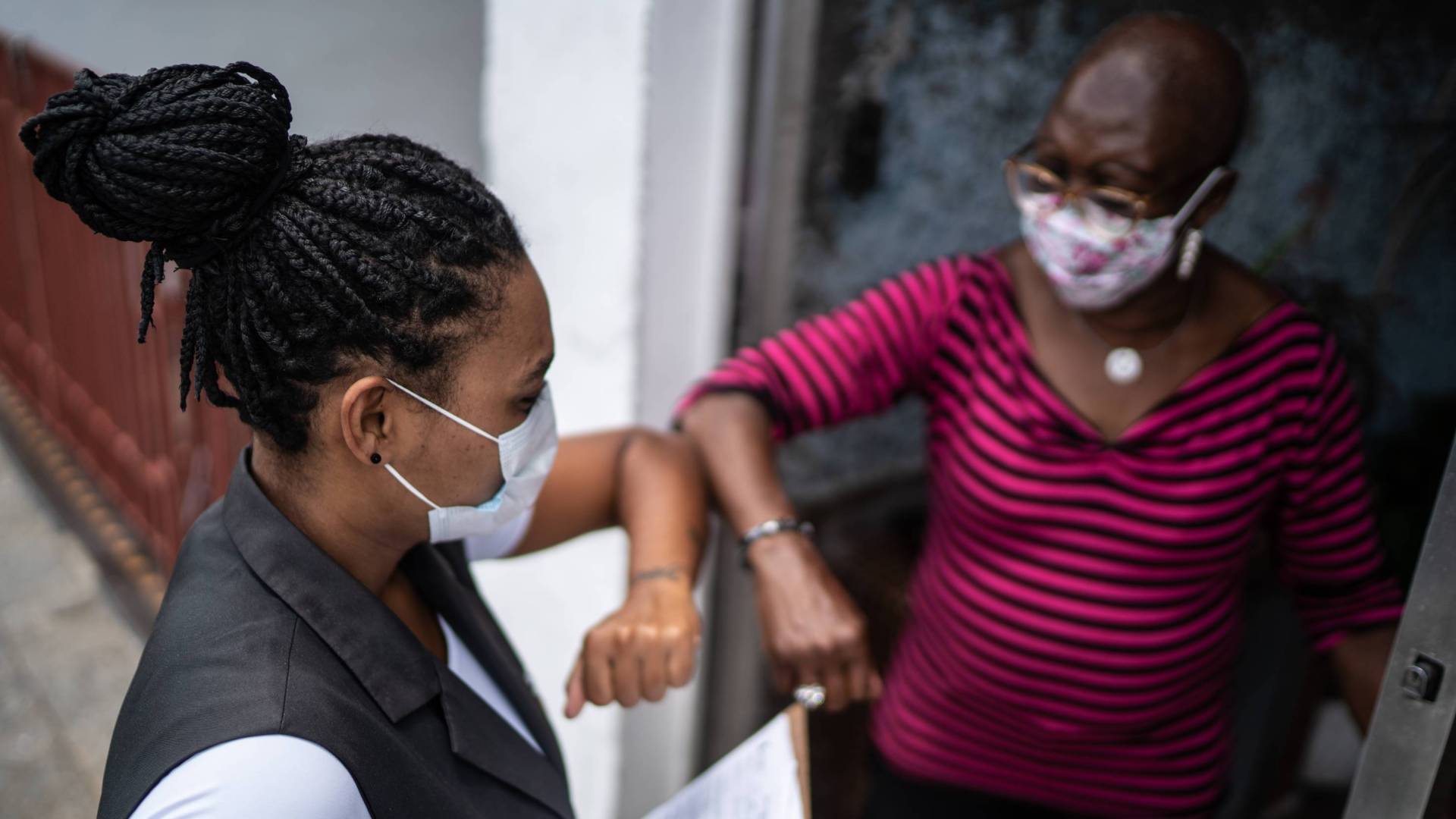
About a fifth of congregations were involved in ministries specifically tied to the pandemic, such as hosting vaccine clinics, making masks or holding celebrations for front-line workers.
Twelve percent started or increased mental health ministries and 6 percent said they had new or expanded ministries related to social action, with some involving voter registration or anti-racism initiatives.
In a finding similar to the first study, most congregations said they are using a hybrid form of worship, with 85 percent offering both in-person and virtual options. Fifteen percent of those surveyed in November said they were solely gathering in person and 3 percent opted only to meet virtually.
While attendance remains depressed, the survey found the rate of attendance decline between 2019 and 2021 was 9 percent. It had been down 12 percent in the summer.
The number of congregations reporting a severe decline of 25 percent or more fell from 35.2 percent in the summer to 30.3 percent in November. And the number reporting growth of 5 percent or more increased from 28 percent to 37 percent.
With the omicron variant contributing to the continuing pandemic, researchers acknowledge it is hard to predict future plans for activities such as fellowship events and religious education, which were still below pre-pandemic levels.
“For many churches, their situation will never be the same,” the report concludes. “They will never be the same because of the loved ones and members that they have lost. They will never be the same because of the ministries that they have started and expanded.”
The findings in the new report, “Congregational Response to the Pandemic: Extraordinary Social Outreach in a Time of Crisis,” have an estimated overall margin of error of plus or minus 4 percentage points. It is part of a multiyear project funded by the Lilly Endowment.
A meditation on the line between good and evil that runs through each person.
In any polarized situation, the overriding human tendency is to draw a line with oneself and one’s allies on the good side and the opposing party on the wicked side, with very little attempt made by either side to understand the other. As these positions harden, it becomes almost impossible to achieve the insight necessary for a breakthrough.
For some years now I have kept a file that I call “The Line Runs Through.” This title is from Václav Havel, former president of the Czech Republic and one of those who resisted the Communists and was put in prison for his activities. When he came to power after the “Velvet Revolution,” Havel was conspicuously forgiving toward his former enemies and other collaborators. Some blamed him for this, but he maintained his position. In the central European regimes of the ’70s and ’80s, Havel said, “The line [between good and evil] did not run clearly between ‘them’ and ‘us,’ but through each person.”
The line between good and evil runs through each person. These words find an echo in Paul’s letter to the Romans: “I do not understand my own actions. For I do not do what I want, but I do the very thing I hate. … I can will what is right, but I cannot do it. For I do not do the good I want, but the evil I do not want is what I do. Now if I do what I do not want, it is no longer I that do it, but sin which dwells within me. So I find it to be a law that when I want to do right, evil lies close at hand” (7:15–21, RSV throughout). Is there anyone who does not recognize this?
The human being is in the grip of impulses that are more powerful than our wish to do good. Our Lord wants us to know of the power of these forces. In the words of Jesus in the Gospels, in the writings of Paul, we are told over and over in various ways that the powers we face are untiring, malevolent, and extremely clever. These powers seek nothing less than our destruction. But we are not defenseless. The apostle counsels us:
Put on the whole armor of God, that you may be able to stand against the wiles of the devil. For we are not contending against flesh and blood, but against the principalities, against the powers, against the world rulers of this present darkness, against the spiritual hosts of wickedness in the heavenly places. (Eph. 6:11–12)
The forces that we face are overwhelming, and the suffering that they cause is incalculable. The Christian should not be deceived about this. Jesus wants us to know ahead of time that the Christian life is going to be a long struggle against evil, sin, and death—most of all, the evil, sin, and death that threaten our own being.
It is important that we use the word “we” when we confess our sins during corporate worship. Human solidarity in bondage to the power of sin is one of the most important of all concepts for Christians to grasp. At the same time, though, saying words of confession communally in church does not always cause us to appropriate its truth deep in our being.
All of us need to say also (in the words of Thomas Cranmer’s General Confession), “I have erred and strayed from God’s ways like a lost sheep. I have followed too much the devices and desires of my own heart.” This is not so easy for us. All of us, to one degree or another, participate in that psychological phenomenon famously called denial. Denial, or avoidance, is a way of keeping consciousness of sin at bay. We think we can make sin go away by pretending it is not there; we are like the little girl who says, “I’ve got my eyes closed so nobody can see me.”
The line between good and evil runs through each person. The truly tragic person is the one who causes harm and never repents of it, never admits it even internally. That person is blocked from receiving the promise of the gospel that God’s grace is retroactive. If it weren’t, the promise it holds out to us would be empty. God’s power is able to make right all that has happened in the past. Paul seldom uses the word forgiveness. His stronger word is justification. Justification means that we sinners will not only be forgiven, but also justified, which means that we will be set right by the power of God, and all who have suffered as a result of our faults will have perfect restitution.
How can this be?
The sacrifice of Jesus our Lord is this: He has gone into the day of judgment utterly alone, separated from the Father, taking the sentence of condemnation upon himself, bearing it away from us. This is the gospel. This is the good news of the Christian faith. Neutrality is no longer possible. Satan is slashing and burning, but he is in retreat. His time will come. There is no longer any room for self-deception, excuses, denial, or evasion, for, as C. S. Lewis puts it in Mere Christianity, “Fallen man is not simply an imperfect creature who needs improvement; he is a rebel who must lay down his arms.” It is the Lord Jesus Christ who disarms us.
But listen: We are not disarmed in order to be disempowered. There is “power in the blood of the Lamb.” It is the power of the Word of God that spoke, and it was so. It is the power that overcame Satan in the wilderness. It is the power that lifted the paralyzed man to his feet. It is the power that spoke through the voice of the Son of God when he said, “Peace! Be still!” and the wind and waves obeyed their Creator. It is the power that sustains every Christian in the struggles of this life.
This power is able to do things that we can only dream about. For this is the might of the God in whom Abraham believed, the God whose power “gives life to the dead and calls into existence the things that do not exist” (Rom. 4:17). The God who reckoned Abraham righteous is the God who justifies sinners. For the righteousness reckoned to Abraham was not for his sake alone but for ours also. The promise of God to sinners today is that “it will be reckoned to us who believe in him that raised from the dead Jesus our Lord” (Rom. 4:24).
Excerpted from Means of Grace: A Year of Weekly Devotions by Fleming Rutledge, edited by Laura Bardolph Hubers ©2021 (Wm. B. Eerdmans Publishing Co.). Reprinted by permission of the publisher.
Jimmy Darts has raised tens of thousands of dollars for strangers through and for viral videos on social media.
TikTok star Jimmy Darts creates content that can best be described as “stunts of kindness.”
The 25-year-old has given flowers to random women in parking lots, bought toys for children at toy stores, and partnered with a dealership in Southern California to give a homeless man a car. The ideas and the funding for his generosity come from his 4 million followers. In many of his viral videos, Jimmy Darts approaches a stranger with a small ask—say, help him pick out a gift for his mom at Walmart or let him cut in the checkout line—and then, if they agree, he’ll hand over $500 and thank them for their kindness. Or in the case of one lucky family at Christmas, $10,000 in cash.
Jimmy Darts, whose real name is Jimmy Kellogg, exhibits a kind of boldness in his videos that seems, at times, otherworldly. Would you go into a Rolex store and ask why everything is so cheap? Enter a nail salon and ask for the longest toenails possible? Correct a stranger’s form at the gym?
His sense of generosity stems from his faith and his desire to use his platform as a force for good.
“What [God] did for you on the cross is so radical, so wild, that it would be silly to think that you could give, bless people, and God wouldn’t provide,” he told fellow alumni at the Bethel School for Supernatural Ministry. “I like to do generosity videos because if I’m going film something … I’d like it to be centered around good clean fun—but doing it in a kingdom way.”
Earlier this year, Kellogg shared his testimony and the story behind his channel on the Fail Journal podcast.
He said as a teen he’d film his own antics (such as punching his own face until it was covered in blood) to get a rise out of the crowd. At a party in the woods one night, he burned holes in a pair of Jesus socks from Urban Outfitters. He feared his parents’ punishment and prayed for his socks.
“I throw them in my underwear drawer, wake up the next morning before my mom comes upstairs,” Kellogg says in the podcast, “and I kid you not, I grab the socks out of my drawer––no holes in them.”
He went onto watch a Billy Graham video, he accepted Jesus, and the rest was history––or, perhaps, merely the start of a different story.
After becoming a Christian, he erased his entire internet presence and stopped making videos for several years. At the time, he said, he had a following of about 18,000 subscribers on YouTube.
In the interim, he attended the Bethel School of Supernatural Ministry, went to a capitalism conference, learned how to start his own Amazon business to generate enough income to live on, and eventually reemerged on YouTube and TikTok in 2020.
“I felt released from God, I knew I had no idols, I knew my identity was secure,” he said.
Now, his mission is to preach generosity: “Just start being generous in any way you can, and you’re going to see some wild, awesome things take place,” he promises.
Kellogg’s clips begin with him smiling and reading the challenge to the camera and usually end with him dancing with the recipient of the cash. These hit the emotional beats of the kind of feel-good news segments that get shared by earnest relatives who want to see some good news for once. (Indeed, outlets like Fox 10 News, indy100, and ET Online have all run stories on Jimmy Darts’s giving.)
“The thing that drew me the most was the playfulness in his video, seeing people singing songs with him and seeing people dance with him,” said Andrea Nwabuike, a mental health counselor and freelance writer based in Toronto. “I don’t know what happens after the video. But I think that moment is refreshing for me to see.”
Within the faith-focused genre on social media, Nwabuike noticed that the Jimmy Darts videos stood out. Christian content, she said, “is often about what’s wrong with culture or what people are doing incorrectly,” she said, but he is “just living out what he ultimately believes.”
Plenty of other online creators operate around a similar formula of stunts and surprise giveaways. Kellogg described his social media as the intersection of MrBeast, Yes Theory, and Danny Duncan, all of whom are known for pulling extravagant stunts online.
MrBeast, whose channel has 74.9 million subscribers, creates videos like “Offering People $100,000 to Quit Their Job,” while Yes Theory (7.08 million subscribers) recently uploaded a video based on “Asking Strangers in Elevators to Leave the Country with us!!”
As for Danny Duncan—I was once in Sacramento, California, hanging out with friends, and I noticed hordes of teenagers swarming Duncan in the street. According to his YouTube channel, he seems to be living every 15-year-old boy’s dream, garnering millions of views by driving tanks and blowing up Teslas.
This genre also has a darker side. Vlogger and prankster David Dobrik became famous for giving Teslas to his friends; however, his good deeds hit a wall when past collaborators accused him of bullying and abuse. He also lost goodwill when people began to cynically assume any good deed was just done for the cameras.
“Every move now is like, ‘I don’t want people to think I’m doing this for this,’” Dobrik said in a June 2021 Rolling Stone profile. “You’ll never, ever get people to believe that your intentions are 100 percent pure.”
The ethical considerations of performative generosity become even more sensitive when it comes to filming the people Kellogg often interacts with: people on the streets, at gas stations, living in their cars, shopping at Walmart. In recent years, vloggers have been criticized for exploiting homeless people in their videos.
Kellogg also frequently crowdfunds money for the people he features in his videos, posting their Venmo handles and encouraging his followers to give. Last month, he shared the Venmo account of an Uber driver and crowdfunded over $1,600 for him; in July, he paid for a follower’s rent and a partner company also gave away rent to one of his followers as well.
He told Fail Journal in May that he has a goal of giving away more money than anyone in history. He realized direct funding via Venmo and CashApp allows him to fundraise and give at high amounts—often tens of thousands of dollars per recipient—without having to be rich himself.
Nwabuike said that she hasn’t given to the people that Kellogg publicly helps online, partially because he mostly crowdfunds through Venmo, which isn’t available outside the United States, and partially because she’s unsure where the money is going and how it’s being used.
“The one thing that I have thought when watching his videos is, it would be nice if there were some follow-up with a community, for the people that he's helping, to continue to journey with,” she said. “He does three-part videos where you see a little bit of the person’s journey, but then there’s nobody else there that’s really being connected, or even the people who are donating and giving him a platform to set up. How deep are those relationships and how sustainable are they?”
The perk of digital giving, through which Kellogg has raised thousands of dollars, is that people can quickly click to donate and then move onto scrolling through more videos. But it also allows generosity to take place in a disconnected way, for the instant satisfaction of watching a video with a happy ending.
“One of the biggest ways social media has impacted our faith is that it feels like it has to be instant,” Heather Thompson Day, a communications professor and host of the CT podcast Viral Jesus, told me. “We are so used to instant gratification, it can be difficult to understand a God who takes time and a God who often responds in silence.”
By both consuming and creating online content, users can fall into the trap of believing that real life ought to happen instantaneously, much like it does online–– which, Thompson Day points out, is not necessarily reflective of how life actually happens. Years pass quickly but still move moment by moment, and most of the changes that appear in people’s lives are incremental, barely detectable. Genuine relationships, which usually take time to build, often form the cornerstone of the most deeply felt impact and transformation, not flash-in-the-pan donations.
A flash in the pan that’s a $50 Venmo payment with the added note of “God bless you!” probably doesn’t hurt, though.
Kellogg is young, smiley, with a friendly voice that makes strangers more willing to hear out his requests and followers more likely to keep listening to his videos. He has no desk job but appears on camera as a kind of neighborly man about town. (You can see his acting profile online, and he even appeared on an extreme mini-golf game show.) His project fits with a kind of evangelical-tinged American dream: Do things your way, but also, do them for God.
As he said in the Fail Journal interview, Kellogg has a goal of hitting 10 million TikTok followers, he wants to reignite direct giving, he wants to change the world for the better, and he wants kids to stop falling asleep in church.
The Christian creator has a vision beyond social media, including a “house party church,” a rented mansion funded by businesses and sponsors where he could host waterslide baptisms and party without drugs or alcohol. It’s a vision fueled by “radical optimism.”
“Become radically optimistic,” he says, “regardless of your situation, and literally opportunities will flood to you.”
Rachel Seo is a freelance writer in California covering faith, pop culture, and technology.
2021 was a hard year to be a pastor. Here’s what conversations were happening.
2021 was a hard year to be a pastor. In fact, a recent study shows that a number of them are considering leaving the pulpit due to the countless difficulties of doing church ministry today.
Many of our top CT Pastors articles were concerned with what it means for clergy to navigate the COVID-19 pandemic, social justice issues, the deconstruction movement, and church abuse scandals.
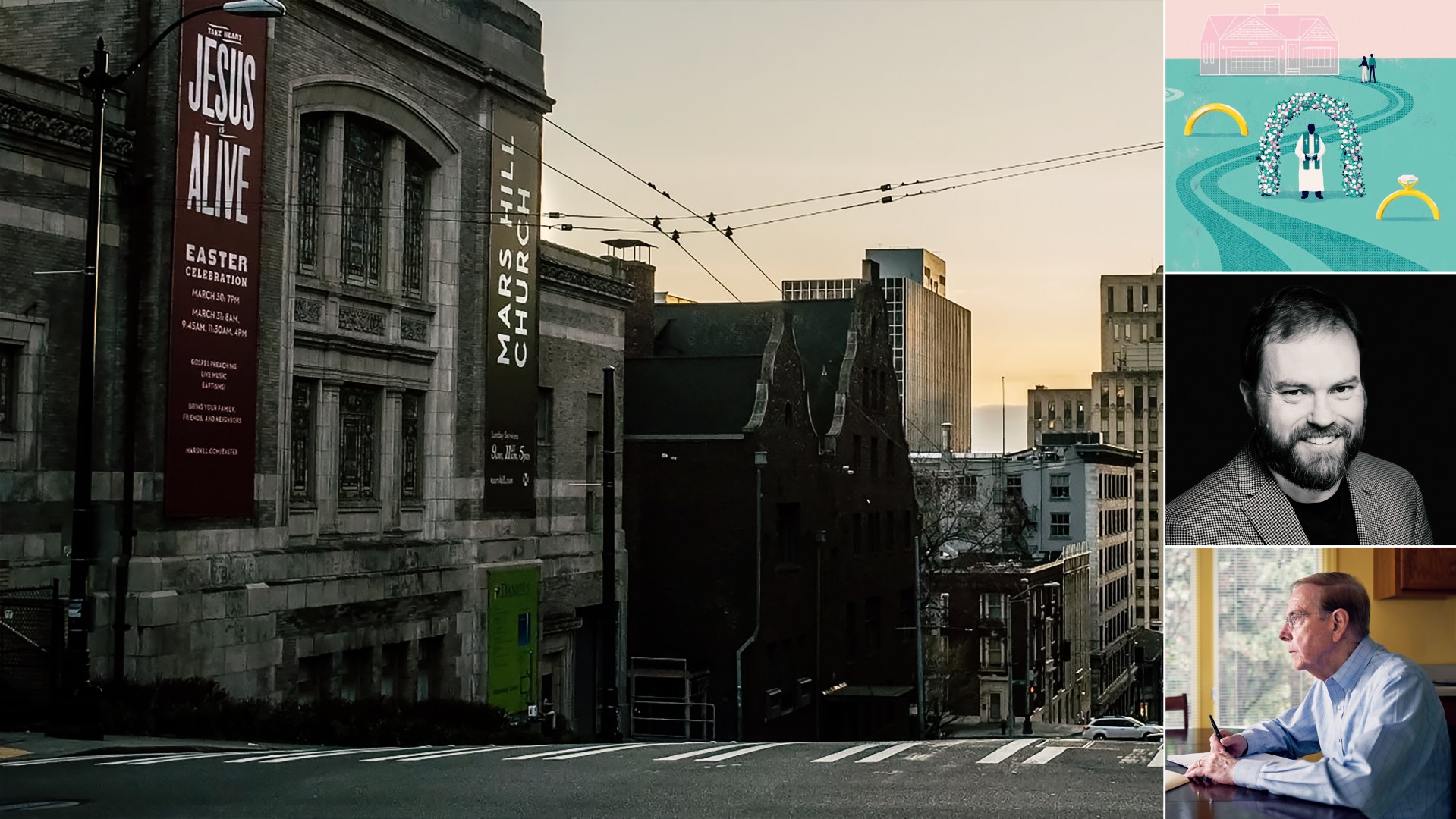
Can the church and its congregants continue to set themselves apart from the culture of this world? How can pastors maintain their hope for the future after the deaths of mentors and the downfall of so many influencial church leaders? What can we learn from past abuse scandals and stories, like the rise and fall of Mars Hill Church? How can we listen to and love the skeptics and exvangelicals among us?
Mike Cosper’s Mars Hill podcast was one of the top trending topics among pastors, but there were also a few reminders of some good examples set for us in leaders like Gary Chapman, John Stott, and Thomas McKenzie.
These and the rest of our top 10 stories of 2021 are listed below in descending order, ending with the most read.
You can find these and other top CT stories of the year here, a number of which are also offered in hundreds of CT Global translations.
Check out the rest of our 2021 year-end lists here.
Christian leaders and musicians in nine countries and territories share their favorite Western and local holiday tunes.
Christmas songs featuring Jesus don’t top the global charts, as a recent CT piece noted. Of those that have gained popularity, many are translations of Western carols. Though they may not be indigenous to that country, they’re beloved for their theological truths and their retelling of the Christmas story.
We asked Christian leaders and musicians representing nine countries and territories to share their favorite songs, both those originally from the West and ones closer to home.
“La Navidad de Luis,” written by León Gieco, is one of my favorite Christmas songs because it reflects on the values of empathy and solidarity. The song mentions that Luis does not accept the wine and the panettone given by his boss because he understands that charity or pity do not mitigate poverty and oppression. Instead, he chooses to accept words spoken by his own father, words that give him life: Jesus is like me.
My favorite Western Christmas song is “Gloria in Excelsis Deo (Angels We Have Heard on High).” As a child, I always lived in an urban setting, but my home had a huge terrace where I could swing for hours, seeing shapes in the clouds and imagining stories. So during the Christmas season I would open my eyes wide to see the multitude of angels singing “Gloria in excelsis Deo!” I love this carol even today because I can accept the invitation to adore Jesus and do so in tune with angels, mountains, and shepherds.
My favorite Chinese Christmas song is “The Starlit Blessing.” The lyrics of this song are from Luke 2:8–14. The lyrics are very simple and easy to remember, yet they clearly express that the birth of the Lord Jesus lighted up the dark hearts of the world and awakened the sleeping spirits of humans. He is the true light of the gospel, and the promised Messiah has come quietly. Thanks be to the Lord!
Our country’s favorite Western Christmas song is “Silent Night.” It is a beautiful melody, and it gives a very peaceful feeling. The progression of the three sections of lyrics shows that Jesus Christ is our only hope. The first section speaks of the Virgin Mary and the holy infant so tender and mild. The second section speaks of the shepherds and heavenly hosts rejoicing. The third section reaches its climax: God is love, and his love is made known through his holy Son, Jesus Christ, who brings the redeeming grace.
Most of the Christmas songs that I sing were translated from English. “Joy to the World” was the first Christmas song I heard when I celebrated Christmas as a Christian, and we sang it in Chinese. Every time I sing this song, I’m reminded of God’s glory.
“O Come, All Ye Faithful” is my all-time favorite Christmas song. The Christmas story is about the bad news that no matter how good or smart we are, we can’t save ourselves from trouble—because the deepest trouble comes from within us. However, it’s also about the good news of Christ, who came to this world to save us. When I sing this song, my heart is filled with joy and solemnness and awe of Him.
“Feliz Navidad” by José Feliciano is played on the radio nonstop during Christmas, not only in my country, El Salvador, but all around the world. Surprisingly, we love a lot of salsa and merengue and tropical music during Christmas because it means we can dance during family get-togethers. You’ll hear American Christmas carols at the mall, but in reality, salsa music is what everyone is dancing and celebrating with. My favorite Western Christmas songs are anything that talk about snow and cold weather, like “Let It Snow” or “The Christmas Song.” Where I grew up in El Salvador, it’s 90 degrees during Christmas, so these songs would take me to a place I could only dream of or see in movies. I didn’t grow up with chimneys, snowmen, or reindeer, so I just love the classics.
My favorite Christmas song in Wolof, my local language, is “Cha Bethlehem (In Bethlehem).” This anthem tells the whole story of Christmas: It narrates all the events in Bethlehem at Jesus’ birth, the annunciation by the angels, the stars in the sky, the Magi. The story of Christmas is simplified for people of all ages and educational backgrounds to understand in their mother tongue.
My favorite Western song is “O Come, All Ye Faithful.” It is so special to me because it’s a call to all who believe in Jesus to behold the newborn King, to march in triumphantly and see where he lies, the King of angels. It’s a call to adore and worship at his feet.
Originally written in Latin, “Veni, Veni, (O Come, O Come) Emmanuel” is very close to the Italian “Vieni, Vieni, Emmanuel.” My soul is always moved by the instrumental version with a majestic cello, bringing me to a place of longing. The line “mourns in lonely exile” in the original Latin is gemit in exilio, which literally would translate to “groans in exile.” It makes me think of the groaning of God’s people in Egypt (Ex. 2:23). What a powerful image of Immanuel’s coming!
I love that “O Come, All Ye Faithful” is a worshipful song. “O come, let us adore him”—I often sing over and over just that one line. It invokes my soul to do what we were ultimately created for: pure adoration of Christ as Lord. It invites the faithful to come and behold. It summons choirs of angels. Indeed, because he came, we are joyful and triumphant!
My favorite Christmas song from my country is “Yesus Arti Natalku (Jesus, the Meaning of My Christmas).” The beautiful lyrics were written by Rev. Budianto Lim, my husband, and the melody was composed by Cindy Pelenkahu, a member of Bukit Batok Presbyterian Church (Indonesian) in Singapore. Beginning with a Christmas message on the birth of Christ to save humanity, the song ends with a personal response to serve and worship the Savior: the real meaning of Christmas.
My favorite Western Christmas carol is “Mary’s Boy Child” by Jester Hairston. The song has a complete Christmas story in it and the key message that speaks to me to this day: “And man will live for evermore, because of Christmas Day.” Christ was born so that I may live. Thank you, my Lord.
Portugal, as a Catholic country, has several pieces of sacred music for Christmas, but they are not part of the over 150-year evangelical tradition. Evangelical churches borrowed from the Protestant musical tradition and translated those Christmas hymns into Portuguese. My favorite is “Joy to the World.” This song is a constant reminder of the joy we have, not in our circumstances, but in the Lord.
The more traditional song “O Come, All Ye Faithful” is pure praise and adoration—something we don’t do enough of. The theology is simple, and it stirs the heart and mind to focus on God becoming flesh!
Also, the song “Mary, Did You Know?” gives us the complete story of Jesus. Not just his birth but also his identity as God and His work on the cross. It points us to the past, the present, and the future.
I love our cultural Christmas songs or aguinaldos, which are very similar to Christmas carols but with a Caribbean flare and instruments. Our music includes percussion instruments like pleneras, maracas, güiros, and tambourines, as well as Spanish guitars and cuatros—a blend of instruments that results from the melting of our three cultures: Taíno Indian, Spaniard, and African. The songs remind me of families getting together to visit different homes throughout the night and staying out until 6 in the morning. The last house welcomes everyone with a breakfast feast of café (coffee), bread, and fruits.
My favorite Christmas song is “El Niño Jesús” by Tony Croatto. It’s about how people sometimes can be so religious that they forget the true meaning of Christmas. It brings me joy and sometime tears.
My only memory of Western Christmas carols was while I was in high school in Miami, where I learned “Little Drummer Boy.” I love these lyrics:
I have no gift to bring …
That’s fit to give our King …
I played my drum for Him …
I played my best for Him …
Then He smiled at me.
My favorite Ukrainian Christmas carol is “Спи, Ісусе, спи! (Sleep, O Jesus, Sleep!).” Many Ukrainian carols are written in minor keys, reflecting the history of the country and the suffering it has endured. This carol is unique in the ways that it offers love and empathy, by trying to comfort baby Jesus and protect his sleep. At the same time, it reveals that we are the ones who will prepare a cross for him to endure on our behalf. Its final lines read, “Let me beside him take a rest / Here on earth and there in heaven.” They offer the hope and assurance that with him rests the peace, no matter what.
“Mary, Did You Know?” is my favorite Western Christmas carol. It’s a true mystery beyond comprehension to see the great I Am as a baby boy. At times I wonder if it is even fair to ask Mary if she knew. Do we always know? How do you spot the sacred in the finite? It is risky to see and to be seen like that. Nevertheless, she treasured and pondered all the memories in her heart after she agreed to “let it be to me according to your word” (Luke 1:38, NKJV).
This year, Christians engaged with church abuse scandals, political concerns, global events, and more.
In a year that has been difficult for so many people around the world, Christianity Today’s readers came to the site wondering about the downfall of influential Christian leaders of our day, looking for advice on navigating political controversies and social tensions, and wanting to understand the unprecedented division in many churches today.
The most-viewed CT article of 2021 was our in-depth investigative report about Ravi Zacharias’s sex abuse scandal, which was translated into seven different languages and read by about two million people around the world.
CT reported on the independent investigation after RZIM’s staff pushed its leaders to take responsibility and cautioned our readers not to diminish Zacharias’s abuse by saying “We’re All Sinners.” We also covered the fallout—when RZIM declared it would no longer do apologetics, when the CMA denomination revoked Zacharias’s ordination, and when his books were pulled by HarperCollins publishing.
Our 20 most-read stories of the year are listed below in descending order, starting with No. 20 and ending with No. 1. You can find these and other top CT stories of the year here, a number of which are also offered in hundreds of CT Global translations.
Check out the rest of our 2020 year-end lists here.
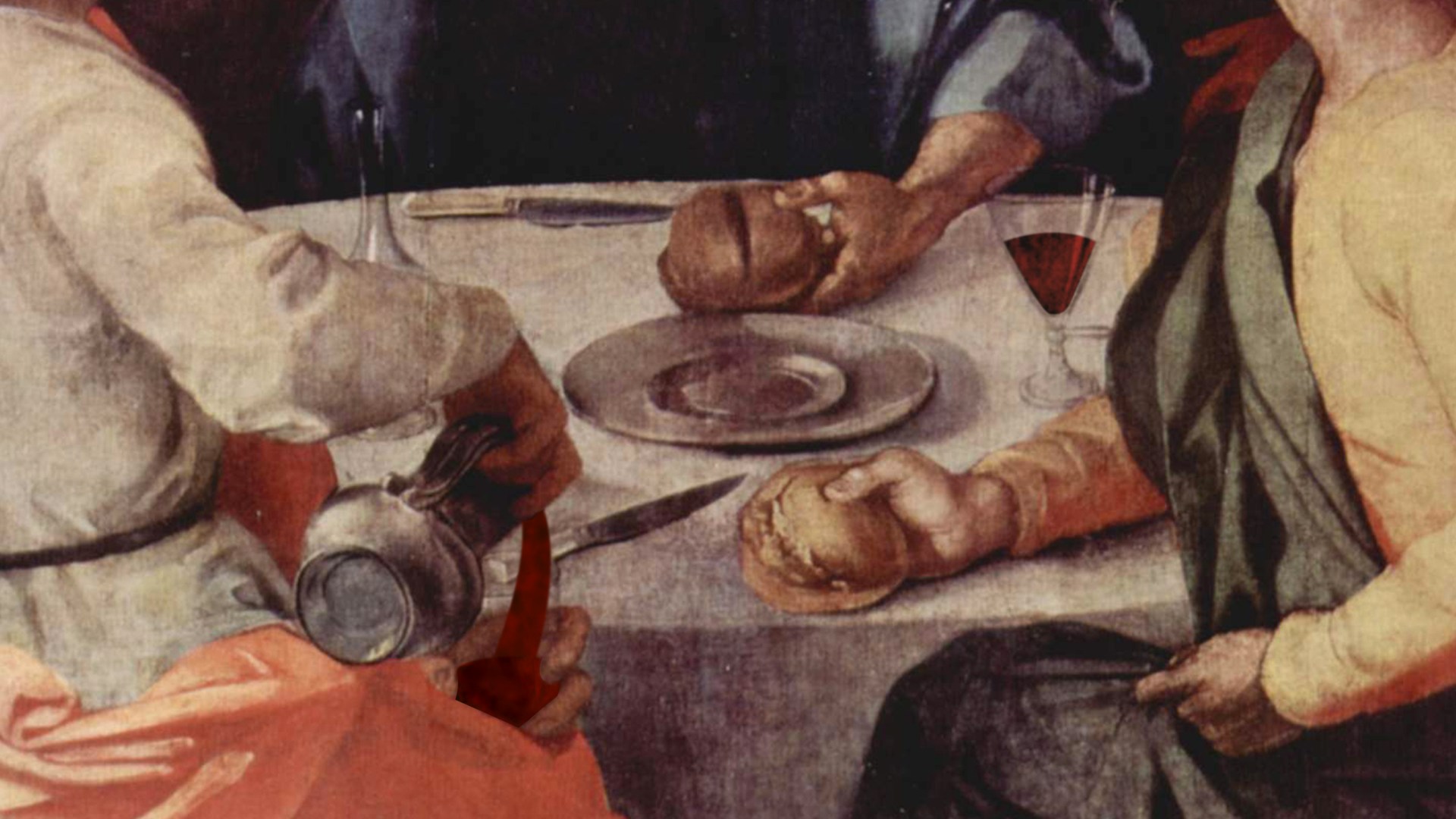
The story of our salvation starts with forbidden fruit and ends with bread and wine at the Lord’s Table.
Last Supper at Emmaus by Jacopo Pontormo
On a snowy day in downtown Chicago, as the first day of Advent drew near, I sat with my upper-class systematic theology students to discuss the meaning of the sacraments.
I opened my lecture with a simple question: “If forbidden fruit brought sin, can bread and wine bring redemption?”
At first, some of my students sat and scratched their heads. But over the course of our conversation, the class soon began to understand the theological dimensions of what we eat and drink in this life—and some of these insights are especially relevant to the season of Advent.
Advent, perhaps more poignantly than any other time in the liturgical calendar, reminds the church that it is in a pregnant pause. That is, we find ourselves suspended between the first and second Advents: Christ has died, Christ has risen—and Christ is yet to come again.
In the meantime, while we watch and wait for Christ’s return, we have been charged to partake in the Eucharist, or the sacrament of Communion. So during the Christmas season, we should eat and drink not only in remembrance of Christ’s birth but also in anticipation of his promised bodily return.
But not just any meal nor any table will do.
Whether your church uses bread or wafers, wine or juice—and whether you gather weekly, monthly, or quarterly—the Lord has called us all to gather at his table: the table he himself has set, where we might be fed by him and on him alone. For “whenever you eat this bread and drink this cup, you proclaim the Lord’s death until he comes” (1 Cor. 11:26).
And yet there is more to this story.
In Ritualized Faith, Terence Cuneo evocatively states that “it is no accident that the Eucharistic prayers are replete with imagery of sin, health, and food. For, according to the church’s salvation narrative, it is by food that we have fallen and by food that we are redeemed.”
Now, if you’re anything like my systematic theology students, a sentiment like this may make you nervous. Is it not sin that taints us? Is it not Jesus Christ who redeems us? Is Professor Steffey a closet Eastern Orthodox?
To these I answer easily: “Yes, yes, and no.” While drawing a connection between sin, salvation, eating, and drinking might make some evangelicals feel uncomfortable, it is undoubtedly and deeply woven into the church’s salvation narrative.
When the forbidden fruit touched Adam’s and Eve’s lips, our primal parents forgot what they truly hungered for, and a trajectory was set. And if humanity tasted death by eating, it makes sense that God would redeem the act of eating such that it became a way for us to taste true life.
Our Lord put it this way: “Very truly I tell you, unless you eat the flesh of the Son of Man and drink his blood, you have no life in you” (John 6:53). If our original sin was a misplaced hunger, then it is at his table that our appetites are reoriented, refreshed, even redeemed.
In other words, the story of our salvation is framed by what we consume, moving us from fruit, to manna, to Communion—and, one day, to the marriage supper of the Lamb.
In For the Life of the World, Alexander Schmemann remarks on the connections between our eating, fall, and redemption. He concludes that the sin of Adam and Eve was not direct disobedience, but a misoriented hunger.
“The unfathomable tragedy of Adam was that he ate for his own sake. More than that, he ate ‘apart’ from God in order to be independent of Him,” Schmemann said. “And if he did it, it is because he believed that food had life in itself and that he, by partaking of that food, would be like God, i.e., have life in himself.”
Or perhaps, as Cuneo argues, the problem was a lack of appetite altogether. He claims that Adam and Eve’s initial sin was not hungering for the wrong things but that their hunger for God had been quelled altogether—and that sin remains an appetite suppressant for our spirits.
Either way, a misplaced or absent appetite clouds the reality of God’s sacramental world, which is recognized and reconciled by the act of partaking in Communion. And it is only at the Lord’s table that the act of eating—what was once our first vehicle of sin—becomes part of the final vessel for our salvation.
Generations after Adam and Eve ingested sin and death, a baby boy with a humble lineage was born to a young unwed mother in first-century Judea. For nine months, Mary carried in her body the only hope of true Life. And in bearing the fruit of her womb, the world received the God-man—the One who is salvation and forgiveness.
After what was surely not a silent night of labor, Mary’s body was broken and her blood was shed. Yet soon after, she offered herself to her newborn baby, as mothers do, and urged him to nurse at her breast. For Jesus Christ, like all human infants, was born hungry.
Mary gave of her own body and blood to Jesus when he was a baby, and in turn she became a recipient of her son’s self-offering when he was grown. Mary was among his closest followers, sharing Passover meals with him in the Upper Room—a symbolic foretaste of the eternal life found in his body and blood.
And like those present at the Last Supper, the global church still breaks bread to confess that Christ died, that Christ rose, and that he has promised to come again in glory. While we wait, wonder, and watch in this time between Advents, we may feel weary, but we are not left hungry.
For now, the supper is a temporary provision—a sacramental snack, if you will—one that truly feeds us, and yet we will never be truly full this side of heaven. Therefore, Christ’s Communion table is eschatological, just like his kingdom: It is for now, but it is also not yet.
In the life of the world to come, Jesus will ultimately join his church not by celebration, party, or ceremony but by feasting. And as we eat and drink this Christmas season, and throughout the year, we anticipate that final feast—looking forward to the marriage supper of the Lamb, when God and his people will feast together, with full hearts and satisfied bodies.
The Eucharist, particularly during Advent, reminds us of a pregnant woman and a pregnant world—both enduring labor pains in the hope of a Savior who is already well on his way.
And in the meantime, we participate in a holy history of sacramental eating, along with the Communion of all the saints—crying out both “Immanuel, Christ is here,” and “Maranatha, Lord, come quickly!”
Riley Steffey is an instructor of theology at Moody Bible Institute and a PhD candidate at the University of Aberdeen in John Calvin studies. Riley lives on the north side of Chicago and is a member of Immanuel Anglican Church.