News

Headed Back to College, Evangelical Students Are Eager to Talk about Race—and Listen

InterVarsity study of Christians at secular schools shows most feel welcome and want to “pursue the common good together.”

Christianity Today August 16, 2021
MediaNews Group / Longmont Times-Call via Getty Images / Contributor

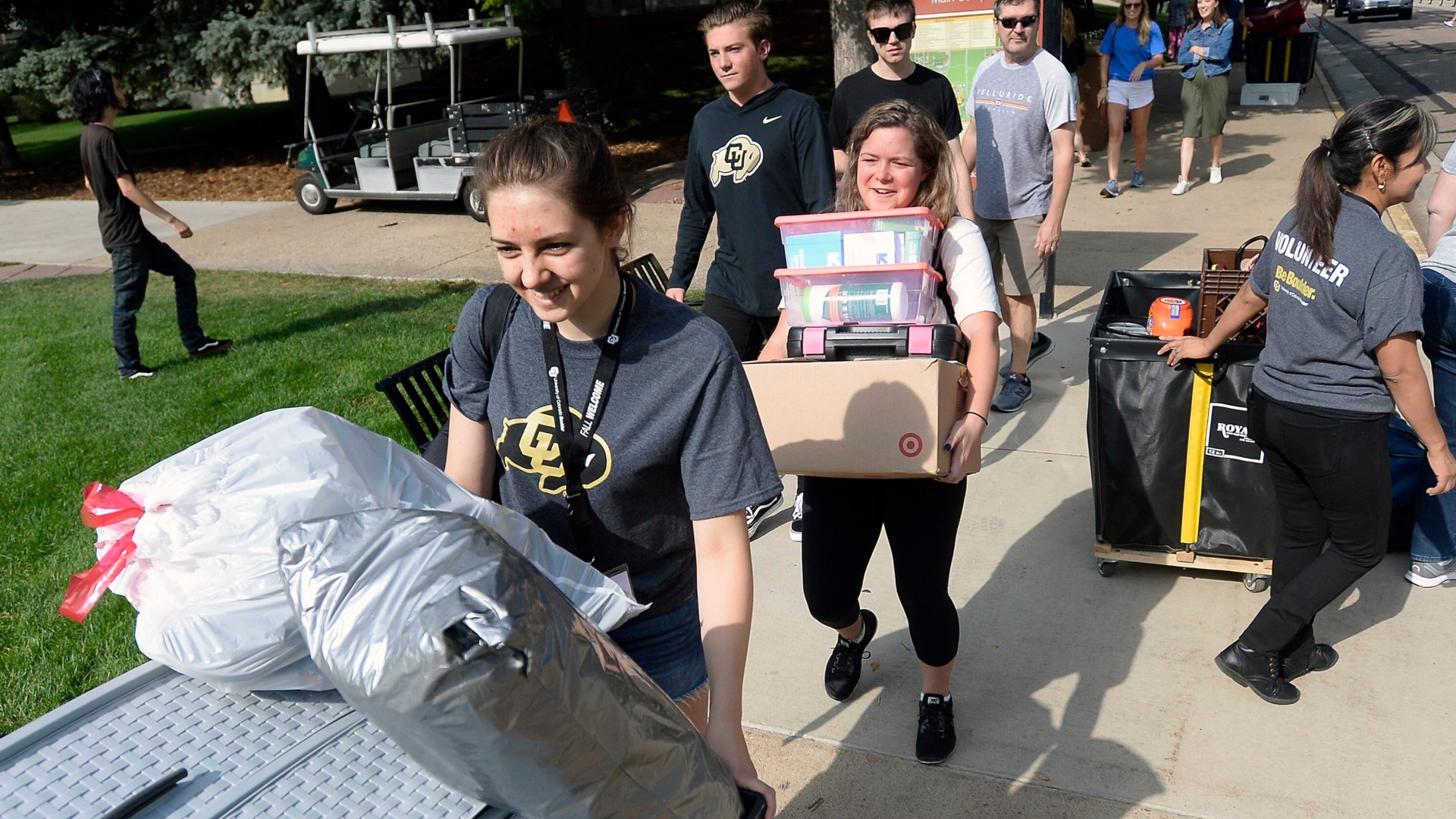
Christian college students heading back to school this fall are expecting to talk to their nonevangelical classmates about race, racism, and racial justice. According to a recent InterVarsity Christian Fellowship survey of 316 evangelical students enrolled at 127 secular colleges and universities, they’re ready.

The Christian students rank racism and inequality as a top social concern. Asked to name the three most important issues today, nearly 40 percent said racial justice, about 40 percent said poverty, and another 29 percent named the environment. Caring for children in need (28%) and reducing abortion (26%) followed.

Jessica Pafumi, area director of InterVarsity’s greater Springfield, Massachusetts, area, said she expects conversations about race to pick up where they left off in the spring.

“Racial justice has come up a lot this past year,” she said. “I think it’s prevalent for the environment that they are in, but I also think it’s prevalent for their personal experience.

Pafumi and other InterVarsity leaders say this is part of a broader change they see with the next generation of evangelicals. Gen Z Christians are eager to listen, they want to connect with people on a personal level, and they share social concerns with their peers.

“Students don’t draw hard borders—sort of thick lines, boundaries between one another,” Tom Lin, president and CEO of InterVarsity, told CT. “They are willing to cross them, to interact with each other, to do things together.”

Aneida Molina, a Hispanic, third-year student at American International College (AIC), said she regularly talks with evangelical friends in InterVarsity—some of whom attend other nearby colleges — and nonevangelical friends at AIC about race and racism.

A lot of her conversations at AIC are with other people of color—“We have experienced that brokenness, that racial injustice,” she said—but through InterVarsity she interacts with a more diverse group of people talking about racism, which she appreciates.

Molina said that with her InterVarsity friends, she is also able to explore the intersection of her faith and racial identity.

Molina said her faith is a source of comfort even though she has personally experienced prejudice and she sees others experiencing it too. Molina said, “I find a lot of the fullness in Jesus and being able to know that there is hope in something that this world can’t provide.”

However, because Molina is able to connect with nonevangelical friends about their personal experiences as people of color, she said, “that kind of opens the door to have the conversation about faith.”

Like Molina, other students in InterVarsity’s survey said they felt welcomed by their peers.

Though most of the students surveyed are religious—95 percent say church involvement is important to them—many don’t feel a lot of tension or conflict with their secular schools. Seventy-five percent said their campus welcomes and supports evangelicals.

Even as evangelical groups have sometimes had to fight for their right to govern themselves according to their own rules—InterVarsity won a case against the University of Iowa in July—students don’t feel personally targeted.

Evangelical students at nonevangelical institutions feel “there’s a lot of opportunity to pursue the common good together,” Lin said, “with the Christian students having their faith be the foundation of their conviction, but they are also very comfortable working with, serving with people that come from a different background.”

InterVarsity chapter directors say that has been especially true in ongoing conversations about racism. Jenn Krauss Salgado, who oversees the program at San Diego State University, said white Christians, in particular, are thinking through these issues—reflecting on their racial identities and how they should relate to the Black Lives Matter movement, critical race theory, and ongoing debates about the causes of and solutions to racism.

“We’re willing to process that with them, where they might not know where to process those conversations,” she said.

Krauss Salgado held a Zoom event last summer for students about racial justice and equality, which she posted about on the Instagram page for the local InterVarsity chapter. After seeing the post about the event, a student reached out on Instagram and said, “Wow, I didn’t even know that Christians cared or talked about this stuff,” Krauss Salgado recalled. “‘I was trying to reconcile my faith with all the racial tensions and wondering how the heck do I care for my friends, how do I care for those that are hurting.’”

Krauss Salgado said racial equality is not a brand-new conversation among college-aged evangelicals, but Gen Z Christians are especially eager to get into the topic.

“They have already been primed,” she said. “A lot of students who are in high school coming into college are already thinking about it, versus it coming up in college.”

But racial justice isn’t the only social issue that is coming up in conversation with students. Both Pafumi and Krauss Salgado said the two others that come up regularly are LGBT identities and abortion, both of which InterVarsity takes a traditional stand on.

But even with hot “culture war” issues, younger evangelicals take a different tone than some in previous generations may have taken.

“One thing they are good at is caring for their neighbor,” Krauss Salgado said. “They are going to try really hard to not say anything that would offend people. To listen well.”

InterVarsity leaders note the change may concern some who worry the younger generation is ready to contend for important issues in the public square. But there’s another way of looking at it and something in the spirit of Gen Z Christians that ought to be celebrated.

“This should be very inspiring and encouraging news for us,” Lin said. “This generation of Christians is not just concerned about loving God but concerned about loving their neighbors too.”


Theology

Where the Great Commission Meets Deportation

For millions of immigrants, removal from the United States is the heartbreaking end of a dream. For these two, it was also the birth of a ministry.

Rafael Avila

Rafael Avila

Brian Frank

Rafael Avila was born in Mexico but for most of his life had been living legally in the United States as a permanent resident. He was, for the most part, a bilingual kid from Tennessee.

But troubles with “every law agency imaginable,” as he put it, left him at risk of deportation. He was addicted to opiates. It started with painkillers and, as it does for many, progressed to heroin. His run-ins with the law were frequent.

Avila’s drug use eventually steered him back to Mexico. In 1996, Congress expanded the grounds for deportation to include minor nonviolent offenses, such as drug convictions. The law is retroactive, meaning that immigrants can be deported for convictions predating the legislation. After conviction, many are given “final orders of removal,” which put them on record as deportable and unable to reenter the US if they leave for any reason. Final orders of removal are not immediate deportation orders, but in recent years, Immigration and Customs Enforcement (ICE) has conducted nationwide sweeps of those with final orders.

So in 2014, knowing that he was headed to deportation, withdrawal in jail, or death by overdose, Avila and his English-speaking wife and daughter moved from Tennessee to Ciudad Juárez, across the border from El Paso. He did so knowing he would never be allowed back into the US. It wasn’t a great choice, he explained. It was his only choice.

“For the good of ‘y’all the people,’” Avila said with a wry chuckle, “it was fantastic that I left.”

With its pervasive presence of drug cartels, Juárez might seem like an odd choice for a man fleeing the dangers of drug addiction. Many deported addicts end up buying from and eventually working for the cartels, according to Avila. But securing the proper identification to work legitimately in Mexico can be difficult for deportees who never built lives there, especially those with criminal records. Casting your vocational lot with the cartels can be the most lucrative option available and can open doors to helpful connections.

“Most of us come from hustling,” Avila said.

For him, the risk of putting down roots in Juárez was preferable to the alternative. “I didn’t think I was going to live another month if I stayed” in the US, he said.

Plus, the commute across the bridge into El Paso made it possible for Avila’s wife and daughter to work and go to school in the US.

Avila did not get clean right away. He had a near-fatal overdose after their move to Mexico. His father, a Baptist pastor, came from the US to help him get back on his feet.

Eventually, Avila felt something change.

“It was like being born again, literally,” he said. “In one of the most dangerous cities in the world, I found peace for the first time.”

But Avila was lonely, a common feeling among deportees forced by circumstance and consequence into communities that are not their own. His wife, who spoke only English, was afraid to go to the grocery store during the family’s first two years in Juárez. They had begun homeschooling their daughter to spend more time together as a family and to avoid the commute to El Paso schools across the bridge, which can stretch up to four hours a day.

He and his family knew they needed to find some Christian fellowship to help bear the burden of living in this new place.

As self-deportees, Rafael Avila and his family struggled to find community in Ciudad Juárez, Mexico, until they stumbled upon a church called Algo Más.Brian Frank
As self-deportees, Rafael Avila and his family struggled to find community in Ciudad Juárez, Mexico, until they stumbled upon a church called Algo Más.

A growing number of churches in Mexican border cities cater to the increasingly diverse communities of migrants whose journeys north stall at the threshold of the United States, often permanently.

Outreach efforts to Brazilian, Haitian, and West African immigrants have cropped up in Tijuana in recent years alongside churches already serving Central Americans drawn there. Migrant demographics in places like Mexicali and Juárez are beginning to diversify as well, as hopeful border crossers seek new points of entry and easier places to bide their time.

But tending to the spiritual health of deportees who may have lived much of their lives in the US is an altogether different challenge.

“Deportees are rejected by both sides,” explained Stan J. H. Lee, director of Relevant to Cross Ministries in Tijuana. “First by the US side where they are deported from, and for the second time by [the Mexican] side, who don’t welcome or don’t know what to do with them.”

The first recorded deportations from the United States took place in 1892, numbering 2,801. The figure has waxed and waned over the decades with policy changes and global economic shifts. But it rose rapidly beginning in the 1990s, in large part because of changes to US immigration law that paved the way for aggressive enforcement efforts under both Republican and Democratic presidential administrations. (Removals have dropped significantly during the COVID-19 pandemic, in part because of health protocols at the US border and in part because of policy changes under the Biden administration.)

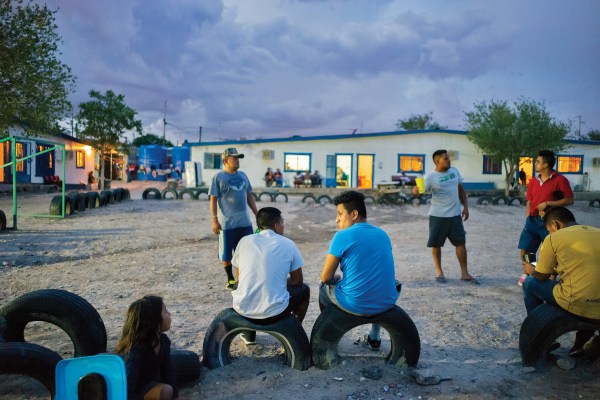
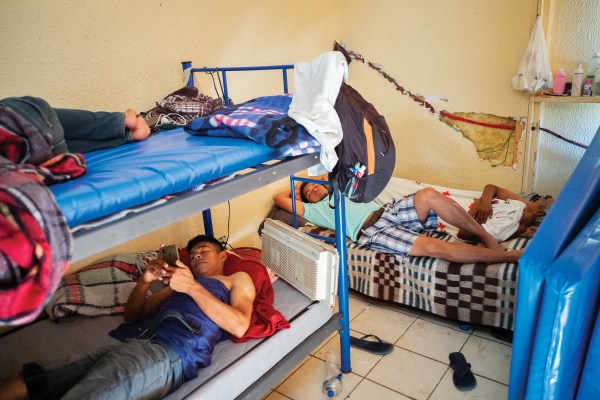
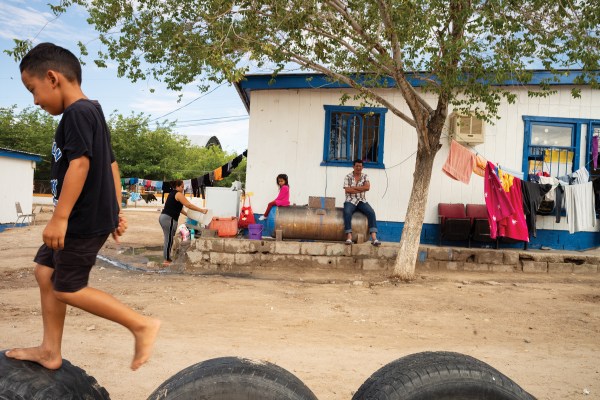
On the outskirts of Juárez’s Anapra neighborhood, the Pan de Vida shelter offers lodging and safety for deportees and asylum seekers awaiting hearings in the US. They are easy prey for local criminals, and some rarely venture outside the protection of the shelter.Brian Frank
On the outskirts of Juárez’s Anapra neighborhood, the Pan de Vida shelter offers lodging and safety for deportees and asylum seekers awaiting hearings in the US. They are easy prey for local criminals, and some rarely venture outside the protection of the shelter.
Brian Frank
Brian Frank

Between 2008 and 2019, ICE deported nearly four million people. Many of them arrived in border communities, speaking limited or no Spanish. And they arrived with a stigma. In cities where bullets can befall those guilty by association or those simply in the wrong place at the wrong time, neighbors keep their distance, uncertain what company newcomers keep and whether the offense that jettisoned them from America was a traffic stop or something more nefarious.

Lee’s ministry targets church planting and outreach efforts toward deportees, including helping plant a church roughly a hundred steps away from one of the main border crossings in Tijuana, where an unceasing stream of deportees trickles out after being processed by the Department of Homeland Security and Mexican immigration authorities. Including his own, Lee can list off a handful of churches with bilingual services in Tijuana and can name only two that he knows of tailoring their efforts to English-speaking deportees.

In Juárez, 600 miles to the east, Avila helped start one.

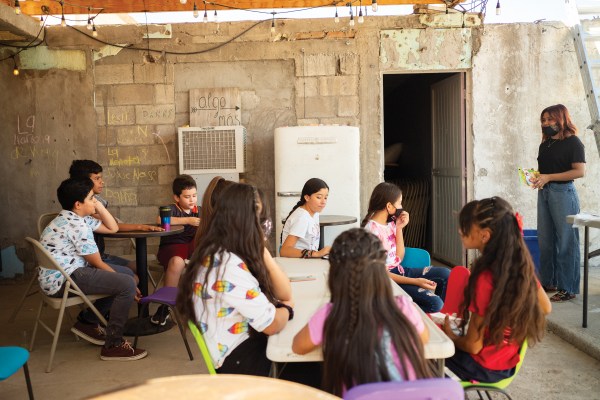
In 2018, he stumbled across a group of gringos setting up for a worship service in Anapra, a suburb on the west side of Ciudad Juárez near the New Mexico border. They were missionaries planting a church called Algo Más. Avila was drawn to their thick North Carolina accents, which sounded like home. He spent the day attending their Spanish-language worship service and lingering afterward to ask questions.

His family soon jumped in. The church began offering an English-language service, a welcome change for Avila’s wife. Algo Más also began to grow its ministry among the city’s community of deportees, with Avila and his family close to the core.

“Our whole concept of building relationships has been changed,” said David Godzisz, the lead pastor of Algo Más and a self-described “hippie from the mountains.” Deportees are “used to being let down,” he said—by fixers, by lawyers, by relatives who promised to help. “The culture we’re working in is a culture that doesn’t trust each other.”

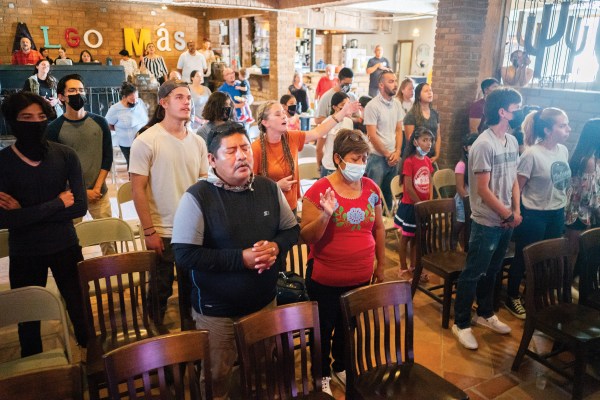
Algo Más church meets in a former bar on the outskirts of Cuidad Juárez.Brian Frank
Algo Más church meets in a former bar on the outskirts of Cuidad Juárez.
Cofounder Michelle Godzisz (in orange, second row, bottom) had to scour blood from the floor, left there by an earlier mass murder, before occupying the site.Brian Frank
Cofounder Michelle Godzisz (in orange, second row, bottom) had to scour blood from the floor, left there by an earlier mass murder, before occupying the site.

Avila and his family have been part of helping the church navigate that culture. He also launched his own ministry on the side called Lágrimas de Gozo, a street festival outreach that mixed testimonies, worship, food, and games.

All the while, though, Avila has had to learn and relearn lessons of trust himself. In 2019, the family added a second child, a baby boy. Then came the coronavirus pandemic.

Out of respect for government safety requests, Avila stopped hosting street ministry events. While bringing a box of facemasks across the border, his wife’s car was impounded for being over the mask import limit. Shortly after, his car was stolen at gunpoint.

“Man, it’s just one thing after the next,” Avila remembered thinking to himself. He began to have those low feelings again; living in Juárez is not easy.

Then he got a call. Someone his father knew in Dallas was looking to donate a car. God’s provision “amazed me every time like it was the first time,” he said.

Partway into the pandemic, Avila got a job with Preemptive Love, a humanitarian nonprofit working with people in conflict, crisis, and war zones. He is now a program officer for Mexico, Venezuela, and Colombia, which gives him access to visit facilities serving asylum seekers who are stranded at the border and awaiting immigration hearings. US policies requiring asylum seekers to remain in Mexico while their cases are processed have led to crowded shelters and tent camps all along the border.

Avila is all too familiar with the risks they face from cartel recruiters and human traffickers, with the risk of COVID-19 outbreaks now layered on top.

With Preemptive Love, Avila has worked with churches to get infant kits and food to the asylum seekers. It has encouraged him to know that churches were helping in Juárez, that his faith community has not abandoned the border migrant community.

“They were the ones that completely changed our minds about what churches were doing with migrants,” Avila said.

Avila still misses Tennessee. He especially thinks of the opiate addicts he knew there and wishes he could somehow go back and help them, help the church reach out to them. “I wish I was the me I am here,” he said. “But over there.”

On his good days, however, Avila sees a purpose for being in Ciudad Juárez, plenty of reason to be thankful. Not only had the decision to return to Mexico saved his own life, but it put him in a unique position to offer lifesaving aid and hope to communities on the side of the border that will probably forever be his home.

“I get to minister to people who not everybody can reach,” he said. “I’m beyond grateful to get to be here.”

Days at the Pan de Vida shelter are spartan and monotonous, as asylum seekers kill time waiting for hearings with US immigration officials.Brian Frank
Days at the Pan de Vida shelter are spartan and monotonous, as asylum seekers kill time waiting for hearings with US immigration officials.
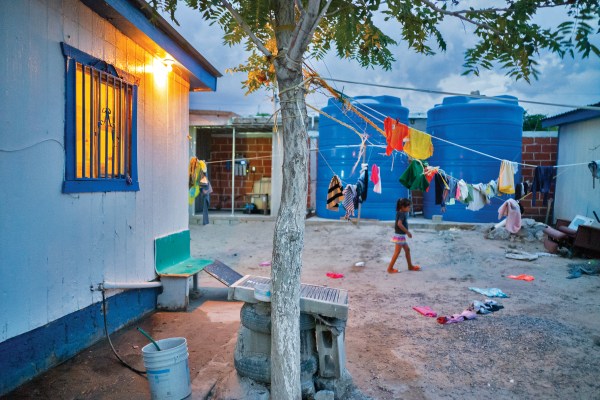
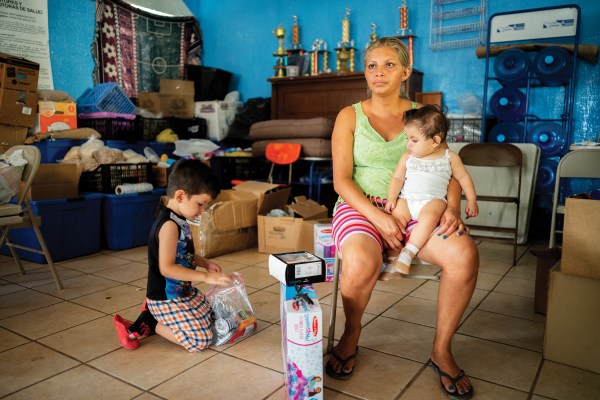
Donated toys and other goods, often designated for women and children, offer distraction from the tedium.Brian Frank
Donated toys and other goods, often designated for women and children, offer distraction from the tedium.
Brian Frank

The Cross and the Freezer

Jessica Margarita Menjivar’s story doesn’t have a happy ending, at least not in the way immigration stories in America are usually told. Fleeing violence in El Salvador, she did not find safety. Apprehended at the US-Mexico border, she waited in detention for eight months and was deported.

But to summarize her heartbreak is to miss what God was doing in the midst of it. If there is a redeeming silver lining, it’s hidden in the details.

Leaving El Salvador was the hardest decision Menjivar had ever made up to that point in her 39 years. A gang controlled her neighborhood in San Salvador, Soyapango, and had set up a “watch station” on her roof. Among other things, the gang dictated when she should turn her lights on and off. They kept a close eye on her and her two teenage daughters. And she knew it was only a matter of time before the girls were enlisted as “girlfriends,” serving the sexual appetites of gang members as assigned.

Menjivar had always envisioned herself as a missionary, sharing the gospel in other countries. She never imagined these would be the circumstances that would propel her out.

She sent her girls ahead, planning for the day they would be reunited, and she set out not long after. Along the way, she had to pause for an emergency oral surgery.

Nearing what she thought would be the end of a three-month journey, Menjivar was feeling hopeful as she neared the US border. Just across it, she was apprehended by Border Patrol agents at San Ysidro, California.

“I told God, ‘Why you didn’t let me die if you knew that now they were going to arrest me?’” she said.

A man detained in the Border Patrol station whispered encouragements, telling her God had a plan for her. Exhausted and aching everywhere, Menjivar didn’t buy it. She remembers lying on the crowded floor of the detention center near a toilet, studying the underside of the bowl.

“I didn’t even have the strength to talk to God,” she said.

After days in “the freezer”—what detainees and workers call the cold rooms where migrants often spend their first nights in some detention centers—Menjivar heard two women praying over some others. It reminded her of a dream she’d had years earlier.

“I saw myself preaching about [Jesus] and praying for women just as they were in that room,” Menjivar said.

She got off the floor and joined the women, beginning a prayer ministry that she then brought with her to a detention facility in Tacoma, Washington, where she waited for eight months for a judge to hear her asylum case.

There were moments she was tempted to despair, thinking of being separated forever from her daughters, who had made it to the US. But her informal ministry gave her a sense of purpose.

While in detention, Menjivar met Jose-Luis Bonilla, a volunteer coordinator with World Relief, who encouraged her to lean into her ministry. She led two prayer services per day and several Bible studies. “I was busy teaching about Jesus,” Menjivar said.

In the most unexpected way, she realized, the dream of becoming a missionary she’d had since age eight had come true. “I met many women from different countries and taught them about Jesus,” Menjivar said. “My wish took 32 years, but God heard it.”

At the time when Menjivar was detained, a Trump administration policy had made it nearly impossible for Central Americans to win asylum on the grounds of escaping gangs or domestic violence. The Biden administration reversed that decision in June, opening the doors for thousands of men and women in identical situations to Menjivar’s to be considered for asylum.

But the change came too late for her.

After eight months in detention in Tacoma, Menjivar was flown back to El Salvador in handcuffs on October 28, 2018.

“I felt a lot of shame,” she said. “In my country I have never had a problem with the authorities.”

Menjivar’s connection to her church community is helping her overcome the stigma she sometimes feels she carries as a deportee. She continues her own prayer ministry in El Salvador in a sister church to the one she grew up in. She works with children and continues to keep in touch with women she met in detention, encouraging and praying for them.

She fears returning to her old home and facing the gangs there that she fled. For now, she sleeps on the floor of her sister’s house, talking to her daughters over WhatsApp.

In May of 2020, her oldest daughter graduated from high school and enrolled in college. Seeing the future ahead for her daughter, Menjivar feels a victory, even as she struggles with poverty and ill health at home. She needs knee surgery, but she’ll have to wait for a spot to open up at a national hospital because she cannot afford to have the procedure at a private one. The pain has gotten so bad, Menjivar said, that she cannot walk.

In the midst of her pain, she reminds herself constantly of the promise that God works all things for the good of those who love him. “Every day, Romans 8:28 becomes more real to me,” she said.

Bekah McNeel is a journalist based in San Antonio.

Christianity Today’s New Hit Podcast, ‘The Rise and Fall of Mars Hill,’ Stirs Evangelical Soul-Searching

Audiences are absorbed by its thoughtful, exhaustively reported account of power and celebrity in megachurch culture.

August 13, 2021 (CAROL STREAM, Illinois). A new podcast from Christianity Today has quickly become a media phenomenon. With over 2.5 million downloads, a #1 ranking on Apple’s religion podcasts, and breaking into Apple’s top three podcasts, The Rise and Fall of Mars Hill is generating interest from all corners of Christianity. The podcast, one of CT’s first forays into long-form audio storytelling, recounts the saga of an influential megachurch, its controversial pastor, and the cultural shifts that made them possible.

Founded in 1996, Seattle’s Mars Hill Church was poised to be an undeniable force in evangelicalism—that is until its spiraling collapse in 2014. The church and its charismatic founder, Mark Driscoll, had a promising start. But the perils of power, conflict, and Christian celebrity eroded and eventually shipwrecked both the preacher and his multimillion-dollar platform.

This compelling human story is resonating with both critics and audiences, with each successive episode drawing greater numbers. Based on downloads and social media engagement, it’s clear that The Rise and Fall of Mars Hill has struck a chord.

The product of months of research and dozens of interviews by the director of CT podcasts, Mike Cosper, the 12-episode series takes you inside Mars Hill, from its founding as part of one of the largest church-planting movements in American history to its very public dissolution and the aftermath that followed. The issues that plague Mars Hill—money, celebrity, sexism, scandal, and power—aren’t unique, and only by looking closely at what happened in Seattle will we be able to see ourselves.

“Nothing will change some of the amazing things that happened at Mars Hill,” said Tim Smith, a former pastor and 16-year veteran of the church. “And nothing can change the pain and hurt and devastation that also happened at Mars Hill.”

The podcast is “an important listen for any Christian leader or leader in the making,” says prominent evangelical speaker and author Beth Moore. Christian poet and hip-hop artist Jackie Hill Perry agrees: “What Mike Cosper unveils is way bigger than Mark Driscoll. He wants us to think about the culture we all participate in that exalts ability over character.”

Christianity Today is an acclaimed and award-winning media ministry that elevates the storytellers and sages of the global Church. Each month, across a variety of digital and print media, the ministry carries the most important stories and ideas of the kingdom of God to over 4.5 million people all around the planet.

For more information, or to request an interview with Rise and Fall series creator Mike Cosper, contact:

Joy Beth Smith
email: jbsmith@christianitytoday.com

Culture

mewithoutYou Does Not Exist (But Is Kicking Off Its Final Shows)

The band reflects on 20 years of wrestling with spirituality and faith and making music.

Christianity Today August 13, 2021
David A. Smith / Getty Images

There has never been a Christian band like mewithoutYou. Then again, there’s no such thing as a Christian band, and mewithoutYou doesn’t actually exist.

I mean, yes, there’s a group of men who have been playing music under this name for the last 20 years, who recently announced their intention to disband, and who will play the first two of a hoped-for series of farewell shows this weekend. Both live shows sold out in Philadelphia, their hometown, but are available via livestream on the web.

Ask the band’s singer, Aaron Weiss (whom critics are legally required to refer to as “enigmatic”) what the end of mewithoutYou means to him, and he’ll tell you, “We aren’t breaking up. We never were really a band. That’s not a real thing. We never existed to begin with, and yet we will continue to exist in another respect after our last show has been played.”

To him, “‘2001 to 2020, 21, 22’—it’s all totally arbitrary. To me it feels very artificial,” he said in an interview. “I don’t begrudge anyone if they would like to have a kind of a tombstone to give it a lifespan, but it’s a very arbitrary way of looking at whatever it is that we are.”

mewithoutYou came to prominence in the mid-2000s during what some call the golden age of Tooth and Nail records, the Seattle-based indie record label most closely associated with Christian independent rock for the last thirty years.

At first glance, the band was seemingly peers with other rising stars in the Christian screamo scene, like the bands Emery and Underoath, though its particular brand of fractured post-punk fronted by Weiss’s unhinged, spoken/screamed poetry made the band unique.

Its first album, the angular and aggressive [A->B] Life (2002), was a breakup album tinged with faith. And unlike many albums of its ilk, it often sidestepped the now-cliché “is this about God or a girl?” question by describing searching for God due to being in the depths of unrequited romantic despair.

mewithoutYou didn’t really feel like an evangelical band at this point, though simply releasing records on Tooth and Nail usually pins that label to a group regardless of their intentions.

While the long trotted-out debate of what exactly makes a band Christian may have been put to bed long ago—the writer Keaton Lamle once pinpointed it as the time Jon Foreman of Switchfoot told a journalist his band was “Christian by faith, not by genre”—it’s a label that’s never sat well with many of the bands who have been involved in what tends to be known as “Christian rock.”

In the twenty-plus years I’ve been writing about the bands who have been tagged with this appellation, I’ve never known one that reveled in its ambiguity as much as mewithoutYou.

When I asked the band’s bassist, Greg Jehanian, what it had been like to be associated with the Christian music scene despite most of the band’s members seemingly not identifying as evangelicals themselves, he called the notion of a band being Christian “a bizarre concept.”

Jehanian, who not long ago graduated from George Fox University’s Portland Seminary, also described being comfortable with a certain uncertainty: “I didn’t mind that those expectations were there; as long as there was a healthy dialogue, I didn’t mind having those conversations. That was even part of my drive to go to seminary.”

In the end, he called mewithoutYou “a band who loves to make music. We have a chemistry; we have a familial bond; that’s what we do. And because Aaron is a person who wrestles and seeks when it comes to spirituality and faith, that’s certainly a prominent theme in our band, but I don’t think we’ve ever taken the stance that we’re doing this thing from an evangelical standpoint.”

Part of the reason people may have mistakenly seen the band as having an “evangelical standpoint” is a period during which Weiss was a well-known figure at Cornerstone, an independent Christian rock festival organized by Jesus People USA.

His Q&A “sermons,” in which he somewhat humbly—but seriously and loquaciously—engaged the audience with questions about what it means to be a follower of Jesus, were well attended and are still available on YouTube.

“I wanted to be a poet; I wanted to be a prophet; I wanted to be a Messiah,” Weiss said. “I wanted to be all these things as a frontman of a band singing about my ideas about God and souls and things like that.”

The band’s albums at that time, too, began to burn with a deeply passionate faith, arguably influenced by Weiss’s time living in intentional Christian communities like the Simple Way and Bruderhof. Catch for Us the Foxes (2004) opens with the stirring anthem “Torches Together,” a paean to Christian community. (“Tell all the stones we’re gonna make a building!” is one of its many rousing calls to solidarity.)

And if you ask at least some of the band members, their 2006 album Brother, Sister may be the peak of both the band’s creative output and their fervor for living in a countercultural and, perhaps more explicitly, “religious” way. (During one show this weekend, they’ll play the album in its entirety in honor of its 15th anniversary.)

“That time felt really special,” said Jehanian. “The energy around creating that record is really memorable to me, and I feel like we were tapping into our chemistry together in this really special way. At that time, a few of us were living in community together, so we were tapping into the spirit of that. It felt like there was a lot of integration between what was happening in our life at home and on the road and creatively.”

Weiss was a bit more circumspect, explaining that he doesn’t like to think of certain periods of the band’s career or his life as better or worse than others. But he cited similar memories, calling the mid-2000s period one when “we were more of one mind, and we did prayers together before practice, and we had a liturgy service that we did on some tours, and we had a potluck practice where people would come to the show and bring food, and then people from the crowd would come play an instrument on stage.”

Whatever the reason , Brother, Sister is clearly an album made by a band at the top of its game—it’s punishingly beautiful, introspective, and self-effacing while reveling in a blissful spirit of, well, worship, though not in, like, the Hillsong sense: choruses of Arabic prayers, plaintive guest vocals from Sunny Day Real Estate’s Jeremy Enigk intoning “That Light is God!,” simple devotional couplets like “Open wide my door, my door, my Lord / To whatever makes me love You more,” and a final, transcendent coda proclaiming “I do not exist / Only You exist.”

If this makes the band sound like they might have been a bunch of spiritually inclined hippies, their final record for Tooth and Nail, It’s All Crazy! It’s All False! It’s All a Dream! It’s Alright (2009) might appear to confirm this. The record almost wholly abandons the aggressive guitar attack and desperately screamed emotional lyrics in favor of simple, acoustic, fable-like folk songs, many about animals or vegetables or both.

There’s a touch of the religious savant to the record, a childlike faith akin to the spirit of bands like Neutral Milk Hotel (not a “Christian band,” but who can forget Jeff Mangum’s raw “I loooooove you, Jesus Chriiiiiiist” on In the Aeroplane over the Sea?) or the Danielson Famile (whose leader, Daniel Smith, coproduced the album). It’s All Crazy! may have been the time the band’s evangelical fans began to chafe at the way faith was addressed; the album features a song called “Allah, Allah, Allah,” and most of the record is inspired by the teachings of the Sri Lankan Sufi spiritual leader Bawa Muhaiyaddeen.

Though the band initially came to prominence in Christian circles, Weiss has never been shy about his multireligious spirituality. He and his brother Michael (the band’s guitarist) were raised by a Jewish father and Christian mother who both converted to Sufism.

In Weiss’s 2016 doctoral dissertation, he writes that he has “identified at different points with Judaism, Christianity, and Islam” and that his “central concerns in life are informed by values shared by all three traditions—love, compassion, gratitude, humility, kindness, mercy—and have taken from each a firm faith in the goodness, oneness, and unrepresentability of reality, i.e., of that which is called YHWH, G-d, Allah.”

When I asked Weiss whether he felt any tensions at having been associated with evangelicalism given his more eclectic faith, I half expected some of the cynicism of other bands I’ve heard talk about that scene, which some describe as narrow-minded and insular, but this was not the case for him.

“I have fond memories, and my heart is filled with a sense of love for those who I met during that time,” Weiss said of playing churches and Christian festivals. “You know, there’s ways that these things get interpreted and spun that can be divisive, and then you could say”—(here he puts on a self-consciously superior, sarcastic voice)—“‘Well, I’m not an evangelical, those people are evangelicals, and I see I through all that because that’s obviously bogus.’ And I don’t see it that way. At least not in my deepest heart of hearts.”

After moving on from It’s All Crazy! (which Michael Weiss once told Vice magazine was “an experiment that went wrong”), mewithoutYou seem to have found their feet in their second decade, reclaiming the punk energy of Brother, Sister tempered by a more melodic indie-rock sensibility.

Ten Stories (2012) is a concept album inspired, Weiss said, by “the story of a tiger from a circus staying in the cage after a train was derailed, because it was institutionalized and had formed the habit of being in a cage,” which he read in William James’s Principles of Psychology in a grad school course.

It’s a sprawling and ambitious record, set in a quasi-magical historical-fictional world, and most of the songs are sung by “animals telling different stories, messing with free will and determinism,” according to Weiss. (The animals are conflicted about many of these things; at one point the existential lyric “By now I think it’s pretty obvious that there’s no God / And there’s definitely a God” is attributed to a bear.)

Pale Horses (2015) is comparatively understated, a record haunted by the death of Weiss’s father and a sort of apocalyptic paranoia about the state of global affairs. Jehanian recalled that during the recording, the band had some “conflict interpersonally, but that actually fed the creative flames,” making the album “something that reflects that tension but was actually cathartic too.”

On what would become the band’s final album, [Untitled] (2018), the band sounds perhaps the most like themselves that they could, if such a thing is possible. It’s blisteringly loud in places—if you think one of the tracks is going to be straight-ahead tuneful rock all the way down, give it a few minutes and you’ll be hit full in the face with a throat-shredding scream—but there are also moments of sublime, fragile, melodic songcraft. (“New Wine, New Skins” is especially pretty.)

The penultimate track (“Michael, Row Your Boat Ashore”) showcases both and feels like a microcosm of the band’s whole oeuvre: Sufi chants, Christian spirituals, and existential dread mix over a spacey, reverb-y groove, and snatches of far-off-sounding dialogue seem to mimic the drifting apart of the band itself (Weiss having left Philadelphia for Idaho to start a family and perhaps pursue an academic career).

AnAnd so this weekend marks what has been dubbed “the Beginning of the End” for the band. Even if the group will soon no longer play together, mewithoutYou—Christian or not—has helped do what the author David Dark calls “expanding the space of the talkabout-able” for twenty years.

Weiss's summing up of his experience in mewithoutYou likely echoes that of many of its fans: “My God, how rich our journey has been,” he said. "How wonderful it's been, really, how beautiful it's been, how many lessons there have been, how many rich and subtle mysteries.”

These are things that will continue to linger for many listeners, including a large evangelical contingent, long after mewithoutYou longer exist. If they ever did.

Joel Heng Hartse is a lecturer in the faculty of education at Simon Fraser University in British Columbia. He is the author of several books including the forthcoming Dancing about Architecture is a Reasonable Thing to Do (Cascade).

News

Gen Z Wants to Talk about Faith

Barna study shows Christians age 13 to 18 are skeptical of evangelism, but they’re having deep and personal peer-to-peer conversations.

Christianity Today August 13, 2021
Brooke Cagle / Unsplash

Treyson West doesn’t have a name for it, but if you want to call it evangelism, that’s fine.

He doesn’t think he has a strategy or model for trying to change people’s beliefs, though. He’s just interested in friendship and reliance on the Holy Spirit.

“The big thing is showing somebody what their identity could be through Christ,” says the 19-year-old high school graduate in the suburbs of Dallas. “Everybody is pushing you to be polarized. And ultimately that just pushes you deeper into a sense of not belonging, and Gen Z digs deeper into loneliness.”

That’s why, when West wants to tell a teenager about Jesus, he doesn’t tell them. He listens, and asks questions to get to know them, showing that he cares. And when God becomes real to one of his friends, he likes to point that out.

Recently, West was sitting with a friend in a car in front of the friend’s house, and the friend was talking about his life and struggles and whether he could believe in God. West asked him how he felt right at that moment, talking about God in the car.

“My heart feels, like, warm,” the friend said.

“Dude, that’s the Holy Spirit,” West said. “That’s God, right there.”

The friend accepted Jesus before he got out of the car.

A new Barna Group study, set to be announced on Monday, says that West’s approach isn’t unusual for younger Christians. Gen Z believers want to share about Jesus, and they are having deep, personal conversations about their faith with their friends. But they have reservations about the idea of evangelism and are skeptical of evangelistic strategies.

According to Reviving Evangelism in the Next Generation, produced in partnership with Alpha USA, 82 percent of Christians between the ages of 13 and 18 say that it’s important to them to share their faith. And nearly 80 percent say they have had a conversation about faith with someone at least once in the past year.

The study is based on an online survey of more than 1,300 teenagers between March and April of 2021. The parents were selected by random sampling, and the teenagers’ responses were weighted by demographic data, including gender, ethnicity, and geographic region, to ensure Barna was looking at a representative sample. Barna says the numbers have about a 3 point margin of error.

Seventy percent of the sample identified as Christian, according to Barna, and the next largest group, about 12 percent, identified as “nothing in particular.” Seven percent identified as “spiritually open,” while 3 percent said they were atheist and 3 percent, agnostic.

Gen Z is generally considered to be anyone born after 1996. The oldest of them are now 25. They were 12 when the housing market collapsed and Barack Obama was elected president. Barna chose to focus on the group of young people who are in high school right now—people who were born roughly between the introduction of the first widely available cellphone with a camera and the release of the first iPhone.

The 13- to 18-year-olds who identify as Christian “have strong feelings against specific evangelistic language and persuasive practices,” the study found, but they “are talking about their faith with non-Christians” and believe that “relational, neutral spiritual conversations with non-Christians strengthen their faith.”

Most Gen Z Christians do not think it’s important to have all the answers to questions about faith. They are skeptical of arguments that aim to change someone’s mind. Almost none think it’s a good idea to be quick to point out inconsistencies in others’ perspectives, which has been a key component of some approaches to apologetics.

Instead, 66 percent say they want to be someone who listens without judgment, 62 percent say they want to be confident sharing their own perspective, and 54 say it’s important to ask good questions.

Gen Z Christians “seem to be hyper-considerate conversation partners,” according to the report, “driven to listen and learn from others and preferring to ‘prove’ their faith in their actions, not their words.”

Despite their long exposure to social media—or perhaps because of it—Gen Z Christians are not big advocates for digital evangelism. The Barna study found that less than a third think that posting something to social media or sharing online content should be considered evangelism.

Jordan Whitmer, the 22-year-old founder of a Gen Z evangelistic organization called the HowToLife Movement, said there are young Christians proclaiming the gospel on social media, especially the video-sharing site TikTok. He sees that mode as something important.

“If Billy Graham was 25 years old today, he would be on TikTok. Or Louis Palau or D. L. Moody. They could spot an evangelistic opportunity a mile away, and that’s where it is,” said Whitmer, whose grandfather Ron Hutchcraft is an evangelist who worked with Youth for Christ and the Billy Graham Evangelistic Association.

But today’s TikTok evangelists are aware of the drawbacks and dangers of social media. It’s not their first choice for talking about important things.

“I don’t know any of my friends who make TikToks or social media content or any Gen Zer who would say, ‘I love social media,’” Whitmer said. “You would never see that on a T-shirt. It’s a blessing and a curse, and 90 percent of the time it’s a curse, but you try to focus on the 10 percent.”

HowToLife primarily focuses on in-person evangelistic events. They have done more than 100 so far, organized by young Christians in a church or a high school with support from the national organization.

In some ways the events are as traditional as Graham’s crusades or old-fashioned tent revivals. But since they’re put on by Gen Z for Gen Z, there are also notable differences, Whitmer said. The 102 events the group has supported so far tend to elevate storytelling, panel discussions, and Q&A sessions, along with lots of music.

Occasionally a young person will preach. Whitmer has also been known to conclude an event with an altar call, which he calls “a straight-up, come-forward, Billy Graham–style invitation.” But more often than not, the events end with small groups of friends just talking.

Jordan Biere, the national director for Alpha USA’s youth division, said connection is incredibly important to young people today. That need has only heightened during the pandemic.

“They’re fiercely relational,” said Biere, who is 34. “They need to be present with one another, and physical presence matters to them.”

Alpha, which started in the Anglican Church in Great Britain, offers a 10-week course introducing people to the basics of Christian faith. The sessions are centered on discussion, and framed as “an opportunity to explore the meaning of life.”

Many of them are held in churches in the US, but Biere says he increasingly sees high school students who run their own groups, often in their homes. For them, Alpha groups facilitate relationships and deepen friendships.

“Faith conversation is actually a point of deep connection for Gen Z,” he said. “They have a deep longing for belonging, and faith conversation is a connection point.”

That’s what Graham Varnell was thinking when he started an Alpha group in his Baptist church in Richardson, Texas, a few years ago, after he graduated high school. The church, he said, had always emphasized evangelism, but when he’d tried to witness to one of his peers, it hurt their friendship.

The friend said no one wants to be a project. Varnell was hurt by the implication, but he also thought his friend was right: he had been looking at him as a project.

With Alpha, he decided to take a different approach and really focus on listening, hospitality, and friendships. The first few weeks, he mostly ended up with extra pizza, but soon there was a regular group, including Treyson West, and there were friendships, conversations, and then conversions.

“Friendship is absolutely paramount, that’s what I’ve seen,” he said. “Friends will bring friends and then we’ll just invite the Holy Spirit to come, and the Spirit comes with power.”

Recently, because Varnell and West have been talking so much about listening, they’ve started to change the way they pray, so that they listen to God more than they talk. The result, according to Varnell, has been “something of a charismatic outbreak,” though he hastens to add he’s not sure that’s the right term.

“You put your hands on someone and ask the Holy Spirit to come and wait like three minutes or four minutes,” he said. “It just turns into this space where there’s not a structure, or there’s a loose structure. … What I see with students most is they cry. They cry and cry until they’re happy, and they get fired up about God and they go and pray for each other.”

Varnell doesn’t know whether this is evangelism proper. But his friends and his friends’ friends are experiencing the love of God, and they’re talking and sharing about faith and Jesus. To Varnell, and a lot of other Gen Z Christians, that seems more important than whatever you call it.

News

New Prayer Tool for Facebook Groups Draws Praise and Doubts

Early reactions from evangelical, mainline, Catholic, Muslim, and Jewish leaders.

This image provided by Facebook in August 2021 shows a simulation of the social media company's prayer request feature.

This image provided by Facebook in August 2021 shows a simulation of the social media company's prayer request feature.

Christianity Today August 12, 2021
Envato Elements / Facebook via AP

Facebook already asks for your thoughts. Now it wants your prayers.

The social media giant has rolled out a new prayer request feature, a tool embraced by some religious leaders as a cutting-edge way to engage the faithful online. Others are eyeing it warily as they weigh its usefulness against the privacy and security concerns they have with Facebook.

In Facebook Groups employing the feature, members can use it to rally prayer power for upcoming job interviews, illnesses, and other personal challenges big and small. After they create a post, other users can tap an “I prayed” button, respond with a “like” or other reaction, leave a comment, or send a direct message.

Facebook began testing it in the US in December as part of an ongoing effort to support faith communities, according to a statement attributed to a company spokesperson.

“During the COVID-19 pandemic we’ve seen many faith and spirituality communities using our services to connect, so we’re starting to explore new tools to support them,” it said.

Robert Jeffress of First Baptist Church in Dallas, a Southern Baptist megachurch, was among the pastors enthusiastically welcoming of the prayer feature.

“Facebook and other social media platforms continue to be tremendous tools to spread the Gospel of Christ and connect believers with one another—especially during this pandemic,” he said. “While any tool can be misused, I support any effort like this that encourages people to turn to the one true God in our time of need.”

Adeel Zeb, a Muslim chaplain at The Claremont Colleges in California, also was upbeat.

“As long as these companies initiate proper precautions and protocols to ensure the safety of religiously marginalized communities, people of faith should jump on board supporting this vital initiative,” he said.

Under its data policy, Facebook uses the information it gathers in a variety of ways, including to personalize advertisements. But the company says advertisers are not able to use a person’s prayer posts to target ads.

Bob Stec, pastor of St. Ambrose Catholic Parish in Brunswick, Ohio, said via email that on one hand, he sees the new feature as a positive affirmation of people’s need for an “authentic community” of prayer, support, and worship.

But “even while this is a ‘good thing,’ it is not necessary the deeply authentic community that we need,” he said. “We need to join our voices and hands in prayer. We need to stand shoulder to shoulder with each other and walk through great moments and challenges together.”

Stec also worried about privacy concerns surrounding the sharing of deeply personal traumas.

“Is it wise to post everything about everyone for the whole world to see?” he said. “On a good day we would all be reflective and make wise choices. When we are under stress or distress or in a difficult moment, it’s almost too easy to reach out on Facebook to everyone.”

However, Jacki King, the minister to women at Second Baptist Conway, a Southern Baptist congregation in Conway, Arkansas, sees a potential benefit for people who are isolated amid the pandemic and struggling with mental health, finances, and other issues.

“They’re much more likely to get on and make a comment than they are to walk into a church right now,” King said. “It opens a line of communication.”

Bishop Paul Egensteiner of the Evangelical Lutheran Church in America’s Metropolitan New York Synod said he has been dismayed by some aspects of Facebook but welcomes the feature, which bears similarities to a digital prayer request already used by the synod’s churches.

“I hope this is a genuine effort from Facebook to help religious organizations advance their mission,” Egensteiner said. “I also pray that Facebook will continue improving its practices to stop misinformation on social media, which is also affecting our religious communities and efforts.”

Thomas McKenzie, who leads Church of the Redeemer, an Anglican congregation in Nashville, Tennessee, said he wanted to hate the feature. He views Facebook as willing to exploit anything for money, even people’s faith.

But he thinks it could be encouraging to those willing to use it: “Facebook’s evil motivations might have actually provided a tool that can be for good.”

His chief concern with any internet technology, he added, is that it can encourage people to stay physically apart even when it is unnecessary.

“You cannot participate fully in the body of Christ online. It’s not possible,” McKenzie said. “But these tools may give people the impression that it’s possible.”

Rabbi Rick Jacobs, president of the Union of Reform Judaism, said he understood why some people would view the initiative skeptically.

“But in the moment we’re in, I don’t know many people who don’t have a big part of their prayer life online,” he said. “We’ve all been using the chat function for something like this—sharing who we are praying for.”

Crossroads Community Church, a nondenominational congregation in Vancouver, Washington, saw the function go live about 10 weeks ago in its Facebook group, which has roughly 2,500 members.

About 20 to 30 prayer requests are posted each day, eliciting 30 to 40 responses apiece, according to Gabe Moreno, executive pastor of ministries. Each time someone responds, the initial poster gets a notification.

Deniece Flippen, a moderator for the group, turns off the alerts for her posts, knowing that when she checks back she will be greeted with a flood of support.

Flippen said that unlike with in-person group prayer, she doesn’t feel the Holy Spirit or the physical manifestations she calls the “holy goosebumps.” But the virtual experience is fulfilling nonetheless.

“It’s comforting to see that they’re always there for me and we’re always there for each other,” Flippen said.

Members are asked on Fridays to share which requests got answered, and some get shoutouts in the Sunday morning livestreamed services.

Moreno said he knows Facebook is not acting out of purely selfless motivation, since it wants more user engagement with the platform. But his church’s approach to it is theologically based, and they are trying to follow Jesus’ example.

“We should go where the people are,” Moreno said. “The people are on Facebook. So we’re going to go there.”

AP video journalist Emily Leshner contributed.

News

How T.D. Jakes and Local Churches Became Affordable Housing Developers

The current crisis has led faith groups in Atlanta and beyond to see the market as part of their ministry.

Christianity Today August 12, 2021
graphiknation / Getty Images

When Rev. Herman “Skip” Mason was transferred in 2019 to pastor West Mitchell Street Christian Methodist Episcopal (CME) Church in downtown Atlanta from Augusta, Georgia, he never imagined that two years later he would still be looking for affordable housing in his hometown and forced to commute over 100 miles every week.

This summer, with home prices continuing to climb during the pandemic, the Atlanta native learned that Bishop T. D. Jakes, pastor of The Potter’s House in Dallas, was behind an effort to develop affordable housing at a former military base nearby.

“I’m a pastor and an educator, so I have a limit as to what I can afford,” Mason said in an interview with CT. “T. D. Jakes, come on and build your affordable housing!”

Jakes and his real estate company were approved by the McPherson Implementing Local Redevelopment Authority (Fort Mac LRA for short) to buy approximately 94.5 acres of former historic Army base Fort McPherson for a mixed-used development.

“My cultural fluency results from having grown up in a community like the Atlanta communities surrounding Fort McPherson,” said Jakes in a press release in which the pending purchase was announced. “In my travels across all of America, I see too many Black and Brown working-class people still falling victim to the continued gentrification of our neighborhoods.”

The project is one of several in Atlanta where faith leaders are investing in affordable housing for the sake of their communities. Across the country, churches with property in prime locations are turning over one block, one building, one lot at a time through movements like “Yes in God’s Backyard” in California. Atlanta-area pastor Rev. David Lewicki discusses the calling of affordable housing as a ministry.

“We are increasingly convinced that affordable housing is the foundation of beloved community,” the Presbyterian minister wrote at Faith & Leadership. “Housing is a profound and even holy good.”

In the Georgia capital, among the fastest-growing metro areas in the US, rent prices are rising faster than income levels, according to the mayor’s office. As of June, Atlanta home prices jumped 24.3 percent compared to last year and sold for a median price of $406,000.

Lewicki’s church got involved in lobbying for more inclusionary zoning policies to allow for lower-priced options in their area and began to create a land trust so they could get involved in addressing the legacy of racial and economic segregation in the city.

Other churches are doing the same with their own property. Atlanta First United Methodist Church has partnered with Evergreen Real Estate Group to develop 1.8 acres owned by the church on Peachtree Street.

“I love this city and I love the people of this city, and I knew that our church had the capacity and the resources in the land to make a huge difference in available housing in the city,” said Rev. Jasmine R. Smothers, the first Black and first female pastor of the church. “I told the leadership team and the congregation, let’s attempt something so big that without God, it is bound to fail. It’s a God-sized vision.”

The project is expected to be completed by 2023. Two towers are going up, comprised of 300 units (including three-bedroom units suitable for families). Eighty percent will be devoted to affordable housing, as defined by local median-income standards.

The development will also include the expansion of the church’s Atlanta First Day School and parking, church office renovations, and commercial retail space. The sanctuary, which dates back to 1903, will remain as it is.

A fellow UMC congregation in the metro area, College Park First United Methodist Church, announced similar plans to build an affordable housing and arts development. The Diamond @ College Park, located next to the 125-year-old church, will include a mix of affordable, market, and above-market housing, plus retail space. Church leaders made the move in the midst of the economic strain brought on by COVID-19.

Smothers says given the rates of homelessness and housing insecurity in Atlanta, “any affordable housing in Atlanta is good news.” She’s excited to hear that Jakes has committed to investing in the area too.

“We’re literally fielding phone calls every single day about rental assistance and preventing evictions, so I’m a huge proponent of any affordable housing we can build here in the city,” she said.

But others have worried about having big-name outsiders take over such a massive development, the second-largest economic project in the area after the expansion of Hartsfield-Jackson Atlanta International Airport, according to Fort Mac LRA board chairman Cassius F. Butts.

Fort McPherson is also the home base of media mogul Tyler Perry, whose Tyler Perry Studios is located on 330 acres of the property. Fort Mac LRA also approved Perry’s purchase of 37.5 more acres to build an entertainment district . According to the Atlanta Business Chronicle, Jakes’s company paid $29 million while Perry paid $8.4 million for the land.

A local coalition had initially proposed plans for the deserted Army base, but Atlanta officials made a deal with Perry instead. Community activists hope that the projects will benefit surrounding areas, which are now full of abandoned houses, broken sidewalks, and closed stores.

“It’s been a while since [Tyler Perry’s] been there, and we haven’t quite seen the transformation,” said Deborah Scott, executive director of Georgia Stand-Up, a “think and act tank” that works toward economic inclusion.

Perry “has done some great things for individuals in the community, whether it’s giving out gift cards at Christmas or paying off people’s Christmas bills at the grocery stores,” Scott said, “but what we’re looking for in this new development with T. D. Jakes and Tyler Perry still being there, and together owning more than 400 acres, is that they would be very responsible to the people who are outside of those gates.”

Scott said local leaders connected to Georgia Stand-Up are in touch with Jakes about visiting Capella Park, the 400-acre neighborhood he developed in south Dallas.

Jakes’s goal in McPherson, like with Capella, is to address racial and economy disparities and use business and development as a means for community flourishing. One of the reasons the pastor owns a real estate company in his name is because he wants to encourage property ownership as a way to build generational wealth.

In his announcement for the McPherson deal, Jakes quoted Luke 3:11 (KJV): “He answereth and saith unto them, He that hath two coats, let him impart to him that hath none; and he that hath meat, let him do likewise.”

“There is a desire for a mix of affordable and market rate living, retail options to support residents and surrounding neighborhoods with easy access to healthy food choices, restaurants, grocery, and soft goods stores,” he said in remarks to CT. “These types of businesses create jobs, allow room for local entrepreneurs, as well as national brands.”

Rev. Olu Brown pastors Impact Church, located in Atlanta but close to McPherson. “Having led a church in that area for some years now, it’s a win-win in a prime location to do what they’re doing,” he told CT. “I’m 100 percent on board with the location and the plan.”

Affordable housing and community development can seem like just business ventures—which they are—but pastors know how much these issues directly affect their congregants and stem from biblical calls for community.

“Ever since Paul, Barnabas, Simeon, Lucius and Manaen gathered in Antioch (Acts 13), the church has offered the world a vision of integrated community. Integration is the work of the Holy Spirit,” wrote David Lewicki, who copastors North Decatur Presbyterian Church. “Just as important, Jesus often provoked his followers to give up their wealth for something greater.”

Mason, at West Mitchell Street CME, has followed the housing market as a historian, a prospective buyer, and a pastor.

“The prices are going up in areas such as Vine City, around the universities, southwest Atlanta where homes that used to be, at one time, in the low $100,000s that are now going for $200,000 and $300,000 and $400,000,” he said. “It’s pricing out a lot of folks who want to move back or just move into the communities. It’s certainly creating some challenges for people who are there because as those house values increase, the taxes are going to go up.”

In fact, he is researching how his church, in existence since 1882, can become involved in providing housing.

“My church is just a block from the Mercedes-Benz dome, so we’re in very rich territory,” he said. West Mitchell Street CME’s one-acre downtown church can earn up to $12,000 for its parking lot during the Atlanta Falcons’ football season.

“At the rate my home search is going, I’m going to have a build a place that includes the pastor’s condo for whatever pastor is pastoring the church,” he said. “A lot of people have moved into the city with cash from places where homes cost much more than they do in Atlanta, so they are able to put cash on these houses. But this is where my faith comes in; I’m doing the work and having faith that something will come.”

Ideas

Is Evangelicalism Due for a Hundred-Year Schism?

Staff Editor

Our divisions are markedly political, and they echo religious controversies of the past.

Christianity Today August 12, 2021
Illustration by Rick Szuecs / Source images: Cason Asher / Ludovic Charlet / Unsplash / Dan Whitfield / Pexels / Damion Hamilton / Lightstock

“You have heard that it was said to the people long ago, ‘You shall not murder, and anyone who murders will be subject to judgment,’” Jesus told the crowd in the Sermon on the Mount. “But I tell you that anyone who is angry with a brother or sister will be subject to judgment. … You have heard that it was said, ‘You shall not commit adultery,’” he continued. “But I tell you that anyone who looks at a woman lustfully has already committed adultery with her in his heart” (Matt. 5:21-22, 27-28). He goes on to set a higher standard in other aspects of life, too, a standard where even private intentions matter to God.

The future of American evangelicalism—particularly white evangelicalism, a part often wrongly mistaken for the whole—has been subject to intense scrutiny for at least half a decade, and this year’s departures of Russell Moore (who has begun a public theology project here at CT) and Beth Moore (no relation to Russell) from the Southern Baptist Convention have revealed just how deep those divisions are.

As I’ve browsed reporting on the Moores’ decisions and read analyses on whether the US evangelical movement is heading for a schism—a complete and formal break in fellowship—Jesus’ words about murder and adultery keep coming to mind: If intentions matter so much, have we split already?

Widened and embittered division in the movement is certainly impossible to deny. The specific issues are many, some comparatively new (critical race theory, former President Donald Trump), some all too familiar (racism and race relations beyond the one theory, roles of women, sexual ethics, Christian nationalism, church handling of abuse), all with a political edge.

It’s not primarily about different policy agendas or rival partisan loyalties. On paper, a lot of that remains unchanged. The political division I see is more, as CT president Timothy Dalrymple wrote in April, about different informational worlds feeding different fears, hopes, habits of speech, and political priorities. And that political aspect is crucial, in two ways, to thinking through where we are now and where we may go next.

The first is this: If we were to diagram where American evangelicals coalesce around the issues I’ve just listed, the collective result would look a lot like a new (and newly important) tribal division in US politics.

For a long time, there was a stereotype that cast Republicans as rich people who go to country clubs and work at big banks, and Democrats—Hollywood and the media aside—as poor and working-class. This was a decent shorthand once, but no longer.

Nationally, we aren’t polarized according to income as we once were; the “diploma divide” is now the more useful indicator, and its importance is growing. More educated people increasingly vote Democratic, while the less educated increasingly vote Republican. That disparity contributes to a defensive populism on the American right, including among educated Republicans, via the perception that elite institutions (where college degrees are a baseline for participation) are all controlled by political enemies.

Among white evangelicals, the education-politics correspondence isn’t so strong. Being college-educated doesn’t make you a Democrat or a progressive theologically or politically. But there’s an echo of the diploma divide in the discord among evangelicals.

The populist faction in evangelicalism similarly accuses prominent figures and institutions (“big eva,” in the Twitter terminology) of neglecting or abandoning truth to curry secular, liberal favor. Such accusations played a role in both Moores’ departures from the SBC, though both remain dependably theologically conservative.

In a widely shared Twitter thread in late May, historian of American religion and politics (and CT contributor) Paul Matzko compared this divide to older divisions in American Christianity in the 1830s and 1930s. Those were times, like ours, of “intense political polarization,” he told me in an email exchange, as well as “intensive technological innovation, dramatic social change, and widespread fears that something vital was being lost in the shuffle.”

Matzko believes our politicized breach is already in its middle stages and will prove irreparable. He anticipates “the current divide will widen into a series of formal splits that cut through each of the major evangelical denominations and institutions,” a forecast with which I struggle to disagree.

Yet I’m less sure about his expectation that the populist faction “retain control of the existing infrastructure.” In many cases, I think that will prove true—the Southern Baptist Convention could become one such case, though the June gathering in Nashville seems to have delayed it.

Elsewhere, however, institutions may go to progressive evangelicals and still-churched post-evangelicals, to borrow a label from a June Mere Orthodoxyarticle proposing a six-way fracture of US evangelicalism. See, for example, Bethany Christian Services’ shift on LGBT adoption, or how disagreement over gay marriage within Mennonite Church USA has led to conservative departures while progressives stayed put.

The question of reparability brings me to the second way focusing on the political nature of this division is instructive: Our turmoil is significantly about political content consumption and how it competes with Scripture, pastor, and church community to claim our attention and disciple our minds.

Matzko’s Twitter thread gestured in this direction: “Evangelical clergy only get their congregants in the pews one to three times a week,” he wrote, while their favored political media “get them every day, all day.” When there’s a conflict between the two, polling suggests, political media win and the intra-evangelical divide expands.

Matzko highlighted political media sources like Newsmax, One America News, and outlets further right, which is the pulpit’s populist competition, but the same dynamic can and does emerge anywhere on the political spectrum.

The bad news, as he wrote to me, is it’s very difficult to break habits of heavy media consumption in a political echo chamber. The resultant “influence gap” between church and political content will prove a durable challenge to discipleship regardless of the issue arguments at hand.

But the good news—as Matzko and the Mere Orthodoxy authors, Michael Graham and Skyler Flowers, noted alike—is that as alarming, precarious, and dire as intra-church conflicts feel now, some past upheavals have ultimately borne good fruit. “Something new can be built on a firmer foundation, new churches founded, new magazines started (or older magazines expanded), new denominations coalesce, new communities engaged and churched, and so on,” Matzko wrote to me. “You wouldn’t have thought it possible in the 1930s,” when the liberal-fundamentalist schism happened, “but if it happened then, why couldn’t it happen in, say, the 2030s?”

And after all, Graham and Flowers conclude, the “church is not held together by its own strength but by the unbreakable bond of the unity of the Spirit. With this confidence, the church can move forward into this sorting, whatever it may look like, with hope that the Lord is using it to strengthen and embolden his church for fruitful mission in this age.”

I suspect that we have indeed already split in our hearts, and that it is impossible to go back to what we had before. Our schism is already here by the standard Jesus raises in the Sermon on the Mount, and we too often do not behave as we ought with the knowledge that, together, we “are of Christ, and Christ is of God” (1 Cor. 3:23). We may well be “subject to judgment,” not least for treating fellow Christians as our enemies. Yet even here, God can and will work for our good (Rom. 8:28).

News

Assemblies of God Growing with Pentecostal Persistence

How has the 3.2-million-member denomination avoided decline?

Christianity Today August 11, 2021
Ocampproductions / Lightstock

At most denominational conferences these days, leaders have to recognize and reckon with the challenge of continued declines in membership. But for the US Assemblies of God (AG), which drew 18,000 registered attendees to its General Council meeting in Orlando last week, it’s a different story.

The world’s largest Pentecostal denomination, the Assemblies of God has been quietly growing in the US for decades, bucking the trend of denominational decline seen by most other Protestant traditions.

At three million members, the Assemblies of God is far outsized nationally by groups like the Southern Baptist Convention, which is more than four times as large. But in many ways, the Assemblies of God can provide a case study for what many Southern Baptists—and really, all Christians—want to see: steady and sustainable growth.

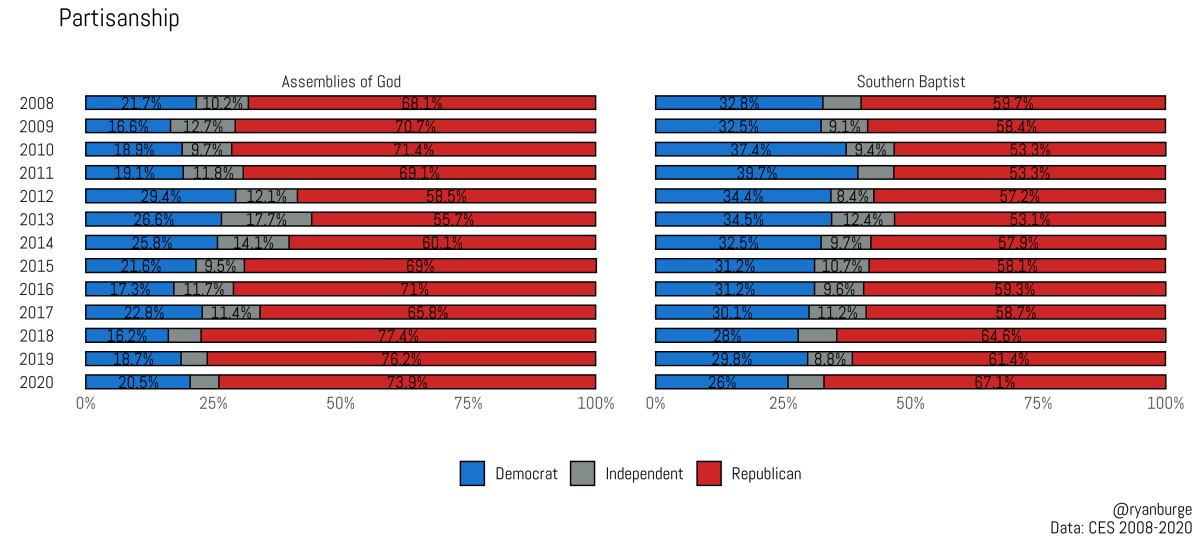
It’s difficult to pinpoint exactly why the Assemblies of God has continued to increase over the past 15 years. Research shows that membership of the Assemblies of God has become more politically conservative and more religiously active today than just a decade ago, but its own numbers indicate that it has achieved incredible racial diversity—44 percent of members in the United States are ethnic minorities. A confluence of these trends may be factors in its ability to keep its numbers up.

https://datawrapper.dwcdn.net/WB8Jl

Compared to the two largest Protestant denominations in the United States—the Southern Baptist Convention and the United Methodist Church—the Assemblies of God has always been outnumbered. In 2005, there were about 16.3 million Southern Baptists in the US, by the denomination’s own tally, and nearly 8 million United Methodists. At the time, the Assemblies of God reported 2.8 million members.

However, between 2005 and 2019, both the Southern Baptists and the United Methodists reported a membership decline. In 2019, there were 14.5 million Southern Baptists, down 11 percent. The United Methodists reported a total of 6.5 million members in 2019, down 19 percent. Meanwhile, the Assemblies of God grew over 16 percent to nearly 3.3 million members.

While other denominations have been dropping year-over-year for more than a decade, there have only been three years in the past 40 when the Assemblies of God did not report annual growth in adherents. Just one of those came this century. As a result, the Assemblies of God has managed to add nearly half a million members since 2005.

As it has grown over the decades, the Assemblies of God has maintained its Pentecostal theological distinctives, like believing in divine healing, practicing spiritual gifts like speaking in tongues, and anticipating a premillennial second coming of Christ.

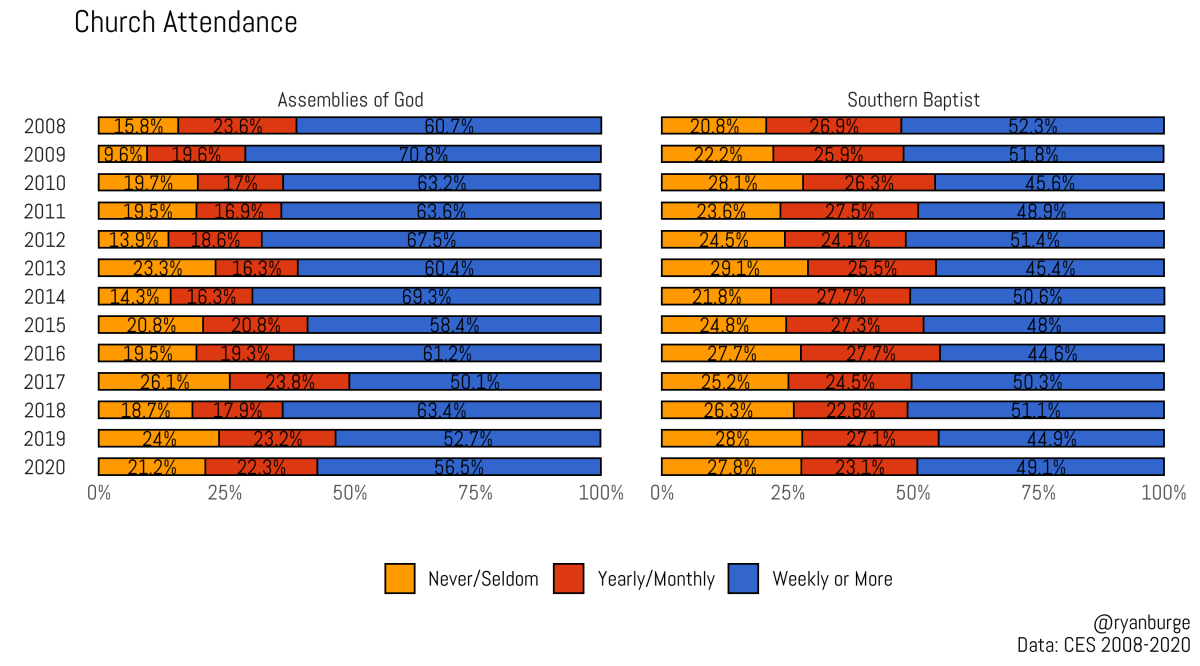
When analyzing survey data on the church attendance patterns among traditions, it’s clear that the Assemblies of God is not growing by adding lukewarm worshipers to its ranks and church roles. Instead, the data point to a denomination that is incredibly active in congregational life. On average, about a third of US Christians attend church weekly. In 2020, the Cooperative Election Study reported that 57 percent of AG members attend church at least once a week, compared to 49 percent of Southern Baptists.

What we can learn from the loss of 269 passengersI see it,visually and on radar.… The light is flashing.… What are instructions?” All of us in the free world remember the chilling words of Soviet pilot 805 concerning Korean Air Lines Flight 007: “Now I will try a rocket.… I am closing on the target.… I have executed the launch.… The target is destroyed.”“How could they do it?” we exclaimed. Then, with a touch of bitterness, we may have recalled the old Cold War battle cry, “You can always trust a Communist—to be a Communist!” It was as if the Soviet government were determined to prove this was so.The Korean pilot and his 269 civilian passengers ranging in age from 4 to about 70 flew far above the clouds in passage from Alaska to Korea. They were serenely unaware that they were miles off course and flying over a highly sensitive Soviet military establishment. Then, without warning, a soviet Su-15 interceptor launched the missile that blasted a planeload of people from the air.We Must Understand Soviet FearsWhy would the Soviets do it? I think of myself as an essentially p fair-minded person. I remember the Golden Rule and try to put myself in the other person’s shoes. But long years of Russian history have created for the Soviets a paranoid fear of invasion. The flat plains of their Western borders invited enemies, making defense almost impossible. Rome, Sweden, Turkey, France, Britain, Austria, Hungary, Germany in World War I, then a generation later Germany again in World War II—all remind every Russian citizen that his very racial name, Slavic, means slave. And now the United States and its allies ring their military forces around the edges of the Soviet empire. And add to this the Mongul invasions from past centuries, the Japanese occupation of lower Sakhalin Island in 1905 after the Russo-Japanese War, to say nothing of the constant Soviet fear of China, the colossus of the East.Yes, I can understand the Soviet fear of invasion and how, for them, self-defense has become paranoia. That explains Article 36 of the Soviet Border Law Code: “Use weapons and military technology for … repulsing violators of the state border of the USSR on land, water, and in the air … in cases when stopping the violation cannot be achieved by other means.” In today’s nuclear world with threatening war on every side, I can understand the order to shoot down air flights that trespass sensitive areas along borders.Chilling Pattern Toward Human LifeBut 269 men, women, and children shot down in an unarmed civilian passenger plane!The evidence seems overwhelming that either (1) the Soviet pilot knew this was a civilian plane that might or might not have also been engaged in spy activity, or (2) he did not know whether it was a civilian plane. In either case, the pilot, his ground crew, and the general who approved the action knew that it might well be a civilian plane filled with passengers. And the Soviets were unprepared or unwilling to take adequate precautions to insure that they would not be shooting down a commercial passenger plane that had simply wandered off course.This was not the first time such an incident had occurred. In April 1978, another Korean civilian passenger plane flew over Soviet air space. The Russian interceptor shot off 15 feet of its wing and killed two passengers, but the pilot managed to get the planeload of people back to ground safely. In that incident, the Korean pilot had given the distress signal and indicated by the internationally agreed-upon sign of turning on his landing lights that he would follow the instructions and guidance of the interceptor plane. But the Soviet pilot shot the passenger plane down anyway.Philosophy Does Affect ActionsEvents like these tell us something about the mindset of the Soviet leadership and its military establishment. They demonstrate a different view of human life and what it means to be human. Officially, at least, Soviet leadership is committed to a philosophy of dialectical materialism: a human being is essentially a thing. He can be used, and then becomes disposable when he gets in the way. He has no inalienable rights or inherent dignity stemming from God’s image in him. Such values are essentially inconsistent with a merely one-dimensional materialistic view of mankind.Against this stands a Christian view of humanity that finds its deepest expression in the most familiar verse in all the Bible—John 3:16: “For God so loved the world, that he gave his only begotten Son.…” By creation God made me—and every other human—a creature of infinite value. By redemption he demonstrated that I, along with every other human person, still have infinite value in spite of sin. The Christian knows that humans are not expendable. Every human being is of infinite value to our God, and therefore must be held in infinite value by us.Fortunately for our world, neither communism nor Marxist materialism is a monolithic structure always on the side of evil. Christians are not alone in setting a high value on life. By natural revelation, and in some cases by direct borrowing from biblical revelation, many non-Christians recognize the uniqueness of humankind. Many Muslims, Buddhists, and those of other faiths recognize the inherent worth of man. There is much truth in many religions, and even in dialectical materialism. It is precisely these pieces of truth that give non-Christian religions their religious and moral power over mankind.And unfortunately, Christians, committed to the doctrine that God created us in his own image and that every human is the object of God’s redemptive love, have not always acted accordingly. Remember the Thirty Years’ War in Central Europe or, closer to home, some of the more unpleasant scenes from the recent war in Vietnam? Professing Christians are not always good; professing Marxists are not always bad.My point is simply this: At the core of the Christian view is the infinite worth of each human. By contrast, Soviet leadership is avowedly committed to a philosophy of materialism, rejecting the Christian view. Given its current paranoid fear of invasion, the Soviet leadership only acted consistently with its own basic view of mankind in shooting dow KAL Flight 007 at the price of 269 passengers lives.Free World ResponseWhere does that leave us in the free world? Some representatives of the so-called New Right call us to a renewal of the Cold War of two decades ago. To them, an apology with indemnity followed by serious negotiations to avoid a repetition of this tragedy is not enough. They say the Soviets are wholly evil. They are uncivilized barbarians, and we must be prepared to destroy them or they will destroy us. Therefore, we must exact an appropriate vengeance. We must cut off all negotiations with the Soviets. We must stop scientific and cultural exchanges. We must revoke the grain agreement. We must call off the arms negotiations. And above all, we must build up our nuclear stockpile and conventional weaponry to the point where we can crush any Soviet aggression.Unfortunately, such actions would in most cases hurt us far more than the Communists. Isolating ourselves from the Soviets and refusing to negotiate with them will not stop the building of their war machine. And we have no evidence that Soviet communism will simply disappear from our earthly scene.By contrast with the New Right, the traditional liberal all too often deludes himself by thinking that the Soviets really hold to a noble system. Their unruly and unjust actions are caused by us. We goad them into such behavior. If we would only stop threatening them, reduce or renounce armaments, and start talking with them, all would be well.Such a view is blind to the avowed philosophy of Soviet leadership, and denies the reality of human depravity—Russian as well as American. Such a view is utterly irresponsible in its assessment of Soviet actions.Ostracizing the Soviet Union as a parish among nations will not make it go away. Rushing into an ever-escalating arms race can only place a crushing burden upon ourselves as well as on the Soviets; and in the end, it is most likely to lead to our own annihilation as a people. But trusting the Communists to be “good boys” is only asking them to deny their nature.A Realistic Christian Middle WayWe must see the Soviets for what they are and wisely map our course accordingly. We must call the Western world to a serious renewal of the disarmament discussions. We must seek justice by law, negotiation, and arbitration. We must do what we can to alleviate Soviet fear of invasion ingrained in them through the centuries.But, because we do believe in their depravity as well as our own, we will seek disarmament that can be checked. We will seek to meet their threats to world peace with firmness and strength. Because we place infinite value on human life and freedom, we strive for justice, oppose war, and struggle for mutual disarmament. But because we also believe in depravity, we must be prepared, as a last resort, to stop violence even by violence.Let us remember the massacre of 007. But as Christian people, let us not react with blind hate. Nor with the sticky sentimentalism that denies the depravity of man and ignores the history of Marxist philosophy and action. Rather, let us respond as becomes Christian people—“wise as serpents and harmless as doves.”KENNETH S. KANTZER

When the analytical lens turns to political partisanship, a more nuanced story emerges of how the AG has shifted compared to the Southern Baptists.

During the 2008 presidential election, about 22 percent of AG members identified as Democrats compared to 68 percent who affiliated with the Republican Party. Among Southern Baptists, the differences weren’t as stark. About a third of Southern Baptists were Democrats and 60 percent were Republicans.

Over the past 12 years, both traditions have drifted toward the right. In 2020, nearly three-quarters of all AG members said that they were Republicans, up about 5 percentage points. Among Southern Baptists, 67 percent claimed to be a Republican, an increase of 7 percentage points. But the share of AG members who are Democrats remained basically unchanged during that time, while declining nearly 7 percentage points among Southern Baptists.

Pastors, denominational leaders, and those in the pews are always interested in what leads to a denomination’s growth, particularly when the group is growing year after year while others around it experience decline. The Assemblies of God currently has around 13,000 congregations, more than a quarter of which were formed in the past decade.

It’s difficult to pinpoint just one reason for the increase in membership, but the data do paint a portrait of a membership that is very involved in the life of the church. When half of all members report weekly attendance, this goes a long way in warding off defections to other denominations. Research shows that such involvement makes it more likely that young people raised in the tradition will not leave it as they move into adulthood. More than half (53%) of AG adherents are under 35.

The fact that its churches are so politically homogeneous may work in its favor as well. Research has increasingly shown that more and more Americans are choosing their churches based on political considerations. If this is the case, then AG churches portray a clear message to potential converts about their political orientation, making it easy for newcomers to know what the church is about.

Finally, it may be helpful that the Assemblies of God, though growing, is small enough to lay low in the national media, largely avoiding the controversy and attention toward infighting in other denominations.

As the nones continue to rise and more and more nondenominational churches are planted in the United States, it will likely become more difficult for the Assemblies of God to sustain its growth.

As I describe in my forthcoming book on surveys—20 Myths about Religion and Politics in America—almost no traditional denomination has seen any growth in the past 12 years, so the Assemblies of God is a true outlier. It seems to have found a combination of factors that has succeeded even in these difficult times.

Ryan P. Burge is an assistant professor of political science at Eastern Illinois University. His research appears on the site Religion in Public, and he tweets at @ryanburge.

Books
Review

Grief Can Weigh You Down, but It Doesn’t Have to Pull You Under

Shawn Smucker’s latest novel explores the burden of unresolved regret and the healing power of sacrificial love.

Christianity Today August 11, 2021
Illustration by Mallory Rentsch / Source Images: Jesse Gardner / Marko Blazevic / J Waye Covington / Unsplash

Paul Elias is dying.

Weight of Memory

Weight of Memory

REVELL

368 pages

$10.93

The mass growing inside his head is beyond the ability of his doctor to treat, and he will be dead sometime between “anytime and three weeks.” It’s a burden he chooses to carry alone, not revealing it to anyone. In addition to his terminal diagnosis, he is faced with the unsettling fact that when he is gone, there will be no one to care for his flighty 11-year-old granddaughter, Pearl, for whom he is the sole guardian. Even more unsettling is the fact that she’s been disappearing while reporting strange visits from a silver-haired woman no one else can see, who asks for help finding something she’s lost.

Until now, Paul has successfully fled and barricaded himself from his painful past. But confronting his mortality and Pearl’s need for a guardian forces him to return with her to Nysa, the town where he grew up, and where Mary, his wife and Pearl’s grandmother, drowned in a lake 40 years prior. What will they find there? Will someone from Paul’s past be able to care for Pearl when he’s gone? Will painful memories resurface, awakened by a familiar place? And will he finally find the peace that’s eluded him since his wife died?

The Weight of Memory is the third novel Shawn Smucker has written for an adult audience, following Light from Distant Stars (winner of the 2020 CT Book Award for Fiction) and These Nameless Things. In these books, as well as two young adult novels, Smucker seamlessly weaves together elements of suspense and magical realism to explore the psychological baggage of his characters. The past is a prison for so many of them, a parade of Jacob Marleys burdened by chains of regret. Much of the suspense arises from the winding paths they take to release those chains. Smucker’s stories are grounded in the realities of pain and healing, guilt and forgiveness, which give the light touches of fantasy their poignancy.

Heavy secrets

As Paul and Pearl are drawn inexorably to Nysa, a shriveled, dying town that the world has long passed by, they discover that Paul’s wife, Mary, was not the last one to drown in Nysa’s lake. In fact, a rash of drownings had sent most of the population packing, leaving an aura of death hanging about the town. Smucker’s lush descriptions bring Nysa and its world-weary characters to life. The town has a familiar, lived-in quality reminiscent of the forgotten coal communities that pepper the Appalachian corridor near where Smucker lives in Lancaster, Pennsylvania.

The settings of the novel are almost living, breathing characters unto themselves, a testament to Smucker’s gift for creating a mood. Take water, for example, in its various forms. At first it presents a placid face, both as Paul and Pearl cross the long bridge to Nysa and as they come upon the glassy surface of the lake. But then it reveals its capricious nature with threatening rain and entombing depths that become more ominous against the backdrop of the drownings.

The concept of drowning itself becomes a kind of metaphysical conceit in The Weight of Memory. At one point, one character cautions another, “Secrets are heavy things. They’ll drag you under if you don’t let them go.” Like slipping deeper beneath the waves, it’s the secrets we keep that pull us away from one another and deeper into isolation. As Paul tries to hide his terminal diagnosis from more and more people, including Pearl, he can feel the mass in his head growing larger and his isolation and fear of death growing deeper.

Just as there is an oppressive heaviness in keeping secrets, there is also healing in bringing things to light. A common theme in Smucker’s writing is that his characters create more pain for themselves by holding things in, for fear of being found out, than they would by coming clean. When the truth comes to light, there is often, though not always, a holy grief that lifts the attendant burdens away. At one point, a character says, “Grief is hard and good. It is the disease and the medicine, all at once.” Whether that grief will heal or consume is a pivotal matter in many of Smucker’s novels.
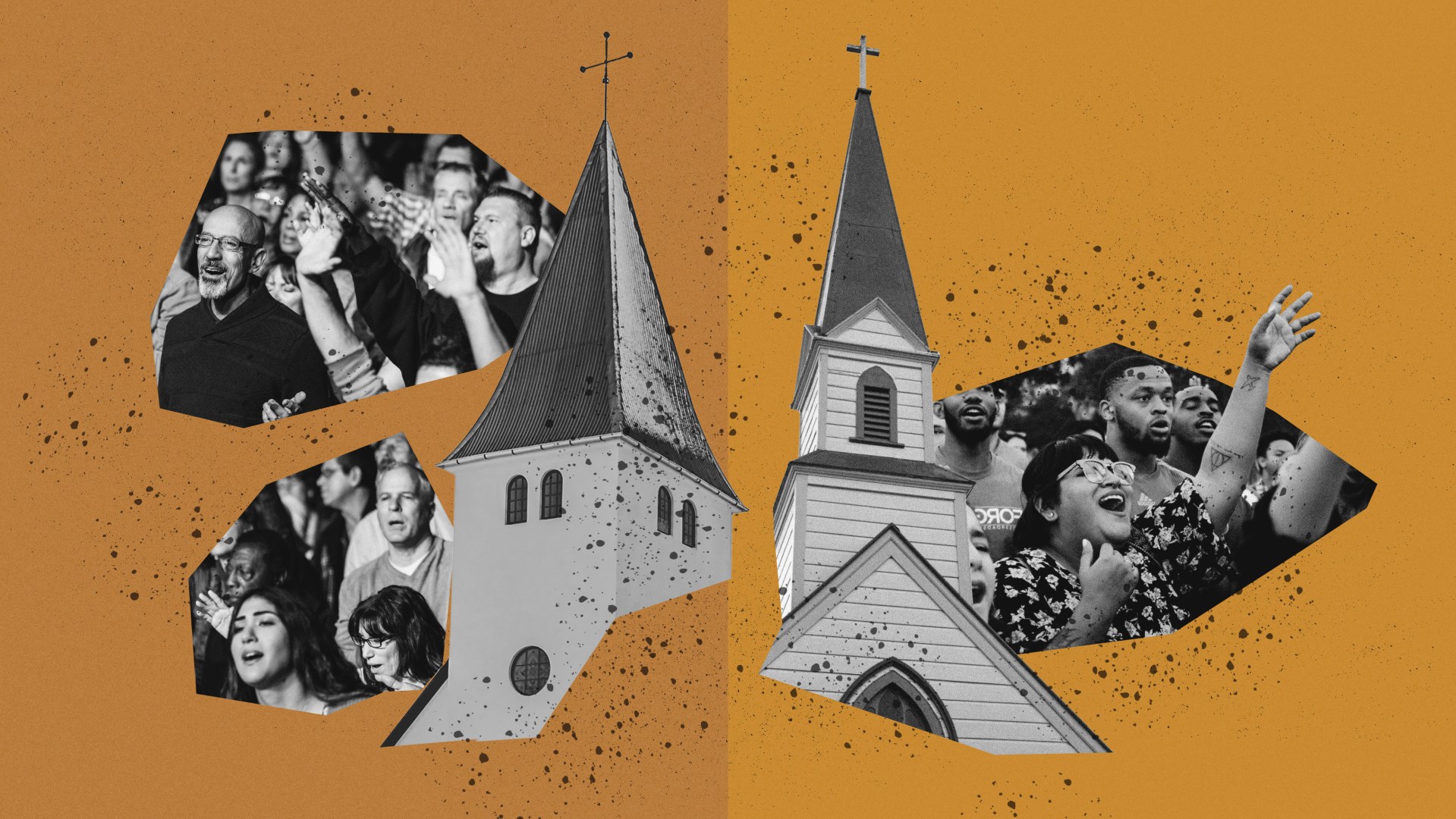
Throughout The Weight of Memory, interspersed flashbacks show the events that led to Mary’s drowning. They ebb and flow within the unfolding story like tides coming in and out, slowly uncovering essential elements of backstory. In addition to lifting unresolved weights from characters’ shoulders, they also offer the reader a kind of unburdening, slowly relieving the delicious tension of being held in suspense.

Rays of hope

Though heavy themes of psychological and spiritual distress run through Smucker’s novels, there is always a ray of hope that pierces the darkness. In The Weight of Memory, that ray of hope is Paul’s granddaughter, Pearl. At the risk of being too on the nose, her character is evocative of her mollusk-born namesake—a thing of beauty forged from past sorrow and adversity. She is a complex character, in some ways emotionally regressing, with a wild and vivid imagination that has not yet been corralled by the weight of reality that burdens Paul. In other ways she is wise beyond her years and aware of things she has no reason to know.

The power of the bond between Paul and Pearl drives the story forward. Dynamics between the two are constantly shifting, and Paul is sometimes exasperated and at other times mystified by her. The intimacy of the setting heightens the unexplored tensions in their relationship. In some ways, Pearl is still the same little girl that Paul has been raising, but in other ways she is metamorphosing into someone Paul doesn’t fully recognize. He is not sure how worried he should be about her visions of the silver-haired lady and her tendency to disappear at the drop of a hat.

But there is also no question about the depth of their love and care for one another. They are both willing to make sacrifices for one another, and Pearl is often the only thing keeping Paul from spiraling into despair. As the story unfolds, they both make difficult decisions about how far they are willing to go to heal the wounds of the past.

At its heart, The Weight of Memory is a story about the power of sacrificial love to overcome even the deepest fissures in the human soul and the heaviest psychological burdens we carry. There is a vein of lightness and whimsy that runs through the narrative, carrying the reader through the heavier themes of loss and regret. This sets it apart from rank-and-file suspense novels, which often mistake dour heaviness for emotional and spiritual depth. The book has a slow-release poignancy that sneaks up on you in a quiet, unhurried sort of way. The intrigue of unlocking the various mysteries will bring you to the table, but the heart will make you stay.

Jonathan Sprowl is a writer and editor based in Colorado Springs.

Apple PodcastsDown ArrowDown ArrowDown Arrowarrow_left_altLeft ArrowLeft ArrowRight ArrowRight ArrowRight Arrowarrow_up_altUp ArrowUp ArrowAvailable at Amazoncaret-downCloseCloseEmailEmailExpandExpandExternalExternalFacebookfacebook-squareGiftGiftGooglegoogleGoogle KeephamburgerInstagraminstagram-squareLinkLinklinkedin-squareListenListenListenChristianity TodayCT Creative Studio Logologo_orgMegaphoneMenuMenupausePinterestPlayPlayPocketPodcastRSSRSSSaveSaveSaveSearchSearchsearchSpotifyStitcherTelegramTable of ContentsTable of Contentstwitter-squareWhatsAppXYouTubeYouTube