News

Kanakuk Kamps Abuse Reexamined In New Report

Eleven years later, an investigation by David and Nancy French plus a site for victims try to grasp the extent of predatory behavior by a longtime camp director.

Christianity Today March 28, 2021
Chris Mainland / Lightstock

Former Kanakuk director Pete Newman has been in prison since 2010 for abusing boys from the popular Christian summer camp, but a recent report and petition say the public still doesn’t know the extent of the child sex abuse that went on there.

While 19 victims were identified in the initial investigation against Newman, a civil complaint tallied at least 57, and a prosecutor in the case estimates there could be hundreds over Newman’s 15 years at the Missouri camp, according to a report published Sunday by David French and Nancy French through the conservative outlet The Dispatch.

The Frenches’ investigation noted how the number of Kanakuk victims who have come forward over the years remains unknown. Many have been settled complaints with non-disclosure agreements, which do not permit victims to speak out about what happened to them. A twelfth anonymous victim (John Doe XII) filed a lawsuit this year.

This weekend, a new website, FactsAboutKanakuk.com, launched with a petition calling on the camp to release victims from NDAs so more stories of abuse at the camp can come to light.

“The nondisclosure agreements prevent victims and their families from seeking healing by connecting with other victims and sharing their stories, whether in private or in public,” organizers said. The site lists five men affiliated with Kanakuk who have been convicted of sexual crimes against children.

The Dispatch detailed Newman’s behavior as a “superpredator” at the camp. Newman was known to play sports and ride four-wheelers naked with campers, conduct “hot tub Bible studies,” and hold one-on-one sleepovers, according to the report, which includes extensive testimony from victims. He groomed children by talking about sexual topics from a Christian perspective before abusing them.

Newman’s inappropriate and abusive camp activities came up in local media stories around his arrest and subsequent lawsuits, but hadn’t been collected by a national outlet. One parent of a victim, who began a blog in 2013 when her son disclosed that he too had been abused, posted for the first time in years in response to the Frenches’ coverage: “At last, the story is being told.”

Kanakuk continues to rank among the best-known Christian camps in the country and serves over 20,000 kids a summer. The press page on its website now leads with a link to a 322-word statement on abuse, which describes the Newman case without mentioning his name and apologizes to victims and their families. The response twice references Newman’s deception and features Kanakuk’s new child protection plan.

Though Newman was sentenced to two consecutive life sentences plus 30 years in prison more than a decade ago, Kanakuk families are still facing the lasting trauma of his abuse—sadly, one victim died by suicide in 2019—and grappling with the lack of accountability from camp leadership, particularly founder Joe White, the Frenches wrote.

In legal filings, victims’ families claimed that what should have been warning signs—his deep connections with boys, including continuing to text, write, and visit them, and hanging out with them rather than with fellow counselors—were celebrated as Christian relationship-building. The camp continued to promote Newman despite reports from parents of inappropriate and concerning behavior, including in the nude, dating back to 1999.

Kanakuk says in a statement on its site, “… no one at Kanakuk knew that any criminal activity was being committed, and no charges for failure to report were ever filed against any Kanakuk staff.”

The advocates behind Facts About Kanakuk say the same leaders who failed to address abuse remain at the helm “without repentance, without accountability, and without transparency,” and that the scandals “never received the attention needed to bring about real change. Non-disclosure agreements (NDAs) and significant financial settlements have concealed the truth in order to preserve a ministry brand and economic engine.”

When asked why they were looking into the Kanakuk case, the Frenches said:

The response is simple. There is no statute of limitations on truth. While there are limitations on legal processes, there are not statutes of limitation for individual and institutional accountability. A false narrative has circulated about Kanakuk for a decade, and parents have sent children to the camp without knowledge of its history or access to material facts.

Nobody resigned as a result of the failure to stop a decade of abuse. There was no disciplinary action against any of Newman’s supervisors, and Joe White is still the head of the camp today.

Kanakuk is not a member of the Evangelical Council for Financial Accountability, and White’s family along with the camp’s president make up a majority of its seven-member board, Ministry Watch reported.

In a handful of states, camps aren’t required to comply with the same regulatory standards as schools and daycares. Kanakuk set out to become an industry leader on the issue of abuse when it launched its own child protection program after Newman’s case.

It has since put on child protection training seminars for leaders from more than 450 fellow Christian camps and ministry organizations. Rich Brashler, the longtime risk management coordinator at Kanakuk, continues to speak at events around preventing and responding to abuse at summer camp.

Kanakuk now lists detailed guidelines on the types of contact, interaction, and conversations staff members can have with campers. Among them: no lap-sitting, sexual jokes, innuendoes, remarks about a camper’s physique, individual secrets, or bathroom humor. “All one-on-one interactions with kampers must be done in a public place with others visible,” the guidelines state. “Private one-on-one interactions or meetings are not allowed. A third person is always encouraged in these settings.”

Statistics show children who suffer sexual abuse are more likely to do so at the hands of someone they know, such as a neighbor, coach, teacher, and doctor. Christian organizations are becoming more aware of how predators may target their churches and ministries because of the system of trust and access to children.

Young Christians are more likely to identify bad behavior as abuse and less likely to condone it; Lifeway Research found that churchgoers under 35 are twice as likely as older generations to leave a church because they felt sexual misconduct was not taken seriously.

Still, it can take years or decades for a victim to disclose abuse they experience as a child, if they come forward at all.

“Only 23% to 33% of victims disclose their sexual abuse during childhood, and only 6% to 15% of victims ever disclose those assaults to law enforcement. Males are more reluctant and take longer to make full disclosures,” wrote the Facts About Kanakuk site, citing statistics from the National Think Tank for Child Protection. “The extent of damage done to campers who attended Kanakuk Kamps and its programs will likely not be known for many years.”

News

Terrorists Target Palm Sunday Church Service in Indonesia

(UPDATED) Suicide bomb attack on Catholic Mass in Makassar, South Sulawesi, injures 20. Authorities blame local ISIS affiliate.

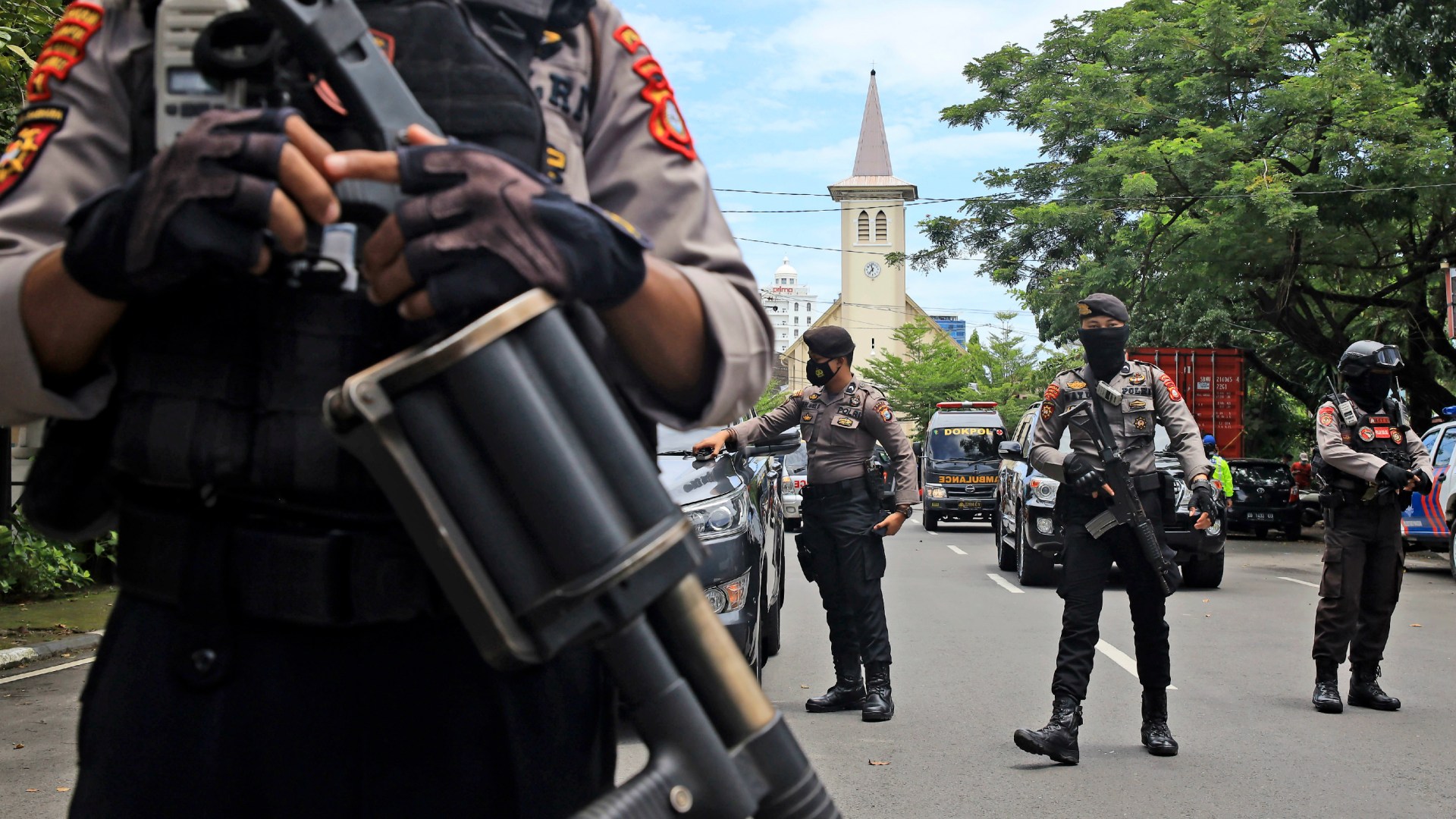
Indonesian police officers in Makassar stand guard near a Catholic church where an explosion went off on Palm Sunday in South Sulawesi on March 28, 2021.

Indonesian police officers in Makassar stand guard near a Catholic church where an explosion went off on Palm Sunday in South Sulawesi on March 28, 2021.

Christianity Today March 28, 2021
Yusuf Wahil / AP

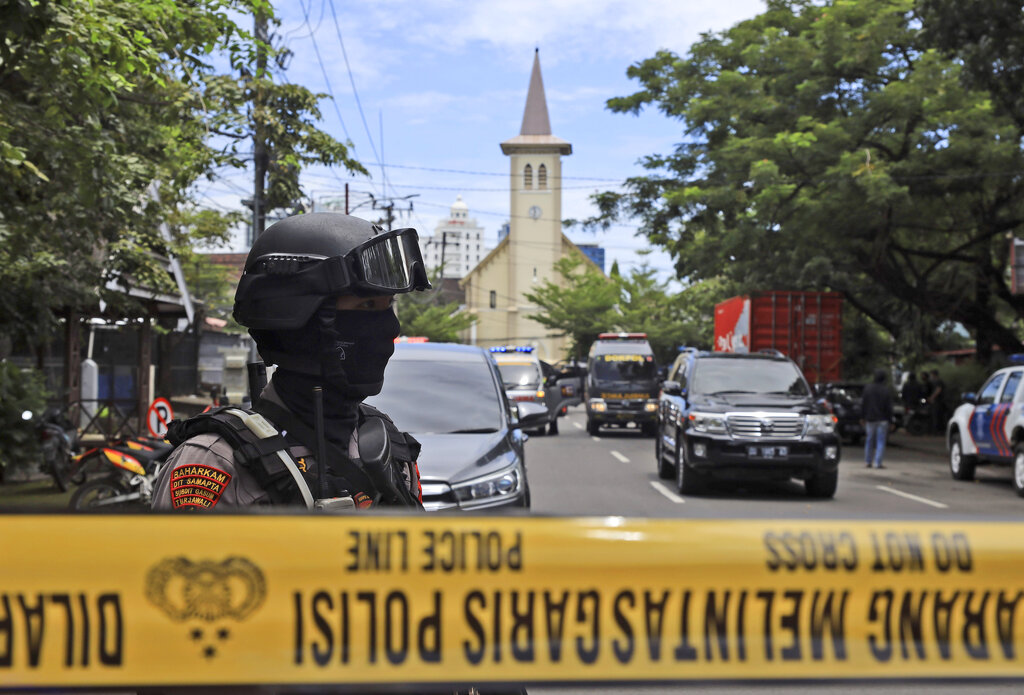
MAKASSAR, Indonesia (AP) — Two attackers believed to be members of a militant network that pledged allegiance to the Islamic State group blew themselves up outside a packed Roman Catholic cathedral during a Palm Sunday Mass on Indonesia’s Sulawesi island, wounding at least 20 people, police said.

A video obtained by The Associated Press showed body parts scattered near a burning motorbike at the gates of the Sacred Heart of Jesus Cathedral in Makassar, the capital of South Sulawesi province.

Wilhelmus Tulak, a priest at the church, said he had just finished celebrating Palm Sunday Mass when a loud bang shocked his congregation. He said the blast went off at about 10:30 a.m. as a first batch of churchgoers was walking out of the church and another group was coming in.

He said security guards at the church were suspicious of two men on a motorcycle who wanted to enter the building and when they went to confront them, one of the men detonated his explosives.

Police later said both attackers were killed instantly and evidence collected at the scene indicated one of the two was a woman. The wounded included four guards and several churchgoers, police said.

National Police Chief Gen. Listyo Sigit Prabowo told reporters when he visited the crime scene late Sunday that the two attackers are believed to have been members of the militant group Jemaah Anshorut Daulah, which has pledged allegiance to the Islamic State group and was responsible for deadly suicide bombings on Indonesian churches in 2018.

He said one of the attackers was believed to have links to a church bombing in the Philippines.

The attack a week before Easter in the world’s most populous Muslim-majority nation came as the country was on high alert following December’s arrest of the leader of a Southeast Asian militant group, Jemaah Islamiyah, which has been designated a terror group by many nations.

The Fellowship of Indonesian Evangelical Churches and Institutions (FIECI) condemned the attack, requesting prayer for victims and more respect for religious freedom. The group also called on Indonesian Christians to remain calm, “handing over the investigation to government officials while reflecting on the love, sacrifice, and redemptive work of Jesus Christ” during Holy Week.

An Indonesian police officer stands guard near the Sacred Heart of Jesus Cathedral in Makassar, South Sulawesi, where an explosion went off on Palm Sunday.

Indonesia has been battling militants since bombings on the resort island of Bali in 2002 killed 202 people, mostly foreign tourists. Attacks aimed at foreigners have been largely replaced in recent years by smaller, less deadly strikes targeting the government, police and anti-terrorism forces, and people militants consider as infidels.

Police have identified one of Sunday's attackers only by his initial, L, who they believe was connected to a 2019 suicide attack that killed 23 people at Our Lady of Mount Carmel Cathedral in the Philippine province of Sulu, Prabowo said.

He said the two attackers were linked to a group of suspected militants arrested in Makassar on January 6, when a police counterterrorism squad shot and killed two suspected militants and arrested 19 others. Members of the squad were initially supposed to arrest the two slain men for their alleged role in the Philippine suicide bombing.

He said on Sunday police arrested four suspected militants believed to have links with the attackers in a raid in Bima, a city on Sumbawa island in East Nusa Tenggara province.

“We are still searching other members of the group and I have ordered the Densus 88 to pursue their movement,” Prabowo said, referring to Indonesia’s elite police counterterrorism squad.

President Joko Widodo condemned Sunday’s attack and said it has nothing to do with any religion as all religions would not tolerate any kind of terrorism.

“I call on people to remain calm while worshiping because the state guarantees you can worship without fear,” Widodo said in a televised address.

He offered his prayers to those injured and said the government would cover all costs of medical treatment. He said he had ordered the national police chief to investigate the attack and crack down on any militant network that may be involved.

At the end of Palm Sunday Mass in St. Peter’s Basilica, which opened Holy Week ceremonies at the Vatican, Pope Francis invited prayers for the victims of violence. He cited in particular “those of the attack that took place this morning in Indonesia, in front of the Cathedral of Makassar.’’

At least 20 people were wounded in the attack and had been admitted to hospitals for treatment, said Mohammad Mahfud, the coordinating minister for political, legal, and security affairs.

Indonesia has been on high alert since police in December arrested Jemaah Islamiyah leader Aris Sumarsono, also known as Zulkarnaen. Over the past month, the country's counterterrorism squad has arrested about 64 suspects, including 19 in Makassar, following a tipoff about possible attacks against police and places of worship.

Jemaah Islamiyah was once considered the preeminent terror network in Southeast Asia, but has been weakened over the past decade by a sustained crackdown. In recent years, however, a new threat has emerged in militants who fought with the Islamic State group in Iraq and Syria and returned to Indonesia or those inspired by the group’s attacks abroad.

Indonesia's last major attack was in May 2018, when two families carried out a series of suicide bombings on three churches in the second-largest city of Surabaya, killing a dozen people including two young girls whose parents had involved them in one of the attacks. Police said the father was the leader of Jemaah Anshorut Daulah.

Days later in Washington, US Vice President Mike Pence met with the leader of Indonesia’s Nahdlatul Ulama, the world’s largest Muslim organization, to discuss religious freedom and extremism.

Nahdlatul Ulama (NU) convened about 300 Muslim scholars from 30 countries in 2016 to denounce extremism, promote the protection of Christians and other religious minorities, and uphold Indonesia as a model. Last year, the World Evangelical Alliance (WEA) partnered with the humanitarian Islam group on an initiative to counter religious extremism, explained by WEA senior theological advisor Thomas K. Johnson last year.

“Though the Nahdlatul Ulama has taken a decisive theological step by saying that Muslims must no longer describe non-Muslims as infidels, substituting the term citizens for non-Muslims, some extremists have not gotten the message,” Johnson, who has written a book on the WEA-NU partnership, told CT. “More such work is needed to fully remove the religious grounds for violence.”

In 2017, religious freedom scholar Paul Marshall, a senior fellow at the Leimena Institute in Jakarta, explained for CT:

If the third-largest democracy on the planet succumbs to Islamic radicalism, then the future of the Muslim world and the rest of us looks dire. The major center of Muslim moderation—and the major counter to ISIS and similar ideologies—will be undercut. This will affect us all.

Open Doors ranks Indonesia No. 47 out of the 50 countries where it’s hardest to be a Christian today.

Terrorism at churches during Holy Week is tragically common. Christians in Egypt suffered one of the worst Palm Sunday attacks in 2017, when dozens were killed at two churches. Meanwhile, Christians in Sri Lanka are preparing to commemorate the second anniversary of the Easter Sunday bombings that killed hundreds at three churches (and other locations) in 2019.

That year, Colombo theologian Ajith Fernando offered six biblical responses for when Islamist extremists attack churches.

Yusuf Wahil reported from Makassar and Niniek Karmini reported from Jakarta for The Associated Press. Additional reporting by Jeremy Weber for CT.

Theology

The Body Keeps the Faith

Theologian says spiritual life continues despite disorientation of dementia.

Christianity Today March 26, 2021
Courtesy of Tricia Williams / Edits by Rick Szuecs

Testimony is important for many Christians. So what happens when you can’t remember how you came to know Jesus as your Savior or recall the things God has done in your life? Psalm 77:11 says, “I will remember the deeds of the Lord; yes, I will remember your miracles of long ago.” What happens to our faith when we can’t remember?

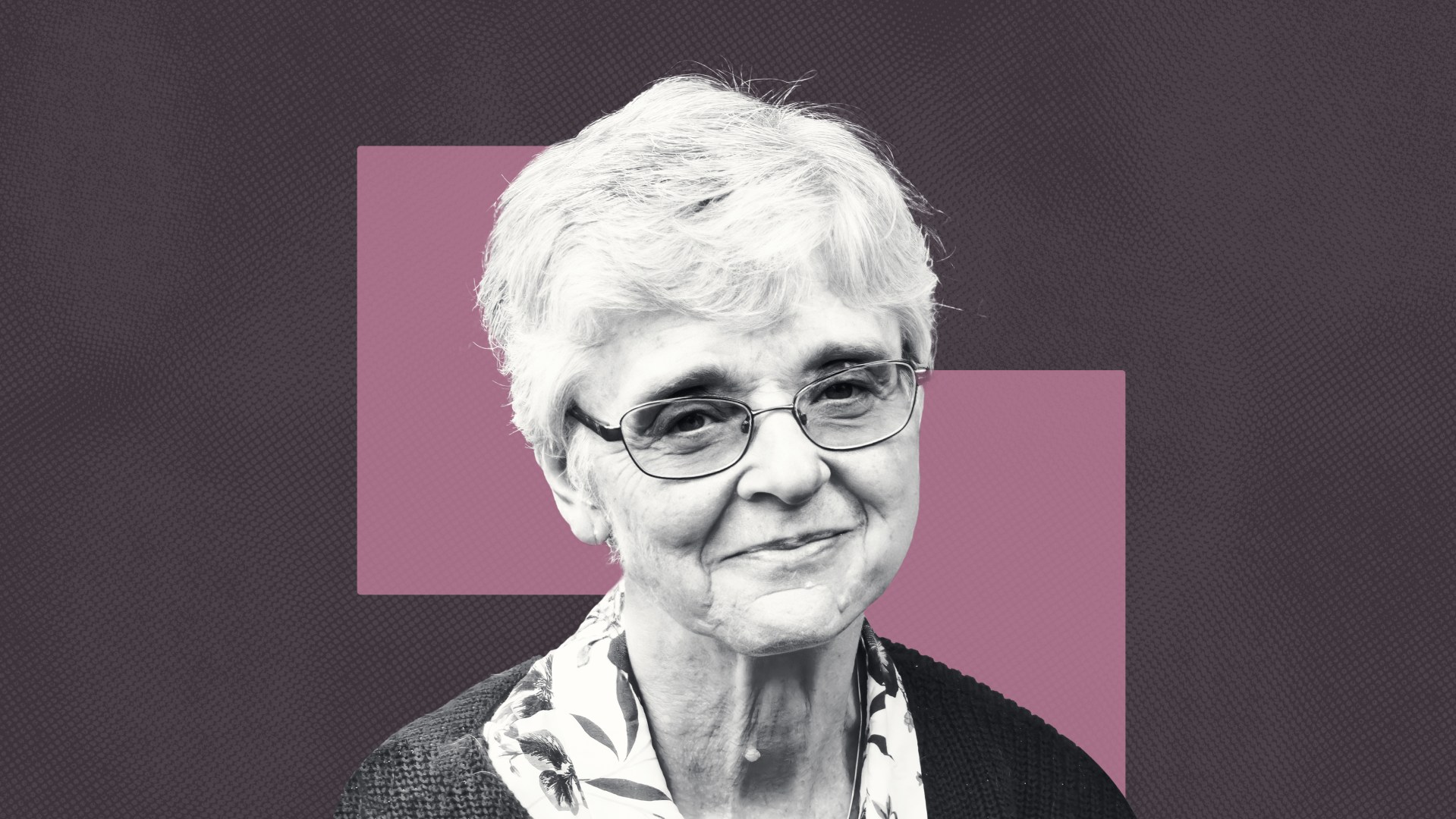
Theologian ‘Tricia Williams asked evangelical believers with dementia that question for her new book, What Happens to Faith When Christians Get Dementia? Their answer was that memories fade, but faith does not.

Williams, a longtime editor for Scripture Union, began focusing on pastoral care for people with dementia after prompting from a colleague who wanted to help his wife. First, she developed Bible reading and prayer resources. Then Williams went on to complete her PhD at the University of Aberdeen in Scotland under John Swinton, a leading scholar on the theology of dementia.

Her work is “always with a pastoral purpose,” she said. With this new book, she wants to help Christians provide better care for believers with dementia and see how the insights of those believers can apply to everyone’s faith journeys. While her current book is aimed at scholars, she’s working on a second book based on the research for a general audience.

Williams spoke to CT about her findings and how to walk with people with dementia.

First, what are some of the symptoms of dementia? How do these symptoms raise worries for evangelical Christians?

Dementia is an umbrella term. Within that, there are a group of illnesses which often have similar symptoms, particularly initially. In my research, my participants had a mixture of Alzheimer’s and vascular dementia. There are other kinds as well.

The person who is living with someone who is developing dementia will notice concentration becoming more difficult and short-term memory loss. Then as dementia progresses, and that might take several years, they will notice memory becoming even more difficult, social habits being more difficult to monitor.

At a workshop I was doing with a church, there was lots of patient, pastoral, kind concern. Then, toward the end of the meeting, a lady who’d been silent, obviously could stay silent no longer, just shouted out, “That’s all fine, but actually I find this incredibly embarrassing because I am not sure how my father is going to behave when we go to church.”

Some of the key questions people have are: Who am I? If your relational capacity is gone, and you can’t think in a straight line anymore, is personhood still there? What is it that makes me human? Then, there’s the question for a believer: So, what happens to my faith? If I can’t remember anymore, if I can’t confess my sins, is my salvation still safe? Then some people might say: Can you come to faith when you have dementia?

You interviewed eight people in early-to-moderate stages of dementia. Can you describe them?

They could still talk to me. Some were just discovering what it meant to live with dementia. One or two others were really fragile, and it was a real struggle for them to try to communicate.

They were all people who at that point knew that they had dementia and could imagine what that might mean. They were all aware of the stereotypical images which society brings to dementia and were all feeling a sense of God’s call in talking with me.

Here’s a couple of them: Rosemary and Ron. These are pseudonyms to protect their privacy and their families.

Rosemary had been an English teacher. She was full of bubbly energy and desperately wanted to talk to me. Her conversation just rattled along. She said, “The main thing is that I want this thing to be to the glory of God.” She hardly seemed to a take breath when she talked to me until she said “Amen” at the end, and she did say “Amen” at the end.

Ron was someone who was much frailer. He went to Rhodesia (now Zimbabwe) and was “born again” at a Billy Graham crusade. He said: “I haven’t got a memory, but I have.” What he meant by that was: Even though lots of everyday things have gone, he will never forget the presence of God with him.

How did you conduct the interviews? Was it hard for people to remember what the question was?

Yes. It was. For some people, it was difficult from them to remember why this stranger was in their homes talking with them. People did forget where we were going. Sometimes people told me an awful lot that I didn’t really want to know because they went on all sorts of tangents. And that was fine. I’d just gently and respectfully bring it back.

Someone told me, “I can still drive at 70 miles per hour down the motorway.” In my head I’m thinking, “Hmm, but should you be?” But the person was telling me that, so I’d think, “Why did they want to tell me that?” They want to say, “I am in control. I don’t need special concern. I’m functioning just the same as anyone else, thank you very much.” So, when something is said off-script, I would still dig to hear why they said that.

I was constantly prompting and bringing back to center. In my head, my framework was: What has been your experience of faith, what is your experience of faith now, and what do you think it will be like in the future?

What did dementia mean for these people’s faith?

Some think once dementia comes, the faith journey is over, whereas actually my research disclosed that faith is alive and well. In fact, people said to me it’s stronger. Alice said to me, “I used to think I was quite clever.” (She was a doctor.) “Now I know I don’t know very much. But I feel [that] though there’s less of me, there’s more of God.”

I’ve also talked about growing in faith, and that might seem really strange. Yet it’s there. From the disorientation, from the confusion that dementia brings into our lives, they were finding a reorientation.

Alice said, “How do I serve God? He’s given me this gift, and I will do what I can with the loaves and fishes he’s given me.” She has this deep concern and deep understanding of some of the horrors of people who go into dementia without faith and is continuing to minster to them out of her own experience.

What lessons can we learn from people with dementia?

One area is memory. We tend to think of that as an autobiographical, linear memory. Memory is not just something that is about facts connected by neurons in the brain. It’s connected to the whole of our bodies. So, I write quite a lot about our embodied memory. A really classic example is Marcel Proust’s memory of a madeleine biscuit. He talks about how just the taste of the biscuit suddenly brings back the memory of his aunt.

That kind of memory is seen in people with dementia too. I can think of all sorts of examples: the way someone dresses. The way they speak to you. Their past histories are written in their bodies. Their manners, their politeness (or not). Their understanding of faith and songs and hymns. It’s all there, deeply within memory.

It sounds like you’re saying that we misunderstand memory, thinking it’s merely mental cognition?

We miss out, in fact. We are whole people. It’s not just that neurons stop working, and therefore the whole person is gone. No. The whole person is there and is valuable. They may be shut off from us, and it may take more patience and more care to communicate. But we can prompt and begin to find that this person, like me, is a Christian, loves God, and is perhaps learning more about God and has more trust in God than I do.

Naomi Feil, a social worker, developed the validation theory for communicating with people with advanced dementia. She just patiently, patiently works with a woman until (in one example) they were singing together, “Jesus loves me; this I know.” Deep, deep in us, there are truths.

My grandmother had dementia, and I remember people singing hymns with her to the end.

My research participants kept quoting references to Scripture and references to song. The words have become their language. Those things are deeply, deeply embedded. Sometimes you might just need to prompt someone to help them and to enter the moment. Just taking a bit of time, you find there is a whole wealth of spiritual experience and story there. They probably aren’t going to get up in front of you and give a coherent sermon, but the life of God is there and is a gift to us. Maybe we have things to learn if we would be patient enough to receive the gifts that this person brings to us.

How can Christians care for those with dementia?

Accompany people with dementia. Some highlighted this. One of the issues is that for people who were not married, going to church or participating in church activities was much more difficult. Rosemary—my ebullient, never-stop-talking lady—she was wanting to still go to church and finding that very difficult. She remembers going up for Communion, but then she panicked because she didn’t remember where she was sitting. She talked about her embarrassment that people were thinking, “That silly women doesn’t know where she’s come from.”

Practically, that’s quite an easy thing to do something about. If people in church are aware, somebody can decide I’m going to take on being your friend and guiding you through the service if you need it.

Also, for family members with people with dementia: Let other people share the burden with you. Maybe both the person living through dementia and their caregiver stop being seen at church and we can forget them. They may feel you won’t understand, and therefore they’re getting worn down by the care. But both the family member and the person with dementia need other people from the body of Christ, sharing that burden.

Culture
Review

Netflix’s Christian Camp Musical Nails Its ’90s CCM Soundtrack

‘A Week Away’ captures the look and sounds of summer camp but misses out on the beliefs beneath its catchy songs.

Christianity Today March 26, 2021
Courtesy of Netflix

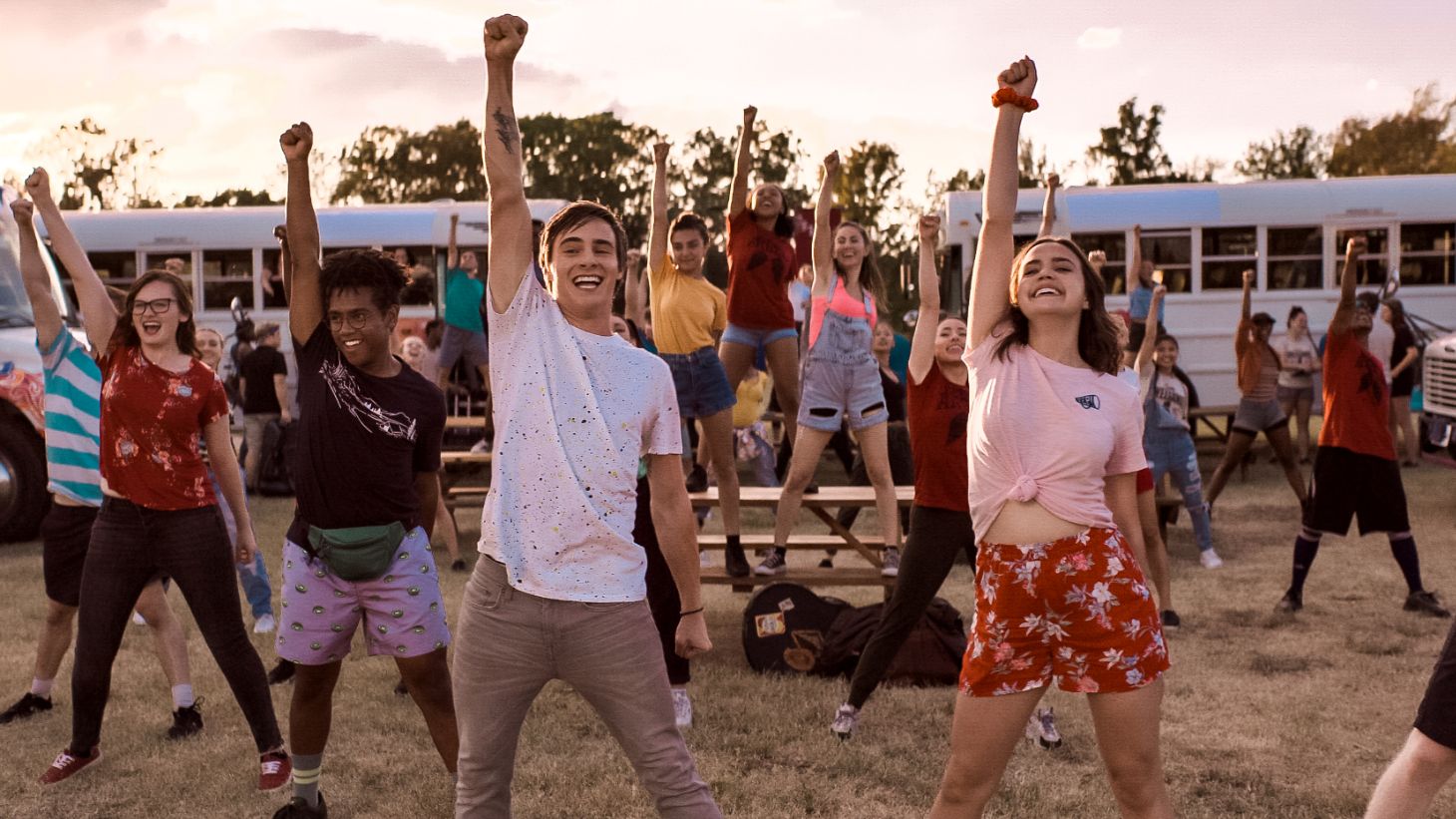
When a charming-but-troubled teen learns that his latest mischief could land him in a juvenile detention center and his only way out is to spend a week at church camp, he processes the scenario in a song and dance number to the ’90s CCM anthem “The Great Adventure” by Steven Curtis Chapman.

If this idea makes you smile even a little, you’ll probably enjoy A Week Away, Netflix’s new faith-friendly musical.

A Week Away offers heaps of nostalgia for parents who grew up listening to Christian acts like Chapman, Amy Grant, Michael W. Smith, and Audio Adrenaline. CCM hits from the ’90s get the musical theater treatment at Camp Aweegaway. In the youth pastor–inflected pun from enthusiastic camp director David (David Koechner—yes, Todd Packer from The Office), “Every once in a while, somebody finds out that they ’re just a week away from an experience that changed everything for them.”

The movie follows Will Hawkins, played by Disney star Kevin Quinn, as he adjusts to Christian camp culture, tries to fit in, and gains the trust of David’s beautiful daughter Avery, played by Bailee Madison. Initially resisting the fun and the friendship of his cabinmate George (Jahbril Cook), Will must decide if these “Jesus freaks” are people he can trust with the painful parts of his life or if he is better off on his own.

As someone who spends the entire summer at a Christian camp where my husband is director, I get the appeal of setting a musical in the nostalgic cabins and woods where so many of us played, made friends, and grew in our faith.

For the staff, summer camp can feel like an elaborate production. It takes energy and a tiny bit of acting to get campers excited about activities that are outside their comfort zones. Without the right welcome, newcomers can feel like they’ve been tossed into a choreographed dance that no one bothers to teach them, like Will upon arriving at Camp Aweegaway.

The Christian Camping and Conference Association advised the producers of A Week Away, and it shows. Filmed at two camps in Nashville, the camp scenes are an authentic glimpse at the kinds of activities many Christians spent their summers doing.

There’s a sorting ceremony where new campers are assigned into competing tribes (with hokey names like the “Crimson Angels” and “Azure Apostles”), competitions among the tribes (trying to maintain a veneer of good sportsmanship but desperate for the bragging rights), acapella worship around a campfire at night, and campers standing up to share testimonies of what they’ve learned during their week at camp.

A Week Away gets a lot of the details of the Christian camp experience right—except for the most important one. Though the film is certainly family friendly, there’s not much that’s explicitly Christian at Camp Aweegaway apart from the soundtrack.

The few references to God’s love for all his children don’t add up to more than the old VeggieTales theme (another ’90s Christian culture staple): God made you special, and he loves you very much. When Will and Avery encourage their pals George and Presley to have more confidence by singing “God made you how you should be—good enough,” the crescendo falls flat.

Some of the central characters have experienced devastating trauma. Will hammers Avery with hard questions about why God would take away both of his parents, and Avery, who continues to grieve her own mother’s death, doesn’t have much of a response. This scene left me wondering why the writers would introduce Job-sized questions without the room for substantial answers. Don’t get me wrong: Life has lots of unanswered questions. But when characters ask hard questions and get insubstantial responses, the joyful resolution feels contrived.

The plot also puts a lot of pressure on individual characters and the camp setting itself. Even though I love camp, I know that a single summer experience—no matter how good and godly—is not enough to heal such deep losses. These struggles require professional help and support over the long term, such as through Christian counseling and regular church community.

But while not explicitly stated, there is grace on display. Sean, the camp’s jealous Pharisee, believes he’s earned God’s favor through his impressive works like praying and saving narwhals in the Arctic. When he tells campers about Will’s rap sheet, campers are far angrier at Sean’s smug self-righteousness than they are scandalized by Will’s past.

The few adults in A Week Away, mainly just David the director and George’s mother, Kristin, played by Sherri Shepherd, are not the oblivious, uncaring, or bumbling caricatures we’re used to seeing in teen movies. They are caring and wise; they know Will’s past, but it doesn’t stop them from loving him.

There is a lovely worship scene where the camp breaks into an acapella rendition of “Awesome God” around the campfire. Avery shares Jeremiah 29:11 with the campers (without context, of course), but it’s clear she’s struggling to believe the words herself. When “Awesome God” faded to the background in order to foreground Avery and Will’s insecurities and fears (set to For King and Country’s “God Only Knows”), I thought it was an interesting mashup but still felt frustrated. No one at Camp Aweegaway seems to know how God’s awesomeness makes a difference in everyday life.

Though the film goes flat on some of the more serious themes, it hits all the high notes when it comes to fun. This is no high school musical: The actors turn in solid performances, and the dancing is stellar. Anyone who has ever sung “Big House” with the accompanying hand motions will enjoy seeing the professionals run wild with the choreography during the credit reel. Two brief cameos by CCM legends had me laughing out loud. The modern twists on CCM classics and upbeat original songs by Adam Watts make for a fun soundtrack that is now in heavy rotation on my children’s playlists.

Despite what David tells Will, a week away cannot change everything, but the week at camp does put Will’s life on a different trajectory. He isn’t quite a new person, but his new friendships give him a chance to be the seed in the Mark 4 parable that falls on fertile ground, rather than the seed on rocky ground that sprouts and is scorched by the sun because it has no roots.

Summer camp is such an integral part of my life that it can sometimes feel routine. A Week Away reminded me how much fun is at the heart of summer camp. And it made me grateful for the camps that give kids a safe place to struggle.

We might not nail the tune or the choreo as well as the crew at Camp Aweegaway, but our camps offer the real thing: meaningful relationships and a setting that points kids to the love of God demonstrated in Jesus.

Megan Fowler is a contributing writer for CT. She spends her summers at Seneca Hills Bible Camp and Retreat Center in Pennsylvania, where her husband serves as executive director.

Church Life

ORU Basketball Fans Know to ‘Expect a Miracle’

The team behind this year’s most impressive March Madness upset carries on Oral Roberts’s legacy of embracing sports as Christian witness.

Christianity Today March 26, 2021
Maddie Meyer / Getty Images

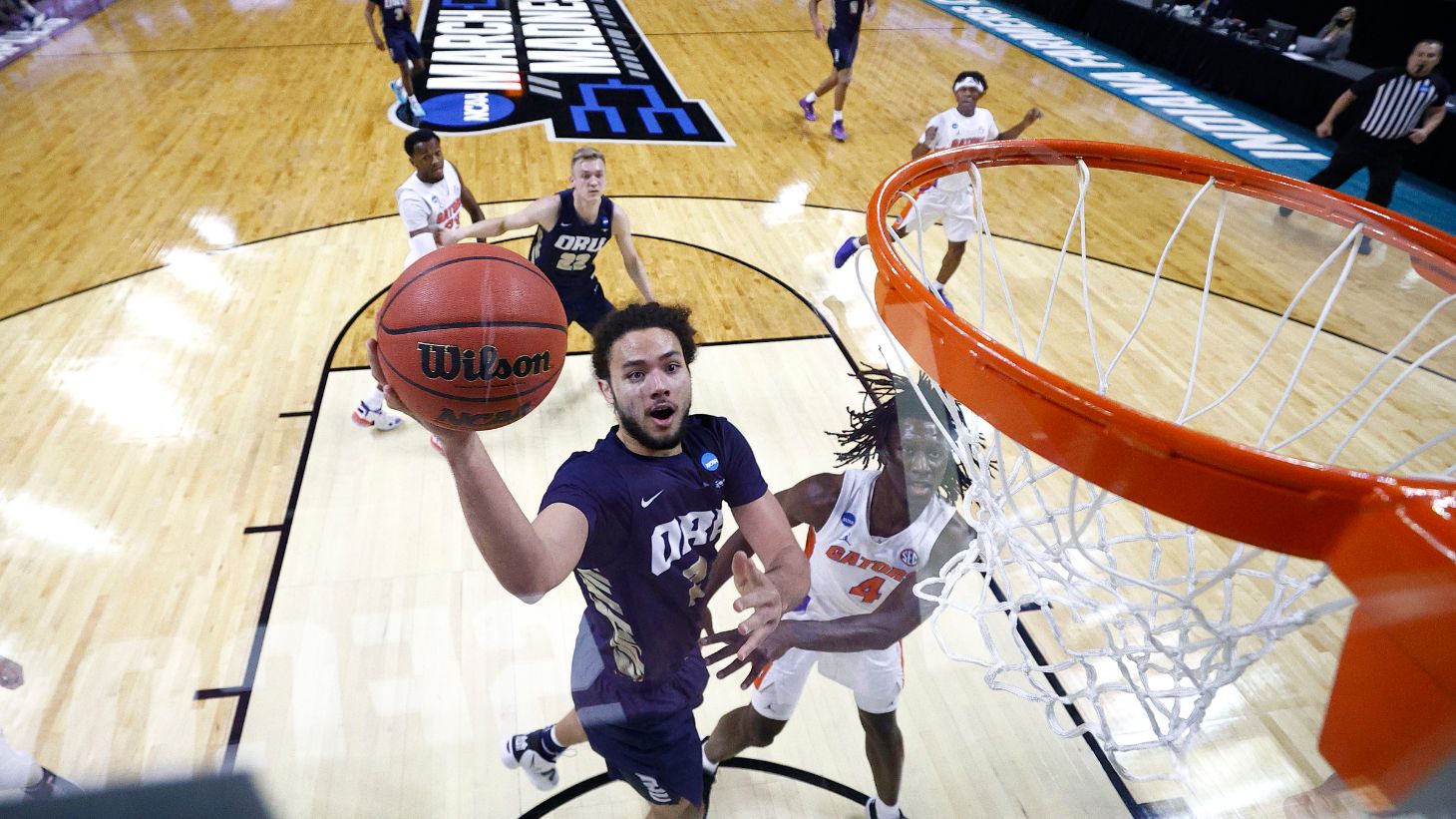
When Oral Roberts toppled Florida last Sunday, the charismatic Christian school entered rare company as the second 15-seed in the history of the men’s NCAA basketball tournament to make it to the Sweet Sixteen. Yet if there’s a miraculous element surrounding the small school from Tulsa, there’s also familiarity. There are five other Christian schools joining ORU in the Sweet Sixteen this year. What’s more, ORU has been here before—in fact, it’s gone even further.

While the school’s particular brand of Christianity might make it an oddity in major college sports, its involvement in basketball is part of a much longer story of Christian engagement with the game.

That story can be traced all the way back to 1891 when James Naismith invented the sport at a Christian college: the YMCA International Training School. Those origins, along with Naismith’s description of the task of a YMCA physical director—“to win men for the Master through the gym”—are often cited by Christian basketball fans as evidence of the evangelistic roots of the sport.

Naismith, though, aligned his life’s work less with saving souls and more with character formation. His basic goal was to “do good to men and serve God” and “leave the world a little better than I found it.” The sport quickly developed a life of its own, taking root in communities that crossed boundaries of race, region, religion, gender, and nationality.

Still, Christian affinities remained strong, particularly among Christian colleges. While football was the unquestioned king of college sports, the resources needed to thrive on the gridiron made it cost prohibitive for many smaller schools. By the 1940s and 1950s, urban Catholic colleges, Bible colleges, and Protestant schools embraced basketball, with Oral Roberts University joining the tradition as a new school in 1965.

The school’s namesake was a key figure in the entrance of Pentecostalism into mainstream American religious life. With ORU, Roberts hoped to establish an institution that could educate, train, and serve as a symbol of respectability for the Spirit-filled Christians of the charismatic movement.

He also hoped to provide what he called a “whole man” education, training mind, body, and spirit—the very language used by James Naismith and the YMCA. But while Naismith saw spiritual formation as a gradual process of character development, Roberts emphasized its supernatural aspects, with the indwelling Holy Spirit working in believers in a miraculous way to produce the abundant life.

Joining Roberts’s focus on the Holy Spirit was an emphasis on physical discipline. All students, athletes or not, were expected to be physically fit, a key part of ORU’s “honor code.” Sports were part of Roberts’s plans too. The basketball team was his chance to demonstrate the benefit of the honor code on a national level, while proclaiming the gospel and gaining respectability for both ORU and the charismatic movement as a whole.

By 1970, his plan seemed on track. Sports Illustrated published a short piece that year on the “hard-driving small-college basketball team that, if Roberts has his way, is on its way to becoming major.” Roberts had hired Middle Tennessee State University coach Ken Trickey and challenged him to win a national championship by 1975. Adopting an up-tempo style he dubbed WRAG—“we run and gun”—Trickey’s teams started to win games and attention.

Sports Illustrated also took note of the true secret behind ORU’s surprising success: the presence of talented black players. Four of ORU’s five starting players were black, a rarity for predominantly white southern schools at the time, some of which had not yet integrated. Trickey’s willingness to recruit and play black players, unrestricted by quotas, allowed him to bring in quality players that his competitors weren’t recruiting.

Roberts supported these developments. While he was certainly not on the front lines when it came to racial integration, by the 1960s he had started to talk more about his Cherokee heritage, and he became more vocal in his support for civil rights. Black players, Roberts told Sports Illustrated, were “a part of us.” The testimony of ORU’s black athletes seem to support this view. Carl Hardaway, team captain, said in 1970 that players were given a “real fair shake here.” Star player Richard Fuqua was even more effusive. “For a black man,” he said in 1972, “it’s the freest place in America.”

Along with Trickey, Fuqua was the man who made ORU basketball go. Averaging 36 points per game, Fuqua led the 1971–72 team to 26 wins, an NCAA-high average of 105 points per game, and a trip to the quarterfinals in the NIT tournament. His long-range shooting ability, coming before the three-point line existed in college basketball, earned him the nickname “Mad Bomber,” as well as a magazine profile in Sport titled “Praise the Lord and Pass the Ball to Fuqua.”

The team also received positive attention in national publications like the Los Angeles Times, New York Times, Washington Post, and Newsweek. This success only confirmed Roberts’s belief in the value of basketball—“Athletics is a part of our Christian witness,” he said—and his championship expectations.

As it turned out, the team got closer to a championship than anyone but Roberts and Trickey could have believed. In 1974, ORU made the NCAA tournament and upset Louisville in the second round before losing in overtime to Kansas, one game away from the Final Four. The loss to Kansas marked the end of Trickey’s first stint at ORU, a decision he’d made earlier in the year, and the beginning of the end of ORU’s brief run at the top of big-time college basketball.

To be sure, Roberts continued to invest in the sport. He told a reporter in 1975 that basketball was the “perfect pulpit” because it matched his ministry’s “idealism.” With 40 million men reading the sports page every day, he said, “basketball is one way to get our message across to them.”

Subsequent years, however, generally brought more negative publicity than positive. Later in the 1970s, the university faced a lawsuit over its “Pounds Off Program.” Then came an NCAA investigation into the basketball team, which resulted in a year of probation.

The team eventually rebounded enough to return to the big dance during the 1984 NCAA tournament, losing to Memphis State in the first round. But any hopes that ORU might win a national championship were fading fast, along with the respectability Roberts had built up in the 1970s.

Starting with his claim in 1980 that he had spoken with a 900-foot Jesus, Roberts made ever-increasing demands on his supporters to send money as he moved from one financial crisis to another. While he did not get wrapped up in sexual scandals like Jim Bakker and Jimmy Swaggart, his controversies aided and abetted the broader critique and mockery of prosperity gospel evangelists in the 1980s.

Roberts’s problems reached a point of no return in 1987, when he infamously told supporters that God was going to “call him home” if he didn’t raise $4.5 million. Though he received the money and claimed that the media had deliberately misinterpreted his words, the damage was done. By 1989, Robert’s ministry had accumulated a total debt of $25 million.

The school and its basketball program survived the tumult of the 1980s, albeit in chastened form, with the basketball team dropping down to NAIA (National Association of Intercollegiate Athletics) competition for several years.

In 1997, under the leadership of Bill Self (now head coach at Kansas), ORU returned to postseason play with a trip to the NIT. A decade later, they made the NCAA tournament for three consecutive seasons (2006–08) losing in the first round each year. Now in 2021, ORU is in the third round of the NCAA tournament for the first time since Ken Trickey’s tenure in the 1970s.

Despite this year’s surprising success, Roberts’s original vision of winning national titles and cultural respectability through basketball remains elusive. In many ways it’s even further from being realized than it was 50 years ago. As a member of the mid-major Summit League, ORU lacks the resources to compete with the elite teams. And the school’s honor code is not only a target of ridicule; it’s also now a target of activism. One columnist has argued that the team should be shunned for what she describes as the “deeply bigoted anti-LGBTQ+ policies.”

On the other hand, there are continuities between the 2021 ORU team and the story of Christian college basketball. The team’s run is cultivating school pride and providing a platform for players and coaches to talk about their faith.

Head coach Paul Mills even linked his desire to coach all the way back to basketball’s founder, telling The Gospel Coalition that he wanted “to win men for the Master through the gym” like Naismith. In that sense, ORU stands as one more example of the much larger story of Christian schools involved in basketball.

At the same time, ORU’s charismatic distinctives, its openness to the supernatural, remain strong. How could they not during March Madness?

“Expect a miracle,” Oral Roberts liked to say. For an underdog school competing in March, that’s precisely what most fans will do.

Paul Emory Putz is a historian studying sports and Christianity and serves as the assistant director of the Faith & Sports Institute at Baylor University’s Truett Seminary.

Jonathan Root is an independent scholar who received his PhD in history from the University of Missouri. He is writing a religious biography of Oral Roberts for Eerdmans.

Culture

The Broken and Beautiful Church Behind Aretha Franklin

National Geographic’s biopic offers a glimpse into the congregation that formed the “Queen of Soul.”

Christianity Today March 25, 2021
National Geographic / Richard DuCree

From die-hard fans of Aretha Franklin’s music to casual observers of her life and career, a wide range of viewers will be pleasantly surprised by National Geographic’s next installment of its Genius series, Aretha, released this month. The series explores the intimate details of Aretha Franklin’s life and the unique circumstances that gave rise to her undeniable musical genius.

Much like Nat Geo’s creative retellings of Einstein’s and Picasso’s lives, Suzan-Lori Parks’ biopic of Aretha Franklin is about the human behind the icon. But on a much deeper level, Aretha is not simply about the woman behind the music. It’s about the church beneath the woman. It’s about the community of faith that gave birth to and served as the center of gravity for a young, black, female artist whose music simply cannot be separated from the gospel that permeated the core of her being.

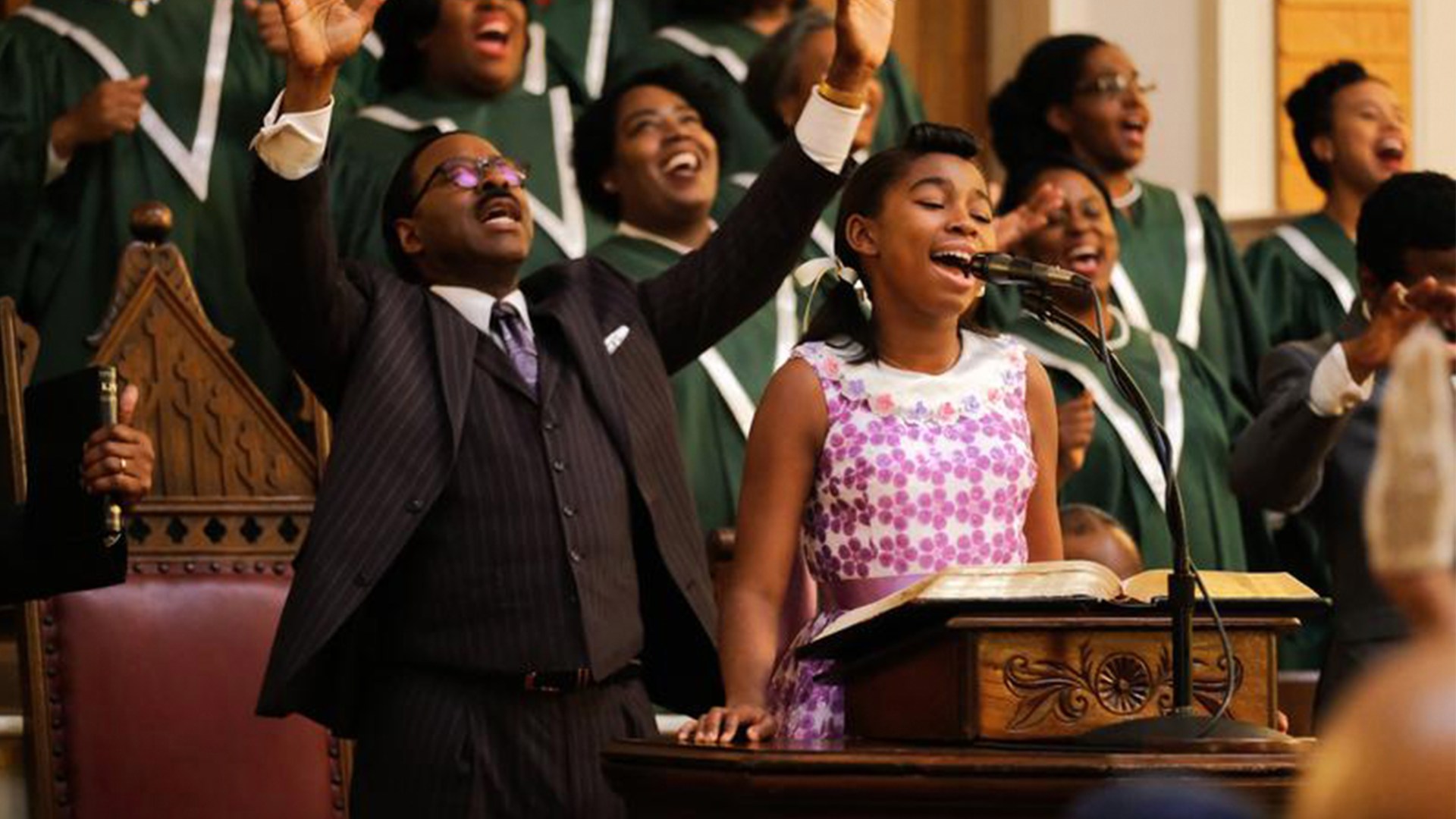
Most viewers will already know and appreciate Aretha Franklin’s music, from her chart-topping singles to her best-selling live gospel music album, Amazing Grace. But few of us know the personal narrative that transformed the precocious pastor’s daughter into one of the most iconic figures in contemporary musical history, including the fact that the church is so central to her story.

Aretha is rightly understood as the “queen of soul” because, just like the musical genre she came to define, her own soul was inextricably intertwined with the great cloud of witnesses (Heb. 12:1) who constantly surrounded her, advocated for her as she broke down racial, sexual, and musical barriers, and actively sustained her as she persevered in the face of extreme adversity.

Parks doesn’t paint a sacrosanct portrait of the church, in large part because that wasn’t the church Aretha came to know and love. But neither is it a scandalous or unflattering picture of church life. Rather, the series offers a far more honest and complex depiction of the people of God—one that doesn’t ignore our undeniable flaws yet highlights the underlying goodness, truth, and beauty of what it means to share life together as Christians. In doing so, Aretha offers a more nuanced and human picture of the body of Christ.

Early in the series, as Aretha (Cynthia Erivo) struggles to find her groove with a group of white male musicians that producer Jerry Wexler has brought into the Muscle Shoals recording studio, she lays down a few bars on the piano for a new arrangement she has in mind. Upon hearing her off-the-cuff yet mind-blowing chord progressions, one musician perks up: “That, Mrs. Franklin, is an unknown chord. … Whatever it is, it’s funky.” Another immediately follows, “It’s celestial.” Aretha simply replies, “It’s both at the same time.”

“That was the genius of Aretha Franklin—putting things together that seem at first not to go together and to do so in a way that is as elegant as it is beautiful,” said Parks. “It’s the musical version of Einstein’s E = mc 2.”

A true artist can imagine ways in which two ideas that seem to be in opposition or fundamentally at odds with each other can actually work in concert when brought together, breaking reality open in ways previously thought unimaginable.

Just as Nobel prize-winning physicist Frank Wilczek suggested in his work, A Beautiful Question, these realities may very well be the only ones that really matter. For instance, reflecting on the seemingly incompatible but ultimately complementary paradigms proposed by Einstein and Niels Bohr, Wilczek notes that “ordinarily the opposite of a truth is a falsehood. Deep propositions, however, have meaning that goes beneath their surface. You can recognize a deep truth by the feature that its opposite is also a deep truth.”

The creative tension that animated Aretha’s life and artistry cannot be understood as a mere feature of her music. It is, rather, the manifestation of wisdom—a deeper form of truth that emerges from its opposite.

As the series unfolds, it becomes clear that the deeper paradoxical truth that permeated Aretha’s life is the same truth that permeates ours. The community of faith that caused so much of the angst and turmoil she experienced in her life was the very same community that served as the site and source of her musical inspiration.

Her charismatic father was a compelling preacher and a constant advocate for his daughter’s talents. He was also an overbearing stage parent and a womanizer. Her sisters were both the best backup singers in the business and the mothers who helped raise the children Aretha birthed while still a child herself. And the musical director who was unceremoniously thrown out of her father’s church served as a loving and gracious pastoral presence who created space for Aretha to experience healing and restoration after long seasons of struggle and doubt.

What makes Aretha’s relationship to the church so beautifully complex is that it embodies a deeper truth that we so often struggle to accept. As members of this dysfunctional family, we can and should be critical of our collective failures, constantly seeking to root out the hypocrisy, idolatry, and pride that have unleashed numerous injustices on the world.

But also as family (Matt. 12:48–50), Christians do not have the option of giving in to despairing nihilism about the church, because this group of siblings also happens to be the primary object of God’s redemptive project (Eph. 5:21–33; 2 Cor. 11:2–3). Yes, the church is profoundly flawed. But the church is also central to God’s work in the world. It’s both at the same time.

As much as it pains me to witness followers of Jesus (including myself) continually do things that grieve the heart of God, I can no more disown the community of faith than I could my biological family.

I am the proud father of three musically inclined daughters. When I first played Aretha Franklin’s greatest hits album on the vinyl turntable that we recently inherited, from the moment the needle touched down on the record’s surface, it was as if they had been introduced not merely to a brilliant vocalist but to an entirely new way of being in the world. They of course had no other choice but to dance.

Due to its mature themes and adult subject matter (the series is rated TV-14), I wasn’t able to watch Aretha with my young daughters. But as I binge-watched through scenes of young and old Aretha belting out gospel music first in her father’s church and later in The New Temple Missionary Baptist Church in Watts (a Los Angeles neighborhood), I realized that the series had left me with the same sense of longing that I felt when I watched my daughters dancing exuberantly to Aretha’s music just a few days before. That sense of longing can be described fairly simply: I miss church. I especially miss the music.

After a full year of lockdown in Southern California, I yearn for the day when my daughters can once again dance up and down on the old, creaky, wooden floors of our small church as we gather together—young and old—to give voice to the gospel. I long to hear the celestial funk that comes about only when our battered, bruised, and beautiful souls are able to meet, mingle, and merge in a collective chorus of voices. When music is turned outward from ourselves and toward the others in our midst—our neighbor, our sister, our brother—that’s when we become two or more gathered in his name (Matt. 18:20).

While watching Aretha, I came to realize what I missed most about church: the chorus of the saints that brings us together through the power of the gospel. It underscores every episode of the series. Even in those moments when it isn’t obvious because it doesn’t come fully into the plot’s foreground, the church still serves as the background condition for all that transpires in the show. In other words, at one and the same time, the church in Aretha is both deeply flawed and absolutely necessary. That paradox is the deeper proposition—the deeper truth—that lies just beneath the surface.

“The church is what [Aretha] always returned to. It was her home. It was her family,” Parks told me. When she lost her way in life or in music, she returned to the church as a source of spiritual and artistic strength, offering her resilience. “You cannot tell the story of Aretha Franklin without telling the story of her church—the community of faith and family of origin that made her genius possible.”

A church like that sounds downright celestial. It’s also pretty funky. Better yet, it’s both at the same time.

Kutter Callaway is associate professor of theology and culture at Fuller Theological Seminary and co-director of Reel Spirituality. His most recent book is The Aesthetics of Atheism: Theology and Imagination in Contemporary Culture.

Pastors

How Social Distancing Is Bringing Pastors Closer to Their Congregants

In both innovative and old-school ways, ministers are overcoming pandemic hurdles to provide pastoral care.

Source Images: Westend61 | Recep-bg | urbancow | Amir Mukhtar | Getty Images

Daniel McGhee was preparing to lead a weekly small group through 40 Days of Purpose by Rick Warren at his New York City church when pandemic restrictions began. The pastor of Connection Church in Queens quickly pivoted to Zoom and revised his plan. The small group still met every week online, but McGhee added another component to the study, which he hoped would alleviate the isolation people would feel in the weeks to come. He interviewed a church member every day for 40 days and posted the interviews on YouTube so others could watch them.

In this new virtual scenario, McGhee entered the homes of his church members in a different way. He would talk casually with them before and after their short interviews on Zoom. During those 40 days, he learned more about their lives. This led McGhee to begin texting or calling church members on a weekly basis too—a practice that is now part of his routine.

“I would ask them in our conversations how I could pray for them, and I would write those things down,” McGhee said. “I would text them at some point that I was praying for them. That’s endeared me to them and them to me and helped me actually be more of a pastor in deed instead of just by positional title. [The pandemic] kind of forced me to do that.”

McGhee said this was a “humbling” revelation for him. He realized he was now giving greater attention to pastoral care and learning more about his parishioners’ lives than he had before the city’s strict lockdown, despite the isolation it brought.

“I actually was interacting with people at a higher pace than I was prepandemic,” McGhee said. “Before the pandemic, we had our programs—our small groups, our prayer nights, and our church services—and that’s where I would interact with people. I don’t really get one on one with people in any of those contexts.”

The additional barriers a pandemic creates to pastoral care have caused pastors like McGhee to refocus on connecting in individual, meaningful ways with parishioners. Paul VanderKlay is the pastor of a small, multiethnic congregation called Living Stones Christian Reformed Church in Sacramento, California. When the first lockdown happened in his community, VanderKlay and the church’s elders and deacons immediately began calling people on the phone every week. He noted that the pandemic has removed certain options from the “pastoral menu.” Sometimes, pastors are replacing those options with new ways of caring for parishioners; other times, they are returning to old ways of doing things.

Nathaniel Williams, pastor of Cedar Rock First Baptist Church, is learning to write letters and make phone calls again. Williams pastors a small, rural church in Castalia, North Carolina. When the pandemic began, he and the deacons started calling church members and visitors every week too. They also burned CDs of the church’s Sunday services and delivered them to elderly members who did not have access to the internet to watch the church’s livestream service.

Deepening Theological Discussion

VanderKlay said the acute isolation makes it “easy for the sheep to wander” since the weekly rhythms of church life are interrupted. Under normal circumstances, people often communicate at gatherings on Sunday mornings in nonverbal, subtle ways to pastors about how they are.

“Now that we’re operating by Zoom or telephone, everything has to be verbal,” VanderKlay said. “That actually changes the subtle dynamics of relationships because now you have to ask people difficult questions, which sort of puts them on the spot.”

People’s views about suffering and other issues naturally come up more in these pointed conversations. Pastors told Christianity Today that the pandemic is creating opportunities for theological discipleship and correction. They consider this an important part of their pastoral care since parishioners’ beliefs affect how they interpret and respond to events like a pandemic.

“I think in some ways the pandemic affords a more honest conversation about the reality of life, even in the most affluent, secure, stable, medically equipped society the world has ever seen,” VanderKlay said. He is concerned about the pervasiveness of what he calls the “American dream deception”—a version of the prosperity gospel that implies Christians will avoid suffering and calamity if they attend church, go to the right schools, land the right jobs, or save enough money. “We are deluded by our own self-sufficiency. This is a regular theme in my preaching, and now I have a sermon illustration that has everyone ’s attention.”

Williams said people express theological beliefs online that they might not voice directly to their pastors. He frequently sees two common assumptions about the pandemic on his Facebook newsfeed from people in his community. Some people think it is a sign of God ’s judgment on America; others believe their faith will spare them from contracting the virus.

“It’s an opportunity to correct theology a little bit about how faith works,” Williams said. “Faith is not an inoculation from suffering. Faith is a promise that God is with us in our suffering. We [also] don’t know if God’s judging America with COVID-19 because we’re not God. To assume that would be to make the same errors that Job ’s buddies made.”

A lot of McGhee’s pastoral care has involved counseling church members wrestling with God’s will for their lives. From January 1 to December 7 last year, about 3.57 million people left New York City, including about 25 percent of McGhee’s congregation. Because of job losses and other concerns, church members had to make difficult decisions about remaining in the city or leaving temporarily or permanently. Many of them had fears about making an irreparable mistake.

“I think I helped them see that the Lord was with them on any of those decisions they make,” McGhee said. “I kind of helped take the pressure off of them and let them know that I don’t think either of these [choices] are the wrong choice. God is bigger than that.”

Combating Pervasive Loneliness

Public health officials have warned about an “epidemic of loneliness” in the United States, and acute isolation during the pandemic has exacerbated this problem. Pastors are aware of the effects isolation can have on people’s mental health, and they are finding meaningful ways to still connect with people so they feel less lonely.

“We have two pandemics that I think we’re dealing with,” said Chris Brooks, the senior pastor of Woodside Bible Church in Southeast Michigan. “One is a physical health crisis. The other one is a mental and emotional and spiritual health pandemic.”

According to a recent Gallup poll, Brooks is correct. Mental health in 2020 decreased across all groups of Americans who completed the survey except people who attended religious services weekly. This is why Brooks and the leadership at Woodside decided to remain open with procedures for health and safety in place after Michigan allowed exemptions for religious gatherings.

“Our doctors and public health officials [at the church] … felt like we needed to keep our doors open because so many people were dependent on the church as a lifeline,” Brooks said. “If we closed our doors, it would only add to the mental, emotional, and spiritual health crisis many are experiencing.”

Other churches, including Cedar Rock where Williams pastors, offer a drive-in church service on Sunday mornings in addition to their in-person gathering and livestream. People can listen from their cars, and Williams is still able to interact with church members in the parking lot after the service is over.

“It’s not ideal to be outside in your car versus inside with everybody else,” Williams said, “but you’re still with us in some sense. After church, part of my routine is to go out to those cars if I can catch them and talk to the people and see how they’re doing. … It helps the people still feel some sense of connectivity.”

VanderKlay has been experimenting with technology since the pandemic began. In addition to his role as pastor at Living Stones Christian Reformed Church, VanderKlay has a YouTube channel with about 17,000 subscribers. He has tried to leverage this online popularity to provide community for people who feel lonely. At the end of 2020, he started what he calls an “open studio” on a platform called Discord. People working alone can join him and others in the studio once a week through audio and video (similar to a Zoom meeting) to work quietly together.

“What this has meant during [the pandemic] is that we can use some of these tools to lessen the isolation and at least give some semblance of togetherness and community,” VanderKlay said.

VanderKlay and others at Living Stones consider this online ministry an extension of the Sacramento church. People from around the world subscribe to VanderKlay’s channel, many of whom are not connected to a local church. Some have also joined the church’s small groups on Zoom.

Sharing the Responsibility of Care

Pastors are realizing during the pandemic that they cannot take sole responsibility for pastoral care, and they are discovering ways to engage lay leaders and congregation members in this effort. Gabriel and Jeanette Salguero, co-pastors of The Gathering Place in Orlando, Florida, launched the bilingual, multiethnic church over Zoom in the midst of the pandemic. The Salgueros have relied heavily on members of their church launch team to help provide care. Their church members manage a hotline that people can call around the clock to receive prayer, counsel, or other means of support.

Jeanette said she recognized the couple ’s own “vulnerability as caretakers” when both pastors contracted COVID-19 in December. They became beneficiaries of their church’s care and even received soup from their church’s soup drop-off, a ministry of The Gathering Place for those who are ill and homebound. The experience of being on the receiving end of care reminded them of their limits as pastors.

“If pastors are not careful, they can suffer from compassion fatigue,” Gabriel said. “[Pastors] should embrace the gift of limits and allow the church to be the church. Allow everyone to lean on one another.”

The pandemic has emphasized the necessity of attending to these limits. Brooks noted that pastor burnout has been the biggest challenge at Woodside Bible Church during the pandemic. As senior pastor, he is charged with caring for pastors at the church’s other locations in addition to his own congregation at the main campus. To address this concern, Brooks created a staff care department last year, and pastors now have two rolling sabbatical weeks every year in addition to their normal vacation time. These changes will remain in place after the pandemic.

Lamenting and Celebrating Together

Despite their efforts to overcome the isolation COVID-19 has caused, pastors are anticipating a delayed sense of grief among church members as they start to gather more in person this year. Many people could not be with loved ones who died from COVID-19 or another illness during the pandemic. They also could not mourn or have funerals in ways they usually would.

Brooks said the leadership at Woodside is considering holding a large memorial service for these church members. “Maybe the toughest part of COVID-19 for our church family has been the number of people who not only suffered the loss of loved ones but simply weren’t permitted to be by their loved ones’ side because of COVID-19 restrictions,” Brooks said. “If we’re preparing for anything in 2021, it’s the delayed grief that a lot of people are living with [because] they didn’t get a chance to have a funeral for their loved one or any sense of real closure.”

The Salgueros said ministry to people who’ve lost loved ones during the pandemic “takes an extra level of empathy and compassion” because many of them have had their final conversations over FaceTime or WhatsApp.

“A great lesson for me has just been sitting with the person in silence,” Jeanette said. “Weeping with the person in silence has been a newfound element in my pastoral work. Sometimes people just want you to sit with them, and that ’s what we’ve done. … It’s a shared grief.”

Pastors also told Christianity Today that church members are experiencing grief because of the inability to celebrate important events in normal ways during the pandemic. The Salgueros are especially concerned about the youth at their church who’ve missed activities like playing sports, going to prom, or participating in their graduation ceremonies.

At Englewood Christian Church in Indianapolis, Indiana, the congregation is accustomed to celebrating major milestones together like graduations, weddings, or the births of babies. A staple for about 25 years at the church is Sunday Conversations. After the Sunday morning service, church members would normally sit in a big circle, have extended dialogue about a topic, and fellowship with one another. Sunday Conversations happen over Zoom now, and Katy Lines, one of the pastors, said their church family regularly laments the celebrations they are missing in each other’s lives.

“We recognize the loss that a lot of us have gone through and the things that we’re missing from being together with each other,” Lines said. “We articulate all of that. We name it. We lament it, and we don’t necessarily try to fill that emptiness. … We look forward to the days that we’ll be able to resume those ways of being together.”

Lines is already planning a large church celebration for when the pandemic subsides and things return to normal. “I want a really big party that includes lots of food and hugs,” Lines said. “I never really thought of myself as a big hugger, but with the way that we have had to maintain distance, I’ve told folks that when we regather, I will hug every single person whether you want it or not.”

Pastors are looking forward to providing pastoral care in more embodied ways again, but they don’t want to forget the refocus the pandemic has given them on deepening relationships within their congregations. This season has reminded Williams at Cedar Rock First Baptist Church that pastoring a church is not about programming or content. The church is about God ’s people. “Preaching is the easy part,” he said, “but, really, being a pastor is about knowing your flock.”

Lanie Anderson is a writer and speakerliving in Oxford, Mississippi. She holds an MDiv in apologetics from New Orleans Baptist Seminary.

News

Suffering and Glory: Meditations on Holy Week and Easter

Selections from CT’s best Easter articles.

Christianity Today March 25, 2021
Source image: Geralt / Pixabay

How does Jesus’ triumphal entry and his cleansing of the temple speak to critical cultural issues today? What does Christ’s prayer in the garden teach us about suffering and submission? How can Christ’s journey to the cross help us learn to die to ourselves?

In Suffering & Glory: Meditations on Easter and Holy Week, a book co-published by Christianity Today and Lexham Press, we feature some of the best Holy Week and Easter articles from the last half-century of Christianity Today magazine. Here is a sampling of some of the articles featured in Suffering & Glory. May these reflections help you draw ever closer to Christ as you journey with him to the cross and rejoice at the empty tomb.

Church Life

The Atlanta Shooter Targeted My Community. He Also Came from My Former Church.

An Asian American pastor grapples with grief, anger, and the evangelical response after last week’s attacks.

Christianity Today March 24, 2021
Ron Adar / SOPA Images / Sipa USA via AP Images)

I woke up last week to the news that there had been a mass shooting in Atlanta, and the shooter seemed to have a specific target: Asian American women. What I had feared deep down for several months had finally come to pass. The hateful rhetoric and anger toward Asians had reached its full bloom.

The fatal attack seemed to be the result of growing animosity and violence toward my people over the year since the pandemic began. Little did I know, there was more to the nightmare.

As I scrolled down the newsfeed, I caught a glimpse of the picture of the gunman. For a moment, I thought he looked like someone I knew. Then I saw the name, and my heart sank in a way that I didn’t know it could. The murder suspect was a member of the church in Georgia where I served before my current pastoral position in Maryland. Our families are friends.

For a moment, I thought it was a terrible dream. When I woke my wife to tell her the news, I couldn’t speak. She knew something was wrong and asked, “What’s going on? What happened?” and I couldn’t get the words out of my mouth.

I’ve spent the past several days trying to process the shooting and figure out how to grieve. The stories of the six Asian American women among the victims reminded me so much of my own mother. She has worked 12-hour days for almost the entirety of the four decades she’s lived in the United States. I couldn’t stop thinking about Hyun Jung Grant, the 51-year-old single mom who left her two sons orphaned and heartbroken. I grieved for my people.

In the midst of my grief, I also felt frustrated by the response. So many people, in their efforts to speak prophetically on social media, began suggesting what led the shooter to a place where he would target Asian American women. Because the media uncovered details about his faith, much of the criticism was directed toward Crabapple First Baptist Church, a congregation whose members I love dearly.

Some said it was a crisis in discipleship. Others said it had to do with an unhealthy view of guns. Many pointed to purity culture and a warped view of sexuality. One prominent public theologian posted a picture of the church and stated, “[The shooter] was radicalized here.” I grieved for friends who were caught up in all this. They were shocked and heartbroken over what had happened, as I was, yet had to endure these accusations and speculation.

My heart ached all around—for the victims whose lives were cut short by an unspeakable, evil act; for the Asian American community who would now be grappling with an existential threat to their safety; for my current multiethnic congregation; for the shooter’s family and my former church community, who were on the receiving end of uncharitable public ire.

Opportunity for our own reflection

Those who know Crabapple First Baptist only as the church that had posted the baptism and testimony of a young man who went on to kill eight people are bound to have a distorted view. It’s hard for us to imagine him among a congregation full of generous, caring, Christ-centered people, but that’s who I know Crabapple to be. Its members remain my close friends.

The day Crabapple First Baptist voted to bring me on staff, the entire church erupted with applause and this overwhelming sense of joy. Any fear that I might have had about my being received in a predominantly white Southern Baptist church vanished. My family thoroughly enjoyed our three years there (2012–2015), and in hindsight, the Lord used that period to give us much-needed rest and support.

As with all churches, Crabapple is not a perfect place. It does have its shortcomings, but not the ones that would lead a young man to go on a murderous rampage. Can people find fault as they comb through sermons and dissect its documents? Of course. I think the church’s current leaders would be the first to admit that. I am not sure that any church in America would go unscathed if put through the same scrutiny.

While our hot takes and our instincts to place blame may prove unwise, there is an opportunity for Christians to engage in sober reflection. No man is an island, and we are our brother’s keeper. As they grieve, Crabapple will be able to carefully consider any blind spots brought to light by this incident, and the rest of us too will have a chance to take a closer look at our own churches, institutions, and hearts.

I share in the mounting frustration among minority Christians in our country. I have great angst over the racial animosity that has come to the surface in the last several years and have been dismayed at times by the church’s response. When ethnic minorities accuse or point to a church culture that might have led to a deadly shooting, it’s because we already have concerns about what we see the church consistently tolerate when it comes to the issue of race.

Over a hundred years ago, the African American minister Francis J. Grimke called out the white church for their silence after the Wilmington coup in 1898. He lamented “that the white people of the North, to a very large extent, are either indifferent to these wrongs or are in sympathy with them.” I want to believe that the times have changed, but the last four years, from the Charlottesville coup to today, have shown otherwise.

Reconciliation and rebuilding trust

When the country went into lockdown, I was a little nervous about the potential negative response to the geographic origin of the virus, and my concerns were raised as the former president called COVID-19 the “China virus” and “Kung flu.” It hurt to hear the crowds cheer when he emphasized the terms at his rallies. Some Christians dismissed the rhetoric as Trump being Trump, but his verbiage ended up correlating with the rise in anti-Asian crimes during the pandemic.

In my state of Maryland, Gov. Larry Hogan—who is married to a Korean American—pointed out that while hate crimes overall were down during the pandemic, incidents against Asians were up, by 149 percent according to one study. The case of a 75-year-old Asian man who was fatally assaulted in Oakland, California, this month is not an anomaly but part of a string of attacks on Asian American seniors. We all fear for ourselves and our elders when innocent people are being hurt in broad daylight.

For the first time in my life, I think I am beginning to understand the fear that hangs like a cloud over the African American community. I was outraged by the senseless killings of Ahmaud Arbery and George Floyd, but I did not personally feel a sense of threat until the last several months, as anti-Asian violence continued to rise.

I do believe that our shared faith as evangelicals offers us not only a place to mourn the state of our country but also a grounding from which to change our response.

Historically, the evangelical movement cared greatly about social issues—activism is one of the four distinctives in David Bebbington’s famous definition of evangelicalism. Evangelicals believed that the gospel lived out had great social implications for our society. It was Jonathan Edwards’ posterity who worked tirelessly to abolish slavery in America. In fact, Harriet Beecher Stowe was the daughter of a prominent Edwardsean pastor, Lyman Beecher.

We, as evangelicals, stand on the shoulders of gospel-centered activists who believed in true religion: to care for widows and orphans. As evangelical Christians, we need to lead the way with robust gospel proclamation and through the transforming power of that gospel strive toward reconciliation.

Last year, our Asian American church merged with a predominantly Anglo congregation. We met for one week, and then COVID brought everything to a screeching halt. We are now just beginning to meet regularly, but many of our folks at Christ Community Church still do not know each other very well.

In many respects, it has been a strange year. As I shared the news of our family’s ties to the shootings in Atlanta, I could sense the shock and disbelief. I wondered how each side would see the other. Would there be suspicion and anger or compassion and empathy?

As I write these words, I can see the faces of my church members, and I am hopeful. I am hopeful that the bond of unity shared in the Spirit will allow us to jump over the hurdles that keep us apart.

My hope is that the evangelical world will move forward together by embracing and cultivating a true evangelical ethos, working toward a hermeneutic of trust. But I know that the hard work must begin in my own house.

Chul Yoo is senior pastor of Christ Community Church in Ashton, Maryland.

News
Wire Story

Christian Baker Sued Again for Refusing to Bake a Cake

Masterpiece Cakeshop owner is now in a legal battle with a customer who put in an order to celebrate her gender transition.

Christianity Today March 24, 2021
David Zalubowski / AP

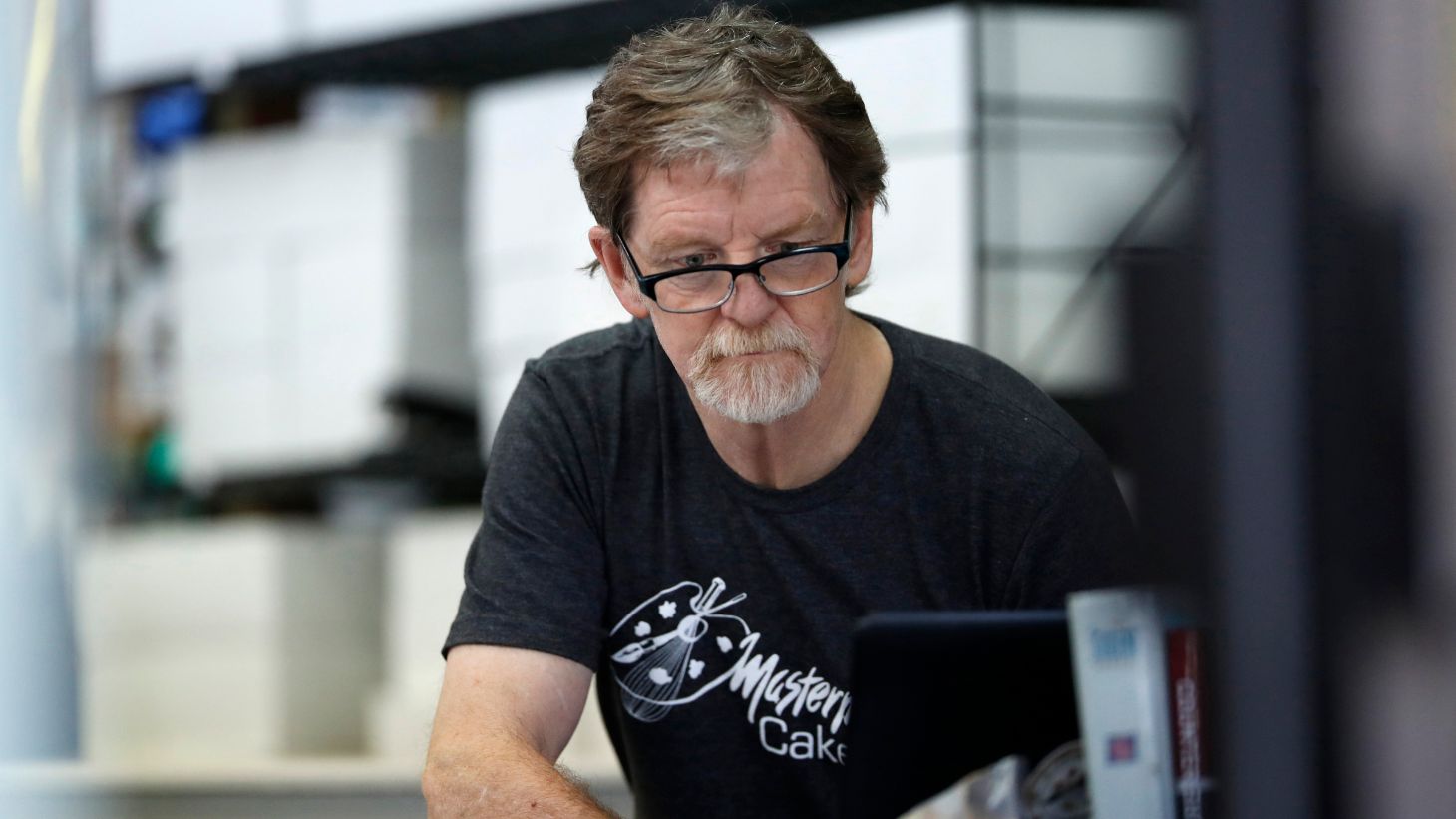
A Colorado baker who won a partial victory at the US Supreme Court in 2018 for refusing to make a wedding cake for a same-sex couple went on trial Monday in yet another lawsuit, this one involving a birthday cake for a transgender woman.

Autumn Scardina attempted to order the birthday cake on the same day in 2017 that the high court announced it would hear baker Jack Phillips’s appeal in the wedding cake case. Scardina, an attorney, requested a cake that was blue on the outside and pink on the inside in honor of her gender transition.

Her lawsuit is the latest in a series of cases around the US that pit the rights of LGBTQ people against merchants’ religious objections, an issue that remains unsettled by the nation’s top court.

On Monday, during a virtual trial being conducted by a state judge in Denver, Scardina said Phillips had maintained that, as a Christian, he opposed making the gay couple’s wedding cake because it involved a religious ceremony but would sell any other type of product.

She said she called Phillips’s Masterpiece Cakeshop to place the order after hearing about the court’s announcement because she wanted to find out if he really meant it.

When her lawyer Paula Greisen asked whether the call was a “setup,” she said it was not. “It was more of calling someone’s bluff,” she said.

In opening arguments, a lawyer representing Phillips, Sean Gates, said his refusal to make Scardina’s cake was about its message, not discriminating against Scardina, echoing assertions made in Phillips’s legal battle over his refusal to make a wedding cake for Charlie Craig and Dave Mullins in 2012. With Phillips getting media attention since then, he could not create a cake with a message he disagreed with, Gates said.

“The message would be that he agrees that a gender transition is something to be celebrated,” said Gates, who noted later that Phillips had objected to making cakes with other messages he opposed, including Halloween items.

Before filing her lawsuit, Scardina filed a complaint against Phillips with the state, and the Colorado Civil Rights Commission found probable cause that Phillips had discriminated against her. Phillips then filed a federal lawsuit against Colorado, accusing it of waging a “crusade to crush” him by pursuing the complaint.

In March 2019, lawyers for the state and Phillips agreed to drop both cases under a settlement which still allowed Scardina to pursue a lawsuit on her own. At the time, Colorado Attorney General Phil Weiser said both sides agreed it was not in anyone’s best interest to move forward with the cases.

The US Supreme Court ruled in 2018 that the Colorado Civil Rights Commission showed anti-religious bias when it sanctioned Phillips for refusing to make the same-sex wedding cake for Craig and Mullins. However, the justices did not rule on the larger issue of whether businesses can invoke religious objections to refuse service to gays or lesbians.

The court is currently considering a related issue in a case over whether a Catholic social services agency can refuse to work with same-sex couples as foster parents in Philadelphia.

Apple PodcastsDown ArrowDown ArrowDown Arrowarrow_left_altLeft ArrowLeft ArrowRight ArrowRight ArrowRight Arrowarrow_up_altUp ArrowUp ArrowAvailable at Amazoncaret-downCloseCloseEmailEmailExpandExpandExternalExternalFacebookfacebook-squareGiftGiftGooglegoogleGoogle KeephamburgerInstagraminstagram-squareLinkLinklinkedin-squareListenListenListenChristianity TodayCT Creative Studio Logologo_orgMegaphoneMenuMenupausePinterestPlayPlayPocketPodcastRSSRSSSaveSaveSaveSearchSearchsearchSpotifyStitcherTelegramTable of ContentsTable of Contentstwitter-squareWhatsAppXYouTubeYouTube