News

Georgia Church Loses Pastor, Then Its Assets, to Regional UMC Leaders

Conservative Methodists worry about their place in the denomination ahead of delayed plans for a split over LGBT issues.

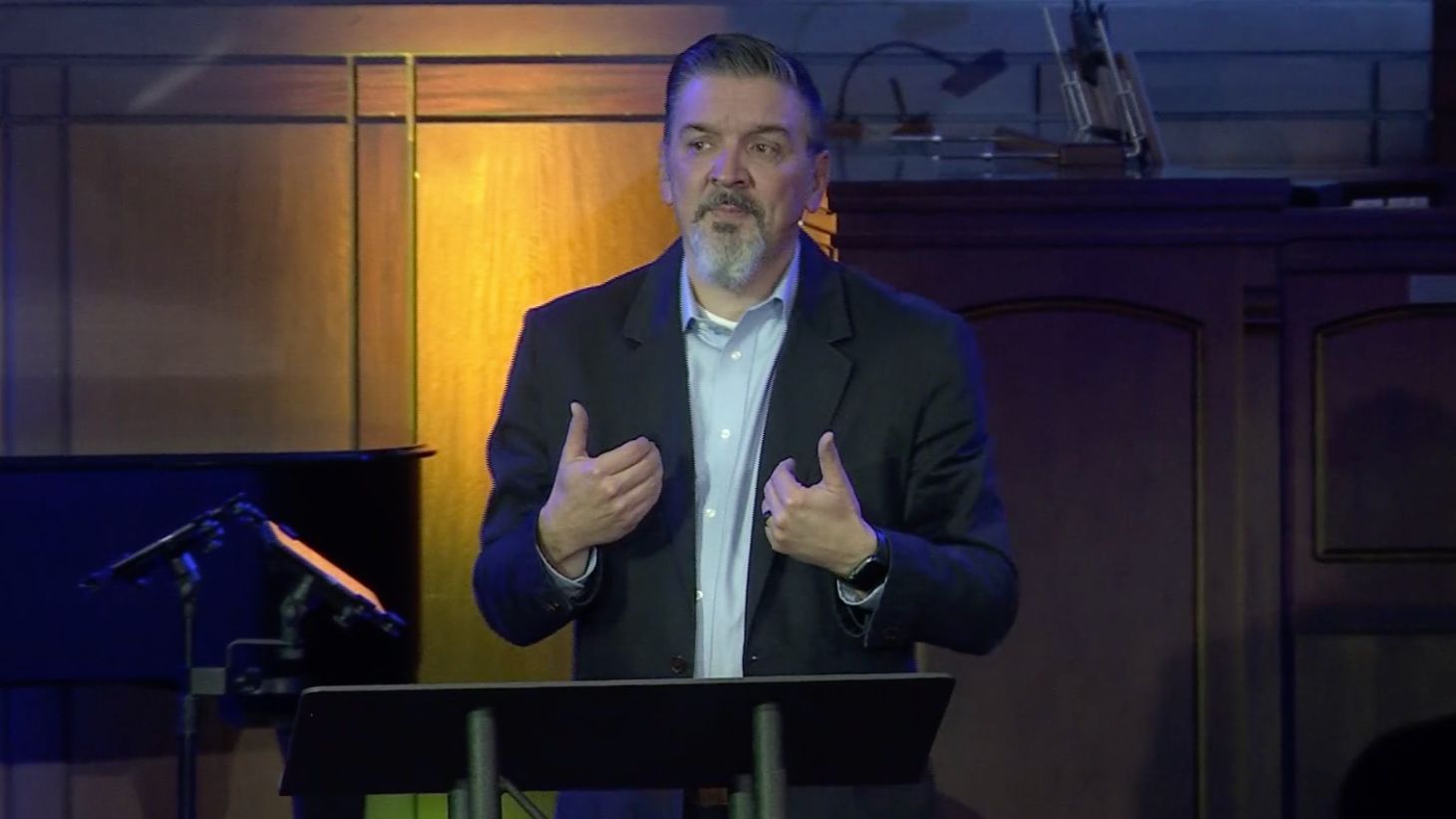
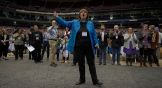
Jody Ray served as the senior pastor at Mount Bethel for nearly five years.

Jody Ray served as the senior pastor at Mount Bethel for nearly five years.

Christianity Today July 21, 2021
Screengrab / Mount Bethel UMC

Regional leaders of the United Methodist Church (UMC) took control of an 8,000-member congregation in suburban Atlanta earlier this month after a lengthy conflict over who should pastor the church.

The North Georgia Conference seized assets of Mount Bethel United Methodist Church in Marietta on July 12, a move that has sparked tensions already roiling over the denomination’s ongoing conflict around same-sex marriage and LGBT ordination.

Back in April, North Georgia Bishop Sue Haupert-Johnson reassigned Mount Bethel’s conservative pastor, Jody Ray, to a role in the regional office involving racial reconciliation and said a new pastor would be sent to the church.

Ray turned down that assignment and left the denomination. In a sermon announcing his departure, he said to his children, “Your daddy did not bow the knee or kiss the ring of progressive theology.”

Such a move by a regional conference “has never happened with a church of anywhere near this size or for this reason,” said Rob Renfroe, a UMC pastor in Texas and president of the Methodist publication Good News Magazine.

Over the past year, Renfroe said, “at least four other senior pastors … were told that they were being moved without the pastor or the churches being consulted,” but those situations were resolved without a takeover by the regional governing body.

All assets of a United Methodist church are held in trust for the denomination, meaning that though a local church technically owns its assets, they are able to be used only for the work of the UMC. When there is a conflict between the church and denominational leaders, the assets can be transferred back to the regional body and administered by them.

In the case of Mount Bethel, which runs both a Methodist church and school in Marietta, the denominational leaders said in their statement announcing the transfer of the assets that “employment, instruction, activities, and worship at the church and Academy will continue, but under the direction and control of the Conference Board of Trustees.” A decision could be made as early as next summer about whether to close the church.

According to the North Georgia Conference, Mount Bethel has resisted the pastoral change by adjusting its governance structure, hiring Ray to lead the church as a layperson, signing a 20-year lease on its building, and not allowing the new pastor to begin as the leader of the church when he arrived on July 1. Mount Bethel says that these circumstances do not warrant the action taken by Haupert-Johnson and the regional body and it is “prepared to defend our rights through the Georgia courts.”

The UMC works on a sending rather than calling model for pastors. Rather than churches interviewing potential candidates and hiring the one they feel is the best fit, a bishop, in consultation with the local churches, sends each pastor in a region to the church he or she feels is the best fit.

Before Ray, Mount Bethel had concerns with its pastoral assignments. During a previous pastoral transition in 2015, the congregation set out to hire their own pastor. The church has reportedly withheld $1.7 million in denominational apportionments since then.

“To deny the appointment of another pastor, to have their preferred pastor resign and stay in the same role as laity, and to withhold compensation from the appointed pastor … to now be shocked they don't actually own the building is a hot mess that has been cooking for a long time,” said Jeremy Smith, pastor of Seattle First UMC and and an influential Methodist blogger at HackingChristianity.net.

Ray said he believed his reassignment could be due to the church not paying its full share to the annual conference for several years. He also thinks the congregation’s support of the Book of Discipline’s conservative stance on the issue of homosexuality may have been a factor.

In an April 26 letter, Haupert-Johnson wrote that the “reassignment of a pastor is not done out of spite. The placement of a pastor is not done as a form of punishment. The reassignment of a pastor is not designed to persecute.”

After the seizure of assets was announced, Mount Bethel issued a statement saying Haupert-Johnson had failed to engage in the denomination’s consultative process. “While she claims she is acting out of ‘love for the church and its mission,’ enlisting attorneys and the courts to seize assets is a strange way for a bishop to show her love for one of the healthiest churches in her conference,” according to the congregation statement.

Conflicts over pastoral appointments have led other conservative congregations to leave the UMC, which is waiting on a delayed vote to split the denomination over LGBT issues. Though the UMC officially does not permit same-sex marriages or clergy in same-sex relationships, the position has not been enforced in its regional conferences, and conservative churches are frustrated when incoming leaders do not share their stance.

“Some have left, and others are contemplating departure,” said Renfroe. “We are working hard for people to hold on until” the legislative gathering in 2022, when the UMC will finally vote on a plan allowing conservative congregations to leave and take their assets with them as they go.

Leaders involved in the Global Methodist Church, the new denomination expected to receive conservative churches after the split, see the bishop’s actions in Georgia as a warning to conservative congregations.

“The events occurring in the North Georgia Conference demonstrate the attitudes and actions of some in leadership of the UM Church toward those who adhere to the historic teachings of the Christian church,” said Keith Boyette, leader of the conservative Wesleyan Covenant Association. “These attitudes and actions will be important considerations as local churches and clergy decide where they will align after an amicable separation is approved.”

Mount Bethel had requested to begin the process of negotiating an early departure, but was told it had to comply with all denominational rules before it would be allowed to begin the disaffiliation process.

“In the absence of a way forward many local churches on all sides of the debate are wondering what the future holds,” said Randall Miller, a progressive church leader in the San Francisco Bay Area and delegate to the global legislative gathering. “Any decisions about a way forward have to be agreed upon by delegates from around the world, including roughly a third of delegates from outside the US.”

With reporting by the Associated Press.

Ideas

On Answering with Gentleness and Respect

Staff Editor

Christians are called to good-faith interactions online.

Christianity Today July 21, 2021
Illustration by Mallory Rentsch / Source Images: Joel Muniz / Joshua Rodriguez / Unsplash

In a June essay, celebrated Nigerian author Chimamanda Ngozi Adichie mourned the decline of good-faith conversation, especially online. The post, titled “It Is Obscene,” promptly went viral.

“There are many social-media-savvy people who are choking on sanctimony and lacking in compassion, who can fluidly pontificate on Twitter about kindness but are unable to actually show kindness,” she wrote. “People who ask you to ‘educate’ yourself while not having actually read any books themselves,” Adichie continued. “People who depend on obfuscation, who have no compassion for anybody genuinely curious or confused. Ask them a question and you are told that the answer is to repeat a mantra. Ask again for clarity and be accused of violence.”

She should know. Adichie’s essay was the culmination of a feud that played out online and off, mixing personal slights and ideological debate. The substance isn’t relevant here, but the way the authors interacted is. And the result of that sort of pernicious atmosphere, as Adichie said, is that eventually people become afraid to ask at all. They become afraid to say the wrong thing, perhaps unwittingly, in the deathless public record of social media: “The assumption of good faith is dead.”

I might qualify that a little—there are contexts, online and off, where I still assume good faith. But the assertion generally rings true.

Though it’s literally my job to air controversial opinions, I approach social media guardedly. I scrutinize my phrasing, not merely in pursuit of clarity for its own sake but also for possible lines of unfair attack. This ought not be.

Christian engagement in public conversation should be distinguished by our thoroughgoing commitment to always speak in good faith, including when it may not be returned (Rom. 12:17–21).

“Always be prepared to give an answer to everyone who asks you to give the reason for the hope that you have,” the apostle Peter advised, adding a classic scriptural admonition to good faith: “But do this with gentleness and respect” (1 Pet. 3:15).

Good faith is not the same as positivity. It’s not niceness. It’s not precisely the same as honesty, though certainly they’re related. To deal in good faith is to speak truthfully and read generously, giving grace for real confusion, because “gracious words promote instruction” (Prov. 16:21).

We show good faith when we don’t “repay evil with evil or insult with insult” (1 Pet. 3:9). Good faith makes space for people to explain themselves when they’re misunderstood and to learn and improve or repent if needed when they are wrong. To interact in good faith is to model the patience, hope, and refusal to dishonor others that Paul lists as attributes of love (1 Cor. 13:4–7). When we engage in good faith, we aren’t weak-willed or too easily swayed, but instead we are combining firm conviction with humility and openness to correction.

Conversely, bad faith isn’t merely trolling, though it often looks and feels quite similar. Someone who speaks in bad faith is the mocker of Proverbs who “delight[s] in mockery” (Prov. 1:22), answers correction with hatred and insults (Prov. 9:7-8), and has thoughts hateful to the Lord (Prov. 15:26). There is a certain cruelty in bad faith, a dodginess, a preemptive preclusion of reconciliation.

Bad faith has a perverse desire for the opponents to be not simply wrong but downright evil, even if there’s evidence to the contrary—a determination, as C. S. Lewis described in Mere Christianity, to “cling to the first story for the sheer pleasure of thinking your enemies are as bad as possible.” Bad faith isn’t interested in instruction if victory is at hand: Better to defeat the wrong person than help them see the right. Bad faith is rope-a-dope. It’s a “weaponization of lies.” Even an accusation of bad faith can itself be an act of bad faith.

The idea of good and bad faith is an ancient one (good faith is bona fide in Latin). Good faith appears in the Magna Carta, which concludes with its signatories swearing that everything they’ve pledged “shall be observed in good faith and without deceit.”

About half a century later, the great medieval theologian Thomas Aquinas listed “treachery, fraud, falsehood, perjury, restlessness, violence, and insensibility to mercy” as vices opposed to liberality, by which he meant generosity (which may be material or, as here, a manner of conversation). Those are all part of bad faith, variants of its deliberate confusion, uncertainty, and malice.

A more recent and instructive mention of good faith may be found in the Wikipedia editing guidelines, where “assume good faith” is named a “fundamental principle” of the crowdsourced encyclopedia that turned out to be a more trustworthy resource than many of us anticipated. That means “assum[ing] that most people who edit are trying to help the project, not hurt it.” Editors are directed to correct sincere mistakes without berating their authors, to offer patience and give a hearing to explanations until it has become clear beyond all doubt that the other person is dealing in bad faith. In all our conversations online, we should do likewise.

Too often, we don’t. Adichie’s essay landed the week the 2021 Southern Baptist Convention took place in Nashville, and the notions of good and bad faith were already on my mind. Following the convention on Twitter, I found myself wondering time and again if arguments and expressions of outrage I encountered were cases of true incomprehension or simply bad faith.

One particularly striking example came via a tweet with photos of a pro-life pamphlet being distributed among the SBC crowd. “Southern Baptists were wrong on the abolition of slavery,” the paper said. “Will we be wrong on the abolition of abortion?” For anyone aware of SBC history—the convention exists because southern Baptists supported slavery and northern Baptists backed abolition—the meaning is easily intelligible: The SBC was wrong to oppose the abolition of slavery and would be wrong again if it opposed the abolition of abortion. But multiple responses to the tweet interpreted it as an endorsement of slavery.

Were those people all tweeting in true incomprehension? Did they misread the pamphlet, or were they perhaps ignorant of this infamous SBC history? Or were they acting in bad faith, choosing to deliberately mistake the pamphlet’s meaning so they could accuse Southern Baptists of expressing (or at least associating with those who express) abhorrent racism?

I truly don’t know. I want to believe it was all a misunderstanding, but “The assumption of good faith is dead,” as Adichie wrote.

All I can do is make sure it is not dead in me; that I have “compassion for anybody genuinely curious or confused”; that I start by assuming people are trying to help and not hurt; that I’m answering “with gentleness and respect” even (especially!) when I or fellow Christians are subject to bad-faith critique.

Culture
Review

The Mountain Goats’ Latest Pandemic Release Looks into the Darkness

In “Dark in Here,” singer John Darnielle explores a bleak but enchanted world—all the way back to the biblical story of Jonah.

Christianity Today July 21, 2021
Lalitree Darnielle / Merge Records

“Even the darkness will not be dark to you; the night will shine like the day, for darkness is as light to you.” – Psalm 139:12

In 2016, John Darnielle told Christianity Today his favorite book of the Bible was Jonah. Five years later, “Mobile,” the first single from the Mountain Goats’ latest album, Dark in Here, retells it.

The Jonah story is one that seems to recur culturally—the metaphor of being engulfed by something unfathomably bigger than oneself is always relatable, somehow. Even last month, the world was briefly captivated by the lobster diver who found himself briefly swallowed by a whale, telling the Associated Press that “everything went dark” and he thought “OK, this is it … I’m gonna die.”

So it’s not a stretch to read a morbid belly-of-the-whale joke in the title of the album, Dark in Here—one of an astounding four albums the Mountain Goats recorded last year, and in fact one of three recorded solely in the cursed time-vortex month of March 2020. The other two are this album’s spiritual studio prequel, Getting into Knives, and a solo effort recalling Darnielle’s earlier home recordings, Songs for Pierre Chuvin; a live-in-studio set, the Jordan Lake Sessions, was made later in the year. None of these are really “pandemic albums,” but the Jordan Lake Sessions opens with “The Plague,” a song written decades before COVID. “This is not the first plague!” Darnielle ad-libs after the song. “No! People like me have been singing about plagues for a long time!”

Dark in Here is similar to recent Mountain Goats albums in that it continues the band’s honing of the fuller, soft-edged American folk-rock sound they’ve been pursuing since becoming a four-piece in 2015. The album is not thematic in the way some of their other work is (no professional wrestlers or Goth teenagers here), but it’s very much a piece with Darnielle’s writerly obsessions, none of which are far from the plague-related concerns that have gripped all of us in the last few years: human fragility, neediness, and desperation; the brutality of existence—indeed, the darkness that lurks in all souls, hearts, and minds—and finally, a deep, tragic, tender love for the world and everything in it.

If this all sounds somewhat theological, that’s probably not an accident. Darnielle, raised Catholic, has long been interested in various stripes of faith, including a stint with the Hare Krishnas and a longstanding apparent interest in evangelicalism, from controversies about Larry Norman and alleged satanic “backmasking” on 1970s rock records (the title of his haunting debut novel, Wolf in White Van, is a reference to this lore) to his abiding love of Rich Mullins (whose musical style he seems to inch ever closer to with each album) to his occasional engagement with iconoclastic evangelical thinkers on Twitter.

While 2009’s The Life of the World to Come was the Goats’ only explicitly “Christian” offering (each song’s title was the Bible verse that inspired it), Mountain Goats songs tend to operate in two distinctly religious modes: the enchanted and the apocalyptic. In the former, narratives are populated by wizards, pagan gods, demons, and crystals; in the latter, junkies, murder victims, unhappy lovers, and broken families. Sometimes the two modes work in tandem. It’s always a bleak but enchanted world.

https://open.spotify.com/embed/album/0pxREP6pt2DbPP7beBGCA4?si=w3BkzbVaRQWNfvKE0e1SHAu0026dl_branch=1

For evidence of this, take your pick: Dark in Here features several songs that might be about the rise of demons or beasts (“When a Powerful Animal Comes,” “Let Me Bathe in Demonic Light”), several conversations with dead people (“To the Headless Horseman,” “Arguing with the Ghost of Peter Laughner About His Coney Island Baby Review,” both sad and tender), an elegy for a lost holy place (“Before I Got There”), and one for a haunted place that wasn’t there (“The Destruction of the Kola Superdeep Borehole Tower”).

Dark in Here is a lovely, understated album that gently insists that darkness must be faced, whether in the belly of the whale, the depths of hell, or a balcony in Mobile, Alabama. The speaker in “Mobile” recounts the Jonah story in the verses but always turns it back on himself in the chorus, as he stands “waiting for the wind to throw me down.”

Like Jonah, he demands God’s wrath but seems to feel he himself ought to be the target. “Why do you hold back your fury? / Don’t hold back your fury” are the song’s last words. Lyrically, we leave the protagonist on the balcony, ever trapped in the dark night of the soul; musically, the sweet interplay of guitar, accordion, and piano that closes the song offers hints of tender mercy.

Because while darkness is, well, dark, it’s not necessarily bad. On the title track, the chorus includes the lines “Just beyond your limits / Find the new frontier / I live in the darkness / It’s dark in here.”

It’s somehow reminiscent of a lyric Darnielle sang 20 years ago, on his song “Elijah”: “Feel the fullness of time / In the empty tomb / Feel the future kicking in your womb.” Life in the darkness can also be a life lived in hope, in anticipation of joy in a world to come. As Darnielle sings on the second verse of “Mobile,” “And Jonah emerged from his darkness / Like a dancer crashing through the curtain.”

Joel Heng Hartse is a lecturer in the faculty of education at Simon Fraser University in British Columbia. He is the author of several books including the forthcoming Dancing about Architecture is a Reasonable Thing to Do (Cascade).

Ideas

Cuban Christians Connect Prayers to Protests

United more than ever across denominations, many evangelicals want “homeland and life” over “homeland or death.”

Christianity Today July 21, 2021
Illustration by Mallory Rentsch / Source Images: Anna Moneymaker / Getty Images / Photos provided by CSW

Editor’s note (July 28): CSW reports that the two Cuban pastors highlighted below have been released from prison.

A few days after Hurricane Elsa swept across the center of Cuba, Christians of all denominations joined in a nationwide day of prayer and fasting for their country on Wednesday, July 7. The call was made after months of increasing tension on the island amid severe scarcity of food and medicine and as the number of COVID-19 infections began to rise precipitously and the once-lauded health system threatened to collapse. Church leaders of all denominations reported that they were increasingly under surveillance and had been interrogated and threatened.

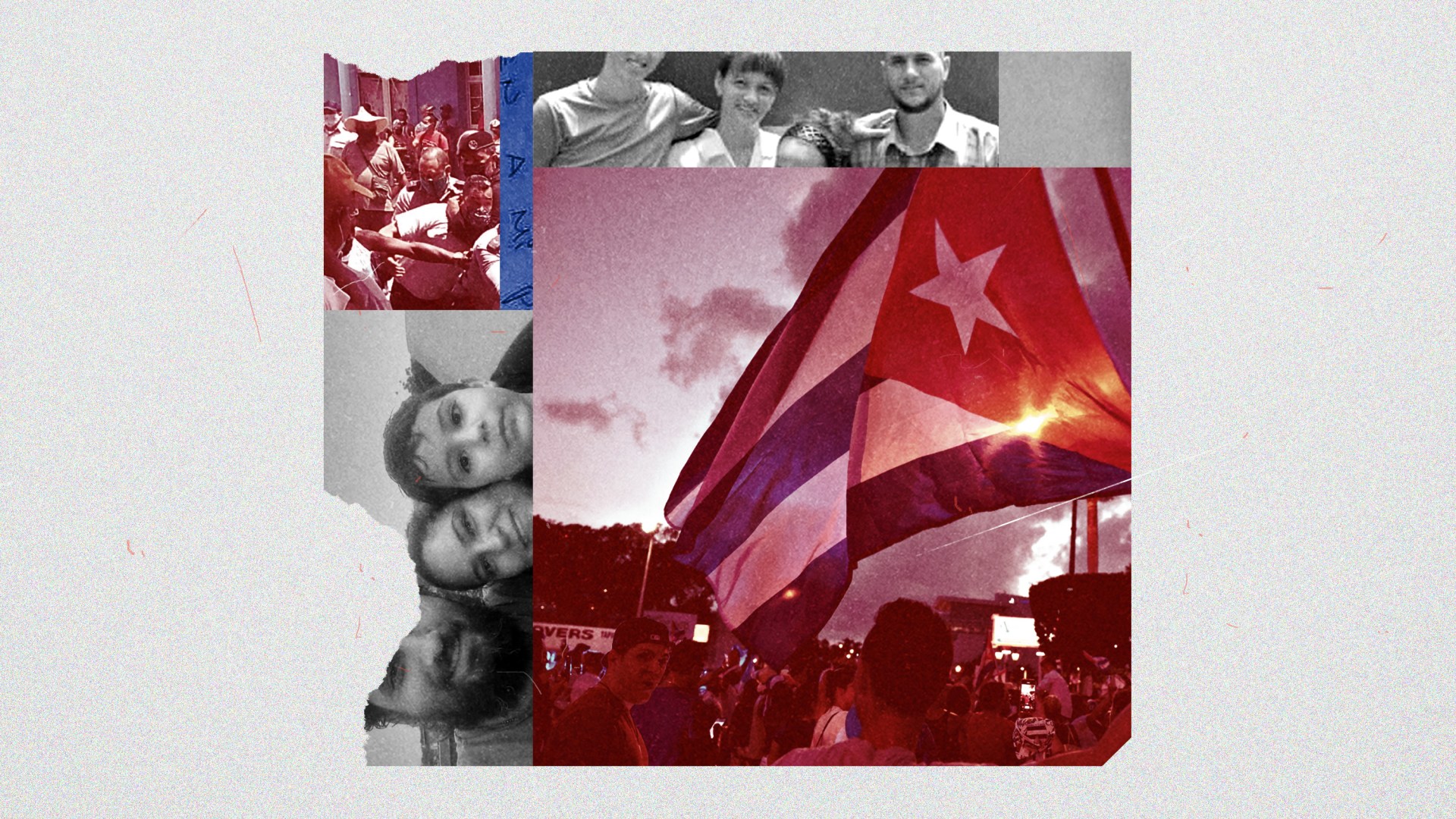
Four days later, on Sunday, July 11 in a town outside Havana, people spilled into the streets and marched peacefully and enthusiastically, calling for freedom and chanting “Patria y Vida” (“Homeland and Life,” the title of a hit song released by pro-democracy Cuban hip hop artists earlier this year and a twist on the Cuban Communist Party slogan “Homeland or Death”). They shouted in unison, “We are not afraid!” The demonstration was recorded and shared live via social media by participants and onlookers and, within hours, similar protests involving thousands of people sprang up in cities and towns across the island.

The spontaneity and magnitude of the protests, the likes of which have not been seen in Cuba since the triumph of the revolution in 1959, caught the government off guard. President Miguel Díaz-Canel went on television and made an explicit call to violence, telling the population that he was giving an order to combat and called for true revolutionaries to go into the streets and reclaim them by force. The military, police, and state security agents, both in uniform and plainclothes, flooded into the streets, beating protesters and detaining hundreds.

The total number of Cubans detained or disappeared is still not known but continues to climb. While a few have been released, most remain detained, incommunicado in prisons, police stations, and state security facilities across the country. Many family members of the detainees have reported that the government plans to charge them with “incitement to delinquency” with the aggravating factor of doing so during the “public calamity” of the pandemic. Threatened prison sentences range from eight to 20 years.

Because of the unplanned nature of the protests, those who went out into the streets were from all walks of life: ordinary Cubans, young and old, male and female, and people of all faiths and none. While some human rights and pro-democracy activists joined the marches, many stayed home, concerned that the government would use their participation as an excuse to condemn them to long prison terms.

Church leaders faced the same dilemma. One Protestant church leader told CSW why he had chosen to stay in his home, despite sympathizing with the protesters. “I wanted to go out with all my heart, but I have been under surveillance by state security for months. I know the authorities are looking for any excuse to arrest me. I believe I can do more here in the trenches than I could have done by going into the streets.”

The leader, who asked to remain anonymous for security reasons, was not wrong. In the days following the protests and detentions he acted as a bridge, putting families of detained Christians in his area—including pastors, other church leaders, and rank and file members—in touch with international advocacy organizations.

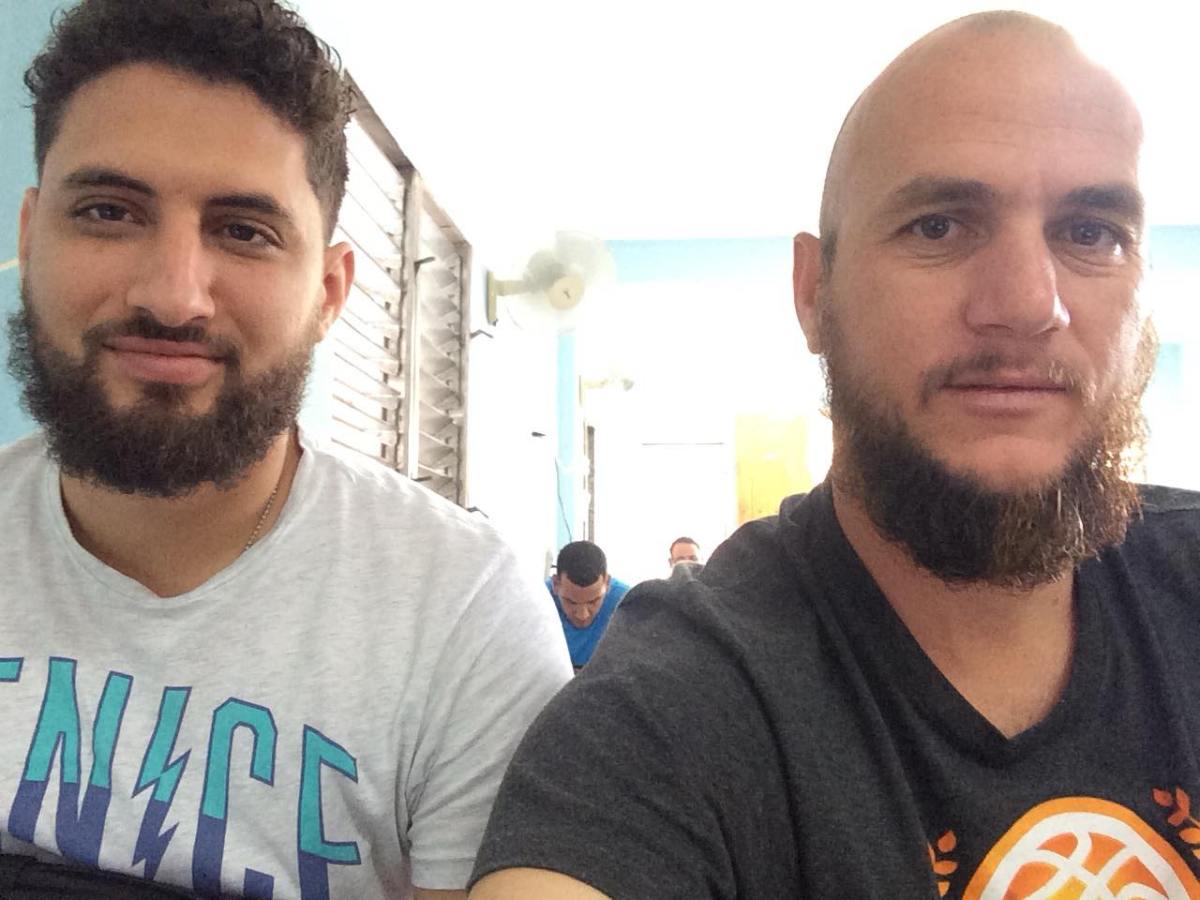
Detained Baptist pastors Yarian Sierra Madrigal and Yéremi Blanco Ramírez.Courtesy of Jatniel Perez
Detained Baptist pastors Yarian Sierra Madrigal and Yéremi Blanco Ramírez.

In contrast, two Berean Baptist pastors in the province of Matanzas, which has been one of the hardest hit by COVID-19, decided to march. Yarian Sierra Madrigal and Yéremi Blanco Ramírez, who also work as tutors at the William Carey Biblical Seminary, were violently detained and have been held incommunicado since then. A witness said he saw the authorities set dogs on Sierra Madrigal as the pastor recorded police violence on his phone before he was arrested.

In a statement and exhortation to prayer sent to CSW, his wife Claudia Salazar said, “My husband Yarian and our friend and brother Yéremi are honorable Cuban citizens. They have dedicated all of their youth and lives to serve the church and to serve others. [They are] family men: loving fathers, loving husbands, with an impeccable life testimony. They are not any kind of delinquent, nor are they low-lifes as those who govern this country call them. They are good men. They are men of God.”

Their wives have not been allowed to communicate with the two pastors, who according to the authorities were being held in the Women’s Prison in Matanzas but have now been transferred to a maximum security prison. On July 15, the women were told that their husbands’ cases had been turned over to the public prosecutor’s office and on Monday, July 19, they received news that the two men will face criminal charges. Overcrowded and unhygienic conditions in prisons across the country, in the midst of the pandemic, have led to concern for the wellbeing of all those in detention. The families of the pastors are particularly concerned given that Sierra Madrigal is still recovering from a bad case of COVID-19 and Blanco Ramírez suffers from severe asthma.

In what appears to be another attempt to pressure the family, Salazar and their young son were evicted from their home on Sunday, July 18. The landlord told Salazar that state security had threatened to confiscate the home if he did not throw them out. With nowhere to go, she and her son have taken refuge in their church.

Father Castor José Álvarez Devesa, a Roman Catholic priest in the province of Camaguey and a well-known human rights defender and promoter of religious freedom, also chose to march. He was detained and imprisoned after receiving a severe blow to the head while trying to help another wounded protester. He approached the police and requested medical assistance, which they provided before jailing him alongside other protesters. He was released into the custody of his archbishop the following day; however, a number of Catholic lay and youth leaders and others, including the church organist, in the town of San Nicolas de Bari, remain in detention.

Although the Cuban government attempted to cripple the protest movement by shutting off electricity in some parts of the country and either cutting or severely restricting access to the internet, the protests have continued. Violence has also continued, and despite the difficulties some Cubans have managed to upload to social media graphic video of protesters being beaten and fired upon. There have reportedly been several deaths.

Since the 1960s, Cuban religious organizations, including the Roman Catholic Church and Protestant denominations, have hesitated to overtly criticize the government in any way. Repercussions for doing so have been severe. In the days since July 11, however, this too has changed.

The Catholic Bishop’s Conference, a number of other Catholic groups, and major Protestant denominations including the Evangelical League of Cuba, the Methodist Church of Cuba, and the Assemblies of God have published multiple statements condemning the government’s invocation of violence, affirming the right to peaceful freedom of expression and the validity of the protesters’ demands, and calling on the authorities to listen and respond to them. Over the past week, the statements from evangelical denominations have grown stronger.

On July 18, the Assemblies of God of Cuba published a statement reaffirming the right of all people to express themselves through peaceful demonstrations and reiterated the role of Christians and churches to be peacemakers. The statement also addressed President Díaz-Canel’s statements directly:

“[We] reject the attitude of the President of Cuba by declaring: ‘The order to combat has been given,’ which sparked violent clashes throughout the country. A government that proclaims the inclusion and equity of all citizens must have the wisdom to promote dialogue, not confrontation, between Cubans. We believe that slogans and calls, lacking in peace and sanity and that inflame the people, will not solve the situation in which the country finds itself, but will instead destine the nation to total chaos and destruction.”

Notably, the Cuban Council of Churches—an ecumenical umbrella group of religious associations which maintains a good relationship with the government—and its leaders have remained conspicuously silent.

It seems clear that Cuba, which marks the 62nd anniversary of its revolution on Monday, July 26, has reached a turning point. What happens next will depend in part on how severely the government decides to crack down. The mass detentions and threats of long prison sentences seem to indicate it is pursuing a similar strategy to that of the Black Spring of 2003, when about 75 human rights and pro-democracy activists were rounded up across the island and handed sentences of up to 25 years.

There are, however, marked differences between the situation in 2003 and in 2021. The president is no longer a member of the Castro family. Despite government efforts, there is still some access to the internet, social media, and messaging apps, and a tech-savvy population can communicate across and outside the island in a way that was not possible 18 years ago.

Another critical difference is the deep fear of even appearing to criticize the government, which has characterized much of the population—including churches—for decades, appears to be evaporating. Protestant denominations that were deeply divided and suspicious of one another in 2003 have since come together and united, launching the Cuban Evangelical Alliance in 2019. The World Evangelical Alliance (WEA) affiliate has remained strong despite the government’s punitive measures and threats against its leadership.

An example of this new unity can be seen in the nationwide and interdenominational day of fasting and prayer for Cuba four days before the demonstrations erupted. Many Christians see a direct connection between the July 7 prayers and the events of July 11.

On July 10, pastor Alida León Báez, the respected longtime leader of the Evangelical League and a founding leader of the local WEA alliance, posted on social media:

“On the day of the call to fasting and prayer for Cuba [July 7], after having cried out with groaning and having enjoyed God’s presence, the fast was broken with heavy rain and electrical storms … but later, [there was] a gentle whistle, a calm ministering peace, and [I saw] a beautiful map [of Cuba] drawn in the sky…. My feeling was that God was pleased with this day and that he loves Cuba. Psalm 145:19 ‘He fulfills the desires of those who fear him; he hears their cry and saves them.’”

Evangelical denominations have called for another day of prayer and fasting tomorrow, July 21 from 7 a.m. to 7 p.m. Eastern time, to focus on salvation, healing, and peace in Cuba.

Jatniel Perez, president of William Carey Biblical Seminary in Cuba.Courtesy of Jatniel Perez
Jatniel Perez, president of William Carey Biblical Seminary in Cuba.

In the meantime, the newfound boldness continues. As the president of the seminary where the two detained Baptist pastors tutored wrote July 16 on Facebook:

“Today I received several calls trying to scare me into stopping publishing information about Pastors Yéremi Blanco Ramírez and Yarian Sierra [Madrigal].

They have called some of our pastors, trying to intimidate them.

In case any of you at State Security have doubts about who I am:

I am Jatniel Pérez Feria. National President of the William Carey Biblical Seminary in Cuba and pastor of the Independent Evangelical Church in Velasco, Holguín.

I am responsible for all the pastors and brothers who study in our seminary.

If it bothers [you] that I am saying these things, then you know very well where I live.

If I have to suffer for defending pastors and churches, then here I am, like Paul I am willing to go to prison for defending the cause of the Gospel.

I am not afraid of going anywhere.

You can do what you want with my body but my soul you cannot kill.

I prefer to obey God rather than men…

I love my country. And I love my flag, where God placed me. And I will always defend the Church that Christ bought with His blood.

Grace and peace.”

Anna-Lee Stangl is joint head of advocacy and team leader for the Americas at CSW (Christian Solidarity Worldwide).

Speaking Out is Christianity Today’s guest opinion column and (unlike an editorial) does not necessarily represent the opinion of the magazine.

Church Life

After Challenging Season, World Relief Names New President

Myal Greene is optimistic about resuming robust refugee resettlement programs under the Biden administration.

Christianity Today July 20, 2021
Courtesy of World Relief / Edits by CT

A veteran World Relief staff member who developed models for church partnerships and expanded the ministry’s programming abroad will take over this year as its new president and CEO.

The appointment of Myal Greene follows a challenging season for the organization, the humanitarian arm of the National Association of Evangelicals and a leading refugee resettlement agency.

“We’re certainly going through a season of challenges related to the refugee resettlement program and the COVID crisis that have put strains on the organization—on our operations, resources, and opportunities to carry out our programs and our ministry,” Greene said, “but I’m really encouraged by the resilience and commitment of our staff and volunteers, who faithfully serve no matter the circumstances.”

World Relief had shut down eight of its 27 national offices due to yearly cuts in refugee admissions and resettlement funding under the Trump administration’s restrictive policies. In the past few months, World Relief began ramping up their resources and rebuilding infrastructure under President Biden. Ministry leaders were also among the advocates holding the Biden administration accountable to his promise to raise the refugee ceiling after the move was delayed by months.

Greene is scheduled to take on his new role shortly before the next fiscal year begins in September. His predecessors, Scott Arbeiter and Tim Breene, announced their retirement in February.

Beyond resettling refugees domestically, World Relief also runs a number of international initiatives which continue to serve vulnerable populations in underserved countries in the midst of the worldwide COVID-19 crisis. In his previous role as senior vice president of international programs, Greene increased their funding and more than doubled their global reach in the past two years. He had also previously directed ministry operations in Rwanda and Africa.

Earlier this year, Greene was also involved in a large-scale initiative at World Relief called Forward Together, which developed a strategic plan to increase a focus on fostering greater diversity, equity and inclusion within the organization and across its programs.

“Myal’s deep understanding of our work, his engagement in this strategic refresh and his team-based leadership style uniquely position him for effectiveness at this moment in our journey,” said Steve Moore, chair of World Relief’s board of directors.

Both here and abroad, a key feature of World Relief’s humanitarian work is its reliance on partnerships with local churches and ministries in addition to public or government grants. Since 1944, the Christian nonprofit has focused on engaging with church networks to raise support, advocate, and mobilize volunteers to join their mission.

CT interviewed Greene about his new role and what’s ahead for the ministry.

What has World Relief learned in these first six months under President Biden, and what do you think the upcoming fiscal year will look like in terms of refugee resettlement?

We believe there’s going to be strong support for refugee resettlement from the Biden administration. We’ve learned that they were open to listening to the opinions of stakeholders and we’re really encouraged by their responsiveness, their concern and the seriousness with which they’re taking these issues. We’re encouraged by the ceiling raising to 62,500 for this fiscal year, and we’re optimistic that the ceiling will be raised to 125,000 next year. We’re excited about that. And while this comes with a need for resourcing and organizational capacity building after years of reduced numbers, we know there are many churches and community organizations eager to participate in the process and ready to respond to the opportunity to welcome more refugees into this country.

In terms of future plans for expansion, where was World Relief five years ago, where is it today, and where do you hope it will be five years from now?

We felt very strongly at that time that we wanted to be able to increase the number of resettlement sites that we operated in. And going forward, we see that as a very healthy way to conduct this work—to have more opportunities and locations for resettlement to take place. An increased number of resettlement cases really necessitates a larger footprint. As far as the dream vision, I would say we want to be at a place where we’re able to meet and respond to our full share of those being resettled among the other implementing partners. This means we’re looking at a variety of options to rapidly increase our scale, consider partnership opportunities, as well as open new offices or reopen locations that have previously been closed. I’m very grateful for the leadership of Tim and Scott, who helped World Relief through a very tumultuous season and put the organization in a financial place that we haven’t been at in many years. I’m excited about the momentum that we have to go forward.

How has World Relief grown in the midst of or in spite of the recent challenges it has faced?

The season of ministry where we were less engaged in refugee resettlement allowed us to focus on working with churches and other community activists to offer broader services to the larger immigrant community, not just refugees—to consider how we engage local churches in being part of an environment of welcome for immigrants of all backgrounds. We think about advocacy in terms of relationship to public policy and to public opinion, and what we’ve learned is there are a lot of different messages in churches across the country. So as this has become a very polarizing issue, we see the role World Relief can play in advocating on behalf of immigrants and refugees to churches and faith communities.

How are you preparing to lead World Relief in the midst of the changing landscape?

I’ve worked with World Relief for 14 years, and one of the great things about the longevity of that experience is I’ve seen kind of the ups and downs and how different external crises and events have impacted the organization. That long-term vision helps me ensure that we remain focused on the priorities despite the crises we face.

Most people who know about World Relief think of their domestic work with refugees, but given your background, can you share about the organization’s international side?

Our work overseas is quite robust and dates back to the origins of our organization. We have three major areas of emphasis: The first is humanitarian or emergency response, which is serving people in refugee camps or internally displaced people (IDP) camps, and those returning to their home community—so there’s a lot of synergy and connectedness to the work that we do in the US. The second area of our work is in community and public health, where we’ve found great support from donors and collaboration with USAID and UNICEF. And then the third is a church-based community development initiative, an integrated model where we engage churches in meeting the needs of their neighbors—from economic and social to strengthening marriages and working with children.

What initially led you to join the mission of World Relief back in 2007?

Since I became a Christ follower, I really developed a strong appreciation for God’s love and heart for the poor and the vulnerable. And as I came to learn about World Relief, it motivated me to step out of the work that I was doing before on Capitol Hill to take a two-year assignment—raising support, not even a staff position—to serve in our Rwanda office. Through that, I saw how my life was shaped in ways of seeing and understanding the world. It was very formative for me in drawing my commitment to understanding the role of the church and community development, the importance of engaging churches, and in meeting the needs of the neighbors themselves. It’s kind of been an amazing journey to see God grow and equip me with new skills, helping the organization in different expressions of providing service to the most vulnerable, whether they’re in the US or around the world.

What is one of the most impactful experiences from your long history with the ministry?

Very early in my time at World Relief, I arrived in Rwanda when it was still at the height of navigating the HIV pandemic. We had a very large grant from PEPFAR to do HIV work, and much of it was focused on prevention and the youth. But there was also a palliative care component for people with AIDS. Through those interactions, I spent a lot of time in the home with the women, especially widows with children, who could see the end of their lives in full view. Seeing the hope that they had in Christ and the way that churches could come around them—but also their concerns for the futures of their children—just stuck with me and touched me emotionally. It made me see why our work is so important, so valuable.

News

Summit Produces a ‘Pentecost’ Moment for International Religious Freedom

First IRF summit led by civilians not governments pulls off bipartisan participation as attendees welcome news on next ambassador.

Former IRF ambassador Sam Brownback speaks at the 2021 International Religious Freedom Summit in Washington.

Former IRF ambassador Sam Brownback speaks at the 2021 International Religious Freedom Summit in Washington.

Christianity Today July 19, 2021
Hailey Sadler / IRF Summit

In this series

One word floated forebodingly between parentheses throughout promotional material for the 2021 International Religious Freedom (IRF) Summit:

Invited.

Following the names of Nancy Pelosi, Antony Blinken, and Samantha Power, it indicated uncertainty if the key Democratic stalwarts would participate.

As the approximately 1,200 registered attendees arrived, the distributed official program still did not include the current House speaker, secretary of state, or USAID administrator.

However, Mike Pompeo, Blinken’s predecessor at the US State Department, had a keynote address from the stage.

“There were a lot of questions heading into this summit, with a lot of hesitancy from the Biden people,” summit co-chair Sam Brownback told CT. “But we worked hard to make it bipartisan.”

Unlike the previous two ministerial meetings held in Washington, DC (and a third held virtually in Poland), this year’s IRF gathering was organized by civil society, not governments.

Brownback, the US ambassador-at-large for international religious freedom during the Trump administration, was now a private citizen. He partnered with Katrina Lantos Swett, former chair of the US Commission on International Religious Freedom, who was appointed by former Democratic senator Harry Reid.

Brownback chased the Republicans, and Lantos Swett the Democrats. Their friendship, Pam Pryor, senior advisor to the summit, told CT, is the “gold standard” in bipartisan cooperation.

Co-chairs Sam Brownback (middle) and Katrina Lantos Swett (right) with Open Doors president David Curry (left) at the 2021 International Religious Freedom Summit in Washington.

In the end, Lantos Swett was relatively successful. Unable to appear in person, Pelosi, Blinken, and Power all provided prerecorded remarks.

“The summit demonstrates our ironclad commitment to international religious freedom,” stated Pelosi, “which transcends party and politics.”

The executive branch agreed.

“The US is committed to advance human rights,” stated Blinken, “and religious freedom is a vital component of our diplomacy.”

As did the leader of a key implementing organ, the US Agency for International Development (USAID).

“The fight for international religious freedom is not just a reflection of who we are as Americans, but of strategic national interest to the United States and a key foreign policy objective,” stated Power. “The Biden-Harris administration is dedicated to its protection and advancement, at home and around the world.”

Speaker of the House Nancy Pelosi, former Secretary of State Mike Pompeo, and current Secretary of State Antony Blinken address the 2021 International Religious Freedom Summit in Washington.

Brownback felt vindicated.

He and Lantos Swett balanced Republican and Democratic IRF supporters in Congress, such as Chris Smith (R-NJ) and Henry Cuellar (D-TX) in the House of Representatives and Chris Coons (D-DE) and James Lankford (R-OK) in the Senate. They brought together advocates both right and left of center, such as Tony Perkins of the Family Research Council and Zeenat Rahman of the Inclusive America Project.

And between the 81 convening partners, every major religion of the world was represented.

“All of this together convinced the new administration that this is a broad movement, and that they wanted to be a part of it,” Brownback told CT.

“And they are.”

While scheduling did not permit Pelosi, Blinken, and Power to appear on stage, in-person proof was provided by Melissa Rogers, executive director of the White House Office of Faith-Based and Neighborhood Partnerships.

She also provided the news that summit participants were waiting for and chatting about in the hallways.

Bringing “warm greetings” from President Joe Biden, she said he would appoint the next IRF ambassador in “the coming weeks.”

Melissa Rogers speaks at the 2021 International Religious Freedom Summit in Washington.

While both George W. Bush and Barack Obama tarried as presidents in making their nominations, Trump took only six months. Biden is approaching the same mark.

Rogers also said the administration would “maintain the momentum” from previous ministerials and support the 2022 ministerial hosted by the United Kingdom in London. (Brazil has been scheduled to host in 2021.)

“Your work is vital, and you hold us accountable,” she said to the audience. “There is so much common ground on religious freedom, and so much good we can all do together.”

At the summit, however, this depended on the avoidance of domestic politics, said Peter Burns, the event’s executive director. Over two months the organizing committee solidified 10 panel discussions, organized by topic—not region—in order to be as broad as possible.

China, Nigeria, and Pakistan were nonetheless frequent targets throughout. Various participants highlighted Uyghur Muslims as monitored by malign technology, Nigerian Christians as victims of genocide, and Ahmadi Muslims as subjects of legal structures of discrimination.

Positive examples were also highlighted. An ecumenical prayer service brought together Mideast Christians. Philanthropy multiplied the concept of “covenantal pluralism.” And Kazakhstan signed a new agreement to educate both its clerics and its police on religious freedom and the rule of law.

“Tony Perkins and Samantha Power are at the same event, saying the same things, differently,” said Burns. “It’s really cool.”

Katrina Lantos Swett speaks at the 2021 International Religious Freedom Summit in Washington.

But with such high-level political participation, partisan talking points were inevitable.

Pompeo criticized Biden for prioritizing climate change over religious freedom. He called the summit a “God-driven” continuation of Trump’s work. And he celebrated the United Arab Emirates’s opening of an embassy in Israel.

Rogers highlighted Biden’s reversal of Trump’s restrictions on Muslim and African immigration. She emphasized the importance of LGBT rights within the panoply of religious freedom. And Power called out Israel within her list of violating nations.

More substantive was the debate over the place of religious freedom within human rights overall.

“Oppression always begins against religious freedom,” said Pompeo, “leads to the loss of other civil and political rights, and can even come to include genocide.”

Former Secretary of State Mike Pompeo speaks at the 2021 International Religious Freedom Summit in Washington.

Democrats emphasized a “nesting” approach.

“The freedoms to speak freely, to assemble freely, and to advocate your cause to political leaders are interdependent,” said Power. “Religious freedom cannot exist without them.”

David Saperstein, the Jewish rabbi who preceded Brownback as IRF ambassador, tried to balance the perspectives from the stage.

“You cannot have freedom of religion if you do not have freedom of speech, press, and association,” he said. “But conversely, you cannot have these rights without freedom of religion and conscience.”

Previous IRF ambassador David Saperstein speaks at the 2021 International Religious Freedom Summit in Washington.

Overall, the attendance and sponsorships titled rightward, and Pompeo’s address solicited more robust applause than those from Democratic leaders. But Saperstein reminded everyone of 1998, when the International Religious Freedom Act (IRFA) moved through Congress without a single dissenting vote.

“IRFA was needed because religious freedom was a forgotten stepchild in the human rights movement,” he said. “Twenty-three years later, what we did worked.”

And for this, Brownback was pleased.

Having previously told CT that the last ministerial felt like Christmas, he was asked if this gathering felt like Easter.

“No, more like Pentecost,” he replied, after a brief pause.

“The spirit here is very peaceful, very pleasant—and very broad.”

News
Wire Story

Court Upholds Ruling in Favor of InterVarsity at U of Iowa

“We are hard-pressed to find a clearer example of viewpoint discrimination.”

Christianity Today July 19, 2021
Phil Roeder / Flickr

Update (December 6, 2021): A state panel agreed Monday to spend nearly $2 million to settle two federal lawsuits brought against the University of Iowa in 2017 from Christian student groups that lost their campus status over their faith positions.

Lawyers for the student group Business Leaders in Christ were awarded $1.37 million in fees and costs for litigating the case. InterVarsity Christian Fellowship will be paid $20,000 in damages and about $513,000 in attorney fees.

A federal appeals court has upheld a 2019 ruling against the University of Iowa, affirming that the university discriminated against a Christian club by stripping it and dozens of other religious clubs of their registered status.

A three-judge panel of the US 8th Circuit Court of Appeal on Friday found that a lower federal court correctly ruled that the university can’t selectively deregister student organizations. That ruling came on a lawsuit filed by InterVarsity Christian Fellowship after university administrators deregistered its local chapter along with multiple other religious groups.

The university moved to deregister the groups after another faith-based group, Business Leaders in Christ, sued the university for kicking it off campus following a complaint that it wouldn’t let an openly gay member seek a leadership post.

The appeals court said Friday that “we are hard-pressed to find a clearer example of viewpoint discrimination.”

The university had not allowed Christian, Muslim, and Sikh groups to appoint leaders based on their shared faith, selectively enforcing its policy requiring all clubs to offer equal opportunity and access regardless of classifications including race, religion, national origin, age, gender, sexual orientation, or gender identity.

According to Becket, which represented InterVarsity Christian Fellowship in the case, “the court warned that university officials who ‘make calculated choices about enacting or enforcing [such] unconstitutional policies’ should be on notice that they are not entitled to qualified immunity but instead will be held personally accountable for their actions.”

https://twitter.com/DBlombergSC/status/1416073817651392514

The university exempts sororities, fraternities, and some sports clubs from its policy prohibiting sex discrimination and allows some groups to require members of specific racial groups, the appeals court said.

It even allowed one group, LoveWorks, to require its members to sign a “gay-affirming statement of Christian faith” while disqualifying groups that required members to affirm different religious statements of faith, the court said.

“The university’s choice to selectively apply the Human Rights Policy against InterVarsity suggests a preference for certain viewpoints — like those of LoveWorks—over InterVarsity’s,” Circuit Judge Jonathan Allen Kobes wrote for the panel. “The university focused its ‘clean up’ on specific religious groups and then selectively applied the Human Rights Policy against them. Other groups were simply glossed over or ignored.”

Attorneys with the Iowa Attorney General’s Office listed on court filings as representing the university in the lawsuit did not immediately return phone messages Friday seeking comment.

A UI spokeswoman, Anne Bassett, said in an email Friday afternoon that the university “respects the decision of the court and will move forward in accordance with the decision.”

Daniel Blomberg, an attorney for InterVarsity, said Friday's ruling puts other schools on notice.

“Schools are supposed to be a place of free inquiry and open thought, but the school officials here punished opinions they didn’t like and promoted ones they did — all while using taxpayer dollars to do it,” Blomberg said.

Theology

One Easy Trick to See If You’re Reading the Bible Right

I knew Scripture was inerrant and inspired, but didn’t let it move me to devotion.

Christianity Today July 19, 2021
Illustration by Mallory Rentsch / Source Images: WikiMedia Commons

Augustine said there’s a way you can check or double-check whether you understand the Bible. If you read it right, he said, it would produce a “double love of God and of neighbor.”

In fact, “whoever finds a lesson there useful to the building of charity,” Augustine wrote, “even though he has not said what the author may be shown to have intended in that place, has not been deceived, nor is he lying in any way.”

I read these words from On Christian Doctrine in the fall of 2008, and I knew that I had a problem. I had spent the previous two years in the Biblical Exegesis program at Wheaton College Graduate School, and I was not confident that all my training in Hebrew, Greek, and exegesis had fostered that “double love” in me. I understood the importance of Scripture, I knew it was inspired, but had I let it affect me the way that it should?

I didn’t think the problem was my Greek or Hebrew. I knew it wasn’t the Scriptures themselves. I suspected it was my theology.

I was taught all the verses explaining how Scripture is inerrant, infallible, inspired, and sharper than a two-edged sword, but these words seemed sterile and static when describing the book I knew was different than all other books. The facts of Biblical inspiration were solid enough, but I didn’t have a dynamic social imaginary to animate my Christian life towards study and devotion.

Augustine was right: I should love God and my neighbor more after reading Scripture, so what might this look like? Was there a Biblical paradigm, and not just prooftexts, that could help me? I found a way forward in John 5.

In John 5:1-18, Jesus heals a man at Bethesda who was sick for 38 years. It was on the Sabbath, which created controversy. Jesus responded with testimony about who he really is. He didn’t testify about himself, since, “If I testify about myself, my testimony is not true” (John 5:31). Instead, as required by Deuteronomy 19:15, he called witnesses.

First, there is John the Baptist, who is “another who bears witness to me” (John 5:33). Second, “the works which the Father has granted me to accomplish … bear me witness that the Father has sent me” (John 5:36). Third, Jesus said, “the Father who has sent me has himself borne witness to me” (John 5:37).

Finally, Jesus said the Scriptures themselves point to him. Here, I think, Jesus offers an important adjustment to my view—and I think the standard evangelical view—of what it means to “get the Scriptures right.”

He says, “You search the Scriptures because you think that in them you have eternal life; and it is they that bear witness about me. … If you believed Moses, you would believe me, for he wrote of me” (John 5:39, 46).

It is not enough to just say that Scripture is inerrant. We should understand its purpose and ultimate referent. Jesus is saying in this text that his contemporaries could not understand his ministry, because they misunderstood the referential nature of Scripture. It is about him. Moses and all the prophets wrote about him. In the same way, we misunderstand the Scripture if we miss that it is testifying to the Christ who came, died, and rose again.

We are just as prone to misunderstanding the purpose of the Scriptures as people were in the first century—maybe more so.

We need to recover the witness of the Bible. Any use of Scripture that doesn’t comport with this testimonial purpose of Scripture will be insufficient because it will stop short of Scripture’s own purpose.

Recovering this theology of Scripture as witness to Christ could change our Christian lives in two ways. First, it could remind us that we love the Bible because we love Jesus, and encourage us to plunge ourselves back into Scripture.

One distinguishing mark of Christians who prioritize the primary nature of Scripture as witness will be their immersion in the Scriptures because they love him to whom they testify. We are incredibly privileged to have the full scriptural witness to the person and work of Christ, including the gospels and the full apostolic testimony of the New Testament. As Thomas Cranmer eloquently prayed so long ago, we should “read, mark, learn, and inwardly digest” the Scriptures.

Second, we might follow in the footsteps of John the Baptist, who faithfully bore witness to Christ as Jesus said in John 5:33.

I’m reminded of the famous Isenheim altarpiece, painted by Matthias Grünewald. John the Baptist is depicted at the crucifixion—a wildly but wonderfully anachronistic image, since John was beheaded well before Christ’s death—and he’s standing at the side, with one bony finger pointing to Jesus. There we find the words, “He must increase, but I must decrease.”

What is in his other hand? An open Bible. This, I think, is the pattern we are supposed to imitate. Like John, with Scripture in one hand, and pointing to Christ with the other, we are made to bear witness to Christ. All our reading, studying, struggling, debating, living, and even dying can be animated by this task: testifying to Christ.

And then, as Augustine teaches us, it is easy to check whether or not we’ve gotten this right. Do I have a double love for God and my neighbor?

If I have not charity …

Theology

We Put Down Roots. Then Everything Around Us Shifted.

We must find new ways to live faithfully in places that have changed.

Christianity Today July 19, 2021
Kelli M. Allison / Lightstock

If you’ve moved lately (or have tried to), you’ll know that there’s a shortage of available properties pushing prices to an all-time high. Many would-be buyers, including first-time buyers, have been priced out of the market and stuck in places they’d rather not be—and, in some cases, places they no longer recognize. It’s been nine years now since my husband and I bought our first home. After a decade of moving from place to place, we returned to his native Virginia to minister in a rural community. We were drawn by both providence and desire, and the home we bought came to represent these things for us. We quickly made it our own, replacing the orange carpet in the basement and updating the wood-grained paneling. We planted fruit trees and put in gardens. Then, fences and hedgerows. We renovated bathrooms and again replaced the flooring when the drains failed and the basement flooded, all while sinking our roots deeper and deeper into the surrounding community. Then the earthquakes hit. Not literally earthquakes, but interpersonal and vocational ones. After eight years, we transitioned out of the ministry that had brought us here. Our children moved on from the elementary school that sits a stone’s throw from our house, and we found ourselves feeling displaced despite living at the same address. Soon enough, our private tremors were encircled by global ones. COVID-19 hit, and we, along with our neighbors, found ourselves locked in our homes. Schools and churches closed and the library, too—our points of shared community were lost. Of course, we checked on each other, but, at first, we didn’t know whether our presence was more threat than benefit. “I fell like the floor keeps moving under my feet,” my husband confessed a few months in. “Every time I try to take the next step, I lose my balance.” But at least now, we had a strange kind of solidarity—ours was no longer the only world shaking.

How can we continue on when God calls us to stay put? How can we stay in places that feel like they’re eroding away?

Almost 18 months later, the aftershocks have begun to subside. We’re emerging and trying to reestablish life together. But much has changed. Church attendance lags, teachers and community leaders have retired early, and the library still is not fully reopened. Larger political fractures have separated friends, and opinions once viewed as moderate are now deemed “radical” by whomever does not hold them. We have not moved. But the world has changed around us. And suddenly I find my notions about place challenged, particularly my belief that embracing your place can offer a rare source of stability in modern life. As someone who longs, in the words of Wendell Berry, to be part of “the membership” of a place, this had been a difficult reality to accept. I thought putting down roots would provide permanence. But nobody told me that earthquakes can uproot the strongest of trees. I still believe that the Lord’s providence determines the boundaries of where we live and when (Acts 17:26). I still believe that we must show up in the communities in which we’ve been placed. But I have a deepening appreciation for life east of Eden, a world in which our place can be shaken and disrupted. I know now that the ground under our feet should not be trusted—at least not with our soul’s stability. So how can we continue on when God calls us to stay put? How can we stay in places that feel like they’re eroding away despite our attempts to stay rooted in them? I’m still sorting this out. But I’m learning that we must pay attention to the changes. And we must tell the truth about them. We must tell the truth about the deeper fault lines that existed long before the earthquake hit. We must tell the truth that they will pose dangers for generations to come. We must also tell the truth that some places will never again be what they once were. Sentimentality is the particular temptation of those of us who long for place, and we must guard against it. If the past few years have taught us anything, it’s that the desire to live in a land of our imagining can change the course of history. We’ve also learned that the desire to make a land “great again” will find particular resonance in those places whose changing stories have been left unattended and untold. But even as we grieve communities that will never again be what they once were, we must also open ourselves to the fact that some things need to change. A recent study suggests that 29 percent of pastors have considered leaving ministry in the past year. Like their counterparts in other professions, many pastors are wrestling with the trajectory and sustainability of their work. Earthquakes have a way of leveling weak or poorly designed infrastructure, exposing deeper concerns that we may have ignored during more stable times.

In reflecting on this, Pastor John Starke of New York City notes that “while the pandemic has surely exposed what is fragile in our world and in the church, it has also exposed what is in vain … [some] had been trying to build something that God had no intention of building. ” And so I wonder, how does work and life need to change not despite the earthquake but because of it? What things need to be torn down to make way for new possibilities?

Reporting on the challenges churches face coming out of the pandemic, Kate Shellnutt writes “What feels like struggles atop struggles could be an opportunity for the church to live up to its ideals, to care well for each other and look to God in their suffering.” But more than anything in this moment, I find myself learning to hope—to believe that even as an earthquake remakes a place that this place can still hold possibility and calling.

Years before moving to our present home, my husband and I relocated to Hawke’s Bay, New Zealand, for a short-term ministry position. We lived in a borrowed house next to fields of sheep and down the road past the vineyards and apple orchards. A particularly fertile region, Hawke’s Bay is also known for its history of seismic activity, and every year, the town of Napier commemorates the 1931 earthquake. A 7.8 magnitude event, it remains New Zealand’s deadliest natural disaster. Churches and schools collapsed. Homes caught fire and were destroyed. Hundreds died and thousands more were injured. Eventually, Napier rebuilt in its signature Art Deco style, and the town’s architecture has become world-renowned, drawing tens of thousands to an annual themed festival. But something else happened. The same quake that leveled Napier extended it, lifting nearly 40 square kilometers (roughly 10,000 acres) of viable real estate out of the ocean. Today, if you fly into the Hawke’s Bay Airport, the wheels of your plane will land on ground reclaimed from the sea. Because here’s another thing: In the New Testament, earthquakes accompany God’s apocalyptic work of redemption (Matt. 27:51-54). They open tombs (Matt. 28:2), break chains, and unlock prison doors (Acts 16:26). And perhaps more than anything, they signal the presence of God in a place (Acts 4:31). In this moment, we must find new ways of being in places we have not left. But having been stripped of our small dreams for the places we call home, we can dream anew. Even as we continue on in a landscape that feels foreign to us, that is simultaneously familiar and unknown, we take heart that God is “our refuge and strength, an ever-present help in trouble…

we will not fear, though the earth give way and the mountains fall into the heart of the sea, though its waters roar and foam and the mountains quake with their surging. (Ps. 46:1-3)

Instead of looking to a place, whether new or old, we look to a person. Because when our places change around us—when we can no longer recognize our communities, country, or churches—God does not. And it is his faithfulness that allows us to continue on faithfully in spaces that we might rather leave—and not only to stay but to find contentment and joy in them. We remember that we were only ever strangers and pilgrims on this earth to begin with. And from this place, we can continue on to that better country that waits for us—to that kingdom that cannot be shaken.

Hannah Anderson is the author of Made for More, All That’s Good, and Humble Roots: How Humility Grounds and Nourishes Your Soul.

News

Will Central Asia Become ‘Stans’ for Religious Freedom?

Kazakhstan pledges improvements at 2021 IRF Summit in Washington DC, following footsteps of neighboring Uzbekistan.

The Palace of Peace and Reconciliation in Nur-sultan (formerly Astana), Kazakhstan.

The Palace of Peace and Reconciliation in Nur-sultan (formerly Astana), Kazakhstan.

Christianity Today July 16, 2021
Nutexzles

In this series

Now two of “the five ’Stans” are becoming bigger fans of—or, as Gen Z would say, “stanning” for—religious freedom.

“In Kazakhstan, all denominations can freely follow their religion,” said Yerzhan Nukezhanov, chairman of the Central Asian nation’s committee for religious affairs, “and we will continue to create all necessary conditions for religious freedom.”

Speaking at the 2021 International Religious Freedom (IRF) Summit in Washington, DC, Nukezhanov signed a memorandum of understanding with Wade Kusack, head of the Love Your Neighbor Community. It sets a three-year roadmap that will train local imams, priests, and pastors in dialogue, culminating in the establishment of religious freedom roundtables in nine Kazakh cities.

“It is a front door approach in openness and transparency with the government,” Kusack told CT. “Mutual trust is built one relationship at a time.”

An ethnic Belarusian, Kusack is also the senior fellow for Central Asia at the Institute for Global Engagement (IGE), the American NGO which helped shepherd Uzbekistan’s efforts to improve its IRF standing. In 2018, top Uzbek officials pledged reforms at the first Ministerial to Advance Religious Freedom, convened by the US State Department.

Later that year, the State Department removed Uzbekistan from its list of Countries of Particular Concern (CPC) for the first time since 2005. Downgraded to Special Watch List status, by 2020 the nation had made enough progress to be delisted altogether.

Recent developments in Kazakhstan were hailed as a “proof of concept” for the engagement model of IRF advocacy. Not listed as a CPC by the State Department, the nation has been recommended for watchlist status by the US Commission on International Religious Freedom (USCIRF) since 2013.

Kazakhstan signs a religious freedom MOU at the 2021 International Religious Freedom Summit in Washington.

Nukezhanov noted 2018 as the year his committee established a religious freedom working group specifically to demonstrate openness to American concerns. That same year, Nikolay Popov was fined $600 for sharing his Christian faith—without a license.

Popov, part of the Council of Baptist Churches in Kazakhstan’s Karaganda region, also failed to secure government approval of the religious literature he distributed. The administrative court of Balkhash, 380 miles southeast of the capital city Nur-Sultan (formerly Astana until 2019), found him guilty of “illegal missionary activity.”

Kazakhstan’s 1995 constitution establishes a secular state that guarantees freedom of religion and belief. This includes the right to propagate one’s religion. A 2011 law, however, added restrictions that in practice privileged the “traditional” religions of Kazakhstan—Sunni Islam and Russian Orthodoxy—while requiring all faiths to register and operate according to a set of bureaucratically tedious restrictions.

National registration requires 5,000 members, with 300 members in each of 14 regional districts. Regional registration requires two locations with 250 members each, while local registration must list the names and addresses of at least 50 founding members.

The overall climate has led the Baptist churches to refuse registration in principle.

Elijah Brown, general secretary of the Baptist World Alliance, called the new MOU a “historic moment,” hoping it will proceed to address the registrations, restrictions, and fines that leave Baptists and other religious minorities in Kazakhstan vulnerable to violations.

“The commitment of the Kazakhstan government to establish religious freedom roundtables is an important and significant step,” he said. “It is now essential that these roundtables intentionally include representatives of all faith traditions.”

Because Baptists are not the only ones experiencing difficulty. In 2017, 20 Muslims were taken to court and fined for saying aloud the word Amen during prayers at their mosque. The action—allegedly associated with Islamic extremism—violates the code of the Association of Muslims of Kazakhstan. All mosques must register with the association, which appoints their local imams.

Now, faith leaders will be meeting together.

“Where there is no equal and open dialogue, stereotypical thinking can lead to a violation of citizens’ rights to freedom of religion,” said Alexander Klyushev, chairman of the Association of Religious Communities of Kazakhstan, a grouping of evangelical churches. “Most often this affects the rights of religious minorities, or religious communities that are seen as a potential fifth column in the country.”

Klyushev was part of the early working group that interacted with Kazakh officials and American sponsors. In November 2019, the Kazakh ambassador to the US and the Ministry of Information and Social Development, which oversees religious affairs, held the first Religious Freedom Roundtable in Shymkent, the nation’s third largest city. Four gatherings have now been held in total, in four different cities.

Since then, Kazakhstan has dropped plans to amend the 2011 law to further strengthen control of the state. And USCIRF has noted positively that the number of administrative prosecutions for religious offenses has continued to decline, falling from 284 in 2017 down to 160 in 2019.

And in 2020, Thomas Schirrmacher, now general secretary of the World Evangelical Alliance, met with Kazakhstan’s grand mufti and the president of its Catholic bishops conference.

“The government made a concerted effort to improve its record on religious freedom,” stated USCIRF in its latest report prior to this week’s IRF summit and MOU signing, “working to design and implement reforms in conversation with US counterparts.”

“While USCIRF is concerned by elements of current draft reforms, the commission is very encouraged by Kazakhstan’s willingness to engage in open dialogue and believes this will result in positive outcomes for religious freedom,” commissioner Nadine Maenza told CT after the MOU was signed.

Kusack argues that religious freedom liberates believing communities to serve their nation.

“When no one gets in the way of religious practice, such people usually become the most positive and effective members of the local society,” he told CT. “They contribute to the development of charity, adhering to the values of service to one’s neighbor.”

But winning the right to do so takes time.

Kusack first interacted with Kazakh religious leaders in 2010, and engaged governmental figures in 2013. Contacts continued steadily, and last year—despite the COVID-19 pandemic—he conducted 36 meetings with 146 Kazakh officials.

The roadmap calls for the multifaith religious leader retreat to take place next month, on August 15. And by February next year, participants will join law enforcement officials in a certificate course on religion and the rule of law, designed by Brigham Young University.

“This will make [officials] look more professional and win opportunities to communicate with the outside world,” he said. “Such certification can serve as a social elevator.”

Graduates will be invited to co-chair the nine city roundtables, expected to be established by the end of 2022.

Tomas Thomassov, pastor of the local religious association of Pentecostals called Joy Church, attended the earlier preliminary roundtable meetings and was encouraged. Officials promised to listen to and look into Pentecostal complaints.

“Dialogue took place between the religious organizations themselves, as well as with the state,” he said. “We felt a fresh breeze, and it gave us hope.”

Kazakhstan’s traditional religious groups were similarly positive with the balance represented.

“One harmful stereotype has already been abandoned in Kazakhstan—that the state should withdraw from the religious sphere. This would untie the hands of destructive religious organizations,” said Bishop Gennady of the Kaskelen diocese and manager of affairs for the Kazakh branch of the Russian Orthodox Church.

“But similar [in harm] is unjustifiably tight control,” he said. “The more the state cooperates with traditional faiths which have proved their peace position, the less extremists will have a breeding ground.”

Like elsewhere in Central Asia, fear of Islamic terrorism has led to state oversight of Muslim communities. But Kusack anticipates the non-registered Ahmadiyya sect of Islam will be included in the roadmap. While Wahhabi-influenced Muslims will not be included initially, he hopes that over time the nonviolent among them can be drawn in.

Despite the progress, what has yet to take place is widespread communication about these developments. At the time of the first working group roundtable meetings, only 12 out of 3,328 registered Kazakh media publications mentioned anything at all about religious freedom.

“Even if the reality is that this is only for a formal report or for propaganda purposes,” said Kusack, “people of different religions gather at these venues.”

He described the changed attitudes of religious leaders since the roundtables began, such as when a Baptist pastor showed him a bouquet of flowers sent by a Muslim imam for the Easter holiday. This relationship was established at the meetings, at which the imam confessed he previously considered Baptists to be “evil people” who were always indignant about something, but now see them as normal individuals who love their country.

“When we break down stereotypes, we turn to universal values,” said Kusack. “And these evoke a response in the hearts of people, regardless of their religion.”

Prior to this week’s signing, Klyushev agreed as he held out hope that the meetings would produce more than just warm relations. The role of government is crucial, and cooperation is just getting started.

“Public administration always plays a very important role in interreligious harmony,” he said, “and the tolerant attitude of different religions to one other.”

This year’s IRF summit in Washington—convened by civil society rather than the earlier ministerials convened by the US government—featured many examples of traditional name-and-shame advocacy. China, Nigeria, and India were frequent targets.

But there was also an increase in engagement-based strategies. Kusack believes it may be a new model.

“We are elevating religious freedom to new levels,” he told summit participants from the main stage. “This framework can be replicated throughout Central Asia, and beyond.”

Rafael Balgin reported from Almaty, Kazakhstan

addApple PodcastsDown ArrowDown ArrowDown Arrowarrow_left_altLeft ArrowLeft ArrowRight ArrowRight ArrowRight Arrowarrow_up_altUp ArrowUp ArrowAvailable at Amazoncaret-downCloseCloseellipseEmailEmailExpandExpandExternalExternalFacebookfacebook-squarefolderGiftGiftGooglegoogleGoogle KeephamburgerInstagraminstagram-squareLinkLinklinkedin-squareListenListenListenChristianity TodayCT Creative Studio Logologo_orgMegaphoneMenuMenupausePinterestPlayPlayPocketPodcastprintremoveRSSRSSSaveSavesaveSearchSearchsearchSpotifyStitcherTelegramTable of ContentsTable of Contentstwitter-squareWhatsAppXYouTubeYouTube