News

Miami-Area Churches Pray for Miracles, Minister to Rescue Teams After Condo Collapse

Nearby congregations offer snacks and spiritual care to those tasked with “bringing order to the chaos.”

Christianity Today June 26, 2021
Joe Raedle / Getty Images

Miami Beach pastor J. P. Funk woke up Thursday morning to the news that a condo building only about a mile from his church had collapsed, leaving more than 150 people missing in the rubble. At least two people connected to Calvary Chapel Miami Beach lived in the building, including the mother of one of its members.

Funk’s focus immediately turned to the disaster—but he worried that his congregation wouldn’t be able to help in the crucial early days of search and rescue. Half its staff was on vacation, and they initially had no way to access the disaster site, which was surrounded by law enforcement and clouded by smoke. “You can see the smoke from smoldering ruins reminiscent of 9/11,” he told CT.

As the news began to air footage of Champlain Towers South in Surfside, with its fallen-away side and piles of concrete below, local churches responded the best way they knew how: They showed up to offer support for first responders and distraught families and gathered to pray for miracles as the rescue efforts went on day by day.

The 12-story beachside building was home to an international mix of foreign retirees, South American immigrants, and Orthodox Jews. The closest church is right across the street, a Spanish-speaking congregation called Casa.

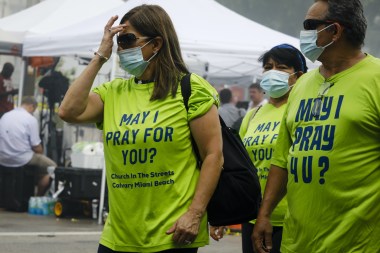
Casa offered up its building to law enforcement and quickly sent out calls for members to bring snacks and drinks. Volunteers walked through the busy tangle of media and rescue workers to deliver refreshments and words of encouragement.

Calvary Chapel Miami Beach, thanks to its involvement with police chaplains and the Florida Christian Peace Officers, secured permission to minister at a pop-up tent beside the collapsed building. They “covered the scene in prayer,” and the Miami Beach chief of police specifically asked them to lift up his team.

As the days go on without more of the missing residents being discovered, though, their prayers’ focus has gone from successful rescue efforts and miraculous survival to the inevitability of grief with the likely death toll of this disaster.

“On Friday, along with [praying for miracles], our focus has been the compassion and presence of God in the midst of crisis at a human level,” Funk said. “We pray for the families to quickly recover their loved ones’ remains as this causes great anguish once it is most probable that they have perished.”

Search teams found another body on Saturday, bringing the confirmed death toll up to five. There are 156 residents unaccounted for.
No, Says the judge. That would be illegal.A federal judge in New York City has blocked—at least temporarily—a federal regulation requiring parents to be notified when minors receive prescription contraceptives. The rule would have applied to all family planning clinics receiving any federal financing. It was set to take effect late last month.Judge Henry F. Werker said the regulation is invalid because it subverts the intention of Congress to combat teenage pregnancy, and that notification of parents when minors receive contraceptives would work against that intention. The temporary injunction applies to some 5,000 family clinics around the country. The Justice Department will appeal the action.In 1970, Congress added a section known as Title 10 to the Public Health Service Act. The provision provided federal money for public and private family-planning agencies. Congress amended the law in 1978 to require that services be given to adolescents, because it said teen-age pregnancies were a critical problem.The rule would have required that parents be notified within 10 days when prescription contraceptives were given to teen-agers under 18 and under parental care. There were exceptions in cases of suspected child abuse or incest.During congressional hearings on the regulation, George Ryan, president of the American College of Obstetricians and Gynecologists, called it a smokescreen for “turning back the clock on sexual attitudes.” He said, “The idea that we’re all going to have a Robert Young, ‘Father Knows Best’ kind of family is just not reality.”Richard Schweiker, then secretary of Health and Human Services, argued however that “in every other area of their lives, parents are involved and held responsible.… It is paradoxical that when it comes to prescribing drugs and devices with potentially serious health consequences, federal policy has not recognized parental responsibility and involvement.”Instead Of Jail, She Is Sentenced To A Religious CommunityLast November 21, 18-year-old Ann Marie O’Brien set fire to her house, resulting in the death of her nine-year-old brother. She pleaded guilty to manslaughter and could have been jailed for 10 years. But the judge, family members, even the prosecuting lawyers, agreed that this time imprisonment was not the answer. O’Brien reportedly wept openly, sometimes uncontrollably, at all her court appearances. Her attorney explained that she lit the fire to express pent-up frustrations over parental restrictions on her social life and that “she very honestly had not thought of the consequences.” Four court-appointed psychiatrists who examined O’Brien said her guilt would be with her a lifetime. They advised against incarceration.After extensive conversations with the attorneys, a probation officer, O’Brien’s parents, and the psychiatrists, and after summoning O’Brien to his chambers four times to discuss the crime, Superior Court Judge Fred Galda determined that “jail would kill her.” He decided instead to allow O’Brien to spend 30 months at a Newark, New Jersey, Roman Catholic charismatic community called the People of Hope.Newark Bishop Joseph Francis called the sentence “very unusual, but very creative.” He said, “The prison system as we presently have it is too harsh and too cruel punishment for certain offenders, especially in the category of this girl.” Richard Muti, the prosecutor, stated in court: “The event may well be categorized more a tragedy than a crime. Incarceration in prison will destroy this person. The state has no wish to compound the tragedy the O’Brien family has suffered.”The People of Hope, started 11 years ago, is a close-knit community of more than 1,000 members. Some of them have troubled or rootless pasts, but O’Brien will be the first member accepted in lieu of a jail term. The community’s director, James Ferry, says they are taking a risk. “A few years ago we would not have had the stability to do this,” he said. “Today, when the need arose, the Lord wouldn’t let me get it out of my mind.”

In instances where loss comes so suddenly, so unexpectedly, and on such a great scale, people raise questions about how God could allow such deaths to take place. “There are two things that are the most true in every human tragedy: God is good, and God is merciful,” Funk said.

“We don't believe God punishes the image-bearers of his likeness by disasters; we are all frail and fragile in our humanness,” he said, citing Luke 13:1–5.

Teams from out of town, including chaplains dispatched through the Billy Graham Evangelistic Association and a 40-person group through Youth With a Mission (YWAM), have come down to Miami to provide additional spiritual care.

“Pray for the family members of those who lived in the building waiting to hear if their loved ones are safe or not,” Franklin Graham said. “The Bible tells us, ‘God is our refuge and strength, a very present help in trouble’ (Psalm 46:1).”

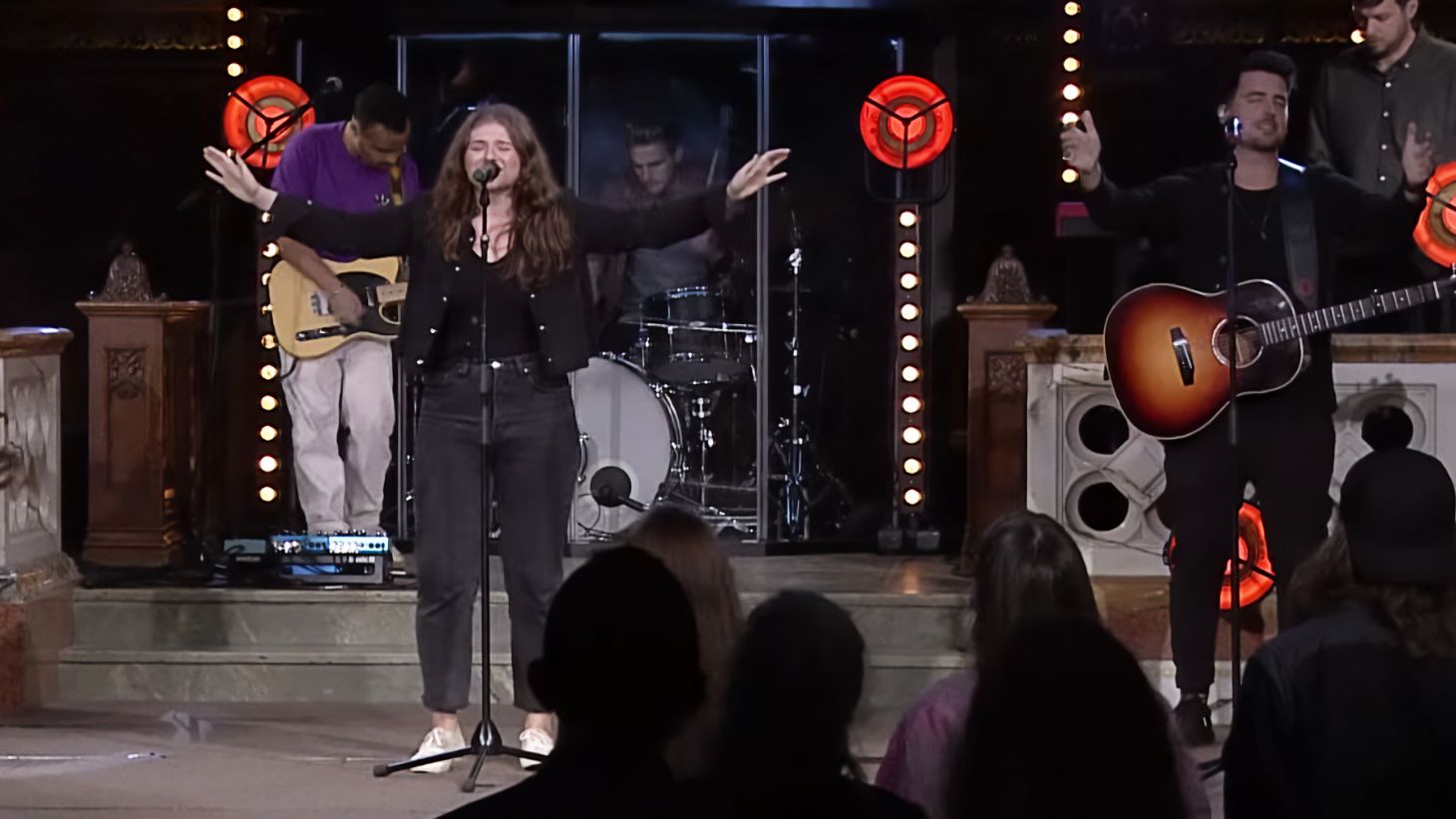
Due to its proximity to the disaster, Casa canceled in-person services for Sunday, but will be worshiping online following weeknight prayer vigils for the disaster. “We will be singing to God and praying for all affected!” a post on the church’s Facebook page read. Casa thanked fellow churches—including Rich Wilkerson’s Vous Church in Miami—for their donations and support.

Church by the Sea, in nearby Bay Harbor Islands, dedicated a Sunday service to praying for the disaster and collecting relief funds. Church leaders said none of their congregants lived in the building, though their family or friends may have.

“Strengthen us that we may help carry the burden of those who suffer, those filled with worry, concern and grief; and those who still wait to hear of loved ones,” ministers Rob and Barbara Asinger wrote. “Make us bearers of hope and agents of healing. Let your love be known through all those who work to bring order to the chaos—the firefighters, emergency workers and police.”

A “very large group” from Surfside’s Jewish community lived in the building and remains unaccounted for, according to Rabbi Sholom D. Lipskar, the founder of the Shul of Bal Harbour. The Shul already raised over a half-million dollars in relief funds. Like their Christian neighbors, his community is praying for miracles, he said, “because the circumstances are very, very grim.”

With reporting from the Associated Press.
Church Life

The Church Has Ignored the Grief of First Nation Peoples Too Long

Members of my congregation poured out their stories after the recent discoveries at Canada’s residential schools. Here’s why we all should be listening.

Christianity Today June 25, 2021
Cole Burston / Contributor / Getty Images

A month ago, the remains of 215 indigenous children, some as young as 3 years old, were uncovered in British Columbia, Canada’s westernmost province. The discovery came through the persistent prayers and consorted effort of the Tk’emlúps te Secwépemc First Nation who wanted to know why so many of their children never returned home from the Kamloops Indian Residential School that operated there from 1890 to 1978.

The people of Tk’emlúps te Secwépemc have known for generations that their children had likely died at the hands of those who ran the schools, Christian people charged with their care and education. Chief Rosanne Casimir called it “an unthinkable loss that was spoken about, but never documented.” In most cases, these children died without family members being informed.

These children were among the estimated 150,000 First Nation, Métis, and Inuit children in Canada who were separated from their families and forced to attend residential schools. From their inception in the mid 1800s to their final closure in the late 1990s, these 139 schools were “created for the purpose of separating Aboriginal [First Nation, Metis, and Inuit] children from their families in order to minimize and weaken family ties and cultural linkages, and to indoctrinate children into a new culture—the culture of the legally dominant Euro-Christian Canadian society,” according to the final report of the Truth and Reconciliation Commission, a 2015 document on the horrific legacy of residential schools.

Kamloops was a jarring reminder to many of my friends of the deep pain they have experienced.

The report gave voice to myriad forms of abuse, torture, and trauma endured by the children in these schools. To date, the Truth and Reconciliation Commission has identified the names of, or information about, 4,100 children who died, and the report outlines specific calls to action related to finding and repatriating the remains of these missing children.

In the weeks since the discovery in Kamloops, I have listened to the stories of my indigenous friends, many of them residential school survivors or family members of survivors. They also belong to the church where I’ve served for the past two years on a First Nation in southern Alberta. All were grieved but none were shocked by the discovery. Many of them said, “Finally” or, “It’s about time.”

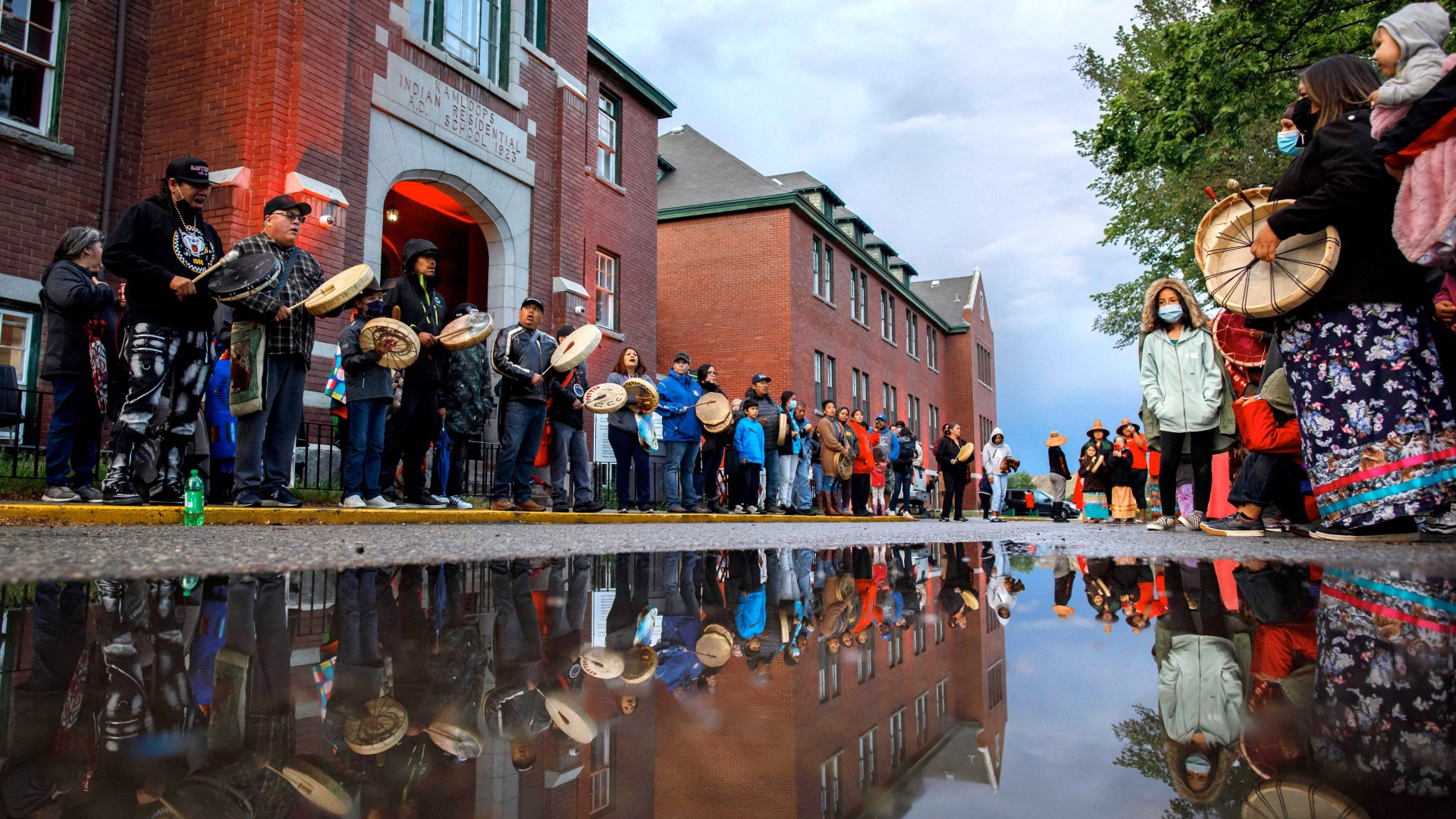
As the country expresses its communal grief through memorials marked by children’s shoes and teddy bears, vigils, walks, ceremonial fires, and prayers, my First Nation friends are opening up in new ways about the trauma that has endured in their families for generations. Their stories are a call to all to listen to the voices of those, both past and present, who have lived through and continue to be impacted by the horror of residential schools.

It is absolutely incumbent on every follower of Christ to know the stories of injustice and pain that their closest neighbors continue to endure. And beyond just Christians, there is a responsibility for every person to know the story of the land they are privileged to call home.

Like the people of the Tk’emlúps te Secwépemc First Nation, my friends have been praying for years for lost children to be found. Our 100-plus-year-old church building is located close to where the former St. Barnabas Residential School operated, and people on our Nation often say that they hear children laughing and crying when no one else is around. The community believes that these are the souls of the children who died while attending the school and were never laid to rest.

Members also experience survivors’ guilt. One elder at the church told me, “When I heard the news, I was shocked that there was so many [bodies found] and that they were so young. … I was only four years old when I went in, but I came home … and they didn’t. I feel very sad for the parents who died without ever knowing what happened to their children.”

Some have been painfully reminded of the abuse that their parents went through in residential school. One friend recounted stories of her father being forced to kneel on an iron rod for hours, staring at a picture of Jesus, as punishment. After years of being “disciplined” in this way, her father’s knees become deformed and were a source of deep shame to him. He never wore shorts.

Her mother was also subjected to horrific practices, including white powder—DDT—being ground into her skull. Even after the pesticide was banned, it was still used in residential schools. Her prolonged exposure resulted in osteoarthritis, and the harmful impacts of that were passed to her children.

Most of my friends speak of the emotional impacts of these schools not only on survivors, but also on subsequent generations. This friend recalls that it was not until her parents completed a trauma program that they were able to show emotion at all. She remembers thinking as a child, “What is wrong with me? Why can’t I hug my dad and mom properly?”

Another friend described her parents as “lost” and similarly noticed that they wouldn’t hug their children or say, “I love you.”

She remembers the day that her grinding hunger was enough for her to succumb to the plea of the nuns: “Come to the House of the Lord, and we will take care of you.” She had always been afraid of the church because of her parents’ and grandparents’ stories, but she believed the nuns would help her and her siblings. As soon as they arrived, the nuns called Children and Family Services and split up her and her siblings for the rest of their childhood. She grew up in a system where she experienced horrific amounts of abuse and violence.

But that is not the end of her story. She now has several children and constantly says to her daughter , “I love you, my girl.” Her husband is her biggest cheerleader. Together, they are raising their children to understand, experience, and express love and affection. I have been a happy recipient of their efforts—one of their children gives me a bear hug every time he sees me.

Kamloops was a jarring reminder to many of my friends of the deep pain they have experienced. But it has also brought about a sense of vindication and hope: vindication that what many First Nations, Métis, and Inuit people have been saying for generations is now known to the wider public, and hope that many more of the children lost to residential schools will be found and finally laid to rest.

The bones of these 215 children are bearing witness to the reality of Canada’s dark secret. The secret is now out and cannot be hidden ever again. In the past few weeks, more graves have been discovered, including 104 children’s bodies on the Sioux Valley Dakota Nation in southern Manitoba and 751 unmarked graves near the former Marieval Indian Residential School in Saskatchewan. We know more will be uncovered.

These atrocities were committed by Christians, people who represented the church and claimed the gospel of Jesus Christ. Many Christian politicians defended and rationalized the existence of these schools. And many non-indigenous people in the church today, out of ignorance or stubbornness, have yet to learn about this history. As people who profess to believe in the in-breaking kingdom of God, we must actively seek out the voices of those most marginalized if we want to be a part of God’s kingdom-bringing work on earth as it is in heaven.

For an indigenous person in Canada, the Christian church is contested space. Many of my congregants grapple with what it means to belong to a church that has perpetuated cultural genocide. And yet, many are still committed to it. One woman in my congregation said, “I always used to ask my granny how she could go to church after hearing some of her residential school stories. She said, ‘It wasn’t God who ran residential schools, it was people.’”

Our elder was also recently questioned on her decadeslong commitment to the church. She answered, “I don’t pray to church, I don’t pray to religion, I pray to God the Creator, and I need my church so that I can pray.”

The discovery in Kamloops has tested the faith of many in our small community. But several have shared that they need God, prayers, the Bible, and the church more than ever. Another elder said, “Even after going through residential school, my mother read this big Bible and taught us to always say the Lord’s Prayer, whenever we were hungry, cold, lonely, or afraid … she always told us to say that prayer.”

For an indigenous person in Canada, the Christian church is contested space.

How can the devastating consequences of residential schools be overcome? The people in my congregation suggest three things: First, end the silence around residential schools among the wider Canadian public; pay attention and really listen to the stories of survivors. Second, since people are not born racist, they say, “Stop teaching people how to be racist.” In other words, work to resist and reverse the sense of inferiority and cultural genocide the First Nation people have been subjected to. Third, since 94 Calls to Action came out of the Truth and Reconciliation Report, take these actions, some of which pertain to finding the remains of missing children and advocating for equal treatment.

I do not believe it is an accident that our church right now is preaching through the Book of Acts. I have been drawn to the story in Acts 9 of Saul’s conversion. We rarely highlight the character of Ananias in this story, but this is the character my congregants identify with. And they see Saul as a representative of how the church has treated them. Though God could have healed Saul’s blindness without human help, God chose Ananias, one of Saul’s potential victims, to come near to him, to touch him, and to complete his healing.

The victim heals the perpetrator.

For too long, non-indigenous people in Canada thought First Nations peoples needed us to heal them. Maybe now, we will discover the truth that it is the other way around.

Paying attention and wholeheartedly listening, allowing these stories to really touch the hearts and lives of non-indigenous people (just as Ananias had to touch Saul), is where true healing for the victims of residential schools and healing for the church (as perpetrators) will start to happen.

Being touched requires getting close, really close, through the bonds that are formed in friendship. My prayer is that more churches across Canada will long for and appropriately pursue true and lasting friendship with First Nation, Métis, and Inuit communities where they can be touched by the heartbreak, resilience, and beauty of people who have endured unspeakable harm in the name of creating this country we all call home, and that these missing children will never, ever be forgotten.

Jennifer Singh is a professor at Ambrose University and lay minister of a church on a First Nation in southern Alberta.

Books

The Story of Same-Sex Marriage, as Told by the Victors

Two new books approvingly chart the legal and cultural path to Obergefell v. Hodges. What can the losing side learn about battles lost, and battles still to come?

Christianity Today June 25, 2021
Drew Angerer / Stringer / Getty Images

I was sitting in an airport when the United States Supreme Court announced its decision, six years ago, in Obergefell v. Hodges.

As I watched on an elevated television screen and obsessively refreshed various websites, the court legalized same-sex marriage across the country. In a lengthy majority opinion, Justice Anthony Kennedy stressed that states denying marriage licenses to same-sex couples violated the 14th Amendment. “The Court now holds that same-sex couples may exercise the fundamental right to marry,” Kennedy wrote. “No longer may this liberty be denied to them.”

Each dissenting justice wrote a separate opinion, emphasizing the pitfalls of judicial activism, the importance of legislative democracy, and the danger of the decision to religious freedom. Justice Antonin Scalia even compared the majority’s arguments and conclusions to “the mystical aphorisms of the fortune cookie.” Still, by a 5–4 vote the court held state prohibitions on same-sex marriage unconstitutional. Same-sex couples were free to marry throughout the United States.

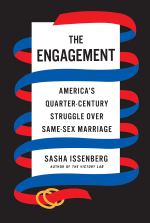
It was a remarkable moment, one that was, according to the authors of two new books, decades in the making. In Marriage Equality: From Outlaws to In-Laws, legal scholars William Eskridge and Christopher Riano trace the history of the same-sex marriage movement in the United States, beginning in the 1970s and culminating with Obergefell some 40 years later. And in The Engagement: America’s Quarter-Century Struggle Over Same-Sex Marriage, journalist Sasha Issenberg covers the strategies and tensions motivating rival groups of political, legal, and social activists.

These are thorough, all-encompassing books, a combined 1,800 pages of history, footnotes, and additional sources on the development of same-sex marriage in American society. But in addition to providing rich legal and political history, both books offer an important record of the ways in which pro-LGBT activists and social conservatives—particularly conservative Christians—approached this battlefield. Readers catch a glimpse of the then-developing Christian legal movement (CLM) in these accounts, seeing how actors in this movement opposed same-sex marriage as a threat to the traditional family and, importantly, religious freedom.

While Obergefell was the final step on the legal journey to same-sex marriage, it opened the door to several other constitutional questions. The fight over same-sex marriage may be over, but as related battles rage at the intersection of sexual orientation, gender identity, and religious freedom, Christians can look to Marriage Equality and The Engagement for insight on what did and didn’t work in the past—and what might work in the future.

The interplay of law, politics, and culture

Any history of same-sex marriage in the United States has to start somewhere, and for Marriage Equality, it starts with Jack Baker and Mike McConnell. After meeting at a party in 1966, the two men fell in love and applied for a marriage license in Minnesota, but were told that state law did not permit marriages between people of the same sex. This led to a lawsuit and eventually a defeat at the Minnesota Supreme Court, followed by the US Supreme Court unanimously dismissing their case, Baker v. Nelson, for procedural reasons. These were, according to Eskridge and Riano, among the first steps in a process that “started the nation on a legal roller coaster that lasted almost half a century.”

Apart from the formal constraints of laws and court judgments, Eskridge and Riano keenly recognize the role that perception plays in the American legal system. For example, they highlight the story of Ninia Baehr and Genora Dancel, the couple at the center of Hawaii’s same-sex marriage case in the early 1990s. They were, according to the authors, “ideal plaintiffs because they were articulate, mediagenic, and nonthreatening.” The authors later identify television programs like Ellen and Will and Grace as crucial to shifting society’s perception of the LGBT community, paving the way for advances in law and policy in the years to come. While the Defense of Marriage Act became law in 1996, within a decade the sands of public opinion had begun to unmistakably shift.

That said, Marriage Equality is heavily grounded in the law. The authors ably walk through the intricacies of court cases, as well as the history and motivation of legislation at varying levels of government. For a book authored by legal scholars and focusing heavily on statutory and constitutional questions, it is surprisingly readable. It is presented as a lengthy yet intuitive narrative, highlighting early developments as essential building blocks for later ones. Eskridge and Riano identify a variety of otherwise disconnected events—from the failed Equal Rights Amendment to the HIV pandemic—as essential to understanding why the fight over same-sex marriage turned out the way it did. The result is a detailed tapestry of law and politics, one that should appeal to scholarly and popular audiences alike.

If Marriage Equality is a veritable encyclopedia of the legal development of same-sex marriage, then The Engagement is its taut, stylized counterpart. True to his profession, Issenberg’s account is more journalistic in its treatment of the evolution of same-sex marriage. This does not mean the book is any less documented or resourced than Marriage Equality, but Issenberg tends to focus less on legal arguments and legislative details and more on the actors instigating these conversations. The result feels more personal, making it a fine counterpart to the more scholarly Eskridge and Riano volume.

Issenberg begins his account of American same-sex marriage in 1990, with the aforementioned Hawaii lawsuit. From there, he carefully walks through key events on the journey toward Obergefell, attempting to put the reader in the middle of important conversations among White House officials, attorneys, and activists, among other important players. Issenberg writes at length about figures important to this story yet likely unfamiliar to many readers, from Phil Burress and Maggie Gallagher to Mary Bonauto and Tim Gill. The book’s title is not just a nod to the precursor to marriage, but also a description of the battles that took place among rival actors in this sprawling universe.

Still, Issenberg does not dismiss legislative and legal outcomes; if anything, his focus gives these outcomes clearer meaning. It is one thing to talk about the battle over, say, state constitutional amendments banning same-sex marriage, but it is another to discuss the numerous factors and personalities that explain why these amendments ended up the way they did, adopted by various state legislatures and voters and later struck down by the nation’s highest court. For Issenberg, laws can only go so far in explaining something like Obergefell; for a full picture, you have to look at the people involved.

Both Marriage Equality and The Engagement frame the journey toward same-sex marriage in an overtly positive way. That is, the authors do not conceal their approval with the way in which the story ended, and they regard the decision in Obergefellas nothing less than a watershed moment for American civil rights. Eskridge and Riano write favorably of Obergefellas contributing to a stronger, more stable social policy for families, while one of Issenberg’s chapters—focused on the lead-up to Proposition 8, the California initiative that defined marriage as between a man and a woman—is pointedly titled “The Mormon Empire Strikes Back.” As a result, readers opposed to legal same-sex marriage may feel like the villain in these narratives, even if neither book explicitly says so.

Read together, these two books serve an important purpose. By methodically and deliberately telling the story of same-sex marriage over the last several decades, they highlight the interplay of law, politics, and culture in a way that transcends any one issue. Yes, these books are substantively about same-sex marriage, but their accounts emphasize the complexity and breadth of this process. In the years ahead under the Obergefell precedent, while related cultural conflicts take shape, this is a lesson conservative Christians would do well to remember.

Conservative Christian activism

The Christian legal movement may not have existed during the opening rounds of the same-sex marriage debate, but it played a significant role during the home stretch. Eskridge and Riano’s account begins roughly two decades before the establishment of key Christian conservative legal organizations (CCLOs), including Alliance Defending Freedom (ADF), the American Center for Law and Justice (ACLJ), and Liberty Counsel (LC). Nevertheless, the influence of the CLM in the argument over same-sex marriage and related issues is impossible to ignore.

As I note in my book Defending Faith: The Politics of the Christian Conservative Legal Movement, many CCLOs made support for traditional marriage and opposition to same-sex marriage a central part of their advocacy, often connecting this work to their support for religious freedom. While earlier instances of conservative Christian activism questioned the morality of same-sex marriage, the CLM tended to frame its opposition in both legal and social terms. Importantly, there were real differences among CCLOs in their legal strategies in this area, differences referenced by the authors of both books.

The CLM features regularly, if not prominently, in both Marriage Equality and The Engagement. Eskridge and Riano dedicate most of their attention on CLM matters to ADF, and for good reason: ADF is, without a doubt, the most successful and wealthiest organization in the movement. Its fingerprints on the same-sex marriage battlefield are undeniable, ranging from advising local and state legislators to representing Proposition 8 at the Supreme Court in Hollingsworth v. Perry.

Eskridge and Riano also highlight ADF’s strategy of putting forward sympathetic plaintiffs—such as Jack Phillips and Barronelle Stutzman—in its efforts to paint advocates of marriage equality as, ironically, intolerant. “ADF lawyers,” they argue, “feast on these scenarios like famished dieters.” This strategy has only intensified in recent years, expanding to encompass female athletes opposing biological males competing in girls’ sporting events.

Issenberg, while also focusing heavily on ADF, acknowledges other key actors in the CLM. He tells a story of the ACLJ’s Jay Sekulow encouraging Republican presidential candidates in 1996 to sign a resolution pledging to oppose same-sex marriage. Issenberg also highlights LC’s attempt to intervene in defense of Proposition 8, when it accused ADF of being “willing to concede too much” of the opposition’s case. Indeed, when the district court initially ruled against Proposition 8, LC criticized ADF’s handling of the case. As Christian legal groups continue to influence American law and politics in the years ahead, these books offer important insight into some of the movement’s earliest advocacy.

Looming challenges

In the six years since Obergefell, conservative Christians have achieved a number of important legal victories, not just in terms of wins at the Supreme Court—including Masterpiece Cakeshop, Our Lady of Guadalupe Schools, and Fulton—but also in terms of the jurists themselves. President Donald Trump put three religious-freedom-friendly justices on the court, to say nothing of his overhauling the lower courts in a markedly more conservative direction.

But while the legal realm seems favorable to conservative religious views at the moment (especially relative to LGBT rights), the broader culture is moving in a decidedly different direction. Church membership is down across denominations, and support for same-sex marriage is at an all-time high, including among conservatives. The victories religious conservatives secured during the Trump years are increasingly at odds with a changing culture.

Related to these cultural pressures are political and legal ones. The Equality Act has made significant headway through Congress, and would likely be heading to President Joe Biden’s desk were it not for the Democratic Party’s razor-thin margin in the Senate. Bostock v. Clayton County formally recognized sexual orientation and gender identity under federal civil rights law, which some Christians interpreted as a threat to First Amendment protections for religious exercise. And lawsuits continue to pit the civil rights of LGBT Americans against the religious convictions of business owners, nonprofit organizations, and colleges and universities.

With these challenges looming, what is there to learn from the journey toward same-sex marriage as presented in Marriage Equality and The Engagement? Both books highlight the importance of an engaged posture in inevitable cultural conflicts. Those opposed to same-sex marriage did not sulk away or concede the fight, despite the air of inevitable defeat in certain legal cases. Likewise, Christians should not stop fighting even in the face of insurmountable odds; we are called to seek justice, though not necessarily to win.

That said, our posture in these conflicts matters a great deal. In his recent essay on the Equality Act, Matthew Lee Anderson argues that Christians are not blameless in fueling the fire of the culture wars. He references social conservative rhetoric on Colorado’s Amendment 2 as creating suspicion of Christians in the LGBT community. “Careful arguments don’t move votes,” he writes, “but the extremist rhetoric necessary to win tends toward disrespect and also generates a backlash.” Christians should pursue justice and defend truth without demeaning our fellow image bearers; our posture ought to reflect this, not contradict it.

Beyond adopting a gospel-informed posture in our cultural engagement, Christians must also reject zero-sum thinking in our politics. It is far too simplistic (not to mention politically unsustainable) to adopt an “If you win, I lose” mentality. This is not to endorse a naïve, Pollyannaish view of politics, but instead to commend a positive vision of pluralism, one that recognizes deep differences while actively pursuing reconciliation.

Christians and other social conservatives have done this before. Prior to Obergefell, the Utah legislature adopted a compromise aimed at enshrining LGBT rights into law while simultaneously exempting some religious institutions from these new laws. This “Fairness for All” model remains a path forward in ongoing disputes between religious freedom and LGBT rights.

Opponents have critiqued Fairness for All on multiple grounds, with LGBT-rights activists saying it opens the door to discrimination and some Christians saying it isn’t protective enough. That these critiques are reasonable, given the competing perspectives in play, shouldn’t halt the process altogether. These are messy conversations, touching on some of the deepest aspects of identity and some of the thorniest constitutional questions. And since these disputes are inevitable in a pluralist society, Christians should be working toward a solution rather than walking away from the table.

Working on our witness

Books like Marriage Equality and The Engagement are important. They tell a complicated and sweeping story in a way that makes it accessible to nonexperts. Even though their authors surely oppose Christian views of marriage, they still offer many insights we can gratefully take into account. This is not so we can prepare to capitulate in the face of future challenges. The goal, like a team surveying game film the morning after a tough loss, is identifying what went well and, just as importantly, what we can do better.

Reflecting on past successes and failures is work worth doing for Christians, especially on the range of issues related to same-sex marriage. Yes, we can refine the arguments we make to a suspicious culture, but we can also improve how we make these arguments. Our most convincing case will fall on deaf ears if the world does not think we’re worth hearing. After all, we shape culture not just with our arguments but with our witness to a skeptical world. As a redeemed people with an eye toward eternity, we should remember that.

Daniel Bennett is associate professor of political science at John Brown University, where he is assistant director of the Center for Faith and Flourishing. He also serves as president of Christians in Political Science.

News

Imagine More: Recovering a Faithful Vision for Art, Creativity, and Justice

A conversation on the redemptive power of the Christian imagination.

Christianity Today June 24, 2021

As Christians, we're called to help bring hope, healing, and beauty to a broken world. But our vision for what's possible is often overwhelmed by the suffering, division, and injustices in our society. Join recording artist Sho Baraka, poet and artist Morgan Harper Nichols, and other Christian creatives as they lead us in a thoughtful reconsideration of the redemptive power of the Christian imagination.

Our Panelists

Sho Baraka

Sho is a globally recognized recording artist, performer, culture curator, activist, and writer. His work seeks to elevate the contemporary conversation on faith, art, and culture. An alumnus of Tuskegee University and the University of North Texas, Baraka is a cofounder of Forth District and the AND Campaign, and he has served as an adjunct professor at Wake Forest School of Divinity. He was also an original member of influential hip-hop consortium 116 Clique, recording with Reach Records. His latest book is He Saw That It Was Good: Reimagining Your Creative Life to Repair a Broken World. Sho lives in Atlanta with his wife Patreece and their three children.

Morgan Harper Nichols

Morgan is an Instagram poet and artist who has created her life’s work around the stories of others. Morgan’s Instagram feed (@morganharpernichols) has garnered a loyal online community. Her books, How Far You Have Come and All Along You Were Blooming, combine her poetry and art. Known for its lyrical tone and vibrant imagery, Morgan’s work is an organic expression of the grace and hope we’ve been given in this world. Morgan has also performed as a vocalist on several Grammy-nominated projects and written for various artists, including a Billboard No. 1 single performed by her sister, Jamie-Grace. She resides in Phoenix, Arizona, with her family.

Rev. Tracey Bianchi

Tracey is a pastor, preacher, professor, and freelance writer who has served in a variety of settings from church ministry to seminaries. She served for 16 years as a preaching and worship arts pastor in the Chicago area. She currently teaches adjunct courses at Northern Seminary and serves on the Board of Trustees at Denver Seminary. She's the author and co-author of four books and she makes her home in Chicago with her husband and three teenage children.

Gigi Khanyezi

Gigi is the founder and director of Christian Creatives for Justice, a beloved community of Jesus-following, justice-centered artists. As a dancer, former worship leader, spoken-word poet, and sketch artist, she has used the arts as a means of worship, protest, and as a tool to mentor young people. Gigi grew up in East Oakland, California, as a half-Brazilian, half-white (Amish) Latina and spent ten years serving in Soweto, South Africa. She is currently a doctoral Student at Howard School of Divinity and has the great joy of being Momma to her little boys, Jericho and Judah, whom she fostered and adopted while living in South Africa.

Conor Sweetman

Conor is the founder and editor of Ekstasis magazine. He lives in Toronto with his wife, Hannah, and enjoys thinking about artistic and literary things. He studied English literature and has a BA from Tyndale University and an MA from York University.

Theology

Dads: Put Down the Shotguns and Let Your Daughters Go

Scripture portrays young women not as their fathers’ pets but as pillars in God’s kingdom.

Christianity Today June 24, 2021
Oliver Rossi / Getty

Last week, CCM artist Matthew West debuted a new single at the Southern Baptist Convention’s annual meeting in Nashville. Unlike his other hits, West’s latest offering is a satirical take on a piece of advice common among evangelicals: “Modest Is Hottest.” Written as a letter from a father to his daughters, West croons:

Modest is hottest, the latest fashion trend
Is a little more Amish, a little less Kardashian
What the boys really love is a turtleneck and a sensible pair of slacks
Honey, modest is hottest, sincerely, your dad.

Response to the song was swift. Some loved and shared it widely, while others critiqued what they saw as underlying themes of misogyny and the policing of women’s bodies. There are plenty of reasons to object to the phrase “Modest is hottest.” But this particular song has less to do with modesty and more to do with the challenges and insecurities that modern dads face as their daughters mature. “My daughter’s [sic] might actually disown me after this one,” West joked in a Tweet announcing the music video. “It’s for all of the fathers out there whose daughters are joining TikTok and starting to date. The struggle is real.” In the opening shot of the video, the West daughters sit on the couch wearing shorts, legs fully exposed, and continue doing exactly what they want to do despite their father’s singing in the background. They lay out in the sun, make online dance videos, style a tank top, and roll their eyes when dad claims that “what the boys really love is a turtleneck and a sensible pair of slacks.” Obviously, this is not what “the boys” love. It is what boys who have become fathers love. Seen through this lens, the song sits within an emerging genre of viral content: the funny family video that satirizes the trials of parenthood and family life in song. In this respect, West’s “Modest Is Hottest” tracks with common themes in the “family values” vlog genre. In this case, it’s the outdated father trying to connect with his growing daughters.

But his song is only superficially about fatherly angst. If you look closer, it exposes a limited understanding of the father-daughter relationship. And that understanding is rooted in a narrow nuclear family model—as opposed to the kinship model found in Scripture, which recognizes both the nuclear and the extended family. In our contemporary setting, we often equate daughterhood with childhood, which means daughterhood functionally ends when a woman leaves home or marries.

With that assumption in mind, fathers today often want to delay or resist the natural maturation of girls to womanhood because it means losing them. (See Bob Carlisle’s 1995 hit “Butterfly Kisses.”) We see this same resistance and angst in West’s song. The opening lines allude to both the passage of time and marriage:

Dear daughter, it’s me your father
I think it's time we had a talk
The boys are coming round ’cause you're beautiful
And it’s all your mother’s fault.

It's not that West doesn’t want his daughters to be attractive. It’s that he knows what happens when a young man falls for a young woman. It’s what happened when he fell in love with their mother. He married her and started his own, separate family. Here, we see how the primacy of the nuclear family in the modern West puts pressure on father-daughter relationships. Lacking a vision for extended kinship networks, we, along with West, can’t quite see how an adult daughter who’s married or moved away from home might relate to her father. So a young woman’s relationship to other males creates something of a zero-sum game for her dad. If she marries and has children, she exchanges her identity as “daughter” for “wife” and often “mother.” And boys beginning to recognize her beauty is the first step in this process.

When the stakes are that high, it’s no wonder fathers want their daughters to wear turtlenecks and a sensible pair of slacks. It’s no wonder they make jokes about having shotguns ready when potential suitors come around. It’s no wonder they want to continue to think of daughters as “Daddy’s Little Princess.” Of course the father-daughter relationship will change as a woman matures. This is inescapable. But it need not end or be a source of loss.

Where I live in the Blue Ridge Mountains of Virginia, extended kin networks are the norm. And while correlation is not causation, I’ve noticed a particular linguistic feature: Daughters continue to call their fathers “Daddy” well beyond childhood. Daughters who’ve gone onto their own homes, careers, and marriages still speak of their “daddies.” Scripture too gives us a vision of extended, interlacing family relationships, where a woman doesn’t have to choose between being a daughter and a wife (and often a mother). She can be both precisely because she’s not an extension of either her father or her husband. She can mature past childhood into womanhood without the risk of losing the father-daughter relationship when she creates a new relationship with a husband.

Scriptural mentions of daughterhood often represent daughters as adults, not children. In Numbers 27, for example, the grown, married daughters of Zelophehad—Mahlah, Noah, Hoglah, Milkah, and Tirzah—petition Moses to receive their deceased father’s land rather than have it pass out of their family—a petition God tells Moses to grant.

Job’s daughters are named as more fair than other women, but perhaps even more significantly, Job gives them inheritance with their brothers (Job 42:14-15). Psalm 144:12 describes grown daughters “like pillars carved to adorn a palace”—a source of both stability and beauty. And Luke 2 introduces us to the widowed octogenarian prophetess Anna as “the daughter of Penuel” (v. 36). But perhaps the most interesting biblical reference to daughters coming into full maturity is found in Joel 2:28–29:

And afterward,
I will pour out my Spirit on all people.
Your sons and daughters will prophesy,
your old men will dream dreams,
your young men will see visions.
Even on my servants, both men and women,
I will pour out my Spirit in those days.

Fulfilled at the Day of Pentecost, Acts 2 records how the Spirit of God descended on those gathered in the upper room, filling both men and women with the power to do what they were called to do. Perhaps then, the best way to grapple with the changing dynamics of the father-daughter relationship is not to try to stop a daughter’s growth or to chase boys away but simply to embrace the change.

This requires a vision of a woman’s life that goes beyond her being handed off from one man to another. It requires understanding daughters not as the pets of their fathers but as pillars in the palace of God who are vital, strong links between generations in both this life and the life to come. And ultimately, it means honoring them as daughters of their heavenly Father, recognizing that his Spirit dwells within them, equipping and empowering them to every good work.

Hannah Anderson is the author of Made for More, All That’s Good, and Humble Roots: How Humility Grounds and Nourishes Your Soul.

News
Wire Story

Jim Bakker to Pay $156K Over COVID-19 Cure Claim

After settlement, the televangelist and his church can no longer sell his Silver Solution as treatment. His lawyers, though, say state officials “unfairly targeted” the show.

Christianity Today June 24, 2021
Chuck Burton / AP

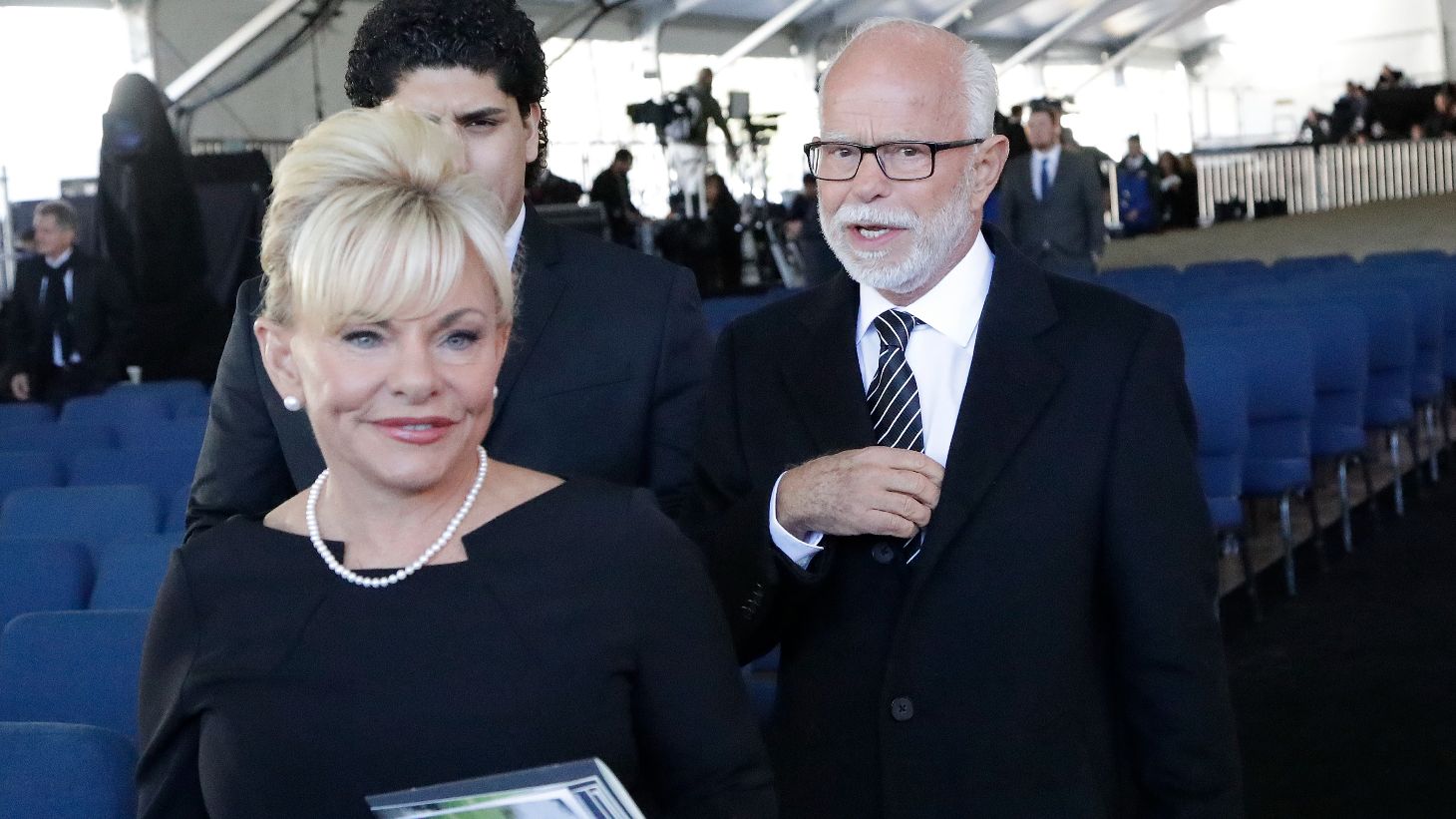
Jim Bakker and his southwestern Missouri church will pay restitution of $156,000 to settle a lawsuit that accuses the TV pastor of falsely claiming a health supplement could cure COVID-19.

Missouri court records show that a settlement agreement was filed Tuesday. It calls for refunds to people who paid money or gave contributions to obtain a product known as Silver Solution in the early days of the pandemic.

The settlement also prohibits Bakker and Morningside Church Productions Inc. from advertising or selling Silver Solution “to diagnose, prevent, mitigate, treat or cure any disease or illness.” Bakker, in the agreement, does not admit wrongdoing.

Republican Missouri Attorney General Eric Schmitt sued Bakker and Morningside in March 2020. Schmitt sought an injunction ordering Bakker to stop selling Silver Solution as a treatment for COVID-19 on his streaming TV program, The Jim Bakker Show. The lawsuit said Bakker and a guest made the cure claim during 11 episodes in February and March of 2020.

Schmitt said in a news release on Wednesday that Bakker has already made restitution to many consumers, and must pay back another $90,000 to others.

The hour-long Jim Bakker Show is filmed in southwestern Missouri. The consent agreement notes that during the program, Silver Solution was offered to those who agreed to contribute $80 to $125.

Baker’s attorneys—Derek Ankrom and former Democratic Missouri Gov. Jay Nixon—said in a joint statement that Bakker and Morningside Church Productions are pleased to put the matter behind them so they can “continue the important work of Morningside Church.” They noted that the agreement includes “no findings whatsoever that our clients violated any laws or misled” consumers.

Nixon had previously claimed that Bakker was being unfairly targeted “by those who want to crush his ministry and force his Christian television program off the air,” and that Bakker did not claim that Silver Solution was a cure for COVID-19.

The lawsuit cited a discussion on the program on February 12, 2020, in which Bakker spoke with Sherrill Sellman, referring to her as a “naturopathic doctor” and a “natural health expert.”

“This influenza that is now circling the globe, you’re saying that Silver Solution would be effective?” Bakker asks. Sellman, according to the lawsuit, replies: “Well, let’s say it hasn’t been tested on this strain of the coronavirus, but it has been tested on other strains of the coronavirus and has been able to eliminate it within 12 hours.”

“Yeah,” Bakker says.

“Totally eliminate it, kills it. Deactivates it,” Sellman replies, according to the lawsuit.

Also in March 2020, US regulators warned Bakker’s company and six others to stop selling items using what the government called false claims that they could treat the coronavirus or keep people from catching it. Letters sent jointly by the Food and Drug Administration and the Federal Trade Commission warned the companies that their products for treating COVID-19 were fraudulent, “pose significant risks to patient health and violate federal law.”

Silver Solution, a form of colloidal silver, consists of silver particles suspended in a liquid. The solution is often described by manufacturers as having the power to boost the immune system and cure diseases. But it has no known benefit in the body when ingested, according to officials with the National Center for Complementary and Integrative Health, a federal scientific research agency.

Experts say ingesting colloidal silver can have serious side effects. The NCCIH says it can turn skin blue when silver builds up in the body’s tissue.

Nixon, who served two terms as governor from 2009 to 2017 and is now a partner at the Dowd Bennett law firm in St. Louis, said Bakker immediately complied with orders to stop offering Silver Solution on his show and ministry website after receiving the warning letters from the FDA and FTC.

Meanwhile, Arkansas’ attorney general filed a lawsuit similar to Missouri’s in June 2020. That case is still pending.

News

Died: Thelma Battle Buckner, COGIC Minister and Mother of the Minnesota Gospel Twins

She led a congregation in a denomination that doesn’t believe in women in leadership, fostered more than 1,000 children, and sang the music that God taught her to play.

Christianity Today June 23, 2021
Courtesy of Gospel Temple / edits by Rick Szuecs

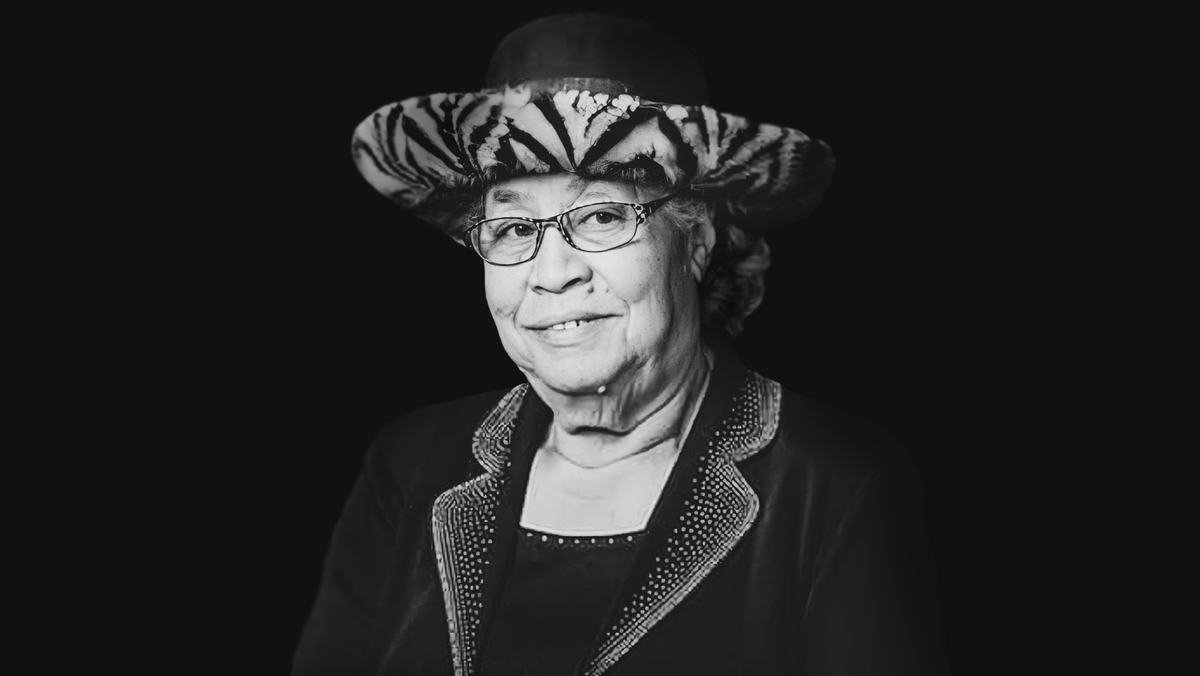
Thelma Battle Buckner learned to play piano in dreams.

She took one lesson as a child, but then the teacher left, and she prayed for help. She received visions in her sleep of her practicing—lessons from God, as she understood it—and quickly learned “Jesus Loves Me,” “How Great Thou Art,” and “Just a Closer Walk With Thee.”

Later, when she played for her father’s Pentecostal revivals, and later, when she and her children performed for Minnesota Lutherans and on the public radio show A Prairie Home Companion, and still later, when she pastored a Church of God in Christ congregation in St. Paul even though the denomination does not believe that women should lead churches and neither did she, she would apologize for her limited skill.

But then she would say, “Don’t blame me if I can’t play any better. God taught me.”

Buckner always recognized her own limitations and God’s call on her life to rise above them. She responded to God with worship, thanksgiving, and work—and urged those around her to do the same.

“I will always serve the Lord,” she sang in one of the gospel songs she wrote herself. “And let me tell you why / He has given me strength in trouble / My guiding light in the sky.”

Buckner died on June 11 at age 89.

The Gospel Temple Church of God in Christ in St. Paul will celebrate her life with music on Wednesday. She will lie in state in the church on Thursday. And she will receive a homegoing service on Friday.

From a long line of fervent Pentecostals

Buckner was born to Nathan and Bessie Wainwright Battle in Racetrack, Mississippi, on April 26, 1932. Her parents were sharecroppers and partners in Pentecostal ministry, regularly leading revivals around the state.

During the summer, Nathan Battle often preached every night. A revival would last a few weeks, Buckner later recalled, but “if the Holy Spirit broke out, it could go on for an entire month.”

The Battles came from a line of revivalists and fervent Black Pentecostals and passed down family stories about the power of God. According to one, Buckner’s grandfather was being cheated out of cotton profits by a white landowner—a common problem for Black families struggling to survive as farmers after the abolition of slavery—and he decided to leave and find a new place to sharecrop. The white owner stopped him with a shotgun.

Buckner’s grandfather started praying in tongues, and it scared the white man, who used a racial epithet and swore Black people “don’t speak other languages.” The man then begged them to leave his land, just as Pharaoh once asked Moses and the Hebrew children to leave their bondage in Egypt.

The story delighted Buckner, and when she was a child, she loved the sound of people praying in tongues and all the noise of a revival.

“There would be singing, shouting, clapping, and jumping,” she wrote in her memoir in 2013. “Folks gave their lives to Christ from all that preaching, shouting, clapping, and jumping.”

After she learned to play piano, Buckner, who was nicknamed “Sassy,” contributed to the holy noise. She was baptized in a Mississippi river at 10, and she gave her life to church, worship, and revival whenever she wasn’t in school.

A difficult marriage

In 1950, Buckner married a young Pentecostal preacher her family had known before he moved from Mississippi to Ohio. Though she had only met Arthur Buckner twice, they corresponded by mail and she agreed to marry him and move to be with him in Ohio.

She quickly regretted the decision.

“What did I know at 18?” she said. “We married as strangers and didn’t know how to get acquainted.”

In 1952, they moved from Ohio to Minnesota, where Buckner’s older brother had started a small Church of God in Christ, but the marriage did not improve.

Buckner’s husband left her at home during the day while he went to work and at night while he went to preach at various churches around the city. She wanted to accompany him and participate as a partner in his ministry, but he refused.

When Buckner got pregnant, he didn’t want her to leave the house at all. And she got pregnant five times in 11 years—including with three sets of twins. Buckner had eight children by age of 29 when Arthur abandoned her. He went to preach at a revival in Chicago in 1961 and never returned.

Buckner was mostly glad to be left to raise the children on her own. She started working at a local factory and trusted God to provide.

“I’m just taking a moment to testify,” Buckner told the church after her husband left. “Every day the Lord makes a way.”

‘It was hard trials and tribulations’

A short time later, Buckner took in eight of her sister’s children when her sister was too ill to care for them. Then she started taking in children whose parents were struggling with drugs and alcohol. She took care of an estimated 500 kids before the county government licensed her as a foster care provider in 1972.

In 1985, she bought a 100-year-old, nine-bedroom house in St. Paul so she could take in more children. The exact number of children she cared for is unknown, but it is believed to be more than 1,000.

“You see a need, you take care of it,” Buckner said. “I don’t know how successful I was. It was hard trials and tribulations and bumping my head. Only way to raise a child is to be persistent.”

At the same time, she and six of her eight children started performing gospel music. First they played in the Gospel Temple, where they attended, and then around the city and the state. They performed as Thelma Buckner and the Minnesota Gospel Twins, and they were a big hit at Lutheran churches and with Garrison Keillor, creator and host of A Prairie Home Companion. They appeared on the show multiple times.

Called to ministry

At 62, Buckner faced a new challenge when her elder brother died and there was no one available to lead the Gospel Temple. She tried to hire a minister, and then another and then another, but no one was willing to take on the small church. She felt God telling her that she should do it.

“I didn’t believe in women priests,” she said. “I came from the old school. I didn’t think I should even be a pastor.”

Buckner was reminded of Moses, who also thought he was unqualified to lead God’s people and his brother should do the job. She thought of Jesus’ statement that if his followers didn’t praise him, the rocks themselves would cry out. And she made a decision.

“I said, ‘Okay, Lord, I’ll speak whenever you want me to,’” Buckner said. “I refuse to let a rock talk in my place, so I’m going to serve the Lord, hallelujah.”

She led the church for 15 years, retiring in her 70s. Gospel Temple is now pastored by her son Dwight.

She went back to school and earned a doctorate from the Minnesota Graduate School of Theology in 2002, at age 70, and launched a ministry teaching young people to sew. They called her “Granny.”

Bucker is survived by her children Gwen Onumah-Onikoro, Bessie Jean Manga, Jesse Buckner, Dwight Buckner, Patrick Buckner, Patricia Lacy-Aiken, Arthur Buckner, and Aretta-Rie Johnson.

Theology

Francis Collins: How Christians Can Help Curb COVID-19

A conversation with the director of the National Institutes of Health.

Christianity Today June 23, 2021
Pool / Getty Images

Over the last year of the US pandemic, a few key scientists and medical professionals have been lifted onto the national stage by their timely expertise. Americans turn to them for information, insight, and even pastoral care of a certain kind. Among those is the physician-geneticist Francis Collins, director of the National Institutes of Health (NIH) and founder of BioLogos.

Timothy Dalrymple, president and editor in chief of Christianity Today, and Ted Olsen, CT’s executive editor, spoke recently with Collins about the Delta variant, vaccine hesitancy among evangelicals, and how Christians can come alongside communities that are still crippled by the virus.

Dalrymple: I understand there is an effort to get more folks vaccinated before July 4, and that’s the reason for this conversation. But first, tell us about the Delta variant.

This Delta variant, which is the one that decimated the country of India, is leading to all kinds of terrible tragedies. It has now also taken over in the United Kingdom, where now they’re wondering whether they can actually open up—which they planned to do—because this virus is spreading so rapidly.

It’s about 50 percent more contagious than the previous record holder, which is the one we call Alpha. But Delta is even more contagious. And unfortunately, this has now come to the US, and in the last couple of weeks, about 6 percent of the viruses that were isolated from infected folks are this Delta variant. It’s likely to grow very rapidly now, just because of its ability to spread.

It seems also really good at spreading amongst young people, who are often the folks who haven’t gotten around to getting vaccinated, because they thought maybe this wasn’t such a threat to them. And this certainly can be a threat.

Dalrymple: So what I’ve heard is that the Delta variant is more transmissible, perhaps more likely to lead to hospitalization, and yet the vaccines seem to be effective against it.

That’s the good news. If you get both doses—not just one but both doses—of the Pfizer or the Moderna vaccine, you are protected about at the 90 percent level from getting sick from Delta. And that’s something you would really not want to pass up.

So I know there’s still about 90 million people out there who have not yet rolled up their sleeve for that first shot, and many people still on the fence wondering, “Is this really safe? Is it really something that I want to do for myself?” Here’s one more really good reason to get off the fence.

Look at the data. There’s lots of information there. Go to the website that’s called getvaccineanswers.org if you’re interested in having some of your questions answered. And then make a decision, because this is potentially going to ruin our plans for getting back to something approaching normal. If we have communities where vaccination levels are still pretty low, Delta is potentially going to cause another round of outbreaks, and it’s going to be preventable, if we can move quickly now to get shots in arms.

Dalrymple: I check the Johns Hopkins dashboard every day, and for a long time there, every state was blue, which indicates that the rates are still falling. Now I see a couple of states that are showing pink or red again. Are you starting to see a breakout of containment in a couple places?

I think that is unfortunately the case. For a while we could see rates falling in all 50 states, and boy, was that wonderful to see after what we’ve been through for the last year and a half. And really only back in January, where there were hundreds of thousands of new cases every day and thousands of deaths.

And we’ve come way down from that, by like a 90 percent drop in the number of cases and deaths, but that’s not a guarantee that will continue. As you’re saying, when you start to see a shift in a few places, that’s a warning that we’re not exactly where we need to be.

But we could be again, now that we’ve had these vaccines out there for almost a year, beginning with the original large-scale trials. We’ve been able to see just how effective and how safe they are in the real world, and for people who haven’t yet figured out that it’s something they want to take advantage of, this would be a great moment to look again.

Let me say one other thing that we have to think about, and that is those people who can’t get vaccinated. Those would be kids under 12. But it would also be people who have cancer, who are on chemotherapy. They could get it injected but it probably won’t work. They won’t have an immune system that can respond to it.

Dalrymple: Right.

Or my friend who has a kidney transplant, who, because of the suppression therapy he has to be on, can’t respond to the vaccine. Those people are counting on the rest of us to develop enough community immunity that this virus won’t keep going and won’t threaten them. So yeah, this is a “love your neighbor” kind of moment. It’s not just about your own self-protection. It’s also about helping other people around you—and it seems like that’s what Christians have always been called upon to do and have always risen to that challenge. This would be a great time to do so.

Dalrymple: Obviously, we’ve been concerned about vaccine hesitancy among evangelicals. Do you have any data on whether that hesitancy is declining? Are we making new progress? I’ve had a hard time finding any updated data on that.

I look at the various polls that are put out by the Kaiser Family Foundation and others. It hasn’t been terribly encouraging. Yes, I am an evangelical Christian, and it does trouble me that this seems to be a group where the hesitancy is particularly strong. And there are lots of reasons and lots of questions, although many of those have really good answers.

But for some reason, in many churches, there’s still sort of this sense of, okay, well, we’re trusting in God here, and therefore we don’t need to reach out and take advantage of these vaccines that might, by something we’ve heard on social media, have something wrong with them.

First of all, there’s a lot of things on social media. Please don’t pay too much attention to those. Go and look at the real data—getvaccineanswers.org is a good place to do that. But secondly, if you’ve been praying for protection for yourself and your family from COVID-19, and now these vaccines come along that are safe and effective, it kind of seems to me like that’s an answer to prayer. It felt that way to me, being part of the process of getting those developed. Maybe think of it as a gift from God—but a gift you’ve got to unwrap.

Which means roll up your sleeve.

Olsen: I’m curious about the folks who have received both doses and have been masking. How can they further show love for neighbor, not knowing who may be unvaccinated? I’ve checked my box, I got a vaccine, but now I wonder, “There’s this Delta threat, and I don’t know if there’s anything I should be doing.” Not necessarily for myself, but for the community.

It’s a great question. I do think it’s a time for those of us who have had already the opportunity to get immunized—and I’m one of those—to become ambassadors to those who are still not sure.

Go to Google and type in “We can do this,” and it’ll take you to a site that has hundreds of organizations, hundreds of churches, the National Association of Evangelicals, you’ll see they’re right there, joined up together to try to be in that space of providing encouragement to people who are still not sure. Individuals can be ambassadors. Just go to We Can Do This, and they’ll send you a whole bunch of links to information that you can use to answer other people’s questions.

Because sometimes that’s the way people’s minds really get made up—not because they hear some government guy, that would be me, talking about this. It’s because of a neighbor who has the information, or their doctor, or their priest, or their clergyman. All of those are trusted voices. By the way, 90% of doctors have gotten immunized, and that tells you something about what they think about the importance of the vaccine. And the We Can Do This site is a place to empower yourself, if you want to be one of those trusted voices and aren’t sure how.

Dalrymple: Thank you for pointing us toward that. On the international front, are you concerned that sub-Saharan Africa might be the next India?

I’m really worried. I’ve been worried all along that Africa is in a vulnerable position because of health care delivery limitations; access to vaccines, which has been very limited up until now; and of course with these variants coming along that are even more contagious. So far Africa hasn’t been hit too hard, but there’s no reason that could not be in the future.

So we as citizens of the planet and people who care about our brothers and sisters, regardless of what country they’re in, we should be doing everything we can to try to help make sure that vaccines do become as readily available as possible as soon as possible.

One of the things that I’m caring most about as head of the NIH—we have a global health mission as well—is to try to see in the longer term what we could do to get vaccine manufacturing capabilities more widely distributed. Why don’t we have vaccine manufacturing in Ethiopia, in Senegal, in South Africa, instead of depending on just a few places in the world? We need to fix that in the long term.

Olsen: One last question. Other than prayer, is there something that American Christians can be doing to help folks overseas? How can we help organizations on the front lines?

Certainly for organizations that are committed long term to supporting health care in Africa, this is a crucial moment to be sure they have the resources they need. Because it won’t just be about vaccine doses. It’ll be about the personnel out there and delivering the vaccines in hard-to-reach places. People mostly have their favorites, I think, whether it’s World Vision or whatever. This is a time to double down on being generous, and Christians are pretty good at that.

For more information, go to christiansandthevaccine.com and getvaccineanswers.org.

News

O For Six Unmasked Tongues to Sing: England Still Quieting Worship

Bands are rocking post-pandemic services, but congregants can’t yet join in.

Christianity Today June 23, 2021
Holy Trinity Brompton / YouTube

Last Sunday at London’s Holy Trinity Brompton church, the band repeated the chorus, “Awake my soul and sing / Sing his praise aloud” before a sanctuary of masked worshipers who, according to government restrictions, could not comply.

Holy Trinity Brompton (HTB) is one of the largest Anglican congregations in the United Kingdom, and, like fellow churches across the country, still faces what some Christian leaders consider an inconsistent and discriminatory ban on singing during indoor worship services.

In England, COVID-19 precautions mandate that no more than six amateur singers can sing indoors, and guidance for churches has indicated that “indoor communal singing should not take place,” according to the Evangelical Alliance of the UK.

Many churches, like HTB, have moved to hybrid services on Sundays, offering adapted worship back in their sanctuaries and continuing to livestream for those at home. While a few members of the worship band may raise a hallelujah during the worship set, the rest of the congregation attending in person is not supposed to join in.

HTB now offers four services at its Brompton Road location and a total of 10 Sunday services across other sites, but those who register to attend are asked to agree to a set of terms and conditions—including that “congregational singing and chanting is not permitted.” Leaders ask that parishioners engage in worship in other ways as the team on stage performs.

After enduring lockdowns and months spent worshiping over screens, getting to be together on Sunday morning is a blessing, even if the congregation has to be on mute during the worship set. But it’s not easy to keep quiet, pastors say.

“To hear more and more about how much God loves us through the sermons and to not have an outlet to let it all out, it can feel like a dam ready to burst,” said Greg Willson, pastor of Redeemer Church Manchester. “I think for our church, it has developed more of a love and longing to sing together in worship. It’s not like we didn’t love it before, but when something you love is taken away, a sense of urgency takes its place.”

Willson has occasionally led music during Redeemer’s Sunday services at a local pub, either solo or with another person, but says it feels “bridled and held back” to sing without his whole flock. The congregation is buzzing about an upcoming outdoor worship gathering where they’ll actually get to sing together.

To adapt to the current restrictions, Willson’s church has leaned into other aspects of worship that don’t involve raising their voices, such as humming, hand-raising, and body posture.

At Emmanuel Oxford, another evangelical congregation, attendees are notified, “Guidelines do not presently allow us to sing together, however we can worship! We can raise our hands, speak out words to God, kneel, clap and celebrate. It’s an opportunity for us to be creative and express our hearts in different ways.”

The regulations around singing are part of governmental guidelines for reopening during the pandemic. Churches must also comply with social distancing, masking requirements, and registration for all attendees to allow for contact tracing should the virus spread at a service. Many are also skipping social time before and after services, not distributing Bibles in seats, and not collecting tithes in person.

Especially when singing is allowed in other circumstances—paid choirs, for example, can perform without size limits and soccer fans can join in song to cheer on their teams—British leaders are questioning whether the singing restrictions for their services remain necessary.

“The ban on congregational singing made sense when evidence was poor, and caution about the potential spread of the virus was justified,” said Danny Webster, spokesman for the EAUK, “but singing together is at the heart of evangelical church practice and persisting with this ban despite evidence, and despite inconsistencies, is disappointing, and we want the government to act.”

Webster said while a small portion of churches have begun to sing together anyway, the EAUK advises against defiance. The organization, which represents thousands of churches across denominations, sees the guidance against singing as carrying the full weight of the law.

In the United States, the Centers for Disease Control and Prevention declared it safe for vaccinated people to attend full-capacity worship services and sing in indoor choirs, unmasked.

The pressure to change the regulations in England is mounting as nearby Wales has moved to allow indoor congregational singing again and as Scotland has in certain areas. Christian leaders hoped to see a change this week, but the update in regulations was pushed back until July 19.

Multiple Anglican bishops have spoken up against the policy. Jim Bethell, a junior health minister in the House of Lords, emphasized the risk of singing given the coronavirus’s airborne spread, but also acknowledged the inconsistency in the guidelines.

“Having looked at the scientific evidence, with a sense of regret that we are letting down those with a passion for singing and religious worship, and in the hope that we can get rid of them very soon,” he said.

Willson, whose church plant in Manchester continued to attract attendees despite the pared-down pandemic setup, said one upside was seeing Christians find a sense of church and connections in smaller groups outside Sunday mornings.

“We can sing in smaller groups, have those casual chats, and even eat a meal together,” he said. “That’s been a real blessing from God.”

News

Messianic Jews Say ‘Fake Rabbi’ Was Wrong Way to Reach the Ultra-Orthodox

Unpacking the motives of an accused undercover American in Israel and lessons learned for Christians wanting to engage Haredi Jews.

Christianity Today June 23, 2021
Illustration by Rick Szuecs / Source Images: Blake Campbell / Tanner Mardis / Unsplash / Ktoytor / Getty / Envato

How far can one go to “reach the Jews”?

The apostle Paul put himself “under the law” to give the gospel to his Hebrew brethren (1 Cor. 9:20).

Allegedly a Gentile, Michael Elkohen did the same to reach the modern Jews most fastidiously under the law—the Haredim, often known in English as “ultra-Orthodox.”

Approximately 1.2 million Haredim live in Israel, jealously guarding their traditions.

Dressed in black-and-white garb with a hat, long beard, and side curls, in 2011 Elkohen appeared next to an Iranian Christian on MorningStar TV and prayed for a Muslim world revival.

“When Jesus walked the earth, he was Jewish,” Elkohen told the host, Rick Joyner. “The church, the non-Jewish part of the body, is supposed to stir us to jealousy.”

For more than a decade, his would-be jealous Haredi neighbors were completely unaware. To the insular community in the French Hill section of Jerusalem, Elkohen was a beloved rabbi, scribe, and mohel—performing circumcisions.

In April, the Israeli anti-missionary organization Beyneynu sent shockwaves through the Haredi world with a report claiming that Elkohen was in fact a missionary from New Jersey, whose father is buried in a Mennonite cemetery.

“Other anti-Semites attack the Jews as individuals or as a people,” said Tovia Singer, a rabbi and founder of Outreach Judaism. “But the missionaries are attacking the Jewish faith and working to erase it from the planet.”

The spiritual damage is considerable.

Though there is no evidence anyone was converted in Elkohen’s community, Singer claims that the alleged missionary’s manuscripts and religious services are all invalid. And his presence at prayer may have falsely achieved minyan, the necessary quorum of 10 adults, prompting Torah readings that to Haredi Jews now constitute speaking God’s name in vain.

The 42-year-old Elkohen first moved to Israel with his family in 2006, obtaining citizenship after presenting papers as a Jew related to a famous mystical rabbi in Morocco. Having obtained rabbinical ordination through an online Orthodox US institution, in 2014 he went on to study at a yeshiva in the West Bank.

It was then he gained the attention of the anti-missionary organization Yad L’Achim, who confronted him. Confessing his evangelistic purpose, Elkohen replied that he had since “repented” and “chose Judaism.”

A few years later, Elkohen was living quietly among the Haredim when they rallied around him as his wife—who said she was descended from Holocaust survivors—died from cancer. The community raised money to support the husband and five children in need.

But in April, Elkohen’s 13-year-old daughter told classmates about Jesus.

Beyneynu investigated and felt it had to act. There are 30,000 missionaries in Israel, the organization estimates, and 300 organizations dedicated to evangelizing Jews.

Messianic Jews were quick to distance themselves.

Michael Brown, a popular radio host, author, and apologist, circulated statements from Jews for Jesus, Chosen People Ministries, and One for Israel that deplore deception.

“I know of no Messianic Jews who support what he did,” Brown told CT. “We are open and forthright about our faith.”

Tsvi Sadan, an author, stated that Elkohen was “probably a loner who … convinced himself that he is a Jew.” He observed that among Christians who decide to keep the Mosaic law, some take it further and live as Orthodox Jews in emulation of Paul’s words to the Corinthians: “To those under the law I became like one under the law … so as to win those under the law.”

“This kind of understanding,” Sadan wrote, “turns Paul into a con artist.”

According to a Pew Research Center report released last month, there are 1.4 million Americans “of Jewish affinity” who are counted separately from the 7.5 million Jews in the United States. With neither Jewish lineage nor religion, 60 percent identify as Christian and 8 percent as Messianic Jews. Meanwhile, Pew found only 4 percent of American adults raised Jewish by religion are now Christian.

“Clearly, if he wasn’t Jewish, it’s pure fraud,” said Jamie Cowen, a Messianic Jewish lawyer. “If he really was Jewish but then masqueraded himself as ultra-Orthodox when he never lived that way previously, I would say it’s misleading at best and fraudulent at worst.”

Brown agreed but held out other possibilities.

Haredi Jews who come to believe in Jesus might initially share their faith in an “underground” way. And Messianic Jews who desire to share the gospel with them might take on Haredi traditions to join the community, provided they were up front about their intentions.

“The problem,” Brown said, “is that if you had any success at all, you would immediately be kicked out of the community.”

Sources described the Haredim as one of the most overlooked unreached people groups in the world. A senior staff member at Jews for Jesus (JFJ), requesting anonymity to protect his efforts in sharing the gospel with Haredim, said they heavily regulate the internet and social media.

Some even engage cell phone companies to supply unique number patterns to their community. Deviation from the pattern immediately alerts the user—and anyone monitoring—of contact from the outside.

Despite its apparent austerity, a major subgroup of the Haredi movement, Hasidism, began as an 18th-century popular revival. Eastern European Judaism at the time confined learning to the educated elite. But Israel Ben Eliezer, known as the Baal Shem Tov—in Hebrew, “master of the good name”—said that the spiritual life is for everyone.

Today, at 13 percent of the population, the ultra-Orthodox are the fastest-growing segment in Israel. But this is from birthrate, not conversion. Averaging 6.5 children per family, their fertility rate doubles that of other Jews. Devastated by the Holocaust, they feel a responsibility to replace those lost.

“We respect the Haredim for their love of the Bible and devotion to the Jewish people,” said the JFJ source. “Do others feel this way? I hope so.”

Yet many do not.

During the pandemic, their close-knit community and commitment to worship were blamed for the spread of COVID-19. Around the world, memories of enmity have given the ultra-Orthodox little trust in the nations that host them. And in Israel, they are the only officially recognized Jewish sect, gaining privileges from the government and obliging public Sabbath observance on secular Jews.

To protect their ways, the Haredim keep a severe culture of honor and shame, shunning anyone who diverges from community standards.

Rick Joyner, executive director of MorningStar Ministries, told CT that his organization sends missionaries into difficult areas, where they may have to conceal their identities as Christians.

“We never sanction denying our faith,” he said. “But we leave it to the discretion of the missionaries how and when to share their faith.”

MorningStar contributed financial support to Elkohen, though it did not send him. Joyner accepted his Jewishness at face value and now withholds judgment about reports in the media.

But he understands the anger. Throughout history, Christians have persecuted the Jews, at times massacring those who refused to give up their beliefs.

“I for one am glad for all the Jews who did not convert to such a false representation of Christianity,” said Joyner. “But it seems that this is now a wound so deep, only Jesus himself can heal it.”

Elkohen believed that Jesus would.

Living in anticipation of the Second Coming, Jewish conversion to Christianity was not Elkohen’s goal, Joyner said. He wanted only to love and learn from the Haredim, ready to help them “once they recognized their Messiah.”

Others are trying to help them now.

Sean Steckbeck, a Gentile from Tennessee, hesitates to call himself a Christian, in deference to his wife. After moving to Israel in 2002, he married a Messianic Jew originally raised in a kibbutz, who later joined an ultra-Orthodox community. Steckbeck’s efforts to obtain Israeli citizenship were ultimately successful, after a 10-year legal battle culminated in Israel’s Supreme Court.

First serving as a youth pastor, Steckbeck also founded Simeon’s Cry Ministries, named after the biblical figure who held the baby Jesus after waiting for the consolation of Israel. Steckbeck trains Messianic Jews in disciple-making movements to fulfill their call to be “light to the nations.”

But three years ago, his team started the Adullam Outreach Center in Jerusalem to help the “off the derech” (OTD) Haredim, those who have left the “path.” Named after the cave where David gathered “all who were in distress” as he fled from Saul, the center provides emergency shelter and classes on how to live in the outside world.

Unorthodox, a four-part Netflix series about this community, was nominated for two Golden Globe awards. It tells the story of a 19-year-old woman who ran away from an arranged marriage.

“OTDs flee because they don’t fit in,” said Steckbeck. “They try but fail to follow the stringent rules, and many swing from one extreme to another.”

Some OTD outreach efforts encourage this, helping young Haredim learn how to party and experiment sexually. Others, run by the ultra-Orthodox themselves, recognize the pull to “sow one’s wild oats” and instead help the wayward return to the law-abiding fold.

Adullam teaches them discernment—and it draws many in.

But it also draws opposition. Last year, an extremist anti-missionary group threw rocks at the center over the course of two weeks, and one participant was stabbed.

Steckbeck is fully transparent about his belief in Jesus as Messiah. Even so, most of Adullam’s programs are run by OTD Haredim, many of whom still believe in God. Though they are often rejected completely by their community, some of their distraught parents try to maintain ties.

“We take a back seat and give them tools to reach their families,” said Steckbeck. “A new believer sharing the gospel is more powerful than a trained missionary.”

Anecdotal reports state there are followers of Jesus among the Haredim, sources said. But since most Messianic Jews came from the non-Orthodox community, efforts to share the gospel with the ultra-Orthodox are still in their infancy.

What would a Haredi expression of faith in Jesus look like?

The JFJ source said there is no desire to pull them out of the only community they have ever known. But Brown said that when there is a sufficient number, a new community would need to be formed.

For Steckbeck, Jesus will call it into being.

“Like Paul said: They have a zeal, without knowledge,” he said. “Ultimately, the Haredim will help the Jews coronate the coming Messiah, once they recognize him as Yeshua.”

Additional reporting by Jeremy Weber

addApple PodcastsDown ArrowDown ArrowDown Arrowarrow_left_altLeft ArrowLeft ArrowRight ArrowRight ArrowRight Arrowarrow_up_altUp ArrowUp ArrowAvailable at Amazoncaret-downCloseCloseellipseEmailEmailExpandExpandExternalExternalFacebookfacebook-squarefolderGiftGiftGooglegoogleGoogle KeephamburgerInstagraminstagram-squareLinkLinklinkedin-squareListenListenListenChristianity TodayCT Creative Studio Logologo_orgMegaphoneMenuMenupausePinterestPlayPlayPocketPodcastprintremoveRSSRSSSaveSavesaveSearchSearchsearchSpotifyStitcherTelegramTable of ContentsTable of Contentstwitter-squareWhatsAppXYouTubeYouTube