Theology

When Violent Nationalism Backfired for God’s People

Jesus saw the disastrous end of faith-fueled zealotry and warned against it.

Illustration by Mallory Rentsch / Source Images: WikiMedia Commons / THEPALMER / ivan-96 / Getty Images

In the musical Jesus Christ Superstar, Jesus stands amid a fanatical crowd bellowing out their devotion to him. Simon the Zealot senses an opportunity and shrewdly informs Jesus that:

There must be over 50,000 screaming love and more for you
Every one of 50,000 would do whatever you ask him to
Keep them yelling their devotion, but add a touch of hate at Rome
You will rise to a greater power, we will win ourselves a home
You’ll get the power and the glory, for ever and ever and ever.

In the show, Jesus refuses to cultivate hatred of Rome and retorts that neither Simon nor the crowds understand what true power is. Lyricist Tim Rice is no New Testament scholar—it is open to debate whether Simon’s zeal pertained to religion or included a violent expulsion of Roman power from Judea and Galilee. But Rice did hit upon a genuine theme in Jesus’ ministry: Jesus refused to be the Messiah of a violent revolution, and he called on his fellow Jews to repent of the idea that the kingdom of God can be established by violent insurrection.

What took place at the US Capitol in January happened to be set in America: an unruly mob, some bearing Christian banners, smashing their way into a nation’s halls of power to overturn a democratic election and fulfill prophecies that foretold their political messiah. But the impulses driving the violent act—and subsequent threats of violence—were all too visible to Jesus in his day. He saw their inevitable disastrous end, and he warned his followers not to be seduced by the power of the sword.

Shortly after Jesus’ birth, a man named Judas the Galilean led a popular uprising against the provincial rulers in Galilee. Judas’s militant group objected to Roman taxation in part because it was oppressive and in part because taxation meant recognizing Caesar as king (their motto was “No king but God!”). The Jews resented Roman hegemony, with its puppet rulers, its appointment of their high priest, and the humiliation of being dominated by yet another pagan overlord, of which Rome was but the latest permutation.

The Galilean insurrection was crushed when Varus, the Roman legate of Syria, arrived with his legions to defeat the rebels and destroy the city of Sepphoris, only a few miles north of the village of Nazareth. Varus took the city’s inhabitants into slavery. Jesus grew up amid all this desolation, where physical signs and traumatic memories of Roman imperial violence were palpable.

Over the next 60 years, there would be many riots, incidents, massacres, and prophetic protests against Roman rule. No wonder then that in Jesus’ day, many people like Simeon were waiting for the rescue or the redemption of Israel (Luke 2:25), including the two travelers to Emmaus (Luke 24:21). According to the first-century Jewish historian Josephus, many were inspired by an “ambiguous oracle” from their Scriptures about a ruler rising up from their land to defeat the Romans and dominate the East.

Each of the major Judean factions of Jesus’ day had its own view of how to manufacture the kingdom. For the Pharisees, it was a matter of back-to-basics Torah learning, with purity and piety serving as the path to national deliverance. The Sadducees hedged their bets and threw their lot in with the biggest military power of the day, currying favor with Rome and praying it would all work out. The ascetic Qumranites hoped they could withdraw to the wilderness, keep themselves separate, write a commentary on Habakkuk, and wait for God to send his angels to destroy the Romans and apostate Jews.

In some ways like Christian nationalists in America, the Judean zealots were slow to organize. There was no formal “Zealot party” until the Judean rebellion in the late 60s, decades after Jesus departed the scene. But during Jesus’ lifetime, there were many zealous-minded Jews, who believed in holy violence to protect Israel and the temple’s sanctity. Their approach was a Torah in one hand and a sword in the other, practicing what they thought was divinely sanctioned violence against Gentiles and even Jewish collaborators.

Yet instead of calling on Jews to mount an armed uprising, Jesus critiqued the pro-revolutionary movements of his day.

Most often, those critiques were subtle. When Jesus described what the kingdom of God was like, he did not picture it as a formation of archers, chariots, and legions, but as a man planting a crop or the innocuous growth of a small mustard seed—things that God makes grow and humans do not manufacture by violent hoeing. The seed parables were a way of tacitly saying that the kingdom does not come by might (Mark 4:26–32). The revolutionary aspect of Jesus’ kingdom message was that it was not about a violent revolution.

At times, Jesus redirected his followers’ attention away from earthly worries that he knew could tempt them toward taking matters into their own hands. When Jesus was told about the Galileans whom Pontius Pilate murdered as they were offering sacrifices, and about those who died when the Tower of Siloam fell upon them, he warned of something worse than Roman brutality and natural disasters: God’s judgment for failing to repent (Luke 13:1–5).

Jesus did not want to be a king installed by people power (John 6:15) but rather the Son of Man who laid down his life as a ransom for others in direct opposition to the self-aggrandizing power of Gentile rulers (Mark 10:41–45). He knew from the ravages of war around Nazareth that “all who take up the sword will perish by the sword” (Matt. 26:52, CSB). That is to say, violence begets more violence.

This posture contra Judean nationalism, which permeated Jesus’ entire ministry, culminated in his attack on the temple. The temple was not just a religious monument; it was a mixture of cathedral, White House, central bank, and Pentagon. It was the symbol of Judean freedom and the inspiration for Judean resistance since the days of Jeremiah.

The temple was the flash point for many riots and revolts, including the beginnings of the Judean insurrection against Rome in A.D. 66, which began when the priests refused to accept the daily offering on behalf of the Roman emperor. Rather than participate in the imperial cult with worship to the emperor and his family, the Judean priests were expected to perform a sacrifice on behalf of the emperor to the God of Israel as a token of their obedience. Refusing to do so was an act of defiance. The local governor tried to intervene before retreating back to Syria. Eventually, however, the Romans returned in much greater numbers, ravaged the countryside, besieged Jerusalem, and sacked the city, destroying the temple in A.D. 70 just as Jesus predicted.

In fact, Jesus spoke multiple times of what Israel would reap if it indulged its nationalist ambitions. When Jesus approached Jerusalem for his triumphal entry, we are told that he wept over the city and said,

“If you, even you, had only known on this day what would bring you peace—but now it is hidden from your eyes. The days will come upon you when your enemies will build an embankment against you and encircle you and hem you in on every side. They will dash you to the ground, you and the children within your walls. They will not leave one stone on another, because you did not recognize the time of God’s coming to you” (Luke 19:41–44).

In addition, after visiting the temple, when his disciples were admiring its beauty and grandeur, Jesus told them, “Do you see all these great buildings? Not one stone here will be left on another; every one will be thrown down” (Mark 13:2). Much of the Olivet Discourse recorded in Luke also focuses on the details of Jerusalem’s siege and sacking (21:20–24).

Jesus, whether as a prophet or a political analyst, could see where Israel was going: It was heading toward a fateful and futile war against Rome, where there would be violence, carnage, and suffering, and the kingdom of God would be no closer.

When Jesus entered the temple and overturned tables, he was not complaining about the mixing of religion and economics, as if objecting to a megachurch gift shop. Exchanging coins and providing animals for sacrifice was more a convenience than a con for travelers from far away. Rather, what was affronting to Jesus was the connection of the worship of God with Judean nationalism.

In the Old Testament, the temple had been intended as “a house of prayer for all nations,” which Jesus made clear by quoting from Isaiah 56:7. The people of the world, including Gentiles, were to throng to Zion and praise God in his temple. But over time, Gentile rulers occasionally encroached upon the temple, and many Jews were embittered by memories of pagan sacrifices being offered within its walls and Roman soldiers entering its holy places. Contamination of the temple by Gentile intruders was such a concern that the apostle Paul’s opponents accused him of bringing a Greek into the temple to incite crowds against him (Acts 21:28). So while Herod the Great’s temple did allow Gentiles into the outermost court, the fear of Gentile defilement was real; any Gentile who ventured into Jewish-only areas of the temple was threatened with a sign warning of immediate death.

Jesus surveyed all of this and declared that the temple had become—in a better translation—“a cave of bandits” (Mark 11:15–17). For him, the temple was meant to be a symbol of God’s presence with Israel for the world. Instead, it had become an emblem of Jewish resistance against Rome, and Herod’s refurbishment of it had only served to resurrect the fallacy that Zion was impregnable. The result was, Jesus said, that when masses of foreigners did one day come to Jerusalem, it would not be with songs and sacrifices, but with soldiers, swords, and siege engines.

If Jesus’ message was not one of violent insurrection, collaboration with Rome, or indifference to political matters, then what was it? Was it purely spiritual?

Jesus taught that the kingdom was partly present through his own work, but that it also was something still to come. And among those who were “near” the kingdom, it had certain characteristics.

First, the kingdom of God is defined by love rather than anger. Jesus repeated the love command of Leviticus 19:18 and taught people to love God, their neighbor, and their enemies (Matt. 5:43–44; 22:37–39). Instead of fanning the embers of anger, he urged his followers to cultivate the virtue of love.

Second, the kingdom is bound up with faith, not fear. Instead of whipping up crowds with fear about the Romans, anxiety over food and clothing, satanic conspiracies, or even fear of death, Jesus told the crowds to have faith in God and in him (Mark 1:15) to bring the kingdom, by the power of the Spirit (Luke 11:20).

Jesus refused the temptation of a shortcut to power by playing on prejudices, goading grievances, or fomenting fear. Instead, he called his followers to replace anger with love and put faith where their fears are.

Michael Bird is academic dean at Ridley College in Melbourne, Australia. He is co-author with N. T. Wright of The New Testament in Its World and author of Seven Things I Wish Christians Knew about the Bible (June 2021).

Cover Story

Why the Children of Immigrants Are Returning to Their Religious Roots

Many second- and third-generation Americans leave the ethnic congregations of their parents for white-led churches, only to come back.

Illustration by Chad Hagen

Read the rest of our March coverage of multicultural churches: Korie Little Edwards looks at how far the movement has come and how far it has to go, and Michael J. Rhodes unpacks prejudice in the early Corinthian church.

Evelyn Perez tried to share her trauma. Five years ago, she met every week with a small group of women—whom she calls “great people”—at her large nondenominational church in the San Francisco Bay Area. She told the group of mostly white women, plus two other women of color, that her marriage had grown dangerous. The relationship was breaking down, and her husband was physically and emotionally abusive.

But she did not feel fully understood.

“As I shared my story, it was more like, ‘Oh, we’re so sorry you’re going through that, let’s just pray for you,’ ” says Perez, who is 37 now and divorced. “And it was never a deeper concern of ‘We want to be that neighbor. We want to sit with you in the pain. We want to walk with you.’ ”

“This is our family. This is our culture. I don’t want you guys to ever lose it.” Evelyn PerezCourtesy of Evelyn Perez
“This is our family. This is our culture. I don’t want you guys to ever lose it.” Evelyn Perez

Perez, who had come with her mother from Guatemala to the United States when she was two, didn’t feel that they understood how, in her experience, her husband’s Mexican heritage led to a manifestation of “you know, alcohol and machismo” that wended its way into their marriage.

Though they were empathetic, the group did not recognize why and how deeply she hurt.

“There wasn’t the willingness of wanting to have a deeper understanding of who I was, where I came from,” she says. “What was my culture? It was never asked.”

So she left. Though she resisted at first, Perez took herself back to Maranatha Covenant Church in Richmond, California, the majority-immigrant church where she had grown up.

She found a dramatically different reception there.

When Perez shared the trauma of her marriage, “they supported me, they came alongside me,” she says. “They were like family. I could see the difference in both churches. There was just a deep understanding, and I felt safe to share my story.”

Perez’s story of belonging at a majority-ethnic church echoes those of other second- and third-generation Americans who feel disillusioned by large, white-led multiethnic churches. It’s a phenomenon these Christians are wrestling with even as the number of multiracial megachurches increases. A new study by sociologists Warren Bird and Scott Thumma found that though 58 percent of megachurches are now multiracial—defined as 20 percent or more of a congregation belonging to a racial minority group—94 percent of the senior pastors are white.

It’s a seminal time for these children and grandchildren of immigrants. Made up largely of Asian Americans and Latinos, they constitute America’s fastest-growing minority populations, due in part to the passage the Immigration and Nationality Act of 1965, which barred a quota system based on national origin and led to rapid growth in the number of immigrants coming from non-European nations. Largely Gen Xers and millennials, the descendants of post-1965 immigrants have often experienced an ethnic church in their youth and moved on to white-led multiethnic churches, where they found something lacking.

Now, as they raise their own children, many are pondering the type of faith and cultural environment they want to bestow on their kids. That often means a search for churches that will incorporate their stories, embrace their heritage, and hire leaders who look like them.

This shift has led many second- and third-generation Americans away from white-led multiethnic churches and toward multiple alternative paths. One is a type of modified boomerang effect, in which these Christians return to ethnic churches similar to the ones in which they were raised—albeit often with more progressive, justice-oriented expressions of what it means to follow Jesus.

Michael O. Emerson, the Christian sociologist who two decades ago co-wrote the pivotal book Divided by Faith: Evangelical Religion and the Problem of Race in America, says Christians of color also broadly follow two other paths when disaffected by white-led multiethnic churches: They join multiracial churches led by pastors of color, or they drop out of religious spaces altogether.

Sandra Maria Van Opstal, who worked for years with InterVarsity Christian Fellowship and is co-founder of the nonprofit Chasing Justice, says many Christians of color have begun to reject white-led multiethnic spaces because they feel they’re being pushed out by a lack of cultural understanding and care.

Van Opstal, whose mother is from Colombia and whose father is from Argentina, grew up attending a Spanish-speaking Catholic parish and says she was awakened to Christian faith at a predominantly white Southern Baptist church. Later, she chose to pastor at Grace and Peace Church in Chicago’s Hermosa neighborhood. Though she is no longer on staff there, she still considers Grace and Peace, which is majority Puerto Rican and black, her home church.

“I went to Grace and Peace because I was like, ‘I just need to be away from whiteness for a hot minute if I’m going to survive,’ ” she says, describing it as a healing process. “I wanted to be in my mother’s home. And I think that’s the image that a lot of people of color have. It’s like, my mom’s house is not perfect, but it’s my mother’s home, you know?”

Recent research has supported the notion that large, multiracial churches with largely white pastoral leadership can unintentionally pressure worshipers to conform to culturally white behaviors. Emerson says multiracial churches typically become diverse because people of color move into white churches and not the other way around; further, he says, white people begin leaving multiracial churches once they become less than 50 percent white.

“The vision is grand, and the vision is biblical: We are to come together to be unified, to be reconciled,” says Emerson, who is white. “The reality on the ground is that those who have traditionally had the most influence—white folks—continue to do so, and so the issues that matter, the issues that are discussed, are the issues that are what white folks care about. The result is, of course, that most folks of color are starting to feel like, ‘Do we matter? Do we really belong?’ ”

Emerson, who heads the sociology department of the University of Illinois at Chicago, analyzes this disillusionment in a new book scheduled for release this year, The Grand Betrayal, which he describes as “about white Christians in the US constantly and continually choosing whiteness over brothers and sisters in Christ.”

While conducting research, Emerson and his team asked Christian leaders of color what would help remedy disillusionment among people of color in white-led multiracial churches. He says, “Their answer was consistent, and I think profound, and that is: Notice the problem with the term ‘white-led multiracial church.’ How is that even possible? So the answer is there can’t be white-led multiracial churches. And that doesn’t mean there aren’t white leaders. It means there has to be what they call ‘power sharing.’ It has to be a multiracial team. No church is led by just one person. There’s always a board, there are deacons, there’s a leadership team, whatever it is. It has to be diverse. And it has to be diverse not just in appearance but in actual perspectives.”

Bridge builders in the pews

The differences in generational ethnic diversity can be easy to miss if church leaders do not have eyes to see.

Durmomo Gary, who works in church engagement and case management for World Relief, knows well how second- and third-generation Americans are both rooted in the culture of their parents and integrated into mainstream American culture. Born in what is now South Sudan, Gary recalls how the teenagers who attended a Sudanese church he pastored in Illinois for about five years had little interest in attending the immigrant-heavy Sunday service but showed up consistently for a young adult Bible study on Sunday afternoons.

“The music we played (at services) didn’t speak to them; the songs we sang, they don’t know how to sing it; the language we used, they don’t understand it well,” he says. “It is more safe for them to come to the Bible study because I’m doing things in a way that speaks to them. They’re cracking jokes, they’re bringing their Bibles. And the problem with that group is, if they reached a point where they don’t have a church receiving them, they would just walk away from faith.”

Gary points to one such effort at majority-white Calvary Church in Orland Park, Illinois, which created space for the community’s growing second- and third-generation Arab American population by launching an English- and Arabic-language ministry called Noor (light in Arabic), which is led by an Arab American pastor, Lawrence Haddad.

“So (Haddad) invited me to go to a huge room, and there were 150 to 200 people,” Gary says. “I could not hear anybody speaking Arabic. They were in their 30s, 40s, 20s, and they would not fit into the fabric of the regular white American church,” but neither were they necessarily interested in an Arabic-only church service.

Sam George, director of the Global Diaspora Institute at Wheaton College, says it’s critical for churches to uplift second- and third-generation Christians because their abilities to bridge cultures make them missional forces.

“They carry out a unique function in the mission of God,” says George, who was born in India’s Andaman Islands. “In the larger canvas, you see God bringing people to this shore, and the subsequent generation rises up, reestablishes and reclaims faith, and reinvigorates and regenerates faith in new ways.”

Seeking roots

Both white Christians and Christians of color have long lamented the racial segmentation of American churches, invoking Martin Luther King Jr.’s line about America’s “most segregated hour.” The maddening challenge for even the most determined multiethnic congregations, however, is that some Christians say multiracial communities are simply uncomfortable and emotionally draining, and so their faith thrives more in culturally homogenous spaces.

Daniel Lee, 35, who was born in the Cleveland suburbs to immigrant parents from Busan, South Korea, speaks of the cycle he’s experienced of going from Korean churches to white-led churches and back again.

“This is how I got stuck at Willow,” says Lee, referring to Willow Creek Community Church in suburban Chicago. “I was serving at a Korean church and then, after three years, got totally burnt out and left the Korean church. And I hid at Willow, just flying under the radar, didn’t want to get involved, anything like that, just attend services.”

Eventually, he did emerge, even working at Willow for a few years. “But then I realized my cup wasn’t being filled with the community of believers,” Lee says. “I think that’s the narrative of a lot of ethnic people: They go to a church, a megachurch, to hide out, can’t find community, and then they leave. And then what they often end up doing is going back to an ethnic church because that’s what they’ve become accustomed to. Those roots run pretty deep.”

Lee now pastors the youth and English ministries of Naperville Korean First Presbyterian Church. He says when he’s teaching and drops a few Korean phrases or references certain foods, it’s “a connection point for the students.”

Some children of immigrants, like Tanya and Barry Jeong, never left the ethnic church. Both were born in Chicago, Tanya to parents from Hong Kong and Barry to parents from China’s Guangdong province, and both attended Chinese Christian Union Church, or CCUC, in Chicago’s Chinatown as kids. Unlike several of their friends, the Jeongs stayed, making sure their daughters, ages eight and ten, experience the community’s unique mosaic of Cantonese, Mandarin, and English languages and cultures.

Even though Tanya, 39, says they could “easily go to a white-led church” because “we would fit in perfectly,” they make the 30-minute drive to CCUC because “there’s something about being in an ethnic church and being around other Chinese people that you don’t have to explain. I feel like when you go to a multiethnic church, you’re constantly explaining things or holding back, or you’re very conscious that you kind of represent your culture.”

“I think that’s the narrative of a lot of ethnic people: They go to a church, a megachurch, to hide out, can’t find community, and then they leave.” Daniel LeeCourtesy of Daniel Lee
“I think that’s the narrative of a lot of ethnic people: They go to a church, a megachurch, to hide out, can’t find community, and then they leave.” Daniel Lee

At CCUC, Tanya says, her children can eat dim sum in context. “People don’t get grossed out by the fact that one of my kids’ favorite foods is chicken feet. They don’t feel self-conscious about those kinds of cultural things, which I think sometimes makes it easier for them to open up.”

Barry Jeong, 41, adds that because most of his daughters’ friends from school and their Chicago suburb are white, going to an ethnic church helps them “see they’re of Chinese descent and learn to be proud of that and not want to whitewash themselves to fit in.”

In California, Evelyn Perez says even though she was initially reluctant to return to a majority-immigrant church—“I just thought I was too good to go back,” she says—she’s grateful to be raising her sons in a faith community that integrates the language, food, and sensibilities of Latino culture. Her sons, ages eight and 11, were losing interest in Spanish before; now they’re excited to speak it at church, sometimes with their friends.

“I love that, for me, going back was like, ‘This is our family. This is our culture. I don’t want you guys to ever lose it,’ ” Perez says. “Like, at our churches, how do we raise money? We sell tamales.”

Community has become deeper and more authentic for her and her kids. “We sit with each other,” says Perez. “It’s not like, ‘Oh, hey! How are you?’ No. It’s ‘Come over. Come have some pan con café.’ That’s how we do fellowship. We really care for each other, and I’m glad my kids get to see that.”

Like many millennials, Perez, who serves on the church’s leadership team, also views herself as someone with the tools and passion to point out systemic inequities and advocate for social change.

“As a church leader, I’m like, ‘Well, it looks like there was a huge disparity between the Latino immigrant community here and white people,’ ” she says. What can the church do to help close income gaps? Health care gaps? Educational gaps? “I think it’s so important for us to be able to understand who we’re serving.”

A graft, not a bouquet

Mitch Kim, who was born in California to immigrant parents and was raised largely in Japan before returning to America for college, has experienced a few iterations of church communities as a second-generation Korean American Christian.

He attended and worked at Korean West Alliance Church in Warrenville, Illinois, for nearly two decades. Ten years ago, with the blessing of Korean West Alliance, Kim planted Living Water Alliance Church in Wheaton, Illinois, a congregation of mostly second- and third-generation Americans that flourished and had a call to reach people living “between” cultures.

Then, seven years ago, a district superintendent of the Christian and Missionary Alliance asked Kim if Living Water would be interested in merging with Blanchard Alliance Church, a largely white church whose attendance had begun dropping. At first Kim thought, “Why would I want to tie the albatross of this larger congregation around our neck?” he says. “But I then wondered, ‘Is this sort of the answer to our prayer? Is God calling us together?’ ”

And so began Wellspring Alliance Church. At the time of the merger, leaders at the two churches said both congregations would need to bend. But those at Blanchard thought their congregation would have a bigger adjustment adapting to a senior pastor of color.

What happened, though, was the opposite. “What we found after the merger is that a lot of our people who came from Living Water, they kind of felt like they lost their home, they lost their own space,” Kim says. “We had a lot of great relationships, but there was a sense where, ‘We have lost something. We have lost a place where we don’t have to explain ourselves.’ ”

“The multiethnic church often is a flower bouquet ... its best day is the first day.” Mitch KimCourtesy of Mitch Kim
“The multiethnic church often is a flower bouquet … its best day is the first day.” Mitch Kim

Even as the church has strived in the past six years to create a new culture, its congregation—roughly 60 percent white, 25 percent Asian, and 15 percent black and Latino—has soared, from about 500 to 800 adults.

Last year, after the killings of George Floyd and Breonna Taylor, the church planted two “Black lives matter” signs outside of its main campus building. It posted a similar digital banner on its website, with links to resources and a theological defense of the statement.

People of color at Wellspring “felt like this was a very concrete and costly ask for those who are of the majority culture to embrace the burdens and heartaches of their brothers and sisters,” Kim says. Some of the Asian Americans who were frustrated with changes after the merger approached Kim with words of encouragement: “This gave them hope for our multiethnic church, that this is not just going to be a majority-culture space sprinkled with some color, that it was not going to be the reality, and that their brothers and sisters were going to be allowed to bring all of themselves to church.”

A multiethnic church that creates space for people to grow alongside each other in their fullness, Kim says, is a church that does not sever people’s roots and allow them to wither and walk away.

“The danger is that the multiethnic church often is a flower bouquet, where you cut off people from their culture, the roots of where they’ve come, and you gather it together so that its best day is the first day,” Kim says. “When you bring them all together, you bring them in full bloom. ‘Look, we have a Latina! Look, we have a black person! Look, we have a Chinese American! Tell me about your culture.’ But over time, there is no root.”

Multiethnic churches should function instead more like a graft: two shoots still connected to their roots. Yes, Kim says, the shoots must be cut and wounded before they can be bound together. But what grows, he says, is something that didn’t exist before.

“If you’re second or third generation, your lived experience is a graft. In your own body, you’ve had to merge your immigrant culture and the American culture. And you’re always wrestling with ‘Who am I in the midst of all of this?’ ” he says. “There’s a craving: ‘I want to bring all of myself to church.’ So that’s my hope: What second gen, third gen have been doing in their own bodies and their own families, that we would learn how to do that as a church family.”

Erin Chan Ding is a freelance journalist who lives with her husband, son, and daughter in the Chicago area. She has written for The Washington Post, Chicago Tribune, and The New York Times and was a staff writer for the Detroit Free Press.

News

How Big and Small Nashville Churches Feed Hungry Families

New study shows food pantries serve more than their immediate neighbors.

Austin Wills / Unsplash

When Nashville churches decide to love their neighbors through food pantries, they don’t just mean immediate neighbors. Or people in just one zip code. In fact, a new study by Tracy Noerper, a nutrition professor at Lipscomb University, shows that church food pantries feed hungry families across the metro area.

The food pantries of medium-size churches in Nashville serve people in an average of 7 or 8 zip codes, the Journal of Nutrition Education and Behavior study found. Two churches have a much larger reach, serving families in 20 zip codes. The food pantries of large churches, defined as those with 300 members or more, serve slightly smaller areas, feeding people in an average of 6 zip codes. Small churches, with fewer than 100 members, serve people in 3 zip codes.

“Word travels around,” Noerper said. “If people get a good bag of groceries, they might tell other people in need, in their families, or people in their apartment complex. And through these networks, all of the city is being served.”

It is not clear why larger churches have a more restricted reach than medium-sized churches. Noerper told CT, however, that “it’s not capacity that’s the limiting factor.” Larger churches may be more suburban and thus less accessible, or perhaps the congregations focus on a wider array of ministries and put less emphasis on the food pantry.

What is clear, according to Noerper, is that Christian ministries play an important role in providing access to food. About 10 percent of Americans lack reliable, regular access to enough affordable and nutritious food, Noerper said. One quarter of those people receive help from food pantries, the majority of which are run by churches.

Academics have looked at “food deserts” and the causes of food insecurity, but the role of churches is understudied. At least partly, this is because it is difficult to study, since churches do not report food pantry statistics to any centralized database. Noerper spent three years contacting churches in Nashville and showing up at food pantries to ask questions.

“I wanted to see how connected we are across the city and if there are adequate resources across the city,” she told CT. “What I found was benevolence playing out in many different ways. There are just so many goodhearted people, and it ties us all together.”

With funding, Noerper hopes to develop future projects looking at church gardens and farms, as well as simple ways to improve the nutrition at church food pantries by adding shelf-stable milk, whole-grain cereal, and cans of fruit to each bag handed out.

News

Gleanings: March 2021

Twenty20Photos / Envato

Resources needed for refugees

Evangelicals in the Canary Islands called for the Spanish government to do more to help refugees from West Africa as local nonprofits are overwhelmed. The Canaries received more than 19,000 refugees in 2020, an 800 percent increase from the year before. Thousands have been detained in open-air docks waiting for officials who don’t come to process their claims. Misión Cristiana Moderna, which has spent more than $120,000 helping arrivals quarantine, said the government needs to build emergency reception and referral centers. Instead, officials are negotiating with African governments to use their militaries to stop the refugee boats.

Foreign aid wins ‘thank you’ from church leaders

Prime Minister Scott Morrison received a thank-you letter signed by the heads of a dozen Australian church groups, including Baptist Ministries, the Churches of Christ, and the Salvation Army. The leaders said they appreciated Morrison’s support for financial aid packages to help Australia’s regional neighbors deal with the coronavirus pandemic. The money exemplifies “the best of who we are as a nation” and demonstrates Australia’s commitment to care for its neighbors, the letter said. Morrison is the first evangelical prime minister of Australia and has been public about his faith, earning both sharp opposition and occasional praise.

New Christian talk show goes on air

The first Christian television production team in Tunisia launched a talk show at the start of 2021. Standard Talk will cover a range of Christian topics, from how to know God to biblical guidance for family life. It will join the Arabic-language lineup of programs beamed throughout North Africa and the Middle East by the Christian satellite nework SAT-7. Tunisian television programs receive wide viewership because the country is seen as a model of freedom since the 2011 Jasmine Revolution brought democracy and sparked the Arab Spring. The production team named itself Perpetua, after the third-century martyr.

Porn site removes millions of videos

The anti-trafficking ministry Exodus Cry notched a win in its battle against Pornhub, forcing the world’s largest porn site to remove millions of videos. According to the ministry, many of the “user generated” videos show not just sex acts, but rape and other crimes. A New York Times exposé boosted Exodus Cry’s case, and Discover, Visa, and Mastercard threatened to stop processing Pornhub payments unless something was done.

Pastor promises change is possible for LGBT youth

An evangelical youth minister has announced the start of a school in Heliopolis to help people change their sexual orientation. Tony George Rizk said same-sex attraction is caused by childhood trauma but “recovering from homosexuality is not impossible.” Homosexuality is not illegal in Egypt, but human rights advocates say police arbitrarily arrest LGBT people and subject them to sexual violence. Many medical groups condemn “conversion therapy” as ineffective and harmful, while a growing number of conservative Christian groups say people with unwanted same-sex attraction should focus less on changing orientation and more on finding identity in Christ.

President calls for New Testament justice

Uganda President Yoweri Museveni cited the Bible in defense of police who shoot protesters after 50 people were killed in clashes ahead of the national elections in January. Popular musician Bobi Wine attempted to rally a mass youth movement to vote Museveni out. The president called the youth “criminal gangs” and quoted Romans 1:32, which says, “Those who practice such things are deserving of death” (NKJV). In power since 1986, Museveni has long held himself up as a defender of churches and sought connections with Christian leaders inside and outside the country. Some, however, including Pentecostal pastors and the Uganda Joint Christian Council, have recently criticized his endorsement of violence and use of torture. He won reelection to another five-year term in January.

Christian lawyer charged with treason

Christian activist and human rights lawyer Theary Seng is facing treason charges in Cambodia. Seng came to the US as a child refugee from the Khmer Rouge “killing fields,” sponsored by the Christian Reformed Church. She converted to Christianity in America, translated the Bible into Khmer, and returned to Cambodia to work toward a Christian vision of justice and reconciliation. She has criticized the prime minister and supported a pro-democracy party, which was banned in 2017. She is one of more than 60 activists charged. Most have fled the country, but Seng is staying to fight.

Former missionary forced from government role

Ricardo Lopes Dias, a former evangelical missionary, has been removed from the government office responsible for protecting isolated indigenous tribes in the Amazon. Critics said Dias was “a fox in charge of the hen house” and claimed he would share secret information with missionaries. He was fired in November after a whistleblower reported a clandestine trip he had taken to an indigenous area. More than 100 tribes in Brazil have no outside contact. Anti-missionary groups say exposure will result in genocide.

Illuminated Gospel will return to Greece

The Museum of the Bible is returning a handwritten Gospel to an Eastern Orthodox monastery in Greece after learning the text was stolen by Bulgarian fighters in 1917. The Eikosiphoinissa Manuscript is one of more than 400 texts looted from the monastery. Some have been tracked to Princeton University, Duke University, the Morgan Library, and the British auction house Christie’s, which sold the stolen Scripture to the Museum of the Bible in 2014. In a review of the 60,000 items in its collection, Museum of the Bible curators found that approximately one in five were looted. The objects are being returned.

News

Indian Government Regulation Squeezes Christian Charities

Nonprofit licenses revoked, leaving millions without help.

Jcomp / Envato / Edits by Rick Szuecs

For Christians trying to care for the poor in India, there is always a need for more prayer, more hands, and more money. Much of that money comes from donors in other countries. Recently, though, Prime Minister Narendra Modi’s government has tightened regulations on foreign funding to nonprofits, including Christian groups that feed orphans, run hospitals, and educate children.

Since Modi took office in 2014, the Indian government has revoked permission for more than 16,000 nongovernmental organizations to receive foreign funding, using the Foreign Contribution Regulation Act (FCRA).

“It is deliberately an assault against the nonprofit sector,” said Vijayesh Lal, the general secretary of the Evangelical Fellowship of India, “and that includes the churches.”

In one recent round of revocations, six nonprofits lost the license allowing them to receive money from abroad. Four of those were Christian organizations. A search of the FCRA website reveals more than 450 revocations from 2011-2019 of groups with the word church in their name alone.

While the FCRA is not designed specifically to target Christian groups, experts say its cumbersome regulations have been used by the ruling parties in India to stifle political and religious dissidents since the law’s adoption in 1976.

“It has always been used as a tool,” Lal said. “The thought behind it is very clear. They don’t want to encourage dissent. They don’t want to encourage empowerment.”

The law was first passed in a period of Indian history called “the Emergency.” In the midst of economic crisis, suspicions of political corruption, strikes, student protests, and calls for revolution, Prime Minister Indira Gandhi’s government suspended civil liberties and centralized power. One new law allowed the government to check the flow of funds from outside the country.

Since Modi was elected on a platform of Hindu nationalism, the law has been changed and changed again, making it harder for nonprofits to comply and easier for local authorities to target aid groups they don’t like. In late 2020, authorities added nine new rules. One change cut the maximum amount a foreign-funded nonprofit can spend on administrative costs from 50 percent to 20 percent. This is purportedly to fight fraud but places a substantial burden on religious schools, where teacher salaries are considered “administrative overhead.”

“It’s going to be very difficult,” said David Babu, the founder of Sunshine Ministries in Hyderabad. “What can you do with 20 percent?”

Sunshine provides schooling and housing to about 240 students. Eighty percent go on to receive more education after graduating, many of them becoming teachers, police officers, and health care workers.

“These are the kids that are the leaders of tomorrow,” Babu said, “and we believe that when they plant the seed of equality and oneness, things will change.”

Sunshine has 20 staff members, and its main expenditures are salaries and the costs of maintaining buildings and property. The ministry has not yet determined how it can cut administrative costs to maintain its FCRA license.

The latest version of the law also bans “sub-granting,” so FCRA-licensed ministries cannot transfer funds to other FCRA-licensed ministries. This means large nonprofits cannot partner with local churches or ministries in India, allowing them to control the distribution of resources in their communities.

Other Christian groups in the country are concerned about increased oversight and scrutiny from government officials. John Matthew, who leads an organization that works with people infected by HIV, must renew his FCRA license this year.

The law’s recent updates forced him to move all funds to a State Bank of India account. This means he’ll have to answer seven or eight pages of detailed questions that the government didn’t previously ask. While some of the questions seem bureaucratic and banal, Matthew worries his ministry’s fate will depend on the whims of local officials and the Indian government.

“As long as the current government is in place, operating in India will be very difficult,” he said.

Ministries like Matthew’s are living with a lot of uncertainty. Some wonder whether it’s worth it to continue working in India; there are needy people in other places too, after all.

In 2017, Compassion International lost its FCRA license. It was accused of vaguely defined “anti-national activity” and allegedly forcing people to convert to Christianity. Eventually, conflict with Modi’s government forced the $1 billion evangelical ministry out of the country. Its withdrawal meant the end of the child sponsorship program that gave financial support to nearly 150,000 Indian children.

“It’s sort of like surrounding the castle, and rather than attacking the castle, you just starve it out,” said Stephen Oakley, former general counsel for Compassion International. “They’re playing a waiting game with the NGOs and slowly squeezing them out of India.”

According to Oakley, it was Compassion’s anti-poverty program that offended some in Modi’s party. Compassion was ministering to the Dalits, the “untouchables” in India’s caste system, and the evangelical humanitarian aid to uplift the poor threatened the established social hierarchy and stirred up political trouble.

“I can almost understand through their lens,” Oakley said. “I don’t agree with their lens, but I can almost understand how they would see giving hope to a child living in abject poverty as anti-national activity.”

A senior Indian Christian leader, who requested anonymity due to the sensitivity of the issue for his ministry, said the FCRA laws have been disproportionately applied to Christian ministries and have had a devastating impact on the poor.

“The withdrawal of licenses has left millions of people in India—it’s not an exaggeration, tens of millions of people—without a social help, social net, and taken away employment which the [nonprofit] sector was providing,” he told CT.

Indian Christians lobbying the US government say the FCRA is only a fraction of what they’re concerned about. Persecution of Muslims and Christians is growing, and the national government has “created a culture of impunity for nationwide campaigns of harassment and violence against religious minorities,” according to the US Commission on International Religious Freedom.

In 2019, the commission asked the Trump administration to designate India a “country of particular concern” and impose targeted sanctions. The State Department, led by Mike Pompeo, did not take up the recommendation.

John Prabhudoss, chair of the Federation of Indian American Christian Organizations, said he and others hope President Joe Biden’s administration will consider putting diplomatic pressure on the Indian government. But they’re not especially optimistic.

If nothing changes, Christians will continue to do their best to follow the rules and serve those in need. Lal said that while the foreign financial support is critical to helping nonprofits help people in need, “The church is not dependent on FCRA.”

The Evangelical Fellowship of India has been hosting webinars to help Indian ministries and churches understand the FCRA and comply with the changes. The most recent event, held in December, was attended by more than 600 people.

“Whatever the rules are, we must follow them to the letter,” Lal said.

In the meantime, he urged Christians around the world to lobby their governments to speak out about religious freedom in India. “India takes those questions seriously,” he said.

“There is a lot that has to be done. The American church can definitely use its voice to speak out, not only for Indian Christians, but for the welfare of all religious and linguistic minorities in India,” Lal said.

“It is an obligation.”

Luke Scorziell is a reporter and a student at the University of Southern California majoring in journalism.

Ideas

Did a Prophet Speak to You?

Columnist

Learning to discern entails humbly attuning our ears and softening our hearts.

J'Waye Covington / Unsplash / Edits by Rick Szuecs

Too many people profess to be prophets. To borrow from the soul singer James Brown, they are talking loud but saying nothing. In some cases, their “nothing” proves dangerous. Lives shatter because spiritual leaders demand vulnerable people submit to abusive spouses and authorities as if God required it. Christian leaders bolster oppressive structures rather than helping to dismantle them. So-called prophets seek to profit off desperate followers by exploiting their trust for financial gain. A sure way to identify a false prophet is by their claim that they alone speak for God.

I affirm that God still speaks prophetically. We witness the beauty and power of timely pronouncements that zero in on particular wrongs needing to be righted. At times, prophetic words come from unlikely sources, as well as from faithful pastors and Christian leaders. As Jesus made clear, you can tell a tree by its fruit, and likewise a true prophet: “A good tree cannot bear bad fruit, and a bad tree cannot bear good fruit” (Matt. 7:18).

False prophets have long circulated among God’s people. This was true in ancient Israel, in first-century Christianity, through reformations and revivals. We must not become jaded by their proliferation. Jesus promised they would abound and try to deceive, “if possible, even the elect” who should know better (Matt. 24:24). God still speaks, and we can hear if our spiritual ears attune and our hearts soften to respond.

There is much to muffle God’s voice. Our conveniences and agendas clog our ears. The quest for power, significance, popularity, or other markers of success distorts our hearing. We apprehend only what we want. Pain, grief, or injustice exacerbate what seems like silence, making us feel like God doesn’t care.

When we do hear God speak, we must act. We must not resist the Spirit. But at the same time…

When we do hear God speak, we must act. We must not resist the Spirit. But at the same time, the apostle Paul cautioned that our ears and our actions must be seasoned by the salt of discernment: “Do not quench the Spirit. Do not treat prophecies with contempt but test them all; hold on to what is good, reject every kind of evil” (1 Thess. 5:19–22).

Discernment is a discipline practiced in the context of vibrant Christian community and serves the common good of the church. Just as a lone person cannot claim prophetic power on their own, none of us holds the power to discern by ourselves. We need one another to understand together, as God’s people, what the Lord is saying to us as individuals, families, churches, and the larger Christian community.

Years ago, when I was a chemical engineering intern in Charleston, West Virginia, a trusted and prayerful Presbyterian pastor looked me in the eyes and boldly told me, “God wants you to give up engineering and go into ministry.” My ears were open to that prophetic word, but my heart was hardly soft enough to change my career plans.

Even so, I held that pastor’s words from the Lord in my heart and over time watched God straighten my path as others engaged in my life. Through their prayers and input, I moved into ministry, and fruit visibly sprang forth—I became a pastor and church planter, serving churches in Chicago, New York, the District of Columbia, and Minneapolis. God speaks for the benefit of his people, pushing us onward to live out the great commandments to love God and our neighbors.

My life as a pastor, scholar, professor, writer, husband, father, and grandfather has taught me that spiritual discernment requires at least a few behaviors:

Humbly examine the Scriptures. My personal journey led me to earn a PhD in biblical studies (sorry biblical scholars, this is no entryway to fame and fortune). The more I study, the more I realize how much more I have to learn.

Attend to life and ministry experience. My years serving God’s people emboldened me to rely on the gospel of Jesus Christ to transform lives and address social issues. My service also made me a better listener—to God and to people. God speaks to us as we serve.

Center on love. I hope to do my part to promote Christian unity. Love rejoices in the truth (1 Cor. 13:6) and is the nature of God (1 John 4:8). Love calls out what is evil for the good of God’s people.

Christians have let self-promotion, the preservation of power, and fear of losing influence motivate the practice of false prophecy. However, “people do not pick figs from thornbushes, or grapes from briers” (Luke 6:44). Fidelity to the Bible, honest assessment of experiences, and commitment to love will fertilize our roots and condition our ears to hear and obey what the Holy Spirit speaks to the church today.

Dennis R. Edwards is associate professor of New Testament at North Park Theological Seminary and a columnist at Christianity Today.

News

A World Vision Employee Is Still Awaiting Fair Trial in Israel

The charges against him don’t make sense. And his day in court has been delayed again and again.

Illustration by Kume Pather

Every day, at least once and sometimes more, Khalil el-Halabi logs on to Twitter and posts pictures, videos, and appeals on behalf of his son Mohammad.

Tagging people he believes might come to his aid—human rights lawyers, politicians, and journalists—he calls for justice and mercy. On January 4, he posted, “To our Israeli neighbours. My son will be brought to court for the 154th time Tuesday facing a charge he has not committed without any credible evidence.”

He closed the tweet with a quote from Amos 5:24: “Let justice roll down like waters, and righteousness like an ever-flowing stream.”

Khalil’s son Mohammad el-Halabi is the former Gaza director for World Vision International. He was arrested by Israeli authorities in 2016 on allegations of aiding terrorists by diverting millions of dollars from the evangelical humanitarian aid group to arm militants in Gaza—charges Mohammad el-Halabi, still employed at World Vision as a zonal manager, adamantly denies.

After more than four years, Halabi is still awaiting justice. He hasn’t had the chance to defend himself or even see much of the evidence against him. Human rights experts with the United Nations say Halabi has also been denied access to his lawyer and tortured. His case is causing consternation among politicians and legal experts and has cast a cloud over evangelical organizations doing charitable work in Gaza and the West Bank.

“World Vision has not seen any credible evidence supporting the charges,” said Kevin Jenkins, World Vision International’s president and CEO, in a statement immediately after the arrest. “None of the allegations against Mohammad el-Halabi have been tested in an open court, and we support the ongoing presumption of his innocence.”

Halabi was hired as a program director in 2006. The Palestinian became one of the approximately 150 employees serving nearly 40,000 children in Gaza, where the evangelical aid organization had worked since 1975. For the next decade, Halabi managed a variety of programs, focusing on everything from helping fishermen increase their household income to organizing classes for children.

A father of five, Halabi felt an extra passion for projects to keep children safe and make them feel valued. That work was especially challenging given patterns of domestic abuse in the region and the dangers of the ongoing conflicts between Gaza and Israel.

“The most rewarding part is when we manage to restore the smiles of children,” Halabi told World Vision in 2014. “Today I met the children whose houses were totally demolished and lost at least one of their beloved people, yet they are singing for peace in one of World Vision’s Child Friendly Spaces, which is unbelievable.”

Halabi was made regional director in 2014, amid an intense bout of fighting that destroyed more than 12,000 homes and killed more than 550 Gazan children.

“Anyone who visited Gaza saw his humanitarian heart,” his father told CT. “They could see how loved he was by the community.”

In his first year as regional director, the UN recognized him as a “humanitarian hero” and World Vision honored him as “humanitarian of the year.”

Israeli government officials claim that the whole time, Halabi was working for Hamas, the Palestinian Islamist political organization and militant group. Officials allege Halabi was infiltrating World Vision for access to international funds, and when he became director, he diverted millions of dollars from children in need to militants intent on attacking Israel.

Halabi was arrested in June 2016 while crossing a border between a Hamas-controlled area and Israel. An unnamed senior official with Israel’s internal security service told The New York Times that Halabi stole $40 to $50 million, giving the money to build a Hamas military base and sending food to Islamist fighters.

The allegations are baffling, according to World Vision. As regional director, Halabi didn’t have signing authority for more than $15,000. And over the course of 10 years, World Vision’s cumulative operating budget in Gaza was about $22.5 million, so it wouldn’t have been possible to misappropriate twice that amount in less than two years.

An independent forensic audit commissioned by World Vision did not find any irregularities in the Gaza budget. Additional reporting from the US Agency for International Development (USAID) and the Australian and German governments corroborated the results of the audit, finding no evidence of diverted funds.

In fact, a World Vision spokesperson said the independent audit showed “substantial evidence to the contrary, showing how Mohammad worked to ensure World Vision avoided improper interactions with Hamas.”

Nonetheless, World Vision has suspended operations in Gaza until further notice, and Halabi is still imprisoned, enduring endless delays and deferrals.

Maher Hanna, Halabi’s attorney, claims that Halabi was questioned for 50 days after his arrest without access to legal representation.

During that time, Hanna said, he was deprived of sleep and hung from a ceiling, which the International Committee of the Red Cross defines as torture.

Once Hanna started representing Halabi, the lawyer faced a labyrinthian legal process and unnecessary impediments, ranging from the poor translations of court documents to lack of access to critical evidence. The courts require that he receive permission from security officials to review evidence, and his requests are frequently denied.

The Israeli Justice Ministry said the protocol has been put in place because of “considerations related to the security of the state” and there is “no alternative.”

The treatment of Halabi has drawn sharp criticism from human rights advocates. A panel of experts at the Office of the UN High Commissioner for Human Rights issued a strongly worded statement that said treatment of the World Vision director is “not worthy of a democratic state.”

The experts called for Israel to either finish trying Halabi or release him.

Law professor Michael Lynk, one of the experts who contributed to the statement, said, “It may well be that the Israeli government is ready for prosecution and has a justifiable case to bring to trial.” But the authorities need to make their case in court.

“One would…expect full display of the evidence,” Lynk said, and “that the trial is going to be open—or at least open to the fullest extent possible—so that the public can know that what’s going on in the proceedings, that they are fair and compliant with the basic protections that any rule-of-law country would offer to its citizens.”

French human rights expert Agnès Callamard, who also contributed to the statement, said she has grave concern for Halabi’s well-being. She said she is not attacking Israel, but is insisting the state live up to its own standards.

“Israel is duty bound to apply the human rights conventions it has adopted and ratified,” Callamard said. “Our plea is simply that Israel uphold its own laws—its own obligations to fair trial and the other applicable standards. That is not a political message. It is a call for justice to be upheld.”

In the meantime, Halabi continues to sit in prison. His case has dragged on, with more than 150 trial hearings, mostly held in private. And World Vision’s Gaza projects are still out of operation.

For some critics of humanitarian aid to Palestinians, the case is evidence that World Vision is anti-Israel. The Gatestone Institute, a controversial conservative US think tank, has accused the evangelical organization of being part of a “jihad against Israel,” claiming World Vision did not care about the “needs of poor Israeli-Jewish children.”

Another group, the staunchly pro-Israel NGO Monitor, claimed World Vision had a Palestinian agenda and that the organization was “encouraging or at least condoning terrorism and incitement” in the region.

World Vision denies these charges and said it “strongly condemns any act of terrorism or support for those activities.” The charges against Halabi haven’t been proven, but World Vision also opposes the activity he is accused of, condemning “any diversion of aid funding.”

Until the trial is concluded, however, World Vision’s work in Gaza will remain on hold.

This saddens Michael Lassiter, a World Vision supporter who lives in Dallas. For him, the politics get in the way of the real issue. “No matter your perspective on Israel-Palestine, you have to be on the side of Gaza’s children,” Lassiter said, “who are growing up in desperate need of support, assistance, and compassion.”

He would like to sponsor a child in Gaza, but said he would need to know he could trust the sponsorship organization the way he trusts World Vision.

“But because of politics and accusations, Jesus’ love can’t reach people in places like Gaza right now,” he said, “and that’s a real shame.”

A World Vision spokesperson declined to comment for this article, saying the organization has heard Halabi’s trial will happen soon.

Khalil el-Halabi prays that is the case.

“I and my family trust and believe that Mohammad’s case will be ended,” he said, “and the Israeli democratic state will apologize to Mohammad about the hurt they caused to him.”

Until then, Khalil “appeals to evangelical Christians and all believers and people of faith—even the Jews and Israeli peoples” to stand with his son.

In the end, he said, “God knows that justice will win.”

Ken Chitwood is a writer and scholar of global religion living in Germany.

News

Christian Lawyers Fight COVID-19 Home Evictions

At legal aid clinics, attorneys ask “Who would Jesus represent in court?”

Illustration by Chris Gash

Ken Liu reads the Bible like an attorney. When Proverbs 31:9 says to “defend the rights of the poor and needy” and Psalm 82:3 says to “uphold the cause of the poor and oppressed,” he hears the Scriptures addressing lawyers like him.

“God really calls us attorneys specifically to serve the poor,” said Liu, director of Christian Legal Aid, a branch of the Christian Legal Society. “So many of the causes of poverty are legal issues…. In this country, lawyers have a monopoly on providing legal services. If we don’t help, no one else can.”

Liu is one of hundreds of lawyers in more than 60 clinics across the country who are motivated by their belief in Jesus and their understanding of the Bible to give their time and skill to minister in the justice system.

The clinics in the Christian Legal Aid network represent people who cannot afford market-rate legal representation, which averages $100–$400 per hour in the US. The Christian lawyers offer pro bono or “low bono” help, often with sliding-scale fees determined by what a client can afford.

Some of the clinics focus on helping immigrants and refugees. Vineyard Immigrant Counseling Service outside Columbus, Ohio, for example, focuses on defending people seeking asylum and immigrants who were brought to the US as children. Immigrant Hope, in Clifton, New Jersey, helps with naturalization, petitions, permanent resident card applications, and renewals, providing legal services in Spanish, Turkish, Arabic, Albanian, and Portuguese.

But the crisis that Christian legal aid clinics were bracing for at the start of 2021 was the eviction of poor people from their homes, as pandemic-related moratoriums protecting struggling renters started to disappear.

“COVID has taken an already-compromised situation for tenants and made it just untenable,” said Al Johnson, director of New Covenant Legal Services in St. Louis.

Since the start of the pandemic, a national eviction crisis has been held at bay by a patchwork of local, state, and federal measures protecting renters. Tenants who were behind on rent because of COVID-19 were allowed to stay in their homes—temporarily.

Experts predict as many as 12.4 million Americans could face eviction when the legal protections expire.

“It’s just a deteriorating situation,” Johnson said. “The minute those moratoriums are lifted, people are going to go out on the street.”

Even with the moratoriums in place, Johnson’s legal aid clinic has been busy throughout the pandemic, helping clients whose landlords misunderstood or ignored government orders. In St. Louis, they fought landlords who tried to start court-ordered evictions early, intimidated renters into leaving their homes, or simply locked out residents without warning. Some are already suing their tenants for back rent.

Most of the tenants cannot afford legal representation. St. Louis sees an average of about 50 people facing eviction every week, Johnson said, many unrepresented.

The legal help can make a huge difference. A 2001 study of New York City’s housing court found that 51 percent of unrepresented tenants lost their cases, while only 22 percent of represented tenants lost theirs.

In some civil cases, attorneys are not allowed to represent their clients; a pro bono lawyer can only make sure a client has properly filled out paperwork and knows as much as possible about the laws and technicalities that the judge will consider.

But all the coaching in the world can’t replace a law degree or courtroom experience, Johnson said. When attorneys are allowed to represent their clients in court, it’s only a fair fight if both sides have one.

Winning the court case is the goal, Liu said, but he hopes people find even more at Christian clinics. Many of the clients also need someone to talk to, maybe even pray with. Many are hurt and wounded in ways that a successful court case won’t fix.

“The legal problems are typically just the tip of the iceberg,” Liu said. “We see ourselves as the urgent care clinic down the street that sees people before they have to go to the hospital.”

When it’s time to go to court, the lawyers’ goal is to make sure that injustice is not heaped on top of clients’ mounting burdens.

Poor people face a lot of hurdles in the justice system, and the coronavirus has added more. Johnson said his clients, for example, now have to attend some court hearings over Zoom, and many don’t have the stable internet, quiet space, or technology to telecommute to court for a high-stakes hearing. One of his clients recently had to call into a Zoom meeting by phone from the car where she was living. Such circumstances are simply not conducive to fair outcomes, Johnson argued.

“This is where our mettle is being tested,” said Katina Werner, executive director of Christian Legal Collaborative Inc. in Sylvania, Ohio, near Toledo.

Werner recently found herself standing outside a hospital window to serve as a witness while her client signed documents inside. She had to get creative, she said, because the hospital was telling her that because of COVID-19 restrictions, the patient would have to sign without an attorney present to answer questions about the document.

While she understands the need to keep people safe from the virus, Werner said, those protocols cannot come at the expense of people’s legal rights. As a Christian and a lawyer, she has to find ways to protect people who are vulnerable to exploitation.

“Normal rules don’t apply [during COVID-19], but we have to do some problem solving,” she said.

As COVID-19 restrictions shift and change in response to the pandemic, vulnerable people are often forgotten or made more vulnerable. For Johnson, protecting clients like these is just what it means to follow Jesus. He says he knows many haven’t seen this kind of work as a priority for the church, but he hopes that will change.

He wants to see more Christians follow Jesus, who said in Luke 4:18, “The Spirit of the Lord is on me, because he has anointed me to proclaim good news to the poor. He has sent me to proclaim freedom for the prisoners and recovery of sight for the blind, to set the oppressed free.”

“If we’re looking for somewhere to serve,” Johnson said, justice for the poor “ought to be the first thing you do, not the last thing.”

For the hundreds of attorneys in Christian legal aid clinics, that means going to court.

Bekah McNeel is a Texas-based reporter.

Ideas

Pray to God for Protection. Then Praise Him for Your Mask.

Contributor

The concept of competitive agency pits God’s actions against our own. But they go hand in hand.

Illustration by Rick Szuecs / Source images: Envato

The first thing to say about our battle against COVID-19 is that it represents a feat of human genius and diligence. Our dash from discovering a deadly virus to administering the first batch of vaccines in less than a year is a testament to a lot of people doing a lot of hard work. Medical researchers, public health officials, doctors, nurses, and first responders have labored heroically, day in and day out.

The second thing to say about our battle against COVID-19 is that it represents an act of God. Vaccines, ventilators, hand washing, face masks, and healing are astounding gifts of grace amid suffering and illness.

There is no contradiction between these two ideas. Our work and God’s work are blessedly and inseparably entwined.

But in public discourse, we often pit human and divine causality—God’s efforts and ours—against each other. Case in point: Last April, New York Governor Andrew Cuomo explained declining coronavirus rates by saying, “Our behavior has stopped the spread of the virus. God did not stop the spread of the virus.”

In my latest book, I call this idea “competitive agency”: If human responsibility and work are involved, God’s responsibility and work are not, and vice versa.

This view runs rampant even among some Christians. In California, former congressional candidate DeAnna Lorraine put it bluntly: “If you have a mask on, it means you actually don’t trust God.” (It seems this logic could also apply to wearing seat belts, driving the speed limit, or locking your doors at night.)

Finance guru Dave Ramsey has suggested that to wear masks or take other COVID-19 precautions is to live in fear. Other leaders, too, have echoed this idea. The implication is that if we really trust God, we ignore public health recommendations. God’s protection does not come through human expertise or behavior but in spite of it.

Though masked (or unmasked, as the case may be) in pious language, this logic is largely based in a deistic understanding of the world. For Cuomo, Lorraine, Ramsey, and others, God’s protection has little to do with human action.

Functionally, this kind of deism excludes God from human work, efforts, and choices. In his book The Unintended Reformation, Brad S. Gregory notes how this “competitive, either-or relationship between God and creation” departs from historic Christian theology because it “presupposes that Christianity’s sacramental view of reality is false—that if God is real, he does not or cannot act in and through his own creation.”

Competitive agency therefore leaves us either as passive players trusting God to zap the world with protection, like a wizard, or as solo actors protecting ourselves in a world devoid of God.

The idea of competitive agency has shaped faith-and-science debates for some time, but it also seeps into how we think of our daily life and work. We might look to God for healing, protection, or blessing, but we make him distant from the quotidian world of work, governance, scientific research, budgeting, or doing the laundry. This false dichotomy between God’s actions and ours helps explain why the phrase “thoughts and prayers” has become a cultural meme to express passivity and inaction.

Competitive agency not only malforms our theology and spiritual practice; it also blinds us to God’s glory in the world and to the gratitude we owe each other. By contrast, a sacramental view of the world reminds us that God uses the stuff of earth to bring redemption. This vision motivates us to say, “How kind of God to allow the scientific community insight to limit the spread of this disease. What a mercy that God made the universe with order that can be studied and understood, and made human beings who give their lives to this work so that we can make the world safer and healthier for humankind.”

The human works of redemption in science, lawmaking, teaching, and, yes, mask wearing and social distancing, are expressions of God’s protection and mercy. Our work participates in his agency and activity. His Trinitarian love is the creative power over, under, and throughout all good and meaningful human action. We trust God, so we respond to his work, actively joining in as he makes all things new.

Tish Harrison Warren is a priest in the Anglican Church in North America and the author of Liturgy of the Ordinary and Prayer in the Night (IVP, 2021).
Church Life

Replanting Can Work. A Church Just Has to Die and Rise Again.

How one East Tennessee congregation took a leap of faith and witnessed a resurrection.

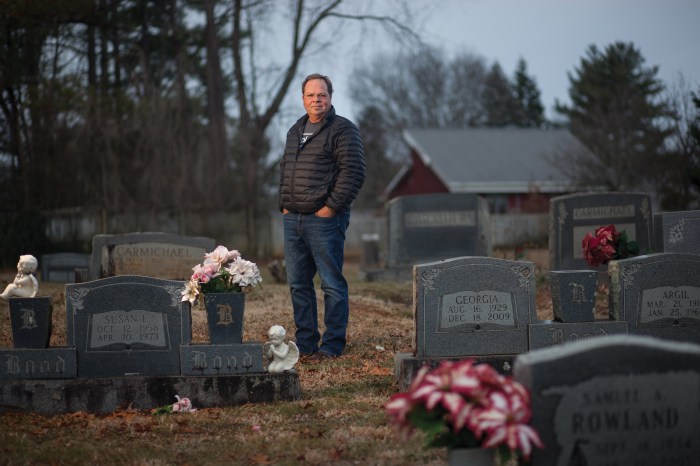
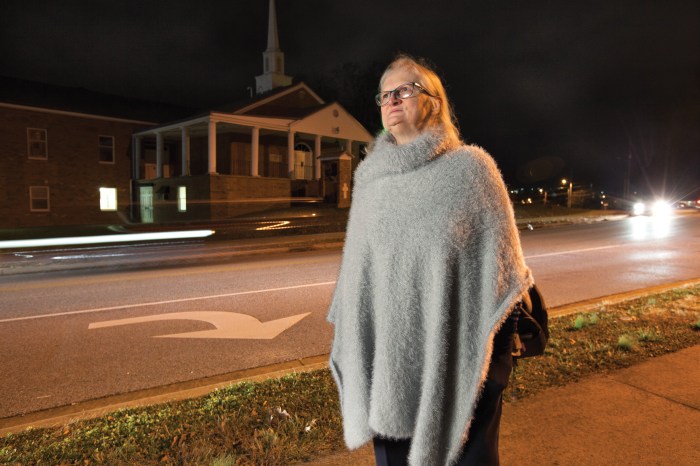
Linda Tipton joined Snow Memorial when she was nine years old. She has seen a lot of people come and go, but “God never left Snow,” she said.

Linda Tipton joined Snow Memorial when she was nine years old. She has seen a lot of people come and go, but “God never left Snow,” she said.

Andy Olsen

It’s hard to tell a church that you think it’s going to die, but Bryan Smith was trying.

There were less than 10 people left in a Southern Baptist congregation in East Tennessee. They didn’t have a pastor. They didn’t have enough elders for an elder’s board—just two men, both too sick to take on the responsibility. The money in the bank barely covered the utilities and the building was falling into disrepair.

The faithful few thought a new pastor and a few good sermons could save them. They wanted Smith, the church development specialist for the Holston Baptist Association, which serves Southern Baptist churches across four counties in the Appalachian Highlands, to find them someone who could really preach.

“That’s not going to work,” Smith said.

Smith didn’t think anything would work. He thought the church would die. He thought it should die, so that it could rise again.

Southern Baptists believe in resurrection—Jesus’ resurrection, of course, but also their own. They hold fast to the faith that the saved will rise up out of the ground on that last day. It is harder, though, to believe that institutions can pass away and rise again.

Smith described how the process would work: He wanted the church to turn over its property and bank account to the Baptist association, which would give them to a church planter to start a new congregation with a new name, a new style, and a fresh energy. The church shouldn’t hoard resources until nothing remained. Take what’s left, he said, and make an investment in something new.

But the 10 people in this church were having a hard time imagining it. They could see the end. It looked dark and cold and final.

By some estimates, 20 American churches close their doors for good every day. The decline of mainline Protestant denominations has been well documented, but evangelicals are also seeing the effects of a broad demographic shift as fewer Americans join churches and more people embrace individualized spirituality.

Southern Baptists are the largest Protestant denomination in the country, but for more than 10 years now, membership has been in decline. New baptisms continue to decline too, and according to the General Social Survey, only about half of children raised Southern Baptist continue to worship in the denomination as adults.

In East Tennessee, where roughly 30 percent of churches are Southern Baptist, that equals a lot of struggling congregations. Smith estimates that in his region, between 300 and 500 evangelical churches are in decline. No one’s talking about Appalachia becoming “post-Christian,” but you don’t have to travel far in the region to find people without much hope in their lives. And many churches that preach the hope of Jesus are going to close their doors.

Smith can help some struggling churches with revitalization. If a church has a critical mass of members—around 30, including some younger families—along with a building that doesn’t need a lot of work and a pastor in good health who is willing to push hard for three to five years, then a congregation with a plan has a chance of thriving again.

But if it doesn’t have those things, the church won’t make it. Smith has spent the past three years trying to convince some of these dying churches to accept this reality, so they can be like the kernel of wheat Jesus talks about in John 12:24. If they fall to the ground, he says, they can bring forth new life.

Mostly, his message has not been received as good news.

“It’s sort of like looking in the mirror in the morning and seeing a bump on your nose,” Smith said. “You know something’s wrong, but you don’t want someone to tell you that. People take offense at what I’m saying. They see anything I say as talking bad about the churches.”

He kept talking, though, and kept praying that someone would have the ears to hear what he was trying to say and the faith to take that leap.

“If they can change from thinking they are the person who closed the door of the church to thinking they are the person who gave the opportunity for life to begin again, then it can work,” he said. “I tell people, ‘You want to be part of the team who makes the decision to restore a gospel presence in this community.’ But not many leaders are willing to take that on.”

After talking to about a dozen churches, Smith finally got one to seriously consider his proposal. It wasn’t because of bold leaders, though. At Snow Memorial Baptist Church in Johnson City, a few women were frustrated with the pastors and elders who they felt hadn’t faced facts or made tough decisions. The women believed in the possibility of institutional resurrection.

Bryan Smith stands among the gravestones where he often prayed for New Victory.Andy Olsen
Bryan Smith stands among the gravestones where he often prayed for New Victory.

Everyone was committed to Christ

Linda Tipton was buried with Christ in the water of baptism when she was nine and was raised again as part of the family of believers at Snow Memorial. She’s 75 now and can still feel the cold baptismal water if she thinks about it.

She recalls from her childhood a church of activity and outreach. There was always another bake sale, a bazaar, something to make money for missions. She thought maybe she would grow up to be a missionary.

“I was just committed to serving Christ,” she said. “My heart was in it. Everyone’s was.”

When she was 14, the congregation tore down the small building that had been there since 1893 and built a new brick church with a sharp white steeple. It had broad steps up from the street and tall windows where light could stream in. Behind the church was a graveyard where some from previous generations were buried. A big oak tree stretched its branches over them. Tipton felt like you could live your whole life in that church, from the baptismal to the pews to the burial grounds. And God would always be there.

Tipton stopped attending Snow when she got older. But even as she wandered a little in her spiritual life, she knew God’s presence was still at Snow. The Spirit was always there.

In the 1990s, an elder’s wife called her to help with children’s Bible school. Tipton didn’t see why they needed her when she hadn’t been part of the church for so long, but the woman “kept calling and calling,” so finally she went and taught the children.

Her first Sunday, the elder introduced her to everyone and said he and his wife had been praying to get her back for a long time, and they weren’t going to let her go. Tipton knew this wasn’t the elder speaking. This was God telling her that he was claiming her and this was where she belonged.

Snow was known for good preaching in those years, according to Debbie Brackins, who started attending a little while after Tipton returned. Good preaching, a lively youth group, and a sense of roots as deep as the oak tree in the back graveyard.

Then the minister retired and the church hired a new one. That, when Tipton and Brackins think back, seems like the tipping point. The church made a wrong choice, and everything changed.

“It has come to my attention in retrospect,” Brackins said, “sometimes you really don’t wait on the right person, the right pastor. It’s hard to find the right one to begin with, and after you make one mistake, you tumble into another.”

Debbie Brackins told her pastor that Snow Memorial would run out of money if something didn’t change. “I was mad.”Andy Olsen
Debbie Brackins told her pastor that Snow Memorial would run out of money if something didn’t change. “I was mad.”

People leaving by the handful

The new pastor was a Calvinist. Some of his ideas, like limited atonement, startled them. What he said seemed opposed to evangelism and missionary work. Did the new pastor think Baptists shouldn’t witness to their lost neighbors if Jesus actually didn’t die for them? That didn’t sound right.

There were other problems too. The new pastor reacted harshly to questions, especially from women. When one member asked him whether all of Calvinism was really in the Bible, he declared her an enemy of the gospel. She didn’t return to Snow after that.

“People were leaving, leaving by the handful, and I thought, Something is really wrong here,” Tipton said. “People would walk out while he was preaching, saying, ‘That’s not right. That’s not right.’ ”

The pastor also brought in a youth pastor, replacing the women who ran the Sunday school classes. That was fine with the women, who believed in strong male leadership—until the young people stopped coming. One day the youth group was full of life. The next, it was dead.

“There were a bunch of youth and he ran them off,” Tipton said. “The Devil was in that, there’s not much doubt about it.”

Then there was “the night of the big blowup,” as Brackins calls it now. There was a confrontation, and the pastor quit. One deacon resigned with him. The youth pastor left, and a chunk of the congregation too.

When the pastor drove out of the parking lot, he pronounced a curse on the church. He yelled out, “Ichabod,” which is what a woman in 1 Samuel 4:21 named her child when the Philistines captured the ark of the covenant: “Ichabod . . . The Glory has departed from Israel.”

Things weren’t the same at Snow Memorial after that.

“I don’t think we recovered,” Brackins said. “We just kept dwindling.”

The church found another minister, but he wasn’t interested in outreach. He just wanted to preach. There was one after that, but he was too young and seemed scared to actually lead. Another was too old and had health issues. No one seemed to believe the church could ever do missions again, or even neighborhood outreach.

“We were drawn inward,” Brackins said. “You can’t grow if you don’t evangelize. And we weren’t doing that. We looked to the pastors to lead us, and they weren’t doing that.”

After a while, only 12 people were left in the church. Some Sundays it would be more like four or five. There weren’t really elders anymore, with most of the men too sick or disinterested to lead. The women opened the doors, cleaned up afterward, closed the doors, and paid the bills.

Then Smith came and talked to them. They hoped he’d find a pastor for them—someone who could turn everything around—but he said that wasn’t going to happen. Because of the finances, the low attendance, and the long, bad history, revitalization wasn’t really an option. They should close and give their property and the remains of their bank account to a church planter who would start a new congregation. If they wanted to revive their gospel presence in their community, that’s what they needed to do.

The women immediately agreed. They knew this was right, they said. Snow needed to die so it could rise again.

The next Sunday, to their surprise, their elderly pastor got up and disagreed. He said the church should continue on without any change.

“I was more upset than mad, but I was mad,” Brackins said.

She showed the pastor the bank account and how fast they were running out of money. They would quickly come to the point where they couldn’t pay a minister, she said. And then they’d go to irregular “supply” preachers, probably a different one every week, and then the church would die.

But the pastor resisted, and several others in the church objected too. They didn’t want to be known as the people who shut the church down. So things continued on until the pastor had a heart attack and decided to retire. The church considered closing again but decided to search for a new pastor instead.

But Snow couldn’t find one, at least not one who would agree to more than interim leadership.

Finally, on November 24, 2019, the church voted to turn everything over to the Holston association, shut down for good, and tell Smith to look for a church planter. They would give the church away.

A few of the remaining members didn’t come to the vote. They said they knew it was the right thing to do, but they couldn’t bear to see it. Those who came voted unanimously.

More than 120 years after Snow was founded, with six men and eight women offering up “prayer and remarks” according to the congregational history, it was disbanded with a few women, a few tears, and an empty building. It was the end, but it wasn’t final.

God never left the church

A few months after the church was closed and services ended, Tipton saw a broken-down car in the parking lot. It was a young couple with six dogs, and they were waiting for someone to come fix their vehicle. Tipton invited them to wait inside the church. The couple reminded her of Joseph and Mary in the nativity story, but with more dogs. She fixed some coffee and popped popcorn, and they came in and warmed themselves.

She thought about the curse. That pastor was wrong, she thought. God’s glory hadn’t departed.

“God never left Snow,” she said. “Some people did. But God never did.”

She felt God telling her people were going to come to the church again. The love was still there. His presence was still there. When it opened back up, people would come.

They just had to wait and hope Smith could find a church planter.

The women trusted Smith was working on this, though they never saw it happening. He came by the church a lot. He assessed the property, audited the financial accounts, and made sure personal items were returned to their rightful owners. If someone’s grandmother donated the piano, they could have it back if they wanted. Smith also wandered the place and prayed.

Several people saw him in the graveyard, under the big oak tree, walking around and talking aloud to the headstones. He told the graves that the church was going to die, but death was not the end. New life was going to come—and new victory.

Tyler Dalton began replanting New Victory Church by rehabbing the old sanctuary. “He’s God-touched,” said Linda Tipton.Andy Olsen
Tyler Dalton began replanting New Victory Church by rehabbing the old sanctuary. “He’s God-touched,” said Linda Tipton.

The coming of New Victory

“I had always thought I was going to plant,” said Tyler Dalton, the pastor of New Victory Church. “It’s kind of funny how the Lord works.”

When Dalton was asked to take over as a senior pastor in nearby Jonesborough, Tennessee, in 2013, he said yes to the call, but with a caveat: He and his wife, Rachel, really felt like they were supposed to plant a church.

“We didn’t know when. We didn’t know where. But we would be doing it when the Lord affirmed,” Dalton said.

If the congregation could accept that he would leave at some point to start another Southern Baptist congregation, then Dalton was happy to be the senior pastor. The elders agreed. The church even supported the Daltons in praying about the prospective plant. As he felt led to look in Johnson City, the congregation loaded up the church vans, drove the 15 miles, and walked around downtown with their pastor, dreaming of that plant.

And that was that, for a while, until someone told the group they felt “there is already a church out there praying about replanting” and New Victory would be an answer to that prayer. Then Smith showed up to talk to Dalton in the summer of 2019 about whether his church would be interested in starting a new congregation at the site of Snow Memorial. Dalton said yes.

“We had 100 percent clarity from the Lord,” he said. “I am divinely ignorant, and I don’t know how to bring restoration, but I believed the Lord would show himself to be good.”

They set the launch for early 2020, but that got pushed back as the legalities of the transfers were worked out. Then they set it for April, but the coronavirus happened and it was pushed back again.

When churches in East Tennessee started meeting again in the fall, New Victory decided it was time to begin. They put up signs and made sure the church’s slogan was visible: “A place where broken people find redemption.” The doors opened. And people came.

The numbers fluctuated—85 adults at one service, 20 at the next—but it was a start. Dalton was excited to talk to the newcomers and find people who didn’t have a church. They had a Bible study on a Tuesday night and more than 30 people came. During the worship services on Sunday afternoons, there were kids running around again.

Dalton preached about the importance of trusting in Jesus and his work on the cross instead of in your own effort and work ethic.

“Satan will tell you, you got to pull yourself up by your own bootstraps,” he said. “And if Satan can get you to believe you’re strong enough, smart enough, capable enough to do it on your own, you’ll stop depending on Jesus.”

Someone shouted out, “That’s right!” And from their seats on the left side of the sanctuary, Tipton and Brackins nodded.

It’s odd to feel new at a church you’ve attended for decades, but that’s what it’s like for the two women. They are doing what they have done for decades, yet everything’s been made new. It happened so fast—like a trumpet blast, as 1 Corinthians 15 says, and all that was old was swallowed up in New Victory.

There are aspects of the change that still feel uncomfortable. Tipton and Brackins don’t see familiar faces, at least not yet. The sanctuary is dark, with the windows covered up and lights shining on the stage. The music is not what they would have chosen for themselves. (“I can get used to it,” Tipton said.)

But they are excited to see what’s happening. It’s resurrection, before their eyes.

Andy Olsen

Witness to the resurrection

When church after church after church couldn’t believe that death would lead to new life, Smith kept thinking that he only needed one. If one struggling congregation would take that leap of faith, he could prove the replanting idea could work. And then Snow happened.

“I told our team,” he said, “once we have Snow Memorial under our belt, there will be other churches that will step forward.”

But it didn’t happen like that.

Instead, Smith lost his job in a budget cut. Holston Baptist Association was struggling with declining giving from area churches, and during the coronavirus, giving went down even more. Smith’s bosses told him there wasn’t any question about the value of his work; they just didn’t have funds.

Smith is selling insurance now. It’s the first time since 1997 that he hasn’t been in ministry.

“It’s not the happiest place I’ve been in this world,” he said. “I don’t have a clue what happens next. I don’t know. Wish I did.”

But Smith still believes in resurrection. He’s seen it, after all. A small Appalachian church died, and now, by faith, it lives again.

Daniel Silliman is news editor for Christianity Today.

Apple PodcastsDown ArrowDown ArrowDown Arrowarrow_left_altLeft ArrowLeft ArrowRight ArrowRight ArrowRight Arrowarrow_up_altUp ArrowUp ArrowAvailable at Amazoncaret-downCloseCloseEmailEmailExpandExpandExternalExternalFacebookfacebook-squareGiftGiftGooglegoogleGoogle KeephamburgerInstagraminstagram-squareLinkLinklinkedin-squareListenListenListenChristianity TodayCT Creative Studio Logologo_orgMegaphoneMenuMenupausePinterestPlayPlayPocketPodcastRSSRSSSaveSaveSaveSearchSearchsearchSpotifyStitcherTelegramTable of ContentsTable of Contentstwitter-squareWhatsAppXYouTubeYouTube