Books

Christianity Today in 2020: Our Top News, Reviews, Podcasts, and More
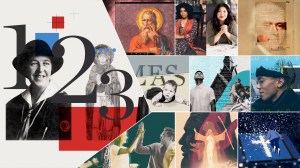
CT published 1,650 articles this year. Here’s what readers and editors liked most.

Christianity Today December 22, 2020

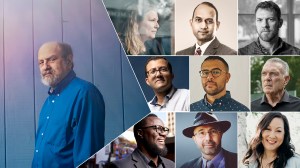
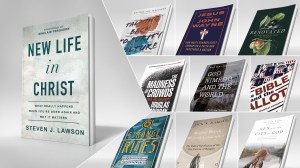
Browse our lists of 2020’s top articles, book reviews, podcasts, obituaries, and testimonies—as well as CT’s top stories about the global church, good news, pastors, COVID-19, and more—via the collections at right [on desktops] or below [on mobile].

Also for our bilingual readers, from CT Global’s 350 translations this year, see our most-read articles in Spanish, Portuguese, French, Chinese (Simplified and Traditional), Indonesian, Korean, and Catalan.

Finally, a report on this year’s Top 10 discoveries in biblical archaeology.

Books
Excerpt

Bethlehem Is More Than a Sentimental Backdrop to Christmas in the West

How Christians are celebrating the holiday in the town of Jesus’ birth—and across the broader Middle East.

Christianity Today December 22, 2020
Illustration by Mallory Rentsch / Source Images: WikiMedia Commons / ChrisGorgio / Getty Images

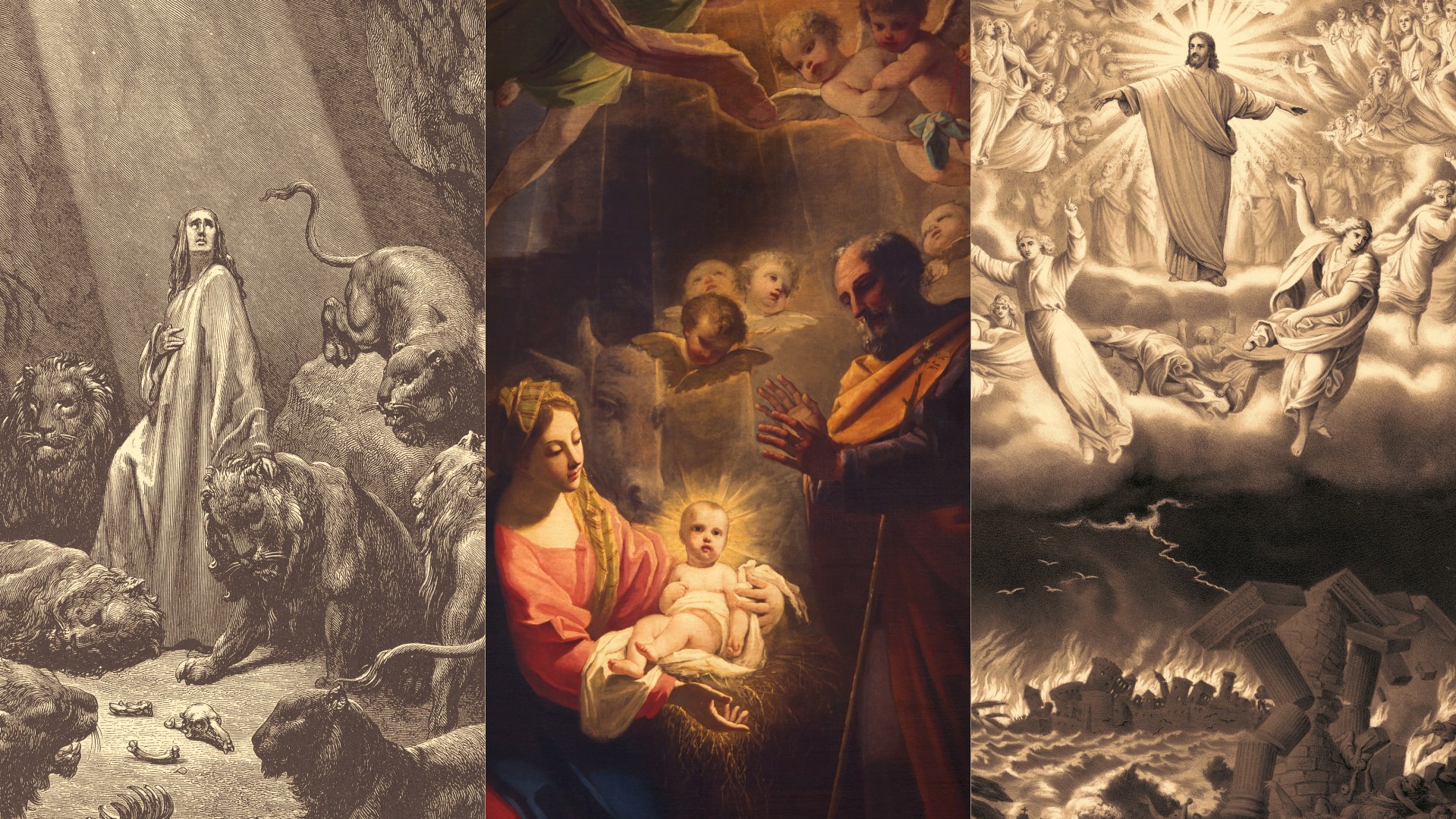
Although the Christmas story could be said to have begun at any number of points or places, it was Bethlehem that became the stage for the birth of Jesus. Today, Bethlehem is recreated in village halls, school auditoriums, and churches all over the world for the annual ritual of the Nativity play. The imagery of the humble stable, lit up by a star, with the shepherds and wise men converging upon it, is familiar from the greetings cards we send. At Christmas carol concerts we sing “O little town of Bethlehem.” Somehow this often remains disconnected from our imagining of Christmas, which, in the West, is so heavily tied up with traditions formed in the Victorian period in England and in America and so is removed geographically and temporally from Bethlehem at the time of Jesus.

The Oxford Handbook of Christmas

The Oxford Handbook of Christmas

Oxford University Press, USA

642 pages

$169.98

Our Christmas cards focus on two distinct themes: the snowy scenes and cozy fires of Europe and North America, and the depictions of the Middle East with camels, people in Eastern dress, and a donkey beating a dusty path to Bethlehem. While both these aspects are entwined, the Middle Eastern scenery is present mainly as the backdrop. It represents a distant time and ancient land.

What is glossed over is that Christians live and worship and celebrate Christmas in the Middle East still. For many Christians in the Middle East, and especially those from the Holy Land, there is a sense that they are overlooked, despite the ancient roots of their communities. The Rev. Mitri Raheb, a Palestinian Christian and pastor in the Lutheran Church, has described in many of his publications and talks how he has encountered surprise that there are Christians in Palestine on numerous occasions. In actuality, there have been Christians in the Middle East continuously since the birth of the Christian faith. Christmas is therefore widely celebrated throughout the region, and its diverse Christian communities proudly celebrate their links to the earliest Christians.

Bethlehem was a village at the time of Jesus’ birth. Today it has a population of approximately 25,000 and is a focus of religious life for Palestinian Christians. The district of Bethlehem includes Bethlehem itself, as well as the towns of Beit Jala and Beit Sahour. Approximately half of Palestinian Christians live in this district. Prior to the Arab-Israeli war of 1948, Christians made up the majority of the population of Bethlehem, but they are now the minority.

Despite this, Palestinian Christians emphasize their rootedness in the region and in Christian faith and history by referring to themselves as the “living stones” (al-Hijara al-Haya), an expression drawn from the Bible (1 Pet. 2:5). This chain linking modern Christians in the Middle East with the first Christians is important in many different denominations and national communities. The tradition of the flight of the holy family to Egypt is important to Egyptian Christians, as is the tradition that the Coptic Orthodox Church was founded by Saint Mark. Other Christians, such as those belonging to the Syriac churches (including the Church of the East, the Chaldean Catholic Church, Syriac Orthodox Church, and the Syriac Catholic Church) emphasize the fact that they still use a dialect of Aramaic, the language spoken by Jesus. Clearly, Christianity is not foreign to, nor removed from, the modern Middle East.

This demonstrates that Bethlehem is more than a clichéd image for Christmas cards or backdrop for school Nativity plays. It is also more than a site for foreign Christian pilgrims to visit. Bethlehem, and the Middle East in general, are not just a historical backdrop to the first Christmas. Christians continue to inhabit the region, and the link between their local roots and Christian heritage remains integral to their identity and culture. This context gives the contemporary celebration of Christmas in Bethlehem and the Middle East more significance, not less.

Diverse Celebrations

Are Christians in the Middle East permitted to celebrate Christmas or other Christian festivals openly? Outside of Saudi Arabia, the answer is generally yes. But the way Christmas is celebrated varies according to different local contexts as well as the diversity and number of different denominations and traditions that exist in the region.

In Bethlehem, celebrations naturally focus on the Church of the Nativity. This is set in Manger Square, which was renovated for the millennium celebrations and is lined by shops selling local traditional crafts, such as crosses carved from olive wood. The church was first built on the site identified by Christian tradition as the birthplace of Jesus in A.D. 339. The local tradition pictures the place as a cave rather than a stable. The original church was later replaced after a fire in the sixth century. In 2012, it was added to the UNESCO list of world heritage sites and attracts visitors from all over the world, and naturally there is particular interest in visiting at Christmastime. The square is decorated with lights and a Christmas tree, in a way that is familiar in towns across the world.

Bethlehem (as the birthplace of Jesus), Egypt (which boasts the largest Christian population in the region), Lebanon (where Christians have the most political and cultural influence in the Middle East), and Syria (which features frequently in the Bible) are four obvious places where Christmas is celebrated. However, Christmas is also celebrated in more unexpected places. The Arabian Peninsula is not commonly linked with Christianity or celebrations of Christmas, but it does actually have an ancient Christian heritage, and monasteries and bishoprics were established mainly during the fourth to seventh centuries. In modern times there is also a large Christian population in the region, as a result of the waves of migration to the oil-rich states of the peninsula since the second half of the 20th century.

As a result, Christianity has become the second-largest religion after Islam in a number of Arab states in the Gulf region. These Christians come from incredibly diverse backgrounds in terms of nationality, language, and Christian denomination. The celebration of Christmas in the Gulf States, such as Kuwait, Bahrain, the UAE, and so on, reflects this. It also encapsulates the globalization of Christmas. Shopping malls and supermarkets sell Christmas trees and decorations, and public spaces are decorated with Christmas trees and lights. When viewing these decorated spaces, it can often be hard to tell where in the world you are. Dubai has a delivery service for real “Canadian fir” Christmas trees, while there is a Facebook group called “Christmas in Kuwait,” which is followed by almost 6,000 people.

Political Challenges

Although Christmas can be celebrated without significant hindrance throughout much of the Middle East, it can also bring about a host of challenges, owing to the complications of politics and history. Each year, in the run-up to Christmas, there is the perennial question of whether Muslims are permitted to greet Christians during their religious holidays. For some conservative Muslims, it is wrong to wish Christians a happy Christmas, although Egypt’s Dar al-Ifta, the official body for religious rulings or fatwas, has said that it is permissible.

Holidays such as Christmas can also lead to heightened security measures amid fears that Christians and churches could be targeted by terrorists. For example, in 2010, seven people were shot outside a church in southern Egypt at the end of Christmas Eve Mass, while in December 2017, a church was bombed in the run-up to Coptic Christmas, which disrupted celebrations.

In Iraq, where ISIS was expelled from Mosul in 2017, there was profound symbolism attached to the reinstitution of Christmas services that year. Services were held in the recaptured areas, often in partially destroyed churches. Other Iraqis dressed up as Father Christmas and toured the devastated towns to hand out gifts to children, a bright spot amidst trauma. Christmas trees and Nativity scenes were also erected amidst the rubble and in refugee camps hosting displaced Christians.

Christmas that year featured heavily in state propaganda, as Iraqi leaders wanted to show they were protecting their Christian citizens and that displaced people could return home and exercise their faith once more. When the patriarch of the Chaldean Catholic Church, the largest denomination in Iraq, requested that the Iraqi government make Christmas a public holiday in 2018, the government granted the request. In December of that year, the government tweeted, “Happy Christmas to our Christian citizens, all Iraqis and to all who are celebrating around the world.”

In Syria, the 2018 Christmas holiday was also celebrated with gusto and pride despite the years of civil war and conflict with ISIS. Christmas trees were lit up, with music and celebrations held in the streets and squares. The enthusiasm in evidence that year was partly a reaction to the horror witnessed in the country after years of civil war and occupation. It also served to emphasize Syrian Christian support for Bashar al-Assad, to whom many believers looked as a guardian of their religious freedom. As in Iraq, processions and singing in the streets signaled Christian determination to reclaim their ancient homelands and maintain their faith and culture.

In Egypt also, Christmas has become a symbolic occasion for the relationship between the government and Christian citizens. Former president Mohammed Hosni Mubarak made Christmas a national holiday in 2002. In the wake of 9/11, this was likely a political gesture, meant send a message to Egypt’s Western allies that Egypt was an important partner in the Middle East. It also strengthened ties to the Coptic Orthodox Church, which gave the Mubarak regime consistent and public political support. Under President Abdul Fattah al-Sisi, Christmas has taken on further political value. Sisi was the first Egyptian president to appear at the Coptic Christmas Eve Mass, which is broadcast on Egyptian television. This was considered a dramatic and significant gesture, which he used to emphasize unity among Egyptians.

In Bethlehem itself, political complications around Christmas are well entrenched. In 2002, Israeli Defense Forces occupied Bethlehem as part of Operation Defensive Shield. During this period, Palestinian militants took refuge in the Church of the Nativity, thereby attracting the focus of the world. Normal Palestinian citizens also took refuge inside the church, thinking that they would be safe and that Western countries would not permit a siege in the place of Christ’s birth.

The same year saw the erection of the Israeli West Bank barrier, extending over 80 kilometers and surrounding Bethlehem on three sides. Consequently, checkpoints and roadblocks separate the church marking the place where Christ was born from the church marking the place of his crucifixion, even though they are less than 10 kilometers apart. As a result, it is more difficult for Palestinian Christians from other areas to visit Bethlehem for Christmas and move between the two holy sites.

Jesus and Santa Hats

As elsewhere, Christmas in the Middle East is subject to the pressures of globalization and commercialization. This often has the effect of overshadowing local traditions and watering down the religious aspect of Christmas. At the same time, in places where strong local traditions haven’t developed around Christmas, more universal Christmas traditions often take on greater importance, especially for younger generations. For Christians who live in Muslim-majority societies, adopting international aspects of Christmas, such as wearing Santa hats or Christmas sweaters and singing about dashing through the snow, offers a sense of solidarity with the global Christian community. For some, this is a brief escape from their status as cultural or religious minorities.

Exposure to Western Christmas celebrations does not necessarily undermine the religious message either. Consider, for instance, the way that Western Christmas carols have been translated into Arabic and used in various celebrations. An Arabic version of “Silent Night” was broadcast on Lebanese TV and in Egypt to Protestant Christians in particular.

Christmas celebrations are undergoing a process of change as different traditions come into contact with each other, which is quite natural. In historically Christian countries, various commercializing and globalizing trends might be seen as diminishing the message of Christmas, but in non-Christian countries they can sometimes have the opposite effect. In countries like those of the Arabian Peninsula, that previously had no (or very small) Christian communities, Christmas celebrations are now a familiar feature of life, even if the general message of peace on earth and goodwill to all mankind—or the jolly figure of Santa—often edges out the birth of Christ.

Yet even when it comes to Jesus, Christmas in the Middle East can represent common ground from an interfaith perspective, because Muslims also believe he was born of the Virgin Mary. The Nativity story, albeit with many differences, appears in the Qur’an. Additionally, most people find joy in the birth of a baby. In Arabic, Christmas is called Eid al-Milad, the festival of the birth. Disagreements arise, of course, over who Jesus is and what happened to him; Muslims believe Jesus was a prophet but not the son of God, and they do not believe he was crucified. This helps explain why the common manifestations of Christmas celebrations in the region are typically the most neutral: Father Christmas and Christmas trees, lights and decorations.

In this way, the secular culture that has grown up around “the holidays” in the West has paved the way for open Christmas celebrations in regions of the Middle East where they hadn’t been tolerated before. Despite this, Middle Eastern Christians have a great awareness of their own origins in the region and strong connections with the Christmas story and biblical history in general. This is why, despite declining numbers and political instability, Christians in the Middle East will continue to celebrate Christmas in their traditional homelands, with many wearing red Santa hats.

From The Oxford Handbook of Christmas edited by Timothy Larsen. Copyright © 2020 by Timothy Larsen and published by Oxford University Press. All rights reserved.

Pastors

Advent and the Ultimate Embrace of Love

Jesus tags Daniel’s vision to talk about his own return and the Christmas birth of new creation.

CT Pastors December 22, 2020
Creative Commons / Sedmak / Keith Lance / Getty

Advent’s journey from darkness to light has pressed tangibly upon me since living in Scotland. At the winter solstice, the sun rises just before 9 a.m., only to set just after 3:30 p.m. After that, sunlight substantially increases each day, reminding me of our expectation as Christians of the light and life Christ brings when he comes.

My own advent journey toward light renews hope in this dark year. The pandemic forced a cancellation of travel to the US, the longest stretch I’ve gone without seeing my extended family. For several months now the Scottish government hasn’t allowed us to meet with others in our homes. We don’t just long for the pandemic’s end; more than anything else, we long to see, touch, and hug our people. We expected a small taste of this heaven over the holiday with a lifting of UK restrictions for five days to allow eight-person, face-to-face “Christmas bubbles.” But a new strain of the virus has dashed our hope. Suddenly, five days has become one. Devastated families have cancelled travel plans. Most knew the togetherness wouldn’t be perfect or lasting, but didn’t expect this. We return to a national lockdown on Boxing Day, and to a longing to gather together again, for good.

Hope as a precious commodity brought me to the Advent passage Mark 13:24–37. Here, Jesus promises to return as the Son of Man and gather together believers from the ends of the earth. What a great lifting of restrictions that will be!

Jesus’ promise occurs as part of a longer speech to his disciples (Mark 13:1–37; see also Matt. 24:1–25; Luke 21:5–36). Leaving the temple complex in Jerusalem, the disciples marvel, “Look, Teacher, what large stones and what large buildings!” to which Jesus replies, “Not one stone will be left here upon another; all will be thrown down” (Mark 13:2, NRSV). This is confounding! It must mean the end of the world. Jesus takes his seat on the Mount of Olives, opposite the temple, and some of his disciples anxiously ask him when these things (the temple’s destruction) will happen, and what the sign will be that all these things (the end of the age) are about to be fulfilled (v. 4).

Jesus answers by enlarging their vision beyond the temple’s destruction. The end of the temple isn’t the end of the world but part of the labor pains that give birth to a new age.

Eleven commands to “watch” and “be alert” safeguard believers against being led astray, not only by false teachers but also by false signs due to natural disasters or wars—or perhaps even a novel coronavirus pandemic.

These labor pains entail a time of increasing tribulation marked by extraordinary suffering and deception (vv. 5–23). Jesus warns against false messiahs who will use false signs to persuade believers of an end that hasn’t happened yet. Eleven commands to “watch” and “be alert” safeguard believers against being led astray, not only by false teachers but also by false signs due to natural disasters or wars—or perhaps even a novel coronavirus pandemic. This chaotic labor pushes toward new birth during which believers press forward, taking up their crosses to follow Jesus. They endure suffering and faithfully proclaim the gospel to all nations by the power of the Spirit (vv. 9–13). The “desecration” preceding the temple’s destruction devastatingly culminates the contractions (vv. 14–23). Believers mustn’t be distracted, dismayed or deceived as if something strange is happening. “Be on your guard” against deceptive signs of the end, Jesus says, “I have told everything ahead of time.”

In the second part of Jesus’ response, he lays out labor’s end and the welcome intervention of God, who delivers his people into the new age (vv. 24–27). Jesus’ speech shifts perspective in time and space. “In those days, [sometime] after that suffering,” chaos on the ground ascends to chaos in heaven. The genuine signs of the Messiah’s coming cause the whole universe to collapse: The sun and moon darken, the stars fall, the heavenly bodies shake. More than cosmic upheaval, falling stars and shaking heavens represent the vanquishing of demonic powers in conflict with God. In glorious triumph, Jesus descends as the Son of Man with his holy angels to unite the earth’s elect as the complete family of Christ.

Jesus’ self-designation as “Son of Man” in the Gospels comes from Daniel 7:13-14, where God ordains “one like a son of man” to rule an everlasting kingdom for God’s suffering people (NIV). Throughout Mark, Jesus is this Son of Man with authority on earth. As Son of Man, Jesus suffers, dies, rises and returns to judge the world in righteousness and make all things new. In Mark 13, Jesus returns as Son of Man to finally crush all chaos and bring about the kingdom for the sake of his people.

Jesus’ speech may confound us due to the wide depth of field. In photography, depth of field measures the distance between the nearest and farthest objects—a shallow depth of field draws our eye to focus on the person in the photo instead of the mountains in the distance. But in Mark, Jesus reveals the whole landscape of labor and delivery in a single frame with a wide depth of field that brings everything into focus. Today’s readers still see the wide depth of field in Jesus’ speech but recognize a much longer time span between labor and delivery. As we expectantly wait and work, the coming of Christ has necessitated an extended labor—not because the Lord is slow, but because he is patient (2 Pet. 3:9).

Though confounding, this wide depth of field proves crucial for hope. Apocalyptic writings, like Daniel before and Revelation after, reveal a reality beyond what we can see with the naked eye. Presently, we perceive evil, sin and its effects, violence, disease, and the physical separation due to pandemics, but apocalyptic writings reveal that God is with us now and is coming to set aright a world gone awry. This apocalyptic view does not deny the present reality of our pain, but it challenges a faithful reframing of it. By viewing the whole landscape, our eyes can see the evil of our age has no lasting power, because God has fixed its end. It is as Samwise says in Tolkien’s The Return of the King, “Is everything sad going to come untrue?” Yes, the King is coming!

In Mark 13:24–27, Jesus assures us that in him God will right all that has gone wrong. The Son of Man comes to his people. In 1 Thessalonians 4, Paul similarly assures the church to keep hope. In God’s time, a public reunion will surpass any our current pandemic’s end can provide:

For the Lord himself will come down from heaven, with a loud command, with the voice of the archangel and with the trumpet call of God, and the dead in Christ will rise first. After that, we who are still alive and are left will be caught up together with them in the clouds to meet the Lord in the air. And so we will be with the Lord forever. Therefore encourage one another with these words. (v. 16–18)

Christ will come, God knows when (Mark 13:32). For us, the call is to vigilant strength, obedience, and mutual encouragement. Our current isolation intensifies our longing for new birth that will happen in Christ, and nothing will separate us again. And so we say this Advent, “Come, Lord Jesus.”

Elizabeth Shively is senior lecturer in New Testament studies and director of teaching at the School of Divinity, St. Mary's College, University of St. Andrews, Scotland.

Reply All

Responses to our November issue.

Photoguns / Getty

Christians Invented Health Insurance. Can They Make Something Better?

One can approach the issue from an individual moral and Christian perspective, but shouldn’t there be a discussion of the institutional costs/prices that are charged for health care? How much does capitalistic and specific institutional greed contribute to the costs? Is there a way to effectively and fairly control the costs without giving up competitive-driven charges in the rest of our financial system? Americans should hear an objective discussion of all options.

John Bell Woodstock, GA

Many Christians are unaware that a former Baptist minister in Saskatchewan, Canada, introduced the continent’s first single-payer, universal health care program. The Reverend Tommy Douglas, a social democrat, not only introduced the template for Canada’s health care plan, he also set an example of fiscal restraint and of limited government, which current leaders would be advised to emulate. In 17 years as premier, Douglas produced 17 balanced budgets.

Paul Smith Kelowna, British Columbia

As a frequent visitor to the USA, I was struck on the one occasion I needed health care by the first question as I was greeted at reception: “Do you have insurance?” Fortunately, my employer provided travel insurance. Here in Britain, since 1950 we have enjoyed free health care at point of use. Except it is not “free”; a modern health service with high investment in technology comes with a cost to the government budget. Last year [2019], pre-COVID, it was $200 billion a year, around 10 percent of GDP. This year [2020], it will be much more, as the government used military engineers to construct several emergency COVID-19 hospitals in closed sports arenas, which had to be staffed by retired doctors and nurses and military medical personnel. Also in the UK, prescription medication is half the price as in the US, as the National Health Service has massive purchasing power with big pharma.

David Parish London, England

Our November Issue: An Ocean of Need

I was disappointed with the lack of action by Daniel Harrell. He was like the priest and Levite in the Good Samaritan parable. He saw a need and talked in platonic language but failed to act. My wife had two bouts with cancer, 12 years apart. I do remember the two-plus hours of chemo and how weak she was after each treatment. She read the article and said, “I would have told you, ‘Go help the lady. I will be here when you return.’” The last paragraph expressed concern for the sick beyond ourselves and our loved ones and love for our neighbor and enemies. It is truly hard to reconcile this statement with the total lack of action on his part. He was blaming everyone for not having a system in place to solve the problem. Maybe God was wanting him to step forward.

Clyde Hall McCordsville, IN

At Purple Churches, Pastors Struggle with Polarized Congregations

Jesus called Matthew—a man that was as far Left as one could be in his day. He worked with the invading Romans and took money from his own people and gave it to the Romans. Jesus also called Simon the Zealot—a man that was as far Right as one could be in his day. Zealots were an ancient Jewish sect that aimed to have a world that would have a Jewish theocracy and resisted the Romans. They were fanatical and uncompromising in the pursuit of their ideas. It is amazing that these two individuals, along with the rest of the apostles, could work together to help change the world for the gospel ministry of Jesus Christ.

Mark Allen Deakins Cleveland, TN

In my experience, people with opposing views can have good dialogue if their focus is on explaining to you why I believe and act how I do, and listening to you explain to me why you believe and act as you do. The conversation will always go bad if the focus is on why I am right and you are wrong.

Herb Spencer Calgary, Alberta

Creation Care Movement Takes Action with Solar Panels and Petitions

I was very encouraged to read about churches installing renewable energy systems as a way to honor God and steward his creation. I was especially grateful to see this presented as a truly pro-life issue. This year’s huge ice cap melts, extreme weather, and record-breaking wildfires underscore the urgency. The consequences of a warming climate are landing first and hardest on the poor—“the least of these” whom Jesus gave to our care.

Doug Stewart Carbondale, CO

Post-Election Civility Is Not Enough

This is brilliantly written without one “I feel” in the whole article. Thank you for the clear research, thoughtful quotes, Bible references, verses, and the guiding reference to social responsibility as it applies to loving one another and what that witness means in the kingdom of God. I’m just reading this article November 4 and it is so very true today.

Jennifer L. Porter Massillon, OH

Cultivating Chaos

Lyrical, thoughtful, and perceptive—as ever from Sandra.

Rodney Green Leicester, England

Paul’s Most Beloved Letter Was Entrusted to a Woman

I find this article timely in light of some of my recent reflections on the roles of women in my congregation. The authors make a compelling case about the roles all Christians play in the advancement of God’s kingdom. Where are we failing in carrying out God’s mission? Are we blinded by prejudices that hinder our effectiveness as a congregation? What responsibilities are we not encourag-ing those best equipped to carry them out? By doing so, what blessings are we spurning when we fail to follow God’s heart for the church and the world?

Sung Bauta Milan, MO

It’s Okay Not to Be Okay

Sometimes well-meaning Christians tell you when something is happening in your life that God will give you nothing you cannot handle. That is not true—well-meaning, but not true. Sometimes we need a heaven amount of help, from God, the family of God, or both.

Mick Sheldon (Facebook)

Hope Is an Expectant Leap

Jay Kim’s story is mine as well. My mom was widowed at 29 years of age. She lost her husband, my father, in the Korean war. I was three years old, and I do not have any recollection of my father. My mother never married again. She worked hard to put me through schools. I became a church pastor here in California, and my mother joined us. She lived to 94 years and went to be with the Lord. She lived next to our church praying; serving others has been her life. My mother enjoyed seeing my son and daughter and their children. I am grateful for my mom who never gave up her hope on me.

David Young Hwan Gill Ontario, CA

News

117 Witnesses Detail North Korea’s Persecution of Christians

New report describes methods and names names of those repressing secret Christian believers—and other faiths.

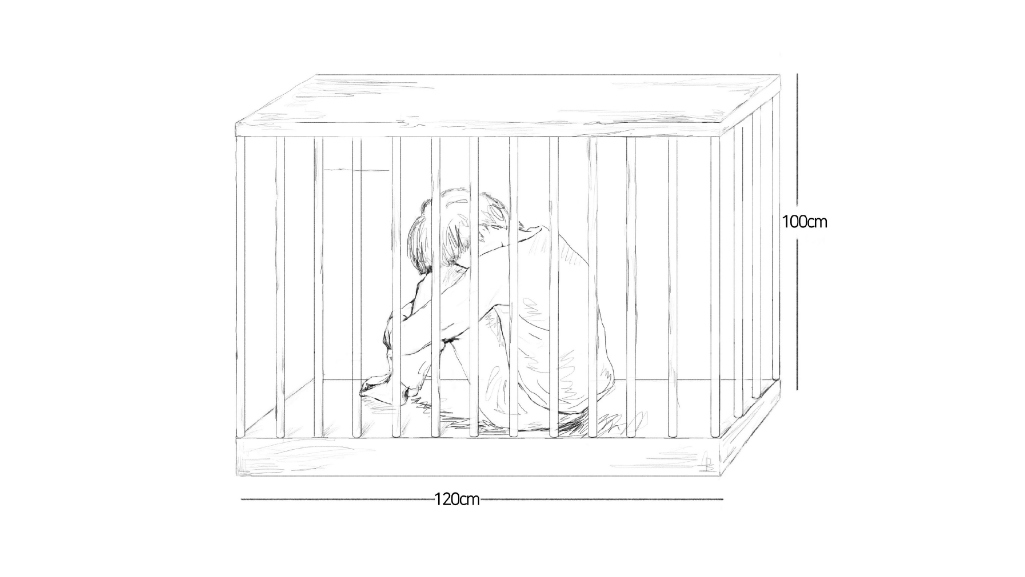
An illustration of a North Korean Christian's testimony of persecution.

An illustration of a North Korean Christian's testimony of persecution.

Christianity Today December 21, 2020
Kim Haeun / Korea Future Initiative

Two North Korean families prayed silently on the prison floor—making certain to keep their eyes open. Another detainee, a veteran of Kim Jong-il’s gulag system, asked them if they were afraid.

“No,” one of the mothers replied. “Jesus looks over us.”

The detainee began to cry, knowing the fate that awaited them. The next day, they were sent to Chongjin Susong political prison camp, and have not been heard from since.

But elsewhere in Onsong County’s pre-trial detention center, however, a different Christian prisoner closed his eyes. After confessing he was at prayer, his fellow detainees collectively assaulted him—afraid he would bring trouble on them all.

These are just some of the harrowing stories told in a 2020 report on religious persecution in North Korea. Groundbreaking in its scope, it is drawn from the testimony of 117 defectors, cross-referenced with known data.

Produced by the Korea Future Initiative (KFI), Persecuting Faith reveals 273 documented victims—76 of whom are still in the North Korean penal system. It names 54 individual perpetrators, including 34 with identifying information.

KFI hopes the information will inform future Global Magnitsky sanctions, applied against individual human rights violators by the United States and other Western nations.

Drawn from experiences stretching from 1990 to 2019, KFI’s report lists scores of violations. These include 36 instances of punishment meted out to family members, 36 instances of torture, and 20 executions. Women and girls represent 60 percent of the victims.

And Christians are disproportionately imprisoned—by far.

Open Doors, which has ranked North Korea No. 1 in its World Watch List for 19 straight years, estimates there are 300,000 Christians in the population of 25 million. Tens of thousands of these occupy the gulag.

Of KFI’s 273 victims, Christians total nearly 80 percent: 215 cases.

Shamanism, the folk religion of North Korea that is also persecuted by the regime, represents all but two of the rest.

KFI identifies itself as “non-religious, but not secular.”

“The report confirms what Christians already thought about persecution in North Korea,” said James Burt, KFI chief strategy officer and a co-author of the report.

“But it also breaks it down further, to give a granular understanding of how the government deals with religion.”

In the past, some victim testimony has proven false or embellished. Given the lack of access, much is difficult to verify. But often, similar stories are heard over and over again.

The majority of violations are arbitrary arrest, detention, imprisonment, and interrogation—with several suffered by the same individuals. These are linked to 85 physical locations—10 of which are penal facilities within China—mapping the geography of a country to which few are permitted access. And the report details the North Korean government bodies that oversee its network of secret police and citizen informant programs.

KFI has also obtained access to internal documents that provide the philosophy behind the repression.

“The American imperialists have used religion as a tool to invade our country in the past,” states the Korean Workers’ Party Transcendental Guidance System. “And today, they are viciously plotting to spread religion to … crush our republic.”

Jan Vermeer, the pseudonym used by the communications director for Open Doors Asia, appreciated the documentation work of KFI.

But he wished to take the “why” of persecution a step further.

North Korea officially traces its clash with Christianity to 1866, when it beheaded a missionary who arrived with an American naval vessel seeking to open trade relations.

But by 1907, there was a Christian revival in the now-capital of Pyongyang. And Christians became very popular for their resistance to Japanese occupation, refusing to worship the emperor. By 1945, when the Korean peninsula was divided by Soviet and American occupation, there were 500,000 Christians in North Korea—including both parents of Kim Il-sung, the communist founder.

Born in 1912, Kim would go on to mark his birth as the dividing point of history, imitating Jesus’ role in the Western calendar. Engaging in near-deification, his word became law.

The cult of personality continued with his son, Kim Jong-il, and grandson, current leader Kim Jong-un—instilled at the earliest levels of education.

KFI’s foreword is written by Ju Il-lyong, an exiled human rights activist who testified before President Donald Trump at the 2019 Ministerial to Advance Religious Freedom. In the report, he described two stories learned while growing up in North Korea.

In one, an American missionary etched with acid the word “thief” into the forehead of a child who picked an apple from his orchard. In the other, a father was honored for running into his burning home to rescue the portraits of Kim Il-sung and son, sacrificing his daughter for the sake of the Supreme Leaders.

“Often we think of North Korea as a weird country ruled by a line of nutty dictators,” said Vermeer. “But these are very smart people who have left no room for any type of religion, because that would set the people free in their mind.”

Some are trying.

One example (not provided by Vermeer) involves a former North Korean agricultural researcher who fell afoul of the government when he advocated for private ownership of land. After relocating to South Korea, he became a Christian, and now engineers balloons to cross the border and release their content at just the right location and altitude.

“It was the Christian missionaries who extended helping hands to me when I was in crisis and had serious problems,” reads his pamphlet. “Through them, I found out that their belief is totally contrary to what I was told in North Korea.

“They preach ‘love,’ and tell us to love each other to the extent of loving your enemy … We must love each other, North and South Korea.”

But across the border, possession of such materials in the north can be damning. Many anecdotes in the KFI report describe the Bible or Christian literature as the evidence that led to imprisonment. One North Korean was tied to a stake and executed in front of 1,000 people at an outdoor market.

Some Christians have fled in search of religious freedom, Burt said. But it is far from the only cause. Poverty, starvation, and a culture of misogyny and sexual harassment have led thousands of North Koreans to sneak or bribe their way through border patrols into China.

And once they have crossed the border—seeking a circuitous route to South Korea, many end up as sex slaves to poor farmers in an illegal underworld that generates $105 million per year.

“There are two types of people who pick them up,” said Ed Brown, the American general secretary for Stefanus, a Norwegian Christian organization advocating for freedom of religion or belief.

“Abusive human traffickers, and Christians—who risk their lives to move them from safe house to safe house, and then out of China.”

Stefanus produced Saved: Escape from Kim’s Regime, to tell their story. An official selection of the 2019 International Christian Film and Music Festival, it features the work of Helping Hands Korea (HHK), which has assisted vulnerable North Koreans since 1996.

Beside participating in the modern-day underground railroad, HHK also send seeds into North Korea, so that people in the lowest class of the songbun social class system—labeled “hostile” by the regime and denied access to centralized goods—can grow their own crops.

Stefanus supports such work—and other programs that cannot be named—to build a fledgling civil society in North Korea.

They want the nation to be ready, when freedom comes.

A different approach is taken by Reah International, which seeks to connect Christians with opportunities to serve the people of North Korea. Its method of engagement facilitates humanitarian aid, education, and economic development—working in cooperation with the government.

“Those who can bring lasting change to North Korea are North Koreans,” said Janice Yoon, Reah’s communication coordinator.

“Our approach allows us to alleviate suffering, decrease their isolation, and provide different narratives to their prejudices—as we build relationships over time.”

There can be a tension between the justice work of human rights advocacy, Yoon said, and mercy-oriented humanitarian and spiritual ministry. But it need not be so. Even if there is passionate disagreement over the best approaches, each can be an arm of the body of Christ.

The “not secular” KFI agrees.

“Human rights is not only about investigation and documentation, it is social integration and support,” said Burt. “Groups that help these victims are incredibly important, and an essential part of the work.”

But per KFI’s report, documentation is essential.

“We have not just documented the violations, but also the perpetrators,” he said. “We collect data and constantly update it, so that no one can claim they didn’t know what was happening.”

The anecdotes in the report—only Volume 1, according to KFI—speak volumes.

In 2018, a 38-year-old male was detained in North Pyongan Provincial Ministry of State Security holding center. Peering into the prisoner’s cell, a correctional officer asked, “Why did you do what the state forbids?”

The prisoner, whose crime was to possess a Bible, responded, “I just wanted to know for myself.”

News

Christmas Unites a Divided Iraq

Parliament’s unanimous vote to make Jesus’ birth an annual holiday succeeds where other national holidays have failed.

Priests lead a Christmas Day mass at Mar Hanna church in Qaraqosh on December 25, 2016 in Mosul, Iraq.

Priests lead a Christmas Day mass at Mar Hanna church in Qaraqosh on December 25, 2016 in Mosul, Iraq.

Christianity Today December 21, 2020
Chris McGrath / Getty Images

Seventeen years since the fall of Saddam Hussein, the fractious Iraqi nation—divided mostly between Sunni, Shiite, and Kurdish Muslims—remains unable to agree on a national day.

But they can agree on Christmas.

Last week, the parliament unanimously passed a law to make Christmas a “national holiday, with annual frequency.”

The latter phrase gave great “joy and satisfaction” to Cardinal Louis Raphael Sako, patriarch of the Chaldean Catholic Church. Last October, he presented an official request to Iraqi President Barham Salih to make Christmas a permanent public holiday.

“Today Christmas is truly a celebration for all Iraqis,” said Basilio Yaldo, bishop of Baghdad and Sako’s close associate. “This is a message of great value and hope.”

In 2008, the government declared Christmas a “one-time holiday.”

In 2018, the parliament amended the law to make Christmas for all citizens.

But after each occasion, it was not renewed.

“The declaration is beautiful, but it is very late,” said Ashur Eskrya, president of the Assyrian Aid Society–Iraq.

“But our trouble is not in holidays, it is in the situation of our people.”

The Christian population of Iraq numbered roughly 1.4 million prior to the US invasion. Today, following years of war and the ISIS insurgency, Christians are estimated at less than 250,000.

Land appropriation continues in the Nineveh Plains, Eskrya said. And Christians suffer with all Iraqis the deterioration of the economy amid COVID-19 restrictions.

Christian Iraqis were always allowed to celebrate Christmas themselves, he said. Those who worked for the government received two days off—and three for Easter.

Eskrya lives in Dohuk, in the Kurdistan Autonomous Region, in northern Iraq. Home to the majority of Iraqi Christians, since 2003 it has similarly sometimes given Christmas as a holiday for all. But decorations fill city streets and local malls, he said, while the government provides Assyrian Christians an additional seven religious and ethnic holidays.

But the Kurds are one reason Iraq cannot settle on a singular national holiday. The nation achieved independence from Great Britain on October 3, 1932, but this coincides with a day of mourning over a Kurdish icon who defied Saddam Hussein.

The dictator’s overthrow has also been proposed as a national day, but is too divisive a date within Iraqi politics. Even Ramadan divides Iraqi Muslims: Sunnis follow the Saudi Arabian designation, Eskrya said, while Shiites follow Iran.

Symbolic also is the lack of a national anthem, as Iraq’s failure to develop a coherent identity has hurt the Christian community.

Ara Badalian, pastor of the National Baptist Church in Baghdad, called the Christmas declaration “a great achievement” that emphasizes the Christian component of society.

But more is needed.

“I hope it will be accompanied by helping the tiny minority of Christians to remain in Iraq,” he said. “[The government] must rebuild their damaged homes, and provide them with protection.”

Many Christians hoped last year’s nonsectarian protest movement would contribute to a national identity. The crackdown—which killed hundreds—led the Chaldean Catholic Church to cancel Christmas celebrations.

The protests, however, led to the appointment of a reformist prime minister, Mustafa al-Kadhimi, who promised Sako he would help ensure the safe return of Christian refugees.

The government may have had an incentive in prioritizing Christmas.

Earlier this month, Pope Francis announced his first trip in the wake of COVID-19 will take him to “the plains of Ur, linked to the memory of Abraham.”

The 84-year-old would become the first pontiff to visit Iraq, pandemic conditions permitting.

“An insistent thought accompanies me when I think about Iraq,” stated Francis in June 2019, when he first announced his intention.

“I want to go … so that it can look to the future through peaceful and shared participation in the construction of the common good.”

Sako called the Christmas designation “one of the first fruits,” and hopes more will follow.

“Everyone in Iraq, Christians and Muslims, esteem [Pope Francis] for his simplicity and nearness,” Sako said.

“His words … are those of a shepherd. He is a man who brings peace.”

A primary reason for the visit is encouragement, wrote Rifaat Bader of the Catholic Center for Studies and Media, based in neighboring Jordan. In Kurdistan’s Erbil, the pope will visit Christians who fled from ISIS. And going to Mosul and Qaraqosh in the Nineveh Plains, he hopes to inspire them—and those abroad—to return to their ancestral home.

These areas comprise 80 percent of Iraq’s remaining Christians.

Eskrya is skeptical.

“The government can do nothing to get the people to return home,” he said, emphasizing the need for a culture of respect for Christians as indigenous citizens.

“One holiday, and one visit, will not change things.”

Nonetheless, areas of Baghdad have already been decorated for Christmas. A 16-foot tree stands in one mixed-faith neighborhood, overlooking the Tigris River.

St. George Church, the only Anglican congregation remaining in Iraq, will have a socially distanced holiday.

“Christians who stayed in Iraq celebrate a Christmas filled with challenges—but also with joy, as the angels told the shepherds,” said Faiz Jerjes, the parish priest.

“Exactly the same as when Christ was born.”

Christianity Today’s Top 10 Articles for Pastors in 2020

A pastor’s wife loses her husband to suicide, celebrity culture persists in churches, and the coronavirus changes, well, everything.

Christianity Today December 21, 2020

As with every part of our lives this year, the COVID-19 pandemic dominated the conversation in our CT Pastors articles. How can churches minister to their congregants from a distance? How do programs like youth group or occasions like Easter translate to a virtual world? What can pastors learn from preaching through a screen? Also speaking to current themes, Rich Villodas describes how his church opposed the celebrity-pastor trend by making him hunt for a parking spot. And Sam Haist explains why his church thinks teaching on politics is a great idea. These and the rest of our top 10 stories of 2020 are listed below in descending order, ending with the most read.

10.

9.

8.

7.

6.

5.

4.

3.

2.

1.

Check out the rest of our 2020 year-end lists here.

Books

5 Books on the Nature of Human Emotions

Chosen by Matthew LaPine, author of “The Logic of the Body: Retrieving Theological Psychology” (Lexham Press).

Masterzphotois / Getty

The Emotional Brain: The Mysterious Underpinnings of Emotional Life

Joseph LeDoux

Whatever else emotion is, it involves neurons and chemicals. Any adequate understanding of human emotions must grasp the basics of how our nervous system works. Neuroscientist Joseph LeDoux lays bare the biological underpinnings of our feelings, clarifying the role played by brain processes and memory.

Finding Quiet: My Story of Overcoming Anxiety and the Practices that Brought Peace

J. P. Moreland

Moreland draws from personal experience and professional expertise to share ideas and practices that help in the battle with anxiety. He is especially helpful in rebutting the idea that our emotions come from our soul and not from our holistically embodied self. This short book is rich with insight and practical wisdom for sufferers.

The Boy Who Was Raised as a Dog: What Traumatized Children Can Teach Us About Loss, Love, and Healing

Bruce D. Perry and Maia Szalavitz

Too often, Christians fail to grasp the generational legacy of attentive parenting as it bears on a child’s emotional well-being. Working with journalist Maia Szalavitz, psychiatrist Bruce Perry draws on his clinical experience to tell heartbreaking but hopeful stories of the emotional toll of neglect on children. The problems caused by neglect are complicated, but helping often involves simple acts of loving attention.

Till We Have Faces: A Myth Retold

C. S. Lewis

In Till We Have Faces, Lewis retells the myth of Cupid and Psyche, but with a twist. The book shows how self-deception can lurk near the core of our most-cherished feelings. Psyche’s sister Orual wears a veil that symbolizes her projected self-image; when the veil is removed, so is the depth of her ugly self-obsession. Lewis compels us to ask how we might speak to God without our own masks of self-deception.

The Logic of Desire: Aquinas on Emotion

Nicholas E. Lombardo

This is an introduction to how Thomas Aquinas understood human emotions. Lombardo argues that the “passions” are at the core of human flourishing. They differ from cognition and choice, though they are not blindly irrational. They are bound up both with the dispositions of our body and the formation of virtue. Aquinas’s view of human emotion is surprisingly prescient, anticipating modern neuroscientific insights.

Matthew LaPine is is pastor of theological development at Cornerstone Church and lecturer at Salt School of Theology in Ames, Iowa.

Books
Review

Contra Rod Dreher, Not All Signs Point to a Woke Dictatorship in America

What his new book gets right, and what it misses.

Christianity Today December 21, 2020
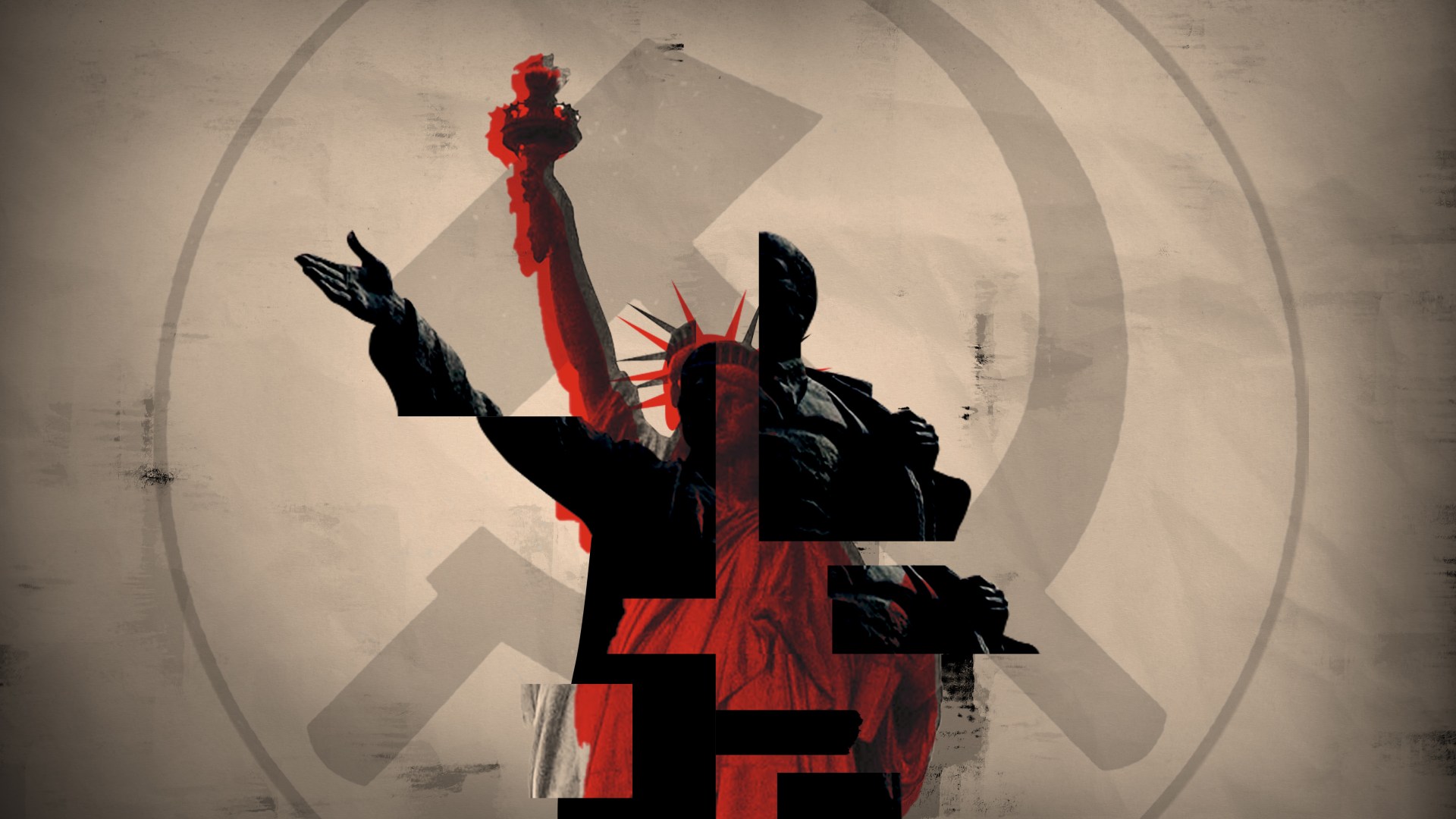
Illustration by Mallory Rentsch / Source Images: WikiMedia Commons / Ciocan Ciprian / Marjan Blan / Unsplash

There is much in Rod Dreher’s newest book, Live Not by Lies: A Manual for Christian Dissidents, that is true, insightful, and in need of serious consideration. At its best, the book forces an increasingly frayed and polarized Christian church to answer for its moral and political apathy. Yet Dreher’s work is missing something: a self-awareness, a careful sobriety, a consciousness that even those on the good side can unwittingly become the thing they seek to destroy.

Live Not by Lies: A Manual for Christian Dissidents

Live Not by Lies: A Manual for Christian Dissidents

Penguin Young Readers

256 pages

$12.14

Dreher, a columnist for The American Conservative and arguably the most-read conservative blogger on the internet, does not lack for eloquence or wisdom. He demonstrated his power of insight in his 2017 book The Benedict Option, a widely read manifesto calling for Western Christians to consciously reinvest in building their own communities of virtue instead of trying to win a culture war through politics. The Benedict Option was a stirring book that spoke powerfully to a church at a crossroads, and it resonated with Christians hungry for a healthier engagement of their culture.

Unfortunately, the spiritual sensibility of this earlier book is often missing in Live Not by Lies. In fact, the majority of the book is not didactic or contemporary at all, but rather a Christian-themed deep dive into Soviet totalitarianism. Most of the book features Dreher’s conversations and encounters with survivors of Soviet oppression and their descendants. Indeed, Dreher attributes his desire to write it to a phone call he received from a Czech family, urgently concerned that attacks on religious liberty in the US resembled their experience with Communist regimes in the 20th century.

Two Books in One

From his travels and conversations, Dreher arrives at a dire diagnosis: The United States has already been willingly subjected to a “soft totalitarianism” by the enemies of traditional religious and conservative ideas. “A progressive—and profoundly anti-Christian militancy,” writes Dreher, “is steadily overtaking society; one described by Pope Benedict XVI as a ‘worldwide dictatorship of seemingly humanistic ideologies’ that pushes dissenters to society’s margins.” Dreher proceeds to lay out his case with a twofold approach: Each successive chapter puts the historical testimony of Communism’s survivors into conversation with contemporary America, especially its culture-war issues of religious freedom, sexuality, and free speech.

Readers who recoil at this kind of summary should know that Dreher is not without his evidence. Chapter three, titled “Progressivism as Religion,” finds compelling similarity between the materialistic ideology of Communism and the dominant worldview of the average American college campus. Dreher’s concern about modern progressivism’s punitive, guilt-by-association absolutism is hardly a right-wing fever dream; the same point has been made numerous times by non-conservatives such as Jonathan Haidt and Andrew Sullivan (the latter of whom was recently forced to resign his columnist gig at New York magazine). As Dreher comments, citing the late philosopher Roger Scruton’s observations about totalitarian cultures:

[T]houghtcrimes … by their very nature make accusation and guilt the same thing … the reach of contemporary thoughtcrime expands constantly—homophobia, Islamophobia, transphobia, bi-phobia, fat-phobia, racism, ableism, and on and on—making it difficult to know when one is treading on safe ground or about to step on a land mine.

Dreher’s point seems hard to argue in a world where card-carrying liberals such as J. K. Rowling can face enormous backlash merely for believing that a man cannot be a woman; where Mozilla executive Brendan Eich can lose his job for having the same view of same-sex marriage that Barack Obama had in 2008; or where the editor of The New York Times op-ed section can be forced from his role simply for publishing an essay—Republican Senator Tom Cotton’s brief for deploying federal troops to quiet this summer’s domestic unrest—that some progressive Times staffers found objectionable. Dreher has good reason to suspect that American progressivism has embraced ideological purity tests in a manner that recalls the abuses of Marxist regimes, and doubters should confront the growing chorus of concern from people well outside stereotypically conservative camps.

If this were the extent of Dreher’s vision, Live Not by Lies would be an accurate if unremarkable book. But the book’s message is not simply that progressives have become intolerant, but that this intolerance—coupled with widespread cultural decadence and the ascendancy of surveillance capitalism—is openly threatening the lives and livelihoods of traditional Christians. Dreher compares the “location services” novelties from Silicon Valley to the Communist Chinese system of “social credit,” warning that survivors of murderous regimes recognize the face of their foes in the emerging American society.

Techno-capitalism, Dreher writes, “is reproducing the atomization and radical loneliness that totalitarian communist governments used to impose on their captive peoples to make them easier to control.” This sentiment is supported, once again, mostly by stories: of people like Kirill Kaleda, a Russian priest whose career and prospects were forever suppressed due to his anti-Soviet convictions, and Yuri Sipko, a Russian Baptist who remembered his teachers being pressured into indoctrinating him at school.

There are really two books within Live Not by Lies. The first book is a historical record of remarkable spiritual resilience against the Soviet Union. The second book is an impassioned plea for contemporary American Christians to see themselves in the first book, to feel continuity between that history and their present, and to prepare for pressure, persecution, and maybe more.

Dreher is a seasoned journalist with much experience covering religious liberty battles. Given this, Live Not by Lies makes a surprisingly weak case for an impending woke totalitarianism. Much of the book feels impressionistic, as if switching from historical Soviet testimony to contemporary cultural analysis and then back to Soviet history is itself sufficient evidence. Dreher acknowledges that the religious, social, and political situation of late-19th-century Europe is quite different than that of the current United States, but he sees the difference as mostly irrelevant. He has a low opinion of American Christianity—“the spirit of the therapeutic has conquered the churches. … Relatively few contemporary Christians are prepared to suffer for the faith”—but he says almost nothing about America’s formidable (though not impervious) legal protections for religious liberty. Ultimately, he offers no plausible roadmap showing how a country whose legal institutions are deeply shaped by the First Amendment and a historically religious citizenry could flip-flop into a woke terror.

Could such a roadmap exist? It’s possible. But there are alternatives to consider, such as the one laid out by another Christian public intellectual, Ross Douthat, whose book The Decadent Society argues that American society is far likelier to linger in lazy political stagnation and immovable subcultural enclaves than to succumb to anything genuinely totalitarian. The point is that prophecy is tough work, and people who share the deepest religious and social convictions can nonetheless interpret all the moving parts differently. Dreher’s argument is passionately stated and not without support, but it is not finally persuasive.

Two Kinds of Lies

Here we come to a point of difference between The Benedict Option and Live Not by Lies, which seems far less spiritually attuned than its predecessor to the particular temptations that seduce conservative Christians. Whereas The Benedict Option described how the pursuit of power has failed believers, Live Not by Lies gives the impression that we ought to be consolidating power before we can do so no longer. Whereas The Benedict Option located the church’s most pressing stumbling blocks within, Live Not by Lies leaves no doubt that the elitist woke left is to blame. The Benedict Option challenged me to be on the right side. Live Not by Lies reassured me that I already am.

These are critiques from someone who resonates deeply with Dreher’s theological commitments. He’s absolutely right that mainstream culture despises traditional Christians. And he’s inarguably correct that our public square, slouching so long toward nihilistic relativism, is now vulnerable to the temptations of collectivist solidarity. But by framing Live Not by Lies as a jeremiad against woke progressives, Dreher misses a key opportunity to preach commitment to truth both to secular revolutionaries and right-wing reactionaries. A handful of passages about the sins of “both sides” notwithstanding, Dreher is so single-mindedly focused on drawing parallels between Communist overlords and liberal elites that he misses the countercultural, contra-tribal nature of Christian identity and belief.

Christians who fully allow their commitments to absolute truth and the sovereignty of God over all things to shape their intuitions will not be comfortably mapped onto the American political grid. The same Bible that rejoices in the personhood of the unborn also condemns mistreatment of the immigrant and stranger. The same Bible that commands care for the poor and reconciliation in the face of ethnic strife also reveals God’s design in creating “male and female.” The same biblical principle of the objectivity of truth interrupts both intersectional narratives and “stolen election” conspiracy-mongering. When it comes to culture war, the gospel is an equal-opportunity offender.

We must indeed refuse to live by lies: the lies our secular age is telling us, and also the lies we tell ourselves. Dreher has helpful things to say about the first kind. I wish he had more to say about the latter.

Samuel D. James serves as associate acquisitions editor at Crossway Books and blogs at Letter and Liturgy.

Ideas

The Pro-Life Project Has a Playbook: Racial Justice History

The anti-racism campaign is a model for the anti-abortion movement.

Illustration by Stuef Creative / Source Images: Fotosearch / Stringer / Hulton Archive / Staff / Getty

The past four years of American public life have been marked by partisan tension between the pro-life movement and the racial justice cause. Politically, at least, the two have been cleft apart and set at odds. The pro-life campaign is viewed by some as a conservative “white men’s culture war,” while the anti-racism project is seen often as a solely progressive movement.

The last election hinged in part on these real and perceived tensions. Future elections will do the same. As philosopher Scott Coley notes, “We are forced to choose between the rights of the most vulnerable,” namely the unborn, “and the rights of all but the most vulnerable,” namely immigrants and people of color.

Although our politics pit these movements against each other, the two in fact share the same moral nucleus. The anti-abortion cause and the anti-racism cause are sibling abolition movements that protest two different cultures of exploitation and devaluation. What, then, can the pro-life campaign learn from the racial justice project?

Since the advent of Roe v. Wade 48 years ago, the “reproductive justice” movement has embraced a conditional view of human life. The worth of an unborn baby is contingent upon a mother’s preparedness, her consent, even her personal interest or desire. The child has value insofar as the mother says it does. Case in point: A recent Time essay by Stephanie Land suggests that you can name and love your “blastocyst,” even if you terminate the pregnancy.

By contrast, the largely Christian abolition project of the 19th century was built on the view that all human life has intrinsic value. Today’s antiracism movement reflects that same ethic by saying: Racial justice is not conditional. Black lives are valuable irrespective of circumstance, irrespective of personal bonds between blacks and whites, and irrespective of anyone’s interest or awareness (although those matter). As Dennis Edwards writes for CT, we “dismantle systems of injustice” precisely because all of us “have been created in the image of God.”

These principles are almost entirely absent from the pro-choice campaign. Arguably, the entire movement is heir to American slavery. Under the Dred Scott ruling of 1857, a slaveholder decided the value of a black person’s body. In a Roe v. Wade world, the mother determines the value of the unborn child. She is the legal “owner.”

The parallels here aren’t merely symbolic—they point us toward praxis.

First, pro-lifers are fighting for the abolition of abortion, nothing less. The abolitionists of the 19th century were calling for the total and complete end to slavery, not just the overturning of Dred Scott. Similarly, we are calling for the definitive end to abortion on demand. Overturning Roe is a necessary first step. But our cry for justice goes way beyond: We want our nation’s government to outlaw one human being owning another, and we want that ruling to extend to all 50 states.

Second, we are fighting to outlaw abortion in order to secure rights for the unborn. Frederick Douglass, the black Christian abolitionist, once asked, “Are the great principles of political freedom and of natural justice, embodied in that Declaration of Independence, extended to us [blacks]?” We can pose that same question in the abortion debate. Like the 13th Amendment, which abolished slavery, and the 14th, which promised citizenship to “all persons born or naturalized in the United States,” we need constitutional amendments that recognize unborn children.

As any critic will point out, American politics makes it difficult to bring about the comprehensive justice required to end abortion. In addition to laws, we also need parental leave legislation, poverty alleviation, and a culture of maternal support. We’re nowhere near any of those goals. Nonetheless, the persistent blindness of this nation doesn’t decrease the moral urgency of declaring the same truth over and over again: The child inside the womb has intrinsic value and deserves the same right to life as a child outside the womb.

In the book of Isaiah, the prophet calls his people to “seek justice” and “defend the oppressed” (Isa. 1:17). That is our timeless mandate. As Tim Keller argues, biblical justice “is based on God’s character—a moral absolute,” while other philosophies are “based on the changing winds of human culture.” That moral absolute applies to black lives then and now, just as it applies to the unborn. And that moral absolute is what we carry into the public square, even as it defies the partisan logic of our day.

Andrea Palpant Dilley is online managing editor at CT.

Apple PodcastsDown ArrowDown ArrowDown Arrowarrow_left_altLeft ArrowLeft ArrowRight ArrowRight ArrowRight Arrowarrow_up_altUp ArrowUp ArrowAvailable at Amazoncaret-downCloseCloseEmailEmailExpandExpandExternalExternalFacebookfacebook-squareGiftGiftGooglegoogleGoogle KeephamburgerInstagraminstagram-squareLinkLinklinkedin-squareListenListenListenChristianity TodayCT Creative Studio Logologo_orgMegaphoneMenuMenupausePinterestPlayPlayPocketPodcastRSSRSSSaveSaveSaveSearchSearchsearchSpotifyStitcherTelegramTable of ContentsTable of Contentstwitter-squareWhatsAppXYouTubeYouTube