
News

As French Senate Tightens Church Controls, Christian Advocates Avoid Fear

Protestants strongly disagree with separatism law’s anti-terrorism approach, but eschew a victim mentality in defending religious freedom.

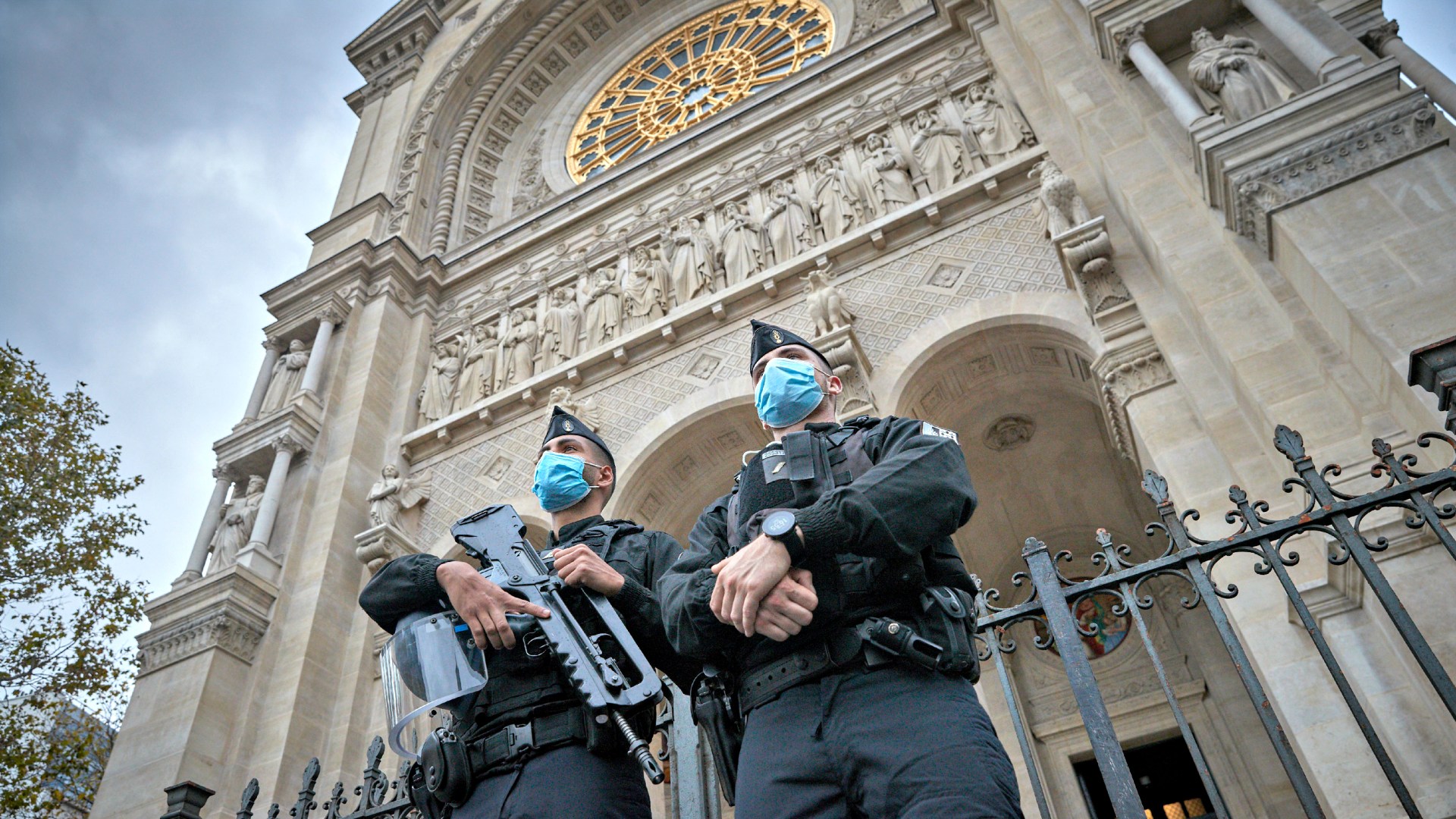
Armed French police stand guard in front of Saint Augustin Church in Paris on October 31, 2020, in the wake of terror attacks in France.

Armed French police stand guard in front of Saint Augustin Church in Paris on October 31, 2020, in the wake of terror attacks in France.

Christianity Today April 15, 2021
Kiran Ridley / Getty Images

On Monday night, the French Senate passed an anti-terrorism law that has greatly concerned church leaders.

Now called the Law to Uphold Republican Principles and the Fight Against Separatism, the bill—approved by a 208–109 vote, with 27 abstentions—intends to combat the Islamist radicalism that has incited numerous attacks on French soil in recent years.

However, the Macron administration’s desire to make France safer has put the nation’s deeply rooted freedom of religion in the crosshairs.

“The wind has changed in France,” said Clément Diedrichs, general director of the National Council of Evangelicals in France (CNEF), which according to new research represents half of French Protestants. The government has “clearly indicated that we’re no longer in a Christian society.”

“Religion has become expendable,” he observed, saying that the country’s leadership no longer has any desire to protect space for any faith.

In February, as reported by Christianity Today, the National Assembly, the French parliament’s lower house, passed a first version of the bill. The net result of the Senate’s debates is a version with even tighter oversight measures, despite the inclusion of a few modifications seen by Christians leaders as positive.

The Protestant Federation of France (FPF), which includes both evangelicals and Lutheran or historic Reformed groups, highlighted the Senate bill’s guarantee of the rights of chaplaincies—in particular in educational establishments, though the bill forbids any type of religious service in these establishments. The bill also provides for churches’ ownership of buildings given to them for free as well as access to public subsidies for making buildings accessible for people with reduced mobility.

CNEF appreciates the Senate’s reinstatement of homeschooling as an educational option, though with increased forms of oversight. The National Assembly’s version of the bill had taken away authorization for home instruction for children.

Next the bill goes to a joint committee of deputies and senators, who are expected in May to begin ironing out differences between the bill’s two forms before a final vote by the National Assembly in July. Soon after, the government will issue the decrees that cover the fine details of applying the law.

While its final form remains in flux and Christian groups such as FPF and CNEF will continue their advocacy efforts, pushing for the law’s impact to be made less onerous, French churches are beginning to prepare for how to comply with the anticipated new rules.

In particular, churches face increased requirements for declaring themselves to the government and stringent new rules related to finances, including tracking and limiting funding from outside France and the financing of building projects. The law would also increase government surveillance of pastors’ teaching and increase religious leaders’ legal liability, proposing steep sanctions for speech deemed to encourage disrespect of laws.

“We’re shifting from a separation of church and state based on liberty to a separation based on control,” said François Clavairoly, president of FPF. “Laïcité is no longer really a laïcité of trust and intelligence but is now a laïcité of distrust, suspicion, and control.”

France’s famous principle of laïcité, often misrepresented in English simply as “secularism,” was enshrined in a 1905 law that created a distinctly French form of separation of church and state, one that defends and guarantees freedom of religion and ensures government neutrality on religious matters.

Evangelical Christians were among those who advocated strongly for the birth of laïcité. But the principle is now in danger.

While French Christians are supportive of their government’s efforts to address the threat of radical Islam, they are troubled by constraints that don’t actually address the fight against terrorism and that conflate other religions with Islamist extremism’s threat.

“Our Western societies—I think it’s also true for American society—have more and more difficulty understanding religious belief and the way it guides the faithful in their lives in society,” said Clavairoly. “Terrorism’s extreme Islamist ideology that misrepresents Islam has further clouded understanding of religious life.

“Religious practice has become something menacing for many political leaders. … So our advocacy explains that religion isn’t a threat, but on the contrary, it’s a resource for intelligence and citizenship.”

Among the new constraints would be a threshold over which foreign funding of religious groups in France would require complicated, time-consuming processes of reporting and approval. The current proposed threshold is 10,000 euros (about $12,000 US) per year.

“We exist as a young church plant, thanks to the generosity of individuals and churches here in France, but still for the most part [donors] from abroad,” said Etienne Koning, pastor of Saint-Lazare Church, a Paris church affiliated with the Acts 29 network. If the limit holds, “it will have a big impact on our daily life. It will not make it impossible to do church, but it will make it far more difficult.”

He said authorities don’t seem to recognize that unlike the extremists they say they’re targeting, churches like Koning’s have a clear financial plan for generosity from abroad to be replaced by generosity from the local church as the congregation grows. His church’s foreign funding comes from generous individuals with normal jobs, not from private societies or oil-industry wealth as is often the case for the radicalized mosques whose ideology the government wants to protect French society from.

Koning noted the second main impact his church foresees relates to freedom of speech, expression of convictions, and increased control by the state over messaging. “I know that sounds like in China,” he said, acknowledging that what’s proposed in France isn’t at all at such levels. Still, it concerns him to see the government’s desire to “control what is thought—thus, what is said and what is taught.”

Yet, despite the new law’s dire evolution away from intelligent laïcité as they see it, French Protestant leaders’ strategy—toward both the government and the pews—has been notably free of fear-mongering. Instead, they have called for their sisters and brothers to avoid taking on a posture of victimization even as they recognize the seriousness of the moment.

“It is not the apocalypse,” said Clavairoly. “We are absolutely not in an atmosphere of fear.” Rather, he said, they are engaged in a very French debate that is a continuation of the hard conversations that took place at the end of the 19th century and beginning of the 20th between the church and the republic.

“Without fearing at all for our faith, we can legitimately express our concerns and the fact that we will remain attentive to the preservation of our legitimate freedoms, in defense of a well-understood laïcité,” said Erwan Cloarec, director of formation of the Federation of Evangelical Baptist Churches of France (FEEBF) and a pastor in Lyon.

For him, this means promoting the freedom to believe and not believe and being able to live this freedom without being worried or hindered in any way by the government. “It seems important to me to continue this fight, without fear or weakness,” said Cloarec. “The Lord is with us, and he invites us to faith, trust, and prayer.”

“Should we be afraid? No,” said CNEF’s Diedrichs. “In Jeremiah, it is said that we must look for the good of the city where we are, and this town isn’t Jerusalem. It’s Babylon. I think a lot of Christians would prefer that we were in Jerusalem instead of Babylon. Many evangelicals would like to still be in a Christian society that protects us.”

But since they are no longer in a Christian society, he said, French evangelicals have to be witnesses to the gospel like the first Christians were in their non-Christian society.

“They didn’t expect the government to protect them. They simply had an eternal hope and witnessed to this hope in their society,” he said. “This is why I say that we have no reason to be afraid, but do have all the good reasons to proclaim the gospel.”

While Koning, the Paris pastor, gives “four stars” to CNEF leaders’ “seriousness and professionalism” in tackling the issue as well as their desire to be peaceful, obedient citizens, he said he and other colleagues think the posture has been “too kind and a little naïve.” He acknowledges that the government’s desire for control and the potential repercussions for freedom of speech and freedom of conviction give legitimate reason for French evangelicals to feel concerned.

On the other hand, he said, there are plenty of reasons not to feel afraid: In a democratic country like France, elections can change things, and there are French who think clearly and can parse through the political discourse.

Whatever the outcome, Koning said, “We’ll find a way to carry on serving the Lord … taking good care of our people by faithfully proclaiming to them the unaltered and life-changing gospel, serving and loving our neighbors just as they are, … never giving in to bitterness or hatred, always building bridges and relationships, in order to bring Christ to our nation.”

How can Christian brothers and sisters outside France care for the French church? In separate interviews, Clavairoly and Diedrichs said the same thing: “Don’t be afraid for us.”

But there’s also a call for prayer.

Recognizing the spiritual stakes, CNEF leaders sensed committing to prayer would bring a greater return on investment than some of their meetings with government leaders. A thousand people receive the group’s weekly updates and prayer requests regarding the separatism bill’s progression.

“Pray for us,” Diedrichs invites those outside France, “that we will be courageous in advancing the gospel.”

Gerard Kelly, a British expat observer who has ministered in France for three decades and pastors a Normandy church plant alongside his wife, agrees. “We should be praying for revival, for the growth of the church,” he said. “We need to pray for vibrant churches so that when laws like this come up, people don’t see the evangelicals as a sort of weird, fringe cult thing.

“Instead, they see people they know as neighbors.”

For Christians in other cultures, especially the United States, seeing what’s happening in “post-Christian Europe” can be cause for alarm over what may be coming their way. But Kelly, who codirects with his wife the UK-birthed Bless Network, says such Christians can learn from Europe right now, specifically what living in a post-Christian culture looks like.

“Post-Christian means it’s a form of exile. We live in Babylon,” he said, unwittingly echoing Diedrichs. “We don’t live in Jerusalem.” Because of this, Kelly says as a European Christian, he doesn’t expect his government to make laws that particularly suit his worldview, though he does think it should protect freedom.

He acknowledges that moving into exile brings real losses and pain, not least of which is pastors’ and parents’ fear of living in a world in which their children are less likely to remain in the faith community they are raised in.

But he says exile is actually very good for mission: a post-Christendom missions model is much more inspiring and creative. “Your dialogue with the culture is not ‘You should join our enclave.’ It’s ‘You should find Jesus.’”

“When the church is strong and rich and powerful, it forgets missional engagement because it doesn’t need to. It stops engaging creatively with its neighbors and becomes complacent,” said Kelly. “God solves complacency by allowing exile to happen—because we were never meant to be separatist.”


News
Wire Story

Hype Meets Holy in Modern Bible Design

The latest “premium” text has a bright red cover, street art-inspired calligraphy, and a $300 price tag.

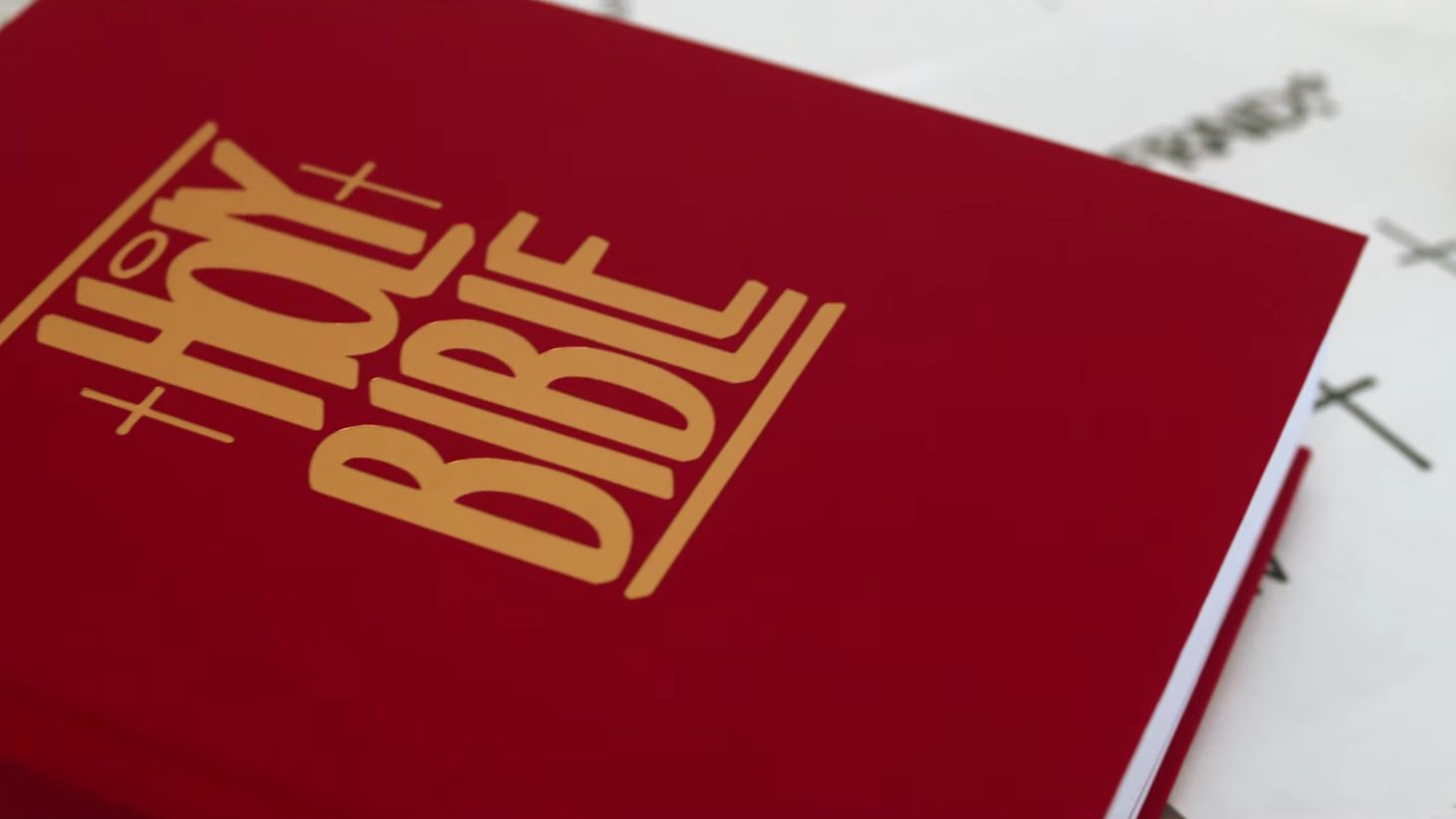
The new Bible incorporates calligraphy from artist Eric Haze. The company says 10 percent of gross sales will benefit Compassion International.

The new Bible incorporates calligraphy from artist Eric Haze. The company says 10 percent of gross sales will benefit Compassion International.

Christianity Today April 13, 2021
The Good Publishing Company

At first, social media users weren’t sure if it was an elaborate April Fool’s joke. It was, after all, April 1 when the billboard appeared above New York City’s Canal Street advertising a Bible with a $300 price tag.

The limited edition, art-inspired Good Publishing NIV Bible is described on its website as a “modern version of God’s Holy Word” and an “ambitious project, elevating the aesthetic to God’s Holy Word with artisan qualities.”

Those qualities include gold foiling on its “striking crimson red Soft Touch cover” and sustainably sourced paper. The title of each book was lettered by New York City artist Eric Haze.

“Rooted in humility with an ambitious mission, we set out to build a fresh, relevant brand around the best selling book in history–the Holy Bible,” says the Good Publishing Co. website.

Relevant magazine called it “Hypebeast-inspired content.” Commenters on Instagram asked if the Bibles had been autographed by God and quoted Jesus’ own admonition: “Do not make my Father’s house a house of trade.”

But so-called “premium” Bibles aren’t new. And while they may not carry the same steep price tag, a number of new and traditional Bible publishers are stressing the beauty of an old-fashioned book and the experience of slowing down to read at a time when so much of life is lived online.

“There’s a long tradition of Bibles being published, even hundreds of years ago, that were trying to use the finest materials to honor the legacy of the text,” said Tim Wildsmith, the pastor and blogger behind the Bible Review Blog.

Wildsmith, who reviews all kinds of Bibles on his blog, said he hasn’t seen a copy of the GPC NIV Bible in person to know if it’s worth several hundred dollars, but it’s not that much more expensive than some other premium Bibles. The most expensive by publishers like Schuyler or R. L. Allan are around $200 to $250, he said.

“I think that having a beautiful version of the Word of God is actually a way to honor the sacredness of the text and the high value we place on it in our lives,” Wildsmith said.

Plus, he said, millennials—the generation that popularized Instagram—care about the way things look and feel.

In the last decade, independent projects like Bibliotheca have brought that same reverence and an eye for design to Bibles at a more modest price tag—and shown big Bible publishers there’s a market for it.

Bibliotheca’s Kickstarter, launched in 2014 by book designer Adam Lewis Greene, envisioned a “design-conscious alternative” to traditional Bibles, according to its website. That meant splitting the Bible from one giant tome into four volumes (plus the Apocrypha), each with proportions based on the measurements for the Ark of the Covenant. Inside, a typeface designed exclusively for the project presents the sacred text without chapter and verse numbers, subheadings, and other notes that usually appear in Bibles.

“It’s geared toward an enjoyable reading experience,” Greene said in the video introducing the Kickstarter.

The project became Kickstarter’s most-funded first-edition book project to date, far exceeding the crowd-funding goal the designer had set.

Traditional Bible publishers took note.

In 2017, Zondervan published the NIV Sola Scriptura Bible Project, which, like Bibliotheca, breaks the Bible into four volumes without chapter and verse numbers or other notes.

That same year, Holman Bible Publishers partnered with Bible study community She Reads Truth to publish the She Reads Truth Bible, described on its website as “inherently beautiful” and “intentionally designed.”

The She Reads Truth Bible includes reading plans, devotions, and maps and charts for each book of the Bible similar to those shared on the She Reads Truth app, website and study books. It also is available with several different covers, including a bright poppy linen, and features hand-lettered key verses at the introduction of each book and typefaces designed for readability.

“At She Reads Truth, we believe in pairing the inherently beautiful Word of God with the aesthetic beauty it deserves. Each of our resources is thoughtfully and artfully designed to highlight the beauty, goodness, and truth of Scripture,” Amanda Bible Williams, co-founder of She Reads Truth, said in an email to Religion News Service.

“Simply put, beauty in our work matters to us because we believe it honors God, the beautiful one and source of beauty.”

Another recent project is Alabaster’s The Bible Beautiful, which is reimagining each book of the Bible as a single volume, printed on thick paper with original photography and attention to typography and negative space. So far, it has released 16 books.

For Alabaster co-founder Brian Chung, it was a matter of making the text accessible.

When Chung became a Christian in college, he said he was excited and also intimidated by his first Bible. It was leather-bound with extremely thin pages. Some of the words were printed in black. Others were red.

“I was just not like any book that I had experienced,” he said.

Sitting next to it on his desk was his marketing textbook, designed to look like a magazine. It was the first time he said he felt excited to read a textbook—and it gave him the idea that eventually became Alabaster, co-founded with Bryan Ye-Chung.

“I think as someone that was studying both business and design, I just thought, ‘Could the Bible be done differently?’” Chung said.

Culture

When Do the Latest Hillsong and Bethel Hits Belong in Your Sunday Lineups?

How worship pastors decide whether to sing to the Lord a new song.

Christianity Today April 13, 2021
Nathan Congleton / NBC / NBCU Photo Bank via Getty Images

“Learn these tunes before you learn any others,” John Wesley wrote in his Directions for Singing. “Afterwards, learn as many as you please.”

The specified “tunes” were those included in the 1761 publication of the early Methodist hymnal, Selected Hymns. Wesley’s seven directions for singing have long been included in the opening pages of the United Methodist Hymnal. They include exhortations like “Sing lustily and with good courage,” “Sing all. See that you join with the congregation as frequently as you can,” and “Attend strictly to the sense of what you sing, and see that your heart is not carried away with the sound, but offered to God continually.”

Wesley wrote his Directions for Singing for a different time, for a church usually selecting congregational music from a confined set of songs in printed hymnbooks. But this centuries-old guide helps establish a theological framework for a new project designed to help worship leaders evaluate a growing catalog of contemporary worship music.

The United Methodist Church’s (UMC) Discipleship Ministries recently released CCLI Top 100+ Beyond, the latest iteration of a project begun in 2015, aiming to help leaders curate worship songs. CCLI stands for Christian Copyright Licensing International, which provides copyright licenses to use music from a vast library of artists; it ranks its most popular songs twice a year in the CCLI Top 100.

The UMC project offers a recommended song list, with a description of each song’s lyrics, theological underpinnings, musical difficulty, and a list of recording artists and alternate arrangements.

The list includes seven titles by Hillsong Worship and Hillsong United, seven by Bethel Music, and five by Elevation Worship; the top-ranking CCLI song at the time was Pat Barrett’s “Build My Life,” and the team said it appreciated “that this song petitions Jesus to lead us ‘in Your love to those around’ us, which ties in to Wesleyan notions of cooperation with God in Christ Jesus.”

Another resource developed by the UMC suggests issues worship pastors should consider, such as finding music from underrepresented regions, engaging global worship traditions with cultural competence, and shifting to more inclusive language without violating copyright law.

CCLI Top 100+ Beyond project is not prescriptive but a set of guidelines to help disciple congregations and leaders in a theology of worship consistent with Wesleyan thought. In the Methodist tradition, “singing in worship should not exist for its own sake,” writes Matthew Sigler, “Congregational music for Methodists is understood to be catechetical.”

But singing tenets of the faith is about both understanding and feeling. The Rev. Nelson Cowan, who manages the CCLI vetting project, says, “This isn’t just doctrine we’re reciting through song; it’s doctrine we are learning and inhabiting and feeling and processing through song.”

Every congregation has a hymnal

The UMC’s CCLI vetting project does in a more uniform, explicit way the work worship pastors and music directors are already doing across denominations.

“Every congregation has a hymnal,” says Jake Ferrell, worship director at Valley Church, an Evangelical Free congregation in West Des Moines, Iowa, “whether they realize it or not.”

As the worship music industry has grown, churches have had to evaluate the flood of contemporary worship music popularized on Christian radio, through Christian conferences, and now streaming online. The triumph of contemporary worship music in the worship wars of the 1990s brought an ever-widening music selection; the church “hymnal” became more fluid.

Worship pastors say that evaluating and selecting new music is a central part of their job. They essentially revise the hymnal for their congregations every time they update Planning Center or whichever church management software they use.

“It’s a trusted position,” says Elizabeth Jackson, worship pastor at Antioch Community Church in Raleigh, North Carolina, noting the authority and influence that comes with having the final say over which songs are sung by the congregation.

Worship leaders pay attention to “singability”—whether a new song has too many words, big vocal leaps, or an irregular rhythm. Personal taste also plays a factor. “You hate to say it,” says Ferrell, “but a lot of it is just preference.” Ideally, pastors’ tastes are shaped by musical training and the needs of their congregations in addition to the contents of their personal Spotify playlists.

The expansive worship music industry makes it easy to find new music but nearly impossible to avoid the influence of a few prominent artists and producers. Most worship pastors try to choose music thoughtfully, but they may not be aware of how much influence the industry has over those choices.

Adam Perez, a worship scholar at Duke Divinity School, finds that, in general, worship pastors are “conscious of the theology.” But he points out, “Big brands [i.e. Hillsong, Bethel, Jesus Culture] have more power over congregational song choices than denominational identity.”

In pulling from the CCLI Top 100, the UMC recognizes that most artists and churches in the ranking are “charismatic, Pentecostal, Calvinist, or neo-Calvinist” and therefore “have not fully shared and sometimes have taken positions opposite to our core commitments.”

Worship pastors in evangelical and nondenominational churches likewise look out for theological red flags as they select new songs, but as the selection process is almost completely internal, each church is left to articulate its own theology of worship or trust that the producers of the music they encounter share their core values and beliefs.

A generous theology of worship

Despite the unofficial affiliation between the network of producers and artists creating the music that lands on the CCLI Top 100, there is indeed a common theology of worship undergirding much of our popular worship music. Perez suggests that the underlying (often unspoken) belief is that “through praise music we experience God’s presence.” The foremost purpose of musical worship is to facilitate a felt encounter with God.

The Methodist emphasis on the balance of singing with feeling and understanding fights against a theology of worship that too often prioritizes congregants’ emotional response. Cowan suggests that emotionally resonant but lyrically minimal songs not be excluded from services but supplemented by Scripture readings or by a pairing with traditional hymns that have related, richer textual content: “We recommend a principle of addition, not subtraction.”

Elevation Worship’s “Do It Again” is described as a song that “resoundingly articulates the faithfulness of God,” though “perhaps overly personal,” and is best paired with other music or art that encourages a more corporate mindset.

The narrative accompanying Kerri Meyer’s “Another World” notes that although there is no “explicit Christian language in this song, the flexibility of the song presents an opportunity to teach about the inbreaking reign of God.”

This inclusive, generous strategy allows for music that is poetic, personal, or lyrically minimal. It pushes against the exclusive use of such music, but it does not belittle or condemn it. This approach also discourages the exclusive use of obscure hymns to sing as much doctrine as possible. It welcomes the meditative and devotional as well as the intellectually engaging.

Worship pastors from across denominations may find that the Methodist resource helps them define and articulate the theology of worship that they want to practice and impart. It’s a reflective guide—there’s no list of rejected songs, nor any diatribes about the loss of the traditional hymnals or the dangers of contemporary music.

The first time I was put in charge of music selection for a worship team, I was a junior in high school. As a high school student, being allowed to help choose music for weekly worship felt like having real authority. And it was real authority. Even in my immaturity and selfish enthusiasm, I believed that music had an important role in spiritual formation, even if that idea was primarily formed by emotional experiences at conferences or concerts.

Music selection and worship leadership is teaching. To treat it with less weight than that is to miss the opportunity to use a powerful medium to teach, learn, and deepen faith. Through the music we sing together, we teach ourselves over and over what we as a congregation affirm about God’s identity, our identities, and our relationship with God personally and corporately.

Unlike the sermon preached each week during a service, the words we sing in congregational worship are words we all proclaim in agreement, in unison. It is a serious task to choose words that we all can sing in agreement, together.

A resource like the UMC’s CCLI Top 100+ Beyond can help those looking for a way to evaluate their own worship practices to ask, “Are we striving to sing together with both feeling and understanding? In both spirit and in truth?”

Kelsey Kramer McGinnis is a musicologist, educator, and writer. She holds a PhD from the University of Iowa and researches music in Christian communities.

News

Asking God to Reduce Carbon Emissions

Christians organize prayer campaign ahead of climate change conference in Glasgow.

Christianity Today April 12, 2021
Picture Alliance / Contributor / Getty Images

Christians in Asia, Europe, and North America will gather monthly from spring to fall to offer intercessory prayers ahead of the United Nations climate change conference scheduled for Glasgow, Scotland, in November.

The prayer campaign is organized by former Baptist missionary Lowell Bliss and includes leaders from the Lausanne/World Evangelical Alliance Creation Care Network, A Rocha International, Youth With A Mission England, Christian Missionary Fellowship International, Tearfund, and Young Evangelicals for Climate Action.

“A group of us are feeling called into a type of prayer commensurate to the urgency of the climate crisis,” Bliss said, “to appeal to the Creator, Sustainer, and Redeemer of all creation that God might intervene in this hour of great threat and profound injustice.”

Bliss is hoping thousands—evangelicals and charismatics as well as mainline Protestant and Catholics—will come together in intercessory prayer, “praying authentically while stepping outside our comfort zone … in a united appeal to God, ‘Lord, have mercy.’”

The Glasgow conference, known as COP26, will hear reports from the 190 nations that signed the Paris Agreement to reduce the carbon emissions that scientific consensus says are causing global climate change. The Paris Agreement, signed in 2015, included a “ratchet mechanism,” with nations agreeing to accelerate the reduction of carbon emissions every five years. The fifth-year meeting was delayed by COVID-19.

The meeting is considered crucial because some scientists say that the window to make a change to avoid the worst global impacts of climate change—rising sea levels, deadly heat waves, and increased natural disasters—is rapidly closing.

NASA’s measurements of the earth’s baseline temperature show rapid warming in the last few decades, as do the measurements of the National Oceanic and Atmospheric Administration (which runs the National Weather Service), and the Met Office Hadley Centre’s Climate Research Unit in the UK. According to NASA, 2003–2020 were the warmest years since people started tracking global temperatures in the 1880s, and “climate-warming trends over the past century are extremely likely due to human activities.”

Bliss, author of Environmental Missions: Planting Churches and Trees, said he is praying that God “grant that the nations may cut their carbon emissions by half by 2030 and achieve net zero by 2050.” He and the group are also praying that God would “be moving in each government of the world so that the revised emission-reduction targets that they bring to Glasgow finally match up to the Paris temperature targets.”

Twenty-eight percent of white evangelicals in the United States share Bliss’s concern, according to the most recent Pew Research poll on religious views of climate change. About 37 percent, on the other hand, say that there is no solid evidence of climate change. Another third say that climate change is happening but think it’s part of natural cycles and not impacted by human behavior.

While the issue has divided American evangelicals, that’s not true internationally, said Chris Elisara, executive director of the World Evangelical Alliance’s Creation Care Task Force. European evangelicals “are, for the most part, not skeptical,” he said, but “striving to have a Christian response to climate change that involves both mitigating against the changes and adapting to the changes as best they can.”

In other parts of the world, moreover, evangelicals see the direct impact of floods, droughts, and the extreme weather that indicate a climate crisis, according to Elisara.

“North Americans can have a debate on the matter because they’re not feeling the effects yet,” he said. “But in the Philippines? It’s not a debate. It’s their daily experience.”

It was the daily experience with pollution in India that convinced Bliss of the importance of caring for the environment. He went to the country as a missionary in 1993 and stayed until 2007.

“Over my years in the field, I was told that missionaries should feed souls and bodies. But what about the ecosystems in which those souls and bodies live and die?” Bliss said. “My best Indian friend in Varanasi was a Brahmin man named Munnu-ji. He died of cerebral malaria, which means that one infected mosquito, feeding on the fetid, polluted waters of the Gangetic plain, bit him.”

In 2009, Bliss started Eden’s Vigil, a nonprofit dedicated to training missionaries to integrate environmental concerns with the Great Commission to make disciples of all nations. He has partnered with the Lausanne Movement and the World Evangelical Association to create resources and encourage climate advocacy. And now he’s forging a partnership with six international organizations for an intercessory prayer campaign.

“It’s not a new organization, but a network of believers gathering to help each other pray,” Bliss said in an email to CT. “For COP26, we are trying to mobilize God's mighty right arm (Ps. 118:16) and Scripture is replete with stories of single individuals or small groups who did just that.”

According to New York City pastor John Starke, author of The Possibility of Prayer, the act of intercessory prayer asks God to intervene in our lives and transform the world. The practice goes back to the Levite tradition of Old Testament priests who acted as mediators for God’s grace.

“The New Testament calls us ‘priests,’” Starke said, citing 1 Peter 2:5, “and we participate in Christ’s ministry of ‘interceding for us’ when we intercede for others. We have a voice in the presence of God. We are called to intercede.”

Intercessory prayer doesn’t preclude getting involved and trying to help in other ways, but for many Christians, it is the critical starting place for activism—crying out to God on behalf of a broken world.

“Historically when Christians have been confronted with an event like COP26, we turn that desperation into intercessory prayer,” Bliss said. “John Knox”—who brought the Reformation to Scotland in the 1500s—“reportedly once pleaded with God, ‘Give me Scotland, or I die.’” We kind of feel the same way about Glasgow in November 2021.”

Bliss and the Climate Intercessors are not the only ones who are praying this way about the climate either. Activist Peter Fargo recently launched the “Million Prayer Mission,” encouraging Christians from different traditions to join in weekly vigils for the environment.

Just starting in 2021, the group has connected with evangelical and mainline churches in California, New York, and Virginia, as well as a variety of independent Christian musicians, and missionaries with Pioneer Bible Translators who are raising funds to produce Scripture for a church plant in North Africa. They gather for weekly prayer online.

“A Christian response to our climate crisis begins and ends with prayer,” Fargo said. “We turn to God to help us through the impossible because we know ‘nothing will be impossible with God.’”

The next prayer meeting is scheduled for April 27.

Books
Review

An Altar Call for Backsliding Book People

Two authors encourage Christians to rededicate themselves to attentive, artful reading.

Christianity Today April 12, 2021
Illustration by Mallory Rentsch / Source Images: Sincerely Media / Kari Shea / Unsplash

Among many evangelical literature-lovers (and likely many CT readers), Leland Ryken is a familiar name. Longtime (now emeritus) professor of English at Wheaton College, he is the author of numerous books, including The Christian Imagination and How to Read the Bible as Literature. In his latest offering, Recovering the Lost Art of Reading, he teams up with professional writer Glenda Faye Mathes to take on one of the ecclesial crises of our time (though not one that tends to make the headlines): By and large, Christians aren’t engaged in serious reading.

Recovering the Lost Art of Reading: A Quest for the True, the Good, and the Beautiful

Recovering the Lost Art of Reading: A Quest for the True, the Good, and the Beautiful

Crossway

304 pages

Ryken and Mathes set out to provide Christians with the reasons and tools they need to start reading again. Their overriding hope is that readers will find it easier to pick up a book and responsibly—indeed, artfully—lose themselves in it. (In this, their intentions overlap somewhat with those of Karen Swallow Prior in her 2018 work On Reading Well, although Recovering the Lost Art of Reading is a very different book.)

Ryken and Mathes describe their project as addressing “first the concept of reading as a lost art, then distinctive features of various types of literature and tips for reading them, and finally, ideas for ways to recover reading.” To put it more plainly, the book asks and responds to three questions: What is literature? Why should Christians read it? And what do they need to know (either about literature or about why they’re not reading it) before they can read it well?

While Recovering the Lost Art of Reading isn’t exactly literary criticism, it brings aspects of a literary-critical engagement to would-be readers and provides insight into things like the difference between literary and nonliterary uses of language, the relationship of form and content, and what exactly to pay attention to when reading, say, a novel. All the while, Ryken and Mathes share with readers how becoming an attentive, artful reader is one of God’s desires for us, not just because it helps us think and feel beyond ourselves, but because it brings delight.

It’s an ambitious project, but Ryken and Mathes are committed evangelists, and they bring the good news as all evangelists do, which is to say, they begin with sin and its consequences! We hear, for example, that “smartphones, computers, game consoles, and other devices for streaming information” have “fractur[ed] our focus” and that, as a result, “we’re losing depth of wisdom, perhaps even a part of ourselves that jeopardizes our very souls.” The authors then highlight the free gift offered by reading: “The best literary fiction reflects God’s … creativity,” and in it, if we have ears to hear and eyes to see, we can find “truth, goodness, and beauty.” Finally, they hold an altar call: “All it takes to accept the invitation is to read a book or poem.” Or, if you prefer, “the joy is before you. Open a book and enter.”

Repeated themes

One thing to observe about Recovering the Lost Art of Reading is that even though it is divided into three parts, each conceptually distinct from the others, there is a fair amount of repetition in the book. This is not entirely surprising, for to talk about “reading as an art” (part 1) necessarily entails saying things about “what literature is,” even if that topic doesn’t come up formally until later in the book (part 2). While the authors note that certain chapters build upon others, it’s helpful to think of the book not as a single, overarching argument but as a series of chapters that lend themselves to being taken up on their own.

Indeed, the authors invite readers to treat Recovering the Lost Art of Reading as a “guidebook,” implying that reading it straight from start to finish isn’t necessarily the intention. (Approached in this way, repetition becomes a virtue.) We might imagine, for instance, a hesitant reader of poetry lacking the confidence to pick up that edition of Emily Dickinson’s poems. Ryken and Mathes’s chapter “Reading Poems: Songs of the Soul” might be just what she needs to get herself over the hump. The fact that several chapters offer a mixture of theoretical exploration and practical tips suggests the usefulness of reading the book in this way. Chapters themselves are divided into short one- or two-page sections, and each concludes with a summary of the points made.

One of the downsides of writing the book in this way is, unfortunately, that that some parts are more engaging than others. The authors are at their best in the chapter “Reading the Bible as Literature: Words of Delight.” This is, of course, Ryken’s wheelhouse, and readers will have no trouble discerning the authors’ animating concern: If Christians aren’t reading artfully, then there’s a sense in which they can’t actually read the Bible. They write:

People who are oblivious to … literary aspects of biblical texts may think they are getting by without literary analysis, but either they are performing literary analysis intuitively and unconsciously, or they are not really interacting with the Bible but with a substitute.

In another notable moment, the authors take issue with what passes for “Christian fiction” these days: “Too many of these novels are bland romances with flat characters and pat endings. … No wonder some believers view reading novels as a waste of time!”

The chapters discussing “Truth in Literature” and “The Moral Vision in Literature” are also very good. In the former, Ryken and Mathes helpfully distinguish between representational and ideational truth in literature. Representational truth is something that can be taken at face value: Either what’s depicted in a novel is true to life or it isn’t. Ideational truth, though, requires the work of interpretation before one can assess its “truth claims.”

But even here the authors are careful, writing, “An additional reason why we should be unapologetic about disagreeing with some truth claims in a work is that there are almost certainly other elements that we can affirm. We can appreciate skill of composition, artistic beauty, an accurate and clarifying portrayal of life, and maybe even some of the author’s ideas.”

A mixed bag

Despite there being much to appreciate in Recovering the Lost Art of Reading, the book has some problems. In addition to the unevenness of the text mentioned above (perhaps inevitable when a book has more than one author), there is the ubiquitous, at times overwhelming enlistment of quotations. Hardly a page goes by without some tidbit, some piece of quotable wisdom, from a social scientist, a literary critic, or a famous author or text.

Multiple references to the Bible are, of course, to be expected, but C. S. Lewis is cited something like 40 times in the book, which means he makes an appearance every five or six pages on average. Now I like the creator of Narnia as much as the next guy, but after a certain point, one has to wonder whether it’d be better to put Ryken and Mathes down and just read Lewis instead. I understand the reason for appealing to authorities, and charitably, one might read the authors’ use of quotations as evidence of their lifetime curation of “the best that has been thought and said,” to quote Matthew Arnold (which the authors do). Nevertheless, it seems to me the relentless use of other people’s ideas actually stands in the way of Ryken and Mathes fully developing their own.

Another problem I saw repeatedly while reading was a certain ambiguity about the book’s intended audience. Given the authors’ evangelistic ambitions, one might safely assume it’s written for Christians—for “children of the Book” who have forgotten books. But I’m skeptical that all Christians, younger ones especially, will be engaged. The problem isn’t so much the subject matter as the way it’s presented. Even though I’m largely sympathetic to the claims made by the authors, their repeated references to the dangers of technology, the internet, social media, and video games strike me as caricatured and even tired, just as their objection to “stories about vampires or aliens” seems likely to be met with “OK, Boomer” or some such response.

Ryken and Mathes apparently also expect their readers to have a working knowledge of the current state of literary studies in the university. References to “deconstructionist” approaches to literature or “reader response” criticism will likely fly right over many people’s heads. Indeed, it’s possible that appeals to such half-understood and barely explained concepts might serve merely to reinforce certain preexisting and uninformed reader biases about academia.

Ultimately, Recovering the Lost Art of Reading is a mixed bag, like most chapters of the book: It contains a little bit of everything. I’d still recommend it, however, if only to prompt readers to ask themselves the questions Ryken and Mathes suggest good literature invites: How is it true? How is it good? And how is it beautiful? Only artful reading can provide the answers.

Darren Dyck is an assistant professor of English at Ambrose University in Calgary, Alberta, where he teaches courses on, among other things, medieval literature and the writings of the Inklings.

News

Died: Ashur Eskrya, Champion of Iraq’s Displaced Christians

President of the Assyrian Aid Society–Iraq (AASI) passes away from COVID-19 complications.

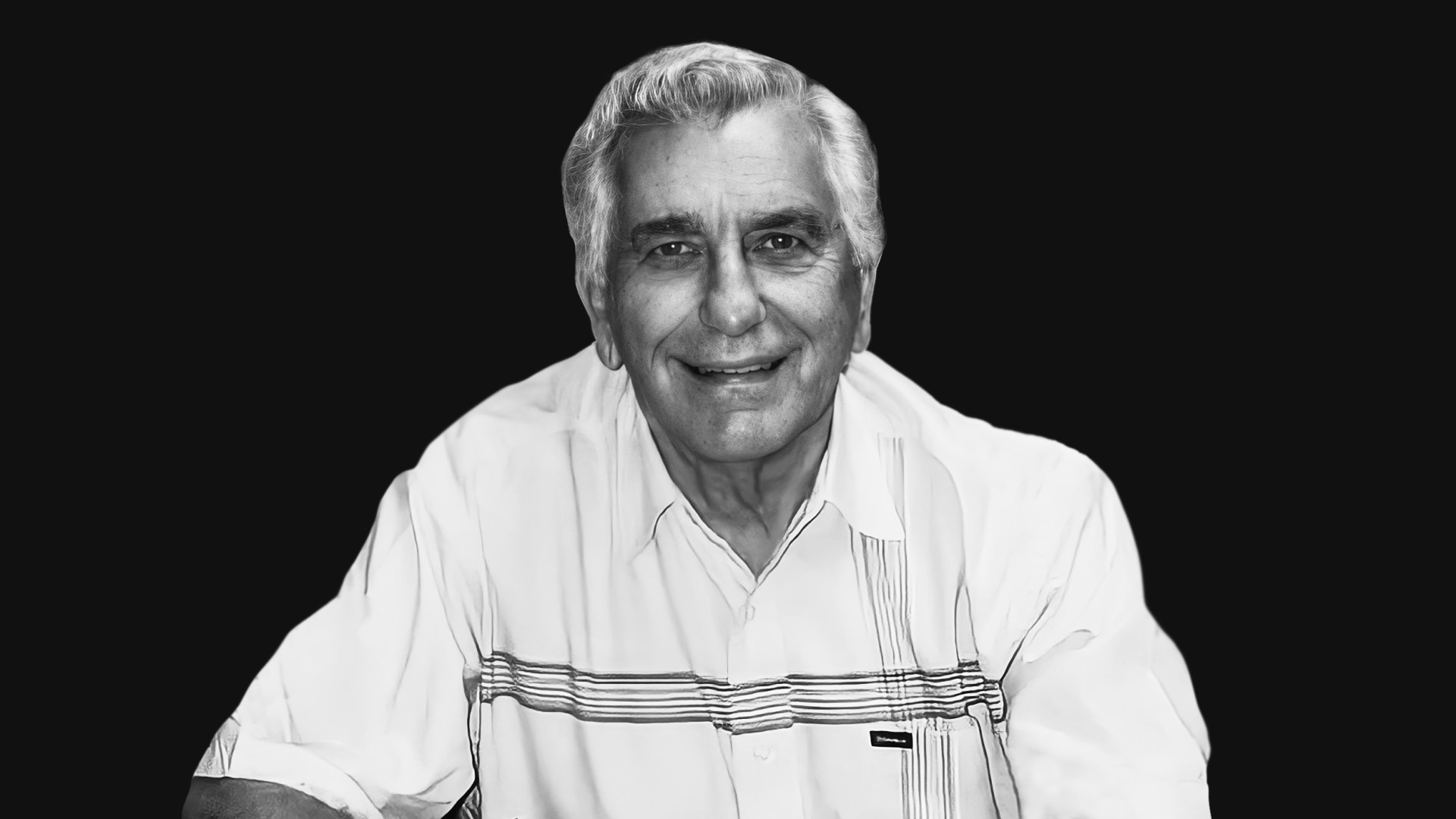
Ashur Eskrya, president of Assyrian Aid Society–Iraq

Ashur Eskrya, president of Assyrian Aid Society–Iraq

Christianity Today April 9, 2021
Zowaa / ADM

Ashur Sargon Eskrya, president of the Assyrian Aid Society–Iraq (AASI), passed away today from COVID-19 complications.

A champion of the Assyrian Christian minority, he was also a central figure in US efforts to shelter refugees from ISIS and later rebuild the Nineveh Plains.

AASI was honored for its work with a Nobel Peace Prize nomination in 2016.

“Ashur has played a prominent role in being a voice for our people in international forums, speaking on behalf of us all especially on the subject of indigenous rights,” stated the official account of the Assyrian Democratic Movement (ADM), of which Eskrya was a senior member.

“He will always be remembered for his leadership.”

Fellow ADM member Jessi Arabou called him one of the Assyrian nation’s “biggest assets.”

Born in 1974, Eskrya was a civil engineer and graduate of Baghdad University. He became a member in AASI in 2003, and assumed the presidency in 2010. Founded in 1991 to respond to the humanitarian crisis following the first Gulf War, the nonprofit is funded through branches of the Assyrian diaspora in the United States, United Kingdom, Australia, Canada, and Sweden.

“Ashur did much to make [AAS] what it is today. His energy and passion fueled and propelled the work on a daily basis,” stated the Assyrian Aid Society of America.

“[His] tireless efforts in bringing international attention to the plight and struggle of Assyrians is commendable and will be remembered and honored for generations to come.”

Under Eskrya’s leadership, AASI administered projects for refugee relief, reconstruction, irrigation, and medical clinics. Over 2,600 students in 27 schools were provided with K-12 education, including in the Assyrian language.

It also provided specialized care during the COVID-19 pandemic.

Eskrya was a member of the ancient Assyrian Church of the East. Born in Ainone, Iraq, one mile from the Turkish border, he fought for the rights of the original Christian inhabitants of Mesopotamia. He recognized their historical sufferings under Arabs, Turks, and Kurds, and lamented the divisions within Iraq’s Christian denominations.

He told CT of his hope that the recent visit of Pope Francis would help unite them.

Eskrya’s family home was in Mosul until its sale in 2011. He lived in Dohuk near the AASI headquarters in Iraqi Kurdistan, where many Christians fled during the advance of ISIS.

Pastor Ashty Bahro, vice president of Dohuk’s evangelical alliance and president of the Zalal Life Christian Foundation, counted Eskrya as a close friend.

“News of his death was tragic for me and for all the people here,” he told CT, “because Ashur was known in the region and he used to provide a helping hand to many, including the displaced and refugees.

“He will always be remembered by us.”

Many other Protestants expressed their grief at his passing.

“Ashur was one of those real-life heroes who spent a lifetime defending his faith, his people, and his country in some of the most difficult circumstances imaginable,” Robert Nicholson, president of the Philos Project, told CT.

“In war after war, tragedy after tragedy, Ashur was there on the ground, often under fire, helping those in need, both Assyrians and non-Assyrians alike.

“Strong, selfless, and wise, Ashur was truly one of a kind.”

Chris Seiple, former senior adviser for the Center for Faith Opportunities and Initiatives at the US Agency for International Development (USAID), agreed.

“I cannot imagine the Assyrian nation, the Iraqi people, and the body of Christ without him,” he stated. “A man of peace who loved all of his neighbors, he was my friend, and always will be.”

“Ashur was the guiding light for one of USAID’s most important Iraqi partners [AAS],” Ambassador Mark Green, former administrator of USAID and now president, director, and CEO of The Wilson Center, told CT. “He devoted himself to the recovery of his people and his land from the unspeakable horrors of genocide, and it is a great sadness that he did not live to see his good work completed.”

“He was a tireless advocate for Christians and religious minorities in Iraq,” stated Knox Thames, the US State Department’s former special advisor for religious minorities. “I often sought his insights about conditions on the ground.”

And Wissam al-Saliby, advocacy director for the World Evangelical Alliance, recalled encounters with Eskrya at the United Nations in Geneva.

“He was steadfast in his advocacy for the rights of Assyrians,” he stated. “I pray for more leaders like him.”

Eskrya is survived by his wife, son, and two daughters. Many on social media mourned the loss through the traditional Assyrian words of condolence:

Alaha Manikhleh. May God rest his soul.

Theology

Remembering Robert E. Cooley, Former President of Gordon-Conwell

He brought archaeological expertise to Israel, Egypt, and North America.

Christianity Today April 9, 2021
Courtesy of Jerry Pattengale

If you met Robert E. Cooley, you remember his arresting handshake. If you sat in a meeting with him, you recall a brilliance that stopped committee chatter or—more improbably—made sudden sense of it. If you worked with him, you remember a measured decisiveness that could pull your organization back to its mission or lead a whole new movement.

Cooley, a Near Eastern archaeologist and former president of Gordon-Conwell Theological Seminary, died Thursday, April 1, at age 91.

Best known for his presidency of the seminary from 1981 to 1997, Cooley spent much of his earlier career at archaeological sites in Israel and Egypt. His most important discoveries were made at Tel Dothan, in the West Bank, where he brought to light the burial rituals of the ancient city that speak volumes about how they lived. He played a key role in the founding of the Near East Archaeological Society.

His later research of 106 Native American sites while director of the Center for Archaeological Research at Missouri State University became central for the U.S. government’s “cultural resource management studies.”

But it was in higher education that he had his greatest impact on American religious life, much of it after he retired from Gordon-Conwell. He helped Tim Laniak, then-dean of the Charlotte, North Carolina, campus, develop that campus and plant a satellite school in Jacksonville, Florida.

“Those who knew Dr. Cooley,” Laniak said, “assumed the whole world did.”

In 2008, Cooley helped to reorganize the governance of Oral Roberts University at a time when the school had fallen into debt and was on the brink of closing. Mart Green, a co-owner of the Hobby Lobby stores who brought Cooley in to help rescue the school, recalled, “I first met Bob when he was in his late 70s, and wisdom was gushing out of him.”

The son of an Assemblies of God minister, Cooley was instrumental in the 2011 consolidation of three of the denomination’s schools—Central Bible College (his alma mater), Evangel University and the Assemblies of God Theological Seminary in Springfield, Missouri.

Cooley, a past president of the Association of Theological Schools in the US and Canada, also served as a senior editor for Christianity Today magazine and worked for the World Evangelical Alliance. He was a founding board member for the Museum of the Bible.

His last lecture, in November 2019, was at the Charlotte campus, where he retired. Titled “Household Archaeology: My Career Is in Ruins,” it was the first he delivered seated, Cooley explained, noting that he was approaching “the 90-yard line of life.”

Cooley was a man of great personal strength and he aged gracefully—at 84 years, he could grab a 100-pound bag of golf clubs in one hand from his trunk, and carry it some distance.

In 2014, he gave a lecture in Springfield, Missouri, at a traveling exhibit of the Museum of the Bible, speaking for more than an hour to a standing room only crowd, no notes in hand, and gave a detailed and memorable talk on archaeology and the Bible. The Q&A was wide-ranging and even more riveting. Afterward, he withstood a long line of people waiting to chat.

Seeing that image of him leaning slightly on the rostrum was a freeze-frame moment. He told me beforehand it was his last special lecture away from home as “my youth is leaving me.”

He lived fully, and purposefully. As he lost the ability to get around and eventually the ability to breathe, he never lost the strength to invest in others, and to live with the belief of heaven. He took pride in not being “the last of the conservatives,” but a mentor to future generations.

Green said the news of Cooley’s passing, and his life at large, brought to mind a verse from the Book of Job: “Is not wisdom found among the aged? Does not long life bring understanding?”

Jerry Pattengale is the inaugural University Professor at Indiana Wesleyan University and serves as a member of Christianity Today’s board of directors.

Ideas

The Best Advice on Engaging Muslims, from Arab Evangelical Scholars

Correspondent

Diverse anthology of current Christian research on Islam, the Quran, and Muhammad suggests biblically-faithful paths for better engagement beyond polemics or dialogue.

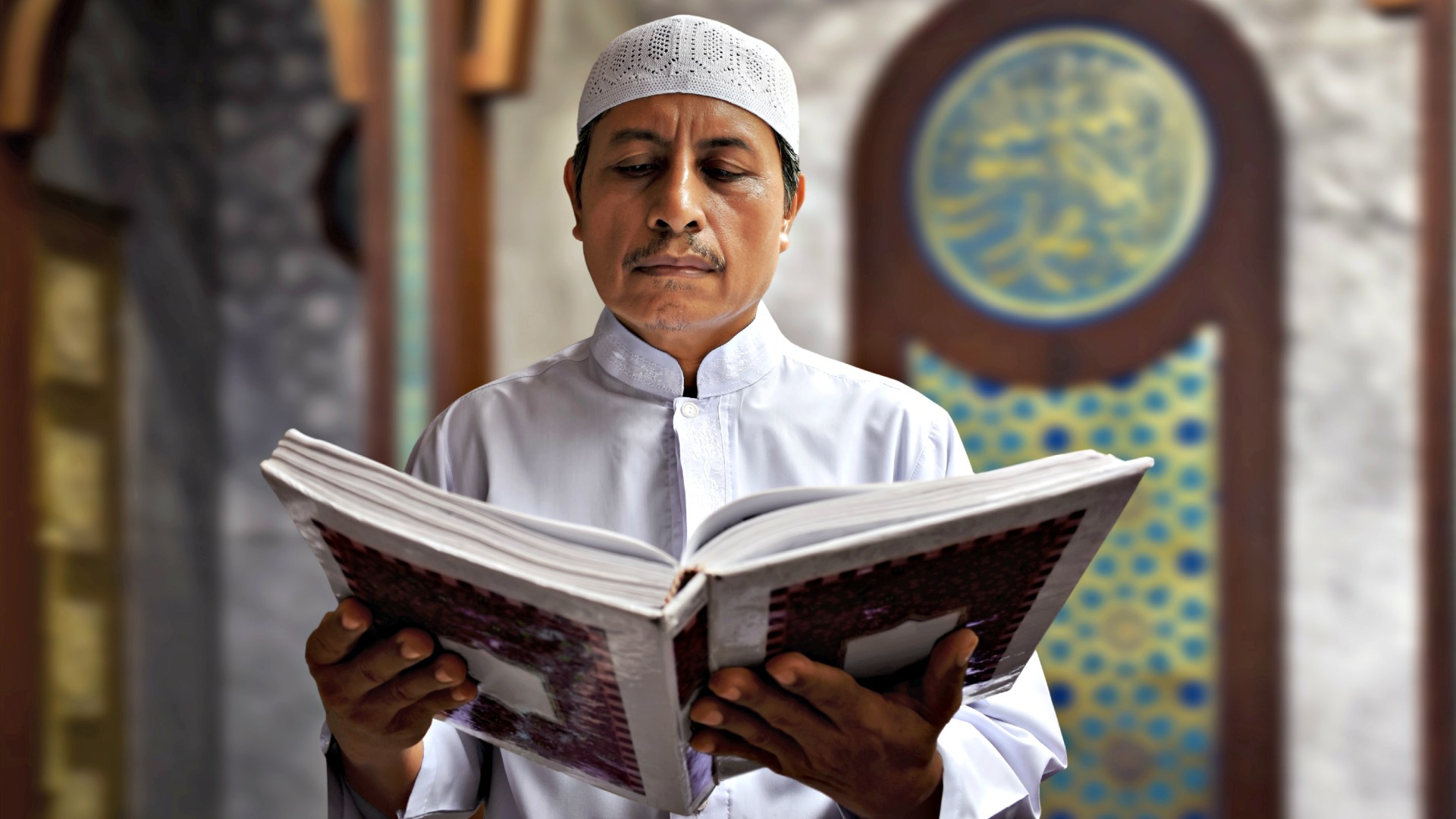
A Muslim reads the Quran in an Indonesian mosque.

A Muslim reads the Quran in an Indonesian mosque.

Christianity Today April 9, 2021
iStock / Getty Images Plus

American evangelicals often find themselves frustrated in their approach to Islam.

Two options are consistently placed before them: a polemical argument few are educated enough to engage in, or an awkward dialogue urging friendship but emptied of theological significance.

Help, therefore, may come from abroad—where evangelicals interact with Muslims everyday.

A new book, The Religious Other: Toward a Biblical Understanding of Islam, the Quran, and Muhammad, answers both concerns. An anthology of recent academic contributions to Arab Baptist Theological Seminary (ABTS), located in Beirut, Lebanon, the publication delves into the details of the debate over how evangelicals should view the rival religion.

But it also promotes a “kerygmatic method,” based on the New Testament Greek word for proclamation and connoting among biblical scholars the core message of early church gospel preaching. The book applies the term to seek a middle ground between polemics and apologetics on the one hand, and syncretistic and common ground approaches on the other.

Built on a foundation of academic rigor, this method aims for a tone of love within a spirit of Jesus-centered proclamation.

CT interviewed Martin Accad, editor of the anthology and associate professor of Islamic studies at ABTS. Though he remains on faculty, he recently resigned from his leadership positions at the seminary to found Action Research Associates, seeking holistic application of the kerygmatic method within the troubles of sectarian Lebanese society.

Accad described the value of the book for evangelical engagement with Islam, but also how its principles can guide interaction with “the religious other” in both Lebanon and the United States:

Out of the 30 contributors to this book, only 9 are from the West, while 16 are Arab voices. What is the impact of this diversity?

Having so many Arabs is unusual for this type of book, especially those who are not of a polemical bent. Much of the agenda of missions and dialogue has been driven by Western questions, girded by the theology of the provider.

The contributions, therefore, de-objectify the conversation. We do not claim to be authoritative, but I hope that our voices will come with some authority, as we highlight our primary concerns in this part of the world.

“Toward” a biblical understanding suggests you have no definitive Christian conclusion about Islam, the Quran, and Muhammad. What message does the book want to give?

The primary goal of the book is theological, and is the crowning of years of work at ABTS. The Religious Other wants to explore what Islam really is. But I have come to the realization that a lot of what drives evangelical approaches to ministry among Muslims is polemical, rather than conciliatory and collaborative.

One of the book’s central hypotheses is that Islam cannot be oversimplified. Essentializing the “other” leads to conflict, because it fails to see them in their entirety, or as they perceive themselves.

There can be no definitive biblical understanding of Islam, because chronologically the religion comes after the Bible. But the book is the best effort of our theologians and Christian scholars of Islamic studies to get to an understanding that is both academically rigorous and theologically faithful.

We recognize the difficulty to get at anything certain about the origins of Islam, and therefore about the nature of the Quran or the person of Muhammad. But we seek to humbly bring out the complexity of these issues, and then build upon them for greater peace and understanding.

Where else will the book challenge traditional evangelical thinking?

There is a school of dialogue that says we should emphasize common ground between the two faiths, because there is much overlap in the stories found in both the Quran and the Bible. And missionaries sometimes seize on these as a bridge to the gospel.

One chapter in the book, however, struggles to find any relevance between them. In fact, the contributor says they make understanding more difficult to achieve because of the radically different worldviews of each religious narrative.

Personally, I have a conviction that the evangelical world must grapple more with the doctrine of salvation within its engagement with Islam. While probably half of evangelicals still approach Muslims from a polemical point of view, the other half is growing more comfortable with the idea of dialogue.

This is a good development.

But as some leading figures who had been missionaries in the Muslim world switched into dialogue, I’ve wondered what happened to their soteriology. It is as if they entered a new season completely. The shift has been rapid, and I think we need more reflection.

One contributor, however, pushes the boundaries of salvation beyond what the typical evangelical framework is used to. He considers the classic question about people who have never heard the gospel, and then takes it a step further, to consider those who love God but find the message of the gospel doesn’t appeal to them.

The trick is, while the contributor doesn’t give a clear answer, he interacts with a 19th-century Muslim reformer who approaches the question from the side of Islam. He then asks, “What can we learn?”

Many biblical scholars will disagree with his reading of Romans 1. The contributor is a comparative religion expert, less versed in biblical studies. But we included his perspective because it will provoke a healthy conversation.

The book provides a whole range of interpretations on many issues like these.

While The Religious Other is about Islam, you propose the “kerygmatic method” as applicable to the evangelical approach toward all religions.

Yes—and all of society. It is about how you understand yourself in a faith community, and your boundaries in interaction with others. It says that God is calling us beyond the walls of the church to something that touches the entirety of human reality.

We need to move beyond one-on-one relationships of evangelism and discipleship as the only legitimate approach to mission, and into a holistic understanding of the church’s role to transform everything.

It is not one or the other, but rather both and all at once.

Jesus inaugurated a new era he called the Kingdom of God. We are far too timid in our understanding of what it means.

The kerygmatic model of interaction with the “other” is to look for something above religious affiliation as a core element of identity, without giving up faith. And then, the person of Jesus can become very uniting, without making you a fanatic. Because the core of Jesus’ message is peace, action, and reconciliation—with God, but also with other human beings.

You are now developing a new project for Lebanon along these lines.

Over the past years I realized that engaging religious leaders is not enough. The early thrills of our peaceful revolution for change reached a dead end within a corrupt political system. The explosion at the Beirut port only made our crisis more disorienting.

So the project addresses the root issues of our sectarianism, and the different narratives that emerged from our civil war. We are where we are today because these were never dealt with in our history. This era is not even covered in our textbooks, because it is impossible to reach a common understanding of events.

Therefore, our effort will hold these narratives in tension, because they are not reconcilable. Each one develops a sense that their group is a victim, and the “other” is a victimizer.

But just like with other religions, we can accept diverse narratives as real to each person, without agreement. And this then becomes the basis for a process of reconciliation. It creates empathy to hear the story of the other, giving you permission to also share your story, without it being nullified.

I have no doubt that God knows all the intricate details about our history.

But I don’t think that the ultimate truth within these narratives can be determined by any human being. So instead of creating one single version of events, our common narrative will become the ability to be tolerant of the other’s disagreement.

Kerygma, however, is a Greek word for the proclamation of the Christian gospel. Is this also a part of your project?

I would not be where I am today, nor do what I do, without being shaped by the person of Jesus, within a biblical worldview. But it is certainly true that this is less directly a proclamation of the gospel of salvation through the cross than are the ministries of evangelism or preaching.

Instead of starting with verbal proclamation and considering application, this is an application—that is begging for the question [of who Jesus is]. Jesus is often part of the conversation, even with top officials and religious figures from Lebanon’s various sects.

Jesus is inescapable from this whole approach, and he is more at the center of a conversation about the future of Lebanon than he is in a simple dialogue between Christian and Muslim clerics. In fact, if we seek a nonviolent transition from corruption and sectarianism, Jesus may be the only viable model.

One reason is that in Lebanon, the theological component of one’s religious identity is often the least important ingredient. But the core value of the kerygmatic method is that Jesus is at the center, supra-religious.

And Lebanon, actually, is a microcosm of the situation in the whole world today. If the church doesn’t learn how to look at reality holistically, through the lens of Jesus, then we will be rapidly moving toward irrelevance.

How would you apply this to evangelicals in America?

Critics often blame them for over-involvement in politics. But I think they have not been involved enough. We just have to differentiate between political theology and a partisan theology that pushes a particular agenda, through which believers think that they will gain more influence.

The world doesn’t need more religion in public life, it needs more Jesus in public life. The church is wrong when it tries to dictate morality to the society at large, because it becomes seen as the oppressor.

Teachers in the church have the responsibility to teach with love on all questions of ethics. Leaders should encourage believers to be involved in politics and the public sphere—each according to his convictions—while shaping those convictions through gospel preaching.

It is a politic of humility, with respect for diversity.

For if anyone had the right to dictate right from wrong and compel obedience, it was Jesus. He knew the absolute position, and had absolute authority, but he chose not to do so.

Again, it is the kerygmatic method: A recognition of complexity, and the application of grace.

News

Died: Teen Missions Founder Bob Bland, Who Put Young Missionaries Through Boot Camp

With his Florida training program and international construction projects, he empowered young people who didn’t want to wait to do something for God.

Christianity Today April 8, 2021
Courtesy of Teen Missions International / edits by Rick Szuecs

Bob Bland, an evangelical pastor who trained and sent tens of thousands of teenagers on short-term mission trips, has died at the age of 92.

Bland founded Teen Missions International in 1970 after a 14-year-old girl at a Youth for Christ event in Southern Ohio broke down in tears because she had been rejected by a missionary organization. She said she didn’t want to wait. She “wanted to do something for the Lord now.” Bland, moved by her passion for Jesus and lost souls, conceived of a program expanding the then-new concept of short-term missions to high school students.

Today, Teen Missions is a $3.7 million ministry that has sent more than 42,000 American teenagers to 19 countries. In 2021, the organization is planning trips to build classrooms in Zambia, a missionary house in Uganda, a security wall in Malawi, and a training center in Ecuador.

“Get dirty for God,” one Teen Missions slogan challenged young Christians. “Lay a brick!”

According to Bland, however, construction work was never the main goal of the group’s short-term missions.

“We tell the people who are leading our teams that we’re building kids, not buildings,” Bland said. “These kids go overseas and with their own hands build a place to worship or an orphanage or a school for young people, and they come back different.”

Bland was born on December 8, 1928 in Chillicothe, Ohio, the youngest of four boys. His father, Jay, was a farmer and contractor. His mother, Blanche, worked at a laundry.

After graduating from high school in nearby Waverly, Bland went to work as a carpenter and trained to be a union plumber. But the day he was set to take his plumbing test he read Matthew 22:29 and it changed his life. In that verse, Jesus is challenged with a tricky question about the afterlife by the Sadducees. He rebukes them and says, “Ye do err, not knowing the scriptures, nor the power of God” (KJV).

Bland realized his life plan aslo erred, since he wasn’t focused on the gospel. “God had spoken to me out of his word,” he said, “showing me that day I was not to be a plumber.”

Bland left construction work to study at Arizona Bible Institute in Phoenix and became a minister in the Christian Union, a Wesleyan denomination sometimes associated with the Stone-Campbell Movement. He pastored a church for a few years in Hennessey, Oklahoma, but then decided to focus his ministry on children.

Bland went back to Ohio to work with Youth for Christ in 1964, and also served as a recruiter for the Christian Service Corps until he started Teen Missions.

The first year, Teen Missions sent 83 young people on four teams to Mexico. It was a resounding success, and the next year they sent young people to Mexico, Columbia, and Guatemala. The ministry’s slogan, painted on the side of a blue and white bus, was “Missions Now for the Now Teens.”

In 1973, however, the ministry almost ended in catastrophe during a troubled trip to Peru.

“Everything that could go wrong, went wrong,” Bland said in an interview years later. There was an encounter with a snake, a near drowning, dissension on the team, outright fighting, teenagers who refused to work, and cancelled airplane flights, stranding the group in the Amazon.

“So many bad things happened. Kids could have lost their lives on that trip,” Bland said. “We needed some training and discipline.”

He made the decision to start a missionary boot camp. It would prepare young people to live in undeveloped and underdeveloped parts of the world, build cohesive teams, teach practical skills, and show young people what they could do. Teen Missions bought 250 acres of Florida jungle from the Girl Scouts on Merritt Island, Florida, just west of Cape Canaveral, and accepted 500 teenagers—some as young as 13—in 1974.

Every morning for two weeks, the young people got up at 5:30 and ran a Bible-themed obstacle course in groups—crawling through Ten Commandment barrels, sorting heavy crates into the order of the books of the Bible, and swinging across a mud bog nicknamed the Red Sea.

After, they learned skills like how to build a stone wall, how to dig a well, and how to ride a motorcycle. They also learned to evangelize and memorize Scripture.

“This is a missionary training camp,” Bland told a documentary film crew in 2007. “This is not pamper camp. If you’re looking for pamper camp, that’s down the road.”

There was no running water at the camp, so if kids wanted to get clean they had to swim in the lake everyone called “the bathtub.” And there was no “lights out,” since the camp had no electricity and everyone went to bed at dusk, except during a final, candle-lit commissioning ceremony.

Stroll along the Tampa Bay marinas, and you will become aware of the push-pull pressure exerted on the boats riding anchor. Tides attempt to woo them out into the deep while the anchor commands the opposite. This seems also to be the case with the subject of clergy divorces. A great deal of ambivalence became strongly evident as research on this article was begun.My intention here is not to cast stones at others’ glass houses, or to put pressure on the family of the ordained pastor. Scripture says, “Let us reason together.”Robert Sinks gets directly to the heart of the matter. Writing in Christian Century (Apr. 20, 1977), he says, “The phenomenon of divorce has long been an embarrassment to the Christian church. At best, it has been regarded as a reluctant concession to human frailty, a painful reminder of our failure to fulfill the exalted standards which God holds for marriage.”Lyle Schaller believes the divorce rate for ministers has at least quadrupled since 1960. G. Lloyd Rediger’s statistics point out that 37 percent of the clergy with whom his organization works are seriously considering divorce; based on precedent, 15 percent will dissolve their relationship. Over 60 percent of his population deal with problems serious enough to make divorce a distinct possibility. David and Vera Mace bring the current situation into perspective when they write: “The clergy has remained in a state of supposedly blissful obscurity … until now … broken clergy marriages have … become an issue to be reckoned with, and ecclesiastical officials are addressing themselves to the perplexing task of formulating policies for appropriate action.”There appears to be little doubt that there has been a recent trend toward divorce among clergy of all denominations. Like it or not, we have a tiger by the tail. There may be a strong desire to “let go” or to ignore it, but it is obvious the problem will not just go away. It should command the attention of the church; it cries out for workable solutions.Why The Upward Trend?It would be simple to wrap this situation up in a neat little package, saying: “Causal factors in clergy marriage dissolutions are no different from those outside the profession.” There are similarities, differences, and overlap. Some of them apply especially to clergy families.1. A synod president believes the reasons to be twofold: (1) the greater acceptance of clergy as people—the stigma previously associated with divorce is no longer a threat; and (2) the tension and pressure of today’s society exerted on the life of the pastor, his wife, and family.A pastor in the Western United States recently became involved with a married woman in his congregation. Both divorced their spouses and were married in the church of which he was the minister. The congregation turned out en masse for the wedding, giving open support. The generally more tolerant attitude of society toward divorce may make it a more readily available option than in the past.2. A statement from “Guidelines for Dealing with Marital Crisis, Separation, Divorce and Remarriage of American Lutheran Church Clergy,” Exhibit D, reinforces the above:“In our day societal pressures are adding to the dilemma so many experience in regard to the marriage relationship. One factor is the increasing expectation people have for satisfaction in all of their relationships and activities. This often becomes a self-centered search for immediate personal gratification. Another factor is the decreasing social pressure they feel to continue less-than-satisfactory marriages. The result is that husbands and wives are giving up on their marriages in tragically increasing numbers.”Howard Clinebell, writing of “parent-child marriages” in The Christian Ministry (July 1971), theorizes that some pastors’ wives marry out of a need for a daddy figure, while he marries from a need for a wife who desires him in that role. In the cold light of the dawn of reality, a spouse may see her clergyman-hubby as less than perfect as husband, father, lover, provider, and community leader, and a sense of “being had” may set in. There are about as few wing-buds as halos around these days, and the turned collar does not guarantee either sainthood or perfection. This “sword,” of course, has two edges, cutting against wife as well as husband.3. Another problem, which demands considerable study, is that of the women of today. It is true that the pastor receives a ministry’s official call. It is also a fact that because of this, many wives have been relegated to basking in their husband’s (or today, wife’s) shadow. Clinebell, among others, believes the changing role of women is probably the most profound of the multiple revolutions our society is experiencing. Women’s lib has, and will undoubtedly continue to have, earthquake-force power on relationships.Formal education for both sexes exists in proportions not known just a few years ago. Since World War II, females are coming into their own, and they believe, and often act on the premise, that they are equal partners with their mates. The message of the centuries that men are to be at the forefront of leadership and control is just not being “bought” by today’s bright, assertive, educated women.4. Stemming from the above, one often hears this comment: “I’ve had it with the role of Mrs. Pastor! I just want a more normal life for myself and family.”“Normal” may mean just attending church and/or church school—period. It may mean “doing my own things,” which may evidence itself in actively supporting the pastor and congregation, or not doing so. With privilege comes responsibility. If the role of a pastor’s wife is to be fulfilled and fulfilling, certain responsibilities beyond those of the majority of parsonage wives must be assumed. Spouses’ ability to communicate this to one another and to work out a mutually satisfying solution is vitally important.5. Diversity of backgrounds is a further reason for the accelerated splitting up of parsonage families. An experienced synodical president shared his thoughts: “I have a hunch that the diversity of backgrounds … of many ministers and their spouses may also contribute to an increase in divorce. We are no longer dealing with a minister and spouse who come from solid, stable homes with good models of marriage relationships or from congregations in which effective models for minister and spouse have been lived out and observed. I seem to sense an increasing number of couples in which at least one partner comes from a single-parent family in which one or both partners have had little vital contact with live pastoral ministry.”If the pastor’s wife has been at best a nominal or fringe member of her congregation, she may have only an inkling of what it takes in terms of personal sacrifices on everyone’s part for the work of the Lord to be effective. There are probably few factors with as much potential to destroy or seriously hamper a leader’s work as the push-pull of personal allegiances. There is just no way a pastor can be at his or her peak if there is a running battle going on at home. If he is torn between his inner convictions and strong demands of family, the results may be chaos, conflict, and possible breakdown.6. Rediger speaks of the problem of the dual career phenomenon as another cause of divorce. The day when the husband’s job dictates where a family lives may be on the wane. Wives have increased potential to make as much or more money than husbands, and with it, more bargaining power or control. Males have been conditioned to believe their paycheck should always be a notch above that of the female. When this is not the case, the ramifications may be potentially traumatic.7. Another contributing factor is infidelity. There is little doubt that there is a percentage of women who consider the sexual conquest of a pastor a goal worth pursuing. The minister may appear distant or unapproachable, above such behavior, and is thus a challenge. Pastors have relatively easy access to the homes of a vast number of people, including distraught, “helpless,” and dissatisfied women. Playing on his ego over a period of time many finally succeed in the seduction. If a member of the opposite sex perceives a minister’s marriage as shaky and that person is also experiencing unhappiness, there is a certain kinship. Commiseration may lead to conquest.8. Eighty-five percent of married couples are estimated by Herbert Otto to have failed to utilize their God-given sexual potential. About 62 percent of couples who present themselves for therapy do so because of problems centering on sexual dissatisfaction. There is no 100 percent guarantee that a graduate degree in theology bestows a “lover cum laude” on the minister and his or her spouse. Hang-ups, inhibitions, myths, maybes, half-truths, past experiences, sexual training, attitudes, a desire to experiment, to sow wild oats, all contribute to the number-two problem area in marital relationships.9. The inability to love is a sort of umbrella, encompassing many of the preceding problems. Leo Buscagelia believes so strongly that one of the common problems of our society is nonloving that he has initiated a college course on love. His findings, along with others’, reinforce the belief that love is a process taught in interaction with our “persons of significance.” There is a positive correlation between one’s ability to love, and self-esteem and self-concept. Our Lord gave us a commandment, often played down or ignored: “You shall love your neighbor as yourself.”When a clergyman says to his spouse, “I am no longer in love with you,” that may be true. It may also be that there is a battle within that person to accept himself. It is not necessarily true that we see others in transactional analysis terms of “I’m okay, you’re okay.” My definition of love is simple and easily understood: it is active, willing, caring. Overtly showing affection is a primary ingredient in enriched and growing relationships. However, the secret of making the formula work is willingness. As each spouse asks, “What can I do to bring greater happiness to my wife [or husband]?” and then acts upon it gladly and willingly, love has the soil in which growth is likely to take place.10. With the emphasis on things, the “good life,” and the accumulation of material possessions, it is easy to get hooked on the Madison Avenue merry-go-round. A reporter once asked the elder Rockefeller, “How much money does it take to satisfy a person?” The billionaire snapped back, “Always a little more!” If a pastor’s family operates in a milieu where affluence is evident and he is just “not in the running,” jealousy may insidiously creep into the relationship to disrupt and destroy.The Other Half Of The StoryFor many families, and especially for the wife, the parish experience is a goldfish-bowl existence. Spats or problems within the parsonage seem often to be more public than private information. One pastor’s wife put it: “As Caesar’s wife, I had to be beyond reproach.” Living behind this façade can grate on the family’s personality, and the strain, real or imagined, can contribute to a wife’s basic dissatisfaction.Unless a woman is familiar with the irregular hours of the profession, she may be ill prepared for the demands placed on her husband. Nor may playing a “behind the scenes” role or basking in the shadow of her spouse be quite “good enough” for the educated, more assertive parsonage wife. Nan Andrews wrote recently, “Many ministers’ wives are well educated and talented in their own right, but are getting their ‘goodies’ primarily or only through their husbands’ work. They have not felt free or been encouraged to pursue their own careers if they wished.”The church may get so large, duties (real or felt) so demanding, community- and hierarchy-motivated programs so time consuming that the family is squeezed out or relegated to positions of seemingly secondary importance.A Texas minister’s wife spoke from personal experience: “The congregation may turn to the pastor for counseling, but where do we go for help? The shoemaker’s children go barefoot; what happens to the clergy family?”A potpourri of clergy wives’ concerns/complaints include too little personal time together; less freedom than the majority of families to move or stay in the community of their choice; less remuneration than other professions with similar educational requirements. (“Perks” such as car allowances; rent-free, church-owned housing; and occasional discounts narrow the gap. But a sense of dissatisfaction may still permeate parsonage families.)Some SolutionsSo far we have spoken of reasons for the rising incidence of clergy divorces. If it is true that there is a causal factor for everything, then can we not say that if walls are built between two people then these same people can cooperatively break them down? The UNESCO preamble reads: “If wars begin in the minds of men, it is in the minds of men that peace must be constructed.” I believe this applies to couples and families as well as to nations.A recent article appeared in the Lutheran Church of America’s Lutheran, “1980’s: Groping or Coping?” I believe this is the challenge facing those who want to improve parsonage relationships. It will require some of the keenest minds of Christendom—minds open to what key people in the fields of human relations and theology have to say. It will take agonizing and soul searching as well as decision making as humbly, perhaps hesitantly, we seek the guidance of the Holy Spirit. The following may add to the contribution already made.1. I have long advocated that there be one or more pastor’s pastors in every synod or similar division. Though seemingly this has fallen on deaf ears, perhaps some day it will happen. Some say the synod president is a pastor to pastors, and I agree to a point. One of his prime responsibilities (this applies, of course, to a bishop or district superintendent) is to place the most qualified and effective person in a given parish. But regardless of how fair, open, or non-prejudicial a leader may be, is it not logical that he may hesitate to recommend someone to a congregation if he is aware of the individual’s personal or family problems? Leaders tend to operate out of a considerable number of “shoulds” and “oughts.”I believe church leaders should provide someone with experience in the active ministry, skilled as a counselor and trained in the behavioral sciences, who would travel about the territory without clout or official representation. He or she could be a friend to the minister, listening, counseling, supporting, and reporting numbers, not names, to the leaders. This would apply to clergy in “tent-making” ministries. Reinforcing my conviction, Howard Clinebell comments: “Denominations ought to make it easier for ministers and their families to receive competent counseling, non-ecclesiastically related. Such counseling should be confidential and should not be reported to those in the ecclesiastical power structure.”2. I am also concerned to see top quality premarital counseling provided. While in seminary, I was also a member of the faculty who tested “pre-theos” and theological students for “fitness for ministry.” Why not include another category: “fitness for family life?” Preventive medicine seems to be a logical response to the marital difficulties of our day. A leader in pastoral education writes: “I personally think our judicatores have a responsibility to provide actively for the care of clergy families in emotional and marital concerns as we do in the medical programs commonly provided.”3. Dr. Clinebell advocates the personal involvement of seminarians and those in the parish in growth groups. Responding to a question asked by Christian Ministry’s interviewer, who inquired after “the positive, therapeutic things that can and should be done for minister marriages,” he said, “Many discover they are really fighting old battles, that they are prisoners of their own past … this can sabotage their own effectiveness.”4. Ministers need to recognize their need for counseling. A leading writer and counselor said to me, “Ministers seem to be the last ones to seek help.” The ex-wife of a pastor wrote: “… ministers are often the last ones to feel or admit a need for counseling. They counsel other people. Frequently a minister’s ego makes it extremely hard for him to seek help until it is too late.” Others concur. Statistics stored in denominational headquarters are so well guarded that it is not possible to report the percentage or numbers of ministers seeking therapy. It appears, however, that younger, counseling-oriented ministers tend to seek assistance more freely than others whose training did not include this orientation.Reasons for the minister’s reluctance to enter into a therapeutic relationship are varied. Reuel Howe submits one that says, “Helping others serves to contribute to the formation of illusions about our own adequacy. Such attitudes are in part reinforced by unreal expectations of us (the pastor) on the part of others.” A second reason may be fear of acknowledging we are unable to control our lives. To admit that we need to reach out to another professional may be so unpalatable that counseling is refused. We need to rid ourselves of the “halo effect.” Those who are ordained are neither perfect nor infallible. To admit this and reach out to God and man in time of need is a sign of strength, not weakness.5. Congregations need education in the area of realistic expectations for the pastor and his family. Due to demands (overt or covert) of members, applied pressures, and selfish, controlling tactics, the clergy and their families often are caught in a crossfire or a push-pull of loyalities. In a fairly recent cross-denominational survey, the interviewers asked wives, “How many days have you had alone with your husband in the last month?” Over 50 percent of them said, “Not one.” Only 2 percent had as many as one a week, and only 16 percent had as many as two days alone with their husbands in the month prior to the survey!6. The minister needs to practice what he preaches. The gospel of love is still alive and well. So is the power of the Holy Spirit. Prayer is still a channel between God and his creation, and the Word still offers guidance for our lives. Resources within the church and secular community are available. Their competent people are trained not only in counseling, but in keeping confidences.7. Participation in marriage encounter, marriage/family enrichment, family checkup/family strengths seminars, S.O.S. seminars (Self-Awareness, Self-Understanding, Others [communication], and Sexuality), and similar programs can be undertaken before the divorce lawyer is engaged. The S.O.S. and checkups/strengths seminars have proven helpful to many over the past several years.The End ResultFrom various denominational headquarters, including Lutheran, Baptist, Episcopalian, Methodist, and Presbyterian, have come some positive responses to the need. Action is being taken: a pastor to pastors has been established by one large denomination; committees are being formed to take a closer look at the divorce problem on an ongoing basis; guidelines are being written; clergy and laity are sharing ideas, agonizing over an issue that refuses to keep silent.Robert Sinks speaks of a “theology of fulfillment.” This stems from John 10:10 and the human potentials movement. He writes: “Applying this divine order to divorce and marriage, we come to realize that faithfulness to the intention of marriage is the best pathway to human fulfillment and joy. The goal that marriage is lifelong is to be taken with full seriousness; for only as couples commit themselves to the process and discipline can they hope to create the fidelity and mutuality out of which the highest joy of marriage can issue.”The pathway to more enriching and fulfilling marriages will not be an easy one; applying Band-Aids or simple prescriptions will not suffice. A great deal of cooperation is needed, but it will result, I believe, in helping to stem the tide of divorce and alienation, and foster enriched, fulfilled marriages and families where there is support and love for one another.Robert J. Stout is professor of psychology/marriage and the family at Saint Petersburg College, Florida. He also has a private counseling practice.

In the early years, teens struggled to go without TV and soda during the boot camp. In later years, they were deprived of their cell phones and social media. But they learned things about themselves and, as Teen Missions would explain to reporters who regularly turned out summer stories on “The Lord’s Boot Camp,” the teenagers grew up a lot.

While some campers hated the training and the missions trip and called the experience manipulative and oppressive, more loved it, and talked for years about how it shaped them.

“You learn you can survive without an electric light,” one teen said in the 1980s. “And it strengthens you inside to go back into the world. It gets you in tune with God.”

According to Teen Missions, many of its thousands of alumni are in full-time ministry today, both as missionaries and pastors.

Bland continued to work at the camp into his 80s, wearing a polo shirt and jeans, riding around the grounds on an old bicycle, and saying a blessing over the thousands of young people going all over the world to “serve the Lord now.”

Bland died on Good Friday, April 2, after several years of ill health. He is predeceased by his wife Bernice, who died in 2016. He is survived by his daughter Cathy Stringer and son Robin Bland. His funeral will be held Saturday, April 10, at Mt. Tabor Community Church in Chillicothe, Ohio.

Books
Review

The Missing Word in Our Reckonings on Race

Two pastors advocate reparations for victims of white supremacy.

Illustration by Kumé Pather

When trying to solve any problem, large or small, it’s important to remember that hasty solutions based on poorly diagnosed problems lead to failure and frustration. This is true whether we’re talking about marketing, medicine, or ministry. And it’s especially true when it comes to repairing an injustice as complex as slavery and racism in America.

Reparations: A Christian Call for Repentance and Repair

Reparations: A Christian Call for Repentance and Repair

Brazos Press

256 pages

Today, there is a tendency to oversimplify the problem. But anyone objectively examining the history of American racism knows that the problem is far from simple. In his own reflections on American race relations, the Dutch Reformed theologian Herman Bavinck expressed confidence that the resources for a solution existed within Christianity. According to biographer James Eglinton, however, he lamented that this solution would never come to pass unless the American church “underwent a profound transformation.”

Unfortunately, I see little evidence that such a transformation has taken place. Although pockets of hope and moral clarity exist here and there, white evangelicals have largely glossed over the embarrassing parts of their history and reacted indignantly to any suggestion of needing to make amends.

In Reparations: A Christian Call for Repentance and Repair, pastors Duke L. Kwon and Gregory Thompson offer something of a crash course in American racial injustice and the church’s complicity in it. They trace the history of white supremacy from the country’s founding to the present day, explaining why overcoming a 400-year legacy of personal and institutional sin requires getting a firm grasp on what happened, knowing why the Bible calls it sinful, and working toward repairing the wreckage.

Words like reparations and white supremacy often sound scary to evangelical ears, and Kwon and Thompson work diligently to defuse the bomb. They express optimism that such language, “now so unfamiliar and awkward, will one day become as fixed in the church’s imagination and fundamental to its vocation as the language of repentance and reconciliation is today.”

Making things right

Kwon and Thompson tell the story of a former slave, Jourdon Anderson. While living as a free man in Dayton, Ohio, he received a letter from his former owner, Colonel Patrick Anderson, who had discovered his whereabouts and requested his return. As Kwon and Thompson explain, the colonel “lamented that his thousand-acre estate was faltering.” He confessed “his desperate need for Jourdon’s help with the coming harvest” and “promised that if Anderson returned he would treat him kindly.”

Anderson responds with a letter that Kwon and Thompson describe as “satirical and serious, compassionate and candid, vulnerable and shrewd, personal and prophetic.” It culminates in Anderson’s request for reparations—long overdue payment for the labor he and his wife had performed. Through his writing, the former slave paints a clear picture of the injustice that was done against his family and the measures necessary to begin making things right (measures that the colonel, who died only a few years after receiving the letter, never took).

Kwon and Thompson frame Reparations as “a long-overdue response to Jourdon Anderson’s letter.” In fact, it represents no less than a complete reset of the church’s conversation on reparations, rooted in a vivid picture of historic white supremacy and the role played by American Christians in creating and sustaining it.

“It is a difficult phrase,” the authors write of white supremacy, “and this is important to acknowledge. But it is also important to ask why it is so difficult for many of us to speak of White supremacy. Part of the difficulty lies in how we understand its meaning. For many, White supremacy is understood in fairly narrow terms: as hooded riders in the forest, torch-bearing marchers in the streets, or trolls on the dark web, promoting open, active animus against people who are not white.”

And yet, the writers continue, “To cease to use the language of White supremacy, even though it is historically accurate and broadly used in minority communities, simply because it offends the sensibilities of White people is, in our view, to perpetuate the logic of White supremacy itself.”

In America, the authors argue, we tend to categorize racism in three different ways: as a form of personal prejudice (the definition white Christians are most comfortable engaging, because most see themselves untainted by it); as a matter of relational division; and as a pattern of institutional injustice. Building on these categories, Kwon and Thompson then put forward what they consider a “much more profound” definition of racism as a kind of cultural disorder. Racism, in their words, is “an entire culture—a comprehensive way of being and doing that is embedded in our structures of meaning, morality, language, and memory and expressed in our patterns of individual, social, and institutional behavior.”

A subsequent chapter lays out, in comprehensive fashion, the consequences of white supremacy that reparations are meant to address. “What is the effect of White supremacy on African American life?” the authors ask. “In short, theft. The theft of truth through the romanticization of American history and the erasure of African Americans from that history. The theft of power, of personal and political agency necessary for effectively challenging White supremacy. And the theft of wealth by extracting it from African Americans and by purposefully obstructing their struggle to acquire it.”

From introduction to conclusion, Kwon and Thompson produce a fast-paced historical survey. They maintain a razor-sharp focus on the church’s complicity in American racial injustice, preventing readers from getting lost in the weeds while supplying enough detail to substantiate their historical claims.

This history, of course, is painful to face. Kwon and Thompson are unflinching in their portrayal of American injustice. And although the book emphasizes the relationship between white supremacy and black subjugation, they acknowledge considerable overlap with the travails of other racial and ethnic groups. Ultimately, however, Reparations is grounded in gospel hope. As the authors set out in their introduction, directed to black readers:

Our hope is that the singular harm wrought by White supremacy, the theft it has visited upon you and those you love, will broadly be seen for what it is. Our hope is that when it is seen, it will be confessed. Our hope is that when it is confessed, it will be renounced. Our hope is that when it is renounced, the world that it made will pass away, and its weight will fall from your shoulders. Our hope is reparation. We labor towards this hope.

It’s easy to feel confused and overwhelmed in conversations about race, justice, and the historical debts the church owes. But the trait that stands out clearest in Reparations is the authors’ painstaking care in communicating exactly what they mean. Kwon and Thompson are meticulous in laying the groundwork of historical facts, advancing biblical arguments for restitution in light of those facts, and giving helpful perspective on how the church has viewed restitution in the past.

Moreover, Kwon and Thompson deliver their prophetic words with a suitably pastoral tone, the better to avoid antagonizing or alienating readers who might be skeptical of reparations proposals.

My main critique of the authors’ own proposal is that it occasionally passes over certain practical questions that might arise. In fairness, Kwon and Thompson are more interested in showing the biblical and historical justification for reparations than in enumerating the exact steps the church should take. It’s clear that their goal is to begin a conversation, not to recommend an exhaustive checklist. Before we can specify the “how to” of reparations, we need a firmer consensus on the “why.”

Revisiting the problem

If you were to survey white American evangelicals and ask if they wanted or needed a book on reparations, my guess is that a solid majority would answer in the negative. Almost everyone believes they have a basic understanding of the problem that reparations are meant to address, a misconception that leads them into erroneous thinking.

For example, some will outright deny the legitimacy of any claim to reparations. Others will refuse to think seriously about such claims because they’ve decided in advance that any proposed solution will be unreasonable or unworkable.

As a marketing executive and strategic consultant, I’ve observed similar responses among organizational leaders charged with solving problems. The process typically unfolds like this: First, the leaders assume they have accurately assessed the problem (and they assume that other people in the organization share this assessment). Then, they propose quick fixes for a problem they have wrongly diagnosed, and they are impatient with any attempt to revisit the problem. And then when the quick fixes don’t work as expected, they mistakenly conclude that no real solution exists, based on their inability to conceive of one.

Where Kwon and Thompson succeed most is in giving persuadable readers ample reason for going back to the drawing board—for contemplating anew the scope of American racial injustice and depth of devastation left in its wake. This is why I would recommend the book to the American church without reservation—not because I consider it invulnerable to critique. In fact, I’m still processing many of its finer points and arguments.

Blending sound biblical interpretation and careful logic, Reparations handles a difficult, often divisive topic with pastoral sensitivity, even as it refuses to dilute the hard facts and inconvenient truths of the church’s checkered past. At the very least, any response should strive to exhibit the same virtues.

Phillip Holmes is vice president for institutional communications at Reformed Theological Seminary. He has written for The Gospel Coalition and Desiring God.

addApple PodcastsDown ArrowDown ArrowDown Arrowarrow_left_altLeft ArrowLeft ArrowRight ArrowRight ArrowRight Arrowarrow_up_altUp ArrowUp ArrowAvailable at Amazoncaret-downCloseCloseellipseEmailEmailExpandExpandExternalExternalFacebookfacebook-squarefolderGiftGiftGooglegoogleGoogle KeephamburgerInstagraminstagram-squareLinkLinklinkedin-squareListenListenListenChristianity TodayCT Creative Studio Logologo_orgMegaphoneMenuMenupausePinterestPlayPlayPocketPodcastprintremoveRSSRSSSaveSavesaveSearchSearchsearchSpotifyStitcherTelegramTable of ContentsTable of Contentstwitter-squareWhatsAppXYouTubeYouTube