
News

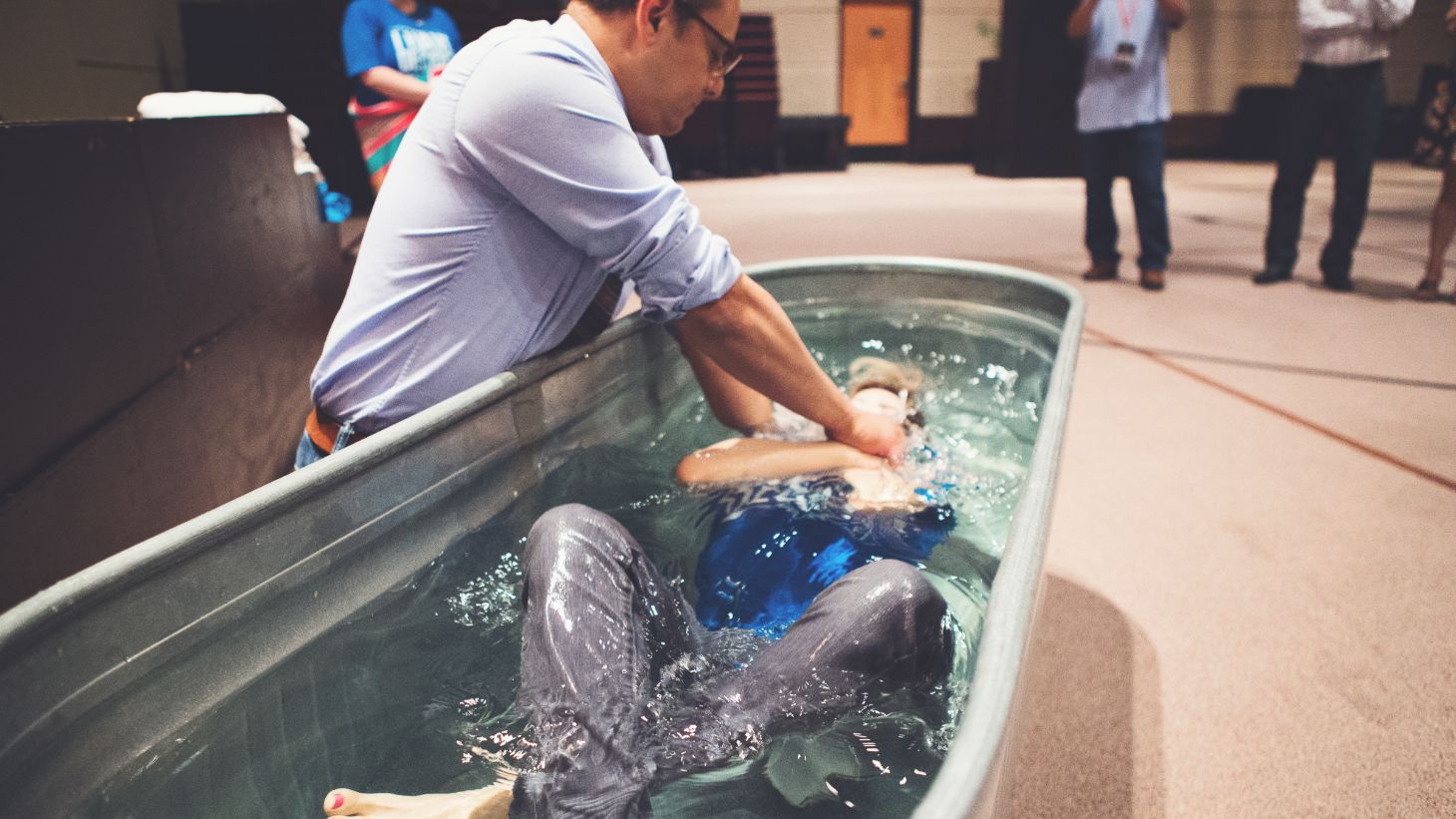
Churches Plunge Ahead with Easter Baptisms

New converts show the impact of distanced discipleship during pandemic shutdowns.

Christianity Today April 5, 2021
Shana / Lightstock

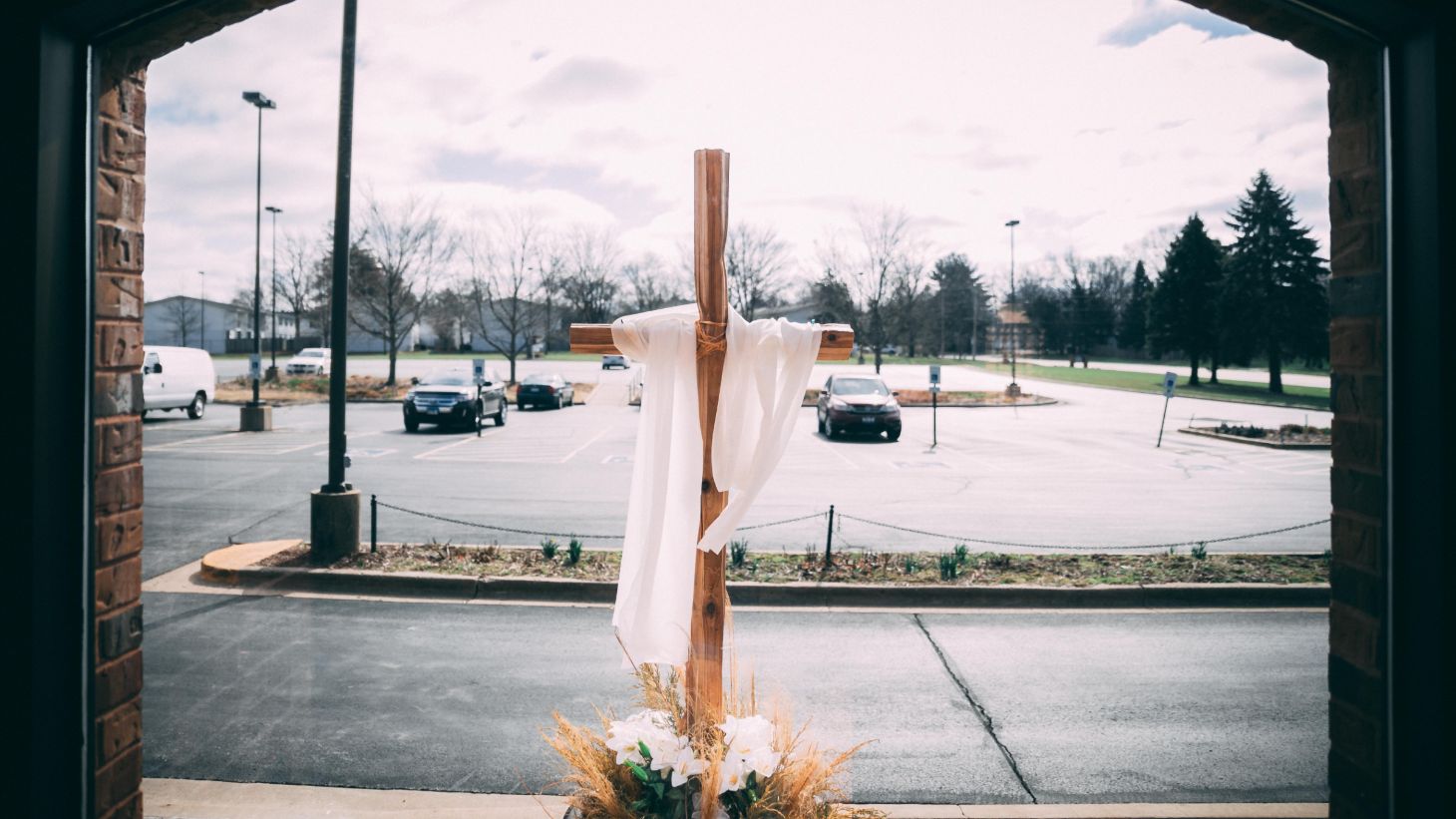
In February 2020, the Evangelical Free Church of Bemidji in Minnesota finally purchased a baptismal tank, eager to conduct baptisms in its building rather than offsite at a local university swimming pool or nearby lake.

After putting baptisms on hold during the pandemic, the church’s pastor asked a teenaged believer to take off his mask and plug his nose as he became the first to undergo the sacrament in the new wooden baptistry on Easter Sunday—14 months later.

In addition to some churches opening their doors for the first time in over a year, the holiday marked a delayed chance to celebrate new life through baptism, a practice that represents the death, burial, and resurrection of Jesus commemorated during Holy Week.

“We are thrilled that we not only are able to gather for worship in person this Easter but also that we are able to have these baptisms as a part of our Easter celebration,” said associate pastor Eric Nygren.

To reduce the risk of spreading COVID-19, the Evangelical Free Church baptized a set of two siblings during one of its services on Sunday; each shared their testimony by video before stepping up to be baptized before the congregation.

Last year, when only 7 percent of churches were meeting in person, churches had to call off baptisms or, in some cases, adapt the practice as they got creative with other aspects of Easter services. One Florida church held Zoom baptisms where new believers baptized themselves in bathtubs or swimming pools while the congregation watched online.

By the second Easter of the pandemic, church attendance for Easter had risen but wasn’t back to typical levels; around 2 in 5 Christians (39%) said they planned to go in person this year, compared to the 62 percent who normally do, Pew Research found.

As church buildings slowly welcome more and more congregants through their doors, they’ll have the chance to celebrate new converts who made decisions to be baptized during the pandemic. After a year during which death has hovered so near, baptisms feel like ushering in a new era of church fellowship.

While the Catholic Church traditionally holds baptisms for adults joining the church during its Easter Vigil, some Protestant churches had bigger-than-average baptism celebrations this Easter due to postponing the practice during the pandemic.

Outdoors and indoors, babies and professing believers, churches added to their numbers during the Sunday services: 82 people baptized at First Baptist Church of Cleveland, Tennessee; 45 baptized at Christ Place Church in Flowery Branch, Georgia; dozens at a beachside service by Coastline Calvary Chapel in Pensacola, Florida; and on and on—each a tangible sign of how God has continued to grow his church despite the challenges of the past year.

https://twitter.com/ChristPlacePJ/status/1378851587712544768

On Easter Sunday at Tanglewood Bible Fellowship, David Shields baptized two converts who found the Duncan, Oklahoma, church during the pandemic. One became a believer a few weeks ago.

“Every single person who has visited our church has said they heard about us and watched us online before,” said Shields, who went from doubting the effectiveness of virtual services to seeing them as his church’s greatest community outreach.

He became the Tanglewood’s senior pastor just three weeks before the pandemic shut down worship services in March 2020 and believes the Lord has blessed their efforts to continue to preach his Word through the video services.

Nygren has also seen streaming services as a boon. Though his Evangelical Free congregation had a livestreamed service before 2020, more new visitors are finding the church online and following up by coming in person now that cases are down and more people are vaccinated.

Next Sunday, a week after Easter, New Life Church in Colorado Springs will baptize more than 100 new converts during its second baptism service since the pandemic began.

The church consulted with local health officials to ensure that symbolic life in Christ didn’t coincide with real-life outbreaks of COVID-19. By alternating tanks, regularly disinfecting the water, and wearing masks and shields, the church got approval for mass baptisms.

Senior pastor Brady Boyd believes the pandemic has stirred within people a hunger for the gospel that he has never before seen in nearly 25 years of pastoral ministry.

Each week, New Life has 5,000 live worshipers at its eight congregations and another 25,000 streaming the service online. The church bought airtime on its local ABC affiliate to broadcast the service each Sunday.

“Even in the midst of the pandemic, the gospel didn’t get stopped, and people are responding to it,” Boyd said. “As Christ followers, we need to be reminded that the gospel is more powerful than anything.”

Among evangelical Protestants, Pew found that nearly 2 in 5 (37%) say the pandemic has strengthened their faith. The teenager baptized Sunday at the Evangelical Free Church of Bemidji described being inspired by an audiobook about Brother Andrew.

“I want him to be at work in my life like he was in Brother Andrew’s life,” he said in remarks prior to his baptism. “I’ve started reading the Bible not just out of habit, but because I want to learn more about Jesus.”


Books
Excerpt

Tim Keller: Hope for a Better World Starts with the Resurrection

Four reasons Christianity offers unparalleled confidence that history is headed somewhere good.

Christianity Today April 5, 2021
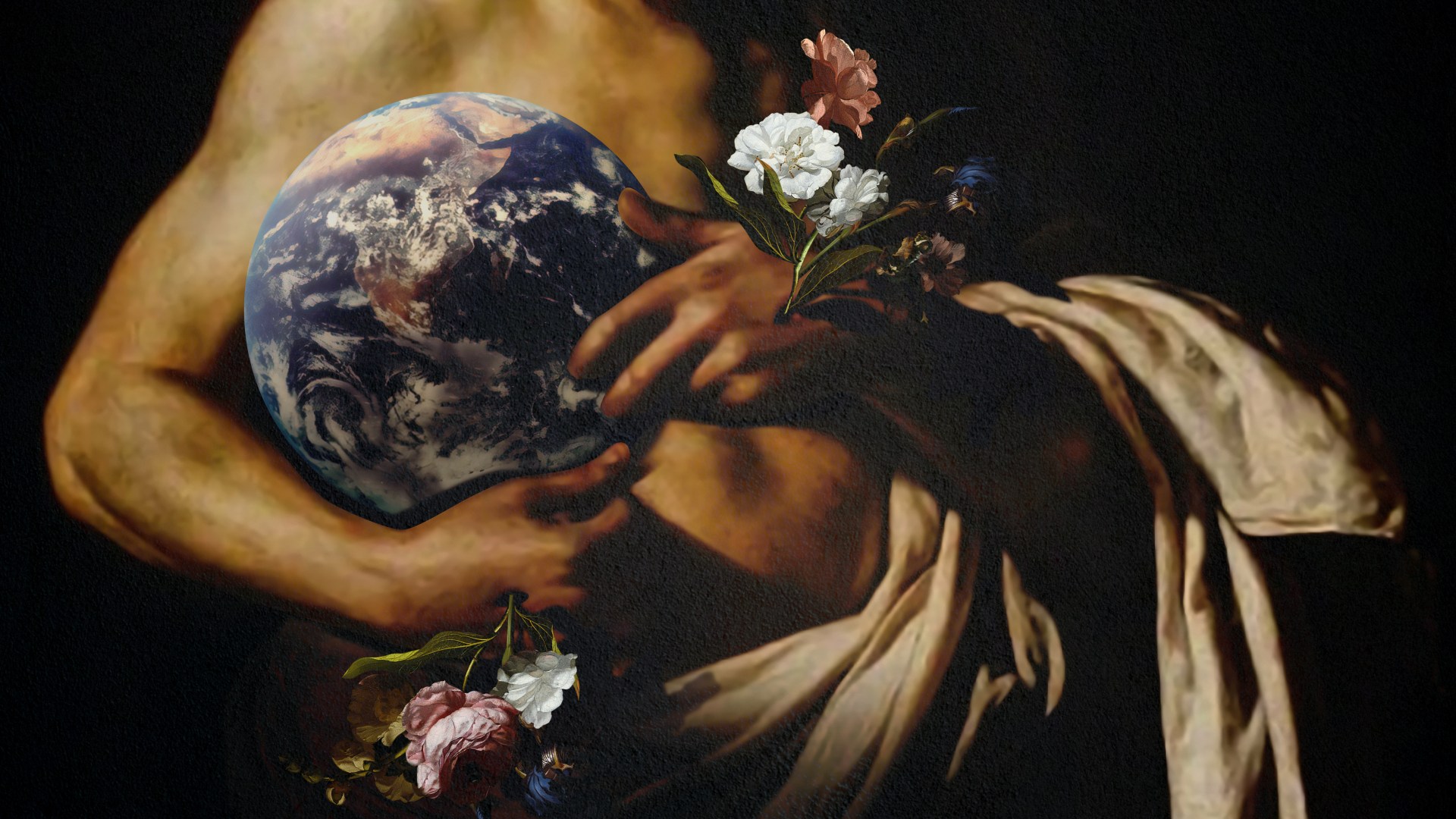
Illustration by Mallory Rentsch / Source Images: Europeana / Unsplash / The New York Public Library / Perth & Kinross Council

The American belief has long been that each generation will have a better life—economically, technologically, socially, personally—than the previous one. But this idea of linear historical progress did not exist in most other cultures. All ancient cultures—Chinese, Babylonian, Hindu, Greek, and Roman—had different views. Some saw history as cyclical, and others saw history as a slow decline from past golden ages.

Hope in Times of Fear: The Resurrection and the Meaning of Easter

Hope in Times of Fear: The Resurrection and the Meaning of Easter

Viking Drill & Tool

272 pages

The idea that history was moving in the direction of continual progress and improvement in the human condition simply did not exist.

Then, however, came Christianity. As Robert Nisbet writes in his book History of the Idea of Progress, Christian thinkers gave “to the idea of progress a large and devoted following in the West and a sheer power that the idea could not have otherwise [in the absence of Christian beliefs] acquired.” The Greeks thought that the accumulation of human knowledge led to a mild, temporary improvement in the human condition—but only between conflagrations. But Christian philosophers “endowed the idea of progress with new attributes which were bound to give it a spiritual force unknown to their pagan predecessors.”

Christianity, then, offers unparalleled resources for cultural hope. (We are not for the moment talking about individual hope—hope for life after death. We are talking about corporate hope, social hope, hope for the future of society, of the human race—hope for a good direction to history.) Looking at the arc of history through the lens of Christ’s resurrection, we can make four broad statements about the nature of Christian hope: It is uniquely reasonable, full, realistic, and effective.

Christian hope is reasonable

First, there is formidable historical evidence that the resurrection of Christ actually happened. This makes Christian hope different from any other variety.

N. T. Wright explains that the resurrection of Christ presents evidence that demands explanation from historians and scientists. It can’t simply be dismissed. He writes, “Insofar as I understand scientific method, when something turns up that doesn’t fit the paradigm you’re working with, one option … is to change the paradigm.” We are not to exclude the evidence just because our old paradigm can’t account for it, but we are to include it within a new paradigm, “a larger whole.” A failure to provide a historically plausible alternative explanation for the eyewitness accounts and the revolutionary, overnight worldview change of thousands of Jews is not being more scientific—it is being less so.

Various kinds of Western progressivism believe history is moving toward more individual freedom or class equality or economic prosperity or technologically acquired peace and justice. But these views are not hypotheses that anyone can test. They are “hope so” hopes—beliefs that are not rooted in the empirical realm. The resurrection of Christ, however, includes powerful evidence from the empirical realm and, while still requiring faith, provides a highly reasonable, rational hope that there is a God who is going to renew the world.

Christian hope is full

Every religion has offered people a hope for a life after death. Our secular culture, in radical contrast, is the first in history to tell its members that both individuals and world history will end in ultimate oblivion. In the end, we go to nothing, both as a civilization and as persons.

Other religions are ultimately “spirit-ist” in the sense that they believe matter is unimportant and in the end all that will exist is spirit. Secularism, of course, is materialist in its belief that there is no soul or supernatural reality, that everything has a scientific, physical cause.

Christianity differs from both. It does not merely offer the prospect of a wholly spiritual future in heaven. The resurrection of Jesus, to cite the Greek New Testament, is arrabon, a down payment, and aparche, the firstfruits of a future physical resurrection in which the material world will be renewed. It will be a world where justice dwells, every tear will be wiped away, death and destruction are banished forever, and the wolf will lie down with the lamb; these are lyrical, poetic ways of saying that this world will be mended, made new, liberated from its bondage to death and decay (Rom. 8:18–23).

This is the fullest possible hope. The resurrection of Christ promises us not merely some future consolation for the life we lost but the restoration of the life we lost and infinitely more. It promises the world and life that we have always longed for but never had.

Christian hope is realistic

The philosophy of G. W. F. Hegel has long been highly influential for Western thought. Hegel taught that history was proceeding through a “dialectic” in which, in each age, conflicting forces reached a new, greater synthesis. This meant that every age was better than the one before and history was moving upward in a series of unbroken steps. That, as we have seen over the last century, is simply unrealistic. Christianity offers an infinitely greater and more wonderful destiny for human history and society, but it does so realistically.

If we look to the death and subsequent resurrection of Jesus, we see a very different divine model. His life was not in any way a series of upward steps. He emptied himself of his glory and came and died, yet this descent led to an ascent to even greater heights, because now he rules not only the world in general but also a saved people. It was only through his suffering and descent that he was able to save us and ascend.

This is not the Hegelian merger of equal and opposite forces. Jesus did not “synthesize” holiness with sin or life with death. He defeated sin and death through death. But neither are Jesus’ life and ministry the random sequence ruptures described by the postmodernists. Jesus goes through darkness to eventually bring us to greater light. History is moving toward a wonderful destiny, but not in a series of successively better and better eras, going from strength to strength. That is not how God works.

The secular idea of progress is naive and unrealistic. It is wrong to base a society on the assumption that every generation will experience more prosperity, peace, and justice than the one before. But the postmodern alternative robs us of any hope. Christianity, however, gives us a noncynical but realistic way to see history.

Christian hope is effective

Finally, Christian hope works at the life level, the practical level.

The New Testament uses the word hope in two ways. When it comes to hoping in human beings and ourselves, our hope is always relative, uncertain. If you lend to someone, you do so in the hope that person will pay you back (Luke 6:34); if we plow and thresh, we do so in the hope that there will be a harvest (1 Cor. 9:10). We choose the best methods and wisest practices to secure the outcome we want. We insist to ourselves and others that we have it sorted and under control. But we do not—we never do. This is relative, “hope so” hope.

But when the object of hope is not any human agent but God, then hope means confidence, certainty, and full assurance (Heb. 11:1). To have hope in God is not to have an uncertain, anxious wish that he will affirm your plan but to recognize that he and he alone is trustworthy, that everything else will let you down (Ps. 42:5, 11; 62:10), and that his plan is infinitely wise and good. If I believe in the resurrection of Jesus, that confirms that there is a God who is both good and powerful, who brings light out of darkness, and who is patiently working out a plan for his glory, our good, and the good of the world (Eph. 1:9–12; Rom. 8:28). Christian hope means that I stop betting my life and happiness on human agency and rest in him.

A person who gets a diagnosis of cancer will rightly put relative hope in doctors and medical treatment. But the main source of dependence must be upon God. We can have certainty that his plan and will for us is always good and perfect and that the inevitable destiny is resurrection. If a cancer patient’s main hope lies in medicine, then an unfavorable report will be devastating. But if that hope is in the Lord, it will be like a mountain that cannot be shaken or moved (Ps. 125:1). Isaiah 40:31 says that those who “hope in the Lord” are not anxiously holding on but always “renewing their strength” and even “soaring.” Hope in God leads to “running and not growing weary” and “walking and not being faint.”

Jesus has secured this for us by his death and resurrection. When this assurance abides in us, our immediate fates—how the current situation turns out—can no longer trouble us. Hope comes from looking at him.

Timothy Keller is the founding pastor of Redeemer Presbyterian Church in New York City. This article is adapted from HOPE IN TIMES OF FEAR, by Timothy Keller, published by Viking, an imprint of the Penguin Publishing Group, a division of Penguin Random House LLC. Copyright © 2021 by Timothy Keller.

Books
Review

Meet the Pro-Life Activist Who Narrowly Escaped Being Aborted Herself

How Claire Culwell’s life changed when she discovered the shocking truth about her biological mother.

Illustration by Rick Szuecs / Source images: Kristaps Ungurs / Unsplash / Courtesy of Waterbrook Multnomah

The most powerful stories are those that bring the hypothetical to life. In 1989, a reported 1,396,658 abortions took place within the United States. Claire Culwell may have been the only infant who survived the procedure that year. Her twin wasn’t so fortunate.

Survivor: An Abortion Survivor's Surprising Story of Choosing Forgiveness and Finding Redemption

Survivor: An Abortion Survivor's Surprising Story of Choosing Forgiveness and Finding Redemption

Waterbrook

240 pages

The Abortion Survivors Network reports only 365 documented cases of abortion survival in American history, though more survivors almost certainly exist. Like Culwell, many of them have grown up unaware of how they entered the world.

In her memoir, Survivor: An Abortion Survivor’s Surprising Story of Choosing Forgiveness and Finding Redemption, Culwell recounts her idyllic childhood spent in a loving adoptive family. As a young woman, she became interested in finding her biological mother, a search that would drastically change her life.

Raised in a compassionate Christian home by parents who worked for the evangelical organization Cru for over 40 years, Culwell was poised to receive the news of her unlikely birth sympathetically. After locating her birth mother, Tonya, and having a joyous first meeting, Culwell penned a note thanking her for choosing life. But the note compelled an astonishing admission.

Tonya was only 13 at the time of the 20-week abortion that killed Culwell’s sibling and nearly took her own life. “The day [my mother] took me to an abortion clinic, I was terrified,” recounts Tonya in the book. “I was alone and scared. The doctor never said a word to me … as if this were just another day in the life of a bad young girl.” Soon thereafter, Tonya discovered she was still pregnant. (She hadn’t known she was carrying twins.) Her mother took her for a second abortion, which never took place due to complications from the first.

Culwell felt “shocked” and “confused” when Tonya tearfully disclosed the disturbing truth. “I now had to face the startling reality that I was almost aborted … twice,” she writes. But where anger may have arisen, love bloomed instead.

As Culwell explains, “I didn’t feel the slightest bit of hatred for her. She seemed like a victim in the whole situation—abandoned by the boyfriend who had fathered me and pressured by her mother to quickly deal with the pregnancy … I actually saw Tonya as exceedingly courageous. She bravely revealed to me her deepest, darkest secret.”

Culwell’s willingness to forgive sprang from her deep faith, as well as a lifetime of care and concern for the vulnerable. She writes passionately of being drawn toward the outcast and downcast, people like the lonely autistic classmate she befriended at school or a developmentally disabled girl she babysat. God had prepared her to respond with compassion.

Ironically, it was only in the aftermath of her discovery that Culwell began considering the mission of the pro-life activists she often saw outside her bedroom window, protesting at a Planned Parenthood clinic nearby. She admits she had “given virtually no thought to abortion” before learning she’d nearly died from one. In fact, she didn’t even know Planned Parenthood offered abortions—or that it was possible to survive the procedure. She immediately felt a strong urge to speak up for children in the situation she once faced.

One prominent voice in contemporary abortion debates is former Planned Parenthood director Abby Johnson, who famously quit her job right before Culwell learned of her own story. Johnson’s former clinic was the same one visible from Culwell’s window. Johnson had just gone public with her new pro-life perspective, reached after she witnessed the ultrasound-assisted abortion of a 13-week-old baby. When Culwell shared her story with the activists outside the clinic, they quickly connected her with Johnson, who encouraged her to begin sharing her story publicly.

That meeting soon launched her into a whirlwind of speaking engagements for pro-life causes. As an introvert, she was uncomfortable becoming a poster child, but she felt she could she help others see the reality of their choices.

In Survivor, Culwell clarifies her discomfort with the unhelpful, divisive tactics of certain angry activists, often seen brandishing grotesque images of aborted babies or Bible verses damning people to hell. These sensational displays reliably generate news coverage, but they misrepresent the vast majority of Christian activists, who approach vulnerable women in love, offering genuine prayers and support. As Culwell writes, she “never would have wanted” someone like Tonya “to encounter angry pro-life activists calling her a murderer, saying she had blood on her hands.”

The book also counters the narrative that abortions aren’t affecting Christians. In reality, as Culwell notes, four in 10 abortions are performed on churchgoing women. She encourages churches to offer better care, support, and financial assistance for women facing unplanned pregnancies, commending the work of church-based organizations like Embrace Grace and Sanctuary of Hope.

From the pro-life world, we often hear it proclaimed that an aborted child could have been the next president or the person who discovered a cure for cancer. But these notions, however well intended, are unhelpful. Every child, regardless of their actual or theoretical contributions to the world, is an image-bearer of God. In the life of Culwell, a wife and mother of four children, we see plainly the humanity of what so many in today’s world mislabel a “choice.”

“I chose to boldly embrace who God said I was—his beloved child he had known since before the dawn of time,” writes Culwell. That’s a truth we should all affirm unwaveringly.

Ericka Andersen is a freelance writer living in Indianapolis. She is the author of Leaving Cloud 9: The True Story of a Life Resurrected from the Ashes of Poverty, Trauma, and Mental Illness.

News
Wire Story

Some Church Plants Launch on Easter After COVID-19 Delays

New congregations have put their initial public gatherings on hold for six months or more.

Christianity Today April 2, 2021
Tucker Good / Unsplash

“Someone asked me the other day how I felt about launching a church this weekend,” Derrick DeLain, lead pastor of Proclamation Church said this morning during a phone call. “I’m hyped, but like it is when you’re getting ready to play in a big game, you almost feel like you’re about to throw up, too. We’re excited about it and ready – Hey, you mind holding on a second?”

Pulling in to the church parking lot, he spotted a man named David he’s befriended. David lives with other men at a nearby halfway house for those battling drug addictions.

“Hey David! How you doin’ bro?” he called out. “Are we going to see you Sunday? I hope so. Yeah, bring them on.” Back on the call, DeLain explained how relationships had been built with David and others as they walk across the church’s lot.

Such spur-of-the-moment ministry opportunities have become essential for pastors in general, and church planters like DeLain in particular, over the last year.

COVID-19 threw an innumerable number of plans out the window, leaving leaders of all kinds scrambling to adjust.

Proclamation Church’s official launch will take place this Sunday on Easter, for instance. But the original launch was supposed to be at the beginning of the year. When the number of positive COVID-19 cases spiked around Thanksgiving, those plans were altered. Instead, an eventual “soft launch” began in January consisting of Proclamation Church and invited guests from the community.

Due to shifting pandemic precautions, churches are ten times more likely to hold services this Easter than they were last Easter, when COVID-19 lockdowns first began. Some churches have held out due to health guidelines or reservations within their community and will be regathering for the first time on Resurrection Sunday. And for some new churches like Proclamation, this week won’t just be their first time to be together since the pandemic began, it’ll be their first open-doors gathering, period.

Church planting can be a trying and unpredictable process in normal times. The pandemic made it even trickier.

After six years on staff as a campus pastor at The Summit Church in Durham, North Carolina, DeLain felt led to plant a church through The Summit in the Nashville area. So, his family and others moved as the core team that would make up Proclamation Church. Along the way, they became acquainted with Glenwood Baptist Church, a graying congregation wanting to increase its ministry presence in the area.

Last August, he and other members of the core team met with Glenwood Baptist. “I laid out a plan of revitalization that had them and us merging into Proclamation Church. I talked about strategies in discipleship, evangelism and other ministry areas,” he said.

Glenwood leaders agreed and that conversation lasted throughout the fall, with Sundays set aside for both groups to meet for worship.

“We wanted to set a healthy DNA and structure with healthy systems,” DeLain explained. “Let’s build some rapport and get to know each other so we can trust each other.”

Church plants have become varied in both their locations and their approaches to launching, said Matt Maestas, a Kansas City-based North American Mission Board church planting catalyst for the SEND Network. And while Easter is a popular launching point, it’s definitely not the only one.

“I encourage church planters to also find times that reflect a ‘normal’ start for a community’s calendar,” he noted.

That includes the start of the school year, the calendar year in January or the start of summer. The last option, he pointed out, can serve to build momentum through events like Vacation Bible School or sports camps.

During 2020, Maestas observed church planters either pausing their launch for six months or longer, or continuing with their launch in a virtual context. “It’s been really different, church to church, city to city—even within a city,” he commented.

That was the case even before the pandemic, but discussions over safety and masks were just as animated in new churches as they were in established ones. Those challenges considered, Maestas commended the overall leadership response to COVID-19 from pastors in all settings, not just those he knows personally.

“If you compare that leadership response from churches with those of the government, business and education, our church leaders knocked it out of the park. They shifted gears and made changes to connect with their people in meaningful ways,” he said.

Derrick DeLain Courtesy of Proclamation Church / Facebook / Baptist Press
Derrick DeLain

At Proclamation Church, plans to delay its initial launch were already being discussed when a longtime member of Glenwood Baptist died from COVID-19. That led to an official decision to delay, not just because of obvious concerns about the virus’ spread, but its effect on senior adults wanting to rejoin their church family in person.

Like many church plants, Proclamation’s average age skews younger. But DeLain wants senior adults to feel safe attending and have a place to pour in their spiritual gifts. That diversity in age was his intention all along.

“We were praying for older people, some spiritual gray hairs, to be in our congregation,” he stated. “We want some Titus 2 women and men who have been around the block. When we first met with Glenwood, we felt this was God answering our desire for that.”

Since January, Proclamation Church has held two “preview” services each Sunday in the 350-seat sanctuary formerly known as Glenwood Baptist Church. With social distancing and the wearing of masks, around 115 have been attending. During the week the church gathers in family groups—a practice that began last fall.

On his way from the halfway house this morning, David recognized DeLain and responded with a “What’s up, Rev? Yeah, I talked to the other guys, and we might show up Sunday.”

DeLain is encouraged by the inroads Proclamation has already established in the community. “Hopefully, those guys at the halfway house will come to know Jesus,” he said. COVID-19 has taken a toll in a lot of ways on people, he added, not just physically, but mentally in how it has affected the economy and relationships.

“So, when people ask me about launching a church this weekend, I say God has provided so far, and he’s still going to move,” DeLain said. “After all, he loves his church a lot more than we do and is going to take care of it.”

Books
Excerpt

Sin Makes Us Thirsty. Find Refreshment at the Cross.

Jesus went without water so we could drink eternally from the fountain of God’s grace.

Christianity Today April 2, 2021
Illustration by Rick Szuecs / Source Image: Envato

To be human is to thirst.

Dying to Speak: Meditations from the Cross

Dying to Speak: Meditations from the Cross

P & R Publishing

88 pages

The average adult man’s body is 60 percent water. From the time of our birth, even up to the moment of our death, more than anything, our bodies crave the most precious natural resource on earth—namely, water. It has been said that the average person can live 30 days without food but only three days without water. When there is a lack of water, the body naturally goes into self-preservation mode and thirst kicks in. Suddenly, there is nothing more important than quenching our thirst. It is among the most basic instincts. To be human is to need water. To thirst is human.

As the pangs of death closed in upon our Lord on the cross, Jesus once again demonstrated the sincerity of his humanity. He identified with the longings of humanity. He understood our deepest needs and sympathized with our inherent pangs. The suffering of the cross touched him in ways that caused him to long for fulfillment, long for refreshing.

Death was slowly arresting his vitality. His energy was waning, and his body grew weaker and weaker. Just as the Scriptures had foretold (Ps. 22:15; 69:3), the depth of our Lord’s suffering was manifested in every part of his being, including his thirst. The depth of our sin is the extent to which it has affected every aspect of our being; so too must the suffering of Christ be on our behalf.

Suffering is exhausting. Anyone who has endured pain for any length of time knows the toll suffering takes upon the body. It breaks the will. It cripples the mind and causes it to self-exhaust in finding relief. The Crucifixion was particularly painful, exhausting, and even dehydrating. Yet the thirst of Christ was not simply a reminder of the limitations of our bodies but even more so a reminder of the depths and weight of our sin. Jesus was thirsty because his body grew weak. His body grew weak because of our sin. He grew weak because our sorrows weighed him down (Isa. 53:4). Because of our sin, Jesus was thirsty. Because of our sin, Jesus longed to be refreshed.

Thirsting for righteousness

As the body longs for water, so the soul longs for righteousness. Ever since the fall of Adam and Eve, the longing of the human heart has been for the restoration of relationship with God and the restoration of this world. We look out upon the world and see brokenness all around us—starvation, exploitation, persecution, abuse, brutality, sadness, and murder—and we long for a respite from the madness.

But let our gaze turn inward as well. We look into our own hearts and see the pride and arrogance, jealousy and hatred, the lust, greed, selfishness, and loneliness. Inwardly and outwardly, we thirst for righteousness, justice, love, and peace. Our sin and the sin of this world weaken us, sap our spiritual strength, and cause us to thirst. Sin makes us thirsty.

But why did Jesus, who knew no sin, thirst? Why did our Lord, who had everything and wanted for nothing—why did he thirst? His thirst was for righteousness—not his own but ours. And as the Bible says, “Blessed are those who hunger and thirst for righteousness, for they will be filled” (Matt. 5:6). The hunger and thirst of Christ on the cross was not simply for him but for you and me. As a result, Jesus cried, “I am thirsty.”

But who was this man who upon the cross declared himself thirsty and longed to be refreshed? Consider that it was he who, according to the Bible, set aside “storehouses” for snow and hail (Job 38:22). It was he who walked on the water (Mark 6:48) and commanded the stormy seas to be still (4:39). It was he who makes it rain in one city and holds back the rain in another, who causes one field to flood with water and another field to dry up (Amos 4:7). Surely he could have called a legion of angels to supply enough water to fill the oceans of earth many times over. He who was thirsty had the power to quench his thirst in a moment, and yet he chose not to.

No one willingly chooses to be thirsty. Thirst is something that comes upon us. It is a natural instinct brought on by a longing to be refreshed and refueled. Thirst is something we try to avoid, and once it comes upon us, we seek to satisfy it as soon as possible. No one chooses to have a dry tongue or parched lips. Yet Jesus did. He chose to be thirsty so we would and could be refreshed.

In choosing to become man and choosing to suffer in our place, he also chose to thirst. Sin makes us thirsty. Sin exposes our deficiencies and reminds us how easily we are discouraged in our battle against it. But how did he who knew no sin become thirsty? It was not on account of his sin that he experienced such thirst; it was on account of our sin. Again, the Scriptures were being fulfilled:

But he was pierced for our transgressions; he was crushed for our iniquities; the punishment that brought us peace was on him, and by his wounds we are healed. We all, like sheep, have gone astray, each of us has turned to our own way; and the Lord has laid on him the iniquity of us all. (Isa. 53:5–6)

Our Lord was thirsty because sin makes us thirsty. In taking on our sin, he took on our thirst—our thirst for righteousness, holiness, and peace. And on the cross his thirst was not quenched so that ours could be. He was not refreshed so that we would be, through him. Now he commands us to be refreshed in his grace and mercy. Now when we thirst, we can hear the Savior say, “Come, all you who are thirsty, come to the waters; and you who have no money, come, buy and eat! Come, buy wine and milk without money and without cost” (Isa. 55:1).

An eternal spring

Not only does the cross of Christ satisfy our thirst, but that refreshment comes for free! There is no cost, except the cost already paid by Christ. He now says, “Come. Be refreshed.” The fountain of God’s gracious refreshing flows from the cross into all eternity so that those who enter heaven through the blood of Jesus will thirst no more (Rev. 7:16).

Being thirsty is a condition of this world. And the world desires you to drink from its contaminated well. But Jesus reminds us that such wells never truly satisfy, never truly refresh. Only the water that flows from his side, his eternal love and mercy, can truly refresh. As he said, “Everyone who drinks this water will be thirsty again, but whoever drinks the water I give them will never thirst. Indeed, the water I give them will become in them a spring of water welling up to eternal life” (John 4:13–14).

Jesus was thirsty so that all who trust him can find living water and be thirsty no longer. Let us drink from the waters of everlasting life, joy, and contentment. Let us be refreshed in Jesus unto eternal life.

Anthony J. Carter is lead pastor of East Point Church in East Point, Georgia. Lee Fowler is an elder and Sunday School teacher at East Point Church. This article is adapted from their book, Dying to Speak: Meditations from the Cross (P & R Publishing). www.prpbooks.com

News

Rethinking Multiethnic Churches

A discussion on the fruits and challenges of multiethnic congregations.

Christianity Today April 1, 2021

Many evangelical churches have grown in diversity, but are they places of true unity and equity? In the March issue of CT, sociologist Korie Little Edwards explains why the multiethnic church movement hasn’t lived up to its promises–and how it still could.

Join Little Edwards along with Rich Villodas, Rebecca Y. Kim, Naima Lett, and Curtiss Paul DeYoung for a live discussion on the fruits and challenges of multiethnic congregations.

Our Speakers

Korie Little Edwards

Korie Little Edwards, PhD, is associate professor of sociology at The Ohio State University. She is a leading scholar of race and religion in the United States and past president of the Society for the Scientific Study of Religion, an international, interdisciplinary association. She has written several books and articles on multiracial religious organizations. These include The Elusive Dream: The Power of Race in Interracial Churches (Oxford University Press) and Against All Odds: The Struggle for Racial Integration in Religious Organizations (co-author, New York University Press).

Her current scholarship focuses on matters related to race and religious leadership. She has a forthcoming book called Smart Suits, Tattered Boots: Black Ministers Mobilizing the Black Church in the Twenty-First Century that draws upon black religious leaders’ engagement in the 2012 election to understand their engagement in civic and political activity.

Little Edwards is also principal investigator of a national study of multiracial church pastors called the Religious Leadership and Diversity Project (RLDP). The RLDP is the most in-depth, comprehensive project ever conducted on leaders of multiracial congregations. A special journal issue featuring research from this project was published last year. She and her team continue to develop articles and books out of this study.

Rich Villodas

Rich Villodas is the Brooklyn-born lead pastor of New Life Fellowship, a large, multiracial church with more than 75 countries represented in Elmhurst, Queens. He is also a key speaker for Emotionally Healthy Discipleship—a movement that has touched hundreds of thousands of people.

Villodas graduated with a Bachelor of Arts in pastoral ministry and theology from Nyack College. He went on to complete his master of divinity from Alliance Theological Seminary. His award-winning book, The Deeply Formed Life, was released in September 2020. He and his wife, Rosie, have two beautiful children and reside in Queens.

Rebecca Y. Kim

Rebecca Y. Kim is the Frank R. Seaver Chair of Social Science, a professor of sociology, and the director of the ethnic studies program at Pepperdine University. She specializes in immigration, race, and religion and has published widely on such topics, particularly related to Asian American evangelicals. She is the author of God’s New Whiz Kids? Korean American Evangelicals on Campus (New York University Press 2006) and The Spirit Moves West: Korean Missionaries in America (Oxford University Press 2015).

She has recently conducted research as a co-investigator of the Religious Leadership and Diversity Project, a nationwide study on faith, race, and leadership of multiethnic congregations led by Korie Little Edwards. She is also currently conducting research as part of the Landscape Study of Chaplaincy and Campus Ministry in the United States.

Naima Lett

Naima Lett is a church planter and co-pastor of Hope in the Hills in Beverly Hills. An award-winning actor, producer, and author, she loves helping folks find their purpose and follow their dreams while deepening their faith. Her candid and humorous storytelling make her an in-demand speaker, lecturer, and performer who cares for souls in the City of Angels and across the globe.

She successfully created, produced, and toured several one-woman plays internationally while forming Lett’s Rise! Productions with her husband, Kevin. Naima graduated top honors with a bachelor of fine arts from Howard University, received Dallas Seminary’s first masters in media and communications, and became the first woman to earn a doctor of ministry in preaching from Talbot School of Theology at Biola University. Her forthcoming book series is titled Confessions of a Hollywood Christian.

Curtiss Paul DeYoung

Curtiss Paul DeYoung is the CEO of the Minnesota Council of Churches whose 27-member communions include historic Black, mainline Protestant, Pentecostal, and Greek Orthodox denominations, as well as the Dakota (Native American) Presbytery. The council builds ecumenical and interfaith unity through working for racial and social justice. DeYoung previously served as the executive director of the historic faith-based racial justice organization Community Renewal Society in Chicago.

DeYoung was the inaugural professor of reconciliation studies at Bethel University in St. Paul, Minnesota. Rev. DeYoung served on staff at congregations in Minneapolis, New York City, and Washington, DC. He is an ordained minister in the Church of God (Anderson, Indiana). He consults and speaks internationally with extensive relationships among activists and peacemakers in South Africa and the Holy Land.

DeYoung, PhD, earned degrees from the University of St. Thomas (Minnesota), Howard University School of Theology (Washington, DC), and Anderson University (Indiana). He is an author and editor of 12 books on racial justice, reconciliation, and cultural competency. With South African antiapartheid activist Allan Boesak, he co-authored Radical Reconciliation: Beyond Political Pietism and Christian Quietism (Orbis).

He was on the editorial team for The Peoples’ Bible (Fortress). Among his other books are Becoming Like Creoles: Living and Leading at the Intersections of Injustice, Culture, and Religion (Fortress), United by Faith: The Multiracial Congregation as an Answer to the Problem of Race (Oxford), and Reconciliation: God’s Timeless Call to Justice, Healing, and Transformation (Wipf and Stock). DeYoung has been married since 1984 and has three adult children.

Theology

Jesus Was the God-Man, Not the God-Superman

His moments of doubt and temptation attest that we can follow him through our own.

Christianity Today April 1, 2021
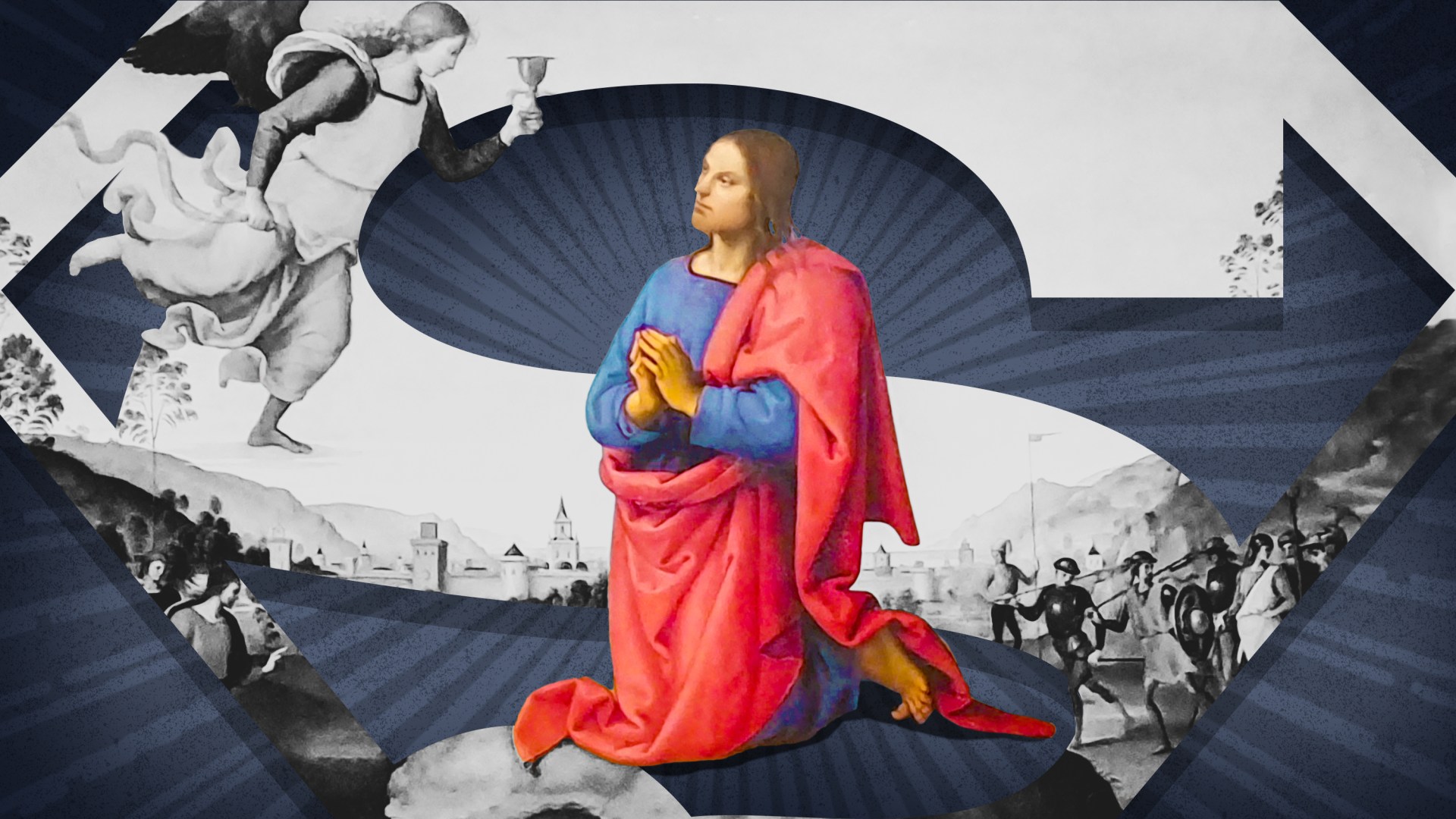
Illustration by Rick Szuecs / Source image: Wikimedia Commons

In many children’s Bibles, the Son of God swoops in like Superman to save the day. In these clearly mythological depictions of Christ, Jesus never fails to say and do the right thing. He handily vanquishes his enemies, while essentially sidestepping the realities of real, enfleshed humanity.

But does this miss something?

As fun as these edited stories may be for bedtime snuggles, they simply don’t reflect the whole story the Gospels attempt to tell. Jesus didn’t come merely to die for our sins. Nor did he come to show off his miraculous superpowers and celestial wisdom. In the history of Christianity, the incarnation of God teaches us that Jesus was born into the fullness of humanity. He was born, in other words, into the complete mortal experience, warts and all.

And yes, Jesus may have had warts. He breastfed as an infant. He learned to walk. And the Messiah—in those awkward teenage years—went through puberty. Why did Jesus have to experience all of that? He did this to free us from the grip of sin and death by entering humanity. As the second-century theologian Irenaeus famously put it, “He became what we are so that we could become what he is.” What Jesus brought with him into our world was his godness, which included a deep trust and faith in his Father; part of what he received from us in his humanness was our ability to doubt—and doubt he did.

Doubt is a real part of human experience. And Jesus was so committed to entering humanity that he dared to enter human doubt as well.

Resilience and determination

The New Testament gives us some insights into this. In the Gospels, Jesus goes into the desert, where he is tempted by the Devil. There, he has to wrestle with the Devil’s words: “If you are the Son of God” (Matt. 4:3). These words place seeds of doubt in Jesus’ head. One wonders if they played like a tape in his mind at points where he suffered or experienced loss because of his ministry.

What we learn here is that the real human Jesus could be tempted—though he did not sin. Indeed, temptation is not a sin. And we learn that the real human Jesus comes face to face with doubts about his identity. But hearing and even having these doubts is not the same as buckling under their weight. By the end of the temptation story, we witness Jesus’ resilience and determination. Soon, the angels come to care for him. Perhaps they give him food and drink to refresh his body, but it’s possible that Jesus may have needed spiritual reassurance of God’s presence as well. Jesus passes the test, but his faith may have taken a heavy beating.

In the same vein, consider Matthew 26:36–46, when Jesus prays in the Garden of Gethsemane. He is alone. His disciples are asleep. And he is about to enter the final crucible of his earthly journey. What does Jesus do? He starts getting cold feet: “If it is possible, may this cup be taken from me.” A moment later, of course, he shakes this off and confesses, “Yet not as I will, but as you will” (v. 39). But this is not faith replacing doubt; it is faith moving forward in spite of doubt. Jesus didn’t want to take that cup of suffering, but he still did.

In that moment, Jesus embodied the first character in the parable of the two sons (Matt. 21:28–31): When told by his father to do the work that needed to be done, he declined before changing his mind (v. 29). The second son said yes at first but then didn’t go through with it. Perhaps the question Jesus asked his disciples after telling that parable—“Which of the two did what his father wanted?” (v. 31)—came back to mind and gave him clarity in the garden.

Jesus prayed the true desire of his heart, but that wasn’t the end of his story. As C. S. Lewis once observed in an essay on prayer, “I must often be glad that certain past prayers of my own were not granted.” And we can say the same about Jesus’ prayer in the garden. If the cup of suffering had been taken away, we would all remain alienated from God. In the economy of God’s grace, God can save the world by a prayer that goes unanswered.

Then, during his Passion, Jesus cries out to the Father from the cross. In what is called the Cry of Dereliction, Jesus shouts, “My God, my God, why have you forsaken me?” (Matt. 27:46). In that moment, Jesus does not call out to Abba, Father. He does not feel like the superhero Son of God. He is all alone, crushed by the weight of human sin and suffocating in doubt. There is no response from heaven, no descending dove or clarion voice—only silence as the blood drains from his still-warm body.

Did Jesus’ doubt put God’s divine plan of redemption at risk? Certainly not. In fact, his doubt was an essential ingredient. As a real human being—more than human but no less than human—Jesus steeped himself in all our doubts and questions so that he might lead us by the hand in the darkness. The Gospels point to a Jesus who saves us not by distancing himself from doubt but by teaching us how to trust God in faith and doubt.

Doubting faithfully

Why is this so critical for our moment in time? Swirling around us are echoes of doubt and deconstruction. The claims and assertions of the gospel are being challenged just about everywhere in the increasingly post-Christian West. But is doubt the end of faith? Is doubt the enemy of faith? For so many followers of Jesus, there is a desperate need to see their own doubt not as the result of demonic influence but as a reflection of Jesus’ humanity. If Jesus doubted, can’t we follow him all the more in his doubt?

That brings us to a critical point: Doubt (like temptation) is not a sin. Now, Scripture teaches us that doubt can be dangerous. There are clear passages that warn about the trajectory of doubt (Matt. 14:31; 21:21; Mark 11:23; James 1:5–8). But there are equally clear biblical texts that speak to how someone walking through doubt can (and should) be a welcome part of the Christian community (John 20:24–29, Matt. 28:17). In fact, the command in Jude to “be merciful to those who doubt” (v. 22) implies that the doubters are meant to be in our midst.

Years ago, we came upon a story about a well-known theologian who disclosed that the very cry of Jesus from the cross—the Cry of Dereliction—was the reason he had become a Christian. He had determined that a God who can give voice to his own doubts was a God worthy of being followed.

Is it possible to truly follow someone who has not endured the human experience of doubt? We think not. Because Jesus endured true humanity—because he “has been tempted in every way, just as we are—yet he did not sin” (Heb. 4:15)—he can be fully followed.

Jesus was tempted. He did not sin. Therefore, temptation cannot be understood as sin. Likewise, Jesus doubted. Yet he did not give in to unbelief or give up on God. Likewise, doubt cannot be understood as sin.

We know we are saved by the love, grace, and faithfulness of Jesus. That’s the focus of the Gospels, the theme of the New Testament, and the very center of Christianity. But Jesus is God-man, not God-Superman. He became one of us not to shame us for our doubts but to teach us how to doubt well, to doubt faithfully. And so we are somehow saved too by his doubts.

A. J. Swoboda, assistant professor of Bible, theology, and world Christianity at Bushnell University in Eugene, Oregon, is the author of After Doubt: How to Question Your Faith without Losing It. Nijay K. Gupta is professor of New Testament at Northern Seminary in Lisle, Illinois. Together, they co-host the In Faith and Doubt podcast.

Ideas

Christians Need Win-Wins with Muslim Society More Than Wins in Court

What Malaysia’s High Court decision on Christian use of the word “Allah” means for the church.

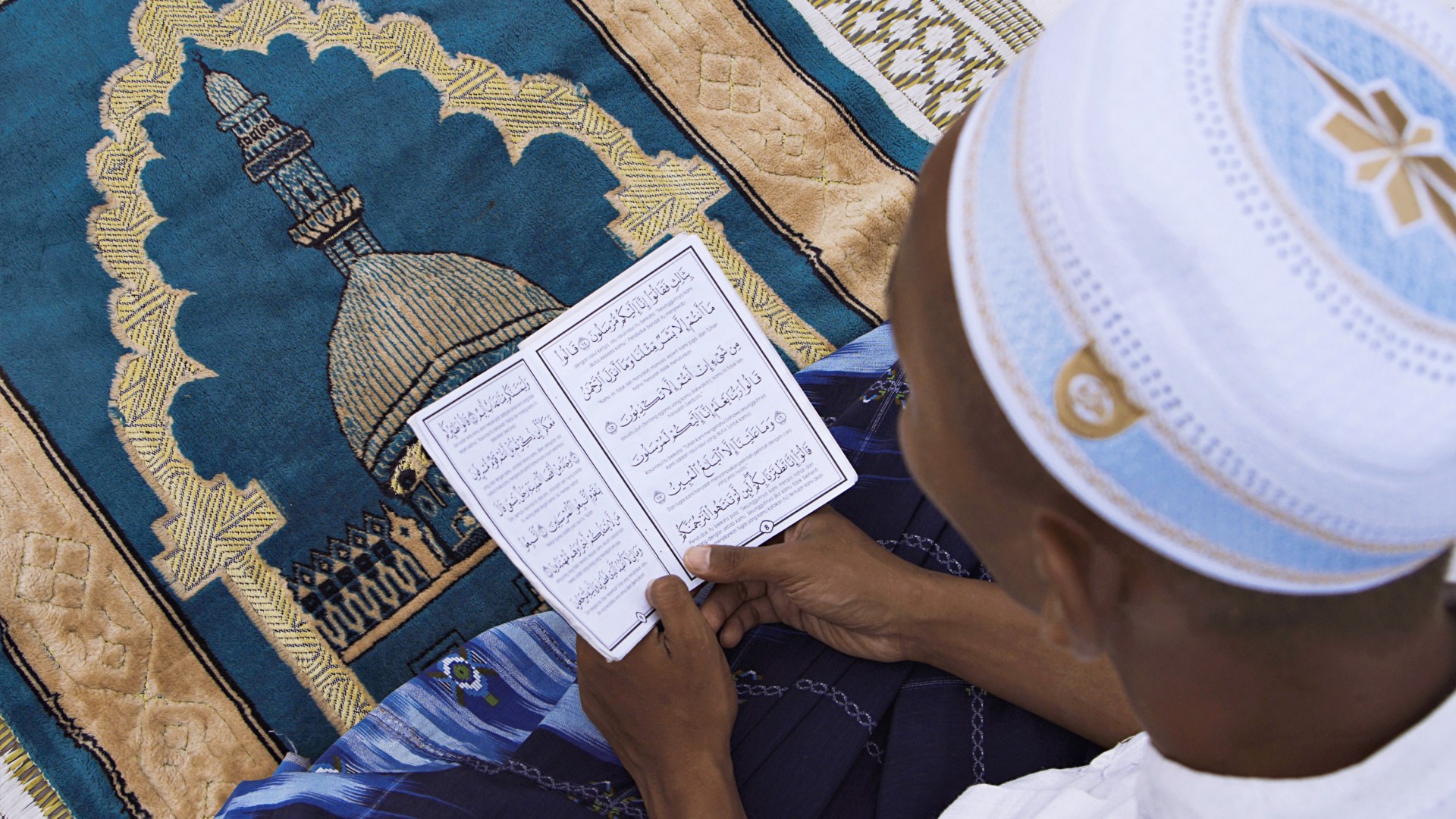
A madrasah student reads the Quran during Ramadan 2020 in Shah Alam, Malaysia.

A madrasah student reads the Quran during Ramadan 2020 in Shah Alam, Malaysia.

Christianity Today March 31, 2021
Rahman Roslan / Stringer / Getty

Christians are pleased with this month’s ruling by a Malaysian court that a government prohibition on non-Muslims using the word Allah is illegal and irrational. However, the ruling has expectedly stirred much emotion within the Southeast Asian nation’s Muslim community, which has always held the word to be exclusive to Islam and for use by Muslims only.

I will leave comments on the extensive grounds of the High Court’s recently released 96-page judgement, released March 17, to the legal community. My more modest purpose here is to address the social-religious implications of the case for the church at large.

The Allah Debate

The debate over Christians referring to God as Allah has a longstanding history. Beginning with concerns about the proselytization of Muslims in the 1980s, the federal government issued an executive directive in 1986 banning the use of four words by non-Muslims in order to allay Muslim fears. One of the four words was Allah. It’s important to note when this was issued, there was a context. The directive was not a total or complete ban, as the government was well aware that Christians—in particular those in East Malaysia—and indigenous peoples were using the Malay language and the word Allah in their religious worship, rites, and spiritual activities.

As time went by, Bibles and other Christian publications in the Malay language were either impounded or confiscated. In 2008, Jill Ireland, a Melanau Christian from Sarawak who was flying home had eight educational CDs (containing worship songs) seized by customs at the Kuala Lumpur international airport. The Home Affairs Ministry informed her the CDs were withheld due to their prohibited use of the word Allah. Being dissatisfied with the seizure of the CDs, Ireland sued for the return of the CDs and a declaration that as a Christian, she is entitled to use the word based on her constitutional right to freedom of religion or belief.

Split Reactions

Malaysia’s Christian community is of course pleased with the March 10 ruling in Ireland’s favor. The bishop of the Anglican Church in Sarawak and Brunei, Datuk Danald Jute, told the Borneo Post the decision to allow the word Allah to be used by Christians all over Malaysia is “a victory for common sense” and “must not be construed or interpreted as being a victory by one person or group of persons over another.”

Religious Demography


According to the last census, in 2010, about 61 percent of Malaysia’s 32 million population practices Islam, 20 percent Buddhism, 9 percent Christianity, 6 percent Hinduism, and the rest other religions or none. Some religious groups such as Shia, Ahmadiyya, Baha’i, and Al-Arqam are deemed “deviant” by Islamic authorities and banned.

Ethnic Malays, who are defined by the Federal Constitution as Muslims from birth, account for 63 percent of the population in Peninsular Malaysia and 55 percent of the nation’s total population when including East Malaysia, which shares the island of Borneo with Indonesia and Brunei.

Rural areas—especially on the east coast of the peninsula—are predominantly Muslim, with Islam being the majority religion in all 13 states except the East Malaysian state of Sarawak, where its 200,000-some Christians are in the majority. Meanwhile, the East Malaysian state of Sabah has a large Christian minority, while large Buddhist minorities exist in the peninsular states of Penang and Selangor.

This response is indeed measured. While acknowledging the decision was correct, the bishop was careful not to portray a triumphalist spirit. The reason is obvious to fellow Malaysians. In 2010, a total of 10 churches were either attacked or vandalized following an initial legal victory by the Catholic archbishop of Kuala Lumpur, on behalf of the Herald newspaper, who filed a suit on the same issue. The series of arsons resulted in several churches suffering considerable damage and one totally burned down. This led to police increasing security at all churches for a period of time.

Malaysia’s Muslim community, on the other hand, is shocked and upset by this month’s ruling. Gathering to discuss the decision, a group of conservative Malay-Muslim NGO leaders expressed their displeasure and disappointment. They felt the decision was inconsistent with judicial precedent. In essence, these conservative groups viewed the decision as an affront and the weakening of Islam as the religion of the country.

These Malay-Muslim NGOs therefore proposed several resolutions, asking for the government to appeal the decision and for Islamic authorities to intervene in the case since they have a direct interest in its outcome. They are also asking for the Malay language board, Dewan Bahasa dan Pustaka, to take active measures to standardize the use of the word Allah to be consistent with Muslim theological understanding.

Court Concerns

Christian leaders have not responded publicly to these demands. However, civil society organizations have called upon the government to withdraw its case before the Court of Appeal, put the matter to rest, and move on with addressing the more critical issues at stake in Malaysian society.

While Christians accept the High Court decision as correct, we should recognize that a sizable segment within the Muslim community feels aggrieved by the decision. In all fairness, they have the right to appeal it.

The aggrieved feelings are compounded by two recent legal decisions that impacted the Muslim community.

The first found Malaysia’s Federal Court (equivalent to the US Supreme Court) drawing a fine line between two circumstances of legal conversion out of Islam. In one situation, where the background facts reveal a Malaysian was never born a Muslim and never practiced Islam, that person is entitled to a court declaration that he or she is not a Muslim. However, this right would not to be available via the civil courts to those born Malay-Muslim or found to have practiced Islam.

Whether this is a correct reading of the law is beyond the scope of this article. Suffice it to say, the decision was generally accepted by the Muslim community as correct. It did, however, leave some to wonder if the civil courts were beginning to encroach more and more into matters relating to Islam. A pertinent matter, as Malaysia practices a dual legal system of civil and sharia courts.

The second Federal Court decision had a greater impact, and brought the Muslim community much uncertainty and trepidation. In this case, the court took the view that the act of engaging in “unnatural sex”—an offense under Islamic law—should fall within the jurisdiction of the federal criminal courts rather than the sharia courts. While the substance of this decision is still debated by both sides of the divide, in the mind of many Muslims, one implication is clear. It confirmed their suspicion that the civil legal system is now encroaching into the jurisdiction of the sharia courts and matters pertaining to Islam.

So, when the Ireland decision was delivered, it fell like a ton of bricks upon the Muslim community. With past rhetoric by state and non-state actors politicizing religion—claiming Islam is under threat and creating a “siege mentality” in the mind of many Muslims—it makes achieving a rational and objective response difficult and almost out of reach. Whether Muslims and Christians in Malaysia are able to navigate this deadlock in a harmonious way for the common good is the subject of discerning interfaith engagement that the church in Malaysia must embark on.

A Missional Response

The calling of Christians in a multicultural society like Malaysia has always been to be a salt and light for the ever-expanding presence and reality of the kingdom of God. Christians are never called to live for themselves, but for the sake of the kingdom of God; to act justly, love mercy, and walk humbly before the Lord (Micah 6:8). In doing so, we have been, in the words of the apostle Paul, “entrusted with the ministry of reconciliation.” This should not be understood as confined to sinners being reconciled to God but as having a lateral dimension of creation, and hence humanity becoming reconciled to God and each other in the “already/not yet” eschatological vision of the new heaven and new earth.

This eschatological vision motivates a concrete expression for Christians in Malaysia to strive for the flourishing of diversity of cultures. This multicultural dimension encourages Christians in Malaysia towards a respectful social engagement and creative dialogues between different cultures, their respective moral vision, and social good. It presents opportunities for Christians to not only uphold the rights of Christ followers to their own cultural bearings, but also cultivates the self-imagination and moral empathy needed to build bridges and bridge the divide for the well-being of everyone. This then, is the Christian redemptive story in Malaysia for such a time as this in this longstanding controversy.

We must therefore ask: What really are the concerns of Malay Muslims and Christians in this longstanding controversy? What are the differences and disagreements between Christians and Muslims? Are their disagreements and concerns perceived (rhetorical or politicized) or real?

There is no doubt the Muslim community in Malaysia has been using the word Allah to denote God for a long time. If the word is now legally used by Christians or any other faiths to reference God, they fear this may lead to confusion within their own ranks, including their younger generation. Many Muslims feel that when Christians use the word freely in their religious worship and evangelistic activities, it will lead to greater proselytization of Muslims. In their eyes, this is regrettable as it will only cause disruption and conflict within their own household and community, eventually leading to a breakdown of the family unit. Tensions will arise between siblings, parents, and close relations if and when one member of their household leave Islam for another religion. The embarrassment to the family and household is something all Muslims wish to avoid.

Further, there is also the unspoken apprehension that religious syncretism and accommodation may arise within the Muslim community if the word is used simultaneously by two different religious communities with different theological meaning, history, and trajectory.

On the other hand, Christians are fearful that Muslims are beginning to impose their will on the Christian community. Many Christians feel Muslims are telling the Christian community what or what not to do in their worship, liturgy, and expression. In their eyes, this is surely a slow and sure start that will only lead to the eventual subjugation of the Christian community in East Malaysia. This fear, together with the ongoing efforts at converting Christian natives to Islam, adds to the feeling of animosity already present. Thus, they believe any such attempts at the tyranny of the majority must be resisted at all cost.

While acknowledging that there are legitimate fears and concerns between Christians and Muslims in this longstanding Allah debate, it is imperative for the church in Malaysia to move beyond fears to find avenues for the concrete expression of the Christian redemptive story. To this end, Scripture reminds us we are to love our neighbors in affirmation and understanding, not simply tolerating them. Mutual understanding requires adjustments and therefore moderation in the interests of social harmony.

It is in this sort of dialogue that embraces the ethos of diversity and differences as the norm that an acceptable outcome and solution may be found. This form of dialogue and engagement also seeks to enhance relationships and build trust with those whom we often say cannot and will not agree with us. The building of trust and relationship should not be for utility but because God commands all believers to love our neighbors. As we genuinely love and respect our neighbors, suspicion and caution will be minimized and openness created. This presents the Christian and Muslim with the opportunity to search for acceptable solutions.

As the search for an acceptable solution is underway, it is necessary to espouse a “middle-ground” narrative that attempts to balance the keeping of human relations intact while at the same time finding an appropriate landing for consensus and agreement. Such an enterprise would require the exercise of practical reasonableness and “practical concordance,” a principle of German constitutional law that I apply to the Malaysian context. The term concordance implies harmonious, consistent relations to each other. In practical terms, this may require Christians in Malaysia to use the word Allah with certain conditions attached. In the past, such conditions appear in Christian materials such as a note or a stamp with the words “A Christian Publication,” or “For Christian Use,” or “A Christian Material.” Other ideas may appear as we dialogue together.

Muslims on the other hand, may need to concede that East Malaysian Christians have for generations been using Allah in their worship and liturgy and must therefore be permitted to use the word. In a way, these and other similar ideas are accommodation or compromises in a practical concordance that must be seriously considered or explored if both sides are to come to some consensus and resolution. Admittedly, this is a formidable task for both sides. Yet it is one in which Christians in Malaysia must necessarily take the lead.

The right to freedom of religion or the exercise of religious liberty must not only be confined to the singling out of violations and discriminations. It must, as its true purpose, enable all faiths and religious communities the room and space to contribute in a meaningful fashion towards the well-being and the flourishing of all people, communities, and cultures at anytime, anywhere, and for all generations.

Eugene Yapp is a Kuala Lumpur-based senior fellow for South and Southeast Asia with the Religious Freedom Institute, and writes for the St. Charles Institute. He was previously the secretary general of the National Evangelical Christian Fellowship of Malaysia.

Speaking Out is Christianity Today’s guest opinion column and (unlike an editorial) does not necessarily represent the opinion of the publication.

News

Convictions in Case of Christian Journalist Murdered in Turkey Fail to Satisfy

Family of Hrant Dink, proponent of reconciliation between Turks and Armenians who riled government officials through his genocide advocacy, say justice has not gone deep enough.

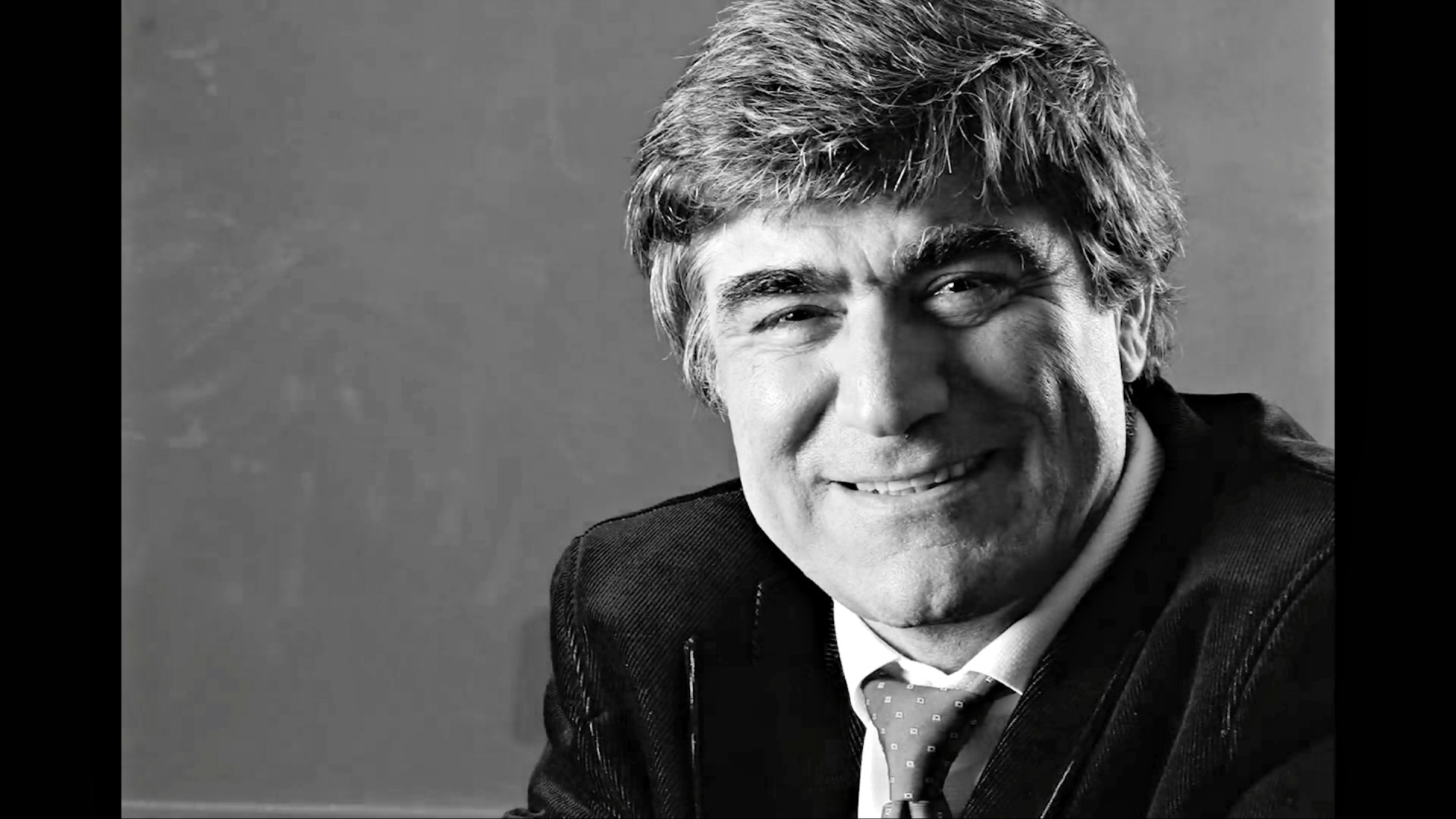
Hrant Dink

Hrant Dink

Christianity Today March 31, 2021
Courtesy of AMAA

Fourteen years later, there is some resolution for the family of the assassinated Turkish-Armenian journalist, Hrant Dink.

But not enough.

“The judgment given today is quite far from the truth,” said the family in its official statement on March 26.

“Not the evil itself but its leakage was punished.”

In 2007, Dink was shot four times in front of the Istanbul office of his bilingual newspaper, Agos. A proponent of reconciliation between Turks and Armenians, he aroused official opposition through his passionate focus on the 1915 genocide. Two years earlier he had been arrested and convicted of “insulting Turkishness.”

The killer, a 17-year-old unemployed youth, was given a 23-year sentence in 2011.

But one week before his death, Dink had written an article stating he felt “like a pigeon,” targeted by the deep state “to make me know my place.“

Around 100,000 people attended his funeral, chanting, “We are all Armenians.”

Last week, the Turkish judiciary put 76 people on trial, convicting 26 and handing out 4 sentences of life imprisonment. Two were given to the former director of police intelligence and his deputy, for murder and the subsequent cover-up.

The family is not convinced this includes the entire “mechanism.”

“Some officials are still at large,” said Erol Önderoglu, the representative of Reporters Without Borders (RSF) in Turkey.

“This partial justice … leaves a bitter taste in the mouth.”

RSF ranks Turkey No. 154 out of 180 nations in its 2020 index on respect for press freedom.

Soner Tufan, spokesman for the Association of Protestant Churches in Turkey, said the verdict was “not surprising.” It fits the pattern of accountability whenever a crime is directed at the Christian minority.

“There were so many connections to the murder, with penalty given only to some,” he said. “This is not real justice.”

Born, married, and buried in the Armenian Apostolic Church, Dink was also a member of the Gedikpaşa Armenian Evangelical church. At age 7, he and his two younger brothers were sent from rural Anatolia to be raised in its Istanbul orphanage.

“I praise the Lord for that church,” Dink told the United Armenian Congregational Church in Hollywood, California, in 2006. “To this day, I consistently apply what I learned there.”

Born in 1954, Dink helped build the church’s Tuzla summer camp in the 1960s. He met his wife, Rakel, at the orphanage, and together they raised their children while serving on the camp staff. In 1978, he took over leadership when the camp founder, Hrant Guzelian, was arrested on charges of “raising Armenian militants.”

For five years he kept the facility open, preaching on Sundays. But in 1983, the state confiscated the property, which became the site of luxury beachfront villas on the Asian side of Istanbul’s Marmara Sea.

“[This] left such a deep scar on the psyche of Hrant,” said Zaven Khanjian, executive director of the Armenian Missionary Association of America, in a 2015 speech commemorating both Hrants.

“[It] went on to be the driving force in his struggle for justice, for fairness, freedom of expression, minority rights, and true democracy for all Turkish citizens under Turkish law.”

The camp was returned to the evangelical church in 2015, after decades of pressure and lawsuits. Today, plans exist to rebuild a cultural center there for Armenian youth.

Khanjian’s friendship with Dink began only four months before his murder.

Armenian evangelicals, he said, received Dink with “total enthusiasm.” But in Turkey, there were no expectations the trial would bring closure.

“Since the premeditated genocide of Armenians living peacefully in their ancestral home,” said Khanijan, “justice has never seen the light of day in Turkey.”

Dink worked to make it so, respectful of all.

Agos, named after the Turkish and Armenian word used to describe the tilled soil where a seed can be planted, was the nation’s first bilingual publication. Dink founded it in 1996, as accusations stirred that the Armenian community was allying with the Kurdish PKK, designated a terrorist organization.

Created to forge solidarity between the two ethnicities, Agos advocated for neighborly relations between Turkey and Armenia, and in support of ongoing democratization.

Of the genocide, Dink shifted the discussion from an accusatory focus on raw numbers to an empathetic memory that recognized the trauma of the period for both sides. He received criticism from Armenians in the diaspora for his strong opposition to France’s law that criminalized genocide denial.

April 24 is Genocide Remembrance Day in Armenia and its worldwide diaspora.

Upon Dink’s assassination, journalist Robert Fisk labeled him the genocide’s 1,500,001st victim.

Early investigations into the assassination focused on the nationalist Ergenekon organization, suspected of linkage with Turkish security. Accused of plotting a coup in 2003, in 2013 hundreds of alleged members were imprisoned. Led by current president Recep Erdoğan’s AKP party, support was lent by the network of popular Islamic preacher Fethullah Gülen.

Since then, the two allies have clashed. Gülen took exile in Pennsylvania, and his network was branded the FETO terrorist organization and accused of plotting the 2016 attempted coup. Hundreds of alleged members have been imprisoned.

At Dink’s trial, public prosecutors stated that the clues point to FETO involvement. A new case was opened against four defendants.

“The FETO link is the joke of the trial,” said Khanjian. “A ridiculous and comical end to 14 years of deceitful coverups.”

Dink’s family will appeal the verdict.

Meanwhile, the hearts of many Turks and Armenians go out to them.

“I’m so sad,” said Tufan. “How can his wife and family live here, waiting so long for justice, without result?”

But Rakel, his wife, is resolute.

“A climate and ideology similar to when Hrant Dink was murdered prevails today,” said the family statement. “We will never give up our legal struggle, until the whole mechanism is exposed.”

News

Wall Street Crisis Could Cost Evangelical Orgs

The CEO of Archegos Capital, now making financial headlines for risky trading, is also known for his generous commitment to Christian ministries.

Christianity Today March 31, 2021
Angela Weiss / AFP via Getty

It’s not often that a Wall Street Journal article on the latest stock market shakeup includes a line describing a Greek reference to Jesus from the New Testament.

The hedge fund at the center of massive selloffs in the market last week was the Christian-owned Archegos Capital Management—named for ἀρχηγός, the Greek word used to describe Christ as the “author” of our salvation (Heb. 2:10) and the “prince” of life (Acts 3:15).

Archegos has dominated the financial headlines over the past few days. The fund placed outsized bets on media stocks using money borrowed from banks, and when the lenders put a check on its high-risk trading, it had to sell off huge blocks of shares, sending the market into a frenzy.

Major corporations and banks lost billions, enough to “impact everyday Americans’ retirement accounts,” CNN Business reported. While investors and shareholders are bracing for the damage, the move could potentially impact evangelical ministries as well.

Archegos CEO Bill Hwang is also the co-founder of the Grace and Mercy Foundation, which shares an office with his New York-based firm and distributes millions in grants to Christian nonprofits every year. So far, it’s unclear how much the financial situation will affect the foundation and its beneficiaries.

Grace and Mercy’s 2018 tax filing (the most recent year available) listed $5.5 million to the Fuller Foundation, $2 million to Fuller Theological Seminary, where Hwang is a trustee, and $1.2 million to the Museum of the Bible, in addition to six-figure donations to A Rocha, International Justice Mission, Luis Palau Association, Prison Fellowship, Ravi Zacharias International Ministries, The King’s College, and Young Life.

Annual giving totaled $16.6 million over 63 organizations, including many New York churches and ministries, like City Seminary of New York, Manhattan Christian Academy, and the Bowery Mission.

Though giving by individuals remains the largest source of funding for charities overall, foundations are becoming a bigger player in the landscape.

“We’ve seen a consistent and growing trend in giving by foundations comprising a larger share of total giving than it did 15 years ago,” Amir Pasic, dean of Indiana University’s Lilly Family School of Philanthropy, told Ministry Watch last year. “This change may reflect larger trends such as in the distribution of wealth and in asset growth across a decade of stock market expansion.”

Grant-giving private foundations is also subject to market forces. As Giving USA researcher Anna Pruitt explained:

Private foundations are required by law to give 5% of the average value of their assets, often held in an endowment. When the financial markets fare well, the assets foundations hold grow–and that 5% of their total value gets larger too. The opposite happens during downturns.

The Grace and Mercy Foundation distributed $79 million over a 10-year span, with its grant amounts increasing in recent years, and the highest levels given in 2017 and 2018. Forbes wrote, “It’s hard to know for sure to what extent Hwang’s hidden fortune was battered last week, though his charity’s filings in future years will show how much the crisis impacts his generosity.”

Hwang is part of a new “evangelical donor-class,” who are less concerned with using their wealth to advance political causes, as covered in The Atlantic in 2019. These newer players in the giving landscape include Asian American Christians who “aren’t necessarily beholden to the culture wars of the past,” Josh Kwan, president of the Christian philanthropic network called The Gathering, told the magazine.

Beyond his $500-million foundation’s investments in American ministries, Hwang sees his career in finance as led by God, saying, “I invest with God’s perspective, according to his timing,” when talking to a Korean audience about faith and work.

This is not Hwang’s first time at the center of a controversy over his financial strategy. Back in 2012, when he ran Tiger Asia Management, he was penalized by regulators in the US and Asia and ultimately had to shut down his firm, pleading guilty to wire fraud and fined over charges of insider trading.

When he shares his story, Hwang points to this time as a period where “money and connection couldn’t really help” and he had to turn to Scripture.

After struggling his whole life as a Christian to get into a habit of Bible reading, he finally was awakened to the power of hearing the Bible read out loud and in community. It was transformative enough that through the Grace and Mercy Foundation he has launched resources for Christians to gather to listen to Scripture together in-person or online.

Hwang has also spoken of how he sees his investment activity as a way to further God’s work in the world, both by serving as a Christian witness in Wall Street and supporting companies that build God-honoring culture and help human society advance.

“I’m like a little child thinking, ‘What can I do today, where can I invest to please our God?’” he said in a conversation with Fuller Studio. “Remember Jesus saying, ‘My Father is working, therefore I’m working’? God is working, Jesus is working, and I’m working—I’m not going to retire until he pulls me back.”

addApple PodcastsDown ArrowDown ArrowDown Arrowarrow_left_altLeft ArrowLeft ArrowRight ArrowRight ArrowRight Arrowarrow_up_altUp ArrowUp ArrowAvailable at Amazoncaret-downCloseCloseellipseEmailEmailExpandExpandExternalExternalFacebookfacebook-squarefolderGiftGiftGooglegoogleGoogle KeephamburgerInstagraminstagram-squareLinkLinklinkedin-squareListenListenListenChristianity TodayCT Creative Studio Logologo_orgMegaphoneMenuMenupausePinterestPlayPlayPocketPodcastprintremoveRSSRSSSaveSavesaveSearchSearchsearchSpotifyStitcherTelegramTable of ContentsTable of Contentstwitter-squareWhatsAppXYouTubeYouTube