News

CT Media Presents: God Pops Up in India

In this episode, follow Anil’s journey to learn more about the man who he is convinced saved his mother.

Anil’s life took a sudden turn after his mother was miraculously healed following a woman’s simple prayer to Jesus. In this episode of God Pops Up, follow Anil’s journey to learn more about the man who he is convinced saved his mother.

After watching this episode of God Pops Up, read more about Apilang Apum’s call to Christ in a remote corner of India.

Through God Pops Up, CT Media brings you stories from some of the world’s most dangerous locations. These stories feature people who are risking their lives to share the Good News. Although we have sought credible sources, for security reasons, we cannot cite those sources, show photos of subjects, or name names. In this series, we use animation to tell true narratives that encourage the global church, but we also seek to protect the people behind those narratives. CT Media created these videos as a discipleship tool for both kids and adults. Thank you for watching and sharing these stories.

If God leads, you can give a tax-deductible gift to any of these causes by giving through the National Christian Foundation (NCF). NCF will anonymously pass your gift to the cause you’ve chosen.

To nominate a story or to underwrite a story that shows how God Pops Up, email godpopsup@christianitytoday.com.
News

CT Media Presents: God Pops Up in Southeast Asia

When the government blocked his Christian radio station, Chanda had to find another way to spread the Good News of Jesus. His answer came on a microchip.

This strategic work in Southeast Asia faces continued pressure from the government, yet it continues to spread. Drawing on new technologies, the leaders have equipped hundreds of “hubs” across their region. In some places, they have brought the gospel to tribes who have never heard it. They’ve translated the Bible, for the first time, into the language of some of these people. Their video ministry is even reaching untold numbers of deaf people, helping them learn sign language, and the language of God’s love. For security reasons, we don’t divulge the identity of these brothers and sisters.

After watching this episode of God Pops Up, read the story of missionaries in the mountains of Papua, who face life and death in “The Land of the Clouds.”

Through God Pops Up, CT Media brings you stories from some of the world’s most dangerous locations. These stories feature people who are risking their lives to share the Good News. Although we have sought credible sources, for security reasons, we cannot cite those sources, show photos of subjects, or name names. In this series, we use animation to tell true narratives that encourage the global church, but we also seek to protect the people behind those narratives. CT Media created these videos as a discipleship tool for both kids and adults. Thank you for watching and sharing these stories.

If God leads, you can give a tax-deductible gift to any of these causes by giving through the National Christian Foundation (NCF). NCF will anonymously pass your gift to the cause you’ve chosen.

To nominate a story, or to underwrite a story that shows how God Pops Up, email godpopsup@christianitytoday.com.

News

CT Media Presents: God Pops Up in the Horn of Africa

When a man from a tiny Ethiopian village heard about taking the gospel ‘to the ends of the earth,’ he knew exactly where to start.

The movement in the Horn of Africa continues to make disciples, planting four new house churches every day. To date, they have seen more than 230,000 people become followers of Jesus. With a deep commitment to prayer and fasting, they follow Luke 10, looking for “people of peace” who then bring households, villages, and entire tribes to Jesus. Daily, their church planters face persecution for the sake of the gospel. But, they say, “we count it all joy so that we can share Jesus with more people.” For security reasons, we don’t divulge the identity of these brothers and sisters.

After watching this episode of God Pops Up, read our article about a kindergarten teacher called to ministry aboard the Africa Mercy.

Through God Pops Up, CT Media brings you stories from some of the world’s most dangerous locations. These stories feature people who are risking their lives to share the Good News. Although we have sought credible sources, for security reasons, we cannot cite those sources, show photos of subjects, or name names. In this series, we use animation to tell true narratives that encourage the global church, but we also seek to protect the people behind those narratives. CT Media created these videos as a discipleship tool for both kids and adults. Thank you for watching and sharing these stories.

If God leads, you can give a tax-deductible gift to any of these causes by giving through the National Christian Foundation (NCF). NCF will anonymously pass your gift to the cause you’ve chosen.

To nominate a story, or to underwrite a story that shows how God Pops Up, email godpopsup@christianitytoday.com.

Theology

Advent: Living Hope

Advent devotional readings from Christianity Today.

Christianity Today November 24, 2020
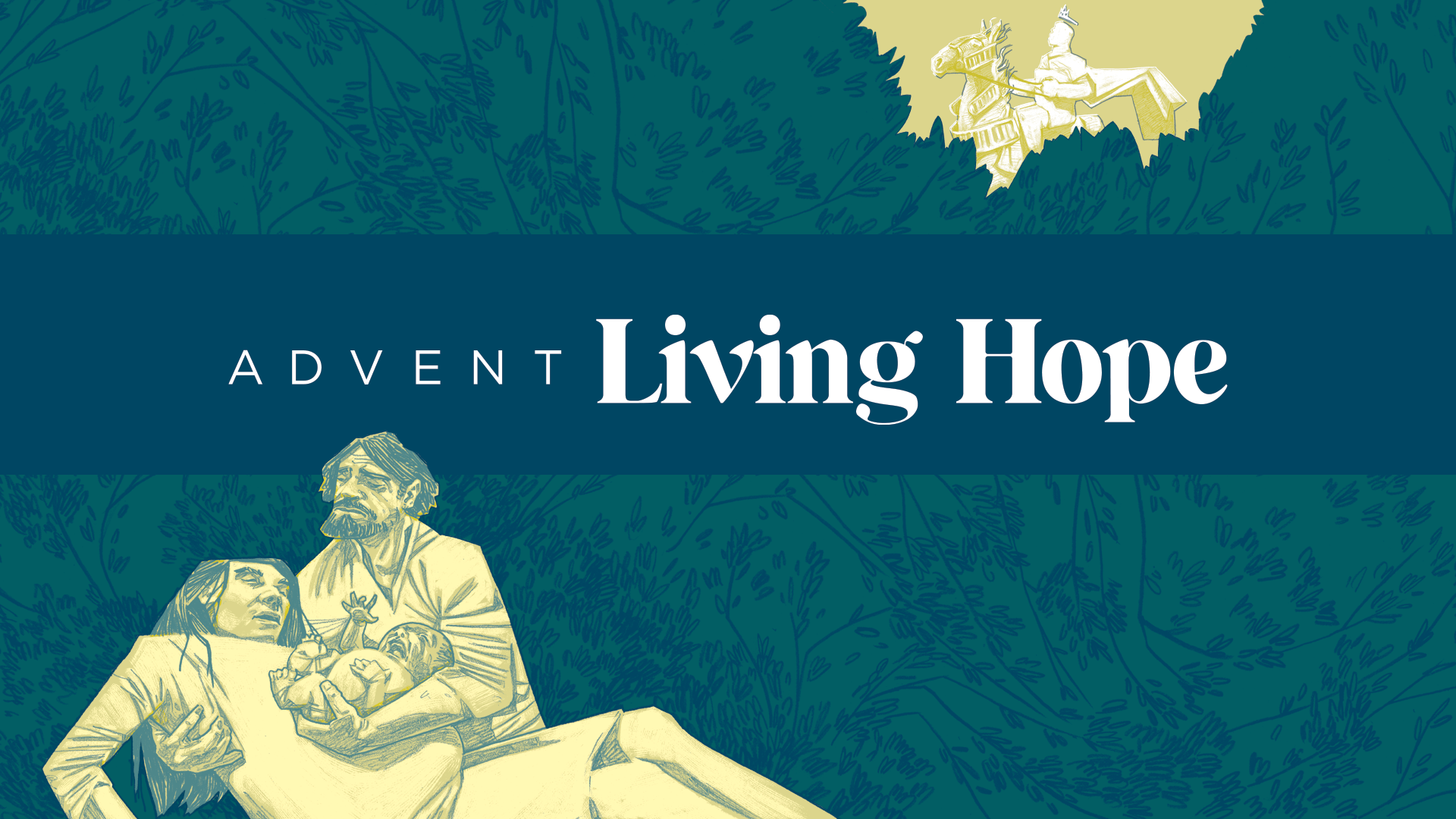
Image: Illustration by Jared Boggess

In this series

What does it mean to have hope amid trying times? Hope is more than a feeling; it isn’t simply being perpetually optimistic or having a “hopeful” attitude. Scripture offers us an understanding of hope that is much more robust. Christian hope has heft, endurance, and purpose—and God is its source.

God, “in his great mercy … has given us new birth into a living hope” (1 Pet. 1:3). And it is our “God of hope” who enables us to “overflow with hope by the power of the Holy Spirit” (Rom. 15:13). This reality isn’t true only in good times; in fact, it is in dark and difficult times when hope truly shows its mettle.

As Jay Y. Kim writes in “Hope: An Expectant Leap,”

This is what Christian hope looks like. It doesn’t ignore fear, anxiety, and doubt; it confronts them. It holds steady, clinging to peace in the midst of chaos. Through life’s many treacherous storms … Christian hope is buoyed by something greater that has happened and something greater that is going to happen again.

This weekly devotional series explores the theme of hope as it weaves throughout the biblical story. In these daily biblical reflections, we focus on our hope in Christ’s future coming—the Second Advent we await that gives us endurance, confidence, and joy in our daily lives, no matter what difficulties we might face (week 1). We reflect on the hope of God’s people in the Old Testament as they relied upon God in hardship and we look at prophecies of hope that pointed toward the First Advent: the coming of the Messiah (week 2). We contemplate the miracle of hope breaking through in the Incarnation, when “the Word became flesh and made his dwelling among us” (John 1:14)—as a human baby, wrapped in swaddling clothes and lying in a manger (week 3 and week 4).

This is our “living hope” or, as the New Living Translation puts it, our “great expectation.” Our hope is animated by our confident expectation that the child who was born will one day come again in glory to put all wrong things right, and his kingdom will have no end.

Kelli B. Trujillo, Project Editor

Church Life

Anglican Churches in the UK Are Shrinking in Size but Not Impact

Report: How smaller congregations are still showing up to support their communities through growing social action.

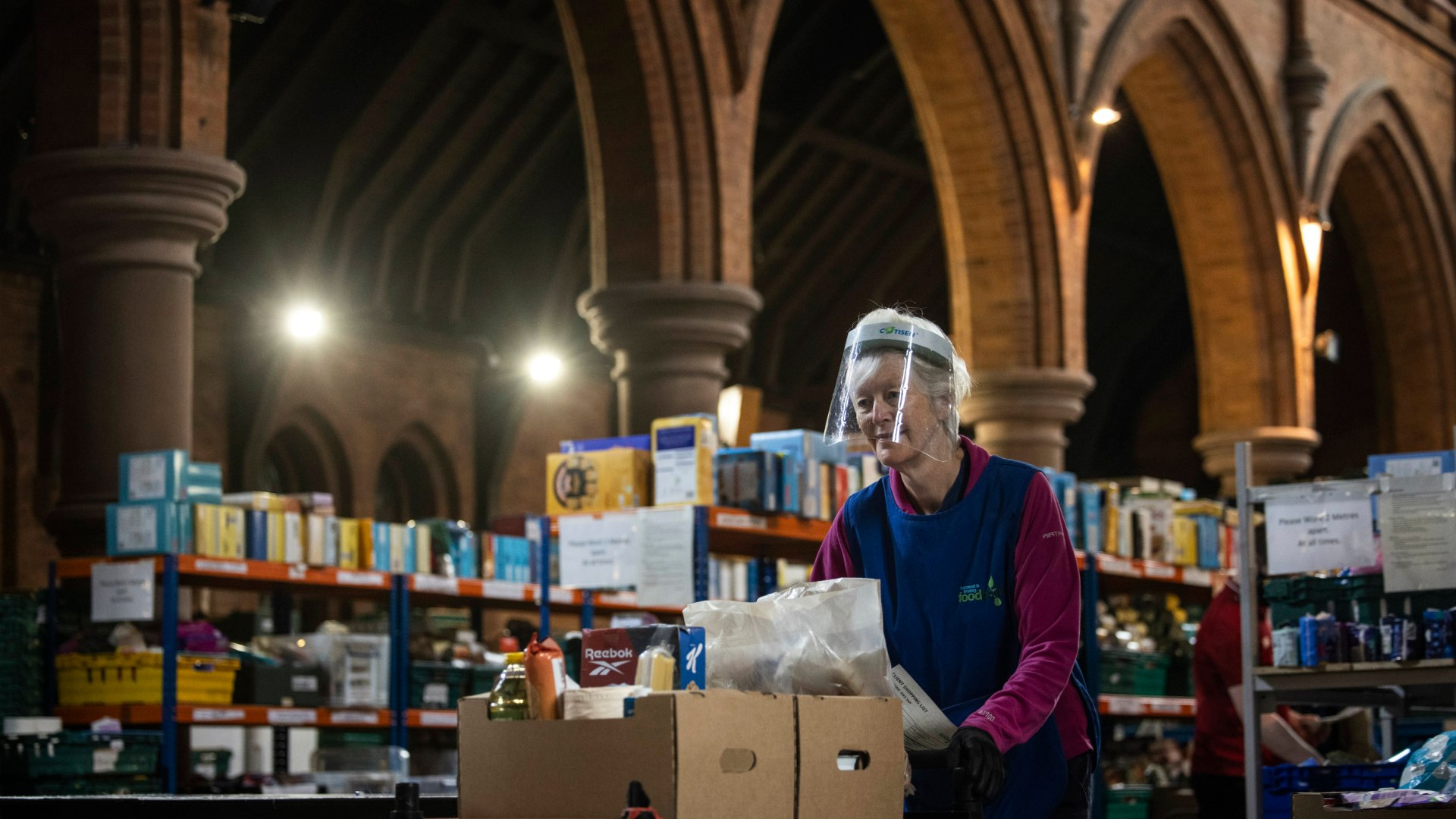
St Margaret’s Church in South London serves as a food bank warehouse and distribution center.

St Margaret’s Church in South London serves as a food bank warehouse and distribution center.

Christianity Today November 24, 2020
Dan Kitwood / Getty Images

There are two pictures I could offer you of the role and significance of the Church of England in contemporary British society. The first is one of growing secularization and declining church attendance. The second is one where the church is the beating heart of the nation’s socioeconomic infrastructure, with an ever-increasing contribution of food banks, homeless shelters, and a range of community support.

Paradoxical though it may seem, both these pictures are recognizable reflections of the national church in Britain in 2020.

The evidence for secularization, or at least for the declining importance of Christianity, is compelling. Christian affiliation in the UK fell from 66 percent to 38 percent over 25 years, with Anglicanism accounting for the sharpest decline in affiliation. By 2018, only 12 percent of the national population identified as belonging to the Church of England or its sister churches in Scotland and Wales.

Any residual cultural affiliation to the Church of England appears to be in freefall and is likely to accelerate; surveys show as few as 1 percent of 18- to 24-year-olds now identify as Anglican. Likewise, attendance at Church of England services has fallen significantly in recent decades, down to an average weekly attendance of 57 people (compared to a mean of 81 in the Episcopal Church in the US, which has also suffered decline).

Looking at the data, we might question the validity of a national church that attracts less than 2 percent of the national population to regular worship. Indeed, this might even be taken as fuel to fire the debate about the established nature of the Church of England. But what of the second picture?

The material and social conditions of the UK have seemed especially urgent of late, even prior to the coronavirus pandemic. Politically, latent divides have emerged and deepened in the wake of the 2016 European Union referendum result, multiple general elections, and ensuing instability. This has all come after over a decade of retrenchment in state provision and funding, leaving a gap that the charity and faith sector has sought to fill.

Contrary to what one might assume from the bleak attendance figures, the church’s capacity to address this challenging landscape and growing need has been unwavering. The vast majority of churches (89%) report having continued some form of social action during lockdown, such as facilitating food deliveries and phone conversations for those in need, even when UK government restrictions meant they couldn’t open their buildings for physical worship.

The provision of food banks is often used as shorthand for the growth in community work by the church in the UK. The demand for emergency food parcels has risen steeply in the last decade and even more acutely since the onset of the pandemic, and the local church plays a vital role in providing and distributing them through volunteer capacity, donations, and storage space.

However, the social action and community outreach of the church goes well beyond food banks. A recent report estimated the value of church buildings to the UK economy at 12.4 billion pounds ($16.4 billion) a year. Churches and their congregations play host to night shelters for the homeless through cold winters, lunch clubs providing hot meals and company to the elderly, debt advice centers, and toddler groups offering a lifeline for parents and young children.

The issue of “holiday hunger”—children going without meals during school holidays—has been brought into the public consciousness recently thanks to the campaigning work of Manchester United footballer Marcus Rashford. The church has long been at the forefront of running holiday clubs to ensure children in the most deprived communities have access to food and fun activities when school’s out.

And not all the church’s social action is delivered through organized programs. Much of it happens reactively or informally, through relationships of pastoral support built by clergy and congregation members—for example, assisting refugees and asylum seekers with legal paperwork or, during the pandemic, supporting neighbors who were staying at home to protect themselves from the virus.

The Church of England Paradox

I have spent the last three years researching this perceived paradox in the context of the Church of England. I have traveled the length and breadth of England, interviewing hundreds of people in communities from inner cities to rural villages, to explore the connection between social action, discipleship, and church growth. Can it really be the case that an organization whose membership continues to fall is at the same time increasing its service of the community? The answer offers lessons for churches on both sides of the pond.

The main finding of this research, Growing Good, is that faith-based social action—practical service provided by the church for the wider community—can lead to growth in numbers. It can also deepen faith because it brings congregations into meaningful relationships with those they would not otherwise have come into sustained contact with. This offers a challenge to the way we often view the connection between social action and evangelism, with implications reaching beyond the Church of England or even the church in England.

First, we can see a clear distinction to be made between social action and mere charity. We might see this as the difference between a relationship and a transaction. Charity implies a power dynamic between giver and recipient, while at its best social action is a two-way relationship that can be transformative for both parties as equals. This distinction is critical for the growth of the church and the faith journey of those involved.

My research identified hospitality and generosity as two of the defining characteristics of churches growing through their social action. Similarly in the US, a study of nonreligious individuals found that one of the top predictive factors of growing churches was their hospitality to those who were not part of the congregation. Dorothy Day once wrote, “Food for the body is not enough. There must be food for the soul.” Genuine Christian hospitality, rather than charity or evangelism, offers both in a way that is transformative for all those around the table. It is the difference between feeding people and sharing a meal with them, offering them charity or building a relationship.

Secondly, the social action of the church can itself be an implicit form of evangelism to those outside the church. When the church is engaged in social action, it looks most like what people outside it expect it to be at its best, and this integrity is attractive to them. The social action tradition is often the element of church life that those who do not belong to the church recognize when the liturgical or theological dimensions are either harder to comprehend or simply less attractive to them.

The American sociologist of religion Peter Berger wrote about what he called “plausibility structures”—the social and cultural conditions of belief systems that render belief possible. The existence and strength of these structures determine the likelihood that someone who does not hold a particular belief system might be convinced of its value and validity. They also help us filter out ideas that are unreasonable or unbelievable within a particular worldview.

For the church, we might see these as what makes the content of our evangelism more or less persuasive. Berger’s original concept frames these plausibility structures as something cognitive: the intellectual conditions that make a belief system possible. But there is a practical dimension too.

The social action of the church in the community can form part of the plausibility structures of Christianity, in as much as it reflects the goodness of God as expressed in the gospel. If people recognize the church, both locally and nationally, as a place where good things happen, then clearly this can increase the plausibility that the beliefs behind it are also good. Social action renders plausible the goodness of the God who inspires it, and a faith that compels individuals to serve others is more plausible than one that does not.

Social Action and Evangelism Together

Throughout the research, I heard countless stories of individuals drawn to the church community not because cerebral curiosity drew them but because they were attracted by the goodness that they saw in its action. In a church that has grown a reputation locally because it supports refugees and asylum seekers through coordinating aid trips to the camps on the French coast, one individual told me:

I saw a Facebook post about this church. It was about the collection for the refugee aid trips. I just thought, “This is a church that’s actually living out the gospel. I have to go and see what’s happening.” So we did and we never left.

This person did not have a church background and, by her own admission, would not have been interested in the church’s evangelism in the conventional sense. For example, this individual would not have responded to the invitation to an evangelistic course or worship service, nor would she have articulated a strong intellectual interest in exploring faith or spirituality. Yet in the church’s social action and service of others, this person found a convincing and compelling argument for the gospel, which led her to become part of the worshipping community and encounter Jesus.

This church, in an unremarkable small town, is seeing its attendance grow and the faith of its congregation deepen through social action and, in doing so, providing a valuable example for the whole Church of England. As Lesslie Newbigin wrote, “the only hermeneutic of the gospel, is a congregation of men and women who believe it and live by it.”

This is not to say that churches should engage in social action solely because of its potential to draw people in. These activities are good in their own right and are a response to the biblical call to love our neighbors, regardless of the activities’ evangelistic outcome. However, thinking of social action as entirely distinct from our evangelism might also underplay the ways in which people discover faith.

The case for the integral relationship between action and evangelism finds an unlikely advocate in Queer Eye’s Jonathan Van Ness, who speaks to a Lutheran pastor in one episode about how “for his congregation to grow, outreach is imperative.” A truism it may be, but one worth considering in broader terms, particularly as Anglican churches face a challenging outlook.

Discussing the relative importance of evangelism and social activism in the church’s mission, the Ecuadorian theologian and missiologist René Padilla suggested that this was like trying to assess the relative importance of the left and right wings of an airplane. The relationship between the two is both fundamental to the flight of the plane and integral to the experience of flying. Similarly, both evangelism and social action are essential for congregations, and there must be an integral relationship between the two if churches are to flourish.

Faced with declining attendance, it could be tempting for church communities to take a step back from their social action and outreach and focus instead on evangelism. After all, in the face of economic difficulties, the state’s response in the last decade has been retrenchment and belt tightening. However, my research indicates the contrary possibility that growth lies in increasing social engagement alongside evangelism, rather than withdrawing from it.

The loving outreach of social action is as powerful in growing the church as the evangelistic sense of outreach, as we see evidenced in the Church of England.

Hannah Rich is a senior researcher at the Christian think tank Theos. She has a background in the charity sector and has worked extensively with faith-based organizations in the UK, France, and Spain. She has a master’s degree in inequalities and social science from the London School of Economics.

Portraits of the Pandemic

Photo by Jeremy Cowart

No other year in recent memory has been more defined by the gap between expectation and reality. In the wreckage of 2020 are plans disrupted, dreams deferred, and countless lives irrevocably changed.

We wanted a kind of time capsule that would show what 2020 felt like for Christians on the ground. Although we could not travel, the pandemic experience has been both isolating and communal. Amid all the loneliness, we have shared a collective experience. What believers endured in one city is much the same as what they endured in another.

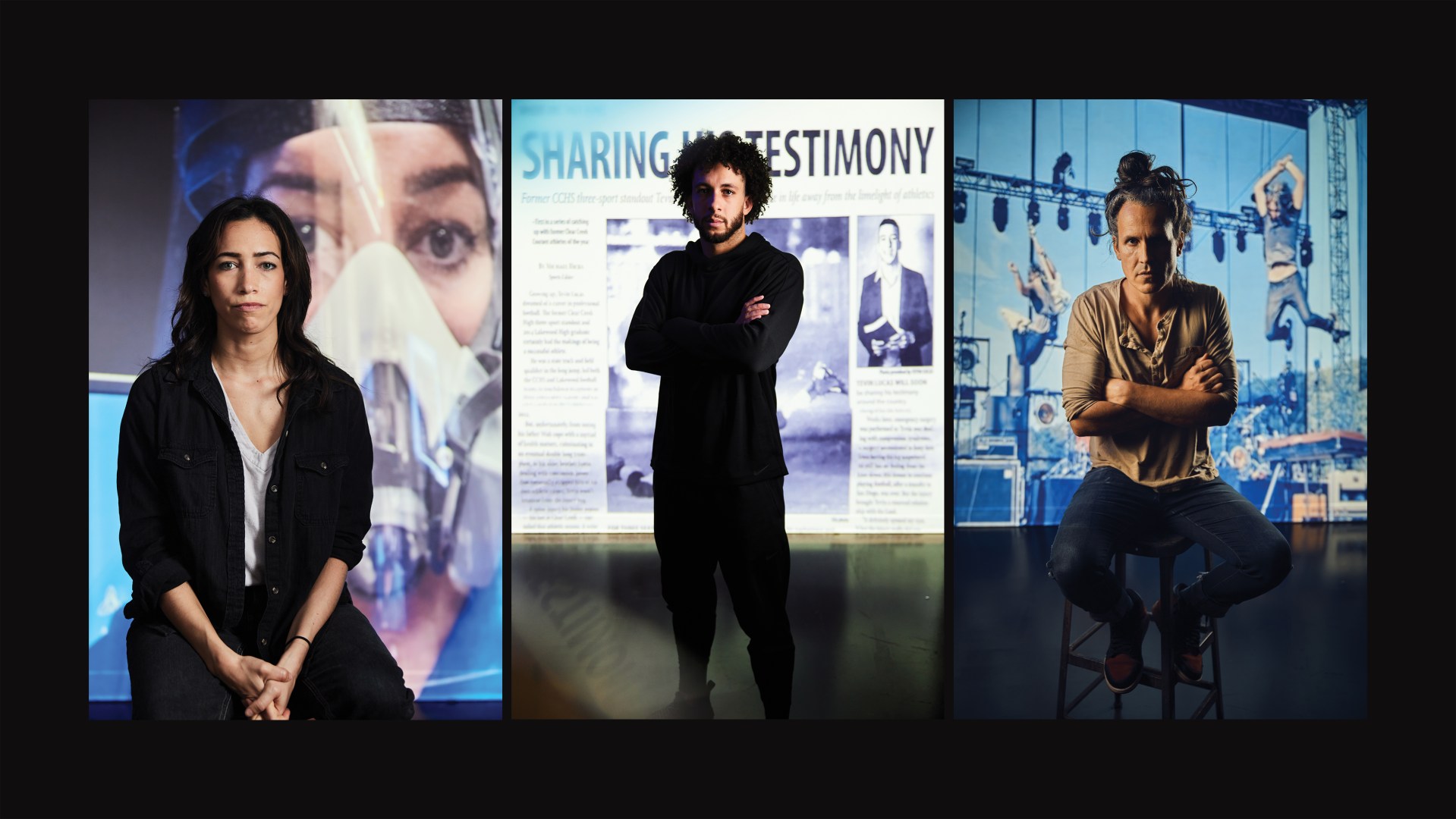
CT asked photographer Jeremy Cowart to capture pieces of that experience at his studio in Nashville. What we received are stories of loss and gain, suffering and joy, struggle and hope—and beneath it all, a sense of the presence of God and the work of Christ among us.

Photo by Jeremy Cowart

“One of the beautiful things about this difficult season is how it has made me appreciate the relationships in my life more. I’ve actually grown closer to some of my extended family and friends. Often that interaction was merely over the phone, but it clarified how important and precious the people in my life are. Each one is a gift, a little piece of God’s image.”

Nathan Harden works from home as an editor and communications manager. He has spent most of this year trying to navigate the isolation of living alone.

Photo by Jeremy Cowart

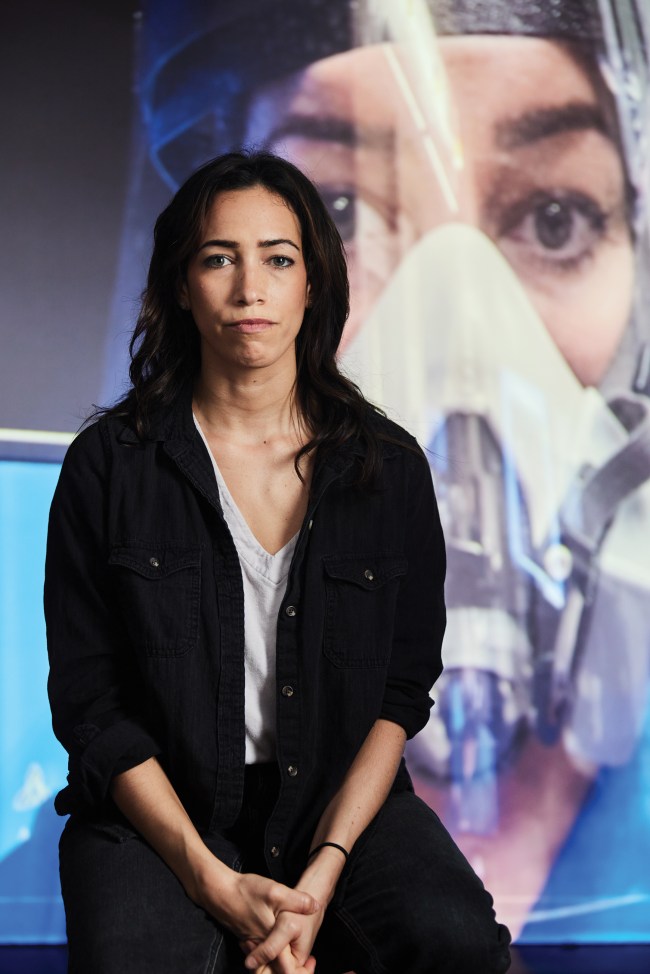
“I have witnessed my colleagues and their family members fall ill to this virus, require hospitalization, and even die. I have feared for the safety of my family. I have held the hand of patients actively dying alone. I have battled insomnia and paranoia. I have found God’s presence to be an anchor. I have found peace and confidence, not in the absence of danger and threat, but in knowing I am not alone.”

Celeste Kuriakose is a critical care nurse who has worked in a COVID-19 ICU since March.

Photo by Jeremy Cowart

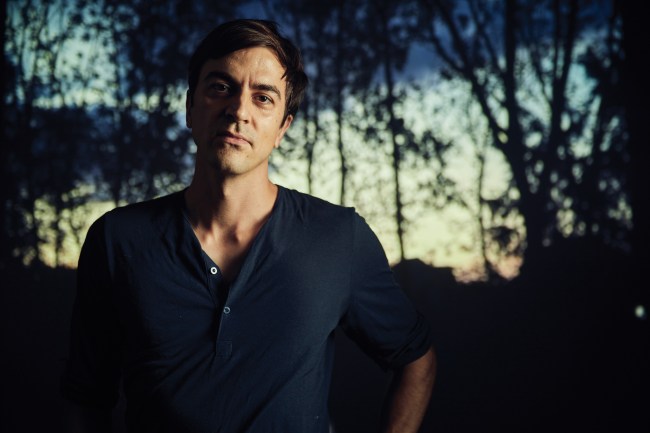
“I know that the King of the universe exists in close proximity with sorrow, the man of sorrows who is acquainted with grief. It’s kind of a paradox. I feel the absence of goodness, the absence of truth. Yet at the same time, I know with confidence, when I’m quiet, when I listen to that still and quiet melody of the Creator inside of me, that there is purpose through all of this.”

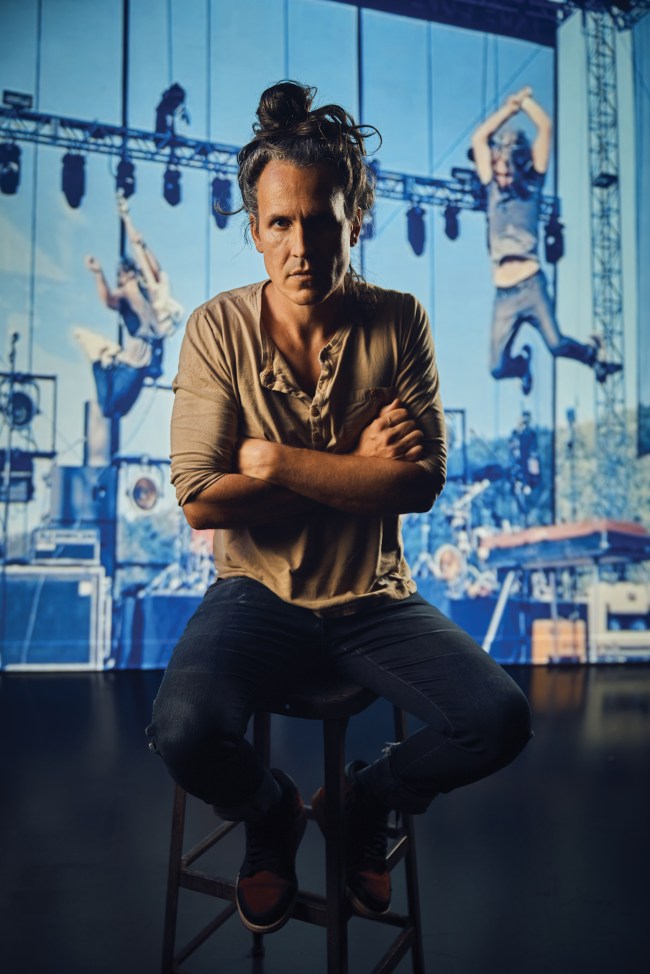
David Zach is lead singer for a band that partners with The Exodus Road, an anti-sex-trafficking organization. His work with Exodus has been on hiatus since the pandemic began.

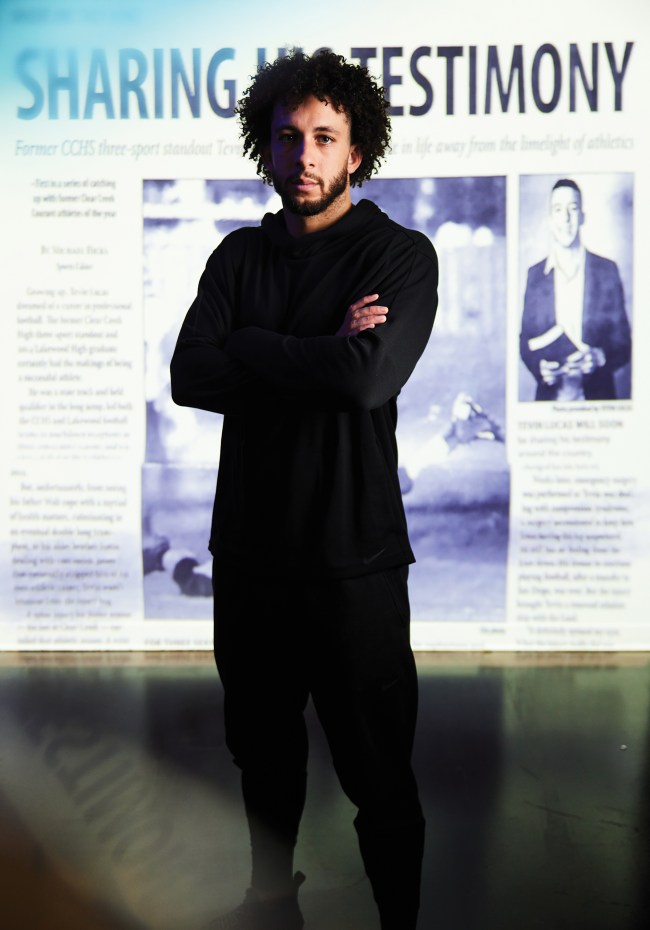
“I hate being alone. I love being around people. The toughest part has been learning to deal with the isolation. This year has been a season of realizing that I can’t do it on my own and that I need to lean on God even more than I was before.”

Tevin Lucas is founder of The Hope and Love, a nonprofit devoted to suicide prevention. He had hoped to play for the NFL this year, but COVID-19 crashed the free agent market.

Photo by Jeremy Cowart

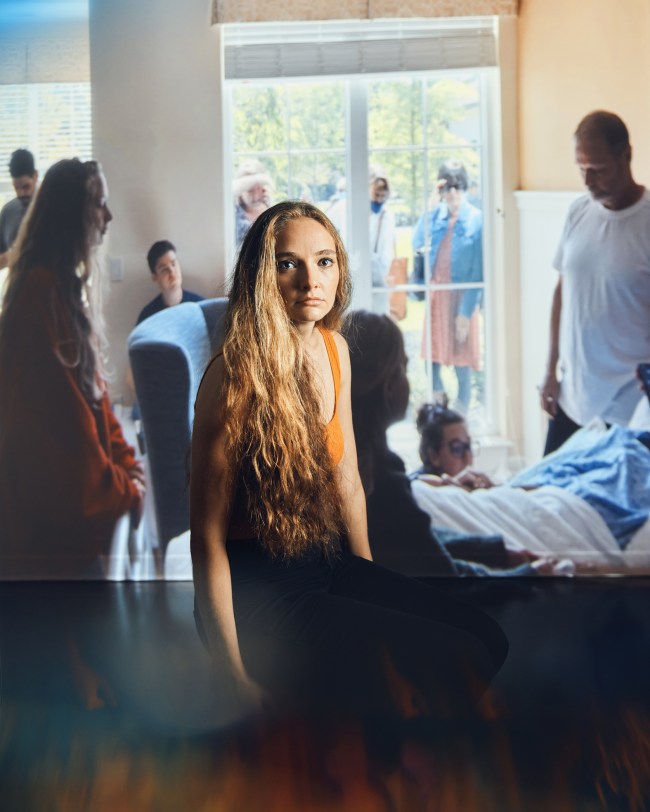
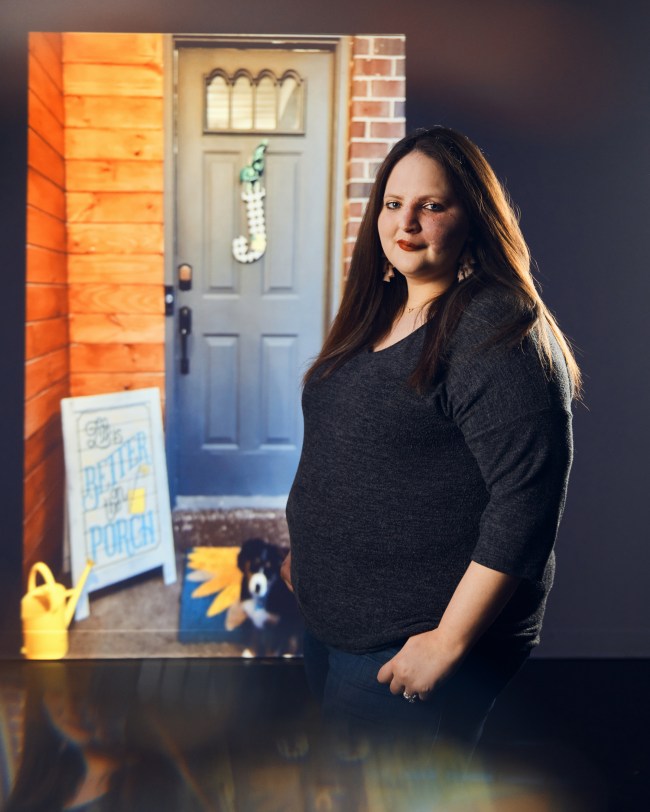
“My faith feels so blind, and I feel that I’m holding on to all I got. I can see all of my insecurities really well. I can see all of my desperation. With everything with COVID and my mother’s health, the fear was so deep. I feel very desperate for the hope and comfort I have in Christ.”

Shaina Arb takes care of her daughter. Her mother, who had eight children, died of stage 4 lung cancer at age 55 this year.

Photo by Jeremy Cowart

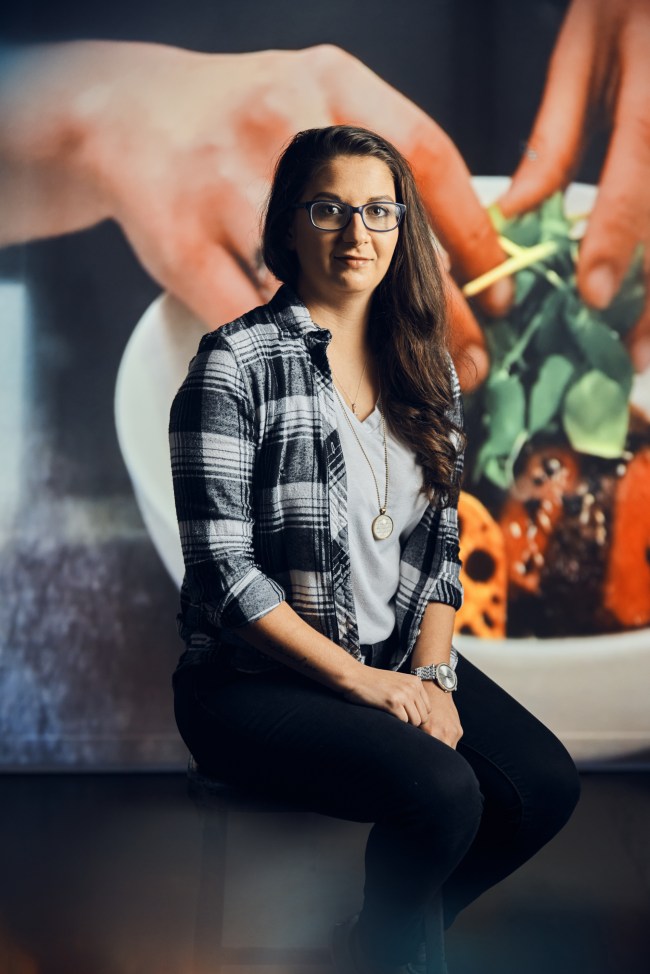
“Honestly at first I was very stressed about it. I had no idea what was going on. I didn't know what was going to happen with my job. I didn’t know what was going to happen with my health.

My church reached out to me, every couple of weeks or so, and asked me what I need prayer for. I told them about my anxiety and it reminded me that at the end of all this, ‘God wins.’”

Rahaf Amer began this year on the executive staff of a culinary company. After business ground to a halt, she ventured out on her own and now works as a private chef.

Photo by Jeremy Cowart

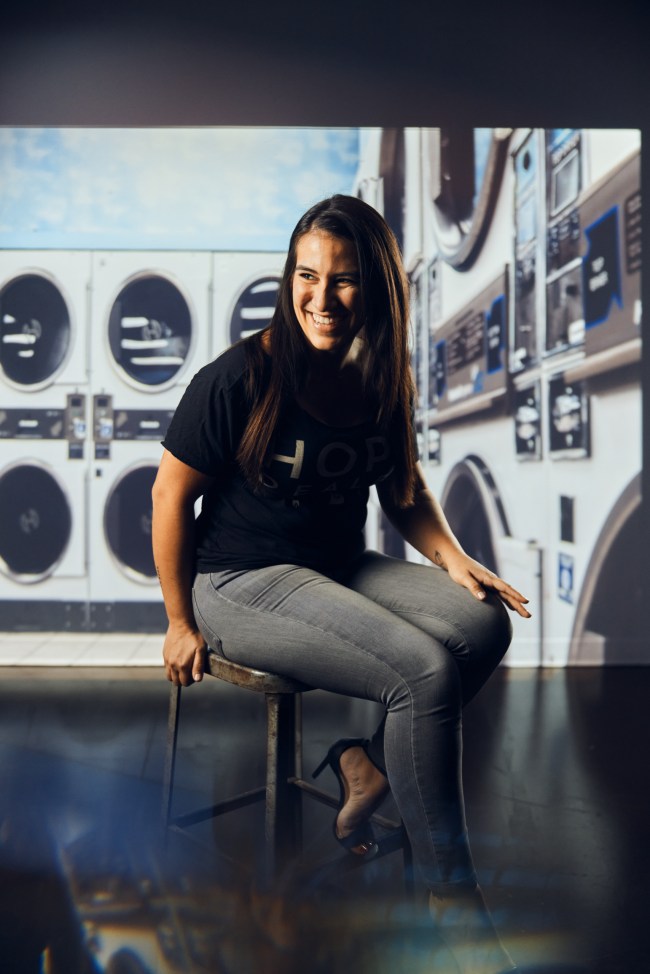
“Before COVID my prayer life was more traditional. I would actually consciously take time just to sit there and kind of be present with God and pray about whatever was on my heart. But throughout quarantine, I would just start having conversations with Him at the most inopportune times when. I would be driving DoorDash and find myself just talking to him while I was on the road for a couple of hours. My prayer life today is less conventional looking and I more comfortable taking things to him whenever I feel like it instead of having scheduled time every day.”

Ashley Ruiz was hired as a marketing manager for a mental health and substance abuse nonprofit only for the offer to be postponed once COVID-19 hit. In addition to running her nonprofit The Laundry Project, she spent much of the year doing food delivery before she was offered her job back at the end of the summer.

Photo by Jeremy Cowart

Even though I already worked from home and did a lot from home, there were days where I felt like I woke up and I could do nothing. I couldn't fold laundry. I couldn't write behind my computer. And all I could do was binge Netflix or Hulu. So I forced myself to write five things I was grateful for every day, whether they were silly or serious.

“I don’t think I questioned God about this year. I questioned the world more than God. I prayed a lot and told God I was confused about what was happening and that I was sick of masks and the words ‘new normal.’”

Crystal Hodges is a writer and speaker. She and her husband have spent this year working to become foster parents.

Photo by Jeremy Cowart

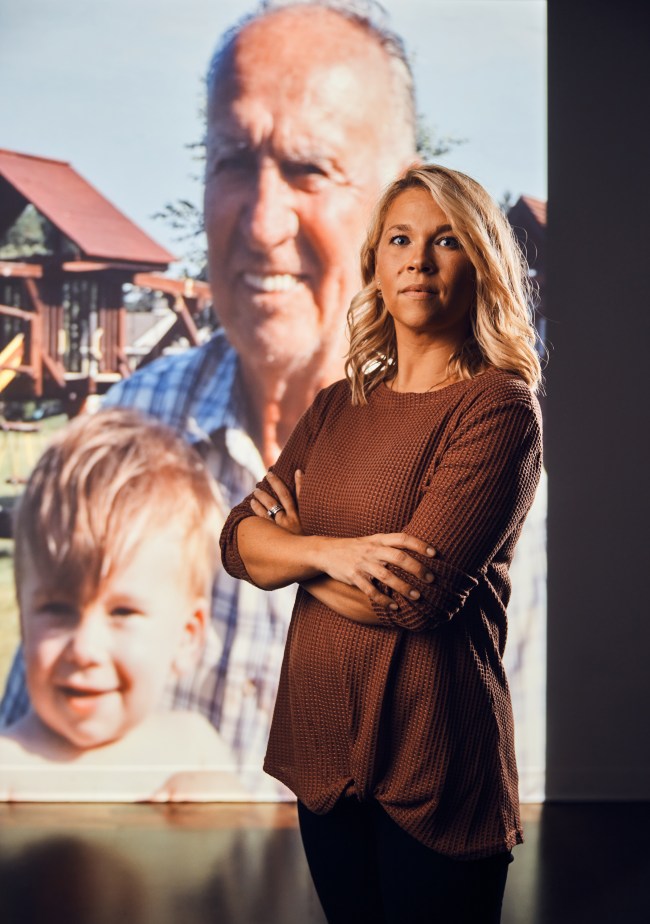
“I helped develop the first protocols we used during those summer months. I was then furloughed two days after my grandfather passed away. I was unable to be by my grandfather’s side when he passed or grieve with my family and the community that loved him. We had to wait five months to embrace my family and grandmother and put him to rest. I feel blessed we were able to say our goodbyes then, as I know many have not been able to.”

Jenni Wright began the year as a primary care nurse practitioner before she, along with her fellow nurse practitioners, was furloughed. She now works as a school nurse at a charter school.

Reply All

Responses to our October issue.

BongkarnThanyakij / Getty

Atlanta’s Dream

All powerful articles that remind us of the richness and texture of the black church in America. Thank God for the church!

Richard Luckett (Facebook)

I really appreciated this @CTmagazine profile by @terashaburrell of black-owned businesses in Atlanta, and the vision of Christian entrepreneurs for building up communities. Atlanta keeps popping up as a place that is doing things the right way.

@AnthonyMBarr

Y’all, @CTmagazine did #Atlanta up right in its latest issue. So many amazing folks call this place home. Great writing all around and gorgeous shots from @benrollinsphoto.

@TousledApostle

The Next Mission Field Is a Game

I’m surprised how little Christian media interacts with games. Movies, books, and TV are often reviewed, but little space is allotted for game reviews or in-depth theological discussion.

@MillennialPastr

Who Will Help Gen Z with Anxiety, Depression, Suicide? Youth Pastors Turn to Counseling.

The church is not equipped to deal with mental illness. I speak from personal experience. I’ve battled severe depression for almost 50 years. Therapy will help deal with the behavioral aspect, and medications can help to correct an imbalance of brain chemicals. Of course, staying in prayer, listening to Christian music, and being intentional about reading Scripture like what Paul wrote in 2 Corinthians 7:6 give us hope. David, while hiding in caves and holes in the ground from those trying to kill him, was very depressed. You can tell from his psalms. But he also kept his faith in God because he knows God can do all things.

John Haake (Facebook)

According to a LifeWay poll a couple years back, many evangelical senior pastors never talk about mental health in a way that reduces stigma. Too often, unqualified people are offering “counseling” and a number of churches do not encourage the use of trained mental health professionals. As the suicide rates of LGTBQ youth tend to be two to three times higher (often due to stigma and non-acceptance), I wonder how the program by Focus on the Family (referenced in this article) addresses these concerns, as they have been very clear over the years on where evangelicals stand on this issue, and it’s not been [a place] of support or acceptance.

Ben Keller (Facebook)

Sign Language Bible Complete After 39 Years

I’m a CODA, a.k.a. a child of deaf adult(s). This is awesome to see. God’s Word continues to spread in every language!

@HisWordnCoffee

Your Devotional Is Not a Bible

Jen Wilkin’s article was an excellent reminder that even the best religious devotional should not replace Scripture itself. Similarly, the appropriate desire to address systemic cultural issues should not replace our focus on Jesus’ commission to proclaim the gospel to every person and make disciples of all nations. The larger the collective body of Christ, the greater the potential impact on society. However, Daniel Harrell [in “Christianity Is About Systemic Change”] may have stretched Revelation 7:9 by implying it speaks of WHOLE tribes and nations and peoples and languages coming to Christ.

John Higgins Kernersville, NC

Devotionals have always seemed like M&Ms: sweet but lacking any nutritional value.

Dick Lloyd (Facebook)

The Best Way to Memorize Scripture Has Little to Do with Learning Words

I’ve never been able to memorize passages. Something I did notice in the late ’70s … I could read my Bible, and then when someone asked me what I’d read, I could visualize the page and the contents and then go to the page and show them. Over the years, I’ve found that God just brings to my recall when I need it—address included. One of the jobs of the Holy Spirit is to remind us of what Jesus taught us, so we can give it to the people whom we’re telling about Jesus.

Steve Buckley (Facebook)

Good News: Tomorrow We Die

It seems that everybody wants to go to heaven but nobody wants to die. As a young man, I feared death. Now as an older man with faith, I’m looking forward to being with my Lord Jesus Christ. Thy will be done.

Richard Knoggin (Facebook)

Pursuing Racial Justice Requires More Than Lament, but Never Less

I have been reading [Mark Vroegop’s] first book, and I agree that lament is sorely lacking in our churches. And when I enter into someone else’s pain, there is no need for me to have a solution for that person’s pain but to simply listen!

Linda Watt (Facebook)

The Roots of Our Issue

As a virus shrank our social circles, CT’s network never seemed so large.

Source images: Diego Romeo / EyeEm / Getty

Recently a beloved tree in our backyard was hacked up, dismantled, and carted away. The loss of this one tree tugged at my heart and left me thinking about all the trees that have to die in order to print a magazine.

But trees are just one of the many nodes in a large network that brings an issue of CT into being. Our December issue was a unique example: To tell the stories of the church at work in the world, that network would ideally include a variety of commissioned photographers around the globe. Unfortunately, the COVID-19 pandemic made that a challenge.

That challenge was met with surprising grace and provision. Where photographers could not be sent, the people whose stories we were telling became the contributors. Missionaries and other expats emailed personal photos from their corners of the world—from Colorado to Taiwan to a ship off the coast of Africa. Our CEO and our director of CT Global shared hundreds of photos from their trip to Papua New Guinea.

Our Testimony author could not be reached by a professional photographer in her remote region of India. After being ill for a few days, she ventured out to see a doctor. On her way, she stopped and smiled through her sickness as a friend snapped her picture. She found out later she was positive for typhoid. Her response: “Thankfully, it wasn’t COVID.”

The artists we were able to commission went above and beyond to understand and embrace our vision. We assigned the cover art to two different illustrators, which resulted in two beautiful renditions.

Dorothy Leung

Dorothy Leung captured exactly what I imagined, drawing her inspiration from Psalm 91. Keith Negley’s bright, cosmic interpretation we kept for our contents page. Together they told a story of darkness on the cover to light inside.

Keith Negley

Photographer Brian Frank risked traveling to complete all three parts of our story on migrant farm workers. While on location in North Carolina, his one opportunity to shoot in the tobacco fields was thwarted by rain. He called to tell me, “I need it to stop raining so the workers and I can get out there.” All I could offer was prayer, thinking: “God, if you could just part the clouds—show him you are there.” A few hours later, Brian texted a selfie from the field and said, “Someone was listening … the clouds parted and even gave me beautiful light!”

Someone was listening. While this issue may look different than our initial vision, it became a capsule of this moment in time—proving our unity as a global body and the involvement of our Creator. The sweat on all the brows, the clicks of all the shutters, the leaves that drank sunlight, and the roots that gripped soil all came together to create the issue in your hands.

Sarah Gordon is art director for CT.

Theology

She Knew She Was Called to Serve. Then COVID-19 Came.

Aboard a Mercy Ship, a kindergarten teacher asked, “Should I stay or should I go?”

Courtesy of Beth Kirchner

She had to decide right then. Should she stay or should she go?

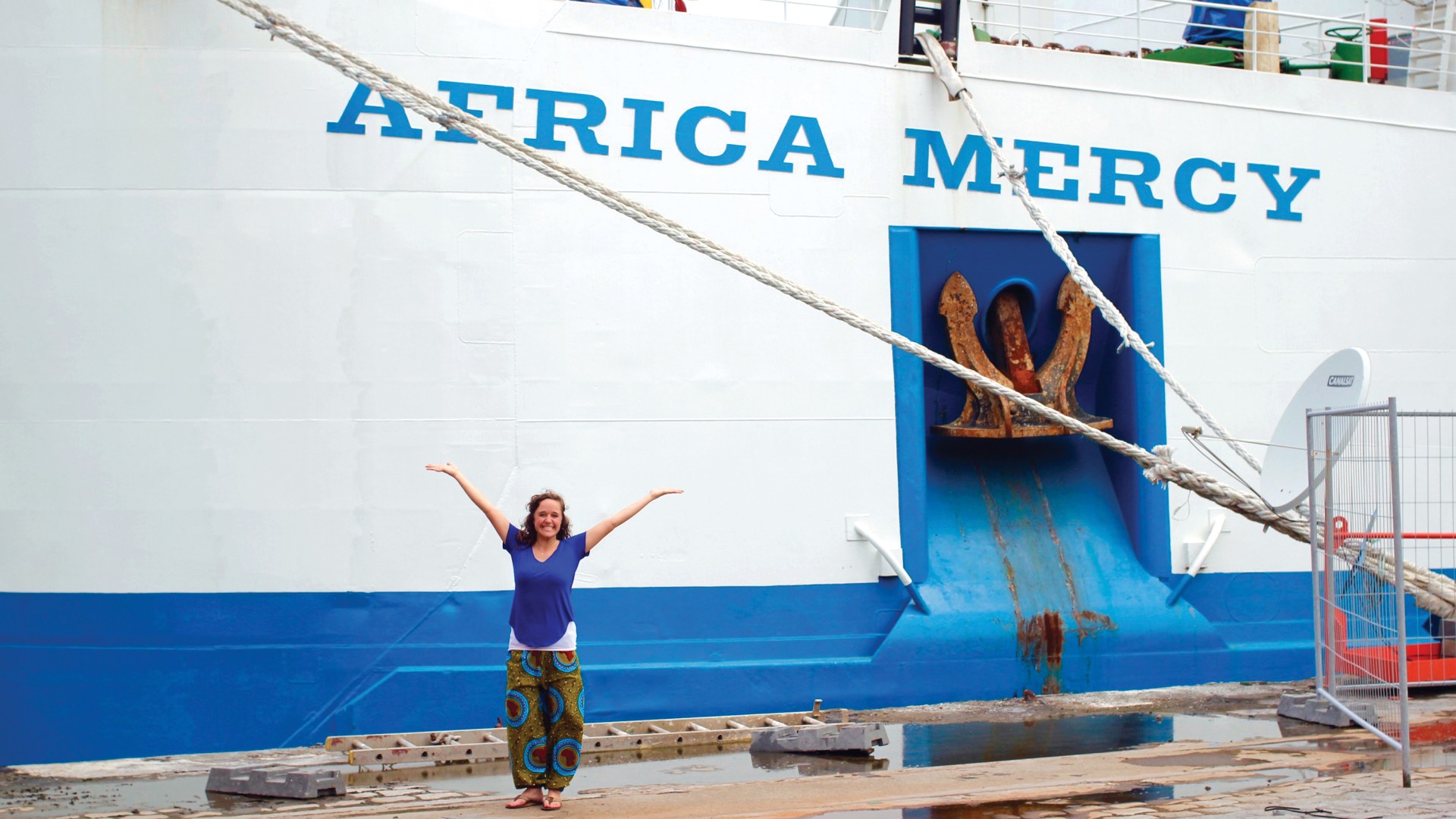
In early March, when the World Health Organization (WHO) declared COVID-19 a global pandemic, hundreds of volunteers aboard the Africa Mercy gathered in the ship’s lounge for a mandatory meeting. The American Embassy had announced a special repatriation flight for US citizens, and the staff on the ship anchored outside Dakar, Senegal, providing medical care and humanitarian aid to the Senegalese, had to choose whether or not to write their names on the “fly list” and return home.

Beth Kirchner, a kindergarten teacher, had talked with her family before the meeting, but now the decision was hers. An initial wave of nonessential volunteer staff had already left the ship, but then the city’s airport canceled all international flights. This flight was the last option if she was going to leave.

She couldn’t sit on the deck of the ship at sunset and allow the dolphins and turtles and other creatures of the sea to speak God’s peace to her. There was no time.

From school teachers and caregivers to health care workers and heads of state, no one was unaffected when the virus swept across the globe in early 2020. Many people had to make decisions about safety and risk, and some, like Kirchner, faced existential questions of calling.

As with many aid workers and missionaries, Kirchner’s job wasn’t a job so much as a part of her core identity. It was how she answered the question “Who am I?” and connected her deepest self and God’s calling on her life.

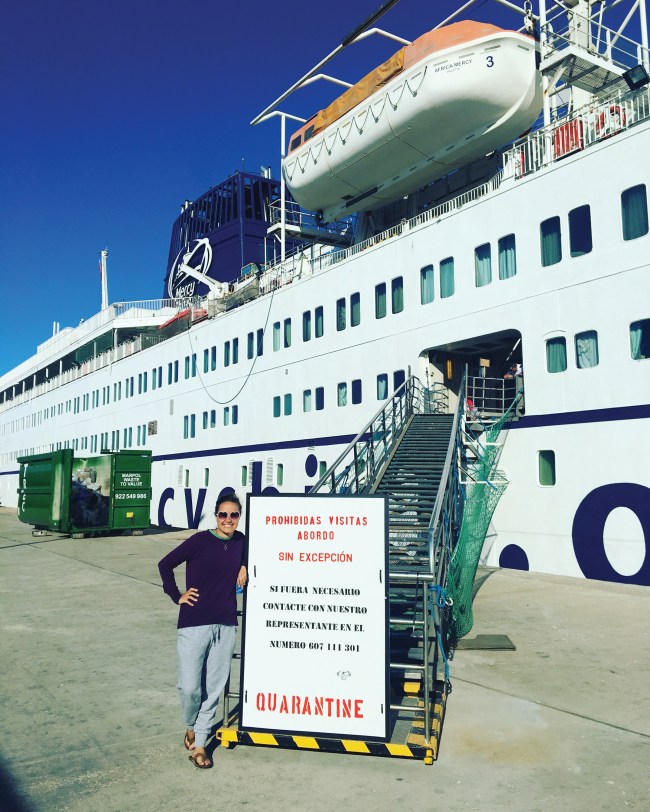
It was her answer to that call in the first place that put her in the lounge, facing the decision to stay or go. More than a dozen years earlier, Kirchner had become a kindergarten teacher at a Christian elementary school in California alongside her twin sister, Kate. After some years teaching, she sensed a stirring in her heart. When her sister married and moved to Texas, Kirchner wondered if God had something else in store for her future. Catching up with an old friend that spring, she found he had just returned from volunteering with Mercy Ships, an international Christian charity providing state-of-the-art medical care to the world’s poor. He had served on the Africa Mercy as a surgeon.

The ship, he mentioned, was looking for a kindergarten teacher for the workers’ children. Would she be interested?

“His words felt like a collision of so many things I love,” Kirchner recalled. “If it had been any other grade, I wouldn’t have even applied, but I knew that as different of a life as this would be, and as far away from my family as I’d have to be, if I was with kindergartners, I’d be okay. They are my people!”

Kirchner had actually worked on a ship before—a Disney Cruise Line ship. She understood the challenges of living in a small space alongside people from all over the world. But as an extrovert, she also knew she thrived in tight-knit communities.

She had also been to Africa before, on a trip to Uganda. The continent never far from her heart, she dreamed about the day she could return for a more significant amount of time.

Here was the opportunity: on a ship, in Africa, doing what she loved with her kindergartners. Kirchner applied almost immediately and arrived on the ship less than four months later. She was excited, but there were a lot of unknowns.

“I didn’t know what our patients would look like, or what it would feel like to encourage both my students and myself to play with patients who have wires coming out of their fingers or tumors protruding from their faces,” she said.

She didn’t know there would be regular pirate drills on the 499-foot metal ship, which felt small against the vast expanse of sea. She didn’t know there would be “stowaway watch,” when staff members had to make sure no one was hidden on the ship before sailing.

And she didn’t know that a new coronavirus would spread around the world, infecting a few hundred people in early January and then thousands more in February and March, when the first few cases were reported in Dakar.

For Kirchner, the reality of the pandemic revealed itself slowly. The yearly Association of Christian Schools International conference she and the rest of the teaching staff planned to attend was canceled. Recommendations from the WHO and a local team of health experts warned against activities that could spread the virus.

She didn’t know yet it would force her to re-evaluate her calling, but Kirchner felt like her life on the ship had become a Jenga tower: Integral parts were constantly being taken away. Stability did not seem part of the game.

But contagious diseases must be taken seriously on a ship. In March, 800 crew members on the USS Theodore Roosevelt tested positive for the virus. Likewise, on the Ruby Princess cruise ship, about 900 people tested positive and 28 people died. Mercy Ships knew the decision to send home volunteer staff members wasn’t only a matter of safety but also one of justice: If even a single volunteer contracted COVID-19, the organization could harm the very people it was trying to serve.

When the leadership of the Africa Mercy began holding daily meetings in the lounge, change came quickly and furiously. The ship suspended all medical activities. Future surgeries were canceled, and patients were sent home. Days later, staff with underlying health conditions were asked to fly home.

Then everyone was told to consider leaving. It felt like the longest two weeks of Kirchner’s life.

And she certainly wasn’t alone. One of her fellow volunteers had been with Mercy Ships since 2013, working in hospital administration during her retirement years. As 68-year-old Chris Glasgo weighed her decision to stay or leave, she began with a statement about her identity: “I’m a nurse. We nurses always want to fix the things that are broken.”

Administration wasn’t essential work, though. So she asked herself two questions: Should I stay? Should I go?

Beth Kirchner in front of the ship in the Canary IslandsCourtesy of Beth Kirchner
Beth Kirchner in front of the ship in the Canary Islands

“How do you leave when your heart is broken and the last thing you want to do is leave?” Glasgo said. “I knew that I had to go, and soon. If I stayed, I would eat up valuable resources. It wouldn’t be responsible to stay.”

When Glasgo made the decision to leave, the effects were swift: Within 48 hours, she found herself on a flight back to Ohio.

Another nurse, Amber Greenhow, also wrestled with the decision. At first, she thought she would stay and continue working as the screening clinical supervisor. Her fiancé, Abel, a Cameroonian citizen, worked in the ship’s engineering department and had been deemed an essential worker. If she returned to Pennsylvania, they didn’t know when they’d see each other again. She decided she would stay.

But as Amber prayed, she felt a nudge that she had made the wrong decision. After she and Abel fasted and talked to their families, they changed their minds: She would return to the United States. Finally at peace, the pair enjoyed their last moments together before an indefinite separation began.

Kirchner, watching her friends wrestle with these choices, praying about it, and talking to her family, decided to stay.

“Honestly, it didn’t even cross my mind to leave, at least not at first,” she said. “When leadership asked everyone to think and pray about whether they should stay or leave, I just kept thinking, ‘As long as my kids are here, it’s a good place to be.’ ”

Kirchner remembers laying on her thin mattress at night in the two-berth cabin she shared with her roommate. She recalls asking herself, “Where would I go if I left? This is my home. This is my community, my everything.” She could go to California, where her parents and college-age sister lived. She could go to Dallas, to live near Kate, Kate’s husband, and their three young children. But none of those places felt like her home. This was her place now—this ship her calling.

She didn’t know what would happen, but she hadn’t known what would happen when she first began volunteering with Mercy Ships either. Though the unknowns had been overwhelming, there was one thing she was always sure of, one thing more important than anything else: God would continue to be with her and teach her exactly what she needed.

Take, for instance, a lesson plan established months in advance: The very week the WHO declared a global pandemic, she had planned to help her students memorize John 11:35.

“Here you have one of the shortest verses in the Bible, ‘Jesus wept,’ ” Kirchner said, “and here you also have the entire Africa Mercy crew grieving, weeping, crying. Suddenly, the verse felt truer than ever to every single one of us on board.”

She began to implement grief maps into the students’ curriculum. Along with the other teachers, she helped them identify and name the myriad feelings, like anger, sadness, and loneliness, that surface when something unexpected happens.

Kirchner was staying. There was work to do.

A few days later, the Dakar airport canceled all international flights, and there was no way to leave the country. Then the embassy announced the special flight, and everyone was called back to the ship’s lounge to decide again whether they would stay or go. But they had to decide right then.

As she thought about writing her name on the “fly list,” an emotional dam broke inside Kirchner. She ran out of the lounge in tears. Her decision had been made: Kirchner would become one of a couple hundred volunteers who stayed.

The Africa Mercy—mercifully free of any cases of COVID-19—left a while later at the request of the Senegal government, sailing for the Canary Islands to undergo repairs and wait for the mission to begin again.

“Mercy Ships was active in Africa before COVID-19,” said CEO Tom Stogner. “We are active during COVID-19, and we will continue once COVID-19 is long forgotten.”

For Kirchner and for rest of the volunteer crew, choosing to stay or leave wasn’t easy. The decision was as personal as the invitation to follow a call and serve in the first place. After all, vocational identity is often a person’s identity—the deepest parts of a servant’s spiritual being intertwined with the nudges, stirrings, and whispers of the Holy Spirit.

The question, for them, wasn’t really about the one right answer, but about whether God really does dwell in the mystery and meet people in their indecision.

Cara Meredith is a writer living in the San Francisco Bay Area. She is the author of The Color of Life: A Journey Toward Love and Racial Justice.

Theology

For Expats and Missionaries, COVID-19 Was a Crossroads

The first question for Christians living abroad was, “Go or stay?” After that, it got hard.

Biulanty Thabah (second left to right) in Africa

Biulanty Thabah (second left to right) in Africa

Courtesy of Biulanty Thabah

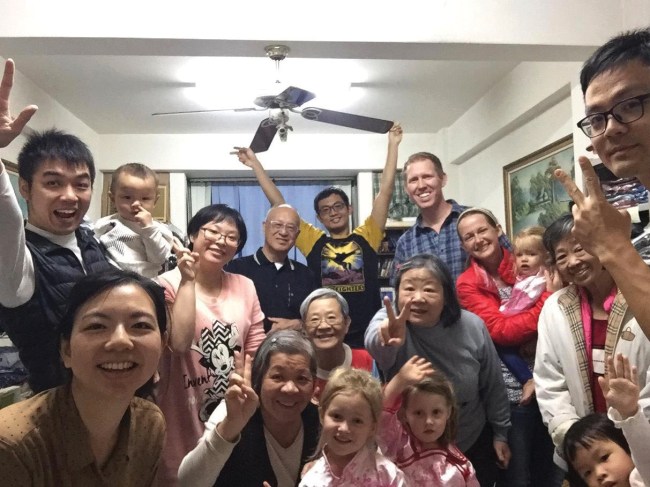
Eric Katzung’s two-year-old daughter saw snow for the first time this spring in Colorado. But the question she keeps asking is when she can eat her favorite meal again—Taiwanese clams and rice. Katzung explains that they don’t have Taiwanese food in Colorado, and his daughter says, “When can we go home?”

Katzung doesn’t know if Taiwan is home anymore. He and his three daughters, ages 5, 4, and 2, left the country in a hurry in March when coronavirus case numbers started getting bad and borders started shutting down. His wife, Dava, was already in the States for a visit with family and never got to go back to Taiwan to say goodbye.

They had lived there for two years, sharing their lives and their love with their Taiwanese neighbors as Katzung worked as a counselor at a university.

Now they are living in a borrowed one-bedroom apartment in Colorado. They have a borrowed car, borrowed children’s toys, and borrowed coats that the girls wear when they go outside to see the snow.

“We are in an uncomfortable holding position, a forced flexibility,” Katzung said. “These are the struggles of cross-cultural workers. We get things stripped away. Now we’re at another layer of stripping.”

About nine million Americans live abroad, according to the US State Department’s most recent figures. Some of these are missionaries. Some are aid workers. Some, like the Katzungs, are Christians who want to live out their faith in a cross-cultural context.

Their lives and work are dependent on governmental permissions, work visas, plane rides, the willingness of communities to welcome outsiders, and sometimes financial support from churches or friends back home. The whole system that made living abroad possible has been put into question by the global pandemic.

One hundred years from now, COVID-19 might be a blip in the story of international Christian service. Or 2020 might be the year everything changed. But right now, as the Katzung children anticipate their second season of Colorado snow, Christians displaced from their cross-cultural lives must deal with the uncertainty.

Rob Congdon in South SudanCourtesy of Rob Congdon
Rob Congdon in South Sudan

Tough Decisions

At first, the pandemic raised the question of whether to stay or go. Many had protocols to help them make that decision. Missio Nexus, a network of 360 Christian nonprofits and churches representing 30,000 people serving around the globe, reported that about one quarter of its member organizations had COVID-19 contingency plans in place in March. Another 45 percent were developing plans, and the remaining groups were leaving the decisions up to individuals.

These were tough decisions. Rachel Pieh Jones, a writer and an administrator for the International School of Djibouti in East Africa, made the difficult choice, with her husband and 14-year-old daughter, to stay in Djibouti through the initial months of the pandemic. They have lived there since 2004 and wanted to stay, but they also knew staying would separate them from their college-age twins in the US indefinitely. They knew if they did have a medical emergency, they might not be able to get help.

“There’s not a good decision or a bad decision, or right or wrong decision,” Jones said. “You’re making a really brave choice to go back to something you don’t know and wonder what your next job is. And it’s a brave choice to stay. There’s courage in all these things. And there’s grief in all of these things.”

Some of the teachers at the international school did decide to return to the States, and Jones supported them. Going “home” wasn’t easy—and for some it came with a lot of guilt.

“It’s devastating,” Jones said. “It feels like a failure. They’re leaving students. You can’t say goodbye.”

It’s hard to leave a mission field well, even under normal circumstances. Jeff Ingram, a life coach in Colorado Springs who has worked for Reach Beyond in Ecuador, Singapore, and the United States, tells people that leaving is a complicated process that should be done with care.

He coaches people to “say goodbye to all the places you love, and if you have friends, go and sit in their homes.” When people don’t have time to do that, they feel ripped away from their life.

“It’s stolen from them,” Ingram said. “It’s a theft.”

Abrupt departure causes a kind of identity crisis. In the midst of managing the crisis and shifting rules, along with making arrangements to travel, the uncertainty leads to questions about calling.

“The part of the pandemic that has affected us all is the confusion and the head scratching, asking, ‘Who am I and what does the Lord have for me and what should I be doing?’ ” said Rob Congdon, a doctor who has spent most of his medical career working in African countries.

Congdon was in South Sudan when the pandemic hit and worried that closing borders would separate him from his family indefinitely. He decided to return to the US and caught an early flight out of the country.

Some missionaries never had any choice. Mary Lott is currently in Alabama, hoping that next year she and her husband can go back to Indonesia. She would have stayed if she could have. A staff member with Wycliffe Bible Translators, Lott and her husband have worked at an international school since 1995. They considered the health risks when they first moved to the country—long before anyone knew of COVID-19.

“We knew malaria is endemic,” Lott said. “Dengue fever. Typhoid. Typhus. Tuberculosis. We knew that when we signed up that it might cost our life.”

Lott, 65, has survived dengue fever and—though she doesn’t know the exact number—probably 50 cases of malaria. She has also had cancer. There are limited health care options in Indonesia, and she is considered high risk for COVID-19, so Wycliffe leaders decided the Lotts needed to leave.

In April, the US embassy arranged a flight out of Indonesia for 47 expats who wanted to go. The Lotts had five days to pack, find a home for their dog, arrange a caretaker for their house, and suspend the life they had made for themselves for 25 years.

“One of the hardest things [was that], as soon as we had the order to leave, all our Indonesian friends started coming by our house, telling us how much safer it was in Papua than in the States,” Lott said. “Our Indonesian friends said, ‘We thought God was sovereign. Why are you not trusting the Lord to keep you safe?’ ”

The Lotts took one of the last international flights out of Indonesia. Their plane took off just 20 minutes before a mandatory curfew fell on the country.

Sometimes it did seem safer to stay than go. Dan Shoemaker, president of Reciprocal Ministries International (RMI), initially recommended that its American missionaries in Haiti, including two families and three singles, return to the US. It wasn’t an order, just a strong recommendation. Shoemaker felt like they needed to evacuate—partly because he thought the pandemic would put too much strain on the local Haitian church, which would feel responsible to care for the foreign missionaries if they stayed.

One missionary took the recommendation, but the rest of the staff at RMI made the case that they shouldn’t leave.

Many of the places they would go in the US were actually hot spots for the virus. They felt they would be more at risk in the US, and they would also be placing a burden on their families and the people they would be staying with in the US, places that actually weren’t their homes, however often they might be referred to casually as “home.”

They lived in Haiti. And they were located on a secure compound with a good power supply. They were all young and healthy, low risk.

The missionary organization relented, and the missionaries remained. Today, they are doing ministry “full blast,” Shoemaker said. The team is managing more than 30 church-to-church partnerships and feeding 10,000 school kids per day, as Haiti relaxes rules on social distancing.

Into Uncharted Territory

As they look back, some leaders of missions organizations are starting to say those tough decisions may have been the easy part. They had, at least, some past experience to guide them.

“We have had to do this many times—make decisions and evaluate the situations for our missionaries, particularly because of political unrest or natural disasters,” Shoemaker said. “It’s always been a situation where . . . it’s a matter of leaving for a time and then things calm down and you’re able to go back and continue with your ministry.”

But as the pandemic dragged on and began to seem like it would continue indefinitely, mission leaders found themselves in uncharted territory.

“How do you set up rhythms and boundaries when you don’t know where the finish line is?” said David Bulger, vice president of global ministries and head of the crisis response team for One Challenge. “We’re discovering we’re wrestling with things we haven’t really thought about before.”

Like, what happens if the pandemic has a long-term impact on international travel? It’s not clear when that will be safe again. Even when it is allowed, will people feel safe enough to want to travel when they don’t have to? It also seems likely that some countries will keep safety measures in place for the foreseeable future. These would make it only a little more difficult to travel than normalbut could have serious impact on the future of missions.

If everyone who flies to Haiti has to go into quarantine for 14 days, for example, and then quarantine for another 14 days when they return to the US, that would put a damper on short-term missions. It doesn’t seem reasonable to ask people to volunteer for a week or 10 days if that means also asking them to spend a month in isolation.

But for RMI, short visits from American church groups are important. The volunteers give their time and labor, but more than that, a trip builds trust and a relationship between American churches and Haitian churches. The relationship is the basis of future investment, relationally and financially.

A Future Without Short-Term Missions

Short-term missions is also a place where future missionaries sometimes first feel the call to that work. Those trips expose people to cross-cultural living and open the door to the possibility of living and working abroad. If international travel is sharply curtailed, missionary leaders wonder what impact that will have on future recruitment.

Declining engagement in American churches could also mean fewer people hear about the work of cross-cultural ministries. A Barna Group survey reporting that one in three American Christians hasn’t engaged in a church service since the start of the pandemic is very concerning to mission leaders.

There’s also concern about a generational shift. Younger evangelicals seem less interested in missions, according to Kimberlin. And a financial crisis or economic downturn—even just instability—can make many would-be missionaries worry that they can’t afford to serve God in another country.

“We hypothesize that the disruption to vocation will really shift the millennial generation to kind of buckle down and choose stability when previously they have chosen purpose,” said Savannah Kimberlin, Barna’s director of published research. “What does that mean for missions? Does it mean we’re going to need to think hard: ‘I’m asking you to leave your life and go on mission. Can I provide you stability in some way?’ ”

At least initially, this doesn’t seem to be an insurmountable problem. Ted Esler, president of Missio Nexus, said the organization has received reports of 7,000 new applicants at 42 international Christian nonprofits. New staff are being trained and prepared during the pandemic and are just waiting to go abroad as soon as they can. The pandemic has resulted in a “bubble” of new staff, all coming on at the same time, but it has not stopped people from responding to the call.

It’s also possible that the growing use of technology during the pandemic—initially a stopgap measure—is a long-term answer to some ongoing challenges of cross-cultural work, including recruiting. The National African American Missions Conference held its first virtual meeting this year. In a normal year, about 500 people attend the conference. This year, 2,300 people participated virtually, hearing from missionaries to 47 different countries. Organizers noticed the conference had more African Americans than ever before too and wonder whether that can be translated into more mobilization.

Some mission organizations, meanwhile, are thinking about how to use Zoom to connect with American churches. Videoconferencing has been widely available for more than a decade, but now it’s a normal part of life for Americans, and that may open up new opportunities.

“We’re working on how to do a virtual missions trip—a 30-minute trip of your community for your church,” Shoemaker said. “We’re asking, ‘How can we bring Haiti to the US?’ ”

Setback for Internationalization

Another positive sign for international missions is that American churches don’t plan to cut back on giving, according to Barna research. Though nonprofits have spent months bracing for bad news, and the uncertainty of the economy can take a toll, many are now cautiously feeling okay. There’s still some anxiety about a fundraising “winter,” but many American-based ministries have done fine or even better than normal during the pandemic.

On the other hand, many missions organizations and nonprofits have been trying to become more international, representing the global diversity of the church, and the pandemic may set back the progress they have made. Eighty percent of the global church’s wealth comes from the United States, according to Esler.

“There’s been a long-term desire to see change in global missions,” Esler said, so that it’s not just Western countries supplying missionaries to non-Western countries. Receiving countries could also be sending, and sending countries receiving, with mission work becoming cross-cultural, as Christians move in every direction at once. “The fact is that missions is expensive and the West has the money, so a lot of that money comes out of the West. I don’t think COVID changes that. If anything, it reinforces that.”

In North India, Biulanty Thabah is eager to return to Africa, where she worked with refugees until the pandemic put everything on pause. She’s struggling to raise money in the meantime, though. She can’t travel to visit donors, and Zoom meetings aren’t really an option with the internet connection in her rural area. She has tried video chatting on WhatsApp, but it’s not great.

“I’m home now . . . the village . . . connection . . . so bad,” she said during a broken up video call.

In March, Thabah’s international team decided to leave the refugee camp they served in Africa. They had just one night to pack before leaving first thing in the morning. After spending six years in a couple of African countries, working on trauma care and Christian discipleship, Thabah was heartbroken she didn’t get to say goodbye to anyone. There wasn’t time.

Eric Katzung in TaiwanCourtesy of Eric Katzung
Eric Katzung in Taiwan

While most of her team made it to their home countries fairly quickly, India’s border was already closed, so Thabah spent months in a guest house in Kenya, torn—and stuck—between her two homes, concerned for both. She worried about the refugees she left behind, who had few protections. And she worried about her family in India, with medical needs of their own.

In June, India arranged for a repatriation flight out of Nairobi for stranded Indians. Thabah was on it. She’s home now, and thinking about Africa.

“I relate to them and understand more because I also live like them,” she said. “I am praying that God will open the door for me to go back.”

Mexican Bible translator Militsa De Gyves also wants to go back. She feels she should be in Peru, working on the New Testament translation that was supposed to begin this year. It has been canceled for the time being, with no date for the work to resume.

“The situation is really, really sad there,” she said. “No hospitals, no medical service. Nobody can go inside the village. We only pray. We can’t do anything from Mexico.”

De Gyves just barely made it out herself. The Peruvian government gave everyone 24 hours in March before shutting down all grocery stores for 14 days and instituting martial law. The normal bus and plane routes were closed, and De Gyves couldn’t get help from the Mexican embassy. After a month, her church back home paid the inflated price of a bus ticket to Lima, Peru’s capital city. Then she was flown to Mexico City on a Mexican Air Force flight and finally home to her family on yet another flight. The journey took seven days.

“When you don’t have enough money, it’s difficult,” she said. “But I learned to trust more in God.”

Wherever God Leads

Some expats will return when they can. Rob Congdon was able to go back to Kenya in October. He planned to travel to other parts of the continent from there, but was stopped by flooding, a reminder that there are many disruptions besides the coronavirus.

For the ones who stayed, they find that life carries on even in the pandemic. Some things are hard, but other things are normal, and you adapt.

The people who live and work in cross-cultural contexts develop resilience—or they don’t stick around for long. Rachel Pieh Jones talked about that in the podcast she started with her family in the weeks after the pandemic hit their community—Djibouti Jones COVID19 Diary.

“We are prepared both physically and emotionally and spiritually to wrestle with these things,” she said. “The idea that the ambulance will come when I call it? There is none.”

But even with that resilience, the pandemic has been hard. She is, she says, still recovering from the anxiety of making the decision to stay. She can see how it’s changed her. She’s glad her youngest daughter didn’t go to boarding school this fall, and she feels differently about borders now.

“I’m not willing to travel without my husband and daughter,” she said. “I don’t want an international border to be between us in case a border closes down.”

The immediate crisis has passed. People living abroad have all made the decision about whether to stay or go. But that was just the start for them. Now they have to deal with the ongoing uncertainties and the changes the pandemic has wrought.

That brings grief, and grief takes time.

In Colorado, Eric Katzung is thinking about his hurried departure from Taiwan and how he saw the community that his family had there in the chaos of the quick exit. While he struggled to find tickets that would get them out of the country, neighbors helped his daughters pack and offered to keep safe the things they couldn’t take with them.

“We could see the depths and roots that were already present,” he said. “How painful it is to see those torn in such a quick manner.”

The Katzungs don’t know if they will return to Asia, and they’re taking steps to make life in Colorado more sustainable. Eric has a job coaching expats who are starting businesses in cross-cultural contexts. The oldest daughter is attending school. They’re praying about what comes next.

“I think one thing that we are learning is that we can be present wherever we’re at and whatever our circumstances are,” Katzung said. “Even if COVID-19 became the final straw in a series of crazy events, we want to follow God in faith and trust however he leads.”

Rebecca Hopkins is a journalist living in Colorado. She spent 14 years in Indonesia and writes about international nonprofit work.

Apple PodcastsDown ArrowDown ArrowDown Arrowarrow_left_altLeft ArrowLeft ArrowRight ArrowRight ArrowRight Arrowarrow_up_altUp ArrowUp ArrowAvailable at Amazoncaret-downCloseCloseEmailEmailExpandExpandExternalExternalFacebookfacebook-squareGiftGiftGooglegoogleGoogle KeephamburgerInstagraminstagram-squareLinkLinklinkedin-squareListenListenListenChristianity TodayCT Creative Studio Logologo_orgMegaphoneMenuMenupausePinterestPlayPlayPocketPodcastRSSRSSSaveSaveSaveSearchSearchsearchSpotifyStitcherTelegramTable of ContentsTable of Contentstwitter-squareWhatsAppXYouTubeYouTube