Ideas

Cultivating Chaos

Columnist

The Holy Spirit does many things. First among them is creation.

Illustration by Rick Szuecs / Source Images: Thinkstock / Getty / Envato

My friends lost their home earlier this year when a tornado carved through their neighborhood. There’s a lonely pine tree still standing in the side yard beside where the house used to be. The deep pit of dirt that was their basement is now laid bare, exposed under the Tennessee sky.

Workers have dug an outline around the edges of a new house that will soon rise where the old house once stood. Over the past few months, as my friends have gotten the architectural plans together, rogue clusters of wildflowers have grown up all around. Purple, white, and green shoots bursting from wind-blown seeds have taken up residence in the basement soil that had long been in darkness.

Creativity grows in the cracks of our chaos.

In Genesis 1, the Spirit of God is there at the birth of the world, poised above a void: “In the beginning God created the heavens and the earth. Now the earth was formless and empty, darkness was over the surface of the deep, and the Spirit of God was hovering over the waters” (vv. 1–2).

This is not a hurried or frantic image. The Holy Spirit broods like a mother bird with outstretched wings sheltering the nothingness, patiently bringing order and shape to the land and sea.

There’s comfort in seeing these wildflowers grow where a home has become a memory. New life still blooms amid uncertainty, even when we don’t fully understand what’s happening to us. Wildflowers do not apologize for our loss, nor do they diminish our grief. But their gentle sway reminds us that when our best plans seem formless and void, God’s Spirit is hovering near, calling something good to grow.

From what Scripture records of the early church, we learn that the Spirit of God is a fire (Acts 2:3), an advocate (John 14:16), and a power (Eph. 3:16). But in our present moment—when our health and the economy and so many institutions feel as vulnerable as a home before an approaching tornado—I am grateful that we are introduced to the Spirit of God in the earliest pages of the Bible as a maker.

If the Holy Spirit is a maker, constantly at work around us and building something new from what once was, then we can be still and expectant, even when we feel alone in times of uncertainty.

When Mary receives the promise of the angel in Luke 1:35–38, she is afraid yet receptive. She says yes by faith without hesitation when confronted with God’s promise, even though she doesn’t understand how the promise will come to be.

We too, by the Spirit, are called to say yes to God’s creative, life-giving work, even though our yes sometimes comes by way of tears.

When our schedules are wiped out by illness, when loss of work and disappointment weigh us down, God demonstrates his mercy with each sunrise, the falling of the leaves, and the promise of spring’s return. God gave the land and the seas their limits. He gives us each day, each night, and four seasons to mark our days (Psalm 104). When our plans for the weeks and months ahead are put on hold, the natural boundaries of creation hold us securely in rhythm.

We do not have to be skilled with a paintbrush or proficient on a musical instrument to tangibly reciprocate God’s creative gifts back to him. Giving shape to a garden or making a financial spreadsheet can fuel creativity in chaos. When closest friends are scattered by distance, we can mail a word of encouragement. When we are overwhelmed by fear, we can journal our grief and gratitude, testifying to God’s presence in our daily lives and remembering that he is making order out of chaos, like the Spirit over the deep waters.

Small, creative offerings are more than just self-expression. To make is to be an image-bearer of God. Here we see evidence of the Spirit’s renewal within us. God is always at work, even beyond what we can see or understand. In Creation, with Mary, and in the days of the early church, the Spirit of God is with us.

By the time these words are published, the wildflowers that grew in my friends’ dirt basement will be covered over by a new foundation. Inside that new foundation will be a new room with an improved tornado shelter. A new beginning in a stronger home will someday be a reality. This is, in fact, what the Spirit is steadily working toward for all of us—a new home that cannot be touched by fire or storm.

Sandra McCracken is a singer-songwriter who lives in Nashville. Follow her on Twitter @Sandramccracken.

It’s Okay Not to Be Okay

How African American churches are ministering to the mental health of their communities.

Art by Christa David

Rosalynn Brookins accidentally tasted her first drink at 14, when she thought her father’s gin was water. Once she felt the heat going down, she craved more. It numbed her and gave her unexplainable power. She went through high school and college as a functional alcoholic. She discovered cocaine at 18, which led to an 0-a-month drug habit.

In 1991, at 30, Brookins was working as a second-grade teacher at an elementary school in Virginia. In between classes and leading the Just Say No campaign, she would get high on cocaine in the bathroom.

After work one day, Brookins was confronted by a friend, who told her she needed help. Her friend also brought along the man Brookins was dating and would eventually marry, a well-known African Methodist Episcopal (AME) church bishop and civil rights leader named Hamel Hartford Brookins, commonly known as H. H.

H. H. knew about her struggles, but they chose not to go public at their church or elsewhere. “I was looking for Jesus to help me,” Brookins recalls. “And the church wasn’t the place for that. If I went to service in the Methodist church, they told me my dress was too short. When I went to church at Church of God in Christ, they said I had too much makeup on. So, church for me was not a place of healing or redemption.”

Tired of the gin and tonic and cocaine ruling her life for over 16 years, Brookins was ready to feel again and get her life back. She had never experienced a close relationship sober. So she checked into a rehabilitation center for 120 days.

Partway into her time there, something broke loose in Brookins during a morning group session on molestation. As a woman in the group shared about waking up next to someone who died of an overdose, a flood of memories came to Brookins.

She remembered years of being sexually assaulted and molested, beginning in her home when she was only 10. She remembered being gang-raped at 13 on her way home from school. And she remembered being violated again at age 17.

Brookins knew all of this had led to her drinking and drug abuse. And she cried.

“It was like a screenshot: I saw my life passing before me,” she recalls of that therapy session.

Now a pastor at The New Parks Chapel AME Church in Oakland, Brookins went on to earn two master’s degrees and a doctor of ministry, and speaks openly about her past. She still goes to therapy and even tells her parishioners while preaching, “I have a therapist!”

Doing this, she says, normalizes seeking professional help and lets people know it’s okay not to have all the answers. For people to say, “Hey, if my pastor has a therapist, it’s okay for me to have one too.”

Today, one in five American adults say they experience mental illness, according to the Department of Health and Human Services. Of those, 43 percent of adults say they receive treatment. But among African Americans, that number is only 30 percent.

Mental health experts are concerned about increased trauma among black Americans with the recent civil unrest and exposure to viral videos of police violence. And reports from the Centers for Disease Control and Prevention warn of rising suicidal thoughts among minorities during the coronovirus pandemic.

Stigma around mental illness remains widespread. But it is especially pervasive in the black community, where people are less likely to seek treatment—despite being more likely to experience serious mental health problems than the overall population and enduring generational effects of oppression.

“This taboo in the black church exists because the black church is comprised of black people,” says Thema Bryant-Davis, an ordained minister and licensed psychologist. “And therapy is stigmatized within our larger community.”

Blacks were historically typecast as immoral and crazy, according to Bryant-Davis, and there remains constant pressure to contradict those stereotypes and present strength, agency, and empowerment. For many, that becomes a mask necessary for survival—it is not safe to show vulnerability.

Moreover, generational trauma within the black community is a result of immeasurable maltreatment throughout history, says Barbara Peacock, a minister and spiritual direction coach. From Harriet Tubman to Martin Luther King Jr., the effects of racial oppression in America—and the need for strength to endure them—persist.

The church has always been a core source of that strength, as evidenced in black spirituals—the common name for slave songs also dubbed “Negro spirituals.” Spirituals helped enslaved people express (while suppressing at the same time) their feelings of sorrow through songs of faith and hope. Those songs, and the force and intent behind them, were passed down from generation to generation. Their influence is evident in the mantras of today’s black church, where it’s often better to radiate strength and be “happy in the Lord” than to proclaim depression or speak out about suicidal thoughts. It’s more accepted to say, “I’m relying on God” or, as the popular spiritual encourages:

There is a balm in Gilead
to make the wounded whole,
There is a balm in Gilead,
to save a sin-sick soul.

“People will say things like, ‘Don’t let them catch you slipping,’ ” says Bryant-Davis. “Or, ‘If you love God, you’ll be happy all the time.’ ” Those conventions have heightened a false dichotomy of choice between, are you going to seek help outside of the church, or are you going to Jesus?

“Just because you love God,” adds Peacock, “does not make you exempt from mental illness.”

In her book Soul Care In African American Practice, Peacock explores the history of mental health, prayer, and spiritual direction in the black culture, beginning with key historical faith figures such as Tertullian and Athanasius. Then she illustrates spiritual direction—the practice of discerning the activity of God in the life of others, usually by a spiritual director—and its disciplines (such as prayer and meditation) using ten black church spiritual leaders like Frederick Douglass and Rosa Parks. History, she says, explains a lot about the reluctance among many in the black community to seek help.

“If a slave was considered unhealthy, then that slave was less valued,” Peacock says. “And often the other slaves would cover for that person so they wouldn’t be killed off or seen as less than.” Black people have long been conditioned not to face the truth of “any kind of illness or numerous kinds of disease,” let alone speak out about it and ask for any help.

On the other hand, according to Peacock, the black church has served as an informal social service provider and an avenue to more formalized services. It’s been a place of refuge where blacks tend to feel more comfortable. Not all churches are well equipped to provide good soul care, but neither are all churches judgmental or blind to mental health issues, as Brookins feared all those years ago.

“It depends on the location and education of the church,” Peacock says. Some black churches have trained counselors on staff, like The Park Church in Charlotte, North Carolina, where the 66-year-old is one of many ministers. The church also offers spiritual direction, an alternative to therapy that emphasizes seeking God’s guidance while carefully nurturing and caring for the soul. Peacock has been a spiritual director there for over ten years.

A “prayer warrior,” Peacock struggled through her own season of mental illness—and admits it took a while to recognize the symptoms.

One morning in 2005, she felt glued to her bed. “I couldn’t get up,” she recalls. She had just finished another 60-hour workweek, traveling close to two hours a day to and from work, always burnt out, with her weekends dedicated to the church.

“I was going to 6 a.m. prayer, I was teaching Bible study, I was at revivals, I was organizing curriculums, I was treating and teaching,” she recalls. “I was always tired, but I was in my 40s. I felt I could do it all.”

And then, all of a sudden, it seemed the world grew eerily still, and with it, her body.

“What’s wrong with you?” her husband asked.

“I don’t know.”

Her husband felt helpless. He didn’t know how to deal with that version of his wife. He’d check in on her from time to time. She stayed in bed for days with no energy. She cried and at times felt uncontrollable rage. Once, she stared at two armoires in her bedroom and thought of flipping them over.

One day, like a revelation, it occurred to her that she needed to turn to her faith for answers.

“I cried out and said, ‘Lord, help me. If you don’t help me, I won’t be helped.’ ”

Peacock slowly began to untangle. She turned to a close Christian friend and confidant she had known for over 20 years. They talked every day. She shared that she felt like worms were crawling over her skin and she had no appetite.

Eventually, Peacock decided that the weight of what she was going through may have been too much for her friend to carry and she went to a medical professional. But she felt dismissed by the doctor she saw, who told Peacock she was simply going through the motions and said, “I just had a baby, and I cry in the mornings too.” Peacock didn’t get the help she needed until another friend led her to a spiritual director.

As in many Christian communities, some in the black church believe God alone can heal the mind or are skeptical of mainstream therapy and psychology. They believe mental health professionals, in general, don’t believe in God, says Lee June, the author of Yet with a Steady Beat: The Black Church Through a Psychological and Biblical Lens. “That mismatch creates a problem, and people then turn to biblical counseling” or spiritual directors and find a better fit.

Peacock discovered this to be true for her. When she described her symptoms and lifestyle to her spiritual director during their first visit, she was told: “You need help! You need medication, and you need counseling!” The spiritual director referred her to additional spiritual counseling.

It was humbling. The first time Peacock walked into the counselor’s office, she surveyed the room and noticed a rocking chair facing a sofa. “I looked at the rocking chair, and I said, ‘Hmm, that’s normally where I would sit [as a minister] and face the person on the sofa, the person who needed my help. But today, Barbara, you are on the sofa.’ ”

And so she got on medication, went to spiritual counseling regularly, changed her diet, took better care of herself, and cut back on her work hours.

Her church took notice. What’s wrong? they asked her. What’s going on with you?

“It was like, this can’t happen if you are a minister of the gospel, but it’s happening to preachers all the time,” Peacock says. “We still have not learned to effectively deal with mental illness in the body of Christ. We are better, but we still have a long way to go.”

As the black community grapples with eulogy after eulogy of unarmed African Americans, and as it disproportionately feels the impact of the coronavirus, Bryant-Davis says the black church can take the lead in encouraging people to seek appropriate help. Be it a medical doctor or spiritual counselor, “someone just needs to regularly get on that pulpit and say it’s okay not to be okay.”

Even as they preach the commands to love God and love others, churches need to become mindful that some people have trouble loving themselves, June said. “Sometimes pastors will still put down the use of medication and tie it to Scriptures, when in fact, some people in the congregation are actually on medication,” he added, “making them cringe and grow wary about speaking up.”

Pastors may have to do more than simply make their congregations aware of available mental health services. Some will have to ask themselves if they have been preaching a distorted view of Jesus that encourages believers to keep their pain silent.

Scripture, June says, reveals a Jesus who was unafraid to show his struggles. In the Garden of Gethsemane, Jesus cried out for help, praying and sweating blood. He told the disciples accompanying him that he was in anguish. And later, alone with his Father, he asked for the suffering to be taken away.

This moment in the Bible is important, Peacock says, because through the journey of Jesus, Christians learn that “he experienced all that we will experience.” The garden was an extreme case of stress and oppression. The disciples were there to be witnesses to the suffering, to tell Christians that they will not be free from the troubles of the world.

“We will not be exempt from suffering, but we need to know how and when to get help,” Peacock says. “He called us to the Great Commandment to make disciples. So we are looking to the disciples of counseling, disciples of soul care, disciples of spiritual direction that can help us along the way.”

To break down the institutional norms, June says the black church needs to partner with psychologists and psychiatrists. It’s a relationship he says churches are open to, as evidenced by the ongoing development of counseling centers and pastoral care at some churches across the nation. The National Biblical Counselors Association, founded and spearheaded by pastor Willie Richardson, is an example. The network of predominantly black churches develops biblical counseling curricula to address parishioners’ mental health needs.

“The stigma of hiding or being ashamed if you have a mental health issue has lessened,” says Richardson, senior pastor of Christian Stronghold Church in Philadelphia. “Many of our churches now understand it is important and necessary to use all facets of the medical structure to provide adequate mental health treatment.”

And while there may still be a level of suspicion in the African American community regarding the medical model of treatment, Richardson adds, there is also an acknowledgment of the need for “our people to get the help they need.”

Ever cognizant of how her life changed when she finally got help, Brookins is doing her part. She opened a mental health clinic at her previous church and is now working with the Oakland Police Department to develop a racial trauma–focused community outreach initiative with her current church. She regularly preaches about mental health and available services, encouraging church members to never feel embarrassed.

“When I left that room all those years ago,” she tells them, “I walked away knowing I was a recovering alcoholic and still proud to say so.”

Rita Omokha is a New York–based journalist who writes about religion, news, and politics.

Reply All

Responses to our September issue.

LightFieldStudios / Getty

Paul’s Word to Police: Protect the Weak

Romans 13:1–2 tells us that we are to obey our governing authorities, except in areas or circumstances enumerated elsewhere in Scripture, such as Daniel praying against the edict of King Darius. [Esau McCaulley] claims that because Scripture does not delve into the issue of evil rulers who do not govern justly, “we are free to fill in the gap with his reference to Egypt and the wider biblical account.” It is not our job to fill in God’s gaps: It is our job to allow Scripture to interpret itself and accept that there are some concepts in Scripture that are unclear. Nowhere in Scripture does God indicate that he is concerned with our comfort or the fairness of governments; rather, he is concerned with our sanctification along the way, and how we react to difficult circumstances.

Mark Lubenow San Antonio, TX

Allow me to add a perspective that I feel best answers the question posed on your cover. Early in my career, I participated in a Fellowship of Christian Peace Officers event where a speaker posed this exact question. His answer, from Matthew 5:9, had a profound impact, which became my career foundation: “Blessed are the peacemakers.” The first responsibility for an officer is to ensure the immediate safety of those involved, as well as his or her own. Most of the time, peace is brought about through skillful personal interaction or negotiation; the best arrest is carried out without any use of force and requires cooperation from the subject. And, sadly, there are times when peace occurs only after the use of deadly force. Peacemaking is no easy task.

Ernie Schreiber Detective (retired), Edmonton Police Service Edmonton, Alberta

When Is It a Sin to Vote for a Political Candidate?

I believe it can be a sin to vote for certain candidates, but many Christians believe it’s a sin to abstain from voting. This seems to be a cultural rather than a spiritual mandate. If there are two bad candidates, many tell me, “I voted for the lesser of two evils.” If we strip that sentence to its core, it says, “I voted for evil.”

Elaine Creasman Largo, FL

True faithfulness will not stop with being anti-abortion. Rather, the sin is in voting for someone who refuses to protect the lives and well-being of vulnerable children and their parents at our borders, as well as those in our country who are in need—we are required to feed the hungry, give water to those who thirst, and clothing to those who have none.

Lois West Duffy Afton, MN

On the Front Lines, Some Pro-Life Activists Think Twice About Supporting Trump

I empathize with Stephanie Ranade Krider’s decision to resign from her position because she couldn’t keep working for the pro-life group as it campaigned for Trump’s re-election. As far as abortion goes, we must ask how can we help these women in unplanned pregnancies? Adopt children. Foster children. Financially and emotionally support women in unplanned pregnancies. I have done all these things. But I also think about how contraception has lowered abortion rates.

Margaret Palmer Ingleside, IL

On Matters of Race and Justice, Listening Isn’t a One-Way Street

I started thinking how to respond to Matt Reynolds’s editorial and kept reading the issue. The two articles looking at policing in the Bible were good, emphasizing that justice is the primary goal, not the protection of any particular method or institution. The best response was included in “Saving America’s Soul with Oral History” [p. 48] when it is noted there has been no public apology for slavery and Jim Crow. If you need any Scripture to persuade you that apologies are in order, look at Matthew 5:23–24. Our black brothers do have something against us, and it is up to us whites to seek reconciliation.

Mark Phillips Kansas City, MO

By exaggerating the call for white people to “shut up and listen,” Matt Reynolds tries to restore a level playing field where white people have just as much right to voice their opinion on current racial tensions as people of color. Maybe there’s a nicer way to word it, but I think “shut up and listen” captures the basic posture we white Christians should adopt for the foreseeable future.

Dave Neumann Long Beach, CA

Little Christs or Little Caesars

I enjoyed Bonnie Kristian’s offerings in The Lesser Kingdom. Her sensitivity to the writings of Menno Simons and the Mennonite faith give us perspective that mainline Christianity too often overlooks. I look forward to her further writings that are prophetic, eclectic, and humble as she promises.

Lloyd Kaufman Des Moines, IA

J.I. Packer: The Bible’s Guide for Christian Activism

This was the highlight of your September 2020 issue.

Jane Brown Silverton, OR

My Savior Had Arrived—but He Wasn’t Elijah Muhammad

Thanks for sharing your testimony, Damon! It is a great story of thinking for one’s self and following the call of the gospel.

@pace_damon

Correction: An incorrect number was provided in “Where the Gospel Beams” on page 18 of September’s issue. Farsi speakers in Iran number 800 times more than the 100,000 Armenian and Assyrian Christians in the country who have freedom to worship in their languages.

Ideas

Say a Prayer for the President

Staff Editor

Politics don’t matter when it comes to lifting up our leaders.

Christianity Today October 20, 2020
Illustration by Rick Szuecs / Source images: Jacobs Stock Photography Ltd / Getty / Wikimedia Commons

Though I have never contributed to a time capsule, penning this column seems a curiously similar exercise. As I sit down to write, summer is blazing. Joe Biden handily leads President Donald Trump in the polls, but I can’t claim to know who will win.

When you sit down to read this, the presidential election may or may not be over. The results may or may not be announced. Between pandemic occasioned mail-in ballots and the lawsuits and recounts I expect will follow, this column seems to me a distant, ominous smear on the calendar of a helter-skelter year. What can I write to such a future?

There is one certainty, however the election ends: A president of the United States will be chosen, and he will be in dire need of prayer.

Calls to pray for political leaders are familiar to evangelicals. We know Scripture requires it: “I urge that supplications, prayers, intercessions, and thanksgivings be made for everyone,” writes the apostle Paul in 1 Timothy 2:1–2, “for kings and all who are in high positions, so that we may lead a quiet and peaceable life in all godliness and dignity” (NRSV throughout). We know, too, that prayers are commanded no matter what we make of our leaders’ politics. We pray for their prudence and success for the sake of our neighbors, even if we would never give them our vote.

But I think we can pray more. Here are four ways to pray over a president, whoever he may be:

Pray honestly, but with mercy.

Around the time of the 2012 election, billboards appeared in several Southern states, urging passersby to pray Psalm 109 for then-President Barack Obama: “May his children be orphans, and his wife a widow. May his children wander about and beg; may they be driven out of the ruins they inhabit” (Ps. 109:9–10). Imprecatory Psalms like this appear in Scripture because God wants us to speak truthfully to him (Job 42:8). We should not conceal our emotions in prayer, as if we could fool God. But at the same time, as bitter honesty is preferable to decorous pretense, so mercy in our prayers is better than cruelty.

Pray for winners and for losers.

The COVID -19 pandemic; a summer of police brutality, protest, and riot; and Trump’s cunning omnipresence in our political conversations have combined to intensify what is already the most intense date on the political calendar. For many Americans, this election feels apocalyptic. I don’t think forecasts of widespread violence over its outcome are correct, but neither can I confidently dismiss their possibility. For those whose candidate lost, we should pray for calm, endurance, and comfort in what may be a moment of real fear. For those whose candidate won, we should pray for responsibility, humility, and grace. Insofar as conscience permits, let us “rejoice with those who rejoice, [and] weep with those who weep” (Rom. 12:15).

Pray for wisdom, peace, and justice.

Every presidency is much shaped by its staff, and the space between Election Day and Inauguration Day is a crucial time for the selection of presidential advisers. “Where there is no guidance, a nation falls,” says Proverbs 11:14, but bad guidance can take a nation down also. Prayers for peace are needed, because our Constitution assigns the president perhaps his most unfettered power in the conduct of war—and its conclusion. And some policies of every presidency, whether at war or at home, inflict unjust harms. We should pray for our president’s victims, for their receipt of justice and restoration.

Pray for perspective and discipleship.

The presidency, we must remember, is not everything. Who occupies the Oval Office cannot singly determine every course of the next four years. In the smaller scheme of things, many policies that most affect our daily lives are set at state and local levels. There is good to do in our communities, whatever happens in Washington. In the bigger picture, the president is not our true king and America is not our true kingdom. Our hope is in Christ, not “in princes, in mortals, in whom there is no help” (Ps. 146:3). Neither is the president our exemplar, the life around which we conform our own. Still, let us pray that discipleship will cultivate in us any of his virtues we admire—and that sanctification will excise from us any of his vices we revile.

Bonnie Kristian is a columnist at Christianity Today.

Ideas

Post-Election Civility Is Not Enough

Columnist

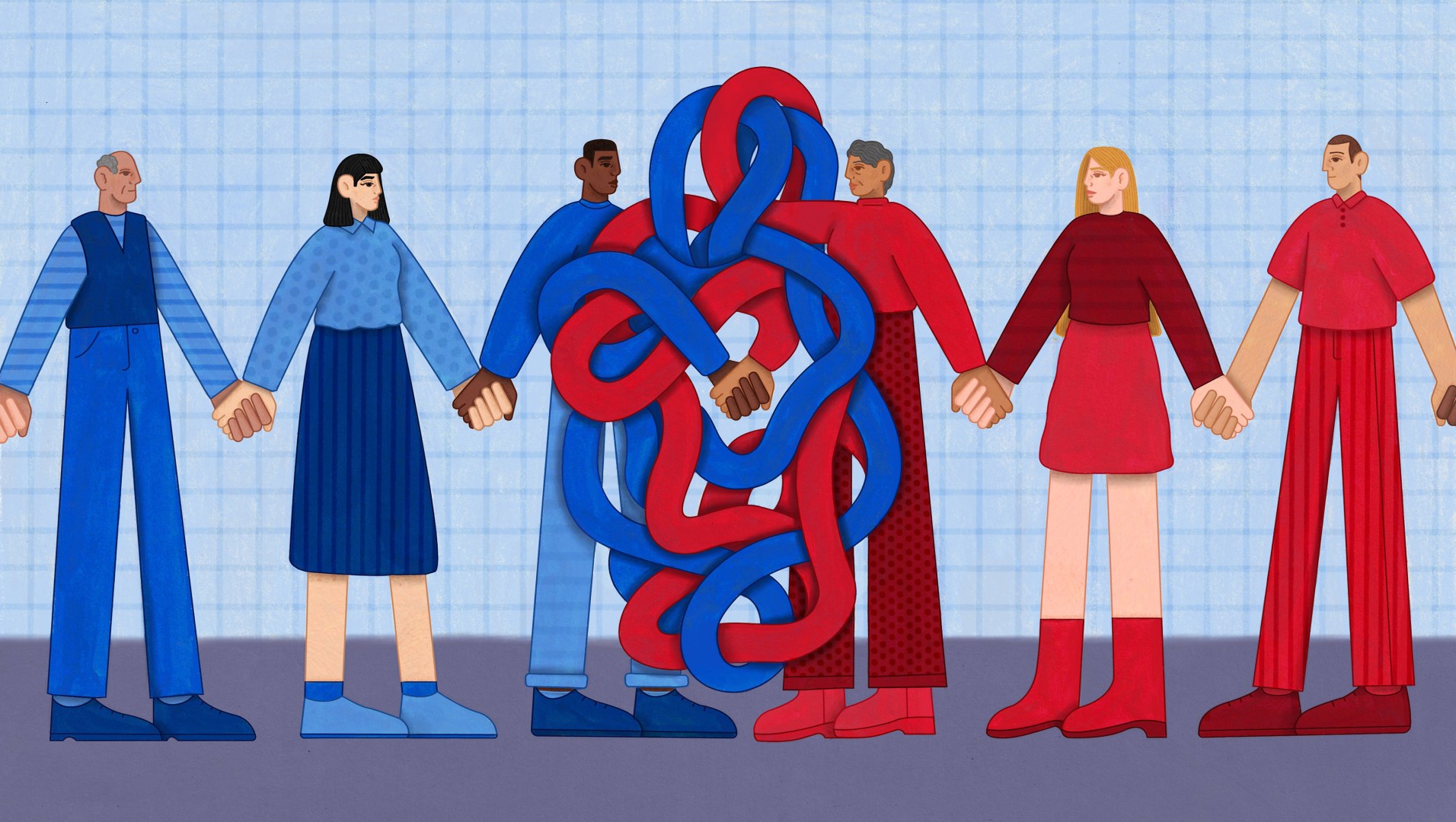
Love keeps no record of wrongs, but it does stand up against them.

Illustration by Paige Stampatori

It is too banal to say that the 2020 election is dividing American evangelicals. We’ve always been politically divided, which some of us see as a strength of a renewal movement transcending electoral politics. No, the 2020 election has beaten and broken American evangelicals, not so much divided as dismembered. We’re tired of the election but even more tired of each other. And it’s going to get worse in the coming weeks.

In 2016, longstanding animus toward Hillary Clinton explained much of the exit poll data about white evangelicals who voted for Donald Trump. This year, a significant uptick of self-described white evangelicals is voting enthusiastically for Trump and not merely against the alternative. For many, the vote is a referendum not simply on convictions on abortion or racial injustice but on whether you really are a Christian. As pastor John MacArthur says he told Trump, “Any real, true believer is going to be on your side in this election.” Conversely, many Christian opponents of Trump see the pastors and ministry leaders who support him as idolaters at best, and more likely frauds.

Now is not the time to revisit exit polls or debate the designation evangelical, but we do expect a fresh round of believers to see the data and say, “If that’s what evangelical means, I’m not it.” Today’s American Christian flips Amos 3:3’s question, “Can two walk together except they be agreed?” and asks: “Why would I want to walk together with them?”

It is not cowardly “bothsidesism” to call us, of myriad political convictions, to repent of bitterness. True, the Bible’s warnings against anger have been wrongly used by the powerful to silence calls for justice. But it’s hard to open your Bible without hitting a command to put away bitterness and wrath. Let us start there.

Let us not end there. Nor let us settle for a call to civility. This magazine has a long history of arguing that Christians should match their moral clarity with civility. We still believe it. But civility is insufficient. As Christians, we are commanded to love: to love each other, to love our enemies, and to love our enemies when they are “each other.”

Love, Paul tells us, “keeps no record of wrongs” (1 Cor. 13:5). But love does stand up against them. Jeremiah contends that we cannot dress deep and ghastly wounds as though they are scratches, saying, “Peace! Peace!” when there is no peace (6:14). As Martin Luther King Jr. put it, “Love that does not satisfy justice is no love at all. It is merely a sentimental affection, little more than what one would have for a pet. Love at its best is justice concretized.” And “justice at its best,” he said, “is love correcting everything that stands against love.”

So love means that we should unselfishly warn against idolatry, apostasy, injustice, and those things that endanger body and soul (even as we are careful not to throw around such accusations lightly). It even means we don’t have to think that everyone who calls themselves a Christian really is one. “Watch out for false prophets,” Jesus warned. “They come to you in sheep’s clothing, but inwardly they are ferocious wolves. By their fruit you will recognize them” (Matt. 7:15–16). Not that there’s a need to go false prophet hunting. The enemy will sow weeds among the wheat, Jesus promised (13:24–29). It’s not the servants’ job to pull them up, he said; we’re not able to separate the weeds from the wheat. Leave that to Jesus.

Still, some of us can’t help but try to rid our field of weeds and leave only lovable, “real, true believers”—despite Jesus’ warning that this harms the people of his kingdom. Others are tempted to leave the field of evangelical Protestantism altogether and look for greener grass—some pristine, weedless field. They’re tired of waiting for the sower’s sickle. Like Jonah, so outraged by idolatry and wickedness that he’d rather flee than love, we’d rather see Ninevah’s destruction than its redemption. God hates injustice. God hates racism. God hates abortion. And yet God’s question to us is the same as to the self-appointed weeder and to Jonah when his plant died: “Do you do well to be angry?” (4:9, ESV). Is your anger leading toward love or away from it?

Ted Olsen is editorial director of Christianity Today.

We’d love to read your thoughts about this editorial. How are you struggling with love and justice this election season?

News

Creation Care Movement Takes Action with Solar Panels and Petitions

Evangelicals concerned for the environment make strides toward change.

Illustration by Rick Szuecs / Source image: Envato Elements

Bob Whitaker wants to put solar panels on the sloped brown roof of Evangelical Community Church in Bloomington, Indiana. Then he wants to help other churches get solar power too.

Although COVID-19 has complicated fundraising efforts, Whitaker hopes to soon see clean energy projects at churches across the state, dramatically increasing the number of evangelical congregations committed to creation care in a very practical way.

“This whole thing for me has been a bit of a conversion,” said Whitaker, who has pastored at Evangelical Community Church for 22 years. “I didn’t grow up thinking this way. I didn’t begin serving this church with this mentality…. Among evangelicals—churches, pastors, even theologians—we’ve focused on the salvation of the soul to the exclusion of other parts I now consider to be part of the Good News.”

His change was gradual—an expansion of his understanding of how the gospel applies to everyday life and a growing sense that God’s people should treat the earth not as consumers but as caretakers. Now, he wants to take the next step.

As chair of Creation Care Partners, a nonprofit with a goal of helping evangelical and Jewish organizations work together to promote environmentally friendly initiatives, Whitaker is asking 20 evangelical churches in the state of Indiana to commit with him to cut their energy usage by 25 percent or more.

One Indiana church has led the way. Englewood Christian Church, in Indianapolis, has reduced electricity use by 27 percent and natural gas use by more than 60 percent. About a third of Englewood church members have reduced their personal energy usage too, some by as much as 40 percent.

Hoosier evangelicals who sign on to be Creation Care Partners can get a $25,000 matching grant to install solar panels. The money comes from a $500,000 fund established as part of a legal settlement between American Electric Power and the United States Environmental Protection Agency. Evangelical Community Church is raising its initial funds now. Whitaker knows it can be a challenge for a church to come up with $25,000, especially during a pandemic. But he’s hopeful.

“We’re experiencing a gradual shift,” he said. “I think it’s a good one.”

The executive director of the World Evangelical Alliance’s Creation Care Task Force agrees that there is reason for optimism. Chris Elisara is amazed at how far the creation care movement has come since the 1990s.

Today a lot of evangelicals take climate change seriously, and there are robust theological discussions on caring for the environment.

More than that, there are evangelicals undertaking practical creation care projects, Elisara said. At least 75 evangelical churches use solar power in the United States, from an Assemblies of God church in Bakersfield, California, to a Vineyard church in Cincinnati to a Baptist church in Charlotte, North Carolina, according to the Interfaith Power & Light directory. And the WEA is working to get 20 percent of its international network of ministries and churches on clean energy by 2025.

“I think it’s vital that we as an evangelical community contribute our solutions to the global work to fight climate change,” Elisara said.

It’s been a slow process, he admits. Looking back on his own awakening to the issue of creation care, Elisara is surprised it took so long. He says he had been to a lot of churches and studied at several universities before he learned that caring for the earth and the environment is a biblically based idea.

Creation care proponents point to passages such as Genesis 2:15, where God tells Adam to take care of the garden, and Leviticus 25:1–5, where the Lord tells Moses that the Promised Land should also take a Sabbath rest, for the basis of their argument. They say Scripture never teaches people to use up or consume the land. God’s people instead are told to cultivate and nurture the world around them.

Advocates also say that Jesus’ instruction to love your neighbor is a mandate for Christians to concern themselves with the quality of the air people breathe, the cleanliness of the water, and the health of the environment.

Kyle Meyaard-Schaap, spokesman for Young Evangelicals for Climate Action and Midwest director for the Evangelical Environmental Network (EEN), said when he saw the impact that environmental degradation could have on a community, he realized that loving his neighbor should include concern for nature.

“I grew up in a pretty conservative Christian community that was beautiful in so many ways,” Meyaard-Schaap said. “But it gave me very little when it came to what my faith had to do with the natural world and specifically what it had to do with climate change.”

Seeing the impact of rising temperatures and decreasing rainfall on farmers in Kenya, reading about how coal companies’ mountaintop removal harmed communities in Appalachia, and watching the devastating impact of Hurricane Katrina on New Orleans in 2005 made Meyaard-Schaap expand his understanding of what it means to love your neighbor.

He too is looking to help people put that belief into action. This summer, the EEN has been lobbying Ohio Governor Mike DeWine and pro-life legislators to commit to converting the state’s power grids to 100 percent clean energy by 2030.

More than 50,000 people have signed a petition that says, “As a pro-life Christian, I believe pollution harms the unborn, causing damage that lasts a lifetime.” About 30 percent of Ohioans are evangelical and 18 percent Catholic, according to a Pew Research Center poll, and roughly 47 percent of the state thinks abortion should be illegal in all or most cases.

The pro-life petitioners are pushing for a repeal of House Bill 6, which sharply lowered the state’s renewable energy and energy efficiency standards while providing a financial bailout to two coal plants and two nuclear power plants. Since the law was passed in 2019, the Ohio speaker of the house and four Republican allies were arrested on charges that they accepted about $60 million in bribery from the nuclear power plants’ parent company.

If legislators repeal and replace the bill, they could commit the state to a clean energy plan.

Meyaard-Schaap thinks a growing number of people see the link between the issues.

“It’s impossible to ignore the threat that climate change is imposing to life around the world,” he said. “We want to be consistent to our values. We value life from womb to the tomb.”

Whether or not the lobbying effort is successful in Ohio, the push is another example of how the creation care movement is graduating from theory and education to action. As Elisara explains, the question is now “What does it really mean practically, pragmatically?”

In Bloomington, Whitaker thinks creation care means changes for his church roof. Two hundred miles north on Interstate 65, another evangelical pastor, Curtis Whittaker Sr.—no relation to Bob Whitaker—had the same thought. Five years ago, he raised $10,000 to match a state grant of $10,000 and install solar panels at Progressive Community Church in Gary, Indiana.

The theology was pretty simple, he said: “We have a responsibility to be good stewards and good managers over the earth because God loves the earth. God loves what he created.”

The first year, the church saw its energy bill reduced by about 60 percent, as it produced more energy than it consumed for most of the year. The church was able to redirect the money it saved on utilities to other ministries in its effort to take the impoverished area “from blighted to lighted.”

“You’ve just got to sit and listen to God,” Whittaker said. “If he gives you the vision, he will give you the provision to go with it. Walk out and step out on the faith he has called us to walk on. He’ll do the rest.”

Adam MacInnis is a journalist based in Nova Scotia, Canada.

News

Gleanings: November 2020

Twenty20Photos / Envato / Edits by Rick Szuecs

Prophecy discouraged ahead of election

A Pentecostal leader is urging Ghanaian pastors not to take sides in the upcoming presidential election. They should not prophesy who will win, said Paul Frimpong-Manso, president of the Ghana Pentecostal and Charismatic Council, because prophecies create confusion and make it harder for Christian leaders to minister across political divides. “These things are wrong and fake and false,” he said. “God has given the power to choose a leader through elections, campaigns, and the ballot box. If it would be through prophecies, there would not be a need for elections.” Citizens will go to the polls in December.

First African embassy to open in Jerusalem

President Lazarus Chakwera announced in his first State of the Nation address that Malawi will open an embassy in Jerusalem. Chakwera is an ordained minister in the Assemblies of God and has a doctorate from Trinity Evangelical Divinity School in Illinois. Both the denomination and the school traditionally teach that in the end times, Jesus will reign from Jerusalem for 1,000 years. Chakwera said the embassy will build on the good diplomatic relationship between the African country and Israel and promote Malawi’s interests globally. Malawi would become the third country to locate an embassy in Jerusalem, after the United States and Guatemala.

Study substantiates claims of growing church

A new survey of Iranians found that 1.5 percent identify as Christian. The report comes from a secular research group based in the Netherlands and confirms what Christian observers have been saying for years: The church in Iran is growing rapidly, and waves of Iranians are converting to faith in Christ. The number of Christians in the Islamic Republic is now “without doubt in the order of magnitude of several hundreds of thousands and growing beyond a million,” the report says. Christian advocacy groups have been accused of exaggerating for political purposes.

Christian singer plotted husband’s murder, police say

Brazilian police are accusing a famous Christian singer and congresswoman of plotting the murder of her husband, a Pentecostal preacher. Flordelis dos Santos de Souza, known to fans as Flordelis, became a celebrity for adopting more than 50 children. After a successful movie of her life and three hit albums, Flordelis won a seat in congress in 2018. The next year, her husband, Anderson do Carmo, was murdered. Flordelis is protected from arrest by parliamentary immunity, but five of her children were arrested in August.

Leaders call for prayer in protests

Three evangelical leaders issued an unprecedented joint statement calling for daily prayer amid the mass protests against President Alexander Lukashenko. The heads of the Union of Evangelical Christians-Baptists in Belarus, the United Church of Christians of Evangelical Faith in Belarus, and the Religious Association of Full Gospel Communities in Belarus say Christians should oppose “brutality, violence, and bloodshed” with prayer and charity. Lukashenko, sometimes called “Europe’s last dictator,” claims he won reelection in August with 80 percent of the vote. Protesters—numbering in the hundreds of thousands—dispute the official results.

Chalice unearthed in ancient Roman fort

Archaeologists have discovered the oldest known Christian etchings in England while excavating a Roman fort near Hadrian’s Wall. They found a lead chalice, believed to date to the 600s, decorated with Christian symbols including crosses, angels, a whale, a priest carrying wheat, and the Greek Chi-Rho symbol for Christ. There is also writing in Latin, Greek, and possibly ogham, an early medieval Irish alphabet. The chalice may have been used for Communion. It will help scholars better understand how Christianity was practiced at the far edge of the Roman Empire around the time the Vandals sacked Rome.

Evangelicals oppose changes to legal code

Thousands of evangelicals marched this summer to protest a new penal code that is set to replace Haiti’s existing criminal law. More than 125,000 people also signed the petition of a Miami megachurch pastor condemning the rewrite as an attack “on the morality of Haitian society.” There is some dispute about how the code will be interpreted, but many experts say it would, among other things, legalize homosexual relationships while potentially criminalizing opposition to same-sex marriage. President Jovenel Moïse passed the code by executive decree. It is set to take effect in 2022.

President vows ‘coercive measures’ against church

President Moon Jae-in’s approval ratings rose from record lows in August when he promised to “take decisive actions, including coercive measures” against a Presbyterian church that has been connected with more than 1,000 new cases of COVID-19. Jun Kwang-hoon, pastor of the 4,000-member Sarang Jeil Church, says he is being unfairly targeted for opposing Moon’s reelection in April. The church has continued to meet during the pandemic, and more than 700 members have been diagnosed with COVID-19.

Blasphemy death sentence in employment dispute

A 37-year-old Christian man has been sentenced to death for blasphemy. Asif Pervaiz, who belongs to the evangelical Savior Global Church of Pakistan, says he is innocent and did not insult Islam. He told the court his former employer made up the allegation after he quit. There are about 40 people currently facing life sentences or execution for blasphemy in Pakistan. A new political party called for more enforcement of the blasphemy laws and won more than 2 million votes in the 2018 election, coming in fourth out of 13 viable parties. Pervaiz will appeal the sentence.

News

Churches Search for Sounds of Heaven

With growing diversity, evangelical leaders pursue multicultural and international worship music.

Courtesy of Eric Lige

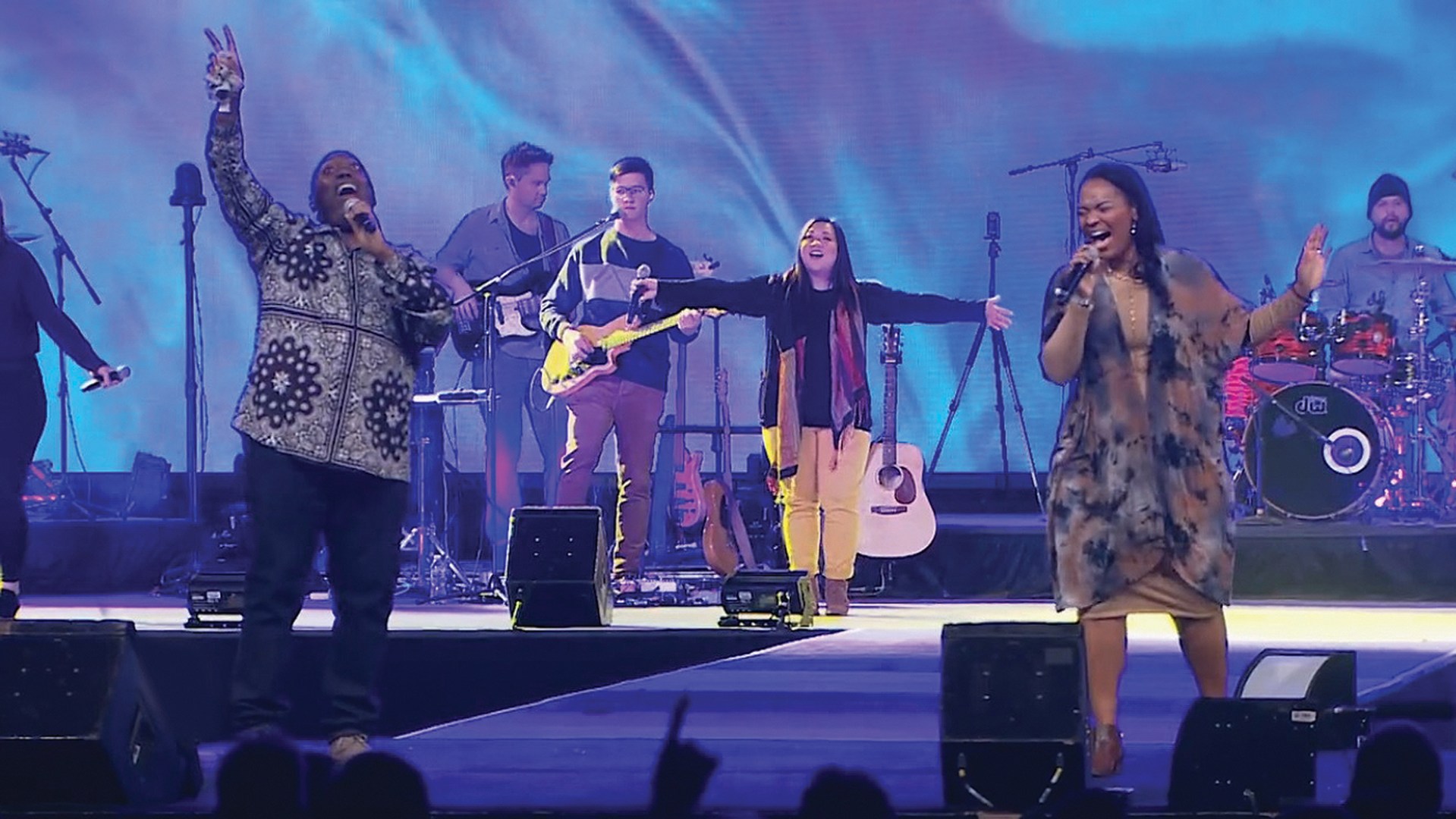
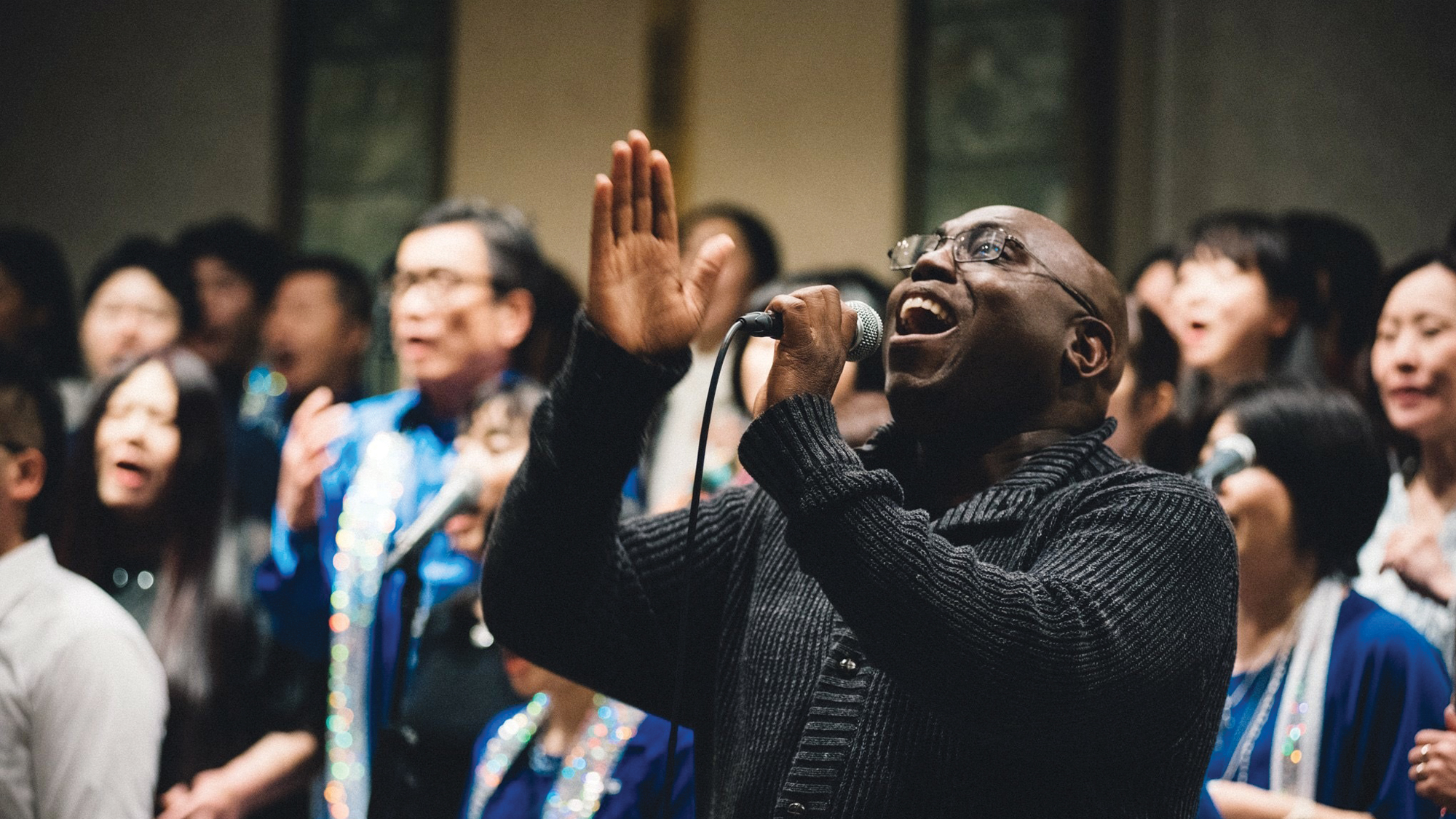
The first time Eric Lige stood in front of Ethnos Community Church to lead worship, he noticed something he had never seen before: Worshipers at the San Diego church were from all over the world.

Lige, an African American, had plenty of experience leading worship at different churches, but most of those congregations had been majority white. Looking out at the Ethnos community that Sunday in 2012, Lige changed.

“I thought, ‘I can’t sing the songs I have been singing. I have to do something else,’ ” he said.

He isn’t alone. As the United States becomes more multicultural, evangelical churches increasingly reflect the diversity of the larger population. In 1998, only about 10 percent of evangelical churches had a lead pastor who was African American, Asian, or Hispanic. Today, that has grown to nearly 30 percent.

And congregations are more diverse too. Roughly a quarter of evangelical churches are now considered ethnically diverse, meaning 20 percent or more of the congregation comes from different ethnic or racial groups. And more than half of megachurches are ethnically diverse according to a new study from the Hartford Institute for Religion Research. Nearly 90 percent say that is something they are actively pursuing.

Part of that push towards diversity includes multiethnic and intercultural worship music. They want to sing new songs to the Lord—diverse songs, reflecting the diversity of God’s people and the global church.

How to do that, it turns out, is a little trickier. Lige’s first approach was to have someone sing one verse of a contemporary American worship song in another language. Contemporary Christian Music (CCM) is a global phenomenon, after all.

“Thanks to the internet,” said Jaewoo Kim of Proskuneo Ministries, an organization fostering multicultural worship, “Western worship music has found its way into churches around the world.”

But it’s still Western worship music. Consider the international popularity of “The Blessing,” Kim said. The US song was released by Elevation Worship in March, and more than 100 virtual choirs have translated the lyrics into dozens of languages. “The Blessing” is now “La Bendición,” “A Bênção,” “Benediksyon,” and “Ha Bracha.”

But just because believers around the world sing “The Blessing” in their native languages doesn’t mean the song reflects their imagery, instrumentation, or culture. Multicultural worship requires more than representation. It takes real relationships.

“I interpret ‘global’ as a reciprocal approach—I am shaping you, and you are shaping me,” Kim said.

According to Kim, the best examples of multicultural worship music come out of relationships that cross borders and speak to the truth of a gospel that transcends nationality. Proskuneo worked with Karen refugees in Clarkston, Georgia, to write songs to praise Jesus in the Karenic languages. The songs found their way back to Christians in Thailand, and now their churches worship with the same music as the believers who’ve gone to the US.

Courtesy of Eric Lige

Music from outside the US does occasionally enter mainstream American evangelical churches, but it’s only really successful when it doesn’t seem too “different.” Nigerian gospel singer Sinach recorded “Way Maker” in 2016, for example, but the song did not gain a wide US following until it was recorded by Michael W. Smith and the band Leeland.

“The longer CCM is the sound of worship music, then the more we start to believe that is the sound of heaven and the sound God likes,” said Nikki Lerner, a consultant in Columbia, Maryland who helps churches pursue healthy multiculturalism. “We need to see the expression of our brothers and sisters globally and our brothers and sisters of other cultures here.”

Lerner warns pastors that multiculturalism should not start with music. It starts with leadership casting a vision for worship services that more closely reflect the vision of heaven depicted in Revelation 7. She adds that churches will have to be willing to learn some things and change others.

Saehee Duran has found that to be true. An Assemblies of God minister who grew up in South Korea, she founded Life360 Intercultural Church in Springfield, Missouri, in 2015. From the beginning, the vision was for a multicultural church, bringing together the minority Christian cultures that are so often siloed in the city.

Today, the church has about 100 members, including people of a dozen different nationalities on a given Sunday. Duran said the church attracts the children and grandchildren of immigrants who have grown up with diversity all around them—except at church.

“This generation believes that churches don’t reflect God’s love for all nations anymore. Churches don’t look like schools, workplace, even Walmart. The disconnect tells them something is wrong,” Duran said.

With so many different cultures coming to worship, however, there are conflicts. The leadership tries to sift through the disagreements to make sure the church does not spend time arguing about nonessentials. When African members objected to passing around the offering bucket—as though God were a beggar in need of charity—the church changed the format so that members can joyfully bring their gifts to the front of the church, sometimes with dancing.

“It’s about dying to our own cultures every week so that the kingdom culture can live,” Duran said.

Multicultural worship without relationships is like a resounding gong or a clanging cymbal. At Ethnos Community Church, Lige embraces the idea of having at least two languages in every service. But the diversity goes beyond that. He credits the larger vision to the church’s founding pastor, Yucan Chiu.

Chiu said a multicultural worshiping community should be intentionally diverse—not just in composition, but in operation. Lige realized his previous experiences of diverse congregations had always had one group in charge and one culture that dominated. Ethnos Community Church was something new for him, a place where he could grow and heal.

Lige started diversifying the worship music by having people sing a few verses of familiar songs in different languages. As those relationships developed, he started asking church members about worship in other contexts and countries. What songs did they sing? What instruments did their home churches use? Could they teach Lige those songs?

Quickly, intercultural worship meant a lot more. Lige and the church put together three volumes of multiethnic music recordings. Lige said they document his evolving understanding of multicultural worship, with Volume 3 containing worship songs composed in nine languages, from Armenian to Zulu. The songs include diverse styles and instrumentation.

A lot of university students attend Ethnos Community Church, so Lige is also training a constant stream of musicians and worship leaders who come to the church for a few years before spreading out all over the world.

It’s hard work to build those relationships and help dismantle preconceived ideas about what worship is and isn’t. It’s hard work for the students to learn new styles and new approaches. But Lige tells them that this is God’s vision of global worship, where voices are raised in praise “from every nation and from every family and from every kind of people and from every language” (Rev. 7:9, NLV).

They get to do that now, Lige says. Right now.

Megan Fowler is a contributing writer to Christianity Today.

News

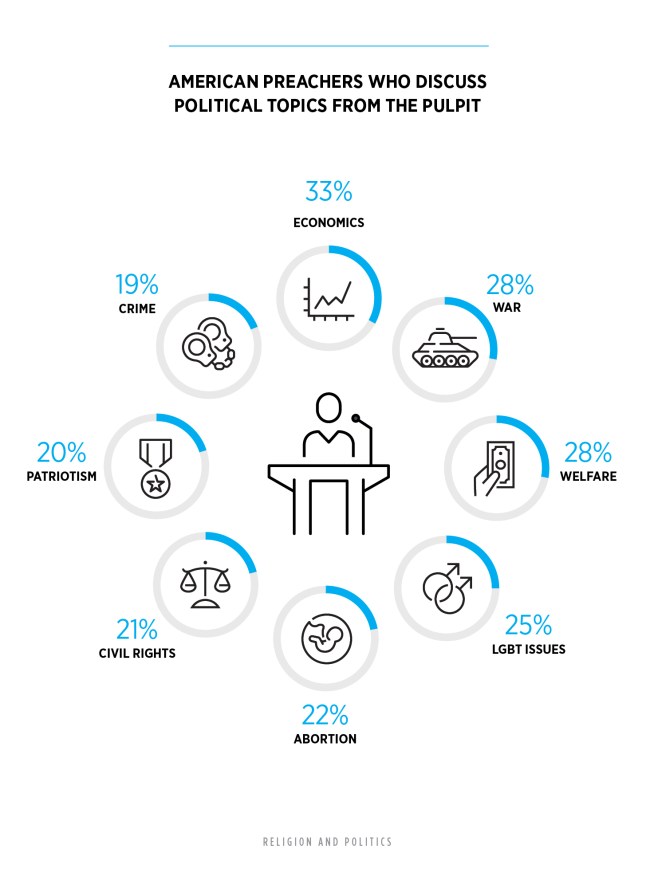
Who Preaches on Politics? Most Pastors.

Study of 100,000 sermons shows gospel applied to economics, war, welfare, and other current issues.

Illustration by Rick Szuecs / Source Image: Happy Vector / Getty

One out of every three sermons in America mentions a political topic, according to a new academic study published in the journal Religion and Politics. Researchers Constantine Boussalis, Travis G. Coan, and Mirya R. Holman looked at a data set of more than 100,000 sermons preached over a period of 15 years by a representative sample of more than 5,000 pastors. The scholars found some differences between denominations. Episcopalians mentioned abortion more than Baptists. Church of Christ ministers were more concerned with the economy than Lutherans. But while only 1 percent of sermons mentioned elections, more than 70 percent of pastors addressed a political topic from the pulpit.

Cover Story

Christians Invented Health Insurance. Can They Make Something Better?

How to heal a medical system that abandons the vulnerable.

Illustrations by Ileana Soon

In seven years, Bethany Joy Kim has cycled through Obamacare, a Christian health care sharing ministry, state insurance, employer-based insurance, and back to Obamacare.

Kim’s biggest concern, amid her various insurance experiences, has been cost. She was living in Arizona in 2014 when she purchased insurance through the marketplace established by the Affordable Care Act (ACA). But her premiums increased and she couldn’t find doctors who would accept her plan, so eventually she canceled it.

When Kim and her husband moved to Wisconsin in late 2017, she was expecting. She qualified for BadgerCare, the state’s insurance program for pregnant women and children. Not long after, the family got insurance through her husband’s new employer. Even with about $600 taken out of her husband’s paycheck each month to pay for premiums (the employer paid the other half), Kim was surprised that they still spent thousands of dollars annually out of pocket in the form of copays and uncovered percentages.

“When I look at the amount I pay in for the library system or the fire department, that seems reasonable. When I look at what I pay for health care, it doesn’t make sense to me anymore,” Kim said. She is hardly alone: The average premium for family insurance coverage last year was $20,000, a 54 percent increase from a decade earlier.

In between Obamacare and state insurance, when Kim was without insurance, she joined Medi-Share, one of several major nationwide Christian health care sharing ministries (HCSMs). Since 2010, when HCSMs and their members were exempted from various ACA requirements, these ministries have seen a dramatic increase in enrollment and now count over 1.5 million members.

HCSMs bill themselves as an antidote to the costly and complex insurance system. Members agree to a statement of shared beliefs and contribute set monthly amounts in the range of $300 to $800 per household that go toward other members’ health care expenses. These ministries keep member contributions to a fraction of the price of insurance premiums because they usually don’t share costs related to preventative care or preexisting conditions. Members also follow lifestyle guidelines, such as avoiding illegal drugs and tobacco use, enabling HCSMs to screen out higher-risk populations.

The health-sharing ministry alleviated Kim’s main concern about affordability. But for the theologian and leader in the Society of Vineyard Scholars, it triggered a new problem: the feeling that she was participating in a system that used religious exemption to discriminate.

HCSMs are exempted from ACA minimum coverage requirements because they are faith-based nonprofits that aren’t exactly insurance. They generally don’t cover out-of-wedlock pregnancies, contraception, or abortion, and they are not bound by ACA rules to cover mental health. “They are keeping costs low at the expense of the vulnerable,” Kim said. Those same people, she feels, are the ones Christians are explicitly called to care for.

In fact, a lot of traditional health insurers also discriminate, if by different criteria. The Trump administration has exempted employers from requirements to cover birth control if they have moral or religious objections (churches were always exempt). Recent years have seen a rapid rise in workplace wellness programs and medical screenings, where healthy employees receive coupons and steeply discounted premiums. And economists have long argued that employer-based plans, where roughly half of Americans receive health coverage, are an important tool for insurance companies because they screen out the highest-risk individuals—those unable to hold full-time jobs or pass drug tests, for example—and are able to entice healthy, young workers to pay premiums to cover the costs of less-healthy workers.

So while health coverage groups pass over bad health bets in varying ways, the net result is the same: a health care system with many ways to get in but crowds of sick people still stuck outside.

It could soon shut out even more: This November, the Supreme Court begins hearing arguments against the constitutionality of the ACA and is expected to rule next year. A decision against the law could potentially be the final blow in a long series of political and legal challenges meant to kill the Obama-era health care expansion, leaving millions suddenly uninsured and at risk of having coverage denied because of preexisting conditions.

Never has the fragility of the US medical system been more apparent than this year, when the coronavirus pandemic overwhelmed many hospitals and highlighted disparities in access to health care among communities of color. The COVID-19 death rate among African Americans has been twice as high as among whites, prompting many in the mainstream to ask for the first time why black people tend to be sicker than white people.

Lack of health coverage plays a significant role. In 2018, uninsured rates for nonelderly Hispanics and blacks were 19 percent and 11.5 percent, respectively, compared to 7.5 percent for whites. And those numbers don’t reflect the impacts of the pandemic, which has led millions of Americans to lose their health coverage.

Kim became one of them when the Wisconsin college where her husband taught shut down in June. The couple went back to the ACA marketplace and found an affordable insurance plan that’s working for their family—for now.

The irony of America’s anxiety over medical coverage is this: Modern health insurance was a charitable evangelical invention, sold and managed by humble not-for-profit groups, designed especially to be affordable for low-income and vulnerable Americans. But in the span of two generations, astounding growth in the insurance industry and equally astounding advances in medical technology left most Americans staring at a starkly different picture: seemingly heartless insurance corporations paying hospital systems to provide care that they increasingly can’t afford.

For Christians to find a better way forward, we may need to rediscover our roots.

Justin Ford Kimball had not even worked a year in health care when he invented medical insurance in 1929.

A former teacher and school administrator, the square-jawed vice president of Baylor Hospital in Dallas was watching the stock market crash and was thinking about money. His hospital was half empty and sitting on piles of unpaid bills, and “the people who owed them had no money,” Kimball later wrote. Many of those debtors were teachers.

Kimball had developed one of the first sick-time programs for teachers as a school superintendent. He felt that “teachers tended to worry too much—and none more so than over illness, with consequent loss of pay.”

Find a way to reduce that worry, Kimball figured, and he could fill more hospital beds.

His solution was the earliest version of modern health insurance. The hospital sold it to Dallas schoolteachers for 50 cents a month and, in exchange, covered most of the cost of one three-week hospital stay per year.

The plan was instantly popular. Three in four Dallas teachers signed up, followed by local newspaper and radio employees. Within a few years, as the Great Depression wreaked its havoc, hospitals around the country established similar nonprofit programs to keep people, regardless of health, from being crushed by medical bills. Thus began the Blue Cross and Blue Shield family of insurance companies.

Kimball was watching out for his employer’s bottom line, but he and the Texas Baptists who oversaw the hospital were also following in the footsteps of the early church. When the plague struck third-century Rome, Christians organized themselves to care for the sick and the dying as both the government and their pagan neighbors looked on in dismay. As historian Gary Ferngren documents, these public displays of righteousness persisted despite growing persecution of the church—and they laid the groundwork for modern Western medicine. In less than a century, once Christians enjoyed the favor of Constantine’s rule, church-run infirmaries and hospitals emerged as formal parts of Roman society.

In contrast, the philanthropic era of American health insurance was fleeting. Health reporter Elisabeth Rosenthal writes that during World War II, in the face of labor shortages and a wage freeze, US employers sought to attract workers by offering insurance as an incentive. The IRS, and later Congress, decided that those benefits didn’t have to be taxed—a subsidy that now translates to the third-largest federal health care expenditure ($250 billion in 2017, according to the Congressional Budget Office), behind Medicare and Medicaid.

The rapid expansion of health benefits that followed, together with scientific advancement in medicine and rising costs, drew for-profit companies into the insurance industry. Businesses began offering an array of options and, to bolster profits, began charging customers different rates based on age and other risk factors.

What we call insurance today barely resembles the low-cost hospitalization coverage that Kimball developed for his Dallas teachers. Insurance premiums now devour nearly a third of the average American household’s income. And in May, only a couple of months into the COVID-19 pandemic, an estimated 29 percent of working-age adults in Texas were uninsured, the highest rate in the US.

In the latter half of the 20th century, complaining about our broken health care system became an American pastime. So did fighting over ways to fix it.

The acrimony reached new heights in 1994, when the nation divided sharply over President Bill Clinton’s health care reform plan. Pat Robertson’s Christian Coalition spent a record $1.4 million to lobby against it. Other evangelicals supported pared-down versions of the proposal, which ultimately failed.

A little more than a decade ago, as many as two-thirds of Americans—even politically conservative evangelicals—believed the government should do something to improve health care access for the poor. In 2009, Charles Colson wrote in CT that “our present system, still the best in the world, needs to expand coverage to the uninsured.”

The United States is the only country where health insurance is tied to employment, and experts across the political spectrum agree it creates problems. It leaves many who are self-employed, who work part-time, or whose employers provide insurance with few, if any, options for affordable, comprehensive coverage.

But solutions have been elusive. When President Obama signed the ACA into law in 2010, the legislation sought to dramatically expand coverage by providing tax credits to pay for health plans not provided through employers and by expanding Medicaid to cover anyone whose income fell below 139 percent of the federal poverty level.

It met strong opposition, particularly among evangelicals. In one 2019 study, only 23.8 percent of white evangelicals approved of the ACA, compared to 84.8 percent of black Protestants, 66.2 percent of Hispanic Catholics, and 46 percent of white mainline Protestants. The reasons were many. Much of the resistance stemmed from concerns that the ACA would force people of faith to pay for abortions and other morally objectionable procedures like euthanasia—the same concerns Christians had about Clinton reform efforts. Also at work were the oft-repeated charges that the ACA would lead to excessive government control and deprive individuals of the opportunity to choose their own physicians and treatment options—forever encapsulated by Sarah Palin’s viral mantra about Obama’s “death panels.”

But there was also a perception, according to Ohio University sociologist Berkeley Franz, that the ACA amounted to a government handout, allowing people to receive health care without necessarily holding jobs.

There was an emphasis “on people deserving health insurance,” said Franz, who interviewed members of evangelical churches to study their views on health care reform. “They wanted to make sure it was linked in some way to hard work.”

The question of who deserves care is ubiquitous throughout health insurance debates. Should those with higher health risks pay more into the system—or even be excluded? Conservative scholar Merrill Matthews Jr. argued as much in a 1994 CT op-ed criticizing the Clinton plan. Those who make poor choices should pay more, he wrote, otherwise, “Christians who treat their bodies as temples of the Holy Spirit would, in effect, be subsidizing the inevitable cost of that risky behavior.”

Or, conversely, should those with better health and more resources pay less? If you have enough disposable income to own an Apple Watch and boast enough flexibility in your schedule to exercise regularly, you can share your fitness data with life insurer John Hancock and health insurer Vitality Health in exchange for cheaper premiums.

This raises moral and ethical concerns, of course. But for an insurer, exclusion is imminently practical, a matter of risk management. Older people pay more for life insurance and poor drivers pay more for car insurance because they are far more likely to use it.

Often, the moral and the practical collide. Stephen Ko worked at the CDC and taught public health at Boston University before becoming a pastor. He recalls that his denomination, the Christian and Missionary Alliance, once offered a health-sharing plan to its pastors that didn’t cover preexisting conditions. After denominational leaders realized such practices left some elderly pastors out in the cold, they decided to cover these costs—and the program went bankrupt. “There was not enough money in the pot,” Ko said.

“For health insurance to work, you need a large enough pool of people with a variety of health profiles to share the risk, so that the majority who have good health are able to spend less to have more available for the minority who need it,” said Mark Strand, a public health professor at North Dakota State University and an elder at his church in Fargo. This is why HCSMs, which have relatively small pools, pick and choose the costs they share to keep contributions affordable and why the ACA included an individual insurance mandate (to make the pool bigger) when it required insurance companies to cover riskier customers with preexisting conditions. (That mandate has since been dismantled by the Trump administration.)

Strand puts health care in the category of a public good—something like education, roads, and water that everyone needs to flourish and that governments should ensure everyone can access. For evangelicals, who are rooted in a history of caring for others and in historical virtues such as the Protestant work ethic and personal holiness, Franz boiled the tension down to this: “Are we required to provide help to others who do not make responsible choices?”

Freedom of choice has long been a paramount value for Americans when it comes to health care. Proposals to nationalize US health care in the 1930s were ultimately defeated by advocates who rallied around the “voluntary way” as the American way. And as the Communist specter rose in the 1940s, any program accused of forcing options on Americans became political anathema.

In today’s health insurance market, “People are encouraged to think of themselves as health care consumers,” said Goucher College anthropologist Carolyn Schwarz. “They’re shopping for health care.” Even Obamacare was pitched by proponents not as government-managed health insurance but as a feat of consumer-driven choice.

HCSMs make a similar appeal, projecting themselves as voluntary communities of one-on-one acts of compassion. At the Alliance of Healthcare Sharing Ministries, which coordinates between major HCSMs, spokeswoman Katy Talento stressed that HCSMs are “a totally different, transformational paradigm shift” from insurance. Instead of relying on “cold bureaucracies” beholden to government regulations, Talento said, HCSM members trust one another to come through for their health care needs. (Members are still kicked out of the programs for failure to pay their monthly contribution.)

But choice in health care doesn’t function in quite the same way as in other markets. Patients rely on doctors to know what treatments they need. The price of a mammogram or a knee surgery varies wildly from hospital to hospital, and consumers often have no way of knowing up front how much of that price they would actually owe. You can’t exactly shop for an ER visit the way you shop for an oil change.

Schwarz, who has studied HCSMs, said that members often speak of joining an HCSM as their own choice, but major factors constrain those choices. Many lack access to employer-based insurance. Some are retired but don’t yet qualify for Medicare. Their income may be too high to qualify for Medicaid but not high enough to afford insurance premiums, even with ACA subsidies.

Likewise, employer-based insurance often feels like the only option rather than a real choice. Because the federal tax break allows many employers to offer coverage more cheaply to employees than the individual marketplace can, refusing insurance from your workplace is almost unthinkable.

Then there are those without any choice: people who work part-time jobs that don’t offer health insurance and who still can’t afford marketplace insurance or even an HCSM. In states with restrictive Medicaid eligibility, such people likely end up uninsured.

In health care, then, “freedom of choice” may be more of a dream than a reality.

For Patrick Smith, an ethicist at Duke University, the connections we draw between personal choices and health outcomes pivot around how we understand sin. Sin, he said, has disrupted all aspects of God’s good creation, not just our personal relationship with God or our face-to-face relationships, but also the social order—“all of those things that are generated by human beings that may not be material in the sense of trees and chairs and airplanes but are no less real, which are our institutions—our various ways of doing life together in a larger society.”

Sin can disrupt institutions on a small scale, such as the case of an abusive parent instigating cycles of familial trauma and abuse. But also, Smith points out, it keeps governments and markets from functioning justly. Take historical discriminatory practices like redlining, which prevented African Americans from buying houses in certain neighborhoods, limited the growth of black wealth, and perpetuated housing segregation. These policies kept many from thriving and still contribute to poor health outcomes.

Black communities and other marginalized communities, which were pivotal in pushing reforms such as Medicare and Medicaid, have long recognized the role of government in protecting health. In 1966, Martin Luther King Jr. famously declared that “Of all the inequalities that exist, the injustice in health care is the most shocking and inhuman.” (Many US hospitals did not integrate until the Civil Rights Act of 1964 forced them to.)

As the COVID-19 crisis plays out, the limits of personal choice on health are on full display. “It’s as if the veil has been peeled back,” said Michelle Kirtley, a fellow at the Center for Public Justice, a Christian think tank. “We’ve realized that having people who do not have easy access to health care walking around spreading COVID-19 is not good.” With the widespread support for government relief packages that waive COVID-19 testing and treatment fees for the uninsured, people are admitting a lot, Kirtley said. “That there is a public, common good.”

Even some cost-sharing ministries, such as Medi-Share, have waived fees for coronavirus-related doctor and ER visits in some circumstances—a concession, perhaps, that even the healthiest lifestyle can be derailed by forces beyond our control.

Illustrations by Ileana Soon

Take even a cursory look at the political rhetoric surrounding health care reform, and it would be easy to conclude evangelicals don’t care about the medical plight of the poor.

But the field of medical missions tells a different story.

Like their early-church forebearers in Rome, modern Christians have been some of the first in and the last out in responding to medical needs. They have founded some of the world’s most important medical centers. They are a key driver of short-term medical mission trips, which provide an estimated $3.7 billion worth of volunteer health care in poor countries each year. And evangelical groups operate countless small hospitals and clinics around the globe, filling prescriptions and performing major surgeries for free.

“Traditionally, Christian missions have led the way in caring for the sick,” Henry Mosley, then a professor of international medicine at Johns Hopkins University, told CT back in 1986, when concern was rising that economic hardship was leading some ministries to pull back overseas. “Mission agencies can take the initiative to demonstrate compassion and caring for those who are neglected by their governments.”

That sense of crisis is harder to find among evangelicals when it comes to health care in the United States, however. That could be because it feels easier to solve other people’s problems than our own. The closer we are to a challenge, the more likely we are to get lost in the minutiae and approach it with what University of Wisconsin–Madison business professor Evan Polman calls a “cautious mindset.” And, Kirtley adds, acknowledging negligence in our own country would require reckoning with complex histories of inequity.

Christians have tended to focus their domestic health ministries on serving specific populations like pregnant women or the homeless. Of the US-focused nonprofits registered as medical ministries with the Evangelical Council for Financial Accountability, most are crisis pregnancy centers and rescue missions that offer health services as part of a broader outreach, causes that churches tend to already be interested in.

More recently, churches have expanded their outreach into new realms. Congregations like Revolution Annapolis in Maryland have attacked health care expenses directly, collecting offerings to pay off millions of dollars of medical debts in their communities.

And many US cities have churches increasingly taking a bigger-picture approach, like the United Methodist Church for All People in Columbus, Ohio. The congregation, which collaborates with sociologist Franz in her community-based health work, hosts a free medical clinic, partners with a nearby children’s hospital to remediate low-income housing of mold and lead, and runs a community garden–based food pantry and low-cost bike shop.

The church has “leveraged all kinds of different partners, from local groups to federal grants, to change the community in positive, structural ways,” Franz said—ways that “seek the welfare of the city” as a whole, in the spirit of Jeremiah 29:7 (ESV), and impact health. Access to health care, according to Franz, accounts for only 10 percent of health outcomes. The other 90 percent is factors like access to safe housing, nutritious foods, playgrounds, and other ways to exercise.

Still, these efforts can feel like drops in the bucket. Important as they are, they cannot on their own help the millions of Americans falling through cracks in our piecemeal health care system.

For some evangelicals, political advocacy and voting to expand health care coverage at the federal level are, no doubt, part of the solution. But for many, that option will probably always represent an untenable moral compromise. They may prefer to advocate at the state level—some states are beginning to offer ACA marketplace plans that don’t cover abortion, for instance, and have created avenues for employer-provided health plans to opt out of paying for controversial procedures (some states are moving in the opposite direction, requiring all plans to cover abortion).

Others may want to join physician Morgan Wills by investing in something more on the front lines: getting Christians passionate about health care again.

A Vanderbilt-trained doctor, Wills says his life was “ruined” during his time volunteering at a mission hospital in West Africa. That eventually led him to become the CEO of Siloam Health, a health care ministry in Nashville that markets itself as sharing the love of Christ with the “uninsured, underserved, and culturally marginalized” and that prides itself on “ruining” the health students who serve there “for medical careers as usual.”

Siloam was founded 32 years ago by Nashville’s Belmont Church and has grown into a primary care clinic that treats more than 3,000 patients a year in more than 50 languages while also training more than 50 students a year from various Tennessee universities.

Wills’s clinic is funded by churches, grants, corporate partners, and individual donors—who, Siloam says, can cover the cost of treating a patient for just $12 a month. Patients are screened for eligibility and pay as they are able, on average less than $20.

Serving immigrants and refugees—another area that many churches are already passionate about—is a key selling point of Siloam. Ask why places like Siloam are needed, and Wills might tell a story like this: One Saturday, an immigrant from Southeast Asia was shot. Instead of risking a crippling bill from a trip to the emergency room, the man waited two days so he could walk into Wills’s clinic Monday morning.

Charitable medical clinics are nothing new; there are hundreds across the country. They are typically small and cash strapped, with budgets averaging less than half a million dollars—in other words, they aren’t equipped for the big-ticket specialized procedures that contribute so much to the costliness of American health care.

But they are a vital resource for the rising number of uninsured Americans, especially as COVID-19 hits minority communities the hardest. And because they’re not driven by billing, they’re “motivated to see the image of God in each patient in a way that a government agency or a for-profit health care institution just isn’t designed and wired to do,” said Kirtley, who serves on the board of Samaritan Health Center, a free clinic in Durham, North Carolina.

Wills believes clinics like his are an essential part of the solution, but he is also not shy about speaking out for broader health care reform. “We believe in enabling the private, faith-based sector to do its work,” he made clear in an op-ed for the Nashville Tennessean addressed to legislators and Christians after the state’s governor attempted unsuccessfully to expand Medicare in 2015. “But at least the governor put his faith into action on behalf of those in need,” Wills wrote. “What—for heaven’s sake—will YOU do?”

Ministries like these take dedication and, in Siloam’s case, decades to build. But they are possible, a way forward through our health care brokenness that is entirely within the church’s means to build and sustain. Siloam’s annual budget, at around $4 million, is smaller than that of many churches.

If every city had a Siloam or a Samaritan, our health care crisis would by no means be over. Christians in third-century Rome, after all, did not end the plague by caring for the dying. But in ministering to sick bodies that their fellow citizens dared not touch, they modeled a different way, one driven not by risk management but by risky compassion. Within a hundred years, the church and its quirky ideas of neighbor love had spread across the empire.

Liuan Huska is a writer living in the Chicago area. Her new book on chronic illness, Hurting Yet Whole, publishes in December with InterVarsity Press.

Apple PodcastsDown ArrowDown ArrowDown Arrowarrow_left_altLeft ArrowLeft ArrowRight ArrowRight ArrowRight Arrowarrow_up_altUp ArrowUp ArrowAvailable at Amazoncaret-downCloseCloseEmailEmailExpandExpandExternalExternalFacebookfacebook-squareGiftGiftGooglegoogleGoogle KeephamburgerInstagraminstagram-squareLinkLinklinkedin-squareListenListenListenChristianity TodayCT Creative Studio Logologo_orgMegaphoneMenuMenupausePinterestPlayPlayPocketPodcastRSSRSSSaveSaveSaveSearchSearchsearchSpotifyStitcherTelegramTable of ContentsTable of Contentstwitter-squareWhatsAppXYouTubeYouTube