Church Life

No Zoom Fatigue for Revived Baptist Church in Gaza

COVID-19 provides a silver lining for dwindling community of Palestinian evangelicals, whose now-electronic fellowship brought 100 together for Christmas.

Christianity Today December 31, 2020
Courtesy of Kenny Schmitt

Zoom fatigue is real. But so is Zoom revival.

While thankful for video technology, many congregations worldwide have grown weary of COVID-19 lockdowns as they worship from their screens instead of in their sanctuaries.

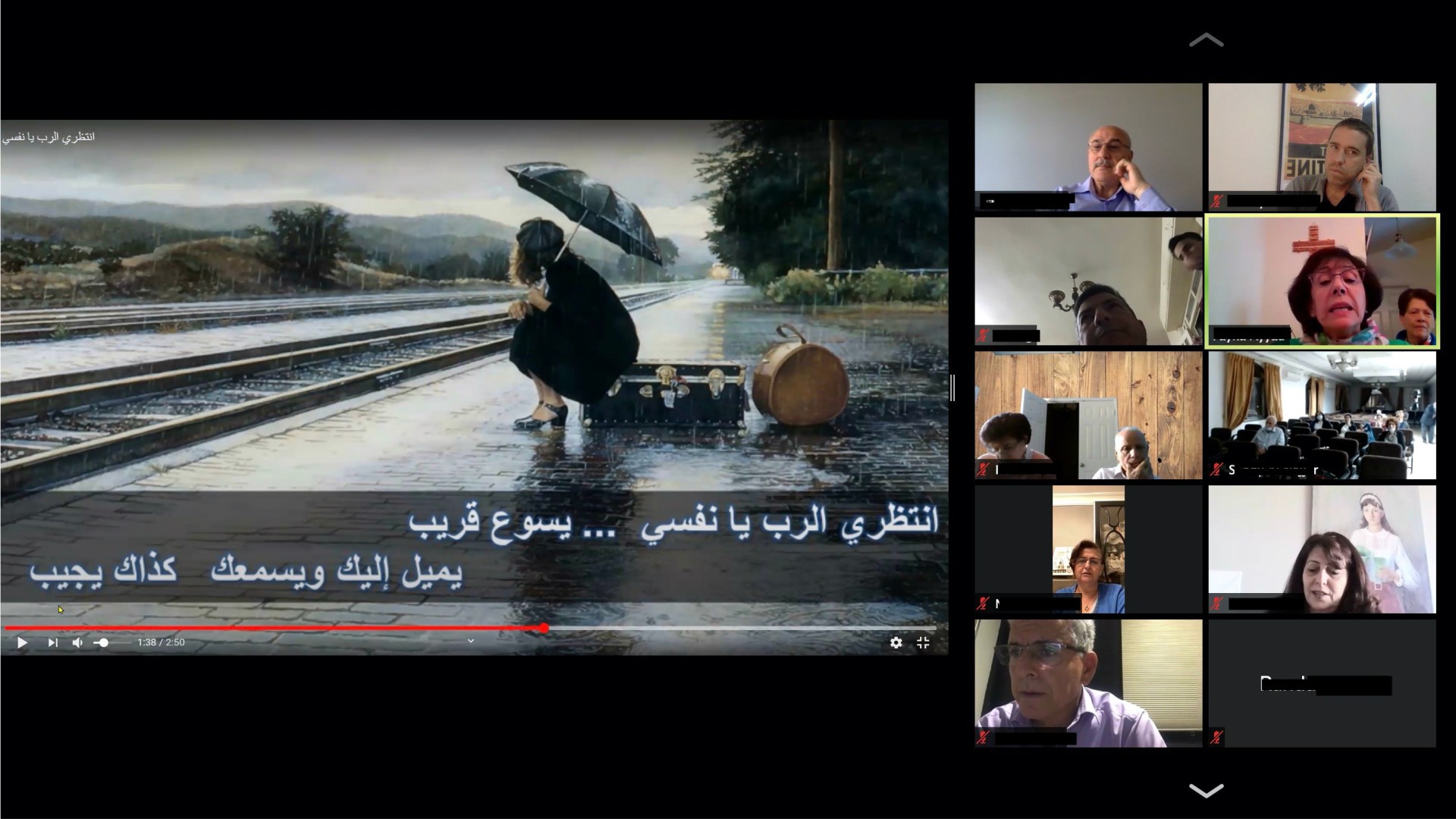
But under political lockdown since 2007, Gaza Baptist Church in the Palestinian territories has used Zoom to experience reunion.

“Nothing is humorous about Corona, but we see God’s sense of humor,” said Hanna Massad, the former pastor now residing in Connecticut.

“This painful virus gave us fellowship.”

Christians have been an integral part of Gaza for almost two millennia, declining slowly over the past century due to political and economic difficulties. But emigration increased rapidly since Hamas took power—followed by a joint Israel-Egypt blockade—and today less than 1,000 Christians remain in the 25-mile coastal strip.

It comes as little surprise, then, that Gaza Baptist—which drew about 200 weekly participants in the early 2000s—has now been reduced to about a dozen.

But like the rest of the world accommodating coronavirus disruptions in 2020, Gazans jumped on Zoom—for school, for work, for just about everything. Massad, the former pastor who left Gaza in 2007, started organizing Zoom services in June as a way to encourage the community.

The small congregation welcomed the initiative, since they had been without a pastor since last February. Once everyone was accustomed to the new format, Massad began sharing the Zoom link with the diaspora. Now Gazan Christians, and others with meaningful links to the community, join in from Europe, America, the Middle East, and as far as Australia.

Virtual church is what one might expect: a few songs, prayer requests, a short meditation, and a sermon. The reunion comes after the service, when Massad leaves the video chat open.

Smiles and laughs fill the screen, as people catch up with friends and reconnect with former members. In some cases, people haven’t seen one another in 20 years.

One man, who left Gaza prior to the blockade, openly wept for joy. He now wakes before 6 a.m. each week to join the service from California.

Another participant, who was among the first members of the church, described the meeting as a fulfillment of his long-held vision. But having left in the 1970s with only occasional return visits, he had all but abandoned it.

“How wonderful would it be for all the generations of Gazan Christians to meet, all of us who have scattered throughout the world?” he shared two weeks before Christmas, speaking through tears.

“Now, here we are together. It’s a dream come true.”

But these joyous reunions have also brought reminders of pain. The medical system in Gaza is nearly overwhelmed, fear is pervasive, and there is no scheduled arrival date for the vaccine. Several church members have caught the virus and their long-term prognosis is uncertain.

Members also update the diaspora about the ongoing problems with contaminated drinking water, electricity shortages, and the economic blockade. Such conditions make Gaza nearly uninhabitable.

And in non-coronavirus years, Gazan Christians must also obtain special permits to visit family members in Bethlehem and Jerusalem for the holidays. Israel often denies the requests with no explanation.

Founded in the 1950s, Gaza Baptist drew its members from the traditional Greek Orthodox and Roman Catholic communities. This created ecumenical challenges early on, but over the years, individuals and families have largely worked through their differences.

But beyond these difficulties, Gazan Christians have experienced outright persecution. Churches, schools, and bookstores have been attacked or bombed. A decade ago, one Christian was martyred. And earlier this month, Hamas officials issued a public statement, calling Muslims “to limit interaction with Christmas.”

Interpreted as an affront to brotherly Muslim-Christian relations, it sparked a public outcry from both Muslim and Christian Palestinians. A week later, Hamas authorities walked back the statement, affirming their “close relationship with the Christian family.”

This family has experienced no shortage of challenges.

“When people want to become disciples,” said Massad, “they know the cost.”

And they continue to serve their societies.

Gazan Baptists run a school, manage a bookshop, own businesses, and serve as physicians in local hospitals. And the young families who fled Gaza after the martyrdom in 2007 are active in ministry in the West Bank, Germany, and the United States.

During the Christmas service, Massad invited several of them to share five-minute meditations. Recalling the wise men who visited Jesus, the beauty of “God with us,” and the power of the Incarnation, they sprinkled in fond memories of Gaza holidays gone by.

Joyful smiles filled the 44 individual Zoom screens, most holding multiple people. In Gaza, about 60 people gathered in person to watch the service and to enjoy a socially distanced holiday meal.

Easily over 100 participants, the humble community once again neared its 20-year high-water mark.

Said Massad, “God gave us this small screen to be a blessing for one another.”

Kenny Schmitt is a visiting assistant professor at al-Quds Bard College in East Jerusalem. He is currently producing a social history of Gazan Christians over the past century, funded by the National Endowment for the Humanities.


10 Fresh Ways to Read Your Bible in 2021

The need to engrave Scripture on our hearts feels all the more urgent this year.

Christianity Today December 31, 2020
Neely Wang / Lightstock

Turning to Scripture should be an intuitive response for Christians when we feel anxious about the world we live in. Yet the American Bible Society’s annual State of the Bible 2020 report found an alarming trend: A mere 9 percent of Americans read their Bible each day in 2019—the lowest number in ABS’s decade of research and decreasing more in the first few months of the pandemic. But if 2021 carries even a fragment of the uncertainty we experienced in the past year, we need Scripture for guidance and reassurance even more. In my years of leading in-person Bible studies and an online Bible reading group, I’ve found sometimes we need practical ideas for getting started or picking the Bible back up again. Here are ten ways to read the Bible with fresh eyes in the new year.

1. Add a new translation to your bookshelf.

If you’ve primarily read one translation for many years, find a new one. After reading the New International Version (NIV) for years, I added the Christian Standard Bible (CSB). A friend recommended I get my hands on a Revised English Bible (REB), an English-language translation published by both Oxford and Cambridge publishing houses, so I use that one now as well. I’ve long turned to Eugene Peterson’s The Message paraphrase when I’m confused about what a passage says. Familiar verses grow in meaning as a differently translated word or two give me pause. Parallel Bibles—where you see two to four translations side by side—are excellent for reading the Bible in this new way as well.

2. Read Scripture out loud.

While it may seem simple, reading the Bible out loud can actually move us closer to the way Scripture was first presented to its original audiences. Many churches follow this methodology, making their way through the Bible in a three-year period. When we read Scripture aloud, phrases are emphasized and we can better sense the rhythm of a passage (although some cadence does remain lost in translation). Reading Scripture out loud together in a small group also can add to the variety, and hearing different inflections, or even different translations, can generate good discussion about word choice. The first time we tried this in my Bible study, I chose Isaiah 1: “When you spread out your hands in prayer, I hide my eyes from you; even when you offer many prayers, I am not listening. Your hands are full of blood!” (v. 15). God’s anger and frustration, communicated through the prophet, came to life for the women in a more powerful way. To further enhance this method, you could invite people from various faiths and church traditions to read with you.

3. Listen while driving, cooking, or walking.

This method is especially good for nonreaders or people who have trouble finding a consistent time to read their Bibles each day. It’s amazing how quickly one can progress through the Bible using an audio resource. The internet and Bible apps allow for numerous translations and even accents, which make this method particularly appealing for many people. Listening to David Suchet on YouTube, Johnny Cash’s reading of the New Testament on Audible, or Streetlights on Spotify is a fun way to mix it up. A warning as you try this method for yourself: When my husband and I began listening to audiobooks during extended road trips, I found it difficult to listen to a narrator without my mind wandering. If you find your mind drifting, try to focus on one or two key points from the passage.

4. Take a year to read the Bible chronologically.

Several years ago, upon the recommendation of a friend, I picked up a chronological Bible. We decided to read it at the same time, inviting others to join us in a private Facebook group. To this day, we read through the Bible annually in the order scholars deduce the events occurred. This method has had a major impact on my understanding of Scripture. Beloved verses and passages became part of the ongoing story of God’s redemptive plan for all he has created. Reading about the kings alongside the prophets, comparing the accounts of the Gospels, and understanding the happenings of Acts in conjunction with the letters to the churches helped fill gaps in my understanding.

5. Use a commentary or study-aid tools.

Use a new-to-you commentary to aid in researching the passage or book you’re reading. Commentaries go further than a study Bible in offering historical background and cultural context, and they help tie together the narrative of Scripture in a holistic way. Other multimedia resources, such as She (He) Reads Truth, The Gospel Coalition’s free courses, or BibleProject’s videos and studies, can complement our daily reading of the Word.

6. Read a whole book in one sitting.

If reading an entire book of the Bible sounds intimidating, try starting with a shorter book like Philippians. Reading an entire Pauline epistle offers insight into what was happening in the ancient city at the time. It gives us a sense of all the people Paul met in these churches and how similar they are to people who might be in our own churches. I spent a summer afternoon reading Mark in one sitting and could more clearly see his sense of urgency for the spread of the gospel. His heart for evangelism jumped off the page in a fresh way. One variation on this idea is to read the books of one author all at once. (For example, for a closer look at John, read his gospel, his three letters, and Revelation.)

7. Use a Reader’s Bible.

Reader’s Bibles have removed the chapters and verses, so they read more like a novel with one single column and few distractions. Some find this format helps them read for greater lengths of time. The original text didn’t have the breaks, so it gives an individual a feel for how early Christians would have read Scripture. Friends who use a Reader’s Bible comment they especially like reading poetry and prophecy this way.

8. Reflect on a psalm a week.

Rather than read a different psalm each day, select one to read each day for a week. As you read, notice what phrases in the psalm stand out to you, giving you a stronger sense of the author’s emotion. I often read Psalm 51 as a daily prayer, and I’m amazed at what verses stand out to me, many times based on what’s going on in my own life. I’ve yet to find a better way to start my day than asking God to “create in me a pure heart, O God, and renew a steadfast spirit within me” (Ps. 51:10).

9. Read the parables of Jesus back to back.

Omitting any text in between, read the parables of Jesus. Let him be the master storyteller that he is. Jesus knew the best way for his audience to understand a spiritual teaching was to tell them a story. In Reading the Bible with Rabbi Jesus, Lois Tverberg points out that “Jesus’ frequent parables about fishermen and farmers don’t evoke a visceral response in us, as they did in his agrarian world.” We better identify the lessons in these stories by homing in on them. Who was in his original audience? What did their daily lives look like? How is ours different? What lessons can we apply today in our world? Considering the cultural and social contexts of parables can help us see the text in a new way.

10. Write out whole books.

Writing out passages will help you read the Bible in a new way. You might find that patterns begin to emerge. You might see how words or phrases are repeated for emphasis. Days, months, or even years later, you will have pages to go back to in your own handwriting, further connecting you to Scripture. I first wrote out Scripture like this with the Book of James. It struck me how often James’ words would point me back to the teachings of Jesus. James wrote about faith as a way of life, and I noticed this in a way I hadn’t before I wrote it down.

The Bible is God’s inspired Word for us. While we decide on our New Year’s resolutions and Bible reading plans, may we turn to Scripture first. As Jen Wilkin wrote: “The inspirational words of humans are a paltry substitute for the inspired words of God.” Whatever 2021 brings, the Word is a rich source of insight and hope as we read, listen, and meditate on it.

Traci Rhoades is the author of Not All Who Wander (Spiritually) Are Lost. She writes at tracesoffaith.com.

Books

10 of the Best Books on Sports and Christianity from the Past 10 Years

How scholars, fans, and on-field stars have related faith and athletics.

Christianity Today December 30, 2020
Pearl / Lightstock

Over the past decade, an increasingly diverse and inspirational range of new books combining sports and Christianity have begun to appear in print. These include works of fiction and nonfiction, aimed at scholarly and popular audiences alike. The authors and subjects include men and women, children, people of color, people from different socioeconomic backgrounds, and representatives of different Christian traditions.

Here are ten of the best American books about sports and Christianity of the past ten years, listed in no particular order.

The Closer: My Story

Mariano Rivera with Wayne Coffey

Mariano Rivera, the New York Yankees’ legendary reliever, writes this memoir in the tradition of a classic Christian testimonial. Rivera takes readers from his impoverished childhood in Panama through his storied big-league career. The centerpiece of the book, though, is Rivera’s description of how his Christian faith and commitment to family kept him grounded amid the glitz and glamour of professional sports. Few memoirs offer as vivid a portrait of the challenges faced by Christian athletes in the contemporary sporting landscape.

The Mentor

Ryan M. Shelton

Oklahoma-based journalist Ryan M. Shelton has authored a pair of exciting young-adult fiction books about Christian athletes, The Mentor and The Captain. In The Mentor, Shelton tells the story of Vincent Preston, a talented high school baseball player who has recently become a Christian. Preston faces a difficult home life and is frequently the target of bullying by his teammates. The young ballplayer perseveres through his faith and the relationship he develops with a former Major League Baseball scout named “Grandpa Dean” who lives in his small town. Readers who embraced Mitch Albom’s Tuesdays with Morrie will find similar inspiration in Shelton’s sports fiction.

The One Year Uncommon Life Daily Challenge

Tony Dungy

Pro Football Hall of Famer Tony Dungy enjoyed one of the most storied coaching careers in NFL history, becoming the first African American head coach to win a Super Bowl. Dungy has always placed his faith front and center in his public persona and has followed up his coaching career with a successful turn as a Christian mentor, public speaker, and author. The One Year Uncommon Life Daily Challenge is the best of his many offerings. It reads something like a modern-day version of Ignatius Loyola’s Spiritual Exercises, providing readers with a series of goals, challenges, mental exercises, prayers, and meditations to guide them toward a more fulfilling spiritual and social life. Dungy builds his calendar’s worth of life lessons around Scripture, making this a text well suited to Bible study groups.

The Games People Play: Theology, Religion, and Sport

Robert Ellis

Robert Ellis’s The Games People Play is a work of genuine erudition and scholarly inquiry into the role of Christianity in sports. Ellis articulates what he calls a “theology of sport,” a means by which athletic pursuits can adhere to our spiritual foundations. He argues that sports are neither merely a frivolous enterprise nor a mere platform from which to evangelize. Ellis writes that watching or participating in sports can constitute a moment of transcendence in the practice of everyday life—an opportunity to witness the work of the divine amid the seemingly ordinary.

Good Game: Christianity and the Culture of Sports

Shirl James Hoffman

Good Game provides readers with the best history to date of the relationship between sports and Christianity. Hoffman begins his story with the spectacles of ancient Rome and the opposition of the early church to the culture of death that pervaded sport during the days of the empire. He spends a significant amount of time discussing the radically differing views of sports that emerged among Christians in the late 19th and early 20th centuries. Many American Protestants of the era regarded sports as a force for cultural decline. Others, such as former baseball player Billy Sunday, embraced sports as part of the mass culture of the age and relied on the language of sport to craft a contemporary and relatable message. Hoffman expresses significant discomfort with the idea that sports serve as a source of character building. In the book’s final chapters, he proposes a series of fairly radical reforms for sports at Christian institutions aimed at taking away some of their competitive vigor.

Triumph!: Powerful Stories of Athletes of Faith

Pat Williams with Ken Hussar

Former Philadelphia 76ers and Orlando Magic executive Pat Williams, one of the sharpest minds and greatest showmen in NBA history, has become a popular motivational speaker and author of Christian-oriented self-help books over the past two decades. Triumph! is a fantastic book for Christian sports fans of almost any age. It is a collection of Scripture-informed vignettes that describe how some of the biggest names in sports, both past and present (examples include John Wooden, Kurt Warner, and David Robinson), have used their faith to guide them through challenges both on and off the playing field. For a young sports fan, Triumph! will serve as a building block for knowledge of sports history while reinforcing the idea that many committed Christians have been able to make a name for themselves in amateur and professional sports.

God and Football: Faith and Fanaticism in the SEC

Chad Gibbs

Chad Gibbs’s travelogue of a college football season spent caravanning around SEC country is an entertaining slice-of-life story. It is also a serious rumination on the fervor of fandom in NCAA football’s most dedicated conference and the intense religiosity of the lion’s share of its fans. Similar to Warren St. John’s Rammer Jammer Yellow Hammer (2004), Gibbs’s account has a decidedly more spiritual bent—the author focuses on whether his passion for football in some way detracts from his Christian faith. Gibbs concludes that he can still enjoy football but that his priorities had gotten out of whack—he resolves to make his life more Christ-centered and less dependent on the success of his Auburn Tigers.

In the Arena: The Promise of Sports for Christian Discipleship

David Prince

David Prince, a professor at the Southern Baptist Theological Seminary, writes with the knowledge of a sports fan and participant about the meaning of the gospel in the context of contemporary sports. Prince presents sports not as a mere diversion but as a means of glorifying God—an opportunity for Christians to show their diligence, sense of loyalty, and courage. He sees competition as a space where Christians can demonstrate their love of neighbor through the friendly and forthright pursuit of victory within the game’s proper bounds.

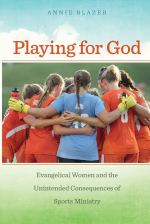
Playing for God: Evangelical Women and the Unintended Consequences of Sports Ministry

Annie Blazer

Annie Blazer’s provocative sociological study of Christian women in sports argues that the efforts of ministries like the Fellowship of Christian Athletes and Athletes in Action have had an unexpected long-term impact on the self-perceptions of many female athletes. Blazer finds that for many Christian female athletes, sports-centered Christian fellowships offer a space in which to discuss issues related to their bodies. This focus on the body, Blazer argues, created an opportunity for many Christian women to question aspects of their gender roles and sexuality within a setting typically regarded as a bastion of traditional social attitudes.

Christy Mathewson, the Christian Gentleman: How One Man’s Faith and Fastball Forever Changed Baseball

Bob Gaines

While a number of biographers have examined the tragic life and death of Mathewson, the early 1900s New York Giants ace, Bob Gaines’s book is the first one to put explicit focus on his spiritual journey. It follows Mathewson through his Baptist upbringing in Factoryville, Pennsylvania and the Bucknell University education that framed his outlook on life. In the rough-and-tumble world of early-20th-century big-league baseball, Mathewson lived as an exemplar of Christian virtue. Gaines situates Mathewson’s career in a rich historical context, placing the public life of the “Christian Gentleman” alongside the culture of early-20th-century Protestant revivalism and the social gospel movement.

Clayton Trutor holds a PhD in US history from Boston College and teaches at Norwich University in Northfield, Vermont. He is the author of Loserville: How Professional Sports Remade Atlanta and Atlanta Remade Professional Sports, which is forthcoming from University of Nebraska Press.

News

Priesthood of All Professors? Court to Consider ‘Ministerial Exception’ for Gordon College

Decision could impact freedom of faculty, ability of evangelical institutions to hire and fire.

Christianity Today December 28, 2020
John Phelan / Wikimedia

One of professor Margaret DeWeese-Boyd’s students thought she did a “great job of connecting class materials with Christian faith” in her Gordon College social work course. Another said that after nearly 30 years teaching at the Christian liberal arts school, DeWeese-Boyd excelled at “incorporating our faith into our materials, calling us to be relevant and apply our materials to our Christian life.”

Does that mean she was a minister?

A Massachusetts court will weigh that question in a hearing on January 4. The decision in the lawsuit between the former professor and Gordon College could have far-reaching implications for other evangelical institutions of higher education and the many people who work for them.

DeWeese-Boyd was denied promotion to full professor in 2017, against the recommendation of her department and the faculty senate. She alleges the administration was retaliating against her for her opposition to the school’s policies on sexuality and the way those policies hurt LGBT students and faculty. DeWeese-Boyd also says the administration punished her more harshly than male professors who had taken similar stands. She sued, alleging discrimination.

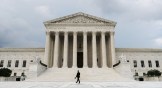
Gordon, however, is arguing that faculty are not covered by anti-discrimination protections in federal employment law, because professors are ministers and the Supreme Court has held there is a “ministerial exception” to those protections.

According to Gordon president D. Michael Lindsay, the school’s professors are Christian educators, required to “profess the Christian faith; to assist students in their spiritual journey as part of their intellectual formation; to be available to minister to students with questions, personal needs, spiritual exploration,” and “to inculcate the Christian identity and transmit it to the next generation.” (Lindsay is on CT’s board of directors.)

Lindsay told a lower court that this is clear to professors when they are hired and a regular part of their performance reviews.

“When I interview a faculty member, I will liken joining Gordon College to joining a religious order,” he said.

DeWeese-Boyd counters that being a Christian educator is not the same as being a minister.

“She performed no religious or ministerial functions for the college whatsoever,” wrote Hillary Schwab, the attorney representing DeWeese-Boyd. “She did not: teach religion or the Bible; lead chapel services; take students to chapel services or other religious services; deliver sermons at chapel services; select liturgy, hymns, or other content for chapel services; and/or conduct Bible studies.”

Neither side disagrees with the ministerial exception, which the Supreme Court first articulated in 2012 in Hosanna-Tabor Evangelical Lutheran Church and School v. Equal Employment Opportunity Commission.

The court’s ruling in that case was unanimous: A Michigan teacher, who was let go after a medical condition made it difficult for her to teach—though she and her doctor both said she could manage—did not have the right to sue. The dismissal might or might not have qualified as discrimination, but even if it did, religious organizations are allowed to discriminate. The legislature cannot pass a law that interferes with religious groups’ protected right to decide for themselves who will “preach their beliefs, teach their faith, and carry out their mission,” the court said.

Chief Justice John Roberts wrote, however, that the ruling did not set out “a rigid formula for deciding when an employee qualifies as a minister.”

Gordon and DeWeese-Boyd do not agree on a formula or even the criteria for classifying someone as clergy—who should be excepted in the ministerial exception. Both parties are pushing the court to adopt their definition of minister.

DeWeese-Boyd’s attorney writes that the professor wasn’t a minister because her “title was secular, the college viewed her as having a secular role, and she saw herself as having a secular role for the college.” The professor did write about being a Christian scholar and integrating her faith into her teaching and scholarship, but “being an active member of the Christian faith is not sufficient to make someone a ministerial employee,” according to Schwab.

Gordon, on the other hand, argues that its religious commitments are essential to the identity of the school, not just “sprinkles on top.” Because the college is religious, the faculty are ministers.

“If Gordon is not a religious institution of higher learning, it is hard to imagine how any religious college could be,” wrote Jeffrey McAllister, the attorney representing the college. There is an “abundant record [of] evidence, including Gordon’s Faculty Handbook, plaintiff’s own tenure papers, and feedback from plaintiff’s students, that unmistakably establish that plaintiff was mandated to, and did, instill the evangelical Christian faith into her students and helped form them in that faith.”

The Supreme Court revisited the question of the definition of minister this year in Our Lady of Guadalupe School vs. Morrissey-Berru. The majority of justices decided, 7–2, that “what matters, at bottom, is what an employee does.” A religious community may not officially ordain a minister or even call them a minister, but if the person does religious work, that person is legally a minister.

This is even true, Justice Samuel Alito wrote in that case, if a teacher doesn’t mainly teach religion, but contributes to the school’s religious mission in a more general way.

Justice Sonya Sotomayor dissented, writing that this “simplistic approach has no basis in law and strips thousands of schoolteachers of their legal protections.”

DeWeese-Boyd’s suit against Gordon is believed to be the first major test of the decision in Our Lady of Guadalupe. At a time when evangelical higher education is struggling and faculty and administrators frequently find themselves at odds over the future of their institutions, many are looking to this case to see how the courts will apply the 2020 ruling.

The Council for Christian Colleges and Universities says the “case holds important ramifications for all of Christian higher education.” In an amicus brief, filed in defense of Gordon, the organization says that, “At Christian colleges and universities, all courses are infused with faith. That is the distinctive promise a typical religious college makes to students and their families—that all instruction will be shaped by the school’s particular theological understandings. Thus, the social-work course, the math course, and the English literature course are all taught and studied from a faith-based perspective.”

According to her student evaluations, DeWeese-Boyd did that. The question the court has to consider is whether that made her a minister.

News

RZIM Confirms Ravi Zacharias’s Sexual Misconduct

Full report from outside investigation to be released in January.

Christianity Today December 23, 2020
Illustration by Mallory Rentsch / Source Image: Wikimedia Commons

Ravi Zacharias International Ministries (RZIM) notified staff, donors, and supporters on Wednesday that there is convincing and credible evidence that Ravi Zacharias “engaged in sexual misconduct over the course of many years.”

A preliminary report from the law firm hired by RZIM confirms reports from CT, World, and blogger Steve Baughman that international apologist Ravi Zacharias, who died earlier this year, sexually abused numerous women.

The final report is forthcoming, and RZIM has committed to releasing it to the public. The investigators at the law firm Miller & Martin have told the board, however, that many victims have “spoken candidly and with great detail,” confirming the allegations of massage therapists who worked in two Atlanta spas that Zacharias partially owned. The team has uncovered other misconduct as well. The investigation is ongoing and the investigators are continuing to pursue leads.

“We know this news will send all of us, and thousands of others, into grief, confusion, disillusionment, and anger,” wrote Sarah Davis, RZIM’s CEO and Zacharias’s daughter. “We know that you will have many questions, as we all do as well.”

Davis also wrote that “We grieve profoundly with those who have suffered from Ravi’s sexual misconduct” and asked staff and supporters to pray for them.

RZIM initially denied the allegations, releasing a statement that said “the family and ministry teammates of Ravi Zacharias” did not believe them to be true, because they “do not in any way comport with the man we knew for decades.” A number of RZIM teammates objected to the statement and said they did believe the women making the allegations.

The announcement follows weeks of increasing pressure from staff inside RZIM voicing criticism of leadership for the way it has protected its founder’s legacy.

The full report of the investigation into Zacharias’s misconduct is expected in January.

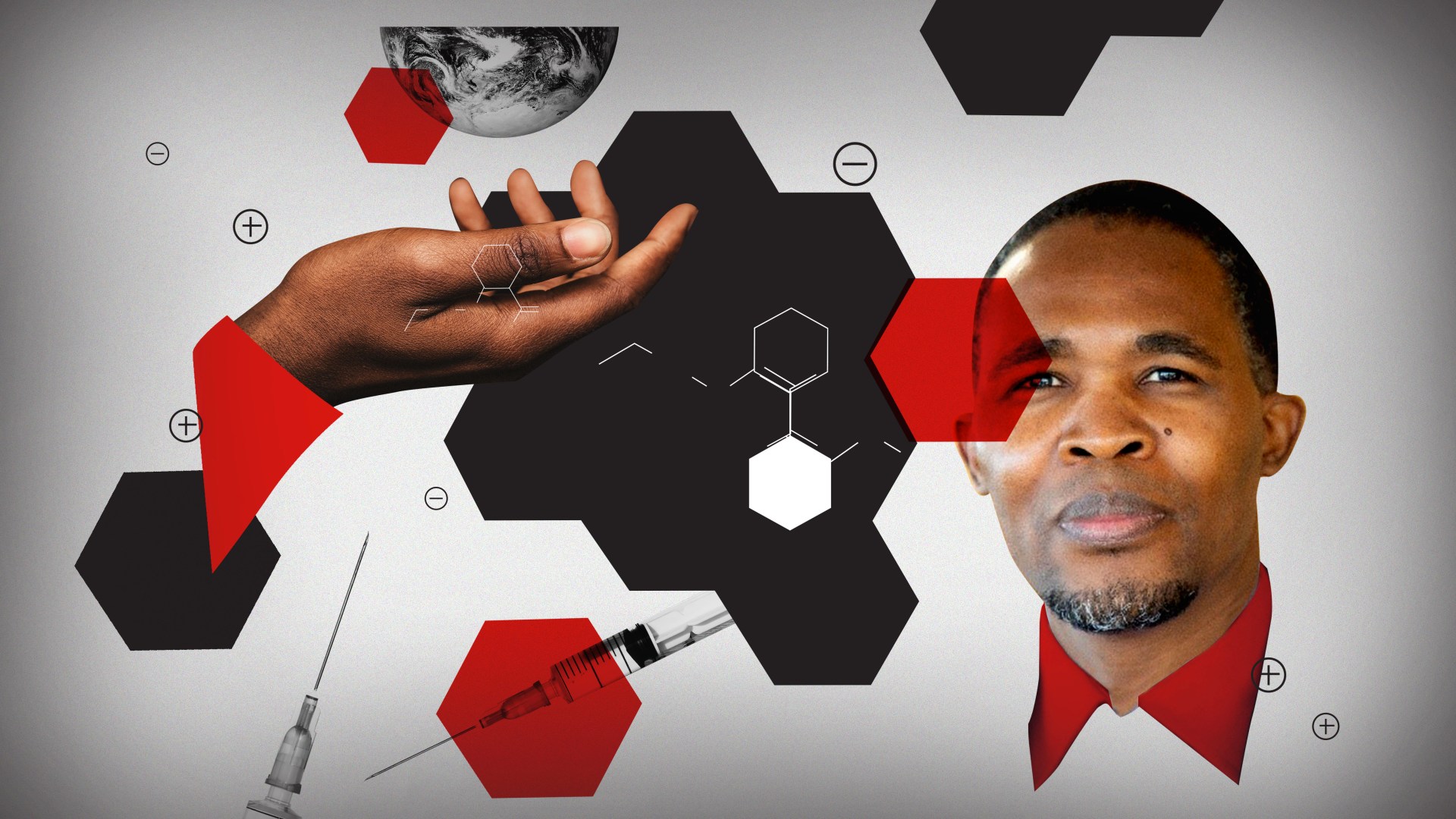
The Global Church’s Mission for the COVID-19 Vaccine Rollout

Gavi director: Christian involvement with HIV, Ebola should inspire coronavirus engagement.

Christianity Today December 23, 2020
Illustration by Mallory Rentsch / Portrait of Thabani Maphosa Courtesy of James Fulker / Source Images: Anna Efetova / Getty Images / Nsey Benajah / Unsplash

This Advent, Christian global health professionals feel deeply the longing and expectation characteristic of the season amid the preparation for the rollout of the COVID-19 vaccine. While our world awaits the end of the pandemic and the darkness feels very present, the hope of some reprieve shifted toward realization when healthcare workers in the UK and then the US and Canada received the Pfizer vaccine in the last two weeks. Approvals of two other viable vaccines from Moderna and AstraZeneca are expected soon. Yet as Christian professionals work to improve health for the most vulnerable, a swirl of controversies and logistical challenges to delivering the vaccine clutter the way.

Thabani Maphosa, who oversees vaccine distribution for low- and middle-income countries around the world through his role at Gavi, the Vaccine Alliance, views his responsibility in light of the experiences God has seen him through. As a child growing up in Zimbabwe, Maphosa suffered from bilharzia (schistosomiasis) because of the quality of the water and also survived measles, which is a leading cause of death for children under five in Africa.

“Every time I think about how good Christ has been to me personally, I cannot ever think of how I can repay him,” he said, referencing Luke 12:48. “There is so much I can give back because of the gift of life that I have. … I do it in recognition of those around me who are still struggling through this.”

Martha Newsome, president of Medical Teams International, met Maphosa while working at World Vision in Johannesburg, South Africa. She recently interviewed him for CT about how the church can be involved as the COVID-19 vaccine becomes available globally, particularly as the low-income countries are waiting at the back of the line.

I know there are some real differences in terms of these three vaccines. Is there one that Gavi is more likely to be working with or helping low-income countries to use over the others? What are the challenges in transporting and storing these vaccines?

The COVAX facility [which was founded to procure the COVID-19 vaccine] decided to have a portfolio of vaccines, meaning we are not focusing on one. The countries have a voice in what they need. We work with co-financing or co-sharing. What that means is it’s about [each country’s] contribution. [It’s not about who else is] funding or contributing, but they each have some skin in the game as well.

The Pfizer vaccine is using mRNA technology. Of course, the Moderna one sits in the same realm, but they have different profiles as far as their refrigeration requirements. While Moderna stores at -20 degrees Celsius (about the temperature of an average freezer), the Pfizer one needs to be stored between -60 and -80 degrees Celsius. Many of the countries we work with will have a challenge in terms of the infrastructure.

However, the Ebola vaccine actually sits at the same temperature range for the cold chain as the Pfizer vaccine. So, you will have a few countries that have had Ebola responses, like Sierra Leone, Liberia, Guinea, Democratic Republic of Congo, and Uganda that actually have some cold chain and are able to deliver that.

Then, there are some countries, such as Myanmar, that have a high disease burden at the moment but feel they would rather get the Pfizer vaccine because it may have less competition.

We’ve also been working with AstraZeneca, and we have a deal with a vaccine that is within the temperature range that is acceptable for many of our countries. But then there’s a tradeoff of time. If the Pfizer one is here now, are you willing to wait for the cheaper one that may come four months down the road?

The number of technologies that we get to work with allows us to deal with multiple supplies in a supply-constrained environment.

Since we know demand is going to be so high, how do you think Christians can be involved in ensuring that there’s an allocation based on fairness and need? Where does justice come in here? As you’re looking at equitable access across the world, is there a role for Christians and churches?

I think so. What I will lean on here is the biblical view: “Love your neighbor as yourself.” If we were to think about who is our neighbor in this world but also in COVID times, you cannot treat China as not being your neighbor. Physical distance means that China or Africa or the US is so far removed geographically. But COVID has actually shown us that we are much closer and much more so neighbors than we actually think.

That principle says that, yes, governments will always have obligations to protect their citizens, but governments must recognize that protecting their citizens without dealing in a way that is coordinated is still risky.

How do you think Gavi could utilize Christian ministries to reach refugees and highly vulnerable populations?

Gavi is in the design phase for a humanitarian buffer of doses for the vaccine. As we design that, I do see that as an opportunity where Christian organizations could contribute. The COVAX facility is structuring in three pillars: One is 92 low- and middle-income countries [that need financial support], then there are self-financing countries, and then there’s the humanitarian buffer—these are wealthy countries who can give doses from their own purchased supply. This is where we may reach these populations that may be missed because they’re not included.

I’ve been saying in a number of conversations that the COVID vaccine is the most political vaccine that we have ever had. What that means is that the church could be a voice holding governments and everybody accountable for actually reaching the most vulnerable and the hardest to reach. We need to make sure that somebody speaks for the voiceless. The risk of the COVID vaccine being one that is given to the political elite is giving all of us at Gavi sleepless nights. The global church and the church at large could speak into those issues.

I see [Christian ministries like] Medical Teams also able to contribute technical needs, supporting governments where appropriate, whether it’s in risk communication or other things. They can strengthen the country’s readiness to actually take up vaccines as fast as possible.

Finally, misinformation and conspiracy theories arrive in too many ways. Faith organizations in many communities are trusted. There could be a pathway to putting out the correct message as an antidote to the conspiracy theories.

Many Christians in the West may not know how much the church is part of the health infrastructure in Africa. It’s much bigger than people might realize. How can Christian nonprofits support that infrastructure?

It could speak to the communities and make sure they take this vaccine to protect themselves, their families, and their economies. The disproportionately affected are the poor. So, when we speak of this as a political vaccine, it is also a vaccine that is really going to halt the slide to poverty that we see—both for those living on the edge and those it has pushed over.

This period disproportionately affects women and girls. The statistics that I have is that the number of school-aged girls who have fallen pregnant during this period is so high. There are a number of girls that are not going to go back to school when we come out of this season. The sooner we stop this, the sooner we save those girls and give them a chance. There is the number of women who have been exposed to violence as well because people have been spending an inordinate amount of time in close spaces.

So, there are a number of social and economic ramifications that all of us want to get out of very fast and which the church would agree are important things to do.

We have a lot of work cut out for ourselves. Is there a historical example that you can recall of seeing the church engage in such a time like this?

It’s the HIV and AIDS space. You know very well in the US how the church at large really stepped up as far as mobilizing resources, but the church in Africa and Asia were hands on working with communities. We would be disingenuous if we say that progress in the HIV/AIDS space was made without the church. We wouldn’t have come this far without the church and the faith community at large.

A much closer example to today’s world is really Ebola. We both worked [at World Vision] on Sierra Leone and the West African countries, and it is fair to say that the role of the church and the faith community was significant in changing the practice of burials. [The traditional practice of washing the body after death led to high transmission rates of Ebola until faith leaders helped modify burial protocols]. The vaccine is an important piece, but there are other behavioral issues where the church comes to play a role. In the US right now, you are dealing with a partisan approach to masks. The church could play a very important role on the behavior-related issues in this regard.

Historically there’s been a concern that poor countries or vulnerable populations are used as the guinea pigs of new and experimental treatments including vaccines. Certainly a concern in the US is that people of color may be quite reluctant to get the vaccine because of a historic, painful legacy—the Tuskegee experiment being the most well-known. But concerns about being used for experiments have also been raised in the Ebola vaccine trials and among developing country populations. So, how do you think minority churches or churches in low-income countries could navigate those concerns?

That is one tough question. From a practitioner’s perspective, the process of vaccine development has become so tight in terms of steps and thresholds that have to be met and satisfied. Sometimes there’s a risk of having adverse events. We should not shy away from acknowledging that once in a while there’s a small percentage of the population that may react in a way that is not intended or optimal. But by and large, as the facts tells us, it’s a much lesser proportion. We will move as fast as the speed of science allows us to. But we will never move at a speed that actually undermines our work and other success.

To address mistakes that may have been made in approach: There’s a growing body on ethics, not just on vaccines but in broader medicine, that are being applied. We hope that will continue to make everyone accountable.

I’ll also make an interesting statement that I’ve made many times. Viruses don’t see race, and neither have vaccines ever been racial in their approach. They deal with one human race. The vaccine that is given to Caucasian Martha and black Thabani … It really deals with the fundamental that we are made in the image of God that runs deep within us, in our veins. If the vaccine is going to cause harm, it’s going to cause harm to the human race but not necessarily to the black, Indian, or any other race. What we are fighting is a virus. My argument is that vaccines from their development are really about the disease, not a racial group.

That shows how high the stakes are. It almost has to be a partnership between having the protocols right and the church playing a role in helping to trust that.

There’s a good book that shows how with HPV (human papillomavirus), which causes cervical cancer, we could not have moved in some countries without partnering with the church.

Sometimes we have a tendency to conflate the message and say that this is about giving license to girls to have sex. It’s not about having sex. It’s about what is the optimal time for girls to get this vaccine.

The church is also going to be caring for women who are dying from cervical cancer. We can deal with the front-end side with protection, and we don’t have to deal with palliative care. When the church is pro-life, it weighs the value of life over the intricacies of whether this is a license to having sex or not.

That example is just like the HIV one in some ways. The church needs to stand on the border of these sticky issues with behavioral components that seemingly go against our faith. But actually, we’re trying to save lives. It’s a pro-life position. But you’ve got to really unpack that.

On that one, I’d argue that our obligation is to serve life as much as possible and leave God and the Holy Spirit to speak to our sinful nature. The work of the Holy Spirit continues for the rest of our lives. Serve life and make sure that the Holy Spirit can work with people in terms of their redemption.

Martha Newsome is the president and CEO of Medical Teams International. She previously worked for World Vision, overseeing health, nutrition, and Water, Sanitation and Hygiene (WASH) programs in Africa.

Theology

‘We All Have Plague’

What I learned about suffering and hope from reading Albert Camus’s novel during the pandemic.

Christianity Today December 23, 2020
Illustration by Rick Szuecs / Source image: TwentyTwenty/Envato / © Marco Bottigelli / Getty

Perhaps the easiest way of making a town’s acquaintance is to ascertain how the people in it work, how they love, and how they die.

That’s how Albert Camus, the French philosopher and author, introduces the port town of Oran early on in his novel The Plague. I found myself reading the novel and discussing it with students this fall at Wheaton College. In fact, it’s the college’s Core Book for the year, which means that the whole campus is reading, reflecting upon, and discussing it as an act of communal learning during this season of Advent and throughout the year.

The novel tells the story of the citizens of Oran and how they respond when their town is overrun by an outbreak of the plague, which Camus, an atheist, based on historical events. One of the characters in the novel, Dr. Bernard Rieux, embodies Camus’s absurdist philosophy, which affirmed that humanity’s only option when confronted by the absence of any inherent meaning in life was simply to recognize the absurdity of our condition and live in the tension.

“Oh, I know it’s an absurd situation,” Dr. Rieux remarks at one point in the story, “but we’re all involved in it, and we’ve got to accept it as it is.” Camus knew that such a view stood at odds with the Christian faith, and he even compared it to other classical heresies. His philosophical shrug of the shoulders—sure, it’s a bizarre and meaningless reality, but what can you do?—was a far cry from the Christian affirmations of God’s good creation, divine providence even in the midst of suffering, and Jesus’ willingness to take on human flesh.
All of which would seem to make The Plague an odd selection for a Christian college to read together. However, as I was reminded this semester, we can find truth in unexpected places. John Calvin, the 16th-century Protestant reformer, certainly believed as much. In his commentary on Titus 1:12, where Paul refers to a Cretan poet, Calvin contends that we should not be afraid to learn from non-Christian authors: “All truth is from God; and consequently, if wicked men have said anything that is true and just, we ought not to reject it; for it has come from God.”

Allow me to suggest two such truths I found in The Plague.

On Not Ignoring Reality

Having faith during a pandemic means not ignoring the reality of our suffering. It can be tempting, when the daily reports of new cases, additional restrictions, and avoidable deaths might seem overwhelming, to just tune it all out. But downplaying or denying the reality of the situation isn’t the answer.

Camus doesn’t do this. Indeed, he knew suffering all too well. He was diagnosed with tuberculosis at a young age, and it remained with him for the rest of his life. In the novel, he identifies the very human fears and anxieties that the plague induces in the townsfolk of Oran. Its appearance is first noticed because of rats dying in the streets, but it quickly transfers to people. Dr. Rieux diagnoses the first case when Monsieur Michel, the concierge, begins to show signs. Michel’s wife asks, “Isn’t there any hope left, Doctor?” Sadly, not for her husband.

As the plague, and the fear that accompanies it, spreads in the town, the citizens discuss things that will sound all too familiar to us, I’m sure: taking preventive measures like wearing masks and keeping distance from each other, the challenges of extended separation, asymptomatic patients, and flattening the curve. Some even believe that the plague will vanish in warmer temperatures. Rieux struggles to convince the authorities about the dangers of the disease, as they don’t want to call it what it is: “It has small importance whether you call it plague or some rare kind of fever. The important thing is to prevent its killing off half the population of this town.” Finally, a quarantine is declared: “The telegram ran: Proclaim a state of plague stop close the town.”

The effects of the plague are more than physical isolation, of course. It has psychological and spiritual effects as well. The separation that the town experiences—between those inside and outside the city as well as among the people within its walls—is distressing. More than that, as the narrator puts it, the plague “had ousted love from all our hearts.”

We all suffer—some of us in small inconveniences, others in unspeakable losses. Yet our communal experience of the COVID-19 pandemic has pulled the curtain back to expose the reality of our suffering that we might otherwise be able to ignore. In this regard, the pandemic’s role is similar to that of war, which C. S. Lewis wrote about in “Learning in War-Time.” In the essay, which was originally a sermon he preached in 1939, Lewis looked back at his experience of World War I: “The war creates no absolutely new situation: it simply aggravates the permanent human situation so that we can no longer ignore it.”

The citizens of Oran are desperate not just to survive the plague but to know that they are not alone, that there is meaning in their lives. They want to know, in short, that there is hope.

On Not Forgetting Our Hope

Having faith during a pandemic means remembering the source of our hope. Madame Michel’s question to Dr. Rieux—“Isn’t there any hope left, Doctor?”—might very well be our own. The fact that my students and I were wearing masks in a classroom with distanced desks or meeting in an online Zoom session while discussing the novel was just one small reminder of our current crisis. Camus’s response to such an existential dilemma was to embrace the meaninglessness of life even if he knew that, like Sisyphus (his “absurd hero” from The Myth of Sisyphus), he would have to push the proverbial stone up the mountain again and again and again. But for the Christian faith, the truth is both much worse and infinitely better.

It is much worse because we recognize the depth of our need. Camus’s novel offers a glimpse of this in a conversation between Dr. Rieux and Jean Tarrou, who had unfortunately arrived in Oran shortly before the outbreak of the plague. Tarrou’s own ethical standards had led him to organize teams of volunteers to combat the plague rather than force prisoners to do the work.

But he recognizes his own shortcomings: “I had plague already, long before I came to this town and encountered it here.” In words that echo the psalmist’s confession in Psalm 51 or Paul’s words in Romans about our universal sinfulness and our thoroughgoing need for God’s grace, Tarrou acknowledges, “We all have plague. … Each of us has the plague within him; no one, no one on earth is free from it.”

At the same time, our perception of reality is infinitely better because it is shaped by our hope in Christ. I have been encouraged by recent news about the development of a COVID-19 vaccine. But even an effective vaccine will not cure all that ails us. The depth of our need requires something much more than a vaccine. What it requires is something that we cannot do.

In that sense, perhaps it could be said that the Christian faith shares something in common with Camus’s philosophy. When confronted by our suffering and the seeming absurdity of life, what can you do? Yes, we can—and we should—love our neighbor by wearing masks and staying six feet apart. But it turns out that we can do nothing to change our larger circumstances. What we need is an intervention.

And here is where we depart from Camus. For if we should remember the reality of our suffering, then we should remember all the more what God has done for us in the life, death, and resurrection of Jesus Christ. In the early stages of the plague, Fr. Paneloux, a priest in Oran, preaches a sermon in which he interprets the outbreak as an expression of God’s punishment for the town’s lax faith: “Calamity has come on you, my brethren, and, my brethren, you deserved it.”

Later, after witnessing the tortured death of a child at the hands of the plague, he preaches another sermon in which he appears chastened, speaking “in a gentler, more thoughtful tone.” Yet even when humbled in this way, Camus writes, he would not forget his faith: “No, he, Father Paneloux, would keep faith with that great symbol of all suffering, the tortured body on the Cross.”

What, then, is our hope during this prolonged period of pandemic?

The season of Advent is one of expectation, preparation, and waiting. In short, it is a season of hope. Of course, it is an understatement to say that the start of this Christian year has been unusual. But the realities of this particular Advent—gathering for online worship in the living room, lighting the homemade wreath, praying again and again and again for those suffering from this plague—only serve to remind me all the more that God did not ignore the reality of the human situation. Our hope, during this season and always, is found in the fact that in Christ, God entered a plague-stricken city: “This is how the birth of Jesus the Messiah came about” (Matt. 1:18).

David McNutt is an associate editor at IVP, associate lecturer of Core Studies at Wheaton College, and an ordained minister in the Presbyterian Church (USA). He is the author of the forthcoming book The Analogy of Creation: Karl Barth, the Arts, and a Theology of Creativity.

News

Joni Eareckson Tada Asks for Prayer After Contracting COVID-19

The 71-year-old ministry leader, who is quadriplegic and at risk, is in “bright spirits” and receiving antibodies treatment.

Christianity Today December 22, 2020
Alberto E. Rodriguez / Getty Images

Since the pandemic begin, Joni Eareckson Tada’s ministry has been offering prayer and practical support for medically vulnerable people who have contracted COVID-19. Now, Joni and Friends is asking for prayer for its founder and namesake, who has contracted the virus at age 71.

Tada is showing signs of improvement after receiving monoclonal antibodies, a treatment designed to help boost disease-fighting by the immune system that has been used by high-profile COVID-19 patients including President Trump.

“It has been a long hard day, but I know people are praying because Ken’s and my spirits are bright,” she said, according to a ministry update posted on Facebook.

But given Tada’s medical background, including having just recovered from cancer for the second time last year, this is “just the beginning of her road to recovery,” Joni and Friends wrote. She recently tested positive after experiencing flu-like symptoms.

When the coronavirus outbreak began in the US in March, Tada—who has written and spoken extensively on faith amid suffering—emphasized God’s sovereignty during the pandemic.

“Jesus knows exactly where the virus is and where it is going next, who will get it and who will not. Since our Savior always does what is wise and good, he has prudent purposes in this disease and its impact,” she said, going on to describe her own vulnerabilities should she become infected.

“Personally I am staking my life on that because I am a person at great risk. I am an aging quadriplegic with fragile lungs and an immune system that can be easily compromised,” she said. “But I am following all the protocols and I am bolstering my confidence with the same assurance that we giving the people we serve through Joni and Friends: The world belongs to Almighty God.”

Recognizing how people living with disabilities have been disproportionately hard-hit, isolated, and distressed by COVID-19, the ministry has been adapting to meet their physical and spiritual needs during a time when other resources and support have been shut down.

Tada also served on the Heritage Foundation’s National Coronavirus Recovery Commission. As a part of the commission, offering guidance on response efforts, she prioritized the need to safeguard “the vulnerable, the weak and medically fragile, the disabled, and the elderly who are our nation’s heritage and who deserve our protection, respect, and gratitude.”

Back in March, she spoke up about her desire to see Christians’ faith on display during a time of national and global suffering, and she has previously applauded believers who choose careers working among the weak, elderly, and disabled—saying their willingness to treat them with dignity and value can have a meaningful impact on how society sees the most vulnerable.

Tada wrote for CT about how her paralysis and desire for healing has changed her view of heaven, saying, “Physical affliction and emotional pain are, frankly, part of my daily routine. But these hardships are God’s way of helping me to get my mind on the hereafter.”

She also battled breast cancer in 2010 and 2018. Facing the coronavirus, she thanked readers for their prayers: “I am deeply humbled that the Holy Spirit has garnered so much prayer support for us. I don't deserve it, but I sure do appreciate it! Thank you for asking God to grant me strength, increased faith, a singing heart, and sure hope!”

Joni and Friends wrote to supporters, “While we know this diagnosis has not taken Jesus by surprise, we are interceding for Joni’s health, strength, and confidence in God’s good purposes. We have seen God protect her from two bouts of cancer and we know he can do it again! Thank you for joining us in prayer!”

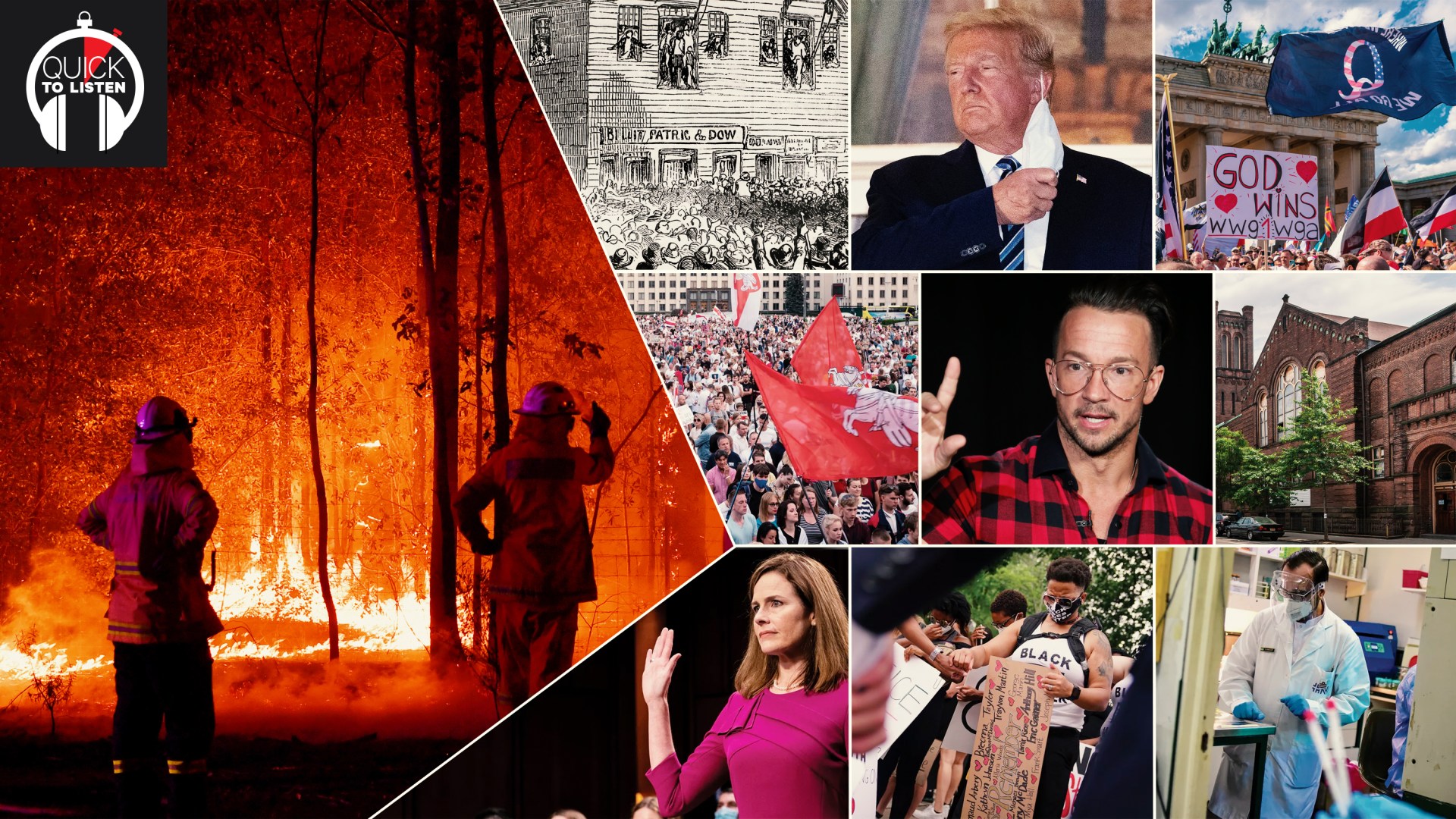
My Favorite ‘Quick to Listen’ Podcasts of 2020

Why someone you love might join QAnon, where the black church is in the Black Lives Matter movement, and why we can’t stop talking about hipster pastors.

Christianity Today December 22, 2020

As a journalist, if I summed up 2020 in one word, it would be disinformation. Part of this year, of course, has been defined by its lack of information. How does COVID-19 spread? How long are people contagious? Is it safe to sing at church? But much of my and my fellow reporters’ efforts have been contending with false claims about billionaires influencing the virus, election hacking schemes, an agenda behind mask mandates, and a little conspiracy theory known as QAnon.

Each week on Quick to Listen, I consider the volume of information that we present. Our episodes on Belarus and Armenia this year took me into parts of the world I knew little about and introduced me to geopolitical spaces I’ve never really had to consider. I realize that the fields of knowledge we bring listeners into are vast and complex, and I’m humbled that so many of you are open to learning this much.

My hope for the show is that we are giving you not only more information but also the tools to fight disinformation, and that you would feel shaped in your ability to ask questions, think critically, and dive into the Bible when you encounter complexity. I aspire to produce a podcast that forms and informs. With that in mind, below are some of my favorite episodes that I believe do both. They are arranged in chronological order from the start of the year forward.

Morgan Lee, Quick to Listen co-host and producer

Check out the rest of our 2020 year-end lists here.

The Global Church in 2020: CT’s Top 20 International Articles

Our most-read stories from abroad.

Christianity Today December 22, 2020

Read 20 of Christianity Today’s top stories about the global church this year. Articles are arranged in chronological order.

Check out the rest of our 2020 year-end lists here.

addApple PodcastsDown ArrowDown ArrowDown Arrowarrow_left_altLeft ArrowLeft ArrowRight ArrowRight ArrowRight Arrowarrow_up_altUp ArrowUp ArrowAvailable at Amazoncaret-downCloseCloseellipseEmailEmailExpandExpandExternalExternalFacebookfacebook-squarefolderGiftGiftGooglegoogleGoogle KeephamburgerInstagraminstagram-squareLinkLinklinkedin-squareListenListenListenChristianity TodayCT Creative Studio Logologo_orgMegaphoneMenuMenupausePinterestPlayPlayPocketPodcastprintremoveRSSRSSSaveSavesaveSearchSearchsearchSpotifyStitcherTelegramTable of ContentsTable of Contentstwitter-squareWhatsAppXYouTubeYouTube