Books

Rediscovering the Pedagogical Power of Narnia

C. S. Lewis’s fiction can teach virtue, according to a new curriculum. But the true potential is so much more.

Christianity Today September 23, 2020
Envato Elements

My mother read The Chronicles of Narnia to my brother and me at night, while the four of us—my father half-listening while reading a novel of his own—lay on my parent’s enormous bed. I remember such strong emotion. When we got to The Last Battle, the final installment, I felt warm affection for the foolish donkey Puzzle, grief at the fall of Narnia, sharp frustration at the dwarves who couldn’t see the truth of a remarkable feast set before them.

As a parent myself, now, and a teacher and an Anglican priest, I’ve been revisiting the Lewis of my childhood. What did I learn in Narnia? Did the stories of the Pevensie children encourage me towards virtue? More importantly, through loving Aslan was I better prepared to love Jesus?

According to a new character curriculum, Narnian Virtues, the Narnia stories can powerfully move, mold, and direct young readers. Designed by education professors Mark Pike and Thomas Lickona, the curriculum teaches “universal virtues” to children ages 10 to 14 using The Chronicles of Narnia. It is supported in part by a grant from the John Templeton Foundation and has been taught at a variety of schools, both secular and Christian, as part of a pilot program designed to test the possibility of teaching virtue in Narnia.

This program is not aimed at mere “behavior management,” according to the educators. Rather, it is designed to teach students “to know the good, to love the good, and to do the good” based on the belief that “the Narnia novels have the capacity to motivate a wide range of readers to make efforts to develop the will as well as the skill needed for good character.”

The pilot program’s qualitative results show the curriculum has a positive impact. Many students describe increased self-awareness of their actions and a desire to grow in virtue. The quantitative data is less clear. Lickona characterized the results as meaningful but ultimately modest—“statistically significant” but not necessarily “educationally significant” changes. Assessments show gains in knowledge of virtue. But the quantitative results are more ambiguous when it comes to doing good and loving good. The impact on the head is clear; on hand and heart, less so.

Perhaps the key word is capacity. As Pike and Lickona write, the head-heart-hand model of character education requires a curriculum that instructs, inspires, and guides students in virtue. While the novels surely have the capacity to motivate readers towards good character, whether they will or not is much more tenuous. It may depend less on curriculum and more on context: teachers and their classrooms and schools, students and their families and churches. Taken alone, no curriculum—not even one as thoughtful and faithful as Narnian Virtues—can create a virtue-forming school environment.
One of my colleagues at The Covenant School in Charlottesville, Virginia, recently demonstrated to me how powerful and transformative teaching literature can be. He had a class of ninth graders reading Charles Dickens’s A Tale of Two Cities. A character in the story spends his long imprisonment making shoes. In the many hours at his shoe bench, he also fashions a “false self,” that allows him, my colleague told his students, to “literally forget who he is.” The character remains mentally imprisoned, even when he becomes physically free.

My colleague used the story as a tool for character formation, prompting students to “see if we have any shoe benches of our own.” Almost all identified some form of technology or social media as a personal “shoe bench,” a site of distraction that feels liberating but ultimately worsens their anxieties.

The student response was remarkably fruitful. Students I interviewed described concrete steps they took to live in greater freedom from social media—deleting accounts, giving up smartphones, and challenging others to do the same.

Stories invite self-reflection—but indirectly. As we enter into the lives of literary characters, we may come to see our own struggles more clearly. Their stories bypass our self-exonerating justifications. Guided by a wise teacher, this can lead to character formation.

Narnian Virtues offers similar possibilities. The most compelling lesson plans prompt students to examine their own shortcomings in discussions of episodes in The Chronicles of Narnia.

One activity, titled “What’s Your Turkish Delight?” draws on Edmund’s encounter with the White Witch and his subsequent addiction to her enchanted candy. Edmund’s inability to see the witch for who she is and his vulnerability to manipulation are partly a result of his youth. The deeper cause, however, is his flawed character. His malformation led to trivial cruelty in England; in Narnia it leads to disaster.

Edmund pursues Turkish Delight single-mindedly, betraying his own family and nearly destroying himself in the process. The image is suggestive of drug addiction, and so it is both striking and unsurprising that students, when asked to identify their own “Turkish Delight” in the pilot programs, frequently pointed to “the use of mobiles phones and the Internet.” The curriculum then guides students to collaborate with their families to develop strategies for personal improvement.

Pike and Lickona insist that character formation is not necessarily religious. They note that the curriculum has been taught in American public schools, where the reigning interpretation of the First Amendment disallows religious education.

Perhaps Lewis, who did not think that moral law was an exclusively Christian affair, would agree with them. Michael Ward, author of Planet Narnia: The Seven Heavens in the Imagination of C.S. Lewis and a consultant on the character curriculum, told me that The Chronicles of Narnia are not explicitly Christian—“there’s nothing that requires a Christian reading of the books.” Likewise, he said, Narnian Virtues is not a religious curriculum, but “a project about ethics.”

Pike agrees. Schools, he says, should “distinguish between being good and being Christian,” and the Narnian Virtues curriculum aims to make students good. The designers do recognize that the Narnia books are incomplete when read entirely apart from Lewis’s Christian imagination. The curriculum points out textual links to Christian doctrines where relevant, and supplemental material for Christian education provides a Christian reading of each novel.

There are obvious theological resonances. Aslan’s substitutionary atonement in The Lion, the Witch, and the Wardrobe, for example, follows Edmund’s embrace of the White Witch's offer of kingship—a temptation which mirrors the serpent’s offer in the Garden of Eden that “ye shall be as gods” (Gen. 3:5, KJV).

These allusions reflect Lewis’s deeper Christocentric theology. Just as Jesus drew a range of reactions throughout the gospels, so too does Aslan provoke not only love and devotion, but also fear, confusion, and even hate. According to Ward, “Lewis was fascinated by the fact that identical phenomena could be perceived in diametrically opposite ways.” Those obstinate dwarves drinking wine but tasting only brackish water, who so frustrated me as a child, are just one example. They cannot experience Aslan’s good feast because they will not submit to Aslan.

In Narnia, you cannot love the good without loving he who is goodness. To rightly perceive the gifts of God is to rightly perceive God. Conversely, to reject his gifts is to reject him. At the end of the day, this is really what it means for Narnia to be, as the curriculum designers say, a “morally serious” universe.

In Narnia, character formation in and of itself is an incomplete good. Consider Eustace’s narrative arc in The Voyage of the Dawn Treader. Of all the characters, Eustace alone experiences the voyage as misery rather than adventure. A liar, whiner, and thief, he is repugnantly selfish and resolutely self-righteous until he awakes to find himself transformed into a dragon—the result of his “dragon-ish thoughts and behaviours,” the Narnian Virtues curriculum notes. The “transformation” does not ultimately change him; rather, it reveals his true character. He has become externally what he already was internally, “a monster cut off from the whole human race,” as Lewis puts it.

Eustace faces up to the truth of who he is and so begins to change. He becomes less dragonish as a dragon than he was as a boy. As Ward says, Eustace is “nicer as a sinner who knows he’s a sinner than he was as a sinner who didn’t know he was a sinner.”

But being good does not save him. Eustace needs Aslan’s claws to tear away his scales, and he needs a baptismal immersion of sorts to be remade a boy. At the same time, though, his character transformation prepares him to accept Aslan’s aid. This is perhaps what our Lord meant in saying that the sown Word of God takes root only in fertile soil—which is “an honest and good heart” (Lk. 8:15, KJV).

Loving the good prepares one to love Jesus, just as loving Jesus entails loving goodness. The forgiveness of sin that makes us right with God leads inextricably to our final end—eternal delight in and worship of he who is. Character formation can’t be neatly separated from religious reorientation. And The Chronicles of Narnia, inasmuch as they can be powerful educational tools, are also means of grace.

The Narnia stories endure primarily because they are delightful stories, but in hindsight I see that part of the delight—part of what made the characters so engaging and the adventures so riveting—flows from Lewis’ understanding of human character. The adventures rivet because they are so consequential for the adventurers: not only their physical lives but their moral character and indeed their eternal destinies hang in the balance. The characters engage most profoundly not when good characters battle evil ones, but when good and evil war within the persons themselves.

In Narnia we find embodied the baffling mystery of the human condition—the gospel truth of our genuine freedom and desperate need. In Narnia we learn that we cannot save ourselves, but we can accept a savior. Above all, in Lewis’s stories we find an image of a king—not safe but good, not tame but beautiful. As our children come to love Aslan, may they thereby learn better to love the true King.

Mark Perkins is ordained in the Anglican Province of America and serves as a priest at St. Alban’s Anglican Cathedral in Oviedo, Florida. He taught at The Covenant School in Charlottesville, Virginia for nine years and is also executive editor of Earth & Altar.

Pastors

Is Being Right Always the Right Thing?

Jesus and Peter teach us that correctness isn’t always a virtue.

CT Pastors September 22, 2020
WikiMedia Commons

I sat with my friend Bill and unleashed a torrent of frustration. I was deep in the throes of a life decision and struggling desperately to discern the leading of God. Yet no answer seemed forthcoming, and I was obsessing over my next step.

Bill listened patiently as I shared my angst. After contemplating what he heard, he said this: “It sounds like you’re choosing between being right and being present.”

Huh?

I did not know how to process such a statement. In my mind the choice was always between right and wrong. Obedience and sin. Good and evil.

Being present had nothing to do with it.

Still, I sensed he was on to something. Like countless other times, I was consumed with making the correct choice to the point of no longer paying attention to relationships and reality. I had retreated into my head to work the problem, which in itself became a problem. My desire for good went bad.

Beyond binary piety

It turns out not every decision is binary. There is an evangelical impulse to make it so, particularly for those of us who came to Christ as children. When you’re young, faith is constantly explained for you in terms of right and wrong behavior. Christians do certain things and don’t do other things.

And that’s good: We are called to adhere to the Bible’s teaching on sin, and children need it communicated in the simplest terms. But when we carry that mindset with us into adulthood—framing all choices in strictly obeying/disobeying God categories—we fall prey to a false, rigid moralism. We create artificial distinctions that preserve a form of godliness but lack its power (2 Tim. 3:5).

Such faith has little room for genuine grace or complex relationships. We become intolerant of those whose view of right doesn’t align with ours. And in our dogged efforts to do our best for God, we leave a trail of untold damage.

Jesus called the Pharisees to account for this. Fastidious about the letter of the law, they missed the point of the rules being kept. They judged themselves and others harshly using inadequate, misapplied criteria.

And they weren’t alone. Church history is pockmarked with righteous thinking gone awry. Each of us can develop myopia around the issues we identify as nonnegotiable, while trampling over other vital Christian values. As Blaise Pascal put it, “Men never do evil so completely and cheerfully as when they do it from religious conviction.”

Correctness vs. connectedness

After my conversation with Bill, it became painfully clear how frequently I operated this way. In parenting, I measured my discipline style against an imaginary list of “shoulds” without considering the needs of my actual kids. If my wife and I disagreed, I picked apart the accuracy of her words and questioned her motives to “get to the truth,” all while missing her heart. And as a pastor, my desire to respond perfectly during a crisis took me out of truly being with people in their pain.

Connectedness is routinely sacrificed for the sake of correctness.

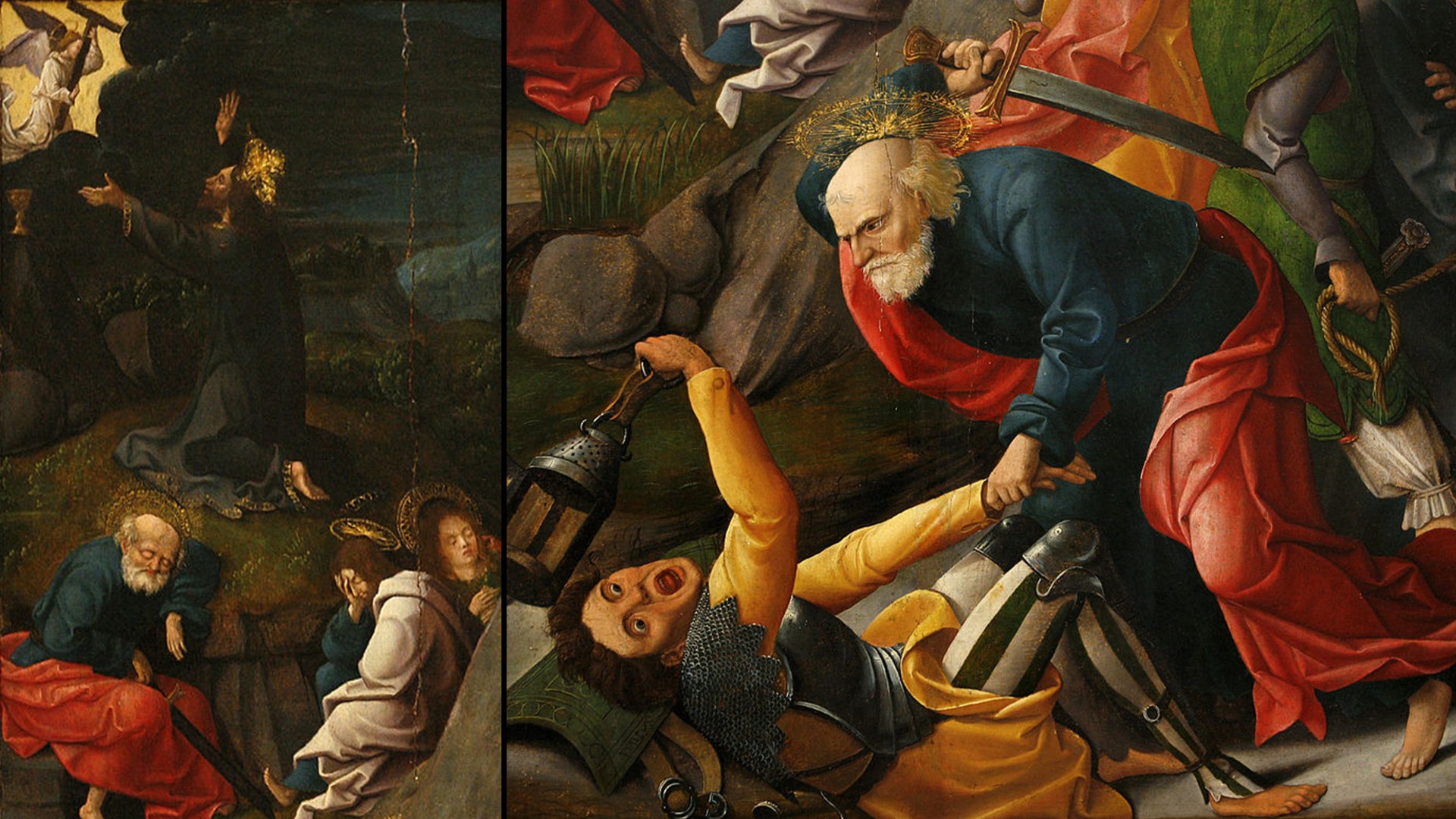
The apostle Peter embodied this struggle the night Judas led an angry mob into Gethsemane to seize Jesus. In a burst of fierce indignation, Peter drew his sword and lopped off the ear of Malchus, the high priest’s servant.

What could be more praiseworthy than battling the enemies of Jesus? Yet, in his good intentions, Peter ceased being present to what Christ was doing and ended up committing his own atrocity. That earned him a rebuke (“Put your sword away!”) from the very Lord he wanted to help.

Inside-out struggle

The ear-cutting incident didn’t happen in a vacuum. Since first meeting Jesus, Peter had wrestled with Christ’s mission and his own relationship to it.

We can trace the inner conflict back to the shores of Galilee when Christ called him and gifted him with the miraculous catch of fish. Peter felt the tension of having such holy power alongside his own sense of shame. He said, “Go away from me, Lord; I am a sinful man!” (Luke 5:8).

Later, as Jesus spoke of the Cross, Peter pulled Jesus aside to lecture him on why that couldn’t happen. Imagine trying to convince Christ his mission was wrong (and being called Satan for doing it)!

At the Last Supper, Peter hated the sight of his teacher stooping to wash his feet. When Jesus explained its necessity, Peter flipped and asked Christ to wash his hands and head as well, as if to prove he was the most onboard disciple of all.

And just before Gethsemane, Peter pledged his undying loyalty to Jesus, only to be told that would prove to be untrue that very night.

In short, there were indicators of the storm brewing prior to the garden. All of Peter’s previous misgivings showed up uninvited and in the least helpful way. The fight inside became the fight outside.

Peter’s experience bore several markers that can help us recognize when our zeal for righteousness may have unseen, potentially harmful roots.

Reactive

When he drew that sword, Peter wasn’t operating from a well thought out plan. He just started hacking in a knee-jerk reaction to the stress of the moment.

When the feelings welling up inside me are bigger than circumstances warrant, it may mean I’ve been subconsciously pulled out of the moment by old pain. The question “What age do I feel right now?” can help me identify what I’m experiencing.

In his book Growing Yourself Back Up, John Lee says, “Regression is the reaction we have when something happening in the present triggers a memory in our bodies about something that happened in the past. An easy formula to remember is: Mature adults respond, regressed people react.”

Jesus said, “Before Abraham was born, I am!” (John 8:58). Christ is the Always Present One. It logically follows that if I myself am not present, I’m missing him.

Jesus does not live and move in whatever nonreality I invent. My imagined categories of people, my made-up conversations, my self-drawn battle lines—the longer I stay in those unreal places, the less aware I am of what the Lord is doing here and now.

Compulsive

That night in the garden, Peter felt this strong impulse to do something—anything—to safeguard Jesus. Although Jesus himself remained self-controlled and took no action to avoid arrest, Peter could not resist the urge to confront the threat.

Panic in the face of dread can feel like clarity. Compulsions would have us believe that if we do not act immediately, disaster will surely follow. We become convinced the fate of the future hinges on our response.

Peter Enns puts it this way: “We are not actually trusting God at that moment. We are trusting ourselves and disguising it as trust in God.”

An inflated sense of responsibility is not the same as genuine obedience. When the weight of addressing evil feels as though it rests entirely on our shoulders and we must act immediately, we overestimate our importance. Elijah was sure he was the only remaining faithful person in Israel, when in fact the Lord knew of 7,000 others.

Indiscriminate

Peter’s act had no clear target. Malchus was not the primary enemy, nor was his ear. He simply happened to be in the wrong place at the wrong time.

Righteous anger is regularly expressed in indiscriminate ways. It shows up in generalized language about whomever we consider the other. We refer broadly to “liberals” or “Republicans” or even simply “the church.” We vilify entire groups based on hurt we’ve experienced at the hands of one or two individuals.

Our complaints may be entirely valid. But we will find a greater balm for the pain by naming it and bringing it to Jesus rather than using it as a bludgeon.

Destructive

Peter could have taken a courageous stand without causing harm to anyone. He could have chosen dialogue or some form of passive resistance to live his convictions.

Perhaps it is fitting that it was an ear that got destroyed, because when our unrighteous righteousness takes us out of the present, it often impairs someone’s ability to hear the gospel. Acts of holiness that lack love can deafen the world to Christ’s message of redemption.

Disembodied

In his fury, Peter detached from reality and no longer saw faces. Malchus lost his standing as a human; he became nothing more than a convenient object for the apostle’s aggression.

When Jesus claimed to be the Truth (John 14:6), he incarnated the concept of truth for all eternity. Every time we push truth back into the realm of the abstract, we risk dehumanizing the conversation. We stop seeing one another as image bearers of God.

In his desperate grasp for control, Peter temporarily lost sight of his Savior. He chose being right over being present.

Thankfully, Christ has great compassion on his regressed children. Everything he did that night reflects how he still graciously redeems in the face of our most misguided endeavors.

Jesus prays.

Prior to his arrest, Jesus prayed intensely and at length—far longer than Peter or the others could keep at it. Jesus spent a substantial portion of that prayer beseeching his Father on behalf of his disciples (see John 17).

When our own capacity to pray has run out, Jesus, the perfect pray-er, prays for us. As R. C. Sproul said, “We persevere because we are preserved by our High Priest’s intercession.”

Jesus shields.

Jesus stepped forward to offer himself freely to the mob in the garden so his disciples could leave unharmed. He said, “If you are looking for me, then let these men go” (John 18:8).

Like every moment, this was a gospel moment for Christ. The grand salvation strategy plays out over and over when he steps in to take our punishment and says to our enemy, “Let these others go.”

Jesus interrupts.

Peter might have continued to chop away if Jesus hadn’t stepped in and said, “Put your sword away!” (John 18:11). He interrupted the mayhem before it became worse.

If I were Peter, I would have resented the intervention. One more point of feeling misunderstood. Jesus makes no pretense of niceness to spare our feelings. Yet what initially frustrates us can be a gift, saving us from ourselves. We need his interruption in the midst of our regression.

Jesus fulfills.

Christ did not view the crisis as a crisis. He willingly went with his captors, asking Peter, “Shall I not drink the cup the Father has given me?””

Rather than give way to the fear and defensiveness that so quickly get us in trouble, Jesus remained wholly focused on the greater picture of what he had come to do.

Jesus restores.

In his book Strength to Love, Martin Luther King Jr. wrote, “And so Christ’s words from the cross are written in sharp-etched terms across some of the most inexpressible tragedies of history: ‘They know not what they do.’”

Our terrible sins and the inexpressible tragedies they cause do not eclipse the truth of Christ, who atones for all of it.

It is Luke, the doctor, who tells us, almost as an aside, that Jesus healed Malchus’ ear. Christ rose above the atrocity and worked his final recorded miracle before going to the cross.

It was a spectacular, understated wonder, restoring a bit of cartilage. The deaf shall hear. One last proof of the presence of the kingdom.

Perhaps no less amazing, yet sadly necessary, is that in the midst of the chaos, Christ has the capacity and the willingness to undo the serious damage inflicted by reckless followers wielding swords.

That’s the story’s true miracle. It doesn’t excuse our mistakes or minimize the gravity of their impact. It would be better to be better. Still, it is both humbling and hopeful. Despite the wake of woe we leave behind, the Lord in his mercy continually finds a way to wring glory from the mess and renew the world’s capacity for the gospel.

May every Malchus find it so.

Jeff Peabody is a writer and lead pastor of New Day Church in northeast Tacoma, Washington.

News

Thai Church Holds Record-Breaking Baptism Despite COVID-19

“We believe it is the merciful hand of God to allow the gospel to spread at this crucial time.”

Christianity Today September 22, 2020
Reach a Village

Things weren’t looking good for the Thai church at the start of 2020. The southeast Asian nation was the first outside China to report a coronavirus case, and analysts feared a long, overwhelming outbreak.

Instead, Thailand is now being praised as one of the only places that was able to effectively contain the pandemic. After a countrywide lockdown in the spring and continued precautions, it celebrated 100 days without a case COVID-19 at the start of September.

Later that week, an evangelical church-planting movement in central Thailand celebrated a milestone of its own—one that wouldn’t be possible without the word of mouth conversations, house gatherings, and in-person testimonies it relies on to spread the gospel.

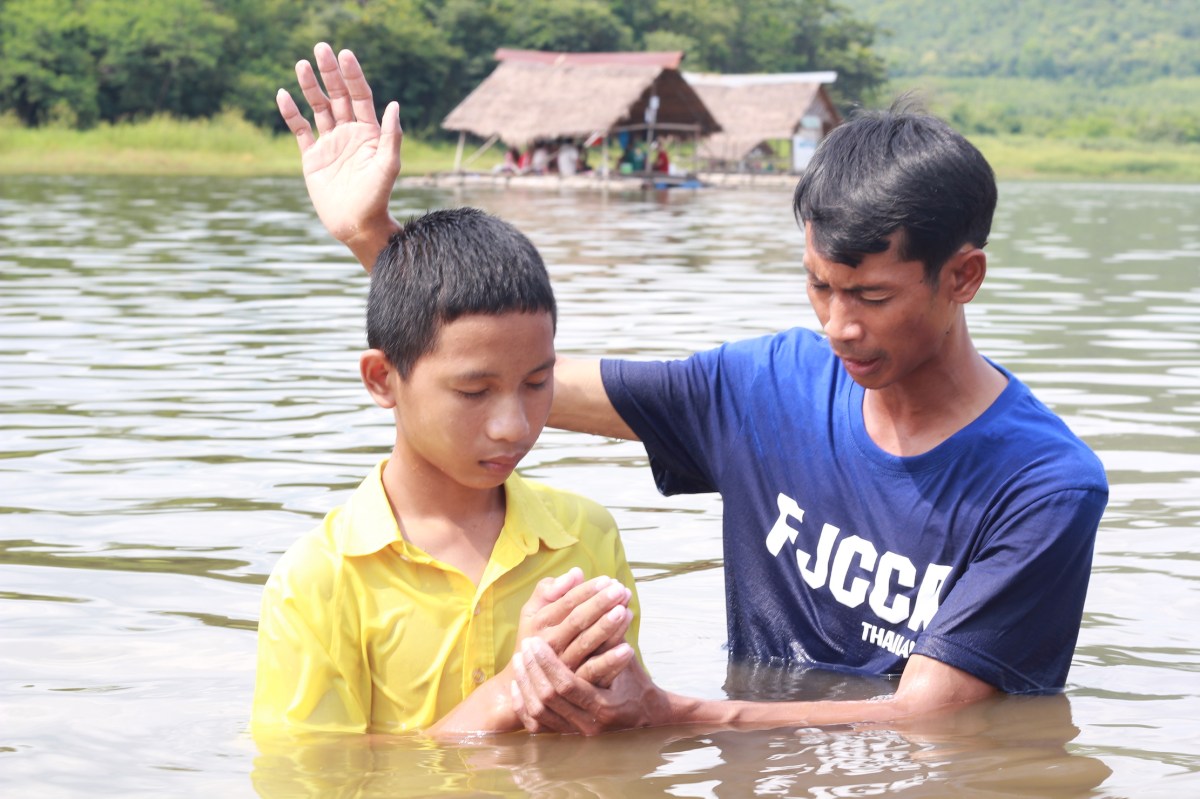
The Free in Jesus Christ Church Association (FJCCA) held the largest baptism in its history and, it says, the history of the church in Thailand. FJCCA, a Thai-led movement that focuses on village-level evangelism, baptized 1,435 people in a single day on September 6.

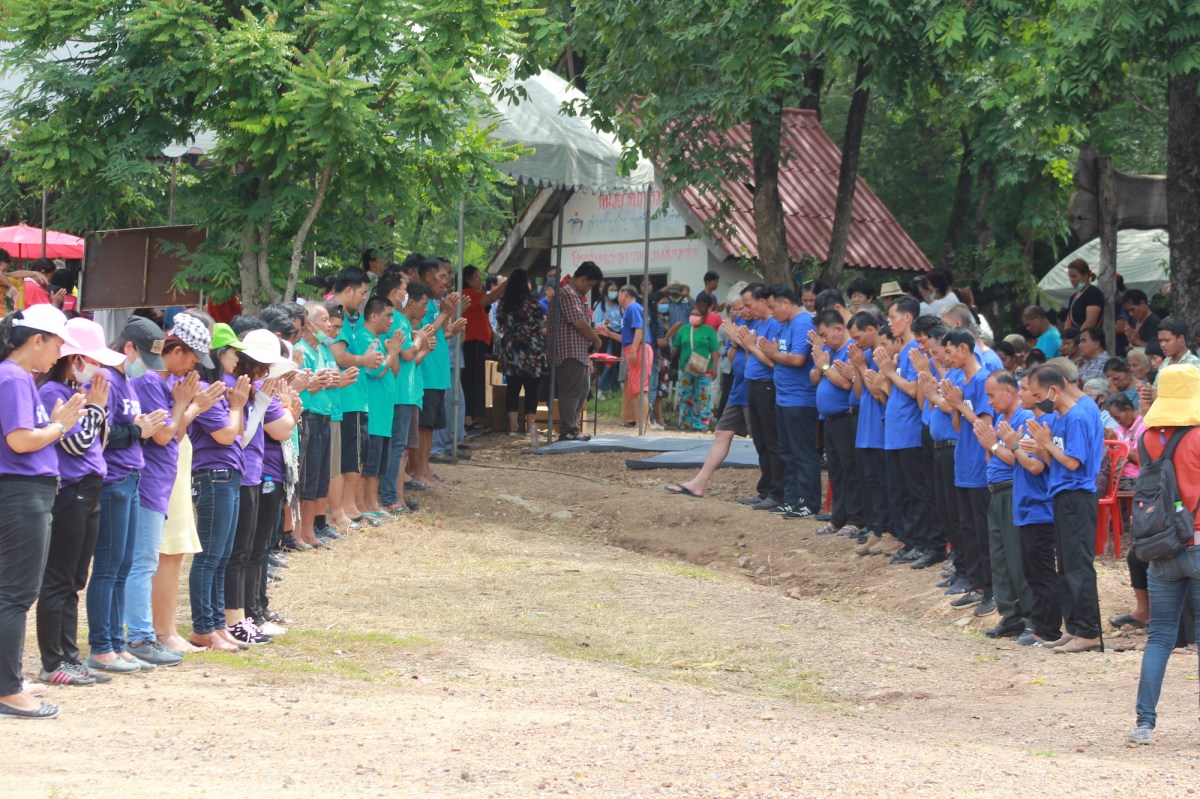
Twenty ministers lined up across the same waist-deep reservoir waters that some of them were baptized in, waiting for new believers to come one-by-one from the shore to proclaim their faith and be submerged for the sacrament. The event took two hours.

Reach a Village
Reach a Village

CT covered FJCCA’s historic growth in a 2019 cover story. That year, the association held a baptism of 520 people that national church leaders said was the largest they’d ever seen in their majority-Buddhist country. This month’s baptism was nearly triple its size.

“It is truly a mystery to the world as to why Thailand has been spared during the COVID pandemic,” said Bob Craft, whose Reach a Village ministry supports FJCCA. “We believe it is the merciful hand of God to allow the gospel to spread at this crucial time.”

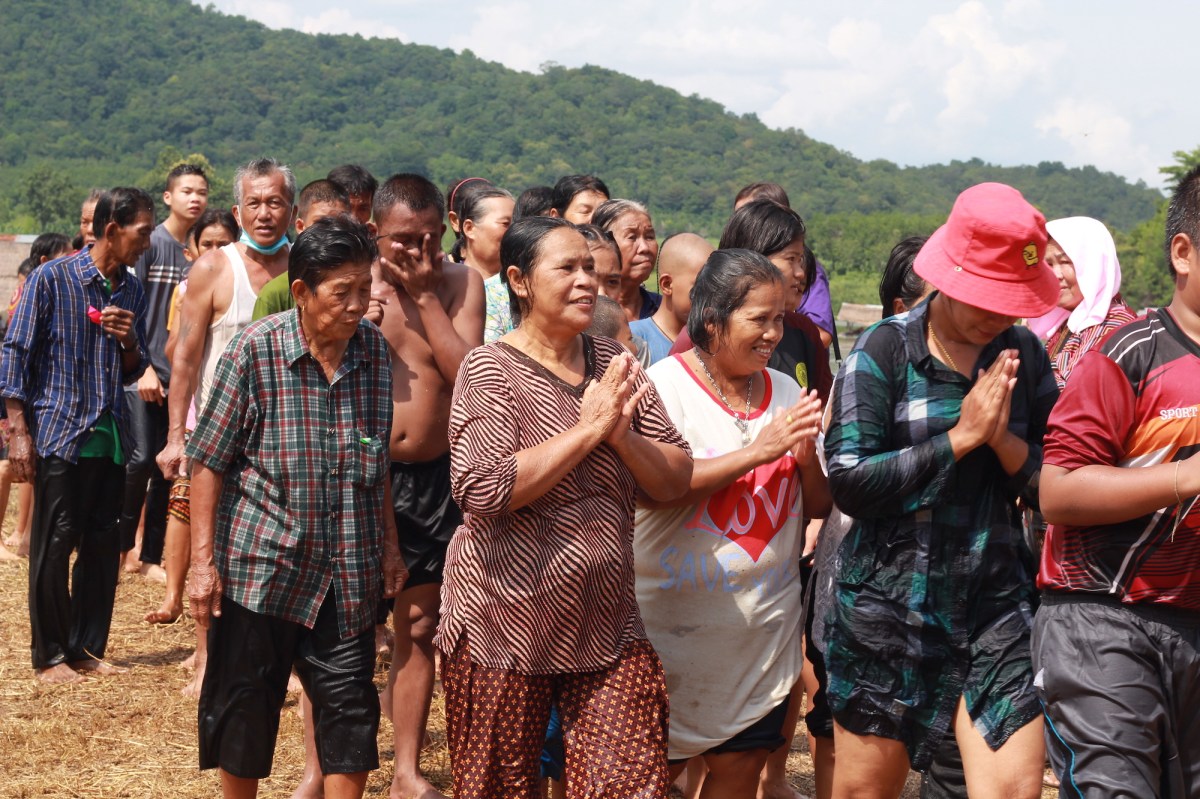
Participants came from 200 villages in five Thai provinces to Chon Daen, the hub of FJCCA activity and home to founder Somsak Rinnasak. Some wore masks, and lines of new believers were congratulated with a traditional wai greeting—a no-touch gesture (praying hands and bow) that has been part of Thai culture long before the coronavirus made physical contact a means of transmission.

After FJCCA shared the news of this month’s mass baptism, threads of supporters added refrains of “amen” and “thank you Jesus” in Thai on the church’s Facebook page. According to FJCCA leaders, many of those who were baptized had not heard about Jesus until this year. More than 75,000 villages in the country have no Christian presence.

Though Thailand has reduced the spread of COVID-19 almost entirely to those quarantining with people returning from overseas, the country still suffered financially due to coronavirus shutdowns, particularly halt in tourism. This economic downturn is one factor spurring current protests challenging the monarchy and calling for government reform.

Reach a Village

Despite the stressors of the pandemic, Rinnasak and FJCCA leaders say they have continued to see their Thai neighbors—fewer than 1 percent of whom are Christian—take interest in their stories of salvation and transformation in Christ. The movement, which took off in 2016, now has 700 house churches.

While grieving the toll of the pandemic and continue to work and pray against further spread, pastors in other countries have similarly shared how this season offered up unique opportunities for ministry and evangelism.

Greg Laurie in California considered it a “spiritual awakening” as more viewers watch services and revivals by livestream. Isaac Shaw in New Delhi observed how Indian churches grow more united across denominations and more outward-focused once COVID-19 forced them to pause Sunday services.

News

The Next Mission Field Is a Game

Esports opens new opportunities for evangelism, even during a pandemic.

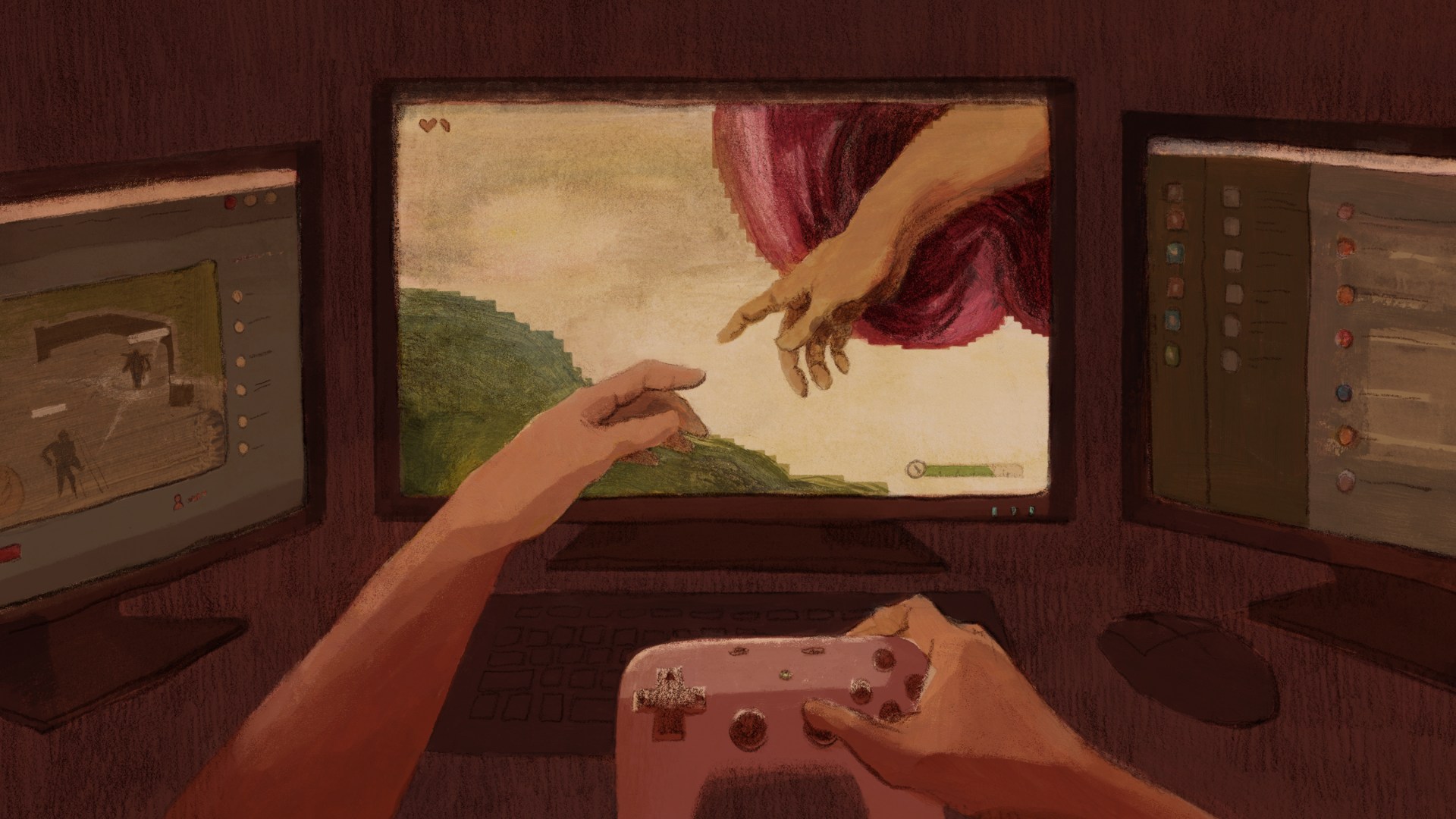
Illustration by Dorothy Leung

Until the COVID-19 pandemic, Roman Khripunov didn’t realize the missionary potential of video games.

Khripunov ran soccer academies for refugees and immigrants in Houston, using the sport as a platform to share Christ with children. When the coronavirus paused in-person outreach, the ministry came up with an alternative: Soccer coaches would begin playing video games on the livestreaming platform Twitch and invite players to watch and ask spiritual questions. On Twitch, participants talk with each other as they play or type back and forth in a chat box.

It was a hit. Teenage soccer players reluctant to spend 15 minutes discussing spiritual matters in person were willing to engage for three to four hours over video games online. Eventually, the ministry opened its Twitch channel to the public and began to establish a presence on other gaming platforms as well, with coaches talking with people online. Among the success stories, a man from the Netherlands professed faith in Christ while gaming, then brought five friends to hear the gospel too.

“The people that we’re starting to observe on these [gaming] platforms are actually seeking a lot of spiritual things,” Khripunov said. “They’re very hungry for the gospel.”

Khripunov isn’t the only one who has realized esports can be used for ministry. From Houston and Brazil to South Africa and China, esports has emerged as an extension of Christian sports ministry.

Esports—video game competitions—has more than doubled its viewership in the past decade to an estimated 454 million people worldwide last year. The most popular esports championships rival the Super Bowl in viewership. When South Korea hosted the world championship finals for the battle game League of Legends two years ago, the event drew almost 100 million people online.

Professional esports players—many of them teenagers—sign with teams, compete in brick-and-mortar arenas packed with fans, and at times take home multimillion-dollar prizes. Teams have starters, substitutes, and leagues, just like traditional sports.

But gaming includes a wide span of casual players too. A third of the world’s population plays video games, including more adult women than teenage boys, according to data compiled by the online ministry training resource Multiplication School.

When the coronavirus caused lockdowns around the world last spring, some traditional sports leagues like NASCAR and the NBA turned to esports to hold their fans’ attention, putting their stars into video game tournaments.

Some Christian sports ministries saw an opportunity too. A group of about 35 of them got together on Zoom to strategize.

“It’s a connection point,” said André Dickson of Brazil, who trains soccer coaches to disciple youth players. “We think about esports as a place where people are.”

Assemblies of God pastor Matt Souza shepherds GodSquad Church, an online-only congregation for gamers that attracts about 100 people for worship each Saturday night. Tate Springs Baptist Church in Arlington, Texas, hosted an online Easter egg hunt this year using the video game Minecraft.

Some Christians have moral qualms about video games and have shied away from esports. Many video games are of real-world sports, like FIFA and NBA 2K, but many others include sexualized and violent content, such as Overwatch and Valorant. There are also concerns about other negative effects. While playing video games has been linked to improvements in cognitive skills, 9 percent of gamers show signs of addiction, according to Multiplication School, and video game abuse has been linked to anxiety and depression.

Canadian Stefano DiSalvo, the most prominant professional esports player to share his Christian testimony openly, has experienced the dark side of esports. He played video games eight hours per day as a teenager to escape from the pain of a broken home. Then he found a relationship with Jesus at age 15 before launching his pro career. He sought to be salt and light in the industry and was known by his screen name, Verbo—Italian for “word,” signifying the Word of God. DiSilvo left esports at 19.

Many teenage gamers are “escaping from their own reality and kind of taking out that anger, taking out that depression on other people online,” DiSalvo said. “It creates this toxic environment at times.”

That may be a reason to avoid esports. Or it may be a reason to find lost souls there. Christians must “wake up” to “the reality of gaming in church,” said Bumble Ho, pastor of Redemption Point Church, a Vietnamese congregation in Fountain Valley, California. The church hosted a tournament this year with about 10 other area churches.

John Merritt, who coaches esports for Oklahoma Wesleyan University, knows the spiritual needs of players firsthand. He got into video games as a teenager struggling with depression, sometimes playing up to 18 hours a day. He attempted suicide before finally finding new life in Christ. Now he’s part of the Unashamed Network, a community of Christians that seeks to reach fellow gamers for Christ.

At one point, he reached 20,000 viewers with his evangelistic gaming stream. Recently, a gaming friend messaged Merritt to say, “I met with a pastor today to be saved. I credit . . . you as part of my journey to this.”

Another area of growth in Christian esports is at Christian colleges and universities. At least 11 evangelical schools have added esports programs, which is part of a larger trend. In all US colleges and universities, there are nearly 200 new esports programs, with a combined $15 million available in annual scholarships, according to Promise Road Institute, a ministry to teen gamers.

Greenville University coach B. J. Fink said his school’s esports program draws students who wouldn’t otherwise be interested in a Christian education. That creates unique ministry opportunities.

“We have a large group of students from China, for example, that, now knowing about esports programs here, are much more involved on campus, and we use our recruiting network to reach new students in China itself,” Fink said. “They may be closed off as a country, but they play video games and have the ability to communicate that way.”

DiSalvo, the Christian esports professional who now owns a gaming company, thought God would stop him from playing video games. But gradually he realized the Lord was calling him deeper into the gaming world as a missionary and a Christian witness. He hopes other believers will experience similar divine calls.

Some Christians “view gaming as from the Enemy,” he said, while “people from the gaming community think Jesus is an outdated figure.” There’s a need for believers who can engage people where they are online.

David Roach is a contributing writer for CT and is based in Nashville.

News

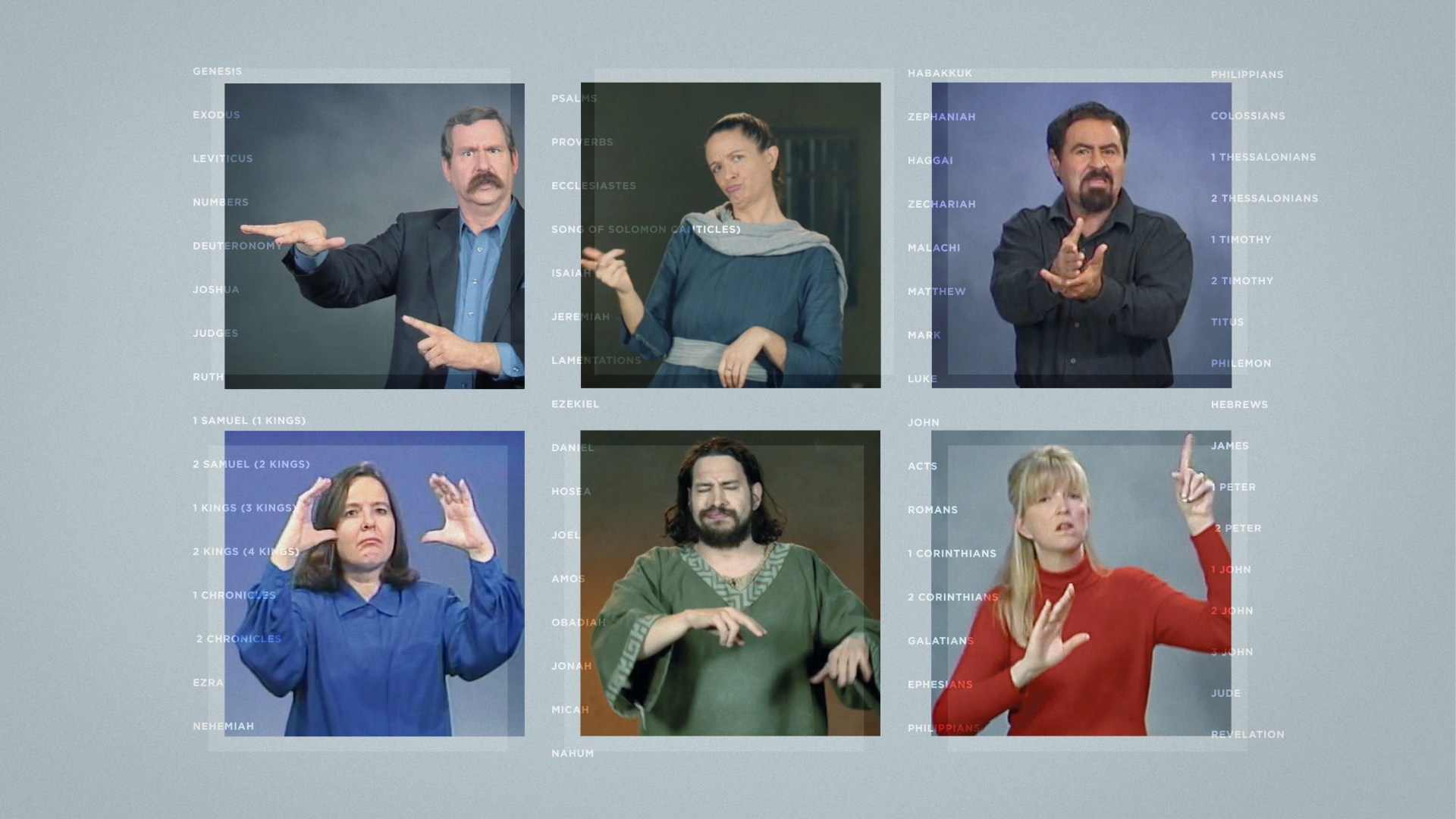
Sign Language Bible Complete After 39 Years

Translation was led by deaf people trained in the biblical languages.

Photo screenshots used with permission from Deaf Missions

When Renca Dunn talks about having the Bible in her own language for the first time, she emphasizes the adjectives. In English, she has no problem understanding the people, places, and things of Scripture. But in her own language, the nouns vibrate with life and emotion.

“The clapping trees. The singing birds. The dancing meadows,” Dunn says. “The persistent Esther. The revengeful Saul. The weeping Magdalene. Most of all, our loving Jesus.”

With the translation of Isaiah, Jeremiah, and Ezekiel in the fall of 2020, Dunn and 3.5 million other deaf people finally have the complete Bible in American Sign Language (ASL). It’s been a long time coming. The translation has been in the works since 1981, when Duane King, a minister in the Independent Christian Church, realized that English was not the heart language of deaf people in America. ASL was.

King, who is a hearing person, started learning to sign after meeting a Christian couple in 1970 who didn’t come to church much because they couldn’t understand what was going on. He and his wife, Peggy, were moved to meet this need and started a church and a mission for the deaf near one of the nation’s leading deaf schools in Council Bluffs, Iowa. Then, after years of church meetings, small groups, and Bible classes, the Kings became convinced it wasn’t enough to sign the English Bible; the Bible needed to be translated into ASL.

“Most hearing people don’t understand how difficult it is to learn to read what you cannot hear,” Duane King said in 2019. “Deaf people rely so much on their eyesight that they want everything to be tangible—they want to be able to see everything. This sometimes makes it harder to grasp intangibles like salvation through faith.”

The evangelical commitment to sharing the gospel with everyone is a commitment to accessibility. It took a long time for Christians to think about what that might mean for deaf people, though.

The first Braille Bible for the blind was finished in 1919, more than 100 years before the first complete Bible for the deaf. Braille is not a distinct language, but an alternative alphabet that can be read by touch. ASL, on the other hand, is not spoken English turned into hand signs but is a full language developed by deaf people, with a distinct vocabulary and grammar.

When the Deaf Missions Bible project started, deaf translators took the Greek New Testament, translated it into ASL, and recorded that onto VHS tapes. The tapes could be sent out in the mail. Nearly 40 years later, when deaf translators took the major prophets of the Hebrew Bible and translated them into ASL, they made the videos available for free online, through social media, and on a smartphone app.

The evangelical commitment to sharing the gospel with everyone is a commitment to accessibility. It took a long time for Christians to think about what that might mean for deaf people.

The translation was led by deaf people trained in the biblical languages, reviewed by one committee for accuracy and by another committee for clarity, and then recorded in a small TV studio. It cost $195 to translate a single verse. The last four years of work cost more than $4 million.

“It is a very comprehensive and very intensive process,” said Chad Entinger, who took over leadership of Deaf Missions when King retired in 2017. “Typically when we think ‘Bible,’ we think of a printed book. For us deaf people, the ASL Version is in video format because sign language is a visual language.”

The ASL Version is not the only modern effort to make Scripture available to the deaf. The Jehovah’s Witnesses finished translating their New World Translation into ASL earlier this year. The Witnesses—who do not believe in the Trinity and teach that Jesus is a distinct creation and not God incarnate—had their first sign language congregation in 1989 and started translating the religious magazine The Watchtower in 2002 and the Bible in 2005. The Bible project was completed when the Witnesses translated Job in March.

“We realized that ASL was the language of their hearts,” said spokesman Robert Hendricks. “ASL was the language and is the language that would bring them closer to their God Jehovah and get them to understand what he requires of them.”

There is also a complete New Testament in a written version of ASL called SignWriting, produced by ASL Gospel founder Nancy Romero. SignWriting is “almost hieroglyphic,” according to Anthony Schmidt, senior curator at the Museum of the Bible, who acquired an eight-volume copy of the SignWriting Bible for the museum. It includes arrows, circles, and lines that represent signing motions and facial expressions.

SignWriting was originally developed to notate dance moves. It was adapted for the deaf by Romero starting in the 1980s. The New Testament took her 10 years to complete. Though it’s not widely used, according to Schmidt, it is an important artifact for the museum.

“It represents this broad effort to reach all people,” he explained. “It shows the passion that a lot of Christians have for translation and the calling they feel to provide access to the Bible.”

The ASL Version of the Bible—produced by Deaf Missions with support from the Deaf Bible Society, DOOR International, Deaf Harbor, the American Bible Society, Wycliffe Bible Translators, Seed Company, and Pioneer Bible Translators—is the first sign language Bible to be translated from the original languages. Erle Deira, a project manager at the American Bible Society, said it is also the first to be accepted as authoritative by Protestants worldwide and will be used to assist in translating the Bible into other sign languages, including Nigerian, Japanese, and Mexican.

“We are very grateful that we have sufficient Biblical scholars who understand Greek, Aramaic, and Hebrew who are part of the deaf community,” Deira said. “It was important that deaf people who are trained to be translators, those are the people who call the shots. Those are the people who decide how to best express an idea from Hebrew. They have ownership.”

Fifty-three translators have worked on the project since 1981. Renca Dunn became one of them. For her and many others, that work meant seeing the Bible come alive and experiencing a deeper, more intense relationship with God.

“When I see the Bible in sign language, I finally feel that God does get me,” Dunn said. “He understands me. He wants me to understand him. He loves me. He wants me to love him. He speaks in my language.”

Daniel Silliman is news editor for Christianity Today. Additional reporting by Taylor Bundren.

News

Gleanings: October 2020

EschCollection / Getty

City votes to keep missionary’s statue

The citizens of Nuuk, Greenland, voted to keep a bronze statue of 18th-century Lutheran missionary Hans Egede. The “Apostle to Greenland” is seen by some as a symbol of colonialism. Greenland, with a population that is nearly 90 percent Inuit, remains part of the Kingdom of Denmark. Egede’s 1721 mission was jointly funded by a for-profit corporation, the Danish king, and Protestant missionaries. The referendum came amid anti-racist protests and growing pressure in the US and Europe to remove landmarks honoring controversial historic figures. Nuuk voted to keep its statue, 921–600.

Billy Graham statue to take honored place at US Capitol

The North Carolina Legislature has approved installation of a statue of the late Billy Graham at the US Capitol. The Capitol has two statues from each state, most celebrating political or military leaders. “America’s preacher” Graham will join a few religious figures, however, including Catholic Father Damien (Hawaii), Pueblo leader Po’pay (New Mexico), and Mormon Brigham Young (Utah). The evangelist will replace former Governor Charles Aycock, who supported the violent overthrow of Wilmington, North Carolina, in 1898 because some of the elected city officials were African American. It is considered the only coup d’état in US history.

New restrictions on religion proposed

The Russian parliament is considering a law that would ban foreigners from participating in religious activity. The proposed law is framed as a protection of religious liberty, but limited to Russians. It would also prevent Russians from studying theology abroad. Proponents of the bill say it is necessary to curtail the influence of foreign extremists, including Muslims, Jehovah’s Witnesses, and Baptists. If it passes this fall, the law would be the latest in a series of restrictions backed by Vladimir Putin since he became president for the second time in 2012. In July, Russia amended its constitution to allow Putin to stay in office until 2036.

Christians support TV company

Evangelicals threw their support behind ABS-CBN, the largest television company in the Philippines and the oldest in Southeast Asia, as President Rodrigo Duterte considered whether to allow the company to renew its license. The Philippine Council of Evangelical Churches called for prayer that the president and lawmakers in his party would “decide virtuously for the good of our country.” Duterte has feuded with ABS-CBN since the 2016 election, when it aired footage showing the candidate joking about raping an Australian missionary. Legislators have investivated ABS-CBN 12 times.

Prison officials point to Methodist failures

The Fiji Corrections Service is asking the Methodist Church of Fiji and Rotuma to consider why so many Methodists are in prison. Nearly 30 percent of the prisoners in the country’s 15 correctional facilities are Methodists, which is also the largest religious group in the republic. Chaplain Josefa Tikonatabua, an ordained Methodist, said the church needs to confront its failures and look at how Methodists raise their children. The denomination has previously promoted prison outreach and launched a rehabilitation program with the state.

West Bank baptismal removal sparks dispute

Israeli and Palestinian authorities are accusing each other of stealing an ancient Christian baptismal font. The stone font was carved by Christians in the 500s and is similar to a baptismal discovered during restoration of the Church of the Nativity in Bethlehem. Israeli officials removed it from the West Bank under the cover of darkness, alleging the font was stolen from an archaeological site in 2000. Palestinians say Israel is attempting to erase historic evidence of Palestinian presence through the theft of heritage sites. Israeli plans to annex more of the West Bank in July were delayed, possibly because of COVID-19.

Property fight divides Protestants

The Protestant Churches of Egypt (PCE) claimed victory after a top Egyptian court ruled that Anglicans “cannot be separated from the evangelical community” and the PCE has rightful administrative control over all evangelical church property. A 2016 law created a uniform national process for licensing churches but only recognized three “Egyptian denominations”: Coptic Orthodox, Catholics, and the PCE. Anglicans, who have been in Egypt for 181 years, say they should be independent and accuse the PCE of using the law to steal property.

COVID-19 prompts return to Wesleyan tradition

United Methodists in Zimbabwe have revived small groups, a practice promoted by founder John Wesley for Christian discipleship, as a way to worship within the limits set by coronavirus restrictions. Churches were allowed to reopen in June, but with no more than 50 people at any one gathering. Traditionally, Wesleyan “classes” and “bands” had 7 to 12 people who would gather and ask each other, “How is it with your soul?” Pastor Gift Kudakwashe Machinga said the church believes it can encourage spiritual growth and adhere to strict health guidelines at the same time.

Missionary settles suits with bereaved mothers

A US missionary agreed to pay about $10,000 each to the mothers of two children who died in her care, according to an out-of-court settlement reached in July. Renee Bach, who has no medical training, has been accused of passing herself off as a doctor at the health center she founded in Uganda at age 20. Bach says she was trying to help in a “non-ideal situation.” The center treated 940 children over five years; 105 of them died. According to the United Nations Children’s Fund, 125,000 Ugandan children die of malnutrition-related illnesses each year.

News

Who Will Help Gen Z with Anxiety, Depression, Suicide? Youth Pastors Turn to Counseling.

New awareness of mental health sends ministers in search of resources.

Illustration by Rick Szuecs / Source images: Envato Elements

Jarrod Hegwood was confident he knew how to counsel the students in his youth group. Then he got counseling and realized he had no idea.

“I learned that what I did was not counseling,” Hegwood said. “What I used to do as a student minister was called fixing people’s problems—telling them how to act and behave—and not helping them to understand themselves and grow personally.”

Hegwood learned a lot about himself while taking a seminary course on counseling and seeing a therapist. But his biggest revelation was about the importance of mental health professionals. He realized that as a youth minister, he wasn’t equipped to address the mental health challenges his students faced.

Across the country, youth pastors like Hegwood, who now runs a counseling center in Walker, Louisiana, in addition to continuing part time as a youth pastor, are starting to take mental health seriously and look for resources to help young Christians. This is due partly to a decline in stigma around mental health issues and partly to a concerning rise in anxiety, depression, and suicide in Generation Z (people born after 1997).

Anxiety disorders in adolescents increased 20 percent from 2007 to 2012. Today, 1 in 3 teens will experience an anxiety disorder, according to the National Institutes of Health. The percentage of teens who experienced at least one major depressive episode increased rapidly at about this same time, and now 1 out of about every 5 girls reports experiencing symptoms. The suicide rate for young people ages 15 to 19 increased by 76 percent from 2007 to 2017 and nearly tripled for adolescents ages 10 to 14. Suicide is the second leading cause of death for adolescents, after accidents, according to the Centers for Disease Control and Prevention.

Evangelical youth ministries are responding. They are getting creative and partnering with mental health professionals to get Gen Z the help and the resources that it needs.

Focus on the Family started discussing the need for more and better mental health resources after a tragedy hit close to home. Twenty-nine students died by suicide in a two-year period in El Paso County, Colorado, where Focus is located. Newsweek called the surge “an outbreak, a plague spreading through school hallways.”

Focus organized a team to develop resources on suicide. It discovered that most high schools and universities and some churches had suicide response protocols, but holistic suicide prevention programs for teens were scarce. Focus decided to produce its own materials and started interviewing people about teen suicide: youth pastors, parents (including those whose children died by suicide), teenagers, people affected by another’s suicide, and people who had attempted suicide.

Joannie DeBrito, director of parenting and youth at Focus and a licensed mental health professional, said that when her team asked interviewees about the causes of suicide, social media was “the No. 1 answer that everyone gave with no hesitation.” Experts think a number of biological, psychological, and cultural factors likely contribute to the dramatic increase in suicide and mental health issues, but they continue to debate social media’s impact.

At minimum, DeBrito said, there is a strong correlation to consider: Around the time that deaths by suicide began rising rapidly in 2007, the iPhone was introduced, people started using social media apps, and Facebook lowered its minimum age requirement to 13.

Hegwood agrees with the connection. He sees young people continually pulled to their phones and then emotionally battered by the experience of trying to connect with people in any meaningful way on social media. Sometimes students are encouraged “not to care what others think,” he said, but the adolescent brain is wired for community and rewards teens for the approval and acceptance of their peers. Once Hegwood understood this fact, it changed the way he did ministry.

“I really became aware of how important community is,” Hegwood said. “I feel like it’s almost as important as sound doctrine, because if I have a ton of sound doctrine but I don’t have a place where kids can connect, their brains are wired to go connect somewhere else.”

Seeking approval and acceptance from a healthy community can be positive, which is why Hegwood cultivates community among his students—off their phones. Focus’s suicide prevention resource, Alive to Thrive, which was released in 2018, suggests parents put clear boundaries on technology use, but also says suicide prevention should start with encouraging healthy social relationships and protecting children from abuse.

Today, an effective youth minister has to know when to refer someone to counseling, said Steve Johnson, vice president of Focus on the Family.

“The issues that kids are dealing with today are so complicated,” he said, “it often takes somebody with clinical expertise to help. . . . As an effective youth minister, one of your goals should be to have the discernment to know where to point a kid who’s dealing with issues that you can’t deal with.”

Hegwood didn’t always view counselors as partners in ministry. Before he became a counselor, he thought he had failed when he learned one of his students was in counseling.

“I felt like I didn’t meet that student’s needs somehow,” Hegwood said. “To be honest, I wasn’t equipped to meet that kid’s needs at the time. I wasn’t able to speak to him about what he was going through or where he was at.”

He began approaching mental illness like any other medical diagnosis among his students—a broken leg or cancer—that requires additional treatment. He thinks youth pastors are able to minister to their students holistically when they start to view mental illness this way.

“It’s okay to recognize our limitations,” Hegwood said. “If we don’t recognize our limitations, we’re not ministering to the people that God puts in our path as best we can.”

A LifeWay Research study shows that only 2 percent of Protestant pastors discourage people from going to counseling. Eighty-four percent agree churches should provide support to individuals with mental illness.

Kelsey Vincent, pastor to youth and families at First Baptist Church in Decatur, Georgia, embraces that responsibility. She connected her church with Robert Vore, a Christian counselor in Atlanta who works with youth and provides training for churches on mental health issues.

Vincent invited Vore to a church event called “Lunch and Learn.” Vore spoke to students and parents about some signs that teens might be struggling with mental health and ways they can help one another. Later, when several students in the church had mental health crises, Vincent called Vore, and he guided her to ask the right questions.

“This happens anywhere I give a talk at a youth group or college ministry or anything like that,” Vore said. “I end up hearing from staff pretty soon after that they are having conversations they’ve never had.”

Those conversations may mean Gen Z Christians get directed to mental health professionals when they need them. But increased awareness of mental health concerns also opens new possibilities for ministry. Hegwood realized this when he was getting counseling himself for the first time.

“I had been doing student ministry for a decade at that point,” Hegwood said. “What I was personally going through—going to see a Christian counselor—was more like discipleship than anything I’d ever been through in my church life. And I grew up in church.”

Hegwood said he knew, for example, that 2 Corinthians 10:5 says to “take captive every thought to make it obedient to Christ.” But he didn’t have a good way to do that until his counselor taught him how to become aware of his thoughts and feelings, so that he could challenge them at times.

Vore says learning to deal with emotions is a big first step toward mental health. People have a tendency to categorize unpleasant emotions such as sadness, fear, or anger as “bad” or “wrong.” It’s important to help students understand that God created them with emotions, according to Vore, and that they can challenge thoughts that aren’t true while still validating the legitimacy of their feelings.

“They are a healthy part of our being,” Vore said. “You can look throughout Scripture, and God has emotions. Jesus has emotions—even the ones that we would view as unpleasant. . . . It’s not just a lack of faith to have those feelings.”

Both Hegwood and Vincent have used the Disney-Pixar movie Inside Out to illustrate this point for their students. The movie is mostly set inside 11-year-old Riley’s brain, where her emotions jostle for control. Joy, usually the dominant emotion, is always trying to keep Riley happy. She has to learn that Sadness has a place in Riley’s life, too.

Vincent led a youth retreat connecting Inside Out with the Psalms. She showed her students how many emotions were in the Psalms as a way of demonstrating how God created human emotions—and can handle them.

“If there’s anything I feel like my kids could repeat and teach back to somebody else after having been with me for two years, it’s that we have permission to be honest with God about how we’re feeling,” Vincent said. “We don’t need to be ashamed of that. We don’t have to fake being happy to anybody, especially God.”

Hegwood does not want his students to pretend with him, either. He’s learned to ask them hard questions through the process.

“The way it changed my mindset about youth ministry was the focus on the community,” he said. “But the way it changed my mindset on discipleship was the focus on the individual.”

He knows now that discipling his students is about more than fixing their problems. It’s about becoming acquainted with their hearts and minds and, when necessary, getting them the help they need to be mentally healthy.

Lanie Anderson is a writer and seminary student in Oxford, Mississippi.

Reply All

Responses to our July/August issue.

Atomicstudio / Getty

Can the Church Save Marriage?

I deeply appreciate the sociological insights that Mark Regnerus brings, but I take issue with the assumption that a decline in marriage—and corresponding rise in singleness—is cause for alarm. Our faith celebrates the life-giving sacrifice of a single man. Jesus’ life was witnessed by a lineup of remarkable single women and men, one of whom went on to write much of the New Testament. That same Scripture bears the mark of a radical shift in biblical and ancient thinking: that bloodlines and marital status no longer primarily determine one’s family, inheritance, or maturity level, but discipleship does (Mark 3:35; John 3:3–6). The Bible also suggests that the truest of all weddings—between Christ and his church—is anticipated best by celibates (Matt. 19:12; 1 Cor. 7:26–35). To be fair, a rise in singleness does not necessarily indicate a rise in committed celibacy. The church may not be able to save marriage, but it can raise disciples who—married or not—bear sacrificial witness to their bridegroom who does save.

Amy J. Erickson Kingsbury, TX

The issue is that we as a church still do not push a close and personal relationship with Jesus and that he is the one who completes us. In all the churches I have been to, they have amazing divorce recovery, but hardly any churches support healthy marriage. Let’s work on healthy marriages and help identify what means before a couple struggles. We need to stop treating marriage as something that completes people and look at it as a partnership for life.

Deb Brown Robison (Facebook)

COVID-19 Is Killing the Soulmate Model of Marriage. Good.

The restoration of a model of marriage onto a more biblical foundation is superb news, but I strongly disagree with this article’s portrayal of singleness. As the author is the director of the National Marriage Project, it is not a surprise that Wilcox has such a high opinion of marriage; but if one is to bring up the topic of singleness, one must do so in a balanced way. To say “research shows that married adults tend to be significantly happier than single adults” without further discussion is confusing and misleading. I am only one of many who has suffered at the hands of this culture that is so prevalent in the church.

Samuel JH (Facebook)

Refugee Converts Aren’t ‘Fraudsters,’ German Pastors Say

Good report, also in German. I know some converts, so I know how hard it is for an Iranian convert to explain to officials what faith means to them, because these officials have no idea about these issues.

@DieterRobig

Hope Beyond a Vaccine

We are so addicted to the illusion of control that it hurts to have that illusion broken and ripped away from us. In the end, our Lord knows our times. And he will lead us, even through the valley of the shadow of death. He will be faithful to us his people. Of course, many of us hope that we find a medical solution that ends this pandemic. But we are going to have to follow and trust in the meantime, and do all the good we can do while we wait for better news.

Ian MacLaren (Facebook)

White Evangelicals Have a Complicated Relationship with Christian Nationalism

While I cannot count myself as a huge CT fan, I found Matthew Lee Anderson’s reviews of three books about Christian nationalism to be very insightful, balanced, and fair. This kind of journalism has sadly been fading from view in recent years. I appreciate the work that he put into this piece.

Mark Epps Ballwin, MO

Even Among Well-Meaning Christians, ‘Born Again’ Is Often Misunderstood

In the same way that Jesus called for the rich man to give up his lifestyle, I think Jesus engaged Nicodemus at the core of his very lifestyle. Today, in the US, how do we acknowledge and face the cultural dilemma that “being born again” and “being saved” have become an often-quoted formula, a prescription that calls people to conform to the religion of Christianity rather than from religion to an encounter with the living Christ? Many of us who have been “born again” grew up in the religion of being born again, and our experience may be more like an emotional or religious ritual than an experience that is a profound encounter with the living God, who calls us to allow him to transform our life.

Cecil Campbell Indianapolis, IN

Do we have anything to do with our salvation? Matthew Barrett says not, relying on the birth analogy in John 3:3–8. Yet he neglects what immediately follows, John 3:14–16. Jesus there references Moses lifting up the serpent in the wilderness. What is the significance of that? It was, of course, God who healed the snake bites, but only upon the snake-bitten person “looking up” to the snake on the pole. Even so, it is “whoever believes” who gets eternal life. Interpreting Scripture in light of Scripture, it is God who initiates, but we must respond before salvation inures.

Thomas F. Harkins Jr. Fort Worth, TX CORRECTION: On page 65 of our July/August edition, “What Is a Christian Nationalist?” credited the creation of the series The Handmaid’s Tale to the wrong streaming service. It is produced by Hulu.

Cover Story

How Black-Owned Businesses Bless Atlanta

Christian entrepreneurs promote a new economic narrative in a city plagued by wealth gaps.

John Onwuchekwa

John Onwuchekwa

Painting by Charly Palmer / Photograph by Ben Rollins

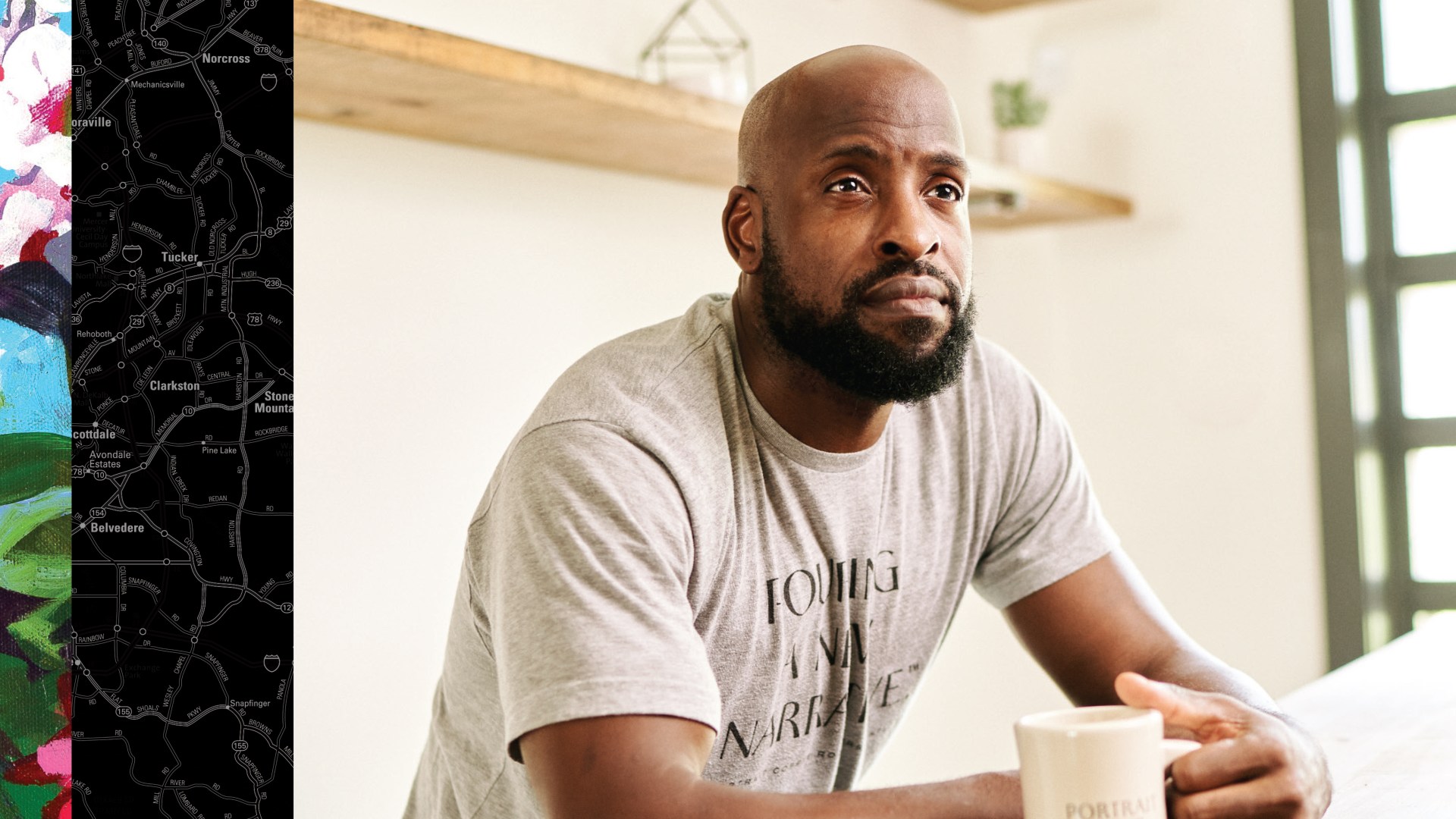
When John Onwuchekwa moved to Atlanta over a decade ago, he came as a church planter. But his call was much broader than that. By starting churches in broken-down neighborhoods, he set out to bring a sense of community and economic opportunity “to the people that look like me.”

“When you start with the church as your cornerstone, you set the direction and the boundaries for everything else to fall into place,” said Onwuchekwa, who leads Cornerstone Church in the Historic West End.

The pastor’s latest venture, launched this year, was not another church, but a coffee business. He and five business partners from Southwest Atlanta founded Portrait Coffee. The roastery and forthcoming café is committed to “pouring a new narrative” for black coffee by recovering the African origins of the product and bringing jobs and development to its neighborhood.

The West End was one of Atlanta’s earliest suburbs, its gingerbread-trimmed residences home to top businessmen and politicians. But as in many cities, white flight in the ’60s and ’70s shifted the demographics, making way for an infusion of African American culture and business: churches and funeral homes, schools and shops. One of those Victorian homes with the fancy trim, said to be one of the oldest in the neighborhood, was bought by a prominent black doctor and became a museum for African American art. Over the years, neighborhood blight became the target of urban renewal and revitalization efforts. In the early 2000s, the West End was hit hard by the housing crisis and recession.

Amid a recent wave of businesses opening in the area, Onwuchekwa and his co-founders talk about creating a different “portrait” for its black residents. When people who look like you respond to the changes and challenges in your neighborhood by creating opportunities for families like yours, that’s a portrait of gospel love.

They’re part of the latest generation of black leaders in Atlanta whose faith motivates them to change hearts and change their neighborhoods—including the economic landscape. To these leaders, communities struck by financial downturn and generational poverty don’t just need to hear that the Lord “secures justice for the poor and upholds the cause of the needy” (Ps. 140:12), or “God will supply every need of yours according to his riches in glory in Christ Jesus” (Phil. 4:19, ESV). They need sustainable jobs, career paths, and stability.

Atlanta is simultaneously full of success and full of disparity. Forbes ranked it the No. 1 city for African Americans economically, and it has a higher proportion of black entrepreneurs than anywhere else in the country (20 percent of the area’s black working population is self-employed). Black business owners and artists are drawn to the city in part because of its racial makeup and civil rights history; they know it’s a place where black people can prosper.

Lecrae’s Reach Records came to Atlanta a decade ago, when the rapper joined friends from Texas who were church-planting in the city. “I said, ‘Wow, well, No. 1, I got saved in Atlanta, so it’s got a special place in my heart, and No. 2, it’s Atlanta,’” he recently recalled.

At the same time, wealth gaps persist between black and white workers at every income and education level, and they’re growing wider due to gentrification. It’s a tale of two Atlantas. According to the Atlanta Wealth Building Initiative, the city “leads the nation in income inequality and lack of economic mobility.”

Lecrae has seen that side of his new hometown too. He partners with Love Beyond Walls founder Terence Lester to serve people experiencing homelessness and extreme poverty across the city.

This narrative is everywhere, including at the busy intersections where young black boys hustle to sell bottles of water and sports drinks. These “bottle boys” sit on coolers in the sweaty summer heat and dart through traffic to make a sale. But it’s a dangerous enough venture that city officials recently condemned the practice and instead want to develop other outlets for youth entrepreneurship.

Churches have already led the way, enlisting business leaders in their congregations to mentor and train eager kids in their neighborhoods. The entrepreneurship ministry at Providence Missionary Baptist Church offers youth the chance to learn about different career fields, gain hands-on experience, and practice networking. Plus, the Southwest Atlanta congregation highlights successful business leaders among its members and offers resources such as career coaching, business coaching, financial literacy classes, and soft-skills training.

John WoodPhotograph by Ben Rollins
John Wood

Programs like these are practical ways to fill the distance between where people are in life and where they feel God calling them to be. They reflect leaders’ willingness to see economic justice and financial opportunity as relevant to the mission of the church.

Providence also happened to be the home church of the late civil rights activist C. T. Vivian and hosted his homegoing service when he died in July at age 95. Vivian famously joined fellow minister Martin Luther King Jr. in what he saw as a movement to “remove the black struggle from the economic realm and place it in a moral and spiritual context.” Today’s leaders continue to recognize the moral implications of the wealth gaps and chronic poverty that persist in their city.

In the Old Fourth Ward, the rapidly gentrifying neighborhood famous for being King’s birthplace, LaToya Tucciarone runs a retail shop in Ponce City Market, a former Sears, Roebuck, & Co. building that was adapted into an upscale mixed-use development.

Her SustainAble Home Goods carries products that nod to the African artifacts her parents displayed in her childhood home. The fair-trade business is “born out of a deeply held belief that all men and women are made in the image of God and have inherent worth and value, skills and talents,” and its high-end location allows her to challenge shoppers to consider the broader impact of their spending.

She’s also an example of a black businesswoman shaking up the approach in what can be a realm shaped by white savior complexes or expectations of catering to a white market. That was also a factor for Portrait Coffee, whose owners want to expand high-end, quality coffee beyond the stereotypically white, hipster shops and into diverse neighborhoods.

As Portrait awaits the opening of its own West End location, its beans are sold at Chrome Yellow Trading Co. in the Old Fourth Ward and Westview Corner Grocery, about a half-mile from Onwuchekwa’s church. In the first few months in business, Portrait—which launched with the help of a $35,000 Kickstarter campaign—had enough demand that its online store was selling out.

The first couple years of any new business can be hard, particularly for black founders, who generally have less access to startup capital. Kelly Burton knows the struggle firsthand after her apparel company folded three years ago. She heard from so many fellow business leaders in Atlanta—particularly fellow black women—who faced similar challenges in making their creative ideas profitable that she created a network so they could learn from one another: Founders of Color.

Entrepreneurs, especially ones who chase after a dream alone or with little support, find a special kind of fulfillment in doing what feels like the work they were meant to do for themselves, their industries, and their communities.

“If you are attempting to solve problems related to economic empowerment in black neighborhoods of Atlanta,” Burton said, “you need to come to the people that are putting in the work and uniquely know the challenges that will be faced because they’ve paved the way and are far more invested in the people first and then profit.”

Opening a business is an act of creation, a way we reflect the God who made Earth out of the void and who placed us there to cultivate it. With the mind and heart of Christ, enterprising believers recognize opportunities, take initiative, and do the tending work to help their projects grow.

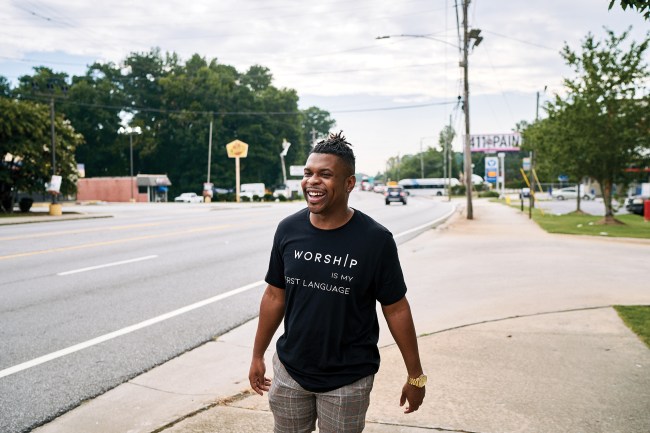
For John Wood, that cultivation was making poetry and clothing that promote Atlanta culture and reflect the love of God. Atlanta’s his hometown, and with the influx of business opportunities and new residents, it can feel like “no one is from Atlanta anymore.” Wood worries about investors who come in without regard for history or community. Instead, he says, they should approach Atlanta “as a garden that needs watering, knowing that where you plant seeds, you will eventually see growth.”

Like Onwuchekwa at Portrait, Wood wants to tell a different kind of story about the city he has always called home. He felt God call him to be a voice for the lost and broken, to speak healing into hurting communities by pointing to God’s Word.

His brand, Stained Glass Apparel, displays slogans designed to start conversations about Scripture (“Rooted,” “In Christ,” “Jesus Saves”). But his BLK FRVR line, along with his latest poetry, reflect his heart for the African American community in Atlanta. “If race is part of our eternal destiny, I can’t wait to be black forever” is printed on a pastel tie-dye shirt. His poetry asks, “…and just who is responsible for all this black on black hope?”

This summer, BLK FRVR was among dozens of businesses in Atlanta participating in expos and pop-up shops encouraging spending among black-owned ventures, one strategy to help build wealth among African Americans and promote economic development. They see themselves positioned to change the local landscape.

“If we as Christians are really about the advancement of the kingdom of God, we need to figure out practically what that looks without the inequality that plagues black communities,” Burton said.

Across industries, from roasting coffee to printing sweatshirts, black Christians hope for the kind of prosperity for their communities that the city has long represented—not because they believe Atlanta has overcome its disparities, but because they want to work to make it so.

Terasha Burrell is the author of Broken Pieces Speak and the co–blog director for Black Christian Influencers.

Read the rest of the series here:

Ideas

When It Comes to Sacrifice, God Doesn’t Play Fair

Columnist

Humans have a penchant for sacrifice, but it’s the Lord who makes it possible.

Wikimedia Commons

Over the years, one thing that has fascinated me about the gospel is the way it takes our familiar human longings and instincts and transforms their common, sinful manifestations in liberative ways.

Take the almost universal human impulse to sacrifice, for instance. Jewish philosopher Moshe Halbertal notes in On Sacrifice that sacrifice is the “most primary and basic form of all ritual.” In Greco-Roman religion, the principle do ut des (I give that you might give) governed sacrificial ritual: You gave gifts to the gods to put them in your debt so they might bless you—or to appease their wrath on the chance you angered them. In ancient times, sacrifice was the anxious, human end of the bargain.

We may think we’re too modern, enlightened and humane to practice the sacrifices that marked the worship of our ancestors, but a quick scan of our contemporary culture says otherwise. We too have rituals of sacrifice.

We put on sacred vestments and sacrifice sweat (and blood, even) at the gym so the gods will bless us with sex appeal (Aphrodite) or spare us from sickness (Apollos). We sacrifice time (and our families) at work so Mammon will shower us with possessions and recession-proof 401(k)s. We sacrifice our neighbors’ reputations in ritualized social media posts to Pheme, goddess of fame and rumor, that we might protect our own in exchange.

When it comes to Scripture, then, we shouldn’t be surprised to find sacrifices. But we should slow down and notice that sacrifice works a bit differently there. Halbertal says that in Scripture, sacrifice in its most basic form is still a gift to God. It is either offered to bring about communion and intimacy or to atone for a breach and restore that communion, putting away God’s wrath.

But take a closer look at the most important sacrificial text in the Old Testament, from the book of Leviticus, which explains why Israelites weren’t allowed to eat blood in their meat: “For the life of the flesh is in the blood, and I have given it for you on the altar to make atonement for your souls, for it is the blood that makes atonement by the life” (17:11, ESV). The author of Hebrews picks this up in the New Testament to explain that “without the shedding of blood there is no forgiveness of sins” (9:22, ESV).

On the surface, this seems familiar: The lifeblood of the sacrifice is to be offered up as a gift, making atonement. Functionally, the gift is a substitute for the life of the sinner—who owes it to God for his sin—ransoming him from death. But the familiarity of the mechanics of atonement makes it easy to skip the most remarkable line in the verse: “I have given it for you on the altar to make atonement for your souls” (emphasis added). Reading this should stop us, should prompt a mental record-scratch moment.

Note that God doesn’t say to reserve some blood to give to him on the altar. No, God has given it for us on the altar. He himself is the one who provides the means of sacrifice we need to make atonement for our souls before him!

Lest we think that’s a one-off, we see the same principle at work throughout Scripture. We see it dramatically displayed in the story of Abraham and Isaac on Mount Moriah. Right before Abraham brings the knife down on Isaac, the angel of the Lord appears and stops him. Abraham looks up, and “in a thicket he saw a ram caught by its horns” (Gen 22:13). God provides the sacrifice! That is why on that day Abraham called the place “The Lord Will Provide” (v. 14).

We see the very same movement, taken to its glorious, shocking conclusion, in the gospel. The miracle is that we are “justified freely by his grace through the redemption that came by Christ Jesus. God presented Christ as a sacrifice of atonement, through the shedding of his blood” (Rom. 3:24–25, emphasis added). Herein we find the uniqueness of the gospel. We see a God unlike the gods—ancient or modern—that we are so often tempted to appease. He is the one who offers the sacrifice.

We don’t give so that he will give to us in return. He gives first. Even more, in Christ, the God-man, he gives himself. His is the blood that ransoms our souls and purifies our uneasy consciences “from dead works to serve the living God” (Heb. 9:14, ESV). He liberates us to offer our whole lives as living sacrifices—motivated by God’s mercy, not our anxious fears.

Derek Rishmawy is the Reformed University Fellowship campus minister at the University of California, Irvine and a doctoral candidate at Trinity Evangelical Divinity School.

Apple PodcastsDown ArrowDown ArrowDown Arrowarrow_left_altLeft ArrowLeft ArrowRight ArrowRight ArrowRight Arrowarrow_up_altUp ArrowUp ArrowAvailable at Amazoncaret-downCloseCloseEmailEmailExpandExpandExternalExternalFacebookfacebook-squareGiftGiftGooglegoogleGoogle KeephamburgerInstagraminstagram-squareLinkLinklinkedin-squareListenListenListenChristianity TodayCT Creative Studio Logologo_orgMegaphoneMenuMenupausePinterestPlayPlayPocketPodcastRSSRSSSaveSaveSaveSearchSearchsearchSpotifyStitcherTelegramTable of ContentsTable of Contentstwitter-squareWhatsAppXYouTubeYouTube