Theology

Singing the Songs of Injustice

Biblical, angry, congregational worship can help transform our hearts and churches.

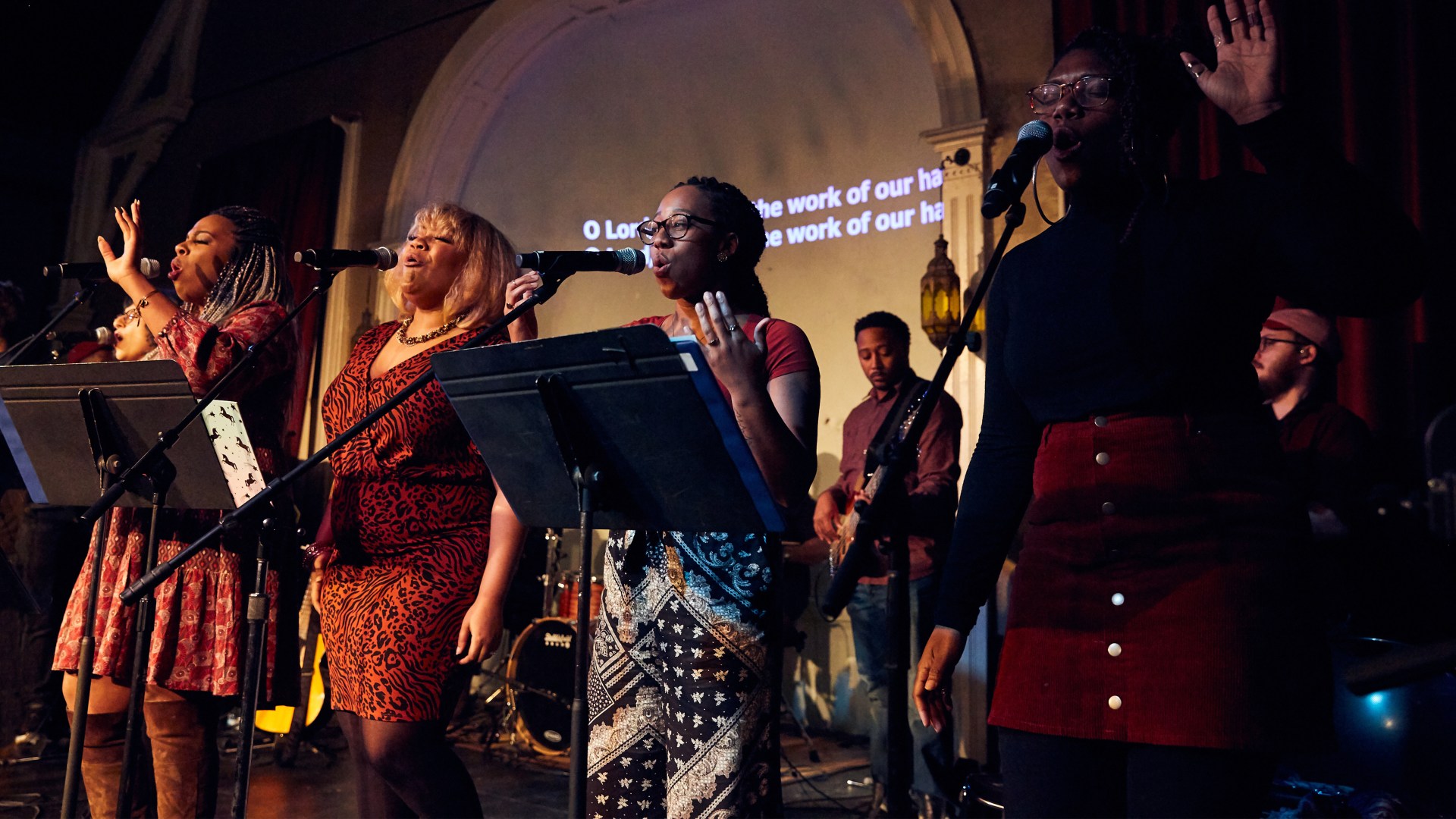
Porter’s Gate Tour in Nashville, Tennessee - January 2020

Porter’s Gate Tour in Nashville, Tennessee - January 2020

Christianity Today June 4, 2020
Photo by Integrity Records

While many nonviolent protests and some destructive riots took place over the past week in reaction to George Floyd’s death, churches have responded in various ways—marching peacefully, holding prayer vigils, and addressing racial injustice from their pulpits. David Bailey, director of the reconciliation ministry Arrabon and founder of Urban Doxology, and David Taylor, associate professor of theology at Fuller Theological Seminary, believe there is another way churches can respond: in worship. But not just any kind of congregational singing. Bailey and Taylor dialogue about their passion for the biblical outlet for anger in singing the psalms.

David Taylor (DT): How do you feel about what has happened over the past couple of weeks?

David Bailey (DB): Former pastor and Native American activist Mark Charles says, “the temperature of race relations in America is always at a simmer and every so often there is an event that turns it to a boiling point.” As a black man living in America, so many decisions in my life are influenced by fear. When I jog, I go to a gym, so I don’t end up like Ahmaud Arbery. I never put myself in a position where it could be one white woman’s word against mine so that I don’t end up in a situation like Emmett Till or Amy Cooper in Central Park. This reality is often a private matter, but when racial disparity is in the news it causes a mixed feeling of vulnerability, relief that more people are aware, embarrassment that you don’t have as much control over your life as white Americans do, and anger that it is this way.

James Baldwin said that “to be a negro in this country and to be relatively conscious is to be in a rage almost all of the time.” I don’t think black Americans are walking around in a constant state of rage, because you have to live your life. He is articulating the reality of the constant simmer and how it is something that can’t be ignored even when you want to ignore it.

As a pastor who shepherds people through the realities of race, class, and culture in our country, I’m constantly discipling people through complicated emotions of fear, shame, grief, and anger. In order for me to help others, I’ve had to learn how to attend to my own soul care. I’ve had to learn to lean into the book of Psalms that acknowledges an unjust world and gives language to express fear, grief, and even rage before the Lord. God has given us the psalms to be an “anger school” for us and I’ve discovered that when we skip class, we aren’t emotionally equipped to deal with difficult stuff we’re experiencing now.

DB: As a professional Christian, how have you learned to deal with anger in a godly way?

DT: It’s scary and embarrassing to admit you have an anger problem. You still have to keep confessing and asking for help. But it’s also deeply reassuring to discover in the psalms both permission and help to be angry at the right things—like cancer, domestic abuse, ecological disasters, and the experience of a global pandemic, or like the racism and injustice that we’ve witnessed recently.

God has given us the psalms to be an “anger school” for us and I’ve discovered that when we skip class, we aren’t emotionally equipped to deal with difficult stuff we’re experiencing now.

As the psalms see it, the difference between a right and a wrong response to anger is a humble heart and a hardened heart. A humble heart is honest to God about one’s feelings; a hardened heart wants only to exact an eye for an eye. A humble heart entrusts one’s enemies to God; a hardened heart demonizes one’s enemies. A humble heart is angry before the face of God and in the presence of the community; a hardened heart hides from God and perpetually finds the community wanting. The psalms always invite us to choose a humble heart.

The extraordinary gift of the psalms is that they show us how to pray angry prayers without being overcome by our anger, how to hate without sinning (to borrow from Saint Paul’s language), or, as Eugene Peterson once put it, how to “cuss without cussing.” To pray these angry psalms is to trust that Jesus prays these same prayers for us, and by his Spirit does something much better than “managing” our anger: he sets our hearts free to love our enemy in a way that we never imagined possible.

DB: In the New Testament, Paul says, “we don’t wrestle against flesh and blood,” but there is a very real and physical reality of racial harm as people “wrestle against flesh and blood.” How should we think about enemies at a time like this?

DT: Evil infects the human heart and people do bad, cruel, and dehumanizing things to one another. Women get gang-raped, the elderly fall victim to scams, workers are cheated out of their pension, a child is lost to a drunk driver, a pastor abuses his authority, a man is profiled because of his skin color, a Christian is persecuted because of her faith, millions are displaced from their homes. One could call this “the challenges of life.” Yet for the psalmist, reality demands that we use the language of “enemy” to describe things truthfully. Its purpose is to remind us that the violent and sinful ways of human beings—including our own violent, sinful ways—need to be named so that God can step in and do something about it.

Psalm 139 is the paradigmatic psalm on this account. In verses 19-22 we find an instance of quintessentially angry “enemy” prayer. “Kill the wicked”? Hating “those who hate you”? A “perfect hatred”? Can we really say this as followers of Jesus? But soon after this imprecation, the psalmist prays a prayer of relinquishment: “Search me, O God, and know my heart; test me and know my thoughts…” (vs. 23-24).

Praying against one’s enemies is most emphatically not a license to do violence to others; nor is it an invitation to indulge our irresponsible desires to call anybody we do not like an enemy. It is instead a way to get us to talk to God. Its goal is healing, not self-gratification. What the psalmist longs for is God’s vindication. The psalms, then, don’t deny our anger at being wronged, but they do deny us the right to take vengeance into our own hands (Rom. 12:18–20).

DT: When was the first time that you thought about or explored the question of anger and corporate worship?

DB: In 2008, my wife and I were part of a church planting team in Richmond, Va. committed to the values of reconciliation, community development, and racial diversity with the vision of living in the community for 40 years to see what God would do. The aspirations of our church vision were awesome! The reality of putting these practices into play has been painful. Just like most things of value, it comes at a cost. One of the costs was that our college-educated planting team was suddenly entrenched in the lives of our urban poor brothers and sisters, and “their” problems became “our” problems. Very soon into the journey, we realized that we were not smart enough to “fix the system” and most of us were ill-equipped for the longevity of this endeavor. Out of desperation, we stumbled into the practice of lament.

We introduced lament in our Sunday gatherings when a young man we were mentoring went to jail or there was a murder in our neighborhood—but it was a Saturday night in the summer of 2013 when the verdict of the Trayvon Martin trial came out. The heaviness of the verdict was palpable in our congregation. For our church, not addressing the trial would be the pastoral equivalent of not saying something the Sunday after the tragic 9/11 event. We held a worship service with the theme of lament, where we allowed people to say whatever was on their heart, unfiltered.

As a leader, there is a temptation to control the public prayer life out of fear that something would be said that would cause division. We’ve found the opposite to be true. Allowing people to express their heart before God built intimacy with one another in ways that a well-crafted sermon or prayer can’t do. Since then we’ve always practice public lament services in response to tragedies.

DT: Are there examples of songs or spoken word hip hop pieces that might capture the connection between justice/injustice and songs of anger/imprecation—especially as it relates to what’s happening in our society right now?

DB: Ten summers ago, we started the Urban Doxology songwriting internship out of the need for language to express both the horizontal aspects of what it means be a Christian and the vertical aspects of Christian worship. Because so much of the Christian publishing and worship resourcing decisions are marketed to the suburban consumer, there is a significant lack of worship resources for churches in the urban context engaging with people of poorer socioeconomic backgrounds. I noticed that there were a lot of songs about loving God, but not a lot of songs about loving our neighbors, so we decided to write the worship songs that are missing.

We began to write from the Old Testament because it has some of the best vision for justice and articulation of calling out injustice. We paraphrased Isaiah 58 in a spoken word format. We wrote a call to worship to love our neighbor and for God “to heal our land, meet the need, set the captives free.” Most recently in response to Ahmaud Arbery, we released a song called “God Not Guns” that is a lament of anger and despair based on Psalm 10 that describes the same exact scenario of Arbery’s murder.

As a leader, there is a temptation to control the public prayer life out of fear that something would be said that would cause division. We’ve found the opposite to be true.

If we don’t address injustice inside the church, then “we will forfeit the loyalty of millions, and be dismissed as an irrelevant social club,” as Martin Luther King, Jr. said. We are seeing some of the fruit of that with the mass exodus of young people in the church. As pastors and Christian leaders who address issues of injustice inside the church, but don’t provide people with the tools to deal with the emotional weight of dealing with injustice, there is a level of irresponsible leadership we are engaging in as leaders.

Loving God and loving our neighbor, proclaiming the kingdom of God and prophetically calling out the ways of Babylon, repenting of personal sin and systemic sin is what God calls every Christian to do no matter your tradition. This is what makes the church relevant to society at any age.

DB: You’ve written that these curse or anger psalms ultimately lead to healing. That seems like a surprising outcome. What do you mean by it?

DT: Let me answer it by using Psalm 137 as an example. While the first two sections of the psalm have generated vast numbers of musical and poetic settings—“By the rivers of Babylon we sat and wept” and “How can we sing the songs of the Lord while in a foreign land?”—the third section—“Dash the babies against the rocks”—has been removed from worship contexts throughout church history.

But we’re wrong to do so, argues the Croatian-born theologian Miroslav Volf, who insists that psalms such as these should remain within our devotional practice. “Such psalms,” he writes, “may point to a way out of slavery to revenge and into the freedom of forgiveness.” For most of us, that’s easier said than done. Yet Christian practices that are devoid of the psalmist’s visceral and even violent language leave us vulnerable to theologies and pastoral practices that are incapable of dealing with the anger that so easily leads to violence in public and in the privacy of our homes.

It is never easy to know how to incorporate a psalm like 137 or 88 or 109 into our corporate worship. But it is important to remember that the Holy Spirit, as the author of Scripture, keeps these psalms in the Bible for good reason. They lead us to Jesus. As Dietrich Bonhoeffer says: “The imprecatory psalm leads to the cross of Jesus and to the love of God which forgives enemies. I cannot forgive the enemies of God out of my own resources. Only the crucified Christ can do that, and I through him.”

DB: How do you feel churches should deal with this level of pain, disappointment, anger, and rage? What should church leaders do? How can they pray or sing the “angry psalms”?

DT: That’s not an easy answer and Christians have struggled with this question for centuries. But I can think of a few examples that might offer a way forward. There’s a wonderful hymnal, called Psalms for All Seasons, that includes a responsorial setting for Psalm 137. The congregation sings a refrain, drawn from Psalm 137:1 while an individual reads the three parts of the psalm, in turn. This allows the people to sing the words “from the heart,” without being asked to sing the dreadful words about “dashing babies,” which would seem inappropriate. Another way to read this curse psalm is for a poet to offer a personal response to the text or to have a spoken word artist sing an interpretation of the psalm in light of the news of the day, with the congregation invited to sing the refrain at specific intervals.

DT: If a church wanted to try something out with this kind of song or prayer, where would they start? How could they do it carefully, constructively, and in faithful and fruitful ways?

DB: First, it’s important for church leaders to understand that we are in some dire times. Navigating through calm waters is a different type of leadership than navigating through turbulent waters. In turbulent times, you can’t lead with moderation. You have to create “brave spaces” and sometimes they don’t feel like “safe spaces.” In 1831, the abolitionist William Lloyd Garrison articulated the type of leadership we need in this moment:

I am aware that many object to the severity of my language; but is there not cause for severity? I will be as harsh as Truth, and as uncompromising as Justice. On this subject I do not wish to think, or speak, or write, with moderation. No! No! Tell a man whose house is on fire to give a moderate alarm; tell him to moderately rescue his wife from the hands of the ravisher; tell the mother to gradually extricate her babe from the fire into which it has fallen—but urge me not to use moderation in a cause like the present. … I will not retreat a single inch—and I will be heard.

The type of leadership needed in these times is the courage to create brave spaces for people to be raw before God. When people are raw before God, their faith moves beyond moderation towards transformation. I want to encourage people to use one of these resources mentioned in this conversation and make room for the Holy Spirit to do what the Holy Spirit does.

David M. Bailey is a public theologian and the founder and executive director of Arrabon; an organization that builds reconciling communities in the midst of a digital, diverse and divided world.

W. David O. Taylor is associate professor of theology & culture at Fuller Theological Seminary and the author of Open and Unafraid: The Psalms as a Guide to Life (Thomas Nelson). He tweets @wdavidotaylor.

"Editor’s note: Want to read or share in Portuguese? Now you can!

For translations of other select CT coronavirus articles, click here and look for the yellow links.

Theology

What You Never Expect When You’re Expecting? Another Outbreak

While pregnant during Zika and the coronavirus, God disrupted my plans, changed my life, and rebuilt my faith.

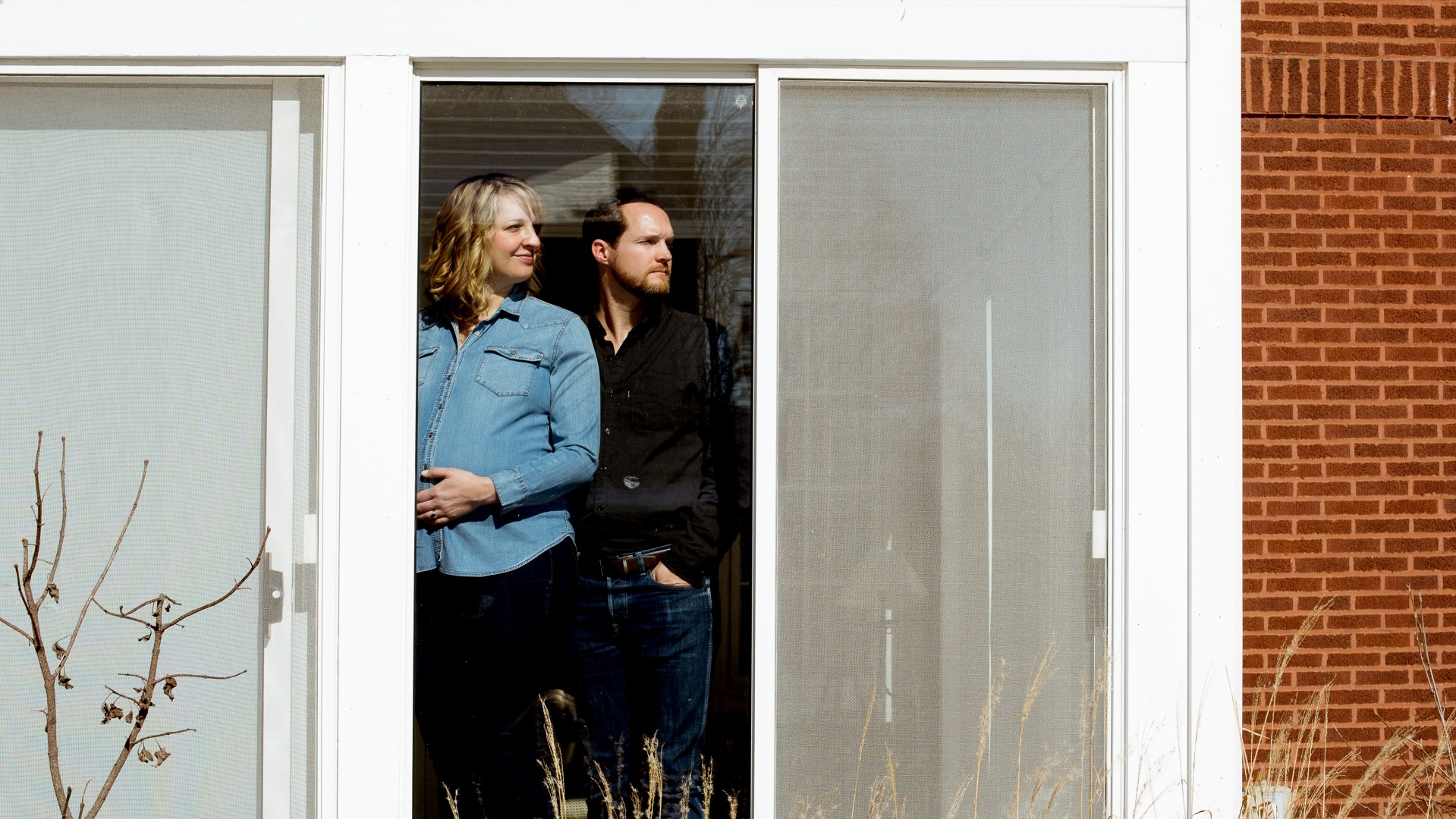
Cindy and Chris Haughey in 2016

Cindy and Chris Haughey in 2016

Christianity Today June 4, 2020
Lucy Hewett

For many women, being pregnant during an outbreak of a serious virus that health experts know little about feels utterly unprecedented. For me, the dilemma feels like déjà vu.

After six years of infertility, I became pregnant with our long-awaited first child while living in Honduras during the Zika virus epidemic in 2015. Health officials had linked the virus to a birth defect called microcephaly and were advising expectant moms to be on alert and, if possible, avoid traveling to the very area where I lived. As committed as we were to the mission God had called us to in Honduras, we made the difficult decision to temporarily leave during my third trimester so I could give birth back in the States.

I’m now pregnant with our third child, and God has once again led us to uproot our lives from Honduras in the midst of a major health crisis. If I didn’t learn my lesson then, God is continuing to teach us what it means to surrender and obey.

The coronavirus doesn’t pose as severe a risk to pregnant women as Zika did, and so far, studies have found that mothers with the virus don’t pass it on in utero or through breast milk. But while we have such limited data about the new disease, there’s plenty for expectant mothers to worry about. Researchers are still studying whether the changes in hospital protocols have resulted in more complications in labor and delivery.

Like many pregnant moms, I thought about what would happen if my husband weren’t allowed in the hospital with me and I had to face another traumatic c-section alone. But before that I had to worry about if he’d even make it out of Honduras to be in the US in the first place.

Giving birth during a pandemic is not what any of us imagined. Could this really be God’s timing? Even beyond my two pregnancies during major outbreaks, dealing with life’s unexpected and often unwanted changes of plans has become a constant challenge. But by God’s grace, it’s also been a constant reminder to depend on him.

Comfort over courage

We moved to Honduras ten years ago, a week after our wedding day. My husband was fluent in Spanish and had lived there for nine months already, but it was all new to me. At the time, I considered the move a sign of my courage. Right after college, I had left for China to teach English. I prided myself on being adventurous and looking for new experiences.

But in Tegucigalpa, the capital of Honduras, it wasn’t long before the isolation hit. My husband was working long hours to get his toy-manufacturing company off the ground, and I had no community to turn to. In her book Rising Strong, Brené Brown states, “We can choose courage or comfort but we can’t have both at the same time.” It became clear that I much prefer comfort over courage. Worse, I relied on the relationships and conveniences I was used to in the States rather than finding my comfort in God. My faith was not as solid as I’d thought.

Things only got more difficult as we struggled through infertility while our friends and family continued to have children. The discomfort of international living, the unending pressures of starting a new business, and the heartache of infertility all began to take a toll on our marriage. Rather than looking for a way through, I kept looking back at the life I had left behind, where I had a job and community and routine that I was used to and loved. Now, in this new life—a much slower life without the bustle of social, professional, and ministry activities, I began to finally recognize the restlessness of my soul, and I did not want to deal with the pain that it was revealing.

After living through a season of political unrest, which led to violent strikes, and natural disasters, including deadly fires and water shortages, the Zika outbreak hit our country not long after I became pregnant. Though I was thrilled with our long-awaited miracle, I was apprehensive about living in a developing country with a now-dangerous virus. I was reminded that though my greatest hopes were coming to reality, it didn’t mean I had any control.

Letting go

Little did I know that my pregnancy during Zika, and my last-minute, third-trimester decision to return to the US, would not be our biggest hurdle while welcoming a child into the world. A couple of years later, our second son was born in Honduras asphyxiated. He was hospitalized for the first two weeks of his life and continues to require intensive therapy for his developmental delays.

We have been walking through a season of emptiness these past two years. My husband is no longer with the company that originally brought us to Honduras. We had a second miscarriage, and most recently, my dad passed away. In the early years, I would have left Tegucigalpa in a heartbeat to return to my comforts and conveniences. But now, I see how my struggles and weaknesses have connected me to a place I felt so disconnected from.

Our children, and the experience of almost losing our second child, drew us closer to our community, to one another, and to God. I finally realized I couldn’t hold it all together, so once I let go of my control and owned my vulnerability, I saw what was available to me—true friendships, community, and support. God was with me, and he revealed that through the people who came alongside me during these challenges.

Before the coronavirus pandemic skyrocketed, before discovering we were unexpectedly welcoming another baby, we were in a difficult place. We knew we had to move back to the US because of our second son’s medical needs. With no job lined up, no place to live, no church or community, the global uncertainty posed by the coronavirus just adds to the pressure.

As I reflect on the past ten years and the lessons I’ve learned, the Scriptures I’ve studied and taught, I’ve realized that I often come back to the question “What do I need to change or do?” The lens through which I even read Scripture is “What can I do to be better?” As I write this article and reflect over the lessons I’ve learned of “get up and walk” or that I need to “fully surrender and obey” are still about me, what I need to do, rather than about the God who has proved himself sovereign over all.

Alicia Britt Chole writes in her book Anonymous, “Abundance may make us feel more productive, but perhaps emptiness has greater power to strengthen our souls.” My journey over the past decade, including the very current challenge with COVID-19, is my brokenness. I am weak. I am frail and I am not in control.

Second Corinthians 12:10 reminds me, “Since I know it is all for Christ’s good, I am quite happy about ‘the thorn,’ and about insults and hardships, persecutions and difficulties; for when I am weak, then I am strong—the less I have, the more I depend on him” (LB).

In my life, I’ve shied away from admitting my weaknesses, and much more from celebrating my difficulties. I've often tried to ignore or avoid dealing with them while trying to hide them from others, and yet, as Chole states, in our emptiness we have greater power to strengthen our souls.

It’s amid this emptiness, this brokenness, of realizing my marriage is in trouble, our financial stability is gone, our jobs uncertain, our health not guaranteed, our pregnancies not perfectly timed, that we must go to God. We have nothing on our own. Once I can admit that I am weak and depend on Jesus, I can begin to rejoice in all things—even another pandemic pregnancy.

Cindy Haughey is a writer, speaker, and world traveler. She is a graduate of Taylor University and Trinity Evangelical Divinity School. A mother of two boys, she is due with her third child this summer.

News

Southern Baptists See Biggest Drop in 100 Years

As baptisms and membership continue to decline, top SBC leader challenges the annual report process.

Christianity Today June 4, 2020
Rick Short / Lightstock

The Southern Baptist Convention (SBC) lost 2 percent of its membership last year—the largest drop in more than a century, according to its annual report.

Certain state conventions did report increases in baptisms and church growth, including in places outside the SBC’s Bible Belt strongholds. But overall, the denomination’s Annual Church Profile—released today by LifeWay Christian Resources and capturing 2019 statistics—shows a trajectory of serious decline and a sharp challenge for leaders concerned about evangelism and retention.

“We have much work to do as Southern Baptists to fulfill the Great Commission in our time,” tweeted Adam Greenway, Southwestern Baptist Theological Seminary president, in response to the report.

The loss of 288,000 church members last year brings total SBC membership to 14.5 million, down from its peak of 16.3 million in 2006. Average worship attendance remained relatively stable at 5.2 million.

Total baptisms, a landmark metric for the denomination, fell by 4 percent to 235,748—the lowest number since World War II. Giving was down slightly to $11.6 billion, after two years of increases. SBC churches spent $1.1 billion on missions.

“These numbers are not able to tell the story of all the evangelistic efforts that many individuals and churches have put in this past year. They do indicate, however, that the efforts of the same number of people in a congregation on average are seeing fewer people come to Christ and being baptized,” said Scott McConnell, executive director of LifeWay Research.

SBC

“The Southern Baptist Convention is not immune to the increasing secularization among Americans that is seen in more of our children and our neighbors not having interest in coming to Jesus.”

Last year, researcher and statistician Ryan Burge—analyzing other survey data about Southern Baptist identity for CT—found that fewer children who were raised in the SBC remain in the denomination as adults, suggesting that the bigger factor behind the SBC’s decline isn’t the struggle to gain new converts; it’s keeping their own.

Evangelical identity has held steady at just under a quarter of the US population over the past decade, with nondenominational Christianity growing as Protestant denominations experience decline.

The SBC statistics rely on church data compiled by state conventions, representing about 75 percent of churches this year, similar to years past. But without full participation, the annual release totals get challenged by those who say the findings are not representative.

This year, Executive Committee chair Ronnie Floyd—who leads the body in charge of denominational business outside of the SBC Annual Meeting—also called the process into question. For the first time, one state convention didn’t provide membership numbers at all: Oklahoma. The profile used estimates based on previous data to calculate the number of Southern Baptists in the Sooner State.

“We cannot possibly know how best to meet the needs of our 47,500 churches when we only receive needed data from just 75 percent of them,” Floyd told Baptist Press. “Uniformity in our data collection timing, uniformity of the questions asked of our churches, accelerating the response time and increasing the response rate are vitally important for us so that we will have accurate and current data regarding cooperating churches in the SBC.”

The dilemma stems from the structure of the SBC: Churches cooperate with conventions through giving toward missions, but are autonomous in their leadership and decision-making. Any reporting is voluntary.

A similar issue has come up as advocates for abuse victims have challenged the SBC to require churches to provide information on abuse cases. They have urged the denomination to compile a database on known abusers, but leaders state they do not have the oversight to do so. SBC president J. D. Greear has mentioned adding a question to the Annual Church Profile about abuse.

About 12,000 churches did not provide any data about their congregations to the report this year. McConnell has said that he considers the report a snapshot of the SBC, rather than the whole story.

But even that limited snapshot has a clear takeaway for leaders like Floyd.

“It is imperative for our future that evangelism remains the priority of our churches and convention,” he said. “We often find ourselves chasing after the winds of our own preferences, opinions, issues, and social media streams, but we must reimagine a new future together built around a unified Great Commission vision.”

While baptism fell overall, several conventions experienced double-digit growth. Iowa, Minnesota-Wisconsin, Colorado, Utah-Idaho, Northwest (Washington and Oregon), Hawaii, and Puerto Rico all bucked the trend with increases over 30 percent.

In Iowa and Hawaii, they also saw membership growth by more than 20 percent.

News

Christians Fight to Bring Adopted Kids Home from Overseas

The pandemic left families stranded, plans delayed, and some adoptions called off entirely, following a year of historic lows and increased government regulations.

Christianity Today June 4, 2020
Courtesy of the Cox Family

The last leg of Babydson and Jamesky’s journey to their new family in America was the long hallway at the Fort Lauderdale airport. The skinny-legged brothers, aged 8 and 7, were lugging big backpacks they’d packed at their orphanage in Haiti. They ambled timidly down the hallway until they were scooped up into Beau and Kari Cox’s hugs.

The Kansas couple—who felt called to adopt following a medical missions trip to Port-au-Prince—had been in the process for nearly three years before Babydson and Jamesky arrived on May 14. The coronavirus pandemic halted the process for them – along with hundreds of American families – at a time when international adoptions had already fallen to historic lows.

Even before the virus, adoption in Haiti was notoriously obstacle-ridden, delayed by political unrest, government corruption, incompetence, and lack of technology. Things got worse last year, sending the country in lockdown over violent protests and leading the US to advise against travel there.

“When the pandemic hit, we thought, ‘Can we even get them on a flight and get them out?’” Kari Cox said.

US embassies around the globe had either closed outright or continued operations with skeleton crews, and the Haitian government grounded nearly to a halt. To get the boys home now, the Coxes had to hope for a series of small miracles. A sign-off from Haiti. A passport and a visa from the US. A willing and dependable escort. A flight out.

Courtesy of the Cox Family

Somehow it all lined up. The Haitian government signed the last piece of paper, after weeks of promising they’d “do it soon.” An administrator at the boys’ orphanage found an American missionary teacher outside Port Au Prince who was going home to Pennsylvania and could fly with them. The Coxes booked a flight to Fort Lauderdale, where Babydson and Jamesky were scheduled to land. They got on the plane without knowing whether the embassy had granted their sons’ visas and exit letters.

The Coxes joined five other families at the airport, meeting their adopted children from Haiti. After years of worrying the constant holdups would stall the process indefinitely, “that was kind of the first time we could breathe,” Kari Cox said.

When Babydson and Jamesky arrived a couple weeks ago in Florida, it had been nearly a year since the Coxes had seen the boys. In the cluster of kids, some younger ones ran to their families. Kari struggled to make out her boys’ faces, then suddenly, there they were. “It felt like forever for them to get to us, to walk down that hallway,” she said. “It was really precious.”

The Cox family’s story is one of the happy ones. Some families have been forced to call off adoptions from abroad due to procedural delays caused by the pandemic. The rest are left with unknown timelines in a process already made more complicated by increased regulation in recent years.

Last year, fewer than 3,000 US families adopted a child from another country, the lowest in 50 years according to US State Department Data. (In 2018, it was 4,000. And at its peak in 2004, 22,000.)

https://datawrapper.dwcdn.net

While foreign governments in more than a dozen countries limited or did away with international adoptions for a variety of reasons, the US State Department intensified its regulations a couple years ago, in the hopes of preventing unethical practices in adoption and providing greater transparency and follow-up.

Those regulations have provided additional steps in what was already an arduous process. Now, the pandemic has stalled international adoptions nearly every stage, said Ryan Hanlon, a vice president at the National Council for Adoption (NCFA). Families waiting for approval to begin an adoption can’t schedule their required fingerprinting appointment with the now-closed US Citizenship and Immigration Services (USCIS). Families who have submitted paperwork are left waiting for document approval from a US embassy or a foreign embassy, many of which are also closed. Many countries require a court proceeding to finalize the adoption; courts are closed.

And, of course, families can’t readily travel overseas to either meet their adoptees (some countries, like Haiti, require a “socialization” visit before the legal process can begin) or to pick them up.

Hanlon said NCFA is aware of roughly two dozen US families currently stuck overseas waiting to bring their adopted children home. Most are in Africa, including Nigeria, Cameroon, Ghana, and Chad. Some are in Asia and Central America. They’re not waiting for flights; they’re waiting for paperwork.

“The reality is these families traveled well before the pandemic struck,” Hanlon said. “Had the Department of State done their job in a timely manner, they wouldn’t have been stuck.”

These hurdles are bound to affect the work of Christian adoption agencies and to come up in church prayer requests. Evangelicals are among the most avid supporters of adoption and are more than twice as likely than the general population to adopt a child, be involved with adoption-related causes, or know someone who has adopted from overseas.

A State Department official told Christianity Today that intercountry adoptions “remain a high priority,” but that the department does not know when routine visa services will resume overseas. The official said the department is prioritizing helping families who had already had a visa appointment at the embassies before the shutdowns, but are also trying to grant emergency appointments “as resources allow.” The agency recommended families turn to USCIS.

In cases where an embassy isn’t open to grant an adoption visa, USCIS, which falls under the Department of Homeland Security, could grant humanitarian parole as an exception. That would allow families to bring their kids home to the US and finish the visa process here.

Just one family working through Nightlight Christian Adoptions—the same agency that oversaw the Coxes’ adoption from Haiti—has been granted humanitarian parole to return with their child, while many others applied but are still waiting.

“The [State Department’s] Office of Children’s Issues said ‘Please, tell us all your families that are stuck and we’ll see what we can do,’” said Daniel Nehrbass, the president of Nightlight, “and then the response we got was, ‘There’s nothing we can do.’”

In addition to the frustration and economic hardship of not being able to return to a job in the states, the stalls brought on by the pandemic can put an adoption in jeopardy. Many countries have an age limit on adoption eligibility. Nehrbass knows of at least one family waiting to adopt a child from Hong Kong who has turned 14, meaning he has aged out of the process while waiting for his adoptive family to pick him up.

Because COVID travel restrictions kept the family from getting there, Nehrbass said officials in Hong Kong said they’d grant an extension. In a similar case in Honduras, the government won’t. That adoption—prayed and planned for for years—can no longer happen. “That is a tragedy for those kids,” Nehrbass said.

Nehrbass speculated one reason the State Department has increased regulation and seemingly slowed the international adoption process in recent years is the growing concern over human trafficking. “I think there is a narrative among some in the State Department that the risk of a child being trafficked, whether real or perceived, is such an injustice that it would be better to have no adoptions than… to crack open the door slightly,” he said.

Still, Nehrbass said the COVID-impacted interruptions to foreign adoptions aren’t all attributable to the US State Department. He estimated half of Nightlight’s families stuck overseas are waiting on foreign courts, ministries or embassies.

The Benik family flew from their home in Myrtle Beach, South Carolina, to Bogotá, Colombia in early March with the expectation they’d be leaving a few weeks later with their newly adopted 15-year-old daughter, Laura. They were waiting for a sign-off from the Colombian court system when the pandemic prompted the country to shut down.

“The first couple weeks was such a roller coaster ride,” R. P. Benik said. “Someone would say, ‘We expect to finish [your adoption] by the end of the week,’ and then you learn from someone else there’s no way it’s going to happen…at that point we were just kind of like, ‘We’re not going to worry about it anymore. We’re just going to hunker down together.’”

The Beniks’ lawyer said they could return to the US without Laura and try to come back later. “Every time they advised us to go home… we always tried to be wise and discuss it, but at the end of the day we were like, ‘We’re not leaving,’” Benik said.

They stayed stuck in Colombia for two months. They celebrated their youngest biological daughter’s second birthday and Laura’s 15th, her quinceañera, in lockdown together at a missionary house. They had groceries delivered. The Colombian government didn’t allow walks in the neighborhood. They watched, via online alerts, as weekly evacuation flights came and went.

At the direction of their lawyer, the Beniks sued the Colombian government to try to force them to hear their case—and it worked. The President of Colombia signed a decree allowing a government agency, instead of the closed court system, to sign off on the foreign adoptions of currently stranded families. After that, the US embassy granted Laura’s Visa in a single day. Embassy officials even came to the Bogotá airport to see Laura and her new family off on May 3.

Benik said his family was in touch with South Carolina Senators Lindsey Graham and Tim Scott throughout the process, and the COVID-19 pandemic has renewed some congressional advocacy on behalf of families waiting to adopt overseas.

In late April, the Congressional Adoption Caucus sent a letter to Secretary of State Mike Pompeo requesting information on how his department planned to help families caught overseas during the pandemic. The letter also urged the State Department to use “all available resources to ensure intercountry adoptions proceed in a safe and timely manner.” The State Department did not issue an official response.

It’s unclear what long-term impact the pandemic will have on international adoptions. The landscape was already in flux. In addition to the steep decline over the past 15 years, Bethany Christian Services—the largest adoption and foster agency in the US—announced earlier this year that it would end its international adoption program next year, and work with in-country partners to improve local child welfare systems instead.

It’s inevitable that the number of international adoptions in 2020 will fall below last year’s historic low—by how much, experts don’t know.

Nehrbass at Nightlight said when the shutdowns hit, he briefly hoped it would call attention to the dysfunction that already existed,“but it just didn’t work out that way,” he said.

He’s optimistic the crisis won’t weaken families’ resolve, especially as deaths from the pandemic are likely to leave more children without parents across the globe.

“There are enough children, and there are enough families… we just need to lower the hurdles along the way,” Nehrbass said.

One of those hurdles now requires a vaccine.

Church Life

The Masked Singers and BYO Communion?

Wherever two or more gather, illness can spread. So as a biologist, I’m rethinking hygiene at church.

Christianity Today June 4, 2020
Illustration by Mallory Rentsch / Source Images: Visuals / Matthieu Joannon / James Coleman / Unsplash / Portrait: Courtesy of Craig Story

Even as a biologist who has studied viruses and immunology, it took a global pandemic for me to realize the true effectiveness of specific hygiene practices to lower illness spread. There is little doubt that church settings provide an almost ideal location for the spread of contagion of all kinds. Churches in ages past responded to changing public health needs, most notably during the 1918 flu pandemic; even the HIV/AIDS crisis spurred research on Communion practices. Churches can and will endure hardships of all kinds, and with COVID-19 still spreading around the world, many pastors are already figuring out ways to adapt.

Congregational singing is getting most of the attention today, but there are so many other opportunities to spread contagious illness at church. The moment you enter, a greeter offers a warm handshake; then church members enthusiastically exchange the passing of the peace with a touch, handshake, or hug. Next, an usher circulates the offering plate around, and then—everyone partakes in Communion.

Will the lessons we are learning now lead to permanent changes in church practices? It’s an interesting question, and only time will tell.

Meeting outdoors

Like all of us, pastors hope to open their churches this summer, but many I’ve met in my work with the science-faith organization BioLogos are taking a cautious attitude and plan to follow official government guidelines, which continue to evolve, before deciding on a precise course of action. Andrew Smith, a pastor in Kennett Square, Pennsylvania, mentioned the likelihood of not holding a separate children’s ministry and said, “we’ll probably look at two services instead of one to allow for social distancing.” Alex Burgess of Ward Hill, Massachusetts, and Steve North of Grand Rapids, Michigan, both mentioned holding outdoor services, weather permitting. During the 1918 pandemic, the benefits of being outdoors was widely discussed and debated among the medical community. Massachusetts Surgeon General William A. Brooks said the efficacy of open-air treatment was “absolutely proven,” and outdoor hospitals were implemented widely.

But would going outdoors really solve the issue? The degree to which ventilation and direction of air currents contributes to spread COVID-19 from a single infectious individual received attention, most notably in a “viral” post by fellow University of Massachusetts Dartmouth biology professor Erin Bromage, which was based on another more lengthy analysis. While it does make sense to scientists that the outdoors would be an improvement over an enclosed area, churches should follow the latest scientific information as it develops on the most effective ways to minimize airborne spread. In the meantime, efforts to avoid exposure to an infective dose is a numbers game, and each small action—such as meeting outdoors—can help minimize how much exposure, if any, a person has to viral particles.

The masked singer comes to church

Photographs from the great influenza pandemic of 1918 show widespread mask-wearing among the populace, just like today. Scientists then understood far less about the cause, and yet most churches during the flu pandemic did what churches should be doing now: They followed guidance informed by data on the best course of action. The 1918 flu went through a series of waves after the initial surge and was controlled by tried-and-true methods of social distancing and mask-wearing. Then as now, areas of the country that relax the most and the earliest will likely experience the strongest upsurges.

Consider the sicknesses that go around every year. Shouldn’t each of us have been doing more to minimize spreading them? Wearing a mask is a gesture of concern for others during a time when an illness is raging, and at this moment it seems obvious that anyone with a sick household member should wear a mask.

In Asian countries, it is common to see people wearing face masks out in public. This has especially been true since the SARS outbreak and 2006 H5N1 flu warnings. The complex reasons for mask-wearing in Asian countries reportedly started with seasonal use in Japan to avoid illness spread but grew to incorporate traditional Asian beliefs about air quality, among other things.

But when was the last time you put on a cloth mask when you had a cold? I never have. Could mask-wearing when sick become a normal part of life in more of the world? Maybe in the future new normal, we will all do more to prevent the normal spread of illness to our friends, neighbors, and grocery store workers.

BYO Communion?

Today, Communion is celebrated in diverse ways, each varying in its degree of potential for germ spread. I grew up in a church that passed a tray of tiny plastic cups. Each congregant took one and passed the tray along. In other congregations, consecrated bread is dipped in the cup/wine by a priest, and then placed on the tongue (called intinction), or the cup is shared. The movement away from use of a shared single cup reached its height with the publication in 1897 of an article in The Journal of the American Medical Association that included vivid descriptions designed to evoke a palpable sense of disgust in the reader at the thought of spreading disease through the common cup. The author, Howard S. Anders, reported on the widespread adoption of single cups in a follow-up letter to the editor published in 1900.

Sadly, the single-cup movement also had political and racial overtones—allowing white people to avoid drinking from the same cup as black people—and clearly it is only one of many possible routes of church-associated contamination. Several more recent studies focusing on the healthfulness of Communion were done in the context of the AIDS pandemic in the 1980s and 1990s, and some failed to show measurable spread of some types of disease via Communion. We now know HIV is not spread by casual contact, making the context and justification of such studies suspect in hindsight. Though the single-cup movement was correct that a shared Communion cup is not a good public health practice, this coronavirus outbreak, as well as common colds, flu and such are very likely to spread in churches whether or not Communion is happening. Churches will need to determine how to adapt their practices in ways that best fit their own congregations.

Several of the pastors in my personal network have been working to make Communion more pandemic-proof, including having people bring their own elements. One fascinating variation is from pastor Micah Smith of Vancouver Island, British Columbia. He mentioned that his church tried doing online Communion by pantomime, with no elements, explaining he’d heard of persecuted churches doing this in prison. “I wanted to borrow meaning from that practice of Communion when we don't have full gathering as we can't all be together, rather than everyone grab whatever bread and whatever drink they choose,” he said. “That felt individualistic, and I wanted to feel the loss of our full practice even while observing it.”

Perils of success and lessons learned

Will these practices be permanent? Probably not. While pandemic illness is spreading, we may need to incorporate more drastic measures, yet improved attention to hand washing among Communion preparers and servers should be done as a matter of principle, regardless of the current public health situation. The same goes for singing: I doubt we will see all church choirs wearing face masks in the future, but choir members who have been exposed to an ill family member should consider wearing a mask for the protection of others until the incubation period has passed.

As a society, we have made excellent progress in slowing the spread of the coronavirus, and we continue this effort while observing the terrible consequences for the economy. The strong temptation is to go back to normal as soon as we start seeing fewer infections and deaths. That is happening now in the US. The dangerous side of this success, though, can be premature over-confidence. An epidemiologist recently interviewed on NPR observed: “When your goal is to prevent something, and you do a good job, nothing happens.” Certainly, the lack of an illness in the population is a common justification for not vaccinating children. When was the last time you heard of someone contracting whooping cough? The success of our efforts at lowering the curve in the current pandemic has set us up to relax when we need to remain vigilant. We must base our decisions not on feelings but on careful analysis of epidemiological data, which is imperfect and ever-changing.

Many claim that we can rely on naturally acquired herd immunity. However, herd immunity may only be achievable by vaccination. Herd immunity was never naturally achieved for measles, which killed thousands every year before an effective vaccine was developed. The World Health Organization estimates that over 20 million deaths have been prevented by the measles vaccine alone. For COVID-19, the examples of individuals (superspreaders) who unknowingly spread the virus to a large number of people means that a high percentage of the population would need immunity for the herd effect to reliably protect the non-immune-protected. Until a much higher fraction of the population has achieved immunity to COVID-19, an increase in social connectivity without precautions is very likely to be followed two or three weeks later by a climb in new cases. While we proceed with re-opening, we must remain cautious until a vaccine is available and remember that the health-compromised, poor, and elderly will suffer most when these upticks occur. It is not possible, practical, or even desirable to completely separate ourselves from these members of society and thereby fully cocoon them. Rather, we must all work together to minimize spread in diverse and practical ways until a vaccine becomes widely available.

Wherever two or more gather, there is the chance of spreading an illness––whether it be on a cruise ship, in a prison, at an assisted living facility, or even at your church. But COVID-19 can teach us valuable lessons that can help us to know how to react when the next pandemic-causing bug inevitably jumps into the human population somewhere in the world. While we cannot prevent all contagious illness from spreading, we should consider our individual role in protecting “the least” among us (Matt. 25:40) by our practices related to personal hygiene.

Craig Story is professor of biology at Gordon College in Wenham, Massachusetts. In addition to his teaching, he has worked with church leaders and seminary professors on issues related to biology and Christian faith.

Ideas

A Soul Check for White Christians

In the words of MLK, “There comes a time when silence is betrayal.”

Christianity Today June 3, 2020
Oliver Douliery / Contributor / Getty Images

If you are white, Christian, and American, and want your fellow citizens to flourish and prosper together, you should be deeply troubled right now. In fact, “troubled” is too soft a word.

2020 has brought an assault on our senses and a challenge to our very ability to live together as a people. It began with the rancor and strife of the impeachment process—which now seems like a lifetime ago. The coronavirus onslaught ravaged bodies and beat down our spirits. Then came the wave of economic devastation from the lockdown and 40 million Americans filing for unemployment. Now, in rapid-fire succession, the no-knock raid and death of Breonna Taylor, the hunting and killing of Ahmaud Arbery, the execution of George Floyd, and the rioting and looting of America’s urban centers.

As Michelle Goldberg of The New York Times has pointed out, we have revisited some of the most traumatic experiences of the past century all in the space of five short months—from the Spanish flu in 1918 to the economic crash of 1929 to race-related killings and urban unrest in 1968 to impeachment in 1974. Throughout all this, our leadership, especially in the political and media worlds, has brought more heat than light. There are exceptions, but in general we don’t know whom to trust.

Given everything, we feel disoriented, and many may wonder whether we have lost our moorings about who we are as Christians and Americans. It’s not only natural but right, in response to the mistreatment of our brothers and sisters and fellow citizens, to feel angry. There is a time for righteous anger, and that time is when children of God are robbed of their humanity and denied the most basic of dignities (to freely walk or breathe). If you’re not angry and feel deep sadness in this moment, it may be time for a soul check.

Chaos, conflict, carnage, and confusion reign in our communities and in our hearts. We know this is not how it is supposed to be—not who we are supposed to be, as Christians and as Americans—yet we don’t know the way forward.

I grew up in a very white working class and rural community before heading off to Philadelphia for college in the 1980s. There I fell in love with my wife, Jean, the daughter of Chinese immigrants. Jean has always told our four children she is the product of the great American dream; her parents left China with a single suitcase, no money, and no home to greet them on the other side yet established a remarkable place for themselves in America.

At Penn, I had the tremendous fortune to form deep relationships with people of all colors and backgrounds, particularly in the campus African American community. I sang in the university’s gospel choir and joined Alpha Phi Alpha (the first of all black fraternities, and the fraternity of Martin Luther King Jr., among many other great men). A white guy joining a black fraternity raised some eyebrows, but it was transformative for me. The experience of marrying into one racial heritage and investing deeply in the brotherhood of another laid a foundation for the past three decades of our family’s life. We can’t help but see ourselves as part of a beautiful American mosaic, where we all participate fully and truly benefit from the distinctive experiences of people of all heritages.

With these foundational experiences, I ran a campaign for the US Senate in 2018 with a core management team that was black and white and Latino and Asian, as well as Democratic and Republican and Independent and Green. We found that people had lost their way; light was confused with darkness, truth with untruth; and anxiety, depression, and loneliness were exploding in every demographic. 150,000 deaths of despair per year. People searching for purpose and meaning. Long before 2020, we were divided, falling, and grasping for hope.

America was afflicted with a pandemic of the soul before it faced the pandemic of the body.

What are some first steps, then, toward finding our way forward?

Remember who we are, and who God made us to be.

As God’s children, we are all beings made in the image of God, not only individually but also collectively reflecting his being and his character. This is the fundamental truth of who we are as a people.

Yet, from the earliest beginnings we have been tragically broken and divided, oppressing one another both inside our closest ethnic group (Cain slaying Abel) and outside (Taylor, Floyd, and Arbery). The arc of God’s movement throughout the history of humankind—to restore us to one another and to himself—will ultimately not be thwarted. The apostle Paul tells us we are created to be together no matter which category of people we belong to—Jew or Greek, slave or free, white people wearing MAGA hats and card-carrying Black Lives Matter members—and to take up the burdens of the other without respect to identity (Gal. 3:28).

In heaven, when everything is made new and all is set to right, the togetherness for which we are made will be restored! The apostle John describes a vast crowd from every nation and tribe and people and language, reflecting the glory of their Creator (Rev. 7:9). That is the glory for which we were made. When these trials and tribulations fade away, our truest essence—together!—will emerge.

Listen, lament, and give thanks.

We will only begin to heal as a people when we begin to hear one another. Those who have walked by God’s grace through great grief and lament in their lives (often in our more marginalized communities), and have chosen to not be victimized by it have many times forged into their souls the greatest moral and spiritual authority. Without defensiveness, without counterargument, without self-justification, we as white Christian Americans need to listen to our black brothers and sisters, whose experience of this country is often radically different from our own.

If we truly listen, we may begin to feel the grief and lament. We may recognize that at times, there are no words to touch such deep places. The word “injustice” fails to describe the violence to Taylor, Arbery, or Floyd, or the psychic cost to all black Americans who have experienced something in the same vein, or simply bear the burden of knowing that such things all too often happen to people who look like them. We can and we should hold onto that on behalf of our brothers and sisters, lamenting in the great spiritual and biblical traditions.

If we are not people who have experienced this other side of the American experience, then we should be grateful for all those (particularly in the black community) who have stayed so patiently with us in this American process. When they do not give up on the church, America, or even us as individuals when they would be so abundantly justified in doing so, that is grace and extraordinary strength in action.

Raise your voice and take action.

It is not enough to be non-racist. We need to use our voices and take action to stand against racism. Our brothers and sisters need us to speak. They are (too often literally) dying for it.

In the words of King, “There comes a time when silence is betrayal.”

Our faith—which is one of sacrifice and redemption, not power—has been used as a tool by political forces for centuries, and that is never more tragic than when it is used to oppress people in the name of Jesus. In the US, in too many cases the white church notoriously advanced a theology that the slavery of African people was intended by God, and we live and breathe that heritage today. As just one of a nearly infinite number of examples of that legacy, in the church of my upbringing (in Connecticut in the 1970s), the mixing of races and intermarriage was forbidden.

If you see our faith used in the name of power for those who would oppress others, reject it. It is anathema to the sacrifice of our Lord and will poison our gospel witness.

One final note. As you look for leaders in the political world, sources in the media world, or consider any others vying for your trust, ask God’s Spirit to lead you. If you don’t sense in their words and approach an anger and sadness regarding this injustice and its heritage, gratitude for those who continue to labor with us in forming a more perfect union, and a belief that all are God’s children and truly equal in the republic—do not follow them. Their spirit is not of God.

John Kingston is the author of American Awakening: 8 Principles to Restore the Soul of America, and founder of American Awakening.

Speaking Out is Christianity Today’s guest opinion column and (unlike an editorial) does not necessarily represent the opinion of the publication.

News

American Bible Society Responds to Trump Photo Op: Scripture Is ‘More than a Symbol’

Ministry launches free Bible giveaway to encourage the country to open the Word.

Christianity Today June 3, 2020
Patrick Semansky / AP

The American Bible Society says this is a time for Americans to hold on to the truths of Scripture, not just hold the book up as a prop.

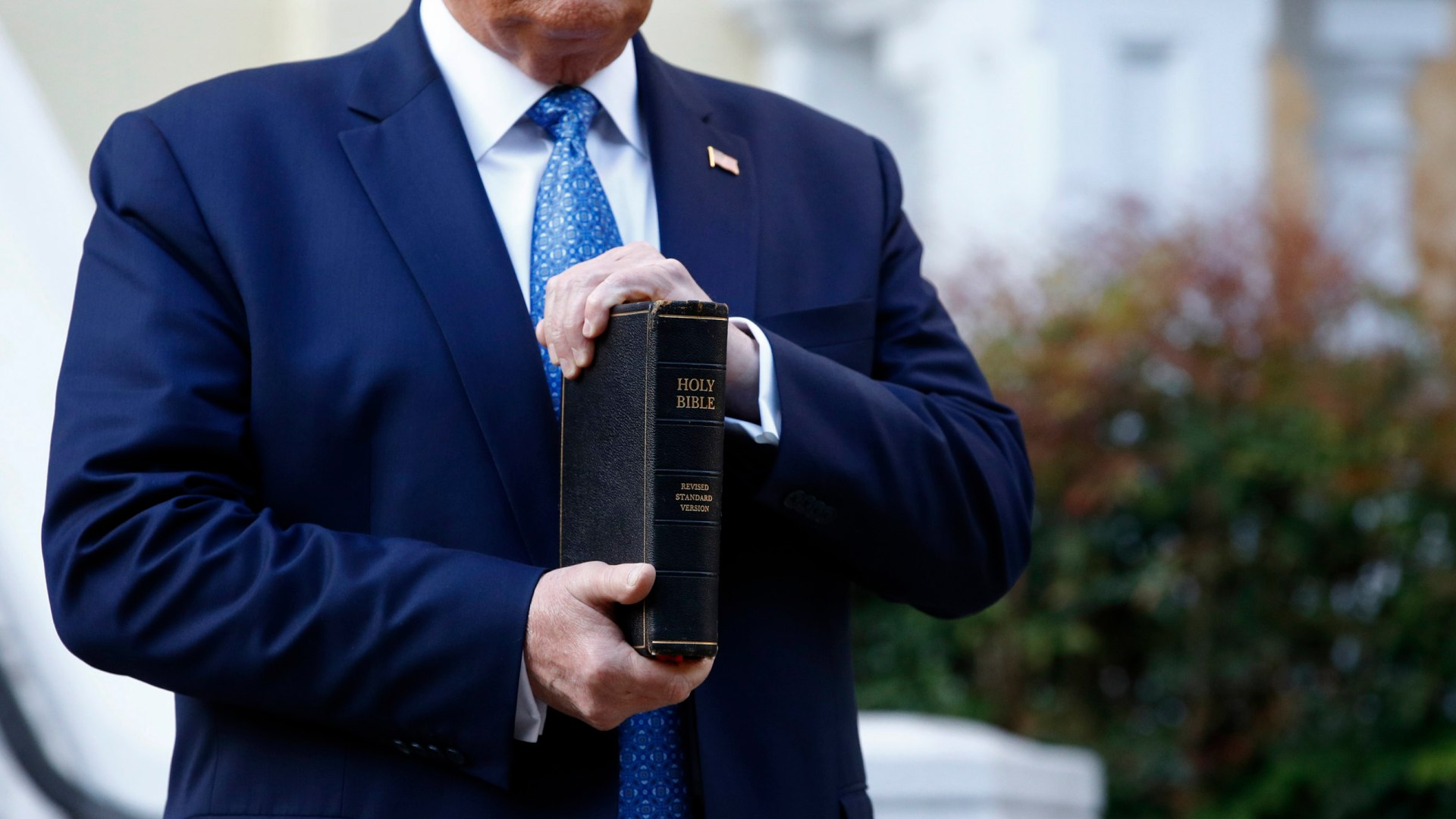
The 200-year-old Christian ministry, which focuses on Bible access and engagement, issued a statement following President Donald Trump’s recent photo op—brandishing a Bible in front of a Washington, DC, church as part of his response to the national protests over George Floyd’s death—saying the holy text is “more than a symbol.”

The society has launched a two-week-long free Bible giveaway on its website.

“In this time of pandemic fear and social isolation, in this time of racial injustice and senseless violence, in this time of economic uncertainty and generational pain, we should be careful not to use the Bible as a political symbol, one more prop in a noisy news cycle,” said Whitney T. Kuniholm, senior vice president of the American Bible Society.

“Because, more than ever, we need to hear what’s true. ‘Let justice roll on like a river, righteousness like a never-failing stream!’ (Amos 5:24 NIV). ‘Yea, though I walk through the valley of the shadow of death, I will fear no evil: for thou art with me…’ (Ps. 23:4 KJV).”

Episcopal clergy presiding over the church where the president made an appearance Monday evening expressed “outrage” at the incident. They say they were caught off-guard by the visit.

The president did not go inside the church, nor did he quote or read from the Bible during his remarks. He posed with the book in front of the building.

To Sattler College historian Aaron Griffith, the move appeared deliberate. “It might seem strange, but it all fits together for him and his supporters.”

While some of the president’s evangelical backers applauded Trump’s response, which came amid ongoing protests in cities nationwide, others said this use of the Bible felt manipulative or disrespectful. Some likened it to when he signed Bibles during a visit to an Alabama church rallying for tornado relief.

Kuniholm’s statement brought up other political uses of Scripture, as it referenced John Quincy Adams, Abraham Lincoln, Dorothy Day, and Martin Luther King Jr. and “leaders of all political stripes (who) have solemnly held up the Bible and used it as inspiration in our most difficult moments.”

“Why do Americans turn to the Bible in times of national trauma?” he said. “Because the Bible is more than a symbol.”

While ABS works with a “global network of Bible champions” to translate, distribute, and promote the Word, its work has taken on more evangelical distinctives in recent years, including a growing focus on Bible engagement and literacy.

Historian John Fea chronicles what he sees as a shift from ecumenical to evangelical in his 2016 book The Bible Cause: A History of the American Bible Society. At the start of last year, ABS began requiring staff to sign a statement of faith, affirming that the Bible “provides authoritative guidance for my faith and conduct,” including sex and marriage.

The ABS president at the time said the understanding of Scripture required of their employees would not restrict who they reach: “We remain committed to making the Bible available to anyone who needs it, regardless of alignment on these values.”

ABS moved its headquarters from New York to Philadelphia five years ago and plans to open a history museum, called the Faith and Liberty Discovery Center, next year on the city’s Independence Mall.

ABS celebrates its American history connections, saying it was established by “a team of renowned patriots” including John Jay, the first Supreme Court justice; Francis Scott Key, who wrote “The Star-Spangled Banner”; and Elias Boudinot, one of the Founding Fathers.

News

Can Churches Reopen Like Businesses? In Minnesota, Yes. In Nevada, No.

Despite Supreme Court decision, religious liberty advocates clash with states over varying rules.

Christianity Today June 3, 2020
Ethan Miller / Getty Images

In Minnesota, all it took was a letter to get the governor’s attention. In Nevada, it might take a lawsuit.

Nevada Gov. Steve Sisolak issued an executive order allowing restaurants, pools, fitness centers, and cannabis dispensaries to open at half capacity. But worship services were capped at 50 people, regardless of the size of the building. Alliance Defending Freedom (ADF) is going to court to argue that houses of worship can’t be treated differently under the law.

Minnesota Gov. Tim Walz issued a similar order with varying rules for churches and for-profit businesses, but when he was contacted by the Becket Fund for Religious Liberty, Walz made adjustments. Worship services can now open up to 25 percent capacity in Minnesota.

“Churches were happy to work with the governor to come to that solution,” said Diana Verm, senior counsel for Becket. “They didn’t want to litigate or buck the system. They wanted to open safely, cooperatively, and responsibly.”

In Nevada, things have gone another direction, according to Ryan Tucker, ADF senior counsel and director of the Center for Christian Ministries.

“There was a collection of churches that reached out via letter to the governor, and those attempts proved futile,” Tucker said. ADF has filed a suit against the state on behalf of Calvary Chapel Dayton Valley in Dayton, Nevada, outside of Carson City.

Tucker and Verm both said their clients don’t want to jeopardize the health of church members or the broader community. But when they see other establishments treated with less scrutiny than religious institutions, it is a clear violation of the First Amendment protections.

As governors develop and implement plans to end the COVID-19 shutdowns, the relationship between churches and states is proving to be a bit bumpy in some places. Christian leaders are considered part of the process in some places. But in other parts of the country, they’re struggling for a voice in the conversations. Some have decided they need to go to court to be heard.

According to Becket, eight states have subjected churches to unequal treatment: California, Maine, Nevada, New Hampshire, New York, Rhode Island, and Washington. Churches in Oregon, Washington, Nevada, and Virginia have filed suit against their governors, alleging the different social distancing orders in effect place undue burdens on their First Amendment rights.

A case in California went quickly to the Supreme Court. The court ruled against South Bay United Pentecostal Church, in the San Diego area, in a 5-4 decision. Chief Justice John Roberts said the state’s restrictions on worship in a pandemic “appear consistent” with the First Amendment, and were not notably different from rules for sporting event, theatrical performance, concert or other events “where large groups of people gather in close proximity for extended periods of time.”

In his dissent, Justice Brett Kavanaugh objected that the restrictions were discriminatory. “Assuming all of the same precautions are taken, why can someone safely walk down a grocery store aisle but not a pew? And why can someone safely interact with a brave deliverywoman but not with a stoic minister?” he wrote.

Such comparisons may not be as helpful as they seem, according to John Inazu, a law professor at Washington University in St. Louis. The tension between religious freedom and public health requires charity and nuance.

“We need to prioritize the importance of careful analogies in all of these contexts, to what else is an essential activity and what else is socially distanced. The care of these analogies matters,” Inazu said.

Though the Supreme Court ruling decides the matter for California, the narrow ruling on an emergency request for extraordinary relief won’t provide a lot of clarity for the other states. More conflicts over religious liberty are likely, especially when churches aren’t made part of the process in plans for reopening. In addition to the Nevada suit, ADF is battling the governors of Oregon and Washington, alleging their executive orders unfairly restrict religious activity.

Washington Gov. Jay Inslee’s executive order threatens churches with criminal and civil penalties for meeting and institutes restrictions far more severe than those imposed on cannabis retailers and breweries, according to ADF. Where some businesses are allowed to open up to 50 percent capacity, churches aren’t allowed to be at more than 25 percent capacity. The organization is suing on behalf of Christ’s Church in Spokane County, Washington, which does not have equipment for recording or live-streaming services.

Oregon’s reopening plan also includes harsh punishments for too many people in the pews. Gov. Katherine Brown’s executive order warns that Oregonians can be jailed up to 30 days and fined $1,250 for attending a worship service with more than 25 people. Tucker is accusing the state of a clear double standard.

“In Oregon, you can go to a restaurant with well over 25 people in a room and sit there for 90 minutes. But if you go to church with 26 people you could go to prison,” he said.

Some governors have collaborated with churches and local religious leaders to come up with acceptable rules for religious meetings in the transitionary periods. Illinois Governor J.B. Pritzker, for example, removed the limits on the number of people who can attend in-person religious services when he signed an updated statewide stay-at-home order on May 29.

Pritzker said the updated order was possible because his administration “received many plans and ideas from responsible faith leaders” on how to safely lift gathering limits.

Russell Moore, president of the Ethics and Religious Liberty Commission of the Southern Baptist Convention, told CT’s “Quick to Listen” podcast that he recommends church leaders contact their local city officials and health departments to offer feedback on reopening guidelines. Often government officials have not properly investigated the impact their guidelines will have on churches, he said, and a phone call is all it takes to lift overly-burdensome restrictions.

“But in some cases, it's going to take going to court,” Moore said. “We probably will have that. But we have to make sure on both ends that we're rightly understanding what's going on. So a government shouldn't say its insurrection against the State for congregations to seek ways they can meet in proper, socially-distant ways. And just because a state having restrictions on gatherings to flatten the curve is not a state that's necessarily trying to crack down on worship.”

The lawyers who are defending churches’ right to reopen do not agree with each other on whether these cases will have a long-term impact on religious liberty in America. Verm thinks the “specific nature of the government interest in this public health crisis” will be seen as so different from other, future circumstances, that decisions in these cases won’t set a significant precedent. Tucker thinks one of the lawsuits could go to the Supreme Court and a ruling from the country’s top court can always create a lasting rule.

And it might be the acts of mercy and generosity exhibited by individual churches, rather than legal cases, that define church’s place in its community during the pandemic.

“I think churches will rise to the occasion of responding in crisis, finding ways to love their neighbors well, whether that means meeting only online for a time or reopening in accordance with the best safety protocols,” Inazu said.

Ideas

How God’s Glory Shines in Our Connectedness to Nature

When considering the birds, we find God’s care and discover our calling.

Christianity Today June 3, 2020
Illustration by Rick Szuecs / Source Images: Przemyslaw Reinfus / Andrew Ruiz / Disruptivo / Unsplash

In elementary school, I bent toward the bottom of a cardboard box, where a herd of fluffy chicks squeaked a raucous chorus—a representation of Easter to my Christian school teacher. During middle school, I took to heart the story of the ugly duckling, as I personally reckoned with my braces, boney elbows and knees, and pudge around the waist. Vs of geese honked overhead during field hockey games, and I threw French fries at seagulls at the beach. Birds were around, all the time.

But in Sunday school, I began to understand that birds were not merely nuisances or ornamental. The Scriptures describe how God created each species of winged creature (Gen. 1:20) and how God safeguards each bird attentively (Matt. 10:29). Likewise, as created beings tasked with attending to God’s creation, humankind’s continuity with birds—such as in their unique form of consciousness and their interconnectedness to human lives—illuminates our calling to care for birds, both in our backyards and in our world.

Birds appear throughout the Bible. In the story of the Flood, God directed Noah to bring two of every kind of the bird onto the Ark (Gen. 6:20)—the first animal class to be included—and then Noah sent out two birds—a raven and a dove—to find dry land (Gen. 8:6–12). The Israelites ate quail during their desert wandering, and ravens brought food to the prophet Elijah at God’s prompting (1 Kings 17:2–6). And in the Gospels, a dove represented the Holy Spirit’s presence at the baptism of Christ (Matt. 3:16; Mark 1:10; Luke 3:22; John 1:32).

Every culture has developed symbolism and made myths around birds. Take Aesop’s fables, for example. The study of birds began early in humanity’s history, with the first recorded observations coming from Aristotle and later Pliny. Both ancients wrote comprehensive natural histories, and their study marks the beginnings of ornithology.

Yet while many bird behaviors were easy enough to decipher upon close inspection—Aristotle, for instance, correctly chronicled the food birds ate, the way they reproduced, their habitats, and their specific calls—their migration remained a mystery. Aristotle concluded that swallows hibernated in winter, leading him to believe that all birds hid in dens during winter, while he ignored evidence from travelers who had spotted Grecian cranes who had migrated to Egypt for the winter months. In fact, as hobby birder Chris Petrak puts it, “Try not to laugh. [Aristotle’s] conclusion was accepted wisdom for over 2,000 years.”

Pioneers in science and theology, such as 17th-century naturalist John Ray, had a different take on the migratory patterns of birds. In his work, Wisdom of God, he says:

The migration of Birds from an hotter to a colder Country, or a colder to an hotter, according to the Seasons of the Year, as their Nature is, I know not how to give an account of, it is so strange and admirable. What moves them to shift their Quarters? …Think we that the Quails for Instance, could see quite cross the Mediterrownean Sea? And yet, it’s clear, they fly out of Italy into Africk… That they should thus shift Places, is very convenient for them, and accordingly we see they do it; which seems to be impossible they should, unless themselves were endu’d with Reason, or directed and acted by a superior intelligent Cause. [sic]

To Ray, the origin of these yearly flights made no sense unless birds possessed a mind, or, in lieu of individual consciousness, a higher consciousness (God) that compelled the birds to travel. Ray, like many scientists before and after him, studied the natural world to identify the hand of God within it, so his conclusion makes sense—though to 21st-century evangelicals, it can seem trite.

The “God of the gaps” theory uses God to explain what humans cannot by scientific observation, and Ray adopts the theory here. The problem with “God of the gaps,” however, is that God appears weaker or even irrelevant if humans discover an observable cause later on.

Yet Ray’s assertion of birds possessing “Reason” that he could not explain could be interpreted as wiser than he knew; today’s scientists have discovered that birds do have a form of consciousness.

Take the crow. Recent studies have confirmed that crows can recognize human faces. In fact, the crow and its cousin, the raven, appear to hold grudges, remembering which experimenting scientists fed or snubbed them.

Crow researcher Kevin McGowan says of his subjects, “The crows around here, they know my face. … They know my car, they know my walk, they know me [even] 10 miles away from where they’ve ever encountered me before.”

Crows possess brains the size of a chimpanzee’s. New Caledonian crows use tools like sticks, twigs, and dry leaf stems to retrieve bugs. A crow in captivity even bent a piece of straight wire to hook food.

Yet crows and ravens are not the only impressive “bird brains”: Magpies can recognize themselves in a mirror, a classic animal cognition test that proves animals understand both how mirrors work and also that they are viewing themselves in the glass. (This test has also been passed by mammals such as bottlenose dolphins, and Asian elephants, and chimpanzees among other apes; it’s one often failed by human babies until they’re 18 months old.)

Western scrub jays that stole collected food from other jays’ hiding places showed that they could remember which jays might have observed their hiding spot, and then hid their food again after the observer had left. They could anticipate theft from another bird (because of their own thievery!) and prepare for it, showing future thinking and the ability to anticipate another’s behavior.

Cockatoos can make music and keep a beat. Grackles can solve puzzles for food. And one African grey parrot trained by researcher Irene Pepperberg mastered speaking 100 English words in context, along with the abstract concepts of “same and different” and zero. (Another of Pepperberg’s parrots can identify shapes and colors.)

What does such consciousness in birds tell us about the Creator? Such similarity between humankind and birds suggests the worth of each creature made by God, each being imbued with characteristics of their Creator. Just because the Scriptures emphasize the way that humankind images God uniquely does not mean other creatures oppose the image of God; rather, they reflect God differently than humankind does.

According to a 2016 study every winged creature means 18,000 unique species of birds that currently exist on our planet, with nearly 200 to 400 billion individual birds within those species. (We humans are outnumbered.)

Yet we humans may be tempted to consider the “worth” of birds as tangential to our own—such as in recent legislation passed by the Trump administration that has limited protections of migratory birds from the effects of big business (among other EPA rollbacks the administration has sponsored).

In part, such ambivalence toward nature can be found in theologians’ work in the early 20th century, including Karl Barth, who believed that the transcendence of God necessarily devalued the material world. (Barth’s views and theologians’ responses to those view are summarized aptly by religious studies scholar Willis Jenkins).

Walter Brueggemann’s take on Barth, according to Jenkins, showed in his work a lack of theological inquiry into the importance of the “land” in the Scriptures. In contrast, Brueggemann emphasizes the importance of land to biblical peoples as integral to their relationship with Yahweh. He also calls pastors to recognize that “we are designated as God’s partners in the maintenance and care of creation.”

Theologian Jurgen Moltmann went further in his collection of lectures God in Creation: “… if we see [God] in a trinitarian sense as the unity of the Father, the Son and the Spirit, [then] we can no longer, either, conceive his relationship to the world he has created as a one-sided relationship of dominion. We are bound to understand it as an intricate relationship of community—many-layered, many-faceted and at many levels.” In the material world, we can observe the ways that our lives intersect with the lives of birds. Like the Trinitarian unity in diversity, our life on this earth is similarly interdependent. As pastor Tim Keller says of the Trinity in his book Reason for God, “Each of the divine personas centers upon the others. None demands that the others revolve around him. Each voluntarily circles the other two, pouring love, delight, and adoration into them.” Such attention to the other—the Father to the Son to the Spirit—mirrors a selfless interconnectivity.

While birds cannot purposely choose interdependence with us, they still serve us, echoing the Trinitarian dance. Birds’ existence furthers life on our planet—including human life. As ornithologist and Houghton College professor Eli Knapp points out, “‘When one tugs at a single thing in nature,’ John Muir once wrote, ‘he finds it attached to the rest of the world.’ Ecosystems are intricate tapestries. They’re interwoven with myriad species in many ways we do understand and some we still don’t. The way I see it, humans have but one job regarding the Earth: to serve it and keep it. … Birds are a manifestation of God’s glory. This makes protecting them a natural outgrowth of Christian worship.”

We have a tendency to value creation for its utility to humans, and there’s good reason for that. As Knapp, said: “Where would we be without the chicken? I, for one, gasp at the thought [of] a life with no omelets. … Our utilitarian uses of birds [is seen also by] anybody who has fended off a chilly January day with a down jacket. …”

In addition, birds act as a natural pesticide for farmers, protecting crops from insect infestations. Birds spread the seeds of plants. Birds act as harbingers, often signaling natural disasters. They help speed the decomposition of other dead creatures and act as both predator and food source. Their flights have provided many engineering lessons for scientists (even inspiring human flight!). Add to all that the beauty birds provide. (Knapp described certain species as “visual candy,” a reason alone to take up bird-watching.)

Certainly, birds provide general utility to humans. But the Scriptures also say that God gives attention to these creatures individually. In Matthew 10:29, Jesus says, “Are not two sparrows sold for a penny? Yet not one of them will fall to the ground outside your Father’s care.” The same God who created such a multitude of winged creatures also manages to keep watch on each created individual from its birth to its death. We bear the image of God in recognizing how the reconciling work of Jesus and the unity of the Trinity bear on the rest of creation. If we take the Scriptures seriously, we can be assured that God sees and knows each bird that perished in the BP oil spill in the Gulf of Mexico. God sees and knows the birds whose habitats have been destroyed in wildfires across my home state of Colorado. And God sees and knows each endangered bird, such as eagles, Canadian geese, and vultures, that have become vulnerable to death by oil and gas companies.

God’s specific attention toward his creatures teaches humans that God also views us with specific care. Yet God’s stated attention toward birds challenges the view that humankind matters more to God than the rest of creation. In fact, all of Creation is seen by God, and all of it is declared “good.” Ultimately, humans image God in our care of creation as much as in our distinctiveness from it.

As ecotheologian David Clough concludes in On Animals, Volume II, “The lives and deaths we inflict on other animals very clearly fail to regard them as fellow creatures who glorify God in their flourishing, who are reconciled with all things in heaven and earth in the work of Jesus Christ, and who are heirs with us to the new creation where there will be peace between all creatures.”

Our independence is an illusion. Like the rest of creation, humankind is dependent on God and dependent on other created things for our next breath, an interdependence that mirrors the Trinity. As we humans nurture creation, we usher in the shalom of the lion and lamb, an intricate community at peace with God and each other.

Liz Charlotte Grant is a freelance writer and Christian speaker in Denver. She has writing published at the Huffington Post, Fathom Magazine, Image Journal’s blog, Ruminate Magazine’s blog, and Geez Magazine, among others. The Collegeville Institute awarded her a residency in 2019 and 2020. Find her at LizCharlotteGrant.com or on Instagram @LizCharlotteGrant.

Ideas

White Pastors: Our Decision to Show Up Matters

It takes humility to be an ally. Even if we make mistakes, we need to do it.

Christianity Today June 3, 2020
Joe Buglewicz / Stringer / Getty Images

This is not the first time that Bishop Michael Cummings of Greater Love International Church has asked me to say something at an event like this. And every time, I sort of wish he wouldn’t.

The sun is just starting to go down in Founders Park in downtown Johnson City, Tennessee, and people are gathered for a prayer vigil in response to the police killing of George Floyd and the racism that continues in this country. Here’s one thing I know: I am a white minister. In most of my life, I succeed by talking. In this conversation, I succeed by listening. When I talk about race and racism, there are so many ways to say something wrong. Others know more than I do. I sit here and I am afraid I will say something that will hurt or offend people. I don’t want to make a mistake and I know that I might.

But I have a rule that when Michael asks me to show up, I will show up. He asked tonight, so I am here, even though I’m nervous.

When I took the position of senior minister at First Christian Church in Johnson City in 2016, I knew I wanted to connect with a black church in town and develop a relationship with an African American minister. I asked around about a pastor who might work with me and several people pointed me to Michael. We both went to Emmanuel Christian Seminary, so while we didn’t know each other, we had friends in common.

I remember in our first conversation, I said, “I want to work against racism but I don’t know how. If I can be your ally, please let me.” We began to meet and eat and talk. As I said, I’m good at talking. But with Michael, I learned I also needed to listen. Sometimes I needed to just show up and stand in the crowd. Out of our relationship, our churches began to meet and partner together in worship and service and prayer and action.

I learned so much from Michael. I learned, for example, that my experience in the world is not universal. When I think it is, I say things about race and racism that aren’t right. If I want to be an ally against racism in my city, I have to listen to others’ experiences and trust them. I have learned to trust Michael’s experiences. I’ve also learned, if I want to make a difference against racism, I have to show up when Michael asks me, even when I am nervous and afraid that I will say the wrong thing.

Tonight, before I came here, I re-read what Martin Luther King Jr. said about white moderates. I read it because I think King is speaking directly to people like me. “I have almost reached the regrettable conclusion,” King wrote, while sitting in an Alabama jail, “that the Negro’s great stumbling block in his stride toward freedom is not the White Citizen’s Counciler or the Ku Klux Klanner, but the white moderate, who is more devoted to ‘order’ than to justice; who prefers a negative peace which is the absence of tension to a positive peace which is the presence of justice.”

I made a commitment years ago to fight my natural preference for order and seek justice instead, so that those words would never be true of me.

The vigil is peaceful this evening. But then, before it is my turn to speak, the order in the park is disrupted. Our crowd was gathered quietly to pray and but another, larger group showed up angry. They were mostly young people and they had been protesting, shouting and blocking traffic with their bodies. It is a tense moment as they came into the park, but then Michael proves himself to be the right leader. He invites the protestors into our community of prayer. He makes a place for their voices to be heard, and consequently creates a space when they can hear the voices of those who had gathered to pray.

When it was my turn to say something, I hope again he wouldn’t ask me. But he comes over and says I should say something about hope. I can speak to large crowds and preach to multiple services. But in this moment, I am a little tongue-tied. But I don’t tell him no.

I tell the crowd that I do have hope. I believe that the hope I seek for the end of the oppression of my African American brothers and sisters lies in the church actively resisting the evil of our day. 1 Peter 3:10–12 says:

Whoever would love life and see good days must keep their tongue from evil and their lips from deceitful speech. They must turn from evil and do good; they must seek peace and pursue it. For the eyes of the Lord are on the righteous and his ears are attentive to their prayer, but the face of the Lord is against those who do evil.

Notice the rhythm of Peter’s challenge. Turn from evil, he says, and do good. I think that means that white people in America should not be satisfied in our hearts if we tell ourselves, “I am not racist; I have turned from that evil.” For starters, it probably isn’t true. Many of us have so internalized so much racial bias that we don’t notice the evil in our own hearts.

But even if, praise God, it’s true that we’ve freed ourselves from the culture we grew up in and we’ve grown out of all the bad biases and assumptions, that is not where Peter stops. He says, “Turn from evil and do good.” We must turn from racism, yes, and then we must do good.

We as a church must resist evil and we must seek peace and pursue it. We must speak up against the casual racism of our friends. We must believe our African American brothers and sisters about the systemic racism they face even when we discover that we are part of the problem. We must listen to those who are ahead of us on the journey of resisting racism. We must advocate for real reform of unjust systems and real accountability for oppressive and murderous acts.

And all along the way, in the doing of this good, we must not grow weary. Paul tells the church, “Let us not grow weary in doing good, for at the proper time we will reap a harvest if we do not give up” (Gal. 6:9).

One of the angry young protestors in the crowd has a sign you may have seen at other protests. It says, “I can’t believe I still have to protest this _____.” Paul knew that feeling well, and that’s why he urged the church: Let us not grow weary.

When brothers and sisters need us to stand with them again. Let us not grow weary.

When we see the systems of racism are still alive in our country. Let us not grow weary.

When the legacy of slavery will not evaporate on its own. Let us not grow weary.

When our own unspoken prejudices won’t simply leave our hearts by wishful thinking. Let us not grow weary.

When we are tempted to evil but called to love. Let us not grow weary.

Until—as the prophet Amos taught us and Dr. King reminded us—justice rolls down like the waters, and righteousness like an ever-flowing stream. Let us not grow weary.

And when we are asked to say something even though it would be easier not to. Let us not grow weary.

Here’s something I know: When you do grow weary, it can help to have someone who will show up and support you. In a very basic way, this is what it means to be an ally.

Showing up is hard. But that’s not a reason to step back from the work of the church for racial justice. I make mistakes, but that’s not a reason not trust African American leaders and follow their lead.

I keep learning from Michael. Even for this article, I call him and ask what I should say to challenge white pastors like me to become better supporters in the fight for racial justice. He says:

All churches are a body, and the body has been cut apart over the issue of race. We must not assume that we can do it on our own. Instead, get the whole body involved. When called upon, go! And God gives the increase. Do not refuse your call to work against racism. Your decision to show up matters. Doing nothing because you don’t know what to do is not okay. Reach out and ask someone to teach you.

My plea to white pastors is to find an African American pastor you trust and seek to be an ally. Humbly trust that person's leadership and trust that God will use the whole body to do God’s good work of justice.

Ethan Magness is the senior pastor at First Christian Church in Johnson City, Tennessee.

Speaking Out is Christianity Today’s guest opinion column and (unlike an editorial) does not necessarily represent the opinion of the publication.

Apple PodcastsDown ArrowDown ArrowDown Arrowarrow_left_altLeft ArrowLeft ArrowRight ArrowRight ArrowRight Arrowarrow_up_altUp ArrowUp ArrowAvailable at Amazoncaret-downCloseCloseEmailEmailExpandExpandExternalExternalFacebookfacebook-squareGiftGiftGooglegoogleGoogle KeephamburgerInstagraminstagram-squareLinkLinklinkedin-squareListenListenListenChristianity TodayCT Creative Studio Logologo_orgMegaphoneMenuMenupausePinterestPlayPlayPocketPodcastRSSRSSSaveSaveSaveSearchSearchsearchSpotifyStitcherTelegramTable of ContentsTable of Contentstwitter-squareWhatsAppXYouTubeYouTube