Editor's note: Today's post concludes our (extended) Women's History Month series, connecting our contemporary efforts for justice with the Christian women who came before us.
Some evangelicals teach that women were content with their lot in life until Betty Friedan came along and started the feminist movement. Then, women became angry, defensive, and demanded more rights. Indeed, the way the story often gets told, Betty Friedan started the women's movement both outside the church and within it.
The only thing wrong with this version of history is that it's inaccurate. And if we believe Jesus is the Truth, we need to tell the story as it actually happened.
A few years ago, Stephanie Coontz published an article in the New York Times titled "When We Hated Mom." She referenced the tendency to misread American history by blaming Betty Friedan for inaugurating an attitude of decreased respect for the job of stay-at-home mothers and a resulting exodus of women from homemaking as a primary job.
At one time I would have challenged Coontz's view, but having spent the past few years reading primary historical sources, including those by godly people, I find I now agree with her timeline. Such thinking began much earlier. And so did another phenomenon we usually say Friedan sparked—the push for women's legal and social equality with men both in and outside of the church.
Unfortunately, evangelicals have been part of the group misreading this part of our history. Thus, we have generally connected the more visible involvement of women in the church with a perceived capitulation to a culture influenced by Friedan's thinking.
That is, we've said women's increased involvement in leadership goes back only as far as the inauguration of second-wave feminism. Yet long before the publication of Friedan's classic, The Feminine Mystique, men and women of faith argued for and enjoyed women's greater involvement in society and the church.
Because Protestants do not celebrate saints' days, we miss out on learning about many great women in Christian history. One such example is Hilda, Abbess of Whitby, the 7th-century woman celebrated every November 17. She led a large community of men and women studying for God's service, five of whom went on to become bishops. She brought the gospel to ordinary people, but kings and scholars also sought her counsel. A missionary, teacher, and educator, she led an abbey that became one of the great religious centers of North Eastern England.
Few writings by and about such women have survived from centuries prior to the printing press. Yet some do remain, including The City of Ladies by 14th-century author Christine de Pizan (c. 1365–1430). Later came defenses of women from one of Quakerism's founders, Margaret Fell Fox (1614–1702); Tory pamphleteer, Mary Astell (1668–1731); abolitionist Hannah More (1745–1833); and the author of A Vindication of the Rights of Woman, Mary Wollstonecraft (1759–1797). Most of these writers acted out of a Christian impulse with the relatively unified objective of elevating women to their rightful place.
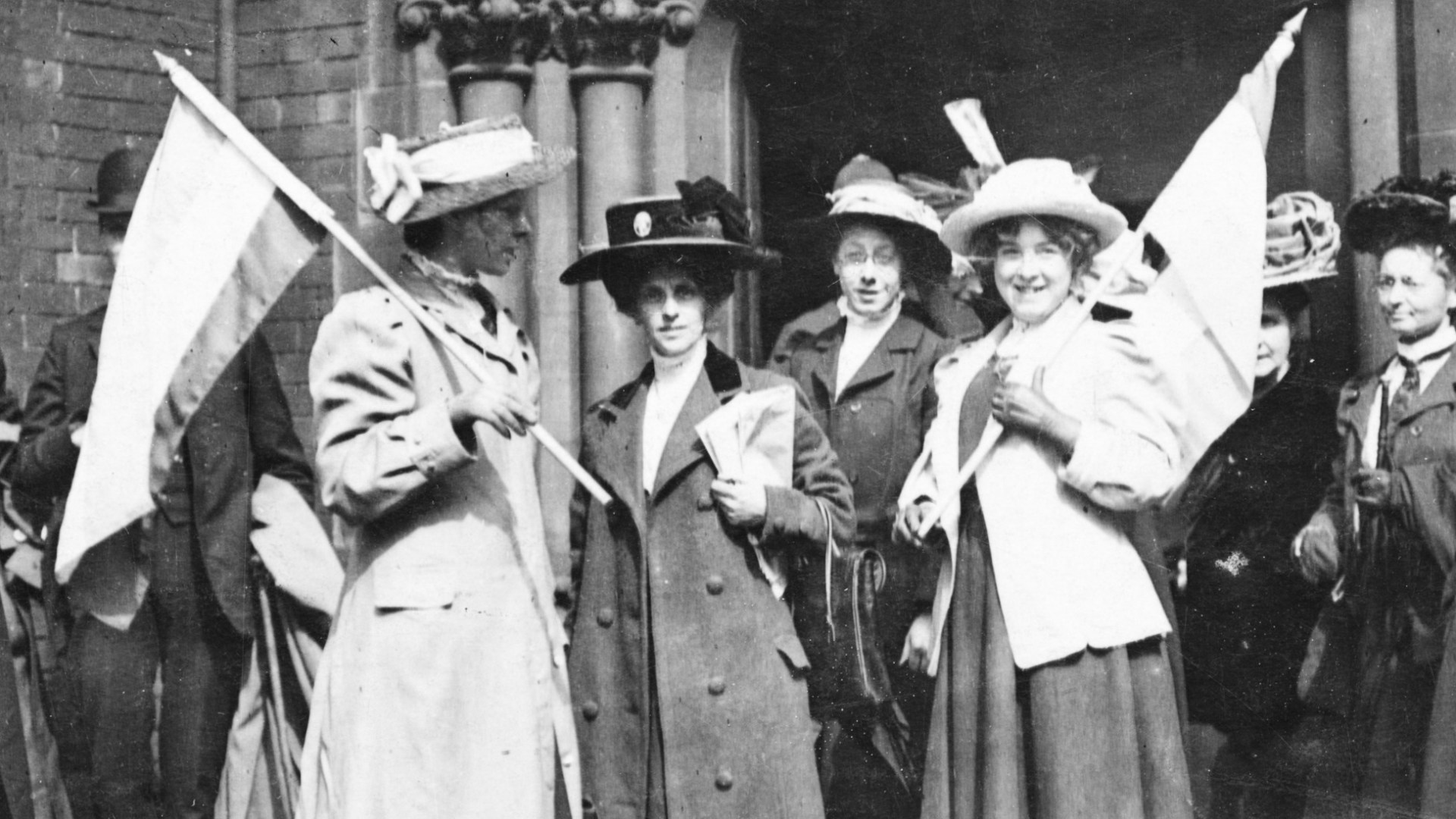
In the 18th century, the first Great Awakening brought a return to the earliest centuries' involvement of lay people. Women's involvement in missions sometimes included preaching, and on the frontier, Christian women experienced increased levels of autonomy. By the 19th century the pro-woman consciousness had a label: "the woman movement," now called first-wave feminism. Male and female Bible-believers gathered at the Seneca Falls Convention, where the group drafted a declaration addressing the role of women in society.
In the half-century that followed, many believers joined the push for women's suffrage, and dozens of foreign mission societies sent out women missionaries. The editor of The Message and Deaconess Advocate, Lucy Rider Meyer defended their role in her 1895 defense, saying, "In deaconess ranks to-day may be found physicians, editors, stenographers, teachers, nurses, book-keepers, superintendents of hospitals and orphanages… A bit of history shows that the 'new woman' is not an invention of the last decade but that, in the character of Hilda, Abbess of Whitby."
This "new woman" is not an invention of second-wave feminism either. Betty Friedan did not start the "woman movement;" Christians did. Motivated by the belief that men and women were made in God's image to "rule the earth" together, these pro-woman, pro-justice believers sought to right wrongs for those who had less social influence.
The teaching that women's involvement is a new phenomenon in church history has been used to silence those whom the Spirit has gifted for leadership. And advances made on behalf of women have been attributed entirely to secular feminism. We ourselves have been complicit, because we haven't known our own history.
Let us rise up, then, standing on the shoulders of those in Christ before us who—while embracing a high view of the family—have shared the gospel, taught the word, overturned unjust laws, buried the dead, and helped the suffering.
Isn't it time we reclaimed our own story?
Sandra Glahn (PhD, University of Texas at Dallas) is a professor at Dallas Theological Seminary and the author of the Coffee Cup Bible Study series. She specializes in the topics of gender and women's issues.