Note: Malachi 2, ‘I hate divorce.’ Said by guest as 5:2, says “The man who hates and divorces his wife,” says the Lord, the God of Israel, “does violence to the one he should protect.”
In 2000, Paige Patterson was asked about women who are abused by their husbands. Here’s what the now-president of Southwestern Baptist Theological Seminary said:
It depends on the level of abuse to some degree. I have never in my ministry counseled that anybody seek a divorce, and I do think that’s always wrong counsel. There have been, however, an occasion or two when the level of the abuse was serious enough, dangerous enough, immoral enough that I have counseled temporary separation and the seeking of help. I would urge you to understand that that should happen only in the most serious of cases. . . . More often, when you face abuse, it is of a less serious variety.
These comments recirculated on social media over the weekend, not surprisingly sparking fierce criticism of Patterson’s remarks.
On Sunday, Patterson released a statement where he clarified that his happiness in the situation came from seeing this woman’s husband return to church. He also said that physical or sexual abuse should be reported to the appropriate authorities, “as I have always done.”
Patterson also stated that, “I have also said that I have never recommended or prescribed divorce. How could I as a minister of the Gospel? The Bible makes clear the way in which God views divorce.”
Patterson’s statement seemed to suggest that abuse was not included as one of the ways in which divorce is biblically sanctioned. But that understanding isn’t really a biblical one, says Justin Holcomb, an ordained minister and the co-author of Is It My Fault?: Hope and Healing for Those Suffering Domestic Violence.
“Sometimes people like to out-conservative the Bible. … I appreciate the desire stay to close to the authority of Scripture,” Holcomb said. But some Christians may be wary about sanctioning divorce after abuse because it’s not explicitly mentioned as a cause to end a marriage, despite the fact that the Bible speaks frankly about violence and abuse, he says.
“In Psalm 11:5, the psalmist, referring to God, says ‘I hate the one who does violence and abuses,’” said Holcomb. “Some people want to quote Malachi 2, ‘I hate divorce.’ If that’s how that’s interpreted—which I’ve already put a question mark to—well you can find a whole bunch more passages that say that God hates the violent and the oppressor.
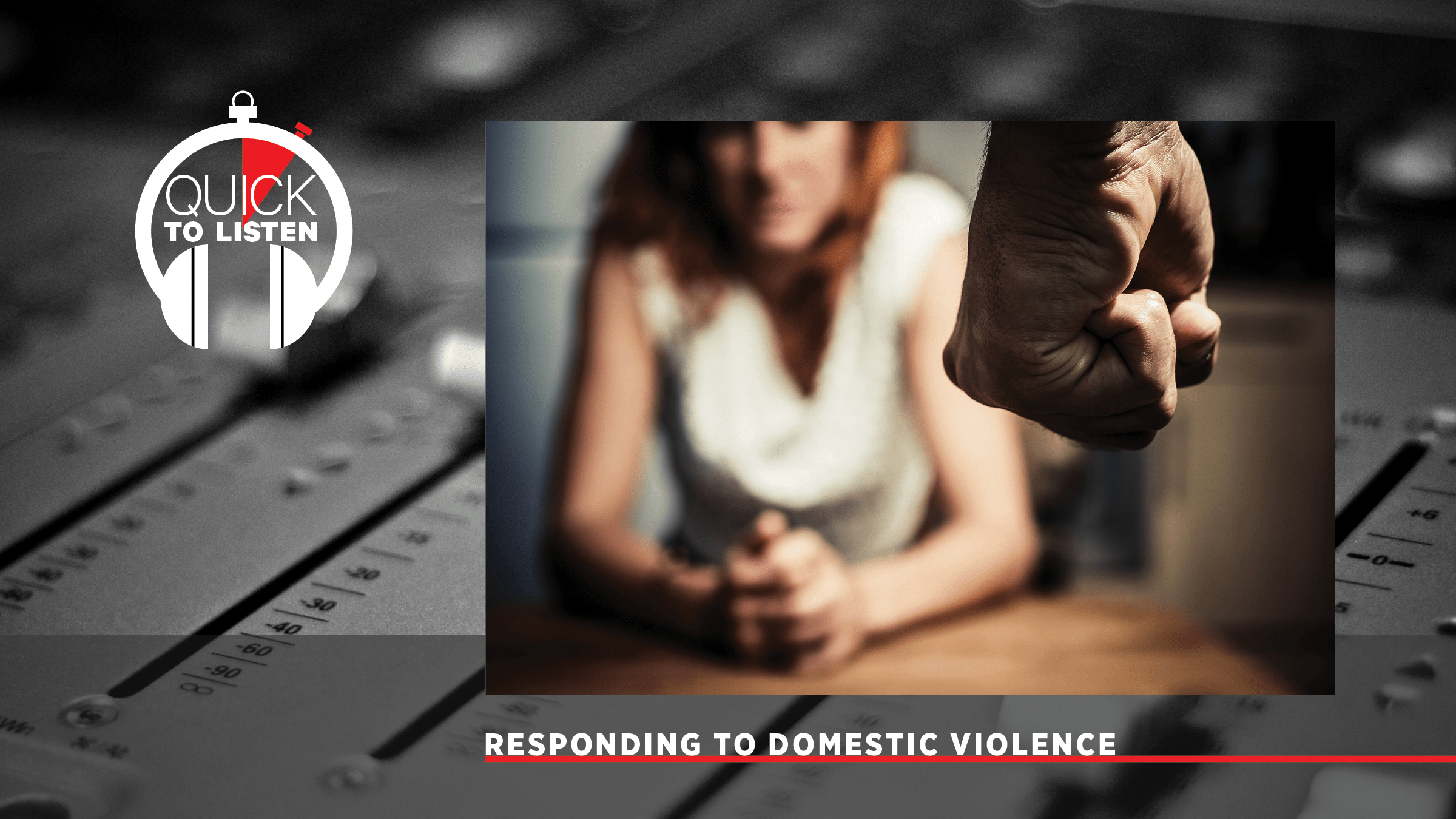
Holcomb joined associate digital media producer Morgan Lee and editor in chief Mark Galli to explain how he interprets Malachi 2, if there is a theology or faith practice that correlates with spouse abuse, and if there’s a real tension between pursuing a biblical marriage and taking a hard line on domestic violence.
This episode of Quick to Listen was brought to you by the Christian Standard Bible. To learn more about the Christian Standard Bible, visit CSBible.com/CT.
What is “Quick to Listen”? Read more
Subscribe to “Quick to Listen” on Apple Podcasts
Follow the podcast on Twitter
Follow our host on Twitter: Morgan Lee
Subscribe to Mark’s newsletter: The Galli Report
Follow our guest on Twitter: Justin Holcomb
Visit our guest’s website: justinholcomb.com
Learn more about making a safety plan
Quick to Listen is produced by Morgan Lee, Richard Clark, and Cray Allred