Theology

He Is Not One to Leave Us Hurting

The difficult work of embodied faith

Phil Schorr

Then will the eyes of the blind be opened
and the ears of the deaf unstopped.
Then will the lame leap like a deer,
and the mute tongue shout for joy.
Water will gush forth in the wilderness
and streams in the desert.
The burning sand will become a pool,
the thirsty ground bubbling springs.
In the haunts where jackals once lay,
grass and reeds and papyrus will grow.

— Isaiah 35:5-7

It’s not easy to both inhabit our bodies and trust in the work of the Spirit. Illness, disability, and abuse are part of our reality and urgently grip our focus. Our minds are often filled with dizzying, self-obsessed thoughts, and our own woes monopolize our attention.

We want relief: a place for our parched souls to find water, where the limitations of our bodies can be overcome. We cry out for rescue and vengeance for the injustices our bodies have absorbed. We hope to see Christ in the bubbling springs but get distracted by the burning sand underneath our feet.

The prophet Isaiah revealed God’s promise in the language of healing. Yes, the Messiah will bring spiritual peace, but he will not overlook the wounded bodies of the redeemed. He will usher us into Zion with singing and lead us to the bright dawning of our hope. He is not one to leave us hurting.

Though we know the promise, we’re prone to wander, following our own paths of disbelief. Christ’s redemption often takes a different shape than we imagined it would, and we, like John the Baptist, wonder if we are to wait for another king. Did we entrust our hope to the wrong person? Is he not who we thought he was? We long for our rescue to come and for it to tangibly change our reality. Jesus’ reply to John’s question is on those terms: “The blind receive sight, the lame walk, those who have leprosy are cleansed, the deaf hear, the dead are raised, and the good news is proclaimed to the poor” (Matt. 11:4–5).

He is the salvation Isaiah prophesied. The healing that comes from his hand testifies to his divinity. Israel waited for the coming of a Savior who would heal both spiritual and physical brokenness. That hope became reality in a baby’s birth. His miracles during his time on earth were the first signs of that long-expected healing. And yet, we still wait for him, torn and fragile.

Instead of letting our debilitation discourage devotion, we lift expectant eyes to the one who can save. This season, we will echo the hopes of ancient Israel as we sing, “O come, O come, Emmanuel.” There will be a time when the entirety of this prophecy will be our reality. We will walk in the holy way with the redeemed. Everlasting joy and gladness will be upon our heads and all sorrow will flee.

Until then, we remember the baby born in Bethlehem who came to open the eyes of the blind and proclaim good news to the poor and who will return to gather and save God’s people. He will bring divine retribution for the wrongs and healing for our hurts, and we will be made whole. “Say to those with fearful hearts, ‘Be strong, do not fear; your God will come’ ” (Isa. 35:4).

Reflection Questions:

1. As we reflect on the prophetic words of Isaiah and the healing ministry of Jesus, how does this bring comfort and hope to our own struggles with physical limitations, illnesses, or injustices?

2. How can we encourage one another to remain steadfast and strong in faith, despite the trials and challenges we face?

Beca Bruder is the managing editor of Comment Magazine.

This article is part of The Eternal King Arrives, a 4-week devotional to help individuals, small groups, and families journey through the 2023 Advent season . Learn more about this special issue that can be used Advent, or any time of year at http://orderct.com/advent.

Theology

When Grief like Sea Billows Roll Through Your Holidays

I learned how to mourn when my mom lost her mind, and then her life, to dementia.

Christianity Today December 7, 2023
Illustration by Christianity Today / Source Images: Unsplash

When my mother passed away last winter, I discovered the gift of grief.

In the span of a single year, my mother went from a vibrant, constant presence in my life—through phone calls, texts, and when we could, in-person visits—to a swift decline in mental and physical health.

The first sign, for me, was an unexpected call at 5 a.m. one morning. Mom had many skills but being active at 5 a.m. was not one of them. Calls at 10 a.m., lunchtime, or late in the evening were much more likely. I immediately answered, thinking something had to be urgent.

“Mom, is everything okay?” I asked, pretending I had been up for hours while clearing the cobwebs from my mind and the frog from my throat.

“Oh, I’m just calling to see how you are doing,” she said, “but I hope I’m not interrupting dinner for you guys.”

Maybe she’s just confused. Maybe she had a bad night’s sleep, I thought. I didn’t want to believe this was what my sister, Laura, had been gently warning me about. My sister and her husband had recently moved back to Illinois to live near my parents. And in recent weeks, they had told me that Mom had forgotten how to write a check. Well, that’s not that crazy. Who writes checks anymore? I had rationalized at the time.

“Mom, you do know that it’s five o’clock in the morning, right?” I offered.

“Oh, I’m so sorry. You know, I keep getting my times mixed up, with daylight savings and all,” she replied, though we were nowhere near a time change. After talking a bit more, we ended the call. When I told my sister about it, she said these sorts of incidents were becoming more common.

A few days later, I got another call from Mom—this time more bizarre. She insisted that men were in her house, that my father had let them in, and that she’d called the police. My heart sank as a realization began to set in: I think we are losing her.

We clung to one last desperate possibility that it could be Mom’s iron deficiency, something she’d struggled with for much of her life. We were hoping against hope that with a few doctor visits and medical adjustments, Mom might return to her normal self. My sister dutifully begged, cajoled, and shepherded her to doctors and specialists, updating me every time.

My dad quit his job so he could take care of Mom as she slowly lost her memory, until we learned the hard, final, difficult news: The results of her MRI revealed significant dementia.

Dementia is still a mystery, even to the most learned minds. In the season after her diagnosis, we talked with experts and with friends who had endured this journey with their own loved ones. There was no way to predict which course Mom’s health would take. Would she, like the sweet wife of a friend in my small group, slowly decline over nearly a decade? Or would she, like my late mother-in-law, decline quickly?

When you lose a loved one to dementia, you grieve twice—once when they lose their mind, and again when they lose their life.

The early grief is like a weight on the soul. I can’t explain the heaviness you feel in realizing that the one who birthed you, raised you, consoled you when you came home crushed after a bad day at school—the one who stood on the sidelines and cheered at your basketball games, who said everything you wrote was amazing even when it wasn’t; the one who introduced you to Jesus—is slipping away.

This was a particularly difficult season, since I had moved 18 hours away to Fort Worth after living near them for almost 30 years. Much of the burden of care fell to my sister, although we walked through difficult decisions together along with my brother, also local. Yet I was plagued with guilt: Was it a mistake to not stay near my parents? Had I chosen my career and calling over loving Mom? Of course, my friends and family reassured me that this wasn’t true, but I still wrestled with these thoughts.

Another recognition hit me as well: This is it. In this life, I’ll never really know Mom as she was. There is no going back. Eschatologically, of course, we have the blessed hope of the Resurrection, where Christ will breathe new life into his people, in both our bodies and souls. But I would still grieve the years of her bodily absence and the missed moments with my kids and their grandmother—the loss of phone calls and texts.

Once at a faculty meeting, we sang “It Is Well with My Soul,” and I couldn’t stop myself from weeping freely. The hymns bring me back to my childhood, attending our small Baptist church three times a week dressed in our Sunday best, singing lyrics that I barely understood at the time. But the words embedded themselves deep in my heart over the years and were now bubbling up, like water drawn from a deep well.

I’ve never been much of a crier. My emotions are usually more visceral. I get angry, I brood, and then I’m over it. But the sudden decline of my mother’s health and her subsequent passing has revealed fresh reservoirs of pain that have seen my tears flowing more frequently.

Yet I’ve come to believe that grief is a gift, a human response given by God to help fill the space where our loved one once stood—a cushion against the deathly blows of a cursed world and a sign of hope that fuels our longing for the world to come.

I’m comforted repeatedly by the humanity of Jesus as he looked in on the decaying corpse of his friend Lazarus. John 11 seems to indicate that Jesus was both full of sorrow and full of rage.

The rage is just, for we are told death is the work of the enemy, the final foe that Jesus defeated as he endured the cross and walked out of the grave. It’s good and right to lament the loss of loved ones. To blithely skip past this anger at death is to diminish the way God values human life. To pretend it’s not a big deal when we lose a loved one is to minimize the ugly finger of Satan and to lessen the impact of sin.

Too often, as Kate Shellnutt wrote for CT, we’re not mad enough at death—for “while dying is a fact of life, it’s also the enemy we’re called to resist.”

Mom did decline quickly. We had to make difficult decisions about memory care facilities and insurance coverage, deciding how to help her live out her final days in dignity—choices our society makes crueler and grimmer than they should be. My faithful father visited every day, as did my sister, as they both shepherded Mom gently toward the end. I squeezed in as many calls with Mom as I could, so I could hear her voice and so she could talk to my children. Thankfully, she still recognized all our names and faces.

We made a special trip last Thanksgiving, celebrating with Mom in her care home. Her memory was jumbled, barely able to recall very recent details but elaborating in near-perfect detail scenes from our childhood and from her own. One medical expert I spoke with said our brain is like a cabinet storing memories in organized files by date, and dementia is like a storm jumbling those files, scattering random bits of memory out of sequence and with little order.

As autumn faded into winter, so did Mom. Her body withered down to nearly skin and bones. I made one final trip with my eldest daughter, Grace, and was taken aback when I entered her room. I could barely recognize Mom. But still, we gathered and sang hymns. We comforted her. I leaned over and told her how much I loved her, that she’d been a good mother. She could barely speak but she was able to whisper, “I love you. I’m proud of you.”

I wept. Mom had always told me she was proud of me, and as a 45-year-old husband and father of four, I still needed to hear those words. To hear them at the end of her life was a treasure I’ll never forget.

A day later, Mom passed into eternity, her body temporarily yielding to death. And thus began my second stage of grief—where I remain to this day.

The famous lyrics of Horatio Spafford’s hymn have meant a lot to me over the past year: “when sorrows like sea billows roll.” We know Spafford wrote that while on a ship, lamenting the tragic and sudden death of his family via shipwreck. And yet it describes the way grief often visits like a tide crashing onto the shore of our hearts before leaving. Grief cannot be escaped, and as Amanda Held Opelt writes, it’s not something that can be outsourced.

I feel this often in these days since Mom’s passing—sometimes in a worship service, and often when a familiar hymn brings the grief back. I attended a conference recently where the worship team played “Jesus Paid it All.” I trembled when I sang the words, “I hear the Savior say, / ‘Thy strength indeed is small, / Child of weakness, watch and pray, / Find in Me, thine all in all.’”

Losing my mom has made me recognize afresh that I am a child of weakness. My strength indeed is small. The loss of a loved one removes our veneer of self-confidence, our masks of self-sufficiency. C. S. Lewis said that the death of a loved one is like an amputation. So, until we meet again in that heavenly city, I’m a son without a mother—walking with a limp and leaning on Jesus.

Paul told the Thessalonians that we do indeed grieve, but we do not grieve without hope. I find the waves of grief are a welcome gift helping me say, with hope, that even this is well with my soul.

Daniel Darling is the director of the Land Center for Cultural Engagement at Southwestern Baptist Theological Seminary and the author of several books, including The Characters of Christmas, The Dignity Revolution, and Agents of Grace.

The ‘Soul of India’ Now Lives in Its Cities. Is the Local Church Ready?

How Christian outreach has come to look like the YMCA, call center ministries, and the “Christward” movement model.

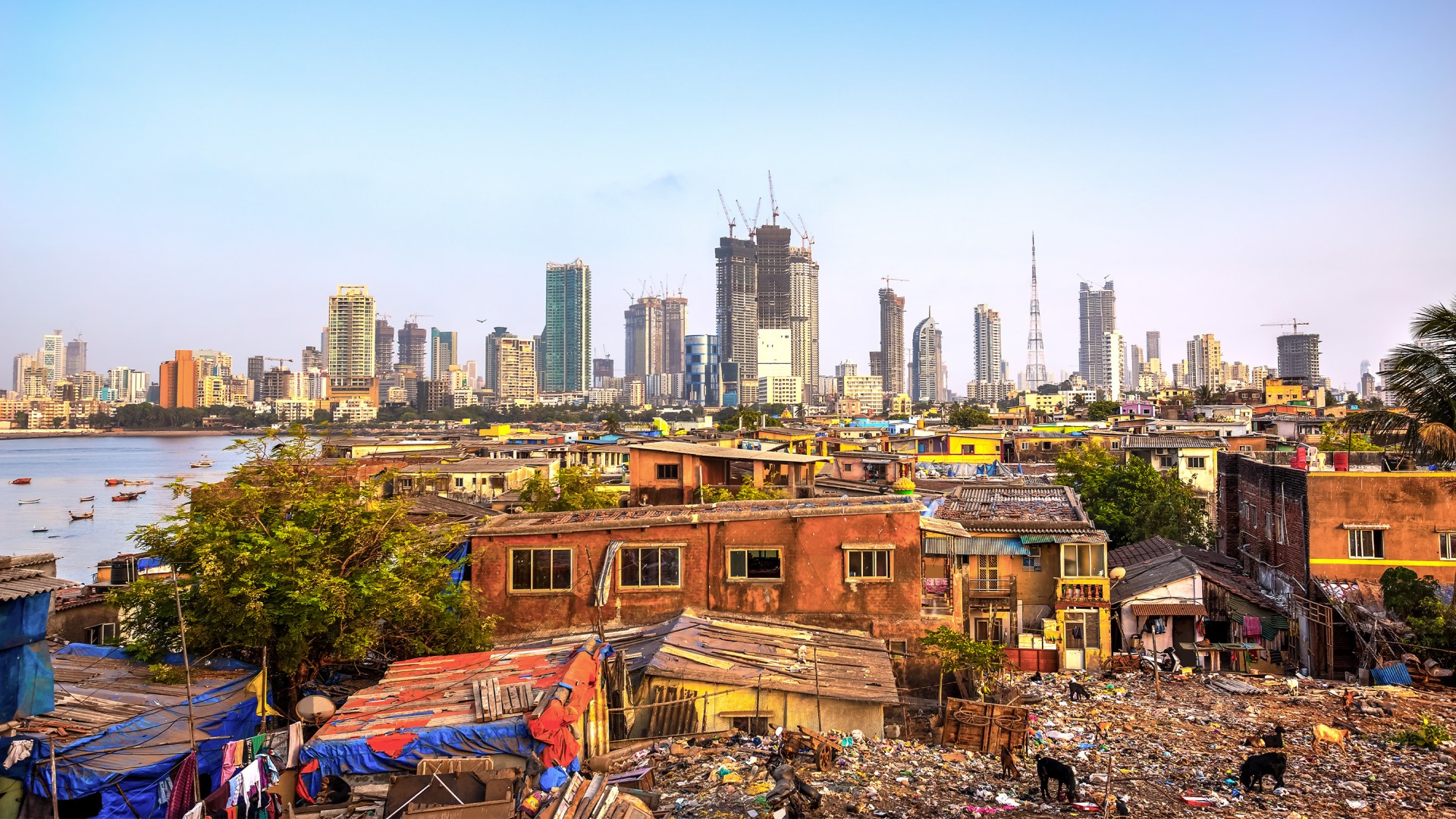
Mumbai, India

Mumbai, India

Christianity Today December 7, 2023
Adrian Catalin Lazar / Getty / Edits by CT

India’s swift urbanization is reshaping the nation’s identity, with over one-third of the population now in major cities. For many missiologists, this new demographic reality calls for a recalibration of the church’s approach, one that moves beyond traditional rural missions to address the complexities of urban life.

In recognition of this shift, in 2014 the Evangelical Fellowship of India created the National Centre for Urban Transformation (NCUT) to educate and train Christian leaders to reach migrants, professionals, the poor, women, and students in urban environments. NCUT develops urban ministry courses for Bible colleges and seminaries, conducts research, and is working in 32 of the country’s cities with populations ranging between 500,000 to 9 million residents.

This September, the organization released Rethinking Urban Mission and Ministry in India, edited by urban missiologists Atul Aghamkar, who is also NCUT’s national director, and James Patole.

CT spoke to Aghamkar about India’s shift from village to city life, how Christians are reaching call center employees and other professionals, and why the rest of the world should pay attention to “Christward” movement models.

How have Christians historically engaged cities?

Christian missions historically began in cities, evident with the arrival of the first Protestant missionaries in Tharangambadi (a coastal city in southeastern India) and William Carey’s leadership in Kolkata (the capital of West Bengal State). Recognizing the strategic importance of cities, missionaries established their bases there, initially focused on reaching the upper castes, especially Brahmins. When this strategy struggled to take hold, they shifted to the rural areas and ministered to outcastes, which is where attention has largely remained until today.

Despite this shift, cities remained vital. Educational, medical, social, and philanthropic initiatives flourished, with large churches catering to the educated and upper-class converts. Organizations like YMCA and YWCA continue to influence urban masses. Prominent educational institutions and medical facilities have left a lasting impact, and today, this legacy of urban missions continues with a fresh vision and commitment.

Gandhi said, “The soul of India lives in its villages.” Has that changed now?

M. K. Gandhi was devoted to liberating India’s village-dwelling masses. He envisioned each village functioning through a Panchayat (village council) in independent India—a decentralized form of government where each village manages its affairs, forming the political foundation.

In the past 75 years, India has rapidly urbanized, challenging Gandhi’s traditional viewpoint, with over one-third of the population in “million-plus” cities and cities with populations between 200,000 and 800,000. But satellite images suggest 63 percent of India’s built-up area is urban, largely concentrated in the poorer northern belt.

Urbanization in India goes beyond city boundaries; it’s about the pervasive urban mindset even in villages, which are no longer as close-knit as they used to be, and individualism and consumerism on the rise.

When we say “urban missions,” what are we distinguishing it from? Why is that important?

Traditionally, mission focus prioritized reaching remote tribes and rural populations, resulting in strategies and perspectives rooted in a rural/tribal mindset. While modern mission work has successfully impacted these populations, urban areas have been overlooked.

The rapid urbanization of the world hasn’t been swiftly acknowledged by global missions agencies, necessitating a paradigm shift. Many agencies continue to focus on the unreached in remote areas, neglecting millions in urban centers. Unlike rural mission that might follow established models, urban mission requires tailored strategies to address the complexities of city life, including diverse populations, sociocultural dynamics, and the fast-paced urban lifestyle.

Does India have a history and legacy of urban mission?

Early missionary societies, like the Church Missionary Society (now known as the Church Mission Society) and the Methodists, began their work in urban centers, focusing on cantonment, or army, areas. The Salvation Army, YMCA, and YWCA also concentrated on urban outreach, particularly among the poor.

Recently, significant urban ministries in South India, such as megachurches, have emerged, impacting educated urban youth. Independent churches in city peripheries reach lower-income communities.

One of the most impressive and unique models now seen in key northern Indian cities are the various “Christward” movement models. While there have been reports from gatherings as large as 2,000 to 20,000, most are small groups of people from urban areas who hail from middle- to low-caste backgrounds who come together to learn more about Jesus. Led by bi-vocational pastors/leaders drawn from within their communities, these movements demonstrate a spontaneous response of urban people to the person and teachings of Jesus Christ without becoming part of the established church or traditional Christianity.

These movements do not fit into any traditional mission mold and are unique because they allow those interested in Christianity to participate without them crossing the sociolinguistic and cultural borders. That is, they retain many of their cultural and linguistic distinctives, but their theology is Christian. This model of the emerging Christward movements may serve as a strategic example for the rest of India and perhaps the world.

Do you know of any existing urban outreaches to professionals and students in India or elsewhere that can serve as models for urban churches looking to expand their ministry to professionals and students?

While we may not have many specific models for reaching urban professionals, some urban churches regularly reach particular professionals. For example, an IT company in Bangalore, led by a Christian group of professionals, makes a very conscious effort to engage with non-Christian IT professionals and arrange some innovative and creative events, through which they attempt to communicate Christian values and perspectives on issues that these professionals face.

Another Christian group has started a similar ministry among call center professionals, who usually work at night and leave early in the morning. This church has identified Christians at different centers in Bangalore who network with these young professionals and organize events in their cafeterias, where they can interact with other Christian professionals and connect with other Christians who keep in touch with them after their work.

Ministry leaders also organize preaching and teaching sessions for call center professionals, create spaces for people to share their life concerns, and offer Christian counseling. Other times, seekers’ events are organized for those who show further interest to help them know more about Christ. In some call centers, early morning praise and worship events are scheduled, keeping in mind that non-Christian professionals may also attend. The younger Christian professionals lead these with contemporary gospel music and contextually appropriate messages.

In Prayagraj in the state of Uttar Pradesh, a medical professional organizes meetings and defends the Christian faith through a regular Facebook blog. Christian coalitions and organizations equip professionals to engage with their secular counterparts.

For students in major cities, organizations like the Union of Evangelical Students of India and the Evangelical Graduate Fellowship, along with intercollegiate prayer fellowships and independent churches, disciple university and college students during their transitional phase.

What has been the hardest part of your urban mission work?

With all the efforts we are putting in to create an awareness about contemporary cities becoming urban mission fields, the urban church leadership is slow in becoming an urban mission force. It’s frustrating at times.

The other matter is financial. Most donors don’t see the need for supporting urban mission, as they think that there are sufficient financial resources available in cities.

Finally, most leaders who are serving in the city are not trained in any aspect of understanding and engaging the city, hence, there is little proactive urban witness undertaken by them.

Please elaborate on what the church can do to minister to the urban poor and migrants.

In every city, slums house a significant portion of the poor, mainly rural migrants with minimal skills for urban survival. Exploited and underpaid, they form a substantial unorganized labor force.

The city’s church is obligated to show Christlike compassion by addressing the needs of the poor. This involves healthcare, education, nutritious food, job training, and legal assistance for settlement issues.

The church must be particularly sensitive to migrants forced into the city due to natural calamities. Providing acceptance, food, shelter, and sustenance, the church can also communicate the gospel effectively within the migrants’ networks, both in the city and in their native places. This requires the urban church to develop holistic plans, networks, and partnerships with experts working among the urban poor.

Over half of the urban population in the church are women. How can urban churches address their concerns and realities?

Women in urban churches actively participate in worship services and support activities like prayer fellowships and visiting the sick. Despite their involvement, formal participation in structural ministries is often limited due to denominational or doctrinal distinctions.

Urban churches can harness the potential of women by empowering them to contribute to various ministries. Their skills in teaching, nursing, administration, and IT can be utilized effectively and women can play a vital role in outreach and community engagement.

Recognizing women as guardians of faith and organizing seminars and workshops can nurture Christian values, impacting families and strengthening the church. Women with counseling abilities can assist couples and children during crises. Urban churches can involve women in afterschool tuition classes to support children.

While exploring women’s ministry potentials, it’s crucial to also address their concerns. The church can assist newly married couples facing issues and provide fellowship through cell groups for women experiencing loneliness in cities.

Theology

Blessed Are the Bearers of ‘Han’: What Koreans and the Israelites Teach Us About Collective Grief

My culture and the Bible call us to become aching visionaries.

Christianity Today December 7, 2023
Illustration by Christianity Today / Source Images: WikiMedia Commons / Getty

As a Korean American who grew up around people who had never heard of my motherland, I feel like I’m living in an alternate universe these days. Korean culture is now everywhere: The Korean boy band BTS plays on the speakers at Target, Korean dramas fill up Netflix queues, and Korean skin care is its own category at Sephora. I’ve even found Korean BBQ chicken wings at a restaurant in rural Michigan.

But beyond these marketable aspects of the “Korean wave,” there’s a lesser-known word that is just as key to Korean culture—and my life—as kimchi and K-pop: han (한). One cannot fully understand Koreans without understanding han, so people say; yet at the same time, it is notoriously difficult to translate.

Broadly defined, han is a deep sorrow, resentment, and rage, felt in the collective and wrought by enduring oppression. Han hearkens to history and is relentlessly present from generation to generation. It is tinged with a haunting vengeance and a sense of incompleteness, a potent concoction that can lead even to death by hwabyeong, the Korean “anger syndrome.”

Han is what grips Steven Yeun in Beef. It’s what drifts through the lines of Korean adoptee and transnational Korean poets. It’s the only way to fully describe the intense emotions of families separated by the DMZ—the demilitarized zone between North and South Korea—families like my own.

As a Christian, my experiences of han have sometimes felt at odds with my faith. What can such a dark and weighty word have to do with a gospel of hope, joy, and love?

It turns out, a lot.

A history of han

According to Korean American scholar Michael D. Shin of Cambridge University, han is a fairly modern concept. It doesn’t show up in classical Korean literature, which tends to be jaunty and satirical, or in the earliest Korean-English dictionaries.

Han, derived from the Chinese character hen (恨; resentment, hatred, or regret), would become an established part of Korean culture only in the early 20th century during the Japanese occupation of Korea. In the following years, the Korean War deepened the sense of han as the country was divided in two and left in shambles.

By the 1980s, han was cemented as a self-identifying trait for South Koreans amid the country’s miraculous transformation into a world-class metropolis—a change that was fraught with internal political upheavals. South Korean poet and activist Ko Un wrote then, “We cannot deny that we were born from the womb of han and raised in the bosom of han.” If you are Korean, people have said, han runs through your veins.

Other scholars of Korean descent, however, have more recently called the concept of han into question, especially regarding its usage within South Korea today. Minsoo Kang, professor of history at the University of Missouri–St Louis, writes that since the late 1990s, han has declined in cultural importance within the nation, “now to the point of irrelevance” as a “retrograde notion from the past,” especially among younger generations.

And what if han is not actually uniquely Korean but something that can be experienced in other cultures as well? Korean American theologian Andrew Sung Park, for example, has argued that, just as Koreans have han, Vietnamese have han, Mongolians have horosul, and Indians have upanaha.

Despite these arguments, scholars like Sandra So Hee Chi Kim have maintained that han is still an important concept to understand because it “carries within it a history of unmitigated collective traumas in Korea, which have created a very specific social and national imaginary in Korea and Korean diasporas.”

In other words, it is a word for the unspeakable grief of Korean historical memory—a grief that unites in the way it pounds in the hearts of a common people, yearning to feel whole.

It reminds me of another people who felt this way: the Israelites of the Old Testament.

God and han

Caught between larger kingdoms, whether Egypt and Mesopotamia or Assyria and Babylon, ancient Israel knew what it felt like to face loss after loss. Like Korea, Israel had a North and a South, saw brother turned against brother, and knew the trauma of generations of captivity and oppression.

Israel also knew how to cry out to God in distress, like the first Korean Christians did.

Although han would become a cultural fixture only in later decades, its first appearance in Korean history was at a revival in Pyongyang in 1907. This was when Christianity began to flourish on the Korean peninsula, says Shin, the Cambridge scholar.

The history of han, it turns out, is entwined with the history of Korean Christianity.

To the outsider, the revivals in 1907 were terrifying. American missionary William Blair called the days-long prayer meetings “the Korean Pentecost,” during which the people shouted and wailed and prayed out loud in unison for hours on end. “The effect was indescribable—not confusion, but a vast harmony of sound and spirit, a mingling together of souls moved by an irresistible impulse of prayer,” said Blair. It was “the like of which I had never seen before, nor wish to see again unless in God’s sight it is absolutely necessary.”

Something about Christianity unbottled the raw han of the Koreans and brought it thundering into the presence of God. Today, over a century later, Korea is home to the world’s largest evangelical megachurch—Yoido Full Gospel Church in Seoul—and is one of the top missionary-sending nations. Maybe han, remarks Shin, is why Koreans took so well to Christianity.

It’s not hard to guess why. In the torrential cries of the Koreans at the turn of the century, living under threat of colonization, we can hear the similar cries of the Israelites.

In his book Old Testament Theology, John Kessler writes that psalms of individual and communal lament—not praise—are the most frequent type in the Psalter. The Israelites’ faith “was not a faith unable to embrace both the reality of a relationship with Yahweh and the experience of horrible distress at the same time,” he says.

Addressed to God, these psalms cover a wide breadth of situations: when falsely accused, in times of sickness or distress, in expressions of sin and guilt, and in times of communal crisis like exile and conquest. The psalms are “imprecatory,” calling for revenge against enemies. They are willing to even blame God for various situations, holding him responsible for the people’s sufferings.

It seems safe to say that the Israelites knew something akin to han too.

“You gave us up to be devoured like sheep and have scattered us among the nations,” cry the Sons of Korah in Psalm 44, and in their words I hear the cries of my own elders, who were not allowed to speak their native tongue under Japanese colonial rule and whose families were later torn asunder, caught between the proxy battles of warring nations and ideologies. “For your sake we face death all day long; we are considered as sheep to be slaughtered” (vv. 11, 22).

Like han, communal psalms of lament are not just individual expressions of pain during hard times; they are choruses of sorrow sung by an entire community, knit together with a common history and uttered in the present throes of an unresolved despair.

Korean han, as it has come to be understood today, often directs turbulent emotions toward other people and systems or simply into the void. But han that is healed and sanctified becomes a means to envision and call for a better world. In other words, han can become prayer.

From han to lament

In the summer of 2005, I found myself standing on the Chinese side of the Tumen River, looking across to North Korea, my grandfather’s homeland, which he left as a child fleeing the Korean War with only his mother, never to see the rest of his family again. The river was far shallower than I’d imagined, the other side much closer than I could have thought, yet the country and its people—perhaps still my people—were impossibly far.

Later that evening, our team, which consisted mainly of young Korean Americans and Korean Canadians who, like me, have complicated connections to the North, broke down in tears as we prayed out loud in unison.

We lamented over the river, where we knew refugees regularly crossed into China for a life of hardship and poverty. We grieved the family members we would never know and the intense persecution experienced today by our North Korean family in Christ. We cried out in our han for the wounds of our parents and grandparents, for the rift between two nations that we could not heal.

We prayed with our han, and it took us to the Cross.

Today, amid news upon news of other regions’ generational enmities and sorrows—Israel and Palestine, Ukraine and Russia, Armenia and Azerbaijan—my han becomes a small bridge into mourning alongside the world. When han becomes prayer, our collective sorrow reaches beyond ethnic boundaries to touch the wounds of the nations.

What’s even more astonishing is that the Spirit also laments within us; we become, writes N. T. Wright, “small shrines where the presence and healing love of God can dwell.” Maybe this is part of the blessing that Jesus promises to those who mourn in Matthew 5:4: When we grieve, God is with us.

“Who then are the mourners?” asks theologian Nicholas Wolterstorff in Lament for a Son:

The mourners are those who have caught a glimpse of God’s new day, who ache with all their being for that day’s coming, and who break out into tears when confronted with its absence. … They are the ones who realize that in God’s realm there is no one who suffers oppression and who ache whenever they see someone beat down. … They are the ones who realize that in God’s realm of peace there is neither death nor tears and who ache whenever they see someone crying tears over death. The mourners are aching visionaries.

Both Wright and Wolterstorff articulate what our communal grief as believers can look like when cupped in the hands of God. He can transform broken, despondent bearers of han into mourners whom he calls blessed, whom he anoints even with hope.

Whether han is uniquely Korean or not, in Christ, all of us are called to learn how to collectively lament before the face of God: to become aching visionaries loved by an aching God (Isa. 53:3).

Each time I encounter han in Korean art, media, or culture or feel it stirring inside my own heart, I remember its origins at a Christian revival. I remember that in Christ, our deepest sorrows and pains can sweep us into the presence of God. The mourners cannot heal the sorrows of the world, but we can go to the one who will—and is even now so doing.

Sara Kyoungah White is a copy editor for Christianity Today.

Theology

The Synagogue Visit That Changed Everything

How Jesus’ arrival relieves our anxious waiting

Phil Schorr

“The Spirit of the Lord is on me,
because he has anointed me
to proclaim good news to the poor.
He has sent me to proclaim freedom for the prisoners
and recovery of sight for the blind,
to set the oppressed free,
to proclaim the year of the Lord’s favor.”

Then he rolled up the scroll, gave it back to the attendant and sat down. The eyes of everyone in the synagogue were fastened on him. He began by saying to them, “Today this scripture is fulfilled in your hearing.” — Luke 4:18-21

Not long ago, a friend of mine took my daughter to the mall with her family. I was grateful for a morning of uninterrupted work and was about to go pick her up when I heard my husband’s phone ring. It was my friend’s husband: “There was a shooting at the mall. I talked to my wife—she and the girls are okay, but they’re being held on the premises and haven’t been allowed to leave yet.”

I got to the mall in record time and, dizzy with urgency, did the hardest waiting of my life. Waiting for updates from the police; waiting to be able to speak with my friend to find out what happened. Waiting to hold my daughter in my arms; waiting to inspect her injuries; waiting to ease her fears and mine.

Urgent fear resonates through so much around us, whether directly, in the lives of those we love, or the stream of information on wars, disease, corruption, and violence. The need is urgent—where is our hope? As I struggle to keep hopelessness at bay, I imagine how the ancient Jewish community might have felt as they awaited their deliverance and the arrival of the Messiah. It had been 400 years since they had heard from God, and they were subject to overwhelming oppression and crushing captivity. They must have wondered if God had forgotten them and whether a Savior was truly coming.

And then one day, a man named Jesus walked into the synagogue and stood up to read from the scroll of the prophet Isaiah:

The Spirit of the Lord is on me, because he has anointed me to preach good news to the poor. He has sent me to proclaim release to the captives and recovery of sight to the blind, to set free the oppressed, to proclaim the year of the Lord’s favor. (Luke 4:18–19, CSB)

Jesus wasn’t finished yet, though. He wasn’t simply reminding them of a future they could look forward to. Instead, he made an astounding proclamation that would have made jaws drop: “Today as you listen, this Scripture has been fulfilled” (v. 21).

It’s the official announcement from Jesus that he is ushering in the kingdom of God. As we follow him, we no longer walk through the bad news of our world with despair. Instead, we look to Jesus sitting on his throne. We can stand on his promise of redemption, even when we face horrifying circumstances in our own lives, like the day I waited for my daughter at the mall. When I finally saw her face and held her body to mine, the relief and joy I felt was unlike any I have experienced before. It was a reminder to me that God is not done. That this is not the end. The King is here, and eternal jubilee is at hand.

Reflection Questions:


1. How does the author's story of urgency and fearfulness resonate with your own experiences of waiting and longing for deliverance or hope in difficult situations?

2. When Jesus proclaimed the fulfillment of the messianic mandate from Isaiah, he declared that the kingdom of God had arrived. As followers of Jesus, how does this proclamation empower us to approach the challenges and darkness of our world with hope and action?

Kristel Acevedo is an author, Bible teacher, and the Spiritual Formation Director at Transformation Church just outside of Charlotte, NC.

This article is part of The Eternal King Arrives, a 4-week devotional to help individuals, small groups, and families journey through the 2023 Advent season . Learn more about this special issue that can be used Advent, or any time of year at http://orderct.com/advent.

Church Life

As Evangelicalism Grows in Catholic Latin America, So Does Secularism

A Colombian scholar assesses the state of the movement roughly 150 years after Protestant missionaries first arrived.

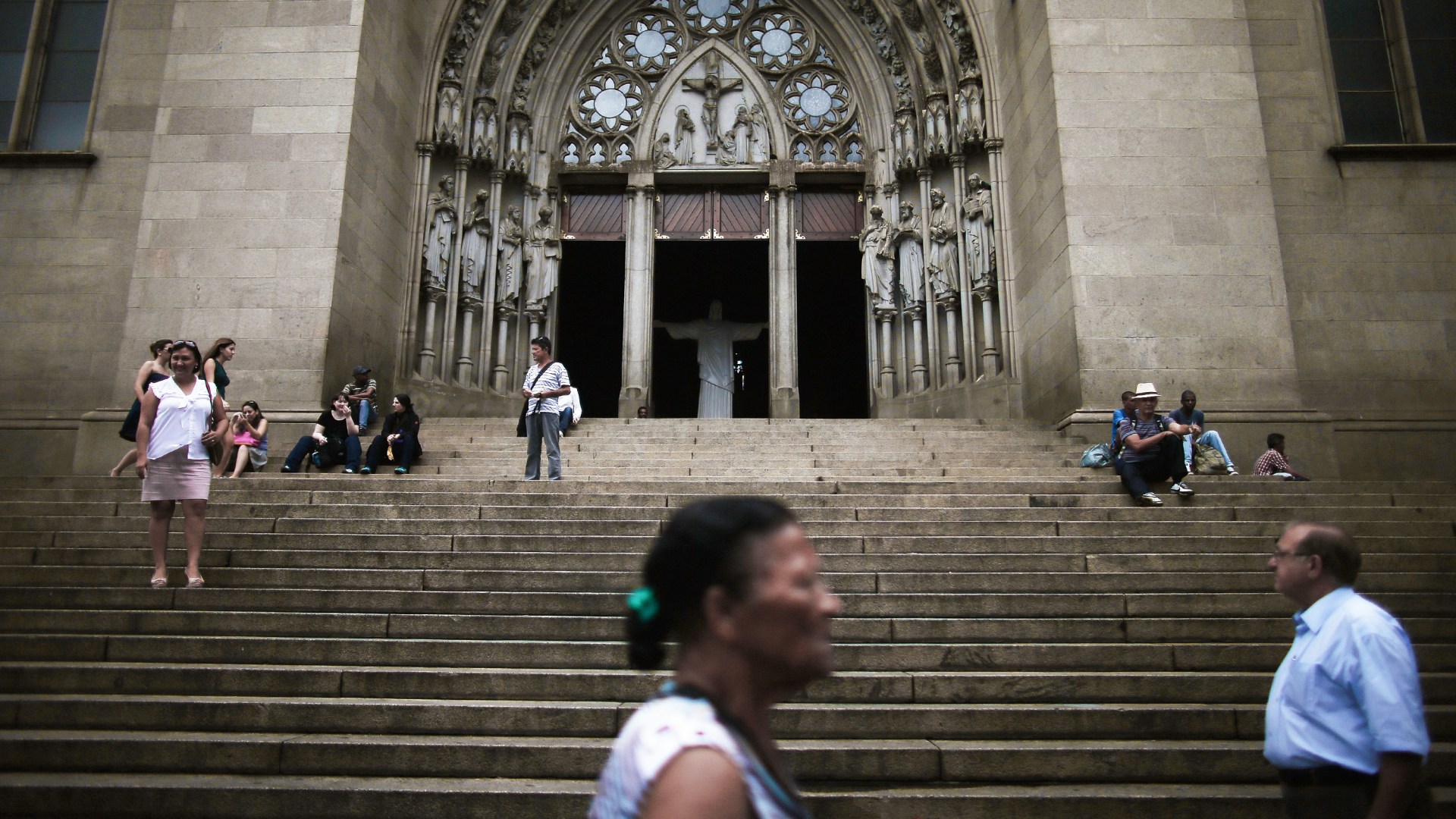
People walk past a Catholic church in Brazil.

People walk past a Catholic church in Brazil.

Christianity Today December 6, 2023
Mario Tama / Staff / Getty / Edits by CT

In recent years, the growth of the evangelical movement in Latin America has made headlines. But Colombian historian Daniel J. Salinas has been more surprised by just how long its taken for the movement to truly take hold.

Protestant missionaries first arrived in Latin America around 150 years ago in the 1870s. Today in Brazil and Guatemala, the evangelical population is at 41 percent and 31 percent respectively. These countries are outliers to the slow growth of evangelicalism experienced by most of Latin America, which has been historically Catholic.

“The main factor that has challenged that power of the Catholic church hasn’t been Protestantism but secularism,” he said. “If you talk to anybody in Latin America, they will say they’re Catholics, even though they have never gone to church. Most people follow the rituals of the predominant religion, but there is no commitment to the doctrine of that religion. They are baptized as infants, go through confirmation, and will marry at the church, but that’s all.”

Salinas grew up attending a Pentecostal church in Bogota, Colombia. After working as a mechanical engineer, he believed God had called him to do more with his life and served as a missionary in Uruguay, Ecuador, Bolivia, and Paraguay. Currently, Salinas teaches at a number of seminaries, including Fundación Universitaria Seminario Bíblico de Colombia in Medellín. He is the author of Taking Up the Mantle: Latin American Evangelical Theology in the 20th Century, which was released with Langham Global Library in 2017.

Salinas recently spoke with Geethanjali Tupps about his journey as a missionary in Latin America, the historic and present tensions between Protestants and Catholics in the region, and the impact of 20th century South American political history on the church.

What type of impact did Protestant missionaries have when they began arriving in the 1870s?

The early missionaries—Presbyterians and Methodists who arrived during the late 1800s and early 1900s—opened clinics and schools, many of which are still open and well-respected today. After the 1930s and 1940s, however, most of the missionaries only opened churches. Nothing else. The initial social interest was lost.

During this era, missionaries from the United States going to Latin America were seen primarily not as people who wanted to spread their faith but as those who were trying to make Latin Americans more accepting of the United States. In fact, you can find books written by Catholics claiming that Protestant missionaries are spies of the CIA or are workers sent by the United States to change our way of life and change our culture.

Overall, it was a slow growth and a very difficult situation. Many of them probably went to be with the Lord without seeing the results of their efforts. Even in the 1960s and 1970s, the evangelical church was still very small.

How have Latin American governments responded to the evangelical movement?

It was not easy for the missionaries that came to Latin America at the turn of the 20th century. Liberal governments were open and very inviting to missionaries because they thought Protestantism would help develop their country. But as soon as more conservative presidents came to power, they closed their borders.

Flash forward to the early 1900s: Some countries started to recognize freedom of religion and freedom of worship. For years, many constitutions stated that the official church of the country was the Catholic church. Argentina and Colombia didn’t even remove the requirement that the president be Catholic until the 1990s.

Today, very few times do you see evangelicals being invited by the governments to be part of conversations that will define policies or help the country. The only time when you see them approach evangelicals is before elections, because they are now realizing that the evangelical vote can make a difference for them.

Back when we served in Cochabamba, Bolivia, as missionaries in 1998, we looked for a place to celebrate the 40th anniversary of IFES [International Fellowship of Evangelical Students] in Latin America. One Catholic school had a beautiful meeting place we were interested in using, and they rented that place out to different groups. But when we went to ask for that school, they said no, because we are not Catholic.

What groups did the protestant movement reach most effectively?

As early as the 1900s, the educated classes and those who were wealthy or had political power had abandoned religion completely, even though the Catholic church was the one that was blessing the president and congress.

Historically, lower class people have been more receptive to the gospel. One of the reasons for this was rapid urbanization. People were leaving their secure and safe places in the countryside where they grew up to find new opportunities in the cities. But they arrived in the city without a social network, so one way for them to connect with people was to find an evangelical church, which often offered a network of neighborhood support.

By the 1970s, evangelical churches began to grow. Leadership in these congregations was growing more local and less foreign, making it easier for people to see themselves there. Most churches didn’t have any connection with any foreign agency or mission.

Around this time, many countries also suffered military dictatorships. One thing that is still unclear to me is what type of effect these governments had on Catholic and Protestant churches. While many people grew disillusioned with the Catholic church, which was an ally to many of these regimes, evangelical churches were also silent. Both Catholic and Protestant churches did not really denounce injustice with military dictatorships but just stood aside while the dictatorships’ power got worse.
To what extent are Latin American evangelicals finding their own identity?

In the early years when missionaries came, the Catholic church was saying, We are Latin Americans and Latin America is Catholic. If you are Latin American, you are Catholic. When the evangelicals came, they didn’t realize how closely this was tied to people’s identity.

It took a long time, more than a century, for that strong connection of Catholicism and Latin Americanism to break and for someone to feel that they could be Latin American and evangelical without feeling like a foreigner.

How have women shaped Latin American theology?

In many places, women were the first ones to accept the gospel, and many of the churches were organized by women and led by women. With regard to church involvement, women have always been part of it, but in the production of theology, that’s a recent development. You find a couple of names in the 1970s and then a couple of names in the 1980s. Beatriz Melano Couch (1931–2004) from Uruguay is the first-known Protestant woman in Latin America to earn a doctorate in theology.

Other scholars that I am familiar with are Elsa Támez, who is from Mexico and was a professor of biblical studies at the Universidad Bíblica Latinoamericana, and Nancy Bedford, currently a professor at Garrett Evangelical Theological Seminary, who was born in Argentina.

In the Langham scholarship group, we have at least four women who have finished a PhD in theology, missiology, or different aspects of theology.

Do you believe that the evangelical movement has addressed social needs and concerns for indigenous people in Latin America?

That’s even more recent.

Indigenous theologians have been very instrumental in how we tell the story of the conquest and how we understand the invasion of Spaniards. There hasn’t been an organization getting the indigenous groups to work together. Instead, different indigenous Christians are expressing their understanding of Christian faith without much contact with other indigenous groups. This is also reinforced by geographic and linguistic factors.

What role has immigration played in terms of understanding the evangelical movement or other forms of religion?

Our countries are a melting pot of many cultures. In Colombia, for example, we received in the 1800s a lot of Lebanese and Turkish people. Some people completely blended in with the population, though you can still tell by their last names.

On the other hand, if you go to southern Chile, there are many churches that are still in German. You go to some churches in southern Argentina and the language is English. There are still some of the churches that came from France. They are in the southern corner of Argentina, Chile, Brazil, and Uruguay.

Uruguay has a lot of Germans, especially Mennonites, who were initially expelled from Germany because they didn’t want to get involved in military service. They went to Russia, and then the Bolshevik Revolution happened. There are a number of Mennonite colonies in Paraguay and southern Brazil and southern Chile, and a couple of big ones in Argentina.

The influence or the effect of immigration on the gospel is a complicated issue, because many Christians who came were Mennonites, who have historically been closed-off communities to the rest of the country. They moved to Latin America because they wanted protection, to teach their children as they wished, and to use their own language. It’s just recently that they sort of started to become more open.

I have a friend who works in the Japanese Presbyterian Church in São Paulo, Brazil. It’s a big, big church and ministry, and they work with the second- or third-generation Japanese that are Brazilians now, but they have an early service for the older generation that’s in Japanese.

In Uruguay when I was a missionary, I lived near an Armenian family. Their church still had services that the parents attended in Armenian, while the children went to church in Spanish.

How do you see Latin American countries taking a more active role in missions?

I was recently in Kenya for SIM International’s Global Assembly. I met a Bolivian family from Cochabamba working in northern Kenya with Somalians, a family from Mexico City working in Kathmandu, Nepal, and another Mexican worker in India.

Brazil is a big country sending a lot of missionaries everywhere, and I know Costa Rica and Colombia are also countries that have sent a lot of missionaries. We have the same problems that many missions have, like attrition, and a lot of missionaries come back to their countries completely exhausted. But we also have stories of things that are happening, so it’s encouraging to see that.

Theology

Deconstructed Home for the Holidays

Faith is dividing families. What does lament look like in our relationships to God and our loved ones?

Christianity Today December 6, 2023
Illustration by Elizabeth Kaye / Source Images: Lightstock and Getty Images

Traditionally, the phrase “home for the holidays” has conjured up feelings of warmth and welcome. So much so that advertisers give us an annual slate of commercials linking their particular product to our shared longing for family connection and tenderness.

But increasingly, the holiday table is marked by frustration as families live out the demographic realities of an increasingly divided society. The holidays can be especially fraught for those questioning their religious upbringings—the very upbringings that the people sitting across from them were key to creating.

At first glance, religious deconstruction appears to be a question of changing one’s beliefs. Because evangelicals tend to center the experience of conversion, de-conversion also takes center stage. As scholar Karen Swallow Prior observes in her new book, The Evangelical Imagination, “what experience gives, experience can take away.”

But faith is a complex matrix of believing, doing, and belonging. Yes, we confess certain things as true, but we also act in ways that accord with them and live in relationship with like-minded people who bolster our confession. As a result, exvangelicals are not simply dealing with changing beliefs—they also face shifts in community, with family relationships often taking a direct hit.

As an elder millennial leading a multi-generational congregation, pastor Ben Marsh finds himself in the unique position of walking with families through this process. “I just sat in a room with several of my older members who shared the pain of separation from their children who have cut them off,” he recently posted on X, the site formerly known as Twitter. “When they weren’t religious anymore,” he continued, “the relationship broke down. Anyone have any experience with this, where the loss of faith coincided with a loss of relationship?” If the replies are any indication, the answer is a resounding yes. To be fair, exvangelicals and their loved ones are not the only ones facing family fragmentation. Research indicates that 27 percent of American adults are estranged from a family member, with 10 percent of Americans being estranged within parent-child relationships. But for evangelicals, the rifts can be exponentially more complicated because of how faith and family intertwine. There’s garden variety family fragmentation, and then there’s evangelical family fragmentation. In a Today Show interview, Jill Duggar Dillard of 19 Kids and Counting shared how her relationship with her father has changed since she has begun speaking publicly about troubling aspects of her upbringing. “My relationship with my dad got pretty toxic to the point where we had to cut off individual contact with him,” she said. “It got to the point where [my husband] was there to step in and kind of say, ‘Hey, don’t reach out to my wife individually or else I’ll have to file a protective order,’ just because it was so hard for me to handle.” There’s an irony here, because the entire premise of 19 Kids and Counting was how Jim Bob and Michelle Duggar’s Christian faith shaped their family—a message they continue to promote despite public scandals and strained relationships.

This kind of dissonance can raise questions for exvangelicals about how and why their parents made the choices they did. Were they operating in their children’s best interest or in service of a larger political, social, or ministry agenda? And if the latter, can you deconstruct from the toxic schemas and not the family members who perpetuated them? Explaining why he participated in Shiny Happy People, the Netflix documentary that examines Bill Gothard’s Institute in Basic Life Principles, Alex Harris notes that “it can be far too easy for those of us in the church to dismiss the stories of those who have ‘deconstructed,’ to take issue with their choices, tone, and new beliefs (or lack thereof), and to move much too quickly past the sins, abuses, and hypocrisies that caused so much pain.” But the losses flow in both directions. Parents, who were promised that certain domestic structures would secure their children’s faith and future prosperity, now face their families being torn apart. Their children are walking away from God and, in some cases, them.

In a follow-up virtual interview with me, Marsh elaborated on the confusion that parents can face. “Where you abide with your seniors who are experiencing [family estrangement] is mostly in processing grief, and in prayer… a lot of them just dwell in mystery. [They say], ‘I don’t know how this happened.’ That’s the number one thing that you hear: ‘I don’t know how this happened.’ Which is really, really hard.” When the line between religion and family blurs, it can be hard to determine where responsibility lies. Were internal family systems the cause of the dysfunction, or did families become dysfunctional through the influence of a toxic ministry? Or did one enable the other? Like a ball of yarn, the threads become increasingly knotted even as you try to untangle it. Instead of trying to ascertain the blame, perhaps we should follow Marsh’s advice and pause to make space for lament by focusing first on the valid experience of loss. Conversations about accountability will likely come eventually, but lament begins by allowing us to express our sadness, helplessness, confusion, and perhaps even regret. It holds space for both parents and children to mourn what they thought their lives would be like—even if they can’t yet do it together.

Lament also invites us to take our pain back to God—which is crucial in our contemporary moment.

Historically, times of suffering have driven people to search for transcendent answers, and if not answers, at least meaning, purpose, and hope. But today, suffering tempts us to deny the transcendent. The question is no longer “What is God doing in our pain?” but “How can God be real if suffering exists?” For exvangelicals, the questions are even more pointed: “How could the God of my childhood be real if my childhood held so much suffering?” Rather than sidestepping or softening the question, lament invites us to lay our raw pain directly at God’s feet and ask him to account for it. It is like Jacob wrestling with the angel and demanding that God bless him. It is Job questioning the Almighty with searing honesty. It is like when Jesus himself cries from the cross, “My God, my God, why have you forsaken me?” (Mark 15:34). And in this way, Jesus himself is ultimately the answer we need. Standing in solidarity with our own feelings of confusion and abandonment, Jesus understands our losses better than we do ourselves (Isa. 53:3). He collects our tears and does not ask them to cease (Ps. 56:8). He promises life after loss (Matt. 16:24–26, Mark 10:29–31). Because even though Jesus did not receive an explanation for his suffering, he did receive an answer three days later when the Father released him from death.

Those who are wrestling with complicated family relationships can have the same hope that the Father hears our laments. Even as our dreams and cherished memories die, we can trust that he’ll bring new ones to life. We can know that he himself walks with us through the valley of the shadow and holds us as we grieve. And perhaps more than anything, we can rest assured that he will lead us safely home.

Hannah Anderson is the author of Humble Roots, Heaven and Nature Sing, and the recently released Life Under the Sun: The Unexpectedly Good News of Ecclesiastes.

Theology

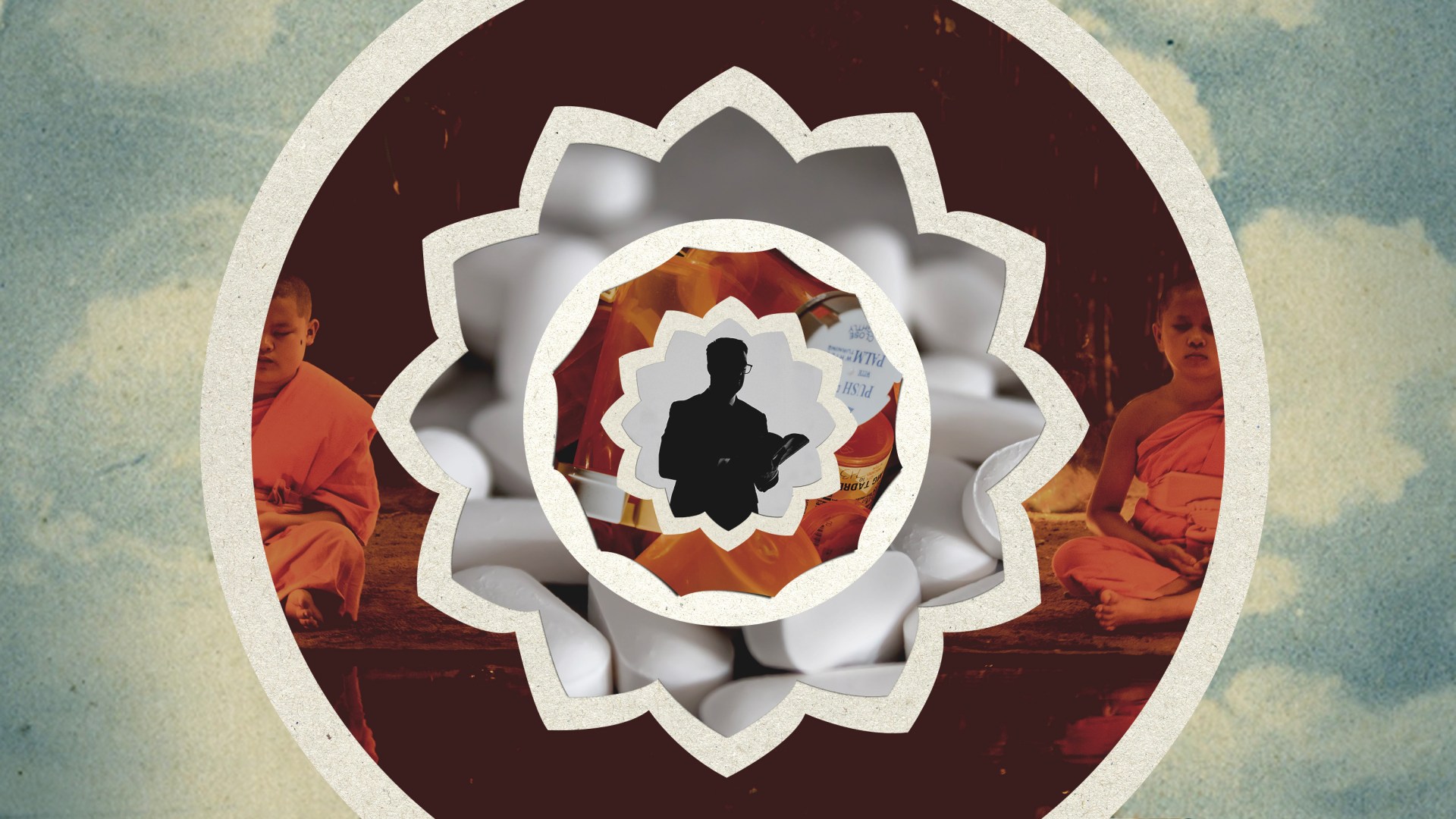
From Buddhist Monk to Thai Gangster, God’s Grace Broke Me

God showed me that if he could change me, he could also change a broken border town.

Christianity Today December 6, 2023
Illustration by Mallory Rentsch / Source Images: Unsplash

Surrounded by lush jungle mountains drenched in tropical fog, the Thai town of Mae Sot near the Thailand-Myanmar border is famous for its trade in precious gems and teak. Yet beneath its picturesque façade, the town is the center of illicit cross-border trade, drugs, and human trafficking. Myanmar’s decades-long civil war is felt in Mae Sot: Residents hear gunfire, experience an occasional mortar shell dropping in the streets, and see thousands of refugees fleeing across the border into their town.

In the midst of the chaos, Thai pastor Somphon Sriwichai is seeking to create order. His church operates a school for migrant children from Myanmar and safe houses for children at risk of sex trafficking, and they also provide shelter for refugees and relief for disasters. Sriwichai’s life story—from a Buddhist monk to a gangster to a missionary and pastor—demonstrates the power of Christ to change lives, communities, and even places like Mae Sot.

Here is Sriwichai’s story, as told to Kelly Hilderbrand, his friend and colleague for the past 27 years.

Dedicated to the temple

I was born in 1959 in the village of Nong Bua in the Chiang Mai district, a mountainous region of northern Thailand. My mother died in childbirth. As a baby I became very sick, but my family didn’t have the money to take me to a hospital.

Instead, they invited a Thai traditional healer and a shaman to heal me. They prepared herbal medicine, conducted rituals, and sacrificed a chicken, but nothing worked. With no other option, my father took me to the local temple and made a vow to the Buddha idol that if I was healed, I would become a monk. From that moment, I began to recover.

At eight years old, I went to live in the temple and later became ordained as a novice monk. I remember my father telling me that I was no longer his child—I was now a child of the temple.

Daily life in the temple began at 3 a.m., when I woke to meditate and memorize the dharma (Buddhist teachings). After that, we would chant, pray, collect alms, and eat breakfast. Then us novice monks would wash dishes, clean, and walk nearly two miles to the local school.

Life as a young monk was not easy, as we could not eat solid food after noon. After school, I walked back to the temple to sweep and clean the grounds. In the evening, we would sit at the feet of a senior monk to chant and memorize the dharma. At the time, I just wanted to play, eat, and make loud noises like a normal kid, but the temple had many rules and regulations.

By the time I was 19 years old, I had had enough: How could anyone have peace when he is hungry? The life of a monk had not brought me peace. So I decided to leave the monkhood.

Descent into darkness

I returned home to live with my father and began indulging in the pleasures of the world: drinking, smoking, and other things that had been forbidden in the temple. My life took a dark turn as I started hanging out with criminals, drug dealers, and murderers.

After I joined a gang, I soon found myself serving under a new set of restrictions. I had to obey their orders. If I refused, there would be terrible consequences. I was constantly on the move, evading the police and avoiding other criminal gangs.

I ended up hiding in the jungles and mountains surrounding Chiang Mai, living among the Communists who were fighting the government in the ’70s and ’80s. Fierce gun battles often broke out, and once, police arrested me for associating with Communists. Drugs and alcohol became the balm to control my raging anger and emotions.

One night when I was 29, I was drinking heavily and using drugs with a friend when we heard people singing. “What kind of party is that?” I asked. He answered, “That’s not a party, those are Christians.” Curious, I decided to check it out.

I stood at the entrance of the home, staring at the gathered crowd seated on the floor. I knew I was a scary sight: a drunk with long hair, a matted beard, dirty clothing, and the weathered look of an addict. People were afraid to look directly into my face.

But the cell leader looked straight at me. He smiled and invited me in. Immediately, I did not trust him. Why would anyone invite a dangerous person into his home? I sat directly across from the leader, waiting for a confrontation.

After worship, I challenged the leader with questions. As a former monk, I was able to stump him with my questions. But he responded by calmly explaining the gospel to me. “If you believe, you will see the grace of God,” he said. I thought to myself, In Buddhism, there is no grace. There is no forgiveness. In Buddhism, if we do good, we will receive good. If we do evil, we will receive evil.

I knew that, according to my own religion, I was destined to be reborn into one of the levels of hell because of the bad things I had done. I began to wonder about this grace and to hope for this forgiveness. So I asked the leader, “Where is this grace and how do I receive it?”

The cell leader answered, “It’s easy. Just bow your head, close your eyes, and pray after me.” Uneasily, I closed my eyes while remaining attentive, in case he attacked me. I was ready to shoot the man if he made any sudden moves. But as I repeated the words of the prayer, something inside me broke. I began to weep. I sensed that my many sins had been forgiven. I had been changed but did not know what to do next.

Three months later, I was in Chiang Mai on a Sunday when I saw the sign for a church meeting in a factory. Wanting to know more about Jesus, I entered. Despite my rough appearance, the people warmly welcomed me and ushered me to the front. At the altar call, I prayed again and wept. That was the day I considered myself a Christian.

I cut my hair, shaved my beard, and joined the community of Christians. I stopped running and found that no one was chasing me. The police and the gangs had lost interest in me. After attending a three-month Bible training course, my church sent me to help a new church plant in Chiang Dao, 45 miles north of Chiang Mai.

Following God’s calling

After one year in Chiang Dao, I felt called to live among the Lahu tribal people and moved to the village of Nongkhiu. I didn’t know anyone in that community. Except for some of the young people, no one spoke Thai and I spoke no Lahu. I could not share the gospel with them, but I could live among them and witness by example.

Early every morning, I would climb a mountain to pray. The villagers watched me and followed me up the mountain to observe. I would sing worship songs and the Lahu joined me, repeating the words and following along. I read a chapter of Scripture before eating. Others would sit with me and listen. Whether they understood the words or not, they understood the example. Today, hundreds of those villagers are Christian, several are pastors, and many are still very dear to me.

After almost a year, I wanted to learn more about the Bible and went to study at a Bible training center in Fang District in the northern tip of Thailand. Again, after only a short time, the leader of the Bible school convinced me to come with him to Bangkok to start a church in the slums of Khlong Toei. He thought that, with my criminal background, I would be able to reach the people. But quickly I realized God had not called me there. One Sunday in 1989, I shared with my Bangkok church a dream I had received from God. In the dream, I saw a very pregnant black pig that had no place to give birth. A man picked up and carried the animal until they reached three homes. The pig then squirmed out of the man’s arms and ran behind the last of the three homes, where she gave birth to black and white piglets that began suckling at the mother’s teats. More and more piglets gathered around the mother until she was covered in a mountain of piglets.

Shortly afterward, on a trip with my pastor, I visited the town of Mae Sot. Suddenly, I realized this was the place I had seen in my vision! I even saw the three houses. I rented them and started a church in the last one.

Every day I would walk through Mae Sot praying out loud, and I soon received a reputation as the weird Christian man. Yet the church began to grow. I shared the gospel at the hospital and bus terminal to anyone who would listen and prayed with anyone who would receive. People were healed, including one socially prominent woman who was delivered of a demon.

Still, my heart for the Lahu never wavered. On Mother’s Day 1990, I rode my motorcycle to the Lahu village of Doi Muser in the mountains above Mae Sot. I walked to the village center and asked for permission to speak. When granted permission, I began to preach. Although many people had gathered, only two seemed interested in the message.

After preaching, the two men challenged me. “If Jesus really is the great God and has this power, come and pray for our village shaman.” The shaman had been sick for at least a week, lying in his hut alone. I approached the house and entered the dark, musty room. The man was very ill, barely able to move.

I knelt and explained the story of Jesus to him. I didn’t know if the man was listening, but I asked him if he wanted to be healed. He nodded his head. About 15 minutes after we prayed, the man sat up and prepared food for us to eat. The two men who had challenged me and the former shaman decided to follow Jesus. This was the first of many churches started among the hill tribes surrounding Mae Sot.

Serving in a border town

Today, my church in Mae Sot has services in three languages: Thai, Karen (spoken by an ethnic group of the same name in Myanmar and Thailand), and Burmese. However, because most of the Burmese are in Thailand illegally, we started to conduct services in homes instead of at the church. Presently, we are constructing a new building that will hold 500 people.

We serve the community by running a school for the children of the many migrant workers in the town. The school has more than 300 students enrolled, from first through seventh grades. We also have three homes near the church for children at risk of abuse or human trafficking, one for boys and two for girls. The church also operates a foundation that provides help in times of disaster, including floods, fires, and other tragedies. Refugees fleeing the fighting across the border in Myanmar often live and sleep among the trees surrounding the church and we help provide food and medical help.

Now as I look back, my old life is gone. I once lived in darkness with no future. I once lived among people rejected by society, but Jesus Christ changed my life and called me to serve him. I only graduated from the ninth grade and had never studied the Bible until God allowed me to be his witness and to serve him.

I want to encourage and challenge both the young and the older generations to give themselves to the service of God. God doesn’t need our knowledge but our heart. When you change your life and decide to walk with God, God will use you for good. If God can use a dead, worthless person like me, God can use anyone.

Somphon Sriwichai is the pastor of Mae Sot Foursquare Church and president of the Foursquare Churches in Thailand. Kelly Michael Hilderbrand is the director of the DMin program at Bangkok Bible Seminary and the founding pastor of Our Home Chapel Bangkok.

Theology

My Top 5 Books on the Sinicization of Christianity in China

Works to help readers parse the differences between cultural assimilation and political domestication.

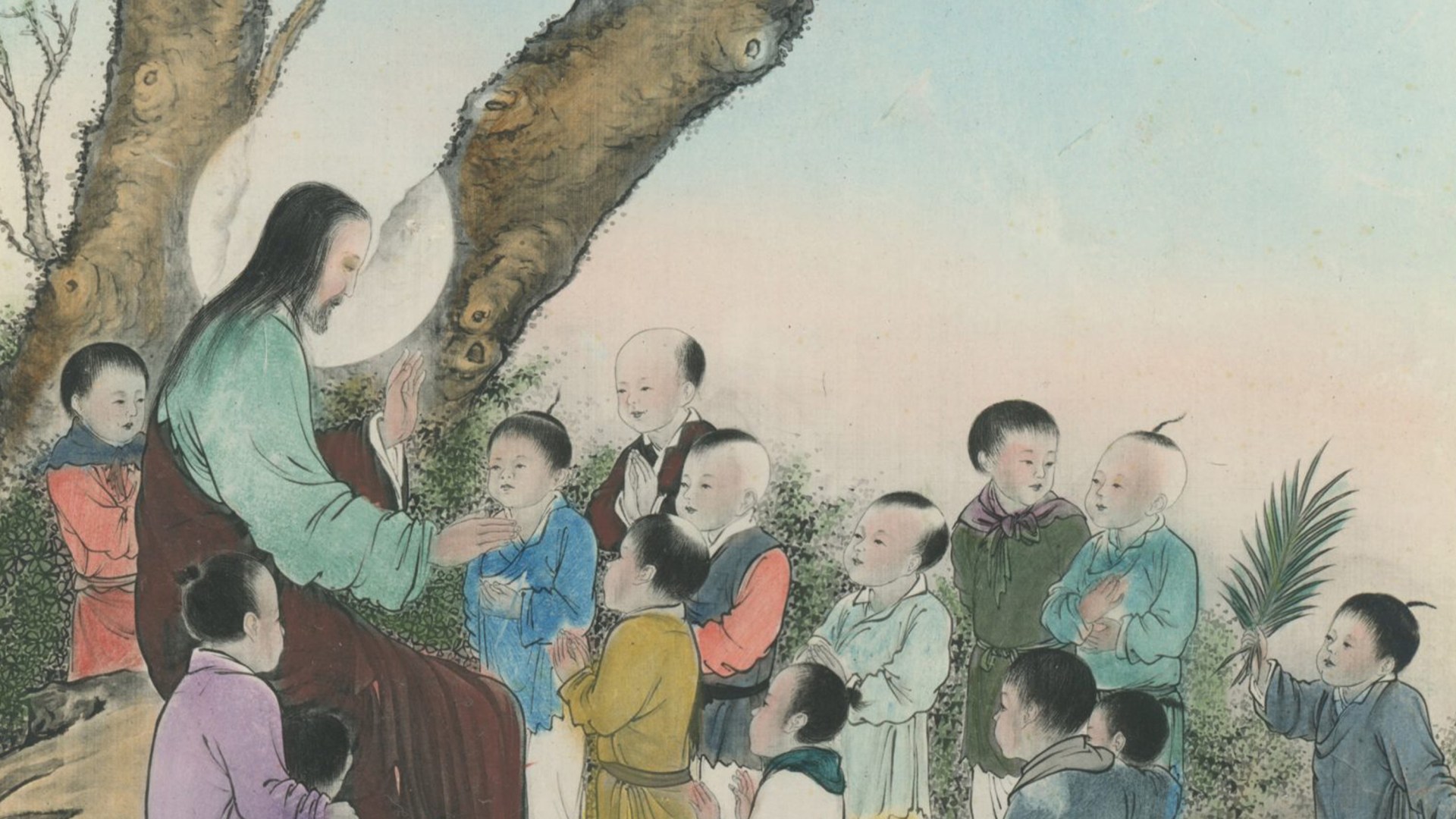
Let the Little Children Come by Chen Yuandu

Let the Little Children Come by Chen Yuandu

Christianity Today December 6, 2023
Société des Auxiliaires des Missions (SAM) China Photograph Collection, Whitworth University Library, Spokane

The following books are selected by Fenggang Yang, a professor of sociology and the founding director of the Center on Religion and the Global East at Purdue University. He is the author of Chinese Christians in America: Conversion, Assimilation, and Adhesive Identities, Religion in China: Survival and Revival under Communist Rule, and Atlas of Religion in China: Social and Geographical Contexts.

The word Sinicization usually means assimilation into Chinese culture, particularly the language, social norms, customs, and ethnic or national identity of the Han majority in China proper.

This term can be confusing with the religious policy of the current Chinese Communist Party (CCP) general secretary, Xi Jinping, who since 2017 has made Zhongguo hua (中国化)—usually translated by Western media and academia as “Sinicization”—his distinct characteristic.

But the translation is inaccurate and misleading. The primary goal of Zhongguo hua is political domestication. For example, the current policy requires Daoism, the only one of the officially recognized religions to originate in China, to go through Zhongguo hua as well, clearly showing that the policy is not about assimilation into Chinese culture but about ensuring submission to the CCP. For this reason, I suggest “Chinafication” as the translation of the current religious policy of Zhongguo hua.

Below are five books about the Sinicization of Christianity that I recommend. Only the first book deals with the current policy campaign of Chinafication. The other four books are indeed on Sinicization—cultural assimilation, social indigenization, and theological contextualization of Christianity in China. Many books exist on Nestorian, Catholic, or Protestant adaptations to Chinese social and cultural contexts. These four more recent ones are good readings for learning about Chinese Christianity today.

The Sinicization of Chinese Religions: From Above and Below, edited by Richard Madsen

This volume addresses questions about the current policy of the CCP toward religions, including Christianity, Confucianism, Buddhism, Islam, and new religions that China officially labels as xiejiao (“evil cult”). In the introduction, Richard Madsen distinguishes Sinicization from above and below, arguing that the Sinicization from below, as initiated by believers, has been happening all along, whereas the Sinicization from above, as campaigned by the state, has always had a particular political agenda of the ruling party.

Redeemed by Fire: The Rise of Popular Christianity in Modern China, by Xi Lian

This book provides a historical account of major Chinese Christian sects, homegrown or indigenous, and spread mainly in rural areas. These groups have adopted traditional Chinese folk religious practices, and many are either heretical or borderline creedal Christianity. According to the author’s assessment, these groups represent the pitfalls of experimenting with indigenization or Sinicization.

Faithful Disobedience: Writings on Church and State from a Chinese House Church Movement, edited by Hannah Nation and J. D. Tseng

This book is a compilation of sermons and writings by pastor Wang Yi and some other urban house church leaders. Wang Yi has been jailed since December 9, 2018, amid the intensified government crackdown on Christianity. As part of the house church or jiating church movement that traces its origin to Wang Mingdao (1900­–1991), who resisted the Chinese Communist co-option of Christianity in the 1950s, urban jiating churches have flourished in China since the 1990s. Their leaders contextualize the universal Christian gospel and directly respond to the social, cultural, and political contexts. This meaning-making endeavor effectively appeals to the contemporary Chinese while being firmly anchored in Protestant theological traditions.

Chinese Theology: Text and Context, by Chloë Starr

This book analyzes the writings of key Chinese Christian thinkers in modern China, including philosophical dialogues of the late imperial era around the turn of the 20th century, theological reflections amid wars and social turmoil in the period of the Republic of China on the mainland in the 1910s to 1940s, and sermons and blogs in the 21st century. The author’s reading of the Chinese texts in their original literary forms and social and cultural contexts is illuminating. The book heralds the maturation of distinctively Chinese theologies.

Studying Christianity in China: Constructions of an Emerging Discourse, by Naomi Thurston

This book makes an excellent introduction to Christian studies in Chinese academia since the 1980s. Although religious activities are restricted to certain venues by the CCP policy, Christian notions and ideas have still spread on university campuses and in the larger society. Through interviews with leading scholars in China’s higher education institutions (universities and social science academies), Thurston documents the development of Christian philosophy and theology by Chinese academics who have contributed to the growing interest in Christianity among intellectuals in China.

Editor’s note: CT now offers more than 500 articles in Simplified Chinese and Traditional Chinese.

Curated lists in this religious literacy series for Christians include the best books for better understanding Islam (in five regions), Hinduism, Buddhism, Sikhism, the Druze, Daoism, Confucianism, and the sinicization of Christianity in China.

CT also offers a top 5 books list on Orthodox Christianity, among scores of subjects.

Books

My Top 5 Books on Orthodox Christianity

A survey of theology, history, and evangelical perspective of the Eastern and Oriental branches of the ancient tradition.

Christianity Today December 6, 2023
vladj55 / Getty

Selected by Bradley Nassif, professor of biblical studies and Orthodox-Protestant dialogue at the Antiochian House of Studies, and author of The Evangelical Theology of the Orthodox Church.

The Orthodox Church, Timothy (Kallistos) Ware

This is by far the best book on Eastern Orthodoxy available today—a classic, worthy of the name. For 60 years, it has been the definitive guide for Orthodox and non-Orthodox readers, describing the major features of Orthodox history, doctrine, worship, sacraments, spirituality, and missions.

Bishop Ware was a bridge-builder between Orthodoxy and the Christian West, including evangelicals. And from this experience, he explains the major differences between Orthodoxy and the Protestant and Catholic traditions.

The language is clear, concise, irenic, and carefully nuanced. The book is also judicious, wise, and balanced in its judgments. Scholars, clergy, and ordinary people can use it for research, pastoral ministry, and Christian education classes.

During one of his stays in our home, I asked him about the potential shelf life of his book. With characteristic humility, he replied, “All standard textbooks must eventually be replaced by other, better ones.” But that time has not yet come.

Eastern Orthodoxy Through Western Eyes, Donald Fairbairn

Fairbairn’s academic excellence and practical ministry experience in the Orthodox world makes this work an essential resource for evangelicals. The author is an outstanding evangelical historian, patristic scholar, and linguist.

Tailored for Protestant and Catholic readers, he writes from the perspective of a seasoned missionary with years of personal experience in Soviet Russia, where the world’s largest population of Orthodox Christians still resides. The book provides practical guidance for Christians ministering throughout Eastern Europe or among ethnic Orthodox communities in the West.

Exploring major theological themes such as the Orthodox vision of “Tradition” and “Union with God,” Fairbairn judiciously avoids making artificial contrasts between Orthodoxy and Protestantism, seeing many differences in terms of emphasis rather than substance. Of special value is a final section on “The Orthodox Vision and Its Distortions,” focusing on popular misconceptions and the identification of the church with ethnicity. An appendix provides wise “Suggestions for Christian Workers in the East.”

Modern Orthodox Theology: Behold, I Make All Things New, Paul Ladouceur

This “must have” for scholars and students of theology is the most comprehensive account of the history of Orthodox theology from the 1453 fall of Constantinople to the present. Significant theological movements, key personalities, and major themes are developed.

For example, those interested in comparative theology between Orthodoxy and the Christian West will find chapters on “The Orthodox-Lutheran dialogue (1573–81),” “Orthodoxy and the Counter-Reformation,” “The Confession of Cyril Lucaris (1629),” and more.

Regional histories provide theological developments in imperial and modern Russia, Greece, and Romania. The book also contains up-to-date studies of major themes in modern Orthodox theology, including sections on “God and Creation,” “Social and Political Theology,” “Ecumenical Theology and Religious Diversity,” and “The Ordination of Women.”

Overall, this is a magisterial analysis of modern Orthodox theology written by a sympathetic author who is neither naive nor unjustifiably critical in his assessments.

The Eastern Christian Tradition: A Brief Survey (6th ed.), Ronald Roberson

This book clarifies the complexity of the Christian East for the non-specialist, perfect for helping Western Christians figure out who’s who in the Orthodox world. Christian workers in the Middle East, Russia, and Eastern Europe can use this book to navigate Eastern Christianity’s different labels.

For example, the main body of Orthodox churches are titled “the Patriarchate of Constantinople” or “the Orthodox Church of Russia/Greece/Romania/Serbia” and so on. But there is a different family known as the Oriental Orthodox churches—Coptic, Ethiopian, Armenian, and others—who do not officially belong to the mainline Eastern Orthodox tradition.

Besides these, there are churches of “irregular status,” some of which are simply considered to be outside the disciplinary rules of the main Orthodox churches, while others are in full schism. Finally, there are Catholic Eastern churches whose worship outwardly appears Orthodox but is theologically Roman Catholic.

This book explains the labels and their relationships.

The Historical Road of Eastern Orthodoxy, by Alexander Schmemann

This is a century-by-century commentary on the essential truths of Orthodox Christianity that were lived out during its 2,000-year journey through history. As the author states, “This book is … a reflection on the long historical pilgrimage of Orthodoxy, an attempt to discern in our past that which is essential and permanent and that which is secondary, mere past” (emphasis mine).

Schmemann starts with the Book of Acts, then goes through major turning points in the church’s history as it traveled through the Roman and Byzantine Empires, the Ottoman Empire, and Russia. In each context, he captures the essence of Christianity for Eastern and Western Christians alike, so that “they may realize that our past is also their past, or rather our common past, that essential ‘term of reference’ without which no mutual understanding is possible.”

There is simply no other book like it for anyone who wants to discern the essentials of Orthodox Christianity as it sojourned through the good times and bad.

Editor’s note: Curated lists in this religious literacy series for Christians include the best books for better understanding Islam (in five regions), Hinduism, Buddhism, Sikhism, the Druze, Daoism, Confucianism, and the sinicization of Christianity in China. More lists coming soon, joining scores of subjects.

Apple PodcastsDown ArrowDown ArrowDown Arrowarrow_left_altLeft ArrowLeft ArrowRight ArrowRight ArrowRight Arrowarrow_up_altUp ArrowUp ArrowAvailable at Amazoncaret-downCloseCloseEmailEmailExpandExpandExternalExternalFacebookfacebook-squareGiftGiftGooglegoogleGoogle KeephamburgerInstagraminstagram-squareLinkLinklinkedin-squareListenListenListenChristianity TodayCT Creative Studio Logologo_orgMegaphoneMenuMenupausePinterestPlayPlayPocketPodcastRSSRSSSaveSaveSaveSearchSearchsearchSpotifyStitcherTelegramTable of ContentsTable of Contentstwitter-squareWhatsAppXYouTubeYouTube