Theology

Go Ahead. Argue with God Over the Nashville Shooting.

In the face of tragedy, Christ welcomes our confusion and anger.

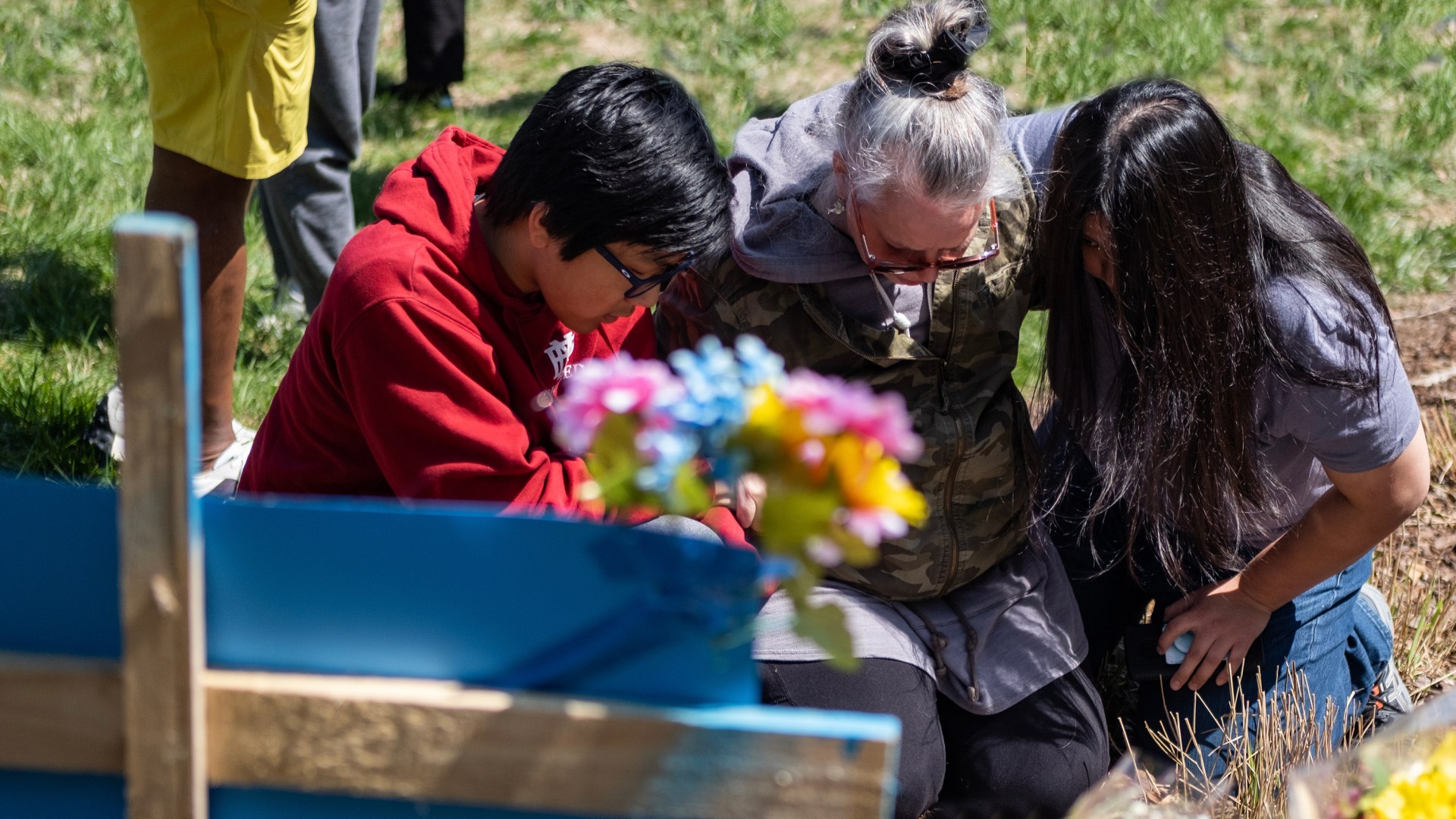
Mourners pray at the entrance of The Covenant School in Nashville, Tennessee.

Mourners pray at the entrance of The Covenant School in Nashville, Tennessee.

Christianity Today March 28, 2023
Seth Herald / Stringer / Getty / Edits by Christianity Today

Just a few days ago, parents were dropping their children off at The Covenant School in Nashville, Tennessee, anticipating a day of love, friendship, and learning for their sons and daughters. No one could fathom what would happen soon after, when a 28-year-old shooter entered the building and opened fire, resulting in the deaths of three nine-year-old kids, three adults on staff, and the assailant.

Part of a pastor’s calling is to enter into life’s disorienting, gut-punching, heart-ripping spaces and offer perspective on questions that cannot be answered. This is especially true in situations where the main question is “Why?”

Why would a good and loving God who is sovereign over every square inch of the universe, who knows the number of hairs on our heads, who said, “Let the little children come to me,” and who promised again and again to be our shield, our protector, and our defender allow for this senseless loss of life?

Why would the same God let faithful, loving, godly educators be gutted from their families and communities? Why would he allow young survivors to experience the trauma of hearing gunfire and then being rushed frantically to safety?

Why would he not foil and fail the shooter’s plans before a single shot was fired? Why would the One who holds even the hearts of kings in his hands not redirect the assailant’s heart as well? Why would God allow for one of his own image-bearers to go to such an inexplicable and horrific place and then follow through with those intentions?
We already know the answer to these questions, which is that we’ll never know the answer to these questions.

Nashville musician and producer Charles Ashworth, also known as Charlie Peacock, shares great wisdom in his song “Now is the Time for Tears.” The lyrics warn us against acting like Job’s friends. They provided foolish and woefully off-the-mark answers to their suffering friend who was, among other things, grieving the loss of all ten of his children. As Charlie sings:

Cry with me, don’t try to fix me, friend. That’s how you’ll comfort me. … Silence the lips of the people with all of the answers. Gently show them that now is the time, now is the time, now is the time for tears.

The “Why?” question cannot be answered from our earthbound perspectives. We know the world is fallen. We know that sin and sorrow wreak havoc on everyone and everything, all the time. We know that none of us is guaranteed another day, and that the current day could be our last. We know the final enemy called death is coming for us all. We know that sickness, sorrow, pain, and death are part of current reality and will one day be destroyed by our resurrected and returning king.

But in spite of what we know—or perhaps because of what we know—the best answer to the “Why?” question is bewilderment, confusion, and anger. There is good reason why the eight human emotions—guilt, shame, loneliness, fear, anger, sadness, hurt, and gladness—include seven for the purpose of expressing grief and protest over how things are not what they’re meant to be. These seven grief-stricken emotions are part of how God equips us to show up fully in a tragic world.

When lives are lost in such a senseless and rupturing way, the protest of Martha feels right. After she buries her brother Lazarus, she says, “Lord, if you had been here, our brother would not have died” (John 11:21).

“Lord, if you had been here.” Do we dare speak this way to our maker? Do we dare confront him for abandoning us in our times of greatest need? Do we dare give voice to the feeling that he did not show up, even when we cried out to him in our fear and despair? Do we dare challenge God for not doing things we know he is supposed to do as one who protects, defends, and upholds the weak?

Some are hesitant to ask Martha’s question. Though honest, raw, and real, it also feels irreverent to challenge our Lord about anything, even our most devastating trauma. In the face of tragedies involving the death of children and their beloved educators, is it right to question God?

He is God, after all. He is to be trusted, esteemed, honored, respected, and feared. But maybe somewhere in Martha’s question there are signs of a next-level reverence and holiness that honors the Lord enough to give him our unfiltered honesty—and even to demand some sort of meaningful response. Martha, like us, is in relationship with him, after all.

After losing his wife to an untimely death by cancer, C.S. Lewis dared to question God in similar Martha-like fashion. He writes in A Grief Observed:

When you are happy … and turn to Him with gratitude and praise, you will be—or so it feels—welcomed with open arms. But go to Him when your need is desperate, when all other help is vain, and what do you find? A door slammed in your face, and a sound of bolting and double bolting on the inside. After that, silence.

Likewise, Nicholas Wolterstorff lamented the death of his son from a rock-climbing accident. He writes in Lament for a Son:

You have allowed rivers of blood to flow, mountains of suffering to pile up, sobs to become humanity’s song—all without lifting a finger that we could see. You have allowed bonds of love beyond number to be painfully snapped. If you have not abandoned us, explain yourself.

If a pastor has anything worthwhile to say in such a time as this, it is that God himself invites, even welcomes, this kind of protest. In fact, the very prayer book that he inspired for us to use as our own prayers—The Psalms—are filled with bold and explicit protests against what feels to us like the inaction of God.

Although God does not provide us with answers concerning our grief, he does provide us with himself. When Martha and Mary questioned Jesus about his delayed response to their brother’s death, we’re told that Jesus wept. Then, right before he shouted “come forth” into Lazarus’ tomb, the text says that Jesus was “deeply moved in spirit” (John 11:33).

But the Greek for this phrase is much more forceful. The literal meaning is that Jesus was furious, like a raging bull with flaring nostrils about to rush and attack its prey. Jesus is not passive. Far from it. He is an angry animal who will someday trample over death and restore all that has been lost. The Bull of Heaven has stampeding feet. The Lion of Judah has death-defying teeth. He has defied death. He will defy death.

And yet, let’s not rush to hope so swiftly, lest we move prematurely out of our grief, hurt, and anger.

In the wake of the horrid loss experienced by our friends at the Covenant School, it is right and good and even Christ-like for disorientation and grief to feel stronger and more formidable than feelings of hope. Our Lord has his own reasons for everything. That includes not showing up for Martha and Mary until four days after their brother’s death; allowing the universe to be deafeningly silent for three full days after his own death; and permitting us to be haunted by the “already but not yet” season we’re stuck in currently as we await his return.

Even as we wait in grief, Scripture whispers hope: As Paul writes, “we grieve … with hope” (1 Thess. 4:13).

It’s a good thing that in times like this, hope doesn’t have to be a feeling. It is more of an inescapable, Resurrection-sealed fact than it is a feeling, to be sure.

One of my favorite reminders of this idea comes from my friend and Nashville singer-songwriter, Sandra McCracken. The lyrics to her song “Fools Gold” offer the best exclamation point for the grief felt in Nashville, Tennessee right now:

The kids are laughing in the other room,
A life more complicated, their smiles are still in bloom
They’re on their own,
Take them by the hand, the best we can
We give them love, we give them love

But if it’s not okay
Then this is not the end
And this is not okay
So I know this is not, this is not the end

This is not okay. Easter is coming, but everything right now feels like Good Friday and Holy Saturday, or as some call it, “The space in between.”

But because things are not okay, we also know it’s not the end.

Scott Sauls is senior pastor of Christ Presbyterian Church in Nashville, Tennessee. This piece was adapted from his recent blog post, “Weeping in Nashville.”

News

European Evangelicals Organize Against Abuse

From curriculum to call lines, churches focus on safety and prevention.

Christianity Today March 28, 2023
Sean Gallup / Getty

When Fabian Beck volunteered to help with the children’s ministry at his small evangelical church on the outskirts of Hanover, Germany, he imagined he’d be singing songs, telling Bible stories, and performing puppet shows.

He had no idea what he could do to protect Sunday school children from the possibility of sexual abuse. As he prepared to join the team, however, he came across resources provided by the Federation of Free Evangelical Churches (FeG) on the subject of violence against children and adolescents in the context of Christian communities like his own.

“Believers have to face the fact that our congregations are not safe just because they are full of Christians,” Beck said. “Safe places for kids don’t come naturally, and too often, we don’t know what we don’t know.”

Andreas Schlüter, the FeG’s federal secretary for the young generation, said the program Beck is using, “Protect and Accompany,” is part a much larger trend among free churches organizing against abuse. Evangelical churches are developing programs to face the reality of sexual abuse and seeking to prevent it from happening in the future.

“I know that in Germany, every free church is actively tackling the issue,” he said. “Free evangelical congregations should be, or become, safe places for children and young people.”

In recent years, child sex abuse cases have been extensively reported across multiple Roman Catholic dioceses in Europe. Spurred by these revelations, Catholics have taken steps in France, Portugal, Germany, and Italy to prevent abuse. Pope Francis, for example, removed the option for pontifical secrecy from cases involving the mistreatment of minors or other vulnerable persons.

Myriam Letzel, coordinator for the French evangelical organization Stop Abus, said that the Catholic church in France’s groundbreaking investigations into clerical abuse (the so-called “Sauvé report”) not only highlighted the systemic nature of sexual violence but also put evangelicals on notice about dynamics in their churches that might also lead to inappropriate and illegal behavior. The conversations around #ChurchToo and revelations of widespread abuse among Southern Baptists in the United States have also led European evangelicals to reckon with the fact their churches are not immune.

“We have to question ourselves on the theological bases which have, in the past, favored inappropriate sexual behavior: a misunderstanding of the relationship between men and women and a distorted relationship to sexuality,” Letzel said.

In September 2022, the National Council of Evangelicals of France (CNEF) started Stop Abus. It is run by a commission of 10 experts in the fields of social work, psychology, medicine, law, and pastoral care. The organization also has a listening service with a team of 35 “listeners” who receive abuse reports. In its first six months, Stop Abus received 15 disclosures that are now being processed.

Letzel said this is just the first step.

“What was happening elsewhere served as a warning: We could not pretend that such things did not exist in evangelical Protestant churches, and above all we did not want to pretend that they did not exist,” she said. “The mission entrusted to us by Christ obliges us: As Christians we have a duty to be exemplary in our conduct and in our way of caring for the most vulnerable.”

One of the church networks belonging to the CNEF, the Réseau-FEF, informed members and partners at the end of March that it would "neither recognize nor support any ministry" by one pastor, who has been accused of abuse by six women, two of whom went to the police. This is a first for French evangelicals. The pastor had a wide influence in French-speaking evangelical circles, especially online.

Other evangelical groups in Europe have launched similar efforts. In Switzerland, under the umbrella of the Swiss Evangelical Alliance, some 60 Christian groups and organizations put standards in place for staff and started crisis intervention teams alongside local church prevention programs. Among these organizations, the Fédération romande d'Eglises évangéliques (FREE) promoted online resources to help prevent abuse, including guidelines for Sunday school teachers.

The German Evangelical Alliance (EAD) has had a so-called “clearing house” for abuse cases in evangelical congregations in Germany for several years now. To equip churches in their association, they turn to groups like the White Cross (Weißes Kreuz), a Protestant organization that advises institutions and individuals on issues related to sex and sexuality. Ute Buth, a gynecologist and sexual counselor who has worked with the White Cross for 15 years, said the organization’s first task is to help churches become more aware of how their environments can provide fertile ground for abuse.

Buth said there are no reliable statistics on the prevalence of abuse among Europe’s evangelicals. But mainline Protestants in Europe, including Germany’s national Protestant church, have similar concerns about sexualized violence in their congregations and created a forum and working groups to address the issue in June 2022.

Some, however, think evangelical Christians may be especially vulnerable—and may even draw sexual predators.

Christian Rommert, a public theologian and former host of the popular Christian television program Wort zum Sonntag (Word on Sunday), told Germany’s largest public-radio broadcaster that free churches’ emphasis on trust and obedience, close physical contact, and conservative sexual morality create an environment where sexual abuse can thrive.

“In the free church context, everyone trusts everyone. No one expects the other to do anything bad,” he said. “The topic of sexuality is still something that is still somewhat taboo in the church context. Because you combine fear with it, you can’t talk about it openly. And unfortunately, there are also churches in which the power gap between man and woman is cultivated. And such power disparities are always uncertainty factors.”

Buth said that evangelical opposition to working with White Cross on issues of sexual abuse has declined, though, as people have become more aware of the widespread problems and turn their attention to prevention. The White Cross does not make accusations against churches but provides training.

“If you don’t have a good strategy on these things, structures allow children or even adults to be abused,” she said. “That’s a heavy price to pay for the Christian faith.”

Buth first guides churches through a risk analysis to help them understand what makes churches vulnerable.

“It’s about the atmosphere,” Buth said. “Do you give preference to one gender? What is the speech you use? Are there sexualized jokes? Is your leadership very hierarchical? That’s where the perpetrators start, taking advantage of the cultures and customs your church has already created.”

At the end of training, Buth said, congregations do a self-analysis before developing a new Schutzkonzept—or “protection concept”—that involves safety guidelines and reporting mechanisms. German laws, passed in 2010, stipulate that every organization that works with children, including churches, must have a protection plan in place.

Having a plan allayed Beck’s fear as he became a children’s minister in Hanover.

“It’s a big relief to have a system in place,” he said. “Now our church is aware of the problem, and we know what to do.”

Theology

It’s Good When Bad Pastors Make Us Mad

I’d rather media and literature portray Christian leaders who stir up anger instead of apathy.

Christianity Today March 28, 2023
Illustration by Mallory Rentsch / Source Images: Lightstock

A couple weeks ago, actor Rainn Wilson tweeted, “I do think there is an anti-Christian bias in Hollywood. As soon as the David character in The Last of Us started reading from the Bible I knew that he was going to be a horrific villain.” He then added rhetorically, “Could there be a Bible-reading preacher on a show who is actually loving and kind?”

Bad clergy make frequent debuts in today’s television shows and movies. I still remember the evil Archbishop Rushman from Primal Fear in the mid-’90s and Eli Sunday, the odd cult evangelist and radio preacher in There Will Be Blood. Then there’s the recent Netflix horror mini-series Midnight Mass portraying Father Paul and his dark miracles that use Communion elements mixed with real blood.

The same goes for literature. Consider Hazel Motes in Flannery O’Connor’s Wise Blood, a preacher of the Church Without Christ—or the drowning baptism in her later novel The Violent Bear It Away. A hundred years ago, there was Sinclair Lewis’s Elmer Gantry, and a thousand years before that, there was Archbishop Ruggieri, a traitor tormented in the ninth circle of hell in Dante’s Inferno.

Whether on the page or on the screen, Christian characters and symbols—from church leaders and Communion elements to Bibles and baptisms—are often charged with negative connotations in such a way that they make for predictable foreshadowing.

Exceptions to these bad pastors certainly exist, like the admirable and introspective Pastor John Ames in Marilynne Robinson’s Pulitzer Prize–winning novel Gilead. Or Father Paul Lantom from the Marvel series Daredevil—who doesn’t just invite the protagonist to confession or hand out shallow platitudes but shares his testimony, gives biblical advice, and even encourages repentance.

But the fact remains that the ratio of good pastors to bad pastors seems to resemble the ratio of good kings to bad kings in ancient Israel—for every Josiah who finds the book of God’s law, there are a dozen more Jehoiakims who torch it.

And since my calling involves being a “Bible-reading preacher,” to use Rainn Wilson’s words, I confess that I would like to read about and watch more pastors who are portrayed in a positive light. The poor representation of my pastoral vocation makes me sad, but I understand why it is so common.

Bad pastors can make books and movies more interesting—like the proverbial train wreck we can’t stop watching. Not only that, but authors and filmmakers are more likely to write about them because of the terrible stain they can leave on society.

But whether this slant toward bad pastors in media and literature reveals a true anti-Christian bias or not, I believe it points to something else significant. When it comes to the bad representation of clergy onscreen and in literature, reactions of anger give me more hope than responses of indifference.

In fact, our cultural fascination with bad shepherds points to a deeper longing for good shepherds—and ultimately, the Good Shepherd. Our societal outrage over #ChurchToo speaks a better word than if our society simply yawned.

I was first introduced to this idea in one of our first church book clubs over a discussion of Graham Greene’s novel, The End of the Affair. The idea came to me not so much from my own reading of the book but from a review by author and pastor Jared C. Wilson. As the title suggests, the novel involves the end of an adulterous affair.

But why the affair ends and what happens after its end are of particular interest.

The woman, Sarah Miles, breaks off her illicit relationship with Maurice Bendrix after she makes a promise to God in a near-death experience. That promise changes her—or more specifically, God begins to change her heart. Sarah realizes that to love Maurice properly and wholly, her love for him can’t look the way it did before. This rejection, along with other acts of God, makes Maurice mad at God.

I don’t want to give everything away, but this is how Wilson ends his review of the book: “The reader walks away, in fact, with the great hope that hatred may have a peculiar advantage over ambivalence in that it is at least a kind of caring, a passion that is simply waiting for the redirection of the transforming gospel.”

Nearly ten years have gone by since we read The End of the Affair and I first read Wilson’s review, yet I think about these words regularly. Anger can be a preparatory work toward something else.

Consider how the apostle Paul’s vehement persecution of the “Way,” as he calls it in Acts 22:4, uniquely prepared him for his later embrace of Christ. Perhaps this is why Paul respects yet laments the same truth about his kinsmen in Romans—the Jewish religious leaders who “are zealous for God, but their zeal is not based on knowledge” (Rom. 10:2).

Even though the outworking of misguided zeal might lead a person far away from the truth, that distance from God may prove to be smaller than the distance created by ambivalence. In the words of Elie Wiesel, “the opposite of love is not hate, it's indifference.”

You can redirect a thirsty person away from broken cisterns that hold no water (Jer. 2:11–19) and toward the living water, but you’ll have a much harder time offering living water to someone who feels no thirst to begin with.

And so, while it might be disappointing when I encounter yet another bad clergy member in a good book or movie, there is one situation that would make me even sadder. What’s worse than characters of faith who stir up anger toward God or the church are Christian characters who inspire no reaction at all.

Benjamin Vrbicek is the lead pastor at Community Evangelical Free Church in Harrisburg, Pennsylvania; the managing editor for Gospel-Centered Discipleship; and the author of several books.

News

Why Nepali Christians Can’t Bury Their Dead

Inside the ongoing struggle of Kathmandu Valley evangelicals to secure a cemetery and avoid cremation.

A burial in a forest next to the Pashupati Hindu temple in Kathmandu, Nepal.

A burial in a forest next to the Pashupati Hindu temple in Kathmandu, Nepal.

Christianity Today March 28, 2023
Binod Joshi / AP Images

Death in a Christian home in the Kathmandu Valley brings more than just sorrow. It commences a family’s search for a way to bid a dignified goodbye to their loved one.

The biggest obstacle for mourners is finding a place to bury the dead in the Kathmandu Valley, a region in central Nepal that is home to the mountainous nation’s three largest cities and hundreds of smaller towns and villages. But despite its size, the area has no public cemetery for its Christian population, which numbers just over 100,000 according to the National Christian Community Survey report released in December 2022. (Kathmandu’s British cemetery includes only the remains of expatriates, and its Jesuit cemetery is no longer in use.)

“We can cremate our dead, but we cannot bury them,” said Suman Dongol, who manages Koinonia Patan church in Kathmandu.

Hindus, who comprise 81 percent of the population, cremate their dead. Nepali Muslims have access to two graveyards attached to their mosques in Kathmandu. (Among those who follow indigenous faiths are the Kirat, who comprise 3 percent of Nepal’s population and are said to be the earliest inhabitants of the Kathmandu Valley. They typically bury their dead but face a similar plight as local Christians.)

No known Christian existed in the country in 1951, when modern-day Nepal was founded and its young government prohibited proselytizing and conversion. A year later, however, Nepali Christians from India established the first Protestant church.

By the early 1970s, there were about 500 baptized Christians in the Hindu Kingdom. Evangelism efforts carried a possible criminal sentence of three years in prison—and successful evangelism, six years—but Christians continued to tell people about Jesus. By 1990, when a democratic reform movement decriminalized conversion, there were an estimated 50,000 Christians in the country.

According to the 2011 census, Christians in Nepal made up 1.4 percent of the population, but since the 240-year-old Hindu monarchy ended in 2008, Nepal has witnessed a huge jump in that number. According to recent reports, the last decade has seen a 68 percent increase in the total number of Christians, who today are estimated to be around 3.5 percent of the country’s nearly 31 million people.

Not all Nepali Christians have been denied access to burial grounds. Local governments have provided graveyards to Christians living in Biratnagar, in the eastern part of Nepal, and those in Butwal in the south.

Funerals in those parts of the country have left some witnesses “overwhelmed.”

“There were 500 people, singing, with flowers, walking through the jungle, and they buried their loved one in a very dignified manner,” said Dilli Ram Paudel, the general secretary of the Nepal Christian Society.

“It is only in Kathmandu Valley that Christians don't have a burial ground,” said Manoj Pradhan, a leader at Nepal Christian Fellowship.

For many Christians, no burial ground means no funeral. As a result, throughout the years, Christians have sought various remedies to their burial problems. According to reports, Christians began to bury their dead in a forest near the historic Hindu Pashupatinath Temple in April 1990. But in 1998, the government banned all burials there after the country’s oldest temple was designated as a UNESCO heritage site and its worshipers had claimed the forest as their own.

After strong protest from the Christian community, in 2009, the authorities granted Christians access to once again bury their dead in the Shleshmantak forest. Yet the win was short-lived; following protests across the country from the Hindu community, the government reinstated the ban in 2011.

“According to our culture, we erect crosses or stone over the graves, but they did not like that,” said Paudel. “It is a heritage site for Hindus, and we understand their stance.”

Christian communities made several efforts to secure burial lands in the Kathmandu Valley from 2008 until Nepal adopted a new constitution in 2015. Christians in two different districts purchased land but faced opposition from Hindu fundamentalists and an unsupportive government.

“Now nobody can go there and bury,” said B. P. Khanal, Nepal’s coordinator of the International Panel of Parliamentarians for Freedom of Religion or Belief.

In 2011, these challenges prompted Christians to stage a hunger strike until the government promised them a land for burial. But 12 years after this agreement, the government has yet to follow through with its promise and dedicate any burial land for Christians.

Nepal’s Catholics did not participate in the 2011 protests and have adopted what they believe to be the most practical solution to this dilemma.

“Catholics have accepted the fact that in a country like Nepal, where burial is not common, a body needs to be cremated after Mass and ashes should be kept in a columbarium. All three Catholic churches in Kathmandu Valley have been doing it for years now,” Chirendra Satyal, a spokesperson from the Apostolic Vicariate of Nepal, told UCA News in an interview in 2021.

Evangelicals say that they are only following what they have learned from the previous generation of believers.

“Everyone should be buried. We have heard this over and over, and it is a tradition that Christians across the world follow,” said Khanal.

Other burial “solutions” have left Christians similarly frustrated.

“We bought private lands at many places on our side of the valley to bury our dead, but the villagers objected to it. They said that having a cemetery near their village with the dead buried there made them fearful of ghosts. Every time we would try to bury someone, we would need police protection to do so,” said Paudel.

The majority of Nepali evangelicals have been forced to cremate their loved ones or travel significant distances to other cemeteries in their country—or even in India—to perform burials. Some, however, negotiate agreements with the few churches who own private land.

"The problem is that not all churches have their private land and not all churches who have their private land have access to bury the dead. The community [villagers and neighbors] normally do not allow us to bury,” said Dongol.

Nevertheless, many Christians are still willing to risk the anger of their neighbors.

“We have to hide through the jungle and must have a quiet funeral ritual with very few people in attendance, hushing the process and doing it all so secretly to avoid any retaliation from anybody,” said Paudel. “We fear the neighboring villagers, the government, the harassment of the police, and then worry about the possible exhuming of the bodies, if the villagers come to know about the burial later. All of this is very painful.”

All of this serves only to “antagonize Hindus for no reason,” said the Catholic spokesperson Satyal.

“Many of the graves are unmarked to avoid detection. The burial ground is used as a garbage dumping site, and at times foxes dig up the buried bodies. There are also cases of bodies being dumped on top of one another," he said in a 2011 interview.

Those who do opt for cremation must rely on Hindus to share their cremation spaces, as Christians lack their own. Christians also lament the lack of access to a traditional firewood procedure, as many find electric cremation machines cold and families consider it emotionally taxing because of the manner and speed of incinerating the body.

Christians’ wide-ranging views and practices regarding burials have made it challenging for them to present a clear request to the government.

“If the Christians were united for the cause, the issue of burial grounds could be resolved,” a Protestant pastor who asked to remain anonymous told UCA News.

But, as for now, the duration of these ongoing burial challenges reinforce many Nepali Christians’ feelings of marginalization.

“As a citizen of this country, we have a lot of rights, but we are not able to use those rights. Who will lobby for us before the government?” said Pradhan. “There is no Christian member of parliament or member of the legislative assembly who represents us who will speak for us.”

News

Presbyterian School Mourns 6 Dead in Nashville Shooting

Victims include the head of school and the 9-year-old daughter of the church’s lead pastor.

Family members wait for news after a shooting in a Presbyterian Church in America school.

Family members wait for news after a shooting in a Presbyterian Church in America school.

Christianity Today March 27, 2023
George Uribe / AP

Parents were invited into the chapel at The Covenant School in Nashville on Monday morning, as they are every school-day morning. They sang and prayed with the roughly 200 elementary students and 40 or 50 staff at the Presbyterian Church in America school and listened as pastor Matthew Sullivan “raises it to another level,” as one student put it, with his kid-friendly Bible lesson.

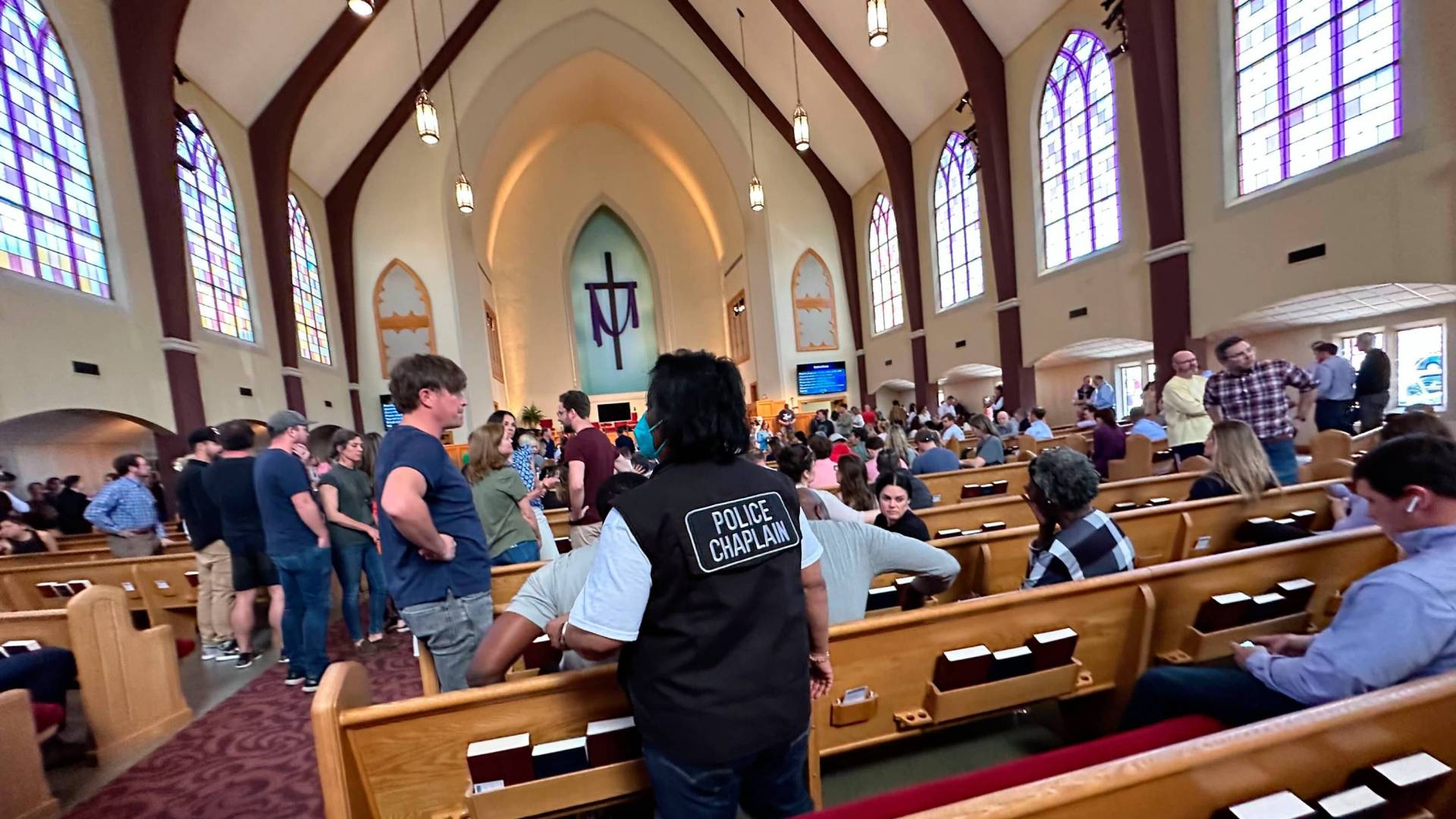
A few hours later, though, parents crowded into the sanctuary of Woodmont Baptist Church, two miles down the road, waiting to hear the worst. In the interval, the private Christian school became the site of the 130th mass shooting of 2023, which left three children and three staff members dead.

“I know this is probably the worst day of everyone’s lives,” a police officer told the crowd. “I can’t tell you how sympathetic we are.”

The three students killed were each 9 years old. Police identified them as Evelyn Dieckhaus, William Kinney, and Hallie Scruggs, the daughter of Covenant Presbyterian Church senior pastor Chad Scruggs. The adult victims were head of school Katherine Koonce, 60; substitute teacher Cynthia Peak, 61; and custodian Mike Hill, 61.

In a statement Monday night, The Covenant School said its community is “in shock coming out of the terror that shattered our school and church” and asked for privacy as the investigation into the attack continues.

Metro Nashville Police Department spokesman Don Aaron said that a 28-year-old former student shot out some glass doors and entered through the side of the building carrying two assault rifles and a handgun. Police were called at 10:13 a.m. They arrived less than 15 minutes later and followed the sounds of gunfire to the second floor of the private Christian elementary school. They shot and killed the suspect, whom they later identified as a transgender person.

Five of the victims were transported to Monroe Carell Jr. Children’s Hospital, about four miles away, but were pronounced dead on arrival.

“The children … started their morning in their cute little uniforms,” Rachel Dibble, who was at the Baptist church with the waiting families, told the Associated Press. “They probably had some Froot Loops, and now their whole lives changed today.”

At Woodmont Baptist, not long after they heard the sirens whir by, pastors and staff read reports of a shooting at Covenant. When they saw on Twitter that their church was named as the reunification site, they didn’t question it—they just put on their nametags, met police in the parking lot, and prepared to open their doors to buses of surviving children and parents desperate to see their kids safe and sound, senior pastor Nathan Parker told CT.

The children gathered in the fellowship hall, where the student minister handed out coloring sheets and began processing the shooting with them. Parents waited in the sanctuary through the slow reunification process, not yet knowing the extent of the attack.

“As pastors, we are supposed to have the words. Today was one of those days that words didn’t come easy. If they came, they came from the Spirit,” Parker said.

He prayed for peace, asking God for the safety of each child whose parents anxiously sat in his pews—or cried on the floor. The grief and trauma of what happened a couple miles away filled the church building, a palpable heaviness and sense of loss.

Between first responders and volunteers, hundreds came to help. They ministered to the waiting families, dropped off food, and helped clean up. Their hearts had broken for other school shootings reported on the news, and this time the tragedy struck right at home in Nashville—their neighbors, their community, their brothers and sisters in Christ.

“We’re about to enter Holy Week, and it’s going to be a different kind of Holy Week for sure,” said Parker, thinking to what he’ll preach on Sunday—Palm Sunday—in the room where parents feared their kids were gone, where teachers learned that their students and colleagues were killed. “The message of the hope of the Resurrection—I don’t know if it’s ever been more needed or more welcome.”

It wasn’t until the end of the day that Parker learned that the facilities manager at Covenant—known for singing the Lord’s Prayer at graduation—was the one who named the Baptist church as the place to send the buses of students; he’d driven by the Southern Baptist congregation for 18 years on his way to work at the school and said he knew it was a good church. Parker was honored.

Nashville is an evangelical hub in a state where over half the population is evangelical (twice the national average). In the hours after the shooting, leaders and ministries offered prayers; churches and schools scheduled vigils.

Nearby Belmont University in Nashville held a service of lament and offered prayers to “every member of our Belmont community who is connected to the school and its home church, Covenant Presbyterian.” A half dozen faculty members at Covenant are listed as Belmont alumni.

A statement from R. Neil Spence of the Nashville Presbytery of the PCA called for lament “in the face of unbearable grief and trial.” He said, “Words fail us in speaking of this tragedy even to one another, but our prayers will not fail us in lifting our pleas to God for mercy and the grace that is needed. God Himself will help us to pray in our weakness.”

According to the Gun Violence Archive, there have been an average of about 1.5 mass shootings per day so far in 2023. The 129th happened earlier on Monday outside a bar in Wisconsin, wounding five adults. The Nashville shooting is the deadliest attack on a school since 21 students were killed in Uvalde, Texas, last May.

“This is the ultimate crime,” Nashville district attorney Glenn Funk told reporters, “when school children and caregivers are the victims of senseless gun violence.”

Covenant Presbyterian Church, located in Nashville’s affluent Green Hills neighborhood, added the school in 2001. Its student body is “intentionally small” and spans prekindergarten through sixth grade. Koonce described the mission of the school as upholding timeless truths and helping the children become who God wanted them to be.

She said at Covenant, students “are able to see and be anchored in the truth of God’s word with respect to who they are. It’s these timeless truths that allow them to engage in life more fully and be successful wherever they go.”

Covenant’s motto is “Shepherding hearts. Empowering Minds. Celebrating Childhood.” Last Thanksgiving, Koonce told the students she was thankful “because I know that you’re getting to be a child and you’re not having to grow up too fast.”

The school’s most recent Instagram story shows a sanctuary full of small children swaying and singing, “Let the love of God surround you / everywhere, everywhere / you may go.”

This is a developing story and will be updated.

Theology

Easter and the Tomb Sweeping Festival Share a Nerdy Connection

The Jesuits reformed the Western calendar. Then they attempted to do the same in China.

Qingming (清明节), China's tomb sweeping festival, shares similar dates with Easter for a reason.

Qingming (清明节), China's tomb sweeping festival, shares similar dates with Easter for a reason.

Christianity Today March 27, 2023
Illustration by Mallory Rentsch / Source Images: Getty / Unsplash / WikiMedia Commons

Ask most Christians the date of the next Easter and they’re likely to Google it. Though highly associated with springtime—at least for those in the Northern Hemisphere—the date for Christianity’s most important holiday changes from year to year.

Chinese people can empathize with an unpredictable spring holiday date. Often landing within a few days or even on the same day as Easter, qing ming jie(清明节), or the Qingming Festival, invites families to remember their deceased parents and ancestors through a series of rituals and activities. The celebration became an official national holiday in mainland China in 2008, partially resulting from the government’s desire to promote traditional Chinese culture.

This year, Qingming falls on April 5 and Easter on April 9. The regular proximity of the two holidays has led even secular commentators, like an op-ed writer for the Chinese-government-owned website CGTN, to look for parallels between them.

“Both a spring festival contemplating the reverent themes of life and death, Qingming Festival focuses on remembrance, while Easter celebrates rebirth,” said the writer.

While one holiday has strong theological significance and the other mostly secular, the calendars for both traditions share a common origin. An order known for astronomy and mathematics, the Jesuits drove the reforms in both the Western world and China that dictate how we plan our days, months, and holidays.

Easter’s celestial date formula

Determining the date of Easter necessitates a combination of solar, lunar, and religious calendars.

For years after Jesus’ resurrection, the early church debated which day Christians should celebrate the resurrection of Christ, or “the Christian Passover (Pascha).”

In 325, the Council of Nicaea decreed that Easter should be observed on the first Sunday following the first full moon after the spring equinox. This arrangement has since become the standard definition of the Easter date for most Western Christians (including today’s Catholic and Protestant churches).

The Eastern Churches have always insisted that the day of Passover in the Jewish calendar be celebrated each year as Easter. When the church split in 1054, the East and West factions both used the Julian calendar. But when the Western church transitioned to the Gregorian calendar in 1582, the Eastern church did not. As a result, for Western Christians, the date of Easter fluctuates every year between March 22 and April 25. The Eastern church’s dates for the holiday are different.

Qingming and Chinese solar terms

Like Christians, the ancient Chinese also used the sky to dictate when holidays fell, and indeed for many years used this to set their calendars. While the lunar calendar establishes the dates for many Chinese holidays and festivals like the Dragon Boat Festival or Mid-Autumn Festival, the solar calendar determines the Qingming Festival.

The Qingming Festival occurs on the Day of Clear (qing) and Bright (ming) in the Chinese jie qi (节气) or “solar terms”—an ancient system based on the sun’s position in the zodiac that has been used for marking the change of seasons and for agricultural purposes.

Qingming is the fifth among the 24 solar terms. It is 15 days after chun fen (春分), or the Day of Vernal Equinox. Because there are 365 or 366 days in a year on the Gregorian calendar but the Chinese solar zodiac has 360 degrees, the date of Qingming may vary one or two days, between April 4 and April 6.

The Jesuits

Easter’s “wandering” date traces back to Christopher Clavius, a 16th-century Jesuit mathematician and astronomer, who overhauled the Western world’s calendar from the Julian to the Gregorian.

After the Jesuit missionaries arrived in China, they and the Chinese Catholic scholars they converted began creating the Shixian calendar (时宪历, Calendar of Constant Conformity) in the 17th century. The new calendar was needed because the previous Chinese calendar had failed to predict certain astronomical events and the Chinese were resistant to straightforwardly adopting a Western calendar.

Xu GuangqiWikiMedia Commons / Edits by CT
Xu Guangqi

To lead this project, Emperor Chongzhen of the Ming dynasty tapped Xu Guangqi (Paul Hsu, 徐光启), a famous Chinese Catholic convert and minister in the emperor’s court, who had received an education in both Chinese humanities and Western sciences.

Xu hired the German Jesuit missionary Johann Adam Schall von Bell (汤若望) to carry out the empire’s efforts in astronomy, and his tenure continued into the Qing dynasty. In 1644, the Qing court of Emperor Shunzhi appointed the Jesuit as the director of the Imperial Observatory to lead the calendar reform. He took advantage of current Western astronomy and mathematics to complete the reform, and in 1645, the group published their new calendar.

Rather than bringing him fortune and favor in China, however, Schall’s calendar reform work led to tragedy.

In 1661, Emperor Shunzhi died at the young age of 22. Three years later, Yang Guangxian (杨光先), a disgruntled Chinese astronomist colleague, accused the Jesuit of spreading lies of an “evil religion” and plotting against the state.

Unable to speak after a stroke left him mute, Schall was tried and imprisoned. In 1665, he was sentenced to death by dismembering. His life was spared only when a strong earthquake shook China shortly after his sentence. Suspecting that the disaster was an auspicious sign indicating that the verdict might be wrong (and unable to deny the Jesuit’s great contribution to the dynasty), the imperial officers commuted the sentence.

Schall was pardoned before dying in house arrest in 1666. But not everyone was spared. Five of his fellow Chinese Catholic astronomist colleagues who had also been accused of scheming against the emperor were beheaded.

But the Jesuits were not ousted for good. In 1668, after Yang and his team committed several astronomical miscalculations, the now Emperor Kangxi appointed Schall’s former Flemish assistant, Ferdinand Verbiest (南怀仁), also a Jesuit missionary, to lead the country’s national calendar initiative.

Johann Adam Schall von BellWikiMedia Commons / Edits by CT
Johann Adam Schall von Bell

Schall’s contribution to the reform of the Chinese calendar has not been lost to history. In 2013, China’s official CCTV released a documentary about the Jesuit, acknowledging at the end of the program that the calendar he revised 350 years before was still in use and that it determined the date of the solar terms. (The video of the TV documentary has since been removed from the CCTV website, likely for political reasons.)

Tomb sweeping and contextualization

Historically, Jesuit missionaries and the Chinese authorities were involved in the Chinese Rites Controversy, which was mainly about whether Chinese Catholics should participate in traditional ancestor-honoring ceremonies such as tomb sweeping in relation to the Qingming Festival.

This controversy never really died. Even today, Chinese Christians debate whether or which of the holiday’s practices violate Christian conscience.

For some, navigating the holiday’s various rituals is a Christian freedom (1 Cor. 10:23) issue. Many do not find it sinful, for example, to put flowers on tombs or even bow to photos to show remembrance of and appreciation for deceased parents, grandparents, or other relatives. But they might draw the line at burning incense or kowtowing to show worship.

Beyond the specific practices, taking a Qingming tomb-sweeping trip with parents, siblings, aunts, uncles, and cousins offers an opportunity to witness to Christian beliefs. As a Taiwanese Christian undertaker explained:

There are many Chinese festivals for family reunion, such as the Chinese New Year and Mid-Autumn Festival, but the Qingming Festival is the only one where the whole family is reunited and where topics about eternity and the meaning of life can be discussed at the same time. So whether it’s tomb sweeping or a visit to a columbarium, Christians should do a good job of bonding with the family, uniting the love between family members, and helping the family think about eternity.

The proximity of the dates of Qingming Festival and Easter provides an excellent entry point for such spiritual discussion, as we can point our families to the empty tomb that leads to eternal life.

Books
Excerpt

I Met God on the Mountaintop of Ritual

How liturgy can lead to an encounter with the Lord.

Christianity Today March 27, 2023
Illustration by Mallory Rentsch / Source Images: Unsplash

As someone who came from outside the liturgical expressions of Christianity, I had a certain suspicion of the whole enterprise. I thought the liturgical tradition, with its vestments, rituals, rules, and customs, was the very thing Jesus had come to destroy. I intuited that what God wanted was a broken and contrite heart. He owned the cattle on a thousand hills; he didn’t need our formalized prayers and spiritual sacrifices.

Lent: The Season of Repentance and Renewal (Fullness of Time)

Lent: The Season of Repentance and Renewal (Fullness of Time)

IVP Formatio

112 pages

The heroes in my mind were characters like David, who danced informally before God (2 Sam. 6:14), and the prophets, whose ministry was led from start to finish by the Spirit (1 Kings 18:12). The liturgical life seemed, from the outside, to stifle the Spirit.

In my developing religious sensibilities, inherited from the Free Church Protestantism of my youth, the legalists Paul battled in Galatia had morphed into modern ritualistic Christians. Jesus wanted prayers from my heart that revealed my own wrestling with God, not the repeated words of those long dead. God was, of course, on the side of the informalists and against the formalists. In the language that became omnipresent during my college years, it wasn’t about religion but relationship. Religion was shorthand for any ritual activity I was uncomfortable with.

Here, I want to approach the liturgy from a different perspective. I do not wish to engage in debates about particular texts of the Bible. I want instead to zoom out and look at the nature of the Old and New Testaments themselves. I want to press in on the method by which God forms a people. When God revealed himself to a spiritually malnourished group who needed to be taught the things required for holiness, what did he do? How did God do it?

He gave his people rituals. He gave them feasts tied to certain parts of the year and a system of sacrifice to teach his ways to coming generations:

When in the future your child asks you, “What does this mean?” you shall answer, “By strength of hand the Lord brought us out of Egypt, from the house of slavery. When Pharaoh stubbornly refused to let us go, the Lord killed all the firstborn in the land of Egypt, from human firstborn to the firstborn of animals. Therefore I sacrifice to the Lord every male that first opens the womb, but every firstborn of my sons I redeem.” (Ex. 13:14–15, NRSV)

Established prayers and actions pass on the faith—not as magic activities that contain meaning in themselves but as occasions for remembering. And these rituals are not in conflict with deeply emotive experiences of God. Every psalm and song, every word of prayer and lament in the Old Testament, was written by Jewish people steeped in the rituals of Israel. The deeply personal relationship with God demonstrated in the Psalms, Jeremiah, and Isaiah gives lie to the idea that God only values informality.

Some might be tempted to ask, “Didn’t Jesus come to do away with all those rituals to worship in spirit and in truth (John 4:24)? Wasn’t the law a shadow of things to come (Col. 2:17)?” Well, sort of. The Old Testament sacrificial and liturgical system pointed toward Christ as the fulfillment of the law. Referring to the law as a shadow speaks to its fulfillment in Christ. The reference to “shadows,” however, does not speak to ritual as a means of spiritual formation. It does not eliminate the possibility that ritual can be a means of encountering the living God.

Stories and rituals pass on understanding. Jesus knew this. During his last night with his disciples, he did not have them memorize a position paper on the meaning of the Atonement; he gave them a meal—a ritual with set words and actions that immediately entered the life of the early church.

That is why Paul can say, “I received from the Lord what I also passed on to you: The Lord Jesus, on the night he was betrayed, took bread” (1 Cor. 11:23). He refers to central aspects of Christian doctrine, like the Resurrection and ritual activities, as things he received (1 Cor. 11:23; 15:1–3).

As Christians, then, both the ritual piety and the apostolic doctrines are part of our inheritance. This doesn’t mean that ritual or even the Lord’s Supper is limited to a pedagogical technique. Christians throughout the centuries have maintained that God comes to meet us in and through things like the bread and wine of the Eucharist. Christ doesn’t just teach us about himself in communion; he comes to us and nourishes the weary believer. We can have both. Ritual is a means of spiritual formation (we learn through repetition) and an encounter (God meets us in the act of worship and praise in the liturgy).

What does any of this have to do with Lent and its prayers? The set prayers of Lent are not a limitation on Christian devotion. They do not stand in the way of offering our own heartfelt cries to God. They are a way of accepting that we are not the first ones to encounter the God who has tossed our lives into a glorious confusion. Others have left a testimony. Their witness deserves to be heard.

This essay was adapted from Lent, ©2022 by Esau Daniel McCaulley. Used by permission of InterVarsity Press. www.ivpress.com.

Theology

Where Drugs Often Merit Death, Singapore Ministries Offer New Life

More than 70 percent of the country’s inmates are jailed for drug-related offenses. Christian groups seek to help them reenter society.

Christianity Today March 24, 2023
Illustration by Mallory Rentsch / Source Images: Getty / Unsplash

Freddy Wee, the deputy director of a Christian halfway house for drug addicts in Singapore, understands what the men coming to Breakthrough Missions Singapore are going through. That’s because the 69-year-old has lived through it too.

Wee started smoking marijuana as a teen before graduating to painkillers, heroin, and eventually morphine. “I was always begging for money for drugs, threatening people,” Wee said. “It was a shameful life. It owned me for many years till I was caught.”

Even when Wee was arrested and sent to the government-run Drug Rehabilitation Center (DRC) for six months in his 20s, nothing changed. He returned to his old ways only to be arrested again.

His second stint lasted 15 months, and this time, members of a Christian group shared the gospel with Wee and other inmates. Years earlier, Wee had heard the good news from friends and even attended church with them. But he didn’t consider his conversion genuine as his lifestyle didn’t change.

At this point, Wee was desperate to be free from drugs and realized that only God could give him the power to overcome his addiction. He became a Christian, started studying the Bible, and led a Bible study group made up of fellow inmates. When he got out, he admitted himself to a Christian halfway house, House of Hope, realizing that without support, he would likely relapse. He promised God, “This time around, I am serious about my life. I want to follow the Lord.”

After two years at the halfway house, Wee was able to find a job and get married. Eventually, he started his job at Breakthrough Missions in 2002. Reintegrating into society hasn’t always been easy as he has faced rejection based on his past. Often, it’s through quiet withdrawal rather than overt actions.

“I always told myself I had to do something about my life regardless of whether, in the end, society accepted me or not,” Wee said. “I can’t change the external, but I can change what is within me.”

Singapore takes a very tough stance on drug offenses. Those caught trafficking, importing, or exporting illegal drugs—including methamphetamine, heroin, cocaine, and cannabis products—of certain quantities receive mandatory death sentences. This zero-tolerance approach to drugs is meant to deter the abuse of drugs and maintain order in the country, yet it has its detractors.

At the same time, the city-state has created an ecosystem to help ex-offenders released from prison and DRCs—which number more than 10,000 each year—start afresh. About 74 of inmates commited drug-related offenses, so many initiatives aimed at reintegrating ex-offenders are designed for this group.

The Singapore government focuses on a three-prong approach: employment, family, and peer influence. Christian halfway houses—which make up half of the homes working with the Singapore Prison Service (SPS)—add a fourth element: faith.

Still, working to help drug addicts stay clean is a difficult endeavor: The SPS found that within two years, 26 percent of offenders in DRC end up back in prison or detained, and within five years, that percentage jumps to 45 percent. CT spoke with five Christian leaders working in prison ministry and halfway houses, most of whom have overcome addiction themselves.

Jobs to fit into society

To help ex-offenders rebuild their lives, the Singapore government established the Yellow Ribbon Singapore in 1976 to provide inmates with skills training while in prison and job opportunities upon their release.

The government also gives employers upto $36,000 to encourage them to employ ex-offenders under the Jobs Growth Incentive (JGI). To aid job retention, Yellow Ribbon assigns a career coach for up to a year to support the ex-offender and the employer. Between 2012 and 2021, Yellow Ribbon helped more than 2,200 inmates each year to secure jobs.

At the Christian halfway house The Helping Hand (THH), residents are required to work during their stay: They can choose from the services THH offers, including moving furniture, painting houses, building furniture, or baking pastries. THH also partners with local businesses to facilitate on-the-job training and provide employment for their residents.

Mervyn Lim, the CEO of The Helping Hand, said they seek employers that have a strong support structure and that offer skills to help ex-offenders find jobs after finishing their program. “This [on-the-job training] program also builds up their self-esteem and confidence.”

Another nonprofit, HCSA Community Services, which is not overtly faith-based, has a culinary academy to help residents become workplace ready. Graduates leave with a certification to work in food services and support for job placement.

Former drug addicts at halfway house HCSA take part in a culinary class.Courtesy of Andy Ong / Edits by CT
Former drug addicts at halfway house HCSA take part in a culinary class.

Family as a bulwark against re-offending

Families are also considered an integral part of the reintegration of ex-offenders. The government-run Singapore Anti-Narcotics Association (SANA) provides families of inmates with information and support so they can walk with their loved ones in their recovery journeys. SANA also has a tele-visit facility to help families maintain contact with their loved ones in prison.

Prison Fellowship Singapore (PFS) uses an integrated ministry (IM) strategy that cares for offenders from the time they enter prison until after their release. At the same time, they walk with the offenders’ families, providing tuition services, home visits, counseling, and financial aid.

“We look after the silent victims, the family members, bringing healing and restoration,” said Lee Oi Wei, the head of the IM program. “Our main purpose is to help bring reconciliation to the families because family is a very strong motivation for change and turning over a new leaf.”

Once the offenders are released, Lee noted that getting them back into a loving community is important. Otherwise, they often return to their old community and old habits. Sadly, that is the case for many who have been alienated from their families. According to Tan Hock Seng, executive director of The Hiding Place, only 10 percent of those who enter the program end up completing the program and staying clean.

Faith that builds permanent change

Those who experience lasting change often credit faith for their transformation. That was what Tan experienced when he first signed up for the Christian rehabilitation program at The Hiding Place in 1981. He was 23.

When he arrived at the center, he was at the end of his rope: He could not give up drugs. He was miserable and had no peace in his life.

“But there was tremendous joy at The Hiding Place. I was attracted to that,” Tan said. “When they challenged me to give Jesus a try, I thought I had nothing to lose. I surprised myself because my heart said no but my mouth said yes.”

He asked Jesus to take away his desire for drugs.

One day while scrubbing the floor, he thought to himself that if the floor could speak, it would say that being scrubbed was very painful. He then felt God saying to him, “I am going to clean your life just like you are cleaning the floor.” It was the first step of his journey of sanctification.

Today, Tan, 65, heads the halfway house and pastors a church. The home’s spiritual program involves daily quiet time as well as Bible study classes in the morning and classes in the evening that include the evangelistic Alpha course.

Christian halfway houses impose structure and firm rules in their 6-to-18-month program. Residents are required to rise at dawn and follow a schedule that incorporates reading the Bible and sleeping early. Clean living is expected: no smoking, drinking, drugs, violence, or cursing. Violate any of these rules and you are out of the program.

The stay-in programs often do not allow visitors for the first month or home leave for the first six months so that residents don’t go back to their old friends and patterns. Breakthrough Missions also does not permit the use of cell phones.

“Addiction is not just about keeping away from the drugs and then you will quit,” said Wee. “It’s a psychological problem. The mind keeps thinking about it. So, we need to keep the mind on a good path.”

A community to cushion reentry

The ministries also found that an important key for healthy reintegration is finding an authentic community. In 44-year-old Andrew Ong’s case, it was the search for community following his parents’ divorce that led him to join a gang. From there, he became addicted to drugs and was sent to prison. “They were my much-needed support,” Ong said. “They became my second family. It was a community—just the wrong community.”

Ong was 18 when authorities sentenced him to nine months in prison for rioting. One day, he found a New Testament in his prison cell. Reading it, he encountered Jesus. But when he was released, he went back to his old life.

At 22, Ong overdosed. When he was revived, he realized that God had been with him at every juncture of his life, even when he did not acknowledge Him. That very night, he surrendered his life to God.

Today, he is the director of partnership at HCSA Community Services where he helps others who are stuck where he’d been. The nonprofit’s halfway house has a community-based program that brings in volunteers, most of whom are former residents and ex-offenders, to serve as role models and help the residents feel understood.

Lee from PFS said that for those who go to the halfway houses looking for community, the success rate of their rehabilitation is “very, very high.” On the other hand, those with no commitment to a community often go back to their old lives.

PFS also holds a weekly connect group where newly released ex-offenders can fellowship with volunteers and ex-offenders who have successfully reintegrated in society.

“There is worship, a sermon where the Word of God is shared to build and bring healing and to encourage, and the element of fellowship where they get to know those who have overcome,” Lee said. “A good testimony is a powerful, encouraging motivation.”

Beyond the camaraderie inside the halfway houses, the groups also find churches for their residents so that they can have a faith community outside the home.

Churches that welcome ex-offenders are often open to offering second chances. But even so, some adjustment is required on both sides. When Ong first started attending a church, he found that he stood out not only because he had a criminal record but also because of the church’s demographics: Most of them were middle-class and had college degrees.

“It is not that they discriminate against you,” Ong said. “But there is a lack of awareness of the types of challenges and struggles we face. Sometimes, I felt a bit misunderstood.”

Instead of adopting a victim mentality, Ong decided that he wanted to be involved in the church and chose to embrace their fellowship. He said that the experience helped facilitate his reintegration.

Wee noted that while the halfway houses provide all they can to their clients, “reintegration depends on whether this person is ready to face the challenges outside.”

Though Wee did not face outright discrimination, he did find that some coworkers and church members did not want to get to know him or even go near him when they found out about his background.

He’s learned not to take rejection too personally. “If I do, then I become defiant,” Wee said. “Instead, I see things in a broader perspective and accept that, sometimes, society is like this. I really wanted to be reintegrated into society, regardless of how society treated me.”

Christine Leow is a writer for Singapore’s Salt&Light.

News

Gen Z Christians Want Leaders to Keep It Real

That means dropping the façade and admitting their own struggles.

Christianity Today March 24, 2023
Illustration by Christianity Today / Source Images: Lightstock / Getty

As Generation Z teens grow up, many are moving further away from Christian faith and challenging church leaders to adapt to new expectations from the youngest in their flocks.

Last month, Barna Research reported that young adults aged 18 to 22 are half as likely to identify as Christian and follow Jesus than teenagers aged 13 to 17. A slight majority of today’s young adults—52 percent—don’t identify as Christians.

The young people of Gen Z are diverse, educated, and social media savvy. When it comes to faith, they’re open to Jesus and his teachings but skeptical about institutions and leaders putting on a façade.

Kendall Johnson, 20, became a believer in college and established her faith through campus ministry, but it was the “real and raw” women of her local church in Raleigh, North Carolina, that helped her grow spiritually. Though older than she, they reached out to talk and share struggles from their own lives.

Their openness, Johnson said, “allows me to see how much faith and trust they have in Jesus. It showed me Christianity is relational with one another [and] relational with God.”

Young Christians like Johnson expect the same kind of transparency, honesty, and authenticity from their leaders.

“For some generations, the more mythical their spiritual leaders, the more they trusted them,” said Darrell Hall, author of Speaking Across Generations: Messages That Satisfy Boomers, Xers, Millennials, Gen Z, and Beyond. “Gen Zers want there to be no gap between Darrell and Dr. Hall. No gap in persona. No gap in who I am and who I present myself to be.”

To cultivate genuine relationships, Hall said leaders need be accessible to students, meeting in person and keeping up on social media and apps like GroupMe.

Gen Z students also appreciate two-way conversations where they’re invited to think out loud with leaders and come to conclusions together. Hall has seen this approach work at home with his own three Gen Z kids. If he wants chores done sooner, instead of telling them what to do, he explains why he wants them to do their chores now and sets it up as a proposition, creating a dialogue with his kids.

In a spiritual context, Gen Z Christians appreciate hearing pastors offer up their own gaps of understanding with Scripture and discuss times they’ve struggled with their faith or a certain topic.

“Elders and baby boomers don’t need to know I wrestle [in order] to accept [me],” said Hall, a former young adult ministry leader and now the campus pastor at The Way Community Church in Conyers, Georgia.

“Gen Zers don’t want to just hear the proposition ‘Here’s what the Bible says, and here’s what I have to say about it.’ Gen Z wants to hear how it makes me feel, how I struggle to believe it, where [any] gaps in my understanding might be, the steps I took to grow in my faith, and what it’s done for my everyday life—not as your pastor first but as a person first.”

Gen Z Christians told CT how their desire for authentic relationships stems from struggles with skepticism and hypocrisy in leadership. Marketing research has shown over and over that this age group is the most skeptical of brands, the government, and other big institutions; they are aware of the prevalence of misinformation and hype and largely trust themselves to see through it.

That attitude applies to the church as well, with young Christians wary of spiritual abuse as well as the prevalence of sexism and racism. So they tend to put more weight on the people and teachings they find at church than on the church’s name or tradition.

Johnson in North Carolina preferred hanging out with women at her church to the structured discussion of campus ministry meetings, which felt like completing a checklist.

One woman from her congregation, Hosea Church, invited her over to read the Bible. They discussed the passages with the woman’s daughter. If questions came up that none of them could answer, the woman would ask her husband to help. They were learning alongside each other and treated her like a friend, not “just” a college student.

“They were just good people who wanted to see me grow and pour their time into me,” she said. “It just felt like normal people just loving on me, not with, like, any ill intentions or any side project.”

Gen Z Christians can sometimes bristle at being disparaged or judged for the norms of their generation. For example, Liberty University junior Olivia Denny, 19, had older church members criticize her for being “immodest” for wearing shorts or tank tops to church.

“Just because someone’s sinning in a way you don’t agree with doesn’t mean you have to tell them, like, they can’t come to church or just say bad stuff,” Denny said. “Actually [try] to help them.”

Generations need to balance love and truth in how they respond to sin struggles of Gen Z, she said. They should talk with more people her age to better understand the culture Gen Z is immersed in, including the prevalence of LGBT identity.

Young Christians can get frustrated with vague responses or Christianese; they need leaders who understand their struggles and explain their answers transparently, said Andrew Root, professor and Carrie Olson Baalson Chair of Youth and Family Ministry at Luther Seminary.

Blanket responses that overlook their questions or real-life challenges come off as hypocritical and can make them more cynical. But genuine relationship building with mentors and church leaders can be a powerful antidote.

“They would like to be connected in a larger way and feel a draw of purpose that comes from something outside of them, but they don’t necessarily trust that,” Root said. “[Leaders should] avoid an instrumentalizing of their relationships with college students. … Have relationships for relationship’s sake.”

Theology

These 3 Japanese Christian Women Changed Their Country

Meet an early evangelist, an education reformer, and a preacher who held Bible studies with the royal family.

Christianity Today March 24, 2023
Illustration by Mallory Rentsch / Source Images: WikiMedia Commons

Christianity arrived in Japan in 1549 through Jesuit missionaries and challenged the dominant Confucian view on the hierarchical position of women in society.

The Confucian instructional book Onna Daigaku (School of Women) instructed parents to raise their daughters to be submissive in order to marry into other families, where exercising too much independence would be impertinent. The most desirable qualities for women were obedience, chastity, compassion, and emotional balance. Wives were expected to revere their husbands as if they were deities and to never become jealous, as that would risk alienating their husbands.

The Christian faith that the Jesuits shared offered unprecedented opportunities for women to discover and embody new social roles and positions. The Protestants also represented this newfound reality as women comprised about two-thirds of the missionaries sent to Japan from 1859 to 1882, according to Japanese historian Rui Kohiyama.

“Christianity required women to make a personal decision about their religious choices and confess it publicly in a society where women’s opinions mattered little,” writes Haruko Nawata Ward, a church history professor at Columbia Theological Seminary, in her book Women Religious Leaders in Japan’s Christian Century, 1549–1650.

“It required them to maintain a stronger loyalty to Christ than to their feudal lords, fathers, elder brothers, husbands and sons. It empowered women to take vows of celibacy, or choose their marriage partners from among Kirishitan men.”

In the early 17th century, Christianity was banned. Believers were persecuted for just over two and a half centuries, with many practicing their faith in secret as Kakure Kirishitans, or “Hidden Christians.” During this time, women played an essential role by passing on to their children what they had learned from their ancestors.

Women in Japan have contributed to Christianity’s growth in the country for nearly five centuries, especially by promoting theological discussions and engaging in political, social, and cultural activism.

Here are three Japanese Christian women who were forerunners in evangelism, education reform, and preaching across the Tokugawa, Meiji, and Taishō eras, spanning from the 17th to the early 20th century.

The fearless evangelist: Gracia Tama Hosokawa

Gracia Tama Hosokawa was gifted in Japanese script and applied her talents toward contextualizing the Kirishitan faith, thereby making Christianity easier to understand and accept by the locals. She translated Christian texts from Europe into Japanese, including the catechism and various spiritual treatises.

Hosokawa was born in 1563 amid Japan’s “Christian Century” (1549–1650), in which Christianity took root and spread across the country. In this time, women died as martyrs, some alone and some with their infants in their arms. They never abandoned their belief in Christ or their loyalty to the church.

Hosokawa’s father, Mitsuhide Akechi, enjoyed a relatively strong financial position that enabled him to give all his children a good education. Hosokawa’s education predominantly focused on Zen Buddhism according to theology student Anne Sander. This prepared her to later become one of Japan’s most famous Kirishitan theologians during the Tokugawa period (1603–1868). She developed a lifelong love for intellectual discussions.

Gracia Tama HosokawaWikiMedia Commons / Edits by CT
Gracia Tama Hosokawa

Hosokawa’s first encounter with Christianity occurred through her husband, Tadaoki, amid a marital relationship full of tension. Tadaoki, a noble samurai with several wives, became acquainted with Ukon Takayama, a well-known Christian samurai in Japan who tried to evangelize him. The attempts to convert Tadaoki failed, but Hosokawa learned about Christianity from her husband’s reports.

Despite Hosokawa’s fascination with Christianity, she attended church only once in her life. Barred from leaving her husband’s palace in Osaka, she managed to flee in secret and venture into a church on one occasion.

Although she immediately desired to be baptized upon hearing the sermon, doing so would have required her to reveal her identity. When the palace guards discovered Hosokawa’s absence, they located her and brought her back to the palace, and Tadaoki forbade her to attend church.

Yet Hosokawa’s single visit to church radically changed the atmosphere of Tadaoki’s palace. Several of his wives and other women there—17 in total—converted to Christianity, Sander writes.

Hosokawa and these other women were generally isolated and left to themselves in the palace. They led a nearly monastic life there, praying together and discussing philosophy and Christian literature. Hosokawa’s best friend, Ito Kiyohara, who was renamed Maria after being baptized, served as the intermediary between Hosokawa and Father Cespedes, a Jesuit priest in Osaka, relaying their questions and answers, writes Sander.

On her conversion to Christianity, Hosokawa told Father Cespedes that it happened “not by the persuasion of humans, but only by the grace and mercy of one and only almighty God, in whom I have found that even if the heavens changed into the earth and the trees and the plains ceased to be, I, by the confidence which I have in God, shall not be moved,” notes Ward.

Hosokawa completed several written works and translations, including books on the catechism, although many of her Kirishitan writings and letters of inquiry to Father Cespedes have since been destroyed.

During a time of political unrest in the late 17th century, Tadaoki ordered Hosokawa’s death to prevent her from being taken hostage and used as leverage. The other Christian women at the palace wanted to die with her as well, but Hosokawa prevented them from doing so.

“My faith will not change, no matter what kind of persecution there is,” Hosokawa declared.

The tenacious reformer: Umeko Tsuda

Umeko Tsuda believed that all women in Japan should have equal access to higher education and that only education could help improve women’s status in the country.

Tsuda was born in 1864 in Edo, or present-day Tokyo. Four years later, the collapse of the Tokugawa regime gave way to the Meiji period (1868–1912), when a new, young Japan sought to modernize its political, social, economic, cultural, and religious systems—in which Christian women came to play an important role in Japanese society.

In 1871, Tsuda arrived in San Francisco as part of a government program that sent Japanese students to study in the United States. She was seven years old.

Umeko TsudaWikiMedia Commons / Edits by CT
Umeko Tsuda

While in America, Tsuda lived with Charles Lanman, the secretary of the Japanese legation, and his wife, Adeline, both of whom were committed Episcopalians. Inspired by their faith, Tsuda also embraced Christianity and was baptized.

When she turned 18, Tsuda returned to Japan and worked as a children’s tutor there. She soon returned to the United States to pursue an education at Bryn Mawr College, in a Philadelphia suburb, majoring in biology and education. During her second stay stateside, Tsuda became convinced that the only way to improve women’s status in Japan was to give them the same opportunity to enter higher education as men.

“Oh, women have the hardest part of life to bear in more ways than one. … Poor, poor women, how I long to do something to better your position!” she wrote in a letter to Adeline.

Existing schools for Japanese girls and women aimed only to educate them to be submissive wives, sisters, and daughters at home, whereas education for boys and men was far more comprehensive. Tsuda soon established the American Scholarship for Japanese Women to provide financial aid to women studying in the United States who would return to their motherland and become leading forces in developing and improving women’s education there. Some of them became influential political and educational leaders in Japan during and after the Meiji period.

Such inequality in educational opportunities was also why she founded Joshi Eigaku Juku, the Women’s Institute for English Studies, in 1900. The Tokyo-based school afforded women equal opportunities to pursue higher education in the liberal arts. After World War II, the Women’s Institute became Tsuda University, which is now one of the most prestigious institutes of higher education for women in Japan. Tsuda also became the first president of the Japanese branch of the World Young Women’s Christian Association (YWCA) in 1905.

For all her accomplishments, Tsuda was not immune to experiencing seasons of discouragement. “There is a great work to be done, but the laborers are indeed few. God bless the cause, and bless and keep us all. I wonder if I can ever do any good. … It is tiresome work, and I am not used to it all yet, and I don’t know how to work best for the Master’s cause,” she confessed in another letter to Adeline.

Nevertheless, Tsuda’s legacy remains strong today. She was ranked one of the top 20 most prominent Japanese women in a 2019 survey by national magazine Tokyo Weekender, and her face will appear on the ¥5,000 bill starting in 2024.

As Tsuda wrote, “Somehow God seems to be opening the future [in] some way, and he has given me such a strange, wonderful, uncommon-place life, thus far, that it seems as if the future could not be merely useless.”

The passionate preacher: Tamaki Kawado Uemura

Tamaki Kawado Uemura was one of the first Japanese women to become a pastor. She was instrumental in galvanizing the growth of the Christian church in the country.

Uemura’s significant contributions occurred during the Taishō period (1912–1926), which was when Japan established a monarchy inspired by the British parliamentary system, a constitutional democracy with a two-party political structure. As a result, the country grew into a modern state similar to contemporary Western nations.

Uemura was the third daughter of one of Japan’s famous early Protestant church leaders and theologians, Masahisa Uemura. In October 1930, Tamaki Uemura began to evangelize at her home in Tokyo. A year later, she founded the Kashiwagi Church in the same city.

Tamaki Kawado Uemura WikiMedia Commons / Edits by CT
Tamaki Kawado Uemura

Uemura became Japan’s first ordained woman pastor in the Japanese Christian Church in 1934. She also held appointments as the YWCA Japan’s national director and vice president of the World YWCA.

Her influence also extended beyond Japan’s shores. In April 1946, she was the first Japanese civilian to travel to the United States after World War II, bringing a message of peace from Japan to then president Harry S. Truman.

When Uemura returned to Japan, she had an audience with Emperor Shōwa and Empress Kōjun. There, she presented them with a gift from the women of the American Presbyterian church: an exquisitely bound Bible with a rich purple leather cover.

“[We hope that] the empress will find a real treasure in the Bible so that she can correctly interpret Christianity,” Uemura said.

Empress Kōjun soon requested that Uemura hold Bible studies with her and her three daughters, 19-year-old princess Kazuko, 17-year-old Atsuko, and nine-year-old Takako. These sessions were held once a week for four years until 1951. The women would often sing Christian songs together, and Emperor Shōwa would listen in occasionally.

Empress Kōjun and her daughtersWikiMedia Commons / Edits by CT
Empress Kōjun and her daughters

Outside of evangelizing to royalty, Uemura continued to invest in the spiritual health of Japanese Christians. She often preached powerful sermons with a prophetic emphasis on suffering and mourning with those who weep. She also rebuilt the Kashiwagi Church, which had burned down in 1947.

“I want to be a person who prays in [a] closed room and is captivated by the Word,” she said in a sermon on Ephesians 2:1-10 at the church’s 40th anniversary celebration. “But the church is the work of Christ. Building a church is a big task that has been given to us, so please pray that this church will be worthy of Christ’s work.”

“Mrs. Uemura has many calls from all over Japan, as well as from Korea, Formosa [Taiwan] and Manchuria [northeastern China], wherever Japanese Christians are scattered, and her visits cause spiritual awakening in a remarkable measure,” wrote Christian activist Michi Kawai, Uemura’s contemporary, in Japanese Women Speak: A Message from the Christian Women of Japan to the Christian Women of America.

“Her inheritance, her education and scholarship, and her embodiment of the Christian faith command the respect of men and women, Christian and non-Christian alike.”

Adapted from Japanese Women and Christianity by Samuel Lee. Copyright © 2022. Used by permission of Samuel Lee. All rights reserved.

Editor’s note: CT now offers dozens of select articles in Japanese, as part of CT Global’s 2,500+ translations across 10+ languages.

addApple PodcastsDown ArrowDown ArrowDown Arrowarrow_left_altLeft ArrowLeft ArrowRight ArrowRight ArrowRight Arrowarrow_up_altUp ArrowUp ArrowAvailable at Amazoncaret-downCloseCloseellipseEmailEmailExpandExpandExternalExternalFacebookfacebook-squarefolderGiftGiftGooglegoogleGoogle KeephamburgerInstagraminstagram-squareLinkLinklinkedin-squareListenListenListenChristianity TodayCT Creative Studio Logologo_orgMegaphoneMenuMenupausePinterestPlayPlayPocketPodcastprintremoveRSSRSSSaveSavesaveSearchSearchsearchSpotifyStitcherTelegramTable of ContentsTable of Contentstwitter-squareWhatsAppXYouTubeYouTube