News

The Surge in Arab Seminary Studies

Unlike many American counterparts, evangelical institutions in Egypt, Jordan, and Palestine enjoy an influx of students as they serve beyond their ivory towers.

The 2022 graduation ceremony for the Evangelical Theological Seminary in Cairo.

The 2022 graduation ceremony for the Evangelical Theological Seminary in Cairo.

Christianity Today July 8, 2022
Courtesy of ETSC

Bassem Ragy did not need a master’s of divinity degree in order to do math.

Seven years ago, when his church’s preschool children presented their paltry Sunday school offering of 7 Egyptian pounds (then equivalent to $2), he recalled the equation of five loaves plus two fishes.

Now one of 69 members of the 2022 graduating class of Evangelical Theological Seminary in Cairo (ETSC), the newly-minted MDiv can preach Jesus’ miracle from the original Greek.

“When I see the work of our graduates, it gives me hope for the church’s future,” said Tharwat Wahba, ETSC vice president for church and society—and one of its many alumni. “We must keep up our momentum.”

The fishermen are multiplying.

In 1995, there were about 50 students at the Presbyterian institution. By 2005, seminary research had identified 311 affiliated churches, 127 of which lacked a full-time pastor.

By 2019, enrollment had grown to 300 students. Three years later, it reached 509. And now affiliated churches number 450, only 70 of which lack pastoral leadership.

Founded in 1863 aboard a felucca, a traditional Egyptian boat, in the Nile River, ETSC’s floating campus served mission stations and fledgling churches associated with the then-American Presbyterian movement. The seminary has steadily supplied synod pulpits ever since.

Wahba linked the explosive growth to a low point in modern Egyptian history.

While most Coptic Christians were cautious about the 2011 Arab Spring, many evangelicals seized the opportunity to minister to revolutionaries in Tahrir Square, hoping for the success of the democratic moment. But Islamist politicians quickly dominated the parliament, and in 2012 the Muslim Brotherhood captured the presidency.

Much of the Egyptian church felt under siege.

But the following year, ETSC—which had created a missions department back in 2002—made church planting and evangelism a required course for MDiv students. And in summer 2013, when a popularly backed coup removed Islamists from power, Egyptian evangelicals were already poised to serve society.

In 2015, newly elected President Abdel Fattah al-Sisi visited the Coptic cathedral for Christmas. In 2016, parliament passed a law to facilitate the building of churches and license existing houses of worship—long a sore spot for Christians of all denominations.

Most church plants reflect migration patterns, Wahba said, as Egyptians flocked from villages to cities. But as Egypt addresses overpopulation by expanding its existing urban areas, land in each has been zoned for new church construction.

Taking advantage of Egypt’s stability and official public favor toward Christians, evangelical parachurch ministries boomed. Wahba estimates there are now at least 2,500 employees across 105 organizations affiliated with the government-recognized Protestant Community of Egypt.

Their training has to come from somewhere.

ETSC, accredited at the master’s level by the European Council for Theological Education (ECTE), expanded its programs to include master’s degrees in leadership and management, media ministry, and four different emphases of theology.

Prior to COVID-19, 70 percent of students were already online. But offices in Alexandria and the Upper Egyptian cities of Minya, Asyut, and Sohag facilitate localized education and ministry with computers, a library, and secretarial assistance.

“Students began to think out of the box,” said Wahba. “Honor was attached to outreach, and a movement began to grow.”

It is taking place at a low moment in American seminary education.

The Jordan Evangelical Theological Seminary campus in Amman.

Evangelical stalwarts have been shedding students over the past two decades. Fuller Theological Seminary—which is launching a partnership with ETSC for a doctor of ministry degree this coming fall—has seen full-time equivalent enrollments plummet 48 percent since 2002. Meanwhile, enrollment has declined 44 percent at Trinity Evangelical Divinity School (TEDS) and 34 percent at Gordon-Conwell Theological Seminary.

Part of the reason is demographic. Generation Z has 4 million fewer members than the millennial generation, and of those born after 1996, 44 percent do not identify with a religious tradition.

Meanwhile, 60 percent of Egypt’s population of 100 million is under age 24.

Christians represent roughly 10 percent of Egyptians, with evangelicals less than 2 percent. But while the Arab Spring soured many Muslims on political Islam, it generated a surge in ecumenical respect around a united Christian identity. Wahba estimates about 7 percent of ETSC students now come from Orthodox and Catholic backgrounds.

“America was already in a post-Christian culture, and now they are talking post-church,” he said. “But in Egypt, we have a huge market for theological education.”

It is also cost effective. Egypt’s cost of living index ranks 127 out of 139 studied nations, 70 percent less than the base rate of New York City. Whereas TEDS costs $14,525 per year for tuition and fees, an MDiv education at ETSC costs only $8,000. All of its other programs: $2,000.

Benefiting from generous local and international support, ETSC students pay very little. This has made the growth in enrollment since 2019 “an act of faith,” said Wahba. All students receive an 80 percent scholarship; MDiv students receive 98 percent.

Similar generosity is received in Palestine, where the $9,000 tuition at Bethlehem Bible College (BBC) is reduced up to 70 percent for the roughly 150 theology and ministry students. An additional 40 students obtain degrees through Nazareth Evangelical College, a sister institution in Israel.

The Bethlehem Bible College lecture hall.

BBC president Jack Sara estimates its graduates fill 60 percent of Holy Land pulpits. But while the school’s community-based courses have increased in popularity—now with 100 students—overall enrollment has stabilized the last several years.

Even this is a “breakthrough,” said Sara, a PhD graduate of Gordon-Conwell. Life in the West Bank is difficult, he said, and Christians are emigrating. BBC was founded in 1979 when Christians comprised 5 percent of the population; today they comprise 2 percent. Bethlehem’s Christians now tally only 11,000.

The Christian community is also few in Jordan, but overall national stability has led to a growth in seminary education. Still, the comparison to Egypt is “apples and oranges,” said Imad Shehadeh, president of Jordan Evangelical Theological Seminary (JETS).

Drawing from an estimated population of 200,000 Christians, of which 1 percent are evangelicals, the institution’s 100 to 120 students represent a steady increase from a low of 65 in 2001. Registered by the Ministry of Culture, JETS bachelor’s and master’s degrees are also accredited by ECTE, with its doctoral program currently under review.

Students pay an average of $75 per month, subsidized from $775, with an additional $500 monthly for living assistance. The investment has generated results, as Shehadeh said that across Jordan’s 60 evangelical churches, 70 percent of pastors graduated from the seminary.

The Jordanian government, however, limits on-campus study to students of Christian background. Online courses—now 25 percent of enrollment—extend its gospel-centered teaching to those raised in other faiths, but on average only 60 percent of accepted students outside the country are granted visas.

From 2002, Iraqis, Syrians, and Sudanese began disappearing from the ranks of JETS student body.

Shehadeh, a graduate of Dallas Theological Seminary, said his campus and teaching capacity can accommodate up to 500 students—should restrictions be lifted, and funds obtained. But to fill in the gaps, JETS has increasingly taken its model mobile, providing courses directly in Jordan’s evangelical churches.

“Graduates equipping future graduates,” he said. “Those qualified can now come alongside the pastor to support his teaching ministry.”

ETSC has a different challenge to overcome.

Despite steadily decreasing the gap between churches and clergy, the Egyptian seminary may soon see a reversal. Up until 2011, it averaged a cohort of 50 MDiv students. In 2022, there were 28, and of the 70 graduating students, only 4 obtained the pastoral degree.

Parachurch ministries pay more, Wahba said, and draw away the best lay volunteers. The near-total scholarship is meant to encourage potential pastors, who every summer are sent out to serve in struggling villages and urban centers. Many of them stay, accepting the call to a disadvantaged parish.

Including Ragy. Serving in the labyrinthine alleyways of Cairo’s Nozha slums, his fellowship receives 100 people each week for worship.

At first, he joined kids kicking the soccer ball in the streets. Telling them about Jesus, as he met their parents he invited them to a home group in his apartment. Eventually he offered practical service, opening a nursery above his makeshift church, now in its third location. Its professionally painted murals are an oasis within a sea of concrete.

And the families come. Loaves and fishes, multiplied.

“God has opened a door for evangelism and church planting, and we do not know how long it will remain,” said Wahba. “But we ask for your prayers during this golden time of harvest, to walk through it.”

Additional reporting by Jeremy Weber

Adam’s Aloneness Wasn’t Just His Singlehood

The Bible points to a deeper truth—that it is not good for us to be isolated from community.

The First Family by Phillip Medhurst

The First Family by Phillip Medhurst

Christianity Today July 8, 2022
WikiMedia Commons

I’ve recently been working my way through the History Channel’s long-running TV series Alone.

For those unfamiliar with the premise of the show, ten contestants are separately dropped into very remote terrain where, with minimal resources, they are expected to survive for as long as possible—entirely alone.

There are no tribes. No well-practiced host. No ever-present camera crews. Each contestant is utterly and indefinitely alone.

If at any point it becomes too much, they can each tap out, no questions asked. Some quit because the elements—or the predators—are just too dangerous. Others because they are (quite literally) starving to death. Others because they are injured or sick. But many tap out because they simply can’t bear the soul-crushing solitude for another moment.

In a particularly poignant example from an early season, one contestant was equipped for the survival part of the challenge. They clearly had the skills and know-how to stay alive in the wilderness for some time.

But a few weeks in, they found themselves struggling with the overwhelming isolation. “I knew it was going to be hard being alone,” the contestant said, “I guess I just didn’t know it was going to be this hard.”

In the end, the seclusion became too much, and they tapped out.

As they stood isolated, staring out at the water, waiting for the production crew to swoop in and extract them from the show, they put it very simply: “I am craving human companionship like it’s water .

As I watched the scene, I couldn’t help but be struck by the image of Adam by himself in the Garden of Eden. The words of Genesis 2:18 are very familiar to us today: “The Lord God said, ‘It is not good for the man to be alone.’”

Or at least, they are very familiar to me—an unmarried Christian woman who has spent the last seven years researching and writing about singleness in the Christian life and community. As I’ve spent a lot of time immersed in the contemporary Christian discourse about singleness, I have come across those words again and again.

Indeed, this is such a common refrain it might be easy for us to take its importance (not to mention its correct interpretation) for granted. It is worth taking the time to recognize just how significant this verse is. After all, this one short statement changed everything.

In the previous chapter, the author of Genesis had detailed God’s creative acts, step by extraordinary step. But it is only after he made the first human being that God looked and saw something amiss in his creation.

We often read the text as saying that it was not good for the man to be alone, so God made him a wife. Ah, blessed resolution—now we can move on.

But I want to challenge you not to rush past the meaning of this statement and instead reflect on what exactly God identifies as being “not good” about Adam’s situation.

Imagine yourself as Adam or that contestant on Alone. You are immersed in a magnificent garden, a gorgeous creation of lush greenery—the sky overhead, the ocean at your feet, and the mountains at your back. Surrounded by an exotic array of fish, birds, and animals. And yet you are utterly, entirely, cravingly alone as far as fellow human companionship goes.

Do you sense it? That is the “not good”-ness of your aloneness.

Adam was the only creature made in the image of his creator. At the time, there was nothing and no one else like Adam in all of creation; he was the only human being walking on the entire face of the earth. This is what it meant that he was alone. This is what was not good in God’s sight.

The reason God knew that it was “not good for man to be alone” was because he had created Adam with the exact need to not be alone. Think about that for a moment: An all-powerful, all-knowing God could have chosen to create this human creature to be entirely self-sufficient, to have no need of anything or anyone else. But he didn’t.

Instead, he created Adam to need others who were like him.

So, God created another human person made in the divine image—magnificently like the man but also wonderfully distinct from him in meaningful ways. God created woman.

In doing so, God made the one who would be Adam’s wife—but their marriage relationship was not simply an end in itself. As Christopher Ash said, the man primarily needed “not so much a companion or a lover (though the woman will be those) but a ‘helper’ to work alongside him in the guarding and farming of the garden.”

Yet after creating Eve, God did not say to them, “There you go, guys. Adam, you’ve got a wife. Eve, you’ve got a husband. That’s all you need. Now get on with the job.” Again, an all-powerful and all-knowing God could have made this sufficient. But he didn’t.

Instead, he blessed the pair, saying, “Be fruitful and increase in number; fill the earth and subdue it” (Gen 1:28). Do you see? God’s answer to Adam’s aloneness—his divine provision to all of humankind—is abundant community.

You see, the first human being didn’t simply need a spouse. He needed other people. Adam alone couldn’t achieve what God had created him to do. So, the answer to his aloneness was not the meager provision of a single marriage relationship but the holistic resolution found in a multiplicity of interpersonal human relationships.

The creator’s solution was to make Adam not only into a husband—but also into a father, a grandfather, a family member, a neighbor, a work colleague, and a friend. God took someone who was truly alone and generated the entire community of humanity from his very body.

Yes, the marriage relationship is central to human community. But its purpose is to serve the ends of this community as a whole—and ultimately the ends of divine-human community—rather than to be its sum total. This is evidenced by Jesus’ teaching that while human marriage will not extend into the new creation (Matt. 22:30), human community will.

In other words, God’s answer to the “not good”-ness of human aloneness was, and is, the “very good”-ness of relational abundance. What a remarkable act of God in this creation! And what a remarkable promise of God that those of us in Christ will enjoy such relational abundance beyond measure in the creation that is yet to come.

As we wrestle anew with the meaning of Genesis 2:18, we can embrace a more holistic appreciation of God’s resolution to the problem of Adam’s aloneness. And with that, we can acknowledge that the very goodness of God’s creation of women was “less about marriage and more about what it means to be human.”

Danielle (Dani) Treweek is a theological author, speaker, and the founding director of Single Minded. Her doctoral research on singleness will be published with InterVarsity Press in 2023.

Books
Review

National Tragedies Still Call Forth Sermons. But Their Tone Has Changed.

A new history argues that Protestant ministers have traded prophetic introspection for triumphalist civil religion.

Christianity Today July 8, 2022
Carlynn Alarid / Unsplash

After the bombing of Pearl Harbor, Americans relied on certain rituals of mourning to manage the shock of what had occurred. Sixty years later, after planes slammed into the World Trade Center towers and the Pentagon, they turned to those rituals once more.

When Sorrow Comes: The Power of Sermons from Pearl Harbor to Black Lives Matter

When Sorrow Comes: The Power of Sermons from Pearl Harbor to Black Lives Matter

Harvard University Press

440 pages

$38.05

Desperate to make sense of the tragedy, Americans consumed all manner of media coverage. Within hours of the attack, political leaders reassured the public that the nation would remain strong, and then identified military action as the primary mechanism of retribution. And Americans went to church because, as Melissa Matthes explains in When Sorrow Comes: The Power of Sermons from Pearl Harbor to Black Lives Matter, “gathering in grief at a worship space after violence seems to be a quintessentially American practice.”

Americans find comfort in familiarity during tragedies, so it is not surprising that Matthes, a professor of government at the United States Coast Guard Academy, discovered patterns of consolation in the thousands of sermons she read in preparation for her book. But Matthes’s work is not solely about the words of comfort spoken during crisis points. Her book stands out because she explains how Protestant ministers adapted their rhetorical strategies to respond to significant challenges that they faced as the religious and political landscape shifted after World War II.

Disparities in how ministers reacted to Pearl Harbor and 9/11 are particularly instructive. Following the Japanese attack in Hawaii, Protestant clergy called for introspection, specifically asking congregants to consider how they had helped create a world where such violence was possible. Careful to maintain their moral voice, Matthes argues, most Protestant ministers refused to frame American military action as an expression of sacred history even though they supported a proportional response. Sixty years later, sermons deviated from this prophetic course as ministers invoked a triumphalist civil religion that championed American goodness and the redemptive power of military action.

The differences between the sermon rhetoric of 1941 and 2001 are emblematic of broader changes within Protestantism that took place between then and now. Throughout the 80 years that she covers in her book, Matthes characterizes ministers, especially white Protestants, as being so concerned with the church’s waning civic presence that they repeatedly reflected and reinforced the nation’s power dynamics from their pulpits. Though clergy expected a closer affiliation with the state to restore the church’s public prowess, Matthes argues that this tack ultimately led to ministers losing their prophetic voice and thus the ability to provide the nation with moral direction.

From penitent reflection to celebratory civil religion

Central to Matthes’s interpretation of post–World War II America is the argument that the church’s cultural stature in time of crisis determined the tone and tenor of messages adopted by ministers. When Protestant churches maintained significant influence at midcentury, clergy believed they had a right and a responsibility to shape public affairs. Flush with confidence, ministers crafted sermons that challenged congregants to restore Christian values. Moreover, because they were convinced that the church’s public presence mattered, clergy saw no need to “collapse the United States and Christianity,” as Matthes puts it.

But as Protestantism’s stature declined, ministers shaken by dwindling church attendance and the advance of secularism began to doubt whether their interventions could help redeem the culture. To reestablish influence, Matthes effectively argues, Protestantism “forfeited its prophetic power,” seeking instead to “ingratiate itself to the state, to use the mechanisms and processes of the state to augment its own power and authority.”

In a book filled with noteworthy contrasts, perhaps the most interesting one is Matthes’s description of Protestant responses to the tragic actions of two notorious murderers, Lee Harvey Oswald and Timothy McVeigh. In the immediate aftermath of John F. Kennedy’s assassination, clergy directed their congregants to incorporate soul-searching into their mourning. In particular, preachers asked their fellow Christians to consider that Oswald, a “quintessentially American” man who entered adulthood while he was a US Marine, derived his hatred and violence from an immoral society that they were at least partially responsible for creating.

Opinions on the reasons for this destructive cultural decline varied, with conservative Protestants typically blaming the removal of God from the public square and liberals charging the church with abdicating its public duties. Even so, the Protestants of this era agreed that the nation would continue to devolve into base behavior unless Christians revived a robust public spirituality.

Three decades later, after Timothy McVeigh was arrested for bombing the Murrah Federal Building in Oklahoma City, Protestant ministers were no longer able to lead the country into introspection, Matthes argues. Although McVeigh resembled Oswald in that he was a veteran who had grown up in America’s heartland, there was little public desire to consider how American culture had contributed to violent extremism as it existed in 1995. Church leaders were among those quick to characterize McVeigh’s actions as antithetical to the American way, choosing instead to highlight the national goodness embodied by the rescue crews and doctors who cared for victims. For Matthes, the church’s eschewing of penitent reflection in favor of a celebratory civil religion indicates that Protestants had grown comfortable merging their perspectives with broader national interests.

Even as she charts changes in the disposition of Protestant leaders toward political power during the late 20th century, Matthes characterizes the era’s racial dynamics as expressions of tragic continuity, with communities of color consistently treated as “the other.” Crises revealed the absence of status among communities of color, as those who felt the pain of government internment (Japanese Americans), the agony of violent death (the assassination of Martin Luther King Jr.), or the anguish of abuse (the police beating of Rodney King) rarely witnessed other Americans treat their losses as national tragedies. This segregation of sorrow perpetuated divisions in American life because it kept many white ministers from understanding that the angry responses to systemic racism practiced by those in oppressed communities were outcries for social reform.

It is difficult to read Matthes’s book and not see race as the biggest barrier to a truly inclusive American civil religion. At times in post–World War II America, the obstacles to racial justice included white Christians who intentionally and aggressively treated communities of color as “them” rather than “us.” Such was the case when certain Southern Baptist pastors opposed President Lyndon Johnson ordering flags to be flown at half-mast to honor King after his murder. On other occasions, the message that Black grief should remain parochial was less straightforward, though no less harmful. For Matthes, the speed with which many white Americans declared that race was not a factor in the deaths of unarmed Black victims like Trayvon Martin and Michael Brown indicates the continued relegation of Black grief.

Independent and thoughtful pulpits

Though she frequently addresses hot-button issues that foster controversy, Matthes approaches these subjects with the confidence of someone who gave focused attention to a wide array of sources. Consequently, there is much to like about her thoughtful account of the intersections between mourning and politics.

Still, the topic is not without its challenges. Chief among them is the difficulty that all scholars have in classifying the beliefs and practices of large religious communities in a way that identifies common characteristics without ignoring noteworthy variations. While Matthes is largely successful in navigating the landscape of American Protestantism, some readers will wish that she had given more attention to denominational and ideological distinctives. Certainly, her analysis would benefit from a more thorough examination of Baptists, Mennonites, and other groups that viewed close associations with the state as antithetical to the church’s mission.

Similarly, though Matthes’s depictions of white Christians failing to empathize with African Americans are important reminders of the church’s social failures, the stories of leaders like historian and Lutheran minister Martin Marty, who marched at Selma and regularly championed civil rights, point to the existence of white Protestants who viewed Black grief as an American issue. Perhaps these and other similar examples would serve as exceptions that prove the rule, but their inclusion would undoubtedly provide readers with a clearer sense of the diversity that exists within American Protestantism.

Notwithstanding these occasional oversights, When Sorrow Comes is a compelling account of how the church’s public presence evolved in contemporary America. Lamenting the way she sees Protestants relinquishing their prophetic calling, Matthes concludes by arguing that democracies need independent and thoughtful pulpits. This is a fitting end to a narrative that serves as a reminder of both the social and ecclesiastical consequences that follow the church’s steadfast pursuit of public status.

Keith Bates is professor of history at Union University. He is the author of Mainstreaming Fundamentalism: John R. Rice and Fundamentalism’s Public Reemergence.

History

The Dark History of Abortion Doctors

To reach pro-choice frontliners, pro-life advocates must understand their motives.

Christianity Today July 8, 2022
Illustration by Mallory Rentsch / Source Images: WikiMedia Commons / Mauro Fermariello / SPL / Getty

This article is the third of a four-part series based on the upcoming book by Marvin Olasky and Leah Savas, The Story of Abortion in America: A Street-Level History, 1652–2022.

British theologian and missionary Lesslie Newbigin said the church is a Christian’s “home base for a mission to the ends of the earth.” Is that true in spirit as well as in geography? Who is at the other end of the earth from a Christian pregnancy resource center, even though it’s located next door? And who might be under tremendous pressure in a post-Roe era?

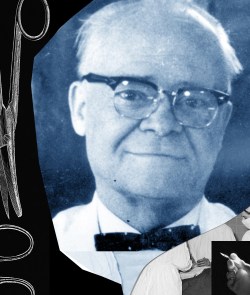
Could it be an abortionist? Thirty years ago, I spent some time with Dr. Bernard Nathanson, who had professed faith in Christ after presiding over the biggest abortion business in New York City in 1971 and 1972. When he studied ultrasound video in 1974, though, Nathanson realized he had killed human beings. As pro-life advocates talked with him, Nathanson found comfort in “the special role for forgiveness” within Christianity.

I’ve read lots of books about and by abortionists and learned that each had a different rationale. Let’s start with Robert Spencer, who aborted at least 40,000 babies from the 1920s through the 1960s. Laudatory biographer Vincent Genovese wrote that Spencer “without any sense of loss” would “gently” place into a basin the tiny children he had just aborted.

Spencer felt no grief because as a student at Penn State he had become a confirmed Darwinist. “Zoologists look upon an embryo as a parasite. … Murder is the basis for life, for one form of life eats another,” he later wrote. “I am an evolutionist, hence I am an atheist. … The basic structure of all matter is electrical.”

Robert SpencerIllustration by Mallory Rentsch / Source Images: WikiMedia Commons
Robert Spencer

Spencer lived in Ashland, Pennsylvania, which had a population of 5,000 in 1960 and has about half that now. His practice wasn’t a secret. Some residents who protected him benefited economically from Spencer’s work, since the thousands of abortion seekers who came to Ashland from across the US patronized local hotels and other businesses.

It appears that Spencer killed only one of the women he gave an abortion during his 40-year career. A jury that included at least one former Spencer patient found him not guilty.

A second abortionist, Ruth Barnett, displayed a different motivation. Although she was not a doctor, she was as competent in abortion as the best. A close friend of Planned Parenthood founder Margaret Sanger, Barnett performed about 40,000 illegal abortions from 1918 to 1968 in Portland, Oregon, with at least two-thirds of the women coming to her by referral from established doctors.

Barnett’s self-appraisal seems accurate:

I have never lost a single patient. … I have a light touch. … In the movies, they always depict the fallen women sneaking up a dirty, rickety stairway to a dismal room—or making her way, furtively, into a dark alley that leads to a decrepit shack where some alcoholic doctor or untutored butcher performs the operation. … A clinic such as mine was not that way at all.

Her biographer, Rickie Solinger, describes Barnett as “clean and careful and very highly skilled” and says her operating rooms “were spotlessly antiseptic.”

Barnett’s memoir and biography suggest she became an abortionist partly out of revenge. An early sexual experience with “Frank” left her pregnant:

He was not to blame, he said. What kind of a little fool had I been to be so careless?… “You got yourself that way, now get yourself out of it.” Seeing the look of amazement on my face, he added a thrust that I’ve heard second-hand a thousand times since. “How do I know I’m responsible anyways? You’ve been going around with other guys.”

Years later Barnett recalled, “He turned and hurried away. I never saw him again. In the years that followed, I have observed many ‘Franks.’ … For years I hated Frank. So it was no surprise to me to find many of my patients had the same implacable hatred for the man responsible.”

Barnett raged not only against men who exploited her but the women snubbing her daughter, Maggie, who entered the University of Oregon in 1932 and tried to pledge a sorority, Alpha Chi Omega. Members rejected her because of her mom’s occupation: Barnett was “screaming and crying in rage” but then told her daughter, “For every sorority girl that comes in my office, you’ll get a new dress!”

Maggie recalled, “I was the most fashionable and best outfitted girl at the university that season. And also the wildest, wickedest, drunkenest, most daring, and most promiscuous.” Barnett aborted six of Maggie’s children—her own grandchildren.

Ruth BarnettIllustration by Mallory Rentsch / Source Images: WikiMedia Commons
Ruth Barnett

Barnett also liked earning at least $9 million (more than $100 million today) and buying “jewelry, expensive bric-a-brac, minks.” Maggie recalled her mom telling her, “Buy yourself a man, a husband, a lover. What can’t money buy? … We had about four or five fur coats apiece. … She loved jewelry. She had some gorgeous pieces.”

A third abortionist, Edgar Keemer Jr. (1913–1980), combined resentment and ideology. He grew up in a middle-class Black home hoping to echo his father, who rose from a poor rural background to become a pharmacology professor. Keemer Jr. tried to develop a well-paid practice in Indiana, but the local medical society denied him membership on racial grounds and the local hospital refused him admitting privileges.

Keemer visited New York City and Chicago but found underpaid Black doctors there moonlighting as railway porters. He settled in Detroit, where Blacks had entered the auto industry at good wages and Wayne County’s welfare system paid for doctors’ visits. Keemer let other Black physicians know that he would do abortions. His initial patients were their relatives. As others became aware of his clean clinical setting and maternal safety record, referrals increased.

When the United States entered World War II, Keemer tried to enlist in the navy as a doctor but encountered racial slurs and suggestions that he work in the kitchen or mop floors. The NAACP, trying to show patriotism, pressured him.

Keemer later said only one person “came not to lecture me. … He was a member of the Socialist Workers Party,” the Communist offshoot that supported Leon Trotsky in his battle against Joseph Stalin. Keemer joined the SWP in 1943, committed to replacing “capitalism with socialism wherein every man and every woman would be guaranteed a satisfying function in society”––if they survived.

In his autobiography, Keemer said he performed 30,000 abortions. When we add his work to Spencer’s and Barnett’s, we find that these three mass murderers apparently wiped out at least 110,000 unborn children. It can be tempting to demonize them, but they too, like Bernard Nathanson who presided over 60,000 abortions, were created in God’s image.

Once Nathanson realized the enormity of his sin, he “would awaken each morning at four or five o’clock, staring into the darkness and hoping (but not praying yet) for a message to flare forth acquitting me before some invisible jury.” Eventually, “for the first time in my entire adult life, I began to entertain seriously the notion of God … who problematically had led me through the proverbial circles of hell, only to show me the way to redemption and mercy through His grace.”

For Nathanson to change, he had to come to two understandings: that the life in a woman’s womb is human and worthy of protection and that God’s grace is boundless, able to reach even someone with the blood of thousands on his hands. Those are truths that the church, too, can carry into a post-Roe world.

Content adapted from The Story of Abortion in America by Marvin Olasky and Leah Savas, ©2023. Used by permission of Crossway, a publishing ministry of Good News Publishers.

News

Lawsuit Alleges Billionaire’s Christian Foundation Engaged in Self-Dealing

A former director of Bill Hwang’s investment firm, seeking millions in compensation, said Grace and Mercy was used as a financial “escape pod.”

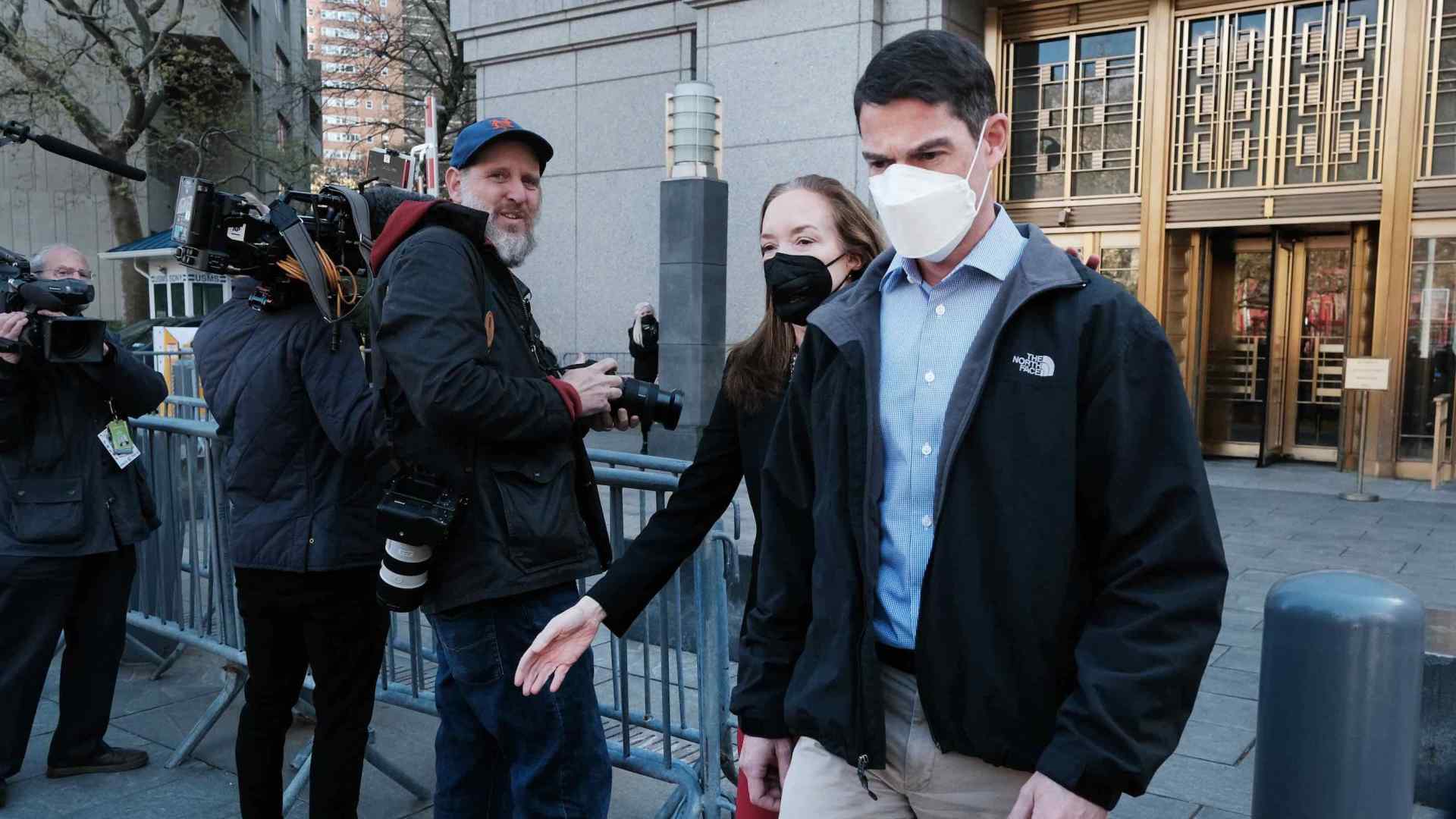
Archegos CFO Patrick Halligan, who also served at the Grace and Mercy Foundation, leaves federal court in April.

Archegos CFO Patrick Halligan, who also served at the Grace and Mercy Foundation, leaves federal court in April.

Christianity Today July 7, 2022
Spencer Platt / Getty Images

A former managing director at Archegos Capital–a family office at the center of one of Wall Street’s biggest white collar crime cases in decades–has filed a lawsuit alleging fraudulent activity at the Grace and Mercy Foundation, the Christian nonprofit connected to the firm. In seeking millions in compensation, he claims the foundation’s $800 million in assets includes funding diverted from Archegos’s employees’ compensation.

In April, federal prosecutors charged Archegos founder Bill Hwang, a billionaire outspoken about his Christian faith, with racketeering and “massive fraud.” In 2021, banks lending to Archegos lost $10 billion, and the firm’s collapse evaporated $100 billion from the stock market, according to prosecutors. Hwang is currently free on a $100 million bond and awaiting trial.

Brendan Sullivan, who started at Archegos in 2014 and resigned during its downfall in March 2021, is seeking millions in compensation he says he is owed. He says Archegos leadership forced employees to put their bonuses back into a fund at the firm, which he alleges Archegos then invested in stocks and transferred to Grace and Mercy. The foundation, he said, then sold the stocks and got the profits. That would protect appreciated stock from taxation and give Archegos a tax deduction for the donation.

“These share transfers to the foundation were all coming from the Archegos Fund, which included employee deferred compensation … which was done without the knowledge or consent of employees,” the lawsuit says. The employee fund lost $500 million total, Sullivan says. Sullivan was owed $30 million in deferred compensation at the time of his resignation and has not received any of it, he said. He was one of Archegos’ 27 full-time employees, according to the lawsuit, which is directed at the firm, its executives, and the foundation.

Bloomberg columnist Matt Levine noted tables within the lawsuit showed Sullivan had put only $3.8 million into the deferred compensation fund and that he had come up with the $30 million value based on Archegos’ inflated profits in March 2021. A “combination of chutzpah and careful contract reading,” Levine said about suing for $27 million in paper profits.

Sullivan—who was part of the Christian community in Manhattan and did a fellowship through Redeemer Presbyterian Church—alleges Hwang ran the fund like a “cult” and used Christianity as a way to pressure employees to invest their earnings back into Archegos. He said questions about employees’ faith were a part of performance reviews and that they were pressured to go to lunchtime Scripture readings at the foundation, which was in the same office.

Sullivan is suing as a disgruntled former employee—he mentions career opportunities Hwang promised him and never delivered—and though there are typos throughout, his wide-ranging 99-page lawsuit is filled with emails and conversations specifically detailing his grievances. In the early 2000s, Enron employees who lost millions in retirement after Enron’s collapse brought similar lawsuits and ultimately won a class-action settlement.

Christopher Porrino, a lawyer for the Grace and Mercy Foundation, said in a statement that “Mr. Sullivan’s complaint against The Grace and Mercy Foundation is filled with baseless and frivolous allegations, all of which will be decisively refuted in court.” The foundation will continue its grantmaking work it has been doing since 2006, he added.

Grace and Mercy has distributed about 5 percent of its assets a year—amounting to around $30 million in 2019, the most recent year on record—to a variety of Christian organizations like the Bowery Mission, Prison Fellowship, and Fuller Theological Seminary. Sullivan alleges the grants to Christian groups were a cover for Hwang’s usage of the fund for his personal benefit.

Sullivan alleges that Hwang described the foundation as his “escape pod” and when Archegos was in trouble Hwang frequently told concerned employees that if the firm collapsed, he could move them to the foundation and use its capital to restart another investment firm, “Archegos 2.0.” Sullivan said that Hwang considered transferring Grace and Mercy assets to Archegos but did not after receiving counsel that it would be illegal.

“Hwang mentioned that some Archegos employees would be given foundation money to start their own investment funds, from which the foundation could generate management fees,” Sullivan alleges.

Central to Sullivan’s lawsuit is the fact that Archegos and Grace and Mercy functioned as the same entity though they were separate on paper. The two shared office space and employees, and Sullivan said they often had “firmwide” meetings that included employees from both Archegos and the foundation.

“Hwang regularly and informally moved money and shares from Archegos accounts to the foundation, and his family’s own private non-fund accounts, utilized Archegos staff, administrative functions, and resources to operate the foundation,” the lawsuit reads.

On the foundation’s most recent tax form, Archegos chief financial officer Patrick Halligan was listed as the bookkeeper for Grace and Mercy. Halligan faces racketeering and fraud charges in the Archegos case alongside Hwang. “Halligan…was central to the intermingling of assets, shares, and monies,” Sullivan’s lawsuit alleges.

The lawsuit also names Andy Mills, an Archegos executive who is a former president and board chair of The King’s College, a Christian college in New York. Mills was not charged in the federal case.

Sullivan alleges that when Archegos was in trouble Hwang and Mills assured employees of compensation through Archegos, Hwang’s personal funds, or the foundation. He says that Mills threatened employees who were thinking about leaving, saying that people who quit would no longer receive any of their deferred compensation.

Mills declined to comment to CT.

David Shapiro, an expert on financial crimes at the John Jay College of Criminal Justice, said authorities might be more willing to go after the foundation if there is self-dealing that parallels Archegos and if the two functioned as one entity.

“If I’m dishonest with my left hand, that’s probably relevant evidence that I’m dishonest with my right hand,” he said, while making clear that he didn’t know the truth about allegations against Hwang and Archegos.

However, Shapiro said, the foundation seemed to be run with more caution than risk-taking Archegos, with the foundation’s rate of returns exceeding the amount it was giving away.

Shapiro said that he might “worry more” for the foundation if the accounting firm doing the 990s was a small outfit rather than a major accounting firm like KPMG, which has more financial independence from a single client and could call out ethical lapses. The 2019 990 for Grace and Mercy lists a 3-person accounting firm.

“When you mess around with compensation of employees, and you have ERISA violations, that’s very serious stuff,” said Shapiro. Employment Retirement Income Security Act (ERISA) fraud is among the allegations in the lawsuit. “It’s really a horrible situation.”

Meanwhile the federal case against Hwang and Halligan is proceeding, with prosecutors having to deliver discovery—evidence the defense can review—by July 20.

News

Could Roe’s Reversal Slow Global Trends to Legalize Abortion?

Evangelical advocates abroad hold out hope that America’s shift on abortion sets a new standard.

Pro-life protests in Bogota, Colombia

Pro-life protests in Bogota, Colombia

Christianity Today July 7, 2022
Chepa Beltran/Long Visual Press/Universal Images Group via Getty Images

Some pro-life Christians hope the reversal of Roe v. Wade will help more countries outside the US resist legalizing abortion.

Under the landmark ruling for nearly 50 years, the United States modeled abortion rights as a standard, an inevitable sign of social progress. As abortion policy becomes a state-by-state issue, advocates say, it will decrease the pressure the US and US-based aid groups put on foreign governments around abortion access, allowing them to focus on other aspects of women’s health instead.

The Roe reversal “will help show the rest of the world that this isn’t a settled issue, even in the West, and will hopefully help countries in the Global South to resist pressure from the West to liberalize their abortion laws,” said Peter Saunders, the UK-based president of the International Christian Medical and Dental Association.

“It will also make it much harder to argue at the UN that abortion is an international human right when half the US believes, and will now enforce, the exact opposite.”

In its updated guidelines issued in March 2022, the United Nations’ World Health Organization called for the repeal of “laws and regulations that restrict abortion by reasons, prohibit abortion based on gestational limits, and require mandatory waiting periods.”

Under President Donald Trump (and previous Republican presidents), the Mexico City policy barred federal funding of international organizations that covered or advocated for abortion as a method of family planning. President Joe Biden rescinded the policy.

While the Mexico City policy focuses on foreign assistance programs, two other provisions—the Siljander and Helms amendments—also limits how US dollars are used around abortion abroad. The Siljander Amendment bars government funds from being used to lobby for or against abortion.

Yet, a study released by the Center for Family & Human Rights in 2020 found that the US had signed or signed and ratified at least seven human rights treaties through the United Nations, and the treaty bodies subsequently advocated for liberalizing abortion laws.

In the wake of the Dobbs decision on June 24, the Supreme Court case overturning Roe v. Wade, Secretary of State Antony Blinken said the US “will remain fully committed to helping provide access to reproductive health services and advancing reproductive rights around the world.”

Xesús Manuel Suárez García with the Ibero-American Congress for Life and Family (Congreso Iberoamericano Por La Vida Y La Familia), said the US and US-based nonprofits often pressure governments in the Global South to liberalize their abortion restrictions. Over the past two years, Argentina, Mexico, and Colombia all moved to decriminalize abortion.

“The population [of pro-life countries] is led to understand that, although the majority position of civil society is pro-life, it seems inevitable that pro-abortion regulations will be imposed from above,” he said. “And suddenly, with the reversal of Roe v. Wade, the general population in Latin America discovers that this is not the case.”

International abortion rights groups have also voiced concerns about the ruling’s “chilling effect” on foreign aid for their cause. As one adviser told Politico’s Global Pulse, “When it comes to family planning and reproductive health, the U.S. is the largest government donor. And of course, that is going to create ripple effects.”

A change in America’s abortion landscape helps pro-life organizations working abroad “to insist that abortion should not be part of this conversation, that it should be up to individual countries and not pressure from NGOs and outside organizations,” according to Valerie Huber, founder of Institute for Women ’s Health.

“No longer can progressive nations and NGOs point to the US and our national abortion policy as an example of the necessity for legalizing abortion, nor can they say that legalizing abortion is a requirement for a democratic country,” said Huber, who worked on global issues concerning women ’s health for the Department of Health and Human Services (HHS) during the previous administration.

At the start of the Biden administration, Blinken announced the US withdrawal from the Geneva Consensus Declaration, the international agreement on women’s rights drafted by Huber when she worked for HHS and signed by 36 other countries. The declaration seeks to expand healthcare for women and protect the rights of nations to support health, life, and family through national policy and legislation, free from international pressures.

Most of South America, Africa, and Southeast Asia—some of the most populous areas of the world—severely restrict abortion or ban it outright. Russia, North Korea, China, Australia, Canada, Mexico, most of Europe, and a handful of countries in South America and Africa permit abortion on request with some limits on gestational age.

Guatemala joined the Geneva Consensus and was designated the pro-life capital of Latin America by Ibero-American Congress for Life and Family. Its president has called on the country to protect life starting at conception. By contrast, abortion restrictions are relaxing elsewhere in the region—most recently in Colombia, which decided in February to legalize abortion up to 24 weeks gestation.

“In our experience, the American government since Roe has been trying to engage in what can only be described as ideological colonialism or imperialism to pressure the majority world to conform to US standards on abortion,” said Dr. Mike Chupp, president of the US-based Christian Medical and Dental Association.

When global health organizations pressure countries to treat abortion rights as a settled issue, it detracts from other work to prevent maternal mortality, pro-lifers say.

Contraception, treatment for sexually transmitted diseases, cervical cancer screenings, steps to reduce infant and maternal mortality rates, better perinatal care—these are the women ’s healthcare issues that are truly urgent in much of the world to doctors like Chupp.

International pro-life advocates also believe that the reversal of Roe provides the chance for Christians to love not only unborn children, but their mothers too, a position championed by many Christian pro-lifers in the US.

Graciela Noguera Ibáñez works with NAF-Paraguay, a Paraguay-based nonprofit that promotes systems that will allow children, adolescents, and families to thrive.

“The real problem is social responsibility towards pregnant women in vulnerable situations,” she said. Ináñez has worked with the Ministry of Education to develop a program to support teen mothers and provide effective sex education to girls to help prevent teen pregnancy and clandestine abortions.

Ibáñez’s program has the support of Catholic organizations as well as the Association of Evangelical Churches of Paraguay.

Dawn McAvoy leads Both Lives Matter, a pro-life group based in Northern Ireland. She said that overturning the US federal abortion law would question the underlying assumptions about the right to abortion and privacy that have driven the conversation in both the US and the United Kingdom for more than 50 years. Great Britain legalized abortion in 1967, but the government of Northern Ireland kept its laws banning abortion until 2019.

“Any challenge to and rejection of a dogma that relegates the preborn ’s life and her induced death to a private choice is exciting,” she said.

But McAvoy believes Roe reversal is not the ultimate victory. The US and other countries around the world still have work to do cultivating what she calls a “pro-both” culture, where freedom and equality for a woman do not mean the power to end her child ’s life.

Just as the Dobbs decision resulted in even more expansive abortion policies advancing in blue states, some anticipate the ruling will also embolden activists working on a global scale.

News

New York Shuts Down Embattled Olivet University Campus

After a money laundering case and dozens of lawsuits, the Christian college founded by David Jang is under new scrutiny from Christian accreditors.

Olivet University's New York property sits on 3,000 acres in the Hudson Valley.

Olivet University's New York property sits on 3,000 acres in the Hudson Valley.

Christianity Today July 6, 2022
Courtesy of Olivet University

New York shut down troubled Christian college Olivet University’s campus on June 30, citing financial mismanagement and “a well-established pattern of non-compliance with laws, rules, and regulations.” In a letter denying Olivet’s appeal of the state’s decision, New York cited more than 50 lawsuits filed against Olivet over the past decade and 20 tax liens.

Olivet in a statement to CT said the state’s letter was “without regard to accurate facts.”

The school was founded by pastor David Jang, whose Olivet church is connected to a web of nonprofits and businesses, including media companies like Newsweek and the International Business Times. The wife of a former Olivet trustee had promoted Jang as a messiah who will complete God’s earthly mission, according to former members of Jang’s community.

Olivet University is based in California but has extension campuses around the country, including in New York, where the campus has operated since 2012. Historically many of Olivet’s students were Asian with student visas. The school has no relation to Olivet Nazarene University in Illinois or Olivet College in Michigan.

Like fellow businesses and ministries linked to Jang’s movement, the university has had high-profile legal problems in recent years. In 2020, a school trustee and an affiliated business partner pleaded guilty to money laundering charges, related to fraudulently obtaining $35 million in financing for Olivet University. The school itself also pleaded guilty to two charges related to the fraud and agreed to pay a $1.25 million fine.

After that case, the leadership of the school largely remained the same—a factor New York cited in its decision to shut the upstate New York campus down. The state had been reviewing Olivet’s case for two years.

Olivet said in a statement to CT that it is “completely debt-free” and that New York’s statements about its financial management were “deeply and inherently flawed.”

“Comparing to other Christian schools, Olivet University is in good financial shape. And as its audited financial statements show, OU operates from a firm financial foundation,” the school stated. “We felt the denial itself was likely directly influenced by misinformation from Newsweek's reporters, and was unfair.”

In April, Newsweek reported that the school was under a Department of Homeland Security investigation for money laundering, human trafficking, and visa fraud. Agents looked into whether Olivet’s international students spent more time working for less than minimum wage than studying at the university. Charges have not been made in the case, and Olivet said the raid was based on “misinformation.”

Through all of this, Olivet University has retained its accreditation through the Association for Biblical Higher Education (ABHE), but the latest news could spell trouble.

In February 2020, ABHE put the school on probation, saying Olivet failed to document its financial stability, governance, oversight, and the portion of income “allocated to educational programs and purposes.” In November of last year, ABHE restored Olivet to good standing, based on an ABHE visit to the California campus and the school’s self-reporting of remedial actions.

But with the recent headlines over the Homeland Security investigation, ABHE discussed Olivet at its June 22 meeting. Now it says that it has taken an action related to the school, but the school has a chance to respond before ABHE will announce its decision regarding Olivet’s status.

“We are aware of the allegations against Olivet, and we are in the process of working through actions related to those things,” Lisa Beatty, the executive director of the ABHE’s commission on accreditation, told CT.

Beatty said the ABHE treats media reports about an institution as a complaint against the institution, so that’s how the Newsweek report triggered a review of the school even though the agency had removed it from probation in November.

Beatty added that federal investigations into ABHE schools were an “atypical” situation. She said ABHE takes its watchdog role “very seriously” and “we have removed institutions from accredited status within the last 4 years. We have also sanctioned institutions, including this one in the recent past.”

New York’s standards in terms of shutting down Olivet differ from ABHE’s accreditation, she said. If ABHE removes Olivet’s accreditation, that would apply to the institution as a whole—so all seven remaining branch campuses would lose accreditation.

A media battle is also happening through all of this. The same day that New York shuttered the state’s Olivet campus, IBT Media sued for control of Newsweek.The CEO of IBT Media is Johnathan Davis, the husband of the former president of Olivet University Tracy Davis, and Newsweek’s CEO is Dev Pragad, a former Olivet member. Olivet-affiliated sources have claimed that Pragad is trying to take down Olivet with negative coverage of the school. Last month, Newsweek also covered criminal charges against an Olivet pastor. (Update: This week Newsweek also sued IBT Media, with allegations that Jang’s community was trying to hamper Newsweek’s reporting on Jang.)

Olivet’s roughly 3,000-acre New York property houses several ministry operations, including the World Evangelical Alliance headquarters. Last month, the WEA hosted top Korean evangelical leaders on site. The WEA declined to comment on the shuttering of the campus.

In acknowledging the end of “a good, 10-year run in the state of New York,” Olivet said in a statement that it had “always envisioned multiple uses for our Dover (New York) location beyond the school itself.”

The New York campus itself had fewer than 50 students enrolled when the state shut it down, according to the state’s documentation. Students couldn’t complete full degrees there–only seven MBA courses and seven MDiv courses. Olivet has said its New York campus is “stepping back from offering credit-bearing courses for now” but is still seeking a full charter as a New York institution instead of as a branch campus of the California school. Olivet said it has invested $70 million in the campus.

Aside from the WEA headquarters, the school said it had plans for “a technology park and Christian innovation center, a hospital to serve the mission community, a ‘business as mission’ center, a sports center, and an evangelical themed museum, and an entertainment complex, among others.”

The nonprofit school has a half dozen associated businesses, including its own development arm, Dover Greens, which has focused on the build-out of its large property in the Hudson Valley.

The Department of Labor fined Dover Greens $700,000 in 2016 for exposing workers to asbestos and lead, a violation the NY DOE referenced in its letter to the school. Olivet stated to CT that all the lawsuits cited in the NY letter related to “the campus management company” and were paid in full or settled.

Thomas Bakewell, a lawyer and CPA who has advised Christian colleges in crisis for decades, said he usually cautions against money-making ideas that are too far from the mission of a school.

“I’ve gotten calls for many years from Christian schools and colleges, saying, ‘We want to get creative. How can we make money doing this, doing that.’ The answer is, you make money doing your business,” Bakewell said. Looking to the ABHE review of Olivet, he is most curious: “What do they say about their academic programs? Are they good?”

ABHE thought so back in November 2021, but Beatty said about Olivet, “It is a complex institution.”

News

Charlie Dates Returns to the Chicago Church that Shaped Him

While continuing to lead Progressive Baptist, the 41-year-old pastor was named the successor to James Meeks at Salem Baptist Church, one of the city’s biggest congregations.

Christianity Today July 6, 2022
Courtesy of Charlie Dates

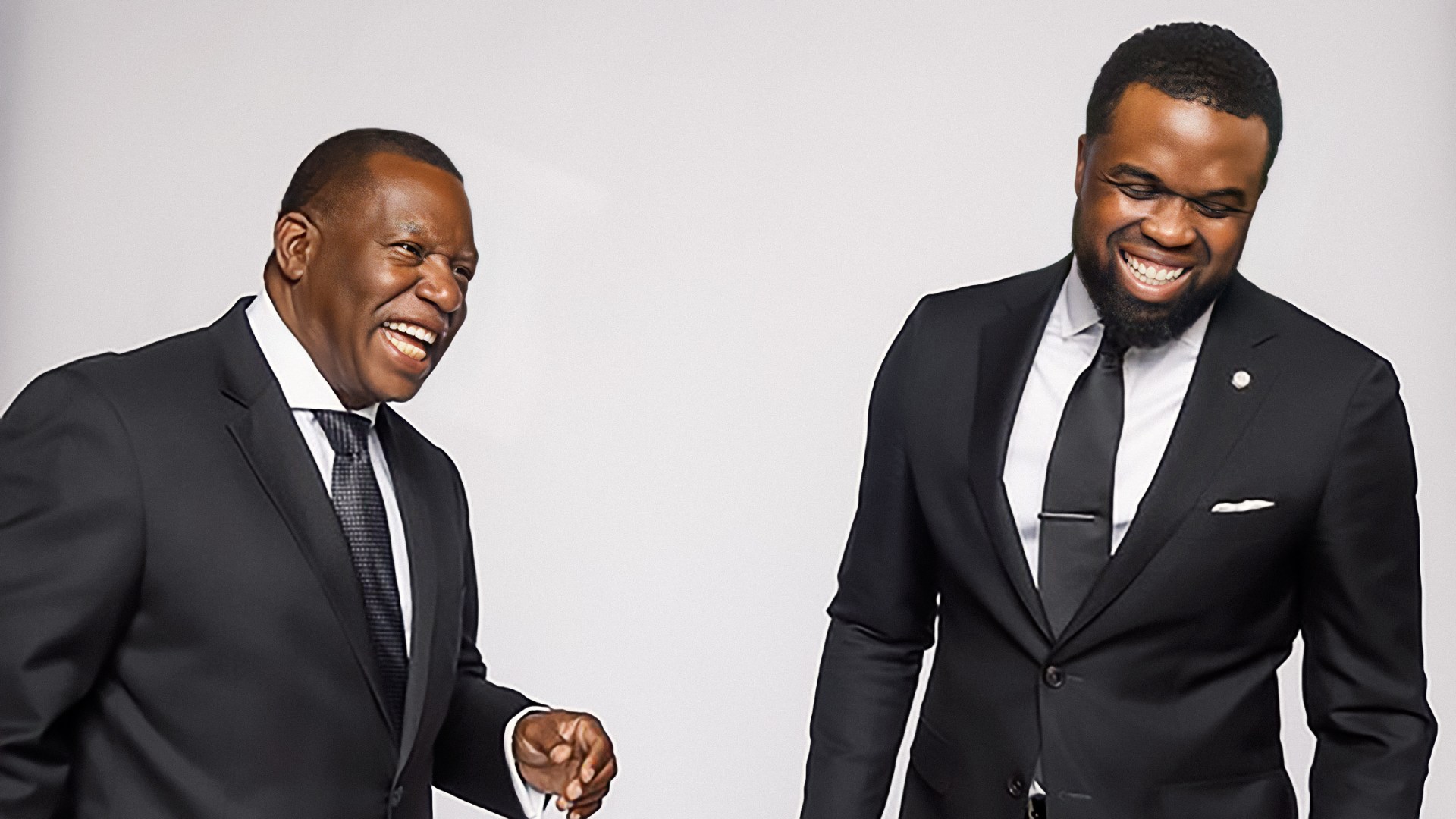
After the retirement of its founder James Meeks, fellow South Side pastor Charlie Dates will become senior pastor of one of Chicago’s biggest megachurches, Salem Baptist Church, returning to the ministry that shaped him as a kid and succeeding one of his greatest mentors in the faith.

Meeks has led the African American congregation, now at nearly 10,000 members, since its founding in 1985. He announced in June that he will give his last sermon on January 8, 2023.

Speaking with CT, Dates drew parallels to Paul and Timothy, referencing Paul’s instructions to the younger leader based on what he had witnessed firsthand in ministry.

“This isn’t something that I read or something that I watched; this is a ministry that I participated in and had a front row seat to as a kid,” said Dates, who grew up at Salem and attended its former school, Salem Christian Academy.

In addition, the 41-year-old also served under Meeks as primary preaching assistant, pastor of adult ministries, and director of church operations at Salem Baptist before becoming senior pastor at Progressive Baptist Church in 2011.

“There’s something about the formation of my mind and my theological heart that is directly shaped by and impacted by watching all of that, and working in all of that, as I came of age,” he said. “It’s kind of like a kid learning a language; when you’re immersed in the language, no one has to tell you what words mean and what signals mean.”

To start, Dates will keep his current post as senior pastor at Progressive Baptist Church, a 15-minute drive from the House of Hope arena where Salem Baptist meets. The two churches will remain separate, and he plans on preaching two sermons each Sunday.

CT interviewed him about the history of the two congregations and his call to lead Salem Baptist.

What specifically attracted you about this role at Salem Baptist?

Part of what I’m learning and discerning about God’s direction for one’s life is to pay close attention to the bend of one’s spiritual biography. How has God moved and worked in one’s life? So for me, what attracted me was God. It seems to me that God has been up to this, directing this well before I could tell.

Could you describe your relationship with Meeks? How has he influenced you?

I think part of this is connected to what attracted me to Salem Baptist. It is the work of that church, but it’s also Reverend Meeks, the pastor of that church. We have—I think—a very Paul and Timothy kind of relationship. I want to be clear though, I’m not saying I’m the only Timothy he has, in the same way that Paul had others. Neither am I saying that he’s the only significant influence in my life. But I do sense and feel that a lot of the progress that I’ve been able to make in the pastorate is connected in some way to his tutelage, his leadership, and his spiritual fathering, so to speak.

My relationship with him is dynamic. It’s humorous, it’s rewarding, and it’s worth more than the price of gold or platinum. What I benefit from is far greater than just a tip from him here or there; it’s more of a model of a life lived.

What lessons or advice has he already passed along about leading Salem Baptist?

That Salem is a loving church ready to work. When I came to Progressive, it took me a while to actually get my feet under me because of some of the history and nature of the church, and it required a lot of patience and long-suffering initially. I think the distinction is that I can serve Salem well by loving her through the preaching ministry and pastoral care, and she will follow. She’s ready to work. That’s not always the case when you assume a pastorate.

How do Salem Baptist and Progressive Baptist compare, and what makes you a fit for both congregations at this moment?

I would rather not compare them, only because I wouldn’t want to say the wrong thing and have someone read it and judge my intent. What I will say is that Progressive and Salem demonstrate the spectrum of Black churches in Chicago. On one hand, Progressive is what I would call progressively traditional, and Salem is traditionally progressive.

Progressive is a church of five generations. Progressive was once, decades ago, the kind of leading force of churches on the South Side. Around the country, people run into me and tell me, “Oh I got baptized at that church,” or “Oh, I remember Sunday school at that church.” Its legend and its lore is huge. But—and this is no secret—for years it stayed in the vein of its history. It took a while for it to reimagine and revitalize and become relevant again. But the bones are good.

Salem has not lost its relevance, Salem has not lost its edge, while maintaining a very high view of Scripture and its very Christo-centric approach to ministry. Its evangelism, its benevolence, its disciple-making have all been very Christo-centric and rooted in the Scriptures. It’s been anchored in the community. Progressive got insulated at one point. It’s no longer that way—we are very much in the community now—but that’s the way it was.

After 11 years at Progressive and watching more than 1,000 people join that church in that time, it’s fair to say that I carry the DNA of both churches. It’s fair to say that I understand the dynamics of congregational leadership and development in both churches. I’m not saying that I’m perfect, forever, for both churches. I’m just saying that at the juncture we’re in and being a son of the soil of Chicago and a son of Salem, and now having pastored Progressive, I just think I have a unique understanding and relational dynamic with both churches.

How do you use that significance, and history of these two churches in the city, to drive the future?

Every church that lives in the past is already anchoring itself in the graveyard of history. I think history, much like the end of Romans, is meant to teach us what God can do. To correct us from repeating errors and to inspire and to encourage us to pursue God’s great promise. If I can help these churches recognize God’s hand in their past as a kind of indication of God, of what God wants to do in the future, then I think I can hand it off to the next generation in good fashion.

If, however, I fail to get the churches to see that our history serves our present and inspires our future, then I’m in trouble. On one hand, the legacy has to continue. We’ve got to be able to have our 12 stones from our “Chicago Jordan River,” with a keen eye on the hills and mountains of Jericho and the other cities in Canaan.

What challenges do you anticipate with the dynamic of pastoring two congregations? And how have you begun planning to deal with those challenges?

I don’t know if I’d recommend this to anybody. I need to say that this is not an ambition of mine. Neither is it a premeditated desire of mine. As I prayed through it, Reverend Meeks and I wrestled with it, and he graciously affirmed my sense of discernment. As I prayed about it, I got no inkling that it was time, just yet, to walk away from Progressive. It’s important to highlight that this is not conventional. And I recognize that.

What I do sense is that there’s still work to be done and vision to accomplish at Progressive at the same time that I begin my assignment at Salem. The first challenge is getting the churches to sense that where God gives a vision, there’s always provision. That somehow God grants the capacity and that God grants the resources and support. But it would be foolish to assume it’s humanly possible to do this in and of myself. I plan to lead through leaders.

One of the benefits at Progressive is that the operations of the church and systems and structures of the church, the day-to-day operations, are free to move independent of me. I am more of a vision-casting, preaching, pastoral care pastor. I’m not in the weeds at Progressive. I have to lead through my leaders.

My approach at Salem will be similar once I have learned again the way of the land. There’s just no way you can pastor a church that big being involved in all of the details, right? The other thing is, in terms of preaching, I plan on preaching two services on Sunday morning: one at Progressive and one at Salem.

Are there things at Progressive you will have to step away from? How will your role there look different?

Two things. No. 1 is my itinerant ministry will take a reduction, and I will be present locally a lot more, which I’m looking forward to. Another thing is I don’t think this dual assignment is in perpetuity. We’ve already started the conversation that, at some point, the goal is to raise up leaders to do more work. I’m working to discern God’s direction as it relates to timing of when to conclude. Progressive has asked me, when the time comes, to help them to find their next pastor. With teary eyes, I just told them I hope that they accept my recommendation when that time comes.

You talked a bit about both churches’ significance to Chicago. How are you hoping to continue to cultivate that with both congregations?

Chicago needs the Black church to be her best and brightest self. It’s more than just Progressive and Salem. Chicago has rich Black churches throughout the South and West sides, in particular. I think these churches, with the history, the power, and relevance they have, can help shape a pipeline and platform for developing young people, young leaders, teachers, preachers, music ministry leaders, and nonprofit developers that Chicago needs these churches to develop across platforms. These churches are a gift.

You know, at one point, Progressive had the strongest and largest Christian discipleship ministry in the city. And the same for Salem, which might still have it. These have been disciple-making churches with an emphasis on Christian education. Both of them have produced some stalwart Christian leaders and teachers. That history is enormous. Progressive’s … buildings were built without a dime of debt at a time where Black people could not get a loan from a bank. The pastor of Progressive at the time, his name was Reverend T. Brown, he was such a dynamic leader in the city that he was able to tell [former Chicago mayor] Richard J. Daley, “No.” And live to tell about it. They both, in that regard, have a history of absolutely incredible pastors. Pastoral leadership is a storied pillar in both of these churches.

What other things do you want to highlight to your current and future congregations and the readers of CT?

It’s a sensitive time for both congregations, and I want to convey as they read this my love for both of them. I recognize this moment is big, and it’s watershed, but it is not about me. I am on assignment to lead the church forward in Chicago. I want to say it is an honor to even be considered, let alone asked, to succeed the Reverend James T. Meeks.

I also want to suggest that Chicago, and America, needs churches that are developing and reproducing young pastors, that we become more intentional about it. And that’s part of the beauty I think of this story. I don’t come out of thin air to either church; you can trace my lineage.

The beauty of this narrative is that the Lord, in his kindness and his grace, has taken pastors and churches to develop me. If we could look at the current moment and seize the opportunity to develop young people that God has laid his hand upon, then I think the best days of the church, in this critical culture, are in front of us.

We’re living in a time where so many young people are walking away from the church and where church attendance numbers are in the dumps. Our seminaries, many of them are in decline. And while we are kind of watching this great falling away, we don’t have to merely watch it. But we can actually press into the current culture and lead our young people and train them to lead a revolution for the kingdom and the glory of God.

Pastors

Pastors in Pain, Christ Can Redeem Your Suffering

After many difficult years in ministry, I lost the strength to pastor. But Christ met me in weakness.

CT Pastors July 6, 2022
Illustration by Mallory Rentsch / Source Images: Cary Bates / Unsplash / Runstudio / Getty

Walking toward our church building one morning last year, I felt an emotional decoupling from the church. A void of affection and desire. The thought of walking into my church was now harrowing. The spiritual weight of souls was something I could no longer carry. The elders mourned with me, prayed for me, and gave me two months off.

The accumulated pain from the past two years had caught up with me: congregational loss, apostasy, ghosting, harsh criticism, and much more. Many of us in ministry have faced similar wounds. How do we address our pain while pastoring?

While it can be tempting to tuck away our hurt, Paul sets an example by bringing his pain out into the open. Some abandon the faith for the love of the word: “For Demas, in love with this present world, has deserted me” (2 Tim 4:10). I can’t think of a more disheartening sorrow. Some attack us: “Alexander the coppersmith did me great harm” (4:14). That hurt was deep. Others, after years of friendship, ghost us: “All who are in Asia turned away from me” (1:15).

Too many Christians treat their pastors like a religious commodity. Hot when they need them, disposable when a better prospect comes along.

Paul doesn’t brush aside his experience but vocalizes his pain. People have hurt you. Some intentionally, others out of neglect, but you have suffered. While Paul didn’t wallow in his sufferings, he did describe them in some detail. And that’s just his letter. Imagine what his conversations with Luke or Timothy would have been like.

In order for the wounds inflicted by others to heal, it’s important to identify what they have done and to share it with the Lord and a trusted friend. Paul was transparent about his hurt. He named it and grieved it. Often this takes longer than we realize. If we neglect our sorrows, they will eventually stretch us too thin.

During a season of intense heartache, I went to hear artist Makoto Fujimura speak. He described God’s work in suffering through kintsugi. Kintsugi is the Japanese art of bowl-mending. Artisans reassemble broken tea bowls with costly, liquid gold, producing beautiful bowls marked by winding gilt rivulets. Fujimura insists, “They do not fix the bowls; they make them more beautiful.” God doesn’t merely want to fix us; he wants to beautify us through our suffering.

After hearing Fujimura talk, I turned to my friend and suggested we leave before the Q and A started. I was emotionally raw and didn’t feel like lingering, but we decided to stay. During the Q and A Fujimura’s wife, Shim, said, “Mako, you forgot to mention something important. Before the tea masters begin mending, they hold the pieces in their hands and honor the broken pieces. We have to sit with the broken pieces of our lives and honor them.” A lump formed in my throat, and I gasped aloud. This is what God was calling me to do: to honor the broken pieces of my heart.

Although I wanted to learn the lesson and get back to ministry, God knew I needed more time to sit with the pain and sorrow. Are there broken pieces you need to honor? What stories or hurts come to mind when you look back over your ministry? You may need to dig them up, name them, describe how you feel about them, and invite God into them. Create time for your emotions to catch up with those experiences in the presence of your heavenly Father.

Jesus took time to honor the brokenness he experienced. He wept. He was “a man of sorrows, acquainted with grief” (Isa. 53:3). And on the night of his betrayal, he was “sorrowful, even unto death” (Matt. 26:38). It can be tempting to put up a strong front in ministry, to bury the pain; after all, there is so much work to be done. But God is also working on us. Paul let his guard down. Jesus wept. We can too.

After we face and grieve our pain, we have to do something with it. Even if we grieve well, hard memories can resurface. As I grieved my losses, I examined my wounds with the Bible open. Christ met me personally and profoundly in Isaiah 53, Lamentations 3, and Psalm 62. Jesus used this suffering to reveal more of himself to me. The weeping Messiah knelt down beside me. The man of sorrows comforted me—a priceless, redemptive experience. It was worth it all.

Through the pages of Scripture I entrusted my sorrows to Jesus. I relinquished them into his care and chose to trust his wise and caring plan. As a result, my sufferings became an opportunity for beauty.

Unaware that I was going to hear Fujimura speak that week, my mom sent me a picture of a kintsugi bowl that I had sent her years ago during her own season of suffering. She included the following message, “I see gold all over your life.” Really? I couldn’t see what God was doing in the darkness but others could. Brothers and sisters, God wants to heal your broken places with golden lines. Will you yield to his beautifying work? He uses extravagant grace.

As I have shared these experiences, God has extended their redemptive value into the lives of others. Many people do not know how to confront their pain or honor their broken pieces, and therefore remain sealed off from this hope. As we share Christ’s strength in our weakness, we fling the door open to Jesus’ redemptive work in suffering.

Of course, ministry is not all pain and suffering! God also loves to give us good gifts. While Paul acknowledged the hurt inflicted by others, he also recalled the companionship of Timothy, Luke, Mark, Priscilla, Aquila, and Onesiphorus. He spends triple the amount of words on Onesiphorus (forty-five words) than he does on the deserting Phygelus and Hermogenes (fifteen words). That is deliberate.

It’s important to make time for relationships that refresh us. Many of our relationships are mired in sin, suffering, and struggle. If unbalanced by refreshing relationships, we’ll become easily weighed down. Schedule meetings with life-giving church members and friends. Tell them you need encouragement. Pray together. Allow them to refresh you.

God’s good gifts are constantly available to us, but we must choose to delight in them. In difficult seasons, we often develop an ability only to see the hard things. If we’re not intentional, we will veer toward the negative things like a car out of alignment.

In the span of a particular week, some church members who had been with us for ten years emailed us to announce they were leaving for another church in town, a staff member decided to leave abruptly, a city group reported revival-like growth, a counseling session with a couple lurched towards divorce after thirty years of marriage, we read a significant report of gospel advance through our missionary partners, and our elders received powerful, prophetic encouragement.

But because I was focused on the negative stuff, I lost sight of God’s goodness. When God convicted me about this, I was freed not only to recognize but relish his goodness! As I recalled each grace, I paused to express gratitude for every one.

Another way I cultivate enjoyment of God’s gifts is to refrain from deleting encouraging emails. Instead, I move them out of my inbox to a special email folder for safekeeping. When I’m tempted to see only the negative things in ministry, I open that folder and scan through the emails, pause and read one. This practice helps me to cherish our church and see God’s goodness at work.

Finally, I am inspired by the way Paul prayed for the church. Although he was well acquainted with her problems, he frequently chose to thank God for the church. Regarding the Ephesians he writes, “I do not cease to give thanks for you, remembering you in my prayers” (1:16). In the context, he is moved by reports of the church’s faith and love and responds by giving thanks for them.

Too often, when I think of the church, I recall her failures, see their absences, and focus on the untapped potential. But when Paul remembered the church, he was alert to God’s good gifts, turning his observations into opportunities for gratitude in prayer. May we also remember the church with gratitude, open our hearts to God’s redemptive work in pastoral pain, and relish his good gifts.

This article is adapted from The Unwavering Pastor by Jonathan K. Dodson and is published with permission from The Good Book Company.

News

The Pro-Life Movement Faces Blue State Backlash

As the national pro-life movement celebrated, activists opposing abortion in blue states watched years of setbacks happen in a few days. Still, they are finding different ways of winning.

New York Gov. Kathy Hochul speaks at a protest against the Supreme Court decision in Dobbs v. Jackson.

New York Gov. Kathy Hochul speaks at a protest against the Supreme Court decision in Dobbs v. Jackson.

Christianity Today July 1, 2022
Spencer Platt / Getty Images

As pro-life groups nationally celebrated the overturning of Roe v. Wade, and as pro-lifers in red states debated how far to go with abortion restrictions, pro-lifers in blue states are watching setbacks they think will take years to undo.

Pro-life lobbyists in states such as California and New York are dealing with a deluge of legislation expanding abortion access—reducing licensing requirements for abortion providers, adding public funding for abortions, shielding abortion clinics from liability for out-of-state patients, and creating state commissions to investigate crisis pregnancy centers.

Blue states are also considering constitutional amendments on abortion rights, which pro-lifers worry would hurt their cause for decades. At this moment, no US state has named abortion protections in its state constitution. The states debating such amendments already have abortion codified in their laws, but adding it to the constitution would keep abortion protected even if political power in the state changed and the legislature reversed its abortion laws.

“In New York and California and other states, it’s like working under Newton’s third law of motion,” said evangelical Jason McGuire, who leads New Yorkers for Constitutional Freedoms. McGuire has worked for 16 years in the state legislature on stemming abortion laws, often the lone lobbyist on the issue alongside the New York Catholic Conference. “Every time something good happens at the national level, we know there’s going to be some pushback at the state level.”

The legislature in Vermont, where abortion is legal up until birth for any reason, passed a constitutional amendment earlier this year stating that “an individual’s right to personal reproductive autonomy is central to the liberty and dignity to determine one’s own life course.” That amendment now goes to voters in November.

Mary Beerworth has worked with Vermont Right to Life since the mid-1980s and became the executive director in 1996. She jokes that she has been working on pro-life issues in Vermont for “I think 112 years.” She said when legislators would see her and her one coworker approaching about the constitutional amendment on abortion, “They put in their earplugs.”

In all her years working on the issue, she has never seen pro-life legislation pass. The state had legal abortion through court order a year before Roe, and in the decades since then, “abortion rights were never endangered.”

After Dobbs, Beerworth’s organization was happy for the decision but didn’t stop to celebrate. She and her colleague watched the other side hold rallies. The ruling “has done a tremendous amount of damage,” Beerworth said, in how it affected Vermont.

The Supreme Court decision gave Vermonters impetus to vote for the constitutional amendment, which she sees as vague enough about “reproductive autonomy” to create all sorts of problems beyond abortion (for example, she notes that the amendment does not specify adults and could include minors).

But Beerworth talked herself into peppiness again, saying that with the general election battle over the abortion amendment, her group can educate more voters to know that Vermont legalizes abortion in all circumstances: “They’ve given us an opportunity here.”

In California, Molly Sheahan, the California Catholic Conference’s lobbyist on abortion issues, also felt the strange juxtaposition when the Dobbs decision came down at 7 a.m. her time on June 24. She felt “gratitude to God”—after 49 years of work from the pro-life side—but then said to herself, “All right, what’s next?” She knew she had business in the legislature to attend to.

The Monday after the Dobbs decision, California passed a constitutional amendment establishing an individual’s “fundamental right to choose to have an abortion” that will also go to voters for approval in November. The Catholic conference said the language was so vague that it would legalize abortion up until birth.

The California Family Council, a Christian organization led by evangelical Jonathan Keller, has joined the campaign to oppose the amendment, also focusing on the fact that the language would allow abortion until birth. Keller was feeling optimistic about the issue being by itself on a ballot, without a candidate attached to it: That might allow it to cut through normal partisan, socioeconomic, and denominational divides on abortion. Pro-life groups need to run a good education campaign, he said.

“This basically makes it impossible to regulate or protect women and children in any capacity,” he said. In California, “functionally, abortion is legal essentially for almost any reason whatsoever. But … this would make this explicit. It’s bad when the killing is done through loopholes, it’s worse when it’s affirmatively declared within the constitution itself.”

The constitutional amendment had so many sponsors when it was introduced that Sheahan knew the legislature already had the votes for it to pass. She turned her lobbying attention to what she said was a record number of abortion bills in a California legislative session: 19.

Thirteen of the bills came from the California Future of Abortion Council, a coalition of pro-choice groups, and included measures like funding to expand the workforce providing abortions and setting up additional abortion funds and grants. The Catholic bishops of California stated that “by providing extensive funding for abortion services without any corresponding equitable funding for pregnant women and mothers, the state exercises a destructive, coercive power in favor of ending innocent lives.” Sheahan was testifying against the bills the same week Dobbs came down.

Earlier in June, New York passed a large package of abortion legislation, including the authorization of a state commission to investigate the negative impact of crisis pregnancy centers. New York City’s Department of Health describes crisis pregnancy centers as “fake clinics … that try to stop people from getting abortions.” The centers have been subjects of firebombing and vandalism since Dobbs.

Pregnancy centers, pro-life and usually Christian affiliated, serve women in need at no cost. They provide counseling (including post-abortive counseling), donations, housing support, and often a range of health services like STD testing and ultrasounds. In New York, they are required to post signage about whether they have licensed medical staff.

One week after Dobbs, the New York legislature called a special session . One topic on the table was a constitutional amendment that included abortion rights. Unlike California and other states considering abortion amendments, New York faced significant opposition to the amendment from Christian groups and an Orthodox Jewish group, Agudath Israel. The religious groups argued the amendment—a general “equality” amendment that lists protections for choosing abortion alongside other protected classes—did not list religion as a protected class alongside the other rights.

The final version of the amendment included religion as a protected class alongside “pregnancy, pregnancy outcomes, and reproductive health care and autonomy,” a grab bag of words to try to cover abortion, contraception, and beyond. Catholics and evangelicals continued to oppose the amendment.

New York legalized abortion before Roe v. Wade, and in recent years it has made state abortion laws more expansive, removing certain licensing requirements for those performing abortions and making abortions legal up until birth for the life or health of the mother.

McGuire worked for years with his Catholic counterpart to combat those expansions, codified in the Reproductive Health Act. A coalition of Republican and Democratic legislators (including one key Jewish senator) blocked the act until it finally passed in 2019 when Democrats took a bigger majority.

Pro-life activists in blue states take the victories they can find.

“People will think it’s just a constant uphill battle; it’s challenging and defeatist,” said California’s Sheahan, who grew up in Sacramento. She doesn’t feel that way. “It’s my home, it’s worth fighting for. There’s always hope.”

Even California’s abortion amendment she saw as an opportunity to provide legislative testimony and talk to voters ahead of the November ballot.

“You’re finding different ways of winning,” she said.

Building a social safety net is one way of winning in a blue state. Sheahan has been working on other measures in the legislature on increasing hotel vouchers for homeless pregnant mothers, upping visiting hours for incarcerated moms with their kids, and expanding paid family leave for low-wage workers.

Legislators take her seriously on safety net legislation because they also know that the church is a large provider of social services on its own. The California Catholic conference put together a website in response to the expected reversal of Roe with resources for Catholics looking to help mothers, donate items to youth in foster programs, and support pregnancy centers or the church’s rental assistance programs.

The New York Catholic Conference’s Kristen Curran, who has been lobbying against abortion measures in the legislature, said red states could learn from blue states on building a safety net for families.

“Make it safer and more doable to bring children into this world and raise them,” Curran said.

The evangelical McGuire supports measures like tax credits for families and other measures to keep families intact. He noted that New York Governor Kathy Hochul put millions into funding out-of-state abortions but not “helping mothers in this state who are choosing life.”

“We see it as a long game,” said Curran. “Even though we know it’s a loser on the legislative stuff, we still come out and issue statements, I go on the news. We want to serve as a source of reminder to people what is at stake here.”

Even as New York debated an abortion amendment, advocates for an abortion amendment in Michigan announced they had enough signatures to put the amendment on the ballot for voters in November.

Vermont Right to Life’s Beerworth tries to stay focused on what she can do. In the 1980s, Vermont had about 3,500 abortions a year. Now, it’s about 1,200.

“I keep my energy up because really the goal is dropping the number of abortions. And that’s what we’ve been doing all these years,” she said. “If the law says abortion is legal and there are zero of them, we win.”

Apple PodcastsDown ArrowDown ArrowDown Arrowarrow_left_altLeft ArrowLeft ArrowRight ArrowRight ArrowRight Arrowarrow_up_altUp ArrowUp ArrowAvailable at Amazoncaret-downCloseCloseEmailEmailExpandExpandExternalExternalFacebookfacebook-squareGiftGiftGooglegoogleGoogle KeephamburgerInstagraminstagram-squareLinkLinklinkedin-squareListenListenListenChristianity TodayCT Creative Studio Logologo_orgMegaphoneMenuMenupausePinterestPlayPlayPocketPodcastRSSRSSSaveSaveSaveSearchSearchsearchSpotifyStitcherTelegramTable of ContentsTable of Contentstwitter-squareWhatsAppXYouTubeYouTube