Church Life

Nigeria’s Newest Bible Translation Started with Missionary Lepers

After the gospel came to a small community in northeast Nigeria, two men on two different continents spent five decades translating Scripture into the Kamwe language.

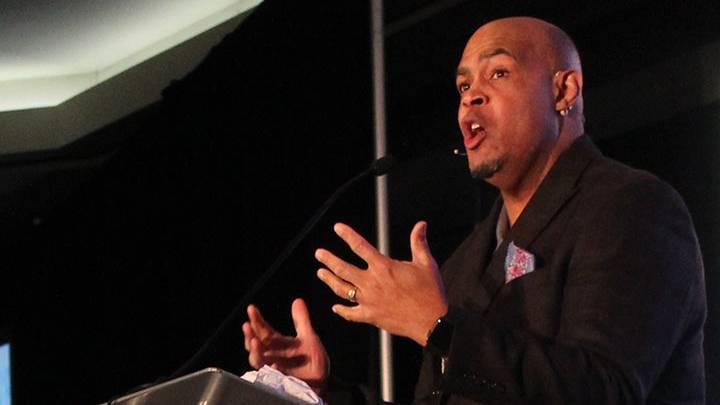
Mark Zira Dlyavaghi and Roger Mohrlang

Mark Zira Dlyavaghi and Roger Mohrlang

Christianity Today February 2, 2022
Courtesy of Mark Zira Dlyavaghi

About 70 years ago, a handful of people with leprosy and a blind man shared the gospel with the Kamwe people in northeastern Nigeria, and many in the community accepted Jesus. Today, up to 95 percent of the Kamwe profess to be Christians. This year, 30,000 copies of the entire Bible are being printed for the first time in their native language.

Christianity Today interviewed Bible translators Roger Mohrlang, an American who spent 38 years as a theology professor at Whitworth University and oversaw the translation work, and Mark Zira Dlyavaghi, a Nigerian who was the primary translator and team coordinator for the project. They shared why they got involved, how they persevered, and how their translation efforts might shape the rest of Nigeria.

Why and how did you decide to get into this work originally?

Roger: It all began with my conversion to Christ during my college years. I was a physics student at what is now Carnegie Mellon University. I had an engineering professor who asked me one day, “Are you a Christian?” He was the one who encouraged me to use my college years to get into Scripture. I spent endless hours reading, studying, memorizing Scripture, and that, more than anything else, changed my whole life.

I realized my life was not going to be centered on physics. What can I do that would be significant in the work of Christ? I didn’t see myself as a pastor or an evangelist, but I was drawn to Bible translation, in large part because of the effect that reading Scripture had had on my own life.

Mark Zira: I went to a missionary school that was close to my village. One of the lepers was in my village, teaching God’s Word. He opened the primary school there. He started it as a ‘Christian Religious Instruction’ class. I became a follower of Christ in 1975.

Because of God’s call, I went to Bible school in 1988 and graduated with a divinity degree in 1992. When I came home, the Kamwe Bible Translation Committee invited me to join the committee as the first graduate.
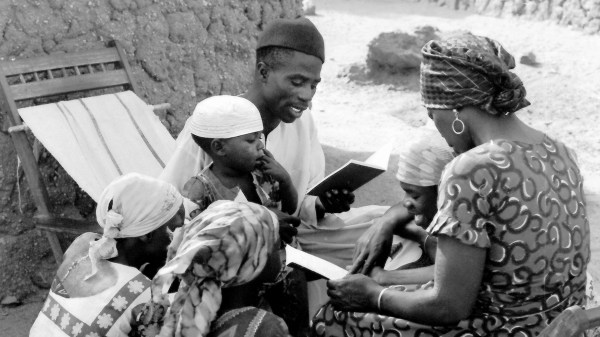
Family reading the Kamwe New Testament.Courtesy of Jean-Paul Becker
Family reading the Kamwe New Testament.

Can you share a brief timeline of the translation project since it first began?

Roger: I arrived in that village, Michika, in northeastern Nigeria in 1968. My job as a missionary linguist was to learn the language, analyze the language, form an alphabet, and produce some basic literacy materials, and especially to work with the Christians on the translation of the New Testament. I left in 1974. The New Testament was dedicated in January 1, 1976, with a huge celebration.

For years, I didn’t hear anything at all from them. I was away doing graduate study and continuing teaching. Then in the late 1980s, I got this letter saying, “All 5,000 copies are sold out. We want another 10,000.” And I was euphoric. A colleague reminded me it’s time to get it onto the computer. All of that up to that time was by pencil and typewriter. So, volunteers in England spent 1,000 hours keyboarding the whole thing, and then I proofread it. I realized we could do better, and that led to a revision project that I coordinated while I was teaching at Whitworth. The revised New Testament was dedicated in 1997.

Ten years later, I heard that they were beginning work on the Old Testament, that they wanted the whole Bible in their language. The last 30 years of work has been done together with the Kamwe Bible Translation Committee. They have done the whole first draft of the Old Testament. I served as a consultant checker. It’s really been their project. A second New Testament revision and the translation of the Old Testament were completed in 2021, and the Kamwe Bible is being printed in Korea.

How do you feel having finished such a lifelong project? And how has this project changed you personally or spiritually?

Roger: I feel relief, joy, and gratitude. One of the things I’m doing right now is writing about stories in my life and God’s hand in it. It’s just been wonderful to see all the good gifts of God and the way that made all of this possible. Part of the gratitude is the fact that my eyes have held out right to the end. I have macular degeneration. That has slowly decreased my vision.

How has it changed me? It’s given me a more comprehensive grasp of the Bible as a whole and of its complexity. My hope and my belief is that spending so much time in all of these words is that these words will be written more deeply in my heart, that I would become more and more the person that God wants me to be.

Mark Zira: I’m overjoyed now because the work is now over. We’re relieved after years of sitting, working, traveling.

I read the Bible over and over and over again, particularly the Old Testament. That has given me a lot in my life and my perspective. I will continue to invest in God’s work until I die.

Have you had moments where you wanted to quit? And if so, what refreshed your spiritual joy to press on despite obstacles and difficulties?

Roger: I don’t think I ever had any desire to quit. What sustained me were two things. One was a sense of commitment to the Kamwe. I thought of it like a marriage commitment. You don’t break that vow, you honor it. Along with that, there’s a sense of calling. I realized I am the one person that knows these languages, the culture, the world of Bible translation. So in some ways, I would be the obvious person to assist with all of this.

Mark Zira: It’s God’s work, so there are enemies attacking from here and there, even within. Sometimes when I remembered those who were attacking me, I remembered others who were supporting me, encouraging and praying for me, and that gave me courage.

Kamwe village in Nigeria.Courtesy of Jean-Paul Becker
Kamwe village in Nigeria.

I understand the Kamwe people experienced a community conversion. What do you think were the primary catalysts for this?

Roger: The New Testament in their own language was inevitably one key factor. It meant that when they have church services, they can read the New Testament in their own language. It gives them a sense of identity too.

But the movement toward community conversion was there—the beginnings of it—even before the Bible translation. From a human point of view, that is due to the fact that the earliest evangelists were all Kamwe themselves. This handful of lepers, this blind person, came back from the leprosy clinic, as believers, and as evangelists. It was not an outsider-driven project. There was quite a warm welcome to it. As a result of that, the Christian songs that evolved were all in their local language. Customs were indigenous customs.

The mission in the larger area was the mission of the Church of the Brethren. The fact that the mission brought in medicine, small clinics, and helped to establish schools in the area, was viewed positively.

The dominant factor is the grace of God, God doing a wonderful work, orchestrating all of it. It’s the work of the Lord that changes hearts. The fact that three quarters of a million people, up to 95 percent of whom now confess to be Christian, calling themselves a Christian community, right within miles of this jihadist movement to the north, the Boko Haram, is a phenomenal thing.

What was their belief system was before converting to Christianity? And what else can you tell me about the lepers who first brought the gospel there?

Roger: It’s traditional sub-Saharan African animism, belief in the spirit world. They believed in a high God.

Mark Zira: I knew most of the lepers. One was my teacher in the primary school. They had leprosy, so they heard of missionaries who came from America. The Brethren established a clinic 100 kilometers from our village. The lepers went there, were healed of their leprosy, and heard of the gospel. So, when they came home, they went to villages, teaching them about Christ. That’s how most of them received Christ.

Roger: One leper named Daniel became quite a highly respected pastor in the whole area. And I got to know one of the lepers who was a Christian leader in his own village. His name was David. When he was away at the leprosy clinic, he learned how to read and came back with a Hausa Bible. And at the end of the day, when they’d all come in from their farming, he would tell them stories from the Bible and pray for them. He was known as a singer, and he composed Kamwe Christian songs.

How did the Boko Haram attack of Michika in 2014 affect the Kamwe community? And what’s the current and potential future political situation like there?

Mark Zira: The Kamwe community was badly affected. I was part of the tragedy. We were in church on Sunday, the seventh of September, when they were approaching our village. All of a sudden, we heard gunshots everywhere. We were sent out by force into villages, into bushes, and most of us went to other places. It was very, very terrible.

At that time, I had a wife and five children of my own with foster children also. All of us were chased out. We had a car that we took to a certain village, and later they burned it down. They even burned some of my property.

Roger: There are three terrorist threats in northern Nigeria. One is Boko Haram and its rival faction, ISWAP (Islamic State—West Africa Province), both of which are fighting to establish an Islamic caliphate in northeastern Nigeria. In the last 20 years, Boko Haram, with its hideout only 35 to 40 miles north of the Kamwe, has killed tens of thousands of people and displaced an estimated 2.3 million people.

Second is the threat of the Fulani cattle herders who are killing Christians and taking over their land in central Nigeria. In the last few years, they’ve killed thousands of Christians and displaced hundreds of thousands.

Third is the growing number of gangs who are kidnapping people, including more than 1,000 students last year, for ransom in central and northwestern Nigeria.
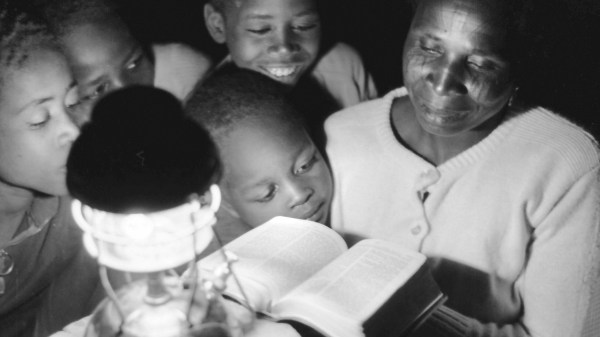
Reading the Kamwe New Testament.Courtesy of Jean-Paul Becker
Reading the Kamwe New Testament.

What do you see as the further impact of having the Old Testament completed?

Roger: It would be a wonderful boost for them to be able to read those stories in their own language, preach them from their own language. It will greatly enrich their services.

My hunch is it’s going to increase the songs. The women have been very good at teaching the Christian message by singing. They get a group of women together and one of them is a leader. The leader gets a line. Then everybody responds. That’s the way that they have passed along the Christian message and Christian teaching.

In doing Bible translation work, there’s often no immediate payback. You’re working for 20 years, 40 years, 60 years down the future. It’ll be interesting 60 years from now to see what effects it’ll have.

Mark Zira: When we have a Bible, it is keeping the language going. Many young people do not use the language much. That will encourage them to study God’s Word in their own language and know what God expects of them. When we read it in the church and our homes, that will really encourage us. Everybody is expecting it. The pastors are really eager, asking when the Old Testament will come.

It takes many people from outside helping us, so we are encouraged. We also pray for them that God will bless them so that they will encourage other people like us. I also want to thank Roger who came here as a youth and spent all of his life helping us.

What’s your hope and prayer for the future of the Kamwe Christian community?

Roger: My hope is that the Bible in their language could strengthen every believer, strengthen the church as a whole, and strengthen their witness to the outside world.

Mark Zira: I am praying that the Kamwe are more united, that they will also keep the faith and use God’s Word day in and day out, so that they can be stronger to resist whatever enemies they are experiencing and be able to face whatever trial and temptation is to come.

Books
Excerpt

Miracles Don’t Violate the Laws of Nature

The ideas of a Scottish skeptic explain why some Westerners struggle to embrace signs and wonders.

Christianity Today February 2, 2022
Illustration by Mallory Rentsch / Source Images: WikiMedia Commons / Zbynek Burival / Unsplash

Why do many people embrace a worldview that won’t even consider evidence for miracles? Sometimes they assume that science opposes miracles, but that assumption goes back not to scientific inquiry itself but to an 18th-century philosopher. Knowingly or unknowingly, many people have followed the thesis of Scottish skeptic David Hume (1711–1776).

Hume was probably the most prominent philosopher of his generation, and surely the most influential from his time on subsequent generations. He wrote on a wide variety of topics, sometimes very insightfully but sometimes (as with his ethnocentric approach to history) in ways that would not be accepted today.

Hume’s intellectual stature, earned from other works, eventually lent credibility to his 1748 essay on miracles. In this essay, Hume dismisses the credibility of miracle claims, appealing to “natural law” and uniform human experience. Although an appeal to natural law might sound scientific, Hume was not a scientist; in fact, some of his views on causation would make scientific inquiry impossible. Hume’s essay on miracles also contradicts his own approach to discovering knowledge.

Moreover, Hume’s essay has generated serious intellectual counterarguments since the time it was first published. One of these counterarguments was history’s first public use of Bayes’ theorem, today an essential staple in statistics.

Mathematician and Presbyterian minister Thomas Bayes originated the theorem but died before publishing it. His close friend Richard Price, also a mathematician and minister, published it and then used Bayes’ theorem to refute a probability claim Hume had made in his essay about miracle witnesses.

Hume himself acknowledged the force of that argument, though he did not adequately revise his essay in light of it. Mathematician Charles Babbage, designer of the first mechanical computer, also issued a refutation of Hume’s probability argument against miracles.

Most early English scientists believed in biblical miracles. Such scientists included Isaac Newton and early Newtonians. Modern science originally developed in contexts that affirmed that a superintelligent God created the universe and that it therefore should make sense. Newton popularized the idea of natural law—and saw it as a design argument for God’s existence.

Likewise, Robert Boyle, the father of chemistry, used his discoveries about nature to argue for an intelligent designer. Boyle, Newton, and Newtonians believed in biblical miracles: They affirmed that the God who set up the universe to normally work in an orderly way was not subject to that order. Some modern scientific thinkers concur, such as John Polkinghorne.

Most early modern scientists worked from a Christian worldview. Examples include Blaise Pascal, the mathematician who developed the precursor of the modern computer; Andreas Vesalius, the founder of the modern study of human anatomy; Antonie van Leeuwenhoek, the founder of microbiology; William Harvey, who described the circulatory system; Gregor Mendel, a monk and early leader in genetics; Francis Bacon; Nicolaus Copernicus; Galileo Galilei (despite conflicts arising from contemporary academic and ecclesiastical politics); Johannes Kepler. More recently, we have Michael Faraday, James Clerk Maxwell, and George Washington Carver—the list could go on. The myth of a historic war between science and religion stems especially from two late 19th-century books that historians have subsequently debunked as antireligious propaganda.

It was not, then, scientists who came up with the idea that miracles violate natural law. It was other thinkers such as Hume. Hume liked Newton’s mechanistic universe; he used it, however, in a way quite different from Newton. Hume adopted much of his argument from a movement of his day called deism. Deists believed that God designed the universe, but they often denied that he acted in the world much after that. Hume developed much of his argument precisely to oppose the sort of evidentialist apologists who had led England’s scientific revolution.

Hume’s argument was twofold: First, miracles are violations of natural law. Second, uniform human experience warns against trusting miracle reports.

Although some earlier writers had viewed miracles as beyond laws of nature, Hume treated them as “violations” of laws of nature. Once he adopted this definition, he insisted that miracles are miracles only if they violate natural law. Then he argued that natural law cannot be violated, so therefore miracles do not happen.

Although this clever play with words does not fit Hume’s own normal way of arguing, he conveniently defines miracles this way in hopes of defining them out of existence. This approach spares him the trouble of having to argue against them one by one.

As Hume’s critics have always pointed out, this language loads the deck of the argument. No one who believes in a God who created laws of nature believes that God is subject to such laws—as if God illegally “violates” them by doing a miracle.

Hume’s god that cannot violate natural law is not the God of Judaism, Christianity, or Islam. Nor do “violations” of nature correspond with most of the biblical miracles that Hume wished to undermine. Hume was thus refuting a straw man—a caricature of what people actually believed.

In the Bible, God often acts through other agents. When Judges 20:35 says that God struck the tribe of Benjamin, the context makes it clear that God executed this judgment through human warriors.

Likewise, when God gave the Israelites Canaan, the Bible claims that he accomplished this gift through their military victories (Deut. 3:18; 4:1). When God sent swarms of locusts into Egypt by a strong east wind (Ex. 10:13), he was not breaking any natural law. This was not the only time locusts struck Egypt; it was simply the most severe and timely—the one that came right after Moses predicted it. And we already discussed the parting of the sea.

Human beings regularly act within nature; they do not, for example, “violate” the law of gravity by catching a falling pencil or lifting an eraser. Nor does a surgeon violate natural law when she restores someone’s sight. Why should a putative creator be any less able to act within nature than those he created? One must essentially assume deism or atheism from the start for Hume’s argument to work at all.

Another problem with Hume’s argument today is how he viewed natural laws. Today philosophers of science tend to define laws of nature in primarily descriptive ways. That is, these “laws” describe what happens rather than causing it. If scientists find some things that do not fit the pattern, they may rethink the law, but they do not ordinarily say that something violated the law.

Moreover, laws of nature describe nature at particular levels and under particular conditions; they function differently in settings such as superconductivity or black holes. Why should special divine action not create a different set of conditions than those to which we are accustomed?

This excerpt was taken from Miracles Today by Craig S. Keener, ©2021. Used by permission of Baker Publishing www.bakerpublishinggroup.com.

Theology

I’ve Reached My Breaking Point as a Pastor

But that doesn’t have to mean broken relationships with others.

Christianity Today February 2, 2022
Illustration by Mallory Rentsch / Source Images: Mission Media / Lightstock / Max Brouwers / Getty / WikiMedia Commons

A new Barna study discovered that 38 percent of pastors have given real, serious consideration to quitting the ministry in the past year.

I am one of that 38 percent.

Even in the best of times, pastoral ministry has always felt like a broad and heavy calling. But the events of the past few years have made it a crushing one. The presidential election. Unrest around racial injustice. A global pandemic that has taken the lives of over 800,000 Americans.

Never before had I considered health protocols in the context of the church. But today, being too strict with health guidelines might damage the well-being of the church, while being too lax might take the life of a congregant. Pastors like me have to deal with the never-ending conversation about in-person versus online services—and how to serve churchgoers without leaving behind the immunocompromised or disabled.

All of this has injected a paralyzing degree of complexity and controversy into every single situation I face, every decision I make. And to make things worse, it feels as if everyone is on a hair trigger, ready to walk away at the merest hint that the church does not line up with their political or personal perspectives.

Normally, pastors might rely on their personal relationships to navigate such fraught dynamics. But COVID-19 has taken that away as well, forcing us to rely on phone calls and video screens—which are no substitutes for physical presence.

The situations are complex, the consequences weighty, the criticism unrelenting, and the path forward unclear. All of this has driven many pastors, including myself, to the breaking point.

As I ponder walking away from ministry after 20 years, I have found little comfort or counsel from the world. Some people say we should refrain from making rash decisions during such a tumultuous time—which might be wise advice for those who can manage such emotional detachment.

Others suggest the exact opposite, saying we should draw attention to our exit from ministry—using it as an opportunity to publicly air any grievances we have suffered as a form of protest, no matter what kind of relational fallout we may leave behind.

The advice that I have received is much like the season we find ourselves in: fragmented, chaotic, and unclear.

But I have found some peace in this word found in Scripture: chesed.

Chesed is a Hebrew word used throughout the Old Testament, like in Psalm 13:5, which reads, “But I trust in your unfailing love (chesed).” Chesed has no direct analogue in English, but it is frequently translated as “lovingkindness” or “loyal love.” It is how God loves his people—with an enduring and faithful love that transcends circumstances and seasons.

But intrinsic to the idea of chesed is the practice of remembrance. After all, one cannot trust in the unfailing love of God without thinking back to times in the past that God’s love did not fail.

As I consider leaving ministry, I have paused to think about God’s faithful love in my life. I could not count the number of times and situations in which I felt desperate and hopeless, but God demonstrated that he saw me and cared for me, as well as for those whom I loved.

Through my wife’s cancer diagnosis, the first and the second time. Through frequent unemployment. Through break-ins, heartache, and failure.

As I remembered these many moments, I gained a precious gift: perspective. I recognized that as crushingly hard as this season has been, I have encountered other difficult situations before, and God’s love persisted through them all.

This does not necessarily mean that I should not walk away from ministry, only that I should not let this one season define my entire life. That is, I may or may not be a pastor in the future—but one thing is certain: God’s love will endure through it all.

Christians have a deep fondness for studying the words for love used in Scripture: agape, chesed, and others. But our understanding of these words is often incomplete, as it focuses on how God loves us; agape is a Greek word that describes God’s unconditional love for us, chesed is God’s lovingkindness to us.

While true, chesed has another equally important application that we often overlook.

For example, in the book of Ruth—where God is never directly mentioned—we see frequent uses of the word chesed. It describes the care Naomi receives from her daughters-in-law and also the generosity of Boaz. It is how Boaz describes Ruth when she shares her affection with him. So this loyal, unfailing love is not only something that we receive from God; chesed is also how we are called to love others.

The first aspect of chesed granted me deeper peace; the second provided me clearer direction. Yes, God’s loving care for me will endure no matter what happens. But I too am to love others in the same way—with an enduring, loyal love.

This can be painfully difficult to do at our breaking points. So often these are the moments when our relationships can fall apart as we walk away from others, physically and emotionally. And out of all the painful consequences of such transitions, these broken relationships can haunt us the longest, and we often mourn them the most.

But it does not have to be that way. Our breaking-point moments do not have to result in broken relationships. We can choose chesed, to doggedly persist in loving one another in the same way God loves us. Again, this does not necessarily dictate our choices—whether I choose to leave ministry or not. That decision still lies before me.

No matter which path I feel led to take, however, I will stay committed to chesed—to loving those around me and thus fulfilling the command of Jesus to love others in the same way that God loves me.

In this season of deep doubt and uncertainty, this word has rescued me. It has liberated me from being trapped and defined by this one season of my life while charting a clear path forward that allows me to maintain clean hands and a pure heart.

It has rescued me from both fear and bitterness, reminding me that no matter what happens, God will always love me—and that no matter what happens, I am always to love others.

To be honest, I am no clearer on what the future holds for me, or for the church. Perhaps I will walk away from ministry, now or someday to come. But I know now that I can do so with hope for a future that remains connected to my past and a heart that stays ready to love.

Peter Chin is a pastor at Rainier Avenue Church and the author of Blindsided By God. He and his wife and their five children live in the Seattle area.

Church Life

The Witness of the Black Church Rings Through NBA History

Over 75 years of the professional league—and for decades before—Black Christians brought a social conscience to basketball.

Pictured: John Howard Johnson (left) and St. Martin’s Episcopal Church in Harlem (second to left)

Pictured: John Howard Johnson (left) and St. Martin’s Episcopal Church in Harlem (second to left)

Christianity Today February 2, 2022
Illustration by Mallory Rentsch / Source Images: WikiMedia Commons / Joshua Hoehne / Kylie O'Sullivan / Unsplash

In 1949, 42 bronze bells were shipped across the Atlantic Ocean from the Netherlands and installed in the bell tower at St. Martin’s Episcopal Church in Harlem.

The bells have a remarkable history in their own right. As the first carillon in the world to be played by a Black musician, they have been described by scholars as a “cultural treasure” and “an irreplaceable historical instrument.”

But St. Martin’s didn’t just make history for its tolling church tower. When the bells were installed over 70 years ago, no congregation in the country better represented the melding of basketball and Black culture.

Many of us are familiar with basketball’s Christian origins. The sport, after all, was created at a Christian college (the YMCA’s International Training School) by an ordained Presbyterian minister (James Naismith) for the purpose of cultivating Christian values and spreading the gospel (“winning men to the master through the gym”).

Naismith and the YMCA, however, tell only part of the story. The sport would not have become what we know it to be today had it not been for Black Christian leaders and institutions.

This season, the NBA marks its 75th anniversary. By the time the league was formed, basketball had developed far beyond its Christians roots. And yet, when modern NBA players like Steph Curry splash a three-pointer, or when they champion the cause of racial justice, they bear witness to the past—to the lasting influence of a Christianity nurtured by churches like St. Martin’s that promoted excellence on the court and a social conscience off of it.

Culture making and Black churches

“Here in Harlem the bells are in the center of things, right in the market place of community life.” – John Howard Johnson

For Black residents in New York City, organized basketball started around 1905. The game had been invented 14 years earlier, but the YMCAs that spread the sport were segregated. While white branches had buildings and facilities to support basketball, few allowed Black athletes to participate. And only a handful of Black YMCA groups had their own building, much less the equipment and space for basketball.

Enter Black churches.

As new athletic organizations like the Alpha Physical Cultural Club created basketball teams for the Black community—ushering in the “Black Fives” era—churches often provided the gym space. And some also began to sponsor their own teams.

Most notable among these were several Episcopalian churches that served Black communities: St. Philip’s Episcopal Church (sponsor of the St. Christopher Club), St. Augustine’s (associated with the Smart Set Athletic Club), and St. Cyprian Episcopal Church (whose team was called the “Speed Boys”).

As these Black basketball teams began to train and compete against each other, the sport developed a rapt following among New York City’s Black community. It was entertainment, yes, but something more.

“From the beginning,” scholar Onaje X. O. Woodbine writes, “black churches and clubs fused a religious ethos of ultimate worth and community uplift into the game.”

St. Martin’s in Harlem was part of the network of predominantly Black Episcopal congregations that sponsored sports teams. The church was founded in 1928 by John Howard Johnson, a minister’s son who came of age competing for his father’s St. Cyprian church team. A rangy and athletic sharp-shooting forward, he starred for the Speed Boys in the 1910s before enrolling at Columbia University, where he became the first Black man to take the court for the Lions.

Even though Johnson traded in his jersey for a cleric’s robe after college, his time as an athlete shaped his ministry, with a holistic vision that included care for the body and the soul, the afterlife and the here and now.

“The gospel of the resurrection is not only an announcement that Jesus has conquered death, that we and our loved ones shall live again,” Johnson preached, “but also it is an announcement about the power of God to renew the life of the world.”

Following the path of his father’s church, Johnson established sports and recreation programs at St. Martin’s, seeing them as practical and positive ways to engage the community.

St. Martin’s was linked to New York City’s Black basketball culture in another important way: It was the church home of Bob Douglas, the father of Black professional basketball.

An immigrant from the West Indies, Douglas arrived in New York City around 1900 and five years later witnessed his first basketball game. He was smitten immediately. “Basketball became his life,” Johnson wrote about his congregant.

Douglas cut his teeth in the city’s amateur Black basketball leagues before deciding, in 1923, to carve out a new path and launch the first fully professional Black basketball team, the New York Renaissance Big Five (or the “Harlem Rens”). Over the next few decades, the Rens became one of the truly great teams of professional basketball’s pre-NBA barnstorming era. They played against and defeated the best teams of all races and in 1939 won the first World Championship of Professional Basketball tournament.

When the NBA began operations, however, it ignored this part of the basketball world. From 1946 until 1950, Black players were not allowed the join the league. And into the 1960s, an informal quota system remained in place to limit the number of Black players.

The bells at St. Martin’s, then, testify to the ways that Black institutions cultivated the game when the color line was drawn. For a league in which nearly three-fourths of the players today are Black, the bells remind us that the roots of professional basketball extend far deeper than the NBA.

The sounds of public witness

“May the bells ring out a message of brotherhood and peace and unite us in one Holy Fellowship, those who are near, and those who are far away.” – John Howard Johnson

Church bells can call people together to worship. Yet, once gathered, believers are sent out into the world. More than the sounds of church bells, it’s the lives of churchgoers that make the faith intelligible to the broader world.

Johnson understood this well. “Christianity is essentially a gospel—the announcement of something God has done,” he preached. “The proclamation of His resurrection was the good news His follows made known abroad.”

And that proclamation had implications for everyday life. “From the gospel,” Johnson said, “there flows the system of Christian ethics with its demands upon us for certain kinds of conduct.”

The dilemma is that different Christian communities might prioritize different moral and ethical demands. What seems central to Christian witness for some is not a central concern for others. And in the NBA, the question of race and racial justice has loomed especially large, reflecting broader fault lines within American Christianity.

For Johnson, Christian witness necessarily included work for racial justice. In 1934, he helped lead a campaign aimed at getting white-owned businesses in Harlem to hire Black employees, launching the efforts with a sermon delivered at St. Martin’s, titled “Don’t Buy Where You Can’t Work.”

Yet what Johnson and other Black church leaders emphasized was not a moral priority for many white believers—not in the 1930s, nor in the ensuing decades as the NBA was created and the civil rights movement gained momentum.

In the 1960s, Boston Celtics great Bill Russell took notice. Russell grew up in Louisiana, spending every Sunday at church. But as he got involved with civil rights activism, Russell grew disenchanted with Christianity. While he supported Martin Luther King Jr.—“my old church days came back strong” when King preached, he said—he also found Malcolm X’s message compelling. And he saw too much hypocrisy among white Christians, too must resistance to the civil rights movement.

Hall of Fame center Kareem Abdul-Jabbar followed a similar trajectory. Raised as a Catholic in New York, Lew Alcindor (as he was known then) went to college at UCLA, where he vocally supported civil rights activism while also interrogated the contradictions of American Christianity. For a faith that claimed to unify and speak to the needs of people of all races, why was the experience of Black Christians so different?

“We don’t catch hell because we’re Christians,” he told a reporter in 1967. “We catch hell because we’re Black.” The next year, while still at UCLA, Alcindor converted to Islam.

It was not just Black NBA players who grew disenchanted with the public witness of the church. As a high schooler, future New York Knicks forward Bill Bradley attended a Fellowship of Christian Athletes event and committed his life to Christ. When Bradley moved on to college at Princeton, he became a national sensation and basketball star, profiled in John McPhee’s acclaimed book A Sense Of Where You Are (1964).

Through it all, Bradley served as a poster boy for Christian athletes. But by the time he joined the Knicks in 1967—cast as a “great white hope” in a league increasingly led by Black players—he had grown uncomfortable with the attention. His evangelical faith was challenged, too, by his growing social awareness. He was surprised to find that many of his fellow evangelicals did not share his support for the civil rights movement, and soon after joining the Knicks, Bradley left his evangelical commitments behind.

For Russell, Abdul-Jabbar, and Bradley, the sounds of the church bells repelled them rather than drew them in, in part because the moral priorities of church members did not seem to include concern for racial justice.

Returning home

“The bells will speak of God and call men and women to church, not necessarily to this church, but to some church … seeking individual souls, lonely souls, tired souls, to give them courage.” – John Howard Johnson

Other NBA players continued to find solace and comfort in the Christian faith. The first pick of the 1968 draft, Elvin Hayes was supposed to be the league’s next big star. But the pressure of high expectations and the grind of NBA life exhausted him. He grew distant from his wife, Erna, and dependent on sleeping pills.

Then one Sunday in the summer of 1973, he decided to join Erna at her Pentecostal church. Hayes felt God speak to him during the service, and he gave his life to Christ. “I had accumulated all the things I thought important,” Hayes later explained. “But there was a void I couldn't fill. Only God could.”

For Hayes, God’s presence in his life eased the glare of the NBA spotlight and also brought “total harmony” to his home. Those two themes—peace in the midst of pressure and marriages strengthened by faith—would be echoed in subsequent years by numerous Christian players.
Still, it was not easy for NBA players to nourish their spiritual lives. In a league defined by constant travel and uneven weekly rhythms, players had a hard time remaining rooted in a local church community. At the end of the 1970s, however, a solution was developed: Church could come to the locker room. Building off of models developed in baseball and football, NBA teams began offering their own voluntary pregame chapel services.

The NBA’s chapel system was organized by predominantly white evangelical sports ministries, but they worked to serve an interracial constituency. In Chicago, this included collaborating with Henry Soles, an African Methodist Episcopal Church (AME) pastor, who launched chapel services for the Chicago Bulls in 1979 and served as the team’s senior chaplain for the next two decades.

Even if evangelical sports ministries served NBA players of all races, into the 1990s their public witness was largely shaped by the concerns of the predominantly white Christian Right.

This meant that when Los Angeles Lakers forward A. C. Green and other Black athletes spoke up about conservative family values issues like sexual abstinence—issues that could overlap with racial uplift themes historically present within Black churches—their voices were amplified.

But discussions about racism that went beyond individual heart change were rarely promoted as matters of Christian concern. The voices of Black Christians like Soles, who criticized the Moral Majority for being “weak” in its “application of biblical principles” to the needs of Black Americans, remained in the background.

Soles’ assistant chaplain with the Bulls, Scott Bradley, experienced this too. Bradley was a minister with the Church of God in Christ (COGIC), a historically Black Pentecostal denomination. In 1991, right after the Michael Jordan–led Bulls won their first NBA championship, millions watched on television as Bradley lead the victors in the Lord’s Prayer.

Far fewer people noticed two years later when Bradley addressed the persistence of racism in American society. "If the Black man has been lied to,” Bradley declared, “the Black minister must address it."

Bradley took aim at the hypocrisy of the “war on drugs” and the way it disproportionally incarcerated Black men. He wrote about the exploitation of Black athletes—how they were expected to put their bodies on the line as players but denied opportunities as coaches or executives. And he pointed out that any time Black athletes criticized racism, they were told they should shut up and be grateful.

"The Black athlete is not to speak out on certain issues,” Bradley wrote, “or else he is discredited and tabbed by the media as ‘outspoken.’”

In evangelical sports ministry spaces at the time, Bradley’s insights barely caused a ripple. Yet, they demonstrate the ongoing, behind-the-scenes presence within the NBA of Black Christian understandings of race and justice that sometimes differed from the evangelical mainstream.

In recent years, as a new era of racial reckoning has enveloped American culture, the ideas articulated by Bradley decades ago have gained a wider hearing. Rather than remaining in the background or confined to Black Christian spaces, a growing number of Christian athletes have publicly emphasized racial justice and systemic reform as matters of Christian concern.

Sacramento Kings forward Harrison Barnes, whose goal is to play basketball for God’s glory, has supported efforts to provide Black people “a more equitable stake in society.”

Steph Curry, the most prominent Christian athlete in the game today, has lent his support to several racial justice initiatives, including the Institute for Nonviolence and Social Justice, led by Clarence Jones, a lawyer and advisor for Martin Luther King Jr. in the 1960s.

Malcolm Brogdon of the Indiana Pacers has also participated in marches and demonstrations, carrying on a family legacy: His grandfather, John Hurst Adams, was an AME bishop and “hell-raiser on behalf of civil rights” in the 1960s and beyond.

This recent activism can raise important questions about the consistency of Christian witness. What does faithful public engagement look like when you’re part of a multibillion-dollar global brand? What if Christian athletes have opinions on other ethical and social issues—like gender and sexuality or China’s human rights record—that differ from NBA leadership? How public do they need to be about their convictions?

Sometimes these questions are asked in good faith, but sometimes they are driven more by a desire to discredit NBA players as irredeemably “woke,” simply riding the recent social justice trend.

The bells at St. Martin’s, however, tell us something else. They remind us that racial justice activism in sports is not new. In an important sense, it is rooted in something that predates the NBA itself: the history of blending basketball, concern for racial justice, and Christian witness represented by John Howard Johnson’s Harlem congregation.

As the NBA celebrates 75 years, that history is worth remembering. Not only did Black churches help to develop the on-court game that millions of fans across the globe celebrate; they also helped to nurture the social conscience and concern for racial justice that many NBA players champion today.

Paul Emory Putz is a historian studying sports and Christianity and serves as the assistant director of the sports ministry program at Baylor University’s Truett Seminary.

News
Wire Story

Interim EC Pres Becomes First African American to Lead a Southern Baptist Entity

Willie McLaurin, former Executive Committee VP, steps in four months after Ronnie Floyd’s resignation.

Christianity Today February 1, 2022
Courtesy of Baptist Press

The Southern Baptist Convention’s Executive Committee has appointed Willie McLaurin to serve as interim president and CEO, marking the first time that any entity of the predominantly white denomination has been headed by a Black person.

McLaurin was named just over two years ago as the committee’s vice president for Great Commission relations and mobilization, a new role meant to focus on spreading the gospel and fostering relations with various demographic groups of Southern Baptists.

Prior to his work for the Executive Committee, McLaurin worked at the Tennessee Baptist Mission Board for 15 years and previously held pastoral roles in churches in that state.

The Executive Committee, headquartered in Nashville, has recently faced turmoil over racism, allegations of mishandling sexual abuse claims, and debates about how much access investigators hired to report on those claims will have to past conversations and other denominational communications.

Ronnie Floyd, the committee’s former president and CEO, resigned in October, citing the committee’s decision to waive attorney-client privilege in the investigation as a reason for his departure. The denomination’s longtime general counsel cut ties with the SBC and at least 10 committee members also resigned, citing similar reasons.

“We hope that he will help us to reset the tone by which the EC serves Southern Baptists,” said California pastor Rolland Slade, the Executive Committee chairman, in a statement about McLaurin in Baptist Press, the SBC’s news service. “Immediately before us is the challenge to regain the sense of trust of Southern Baptists.”

https://twitter.com/pastordmack/status/1488539512515014665

Slade, elected in June, is the first Black chairman of the Executive Committee’s advisory board. McLaurin is the first African American executive to lead the staff of the committee. McLaurin, 48, added in a statement that he hopes to build trust as an interim leader of the committee that acts on behalf the denomination outside its annual two-day meeting.

“My prayer is that this season will bring healing and unity to our Convention,” McLaurin said in Tuesday’s announcement. “When we love each other the way Jesus loves people then we create the atmosphere for cooperation.”

In an additional statement, McLaurin said he plans to guide the Executive Committee staff in its day-to-day operations, which include cooperating with the sexual abuse investigation task force and preparing for the annual SBC meeting scheduled for June in Anaheim, California.

“All of us here on this earth are interims, and I am humbled and honored to be selected and wholly dependent on the Lord to carry out His will in this time of transition,” he said.

McLaurin’s appointment cheered Southern Baptist leaders who have long called for greater diversity at the top ranks of the denomination, which dates to 1845.

“To God be the glory,” tweeted Pastor Dwight McKissic of Arlington, Texas, who has urged the SBC to place minorities in top executive positions.

“Now, if the SBC can take the next step & name this highly qualified brother as President, No longer can the Great Commission Council (SBC entity heads) gather to meet, & only one racial demographic is in the room.”

SBC President Ed Litton also hailed McLaurin’s appointment, saying in a tweet that he was an “exemplary choice” and a “faithful and distinguished leader.”

News

A Tasmanian Evangelist Went Missing 26 Years Ago. Now a Crime Reporter Seeks Answers.

Was Geoffrey Rallings murdered?

Christianity Today February 1, 2022
Edits by Christianity Today / Source Images: Matt Palmer / Unsplash / Portrait Courtesy of Australian Federal Police Missing Persons

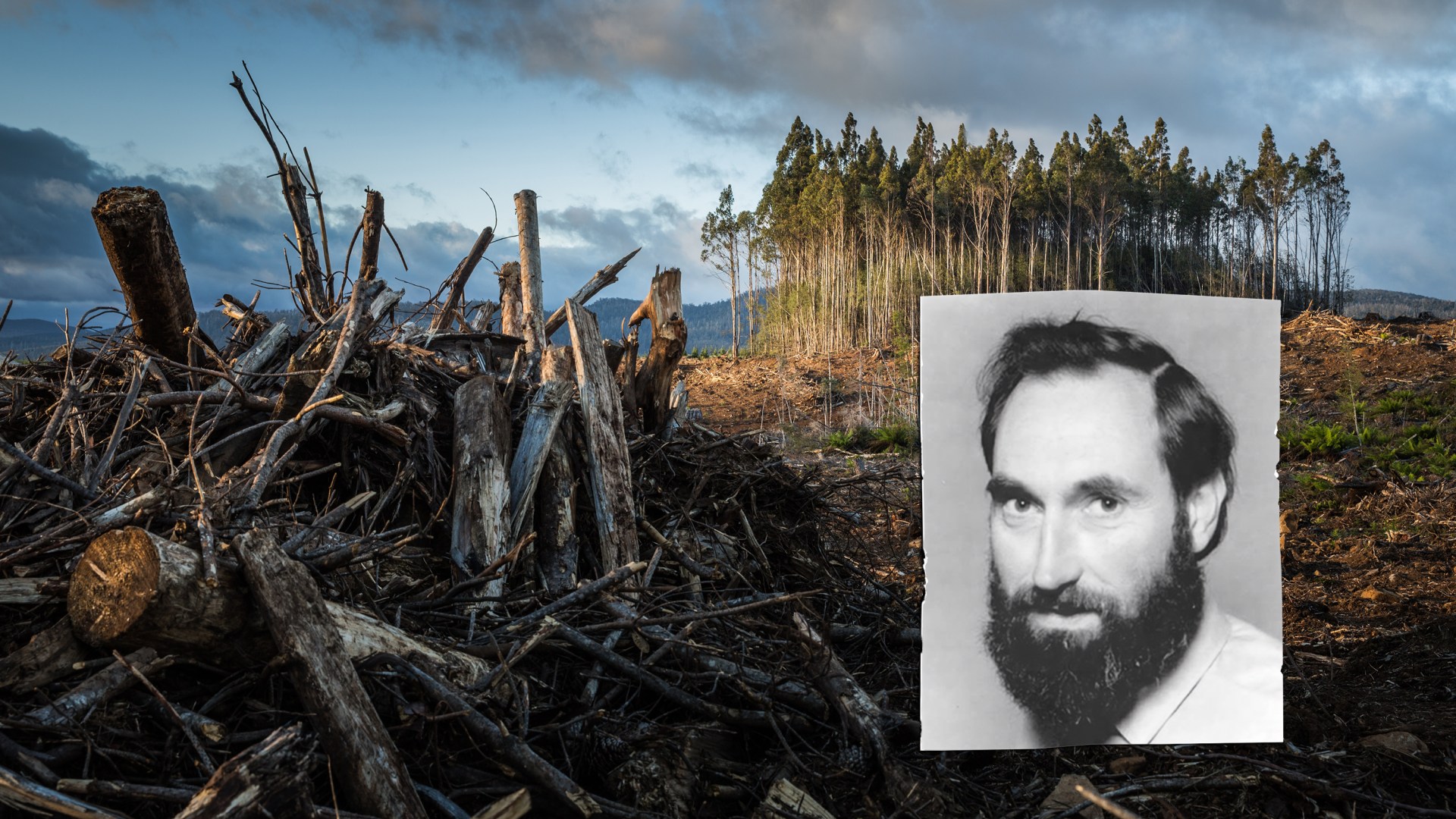
A new podcast is calling attention to the disappearance of an obscure evangelist who went missing in Australia 26 years ago.

Geoffrey Rallings was a short man with a long beard, an accordion, and a deep love of Scripture. He would busk for money at a mall, invite people to talk about God, and then use the money to rent a room for Bible studies. According to one man who was baptized by Rallings, he was shockingly successful at bringing people to Jesus.

“God only knows how many people he converted,” Erik Peacock wrote in a memoir about homeschooling, Christianity, and environmental activism. “I don’t really believe in such things but in odd moments I wonder whether God took him.”

Rallings has not been seen since a few days after Christmas Day 1995.

In the past 26 years, family, friends, police, and media have not been able to locate a trace of evidence to indicate what happened to him.

Amber Wilson, a crime reporter who wrote and produced the eight-part podcast, The Lost Ones, says an inordinate number of people have similarly disappeared in Tasmania, the remote island state located more than 150 miles south of the Australian mainland.

“Tasmania has become known as much for its secrets as it is for its beauty. Out of the 169 people who’ve gone missing on the island since the mid 20th century, dozens of those have entered the Tasmanian wilderness—never to be seen again,” Wilson writes.

“Why do people seem to fall off the edge of the world here?”

The first episode of the podcast is focused on Rallings. He moved from England to Tasmania in 1960, in part so he and his wife could educate their kids at home. Rallings had been a member of the Seventh-day Adventist church, but left because he felt like the Adventists focused too much on the teachings of founder Ellen G. White and not enough on the Bible itself.

Rallings became a Baptist. In the mid-1980s, he wrote about a half dozen pamphlets, ranging from 20 to 40 pages, explaining why people should put their faith in Jesus, trust in the power of his death, be baptized, and read the Bible.

Why Christ? one title asked.

And another answered: By His Wounds We Are Healed.

Rallings never started his own church. According to Peacock, he was “a bit dogmatic and slightly crazy,” and most of his converts eventually left him to join traditional churches. But Rallings’s sporadic Bible studies in rented rooms in Hobart, the capital of Tasmania, were life changing for many.

Rallings lived in a rural area of Tasmania, raising his children, reading the Bible, and growing vegetables. He would occasionally be seized by the need to hitchhike into Hobart with his accordion. There, he would play songs at shopping centers, raising money and attracting a crowd, before organizing another Bible study.

That’s what he was doing when he disappeared in 1995. He was 65 at the time. The Australian Federal Police listed Rallings as a missing person, recording the barest details about who he was:

Year of Birth: 1930

Height: 167 centimeters

Build: Medium

Hair: Black

Eyes: Brown

Complexion: Ruddy

Distinguishing Features: Beard

“There was nothing malicious about the man whatsoever,” a neighbor told Wilson for the podcast. “He just wanted to spread the word, the religious word, his word, without harming anybody. But I have an awful feeling there may be foul play here.”

Tasmanian officials first suspected that Rallings was a victim of a hit-and-run. Standing on the side of the road outside Hobart, hitchhiking along the rural highways, he could have been hit by a drunk driver and left, wounded, with no one to hear his cries for help.

After several weeks, though, no one found a body. If Rallings was dead, where was he?

Police investigated at least two suspects who could have murdered Rallings, and Wilson found a man who believes the evangelist may be buried on his property. The detectives’ case went cold, however, and frantic shoveling has yet to turn up any human bones.

Another possibility is that Rallings was suffering from dementia and at some point, hitchhiking home from another evangelistic foray into the city, he wandered off into the wilderness confused.

If that’s what happened, his family would like to know.

“I’ll see Dad again,” Rallings’s daughter Irene says on the podcast, “but the point is you think about the fact there are bones somewhere. … I just want to know where he is.”

The Lost Ones launched on January 31. Episodes are scheduled to release twice a week for the month of February.

News
Wire Story

Pakistani Pastors Ambushed by Gunmen While Driving from Church

The leader of three Protestant parishes was killed in the incident, which one police official labeled a terrorist attack.

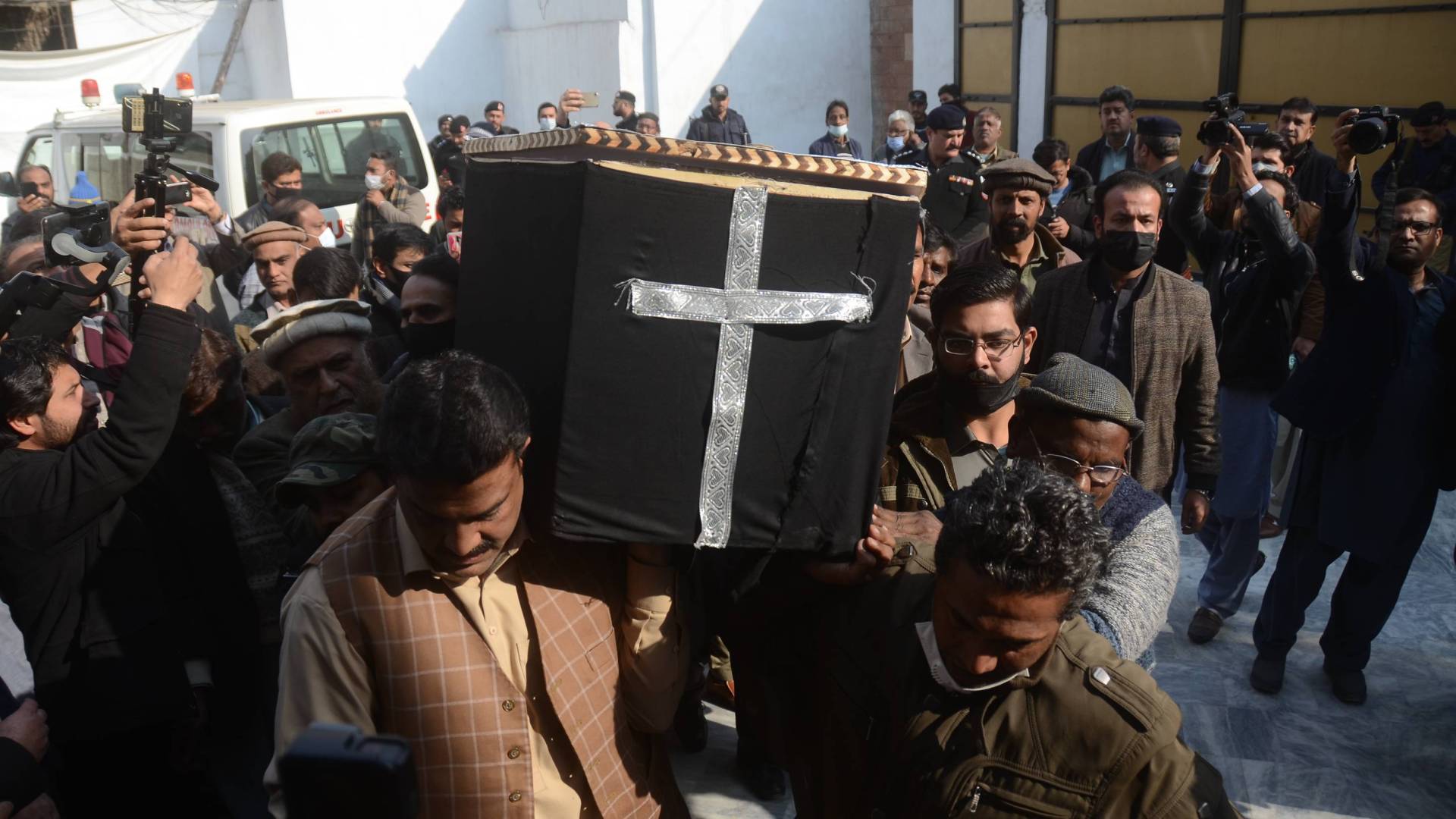
Mourners carry the casket of slain priest William Siraj during a procession on Monday.

Mourners carry the casket of slain priest William Siraj during a procession on Monday.

Christianity Today January 31, 2022
Hussain Ali / Pacific Press / LightRocket via Getty Images

A Church of Pakistan lay pastor was gunned down and a priest wounded by unknown assailants as the leaders drove home from a worship service on Sunday in the northwestern Pakistan city of Peshawar, where Christians had suffered their deadliest attack in the country’s history nearly a decade earlier.

Church of Pakistan Bishop of Peshawar Humphrey Peters said that William Siraj, 75, was shot and died instantly in the ambush in the Gulbahar neighborhood, while Patrick Naeem, 55, sustained a bullet wound but was in stable condition. A third church leader in the car was unharmed, he said.

The Protestant church leaders were returning from All Saints Church parish when two gunmen riding a motorcycle intercepted their car and opened fire on them, Peters said.

“Siraj received one bullet in the forehead and one on the arm and died instantly, while Rev. Naeem received a bullet wound in the hand,” he said. “It’s a miracle that Rev. Naeem and another priest escaped the volley of bullets.”

The assailants fled the scene unchallenged, according to witnesses, Peters said.

Siraj was a senior lay leader and led worship at three different parishes while Naeem was the priest of the All Saints Church parish, Peters said.

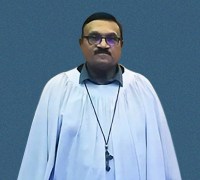
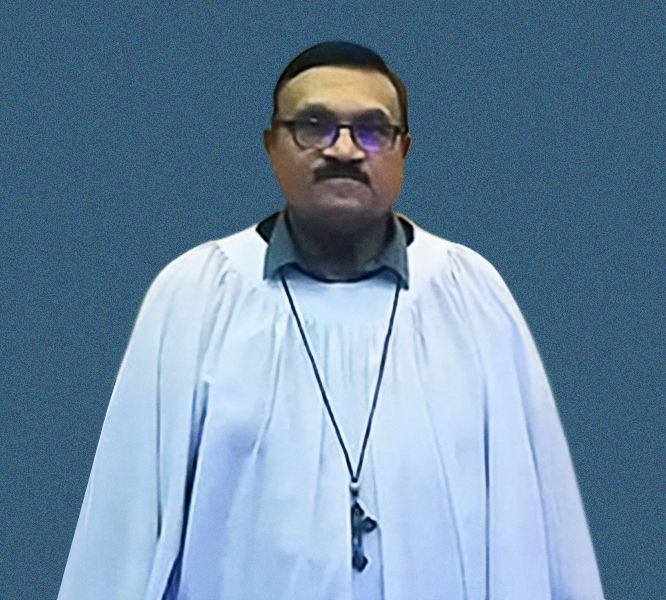
Pastor William SirajEdits by Christianity Today
Pastor William Siraj

“Siraj had lost his son-in-law in the gun-and-bomb attack on Peshawar’s All Saints Church in 2013, in which over 70 worshippers were killed and 100 others were wounded,” Peters said. “He is survived by his wife, a son, and a daughter. This is a very tragic loss for our church.”

The church leader said that security agencies had issued no terror alerts for the area since the Christmas season.

“The last time we were notified about a security threat was during Christmas days,” Peters said. “This brazen attack has shocked the entire community, and we demand justice and protection from the government.”

https://twitter.com/BishopAzadM/status/1487765028359000064

Anglican Church of Pakistan President Azad Marshall strongly condemned the targeted killing of the church leader and called for enhanced security measures for Christians across Pakistan.

“Though no outfit has yet claimed responsibility for the attack, it looks like the handiwork of anti-Pakistan militants,” Marshall told Morning Star News. “Our people have been targeted several times by militants in recent years, and there has been a broader increase in violence since the Pakistani Taliban ended a ceasefire with the government last month.”

Church leaders were concerned when the government announced peace talks with the militants had broken down, he said.

“As soon as the talks broke down, we have witnessed a sharp increase in terror attacks both on civilians and security forces,” Marshall said. “It’s important that our armed forces should contain the terror threat before it spirals out of control again.”

Chief Minister of Khyber Pakhtunkhwa Province Mahmood Shah also condemned the attack and directed police to find the culprits as soon as possible. In a press statement, Shah offered his condolences to the Christian community and the family of the deceased and said he prayed for the swift recovery of the injured priest.

Addressing reporters at the scene of the crime, Peshawar Police Chief Abbas Ahsan said the attack on the Christian community was tragic. There were two assailants in what he called a “terrorist attack,” and an investigation is underway, he said.

Ahsan said that police have identified perpetrators of previous attacks targeting minorities and that the same will happen in this case.

“We are determined to protect our minorities,” the police chief said, adding that officials from the Counter Terrorism Department and Peshawar police had been formed to investigate.

Pakistan Tehreek-e-Insaf provincial lawmaker Wilson Wazir said that the deceased pastor did not face any threats and was coming and going freely.

“Police are investigating the incident and will reach the perpetrators soon,” he said.

Pakistan People’s Party Sen. Sherry Rehman also condemned the attack.

“Terrorism that targets anyone, especially for their faith, is heinous and must be fought against with the full force of [a] clear, concerted policy and state power. No compromise, no equivocation,” she said in a tweet.

https://twitter.com/sherryrehman/status/1487832395189477376

Pakistan had the second-highest number of Christians killed for their faith, behind Nigeria, in Open Doors’ 2022 World Watch report, with 620 slain during the reporting period from October 1, 2020 to September 30, 2021.

Pakistan had the fourth-highest number of churches attacked or closed, with 183, and overall it ranked eighth on the list of the 50 countries where it is most difficult to be a Christian.

Books
Review

Religious Conversion Is Incredibly Personal. But It Also Invites Public Scrutiny.

As a new history of high-profile converts illustrates, those who find (or change) faith can’t opt out of being seen.

Christianity Today January 31, 2022
Illustration by Mallory Rentsch / Source Images: Therese Westby / Sincerely Media / Unsplash

When I was a child, our church had a children’s choir for a special event one year. I don’t like being up front and having everyone look at me, so I got permission to sit it out, even though all my siblings were participating.

Public Confessions: The Religious Conversions That Changed American Politics

Public Confessions: The Religious Conversions That Changed American Politics

University of North Carolina Press

256 pages

$28.20

When the special day came, every child in the church got up and went to the stage. They all turned around. And looked straight at me. I was the only one not in the choir, and I might as well have had a spotlight on my face.

I kept thinking about that memory as I read Rebecca L. Davis’s fascinating new book, Public Confessions: The Religious Conversions That Changed American Politics. She tells the stories of people finding faith, changing faith, and going through the incredibly personal process of experiencing something transcendent and declaring themselves different.

Again and again, the converted Americans in her narrative discover what I discovered the day of the children’s choir: You can’t opt out of being seen. Even personal decisions are, in part, public. This is especially true when the individual act goes against the public—in the opposite direction from the crowd.

Limits to reinvention

Davis shows that during the Cold War, a number of notable conversions provoked fierce, even frenzied public controversy. In the process, she writes, “claims of religious authenticity” moved “to the center of American political debates.” When minor and major celebrities, including writers, entertainers, athletes, and politicians, went through religious transformations, “their stories played upon the stage of public imagination,” raising questions “of whether and how different kinds of faith variously anchored or undermined American freedoms.”

The conversions tested America’s idea of itself. If a core part of the American dream has always been the possibility of reinvention and the freedom to fashion your own life in a way that seems meaningful, the reality nevertheless has limits.

Immigrants at Ellis Island could choose a new name. More often, however, they had their names “edited” to better fit the cultural expectations of a predominantly English-speaking society. Generations of American parents have told their children that “you could grow up to be president one day.” Most kids, in truth, couldn’t make it to the Iowa caucuses. And in a country where freedom of religion is guaranteed by the First Amendment, everyone can profess their preferred creed. Your religious identity, however, is never just between you and God.

Davis does not say how the limits to the cultural possibilities of conversion have shaped America. For that, however, one can turn to Lincoln Mullen’s outstanding 2017 book The Chance of Salvation: A History of Conversion in America.

Davis also doesn’t really explain the scope of Public Confessions and why conversions from the 1940s to the ’70s should be seen as more interesting than others at other times. It’s not like there aren’t controversial conversions today: Consider political trickster Roger Stone’s statements that he’s been born again; rapper Kendrick Lamar’s declaration that “I’m an Israelite”; or the suburban Pennsylvania kid who converted to Islam and then joined ISIS. The book could have also looked further back and found many interesting conversions to explore. It’s fine to just look at four decades, but the reader does deserve some explanation for that focus.

The most serious weakness of Public Confessions, however, is the misleading subtitle. This, in fact, is not a book about The Religious Conversions That Changed American Politics. There is no narrative of before and after, no account of how politics was one way and then another. Whichever editor or publicist picked this subtitle really did Davis a disservice. She isn’t especially interested in political change—and what she is interested in is more interesting.

Believable belief

Public Confessions focuses on the way these celebrity conversions were debated and how Americans evaluated the authenticity of newfound faith. The question that keeps coming up is when and why new belief is seen as believable.

The story she tells about Sammy Davis Jr.’s conversion to Judaism is a perfect example. I found it absolutely haunting.

Davis, a Black performer who spent his life in the entertainment industry, started in vaudeville at age three and acted in his first film at six. As an adult, he emerged as a star nightclub performer who could sing, dance, and impersonate Louis Armstrong and Humphrey Bogart with equal skill. The fame, however, left him feeling empty. In 1954 he tried to kill himself by driving off a road. As he recovered in a Los Angeles hospital, a friend gave him a medallion with a Jewish Star of David on one side. He gripped it so tightly that it cut into the palm of his hand, leaving a scar.

The experience prompted Davis to explore Judaism, and he formally converted six years later. As he understood it, it was less of a change than a homecoming. He felt that he was, in a way, always Jewish and that he had discovered his true self in Jewish traditions and Jewish ways of connecting to God.

Most people didn’t believe him. They found it all very dubious. Some said he was just attempting to brownnose the Jewish bosses in the entertainment industry—mixing a little anti-Semitism with their denigration of Davis—and others accused him of betraying his Black identity.

“The reasons he gave all add up to nothing,” one person wrote in Ebony magazine. “I think what he is really trying to do is get away from being a Negro.”

Davis’s friends in entertainment thought his conversion was a joke, and they treated the combination of his race and faith as a punchline. One said he wanted to get Davis a Christmas present, “but what do you get for the guy who is everything?” Another said that in Alabama, “they wouldn’t know what to burn on the lawn.”

Whatever alienation he felt before, his conversion intensified it. He clung to his faith, and for that he was battered and belittled on all sides.

Americans were fine with other Jewish converts, though. As Davis (the author) explains, actresses Marilyn Monroe and Elizabeth Taylor both converted in the 1950s in the process of marrying Jewish men, and everyone acted like that was the most natural thing in the world. There were no questions, no mean jokes.

I might argue that every convert should be treated with credulity, if not for the sake of politeness, then because it’s difficult to really know whether someone’s faith claims are sincere. If I had been one of Jesus’ first followers, would I have spotted the betrayal in Judas’s heart? Or Peter’s? And would I have had the discernment to see how those two stories would end very differently? I don’t think so.

But Davis argues that skepticism is sometimes called for. Evangelicals—and Davis name-checks Christianity Today in particular—have historically accepted some pretty dubious tales of transformation and even eagerly promoted them without demonstrating any concern over whether the stories were, you know, true.

Christians eagerly snapped up Child of Satan, Child of God, a memoir by converted murderer Susan Atkins. They apparently didn’t have any questions about whether the woman who fell under the sway of cult leader Charles Manson and went on a drug-fueled murder spree in Southern California in an attempt to spark an apocalyptic race war might be using a conversion story to manipulate opinion.

Pornographer Larry Flynt, similarly, professed to be born again while facing prosecution for obscenity charges. His conversion won him some high-profile evangelical friends who urged people not to be cynical about his newfound faith. When Flynt told the New York Times that of course he would continue producing pornography, one evangelist waved away criticism with the excuse that “he’s a baby Christian.”

Everyone is looking

As a historian, Davis does not lay out a case for the proper amount of skepticism or the correct way to be credulous. She instead sets for herself the task of describing how people have believed and not believed confessions of conversion and the strategies they used to “distinguish artifice from reality.” These conversions, honest or not, “sparked national conversations about which aspects of identity a person might choose, and which they could not choose, or could not choose credibly.”

The point, as I take it, is to note how conversions are always partly public. And how claims of belief—and especially changed belief—are always partly provocative. Public Confessions offers readers ample opportunities to ask themselves whom they believe and why, as well as what might make their own professions of faith believable to a watching world.

I remember that after that special children’s choir, another boy in the church who was also named Daniel came over and asked me why I hadn’t sung. I said I just didn’t want to. He almost shouted, “I didn’t know you could do that!

The history of Public Confessions suggests that is not an uncommon response to conversion. If I believe God so loved the world that he gave his only son, and because of that I should love my enemies, practice resurrection, and hang on to my faith that the truth will set us free, I should just accept that everyone is looking at me.

Daniel Silliman is news editor for Christianity Today. He is the author of Reading Evangelicals: How Christian Fiction Shaped a Culture and a Faith.

Our Church Budget Isn’t for Building a State-of-the-Art Sanctuary

I’m a Latin American pastor. Too often, I’ve seen our churches relegating compassion for the community to second place.

Christianity Today January 31, 2022
Illustration by Rick Szuecs / Source images: Adl21 / Getty / Tajmia Loiacono / Unsplash

You’re reading the English translation of the winner of Christianity Today’s first ever essay contest for Christians who write in Spanish. Learn more about the competition and CT’s multilingual work and check out the winning essays written originally in Portuguese, French, and Indonesian.

As we read the Gospels, it is evident on every page that Jesus felt deep compassion for suffering people. He always sought to respond to both their physical and spiritual needs. This was made clear even in Isaiah's prophecy of his coming:

The Spirit of the Sovereign Lord is on me, because the Lord has anointed me to proclaim good news to the poor. He has sent me to bind up the brokenhearted, to proclaim freedom for the captives and release from darkness for the prisoners. (Isa. 61:1)

In Isaiah 58, we can see God’s heart with a unique clarity. God speaks with repudiation about religious acts that do not come from a heart that loves God above all things and neighbor as self.

“Is not this the kind of fasting I have chosen: to loose the chains of injustice and untie the cords of the yoke, to set the oppressed free and break every yoke? Is it not to share your food with the hungry and to provide the poor wanderer with shelter—when you see the naked, to clothe them, and not to turn away from your own flesh and blood?” (vv. 6–7)

Jesus preached repentance, provided a new level of interpretation of the Old Testament, and announced the good news of salvation. In doing so, he also preached care and attention to the needy, healed the sick, and provided food for the hungry (Luke 10:25–37; Mark 6:30–44; Mark 8:1–9; John 5:1–18; Matt. 8:1–4).

Jesus even said that those who do not perform these deeds will not inherit the kingdom of heaven (Matt. 25:35–46).

This essay does not attempt to compare the arguments that support a merely social or a merely theological vision of the gospel. Instead, it assumes that the global church has reached a certain general agreement about the two-dimensionality of the gospel. As Rene Padilla’s legacy demonstrated through the integral mission model, social action and evangelism are like “the two wings of an airplane.”

The gospel lacks depth if it is presented only in words and without evidence of God’s power at work in his church, transforming it and leading it to carry out deeds that demonstrate Christ’s love in tangible ways.

However, too often, I’ve seen our churches relegating compassion for the community to second place.

For decades our preachers and ministers have taught that churches exist exclusively to send souls to heaven, forgetting that the Scriptures affirm that in Christ, God reconciled all things to himself (Col. 1:20). This theological bias, alongside a general lack of passion for the gospel, has turned many churches into self-centered institutions that seek for little more than survival.

Following this logic, the vast majority of churches prioritize internal expenses, which are viewed as necessary to increase the comfort and growth of the church—the payment of salaries, rent, current expenses, etc. Churches with greater resources even prioritize spending on luxuries that most of the world’s population—and even many of their own congregants—do not even dream of, like air conditioning, large LCD screens, sophisticated sound systems, on-stage tablets, or a coffee lounge with leather couches.

In these churches, the logic that has deeply permeated their internal structure is that these expenses are a priority. As a result, only if there is a surplus will congregations consider allocating those resources to social causes or meeting the needs of the immediate community.

As a pastor in a rural area in Latin America, I have been exploring different church settings and contexts for more than two decades. I often find believers who are exhausted and fed up with the same insipid practices that their churches have fallen into, as well as institutional bureaucracies that, within the church itself, limit the spreading of the gospel.

In different churches and regions, I have come across stories in which initiatives that seek for the church to have a greater influence in its immediate community are stifled by the pressure exerted by denominational hierarchy or politics or the way in which the church has been operating since its formation.

While it is true that many of these church leaders are aware of the call to missions and social action demanded by the gospel, the sad truth is that most prefer to maintain the status quo and not stir the pot with practices that take the church out of its comfort zone.

So, who can catalyze transformation in our communities through the gospel?

I can testify that many times it is the church members, those who don’t necessarily have degrees in theological studies or enjoy the privileges of leadership. Common and lowly in heart people, who have managed to internalize the mission that Jesus Christ has entrusted to his church and who, without complexes or fears, are willing to obey the call and turn their own communities into mission fields.

I must say that, in the time that I have been working in the missionary field, in spite of the sorrows, I’ve also enjoyed seeing and being part of ministries that managed to catalyze effective change to become expressions of love and service for their communities.

Countless times, at the end of a conference or talk, women and men have come up to me, with tears in their eyes, saying, “What you are saying has always been in my heart. I have repeatedly told my pastors to give shelter to the homeless in the empty church buildings, and their answer is always ‘That’s not what the church building is for.’ So I decided to shelter them in my garage.”

In Nicaragua, a couple asked many times for their church’s support to organize a local mission to feed the elderly homeless, but the pastor’s response was: “First things first. We must first allocate our budget to church salaries and expenses. There are never enough resources for the poor.”

After receiving this response, they decided to leave that congregation and start what is now an amazing missionary church, where they feed children, the elderly, teenage women, and street people. The church also developed a system to produce its own resources.

If this couple had remained in that congregation where the resources were labeled even before their arrival, their call to missions would have died, or worse, as happens in thousands of churches, perhaps they would have repressed their vocation for fear of going against “God’s servant,” a title that in certain churches is used exclusively to denominational leaders and pastors.

In the Bible, we find many examples of how any follower of Christ can be led by God to initiate a small change, a spark that the Spirit of God can use and multiply for his glory. Think of the four who brought the paralyzed man to Jesus’ feet (Mark 2:1–12), or the young boy who offered the fish and the loaves for the miracle of multiplication (John 6:1–15).

In many churches, I have seen men and women rise up who no longer bare the weight of their calling for the helpless, who have the courage to obey God rather than men, and who, filled with the Holy Spirit, have built their church outside the church buildings and have been the hands of Jesus in the wounds of the most needy.

It seems to me that this paradigm and model—as old as the church itself— should inspire and guide churches to be the light of Christ within their communities. Perhaps the early church had the greatest impact in church history precisely because its members depended exclusively on the guidance and power of the Holy Spirit and did not have to struggle to preserve institutions or practices stablished by men.

In the church where I serve today, Comunidad Cristiana Shalom, located in rural Costa Rica, much of what is happening today has come forth from the initiative of hundreds of volunteers who live out the gospel. Many of us come from churches where we were told that the church’s business is only to share the gospel of salvation, not to serve the community. In many cases, longing for such interaction with the community was judged as a quest for “friendship with the world.”

The Lord called us to be a different church, where we do not see building up the temple as an end in itself. From the beginning, we sought to show Christ living in us through our service to others, and we made ourselves known to the community by picking up trash and cleaning rivers. Today we work with the elderly, and with abused and homeless people. The Lord was the one who united us, and today we are a mixed group formed by people who come from very diverse backgrounds, but who have in common the commitment to fulfill the Lord’s call to incarnate Christ in the community.

We church leaders must always have an open ear to listen to the missional passions of the congregants of the churches we serve. Sometimes we forget that, in many cases, it is the call that the Holy Spirit has placed in their hearts. We must listen to these voices and prayerfully open all the doors for the development and growth of all these ideas and opportunities to spread the gospel.

I’m afraid that if evangelical churches do not go out of their comfort zone to incarnate the gospel they preach, they will end up becoming mere monuments, as has already happened to the church in different contexts and moments in history. Jesus said: “You are the salt of the earth. But if the salt loses its saltiness, how can it be made salty again? It is no longer good for anything, except to be thrown out and trampled underfoot” (Matt. 5:13).

May our role be to become channels for the transformation of communities through simple men and women who are empowered by the Holy Spirit.

If we do not, many will remain in their cathedrals of tasteless salt, while across the sidewalk you will find a follower of Christ tirelessly preaching the gospel using only a towel and a basin with water.

Roy Soto holds a bachelor’s degree in theology and is pastor of Iglesia Comunidad Cristiana Shalom in Costa Rica.

Translation by Diego Portillo.

French’s Two Words for ‘Hope’ Helped Me Endure the Pandemic

In the midst of uncertain times, here’s what I’m learning from “espoir” and “espérance.”

Christianity Today January 31, 2022
Illustration by Rick Szuecs / Source images: Ninno JackJr / William Rouse / Sven Mieke / Unsplash / peeterv / Getty

You’re reading the English translation of the winner of Christianity Today’s first ever essay contest for Christians who write in French. Learn more about the competition and CT’s multilingual work and check out the winning essays written originally in Portuguese, Spanish, and Bahasa Indonesian.

During a recent exchange with a colleague I knew to be quite ambitious, a few of his words stuck with me: “I would rather live a difficult present with my resources than continue to save resources for an uncertain future. Who knows? The way things are going, the world may end tomorrow.”

The COVID-19 pandemic has led many to think that it is difficult or even impossible to continue to dream and believe in a better future.

Like my colleague, many around us have abandoned projects and are touched by various levels of depression that keep them from looking toward the future. Some have succumbed to suicide when they saw no other way or because they could not imagine living without their close family members who were tragically taken away by the virus. Many hopes have been dashed.

In my country of Benin, many businesses have been forced to cut back on work hours, which has resulted in staff layoffs. Some families have struggled to provide for their basic needs. Certain products that are now difficult to obtain.

And that is not all. The International Labor Organization announced last year that “global unemployment will reach 205 million people by 2022.” How can we not lose hope when faced with these challenges?

Two kinds of hope

Unlike English, which uses the word hope broadly, the French language uses two words that derive from the word espérer (to hope): espoir and espérance. Both can first refer to something hoped for. In this sense, the word espoir usually refers to an uncertain object; that is, someone who hopes for something in this way does not have the certainty that it will happen (“I hope the weather will be nice tomorrow”). On the other hand, espérance describes what, rightly or wrongly, is hoped for or expected with certainty. It often refers to a philosophical or eschatological object (“I hope in the goodness of human beings”; “I hope for the return of Jesus Christ”).

When we speak of espoir or espérance, we then have in mind different types of objects hoped for. This difference matters, because both terms also commonly refer to the state of mind that characterizes the hopeful. And this state of mind will be different precisely according to the object hoped for.

Having espoir for an uncertain yet better future in these difficult times may be a good thing, but it is not enough. Such hope can be disappointed and easily fade away when our wishes and expectations (our hopes) do not materialize.

The opposite is true with espérance, which is deeper than our desire and wish for an end to a crisis or a future without pain and suffering. To face the trials of life, we need peace and joy in our hearts that come from expecting certain happiness. This is what espérance is: a profound and stable disposition resulting from faith in the coming of what we expect. In this sense, it is similar in meaning to the English word hopefulness.

If we have believed in the Son of the living God, we have such a hope. It rests on the infallible promises of our God, who knows the plans he has for us, his children—plans of peace and not misfortune, to give us a hope and a future (Jer. 29:11). By using the two meanings of the word, we can say that the espérance that the fulfillment of his promises represents (the object hoped for) fills us with espérance (the state of mind).

God is for us the source of an unfailing hope. That’s reassuring! So how do we live out that hope in the midst of trials?

A way of life

Several months ago, my sister participated in a training program in a country where the number of pandemic victims was constantly increasing. She was about to return home when many governments decided to close their airports. Exiled in a foreign land, in a country under the pressures of a pandemic, in the midst of her fears, she decided to trust in God.

“A stranger helped me reach out to the organizers of the training I had attended. He put me in touch with a man of God who then provided me shelter. The times of meditation, prayer, and sharing, with my sister from a distance and with my host family, were a real support to me during the moments of general panic,” she said after she returned home.

I have lived with my sister for almost six years. We have faced many situations together. The worries of one immediately become subjects of prayer for the other. She was finally able to return and resume her job, but the five months of her absence for the training and confinement, with all the uncertainties of these times, were a real test of my faith also. Yet with our hope in the Lord, I was able to overcome the loneliness, and we stood firm despite very real financial and professional challenges.

By paying attention to God’s faithfulness in times of joy or difficulty, we learn to make hope our way of life. And this prepares us.

We each have our trials of varying intensity. There are many who have been tested much more heavily than we have during this crisis, who have seen their expectations crumble. But what we have experienced on our own scale has drawn my attention to the crucial importance of an espérance-like hope.

In a CT article titled “Our Nostalgia Is Spiritually Dangerous,” Jeremy Sabella points out, “Hope, in its full biblical sense, arises out of hardship: ‘suffering produces perseverance; perseverance produces character; character produces hope.’ This hope endures precisely because it is the work of the Spirit: ‘hope does not put us to shame, because God's love has been poured out into our hearts through the Holy Spirit, who has been given to us’ (Rom. 5:3–5). Hope takes root when the people of God follow the Spirit’s prompting to face the present trial.”

Hope manifests its depth when it remains active in the midst of trials. The hope of which the Bible speaks, that which Christ has placed in our hearts through the Holy Spirit, is a constant support that will never fail.

Testimonies of hope in trials

Hope does not shelter us from the trials and difficulties of life, but it helps us overcome them with serenity and joy. Scripture reminds us of this.

“Against all hope, Abraham in hope believed and so became the father of many nations” (Rom. 4:18). Who could still hope to conceive a child at the age of 100 with a 90-year-old wife? Abraham did it! Who can still hope for a future without pain and suffering? We can! For a Christian to hope in times of difficulty shows full trust in the One who promised to make all things new: God.

Job, having lost everything and living in an almost indescribable situation, expressed confidently and persistently his true hope when he said, “I know that my redeemer lives, and that in the end he will stand on the earth” (Job 19:25). The continuation of Job’s story shows how his hope was rewarded (42:10).

Amid the fiercest storms we can imagine (rejection, persecution, etc.), the apostle Paul did not lose his hope either. Whether the situation was favorable or not, he believed and waited with patience and joy for the glorious future reserved for him. It was in the middle of these sufferings that he wrote several letters to Christians in different cities to encourage them to develop and keep their hope in the Lord. Note this excerpt addressed to the Christians of Rome who were also going through difficult times: “May the God of hope fill you with all joy and peace as you trust in him, so that you may overflow with hope by the power of the Holy Spirit” (Rom. 15:13).

Hoping together

In our country, like in many others, the moments of quarantine have resulted in more online Christian meetings for prayers and encouragement. When asked what a Christian community that collectively hopes looks like, a sister in Christ told me, “It looks like a strong tower, like an unshakable army!”

Yes, a community filled with hope is a real support for the world in the face of trials and difficulties. It offers resistance in the face of despair and discouragement. It is a light that shines in the darkness.

I rejoice to see, like the apostle Paul, many Christian communities continuing to share the comforting message of hope, despite their various struggles. Throughout this crisis, I am grateful to have read articles from Christians like Jay Y. Kim, Anne Lécu, Kelly B. Trujillo, and many others who have taken up the pen to send their message of hope to the world. The line of witnesses of hope is not extinguished.

We are all facing this global crisis, as well as our personal problems and daily difficulties. We are all affected in one way or another, and some in terribly tragic ways. But our attitude toward it all is decisive.

My prayer is that, whatever darkness we go through, our hope in the Lord Jesus Christ will always remain alive, active, and practical. It may not be easy, but together, “let us hold unswervingly to the hope we profess, for he who promised is faithful” (Heb. 10:23).

Syntyche D. Dahou is an administrative assistant. She is involved in the Groupe Biblique des Élèves et Etudiants du Bénin (GBEEB), a member movement of IFES (International Fellowship of Evangelical Students). She is passionate about Christian literature and is interested in ministry through Christian publications.

Translation completed by Sarah Buki

Apple PodcastsDown ArrowDown ArrowDown Arrowarrow_left_altLeft ArrowLeft ArrowRight ArrowRight ArrowRight Arrowarrow_up_altUp ArrowUp ArrowAvailable at Amazoncaret-downCloseCloseEmailEmailExpandExpandExternalExternalFacebookfacebook-squareGiftGiftGooglegoogleGoogle KeephamburgerInstagraminstagram-squareLinkLinklinkedin-squareListenListenListenChristianity TodayCT Creative Studio Logologo_orgMegaphoneMenuMenupausePinterestPlayPlayPocketPodcastRSSRSSSaveSaveSaveSearchSearchsearchSpotifyStitcherTelegramTable of ContentsTable of Contentstwitter-squareWhatsAppXYouTubeYouTube