News

Pew: US, France, and Korea Are Most Divided—Especially over Religion

Survey of almost 19,000 adults in 17 nations examines societal conflict between different religions, political parties, races and ethnicities, and urban and rural communities.

Christianity Today October 13, 2021
Illustration by Christianity Today / Source Images: Saul Martinez / Stringer / Brandon Bell / Mohamed Rasik / Getty Images

“Conflict” is a troublesome word to describe a society. But increasingly across advanced global economies—and particularly the United States—their societies believe it is the correct label.

If there is any good news, religious conflict lags behind.

The Pew Research Center surveyed almost 19,000 people in 17 North American, European, and Asia-Pacific nations this past spring about their perception of conflict across four categories: between political parties, between different races and ethnicities, between different religions, and between urban and rural communities.

The US ranked top or high in each.

A global median of 50 percent see political conflict, 48 percent see racial conflict, 36 percent see religious conflict, and 23 percent see urban-rural conflict.

But in the US, 9 in 10 viewed political conflict as “serious” or “very serious.”

Asian nations varied considerably. South Korea matched the US at 90 percent seeing serious political polarization, with Taiwan third at 69 percent. Singapore was lowest overall at 33 percent, while Japan was 39 percent.

France (65%), Italy (64%), Spain (58%), and Germany (56%) followed Taiwan.

A National Council of Churches (NCC) official has refused to allow the Institute on Religion and Democracy (IRD) to examine the council’s financial records. The records earlier were made available to two staff members of the United Methodist Reporter.The IRD, a research organization known for its attacks on the NCC, had tried to obtain information regarding NCC grants made to outside organizations. IRD research director Kerry Ptacek said a staff member in the NCC’s office of information set up an appointment for him to view the financial data. He said the appointment was subsequently rescheduled and then canceled by Warren Day, the NCC’s information director.Day told Religious News Service that the IRD received treatment different from that given the United Methodist Reporter because that newspaper serves the largest denomination in the NCC.Ptacek said he believes the NCC refused to let him see the books because the IRD had charged that NCC grants were going to pro-Sandinista groups in Nicaragua. He said he tried to gain access to financial information that was not contained in data routinely made available by the NCC. Several months earlier, United Methodist Reporter staff members were allowed to examine a large computer printout of NCC financial data. The United Methodist Reporter published a series of articles in the wake of reports nearly two years ago in Reader’s Digest and on CBS-TV’s “60 Minutes” alleging NCC support of leftist causes.After the Reader’s Digest and “60 Minutes” reports, Ptacek said NCC officials made such statements as “our records are open” or “our books are open.” In response, Day said, “I have not found this sort of thing in writing.” Day said the highest elected officials of NCC-member bodies and heads of those denominations’ finance offices have access to the NCC’s books. But he added that access is not routinely given to “any self-appointed group on the outside.”RELIGIOUS NEWS SERVICE

In terms of race, the US ranked first again, with 71 percent seeing serious conflict. France was second at 64 percent, and South Korea and Italy third at 57 percent. Singapore again ranked lowest, at 25 percent.

South Korea had the highest perception of religious conflict, at 61 percent. France followed at 56 percent, and the US at 49 percent. Germany and Belgium registered 46 percent each. Taiwan was lowest, at 12 percent.

Evangelicals are caught in the crossfire between Communist guerrillas and government forces.Terrorist-related violence has bloodied Peru’s Ayacucho state for more than four years. In at least two recent incidents, evangelical churches were singled out and Christians were killed.The Evangelical Pentecostal Church of Peru has lost 10 pastors in Ayacucho through terrorist attacks. A Presbyterian leader who fled to Lima, Peru’s capital, said guerrillas connected with the Maoist Sendero Luminoso (Shining Path) movement have prohibited evangelization and other church activities in remote villages that are under their control. It is considered dangerous even to carry a Bible, he said.Another evangelical leader in Lima said it is believed that the army has killed innocent people it suspected of being terrorists. Merely talking with either the guerrillas or the soldiers is often regarded as complicity.Shining Path has generally operated in the remote Andes Mountains regions of central Peru, and especially in the state of Ayacucho. Between 3,000 and 4,000 people have been killed, and hundreds more wounded since the Maoist organization’s seeming declaration of war four years ago.In July, terrorists armed with machine guns and explosives attacked a Pentecostal prayer meeting in the jungle village of Santa Rosa. They left behind seven dead, seven seriously wounded, and seven with lesser wounds, said a pastor who survived the attack. He said guerrillas had previously threatened to kill the evangelicals because they refused to join Shining Path.Santa Rosa has two churches—referred to as Number 1 and Number 2—that belong to the Evangelical Pentecostal Church of Peru. Due to a terrorist attack several days earlier, the Number 2 church had closed its doors. To encourage the congregation, the other Pentecostal believers called a united prayer meeting on July 27 at the Number 2 church. “A church of God should not be closed,” said Alfredo Vasquez, pastor of the Number 1 church.Vasquez said violence erupted the afternoon of the prayer meeting. Terrorists burst into the church shouting and firing weapons. They sprayed the congregation with machine gun and small arms fire, he said, and some touched off explosives.“The earth shook,” he said. “The brothers and sisters began running. Some threw themselves on the ground under the benches.”Finally, the terrorists moved on to sack stores in the village for provisions. One of the Christians touched off a hand grenade given him by some soldiers, and the terrorists began to scatter, said Vasquez, who was wounded in the attack. The pastor was shot by a man he recognized as a baptized member of the church who had joined the guerrillas. The next day Vasquez was taken to the city of Ayacucho, the capital of Ayacucho state, where doctors removed 33 pieces of buckshot from his body.A few days later in the village of Callqui-Nisperocniyocc, two hours north of the city of Ayacucho, six Christians were murdered. Witnesses say government soldiers interrupted a prayer meeting at the National Evangelical Presbyterian Church. After searching for a certain woman and not finding her, some of the soldiers dragged six young men outside. Two soldiers stayed in the church and demanded that the congregation sing. The church members heard bursts of machine gun fire but thought the soldiers outside only wanted to scare them. Later, the horrified church members found the six men who had been dragged outside murdered within 25 feet of the church’s door.Vicente Saico Tinco, a church elder from a neighboring city, said Christians in Callqui-Nisperocniyocc suspected that an enemy had denounced them as terrorists. On occasion, individuals falsely accuse personal enemies in order to get rid of them.In a signed declaration, Saico, pastor Saturnino Gavilan, and church council president Victor Contreras asked the National Evangelical Council of Peru (CONEP) and Presbyterian Church leadership to report the incident to government authorities. The men wrote: “We must declare that the [murdered] … brothers were faithful believers in the Lord, and so it is even more painful to us that their lives have been taken without asking who was who, without any investigation whatsoever.”Evangelicals have become targets of terrorist violence for a number of reasons. They generally oppose Shining Path’s violence and refuse to join the movement. They also get into trouble when they are interrogated. If they have talked to the police, they admit it when questioned by the rebels. They have the same problem if they tell the police they have talked to the guerrillas.While guerrillas terrorize the population, police and armed forces personnel apparently have committed atrocities while trying to crack down on terrorism. Complicating the situation are peasant vigilante groups and the powerful and violent cocaine traffickers, who stand to benefit if anarchy reigns. Investigators suspect links between the guerrillas and the cocaine traffickers.In August, evangelicals in Lima began to collect food, clothing, and money for Ayacucho residents who have been left destitute by the violence.PersonaliaCharles V. Morton, 48, has been named executive director of World Concern, an international relief and development organization based in Seattle. From 1972 through 1981, Morton served as vice-president of Far East operations for Pepsi Cola International. He negotiated Pepsi Cola’s first contract with the People’s Republic of China. He replaces Arthur L. Beals, executive director of World Concern since 1975.Guy S. Sanders, Jr., has been elected president of The Gideons International. A building contractor from Bamberg, South Carolina, Sanders has served as the Gideons’ international vice-president for the past three years.Vernon Grounds, president emeritus of Denver Conservative Baptist Seminary, has been named president of Evangelicals for Social Action (ESA). He will stay in Denver, where he directs a counseling center at the seminary. Grounds will attend major evangelical events as ESA’s chief spokesman. Ronald Sider, former president of the ESA board of directors, has become chairman of the board.William L. Baumgaertner has been named associate director of the Association of Theological Schools in the United States and Canada. He will replace Marvin J. Taylor, who has held the post since 1970. Baumgaertner previously served as executive director of the seminary department of the National Catholic Education Association.Joseph McFarland will be inaugurated this month as president of Geneva College in Beaver Falls, Pennsylvania. He assumed the presidency in July. McFarland previously served as director of academic affairs for the Kansas Board of Regents.

Nearly 1 in 4 French (23%) saw religious conflict as “very serious.”

Age plays a role in perception. Pew noted that adults under 30 are significantly more likely than those ages 65 and older to see strong religious divisions in Greece (60% vs. 24%), Belgium (62% vs. 38%), Japan (42% vs. 22%), Italy (49% vs. 30%), the US (58% vs. 42%), Spain (24% vs. 10%), and Taiwan (17% vs. 7%).

Conversely, Canadians under 30 are significantly more likely than Canadians ages 65 and older to say there is no strong religious conflict (78% vs. 65%). [Editor’s note: See full chart at bottom.]

Religious diversity, however, is not a consistent indicator of conflict.

Pew estimates France to be 58 percent Christian and 8 percent Muslim. South Korea is 30 percent Christian and 22 percent Buddhist. Yet the US is 76 percent Christian and 1 percent Muslim.

The three lowest perceptions of religious conflict are also across the spectrum. Taiwan (12%) is 44 percent folk religious, 21 percent Buddhist, 15 percent other, and 6 percent Christian. Singapore (21%) is 32 percent Buddhist, 18 percent Christian, 16 percent Muslim, 9 percent other, and 7 percent Hindu. Yet Spain (19%) is 75 percent Christian and 3 percent Muslim.

Pew also tracked the perception of religious conflict between the religious and nonreligious, and in every nation the percentage of “unaffiliated” is substantial. The overall difference in perception was negligible, however, except in certain subcategories.

Half of conservatives in the US perceived conflict between the religious and nonreligious, compared to only 39 percent between religious groups. The political right in Germany, Canada, and Italy had similar perceptions. In Sweden, the only statistically significant difference was found on the political left, among which 26 percent perceive interreligious conflict but only 12 percent perceive secular conflict.

https://datawrapper.dwcdn.net/5yxXe

Politics exacerbates perceptions across the board.

In the US, Democrats and those leaning Democrat have a 24 percent difference in their perception of racial conflict, compared to corresponding Republicans. The racial divide is less severe, with Blacks perceiving conflict at 82 percent, Hispanics at 70 percent, and whites at 69 percent.

Democratic affiliation also creates a difference in perception of religious conflict (+17%) and urban-rural conflict (+10%). Tellingly, there is no difference between political parties in perception of political conflict (90% each). And more than half (54%) of Americans viewed this conflict as “very strong.”

France has similar political polarization. Its largest gap is in the perception of racial conflict, where 22 percentage points separate the right-of-center Republicans (76%) and the ruling En March (54%).

Socialists, however, are the outliers in politics and religion. They trail the Republicans (67%) by 20 percentage points in their perception of religious conflict. But they are ahead of En March (57%) by 14 percentage points in their perception of political conflict.

In Singapore, however, where the People’s Action Party has 89 percent political representation, differences in perception are shaped instead by ethnicity and religion. Indians recognize political (49% vs. 28%), ethnic (46% vs. 18%), and religious (35% vs. 14%) conflict more readily than their fellow Chinese citizens.

Singapore’s Muslims, meanwhile, recognize ethnic (40% vs. 23% vs. 14%) and religious (36% vs. 20% vs. 11%) conflict more readily than the city-state’s Buddhists and Christians.

Pew tested two factors that may contribute to the overall sense of conflict. A global median of 61 percent believe COVID-19 made their societies more politically divided. And a global median of 39 percent believe most people disagree on basic facts. Highest are France (61%), the US (59%), and Italy and Spain (55% each).

Measuring all four conflict areas on a 4-point scale, the US scored a 2.85. South Korea scored 2.83, and France 2.72. Singapore was lowest at 2.13.

https://datawrapper.dwcdn.net/OMTVl

Yet despite the recognition of widespread conflict, there may be additional good news—depending on perspective. Around the world, increasing numbers express support for diversity.

A global median of 76 percent believe having people of many ethnic groups, religions, and races makes their society a better place to live. The sentiment is strongest in Singapore (92%), New Zealand (88%), Canada (86%), the US (85%), the United Kingdom (85%), and Australia (85%).

Only Greece (51%) and Japan (50%) believe it makes their society worse. South Korea ranks third (36%).

But the negative sentiment is changing. In the 11 nations where this question was also asked in 2017, 9 nations have seen increases in support. Greece climbed 24 percentage points in the past four years, Japan 15 percentage points, and South Korea 6 percentage points.

Pew noted three indicators of disproportionate support: identification with the political left; the belief that the economy is doing well; and youth.

Of the latter, the generation gap is clear. Those ages 18-29 in Italy (84%) express support for diversity 33 percentage points greater than those 65 and older (51%). In France, the age difference is 30 points (83% vs 53%), while in Japan it is 28 points (60% vs 32%).

Those who view diversity negatively tend to associate with the populist right. Supporters of the Sweden Democrats are 41 percentage points higher for “unfavorable” (89%) than the rest of society (48%). Supporters of the Alternative for Germany are 32 percentage points higher (76% vs 44%), as are members of Italy’s Lega (73% vs 41%).

“Alongside growing openness to diversity, there is a recognition that societies may not be living up to their ideals,” stated Pew researchers. “[But] overall, fewer people see strong religious conflict.”

https://datawrapper.dwcdn.net/rQdoI
News

Christians Welcome Coup in Guinea

After yet another military overthrow of a democratically elected leader in West Africa, minority evangelicals debate the role of faith in politics.

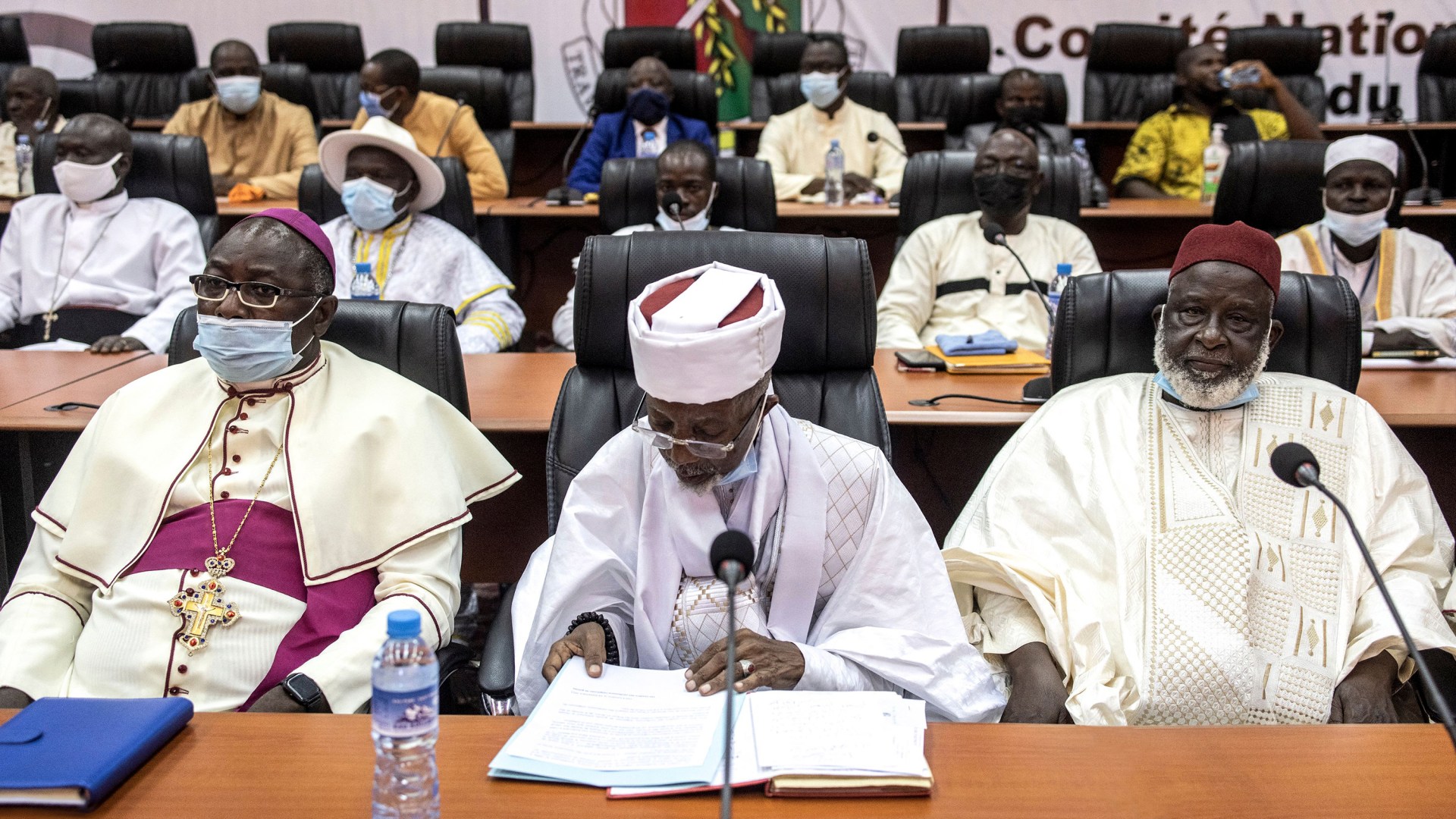
Guinean religious leaders gather at the Peoples Palace in Conakry ahead of the first session of talks with Colonel Mamady Doumbouya on September 14, 2021.

Guinean religious leaders gather at the Peoples Palace in Conakry ahead of the first session of talks with Colonel Mamady Doumbouya on September 14, 2021.

Christianity Today October 13, 2021
John Wessels / Getty Images

In its 63 years of independence, Guinea has had three presidents. Last month, the West African nation suffered its third coup d’etat.

This time, says the local Christian minority, their Francophone country might just get it right.

“Alpha Conde cannot return,” said Etienne Leno, a Christian and Missionary Alliance (CMA) pastor. “We are praying that the new military authorities—who we find to be wise and intelligent—will be led by God.”

On September 5, Colonel Mamady Doumbouya, head of the Guinean special forces, ousted the 83-year-old president. Once an imprisoned opposition leader, Conde became the nation’s first democratically elected head of state in 2010 and won a second term in 2015.

Leno originally found much hope in Conde’s mandate, which was ushered in after the international community aided domestic forces to remove the military junta that violently seized power in 2008. Conde improved the business, tourism, and energy sectors, restoring Guinea’s global reputation.

Local infrastructure was neglected, however, and the Oregon-sized nation lagged in domestic development. One-third of the economy was linked to the mining of bauxite, the primary resource for aluminum. Guinea boasts the world’s largest reserves, but foreign companies dominate the extraction.

Despite 7 percent annual growth, nearly 50 percent of the 13 million population lived in poverty. And by late 2019, 36 percent of the country believed Guinea was moving in the wrong direction.

And then Conde made his power grab. He pushed through a March 2020 referendum for constitutional changes to reset his term limits and in October won reelection again. Both votes were challenged by violently suppressed protests.

Almost a year later, Doumbouya had had enough.

He promised no political witch hunt as he “made love to Guinea,” but it was nonetheless clear that opposition would not be tolerated. As the colonel—sworn in on October 1 as Guinea’s interim president—assembled a national dialogue, protests in support filled the streets and Christians noted the surprising calm.

Five days after the coup, the Association of Evangelical Churches and Missions of Guinea (AEMEG)—affiliated with the World Evangelical Alliance—issued a televised statement recognizing the new authorities. Catholic and Muslim groups made similar announcements.

“Relations are good in general,” Leno told CT. “Our message is for peace and national unity.”

One aspect of the takeover may have helped ensure it: Doumbouya shares the same Malinke ethnicity as Conde. Representing one-third of Guineans, the Malinke are second in population to the Fulbe people (41%), more widely known across West Africa as Fulani. Both groups are Muslim, as is the third-largest ethnic group, the Soussu (12%).

The Ministry of Religious Affairs counts Christians as 8 percent of the population, with the remaining 7 percent belonging to traditional religions. Christians are generally from the Kpelle and other smaller ethnic groups, though conversions have taken place among all tribes.

“We are grateful to God for our religious freedom, in this moment of crisis,” said Emmanuel Ouamouno, an Assemblies of God (AG) pastor and head of the evangelical radio ministry IBRA. ”We pray for our various religious leaders to serve together in advancing the principles of God’s kingdom.”

It will be essential. While only 52 percent of Guineans trust the military, 79 percent trust their spiritual guides.

Ouamouno is staying neutral.

“If the army takes on the needs of the population, it will be difficult to take power out of their hands,” he told Evangelical Focus. “Everything will depend on how the army behaves.”

Immediately after the coup, the Economic Community of West African States (ECOWAS) issued sanctions on junta leaders. Already dealing with supposedly transitional military leadership in Mali and Chad, the regional body called for elections within six months.

Early signs may be encouraging.

Though no timeline was given, Doumbouya promised neither he nor any transitional official will run for office. A national council of 81 people will be established, consisting of politicians, trade unions, businessmen, youth, and security members, with 30 percent female representation. Serving as the legislature, they will draft a new constitution and prepare for local, regional, and national elections.

And on October 7, Doumbouya fulfilled his pledge to appoint a civilian prime minister, choosing a respected diplomat and economic development expert.

Though the coup appears to be popular, support for democracy is strong, favored by 77 percent of Guineans. The same percentage rejects military rule. And 76 percent support term limits—the issue that upended Conde’s presidency.

“We should all participate in the restoration of democracy, in prayer and if necessary, in demonstrations,” said Tamba Kondiano, an AG pastor. “We are not officially taking a position, but we remain vigilant and are ready to accompany the new authorities.”

Guineans once welcomed Conde as a “sign of relief,” he said, and urged caution. The former president still commands 90 percent support among his ethnic group, he estimated. Among Christians, however, it has dropped to single digits.

Violence was severe in Nzerekore, a predominantly Christian city in the southeastern forested region, where Muslim supporters of Conde clashed with Christians and animists over the referendum. Mosques and churches were damaged in the melee, which killed 30 people and injured 70.

In 2013, a similar conflict in the city, Guinea’s second largest, killed 54.

Ethnic politics characterizes the nation, multiple Guinean sources told CT, and elections predictably consist of two rounds.

In the first round, the Fulbe candidate wins a plurality but falls short of the 51 percent necessary for victory. In the runoff, the Malinke and Soussu—whose ethnic groups share more similarities—team up to defeat the “outsiders,” whose 18th-century jihad conquered the area. Christians, who are concentrated in the cities, the southern coast, and the forested areas, tend to join the other minorities.

Before Conde, the second president was Soussu. The first president was Malinke. Many Fulbe believe it is now their tribe’s turn. Their leading politician, Cellou Diallo, was among the first to endorse the coup.

Doumbouya has not appealed to ethnic interests, instead framing the overthrow as the will of the people. Both Leno and Kondiano called on ECOWAS to support Guinea in the military-led return to democratic legitimacy.

But for much of Guinea’s history, Christians have stayed on the sidelines. The first president, Sekou Toure, expelled foreign missionaries in 1967, hindering the church from developing mature theological reflection.

“These realities ended up convincing us that a good Christian could not do politics,” said Leno. “But today, there is a new generation of evangelical youth.”

These believers tend to be less attached to ethnicity and are strongly pro-democracy. The National Front for the Defense of the Constitution, formed in response to Conde’s referendum, is headed by a Fulbe and assisted by an influential Baptist.

The former head of parliament was a Christian, though few have risen to the level of ministers, governors, and prefects. AEMEG, however, serves as an effective liaison between state and church, said Kondiano.

In addition to hosting a yearly “March for Jesus,” the evangelical association conducts a yearly prayer meeting in the legislature, to which it invites leading politicians. Most recently, Diallo was in attendance.

Some Christians believe this shift is a mistake.

“Young people should be very careful with politics,” said Ouamouno. “Once our brothers make friends with politicians, we lose them.”

Rather than serving the church through their positions of influence, he said, they become corrupt mouthpieces for their party. It can polarize a congregation, he said, which instead should be united around Jesus.

While divided in opinion about politics, Guinean sources agreed: Denominational division must be overcome. Kondiano has sought to complement the work of AEMEG by cofounding the “Christians of Guinea” Facebook page. He is currently seeking to expand cooperation with the nation’s Catholic churches.

The Holy Ghost Fathers first evangelized the area in 1877, and the CMA started work in 1919. Today, the evangelical denomination counts 437 churches and an additional 154 unofficial fellowships. Christians have influence beyond their share of population through a network of schools and hospitals.

Though the days of Toure’s persecution have long passed, Guinean Christians still view their religious freedom as incomplete. Sources told CT they want government funding for theological education, as is provided for Muslim imams. There should be more Christians in the administration—especially the deputy position in the Ministry for Religious Affairs. And they said discrimination exists against Christians in housing, making it difficult to rent in the larger cities.

Some Muslim converts to Christianity fear family reaction but are not harassed by the state. On both government restrictions and social hostilities involving religion, the Pew Research Center ranks Guinea moderately low—scoring between 2 and 3 on a 10-point scale.

Churches have been planted in all regions of Guinea, though most in attendance are Christians originally from the forested region. But the IBRA radio station operates freely in a Muslim region, and the constitution guarantees the right of individuals to choose and profess their religion.

“The evangelical church is like a wounded panther, regaining its strength,” said Ouamouno. “Our main challenge is to return to the unity of the body of Christ.”

And though the AG pastor distrusts politics, he longs for national leaders like David, Ezra, and Daniel. Until Christians can play that role—and some are already trying—these hopes must be directed to the junta.

“Pray for the new authorities in our transition,” Ouamouno said, “that the Eternal One will illumine their path, toward peace in Guinea.”

News

Evangelism Not a Priority in Canadian Churches

Even during crisis of COVID-19, few are finding ways to share their faith, study finds. 

Christianity Today October 13, 2021
adrianna geo / Unsplash

If Canadians have been longing for meaning in their lives during the COVID-19 pandemic, it is unlikely that anyone has told them about Jesus.

According to a recent survey conducted by Alpha Canada and the Flourishing Congregations Institute, 65 percent of church leaders say that evangelism hasn’t been a priority for their congregations over the last several years. Fifty-five percent say their congregations do not equip Christians to share their faith.

Shaila Visser, national director of Alpha Canada, said she was somewhat surprised by the numbers because she sees so many opportunities for Christians to share their faith. The pandemic, in particular, has caused people to ask significant questions about the meaning and purpose of their lives.

“The opportunity before the church in Canada is to meet them and their questions with the person of Jesus,” she said, “to show them that Jesus is very good.”

The survey asked Canadian leaders across Christian denominations, “As you think about your local congregation/parish over the last several years, to what extent would you say your congregation/parish has given priority (or not) to evangelism?”

More than 2,700 church leaders responded between May and July 2021.

About 20 percent said evangelism was a moderate concern. Only 9 percent said it was a high priority for members of their congregation to share their faith.

Respondents included a few leaders from the mainline United Church of Canada and just over 20 percent from the Roman Catholic Church. The majority, though, came from evangelical traditions, including leaders from Baptist churches, Pentecostal churches, the Christian and Missionary Alliance, the Evangelical Free Church, the Church of the Nazarene, the Foursquare Church, and the Salvation Army. The tendency not to emphasize evangelism appears to be widespread.

Steven Jones, president of the Fellowship of Evangelical Baptist Churches in Canada, said he was “deeply concerned” by the numbers. He notes they reflect the continued decline of evangelical Christianity in Canada.

Historically, about 10 percent of Canadians have considered themselves evangelical. Today, according to the Evangelical Fellowship of Canada’s quadrennial census, only 6 percent of Canadians are evangelical. These are the lowest numbers on record.

Christianity has increasingly been viewed in a negative light in secular Canadian culture, particularly in the wake of sexual abuse scandals and light being shed on the role churches played for decades in residential schools for Indigenous people in Canada. Dozens of churches were spray-painted, vandalized, and burned following the discovery of mass graves at several residential schools this summer.

That negative view was clearly seen in the responses to the Alpha survey. The number one challenge to evangelism, leaders said, was “perceived antagonism toward Christian values and the Christian church.”

According to David Koop, pastor of Coastal Church, a large urban congregation in Vancouver, British Columbia, a lot of younger Christians have accepted the secular Canadian criticisms of the faith.

“The next generation has a really different narrative that they’re listening to,” he said.

Because secular society views church as a problem, he said, many Christians seem to shy away from sharing their faith. At the very least, they’re more averse to traditional methods of evangelism. For much of the 20th century, evangelism meant passing out tracts or knocking on people’s doors. Today, Koop said, there’s more emphasis on relationships and showing people how you live out your faith.

When the survey participants were asked to list the three most common methods of evangelism encouraged among their congregation/parish, the most common answer was “showing one’s faith through their actions.”

In some ways, Koop thinks that’s a positive shift.

“I think the most effective way is still just to do what Jesus said in Luke 10,” Koop said. “Go to people’s homes. Get to know them. Live in a community relationship. Pray for them.”

He’s found the pandemic has created roadblocks in that effort with many churches looking inward rather than focusing on evangelism.

“There’s a weariness,” he said. “There’s a sense I need to keep my own fences mended and stay strong.”

Jeff Eastwood, who lives and pastors a church on the opposite end of the country in Charlottetown, Prince Edward Island, sees the same thing. Broad cultural changes have made it more difficult to speak about faith when antireligious rhetoric abounds.

“When the majority—or it seems like the majority—are giving assent to this ideology, it becomes more difficult for Christians to speak into that, especially in a nuanced way,” said Eastwood, who pastors Grace Baptist Church.

Eastwood encourages Christians to do what Jesus did, though, and connect with people where they are, engaging them and speaking to their specific situations.

“The best evangelism comes out of relationships,” he said.

The survey was done during widespread lockdowns in Canada because of the pandemic. Christian leaders say they’re not clear what effect COVID-19 has had on evangelism.

It may have exacerbated the problem and made evangelism harder. Outreach became more difficult, with gatherings prohibited and many people limiting contact to a small “bubble” of people. Eastwood’s church, for example, had to cancel its Vacation Bible Study.

Plus, church leaders who were already working as hard as they could were overwhelmed trying to adapt to changing conditions. It became easier for churches to focus on themselves and not the broader community.

“COVID has given a great excuse to be very selfish," said Vijay Krishnan, who pastors The Well, a church in the suburbs of Toronto.

Krishnan believes that this tendency is something that believers have struggled with since the New Testament period. The early church was content to stay in Jerusalem rather than carry out the Great Commission. It took persecution, he said, to scatter them to the ends of the world as Jesus had commanded.

At the same time, Krishnan said, the pandemic has created opportunities for people to be more open about their struggles. Most people have been impacted in some way by the pandemic, and that shared cultural experience can open doors to talk about more personal matters.

When people share their struggles, he doesn’t just tell them he’ll pray for them but prays for them at the moment.

“It’s like you’re inviting them to a spiritual encounter with a God you know,” Krishnan said.

Visser has also had opportunities to pray with people because of COVID-19.

“What it provides is an encounter between two people with God in the middle, regardless of what they believe,” she said.

The best way to share your faith is to listen to people, she said, and then “run toward their pain and meet them in the messiness of their lives or in the beauty of their lives.”

In a time when many are suffering from loneliness, providing opportunities for human interaction can be a powerful form of evangelism.

“The world is longing for in-person connection around meaningful conversations, and inviting them into spaces where they can have that connection and encounter God is increasingly important,” Visser said. “It’s more important than it was before the pandemic.”

In a pandemic, though, that may mean going online. Visser ran an Alpha program on Zoom for friends spread across Canada. She said she probably wouldn’t have done that before COVID-19.

“We have never met in person as a group, and we have formed some of the deepest, most wonderful supportive community opportunities you could even imagine,” she said. “All on Zoom.”

Jones said a lot of evangelical churches are embracing online opportunities and looking for opportunities they wouldn’t have before.

“I think all our churches need to be live streaming because we are reaching people who would never go through the door of a church or facility, but they will go to your website,” he said. “It’s a good first place.”

And the need is urgent. Canadians are looking for meaning and purpose, struggling with loneliness, and dealing with the tragedies brought by COVID-19.

“People are hurting, and they’re confused,” Eastwood said. “We have an opportunity to speak into that in a real way.”

Books
Review

You Can’t Reach Nonbelievers with ‘Passive Congeniality’

Two experts on intercultural evangelism explore the challenge of sharing Christ in a climate of growing indifference.

Christianity Today October 13, 2021
Illustration by Mallory Rentsch / Source Images: Kevin Laminto / Unsplash / Kwangmoozaa / Getty Images

Christian evangelism entails a conversation with people of different beliefs. But those conversations are also often between people of different cultures. That’s where Effective Intercultural Evangelism, a new book from missiologists W. Jay Moon and W. Bud Simon, steps into the discussion. They want to help Christians share the good news of Jesus in a world of diverse cultural perspectives.

Effective Intercultural Evangelism: Good News in a Diverse World

Effective Intercultural Evangelism: Good News in a Diverse World

IVP

224 pages

$13.04

Readers might assume such a resource would be aimed at those in cross-cultural missionary contexts. But the authors want us to realize that when we talk with the average non-Christian in our communities, they don’t just believe differently than we do. They often think, process, feel, appreciate, and evaluate differently than we do. They come to the conversation with different worldviews.

Consider, for example, the category of human desires. The authors encourage believers to ask their friends, “If you could receive any one of the following four things, which would it be? Deliverance, restoration, forgiveness, or belonging?” It’s a helpful question. Is deliverance more appealing to you? What about restoration? Do you ultimately seek forgiveness and cleansing? Or does discovering a sense of belonging and a longing for home more accurately describe your desires?

Moon and Simon believe that a person’s greatest desire is shaped by their worldview. The aim of their book is to help readers “discern various worldviews and how to continue God conversations that are relevant to each of these worldviews.” In other words, they want to equip evangelists to tap into the needs, desires, values, and assumptions of those around them. As Christians better understand the perspectives of their conversation partners, they’re more confident and competent to help them take the next step toward following Jesus.

Fluid worldviews

Here’s how Moon and Simon define intercultural evangelism: as “the process of putting Christ at the center of someone’s worldview in order to initiate them into Christian discipleship through culturally relevant starting points.” The authors group these cultural starting points into worldview categories that form the structure of much of the book. Borrowing from the work of the pioneering Bible translator Eugene Nida and others, they address the dominant worldview frameworks of guilt/justice, shame/honor, and fear/power, along with an emerging category they identify as “indifference/belonging with purpose.”

At the outset, it’s important to acknowledge that the borders between these categories are porous. Each perspective can be present to one degree or another in any given person, group, or larger culture. Worldview studies popular among evangelicals a generation ago may have erred at this point by assigning people fixed labels and lumping them into rigid categories. But one strength of Moon and Simon’s work is how it recognizes that worldviews can change and develop over time and within people.

For example, the category of “indifference/belonging with purpose” represents just such a situation, as the authors connect it to the climate of the modern West, where a secularist mindset increasingly prevails over a more traditional guilt/innocence framework. They also cite research that shows millennials in the US increasingly demonstrating characteristics of shame/honor culture. This seems to be a byproduct of globalization and multiculturalism, but also the rise of social media and a collectivist mentality toward shame and fame.

Commenting on this development among younger generations, the authors quote Andrews University religion professor Glenn Russell: These days, writes Russell in a 2016 youth ministry conference address, you “know if you are good or bad almost immediately as the online responses reveal whether you are honored (famed) or excluded (shamed).” Russell continues, “Morality is less about right and wrong and more about inclusion and exclusion.” This phenomenon demonstrates an overlap of cultures. It also signals the significant turbulence in our day over morality and priorities.

While Moon and Simon recognize and empathize with non-Christians’ desires, such as avoiding exclusion or shame, they don’t isolate or absolutize those desires. Instead, they talk about the fundamental problem of the human condition as sin and how that sin leads to other felt problems. Whereas non-Christian worldviews tend to make fear or shame primary, the Bible depicts such problems as secondary and derivative. The solution to those problems, then, must include repentance, the critical step of turning away from sin to follow Christ.

What’s a little less clear is how the framework of “indifference/belonging with purpose” fits into Moon and Simon’s discussion of worldview. For example, it’s easy to find biblical stories of people who respond to God and their human condition in guilt, shame, or fear. Indifference isn’t as simple to spot, and the authors’ attempts at Scriptural examples—such as Zacchaeus finding belonging and purpose with Jesus—fall flat at times because of it. A culture of religious apathy appears to be a later historical development almost foreign to the biblical world.

Nevertheless, I found the authors’ observations of growing indifference in Western society resulting from secularism and pluralism to be some of the most interesting and thought-provoking parts of the book. Thankfully, other writers (like Alan Noble and Kyle Beshears) are also helping the church think evangelistically through these developments. One has to wonder, though, if such apathy is an anomaly that will ultimately succumb to more traditional, dominant worldviews. Furthermore, Western indifference toward Christianity could quickly give way to intolerance within our lifetimes.

A posture of preparedness

Perhaps the greatest strength of Effective Intercultural Evangelismis the cross-cultural experience of the authors. Throughout the book, they share stories of initiating evangelistic conversations with those who inhabit different worldviews. When those around them interpret life’s events through a certain cultural lens, the authors immediately identify an opening for the gospel.

For example, if someone attributes cancer or a devastating drought to evil spirits, the authors take that as an open door to talk about God’s authority and compassion. Rather than trying to dismantle someone’s worldview, they point to where God fits within it. Presumably, the same approach could be taken with those who ascribe hurricanes or forest fires to purely naturalistic or manmade causes, such as climate change or public policy. The point isn’t to argue; it’s to direct others to a powerful God who cares.

But this requires a posture of preparedness for evangelism, a willingness to listen as a people-oriented learner, to be empathetic, and to meet people where they are. Christians must also be ready to respond and believe God can and will speak in that moment. As the authors demonstrate, what won’t work is the typical “passive congeniality” approach that’s well-intentioned but rarely demonstrates a willingness to speak of Christ in everyday conversation.

On further reflection, the cultural indifference that Moon and Simon diagnose isn’t only a characteristic of non-Christians. It’s also pervasive in the Western church. This suggests, then, that the greatest hindrance to evangelism isn’t necessarily the dispassionate starting point of nonbelievers but rather that of believers. It’s our unconcerned apathy and passivity toward those who need to hear the gospel.

Of course, that gospel should connect with people where they are. The good news of Jesus has something to offer every culture and every person. To the guilty offender it extends forgiveness and justification. To the shamed and excluded it offers the hope of glory. To the fearful and weak it promises deliverance and power. Even the indifferent and listless it welcomes with belonging and purpose, a future and a home.

But this is where I would add to Moon and Simon’s thesis about the positive way Christ speaks into diverse worldviews. The gospel doesn’t merely connect with personal desires and cultural values; it critiques them. To those who aspire to honor and glory, the Cross speaks shame. To those who desire power and privilege, the Cross speaks weakness. To those who want to be in the right, the crucified Jesus holds out his arms as a condemned criminal. The gospel is culturally relevant and radically counter-cultural.

Such also is the paradoxical nature of those who follow Jesus. The shocking reality of the kingdom is that women and men across the world are following Christ even when it results in shame, suffering, exclusion, and oppression. By the power of Jesus’ resurrection life, Christians are those who willingly and gladly take on that which their culture is conditioned to despise and reject. Not only that, but they do so with joy inexpressible.

Perhaps when we live out these counterintuitive values of the kingdom—and when we open our mouths with the joy of knowing Christ—his gospel will awaken the desires of every culture, even the otherwise indifferent.

Elliot Clark works with Training Leaders International. He is the author of Evangelism as Exiles: Life on Mission as Strangers in Our Own Land as well as a forthcoming book, Mission Affirmed: Recovering the Missionary Motivation of Paul (Crossway, January 2022).

News
Wire Story

Singer-Songwriter Bruce Cockburn’s Latest Gig? His Church’s Worship Band

After decades away from church, the Canadian folk rocker joined a congregation in San Francisco—without mentioning his musical fame.

Christianity Today October 12, 2021
Coldsnap Fest / Flickr

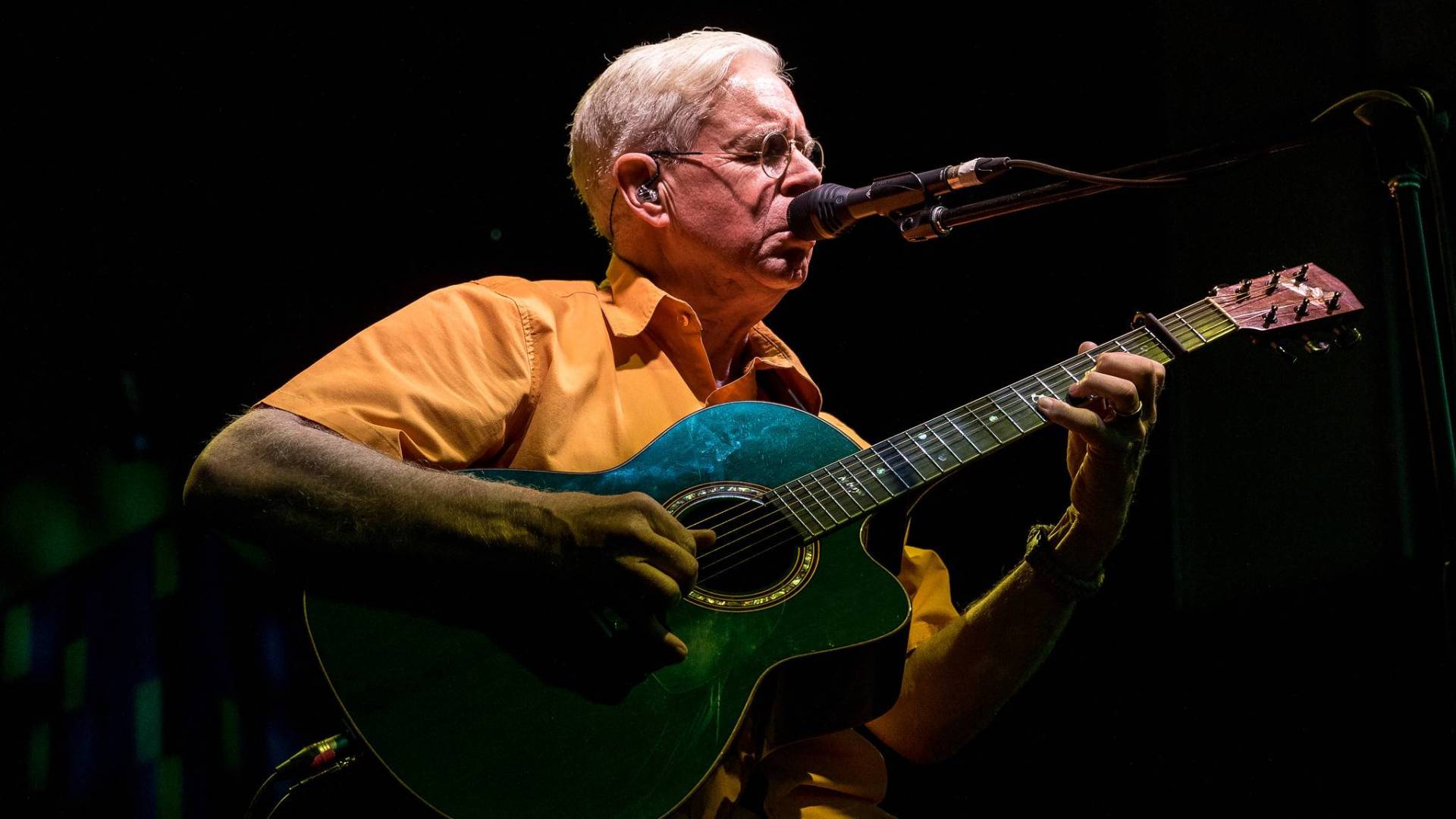
Bruce Cockburn, the Canadian singer-songwriter, had not attended church regularly in more than 40 years when he walked into the Lighthouse Church in San Francisco three years ago.

He’d come at the request of his wife, M. J., whose spiritual quest, impelled by the death of a friend, led her to the church. Even then, “I told her, ‘I’m not going,’” he said. “I said I was past that. I wasn’t a churchgoing person.”

But M. J. persevered. One Sunday, Cockburn relented and was “completely blown away.”

“I didn’t know any of these people, and they didn’t know me, but love filled the room,” he said of the small non-denominational congregation. “It felt like the church I was waiting for.”

Known for a string of moody folk-rock Billboard 100 hits from the 1980s (“Wondering Where the Lions Are,” “Lovers in a Dangerous Time,” “If I Had a Rocket Launcher”) and his stints playing with The Grateful Dead (“Waiting for a Miracle”), Cockburn had always incorporated Christian theology and imagery into his songs.

Still, Cockburn, 76, didn’t see a reason to mention his musical career, even after he was invited to play in the church’s worship band. “Nobody knew who I was” when they extended the invitation to play, he said. “They needed a guitar player, so they were foolish enough to ask me.”

If, three years later, no one had figured out that the house guitarist has 35 albums and 13 Junos—the Canadian Grammys—to his name, they likely realized it in May, when Cockburn released four songs he’d written as a fundraiser for the church’s programs to assist homeless people and combat human trafficking.

A regular churchgoer in the 1970s, Cockburn quit in 1980 after moving from Ottawa to Toronto. “I never found a church in Toronto that felt like home to me,” he said. “I just kind of stopped going.”

The truth was, “The formal church and I had grown apart,” he said of his decision, even as his faith remained strong.

“It’s a continuing journey,” he said. “I don’t feel I have the corner on understanding anything. I just have a desire to have a relationship with God, a day-to-day thing … I’ve always believed a relationship with God should be central to everyone’s life, and I’ve tried to keep it the center of mine.”

While he doesn’t have “any hesitation” identifying as a Christian, he’s starting to wonder if that’s such a good thing to say in public in the US these days.

If someone asks if he’s a Christian, he still says, “Yes, I’m a Christian, but I got vaccinated.”

Because of pandemic shutdowns, Cockburn hasn’t played live at church for more than a year. But he has played songs for online services and participated in a sermon series about parables. The worship band gives him “a chance to play music other than my own,” he said. “It’s a meaningful way for me to participate.”

One of the songs he wrote for the fundraiser, “Orders,” is “a biblical take on things, the order to love them all,” he said, referring to Jesus’ command to love neighbors.

“Lots of people who consider themselves believers frequently forget that,” he said. “It’s a reminder to myself as much as to anyone else,” he added.

Another song, “Us All,” addresses political polarization in America.

Lots of things divide people, Cockburn said. But “one of the things we all have in common is pain. We have scars that unite us all.”

When asked about where his music comes from, he said they are gifts that “come from God.”

“I still have to filter it,” he said, adding, “Unfortunately, that means God is stuck with me as a filter.”

News

Died: Evelyn Mangham, Who Convinced Evangelicals to Welcome Refugees

After 20 years in Vietnam with the Christian and Missionary Alliance, she saw caring for those displaced by war as simple obedience to Jesus.

Christianity Today October 12, 2021
Courtesy of World Relief / edits by Rick Szuecs.

Churches weren’t always ready to help Evelyn Mangham. When she cold-called them in 1975 seeking sponsors for refugees from the Vietnam War, they often had other plans and other financial commitments.

But in call after call with Christian and Missionary Alliance (CMA) churches, and then any congregation affiliated with the National Association of Evangelicals (NAE), Mangham pushed, quoted Scripture, told stories about Vietnamese people from her 20 years as a missionary, and applied moral pressure.

One pastor told Mangham his congregation couldn’t help because they were in the middle of a building project—working on a new parking lot. She sputtered, “But these are people.”

By the end of the year, she had convinced evangelical churches to sponsor 10,000 refugees from Vietnam, Laos, and Cambodia.

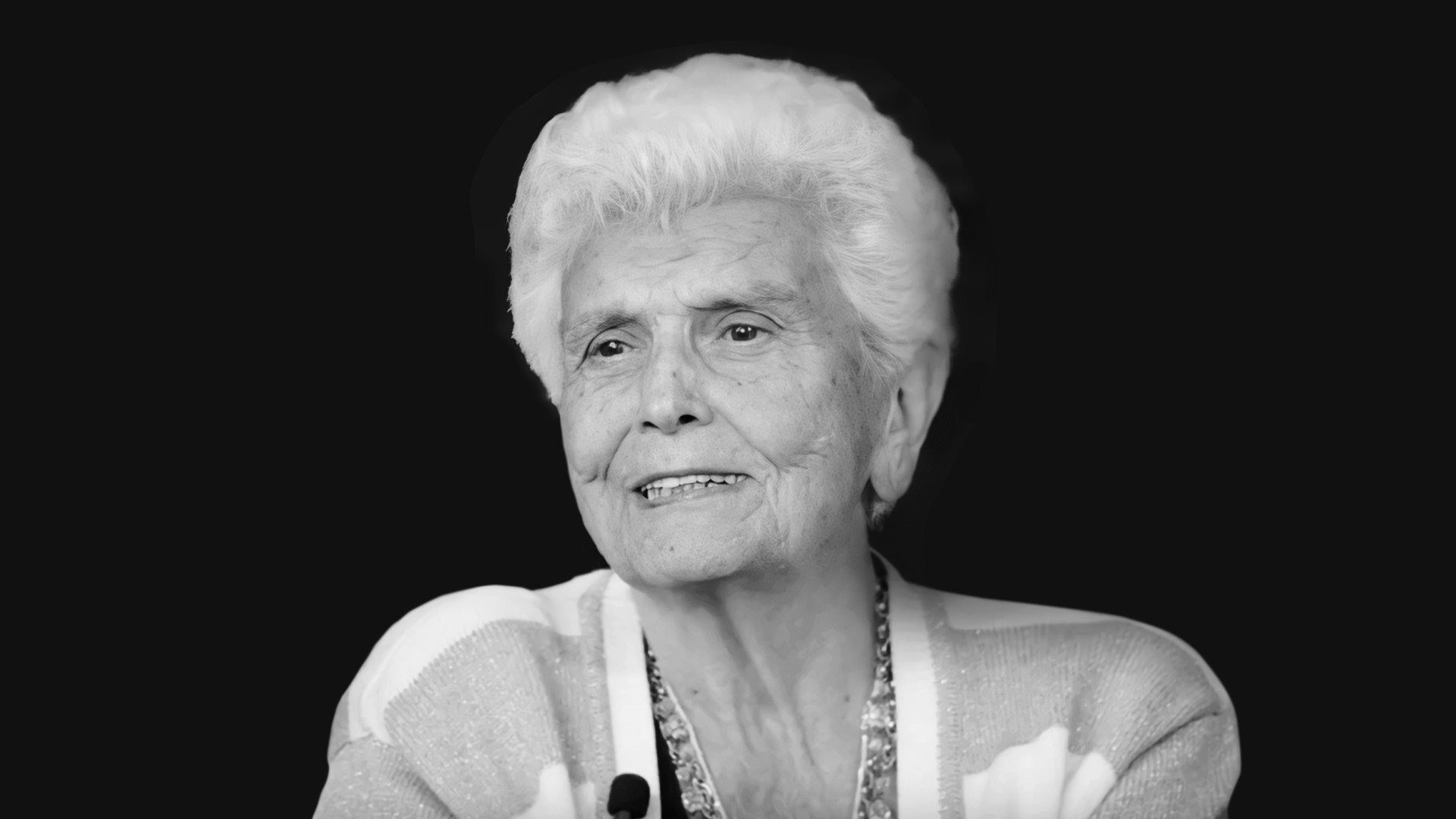
Mangham, who cofounded World Relief’s refugee resettlement program with her husband, Thomas Grady Mangham Jr., died on October 5 at age 98.

Matthew Soerens, the current direct of church mobilization for World Relief, said she was “a remarkable, faithful follower of Jesus.” Jenny Yang, World Relief’s vice president of advocacy and policy and coauthor, with Soerens, of Welcoming the Stranger, described Mangham as faithful and feisty.

“Her love for refugees, for the church, and for her Lord were contagious,” Yang said. “Her impact on the lives of those who are vulnerable will be felt for generations to come, and I know there was a huge celebration for her in heaven as so many people whose lives she touched welcomed her to her eternal home.”

https://twitter.com/JennyYangWR/status/848688774896922626

Mangham was born to George and Lola Breaden in 1922. Her father was the heir of a well-off family in Greenville, Ohio, who abandoned the family business and his inheritance when he heard about the need to spread the gospel in Arabia.

Evelyn’s birth disrupted the family’s missionary call, however, because she was their third child, and the CMA had a rule that missionaries could only take two children to the mission field. George Breaden prayed and asked the denomination to make an exception and send the family anyway. The CMA waived the rule, and the Breadens went to Ma’an, Jordan, in the far reaches of the British-created Emirate of Transjordan.

“Daddy wasn’t happy in Jerusalem, Bethlehem, or Beersheba,” Mangham later recalled. “That was ‘big time.’ He wanted to be at the end of the line, so that’s where we always were.”

It was in some ways an austere childhood. Mangham didn’t have a doll and instead played with half-burnt birthday candles—the longer ones designated the father and mother, the shorter ones the children. But she also recalled joyous times running around with local children, feeding sheep, and petting camels.

Mangham was sent to school in Jerusalem with other CMA missionary children. When it was time for college, she was sent back to the US to study at Nyack College, which was then called the Missionary Training Institute.

“I was alone, and I was so scared, I can’t even remember parts of it,” Mangham said. “I’d just go back to Scripture: ‘Be anxious for nothing, but in everything by prayer and supplication, with thanksgiving, let your requests be made known to God’ (Philippians 4:6, NKJV). And I did that. And I knew that he heard me.”

Mangham met Grady, the son of an Alliance pastor, at Nyack, and the two graduated and married in 1943. Grady, who was originally from Florida, took a position at a church in Georgia for a few years, and then the couple became Alliance missionaries to Vietnam.

The CMA was the oldest Protestant denomination in the French colony. Hoi Thanh Tin Lanh Viet Nam (the Evangelical Church of Vietnam) had more than 30,000 Vietnamese Christians worshiping in about 350 congregations. The CMA also supported about 130 missionaries, who planted churches, trained pastors, translated Scripture, taught people to read and write, and provided medical care in the remote regions of the country.

The Manghams learned four languages and pushed into the interior of the country, to reach the ethnic and linguistic groups that were isolated from the rest of Vietnam. For a while they made their home base in Cheo Reo, in the Central Highlands, about 270 miles north of Saigon.

They traveled the area in jeeps—including one donated by the city of Orlando, Florida, emblazoned with decals promoting the city—over the rutted roads through the jungles. The missionaries’ treks were occasionally dangerous. In 1957, Grady shot a 12-foot tiger that had been accused of killing 200 people.

In 1962, Grady and Evelyn were briefly captured by Communist fighters and forced to listen to a two-hour lecture on class conflict and revolutionary history. The lesson ended with general well wishes for their mission, however. The Communists told the Manghams, “We know you missionaries are here only to help the people of this country.”

North Vietnamese fighters did not always look so kindly on the American missionaries’ presence, though. As US involvement in the war escalated under Presidents John F. Kennedy and Lyndon Johnson, the Manghams and other CMA missionaries occasionally had people shout at them, “Get out and stay out. You are enemies of the people.”

The Manghams served to the end of their allotted time, however, remaining in Vietnam until 1967. Then they returned to New York and went to work for the denomination. They spoke widely in support of missions and were also frequently asked to speak about the war. They supported America’s involvement in the conflict and argued it was a just cause.

When Americans withdrew in 1975 and Communists took over, the couple started getting desperate calls from people they had known who needed to get out. Mangham and two friends started making endless phone calls and found sponsors for thousands of refugees—Christians from the church in Vietnam, but also Buddhists and followers of folk religions.

Mangham told churches they should dedicate time and funds to help the refugees because they were people, because Scripture said to welcome strangers, and because it created “a mission field, backwards.”

But mostly, she argued, it was what Jesus would want.

“It’s what Jesus said, that’s all,” she once explained, quoting Matthew 25. “‘I was hungry, and you gave me something to eat. I was thirsty and you gave me something to drink. I was a stranger’—refugee—‘and you took me in.’ … It’s simple obedience.”

The refugee resettlement program began under the auspices of the CMA’s relief aid agency, Compassion and Mercy Associates. It eventually became part of World Relief. When Grady and Evelyn stepped down in 1987, the organization was resettling about 6,300 refugees per year.

The couple retired to Florida and continued to support refugee work to their ends of their lives. In her 90s, Mangham loved to throw her arms around Muslim refugees she saw in the grocery store and tell them how happy she was to see them, speaking the Arabic of her childhood.

She also frequently urged people to teach their children Scripture and learn to lean on the faithfulness of God.

“I know I’m in his hands. I’m in his hands, and he can do with me whatever he wants,” she said in 2019. “I love to do, I love to be, I love to talk, I love people, and that takes care of it.”

Mangham died a day before her 99th birthday. She is survived by her four children, Ed Mangham, Connie Fairchild, Thomas Grady Mangham III, and Patty Whalen.

“It’s not the loss that overwhelms us,” her son Thomas wrote in a tribute on Facebook. “it’s the thought that we had the honor of knowing, seeing and experiencing what it’s like to live with a Hebrews 11 hero of the faith.”

A memorial is planned for 2 p.m. on Saturday at Good Samaritan Village Church, in Kissimmee Florida.

News

Moving Beyond Hotel Bibles, Gideons in Canada Announce New Name

ShareWord will continue to distribute Scripture, but emphasize church partnerships and equipping Christians for evangelism.

Christianity Today October 11, 2021
mrod / Getty Images

Say “Gideons,” and the vision that comes to mind for most people is Bibles in hotel nightstands and pocket-sized Scriptures passed out to students. It’s a recognized brand, with a well-publicized purpose, but it’s getting a new moniker in Canada.

Gideons International in Canada will now be known as ShareWord Global.

“God has called us to expand our evangelistic efforts internationally and come alongside our brothers and sisters across the world with tools, resources, and inspiration to be faithful—not just to a brand name, but to Jesus himself, who instructed us to ‘go and make disciples of all the nations,'” said Alan Anderson, ShareWord president, in the announcement.

This new name comes a decade after the Canadian branch of Gideons International distinguishing itself from its mother organization, The Gideons International, which is headquartered in Nashville.

There were several reasons for creating an autonomous Canadian organization, Anderson told CT. One had to do with the Canada Revenue Agency’s requirements for reporting money that was being sent overseas. But there were also some ideological differences. The Gideons in Canada wanted to open the organization to women; in the US it remains a men-only ministry.

“Sometimes the methods get confused with the purpose,” Anderson said. “We took a step a back and asked ourselves, ‘What are we trying to accomplish?’”

The Canadian organization also removed the vocational requirement that members be businessmen or professionals and took steps to work more directly with churches.

“We were able to invest far more heavily in partnership, especially partnership with the local church,” Anderson said.

ShareWord will continue to distribute physical Bibles and gave away 2 million in 2020. The Canadian organization also developed a digital app called NewLife to introduce people to the gospel of Christ on their smartphones.

The Canadian organization is putting more emphasis on equipping churches with the tools and confidence to share the gospel.

“We do a fair amount of development and inspiration to people in congregations to be bolder about sharing their faith,” Anderson said.

The emphasis on personal evangelism comes at a time when many schools and hotels across Canada decline the offer to place Bibles in rooms and in the hands of students.

“We’re really committed to how powerful Scripture is, but how much more so will someone receive that if it’s from a person rather than just sitting in a drawer?” Anderson said. “How much more likely are they to open it if there’s someone who's telling them how much it’s meant to them?”

A recent study by Alpha Canada and the Flourishing Congregations Institute reveals there is a great need for a revival of personal evangelism. Their survey conducted earlier this year found that 65 percent of Canadian church leaders reported evangelism hasn’t been a priority for their congregations over the past several years.

Similar research conducted by Barna in the US found that 44 percent of Gen Z feel that it’s wrong to share your personal beliefs with someone of a different faith.

According to the Alpha research, “Perceived antagonism toward Christian values and the Christian church” was the number one reason people aren’t evangelizing.

“In North America, it has almost become wrong to share your faith, and there’s a tremendous social hesitancy to do that,” Anderson said.

But he believes that there’s no better time for an organization like ShareWord to help Christians get past those hesitancies. As ShareWord looks ahead to the next five years, Anderson said he’d like to see partnerships with 5,000 churches, training 100,000 Christians to share the good news.

“If you can get over that fear barrier, it turns out there are more people who are interested than you would think, and there are far less people who are hostile than you would think,” Anderson said. “I think we’ve built up fears that are not necessarily accurate.”

ShareWord will also continue to expand its work in foreign countries, especially as new doors open. Anderson said ShareWord has been welcomed to spread Scripture in Cuba and give bibles to school-aged children in Nicaragua. ShareWord has a footprint in 47 countries with extensive work happening in about a dozen.

Anderson admits says the decision to change the name was not easy. The Gideons are well known, and members of the Canadian organization value that history. But in the end, it was time to leave the name behind.

“If you say the word Gideons to someone, they will immediately have an image of a Bible in a hotel room,” he said, “and our ministry is so much more than that now.”

Books
Excerpt

Philip Yancey: God Can Love ‘A Cynical Sneak Like Me’

An excerpt from the best-selling author’s memoir, “Where the Light Fell.”

Christianity Today October 8, 2021
Illustration by Rick Szuecs / Source images: Courtesy of Philip Yancey / Jimmy Dozer / Wikimedia Commons / Somesh Kesarla Suresh / Unsplash

At a vulnerable time in my spiritual development, I found myself at a Bible college with a 66-page rule book and little emphasis on grace. Other students seemed quite content in the controlled environment. In me, however, the campus culture encouraged more cynicism than faith.

Where the Light Fell: A Memoir

Where the Light Fell: A Memoir

Convergent Books

320 pages

$21.30

My cynicism gradually softened over the course of my sopho­more year. I found some relief in a new Christian Service assign­ment: “university work.” Four of us male students started visiting a nearby state university every Saturday night with the goal of engaging students in conver­sations about faith.

On our first visit I am dazzled by the plush dorms and student lounges, so different from the utilitarian buildings at the Bible col­lege. Entranced, I study the bulletin boards covered with splashy posters announcing concerts, plays, and other student activities. I want to be one of these people more than I want to convert them.

Strolling through the campus, I notice a group of athletes sitting on a patio. “Where are you guys from?” I ask.

“We’re with the Yale baseball team. How about you?”

“Um, I attend a Bible college down the road, and we came over here to see if anyone wants to talk about spiritual things.” They ex­change smirks. I continue, “You see, in God’s economy …”

“That’s funny,” one of the athletes interrupts. “I didn’t know God had an economy.” His teammates laugh, and blood rushes to my face. I head toward the student center to watch TV.

“Don’t worry, Philip,” my fellow students reassure me when I re­port on my botched attempt at witnessing. “At least you sowed the seed. God’s Word doesn’t return void.”

After that first attempt I spend nearly every Saturday night in the student center, catching up on sports and the news.

Class assignments force me to keep studying the Bible, which unexpectedly captures my interest. I read Ecclesiastes and recognize my own dreary cynicism. I read Psalms and Job and marvel that these sacred books would in­clude such angry accusations against God. Such biblical outbursts are common, though the profes­sors usually skip over them.

I realize I don’t know much about Jesus, apart from the stories I learned in Sunday school. As I study the four Gospels, I encounter more surprises. “You shall know the truth and the truth shall make you free,” Jesus promises, which strikes me as ironic on a campus that stifles freedom. I’m beginning to like this guy. When someone asks him a question, he never uses circular reasoning. He’s enigmatic, elusive, impossible to pin down. Most times, he tosses the question back to the person who asked it.

If Jesus showed up on campus, I wonder, what would the admin­istration do with him? Would he, too, get shot down for questioning his teachers?

My brother, Marshall, has encouraged me to read books by C. S. Lewis. Reading him, I feel a gentle pull toward belief. The book that hooks me most deeply was published the year I entered high school: A Grief Observed. I read about Lewis’s struggle to survive the “mad midnight moments,” then I lift my head and confront the happy-faced students around me, and the oyster shell snaps shut.

Shockingly, the college has hired a sociologist with a degree from Harvard. He assigns Erving Goffman’s book Asylums, a land­mark study of what the author calls “total institutions.” Goffman suggests that institutions such as prisons, military academies, con­vents, insane asylums—and Bible colleges?—progressively condition their subjects so that in time the insiders habituate to their controlled setting. The ability to make a bed so tight that coins bounce off doesn’t help a recruit on the battlefield. It does, however, reinforce a military command structure: “I am in charge, and you must do what I say.”

As if to confirm my suspicions, in one of our private meet­ings the dean of men admits to me that he retains some petty rules simply to teach students to obey. Which gives me an idea for my sociology project.

I distribute a printed survey form to every male freshman and senior, asking such unscientific questions as “Which rule bothered you most on entering this school?” and “Has your attitude of rebel­lion against the school declined since you enrolled?” True to my hunch, the seniors accept, and even defend, rules and policies that freshmen think ridiculous.

When the dean finds a copy of my mimeographed survey in a trash can, once again I land on the faculty’s watch list. “This is an insurrection!” says the college president. “He can’t survey freshmen. They don’t know us!”—which was my point, exactly.

The project helps me separate the school’s subculture from the body of faith it so jealously guards. Perhaps I am resisting not God but people who speak for God. I’ve already learned to distrust my childhood churches’ views on race and politics. What else should I reject? A much harder question: What should I keep?

One scene from the Gospels, in John 6, grabs me. I’ve pictured Jesus as the crucified Messiah, rejected by his own people. But John’s account gives a glimpse of his early popularity. Huge crowds follow him around, dazzled by his miracles and hanging on his every word, eager to crown him as their king. How does Jesus respond? By re­treating to a mountain. Undeterred, the crowds pursue him. The next day, Jesus gives some of his harshest teaching, so alienating the crowd that all but his closest followers abandon him. When Jesus asks his 12 core disciples if they, too, want to leave, they answer, “Lord, to whom shall we go?”

I have always thought of God as an arm-twister, a cosmic bully who schemes to break anyone who dares resist. In this account, Jesus appears wistful, even forlorn, showing no interest in compel­ling belief. Jesus clearly did not use the techniques of Goffman’s total institutions.

From the Bible I am learning about a God who has a soft spot for rebels, who empowers such people as the adulterer David, the cheater Jacob, the whiner Jere­miah, the traitor Peter, and the human-rights abuser Saul of Tarsus. A God whose Son makes prodigals the heroes of his stories.

Could that God find a place for a cynical sneak like me?

Excerpted from Where the Light Fell: A Memoir by Philip Yancey. Copyright © 2021 by Philip Yancey. All rights reserved. No part of this excerpt may be reproduced or reprinted without permission in writing from the publisher.

Why One of Christianity Today’s Longest Subscribers Is Still Reading

“I do not know of any other resource that is seeking to understand the world and the gospel in the ways CT is.”

Why One of Christianity Today’s Longest Subscribers Is Still Reading
Photo Courtesy of Darrell Johnson

Perhaps it’s fitting that for more than 20 years, Darrell Johnson has made Vancouver, British Columbia his home.

“I was born in Duluth, Minnesota—so I’m one of those Americans who from an early age knew Canada existed,” said Johnson, a long-time pastor and professor at Regent College.

Johnson’s ministry began in California, took him as far away as the Philippines, before ultimately landing his family in Vancouver. But it was his Swedish grandmother, who Johnson lived with at various points in his childhood, who started the whole thing.

“She spoke of Jesus in such a compelling way,” said Johnson. “She loved her Bible. Even when I was three years old, she read her Bible to me, with her broken Swedish accent.”

Later, the love of God that his grandmother had cultivated led Johnson to respond to an alter call as a 10-year-old. But after making his way down the church aisle, his mother appeared by his side to lead him away, spurred by his father’s fears of a predatory preacher. During most of his adolescence, Johnson kept up a quiet faith, attending church with his family, but keeping church life at arms length. Then, Martin Luther King Jr. was assassinated on April 4, 1968. As the radio stations played King’s sermons through the night, Johnson knelt and prayed.

“I said, ‘Lord Jesus, I would love to be able to preach you in such a way that lives are changed,’” said Johnson. “That was the moment of surrendering to the call.”

After attending seminary and serving a Presbyterian Church (USA) pastor at several California congregations, Johnson moved across the Pacific Ocean to lead Union Church of Manila in what he now calls his “richest time of ministry.” He arrived in 1985, as the country was in the midst of toppling a dictatorship in what became known as the People Power Revolution.

“I saw 3 million Filipinos demonstrate that the Sermon on the Mount is the only way to live in this world. They took Jesus’ call to nonviolence seriously,” he said. “I saw how the kingdom of God does break into the world through humble, meek people.”

After several years at Union Church, a majority international congregation that served many diplomats, multinational corporation executives, and missionaries, Johnson returned to California for the next decade. Then, virtually out of the blue, Regent College invited him to join their faculty. He and his wife Sharon, and three of their four children moved into what was a very different place than they assumed. (The Johnson adopted their children from the US, South Korea, the Philippines, and Russia.)

“At the beginning, it took us a while just to get used to the fact that Canada is different than the United States, learning to understand the Canadian view of the world and the Canadian way of being Christian,” he said.

Johnson served nearly a decade at Regent before becoming a pastor at the historic First Baptist church in the downtown core of Vancouver. He stepped down after suffering a heart attack and today spends much of his time mentoring other pastors and writing, recently finishing a book on Ephesians and is currently in the midst of a new work on John.

Johnson became a CT subscriber as a seminary student, just several years after the publication celebrated its first decade of existence.

He was immediately captivated by its news section and by its biblical exposition pieces. Today he praises the Testimony section, the last page of the print magazine, where individuals share the specific story that led them to Christ. Johnson credits his longevity as a subscriber with CT’s thoughtfulness.

“I earned my undergraduate degree in physics in theoretical mathematics so I didn’t learn how to write well before going into ministry. I have learned so much from the way CT articles are carefully crafted and thought out,” he said.

Its global focus has also kept him captivated.

“I appreciate reading reports from Africa, Asia, Europe, including reporting from behind the Iron Curtain in the midst of the Cold War,” he said. “The church in the states, and, to some degree, the church in Canada can be inward focused so it’s important to broaden the vision and remind people that God is active and the church is growing all over the world.”

Several recent editorial highlights for Johnson:

Stephanie McDade’s How Could All the Prophets Be Wrong About Trump?

“That, to me, was one of the most disturbing dimensions of the last five years in the political realm. For CT to take that on and do so so carefully was a great blessing.

Mike Cosper’s The Rise and Fall of Mars Hill podcast, Kate Shellnutt’s Bethlehem Baptist Leaders Clash Over ‘Coddling’ and ‘Cancel Culture’, Daniel Silliman’s Ravi Zacharias coverage:

“An example of the capacity to face tough issues and deal with them. A model of how to talk about ‘the stuff’ that happens in the church, not by playing games or being condemning but by dealing with the truth. The courage to deal with the issues before us and to do that with grace and truth.”

CT CEO and President Tim Dalrymple’s recent piece on the Splintering of the Evangelical Soul:

“Tim articulated the nature of the divide without putting down anyone in the process. He wasn’t trying to be conciliatory; he was seeking to name the dynamics of the tension. I admire his capacity to name what we’re facing without a condemning or judgmental spirit. Timothy’s capacity to see the big picture and articulate it is marvelous. He’s such a careful thinker. He has an amazing gift with words.”

While CT is an American publication, Johnson believes it is deeply relevant for Canadian pastors and ministry leaders.

“When I first heard the phrase Beautiful Orthodoxy, I thought I might have gone with words like courageous or compassionate. But the more I’ve thought about beautiful, the more I’ve realized that it really works for Canada,” said Johnson. “The word evokes the worship orientation of the faith and has a more inviting posture towards the world. Who doesn’t want beauty? The search for beauty is all around us. At least in Canada, what will attract people to Jesus is something irresistibly good, lovely … beautiful.”

Johnson often encourages those he mentors to subscribe to CT.

“CT has always been in touch with what’s going on in the church in North America, but there’s a greater depth now. CT is there in the face of all that’s going on in society now,” said Johnson. “CT is an advocate of the truth and grace and wholeness that we have in Jesus.”

Johnson recently decided to support CT financially.

“Under Timothy’s leadership the ministry, which has always been deeply thoughtful, has moved to even deeper levels of insight to, and engagement with, what we are facing in discipleship and ministry today.”

For those who might also consider doing the same?

“I do not know of any other resource that is seeking to understand the world and the gospel in the ways CT is,” said Johnson.

Morgan Lee is global media manager at CT.

News

Good News for Iraq’s Christians: More Autonomy, Less Dhimmitude

As Erbil Christians finally get to govern themselves, Chaldean Catholic archbishop Bashar Warda explains to CT how ISIS freed Christians from the centuries-old understanding that they are second-class citizens.

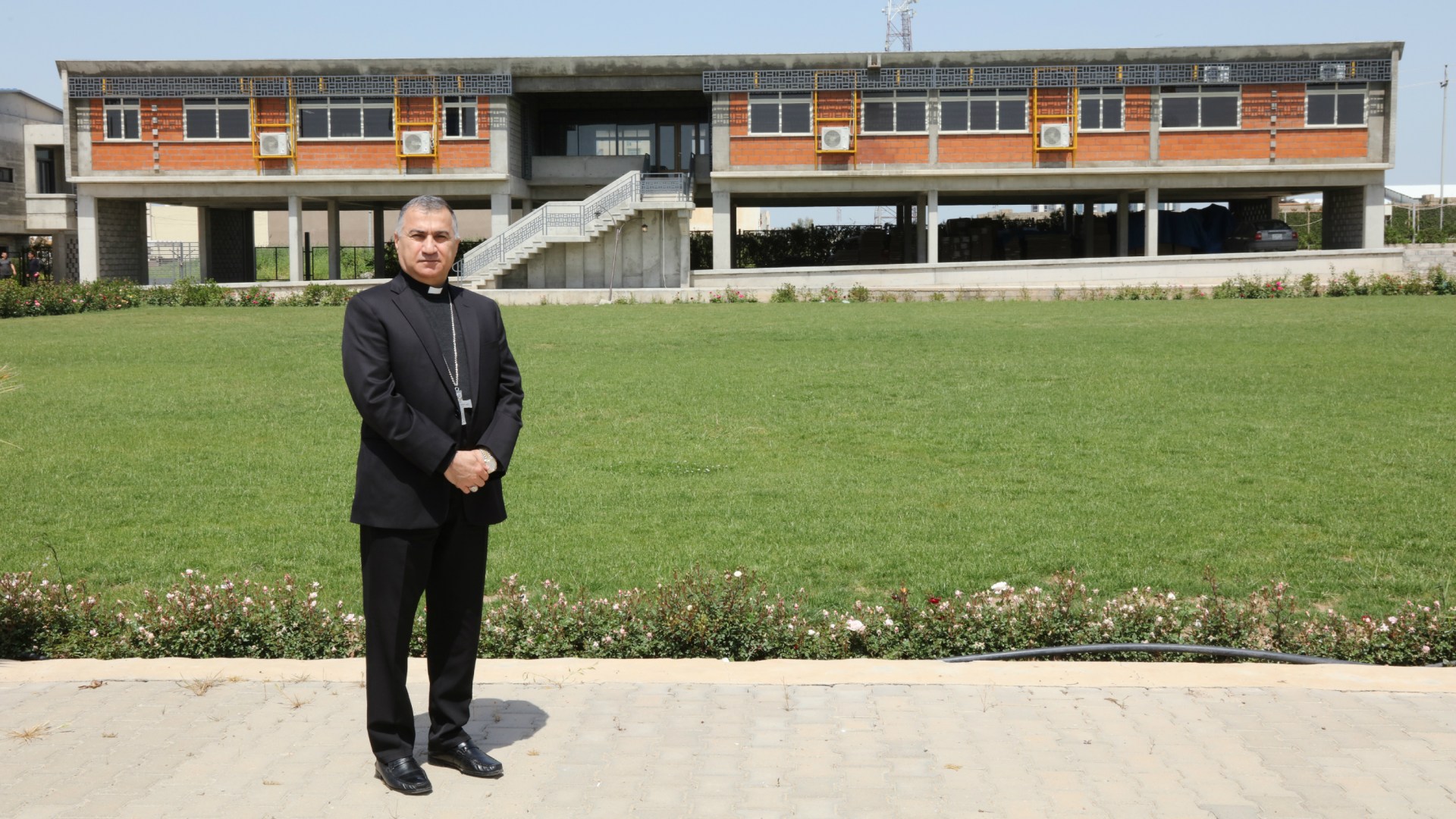
Chaldean Catholic Archbishop Bashar Warda stands in front of the Catholic University of Erbil, located in the Iraqi Kurdistan capital city's Ankawa district.

Chaldean Catholic Archbishop Bashar Warda stands in front of the Catholic University of Erbil, located in the Iraqi Kurdistan capital city's Ankawa district.

Christianity Today October 8, 2021
Courtesy of Bashar Warda

This week, the Christian enclave of Ankawa in Erbil, the capital city of Iraqi Kurdistan, was designated by the autonomous region’s prime minister as an official district with administrative autonomy. Starting next week, Christians will directly elect their own mayor and be in charge of security, among other matters.

Prime Minister Masrour Barzani called Ankawa a home for “religious and social coexistence, and a place for peace.”

Archbishop Bashar Warda, the Chaldean Catholic archbishop of Erbil, called it an “important” and “strategic” decision.

“Our confidence in the future of Kurdistan makes us encourage Christians not only to stay,” he told Kurdistan 24, “but also to invest in this region.”

Ordained a priest in 1993, Warda was consecrated in his current position in 2010. With Iraq’s hemorrhaging of Christians since the 2003 US invasion, Warda’s bishopric in the autonomous Kurdish region soon became a providential band-aid.

Beginning in 2014, ISIS drove Christians from Mosul and their traditional homeland in the Nineveh Plains, and thousands took refuge in Erbil and other cities in the secure northeast. From 1.5 million Christians in 2003, the Chaldean Catholic church now estimates a population of fewer than 275,000 Christians.

Warda has long been investing to turn the tide.

In 2015, he established the Catholic University of Erbil, and has coordinated relief aid from governments and charities alike. The situation stabilized following ISIS’s defeat in 2017.

But freedom does not come from politics alone. Two years ago, Christians endorsed widespread popular uprisings against the political class. Violently suppressed, the movement’s main celebrated achievement was early elections under a new law designed to promote better local and small-party representation.

Polls open on October 10, and a quota gives Christians five of 329 seats in parliament. However, Warda’s Baghdad-based patriarch has called for a Christian boycott, fearing fraud.

Warda wants a Christian revival. Buoyed by the March visit of Pope Francis, he believes that ISIS broke the fundamental religious and cultural underpinnings of Islamic superiority. Christians no longer are seen as second-class citizens.

In an interview on the sidelines of the IRF Summit convened in Washington in July, Warda told CT about his welcome of missionaries, the Catholic way of witnessing to Muslims, and whether a revived Christian influence in Iraq will lead to future church growth.

Since the defeat of ISIS in Iraq, what challenge has been hardest for the church?

With all the displaced people, images of scattered tents immediately come to mind. But the hard part is not to provide them with food, sanitation, or medical supplies. This is not easy, but it is obvious.

The hard part is to restore their dignity. They understand that ISIS is a criminal gang. And they can bear the wounds of the innocent, knowing they had nothing to do with this dispute.

But their question is “Why?” yet also “What now?”

Men are the providers for the family. Sitting around doing nothing, they tell me, “Bishop, we don’t want money; we want a job. I want to deserve my food.”

Suppose there is aid sufficient to rebuild homes, churches, and schools and even to provide jobs. You have said that this is not enough. It does not establish the basis of citizenship and pluralism.

That is true. But without homes, churches, schools, and jobs, the people will leave the country. And then there are no citizens left.

With a rebuilt community, you can go to the government to speak about the constitution, defending the people’s full rights under the law. There is a link. First have the community; then talk about implementing ideals.

Before ISIS, when the community was stable, were you able to seek your rights?

For 1,400 years there was a sort of social contract: Islam is the religion of the nation, and you are the People of the Book. But know that Islam is the honorable religion of God, which means you are second.

In the Quran it says there is no equality between those who believe in Islam and those who do not. Yes, it says they should consult you. But we are the people who are to be “protected.” That means we are always under them and have to pay a social and financial price. There is no jizia [a tax paid to be a protected community under Islamic rule] anymore, but the social price remains and makes you a second-class citizen.

What does this mean in the modern era?

In Catholic marriages, sometimes there are problems. Rather than deal with the issues, some spouses take the easy way out, convert to Islam, and get an immediate divorce. They don’t believe in Islam, but the constitution gives them the right to take the children.

What about the mother? What if one of the children is not willing? No, no, no, we are told, Islam is the honorable religion.

It also means you cannot evangelize. If there is a Muslim coming to your church, asking about Christ, you must tell him, “No, go away; you are a Muslim. I’m not allowed.”

Now after ISIS, I tell Muslims, “No, you’ve broken the social contract.”

For anyone coming to the church asking about Christianity now, we are there. We communicate, provide literature. Of course, I leave the decision to them. But my duty is to inform them and give them a reason for the hope that is in us.

Has the rest of the Christian community in Iraq realized the contract is broken? Can they act accordingly?

It depends on where they are. In Baghdad and Basra, it is a different story. But in the governorates affected by ISIS, we can tell them, “We fulfilled our obligations as Christians. What about you?”

In your opinion, is the social contract broken in Baghdad and Basra?

No. But their lives and challenges are different. They live amid political disputes between parties. It leads to a certain chaos with security, and some act out against the weaker party. There was some direct violence against churches and priests because they were Christians, but in recent years it is more about criminality.

But the culture of Islamic superiority still exists?

Yes, of course. Everywhere. In the entire Middle East.

Do Muslims in Kurdistan accept that the old social contract is broken?

When I speak with imams, they say that ISIS does not represent Islam. Okay, but you haven’t written any apology letter to the victims. They say, “But we hosted you. We welcomed you.” Yes, but write it down: We are sorry for what they did in the name of Allah. This helps history avoid being repeated.

What would happen if they could accept your understanding of this new reality?

They would dig deep in their Islamic history books to discover where it speaks about the dignity of the human being, simply because he is created by God. And then it would change the way they speak. They would use the Quran to demonstrate mutual respect.

It would change religious discourse, but what about ordinary Muslims?

They would know us better.

When I asked authorities for Pope Francis’ mass to be in an outdoor setting, one reason was to get Muslims to see what Christians do in church. They would then realize [Christians] are not there to dance and drink wine. [Christians] are quiet; they celebrate; they chant beautiful music.

I asked the head of the choir to choose Muslim musicians. There were 10 of them. It is a way of approaching the other to say, “This is who I am. Listen to me. Watch me.” Then they can see our adoration and hear over and over that we believe in one God.

Did the visit of Pope Francis change their mentality?

Our young people prepared the stadium, working 16 hours a day for three weeks. When the event was over, the media showed pictures of the stadium and that it was clean. This was not part of our responsibility; trash collection belonged to the government. But the message with the picture said, “These people deserve our respect.”

This meant a lot.

As you try to live out the fact that the social contract is broken and to spread this idea among other Christians, will there be consequences?

We have to have the passion and the patience for dialogue.

I go to meet with extremist Muslims, people who would not expect me at the gates of their homes. I tell them, “Here I am. Are you willing to accept me?”

They haven’t had straightforward answers. They reply, “Islam is the honorable religion of God.” Okay, I respect that, but let’s talk about how to work together.

What are you doing to prepare the Christians in your bishopric to live in this new reality?

Our region receives displaced Christians because it is safe. This has helped me practice my faith freely, and Kurdistan is quite supportive. We are working alongside the government for sustainability of the Christian community.

We have four schools, a university, and a hospital. These provide 460 jobs. It is through education and healthcare that we can become influential. And I want to provide the best services in Iraq.

Phase one was to create the structures. Phase two is to work with universities in America to form an alliance. The Franciscan University of Steubenville has responded. So has the University of Dallas. We are also talking with Baylor University.

It is a long journey. But thank God, the response of Christians in America and around the world has been encouraging. They believe in what we are doing.

Do you welcome missionaries to your witness in the region?

Oh yes. As long as they respect that this is not a land of converting Christians to a new church.

Unfortunately, some come and tell us, “We will tell you about Christ because you don’t know Christ.” How can they say this? They should say, “We would like to share faith with you.”

Yes, [they] are welcome. We have some working as teachers and as professors in the university.

The church here is weak in terms of numbers. We don’t want to divide it further. There are nine churches, and over 15 evangelical groups have come to Iraq in the last three decades. It should be about cooperation and collaboration. Let me be enriched by your faith experience, and I by yours. Missionaries should help me maintain my faith, not weaken me.

If any of my people tell me, “Bishop, I am alive in this new community,” I say, “God bless you.” But let them say so openly. I am not their judge.

Some Western missionaries work among Muslims. How do you advise them to join you in your witness, to help and not to harm?

They must know that evangelization is not permitted. I’m concerned first about their safety. They must have wisdom. It was unfortunate for us to [once] find Bibles in the trash. It is not about distributing the Bible but about whom you offer it to. The Bible is a treasure.

You have said previously that with the social contract broken, Iraqi Christians now have a role of witness—to be missionaries in their society. How can the foreign missionary join with you well?

Come and be with the local church, ready to help.

You will be a teacher in one of our schools—with Muslims. Your example and dedication will draw them to know more about you and about your faith. When they ask you why you left America, you can tell them, “I am a Christian. I believe in Jesus Christ, my Savior. He pushed me to come and help you, even though you are not Christians.” These seeds will grow, and they will want to know more and more.

Come gently, as St. Paul did. Be faithful. Whenever there was a chance to speak about Christ, he would do so, with full respect.

What is the church doing now with Muslims who are interested in Christianity?

We have literature about who we are. I give this to them, they read it, and they come back with more questions.

Is it possible for them to join you and become a Christian?

No, we tell them, “This would endanger your life. You can’t do that.” Then they insist. We work with them for six months, maybe a year, and they still insist. Who are we to tell them no? So then, I baptize them.

I tell my priests, “If you have these cases, God bless you, go forward.”

But I am always clear with inquirers: This is not going to change your religious identity before the law, on your ID card. It may put you in trouble with your family and your tribe. But if you are ready to bear the consequences, God bless you.

Are they able to stay in Iraq?

Some of them stay secretly. Some have decided to leave.

Your colleague Bishop Bawai Soro has researched and found that since Islam came to Iraq, the number of Christians has never increased. Faith is not a competition, but is this something that can change? Might Christians not only recover from ISIS but also grow? Or is it simply your destiny to accept a shrinking community, where all you can do is slow the pace and aim for stability?

I will start with the last one. Stabilize, and lead to a good future. This is not just realistic but practical. I am not a man of wishing but of hope. Hope means that if we work hard together, we can make it. With God’s grace, I think we can preserve a good number of Christians and, among them, influential leaders.

There is hope in these words. But is there also a sense of sadness?

Let’s face it: Committed Christians are shrinking around the world.

We are the salt of the earth. Just be a candle. Christians are not destined to be the most powerful community, only the most influential. It is encouraging to live among a Christian majority, of course. But it also comes with challenges.

Let’s stay with the easier scenario God has given us here in Iraq.

Apple PodcastsDown ArrowDown ArrowDown Arrowarrow_left_altLeft ArrowLeft ArrowRight ArrowRight ArrowRight Arrowarrow_up_altUp ArrowUp ArrowAvailable at Amazoncaret-downCloseCloseEmailEmailExpandExpandExternalExternalFacebookfacebook-squareGiftGiftGooglegoogleGoogle KeephamburgerInstagraminstagram-squareLinkLinklinkedin-squareListenListenListenChristianity TodayCT Creative Studio Logologo_orgMegaphoneMenuMenupausePinterestPlayPlayPocketPodcastRSSRSSSaveSaveSaveSearchSearchsearchSpotifyStitcherTelegramTable of ContentsTable of Contentstwitter-squareWhatsAppXYouTubeYouTube