Theology

Have Christians Forgotten How to Fight with God?

The Lord wants our protest. But it seems some of us have neglected the ancient art of lamenting evil.

Christianity Today December 21, 2021
Noaa Py / Micaela Parente / Unsplash

At the moment, our world is on fire with social unrest, racial injustice, and an unrelenting pandemic that’s constantly wearing us out. We’ve just reached another grim milestone of 800,000 deaths in our country—so many that we risk becoming numb to it all.

It feels like this suffering is shaking all that can be shaken, right to the core (Heb. 12:25–29). Because of the global fragility we are all collectively experiencing, I would guess I am not alone in feeling a sense of God’s absence … or, worse, in sensing the presence of an uncaring God.

But my guess would be wrong.

The latest poll from Pew Research Center surveyed over 6,000 American adults—including 1,421 evangelicals—about why they think bad things happen to good people.

The most common answer? It is what it is—life just happens, says 35 percent of folks. The next highest response, coming from 13 percent, is that suffering is God’s will. The rest of the respondents believe that evil is the result of Satan, sinful human nature, free will, karma, societal systems, or opportunities for spiritual growth.

But here’s the kicker: Of the 9 in 10 Americans who believe in God or a higher power, over 80 percent say that suffering does not make them doubt God’s existence, God’s power, or God’s love. Not even sometimes.

So much suffering in the world, and yet most Americans are not doubting God.

That should be good news, right? … Or is it?

Perhaps this survey indicates a general ignorance about the classical tension between God and evil. Or maybe it shows a swing away from popular evangelical narratives that view suffering as a form of God’s punishment or judgment toward sinners, often with reference to natural disasters.

Some of these statistics may also reflect certain theological approaches to the problem of evil, known as “theodicies,” which have trickled down from seminaries into local churches over time.

A common one in evangelical circles is the “free-will defense,” which states that evil is the result of God giving humans a free will. This runs parallel with 71 percent of US adults who agreed with the statement that suffering is primarily a consequence of people’s own actions.

Another approach, called “felix culpa” (or “happy fall”), says that God is justified for allowing evil and suffering because it paved the way for Christ to redeem the world—and that this end ultimately justified the means.

Or it could be that these recent statistics indicate a general malaise and stoic apathy toward the age-old problem of evil—a suffering that is being lived out but not consciously thought through.

Either way, the complacent conclusion that evil and suffering exist “just because” has no basis in the Christian tradition. For believers, nature is not a blind force of random chance or bad luck. Creation is very good, and suffering exists because of Eden gone wrong. To believe in evil as a basic part of nature or luck of the draw might be Gnostic, Stoic, or Taoist, but it’s not Christian.

Why, then, is the most common answer among Americans for suffering pragmatically atheist—that evil just “is what it is” and has no correlation to our belief in a good and powerful God?

Scripture is chock-full of stories where God’s people are bold enough to wrestle with him and ask the hard questions: Why are you allowing all this evil? How long, oh Lord? When will you come and set all this right?

Job of the Old Testament, Epicurus, David Hume, C. S. Lewis, and Mother Teresa—along with countless others throughout history—all wrestled with the problem of evil and suffering. And they did so in a way that forged a crucible for their faith, ultimately strengthening their belief in a God who is both strong and loving, despite the apparent evidence to the contrary.

Time and time again, we see ordinary people approaching God with raw honesty about human suffering. And God responds to them, because they reflect his own lionheart that’s hell-bent against evil and death.

God wants our protest against the evil and pain in this world. So why aren’t we giving it to him?

As recent scholarship by theologians like Eleonore Stump and Paul Moser suggests, our honest struggle with evil invites a kind of pain that yields a powerful return on our investment, which can result in an even stronger faith—one that has been tested by fire.

Instead, it seems we may have lost our nerve. Many Christians today are trading a hard-won birthright of wrestling with God for an easy meal of safe answers. And in doing so, we are setting up a facile faith that the next generation will simply turn around and “deconstruct.”

But can we really be blamed?

With so much Zoom fatigue, a rising global death count, and disheartening news media, it makes sense that we would be too tired to feel, much less invite our faith to be tested by fire.

Still, we are called to more.

To be a Christian is never to be apathetic toward evil and suffering, nor to avoid protesting God.

Instead, we are told to work out our faith in “fear and trembling,” which includes unflinching lament at all the evil and death in this world. We are meant to hold our hands open in foolish faith, to watch and wait with hopeful expectation for God to show up in surprising ways—to remind us that he is good and powerful and that he will grant us his own steadfast courage.

We are called to the daring and bold love of God in Jesus Christ, who stopped at nothing—not even death on a cross—to fight and win back the glory and goodness of God’s original creation.

To be a Christian is to join Christ in his suffering for the life of the world. He sweat blood while surrendering his own will in the garden and was honest unto his dying breath—crying out, “Why have you forsaken me?” while inviting his Father to draw near by saying “My God, my God.”

Our relationship with God is all the richer when it is allowed to pass through the threshing floor of protest and honest questions, even when those questions are painful and have no answer.

And it is here that I believe trauma survivors and therapists can teach us an important lesson on the priceless value of suffering losses in this life.

I am reminded of a recent conversation with one of my students, a trauma therapist, in a course at Richmont Graduate University called Theodicy and Trauma Counseling. I had assigned two books by C. S. Lewis, and she told me how valuable they have been in her current work with clients.

In the introduction to A Grief Observed, Lewis is described as “a man emotionally naked in his own Gethsemane” while mourning the death of his beloved wife. Yet in all that grief, Lewis encountered God in the process—by keeping his heart open to the pain of it.

Lewis describes this openness to suffering in The Problem of Pain, saying that “pain insists upon being attended to. God whispers to us in our pleasures, speaks in our conscience, but shouts in our pain: it is His megaphone to rouse a deaf world.”

Those like myself and Lewis who have survived personal trauma and experienced recovery have learned to embrace a measure of suffering that we could not endure in the past. In fact, that is precisely what recovery is: facing our painful past by looking it square in the face—and realizing that it is not too much for God, or our close friends and family, to bless and redeem.

Recovery and healing mean learning to suffer well by facing the problem of evil directly and honestly, so that we can be roused by the pain enough to hear the kindness of God in the midst. And in a world that is experiencing so much collective pain, the call to be Christian is to follow the trauma survivor and their therapists and stop avoiding our own suffering.

We are meant to neither explain it away nor draw a stick-figure God with easy answers but to follow the Great Survivor, Jesus Christ, into God’s renewed future. For the only path to resurrection joy is through death and sorrow. The way to the garden is through the grave.

The world is hungry for believers to once again be honest about suffering, evil, and injustice. Some of us haven’t had the luxury to do anything else—and our lives are all the richer for it.

Perhaps if more Christians learn to wrestle honestly with the problem of evil and suffering, it will help thicken the church’s witness to the world. At the very least, we might help each other along in our own journeys by following Jesus into a faith that’s worth suffering for.

Preston Hill is assistant professor of integrative theology at Richmont Graduate University, an ordinand in the Anglican Church in North America, coauthor of the forthcoming book Dawn of Sunday: The Trinity and Trauma-Safe Church (Cascade), and editor of the forthcoming book Christ and Trauma: Theology East of Eden (Pickwick).

News

The Alpha and the Omicron: COVID-19 Disrupts Christmas Worship Again

From London to DC, a new variant has shifted plans for big holiday services and celebrations in 2021.

Christianity Today December 21, 2021
Jeff J. Mitchell / Getty Images

“Join us for Christmas Eve!” read the homepage for the District Church in Washington, DC, as the congregation planned to gather for the holiday for the first time since 2019.

The District Church, a multiethnic, nondenominational church in the Columbia Heights neighborhood, had scheduled three in-person services for Friday. But last Sunday, lead pastor Aaron Graham announced that due to the spread of the omicron variant of COVID-19, Christmas Eve would be filmed and shared online instead.

“We had not planned this, but we just didn’t really know who was going to be in town [Christmas] week, and we just had a lot of people gone,” said Graham. The District Church had already made plans to briefly go virtual online for the two Sundays following Christmas to give their 20-member staff time to unwind for the Christmas and New Year season.

“With cases increasing in DC—the last two days have been higher, we just said, ‘You know what? Let's just pivot online. We can go online and not lose momentum in the church overall.’ The pandemic taught us that.”

Fellow church leaders, especially in major cities where coronavirus cases are taking off, have made similar announcements, while others are weighing the risks as public health officials project record-high cases levels coinciding with holiday travel and gatherings.

This isn’t the scenario pastors expected. Months ago, nearly all US churches had finally returned to in-person worship, and countries had lifted church lockdowns. Even as Advent began just four weeks back, the rapid availability of COVID-19 vaccinations and booster shots made it seem like this Christmas would be different than last year and churches would be able to celebrate together in person. But then came omicron.

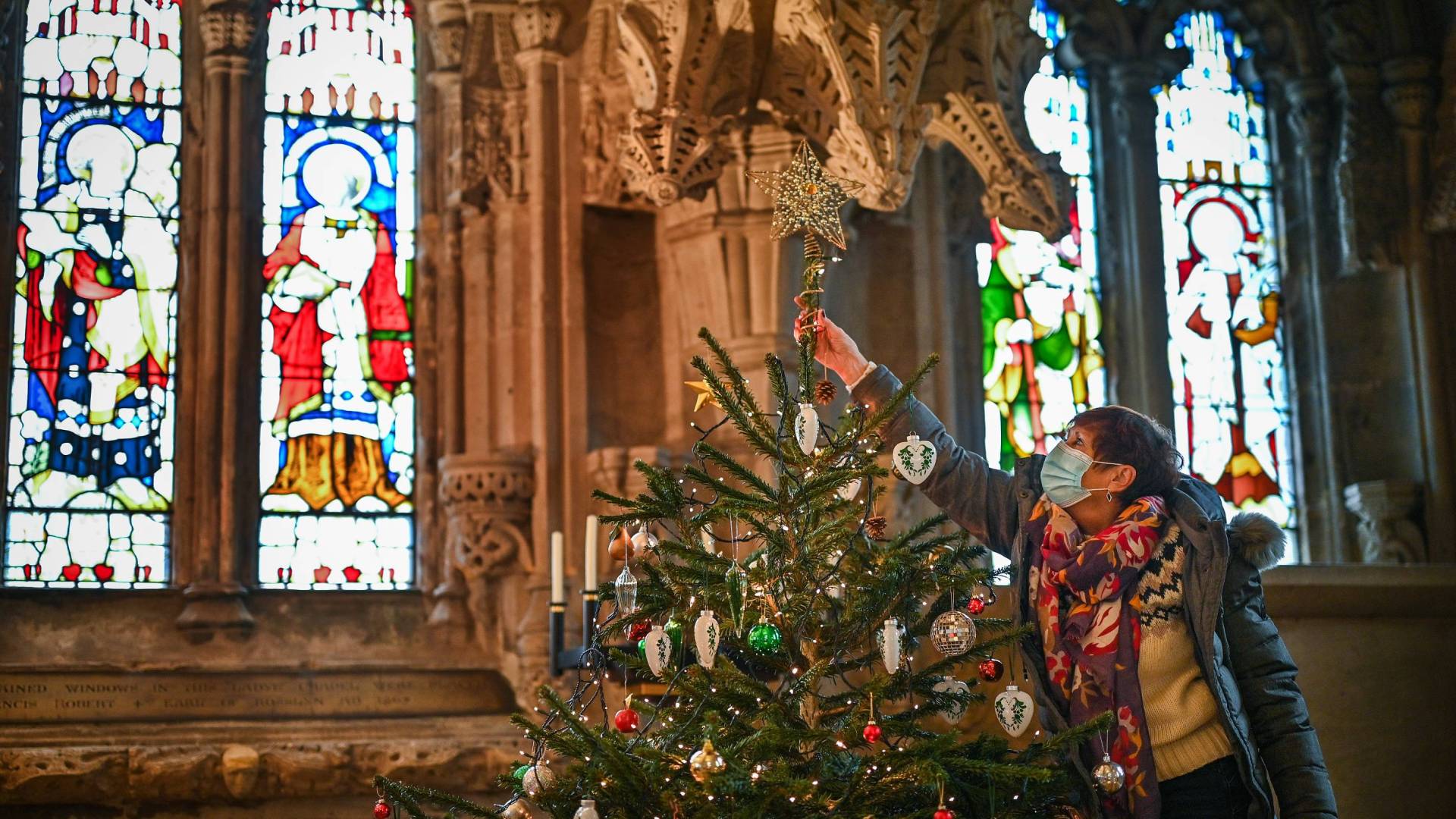
The variant took off earlier in the United Kingdom, with record case loads reported last week. Days ago, Christmas gatherings at two of London’s biggest evangelical churches were rescheduled. Holy Trinity Brompton Church (HTB) and Hillsong Church London postponed their popular carol services. HTB will not be holding in-person or online services for the rest of the year.

Hillsong issued a statement saying that several church staff and volunteers had already tested positive.

“The steps we are taking are to help keep our staff, volunteers, you and your families safe,” read the statement. “We want to ensure the health and safety of everyone involved is our main priority so people can enjoy Christmas together with friends and family.”

In most churches, Christmas is one of the best-attended celebrations of the year. Plus, annual festivities like carol services, dinners, pageants, and other celebrations draw big crowds.

The cancellations prompted by omicron take on a weightier significance than missing one special service. They’re an indicator that—despite the hopes and prayers and precautions of the past year—the pandemic continues to take its toll.

“As a pastor, I’m actually becoming more concerned with the spiritual/mental health and social isolation risk that I’m seeing,” said Graham at the District Church.

“There are a lot of other pandemics that are also happening right now. While we, as DC-educated people, value our physical health, we can sometimes be less aware of what this prolonged pandemic is doing to our spiritual life, our intimacy with God, our relationships with other people in community, and our mental health.”

His church, which averaged 800 in weekly attendance prior to the pandemic, has seen in-person attendance cut in half since reopening last July, while the rest of the congregation still attends virtually. The church still plans to return to an in-person format in January.

In New York, where record-high infections have led some to call off Broadway shows and temporarily close restaurants, churches have to weigh whether in-person services can continue safely as omicron takes over as the dominant variant.

The New York Times reported that St. John the Divine, the Episcopal Cathedral in Manhattan, was “the first major house of worship in New York to cancel in-person services before Christmas,” calling off holiday services, regular weekend services, and special concerts until further notice.

Most churches in Manhattan had already planned to celebrate Christmas at December 19 services, since a significant portion of their flocks would be leaving New York for the holiday itself, according to Drew Hyun, pastor of Hope Church Midtown. Because of the concern surrounding the omicron cases, many congregations went virtual that week.

Leaders at Hope Midtown—which saw its attendance drop by half, down to around 150, during the pandemic—decided on Saturday night to go online for December 19. The church still plans to hold an in-person and digital Christmas Eve service in conjunction with another partnering church, contingent on new information and data coming in.

For Hyun and Hope Midtown, the pandemic has made them more agile in preparing for the unexpected.

“We’re more obviously ready for some of these transitions than ever,” Hyun said. “We know that, just as we got through it last year, that will get through it this year. In many ways, that’s what the Christmas story is about, like God working in against-all-odds kinds of circumstances.”

Even with rates rising, many churches are keeping in-person services but reiterating the need to take precautions and reminding people to stay home if they’re sick or have been in contact with a sick person.

As for Graham, despite the challenges caused by the omicron variant, he remains hopeful for the upcoming new year in 2022.

“I believe that there are times that we go through, like moments found throughout Scripture, for instance, that refine us and prepare us for a move of God,” said Graham. “And I really believe that we're on the cusp of a spiritual awakening—that the church is, in some ways, getting smaller so that we can figure out who’s radically committed to being a disciple of Jesus. And I think what comes out of that is going to be absolutely beautiful.”

Books

CT’s 2021 Cover Stories, Ranked

Our online readers’ favorite cover stories from last year.

Christianity Today December 21, 2021

Christianity Today’s print magazine cover stories represented many themes of the past year—topics that are not new but reached a fresh urgency or climactic moment in 2021. From Christians in Afghanistan to multiethnic churches to empty pews, we hoped to remind readers of gospel hope in the midst of difficult times. Here are CT’s cover stories ranked in reverse order of popularity online.

9. December

8. January/February

7. July/August

6. October

5. April

4. May/June

3. November

2. March

1. September

Check out the rest of our 2021 year-end lists here.

Theology

In a Mad Mad World, God Welcomes Our Merrymaking

Christmas calls us to be like children and bring our joy to Jesus, even in the midst of upheaval.

Christianity Today December 21, 2021
Shaylyn / Unsplash

I’ve always had mixed feelings about Christmas. As I sifted through memories of the season while writing my memoir, Where the Light Fell, I better understood why.

In my elementary school, Christmas called for a major event in the auditorium, complete with a concert by the school band and chorus. For some reason I volunteered to represent the first grade by singing a solo rather than playing “Song of the Volga Boatmen” on the piano. I chose “O Little Town of Bethlehem,” and my mother wrote out the words on a card in case I forgot them. Foolishly, I also volunteered for the role of Peter Cottontail in our class skit.

My mother fashioned a fine set of rabbit ears around coat hanger frames, fixed them on my head, and pinned a fluffy cotton tail to the seat of my pants. I had the good sense to remove the rabbit ears before attempting my solo but overlooked my cotton tail.

The upper classes laughed out loud as I walked to the microphone, which rattled me so much that I forgot the words to the Christmas carol. I was too ashamed to look at my notes, because then everyone would know I had forgotten them, so I hummed an entire verse, trying to make my mistake seem intentional. No one was fooled. My first public performance—and last solo—was a lesson in humility.

Flash forward seven years. Like most siblings, my older brother, Marshall, and I had an uneasy alliance. We argued, we competed, we sometimes snitched on each other. At Christmas we would agree in advance how much to spend on our gifts to one another, often buying exactly the same present just to make sure.

Mother would beam as we each opened, say, a fold-out box of Life Saver candies, with both of us feigning surprise that we had thought of the same gift. This particular Christmas we had agreed to give each other a transistor radio, and Marshall double-crossed me: I gave him a radio while in return I got a cheap rubber baseball.

We stopped exchanging Christmas gifts after that year.

My real ambivalence about Christmas, however, traces back to an event I have no memory of. My memoir begins with a defining event in my life that occurred on December 15, a month after my first birthday. My father, just 23 years old, died of polio, guaranteeing our little family of three a life of hardship and poverty.

My maternal grandparents drove from Philadelphia to Atlanta for his funeral, held a few days after his death. They insisted on taking all three of us north for a few weeks’ respite to give my mother time to grieve and contemplate her future.

Before we departed for Philadelphia, the Yancey grandparents hosted the out-of-town guests for an early Christmas dinner. The Yanceys had a pile of wrapped presents waiting under the tree, and long-faced adults, still dressed in their funeral clothes, sat around watching two young boys tear open packages and play with their new toys.

Christmas might have been my favorite holiday—except for the dark cloud that settled on Mother every December, the month my father died. She valiantly went through the motions of decorating a live tree and stringing up lights, but her heart never seemed in it. She would occasionally burst into tears for no apparent reason, and Marshall and I walked on eggshells.

Even as an adult, I find it hard to enter into the Christmas spirit. Do I really need the presents that family and friends kindly send my way, some of which will be stored on a closet shelf?

The glittery paper, the sealed plastic that cuts my hand, the cardboard boxes from Amazon—they end up in overflowing garbage and recycling containers. And is it appropriate to burn yet more fossil fuels in order to illuminate Christmas, especially in the midst of a pandemic that has killed five million people worldwide? My brother spent last Christmas in an overcrowded COVID-19 ward. How many will share that fate this year?

I feel like the curmudgeonly Ebenezer Scrooge from Dickens’s A Christmas Carol. Then I remember the scene of Bob Cratchit’s family scrimping to splurge on a Christmas dinner of goose, potatoes, and pudding. Tiny Tim, the crippled son of Scrooge’s underpaid clerk, offers a heartfelt blessing: “God bless us, every one!”

Without help, Tim will likely die for want of treatment the family cannot afford, the Ghost of Christmas Present informs Scrooge. The vision of that deprived yet happy family pricks the conscience of the miserly Scrooge.

In his book of sermons titled The Magnificent Defeat, Frederick Buehner mentions two qualities of childlikeness.

First, children have no fixed preconceptions of reality. If someone tells them that the mossy patch under the lilac bush is a magic place, or that opening a certain wardrobe will lead to Narnia, they’ll surely test the theory.

Second, children know how to receive a gift without worrying about whether they deserve it or if it indebts them to the giver. They simply receive it, joyfully tearing into the wrapping paper despite the solemn faces around them.

Somehow, even amid the secularized trappings that drown out the truth of Christmas, we have not lost a sense of celebration. On a dark night in Palestine, the sky itself burst into song and shepherds ran to locate its origin. Before long, astrologers would endure a camel journey from Persia in order to present gifts fit for a king—only to find a baby.

That celebration, too, took place against a background of tragedy that left mothers crying for their slaughtered infants and Jesus’ family fleeing as refugees.

Some three decades later, a woman poured very expensive perfume on Jesus’ head (Matt. 26). A “waste” declared Judas—the disciples’ Scrooge—for she could have sold it and given the proceeds to the poor.
In what has become one of the most misinterpreted passages in the Bible, Jesus responded, “Why are you bothering this woman? She has done a beautiful thing to me. The poor you will always have with you, but you will not always have me. When she poured this perfume on my body, she did it to prepare me for burial” (vv.10–12).

No one could accuse Jesus of insensitivity to the poor and marginalized. He spent his life among them, and this very event took place in the home of a social outcast, Simon the Leper. Yet Jesus acknowledged that when something extraordinary graces our benighted planet, it calls for celebration.

Maybe I had it right as a 13-month-old, grinning with delight while the adults around me grimaced in grief. “Truly I tell you, unless you change and become like little children, you will never enter the kingdom of heaven,” said Jesus (Matt. 18:3). He knew better than anyone that his brief sojourn would not solve the injustice, sickness, poverty, and violence of planet earth.

It did, however, ignite a flame of hope that has never gone out. For those who believe, his birth, death, and resurrection are darkly glowing signs of what God plans for the entire cosmos.

I wonder what the shepherds and wise men thought when they found the object of their search. In the words that slipped my mind during my first-grade solo, “The hopes and fears of all the years are met in thee tonight.” Really? Could this baby born to Jewish peasants possibly bear that burden?

It takes childlike faith to believe in a reality beyond the grim one we know so well, and to keep celebrating regardless. Sometimes a child’s eye sees best.

Philip Yancey is the author most recently of Where the Light Fell.

News

Biblical Archaeology’s Top 10 Discoveries of 2021

Evidence of Herod’s green thumb, Roman crucifixion methods, and Philistine bananas add to our understanding of the world of the Bible.

Christianity Today December 21, 2021
Mahmoud Khaled/Getty Images

Archaeology takes years, decades, and even half centuries. The painstaking work of digging and sifting is followed by longer stretches of waiting, analyzing, and interpreting. But the past 12 months have seen regular announcements of developments and discoveries—some expected but some quite surprising—that deepen and broaden our understanding of the world of the Bible.

From the breaking archaeological news of 2021, here are the top 10 stories:

10. Herod the Great’s green thumb

King Herod—best known in the Bible for ordering the deaths of any infants who might be Jesus’ age—turns out to have had a gardening hobby. Soil samples from excavations at his Jericho palace, taken almost a half century ago, were recently analyzed, and the pollen particles revealed sophisticated horticulture.

Miniature pine, cypress, cedar, and olive trees grew in clay pots that were originally recovered by archaeologist Ehud Netzer. Many of the tree species would not typically have grown in the desert around Jericho, making the garden a demonstration of Herod’s greatness, a horticultural feat to impress guests and subjects.

9. Herod’s seaside entertainment complex

The Israel Antiquities Authority announced the rediscovery and preservation of Herod the Great’s basilica in Ashkelon. Herod was known in his time for the dramatic locations of his palaces and fortresses, and this Roman-style construction, a public building for community activities, was no exception.

The huge edifice, larger than a football field, was first excavated over a century ago but is now being reexcavated and developed to attract visitors to the Tel Ashkelon National Park. The final reconstruction will include a small ancient theater called an odeon, marble pillars and capitals, and huge marble statues of pagan deities.

8. A biblical pharaoh’s border monument

Discovered in a farmer’s field in northeastern Egypt, this inscribed monument bears the name of one of the few pharaohs actually named in the Old Testament. Hophra led an Egyptian army into Judah to help King Zedekiah resist an invasion by Babylonian King Nebuchadnezzar. The ploy was only temporarily successful, and true to the prophecy in Jeremiah 44:30, the pharaoh was killed by his enemies after a disastrous foray into Libya.

The stele contains 15 lines of hieroglyphics, so far untranslated. Mostafa Waziry, secretary general of the Egyptian Supreme Council of Antiquities, described it as a border stele which “the king erected during his military campaigns towards the east.” This raises the intriguing possibility that it might describe Hophra’s campaign to support Zedekiah.

7. An unknown Egyptian city

Archaeologists announced the discovery of a previously unknown city on the west bank of the Nile near Luxor. Believed to be one of the largest Egyptian cities ever unearthed, it dates to the reign of Pharaoh Amenhotep III. This pharaoh was the grandfather of Tutankhamun but, more importantly perhaps, the grandson of Amenhotep II, believed by many evangelical scholars to be the pharaoh of the Exodus.

The city appears to have been suddenly abandoned. The inhabitants may have been driven out of their homes when Amenhotep IV, better known as Akhenaten, rounded up workers to build him a completely new capital city in central Egypt. What remains today may reveal many details of daily life in Egypt around the time of Moses.

6. A crucifixion foot

The Roman practice of crucifixion is well known from ancient sources, including the Gospel accounts of Jesus’ death. But up until this month, the only archaeological evidence of crucifixion had been found in a burial cave in Israel in 1986. In early December, it was announced that a skeleton had been excavated from a grave at Fenstanton in Cambridgeshire, England. The remains had a nail driven into the back of the right foot. The burial dates to around A.D. 400, during the Roman occupation of England.

5. More Dead Sea discoveries

The Israel Antiquities Authority announced the results of a four-year excavation project in hard-to-reach caves overlooking the Dead Sea. Finds included arrowheads, coins, combs, the mummified remains of a young girl, and dozens of scraps of biblical texts. The scroll fragments, containing passages from Zechariah and Nahum, are unrelated to the texts produced by the Qumran community, known as the Dead Sea Scrolls. They nonetheless shed light on the long work of translating and transcribing Scripture.

For archaeologists, the most amazing discovery was a 10,500-year-old basket.

The basket, complete with intact lid, dates to the pre-pottery Neolithic period, making it the oldest basket in existence. It is reminiscent of the biblical baskets, such as the one that held the baby Moses in Exodus, the ones that carried the leftovers when Christ fed the multitudes in the Gospels, and the one that helped the apostle Paul escape persecution, when he was lowered over the wall of Damascus.

4. Yavne, just Yavne

The modern city of Yavne, located between Tel Aviv and Ashdod, has been a prolific site for archaeological discoveries in 2021. The city is growing quickly, and as a large tract of land is prepared for new housing construction, archaeologists are uncovering amazing artifacts.

About 1,500 years ago, Yavne was an industrial center for wine production, producing approximately a half million gallons of wine per year. Archaeologists uncovered five huge winepress production areas, each over half the size of a basketball court, along with four huge warehouses and kilns for firing wine storage jars. They also found an older winepresses from the Persian period, dated to around 300 B.C.

In the decades after the destruction of the Jewish temple in Jerusalem, Yavne became a spiritual center, the home of many rabbis and the Sanhedrin. A building identified with that period has been excavated and a beautiful large mosaic from 1,600 years ago is being restored.

Perhaps the rarest Yavne discovery was an intact chicken egg from 1,000 years ago, found in the remains of a privy.

3. A Temple Mount banquet hall

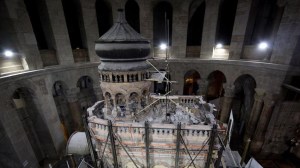
A luxurious public building located next to the Temple Mount has been excavated and opened to public tours. Part of the building was first discovered by British archaeologist Charles Warren in 1867, and the site was partially excavated in 1966. Now that the excavation is complete, archaeologists have dated its construction to A.D. 20—during the lifetime of Jesus.

The building contained two identical chambers, separated by an elaborate fountain. The luxurious nature of the facility and its adjacency to the Temple Mount indicates it was probably used by the elite members of the first-century Jewish community, the families of the high priests, and other leading religious figures.

Archaeologists say it was damaged by an earthquake in A.D. 33, then later rebuilt and reconfigured into three vaulted halls. The destruction date suggests possible evidence of the earthquake recorded in the Gospel accounts at the crucifixion of Jesus.

2. Gideon’s jug

“Jerub-baal” is the nickname given to Gideon in Judges 6:31–32 after Gideon destroyed an altar to the pagan god Baal. It means “Let Baal contend with him.” It’s also the name found written on a pottery jug fragment excavated at Khirbat er-Ra'i, a site near Tel Lachish in southern Israel.

It is unlikely the jug belonged to Gideon himself. Khirbet er-Ra'i is located about 100 miles south of the Jezreel Valley, where the Bible says Gideon took a tiny army and routed a much larger force of Midianites. The archaeologists excavating at Khirbat er-Ra'i dated the stratum where the pottery was found to 1100 B.C., the period of the judges, but likely about a century after Gideon, based on the internal chronology of the Bible.

There is little archaeological record of this period, though, so the discovery linking a biblical name to the era is notable.

Archaeologists also say the discovery provides evidence for the spread of the alphabetic writing first developed by Canaanites living in Egypt around 1800 B.C. Nearby Lachish, where a few other Late Bronze Age Canaanite alphabetic inscriptions have been found, may have been a center for the preservation of alphabetic writing. The discovery of an alphabetic inscription at Lachish, dated to the 15th century B.C., was also announced in 2021.

The level of literacy in the Old Testament is still a matter of debate among scholars. Interestingly, the story of Gideon references a young man who “wrote down the names of the 77 elders of Sukkoth”(Judges 8:14).

1. A second synagogue in Magdala

The University of Haifa announced the discovery of another first-century synagogue at Magdala in late December, located on the northwestern shore of the Sea of Galilee. The first Magdala synagogue, discovered a dozen years ago, was notable because it was in use before the destruction of Jerusalem, when worship was still centered at the temple. Now there are two.

Only a handful of first-century synagogues have been excavated in Israel. Of those, these are the ones most likely visited by Jesus during his ministry (Matt. 4:23) because of their location near the Nazareth-to-Capernaum road and their association with the hometown of Mary Magdalene.

This second synagogue, located less than 200 yards from the first, was discovered while preparing for a road-widening project. It “is now changing our understanding of Jewish life in this period,” according to the Israel Antiquities Authority. Many scholars had thought synagogues flourished and took on a more religious function only after the destruction of the Jerusalem temple. This new evidence seems to indicate that synagogues, which were more like community centers in their early days, included more religious activities.

Bonus: Philistine bananas

We know that King Solomon fed his guests beef, lamb, venison, and poultry, in addition to bread, cakes, dates, and other delicacies. But … bananas?

The amount of water needed to grow bananas makes them an unlikely fruit in ancient Israel, but a new study published in the Proceedings of the National Academy of Sciences reported some unexpected remains were scraped off the teeth of Canaanites and Philistines who died in the late second millennia B.C., the period of Solomon’s reign. Teeth don’t lie: They ate bananas.

The dietary evidence indicates “a dynamic and complex exchange network connecting the Mediterranean with South Asia,” according to the report. Christina Warinner, a Harvard anthropologist and one of the lead investigators, said the imported fruit may have been dried, like modern-day banana chips.

Gordon Govier is the editor Artifax, a quarterly biblical archaeology newsmagazine, and host of the podcast The Book & The Spade.

Read the rest of CT’s 2021 Top 10 lists, including US news, international news, obituaries, testimonies, book reviews, podcasts, translations in eight languages, and more.

Theology

CT’s Stories of 2021 That You May Have Missed

Though they didn’t set any records on our site, we think you’ll like them.

Christianity Today December 21, 2021

The internet’s a crowded place, and while other end-of-year lists are busy celebrating popular pieces, we thought we’d share a few hidden gems. Here, in no particular order, are Christianity Today’s 2021 “in case you missed it” stories:

Check out the rest of our 2021 year-end lists here.

Church Life

Our Favorite Christianity Today Podcasts from 2021

Here’s what the hosts say were their top shows from the past year.

Christianity Today December 21, 2021

2021 was an exciting year for podcasting at CT. In addition to launching The Rise and Fall of Mars Hill, our first longform narrative series, we continued to produce a diverse network of shows, like Quick to Listen (about to start its sixth year), Cultivated, and new shows like Adopting Hope, The Art of Pastoring, and Church Law. To wrap up the year, we asked our podcasters to share their favorite episodes of 2021.

Mike Cosper, host of Cultivated and The Rise and Fall of Mars Hill

I’ll kick things off with an episode of Cultivated from all the way back in January 2020: a conversation with my friend Makoto Fujimura. We talked about Mako’s work as a painter who blends global and historical traditions, his sense of the world as a place of abundance, and the mysterious relationship between suffering, trauma, and renewal. It was a remarkable conversation, full of wisdom that came hard earned through Mako’s own experiences of death and resurrection.

Morgan Lee, cohost of Quick to Listen

I’ve known about China’s one-child policy for nearly as long as I’ve known the country itself existed. The same is true for the persecution that the church faces at the hands of the government. But I’d never heard much about how Christians themselves dealt with these policies. After China officially began allowing families to have three children, longtime house church pastor Raymond Yang joined Quick to Listen to share his story about the advice he heard from Christian leaders when his wife became pregnant with their second child and the cost it imposed on their family for their son to be born. It’s a privilege to host a show where we hear from members of the body of Christ grappling with how to live out their faith, even when it calls for sacrifice.

Ted Olsen, cohost of Quick to Listen

My favorite Quick to Listen episodes are the ones where we start with great ingredients but have no idea what we’re cooking up. I knew “Old Testament Wisdom for Renaming Public Schools” would be good: We had a couple of hot debates, some rough thoughts about what biblical concepts might connect, and a brilliant guest. I did not expect to have this much fun talking about how much God cares about the identity of people, places, and communities. It was a very 2021 episode, but one I’ll be thinking about five and ten years from now.

Heather Thompson Day, host of Viral Jesus

My favorite episode from our first season was with Karen Swallow Prior. She explains that it is not enough to just have a platform; we (content creators) have to do the work. And if we serve the work faithfully, it will create the foundation for our platform. It’s a conversation I want every single one of my college students to listen to. 

Sandra McCracken, host of Steadfast

If you only have a few minutes to spare, my conversation with Curt Thompson offers us a hearty, therapeutic encouragement as we’re all slowly recovering from these past few disorientating years. Beauty and community are true conduits of God’s hope in the here and now.

Russell Moore, host of The Russell Moore Show

My favorite episode would have to be the first, a live event with a studio audience recorded here in Nashville. My guest was my friend Beth Moore, to talk about “Lessons in Leaving and Staying.” Afterward, as we stood around and talked with guests and friends, I kept hearing listeners saying a similar thing about that episode: “I didn’t expect to laugh.” And they were right—we laughed together through the whole episode. That became sort of a metaphor for me, not just of that episode but also of the past several years: new joy on the other side of pain, new community on the other side of exile.

I realized that 2015 Russell Moore could not have hosted that episode. And 2015 Beth Moore would not have shown up with photoshopped slides of my “baby pictures.” Neither of us could have done that show in 2020 even. But here we were.

I suppose that’s why I love that episode best. It represents what I’ve learned the last half-decade or so, that there is joy in unlikely circumstances, community in unlikely places, friendship in unlikely people. And, in all of it, the same Jesus who was there at the start. I guess what I mean is that I didn’t expect to laugh.

Rasool Berry, host of Where Ya From? 

I really loved my conversation with Christina Edmondson. We often think we have to choose between dealing with the serious issues of injustice or embracing a life filled with humor and joy. Dr. Edmondson breaks down that false choice thoughtfully and with a lightness that reveals her fascinating insight: “Laughter and trauma live in the same building.” In these times, when we've had to deal with the absurdity of life, her insights are refreshing and encouraging.

Ronnie Martin, cohost of The Art of Pastoring

I really enjoyed our episode “Ministry in the Face of Fear.” It was such a great opportunity to discuss the commonality we share with all pastors, which is that we all struggle with trusting that God is going before us. This is probably a universal theme we can highlight from the past two years, but thankfully, God has compassion for us in our weaknesses.

Jared Wilson, cohost of The Art of Pastoring

My favorite episode of The Art of Pastoring was the engagement Ronnie Martin and I had on anxiety (Episode 1). As one who suffers under this looming shadow, in ministry and out, it was a very personal conversation for me, and I trust our transparency might encourage others as well.

Clarissa Moll, cohost of Surprised by Grief

Estimates tell us that more than 167,000 children in the US have lost a parent to COVID-19 since the pandemic began. In light of that heartbreaking statistic, I can’t think of a more important episode. Whether you experienced loss in childhood, are parenting a grieving child, or interface with students regularly at church or work, “Suffer the Little Children” offers vital insight into childhood grief and discusses how adults can love and support children as they carry burdens beyond their years.

Joyce Koo Dalrymple and Sasha Parker, cohosts of Adopting Hope

Brian and Amy Shaw tearfully recounted their journey of adopting seven children, knowing Brian’s battle with brain cancer was coming to an end.  Just five weeks after the episode aired, Brian, at the age of 47, went to be with his Jesus. In the midst of unexpected and painful circumstances, the Shaws chose to hope over and over again. Even in the interview, they pointed their 11 children to the reality of eternal life and Christ’s deep love for each of them. The cry of Brian’s heart was “My life is yours, Lord, glorify yourself.”

Oliver Hersey, cohost of Transforming Discipleship

As someone who’s passionate about developing healthy communities, I found this conversation with Scot McKnight to be very informative. He’s brilliant and on point with his suggested habits for creating a good culture. Recording this episode during Lent, we also chose to offer questions that would help listeners evaluate the levels of good and evil in their own communities by looking at themselves and their communities, and seeking to tell the truth about what God reveals.  

Kevin Miller, cohost of Monday Morning Preacher

Alison Gerber draws on her background as a screenwriter to help us bring biblical scenes to life. This episode has changed my preaching more than any other from 2021.

Steve Carter, host of Craft and Character

 Steve shared about what leadership anxiety is, how easy it is for pastors to feel this daily, and gave some deeply practical insight on what to do about it. One of my favorite moments from the podcast was when Cuss unpacked when a congregant sent him a simple text about going for a walk and how that simple text request brought on all these internal stories that were grounded in anxiety. He walks through this and shares a simple practice to manage your leadership anxiety.

Erika Cole, host of Church Law

This first season of the Church Law podcast has been so well received by you, our listeners!  You have told us that the podcast is a “much-needed addition to the podcast world” and that the information shared is “timely and relevant … [for addressing] church and ministry issues.”

While I’ve enjoyed sharing each episode, Episode 8 gave voice to a critical issue.  According to research, two-thirds of churches do not have a written succession plan, and with the shifts in church dynamics (exacerbated by COVID-19), many pastors and church leaders are committing to planning for the longevity of their church. 

Check out the rest of our 2021 year-end lists here.

Church Life

12 Leaders Evangelicals Lost in 2021

Remembering theologian C. René Padilla, evangelist Luis Palau, refugee advocate Evelyn Mangham, and others.

Christianity Today December 21, 2021

In a year of too much death and dying, we lost some notable Christian leaders. Some were pastors, some evangelists, and some musicians. They were not all saints. They were not uncomplicated. But in their lives we were reminded of the hope that is within us, the kingdom that is coming, and the mystery that though we shall not all sleep, we shall all be changed (1 Cor. 15:51).

As Thomas McKenzie, the 50-year-old Anglican pastor who died on the first day of his sabbatical, explained at the start of the COVID-19 pandemic, this is part of what it means to be Christian.

“We are weak in many ways, but we have the love of God in Christ and a deep commitment to one another,” he said. “We have a great future, a future of both suffering and triumph, of Cross and Resurrection.”

Here are the obituaries of a dozen men and women whom evangelicals lost in 2021, arranged in alphabetical order:

Check out the rest of our 2021 year-end lists here.

The Global Church in 2021: CT’s Top 20 International Articles

Our most-read stories from abroad, from Haiti to Nigeria to Hong Kong.

Christianity Today December 21, 2021

Read 20 of Christianity Today’s top stories our online audience clicked on about the global church this year. Articles are arranged in chronological order.

Check out the rest of our 2021 year-end lists here.

Books

Christianity Today in 2021: Our Top News, Reviews, Podcasts, and More

CT published 2,063 articles this year. Here’s what readers and editors liked most.

Christianity Today December 21, 2021

Browse our lists of 2021’s top articles, book reviews, podcasts, obituaries, testimonies, and more via the collections at right [on desktops] or below [on mobile]. You can also read this year’s Top 10 discoveries in biblical archaeology, along with our most-read stories of the global church.

For our bilingual readers: CT Global produced 800 translations this year, including these most-read articles in Spanish, Portuguese, French, Chinese (Simplified and Traditional), Indonesian, Korean, and Russian.

addApple PodcastsDown ArrowDown ArrowDown Arrowarrow_left_altLeft ArrowLeft ArrowRight ArrowRight ArrowRight Arrowarrow_up_altUp ArrowUp ArrowAvailable at Amazoncaret-downCloseCloseellipseEmailEmailExpandExpandExternalExternalFacebookfacebook-squarefolderGiftGiftGooglegoogleGoogle KeephamburgerInstagraminstagram-squareLinkLinklinkedin-squareListenListenListenChristianity TodayCT Creative Studio Logologo_orgMegaphoneMenuMenupausePinterestPlayPlayPocketPodcastprintremoveRSSRSSSaveSavesaveSearchSearchsearchSpotifyStitcherTelegramTable of ContentsTable of Contentstwitter-squareWhatsAppXYouTubeYouTube