Cover Story

Christianity Today’s 2022 Book Awards

Our picks for the books most likely to shape evangelical life, thought, and culture.

Illustration by Jared Boggess / Source Images: WikiMedia Commons / George Marks / Fotograzia / Getty

As a books editor for a Christian magazine, I think I’m contractually obligated, every so often, to mention that verse from Ecclesiastes about there being no end to the making of books (12:12). (Though I can’t help wondering whether an updated version might instead remark on the relentless production of podcasts, that contemporary magnet for “everyone and their cousin” barbs.)

The “making of books” verse carries the same world-weary tone that pervades much of Ecclesiastes. And we have to admit some truth here. Consider the investment of mind, body, and soul involved in writing books few may read or remember, and ask yourself: Why do so many people, across so many eras and cultures, willingly empty themselves in this way?

Even so, you’ll never catch Christianity Today pronouncing “Vanity of vanities” upon the whole book-making enterprise. Recall that God himself speaks to us through a book—as does the author of Ecclesiastes. Sometimes, you can’t tell the truth about the world with anything less.

That’s why we’re pleased to dedicate the bulk of CT’s January/February issue not only to our annual Book Awards (which now include a new category: Marriage and Family), but also to books themselves, in the form of excerpts from several of the finalists (and a number of the winners). Together, we believe they represent some of the year’s most exemplary Christian thinking. (To locate these excerpts, look for the links as you scroll through the categories.)

Congratulations to this year’s honorees—and let no one dismiss their work as a chasing after the wind. —Matt Reynolds, books editor

Apologetics & Evangelism

Urban Apologetics: Restoring Black Dignity with the Gospel

Edited by Eric Mason | Zondervan

The essays in Urban Apologetics do much more than merely debunk the myth that Christianity is a “white man’s religion.” They compellingly blend an adherence to biblical truth with an awareness of cultural trends. The authors evoke themes like Black dignity and Black consciousness, and in the next breath they press the importance of the sufficiency of Scripture, the work of the Holy Spirit, and the necessity of conversion. They take identity seriously, and they also take the gospel seriously. They are not blind to prejudice, and neither are they deaf to truth. In all this, they deftly expose the shallowness of the false choice between biblical faithfulness and ethnic identity. Perhaps it should not be surprising that concern for culture and identity can sit alongside contending for the faith, but in today’s social climate it is a wonderfully refreshing combination. —Christopher Watkin, associate professor at Monash University in Melbourne, Australia

(Read an excerpt from Urban Apologetics.)

Award of Merit
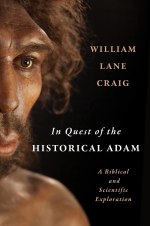
In Quest of the Historical Adam: A Biblical and Scientific Exploration

William Lane Craig | Eerdmans

This is a bold, rigorous, original work at the intersection of faith and science. For those who wonder whether contemporary science, including evolutionary science, is compatible with the Christian faith, Craig’s book will be seen as a breath of fresh air. For the sake of argument, Craig assumes the evolutionary thesis of common ancestry and considers whether that thesis is compatible with a historical Adam and Eve. He concludes that the evidence is not only consistent with the belief in an historical first human pair, but provocatively, that the first humans ought to be identified with Homo heidelbergensis, dating back to somewhere between 750,000 and a million years ago. I don’t agree with every move that Craig makes. Undoubtedly, many within the Christian community will not agree either. But his project is not revisionary. Rather, he is seeking, with intellectual humility, boldness, and rigor, to walk the path of reason in the search of truth. —Paul Gould, associate professor of philosophy of religion at Palm Beach Atlantic University

(Read CT’s interview with William Lane Craig.)

Finalists

Surviving Religion 101: Letters to a Christian Student on Keeping the Faith in College

Michael Kruger | Crossway

Why God Makes Sense in a World That Doesn’t: The Beauty of Christian Theism

Gavin Ortlund | Baker Academic

Biblical Studies

A Theology of Paul and His Letters: The Gift of the New Realm in Christ

Douglas Moo | Zondervan

Many of us are familiar with Moo in analysis mode from his various commentaries on books of the New Testament. Here, we also find Moo in synthesis mode, as he details the theology of Paul across his epistles. This is biblical theology at its best, as this foremost Pauline scholar comprehensively presents the fulfilment of Old Testament promises in Christ while looking forward to their consummation. I especially appreciated Moo’s up-to-date and balanced presentations of contested issues like the “New Perspective” on Paul. —Peter Lau, visiting lecturer at Sydney Missionary & Bible College

Award of Merit
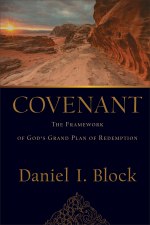
Covenant: The Framework of God’s Grand Plan of Redemption

Daniel I. Block | Baker Academic

This is a work of developed biblical theology from an established scholar. Block’s years of training manifest themselves in the breadth and depth of this book as he guides readers through the cosmic story of God’s ultimate plan of redemption through the framework of covenant. While Block is primarily an Old Testament scholar, he explores how the Old Testament view of covenant carries over into the New Testament in profound ways. Covenant should be a fixture in courses on biblical theology for years to come, while also appealing to interested readers and scholars. —Beth Stovell, professor of Old Testament at Ambrose University

Finalists

The Beatitudes Through the Ages

Rebekah Eklund | Eerdmans

(Read an excerpt from The Beatitudes Through the Ages.)

Understanding the Jewish Roots of Christianity: Biblical, Theological, and Historical Essays on the Relationship between Christianity and Judaism

Edited by Gerald McDermott | Lexham

Children & Youth

Any Time, Any Place, Any Prayer: A True Story of How You Can Talk with God

Laura Wifler | The Good Book Company

Adults have a tendency to complicate prayer, but Wifler does an exceptional job of reminding kids (and us) how simple it is to talk to God. Walking through the prayer of Christ, she exemplifies the joyful life of prayer in the life of a believer and captures God’s receptive heart to the prayers of his children. This book is theologically sound and beautifully illustrated, and it will encourage children and adults alike to grow in a prayerful life. —Amy Gannett, writer, Bible teacher, and founder of Tiny Theologians

Award of Merit

Whistlestop Tales: Around the World in 10 Bible Stories

Krish and Miriam Kandiah | Hodder & Stoughton

The Kandiahs provide meaningful and much-needed context for some well-known—and some lesser well-known—Bible stories, highlighting the contemporary countries and ancient cultures in which they are set. A Syrian spy, an Iranian queen, a Sudanese senator, and an Italian soldier are among the international heroes featured in these tales, which highlight each character’s ethnic heritage, something often overlooked in children’s Bible stories. Each story is retold with humor and warmth. And Andy Gray’s action-packed illustrations will keep children turning pages to discover what comes next. —Meadow Rue Merrill, author of Redeeming Ruth and The Lantern Hill Farm series

Finalists

What Is God Like?

Rachel Held Evans and Matthew Paul Turner | Convergent

Stay This Way Forever

Linsey Davis | Zonderkidz

Christian Living & Discipleship

Living Radical Discipleship: Inspired by John Stott

Edited by Laura Meitzner Yoder | Langham Global Library

John Stott was one of the most respected theologians of all time. On the tenth anniversary of his death, editor Laura Meitzner Yoder compiled a series of essays from contributors who share how Stott’s radical convictions on topics such as creation care, social responsibility, and global church leadership shaped their thinking and ministry praxis. As with many anthologies, some of the essays feel more relevant than others. Nevertheless, Living Radical Discipleship reminds readers how the gospel intends to transform our lives so that we can then transform the world around us. —Dorothy Littell Greco, author of Marriage in the Middle and Making Marriage Beautiful

(Read an excerpt from Living Radical Discipleship.)

Award of Merit

What God Has to Say about Our Bodies: How the Gospel Is Good News for Our Physical Selves

Sam Allberry | Crossway

Allbery’s work guides disciples of Jesus to understand their own bodies in light of Scripture. Avoiding both an overly negative picture of the body (with its temptations to shame) and a naively cavalier picture (with its temptations to false liberty), he casts a vision rooted in the bodily death and resurrection of Jesus. Nearly every page brims with insight, from the effects of body-shaming to the motivations driving the popularity of tattoos. —Dave Morlan, cofounder and teaching pastor of Fellowship Denver Church

Finalists

Abuelita Faith: What Women on the Margins Teach Us about Wisdom, Persistence, and Strength

Kat Armas | Brazos

Leaving Silence: Sexualized Violence, the Bible, and Standing with Survivors

Susannah Larry | Herald

The Church & Pastoral Leadership

Preaching to People in Pain: How Suffering Can Shape Your Sermons and Connect with Your Congregation

Matthew D. Kim | Baker Academic

As a preacher, I found this book an invaluable and timely resource. Oftentimes, people sitting in our churches are suffering immensely from different hardships and challenges. Kim’s book will help preachers offer words of hope and empathy for suffering saints. He gives readers insights on different types of pain, a plan for preaching on pain, sample sermons, a brief theological overview on suffering, and personal stories that grip the heart. —Benjamin Shin, associate professor of Christian ministry and leadership at Biola University

Award of Merit

Winsome Conviction: Disagreeing without Dividing the Church

Tim Muehlhoff And Richard Langer | InterVarsity Press

With an engaging style, Muehlhoff and Langer teach readers how to have crucial conversations about sensitive issues without digressing into contempt and animosity. Using Scripture, conflict theory, and church history, they offer readers a map for navigating disagreements in a robust and civil manner. They teach us how to identify the difference between confessional absolutes, convictions, and personal tastes (preferences), and how to dialogue through differences with Biblical truth and love. This is a needed tool for our contentious age! —Lucas Woodford, president of the Minnesota South District, Lutheran Church—Missouri Synod

(Read an excerpt from Winsome Conviction.)

Finalists

Power in Weakness: Paul’s Transformed Vision for Ministry

Timothy G. Gombis | Eerdmans

Planting a Church without Losing Your Soul: Nine Questions for the Spiritually Formed Pastor

Tim Morey | IVP Academic

Culture & the Arts

Discovering God Through the Arts: How We Can Grow Closer to God by Appreciating Beauty & Creativity

Terry Glaspey | Moody

This is a superb explication of the Christian’s relationship to the arts. Or at least what the Christian’s relationship should be to the arts. The book is full of references to, and insightful explanations of, paintings, music, film, literature, and other media that are either spiritually encouraging or spiritually challenging. Glaspey remarks on the relationship of the arts to spiritual discipline, wonder, mystery, and Scripture, and he describes how art can help us find comfort, discover courage, and develop a passion for justice. —Drew Trotter, senior scholar, Consortium of Christian Study Centers

(Read an excerpt from Discovering God Through the Arts.)

Award of Merit

Reading the Times: A Literary and Theological Inquiry into the News

Jeffrey Bilbro | InterVarsity Press

This book is like the best class you ever took in college. Big ideas are delivered in a winsome and enticing way. We all know we are consuming bad news and it is eroding our society. Bilbro identifies the problem, shows how it’s likely worse than you imagined, and offers hope. Reading the Times helps us think about time itself and how beauty, faith, and simple human practices can shift our perspective in healthy, God-honoring ways that will, in the end, enable us to read and respond to news wisely. —Ned Bustard, author, illustrator, and founder of World’s End Images

(Read CT’s review of Reading the Times.)

Finalists

The Wisdom Pyramid: Feeding Your Soul in a Post-Truth World

Brett McCracken | Crossway

(Read CT’s review of The Wisdom Pyramid.)

He Saw That It Was Good: Reimagining Your Creative Life to Repair a Broken World

Sho Baraka | WaterBrook

Fiction

Revival Season

Monica West | Simon & Schuster

This novel stands out thanks to its overall mastery. The waning world of revivalism is vividly portrayed, the narrative moves with urgency while revealing deeper layers at every stage, and the characters, though all too human, are drawn with sympathy and complexity. As Miriam comes to see her father’s faults and deceptions, what could have been a simple “coming of age as rejection of faith” story turns into a much more interesting quest to disentangle the legacy of a divine father from a human one. —J. Mark Bertrand, crime novelist and pastor of Grace Presbyterian Church in Sioux Falls, South Dakota

Award of Merit (tie)

Sugar Birds

Cheryl Grey Bostrom | She Writes Press

In Sugar Birds, readers will find hints of a coming-of-age story with similar themes as Where the Crawdads Sing. Told from the perspectives of 10-year-old Aggie and 16-year-old Celia, the novel is about self-discovery and learning how to survive in a world that isn’t always kind or easy to understand. Lyrical at times, the book is enjoyable both in paper and on audio. —Cara Putman, novelist and attorney

The Weight of Memory

Shawn Smucker | Revell

Smucker’s novel draws you in right away and keeps you reading. It is imaginative, builds upon suspense effectively, and combines narrative movement with evocative phrasing. The Weight of Memory raises questions of what truly matters within the framework of our mortality. —Carolyn Weber, professor at New College Franklin (Franklin, Tennessee), author of Surprised by Oxford and Sex and the City of God

Finalist

Little Hours

Lil Copan | One Bird Books

History & Biography

God’s Law and Order: The Politics of Punishment in Evangelical America

Aaron Griffith | Harvard University Press

God’s Law and Order examines the controversial issue of the prison system by exploring evangelical engagement with that system through the 20th and early-21st centuries. Demonstrating nuance and a deep understanding of evangelical thought and practice in the public sphere, Griffith explains how dominant evangelical ideas about sin, punishment, and justice intersected with larger societal trends related to crime and punishment. Through his book, Griffith provides strong evidence for his argument that “One cannot understand the creation, maintenance, or reform of modern American prisons . . . without understanding the impact of evangelicalism.” —Trisha Posey, professor of history at John Brown University

(Read CT’s review of God’s Law and Order.)

Award of Merit

Mother of Modern Evangelicalism: The Life and Legacy of Henrietta Mears

Arlin C. Migliazzo | Eerdmans

Arlin Migliazzo spent more than a decade researching the life and legacy of Henrietta Mears. His hard work is on display throughout this well-written and enjoyable biography. By grounding his work in an impressive array of archival material, Migliazzo was able to go beyond previous examinations of Mears, revealing the full extent of her personal influence upon figures such as Bill Bright and Billy Graham and showing how her extensive writings decisively shaped the development of evangelicalism in post–World War II America. In pointing out how Mears fostered changes in “relationships,” “attitudes,” and “perspectives regarding American culture” that marked evangelicalism’s transition away from fundamentalist separatism, Migliazzo makes meaningful contributions to ongoing discussions about the nature of conservative Protestantism in America. —Keith Bates, professor of history at Union University

(Read an excerpt from Mother of Modern Evangelicalism.)

Finalists

Chosen Peoples: Christianity and Political Imagination in South Sudan

Christopher Tounsel | Duke University Press

The Making of Biblical Womanhood: How the Subjugation of Women Became Gospel Truth

Beth Allison Barr | Brazos

Marriage & Family

Where the Light Fell: A Memoir

Philip Yancey | Convergent

Where the Light Fell is a moving and captivating autobiography. Yancey describes the heavy mantle of his mother’s vow that he would follow in the ministry footsteps of his father, who had died suddenly as a young man. Tracing his life through the fundamentalist church, the Deep South, and a subculture that rejected anything outside its own narrow understanding of “truth,” Yancey tells a story of hurt, rejection, and responsibility, yet in a way that is incredibly transparent and inviting. Though not everything is resolved in the end, the book closes with Yancey’s reflections on how God used family difficulties to draw him toward grace and faith. —Kristin Kellen, assistant professor of biblical counseling at Southeastern Baptist Theological Seminary

(Read CT’s review of Where the Light Fell, as well as an excerpt from the book.)

Award of Merit

Lament for a Father: The Journey to Understanding and Forgiveness

Marvin Olasky | P&R

Lament for a Father is a beautifully written, deeply personal reflection on parents, specifically parents who disappoint. Olasky is appealing to those who “have unresolved conflicts with a parent, living or dead.” Written by a seasoned and prolific author, Lament is the culmination of research that made his father “come alive” for him. The book is motivated by a desire to understand more about his father, his mother, and how his family’s history influenced who they were. Easy to read, intimate, and personal, this book provides a glimpse into one man’s journey to redeem and reconcile his lifelong disappointment with his parents by his drive to know them as people. —Chap Clark, pastor of St. Andrews Presbyterian Church in Newport Beach, California

(Read CT’s review of Lament for a Father.)

Finalists

The Intentional Father: A Practical Guide to Raise Sons of Courage and Character

Jon Tyson | Baker

Handing Down the Faith: How Parents Pass Their Religion on to the Next Generation

Christian Smith and Amy Adamczyk | Oxford University Press

(Read an excerpt from Handing Down the Faith, as well as an interview with the authors.)

Missions & Global Church
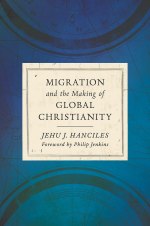
Migration and the Making of Global Christianity

Jehu Hanciles | Eerdmans

This is a groundbreaking work from a recognized African scholar of global Christianity. Following in the footsteps of scholars like Andrew Walls, Brian Stanley, Philip Jenkins, Dana Robert, Emma Wild-Wood, and others, Hanciles convincingly argues that migration is the lens for understanding the DNA of a historic global missionary church. In this volume, he navigates sociology, history, and theology to make sense of migration as key to understanding the global church. Challenging the notion that missionary institutions have been the prime movers in missions history, Hanciles introduces everyday global Christians who have contributed to the church’s mission. As he writes on the first page, “Every Christian migrant is a potential missionary.” —Edward Smither, professor of intercultural studies at Columbia International University

Award of Merit

Advanced Missiology: How to Study Missions in Credible and Useful Ways

Kenneth Nehrbass | Cascade

Christ has commissioned us to make disciples of all nations, and Advanced Missiology is a helpful guide toward fulfilling that aim. This book does an excellent job defining and developing a cross-cultural discipleship strategy for the church. Beyond offering a solid course in missiological studies, I appreciate how Nehrbass gives concrete action steps. This book is a practical guide for keeping discipleship at the center of our missions efforts. —Eddie Byun, associate professor of Christian ministry at Biola University

Finalists

World Christianity and the Unfinished Task: A Very Short Introduction

F. Lionel Young III | Cascade

(Read an excerpt from World Christianity and the Unfinished Task.)

The Religious Other: A Biblical Understanding of Islam, the Qur’an and Muhammad

Edited by Martin Accad and Jonathan Andrews | Langham Global Library

Politics & Public Life

Reparations: A Christian Call for Repentance and Repair

Duke L. Kwon and Gregory Thompson | Brazos

Kwon and Thompson have done the difficult and necessary work of asking contemporary questions with the full weight of Scripture, orthodox theology, and Christian tradition in mind. This book takes on the truly admirable task of fully fleshing out a theological response to a political and social issue, doing justice to both the theological task and the contemporary question. The authors outline a distinctly Christian account of reparations, relying neither on proof-text theology nor uncritical acceptance of modern arguments. They weave together history, social science, and theology to give a robust account of what Christian love requires in the pursuit of our common life together. It takes opposing arguments seriously and addresses them with conviction and compassion. —Kaitlyn Schiess, author of The Liturgy of Politics

(Read CT’s review of Reparations.)

Award of Merit

We the Fallen People: The Founders and the Future of American Democracy

Robert Tracy McKenzie | IVP Academic

McKenzie, history professor at Wheaton College, offers a complex and fascinating American history that asks whether our nation is great because we are good, or because the founders designed a government that intentionally accounts for our fallen nature. Lessons for both the left and right abound throughout the book, complementing McKenzie’s own astute reflections. We are in desperate need of greater historical depth to situate and inform our contemporary political challenges. We the Fallen People is a must-read for any American Christian interested in reforming our political witness. —Matthew Hawkins, PhD student and cohost of the podcast Crossing Faiths

(Read an essay from Robert Tracy McKenzie.)

Finalists

The Rise and Triumph of the Modern Self: Cultural Amnesia, Expressive Individualism, and the Road to Sexual Revolution

Carl Trueman | Crossway

(Read an excerpt from The Rise and Triumph of the Modern Self, as well as CT’s review of the book.)

Confronting Injustice without Compromising Truth: 12 Questions Christians Should Ask about Social Justice

Thaddeus Williams | Zondervan

(Read CT’s review of Confronting Injustice without Compromising Truth.)

Spiritual Formation

God of All Things: Rediscovering the Sacred in an Everyday World

Andrew Wilson | Zondervan

Wilson’s book is substantive, insightful, endearing, engaging, and well-written. It offers an important corrective to the gnostic tendencies of evangelical Christianity in America, which tends to divide the spiritual from the physical. I prefer works on spiritual formation that derive from the Scriptures, articulating how God’s Word informs and affects our spiritual development, and God of All Things succeeds in every respect. As Wilson moves from the biblical world—with all of its peculiar terminology and strange social mores—to our world, he shows us how to live what we read. —Rodney Reeves, senior pastor of First Baptist Church in Jonesboro, Arkansas

(Read an excerpt from God of All Things.)

Award of Merit

Living Vocationally: The Journey of the Called Life

Paul J. Wadell and Charles R. Pinches | Cascade

Wadell and Pinches offer a robust and encouraging examination of living vocationally. In a culture full of books about the quest of the solitary person and other helpful books about building careers, Living Vocationally is a refreshing exploration of the spiritual, communal, and moral aspects of the good life. Neither glibly formulaic nor impractically theoretical, this book weaves spiritual wisdom with narratives of people’s vocational experiences, such that readers are invited to hear the whispers of their own hopes and stories of calling. —Susan Phillips, spiritual director, executive director of New College Berkeley

Finalists

Holier Than Thou: How God’s Holiness Helps Us Trust Him

Jackie Hill Perry | B&H

(Read an excerpt from Holier Than Thou.)

Humbled: Welcoming the Uncomfortable Work of God

David Mathis | B&H

Theology & Ethics

Simply Trinity: The Unmanipulated Father, Son, and Spirit

Matthew Barrett | Baker

When it comes to books on the Trinity, words like accessible, welcoming, entertaining, and soul-stirring typically don’t come to mind. For Simply Trinity, however, all these descriptions apply. Barrett invites readers to enter into the landscape of historical Trinitarian theology and see why the classical doctrine of the Trinity is good news for Christians today. He also helps readers navigate contemporary challenges to the doctrine, illustrating why what we think about the Trinity matters beyond the realm of theological debate. —Gayle Doornbos, associate professor of theology at Dordt University

(Read an excerpt from Simply Trinity, as well as CT’s review of the book.)

Award of Merit

The Doctrine of Creation: A Constructive Kuyperian Approach

Bruce Riley Ashford and Craig G. Bartholomew | IVP Academic

Christians confess that God is the maker of heaven and earth, of all things visible and invisible; yet many modern Christians unknowingly subscribe to a gnostic conception of God’s creation. Ashford and Bartholomew lean upon the approach of famed Dutch Reformed theologian and politician Abraham Kuyper to provide a meticulously biblical, theological, and historical corrective. The authors believe God calls Christians to contribute toward all spheres of life, and they hold up creation as the domain of God’s ongoing restorative work—originally designed “very good” and meant to be “even better.” —Sean McGever, Young Life area director and faculty member at Grand Canyon University

Finalists

Providence

John Piper | Crossway

(Read CT’s review of Providence.)

The Logic of the Body: Retrieving Theological Psychology

Matthew LaPine | Lexham

Beautiful Orthodoxy Book of the Year

Prayer in the Night: For Those Who Work or Watch or Weep

Tish Harrison Warren | InterVarsity Press

This book is extraordinary for its beauty, honesty, and profound insights on suffering. Page after page, my eyes were opened to new ways of thinking about the nature of grief, how humans respond to it, and how God uses it. It’s hard to write a book on a subject that so many have written on before and yet offer so much fresh insight, but Warren has undoubtedly done that here. I couldn’t put it down. —Natasha Crain, author, speaker, and podcaster

Christians are sometimes guilty of overplaying a theology of glory while overlooking a theology of the Cross. Instead of patiently accepting suffering as a part of our lives, we skirt over the subject as much as possible. Prayer in the Night is the rare book that leans into the reality of darkness and vulnerability in the Christian life. Although it may appeal to readers enduring their own seasons of suffering, its value is truly timeless. —Samuel Chiang, executive director of the Global Evangelism Network of World Evangelical Alliance

This is a beautiful book. It is among the richest treatments of pain and suffering I have encountered. It is both deeply theological and profoundly personal. As one who recently has walked through my own dark night of the soul, I found Warren’s writing to be both a balm and a beacon, pointing me back to hope in Jesus. —Micah Fries, director of programs at the Multi-Faith Neighbors Network

(Read an excerpt from Prayer in the Night, as well as CT’s review of the book.)

Award of Merit

Enjoying the Bible: Literary Approaches to Loving the Scriptures

Matthew Mullins | Baker Academic

A sad truth of our time is that many people who want to know God attempt to do so without wanting to know the Bible. There are many reasons, including the way in which many who do know God have framed the Bible as an instruction manual. Charitably, and with considerable dexterity, Mullins pushes back on reductionist notions of studying the Bible as a repository of information. Instead, he highlights the literary nature of the Scriptures to promote reading the Bible with developing delight, emotional investment, and transformative impact. I can’t wait to place this book in the hands of others, as I believe it will help a great many reconnect reading the Bible with knowing God and relating to him. —Mark Ryan, director of the Francis A. Schaeffer Institute at Covenant Theological Seminary

Warning: This book will change the way you read the Bible! Mullins offers a definitive explanation and defense of how the Bible, like Jesus, is both truth and grace. Rather than coming to the Bible with a hermeneutic of information, we’re invited to see how the Bible itself requires a hermeneutic of love. The former uses the Bible to extract instructions, whereas the latter seeks to understand the Bible according to its fullest function: to captivate, delight, entice, comfort, confound, and even shock the reader. The Bible is as much a masterpiece as it is a manual, as much a work of art as it is an argument. —Edward W. Klink III, senior pastor of Hope Evangelical Free Church in Roscoe, Illinois

I was not expecting to enjoy a book about the Psalms and other literary aspects of the Bible, but then, that’s the point of this book—to reinvigorate our reading of God’s Word. Mullins inspires readers to see the literary beauty of Scripture so that we are driven to read more, rather than simply rushing through particular passages to find the main idea. Perhaps the most convicting part of the book for me—a Christian apologist who frequently focuses on matters of the brain rather than the heart—was the oft-repeated refrain that our emotions and intellect work together in comprehending Scripture. —Lindsey Medenwaldt, executive director of Mama Bear Apologetics

(Read CT’s interview with Matthew Mullins.)

Finalists

God of All Things: Rediscovering the Sacred in an Everyday World

Andrew Wilson | Zondervan

Hope in Times of Fear: The Resurrection and the Meaning of Easter

Timothy Keller | Viking

(Read an excerpt from Hope in Times of Fear.)

Books
Excerpt

Black Christians Are Confronting Black Lies About Christianity

How urban apologetics contends against the distortions promoted by “Black Conscious” movements.

Illustration by Sarah Gordon / Source Images: Raimund Koch / Labsas / Portra / Getty

When I went to college at Bowie State University in 1991, I—like many African Americans in the ’80s and ’90s—stepped into a new hotbed of identity ideologies. Many Blacks entering college at this time (historically Black colleges in particular) would be wearing some type of cultural accessory pointing out their connection to Africa, from African medallions made of leather to T-shirts depicting the continent of Africa using some African artistic pattern.

Urban Apologetics: Restoring Black Dignity with the Gospel

Urban Apologetics: Restoring Black Dignity with the Gospel

HarperCollins Children's Books

304 pages

This was a significant time for Blacks wrestling with our ethnic and cultural identity. You would see brothers in the student union selling books and oils like Blue Nile, sandalwood, frankincense, and myrrh. These vending stands were filled with resources promising to fill the void of our Black minds with the truth white men had suppressed to prevent us from knowing who we were.

As a Christian who is Black, I am sometimes led to feel as if I am following the religion of my oppressors. It’s like Stockholm syndrome, a realization that everything you thought you knew to be right is wrong. There is a constant tension inherent in being Black and Christian in America, one etched into the psyche of many African Americans.

Consider the following quotes from proponents of what are commonly called “Black conscious” communities. According to Elijah Muhammad, the longtime Nation of Islam leader, “The so-called Negro must awaken before it is too late. They think the white man’s Christianity will save them regardless of what happens, and they are gravely mistaken. They must know that the white man’s religion is not from God nor from Jesus or any other of the prophets. It is controlled by the white race and not by Almighty Allah (God).”

Or take Jabari Osaze, historian and self-styled priest of the ancient Kemetic (Egyptian) kingdom. As he states in 7 Little White Lies: The Conspiracy to Destroy the Black Self-Image,

“I remember going to Sunday school class, and the teacher would pull these cardboard cutouts of Moses and Noah out of the box … and they were invariably old, white men in robes. They looked like my next-door neighbor, but in robes. Imagine as a child to have that inculcated in me that all of the heroes of Christianity are white. I do think that’s kind of wrong.”

Commentary like this creates a cognitive dissonance for Black people that is difficult to overcome. As Christian apologists, we should not turn away from this challenge. It simply means we have a lot of work to do, and this is one of many reasons why an approach I call urban apologetics is needed today.

It is true that Western, white European Christianity has often worked hard to destroy Black identity. However, these Black conscious communities have thrown the baby out with the bathwater by jettisoning the entire Christian faith. They have not done the necessary homework to look closely at the truth. An urban apologetic defuses the false origin stories these groups promote.

Black Christians are always being interrogated by representatives of Black conscious communities. We invariably get a mouthful about our acceptance of Christianity because whites who called themselves Christians played a central role in kidnapping and enslaving Blacks. Many Blacks have been taught that Africans’ first contact with Christianity was through the slave trade. Many see Christianity’s historical role in slavery as a key factor in the destruction of the Black mind. They view Christianity as a European creation used by white oppressors as a tool to keep Blacks in bondage.

And there is merit to this argument. During the era of slavery in the West, there was a false form of Christianity that justified the kidnapping of humans. Did proponents of this form of Christianity create an abridged Bible called “the slave’s Bible” to prevent slaves from having a clear and comprehensive understanding of the gospel? Yes. Did certain so-called Christians make Blacks out to be less than human, thereby defiling the imago Dei that is within every human being? Yes.

For much of the past hundred years, the Black community has struggled to offer robust theological answers to the challenges our community faces. Not until recently have we seen a concerted effort to address the objections and questions raised by proponents of the Black consciousness movements. And in the present internet age, the game has changed. Objections spread more quickly. Falsehoods about Christianity have a longer lifespan. This is why we urgently need a uniquely urban apologetic that addresses Black conscious movements and other Black objections to Christianity.

Answering revisionist narratives

What is urban apologetics? Urban is a popular word today and has been steadily growing in usage for the past four and a half decades. It points to the city. Before it became a slang term, urban had the connotation of concentrated complexity—a landscape defined by thick settlements of people, buildings, and traffic, along with a diverse blend of culture, commerce, politics, and spirituality.

Somewhere along the line, however, urban became the code word for Black, brown, and poor. This is how much of the corporate world uses urban today. Urban divisions of companies are devoted to marketing their products to Black and brown people. Nowadays, of course, urban culture is no longer confined to the city, in large part because of the surging popularity of art forms like hip-hop. It is a mobile culture we encounter in rural and suburban areas as well.

Apologetics is a term coined from 1 Peter 3:15: “But in your hearts regard Christ the Lord as holy, ready at any time to give a defense to anyone who asks you for a reason for the hope that is in you” (CSB). The word translated here as “defense” comes from the Greek word apologia. In context, apologetics engages the mind, emotions, and will by showing others the transforming work of Christ. It is a reasonable defense of the gospel based on the eschatological and imminent hope one has in Jesus.

Jude verse 3 is another key text when it comes to explaining the biblical foundations of apologetics: “Dear friends, although I was eager to write you about the salvation we share, I found it necessary to write, appealing to you to contend for the faith that was delivered to the saints once for all” (CSB). The word contend translates a Greek word (epago¯nizomai) that refers to athletic contests, such as wrestling matches. Paul hints at this association in 1 Corinthians 9:25: “Everyone who competes in the games goes into strict training. They do it to get a crown that will not last, but we do it to get a crown that will last forever” (emphasis added).

Apologetics comes in many varieties. Classical apologetics stresses arguments for the existence of God. Evidential apologetics stresses the need for evidence in support of Christian truth claims, be they rational, historical, archaeological, or even experiential. Historical apologetics stresses the historical evidence supporting Christian truth claims. Experiential apologetics appeals to religious experience in general or special religious experiences, like apparent supernatural phenomena, as grounds for belief in Christ. Presuppositional apologetics typically presupposes the basic truth of Christianity and then proceeds to show, in several ways, why Christianity alone makes sense.

When I speak of urban apologetics, I’m referring specifically to a defense of the Christian faith against Black objections and an argument for how Christianity meets the unique needs of Black people. Urban apologetics uses several of the approaches listed above in a symphonic manner. We employ classical apologetic approaches when we are talking to Black atheists or agnostics, many of whom value scientific explanations over faith-based assertions. The evidential model is particularly helpful when facing challenges like “Prove to me that Jesus existed” or “Where are all the tombs of the characters in the Bible?” or “Christianity was created in Europe.”

Underlying most of the statements or questions we encounter in urban apologetics are various revisionist narratives. These narratives appeal to and affirm the experience many Black people have with racism and injustice. To refute them, we can draw on elements of both historical and experiential apologetics. Our job in urban apologetics is to prayerfully engage these issues with humility and care.

Speaking truth into a world of lies

Urban apologetics is doing the work of sharing the gospel by giving a defense of Christianity to Black people in light of the intellectual, emotional, and ethnic-identity concerns of minority communities. It is giving Black people a reason for the hope of the gospel despite the cultural, historical, spiritual, and theological barriers Blacks have to the Christian faith. And at the core of urban apologetics is a restoration of the imago Dei. Racial injustice and inequity have created a need to affirm humanity while challenging sinful human pride. Scripture demands that we treat all people as bearers of God’s image (Gen. 1:26–27; James 3:9).

Urban apologetics also seeks to speak truth into a world that has become characterized by lies. We live in a world of bootleg truth promoted by Black Religious Identity Cults (BRICs). Because many people haven’t learned to distinguish truth from error, the real from the fake, they believe the lies. Most of the ideologies or cults appealing to Black people have a foundation in the Judeo-Christian worldview. They approach their rejections of Christianity and their framing of so-called truth in light of the Christian story. Urban apologetics seeks to demonstrate that only Christianity proves to be reasonable and true as a worldview.

Urban apologetics also dispels a multitude of urban legends, historical myths, theological fallacies, scientific misnomers, and reductionist views of Christianity that exist in the Black community. Much of what we combat in urban apologetics are arguments that were popular in previous generations and are now reemerging with an ethnic slant. For example, we’re seeing a reemergence of the theory that Christianity is a copy of an ancient Egyptian religion called Kemeticism—a theory that was disproven decades ago.

Because the Black community deeply distrusts white people and European ideas, many Blacks tend to be easily swayed by any suggestion of white corruption, and Christianity is an easy target. When BRICs suggest that Christianity is a white religion instituted by white Europeans, many Blacks believe them. Yet in reality, Christianity spread from Jerusalem to Africa and then to Europe. Well before Christendom formed in Rome, Christianity’s headquarters was in Alexandria, Egypt.

The willingness of people to believe that Europeans spread Christianity to Africa highlights an even bigger issue. As the theologian Thomas C. Oden explained in his 2010 book How Africa Shaped the Christian Mind,

Modern intellectual historians have become too accustomed to the easy premise that whatever Africa learned, it learned from Europe. In the case of seminal Neoplatonism, however, its trajectory from Africa to Europe (a south-to-north movement) is textually clear. But why is it so easy to forget or dismiss this trajectory?

Erroneous beliefs about the origins of Christianity in Africa can be traced to the undercurrent of racism we witness in both secular and Christian scholarship. In my own historical studies of Cush (the Black African kingdom along the Nile to the immediate south of Egypt) and the role that the Cushites played in the biblical world, I’ve encountered a lingering racial bias within the academy, which is still dominated by white scholars.

What do I mean by a racial bias? I am not referring to the blatant racial prejudice that was relatively common in the historical and religious scholarship of the 19th and early 20th centuries. Instead, what we encounter today is a subconscious or subtle racial bias—often unintentional, but real nonetheless. This racial bias is something that permeates all facets of society, including Christian historical scholarship, and it has created great challenges for African Americans’ efforts to share the gospel with other Blacks. Subconscious and complicit racism has blighted the fields of harvests in the Black community.

Today we fight racism in the world and in the church, contend with Blacks who play into whiteness by denying racism, and resist the mystery cults and Black ideologies that are destroying our communities. We have our work cut out for us!

Contending for souls

When it comes to questions of truth versus falsehood, does color matter? Not particularly. Yet white people’s efforts throughout history to paint Christian history with a white and European brush have made skin color a problem. Instead of leading the way in confronting racism, Western Christian scholarship has followed in the footsteps of the secular revisionists. This whitewashing of history is repugnant to God. It is divisive to paint history with one’s preferred color rather than researching the real ethnicities of people mentioned in the Bible and important figures from church history. It is an affront to the Good News itself to suggest that God only saved and worked through white Europeans.

I can’t blame my Black brethren for their constant suspicion of Christianity. Apologetics exists because of the sinfulness of all men and women, and urban apologetics explores how that sin affects ethnic minorities in particular. It is necessary, sadly, because of the sinfulness of racism and injustice in our world. Can you imagine people rejecting the gospel because they believe it is only for white people? May it never be!

Our task is to give answers that respond to the psychological trauma that Blacks have experienced as Western Christendom has merged with the historic (non-Western) Christian faith. Since the time of the early church, Christianity has had to deal with the problem of one group of people wanting to exclude another. The question of whether Christianity is only for a particular ethnicity is not new—it goes all the way back to Peter’s vision about the salvation of the nations (Acts 10) and to the Jerusalem Council (Acts 15). Galatians 2 further demonstrates that excluding people based on ethnic dividing lines is a core gospel issue.

In the end, we are called to preach the gospel to all people, regardless of race or background, and we do this in the power God provides. As Paul says in 1 Corinthians 2:1–4,

When I came to you, brothers and sisters, announcing the mystery of God to you, I did not come with brilliance of speech or wisdom. I decided to know nothing among you except Jesus Christ and him crucified. I came to you in weakness, in fear, and in much trembling. My speech and my preaching were not with persuasive words of wisdom but with a demonstration of the Spirit’s power. (CSB)

Paul here appeals to the Corinthians’ own conversion. It was the powerful preaching of the weakness of the Cross, not humanly powerful rhetoric, that had saved them (1:18).

Apologetics isn’t about winning the argument; it is about contending for the soul of the hearer. Make no mistake: Although we are dealing with the barriers of ethnic identity, racism, and injustice, ultimately we are trying to help people recognize their own sinfulness (John 16:8). Our desire is that the Holy Spirit will illuminate their need for the gospel.

We do not wish merely to speak about the atrocities that were committed against Black people. We will not ignore these atrocities, but we must not let them deter us from highlighting every person’s need for the saving power of the gospel of Jesus Christ in our lives.

This article is taken from Urban Apologetics: Restoring Black Dignity with the Gospel, edited by Eric Mason. Copyright © 2021 by Zondervan. Used by permission of Zondervan. www.zondervan.com.

Books
Excerpt

The Poet Who Prepared the Ground for the Sexual Revolution

Percy Shelley’s 19th-century attacks on marriage, monogamy, and Christianity foreshadowed progressive attitudes today.

Illustration by Jared Boggess / Source Images: Ilbusca / Viorika / Getty

Percy Bysshe Shelley, a leading figure in the 19th-century English Romantic movement, once described poets like himself as “the unacknowledged legislators of the world.” And indeed, despite living a comparatively short life (he died before age 30), his influence has endured to the present day, most notably in his emphasis on sex as the central element of individual authenticity.

The Rise and Triumph of the Modern Self: Cultural Amnesia, Expressive Individualism, and the Road to Sexual Revolution

Shelley, together with contemporaries like the poet William Blake, was known for his attacks on organized Christianity and his understanding that sexual liberation is central to political liberation. For Shelley, as for many in our own day, these concerns are closely linked because one of the most obvious ways religion historically exerted its power was through the policing of sexual behavior and sexual relationships.

To better understand the roots of the sexual revolution gripping the contemporary West, it pays to consider an era well before the 1960s, when many of its “unacknowledged legislators,” like Shelley, were preparing the ground for the upheavals to come.

‘The most odious of all monopolies’

Shelley’s disdain for religion, or, more specifically, Christianity and Judaism, is evident from his earliest writings, indeed, from the moment when, as an undergraduate, he and his friend Thomas Jefferson Hogg authored the pamphlet The Necessity of Atheism and were expelled from Oxford for their pains. In his early poem Queen Mab, the fairy guide launches a powerful attack on the Jews as they howl “hideous praises to their Demon-God.”

For Shelley, religion is a means of manipulation by which the powerful keep others subjugated. God himself is the very prototype of human tyranny, a willful, arbitrary, unaccountable despot. But most importantly, there is a clear connection in Shelley’s mind between religion, political oppression, and norms restricting sexual activity. Queen Mab includes a vision of the future in which men and women return to a state of nature. The happy denizens of this poetic Eden behave in a manner that he characterizes as follows:

Unchecked by dull and selfish chastity,
That virtue of the cheaply virtuous,
Who pride themselves in senselessness and frost.

The contempt for traditional sexual mores is obvious. And far from being unique in this, Shelley is somewhat representative of radical thought at the start of the 19th century. Traditional moral thought and practice regarding sex had undergone dramatic transformation in the previous decades.

In The Origins of Sex: A History of the First Sexual Revolution, Faramerz Dabhoiwala summarizes this shift by pointing to three significant and closely related developments in the 1700s: (1) the increasing importance ascribed to conscience (basically understood as natural instinct) as a reliable guide to moral behavior, (2) a growing public distaste for judicial punishment of consenting heterosexual transgressors (such as adulterers), and (3) the rising view that the moral laws based on external authorities such as the Bible might in fact be social constructs that conflict with human nature.

In its most radical forms, the emerging critique of traditional sexual mores involved vigorous attacks on the institution of marriage, and thus on the institutions which constructed and maintained it: Christianity and the church.

Shelley’s father-in-law, William Godwin, is a fine example of this tendency. In book 8 of his Enquiry Concerning Political Justice, he dismisses marriage as an evil that checks the independent progress of the mind, that is inconsistent with the natural propensities of human beings, and that dooms people to a lifetime of unnecessary misery. For Godwin, “the abolition of marriage will be attended with no evils” because the institution represents the unreasonable bondage and oppression of the individuals involved.

To grasp the depth of Godwin’s abhorrence, note that at the climax of his argument, he declares marriage nothing less than “the most odious of all monopolies” because by making one woman the exclusive property of one man, it creates the context for jealousy, subterfuge, and general social corruption. In his proposed utopia, no man would be joined exclusively to one woman, but all would share in each other in one sexual community.

There are obvious parallels with the philosophy of marriage—or perhaps better, the philosophical objections to traditional marriage—of our present day. Monogamous, chaste marriage is a social construct that runs against the grain of natural human instincts. Therefore, it serves to promote problems rather than solve them. Indeed, it is worse than that: It actually creates the problems that it then purports to solve. Therefore it should be abolished.

Shelley’s own work stands within this tradition of sexual iconoclasm, connecting aesthetics, freedom, and sex in a manner that foreshadows much of our current world. In Queen Mab he builds on Godwin’s thought to present a view of humanity’s coming of age in which all the inequities and injustices created by social conventions will be solved over time as those conventions themselves dissolve. Liberty will never be achieved, he suggests, while human love is shackled by traditional Christian views of marriage and forced into the confines of lifelong, monogamous relationships.

Shelley attached notes to Queen Mab, just in case his readers did not quite understand his message. One comment offers a concise but pungently phrased summary of his general view of conventional marriage and the role of religion. “Love withers under constraint,” he declares; “its very essence is liberty.”

Thus, at the very heart of Shelley’s political program of liberation lies the matter of sexual love, for it is love that equates to happiness and freedom. As happiness is the foundation of morality, so the liberating of love is a moral and political imperative. And as love lies at the core of what it means to be human, unnatural constraints on love effectively prevent human beings from being truly human.

Shelley goes further, applying the imperative of happiness to the purpose of marriage as a means of pointing toward how it might be restructured:

If happiness be the object of morality, of all human unions and disunions; if the worthiness of every action is to be estimated by the quantity of pleasurable sensation it is calculated to produce, then the connection of the sexes is so long sacred as it contributes to the comfort of the parties, and is naturally dissolved when its evils are greater than its benefits. There is nothing immoral in this separation.

The passage has a remarkably contemporary logic to it. Shelley believes that the purpose of life is personal happiness, which he defines as “a pleasurable sensation,” or, as we might put it, an inner sense of psychological well-being. Marriage is therefore not to be understood as a lifelong monogamous relationship for the purposes of procreation, mutual companionship, and exclusive sexual union. Rather, it is for the mutual pleasure and satisfaction of the consenting parties, and that is all. It is, one might say, a sentimental union, and once the pleasurable sentiments that it stimulates have dissipated, it should be dissolved at the will of the contracting parties.

This is the essential rationale of our modern thinking on marriage, defined as it is by the logic of no-fault divorce. We should therefore take note: Today’s understanding of marriage is clearly not a recent innovation; it was explicitly advocated by the likes of Shelley over two centuries ago.

‘A practical code of misery and servitude’

Shelley likens vows taken to lifelong marriage to those taken to religious creeds. To make such vows is to bind oneself in a manner that prevents personal inquiry, precludes improvement, and preempts any possibility of escape if the marriage ceases to be a source of happiness.

We might recast his objection and say that the problem with both marriage and creeds is that in each case the individual must acknowledge the existence of an external authority beyond that of immediate, personal desires. By submitting to such an external authority, individuals plunge themselves into inauthentic existence.

To make this point more sharply, Shelley then argues that marriage forces people to be hypocrites and even fosters prostitution. In doing so, he breaks with the dominant view of the time—that prostitutes originated as hapless victims of male seduction. Instead, it is the impact of monogamy on the sexual marketplace and the repression of natural sexual instincts that leads women to become prostitutes. Society then choosing to punish women for doing that to which society itself has driven them is for Shelley the height of hypocrisy.

Echoing Godwin, he states that the abolition of marriage is the only way sexual relations can be reconstructed in accordance with nature. Then, in a dramatic rhetorical flourish, he leaves no doubt about what he blames for perpetuating the vile institution of marriage:

In fact, religion and morality, as they now stand, compose a practical code of misery and servitude: the genius of human happiness must tear every leaf from the accursed book of God ere man can read the inscription on his heart. How would morality, dressed up in stiff stays and finery, start from her own disgusting image should she look in the mirror of nature!

For Shelley, then, organized Christianity, with its imposition on humanity of the law code contained in the Bible, is that which has alienated human beings from each other and destroyed true liberty. As a consequence, he argues, Christianity must be destroyed, and marriage must be abolished (or at least dramatically redefined), if human beings are to be truly free and truly happy.

We should note the rhetorical strategy Shelley employs here. He presents Christian morality not as wrongheaded or benign but as essentially evil. In this way of thinking, Christian morality is really immorality dressed up as righteousness. And thus the battle with Christianity is actually a battle with evil.

Again, this is a characteristic of our present age, when Christian moral codes are seen as positively immoral. Calls for chastity are an unrealistic response to promiscuity and lead to cruel sexual repression, an irresponsible lack of proper sex education in schools, and the demonizing of unmarried teenage mothers. Opposition to homosexuality stirs up prejudice, forces gay people to live a lie, and can even lead to mental illness and suicide.

The list could be extended, but it is not really a new one. The idea that Christian sexual codes prevent people from living free and happy lives—from being true to themselves—is not of recent vintage.

The garden and the chapel

A similar perspective is evident in the work of William Blake. In his Songs of Innocence and Experience, Blake considers human nature against the backdrop of England’s Industrial Revolution and its impact on (to borrow a phrase from another of his poems) “England’s green and pleasant land.”

While Blake’s symbolism often makes interpreting his poems a tricky enterprise, there is no debate about the meaning of a poem such as “The Garden of Love,” quoted here in full:

I went to the Garden of Love.
And saw what I never had seen:
A Chapel was built in the midst,
Where I used to play on the green.
And the gates of this Chapel were shut,
And ‘Thou shalt not’ writ over the door;
So I turn’d to the Garden of Love
That so many sweet flowers bore.

And I saw it was filled with graves
And tomb-stones where flowers should be:
And Priests in black gowns, were walking their rounds,
And binding with briars, my joys and desires.

This a powerful poetic testimony to Blake’s philosophy of life. The chapel is a manmade intrusion into the garden of what was once innocence. Its presence is both alien and oppressive, with Blake picking up on the Decalogue’s refrain of “Thou shalt not” as a means of conveying the negative, life-denying nature of Christian morality.

The message is abundantly clear: External, socially constructed constraints are bad and deny us our real humanity. The garden symbolizes a state of childlike innocence, while the chapel represents the alien intrusion of institutional religion.

For Blake, religion is oppressive. Indeed, it is equated with death—hence the gravestones of the last verse that have taken the place of beautiful, vital, natural flowers. Liberty and personal authenticity are to be found, therefore, in eschewing such things as institutional Christianity and thereby returning to the childlike and carefree innocence of the natural state where “joys and desires” are unhindered by cruel “Thou shalt nots.”

From the perspective of today, Shelley and Blake represent fascinating and significant developments in discussions of sex, freedom, religion, and what it means to be human. In their view, external, socially constructed constraints militate against this authenticity, curtailing personal freedom and causing various problems in society. And of all socially repressive phenomena, Shelley and Blake consider organized religion, specifically traditional Christianity, to be the worst offender.

For both poets, the attack on religion and the attack on the sexual morality that underpins marriage are closely related. Each sees the question of sexual behavior as among the central questions of political freedom.

It is therefore clear that the historical connection between expressive individualism, sex, and politics, so typical of our own day, was already emerging in the early 19th century among Romantic writers like Shelley and Blake. That particular aspect of our current culture is not a recent innovation brought about by the ’60s.

Content adapted from The Rise and Triumph of the Modern Self by Carl Trueman, ©2020. Used by permission of Crossway, a publishing ministry of Good News Publishers.

Books
Review

Well Done, Good and Faithful Missionary

Paul wasn’t shy about seeking God’s approval of his work. Elliot Clark wants us to recover that sense of motivation.

Illustration by Jin Xia

Why are missionaries drawn to their work? Most would answer that their consuming passion is to share the gospel, in obedience to Christ’s command to make disciples of all nations. And they would probably recoil at any suggestion of earning fame, glory, or honor for themselves.

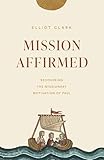
Mission Affirmed: Recovering the Missionary Motivation of Paul (The Gospel Coalition)

For good reason, missionaries tend to resist thinking of missionary service as something that might bring any kind of reward, apart from the inherent satisfaction of leading others to Christ. In Mission Affirmed: Recovering the Missionary Motivation of Paul, Elliot Clark draws on the apostle and his letters to the Corinthians to suggest that the pursuit of rewards isn’t necessarily out of place.

Clark, who works with Training Leaders International, reminds readers that Paul wasn’t content merely to reach more people with the gospel—he also sought God’s approval of his work. A missionary’s willingness to sacrifice in service to God, he argues, isn’t just a matter of denying oneself for the sake of the mission. These sacrifices also anticipate the moment of Christ’s return, when workers in the harvest will be repaid according to their labors (1 Cor. 3:8). Clark wants to restore a sense that missionaries should fervently seek God’s praise.

The book, however, is not limited to the question of missionary motivations. Clark addresses several contemporary issues in missions, making the book relevant not only to missionaries in the field but also to students of cross-cultural missions, mission leaders, and local churches. Between his training in cross-cultural mission, his education at Southern Baptist Theological Seminary, his years of experience planting churches in Central Asia, and his travels around the globe equipping indigenous church leaders, Clark has a valuable perspective worth hearing.

The right kind of influence

In the subtitle of Clark’s book, “Recovering the Missionary Motivation of Paul,” one hears echoes of a book written over a century ago, Roland Allen’s Missionary Methods: St. Paul’s or Ours? This seems deliberate, as Allen’s missiological ideas appear throughout Clark’s own work.

Like Allen, an English missionary to China around the turn of the 20th century, Clark acknowledges the need for missionaries to reject colonialism and paternalism, while instead helping local Christians reach their own peoples. Clark points out, however, that this approach has led some missionaries to overcompensate by becoming overly cautious about exercising their influence. To this, Clark says, “The critical question for Western missionaries in a postcolonial world isn’t necessarily, ‘How do we limit our influence?’ Instead, it’s better to ask, ‘Are we influencing others in the right way?’”

In framing the task of missions this way, Clark cuts against the “three-self” principle, originally presented by the 19th-century missions leaders Henry Venn and Rufus Anderson. According to the three-self ideal, indigenous churches should aim to govern themselves, support themselves financially, and conduct their own missions work, thereby retaining their independence from foreign bodies.

In critiquing this principle, Clark calls for meaningful partnerships between local Christians and foreign missionaries. “Missions,” he writes, “is always a cooperative partnership. Which means the solution to dependency isn’t independence. It’s interdependence.” As Clark argues, an unyielding commitment to independence leaves indigenous churches to fend for themselves, forgoing the sorts of collaboration and partnership that can contribute to their spiritual well-being.

For Clark, an emphasis on collaboration and partnership helps prevent missionaries from having a myopic focus on making as many disciples as possible. He certainly affirms Jesus’ mandate to make disciples, but he stresses that this mandate goes beyond preaching the gospel to those who have not yet heard it. Using Paul as his guide, he notes that the apostle not only proclaimed the Good News but also sought to bring hearers to maturity in Christ. Paul was zealous for the advance of the gospel, but he also demonstrated great concern for particular churches—for their ecclesial unity, theological integrity, and moral purity.

As Clark explains it, too many contemporary missions movements prioritize the rapid multiplication of disciples “with a programmatic and result-driven focus that looks more like Western capitalism and business franchising than genuine Christlike servanthood and faithful stewardship.” By contrast, Paul’s vision calls for multifaceted ministry that shapes new Christians and churches toward fullness in Christ.

Clark identifies two contemporary issues that work against the cultivation of spiritual maturity on the mission field. The first is the popularity of prosperity-gospel thinking. His concern is that gospel presentations can be improperly tied to people’s aspirations for a better life. Rather than naming any particular preachers of health and wealth, he traces the source of harm to Western missionaries themselves, who often “carry the virus of prosperity theology latent within them.”

American missionaries, he argues, can be the worst proponents of this false gospel, whether they are aware of it or not. Taking this critique a step further, he calls out American evangelicals who possess only a “partial theology of suffering” and “live in a society that despises lack [of resources] and distrusts the weak, that shames insufficiency and only glories in grief once it’s gone.” Such words should spur readers to pause and examine their own attitudes, words, and motives.

A second obstacle to realizing Paul’s vision for missions is a tendency to rely on underprepared missionaries. Clark writes of “untrained and inexperienced twenty-somethings” who are sent “to address complex issues of poverty and public medicine.” The results can be disgraceful, if not devastating.

Clark states his case bluntly: “We are not all called to be missionaries.” His point is that not all Christians are gifted and equipped to serve cross-culturally, which is certainly true. But Clark could have achieved greater nuance by drawing on the work of Ralph Winter, founder of the US Center for World Mission, who proposed a helpful geographic and cultural spectrum for classifying different kinds of missionaries.

Winter applies the label M-1 to a missionary sent across the street, across town, or across regions sharing the same general culture. David Nasmith, the 19th-century founder of the City Mission movement, had this category in mind when he said, “Every church shall be a missionary body, and every member a missionary.” M-2 refers to missionaries sent to places where the culture is similar but the people speak a different language. And M-3 refers to missionaries sent to remote parts of world characterized by vastly different cultures and languages. Clearly, all three sets of missionaries play important roles in carrying out the Great Commission. But for Clark, it seems only the latter two are qualified for the work.

Certainly, M-2 and M-3 missionaries should be prepared for cross-cultural ministry, and Clark makes this point well. For this reason, he places responsibility on local churches to vet missionary candidates. Churches, he argues, are ideally suited to screen prospective missionaries for Christian character and biblical competency. To this end, the book includes a helpful appendix on “Questions for Churches to Ask a Missionary Candidate.”

While Clark returns time and again to the words and example of Paul, he generously weaves stories of missionaries throughout the book, citing John R. Mott, Amy Carmichael, David Brainerd, Adoniram Judson, Anna Hampton, Nik Ripken, James O. Fraser, Henry Martyn, and others. He refers to these men and women as his heroes. As a historian, I appreciate how Clark fleshes out his understanding of proper missionary motives with historical figures who lived them out.

Gaining what we cannot lose

At the heart of Mission Affirmed is Clark’s appeal to Scripture. Beyond emphasizing theme of Paul’s motivation as articulated in his letter to the Corinthian church, he uses the whole of Scripture to reflect on the most pressing issues facing missionaries, mission leaders, and churches today.

The book includes an insightful discussion of the Insider Movement—followers of Jesus from non-Christian backgrounds who remain culturally and relationally connected to their former faiths. And Clark creatively examines the challenge of doing ministry in pluralistic contexts without losing a commitment to the gospel’s exclusivity.

In all this, he follows in the tradition of 19th-century German theologian Martin Kähler, who claimed that “missions is the mother of theology.” By this, he meant that the imperative of making disciples throughout the nations prompts us to study Scripture and proceed with theological clarity.

Clark offers a fresh perspective on the problem of “toxic charity,” which can have adverse effects on relationships and create false followers. For Paul, Christian generosity—as seen in the Corinthians’ participation in the Gentile offering to the Jerusalem church (1 Cor. 16:1–4)—was a display of Christian love and a commendable example of Christian faith. As he saw it, such offerings were not simply altruistic; they brought rewards, both temporal and eternal. Paul sought to maximize such rewards for himself and for the Corinthians.

Clark reminds us of what Scripture testifies about the rewards that await faithful believers at the judgment seat of Jesus. And to accentuate this point, he quotes memorable words from Jim Elliot, the martyred missionary to Ecuador who wrote, “He is no fool who gives what he cannot keep to gain what he cannot lose.”

Today’s generation of missionaries, students, and church leaders should strive to recover this perspective, which Clark has captured so well.

David Gustafson is chair of the mission and evangelism department at Trinity Evangelical Divinity School. He is the author of Gospel Witness: Evangelism in Word and Deed.

Theology

Learning to Love Your Limits

Our overburdened lives are often a problem of theology, not time management.

Yanal Tayyem / Unsplash

Being human can be very frustrating. We’re always long on demands but short on time and energy. And so we redouble our efforts, searching for the magical time-management hack that will allow us to cram more life into our waking hours so that we can live the most efficient and productive life possible.

You're Only Human: How Your Limits Reflect God's Design and Why That's Good News

Yet even as we strain against our natural limits, ultimately they cannot (and should not) be overcome, because God designed them for our good. That’s the premise underlying Covenant College theologian Kelly M. Kapic’s latest book, You’re Only Human: How Your Limits Reflect God’s Design and Why That’s Good News. Persuasion podcast cohost Erin Straza spoke with Kapic about the beauty of our human limits and the freedom that comes when we learn to embrace God’s design for a meaningful life.

Most people live with a nagging sense that they aren’t meeting expectations or fulfilling obligations. Yet you propose that God purposefully made us to live within certain limits. Why is there such a gap between our understanding about how God designed us and the expectations we have for ourselves?

I’ve had the conviction for a couple of decades now that Christians, particularly in evangelicalism, have an underdeveloped doctrine of creation. We talk about creation, but normally that is reduced to talking about when and how God made the earth. But we’re missing key ideas, like the reality that God made us as creatures. And the good part about being a creature is we were made to be dependent upon God and, by our very design, also dependent on other people and the earth.

The reality of our belief in God’s creation is found in our very non-creaturely (mis)understanding of his expectations of us. Dependence goes against a lot of our instincts. Just think about how we use the language of dependence in our culture. It’s usually negative. It’s one of the reasons we struggle with community. It’s one of the reasons we view one another in competitive ways.

Often what we’re missing is the good of dependence. We need to cultivate an awareness of how our dependence and our needs open avenues of love. How do you love when you’re not dependent on someone else? Many of us have been raised in a culture where that tug of dependence on another makes us very scared, which makes us want to pull away. But a proper theology of interdependence allows flourishing; it allows love to grow.

Our modern marketplace is filled with an unbelievable supply of solutions, devices, and practices for mastering our daily lives and getting more done in less time. If we accept that we are creatures with limits, who cannot possibly do all that needs to be done, won’t that lead to apathy or laziness?

Often those who struggle with being too busy will describe themselves as slothful or lazy just because they’ve binged Netflix for four or five hours. But I think we’re blaming a symptom rather than the reality underneath it. People are looking at Facebook and endlessly watching Netflix because of a deeper problem: We set unrealistic expectations, and then they wear us out and we can’t keep up.

This is a theological problem, not a time-management problem. What if we stopped thinking of life as to-dos and started thinking of it as relationships? When we’re so task-driven, it’s very hard to appreciate love, because love is incredibly inefficient—and we love efficiency. Making efficiency our highest value is often dehumanizing. We always worry we’re going to make machines like humans, but we’ve also made humans like machines.

In chapters 3 and 4, you draw our attention to the embodied human experience. Besides our very real physical limits and the natural aging process, we also must contend with the impossible images that society upholds as beautiful and worthy. How can we learn to embrace real physical humanness and connect with others despite our imperfections?

We live in a time when we’re on screens constantly. We’re living in this digital space, which makes it difficult to come to terms with our real bodies. It’s helpful, in light of this difficulty, to wrestle with the full humanity of Jesus. You and I should get comfortable with our bodies because God entered the womb and Jesus is born of Mary—and it’s a real birth with afterbirth and everything! And there was a real physical, bodily resurrection for Jesus too. All this shapes how we think of our own bodies.

One consequence of inhabiting hyperspace rather than real life is that it gradually dehumanizes us. What does it mean to see one another, and ourselves, the way God sees us? I remember an artist who did portraits saying, “I’ve never seen a face that’s not beautiful.” When you look someone in the face and hear that person’s story, it’s never just a face. It’s a good creature lovingly created by God. As we look more deeply into one another’s eyes, rather than these pseudo-images, we get more comfortable with the physicality God loves. One of my biggest hopes for readers is that they will see a closer connection between creation and redemption: between the God who loved what he made and the God who remakes us in the image of his Son.

Self-help books are all the rage. We seem obsessed with becoming something better and conquering our human failings. Likewise, Christians are frustrated with their failures and want to speed up their journey toward holiness. How can we learn to embrace God’s unhurried pace in our spiritual formation?

First, look at the process of creation. Whether it involved six billion years or six literal days, God took his time, by his Spirit, to bring about order through developmental growth. God, it seems, is quite comfortable with this process. He’s not panicked by it.

Now, look at our own growth. When you and I were three years old, we weren’t what we are now, and our parents didn’t expect us to be. As grownups, of course, we’re in a different place, cognitively and otherwise, and so there are different expectations. Good parents know their children well enough not to set the bar too high, whatever their stage of development. Likewise, when we were younger, God didn’t expect us to be what we are now. He’s still taking his time, by his Spirit, to bring about order through developmental growth. So as Christians, even though we’re immediately saints (because we’re captured by the Spirit), we’re also growing in sanctification at the same time (and by the same Spirit).

In all things, we can rest assured that God is working in his timing. My hope is we can grow more comfortable with the Spirit of creation, who is the Spirit of sanctification, recognizing the way the Spirit works in Scripture is often through process.

How does understanding the doctrine of human finitude enable us to live a robust, satisfying communal life?

In church life, like in some businesses, 15 to 20 percent of the people often do almost all the work. Lots of people were feeling busy because of church, and other things, when COVID-19 gave everyone a break—and now they’re terrified to go back. Other people realized they didn’t know anyone at church; without meaningful relationships, it all feels vacuous. People have disengaged. Some may never come back.

But it takes the entire church to be the one body of Christ. In Matthew 25, when Jesus is talking about the sheep and the goats, he’s talking about visiting the prisoner, helping the marginalized, and so on. But that doesn’t mean you’re called to do all those things by yourself. My hope, as people come back from COVID-19, is that they will reconnect to the church, where together we delight in our different gifts and depend on each other for what we need.

How we can begin embracing our human limits, even today?

The first way sounds so spiritual, but I genuinely mean it: by prayer. Part of recognizing our limits is getting comfortable in God’s space and growing in dependance on him. Sometimes, I think we’re actually scared to death to pray, because if we actually take the time to get quiet, we might begin to fear that God’s not there or wonder whether he’s apathetic or just really angry. Only in prayer will we discover how compassionately God views us.

The second way is related to the first: by cultivating the gift of encouraging and celebrating others. It’s a spiritual discipline, a healthy way of dying to yourself and encouraging others. We are all dying for someone to pay attention and notice our presence and being. When someone articulates that, it’s life-changing.

News

Gleanings: January 2022

News from Christians around the world.

Matteo Jorjoson / Unsplash / Edits by Rick Szuecs

Church planted beside melting glacier

The first Baptist church has been planted in Ilulissat, Greenland, a town located about 220 miles north of the Arctic Circle. Ilulissat is home to around 4,600 people, roughly the same number of sled dogs, and a glacier that sheds about 11 cubic miles of iceberg into the ocean every year due to climate change. Thousands of tourists come annually to witness the destruction, and one family came to start an Independent Fundamentalist Baptist church. “I asked God to send me somewhere where there weren’t too many Baptist missionaries,” Chris Shull said. The church has about 17 adults in regular attendance. Shull preaches in Greenlandic.

Bishop faces hate speech charges

An Evangelical Lutheran Mission Diocese of Finland bishop will go on trial in January for publishing a politician’s booklet. Prosecutors allege that the publication of “As Man and Woman He Created Them” violates the equality and dignity of LGBT people. Päivi Räsänen, a leader in the small, center-right Christian Democrats, will also go on trial for a tweet that quoted Romans 1:24–27 and an interview she gave on public radio. Bishop Juhana Pohjola told CT he is not concerned about the legal outcome but worries people will be silenced.

Churches upset over election chief

The appointment of a new election commissioner has roiled religious controversy in the Democratic Republic of Congo. The nation’s Protestant and Catholic leaders are tasked with selecting the independent commissioner, who plans and guarantees free and fair elections. The leading candidate, Denis Kadima, is a recognized expert with decades of experience, but backroom support from President Felix Tshisekedi raised suspicions that he would not be independent. The last election ended with widespread allegations of fraud, and church leaders have accused Tshisekedi of drifting toward totalitarianism. Parliament stepped in and appointed Kadima when the churches could not agree unanimously.

Baptist leader murdered

William Richard Tolbert III, a Baptist pastor and the youngest son of a former president of Liberia, William Richard Tolbert Jr., was murdered in his apartment on November 1. The elder Tolbert was president from 1971 to 1980, when he was assassinated in a coup. The younger Tolbert was a political prisoner for 20 months and then went to the US and studied at Southern Baptist Theological Seminary. He returned to Liberia in 1999, becoming the pastor of a church in Bentol City and an advocate for peace and reconciliation. No one has been charged with his death.

Museum to preserve sacred texts

The Chaldean Orthodox Church has created a new museum for the preservation of ancient Christian and Muslim manuscripts saved from ISIS. It will be built next door to a Dominican mission in Erbil, and the Dominicans will help preserve the documents. Thousands of religious artifacts were located in Qaraqosh, a predominately Christian town, until ISIS fighters took over the Nineveh Plain in 2014. The manuscripts were thought lost, but as ISIS fighters destroyed monasteries, mosques, and churches, a fleeing priest saved as much as he could carry in a van. Several hidden stashes of documents have also been recovered since.

Church opens in prison

A church has been built inside a prison for the first time in Egypt. Wadi el-Natrun, located in the desert about 60 miles from Cairo, is a new prison complex, the first in a planned series of facilities meant to modernize the correctional system. The current prisons are believed to be filled to 200 percent capacity, and the human rights organization Amnesty International has documented extensive abuses of prisioners who criticized the government. Christian leaders have previously been allowed to minister in the prisons, but there was no space designated for worship. In addition to a church, the new prison will also have vocational training facilities.

Church accused of spreading COVID-19

Charismatic pastors Vo Xuan Loan and Phuong Van Tan and 11 members of their Ho Chi Minh congregation have been interrogated amid accusations that the church is the source of a COVID-19 outbreak. A few members of the church got sick at the start of the delta variant’s spread in Vietnam. According to the pastors, the congregation was following health protocols set by the government, which did not yet know the delta variant was more contagious than previous versions of the coronavirus. After larger outbreaks occurred elsewhere, authorities still focused on blaming the church.

Warning about abusive leaders

The head of the Jamaica Evangelical Alliance (JEA) used the case of an apparent ritual killing by an apocalyptic prophet in Montego Bay to warn of the dangers of celebrity-seeking pastors who become abusive. Peter Garth, JEA president and pastor of Hope Gospel Assembly in St. Andrew, said, “Some pastors end up feeding off people, using them to meet their needs or make up for their vulnerabilities.” Healthy congregations, he said, worship Christ “and him alone.” The apocalyptic prophet died in a car crash on his way to a police interrogation.

Cities restrict worship during elections

Several cities in Argentina have said there is a ban on religious celebrations and acts of worship during elections, in some cases prohibiting church services for several days before or after voting. The Argentine Council for Religious Freedom (CALIR) has formally requested that the Ministry of the Interior, which oversees elections, clarify that the election law does not infringe on religious exercise. The country has seen a surge of religious conservatives running for office this year, after the issue of legalizing abortion took center stage in national politics.

News

Illinois Eliminated Parole in 1978. These Christians Want to Bring it Back.

A belief that people can change bolsters their movement.

Illustration by Jin Xia

Howard Keller would like to get out of Joliet Prison someday.

If he did get out, he’d like to go back to Chicago and buy a pair of hair clippers. Then he’d open his own barber shop. He’d like to tell folks what he’s learned about alcohol abuse and addiction. And if he only got the chance, he’d like to say he’s sorry and ask for the opportunity to start again.

“I did something wrong,” Keller would say, “and I’ve made all the efforts I can to change my life. Can you give me a second chance?”

But it’s unlikely any of that will happen. Keller is 43 years old. He has another 34 years on his 55-year prison sentence. And according to the state of Illinois, it doesn’t matter how much Keller has changed since he shot and killed a man in a doorway outside a liquor store in 2000.

It doesn’t matter that he got his barber’s license, tutors people preparing to take the GED, and is working on a seminary degree. It doesn’t matter that he’s been rehabilitated and longs for restoration in his community.

There is no possibility of parole.

In 1978—the year Keller was born—Illinois became the second state in the nation to abolish its discretionary parole system. The reasons why Illinois and eventually a total of 16 states eliminated the possibility of conditional early release are complicated. Some argued that fixed sentences are more of a deterrent on crime. Emerging research in the late 1970s also seemed to indicate the differences between those who did and who didn’t get parole were arbitrary or, worse, discriminatory, and the system did not seem to have any good tools for evaluating an individual’s rehabilitation.

Abolishing parole, many reasoned, would lead to fixed, shorter sentences, reduce crime, and avoid discriminatory parole boards.

It didn’t quite work out that way. Shorter sentences did not become the norm in Illinois. Abolishing parole does not seem to have had any demonstrated effect on deterring crime. And no better system of assessing rehabilitation emerged.

That’s why Keller and other Christians in Illinois are advocating for SB2333, a senate bill that would bring back the possibility of parole. If the bill passes, those who have served more than 20 years in prison could go before a state board for review.

“The whole foundation of the Christian faith is mercy, forgiveness, reconciliation, and restoration, and that is at the heart of what the parole system is,” Keller told CT from prison, mentioning Ephesians 2:4–8. “It’s recognition that people can change and lives can be transformed. And so why not give a person the opportunity to show that he or she has been restored?”

When Katrina Burlet started volunteering as a debate coach at Stateville Correctional Center, a men’s maximum-security prison, she didn’t know that Illinois offered no possibility of parole. Many people just assume that parole happens, since the idea, which dates back to the Middle Ages, is so common. It shocked her to find out from her debate team that there was no parole.

A Wheaton College grad who hoped to minister to incarcerated people through a debate program in the prisons, Burlet said she had already started to have questions about the criminal justice system in America.

“There is no point in which the Bible discusses imprisonment as a righteous or godly response to wrongdoing,” she said. “This ought to mean something to contemporary Christians.”

Using her skills, in 2018 Burlet arranged to have incarcerated people debate the best ways to reform parole. The event was attended by state legislators, prison reform activists, and church leaders.

Weeks later, the Illinois Department of Corrections decided to disband the debate team and ban Burlet from working in the prison, citing “safety and security” issues. But the event laid the foundation for a grassroots movement.

Five members of the team, including Keller, went on to form Parole Illinois, a coalition of incarcerated people and their allies. Using the groundwork laid by the 2018 debate, they composed the first draft of the proposed legislation that is now SB2333.

“At someone’s worst moment, you cannot know who God may grow them into, and therefore you cannot throw them away forever,” Burlet said. “That’s what this bill is about.”

Keller says faith has been the “number one driver” of his part in the reform effort. Burlet feels the same way.

They have received support on the outside from people like Krista Dutt, senior pastor at The Dwelling Place, a Brethren in Christ church where most, if not all, members of the congregation have a family member who is incarcerated.

Chance the Rapper, a Chicago Christian who is becoming well known for speaking out about issues of faith and urban renewal, has also been an advocate. Lobbying for the bill, he said the costs associated with warehousing prisoners should grab legislators’ attention, but the strongest argument for parole is just the belief that people can change.

“It does not guarantee release,” Chance said. “What it does is give those facing long-term sentences … an opportunity to prove they are worthy of a second chance.”

The bill did not come up for a vote in 2021, however. According to The New York Times, it was kept off the floor in part by Democratic State Senator John Connor, a former prosecutor and the chair of the Senate Criminal Law Committee. Connor said he fears the possibility of a sex offender receiving parole and going on to commit another crime.

The bill’s sponsor in the Illinois General Assembly is State Representative Carol Ammons. The bill’s sponsor in the Senate, Celina Villanueva, said the state’s prison system is not supposed to lock people away forever.

“Our corrections system is meant to rehabilitate people,” she said. “There are people who spend their time behind bars trying to better themselves, and the systems need to recognize that.”

If the bill passes, it would potentially impact 5,000 people who are expected to die in Illinois prisons without any review of whether it’s in the state’s interest to keep incarcerating them, according to Parole Illinois estimates.

One of those people would be Keller. The bill wouldn’t automatically get him out of Joliet and put him on a bus back to Chicago, where he could start shopping for a pair of clippers at a beauty supply store.

But it would let him ask.

“People with sentences like mine don’t even get that opportunity to ask society for forgiveness,” Keller said. “At the very least, the individual should have a chance to ask.”

Kathryn Watson is a reporter from New York City.

News

How Black Missionaries Are Being Written Back into the Story

Will fixing inaccurate representation encourage more minorities to “go into all the world”?

New York Public Library / Public Domain / Edits by Rick Szuecs

When George Liele set sail for Jamaica in 1782, he didn’t know he was about to become America’s first overseas missionary. And when Rebecca Protten shared the gospel with slaves in the 1730s, she had no idea some scholars would someday call her the mother of modern missions.

These two people of color were too busy surviving—and avoiding jail—to worry about making history. But today they are revising it. Their stories are helping people rethink a missionary color line and, as National African American Missions Council (NAAMC) president Adrian Reeves said at a Missio Nexus conference in 2021, challenging the idea that “missions is for other people and not for us.”

African Americans today account for less than 1 percent of missionaries sent overseas from the US. But they were there at the beginning.

“We have a representation problem,” Reeves said. But “when we share with the Black church their history and legacy in missions, it makes it easier for them to connect.”

That was Noel Erskine’s experience too, when he discovered Liele’s name in the archives of the Great Britain Baptist Missionary Society. The Emory University historian said that growing up in Jamaica, he didn’t really think missionaries could be Black.

“We always associated missionaries with white people,” he said. “They’re a stranger to the culture. We’re not sure of motives.”

British missionary William Carey is often called the father of modern missions. Adoniram Judson has been titled the first American missionary to travel overseas. But both Liele and Protten predated them. Their stories add depth and complication to the sometimes too-simple narrative of missions history. Advocates of these two figures say they need to be lifted up.

The Southern Baptist Convention has added Liele to its official church calendar in 2021 as someone who should be honored. The NAAMC has designated an annual George Liele Award to be given to a Black missionary. And Protten, the subject of a recent academic biography, was highlighted at the 2021 Missio Nexus Leadership conference.

Deborah Van Broekhoven, a Baptist historian and the director emerita of the American Baptist Historical Society, said both Liele and Protten have “a lot to teach us.”

But they have been obscured, she said, and that means missions history needs a larger frame. “Lost” is the common way to talk about someone who was dropped from historical narratives, but it might not be the right word for Liele. “Excluded” might be more accurate.

Erskine wrote about this in a recently published article in the academic journal Missiology. He found that several years after Liele established a Baptist church in Jamaica, he was told he needed to go to England to get permission to preach in his own church.

What happened next is recorded in the minutes of the May 1822 meeting of the Baptist Missionary Society:

“Resolved, that the committee cannot sanction the application of Mr. Liele unless it be concurred in by those brethren in connection with us, who are already in the island.”

In other words, Liele was “dismissed in a paragraph” because white people in Jamaica did not want him to have any authority, Erskine said. “White supremacy is the power to exclude.”

But in 2004, a longtime African American educator caught a vision to return Liele to missions history. David Shannon gathered a team of 20 Black and white historians, educators, and pastors to write a book about Liele.

“David Shannon saw the story as important, not just because it had been neglected but because it did show redemption, it did show bridge building,” said Van Broekhoven, who contributed to the project.

Sadly, Shannon didn’t live to see the 2012 publication of George Liele’s Life and Legacy: An Unsung Hero. He passed away in 2008.

Bringing Protten back into the narrative had additional challenges, according to University of Florida historian Jon Sensbach, who wrote a book on Protten in 2005. He first learned of her while researching the work of the Moravians on the island of St. Thomas. There was a brief reference to a mixed-race woman who brought hundreds of enslaved people into the church.

Through careful work, Sensbach was able to unearth a larger story and show how Protten’s evangelism challenged white slavers and plantation owners who feared the gospel message would undermine the order of slavery. He found she had a pivotal influence on how Christians in those regions talked about being born again.

“That model involved a sense of Christianity being a religion of spiritual rebirth, of spiritual equality,” Sensbach said. “For an enslaved population—oppressed, beaten down, told that they were not only inferior but also perhaps not even fully human—this was a liberating message.”

Protten, who moved to Saxony with the Moravians, became a deacon in 1746 and is possibly the first Black woman ordained in Western Christianity. Later she went as a Moravian missionary to Africa’s Gold Coast.

Reestablishing Black people to leading roles in the history of American missions is an important corrective, but it doesn’t erase some of the complicated ways missions has been part of a story of racism and oppression.

Protten, for example, was once jailed on charges that her message would start a slave rebellion. She also defied the system by marrying a white Moravian. But later, Sensbach asks, was she complicit in a “cultural genocide” when she started a school at a Danish military outpost in modern-day Ghana?

“Maybe,” he said. “Maybe not.”

Liele stood apart as someone who believed the Jamaicans were human enough to receive the gospel. And he went to jail for his preaching. But he also enslaved people in Jamaica. And he later offered a compromise in his church, allowing enslaved people to be married there—a subtle protection against slave owners breaking apart marriages—but accepting that slaves should still obey their owners, who could at any time separate “what God hath joined.”

“Liele is complicated,” Erskine said. “He’s a survivor.”

But Liele shows modern Christians how to work for good in divisive times, said Van Broekhoven.

“Liele didn’t tackle racism head on—he couldn’t,” said Van Broekhoven. “But he certainly figured out ‘workarounds.’ In that sense, I see him as wildly successful with those workarounds in establishing the church in Jamaica that endured to this day.”

These complicated conversations are exactly what younger people of color want to discuss when considering missions work, said Barna researcher Savannah Kimberlin.

“A lot of young ethnic minorities really want to be mobilized,” said Kimberlin. “They’re hoping to have their ethnicity be part of the conversation. They want to discuss the history of missions, the good, the bad, and the ugly, if this is something they’re looking to commit to.”

Brent Burdick, a former missionary to the Philippines who now teaches missions at Gordon-Conwell Theological Seminary, learned about Liele through Colleen Damon-Duval, an African American missiologist who does diversity and inclusion work.

She convinced him, Burdick says, that African Americans are an important part of mission work’s history—and its future. Now he believes African Americans are a “sleeping giant” with an important part to play in the proclamation of the gospel.

“They have a lot to offer to the world,” he said.

Rebecca Hopkins is a journalist living in Colorado.

News

As COVID-19 Death Tolls Rise, More Americans Want Religious Funerals

The trend toward secular memorials reverses for the first time in a decade.

Mimi Van Praagh / Getty

Death abounded in America in 2020 and 2021. According to preliminary data from the Centers for Disease Control and Prevention, about 570,000 more people died in 2020 than in 2019, with about 350,000 of those attributable to COVID-19. Another 350,000 people died from the coronavirus by the fall of 2021, bringing the death total to 700,000—and counting.

When roughly that number died over the four years of the Civil War, it had a widespread impact on American culture. Historians such as Drew Gilpin Faust, author of This Republic of Suffering: Death and the American Civil War, say changes included increased attention to cemeteries, the rise in the importance of family photographs, and rapid growth in the popularity of practices of spiritualism, a new religious movement that claimed to help people communicate with the dead.

What impact today’s pandemic deaths will have on American culture remains to be seen. But one shift is notable now: The percentage of people age 40 and older who say that religion is “very important” in the funeral of a loved one has gone up for the first time in a decade.

The importance of religion at funerals jumped 10 percentage points in 2020, in an annual funeral industry study. It went up another 2 points in 2021.

The majority of Americans still don’t think religion is important at funerals, but a growing number are feeling a new need for it. Sarah Jones, an atheist raised in a strict evangelical home, wrote about this experience in New York Magazine, reflecting on the lack of a memorial for her grandfather.

“I could plant a flag for my grandfather … but the gesture feels thin,” she wrote. “I don’t know what exactly I would want from a memorial—whether it’s catharsis or meaning or something else altogether. I thought several hundred times this year, Maybe I should go to church.”

Others, it turns out, are feeling the same way in the wake of so much death.

Books

Parents Set the Pace for Their Adult Children’s Religious Life

“Handing Down the Faith” shows a vast majority of Americans don’t choose their religious beliefs. They inherit them.

Illustration by Sarah Gordon / Source images: Emilija Manevska / Moment / Siyi Qian / Stone / Kevin Russ / Getty

Why are parents the most important figures shaping the religious lives and futures of their children in the United States? The primary and powerful role of parents in religious socialization may seem obvious to readers today. But that is because we are familiar with our current system, not because it is historically normal or inevitable.

Handing Down the Faith: How Parents Pass Their Religion on to the Next Generation

Handing Down the Faith: How Parents Pass Their Religion on to the Next Generation

Oxford University Press, USA

264 pages

Some older readers may remember times and religious subcultures that worked differently. People from other eras and places in history and the world could also tell about different means of religious transmission across generations.

Parents define for their children the role that religious faith and practice ought to play in life, whether important or not, which most children roughly adopt. Parents set a “glass ceiling” of religious commitment above which their children rarely rise. Parental religious investment and involvement is in almost all cases the necessary and even sometimes sufficient condition for children’s religious investment and involvement.

This parental primacy in religious transmission is significant because, even though most parents do realize it when they think about it, their crucial role often runs in the background of their busy lives; it is not a conscious, daily, strategic matter. Furthermore, many children do not recognize the power that their parents have in shaping their religious lives but instead view themselves as autonomous information processors making independent, self-directing decisions. Widespread cultural scripts also consistently say that the influence of parents over their children recedes starting with the onset of puberty, while the influence of peers, music, and social media takes over.

Other common and influential cultural scripts operate to disempower parents by telling them that they are not qualified to care for their children in many ways, so they should turn their children over to experts. Further, the perceptions of at least some (frustrated) staff at religious congregations is that more than a few parents assume that others besides themselves (the staff) are responsible for forming their children religiously (in Sunday school, youth group, confirmation, catechism, etc.).

Yet all empirical data tell us that for intergenerational religious transmission today, the key agents are parents, not clergy or other religious professionals. The key location is the home, not religious congregations. And the key mechanisms of socialization are the formation of ordinary life practices and identities, not programs, preaching, or formal rites of passage.

Why and how, in the face of all pressures and perceptions to the contrary, have ordinary parents become the key agents in the socialization of their children in religion, whether successfully or not? Some starting-point answers seem obvious. One is that most parents have much more access to and time spent with their children in socialization than any other people (with the possible exception of teachers and schools for some children). A second apparent reason is that few American youth today are as rebellious as, say, baby boomer youth were reputed to have been.

However common or genuine those experiences were half a century ago, the reality today is far different and the stereotype of an adolescent generation gap is baseless (except for some when it comes to familiarity with social media). In fact, most youth today have entirely bought into adult values and goals. The vast majority of teenagers and parents today get along reasonably well.

The rates of mental and emotional troubles among youth are no higher than among adults. And most teenagers still look primarily to parents for guidance and help in life. With those kinds of relationships in play, it is not surprising that parents exert a big influence on their children today, including in religious matters.

This is an adapted excerpt from Handing Down the Faith: How Parents Pass Their Religion on to the Next Generation by Christian Smith and Amy Adamczyk.

addApple PodcastsDown ArrowDown ArrowDown Arrowarrow_left_altLeft ArrowLeft ArrowRight ArrowRight ArrowRight Arrowarrow_up_altUp ArrowUp ArrowAvailable at Amazoncaret-downCloseCloseellipseEmailEmailExpandExpandExternalExternalFacebookfacebook-squarefolderGiftGiftGooglegoogleGoogle KeephamburgerInstagraminstagram-squareLinkLinklinkedin-squareListenListenListenChristianity TodayCT Creative Studio Logologo_orgMegaphoneMenuMenupausePinterestPlayPlayPocketPodcastprintremoveRSSRSSSaveSavesaveSearchSearchsearchSpotifyStitcherTelegramTable of ContentsTable of Contentstwitter-squareWhatsAppXYouTubeYouTube