News

Ethiopian Christians Take Sides Over Tigray Crisis

As the humanitarian issues escalate in the largely Orthodox north, the conflict tests evangelicals’ loyalty and theology.

Christianity Today July 6, 2021
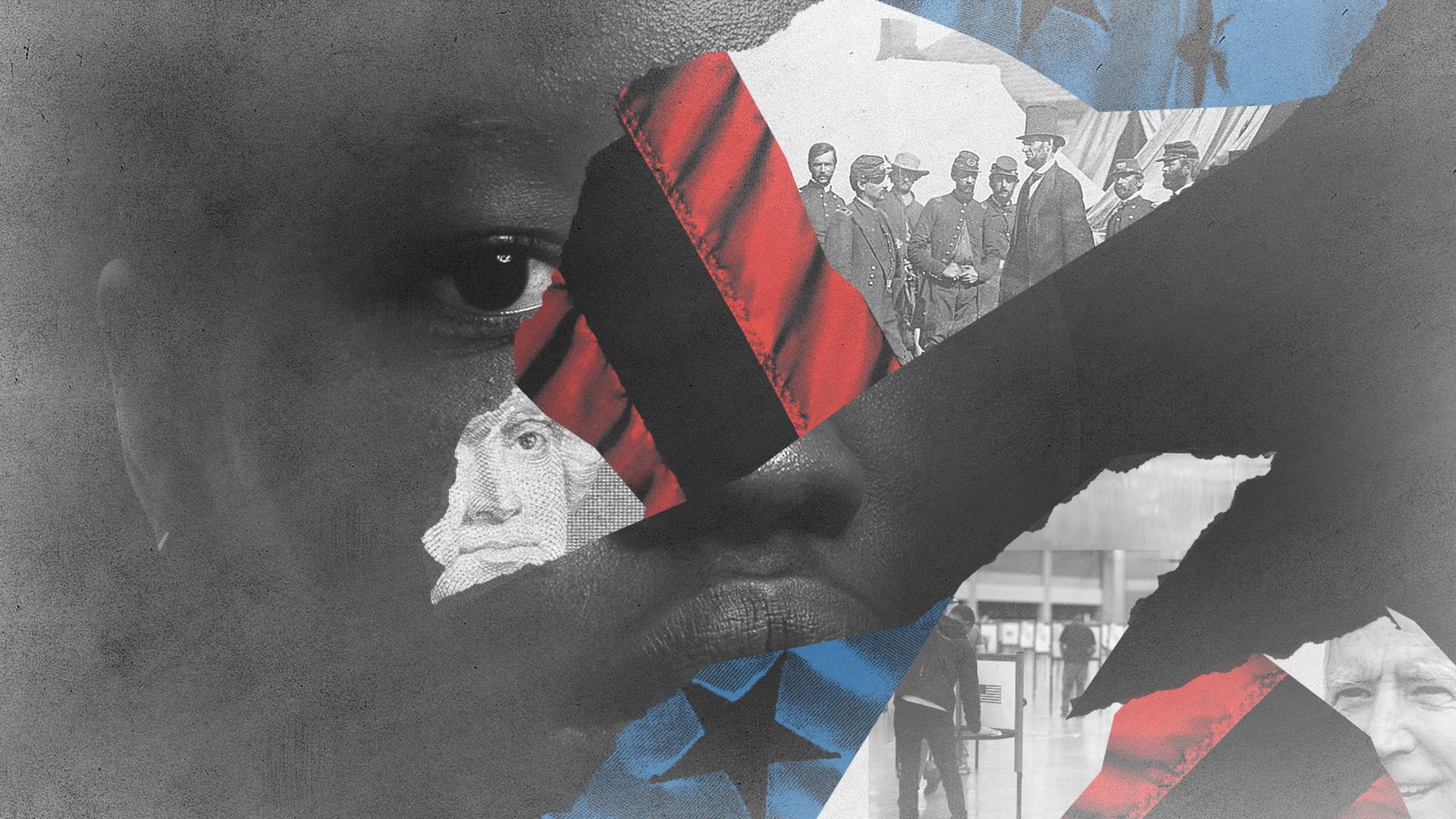
Jemal Countess / Getty Images

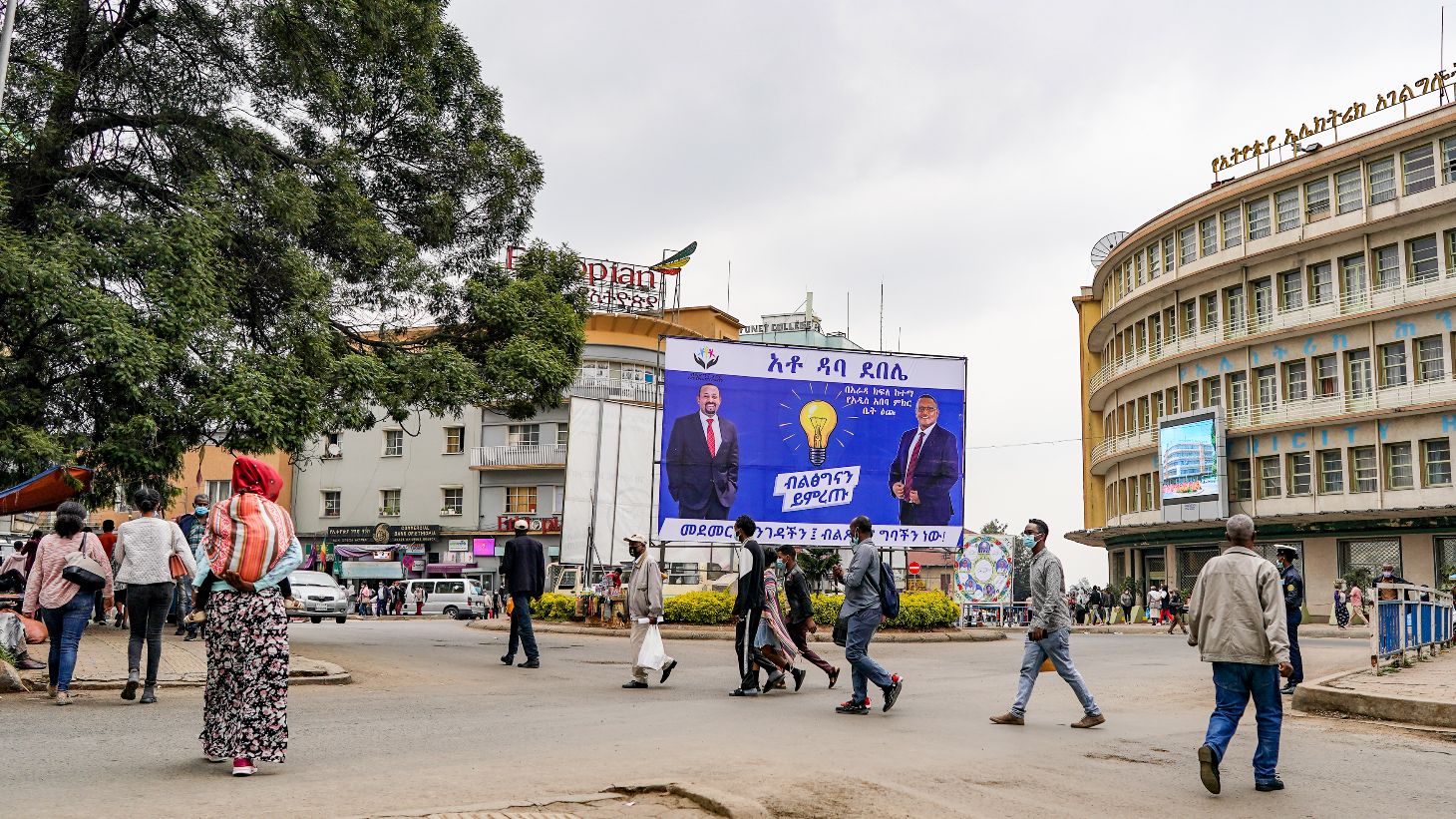
There’s one thing that all evangelical Christians in Ethiopia can agree on: Three years ago, when Prime Minister Abiy Ahmed came to power, their country was transformed.

The transition to an ethnically Oromo leader marked a break from 27 years of rule by the Tigrayan People’s Liberation Front (TPLF). And in a country historically dominated by Orthodox and Muslim believers, Abiy became the first openly evangelical head of government Ethiopia ever had.

But since a bitter and violent conflict broke out between Abiy’s government and the formerly ruling TPLF in the northern Tigray region in November 2020, evangelicals—who make up just over 18 percent of the population—have been divided over how to respond.

The majority, according to Christian Ethiopians and ministry workers in Ethiopia that I interviewed, support the military operation. Their support has held strong even as reports of civilian deaths, ethnic cleansing, horrific human rights abuses, and widespread hunger inflicted on the Tigrayan population rise in scale and urgency.

Earlier this month, the UN announced that more than 350,000 people in the Tigray region are already living in famine conditions, with another 1.7 million approaching famine. While the national government this week unilaterally declared a ceasefire after Tigrayans recaptured their regional capital, the TPLF is vowing to continue the fight.

Mazaa (a pseudonym), a 44-year-old who runs a K­­–8 school with her husband outside of Addis Ababa, has tried to share her concerns about the grave suffering of Tigrayans with fellow evangelicals. She asked not to be named out of fear of retribution against her students’ families.

Her school near the capital city serves a number of Tigrayan families; she has seen firsthand how the fathers of her students have been “disappeared,” and then how the surviving widows and children are isolated socially and economically. Her friends’ response? “These people brought it on themselves. It’s not without cause.”

“I don’t care what the cause is,” Mazaa told me. “Jesus says we have to love one another. Love doesn’t take any conditions. The love we offer and give has to be without any condition.”

She also believes the war is unnecessary. The dispute between Abiy and the TPLF “should have been resolved another way. Fighting could have been avoided, if there was dialogue or reconciliation or willingness on their part to go through a lot of steps.”

But Mazaa is in a relatively small minority. Among non-Tigrayan evangelicals, the justification for the war extends decades back. Under the TPLF, Protestantism was treated like a second-class religion. Muslims and Orthodox Christians were given preference in myriad ways, from political access to venue options for worship services. That’s on top of the large-scale oppression perpetrated by the Ethiopian People’s Revolutionary Democratic Front (EPRDF), the ruling coalition dominated by the TPLF, which regularly jailed dissidents, censored the internet and media, and limited individual freedoms.

Before the TPLF, when Ethiopia was under imperial and then Communist rule, the oppression against evangelical Christians was even worse, with regular executions and imprisonments. But all that changed with Abiy’s unexpected rise to power. He freed thousands of political prisoners, unblocked hundreds of websites, facilitated the end of a schism within the Orthodox church—and promoted long-awaited equity for evangelical Christians.

In Ethiopia, the term “Pente,” which began as a nickname for Pentecostals, has come to refer to evangelicals and most Christians outside the Orthodox Church. The prime minister attends a Pente church whose denomination is part of the Evangelical Churches Fellowship of Ethiopia.

“Right now, the evangelical Christian is getting more attention, is getting rights, is getting more opportunities to be part of the political movement because we’re being led by an openly evangelical Christian,” explains Eshe (a pseudonym), who works for two evangelical ministries and attends a Mennonite-affiliated church in Addis Ababa.

She does not support how Abiy is handling the conflict, and she expressed concern that her views could get her labeled as part of the “opposition.” But for many other evangelicals, Abiy is a gift from God, an anointed leader, and even a prophet.

Abiy’s many political and social reforms have been widely celebrated across Ethiopia—and the world. Up until last year, Abiy was best known as the man who made peace with longtime foe and neighbor Eritrea, which resulted in the 2019 Nobel Peace Prize.

But the evangelicals’ gain has been the Tigrayans’ loss, including evangelicals living in the Tigray region, which is home to a higher concentration of Orthodox Ethiopians and their holy sites. According to a recent statement from the Evangelical Churches Fellowship of Tigray Region:

Tigray has been ravaged by a war of revenge, destruction, and death. The damage to the people of Tigray is immeasurable, and the enormity of the need of millions of people is great and pressing.

One of the unforeseen and unexpected experiences of the current conflict has been the fact that the leadership of the Ethiopian Evangelical church has supported this evil war against the population of Tigray. The Ethiopian Evangelical church has lent its financial and unwavering spiritual support to the Ethiopian government through false prophecy of guidance and praying for the success of the military mission against the people of Tigray.

That evangelical support seems to be rooted in a particular interpretation of what God is doing in the current conflict. Many evangelical Christians see the events in Tigray as the judgment of God. Several of the Ethiopian Christians I interviewed said their friends and family readily declare that the Tigrayans “deserve what they get.”

Biruktawit Tsegaye, a 27-year-old volunteer with an evangelical college ministry, believes the TPLF laid the groundwork for the current conflict.

“TPLF corrupted the nation, the people, based on ethnicity. TPLF sowed a bad seed based on ethnicity, so the nation is divided. TPLF is based on differentiating and dividing the nation in the past 20 years,” she explained to me. “After that, with the new government coming in, they refuse to participate and accept the new change. That is the main reason for the division and the war.”

Her friend Desalajn Assefa Alamayhu, an evangelist who is Tigrayan himself, agrees. And he accuses Christians in Tigray of being active contributors to the conflict.

“Tigray Christians participate in evil things with TPLF. They participate completely with TPLF. They said, ‘In [the] Bible, we can oppose federal government because we need freedom.’” In contrast, he contends, “most Christians in Ethiopia agree with the federal government because Dr. Abiy teaches and preaches from the Word of God.”

But to Eshe, a just response to past offenses and the current insubordination of the TPLF should not have been a large-scale conflict.

“It was just between two political parties. The leaders are the ones in conflict,” she explains. Eshe believes that the previous TPLF leaders who committed serious crimes number less than a hundred. Abiy’s government should have simply gone after those individuals instead of “taking war as a solution.”

The question that many evangelical Ethiopians seem to be wrestling with is this: With whom would Jesus side—the charismatic evangelical leader determined to defeat his enemies, or the primarily nonevangelical Tigrayans who are suffering immensely?

Where they ultimately land is complicated by the fact that media reports and even interpersonal communications coming out of Tigray have been tightly controlled; misinformation and propaganda abound. And under a government that has shown itself increasingly willing to punish dissidents, there is the real threat that vocal opponents of the war could be jailed—or worse.

For Kofi (a pseudonym), where his loyalty lies is clear.

“For me, as a Christian, our allegiance is with God first. The Bible says we have to ally with those who are hurt,” said the 26-year-old, who declined to be named to protect his missions agency, which partners with churches and evangelizes in Tigray.

“That’s one of the things that Christ says to the disciples: Cry with those who are crying, share with those who don’t have nothing. We have to be with those who are suffering. No matter the political explanation, I don’t care. That’s not the primary need. There are many who are suffering and in need of our prayers and help.”

Editor’s note: A citation of theologian Paulos Fekadu has been removed from this article due to his claim that the linked publication mistranslated his position.

News

140 Nigerian Baptist Students Kidnapped in Kaduna

(UPDATED) “This is a very, very sad situation for us,” says Bethel Baptist pastor and state CAN leader whose son narrowly escaped.

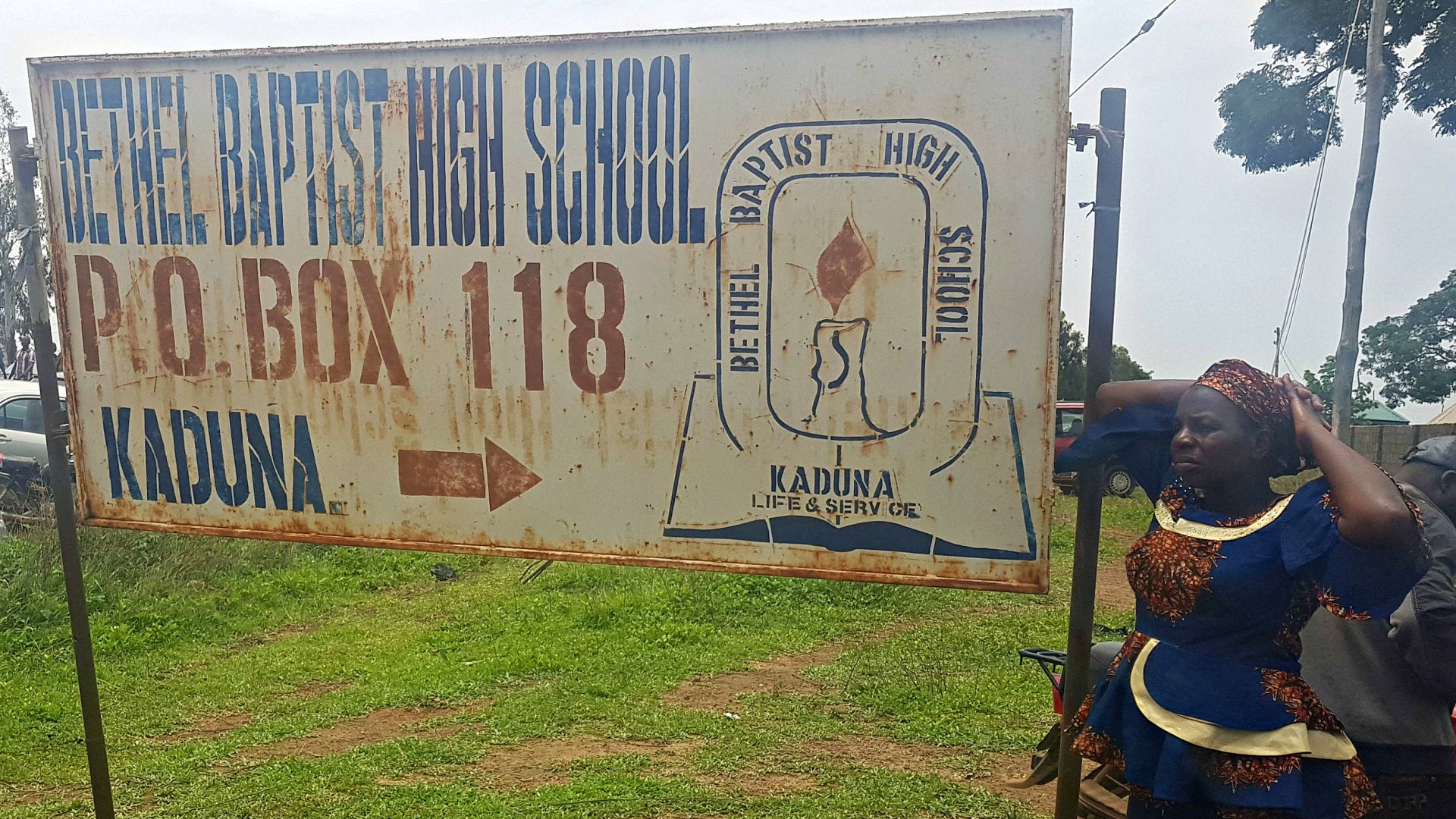
Parents stand beside a signpost of Bethel Baptist High School where 140 boarding students were kidnapped by bandits in Kaduna, Nigeria, on July 5.

Parents stand beside a signpost of Bethel Baptist High School where 140 boarding students were kidnapped by bandits in Kaduna, Nigeria, on July 5.

Christianity Today July 5, 2021
Kehinde Gbenga / AFP / Getty Images

Editor’s note: This article was updated July 6 with reactions from Nigerian Christian leaders, and July 7 with photos and kidnapping statistics from The Associated Press.

More than 100 students at a Baptist boarding school in Nigeria’s northern state of Kaduna were captured early Monday morning in what Nigerian church leaders call the worst kidnapping of Christians to date.

Shooting wildly, armed assailants breached the walls of Bethel Baptist High School on the outskirts of the state capital, Kaduna, at about 2 a.m. on July 5 and took students in the school hostel away at gunpoint, area residents told Morning Star News (MSN).

Efforts were still underway to determine exactly how many students were abducted. A Bethel teacher told Agence France-Presse (AFP) that 140 students were kidnapped while 25 students escaped, but area residents living close to the school told MSN that 179 children were abducted of which only 15 escaped.

Established by Bethel Baptist Church in Kaduna, the boarding school was attacked after kidnappers overcame security personnel, sources said.

Parents wait for news by a pile of shoes left by their children abducted from Bethel Baptist High School in Damishi Kaduna, Nigeria, on July 6.

Tragically such school abductions are becoming common in northern Nigeria, where since December about 950 students have been kidnapped—half in the past six weeks, according to the the UN Children’s Agency. This is the fourth abduction of students in Kaduna state in the past six months. There have been seven mass kidnappings of students in Nigeria so far this year.

World magazine recently examined the kidnapping surge, which the Nigerian government blames on bandits while many Christians blame Muslim Fulani extremists.

Israel Akanji, president of the Nigerian Baptist Convention, attributed the attack to bandits and described the situation as “indeed pathetic” in a Tuesday (July 6) statement sent to CT. He stated that 28 students have been reunited with family while 125 students remain missing.

“We strongly believe that, by the grace of God, these students will safely return to their parents soon,” stated Akanji, citing ongoing search and rescue operations by the Nigerian military. He also expressed condolences to the families of two army soldiers who died trying to protect the school.

President Muhammadu Buhari ordered military, police, and intelligence agencies to “intensify efforts” and “act swiftly” to “ensure safe and early release” of kidnapping victims in Kaduna as well as neighboring Niger state, according to a statement by Garba Shehu, the president’s special advisor for media and publicity, sent to CT.

Buhari “described kidnapping as cowardly and despicable, condemning it as an assault on affected families and the nation,” stated Shehu. Such incidents are “threatening to undermine efforts in boosting school enrollments in states that were adjudged educationally backward,” he stated.

“Christians in Kaduna State have suffered too much from the hands of their attackers, whether Fulani herdsmen, bandits, or terrorists,” Samson Olasupo Ayokunle, president of the Christian Association of Nigeria (CAN) and a Baptist pastor, told CT.

A parent prays for students abducted through a breached wall at Bethel Baptist High School in Kaduna, Nigeria, on July 5.

Joseph Hayab, a Baptist pastor and chairman of CAN’s Kaduna state chapter, said his son was among those who narrowly escaped.

“Right now I’m speechless,” Hayab told MSN. “The school is an educational ministry of my church. This is a very, very sad situation for us.”

“Today is a day of mourning, as we grieve over what is the most serious attack and greatest tragedy to impact the Baptist community in Nigeria,” Elijah Brown, general secretary and CEO of the Baptist World Alliance (BWA), told CT. “I echo the words of a Baptist leader from Kaduna, ‘Our church is in serious pain.’”

Area resident Vincent Bodam said in a text message to MSN that parents and Christians rushed to the school and were wailing and praying for the rescue of the kidnapped students.

Omonigho Stella, another area resident, told MSN by text message, “Please let us pray for divine intervention.”

“Our trust is in God and I urge all parents to remain calm and keep faith in God for there is nothing he cannot do,” stated Akanji. “I appeal to the federal and state governments to intensify their efforts to ensure a total discontinuation of this dangerous, life-threatening, and embarrassing trend in our country.”

The Bethel Baptist High School hostel for male students following an attack by gunmen in Damishi Kaduna, Nigeria, on July 6.

Brown noted that in April, in the same area, a Sunday worship service at Haske Baptist Church was attacked, leaving one member dead and four kidnapped to this day.

The BWA ranks Nigeria as the world’s second-most vulnerable country for Baptists on its inaugural Baptist Vulnerability Index, which assesses ministry challenges—including religious freedom, violence, hunger, and livelihood—in the 126 countries and territories with BWA members.

Randel Everett, founder and president of 21Wilberforce and an ordained Baptist pastor, said numerous fact-finding trips to northern Nigeria by his religious freedom advocacy group have found “the problems [there] to be very complex and apparently not being addressed effectively by their own government nor the global community.”

“We are in agreement that Nigeria is one of the most vulnerable countries in the world where churches affiliated with the BWA are located,” Everett told CT. “The increased violence against children in Nigeria cannot be overlooked by any nation concerned about justice.” (On Wednesday, 21Wilberforce and BWA will cohost a religious freedom pre-conference for the Baptist World Congress, held once every five years, that includes Jos-based Anglican archbishop Ben Kwashi.)

The Bethel Baptist High School hostel seen following an attack by gunmen in Damishi Kaduna, Nigeria, on July 6.

Nigeria leads the world in the number of kidnapped Christians, with 990 tallied by Open Doors.

In the watchdog’s 2021 World Watch List of the 50 countries where it is most difficult to be a Christian, Nigeria broke into the top 10 for the first time, rising to No. 9 from No. 12 the previous year.

Numbering in the millions across Nigeria and the Sahel, the predominantly Muslim Fulani comprise hundreds of clans of many different lineages who do not hold extremist views; however, some Fulani do adhere to radical Islamist ideology, the United Kingdom’s All-Party Parliamentary Group for International Freedom of Religion or Belief (APPG) noted in a recent report.

“They adopt a comparable strategy to Boko Haram and ISWAP [Islamic State West Africa Province] and demonstrate a clear intent to target Christians and potent symbols of Christian identity,” the APPG report states.

Christian leaders in Nigeria have said they believe herdsmen attacks on Christian communities in Nigeria’s Middle Belt are inspired by their desire to forcefully take over Christians’ lands and impose Islam as desertification has made it difficult for them to sustain their herds.

Gideon Para-Mallam, a Jos-based peace advocate and a Lausanne Movement co-catalyst for leadership development, called the Bethel Baptist attack “calculated and targeted” and “the most significant kidnapping of Christian students to date.”

“There far too many ungoverned spaces in Nigeria today, with our forests becoming killer dens for the evil triumvirate of Boko Haram, Fulani herdsmen, and bandits,” he said. “All are birds of the same feather, flying in different directions but seeking to arrive at the same destination: to uproot Christians, grab their lands, and Islamize Nigeria.”

“Christians are only being tolerated in today’s Nigeria,” Para-Mallam told CT. “No doubt Muslims are also being kidnapped and killed. But this will not divert from the long-term goal of silencing the Christian faith in Nigeria.”

In December, the US State Department added Nigeria to its list of Countries of Particular Concern for engaging in or tolerating “systematic, ongoing, egregious violations of religious freedom.” Nigeria joined Burma, China, Eritrea, Iran, North Korea, Pakistan, Saudi Arabia, Tajikistan, and Turkmenistan on the list.

In the category of non-state actors, the State Department also designated Nigeria’s ISWAP and Boko Haram among other Islamist extremist groups as “Entities of Particular Concern.”

Also in December, the prosecutor of the International Criminal Court called for an investigation into crimes against humanity in Nigeria.

Public affairs analyst Malam Bashir Mohammed attributed the disturbing rise of kidnappings to poverty, unemployment, and greed.

The recent spate of kidnappings has become Nigeria’s worst-case scenario, he said, proving difficult to handle despite the efforts of security agents. He called on Nigeria’s leaders to rise to the challenge.

“I can’t imagine the way and manner these agents of banditry should be allowed to wreak havoc on innocent people for no just cause,” he said. “The government ought to take firm and ruthless action against the perpetrators of the despicable act.”

“Kidnapping is gaining credence in the country, because it has been considered by those blatantly committing the act as a legitimate business,” he said, adding that some have succeeded in getting ransoms without being apprehended.

Many schools have been forced to close as authorities are unable to adequately protect them.

Flip flop sandals belonging to students of Bethel Baptist High School following an attack by gunmen in Damishi Kaduna, Nigeria, on July 6.

The spate of mass abductions from schools in Nigeria has grown significantly since 2014 when members of the jihadi rebels Boko Haram abducted 276 female students from a government school in Chibok in northeastern Borno State.

“Nigerians generally—and Christians in particular—are angry, disappointed, and confused,” said Ayokunle. “They see the government as a ‘let down’ because it was insecurity they fiercely criticized in the last administration and which [the current government] promised to put an end to. But now, the insecurity is worse than before. It is getting closer and closer to everybody. … We are doubting the sincerity of some of our leaders in fighting this monster of insecurity.”

The CAN president advises the Buhari administration to seek foreign assistance in funding more soldiers to provide security, and asks for the international community to come to Nigeria’s aid “as they did in Syria and other places which may not even be as frightening as our own in Nigeria.”

Ayokunle explained:

“There must equally be sincerity on the part of our leaders in fighting insecurity without doubt of aiding and abetting it. Furthermore, there must be sincerity in bringing to book groups of people and individuals involved in terrorism, banditry, kidnapping, and those aiding and abetting these. There should be no sacred cow.

I am of the view that intelligence gathering should be increased and, more importantly, some institutions and corporate bodies—including worship centers—should be allowed to own their own guns or provide guns for their security men to protect them. These should be deliberately given short-term training to be able to arrest the situation on the ground.

While Para-Mallam’s family operates a peace foundation in Nigeria’s Middle Belt, he believes the time has come for churches to “provide armed training to members as a way for them to defend their churches and schools,” as well as to “form ‘vigilantes’ [akin to neighborhood watch groups] that are well armed and who should coordinate with the law enforcement agencies to take the offensive into the bush.” He also advocates for more homeschooling and virtual learning for Christian students until boarding schools are more secure.

“Staying helpless year in and year out is now old-fashioned. Enough talk; this is time for action,” said Para-Mallam. “Subsequently, there won’t be a need to discuss any strategic steps on the pages of newspapers, online, etc. Let the results do the speaking.”

He noted how about 100 mostly-Christian girls from Chibok remain missing after seven years in captivity, while mostly-Muslim students in Kankara and in Zamfara and Niger states have been quickly rescued. “Christians keep crying out and expecting help from the government, which isn’t forthcoming,” he said. “Should we continue like this? No!”

“Self-defense is an imperative step which must be taken now,” he told CT. “I will never support Christians going to attack anyone; however, Christians must defend their schools and churches in very practical ways.”

“We have seen that though prayer works, prayer alone cannot do it because faith without works is dead being alone,” Ayokunle told CT. “The situation now is too worrisome as the terrorists and bandits are closing in in everybody. My appeal to the government is to redeem its image by doing all things to get these students out of the den of their kidnappers very soon. The whole world is watching our leaders.”

“I urge all of us to advocate, work for strengthened good governance throughout the Middle Belt, and to fervently stand in prayer for these young people who are right now living through this horrific trauma,” Brown told CT. “Their release and restoration is the first priority, and our prayers remain with them and their families who are bearing enormous grief.”

Reporting by Morning Star News’ Nigeria correspondent, CT editors, and AP journalist Ibrahim Garba in Kano, Nigeria. AP journalists John Shiklam in Kano and Carley Petesch in Dakar, Senegal also contributed.

News

I Was Sick and You Gave Me a WhatsApp Group

In India, Christian volunteers didn’t wait for churches when COVID-19 hit. The resulting Love Your Neighbor Network offers lessons for believers in other countries suffering second waves.

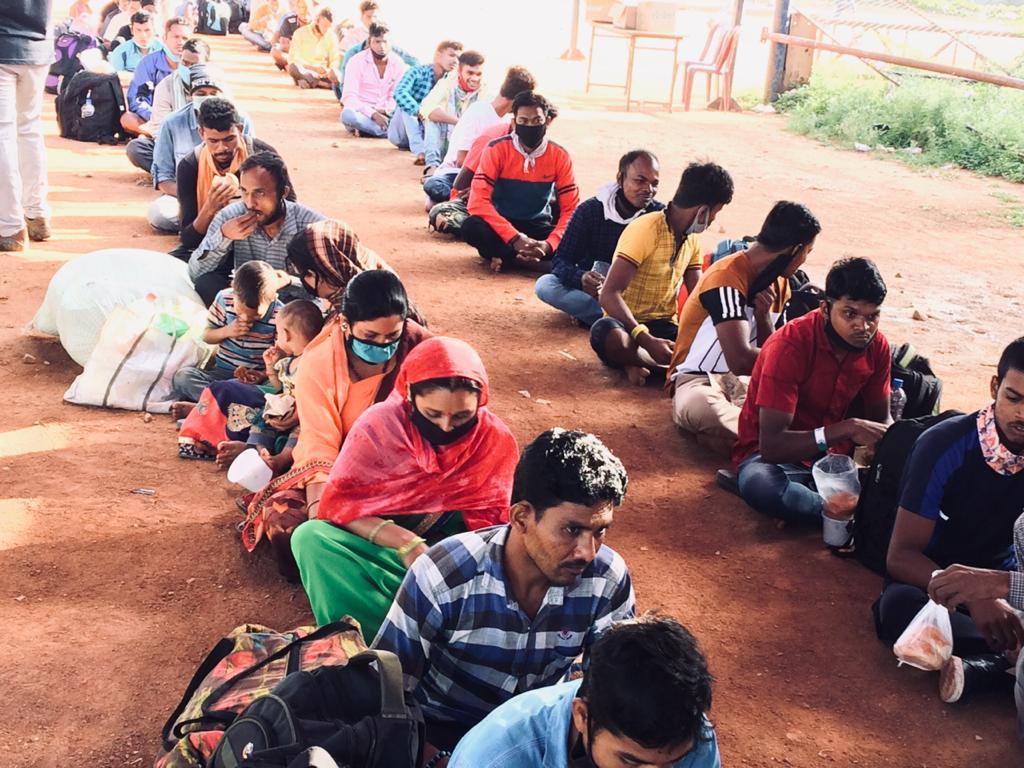
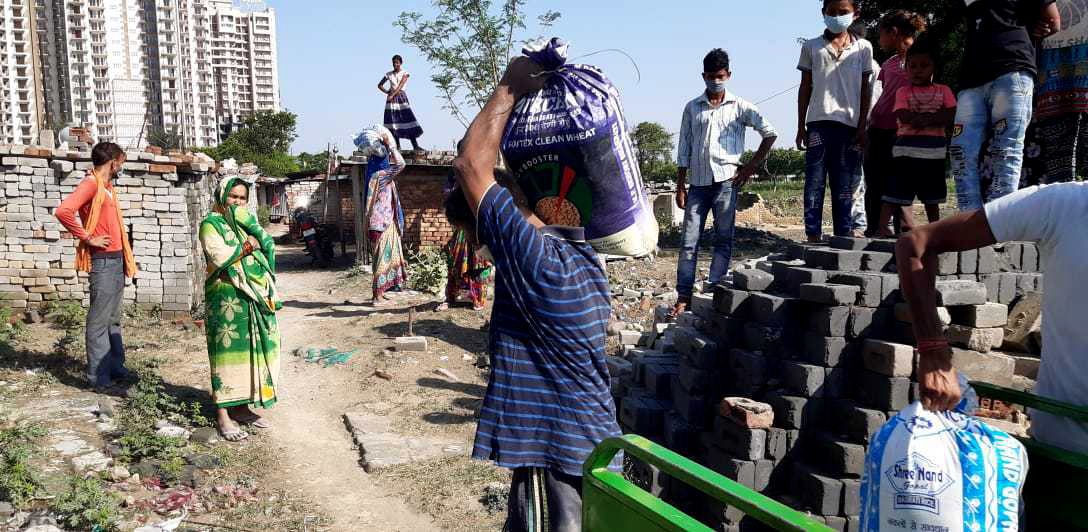
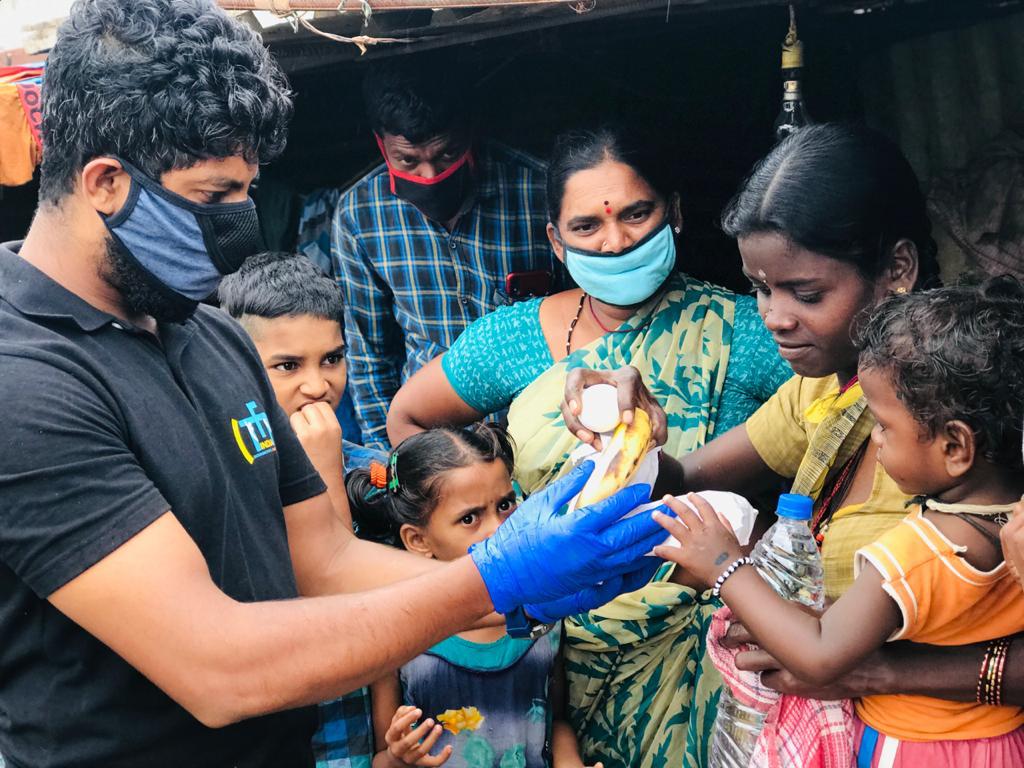
Indian Christian volunteers used WhatsApp to assist migrants and distribute food during the pandemic.

Indian Christian volunteers used WhatsApp to assist migrants and distribute food during the pandemic.

Christianity Today July 2, 2021
Illustration by Mallory Rentsch / Source Images: Love Your Neighbor Network

Amid the harrowing stories of COVID-19 carnage in India, hundreds of Christians across the country have volunteered via the Love Your Neighbor Network, an organic lay-led effort that has brought relief and comfort to tens of thousands of Indians impacted by the pandemic.

In May 2020, during the world’s largest nationwide lockdown, Rahul George, an entrepreneur in Bengaluru and founder of the network, was stirred to do something when he saw visuals on local media of daily-wage migrant laborers walking back to their villages without any means of sustenance and support.

“The images kept haunting me,” he told CT. “I was angry and depressed, often looking at the little children who were accompanying their parents and thinking of my own children and if I was a migrant worker myself.”

On March 24, the Indian government had announced a three-week nationwide lockdown, giving its 1.38 billion people only four hours’ notice. This severe step, which ended up being extended for two weeks, was viewed as a “human tragedy” by media outlets as it left millions of daily-wage migrant laborers without work overnight.

Along with their families, the migrants were forced to leave locked-down cities and return to their home villages on foot since public transportation was not available. Many collapsed and died on the road as they battled starvation and fatigue while walking hundreds of miles.

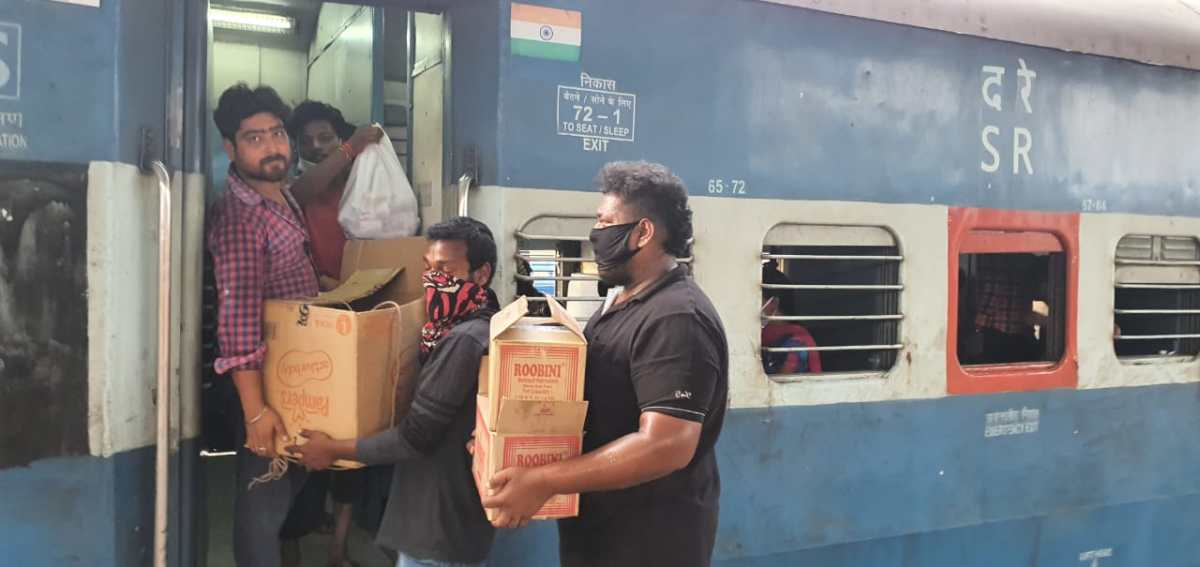
Volunteers distribute food to migrant laborers in Chennai.

George reached out to his contacts and asked if they could join together to help people in need. As often happens in India, a group was formed on WhatsApp. Within two days, it grew to 256 members—the maximum number allowed by the social media platform.

“This is the first time we had organized anything like this,” said Pranitha Timothy, a human rights defender in Chennai. “We didn’t know how to go about it. [But] India is known for WhatsApp: Everybody uses it, it’s easy to use, and we can communicate through groups, so coordination is much easier with it.”

George and Timothy, along with Sharon Dominica in Delhi, form the core team of the initiative. Some members had large personal networks which helped the group grow; for example, Timothy is part of the Lausanne Movement. Once the WhatsApp group was full, the team divided it into new groups for different cities and states.

A diverse mix of Christian doctors, lawyers, IT professionals, and even believers within the Indian army, government, and police affiliations came together from across the country. Then churches and Christian NGOs were strategically invited to join, offering more expertise and volunteers for the network.

In total, three city groups and eight state groups were formed, with an average of 100 volunteers in each. As resources were raised, the groups divided themselves further into smaller task-specific teams, according to the needs of each state or city. Some teams organized paperwork, transport, and food for thousands of migrant laborers as they sought to return home. A call center was also set up to facilitate communication with migrants who spoke different languages.

“People became more sensitive to the needs of migrants,” said Saraswathi Padmanabhan, leader of an organization that serves such laborers in Bengaluru. “God has called us to work with migrant communities, so it was heartwarming to see people [recognize] the needs and challenges [of migrants] and come forward to help.”

Migrant laborers with their food parcels in Bengaluru.

Anita Kanaiya, head of a Bengaluru nonprofit whose office was used to stock food for the effort, described to CT how the volunteers would start at 5:30 a.m. daily and distribute crates of food to places where migrants would gather, such as highways and police and railway stations.

“What we were trying to do was to be the church in our own small ways,” she said. “The church on the ground, doing what was needed to meet a need.”

“There is joy in having served countless faces that we don’t know or may never meet again. There were even people who told us, ‘You’re like God for us; we haven’t drunk water in three days while we’ve been on the road,’” Kanaiya said. “So we’re humbled that we were in that place and were given the opportunity to serve people.”

Since the endeavor was a large-scale, distributed operation across the country, Love Your Neighbor Network leaders—who convened virtually this past weekend to compare notes and to strategize for the future—don’t have an exact count of how many people have been helped, but know it was tens of thousands in Chennai alone.

Volunteers distribute groceries to daily-wage workers in Delhi.

While the network focused on the migrant worker aspect of the pandemic last year, it switched to medical needs this year as COVID-19 cases began to overwhelm India’s health care system during the recent second wave.

Help lines were set up in different cities to assist people with finding hospital beds and oxygen cylinders—both of which became scarce—and receiving medical advice from the network’s volunteer doctors regarding home treatment if infections were mild. The network also formed specific teams that offered prayer and counseling services while others distributed meals and groceries to COVID-19 patients isolating at home.

“Many of us don’t come from a medical background. Many of us have no experience with doing something like this,” said George. “But God taught us and we learned things on the job.”

Such volunteer work was challenged, even for nonprofit veterans.

“For all of us who were average individuals with no training to be calling different hospitals, getting rejected, getting shouted at, speaking to patients, with their attenders losing patience while we were on call with them—it was very intense work to do for 12 to 14 hours a day and rinse and repeat for three to four weeks at a stretch,” said Ajit Sivaram, leader of an organization providing non-formal education to underprivileged children in Bengaluru.

“For me, as someone who runs an NGO, I think I was able to lend some structure to the [network] and bring some of our team to help out and fill in the gaps,” he told CT. “But to see a group of random people—who have never met each other—organize themselves, find a need, go after that need, and make a difference in meeting that need was simply amazing.”

Volunteers distribute food to migrant laborers in Bengaluru.

Tina Draper, a COVID-19 survivor in Chennai, said the Love Your Neighbor Network helped her secure a hospital bed, gave her medical advice for home treatment once she was discharged, got her an oxygen cylinder when her health weakened, provided counseling and prayer through her journey with the virus, and took care of her medical expenses. “I did nothing except be the patient,” she said.

“We were not sure what we were going to do, but their help and assistance came just in time for our family,” said another patient whom the network helped find an oxygen bed. “Their follow-up on my family’s health also meant a lot to us.”

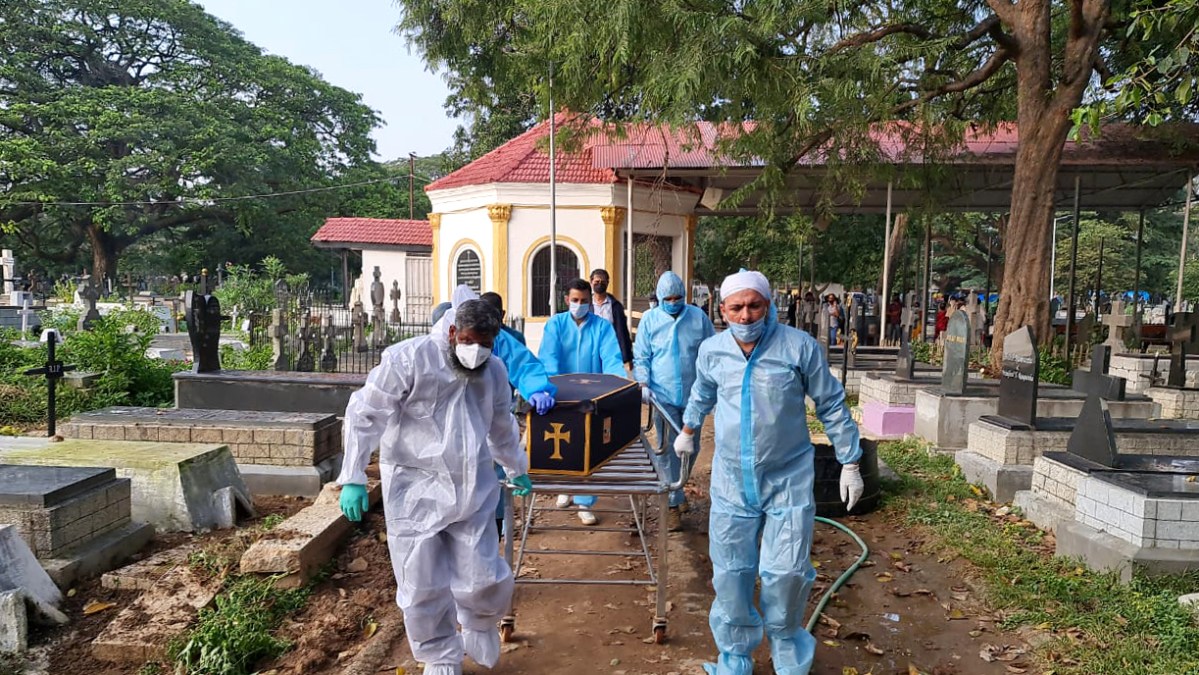
The network’s Bengaluru chapter partnered with Mercy Mission, a Muslim-led interfaith volunteer group in the city, to help with burials and cremations of deceased COVID-19 victims. George even performed the last rites of a Hindu man whose entire family was ill with the virus. “I became a son of that family that day,” he said.

Even as lay Christians and Christian nonprofits united together, the network found it difficult to get churches to join them.

“In the first wave, very few churches came forward,” said George. “We talk so much about faith and the power of prayer, but it was people of other faiths who came out [into the community] and showed their faith by helping others.”

“In the second wave, we had churches come forward because many of their own members were getting infected and they couldn’t be silent anymore,” he said.

“Usually, the church is very quick to respond. But I think COVID-19 and the suddenness and fear of it kind of immobilized the first responders,” said Kanaiya. “It was in seeing others—especially Mercy Mission, the speed at which they came together and the sacrificial way in which they went about things—that we realized, ‘This is exactly what we [Christians] are about, so why aren’t we there?’”

George praised Mercy Mission, a conglomeration of about 20 Muslim NGOs and mosques, for putting aside their differences and springing into action faster than local churches. “We look down on people of other faiths, especially Muslims, but here in India, God showed that they were the Good Samaritans when the pious and religious looked the other way,” he said.

Volunteers with Mercy Mission in Bengaluru help bury deceased COVID-19 victims.

Eventually churches did join the network. “People individually were doing things to help people around them, but as a church we didn’t have any official program for COVID relief—we were actually looking for something we could do,” said Zippora Madhukar, a leader at a multisite independent church in Chennai. “So, this was definitely something we wanted to bring attention to for our church members.”

Madhukar also oversaw the network’s medical team in Chennai, which at one point was receiving 150 requests a day for help finding hospital beds. However, when her team invited other churches to get involved, they were “very reluctant, which was disheartening.” The plan had been to restrict the medical team to fellow Christians only, but since churches were not providing enough volunteers the group opened up to all faiths.

“I think churches need to get out more and not just be concerned about their members and their own welfare, but also be concerned about the city they live in,” said Madhukar. “Because that’s where we’re called to be salt and light—not just from the safety of our churches but right out there where people need us.”

Marsha Thompson, who pastors an independent church in Chennai along with her husband, was inspired enough by the team’s efforts to volunteer to be on call daily for the helpline.

“As a church, we try to stand in the gap whenever possible,” she said. “But in this effort, we didn’t identify as members of one church or another. We were just trying to join hands with other like-minded people to try to be a blessing.”

The Love Your Neighbor Network showed that the priesthood of believers—lay Christians across India—can achieve as much as the institutional church when they work together with commitment and intent.

“I grew up thinking that the Indian Christian community can’t do much: We’re so small, we’re so few, we can’t really make a difference,” said Dominica, the core leader in Delhi who runs Project Kalpana, an initiative that helps migrant workers. “But my experience with the network has shown me that there is so much potential in the Indian church if we can come together. We just need to have the courage to step out and start these things and people will come alongside us.”

“I usually crib [complain] that the church doesn’t do anything, but this is the church,” said Timothy. “It may not be the organized church, but it is the church that God used to do this work.”

Some elderly people, who could not help on the ground, also supported the efforts through prayer and baking cookies for volunteers.

“It was everyone taking their two talents and putting it to use to meet probably our community’s greatest crisis to date,” said Sivaram. “There were no large organizations, it was just individuals saying, ‘I want to help.’ In a season when people were overwhelmed, each of them personally struggling, they came together and said, ‘I will still serve the other.’”

“We have to break down walls of hostility towards other denominations which are not our own, because we are one body,” said George. “Another denomination will have gifts that I don’t have, and I have to collaborate with them. There is power in our unity; when our walls are broken, there are phenomenal things that the church can do.”

“We have not tapped into what is possible with us. This pandemic just gave us a glimpse,” he said. “If 250-odd Christians, all complete strangers to each other, could start this and make such an impact, I’m just wondering what else can be done with all of us together—the 3 percent of the [1.38 billion] population that we are in India.”

For Christians in other nations who would like to better serve their communities during the pandemic’s second or third waves, George advised, “Join a network somewhere.

“Whatever you do must be viewed as an offering to the Lord Jesus. Just do your thing, and God will add to the numbers—whatever is required whether it is finances or talent,” he said. “The more faithful you are, the more will be added. That’s what we have seen with our eyes and we can testify to that.”

For Christians in other countries seeking to create efforts similar to the Love Your Neighbor Network in their own contexts, network leaders convened this past weekend to share best practices, including:

  • Recruit as many volunteers as possible by letting everyone be an admin of the WhatsApp group, so each can invite their own contacts.
  • Make the mission of the WhatsApp group very clear. Members are not doing anything for their own sake but only to meet the needs of others. And no forwards or irrelevant messages allowed, only messages about patients and their needs.
  • Each group will need several teams with their own coordinators focused on meeting various needs, including: to answer calls; to find hospital beds, ambulance services, and oxygen cylinders; to connect patients to doctors for medical advice for home treatment; to cook and distribute food for patients isolating at home; to offer counseling; and to pray.
  • Form a separate team for each city or state that will focus on raising funds, resources, and volunteers for the group.
  • Invite churches and nonprofits to join the network as soon as possible.
  • Explain the situation, the process, and structure to new volunteers and orient them. But even with a set process, the group must be willing to change with the times, adapt, and be flexible.
  • Set up a local COVID-19 help line for each city of a state. Circulate the number widely on social media, and have volunteers sign up for two-hour shifts.
  • Be intentional about keeping volunteers motivated. Provide support when a patient they were assisting passes away.
  • Work closely with medical volunteers on the team. It is a medical disaster, and needs physicians to support the initiative with their wisdom.
Books
Review

America Has Tried Three ‘Narratives of Belonging.’ None Worked as Planned.

How a sober look at failed projects of nationalism can help Christians envision a better way.

Christianity Today July 2, 2021
Josh Wilburne / Unsplash / Edits by Rick Szuecs

Three days after polls closed on one of the most divisive elections in recent American history, Joe Biden delivered a victory speech intended to unite a fractured nation. “I’ve always believed we can define America in one word: possibilities,” Biden said. Yet more than six months later, a majority of Republicans still insist the 2020 election was not conducted fairly, and just fewer than one-third of all Americans don’t consider Biden to be the legitimately elected president. Samuel Goldman’s new book, After Nationalism: Being American in an Age of Division, helps to place both Biden’s attempts at unity and national partisan polarization in a broader historical context.

After Nationalism: Being American in an Age of Division (Radical Conservatisms)

After Nationalism: Being American in an Age of Division (Radical Conservatisms)

University of Pennsylvania Museum Publications

160 pages

$14.32

After Nationalismis a gripping, fast-paced, and probing study into how American political leaders and thinkers—ranging from John Jay to Abraham Lincoln to Fredrick Douglass to Dwight Eisenhower—have debated the essence of American identity and what binds the nation together. Goldman, a political scientist at George Washington University, tells a history of repeated failed attempts by these American elites to sustain compelling “narratives of belonging.” He offers three symbols, or myths, of American identity that progress chronologically: covenant, crucible, and creed. Drawing inspiration from philosopher Alasdair MacIntyre’s After Virtue (1981), which identified fundamentally different conceptions of virtue “in which people mean different things by the same words,” After Nationalism points to a similar ambiguity surrounding the word nationalism.

Like MacIntrye, Goldman does not just describe a situation but also suggests a path forward. Instead of endorsing another attempt to define a single American nationalism, Goldman calls for embracing pluralism and strengthening the “institutions of disagreement” that can lead to compromise between communities.

This is an ambitious, possibly unfeasible proposition. Yet it charts a path forward for a polarized American society and, though it is not Goldman’s focus or concern, an equally polarized American Christianity. When Christians are confronted with a surging Christian nationalist movement that assures their centrality to American identity, a sober look at past projects of nationalism can spoil the allure, dampen the zeal, and spark the Christian imagination toward different, and better, narratives of belonging that honor the gospel.

Covenant, crucible, and creed

Any singular “origin story” of American national identity is flawed. The 1619 Project has recently been at the center of academic and popular debate in part because it posits that traditional nationalist motifs of pilgrims and yeoman farmers are incomplete without slaves, indentured servants, and displaced Native Americans. The myths of nationalism that Goldman catalogs and explores fail for many reasons, but one consistent bug is that none manages to acknowledge this complexity.

The elites of the American Revolution and early republic, many of whom envisioned a broader citizenry in the future but framed the nation for white male property owners, based their earliest attempts at nation-building on the shared mythology of New England Puritanism. Seventeenth-century New Englanders had propounded the classic Calvinist conception of a covenantal relationship between obedient humans and God’s favor. After the American Revolution, the covenantal ideal was revived by some founders as the basis for defining the new American nation.

This attempt, one of many in the early republic, was a mixed success at best. Covenantalism originated in the ethnically and religiously homogenous communities of New England, which were governed in cooperation with church authorities. The concept was a poor fit for a new nation that spanned 13 former colonies, contained diverse ethnic and religious communities, encompassed slave and free states, and pursued a federal separation of church and state. Yet a critical mass of New England founding fathers, especially John Adams and John Jay, and supportive New England intellectuals such as Yale president Timothy Dwight and lexicographer Noah Webster, took the “New England origin myth” of American greatness and tried to shoehorn it into the new nation.

Grading on a curve, covenantal nationalism was more coherent than what came later. But even by the early 19th century it had failed to solve the problem of national identity, address the sin of chattel slavery, or anticipate looming demographic changes. The republic was becoming far more theologically diverse (if still overwhelmingly Protestant), and New England no longer dominated its culture. Waves of European immigrants made the country less ethnically homogenous and geographically confined, and the symbol of a crucible (or a melting pot; Goldman uses the two terms interchangeably) to describe American identity emerged to accommodate this new reality for the next century.

The idea of a crucible, writes Goldman, was “optimistic” and “open-ended,” which made the symbol “a very different image of American origin and purpose to the New English covenant.” Where the covenant had rooted itself in patriarchs who established a sacred community, the crucible looked to the future, to a new type of human and a new type of nation, to something far more innately good and innocent than a Calvinist would allow.

A crucible is intrinsically violent to the things you throw into it, and the American crucible was no exception. The increasing diversity of the nation’s population led to ethnic strife, urban mobs, and actual wars, including the Civil War, as more immigrants from more parts of the globe (still mostly Europe, but now including eastern and southern Europe as well as East Asia) joined the body politic. Many did so only partially, with enclaves like the “German Triangle” between Milwaukee, Cincinnati, and St. Louis maintaining significant autonomy until the xenophobia of World War I led to its demise.

Both chattel slavery and the rise of Jim Crow segregation overlapped with the height of crucible nationalism. The durability of anti-Black racism and the predominant feeling among white elites, from politicians to intellectuals to new social scientists, that African Americans were prototypical “unmeltables,” prompted observers, Fredrick A. Douglass chief among them, to hammer on the shortcomings of the melting-pot ideal. Douglass emerges as one of Goldman’s favorite thinkers for his insights into the limits of American identity based on ethnic, religious, and cultural fusion. Douglass saw earlier than most that anything less than “perfect civil equality to the peoples of all races and of all creeds” would leave African Americans out.

Douglass uttered these words in 1869. Nothing close to “perfect civil equality” was on the horizon until the mid-20th century and the rise of a new metaphor for national identity: the creed. The line from Douglass to Martin Luther King Jr., who perfected the call for white Americans to finally fulfill their creedal destiny, was anything but foreordained. Creedal nationalism arose in response to new pressures, to a unique moment in and around World War II that fostered a vision of national unity among ever-increasing pluralism. As the US absorbed great numbers of European immigrants into a de-ethnicized whiteness while emerging as the primary global challenger against fascism and communism, Americans increasingly articulated a shared identity supposedly unencumbered by, and unrelated to, racial, ethnic, religious, geographical, or cultural difference.

This attempt at a creedal identity failed, too. Racial tensions, including expanded immigration from the Global South, white resistance to desegregation, and urban violence, dismantled the creedal vision that King and many other Americans endorsed. The Vietnam War shattered any semblance of creedal consensus. In its place was a “new tribalism” that rejected the melting pot, exposed the failed promises of unlimited growth and mobility, and called into question the basic values on which the American creed supposedly rested.

Christianity and national identity

In Goldman’s telling, we live on the other side of creedal nationalism with no clear successor. Historians have experimented with new formulations, including systemic critiques of the American project like Howard Zinn’s A People’s History of the United States(which Goldman notes could better be titled A Peoples’ History …). Zinn’s work is just one element of a much wider contemporary debate over public school curricula. Conservatives, including many evangelicals, have responded with their own interpretations of American history that often include covenantal, crucible, and creedal tropes. Still others have not given up on the creedal dream. Jill Lepore’s recent volume, These Truths, is a valiant effort, in Goldman’s estimation, to update the consensus creedalism of the mid-20th century, even if he believes it fails, in its more than 900 pages, to navigate the tensions between unity and inclusivity.

When Biden delivered his victory speech in November 2020, he recycled some of the classic tools of covenantal, crucible, and creedal nationalism. He called Americans to join him in “embark[ing] on the work that God and history have called us to do.” He appealed to the promise of America “for everybody, no matter their race, their ethnicity, their faith, their identity, or their disability.” He fixed the nation’s goodness on “the slow, yet steady widening of opportunity.” Biden made these gestures in an era of waning nationalism, but his faith seemed undaunted.

The rhetoric of American nationalism has always featured a Christian edge. Biden, a Catholic born in 1942, grew up at the height of Judeo-Christian civic religion and creedal nationalism, the very pressures that produced an exceptional, if incomplete, expansion in religious pluralism and racial equality. His maintenance of a type of creedal exceptionalism—that “at our best America is a beacon for the globe”—has been one popular response to forestalling the absolute collapse of American nationalism.

Another response has been the hard-edged Christian nationalism that evokes many of the same nationalist myths and tropes but in the service of a narrower identity that seeks to circumscribe rather than embrace pluralism. There have been many thoughtful theological critiques of Christian nationalism, in CT and elsewhere, and many of them do more than rebut ethnocentrism. They raise the uncomfortable question of how Christians should then understand their relationship to national identity. Should Christians cheer the end of nationalism or seek to revive it on their preferred terms? Should they go local, fixing their identity to their neighborhoods and congregations? Or should they go international, seeing themselves foremost as members of the global church?

Goldman spends frustratingly little time on prescriptions. Even so, there is something enduring about Fredrick Douglass’s “composite” ideal that demands neither homogeneity nor separation and warns against “the almost inevitable concomitants of general conformity” when sameness is the sought end.

Goldman’s final suggestion to embrace difference as the driving characteristic of American society, and to strengthen institutions of disagreement that allow for mediated compromise between communities, is one Christians can consider. Christians should contemplate the limits of a covenantalism that applies biblical promises intended for ancient Israel and the church to a modern nation, a crucible-ism that invests the nation with vast coercive powers over diverse communities, and a creedalism that sees a particular nation, and even a particular historical moment in a nation’s life, as revelatory of God’s ultimate ways. As the Catholic historian Carlton Hayes wrote almost 100 years ago, in the wake of the First World War, nationalism taken to its logical conclusion becomes a religion of its own. When it does, “it represents a reaction against historic Christianity, against the universal mission of Christ.” This should be the first acknowledgment in any Christian attempt at grappling with American identity “after nationalism.”

Which is not to discount that Christians have obligations to their fellow citizens and to their nations. Goldman claims for himself the word “patriot” as a way to acknowledge “that this country is, if imperfect, worthy of loyalty, celebration, and, when necessary, defense.” The difference between a nationalist and a patriot is often one of semantics, but Goldman insists there is an important distinction. “If there is a difference,” he writes, “it lies in whether one treats ‘we, the people’ as generated and sustained by our interactions under specific institutions in a particular place [nationalism], or bases the legitimacy of our institutions on an independent and previously existing communities [patriotism].”

As people who confess along with the psalmist that all the nations are God’s inheritance and under God’s judgment (82:8), this distinction is vital. In times of competing nationalist religions, just as in times when nationalist myths are ascendant, Christians will be tempted to conflate the tropes of the nation with the tenets of their faith. Wisdom may be the difficult task of untangling both without discarding either.

Daniel G. Hummel is a religious historian and the director for university engagement at Upper House, a Christian study center located on the campus of the University of Wisconsin–Madison. He is the author of Covenant Brothers: Evangelicals, Jews, and U.S.-Israeli Relations.

Ideas

Do Flags Belong in Churches? Pastors Around the World Weigh In.

Christian cases for yes, no, and flying other nations’ flags as congregations balance love of God, neighbor, and country.

Christianity Today July 2, 2021
Illustration by Mallory Rentsch / Source Images: Anthony Choren / Karl Fredrickson / Joseph Pearson / Unsplash

The Fourth of July falls on a Sunday this year. As American churches consider how to recognize the United States’ independence day during their worship services, CT decided to revisit a question first posed to American church leaders in 2013.

Here’s what their counterparts from 11 different countries have to say in 2021. Answers are arranged from Yes to No:

Egypt: Sameh Maurice, senior pastor, Kasr El Dobara Evangelical Church in Cairo

Yes, I agree with displaying the flag of my country in the church. The flag of my country only and not other countries, as it is a spiritual and not a political orientation.

The purpose of raising the flag is to keep my heart united with my people in prayer for the salvation of their souls. It’s to remember that I must stand in the gap for my people, that they may know the Lord and see the light of the gospel, and to tell my country and my people how much I love them and pray for them.

Jordan: Hani Nuqul, pastor, Evangelical Free Church in Jabal Al Hussein, Amman

I strongly believe that each church building should post the flag on the building and in the sanctuary. As an elder and pastor, we made this decision a few years ago to do so in order to show our loyalty as citizens to the country of Jordan. We believe that by doing so, we are a good example and testimony to others and also following the teachings of the Bible.

As the Evangelical Free Church council, we have taken the decision to put the Jordanian flag in all local churches that belong to the council along with the church logo and flag.

Indonesia: Wahyu Pramudya, pastor, Indonesia Christian Church Ngagel in Surabaya

In Indonesia, we usually display our national flag in the sanctuary every August, which is the month when we celebrate our Independence Day (August 17). We proudly display the flag, as a strong symbol of our nationality, on the altar. We even decorate the church with red and white decorations and hold a special service on August 17 or on the closest Sunday.

When we display the flag in our church, it is not to express idolatry. We want to honor our national identity. It reminds us of our responsibilities as Christian citizens. It’s also a sign of gratitude for living in Indonesia.

Nigeria: Janet Onaolapo, general overseer, Abundant Life Gospel Church in Lagos

A flag is a symbol of a country and flying it indicates the importance of the country. So I fly the Nigerian flag in the church to present the country perpetually before the Lord for his divine visitation and to also indicate that we love Nigeria dearly. We pray for her every Sunday service.

I also fly the American flag in the church sanctuary because I really love America. The presence of this flag in the church is therefore to present her before God. Moreover, my daughter and husband live in America. Praying for America is also praying for them. I also fly the flags of all the countries I have visited to minister the Word, which includes America.

Philippines: Herman Dionson, national youth director, Assemblies of God

In many churches in the Philippines, you would not see the Philippine flag on stage or on any part of the building. We are [too] consumed with our church affairs to [reflect] much on wider needs to identify with our country.

Although, interestingly, instead of the Philippine flag or even the Christian flag, you would often see churches with the flag of Israel proudly displayed. This is embedded in the theology of Israel as a chosen people and our low sense of nationalism. I believe for a proper Christian identification to the country, the Philippine flag can be a powerful symbol for us Christians to identify that we are Christ’s ambassadors to this broken nation.

Israel: Danny Kopp, pastor, Narkis Street Congregation in Jerusalem

I suspect that how one feels about displaying flags in churches stems from what we believe about the legitimacy of nationalist loyalties in general. I live in a part of the world, among Palestinian Christians and Messianic Jews, where congregations often celebrate the suffusion of their own religious and nationalist identity but rarely appreciate that same suffusion in each other’s. Until we come to recognize that God’s calling and plan for individual nations is legitimately unique and special, but not superior, we will continue to offend and be offended by nationalist expressions such as flags.

For Palestinian Christians and Messianic Jews, this is especially difficult as each often refuses to recognize the legitimacy of the notion that God could have a unique calling and plan for the other as a nation in particular. Each celebrates the righteousness of their own nationalist cause but, at most, only tolerates an expression and role for the other as individuals in their nation.

Panama: César Forero J., director, Infusion Ministries Latinoamérica

The flag carries the power of unification, pride, and connection. But we should be clear that this does not represent the kingdom of God. The reason its representative power is limited is because it is only an earthly symbol. Our citizenship, as the apostle Paul says well, comes from heaven (Phil. 3:20). We are called to be exemplary citizens in our countries, not because their laws are the best or because their symbols or structures are superior, but because the way we live our lives proves the kingdom of God and this without a doubt is greater than everything.

In my walk and service with God, initially as a missionary and now as a pastor and speaker, I have been able to visit a significant number of churches in a number of countries in no less than two continents, and the great majority don’t have controversy over having or not having their country’s flag inside the sanctuary. Our decision on matters like these should be focused not on who is already at the church but toward who we want to reach with the gospel. The flag should not be a source of conflict, at least as one that limits the entrance of new believers to the community of faith, as the flag of our country does not represent an essential element of our faith.

Angola: Federico Catihe, pastor, União Evangelical Church in Lubango

In the Angolan context, the simple answer would be no, because of the political context. The flag was mostly adopted by a single political party which had strong links with Marxist Leninism, which was anti-Christian and even persecuted Christians. Therefore, many Christians do not completely see themselves in the flag. Using it in the church could be seen by many, especially elders, as an aberration, and loaded with political connotations.

Brazil: Robinson Grangeiro, pastor, Tambaú Presbyterian Church in João Pessoa

Christians should not display their country’s flag in sanctuaries. It’s not for lack of patriotism; every Christian has duties as a citizen, including giving honor to one of the symbols of their nation. The main reason is that the church is the prophetic voice of the state, not the pole to hold its flag. Often administrations do not represent the beliefs and values that Christianity supports, and the use of the flag demands blind alignment to their specific political positions and policies. During Christian services, the focus of the worship is on Christ, his gospel, and the symbols of God’s presence.

Furthermore, almost every country is a home away from home for people from many nations. Which flag could represent this global and multicultural church? The only symbol that fully represents Christianity is the cross that unites everyone under Christ’s redemption.

France: Fabien Fourcasse, pastor for the Baptist Federation in Amiens and first deputy mayor, Rubempré City Council

For me, as a French elected official and as a pastor, the decision to display flags reflects an implicit political opinion. First, as far as the choice of flags is concerned, should we display the flags of all 193 countries recognized by the UN in order not to discriminate against anyone? Could an independence claim have its place, such as a Catalan flag in a church in Barcelona? What about the theological and political claims that would be implied by a Palestinian flag?

Obviously, the motivation to display a flag may come from wanting to recognize members of the community. But will the person from an unrecognized country feel integrated when walking through into the sanctuary for the first time?

Instead, the church should raise the palms of adoration for Christ the King (Rev. 7:9) who gathers people around his person through the Spirit of Pentecost.

Taiwan: Mu-tien Chiou (邱慕天傳道), academic director, Cross-media Academy

National flags have not been adopted in general until the European maritime expansion and nationalistic movement in recent centuries. Both have involved a degree of coercion and compromises against certain people to drive their ideological causes home. In spite of the religious fervors that may have historically helped give birth to a number of our modern nations, there is little justification to give exclusive national symbols a prominent place in the Christian church, which stands as a call to all peoples of God into a crosscultural union, in his saving grace alone.

The gospel of Jesus began to spread to the world as a breakaway from national solidarity to see the cosmos eventually reconciled, subsuming all human-imposed boundaries. Let’s stay true and focused on that sanctified imagination.

With additional reporting and translation help from Gideon Para-Mallam, Marisa Lopes, Maria Fennita, Addison Lin, Léo Lehmann, and Jayson Casper.

Books
Review

At Its Best, American Patriotism Is Blessed with Two-Dimensional Vision

A healthy love of country looks backward and forward, recognizes triumphs and failures, and flows from the head and the heart alike.

Christianity Today July 1, 2021
Illustration by Mallory Rentsch / Source Images: Roger Starnes / Oladimeji Odunsi / Unsplash / Brett Carlsen / Stringer / Getty Images

In the pre-dawn hours of May 15, 1918, Private Henry Johnson was pulling sentry duty with Private Needham Roberts in a French trench that faced the German line just west of the Argonne Forest. Johnson and Roberts were members of the 369th Infantry Regiment from New York. The 369th, known as the “Harlem Hellfighters,” was an African American regiment, one of the first led by Black officers and NCOs in the US Army. The regiment had joined the French line as replacements, and its soldiers were given French equipment to face German front-line veterans of four years of trench warfare.

Reclaiming Patriotism in an Age of Extremes

Reclaiming Patriotism in an Age of Extremes

Yale University Press

256 pages

$26.54

At 2 a.m., Johnson and Roberts heard German trench raiders clipping wire, preparing to surprise the Allied troops, spread mayhem, and seize prisoners in hopes of gathering intelligence. Johnson started throwing grenades into the darkness, toward the sound of the Germans, while Roberts ran back to the main line to alert the French. In the melee that followed, Johnson expended all of his grenades and grappled with the Germans in hand-to-hand combat, armed with a 14-inch bolo knife. He killed four Germans, plunging his knife into the head of one of them, and wounded 20 more, all while sustaining over 20 gunshot wounds. He also saved the severely wounded Roberts from being taken prisoner.

From then on, the 369th never lost a man to capture. It endured more uninterrupted combat time than any American regiment in the war, and its fighters were the first to reach the Rhine. Johnson and Roberts were also the first American privates to receive the Croix de Guerre from the French government in World War I.

But when Johnson returned home to Jim Crow America, his discharge papers did not mention anything about his combat record. He received no disability pay, and he was unable to return to his pre-war work as a railroad porter. He died in 1929 at 32 years of age, largely forgotten. But in 1996, President Bill Clinton awarded him the Purple Heart. In 2001, he was awarded the Distinguished Service Cross. And in 2015, President Barack Obama bestowed on him the Congressional Medal of Honor.

Reason and love

Johnson’s biography, along with recent efforts to recover the memory of his valiant service, stands as a testament to the uniqueness of American patriotism. Yale University political science professor Steven B. Smith explains the essence of this patriotism in his new book Reclaiming Patriotism in an Age of Extremes.

One of the salient features of American patriotism is its willingness to reflect on America’s failures as well as its glories. As Smith writes, “Patriotism can be self-critical. Consider the belated recognition of war heroes who had been overlooked due to their race, but were then awarded the Congressional Medal of Honor decades after their actions. What does this demonstrate, other than an enlarged conception of who belongs in the American family?” American patriotism, according to Smith, should be sharply distinguished from the extremes of national self-hatred, cosmopolitanism that naively universalizes humanity, and a nationalism that breeds dangerous divisiveness and suspicion. Patriotism, unlike these intemperate attitudes, is found in a blend of reason and love. As Smith defines it, patriotism “is an expression of our highest ideals and commitments, not only to what we are, but also to what we might be.”

In a cultural moment marked by divisions surrounding issues of race, class, sexuality, gender identity, religion, economic disparities, and a host of other challenges, Smith’s book is deeply necessary. How can a nation like the United States cohere without a set of fundamentally shared ideals, hopes, symbols, texts, and mores? How can Americans avoid the lure of retreating into bunkers defined by various “identities” and “communities” that see themselves as pure and others as wicked? How to we resist the intuitive tendency to ignore our faults and exaggerate our triumphs? How do we embrace the demands our country makes on us while at the same time attending to global responsibilities that surpass national boundaries, like championing universal human rights and caring for the environment? In a short but lucid and thoughtful work, Smith considers these questions with care and offers Americans a path forward through the maelstrom of partisan shouting that pervades social media, 24-hour news coverage, Hollywood, and even professional sports.

American patriotism is a loyalty that emerges from two methods of situating the nation in time. Conservative patriots tend to stress the elements of its past, such as the deeds and declarations of the founders. Progressive patriots are oriented toward the future, imagining what America can become when and if it will be true to its ideals. Both of these postures can lead to harmful thinking—conservatives can deify the nation, while progressives can repudiate its legitimacy.

In the history of American exceptionalism, most conceptions of national identity have been progressive. The Puritans looked ahead to the millennium; revolutionary patriots believed they had it in their power to make the world anew; heralds of Manifest Destiny considered theirs the “great nation of futurity”; Wilsonian idealists hoped to “make the world safe for democracy.” Since the late 1970s, however, most expressions of American exceptionalism have been conservative, in that they were more oriented to recovering the past. Today’s Christian nationalists usually cast a narrative of decline: Our founding was noble, but we have lost our way morally, and we must return to the right path.

Genuine patriotism calls the citizen to a loyalty that Smith frequently analogizes to the relationships within a family. We love our family members, and we prefer them to others, but that love does not necessitate hatred for, or apathy toward, members of other families. As with our families, we think of our country in neither idealistic nor fatalistic terms. Our nation, just like our family, has its assets, its defects, and everything in between. But our nation, as our family, is made up of our people. We have a history that shapes our understanding of contemporary times, and we have a future in which our collective hopes are rooted. As Smith describes it, “Patriotism is rooted in a rudimentary, even primordial love of one’s own; the customs, habits, manners, and traditions that makes us who and what we are.”

Interestingly, ours is not the only generation that has needed voices to give guidance on what healthy patriotism (or “enlightened patriotism,” as Smith puts it) entails. Americans in all times have looked to examples and guides—Jefferson, Tocqueville, Lincoln, Anthony, Douglass, Parks, and King, for example. Smith looks to Lincoln as the quintessential enlightened patriot, rightly commending his patriotism as an example to follow. The features of Lincoln’s patriotism—egalitarianism, aspirationalism, and inclusiveness—are timeless. They are also necessary to the survival, establishment, and extension of American founding ideals. In this way, enlightened patriotism needs an orientation both to the past and to the future. This dual orientation fosters the kind of loyalty necessary for patriotism. “Loyalty,” as Smith argues, “is an affirmation of what we care about, and our cares are not momentary whims or desires but a structure of loyalties.”

To what are we loyal, and how do we express loyalty to our nation? Here is where Smith’s argument is truly worth the price of the book. He describes patriotism as “constitutional loyalty.” We feel and express loyalty to the people of the United States as our own people, but also to the constitutional democracy under which our society and government are ordered. The result is a combination of heart and mind directed toward love for the nation, and an actively cultivated habit of engagement with one another through political and civic association. When we engage our hearts and minds in love and loyalty to the nation, we find ourselves taking joy and pleasure in the nation’s achievements, but we also confront its failures head on. We are shamed by them. And as Smith reminds us, “We are not shamed about things to which we have no emotional connection. Pride and shame are the two sides of loyalty, and patriotism is inconceivable without them.”

Vigilance and hope

Take the example of Henry Johnson. There are lessons we can learn about Smith’s enlightened patriotism in the example he set through his actions. There is also instruction we can take from the years after Johnson returned to the United States when the war was over, and the years after his death. Johnson went to fight for a nation that regarded him as a second-class citizen, one that victimized him on the basis of his skin color. He was willing to die for that country and its ideals, considering them his own. It is reasonable to believe that he considered Americans he had never met “his people,” and he fought alongside his fellow soldiers in the 369th, saving their lives by offering his own in their place. This is loyalty of the highest order. But Johnson’s country did not requite that loyalty upon his return. It continued to treat him as a second-class citizen, neglecting him in his suffering after the war.

It would be easy to point to the example of Henry Johnson as evidence that America is irredeemable, that its faults and flaws are unforgiveable, and that its ideals are nothing more than rank hypocrisy. How perfect an episode to demonstrate for all time that America’s promise is reserved only for white people. But Johnson’s own son was surprised to learn that his father’s body had not been kicked into a pauper’s grave in 1929. The Army had buried him with full honors at Arlington National Cemetery. And while condemning the injustice of neglecting his service and sacrifice is absolutely warranted, we must observe that Americans came around to doing what they could to rectify that injustice. In additional to the posthumous awards he received, Johnson is now memorialized in the Hall of Heroes at the Pentagon.

Should Johnson have received the appropriate honors in 1920 rather than 2015? Assuredly, yes. But American patriotism is morally aspirational, self-reflective, and self-correcting. Patriots recognize their flaws and sins, and they resolve to learn from those sins. They do not overcorrect, nor do they abandon hope in the ideals established in the founding documents, those ideals that define the essential nature of the republic. Gratitude is at the heart of patriotism, and as Smith rightly states: “Anyone who shares hope for America and faith in America may participate.” Patriotism takes vigilance, but patriotism ultimately yields blessings that are reflected in the nation’s hopes and aspirations.

Smith’s book is a word of encouragement, especially for those who may be tempted to give up hope in America. His is a needed light while we walk together on a dark path.

John D. Wilsey teaches church history at the Southern Baptist Theological Seminary. He is the author of God’s Cold Warrior: The Life and Faith of John Foster Dulles.

Ideas

We Can Reach Conspiracy Theorists for Christ. Here’s How.

God rescued me from a conspiracy theory and terrorism, and he can save others as well.

Christianity Today July 1, 2021
Illustration by Rick Szuecs / Source Images: Klaus Vedfelt / Getty

We live in a time of social upheaval, and social upheaval is fertile soil for conspiracy theories. Most of them are based on error and misinformation, and some can be downright dangerous. The ones that ensnared me in the turbulent 1960s drew me into racial hatred and political extremism and led to a shootout with police that killed an accomplice and very nearly killed me—all in the name of Christian patriotism.

My story is just one of many that ended in tragedy. Back then, conspiracy theories were on the margins of society, but today, with the advent of the internet, they are proliferating. They have moved mainstream and now into the church, where low levels of biblical literacy and high levels of cultural seduction make people more vulnerable.

Some conspiracy theories are relatively harmless, like the idea that the moon landing was faked. Others, like the theories I believed, are dangerous. By intensifying fear, anger, and hatred, they led to violence.

The most common conspiracy theories today are not as violent as before but can still deceive and lead people astray with serious consequences. QAnon, a right-wing theory that believes former President Donald Trump was fighting an underground ring of Satan-worshiping pedophiles, is probably the most popular right now and is making significant inroads in our culture and the church. Recent research from the American Enterprise Institute shows that 25 percent of white evangelicals affirm part or all of the QAnon conspiracy theory.

QAnon makes frequent use of scriptural references and eschatological allusions, giving it unmerited credibility and even leading some ministries to propose a merger of QAnon and Christianity. The Institute for Strategic Dialogue reports that QAnon grew by more than 175 percent on Facebook alone in 2020.

Professing Christians who believe these theories are on the dangerous thorny ground Jesus described in Matthew 13:22, where, as William Hendriksen puts it, “Constant anxiety about worldly affairs fill mind and heart with dark foreboding.” Instead of being eager to maintain the unity of the Spirit in the bond of peace through humility, gentleness, patience, and love (Eph. 4:2–3), they produce the works of the flesh, fostering dissensions and divisions that cause believers to take sides, argue, and fight with one another (Gal. 5:20). When things reach this point, the Devil has succeeded in using his age-old tools of deception and division to disrupt the church, and it underscores Peter’s caution that “whatever overcomes a person, to that he is enslaved” (2 Pet. 2:19, ESV throughout).

How do conspiracy theories begin? Some originate from the noetic effects of sin—flawed thinking. But others originate with “the god of this world,” who blinds “the minds of unbelievers, to keep them from seeing the light of the gospel of the glory of Christ” (2 Cor. 4:4). The Devil’s lies and deception began with Adam and Eve, and conspiracy theories were widespread as far back as Isaiah’s day (Isa. 8:11–13).

In the New Testament, Jesus warned his followers concerning his second coming: “See that no one leads you astray” (Matt. 24:4; Mark 13:5). Paul urged believers to “Let no one deceive you with empty words” (Eph. 5:6) and “Let no one deceive you in any way” (2 Thess. 2:3). John says, “Little children, let no one deceive you” (1 John. 3:7).

Unfortunately, I was not alert and on guard in the 1960s. As a teenager, I was a patriotic kid who attended a large Southern Baptist church, but I became deeply disoriented by the social upheaval around me and angered by the federally mandated desegregation of my high school and local public facilities. The world that I had grown up in was being turned upside down.

In the midst of the chaos, I stumbled onto some propaganda that was distributed at my school and later met those who were behind it. Their explanation for what was happening revolved around conspiracy theories that made sense to me at the time. They taught the superiority of white people and that a shadowy group of powerful Jews were conspiring to corrupt Christianity, undermine America, and take control of the world. The situation was dire, they said, and patriotic Americans needed to act before it was too late. This was the 1960s version of extreme Christian nationalism. Hitler used the same core ideas in Germany, and many millions died as a result.

That was the hook that drew me down the rabbit hole, the beginning of a downward spiral of indoctrination and deception that eventually led me into terrorist activity, two shootouts with law enforcement, the death of two accomplices, and a 35-year sentence in prison.

As in my high school years, the cultural, racial, and political turmoil we are experiencing today has created a swirling vortex that is psychologically disorienting and deeply unsettling for many people. This arouses fear about the future and a search for answers and solutions. A search for answers—for truth and reality—is not bad in itself; we are living in turbulent times and people should be concerned. However, we must be alert to and on guard against falling for simple answers to complex issues, which is the specialty of conspiracy theories.

Is it possible to help family, friends, or colleagues who are attracted to ideologies like Christian nationalism and conspiracy theories like QAnon? I believe it is. We can start by asking God to help us love the person, seek their good, and be an agent of his grace in their life. Then, we can ask the Holy Spirit to make us usable—to help us recognize and repent of any sinful attitudes toward the person: self-righteousness, pride, or arrogance because we see the truth and they don’t; or frustration, impatience, or anger because they resist facts, reality, and truth. These and other wrong attitudes can sabotage our efforts from the start.

Next, we need to remember that with QAnon we are in a battle with the forces of spiritual darkness. The “deceitful spirits and teachings of demons” that Paul warned Timothy about in the first century are just as prevalent today (1 Tim. 4:1). Personal prayer and even fasting are essential in this battle. Pray for insight, discernment, and wisdom, and be alert to any ideas from the Holy Spirit. We may also need to recruit others to join in prayer. Unknown to me, a group of godly women prayed weekly for two years for my deliverance and salvation.

This type of spiritual battle also requires us to do our homework. Articles and podcasts from credible sources are readily available. Learn from those who have experience in dealing with what you will face. Identify the weak points and vulnerabilities in your interlocutor’s belief system. (Many people have found Steven Hassan’s work helpful.) That will enable you to discern from the start how deeply the person is ensnared.

People are scattered all along the spectrum, from the hardcore to the marginally involved. Hardcore ideologues are the most difficult to work with and may require deeper study and the support of others. The marginally involved person may see the ideology or conspiracy theory as perhaps plausible, but they are not so convinced and alarmed by it that they are committed to action. They can often be reasoned with through friendly dialogue.

Conversations must be carried on with Christlike humility and “with gentleness and respect” (1 Pet. 3:15). This is crucial to gain a hearing and maintain a good relationship—without which there is no possibility of having a positive influence. Show respect and seek to build trust by patiently listening to their ideas (no matter how bizarre). Seek to understand them well enough that they agree that you correctly understand their position. For every hour you are together, spend 50 minutes listening.

Don’t be impatient and attempt to rush the process of relationship building and dialogue. It may take a number of sessions before you start to see progress. Arguments or debates almost never work in this type of situation. Instead, follow Paul’s advice to Timothy: “The Lord’s servant must not be quarrelsome but kind to everyone, able to teach, patiently enduring evil, correcting his opponents with gentleness. God may perhaps grant them repentance leading to a knowledge of the truth, and they may come to their senses and escape from the snare of the devil, after being captured by him to do his will” (2 Tim. 2:24–26). If you have done your homework, you will be prepared for opportunities to gently ask questions that expose errors of fact or reasoning. Jesus often used questions to penetrate defenses and prompt self-examination.

Keep alert for the underlying attraction for the person. Often, it is connected to a deep need. Both Christian nationalism and QAnon have cultish characteristics. Many people enter a cult because it “fitted with what they were looking for and lacked in normal society” says Eileen Barker, a sociologist and researcher at the London School of Economics. Meaningful community is often part of what people are looking for in extremist groups. If you are in a healthy church with sound biblical preaching and vibrant community life, invite them to come visit as your guest. And get some of your friends to connect with them. Engaging with a community of joyful, devoted followers of Jesus is in effect immersing oneself in his light, truth, and love. The Holy Spirit can do wonders in such an environment.

Finally, “Put on the whole armor of God, that you may be able to stand against the schemes of the devil” (Eph. 6:10–18), and keep reminding yourself that nothing is impossible with God. If he could save a deeply misguided, violent religious terrorist like Saul of Tarsus, or someone like me, he can save anyone.

Thomas Tarrants is the president emeritus of the C. S. Lewis Institute and author of Consumed by Hate, Redeemed by Love.

Speaking Out is Christianity Today’s guest opinion column and (unlike an editorial) does not necessarily represent the opinion of the publication.

Inkwell

Kindness

Inkwell July 1, 2021

what ferments when the quiet stirrings cease
as stillness comes upon a wrestling heart
the gift of knowing each day to receive
so fullness overflows in every part –
the dormitory floors that catch our cries,
the boiling pots that nourish aching heads,
the cups of coffee shared in every try,
the messages that soften morning dread,
the hands that clasp another’s trembling,
the firm embrace of learning how to grieve,
the company that holds unravelling
and slowly waits in learning to believe.

when mercy drifts to daylight once again,
we hold Your mottled hands and call You friend.

Jonathan Chan has been published by Quarterly Literary Review Singapore & Poems for Ephesians

News

Nepal Churches Struggle to Serve as COVID-19 Kills 100+ Pastors

Amid a second wave of infections, Christian leaders wrestle with leadership vacuum and how openly to raise funds to aid neighbors under a suspicious government.

Nepali churches have assisted neighbors with food and medical care (right) amid a second wave of COVID-19 deaths among pastors (left).

Nepali churches have assisted neighbors with food and medical care (right) amid a second wave of COVID-19 deaths among pastors (left).

Christianity Today June 30, 2021
Illustration by Mallory Rentsch / Source Images: Courtesy of NCFN

Congregations in Nepal are reeling after a deadly surge in COVID-19 cases this spring threw the Himalayan nation into chaos, overflowing hospitals and crematoriums and leaving the national army to deal with 100 bodies a day in the Kathmandu Valley alone.

The Nepali church has lost more than 130 pastors during a second wave of the pandemic that has pushed reported cases past 635,000 and confirmed deaths past 9,000. Half of those cases and two-thirds of those deaths have been tallied since April.

“In the month of May, pastors were dying almost every day,” said B. P. Khanal, a pastor, theologian, and leader of the Janajagaran Party Nepal. “I have never seen something like that.”

Christians comprise a distinct minority of Nepal’s 29 million people: a 2011 census reports 1.4 percent, while local Christian leaders report 10 percent. Yet according to Khanal’s database, which tracks the pastor deaths, from February 2021 to today more than 500 pastors and their families have contracted the coronavirus, which multiple times has taken the lives of fathers and sons who co-led churches together.

For example, pastor Robert Karthak’s 56-year-old son, Samuel, died days after his respected father. While Robert had the privilege of a proper funeral, Samuel’s body was taken by the Nepali army which performed his last rites.

Other noteworthy deaths of Nepali pastors, according to Khanal, include Timothy Rai, Ambar Thapa, Man Bahadur Baudel, and Amar Phauja, as well as a Christian attorney and prominent religious freedom advocate, Ganesh Shrestha.

One of many COVID-19 victims: Pastor Simon Rana of Bethel Community Church

A “vacuum in leadership” now faces many churches, said Hanok Tamang, chairman of the National Church Fellowship of Nepal (NCFN).

“Some churches—particularly megachurches—had already prepared their second line of leadership to replace the pastors who went to be with the Lord,” he said. “But this is not true everywhere.” His fellowship has asked neighboring churches to “extend a hand of unconditional help" until replacement leaders can be prepared.

“Many young wives have lost their husbands. Some children have lost their both father and mother, and the number of semi-orphans and complete orphans remained still unaddressed,” said Tamang. “There are so many widows and hundreds of orphans.”

The overall pandemic, and particularly this second wave, has hit church finances hard in the mountainous country landlocked between India and China.

“Churches have been closed for almost one and a half years now. We have cooperated and complied with the government orders, and so the church has not been gathering,” said Dilli Ram Paudel, general secretary of the Nepal Christian Society (NCS). “But this has meant that the income of churches has gone down. Many people have lost jobs and they do not have money, so how will they give?”

In 2020, the majority of pandemic restrictions affected cities, meaning rural churches could still meet for Saturday services (on Nepal’s weekly day off). But 2021’s second wave not only kept churches shut down in cities but also finally prevented rural congregations from meeting in person. And while urban sites could still convene digitally, the lack of reliable internet and electricity has kept many congregations in villages from meeting online.

Giving in Secret?

Even as they continue to lose their people and leaders, the Christian community in Nepal has reached out to neighbors with food supplies, medical aid, awareness campaigns, and prayer. The NCFN and NCS coordinate efforts, representing more than 9 in 10 Nepali churches.

“We know this is an opportunity for the church to serve as much as we can,” said Tamang. “It has certainly brought us into united action, and we are working together and sharing resources and trying to reach out to our fellow citizens together.”

“Beyond caste, creed, or culture, everyone needs our help,” he told CT. “This is an opportunity for the body of Christ to demonstrate the unconditional love of God.”

Nepali Christians distribute relief items to COVID-19 patients.

But the current political situation makes it hard for believers to offer relief to their fellow citizens. (Nepal has tried to crack down on proselytization under 2017 legislation.) “Christians are facing a kind of an indirect ban at the hands of the authorities,” said Athar Kamal, a Muslim politician from the Nepali Congress Party and a member of the International Panel of Parliamentarians for Freedom of Religion or Belief.

“The government is keeping a watch on the Christians,” said a Nepali Christian leader who requested anonymity in order to protect his ministry. “They should know that we do not have any other agenda except to serve and help people. But they have been very cautious about what we have been doing.”

The World Evangelical Alliance (WEA) has issued a call to action and created an emergency fund to assist Nepali pastors through NCFN, its local affiliate, and NCS.

“Nepal [has] arguably the fastest-growing church in the world, and largely without the imposition of foreign mission agencies and denominations exporting their models. … And they are committed to serving their poor and suffering in the name of Christ, seizing this opportunity as the church’s finest hour,” stated Brian Winslade, WEA deputy secretary general, in his explanation of the campaign. He has visited Nepal six times in the past six years, and counted Thapa, the deceased pastor, as a “dear friend.”

“The WEA invites the world to partner with the church in Nepal in this 21st-century parallel to how the New Testament church responded to a famine in Judea, where many from far and wide partnered with the church amid the crisis,” stated Winslade.

Yet a Nepali Christian leader cautions against too much publicity.

“We appreciate the kind gesture and the concern. We need the funds to better help our own community and others, but we do not need the exposure as it can spell trouble for us,” he told CT, requesting anonymity due to security reasons. “The atmosphere in the country is not right. The anti-conversion law and social bias against Christians is apparent.”

For the Nepali Christians who are themselves giving toward the need for food and medical care, they are electing to do so in a more low-profile fashion.

“We are helping people and the families of those who died,” said Khanal, “but we are doing this locally from the funds we have raised here.”

Churches serve as community distribution centers, with their members as the volunteers. “But we are not able to fulfill the need,” said Tamang. “Many pastors have not been able to afford hospital costs and therefore came home. We wish we could serve those pastors.”

The Why to Pray

At the height of the pandemic’s second wave in May, crematoriums were packed and overburdened; hospitals were forced to turn the sick away after they ran out of beds, oxygen, and supplies; and COVID-19 tests took up to two weeks to process.

“The government was not prepared at all. They have failed in COVID-19 management,” Kamal told CT. “Most deaths took place within one month of the second wave. The infrastructure was just not there, even though we had a fair warning from the example of India.”

While migrants have been blamed for carrying the virus into Nepal—the vast majority of confirmed infections are the B.1.617 variant first discovered in neighboring India—they alone cannot be held responsible. The former king of Nepal, 73-year-old Gyanendra Bir Bikram Shah, and his wife, Komal, also tested positive after they returned from India after participating in the Kumbh Mela, a Hindu pilgrimage of millions and largely believed to be one of the triggers for India’s devastating second wave.

When the pandemic hit, Nepal was less than a decade removed from a 2015 earthquake that killed nearly 9,000 people and injured nearly 22,000.

“The earthquake caused great suffering, but it was visible and left its mark. It came and left, leaving the damage,” said Tamang. “But this is an invisible virus that has invaded human society and human bodies.

“In a sense, the earthquake brought the family together, but this pandemic has scattered the family and distanced us from our loved ones,” said the NCFN leader. “We cannot even touch each other or have normal fellowship. One does not know what will happen after 5–10 minutes.”

This uncertainty leaves the Nepali church appealing to prayer. This month, NCS has organized daily prayers from 3 p.m. to 5 p.m., along with fasting, while NCFN has organized a national prayer campaign for Wednesday afternoons.

Tamang remains saddened to see pastors remaining in hospitals, some in ICUs on ventilators.

“We have a lot of why questions. Our hearts are broken,” he said. “But we are praying for the restoration of our nation and for recovery.

“We are also expecting a third wave now, and don’t know where our country is heading to,” said Tamang. “We need to pray for Nepal. We really need to see Nepal recovered and restored again.”

Independence Day Calls Us to the Holy Work of Repair

Our flag symbolizes the beauty of American ideals and the brokenness of our history.

Christianity Today June 30, 2021
Ilustration by Rick Szuecs / Source Images: Michael D'avignon / EyeEm / Getty / David Todd Mccarty / Nicole Baster / Unsplash

When I was a kid, we spent two weeks each year with my grandparents in their old summer cottage on Long Island Sound. Every night around sunset, my grandfather lowered the American flag, folded it gently, and put it away. He raised it again the next morning.

Even with his attentive care, the flag became tattered by the salt spray and the wind. After subsequent generations failed to handle it with such faithfulness, the flag became threadbare. We eventually stopped flying it. All that remained was an aluminum pole that rattled in the breeze. It finally snapped in a storm.

As we approach this Fourth of July, I am thinking about those tattered and threadbare flags that led to an empty flagpole. I am thinking of the reasons my grandfather, a veteran of World War II and the Korean War, flew the flag with both humility and honor. I am thinking about what the flag represents, the ideals of liberty and justice for all, the idea of our common equality bestowed upon us not by our society but by our Creator. Those ideals have at times in our history become threadbare, putting us in the position of raising flags that no longer carry any meaning at all.

Around Memorial Day this year, another holiday with flags raised high, many Americans learned about the 100-year-old Tulsa Race Massacre, when an entire Black community was terrorized and destroyed. Many of us also reflected on the death of George Floyd and the subsequent protests and demonstrations that rippled across cities and towns last summer. The injustices of a century before lined up with the injustices of the recent past. Both stood as haunting representatives of so many other moments in American history that do not accord with the values our founding documents espouse.

Each act of injustice within our society is like a knife slashing through the fabric of the flag, like a spray of blood that stains those white stripes of freedom. And each remembrance, each protest against injustice is an act of veneration of those same stars and stripes. If the flag flies as a symbol of our nation, then it represents both beauty and brokenness. As we celebrate our nation’s independence, we need traditions, stories, and a theological imagination that allows us to hold both the beauty and the brokenness with hope for who we are yet becoming.

For Christians, despair and hope, bondage and freedom, brokenness and beauty are familiar tensions. The gospel records of Jesus’ resurrection invite us to pay attention to the wounded places as well as the possibility of healing. When Jesus appears to his disciples after his crucifixion and resurrection, he draws their attention not only to his embodied self, but specifically to his wounded places: “Look at my hands and my feet!” (Luke 24:39).

He isn’t simply proving that he is not a ghost. It is through attention to his scars—the places of wounding where he has been healed—that his disciples are to know his resurrected humanity. He turns their attention to the places where his body had been broken and has now been restored and even transformed. He turns their attention to the harm that has been forgiven but not forgotten.

The Japanese tradition of kintsugi demonstrates a similar conflation of beauty and brokenness, and it offers us an image of what the work of repair might look like within our own culture. I was introduced to this art form through Makoto Fujimura, a Japanese American Christian and visual artist. Fujimura has written about kintsugi in multiple places, including his most recent book Art and Faith.

Kintsugi emerged out of Japanese tea ceremonies that were interrupted by earthquakes. When the ground ruptured, the exquisite pottery often fell to the floor and shattered. Artisans took the shattered pieces and glued them back together with gold. They didn’t deny the fragmented nature of their artistic practice. Instead, they pieced together the broken places with beauty.

We need practices of repair within American culture to bring beauty out of our collective brokenness. Christians have an opportunity to lead in this work, as we follow the leadership of our wounded healer. Duke Kwon and Greg Thompson have recently written about the reparations—the work of repair—that the church is called to when it comes to racism and injustice in America. They name three areas where that repair needs to happen: money, power, and truth. Christians have opportunities to participate in the work of repairing all these areas of historic injustice by living with generosity, humility, and honesty on both an individual and collective level.

As we approach this Fourth of July, this holiday of patriotism and fireworks, parades and family gatherings, how can we tell the truth? How can we hold the beauty of the American ideals alongside the brokenness of our history? How can we participate in the work of repair?

There is much to do. We can participate in local elections and challenges to restrictive zoning laws. We can give to nonprofits and invest in communities that have a history of discrimination. We can teach our children the beauty and brokenness of our national and local stories, both in school and at home. We can practice lament, confess, and come before God in prayer for our future.

We also, like the tradition of kintsugi, can find ways to depict our story. We can reimagine our symbols. If I were a visual artist, I would find American flags that had been thrown away, burned, slashed, and trampled on—the ones typically declared unfit to fly. I would expose those tattered flags to the light as a way to acknowledge the truth of our past. The truth of injustice. The truth of suffering. The truth of separation and harm and murder and racism and discrimination. The truth that threatens to undo the ideals of freedom unless we reckon with it and then lament it and then work to repair it.

And then I would invite my community to mend those flags. To wash them. To stitch them together and let the seams show. To do the work of repairing what has been broken without trying to deny or hide the brokenness. To use beautiful materials and craftsmanship to allow the stars and stripes to fly, not in denial of the ugliness of our past, but with hope and faith in the promise of possibility for our future.

I envision a flag that has endured storms, that once was blood-stained, that was ignored and forgotten for generations. This Fourth of July, I imagine that flag flying again in a place of honor.

When we participate in the work of repairing the wounds of injustice, we participate in the resurrection of Christ. We receive the healing and forgiveness God offers, both personally and collectively. By his grace, when we acknowledge brokenness and seek to repair it, we not only see the pain of injustice. We also are invited into the beauty of healing. And then we are invited to become agents of that healing work.

Like many veterans, my grandfather fought for an ideal of American freedom when he went to war. He bore emotional scars, and he never wanted to talk about those experiences. But I saw the beauty that emerged out of his own brokenness when he folded that flag with care. It wasn’t an act of defiance or denial of the bloodshed and horror of the past. It was an act of humility and hope in who we wanted to be and who we one day could become.

Amy Julia Becker is the author, most recently, of White Picket Fences: Turning toward Love in a World Divided by Privilege.

Apple PodcastsDown ArrowDown ArrowDown Arrowarrow_left_altLeft ArrowLeft ArrowRight ArrowRight ArrowRight Arrowarrow_up_altUp ArrowUp ArrowAvailable at Amazoncaret-downCloseCloseEmailEmailExpandExpandExternalExternalFacebookfacebook-squareGiftGiftGooglegoogleGoogle KeephamburgerInstagraminstagram-squareLinkLinklinkedin-squareListenListenListenChristianity TodayCT Creative Studio Logologo_orgMegaphoneMenuMenupausePinterestPlayPlayPocketPodcastRSSRSSSaveSaveSaveSearchSearchsearchSpotifyStitcherTelegramTable of ContentsTable of Contentstwitter-squareWhatsAppXYouTubeYouTube