Ideas

It’s the Summer of Weddings. Here Are Other Milestones We Can Celebrate.

Contributor

The church has a unique opportunity to recognize markers of spiritual growth in our communities.

Christianity Today June 14, 2021

After delaying weddings for a year, an unusually high number of couples are celebrating nuptials or one-year anniversaries this summer as the CDC lifts social-distancing restrictions for vaccinated people.

But watching the joyous announcements and photos of this season triggered an internal battle over my status as a single woman and my “success” in adult life. As I learned from 17 months of researching Christian singleness around the world, many cultures deem marriage a mark of maturity into adulthood, a view that too often sidelines single people.

The Bible takes a different view of maturity: one based on a relationship with Christ rather than with another person. The apostle Paul, for example, called believers to develop certain qualities rather than hit certain life markers. That ought to have significant implications for what and how we celebrate.

Celebrating the important events in our lives is a rich and beautiful part of living in community. But when our churches and communities take a milestone approach to celebrations and achievements such as weddings, baby showers, and graduation ceremonies, we can often unintentionally leave out the single, disabled, and infertile who may not wed or have children. When we celebrate qualities of maturity, however, we recognize many more ways to rejoice with and encourage each other. A wedding, for example, entails both an event and a celebration of commitment and service to each other.

In her doctoral research on singleness in the church, theologian Dani Treweek said milestones like weddings and anniversaries came up frequently in her interviews. “It’s something that lots of singles have told me they feel quite intently and grieve quite intently,” she told me. For many singles, celebrations year-round can resurrect a similar pang: the sense that most of life’s important milestones require a relationship to which they don’t have access.

But there are many ways in which Christians can celebrate each other in community outside these more traditional life events—from honoring a person’s dedication to education to acknowledging the impact someone has had by hitting a significant work anniversary. Melody Owen, a 37-year-old single woman, told me she was moved when her community in Vancouver, British Columbia threw her a surprise party after she completed her music therapy program. When writer Alicia Akins sold her book, she tweeted that her housemates threw her a shower to celebrate the deal and support her in the writing process.

Some achievements, like completing a period of sobriety or a mom sending her last kid off to school, provide a chance to honor both costly human effort and God’s faithfulness. Such achievements aren’t always obvious, Treweek noted. “Nobody ever celebrates another year of faithful singleness … or costly obedience. That’s just not something we think about,” she said.

Or as Owen told me in 2019, “What can we declare and know that God is for us and that our community is for us?”

The rich communal life of our brothers and sisters in non-evangelical traditions can also provide an inspiring example. Orthodox Christians describe a very full calendar of fasts and feasts; some I interviewed said they might fast in some form for nearly half the year.

As the Roman Catholic Church has recognized, Christians make other commitments and sacrifices worth celebrating too. James Millikan, a Jesuit priest, recalled a great aunt’s diamond jubilee to celebrate her 60th year as a nun. As a relatively new priest himself, 34-year-old Millikan also observes the anniversary of his vow each year, often with a phone or Zoom call to reconnect with other members of his class.

And on a Zoom call earlier this year, Millikan described celebrating a number of patron saints’ days alongside the Jesuits with whom he lives. The feast of Saint Ignatius—their founder—is an especially big occasion, which they might observe with a mass and prime rib dinner, he said.

But our community celebrations need not be so large. Monica Costea, 37, is a Romanian Orthodox Christian who incorporates the practice of celebration on a smaller scale: through tea with friends. Due to the pandemic, Costea has been hosting people in her home more often. When her friends gather for tea, she said, “we toast and I try asking, ‘OK, what are we drinking for?’ Whatever comes up, it’s something deeply meaningful from our day.”

Kat O’Keefe, 25, who lives in Fargo, North Dakota, described a vibrant routine of celebration among a group of mostly Christian friends she knows through prior work as Boy Scout staff. Over the past four or five years, the group has developed a regular routine of gathering. Early in the year, despite the cold, they gathered to stargaze, eat, and celebrate that they’d all survived 2020 and that a few of the immune-compromised among them had gotten their first COVID-19 vaccine shots.

“We don’t have to do big things in order to have a life full of joy and full of love,” O’Keefe said. “We don’t have to have these ground-shaking moments in our lives all the time in order to … share time and share company and be exuberant in our lives.”

Her staff alumni group has celebrated things ranging from the completion of projects like costumes (several of them attend Renaissance fairs and the like) to one person’s finding a complete set of cups with nostalgic significance after all of the first set had broken.

“So much of what I see in the world is this idea that we have to reserve ourselves, we have to reserve celebration for things that are often either focused on material success … or married life, and specifically a focus on children,” O’Keefe said.

Among her friends, though, “there’s a recognition that we should celebrate not just big events, but small things. … We can bring specialness; we can bring joy and happiness into small things we do.”

In-person gatherings aren’t the only way to celebrate small moments, however. Each week in the Heart of Dating podcast Facebook group, member Anthony Bowman, 31, asks what the group can celebrate with each other that week. The Greenbelt, Maryland–based music teacher said he started asking the question some time before the pandemic, as a way to encourage the group’s 4,000-plus members.

Celebrating milestones allows us to recognize the imago Dei in others. And to the extent celebrations help us show gratitude, they may be an especially important practice for Christian singles. Gratitude focuses on what we have, whereas, all too often, singles and churches frame this season as a time of not having.

Thanksgiving also helps us remember God’s goodness—a practice that usually takes more than words. Is it any coincidence God appointed first the Passover, then the Lord’s Supper, to physically remember his deliverance? Such celebrations help our whole bodies remember who God is. No matter our life stage, God’s done far too much for his people for us to limit our celebrations to weddings and communion.

Anna Broadway is the author of Sexless in the City: A Memoir of Reluctant Chastity. She’s currently working on a book based on her singleness research.

Speaking Out is Christianity Today’s guest opinion column and (unlike an editorial) does not necessarily represent the opinion of the magazine.

News

Southern Baptists Take Sides Ahead of Nashville Meeting

A recent call to investigate the Executive Committee over abuse responses is the latest issue up for debate. Opposing factions in the SBC both say its future is at stake.

SBC annual meeting in 2018.

SBC annual meeting in 2018.

Christianity Today June 11, 2021
Rodger Mallison/Fort Worth Star-Telegram/Tribune News Service via Getty Images

In the two years since Southern Baptists gathered as a convention, tensions around racial and political issues escalated. But just a couple weeks before their upcoming annual meeting in Nashville, another topic has taken center stage, as new documentation alleges high-ranking leaders in the denomination resisted its efforts to address abuse.

Some Southern Baptists are calling for an investigation of the Executive Committee (EC) after a series of leaked material has suggested that its leaders—one of whom is the conservative pick in the current race for SBC president—worked to hamper efforts to hear from victims in their own terms and to investigate churches with credible claims of cover-up.

“What those docs did kind of reoriented and shifted what the conversations and priorities were going to be going into the convention this year,” said Tennessee pastor Grant Gaines, who along with North Carolina pastor Ronnie Parrott announced plans to make a motion at the June 15–16 meeting calling for a third-party investigation into the EC.

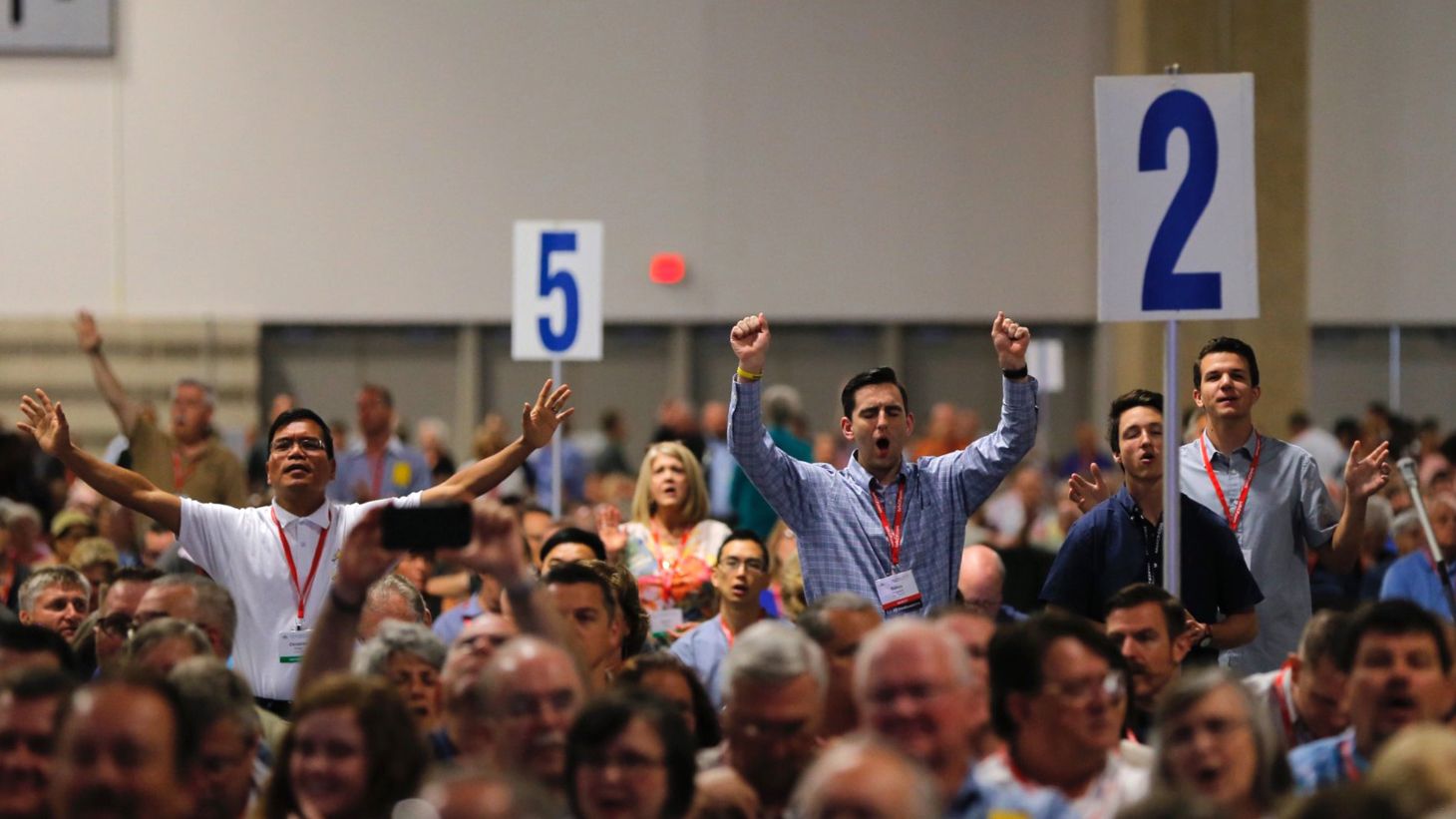
Over 16,000 Southern Baptists have registered to come, double the attendance at the 2019 conference and the largest crowd at an annual meeting in a quarter century. And outsiders are paying attention to what happens among the country’s biggest Protestant denomination because many of the issues at hand reflect broader divisions in the church and the US at large.

The recent revelations shared online could cause some Southern Baptists to scrutinize the place of prominent figures in SBC leadership and demand greater accountability for the body tasked with handling denominational business outside the convention. Or, as the newly formed Conservative Baptist Network brings ideological divides within the denomination to the forefront, the revelations could lead members to become further entrenched in their existing alliances.

Two letters written by Russell Moore and recordings provided by his former colleague Phillip Bethancourt were recently posted online and describe Moore’s clashes with members of the Executive Committee—namely Mike Stone and Ronnie Floyd. Stone, a Georgia pastor and founding member of the Conservative Baptist Network, was chairman of the EC at the time, while Floyd remains its president.

https://twitter.com/pbethancourt/status/1403022887137824768

According to the materials, Moore and his colleagues faced pushback and veiled threats, including an investigation led by Stone, for their approach to the abuse issue, such as the decision to allow advocates such as Rachael Denhollander to criticize the SBC response at events held by the Ethics and Religious Liberty Commission (ERLC). (The ERLC had led the SBC effort to train churches in “Caring Well” for victims, and Bethancourt—who left the agency last year to pastor an SBC church in Texas—was part of the denomination’s advisory group on sexual abuse. Moore left the ERLC at the end of May and will begin at CT in July.)

The reports of stonewalling abuse victims and downplaying the authority of the credentials committee (the group tasked with recommending if a church should be disfellowshipped over abuse) weren’t unheard of. A group of outspoken victims and advocates have been pleading for reform in the SBC since the #MeToo movement and the Houston Chronicle investigation that uncovered hundreds of cases of criminal abuse among SBC leaders in 2018.

“But because it was from Russell Moore, a departing entity head, it carried more weight. … People took notice. Now you see prominent Southern Baptists calling for an investigation of the EC. They don’t have the option of ignoring this,” said Adam Blosser, a pastor in Virginia. After years of raising concerns about EC business alongside fellow bloggers at the site SBC Voices, Blosser said the recent revelations prompted him to act to bring change to the EC; he’s running for recording secretary, a position that has been held by John Yeats for 24 years straight.

For some pastors, Moore’s letters confirmed what they’d worried was taking place in closed-door meetings of SBC leaders. For others, it was a wakeup call that they should have been listening to the victims’ stories all along. “We were shocked,” said Gaines. “We shouldn’t have been. These survivors, their stories are out there.”

But for those who have been critical of Moore, who described being attacked and decried as a “liberal” while at the ERLC, the timing of the release is more reason for suspicion.

Stone is running for president of the SBC with the backing of the Conservative Baptist Network. In a video, he denied the implications of the leaked letters as “inaccurate” and “slanderous.”

He said the materials represent an “attack” by Moore and insisted the members of the EC who were being scrutinized had done “the very best thing … that we could do with the limited resources that were available to us at that time and that still are very limited tools available to ministries of the Southern Baptist Convention.”

While Stone has spoken out as a survivor of child sex abuse and considers himself committed to the issue, he and others in the Conservative Baptist Network have challenged what they see as unbiblical theology in the efforts to address abuse.

They’re concerned that such campaigns presume guilt on the part of the accused and misrepresent a denomination where the vast majority of leaders are not predators. The network is also linked to Paige Patterson, one of the most influential figures in recent Southern Baptist history, who was fired over mishandling reports of rape. (Patterson himself was the subject of another recent bombshell, a report from his former seminary saying he had taken property and donor lists after his termination.)

In his response, Floyd originally said he didn’t have “the same recollection” of his conversations with Moore and Bethancourt, then after the audio was released, shared additional context and apologized “for any offense” caused by his remarks. Moore has not spoken out about the leaked documents.

Floyd said in a statement Thursday that the EC staff is also now looking into hiring an independent firm to investigate, then on Friday announced that they had hired Guidepost Solutions to conduct an independent review. (Guidepost is also currently working with Ravi Zacharias International Ministries.)

The motion Gaines and Parrott plan to make in Nashville is backed by big names in the SBC such as pastor James Merritt and Southeastern Baptist Theological Seminary president Danny Akin. It would make the incoming president of the SBC the one to appoint the task force to commission this investigation, rather than allowing the EC to set the terms of its own review.

“The most important thing that’s going to be decided is the presidential election,” said Blosser. “I don’t think that’s normally the case, but this time, more than choosing a candidate, they’re choosing a vision for the future.”

This is the first SBC presidential election since the formation of the Conservative Baptist Network. The three most prominent leaders in the presidential race—Stone, Southern Baptist Theological Seminary president Albert Mohler, and Alabama pastor Ed Litton—offer different approaches to the issues plaguing the convention today, and no one has emerged as a front-runner.

Southern Baptists say it’ll depend on the makeup of the outsized crowd in Nashville. The Conservative Baptist Network has been lobbying its supporters to turn out for months, while a recent uptick in registration may have come from attendees who want to be there because of the abuse issue making headlines again.

During a two-year term, there’s only so much influence an SBC president can have over the convention, whose 47,000 churches are autonomous. He’s largely a figurehead speaking and casting vision—and appointing members to the committees that keep denominational business going. To make a real shift in the SBC, experts say, it takes back-to-back presidents with shared priorities.

Outgoing president J. D. Greear appointed the most diverse slate of committee members in SBC history and made strides in sexual abuse initiatives and racial justice efforts. Litton’s supporters see him building on Greear’s legacy, while Stone would represent a reversal.

Mohler, who originally was going to run in 2020 and stayed in the race for 2021, is the best-known name of the three and has some appeal to “both sides,” having both criticized the existence of the Conservative Baptist Network in the past and rallied fellow seminary presidents to sign a statement condemning critical race theory (CRT) as incompatible with Southern Baptist beliefs.

The slate of resolutions for this year’s annual meeting won’t be released until Tuesday, but many Southern Baptist leaders expect there to be at least one resolution and possibly also a motion from the floor to clarify the denomination’s position on CRT. A 2019 resolution on the issue has been condemned by conservative critics as an endorsement.

The divides on many of these topics—abuse, CRT, EC leadership, Paige Patterson, Russell Moore—map atop each other. Though the recent leaks shifted the conversation ahead of the meeting, many of the supporters and critics find themselves in the same corners.

“For those at the extremes, the recent flurry has no impact. However, those who were not paying attention (I believe) are beginning to do so,’” said pastor and former missionary Jeremy Parks, who wrote about Patterson’s influence on the upcoming presidential election. “They will probably show up and simply say, ‘No, let’s go in a different direction.’”

Leaders in the conservative subgroup, which numbers at least 6,000 members, have also spoken about the importance of the convention’s direction. They allege that the SBC is drifting and blame leaders like president Greear, who leads The Summit Church in North Carolina; Dhati Lewis, who heads up the SBC’s church-planting Send Network; and Akin at Southeastern. Each were referenced in a video clip the Conservative Baptist Network posted Wednesday.

“Some of the leaders in our Southern Baptist family have become enamored with cultural ideologies and cultural tends that are unbiblical, and they’re wreaking havoc,” said Brad Jurkovich, a Louisiana pastor and spokesman for the network. “We are indeed dividing and drifting.”

Meanwhile, Greear told the Baptist Press on Friday, “If we don’t say we’re a Great Commission Gospel people, we’re not only going to lose our [pastors of color], but the next generation of Southern Baptists.” He says this year’s annual meeting will be a defining moment determining whether the gospel determines its mission or if it will instead be a geographical, cultural, and political voting bloc.

Akin, who has attended every annual meeting but one over the past 40 years, said the division within the denomination doesn’t compare to the level of animosity during the Conservative Resurgence in the ’80s, when 30,000 to 40,000 Southern Baptists attended its annual meetings. But it’s still a mess, he said.

“One of the reasons we are a mess right now is that unfortunately social media has provided an outlet for people to misrepresent—maybe misunderstand but misrepresent—one another. And as a result of that, there’s a lot of suspicion and a lot of questioning that really shouldn’t be taking place,” said Akin.

He pointed out that the high-profile departures of Russell Moore and Beth Moore, along with the recent revelations around Paige Patterson and the Executive Committee, have impacted Southern Baptists going into the convention.

“I believe it would be very helpful to clear the air, get the truth out, and have a third-party investigation of the Executive Committee,” he said. “Whoever’s told the truth should be affirmed in their truth telling, and whoever does not tell the truth ought to be exposed.”

The 86-member Executive Committee is the denomination’s primary body in charge of business outside the meetings and had initially formed a “work group” to consider the reports of abuse coverup with the SBC. As Russell Moore’s letter points out, the group quickly exonerated 7 of 10 churches listed by Greear in the wake of the Houston Chronicle investigation in 2018.

The credentials committee, formed the following year, had become the designated place to report congregations for wrongdoing that would disqualify them from being “in friendly cooperation” with the SBC, which is a voluntary affiliation and not a hierarchical body. In the past two years, just three churches—all of whom knowingly employed pastors convicted of serious sex crimes and offenses—were disfellowshipped over abuse.

Several more victims, including Jules Woodson, say they have had their reports of abuse passed over by the committee without clear explanations for the review process. The committee has declined to share the names of churches submitted or total number of reports it receives.

Advocates and victims have long challenged the idea that the SBC, the country’s biggest denomination, with billions in revenue, did not have the means or authority to do what they were pleading for: to penalize abuse and cover-up and to help survivors.

Victims have criticized the scope of the credentials committee, which defines its work as reviewing and not investigating claims. They say it has not done enough to look into credible reports of abuse and has not provided clear guidelines around its process.

“There was absolute refusal by Ronnie [Floyd], most EC members and the credentialing committee, to address the issue of abuse, or even discuss best standards. No one wanted these men to emerge as strong leaders more than the survivors who desperately needed their leadership,” Rachael Denhollander tweeted this week in a string of messages backing Moore’s letters and criticizing the approach she saw from the EC. Denhollander is not Southern Baptist but has participated in SBC advisory groups and advised SBC victims.

Some Southern Baptists see church autonomy and efforts to provide accountability and oversight as being at odds.

“However, what we also know is that too often churches have covered it up. Churches have not been transparent, and therefore, a minister who commits sexual abuse in one location has had access to move to another,” said Akin. “[The SBC] has a responsibility to police itself to the degree that it can. … I think we just started. There’s even more we probably can do to ensure, to the best of our ability, that sexual predators are not given ready access to continue their sexual predation.”

Parrott, one of the pastors planning to move to investigate the EC, says resisting sexual abuse reform in the denomination is serious. “The public witness of the SBC matters for our cooperative mission together. We need the truth to prevail so that we can move together, unified around the gospel and the Great Commission.”

“Gospel Above All” was the rallying cry for Greear’s presidency, meant to unify the 14-million-member body around their shared priorities. But it didn’t work. “Southern Baptists in large part are ready to walk into the future. But we are spending a lot of time tolerating those who would rip us apart,” he said earlier this year, complaining that intra-SBC attacks and CRT claims have distracted from his work and their mission.

Critics of the Conservative Baptist Network, those who don’t believe their claims of doctrinal drift, worry that a Stone presidency would lead some pastors to leave the SBC and possibly to an eventual split in the denomination. Some African American pastors such as Dwight McKissic say they are on their way out if the SBC doesn’t course-correct on its stance on racial justice and CRT.

While the average member of a Southern Baptist church may not be familiar with the Conservative Baptist Network by name, and may not follow denominational happenings enough to track who’s leading the Executive Committee or running for SBC president, the stances that these leaders promote reach broad swaths of evangelicals.

Jacki King, part of the steering committee for the SBC Women’s Leadership Network and the wife of an SBC pastor in Arkansas, described how a member of her church came to her worried that Southern Baptists were no longer recognizing distinctions over gender. The member had come across such claims from outlets such as the Capstone Report and The Todd Starnes Show, which amplify concerns raised by the Conservative Baptist Network.

King had to explain that what the member read wasn’t an accurate characterization of the ERLC’s position, which still affirms male and female distinctions as created by God. “If they’re only hearing what’s coming up from certain Twitter accounts, they could think the SBC is going liberal,” said King.

At their first gatherings after COVID-19 shutdowns, King says the women she knew were eager to “process everything that’s happened online,” particularly Beth Moore’s decision to leave the denomination.

Greear has been leading weekly prayer for the past three weeks as the denomination prepares for its own, large-scale efforts to come together and process.

“We are gathering together. In fact it’s been two years since we could do this, and we’d probably be naïve if we didn’t realize that that absence of being together has contributed in a large way to a lot of that discord people are feeling with one another,” Greear prayed on Wednesday. “We want to pray that God would put in us that supernatural love, that sense of fellowship and unity in the body of Christ.”

Church Life

Will Christians Teaching Abroad Be Able to Go Back to School?

For international schools, the pandemic offered new opportunities for public witness around the world. It also resulted in staff shortages and unpredictable enrollment.

Christianity Today June 11, 2021
Meredith Work / EyeEm / Getty Images

Andrea Dugan, the superintendent of Mountainview Christian School in Indonesia, was on vacation last year when she found out from a local newspaper that one of her students was hospitalized with a suspected case of COVID-19, among the first in the area.

She returned home to Indonesia to extend the school’s quarter break before eventually making the call for her 210 students to go virtual for the remainder of the semester, just days before the Indonesian government closed all schools. Virtual learning continued through the 2020–2021 school year, with just four in-person weeks in the spring before rising cases sent them back to the screens.

From March to May, she remembers feeling “flooded with adrenaline” as she kept up with local government orders and ran the school while also ensuring her own children learned online.

“We’re the international school,” she said. “We’re going to be seen. Whatever we do, people are going to know.” For Dugan, leading a Christian international school meant that following government orders and strict COVID-19 protocols with integrity mattered not just for safety but as a witness to the local community.

Multiple school families returned to the United States in March after the local US embassy strongly encouraged all citizens to leave the country. They’re still unable to return to Indonesia. Limited visas are also blocking new staff from coming for the next school year.

“Even though I have teachers intending to join my staff come August, I’m holding my breath to know whether or not I can actually legally get them in the country because [of] the visa process,” Dugan said. “How do I staff my school next year if I can’t physically get people in the country?”

At the conclusion of the first full school year since the COVID-19 pandemic struck, many teachers are planning to return to some semblance of normal after the summer. But at international Christian schools like Dugan’s, the disruptions to staffing, enrollment, and financial resources—not to mention the continued spread of the virus in some places—linger.

International Christian schools typically cater to a mix of missionaries, diplomats, large corporations, and locals who want a Christian—and typically Western—education.

Since COVID-19, schools dependent on tuition have struggled financially as families have moved back to their home countries or are no longer able to pay the full cost. According to a report published by the Association of Christian Schools International (ACSI), 63 percent of the 73 schools surveyed reported a decreased enrollment for fall of 2020 and 49 percent said their budgets decreased.

Joe Neff, the coordinating director of global educational services for Teach Beyond, works with schools in 60-plus countries. Many Christian schools abroad have shifted away from a sole missionary focus to more inclusive models as globalized business makes expatriate life more common, he said.

Schools with wider diversity are typically better funded and enjoy more financial security, but those same families able to pay higher fees were more likely to be evacuated by large companies and governments when the pandemic hit than their missionary counterparts.

COVID-19 safety as Christian witness

Dugan and her family have been planning a trip back to the United States, a six-month furlough to their home state of Minnesota, but now she’s worried the limited visas could affect their reentry and is anxious to step away from the school during such an uncertain season.

She’s been in Indonesia for the past nine years and knows that if she wants to continue to serve long-term, a break is necessary after a year when leadership has felt like “walking through mud.”

As a regional director for ACSI, Tim Shuman is in constant communication with schools around the world and provides support for leaders like Dugan. “If you’re the chief motivator and you don’t feel like doing your job, how do you deal with that?” he asked. “The pressure on leaders in these schools right now is tremendous and it’s very tiring and they have to lead somehow.”

At international Christian schools, staff feel a particular obligation to meet the pivots and pressures of the pandemic and care well for their communities. They see their work in Christian education as part of their testimony, particularly in places where the church is in the minority or underground.

“It’s so hard to ask more from your people than you would ever want to have to ask. … But I think as believers, we want to be promise keepers,” said the head of an international school in Russia that works with families from several large corporations. “As a Christian school, if you’ve contracted services, we’re going to provide them.”

At her school, online learning has presented a unique opportunity for parents who might not be Christians to watch chapel services and hear Bible classes taught in their native language with their children. An American living in Russia since January 2020, she asked not to be named because of the country’s regulations around missionary activity by foreigners.

Neff said that teachers across the globe have similarly reported how virtual school allowed parents in non-Christian homes to hear the Christian content their children are taught. Still, it’s been a challenge to keep teachers in virtual classrooms amid moves and changes to immigration policies.

Certain places are more in demand than others. Schools in countries like Egypt and Russia struggle to attract potential teachers as Americans have preconceived political notions of the risks associated with living there, according to Shuman at ACSI. “Those schools are always looking for that unique person called by God who is brave,” he said.

Schools in Western Europe get more applications since they have high tourism appeal and low security risk. But after the pandemic sent so many people home, schools everywhere are trying to convince potential staff it’s worth moving overseas during a tumultuous season and hoping borders will stay open long enough for them to get in.

“It’s always a challenge in the best of times,” Shuman said. “With COVID, it just ramps up.”

God’s creative inspiration

At El Camino Academy in Bogotá, Colombia, director Beth Afanador has filled several gaps but is still looking for teachers for kindergarten through fifth grade; middle school; and high school math, science, and Bible, plus a middle school principal and extracurricular teachers.

Every year, recruiting enough staff is “a miracle,” she said. Currently, the school’s staff is 63 percent American and 37 percent Colombian serving a student population of about 80 percent locals. After a strict lockdown and a virtual spring last year, the school had to pause in-person learning this spring at times due to the protests sweeping the city.

“I don’t know how many times I’ve said, ‘God, thank heavens you’re a creative God, because we need creativity and we’re made in your image,’” Afanador said. “This has been a year that you can’t just do things the way you’ve done them, so it’s taken a lot more mental energy because you’re inventing all the time and it’s changing all the time. When you think you’re set, two weeks later there’s a new decree, a new law, a new outbreak, a new something. So it’s constant, constant change.”

Looking forward to the next year, she said the local government is pushing hard for schools to be open in person with safety protocols in the fall, fearing the “irreparable” social and emotional damage to students if they remain online another year. At her own school, Afanador said she’s never seen more students meeting with psychologists and psychiatrists to cope with the stress of virtual school this past year.

In some countries, local governments are requiring teachers and staff to be fully vaccinated to return in person for the fall, sparking hesitation for both locals and expats. In Indonesia, Dugan said some expats are wary of taking the China-produced vaccine and hopes teachers who are hesitant will get vaccinated in the US over the summer. In Central Asia, locals are similarly nervous about the Russian-produced vaccine.

In Hungary, the International Christian School of Budapest (ICSB) transitioned to online learning early in March 2020. Kristi Hiltibran, the director of the school, said her crisis management team quickly formulated a plan for virtual learning and prepared contingency budgets in case any of the school’s 230 students left.

But enrollment numbers remained steady and the school reopened with safety precautions in the fall. In November, the country’s COVID-19 cases steadily ticked upward, closing the school again. Students were able to slowly return in January and February. Hiltibran said she felt like she “became a lawyer trying to decipher” the changing protocols and safety measures recommended by the local government.

ISCB focused on six main strategies: masking, distancing, limited entry access, disinfecting surfaces, ventilation, and personal hygiene. “They worked very well,” Hiltibran said. “We had very few cases for most of the year, until they didn’t work.”

In March of this year, cases and deaths suddenly spiked in Hungary as aggressive variants from the UK traveled across the continent. A week after a mandated government school shutdown, cases exploded within ICSB’s community.

Thirty-three adults—about one third of the school’s staff—and 13 students tested positive, with four staff members hospitalized. The school’s lower school principal, Stephanie Bishop, experienced the most severe case and, after several weeks in the hospital, died on Good Friday at the age of 50. Her husband is the school’s chaplain, and one of their two children is still a student at ICSB.

“It’s hard to believe,” Hiltibran said. “On the other hand, hundreds of people are dying here, so you can believe it. In a way you’re not surprised that someone you know has died of COVID because so many people have died.”

A virtual memorial with notes to her family underscores the gaping hole left by Bishop’s death. Hiltibran described her as a “key leader in the school” who brought steady wisdom and an unflappable personality, traits the school leaned upon throughout the past year as they navigated the pandemic.

“I feel like God’s really carried me through the whole thing,” she said, crediting the resilience and hope of her fellow coworkers to their faith. Despite his own pain, Bishop’s husband was concerned about shepherding the school community’s emotions in his role as chaplain, Hiltibran said.

But “as a leader,” Hiltibran said, “you can’t crumple up into a ball in your grief.” She still had to lead the school through the rest of the year, helping teachers and staff process the loss with students, while facing their own grief. Over the summer, she’ll prepare for hopefully a return to in-person school and the difficult task of finding Bishop’s replacement.

Leaving home and friends

The situation can seem even more dire in places where Christian educators’ status was precarious to begin with.

One international teacher who spent 14 years in South Korea and then 7 in China evacuated to the US at the start of the pandemic and ended up teaching virtually—her students scattered across the globe and her materials back at her home in China.

Last year she and her husband, who also taught at an international school, ended their lease and gave away most of their items to local friends when border closures prevented them from returning to China. The couple asked not to be named because of government restrictions on Christianity where they work. They ended up moving to an international Christian school in Central Asia in November.

That school experienced a similar exodus during the pandemic, with some families getting trapped in the United States early in the pandemic. In one case at another international school in the city, parents’ employers gave families just five hours to pack up and fly home. They never came back.

“There’s the potential [my kids are] not going to see these friends again—ever,” said another teacher there. “That was really, really hard just not having that closure with friends.” She expects only in the coming year will many students realize the full loss of this past year, especially students who missed the emotional and relational growth that comes with transitioning to middle school and high school.

The former teacher in China is also trying to find a sense of closure, having finally received a shipment of items left behind but not knowing when she’ll be able to go back and visit. She finished the semester teaching history, writing, and orchestra both online and in person at their new school. It’s better than teaching across multiple time zones, but the limitations of education in a pandemic still weigh on her.

“I cried because I was so frustrated about not being able to tell how the relationships are going because of all the masks,” she said.

Despite spending the past two decades overseas, she said she is not a global nomad at heart, preferring to stay in one location rather than country hop every few years. Barring another sudden departure, she hopes this will be home.

Courtney Runn is a writer based in Austin, Texas.

Theology

For Popular Twitter Seminarian, Sassiness Is a Spiritual Gift

Leah Boyd represents a new generation of women in ministry, bringing a sense of humor and hope to theological debates.

Christianity Today June 11, 2021
Illustration by Mallory Rentsch / Source Images: Courtesy of Leah Boyd

Going to seminary was Leah Boyd’s “Plan F.” A music education major, performer, and pageant winner, she had planned on becoming a professional opera singer. But now Boyd’s seminary education has become the most prominent thing about her—at least among the 17,000 followers who know her as “Sassy Seminary Student,” @LeahBSassy on Twitter.

The Mississippi State University alumna and student at Baylor University’s Truett Seminary shares reflections on theology, evangelical culture, and gender dynamics with one-liners, pop culture riffs, and memes through her popular account, which launched in February 2020.

“How I, a seminary student, know exactly how to fix every issue in the church today and I can’t believe no one has thought about this stuff before: a thread 1/245,” read one sarcastic tweet.

Sassy Seminary Student began as a way to inject humor into online evangelical debates, and her approach worked, boosted by her sharp wit, Gen Z sensibilities, and lighthearted approach to everything from politics to contemporary worship.

Boyd responded to a new Christian dating site that dismissed singleness as a gift and promoted women’s dominion as “housemakers and helpmates” with a picture of her dressed as a “a docile 1 corinthians 11 woman” in a long dress and shawl.

And, of course, her tweets reference telltale markers from church and youth group culture.

https://twitter.com/LeahBSassy/status/1397011844833873925

As a recent seminary graduate, I see her as representing a larger trend: While many of our predecessors in theological education had to fight to be taken seriously in evangelical spaces, sometimes the only one or one of just a few in an MDiv program, more women are finding solidarity online today. Boyd’s freedom to poke fun at evangelical culture is refreshing for a generation who doesn’t want to rehash the same gender-role debates and baggage they’ve inherited.

Boyd’s journey to seminary was, like many women’s, a winding one. Her passion for music had always included church music and a desire to put more theological attention around the songs that shaped a congregation. She began serving as a music minister at a Southern Baptist church in Valley Mills, Texas, in 2020 and enrolled in a dual master’s degree program at Baylor, where she will complete an MDiv at Truett and a master of music in church music.

“I didn’t just want to go into music ministry and not have the theological equipment in order to do that well,” Boyd said.

While her account centers around gender conversations in the church, Boyd’s scholarship focuses on topics such as the Dutch Reformed theologian Herman Bavinck, the power of hymns to shape the spiritual lives of a community, and whether or not congregations should use a drum in worship.

“I’ve been put in a box to talk about gender issues,” she said of her Twitter personality, “which is fine, as long as I get to focus on the things that are more in line with who I am.”

At 22, Boyd is part of a new era when female seminary students find community, connections, and their own voices online and alongside each other.

“She’s told a lot of pieces of her story that are pieces of many evangelical women’s story,” said Beth Allison Barr, Baylor historian and author of The Making of Biblical Womanhood. “She’s doing something that many evangelical women would also like to do, but because they were unable to pursue seminary education or were in places where it wasn’t encouraged, they haven’t.”

Barr noted that throughout history, women have always carved out their own spaces when Christian churches or institutions did not give them a space to learn or exercise their gifts. Social media has often been touted as the place where women’s voices can be elevated outside of the constraints of gatekeepers and institutional politics.

While previous generations found encouragement from women leaders without formal theological training, ordination, or local church support, many women today are learning from seminary-educated leaders like Kat Armstrong, Marlena Graves, Sharon Hodde Miller, Tish Harrison Warren, Sandra Glahn, and Carmen Imes, who runs a Facebook group for women members of the Evangelical Theological Society.

Boyd said that while she has been given support as a woman in seminary and as a minister in the SBC, women sharing their experiences online opened her eyes. “I saw the way that other women had been hurt, the sex abuse scandals coming out,” she said, “and I realized that just because my individual churches have been wonderful doesn’t mean all churches have been wonderful for women.”

In the wake of another SBC reckoning over mishandling of sexual abuse cases, Boyd felt it was time to share her own story in a recent tweet. She wanted to add her voice “in solidarity and support of sexual abuse survivors in the SBC” and help shed light on the prevalence of sexual abuse in the church and the failure of leaders to seek justice. “As Ecclesiastes 3:4 says, ‘there is a time to weep and a time to laugh.’ I usually try and keep it the latter, but this is so deeply important that now is the time for the former,” she said.

twitter.com/LeahBSassy/status/1402023604229918725

Eric Schumacher, pastor and coauthor of Worthy: Celebrating the Value of Women, applauded Christians like Boyd who are able to make personal connections across theological divides on social media. “While Twitter can allow us to depersonalize our neighbor, it can also remind us that our neighbor is made in the image of God,” he said.

Boyd began her account anonymously, but within months a friend recognized her and she put her real name to it. Beyond the original jokes that inspired Sassy Seminary Student, Boyd continued using the account to reflect on her seminary experience and the way that her theological education shaped the way she interacted with evangelical culture and church politics. And as a 22-year-old who “grew up on the internet,” she naturally used humor to do that. “Some of these things that people take very seriously are just funny to people my age.”

As an article on “Weird Evangelical Twitter” in CT last year explored, humor can be a corrective to the “political polarization and self-serious posturing” so prevalent in evangelicalism, especially on social media. But many of the figures known for their funny jabs at Christian culture or clever twists on theological debates are men.

Author and fellow Twitterer Hannah Anderson says that might be because women have worked so hard to be taken seriously in ministry spaces that humor was functionally off the table. “You had to prove yourself, so you can’t undermine that with lightheartedness,” she said.

But the popularity of Boyd’s account might be a sign that things are changing for women in conservative spaces. When it comes to Boyd’s account, Anderson says, “There’s no angst, no defensiveness, maybe because there’s nothing to defend.”

Whereas women in the past had little room to treat the gender conversation with humor, Boyd once tweeted that instead of asking seminary professors about complementarianism, Christians should be asking TobyMac if women can rap from the pulpit.

While Boyd says she hasn’t faced any “sexism or weirdness around women” at her moderate Baptist seminary, she has faced plenty of it online, especially from people within her own denomination.

After an SBC pastor tweeted that sassiness was not a quality men should look for in a wife, there were a flurry of tweets about Boyd and her account, both supportive and critical.

“Christian Twitter can be very bitter and angry,” Boyd said, “and so I try to make things humorous, though there might be a larger point I’m trying to make as well.”

Some women feel she is not taking the problems seriously enough. Some Christians are generally uncomfortable with using humor to address serious topics, a dynamic comedy writer Ben Fort addressed in his podcast series Funny Beliefs, with Christ and Pop Culture.

He suggests that Christian humor, like all creative endeavors, should be “rooted in the larger story of Creation, Fall, and redemption,” and he sees that in Boyd’s humor. “She believes women are made in the image of God, but because of sin they aren’t being treated like it. Her jokes are an act of hope, a belief that broken things can be made new.”

Boyd says that her approach might seem novel only because Christians aren’t known for doing humor well: “We take ourselves too seriously.” Anderson adds that in evangelicalism, where everything must be communicated in a propositional way and certainty is prized, humor struggles to have a place. “A lot of humor just says, This is one weird world, and evangelicals are uncomfortable with things that don’t come with an answer.”

Twitter conversations about gender have moved the needle in the broader conversations happening in churches, seminaries, and denominations, from the debates about gender and the Trinity that started on the blogosphere to the social media backlash and discussion of recent high-profile exits from the SBC like Beth Moore. But do humorous approaches like Boyd’s have the potential to exert similar change?

“I don’t know if it will change the conversation, but it will change people,” Anderson said. And that seems to be part of Boyd’s goal: Encourage some voices to get bolder and others to take themselves less seriously.

Boyd’s unique approach—highlighting the absurdity of sin by treating it absurdly—might open some space in the otherwise cramped quarters of evangelical gender conversations. Barr pointed out that Boyd has made “progress” by calling out injustice while maintaining her naturally lighthearted spirit.

Can humor pull some of us out of our hardened, combative postures in the evangelical gender wars? Could it help us maintain some curiosity and uncertainty around topics that have traditionally attracted fundamentalists of all theological persuasions? Boyd thinks so. And as someone who spent much of my own seminary career in a necessarily defensive mode, I see Boyd’s account as an encouraging sign that women can engage the conversation with more freedom and joy when they are supported at their seminaries and churches.

Articulating legitimate critiques of the church without contributing to the divisive and combative culture on Christian Twitter is a difficult task, and Boyd thinks a good way to find the balance is humor “and maybe a little bit of sass.”

Kaitlyn Schiess is a writer and doctoral student at Duke Divinity School. She is the author of The Liturgy of Politics: Spiritual Formation for the Sake of Our Neighbor.

News

Algeria Returns a Historic Church, But Stops Christian Worship at 20 Others

One court yields keys to colonial-era worship site, while another issues verdict for prominent pastor facing proselytism charges.

Oran, Algeria

Oran, Algeria

Christianity Today June 10, 2021
Zineb Tadj / EyeEm / Getty Images

Algerian Christians finally have something to celebrate.

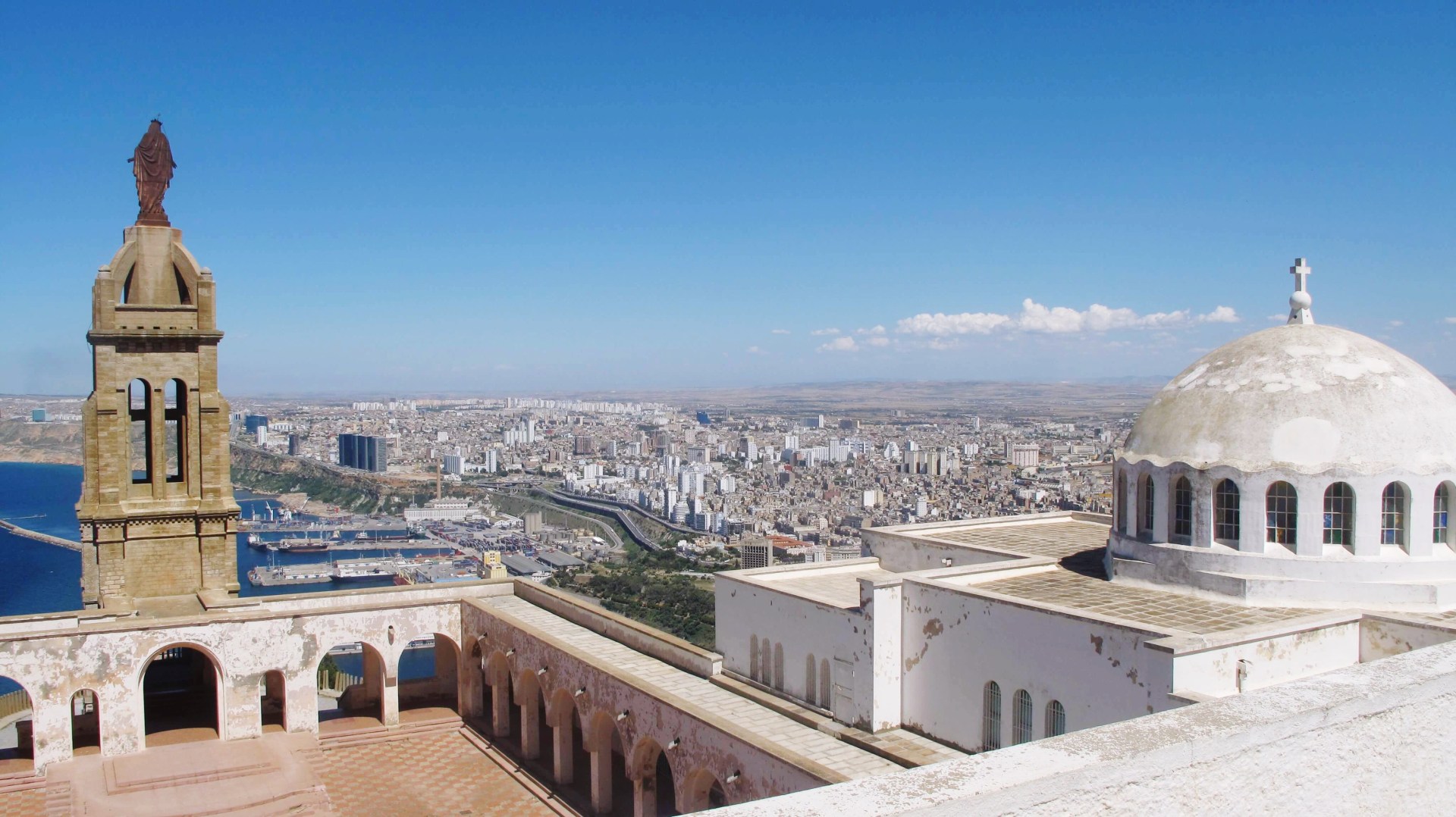
Amid a rash of church closures the past two years, the North African nation’s Council of State returned a historic worship site in Mostaganem, a port city on the Mediterranean coast, to the Algerian Protestant Church (EPA).

The EPA loaned the building, which dates to the French colonial era, to the Ministry of Health in 1976. But in 2012, when the site’s medical clinic changed locations, the local governor gave the facility to an Islamic charitable association.

The EPA sued, and the case was decided in its favor in 2019.

That year, however, marked an escalation against Protestant churches. Three of Algeria’s largest congregations were shut down, and the Mostaganem authorities failed to implement the court decision.

Now they have.

But with 20 other churches ordered to cease activities—and 13 sealed completely—Algerian Christians remain cautious.

“Just because we have the keys,” said Nourredine Benzid, general secretary of the EPA, “doesn’t mean the case is over.”

Benzid’s Source of Life Church in Makouda was among those closed in 2019. Located in the mountainous Tizi Ouzou district, the area is home to many of the nation’s estimated 100,000 Christians.

By contrast, the Mostaganem church was empty when it was loaned to the government. But today a pastor and believing community are in the city, and the EPA intends to reopen the building for worship.

Founded in 1974 and officially recognized in 2011, the EPA serves as an umbrella organization for Algeria’s Protestant community. But while a 2006 ordinance guaranteed non-Muslims the protection of the state, it also stipulated that worship can be conducted only in buildings approved for that purpose by the National Commission for Non-Muslim Religious Groups.

To date, not a single church has received permission.

Furthermore, the EPA must reapply for its own licensing every four years. In 2014, the application was ignored. In 2018, when new paperwork was submitted, leaders were told to deal first with their 2014 file.

The nation ranks No. 24 on Open Doors’ World Watch List of the most difficult countries for Jesus followers. Only three years ago, it ranked No. 42.

Last December, the United Nations wrote a letter to the Algerian government asking for an explanation. The reply from Algiers noted the freedom of religion provisions enshrined in law, as well as historic churches renovated at public expense.

But the Protestant community, it said, demonstrated “intransigence” when its places of worship—not churches—were inspected. After “amicable” steps had been exhausted, the premises were closed down “to preserve the lives and safety of citizens.”

Benzid was livid.

“It is a lie, from beginning to end,” he said. “We have documents for every church.”

He advised a wait-and-see approach with Mostaganem, given parliamentary elections later this month. The government in Algiers is keen, Benzid said, to gain international approval.

Once attention passes, authorities may appeal.

The newly reclaimed keys may find their locks—like the other closed churches—sealed with wax.

“We urge the US and other governments that are economic and security partners with Algeria to raise the issue of freedom of religion with the Algerian government,” said Wissam al-Saliby, advocacy officer for the World Evangelical Alliance.

“It is our assessment that international advocacy and support for the Protestant Church of Algeria is preventing the situation from deteriorating further.”

Amnesty International and Human Rights Watch have also defended the EPA.

Saliby commended the Algerian judiciary for its decision to respect human rights. But he urged the government to reopen all closed churches and to drop charges leveled against Christians for alleged proselytism or blasphemy.

In March, a convert identified only as Hamid was sentenced to five years in prison for blasphemy after sharing a caricature of Muhammad on social media.

Benzid linked the Mostaganem church with cases such as this. If future verdicts reverse earlier court rulings, it may be a sign the government in Algiers is demonstrating it will deal positively with the Protestant church.

Yet given the opportunity this month, it failed to do so.

On June 4, the administrative court of Oran, Algeria’s second largest city, issued an implementation order to seal three area churches. While the decision was made a year earlier, the congregations had been allowed to continue operations—until now.

And on June 6, in a case filed in 2017, Oran pastor Rachid Seighir and his bookstore assistant received a one-year suspended sentence on charges of proselytism. Fined $1,500 each, their books were ruled to violate provisions of the law that forbid “shaking the faith of a Muslim.”

They will appeal to the high court.

Until then, the EPA will monitor developments and hope the international community will do the same. The Mostaganem ruling—though appreciated—should not be overvalued.

“The most important step is to reopen our churches,” said Benzid. “One ruling alone does not give us hope.”

News

Thanking God for Miracles, Asylum Seekers Enter US

With the end of Donald Trump’s “Remain in Mexico” policy, new needs challenge Christian ministries helping migrants.

Christianity Today June 10, 2021
John Moore / Getty Images

When the Honduran woman got to Alma Ruth’s studio apartment in McAllen, Texas, she took a shower.

She was nine months pregnant, and it was the first real shower she’d taken in more than a year and a half, since a day in 2019 when she and her husband and their toddler fled the violence that has wreaked havoc on Central America.

She thanked God for the clean, hot water, and for the people who had helped her along the way.

“God is always surprising us with his miracles,” she told CT in Spanish. “The rest of my life will not be enough time to thank him for all the miracles he has done for my family and for me.”

The woman, allowed into the US in March, is one of an estimated 68,000 asylum seekers who now have permission to wait for their court hearings in the United States, as President Joe Biden reversed Donald Trump’s “Migration Protection Protocols.”

The former president’s policy, known as MPP or the “Remain in Mexico” policy, was suspended in January. The Biden administration officially ended it last week in a victory for asylum seekers—including the woman taking the shower, who asked that her name not be used because her asylum case is still pending—and their advocates, like the shower’s owner, Alma Ruth.

But Ruth, founder and president of Practice Mercy, is worried about the new challenges asylum seekers will now face.

“They finish one Via Dolorosa,” she said, using the Spanish phrase for the “path of sorrow” that Jesus took on the way to the cross, “and they start another one.”

The migrants in the makeshift refugee camp in Matamoros found themselves in a kind of no man’s land, neither “here” nor “there,” with few lawyers, few social workers, and few Christian mission and aid groups to help them as they waited to apply for asylum. Now, as they finally leave the camp and enter the US, will they fall further into the cracks between Christian ministries?

The need in the camps

Ruth originally felt called to do ministry around the world, working in Cuba and Jerusalem. A Mexican citizen, she moved to the border city of McAllen in 2012 and began her work with the international community.

When the Remain in Mexico program began in 2019, Ruth soon realized that the need in her backyard was too big to ignore. She began visiting the camps as they swelled in size, helping families procure basic necessities and praying with the many Christians who were desperate for spiritual encouragement.

According to Ruth, the majority of Spanish-speaking asylum seekers are people of faith. Those living in the camps had begun to form their own churches, meeting in tents. But while Ruth scurried back and forth across the border, she began to wonder: Where was the American church?

Sometimes churches and ministries would donate larger items, and even visit. But as far as a sustained, Christian presence in the Matamoros camp, Ruth said, it was limited. This messy, transient community didn’t seem to fit into most ministry plans.

“You can count with your fingers the faith-based organizations that were involved in helping the refugee camp in Matamoros,” Ruth said. “A lot of photo ops, but people of faith serving on a weekly basis … you can count them with your fingers.”

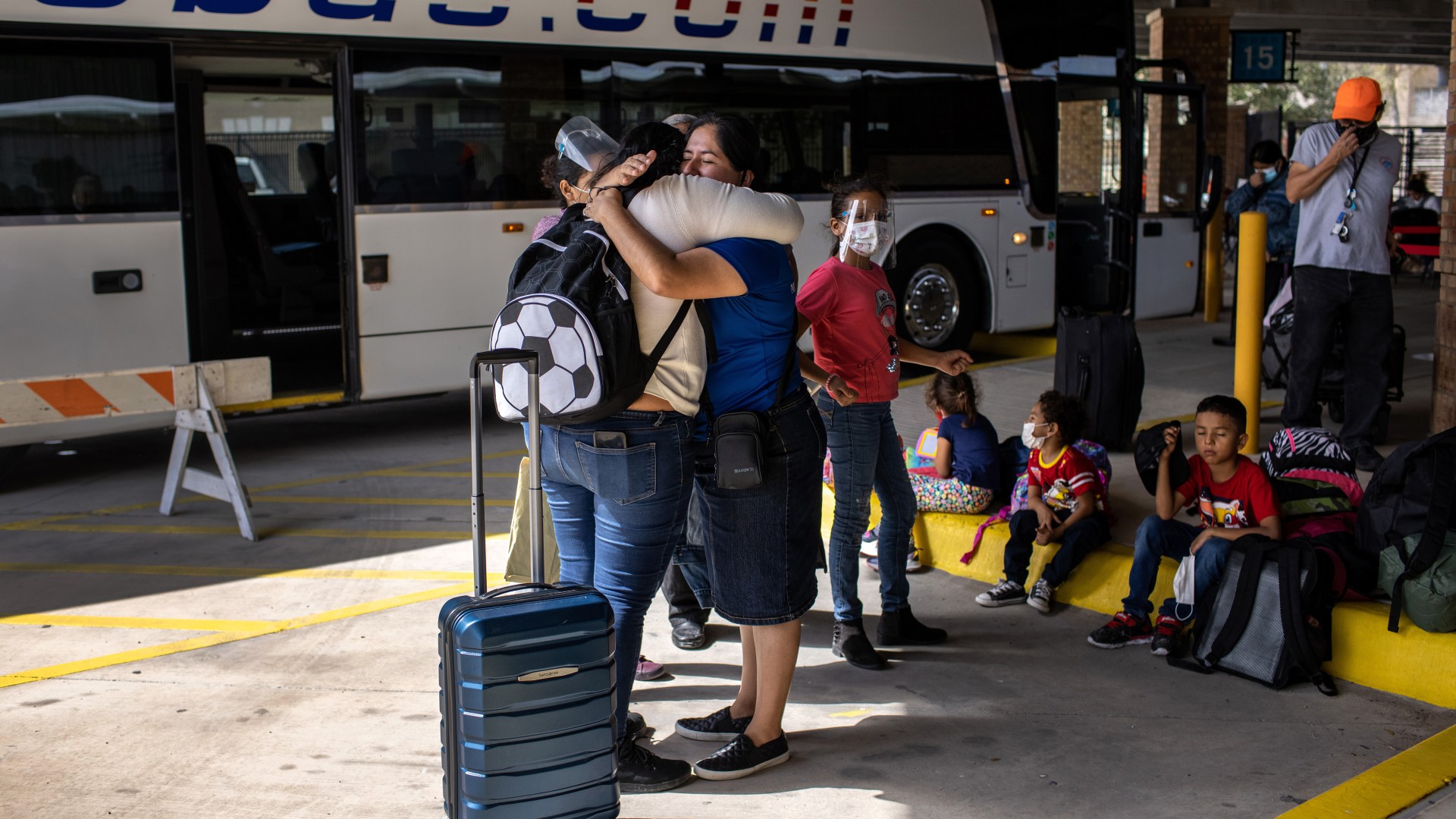
Once inside the US, more Christian ministries have systems in place to help immigrants and their families, meeting them at bus stations, connecting them to community services, and in some cases hosting ministries in their native languages. But for those out of range, help has been scarce.

During the COVID-19 pandemic, even the few visiting churches and short-term missions stopped coming. But those committed to the camps continued crossing back and forth daily, praying, delivering food, monitoring health.

Ruth sought out women and children, paying special attention to pregnant women, who were particularly vulnerable during the pandemic, intense summer heat, flooding brought by Hurricane Hanna, and dangerous conditions of Winter Storm Uri. One woman gave birth outside the camp. Another crossed the Rio Grande on an air mattress during labor and had the baby in a Customs and Border Patrol cell.

A few faithful women

The woman from Honduras crossed into the US with her husband and toddler in late 2019. The young family hoped to find safety and security in America and live near the husband’s relatives in Minnesota.

According to US law, they had to be physically present in the country to apply for asylum. So they came. Then the woman and her family were sent back to Mexico with thousands of other asylum seekers, where they were absorbed into an ever-growing huddled mass, and told to wait.

“We endured hunger, cold, heat, and racism for a long time,” the woman said. “We suffered many injustices.”

The little help there did not come from well-funded humanitarian organizations, international ministries, or large American churches. It came from those who habitually allow their lives to be interrupted so they can slip into the church’s cracks and blind spots in search of those at risk of being forgotten.

Ruth started Practice Mercy, a Christian nonprofit that allowed her to receive financial support from American churches. She said Christians must change the way they think about ministry to those caught up in the country’s chaotic immigration system, in which planning and predictability are a luxury.

When Winter Storm Uri blanketed the temperate border towns in ice and snow, Ruth brought blankets to the migrants. When the woman from Honduras got pregnant, “Sister Alma” was there to help.

“I thank God for putting her in our path,” she said. “She was and continues to be an angel for us.”

When the US government began bringing the asylum seekers into Texas at the start of the year, Ruth started working to get them to their destination. Donations allowed her ministry to arrange Airbnb rentals while the immigrants waited for travel arrangements. Occasionally, she let them shower in her studio apartment.

“For many of them it was the first time they took a real shower in two years,” Ruth said.

Soon it was clear that, with Remain in Mexico over, there would be additional needs. Asylum seekers usually have family or camaradas waiting for them in a destination city, but many of those are recent immigrants themselves. When the pandemic devastated the service and hospitality industry, many of the recent arrivals found themselves in precarious financial situations.

Few could afford to pay for a plane or even bus ticket for an entire family to travel from Texas to Minnesota or anywhere else in the US, Ruth said. “We realized those support networks are extremely fragile.”

On social media, Practice Mercy began to broadcast calls for help in the US cities where asylum-seeking women and children needed to go. Ruth asked for help with the migrants’ travel and supporting them once they arrived.

When the pregnant woman from Honduras was allowed to re-enter the US in March, Ruth knew that she was about to have her baby. She would need real support, not a one-time meal or a referral to a shelter. Ruth took the family into her studio apartment and began working on getting them to their destination in Minnesota as quickly as possible.

This time, Ruth did not rely on Instagram. She called a supporter, Melissa Carey, who happened to live in the Twin Cities area.

“As a believer, you are called”

Carey emigrated from Peru with her family at age 10. She remembers the feeling of nervousness that comes with temporary legal status. She and her siblings didn’t enroll in free lunch programs at school—even when they were hungry—because they were afraid it would somehow violate the terms of their visa.

“When you’ve experienced it yourself, you know that dread of trying to do everything right so you don’t get kicked out,” Carey said. “It controls your life.”

Keeping her head down is now second nature, but when Carey became a citizen 11 years ago, she felt compelled to begin advocating for those living in fear.

“As a believer,” she said, “you are called to be the voice for those who have no voice.”

She began volunteering and became involved with a campaign to make driver’s licenses available to undocumented immigrants. She found that, as a Christian with many conservative values, she could talk with some legislators and lawmakers in a way others could not. Soon she began working with the Minnesota immigrant movement.

As a volunteer who is also a full-time mom, Carey’s other niche has become crisis response. She regularly responds to last-minute emergency calls, helping families connect to food or shelter for the night while reaching out to a network of faith communities to see if longer-term support is possible. The more people she helps, the more likely it is she’ll get the next call.

Immigration emergencies don’t happen according to a schedule, she explained. There isn’t a regular database of needs and opportunities someone can check at their convenience. Instead, those committed to helping need to be within arms’ reach at a moment’s notice. They have to be consistent amid inconsistency.

“You have to choose to get involved in a community and continually show up,” Carey said. “So much of serving and helping is actually having community with your neighbors.”

In March, one of those emergency calls was from Ruth, whom Carey had been following and supporting from afar. Ruth told Carey about the pregnant woman and her family, and Carey sprang into action, calling Faith City Church in St. Paul to see if they could purchase plane tickets. They did, and committed to supporting the family further while they settled in.

It took longer to find midwives who spoke Spanish and could give the woman the kind of care she needed after spending her entire pregnancy in a makeshift refugee camp with no prenatal care. It wasn’t enough for Carey to find someone to do an examination, she said. “She needed to be nurtured.”

Carey made a connection just in time for the midwives to lead the Honduran woman through a difficult birth that would have been dangerous for both mother and child without the midwives’ expertise and tools.

“We, the privileged, don’t realize the resources we have,” Carey said.

Concerned for the future

Mother and child are safe and healthy and living in Minnesota while they wait for the government to hear their arguments why it would not be safe for them to return to Honduras.

The long-term camps along the border have largely been emptied, but smaller encampments remain and shelters are full of people hoping to enter as the Biden administration tries to regulate entry procedures—which so far have been uneven. Asylum-seeking is also a regular part of the southern US border, and people in great need will continue to get on planes and busses out of McAllen, El Paso, San Diego, and other cities to start new lives around the country.

Ruth and Carey say the church must take a more active role in both the acute crises and the long-term chaos of the asylum process, where court backlogs and detention practices keep families in disconnected limbo for years.

They say ministry to the “least of these” has to be flexible and faithful, proximate and consistent, aware of the needs and resources in the community, willing to call in a request.

For the pregnant woman, it just took a few faithful Christians to make a difference.

“I thank God for beautiful people who have helped us a lot and continue to do so,” she said. “God is always surprising us.”

Books

Jemar Tisby: Three Words Should Guide Our Pursuit of Racial Justice

In his latest book, the “Color of Compromise” author turns from the lessons of history to the proper Christian response.

Christianity Today June 10, 2021
Illustration by Mallory Rentsch / Portrait Courtesy of HarperCollins Publishers

In his 2019 book The Color of Compromise, author and speaker Jemar Tisby offered a comprehensive account of the relationship between American Christianity and racism. But understanding that history leads to the inevitable question: What now? Events like the killing of George Floyd in Minneapolis have placed questions of racial justice front and center, spurring many Christians to ask what it means to reckon with racism in their own lives and in the lives of their churches. Tisby takes up these topics in his follow-up book How to Fight Racism: Courageous Christianity and the Journey Toward Racial Justice. Myles Werntz, director of Baptist studies and associate professor of theology at Abilene Christian University, spoke with Tisby about the next steps on this journey.

How to Fight Racism: Courageous Christianity and the Journey Toward Racial Justice

How to Fight Racism: Courageous Christianity and the Journey Toward Racial Justice

HarperCollins Children's Books

240 pages

You note in the foreword of How to Fight Racism that this book is an extended meditation on the last chapter of The Color of Compromise, where you help readers process what they’ve read and invite them to do something with the historical knowledge they’ve received. How does this new book build on what went before?

This book comes from two places. First, it comes from the urgency that I felt about the need to take antiracist action. It’s funny: I thought that How to Fight Racism would be the first book I wrote, because I was eager to get to the “Let’s do something about racism” part. I’m very grateful that I wrote The Color of Compromise first, however, because I think it sets up what the issues of racism are so that we can come up with better solutions.

But the second impetus was that whenever I speak or teach about racism, the most frequent question I get is “What do we do?” I love this question because it shows that people are seeing that racism isn’t just a past question but a present one, and it also shows that they want to be part of the solution. And so, in response, I would typically give a scattershot answer about specific actions people could take, with no rhyme or reason. But I got the sense that this wasn’t leading to any actual action.

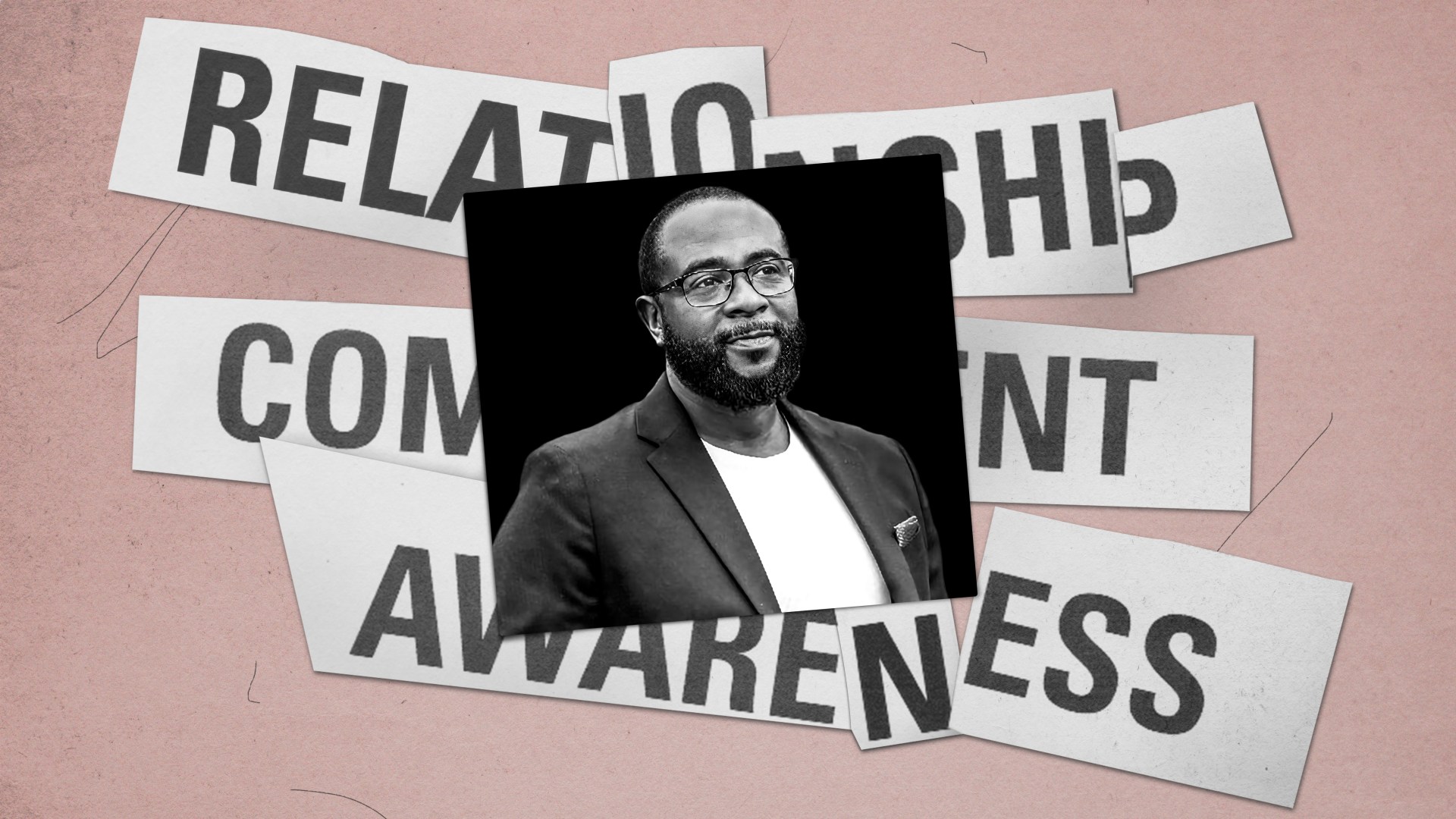
So, several years ago, I began to develop the framework of the book—the ARC of racial justice, which stands for Awareness, Relationship, and Commitment—to provide a more cohesive approach to racial justice in general.

With so much attention being paid right now to structural dimensions of racism, why was it so important for you to emphasize the relational aspects of pursuing racial justice?

From a theological perspective, Christians understand that all reconciliation is relational, and this is the reason for the incarnation: God becoming human to reconcile humankind to God. But even from a sociological perspective, all reconciliation runs through relationships.

In their book Divided by Faith, Michael O. Emerson and Christian Smith show that white evangelicals—who tend to be highly individualistic—come to understand the structural and systemic aspects of racism through relationships. This helps them to put flesh and blood on data and statistics that they might otherwise dismiss.

Many evangelicals approach questions of race through Scripture alone. How do you begin a conversation about other dynamics of racism that aren’t captured in this kind of approach?

We would first need to understand that all theological interpretation is contextual, that we all bring specific priorities to the text based on our own histories and social location. In this sense, there’s no such that as “pure biblical interpretation.” All our interpretation is shaped by our histories. This isn’t to say there are no timeless truths or universal principles, but it is to say that even the questions we ask are going to vary across people groups and across time periods.

If this is true, we shouldn’t be surprised to find that different groups—white people and Black people—approach the text with different priorities. And if you’ve only ever been exposed to one group’s priorities with respect to Scripture, then it becomes easy to see how another group’s priorities could be perceived as wrong or inferior or “politicized.” So, we need to study theology and to read Scripture in community, so that we are approaching the text in a broad manner that helps us see truths not available to us before.

In white churches and theologies, there’s a heavier emphasis on the New Testament, the Gospels, and Paul’s letters—and this is all good and true. But in Black Christian traditions, there’s an emphasis on Exodus, on the liberation of the people of God from slavery, and on appeals for justice from the prophets. Neither emphasis is wrong, of course, but we’re more apt to remember both when we read God’s Word in community.

You write that these relationships—whether inside or outside of church—need to be characterized by “humility, not utility.” In other words, they aren’t tools for white people to become less racist, but rather the context where real change can occur. Can you give a real-life example of what this looks like?

In my life, the white men who I would consider real and true friends have all initiated the relationship. They’ve all taken the risk of stepping outside their social comfort zone to proactively initiate a friendship with me. The example that I write about in the book is a guy I met in Greek class in seminary, who literally walked up and asked if I wanted to grab a drink. That was the beginning of a beautiful friendship.

There’s a sense in which we make this way too complicated. We can’t just go around collecting friends based on demographics. So one question to ask is “Would I be friends with this person if we never talked about race?” This forces us to ask whether or not this is a purely transactional relationship.

One practice you encourage for white Christians—adults and entire families alike—is exploring your own racial identity. What kind of resources would you recommend, particularly for parents wanting to help their kids to understand race?

First, I think it’s important to become familiar with the concept of racial identity development, which I get into in the book, because then you can name the stage at which you or your children are in. We begin from a very early age to notice difference: height, skin color, age. But whenever children notice skin color, we tend to get very nervous, anxious that our children shouldn’t be talking about race at all. And this nervousness leads to a very unhelpful notion of colorblindness. We want to help our children see diversity as an asset. A good rule of thumb here is early and often.

When you talk to white audiences about exploring their racial identity, what is the general response?

It’s typically been one of either surprise or denial, because white people have been largely socialized to not think of themselves in terms of ethnicity: It’s other people who have a race. Part of the way racism functions is that it says that white is standard, central, and normal; because this standard of whiteness becomes the norm, it can seem like only other people have a race. And so, it can be shocking or even angering to people to hear that they have a race as well. When you’re white in a white-supremacist society, you don’t interact with that feature of yourself in the same way that members of minority groups do.

In The Color of Compromise, you encourage readers “to go beyond the doors of the church, and into society where so much of racism exists.” In what ways, though, are the practices you describe in How to Fight Racism relevant to churches themselves?

The church is part of society, and so if the society changes, it affects the church. What we’ve seen historically is that society typically leads the way for the church with respect to racial inclusion and not the other way around.

What we think of as “church” most of the time is an event and a place—something which occurs on Sunday morning at a location. But that’s a fraction of your life, and so much of what happens around race and needs to change about race is happening during the week. And so, by taking these practices into public first, it will change the church, but perhaps not as the first movement.

One of the practices you emphasize is the recovering of racial histories, not just of the places where we live but of our churches as well. How do these histories help advance the work of racial justice today?

You can fit it within the ARC framework as part of the awareness that is needed before much other work can be done. Many churches are either unaware or unwilling to acknowledge publicly the role which race has played in their founding or in the ongoing practices or policies of the church. These things simply need to be excavated in most cases. Only then can you go about the relational work, asking what reconciliation means in light of a particular church’s past.

One mistake churches constantly make here is that when they realize this lamentable history, their first reaction is “What do we do going forward?” I think the first reaction should be looking back at the hurt and harm and asking what we can do to make it right. That could be apologizing to members who left because of racism; it could be reaching out and reestablishing contact with people who had once been turned away.

But then we have to move to commitment: It’s not enough to study this or to say we’re sorry we have to ask what repair looks like on a larger level. It could be supporting Black churches and pastors; it could be instituting policies in church life, such that racism is a matter of church discipline, complete with a process for hearing grievances and addressing issues.

These are difficult practices for many ministers, particularly when there isn’t much precedent for talking about race in church. How would you advise ministers who are trying to introduce regular habits of lament and confession, both for sins of the past and injustices in the present?

I can’t tell you how many people, after reading some of the arguments in The Color of Compromise, wrote me and said, “I just didn’t know.” So the history is particularly potent here. But you can’t begin by throwing data and statistics at people; these can be argued or dismissed or denied. But it’s not so easy to do this with personal stories and testimony.

I encourage pastors to share their racial justice testimonies. If there was a point at which you knew racial justice had to be a priority in your own life, how did that happen? There’s no guarantee you’ll get a hearing, but it’s harder to dismiss a personal story.

From there, move to the Bible. It’s a mistake to assume that people know what the Bible says about ethnicity and difference. And don’t just do this as a sermon series! Incorporate it into Bible studies and Sunday school, in sermon illustrations and themes, in the new members’ class, on the website. The Bible’s answer to racism needs to be as ubiquitous as racism is in our society.

And then we move to history, in the most local ways possible—talking about this city, this place. Only then can we move to the bigger picture which social science or data presents us. But you have to start locally and with personal testimony.

In the book, you argue that the work of fighting racism can’t be limited to our personal lives and our churches; it has to affect all the settings in which we find ourselves. For those of us involved in education, our first instinct is to read more or learn more, but what else can be done to help this work take root?

We have to understand that organizations operate on the basis of policies which promote racial equity or inequity. And so, we have to do more than the thing which educated folks do, which is to have a book study. Yes, do the book study, but offer a few weeks on the other side to process what you’ve read and to talk about concrete next steps.

We also need more attention given to accountability, to making sure our institutions are offering more than wishes and words. If it’s a school, for example, get the data on graduation rates, disciplinary standards, participation in co-curricular activities. If we don’t measure racial data, we won’t prioritize racial justice. In terms of measurement, this has to be more than simply diversity goals. It has to include satisfaction rates for ethnic minorities, alumni participation, financial contributions of minority students. All this indicates what kind of buy-in there is for minoritized students, and it gives institutions a much fuller picture of where they are.

In the hiring process, this needs to be part of the expectations: In the same way that we ask about strengths and weaknesses, we need to be asking about how particular candidates would handle instances of racism in the workplace. We need to make it as normal as possible that people working at educational institutions are thinking about racial justice. Even in healthy organizations, there will be instances of racism, so there needs to be an explicitly-laid-out grievance process. Be as proactive as possible.

In the end, this is a book about conversion. It’s about calling Christians—and particularly white Christians—to live converted lives with respect to racism. What would you say to those who are committed to this vision, but who are discouraged with what they see in their churches and in their institutions?

We labor for a legacy. We work for a day we may not see, knowing the progress we desire may not be realized in our lifetime, which keeps things in sobering perspective. But I think there’s a biblical principle, where Jesus calls us blessed when we hunger for righteousness (Matt. 5:6). God sees and hears our groaning for justice.

We cannot engage in this work alone: We must do so in community, so that when I am tired and bitter and discouraged, there are others to remind me of the hope that I have. I would also highly commend strong boundaries with respect to this work for justice. Injustice is bound to persist until Jesus returns, and so we have to be wise with respect to how long we can go before we need to stop and recharge. We need to love ourselves well enough to go for the long haul.

This is a journey, and this book is especially for those at the beginning of their journey. The worst move to make is not to move at all, so get going, and you’ll get better as you go.

Ideas

Why I Stopped Calling Parts of the Bible ‘Boring’

Scripture is a door and a feast if you ask the right questions.

Christianity Today June 10, 2021
Illustration by Mallory Rentsch / Source Images: Bailey Zindel / Ivras Krutainis / Unsplash

When I started leading a Bible study at my church, I had the daunting task of choosing the first book for us to study. I don’t remember exactly why I chose Jeremiah, but I vividly remember the face a fellow seminary student made when I told her. “You’re going to have to warn them,” she said, “that it’s such a difficult book.”

So when I announced that we were spending the next six months in Jeremiah (because that is how long it takes to study 52 dense chapters), I said something I’d heard many Bible teachers say before me: “I know this book is boring. But we’re going to learn something.” I think I was trying to lower the stakes for them—or maybe for me. I was setting the bar low so that if Jeremiah held their interest even a little, that was a success.

But looking back, I regret saying it. It’s not true. Jeremiah isn’t boring. The Bible isn’t boring. Even the parts that people always say are boring are weird, gripping, and awe-inspiring. If we let them, they will absolutely command our attention.

There are books of the Bible that get a bad reputation for being tedious. We know we’re supposed to think that Leviticus is important or that the prophets are still applicable today, but we also know that everyone will nod in agreement if we admit we think they’re “a bit hard to get through.”

After years of Sunday school and youth group, the parts of Scripture I let get labeled “boring” took up a surprising amount of the whole. There’s Numbers, which starts out with a census; and Chronicles, which seems to just repeat Kings; down to Revelation, which everyone “knows” is just bizarre. In my church, everyone agreed the whole Bible was inspired by God, but no one would fault you for sticking with the Gospels, Psalms, and Epistles.

When I read the whole Bible cover to cover for the first time in high school, I was mildly scandalized. Why had no one told me that there was such great intrigue, drama, beauty, and goodness in these supposedly “boring” books?

At the beginning of his famous 1917 lecture, “The Strange New World within the Bible,” theologian Karl Barth asks, “What is there within the Bible? What sort of house is it to which the Bible is the door? What sort of country is spread before our eyes when we throw the Bible open?”

These are questions foreign to the youth groups I grew up in. We asked questions such as “What does the Bible mean for my life?” or “Which of these rules do I have to follow?” And those questions are the kinds that large swaths of “boring” Scripture do not make much attempt to answer. Their truth and beauty are not always easily translated into propositional statements, and the way they affect the faithful reader cannot always be articulated as an “application.”

Many of us evangelicals are pragmatic to a fault, proudly wearing our “high view of Scripture” like a badge. But we deny that reality in our handling of the weird, difficult, or boring passages. When everything must boil down to an applicable moral principle, relate in a straightforward way to substitutionary atonement, or outline the way to “get to heaven,” it makes sense that large portions of Scripture would seem ultimately unnecessary.

Barth goes on in his lecture to describe the reader of Scripture as a traveler entering a new world: living with Abraham in Haran and hearing the call to a new land, wandering with Moses in the wilderness, listening with Elijah for the still small voice, following Jesus who spoke with “compelling power,” and watching the “echo” of his life in his bumbling band of followers. But you cannot enter this new world unless you’re expecting to find it. If you look for boring, irrelevant stories, you’ll find them. If you look for the strange new world of God, you’ll find that instead. As Barth writes, “the hungry are satisfied by it, and to the satisfied it is surfeiting before they have opened it.”

When I started seminary, I was often warned that I needed to make sure my faith did not become “dry and academic.” Strangely enough, what actually happened was a deepening love for the supposedly “dry and academic” parts of Scripture. I was given countless resources to ask probing questions and assignments that allowed me to dive into the details of the strangest stories.

I thought Sodom and Gomorrah had nothing to say to my middle-class suburban church; instead it called us to remember that our communities are judged by how they treat foreigners. I was troubled by the strange images in Revelation; instead I found a vibrant picture of the kingdom of God confronting the empires of the world. I thought Jeremiah would bore my Bible study to death; instead we found ourselves identifying with Jeremiah’s heartache over the sins of his people. In seminary I learned that every single time I dove deeply into a passage of Scripture, I found something more beautiful and captivating than I had dared to expect.

But you don’t even need a full theological library to find excitement in the “boring” stories. The detailed descriptions of the tabernacle are enthralling for an artist, the family dramas in Genesis are just as tangled as a soapy TV show, and the Old Testament’s laws and festival specifications are as comprehensive as a fantasy novel laying out the customs of a foreign world.

Scripture is history, drama, and art. And more importantly, it is the surprisingly simple story of God redeeming his creation. But if in our simplifying or systematizing we end up relegating entire portions of Scripture to boring irrelevancy, we have lost the plot of a God who chose to reveal himself to us in the form of a breathtaking story.

Perhaps our greatest Bible study tool is a rightly cultivated expectation, born of faith and sustained by practice, that even in the “boring” parts, there will be beauty and truth and goodness, because that is who God is.

News
Wire Story

Even Pastors Are Pessimistic About the Future of Denominations

As nondenominational identity grows, evangelical pastors are less likely to consider such affiliations vital today and few see their importance holding steady over the next 10 years.

Christianity Today June 9, 2021
Elisa Schulz / Lightstock

As many Protestant denominations prepare to gather this summer for their national meetings, most pastors believe it is vital for their church to be part of a denomination but doubt the importance of those types of ties lasting another decade.

A Lifeway Research study asked Protestant pastors their thoughts on the importance of denominations and how they believe denominations will fare in the next 10 years.

“Among Protestant churches in the United States, there continues to be denominational splits and disputes, the emergence of new local and national nondenominational networks, and the presence of a large number of churches that do not belong to a denomination, convention or conference,” said Scott McConnell, executive director of Lifeway Research. “This begs the question whether those within Protestant denominations still see value in them.”

Continued connections

Almost 8 in 10 Protestant pastors whose church is in a denomination or denomination-like group (78%) say they personally consider it vital to be part of a denomination, with 53 percent strongly agreeing, according to the Nashville-based research firm. One in 5 disagree (20%), while 2 percent are not sure.

Pastors believe their congregations share their opinion about the denominational ties. A similar percentage (77%) say their congregation believes it is vital for their church to be part of a denomination, though fewer strongly agree (44%). Again, 21 percent disagree, and 2 percent are not sure.

“While the connections of some denominations are completely voluntary, those of others are deeply rooted in their polity,” said McConnell. “Yet communicating the importance or the benefits of relating to the denomination in this way cannot be taken for granted. One in 5 pastors do not see that value today.”

Some pastors are more likely to believe connecting to a denomination is vital to them personally. Younger pastors (18-44) are more likely to agree than those 65 and older (83% to 74%). White pastors (80%) are also more likely to see that tie as vital than African American pastors (63%).

There are also distinctions within different denominational streams. Mainline pastors (92%) are more likely than evangelical pastors (76%) to say being a part of a denomination is important to them personally. Among specific denominational groups, Lutherans (95%) are the most likely to agree and pastors in the Restorationist movement (31%) are the least likely to agree.

Denominational demise?

Despite most pastors affirming the personal and congregational importance of being connected to a denomination, a majority believe that value will decrease in the next decade. More than 6 in 10 pastors currently at a church in a denomination or denomination-like group (63%) say the importance of being identified with a denomination will diminish in the next 10 years. Around a third of pastors (32%) disagree, and 5 percent are not sure.

In many cases, those pastors most likely to see personal and congregational value in denominational connections are those most likely to see that importance continue through 2030. Young pastors (18-44) are the least likely to say identifying with a denomination will diminish in importance in the next decade (54%).

“Many, including pastors, who predicted the demise of Protestant denominations in the US have not proven prophetic,” said McConnell. “The fact that younger pastors are less pessimistic could signal better days ahead for denominations or at least fewer memories of the worst days.”

While it is impossible to know how those predictions will fare 10 years from now, pastors shared similar views in 2010, according to a previous Lifeway Research study.

Strong agreement has dipped slightly on the questions of denominational importance since 2010, but overall agreement has remained largely unchanged. A decade ago, 76 percent of denominationally connected pastors said they considered it vital to be part of a denomination personally, and 76 percent said their congregation felt the same.

In 2010, 62 percent believed the importance of being identified with a denomination would be diminished by now. The total percentage who sees a coming decline is near the current 63 percent, but fewer today are as confident in their prediction. A decade ago, 28 percent strongly agreed the importance would diminish. Today, the percentage dropped to 19 percent.

https://datawrapper.dwcdn.net/h2tsZ

Pastors may be more pessimistic about their denominations than those in their communities. A 2015 Lifeway Research study on Americans’ views of denominations found most were open to churches connected to major Christian groups. No matter the denomination, fewer than half of Americans, even among the nonreligious, said a church connected to that denomination was “not for me.”

When asked whether they had a favorable or unfavorable opinion, or were not familiar enough to form an opinion of specific denominations, favorable percentages were higher than unfavorable for each group, and every denomination had unfavorable percentages below 28 percent.

Aaron Earls is a writer for Lifeway Christian Resources.

Based on a 2020 survey of 1,007 Protestant pastors by phone and online, with 95 percent confidence that the sampling error does not exceed plus or minus 3.4 percent. For more information, view the complete report or visit LifewayResearch.com.

News

As Denominations Decline, Faith Looks Different in Nashville

In the Music City, CCM sales outpace country albums.

Illustration by Michael Hirshon

When Mike Glenn began pastoring Brentwood Baptist Church in suburban Nashville 30 years ago, the region was known as a Southern Baptist Convention (SBC) hub, and working for the denomination gave a sense of status in the church.

Not anymore. The church has boomed by thousands, and being a denominational leader “no longer carries any cachet,” Glenn said. “If you had in one room the executive of a denomination and in the next room you had a YouTube influencer, everyone would go to the YouTube influencer.”

Brentwood’s story parallels Nashville’s. Its Christian culture once centered on the headquarters of the SBC and the United Methodist Church (UMC), but the Music City has become a corporate hub populated more and more by nondenominational evangelicalism.

That’s not to say Christian denominations have left Nashville. The two largest US Protestant denominations—the SBC and the UMC—as well as two of the largest Black denominations—the National Baptist Convention, USA and the African Methodist Episcopal (AME) Church—all maintain administrative offices, publishing houses, and operations there.

But denominations are less prominent than they once were in America, and that national trend is amped up in Nashville.

Between 1980 and 2020, the metro area’s population more than doubled, from 520,000 to 1.2 million. The city made a home for major corporations, including Amazon, Bridgestone, and HCA Healthcare. And as the city’s demographics shifted, so did its Christian landscape.

Workers flooding in from elsewhere didn’t particularly care about denominational identities, Glenn said. To reach them with the gospel, “nondenominational and community churches” and ministries have proliferated.

Nashville has been a home for nondenominational publishing since 1972, when Thomas Nelson located its headquarters in the area. And the city’s Christian music industry also contributes to the corporate and nondenominational flavor.

A contemporary Christian music surge in the 1990s saw artists like Steven Curtis Chapman, Michael W. Smith, and Kirk Franklin sell as many albums as rock or country acts. As album sales soared, the Christian music industry came to employ more Nashvillians than the country music industry.

Denominational enterprises, on the other hand, have faded. Belmont University departed from the Tennessee Baptist Convention in 2007. UMC publisher Cokesbury shut down all its bookstores. The SBC’s publishing house, Lifeway Christian Resources, is shedding its 277,000-square-foot building in Nashville’s Capitol View development.

Even the city’s civil rights advocacy—a proud part of its Christian heritage—is less tied to denominations than it used to be. Dennis Dickerson, an AME historian at Vanderbilt, said today white and Black leaders have forged relationships apart from their institutions.

Meanwhile, Educational Media Foundation (EMF), which owns the K-LOVE and Air1 radio networks but also does publishing, faith-based films, podcasts, and live events, is moving its $200 million operation from Northern California to Nashville.

“Everything has really migrated here,” EMF CEO Bill Reeves told The Tennessean. “It just makes sense for us to be here around the content creators and the business people.”

David Roach is pastor of Shiloh Baptist Church in Saraland, Alabama.

addApple PodcastsDown ArrowDown ArrowDown Arrowarrow_left_altLeft ArrowLeft ArrowRight ArrowRight ArrowRight Arrowarrow_up_altUp ArrowUp ArrowAvailable at Amazoncaret-downCloseCloseellipseEmailEmailExpandExpandExternalExternalFacebookfacebook-squarefolderGiftGiftGooglegoogleGoogle KeephamburgerInstagraminstagram-squareLinkLinklinkedin-squareListenListenListenChristianity TodayCT Creative Studio Logologo_orgMegaphoneMenuMenupausePinterestPlayPlayPocketPodcastprintremoveRSSRSSSaveSavesaveSearchSearchsearchSpotifyStitcherTelegramTable of ContentsTable of Contentstwitter-squareWhatsAppXYouTubeYouTube