Culture

In ‘The 21,’ the Martyrs Have Faces

A decade after ISIS militants executed a group of Christians in Libya, a short animated film highlights their courage.

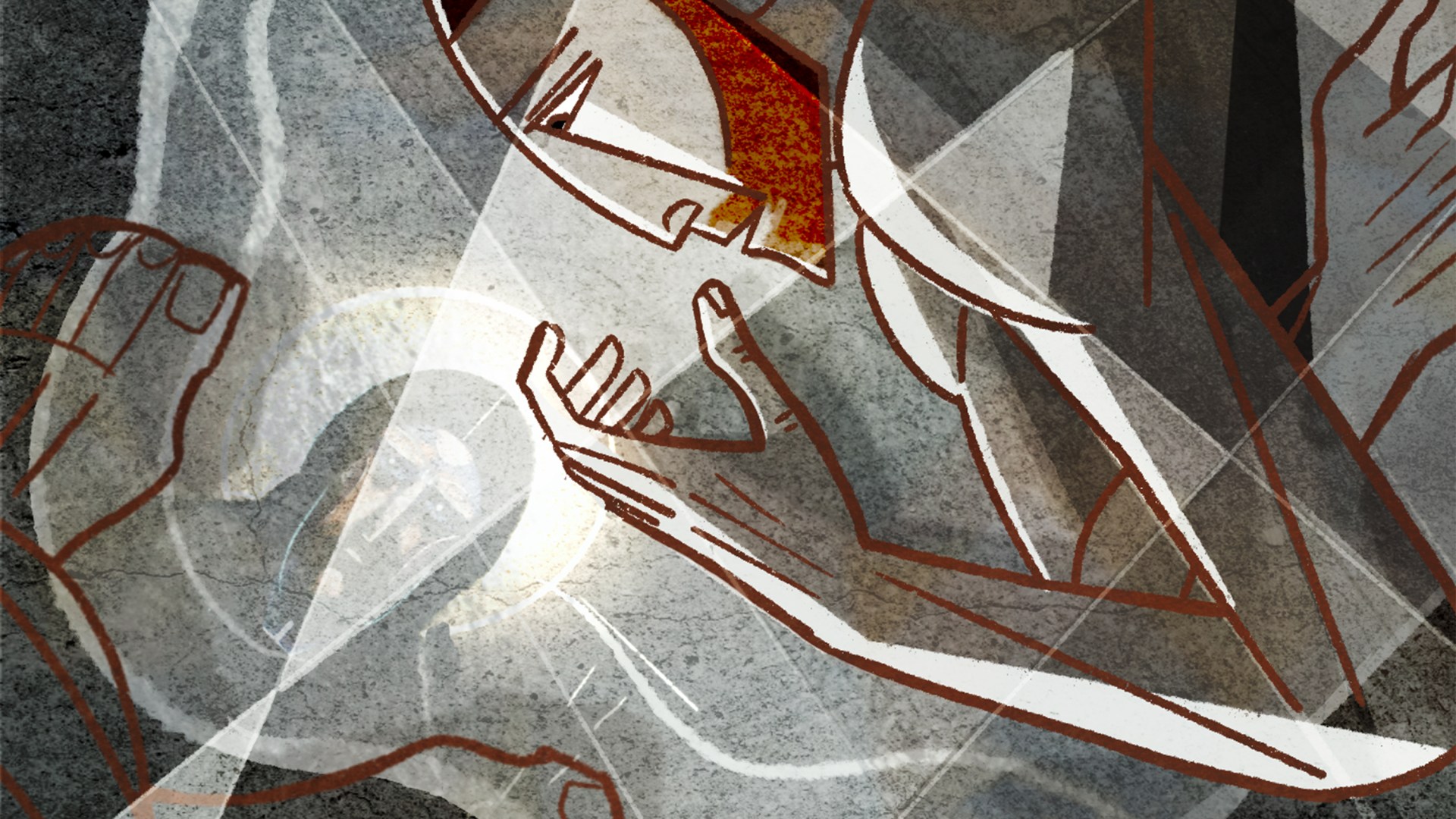
One of the 21 martyrs looking at the reflection of Jesus

One of the martyrs in The 21.

Christianity Today February 21, 2025
Tod Polson

“One death is a tragedy; a million deaths is a statistic.” Often attributed to Joseph Stalin, this quote describes life under the Soviet dictator’s totalitarian regime, during which an estimated 6 to 20 million people died from mass executions, labor camps, imprisonment, and famine.

Among them were dozens of Russian Orthodox bishops and thousands of priests, often killed by firing squad. Many more Orthodox Christians were arrested and sent to labor camps. Christian intellectuals were purged from the Soviet Union; many died in prisons and concentration camps, the first of which was established in a former Orthodox monastery in the Solovetsky Islands in 1923. Religious leaders and laypeople of all kinds suffered under Stalin, who was once himself a student at Tbilisi Theological Seminary.

To the merciless dictator, these deaths weren’t individuals to be mourned. They were numbers in columns, inconvenient obstacles in the way of a political objective. Statistics, not tragedies.

We know that “statistics, not tragedies” is an inhumane paradigm. At the same time, it can be easy for us to see mass martyrdom merely as a data point rather than the fate of individuals.

The World Christian Database defines martyrs as “believers in Christ who have lost their lives prematurely, in situations of witness, as a result of human hostility.” By this definition, more than 70 million Christians have been martyred over the past two millennia—more than half in the 20th century under Stalinist, Communist, fascist, and Nazi regimes, and many in the 21st century under Islamic militancy in places throughout North Africa and West Asia. Since 2020, martyrdoms have also been recorded in Myanmar, Uganda, Mozambique, Sudan, the Democratic Republic of the Congo, India, Burkina Faso, and Mali, among other countries.

The 21, a new short film that portrays the horrific beheading of 21 Christians by ISIS militants on a beach in Libya in 2015, counteracts the tendency to numb ourselves to this reality. (Christianity Today is an executive producer on the film.) Produced by More Productions and animated by a team of close to 100 artists from around the world, the movie showcases the spirituality and sacrifice of its subjects—20 Christians from Egypt and 1 Christian from Ghana, all of them migrant workers who were captured merely for being Christian. Imprisoned, tortured, and demoralized, they faced pressure to deny their faith but refused to do so.

The broader context of this episode is the persecution of Christians in ISIS-controlled territory in Iraq and Syria, where thousands of Christians have been executed, women and girls forced into sex slavery, and clergy kidnapped and assassinated in a ruthless attempt to wipe the religion out of the region. ISIS’s policy is abundantly clear in The 21: recant or die. Faced with a mortal decision, the captives chose to die.

Animated in a neo-Coptic style evocative of the long history of Orthodox art, The 21 pairs earthly realities with spiritual ones. An ISIS fighter glimpses a haloed Jesus sitting alongside the bound and blindfolded prisoners in the back of a clattering van. Shivering at night on a wet prison floor, the men sing Kyrie eleison; thunder and lightning crack through the sky, and a dove flits across the horizon. “The more they were tortured,” the narrator says, “the more their faith seemed to grow.” Again, Jesus appears, eyes glinting in the shadows of the cell. Rocks jut up from the earth. “Then suddenly the ground began to shake like an earthquake,” says the narrator, “and ISIS became afraid.” When the men finally march to their deaths, otherworldly figures accompany them, reflections glinting in the saltwater.

The movie also features footage from ISIS’s original propaganda video of the executions. This is a bold but important choice by the filmmakers, a choice that keeps their audience from losing sight of the sobering fact that these men were real people with real suffering. The juxtaposition is jarring: Viewers are suddenly face-to-face not with artistic renderings and iconography but with the martyrs themselves—first marching across the sand in orange jumpsuits, then turning the waves red with their blood.

The 21 tells only one martyrdom story in less than ten minutes, bringing fewer than two dozen husbands, brothers, sons, and fathers to life in beautiful animated detail. But those ten minutes matter. These men are a testament to Christian faith under pressure. Their lives and deaths stand alongside other Christians who continue to make bold choices in the face of violence and persecution.

More than 50,000 Christians have been martyred in Nigeria since 2009 at the hands of Boko Haram, ISIS-West Africa, and Fulani militants. Many millions more have been displaced, creating a severe humanitarian crisis. Christianity in Syria has been nearly eradicated, with the country’s Christian population dropping from 10 percent (1975) to 2 percent (2025). The situation is similar in Iraq, where Christians fled and died after the invasions of the United States (2003) and ISIS (2014–2017). Christians had three choices under ISIS control: convert to Islam, pay the jizya tax, or die. The Christian community in Mosul, Iraq, once 50,000 strong, has been reduced to an estimated 20 Christian families.

Every martyr throughout Christian history has had a name, a family, and a faith. Let The 21 be a reminder not just of lives lost but of the price to be a follower of Christ under the most extreme circumstances.

Gina A. Zurlo is a visiting lecturer in World Christianity at Harvard Divinity School and editor of the World Christian Database.


Theology

The Bible’s Take on Systemic Sin

Scripture is filled with examples of communities and institutions being held accountable for sin.

Newton's Cradle with an apple about to hit the other balls
Christianity Today February 21, 2025
Illustration by Mallory Rentsch Tlapek

Every February, Black History Month helps us reflect on how our nation’s racial past informs our present—to acknowledge the enduring effects of racial injustice and the need for systemic reform, both in society and in the church.

Systemic sin refers to the idea that human sinfulness is not just about wrong actions of individuals; communities, governments, nations, cultures, and other social institutions can also be sinful. As a result, the call to repentance and justice extends beyond personal morality and applies to broader systems. This means we don’t just have our own personal duty; our societies also carry a collective responsibility to combat racism.

As theologian José Ignacio González Faus writes, “When human beings sin, they create structures of sin, which, in turn, make human beings sin.” Insofar as laws can be sinful, Christians have a responsibility to oppose them and try to create just systems. This should not be controversial. Yet many of the same Christians who advocate for laws banning abortion or protecting free speech and religion simultaneously oppose talking about systemic sin.

Still, one objection I often hear is that the concept of systemic sin isn’t found or mentioned in the Bible. Critics say the biblical definition of sin is strictly an individual matter rooted in personal choices and responsibility, not systems and laws.

Some go as far as saying concepts like systemic sin and institutional racism are unbiblical because placing blame on systems, institutions, or communities waters down what has historically been most important about the Christian doctrine of sin: personal responsibility. Yet in my study, I have come to the opposite conclusion: Not only do we find systemic sin in the Bible, but also we may be more culpable for sin than if we were only personally accountable.

In a handful of examples from the Old Testament, entire communities, not just individuals, are implicated and held accountable for their sinfulness. These instances do not require less but morethan the responsibility of the guilty parties involved. This concept is also underscored by examples in the New Testament, where the apostle Paul outlines a relational dimension in the way early Christian communities responded to sin.

In fact, sin in Hebrew thought was a community issue more often than it was an individual issue.Most passages on sin are about how the whole Israelite community had sinned and how this affected individuals in the community. As Old Testament scholar Mark Boda puts it, “Sin and its accompanying guilt and punishment is understood in terms of corporate solidarity.”

The Prophets often condemned entire nations for their sinfulness or referenced the sins of previous generations in order to explain the wickedness of their audiences. Israel is condemned as a nation for injustice toward oppressed peoples, despite some individuals not participating in the injustice. I have written about this at length elsewhere, but let’s look at a few key examples here.

First, God condemns the whole nation of Israel for worshiping the golden calf despite opposition from Levites (Ex. 32). Later, he allows Israel to wander in the desert for a generation as a consequence of their mistrust in God, despite Caleb and Joshua’s faithful response (Num. 14). On Mount Horeb, when Elijah bemoans Israel’s wickedness, God reminds him of 7,000 who remain faithful (1 Kings 19:14–18). Still, God goes on to pronounce judgment on Israel as a whole in the next chapters (20:42; 21:21­–24).

Even the repentance for such national sins is shown to be a community activity rather than just an individual one: Nehemiah prays a prayer of repentance for the sins of the nation and the previous generation (Neh. 1:6), and Israel responds with national repentance (Neh. 9:2). Daniel also offers prayers of repentance for the sins of Israel, both for the present and for the previous generations (Dan. 9:16). In these examples, something more than an individual’s actions is at fault in the eyes of God—the whole nation has done something to offend God and is therefore responsible for repenting and fixing those mistakes.

This is perhaps most evident in the case of Achan, who takes plunder from Jericho against God’s commands (Josh. 7). When the Israelites go up to Ai, they find the Lord’s favor is no longer with them. Joshua cries out to God, who tells him that “Israel has sinned; they have violated my covenant” (v. 11, emphasis added). God condemns the entire people of Israel for the sins of Achan—and it’s not until all people consecrate themselves and destroy his stolen goods and family that God’s anger toward them relents.

What is going on with sin in this story? Does this water down Achan’s responsibility for his sin? I think not. Achan is still identified as the one who took plunder and provoked God’s anger—after all, he and his family suffer the brunt of God’s penalty. Their guilt is not lessened by the rest of Israel’s liability for breaking covenant with God. Instead, it seems that Israel is held accountable in addition to Achan and his family.

One reason for this communal responsibility is the social and institutional structure of Israelite life. Because Israel as a community is in covenant with God, when one person violates this covenant, it affects the whole community. Sin is not just a personal issue (though it is never less than that). Sin occurs at a community level, and individual sins affect the community—sin is a community problem.

Okay, so sin in the Old Testament was a community ordeal—but that was then. Jesus changed the covenant from a relationship between God and Israel to personal relationships with Jesus, which means now all we have to do is focus on our own sins, right? Surely the concept of systemic sin is absent in the New Testament! Not quite.

In fact, Paul’s letters are even more focused on communal dimensions of sin. When Paul calls out individuals for their sin, he seems equally concerned about how it affects the whole community’s righteousness.

Paul admonishes entire congregations for sins that run rampant in the community, like the Jewish Christians’ mistreatment of Gentile believers. When congregations give partiality to those of Jewish background and treat Gentile converts like second-class citizens, Paul admonishes these congregations, calling them to live together without partiality and repair the malformed ways they relate to one another (Gal. 2).

Paul’s understanding of sin as a community problem demands that, in the words of Esau McCaulley, we go “beyond naming.” McCaulley adds, “There has to be some vision of the righting of wrongs and the restoration of relationships. The call to be peacemakers is the call for the church to enter the messy world of politics and point toward a better way of being human.”

For this reason, Paul warns that we as individuals can become weapons of injustice, so even those individuals who are not actively participating in a particular sin can be guilty of passivity toward it. Notice Paul’s words in Romans 6: He does not say to simply refrain from sin but says that we must not allow sin to reign in our bodies or allow any part of ourselves to be controlled by sin (vv. 12–13). This implies a need for active resistance to sin, not just avoidance of it. For instance, Paul directly calls out Peter, who had been an early advocate of Gentile inclusion, for remaining silent on this issue (Gal. 2:11–14). Paul’s command for churches to be holy is not just a call not to sin but a call to oppose sin in their midst. To be passive to sins in our communities is to be used by the Enemy for injustice.

Another example is when Paul admonishes a man who slept with his stepmother. Paul calls out the Corinthian church and not just the individuals involved (1 Cor. 5:1­–2), making it the responsibility of the entire congregation to deal with the sinner in their midst.

In Galatians 6, Paul advises the church to gently restore fellow members in sin by leading them to repentance while cautioning them against being tempted in the process. He makes a profound statement: “Carry each other’s burdens, and in this way you will fulfill the law of Christ” (v. 2). Likewise, in Romans 14 Paul argues that reconciliation requires certain rights and freedoms be laid down by all for the sake of some weaker brothers and sisters.

In both cases, Paul is clearly concerned about the collective impact of individual sins, so he makes everybody responsible for everyone else.

Now, what does this mean for the Christian response to systemic racial injustice? It means that whenever we see racism in our churches and communities, it should be dealt with as a problem that affects the whole community, not just the individuals involved.

After all, it took generations of people to create and maintain entire systems of law, economics, and culture built upon the transatlantic slave trade. This means racism exists in part because of sinful systems created by sinful people. And just as Paul takes a case of sexual immorality and makes it a community problem, racial prejudice needs to be seen as equally symptomatic of our passivity toward unjust systems.

So, what is the Judeo-Christian solution to a systemic sin like racism?

When the Prophets call Israel to account for its lack of care for the poor, the solution is for Israel to return to its observance of God’s law. In that case, this meant returning to the community-wide practice of leaving the corners of each field unharvested so the poor and refugees could glean food from the margins of others’ abundance (Lev. 23:22).

Likewise, when Paul calls out congregations out for allowing sin to spread throughout their communities, his solution is for Christians to take responsibility for their weaker siblings by changing practices at a social level to avoid becoming stumbling blocks. In one case, this meant a community-wide ban on the eating of meat sacrificed to idols to avoid causing others to sin (1 Cor. 8:9­–13). In this way, Paul prescribes a collective cure to stop the spread of sin.

Community problems require community solutions. Challenging systemic sins like racism goes beyond dealing with individual prejudices to changing the societal and church structures that encourage our brothers and sisters to persist in their racism.

As McCaulley puts it, “According to Isaiah, true practice of religion ought to result in concrete change, the breaking of yokes. He does not mean the occasional private act of liberation, but ‘to break the chains of injustice.’ What could this mean other than a transformation of the structures of societies that trap people in hopelessness?”

A failure to properly contend with systemic sins like racism in our churches is comparable with Peter’s passivity toward Jew-Gentile conflict. When we do not stand up to community issues, we allow them to grow and fester into bigger problems. We become, to borrow Paul’s words, weapons of injustice (Rom. 6:13).

Finally, the Christian call to deal with systemic sin goes beyond our churches. Both Paul and the Prophets regularly called out not just their own God-fearing communities but also sinful communities around them. The Prophets condemned other nations based on their mistreatment of the poor, and Paul called out the sinful practices of the culture surrounding the early churches. So whenever the church sees systemic injustice against people of color in the world, we must take up our prophetic voice and condemn it for what it is: sin.

We must call our societies to repent of their racism and demand changes to the structures which allow this sin to persist. Anything less amounts to passivity, and churches become weapons enabling injustice rather than instruments of justice. If the church is to be the hands and feet of Jesus, then we must be active in resisting sin both within and outside our ranks.

More than this, the church must be known for acting justly, loving mercy, and walking humbly with our God (Mic. 6:8). And by this, we invite the world to be transformed by the powerful love of Jesus in the same way he has transformed our own hearts.

D. T. Everhart is a lecturer in theology at the London School of Theology, where he directs the BA Theology and Liberal Arts program.

Ideas

Robin Hood, Luigi Mangione, and Jesus

The alleged assassin has been widely compared to the outlaw hero. There are similarities—but real differences between this ethic and Christ’s.

Robin Hood with a bow and arrow in the woods
Christianity Today February 20, 2025
Illustration by Christianity Today / Source Images: Getty, WikiMedia Commons

I was a little late to hear about the assassination of UnitedHealthcare CEO Brian Thompson. In the days leading up to the 2024 election, I deleted the news apps from my phone and purposefully disengaged with social media, just as I had in 2016 and 2020. This time, being disconnected felt so good that I didn’t bother plugging in again.

So I was ignorant when a colleague caught me in the hall after a morning class in early December. “Aren’t you the Robin Hood guy?” she asked. Used to this question, I chuckled and said yes.

Then she asked me what I thought about Thompson’s murder in light of my research. It would be one in a long stream of comparisons between the assassin, alleged to be a man named Luigi Mangione, and the legendary outlaw. Reddit, especially, has latched onto the idea of Mangione, who is scheduled to appear in court Friday, as a “noble outlaw” figure. The comparison has not gone unnoticed, and articles exploring the idea have appeared in PoliticoThe Globe and Mail, and HuffPost.

I’ve spent most of my adult life studying the Robin Hood legend, including how the legend inspired writers ranging from John Keats to J. R. R. Tolkien. I even teach a class at my university entitled “Robin Hood Through the Ages.” While I love the Errol Flynn movie and Disney’s vulpine hero, it’s the medieval Robin Hood who is closest to my heart. 

In contrast to the Robin Hood seen in 20th-century films, this Robin was quite a bit rougher. The medieval version of the outlaw was prone to extortion and bouts of violence. Take, for example, this excerpt from “The Gest of Robyn Hode,” the medieval ballad that serves as the basis for the iconic “archery contest” adapted so many times on screen:

“Therof no force,” than sayde Robyn;
“We shall do well inowe;
But loke ye do no husbonde harme,
That tilleth with his ploughe. …

“These bisshoppes and these archebishoppes,
Ye shall them bete and bynde;
The hye sherif of Notyingham,
Hym holde ye in your mynde.”

In Modern English, this scene reads, 

“Therefore no force,” then Robin said. 
“We shall do well enough. 
But look to do no husbands harm 
who till with their ploughs. …

“These bishops and archbishops, 
you shall beat and bind. 
The high Sheriff of Nottingham, 
you should hold him in your mind.”

Here Robin makes his intentions clear: He is ordering his Merry Men to leave the working class alone and instead to enact violence against the powerful figures he believes to be corrupt. Make no mistake, this version of Robin Hood was popular with commoners, the overwhelming majority of whom identified as Christians. As a matter of fact, a level of popularity with the Everyman is one of the core elements of a folkloric outlaw hero, from mythical characters such as Robin Hood to real-life, valorized figures like the American gangster John Dillinger.

At least for a certain segment of the population, Luigi Mangione as the alleged insurance assassin represents the same kind of noble outlaw, a rebel who fights an unjust or corrupt authority. But outlaw heroes have always had a complicated and nuanced relationship with Christianity. 

Despite his morally dubious actions, the medieval Robin Hood was often depicted as strongly Christian. Yet this Christianity is tinged (some of my students have even said “tainted”) by violence. Unlike the gentler and more straightforwardly benevolent modern versions, this Robin never does any “robbing from the rich and giving to the poor.” Rather, he is considered good because of his violence, because he directs that violence toward people who exploit the meek and the downtrodden. 

Perhaps not coincidentally, these are the very same people whom Jesus identifies as “blessed” during the Sermon on the Mount. And while it is true that Christians should never embrace the violence of outlaw heroes, we can and should share in their rejection of exploitation of the weak and the vulnerable—the Prophets certainly do (Amos 5:7–15; Ezek. 23:22–29).

Even without the generosity to the poor that has since become Robin Hood’s trademark, this form of directed violence has always been popular with the lower and middle classes, even the strongly Christian audience of the Middle Ages. Yet there is a real tension between such a propensity for violence and the gospel message. Yes, the desire to dispense retribution to those who hurt the vulnerable has shades of God’s justice. There is some noble motive here. But outlaw justice and divine justice are not the same. God’s goodness has nothing to do with murder.

Perhaps the most important way in which the noble outlaw falls short of the gospel concerns the question of victory. Noted Robin Hood scholar Stephen Knight observes that by his very nature as a symbol of resistance, Robin never achieves a large-scale victory. He may emerge triumphant in some skirmishes and battles, but he never succeeds in changing the social landscape. The noble outlaw, by nature, must be a hero who endures, who resists—not one who overcomes.

That means the noble outlaw is essentially doomed to failure, which is a large part of the romance and beauty of this kind of hero. But this propensity to failure also sets Robin Hood’s story—let alone the insurance assassin’s—well apart from that of Christianity. Robin’s followers may be temporarily helped, but they never fully triumph. Through his death and resurrection, Jesus provides those who follow him with final victory over sin and death.

Christianity does more than resist: It transforms.

Perry Neil Harrison  is a professor of English at Fort Hays State University. His research focuses on the Robin Hood legend through the centuries.

Books
Review

In 19th-Century America, Two ‘Christian Nations’ Took Up Arms

How the intensifying religious visions of North and South erupted into civil war.

A painting of a Civil War battle.

Battle of Chickamauga by Kurz & Allison

Christianity Today February 20, 2025
Wikimedia Commons / Edits by CT

In his second inaugural address, delivered as the Civil War neared its end, Abraham Lincoln turned not to politics but to theology.

“Both read the same Bible and pray to the same God, and each invokes His aid against the other,” he observed, acknowledging the deep religious divide that had fueled the conflict. Rather than celebrating Union victory, Lincoln presented the war as a divine reckoning for the nation’s sin of slavery, declaring that “if God wills that it continue until all the wealth piled by the bondsman’s two hundred and fifty years of unrequited toil shall be sunk, and until every drop of blood drawn with the lash shall be paid by another drawn with the sword,” then so be it. Quoting Psalm 19:9, he reminded his audience that “the judgments of the Lord are true and righteous altogether.”

Yet Lincoln did not arrive at this moment of weighty religious insight in a vacuum. As historian Richard Carwardine demonstrates in Righteous Strife: How Warring Religious Nationalists Forged Lincoln’s Union, the president’s theological framing emerged within a broader religious culture that shaped Americans’ views of the conflict. What they saw was something more than a political crisis or military struggle. It was a profound spiritual reckoning.

Through a sweeping examination of sermons, church schisms, and theological debates, Carwardine reveals how faith shaped both Union and Confederate identities, giving their clash a distinctly religious character. Although Christian nationalism has become a vague and often politicized buzzword in contemporary discourse, Carwardine uses the term with greater precision. He defines it as a “fusion of religious purpose and nationalist vision, where religious and national identities not only coexist but are mutually reinforcing.”

From the nation’s founding to the Civil War, he argues, religion provided a sacred, even transcendent framework for defining America’s identity and charting its course. In shaping both the moral cause of abolition and the Confederate justification for secession, the Civil War was not merely a contest over warring economic systems, cultural identities, or constitutional interpretations. As Righteous Strife masterfully shows, it was also a battle between competing religious nationalisms.

Carwardine expands the conventional narrative of the Civil War’s origins by emphasizing theological divisions over slavery and escalating schisms within Protestant churches. In his telling, the slavery debate did more than fracture political alliances. It also divided religious communities, reshaping denominational landscapes and fueling sectional tensions.

In America’s early years, a broad national consensus tolerated Christian slave owning (whether approvingly, begrudgingly, or indifferently). By the 1830s and 1840s, however, this consensus had collapsed, giving way to irreconcilable divisions that fractured evangelical churches along North-South lines. The rupture was especially pronounced among Methodists, Baptists, and Presbyterians, whose national organizations struggled to maintain unity in the face of deepening theological fault lines.

The Methodists divided in 1844 after their General Conference demanded that a slave-owning bishop, James O. Andrew, resign. Southerners interpreted this decision as proof that abolitionist theology was corrupting their denomination. Similarly, the Baptists split in 1845 due to conflict about missionary organizations appointing slave owners leading to the formation of the Southern Baptist Convention​.


These theological divisions did not remain within the era’s churches. They also played out within the ranks of the Whig and Democratic parties.

Building on his earlier classic work, Evangelicals and Politics in Antebellum America, Carwardine observes that the Whigs, with their emphasis on moral improvement and societal reform, attracted Congregationalists, reformist Presbyterians, and Unitarians. Members of these groups tended to view state action as a means of fostering virtuous citizenship. By contrast, the Democratic Party appealed to those who viewed government-backed moral reform as a threat to both religious and individual liberty and a distortion of Christian witness. Evangelicals who opposed Sabbatarian laws and temperance measures, along with many Roman Catholics and frontier Methodists, gravitated toward Andrew Jackson’s vision of democracy, which championed laissez-faire governance while still affirming Christianity’s essential role in American life.

As Carwardine illustrates, these competing visions became deeply embedded in party politics and beyond, intensifying sectionalism and setting the stage for an eventual crisis of union. In his analysis, the North’s reformist, postmillennialist outlook, rooted in evangelical Protestantism, envisioned America as a moral agent, divinely tasked with advancing God’s kingdom through progressive social change. By contrast, the South’s religious culture fused an honor-based ethos with a theological defense of slavery as divinely ordained. Southern ministers argued that slavery was sanctioned by Scripture and essential for maintaining Christian civilization, portraying abolitionism as a theological heresy​.

By the 1850s, this proslavery theology had hardened into a near-universal doctrine, with many Southern clergy framing secession as a sacred duty to defend a godly society against Northern radicalism​. As Carwardine observes, “Each side was convinced of the righteousness of its own reforming impulse and the defective morality of the other.” In short, this religious divergence was not merely a symptom of sectional tensions but a central catalyst of America’s bloodiest and most devastating war.

Carwardine is not the first historian to examine the religious dimensions of the Civil War. Mark Noll has explored the theological fractures over slavery. Harry S. Stout has analyzed the war’s moral justifications. James P. Byrd has examined the Bible’s influence on wartime rhetoric. And Drew Gilpin Faust has considered how the conflict reshaped American attitudes toward death and the afterlife.

Carwardine builds on this scholarship by centering the concept of religious nationalism, arguing that faith was not merely a cultural backdrop but a decisive force in shaping political allegiance, national identity, and Lincoln’s evolving leadership. Ultimately, he presents the Civil War as a profoundly religious crisis, not only in its theological debates over slavery but also in its competing visions of America’s divine purpose, particularly as they suggested analogies to Old Testament Israel. As Carwardine notes, such analogies cut both ways: If likening America to Israel implied receiving God’s blessings, it also implied the possibility of provoking his judgment. While the notion of America as a chosen nation dates back to its founding, the Civil War revealed deep fractures over what it truly meant to be chosen. Or, as Lincoln put it, whether the nation was an “almost chosen people.”

Many previous accounts of the Civil War tend to dismiss presidential proclamations made by Lincoln and James Buchanan for a national day of humiliation, fasting, and prayer. In these treatments, they appear as mere footnotes or political maneuvers. Carwardine, however, underscores their deep spiritual significance for ordinary Americans, for whom these proclamations were more than symbolic gestures. They spoke to widespread anxieties that had citizens turning to God, first to avert war and then to ensure the Union’s survival.

Buchanan’s fast day, though intended to foster unity, ended up deepening sectional divisions. Some clergy interpreted it as a call for national repentance over slavery, while others saw it as a condemnation of Republican radicalism, all of which only fanned the flames of discord. Lincoln’s proclamations, by contrast, carried greater institutional weight. His fast day following the Union’s defeat at Bull Run signaled not only a moment of national crisis but also a belief that divine intervention was essential to sustaining the war effort.

Unlike Buchanan’s proclamation, which seemed desperate and ineffectual, Lincoln’s call to prayer was widely embraced, helping to galvanize public support for the Union. More interesting still, by 1863, his proclamations had taken on a more explicitly theological tone, framing the war as divine judgment for the nation’s sins and making national repentance a prerequisite for victory. In light of this, Carwardine argues that these religious appeals were not mere political expedients but crucial in shaping public sentiment, reinforcing the war’s moral stakes, and transforming Lincoln—initially viewed with skepticism by evangelicals—into a leader who increasingly embodied the role of a providential statesman.

Today we often take this view for granted, with Lincoln consistently ranking high on lists of America’s greatest presidents. At the time, however, he was far from an obvious hero for antislavery evangelicals. On the campaign trail, he faced a barrage of baseless accusations, including claims that he was a duelist, a drunkard, and a denier of Christ’s divinity. Even beyond these fabrications, his irregular church attendance and lack of formal membership in any denomination only deepened suspicions among religious voters.

As Carwardine explains, Lincoln was aware of these concerns and quickly learned to keep his religious views guarded, avoiding public declarations that might alienate potential supporters. Yet as the war progressed, evangelicals found their faith in him vindicated. They welcomed his increasingly providential rhetoric alongside his steadfast commitment to preserving the Union.

Clergy reinforced this perception, drawing parallels between Lincoln and biblical figures who had carried out God’s will in times of national crisis. Some likened him to Moses, guiding the people toward liberation, while others saw a resemblance to David, chosen to uphold justice. A Wisconsin senator, James R. Doolittle, captured the depth of this religious devotion in an 1864 statement: “I believe in God. Under Him, and, next to Him, I believe in Abraham Lincoln.”       

Much like white evangelicals, Black Americans initially had deep reservations about Lincoln. But over time, many likewise came to see him as a providential figure. His early statements prioritizing the Union’s survival over the immediate abolition of slavery met with disappointment. And his August 1862 meeting with Black leaders, where he suggested colonization as a solution to racial tensions, provoked outrage. Henry McNeal Turner, a prominent African Methodist Episcopal (AME) minister, denounced him as a “presidential Pharaoh” who courted divine judgment by ignoring the cries of the enslaved.

Yet despite their frustrations, many Black religious leaders maintained faith that God was guiding history. As Lincoln moved toward emancipation, Black leaders began revising their views, interpreting his actions as evidence that he had been appointed God’s agent of deliverance.

By the end of the war, many Black Americans regarded Lincoln as divinely chosen. His 1865 assassination, occurring on Good Friday, only deepened this perception. Both Black and white Americans infused his tragic death with religious meaning. But Carwardine shows how their biblical interpretations were remarkably distinct.

Many white Americans mourned Lincoln as a Christ figure, viewing his death as a form of national atonement. Black Americans more often compared him to Moses. Like the Old Testament leader, Lincoln had brought his people through a “red sea of blood to a Canaan of peace and freedom,” in the words of one Wisconsin judge, only to be stopped short of entering the Promised Land.

Before long, Black churches began displaying his image, from pulpits and altar tables, as a symbol of deliverance and divine justice. A Long Island mass meeting of Black citizens honored him as “God’s appointed instrument to work out our salvation,” while an Illinois AME congregation mourned the loss of “a great deliverer—a real benefactor.”


In death, then, Lincoln became a sacred figure for Black and white Americans alike. And while he understandably looms large in Righteous Strife, Carwardine broadens the narrative by spotlighting a diverse cast of influential religious figures who shaped the war’s moral and theological battles.

Well-known names like William Lloyd Garrison, Henry Ward Beecher, and Frederick Douglass take center stage, not just as activists but as key players in defining the war’s religious stakes. Alongside them are lesser-known figures like Stephen Higginson Tyng, an Episcopal clergyman and staunch emancipationist, and Matthew Simpson, the influential Methodist bishop who cast the Union cause as a divine mandate. Both played pivotal roles in rallying religious support for Lincoln’s policies.

On the opposing side, Richard Fuller and Nathan Lord defended the Confederacy’s proslavery theology, insisting that slavery was biblically sanctioned and racism God ordained. Meanwhile, figures like William Gannaway Brownlow, a fiery Methodist preacher turned Unionist politician, reveal how religious fervor fueled not only abolitionist activism but also fierce nationalist sentiment. By interweaving voices from across the nation, from abolitionist preachers to proslavery theologians to local clergy from both North and South, Carwardine reveals that the Civil War was waged almost as fiercely in pulpits, prayer meetings, and pews as on battlefields.

At a time when fears of Christian nationalism dominate political discourse, Carwardine’s Righteous Strife offers a powerful reminder that debates over the nation’s religious identity, the church’s role in public life, and the meaning of the gospel in American politics are nothing new. While the battle over slavery has been settled, deeper struggles endure, animated by competing perspectives on how Christians should relate to the nation and what kind of nation (Christian or otherwise) America should embody. Schisms that once resulted from slavery now erupt amid conflicts over race, gender, sexuality, and political ideology, echoing the tensions that split denominations in the antebellum era.

The Christians of Lincoln’s day might not recognize today’s debates, but they would surely recognize the broader shape of our conflict. America’s deepest struggles have always been, at their heart, battles over belief.

Daniel N. Gullotta is a researcher at the Declaration of Independence Center for the Study of American Freedom at the University of Mississippi.

Ideas

Black Labor Matters

This month we can remember and reward efforts to make work more equitable.

A briefcase with different objects in it showing the face of a woman
Christianity Today February 20, 2025
Illustration by Mallory Rentsch Tlapek / Source Images: Pexels

For Black writers and creatives like me, Black History Month (BHM) can be something like the Christmas season. Joy permeates the air as the month gifts us plenteous opportunities to celebrate the contributions of Black people in the US and the African diaspora.

Our celebrations might include attending parades and educational events where Black teenage girls in St. Louis recite Phenomenal Woman” and young Black men in Greenville, South Carolina, proudly proclaim, “I am somebody!” The month incites an unapologetic celebration of Black life and culture, our chance to be unashamedly “Blackity Black.” For some, it’s insisting that both Santa and Jesus are Black; for others, it’s an all-Black Super Bowl halftime show lineup that includes crip walking. (Like I said—Blackity Black!)

But this year, the celebratory air that usually surrounds the month-long festivities has been polluted by measures against diversity, equity, and inclusion measures in the courts, companies, and the federal government. These efforts have targeted decades-old civil rights laws and practices that have engendered more just and equitable treatment for Black Americans.

The rise of antidiversity initiatives has left me disoriented and struggling to breathe while simultaneously trying to navigate how to celebrate Black History Month this year. Even the word celebrate feels inappropriate. Perhaps honor is a more befitting word. So to honor BHM, I’m considering how best to ensure that Black folk are neither erased from the pages of US history nor excluded from the nation’s pathways to prosperity. In short, I’m trying to figure out how and if “we gon’ be alright,” as Kendrick Lamar says.

To start, I’m praying—both alone and with my prayer partners—asking God for wisdom for how to proceed individually and collectively. I’m also looking to history books to see how my spiritual ancestors operated. How exactly did they invite justice to “roll on like a river, righteousness like a never-failing stream” (Amos 5:24)? And just as importantly—how can we? How do we live justly in unjust times? Do we march? Defy immoral laws? Protest by withholding our dollars?

But for an answer, we need look no further than Scripture and this year’s Black History Month theme, African Americans and Labor, to know how to honor BHM this year. I can remember and reward. We can remember and reward.

The Association for the Study of African American Life and History, which selects the month’s annual theme, wrote,

The 2025 Black History Month theme [African Americans and Labor] focuses on the various and profound ways that work and working of all kinds—free and unfree, skilled, and unskilled, vocational and voluntary—intersect with the collective experiences of Black people. Indeed, work is at the very center of much of Black history and culture. Be it the traditional agricultural labor of enslaved Africans that fed Low Country colonies, debates among Black educators on the importance of vocational training, self-help strategies and entrepreneurship in Black communities, or organized labor’s role in fighting both economic and social injustice, Black people’s work has been transformational throughout the U.S., Africa, and the Diaspora.

The Bible is filled with countless examples of God remembering and asking us to remember those who are treated unjustly, those who are poor, those who are enslaved, widows, and orphans. From the Old Testament to the New Testament, God uses his people to provide for those on the economic margins through tithes, Jubilee, generous gifts, miracles, and Spirit-led entrepreneurship.

In 1 Kings, God provides flour and oil for the widow at Zarephath so she and her son can survive a famine. Then in 2 Kings, God provides oil (again to a widow) so she can sell it instead of being forced to sell her sons into slavery. And in Acts, the early church is so unified that some members eagerly sell their homes and possessions to give to those in need. Scripture is filled with countless examples of God remembering those on the financial margins and asking us to do the same.

But perhaps one of the greatest examples of God remembering is the story of the children of Israel, particularly their enslavement and eventual deliverance and restoration. In an interview about her book A Sojourner’s Truth: Choosing Freedom and Courage in a Divided World, Natasha Sistrunk Robinson highlighted how this biblical story has anchored African Americans for generations:

Even for the slaves, once they learned the story that people were born and died in slavery, their thought was, If God delivered the Israelites from 400 years of slavery, then most certainly he is able to deliver us.

And delivered we were, albeit differently. Whereas the Israelites left enslavement with gifts of silver and gold, we Black folk left with no such fortune. We left with never-to-be-realized promises of “40 acres and a mule,” the “gifts” of Jim Crow laws and the Reconstruction that birthed Black Codes, and now the proposed erasure of that history through laws meant to eliminate these stories from school textbooks and libraries.

And whereas the Israelites had a singular leader, Moses, who ushered them out of slavery, African Americans have had several leaders who have labored to usher us to freedom: law-breaker Harriet Tubman, orator-activist Sojourner Truth, and love-activist Martin Luther King Jr.

BHM isn’t merely an opportunity to remember the accomplishments of these and other Black leaders. It’s also an opportunity to remember how, generation after generation, God has used Black believers to usher in justice and righteousness. BHM is our opportunity to remember how God responded to their prayers, their songs, their petitions, and their protests.

In Reading While Black, Esau McCaulley writes, “Hungering and thirsting for justice is nothing less than the continued longing for God to come and set things right. It is a vision of the just society established by God that does not waver in the face of evidence to the contrary.”

From Abraham and Moses to Harriet “Moses” Tubman and MLK Jr., our spiritual ancestors have grappled with what it means to live and love and travail in the “not yet” space—the space between praying with pressed palms that his kingdom come and will be done and actually seeing the kingdom come.

Honoring Black History Month is acknowledging that we still live in the “not yet.” Because of this, the month is an opportunity not just to remember how God worked through our spiritual ancestors but to continue their work today. This opportunity is for all believers.

This month, we can model our actions after an all-loving God who remembers those who have been treated unjustly, rewards them for their labor, and restores what was withheld. There are several practical ways everyone can remember and reward Black labor.

First, educate yourself and your spiritual community about how your Black neighbors and congregants are experiencing justice or injustice in their neighborhoods and places of employment. Did you know, for example, that Black men and women make, on average, significantly less money than their white and Asian counterparts? Did you know that this is true even for Black professionals? News outlets like the National Association of Black Journalists’ News & Views report on issues affecting Black communities, and organizations like the NAACP (National Association for the Advancement of Colored People) work hard to protect the rights of Black people and other people of color.

To that end, look for ways to support Black labor in your everyday life and in the life of your church community. Start with one item on this list and continue throughout all of 2025.

Restaurants and eateries. Historically, Black cooks often have been unpaid, underpaid, or unrecognized for their culinary contributions. To honor Black labor, fill up your pantry and fridge with yummy food items made by Black entrepreneurs. To discover new restaurants in select major cities, visit EatOkra.

Shopping and local services. When buying gifts for birthdays, anniversaries, and Christmas, consider buying from Black-owned businesses. Consider the services you use regularly. Are there any Black-owned dry cleaners you can use? Coffee shops you can frequent? A simple internet search may turn up some great local options.

Professional Services. List professional services you use, perhaps only sporadically or annually. Not happy with your tax accountant? Look for one through the NSBCPA. If you search, you’ll locate numerous associations that list the contact info for Black professionals across various industries.

Journalism and thought leadership. Subscribe to Faithfully Magazine, a publication I write for, which provides a Christian perspective. Also consider buying and engaging the work of Christian leaders like Lisa Sharon Harper, Jemar Tisby, and Truth’s Table.

My prayer is that by remembering and rewarding Black labor, we’ll all live and breathe more easily in the “not yet.” I pray that like our spiritual ancestors, we will lead lives that illustrate how much we hunger for God’s kingdom, this Black History Month and beyond.

Chanté Griffin is a journalist and the author of Loving Your Black Neighbor as Yourself: A Guide to Closing the Space Between Us.

News
Wire Story

Southern Baptists Abandon Abuse Database

The Executive Committee’s major focus is now recouping $3 million in legal fees related to the crisis.

A man at a microphone with his head down

Southern Baptist Convention Executive Committee president Jeff Iorg

Christianity Today February 19, 2025
Bob Smietana / Religion News Service

A proposed online database that would list the names of abusive Southern Baptist pastors is now on hold, with no names likely to be added to the website by the denomination’s annual meeting this summer.

Instead, Southern Baptist leaders working to address abuse in the nation’s largest Protestant denomination say they will focus on helping churches access other databases of abusers and training churches to do better background checks. However, the so-called Ministry Check database, which was a centerpiece of reforms approved by Southern Baptist messengers—or local church representatives—is now on the back burner.

“At this point, it’s not a focus for us,” Jeff Iorg, head of the Southern Baptist Convention’s Executive Committee, told reporters at a news conference Tuesday during the committee’s annual meeting in Nashville. 

 The proposed database has been derailed by denominational apathy, legal worries and a desire to protect donations to the Southern Baptist Convention’s mission programs, RNS previously reported.

Sexual abuse survivors have been advocating for a database of abusers since at least 2007, when ABC News’ 20/20 published a report on abuse among Southern Baptist pastors. The Executive Committee rejected the idea in 2008, but it resurfaced in 2021 after a Guidepost Solutions investigation found Southern Baptists had long downplayed the issue of abuse in the denomination and mistreated abuse survivors who tried to raise the alarm about the issue.

That led to initiating reforms, which were to include building education for churches and creating the Ministry Check database. For years, an SBC task force charged with implementing reforms said the database would soon go live, once concerns about finances and legal issues were overcome.

A website for SBC abuse reform, which SBC leaders called “historic” when it was launched in 2023, included a link to the Ministry Check website. However, no names appear on that site.

“Coming soon, Ministry Check will provide leaders with the ability to search for information about individuals who have been convicted, found liable or confessed to abuse,” the website reads.

The delay in adding names to the database, among other delays, led some advocates to wash their hands of the SBC’s abuse reform efforts.

“Accountability is illusion and institutional reform is a hall of mirrors,” wrote Christa Brown, a longtime advocate of SBC reforms, and other abuse survivors in a recent editorial.

Iorg did not rule out future work on the database but said it would not happen soon. Jeff Dalrymple, who was recently named to head up the SBC’s response to sexual abuse, also said he would not rule out future work on a database.

A now-disbanded task force charged with implementing the SBC reforms, including the database, started a nonprofit last year called the Abuse Reform Commission. However, its proposal for funding was rejected by the heads of the mission boards. 

Earlier in the meeting, Iorg outlined a set of priorities for responding to and preventing abuse, including providing more training for churches and working more closely with the denomination’s state conventions of churches. He also gave thanks for Dalrymple’s new role, which he said would help move the reforms and response to abuse forward.

Iorg said more data was needed about the scope of abuse in the denomination and steps churches are taking to prevent it and respond when it happens.

2024 report from Lifeway Research, which is owned by the SBC’s publishing house, found that only 58 percent of churches did background checks on those who work with children; those checks are considered one of the essential steps in abuse prevention.

Dalrymple, who was previously executive director of the Evangelical Council for Abuse Prevention, a nonprofit that addresses abuse, said helping churches deal with abuse was part of his calling in life. 

The news the database has stalled was both disappointing and expected for abuse survivors Jules Woodson and Tiffany Thigpen, who have long advocated for reforms. Both said that because the SBC does not oversee its pastors and because abusers only make it onto criminal databases after convicted, a list of abusive pastors is necessary.

After years of delay, Thigpen said at least survivors have an answer about the future of the database.

“I’m just glad it was said out loud,” she said. “So now we are off the hook for hope.”

Thigpen said Tuesday’s meeting felt like the end of an era for survivors who have pushed for reform and that SBC leaders have moved on. But she said that even though the database seemed doomed, Southern Baptists can no longer say abuse is not a problem.

Woodson said the move away from a database showed the will of church messengers doesn’t matter in the end. Southern Baptist leaders, she said, will do what they think is best, no matter what anyone else says. She compared the SBC abuse issues to a house on fire—and instead of calling the fire department, Southern Baptists asked a board of directors to put the fire out. That left them standing around with buckets while things burn.

“They should have called the fire department,” she said.

The cost of dealing with abuse was also on the minds of Iorg and other Baptist leaders meeting in Nashville. Legal costs from the Guidepost investigation and the abuse crisis generally have totaled $13 million and drained the Executive Committee’s reserves. On Tuesday, Executive Committee members recommended a 2025 budget for the denomination’s Cooperative Program that includes a $3 million “priority allocation” for legal costs.

That allocation will have to be approved by SBC messengers this summer at the denomination’s meetings in Dallas and will likely be controversial. Cooperative Program funds from churches are used to pay for missionaries, seminary education, church planting and other national ministries—and previous attempts to tap SBC’s Cooperative Program funds to address the issue of abuse stalled.

So far, SBC abuse reforms have been funded by an initial $4 million from Send Relief, a joint venture of the SBC’s International Mission Board and North American Mission Board. No permanent funding plan is in place.

Iorg said the “priority allocation” has been the subject of vigorous debate and called it “the most palatable of a lot of bad options.”

He also said the messengers to past SBC meetings authorized the investigation into abuse, and the legal cost is part of the consequences of that decision. He noted the Executive Committee is actively trying to sell its building, which could help with legal costs. 

When asked if he regretted past decisions that led to the costs, Iorg said addressing abuse was the right thing to do, though he wished Southern Baptists had found a way to do it that was not as costly or disruptive.

During the meeting, Southern Baptist leaders also removed two churches from the denomination—one in California over the issue of abuse, and a second in Alaska due to having “egalitarian” views about the roles of men and women in leadership. The SBC’s statement of faith has restricted the role of pastor to men, and in recent years the denomination has become more aggressive in removing churches with women pastors.

Theology

Be Careful Who You Pretend to Be

Columnist

You can fake your way to vice but never to virtue.

A statue of a man holding a mask
Christianity Today February 19, 2025
Illustration by Christianity Today / Source Images: WikiMedia Commons

This piece was adapted from Russell Moore’s newsletter. Subscribe here.

American Christian social media lit up last week with the story of another fraudulent influencer. An account claiming to be run by a patriarchy-supporting “trad wife” with 14 children turned out to be that of a single, childless woman with a fake identity and a falsely narrated life.

This case was an especially literal example of a broader truth that ought to serve as a warning in an age of ideological extremism: You become who you pretend to be—but in one direction only. You can fake your way to vice but never to virtue.

The evolutionary biologist Hanno Sauer has written a book, The Invention of Good and Evil, that seems designed to elicit eyerolls from me from the title on. Sauer’s argument is common enough from the reductionist materialist perspective: that morality and immorality, good and evil, don’t reflect anything transcendent about reality but instead show how humans have evolved to cooperate for the flourishing of the gene pool.

Sauer’s analysis is more interesting when he gets to a sociological examination of the last 50 years or so, however. He wonders how, in this cultural moment, people navigate what’s right and wrong. Among other things, he points to the role of pretense.

After a long discussion of broadening views of human rights, including what some refer to as the “wokeness” wars of the past several years, Sauer looks at the global right-wing backlash, especially as mediated through social media. There, he describes a pattern of irony-leading-to-reality that I’ve seen play itself out in a thousand tragic stories.

He asks, first of all, why so many have embraced what would be seen in almost any other age as cruelty of a cartoonish sort. Some of this, he argues, is the desperate search for something against which to rebel.

“In the case of many adolescents, what’s left to rebel against when your former hippie parents don’t have a problem with drugs and premarital sex?” he writes. “Not infrequently, this next step has consisted of swastikas, crude misogyny and confessions of murder fantasies.”

At first, much of this rebellion is played for laughs. “Which aspects of the right-wing backlash were really meant seriously, and which were simply provocation, whether the ends eventually justified almost every means?” Sauer asks. In the beginning, much of it is the latter, “only ever meant ironically, or more precisely meta-ironically: the irony being to leave it unclear what was really meant ironically and what was not,” he writes.

Human psychology, however, does not allow the heart to keep this kind of “vice-signaling” at the level of trolling. “Unfortunately, some people who had been in on the joke forgot that you have to be careful who you pretend to be, because at some point you become who you pretend to be,” Sauer notes. “Many, once they’d shed their ironic pose, became real Nazis or real misogynists (and often both).”

This is especially true, he argues, in a time of “extremism inflation” driven by an attention economy. If you’ve wondered why much of what you see in online Christianity seems to be a direct inversion of the Christian elder—as “temperate, self-controlled, respectable, hospitable, able to teach, not given to drunkenness, not violent but gentle, not quarrelsome, not a lover of money” (1 Tim. 3:2–3)—you are not the crazy one.

“Almost every social grouping, both right- and left-wing, has to struggle with the problem of extremism inflation, particularly as those few extremists end up dominating discourse,” Sauer writes. “A group’s ideology inevitably ends up being dominated by the people who represent the most extreme version of that ideology, and beyond a certain point, this extreme version eventually becomes the new normal.” He continues,

Anyone who wants to join the group or move up within it must be able to demonstrate a particular loyalty to the cause, and that usually means escalating this radicalization loop even more. From there, it is only a small step to proclaiming that Kim Jong Un can teleport or that the “Führer” is infallible. Vanishingly few actually believe this nonsense, or indeed that anyone else believes it. But ideological extremism becomes a costly signal, as it is designed to build trust within groups by burning bridges with common sense—and with others—and further consolidating the group’s bonds.

In this way, the vapid advice for people to “fake it until you make it” is actually true. Pretending to be extreme will eventually make the typical person into an extremist. Pretending to see compassion as toxic or fidelity as weakness will eventually lead to an inner life of cruelty and coarseness that matches the outer show.

That’s because the hunger for the pretense is itself already a loss of integrity. Those who mimic the ways of an idol, the Bible says, do, in fact, become like that idol over time (Ps. 115:8).

For this reason, the apostle Paul warns about unconfronted immorality under the cover of church membership: “Do you not know that a little leaven leavens the whole lump?” (1 Cor. 5:6, ESV throughout). What’s normalized is imitated, and immorality that is imitated ultimately becomes real.

It doesn’t work the other way around, though. You can pretend your way to vice but not to virtue. You can wink with irony on your way to hell, but there’s no return ticket.

That’s because integrity and morality and godliness do not come about by outward demonstration. Whitewashing the tomb does nothing to enliven the decomposing corpses underneath (Matt. 23:27–29). Having “the appearance of godliness but denying its power” (2 Tim. 3:5) is not the first step to real godliness but the contradiction and desecration of it.

The way to immorality starts with building one’s way up, and you can fake your way to a foothold on that climb. But the way of Christ starts with a recognition of lack—of the kind of empty-handedness that puts away falsehood (Eph. 4:25).

Pretend to be a Nazi long enough, and you will soon find yourself goose-stepping along with the best of them. Laugh at sexual abuse and human trafficking long enough, and you will become a predator.

Those who wink and nod with “Aren’t we naughty?” trolls, thinking they can do so without ever becoming what they pretend to be, enact a sad irony. They seem to think they can create a Christian nation only if the state is coercive enough to make people pretend to be Christians until they are. But the exact opposite is true.

You cannot pretend your way to a changed heart or a renewed mind, much less to Christian maturity. The Spirit doesn’t work that way.

Jesus will ask you what he asks of everyone: “What are you seeking?” (John 1:38). But you will not enter the kingdom of God without a congruence between the heart and the mouth. Admittance to the kingdom is through mercy and grace alone, which come only to those who have given up on earning and achieving (Rom. 10:9–11).

Millennia ago, the Bible warned us of all this. “The aim of our charge is love that issues from a pure heart and a good conscience and a sincere faith,” Paul wrote to Timothy. “Certain persons, by swerving from these, have wandered away into vain discussion, desiring to be teachers of the law, without understanding either what they are saying or the things about which they make confident assertions” (1 Tim. 1:5–7).

Be careful what you pretend to be. Pretending your way to hell will take you there—and pretending your way to heaven will take you to hell too.

A sincere faith, a good conscience: These things are not good for clout in a time of extremism inflation. But ask yourself: Is that what you really want?

Russell Moore is the editor in chief at Christianity Today and leads its Public Theology Project.

Culture

When a Church Breaks

My congregation fought and disbanded. Was it all a waste?

Broken pieces of an image showing parts of Christ’s body on the cross.
Christianity Today February 19, 2025
Illustration by Elizabeth Kaye / Source Images: Wikimedia Commons

Jesus Christ lived 33 years on earth and spent most of them in obscurity. It is hard to absorb this fact. The Son of God, entering a broken world, did not use his power to immediately reconfigure it, but chose instead to submerge himself in his circumstances and live as one of us.

He did this so well that many observers failed to grasp the truth of his nature. Most of his life elapsed in ways that must have seemed nondescript; only a few years are recorded. Christ’s biography can read as a few carefully detailed episodes—the birth in a manger, the dazzling public ministry, the Crucifixion and epochal Resurrection—situated at the opposite ends of three sparsely observed decades.

What did Jesus do with all that time? We can only hypothesize. What we do know is that Christ emerged from his undocumented years as a man fully acculturated to his environment. He quoted the literature of his people and observed their traditions. He understood their laws and their contested interpretations.

Whatever else he accomplished, it appears that Jesus diligently attended to the world he was born into, allowing himself to be shaped by a set of religious institutions and governing structures that he understood to be fatally flawed. The Word became flesh, says the apostle John, and dwelt among us (1:14).

If you believe that Jesus is God incarnate, that he entered our reality with both knowledge of its grimness and knowledge of his power to redeem it, his use of time may strike you as odd. His willingness to live alongside others remains one of his most provocative qualities.

I am trying to understand Jesus’ orientation toward his surroundings because I am reevaluating my relationship with his church. My congregation of 13 years recently dissolved in one of those commonplace tragedies that regularly dissolve congregations of every description but are nonetheless singular and life-altering when you are the one involved.

Among the casualties of this dissolution was the racial-justice ministry I led. The process of establishing this ministry had been as contentious and protracted for our congregation as similar situations are for most of our evangelical peers. When acrimonious electoral politics and the slog of pandemic life exposed fissures that had long existed, I began hearing murmurs that this ministry was accelerating the church’s destruction.

People wanted to know if I understood the strain I was causing by asking our community to think about race. Although I had been recruited by church leaders, they also wanted to know if launching this ministry was my act of personal ambition, aimed at seizing control of the pulpit. Was I truly a Christian—or was I a pretender who was working to inject the congregation with my politics? These questions came from people I considered my friends. Some of them became so hostile toward my family and me that I wondered if I was hallucinating our interactions.

Our church leadership, exhausted by the situation, made an executive decision to terminate the racial-justice ministry. I found out about this decision, and about the end of my role, in a public announcement delivered at a Sunday gathering, effective immediately. In the aftermath I texted everyone who had criticized my work to ask if we could talk about what had happened. When a few of my friends responded and asked to meet, I drove over that afternoon. From outside their home, I watched them open their door. After a brief exchange, the door closed again.  

The church had also been struggling with other problems. Within a few weeks, its difficulties compounded, and the congregation scattered. My family and I began visiting neighboring churches, trying to decide where to go next. It is hard to return to the church once you’ve seen what it is capable of doing to its members. It is also hard, once you’ve experienced the tenderness and affection that can accrue, to stop trying. In every new place, I am flooded with desire to belong—and with dread of what could happen when I finally do.


I was not planning to look for a new church. When I joined my old congregation as a college freshman, I assumed I would stay for the rest of my life. I had walked in on a Sunday service held in a campus recreation center. The pastor’s message was about shared life as a radical expression of faith and about Christ as one who bridges our differences.

I was moved; I joined the church that semester. I was compelled by its members and by the portrait they painted of Jesus—a Savior who had already transcended all forms of earthly acrimony and was inviting his followers to do the same.

Jesus was the kind of man who could discuss theology with a Samaritan woman in public, demolishing hierarchies of race and gender in an act of civility that rendered a glimpse of the kingdom he was here to announce. He could walk into a temple courtyard and overturn the moneychangers’ tables without apology, then use the newly vacated space to administer healing to the blind and the lame. There was no historically entrenched division he couldn’t overcome, no form of brokenness beyond his ability to repair.

Jesus mesmerized me with his brilliant, difficult goodness. He indicated that a world of conciliation and justice was within reach and that he was preparing his followers to obtain it. He blessed the poor in spirit, the peacemaker, the meek. He said that in his kingdom, the first would be last.   

Jesus made the present age tolerable by declaring that another was at hand. To me, this meant I had no obligation to accept the world in its existing state. For the rest of my time in college, I threw myself into campus protests and prayer rallies with equal vigor. After graduation I took a series of nonprofit jobs, working in roles that addressed racial and economic inequities, and volunteered with my church on nights and weekends. Jesus, I presumed, called me to live as a refutation to my surroundings.

I spent five years praying for opportunities to pursue justice and equity work through ministry. When my pastor invited me to consider the racial-justice role, I took it as a divinely appointed gift. When my role ended and my church collapsed, I took it as a blow to my certainty that I had understood Jesus correctly, or at all.

In the Gospels, Jesus heals the sick and turns water into wine. He compels a mob to set down its stones. He is undaunted by the most immutable realities; they become malleable under his hand. These episodes from Christ’s biography are the ones I know best, and they have formed me for most of my adulthood.

In the aftermath of my church’s dissolution, I’ve revisited the Gospels and felt rebuked by how incompletely I’ve studied Christ’s life. These moments of tangible victory do not represent the whole of his story.

Jesus is rejected as vehemently as he is received, feared and resented as much as he is admired. Some rejoice in his ascendance; others plan for his demise. Crowds praise him; later they bay for his blood. He permits this, knowing where it will all lead.

Jesus is arrested and refuses to defend himself at his hearing. He is unjustly sentenced, then crucified. He forgives his accusers. He yields to his executioners. He dies. His authoritative power, so expertly wielded elsewhere, is completely restrained. When faced with a visceral manifestation of human depravity, Jesus allows it to annihilate him.

Evidently, he does not choose to transform every unfavorable circumstance.


As we visit new churches, I think constantly about Christ’s insistence on living among the people who will betray him and about his refusal to escape his captors. I find this newly irritating for reasons I can’t explain.

It is possible I am bothered by evidence of Christ’s willful, deliberate vulnerability. It is possible I liked him best when I believed he would always lead his people to bypass the depredations of ordinary life.

I want to claim that my allegiance to Christ stems from pure high-mindedness, that my passion for justice is an expression of my piety, that everything that happened with my church pained me simply because I cared for it so much. These claims are partially true.

My discomfort with Christ’s self-restraint suggests that I am also drawn to him for other reasons. I’ve taken his goodness and power as evidence that he will always generate the version of reality I long for. Christ healing the sick, Christ cleansing the temple, Christ teaching a Samaritan woman: I understand these stories as signs that he can overpower the effects of physical decay, institutional failure, and racial hatred and that when his followers encounter all these things, they can expect to prevail.

Since my church’s implosion, I’ve soothed myself by arguing that Christ will quickly reverse what happened. Soon, I’ve thought, he will repair us, and we will finish what we started. But in the intervening time, I’ve only seen more churches splinter over justice issues, ranging from their struggles to nurture diverse congregations to their inability to address problems of endemic sexual abuse. I’ve also seen these churches presented with opportunities for conciliation, which few of them have shown interest in pursuing. Now years have passed without these churches, or my own, displaying much evidence of repair.

I suspect that these opportunities for conciliation were Christ’s moments of intervention. Why didn’t he force us to respond? The answer is obvious when I revisit the list of miracles that I’ve admired and considered as revelations of Christ’s coming kingdom: There is no miracle in which Christ wields his power to manipulate human choice.

Jesus gives himself to a world that promises to brutalize him, and all available evidence indicates that he never once retracts himself.

He gestates in the body of a Jewish woman oppressed under Roman rule, and he’s born into an empire that targets infants of his description with state-sanctioned violence. His earliest moments on earth are fraught with hostility; even so, he remains.

He is raised by parents whom he loves, whom he understands will soon be unable to protect him. He absorbs the instruction of his religious teachers, aware that they represent a corroded institution that he will grow up to challenge. He must know that this is a world he will overturn and divide. Somehow, this does not deter him from immersing himself within it, from loving it as it is.

How often is he tempted to despise what he sees? How many times is he halted by occupying soldiers and given a burden to hoist onto his back? How many acts of cruelty are regularly performed in front of him, committed by the people he knows best?

How is it possible for him to know our world without wishing to escape it? What is he trying to tell us with his decision to stay?

Christ delivers an answer to these questions with his last 40 days on earth. Once he is resurrected, he returns to the world that killed him. In the weeks approaching his ascension, he chooses to conclude his time on earth as he began it: anonymously embedded in the rhythms of common life.

The final chapter of John’s gospel opens with Jesus standing alone by the Sea of Galilee, unrecognized by his disciples, waiting for them as they fish. These men, who have not yet apologized for abandoning Jesus to his death, arrive on shore to find that he has already stoked a fire and prepared a meal. Jesus applies himself to the work of serving breakfast and allots himself a few lines of dialogue in which he tells the men to eat.

In the ending of Luke’s gospel, Jesus falls into step alongside two men journeying from Jerusalem to Emmaus, then joins their discussion about everything they hoped for—and were disappointed in—concerning a crucified prophet from Nazareth. He articulates his own interpretation of the Scriptures, explaining why they needed a Savior who would suffer at the hands of a world he had known from its inception. The men listen and invite him to dine with them at their destination. Once they arrive, Jesus seats himself, blesses the meal, and administers the food with his own hands. 

The tasks Christ completes before his ascension clarify the nature of his power: The world may kill him, but it cannot deter him. It may alienate him, but it cannot extinguish his essential goodness. The apostle John, who called Christ the Word made flesh, also called him a light shining in the darkness, which the darkness has not overcome (1:14, 5). If Christ’s early days raise the question of what he intended to accomplish with his time, his final days give an answer. He has formed his life into a sign and a wonder. He has lived as a miracle of sustained nearness.


When Christ appeared as only an invitation to transcendence, it was hard for me to envision a path forward within the church. My own church, so devout, so beloved, the recipient of so many hours of labor and care, had still been corroded by the uglier tendencies of the surrounding culture. If Christ’s trajectory led away from the common dysfunctions that no church and no group of people has fully overcome, then following him meant letting the possibility of communal life recede into the distance.

This can sound like a reasonable conclusion. Responding to Christ’s example of radical goodness may consist of shearing off our morally ambiguous entanglements. Yet this choice is not radical enough. Its logic is indistinguishable from the thinking that already pervades our culture.

Most of our contemporary idioms prescribe divestment as a cure for the problems endemic to life with others. Without needing the example of Christ, we can protest or defund the institutions we dislike. We can cut off toxic relationships. We can pull our children out of school. The idea that we should create distance between ourselves and the rest of the world in order to pursue ideals is not revelatory. If the conclusions drawn from a study of Christ’s life are indistinguishable from the conclusions that can be drawn without him, they are not sufficiently considered.

Christ’s life is too singular. It cannot be understood, nor can its effects be approximated, by any logic apart from his own. By most measures, it is a cipher: 30 years squandered, a premature death, a resurrection followed by gestures that seem frustratingly unsuited to God in human form. It is an illegible biography unless you suppose that Christ may have been doing what he promised to do from the beginning—to inaugurate a new reality.

Perhaps that way of being is crystallized in how Christ ultimately identifies himself to his friends. During the early days of his ministry, he frequently declared that the kingdom of heaven was at hand; after his resurrection, he seems to enact this statement by asking the apostle Thomas to place his fingers in his side. The summation of Christ’s message is found in a scarred, pitted body that allows itself to be pierced and returns to offer itself once again.

There is no way of interpreting Christ that justifies walking away from the world. To imitate him is to live with one another in a posture of steadfast, interminable approach.

Ironically enough, my resolve to emulate Christ weakens whenever I come back into contact with his people. My family and I are now attending a new church and taking steps toward conciliation with members of our old one. These interactions are cordial but uneven, making it hard for me to draw a connection between Christ’s acts of loving proximity and whatever it is we are doing when we are together.

The assumption of goodwill that existed between members of our old church is mostly gone. Some of the friendships within that circle have resumed; others have not. I feel a fresh wave of sadness every time I think about what our relationships used to be and what they are now. It is amazing to me that trust between people can be so painstakingly built, then so cleanly demolished. At our new church, lovely and welcoming as it is, I cannot imagine making the same investment and seeing it lost again without concluding that time spent with the people of God is anything but a waste.

Engaging with the church can be so painful that I want to argue I don’t need the church in order to consummate my beliefs. Any group of people will do. This idea falls apart as quickly as it comes together: I know, as much as I want to think otherwise, that I need to go back to the church because it is the ultimate proving ground for all that is conveyed through Christ’s story. If his proximity has a transformative effect, I expect to see it first among those of us who claim to follow him.

Returning to the church is nonnegotiable. Christ’s story is compelling enough to bring me to my knees, but without a through line connecting his biography to ours, it will always seem like an abstraction of goodness, existing in another dimension, incapable of making landfall in our own.


In the mystery of Christ in the Gospels and the mystery of Christ in his church today, I think the apostle Thomas and I occupy similar positions. I look at the church and wonder what, exactly, I am seeing. It is possible that Thomas asks a version of this question when he is confronted with Christ’s resurrected form.

Christ appears before Thomas with a gash in his side and punctures through his hands and feet. How can Thomas discern whether he is seeing a body in collapse or a body that has overcome decay and is passing into glory? Is this body to be mourned or celebrated, buried or embraced?

If the present-day church is the extension of Christ’s body, I can sense the degree to which it has been ravaged. Every church has been pierced, not only by our contemporary disagreements but also by the generational animosities we have inherited. Just so, when Christ presents his body to Thomas, it is mangled with the evidence of all he has suffered.

Yet it is possible for his body to mean more than one thing. I think about this as I remember the friends whose phone call I picked up and whose house I drove to after the racial-justice ministry dissolved. Before they closed the door, I had gotten out of my car and stood at the entrance to their home. I consider this my last interaction with my old church, and it plays in my mind like the ending to a tragedy.

My friends closed their door, and I drove away, but we also briefly faced one another. I had brought them a parting gift, and they thanked me before accepting it. Whatever grievances we could have revisited, whatever disagreements we could have chosen to litigate, we contained them long enough to conduct this exchange.

I could assign multiple narratives to the years spent with my old church, and the harshest ones would all hold a degree of truth. The most obvious would center on our moral frailty and on our community as a locus of mutually inflicted disappointments. The most thorough, however, accounting not only for our own story but for Christ’s, frames our time together not as a failure but as an unfinished gesture.

At the end of his 33 years, Christ’s body tells the full story of his life, of how he is both indelibly marked by our world and resurrected by the Holy Spirit. Perhaps his church is both these things: a reminder of our earthly inadequacy and a definitive sign that a new way of being has arrived. The people of God look like a broken body shuddering toward resurrection.

Our nation’s protracted racial reckoning has not come to a close, and no church anywhere has prevailed over the history we were born into. My friends and I have not resolved any of these problems, which preexisted us and will likely outlast us all.

Against this backdrop, however, even the quiet exchange on my friends’ driveway appears as a weak but unmistakable approximation of Christ’s signature miracle: In spite of everything, we had drawn each other close. The church, profoundly wounded though it may be, was not a waste of our time.If Christ’s nature is a revelation of nearness, for a moment together, we apprehended him.

Yi Ning Chiu writes the newsletter Please Don’t Go. Previously, she was the columnist for Ekstasis, Christianity Today’s creative NextGen project. 

Ideas

The Risk in Immigration Reporting

On high-stakes, high-interest issues like border policy, journalists of all views may be tempted to distort the facts or even biblical truth. Christians should hold to a higher standard.

Warning signs are displayed at the Paso del Norte international bridge linking Mexico with Texas.

Warning signs displayed at the Paso del Norte international bridge linking Mexico with Texas.

Christianity Today February 19, 2025
Herika Martinez / Getty

The United States is home to about 48 million immigrants today, but media outlets favoring a more restrictive immigration policy report on only a small fraction of them. 

Fox News is a good case in point: Night after night, the cable channel headlines a very particular kind of newcomer. “ICE removes ‘foreign fugitive’ wanted in Mexico on rape charge.” “Man allegedly in country illegally accused of murdering elderly partner.” “Jamaican man illegally in US arrested in Florida for sex crimes involving teenager.” “ICE nabs another suspected Venezuelan Tren de Aragua gang member.” “Migrant TDA gang member breaks officer’s arm.”

Are all those Fox headlines factual? Probably. In a country of 340 million, it’s easy to bite into a rotten apple. But “just the facts” does not mean “all the facts.” And while it’s hard to know for sure the national immigrant crime rate due to incomplete reporting by 49 states, Texas records for homicide convictions from 2013 to 2022 indicate that “illegal immigrants were 26.2 percent less likely than native-born Americans to be convicted of homicide.” 

A federal Department of Justice study during the first Trump term similarly found undocumented immigrants in Texas  “had substantially lower crime rates than native-born citizens and legal immigrants across a range of felony offenses.” US-born citizens were more than twice as likely as undocumented immigrants to be arrested for violent or drug crimes and more than four times as likely to be arrested for property crimes. 

My interest here is not just about those facts. It is also about the responsibilities of the journalist and the Christian.

Journalism is not a neutral art. Reporters learn to feature stories with human interest, and much of what they communicate to their audiences depends on which humans they find most interesting and which stories they find most gripping. A crime tale gets more clicks than a story about immigrants going to church, but those quiet stories are much more frequent. Stories about criminals get more attention than those focused on the overwhelming majority of immigrants who work hard and provide for their families. 

This is not only a risk for journalists who want restrictive immigration policies. For those of us who want to welcome immigrants to the United States, the mirror temptation is to write only about exemplary immigrants put in difficult spots by corrupt or heartless officials while ignoring more mundane and diffuse negative effects of large-scale immigration: crowded schools and hospitals, perhaps, or rising rents due to increased local demand, or cultural conflict within local churches. These quiet stories, too, deserve to be told.

In some cases, more troubling than anti-immigrant journalism is the theology and anthropology that underlie it. Hebrews 13:2 is clear: Do not forget to show hospitality to strangers, for by so doing some people have shown hospitality to angels without knowing it.” The verse refers to Genesis 18, where Abraham greeted and fed three strangers, then realized they were angels. The verse parallels many other biblical injunctions to be hospitable. 

Some people dislike that word strangers and suggest we should love only our close-in neighbors as ourselves. But Jesus notes in Matthew 5, “If you love those who love you, what reward will you get? Are not even the tax collectors doing that? And if you greet only your own people, what are you doing more than others? Do not even pagans do that?” (vv. 46–47). We don’t have specific instructions about how to apply this on a national scale in a secular country, but the thrust is clear: Work on it!

However we work that out, Christians especially should rise above the strident and misleading anti-immigrant messages we see in some media, even some Christian publications. Flip Hebrews backward, and you get Fox’s implication: Do not show hospitality to strangers, for by so doing some people have shown hospitality to devils without knowing it. Those Fox headlines distort both current facts and biblical truth.

Left unchecked, this backward testament can lead even Christians to dehumanize immigrants in rhetoric—wrongful no matter how right the cause of policy reform. In the December issue of American Reformer, for example, Hillsdale College PhD candidate Ben Crenshaw criticizes Christians who “claim that the image of God in man and human dignity requires a compassionate and welcoming policy toward immigrants” and others in need. He says, “American evangelicals and conservative Christians who have been taught that Christian love and Christlikeness require welcoming all immigrants, no matter their legal or illegal status,” are a “major obstacle to effective immigration policy.” 

To disabuse us of that notion, Crenshaw writes in his penultimate paragraph that the imago Dei does not mean humans “possess a raw and innate dignity that confers worth upon all they do or become, and that subsequently demands that individuals and governments treat them with respect.” On the contrary, he says, “more often than not, men degrade themselves and choose to become bestial or vegetative. In these cases, they should be treated as such.”

Those statements open the door wide to seeing ourselves as righteous and others as subhuman—and treating them that way “more often than not.” Crenshaw hastens to add in his last paragraph, “This does not mean that all illegal immigrants are beasts or plants that can be discarded without a second thought.” Not all? 75 percent? 50 percent? 25 percent? 10 percent?

We all sin and deserve to be on the discard pile, but Christ died for us. At first thought, we tend to discard people not in our tribes, but Christ instructs us to think again, then show hospitality and love.

Marvin Olasky is executive editor of news and global at Christianity Today.

Culture

Captain America’s Human-Sized Heroism

In the franchise’s latest installment, our hero doubts himself—and marches on.

Anthony Mackie as Sam Wilson in Captain America: Brave New World.

Anthony Mackie as Sam Wilson in Captain America: Brave New World.

Christianity Today February 19, 2025
All images ©Disney. Editorial use only.

In a recurring dream that dogged my childhood, I took a flying leap into the air and glided a few feet above the ground. As I recall, excitement never quite rose to exhilaration. My floating body moved at a steady height and pace. I didn’t soar into the clouds or careen wildly around rooftops at high speed. I just coasted along until sleep pulled me into the next bizarre scenario.

Why couldn’t my elementary-aged imagination escape the troposphere or break the sound barrier like the tricolored champions then flying out of comic books and onto the silver screen? Were my escapades’ limits the product of inadequate creativity, or was my subconscious—or perhaps my Creator—trying to tell me something?

Whatever your response, conscious or unconscious, to the abundance of superheroes at today’s multiplex, this class of story continues to offer something relatively unique. When we choose to confront the “arresting strangeness” that J. R. R. Tolkien locates in the Secondary Worlds of fantasy, we sometimes glimpse that Evangelium which he finds in exemplars of the genre—a transcendent joy that denies “universal final defeat.”

Today’s creative revisioning of those epic warriors of ancient myth presents modern viewers with at least two options. In the first, the extraordinary actions of characters who suspend nature’s laws offer an occasion to revel in both power and its willing surrender. The heroes put their lives on the line to deliver the endangered, swooping in to rescue victims of malevolence and restoring equilibrium by dint of expert timing and judicious force. We might join them in our imaginations, jeopardizing our safety to save commuters barreling toward a fiery death, preventing tragedy by flying round the world so fast we reverse time, or giving our lives to resurrect the dead.

Spy flicks and war films offer other opportunities to identify with selfless heroism. The superpowered hero, however, adds something more to the equation. Incredible abilities recall biblical incidents, miracles both local and large-scale. Shaping weather like Thor and Storm recalls the parting of the Red Sea (Ex. 14:19–31) and Jesus’ calming of a tempest (Mark 4:35–41), while the healing powers of Arion and Halo echo the Messiah’s erasures of disability and revivification of the dead. When a particularly dramatic rescue manages to illustrate that ultimate fusion of love and surrender (John 15:13), the parallel grows still stronger.

Alternatively, marvelous recovery invites us to associate with the rescued, with the hapless pedestrian saved from a falling building or the oblivious child protected from a speeding bullet. As the most rigorous workouts, healthy diets, and curated personal calendars cannot forestall mortality indefinitely, stories putting human finitude in grand terms provide useful reminders. Physical peril mirrors spiritual vulnerability. 

There’s at least one other path through certain superhero movies, one easier to walk when the tales’ exceptional heroes are not superpowered. Without impervious skin, laser-shooting eyes, or the ability to walk through walls, superheroes grow much more relatable, representing something more than themselves. The superpowered Wonder Woman is less an Amazon than she is herself, a swift and strong warrior whose might is matched only by compassion. Batman, on the other hand, relies as much on an underworld reputation as an inhuman monster as he does technology and fighting skill, and Iron Man’s connection to the military-industrial complex he helped revolutionize magnifies the threat he poses to miscreants.

Julius Onah’s Captain America: Brave New World concerns itself with the passing of the baton from the former sort of hero to the latter. It’s a transition from demigod to mortal man, seven films and one TV show in the making.

From the moment Steve Rogers appears beside his future replacement, their differences could not be more obvious. Captain America: Winter Soldier (2014) opens with Sam Wilson in a morning run around DC’s National Mall, his pace obliterated by the current Captain America’s dizzying velocity as he laps Sam repeatedly. As Sam later explains, now outfitted in superhero garb as the Falcon, “Don’t look at me. I do what he does, just slower.” The heroes’ fast friendship and mutual courage do help them take down the bad guys, but the Falcon’s mechanical pinions can be pulled, eliminating his advantage over a normal adversary.

Sam loses his wings again in the series The Falcon and the Winter Soldier (2021), a few episodes after he’s relinquished the shield bequeathed him by Steve. Unable to shake the feeling “that it’s someone else’s,” Sam gives up the symbol publicly. Admitting its power, he refuses to believe anyone except Steve deserves to use it. The first supersoldier’s relentless grit while still a scrawny recruit, later magnified by “super serum” and coupled with an unwavering commitment to freedom, has made Steve an icon to many—a godlike figure incapable of wrong.

Sam maintains for far too long that since he cannot be the Steve Rogers, he has no right to wear his sigil or bear his shield. What others see as an honor, Sam considers an impossible standard, a burden he lacks the strength to carry.

It takes someone else stepping into Steve’s buccaneer-boots role for Sam to reevaluate his decision. Like the Galatians Paul berates for distorting the gospel (Gal 1:6–9), the decorated soldier crowned as the next Captain America betrays the principles he’s intended to personify. He sullies the well-known symbol of freedom quite literally, staining it with the blood of a man he kills in an act of rage. Confronted with atrocity, things finally click for Sam. He picks up the shield, slips on a mended pair of wings, and dives into a new film.

Captain America: Brave New World has little to do with the Aldous Huxley novel that gave it its name (besides briefly exploring the allure of medicating emotion), nor does it deliver as incisive a social critique as the three Captain America films that preceded it. It does, however, offer observations surprisingly congruent with a Christian ethic.

Sam uses the shield as effectively as Steve ever did, a mélange of balletic moves and kickboxing techniques helping him propel the disk to devastating effect. It is not, however, the application of force which ultimately wins the day. Sam’s first appearance 11 years earlier introduced him as a grief counselor for military veterans, a former Air Force pilot whose experience with loss granted him insight into others’ trauma. He demonstrated that same understanding at the end of his TV series when he encouraged a friend to actively serve the needy instead of merely pummeling villains and chided a senator for deploying easy labels like terrorist and thug that justify violence in the face of great need.

In his latest cinematic outing, the true climax occurs when the fighting ceases, Sam’s wings broken (again) and his body battered in a way Steve’s never was. In this moment of weakness, he talks down his adversary by lifting him up—reminding him that he can become the better man he seeks to be by stepping back from violence instead of pressing the attack. Sam models a love for his enemy that successfully (and quite literally) transforms the opposition, solidifying his new status as a symbol whose power rests not in any supernatural talents of his own but in the values for which he stands. As his friend Bucky observes, where Steve’s larger-than-life stature “gave people something to believe in,” Sam, a Black, working-class man who carries the hopes of the marginalized, “gives them something to aspire to.”

He doesn’t need superpowers to impact the world. He doesn’t even need to fly. Perhaps God was teaching me in my childhood dream that I don’t need to either. Living in this life as I’m being pulled toward the next, my current role—suspended between two worlds—is to soldier onward at a steady pace (2 Tim. 2:3–4), to never stop moving (Heb. 12:1). Equipped with my own symbol of freedom (Matt. 16:24) and carrying a shield of faith in someone far greater than myself (Eph. 6:16), I seek to remain what Christ named me: an image bearer (2 Cor. 3:18).

Paul Marchbanks is a professor of English at California Polytechnic State University. His YouTube channel is “Digging in the Dirt.”

addApple PodcastsDown ArrowDown ArrowDown Arrowarrow_left_altLeft ArrowLeft ArrowRight ArrowRight ArrowRight Arrowarrow_up_altUp ArrowUp ArrowAvailable at Amazoncaret-downCloseCloseellipseEmailEmailExpandExpandExternalExternalFacebookfacebook-squarefolderGiftGiftGooglegoogleGoogle KeephamburgerInstagraminstagram-squareLinkLinklinkedin-squareListenListenListenChristianity TodayCT Creative Studio Logologo_orgMegaphoneMenuMenupausePinterestPlayPlayPocketPodcastprintremoveRSSRSSSaveSavesaveSearchSearchsearchSpotifyStitcherTelegramTable of ContentsTable of Contentstwitter-squareWhatsAppXYouTubeYouTube