News

Germans Head to the Polls as Evangelicals Pray for Stability

Heated rhetoric and divisive questions raise concerns about the fragility of democracy amid US-style politics.

German Chancellor Olaf Scholz, Green Party candidate Robert Habeck, Christian Democrat Friedrich Merz, and Alternative for Germany candidate Alice Weidel debate the future of the country.

Christianity Today February 19, 2025
Michael Kappeler/POOL/AFP via Getty Images

Elections in Germany are typically pretty quiet, according to Assemblies of God pastor Timothy Carentz. 

Germans are wary of extremism, concerned about propriety, and committed to a principle of political privacy or “electoral secrecy,” which is enshrined in the German constitution. They often don’t put signs up in their yards or get into heated arguments about candidates at the pub.

But this year, following the collapse of Chancellor Olaf Scholz’s three-party coalition in November, things have been more heated.

“We’ve noticed people getting more and more vocal,” said Carentz, an American who runs Rhema Café, a coffee shop and ministry center in Kaiserslautern, in southwestern Germany.

He’s heard debates about the economy, which is floundering, and rise of right-wing nationalists. People are arguing about immigration and asylum policies, the war in Ukraine, high energy prices, and which politicians (if any) can be trusted to help. 

The conversations seem more divisive than usual. 

“It’s the first time I’ve seen Germans so active, engaged, and opinionated about it all,” Carentz said. “This year, people are putting up banners outside their apartment windows, leaving stickers around town, wanting to hand out brochures and pamphlets.”

Amid it all, evangelical leaders told Christianity Today, they are focusing on God’s love for all people and the value of every human life—unborn and migrant, in Ukraine and the Middle East, and at home in Germany. And they are praying for Germany’s democracy. 

The country has been in a lot of turmoil since the three-year-old coalition—made up of the center-left Social Democratic Party (SPD) and Greens and the probusiness Free Democratic Party (FDP)—fell apart in an argument over a proposed budget. Under the stress of the recent reelection of Donald Trump in the US, differences over economic policy could no longer be reconciled, and the three parties stopped working together. 

Germans will vote in a snap election on February 23. Currently, the SPD is polling at about 16 percent, down about 10 points from its 2021 victory. The Greens have 13 percent support. The FDP is polling so poorly that it may not clear the minimum threshold to get any seats in parliament.

The center-right Christian Democratic Union (CDU) and its Bavarian sister party, the Christian Social Union (CSU), are on track to win the largest share of the vote. Current polls show that the party that was in power for 16 years under the leadership of Angela Merkel has around 30 percent support.

The CDU/CSU candidate for chancellor, Friedrich Merz, has emphasized the need to restrict immigration, rev up the economy, embrace nuclear power, strengthen Germany’s military, and rely less on America. The party’s platform also promises tax cuts, lower electricity costs, and investment in the tech sector. 

“You deserve a government that governs our country better,” the platform says. “We know how to do it.”

The CDU/CSU does not seem to know who to do it with, however. 

To govern, a party needs the support of at least half the representatives in parliament. The CDU/CSU might be able to form a coalition with the SPD. The center-right and center-left parties have partnered before, governing as a “grand coalition” from 2005 to 2009 and 2013 to 2021. 

But both have lost support since then. Back in 2013, the two parties commanded a combined 68 percent of the popular vote. Today they’re hovering around 45 percent in polls. 

The far-right Alternative for Germany (AfD) has seen a surge of support, on the other hand, harnessing anger and anxiety over immigration, climate-change policies, COVID-19 restrictions, and the war in Ukraine, as well as ongoing dissatisfaction with the European Union. The AfD is currently polling second, even after a series of controversies over meetings to discuss the deportation of millions of immigrants, including some with German citizenship, and the use of banned Nazi phrases.

The CDU/CSU has been sharply criticized after working with the AfD to pass a nonbinding immigration motion—including criticism in a joint letter from the Protestant Church in Germany and the Catholic German Bishops’ Conference warning against the collaboration. Merz has recommitted to not forming a coalition with the right-wing party.

Several other smaller parties are running as well, including the Left Party, which is polling at about 6 percent, and a new left-wing party named for politician Sahra Wagenknecht, which is polling at 5 percent.

Members of Germany’s independent Protestant churches, called free churches, are not a significant bloc of voters. They’re unlikely to sway the election one way or another. But they have not been left untouched by the political debates roiling the country ahead of the February 23 election. 

Konstantin von Abendroth, who represents the Association of Protestant Free Churches at the federal level, told CT that evangelicals are mostly concerned with the same issues that concern other voters. 

“I know devout Christians in all parties,” he said. “Pacifists who vote for the Left. Christians who emphasize freedom of lifestyle and therefore vote for the Greens. Christians who emphasize social justice and therefore vote for the SPD. Christians who want to achieve peace through rearmament and therefore vote for the CDU. Christians who are afraid of Muslims and therefore vote for the AfD.”

Some free-church Christians have been drawn to the social conservatism of the AfD—and the kind of social change promised by someone like Trump in America. 

“During the election campaign, Donald Trump interested evangelical Christians with some conservative family ethics but, above all, with the economic upturn he promised,” von Abendroth said.

Trump’s seeming delight in chaos and disruption, though, along with his aggressive rhetoric and the demeaning way he speaks about people, makes even the most sympathetic evangelicals a bit leery. Seeing people around Trump, notably billionaire Elon Musk, come out in support of the AfD seems to have prompted a bit of a backlash too.

“I expect that the actions of the current American government will lead to fewer evangelical Christians voting for the AfD,” von Abendroth said.  

Frank Heinrich, one of the leaders of the Evangelical Alliance in Germany, said if evangelicals stand out on any issue, it is their emphasis on the dignity of every human as a creature of God. 

“In our view,” Heinrich said, “this is the decisive prerequisite for any democratic society.” 

Many evangelicals are more concerned than their neighbors about abortion. Terminating a pregnancy is illegal in Germany except to save the life of the mother, but it is currently nonpunishable in the first 12 weeks. The SPD and the Greens, with support from the Left Party, recently proposed decriminalizing abortion in the first trimester.

That may push some Christians to support Merz and the CDU/CSU. The center-right party’s candidate is Catholic and called abortion “an affront to the people” on the campaign. The AfD also opposes state support for abortion.

The proposed decriminalization didn’t advance in parliament, though, despite popular support nationally, including 62 percent of Catholics and 75 percent of Protestants, so it is unclear how pressing the issue will be when voters cast their ballots. 

According to Heinrich, German evangelicals’ pro-life commitments also lead them to prioritize certain foreign policy concerns including peace in Ukraine and the Middle East.  And they care a lot about sustainability issues. The Evangelical Alliance recently set up a new working group on climate change.

Perhaps the biggest political concern right now, though, is the state of politics itself. Many members of free churches are worried about how heated everything has gotten this election.

“Looking at the United States, there is a lot of skepticism among evangelicals about this style of politics,” Heinrich said.

When the Evangelical Alliance leader attended the National Prayer Breakfast in the US last week, Trump’s speech made him want to hide under the table. The way Trump talks about his political opponents—fellow citizens who disagree with him—was especially concerning, Heinrich said.

And stability feels really important to a lot of evangelicals in Germany right now.

The western part of Germany has only been a democracy for 75 years. And the eastern part of the country only freed itself from authoritarian rule 35 years ago. A thriving, healthy, and free society, where transfers of power are peaceful and people can disagree about the future of the country, is not something they want to take for granted.

“When the chancellor called for new elections, it showed how stable the system is,” Heinrich said. “That’s not guaranteed or always the case. … That’s what we are praying for here—that the stability would not go away.”

News

Christians Double Down on Evangelism as Thailand Legalizes Same-Sex Marriage

Pastors prioritize personal relationships and talking directly with LGBTQ people who show up at their churches.

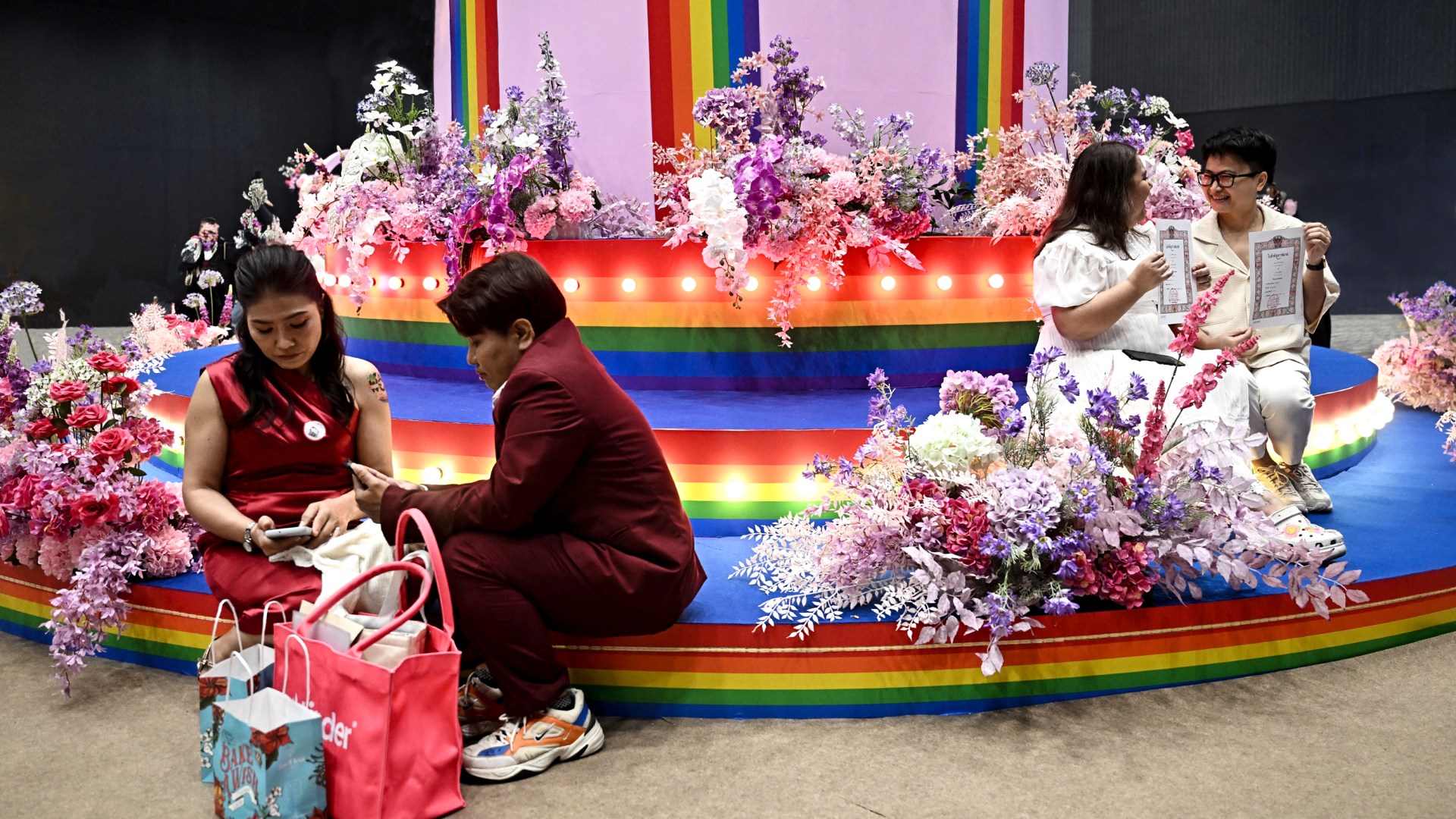
Couples attend their wedding at a marriage registration event at a shopping mall in Thailand.

Couples attend their wedding at a marriage registration event at a shopping mall in Thailand.

Christianity Today February 18, 2025
Lillian Suwanrumpha / Getty

Choenjuti Buangern’s journey to Jesus started in an unlikely place: an elementary school classroom in Hat Yai, Thailand.

Educational curriculums in the majority-Buddhist country include religious instruction that is often heavily focused on the nation’s dominant faith. However, schools usually devote a few lessons to the world’s other major religions. 

One day, Choenjuti’s teacher quoted Jesus’ words from the Sermon on the Mount: “If anyone slaps you on the right cheek, turn to them the other cheek also” (Matt. 5:39). 

“Wow, why does he talk like that?” Choenjuti remembered thinking. “I felt interested to learn more about Jesus and Christianity.”  

Choenjuti’s interest in Christianity lay dormant for many years. Her family and culture were Buddhist, which heavily influenced her spiritual development. 

“Before I was a Christian … I felt that karma would catch up with me,” she said. “I thought, How can I escape this fate?

One day, an answer came, which Choenjuti experienced as “like an echo in my body” telling her to “come to Christ.”

She called a Christian friend who had previously given her a Bible and asked what she needed to do. The friend directed her to a version of the sinner’s prayer printed in the back of the Bible. Choenjuti didn’t wait: She read the words aloud and directed them to God.

Soon after her conversion, she began looking for a church. At the first congregation she visited, the pastor prayed that the “LGBT people in this world will disappear.” The words shocked her and made her think of the scene from Avengers: Infinity War when the supervillain Thanos causes millions of people to vanish. 

Choenjuti was dating another woman at the time. She also had short hair and didn’t wear girly clothes. She wondered if the prayer had been directed toward her and decided to try a different church. 

She eventually found her way to Muang Thai Church and came out to its pastor, Vara Mejudhon, the first time she met him. Vara and his church hold a traditional understanding of Christian sexual ethics, but Choenjuti wasn’t that concerned with the congregation’s theological positions. She just wanted to see Vara’s reaction.

“He looked surprised, but he welcomed me to join the church and worship God together,” Choenjuti said. 

Over the next two years, Choenjuti developed strong relationships with people at the church and grew in her new faith. As she learned more about Christian beliefs, she wrestled with her sexuality. Why did she feel this way if it wasn’t God’s will?

Finally, she concluded that the deeper relationship with God she desired would require obedience in this area of her life, and she broke up with her partner. 

“I felt like God wants me to be pure,” Choenjuti said. 

Witnessing Choenjuti’s commitment to Christ encouraged Vara. 

“She stood firm in her belief,” he said. “And she prioritized her relationship with God more than her partner’s relationship and her own desire.” 

Vara knows how difficult it can be to reach members of Thailand’s relatively large LGBTQ population, especially in a society that has largely accepted same-sex relationships. 

As a member of Thai Christian Thinkers, a club which brings together pastors and theologians to create educational resources for the broader Thai church, Vara has helped write a book explaining Christian beliefs on sexuality and advising the church on how to engage LGBTQ people. The group is working on a sequel.

Recent events may increase demand for these materials. Last month, a law legalizing same-sex marriage went into effect. Over 1,800 same-sex couples were legally married on the first day of its implementation.  

Thai LGBTQ activists said that their victory was not a foregone conclusion. In 2012, 60 percent of Thais opposed same-sex marriage according to a nationwide survey conducted by the government.

Over the following years, advocates lobbied lawmakers and launched public demonstrations. Thai movies and television shows increasingly depicted LGBTQ relationships. In 2023, another Thai government survey found that 96.6 percent of the population now favored legalization of same-sex marriage.

Varying opinions about same-sex relationships exist within Theravada Buddhism, the religion of the vast majority of Thais. Generally, however, Buddhist leaders have not taken strong stances against the new law. 

Instead, “opposition to same-sex marriage was mainly concentrated among Thailand’s small Muslim minority,” noted The Nation, a Thai English-language news publication. 

Not mentioned was Thailand’s even smaller Christian minority, which is estimated to make up about 1 percent of the population.  

Chatchai Charuwatee, who pastors First Presbyterian Church (Samray) in Bangkok, said that most Thai churches hold a conservative stance on LGBTQ issues, noting that churches submitted a letter of concern to the National Assembly expressing opposition to legalizing same-sex marriage. 

However, he said this shift in the law “hasn’t affected any part of the local church that much,” as it is not specifically directed at “religious entities or religious ministry.” He believes the Thai government is generally protective of religious communities and their right to practice their faiths, meaning that the new law will likely not cause legal problems for churches. For example, he doesn’t think a church would face repercussions for refusing to host a same-sex marriage ceremony.   

But though he is willing to openly share his convictions on controversial topics when necessary (even appearing on a Thai television show to discuss Christians’ views on LGBTQ issues), Chatchai does not want Christians to become known for debating issues of sexuality in the public square. Like Vara, he prefers to establish personal relationships and talk directly with individuals who are struggling or have questions. This mitigates the risk of misunderstanding and offense.

“I believe that the message of the gospel itself will convict the souls of its hearers and will naturally lead them to want to change their lifestyle if they are LGBTQ individuals,” Chatchai said.

Chatchai recalled getting to know a same-sex couple that was attending another church he had pastored earlier in his career. He thought about addressing their relationship directly but decided against it. 

“I don’t think they [would have] listened to me because they would feel like I [was being] a judge to them instead of a friend,” Chatchai reflected. “So I started becoming a friend.”

The couple attended a Bible study with Chatchai for several months. He also began visiting them in their home and learned more about their lives and relationship. Eventually, the two women shared with Chatchai that they had decided to no longer be romantic partners. 

“They wanted to end that kind of relationship,” he said. “That was the work of the Holy Spirit himself.”

Preferring personal conversations over public declarations seems to be the norm for many Thai Christian leaders. In addition to his church ministry, Chatchai serves on the board of CGN Thai, a media outlet that produces Thai-language Christian content. It has addressed LGBTQ issues before. But a couple of years ago when CGN staff suggested producing a ten-minute video explaining Christian beliefs on the issue, the board balked.    

“We don’t think ten minutes will be enough to explain how we love the LGBT people and how we respond to them,” Chatchai said about the decision.

Chatchai also wants the leadership of Thailand’s three main Protestant groups—the Church of Christ in Thailand, the Evangelical Fellowship of Thailand, and the Thailand Baptist Convention—to steer the conversation on this issue, especially in the wake of the new law. He said it wouldn’t be appropriate for parachurch organizations like CGN to take the lead. 

Chris Flanders, a former American missionary in Thailand and now professor of missions and intercultural service at Abilene Christian University, said that there is precedent in the New Testament for the gentle approach to discipleship favored by many Thai pastors. 

Of course, Jesus was at times very direct, even harsh, during his ministry. But Flanders said that in some cases, Jesus chose to interact with people in an indirect manner that Thais can more easily relate to, pointing to Jesus’ response to James and John in Mark 10, as well as the story of the woman caught in adultery in John 8. 

When discussing these different philosophies of engagement, Thai Christians have to remember that their community makes up less than a million out of 77 million of the country’s population, said Chatchai.

“So our focus, our priority,” he said, “should be going toward evangelism rather than trying to debate.”

Culture

Nashville Songwriter Dwan Hill Wants You to Join Choir

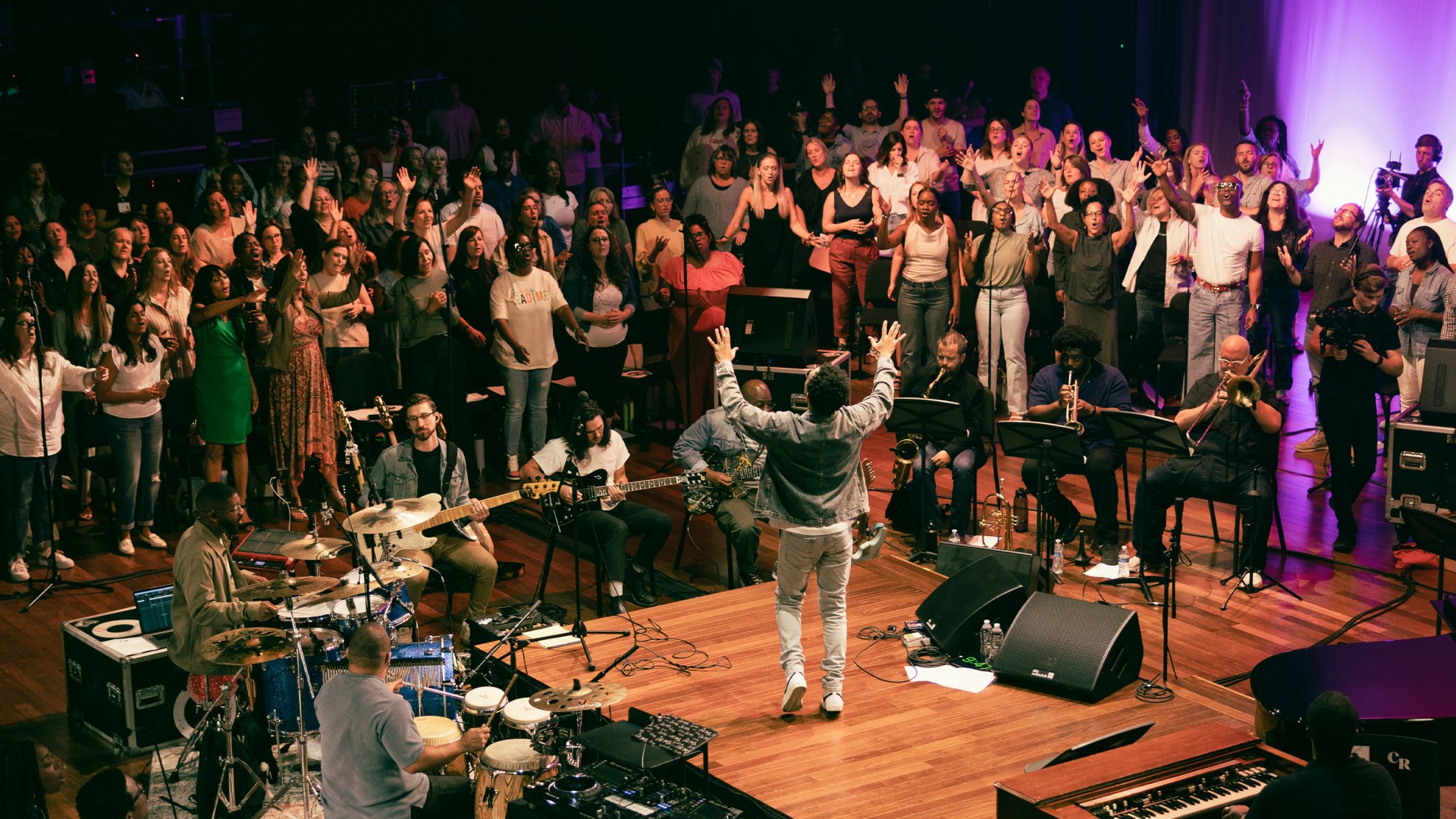
“When you sing ‘Holy, Holy, Holy’ or ‘Amazing Grace,’ for that three minutes, you are united in heart,” he told CT.

Dwan Hill leading a choir
Christianity Today February 18, 2025
Photo by Tres Cox

On a May evening in 2022, Dwan Hill and a small team of musicians set up music stands, chairs, a piano, and an organ in Columbia A, a studio on Nashville’s Music Row owned by Belmont University. Hill had brought a stack of black folders containing sheets of printed lyrics. Throughout the previous week, he’d watched as the Google form he’d created for this event filled up: 50, 75, 100 people.

They had snacks. They had charcuterie, even. But as the room filled, it was clear that people weren’t showing up for the food; they were coming to sing.

This was the first gathering of The Choir Room, and Hill assumed it would be a one-time thing. But as the night went on, he saw that something about this laid-back model of collective music making was meeting a need.

When The Choir Room convenes, singers gather in the round, with Hill and a small group of instrumentalists in the middle. They learn new songs, working out parts as they go. They clap and sway. Hill conducts the ensemble, calling out lyrics and signaling entrances. There are no auditions, and music-reading ability is optional.

Hill, a Grammy- and Dove-award-winning producer, songwriter, and recording artist based in Nashville, had been missing the community that choir creates. His roots in the Black church and gospel music gave him a passion for singing as both vertical and horizontal, worshipful and communal. He started The Choir Room with a low-key invitation posted on Instagram, curious to see who else might want to get together to sing.

The Choir Room is, first and foremost, a gathering; the monthly meetups aren’t rehearsals or performances. That first session in Columbia A attracted around 100 people. Now, events draw 700 to 1,000 and have featured artists like We The Kingdom, Ben Rector, and Matt Maher. In October 2024, Hill released The Choir Room’s first album, Let’s Have Church (Live). Even so, he says, the product was never the point.

Hill spoke with CT about the origins of The Choir Room and why he thinks choir might be exactly what the church needs today.

You’ve done just about everything in the Nashville music industry: You’re a writer, producer, recording artist, and worship leader. When did you know music was going to be the path for you?

Music is our family trade. Some people grow up playing basketball or watching their family work as engineers or join the military. For my family, it was music ministry. Three generations up are ministers and musicians. My mom is a choir director. My dad played piano and saxophone. My dad had a Hammond organ in the dining room of our house. Who does that?

I fell in love with music at an early age; I remember spending hours playing piano after school. I got into gospel music because of my mom. I had all this early exposure and education. By middle school or early high school, I made a very clear decision that I wanted to do music for the rest of my life. I just didn’t see any other option.

What you do with The Choir Room is a combination of performing, teaching, conducting, and writing. When you imagined yourself working as a professional musician when you were younger, what did you have in mind?

I moved to Nashville to go to Belmont University and major in music education; I thought I would be a high school choir director. I was told that you can have more steady work if you’re a teacher rather than a touring musician. And I’ve always really enjoyed seeing the light bulbs go off for people the first time they understand a musical concept.

But then I student taught and realized that though I love music, I do not love the in-school teaching model. I planned to move to California to get a degree in jazz piano at USC. But I didn’t get in. It was a heartbreaking season for me. I thought, Maybe if I don’t want to teach, music isn’t even my thing. Maybe I’m not as talented as I need to be.

A couple weeks after the rejection, I got called to go on the road with the blues artist Jonny Lang. That completely changed my life. I was on the road with him as his pianist for ten years. Then I met CeCe Winans and traveled with her for a while, and we eventually started a church together. And that’s when I found a new love for songwriting.

Your touring career eventually took a back seat to music ministry, and now you’re doing a little bit of both with The Choir Room. What was the catalyst for this project?

My whole life has been mostly spent in white schools and the Black church. The school I went to outside of Memphis was mostly white, Belmont was mostly white, but my family went to a Black church. Choir, in my childhood, was basically my small group. As an adult, I was missing singing with my friends in a casual, nonperformative setting, just for fun. Choir was where we ate good food and sang together. It’s where we saw God work miracles. We learned the Word of God. We found mentorship. It was basically my little church. 

One day I was driving up the interstate in Nashville, and I lobbed up a prayer: “Lord, if you provide an organ and a piano in a nice room, I’ll see what I can do.”

Not too long after, a friend at Belmont offered me a space on Music Row. Suddenly we had a place to do choir.

When did you realize that The Choir Room was going to be more than a one-time thing?

When we got in the room that first time, I could tell that people were hungry for what we were offering. I was also pleasantly surprised by the diversity. Most of those people go to a church that doesn’t look like that room.

Because we sing in the round, you can look across the way and see someone who doesn’t look like you singing the same song—maybe a song that you grew up with or a song that you love.

I started to realize this was bigger than me and the team. This is actually doing something spiritual for the people in the room. They’re finding spiritual fulfillment and community in this space.

What do you think makes this kind of social, choral singing so spiritually powerful?

My favorite verse in Scripture is Colossians 3:16: “Let the word of Christ dwell in you richly, teaching and admonishing one another in all wisdom, singing psalms and hymns and spiritual songs.”

Of all the things Paul could have encouraged people to do, he chose singing. The truth of God gets into the heart through singing. People aren’t showing up thinking, I’m going to receive the gospel today. But when you experience it, I think you tap into something eternal.

There’s also a communal dimension. Practically speaking, what other time in your day are you speaking or singing the same truth with people with whom you may disagree on a lot of other things?

There’s unity. There’s a coming together and even a reconciliation across cultures and ages and denominations. When you sing “Holy, Holy, Holy” or “Amazing Grace,” for that three minutes, you are united in heart. And, man, if there’s something our world needs, it’s setting aside the things that divide and picking up the things that unite.

As someone with experience in both the Black church and white evangelical churches with music practices that tend to be less choral and more focused on bands and individuals, what do you think the communal singing you model with The Choir Room can offer to churches that some other contemporary forms of musical worship can’t?

I lead worship at Cross Point Church, which is a multisite, majority white church in Nashville. They brought me in explicitly to help lead the spiritual development of the music team but also to help diversify the musical expression of the church. So, I’m in this conversation every week.

When I walk into a church service as a worship leader, I have to constantly remind people, “Don’t close your eyes. You’re not in your private prayer closet. Look at the people around you.”

We know we worship the Lord, but it’s the “together” part that I want to highlight because the setup in our modern buildings doesn’t support togetherness. There’s a stage and audience. There’s a microphone and amplification of one voice. All of that can, in many cases, discourage people from singing.

Have we actually set up our buildings to match our theology, and do we even know what our theology of worship is? Let’s back all the way up. Do we believe that the Word of God should be in the mouths of God’s people? And if so, how do we structure our services? How do we write our songs?

Culture change is difficult and slow. What does it look like to disciple a church into a healthier singing culture, in your view?

At our campuses we have people coming in with coffee cups like they’re spectating the service. I used to look at that and feel like flipping tables. Don’t you know who you’re singing about? But now I see it as a discipleship opportunity. People don’t know what they don’t know.

I try to be practical. I try to pick songs that the congregation knows or can learn very quickly. And I try to give context to songs. So, instead of just saying “Sing along with me” when we did “Way Maker” last week, I said, “Hey, I bet there are people here who are in the gap between your prayer and God answering your prayer. And whether you’re young or old, Black or white, we all know what disappointment feels like. We pray a prayer, and we don’t see God move the way we want him to. But hey, can we all just agree that God will make a way?”

I think even reluctant singers are inspired to sing by the truth of the gospel hitting their broken situation.

Then of course there are the musical things that worship leaders and musicians worry about, like keying songs in the right place so we’re not trying to sing in the stratosphere. Or giving congregations vocal cues like “Okay, let’s sing that chorus one more time.”

I think so many church musicians are inspired by The Choir Room and get excited about the prospect of cultivating a more participatory musical subculture in their communities, but most of them don’t live in Nashville. The singers at Choir Room gatherings are amateurs, but you and many of the instrumentalists who help lead it are professionals. What advice do you have for people who don’t have access to the same resources but want to start moving in this direction?

The beautiful and powerful thing about choir music is that the people who are there, are there. Jesus gave a really great metric; he said “where two or three are gathered.” So that’s enough. You don’t have to sing three-part harmony. You can sing “Amazing Grace” in unison. And that’s as beautiful as a cantata with an orchestra.

I think leaders can disciple their churches into singing where they are. You could do choir with three people in your house. It’s the genius of what God gave us. If you have breath in your lungs, sing.

News

How Baylor Is Facing Its Slavery History

The Christian college is building a memorial to enslaved people, despite a national backlash against diversity initiatives.

A rendering of Baylor University's Memorial to Enslaved Persons, which is currently under construction on the school's campus.

A rendering of Baylor University's Memorial to Enslaved Persons, which is currently under construction on the school's campus.

Christianity Today February 18, 2025
Courtesy of Baylor University

Amid the oak trees of Baylor University’s Founders Mall, a beautiful green corridor that stretches down the center of campus, a memorial is under construction. The oaks have their own history as part of a tradition of students planting trees on campus, and now Baylor is adding to the landscape a reminder of some of its darker history.

Going up is a memorial to the enslaved people who helped build the school’s original campus in Independence, Texas. It is slated for completion this year.

Amid national backlash to diversity initiatives and Black history celebrations, Baylor has undertaken new research into its institutional history with slavery and is making changes to its campus.

“Christian institutions have an opportunity because our commitment to justice extends beyond government compliance,” said Malcolm Foley, a Black pastor and historian of lynching who has served on the school’s commission about the memorials and helped lead the design efforts on the memorial to enslaved people. “This is something that we cannot water down.”

The commission’s report narrates Baylor’s history, saying the school came to be when Baptist missionaries from the South began moving to Texas in the 1830s. Texas was still a Mexican state that outlawed slavery, but the Baptists brought slaves and the institution of slavery with them, and Texas became an independent republic in 1836.

Baylor’s first four presidents, as well as 11 of the 15 first board trustees, were slave owners. Wealth generated from enslaved men, women, and children “directly benefited the University,” a history page on the school’s website now states. By 1850, half the population in the county surrounding Baylor were enslaved, according to the commission’s historical research.

Early leaders of the school supported the Confederacy. Rufus Burleson, the school’s second president, was a Confederate chaplain and urged students to join the Confederate army. The school recently moved a statue of him to a less prominent location on campus.

Last fall, the Christian university unveiled limestone blocks with additional historical information placed around a statue of Judge R. E. B. Baylor, a slave owner who founded the school with other Baptists in 1845.

“The Bible explains in both Exodus and John that freedom is central to the Christian life, and we should be transparent about the times in our history when Baylor was an obstacle to freedom,” the school website states.

The memorial to enslaved people will feature words from Exodus 20:2 (“I am the Lord your God, who brought you out of the land of Egypt, out of the house of slavery”) and John 8:36 (“So if the Son makes you free, you will be free indeed”).

Baylor leadership and students pushed to address campus monuments to slave owners after the murder of George Floyd in 2020, and the school leadership formed a commission of students, faculty, staff, board members, and alumni to research the dark parts of its history and consider how it presented that on campus.

In a 90-page report in December 2020, the commission issued recommendations on changing certain campus statues and building a memorial to enslaved people connected to the school. Some commission members are still working on research projects about individual slaves who were part of Baylor’s history.

“Our goal at the outset of this process was not to erase Baylor’s history, but rather to tell the university’s complete story by taking an additive approach as we shine light on the past,” said Baylor board chair Mark Rountree in a statement in 2022 at the start of the reconfiguring of campus monuments.

The scope of the commission’s work—considering campus monuments—  was “intentionally narrow,” wrote Rountree in a 2021 note to the Baylor community.

The work on campus memorials has ongoing backing from Baylor president Linda Livingstone and Foley, who is her equity adviser. With his four years on the job, Foley has lasted longer in this role than the average diversity, equity, and inclusion (DEI) officer because of Livingstone’s support, he said. People in DEI positions average three years in higher education, according to a 2016 study.

“Christians had such a significant role in not only justifying racialized chattel slavery but actively pushing it forward,” said Foley. “We have a unique responsibility to not only repent of it but repair the harm actually caused by it.”

This month, Foley has been preaching through Revelation at his nondenominational church, Mosaic Waco, where some Baylor professors and students attend. Mosaic emphasizes being multicultural as part of its mission.

And Foley is watching the growing national backlash to DEI work with dismay.

DEI can have many meanings, but for staff at Christian colleges, it has meant organizing talks about racism, addressing the diversity of staff, or looking at how schools portray racial minorities in promotional materials.

Some DEI objectors worry such initiatives impose a uniform ideology, like removing curriculum that might not conform to certain progressive ideals. Foley is sympathetic to that argument.

“If the stated issue folks have with it is it becomes an office of ideological policing—if that’s going on, that shouldn’t go on,” he said. But he added, “I know folks who have had divisions dismantled who weren’t doing ideological policing.”

As with any efforts designed to change an organization, DEI work can be isolating and unpopular. Foley says his work requires “everyone for it to actually go forward, because it’s culture shaping.”

Baylor’s student population is mostly white, but last year’s freshman class at Baylor had the highest percentage of racial minorities in the school’s history, at 38 percent of the class. Overall minority enrollment stands at 35.3 percent.

In 2021, 50 percent of Council for Christian Colleges & Universities (CCCU) institutions reported having staff in diversity advocate roles.

Whether that number has changed is unclear. Updated CCCU data is still being collected, according to spokesperson Amanda Staggenborg, “due to changes in positions and titles related to diversity advocates on campuses,” but she added that “we remain committed to promoting biblical unity and fostering a sense of belonging for everyone at CCCU institutions.”

Baylor didn’t hire Foley because of “donor pressure,” he said, but a genuine commitment to try to understand how the culture of the school might retain some of its racial past.

The idea of abolishing DEI, he said, suggests that institutions operated in a colorblind way prior to DEI. Historically, he said, that is not true.

“I fundamentally don’t want us to lie to ourselves and one another,” he said. “People think this work is just about white people feeling guilty. My goal is not to make people to feel guilty for things they haven’t done. My goal is for people to be committed to treating everyone they come in contact with justly. It requires an understanding of history … and how far we have to go.” 

Baylor’s process of racial integration in the 1960s, for example, didn’t happen naturally but came about “under pressure,” according to Foley. Segregation built a particular institutional culture, he said, that is not easily undone. Statues are just symbols, but he found that the process of addressing the statues made Baylor confront its history.

He believes Christian institutions should be committed to looking at history and understanding how it still affects their communities’ obligation to love and justice today.

“We need administrations of institutions that are deeply committed to doing the right thing,” Foley said. “For Christian institutions and people, we live our lives under the shadow of the throne of God and the Lamb. … That gives us the confidence to do what we have to do and then face the consequences that fall from it.”

Church Life

The Young Lawyer Who United Lebanon’s Christians in Worship

He created a 300-person Orthodox, Catholic, and Protestant choir and orchestra. Then he took a break.

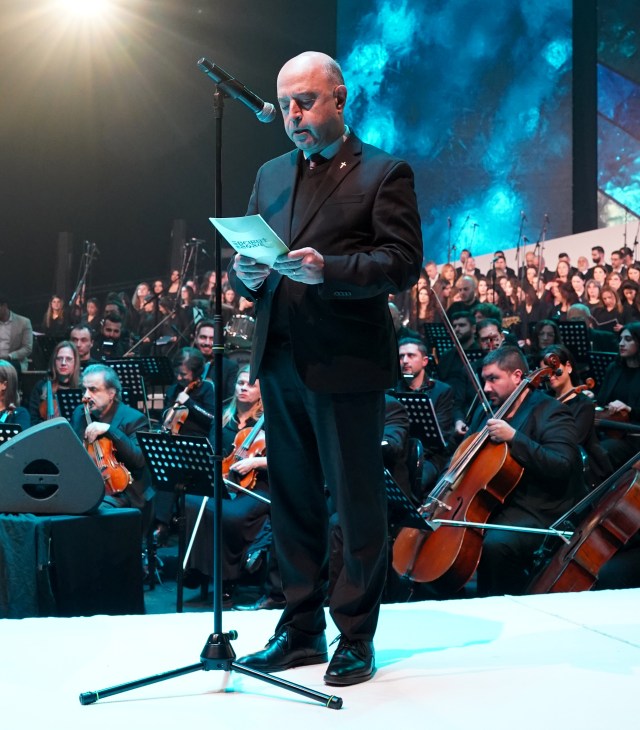
Maronite layman conducting the Musical Church Unity choir
Christianity Today February 17, 2025
Maronite Catholic archdiocese of Antelias

Lebanon has 12 officially registered Christian sects. Jesus prayed the church would be one. Once Mark Merhej did the math, the solution was worship. And in January 2024, the 29-year-old Maronite Catholic layman brought together representative patriarchs, bishops, and pastors from nearly every ecclesial family to pray collectively for the peace of Beirut.

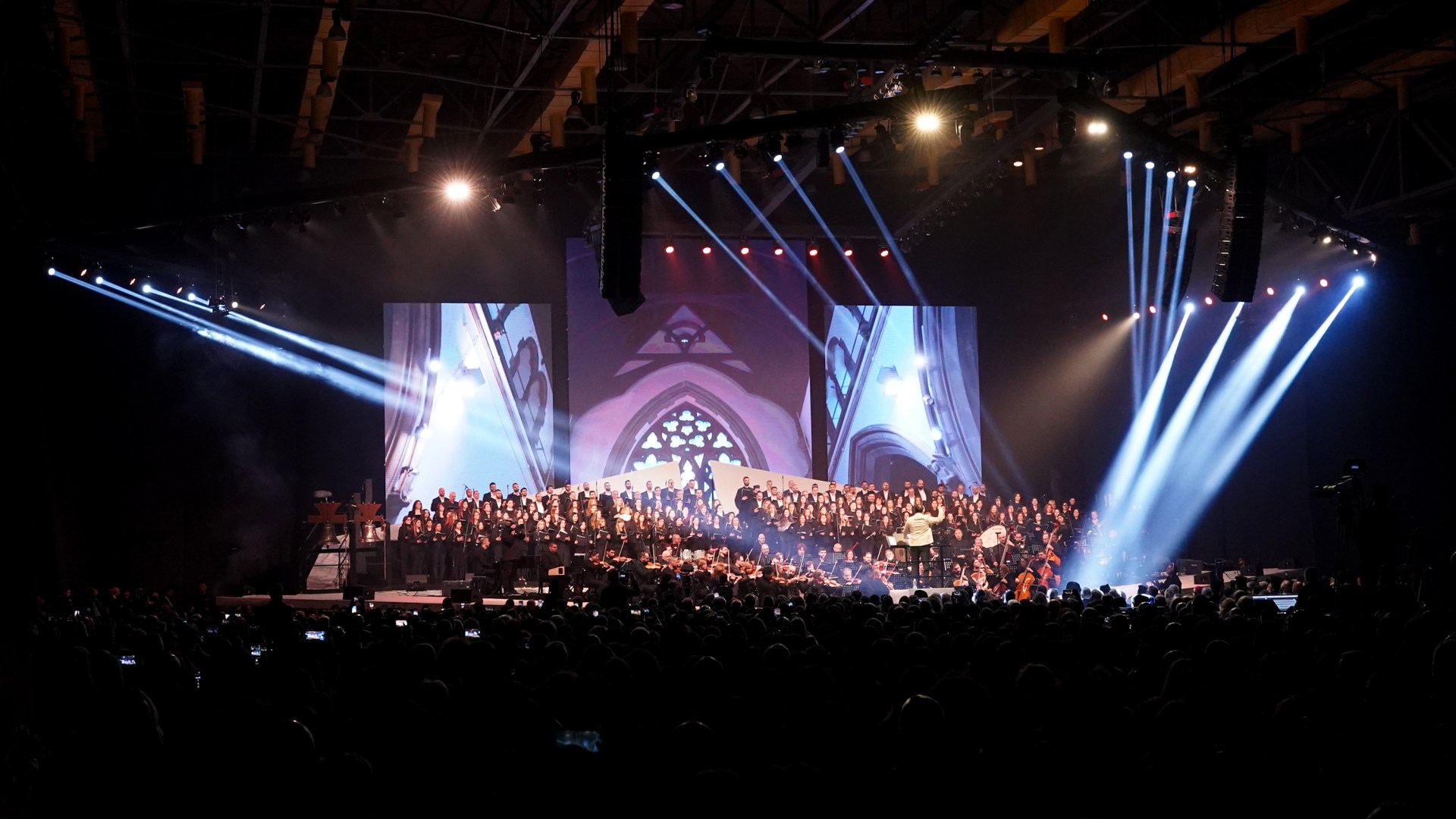
Merhej began planning the event three years before the Israel-Hezbollah war, contemplating how to bring unity to the fractured Lebanese body of Christ. As the two belligerents exchanged missiles over the nation’s southern border, over 10,000 Lebanese Christians joined in worship with Merhej’s 300-person ecumenical choir and orchestra to pour out their hearts in pursuit of God’s presence. 

“Worship is the communal experience of God’s lordship and grace,” Merhej said. “The world outside—the war—is irrelevant.”

Merhej aimed to bring a higher vision to the troubled Christian community. That January, during the official week of prayer for Christian unity—usually a perfunctory affair—he filled the Beirut Forum with soaring hymnodies of Byzantine chants and intoned hallelujahs. Members of the choir, inspired by their interdenominational harmony, wanted to keep performing. And the bishops, he sensed, resonated with his ecclesial vision.

But after the event, Merhej stepped back.  

As Beirut wrestled with the war, Merhej wrestled with God. He came to believe God wanted him to withdraw not only from a vibrant music ministry but also from his budding relationships with senior clergy members. At first, he didn’t understand this directive, and for months he let others take the initiative. But as he grew in his personal faith, planning a scaled-back but similar event one year later helped him discern God’s purpose for his rest.

Mark Merhej conducting a choir to promote church unity in Lebanon.Maronite Catholic archdiocese of Antelias
Mark Merhej conducting a choir to promote church unity in Lebanon.

The heavenly realms

Growing up, Merhej was mostly unaware that local Christians divided themselves between six Catholic, five Orthodox, and one Protestant council that includes several denominations. Theological schisms had split the Levant church over the centuries, which further splintered as Vatican, British, and American missionaries competed for new church members from historic Christian traditions.

In 1974, the newly formed Middle East Council of Churches (MECC) brought together Eastern Orthodox, Oriental Orthodox, and Protestant clergy to strengthen relations among minority Christians. (Catholics joined in 1990.) Today, though the MECC community has organized numerous service projects and theological dialogues, spiritual unity has not extended to religious practice. Some churches will not take Communion together, nor participate in joint liturgical services.

Merhej grew up in the mountains of Lebanon in a Maronite Catholic community. Surrounded by Muslim powers since the seventh century, Lebanon’s largest Christian sect developed a strong but insular faith.

His family also belonged to the ecumenical Sword of the Spirit charismatic community, which grew out of the worldwide Catholic renewal movement. Merhej learned guitar at age 5, and by age 12 he had played in church. When he was 17, his bishop, Antoine Bou Najem, asked him to lead evening Mass for the youth in his parish. Two years later, he gained his first experience conducting a choir at a worship event for the local faithful.

Merhej came to love helping others connect with God. Three years later, he organized another even larger worship night, and then another, and another, even as he progressed in his studies and career, including opening an international-business law firm in 2020.

Merhej’s devotion had always been to the Father, through Jesus, and in the Holy Spirit, acknowledging that some Catholics elevated Mary too far in their intercession. But as he studied the Scriptures, he came to believe that in worshiping the Trinity, believers can join the saints in communion with God.

At the same time, Merhej was watching Beirut decay—physically and spiritually. The port explosion in 2020 coincided with an economic crisis that emptied the capital of people and business. COVID-19 curtailed movement in the city, but when society reopened, downtown churches of all denominations remained largely empty.

The following year, 2021, he approached his bishop with an idea: an ecumenical event to worship with all Christians in their flailing nation. A choir would rejuvenate Beirut, bringing prayer and vitality through rehearsals in the now-quiet cathedrals.

Bou Najem blessed the initiative and connected him with Catholic and Orthodox leaders. Merhej began going church-to-church to invite lay participation and navigated the struggles between denominations. Protestants offered a different challenge.

Let controversy cease

Lebanon’s Protestants have largely cooperated with each other, even when they have disagreed about collaborating with other Christians. Some, like Presbyterians and Armenian Evangelicals, have joined the MECC. Others, like many Baptists and Pentecostals, view participation in the MECC as forsaking evangelism in exchange for wider Christian fellowship. Most evangelicals converted from Orthodox or Catholic backgrounds, and many Maronites strive to keep Protestant church plants out of their communities. The historic churches accuse evangelicals of sheep stealing, and evangelicals in turn express their concern over nominal faith.

Eager for evangelical participation in the choir, Merhej sought out Paul Haidostian, who represents evangelicals as one of MECC’s four presidents. The Armenian Evangelical enthusiastically introduced Merhej to other pastors in his theological family.

Paul Haidostian, who Merhej contacted to get Evangelical representation in the choir.Maronite Catholic archdiocese of Antelias
Paul Haidostian, who Merhej contacted to get Evangelical representation in the choir.

“His focus on the Holy Spirit impressed me, and his style is close to the evangelical heart,” said Haidostian. “I want that spirit in our churches.”

Merhej won trust with clergy by emphasizing that they were all “shepherds,” appealing to a low-church ecclesiology that did not distinguish between pastor and patriarch. Worshiping together, he explained, would help all church leaders revive their spiritual flocks. His charismatic background opened doors, and by the time bimonthly rehearsals began in April 2023, Merhej had secured participation from two churches on each side of the evangelical ecumenical divide.

Ephesians 1 inspired Merhej’s vision for the event. He wanted participants to grasp Paul’s affirmation that the Christian is “blessed … in the heavenly realms” (v. 3) and experience a glimpse of the unity between “all things in heaven and on earth” (v. 10). The Holy Spirit guarantees this inheritance “to the praise of his glory” (v. 14), which all God’s redeemed—living and dead—can offer together.

Interdenominational engagements in Lebanon usually have each church present its own choir. Merhej’s vision went beyond mutual appreciation. Instead, his ecumenical choir facilitated joint worship through the traditions of all. Evangelicals offered “How Great Thou Art.” Latin Catholics put forward the angelic Gregorian chant “Veni Creator Spiritus.” “Qom Fawlos” drew from ancient Syriac liturgy. Together with “Prokimenon,” familiar to Greek Orthodox, Merhej selected hymns from all four theological families to bid reverent welcome to the Holy Spirit, whom he sought to center at the event.

But Merhej was not content to sing a set list representing the 12 Lebanese sects. He included Rachmaninoff’s Russian Orthodox “Bogoroditse Devo.” The Swahili “Baba Yetu”first confused and then delighted the audience. A Spanish Taizé tune quieted the crowd, while the contemporary French-Arabic “Psaume de la Creation” led the audience to wave their cell phone flashlights in adoration. As conductor, Merhej told CT he aimed to progressively bring the entirety of God’s church into the heavenly realms. Some in the choir, he said, spoke in tongues during the crescendo.

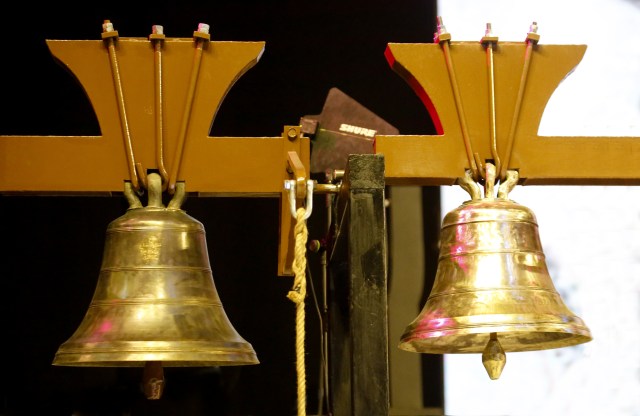
Other messages he more subtly embedded. Two massive church bells rang out mid-service to symbolize Christian presence in the Middle East. A sign language performance highlighted the special needs community. And the eighth-century “Ubi Caritas et Amor Deus Ibi Est,” chanted during Maundy Thursday foot-washing ceremonies, contained the line “let controversies cease.”

“We are fighting a spiritual war for our unity,” Merhej said. “Let each church bring its weapons and fight together.”

Two massive church bells that rang during the choir service to symbolize Christian presence in the Middle East.Maronite Catholic archdiocese of Antelias
Two massive church bells that rang during the choir service to symbolize Christian presence in the Middle East.

Pruning the fruit

Throughout the evening, church leaders read different passages of Scripture, and the screen displayed various Bible verses, concluding with Jesus’ John 17 prayer “that they may be one as we are one” (v. 22). But not long after the event, Merhej’s spiritual mentors told him to withdraw from his choir, to stand alone before his Creator. They emphasized Jesus’ words two chapters earlier: “Every branch that does bear fruit, he prunes” (15:2).

The wisdom of his mentors had proved true repeatedly over the course of his life, he said. Scripture is clear: God prunes us to prepare us to “be even more fruitful”(v. 2). And Jesus set the example; after great miracles, he withdrew to quiet places. He is the vine, and we—with arms raised in bent imitation, per the classic children’s song—are the branches.

Merhej complied, but he did not fully understand. Why would God give him such close relations with senior church leaders if not to remain connected and reemphasize their unity? Choir members were eager to keep singing with their new friends. Merhej had envisioned becoming their spiritual mentor and performing in churches across the country, hoping this might spark an ecumenical worship revival.

Instead, in his absence, though some choir members drifted away, others joined ensembles with one another or continued to meet to pray together. Merhej encouraged a few members to organize events of their own and helped coach them. He saw these gatherings as good fruit of a different sort.

Yet it was not the same. And as he waited on God, Israel began a ground operation against Hezbollah in southern Lebanon. Though the mid-September escalation hit mostly Hezbollah targets, Christians were afraid too—not least of sectarian implosion. Some closed their doors on displaced Shiites seeking shelter, fearing Israeli missiles might follow.

From Merhej’s vantage point, many Christians were angry. Hezbollah had brought this war to Lebanon, they said, defending Palestinians who—however just their historic cause—brought destruction to Beirut a half century earlier as they warred with Israel from Lebanese territory. And while Israel was an enemy state, at least the two would be fighting each other. The sentiment was understandable, Merhej thought. But it was not Christian.

Two weeks after the Israeli escalation, Bou Najem summoned the Maronite faithful to prayer and asked Merhej to lead worship. His church community, four miles northeast of the Beirut port, was in a safe area far from Hezbollah leadership or concealed weapon depots. But the bishop’s people needed peace, and he preached on John 14: “Do not let your hearts be troubled” (v. 27). “Some trust in chariots,” he continued from Psalm 20, “but we trust in the name of the Lord” (v. 7). The 1,000 people attending responded in praise to God. Some, including Merhej’s parents, began to serve the Shiites seeking local shelter.

“Our worship is not related to politics,” Merhej said of Lebanese Christian attitudes. “But the hearts of too many have not yet changed.”

Addressing deep wounds

The late November cease-fire brought a semblance of stability to Beirut. Around that same time, Haidostian reached out on behalf of the MECC to see if Merhej would convene an ecumenical choir for the January 2025 week-of-prayer service hosted by First Armenian Evangelical Church. 

The event would be smaller than the previous year but the symbolism greater. This year’s celebration ended the 50th anniversary year of MECC’s founding and began the 1700th anniversary of the Nicaean Council. Many senior clergy would be there to represent their denomination in a structured program.

As Merhej prepared, he reviewed the liturgy and locked in on the psalm selected by an ecumenical monastic community in Italy. “My heart is not proud,” he read from Psalm 131:1, and it resonated. The sight of thousands gathered at the Beirut Forum had filled him with praise for God, not for himself. “I do not concern myself with great matters,” the verse continued, and the purpose of his pruning began to take shape. God had given him access to patriarchs, bishops, and pastors—all shepherds alike—but his heart had rushed too quickly toward the hope of stimulating their unity.

The next verse in the short psalm arrested him: “But I have calmed and quieted myself, I am like a weaned child with its mother; like a weaned child I am content” (v. 2). After last year’s event, Merhej thought he knew what he was doing. Yet God wanted him to return not just to childlike faith but to the experience of a toddler, completely dependent. The psalm ended with “now and forevermore” (v. 3). Linking the passage with the vine of John 15, he understood even more deeply that greater fruit required remaining connected to God—and waiting for God’s leading.

With this opportunity, Merhej felt God’s affirmation. He accepted Haidostian’s offer and assembled a 20-member choir with singers drawn primarily from Orthodox, Catholic, and Protestant Armenian communities. Among other musical offerings, he chose the David Willcocks arrangement of Psalm 131 from the Anglican tradition. The voices resounded through the Gothic sanctuary and closed with the traditional “world without end. Amen.”

But another mark of church unity was yet to come. One choir member said that as an evangelical, she often felt looked down on by Maronites. After years of singing only in her own community, months of rehearsals with Merhej leading up to the 2024 event helped her experience that all Christians are one. But outside that space, she felt disillusioned about the divided state of the church.

What happened next at the 2025 week-of-prayer event surprised her. Most denominations sent lower-ranking clerics to the gathering, and their black robes with red or purple trim filled the seats of the chancel. But one figure stood out in prominence. Haidostian had personally reached out to Maronite patriarch Bechara al-Rai, offering him the opportunity to preach. Al-Rai accepted, calling disunity “a deep wound in the mystical body of Christ.” It was probably the first time in history, Haidostian said, that the head of his denomination had ever preached in an Armenian Evangelical church.

“We have to see what the churches will do next,” said Merhej. “Maybe God is doing a new thing.”

Correction: An earlier version of this article did not mention the ecumenical nature of the Sword of the Spirit community.

News

Indian Christians Stopped an Anticonversion Law. Until Now.

Believers in Arunachal Pradesh who faced persecution in the 1970s fear a new wave of repression is coming.

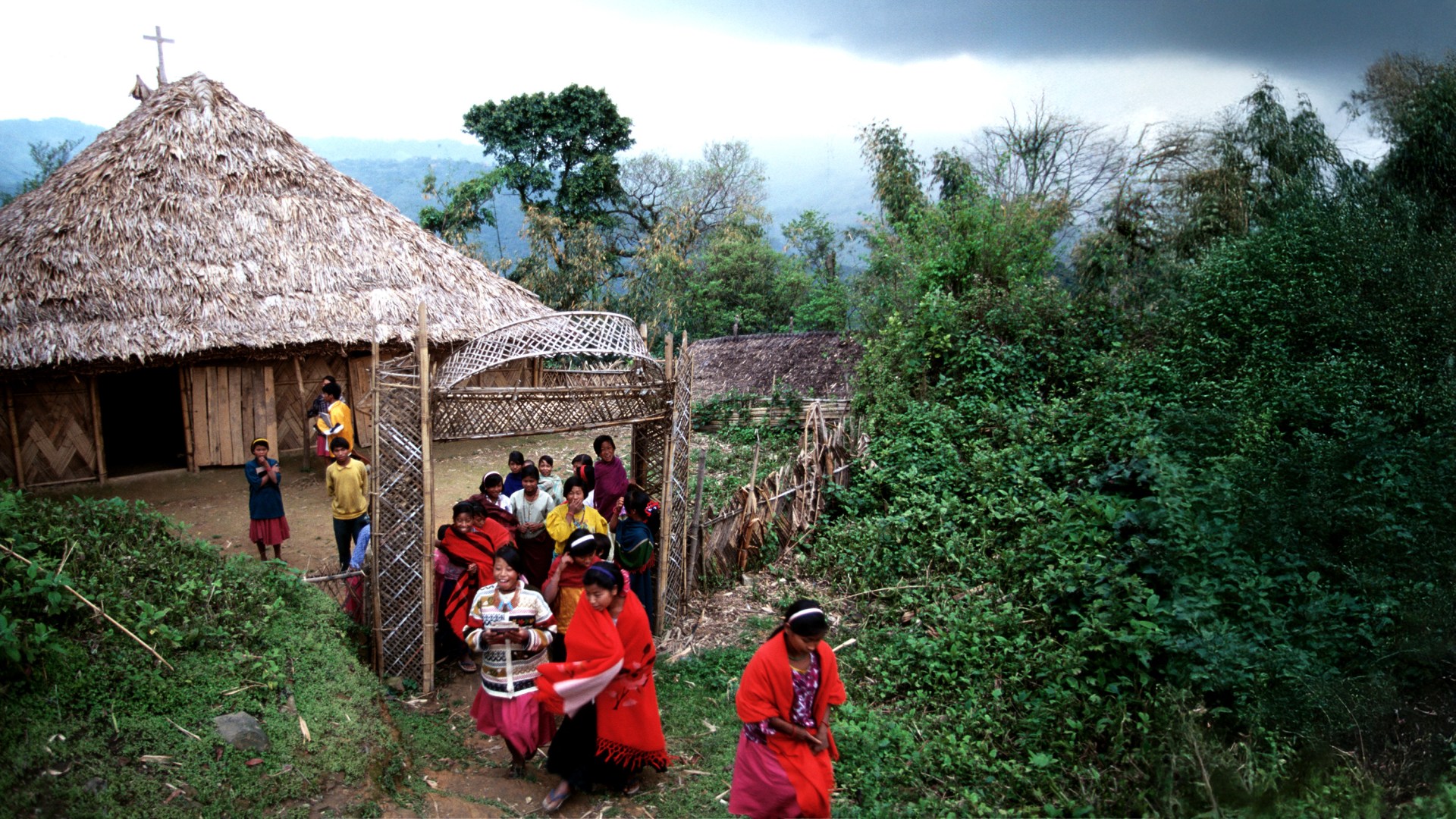
Christians leaving a church in Arunachal Pradesh.

Christians leaving a church in Arunachal Pradesh.

Christianity Today February 17, 2025
Thierry Falise / Contributor / Getty

Marbom Tasar’s story is well known among the Christian community in Arunachal Pradesh, a state in Northeast India that shares a disputed border with China.

Tasar and his business partner, Tai Tatu, became Christians in 1968 while staying with Tasar’s Christian relatives in Roing, a town in northeastern Arunachal Pradesh. They then made the 160-mile return trip their village, Lete, to share the gospel with their fellow Gelo tribesmen who practiced animism.

Soon after they arrived, Tasar found that homemade wine had caused severe dysentery in several villagers. Tasar went from house to house, praying for the sick and witnessing miraculous healings, according to his daughter, Bomto Paipodia. The families of those who were healed accepted Christianity, and Tasar began the work of building a church for three local villages. 

Two months later, tribal leaders and villagers, upset over the conversions, burned down the church. To curb further spread of Christianity, the police arrested Tasar, Tatu, and another believer.

“For us, persecution started right from the time we carried the gospel to our village and the neighboring villages,” Tasar said. 

In the 1970s, Tasar faced more arrests and harassment. He fled deep into the forest and slept in trees to evade capture. Authorities tortured some of his fellow believers. To counter the spread of Christianity, the state government passed the Arunachal Pradesh Freedom of Religion Act in 1978, which largely banned religious conversions. Yet opposition from Christian legislators and locals prevented the law from taking effect.

Christian leaders in the state said that through miracles, the translation of the Bible into local languages, and the work of bold evangelists like Tasar, the Christian faith continued to spread rapidly. In the 50 years since his initial persecution, Tasar and other leaders have shepherded a growing Christian network that includes more than 80 churches across the state.

This success story may soon face a serious setback, as the government plans to enforce the anticonversion law in March, following a court directive. This push comes as the influence of Hindutva, a political ideology that advocates for Hindu supremacy, grows throughout the country and is championed by the ruling Bharatiya Janata Party (BJP). Christians in Arunachal Pradesh fear a new wave of repression is on the horizon.

Tasar, now 78, said the recent move made him think of the persecution in the 1970s, including when he saw villagers strip a Christian woman naked and humiliate her in front of the entire village to force her to renounce her faith. She refused.

“It was never the backing of the church council nor the funds from wealthy businessmen that encouraged us to share the gospel,” Tasar said. “It was only God and his Word that was with us.”

Today, Christianity is the largest religious group in the state of about 1.4 million people. According to the 2011 Indian census—the most recent one to date—Christians make up 30 percent of Arunachal Pradesh’s population, Hindus make up 29 percent, and indigenous religions make up 26 percent.

Christian leaders believe the real number is even higher. Tagang Gelo, the general secretary of Nyishi Baptist Church Council, estimates that Christians comprise more than 40 percent of the population due to the significant growth of the church since 2011.

Arunachal Pradesh’s Christian roots trace back to the early 19th century, when Scottish Presbyterian and American Baptist missionaries first ventured into Northeast India. Missionaries introduced Christianity through evangelism, medical aid, and education to the Indigenous tribes living in the region. However, conversions were slow. Opposition from animist local rulers and British authorities fearful of unrest forced the American Baptists to relocate to Assam state.

In 1920, missionaries baptized the earliest recorded converts of what is now considered Arunachal Pradesh: Dugyon Lego and Tamik Dabi in the eastern part of the state, and Sensu Nar, a Nyishi tribesman, in the west. Around the same time, missionaries like John Firth established Christian schools in North Lakhimpur (present-day Assam), furthering education and faith in the region. Many students who attended these schools carried the gospel back to their villages, leading to more conversions.

By the 1970s, Christianity had become too visible to ignore. Government authorities and local leaders were concerned that Christianity threatened indigenous and Hindu beliefs, and they responded with harsh persecution. Between 1968 and 1974, police burned churches, looted homes, and attacked Christian families. In a particularly brutal campaign in 1974, authorities torched 47 churches in a single region. Some Christians faced executions, hangings, or beatings. Others, like Tasar, fled to the forests and survived on roots and leaves.

One police officer who led crackdowns on the Christian community, Takeng Taggu, converted to the Christian faith in 1984 after he was sent to arrest a missionary. When he saw the missionary absorbed in prayer, he felt God’s conviction. He renounced his past and eventually founded the Arunachal Pradesh Christian Revival Church.

Christianity grew from less than 1 percent in 1971 to more than 4 percent in 1981. To combat this growing trend, the state established the aforementioned religious law, which prohibited conversions or attempts to convert by force, inducement, or fraudulent means. It also mandated government scrutiny of religious conversions. Under the law, authorities could send anyone guilty of conversion to prison for two years or apply a fine of up to 10,000 Indian rupees (about $115 USD), which was nearly two years’ salary at the time.  

Yet the law faced opposition on the national level, including from Bakin Pertin, a Christian member of parliament from Arunachal Pradesh, as well as the Nagaland Legislative Assembly, which passed a resolution against it. Christians in the state banded together to form the Arunachal Christian Forum (ACF) to protest the law. Because of the pushback, state officials never framed the rules implementing the law.

In 2018, Chief Minister Pema Khandu publicly announced that his government might repeal the anticonversion law, stating that it “could undermine secularism and is probably targeted towards Christians.” He acknowledged concerns that it could be misused by authorities and promised to bring it before the assembly for repeal.

However, after backlash from Hindutva groups and pressure from the BJP, Khandu reversed his stance. Hindutva organizations, such as the Rashtriya Swayamsevak Sangh (RSS) and Vivekananda Kendra, began establishing Hindu schools, promoting cultural nationalism, and reviving indigenous tribal faiths in Arunachal Pradesh to counter Christianity.

One of the most successful efforts was the formalization of Donyi-Polo, a traditional animist practice that the RSS helped institutionalize as a structured faith to compete with Christianity. They developed prayer centers and religious texts to reinforce tribal identity within a Hindu framework. The RSS also sought to reinterpret local myths—such as linking the Idu Mishmi tribe to the Hindu deity Krishna’s wife—to integrate Arunachal Pradesh into India’s sacred geography.

Another significant religious movement that has emerged is Rangfraa, a syncretic faith that blends indigenous animism with elements of Hinduism. While originally rooted in tribal spiritual traditions, Rangfraa also received support from Hindutva groups like the RSS.

According to Gelo, indigenous faith groups and pro-Hindutva factions have already started interfering with Christian gatherings. In some cases, local organizations have “blocked healing meetings and prevented churches from holding meetings in public spaces,” he said.

The law also started to reflect anti-Christian sentiment. By 2022, the same government that had, four years earlier, toyed with repealing the anticonversion law was now seeking to frame rules for the law’s enforcement.

A lawsuit filed by a former Indigenous Faith and Cultural Society of Arunachal Pradesh (IFCSAP) leader accelerated the push as the Gauhati High Court directed the state to finalize the law’s implementation by March. IFCSAP contended that the law was needed to protect indigenous traditions, alleging that conversion rates had reached 90 percent in some districts.

Interestingly, it was a former English missionary who first introduced the idea that Christianity threatened indigenous identity. Harry Verrier Elwin arrived in Central India in the 1920s with a passion to evangelize, but over time he abandoned his faith and became an anthropologist who advocated for preserving tribal cultures.

Elwin played a key role in shaping India’s approach to the Northeast, promoting laws that kept missionaries out. His work influenced the Inner Line Permit System, which restricted nontribal people—including Christian missionaries—from freely entering and working in Arunachal Pradesh. Elwin’s policies helped create the environment in which later crackdowns on Christians took place.

The revival of the Freedom of Religion Act raises troubling questions about religious liberty, not just in Arunachal Pradesh but in the nation. The Indian Constitution guarantees the right to freely profess, practice, and propagate faith. However, in many states, authorities have used anticonversion laws to selectively target Christian communities.

Christian organizations in Arunachal Pradesh are preparing to challenge the law’s implementation. However, uncertainty remains over whether the appeal should be directed at the government or the judiciary, which instructed the government to frame the rules, Gelo said.

Although there may not be an immediate large-scale crackdown, Gelo said, arrests could begin after the rules are framed. A case in Tawang, a town in the eastern part of the state, already hints at future oppression. In June 2022, authorities halted the construction of a new church building even though a church had existed at the site previously. Gelo is concerned that such restrictions could become more frequent.

ACF is spearheading efforts to prevent the law from being used against Christian communities. Attempts to engage with government officials have proved fruitless, so ACF is organizing protests, including a week of prayer and fasting, to call for the law’s repeal. They plan to gherao, or surround, the state assembly building on March 6 when legislators discuss the law.

Christian leaders who lived through persecution are watching as the state once again turns its gaze toward them. “We have faced persecution before, and we stood firm,” said Tasar, who has joined the ACF’s prayer week. “This time will be no different.”

Ideas

Christianity Today Has Not Received USAID Funds

On false rumors and editorial integrity.

A stack of newspapers
Christianity Today February 14, 2025
Luvlimage / Getty

Recent weeks have seen a flood of misinformation about ministries and their funding sources. We consider it sound journalistic hygiene to help readers understand our sources of funding and how we protect editorial independence. 

First, the misinformation. Last week, rumor spread on X, the platform formerly known as Twitter, that Christianity Today had received government funding in 2023. News influencers who have long been critical of us amplified these claims. In its extreme form, they claimed we had received $9 million in grants from USAID and were therefore “on the Biden payroll.” 

The hysteria around USAID is having catastrophic consequences not only for Christian ministries doing lifesaving work around the world but more importantly for the poor and vulnerable people they serve. A careful conversation around whether and when ministries should partner with government agencies, and where corruption might be weeded out, is wise. Throwing those ministries and people into the flames and dancing around the bonfire is not. 

But to state what should have been obvious, we have never received funds from USAID. 

We applied in 2023 for an Employee Retention Tax Credit (ERC), a program signed into law by President Trump in 2020 to assist organizations impacted by COVID-19 shutdowns. Accountants enter the ERC into a standard line in tax forms for government “grants” even though it is a credit against payroll taxes. We have still not actually received the credit, but we keep our books on an accrual basis and were encouraged by our auditors to book the amount as a receivable in 2023. 

So our critics are wrong on the facts. They’re not wrong, of course, that sources of funding can be sources of temptation. 

This tension is native to the journalistic enterprise. It is not particular to philanthropic revenue. Publications face temptations to publish something false, or refrain from publishing something true, to please shareholders, directors, partners, donors, advertisers, or subscribers, and thus improve their financial position. Nor is this temptation limited to the right or left, or only to organizations. Conflict entrepreneurs on social media may perform for their audiences to increase their income. 

The difference at a solid journalistic institution is that standards and practices protect the impartiality of the editorial voice. These are imperfect, subject to scrutiny, and fiercely defended. At a journalistic organization like Christianity Today, they intertwine with our sense of calling. We would fall short of our vocation as Christian journalists if we did not hold each story accountable to the truth and each opinion accountable to Scripture, without fear or favor. 

This is why we separate the editorial and business sides of the house. Board members superintend the mission and values of the ministry but do not intervene in editorial process. Operations staff members understand they cannot pressure editorial to gain or retain favor with sources of revenue. Editorial staffers understand they are free to follow their consciences without concern for business consequences. We communicate with foundations, advertisers, and partners that we protect editorial independence because it’s critical to reader trust, and we only work with those who respect that commitment. 

Readers are welcome to review our journalistic code of ethics here. Our finances are scrutinized by our board, independently audited each year, and public in our 990s. We have top marks for transparency and accountability from Charity Navigator and MinistryWatch.

Some of our critics might be surprised to learn (though they should not be) that we declined to publish a piece by then-president Joe Biden in 2021 because we found it too political. We also declined to conduct an interview with President Biden amid the 2024 campaign because it would have felt imbalanced to do so for one candidate and not another. These are not the actions of an organization beholden to the Biden administration. 

We publish articles that reflect poorly on institutions dear to our board members when we believe they are true. We report stories of pastoral misconduct that we know will cost us subscribers when it’s important for the health of the church. We might publish a piece that will frustrate a left-leaning foundation on Monday, and a right-leaning foundation on Thursday. This would make for a typical week.

Our views on social and moral issues—the sanctity of life, religious liberties, the Christian ethic of marriage and sexuality, God’s passion for justice, the Christian call to care for the vulnerable, environmental stewardship, and even the importance of democracy and free markets for human flourishing—have remained substantially the same for decades. This makes it difficult to sustain the argument that we adopted those positions to please recent sources of revenue. 

We understand it’s frustrating to some that Christianity Today does not fall neatly into their political agenda. We consider it a strength. Billy Graham liked to say he was not for the left wing or right wing but “the whole bird.” We are for the whole bird of the church. That bothers those who would conscript us for one party. Yet it makes us indispensable for anyone who wishes to examine all parties according to Scripture. 

If you yearn for good Christian sense in a sea of nonsense, you should subscribe. We will be glad for your company and hope you hold us accountable to our vision. 

Timothy Dalrymple is president and CEO of Christianity Today.

Culture

Don’t Write Your Own Marriage Vows

Custom wedding vows are popular. But Christian marriage is about more than personal identity, ephemeral affection, and jokes about chores.

A bride and groom cut out and overlayed on top of the text of the marriage vows from the Book of Common Prayer.
Christianity Today February 14, 2025
Illustration by Elizabeth Kaye / Source Images: Getty, Wikisource

It was 2002, and I was sitting in premarital counseling with my fiancé and our pastor. We were a young, idealistic couple, and we were going through a workbook to reveal the expectations we had for each other and our marriage. 

One of the questions, I remember, asked if I planned to work outside the home. We were ready. We had already talked about this. I would work until we had kids, we confidently said, and then I was excited to be a stay-at-home mom. We even had a financial plan for this scenario. It was all decided.

Our pastor nodded and said it was good that we were on the same page. Then he paused and gathered his thoughts. “One thing I want you to keep in mind,” he said carefully, “is that it’s okay to change your mind.” 

I bristled a bit at the idea that he’d question our planning, but he continued. “What I mean is, you may like being a stay-at-home mom. That’s great! You may struggle with it more than you anticipated. That’s okay too,” he advised. “It might always work financially, which is great. Or there might be circumstances outside of your control, and you might have get a job to help out.” 

His point, he said, was that while it was wise to talk about expectations, marriage is not a commitment to a plan. We would make promises not to our scenario but to each other and to God.

Those words have been an encouragement to me these past 22 years, and I think back to them often. I also can’t help but connect them to our wedding vows. Though writing your own vows was then starting to come in vogue, we said the traditional words—“for better, for worse, for richer, for poorer, in sickness, and in health”—which date to the Protestant Reformation and were part of one of Martin Luther’s reforms. And of all the things we’ve done wrong in our marriage, I think that’s one thing we did right.

In the years since, I’ve heard custom vows at many a wedding. I understand this now feels normal and it’s intended to be romantic. But it strikes me as naive for couples to write their own vows when they’ve only seen marriage from the outside.

Maybe I’m just getting old. But I wish younger couples could see the value and freedom that traditional marriage vows bring. I don’t say this to push some agenda about ideal roles within marriage. On the contrary, I say it because I see younger generations burdened with reinventing every wheel, with treating every choice as some definitive expression of identity. Self-invention has become a constant grind.

This is especially true of weddings and especially for brides. Granted, these ceremonies have always made statements about family status and wealth. But now it’s not enough to show what your parents can afford; a wedding is also a declaration of identity, an announcement of what kind of person you are and what sort of marriage you will have. After an adolescence and young adulthood spent displaying individual identity online, the wedding is where you debut your new, unique identity as a couple. It sounds exhausting.

Christian couples, in my observation, do this as much as their secular neighbors, albeit sometimes with a theological spin. I’ve heard personalized vows that assert a theology of marriage and gender roles expressed by divvying up chores: She vows to always do the dishes. He vows to always keep her car in working order. 

It reminds me of a former pastor who cared for his wife with multiple sclerosis. Was their marriage somehow diminished because she couldn’t do her chores anymore? Was she less his wife? The chores vows are played for laughs, but I wonder if these couples know that one day they too will be old or ill and unable to care for themselves, let alone the dishes.

Another strand of vows I’ve encountered veers in the other direction: The promises aren’t too small and pointed, but ephemeral or missing altogether. These custom vows sound more like public love letters, explorations of each party’s feelings, on how each sees the other as the ideal partner, with no mention of what will happen when the ideal stumbles.

The time-honored script these couples have eschewed is honored for a reason. By comparison, the old vows look like a respite, a chance to simply commit for whatever comes, “for better, for worse,” in humility and love.

And when I say “traditional,” I don’t mean marriage vows from the 1950s. I mean vows from the 1550s, for the standard Christian marriage vows we all know are a product of the Protestant Reformation. 

In the 1500s, marriage was in a crisis as people as young as 14 could consent to marry one another in secret, without an officiant (though they might later seek a blessing at church). If a couple married this way and conceived a child the husband did not want to raise, he could simply deny the marriage ever happened. Or a couple might want to get married, but some other man could claim that he’d already married the woman in secret. It was his word against hers. 

Church courts were overrun with marriage dispute cases. Divorce was not permitted, so the Catholic church often resorted to annulling marriages—denying they’d ever happened. 

Once the Reformation was underway, Martin Luther began to require that couples say their marriage vows publicly. It was a safeguard for women, and it forced minors to secure their parents’ permission to get married. Beyond this, Luther said the church should allow for divorce and call the thing what it is—vows broken—instead of pretending these marriages had never occurred. Call out the sin boldly, he taught, but give grace lavishly.

Luther also took to task men of his time who thought of marriage as a way for women to use, emasculate, and tame them for a life of domestic drudgery and dependents. Against this idea, he said, the Christian faith honors the ordinary responsibilities of husbands and fathers:

[Christianity] opens its eyes, looks upon all these insignificant, distasteful, and despised duties in the Spirit, and is aware that they are all adorned with divine approval as with the costliest gold and jewels. It says, “O God, because I am certain that thou hast created me as a man and hast from my body begotten this child, I also know for a certainty that it meets with thy perfect pleasure. I confess to thee that I am not worthy to rock the little babe or wash its diapers or to be entrusted with the care of the child and its mother. How is it that I, without any merit, have come to this distinction of being certain that I am serving thy creature and thy most precious will? O how gladly will I do so, though the duties should be even more insignificant and despised. Neither frost nor heat, neither drudgery nor labor, will distress or dissuade me, for I am certain that it is thus pleasing in thy sight.”

And for those who would mock men who took the duties of marriage seriously, Luther had a stern rebuke:

Now you tell me, when a father goes ahead and washes diapers or performs some other mean task for his child, and someone ridicules him as an effeminate fool, though that father is acting in the spirit just described and in Christian faith, my dear fellow you tell me, which of the two is most keenly ridiculing the other? God, with all his angels and creatures, is smiling, not because that father is washing diapers, but because he is doing so in Christian faith. Those who sneer at him and see only the task but not the faith are ridiculing God with all his creatures, as the biggest fool on earth. Indeed, they are only ridiculing themselves; with all their cleverness they are nothing but devil’s fools.

This is Christian marriage. It is not about chores or personal identity. It is not only about affection for each other. It’s about service and love, a love to which you remain committed even as you grow, as you change, as you celebrate, as you grieve, as you age, until you die. Marriage is a way God uses us to love others with a sturdy, generous love that mirrors God’s love for us.

That is what is expressed in the marriage vows Luther wrote, which were close to our standard vows today. Luther’s script quickly crossed over to England and was adapted by Thomas Cranmer to the English lines that were included, with slight adjustments, in the 1662 Book of Common Prayer. 

You likely know the words “to have and to hold from this day forward, for better, for worse, for richer, for poorer, in sickness, and in health, to love and to cherish till death us do part.” And if you are in a good marriage, you know that these words grow to be a comfort—that love isn’t just about maintaining an image. It’s not just for the highlights and prosperities of life, but for life’s deepest sorrows as well.

Gretchen Ronnevik is the author of Ragged: Spiritual Disciplines for the Spiritually Exhausted and cohost of the Freely Given podcast.

Church Life

My Neighbors Aren’t Ninevites

The Book of Jonah offers a clarion call for peacemaking between believers from Hong Kong and China.

Hong Kong next to Jonah preaching to xthe Ninevites and China next to Jonah under a tree
Christianity Today February 14, 2025
Illustration by Mallory Rentsch Tlapek / Source Images: Unsplash, WikiMedia Commons

Three years ago, I was conducting research for a study on the Bible and the Chinese Community in Britain (BCCB). I reached out to several Hong Kong–background churches to request interviews with their pastors or church members but didn’t receive any replies. I tried following up over email but continued to hear radio silence.

When I shared this with a Hong Kong friend living in Britain, she said she wasn’t surprised that I was encountering setbacks in my work. “Your name sounds like a typical mainland Chinese name, which may have made them reluctant to respond,” she told me.

On her advice, I decided to email the churches again using an English name. This time, it worked. But these interactions left me with a heavy heart because they highlighted the deep-seated mistrust and estrangement that exists among believers of Chinese descent.

Chinese churches in Britain are currently experiencing explosive growth. Much of this can be attributed to a surge in immigration: As of last year, the government had welcomed more than 200,000 Hong Kongers with British National Overseas (BNO) visas after the Chinese government imposed a harsh national security law on the former British colony.

Yet this positive perception of Chinese church growth in Britain is a fragile bubble that could pop at any time, as divisions between Hong Kongers and mainland Chinese believers persist.

I’ve witnessed some outcomes of these tensions between mainland Chinese and Hong Kong believers, such as believers self-segregating into congregations with others of similar backgrounds and even cursing at each other on social media due to political disagreements.

People from mainland China speak Mandarin and grew up under state-driven ideology with limited religious exposure. Hong Kongers speak Cantonese and experienced greater political and religious freedom. Certain stereotypes—like how Hong Kongers consider mainland Chinese people as backward and uncultured—are common.

Many Hong Kong immigrants in Britain also tend to be strongly against the Chinese Communist Party (CCP), exacerbating tensions between themselves and the immigrants from mainland China.

Often, churches never acknowledge these political, social, and communicational divides. Most believers treat politics as a taboo topic to maintain a sense of peace, however superficial it may be, even as ideological tensions simmer below the surface.

In a context where ideological differences seem impossible to surmount, it’s challenging to live out Hebrews 12:14: “Make every effort to live in peace with everyone and to be holy; without holiness no one will see the Lord.”

But the Book of Jonah can offer us a deeper understanding of what real peacemaking entails. God invites us to actively pursue harmony with one another, encouraging us to engage with those we might prefer to avoid, gently confronting biases and seeking reconciliation where division has taken root.

To explore what struggles the Chinese church in Britain is facing and how to cultivate peacemaking in this context, I held interviews with church leaders from China and Hong Kong for the study, commissioned by the British and Foreign Bible Society in 2022.

My conversations with these ethnically Chinese Christians illuminated the strains on that bubble I mentioned earlier, showing how a nationalistic attitude often overshadows Christian convictions to love each other—or love our enemies.

Of the 45 church leaders I interviewed, 41 mentioned that attaining unity within their congregations has become more challenging in recent years. “A group of young people in my church refused to pray in the same space with others due to differing political views” about China and Hong Kong, a London-based senior pastor of a Chinese church told me. (Interviewee names remained anonymous in the research process.)

Only about half (55%) of Hong Kong churchgoers holding BNO visas felt that mainland Chinese people could be trusted. In comparison, close to three-quarters (74%) felt trusting of white British people.

Many Hong Kong immigrants prefer attending local English churches, “not because these churches are better, but because they feel uneasy around other Chinese,” said the same London-based senior pastor.

Some Hong Kongers also expressed concern that there may be spies in Chinese churches. (Last December, a UK court barred a mainland Chinese man who was close to Prince Andrew from entering the country for national security reasons.)

Mainland Chinese believers, in contrast, tend to view newly established churches that only serve Hong Kong immigrants with suspicion. In their view, this exclusivity is driven more by political motivations than by biblical principles.

Mainland Chinese Christians also displayed a strong nationalistic perspective when discussing geopolitical issues during the BCCB study.

“The CCP has undeniably brought significant economic progress to China, lifting millions out of poverty,” an elder at a mainland Chinese church in Britain commented. “Many criticisms of China are rooted in inherent prejudice against the country, and some even justify hatred toward Chinese people.”

Expressions of distrust and judgment have loomed so large that some Mandarin-speaking churches and newly established Hong Kong congregations in the same cities avoid any interactions.

But this isn’t just a modern-day problem besetting the Chinese church in Britain. We see it taking place in one angry prophet’s account in Scripture too.

Jonah is aggrieved with God for showing grace to the people of Nineveh because he regards them as “outsiders” who are not Israelites. “That is what I tried to forestall by fleeing to Tarshish,” he tells God almost petulantly (4:1–2).

Only when Jonah is trapped in the belly of the fish does he confront his own helplessness and need for God’s pardon. “I will say, ‘Salvation comes from the Lord,’” Jonah cries out at the end of his prayer (2:9).

Here, Jonah begins to recognize how much he needs the mercy of God, mercy that he struggles to extend to others, laying the groundwork for dismantling his biases and self-righteousness. Yet, even after the entire city repents, he fails to see the Ninevites the way God sees them.

Later, God asks the sulking prophet, “You have been concerned about this plant, though you did not tend it or make it grow. … And should I not have concern for the great city of Nineveh, in which there are more than a hundred and twenty thousand people?” (4:10–11).

God’s question to Jonah is a timeless reminder: His mercy is far-reaching. And we are called to extend this same mercy to those we may wrestle with accepting.

We are called to show the same grace and tenderhearted affection to others that God has shown to us. When we focus on distinctions and use them to label someone as “other” or even as “enemy,” we stray from God’s heart.

The ever-evolving Chinese church landscape in Britain may not exactly mirror the conflict between Jonah and the Ninevites. Yet, the BCCB study reveals a tendency for Hong Kongers and mainland Chinese believers to think of each other as Ninevites who are outside God’s salvific plan.

To truly cultivate authentic peacemaking between Christians from Hong Kong and mainland China, we first need to exercise humility and repentance, just as Jonah did in the belly of the fish. Scripture exhorts us to allow the scales to fall from our eyes so we recognize our shared depravity and desperate need for a Savior.

Jonah’s story also prompts us to ask, “Are we content with preserving a surface-level calm while avoiding difficult conversations and leaving deeper issues unresolved?” God did not allow Jonah to simply avoid the Ninevites; instead, he called him to engage with and extend grace to those he disliked.

In Britain’s Chinese church context, peacemaking requires creating spaces where personal and collective tensions can be openly and compassionately addressed. Good answers start with good questions, approached with genuine curiosity and a willingness to acknowledge any awkwardness that may arise.

Examples of successful peacemaking among Chinese churches in Britain are rare. Conversations about these divisions are still often treated as taboo. But some glimmers of hope are appearing through initiatives like the Society of Chinese Public Theology, a newly established association which encourages open dialogues around sensitive topics, such as Christian responses to war and engagement in political protests.

My research for the BCCB study has also been a step toward peacemaking. In my interviews with church leaders from Hong Kong and China, I learned to set aside my own assumptions and spend time hearing their stories, struggles, and hopes. I lamented, wept, and prayed with some Hong Kong–background believers.

Ultimately, peacemaking must be rooted in mutual love, where we address underlying tensions without judgment or hostility, because we are all part of one Spirit and one body (Eph. 4:4–6). As Jonah teaches us, we can trust in God’s immeasurable grace for people who are different from us and learn to show mercy and love to them.

Yinxuan Huang is research manager at the British and Foreign Bible Society.

Ideas

A Funeral Rose on Valentine’s Day

Contributor

The greatest love stories are often marked by sacrifice and suffering. My father’s life was no different.

Christianity Today February 14, 2025
Illustration by Mallory Rentsch Tlapek / Source Images: Getty

My freshman year of high school, my father died in early February. His wake was on Valentine’s Day. At its conclusion, a funeral attendant who closed his casket handed me a single rose from the bouquet adorning its cover. It seemed like a macabre twist on a day that wouldn’t feel happy again for years.

In my later teens, I always felt somewhat out of place among peers who associated Valentine’s Day with simple joys like chocolates. But when I learned that Valentine’s Day is named after a Christian martyr, I came to appreciate that some of history’s most powerful love stories don’t have happy endings.

Our modern, commercialized version of Valentine’s Day revolves around romance—or at least any form of affection worth rewarding with a Hallmark purchase. But the original Valentine is said to be a third-century saint who was executed under the Roman emperor Claudius II. Through his death, he modeled a kind of love that transcends sentimental affection and has never been very marketable.

His witness has less to do with romance than it does with self-giving, which he embraced unto death. For Christians, Valentine’s Day can remind us that love comes in many forms—chiefly, the cruciform. 

My dad was not a martyr. He wasn’t killed for his faith; he died of cancer. But he did live—and die—in a way that set an example for me. Early in his illness, my parents prayed fervently for healing. But they didn’t cling to their own imagined happy ending blindly. Though they believed a miracle could happen, they held their hope with open hands and sought to teach their young children to do the same.

On the day my parents told my five siblings and me about my dad’s diagnosis, he looked us in the eyes and said, “We found out today that Daddy has cancer. And we have decided that whether I live or die, we want my life to glorify God.” His radical entrustment made little sense to me then. But it has forever shaped my faith.

Another way my dad set an example for me was in how he spent his last years. My memories of his slow decline are marked by the intense effort he made to create special memories for our family despite his illness. A few summers before his death, he and my mom took us on an epic family vacation. He was in a wheelchair for most of it, but he made it into almost all our family photos. He was in pain, but he was there.  

Closer to the end of his life, we were watching a movie together when the closing credits started playing one of his favorite songs. It was the song, he said, to which I would learn to swing dance. He got out of bed, with oxygen tubes still in his nose, and danced with me until he was too winded to stand anymore. I know it was excruciating for him to do that. And I know he did it for me. On Valentine’s Day each year, I remember my dad and the love he showed me until the end of his life.

I also remember my mom, who modeled the same love-to-the-end by showing up every day after his death to raise six kids without a husband. Her long, lonely years of parenting were a kind of death to self that most of the time was completely invisible to others.

For a season in high school, I channeled my unresolved grief and anger toward her, as if hating her might dull the incurable ache of losing my other parent. In response to my rage, she made a letterbox for me to write anything I wanted about her to put in the box for her to read. She absorbed my hatred with a gentleness and grace that eventually quieted me. I am sure I’ll never know the full cost of that grace.

In my own ministry now as a parent and as a pastor, I am beginning to recognize the gap between what I want love to feel like and what it actually requires of me. And I am growing in my awe of Jesus, who uniquely fills that gap on my behalf. His willingness to be brought low, first as a human being and then as a man hanging on a cross, becomes a kind of ground zero for those who aspire to follow in his footsteps.

In our journey toward cruciform love, we will always be, first and foremost, recipients. But as recipients, we can expect we’ll be given the strength we need to be faithful on that journey—even if it takes us down paths would never choose for ourselves.

When my mom and my dad dreamed about their family as newlyweds, neither of them imagined the challenges that lay in store for them. Theirs wasn’t the kind of love story anyone signs up for. But their witness has taught me more about the gospel than any sermon I’ve heard. Their faithfulness, though imperfect, illustrated Jesus’ words to me: “Unless a grain of wheat falls into the earth and dies, it remains alone; but if it dies, it bears much fruit” (John 12:24, ESV). Without sacrifice, love remains little more than a nice sentiment.

Sentiments, of course, are fine. I will certainly be eating my share of Valentine’s Day chocolate this year. But what makes Christian hope unique is its promise that when the sentiments fall flat or run out, sacrificial love still holds.

Our culture’s lingering obsession with Valentine’s Day is evidence that in all the commercialism, we are still looking for that love. Its true, cruciform nature will never cease to surprise us—which is exactly why we should never cease to proclaim it.

Hannah Miller King is associate rector at The Vine Anglican Church in Western North Carolina and the author of a forthcoming book about grief and hope.

addApple PodcastsDown ArrowDown ArrowDown Arrowarrow_left_altLeft ArrowLeft ArrowRight ArrowRight ArrowRight Arrowarrow_up_altUp ArrowUp ArrowAvailable at Amazoncaret-downCloseCloseellipseEmailEmailExpandExpandExternalExternalFacebookfacebook-squarefolderGiftGiftGooglegoogleGoogle KeephamburgerInstagraminstagram-squareLinkLinklinkedin-squareListenListenListenChristianity TodayCT Creative Studio Logologo_orgMegaphoneMenuMenupausePinterestPlayPlayPocketPodcastprintremoveRSSRSSSaveSavesaveSearchSearchsearchSpotifyStitcherTelegramTable of ContentsTable of Contentstwitter-squareWhatsAppXYouTubeYouTube