Books
Review

A Little Book About a Little Word That Contains the World

Wesley Hill’s small volume about Easter is a beautiful and useful invitation to be shocked anew by the central event of our faith.

The earth as the stone rolled away from Jesus' tomb.
Christianity Today February 4, 2025
Illustration by Elizabeth Kaye / Source Images: Wikimedia Commons, Unsplash

Only 25 years after the crucifixion of Jesus, Paul wrote to some new believers that “if Christ has not been raised, our preaching is useless and so is your faith” (1 Cor. 15:14). The Resurrection is not the conclusion of the gospel; it is its beginning and center. Had Jesus remained dead, had the tomb not been empty, there would be no Good News to proclaim. In fact, there would be no news at all—corpses stay dead every day. One more wouldn’t muster interest.

For the apostles, theologian Michael Ramsey once wrote, “the Gospel without the Resurrection was not merely a Gospel without its final chapter: It was not a Gospel at all.” Put simply, “Christian theism is Resurrection-theism.”

It is passing strange, then, that so many people have tried so diligently to wrench Jesus away from the Resurrection—without, that is, accepting the consequences. Philosophers tried their hand at it during the Enlightenment, then skeptical biblical scholars took the baton and have been running with it since. 

When Ramsey published his little book The Resurrection of Christ about 80 years ago, he was responding to Protestant liberals who wanted to retain Jesus’ life and teachings but not his living presence. “The modern mind cannot accept the idea of a bodily resurrection for humanity,” he quotes from H. K. Luce’s commentary on Luke. (Ah yes, we meet again: the modern mind, that infallible fortress of scholarly prejudice. When you see its towers looming on the horizon, turn and run as fast as you can in the other direction.)

Similar attempts continue to this day. In 2019, for example, The New York Times published an interview with Serene Jones, president of Union Theological Seminary, in which she argued that the “message of Easter” is merely “that love is stronger than life or death,” and that this is actually preferable to a religion that depends—as Paul insisted—on the Resurrection: 

That’s a much more awesome claim than that they put Jesus in the tomb and three days later he wasn’t there. For Christians for whom the physical resurrection becomes a sort of obsession, that seems to me to be a pretty wobbly faith. What if tomorrow someone found the body of Jesus still in the tomb? Would that then mean that Christianity was a lie? No, faith is stronger than that.

Jones tried to nuance her answer after the fact (and any of us, excerpted by a journalist, might find ourselves humbled and wishing for a mulligan), but we should be clear: Whatever this is, it’s not Christianity. The problem is not just that her remarks were false or superficial but that they were dull, banal, boringAs Wesley Hill observed in an essay about the interview, nothing screams “Boomer religion” more loudly than a generic affirmation of love and a quiet dismissal of Christians’ “obsession” with Jesus’ resurrection.

It’s true that Christians are obsessed with the Resurrection, martyrs especially. That’s because Christianity is defined by the resurrection of Jesus Christ from death. As the liturgy has it, “Christ has died. Christ is risen. Christ will come again.” Christians are those who are baptized into Jesus Christ’s death and resurrection and who proclaim their trust in him alone, the Living One, who died on a cross but will never die again. Our hope is that, by the power of God, the fate of Jesus will be ours, too.

In a word, Jesus’ rising from the dead isn’t a hypothesis the gospel offers for our consideration. It is the ground of faith, a nonnegotiable premise, the one and only reason to follow Jesus.
The Good News of Easter

Speaking of Wesley Hill, just a few weeks before Ash Wednesday, he has given us a new book grounded in that truth. Easter: The Season of the Resurrection of Jesus is part of the Fullness of Time series edited by Esau McCaulley and published by InterVarsity Press. 

This collection of seven books tracks the major seasons and feast days of the liturgical calendar: Advent, Christmas, Epiphany, Lent, Easter, Pentecost, and Ordinary Time. Alongside Hill are authors like McCaulley, Fleming Rutledge, and Tish Harrison Warren. The books are small, colorful, handsomely produced, and intended to assist churches and pastors in their use of the calendar. They may be particularly useful to evangelical congregations with no organic connection to the calendar tradition but a growing interest in its capacity to orient our worship to Christ. 

CT readers will likely be familiar with Hill as a writer, and particularly his work on sexual ethics. But he is also a priest, theologian, and scholar trained in New Testament studies. He has written about the Trinity, Paul’s letters, and much more besides, and is well qualified to explore the topic of Easter.

Compared with the series’ other titles, Hill’s is the least “calendrical,” if I may put it that way. He duly quotes the Book of Common Prayer and ancient patristic sermons; he reports marvelous experiences attending the Anglican Easter Vigil.

But mostly he just talks about Jesus. Easter is the sum and substance of the gospel, so Hill has the altogether happy job of telling the reader what the Resurrection means—why it is not just good news or even great news but the best possible news you could ever hear in your entire life. 

This is what Hill does, from a number of angles, across the book’s brief chapters. Following an introduction about the Easter liturgy, chapter 1 retells the stories of Easter morning found in Paul’s letters and the four canonical Gospels. Chapter 2 details the connection between the resurrection of Jesus and the baptism of believers. Chapter 3 outlines why and how the season (not just the day) of Easter came to be celebrated in church tradition. Chapter 4 moves to Acts, following the Anglican lectionary, which binds the mission of the church to the Great Commission of the risen Christ. Chapter 5 turns to the Ascension, which is inseparable from the Resurrection, the church, and the outpouring of the Spirit. Fittingly, the conclusion ends with Pentecost, which is the feast day and season that succeeds Easter.

What the Resurrection means

The great pleasure of Hill’s book is its transparency to Scripture. More than once I was gripped anew by the confounding, unsettling, life-altering fact that the man condemned to death by Pontius Pilate, rejected by his people, and abandoned by his friends returned to life with mercy on his lips.

Hill helps readers familiar with these passages to see how shocking they are. Following Robert Jenson and Rowan Williams, he suggests that the reason the apostles were huddled in the upper room may have been fear of being found out, not by the authorities but by Jesus. How could any of them, Hill asks, “be confident that Jesus hadn’t returned to enact a bloody vengeance?”

This is what longtime believers need to see about the Resurrection: The man with death behind him is forgiveness incarnate. He had every reason, in perfect justice, to return in terrifying judgment. Yet the scars he bore are not omens of revenge—eye for eye, whip for whip, nail for nail. His scars are instead a testament to his faithful and unflinching love. 

The Resurrection is a vindication of Jesus and confirmation of his identity. He will not be, now or ever, other than he was in Galilee and Jerusalem. As Hill writes, “The Jesus we see in the Gospels, the friend of prostitutes and lepers, is now the ruler and judge of all things.” In short, the Jesus you meet in the Bible is the only Jesus there is. If you fall in love with the man on the page, you aren’t falling in love with a dead man, like Socrates or Shakespeare, or even a saint, like Monica or Mary Magdalene. Jesus is alive. The man on the page is in heaven above.

But, Hill notes, this continuity of character does not mean that the Resurrection is simply the continuation of Jesus’ prior life by other means. His aging did not pause on Holy Saturday and recommence on Easter Sunday. His life is not extended but transformed (1 Cor. 15:42–49). Though risen bodily, he is not locatable somewhere in the universe, if only we had the right coordinates. This doesn’t mean Jesus is distant; precisely because he is at God’s right hand, he can draw near to you and me, even now.

Easter faith today

Christian faith is Easter faith. The one encapsulates the other. In the original Greek, the news of Easter morning could be put in a single word: ēgerthē (ἠγέρθη)—“He has risen” (Matt. 28:6).

Yet this one word is a microcosm, or synecdoche, for all the wonderful works of God. It is, in the words of the late theologian John Webster, “the open manifestation of the secret of the Word made flesh.” It is the destiny of the human race. It is the confirmation of the original blessing of creation, of the goodness of our mortal, finite, material bodies. It is the final future of all that is—the whole expanding universe, from quasars to quetzals to quarks. Every jot and tittle of the book of nature is charged with the hope of the glory of God’s Son, our Lord, “the First and the Last” and “the Living One,” who “was dead, and now look, [is] alive for ever and ever,” who holds “the keys of death and Hades” (Rev. 1:17–18).

Hill has written a little book about a little word that contains the world. “We aren’t trapped,” he says, and we need not succumb to despair, because “Jesus is alive.” Such a tiny sentence changes everything.

Only one tomb in the graveyard the women visited was empty. Yet they understood its wider import. Their cry was that of the psalmist: “You have turned my wailing into dancing” (30:11). This psalm, like every psalm, gives voice to us and to Christ, to body and head alike. The Lord says to his Lord, “You, Lord, brought me up from the realm of the dead” (v. 3). He turns to us: “Sing the praises of the Lord, you his faithful people” (v. 4). To him and to his Father in the unity of their Spirit, we reply: “Lord my God, I will praise you forever” (v. 12).

Easter is an eternal thanksgiving, the feast to end all feasts, because it gathers up all God’s love and all our joy and marries them forever in the happiness of the Trinity. In the risen man Jesus, divine life is undyingly ours. We can never be told this enough.

Hill’s Easter is a welcome addition to the chorus of voices unceasingly proclaiming this truth. And the next time someone tries to separate the Good News from the Resurrection, stifle a yawn, hand them Hill, and maybe, just maybe, it’ll help them uncross their fingers in worship. As for the rest of us, we won’t skip a beat.

Brad East is an associate professor of theology at Abilene Christian University. He is the author of four books, including The Church: A Guide to the People of God and Letters to a Future Saint.
Ideas

Asylum Brought the Ends of the Earth to My Doorstep

Our immigration system is unsustainable. But America should keep its word to people like my friends at ESL class.

Two globes on a desk with an English text book on it
Christianity Today February 4, 2025
Edits by CT / Thirdman, Pexels

Nearly 30 years ago, I spent a summer between college semesters in Mali, ministering to the Fulani people—a nomadic Muslim tribe largely unreached by the saving Good News of Jesus. Our team of five Wheaton College students aided a Ghanian doctor and his wife in organizing mobile health clinics and outreach events, and we showed the Jesus film to hundreds of members of this tribe spanning much of Western Africa.

As I understood it then, we were heirs of the great evangelistic legacy of men and women following Jesus to the ends of the earth, just as he’d commanded us in the Great Commission.

Two years ago, the proverbial ends of the earth arrived on my doorstep. Thousands of Fulani (mostly Mauritanian men) made their way to Cincinnati. Trekking more than 10,000 miles, members of the mostly unreached Muslim tribe legally entered the United States at its southern border. They sought refuge from racism and forced labor in Biden-era policies that assured them of provisional legal status as asylum seekers. To pay for the journey, their families sold livestock and liquidated assets.

In the years since their arrival, as the newcomers have awaited asylum court dates and legal employment status, they have shown up to English classes held at a local community center, taught by a group of volunteers from area churches, including me. Last week, one man wrote at the top of his paper, “My teacher is nice.” He smiled broadly, then asked for the missing word for the negative form of the sentence we’d been practicing.

“My teacher is not … ?” He looked at me quizzically. 

“Mean,” I said. “My teacher is not mean.”

It’s unthinkable to me that our friends may now be going home. They have committed no crime—not even the offense of illegal entry. Many entered through the now-defunct CBP One app, which allowed “undocumented aliens to submit advance information and schedule appointments at eight southwest border ports of entry.”

I couldn’t have imagined the last week of chaos, as our volunteers’ text thread blew up with concerns about the legal rights of our friends and the protections that may (or may not) be afforded them. Our friends’ opportunity to defend their asylum cases is now severely diminished, given a recent executive order that halts funding for court education. Most, who arrived fewer than two years ago, are in danger of expedited removal under recent legal changes.

“Do we need blinds for the center?” someone asks. Someone else prints cards with verbiage to teach our friends to recite in the case of a confrontation: “I do not wish to speak to you, answer your questions, sign or hand you any documents based on my Fifth Amendment rights under the United States Constitution.” Someone else cites an Ohio law invalidating such a response. Confusion abounds, but we gather to pray.

Lord, keep our friends here.

Immigration is a contentious and complicated issue in the United States. In the first hours after President Donald Trump was elected, Reuters reported 25 percent of Americans saw it as the most pressing problem for the new administration to address.

Among other concerns, there is fear of criminality and anxiety about scarcity of resources. Undoubtedly, with the porousness of the southern border under the former administration, when illegal crossings soared—averaging 2 million per year from 2021 to 2023 as reported by The Washington Post—we’ve understood these numbers cannot be sustained.

Our country sorely needs both policy overhaul and common-sense immigration enforcement. But I want to argue for what I consider a particularly Christian response (and indeed, Christian resistance) to the recent immigration news of the last week.

This news includes the intention to expeditiously remove many asylum seekers like my Mauritanian friends, the suspension of the refugee resettlement program and the order to stop assistance to refugees already arrived in the country, and the new executive order that now dispenses with “sensitive locations” like churches and makes provision for law enforcement to enter for immigration raids.

These are not simply troubling facts. They are not simply threats to American decency. These actions run counter to the righteousness and justice and mercy we are called to image in the world as those belonging to a righteous, just, and merciful God.

“Will you sweep away the righteous with the wicked?” I was caught by this phrase in my reading of Genesis 18 last week, as each day brought worse news for my Mauritanian friends. In the chapter, Abraham pleads with God to spare the city of Sodom: “Far be it from you to do such a thing—to kill the righteous with the wicked, treating the righteous and the wicked alike. Far be it from you! Will not the Judge of all the earth do right?” (v. 25).

The new administration’s efforts to deport immigrants lack a commitment to separate righteous from wicked, innocent from guilty. As of December 2024, weeks before the inauguration, nearly one million migrants had entered with the CBP One app. This legal status will now very likely be revoked, not because of any wrongdoing on the part of asylum seekers, but because of political machinations.

As Catholic bishop Mark J. Seitz of El Paso articulated in a recent statement, “As shepherds, we cannot abide injustice, and we stress that national self-interest does not justify policies with consequences that are contrary to the moral law.”

My brothers and sisters, this must not be. To be sure, we can tighten the border, let migrants plead their case in the immigration courts, and then let courts decide their permanent status. But we must not unjustly revoke a provisional status that was obtained legally, endangering the lives and livelihoods of nearly a million people, nor should we obstruct access to legal advice.

Moreover, the federal government should not suspend the good work of the refugee resettlement program, temporarily or permanently. For decades, it has been the most secure entry process for those wishing to resettle here, and it has historically enjoyed bipartisan support.

In fact, some of the highest annual rates of refugee admissions in recent decades came under Republican presidencies: Ronald Reagan and George H. W. Bush both admitted 142,000 people, respectively, in 1982 and 1993. The refugee resettlement program must continue to welcome the most vulnerable globally.
Finally, church leaders, church volunteers, and parachurch spokespeople must speak out against any policies that would infringe upon religious freedom and allow for immigration raids in houses of worship. As World Relief president and CEO Myal Greene wrote in a public letter from the Evangelical Immigration Table (of which Christianity Today is a member), the federal government must respect religious liberty “both by avoiding immigration policy changes that scare families away from church services and by sustaining the U.S. refugee resettlement program.”

Pastors must pastor, and volunteers teaching English as a Second Language (ESL) should teach. We cannot now tackle the job of immigration legalities and worry about jeopardizing those in our care, though this is exactly what we’re forced to do. In Cincinnati, one of the most “immigrant-friendly” cities in the country, volunteers like me are attending legal workshops to understand recent executive orders and how they impact our friends. I understand that we cannot grant entry to every suffering family in the world, but we can protect those in our midst now.

These actions I have pleaded for seem easy ways to image God in the world as his people. As the psalmist tells us, our God “loves righteousness [tzadequah] and justice [mishpat]; the earth is full of his unfailing love [chesed]” (33:5).

As Tim Keller explains in Generous Justice, mishpat involves just protection and provision for the oppressed and vulnerable, categories of people like widows, orphans, immigrants, and the poor. Tzadequah encompasses right relationship with God and neighbor, making justice a thoroughly social project. And chesed is the expression of God’s mercy. Without it, we cannot love as God loves.

The power and peril of being human, endowed with the image of God, is that we can fail the job so disastrously. At the very beginning of time, we were given real responsibility—and real power—to make something of the good world God had made, though we might instead choose to destroy it.

“We are threatened by our gifts,” as Marilynne Robinson perceptively put it in Reading Genesis. She reads the story of the Tower of Babel as an “astonishingly high estimate of human capability.” We are significant moral actors with consequential choices, and despite all the evidence that we will not yield our powers well, God does not diminish them. This divine leniency stands in stark contrast to the comparative literature of other ancient societies. When the humans in their stories did evil, they were disabled.

God preserves, it seems, the promise of righteousness, this capacity for being like God. Robinson entices readers with the beauty of divine righteousness:

It can save a city. It can save Creation. If one could imagine righteousness breaking out in earth’s saddest places, and among the exploiters of violence and poverty, one could anticipate the stable, long-term flourishing of something that deserved to be called life.

That’s what we want for our friends: life. Abundant life.

In December, our team of ESL volunteers hosted a Christian party for our Mauritanian friends. Attendance was initially sparse—then word about the pizza spread, and they came in droves. We taught them “Jingle Bells,” we played Christmas Pictionary, and most importantly, we had an opportunity to tell them the true story of Christmas. Afterward, all were invited to stay for a showing of the Jesus film, and a handful did.

The ends of the earth are here, in my city. As we gathered them recently in our classroom to help them understand their rights and responsibilities, we shared—in their own language—why we’ve committed to help them:

“You are our friends, and we do not want to see you suffer harm.”

“The God of the Bible loves immigrants. Jesus Christ was also an asylum seeker, and he understands your fear and your pain.”

The ends of the earth are here, at my doorstep. I hope they’ll hear the Good News.

Jen Pollock Michel is a podcast host, speaker, and author of five books, including In Good Time: 8 Habits for Reimagining Productivity, Resisting Hurry, and Practicing Peace.

News

Outlook Apocalyptic for UK Theology Schools

Administrators are looking for more students and experimenting with alternative models for seminary education.

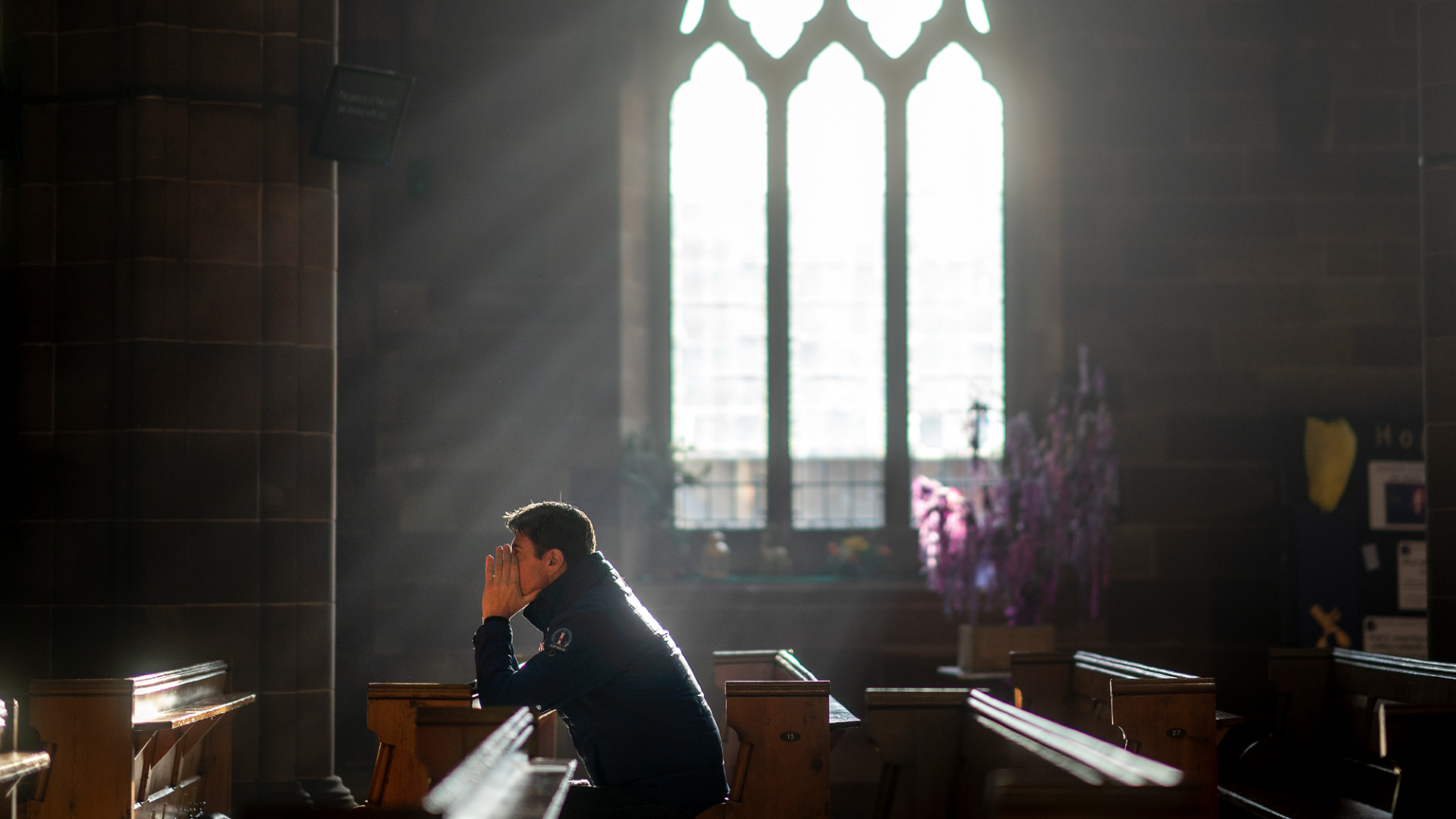
A man prays in a UK church amid bad news about the future of seminary education.
Christianity Today February 4, 2025
Christopher Furlong/Getty Images

When the Association of Bible College Principals in the United Kingdom convened in the summer of 2024, administrators came away with some pretty dire predictions. 

Anthony Royle, head of the King’s Evangelical Divinity School in Southeast England, told his colleagues that “it seems like 50 per cent of Christian Bible Colleges in the UK will close in the next year or two.” 

There are only 30 Bible colleges across the UK, alongside the Church of England’s 23 theological educational institutions. But these are the schools that train ministers for England’s 16,000 Anglican congregations and dozens of free church denominations. The apocalyptic outlook about the future of British theological education has some worried.

“I don’t know a theological college that does not have financial problems, enrollment issues, or some kind of existential challenge right now,” cultural commentator Krish Kandiah told Christianity Today. “It’s as bad as people are saying.” 

Many institutions have closed their doors in recent years. Bangor University and the University of Sheffield shut down their theology schools. St. John’s College in Nottingham, England, shuttered in 2019. Redcliffe College dissolved in 2020. And a smattering of smaller colleges have also been boarded up. The Church of England reported at its General Synod in July that the number of potential ordinands in its theological education institutions has fallen precipitously—down 40 percent since 2019. Hundreds fewer Anglican seminarians are enrolling now than just five years ago. 

Close observers don’t expect the trend to reverse anytime soon. 

“We are going to see more closures, mergers, and competition for a smaller pool of potential students,” Kandiah said.

Principals, experts, and church insiders have offered a range of explanations for the dizzying downturn: People have blamed an increasingly secular society, the UK’s ongoing cost-of-living crisis, and the lingering effects of the COVID-19 pandemic.

Some conservatives within the Church of England have said a lack of clear identity has also led to “uncertainties” about the future of the church. In a letter to bishops in July, The Alliance—an umbrella group that emerged in 2023 in opposition to the church’s plans to approve standalone services to bless same-sex couples—said the overhaul of church teaching on gender, sexuality, and marriage was undermining theological education. The group suggested that traditionalist bishops could reverse the decline, if they were given more authority over preparation for ordination in the Church of England. 

But Marvin Oxenham, general secretary of the European Council for Theological Education, which serves Christian education institutions in Europe and the Middle East, said what is happening in the UK is larger than one particular theological conflict. There is a broader stress and strain on institutions of higher education across the globe.

“There’s been a general move away from what you might call ‘traditional models,’” Oxenham said.  “In terms of theological education, the model of preparing pastors and missionaries to go to the field or serve within a denominational structure is breaking down,” he said. “It’s certainly not the prevailing model anymore.” 

Oxenham, who previously worked as academic dean of the London School of Theology (LST), said he saw firsthand how theological schools in the UK are struggling to reinvent their curriculum and figure out nonresidential offerings to meet needs of potential students who aren’t interested in going the traditional route.

The solutions he has seen most often include offerings for bivocational professionals or coursework for people who are not pursuing ordination but are interested in personal development. 

“It breaks the trinity of higher ed—bachelor, master, doctorate—offering a portfolio of learning that is student focused instead,” Oxenham said. 

Oxenham believes these new models will be “the future of theological education in Europe.”

The current principal of LST, Mark J. Cartledge, said a few things have helped the school weather the storm, including a new master’s program in practical theology and ministry and a new bachelor’s in theology and the liberal arts. Cartledge hopes programs pairing theology and other subjects “will bring in a broader group of students who want to study philosophy, ethics, or science-informed theology.” 

Cartledge said the school is also considering microcredentialing. Microcredentials certify the learning outcomes of short-term learning experiences like short courses, summer schools, and online seminars. These are not new but have recently become popular as a way to recruit more potential students. 

St. Mellitus, the largest theological school in the UK, has tried to find more students with a move away from its residential model. Facing a drop in enrollment, president and chair Graham Tomlin has promoted a mixed mode of training where students can stay where they are and come to campus for occasional intensives. 

The school has also instituted new learning streams for those they call “Peters” and “Calebs” in the Church of England. The Peter Stream is meant for lay leaders in churches, who lack some formal education and do not have the academic prerequisites required for studying for ordination. The Caleb Stream is for “seasoned saints,” who have been successful in other spheres, including business and education, but are looking to serve the church. 

Both streams have widened access to theological education and helped St. Milletus limit its losses, a college spokesperson told CT. 

Lucy Peppiatt, president of WTC (previously Westminster Theological Centre), told CT that what’s saved their institution thus far is the “hub model” instituted by her predecessor Crispin Fletcher-Louis. The Cheltenham-based school, which caters to charismatic and Pentecostal communities across the UK, offers undergraduate and postgraduate training to independent churches through a mix of in-person teaching, web learning, and videoconferencing through local learning centers they call “hubs.” 

The hubs have enabled people to study university-level theology in the midst of their everyday lives, Peppiatt said, without making enormous sacrifices of time and money. 

“We can’t just sit and wait for people to come to our institutions,” she said. “The onus is on academic theologians to demonstrate our desire to serve the church and to make the connections with pastors so that they are able to see why theological education is both relevant and important for what they are called to do.”

Some theological schools have also looked abroad for more students. Capernwray, a school in Northwest England, offer residential training through short-term Bible courses and a Christian camp experience. In 2025, half of the students enrolled in Capernwray programs are Americans. There is a strong contingent of Canadians and Germans as well. 

“There’s Brits too,” said principal Derek Burnside, “but there’s never been a Capernwray with a majority of British students.”

The school’s primary aim is not academic training but spiritual formation. It was founded in the wake of World War II with the aim of reaching Germans and has continued to be very international. 

Burnside, who has led the school since 2017, said that puts Capernwray in a pretty good position to escape the fate that will likely befall many smaller schools.

“There’s a genuine crisis in formal British theological education,” he said. “But a lot of younger, nonprofessional Christians are still looking to deepen their spiritual foundations, to be thoroughly biblically equipped before going on to secular educational settings or into the workplace.”

Burnside believes this could actually be good for Christianity in the UK. With biblical literacy on the decline and a culture that increasingly looks at Christianity as nothing more than cultural heritage, he thinks that democratized theological education could prompt a revitalization of faith. 

“We are in a season of shaking and reshaping,” Burnside told CT. “But if the end result is greater access to quality theological education among people in the pews, that can only be a good thing. Perhaps I’m overly optimistic, but I think there’s room for hope.”

News

Died: Emanuel Sarfraz, Pioneering Pakistani Christian Journalist

A founding member of the Christian Journalists Association of Pakistan, he championed voices marginalized by the Muslim-dominant society.

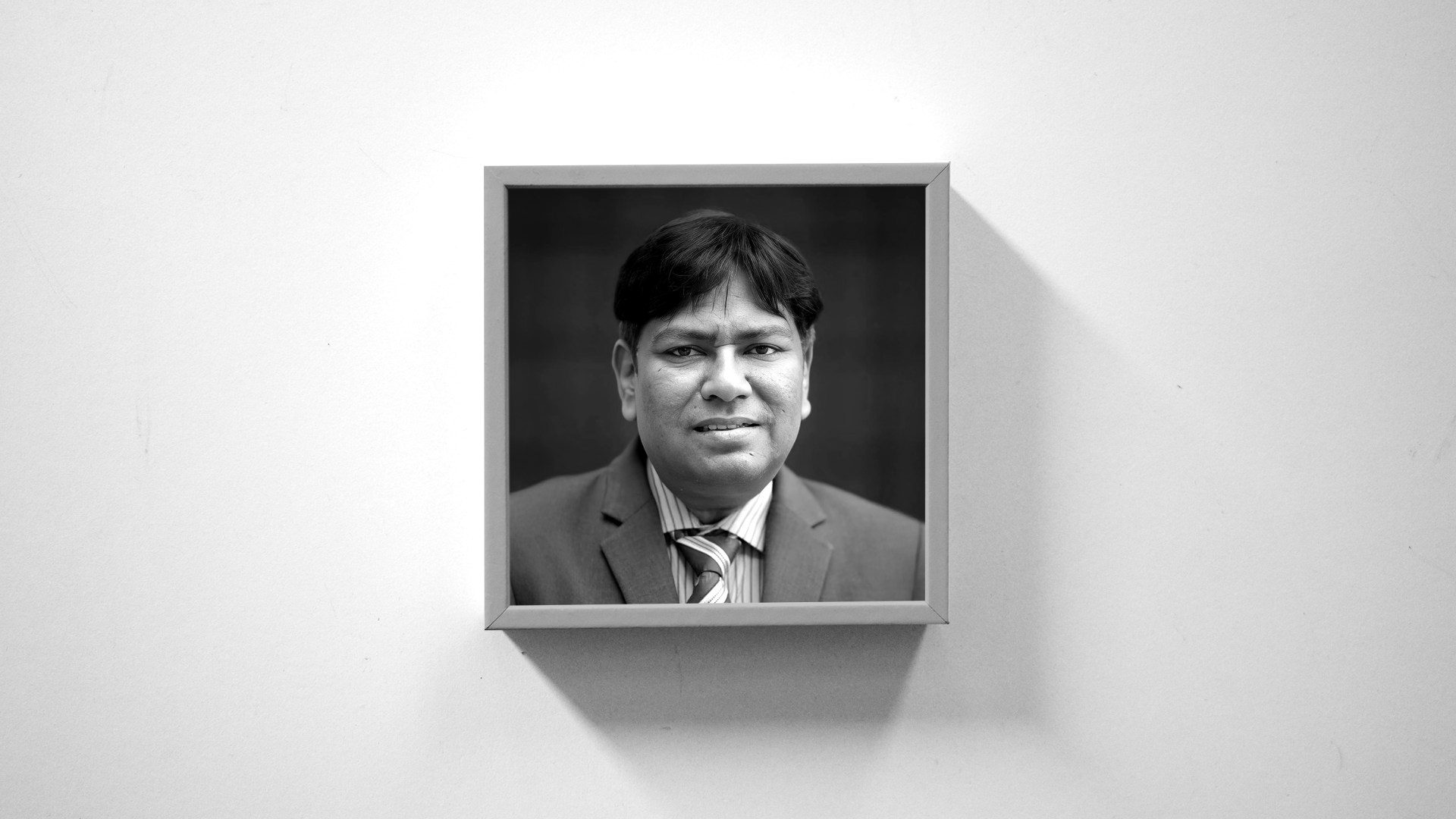
Emanuel Sarfraz
Christianity Today February 3, 2025
Illustration by Christianity Today / Source Images: Courtesy of the Sarfraz Family

Emanuel Sarfraz, a Christian journalist who advocated for minority rights in Pakistani media, died on January 13 in Lahore, Pakistan. He was 56.

A founding member of the Christian Journalists Association of Pakistan (CJAP), Sarfraz helped reshape how the tiny Christian minority participated in Pakistan’s media landscape. He trained Christian journalists and helped them find jobs. At the same time, he established a platform for Christian voices in the Muslim country, where less than 2 percent of the population is Christian.

Sarfraz was also the first Christian journalist to have his own column in an English newspaper, according to his friend Tahir Vicky, a fellow reporter. Sarfraz often wrote about education, gender issues, and incidents targeting Christians.

Since 2020, Sarfraz also served as the general secretary of Lahore YMCA, where he launched new programs from cybersecurity workshops to interfaith conferences. He also established initiatives for Christian women, including a secure female-only hostel and gymnasium in downtown Lahore, that were unprecedented in the country.

Through his leadership positions, Sarfraz sought to strengthen Christian institutions while encouraging believers to engage with the larger society. Friends and loved ones remember Sarfraz as someone who would never miss church on Sundays, who was straightforward in his writing and interactions, and who would not compromise his faith in the newsroom.  

Vicky remembered Sarfraz’s advice on how to bring about effective change: “One must stay in the system and bring change; you cannot change the system by staying outside and just talking about it.”

Sarfraz was born in 1968 to a Christian family in Lahore. His father worked as a manager at the Punjab Religious Book Society while his mother managed their home. Sarfraz was the youngest of five children.

He studied humanities at Islamia College before earning master’s degrees in English and international relations. Although he passed Pakistan’s notoriously difficult civil service exam, he chose to pursue journalism instead.

Sarfraz’s passion for journalism was an anomaly in the Christian community, said Asher Sarfraz (no relation), a friend and fellow journalist. “Christians were not very good at writing in English, so nobody entered into this field,” he explained.

Sarfraz’s journalism career began at The Nation, an English-language daily in Lahore. Over two decades, he worked as staff reporter; supervising editor for the publication’s Sunday magazine; and coordinating editor, where he managed the paper’s four publishing sites and three bureaus across the country. He covered major national and international events, including the 2005 Kashmir earthquakes, the 2010 Pakistan floods, and the 2016 US presidential elections.

Because Urdu and English are the official languages in Pakistan, Sarfraz worried that young people were losing the Punjabi language and culture. He often wrote about the topic, including in a 2005 article where he pushed for keeping the Punjabi language and Sufi poetry—part of the Punjabi literary heritage—alive.

In 2019, Sarfraz launched Pakistan’s first education-focused print magazine, Academia, becoming its founding and managing editor. The endeavor allowed him to combine his passion for media, journalism, and education.

As he grew in journalistic acclaim, Sarfraz saw the importance of paving the way and raising up other Christian journalists. In 2021, Sarfraz established CJAP with a group of 120 journalists in print and electronic media.

Whenever he heard of Christian journalists who were struggling financially, Sarfraz would introduce them to others in his network to facilitate job opportunities, freelancer journalist Nasir Jamil said.

Jamil initially only wrote in Punjabi until Sarfraz encouraged him to write articles in English to reach a larger audience, he recalled. The experienced editor even edited some of his initial English articles.

Jamil said his mentor described to him the need for Christians to stay united. “We are a handful of Christian journalists out of the very few educated masses from the tiny total Christian population,” Jamil recalled Sarfraz saying.

Sarfraz also raised issues facing Pakistani Christians on the Christian YouTube channel National News Nama. He and Vicky hosted a biweekly program, “Aaj Emanuel Sarfraz Sahab Ke Saath”(Today with Mr. Emanuel Sarfraz), where Sarfraz explained the rights of the Hindu and Christian minorities, including a mandatory five percent quota for minority students at public colleges.

In February 2020, YMCA Lahore’s board of directors selected Sarfraz as its new general secretary. He initiated a revamp of YMCA programs, focusing on developing the young people’s spiritual growth as well as their practical skills.

He introduced various classes to teach young people computer skills, spoken English, cosmetology, and the uses of artificial intelligence. “He often told me that he wants to introduce everything new through YMCA to keep the youngsters abreast with [what] is trending,” said Azhar Mushtaq, general secretary of the Pakistan Bible Society, Lahore.

Sarfraz also used his position to support Christian athletes. In April 2024, he honored the Sohail sisters—four Christian sisters who had won international competitions in kabaddi, powerlifting, and weightlifting—and made them goodwill ambassadors for the organization. He spoke out about the lack of funding for Christian athletes and pressed government officials to support them.

Sarfraz also played a pivotal role in organizing festivals for both minority and majority communities, such as Diwali, Pakistan’s Independence Day, and Christmas. His wife, Ghazala, noted her husband “strongly believed that social harmony is the key to progress.” He would invite Muslim public figures to his Christmas gathering, his friend Vicky recalled.

Sarfraz also served as the chairman of the Student Christian Movement (SCM) Pakistan—a community that raises awareness on role of minorities in developing countries and encourages students to ask questions about their faith.

In 2023, Sarfraz earned the Ambassador for Peace Award for his work. He had also received acknowledgment from the Punjab government for his work in child protection and welfare, from the Press Information Department Lahore for promoting interfaith harmony, and from the YMCA for exceptional service to children.

At a gathering of Christian and Muslim journalists in Lahore in May 2023, he shared his vision for responsible journalism, emphasizing that Christian journalists should be properly trained and careful with the words they use in their reporting to avoid offending people of other faiths.

“This philosophy of thoughtful engagement while maintaining the Christian identity was a hallmark of his approach,” Ghazala said.

Just few weeks before Sarfraz’s death, Jamil said he received a call from Sarfraz insisting that he and all the other Christian journalists apply for membership at the Lahore Press Club, where Sarfraz had long been a member and even served on its governing body. “He wanted to endorse us,” Jamil said. “He encouraged Christian representation in the Pakistan media institutions.”

Sarfraz is survived by Ghazala, who was recently appointed the first female general secretary of YMCA Lahore, and their two daughters.

News

One Night in a Shelter, the Next on the Streets?

The US foreign-funding freeze closes a Costa Rican Christian ministry for migrants.

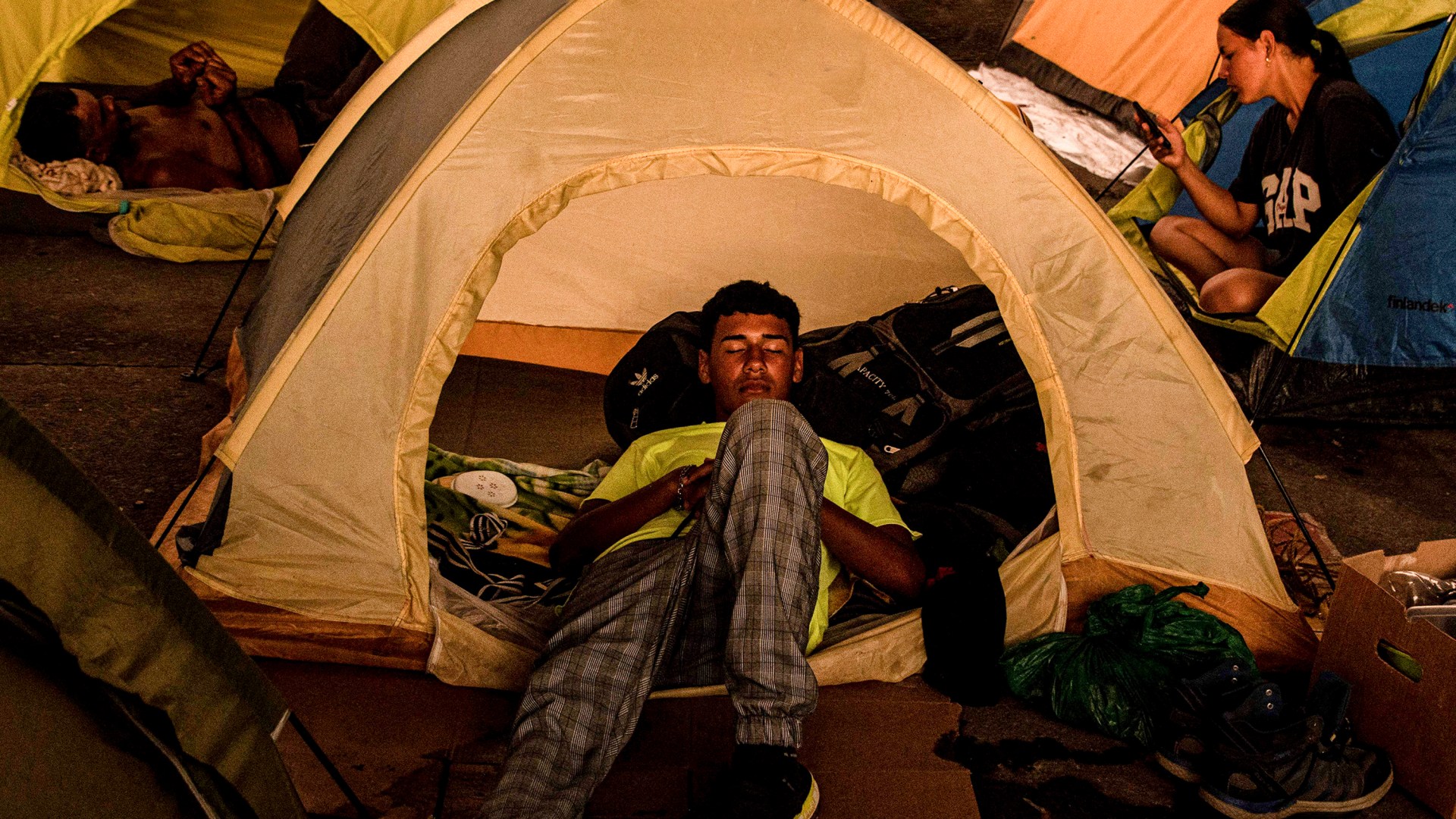
Migrant people rest at the Paso Canoas refugee camp in Puntarenas, Costa Rica

Migrants resting at a refugee camp in Costa Rica.

Christianity Today January 31, 2025
Ezequiel Becerra / Getty

Juan Antonio Allauca Robles had seen too many drug dealers murder his former colleagues. 

So the Ecuadorian police officer made a plan. He would lie low in the countryside for a few months and figure out the logistics of heading north. He intended to eventually make it to the United States to seek asylum.

Last December, Allauca crossed part of Colombia and traveled on foot through the treacherous Darién jungle into Panama, accompanied by his wife, three children (ages 13, 2, and almost 1), his 18-year-old sister-in-law, and his father-in-law. 

“We were being threatened all the time,” he said. “It was hard to keep the teenagers and children safe.” 

The family arrived in Costa Rica on January 25, taking a bus to Los Chiles, a town of 20,500 people on the border with Nicaragua.

By then, the family had already heard the news that the Trump administration had strengthened border controls and had drastically cut asylum requests. So Allauca pivoted: His family would file for asylum in Costa Rica and try to make their home there.

Their first night in town, the family paid to sleep in someone’s garage. The next three nights they spent in a hotel room, thanks to the United Nations High Commissioner for Refugees (UNHCR). 

On Wednesday, the family relocated to Casa Esperanza, a Christian organization partnered with the UN to shelter migrants, hoping that they would be able to stay for the next ten days while they waited for their temporary residence permits. 

But on Tuesday night, the US government announced it had frozen all foreign aid. Casa Esperanza had just signed a UN contract to distribute resources provided by the US government. Shortly after the Allauca family arrived, the ministry announced that this funding cutoff would close its shelter.

Private donors sent funds to Casa Esperanza to house families with children until Sunday, February 2, allowing 16 people from three families to stay. After that, the ministry will be able to continue only its three-times-a-day meal program, funded by donations from the Adventist Development and Relief Agency. 

Allauca doesn’t know what to do. As a former police officer, he risks his life and the lives of his family if he returns to Ecuador. He also feels that continuing the journey to the US would be too much for his family members, who have already suffered from exhaustion and hunger. “The children have suffered a lot,” he said. 

Meanwhile, receiving a work permit may take up to four months, and Allauca has no idea how he will support six people in this new country. The family is sleeping in the Iglesia del Nazareno (Church of the Nazarene) in Los Chiles and eating and bathing in Casa Esperanza’s facilities. “We are in limbo,” he said.

Casa Esperanza’s staff can relate. The facility stopped receiving migrants last November after funds ran out, said Ruth Padilla DeBorst, the founder of Casa Adobe, the nonprofit that operates the ministry. She reported the news to Mesa de Movilidad, a coalition of organizations working with migrants in the area that includes UNICEF, UNHCR, World Vision, and Costa Rican government officials.

“That’s when the UN reached out to us,” said Padilla. “They told us to do the paperwork because there were funds available for us.”

The process moved swiftly. On January 4, Casa Esperanza received the green light to hire security and cleaning services for the facility, which could house up to 40 people. On January 6, the organization  welcomed its first migrants. At the time of the funding cutoff, the shelter had 24 adults and 9 children. Most of them intended to stay in Costa Rica.

In addition to a safe night’s rest—a luxury for migrants crossing Central America—Casa Esperanza also offered residents food, psychological support, medical care, and specialized attention for children, including recreational and educational activities. 

The Casa Esperanza contract provided $45,000 per month over five months, with the possibility of renewal. It was canceled after just three weeks, before even the first salaries could be paid to the staff hired specifically for the program.

“These people come from places where they have been threatened by drug cartels,” said Padilla. “They have suffered violence. We don’t want to throw them out onto the street.”

The UN receives funding from both voluntary and mandatory contributions from member states. By far the organization’s largest donor, the US allocated $12.9 billion to the UN in 2023, and its agencies—like the UNHCR, the Joint United Nations Programme on HIV/AIDS (UNAIDS), and the International Organization for Migration—receive over a third of their funding from the US. In the case of the World Food Program, half of its resources come from the US government. 

Gabriela Suárez and her 16-year-old daughter, Sofía, also recently arrived in Costa Rica, fleeing a neighborhood outside of Quito, Ecuador, that she felt was too dangerous for her family. Though Gabriela’s boyfriend had started the journey with them, he was detained and deported when they arrived in Panama. The mother and daughter continued without him, taking buses to cross Panama and then Costa Rica.

After arriving in the country, Gabriela felt welcomed by locals and by Casa Esperanza and started thinking about applying for a work permit and staying there. “But now, everything has changed,” she said. She wondered if her little remaining money should just go to making it to the US-Mexico border. 

Their immediate concern, however, is survival. “Right now we don’t have any money, not even to eat,” said Gabriela. “I’m going to see if I can get a tent so that we don’t sleep on the street.”

News

When ICE Comes to Church

In Atlanta, immigration agents arrested a Honduran man outside the church he helped plant. Is it an isolated case or the start of a trend?

ICE agent

An Immigration and Customs Enforcement agent detains undocumented immigrants in Los Angeles in 2015.

Christianity Today January 31, 2025
John Moore / Getty Images

When federal agents took her husband away, Kenia Colindres was fasting. It helped her listen for God, which she had been doing ever since she came to America.

Fleeing gangs in 2022, Colindres tried to listen to God along the more than 2,000 miles her family traveled from the coast of Honduras to the edge of the United States. She tried to listen as she and her husband, Wilson Velásquez, crossed the border illegally with their three children, turning themselves in to US authorities and requesting asylum. She tried to listen as she watched uniformed men cinch GPS-tracking ankle bracelets to the heads of families: to young men, to mothers traveling alone with their children, and to her husband.

“I always looked for God,” Colindres said. “I couldn’t separate myself from him.”

Immigration officers advised Kenia and Wilson to get a lawyer, and they assigned the family a court date—years away—to present their asylum case to an immigration judge. With that settled, Kenia knew what God wanted them to do next: find a church.

They landed at a Pentecostal congregation in suburban Atlanta, where the family had moved in with relatives. As they knit themselves into the church community, Wilson applied for a work permit and got a job wrestling tires six days a week at a llantera—a tire shop—near their home. He came home exhausted but always made a point before bedtime to sit with his children, ages 7 to 13, and ask about their day. How was school? Were you good for your mom?

After a year at the church, Wilson and Kenia joined a promising young pastor and a team of congregants to plant a new congregation. Iglesia Fuente de Vida started meeting in an aging shopping plaza in Norcross, about an hour from their home. Outside of Wilson’s work and the children’s school, the church became the family’s world. Several days a week, they worshiped in a windowless room decorated with two bouquets of roses at the front. They helped on the music team.

Kenia felt Wilson was the kind of good man a church needs. She bragged about her husband: his attention to detail, the way he asked if she needed groceries, the way he picked the items up on his way home from work and stuck them in the fridge without being asked. She thought he had a gift for hearing from God and relaying prophetic wisdom.

Sundays, Wilson’s only day off, were their best days. “We woke up with joy,” Kenia said. They looked forward to eating at a restaurant after church, then escaping outdoors to a park.

Last Sunday, January 26, the kids poured milk over bowls of cereal while Kenia scrambled eggs for her husband and stirred his coffee. As was her custom, Kenia fasted for breakfast. “On Sundays I try to make sacrifices,” she said.

Her sacrifices were only beginning.

Media accounts largely agree about the day’s events: At roughly a quarter past noon, an usher standing in the church entrance saw a group of Immigration and Customs Enforcement (ICE) agents outside and locked the doors. Wilson was listening to the sermon when his phone rang with an unknown number. When he silenced it, his ankle bracelet—known in Spanish as a grillete, or shackle—began buzzing. His phone rang a second time, and Wilson rose, flustered, slipping out the back of the sanctuary. The usher met him and said there were agents in the parking lot, asking for Wilson by name.

Moments later, Kenia’s phone flashed with a message from her husband: Come outside.

Running into the daylight, Kenia found him handcuffed in the back of a law enforcement vehicle. “What’s happening to my husband?” she asked the agents. Her mind raced to make sense of the scene. Wilson had made all his required check-ins at an Atlanta ICE office. He had the government’s permission to work and had an appointment on a court docket. He was deported once nearly 20 years ago—a significant strike on an immigrant’s record—but otherwise had no criminal record.

The agents told Kenia they were looking for people with ankle bracelets, then they drove Wilson away.

Back inside, her pastor, Luis Ortiz, tried to reassure his congregation. He encouraged everyone to be calm, he told local media. “But I could see the fear and tears on their faces.”

After the service, Kenia lingered a while in a daze. When she finally went home later that afternoon, she closed herself in her room and prayed through sobs: “God, take control of my husband’s life.”

“It’s disrespectful, what they did,” Kenia told CT in Spanish. She doesn’t know why ICE would arrest her husband at church. “With the bracelet they could find him anywhere.”


Wilson’s arrest appears to be the first reported ICE raid at a church in President Donald Trump’s second term. It came five days after the administration revoked a policy that, for 13 years, had ordered ICE officers to avoid making arrests at houses of worship and other “sensitive locations,” including schools, hospitals, and parades.

News that some of the country’s safest spaces would no longer be safe for undocumented immigrants—or, in Wilson’s case, even for those who could produce a valid Social Security number—electrified fears of what might come next. School districts emailed staff with instructions about what to do if ICE came knocking. Pastors of churches with immigrant majorities phoned lawyers and one another: If they knew a parishioner was in the country illegally, could they be complicit in something? Could they keep running food pantries?

Beneath the questions runs a fundamental anxiety nagging at many pastors: Can churches with immigrants remain the kind of welcoming communities they once were?

Churches in the United States have a long history of entanglement with immigration enforcement. In the 1980s, hundreds of churches formed networks to protect migrants fleeing political violence in Central America. The Sanctuary Movement, as it called itself, drew the ire of the Reagan administration. Immigration authorities—then known as the Immigration and Naturalization Service, or INS—never arrested migrants inside houses of worship. But they did send paid informants to spy on churches sheltering migrants.

The government arrested dozens of church leaders in Texas and Arizona, ultimately convicting eight of them for criminal harboring. The trials sparked protests outside INS offices across the country and made for bad optics. Since then, the Department of Justice has not prosecuted any churches for providing sanctuary.

Other buildings have seen less deference. Even after the Obama administration’s 2011 ICE memo formalized protections for sensitive locations, agents routinely made arrests near schools and even at school bus stops. During the first Trump administration, officers entered hospitals pursuing low-priority cases. In 2017, for example, Customs and Border Patrol officers arrested two undocumented parents at a Texas hospital while doctors were treating their infant son.

That we know of, ICE agents have never entered a church to make an arrest—but they’ve come close. In 2017, ICE arrested undocumented men leaving a church shelter in Alexandria, Virginia. That same year ICE agents, staked out in a church parking lot, spooked a congregation in Sacramento, California.

During the Obama administration and the first Trump administration, more than 1,000 churches—mostly mainline—pledged to join the New Sanctuary Movement, offering to shelter undocumented migrants from deportation. No one knows exactly how many immigrants took advantage of them, but stories abound. In 2019, ICE threatened some immigrants taking refuge in churches with fines of up to half a million dollars (it eventually backed off on the fines).

Not all Christians offering sanctuary are trying to shield people from ever being deported, said Alexia Salvatierra, a professor of missions and theology at Fuller Theological Seminary who cofounded the New Sanctuary Movement. She acknowledges—as many immigrant advocates acknowledge—that many undocumented immigrants have no legal right to residency. The New Sanctuary Movement, she said, aims to buy time for people being denied due process to resolve what may be legitimate claims. They might, for instance, have credible fears of political or religious persecution that would permit them to stay in the US. Or certain immigrants may have temporary permission to be in the country and simply need time for legislation to pass that would allow them to remain permanently. That’s the case for “Dreamers,” immigrants who were brought to the US as minors. Legislators have been trying to create a pathway for citizenship for them since 2001.

“There were certain people who had a deportation order, but there would be a legal remedy for them if they could get deferred deportation and fight their case over time,” Salvatierra said. “Some of those people, it made sense for them to live in churches or to live with families that were connected to the church to allow them the time to be able to fight through this broken system.”

Since Trump regained office, some pastors have spoken out and again offered up their buildings for sanctuary. It’s not clear whether ICE will enter churches. Earlier this week, lawyers representing a group of Quaker churches sued the Department of Homeland Security to protect houses of worship from immigration raids. The lawsuit emphasizes the First Amendment’s guarantee of religious liberty: “Enforcement deters congregants from attending services, especially members of immigrant communities.”

A similar argument is now before the Supreme Court of Texas, where a Catholic nonprofit is fighting the state’s efforts to shut it down for providing food and shelter to undocumented migrants, which the charity says Christ commands his followers to do.

A win for the nonprofits in those cases could thicken the legal armor for immigrant congregations. Contrary to public perception, churches, in the cold logic of the law, offer less protection against arrest than a private residence.

“You have more constitutional rights at your house,” said Katie Taylor, an attorney at Neighbors Immigration Clinic, a church-affiliated legal group in Lexington, Kentucky. “If you’re at your house, you do not have to open the door for ICE [agents] unless they have a warrant from a judge for your arrest, which they pretty much never have.”

Thus, ICE agents generally target public locations—including restaurant dining rooms, lobbies, break rooms, and outdoor spaces—where they can operate without a warrant. In Chicago and other cities roiled by the Trump administration’s early deportation push, immigrant-frequented business districts have gone into hibernation.

“We’ve talked to congregations and pastors about things like, if you are open to the public, you can’t stop ICE from coming in,” Taylor said. She tells pastors to consider ways to make their churches more private, such as screening who comes and goes during gatherings. “This isn’t ideal for places of worship, but what does it look like if you lock your door and you buzz every person in through some kind of alarm system? Because then if ICE shows up, you don’t have to buzz them in.”

That’s what Wilson’s church did—it had a keypad door lock and someone standing watch. All that failed to prevent his arrest, but it at least prevented officers from grabbing him inside, surrounded by family and friends. Many churches are going further to make worship safer for undocumented parishioners, stripping service times from websites and signage.

“We’re recommending that people don’t publicize group gatherings” if they are a known immigrant congregation, Taylor said. She is skeptical that ICE will begin bursting into worship services, given public relations risks, but this week the administration ordered some ICE field offices to make at least 75 arrests a day. Taylor says they cannot achieve that by pursuing violent criminals alone, as Trump has said he would prioritize: “I’m not going to tell someone not to go to church. But if they’re worried about immigration status, if ICE does actually have to hit these quotas, we think they’re going to start targeting obviously Hispanic gatherings.”

Wilson Velásquez. Photo courtesy Kenia Colindres

Kenia is still going to church, though she balks when asked what time their services are now. She says the congregation is trusting in God and believes nothing more will happen to them. She is technically at risk of deportation herself, but immigration authorities in principle avoid deporting both parents at once and leaving children stranded.

“We’re under God’s covering,” she said. “We pray that the Lord has the last word and does his will, not our will.”

The night after Wilson’s arrest, Kenia was at home, answering questions in Spanish from two reporters. When one of them, independent journalist Mario Guevara, got up to leave, she offered him a stack of fresh tortillas and cheese that her mother had just made. Guevara was starving, but he demurred. He did not want to take bread from this woman who had just lost her breadwinner. Kenia insisted.

She spoke with her husband on Tuesday. He called her from the Stewart Detention Center, 160 miles south of her near Columbus, Georgia. He said ICE planned to deport him, and the family would need to find an attorney who could handle detention cases—an expensive specialty they had no idea how to afford. Wilson also said he planned to preach to fellow detainees the next day. God had told him to have faith and to persevere—and men around Wilson needed to know God like he knew God.

Kenia doesn’t know how, but she believes Wilson will come back to her. She believes, in the end, that all this will be a testimony to God’s goodness, and that because of it “a lot of people will come to the feet of Christ.”

Until then, she is just trying to listen for God. “He knows why things happen,” she said.

“I’m praying that God open doors and touch the hearts of these police. And for Trump—I bless him, right? I pray for him and as a church we bless him.”

Andy Olsen is senior features writer at Christianity Today.

Ideas

You Can’t Hustle Your Way to Holiness

Grinding for God is not a gift of the Spirit, and it just might be making our souls even sicker.

A speed gauge with it pointing to a turtle
Christianity Today January 31, 2025
Illustration by Mallory Rentsch Tlapek / Source Images: Getty

I’m what some would call a competitive person. I hate losing more than I like winning. As I tell my 6-year-old son before his soccer games, “Have fun today. But remember: Winning is more fun.” My wife doesn’t like it, but it’s true.

I like striving for excellence and cultivating discipline. I want to be the best—to out-train, outwork, and outcompete the competition. This drive and aversion to losing has been helpful in almost every area of my life. I mostly like this trait that I have. But in the life of faith, I also think my drive to be the best can make me the spiritually worst.

As I scroll through the social media world, I’ve noticed a new generation of influencers, mostly men, who target men like me. I’m a millennial, and it seems my algorithm wants to capture and capitalize on my attention—selling me on a “rise and grind” mentality that, at first, seems rather winsome.

David Goggins, a retired Navy SEAL known for his ultra-athletic feats, promotes a 75 Hard Challenge that includes a diet, daily exercise, reading, and a daily picture. It’s part discipline, part self-help. The purpose is to commit to something hard and do it every day.

Andrew Huberman, a neuroscientist and professor at Stanford, has a viral podcast where he popularizes research on human performance and mindset growth—everything from when to eat and exercise to the benefits of cold plunges. I’ve seen Andy Elliott, a sales and business coach, calling guys out to take off their shirts and shame their fat away. Or, in another video with less cussing, Elliott tells people to pray, “God, break me of my weaknesses.”

The list could go on: Ryan Pineda on buying real estate and making lots of money. Kris Krohn waking up at 4 a.m. to listen to a book on double speed, cultivate a mind palace, and whisper affirmations to his wife, who works out next to him on the treadmill. Alex Hormozi, who tells us how to breathe better with his famous nose strips—and also be successful with side hustles. Many of these people use faith or Christianity to talk about what they do, too.

It seems like these guys are making a lot of money (and they will charge you a lot of money to help you). They promise that wealth will give you the life you want.  People are paying, and they are paying attention—especially young men.

At their best, this new crop of gurus recognizes the embodied realities of life. You can’t think your way to health. Sometimes men, especially Christian men, need to get out of their heads into the concrete world around them.

These gurus teach that sunlight is good for your health, so get outside. Rhythms are formative, so be sure you develop good ones. Money is valuable, so try to work hard to earn it. They can call young people to a higher standard and infuse aimless young people with purpose and discipline.

Such messages are not absent from the Christian faith, either. “Train yourself to be godly” (1 Tim. 4:7) writes the apostle Paul, using the Greek word that shares a common root with the word gymnasium. And elsewhere, he commands “Work out your salvation” (Phil. 2:12). He also uses warfare language when encouraging the church in Ephesus to put on the armor of God in order to stand against the schemes of the Devil (Eph. 6). Win! Discipline! Fight!

But underneath these modern messages is also a deeper, more distorted desire: There’s always more to do, more to read, more money to make, more experiences to have, more people to beat. Life is set up for the grind. Perform. Do better. Money is power, so get some. And what young people can’t know yet is that this mindset leaves you exhausted.

In Christianity, we call upon a higher standard of grace, which has nothing to do with our effort or striving.

You can’t hack your way to holiness because holiness is slow work—a “long obedience in the same direction” as Eugene Peterson said. Formation is less about productivity and more about stillness. This way of life requires discipline, but it’s a discipline of absence, not performance. The battle cry of formation isn’t necessarily “Fight for the Lord!” but “The Lord will fight for you; you need only to be still” (Ex. 14:14).

These words don’t excite my Western sensibilities. I want to be deserving of what I get.

Deserving is such a powerful American word. It’s fair and just. It’s the standard of success. It’s one reason why the monastic tradition recommends not pursuing a contemplative life until after 40. Before then, we’re too ambitious. Our desire to be productive is too strong to seek the face of God.

A problem with these online mentors is that I don’t know if they consider death. (There’s even a popular Netflix documentary of a guy who thinks he can defeat death.) They love youthfulness because they love life, and youthfulness is synonymous with life in the modern world. Here’s the tough part: We’re all headed toward death. We’re on our way to aging, wrinkling, weakness. And if we don’t get comfortable with the slow deaths now, then we’re going to have a hard time aging later.

In a letter from the Catholic monk Thomas Merton to the Catholic social activist Dorothy Day, he wrote about struggles and being misaligned and what to do about it. The word perseverance comes up—getting through all life’s challenges and still going. Here’s what Merton writes:

Perseverance—yes, more and more one sees that it is the great thing. But there is a thing that must not be overlooked. Perseverance is not hanging on to some course which we have set our mind to, and refusing to let go. It is not even a matter of getting a bulldog grip on the faith and not letting the devil pry us loose from it—though many of the saints made it look that way.

In my competitive nature, I want to hang on. I want to fight. I want to win. I want to be a saint that doesn’t let go of his bulldog grip. In my work life, this mentality is effective. I can work my way to success. But in my soul life, my strength may be my weakness. Trying hard is often not the way to holiness.

Merton goes on:

Really, there is something lacking in such a hope as that. Hope is a greater scandal than we think. I am coming to think that God … loves and helps best those who are so beat and have so much nothing when they come to die that it is almost as if they had persevered in nothing but had gradually lost everything, piece by piece, until there was nothing left but God. Hence perseverance is not hanging on but letting go. That of course is terrible.

The apostle Paul said something similar in 2 Corinthians 11–12. Instead of boasting about his spiritual pedigree and experience to the Corinthian church to prove his legitimacy, he brags about his failures and weaknesses: imprisonments, lashes, danger, hunger, thirst.

The reason for this is that ever since God told Paul, “My grace is sufficient for you, for my power is made perfect in weakness,” Paul made up his mind to “boast all the more gladly about my weaknesses, so that Christ’s power may rest on me” (2 Cor. 12:9).

For Paul, perseverance involved letting go. Formation was submission. His weakness proved God’s power, which means the scandal of perseverance is this: Even in the emptiness, God loves us.

“We are not what we do. We are not what we have. We are not what others think of us,” writes Henri Nouwen. “Coming home is claiming the truth. I am the beloved child of a loving Creator.” We are God’s beloved children no matter how well we hold on to faith, no matter what fitness hacks we accomplish, no matter what level of income we have, and even no matter what routines we establish.

So in those moments when you’re exhausted from the hustle and you feel like you’re at the end of your proverbial rope, God is there, and you are still his beloved. This is a terrifying truth. But it’s also really good news.

Alexander Sosler is associate professor of Bible and ministry at Montreat College and an assisting priest at Redeemer Anglican Church in Asheville, North Carolina. He is the author of A Short Guide to Spiritual Formation: Finding Life in Truth, Goodness, Beauty, and Community, the 2024 winner of Christianity Today’s Christian Living Book of the Year.

News

A Lebanese School Brought Christmas Cheer. Then Came the War.

How the historic evangelical institution served a reeling Shiite community.

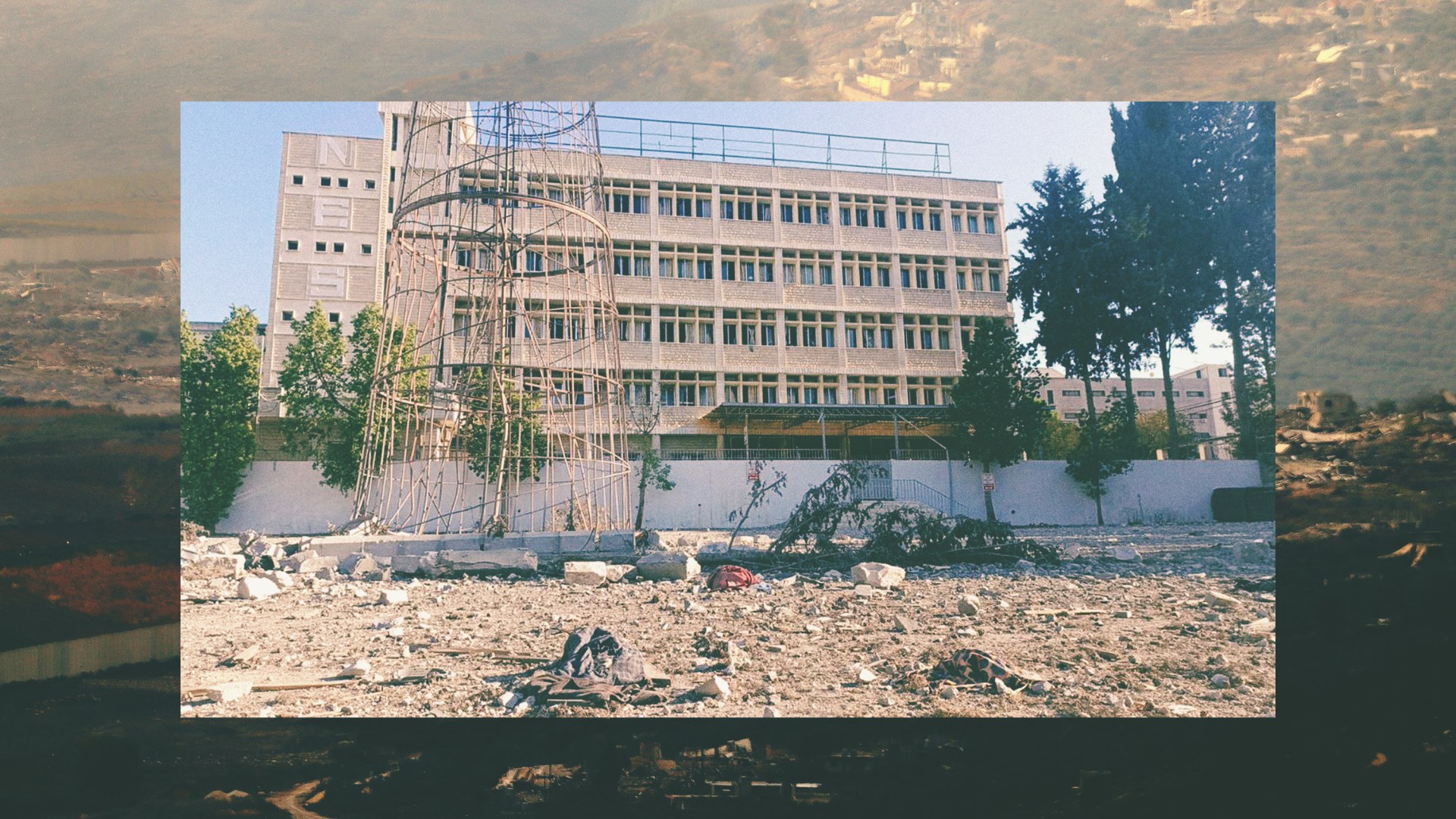
National Evangelical School of Nabatieh (NESN) damaged in the war between Israel and Hezbollah.

National Evangelical School of Nabatieh (NESN) damaged in the war between Israel and Hezbollah.

Christianity Today January 31, 2025
Edits by CT / Source Images: Getty / NESN

The predominantly Shiite city of Nabatieh in southern Lebanon once boasted the nation’s largest Christmas tree, erected to symbolize good relations between local Muslims and the tiny Christian minority of only 20 families.

The local evangelical school—with a 99 percent Shiite student body—had celebrated the holiday for years, and in 2018 it built a 100-foot wrought-iron conic structure topped with a radiant star. (The use of natural firs or pines is uncommon in Lebanon). Several of the hundreds of students, parents, neighbors, and dignitaries in attendance wore Santa hats. Many had trees in their homes and gifts to open on Christmas day.

Earlier that December, Ahmed Kahil, the Hezbollah-affiliated president of the municipality, continued the annual tradition of erecting a smaller tree in the souk, the traditional marketplace and heart of the city. And at both events—alongside Shadi El-Hajjar, the principal of the National Evangelical School of Nabatieh (NESN), heads of other private schools in the city, and various government and religious officials—Kahil wished Christians a Merry Christmas.

Lebanon’s economic crisis made 2018 the last year NESN could afford to erect its massive Yuletide construction. But over the following years, elementary school classrooms still featured Christmas trees, students exchanged secret Santa gifts, and teachers enjoyed the annual holiday dinner. “If Christmas isn’t found in your hearts,” the school reminded, “you won’t find it under a tree.”

NESN celebrating Christmas in 2018 with an 100-foot wrought-iron Christmas tree.National Evangelical School of Nabatieh (NESN)
NESN celebrating Christmas in 2018 with an 100-foot wrought-iron Christmas tree.

But there was no Christmas celebration in Nabatieh last month, after over a year of war between Israel and Hezbollah. On October 8, 2023, the Shiite militia launched rockets into Israel in support of Hamas following its attack that killed 1,200 Israelis and took around 250 hostages. The subsequent daily missile exchange drove tens of thousands from the border regions of both nations.

A year later, most of Nabatieh’s 80,000 residents fled their homes as Israel intensified its military campaign against Hezbollah. On October 16, an Israeli missile killed Kahil and 10 others at the Nabatieh town hall as they coordinated the daily distribution of food and medicine to the 200 families who remained in the largely evacuated city.

Initially, NESN stayed open for its 1,400 students. Located 35 miles south of Beirut and only 7 miles from Israel, the historic evangelical institution won local respect over the years by offering a nonreligious but values-based educational environment that consistently ranked among the top high schools in Lebanon. The September 2024 pager attack delayed the start of the academic year, and the exodus from the city eventually shifted education online. But within a week NESN opened its doors as a shelter for the locally displaced.

Over the course of the war, its staff stood by the Shiite community, including one who rescued Kahil’s colleague after the October 16 strike.

“When you see your hometown destroyed and the damage at the school,” Hajjar said, “you have to ask: Why is this happening to those who are not involved?”

A safe haven

In the early stages of the war, Nabatieh mostly avoided Israeli targeting. But each time a missile hit the surrounding area, the sound of blasts sent students scurrying under their desks. Parents called NESN to take their kids home. Yet after a few weeks, the war became the community’s new normal as Hajjar convinced families the safest place for students was at school.

Outside the school was a different story. On February 14, an Israeli missile killed Mahmoud Amer, a NESN kindergarten student, his mother, and five other civilians in their homes. The IDF targeted the apartment below, where Ali al-Debs, a Hezbollah senior commander, was present at the time. Israel accused Debs of masterminding a cross-border terrorist attack nearly a year earlier that injured a civilian. NESN held two days of mourning for Amer and offered his family a full K-12 scholarship for Hussein, his 3-year-old brother. The school’s annual Ramadan bake sale fundraiser gave them an iPad.

As the war continued, NESN grieved other victims in its community. According to the principal, an Israeli missile killed the sister of a kindergarten teacher living next door to the IDF target, while another attack killed the school nurse’s brother, a medic affiliated with Hezbollah. Four teachers lost their homes, collateral damage in a war that has resulted in $1.5 billion in losses for the city of Nabatieh, according to a World Bank report.

On October 12, Israel bombed the souk and other targets in Nabatieh, including a building next door to NESN. The home belonged to the parents of the local head of the Hezbollah-affiliated Mustafa school network, though no one was there at the time, Hajjar said. The resulting shockwave blew out the school’s windows and knocked doors off their hinges. Inside, it damaged computers, projectors, and air conditioning units. In the parking lot, chunks of cement blocks hit buses and vehicles, covering the asphalt and warping the permanently grounded iron base of the Christmas tree.

About 30 displaced individuals were sheltering at the campus, where they received daily provisions from municipality officials. All but a few left the school after the blast.

Mahmoud Amer, a kindergarten student at NESN, was killed by an Israeli missile.

An acclaimed school

American Presbyterian missionaries founded NESN as a school for girls in 1925, in a building rented in the souk from a Shiite sheikh. Although for decades the missionaries maintained a reading room for the public—alongside community facilities for a chess club and volleyball court—they did not build a church in Nabatieh. Instead, they focused on an educational mission and relocated to the city’s 400-year-old Christian quarter in 1948. But the school always celebrated the birth of Jesus.

“I was shocked to discover how Shiites loved Christmas,” said Hajjar, who became principal in 2013. “Families choose our school because of this spirit, no matter what party they belong to.”

Muslim parents originally accepted Bible teaching at the school, though very few people accepted the faith. Yet many came to appreciate the school’s English language instruction and access to Western culture. In 1972, the school screened Nabatieh’s first public cartoons—Tom and Jerry. Today, the school is owned by the local Presbyterian synod and is part of the Association of Evangelical Schools in Lebanon.

At that time there were 100 Christian families in Nabatieh, but many fled the city along with their Shiite neighbors when Palestinians established control of the south and attacked Israel during Lebanon’s 15-year civil war, which began in 1975. The school persevered but relocated temporarily to the city of Sidon about 20 miles away in 1982 when Israel invaded Lebanon to subdue the militants and occupied Nabatieh for the next three years.

During the civil war, Shiite neighbors intervened when Palestinian militants detained local believers. And when other Shiites moved into deserted Christian homes, they assisted returning Christians in reclaiming their property. But with the rise of Hezbollah, a surge in Islamic ideology compelled NESN to drop its Bible curriculum.

Chamoun Assaf, a PE teacher and one of the 10 percent of the staff who are Christian, said that Palestinians had once detained his father. As an adult, he worked to remove land mines from the civil war and volunteered with the Red Cross. But when he joined NESN, he enjoyed a short walk to school every morning instead. His great-grandfather had moved to Nabatieh in 1890, so Assaf knew his neighbors well.

In October, Israeli missiles hit at least 15 Christian-owned homes in his neighborhood, including one 10 feet from his own, Assaf told CT. Another demolished a 100-year-old building next to the Assumption of Mary Catholic Church hall. Israel issued its first evacuation order for Nabatieh on October 3, but Assaf and his Shiite wife, Lina—there are 17 local mixed marriages, he said—had already left two weeks earlier.

During the war, Israeli spokespeople stated that the missiles targeting Nabatieh struck military installations and arms depots near civilian buildings. Assaf said he does not know if this was true: He has hundreds of friends in the Shiite community, and even their families are unaware if their relatives are militants. He doubts the souk could contain heavy weaponry. As it is a popular area, everyone would have noticed.

He does know Hezbollah was present in the forests surrounding the city. An amateur hunter, Assaf recalled encounters in the woods where suddenly a fighter appeared and asked him to leave. But he gave every assurance that city leaders were not soldiers. He played volleyball with Kahil every week.

“Maybe in some places they are hitting Hezbollah,” Assaf said. “But why did they hit my neighbor?”

A municipal bombing

Assaf’s brother, Nimr, is the municipality’s sole Christian on its 21-person council. Nimr was not at the office on the day of the October 16 bombing, but his colleague, Sadek Ismail, who personally distributed aid to a remaining Christian resident, was just beginning daily operations. The missile killed him instantly.

At the time, Ali Shokor, the NESN high school superintendent and a Shiite, was drinking tea with other members of the al-Talaba emergency services volunteer group directly across the street from city hall. His teammate, Abbas Fahd, had just left to join the relief effort when they were startled by the deafening sound of a plane overhead. Within seconds a missile struck the outskirts of Nabatieh. Items spilled out of cupboards as the workers scurried to an interior room. Almost immediately, the next blast hit the city office building.

Glass had shattered everywhere. As Shokor stepped outside, in a state of shock, he noticed that the explosion had started street fires and broken pipelines, which spurted water onto the streets. His adrenaline kicked in.

Shokor rushed through the municipality’s still-upright gate and found Fahd with council member Khodor Kodeih, injured but alive. They had been standing in the parking lot between an ambulance and distribution vehicle, shielded from the worst of the blast. But the overhead structure had collapsed upon Kodeih, and Shokor helped to free him.

Shokor spent the next day at the government hospital in unofficial mental recovery, trying to regain his nerves while being too afraid to move about or sleep anywhere else. He had founded al-Talaba in 1986 and had refused to evacuate in every war since. This was the first time he thought he might die.

But the second day after the attack, he felt emboldened. Gathering his team, Shokor told them, “We do the same things as everyone else in the municipality. Israel could have killed us at any time—but didn’t. God ordained that we should live and continue to serve. Let’s get back to work.”

As a Muslim, he learned much about the Christian spirit of sacrifice over the years at NESN, but his longstanding motivations—learned as a boy scout—had always been humanitarian.

Obtaining necessities for the 92 families he helped in the city became more difficult after the souk was destroyed. Shokor was still afraid during subsequent trips to Sidon in his American-made GMC ambulance, where he would drop off evacuating families and then return with supplies. Israel had struck such vehicles before, suspecting they carried militants under the cover of charitable work. But with each trip, his confidence grew. Al-Talaba, which means “students” in Arabic, was not registered with any political party. He felt safe.

But so had many who affiliated with Hezbollah, including its share of council members. Kahil, for example, had pledged to stay in Nabatieh when thousands were evacuating. While the Geneva Conventions forbid targeting civilians in international conflicts unless they take a direct part in hostilities, the Red Cross and the United States have different standards for what might allow Israel to go after Hezbollah’s nonfighting members. The European Union, meanwhile, distinguishes between the Shiite movement’s political party and its military wing—which it labels a terrorist organization.

Shokor avoided transporting the wounded to Nabatieh’s Hezbollah-linked hospital. Instead he brought Kodeih to the city’s governmental health center, which then transferred him to the American University of Beirut Medical Center in the capital. Kodeih was unable to move for a month, recovering from fractures in his back, left leg, and pelvis.

A muted Christmas

On November 27, the cease-fire declaration spurred many Hezbollah supporters in Beirut to flood the streets, waving the group’s green-and-yellow flag. Though the terms required the militia to withdraw from Lebanon’s southern region, they had provided stiff resistance to the Israeli ground invasion. Israel’s air attack decimated Hezbollah’s senior leadership and its military arsenal, yet Hezbollah considered simply surviving a victory.

Hollowed-out Nabatieh was far more somber. Though the cease-fire came in time for Christmas, Kodeih told CT the city was not able to commemorate the holiday or put up a tree in the ruined souk. In mid-December, a diminished municipal council elected Kodeih as president. By early January, seeking to encourage hope, officials put up posters declaring that the city would come back more beautiful than before. Reconstruction, however, has been slow.

At times grimacing in pain, Kodeih condemned the “tyrannical raid of the Zionist entity,” using a widespread Arabic rendering to avoid saying the name of Israel.

“The Messiah”—he used a shared designation for Jesus rather than choosing between Christian and Muslim names for him—was weeping over the martyrs. Though the common prophet is “in our hearts” and intercedes for all, he said it was not appropriate for the municipality to celebrate when so many in Nabatieh are mourning. His assistant, equally solemn, wore a head covering with a pendant of Kahil draped around her neck.

Kodeih’s remarks were measured and monotone. Christmas would return next year. Muslims and Christians were one people. NESN was a respected school. And there were no militants, he said, present in Nabatieh. But he smiled at the mention of his children. The family had a tree in his home and planned to exchange presents.

Elsewhere in the city, the Christmas spirit suffered. For years, a local carpenter had feted the Greek Catholic sanctuary with an ornate crèche, drawing admirers from Christian villages around Nabatieh. Muslims would come also, seeking divine intercession then and throughout the year. But this December there was no display. The carpenter had evacuated Nabatieh to safety.

Shokor had a tree in his home but also did not celebrate the holiday this year. His father was a Shiite cleric who loved Christmas, giving gifts and placing figurines of Joseph, Mary, and baby Jesus in the living area. Muslims generally do not portray prophets in visual form but do believe in the virgin birth. Shokor followed his father’s traditions, including at his family-owned restaurant. He had welcomed customers the previous Christmas despite the war, but business was scant. He would wait and see if the cease-fire held before opening again.

Shokor did propose seasonal decorating at NESN as a statement of normalcy. The high school had reopened for some in-person classes a week before Christmas. But elementary students did not return until early January, as repairs were still ongoing. Teachers were also distracted, having to both prepare lessons and scramble to fix their own damaged homes.

Back in 2023, Hajjar, NESN’s principal, had been defiant. His holiday message told students the Christmas spirit was contrary to war and terror, restating the reasons for an evangelical school to exist in a Shiite city. The message of love and compassion builds bridges between communities, he said, in a Lebanon often torn by sectarian division.

But during the recent holiday season, he was depressed, taking medication to sleep at night and finding comfort in his three dogs. He feared the school might close if parents were unable to pay their fees. He was angry and frustrated—but he ended each day with a prayer of thanks. From Christian faith, he had forgiven those who attacked his beloved city.

“I believe God will hear this prayer,” Hajjar said, “and put it on his agenda.”

Theology

Is Feng Shui a Harmless Practice or Spiritual Danger?

Asian Christian leaders evaluate whether the ancient Chinese philosophy is neutral or has dark otherworldly impacts.

A stylized image of different types of furniture.
Christianity Today January 31, 2025
Illustration by Elizabeth Kaye / Source Images: Pexels

Property prices may often fluctuate, but one contributing factor remains constant in Lim Lian Hong’s eyes: the influence of feng shui

For 40 years, Lim has worked as a property valuer in Malaysia. Whenever he speaks to Chinese clients, one of the foremost things on their minds is whether their future homes have good qi, or energy. 

Also known as Chinese geomancy, the concept of feng shui originated in China and has its roots in Daoism (Taoism). Feng means “wind” and shui means “water,” and the term connotes the belief that arranging furniture in a particular way at home, choosing the placement of a home’s entrances and exits, and creating an ideal external orientation can promote a good flow of qi. 

Lim’s customers are often looking for addresses with the lucky number 8 or a location on the eighth floor of an apartment building; the Mandarin pronunciation of eight, ba, sounds similar to fa, the Chinese word that describes accruing wealth. 

Potential homeowners or the feng shui masters they hire may also study a house’s interior layout, examining a bagua map to evaluate the energy levels of a home. Shaped as a square or rectangle, each of the nine areas of analysis on the map represents a particular aspect of a person’s life, like family, finances, fame, relationships, or career. When overlaid onto the floor plan, the bagua map can indicate areas of improvement that increase the qi within a space. 

Lim, who worships at Full Gospel Assembly in the city of Petaling Jaya, has had firsthand experience with how this philosophy is incorporated into everyday life. Once, his office manager called renovators in to change the position of the door because he felt this would improve his fortunes. When a new office space opened, his boss told him not to arrive at a certain time to prevent bad luck from entering. 

In many parts of Asia, the Lunar New Year is a popular time for people to implement feng shui–related advice in hopes of enjoying greater prosperity. For example, this Year of the Snake, one Hong Kong–based feng shui consultant recommends people pay more attention to the west corner of their homes to “enhance” career and educational growth and use copper coins to minimize bad energy. 

Other common ways to achieve good feng shui year-round include placing a water feature in a home’s entrance to attract good fortune or hanging a mirror in the dining room to “expand” the family’s capacity for affluence. 

A person can experience the benefits of feng shui—most often in the form of material gain or career advancement—when he or she balances yin and yang energy well, blocking negative qi and allowing positive qi to generate. 

Most of the leaders CT interviewed say that Christians in Asia have adopted some feng shui principles in the way their homes are designed or arranged, whether consciously or otherwise. But they also warned against Christians utilizing feng shui without careful consideration, because the concept contains spiritual beliefs contrary to Christianity. 

In China, the government branded feng shui as superstition and persecuted feng shui masters during the Cultural Revolution. Tolerance toward the practice then grew in the ’80s, and nearly half of Chinese adults now believe in feng shui according to a Pew Research Center report from 2023.

In Indonesia, the major newspaper Kompas regularly features articles on feng shui in its lifestyle and trend columns. In Singapore and Malaysia, businessmen and property agents regularly consult feng shui masters in hopes that the properties they buy or sell will bring them success. In the Philippines, feng shui masters issue fortune predictions every Lunar New Year and sell charms or objects to improve one’s well-being and riches.  

Iconic city landmarks, such as Singapore’s Fountain of Wealth, were also built with this theory in mind. The circular fountain’s jets of water intentionally flow inward to represent the riches that are poured into a person’s life. (Outside of Asia, feng shui has also influenced the design of iconic buildings, like the Louvre in Paris and the Sydney opera house.) 

Filipino Chinese Christians are attracted to feng shui because they are pragmatic, said Stewart Young, a retired history professor in the Philippines. They often have a mindset of “whatever works. … It doesn’t hurt you to try,” said Young. 


The muddling of boundaries between the practical and the spiritual may make it hard for Christians to discern whether they are veering into feng shui territory or not. Some believers might think feng shui is harmless or neutral since it often suggests common-sense tweaks to improve a home’s overall appeal, said Kwa Kiem-Kiok, associate professor at Singapore Bible College. 

For instance, people may install water features in their homes not because water can counter evil forces but because they like “the restful sound of tinkling water,” Kwa said. 

A feng shui master may also advise a person to change the orientation of some furniture to face a particular direction to “bring you luck and quicker promotion,” said a house church pastor in Shanghai who is not using his name for security reasons.

This might very well boost a person’s job prospects, possibly because that person receives more sunlight and gets better sleep. But the problem is that feng shui imbues certain furniture arrangements with a “mystic power” to engender a positive impact, he said. 

Some who were once steeped in feng shui beliefs have rescinded them after accepting Christ and recognizing darker spiritual forces at play behind this philosophy. 

In his 20s, Yuen Po Seng, a pastor at Every Nation Church Gateway in Kuala Lumpur, Malaysia, started practicing feng shui to help him advance in his life and career, he shared in a 2021 sermon. 

But immersing himself in feng shui only made Yuen feel more burdened and stressed. He kept consulting a feng shui master before making big life decisions and constantly wondered if it was a favorable time to do something. 

When Yuen gave his life to Jesus, he decided to stop practicing feng shui. “I just felt that God has revealed to me that I need not have to struggle in life on my own,” he said. 

Feng shui is a pseudoscience that relies on spiritual forces, argues Daniel Tong, the Singaporean author of A Biblical Approach to Feng Shui and Divination

Early feng shui arose from observing natural science: the geographical landscape, the moon’s gravitational impact, and the rising and setting sun. Today, it draws primarily from ancient Chinese philosophies like qi “rather than scientific observations and facts, resulting in practices more akin to the supernatural,” Tong told CT.  

Feng shui also privileges self-autonomy rather than reliance on God. “It is humanity seeking to control [and] manipulate its own life and future,” Tong said. 

Harnessing qi through attaining good feng shui implies a dependence on our physical environments for spiritual well-being, said Amos Winarto Oei, the public theology lecturer at Sekolah Tinggi Teologi Aletheia, a seminary in Lawang, Indonesia. This clashes with the Christian understanding of God’s sovereignty and provision, he said. 

Oei grew up in an Indonesian Chinese family and experienced how feng shui was deeply embedded in certain cultural customs. At Lunar New Year, he was prohibited from throwing anything outside, as doing so would supposedly dispose of any fortune in the house. The kitchen in his home was always situated right at the back of the property because his family believed this would prevent any wealth from leaving his home. 

But Bible verses like Isaiah 45:7 (ESV), where God declares that he makes well-being and creates calamity, reflecting God’s control over all aspects of life, challenges the belief that physical arrangements can alter one’s fate, Oei said. 

And when envisioning what their homes can look like, believers can consider imagining them as holy spaces instead. 

In Deuteronomy 6:6–9, God commands Israel to write his commandments on “the doorframes of your houses and on your gates.” During Lunar New Year, some believers’ homes may display spring couplets with Christian themes on their doorposts, Kwa said, bearing phrases like “The Lord watches all those who enter this place.” 

Kwa’s pastor husband is also regularly asked to perform house blessings for new homeowners. One of the main reasons for doing so is to perform a spiritual cleanse, as a home may have been previously owned by someone who worshiped other gods. Other Singaporean pastors suggest doing office blessings as a way to counter feng shui practices in the workplace. 

In John 14:2, Jesus describes how his Father’s house has many rooms as an assurance of God’s abundant, everlasting love and presence. Feng shui principles that extol a clean and orderly home may contribute to a welcoming environment, but a believer’s ultimate focus is to create a space that reflects God’s love and grace, Oei said, rather than relying on superstitions or spiritual energies.

Young, the retired Filipino professor, lived in a home situated at a T-junction in New Jersey many years ago. His family’s Chinese friends would tell them it was one of the least auspicious places to live in. According to feng shui, the flow of qi gets crossed and confused at a junction and may cause people to face indecision and feel stuck in life. 

Young and his family responded by quoting Scripture: “The one who is in you is greater than the one who is in the world” (1 John 4:4). They prayed over their house and dedicated it to the Lord. They invited church friends over regularly and held Bible studies and gatherings at Thanksgiving and Christmas. Some people said that they felt “so peaceful” every time they visited. 

Lim, the Malaysian property valuer, continues to encounter feng shui concepts daily in his work. While he believes that Christians should not indulge in feng shui or consult its practitioners to “bless” their property, he thinks it is “foolish” for believers in Asia to be ignorant of the concept, especially if they want to sell their homes at a good price or increase their value.

“The Bible says we must have wisdom,”  Lim said. “So we use wisdom to govern our lives.”

addApple PodcastsDown ArrowDown ArrowDown Arrowarrow_left_altLeft ArrowLeft ArrowRight ArrowRight ArrowRight Arrowarrow_up_altUp ArrowUp ArrowAvailable at Amazoncaret-downCloseCloseellipseEmailEmailExpandExpandExternalExternalFacebookfacebook-squarefolderGiftGiftGooglegoogleGoogle KeephamburgerInstagraminstagram-squareLinkLinklinkedin-squareListenListenListenChristianity TodayCT Creative Studio Logologo_orgMegaphoneMenuMenupausePinterestPlayPlayPocketPodcastprintremoveRSSRSSSaveSavesaveSearchSearchsearchSpotifyStitcherTelegramTable of ContentsTable of Contentstwitter-squareWhatsAppXYouTubeYouTube