Books
Review

Ross Douthat Bets on Belief

The Catholic journalist’s new book updates Pascal’s wager for our secular-yet-spooky age.

A yellow poker chip as the sun.
Christianity Today February 11, 2025
Illustration by Mallory Rentsch Tlapek / Source Images: Getty

Something is happening. Christianity is having a moment. Our culture is shifting. Whether this change will be minor, temporary, or tectonic, we cannot know. Nor can we know where it will end—or even whether it will be good.

What we can say is that much that was certain is now up for grabs. Much that seemed settled has been shaken up. Old orthodoxies are under assault. Will new ones emerge? Or will the real article, orthodoxy proper, reemerge as the only viable answer to the restless longings of human hearts?

Time will tell. For now, we should be keen to read the signs of the times. Intellectuals are convertingAtheists are softeningAgnostics are hungry. No longer are believers on the back foot, defending alleged irrationality before a hostile consensus. Crystals and hexes, seances and saints, meditation and manifesting, angels and aliens, goop and God—the whole syncretistic bundle is out in the open now. Religion is afoot in the public square.

Not that it ever went anywhere, except underground. It’s true that measurable, institutional forms of religion have been in decline—and not only in Europe, where the loss is most pronounced, but also here in the US, where religiosity has always been more spectacular, entrepreneurial, and grassroots, reveling in its disestablishment. 

Scholars like Phil Zuckerman are right to hold Christians’ feet to the fire on this point: Narrowly defined, the secularization thesis is demonstrably true. Millions of people in the West now live lives devoid of formal religion and default to supposing the supernatural is of no relevance to their daily concerns. This is genuinely new in human history.

But the secularization thesis is often overextended into a false story of inevitability and materialism. As it turns out, post-religious people are not thoroughly disenchanted. They may not attend church or pray, but they’re quite open to a spooky cosmos. Indeed, many appear to take it for granted. And because living with Mammon for a master is as soul crushing as Jesus long ago warned, materialism has its discontents. We were made for more. We were made, full stop.

Why everyone should be religious

Ross Douthat, a Catholic columnist for The New York Times, has written a new book in response to this moment and to the readers he’s trying to reach. In Believe: Why Everyone Should Be Religious, Douthat makes a Pascalian pitch to the curious among the post-secular crowd.

Blaise Pascal was a French thinker who lived 400 years ago. His too was a time of religious and technological upheaval, one straddling the end of the Middle Ages, the Reformation’s fresh divisions of Christendom, and the beginnings of “enlightened” modernity. In such a time, and in response especially to religion’s cultured despisers, Pascal wrote that the first task for Christian thinkers is “to show that religion is not contrary to reason, but worthy of reverence and respect.” This is just what Douthat sets out to do, and he likewise follows Pascal in stressing the existential urgency of religious questions and the necessity of placing one’s wager.

“It affects our whole life to know whether the soul is mortal or immortal,” as Pascal put it. “Anyone with only a week to live will not find it in his interest to believe that all this is just a matter of chance.” And though we may (or may not!) have more than a week to live, inaction is impossible. You cannot choose not to choose. Your life is your seat at the table, and you must play the cards you were dealt. Declining to play is not an option; folding is itself a play.

Pascal famously chose to wager: “I should be much more afraid of being mistaken and then finding out that Christianity is true than of being mistaken in believing it to be true.” Douthat doesn’t quite take this tack, but Pascal’s confidence and resolution, his unwillingness to let the reader off the hook, are present on every page. 

This approach to religion is present in all Douthat’s writing. As a conservative Catholic writing for a liberal audience in the Times, Douthat is an expert at fine-tuning tone to topic and readership. In his previous books and columns alike, Douthat is cautious, coy, patient, and pleasant, ready to present different perspectives or to challenge the assumptions of whoever is reading his words.

Matters of first importance, though, Douthat doesn’t soft-pedal. Morally and politically, he plants his flag on abortion and same-sex marriage. Theologically and philosophically, he refuses to budge on the shortcomings of secularism and the strengths of theism. Atheism and scientism aren’t merely vulnerable to criticism; they’re absurd. The existence of God—indeed, of angels and demons and the whole spiritual realm—isn’t simply plausible or probable. It’s far and away the most rational interpretation of the evidence.

Back in 2012, responding to New Atheism’s cultural influence, Francis Spufford wrote a wonderful book called Unapologetic: Why, Despite Everything, Christianity Can Still Make Surprising Emotional Sense. For Douthat, there is no “despite everything.”

A rational argument for mere religion

To understand Douthat’s method, recall a scene from the end of the third Indiana Jones film. Indy is faced with a choice: Let his father die or take a leap of faith. The leap in this case is literal, a physical step into a chasm with nothing to hold him up. He takes the step, and by a miracle of movie magic, doesn’t fall. There was a bridge in front of him all along, invisible to the human eye.

For some, this is a picture of true faith: a passionate, even reckless jump into the unknown, based on blind trust, not reason. Douthat demurs. As he writes, “Joining and practicing [some faith] is fundamentally a rational decision, not just an eyes-closed, trust-your-friends-and-intuitions jump.” You can and should consider the case in your mind.

Moreover, whatever the social benefits of church—and they are many!—they aren’t the place to start. They’re a byproduct of the thing itself, and that’s of interest only if it’s true. That’s why Douthat opts to “start with religion’s intellectual advantage: the ways in which nonbelief requires ignoring what our reasoning faculties tell us, while the religious perspective grapples more fully with the evidence before us.”

This is not a case for mere Christianity, then, so much as “mere religion.” Though Douthat ends the book with a chapter explaining why he is Roman Catholic, his aim is to clear the ground for religious commitment in general, to show why Hindus, Muslims, Buddhists, and Jews as much as Catholics and Protestants are not exotic residue of a superstitious past.

“Reason still points godward,” he writes, and you don’t have to be a scholar to see it. Douthat’s self-described “unsophisticated” argument begins by showing why a religious perspective on reality is reasonable, then pushes the reader to grasp why that matters. 

His goal isn’t to get readers to Mass. But it is to get them somewhere. Moving from a vague agnosticism to a vague theism isn’t going to cut it. Ambivalence is the enemy. “Life is short and death is certain,” he writes at his most Pascalian. Readers who are spiritually asleep must wake up. Only once they’re awake can they come to considered judgments about the reality they finally see.

Weird religion in an enchanted cosmos

It bears repeating that Douthat is not primarily writing to Christians or even to members of other religious traditions. He is writing to atheists, to agnostics, to open-minded but decidedly nonreligious seekers. More than anything, he is offering a permission structure, from one reasonable modern to another, for people to take their first steps toward the supernatural without feeling as if they are betraying their class, their education, their own minds. And he’s trying to capitalize on this odd moment for as long as it lasts, while strict scientism is in retreat and a broad spiritual openness is on the rise.

If Douthat were preaching, I’d be the choir. But he’s not, so the question is whether he succeeds for a reader who isn’t a Christian, much less a theologian. He does, for at least three reasons.

The first is the modesty of his goal. He isn’t demonstrating with certainty that God exists, in the manner of William Lane Craig or Edward Feser. He’s standing alongside readers, directing their gaze to a transcendent explanation for their own observations and experiences. There’s an audience for precise logical deduction, but the audience for this kind of argument, rooted in ordinary features of daily experience, is bigger by far.

Second, Douthat’s interreligious generosity is unfeigned; he really would prefer a reader embrace a religion other than Christianity than remain irreligious, agnostic, or noncommittal. And Christian convictions anchor this preference: For Douthat, the truth of Christian revelation is not an all-or-nothing affair. Neither the Shema nor the Nicene Creed requires the total falsehood of every idea, text, and practice of every other spiritual tradition in the world. Much good and many true things may be found there, and adherents are not wrong to prize them.

Further, Douthat believes in divine providence. A step toward Christ outside the church is nonetheless a step in the right direction. In this he takes Christ at his word: “Everyone who asks receives; the one who seeks finds; and to the one who knocks, the door will be opened” (Matt 7:8). 

None of this is to suggest Douthat is nonchalant about idolatry or the dangers of the demonic. On the contrary, he warns readers about excessive interest in the occult and defends belief in hell, the Devil, and exorcism. Yet he sees the spiritual lethargy of hard materialism and the listlessness of agnosticism as the true enemy of our time. The same Christ who promises to meet every honest seeker face-to-face also promises to vomit the lukewarm out of his mouth (Rev. 3:16). Douthat wants readers of his book to be hot or cold by the end, with no one left in between.

The last strength of Douthat’s case is his steadfast willingness to be weird. For this he is unapologetic. Jacques Vallee popularized the term invisible college to describe people who take the UFO phenomenon seriously. In effect, Douthat believes there to be a similarly unseen and equally disreputable society of believers in the uncanny, the ecstatic, the inexplicable. After all, “When intellectuals stopped taking mystical experiences seriously, actual human beings kept on having the experiences.”

It is here that conversations among Christians about enchantment, or “re-enchantment,” are most relevant. As scholar Alan Jacobs has argued, it is not necessarily better to live in an enchanted society than in a disenchanted society. Moderns, for all their faults, do not cut out living hearts to appease the gods, while the enchanted ancients were often dominated by bloodthirsty demons. The gospel announced by the apostles, then, neither enchanted nor disenchanted an otherwise pagan cosmos. It went to war against pagan gods under the banner of Christ. It proclaimed the end of their tyranny and deployed the power of Christ’s Spirit to prove it.

We neither can nor should want to return to a world before Christ’s victory over the powers. But we must recognize that ours is a world still spiritually contested, and Believe does this well. 

If, as the church teaches, the arid machine of the materialist universe is false; if, as Jesus’s life and ministry show, angels and demons populate this world; if, as Scripture and tradition hold, spiritual reality is far stranger than even most Western Christians want to admit—then we already live in an enchanted cosmos. Our words and deeds, our preaching and worship should reflect it. 

We should, that is to say, live in the real world, the world the gospel claims to describe truthfully. We should not seek a false shelter in the spiritual vacuum of secularism. There is no such thing. Every God-ridden place turns out to be haunted, in one way or another.

Douthat advises: Wake up and look around you. That eerie presence you sense or suspect is not a fiction. Whether a human ghost or the Holy Ghost or something else entirely, it is all too real. Accepting that is the easy part. The hard part comes next: Place your bet.

Brad East is an associate professor of theology at Abilene Christian University. He is the author of four books, including The Church: A Guide to the People of God and Letters to a Future Saint.

Ideas

Church in the Antisocial Century

Contributor

Working at my church has me there beyond Sunday morning. Our building is always bustling with care, an ever-rarer respite in an isolated age.

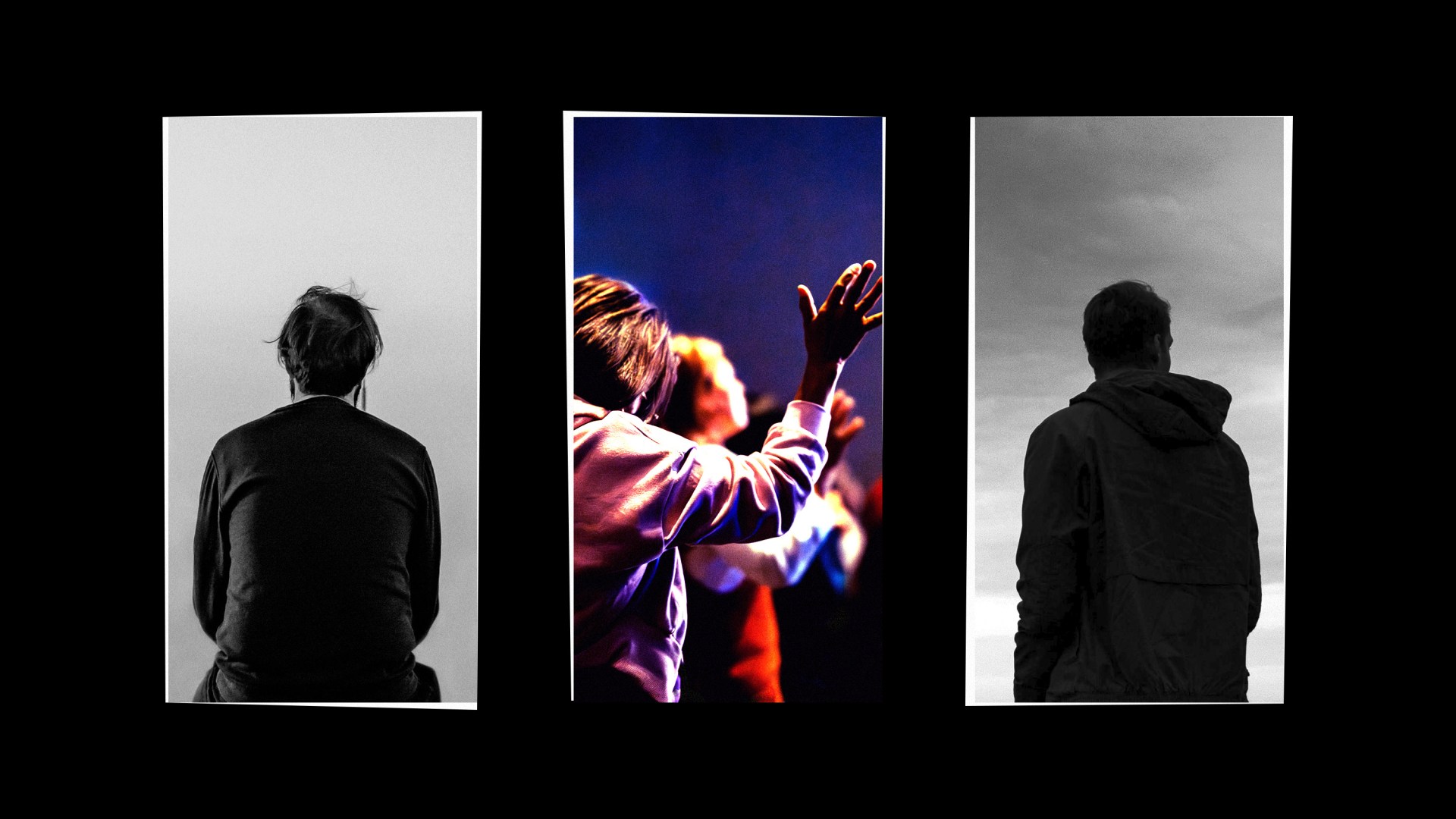
A vibrant image of people worshipping at church contrasted with black and white images of solitary people.
Christianity Today February 11, 2025
Illustration by Elizabeth Kaye / Source Images: Pexels

“Is Pastor Steve available? I have an important question for him.” 

She hadn’t offered her name, but I knew the woman’s voice on the other end of the line. In fact, I could picture her customary pew, the spot where she’d shuffle slowly every week, undeterred by the fact that the service had started ten minutes ago and we’d already gotten to the prayer of confession. Father, forgive me for getting exasperated at the disturbance of latecomers.

“No ma’am,” I said. “He’s not in at the moment. Could I take a message?” 
I don’t typically answer the phone at my church, where I work as the communications director. But I was covering the front desk that day, and as it turned out, it wasn’t only our receptionist and lead pastor who were out of the office just then. Most everyone the caller needed was gone.

“Well, what about Pastor Walter? Is he there? Or Pastor Charlotte?” Her voice sounded a little urgent, and I worried something might be wrong.

“I’m sorry, they both just left for lunch. They should be back in about an hour. Is there something I could help you with in the meantime?”

“Well, I don’t know,” she sighed. “Maybe so …” 

Faced with the lack of other—more pastoral—options, she forged ahead with her urgent question.

“How do you spell Mary Magdalene?”


I’ve been a part of our church staff for nearly a decade now. My office is near the reception desk, so even when I don’t answer the phone, I’m within earshot of the daily comings and goings of our busy downtown church. 

Not everything is as amusing as the spellcheck of biblical proportion. There are the people calling from hospital parking garages with devastating diagnoses still ringing in their ears—and the ones calling to share the news of miraculous recoveries. There are proud grandparents who stop by to share their new grandchildren’s photos, and heartsick parents who come for prayer for wayward children. We get calls from people who need help with their electric bills and calls from folks who just need to ask another real, live person if we truly think God exists.

When most people think of church, they envision Sunday mornings, full pews, soaring music, and nicely dressed families. But I’ve grown to deeply love seeing my church over the rest of the week.

I love being at church on Monday morning, when homeless people come in for cups of coffee and a clean bathroom. And I love it on Tuesday morning, when a troupe of preschool children wearing backpacks two sizes too big comes traipsing up the sidewalk, jostling for the privilege of pushing the big handicap button that causes the heavy glass door to swing open like magic.

I love midafternoons when the “stitchers” arrive, sitting in a circle and chatting while they make prayer shawls to drape over the wooden pews in our chilly sanctuary. I love seeing the older ladies who stop by to check for prayer request cards in our prayer closet, and the delivery drivers who grab sodas before continuing their routes, and Pat, who stops by most days to read the morning paper. I love seeing the hundreds of students from the public high school across the street who come by each Thursday for pizza at lunch, and the families who gather on Wednesday night for an all-church dinner. 

I could go on and on. Our building is rarely quiet. The custodians are constantly setting up and tearing down—always preparing to welcome the next wave of people. Music fills the halls as different choirs practice and our organist plays the same stanza over and over until she gets it just right. Behind the joyful cacophony of it all, the bells in the steeple chime out the hours every ordinary day.


In 1991, sociologist Ray Oldenburg wrote about the need for “third places,” informal public gathering spots that he argued were essential for the healthy cultivation of communities and democracy. A church building is first a house of worship, but when opened to members and the wider community throughout the week, outside of services, churches still fill this important niche in our digitized, atomized world. A church is a third space, a retreat, a haven—a sanctuary.

Even three decades ago, Oldenburg worried about the long-term negative impact of the decline of third spaces. When neighborhood restaurants, stores, theaters, libraries, and public squares disappear, we lose the semi-mythical Cheers-like places where everybody knows our names and the problems of life can be solved (or at least shared) over cups of coffee or pints of beer. We lose the opportunity to rub shoulders with the guy who posts obnoxious (to us) political comments on Facebook but would offer to jumpstart our cars in a heartbeat. 

There’s no shortage of Starbucks locations, of course, but in our transient and fast-paced society, they’re unlikely to have the kind of regulars you need to achieve the Cheers model. They’re also businesses, which means they aren’t for everyone. You have to buy something—to be able to buy something—to be there.

The church doesn’t work that way. It values people as more than consumers. It ought to have a place for everyone, no transaction required.


In his sweeping recent cover story for The Atlantic, Derek Thompson argues that we are living in an antisocial century. Profound and rapid changes to the ways we interact with each other and the world around us are not a passing fad. We have been rewired.

As Thompson documents, the signs are everywhere: Kids would rather play video games with friends online than meet them at the mall. Restaurants’ takeout stations are often more crowded with bags than their bars are with people. You can see a personal trainer, counselor, or doctor without leaving your house. Convenience and comfort reign supreme, yet in making our homes our castles, have we inadvertently made them cells of solitary confinement?

Of course, comfort feels good. But as Thompson notes, we as humans aren’t always good at discerning between our needs and our wants. “Time and again, what we expect to bring us peace—a bigger house, a luxury car, a job with twice the pay but half the leisure—only creates more anxiety,” says Thompson. “And at the top of this pile of things we mistakenly believe we want, there is aloneness.”

What we want is not always good for us, and what we need is each other.

Thompson is agnostic, but his observations could come straight from a pulpit. And as Christians, we have a resource others lack in this antisocial century: a tradition that insists on intentional, regular presence with one another.

This is one of the earliest lessons of the church. In Acts 2, shortly after Pentecost, as the early church began to grow in number, the believers “devoted themselves to the apostles’ teaching and to fellowship” (v. 42). Growing up, I pictured a church potluck after Sunday services each time I read that passage. But the Greek word for fellowship here is koinonia, a word that means much more than hanging out and passing the casserole. It is the word we translate as “communion.” 

Koinonia implies joint participation: a giving and receiving of fellowship. It necessarily involves a certain amount of obligation and responsibility, a connotation even more obvious in Aristotle’s use of the word when he wrote about koinonia politike, a concept often translated in English as “civil society.” 

Before she died, my 104-year-old great-aunt gave me a hand-stitched “make do” quilt topper that her grandmother—my great-great-grandmother—made in a sewing circle when she was a homesteader on the plains of Texas. It’s a delightful kaleidoscope of color, texture, and pattern, and when I look at its careful stitches, I imagine women sitting together, sharing scraps of fabric, offering what they had as they carried one another’s burdens and forged new lives for themselves and their families in windswept prairies far from the established communities they left behind. 

While the men built fences and plowed pastures, the women made quilts. They were as necessary as a bountiful harvest for the survival of these families when winter cold crept through the chinks in their mud dugouts. In those sewing circles, in their conversations and fellowship and mutual care, they stitched together a new society too.

A century later, the patchwork of civil society still covers every institution we rely upon and each social contract we make. But we have not kept it mended, and as it grows more threadbare, taking our social trust down with it, we are losing a functioning society. Civic cooperation among free and equal compatriots can protect against both anarchy and despotism, but it doesn’t just happen. It must be deliberately created. Koinonia—communion, the active giving and receiving of presence and fellowship—is our responsibility. It is our holy obligation, as citizens of both heaven and this world, to practice the spiritual discipline of showing up.

That duty won’t be easy to people so increasingly accustomed to living alone. It may feel like a burden at first. Yet as we faithfully persist, with time it will become second nature. It will transform us from lonely members of an antisocial century into koinonia practitioners. It will transform our individual lives and bear much fruit in our communities. 


Hebrews 10 offers instruction for fraught and complicated times like ours: “Let’s consider how to encourage one another in love and good deeds, not abandoning our own meeting together, as is the habit of some people, but encouraging one another; and all the more as you see the day drawing near” (vv. 24–25, NASB).

In a business, the receptionist’s primary role is to move people along to wherever they’re supposed to be. At a church, that’s only part of a receptionist’s job. Our receptionist is Cathy, and her real ministry isn’t answering the phones. It is a ministry of presence. 

She practices hospitality from the reception desk (Rom. 12:13), greeting preschoolers and parishioners and passersby with warmth, attention, and the love of Christ. Sometimes, I’ll hear Cathy get up from her desk after listening to a heart-wrenching story and ask, “Can I come around and give you a hug and pray for you?” 

The visitors’ earthly problems may remain. As a church, we may or may not be able to meet their physical needs. But in that moment, they are seen and known by Cathy. They are reminded that they are seen and known by God. The gift of her attention may seem small and simple, yet it is profoundly countercultural. Like the widow’s mite, it’s enough. 

“The media theorist Marshall McLuhan once said of technology that every augmentation is also an amputation,” Thompson writes in the Atlantic story. “We chose our digitally enhanced world. We did not realize the significance of what was being amputated.”

We may not have consciously realized, but as followers of Jesus, in a sense we have always known. Our faith warns us of the dangers of being amputated, of being cut off from the vine, the God of life (John 15). 

To flourish, we must abide in Christ, and since God is Lord of our whole being, surely this is not intended merely for our spiritual well-being. We must remain connected with God and others in this isolated world—on Tuesday afternoon as much as Sunday morning—and, in doing so, make known exactly how much is lost when we lose koinonia. And with each unexpected connection, we repair the severed threads of our fraying civil society. We stitch the lonely, hurting, and isolated back into community. 

Here is the church and here is its steeple, I remember reciting in my head as I sat in the pews of my childhood church, going through the hand motions while I waited for the sermon to end. Open the doors and see all the people.

Carrie McKean is a West Texas–based writer whose work has appeared in The New York TimesThe Atlantic, and Texas Monthly magazine. Find her at carriemckean.com.

Ideas

How I Lost My Faith in Atheism

A career arguing about faith has made religious disagreement easier to understand—but outright atheism more unfathomable.

Man standing in the dark with a beam of light.
Christianity Today February 11, 2025
Jan Reichelt / Pexels

Late in A Portrait of the Artist as a Young Man, Stephen Dedalus confesses his crisis of Catholic faith to a close friend. The friend asks if he intends to become a Protestant. “I said that I had lost the faith,” Stephen responds, “but not that I had lost selfrespect. What kind of liberation would that be to forsake an absurdity which is logical and coherent and to embrace one which is illogical and incoherent?”

I spent my childhood experiencing some of the more intense, but not necessarily intellectually coherent, forms of American Protestantism—charismatic Christianity and Pentecostalism, tongues speaking and revivalism. Then, with my family, I converted to Catholicism as a teenager, when I was just a bit younger than Dedalus’s age in James Joyce’s novel. I read the book soon after my conversion, and while lamenting the main character’s loss of faith, I had a convert’s sympathy for his formulation of the religious options: that the intellectually serious choice was Catholicism or atheism, the Church of Rome or nothing. 

Alongside Joyce, I had good intellectual company in this belief, from Alexis de Tocqueville, whose Democracy in America envisioned an eventual religious “division into two parts—some relinquishing Christianity entirely, and others returning to the bosom of the Church of Rome”—to Herman Melville, who predicted that “Rome and the atheists” would “fight it out,” with “Protestantism being retained for the base of operations sly by Atheism.”

When you convert at a young age, it’s natural in midlife to think about how your worldview has changed since that conversion—especially when you’re sitting down to write a general case for faith, as I’ve done in my new book Believe: Why Everyone Should Be Religious. That change has carried me well away from Stephen Dedalus’s young man’s formulation. I am still a believing Catholic, and I would still urge a Protestant friend to swim the Tiber. But I have a clearer sense of why one might reject the stark binary choice between the Catholic church or nonbelief, and why the religious future—as far as we can see it—will remain more complex than just “Rome and the atheists” battling things out. 

In part, that reflects a greater understanding of critiques of Catholicism, and a stronger expectation of Protestantism’s resilience. But equally importantly, it reflects the fact that I’ve entirely lost what faith I once had in the plausibility and durability of atheism.

The first shift has a moral, a theological, and a sociological component. Morally, the experience of the Catholic sex abuse crisis, which broke a little while after my conversion, gave me a clearer sense of why a reasonable Christian might retain faith in Jesus Christ while doubting the hierarchical order of the Roman church. Theologically, the shift from the pontificates of John Paul II and Benedict XVI to Francis has revealed an instability in Catholic doctrine, a lack of synthesis between the church before the Second Vatican Council and the church after, that was less apparent in my youth. (Once you have found yourself crossways with the pope in public disputation, it’s hard to be too triumphalist about Catholicism’s advantages.)

And then, sociologically, Catholicism has remained extremely successful at winning intellectual converts. Yet it is weaker as a mass religion than it was when I joined the church—and Christianity is not supposed to be a faith just for the intelligentsia. One need only look around the Christian world, whether at church attendance patterns in the United States or at the growth of charismatic and nondenominational Protestant churches in Africa and Latin America, to see that the future will be shaped powerfully by a kind of a Christianity that is neither Roman Catholic nor simply a stalking horse for secularism. 

So in all this, I find it easier to understand how someone can be Protestant or Eastern Orthodox than I did as a new-minted Catholic convert. But at the same time, I find it much harder to understand how someone can be a convinced atheist. 

I never exactly believed the Stephen Dedalus implication that strong Christian claims are ultimately an “absurdity” relative to hardheaded materialist alternatives. But once I took for granted that there were some good reasons why so many of my fellow overeducated Americans took God’s nonexistence for granted, and that the Christian was sometimes in the position of Puddleglum in C. S. Lewis’s The Silver Chair, professing belief against the evidence, I determined to be “on Aslan’s side even if there isn’t any Aslan to lead it.”

Twenty years later, I’m still searching for atheism’s solid reasons. I understand perfectly well how a reasonable person could have doubts about the exact nature of God, his specific intentions or his perfect goodness, or any of the particular claims that Christianity makes about the divine. But the idea that the universe and human existence have no plan or intentionality or purpose behind them, that mind, consciousness, reason, logos are purely epiphenomenal rather than fundamental, that our existence is finally reducible to the accidental, to the undesigned, to the bouncing billiard balls of hard material determinism—I don’t see how anyone can reasonably believe this.

I don’t see how anyone can believe it given everything that we know now, not just about the basic order of the cosmos, but about the exquisite fine-tuning required to give rise to stars, planets, life itself. (The attempt by atheistic intellectuals to find refuge in the theory of the multiverse, which casts our universe as a rare life-supporter among trillions of dead ones that we can never actually observe, seems similar to the epicycles attached to the Ptolemaic system when it became clear it couldn’t accurately describe reality.) 

I don’t see how anyone can believe it given the resilient mystery of consciousness and the ways in which it seems to be integrally connected to the basic order of the universe—both in our reason’s ability to explore and comprehend level upon level of the system, heights and depths far beyond anything linked directly to the evolutionary needs of early hominids, and in the mystical-seeming link between observation and reality, the mind’s eye and the material, that quantum physics has revealed.

And I don’t see how anyone can believe it given that religious experience, all the weird stuff of mysticism and miracle, has not only persisted under supposedly disenchanted conditions but even revealed itself in new ways (near-death experiences, for instance) because of the ministrations of modern science. We have done away with the cultural rule of religion, the institutional structures that many Enlightenment-era atheists believed imposed supernatural beliefs on a credulous population. And yet those beliefs have persisted, and in some cases even spread, because it turns out that supernatural-seeming experiences, intimations of transcendence that fall on nonbelievers as well as on the faithful, are just a constitutive part of reality itself.

At the very least, it seems clear to me at midlife that a religious perspective on reality, a basic assumption that all this was made for a reason and we are part of that reason deserves to be the serious person’s intellectual default. 

It’s a perspective that makes coherent sense out of multiple features of reality, multiple converging lines—the evidence for design, the distinctive place of human consciousness, the varieties of religious experience—that atheism struggles and fails to reduce away. It’s the parsimonious answer to a set of overlapping questions raised by very different features of the human experience.

And if that answer opens into further questions, further debates, I expect those debates to be different than just a clash between my own Catholic Christianity and the heirs of Voltaire and Richard Dawkins. Not just because the debates among different kinds of Christians will go on, but because the weakness of atheism means that eventually—and, in fact, soon if not already—the main alternative to Christianity may be something quite different from Enlightenment rationalism, something that blends the pagan and promethean, seeking supernatural as well as natural power.

In that case, Christians of all kinds will be facing a spiritual rival, not a secular or atheistic one, in the contest for the human soul.

Ross Douthat is a New York Times opinion columnist and the film critic for National Review. Previously, he was a senior editor at The Atlantic. He is the author of books including The Deep PlacesThe Decadent Society, and, most recently, Believe.

Culture

‘Going Outside’ Hasn’t Found Me My Person

But getting off the apps is still important for my Christian witness.

A woman coming out of a phone with binoculars in a landscape
Christianity Today February 11, 2025
Illustration Mallory Rentsch Tlapek / Source Images: Unsplash / Getty / WikiMedia Commons

“Touch grass.” It’s the command social media users bark when they want to underscore just how out-of-touch they find others’ takes. Ditch your screen, walk out your front door, and inhale reality. Presumably one breath of blue sky and a front lawn under your feet will cure you of your internet radicalization.

More recently, I’ve heard a gentler version of this dig applied to dating advice. I belong to a generation with record numbers of unmarried people, people whose romantic and sexual relationships have been primarily initiated through apps. Though we can’t presume every one of us is dissatisfied with this state of affairs, there’s a significant number yearning for an alternative to the swiping.

Perhaps you’ve seen that viral graphic. Fifteen years ago, it illustrates, online dating became the No. 1 way American couples meet. In fact, more couples are likely to connect on Hinge or Bumble or Tinder than by any other means combined, including at work, in college, via introductions by family and friends, in their neighborhoods, or at a bar.

The apps increasingly feel like shopping on Amazon. There’s an overwhelming volume of options you worry aren’t actually any good—and yet online dating is an unavoidable facet of modern life, putting our happiness in the hands of for-profit companies that don’t have our best interests at heart.

Hence: “Get outside.” It’s simple advice, this new mantra of influencer discourse. It feels refreshing. Put down your phone and meet someone out there in the “real world.”

I’m excited by this turn away from Tinder. I agree with it. I love “being outside.” My weekly routine includes hula lessons, hiking the Oahu ridgeline, and a running group. I’m a natural extrovert. But I’ll also confess: Nobody could tout me as a “success story.” For a decade and a half, I’ve put together a robust calendar of athletics, arts, and dinner parties. They haven’t brought me marriage, much less a serious relationship trending in that direction.

If pining for a valentine catalyzes volunteering at a soup kitchen, joining a kickball team, and working in the church nursery, bring it on.

But I’m also aware that building relationships, romantic or otherwise, isn’t as easy as joining a book club, adding one more commitment to the calendar. As our dating patterns have morphed in recent decades, so too have our entire lifestyles. Seemingly innocuous decisions like investing in a quality home entertainment system, opting to order in instead of eating out, and buying our groceries online have meant, especially for those of us who are single, we’re increasingly alone—not just on Saturday nights when we could be at the bar, but in all the interstitial periods of our weeks.

This aloneness hasn’t stressed all relationships, maintains Derek Thompson in his recent Atlantic cover story on “the anti-social century.” Thanks to text messaging, families talk to each other more than ever. We communicate with broad affinity networks we could never access before the internet, whether that includes discussing the latest episode of Abbott Elementary with a Facebook group of fans or live-tweeting the NFL playoffs.

But our general prioritization of convenience and our loss of third spaces means we’re more isolated, even when we do manage to “get outside.” The cost is borne in our relationships with our neighbors, the local librarian, and the barista, “wreaking havoc on the middle ring of ‘familiar but not intimate’ relationships with the people who live around us.”

Thompson argues that the demise of these relationships has contributed to the political polarization we experience today. And it’s clear to me that our antisociality also impacts our dating culture in deep ways no influencer can fix with a list of tips.

This shift toward digitally mediated solitude presents a particular tension for Christians, for whom the miracle at the center of our faith is incarnation. Throughout the Old Testament, God dialogues with humans: His confrontation with Adam and Eve in Genesis 3, his many conversations with Moses, the back-and-forth banter and lament expressed by the major and minor prophets.

But Jesus doesn’t arrive as a series of messages. He comes physically, embodied, a baby. God shares meals, hangs out with little kids, and turns the water at a wedding into wine.

Many of us have learned to feel socially satiated through a bloated diet of texts and videos, social media distractions and push alerts. These bursts of communication work sometimes: Think of the well-timed meme! But most relationships will starve without in-person interaction, and new ones won’t get off the ground. That matters not just for our dating lives, but for our witness.

Jesus gave us a mandate to “go into the world and preach the gospel to all creation” (Mark 16:15). His final words before the Ascension echo his charge earlier in his ministry, when he sends out the disciples two by two. “Going outside” may not be a quick fix for romantic problems. But living our faith seems to require it as a nonnegotiable.

Opting to build a life on a foundation of conveniences like front door drop-offs, internet porn, and movie streaming severs us from the world God loves and the people Jesus came to save. Living a life cocooned by these amenities also discourages us from taking relational risks, be it introducing ourselves to our neighbors after ignoring them for eight months or approaching someone to ask for a phone number.

A couple years ago, my holiday card asked my friends to set me up with someone. Nobody—I sent the card around the world—took me up on this. I write this to say, I’m at as much of a loss as ever when it comes to finding “my person.”

But God made outside and called it good. Let’s open our doors and walk out.

Morgan Lee is the global managing editor at Christianity Today.

Culture

A Genesis Series Inspired By Anime

‘Gabriel and the Guardians’ trades “Sunday school characters” for ziggurats and proto-Canaanite gods.

A film still from the show showing two of the magical characters.
Christianity Today February 10, 2025
COPYRIGHT © 2025 BY ANGEL STUDIOS, ALL RIGHTS RESERVED

An animated fantasy where heroes do battle in make-believe realms may seem an unlikely art form for communicating the truths of Scripture—but that’s exactly what the creators of Gabriel and the Guardians hope to achieve. The first episode of this epic, anime-inspired project begins airing February 12 on Angel Studios, with the remaining 12 episodes of the first season arriving later this year. Producers believe it’s the first anime-inspired series to be crowdfunded into existence.

Jason Moody, the mastermind behind the series, recently spoke with J. D. Peabody, author of the children’s fantasy series The Inkwell Chronicles, about the making of this ambitious project. Their conversation has been edited for clarity and length.

For those who have not yet seen the trailer, how would you summarize Gabriel and the Guardians?

The show is a loose interpretation of the Genesis narrative set in a fantasy world inspired by ancient Hebrew and Mesopotamian culture and ethos. In Tolkien language, think of it as a Silmarillion to the biblical narrative.

By that, I take it you mean you’re building a broader backstory?

Exactly. I spent two years diving deep into Genesis culture, along with other texts like the Book of Enoch and the Book of Jubilees. I began to imagine this narrative set in an antediluvian, ancient Mesopotamian setting, with ziggurats and Sumerian mythology and proto-Canaanite gods—which is not how I pictured Genesis growing up, with Sunday school characters made from felt.

You’re talking about some pretty high concepts. Was the idea a hard sell?

From early on, the response was really positive from industry executives at Angel Studios. But they encouraged us to lean even further into the fantasy aspect, making Gabriel more of a parable about the Old Testament rather than a literal retelling. The more we thought about Jesus’ use of parables, that direction felt in keeping with tradition—to tell beautiful truths through “once upon a time.”

So how does a pastor’s kid from Ohio end up creating a TV show like this?

I wanted to be a lot of things when I was growing up, but the primary thing I wanted to do was make animations. I had sketchbooks with me all the time. As much as I was a fan of shows like X-Men and Superman and ThunderCats and Teenage Mutant Ninja Turtles, I always wanted a way to express my faith values through the medium. The concept of a show about spiritual battles had always been an idea in my mind.

When I was first out of school, I tried getting into the world of indie comic books. After about two years of going to conventions and promoting my books, I found there was no money in it. At that point I was married with a kid on the way. I pivoted into e-learning. I worked at JPMorgan Chase for 15 years in their interactive video training. Outside of work, I became heavily involved in leading worship.

Then COVID hit. Work got super slow, we weren’t gathering as a church, and I had all this creative energy and headspace. In that vacuum I started sketching again.

I came upon the BibleProject podcast with Tim Mackie and just fell in love with it. He’s all about Genesis. You start diving into it, and it keeps opening up. That’s where the idea for Gabriel and the Guardians began to spark and I started sketching characters.

What made you think it was time to revisit your dream and actually do something with those sketches?

It crystalized in a moment with my daughter. She was around 15 at the time and very much into anime, which I was, too.

She saw the characters I was drawing and said, “Dad. If the Bible was told like this, I’d be interested in the show.” And I just felt the thumb of the Lord on my back. I think he’s looking for a new generation of storytellers and creatives, people who truly honor and believe the message of the Bible—not Hollywood trying to cash in—who aren’t afraid to try something new.

And for the uninitiated, what do you mean by “anime”?

Anime is any animation originating in Japan. Gabriel and the Guardians is what you would call “anime-inspired” since it isn’t produced in Japan. But our show is traditional 2D animation, paying homage to classic anime style, with each frame drawn by hand.

It’s risky, isn’t it? The anime fanbase is huge—but also pretty savvy and particular when it comes to their standards for quality.

From the beginning, I said, “Whatever we do has to be excellent.” There can’t be cracks. We were able to get connected with Tiger Animation, which is behind some of the biggest modern animation franchises out there. They brought an authentic quality to the production.

You’ve attracted a pretty all-star cast, too, which helps with the credibility.

We’ve got some of the biggest names in anime voice talent: Johnny Yong Bosch, Cristina Vee, James Arnold Taylor, Matt Lanter.

Do you see this show aimed primarily at a Christian audience, or is it for everyone?

It’s for both Christians and general audiences. Think about the painting The Last Supper. Lots of people are moved by it. It has caused millions of people to reflect on their faith. But da Vinci wasn’t necessarily a “Christian painter”—he was just a painter. And you don’t have to have faith to appreciate his work. The Last Supper isn’t “Christian” art—it’s just art. We want what we’re creating to prompt questions, because that’s what good art does.

That reminds me of Andrew Peterson saying the Wingfeather Saga animated series wasn’t intended to moralize, but to work on hearts at a deeper level as a story.

We don’t see this as a platform for teaching of any sort. But we do think there’s a value to representing these ancient truths in art. I’m not trying to lead you to any decision point in your faith. I don’t think this would be the kind of show that would replace a Sunday school lesson. But if you’ve got a group of kids in the youth group that love anime, you could have a movie night and analyze it afterward.

What I hope Guardians does is cause you to read about the real characters in Genesis and ask questions—questions the characters themselves are facing, such as “What lengths would your Creator go to in order to restore you?”

That could generate some great follow-up discussion.

J. D. Peabody served as the founding pastor of New Day Church in Federal Way, Washington, for 22 years. He is the author of Perfectly Suited: The Armor of God for the Anxious Mind as well as the children’s fantasy series The Inkwell Chronicles.

Ideas

I Was Once an Immigrant. Then I Forgot.

When the world’s exiled inconvenience the world’s established.

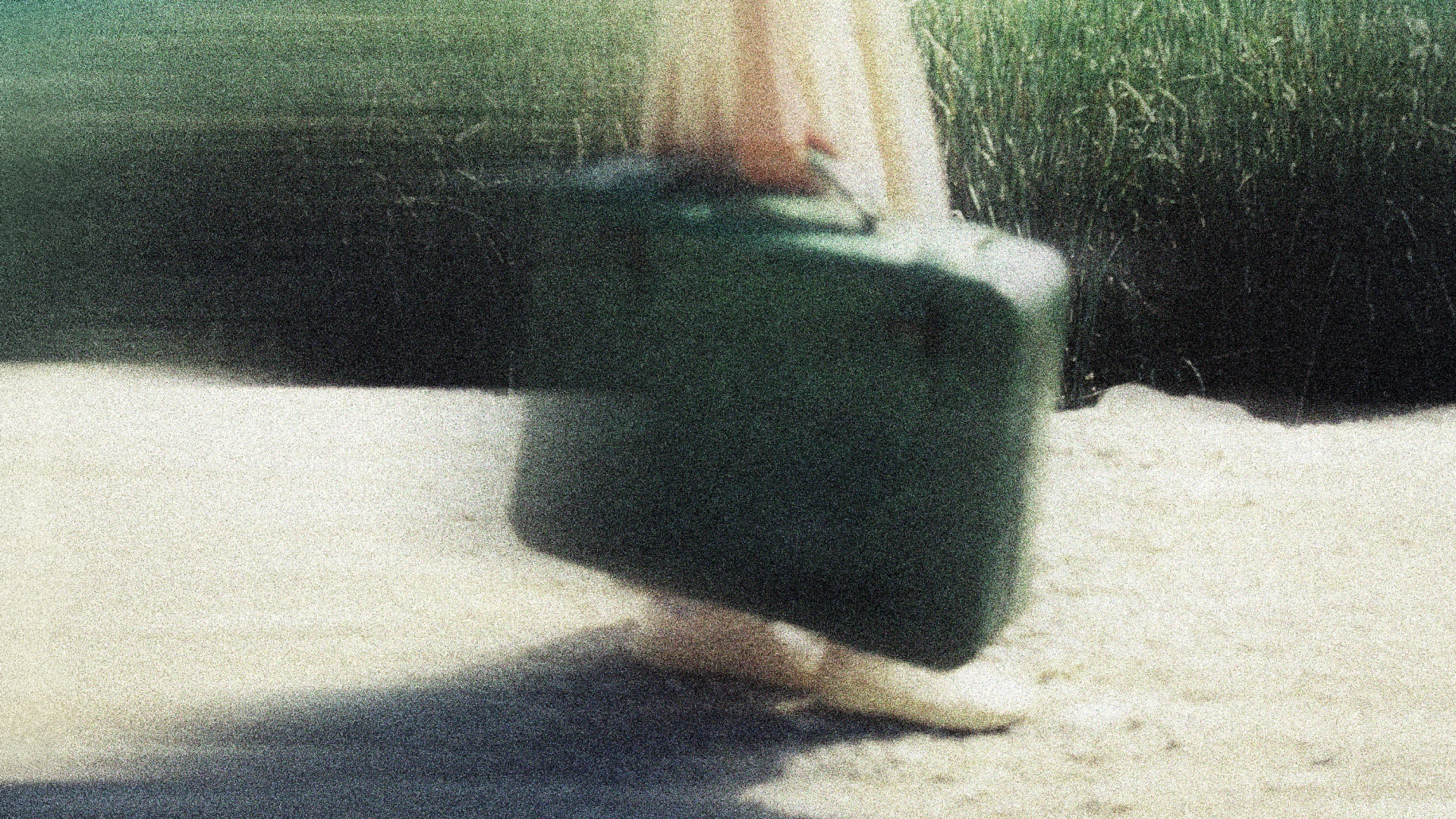
A blurry image of a woman carrying a suitcase.
Christianity Today February 10, 2025
Havva Yilmaz / Unsplash / Edits by CT

I am an immigrant from Venezuela, a recent Canadian citizen, and a member of the kingdom of God. These three identities collided with each other one recent afternoon when my husband and I went to our local pharmacy to get our seasonal flu shots.

After checking in for our appointments, made weeks prior, my husband Gustavo and I squeezed past numerous coats, jackets, purses, and backpacks as we navigated the cramped waiting area of our local pharmacy. With fewer than ten chairs and twice as many people waiting their turn, we eventually found standing room space that curved out into the store’s aisle of antihistamines.

As we waited for the nurse to call our names, I wondered how a routine appointment had packed out the waiting room. Slowly it dawned on me that the staff was squeezing in people without appointments between those who had them. Judging by the languages that these patients were speaking, it seemed that many were immigrants. 

At one point, I took a freed-up seat next to a white-haired gentleman. Visibly inconvenienced, he muttered something about there being an orderly way of doing things, that they should make an appointment like everyone else. His accent gave him away; he was very much a local. I quietly agreed with clenched teeth, sharing this Canadian grandfather’s irritation.  

When the nurse walked over to him to let him know it was his turn, I caught my last name on the nurse’s clipboard right after his. But instead of her reading my name aloud, she called out two more people, a middle-aged woman followed by a young college-aged student. 

I rolled my eyes, looked at my watch, and tapped my foot. I looked over where my husband was still standing. He threw a “Don’t worry about it” look, mouthing in Spanish that our turn would come eventually.  

The next time the door opened, I was ready to storm in, roll up my sleeve, and give the nurse my arm. But instead of calling a name, she looked straight past the row of chairs where I was sitting, pointing toward a couple with a young boy standing in the crowd, and beckoned the family in.

The party of three crammed inside the tiny office, a space not much larger than a bathroom stall. Behind the closed door we could hear the couple speaking in a foreign language, trying to calm their frantic son, who was terrified about getting a shot. After ten minutes of the grade schooler wailing—both before and after receiving the vaccine—everyone in the family had gotten a dose. When the mother walked past me as I switched places with her, she avoided eye contact, an embarrassed smile on her face. 

We left the pharmacy after 35 minutes. I felt indignant. So much of my time had been taken away from me for no reason other than by the selfishness of families who were asking the system to accommodate them, rather than following the procedures of a free health care system. In my own anger, I saw myself only as a Canadian citizen, not someone who had been a newcomer to the country at her own point in life. I forgot anything about my own faith and how that might provoke me to consider my fellow vaccine patients. 

I grew up privileged, educated in both Switzerland and the United States. My husband and I hold university degrees from the UK and the US, respectively. But these credentials didn’t afford us job security when Venezuela’s economy began declining in 2010. They also didn’t give us automatic residency nor work authorization in any Western country. 

After several months of research, we learned we could qualify for Canada’s immigration program for permanent residency and began the application process, a journey which included my husband learning French. 

The process felt like running through an obstacle course in slow motion. We needed the Venezuelan government to provide numerous original documents, leaving us at the mercy of government officials trained to intimidate would-be emigrators. 

We also knew that we were among tens of thousands of applicants petitioning the Canadian government for this change in status. After two years, thousands of dollars invested in language learning, bureaucratic fees, background checks, and academic records from three different countries, in late March 2012, we left 72-degree Caracas and landed in Montreal at an icy 14 degrees Fahrenheit. 

Although linguistic difficulty or economic poverty didn’t hinder our integration into Canadian society, starting over in my 40s was humbling. We could fit our whole Montreal apartment in the space of our old home’s common areas. We went from two cars to monthly bus passes. 

Looking for work while learning our way in a new city, using a language I hadn’t spoken since adolescence (though at least I hadn’t had to learn it from scratch like Gustavo), and navigating life without an in-person support system left me lonely and disoriented. 

So much of who I thought I had been was no longer evident, relevant, or recognized. In one airplane flight, I went from being someone—someone’s child, friend, neighbor, a known member of a community—to a number on a government form, a name difficult to pronounce. 

Yet there I was last fall, 15 years on the other side, a grateful Canadian citizen—and an irritated neighbor. Reflecting on my own frustration in the pharmacy has helped me understand the growing negativity toward immigrants. The number of immigrants in Canada has nearly doubled in the last ten years since we landed in 2012, and the government has struggled to provide sufficient affordable housing and quality health care. In 2023, the number of immigrants living in the United States increased by 1.6 million, and the migrant situation overwhelmed the border and cities with inadequate shelter and language resources, and strained many existing social support systems. 

The pattern seen in North America echoes a global trend, as the number of forcibly displaced persons worldwide doubled over the past decade, reaching “114 million in 2023, the highest since the beginning of the century.”  

The world’s exiled people present a huge inconvenience for the world’s established. For the poor and marginalized, watching the government distribute resources they’ve asked about for years can feel demoralizing and infuriating. The intense emotions present in the pharmacy’s standing room–only waiting area offer a jarring microcosm of a global reality. 

Peter’s words to first-century Christians provide a timely reminder: “Once you were not a people, but now you are the people of God; once you had not received mercy, but now you have received mercy” (1 Peter 2:10).

As Peter notes, God’s transformative work in our lives hinges on mercy. We cannot change without receiving this grace. We also cannot be recipients of mercy if we have not wronged or inconvenienced someone else. And according to Peter, that is all of us. Yet the New Testament consistently reminds us that this does not stop God from wanting to make us family.  

James continues this thought: “Judgment without mercy will be shown to anyone who has not been merciful” (James 2:13). We are called to “speak and act as those who are going to be judged by the law that gives freedom” (v. 12). Yes, God’s mercy defines our lives. But so does our own outward expression of mercy. 

While politicians debate our immigration systems, our faith calls us to extend grace to the people who challenge us. 

After we finally left the pharmacy, my husband remarked on the nurse’s gentleness—and exhaustion. He told me that she had excused herself for not greeting him properly, that she barely remembered what day of the week it was, and that she’d been on her feet for the past seven hours. Hearing her posture shamed me. I regretted my reaction and confessed it to my husband on our walk back home.

I later wondered if perhaps she was one of the quarter of nurses who are also Canadian immigrants. Perhaps she believed that the costs of a recently-arrived family getting sick would be worse (both for the family and their community) than making the rest of us wait a little longer. Maybe she knew their language and felt a personal connection with them. Or maybe the nurse felt compassion for individuals trying to navigate an overwhelming environment. Regardless, she did far better than me, a professing Christian. 

During these 12 years in Canada, our nationality, last name, or other factors have sometimes caused others to misjudge, misunderstand, and alienate my husband and me. People have also welcomed us into their homes and treated us as neighbours and respected colleagues, and we have cultivated meaningful friendships. Now with Gustavo and me in our 50s, our relocated life continues to reposition my knees to the ground. 

Whether we are part of the world’s exiled or the world’s established, our citizenship in the kingdom compels us to care for immigrants and refugees because of who we are in Christ—a people who received mercy and whose God identifies with the lowly, the stranger, and the needy. Apart from Christ, that’s our true condition as well.

Paola Barrera is a writer born in Venezuela, educated between Europe and the US, and Canadian through the gift of immigration. Her work focuses on how faith and theology inform everyday life. You can find more of her work at https://paolabarrera.com/

Ideas

Southern Border Gothic

Contributor

ICE agents arrested a Honduran man at his church in Georgia. As Augustine chronicled after the sack of Rome, even the Visigoths never stooped to that.

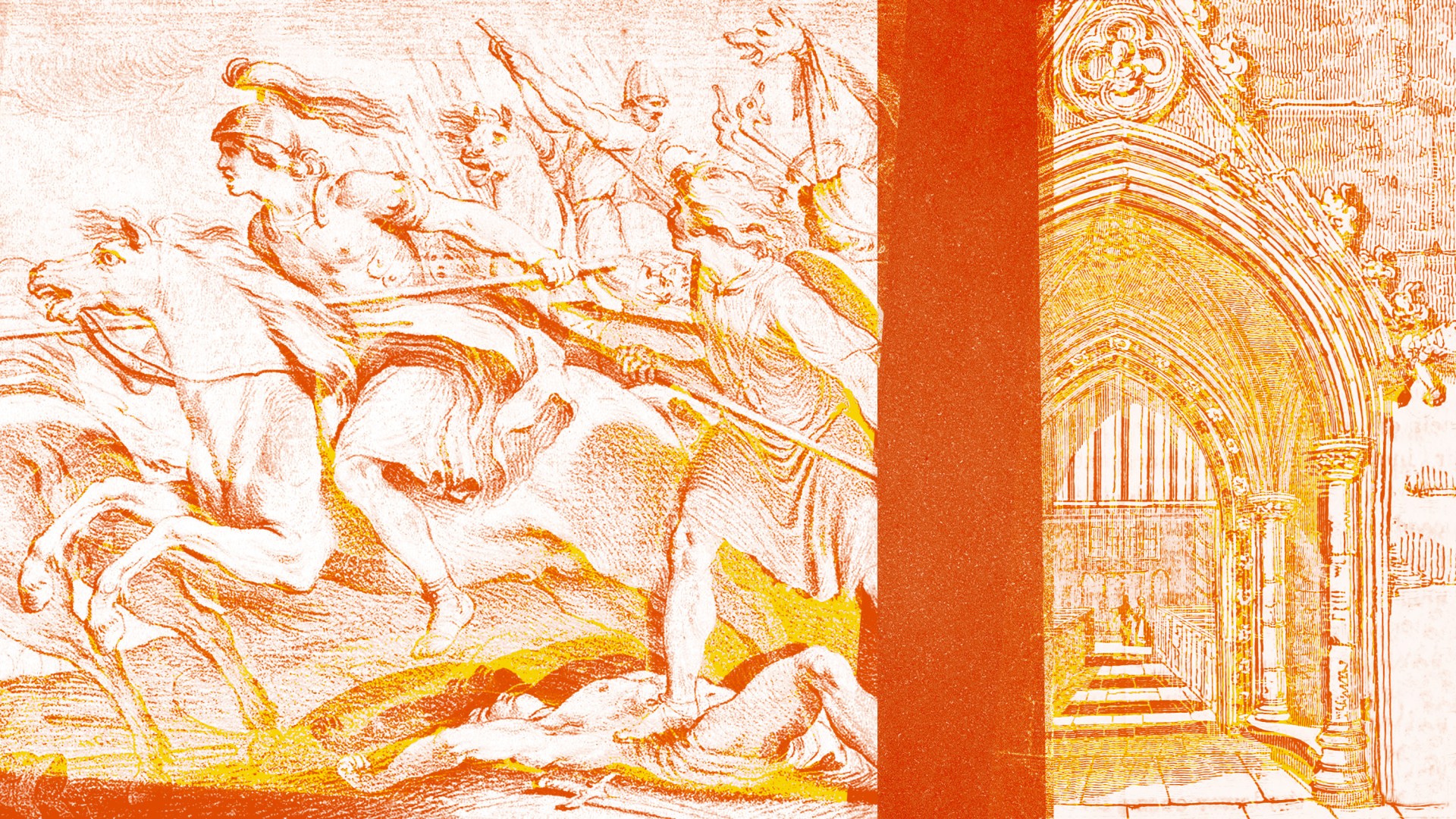
The Visigoths attacking the Romans next to a church door that is untouched
Christianity Today February 10, 2025
Illustration by Mallory Rentsch Tlapek / Source Images: WikiMedia Commons

Rome was sacked in AD 410. It was the greatest tragedy in the empire’s living memory: the former seat of the empire’s power conquered by Visigoths and their vicious leader, Alaric. 

The suffering of Romans who experienced the sack was brutal. Cruel, greedy, and savage—Augustine would call the invaders “barbarians” in City of God—the Visigoths inflicted every horror imaginable upon the civilians they encountered. They perpetrated mass rape on Rome’s women and girls, tortured people of all ages (often trying to force those who appeared wealthy to give up their valuables), and murdered random people in the streets.

But there was one place, and one place alone, the Visigoths dared not enter: church. For all their cruelty, the Visigoths were Christians, albeit of the Arian heresy. And while their faith didn’t otherwise translate into their conduct of war, it did lead them to respect Christian houses of worship. Though Augustine doesn’t comment on this, if any of the Visigoths had wanted to attend church on a Sunday during the sack, they might have worshiped in Roman churches themselves. Indeed, toward the end of the fifth century, the Visigoths accepted the Nicene Creed. Could their adoption of Trinitarian theology have begun here?

I thought about this history of respect for churches as sanctuaries while reading CT’s recent report on US officers from Immigration and Customs Enforcement (ICE) going to an Atlanta church to arrest a Honduran man, Wilson Velásquez—on a Sunday, no less. 

The man was in the US with his family, waiting for their asylum application to be adjudicated. As CT’s Andy Olsen reported, he “had made all his required check-ins at an Atlanta ICE office. He had the government’s permission to work and had an appointment on a court docket. He was deported once nearly 20 years ago—a significant strike on an immigrant’s record—but otherwise had no criminal record.” He had helped found the church where he was arrested.

But my aim here isn’t to litigate this one man’s case. Nor am I trying to say how to reform America’s policies toward immigrants (of whom I am one, as well as a naturalized citizen for nearly 17 years now). I am simply asking what it says about this administration that it is willing to thus disrespect spaces set apart for God—that it has no regard for the centuries-old tradition of sanctuary.

What does this arrest say about churches? What message does it send when state agents use Christians’ obedience to the biblical command to meet together (Heb. 10:25) to make a political point? Why would US officers conduct this arrest during the Sunday service? Even the Visigoths balked at that.

There are seven days in the week, and people who wear a GPS-tracking ankle bracelet, as Velásquez did, are very easy to find. Even if we all were to agree this arrest was legitimate and necessary, it could have been planned for any other time and place. Church was a choice. And why? Why choose to arrest a man at church?

When Augustine wrote in City of God of the horrors of the sack of Rome, he saw the Visigoths’ respect for sanctuary as a remarkable witness of God’s provision for Christians and non-Christians alike. Vicious to everyone and disrespectful of every other space, the Visigoths at least understood that churches were unique, a space set apart for God. 

The result, Augustine said, was nothing short of a miracle. Christians and pagans alike took shelter in churches throughout Rome and were spared. What “was novel,” Augustine states in City of God, “was that savage barbarians showed themselves in so gentle a guise, that the largest churches were chosen and set apart for the purpose of being filled with the people to whom quarter was given, and that in them none were slain, from them none forcibly dragged; that into them many were led by their relenting enemies to be set at liberty, and that from them none were led into slavery by merciless foes.”

This was utterly unlike city conquests known to the pagan world. Pagans did not respect even their own gods’ temples when sacking cities, Augustine duly observed, citing the mythical sack of Troy as described in Rome’s national epic, Virgil’s Aeneid. There, Troy’s aged king, Priam, seeks refuge at the altar of Jupiter, king of the gods. But a Greek warrior slaughters him anyway, and the altar flows with royal blood, a sort of perverse sacrifice. 

Virgil indicates his disapproval of this impiety, but he isn’t shocked. This story was nothing unusual in the ancient world. People often sought sanctuary, and they were often dragged from their refuge to be killed or enslaved. 

Arresting Wilson Velásquez may have been defensible on legal and political grounds, though I have strong doubts. And an arrest by ICE is not a horror on the scale of an ancient city conquest. Still, the choice to arrest Velásquez during Sunday worship at church was downright pagan. It implies church buildings are nothing special—no different from any store or office. It is an act of disdain for the worship of God.

When Augustine reflected on the meaning of the Visigoths’ respect for sanctuary, he saw in this miracle an opportunity to preach the gospel to those still skeptical of the good of Christianity. God’s mercy is so great we can see it even in the merciless Visigoths, Augustine argued; Christ’s power is so great that even corrupt earthly powers may respect it. 

And though the city of God is a spiritual realm, physical spaces matter too, Augustine said, especially if they point people to God. Churches are set apart as no other buildings are. They should be respected as sanctuaries not in the name of a polite fiction but because they are devoted to God. 

Augustine’s reflections on the sack of Rome remind us that churches have a long history of offering temporary respite to the powerless, weak, and suffering. That is a history American congregations should continue. 

Most of us are not called to figure out US immigration policy, to determine who may be justly arrested or deported. We are called to minister to those in our midst (Matt. 25:34–40). And because the vast majority of immigrants and refugees who arrive in the US are Christians of some sort, it is churches specifically to which they are likely to turn when in need.

Such works of mercy are not political but theological, and it is the church’s prerogative to ask immigration enforcement officials to do their work in mercy, too. Specifically, it is the church’s prerogative to ask ICE to make arrests without interrupting Christian worship and ministry. It is not too much to ask for the long tradition of sanctuary to be respected.

“The Most High does not live in houses made by human hands” (Acts 7:48), and it is not any building but Christians as God’s people who are his home (Heb. 3:6; 1 Pet. 2:5). But our church buildings are given to God, too. They are sacred places of refuge and provision for souls, places where mercy flourishes for anyone within. ICE agents are always welcome there—if they have come to worship.

Nadya Williams is the author of Cultural Christians in the Early Church and Mothers, Children, and the Body Politic: Ancient Christianity and the Recovery of Human Dignity (IVP Academic, 2024).

News

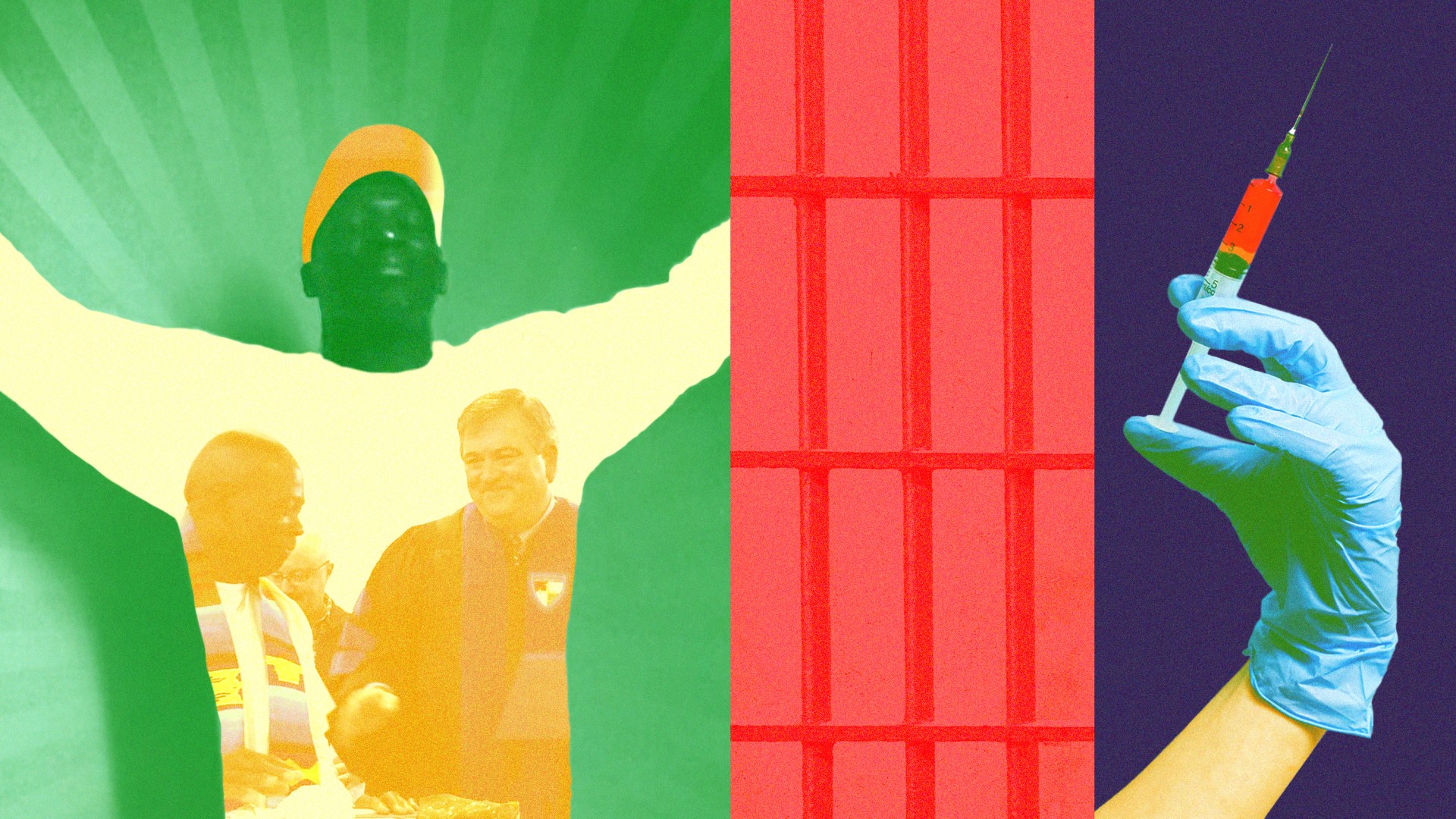
The Prisoner Who Planted a Church on Death Row

As Trump pushes states to resume executions, Kevin Burns in Tennessee tries to keep his congregation alive.

A collaged image of photos of Kevin Burns in prison.
Christianity Today February 10, 2025
Illustration by Elizabeth Kaye / Source Images: Kevin Riggs, Getty, Unsplash

Every week, behind a half dozen security doors that lead to Unit 2—Tennessee’s death row—Kevin Burns holds a worship service. He leads Communion, prayer, liturgy, and a sermon with men who share his sentence.

Burns, 55, has been on death row at Riverbend Maximum Security Institution in Nashville for 30 years, convicted of felony murder in two young men’s deaths in 1992. A group that included Burns robbed another group and shot Damond Dawson, 17, and Tracey Johnson, 20. This particular murder charge, felony murder, applies to those present during an inherently dangerous crime even if they did not kill. Burns maintains his innocence in their killing.

For years, Burns has led Bible studies and prayed with other men on death row, going on to become an ordained minister in 2018 and start The Church of Life within prison walls.

“It is so wonderful what God is doing here,” Burns said in a phone interview. “I never, never could have imagined being on death row and having an actual church service. It’s a church for us, led by us.”

Franklin Community Church pastor Kevin Riggs, whose church ordained Burns and helped plant the Church of Life, thinks this is the only church in the US led by people on death row. Texas has a program to allow prisoners to take seminary classes and become de facto prison chaplains, but death row prisoners there are in solitary confinement most of the day.

Burns is in the part of death row that holds about two dozen other men with good disciplinary records and time accumulated, and they have more mobility in the day. The rest of the men on death row must remain in their cells 23 hours a day.

A church on death row struggles with membership. The church has about five regular members out of the 45 men on death row in Tennessee. Another ten or so come sporadically.

In Burns’s time behind bars, Tennessee has executed 13 men in Unit 2. Burns can name them all. He prayed with nine of the men before their executions and has led memorial services for them afterward.

He prays he’s not next.

President Donald Trump is pushing states to carry out more executions. In his first term, Trump oversaw 13 executions, the most by any president in 120 years. But this time, former president Joe Biden commuted the sentences of 37 out of 40 people on federal death row before leaving office—they are now serving life sentences without parole. The three remaining prisoners on federal death row all still have the ability to file more appeals.

Trump is left with the state prisoners. In one of his first executive orders, Trump directed the Justice Department to help states acquire a supply of drugs for lethal injection, a key holdup for states trying to carry out the death penalty.

The companies that make the drugs won’t sell them to prisons for executions, and they say they have distribution controls in place to prevent that. Execution drugs are typically among the tightest-controlled substances, so they’re not easily obtainable.

But some states have performed executions with lethal drugs of unknown origins. Alabama has executed two people with nitrogen gas, but states use lethal injection for the vast majority of executions. Texas executed a man by lethal injection last week.

Opponents of the death penalty believe the federal supply of pentobarbital is exhausted, so the US government would not have access to the drug. It’s unclear how the federal government could get any lethal drugs to states.

Tennessee paused executions in 2022, after a scheduled execution was halted over an unknown problem with the drug protocol. The governor ordered a review of the state’s three-drug protocol, and at the end of 2024, the state announced it would now be using a single-drug protocol, pentobarbital. Now the state could resume issuing execution dates anytime if it can acquire the drug.

Church of Life’s lone deacon, Pervis Payne, was scheduled to be executed in 2020, but COVID-19 gave him a reprieve.

Then the Innocence Project took on Payne’s case. Shortly after, Tennessee passed a law in line with Supreme Court precedent blocking the execution of those with intellectual disabilities—which includes Payne. Since then, a Tennessee court reduced Payne’s sentence to two life sentences, served concurrently, which means he could be up for parole in a few years.

Burns didn’t lose his deacon to execution, but now he could lose him to parole—which would be a welcome development for Payne. But it underscores the complexity of maintaining a death row church.

The church meets in an empty section of cells on death row, where some cages are available for prisoners under tighter security to sit and hear the services.

Burns remembered one man, Robert Glen Coe, refused to leave his cell and remained there 24 hours a day. Leading up to Coe’s execution in 2000, Burns went to talk to him and looked through the slit in the door. He noticed that the man had worn a path in the concrete from the door to the small window in his cell from walking back and forth. Burns couldn’t help but cry.

“We are human beings,” Burns said. “We’re not animals. When Cain killed Abel, it didn’t mean that he stopped feeling. It didn’t mean that he stopped being a human being. We see his emotion. We saw his feelings. When God pronounced his punishment, he said, ‘Lord, my punishment is more than I can bear.’ And we saw the mercy that God had on him.”

Burns grew up in the Church of God in Christ, the son of a pastor. He regrets joining a group of friends on the day of the murders in 1992. Though Burns was only convicted of being present for the murders, which he acknowledges, at the sentencing phase prosecutors brought evidence that he shot one of the victims—Dawson. The jury gave him the death penalty based on that evidence.

He admitted he and the others in the group had guns, but he said he didn’t shoot anyone. He didn’t know the young men in the other group and had no motive for attacking them. No one else out of the six in that attacking group received the death sentence.

The US Supreme Court denied his final appeal in April 2023, but with a dissent from justices Sonia Sotomayor, Elena Kagan, and Ketanji Brown Jackson. Sotomayor wrote for the dissenters that Burns’s attorneys failed to introduce “evidence that Burns did not shoot Dawson” at his sentencing.

“Burns now faces execution despite a very robust possibility that he did not shoot Dawson but that the jurors, acting on incomplete information, sentenced him to death because they thought he had,” she wrote, adding that “the indefensible decision below will be the last for Burns.”

Burns’s only hope now is for a commutation or pardon from the Tennessee governor. He does not have an execution date while executions are paused, and he ministers in the meantime.

After his arrest in 1992 and incarceration at “the 201,” a notorious county jail in Memphis, he started leading Bible studies in his cell. People have called him KB since he was a kid, but at the 201, one of the prisoners told him that nickname meant “Know the Bible.” Burns remembered he joined a choir started by a prison captain, where they would sing Kirk Franklin’s “He’s Able.”

In Nashville, he’s been the chaplain’s assistant on state death row since 2015.

Ordination took years. Riggs, who had been visiting Burns on death row, talked to his elders about the idea in 2016. They were behind it, but they didn’t want it to be an empty gesture. They wanted Burns to go through a legitimate ordination process.

Burns doesn’t have a seminary degree, but he has done his own studies for years. Riggs brought him books, and the church administered an exam asking questions about his faith, his calling to be a minister, theology, and social issues.

To the question about his faith, Burns wrote in part, “How do I know I’m saved? … The Lord says in Scripture, ‘For if our heart condemns us, God is greater than our heart, and knowest all things.’”

He was able to have an ordination service on death row in 2018, with his parents and sister from Arkansas present along with Riggs and others. Riverbend, he said, bent over backward to make the service happen. Everyone sang hymns and prayed. Riggs gave an ordination charge, and then Burns preached and served Communion.

“Ordination is not man approving a person,” Riggs said in his charge. “Rather, ordination is a public confirmation, or affirmation, of the Holy Spirit’s calling on an individual’s life.”

Burns said it was the most moving day of his life, but he also has a mantra that every day is “the best day of my life.” 

Now Burns leads The Church of Life worship services with a taped-together Bible he has had since his first days in lockup in the early ’90s, a gift from a pastor-mentor in a different correctional facility.

Prison policies require volunteers at the death row church services, and a few Franklin Community Church members attend every week—Riggs’s church in Franklin, Tennessee, is a short drive from the maximum-security facility in Nashville.

But the prisoners run the service. The Franklin volunteers go to keep the church prisoner-led and to keep it from being taken over by other well-meaning charitable programs—or, as Burns dreaded, becoming another small group.

The church inside the prison has influenced its parent church, Franklin Community Church. Before Riggs preaches to his congregation, he sometimes shares that he visited death row that week and the men need prayer over tension in the unit or anxiety about the drug protocol. Sometimes, Franklin Community can arrange for Burns to call in from Riverbend to preach.

Riggs noted with a laugh that his congregation likes when Burns preaches; they know it’ll be limited to 30 minutes because that’s how much time Burns has on the phone before it cuts off. Riggs sometimes talks a little longer.

Church members visiting death row have been transformed by it too, in seeing how the men live their faith in such a context.

The prisoners helped change the diapers of another prisoner dying of cancer and helped another with intellectual disabilities, Riggs recalled. Burns ministered to Riggs and his wife after their son was killed in a car crash in 2023.

One member, Eric Boucher, who consistently visits death row as a volunteer and has become friends with Burns, said he supported the death penalty before visiting the men there.

Boucher said he had thought, They’re animals. They did something; they’ve had all their appeals. … If they die, that’s just. But now that he’s been in proximity to the “systemic issues with the death penalty,” he believes it is impossible to carry out justly.

Most Americans still support capital punishment, although that support is declining. But in surveys, white evangelicals have had the highest level of support for the death penalty.

When the pandemic prevented all volunteers from coming into the prison for 15 months, Church of Life could keep holding services—although they weren’t allowed to sing to prevent viral spread. They’re back to singing now. 

One member of Church of Life, Donny, whose last name is withheld because of sensitivity around his case, wrote about what it meant to him: “I have been incarcerated for 38 years. All of which has been without family or friends. What Church of Life means to me is that while those that I called family have written me off, God has not. It means that in this place of darkness there is a light of hope. There is a way beyond the path I have walked.”

Burns said it’s meaningful to have a prisoner as a pastor to other prisoners because he knows what it’s like to be in lockdown, to have his cell shaken down, to not be able to touch grass.

“Some would consider us to be the worst of the worst,” he said. “If God can be all that he is in me and I’m one of you, then God can do it for you. … They can’t say to me, ‘You go home to your family.’ I’m here with you.”

A handwritten prayer by Kevin Burns from death row 

Recorded in the book he cowrote with Kevin Riggs: Today! The Best Day of My Life:

O Lord God, even the God and Father of our Lord and Savior Jesus, the Christ.

Lord God, you are holy and righteous; Gracious and altogether true.

Your mercies are everlasting, and they are renewed every morning.

O Lord God, unto thee do I lift up my soul.

And unto thee do I cry in despair.

Have mercy on me, Lord, I pray, and deliver me.

Deliver me from those who are too strong for me: And deliver me from certain death.

You said in your word, that you looked down from the height of your sanctuary;

From heaven you beheld the earth; to hear the groaning of the prisoners;

To loose those that are appointed to death.

Behold, I am in prison, and they have appointed my soul for death.

But unto you O Lord my God, do I make my appeal.

For you are that God that took me from my mother’s bosom,

And declared your love for me, and made your covenant with me,

And told me that you will never leave me nor forsake me.

But that you will be with me always, even until the end of the world:

And caused me to hope in you.

And now, O Lord my God, in thee do I put my trust.

Let me not be brought to shame.

Neither let any that trust in your holy name be brought to shame.

But bring me out of this prison swiftly, I pray;

And deliver me by a strong hand, O lover of my soul.

In the name of Jesus, I pray, amen and amen!

Inkwell

The Millennial Dream Dash

Listen to the clues of your life

Inkwell February 9, 2025
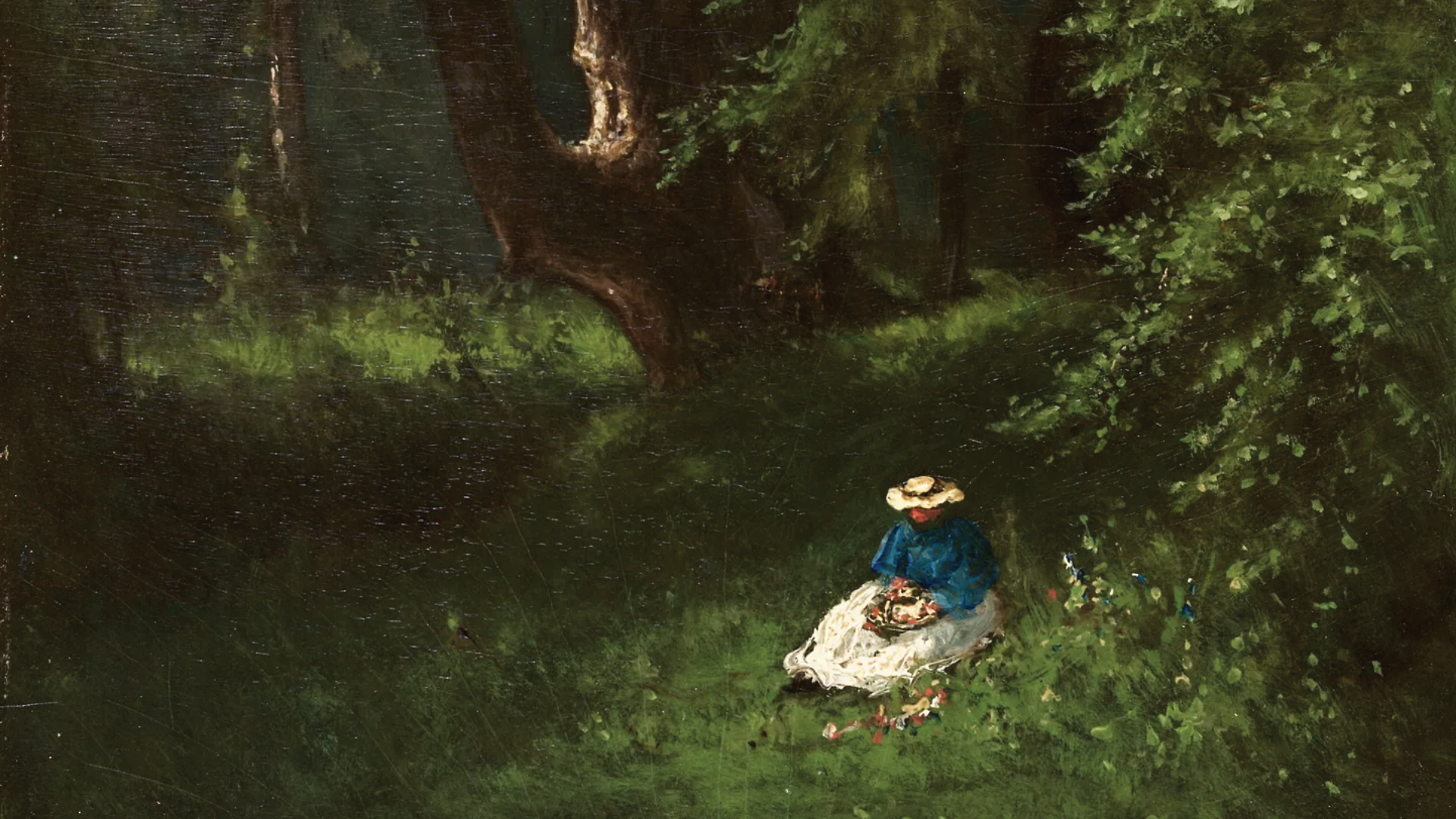
In the Woods by George Inness

“It is, I think, that we are all so alone in what lies deepest in our souls, so unable to find the words and perhaps the courage to speak with unlocked hearts, that we do not know at all that it is the same with others.”
— Sheldon Vanauken, A Severe Mercy.

I’M A VORACIOUS DREAMER, and I’ve come to realize that this means the object of my longings will never come to full fruition.

In my early 30s, most of my dreams still burned bright. They layered like pearls on a string, each one distinct yet bound together by a shared vision: the dream to write, move to Nashville, meet a good guy, develop a retreat center or some other community third space, and host people in a home of my own—one filled with music and conversation, good meals, an herb garden in the backyard, bookshelves everywhere, and friends gathered from all walks of life. I called it my “George Bailey lassos the moon” dream. Exhilarating, yet always just out of reach.

This idea of warmth and home was a refuge against the deep unrest that permeated my body daily. Most months, my time and money went toward things like functional medicine and bodywork, capsules of things I couldn’t pronounce, therapy, lab tests, and memory foam pillows to support the vertebrae in my neck while I slept.

Along with chronic pain from a family car accident when I was 17 (and two since), I also had PMDD, which is a severe mood disorder caused by brain sensitivity to hormone fluctuations. It wreaked havoc on my emotional health, along with every close relationship, to the point where I only felt sane and secure maybe one or two weeks out of the month. I also had a host of undiagnosed symptoms including digestive pain, brain fog, food allergies, nausea, and fatigue. I overturned every stone in sight and didn’t know where else to go or what to do. I was desperate to be well.

After years of prayer and oil fingerprints pressed onto my forehead in the shape of a cross, my heart broke when I realized the healing must not be coming. Psalm 34:10 promises that “those who trust in the Lord will lack no good thing,” yet day after day, I circled back to the same question: Is God withholding good from me? Just as my favorite book heroines had left the places they knew, I suspected that I too would have to leave the comfort of home one day to confront my longings.


AS A MILLENNIAL, I belong to a generation well-acquainted with disillusionment. The Pew Research Center describes how most of us came of age and entered the workforce at the peak of an economic recession, uniquely shaping our conception of the future. I know many friends who feel a bit forgotten—like they blinked and missed the boat. “The long-term effects of this ‘slow start’ for Millennials will be a factor in American society for decades,” says Pew. Of course, we’re not the only ones to feel the ache of unmet longing. It is universal.

Today, our homes, degree programs, doctors’ offices, and counseling rooms are filled with people yearning for the delayed fulfillment of childhood dreams. Many are still unmarried in their 30s and 40s, do not own a home, have moved back in with family or other single adults, are approaching the age when having kids is unlikely, and are dealing with a mental or chronic health condition. This is a lot to carry, especially when disillusionment also runs deep within the Church—a place where we long for hope and rest but often find false promises. We live in an era hungry for something as big as a miracle or as simple as an understanding friend who will listen.

Unmet longings can feel more like withheld love when they persist for longer than we think we can bear. Although disillusionment is not a bad thing, it’s fed in unhelpful ways by a culture that values the pursuit of passion more than perseverance.

Dr. Alicia Britt Chole is a leadership mentor who believes disillusionment is necessary for healthy spiritual formation. It’s a well-traveled path by believers, not the evidence of failure or abandonment. In her book, The Night Is Normal (a fabulous read!)Chole says, “In disillusionment, God invites us to reframe questions as companions, to see that our senses neither create nor negate his presence and to experience the fellowship of Jesus’s suffering. In disillusionment, shiny (yet sometimes shallow) ideals are lost, as deeper (yet initially duller) reality is gained.” As painful as it can be, disillusionment offers us the gift of deepening our trust in God and walking by faith. “Answers do not carry us through the night,” she writes. “Love does.”


IN THE SPRING of 2019, a new friend hosted a songwriting retreat at his home in Nashville, Tennessee. Gluten-free brownies bubbled away in the oven while incense trailed up to the ceiling, giving the room a musky aroma mingled with chocolatey sweetness. Our group gathered on the living room floor. I was the only non-songwriter in the house but was excited to make friends with people who shared both my faith and creative wiring. By now, this dream had taken time to settle into me the way rain settles into the earth after a good storm. Four years in the making, the move from California to Tennessee was a huge step of trust. Beneath all the questions was a quiet, faith-filled knowing. I just had to go. And God would be with me.

Our host rolled up the sleeves of his button-down shirt and invited us to close our eyes while he read a blessing by the Irish poet, John O’Donohue. It was an apt invocation called “For a Friend on the Arrival of Illness”:

May you find in yourself a courageous hospitality
toward what is difficult, painful, and unknown.
May you learn to use this illness as a lantern
to illuminate the new qualities that will emerge in you.
May you find the wisdom to listen to your illness.
Ask it why it came. Why it chose your friendship.
Where it wants to take you.
What it wants you to know.

The words gripped me.

Despite my longing for a space to practice hospitality, it had never crossed my mind to show this same welcoming spirit to the unwanted parts of my life. The parts, like illness, that God in his divine mystery allowed to persist. Wasn’t this a sign of resignation? A white flag?

Sunlight warmed my skin as it glowed through the dual-paned window. I laid my journal aside, listening while the rest of the house came alive for the next few hours with the sounds of guitar strums and pencil scratches, confessional moments and laughter, along with the aroma of vegetable soup. In many ways, it was the “George Bailey lassos the moon” dream now sprung to life. But did I belong in it? So much lay outside my control, but the words to that blessing gave me something solid to hold onto. Maybe this alone was why I was here. God knew that on a Saturday in springtime, a writer from California would need to know that she was seen and not forgotten.


I LIVED IN Nashville for two and a half years. The first year was a string of delights, a season of fulfillment. The next one brought shattered hopes as I watched nearly every dream I carried out with me unravel like a ball of yarn. Perhaps craziest of all was a deadly tornado that hit the city in the middle of the night just before the lockdowns—a natural disaster that, devastating as it was, got buried almost overnight by national headlines.

By the spring of 2021, I sensed a need to return home and recommit to my physical health. I packed my belongings with that pesky question still rumbling around in my heart: Is God withholding good from me? Moving into my little brother’s childhood bedroom was humbling at my age, but there was peace in being near family again. Mom made up the guest bed and prayed with me nightly. We baked and watched Gilmore Girls. I found a full-time copywriting job that allowed me to work from home. Two months later, I was hospitalized after a thyroid episode and diagnosed with Graves’ disease.


ULTIMATELY, OUR DESIRES point to Christ. They stir in us a deep yearning for the wholeness of eternity—a wholeness we catch glimpses, tastes, and whispers of in this life. Come, they say. There is something true and beautiful that lies beyond. Paying attention to the desires that drive us, and being willing to name them, invites God into those tender places where he longs to meet us with his love.

By following my dream of moving to Nashville, I experienced God’s goodness in ways I never would have if I had stayed home. He spoke to me through bluegrass, summer thunderstorms, the fragrance of honeysuckle, opportunities to sharpen my writing craft, grilled catfish, landscapes so beautiful they take your breath away, and long walks filled with conversations I will carry with me for the rest of my life.

Instead of constantly forever trying to make meaning from the chaos of life, we can rest in the unknowing. We can rest in the arms of Love. “Now we see things imperfectly, like puzzling reflections in a mirror, but then we will see everything with perfect clarity,” says 1 Corinthians 13:12 in the New Living Translation. “All that I know now is partial and incomplete, but then I will know everything completely, just as God now knows me completely.”


THE GOLDEN HOUR backlit our table with the glow of an orangey-pink California sunset. I clasped the hand of the man next to me. It was the evening of our wedding, and he wore a burnt orange suit that matched his personality. Pink Lady apples lay strewn across the tables, and a wine barrel supported a cake infused with honey, rosemary, buttercream, and fresh blackberries. I sighed with gratitude.

After moving back home, I met the man who became my husband. He was a young, blue-eyed veteran named Noah who had served four years as an Army medic before also returning home from out of state. Most surprising was our age gap. He was ten years younger, a detail I had to warm up to. But the man also had premature graying hair (thank God!) and patience in spades. While preparing for his honorable discharge, he got the call from home that his mom was dying of pneumonia, instigating an early return before she passed. We met shortly after, both navigating our unique griefs as we worked to rebuild our lives.

My illness did not go away once I was in a committed relationship, but Noah’s love became a resting place. Knowing that his name means rest in Hebrew is not lost on me. Instead of healing my body as I prayed, God brought a skilled endocrinologist who put me on high-dose thyroid medication and the Autoimmune Protocol (AIP) diet. This led to remission, yet I still have daily symptoms that vary from mild to debilitating. Instead of removing my PMDD, God brought a partner who honored that part of my story and who willingly chooses my particular set of problems every single day. I don’t fully know how to receive this kind of love yet, but I am learning.


“LISTEN TO YOUR LIFE,” wrote Frederick Buechner, an American writer and minister. “See it for the fathomless mystery it is.” This quote has been an anchoring thought and a healthy challenge amidst life’s highs and lows. Just because a dream ends doesn’t mean it fails. Maybe we’ll outgrow our early dreams. Or maybe, in their endings, they’ll become a bridge to what’s next. Similarly, just because our desire remains, it doesn’t mean God withholds good from us. I believe this now, though the ache remains. Instead, as pain points have become constellations illuminated against the night sky, I’ve learned to trace God’s faithful presence in the midst of my suffering from point to point, illuminating the cosmos of care that we live in as those who live and walk in his marvelous light.

Bailey is a writer from Northern California. After a career in higher education and publishing, she now hosts a podcast called Listen to Your Life and cares deeply about helping millennials walk in hope and well-being. Besides writing, she enjoys road trips to the coast, good stories, farmers markets, and cooking. Bailey regularly contributes to other publications and has written on art, women’s health, and spiritual formation for IAPMD Global, She Reads Truth, The Rabbit Room, and Jessup University. You can follow her on Instagram @baileylgillespie and find her on Substack at baileygillespie.substack.com.

News

How a TikToker Found a Ministry Opportunity in RedNote

With thousands of Americans migrating to the Chinese app, one user made a connection with a struggling Chinese believer.

An image of the RedNote app on a smartphone.
Christianity Today February 7, 2025
Anna Kurth / Contributor / Getty

The week before the TikTok ban in the US came into effect, Desteny Flerillien, a 25-year-old Christian TikTok influencer, followed thousands of other users in downloading the Chinese app Xiaohongshu, also known as RedNote.

At first, she scrolled through the videos learning about Chinese food, culture, fashion, and traditional medicine. On January 14, she posted a short introduction with a picture of herself and the caption “Hello from America.” She started posting about her skin-care routine, hair tutorials, and enthusiasm for the app, but didn’t mention her Christian faith, as she was unsure if the app would censor religious posts. By the end of 10 days, she had gained 500 followers.

One of the followers was a 22-year-old Chinese man named Jing Shijie who messaged her with the help of a translation app. He welcomed her to the app, offered to answer any questions she had, and asked her to add him on the Chinese messaging app WeChat. They started discussing cultural differences between Chinese and Americans. 

In one message, Flerillien mentioned that she made YouTube videos about her faith.

“What religion do you follow?” Jing asked. When she shared that she was a Christian, Jing surprised Flerillien by responding that he was also a Christian. He began to ask Flerillien questions about the faith, as “a lot of people in our church are saying things that aren’t true, so I have been longing to know the real Christ.”

That led to a deep conversation with a believer on the other side of the world that would never have happened if not for the TikTok ban and the ensuing migration to RedNote. 

The TikTok ban lasted only 12 hours before President Donald Trump announced he would delay enforcement of the law banning the app and TikTok flicked back to life. Still, many “TikTok refugees” had already created accounts on RedNote, a popular Chinese social media app for sharing videos, photos, and conversation topics. With the internet in China behind the Great Firewall—which blocks access to international social media networks like Facebook, Instagram, X, and even TikTok—the migration created a unique space for people in the US and China to interact.

Yet cybersecurity experts raised concerns that the app is subject to the same Chinese data laws as TikTok, “which may grant government authorities access to user data without the privacy protections expected in the US,” according to Adrianus Warmenhoven at NordVPN. Back in 2023, a former executive in ByteDance, the Chinese company that owns TikTok, said in a legal filing that the Chinese government had used data from TikTok to identify and locate protesters in Hong Kong and has access to US user data.

Many Americans seemed unphased by those concerns as they downloaded RedNote, making it the No. 1 app in the Apple store the week of the ban. American and Chinese users shared cat photos, compared working hours, and gave each other names in their respective languages.

When Courtney Alexandra Laliberte first downloaded the app, she was intrigued by the images of the “beautiful people and places, just things that we as Americans were not really privy to.”

But the 29-year-old Christian content creator from Melbourne, Florida, also felt uneasy. Knowing how the Chinese government has control over Christian practices in China, “I did get a sense of being watched,” she said. “Like a feeling of someone looking over my shoulder and everything I was doing.”

After two days, she felt strongly convicted that she needed to delete it. She noted that if RedNote is not a place where she can freely share the gospel, “then that is just not a place where God wants us.”

Laliberte posted a video on TikTok as a pinned post with the caption “Christians pray before you download RedNote” and shared her thoughts.

 “Good to see China is not as bad as they make it seem,” one commenter pushed back. “You are allowed to be a Christian over there.”

But others told her they felt the same urge to delete the app, as their religious posts had been placed under review then deemed illegal.

Flerillien saw the app as an opportunity for evangelism, noting that she felt safer talking to Chinese people about faith than Americans because they seemed more curious and willing to listen. Besides Jing, she has also been talking with another Chinese woman who mentioned it felt like “God’s plan” that they met through RedNote. Now that they’ve built a friendship, she plans to eventually start having deeper faith conversations.

“Ultimately, I just see it as an opportunity for more people to learn about Jesus, even if [only] seeds were planted,” she said.

Flerillien, who lives in Orlando, Florida, started posting Christian content on her YouTube page five years ago after a 40-minute video of her testimony coming out of New Age spirituality went viral. The video was viewed nearly 50,000 times, including by her mother, who renounced her own New Age practices after watching it.

Then, in 2021, Flerillien “got hooked” on TikTok after a friend introduced her to a TikTok dance. Seeing the Christian community on the app, Flerillien started to post her own inspirational Christian videos with captions like “Scriptures for when your faith is low” and “Mood after spending time with God.” Today she has more than 14,500 followers.

An image of Destiny Flerillien from her social media.Image courtesy of Desteny Flerillien
Desteny Flerillien, a 25-year-old Christian TikTok influencer.

“It’s always a mission,” Flerillien said. “It’s always an assignment.”

Although she knew the app was owned by a Chinese company, Flerillien saw TikTok as “just another social media platform.” Yet as the deadline for the ban drew near, she began to feel distraught, as TikTok had become a place for her to laugh, learn, and engage with others. So she decided to move to RedNote. (Since the ban has been reversed, Flerillien still posts on TikTok.)

Meanwhile, Jing, a 22-year-old in Jinan, China, heard about the foreigners flooding to RedNote and created an account, as he was interested in international e-commerce. That’s when he met Flerillien.

Jing told CT that he had been raised by his grandmother, who became a Christian after Jing’s father was miraculously healed from brain inflammation. She took Jing with her to the government-sanctioned Three-Self church where she worshiped, but she never forced Christianity on him.

Jing said that Christianity became real to him two years ago when his grandmother was diagnosed with a pancreatic tumor. For the first time in his life, he prayed on his knees for hours as his uncle took her to the biggest hospitals in the province for multiple opinions on whether the tumor was malignant. He begged God to save her.

“I was completely overwhelmed at that time, feeling helpless, and that’s when I turned to God,” he said.

When the family learned the tumor was benign and his grandmother recovered quickly, Jing said his faith in God began to take root.

Yet challenges persisted. His startup furniture business was struggling, as customers were few. A leader from his grandma’s church urged him to quit his business and find a factory job, claiming that continuing “would be going against God’s will.” Jing said he felt that the leader was calling his desire to run a business a sin, yet Jing had wanted to make money to provide for his family and contribute to his grandmother’s church, which rented its meeting space from a worn-down school building.

Then his roommate, whom he had hired at his business and lent money to, began to lash out at him and accuse him unfairly. In despair, Jing spiraled into severe depression. Several months later, Jing gave up on his business and returned home to work as a food delivery driver.

An image of Jing Shijie on his phone.Image courtesy of Jing Shijie
Jing Shijie, a 22-year-old RedNote user in China.

As he started talking about faith with Flerillien over WeChat, he asked her about some of the questionable teachings he had received from his church, including whether it was a sin to try to earn more money and whether Christians were allowed to go the hospital when they were sick instead of waiting for God to heal them. She responded by pointing him to different Bible verses and speaking from her own experiences.

Once Jing used his Chinese Bible—a gift from a church summer camp—to look up a verse Flerillien had shared, and he was excited to see that God’s Word remained the same across languages.

He then opened up to Flerillien about his rage against his roommate who had wronged him, which weighed down on his heart like “an unbearable lock.” He noted that when he sought advice from the leader of his grandmother’s church, he was told that Christians should be “weak” and that he should swallow his anger and endure.

“Bitterness and unforgiveness doesn’t have an impact on the person who did us wrong,” Flerillien wrote in her message. “It only hurts us.”

When she pointed to Jesus’ ultimate forgiveness and reminded him that vengeance belongs to the Lord, Jing said he realized that forgiveness wasn’t a sign of weakness; rather, it took strength to let evil done to him go.

After that conversation, Jing said he finally felt his heart was free from anger: “It was full of light, [in] one switch of a moment.” He began to find a purpose behind his failed business and the criticism from his church when Flerillien explained that God uses suffering to build up the character of believers so they can do work for the Lord. She encouraged him to not give up on his business.

“Do you think it’s a coincidence that you met me on Red note?” Flerillien asked. “God is still calling you.”

“It must be God’s plan for us to know each other and become good friends!” Jing said.

addApple PodcastsDown ArrowDown ArrowDown Arrowarrow_left_altLeft ArrowLeft ArrowRight ArrowRight ArrowRight Arrowarrow_up_altUp ArrowUp ArrowAvailable at Amazoncaret-downCloseCloseellipseEmailEmailExpandExpandExternalExternalFacebookfacebook-squarefolderGiftGiftGooglegoogleGoogle KeephamburgerInstagraminstagram-squareLinkLinklinkedin-squareListenListenListenChristianity TodayCT Creative Studio Logologo_orgMegaphoneMenuMenupausePinterestPlayPlayPocketPodcastprintremoveRSSRSSSaveSavesaveSearchSearchsearchSpotifyStitcherTelegramTable of ContentsTable of Contentstwitter-squareWhatsAppXYouTubeYouTube