Theology

Rick Warren: The Great Commission’s ‘Go and Teach’ Applies to Women

The former pastor of ex-SBC Saddleback shares why his views on women changed.

Rick Warren

Rick Warren

Christianity Today March 16, 2023
Edits by Christianity Today / Source Image: Getty

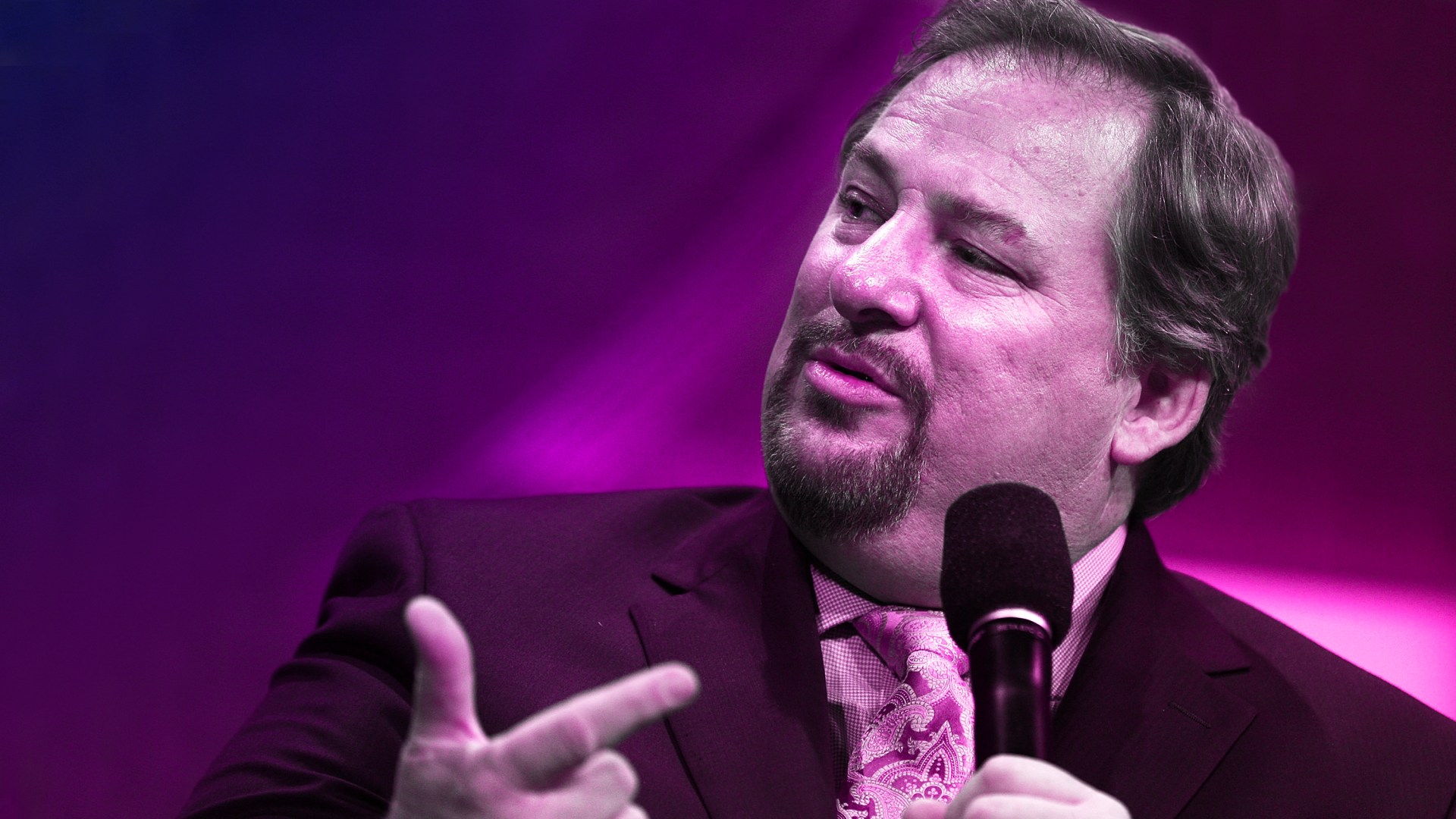
Last week, Russell Moore interviewed the recently retired pastor Rick Warren—author of The Purpose Driven Life—on his show.

They discussed his pastoral transition and plans for the future, as well as the disfellowshipping of Saddleback Church from the Southern Baptist Convention (SBC) for hiring a female teaching pastor on its staff.

As the planter and former pastor of the well-known congregation, Warren shared how his views on women in church leadership changed when he re-examined certain scriptures like the Great Commission.

The following excerpt is adapted from the original audio, which can be listened to here.

Rick: I’m ready here to join in the former Southern Baptist support group with Beth Moore, with Russell Moore, and a few others. This last week I got kicked out. It’s not a surprise to me actually. I started Saddleback Church 43 years ago—I am a fourth-generation Southern Baptist, and my grandfather Chester Armstrong was related to Annie Armstrong …

My great-great-grandfather was led to Christ by Charles Spurgeon and sent to America to plant churches in the 1860s. So, I have a long Baptist background. But you know what? We’ve done so many things not by the book. [Back] in 1980 when I started the church, we didn’t put Baptist in the name—now that was unheard of 40 years ago. … It’s a different Convention than it was when we’re missing those great statesmen that used to be here….

Russell: You said you weren’t surprised. I was bowled over. Just because I would think—with all of the crises involving the treatment of women and sexual abuse within the SBC—that saying a church is giving women too much is really not the problem in the SBC [as I see it. I couldn’t believe that is what they were taking up. …]

Rick: Lemme say a word about that. It’s not an accident that the same voices that said, “We cannot protect women from abuse because of the autonomy of the local church” are the same voices that are saying, “But we can prevent them from being called pastors in the autonomy of the local church.” So, the autonomy only matters if it’s convenient for you.

In other words, they clearly think, We have a say in your church over staff titles, but it was a misnomer to say, “We can’t do anything—we’re not responsible for this abuse that’s going on because they’re all independent autonomous churches.” Nonsense.

Russell: Some of them would probably say the confession of faith says that the office of pastor [is] to be held by men [as] qualified by Scripture. And Saddleback now has women pastors. How do you see that?

Rick: Well, in the first place, Southern Baptists have always been anticredal. I grew up with the phrase, “We have no creed but Christ; we have no book but the Bible.” This is not a battle between [theological] liberals and conservatives. [The] liberals left a long time ago. Everybody in the SBC believes in the inerrancy of Scripture. Now we’re talking about difference of interpretation. Those particular passages—Titus, Timothy, and Corinthians—have hundreds, literally hundreds, of interpretations.

We should be able to expel people over sin, racism, sexual abuse, other sexual sins, things like that. But this is over … You mean, wait a minute, we can disagree over the Atonement; we can disagree over election; and we can disagree over dispensationalism; we can disagree over [the] Second Coming; we can disagree over the nature of sin; but we can’t disagree over what you name your staff?

Here’s the difference: This is the same old battle that’s been going on for a hundred years in the SBC … between conservative Baptist and fundamental Baptist. Now fundamentalism is a word that has changed meaning.

A hundred years ago, I would’ve called myself a fundamentalist. Because in the 1920s, it meant you hold the historic doctrines of the church, the blood atonement of Christ, the authority of Scripture—all of the basic cardinal doctrines of evangelical Protestantism. But that word has changed, because now we have fundamental Muslims, fundamental Buddhists. We have fundamental atheists. We have fundamental communists. We have fundamentalists who are secularists. Today, a fundamentalist means you’ve stopped listening…

So, number one, I believe in the inerrancy of Scripture. I do not believe in the inerrancy of your interpretation—nor of mine for that matter. Which is why I have to say I could be wrong. We have to approach Scripture humbly, saying, “I could be wrong.” You’ll never hear a fundamentalist say that: “I could be wrong.” … A conservative Baptist believes in the inerrancy of Scripture. A fundamentalist Baptist believes in the inerrancy of their interpretation. That’s a big difference.

Russell: But you of course would agree that if Saddleback had baptized babies, for instance, that other churches would say, “Okay, we have all kinds of churches that do that, but Saddleback’s not a Baptist church if they do that.”

Rick: Exactly, yeah. Here’s the thing: I believe the church at its best was the church at its birth. And honestly, I have to say this—I wasn’t planning on talking about this with you, Russell.

First, I understand why people get upset about this because I believed the way they did until three years ago. And I actually had to change because of Scripture. Culture could not change me on this issue. Anecdotes could not change me on this issue. Pressure from other people would not change me on this issue. What changed me was when I came into confrontation with four scriptures nobody ever talked about that I felt had strong implications about women in ministry, and nobody had ever shown it to me.

I knew the Titus passage. I knew the Timothy passage. I knew 1 Corinthians, and every time people [would] say, “Why don’t you have women pastors?” I would say, “Show me a verse. [If] you gimme one verse, I’ll consider it because I’m a Bible guy.” You can’t just say, “Everybody’s doing it.” Or “I’ve been to 165 countries, and I’ve seen churches of 30-, 40-, 50,000 people led by a senior pastor who’s a woman.” That’s not enough for me. I have to have a biblical basis.

Three years ago, right after I had taken the leadership of Finishing the Task—and that’s something else I hope we can talk about later on—when COVID[-19] hit, I started reading every book I could find on the Great Commission and on church history. I read over 200 books on the Great Commission and on the history of missions, and I was asking two questions.

One, why did the church grow fastest in the first 300 years? We went from 120 people in the upper room to becoming the official religion of the Roman Empire in 300 years. In my library, I have a Roman denarius of 87 with Caesar on the coin, but in 320, I’ve got a picture of a denarius with a cross on the coin. That’s major cultural change.

And the church grew about 50 percent a decade for the first 300 years. And I made a list of about 25 things that they did that we’re not doing today as a church. I also made a list of the things that we have that we think we have to have [but] that they didn’t have. They didn’t have planes, trains, automobiles; they didn’t have church buildings.

There were no church buildings in the fastest period of growth of the church. For the first 300 years—I’ve been in the oldest church in Maaloula, Syria, in a small little church that seats about 50 people—they had no pulpits. The idea that one guy would stand behind a pulpit preaching—that wasn’t New Testament worship.

Paul says, “Everybody has a song; everybody has a Scripture; everybody has a teaching.” It was in a house, and everybody shared—it wasn’t one guy who sits still while I instill. That’s our cultural imposition. And so, what did they do?

They didn’t have a printing press. They didn’t have the internet. They didn’t have radio, TV, and yet they grew faster in the first 300 years than any other period of time.

Then in the next 1700 years, I was asking, what went wrong? In 1988, the IMB (International Mission Board) hired an Anglican scholar, David Barrett … And he wrote a book called the 700 Plans to [Evangelize the World] and complete the Great Commission from AD 0 to 1988.

I’ve used that book for the last three years as an index to study why we didn’t get it done, what went wrong. And it even tells you the Catholics had this many plans, and the Anabaptists had this plan, and the Lutherans and Methodists there, and you can look at them all. And I’ve seen all the things they did wrong.

Anyway, that study caused me to change my view about women. Nothing else could have [changed] it as I came upon three different scriptures. First, the Great Commission. Now Baptists—Southern Baptists—like to call ourselves “Great Commission Baptist,” and we claim that we believe the Great Commission is for everyone, [that] both men and women are to fulfill the Great Commission.

Well, not really—you don’t believe that, because it says there are four verbs in the Great Commission: “Go, make disciples, baptize, and teach.” Women are to go, women are to make disciples, women are to baptize, and women are to teach, not just men.

Now, this is one of the reasons why Saddleback has baptized more people than any church in American history: 57,000 adult baptisms in 43 years. Why? Because in our church, if you win them to Christ, you get to baptize them. So, if a mom wants to baptize her child or a wife wants to baptize her husband that she led to Christ—anybody can baptize anybody they led to Christ…

It’s the liberation, the emancipation of “every member is a minister,” that … truly, we believe in the priesthood of the priests most of the time instead of the priesthood of the believer.

Now, the Great Commission: go, make disciples, baptize, teach. You can’t say the first two are for men and women [and] the last two are only for men—or maybe just ordained men. That’s eisegesis. You got a problem.

Who authorized women to teach? Jesus. “All authority is given to me; therefore, teach. All authority is given to me; therefore, baptize.” You got a problem with the Great Commission. I had to repent when I actually looked at the Great Commission. I had to say, “It’s not just for ordained men; it’s for everybody.”

The second thing that changed my mind was the Day of Pentecost. Two things happened on that day. We know the first day of the church is its birth, is the church at its best. On that day at Pentecost, we know women were in the upper room. We know women were filled with the Holy Spirit; we know that women were preaching in languages that other people couldn’t [understand], to a mixed audience. It wasn’t just men—women were preaching on the Day of Pentecost.

How do we know that? Because Peter felt obligated to explain it. And so, in Acts chapter two, verses 17 and 18, he goes, “Hey, guys, these people aren’t drunk. What you’re seeing was foretold by Joel. It was gonna happen.” And so he explains why you’re now seeing women preaching on the very first day of the church. He explains it and he says, “This is that, that Joel predicted.”

And here’s what he says. “In the last days”—and clearly that means Peter thought the last days began with the birth of the church; we’re in the latter of the last days. Now, we don’t know how many more there will be, but the last days began with the birth of the church. Peter says, “In the last days, I will pour out my Spirit on all flesh.” All flesh. “Your sons and daughters will prophesy.”

That’s different than the Old Testament. I’ve looked at over 300 commentaries on those verses, and it’s interesting to me that almost everybody goes, “Yep, in the church, everybody gets to pray, everybody gets to preach, everybody gets to prophesy.” And the people who don’t like that ignore that verse. John MacArthur doesn’t even cover that verse. He just skips over it.

And then the third thing that changed my mind—see, none of this had to do with culture; it had to do with Scripture—and then all of a sudden, I noticed that the very first sermon, the very first Christian sermon, the message of the gospel of Good News of the Resurrection, Jesus chose a woman to deliver it to men.

He had Mary Magdalene go and tell the disciples. Now, that clearly wasn’t an accident. It was intentional. It’s a whole new world. Now he has a woman go tell the apostles. Can a woman teach an apostle? Evidently. [Jesus] did it on the first day—he chose her to be the first preacher of the gospel.

Russell: So, you would—after the last three years—you would support men and women as elders, as senior pastor, as everything within the church?

Rick: I would. But here’s what I say—because I have to say, this is my interpretation. I have to say with humility, it doesn’t bother me if you disagree with me.

For 2,000 years, the church has debated the role of women in culture, but to make it the litmus test for “Are you a Baptist or not?” is nonsense. Because the very first Baptist confession, the 1610, says the officers of the church are elders, not pastors, and deacons and deaconesses. That’s the original Baptist confession. So, do you wanna go back to the original or not?

And so, go read the preamble of the Baptist faith message, which it says, “This is not binding on anybody.” It says it in the preamble: this is not binding on any church. But now we’re turning it—a confession—into a creed, and we’re weaponizing it. We’re starting an inquisition. And if this now falls into place, any pastor each week can stand up and say, “I wanna kick out that church because they disagree on dispensationalism.”

We should kick out churches for sin. We should kick out churches that harm the testimony of the convention. This isn’t harming the testimony of anybody. And it’s what’s a disputable issue, as Paul says in Romans 14. The problem with fundamentalists is there are no disputable, no secondary issues with them. Every one of them matters.


Theology

We Lose Culture Wars by Putting Them On Trial

Instead of prosecutors trying to win arguments, we’re supposed to be defending what actually matters.

Christianity Today March 16, 2023
Illustration by Mallory Rentsch / Source Images: Getty

This piece was adapted from Russell Moore’s newsletter. Subscribe here.

“Why are we on defense,” one frustrated culture warrior asked me, referring to some religious freedom issue, “when we should be on offense?” As I’ve written elsewhere, I find this metaphor telling. It assumes that what really matters is the church’s state rather than its mission.

The more I’ve thought of it, though, the more I’ve come to believe that—in one sense—“defense” is exactly what we’re called to do.

Metaphors matter. They shape the way we see who we are, where we are, and what we do. Even though we use the metaphor “culture war” for what some would call “worldview conflicts,” underneath all the military imagery is an unspoken legal metaphor that might be even more controlling. We lose ourselves in culture wars when we think we are prosecutors. But we’re not—we’re attorneys for the defense.

The image of culture war as prosecution makes sense. After all, we are often dealing with principles of righteousness and unrighteousness, of morality or immorality. We make the case for who’s wrong and who’s right, and having won the argument, we thus win the case. This sense of purpose has the additional benefit of being fully in step with the times.

From the social-justice advocate on TikTok policing pronouns and cultural appropriation to the “own the libs” right-winger showing how “wokeness” will make everywhere like Portland, almost everyone can find people or movements to prosecute their cases. And we cheer our favorites on from the courtroom benches.

The problem is that the Bible tells us the role of prosecuting attorney is already filled. Scripture reveals that the devil has two fundamental powers: deception and accusation (Rev. 12:9–10). It says the devil has “the power of death” precisely because the slavery common to humanity is the “fear of death” (Heb. 2:14–15). If the mission involved winning arguments and condemning opponents, the devil does that better than we ever could.

But Jesus’ mission is different. The apostle John writes, “For God did not send his Son into the world to condemn the world, but to save the world through him” (John 3:17).

The world, John explains, is “condemned already” (v. 18). We all have sinned; we all fall short of the glory of God. People find different ways to do that, but whether through self-indulgence or through self-righteousness, we all are found guilty before our own consciences and before the judgment seat of Christ.

Yet we are part of a “ministry of reconciliation,” announcing the possibility of forgiveness of sins and peace with God. “We are therefore Christ’s ambassadors, as though God were making his appeal through us,” Paul wrote. “We implore you on Christ’s behalf: Be reconciled to God” (2 Cor. 5:20).

Returning to our metaphor, we might assume that the prosecuting attorney is the one devoted to justice and to calling things what they are. But the defense attorney must be just as rigorous in defining a crime, if not more so.

A defense attorney does not say to his or her client, “Well, who among us hasn’t embezzled a widow’s retirement fund?” Instead, the defense attorney will explain exactly what kind of jeopardy the accused is in and will usually say to the defendant behind closed doors, “You have to tell me the truth about what we’re dealing with here.”

Sometimes in those closed-door meetings, the defense attorney asks even tougher questions than the prosecuting attorney ever would. The difference is the end goal. The defense attorney is tough precisely because he’s on the side of the accused.

Several years ago, a friend of mine was being considered for a ministry position. I knew he would serve the ministry well, but I also knew the search committee was unsure about him. So I suggested we meet and do a practice run to prepare him for the interview. I said, “I’ll pretend to be the questioners, and you answer me.”

I then proceeded to ask the toughest, most hostile questions I could possibly ask—taking the worst view possible of every controversial thing my friend had ever done. He gave me a look of anguished disappointment: “Russell?”

“I’m not Russell Moore,” I said. “I’m not your friend here. I’m so-and-so on the search committee.” After that momentary confusion, my friend loosened up and answered my machine-gun round of obnoxious questions. He could then see that my questions weren’t to trip him up or humiliate him. Just the opposite—I was on his side.

Imagine a team of defense attorneys arguing their case before the jury. If one of them began referring to the accused as “our client, the obvious embezzler” or “our client who—if you have any sense at all—will rot in jail” or remarked, “There’s nothing as relaxing as some good old-fashioned embezzlement,” that would be a crisis. Some in the jury might say, “This defense attorney isn’t rebuking the embezzler; he’s rebuking his own team in front of the judge!”

The defense attorneys are on the same team only to the degree that they have the same mission. If one of them starts thinking he or she is a prosecuting attorney or a coconspirator with the accused, the group is no longer a team of defense attorneys.

That’s partially why the apostle Paul—like Jesus before him—speaks far more harshly to those inside the church than those outside. He doesn’t denounce the people who would say “I am of Zeus” or “I am of Artemis” the way he does those who would say “I am of Paul” or “I am of Cephas.” Why?

It’s because the church is called to a higher accountability than the world—and because a divided church speaks something untrue about Christ and the gospel. Paul specifically announced, “What business is it of mine to judge those outside the church? Are you not to judge those inside? God will judge those outside. ‘Expel the wicked person from among you’” (1 Cor. 5:12–13).

If there is no eternity, then we should just fall into the same old culture-war patterns as the rest of the world. We should find an in-group and justify whatever they do—and we should identify an out-group so we can relentlessly hound them as stupid and wicked. But if there is a heaven and a hell and a Holy Spirit, then that posture is not just wrongheaded; it’s satanic.

If we are gospel Christians, entrusted with the genuinely Good News that “God was reconciling the world to himself in Christ” (2 Cor. 5:19), then our end goal cannot be to “win” an argument, much less to humiliate our opponents. Our end goal is to see people reconciled to God and to each other. Success for us isn’t defined by getting a “successful conviction” of our “enemies” on the Day of Judgment. Success is their acquittal through the blood of Christ and—even more so—their adoption into the family of God.

The frantic rage we can often display in supposedly protecting “Christian” values might feel like strength, but the world sees it for what it is: fear, anxiety, and lack of confidence. They can also see that it’s nothing like the confident tranquility of Jesus—who overturned tables inside the religious establishment but was indescribably calm before those with the authority to crucify him.

None of the prostitutes and tax collectors around Jesus were confused about his stance on sex trafficking or imperial extortion. And yet none of them were confused about the fact that he loved them—and that he did not fear being put out of the “in-group” for being associated with them.

If that doesn’t feel “offensive” enough for you, then maybe you’re playing a different game.

Russell Moore is the editor in chief at Christianity Today and leads its Public Theology Project.

Theology

Engaging Buddhism

A biweekly series exploring different facets of the religion and how Christians can engage with and minister to Buddhists.

Christianity Today March 16, 2023
Illustration by Mallory Rentsch / Source Images: Unsplash / Pexels

Buddhism, which originated 2,500 years ago in ancient India, significantly influences more than a billion people worldwide, most of whom live in Asia. The Eastern religion has increasingly spread to the West with the popularity of meditation and mindfulness as well as the continued growth of the Asian population in places like the United States, Canada, Australia, and some European countries.

Yet American churches still are unprepared to reach out to their Buddhist neighbors. A 2019 Pew study found that 58 percent of Americans said they knew nothing or little about Buddhism, the second least understood religion behind Hinduism.

To help the church better understand this complex religion, CT has launched the Engaging Buddhism series. Every other week, we look at a different aspect of the religion and how Christians can interact with and minister to people who hold a Buddhist worldview. Browse through the stories in the series so far in the right-hand column.

Books
Review

Basketball Is a Beautiful Game, but Not a Blueprint for Society

Treating the sport as a comprehensive social and political model misunderstands the vision of its Christian founder.

Christianity Today March 15, 2023
Illustration by Mallory Rentsch / Source Images: Getty / Unsplash

There is no sport whose origins are as deeply entwined with Christianity as basketball. Created in 1891 by James Naismith while he was studying at the YMCA’s International Training School, the game is a product of the “muscular Christianity” movement that sought to connect church and sports at the turn of the 20th century.

How Basketball Can Save the World: 13 Guiding Principles for Reimagining What's Possible

As a sports historian, I know there’s supposed to be no cheering in the archives. Yet, as a Christian and a lifelong basketball fan, I’ll admit to at least a small sense of pride when I talk about the origins of the game. My favorite sport, I like to point out, doesn’t exist without Christian ideas and institutions.

Given this background, I was immediately intrigued when I heard about David Hollander’s new book, How Basketball Can Save the World: Thirteen Guiding Principles for Reimagining What’s Possible. A professor with the Tisch Institute for Global Sport at New York University, Hollander’s premise is simple: The principles embedded within basketball by James Naismith can help us solve the problems of our world today.

A new ‘ism’

Hollander is not writing from a Christian perspective, but he does believe basketball has a deeper meaning that can shape the way we live. Amid profound disruption and fragmentation, with the failure of various “isms”—Hollander names capitalism, socialism, theism, and nationalism, among others—he suggests that basketball can offer a new “ism,” a system for making sense of the world.

“No more of the same old mistakes, from the same old thinking, by the same old leaders,” he writes. “Those systems have demonstrably failed. Basketball has given us a nearly century-and-a-half proof of concept. Basketball works.

Hollander makes his case with 13 principles that are “inspired by and deeply connected to Naismith’s vision.” (Thirteen matches the number of original rules Naismith set down for the sport).

The first three principles focus on cooperation (principle 1) and the balancing act between the individual and collective (2) and force and skill (3).

The next seven emphasize the expansive and boundary-breaking potential of basketball. Beginning with the principles of “positionless-ness” (4) and “human alchemy” (5), Hollander connects basketball to globalism (6), gender inclusion (7), open access (8), immigration (9), and bridging the rural/urban divide (10).

The next two principles describe basketball as the antidote to isolation and loneliness (11) and a source for sanctuary (12), while the final principle, “transcendence” (13), brings Hollander back to his favorite theme: basketball’s limitless possibilities.

Hollander’s general pattern is to begin each chapter with reflections on Naismith’s intention for the game, then to connect those ideas with current examples and ideas. Basketball, he repeats in nearly every chapter, provides a space to bring people together.

Basketball is also presented as a metaphor for social policies and experiments. For example, the “open run” style of pickup basketball, in which players join a team of random players at the gym, is connected to Yale political scientist Hélène Landemore’s idea of “open democracy,” in which elections are eliminated in favor of randomized representation.

Other ideas Hollander advances include codifying within government and constitutions the right to sanctuary; ensuring that every new institution and policy is inclusive “across the full spectrum of gender identity”; and combating predatory lending by having local post offices provide basic banking services.

How does basketball make these changes happen?

Hollander does not exactly say, aside from making the point that basketball brings people together. Instead, he offers plenty of you-can-do-it enthusiasm. We must “commit to cooperation as our duty to one another,” he declares. “Each of us must answer the call of this world. We can no longer be who we were,” he writes.

There are some moments where Hollander’s book truly inspires. His passion for basketball is apparent, with compelling passages about the joys of the sport. He presents several intriguing ideas that are worth considering. And he is exactly right to note the wonderfully inclusive history of basketball, a game embraced by men and women, immigrants and outsiders, and a wide range of religious, ethnic, and racial communities.

Yet too often it reads like a TED Talk masquerading as a book. It’s a Big Idea backed up with shallow platitudes, revealing a limited understanding of the complexity of history and Naismith’s own hopes and dreams for the sport.

Winning men for the Master

We can start with Hollander’s treatment of Naismith’s faith. He admits that Naismith was inspired by Christian commitments but assures readers that Naismith left Christian ministry behind and adopted “a more ecumenically humanistic drive and perspective.” As evidence, Hollander cites Naismith’s application to the YMCA Training School, quoting him writing that his goal in life was “to do good. … Wherever I can do this best, that is where I want to go.”

The ellipsis tells the story. Naismith’s full quote (emphasis mine) reads, “To do good to men and serve God. Wherever I can do this best, that is where I want to go.” And on the same application (unmentioned by Hollander), Naismith describes the purpose of his future work this way: “to win men for the Master through the gym.”

Of course, it does not follow that Naismith’s Christian motivations stamped the game with an inherent Christian identity. Naismith did not hold basketball close but gave it away for people of all faiths to enjoy. Yet, while Hollander sees Naismith’s decision to pursue a career in physical education as evidence of a man leaving Christian ministry, in truth Naismith wanted to expand Christian ministry outside the walls of the church. He saw sports as a way to do this.

So, too, Naismith’s Christian vision included a conception of sin and human frailty that is entirely absent from Hollander’s narrative. This comes through best in a detail that Hollander never mentions: Naismith’s favorite role in basketball was not the player or the coach but the referee. He loved witnessing the creativity of individual players, but he also wanted the game to be a laboratory of character development—a place for people to be formed—and he recognized that this would not happen automatically. The job of the referee was to enforce rules and boundaries, to create the conditions in which moral development could take place.

Hollander’s naiveté about the shadow side of the human condition plays on throughout his narrative. In his chapter on “Human Alchemy,” he praises basketball players for “transforming” into something new by speaking out on social issues. Lebron James, for example, is described as someone who “alchemiz[ed] into a national voting rights advocate.”

But “alchemy” is not in and of itself a positive good. The question is always, Toward what end? While it’s a great thing for players to speak out for justice, Hollander never acknowledges that athletes will inevitably support competing and contradictory goals—that some, like NBA player Kyrie Irving, might “alchemize” with anti-vaccine rhetoric and support for an antisemitic film.

Even when Hollander does nod to the presence of tension, his response is far too simplistic. In a section praising basketball’s global spread, he writes about China’s response in 2019 when Daryl Morey, then general manager of the Houston Rockets, tweeted, “Fight for freedom, stand with Hong Kong.”

Morey’s tweet created an international firestorm, with NBA games taken off the air in China. Instead of rushing to Morey’s defense, most NBA leaders were more critical of his tweet than they were of China’s policies in Hong Kong—to say nothing of the credible evidence that China is committing genocide against the Uyghur people.

So how does Hollander address this? He presents it as a both-sides issue, saying only that there were “great differences” in perspective. He laments not that China cracked down on Morey but that the whole affair was a “missed opportunity” to unite around basketball. “No one recognized the opening to say, Okay, what can we all agree upon? The game. That was the basic starting point.”

Starting points can be helpful, but it all depends on the destination. They don’t inevitably lead to good. The unifying power of sport can just as easily be used to provide cover for human rights abuses (including in the United States) as it can be mobilized for human flourishing and cooperation.

Freedom and cohesion

There are numerous other questionable assertions throughout the book. In one section Hollander suggests that Naismith embraced a “radical notion of full gender inclusion” and wanted to “explode the gender paradigm.”

While Naismith did support women’s participation in basketball, he did this at least in part on the grounds of preserving gender distinctions. He supported different rules for the women’s game and expressed concern when some women began playing using the men’s rules. Rather than exploding the gender paradigm, Naismith saw basketball as a way to uphold it.

No single chapter highlights Hollander’s shallow analysis more than his fourth chapter, titled “Positionless-ness.”

He centers the chapter on John McLendon, a Hall of Fame basketball coach who studied directly under Naismith while attending the University of Kansas. McLendon is best known for two things: his trailblazing work as a Black basketball coach advocating for racial integration, and his innovative full-court, fast-break style of basketball.

To Hollander, McLendon’s fast-break system exemplifies the way we need to live in the modern world. Hollander tells us that rather than accepting limitations and remaining rooted in particular communities and vocations, we need to embrace the constancy of change, always seeking to reinvent ourselves. McLendon’s system modeled this, in Hollander’s view, because it “was free, unstructured, unassigned, and self-determined.”

“In McLendon’s vision,” Hollander writes, “basketball is the language of freedom—the freedom to be who you are and to create in the space you’re in without someone else, without society, assigning permission or prescriptive roles to you.”

Read McLendon’s book Fast Break Basketball (1965), however, and precisely the opposite is true. The fast break, McLendon wrote, required “the assignment of certain definite and equally important responsibilities to each player.” McLendon gave his players positions and assigned them different lanes on the court to fill. In short, his system encouraged players to sacrifice some of their individual freedom to gain a different type of freedom—a freedom experienced through the joy of working in cohesion as part of a team.

It is true, of course, that in modern times basketball has moved in a positionless direction. In the NBA, players increasingly have a similar profile: tall, rangy, with the ability to shoot threes, handle the ball, and guard multiple positions.

This may well be a great thing for the game, but there are still consequences. Adopting a positionless approach necessarily forecloses some possibilities, leaving some people behind: the slow big man or woman who can block shots and score in the low post; the scrappy defender with a poor shot who can hound the ball.

Basketball’s positionless revolution is good for the scoreboard, but the uniformity that it promotes is not necessarily a good model for our economy or social life together. Hollander’s inability to see that sometimes the lessons we learn from basketball are examples of what not to do is one more flaw in his well-intentioned book.

Moral formation and human development

From the beginning, basketball was designed with clear limits. It was a game for the in-between, meant to fill the gap from the fall football season to the spring baseball season. It was not an all-encompassing vision for life—certainly not for its founder, who quickly turned over stewardship of the game to others.

But basketball does have something to say about moral formation and human development. And this, it seems, is one part of Naismith’s legacy that Christians can and should embrace.

This is also a reason that Hollander’s book is not a total miss. If it helps us reflect on the social worlds we seek to imagine and create—the type of people we want to become through the sports we play—then it is worth the read. Just keep in mind the sport’s limitations and our own. Basketball is a beautiful game, but it was never intended to carry the world in its hands.

Paul Emory Putz is assistant director of the Faith & Sports Institute at Baylor University’s Truett Seminary.

News

Evangelicals Are the Most Beloved US Faith Group Among Evangelicals

And among the worst-rated by everybody else.

Christianity Today March 15, 2023
Daniel Gutko / Unsplash

When asked about their views of the country’s biggest religious groups, most Americans don’t have strong feelings either way—except when it comes to evangelical Christians.

In a Pew Research Center report released Wednesday, 27 percent of Americans expressed an unfavorable view of evangelicals, compared to 10 percent who have a negative view of mainline Protestants or 18 percent who have a negative view of Catholics.

About as many have a favorable approach to evangelicals—28 percent—but that’s mostly due to positive sentiment from American evangelicals themselves, about a quarter of the population.

The findings follow a trend from Pew. Six years ago, researchers reported that Americans were warming up to each major religious group in the US, from Mormons to Muslims, except for evangelicals.

Other surveys over the past year have pointed to Americans’ negative perceptions of certain evangelical denominations and traditions.

When asked about 35 specific “religious groups, organizations, and belief systems” in a 2022 YouGov poll, Americans gave the best ratings to Christianity and Protestantism, the biggest religious affiliations in the US.

YouGov respondents weren’t asked about evangelicalism as a category, but traditions with mainline denominations—Presbyterianism, Methodism, Lutheranism, Anglicanism, and the Episcopal Church—were ranked favorable, while those that fall more squarely in evangelicalism—Pentecostalism and the Southern Baptist Convention—skewed negative. (The worst ratings, though, went to Jehovah’s Witnesses, Scientology, and Satanism.)

Additionally, just over half of Americans are turned off by Pentecostal churches, more than any other denomination, in a Lifeway Research survey from last year. Other denominational names also carry some baggage, but the researchers found people were most open to nondenominational and Baptist churches.

In the recently released Pew report, evangelicals’ critical reception wasn’t the result of a lack of familiarity. Nearly two-thirds of Americans say they personally know someone who is an evangelical Christian, a number that has held pretty steady since 2019.

“While those who know an evangelical Christian are more likely than those who do not to express a positive view of the group (24% vs. 9%), they are also slightly more likely than those who do not personally know an evangelical Christian to express a negative view of evangelicals (35% vs. 29%),” the report wrote.

Many evangelicals can speculate the reasons behind the negative reputation. Evangelical identity in the United States became associated with additional political baggage in recent years, as more supporters of President Donald Trump took on the label.

Back in 2020, National Association of Evangelicals president Walter Kim raised concerns about politicized perceptions of the faith, stating, “We are in a season in which the evangelical faith is being narrowly defined and misunderstood by many, with long-term ramifications for our gospel witness.”

“Too many, especially young people and people of color, have been alienated by the evangelical Christianity they have seen presented in public in recent years,” he said.

Evangelical institutions have continued to reckon with racism, sexism, and abuse, past and present. Some leaders have spoken of “ministry from the margins” as some traditional, conservative Christian stances on issues around marriage, gender, and family are falling out of favor in mainstream society. Plus, Christianity is aging and declining in the US as more leave the church or don’t follow their parents’ faith to begin with.

Among nonevangelicals in the US, just 18 percent view evangelicals positively and 32 percent view them negatively, Pew found.

“As someone who cares a lot about apologetics, it can be easy to shrug this off as merely the price of doing evangelism in a secularizing context. But if we take Paul’s words seriously, we should care about our reputation with those outside the church,” said Dan DeWitt, executive director of the Center for Worldview Analysis and Cultural Engagement at Southwest Baptist University. “These statistics should grieve us. While we cannot water down our beliefs to make people like us, we need to listen to how the world perceives us.”

DeWitt referenced Scripture’s call to be friendly to those outside the faith. Colossians 4:5–6 instructs Christians to “be wise in the way you act toward outsiders; make the most of every opportunity. Let your conversation be always full of grace, seasoned with salt, so that you may know how to answer everyone.” In 1 Timothy 3:7, elders are required to “have a good reputation” with those outside the church.

Questions and concerns around evangelicals’ reputation in America are nothing new. More than a decade ago, CT dedicated a cover story to the topic, with sociologist Bradley Wright writing that “The feeling of being disliked and alienated has worked its way deep into the evangelical consciousness. We feel it in our bones.”

Indeed, America evangelicals continue to report experiences of discrimination based on their Christian convictions and debate to what extent the pressures of “post-Christian culture” amount to persecution or marginalization in their country.

In the Pew survey out this week, it’s atheists and agnostics who have the worst views of evangelicals, followed by Jews and those who identify as “nothing in particular.” (For their part, evangelicals hold their strongest negative views against atheists but feel warmly toward Jews as well as mainline Protestants and Catholics.)

“Christian leaders should take findings like these to heart and seek to season our worlds with salt in order to know how to better answer each person,” DeWitt said.

“Polls like this should give us pause. Since having a good reputation with outsiders is a requirement for leadership in the church, the church in America could well be facing a leadership crisis in the area of our public witness. But that’s old news. The Pew study is yet another reminder: We can’t ignore the problem any longer if we care about our commitment to the Bible, the Great Commission, or our neighbor.”

Theology

John Stott: ‘Evangelical Traditions Are Not Infallible’

The late theologian’s sermons are going digital, thanks to one of his family friends.

John Stott

John Stott

Christianity Today March 14, 2023
Illustration by Christianity Today / Source Images: Getty / Photo Courtesy of johnstott.org

The public will soon have access to a digital collection of hundreds of John Stott’s recorded sermons and transcripts spanning five decades.

The influential theologian in the modern evangelical movement adhered to the principle of what he called (23:53) the “double obligation” of Bible expositors: “to open up the text of Scripture with faithfulness to the ancient word and sensitivity to the modern world.”

“John was very involved with what he called double listening—listening to Scripture and listening to the world. And [he taught] that when you preach, you need to have both,” Mark Hunt, an executor of Stott’s literary estate, told CT.

Hunt was the main coordinator of a small team tasked with the yearslong project of organizing Stott’s sermons. His main job was listening to and editing nearly 650 recordings made over the decades Stott served as a preaching pastor at All Souls Church in London and traveled the world speaking.

Stott was influential in Hunt’s life and career as a family friend turned mentor, inviting him to serve on the boards of his nonprofits and accompany him on global trips.

Faithlife, the company known for its Logos Bible study software, first approached the literary executors of John R. W. Stott about the sermon project in 2016. But it wasn’t until 2020 that Hunt began the process of refining the late evangelical leader’s audio recordings. That included cutting out coughs, long pauses, and paper rustling. He also increased the audio speed.

“John was very deliberate in his preaching, which was great, giving people a chance to reflect. But it didn’t make for the greatest audio listening experience,” Hunt explained.

He finally finished editing in December 2022 and passed the baton to Faithlife. The company now has the John Stott Sermon Archive available for preorder—though it is still working to complete the project.

“We don’t currently have a release date,” Ben Amundgaard, senior director of Faithlife’s Bible study products, told CT. “While the audio is complete, we are creating transcripts of all the audio sermons.”

Overall, Hunt described his two-year listening experience as a labor of love.

“I hope it will prove to be a gift to the church and a small token of my gratefulness for Stott’s impact on my life,” he said.

In an interview with CT, Hunt shared what he learned from listening to hundreds of Stott’s sermons. The transcript has been edited for clarity and length.

How was it listening to John Stott preach through the decades, particularly amid the onset of COVID-19 when much of the United States was in lockdown?

The trouble with editing of any sort is, it’s like you’re sanding a door and you can just keep seeing imperfections. Sometimes, somebody’s got to come and take it away.

And there was a sense of “I’m on a timeline; I need to get this done. Yet I want to treat it with care.” Then on top of that, as I [kept] pushing forward, [was] this sense of hearing John and hearing the truth that he’s speaking from Scripture and, some days, just [feeling] like, “That’s it. I can’t take any more.”

I’d go down to my wife, and she’d patiently listen to me kind of go through what it was that I’d seen afresh in the work for that day. So yeah, it was quite a demanding process and quite an emotional process. And it was a sense of relief and sadness when it was over.

Were there any particularly transformative moments for you while listening?

I think that, first of all, the depth of Scripture and theology was amazing. There were times that I would stop and say, “Boy, this church had decades of teaching at this level.” This immersion just comes up in his preaching all the time. He gets the big picture.

He sees how things go together at a level of depth that you would go, “That’s not profound.” But the profoundness is that he puts the pieces together. There was a sense that he wasn’t preaching at but … was standing alongside and that we are together learning under the authority of Scripture.

In one sermon, he said, “I think the great difficulty any Christian communicator or preacher has today is to have the courage to face the applications of Scripture in their own lives.” He applied Scripture to himself before he came to anyone else.

Then, in another sermon, he talks about the hallmark of authentic evangelicalism. And I’d be curious to know how John would deal with that today, given what’s happened to the term. But back then, it was the high view of Scripture and Scripture being applied to the realities of the current world.

He would say, “The hallmark of authentic evangelicalism is not that we maintain the traditions of the evangelical elders. It is rather that we are prepared to reexamine even the most long-standing evangelical traditions in the light of Scripture, in order to allow Scripture, if necessary, to judge and reform our traditions. Evangelical traditions are not infallible; they need to be reexamined. They need to be judged. They need to be reformed.” Well, that’s a statement that I think rings true today.

The third thing that strikes me is his sense of God’s generosity. He said, “Our God is a generous God. So generosity must be the mark of all followers of Christ.” These are things that don’t come up in one sermon series. But you hear them come like waves on the ocean, just repeating themselves.

How did Stott impress you—not just as a mentor and friend but as a pastor, an evangelical leader, and a man?

I think the first thing that strikes me in looking at him is his discipline. It was just sort of legendary that he would get up in the morning and he would spend an extended time in Scripture and prayer. But he would do this even when he had crossed multiple time zones. I mean, it was that kind of drive, the way that he would set aside time on a regular basis to think through the strategies in the priorities for his work in the church and then later for his work in international speaking.

Then his immersion in Scripture. That truly to him was the source of what God was calling him and calling the church to do, and if Scripture said it, then we’d better get in line with it. That was a driving force. It wasn’t just a formality—“I’m gonna have a quiet time today.” He really spent time there. His prayer life was built around Scripture. Every morning he would pray through the fruits of the Spirit and ask that God would be active in his life that day, making those become a reality.

Then lastly, the thing that strikes me is his relentless and unswerving desire to see the person of Christ glorified. In fact, almost all his sermons finished with that phrase—you know, “I’m praying these things that the name of Christ will be glorified.” So it was a remarkable combination of things in a single individual. And he was not to be distracted, not being married and having a physical family. He had this huge spiritual family. But he also focused his life to accomplish what he felt he was called to.

What do you hope people will get from having access to Stott’s sermons in this way?

My hope is that this will be a project that not only [is] of some devotional benefit to people but one that might be of some use to people who are interested in the whole question of sermon preparation and homiletics—and even “How do I structure series and what kinds of topics might be useful?”

Then I hope that it also is useful for the historical aspect. I’m aware of two or three people that are doing PhD dissertations on the theology of John. This provides a way not just to deal with what he’s written but to be able to easily access his sermons and get clarification on what his thinking was on certain topics.

Nicola A. Menzie is a religion reporter who has written for Religion News Service, CBS News, Vibe.com, and other publications. She is also managing editor at faithfullymagazine.com.

News

Boarding School Alumni Push for a New Kind of Abuse Investigation

Uncovering decades of allegations out of the Christian Academy of Japan, investigators tried new tactics to facilitate repentance and healing.

The Christian Academy of Japan student body from the 1974 yearbook.

The Christian Academy of Japan student body from the 1974 yearbook.

Christianity Today March 13, 2023
Courtesy of Deborah Rhoads

Decades after dozens of missionary kids suffered physical and sexual abuse at the Christian Academy of Japan (CAJ), mission agency leaders associated with the Tokyo school fell prostrate on the ground to perform dogeza, Japan’s deepest form of apology.

The 13 leaders met with victims at a private retreat in Colorado last fall to hear their stories and offer a formal apology.

“On their knees, heads on their hands, sobbing,” recalled Janet Oates, a 1963 alum of the academy, which was founded in 1950 as a boarding school for missionary children. “Alumni were sobbing too … one moment of justice.”

The moment of repentance followed an unconventional abuse investigation process that involved CAJ alumni acting as consultants and advocates. Alumni like Oates pushed the school and its founding mission agencies to investigate historic abuse in the first place.

The results of the investigation were devastating—turning up 72 cases of alleged abuse from 1957 to 2001. But the recent response has brought a degree of healing for some victims and could demonstrate a new approach for other organizations facing historic abuse allegations.

A number of boarding schools for missionary children have faced records of abuse. Investigations have uncovered mistreatment and mismanagement at a New Tribes Mission school in Senegal, the Christian and Missionary Alliance’s school in Guinea, and Hillcrest School in Nigeria. Few of the 150 schools serving missionary children around the world still offer boarding.

Four years ago, CAJ alumni and survivors said they wanted accountability and an apology from the school and the six mission agencies that founded it.

At the retreat last fall where leaders apologized, “the mission reps there weren’t somebody’s assistant down the chain. It was top leadership,” said Deborah Rhoads, another alum whose two brothers were abused at the school.

Along with the school, five of CAJ’s founding organizations—Resonate Global Mission, ECC-Serve Globally, The Evangelical Alliance Mission (TEAM), WorldVenture, and One Mission Society—covered the cost of the extensive investigation, which was conducted by Telios Law and reviewed by an outside team of experts. The sixth group, SEND US, did its own narrower investigation.

Dave Hall, the CEO of TEAM, was one of the leaders at the retreat. He told CT that he felt it was important to accept responsibility even if abuse didn’t happen during his tenure.

“If we need to show up and just get punched in the face, it might be because we deserve to get punched in the face over this,” he said. “We failed as an organization. We didn’t protect kids who needed to be protected. We can’t just say, ‘That was a different generation.’ It’s maybe convenient for organizations, but it’s not very helpful or therapeutic for victims. They’re left with no one who is accepting responsibility anymore.”

The five agencies also pledged $1 million together to create a fund for counseling resources for victims.

The investigation, retreat, and other responses largely came about by the insistence of a group of tenacious alumni, several of whom met regularly and gave thousands of hours to the multiyear process. Though initially skeptical of the outside firm the mission agencies hired, those alumni also consulted with investigators throughout the process, addressing ongoing concerns and ensuring sensitivity.

“In the Southern Baptist denomination or … the US gymnastic committee, what happens is that allegations are brought forward and an investigation commences, and the people who brought the allegations are reduced to witnesses only,” Brenda Seat, a survivor and an alumna of CAJ, told CT. “They are not allowed to choose who the investigators are going to be. They don’t have any input into what law firms are going to be used.”

In 2017, alumni began sharing accounts of abuse they experienced decades earlier on a private Facebook page. The school initiated an investigation in 2019, after alumni like Oates gathered multiple first-person accounts of abuse and sent them to the school. The school and mission agencies hired Telios Law to investigate.

Rhoads said survivors were “reactive,” “distrustful,” and “angry” after so many years of neglect and betrayal by authorities. That made communication between the sides difficult sometimes. Rhoads, Seat, and Oates tried to bridge the divides as alumni representatives.

Rhoads created a presentation for investigators, mission agency leaders, and others to help them understand the history of the school and what cultural factors contributed to the perpetuation of abuse. Alumni later noted in a statement a culture where “obedience, sacrifice, silence, and endurance were expected of women and especially children.”

The investigation had the institutions and survivors “inching out on ice on both sides,” said Rhoads. Because the alumni representatives maintained communication with the investigators throughout the process, over time they developed a more trusting relationship with the coordinating investigator at Telios, Theresa Sidebotham—herself a fellow missionary kid. These alumni gave real-time feedback to investigators when tensions flared with survivors.

Rhoads “flagged one or two situations that were getting pretty messy with misunderstandings and miscommunications,” Sidebotham said.

When certain investigators were acting too much like FBI agents toward people recounting childhood trauma, the alumni representatives shared that with Sidebotham. Seat explained how difficult it is for adults to recount childhood abuse; as children they might not have even understood what was happening to them. The process is delicate and requires an interviewer “trained to do that kind of interviewing,” she said.

Investigators allowed survivors to bring a support person to interviews. Rhoads went with her brother and knew by looking at him when to ask for a break for water or a walk. They also allowed interviewees to bring a recording device to have their own record of the conversation.

“Imagine being a 9- or 10-year-old molested by your teacher, then you’re 65; how do you talk about that? Your memories begin to blur a little bit. … At some level the investigators had to be really pointed—‘Are you sure that’s what happened? Tell me again,’” Rhoads said.

“Some said, ‘That was an interrogation.’ There is a subtle difference in what that feels like emotionally.” But some survivors appreciated the interviews “because it put words to something they hadn’t articulated.”

For the survivors, Rhoads and the others worked to set expectations of what the investigation could accomplish—like that the final report might not include that person’s particular story or describe their story as “corroborated.” She and the other representatives reached out to alumni about doing interviews with investigators, so investigators got more cooperation than they might have otherwise.

Organizations have a hard time making investigations by outside firms like Telios truly independent because the organization is the one paying for it; the organization is the law firm’s client rather than victims’.

In this case, the Telios investigators assembled an independent panel of child abuse experts who would review the findings and offer recommendations based on the report. Sidebotham doesn’t think a review panel is “practical except with a really big investigation.” But she said it serves as a “corrective for one’s own possible bias.”

For this investigation, “there were a lot of curtains. We couldn’t see into stuff,” said TEAM’s Hall. “We were just paying the bills. I don’t think I have a clue who was on that council.”

Telios released its report in 2021, uncovering 72 cases of alleged abuse over 44 years. Most of the allegations were of sexual abuse but also included physical abuse, emotional abuse, and child-on-child abuse.

The investigators said 25 cases of sexual abuse were substantiated by a preponderance of evidence. The substantiated cases involved four CAJ teachers and administrators—including 18 involving a fourth-grade teacher in the 1960s who has since died. Victims said this teacher would openly fondle children in his classroom and in their beds when he served as a dorm parent.

Victims who reported their abuse as students rarely saw action, and they were sometimes punished. Some had their mouths washed out with soap for “lying” and were whipped with a belt. Some felt pressure to keep it secret, worried that if they reported their abuse, their parents would be sent home from the mission field.

Children felt that the mission work of their parents came before their needs. One alum in the report said going away to boarding school as elementary-age children left children with a “profound” sense of abandonment.

CAJ enacted a new child protection policy in 2002 to screen and train staff and create better reporting standards. The investigators received no reports of abuse after 2001. The school ended its boarding program in 2009, and the majority of the school’s students now are no longer children of missionaries.

When the law firm released its investigation findings in 2021, it also released a statement from alumni that outlined their response to the report, including their concerns with it.

The alumni representatives saw weaknesses, like that the report sidestepped the failures of school administrators who did not report abusers. They were frustrated with some of the standards for saying abuse was “corroborated” in the report. But overall they found it was beneficial to work with investigators rather than criticize them.

Some alumni, though, are still angry about the investigation—on one side that it was done at all and impugned the school, and on the other that not enough had been done to bring justice for survivors.

Seat argues that without the investigators, survivors like her would not have gotten a report. And without the victim representatives, the investigators would not have gotten the level of cooperation they did for interviews.

Sidebotham, who has worked on other major investigations, said it was the first time she worked with survivor representatives in the process itself—giving feedback on interview styles and communication.

In some investigations, she told CT, a survivor representative might not be feasible if an investigation is “too diffuse” or if there is too much mistrust. This time, the alumni representatives met every other week for two years, Seat said.

After the report was published, the five mission agencies supporting the investigation as well as the school all issued separate public apologies for their role in perpetuating abuse at the school. The five agencies also endorsed all of the independent review panel’s recommendations, which were listed in the final report.

One of those recommendations was the retreat for survivors to meet and for mission leaders to apologize—with certain protocols set by alumni and the abuse experts. Alumni had separate hotels and arrivals from mission agency leaders, ensuring that they wouldn’t run into someone unexpected or feel trapped. The organizers also honored a request that the meetings not use religious language in official sessions, since some survivors associated that with their abuse.

Hall, the head of TEAM, said the agencies followed the alumni’s requests for the structure and format of the retreat. “We wanted to avoid any possibility that this was in reality or appearance an image management strategy,” he said.

A key from Sidebotham’s experience is for organizations to give investigators “a mandate to find out the truth,” she said. Sometimes she encounters a “defensive, ‘We’re fine,’” attitude in organizations, rather than the sense of humility that’s necessary for healing to take place.

“When the head of my mission said he believed my story, I can’t tell you how much I needed to hear that, even though he was not responsible,” said Seat, with tears. “I think that one of our learnings was that when there is true and full repentance, it really makes a difference.”

5 Books About Contemporary Christian Martyrs

Chosen by Jerry Pattengale, coauthor of “The New Book of Christian Martyrs: The Heroes of Our Faith from the First Century to the 21st Century.”

Asim Alnamat / Pexels

Saving My Assassin: A Memoir

Virginia Prodan

Imagine a five-foot-tall woman capable of challenging the entire Communist Romanian dictatorship, and you have a picture of Virginia Prodan, an author, speaker, and international human rights attorney. In the opening scene of her captivating memoir, she has an assassin’s gun to her head, and the postscript brings her amazing story full circle with an account of this assassin coming to Christ. The book, packed with firsthand accounts of religious oppression under Nicolae Ceaușescu’s horrific regime, details how Prodan exposed a secret that helped topple his government—but not before the deaths of thousands of Christians.

The Martyr’s Oath: Living for the Jesus They’re Willing to Die For

Johnnie Moore

Moore, an author, human-rights activist, and president of the Congress of Christian Leaders, received a Medal of Valor award from the Simon Wiesenthal Center in 2017 for his efforts to rescue thousands of persecuted Christians from Iraq and Lebanon, which included chartering and funding planes. The Martyr’s Oath, inspired by a pledge that he heard recited at a graduation ceremony for theology students in India, draws on interviews with the family members of martyrs from countries across the world. Each of the book’s 15 chapters highlights one of the oath’s statements and describes how persecuted believers are living them out in the face of incredible hostility.

When Faith Is Forbidden: 40 Days on the Frontlines with Persecuted Christians

Todd Nettleton

Nettleton is the longtime “voice” of the Voice of the Martyrs (VOM) and host of its radio program. In this book, he recounts some of his journeys to meet with persecuted Christians around the world, journeys that have taken him to over 20 countries. Many of Nettleton’s stories will linger in your mind as testaments to the cost of carrying the Cross—stories like that of Pastor Abraham in Sudan with his little red Bible, the only one available to his congregation until VOM arrived with boxes more. Four days after that joyful encounter, jihadists shot him in the head and kidnapped several others.

Against the Tide: The Unforgettable Story of Watchman Nee

Angus Kinnear

Few modern martyrs have left behind as monumental a legacy as the 20th-century Chinese evangelist Watchman Nee, whose books sold in the millions and whose Little Flock movement helped plant untold numbers of house churches. This biography comes from Angus Kinnear, a friend and missionary doctor who also translated some of Nee’s key works, including The Normal Christian Life, into English. It gives us a peek into Nee’s contemplative pietism, his opposition to denominational divisions, his fortitude among haters of Christ, and his long journey through persecution unto death.

Early Christian Martyr Stories: An Evangelical Introduction with New Translations

Bryan M. Litfin

Shifting from contemporary Christian martyrs to contemporary Christians writing about martyrs, we come to this lively little volume from Bryan Litfin, a longtime Moody Bible Institute theology professor now teaching at Liberty University’s divinity school (as well as an occasional writer of historical fiction). In Early Christian Martyr Stories, he corrects various misrepresentations that crop up in other accounts, such as overstatements on the scope of persecution or problematic depictions of Romans and Christians alike. A highlight is Litfin’s riveting chapter on the noblewoman Perpetua and her servant Felicitas, who were put to death for their faith in third-century Carthage despite the former being a new mother and the latter being pregnant.

Books

New & Noteworthy Fiction

Chosen by Cathy McCrumb, science fiction writer and author of the Children of the Consortium series.

Dream of Kings

Sharon Hinck (Enclave Publishing)

Betrayed and sold into slavery, dream-teller Jolan finds herself in a foreign land surrounded by complicated adversaries and dangerous allies. How could being stolen away from all she has known and loved be part of the Provider’s plans? And yet, the Provider’s gift of dream-telling grants Jolan knowledge that can save her enemies from impending disaster. Inspired by the story of Joseph, Dream of Kings delves into themes of forgiveness, grief, healing, courage, and renewed faith. Hinck deftly weaves imaginative fantasy imbued with truth, grace, and hope.

’Til I Want No More

Robin W. Pearson (Tyndale)

With her wedding drawing closer, Maxine’s secrets are eating her whole, and even though she’s surrounded by people who love her, she isn’t at peace. As she wrestles with past decisions, Maxine comes face to face with questions of authenticity and truthfulness. But embracing grace (and being embraced by grace) requires taking the path of honesty, which isn’t the easiest choice. ’Til I Want No More shines with complex relationships, tricky family dynamics, and well-drawn characters, making Pearson’s second novel a heartfelt addition to the world of Southern women’s fiction.

Nightfall in the Garden of Deep Time

Tracy Higley (Stonewater Books)

Bookstore owner Kelsey Willoughby has set aside her dream of writing novels to grapple with the pressing demands of bills, an encroaching development project, and her adoptive mother’s failing health. When she stumbles into a magical garden in an abandoned lot, she starts uncovering the mystery of who she is as a writer and a person. But to find answers she must journey deeper, learning to forgive and accept her past. Higley’s lyrical exploration of creativity breathes encouragement for musicians, artists, crafters, and storytellers alike.

Books
Review

Shift Your Bible Reading into a New Gear

Jonathan Pennington has written the rare study aid that equips without oversimplifying or overwhelming.

Illustration by Rick Szuecs / Source Images: Tetra Images / Getty / Nathan Dumlao / Unsplash

My introductory class in seminary ended with me making a lifelong pledge.

Come and See: The Journey of Knowing God through Scripture

Come and See: The Journey of Knowing God through Scripture

Crossway

168 pages

$16.99

Our professor had told a story about sitting on a plane next to a young woman years before. He had engaged her in conversation with the intent to share the gospel, only to find out that she already professed to be a Christian. However, she sheepishly confided that she didn’t know how to study her Bible. He proceeded to walk her through the basics of Bible study and watched as her eyes filled with tears of joy.

The professor then asked what church this woman attended. Shock seized him when she named a church pastored by one of his former students. Upon the plane’s landing, he rushed to the nearest pay phone (this was before the cellphone era) and called his former student to rebuke him for not training his congregants in how to study the Bible. I distinctly remember his finger pointed at our class and hearing him say, “Don’t let me ever bump into one of your congregants and find out that they don’t know how to study the Bible!” Inspired—but also a little afraid—I left the classroom vowing never to receive such a phone call.

I believe there is nothing more important for the Christian life than reading the Scriptures. As a pastor, I’m constantly on the lookout for helpful resources to aid believers in their Bible reading and study. Many books on the topic lack thoroughness and could be summarized adequately in a pamphlet. Others tend to lean in the opposite direction and overcomplicate the study of Scripture, making it cumbersome and intimidating. Books that equip without overwhelming are not easy to find.

Jonathan Pennington, professor of New Testament interpretation at Southern Baptist Theological Seminary, meets this high standard in Come and See: The Journey of Knowing God Through Scripture. Concise, creative, and refreshingly multifaceted, his book is exactly the kind of introductory resource I want to put into congregants’ hands.

Come and See encourages Christians to study their Bibles through three modes of reading, which Pennington labels as “informational,” “theological,” and “transformational.” He creatively pictures Bible study as a road trip with three distinct drivers. Each driver articulates how to study the Bible through each respective mode. The first, Ingrid, provides the framework for understanding what Scripture is saying on a basic level. The second, Tom, describes how we can read it to discover core truths about God and his work of redemption. And the third, Taylor, emphasizes how studying God’s Word changes the orientation of our hearts and the way we live.

As Pennington rightly stresses throughout the book, combining these three modes of reading “provides a robust and meaningful path for knowing God through the study of the Bible.” Too often, Bible study never moves past the basic facts, gets stuck in discussing the finer points of theology, or races ahead to application without getting a grasp of the passage itself. Pennington’s multifaceted approach ensures that the reader of Scripture studies to know, to believe, and to live what the Scriptures teach.

The book devotes one chapter apiece to each of these modes of reading. Each chapter contains three main points that cover the basics of reading informationally, theologically, and transformationally, along with two “side trips.” In these main sections, Pennington tackles such important topics as biblical genres, historical context, common exegetical mistakes, Scripture’s relationship to the church’s historic creeds, and the essential role of the Holy Spirit in illuminating what we read.

Each main-point treatment ends with a “Take a Turn at the Wheel” application. These brief sections are carefully thought through, and they provide helpful personal studies and questions. They would provide wonderful exercises for a small group reading this introductory book together. In fact, these exercises are so well done that I find myself wishing Pennington had provided more of them for the reader.

It is commendable how much Pennington packs into this quick read. He manages to tease out important distinctions between biblical and systematic theology while introducing readers to such weighty concepts as the “analogy of Scripture,” “reception history,” the “rule of faith,” and more.

Though I’m thankful Pennington doesn’t remain at a surface level, there are times when some of the discussions and concepts seem unnecessary for an introductory book on Biblical study. This is a small criticism, and Pennington, to his credit, takes care to explain even the trickiest ideas with clarity. Yet, I’m not sure the ordinary churchgoer looking for Bible study techniques needs a primer, say, on the Bible’s “bounded pluriformity” or the monastic practice of lectio divina. Likewise, some of the “side trips” could feel more like unnecessary diversions for average readers.

The Christian life is lived upon the foundation of the Word and in the light of the Word. We want to be people who know it, meditate upon it, live it out, and worship the God it reveals. My seminary professor was rightly upset to hear that one of his former students had not trained a congregant to study the Scriptures. We all need this equipping because we all need the Scriptures.

Come and See will prove helpful to any Christian looking to grow as a reader and studier of the Bible, or to any pastor or leader charged with facilitating that growth. My professor would have rejoiced at Pennington’s thorough and creative way of teaching others to enjoy and feast upon the treasure that is the Word of God.

Jason Helopolous is senior pastor of University Reformed Church in East Lansing, Michigan. He is the author of The Promise: The Amazing Story of Our Long-Awaited Savior and A Neglected Grace: Family Worship in the Christian Home.

Apple PodcastsDown ArrowDown ArrowDown Arrowarrow_left_altLeft ArrowLeft ArrowRight ArrowRight ArrowRight Arrowarrow_up_altUp ArrowUp ArrowAvailable at Amazoncaret-downCloseCloseEmailEmailExpandExpandExternalExternalFacebookfacebook-squareGiftGiftGooglegoogleGoogle KeephamburgerInstagraminstagram-squareLinkLinklinkedin-squareListenListenListenChristianity TodayCT Creative Studio Logologo_orgMegaphoneMenuMenupausePinterestPlayPlayPocketPodcastRSSRSSSaveSaveSaveSearchSearchsearchSpotifyStitcherTelegramTable of ContentsTable of Contentstwitter-squareWhatsAppXYouTubeYouTube