People Are Still Confused About Christian Nationalism

If we want to combat dangerous ideas, we need to have clear definitions.

Christianity Today March 3, 2023
Illustration by Mallory Rentsch / Source Images: Unsplash / Pexels

Two years ago on this site, I defined Christian nationalism and warned of its dangers. Last year I published my book on the subject. Despite that, there still seems to be a persistent chorus of voices complaining that the term lacks clear definition and is mostly useless.

This becomes a real problem when we’re trying to assess the actual threat Christian nationalism poses in our country. For instance, Religion News Service ran a piece last month announcing the results of a recent Public Religion Research Institute poll, which found that nearly a third of Americans—most of them white evangelicals—were Christian nationalists.

However, former faith coordinator for the Obama administration Michael Wear pointed out on Twitter some flaws with the way this poll was conducted and the conclusions drawn from its results.

This is due, in part, to the fact that the poll questions were worded in a way that was ambiguous at best and misleading at worst. It turns out that some of the respondents included in that “one-third” statistic did not, in fact, understand what the term Christian nationalism even meant.

That poll, as well as the Twitter controversy surrounding it, further highlights the fact that an issue as serious as Christian nationalism demands a clear and unequivocal definition.

Whatever we think of the term Christian nationalism, the thing it refers to is real, and the thing needs a label. The thing I’m trying to label is simple: Americans who believe that America is a “Christian nation” and that the government should keep it that way.

Of course, that does leave a lot to unpack, so it is worth spending some time trying to make it more specific. What exactly does Christian nationalism (or whatever you want to call it) look like in practice? How do we know the difference between (bad) Christian nationalism and (good) Christian political engagement?

Christian nationalism looks like the 45 percent of Americans who believe the United States should be a Christian nation and the 44 percent who believe that “God has granted America a special role in human history.” Christian nationalism looks like the 35 percent of Americans who believe that a citizen should be a Christian to be “truly American.”

Christian nationalism looks like citing Psalm 33:12 (“Blessed is the nation whose God is the Lord”) or 2 Chronicles 7:14 (“If my people, who are called by my name…”) in reference to the United States, implying that America is the nation whose God is the Lord, that we are God’s people called by his name—a common practice in white evangelical circles.

Christian nationalism looks like the American Patriot’s Bible, which “shows how the history of the United States connects the people and events of the Bible to our lives in a modern world. The story of the United States is wonderfully woven into the teachings of the Bible.” Christian nationalism looks like putting the American flag on central display in your local church.

Such images of Christian nationalism show a broadly popular, mainstream, peaceful movement that is wrongheaded, foolish, and both theologically and constitutionally suspect. But they also show that American evangelicals need a better understanding of political theology and American civics.

It is important to add, however, that Christian nationalism can also show up in more sinister guises. For example, Christian nationalism looks like a xenophobic candidate for the US Senate tweeting his opposition to welcoming Afghan refugees because, he argued, they endanger our “Judeo-Christian way of life.”

Christian nationalism looks like the ReAwaken America Tour, in which thousands of Christians packed churches for political rallies to cheer on conspiracy theories about the 2020 election or the COVID-19 pandemic.

And Christian nationalism looks like invoking Jesus’ name and offering a prayer to God on January 6, 2021, thanking him for the opportunity to storm the US Capitol to show “that this is our nation,” for “filling this chamber with patriots … that love Christ” so that “the United States [could] be reborn.”

Christian nationalism is an attitude, a stance toward America and the world—a way of situating ourselves and our nation in a moral and theological framework. In this framework, Christianity and America go hand in hand: They’ve gone together since the founding of our country, and they should continue to stay in sync for as long as faithful American Christians can manage it.

Christian nationalism is a presumption that Christians are America’s first citizens, architects, and guardians and that we have the right to define the nation’s culture and identity. It is a sense of ownership, a proprietary or possessive feeling: Christians invented America and therefore have the right to stay on top.

Christian nationalism can be oddly difficult to translate into specific policy positions. It focuses much more on demanding symbolic recognition for Christianity. “Public life should be rooted in Christianity and its moral vision,” according to the National Conservatism website, “which should be honored by the state and other institutions both public and private.”

Policies driven by Christian nationalist goals focus on things like bringing back teacher-led prayer and Bible study in public schools, restricting immigration only to people who share our values, or mandating the teaching of American history as a Christian nation. It might eventually include an attempt to revise the US Constitution to acknowledge Christianity, as a group of ministers proposed in 1863.

Christian nationalism also advocates for much stronger and more robust morals legislation—which, by itself, can be a good thing, but not if it appeals to a sectarian or discriminatory standard of morality. Christian nationalists tend to overestimate the popularity of their view of morality and the competence of the state to enforce it and to underestimate the dangers of blowback (as with Prohibition).

That said, none of the dangers of Christian nationalism preclude patriotism, Christian involvement in politics, or working for justice in the public square. Being pro-life or pro-religious liberty is not Christian nationalism. Being grateful for America, honoring the founding fathers, recognizing the blessings of the US Constitution (as amended) and Declaration of Independence, and recognizing the positive influence of Christian principles on American life are all good things.

In between, there is a gray area of America’s “civil religion,” the traditions and pageantry of our civic life that often borrow generically religious language and symbolism. Political leaders often invoke God in their addresses, ceremonial occasions begin with prayers, there are crosses on public grounds across America, and many churches celebrate American holidays, like the Fourth of July and Memorial Day.

I tend to think that such instances can, in principle, be harmless but have the potential to become harmful. A lot depends on the specifics and on the heart attitudes of those leading the way. Is public prayer truly intended to honor God or to troll secular progressives? Are crosses on public lands a true and inclusive reflection of American history that can also include other religious symbols, or are they intended as exclusionary symbols of Christian supremacy?

The most important difference between bad Christian nationalism and good Christian political advocacy is in our heart posture. Are we seeking to advance Christian principles or Christian power? Are we seeking equal justice for all or privileges for our tribe? Are we seeking to love our neighbor with our political witness or show our neighbor who’s boss?

Christians are called to seek the welfare of the city in which we are presently exiled (Jer. 29:7). In a nation in which we have the privilege of democratic citizenship, seeking our city’s welfare means loving our neighbors by voting for justice and righteousness. It does not mean securing our tribe’s predominance or ensuring the nation makes our culture central to its identity.

Paul D. Miller is a professor of the practice of international affairs at Georgetown University, a research fellow with the Ethics and Religious Liberty Commission, and a veteran of the war in Afghanistan. His most recent book is The Religion of American Greatness: What’s Wrong with Christian Nationalism.


Theology

‘Everything Everywhere All at Once’ and the Beautiful Mystery of God’s Silence

Who knew two nonverbal rocks had so much to say?

Joy, Evelyn, and Waymond Wang from the movie, Everything Everywhere All at Once.

Joy, Evelyn, and Waymond Wang from the movie, Everything Everywhere All at Once.

Christianity Today March 3, 2023
Courtesy of A24

I don’t remember the last time I said, “I love you” to my parents. In fact, I don’t think they’ve said that to me much either in the 30-something years of my existence.

For a Chinese Singaporean family, this is hardly out of the ordinary. Our affection for each other is mostly communicated through sharing food at mealtimes or through questions about how work has been.

But there’s another way that my parents—and grandparents, aunties, and uncles, for that matter—express affection for me: through biting, negatively framed opinions that hit you like a punch in the gut.

You’ve got more white hair now. You put on weight. You look so tired. (There’s also the all-encompassing “Aiyoh!” which usually conveys a mix of disappointment, disapproval, worry, and concern all at the same time.)

That is why, when watching Everything Everywhere All at Once at home one Friday evening, I cringe-laughed when the protagonist Evelyn Wang blurts this line out to her daughter Joy early in the film: “You have to try and eat healthier. You are getting fat.”

Such judgmental comments have become a tried-and-true method of communicating care and concern, bypassing anything gushy or sentimental. To be clear, this is not a condoning of verbal abuse, which exerts manipulative control over another. I speak of the pessimistic, unsympathetic sentiments that often color speech in a Chinese family.

Over the years, I’ve deflected remarks like these by laughing or shrugging them off rather than allowing them to take root. As I tell my husband when similar phrases roll off my tongue, these are simply words of “endearment.”

I used to view this inability to articulate “I love you” to one another in a Chinese family as a deficiency. Lately, I’ve come to recognize how love, even when it isn’t verbally expressed, is present in silence.

Remarks like the one Evelyn makes to Joy sting. But even without saying, “I love you,” Evelyn’s love for her family lingers in what is left unsaid—in the gaps between words and worlds, and in the silence that hangs suspended in midair. (Caution: spoilers abound.)

Threading the spaces in between

Delightfully disorienting and intellectually absorbing, Everything Everywhere All at Once centers on Evelyn (Michelle Yeoh), a Chinese immigrant and laundromat owner who “verse jumps” across the multiverse to save it from crumbling into nihilistic oblivion.

Since its March 2022 premiere, the film has swept up countless awards from the Screen Actors Guild and the Golden Globes. It’s also garnered seven Oscar wins, including best picture, best director, and every acting category in which it received nominations.

While there are instances of violence, sexual references, and coarse language throughout, its depiction of family dynamics is, in my view, its greatest attraction and strength. For all of Evelyn’s grandiose escapades in the multiverse, the one thing she struggles to achieve is authentic connection with her family members. With her husband, Waymond (Ke Huy Quan), she is brusque and dismissive. With her daughter Joy (Stephanie Hsu), she lapses into harsh, prickly statements.

This gulf between Evelyn and her family members grows throughout the film. It’s a silent, stealthy phenomenon that creeps against the endless cacophony of noise and activity, and becomes ironically evident when Waymond assures Evelyn that her father, Gong Gong (James Hong), will see them as a “happy family.”

Reality is anything but happy for the Wangs, as the film goes to show.

Evelyn is a disengaged entity, always moving but never actually getting anywhere. She deftly slips in and out of conversations about Gong Gong’s birthday, the Chinese New Year party, whether Joy’s girlfriend Becky can attend, the taxes, and the missing bag of freshly laundered clothing.

Everything, everywhere, seems broken and out of sync in the first 10 minutes of the film. And it only gets worse when the eerily grinning Jobu Tupaki—Joy’s alt-persona from the Alphaverse—appears on screen, making mayhem and reveling in it.

Evelyn soon learns about Jobu’s genesis. In one universe, Evelyn is a brilliant scientist who pushes her daughter’s verse-jumping abilities to the point that it has “fractured” her and given her the power to be “an agent of chaos” in every single universe.

“You’ve been feeling it too, haven’t you? Something is off,” Waymond from the Alphaverse tells Evelyn.

“How can we get back?” is Evelyn’s heartfelt response.

The film’s masterful depiction of generational trauma exposes a dissonance that’s buried deep, always there but never addressed head-on, in the quintessential Chinese family. In everyday life, Evelyn is filial to her father, but in her flashbacks, the memory of Gong Gong telling her, “You are not my daughter anymore” surfaces repeatedly.

When words become weapons and deathly silence consumes us, how do we ever get back?

Evelyn’s question sums up the core of humanity’s cry, which has echoed throughout the pages of Scripture. The Christian heart throbs with a yearning within for our relationship with God to be made whole and right. Like Evelyn, we may wonder: How do we return to an edenic existence which offers an opportunity to walk with God in the cool of the day (Gen. 3:8) and fight against a temptation to float aimlessly in an existentialist world in which nothing ever seems to matter?

The answer, for Evelyn, lies in becoming as fractured as Jobu is. Acquiring the ability to exist everywhere all at once means that Evelyn may be able to save her daughter Joy from getting sucked into the Everything Bagel, a whirling, amped-up version of a black hole that holds both horror and allure in its totality.

Evelyn never says she does this because she loves Joy. Yet there is possibly no other reason as strong, and no other emotion as enduring, as the love a mother has for her child. “Stop calling me Evelyn. I. Am. Your. Mother,” she says through gritted teeth, gripping Jobu in a tight hug as the Bagel threatens to engulf her.

Beneath this assertion of her role as Joy’s mother, which many a Chinese child has undoubtedly been at the receiving end of, an underlying message resonates and says more than words ever can: I. Love. You.

Nevertheless, Evelyn’s love is limited in scope and power. It is only hinted at through caustic observations or self-determining statements. (Ironically, the only person Evelyn says “I love you” to is the Wangs’ tax auditor Deirdre Beaudeirdre, played by Jamie Lee Curtis.)

As believers, we look to the Bible, which abounds with verbal proclamations of God’s covenantal love for us. “I have loved you with an everlasting love,” God says through the prophet Jeremiah (Jer. 31:3). “The Lord, the Lord, the compassionate and gracious God, slow to anger, abounding in love and faithfulness,” he says of himself to Moses (Ex. 34:6).

But God’s love exists—and I dare say persists—in silence too.

Encountering a ‘luminous darkness’

Silence is often problematized in film and in Scripture. In cinematic form, silence often serves a particular purpose. It can alienate just as well as it can illuminate.

I contend that Scripture does likewise, in that silence is one of the ways God speaks and communicates his love, inasmuch as it might convey a sense of separation from him.

I used to think that silence on the part of God displayed his absence. I’m not so convinced anymore. Surely God’s hesed, the Hebrew word we understand as loyal love, steadfast love, or loving-kindness, goes beyond words and cannot be contained or defined only by verbal demonstrations?

Theologians call this the via negativa (Latin for “way of negation”), or apophatic theology. This approach recognizes that God has revealed himself to us but also that human language is ultimately incapable of describing God.

To know God apophatically is to know that God is forever and fully unknowable. No human concept or construct can fully define who God is and what his love is or is not. In this way, our experience of God’s silence may not always construe his perceived absence. Rather, his silence might be the very sign and marker of his presence.

Fourth-century Cappadocian church father Gregory of Nyssa privileged this approach to knowing God. In The Life of Moses, he writes, “For leaving behind everything that is observed, not only what sense comprehends but also what the intelligence thinks it sees, it keeps on penetrating deeper until by the intelligence’s yearning for understanding it gains access to the invisible and the incomprehensible, and there it sees God.”

The Everything Bagel is a kind of via negativa itself. It lies just beyond Evelyn’s world of comprehension, pulling everything in its sphere of influence toward a not-knowing, turning them inside out and upside down until all matter and significance are lost.

Evelyn’s character reflects a descent into apophatic unknowability as well. She verse-jumps to the point that she seems to spin out of control and lose her sense of self, even though she has acquired the power to be every Evelyn that exists across the multiverse and harness their skill sets in fighting Jobu.

“That moment when Evelyn is screaming, and she’s feeling everything, and she’s completely unmoored and lost, that is the experience of losing God,” said Daniel Kwan, one of the film’s writer-directors who grew up evangelical before leaving the Christian faith in his 20s.

But where Evelyn, the Bagel, and Kwan are inclined to deteriorate into abject nothingness, a via negativa that is grounded in the silence of God and his hesed is an ascent toward a deeper intimacy with him.

Inhabiting the silence of God is akin to what Gregory calls a “luminous darkness.” We wrestle with God’s unknowability, experiencing the agonizing distance from God that silence so often brings while also recognizing that he is present in this felt absence. This is “the seeing that consists in not seeing, because that which is sought transcends all knowledge,” Gregory says.

As contradictory as it might sound, “a luminous darkness is one filled with God’s presence, and by faith, the soul can begin to perceive God in darkness,” writes Baylor University patristics and historical theology professor D. H. Williams.

Through this via negativa, perhaps our view of what God’s silence constitutes might be changed ever so slightly. Perhaps it might lead to a clearer picture of his hesed, leading us to declare as the psalmist does: “For God alone my soul waits in silence; from him comes my salvation.” (Ps. 62:1, ESV)

An exchange between Jesuit priest Sebastião Rodrigues and the voice of Jesus in Martin Scorsese’s 2016 film Silence illustrates the depth of God’s hesed, which is both achingly absent and unspeakably present. Father Rodrigues prays wordlessly while his voiceover says: “Lord, I fought against your silence.”

“I suffered beside you. I was never silent,” Jesus responds, also in a voiceover.

“But even if God had been silent my whole life, to this very day, everything I do, everything I’ve done … speaks of him,” Rodrigues realizes. “It was in the silence that I heard your voice.”

When silence begets love

Everything Everywhere All at Once also includes a scene in a similar vein to Silence. Evelyn and Jobu have become two gray rocks in a dry desert landscape that is inhospitable to living, breathing things. There is no audible dialogue, only text unfurling onscreen to simulate a conversation between the two.

In this space devoid of verbal discourse, Evelyn and Jobu have their first proper conversation in the film, to the point that both rocks even start laughing together. Comic relief aside, this scene is one of the most heartwarming moments in the film because it shows that silence is hospitable to love.

Silence is a welcome interruption in a family that speaks over, or at, each other like the Wangs in the film do. Silence plays a transformative role in a family that finds itself predicated toward self-annihilating despair when it ushers in a quiet, companionable hush, even if everything is still a mess.

Despite the chasm that exists between generations, whether through unresolved generational trauma or a lack of affectionate displays, love does take up space in Chinese families that don’t ever say “I love you” like Evelyn’s, and like mine.

The clincher comes at the end of the film when life has returned to some semblance of normalcy and the Wang family is once again trying to get their taxes done. At the IRS building, Evelyn suddenly kisses Waymond. Spontaneously. In broad daylight. And in public.

Words, clearly, are inadequate here.

An experience of not-aloneness

Everything Everywhere All at Once gives voice to the loneliness and isolation common to humanity. It displays this disconnectedness from one another and our desire to overcome it through Evelyn’s riotous adventure in the multiverse. Although it appears to champion nihilism, the film ultimately lifts our gaze from all that fractures and disintegrates our lives to say: Who we are matters. We matter to someone.

This doesn’t negate humanity’s struggle and striving and the silences that remain. What the characters say to one another, even when the entire multiverse is at stake, reflects this poignantly. “No matter what, I still want to be here with you. I will always, always want to be with you,” Evelyn tells Joy in the laundromat parking lot. “In another life, I would have really liked just doing laundry and taxes with you,” Waymond says to Evelyn in a divergent universe.

Saying “I love you” to my parents or relatives is still not a habit of mine. Expressions of love, in my family at least, continue to materialize in the form of critical comments and the most mundane questions. But thanks to this film, I’m learning that it’s okay that “I love you” isn’t ever said. I’m learning to see a love that exists beyond words and in the silence.

Divine love is communicated through silence too. God’s hesed remains true and unchanging in the unknowability of it all, and in that I rejoice. While some may regard the via negativa approach as alienating, it provides me with no small comfort to know that he is far beyond any means of human comprehension, and far more present than I may ever realize.

“It’s a good thing you’re not alone,” says Evelyn to Chad, her teppanyaki chef coworker in the Raccacoonie universe. (Sorry, you’ll just have to watch it.) I’m glad this remains true for all of us who dwell in God’s “luminous darkness.”

Antioch Has Always Survived Its Tragic History. What Will the Latest Earthquake Change?

A city essential to the early church, Antakya has been all but reduced to rubble.

Biblical Antioch (modern Antakya) has been devastated by an earthquake.

Biblical Antioch (modern Antakya) has been devastated by an earthquake.

Christianity Today March 2, 2023
Illustration by Mallory Rentsch / Source Images: AP Images / WikiMedia Commons

Up until early February, tourists to the Turkish city of Antakya could find various types of archaeological and cultural treasures. The site of numerous Christian legends about the famous apostle, the Grotto of St. Peter, a church built into a cave in the fourth or fifth century, sits nearby Neccar Mountain.

In 2010, workers uncovered a city block’s worth of 30,000 artifacts, including a Roman bath, and the world’s largest single-piece floor mosaic, one displaying a noticeable ripple from an earthquake in the sixth century AD. A museum opened displaying these finds in 2020.

Despite 99 percent of Turkey’s population identifying as Muslim, the city also included a Greek Orthodox church, rebuilt after an earthquake in 1872, a Catholic church, and a modern synagogue, all on streets once paved by Herod the Great.

Christians know this city as Antioch, a place that the apostle Paul held close to his heart and whose name many churches and ministries have taken as their own. However, in contrast to a site like Ephesus, archaeologically minded Christian visitors would find little to see, as the modern city was built on top of the ancient one. The visible ruins were limited to sections of fortification walls above the city and foundations of an aqueduct. Only a visit to the harbor at nearby Seleucia provided any tangible connection to the biblical world, as here the apostles set sail for Cyprus.

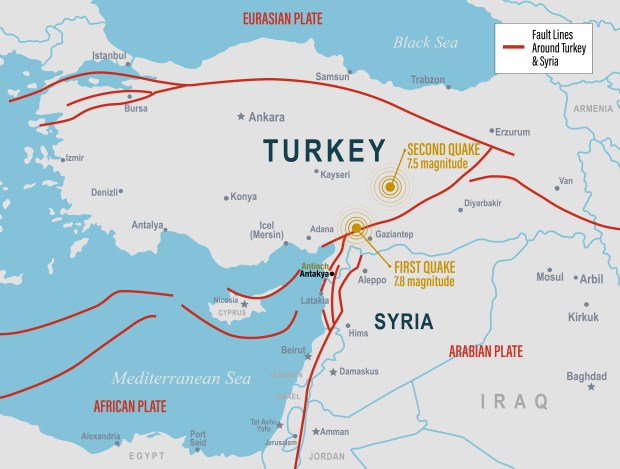
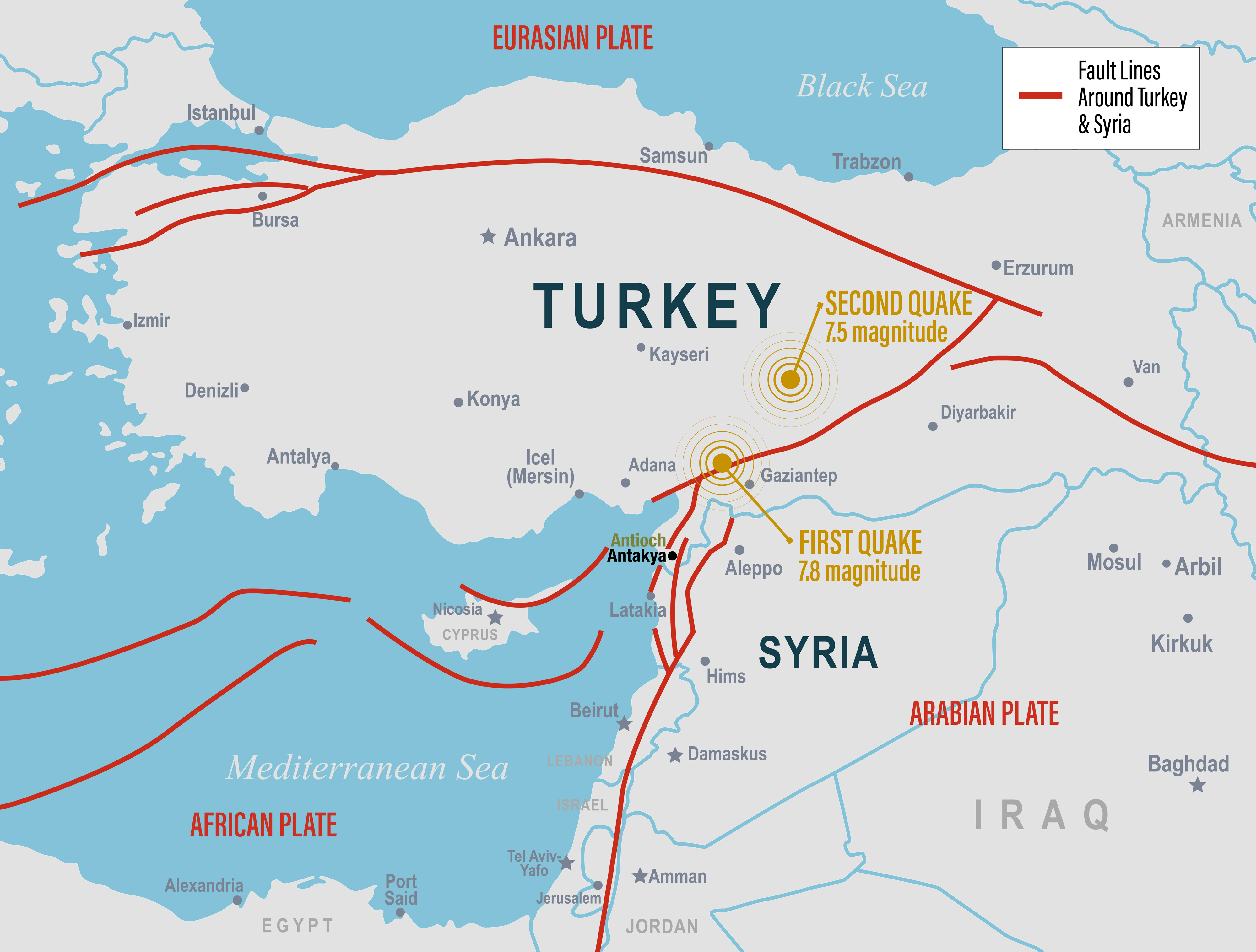
Today, most of these wonders have been impacted after two earthquakes (7.8 and 7.7 respectively) struck southeastern Turkey and northern Syria on February 6. More than 50,000 have died, and just as rescue efforts had ceased and cleanup had begun, two more earthquakes, measuring 6.4 and 5.8, struck outside Antakya on February 20.

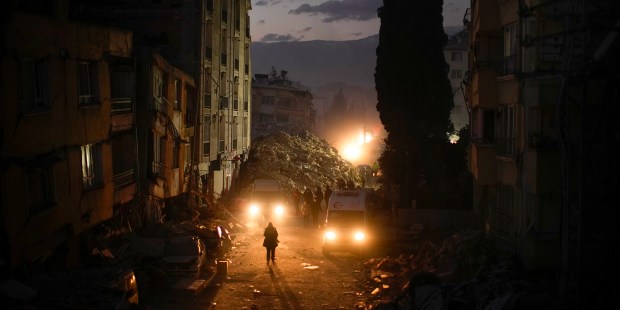
The intensity and concentration of earthquakes has all but wiped out the city. Antakya is largely rubble, and the buildings still standing have been deemed unsafe. Insecure even in temporary shelters and with food, water, and medical care in short supply, people have begun to flee.

Throughout its history—one that began centuries before Christ’s birth—Antakya has come back after numerous disasters. Perhaps its resilient history will give its residents strength as they attempt to restore their ancient home.

Origin story

In 300 B.C., Seleucus I Nicator, a general who served under Alexander the Great, founded a city on what’s now known as the Asi River (previously Orontes). Named for the leader’s father, Antiochus, it became the most famous of the 16 Antiochs in the ancient world.

The site promised a flourishing future for its inhabitants: To the east, Mount Silpius served as a fortification wall; to the west, the Mediterranean Sea offered trade and commerce; and in-between, the valley boasted fertile land for crops and orchards. But these distinct advantages came with a catch: Little did Seleucus know that his chosen location sat atop the Dead Sea fault line. Despite the Greek goddess of luck, Tyche, serving as the patron deity of the city, time after time, earthquakes leveled Antioch.

When not in the aftermath of a geological disaster, Antioch became a transportation hub between the Mediterranean and Mesopotamia and from Egypt and Judea to Asia Minor. The Seleucid Empire’s capital until 64 B.C., Antioch was subsequently incorporated into the Roman Empire by Pompey the Great and named the capital of the province of Syria. In its new status, it became the third-largest city in the Roman Empire, with an estimated population of more than 250,000 people. Its inhabitants were multiethnic and multicultural, a feature of the city that has continued throughout its history to the present day.

Antioch’s diversity also included a Jewish community. Though they largely flourished under the Seleucids, the injustices they experienced during that time stayed with them forever. Around 168 B.C., Antiochus IV Epiphanes forbade circumcision, confiscated Torah scrolls, and forcibly sought to Hellenize (acculturate to Greek social and religious practices) the Jews of the eastern Mediterranean. A local tradition holds that a mother and her seven sons were martyred at the time for refusing to eat pork. Their martyrdom, recounted in 2 Maccabees 7, had a profound impact on later Jewish and Christian views of resistance and martyrdom.

A year later, the Seleucid ruler ordered his troops to storm Jerusalem and to desecrate the temple by sacrificing a pig on its altar, the abomination of desolation prophesied by Daniel (9:27; 11:31). These acts provoked the Maccabean Revolt and Antiochus’s defeat in the subsequent year. The cleansing of the temple and restoration of the altar are still commemorated by Jews annually at Hanukkah.

Ironically, it was Antiochus who brought Jews to Cilicia, the southern region of what is now Turkey, with the intention to reestablish cities there. (It’s possible that Paul’s ancestors settled in Tarsus, Cicilia’s capital, during this time.)

When the Jewish revolt began in Judea in A.D. 66, local officials in Antioch retaliated by massacring Jews. After Roman emperor Titus captured Jerusalem in A.D. 70, he celebrated his triumph in Antioch, taking the bronze cherubim from the destroyed temple and erecting them on the Daphne Gate near the Jewish quarter.

Because of its geographic proximity to both the east and west, Antioch wielded significant cultural and political influence throughout the Roman Empire.

“In what land or sea had the fame of this city not entered?” asked Libanius, a third-century instructor at a philosophy school in Antioch. “Attractions of all kinds bring people from all sides [of the empire], from Africa, Europe, Asia, from the islands, from the mainland.”

No place like home

Because of its prominence in the Greek East, Jewish converts from Cyprus and Cyrene targeted Antioch in the early 40s as a place to preach the gospel in its synagogues. When news reached the church in Jerusalem that many had believed in Antioch, Barnabas was sent to encourage the new believers, in what became the first of many journeys covering the approximate 375 miles between the two cities.

Realizing that he needed assistance with the burgeoning group of disciples, Barnabas made the three-day journey to Tarsus to find Paul. Their partnership began in Antioch and oversaw a growing congregation called “Christians” by their pagan neighbors. (Whether this term was meant to be pejorative is debated, but it stuck to designate followers of Christ, even through today.) The arrival of these apostles from Jerusalem prompted the first Christian cross-cultural act of relief. When a Christian prophet named Agabus prophesied that a famine would strike Judea, the church in Antioch took up a collection to help the believers there, sending aid through Barnabas and Paul (Acts 11:19–30).

In A.D. 46, the early church experienced a tipping point. Prophets and teachers in Antioch were fasting and praying when the Holy Spirit directed the church to set aside Barnabas and Paul for ministry throughout the region. After the church laid hands on them, the duo, along with John Mark, traveled down to Seleucia to begin the first journey. After successful church planting in Cyprus and in the province of Galatia in Asia Minor (modern Turkey), the apostles returned to Antioch to report their success among the Gentiles (Acts 13:1–14:28).

Controversy soon broke out in the Antioch church about whether Gentiles needed to be circumcised and obey the law. Around this time Peter paid the city a visit (ca. A.D. 47–48). Swept up in this controversy, the apostle, along with Barnabas, drew back from eating with the Gentile believers, causing Paul to rebuke Peter for his vacillation (Gal. 2:11–14).

Realizing that the issue needed to be decided before his ministry could continue, Paul took the discussion to Jerusalem, where his gospel of grace was affirmed by the apostles. He and Barnabas were tasked with bringing letters of the council’s decision to the churches of Antioch, Syria, and Cilicia (Acts 15:1–35).

This commission launched the second journey from Antioch. However, John Mark’s desertion in their previous trip prompted the sharp disagreement between Paul and Barnabas about taking the latter’s cousin (Col. 4:10) with them again. Barnabas and Mark returned to Cyprus, while Paul took Silas with him. After Timothy joined the party in Lystra, they planted churches in Macedonia and Achaia and made stops in Ephesus and Jerusalem before again returning to Antioch (Acts 15:36–18:23).

Paul’s invitation to preach in Ephesus prompted a quick turnaround in Antioch, a stop that proved to be his last time in the city. Undoubtedly Paul intended to revisit, but after three years of ministering in Macedonia and Achaia (Acts 19:12–21:17), he ultimately ended up in house arrest in Caesarea and later Rome. Unlike each of his other journeys, which started and ended in Antioch, Paul never made it home this time.

According to tradition, Peter returned to Antioch before traveling westward to Corinth and Rome. Eager to associate itself with the Twelve, the church in Antioch later claimed Peter as its first bishop, though this is historically impossible. Church tradition has also suggested that Matthew moved to Antioch and wrote his gospel there. Because the Antioch church could trace its lineage to Peter and Paul, in later centuries, its bishop was seen as a peer to those in Jerusalem, Rome, and Constantinople. The fourth-century bishop of Constantinople and “early church’s greatest preacher” John Chrysostom called Antioch home.

People walk among the rubble from destroyed buildings in Antakya (Antioch), Turkey.Francisco Seco / AP Images
People walk among the rubble from destroyed buildings in Antakya (Antioch), Turkey.

Reemerging from the rubble, again

While no significant earthquakes struck Antioch during the early church’s first days, the city has experienced nearly 60 earthquakes in its history. Ten of these had a magnitude of more than 7 and caused extensive damage and loss of life.

Despite these repeated natural disasters, Antioch is described as a resilient city that kept reemerging from the rubble. Roman historian Cassius Dio documented an earthquake from December 13, 115, where tens of thousands died, and the Emperor Trajan, who was visiting the city, barely escaped with his life. Survivors gathered in the open space of the hippodrome, similar to survivors gathered in the modern stadiums today.

Dio’s vivid description of the earthquake’s sights and sounds—grinding and breaking of timbers together with tiles and stones, accompanied by tremendous dust—resembles those experienced in Antakya’s recent earthquakes. In the aftermath of the disasters, the Romans arrested the bishop Ignatius and condemned him to death around this time, suggesting that perhaps they blamed Christians for the disaster.

By the time of Justinian, around 30 churches were situated in Antioch and its vicinity. The Byzantine chronicler of Antioch, John Malalas recounts another earthquake on May 29, 526, in which 250,000 persons perished. One of its architectural casualties was the great church built by Constantine the Great that stood seven days before it collapsed. Malalas concludes that the catastrophe was due to God’s wrath against the city, a trope that unfortunately failed to recognize nature’s own role in it.

Over the last 2,000 years, despite numerous imperial transitions, Christians have continuously lived in Antioch. These rulers and governments included the Persians, an Arab caliphate, the Byzantines, the Seljuk Turks, the Crusaders, and the Mamlūks. When this last group arrived in 1268, they lay siege to and later plundered the city in a campaign that killed 17,000 people and burned much of it to the ground, including numerous churches and a monastery outside the city.

Later, in 1517, the city came under the control of the Ottoman Empire. After this fell at the end of World War I, Antakya became a Syrian city before it rejoined Turkey in 1939. Over time, Antakya’s population began to increase and its infrastructure began to develop. At the time of the most recent earthquakes, its population boasted about 225,000 residents.

More recently, geopolitical events have challenged Antioch. When the Syrian civil war broke out in 2011, refugees flooded the city. After the US State Department issued a Level 4 warning not to travel to southeast Turkey, American visitors stopped coming. Then the pandemic hit, restricting most global travel and further reducing potential travel. With restrictions recently lifted, travel to Antioch was just experiencing a comeback.

What happens next remains to be seen. Who knows how many of the city’s traumatized residents will return?

“Antakya’s destruction is a loss to humanity,” Jan Estefan, one of the city’s few remaining Christians, told the AP. “We still want to live here. We have no intention of leaving.”

Though the archaeology museum sustained minimal injury, the earthquake significantly damaged the Greek Orthodox and Catholic church. The Jewish synagogue, which served a community that had dwindled to around a dozen, still stands, but its leader and his wife lost their lives when their apartment collapsed. Numerous mosques with historical and architectural significance, including the Habib-i Najjar, which was once a church, now exist as rubble.

As a biblical historian who has made my home in this part of the world, I hope that Antakya’s residents will return to live in new earthquake-proof structures, that the calls of watermelon sellers will resonate again through its streets, and that kunefe—its special cheese and honey dessert—will again be sold in local shops. I pray that the Christian community, rising like a phoenix from the rubble century after century, can resume its place as part of the social and religious mosaic of this singular city.

Mark Wilson is the founder and director of the Asia Minor Research Center in Antalya, Turkey. He is the author of Biblical Turkey: A Guide to the Jewish and Christian Sites of Asia Minor.

Church Life

Jinger Duggar Vuolo ‘Disentangles’ Her Faith After Gothard Upbringing

She says her new book is “not just for me, but it’s also for the victims.”

Christianity Today March 2, 2023
Courtesy of Jinger Vuolo

One of Bill Gothard’s best-known followers recently became one of his most vocal critics.

Jinger Duggar Vuolo is the sixth kid in the Duggar family, made famous on TLC shows like 19 Kids and Counting. (Her name is pronounced “ginger;” all the siblings have names that begin with J.) The Duggars are known for the distinctive practices they learned through Gothard’s Institute in Basic Life Principles (IBLP): dressing modestly, courting before marriage, modeling their Christian faith, and having as many children as possible.

Last month, Vuolo released a spiritual memoir following her personal reckoning with what she considers Gothard’s false teachings and unbiblical, fear-based system. In Becoming Free Indeed, 29-year-old Vuolo “disentangles” her beliefs and joins a growing wave of Christians who say they have shifted and deepened their faith by leaving legalism.

In the book, she describes being constantly worried that God wanted to punish her disobedience—for not confessing some “secret sin,” playing broomball instead of praying, accidentally revealing her knees in a skirt, exposing herself to alcohol at the grocery store, even not eating enough fiber in her bread. In her 20s, she finally found a gracious God who made himself clear in his Word, without the need for Gothard’s rules and rhemas.

“A few years ago, it became abundantly clear to me that this man I had always looked up to as a model Christian was, in fact, no better than the false teachers Jesus and Paul described,” she wrote. “Gothard was not only teaching his own principles instead of Christ’s but reportedly harming those closest to him.”

With 1.4 million Instagram followers and enough readers to become a New York Times bestseller, Vuolo now represents the most prominent voice speaking out about Gothard—who resigned from IBLP nine years ago this week over allegations of sexual harassment from dozens of women.

“I started to realize just how much damage he had left behind,” she told CT in an interview. “I think I denied a lot of that when I was in the system when he first was accused, but when I started getting into all that had transpired since I came out of it, it was so heartbreaking. It gave me more fuel to want to write this book. This has to be said; I have to speak up because it’s not just for me, but it’s also for the victims.”

According to IBLP, Gothard taught more than 2.5 million seminar attendees over decades of ministry, many of them conservative Christian homeschooling families like the Duggars who gathered for annual conferences in suburban Chicago and at its headquarters in Big Sandy, Texas.

Former IBLP members and women who say they were groomed by Gothard have spoken out about his organization and theology for years; more than a dozen filed a lawsuit that was dropped in 2018. Gothard said handholding, hugs, and touching young women’s feet and hair crossed boundaries but were never done with sexual intent. He has maintained his innocence and called the women’s claims a conspiracy against him; Vuolo concluded that “their testimonies are too consistent to deny.”

“It’s disturbing that an older man insisted on surrounding himself with young girls, some of whom were still minors. And he did so in the name of service to God,” Vuolo wrote, noting that the unmarried seminar speaker recruited young women to work as assistants at the office of an organization that taught against women having jobs outside the home.

In addition to her concerns around Gothard’s behavior and teachings on abuse—IBLP materials list “immodest dress” and “being out from protection of our parents” as reasons God may allow victims to be abused—Vuolo critiques Gothard’s overall life-improvement philosophy that promises to bless families who obey. In all, Becoming Free Indeed mentions Gothard by name over 300 times. Its dedication goes out “to those who have been hurt by the teachings of Bill Gothard or any religious leader who claimed to speak for God but didn’t.”

Vuolo said she considered herself among the most devoted of her siblings and once told Gothard that she owed her existence to his teachings since he influenced her parents’ decision to keep having kids.

IBLP continues to feature Gothard on its site and share his resources. Since leaving the organization, 88-year-old Gothard has founded a new family prayer ministry and authored 29 more books. Neither IBLP nor Gothard responded to CT’s requests to comment on Vuolo’s criticism in her new book.

Vuolo encountered expositional preaching and deeper study of Scripture through her now-brother-in-law Ben Seewald, a Southern Baptist pastor married to the third Duggar daughter, Jessa Duggar Seewald. Then she discussed questions around Gothard’s teachings with her future husband, Jeremy Vuolo, the son of a Reformed Baptist pastor and now a seminarian at The Master’s Seminary.

By the time she attended her final IBLP event five years ago, a lot of the people Vuolo had grown up seeing at the conference year after year were no longer there.

“So many I know and love have decided Christianity is not for them because all they ever knew was Gothard’s version of it. They assume God is oppressive and overbearing, just like Gothard’s theology. When they see so-called Christians treating others poorly, and leaders like Gothard accepting it, they think God is like that too. My heart goes out to them,” she writes in the book. “I can understand why they don’t want anything to do with Christianity.”

https://www.instagram.com/p/CoCjMuALG5Q/

After Becoming Free Indeed came out last month, Vuolo said some friends who had been raised in IBLP told her they appreciated that she said what they felt like they couldn’t. Others said they continue to wrestle with their faith. Vuolo thanks God that her questions have led her to reject “so much of the religion of my youth, but I have not rejected Jesus.”

Some fellow IBLP critics and others who write about the journey away from fundamentalist faith have recognized the significance of Vuolo’s testimony.

“For Jinger to really come out against something that her parents are still actively supporting—I mean, that’s just a whole other level of bravery,” Emily Elizabeth Anderson, one of the women involved in the lawsuit against Gothard, said in an interview with The Roys Report.

“She clung on to her faith, and I have as well,” she said. “But yet, we are having to completely disentangle the true and the fear-based teachings, and separate those.”

Last December, Anderson posted a viral clip on Instagram about her journey leaving and healing from IBLP; she included pictures of herself with Gothard and said he had groomed her for six years.

Kendra Fletcher, author of Lost and Found and Leaving Legalism, has seen the value of testimony among those who have made the difficult decision to move away from the religion, rules, and community that once encompassed their lives. “When we realize that others are walking a similar path, we can hold each other up in our grief and in our joy,” she said.

Fletcher, who blogs about faith and homeschooling, belongs to an online community of Christians who have left legalistic communities. It can be hard to find balance on the other side, especially when people find comfort, order, and a sense of control in black-and-white religious rules.

“What I see is either a complete rejection of Christ and the gospel—the baby out with the bathwater—or a shift to a type of practice that is legalism-adjacent,” she said. “Most of us ride a pendulum swing. Somewhere along the path out of a legalistic environment, we have to encounter Christ all over again or it just becomes too easy to grab a pen and paper and write a fresh to-do list.”

Because Vuolo experienced for herself a degree of comfort and certainty within Gothard’s system, she can see why her parents still follow his teachings. She does not criticize her mom and dad, Michelle and Jim Bob Duggar, in the book but places blame on Gothard himself.

“When you’re in that setting, you can just lean so heavily into it and be engrossed in it, ingrained in it, and think that’s what is best for everyone,” she told CT. “And at the same time, I will come down very hard against Bill Gothard in his teachings because he is the leader of this. And I want to share in a way that, whenever Scripture comes up, it exposes the darkness and the error.”

The Duggar family has been criticized from the outside for their affiliations with Gothard, particularly around their oldest child, Josh Duggar, who had attended a training program through IBLP as a teenager after his parents discovered he had sexually molested girls in their home. There was no legal report or charges against him. The 34-year-old was convicted last year of possessing child sex abuse material.

“One of the hardest realities in my life is that my brother Josh very publicly displayed some of the same hypocrisy as Gothard,” Vuolo wrote. She has not spoken to Josh in over two years.

Living in California—as one of the only Duggar kids to move from their home state of Arkansas—Vuolo’s life looks different now. She ministers to college girls even though she didn’t go to college, and she’s learning to swim for the first time. The mom of two likes secular music and museums and riding bikes in pants rather than skirts.

But the biggest difference is what happens when she opens the Bible, she said. Instead of reading the Psalms and assuming the warnings around destruction and disobedience are meant for her, she finds refuge in an expression of fatherly love. She remembers the promise in John 10:28 that God keeps her and no one can pluck her out of God’s hand.

“That’s a beautiful thing that I now find rest for my soul in—realizing like it’s not this performance-based religion,” she said. “That’s just religion. That’s not a relationship with Jesus.”

Theology

Lived to Be Forgotten: Dixon E. Hoste, Missionary to China

The successor of Hudson Taylor as leader of the China Inland Mission never sought fame but was remembered for his earnest prayers.

Dixon Edward Hoste

Dixon Edward Hoste

Christianity Today March 2, 2023
Edits by Christianity Today / Source Image: WikiMedia Commons

Dixon Edward Hoste (1861–1946) was a British missionary who served in China for over 40 years. Although he succeeded James Hudson Taylor as the general director of the China Inland Mission (CIM), much less has been written and recorded of his life and ministry than of Taylor’s.

D. E. Hoste: A Prince with God

D. E. Hoste: A Prince with God

Kingsley Press

220 pages

$12.99

This is not, however, because Hoste lacked achievements and contributions to the mission in China. He was instrumental to CIM’s development not only in terms of organization and mission mobilization but also in the indigenous principles that encouraged Chinese churches to self-grow and rely less on Western missionaries, as well as in dealing with the difficult Boxer Rebellion aftermath with grace and “the power of gentleness,” as former CT editor in chief David Neff put it.

One of the most important and striking characteristics of Hoste was his prayer life—and related to that, his true humility before God and in his ministry. Hoste never sought fame or power. Instead, he was determined that his name and reputation would be subsumed under the desire to see Jesus get all the honor for everything. Hoste “lived to be forgotten” because he chose to be “hidden with Christ in God” (Col. 3:3).

Talking to God

Dixon E. Hoste was born on July 23, 1861, four years before CIM’s founding. Both his father and his grandfather were military men. When Dixon was 17, he entered the Royal Military Academy. At 18, he received his commission as a lieutenant to serve in the Royal Artillery.

Three years later, in 1882, Dixon’s elder brother, William, invited him to attend a special meeting in Brighton where the speaker was the American evangelist D. L. Moody. Phyllis Thompson, author of D. E. Hoste: A Prince with God (the primary biographical source in this article), described the scene. When Moody prayed, Thompson wrote, Dixon felt that he “talked as though God was there, as though he knew him, as a man talks to a friend. He talked as though God could be depended upon to do his work in men’s hearts, right then and there.” Hoste was converted at the meeting. Moody’s prayer left a deep impression on him that shaped his own prayer life over the next 40 years.

It did not take long before Hoste came across Hudson Taylor’s little book China: Its Spiritual Need and Claims. Hoste was captured by Taylor’s call for missionaries to serve “four hundred millions of souls, ‘having no hope, and without God’” in China. Hoste wrote to the London office of the CIM in 1883 and offered himself to be a candidate.

However, the reference letter from the vicar of Sandown, Isle of Wight, W. T. Storrs, was not totally encouraging. On Hoste’s application form (in the OMF International archive) Storrs praised Hoste’s Christian character, calling him “a straightforward fellow, with much love and faith.” But he also characterized Hoste as naturally shy, a little impulsive, not able to teach well, not very enterprising, and not “naturally fitted” for missionary work—with a disclaimer of “but I may be mistaken.”

Though the clergyman’s assessment wasn’t very hopeful, Thompson writes, members of the London Council took note of the spiritual stature of this quiet young man. He was clearly humble and sincere and even in his youth demonstrated balanced judgment and foresight. Though he was not particularly strong, the doctor’s report that he was healthy assured the Council that he would be able to endure physical hardship and privation. In the end, he was accepted as a “probationer” to join the CIM.

As a young man, Hoste admitted his struggles in prayer. Like others, his mind tended to wander when he prayed. On one occasion, after he was already serving in China, he wrote to Hudson Taylor seeking his advice. Hudson Taylor wrote back to this young missionary with a reassuring note: “I have found more help in praying aloud, and praying while walking about—talking as to a present Lord—than in any other way. … I do not think that wandering in thought at all necessarily indicates a loss of spiritual life.”

With Taylor’s words of encouragement, Hoste developed a habit of walking while praying aloud that he continued even after he became the general director of CIM. Thompson said about Hoste: “Prayer to him was as natural as a child talking to a father whose perfect love had cast out all fear.”

Lowly in spirit

Hoste belonged to a group of British missionaries to China known as the “Cambridge Seven.” All seven bright young men were sent to China under the banner of the CIM. Among them, Stanley Smith was probably the most prominent, Thompson records. Smith, a star athlete in the university, was also a natural public speaker. Hoste, by contrast, was unassuming and quiet, feeling rather comfortable to be in the background. Besides, his thin, high-pitched voice and somewhat hesitant manner made his speech less effective. Both Smith and Hoste were sent to work under Pastor Hsi (Xi Shengmo) in Shanxi, a strong, charismatic Chinese leader who ran refuges for opium addicts.

About a year and a half after Hoste’s arrival in China, Smith asked him to join the work at a newly opened station in Hungtung, Shanxi, that Smith would lead. As they had been sent out to China at the same time, Hoste did not feel prepared to accept this arrangement. Subsequently, however, it was impressed on Hoste’s conscience that his refusal was due not to a pure desire for God’s will and glory but rather to an unwillingness to humble himself and take the low place. Hoste reflected on this matter prayerfully and recognized that Smith was better qualified than himself for the leadership. In the end, Hoste told Smith that he was prepared to accept his proposal.

Part of the Cambridge Seven upon arrival in China in 1885. Back row (from left): C. T. Studd, M. Beauchamp. Front row: A. T. Polhill, D. E. Hoste, C. H. Polhill.Illustration by CT / Source Images: OMF International
Part of the Cambridge Seven upon arrival in China in 1885. Back row (from left): C. T. Studd, M. Beauchamp. Front row: A. T. Polhill, D. E. Hoste, C. H. Polhill.

In the ten years Hoste had worked under Pastor Hsi in Shanxi, he had recognized Hsi’s leadership. Steering under Hsi, who was known for his dominating personality and quick temper, required a great deal of patience and humility. Yet Hoste was willing to support Hsi and follow his leadership, even when others in the CIM disagreed. Hoste considered himself to be the little man who could “sort of steer” quietly from the back. He never sought to be in the limelight.

The CIM faced one of its most severe crises in 1900 during the Boxer Incident when 58 CIM missionaries and 21 of their children were martyred. Though other missions organizations in China sought monetary compensation from the Qing government for the lost lives of the missionaries killed by the Boxers, CIM decided to forgo that option, choosing instead to look to God for provision. Hoste went to Shanxi and handled the issues of church rebuilding and compensation waiving. In the “Monthly Notes” of the May 1901 issue of China’s Millions, he wrote the following words in accordance with CIM’s decision:

It will be well for Missionaries to take a more Christ-like course; and even gladly to suffer the loss of all things, that the Gospel be not hindered. Our own Mission has decided to make no claim whatever, either for life or property, and has assumed the responsibility of the orphan children of the martyred Missionaries.

While CIM missionaries were being killed, Hudson Taylor was unwell and realized that he could not provide leadership at such a critical time as he was far too weak. Even his wife, Jennie, dared not show him all the letters from China, fearing they could prove to be too much for him.

Before the Boxer Incident, William Cooper was considered to be a promising younger CIM colleague who could succeed Hudson Taylor. However, Cooper was killed during the uprising. Taylor knew he urgently needed someone to take on leadership—someone who understood the China situation well. J. W. Stevenson was the China director at that time. Even so, Taylor approached Hoste, a much younger and comparatively less experienced person than Stevenson.

Hoste had served in China since 1885, but his work was mainly confined to Shanxi. He had little exposure to the wider work of the CIM. Thus, when Hoste received the letter via cable from Hudson Taylor, Thompson writes, he almost straightaway declined the appointment by telegram.

But soon after Hoste sent the telegram, he came down with a life-threatening illness and remained sick for the next few months. After nearly four months of wrestling in prayer while unwell, Hoste finally wrote to Stevenson, his supervisor, “I feel I ought to accept the appointment; if, however, you do not see your way to agreeing … I shall [be] free from responsibility.”

But Stevenson readily agreed. Calling Hoste into his office, he said, with tears in his eyes, that the Lord had given him not only peace about it but also joy in the assurance that it was of God and would be for blessing. In January 1901, Hudson Taylor confirmed the appointment of Hoste as the acting general director of the CIM.

After the Boxer Incident, Hoste wrote an article titled “Possible Changes and Developments in the Native Churches Arising out of the Present Crisis.” Instead of focusing on the suffering of the missionary community due to the Boxer Incident, Hoste emphasized the future of the Chinese church, believing that the Chinese church could mature only without the control of foreign missionaries. His article insisted that the sole authority the missionaries should display was of a spiritual nature—and even there only as guides and exemplars. At all costs, they should seek to avoid dependency.

Hoste had always prayed that the Chinese church would be led by the Chinese and be self-governing, self-supporting, and self-propagating. Hoste’s vision for the CIM was not that it would become big and influential. Rather, his dream was for CIM to retain the willingness “to be small, despised and to be poor and suffer hardness.”

Praying for the two hundred

In 1929, Hoste issued a call for prayer for 200 new workers to be sent to China before the end of 1931—an appeal known as the Forward Movement. In typical fashion, he wrote a “direct and unemotional” letter stating the need so that all the mission’s friends and supporters could hear. As Thompson describes:

In Australia and New Zealand, in North America and Great Britain, the appeal went forth. Pamphlets and cards were printed and meetings convened to make known the spiritual need of China and the new response that it had called forth from the Mission. Prayer was being made definitely for two hundred new recruits to be on their way to China before the end of 1931. What would be the answer of God?

Hoste in peasant clothes sitting next to a young Chinese man.Illustration by CT / Source Images: OMF International
Hoste in peasant clothes sitting next to a young Chinese man.

Hoste well recognized the spiritual issues involved. As the months passed, the “urgent necessity for prayer became apparent.” Only one in six of those who offered to serve were deemed suitable; the others were rejected due to health, age, and other issues. Neither natural nor spiritual qualifications could be lowered to meet the quota. As 1930 came to an end, only 90 new workers—less than half the desired number—had sailed for China.

With one year remaining, about 110 candidates still needed to be accepted, trained, and sent to China in answer to the Forward Movement appeal. Hoste declared, “We must have a day of prayer.” Thompson described the mood at the beginning of 1931.

Tuesday, February 10th, was set aside to be given up entirely to prayer that God would yet grant their request for the full number of two hundred new workers to be sent out before the end of the year. Cables were sent to North America, Australia, New Zealand and Shanghai, calling as many as possible in the fellowship of the Mission to unite in pleading with God on this day.

And God answered the prayers. From that day onward, “the tide began to turn.” By the end of 1931, Thompson wrote, some 203 new workers had set sail for China—“the last party, six young men, leaving England on December 31st!” Hoste witnessed God’s amazing answer to this prayer at the age of 70.

In June 1935, during one of the regular China Council meetings, Hoste vacated himself as chair of CIM and handed the role to George W. Gibb, the China director. Hoste had already been in leadership for over three decades by then, serving as the general director since 1900. If there was one thing that colleagues keenly remembered about Hoste, it was his prayer life.

“Patient, persevering prayer,” wrote Hoste, “plays a more vital and practical part in the development of the Mission’s work than most people have any idea of.” Hoste did not talk much about prayer, formulate a philosophy of prayer, or analyze its effects. He just prayed.

“It was because of his prayerfulness, more than any other quality, that he gained and maintained the confidence of the members of the Mission” in 35 years of leadership, Thompson noted.

Bishop Frank Houghton of CIM wrote, “While Mr. Hoste, being human, was not immune from errors of judgment, yet criticism was silenced, dissatisfaction found no room to grow or spread, because our General Director was a man who spent much time with God.”

Patrick Fung is the current general director of OMF International (formerly CIM).

This is a modified excerption of “Dixon Hoste and Prayer” by Patrick Fung in OMF International’s Mission Round Table magazine. Repurposed with permission.

Ideas

‘Christian America’ Isn’t Dying. It’s Dividing.

Contributor

The greatest threat to the church today isn’t apostasy—it’s regionalism.

Christianity Today March 1, 2023
Illustration by Mallory Rentsch / Source Images: Getty

Recent demographic analyses suggest that Christians will constitute a minority of the American population in less than 50 years—which has understandably caused some alarm among believers. But most of the anxiety is misplaced.

This is not the first time that prognosticators have predicted the imminent end of Bible-believing Christianity. Such predictions have been circulating for the past hundred years. There are good reasons to believe that orthodox Christianity in the United States is not likely to retreat in the same way that it has in Britain or much of Western Europe.

Instead, it will transform—and the result is likely to be disconcerting to believers and secularists alike.

To understand what changes are likely to occur in the next half century, it’s important to remember what did—and did not—happen after each of the earlier predictions of the imminent collapse of American Christianity or evangelical Protestantism.

In the 1920s and 1930s, liberal Protestants predicted the demise of those who believed in the “fundamentals” of the faith—including the Virgin Birth, biblical inerrancy, and the literal, physical second coming of Jesus.

Such projections concluded that American Christianity would become overwhelmingly liberal in its theology and these “fundamentalists” would account for only a small minority.

“Fundamentalism is still with us but mostly in the backwaters,” liberal New York pastor Harry Emerson Fosdick declared in 1935. “The future of the churches, if we will have it so, is in the hands of modernism.”

In the mid-1960s, professors at America’s leading divinity schools began predicting not only that would belief in the “fundamentals” soon shrink, but that even Christian theism itself might vanish—at least among the educated. Their reasoning at the time was that belief in the God of the Bible no longer seemed rational or met the needs of the contemporary generation.

For instance, mid-20th-century theologian Paul Tillich attempted to redefine God in existentialist terms as the “ground of being,” and Harvard Divinity School professor Harvey Cox’s tried to redefine Christianity as a secular ethic. Most controversial of all, a Time magazine cover in April 1966 provocatively asked the question “Is God Dead?”

In the early 21st century, analyses of public opinion polling data led some to predict “the end of Christian America,” as a Newsweek cover story phrased it in 2009.

In other words, for the past century, numerous people have been predicting that orthodox Christian doctrine, and maybe even Christian theism or the Christian label itself, would become passé in the United States, especially among the educated.

And in the end, it turns out theologically orthodox Christianity has had a lot more staying power than these predictions have suggested.

Few would have guessed from hearing Fosdick’s sermon in 1935 that a young man named Billy Graham had just experienced an evangelical conversion at a revival service in rural North Carolina. The most famous American evangelist of the 20th century (and a confidant of several US presidents) would retain a belief in the authority of the Bible and the “fundamentals” of the faith that Fosdick believed were outdated.

Some of those who read Cox’s The Secular City or saw the Time cover announcing the demise of belief in the mid-1960s might not have guessed or predicted that Christians would continue to gain cultural and political influence in the country.

Five years after Time asked “Is God Dead?” its 1971 cover story was on “The Jesus Revolution”—and another five years after that, Newsweek proclaimed 1976 “the Year of the Evangelical.”

Those who believed that the end of George W. Bush’s presidency marked the beginning of the “decline and fall of Christian America” were clearly premature in their predictions, as the political events of the next 10 years showed. Similarly, Fosdick and the liberal theologians of the mid-20th century were incorrect in their prediction that educated people would no longer be attracted to Christian orthodoxy.

Such trends suggest that traditional Christian doctrines like the Virgin Birth may have had more appeal even to the educated than liberal Protestants had once expected.

It’s tempting, therefore, to dismiss the latest predictions of Christianity’s decline in the United States as yet another forecast doomed to fail. But before we become too triumphant in our thinking, we need to remember that while earlier predictions of the end of theologically conservative Christianity were not entirely right, they were not altogether wrong either.

If we want to know what is likely to happen to American Christianity over the next few decades (and what the predictions of its coming decline really mean), we need to understand what did happen after each of the predictions in the past—not just what didn’t.

Fosdick was not entirely right in saying that believers in the fundamentals of the Christian faith would occupy only a marginal position in American Christianity, the 1920s and 1930s really did mark the end of a certain kind of Christian influence, as Fosdick suspected. Specifically, when it came to Northern Protestant institutions, he was mostly correct.

In the North (and even in many parts of the South), nearly every Protestant educational institution took the liberal side of the fundamentalist-modernist divide. So did the major Northern denominations and many of the largest interdenominational ministries and missions organizations.

Thus, the 1920s marked the formal end of Bible-believing evangelical cultural dominance in most areas of the country that were outside the South or some parts of the Midwest. That is, the US was still culturally Christian by the mid-20th century, but the most common cultural expression of that faith was not fundamentalism.

Instead, it was almost entirely aligned with the theologically liberal ecumenical Protestantism taught in the Ivy League divinity schools and treated as normative in the nation’s news magazines.

Plenty of Americans still went to churches that preached a doctrine of salvation from hell through faith in Jesus. But except for Billy Graham, this was not the version of Christianity claimed by most theologians and pastors gracing the covers of Time.

In the 1960s, the US experienced another religious shift. While one could certainly not say God was dead—with fewer than 5 percent of Americans identifying as atheists or agnostics at the time—traditional Christianity did experience a blow from which it never fully recovered. Specifically, ecumenical Protestantism had in fact lost some of its cultural dominance.

During the previous decade, church attendance had reached record highs, and 75 percent of Americans said that religion was “very important” to them, but that number plunged to 52 percent by the late 1970s. Many liberal Protestant colleges dropped the last vestiges of religious belief as a rising number of young baby boomers began seeking spiritual fulfillment outside of organized religion.

Yet as we now know, most of the decline in church attendance during this era occurred not among evangelicals but among liberal Protestants and northern Catholics. Southern Baptist churches grew rapidly in the 1970s. The Northeast and West Coast became more secular, but the South did not.

If history is any guide, we can expect the current predictions—that fewer than half of Americans will identify as Christians—to contain an element of truth. But it probably won’t play out exactly as many people anticipate.

Instead, it is more likely that liberal Protestantism will continue to decline in numbers and cultural influence as fewer people identify as Christians—especially among those who live in the northern states and do not attend church. From the beginning of social science surveys, the percentage of Americans who identify as “Christian,” whether Protestant or Catholic, has always been much higher than the percentage of Americans who regularly attend church.

But that probably will not be the case to the same extent in the future.

Indeed, in several northeastern states, Christianity already looks like it does in Canada, where just over 50 percent of the population identifies as Christian. In Vermont, for instance, only 54 percent consider themselves Christian, and in Massachusetts, that number rises only to 58 percent. In both states, only about 40 percent of people say they are certain that God exists. And in both states, less than 25 percent of the population report attending church weekly.

It’s likely there will come a point when those who are unsure about God’s existence and who don’t attend church very often will drop the Christian label—or at least their children will. And if that happens, the Northeast may start to look like the United Kingdom, where less than half the population even claims to be Christian.

Whereas in Alabama, 86 percent of the population currently identifies as Christian, 82 percent are “absolutely certain” that God exists, 65 percent are evangelical or Black Protestant, and 77 percent say that religion is “very important” to them. Thus, it’s difficult to foresee what sort of imminent demographic change could cause the state to become majority non-Christian.

More than that, 51 percent of people in Alabama say they attend church every week, and 84 percent go at least some of the time. Even if religion became a bit less important to millennials and Gen Z, it’s hard to imagine Alabama and other parts of the rural South being entirely taken over by “nones.”

An America in which only a minority of the population is Christian would therefore look less like Britain and more like Italy, where a culturally conservative Catholic south has long been at odds with a more urban, industrial, and post-Christian north.

Or, to use an example closer to home, it might resemble the state of Pennsylvania, where one can find pockets of conservative Mennonites, evangelicals, or devout Catholics living only a few minutes’ drive away from very secular, post-Christian places.

The dominant strand of Christianity in the US may well be theologically conservative—but those theological conservatives will not be evenly distributed across the American landscape.

Instead, in northern cities, they’ll be concentrated heavily among immigrant groups, and they’ll be a minority in the rest of the population. They may be more likely to attend nondenominational churches that lack the institutional presence of established groups that have dominated American religion for most of the country’s history. But in the rural South, Christianity will likely remain as much of a cultural rallying cry as ever, even as southern Christians sense the rest of the country moving away from their beliefs.

It’s quite likely, in fact, that the end of Christian America will mean an increased public association between Christianity and the cultural values of the rural South—at the extreme end of which is Christian nationalism.

If that happens, much of the South may well become even more fervent in its culturally Christian displays of public religiosity. This happened before, in the late 19th century, when many white Southerners embraced a “Lost Cause” theology—combining evangelical piety with white supremacy and regional pride.

The “end of Christian America” will therefore not likely lead to widespread secularization and religious apathy, as it has in much of Europe, but rather to increased cultural polarization.

The conflation of religious faith with regional values is likely to make Christianity less appealing to Americans in secularized regions of the country—and less authentically Jesus-centered in the regions that conflate Christianity with regional pride.

And while the regional polarization of American religion may be a hindrance to the spread of the gospel, perhaps this new cultural reality will prompt followers of Jesus to look to the pages of the New Testament once again.

In the first century, Christian disciples found themselves at odds with the culture of both the highly religious regions of Galilee and Judea and the deeply hedonistic or intellectually skeptical environments of Corinth and Athens. The Christian church was born in an environment where disciples were outcasts in both the synagogue and the pagan theater.

Likewise, in today’s environment, Christians who want to be witnesses for the gospel will need to be more discerning than ever to avoid linking the cause of Jesus to a regional faction.

Perhaps in a post-Christian, regionally divided country—where regional expressions of Christianity like Christian nationalism still exist—an authentic Christianity can continue to flourish as a vibrant countercultural alternative.

Daniel K. Williams is a professor of history at the University of West Georgia and the author of Defenders of the Unborn: The Pro-Life Movement Before Roe v. Wade.

Church Life

A Revival in America Answered My Prayers for Europe

Look at history! Revivals rarely stay put.

Christianity Today March 1, 2023
Illustration by Mallory Rentsch / Source Images: Unsplash / Lightstock

Two weeks ago, I flew nearly 5,000 miles from Rome to Kentucky to witness a revival, something I have prayed for, for years. As someone who left my homeland of Brazil to serve in Italy as a missionary for the past decade, I have continually asked God to make himself known again across the continent.

The videos I watched, the stories I heard, and the time I spent myself at Asbury University, led me to believe that what God had done in Asbury was not for Asbury alone. True revivals always spread, and one of the reasons I had come to believe this was an authentic move of God was from what I had seen and learned from one of the humble leaders now shepherding this one.

Back at a student chapel at Asbury Seminary in 2016, David Thomas, a local UMC pastor, shared about a trip to an island off the coast of Scotland to interview 11 eyewitnesses who had experienced the Hebrides Revival:

They described something more essential: a kind of spiritual posture that was found among some who were the catalytic core—a spirit of urgency and audacity, an attitude of brokenness and desperation, a manner of prayer that could be daring and agonizing. These friends in the Hebrides referred to it as travailing prayer, “like the Holy Spirit groaning through us,” they said, like a woman … in labor, like Paul in Galatians 4:19 travailing as if in the pangs of childbirth that Christ might be “formed in you.”

Thomas went on:

And … ever since I looked into the eyes of those people who once saw what you and I so long to see, I’ve become convinced that the real beginnings, the true native soil of awakening is the plowed-up hearts of men and women willing to receive the gift of travail.

It was the first time I heard someone putting into words what I and other friends have been experiencing as we prayed for Europe in recent years. Thomas compared it to a ‘’groaning,” like the one in Exodus 2:23, when the enslaved Israelites cried out to God.

Thomas believes that revival cannot be manufactured; instead, it is God intervening, and God intervenes as a response to people who are crying out to him, often through travailing prayer. This, says Thomas, “is not the only thing we do. But it is the first thing, and it is the most important thing.’’

I believe that what we saw the past weeks in Asbury will lead to a deeper hunger for the presence of God and an outcrying of even more voices, joining those of ours that long for revival in Europe. Look at history! Revivals rarely stay put.

My prayer journey

The seed for my own prayers for revival began during a difficult period for me. I had been struggling with anger for years. These outbursts felt awful, specifically because the people who would suffer the most were my two sons and husband.

Seven years ago, a friend recommended Bruce Wilkinson’s book The Freedom Factor. In it, Wilkinson asks his readers to list every person in their lives that they had not fully released forgiveness for. I wrote down 27 names. Then one by one, armed with the conviction that Jesus had fully forgiven me, I forgave each one.

To my utter surprise, after releasing forgiveness, I had a fresh hunger for God. I spent hours in my room in prayer and worship, unable to do anything else.

I started praying night and day for a revival among the student generation in Europe. The only thing was, the idea of a revival was completely new to me. I literally had to Google “what is revival” and “history of revivals” to try to understand what was happening and what I had been praying.

When I prayed specifically for Europe, I started to experience a different kind of prayer— a type of intercessory prayer. This travailing prayer had few words; instead, I mostly wept and groaned. At other times, it looked like crying and laughing. The experience felt weird.

But, at the same time, I knew I was yielding to whatever the Spirit was leading, and the words of Paul in Romans 8:26 finally made sense to me: “We do not know what we ought to pray for, but the Spirit himself intercedes for us through wordless groans.”

As I later learned, travailing prayer was strongly linked with the idea of “birthing,” where “the Spirit is birthing something, bringing forth life,” as Maxie Dunnam describes in The Intercessory Life: A Missional Model for Discipleship. “It is a form of intercession that releases the power of the Holy Spirit to give birth to something ongoing, redemptive, reconciling, and healing in people.”

Months into my prayer journey, I found out that I was not alone in offering travailing prayer for Europe. In October 2020, Elisabeth Pesonen, an Australian living in Finland, experienced this type of prayer when YWAM leaders visited Slovenia and she began to pray for the central European country.

In February 2021, Benedicte Mella from Norway, the director of Onething Europe, visited our home, and when she began interceding for Norway, she experienced a similar visceral prayer, mostly through tears, groaning, and shouts of Norway! Norway!

As I began to pray regularly with Elisabeth, Benedicte, and others representing different parts of the continent, travailing prayer also offered us the ability to connect with God at a visceral and intimate level. Rather than praying in our second language (English), we could address God from the heart in a way that transcended words.

From Asbury to Europe, and the rest of the world?

We had prayed for revival in Europe. So why did we see this revival in the States as a possible answer to our prayers?

Back in my days of researching revival, I found instances where revival had broken out in one place and then spread to another. (Within several days of reports coming from Asbury, neighboring universities had already reported revivals of their own.)

The 1904 revival in Wales touched India, Korea, China, America, and Scandinavia in an era without flight, internet, or social media. The Moravian revival in 1727 had a deep impact on John Wesley, who led the 18th-century revival in the Church of England that gave birth to Methodism. This movement of God also crossed the ocean to the US with George Whitefield, who became an instrumental figure in the First Great Awakening.
As soon as my ministry partners and I heard what God was doing in Asbury, we wanted our European students to learn the news. So, 24-7 Prayer and Revive Europe hosted a Zoom call the first week of the revival so they could hear from the students who had led worship or participated in worship during the revival.

Now, at the student movement I lead, Revive Europe, we are praying and rethinking our entire year in light of what God has done in Asbury. How can we steward what he has done in the US so students here in Europe can also be a part of a move of God?

Josh Green, the UK 24-7 Prayer youth director, has also experienced travailing prayer and serves a part of the world where young people are harder and harder to find at church.

‘’Hearing about Asbury is music to our ears,” he said. “Just this past October, at our 24-7 Prayer Gathering in Belfast, we were crying out for God to spark a prayer movement in young people once again.”

Even as the fire of the revival has already impacted both sides of the Atlantic, it is also touching the rest of the world.

In a matter of days after the Asbury revival started, people from China, Kenya, Brazil, Lebanon, and other European nations had traveled to Kentucky, eager to experience God and awaken something similar in their own countries.

Since returning from Kentucky, I’ve spoken with the organizers of the Arise Asia conference, which is bringing together over 1,500 students from all across Asia this July. They too had visited Asbury in person and have been praying about how to steward what they have seen in the different Asian countries.

In 2024, the Lausanne Movement will convene leaders from every nation in Seoul at the 4th Lausanne Global Congress. Two others from the nine-member program team (of which I am a part) also visited Asbury. The team has been in preliminary conversations of how the movement God has started in Asbury might impact next year’s Global Congress.

The saying goes that “what happens in Vegas stays in Vegas.” But Asbury professors repeatedly told us that this revival should be the opposite: what happens at Asbury should not stay in Asbury.

Instead, they called for the revival to go across campuses, churches, streets, and society. In their own words, “If it doesn’t get to the streets, if it doesn’t get to the nations, it didn’t get where it was meant to be.”

It is my longing—and a longing of many others—that what happened in Asbury will indeed not stay in Asbury but will touch the global church for God’s glory.

“What’s happening at Asbury is not everything but it is something, and right now we need something to shock the system so that this generation can experience for themselves the life-changing power of God,” wrote the founder of 24-7 Prayer International Pete Greig. “We need repentance and holiness. We need the kind of outpouring of the Spirit on campuses that can incubate and detonate a new generation to preach the gospel with greater confidence, fight injustice with greater defiance, and transform society with greater intelligence.”

A new focus

Since returning from Asbury, my prayer life has already begun to shift.

I’m no longer praying that God would intervene and start a fresh movement of God in this generation, because I believe he already has. Instead, my prayer is that I and countless other leaders whom God is raising in the global church would have the eyes to see what he is already doing and to steward this well.

May what God started in Asbury come to the full fruition of his intended purposes. I praise him for giving the global church a seed of what potentially could become one day a global revival in this generation. This seed needs to be watered and stewarded in a very healthy way, and we must give God all the glory like the leaders in Asbury modeled.

This process may take years or decades, but I believe that what God has started in Asbury will touch nations. As one Asbury professor reminded us from Hughes Chapel, ‘’Prayer is what got us in this room, and prayer is what is going to carry it out of here.’’

Sarah Breuel is the director of Revive Europe and serves on the board of directors of the Lausanne Movement.

News
Wire Story

After Pushing for UMC Unity, Former Bishop Joins New Denomination

The Global Methodist Church welcomes Scott Jones, who led Methodists in Texas and had advocated for the “extreme center” and “staying at the table.”

Bishop Scott Jones

Bishop Scott Jones

Christianity Today March 1, 2023
Photo by Kathleen Barry/UMNS

Bishop Scott Jones isn’t the first United Methodist bishop to join the Global Methodist Church since the theologically conservative denomination launched in May, but his exit from the UMC has arguably caused the greatest stir.

That’s partly because of the unique position his family holds in Methodism and the “extreme center” position he had staked out within the United Methodist Church.

For some, it also casts a different light on his retirement, just days before he joined the GMC, as head of the Texas Annual Conference where about half of its churches—more than any other conference in the United Methodist Church—likewise left the denomination.

“The Jones family is truly one of the first families of Methodism in our church,” said Will Willimon, a retired United Methodist bishop and a professor of the practice of Christian ministry at Duke Divinity School in Durham, North Carolina.

Willimon added, “This family has been a family of leaders of our church, and it’s such a shock to have one of the members of the family leading churches out of our church.”

Jones’ late father, S. Jameson Jones, Jr., was president of the Iliff School of Theology in Denver and then dean of Duke Divinity School—two United Methodist schools.

His brother, L. Gregory Jones, now the president of Belmont University, previously served as dean of Duke Divinity School, arguably Methodism’s premier seminary.

And one of his three children, Arthur Jones, is senior pastor of a United Methodist Church: St. Andrew United Methodist Church in Plano, Texas, which is currently negotiating to leave the UMC.

Both Arthur Jones and Greg Jones declined to be interviewed for this article.

“So when you talk about family involvement, there is a lot of that,” Bishop Jones said, who after seminary got his Ph.D. in religious studies from Southern Methodist University in Dallas.

He wrote his dissertation on the history of biblical interpretation and John Wesley, one of the founders of Methodism, because, he said, “I recognized that how Christians interpret the Bible is the most controversial question in Christianity today.”

That question is at the heart of a controversy that has haunted the United Methodist Church for decades and has led to the current split: whether to ordain and marry LGBT Christians.

In 2020, delegates to the global UMC’s General Conference were expected to consider a proposal to split the denomination, but the meeting was subsequently delayed three times due to the pandemic. After the third pushback to 2024, the Global Methodist Church, which is against ordaining LGBT clergy and marrying same-sex couples, split from the United Methodist Church earlier this year.

Jones—who pastored several congregations in Texas and taught at the Perkins School of Theology at Southern Methodist University before he was elected bishop in 2004—had previously positioned himself in what he calls the “extreme center,” a phrase he said he first encountered in The Economist.

He wanted to convey how Methodist doctrine holds in tension things other Christians may see as contradictory, such as evangelism and social action.

After reaching out to the magazine to make sure it wasn’t trademarked, Jones said, he wrote it into the title of his 2002 book United Methodist Doctrine: The Extreme Center, his social media presence and his website.

Methodist doctrine is “conservative in some ways and liberal in other ways; it occupies the extreme center and is totally opposed to the dead center,” he explained in his 2008 book, Staying at the Table: The Gift of Unity for United Methodists, in which he argued the debate over homosexuality was “a symptom of deeper disagreements,” including Christology, ecclesiology and authority of Scripture.

Alongside essays from a diverse group of United Methodist leaders, he wrote that he believed the denomination should not split.

“Now, years later, I realized that my hope and my dream turned out not to be possible because the church has in fact, split this last year,” Jones told Religion News Service. “But it was a desire to try to do whatever I could to hold it together and point the way forward. It just didn’t work.”

It didn’t work, he said, because some church leaders and regional conferences have taken action to oppose the denomination’s official stance barring LGBT members from ordination and marriage.

“These doctrinal and moral disobedience questions have made it hard to keep the idea that we really are a church following the same Book of Discipline,” he said.

In June, after more than 18 years as a bishop, he announced he was retiring from the United Methodist Church. But, Jones said, he thought he might have a few more years of “good service to Christ” and wanted to go where he was most needed.

In the meantime, he said, he continued helping churches in the Texas Annual Conference discern whether to remain United Methodist or join the Global Methodist Church, recording videos, writing articles and leading decision-making processes. Either was a great option, he said.

“I think God has a great future for the United Methodist Church. God also has a great future for the Global Methodist Church, and people needed to decide which place could they best serve Christ,” he said.

On vacation for the last few weeks of December, he said it was time for his own discernment.

On the last day of 2022, nine days after his retirement, he joined The Global Methodist Church as an elder and bishop in the fledgling denomination.

The move touched a nerve with Methodists.

The Rev. Keith Boyette, who heads the Global Methodist Church as its transitional connectional officer, said in a statement at the time that the GMC was “rejoicing over God’s good grace to us,” calling Jones a “tremendous blessing” to the new denomination.

Boyette told RNS he commends Jones for creating a “fair playing field” for churches and clergy to discern whether to stay in or leave the United Methodist Church, though he understands others might be critical.

The Rev. David Donnan—pastor of Glennville Methodist Church, a Global Methodist congregation in Glennville, Georgia—penned a blog post titled, “Why Scott Jones is a Bigger Deal than You Think.”

“By moving he is demonstrating how his views align better in the Global Methodist Church. This (is) more than any person moving. This is the extreme center poster child himself moving out,” Donnan wrote.

Others were skeptical of the timing.

In his own post, which came in the form of a satirical video on his Picklin’ Parson YouTube page titled “Dear Bishop: What Took You So Long?,” the Rev. Stan Copeland of Lovers Lane United Methodist Church in Dallas said he wasn’t surprised.

Copeland had already raised the alarm about Jones and two other bishops he said had provided “promotion and support” to the Global Methodist Church, all the while being paid by the UMC.

The Texas Annual Conference, once one of the strongest conferences in the UMC, has lost 302 of its nearly 600 churches since 2019, according to United Methodist Church data. That doesn’t happen if a bishop is presenting neutral information, Copeland said.

Jones then retired—with benefits, Copeland stressed—before joining the new denomination himself.

“I think when he wrote those books, he really believed in an extreme center, but he’s extreme right of center now,” he said.

Boyette said Jones had been part of the 2020 gathering that produced a statement outlining a vision for what became the Global Methodist Church, but they had not discussed any potential role for the bishop within the denomination until after Jones retired.

The bishop was “very insistent on observing those appropriate boundaries,” said Boyette.

Jones maintains he provided a process that allowed clergy and local churches to make “a genuine discernment.”

“And I provided high quality, accurate information that helped people see what was going on,” he said. “For example, I said the United Methodist Church is going to be moving in a progressive direction over the next several years. The only question is how far will it go and how fast? I was criticized for telling people that, but I believe it’s the truth.”

Jones and Bishop Mark Webb, who left the United Methodist Church just before him, are tasked with overseeing all the congregations in the Global Methodist Church — about 1,100, as of mid-January.

A third retired United Methodist bishop, Bishop Emeritus Mike Lowry, had joined the new denomination’s Transitional Leadership Council ahead of its launch.

The Global Methodist Church’s nine provisional annual conferences and districts are now holding convening gatherings. By the time its three Texas conferences — Mid-Texas, Great Plains and Eastern Texas—finished meeting earlier this month, Jones said they had ordained about 120 new clergy and received a number of United Methodist clergy, who can transfer their credentials to the new denomination.

It’s difficult to build something from scratch, the bishop said, but he believes the Global Methodist Church has a lot of potential.

“It’s exciting to be in a community of people who are focused on worshipping passionately, loving extravagantly and witnessing boldly. I love that mission statement and look forward to being a part of it,” he said.

At the same time, he wishes the best for the denomination that was his home for so long.

“They can reach people that the Global Methodist Church will never reach, and that’s a good thing.”

Church Life

It’s Time to Correct Your Negative Stereotypes About Haiti

What this Jamaican missionary loves about the island—and wishes more Western media and donors knew about it.

Christianity Today February 28, 2023
Dieu Nalio Chery / AP Images

Haiti and Jamaica sit less than 350 miles apart from one another in the Caribbean Sea. But growing up in Kingston, Jamaica, Claudia Charlot learned little about her Creole-speaking neighbors until the man she later married came to her island to attend Bible school.

The two countries share tropical fruits, climate, and music—and the fact that their populations, like those of other Caribbean islands, are largely composed of people of African descent, says Charlot. Both have a similar Afrocentric culture, are former colonial islands, and have struggled for independence and with their people’s identity as descendants of former slaves.

Charlot made note of these similarities after she and her husband, Guenson, moved to Haiti after the 2010 earthquake. Arriving in 2011 with no job and little knowledge of French or Kreyòl (as Creole is known in the native language), Charlot opened a school to teach English to locals and ran it for five years. Today, she works as the dean of business at Emmaus University, and the Charlots live in a small community on the outskirts of Haiti’s second-largest city, Cap-Haïtien.

As Charlot has advised and worked with donors and investors over the years, she’s taken note of how often she’s had to correct negative stereotypes about Haiti. She completed her doctorate in 2021 on transformational leadership and turned her research into Haiti: The Black Sheep?, a book she wrote to help dispel the misconceptions about Haiti. “This country is rich in wisdom, values, and resilient people,” she says.

Global books editor Geeta Tupps spoke with Charlot concerning what the mainstream media got wrong about Haiti and the pandemic, her personal experience with Vodou, and how the global church can truly help this country.

Why did you decide to write your book?

Having been married to a Haitian for 14 years and lived in Haiti for 12 years, I wanted to highlight the value, the wisdom, and the beauty of Haitian culture. I've met so many donors who have donor fatigue and well-meaning investors who are confused or unsure what else to do in the country. I wanted to encourage them to not stop investing in Haiti.

I also wanted to help with questions asking why Haiti is as it is. What should donors do? This book is a capsule of my experiences and what can be done to improve the situation in Haiti.

In my doctoral research, I stumbled across numerous details about Haitian history, the country’s perception in the mainstream and Western media, and how it handles foreign aid. My doctorate adviser told me, “You have to make sure you get this research out. This would be a real plus to the humanitarian sector and NGOs.”

When I started teaching at the university in 2020, I held a symposium where I received feedback from university students about foreign aid. While they asked questions, I immersed myself in their culture in order to learn more about Haiti. The perspectives in my book include, among others, the voices of businesspeople as well as high school students, who are part of Smart Haiti, a leadership program I founded for young people.

What prompted you to move to Haiti?

From around the age of 15 or so, I felt that God was calling me to be a missionary. At first, I thought that this would be in Africa. But when I met my husband, Guenson, and learned more about his homeland, I felt that it was the Lord confirming to me that Haiti is like a chip off the continent of Africa.

When I arrived, I started an English school in order for Haiti to integrate more globally, as they are quite isolated from the rest of the world. Teaching English equipped me in learning Haitian culture. I now teach at Emmaus University, a school founded by Methodist missionaries, as the dean of business. It is at this university, in 2020, my husband became the first Haitian appointed president of this institution.

What do you think the mainstream Western media misses about Haiti?

As I write in my book, the most common words the US newspapers use to describe Haiti are violent and some form of the word poor or blood. During the pandemic, it was really upsetting to see how biased media reports were against Haiti. At the beginning, so many people were afraid of Haiti and its poor living conditions. We have only around 11 ICU units in a country of 12 million people, and many live in cramped living quarters, so some people said Haitians would be really wiped out.

Next door, the Dominican Republic, which is much more developed and has a similar population size, had 10 times the COVID-19 rate as Haiti despite more social distancing, vaccinations, and other precautions.

Here in Haiti, we had a medical miracle, despite the fact that vaccination was almost nonexistent and there was no social distancing because people have to go out every day to get food. (There’s no electricity to power a freezer to conserve food.)

Nevertheless, as I note in the book, as the COVID-19 predictions from the World Health Organization and Doctors Without Borders fell through, the media scrambled to explain the death toll of “only 54” as “not reflect[ing] the reality on the ground.” At the same time, the Dominican Republic had 10 times Haiti’s death rate yet received none of this negative press.

I also have noticed that other upheavals in the Caribbean, like violent uprisings, rarely make the Western news. In the Dominican Republic, if there is something terrible in the news, this would not be widely reported because they have a vibrant tourist industry. But the media reports on bandits’ uprisings in Haiti (only) because Haiti is poor and the leaders are negligent.

Beyond Haiti’s struggles with poverty and unrest, many also associate it with Vodou. What has been your experience with this?

I live in a community that is very involved in Vodou ceremonies. I have encountered ceremonies at night and hear the drums beating throughout the city. There are a lot of witch doctors and seers. I’ve seen sacrifices in the streets left in the mornings, like chickens left dead in the intersection of the roads. But mostly, I’ve heard other people’s experiences where families consult a witch doctor for advice on marriage, sickness, and other ordeals they are facing.

Haitian Vodou is very pervasive in the country. And unfortunately many Haitians practice Vodou to try to be true to their culture and identity. They feel like they have to continue performing sacrifices for their ancestors and worship their families.

What does Christianity in a Vodou context look like?

The Catholic church here in Haiti is different from the Catholic church in other parts of the world. There is so much syncretism with Vodou. There is a popular expression that Haitians are 90 percent Catholic, 10 percent Protestant, and 100 percent Vodouist! Many of the Catholic saints symbolize Haitian gods and goddesses. They use a combination of saints, like Saint James, Saint Peter, and Saint Mary, for Haitian gods and goddesses.

One similarity between Haitian churches and Jamaican churches is that women’s dress tends to be very conservative. Many women do not wear jewelry or pants. I assumed that conservatism was a carryover from Victorianism or repression of women. But when I did my research, I found that in the Haitian pantheon of gods, there is a goddess of excess beauty and fertility who was characterized by extravagant dress, expensive clothes, and jewelry. If associated with this goddess, Haitians believed that she inspired seductive behavior.

Typically Haitians make a mental decision to follow Christ but tend to fall back on Haitian Vodou especially in times of crisis. When they encounter sickness, loss, or uncertainty, they may go to a witch doctor for healing, or sometimes they seek a clairvoyant. They want to see if there’s a spirit that wants to harm them. Haitians are continually trying to find out, What’s happening? What’s going to happen? Why is this happening?

What allows Haitians to continue to find hope amid significant amounts of adversity?

Haiti has had a very rough history. Coming from the height of their economic dominance and expansion in the 1700s, Haiti was known as a pearl of the Antilles. It was a wealthy colony because the biggest exports are sugar and cotton. As a French slave colony, Haiti had 8,000 plantations and produced 40 percent of France’s foreign trade, including more cotton than Maryland and Virginia put together and 40 percent of the world’s sugar at that time (late 1700s).

Post-emancipation, Haiti began to struggle. In 1825, to maintain their freedom, they had to pay an indemnity or the freedom tax of 150 million [francs] (equivalent to $21 billion today). They also faced two US occupations and subsequent political upheavals, coup d’etats, trade embargoes, and natural disasters.

Despite all the despair, bad history, and bad experiences, the Haitian culture is very resilient. There are a lot of proverbs and sayings about persevering and being patient. One Haitian proverb that I highlighted in my book was ​​“Bondye pa bay pitit Li penn san sekou,” which means “God never gives his children a problem without giving them a solution.” One of the most beautiful things about Haitian culture is how they are survivors and how, despite the difficulties, they really believe that things will change no matter what.

When comparing Haitian culture to Western culture, I began to notice how rare suicide is here. It has only been in rare instances that I have heard of anyone killing themselves in my entire 12 years living here. So, imagine, we’re in a culture of so-called poverty and a culture of despair. But despite these hardships, the cases of suicide, especially when compared to the US, are low.

The low suicide rate shows that Haitians generally don’t tend to give up. They find comfort by enjoying time with their families, in having babies, and in the little things in life. In a country that’s supposed to be full of despair, there is contentment.

How do you feel the church can truly help Haiti?

One of the purposes of my book is to highlight what has worked and what we should continue doing. Foreign aid and missions groups and churches have helped Haiti. The Haitian educational system is largely privatized; many students can’t afford these private institutions until the church steps in and church groups sponsor them. My husband is an example of someone who sponsored him to go to Jamaica. In my book, I enjoyed writing about positive stories to inspire people.

Part of what we need to revisit as a Christian community is our partnerships with other organizations. Many of the efforts are segmented or fragmented in Haiti. It’s a deficit-based community-development approach where many outsiders feel like there are no resources on the ground. They come in with a savior mentality: “We’re gonna come in and save Haiti because there’s nothing there.”

Quality public schools in Haiti are limited, which leads to high levels of illiteracy and a struggle with math. I know many donors complain to me and tell me that reporting and providing receipts are a big issue for their big projects, but many people might not understand that Haiti is mostly an oral culture. Consequently, if we have to provide receipts for everything, the project becomes quite challenging. Donors might assume it is dishonesty, but Haitians just need better training.

I want those on the outside to transition to an asset-based community-development approach—where you come to Haiti with the posture of a learner, with the idea that there’s already something working no matter how terrible the communities. If there is something that works fine, then organizations on the ground, churches, schools, assets in the community can partner with foreign churches. Faith groups need to build partnerships with the locals and to involve them in the project.

Theology

The Prophet Who Tells Us to Pay Attention

Habakkuk also lived in a time of injustice—and just like him, we must not look away.

Habakkuk

Habakkuk

Christianity Today February 28, 2023
Illustration by Mallory Rentsch / Source Images: WikiMedia Commons / Pexels

In the Old Testament, prophets were God’s spokespeople who told it to his people straight—we must pay attention. The Bible paints the prophets as those who jolt us awake and force us to see what is happening and what God says about such things.

As one scholar puts it: “The situation of a person immersed in the prophet’s words is one of being exposed to a ceaseless shattering of indifference, and one needs a skull of stone to remain callous to such blows.”

Prophets are the watchmen signaling with waving arms, often to people wanting to look away. Look up and see the evil done against others (Mic. 2:1–2), the prophets said. See the impact of your own choices on the vulnerable (Isa. 10:1–2). See the disobedience of God’s people (Zeph. 3:4). God sees the ways we’ve gotten things super wrong, guys, and he’s coming to do something about it. Get ready. We might not be paying attention, but he is.

It would be easy for some of us—and beneficial at times—to look away from the wrong done around us. We much prefer the aesthetics that way. Yet there are consequences to indifference.

We should not be surprised by discipline from the Lord if we choose not to pay attention to the discrepancy between our community’s actions and God’s righteous standard, just as the prophets warned in Israel. The Lord told them it was because they did not listen; it was because they didn’t pay attention to his words that they were sent into exile (Jer. 29:18–19).

All right, you may think, suppose we pay attention to the injustice and brokenness around us, even when we want to look away. Then what? Do we acknowledge it, then put on a happy face? What do we do with anger, sadness, and powerlessness in the face of the horrific evil of this world that we cannot stop?

This is exactly where we join Habakkuk on his journey. You see, this prophet’s book isn’t a collection of his messages from God like some other prophetic books. Nor is it a narrative of his life, like the book of Jonah.

Habakkuk does something different—he invites us into his conversation with God, like we’re sitting in on his prayer meeting. We have a front-row seat to Habakkuk’s wrestling, listening, bravery, and gritty faith. We get to see what real faith in the middle of chaos, wrongdoing, and suffering looks like.

His situation can feel far from our lived experience, but it really isn’t. Habakkuk lived in a time of political chaos, violence, and a whole lot of wrong. He had witnessed strong leadership and even revival. Then, he saw it all crumble before his eyes as leaders lived for their own power and believed in their own authority. Oppression, danger, and hardship enveloped his society. Sound familiar?

Do we see leaders around us live for their own power so that injustice seeps in? Have we seen the choice of self-protection and self-benefit instead of caring for those in need and those in the right? Time and again. In organizations, in nations, and, sadly, at times in churches.

As I write this, the global Christian community is still reeling from the news of a major Christian leader who was found to be a systematic sexual abuser. Some dear to me are mourning the broken systems of foster care and the impact on children.

And I bet you’ve seen some situation or issue unravel in recent years that made your stomach turn. Maybe it’s human trafficking. Or racism. Or the needs of children. Or unfair treatment of some vulnerable population. Here’s what I want you to know in all of that: Habakkuk gets it. He was facing what we still see in our world: injustice.

Our friend Habakkuk lived under the rule of King Jehoiakim. It wasn’t a virtuous reign.

King Jehoiakim, the token king for Egypt, encouraged anything but righteous faith in the Lord of his name. “Change Your Worship to What Aligns You with the Right People” would have been his sermon title (Jer. 25:1–6; Ezek. 8:5–17). Additional idolatry brought gain in his mind. Thus, he seemed to ignore the feasts and temple—worship that God required of his people—using religion only for what served him.

Again, does this sound familiar? Leaders who would use religion to manipulate others and gain allegiance and power, all under the banner of God’s name? A quick scroll through various types of media will prove that our present reality is littered with such stories.

Adding to his horrific reign, Jehoiakim raised taxes to fuel his own lifestyle and to pay Egypt their tribute. His lavish buildings required slave labor and abuse of his own people. The people lived in poverty as he built his costly homes. He clashed with Jeremiah, whom God used to warn him of coming judgment (Jer. 22, 25).

What was Jehoiakim’s response to God’s correction? He burned Jeremiah’s scroll bit by bit, literally silencing the Word of God written for the people. To further silence the prophets who would dare to speak against him, Jehoiakim sent out assassins. Habakkuk faced the threat of death! The result of the abandonment of God’s justice in Judah’s society was chaos.

The silencing of correcting voices wasn’t unique in Habakkuk’s time.

Leadership punishing those who want to serve the Lord describes the circumstances for many across the world today. While our government may not have been taken over by a Pharoah, the misuse of power is around us, injustice and corruption too, even in the name of the Lord.

Though we’d rather look away sometimes, faith requires us to pay attention.

In the midst of all that Habakkuk saw, he spoke. Habakkuk had a burden weighing on him after paying attention, and he told God about it. It’s as if the prophet puts his arm around us and invites us into his prayer: “How long, Lord, must I call for help and you do not listen or cry out to you about violence and you do not save?” (Hab. 1:2, CSB throughout).

Habakkuk used God’s divine name, revealed to Moses: Yahweh (“Lord”). It reminds us that this is no ordinary master but the Lord who is in relationship with his people, and this clearly isn’t the first time Habakkuk brought up the chaos and pain around him. He’d stood there waving his arms in frustration before. Through poetry and repetition, Habakkuk told God what has been happening—he’d been calling out for help, and God wasn’t helping.

Habakkuk may appear brash to us as he accuses God of dallying instead of saving. But Habakkuk’s prayer wasn’t impertinent; it was like a child, scared and hurting, asking for help from a devoted parent. An intimate dialogue with a trusted God. His neighbors were pulled into forced labor. His family was taxed with little left. The Word of God was ignored, and godly worship was twisted to do whatever served the powerful.

Lord, the God who knows us, where are you for your faithful people? Habakkuk’s heart expressed. He continued: “Why do you force me to look at injustice? Why do you tolerate wrongdoing? Oppression and violence are right in front of me. Strife is ongoing, and conflict escalates” (Hab. 1:3).

He described the oppression and violence that smacked him in his face. It escalated, piling higher and higher, like a mountain that blocks the sun. It felt hopeless.

“When will it be too much, God?” Have you asked that? “When will the injustice hit the point that you have to take notice, God? Do you even see?”

Some of God’s people in Habakkuk’s time were faithful. They were the ones listening in on Habakkuk’s prayer time. Others in Judah were anything but—taking advantage of those in need and seeking their own pleasure.

So Habakkuk said, “This is why the law is ineffective and justice never emerges. For the wicked restrict the righteous; therefore, justice comes out perverted” (Hab. 1:4).

Let’s zoom in on this verse. In the first two lines of verse 4, Habakkuk made the claim that the law of God wasn’t working. The word for “law” here speaks to what should be ruling the society, the law of the land. It also speaks to God’s teaching for his people’s spiritual and moral formation.

Those who followed Jehoiakim into idol worship and greed now rejected God’s instruction. Their personal make-your-own religion led them to ignore the practices of the temple, designed to form their hearts and shift how they treated others. What was the impact on justice for the hurting? It never showed up.

With muddied allegiance to the Lord, their devotion to things like the idols of the king brought injustice to the community. Their lack of faithfulness to God led to lack of faithfulness to others.

In the second sentence, the servants of the Lord were surrounded by betrayers, as the word restrict literally means “to encircle.” Those who cheated and manipulated for their own gain gathered around those who would not give up their integrity, like bullies ganging up on a playground child or a wolf pack enveloping prey.

People who should be trustworthy entrapped instead. There was no place to turn. Habakkuk said it again—justice? It was twisted and bent, winding like the country road that gets you nowhere. It’s as if the constant reoccurrence of “justice” indicates that it is meant for all humankind.

Isn’t this the common pattern of injustice? Those who should have done right have done wrong. Those who should have stood up to stop it didn’t. Those supposedly trustworthy instead conspire for their own gain.

Just like thousands of years ago, muddied allegiance to God (and to his means of grace that form our hearts) leads to unfaithful care for the hurting. When we become devoted to idols that make our lives easier, like the status-giving idols of Egypt, we are less willing to do what’s right for our neighbors.

Do you feel like you’re living in that place where you, in some form or fashion, long for the wrong to finally be set right? Do you feel like you looked to those with lots of promises, only to find that the results were twisted versions of the truth with no strong advocate in sight?

That’s where Habakkuk was living. The wicked surrounding the righteous and justice coming out bent. If we are meant to live in a just community, then what do we do in the face of the opposite? How do we respond with faith?

It’s easier to leave injustice in our blind spots. This is especially true when the injustice is being done to those with different life experiences than our own, or when we cannot see beyond our own suffering.

Yet corruption and misuse of power are alive and kicking, and more are enslaved worldwide today than ever before. When we pay attention, we see the children without families and the desperate refugees searching for safety.

There may be three women in your small group whose husbands just left them. Your neighbor may face prejudice on a weekly basis for his ethnicity. Your friend’s children may struggle with anxiety from being bullied.

God sees the injustice on the grand stage and in small corners—he does not look away. And you know what? He asks his people to do the same.

The call of the prophets begging God to act shifts in the New Testament. God has already come in Jesus Christ and continues to work through his Spirit. So now, we read the exhortation for God’s people to be alert and ready. We must pay attention to what is happening around us and to God’s work in the world.

Adapted by permission of B&H Publishing Group from Trembling Faith by Taylor Turkington.

Apple PodcastsDown ArrowDown ArrowDown Arrowarrow_left_altLeft ArrowLeft ArrowRight ArrowRight ArrowRight Arrowarrow_up_altUp ArrowUp ArrowAvailable at Amazoncaret-downCloseCloseEmailEmailExpandExpandExternalExternalFacebookfacebook-squareGiftGiftGooglegoogleGoogle KeephamburgerInstagraminstagram-squareLinkLinklinkedin-squareListenListenListenChristianity TodayCT Creative Studio Logologo_orgMegaphoneMenuMenupausePinterestPlayPlayPocketPodcastRSSRSSSaveSaveSaveSearchSearchsearchSpotifyStitcherTelegramTable of ContentsTable of Contentstwitter-squareWhatsAppXYouTubeYouTube