Ideas

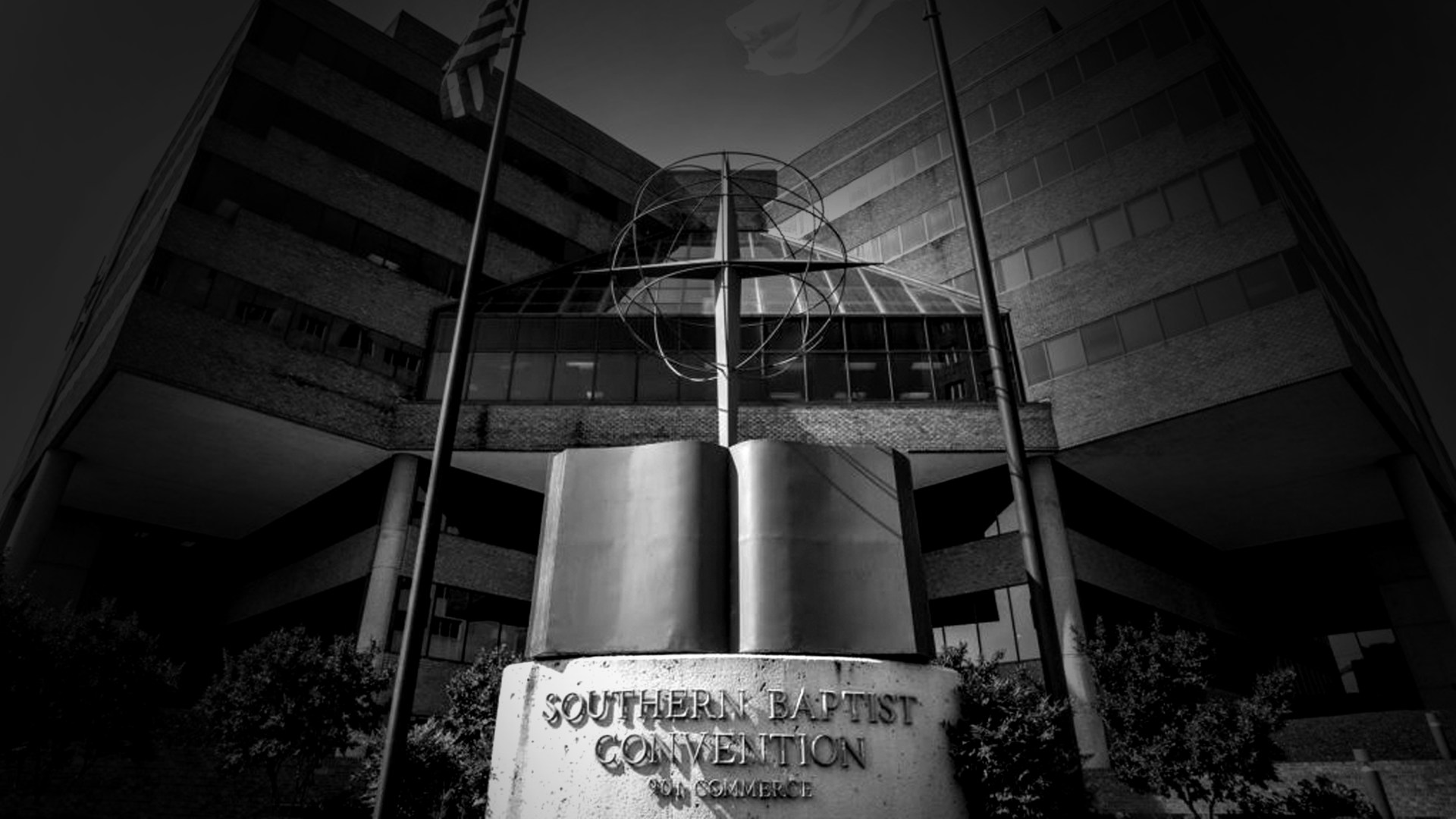
This Is the Southern Baptist Apocalypse

Columnist

The abuse investigation has uncovered more evil than even I imagined.

Christianity Today May 22, 2022
Courtesy of Baptist Press / Edits by Mallory Rentsch

They were right. I was wrong to call sexual abuse in the Southern Baptist Convention (SBC) a crisis. Crisis is too small a word. It is an apocalypse.

Someone asked me a few weeks ago what I expected from the third-party investigation into the handling of sexual abuse by the Southern Baptist Convention’s Executive Committee. I said I didn’t expect to be surprised at all. How could I be? I lived through years with that entity. I was the one who called for such an investigation in the first place.

And yet, as I read the report, I found that I could not swipe the screen to the next page because my hands were shaking with rage. That’s because, as dark a view as I had of the SBC Executive Committee, the investigation uncovers a reality far more evil and systemic than I imagined it could be.

The conclusions of the report are so massive as to almost defy summation. It corroborates and details charges of deception, stonewalling, and intimidation of victims and those calling for reform. It includes written conversations among top Executive Committee staff and their lawyers that display the sort of inhumanity one could hardly have scripted for villains in a television crime drama. It documents callous cover-ups by some SBC leaders and credible allegations of sexually predatory behavior by some leaders themselves, including former SBC president Johnny Hunt (who was one of the only figures in SBC life who seemed to be respected across all of the typical divides).

And then there is the documented mistreatment by the Executive Committee of a sexual abuse survivor, whose own story of her abuse was altered to make it seem that her abuse was a consensual “affair”—resulting, as the report corroborates, in years of living hell for her.

For years, leaders in the Executive Committee said a database—to prevent sexual predators from quietly moving from one church to another, to a new set of victims—had been thoroughly investigated and found to be legally impossible, given Baptist church autonomy. My mouth fell open when I read documented proof in the report that these very people not only knew how to have a database, they already had one.

Allegations of sexual violence and assault were placed, the report concludes, in a secret file in the SBC Nashville headquarters. It held over 700 cases. Not only was nothing done to stop these predators from continuing their hellish crimes, staff members were reportedly told not to even engage those asking about how to stop their child from being sexually violated by a minister. Rather than a database to protect sexual abuse victims, the report reveals that these leaders had a database to protect themselves.

Indeed, the very ones who rebuked me and others for using the word crisis in reference to Southern Baptist sexual abuse not only knew that there was such a crisis but were quietly documenting it, even as they told those fighting for reform that such crimes rarely happened among “people like us.” When I read the back-and-forth between some of these presidents, high-ranking staff, and their lawyers, I cannot help but wonder what else this can be called but a criminal conspiracy.

The true horror of all of this is not just what has been done, but also how it happened. Two extraordinarily powerful affirmations of everyday Southern Baptists—biblical fidelity and cooperative mission—were used against them.

Those outside the SBC world cannot imagine the power of the mythology of the Café Du Monde—the spot in the French Quarter of New Orleans where, over beignets and coffee, two men, Paige Patterson and Paul Pressler, mapped out on a napkin how the convention could restore a commitment to the truth of the Bible and to faithfulness to its confessional documents.

For Southern Baptists of a certain age, this story is the equivalent of the Wittenberg door for Lutherans or Aldersgate Street for Methodists. The convention was saved from liberalism by the courage of these two men who wouldn’t back down, we believed. In fact, I taught this story to my students.

Those two mythical leaders are now disgraced. One was fired after alleged mishandling a rape victim’s report in an institution he led after he was documented making public comments about the physical appearance of teenage girls and his counsel to women physically abused by their husbands. The other is now in civil proceedings about allegations of the rape of young men.

We were told they wanted to conserve the old time religion. What they wanted was to conquer their enemies and to make stained-glass windows honoring themselves—no matter who was hurt along the way.

Who cannot now see the rot in a culture that mobilizes to exile churches that call a woman on staff a “pastor” or that invite a woman to speak from the pulpit on Mother’s Day, but dismisses rape and molestation as “distractions” and efforts to address them as violations of cherished church autonomy? In sectors of today’s SBC, women wearing leggings is a social media crisis; dealing with rape in the church is a distraction.

Most of the people in the pews believed the Bible and wanted to support the leaders who did also. They didn’t know that some would use the truth of the Bible to prop up a lie about themselves.

The second part of the mythology is that of mission. I have said to my own students, to my own children, exactly what was said to me—that the Cooperative Program is the greatest missions-funding strategy in church history. All of us who grew up in Southern Baptist churches revere the missionary pioneer Lottie Moon. (In fact, I have a bronze statue of her head directly across from me as I write this.) Southern Baptist missionaries are some of the most selfless and humble and gifted people I know.

And yet the very good Southern Baptist impulse for missions, for cooperation, is often weaponized in the same way that “grace” or “forgiveness” has been in countless contexts to blame survivors for their own abuse. The report itself documents how arguments were used that “professional victims” and those who stand by them would be a tool of the Devil to “distract” from mission.

Those who called for reform were told doing so might cause some churches to withhold Cooperative Program funding and thus pull missionaries from the field. Those who called out the extent of the problem—most notably Christa Brown and the army of indefatigable survivors who joined that work—were called crazy and malcontents who just wanted to burn everything down. It’s bad enough that these survivors not only endured psychological warfare and legal harassment. But they were also isolated with implications that if they kept focusing on sexual abuse people wouldn’t hear the gospel and would go to hell.

Cooperation is a good and biblical ideal, but cooperation must not be to “protect the base.” Those who have used such phrases know what they meant. They know that if one steps out of line, one will be shunned as a liberal or a Marxist or a feminist. They know that the meanest people will mobilize and that the “good guys” will keep silent. And that’s nothing—nothing—compared to what is endured by sexual abuse victims—including children—who have no “base.”

When my wife and I walked out of the last SBC Executive Committee meeting we would ever attend, she looked at me and said, “I love you, I’m with you to the end, and you can do what you want, but if you’re still a Southern Baptist by summer you’ll be in an interfaith marriage.” This is not a woman given to ultimatums, in fact that was the first one I’d ever heard from her. But she had seen and heard too much. And so had I.

I can’t imagine the rage being experienced right now by those who have survived church sexual abuse. I only know firsthand the rage of one who never expected to say anything but “we” when referring to the Southern Baptist Convention, and can never do so again. I only know firsthand the rage of one who loves the people who first told me about Jesus, but cannot believe that this is what they expected me to do, what they expected me to be. I only know firsthand the rage of one who wonders while reading what happened on the seventh floor of that Southern Baptist building, how many children were raped, how many people were assaulted, how many screams were silenced, while we boasted that no one could reach the world for Jesus like we could.

That’s more than a crisis. It’s even more than just a crime. It’s blasphemy. And anyone who cares about heaven ought to be mad as hell.

Russell Moore leads the Public Theology Project at Christianity Today.
News

Southern Baptists Refused to Act on Abuse, Despite Secret List of Pastors

Investigation: SBC Executive Committee staff saw advocates’ cries for help as a distraction from evangelism and a legal liability, stonewalling their reports and resisting calls for reform.

A third-party investigation looked into abuse responses by the Executive Committee of the Southern Baptist Convention.

A third-party investigation looked into abuse responses by the Executive Committee of the Southern Baptist Convention.

Christianity Today May 22, 2022
Courtesy of Baptist Press / Edits by Mallory Rentsch

Armed with a secret list of more than 700 abusive pastors, Southern Baptist leaders chose to protect the denomination from lawsuits rather than protect the people in their churches from further abuse.

Survivors, advocates, and some Southern Baptists themselves spent more than 15 years calling for ways to keep sexual predators from moving quietly from one flock to another. The men who controlled the Executive Committee (EC)—which runs day-to-day operations of the Southern Baptist Convention (SBC)—knew the scope of the problem. But, working closely with their lawyers, they maligned the people who wanted to do something about abuse and repeatedly rejected pleas for help and reform.

“Behind the curtain, the lawyers were advising to say nothing and do nothing, even when the callers were identifying predators still in SBC pulpits,” according to a massive third-party investigative report released Sunday.

The investigation centers responsibility on members of the EC staff and their attorneys and says the hundreds of elected EC trustees were largely kept in the dark. EC general counsel Augie Boto and longtime attorney Jim Guenther advised the past three EC presidents—Ronnie Floyd, Frank Page, and Morris Chapman—that taking action on abuse would pose a risk to SBC liability and polity, leading the presidents to challenge proposed abuse reforms.

As renewed calls for action emerged with the #ChurchToo and #SBCToo movements, Boto referred to advocacy for abuse survivors as “a satanic scheme to completely distract us from evangelism.”

Survivors, in turn, described the soul-crushing effects of not only their abuse, but the stonewalling, insulting responses from leaders at the EC for 15-plus years.

Christa Brown, a longtime advocate who experienced sexual abuse by her pastor at 16, said her “countless encounters with Baptist leaders” who shunned and disbelieved her “left a legacy of hate” and communicated “you are a creature void of any value—you don’t matter.” As a result, she said, instead of her faith providing solace, her faith has become “neurologically networked with a nightmare.” She referred to it as “soul murder.”

Another victim, Debbie Vasquez, was repeatedly sexually assaulted by an SBC pastor starting at the age of 14. When one assault led to her pregnancy, she was forced to apologize in front of the church but forbidden to mention the father. The pastor went on to serve at another Southern Baptist church, and when Vasquez reached out to the EC, her entreaties were ignored and evaded for years until a Houston Chronicle investigation three years ago.

Over the past 20 years, meanwhile, a string of SBC presidents failed to appropriately respond to abuse in their own churches and seminaries. In several instances, leaders sided with individuals and churches that had been credibly accused of abuse or cover-up. One former president—pastor Johnny Hunt—sexually assaulted another pastor’s wife in 2010, investigators found.

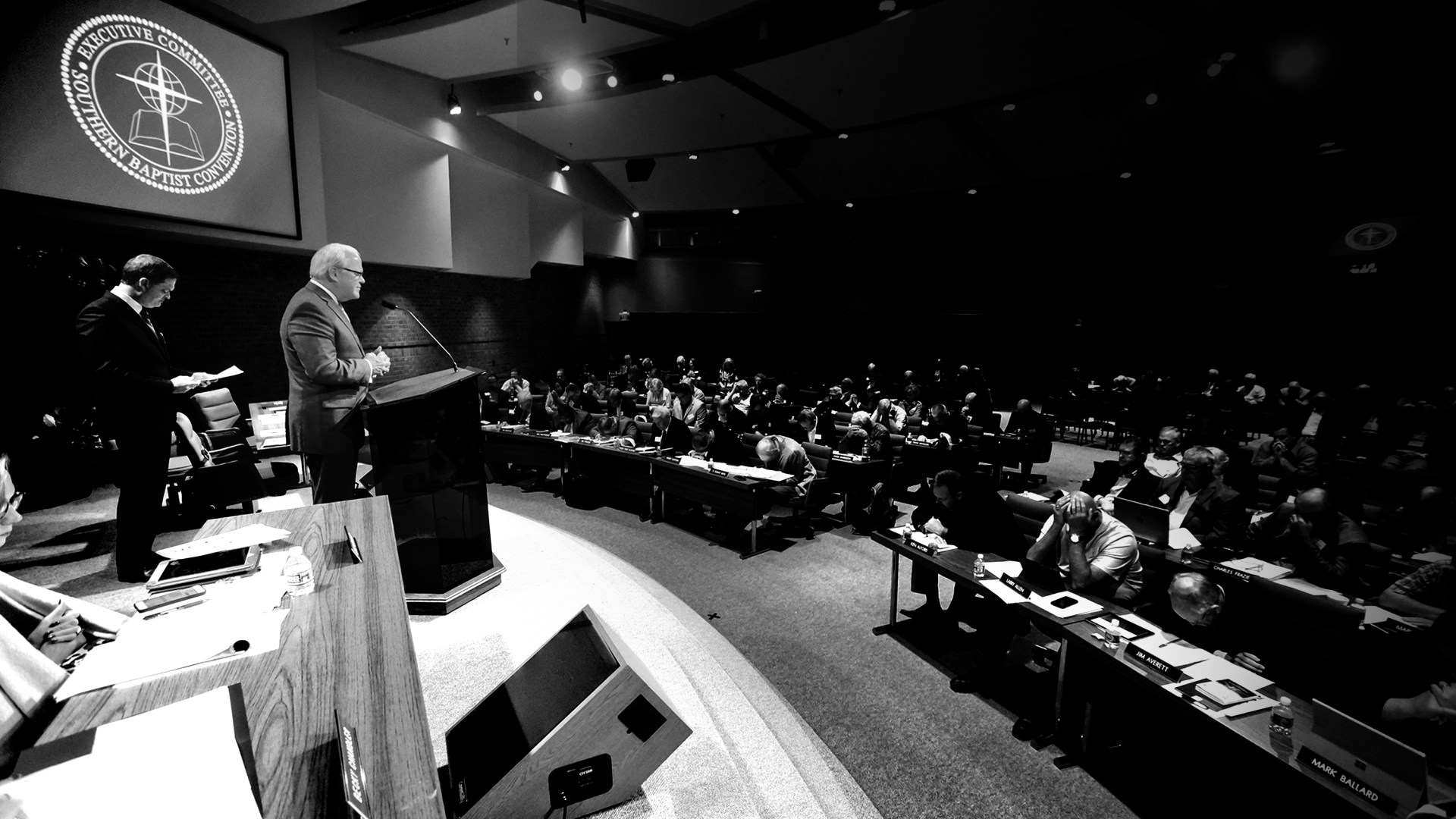
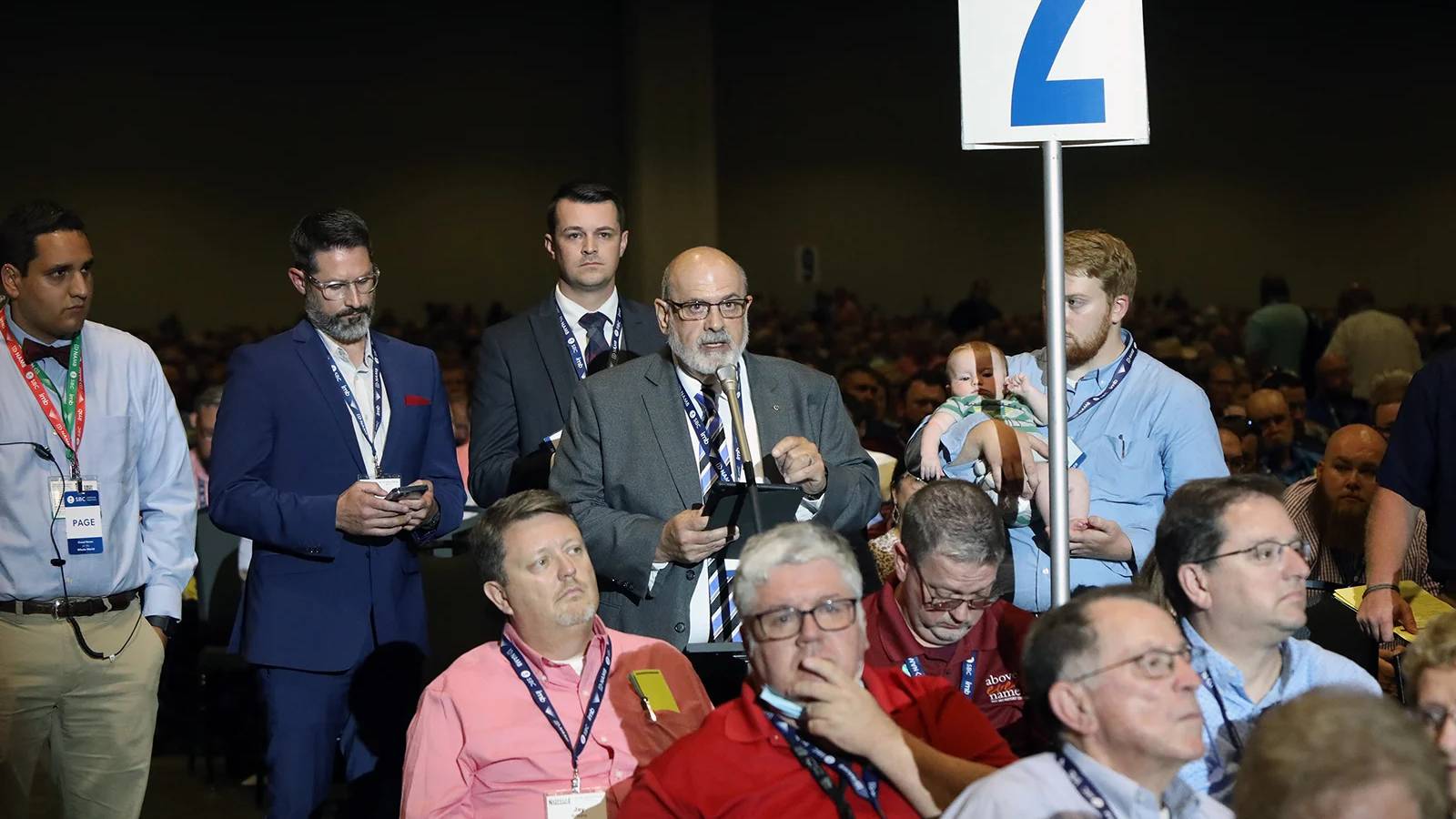
At the annual meeting in Anaheim, California, next month, one year after they voted to launch the investigation, thousands of Southern Baptists will decide if they are ready to make the dramatic and costly changes the report recommends for the sake of survivors and church safety.

“Amid my grief, anger, and disappointment over the grave sin and failures this report lays bare, I earnestly believe that Southern Baptists must resolve to change our culture and implement desperately needed reforms,” said SBC president Ed Litton in a statement to CT. “The time is now. We have so much to lament, but genuine grief requires a godly response.”

Guidepost Solutions, the third-party investigative firm, wants the 13.7-million-member denomination to create an online database of abusers, offer compensation for survivors, sharply limit non-disclosure agreements, and establish a new entity dedicated to responding to abuse. The directives in the 288-page report will sound familiar to survivors and advocates, who have been calling for those measures all along.

“How many kids and congregants could have been spared horrific harm if only the Executive Committee had taken action back in 2006 when I first wrote to them, urging specific concrete steps? And how many survivors could have been spared the re-traumatizing hell of trying to report clergy sex abuse into a system that consistently turns its back?” asked Brown in a 2021 letter. “The SBC Executive Committee’s longstanding resistance to abuse reforms has now yielded a whole new crop of clergy sex abuse victims and of survivors re-traumatized in their efforts to report.”

As they anticipated the release of the report, current interim EC president Willie McLaurin and EC chairman Rolland Slade quoted Ecclesiastes: “God will bring every act to judgment, including every hidden thing, whether good or evil” (12:14, CSB).

The current leaders urged Southern Baptists to be receptive to the bad news.

“This is a time and season to search out our shortcomings, a time to embrace the findings of the report,” they wrote last week, “a time to rebuild the trust of Southern Baptists and a time to heal by meeting the challenges required with the necessary changes expected.”

Largest investigation in SBC history

The report represents a $2 million undertaking, involving 330 interviews and five terabytes of documents collected over eight months. The EC also committed another $2 million toward legal costs around the investigation—making it a total investment of $4 million, funded by churches and conventions giving to the Cooperative Program.

Advocate Rachael Denhollander, who advised the SBC task force that coordinated the investigation, tweeted that “the level of transparency is … unparalleled.” It’s the largest investigation in SBC history; it’s already changed the makeup of the EC and stands to determine the trajectory of the 177-year-old denomination.

The Guidepost inquiry included privileged legal communications on abuse over the past 20 years, a provision that led EC president Ronnie Floyd to resign in October and the law firm of Guenther, Jordan & Price to withdraw their services after 60 years.

According to the report, the law firm actively advised the EC against taking responsibility for abuse. Guenther worked alongside Boto, an attorney who was involved in the EC from the 1990s to 2019, serving as a trustee, vice president, general counsel, and interim president. He was an ally of Paige Patterson during the Conservative Resurgence. (Last year, Boto was barred from holding any positions with Southern Baptist entities as a result of a legal settlement involving financial moves after Patterson was fired from an SBC seminary over mishandling a rape allegation.)

Boto and Guenther turned every discussion of abuse to a discussion of protecting the EC from legal liability, making that the highest priority, the report said.

“When abuse allegations were brought to the EC, including allegations that convicted sex offenders were still in ministry, EC leaders generally did not discuss this information outside of their inner circle, often did not respond to the survivor, and took no action to address these allegations so as to prevent ongoing abuse or such abuse in the future,” the report said. “Almost always the internal focus was on protecting the SBC from legal liability and not on caring for survivors or creating any plan to prevent sexual abuse within SBC churches.”

The Southern Baptist Convention proudly says it’s a group of autonomous churches. They join together for mission work, fellowship, and training, but the convention has no hierarchy. It doesn’t ordain or appoint pastors, nor does it hold authority over the 47,000 churches that have chosen to affirm its faith statements and give to its Cooperative Program.

That lack of oversight means that when something goes wrong at an SBC church or entity, the EC can claim it’s not to blame; the churches are independent. The legal counsel argued that the more denominational leaders directed churches to deal with abuse, the more it would assume liability for mistakes and mishandling.

Back in 2000, the report said, Patterson saw abuse prevention training as a way to defend against lawsuits, telling a pastor that churches that could document “some effort to educate those who worked among children as to how to watch for and respond to dangers” wouldn’t have litigation against them move forward.

As president at Southeastern and Southwestern seminaries, Patterson discouraged two women who shared rape allegations from reporting them. He was fired from Southwestern Baptist Theological Seminary in 2018 over his response and has been sued, along with the seminary, by the female student from Southwestern.

Patterson’s associate Paul Pressler, an attorney and leader during the Conservative Resurgence, also faces litigation over claims that he used his power to abuse young boys, and the SBC itself is named in the suit. (Neither Patterson nor Pressler, a former executive VP of the SBC and former EC member, agreed to be interviewed for the investigation, though Patterson’s lawyers submitted a two-page document.)

Patterson and fellow former SBC president Jerry Vines have come under scrutiny for their previous support of Darrell Gilyard, a pastor with a string of sexual misconduct allegations dating back to the ’90s. The report quotes an EC member who in an email said 44 women came to the two SBC leaders about Gilyard, “and in almost every instance, they were reportedly shamed for it and left feeling like they were not believed. From all published accounts, it seems Gilyard moved from church to church and left ruined lives in his wake.”

EC attorneys Guenther and Boto discussed the idea of a database of abusers as early as 2004, in response to Brown. The subject came up again in 2007, after a motion at the annual meeting. The EC staff did not move forward with the idea at the time. Guenther wrote in an email that he worried “about a duty to warn a court might think was owed by the SBC.”

And yet, with the help of spokesman and vice president Roger “Sing” Oldham and an unnamed EC staff member, they did keep a list. At Boto’s request, the report said, the staffer collected news clippings and tracked abusive pastors in a table with name, year, state, and denomination. The first version, in 2007, included 66 people arrested or sued over abuse. By 2022, the list grew to include 703, with 409 believed to belong to SBC-affiliated churches.

A watershed 2019 Houston Chronicle series, which spurred new attention around abuse response and prevention, uncovered 380 SBC-affiliated pastors accused of sexual abuse.

Even as the secret list of abusive ministers grew, however, the EC leaders focused their criticism on survivors and advocates. They complained the survivors didn’t understand the polity of the SBC and were out to get the denomination. Patterson called the advocacy group SNAP (Survivors Network of those Abused by Priests) “just as reprehensible as sex criminals.” An EC member said Brown, who ran StopBaptistPredators.org, where she featured survivor stories and posted public reports on abusive ministers, was a “person of no integrity.”

Boto saw the Devil at work in their efforts. In an email obtained by Guidepost, he wrote:

This whole thing should be seen for what it is. It is a satanic scheme to completely distract us from evangelism. It is not the gospel. It is not even a part of the gospel. It is a misdirection play. Yes, Christa Brown and Rachael Denhollander have succumbed to an availability heuristic because of their victimizations. They have gone to the SBC looking for sexual abuse, and of course, they found it. Their outcries have certainly caused an availability cascade. … But they are not to blame. This is the devil being temporarily successful.

According to an unnamed EC staff member, “in nearly every instance in the past when victims have come to those in power in the SBC, they have been shunned, shamed, and vilified. At the EC, we have inherited a culture of rejecting those who question power or who accuse leaders.”

Key Southern Baptist leaders didn’t just disbelieve and insult survivors, though. In some cases, they aligned themselves with convicted or confessed perpetrators and helped them personally.

The report includes several examples:

  • Mike Stone, the former chair of the EC and a candidate in the 2021 race for SBC president, helped craft an apology for a pastor friend of his after the pastor was found to have been exchanging explicit text messages with a member of his congregation in 2019. Stone stated that he has “never and would never knowingly support a church retaining a pastor in sexual misconduct” and that he hadn’t heard about the allegations against the pastor until asked about them during the Guidepost investigation.

  • Augie Boto testified as a character witness for Nashville gymnastics coach Marc Schiefelbein who had been convicted in 2003 of molesting a 10-year-old girl.
  • Jack Graham, SBC president from 2002 to 2004, didn’t report a music minister who was fired in 1989 after Prestonwood Baptist Church learned he molested a child. The minister went on to another church and was convicted for his crimes at Prestonwood more than 20 years later. The church “categorically denies the way the report characterizes the incident 33 years ago,” current executive pastor Mike Buster said in a statement. “Prestonwood has never protected or supported abusers, in 1989 or since.”
  • Steve Gaines, SBC president from 2016 to 2018, knew that a minister on staff at his church, Bellevue Baptist, had previously abused a child but didn’t disclose it until it came up on a blog.

The investigative report also found instances where EC leaders themselves crossed moral lines:

  • Frank Page, the president of the EC, resigned suddenly in March 2018. An official statement said the resignation was due to a “morally inappropriate relationship.” The EC did not investigate whether it was consensual, nor did they look into “if his conduct carried over into the workplace.”
  • Johnny Hunt, SBC president from 2008 to 2010, groped and kissed the wife of a younger pastor a month after his presidential term ended and told the couple to keep it secret.

Hunt’s sexual assault had not been previously reported. The woman and her husband, an SBC pastor, came forward during the investigation to share with Guidepost what happened. Hunt, former pastor of First Baptist Church Woodstock in Georgia, had been a senior VP at the SBC’s North American Mission Board before resigning May 13. Southeastern Baptist Theological Seminary has a chair position named in his honor.

By the couple’s account, they are 24 years younger than Hunt, who offered to assist them with their ministry. At one point he arranged a place for the woman to stay during a visit to Panama City Beach, where Hunt was spending his sabbatical. He then entered the condo unit where the woman was alone and sexually assaulted her, pulling down her clothes, pinning her on the couch, groping her, and kissing her.

After the July 2010 incident, the couple met with Hunt at his church. He warned that if they said anything it would “negatively impact the over 40,000 churches Dr. Hunt represented” and referred them to counselor Roy Blankenship of HopeQuest Ministry Group. Blankenship confirmed something happened between the wife and Hunt and told investigators Hunt should have been the one to stop it, but “it takes two to tango.”

In an interview with Guidepost, Hunt denied assaulting the woman and said he never even entered her condo. The Guidepost investigators found three additional witnesses to corroborate parts of the woman and her husband’s account. They did not find Hunt’s statements credible.

Hunt has previously been associated with apologist Ravi Zacharias and was a special guest at the 2009 grand opening of the spa where Zacharias abused massage therapists. Last year, Hunt decried Zacharias’s abuse, describing it as “sin … against so many innocent women.”

Messengers supported reforms

Following the #MeToo movement, SBC survivors drew major attention from the news media.

In 2018, Jules Woodson, who was sexually assaulted by her youth pastor, told The New York Times what it was like to see a church applaud him after he vaguely confessed to “a sexual incident.” That same year, Megan Lively told The Washington Post how Paige Patterson had told her not to report her rape to police. In 2019, the Chronicle investigation profiled more survivors.

As a result, Southern Baptists spoke out and took action. The messengers at the annual meetings adopted resolutions affirming women’s dignity and condemning abuse. They voted to amend their bylaws to explicitly name abuse as grounds for dismissal from the SBC. They tasked a committee with making recommendations if a church was in violation.

In 2018, they also elected a president who made responding to abuse a central part of his agenda. Under J. D. Greear, the SBC introduced training around preventing and responding to abuse, the Caring Well Initiative, and held conferences to hear from survivors, experts, and pastors.

But according to the Guidepost report, almost all of these efforts were met with criticism and resistance by certain EC leaders, who said that prioritizing the issue of abuse could lead to lawsuits.

Sometimes, the divide was clear from the outside: Greear as SBC president referenced abuse 81 times during his address at the annual meeting, while Floyd as EC president didn’t mention it as a priority in his Vision 2025 plan.

Behind the scenes, the Guidepost report shows, the EC legal counsel advised people to downplay the issue. They pressured the Ethics & Religious Liberty Commission (ERLC) not to refer to sexual abuse in the SBC as a crisis and avoid “inflammatory language” like saying the denomination had failed survivors. EC members tried to censor criticism of the SBC’s handling of abuse and decried any efforts to allow survivors and abuse experts to speak at SBC events.

“Guys, this is really not good at all,” Floyd wrote in one email obtained by investigators. “We cannot have SBC entities placing people on platforms calling out the matters about how the SBC and some of its leaders and former leaders [sic]. All the work on unity is getting challenged.”

These intra-SBC clashes and threats became public a year ago in leaked letters and recordings capturing communication from former ERLC leaders Russell Moore (now a theologian in residence for CT) and Philip Bethancourt. The documents were a wakeup call to pastors, suggesting efforts by EC leaders to intimidate survivors and resist reform. They spurred demands for an investigation into the EC.

“We were shocked,” Grant Gaines, a Tennessee pastor who made the motion to investigate the EC, told CT last year. “We shouldn’t have been. These survivors, their stories are out there.”

One story that has played out in the public eye is Jennifer Lyell’s. She was abused by a seminary professor, but a March 2019 article in Baptist Press, which is run by the EC, characterized her abuse as an affair. At the time of publication, Lyell was a Lifeway executive and the highest-ranking woman in the SBC. The validity of her account was backed by Southern Seminary president Al Mohler.

Lyell ended up leaving her job and suffering physical and mental distress as a result of the backlash as well as the months-long saga to get the story corrected and seek restitution.

In a Twitter thread after the report release, Lyell described having to wait out the tensions between the EC, which controlled the correction to the article about her and was on alert at the time for how other SBC figures talked about abuse, and leaders at other entities, who stood by her story but could have faced retaliation for speaking up.

She received an apology from the EC in February 2022 and an undisclosed settlement. EC trustees, Guidepost said, weren’t aware that she had pursued defamation claims and had previously received a settlement in May 2020 as well.

Hannah Kate Williams also sued the EC for negligence in responding to abuse by her father, who was employed at SBC entities, as well as for alleged efforts to malign her as she went public with her case.

EC attorneys criticized Greear for repeating the names of 10 churches that were reported in the Houston Chronicle investigation for employing abusive pastors and asking an EC subcommittee to look into them. Guenther said they were going to be sued for libel and worked to clear the churches’ names. Boto called one to apologize.

Months later, Boto opposed the creation of the credentials committee, which would look at whether a church has violated criteria around abuse or other issues that would make it “no longer in friendly cooperation” with the SBC.

The credentials committee, which was reconfigured for this new purpose in 2019, frustrated survivors too because it was confusing and inefficient, Guidepost said. It had no written guidelines, no training, and no full-time staff for support.

Because of the limited scope it was authorized, based on SBC polity, it wasn’t able to address churches’ missteps in the past, nor could it do investigations to determine a pastor’s guilt or innocence, just the church’s response. As a result, it took an average of nine months to hear a decision—and some never heard back at all. Some submissions didn’t make it through the clumsy website the committee required for challenging a church’s membership.

In the past three years, the committee processed 30 submissions and disfellowshipped just 3 churches over abuse. In each case, the offense was obvious and egregious: The church had knowingly employed a sex offender. The committee didn’t make any public comment on the results of the other 27 submissions tallied by the recent report. The Guidepost investigators found that five churches voluntarily resigned and another dissolved during the credential committee’s review.

New entity and other recommendations

The task force that oversaw and released the EC investigation sees public lament as a first step in responding to the investigation. They’ve also asked that Southern Baptists vote to establish a new task force that can evaluate how to implement the recommended changes in accordance with Baptist polity.

The report offers 30 pages of recommendations for the EC and the credentials committee, including:

  • Creating a permanent entity to oversee sexual abuse response and prevention
  • Launching an “offender information system,” an online database churches can voluntarily participate in to report substantiated abuse or coverup
  • Publishing a list of disfellowshipped churches and individuals whose ordinations or degrees were revoked
  • Facilitating programs to assist survivors and provide compensation from SBC giving to cover medical and psychological help
  • Issuing an apology to survivors and erecting a memorial, adding a Survivor Sunday to the SBC calendar
  • Prohibiting nondisclosure agreements, except when requested by victims
  • Requiring a code of conduct for entity employment or attending a seminary
  • Hiring a chief compliance officer or ethics and compliance officer to EC staff

“We must resolve to give of our time and resources to not only care well for survivors of sexual abuse, but to provide a culture of accountability, transparency, and safety as we move forward,” the task force said in a statement released with the report.

“We acknowledge that any act of repentance requires ongoing, deliberate, dedicated obedience and sacrifice. This is the calling of our Savior to unite as a body in following after him.”

Christa Brown, the abuse survivor and advocate, said in her submission to Guidepost that she had not held out hope for meaningful change, but still prayed that the report “may bring forth a small measure of justice.”

“The Southern Baptist Convention has a moral obligation to protect the lives, bodies and humanity of kids and congregants in its affiliated churches, to provide care and validation for ALL who have been sexually abused by Southern Baptist clergy,” she wrote, “to ensure accountability for abusers and enablers, and to create systems that will ensure these inhumane and unconscionable travesties do not persist into future generations.”

This article has be updated with responses from people named in the report.

Ideas

Abortion Bans Should Ban Abortion

Miscarriage and ectopic pregnancies are not abortion. Pro-life Christians urge clear distinctions in state laws.

Christianity Today May 20, 2022
Illustration by Mallory Rentsch / Source Images: Raimund Koch / Getty

In the recent breathtaking development from the US Supreme Court, a leaked draft opinion for the Dobbs v. Jackson Women’s Health Organization case indicated that abortion rights would be reversed.

In the fallout, headlines appeared warning women that if the rulings Roe v. Wade and Planned Parenthood v. Casey are overturned, their access to healthcare would be compromised—not just for abortion, but also their treatments for ectopic pregnancies and miscarriages.

While news reports declare “Overturning Roe v. Wade Will Make It Harder to Treat Miscarriage” and “Overturning Roe Could Make Ectopic Pregnancies Extremely Dangerous,” some pro-life advocates are saying there should be no cause for concern—and that to say otherwise is to play into the agenda of abortion advocates.

As a Christian woman who’s been involved in the pro-life movement for well over a decade, both professionally and personally, it deeply matters to me that the pro-life movement always provides the utmost care and concern for both a woman and her preborn child.

I worked on Capitol Hill for the sponsor of much of the pro-life legislation, like the “Pain-Capable Unborn Child Protection Act” and the “Born-Alive Abortion Survivors Protection Act,” and I’ve volunteered with local pregnancy centers, advocated for children in foster care, and now my husband and I are in the middle of an adoption.

Statistics show that approximately 10–20 percent of pregnancies end in miscarriage, which is when the embryo or fetus does not survive by 20 weeks gestation. In an ectopic pregnancy—just 1–2 percent of the time—the embryo improperly implants outside the uterus, posing a significant risk to the mother’s life. They are the greatest causes of maternal mortality in the first trimester for pregnancies in North America.

A ruptured ectopic pregnancy in the first trimester accounts for 10–15 percent of all maternal deaths. These are not considered viable pregnancies, and doctors must act quickly to save the life of the mother. Even if a mother was willing to sacrifice her life, the baby would still die because it is not implanted in a place where it can grow.

The medical options used to treat some miscarriages, as well as some ectopic pregnancies, can be the same or similar to those prescribed for an abortion. This makes it imperative to carefully define our terms. Making things even more confusing: Miscarriage can be labeled with medical terminology as a “spontaneous” or “missed” abortion, although it is not an abortion in the most common use of the word.

Included among those procedures are a dilation and curettage (in which the fetus is removed through surgery) or dilation and evacuation (in which a probe-guided vacuum removes fetal tissue from the uterus). Medications called mifepristone and misoprostol can also be used in the case of miscarriage and are the most popular forms of abortifacient in the US.

Miscarriages and ectopic pregnancies can be extremely traumatic experiences, physically, mentally, and emotionally—but it’s important to point out that they are emphatically different from elective abortions, and any confusion of language can further traumatize many women.

Treating a miscarriage or an ectopic pregnancy is not the same as the intentional abortion of a preborn life. In these kinds of tragic and dangerous cases, protecting the life of the mother is the ethical and moral mandate.

Most people who worry about women’s access to healthcare after the Dobbs ruling are usually not referring to these special cases. They are advocating that access to abortion—for any reason, at any time—should not be limited. However, as pro-life Christians, we should be aware of the legal nuances and potential pitfalls in the policymaking process instead of assuming it will always be a simple black-and-white issue.

“My concern about many who come from deeply within the pro-life movement is that concerns like this can sometimes be dismissed out of hand as ‘abortion rights propaganda,’” said Kelly Rosati, child advocate and former VP of advocacy for children at Focus on the Family. “And, that can happen, for example when abortion rights’ proponents refuse to admit that it’s even possible to have statutes drafted to properly and adequately account for these concerns.”

“I think it’s really important to avoid both extremes,” she says.

Amid the misinformation online, which can provoke fear-inducing conversations, it’s important to parse out the truth. To do so, we must first understand why the Dobbs case is so significant, and why this unique case could actually reverse the Roe ruling.

National Precedent

The Mississippi Gestational Act—the law the Supreme Court is examining in the Dobbs v. Jackson Women’s Health Organization case—defines abortion as:

the act of using, prescribing, or administering any instrument, substance, device or other means with the purpose to terminate a pregnancy with knowledge that termination will, with reasonable likelihood, cause the death of an unborn child.

The law clarifies that it’s not considered an abortion “if the act is performed with the purpose of removing a dead unborn child caused by spontaneous abortion or removing an ectopic pregnancy.”

There is no current policy in place prohibiting the treatment of miscarriage or ectopic pregnancies, and many laws similarly exclude such circumstances from the definition of abortion. And yet several proposed bills have raised alarm for some women that access to treatment for miscarriage or ectopic pregnancy could be inadvertently impacted.

For instance, an abortion restriction bill was initially proposed in Ohio in 2019 advocating for the reimplantation of ectopic pregnancies—invoking the use of a nonexistent and medically impossible procedure—but was struck down in hearings. The Ohio lawmaker behind the bill later admitted that he had not researched ectopic pregnancies beforehand.

Another proposed abortion restriction bill in Ohio, currently in the process of hearings, would provide an exception for life-threatening cases. However, some say the bill must be amended further, arguing that the rules outlining these exceptions have too many complicated stipulations—including the requirement to have immediate access to a NICU, which could put a women’s life in jeopardy if she has an ectopic pregnancy and doesn't live close to a facility.

In Missouri, the House Committee recently amended a bill banning the sale or importation of abortion-inducing medications—which previously had no exceptions for ectopic pregnancies. In Texas, some physicians are already claiming to encounter difficulty in obtaining medications prescribed for women whose baby dies early on to help their bodies release the pregnancy.

It’s important to remember that introducing a bill is not the same as a state level bill becoming law. Still, state legislators should ensure that any proposed legal policy would allow for life-threatening exceptions, including speedy care for miscarriage and ectopic pregnancies.

State legislators who rightly desire to pass laws that protect life should be careful and precise in the language they use to ensure that doctors are not hindered in their treatment of women with miscarriages or ectopic pregnancies. Any proposed policy should be clear that no woman facing these pregnancy complications will encounter any delay or difficulty in accessing care.

Thousands of pro-life hospitals and medical clinics do not provide abortions but routinely treat women with miscarriage and ectopic pregnancies. And amid these new fears, we must ensure that the same medical options will available to these women, as they have been for decades.

Indeed, we must advocate for all women—especially those facing the greatest risk in our society—to have access to vital maternal care that is both efficient and affordable.

Chelsea Sobolik serves as the Director of Public Policy with the Ethics and Religious Liberty Commission. She is the author of Longing for Motherhood–Holding On to Hope in the Midst of Childlessness, and a forthcoming book on women and work.

Speaking Out is Christianity Today’s guest opinion column and (unlike an editorial) does not necessarily represent the opinion of the publication.

News

Died: Fred Carter, Little-Known Black Artist Behind Chick Tracts

“Shy” creator drew stories of sin and salvation seen by millions.

Christianity Today May 20, 2022
Chick Publications / Edits by Mallory Rentsch

His name did not appear on his art. Most of the millions who have seen it do not know who he is.

But Fred Carter’s art is unforgettable.

He drew bodies that were heavy—weighted with humanity and the possibility of redemption. He painted biblical characters who seemed real enough that their struggles and stories could be the viewers’ own. He depicted sin so that it was tempting; salvation so it mattered.

And his art was reproduced by the millions. It was distributed across the country and around the world while he remained in anonymity.

Carter—an African American artist who drew gospel tracts, evangelical comic books, and Black Sunday school curricula—died on May 9 at the age of 83.

He was the close collaborator of Jack Chick, pioneer of the popular evangelistic cartoons known as Chick Tracts. According to Christian Comics International, more than half of Chick Tracts were drawn by Carter.

Carter worked with Chick for eight years before Chick acknowledged the partnership, despite the obvious, dramatic difference between the men’s two art styles. Some suspected Chick was trying to hide Carter’s contributions, perhaps out of a desire to claim all the credit or out of fear the presence of a Black man would spark controversy.

Chick, for his part, said the decision was Carter’s.

“Fred is rather shy and declines to put his name on the art,” he said.

Carter appears to have only given one interview in his 49-year career, speaking briefly to a Los Angeles Times reporter in Rancho Cucamonga, California, in 2003. His statements were simple and straightforward.

About his calling: “It’s almost not like a job. It’s like a ministry I always wanted to be in.”

About his working relationship with Chick: “I had pretty free rein in how to do it, but he did tell me what he wanted.”

About his art: “That’s what I always wanted to do.”

Frederick E. Carter was born in Danville, Illinois, on June 22, 1938. Little is known about his family, but he had an older brother who was artistic and inspired Carter to draw and paint. The brother died at a young age.

A high school teacher persuaded Carter to submit his artwork to a contest run by the American Academy of Art in Chicago. He won second place, according to his staff bio at Chick Publications, and was awarded a scholarship to attend the school.

He was forced to drop out after one year, however. Carter’s economic prospects were limited. He worked as a busboy in a restaurant and then at a decal factory.

His life changed in the early 1970s when a friend at church showed him something he had picked up in Chicago: a Chick Tract. It was most likely This Was Your Life or A Demon’s Nightmare, the most popular two titles from the newly founded Chick Publications. Though the style was wildly different than Carter’s—with simply drawn, slightly shaded figures—the 32- or 33-year-old Christian artist felt a thrill of recognition.

“I had always wanted to use art in a Christian setting,” he later said. “I saw it and it impressed me because that's what I always wanted to do.”

Carter sent Chick a letter and some of his artwork. He moved to California in 1972 and started drawing tracts. A company photo from the following year shows a staff of 19 people. Carter was the only Black person.

Carter’s first tract may have been The Last Generation, which starts with the supreme court of a one-world government ruling that anyone who says Jesus is the only way to salvation will be committed to “a mental camp for treatment and or … be executed!”

The story reflected the paranoid apocalypticism common among evangelicals and fundamentalists at the time, mixing references to indoctrinated children, Nazis, New Age spirituality, and high-tech surveillance used by an expansive, powerful government. The art, however, was more sophisticated than anything Chick Publications had produced previously. The panels wouldn’t have been out of place at Marvel Comics or in the popular illustrated versions of classic novels like Treasure Island and Robinson Crusoe.

Another early standout among Carter’s tracts was The Sissy?, first published in 1978. It tells the story of a burly, brawling, tough-talking truck driver named Duke. “It’s a man’s world,” Duke says in an opening panel. “Ya gotta be tough to survive!”

Duke initially rejects Jesus, because any man who said to turn the other cheek must be a “sissy,” but then learns that Jesus fought a brutal, knock-down drag-out fight for his soul. Christ is shown crucified, his skin ripped raw, muscles seeming to explode from his chest.

“That Jesus,” the converted truck driver concludes, “had more guts than any man that ever lived.”

Fans of Chick Tracts, including collectors of underground comics, noticed the dramatic change in style. They started asking who “the good artist” was.

“Nobody knew his name for a long time,” wrote Joe McCulloch in The Comics Journal. “Chick’s own ’50s-ish magazine gag look could not be more different from Carter’s detailed muscularity, entirely self-taught with a prodigious gift for caricature of puffy, beefy faces; Corbenesque.”

In 1974, two years after Chick and Carter started working together, they launched a comic book series called The Crusaders, featuring two heroes who vaguely looked like them. Tim Clark, the white hero, is a former Green Beret. Jim Carter, Black, is a former drug dealer and street fighter trained by Black militants.

The interracial duo went on adventures for Christ. In the first three issues they deliver a microfilm Bible to Christians oppressed by Communists (and convert a female spy sent to seduce Tim); rescue a town overrun by child-sacrificing Satanists; and come to the aid of an African political leader whose government has been infiltrated by Communists.

Graphic novelist Daniel Clowes discovered The Crusaders as a boy and called it “one of the sickest comics I’ve ever read.”

Carter pushed his art to a new level in 1985. He was working on a tract about Jonah, which Chick planned to tie in to the popular movie Jaws, and started doing full-color paintings of the biblical scenes.

The vivid details couldn’t be reproduced in a cheap paper tract, however, and Chick produced a glossy-paper comic book, which soon proved too expensive and went out of print. The paintings showed how much further Carter wanted to go with the physicality and realism, especially when depicting human suffering, from Jonah being eaten to Jesus being crucified.

With Chick’s approval, Carter pushed on with the painting project and expanded it to include the story of Creation, the Exodus, Isaiah’s messianic prophecy, the gospels. He ultimately painted 358 paintings, which Chick Publications released as a slideshow film The Light of the World.

“Carter had real chops as a draftsman, fashion sense, & an eye for drama,” Fred Sanders, theology professor at Biola University, wrote on Twitter. “His output was so thoroughly aligned with, & carried along by, Jack Chick's own project that I can't tell a bit of difference in their theologies.”

In 2006, Carter took on a new project, redrawing more than a dozen classic Chick Tracts with Black characters. The first, This Was Your Life, became Your Big Moment, featuring a Black woman and a Black angel.

“Here is a tip on passing out black art tracts,” Chick wrote. “Tell people that a black brother made them. That seems to help get them accepted. His art is beautiful.”

Carter’s Black tracts hewed fairly closely to Chick’s original vision. One character, notably, does not change races: Jesus is still colored white.

He changed that in his one major outside project, illustrating Sunday school curriculum for Urban Ministries, the largest publisher of Sunday school curriculum and Bible study materials for African American Christians. There, Carter drew all Black biblical characters, including God incarnate in a Black body.

The artwork attracted the attention of a few scholars. David Morgan, who studies religious imagery, said Carter’s rendering of Jesus rivaled the ubiquitous white depiction, “Head of Christ,” by Warner Sallman.

Carter still used the “conventional visual language” of Western Christianity, Morgan said, but in a way that showed that images of Jesus could be “made to accommodate racial difference rather than conceal or subordinate it.”

Edward J. Blum, co-author of The Color of Christ with Paul Harvey, considers Carter’s depiction one of the most compelling modern renderings.

“Carter’s Christ is a full person who sweats, bleeds, and pleads,” he said. “His dark skin is only one part of the reality of his embodiment. Carter shows Jesus experiencing all of the pains that we do as humans. They are poignant and fascinating portrayals.”

Carter, however, continued his work in relative anonymity. He illustrated new tracts and Sunday school curriculum and continued to work at Chick Publications after Chick died in 2016. In addition to his art work, he pastored a small nondenominational church called The Gathering Place.

Carter died of heart failure earlier this month. He is survived by his wife Lee.

News

Died: Franz Mohr, Master Piano Tuner and Evangelist

The chief concert technician for Steinway & Sons gave Bibles to the world’s greatest pianists and told them about Jesus.

Christianity Today May 20, 2022
Crescendo International

Franz Mohr, former chief concert technician at Steinway & Sons in New York, has died at 94.

He was, in his own assessment, “just a piano tuner who loves the Lord.”

But Mohr’s expertise and backstage support was valued by the world’s most famous concert pianists, including Van Cliburn, Vladimir Horowitz, Artur Rubinstein, Glenn Gould, Rudolf Serkin, and Emil Gilels. They relied on his deep musical knowledge and technical skill.

He traveled around the world with them, protecting and servicing their concert-grade grand pianos, each of which was built by 200 Steinway & Sons artisans and cost more than $200,000. Mohr prepared the pianos with tuning, voicing, and adjustments for optimal performance to the artist’s particular liking. Between concerts, he could be found in Steinway Hall’s basement in Manhattan, doing regular, meticulous maintenance.

His true passion, however, was unashamedly proclaiming the love and hope of Christ to this niche community.

“He was like a magnet drawing them in,” said Tom Carpino, Franz’s pastor at The Bridge (Nazarene) Church, in Malverne, New York, “and bringing the Bible’s message to whomever he could.”

Franz was a member of The Bridge for more than 40 years and served for many years as an elder. He also regularly spoke to Christian groups and worked with Crescendo International, a Cru ministry.

“With my little tuning hammer I have shared the Lord in unbelievable places,” he said.

He died at home on March 28 from complications related to COVID-19.

Mohr was born in Nörvenich, Germany, on September 17, 1927. He was the second of three sons in a musical family in which Mendelssohn, Mozart, and Beethoven were as familiar as bratwurst and potatoes. His father, Jakob, was a postal worker who enjoyed singing and playing the guitar, mandolin, and zither.

Mohr played the violin and viola and studied music in Cologne and Detmold.

Adolf Hitler’s rise to power and the subsequent war completely transformed Mohr’s idyllic world and threw him into a spiritual crisis that lasted many years.

At the age of 17, on November 16, 1944, he lived through an air raid. As he later recalled, he was sitting on the roof of his family home watching the sky when he sensed something terrible was about to happen. Everything got quiet and the rabbits and chickens in the backyard huddled together in a corner and refused food.

Searching the horizon, he saw waves of incoming planes, flying low toward Düren. He rushed to the family bomb shelter with his parents and younger brother, Peter. Within 20 minutes, 1,800 B-17 bombers obliterated the city.

As the bombs fell in the darkness, his mother, Christina, cried to God for help. Mohr screamed, “Shut up, Mom! There is no God!”

Dazed, Mohr crawled out of a hole in the shelter wall. Smoke choked the air as fires continued to burn and delayed-action bombs exploded around him.

In the confusion, Mohr was separated from his family. He fled to the countryside where a farmer took him in.

He returned to the city and reunited with his parents just before Christmas. They told him his brother Peter had died in the attack and urged him to join them at church.

Mohr exploded, “How can there be a God?”

Mohr rejected God again a few years later when an evangelical minister from Cardiff, Wales, tried to talk to him about Christ. Mohr accepted a Bible but blew off the pastor with nasty insults.

Soon after, he learned that his other brother, Tony, had been killed by Russian soldiers.

After the war, Mohr joined a Dixieland band for American soldiers, playing gigs around country. Though his life was good now that the war was over, Mohr struggled with feelings of emptiness.

He was miserable and lost. He frequently couldn’t sleep and developed an ulcer. The lifestyle made him feel despondent, but he couldn’t change. At 21 years of age, he considered suicide.

Then one restless night he decided to pray. His thoughts were drawn to Calvary and the two criminals next to Jesus on the cross, especially the one who, having trusted Jesus, heard the Lord say, “Truly I tell you, today you will be with me in paradise” (Luke 23:43).

Suddenly, he knew that Jesus took his sin. God’s love and mercy overwhelmed him. He became so excited about his new faith that he quit the band and devoured the Bible day and night.

He joined a small church and preached in the streets. Next came marriage and a family. For work, he took a position as an apprentice to a piano maker and this opened new opportunities. A German-speaking Baptist church in New York sent over an advertisement for a piano technician for Steinway, and Mohr applied and got the job. The family emigrated in 1962.

Mohr did not know, initially, how people would respond when he shared his faith in the world of concert pianists. But he believed he should tell people about Jesus anyway.

He started giving away Bibles and found they were received graciously—and sometimes with great joy.

Once, he met a young pianist from Moscow who had won the the Van Cliburn International Piano Competition in Fort Worth, Texas, and was practicing in Steinway’s basement for a concert in Carnegie Hall. Following God’s leading, Mohr gave the man a Russian Bible.

Initially anxious about the pianist’s reaction, Mohr was dumbfounded when the pianist grabbed him, crying, “Franz, you have no idea what you have done. I have never in my life seen a Bible. I came to America with a desire in my heart to obtain a Bible.”

Giving Bibles to concert artists he worked for became customary. He even hid Bibles in his luggage traveling with Vladimir Horowitz for concerts in Moscow and Leningrad in 1986, when Bibles were forbidden.

The people Mohr spoke to did not always find faith. He became quite close to Horowitz, for example, but the pianist never accepted his message of Good News.

“I had opportunities a few times to talk to Horowitz about the Lord, about salvation,” Mohr wrote, “yet as far as I know, there was never any real breakthrough where with assurance I could say that he believed, and knew where he would be going after death.”

Mohr retired from Steinway & Sons in 1992 but continued working as a consultant. He wrote a memoir with Edith Schaeffer called My Life with the Great Pianists.

He also spoke in churches and looked for new opportunities to share his faith and inspire future generations of Christians.

In the early 1990s, Mohr connected with Crescendo International, a Cru ministry based in Basel, Switzerland, that links professional musicians and music students with Christians via lectures and events in concert halls, festivals, and churches.

Mohr served Crescendo for more than 20 years as a director and speaker, touring annually in Europe. He lectured on concert piano techniques, weaving his testimony into every lesson.

“Franz was so relaxed, speaking in a natural way about God,” said Beat Rink, Crescendo founder and international director. “His lectures also encouraged Christians to be more open in sharing the gospel.”

According to Mohr’s son Michael, director of restoration and customer services at Steinway & Sons, Mohr remained spritely and in good health until around mid-2021. During Mohr’s final days at home, he comforted his family saying, “Don’t worry, the best days are yet to come.”

He is survived by his wife, Elisabeth, along with Michael, his daughter Ellen, seven grandchildren, and three great-grandchildren. His son Peter died in 2019.

News
Wire Story

Willow Creek Cuts Staff Budget by $6.5 Million

During the pandemic, just a couple years after Bill Hybels’s resignation, attendance at the Chicago-area megachurch fell by half.

Willow Creek Community Church pastor Dave Dummitt

Willow Creek Community Church pastor Dave Dummitt

Christianity Today May 20, 2022
Willow Creek / YouTube

Willow Creek Community Church, one of the largest and most highly regarded congregations in the nation, will lay off 30 percent of its staff due to post-COVID-19 declines in attendance and giving.

“Willow is about half of the size we were before COVID, which is right in line with churches across the country,” Dave Dummitt, Willow Creek Community Church senior pastor, told his congregation in a video announcing the cuts. “But as you can see, and as you can imagine, that has fiscal impactions.”

Founded in the mid-1970s, Willow Creek grew from a start-up congregation meeting in a movie theater to one of the most influential Protestant congregations in the United States, drawing more than 25,000 worshippers weekly by 2017, according to Outreach Magazine.

But the church has struggled in recent years after the resignation of co-founder Bill Hybels, who was accused of sexual harassment and abuse of power. The co-pastors who succeeded Hybels also resigned not long afterward, followed by the entire church elder board.

Hybels has denied any wrongdoing. A 2019 investigation by a group of outside Christian leaders found the allegations against him credible.

Before the layoffs, staff costs made up about 72 percent of the church budget, according to an update released by the church earlier this month. The layoffs will save $6.5 million, bringing staff costs closer to half of the current budget.

“These changes are difficult on staff members whom we love who will no longer have a staff role—some of them have been with us for many years,” the church said in the update. “We are providing generous financial care for each of these individuals, ranging between three months and one year based on tenure.”

A recent study from the Hartford Institute for Religion Research at Hartford International University for Religion and Peace found that about a third of churches saw a major decline of 25 percent or more from 2019 to 2021.

At the end of 2021, attendance at Willow Creek was down by 57 percent from 2019, with giving down as well. Willow’s leaders say that decline is on par with declines at other megachurches.

“In our informal network with other large churches, we know of only two churches experiencing attendance and engagement beyond 60 percent of their pre-COVID numbers, with many around 50 percent,” the church said in its announcement.

Willow also laid off staff in 2019 and 2020.

Dummitt’s tenure at Willow began in June 2020 in the midst of the COVID-19 pandemic and the national protests that followed the death of George Floyd at the hands of Minneapolis police. Dummitt was not able to meet with staff or church members for months.

Last fall, the church announced plans to rally around a theme: Love God, Love People, Change the World.

During the pandemic, Willow Creek, like many other megachurches, applied for a Paycheck Protection Program loan. That loan, for $5.63 million, was forgiven in 2021, according to data from the Small Business Administration.

While announcing the layoffs, Dummitt said that the church is starting to turn the corner and has seen some positive developments. Still, he said, this is a difficult time.

“I’d like to ask you to join me in praying for our entire staff in the coming days and weeks,” he said. “We’re trusting God to lead and guide each of us as we take next steps with him.”

Videos

Should Your Church Get Political?

Understanding the legal, theological, and pastoral considerations of political involvement for churches.

Christianity Today May 19, 2022

Pastors and churches in America have struggled for decades to determine how much political involvement they can or should engage in. Legal questions surround which activities might jeopardize tax-exempt statuses. Theological questions exist regarding how much or how little churches should participate in the public square. There are also pastoral questions regarding when or how the engagement of political issues is necessary to disciple congregants.

CT’s Church Law & Tax and Big Tent Initiative hosted a virtual roundtable in which respected and trusted voices in the fields of law, pastoral leadership, and theology gathered to educate and inform pastors and church leaders nationwide on how God is calling them to lead in the face of the current political climate. Watch the video above now, and visit Church Law & Tax for more information.

The Panelists

Kaitlyn Schiess

Kaitlyn is a ThD student at Duke Divinity School studying political theology, ethics, and biblical interpretation. She has a ThM in systematic theology from Dallas Theological Seminary. She is the author of The Liturgy of Politics: Spiritual Formation for the Sake of Our Neighbor. She has written about theology, politics, and culture at places like Christianity Today, The New York Times, and Christ and Pop Culture.

Glenn Packiam

Glenn (DThM, Durham University) is associate senior pastor at New Life Church in Colorado Springs, and lead pastor of one of its eight congregations, New Life Downtown. A senior fellow at Barna Group and an adjunct professor at Denver Seminary, Glenn is the author of several books, including Blessed Broken Given and Worship and the World to Come. As one of the founding leaders and songwriters for the popular Desperation Band, he has also released three solo albums with Integrity Music and has written or cowritten nearly seventy worship songs. Glenn and his wife, Holly, live in the shadow of the Rocky Mountains with their four children.

John Onwuchekwa

John is an Atlanta-based pastor, entrepreneur, author, and speaker. As a deep reader and world traveler, John brings an informed and global perspective to all his pursuits. He’s one of the founding pastors of Cornerstone Church, and co-founder of Portrait Coffee—both in the Historic West End of Atlanta. These endeavors are ways in which he hopes to restore a sense of family, dignity, and hope to the neighborhood.

Erik Stanley

Erik is an attorney at Provident Law in Scottsdale, Arizona. He has more than 20 years of experience advising religious groups on employment, tax, zoning, land use, bylaws, and policies issues. He has been interviewed by numerous outlets and authored numerous articles on the topics of religious liberty and church autonomy that were published in publications such as The Wall Street Journal, Fox News, NPR, Los Angeles Times, and World magazine.

Sally Wagenmaker (moderator)

Sally is a founder and partner at Wagenmaker & Oberly, which serves churches and nonprofits nationwide. She provides legal counsel in corporate, tax, employment, and real estate matters to clients, including churches and other religious organizations, social service providers, and schools. She regularly speaks and writes for her law firm’s blog. Her articles on tax-exempt topics have included religious liberty, state exemption, governance, and political advocacy.

Ideas

How Seminary Downsizing Cuts into Community

Contributor

Selling a residential campus comes at the cost of embodied fellowship.

The Kerr building on Gordon-Conwell's Hamilton campus.

The Kerr building on Gordon-Conwell's Hamilton campus.

Christianity Today May 19, 2022
WikiMedia Commons

There is no good news coming from freestanding seminaries, and there hasn’t been for some time. Gordon-Conwell Theological Seminary closure of its campus in Hamilton, Massachusetts, is simply the latest in a string of downsizing among evangelical seminaries.

Trinity’s Divinity school (TEDS) recently downsized its faculty, and Fuller Theological Seminary consolidated its campus and programs a few years ago, shortly after Moody Bible Institute. The persistent attention to “the future of theological education” signals nothing more than the reality that whatever comes next will not be like what we once had.

There is always a temptation to market this future as a “pivot”—a courageous choice toward a brighter future. But talking about the sale of a residential campus in this way neglects the truth of what is lost. I’d like to tell you a little about what may soon be lost, with the hope that we might imagine another way forward for theological education.

Theological education is not like other forms of education. In evangelical spaces especially, it seeks to train those who are discerning a call to ministry. A “call to ministry” is a notoriously vague sense that may grow in intensity, but that may also get lost in the busyness of life. To heed this call, you must listen for it. You also must receive it from others. As a wise friend told me recently, you cannot hear someone’s call for them—but you can sometimes hear an echo.

As an adjunct instructor at Gordon-Conwell for the last seven years, I often heard these echoes.

When you teach a semester-long, in-person course, you get 30-plus hours, week after week, to form individuals into a community. It is a short-term community with clear and limited goals. Everyone in this course should meet the following learning objectives and should be able to reproduce what they have learned in some form at the end of the term.

But if you as the teacher are paying attention, you can do something else too. Beyond learning objectives and the content of systematic theology—as a teacher in a theological classroom—you get the rare opportunity to echo the vocational call of the students in your care.

To do this, you need to know who is in the room. You need to learn their names of course, but you also need to learn where they are from, why they are studying at Gordon-Conwell, and what they hope to learn. You need to observe how they sit in the classroom, who they sit with, even where they sit.

If they never spoke, you would notice. (If they always spoke, you would notice that too.) If they were late or unkempt, if they were absent or upset—all of these were cues to me as a teacher to check in, to try and draw someone out and hear a little about what they carried with them in their souls as they sought to learn with me.

My subject areas are Christology and theological anthropology. This means I’m interested in how God was a human person and how human persons relate to God. Over the years, I came to see that my teaching objectives and reading requirements were less important than my attempt to hear that echo.

I could choose any one of several patristic texts to reach these goals, or I could first listen and look for these echoes.

So I took walks with students and ate meals and drank coffee with them (so much coffee!); I hosted them at my home, sat on my porch, and played board games. Sometimes they cooked for me, or often I cooked for them.

In the classroom, I tried to create space for them to find and speak in their own voice. I traded formal written papers for projects that were open-ended; I’d receive written research papers and lyric essays, sermons, and PowerPoint presentations, and, once, a painting. My pupils were artists and musicians, scholars and preachers, teachers and poets.

When I allowed my students to speak in their own voices, I could better affirm the echoes of their respective passions. I could see how God had called them in their own particularity to speak of the risen Christ in their own ways. And once I saw it, I could honor it. I liked to think about it as taking the form of the old benediction of St. Patrick. I’d imagine my soul kneeling before the presence of Christ I saw in each one and bearing witness to what I saw.

I loved them with my whole heart.

I’ve come to see teaching as a form of hospitality—certainly one of its more rigorous forms. And as the teacher, I always retained professional boundaries that I might not have observed had I been hosting friends in my home. But for a time, I sought to host the presence of others and make God’s love tangible to them in an embodied form.

I wasn’t the only teacher who did this by any means. In fact, it was the ability of some teachers and administrators to listen for these echoes that made going to Gordon-Conwell such a valuable experience. Sure, some students might remember a particular lecture or intellectual argument during their time at the seminary. But many more remember sledding on cafeteria trays, sharing meals in the apartments, or walking up a giant hill for an 8 a.m. Greek class.

They remember barely passing a Hebrew exam and getting caught in the rain and eating at a faculty member’s home. They remember meeting a colleague who began as a sparring partner and eventually became a friend. They remember eating and worshiping with Christians from all over the world.

They remember the professor who prayed with them after getting difficult news, the one who wrote a card and left it in their mailbox, the one who brought a cake for the class. If you prayed for them, they remembered—if you prayed with them, they’ve not forgotten it. They remember, as the saying goes, not what you said but how you made them feel.

It is difficult for younger Christians like me to feel too optimistic about pivots to the “future” that don’t include our whole bodies. Sure, theological content can be put online, and I’m told you can “gather” a classroom online as well. Though I’ve taught online, I’ve never been successful at offering hospitality through the internet. If it’s possible, I can’t do it.

The only way the Christian faith can remain coherent, indeed, is if there is a body—the incarnate Christ seated at the right hand of the Father and present among us in his body of believers.

Gathering is necessarily clumsy and expensive. And love doesn’t scale—it multiplies.

Love takes the time and effort to sit in an office with a crying student, to offer an hour when you have essays to grade, to eat a meal at a long noisy table and give up on the privacy of a quieter space. It takes showing up with your whole self.

The intangible goods a residential seminary can provide do not show up on balance sheets or year-end reviews or accreditation reports. But they are written on countless hearts.

I am not naive about the financial constraints of higher education. I started teaching at Gordon-Conwell in 2014, which I am told was their “last good” financial year (no correlation, I hope). Since that year, the decline in student enrollment has been precipitous.

There are many reasons for this, but the lack of interest in formal theological education surely mimics the decline in denominational churches and the rise in the secularization of American culture. Some of this decline should have been anticipated long ago. As I like to joke, everyone was reading Charles Taylor for years, but no one was thinking about its effects on the budget.

But some of the decline did come by surprise. The coronavirus pandemic forced students to move entirely online and made a residential requirement even more difficult. The increase in inflation and costs of living make a residential community expensive, and the multiyear commitment to study almost absurd.

It is undoubtedly true that the future of theological education will not be like its past. But to give up on residential learning altogether is to give up on the good of particularity and hospitality, of difference and community. These goods are expensive, yes, but they are far too valuable to lose.

That is why I still believe in residential education, and I always will—because it was in the offices and homes of last generation’s teachers that I heard the echo of my own call. Sadly, there are few institutions of evangelical theological education to employ people like me, and there are no long-term options to replace them. If I want a seat at the table of theological education, it’s likely I’ll have to build that table myself.

Perhaps the question of the future of theological education is wrapped up in the question of the future of American religion as a whole. How can we sing the song of Zion in a foreign land?

Personally, I am both brokenhearted and tenacious. I am running my own experiments in theological education, where I bring my best courses to local churches and parachurch organizations. I host “theology dinners” in my home, where we talk about a question and share a meal together.

Most of all, I am working to replicate the space I once had—to echo the calls of young Christians seeking to follow God in a difficult world. It is hard and expensive, and it doesn’t scale. There is no money in it, but there wasn’t much money in adjuncting either. Perhaps in that way, it was good preparation.

I fear that without these dedicated spaces to learn and live together, the call of the Lord can go unheard in the lives of young believers. To hear these calls is expensive, but the cost of an unheard call is much higher.

If you are one of my students reading this, I hope you are still learning to speak the good news of the risen Lord in your own voice. And if you ever need to hear an echo reminding you of your call, you know how to reach me.

Kirsten Sanders (PhD, Emory University) is a theologian and writer. You can read about her work and contact her at kirstensanders.com.

Speaking Out is Christianity Today’s guest opinion column and (unlike an editorial) does not necessarily represent the opinion of the publication.

News
Wire Story

Evangelical Pro-Lifers Clash Over Criminalizing Abortion

Ahead of a potential ruling to overturn Roe v. Wade, Founders Ministries’ Tom Ascol and other “abolitionists” voice opposition to longstanding “incremental” approach, calling for penalties for women.

Bill Ascol, shown here at the 2021 Southern Baptist annual meeting, is involved with the Free the States Action Fund, an abortion abolitionist group.

Bill Ascol, shown here at the 2021 Southern Baptist annual meeting, is involved with the Free the States Action Fund, an abortion abolitionist group.

Christianity Today May 19, 2022
Kit Doyle / Religion News Service

The way Florida Southern Baptist pastor Tom Ascol sees it, there is little difference between a woman who chooses to end her pregnancy and a hit man.

Both pay someone to end a human life, his argument goes, and so both should face criminal charges. “It’s like saying if I don’t murder someone, but I just contracted a murderer to murder someone I’m not culpable,” he told Christian radio host Jeff Schreve on Tuesday.

The analogy is not uncommon—Pope Francis has made similar “hit man” comments. Ascol also believes that women who have abortions should be charged with homicide and face potential jail time. And Ascol criticizes “pro-life industry elites,” who, he says, get in the way of ending abortion in America.

Ascol, a leading candidate for president of the Southern Baptist Convention, is part of a small but growing movement of abortion abolitionists who reject the idea that abortion should be allowed if a mother’s life is endangered or in cases of rape or incest.

The movement prompted a bill, now pulled by lawmakers in Louisiana, that would have treated abortion as a homicide.

Abolitionists recently accused the National Right to Life Committee, Americans United for Life, the US Conference of Catholic Bishops and the SBC’s Ethics and Religious Liberty Commission (ERLC) of betraying the anti-abortion cause after the groups drafted an open letter opposing criminal penalties for women who have the procedure.

“We state unequivocally that we do not support any measure seeking to criminalize or punish women and we stand firmly opposed to including such penalties in legislation,” the letter read.

https://twitter.com/tomascol/status/1525084575831101440

Ascol, who declined a request for an interview, called for Brent Leatherwood, acting ERLC president, to be fired for signing the letter. In an article for Founders Ministries, a conservative organization headed by Ascol, the pastor laid out his conviction that abortion should be treated as a homicide, and this week he repeated his points on Twitter.

To back his claim, Ascol pointed to a resolution passed at the SBC’s 2021 annual meeting calling for abortion to be abolished and for it to be treated as murder.

The dispute between abortion foes who see themselves as abolitionists and those who call themselves “pro-life” will likely heat up if, as expected, the Supreme Court overturns Roe v. Wade in June, as rival anti-abortion groups compete over who will determine the shape of abortion limits in red states.

Carol Tobias, president of the National Right to Life Committee, who signed the letter to state legislators, said she and leaders of other groups are focused on saving babies, not putting women in jail. She worries that politicians and groups that favor abortion rights will use bills like the one in Louisiana to drum up support for their side.

“They are going to say, look, all of you women who’ve had an abortion, you’re going to end up in jail. Do you want your daughter in jail? Do you want your sister or your neighbor in jail?” she said.

The letter had already been in the works before the Louisiana bill made national headlines, said Tobias, but she believes such proposals take the focus off the goal of preventing abortions.

“The focus will be on what kinds of penalties will be assessed, rather than talking about a baby with fingers and toes and a heartbeat,” said Tobias. “The primary reason we are doing this is to save those babies.”

Tobias adds that there’s little public support for criminal penalties for women who have abortions. A recent Pew Research survey found that 14 percent of Catholics and 18 percent percent of Protestants—including a quarter of evangelicals (24%)—say a woman who has an illegal abortion should face jail time. Overall, 14 percent of Americans would support jail time, while 16 percent would support fines or community service as a penalty.

According to data from the Centers for Disease Control and Prevention, there are about 25 times as many abortions in the United States each year as homicides, meaning that charging women who have abortions with homicide could require a massive expansion of criminal investigations and prosecutions.

Richard Land, former president of the ERLC and a longtime abortion foe, opposed the SBC’s abolitionist resolution.

He defended the so-called incremental approach, saying it has reduced the number of abortions. That approach, he wrote in a recent essay, is far better than doing nothing while demanding a total ban.

“What if I came upon a wrecked school bus that had plunged into a river with 60 children onboard? Since I can’t save all of them, should I then do nothing?” he wrote. “I think not.”

The ERLC’s Leatherwood told Religion News Service in a statement that Southern Baptists seek “an end of the abortion regime in America,” while showing compassion­, which is in line with last year’s resolution and other previous SBC resolutions.

“So, because this is the clear will of our churches, this will be the direction we continue working in as we seek to end abortion, save lives, serve mothers and support families,” the statement said.

James Silberman, director of communications for Free the States Action Fund, an abortion abolitionist group, said the failure of the incremental approach to restricting abortion led to the rise of abolitionist groups, who were inspired by anti-slavery groups of the 1800s.

Baptists in Oklahoma, including Bill Ascol, brother of Tom Ascol, played a key role in the movement’s growth. Silberman said that the abolitionist movement got a shot in the arm after the state Baptist Convention opposed legislation in 2019 that would have abolished all forms of abortion.

That fueled a backlash, said Silberman.

Silberman said he was glad to see this month’s letter from national groups opposing penalties for women who have abortions. “The abolition movement grows when the pro-life movement and pro-life leaders oppose abortion bills,” he said.

The American Life League, a Catholic group founded in 1979, has long called for the abolition of abortion, focusing on training activists to oppose new Planned Parenthood clinics and publishing materials about church teaching about the sacredness of human life. Dwain Currier, the organization’s director of public policy, said that many people who oppose abortion are willing to compromise—something his group wants to change. “We need to start training people that evil is always evil,” Currier said.

But the group has largely stayed out of politics, Currier said, because almost all legislation about abortion includes some kinds of exceptions.

In his radio interview, Tom Ascol also cited politics as a problem. Pro-life elites oppose abolition, he said, because it would hurt their fundraising.

“I have to tell you, at least with some of these organizations, I’m becoming fully convinced that’s precisely what’s going on,” he said.

Tobias said she has heard such criticism in the past from groups that support abortion rights. She said the conflict between abolitionists and groups like National Right to Life is counterproductive.

“I want us focused on winning elections to save babies,” she said.

News

Exodus, Judges, or Nehemiah: Lebanon’s Evangelicals Assess Surprising Election Victory

Amid a rapidly collapsing nation, Christians hope surge of new politicians opposed to traditional sectarian parties will follow biblical parallels.

A woman casts her ballot in parliamentary elections on May 15, 2022 in Beirut, Lebanon.

A woman casts her ballot in parliamentary elections on May 15, 2022 in Beirut, Lebanon.

Christianity Today May 19, 2022
Marwan Tahtah / Getty Images

On the eve of Lebanon’s parliamentary elections last weekend, Resurrection Church of Beirut (RCB) called for a prayer meeting. The short meditation focused on Psalm 147: heal the brokenhearted and sustain the humble—but cast the wicked to the ground.

Mired in economic crisis, many Lebanese blame a corrupt political class.

Three years ago, a massive popular uprising shouted “all of them means all of them” against the traditional sectarian parties. But within a few months, protests fizzled as COVID-19, the Beirut port explosion, and a World Bank-labeled “deliberate” financial depression drove many to despair.

For many, emigration seemed the only answer.

Hikmat Kashouh called out to God.

“Confuse many in the election booths, and encourage others,” prayed the RCB pastor. “Cause them to vote for those you desire.”

One of Lebanon’s largest evangelical churches, only 35 members from the main Baabda campus prayed along with him. The turnout mirrored that of the nation, which initially reported that participation dropped to 4 in 10 eligible voters. Very few expected significant movement in the political map.

“For three years we have cried out to God, reflecting his love as we ministered to everyone regardless of religion,” said Nabil Costa, executive director of the Lebanese Society for Educational and Social Development, also known as the Baptist Society. “And then at the fourth watch of the night, when everyone was losing hope, God said, ‘I am still here.’”

Most evangelicals, he said, supported civil society candidates associated with the uprising. From a total of one member of parliament (MP) in 2018, their number surged this week to 14 in the 128-seat body, which is divided equally between Muslims and Christians.

It represents a “new opportunity,” said Costa.

The ruling political alliance, anchored by the Christian-led Free Patriotic Movement (FPM) and the “Shiite Duo” of Hezbollah and Amal, lost its legislative majority. While the Muslim component maintained its grip on its 27-seat sect-based share, the FPM fell from 24 to 17 seats as other Sunni and Druze allies also lost ground. Its place of Christian leadership was partially taken by the Lebanese Forces (LF), which rose from 15 to 19 seats.

Voters choose between several often multi-party electoral lists in their district, with candidates distributed according to their sectarian affiliation. A preferential vote can be given to one person on the chosen list, regardless of sect. Candidates appeal to their co-religionists, but allied others can help them.

Christians, however, gave 30 percent more votes to LF than FPM.

Riad Kassis had previously supported one of them.

“For many years, they didn’t live up to their vision,” said the international director of Langham Scholars, a global ministry founded by John Stott. “Sincerity, though important, does not build a nation.”

Refraining from naming his prior allegiance in order to avoid polarizing his ministry, Kassis appreciated their love for Lebanon and stated commitment to reform. Others would be less generous and would label FPM and LF among the corrupt traditional parties.

But required by Lebanon’s arcane system to travel 45 minutes to his village of family origin, Kassis cast his vote for a pro-uprising list of change—yielding a Sunni MP. His victory, and that of civil society representatives elsewhere, he said, was “almost a miracle.”

It is akin to the Exodus, he said, escaping from years of bondage in sectarian rhetoric, mismanagement, and corruption. While they may lose their way a bit before reaching Canaan, he hopes the journey will not take 40 years.

It has already been three decades since the end of the civil war.

Jean Moussa, therefore, had a different biblical comparison.

“Like in the book of Judges, without a king, everyone did what was right in his own eyes,” said the LF liaison to evangelical churches. “These new MPs may be a little like Saul, who could go good or bad.”

Lebanon’s 15-year conflict ended in 1990 with a political settlement that rebalanced the three sect-based centers of power: a Maronite Christian president, a Sunni prime minister, and a Shiite speaker of parliament. The system encourages consensus, but often produces gridlock.

During the 2019 uprising, LF ministers resigned from the cabinet in order to align with the protests. Positioning themselves on the side of change, the party is nonetheless rejected by many of the post-war generation as its head, Samir Geagea, was a militia leader.

But singled out for prison as other warlords divided the political pie, Geagea came out “clean,” said Moussa. In 2016, he made a deal with Michel Aoun, who as head of the army was his fierce Christian opponent during the civil war. But after granting him the presidency to end a two-and-a-half year vacuum, Geagea soured on the partnership as FPM increasingly gravitated toward Hezbollah.

With an Islamic orientation, their name means “Party of God.”

LF stands for secular national sovereignty, said Moussa, while the Shiite militia aligns Lebanon with Iran and Syria. In exchange for electoral support, FPM gives “Christian cover” to Hezbollah’s arsenal of weapons, considered “resistance” against Israeli aggression. LF sees it as a quid pro quo to protect corrupt politicians—and a threat to use against them.

Moussa expects the two ascending forces to form a cohesive parliament bloc, in the “same trench” fighting for political and economic reform. But he is wary that Hezbollah or others may pry them away, as they earlier did with the FPM.

Joe Costa fears an impasse.

“The new parliament will be welcomed by a catastrophe,” said the director of ShiBiFeed, an evangelical outreach to youth. “The economy was stable for a few months before elections, but this is a temporary illusion.”

Still officially pegged to the dollar, the national currency lost 90 percent of its value during the economic crisis. The central bank intervened for several months, but the lira plunged another 30 percent as electoral victors were being announced.

Joblessness has tripled since the crisis began, with 3 in 10 Lebanese now unemployed. Nearly 8 in 10 live below the poverty line, with 36 percent in extreme poverty.

But it may have been despair, paradoxically, that buttressed the fortunes of pro-uprising forces, Costa said. The primary Sunni leader boycotted elections, leaving a void. And while many ordinary citizens stayed home, it was the committed youth who remained dedicated at the polls.

The mindset is changing.

“The underdog mentality has replaced fatalism,” he said. “And instead of leaving, we’re fighting.”

Pleased with the results, he compared the new MPs to Nehemiah. Where the people once laughed, with unity, strategy, prayer, and humility, they can rebuild Lebanon—as the prophet once did for Jerusalem.

It was a position the FPM had in 2005, said Nicolas Haddad. Once an LF supporter, the Lebanese Cru leader flips the political Christian betrayal. The Cedar Revolution ended Syrian occupation, as Aoun and Geagea cooperated. But the latter then joined Sunnis and the Shiite Amal party to squeeze out the FPM, aligning Lebanon with Saudi Arabia.

And then again in 2019.

“The uprising started out honest,” said Haddad. “But the LF jumped on board and turned it against the FPM, while the media joined the chorus.”

It is a “great achievement” they did so well, he added.

Now resident in Florida, Haddad was one of about 130,000 Lebanese voting from the diaspora—more than double the total from four years ago. Well aware of the American concern about Hezbollah, he wants to put the FPM alliance in context.

“Personally, I am not for their weapons, especially after they used them in Syria,” he said of the militia’s intervention on behalf of the regime. “But without them, does our army have the ability to defend us against Israel?”

Israel occupied Lebanon from 1985 to 2000, with a month-long war in 2006. The two nations dispute ownership of offshore natural gas reserves, adding to current tensions.

But FPM is likely to review its alliance, Haddad said. Since 2019 they felt abandoned as Hezbollah hewed more closely to Duo partner Amal, viewed by the Christian party as one of Lebanon’s most corrupt entities.

The approach toward Resistance weapons could be the crucial question facing new MPs—and all Lebanon. Some accuse activists in the pro-uprising movement of being soft on the Shiite militia; Hezbollah accuses them of carrying a US-Israeli agenda.

“They must navigate a very delicate line, said Martin Accad, founder of Action Research Associates (ARA). “It could split their ranks, and the traditional parties know this.”

Accad resigned as chief academic officer of Arab Baptist Theological Seminary in late 2020, after the Beirut explosion, to join his life of faith to the public square. ARA worked with emerging political leaders, but also the previous MPs who resigned from the parliament at the time of the uprising. At times called in to arbitrate disputes and facilitate collaboration, Accad said they have good relations with two-thirds of the new opposition MPs, two of whom participated in ARA training workshops.

If his advice is taken, they will not provoke the Party of God.

“The top priority of change MPs must be to build a strong state,” said Accad. “If their primary objective is to disarm Hezbollah, it will reinforce the stalemate and will likely lead to violence.”

The best strategy, however idealistic, is rebuilding Lebanon’s failed institutions, winning the trust of grassroots Shiites. This includes the provision of social justice, Accad said, something which aligns perfectly with civil society movements.

And also, biblical injunction.

“It may be that God brought them here, for this purpose,” said Accad. “This is a unique chance in the history of Lebanon; we need prayer and wisdom not to miss it.”

Hope is high, but elation should be tempered. Sources said with no clear majority, there are no guarantees that polarized politicians can get anything done. This includes the next constitutional steps of electing a new speaker, prime minister, and president—let alone coming up with a plan to rescue the ailing economy.

In a late announcement, Lebanon revised the turnout figures to 50 percent.

But at RCB, Kashouh urged the three dozen faithful—and the many more praying in spirit. Cry out to God in repentance, he said, like the sinful woman who anointed Jesus’ feet with her tears. And no matter how corrupt Lebanon’s politicians may still be, remember the unjust judge.

“Even he responded to the pleas of the widow,” said Kashouh. “How much more will God’s heart be moved, when his children pray with persistence.”

Apple PodcastsDown ArrowDown ArrowDown Arrowarrow_left_altLeft ArrowLeft ArrowRight ArrowRight ArrowRight Arrowarrow_up_altUp ArrowUp ArrowAvailable at Amazoncaret-downCloseCloseEmailEmailExpandExpandExternalExternalFacebookfacebook-squareGiftGiftGooglegoogleGoogle KeephamburgerInstagraminstagram-squareLinkLinklinkedin-squareListenListenListenChristianity TodayCT Creative Studio Logologo_orgMegaphoneMenuMenupausePinterestPlayPlayPocketPodcastRSSRSSSaveSaveSaveSearchSearchsearchSpotifyStitcherTelegramTable of ContentsTable of Contentstwitter-squareWhatsAppXYouTubeYouTube