To the Ends of the Earth

More than ever, we need the stories of God’s work around the globe.

Photos by Brian L. Frank / Timothy Dalrymple / Jeremy Weber / Courtesy of Rob Congdon

When we were children, my brother and I loved reading National Geographic. We absorbed new issues as soon as they arrived. We also sought out older issues, buying stacks at garage sales until our collection spanned many decades.

Reading National Geographic was like staring at the stars. It reminded us how wondrously small we are. Its blazing images expanded our vision of the startling enormity of the planet, the fecundity of creation, and the diversity of human life. Its stories made clear that our own experience was a tiny fragment in a vaster and more mysterious reality.

It was a humbling recognition, but one that stirred a holy longing. To rise up on our feet, leave the still air of our indoor lives, and go. To wander and explore. To measure ourselves against the horizons of the world. To test our nerve against its dangers. To confront ourselves with ways of being in the world radically unlike any we knew. And to return changed. Wiser and hardier. More capacious. Containing more of the world within our rib cages.

Our prayer is that the issue you hold in your hands will have a similar effect. That it will transport you to far-flung corners of the globe and expand your imagination of what it might mean to follow Jesus. That it will show you the immensity and the beauty of the body of Christ. And that it will stir in all of us that same sacred yearning to go beyond ourselves, outside ourselves, and plunge into the life of a kingdom that knows no boundaries and never ends.

We stand near the close of a profoundly painful year. A global pandemic has brought death and devastation on a colossal scale. Racial and political tensions have torn apart our families, our churches, and our country. We find ourselves disappointed in our leaders, disillusioned with our institutions, and divided against our brothers and sisters.

Which is why it’s so essential to tell stories like the ones in these pages. When loneliness and destruction seem to have carried the day, we remember God is with us. His eye has not left the birds of the air or the flowers of the fields, much less the children of his hand. Jesus still walks among the orchards of central California, in the shantytowns of Kenya, on the mountain paths of Papua, and in the corridors of a Mercy Ship on the African coast, seeking the lost and serving the least through the feet and the hands of those who answer his call.

The world rushes in to tell stories of Christians behaving in a manner unworthy of their calling. Those stories are important, and we do well to reflect on them and give thanks for God’s grace. But just as important are stories of the selfless men and women of the kingdom of God, people in all professions in our own communities and all around the globe who follow the call of Christ in ways that are redemptive, sacrificial, and unimpeachably good.

In fact, the impact of these stories should be greater than the impact of those National Geographic issues I consumed as a child. For these are not stories of mere creation and culture. They are stories of the Creator. There are no real heroes in the kingdom of God—or there is only one, the Christ, who lives and moves within us, who brings light into darkness and life into death. So as we read these stories, we give thanks not only for the vessels who are humble bearers of Christ to a world in need but also for the one who stirs and strengthens them—and us—to do the work of the kingdom.

Consider this issue a glimpse of where CT is headed. The stories and ideas of the kingdom of God can renew the church and transform the world. So we elevate the storytellers and sages of the global church. We offer beautiful storytelling and biblical wisdom. And we hope through our work to see the church become even more beautiful than it already is, and an even more powerful witness.

An already difficult year is growing dark and cold. But as we like to say this time of year, “The people walking in darkness have seen a great light” (Isa. 9:2). The church is still his bride, and God still loves the world.

Timothy Dalrymple is president and CEO of Christianity Today. Follow him on Twitter @TimDalrymple_.

A Single Story Can Change the World

You can elevate the storytellers and sages of the global church. You can help the church become more beautiful and a more powerful witness. Will you join CT in this vision? Give a year-end gift.

Ideas

You’re Probably Worshiping a False God

Columnist

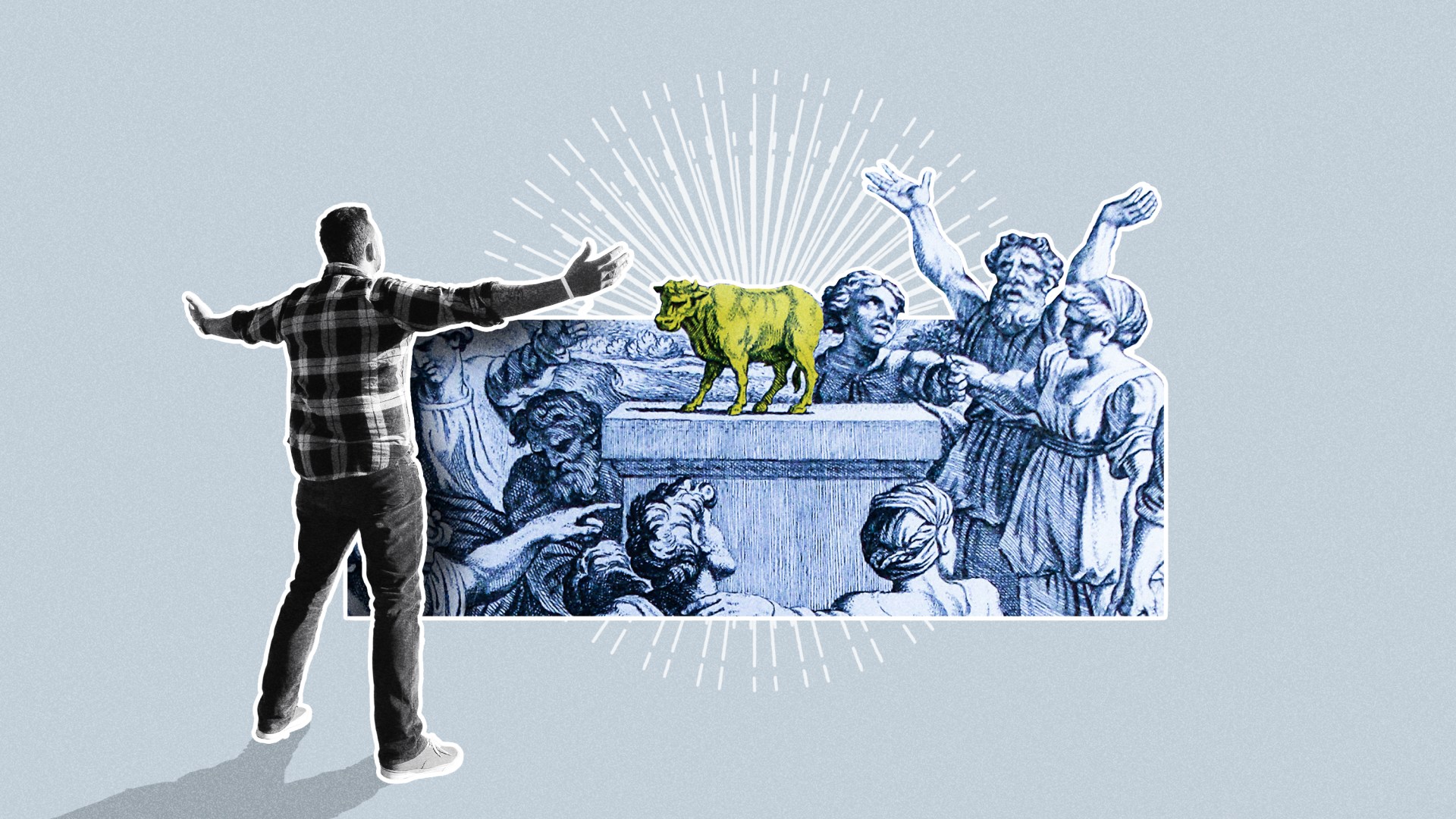
Christians are still idol worshipers. We’re just less honest about it.

Illustration by Rick Szuecs / Source images: Ryan Klintworth / LIghtstock / Wikimedia Commons

John Calvin famously said the heart is a veritable factory of idols. I used to think this was just typically dark, hyperbolic, Calvinist misanthropy. The older I get, though, the more I concede it to be a sober statement of fact. Idols are our specialty. We churn them out at a furious rate, an extravagant assortment of false gods, deities, and spirits that we’ve cooked up over the centuries. Zeus, Odin, Marduk—some real classics. Our capacity to lie to ourselves about divinity is impressive and extends as wide as creation itself.

More impressive, though, is our pantheon of false images of the living and true God. It’s not for nothing the Ten Commandments quickly move from ruling out the worship of false gods to censuring the false worship of the true God. While the first command is the most basic for a reason, the second is the more insidious and tempting for Christians to break. Satan’s been a liar and murderer from the beginning (John 8:44), and his first trick was to deceive Eve into thinking God is a miser (Gen. 3:4–5).

Our hearts still fall into that same satanic groove, quickly moving from confessing “I believe in God” to talking about “the God I believe in,” to making the most dire and pretentious utterance of all: “I could never believe in a God who…”

Of course, the sad joke is this “God” usually ends up being no more than our own shadows blown up to God-sized proportions. In that sense, Ludwig Feuerbach, a 19th-century philosopher and insightful unbeliever, was on to something when he said all theology is really projection—a roundabout way of describing our own best thoughts of ourselves.

Feuerbach can’t claim all the credit, though. The apostle John tackles this tendency by ending his first letter with the curiously abrupt command, “Dear children, keep yourself from idols” (1 John 5:21). This seems an afterthought until you recognize it’s what the whole letter has been about. “God is light; in him there is no darkness at all” (1:5). John knows that the light that is God the Son “has come into the world, but people loved darkness instead of light because their deeds were evil” (John 3:19). And so we lie to ourselves—and in such diverse and sundry ways!

John recognizes that some of us want to take sin lightly and so make up a God in our own image who minimizes sin, rarely judges, and never punishes. John tells us to stop hoodwinking ourselves. There’s no such God: “No one who continues to sin has either seen him or known him” (1 John 3:6). God is light—pure light, brilliant, fiery, holy light that will not abide darkness in his children.

Sometimes we conjure up a hateful, stony-hearted God, an unyielding prosecutor, a Javert-like jailer who longs to lock us up and throw away the key. And if God is going to be like that, why not settle in the shadows with our sins? But John knows this too, so he reminds us “if we confess our sins, he is faithful and just and will forgive us our sins and purify us from all unrighteousness” (1 John 1:9). Come clean and you’ll be cleansed by Jesus’ blood. Why? Because God is merciful. He is faithful. He is just.

A crowd-favorite way to twist God to our liking is convincing ourselves that he’s on our side when we self-righteously judge our fellow believers, revile them, and break communion with them for being wrong about this tiny doctrinal nuance or that social cause. But again, John reminds us to love one another—even the worst of us—for “whoever does not love does not know God, because God is love” (1 John 4:8). And he made that plain in the Son, whom he sent to be a propitiation for our deepest, blackest, foulest sins on the cross (v. 10).

Over and over again, John corrects the myriad ways we are tempted to turn from the true and living God to the dead idols we’ve made of him. He points us to the Son of God, who came to destroy the deceptive works of the devil (1 John 3:8) and give us understanding, that in Jesus we might know him who “is true God and eternal life” (5:20).

The apostle instructs us still: Keep yourself from idols. Don’t fool yourself about your bent to fabricate a God out of falsehoods. If you say you’re without sin, you make God a liar (1:10). Instead, ask yourself, “What idol am I tempted to make of God?” Humbly confess that sin and look to the cleansing of the Son. Let the light of him who is the truth shine upon you and dispel the darkness.

Derek Rishmawy is the Reformed University Fellowship campus minister at the University of California, Irvine and a doctoral candidate at Trinity Evangelical Divinity School.

Ideas

Jesus Is the Light of the Lockdown

2020 has drawn us closer to our human frailty. May it also draw us to the Incarnation.

Illustration by Cornelia Li

Christmas promises to be more than memorable this year thanks to the coronavirus pandemic. Worshipers will find their celebrations of Jesus’ incarnation quarantined, their travel and family gatherings curtailed. Manger Square in Bethlehem on Christmas Eve will likely resound with comparative quiet, as will countless churches where “silent night” will have more to do with global angst than heavenly peace. Carols and sermons will occur online, alongside all the Christmas shopping.

The hopes and fears of 2020 are met in Jesus this Christmas. God in the flesh was born to us with every limit the Incarnation imposes. Could Jesus have contracted a virus? As he was fully human, we presume so. But as he was fully God, we likewise presume any virus only would have had power over Jesus if granted from above (John 19:11). Moreover, we presume Jesus could have repelled a virus as he cast aside Satan, though he characteristically eschewed using divine power for personal benefit (Matt. 26:53; Mark 15:30; Luke 4:23).

Among us mere humans, COVID-19 continues its spread like fire in a parched forest, without discrimination. It burns alongside hot civil unrest and intensely divided public discourse and politics worldwide. Pandemics show no partiality. Discrimination does happen among the cinders, however. The global poor, those without access to good health care, the elderly and already sick, minorities and the marginalized, essential workers, and those needing riskier work to make ends meet sink under the ashes. This may not be our last coronavirus Christmas. A vaccine holds promise, but it won’t immediately eradicate the viral threat, especially if there’s not universal availability or compliance, or if the virus mutates into a deadlier strain.

Whatever beauty ultimately arises from the ashes will be the work of the Spirit (Isa. 61:3). Disparities exacerbated by the pandemic between privileged and poor are those Jesus was born to confront (v. 1). As Mary sang of God at her son’s conception: “He has scattered those who are proud in their inmost thoughts. He has brought down rulers from their thrones but has lifted up the humble. He has filled the hungry with good things but has sent the rich away empty” (Luke 1:51–53).

Still, in the spirit of incarnational humility, Jesus insisted we each must take up our own cross to follow him. Loss is the sure way to real life. But human pride—a viral vice—fiercely pushes back against crosses by asserting autonomy and control. Pride refuses to concede to mere humanity with its limitation and brokenness, toiling instead to construct a fake front of godlike sovereignty—independent, detached, and fully in charge. Psychologist Richard Beck labels this “the dark and pathological side” of American success. We labor for material and emotional self-sufficiency so as to eliminate every trace of vulnerability. We strive to be like a God who does not actually exist.

The real God born to us at Christmas—whom we worship—took on a real human body, one subject to aging and genetic error, sagging flesh and diminished sight, clogged arteries, declining memory, and death. And the Incarnation occurred amid disparate poverty and scandal, oppression and uncertainty. Jesus cried as a baby and navigated adolescence. He lived a righteous life and died an unjust death for us, wearing a crown of thorns—which recent preachers note resembled the coronavirus (corona comes from the Latin, meaning crown).

Christmas humanity in all its indignity anticipates the resurrection of the body, but even resurrected Jesus still bears his scars (John 20:27). Christians believe in Jesus as fully God and fully human, and nowhere is full humanity more manifest than in dying. The forces of decrepitude and decay, always at work in us, constantly bear witness to our neediness.

As we confine ourselves this Christmas, let us do so with a renewed awareness of the incarnational limits we celebrate in Jesus, who did not consider equality with God as something to exploit (Phil. 2:6). Let this awareness fuel our prayerful, active concern for fellow Christians and others worldwide threatened and thwarted by this pandemic. Every Christmas season decries its own commercialization and seeks to re-ground itself in true meaning. If losing our lives and our comfortable lifestyles opens us up to the true humanity we share with the least and the last and the lost around the world, and thereby meaningfully reconnects us to each other, then I say Merry Christmas.

Daniel Harrell is editor in chief of Christianity Today.

Church Life

Meet the People Who Minister in America’s Food Chain

How pastors, farmers, and activists on both coasts are caring for migrant farm workers.

Brian L. Frank

In early spring, the coronavirus pandemic sent the global food supply chain into disarray. In US grocery stores, prices surged, and many items—not just toilet paper—simply disappeared from shelves.

At some fruit and vegetable farms across the country—particularly those that sell directly to consumers or stores—business remained strong or even improved. But other farms watched the market for their produce dry up overnight, forcing them to cut operations, pull acreage out of production, and endure the heartbreak of tilling harvest-ready crops into the ground.

At the base of this teetering agricultural system are migrant farm workers. Just under 10 percent of laborers come to the United States on H-2A visas, which allow them to work in agriculture for up to 10 months. The other 90 percent of seasonal farm workers live domestically and often earn minimum wage, patching together jobs in hospitality, restaurants, and a rotating schedule of crops. Nearly half are not authorized to work in the United States.

For many workers, the pandemic has made an already difficult living even more daunting. Growers and packing houses laid off workers. The virus moved quickly through some farms and buildings that house agricultural workers, many of whom don’t have health insurance.

CT met with pastors, farmers, field workers, and activists in California and North Carolina who were ministering to migrant farm workers before the pandemic and continue to do so today. In ministries of word, mercy, and justice, these Christians are approaching the complex challenges facing laborers in ways that are varied and, at times, even contradictory.

Word

San Joaquin Valley, California

The sun had not fully risen when Tom Rios sat down with the men in his morning Bible study. To accommodate the schedules of the workers who participate, the study convened at 5:30 a.m. Today, they were meeting in Rios’s backyard just outside of Kingsburg, California, nestled between fields and orchards along the banks of the Kings River.

They discussed Romans 1:16–17. Christ alone, Rios explained in Spanish, is sufficient to satisfy a just God. He is the only mediator between God and man.

“No hay otro,” Rios said. “No hay otro.”

José Macias nodded along. This truth changed his life, he said later. He works for an irrigation company, pumping water to the fruit orchards that fill California’s arid San Joaquin Valley. He works with other immigrants as well as second- and third-generation Mexican Americans, and for most of his life, he said, he found ways to judge them, to think of himself as better. His attitude was getting him in trouble at work and causing conflict with his kids and wife.

After being humbled by the gospel, he said in Spanish, “I simply treat people with respect.”

Bible study wraps up promptly at 6:30 a.m. most days. The men have to get to work. Macias already had to take an hour off to attend. He won’t be penalized. The farmers who employ him, the Jacksons, want him at the Bible study.

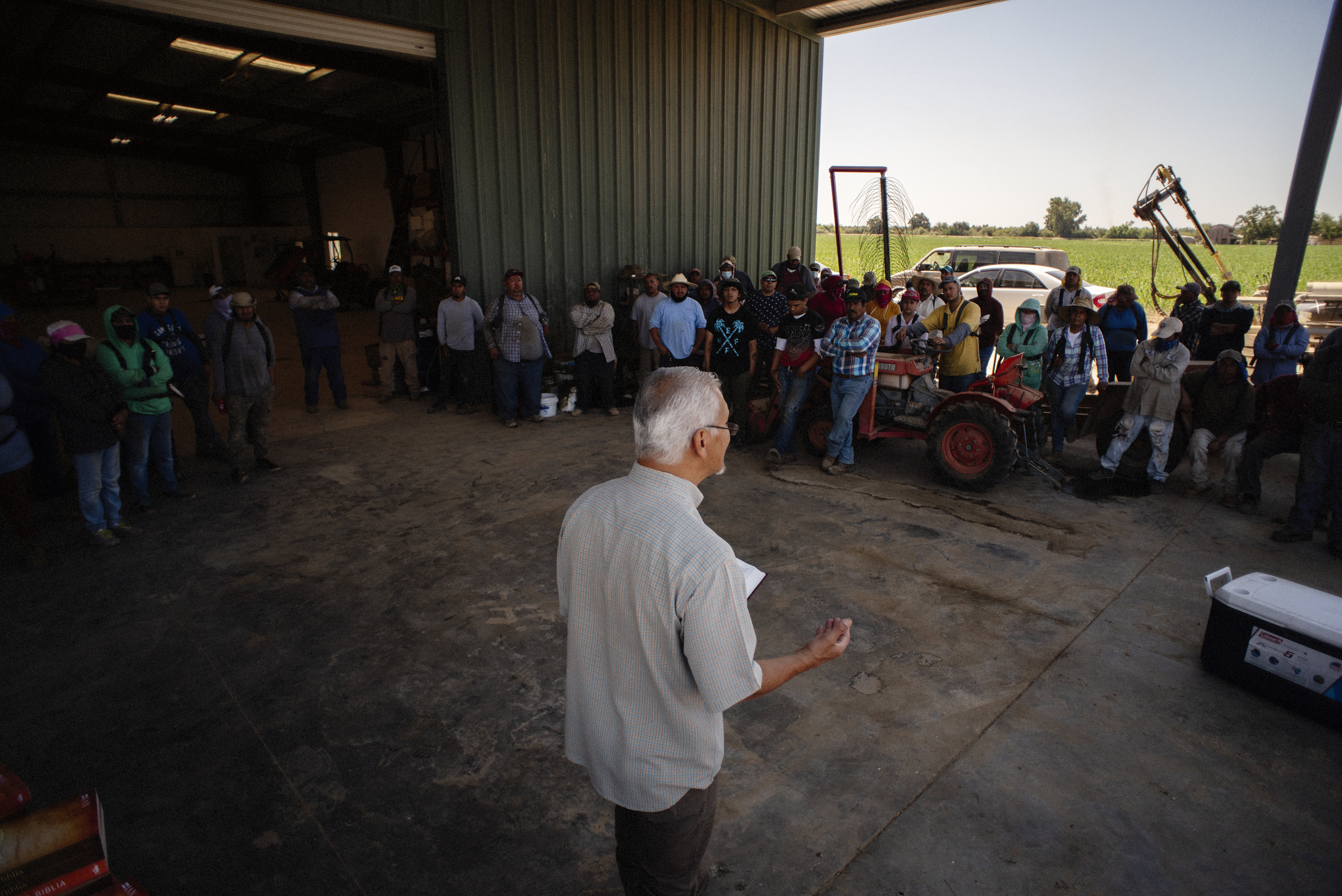
Tom Rios preaches to agriculture workers at a barbeque at Kingsburg Orchards near Fresno, California. CLICK TO SEE MORE IMAGESBrian L. Frank
Tom Rios preaches to agriculture workers at a barbeque at Kingsburg Orchards near Fresno, California. CLICK TO SEE MORE IMAGES

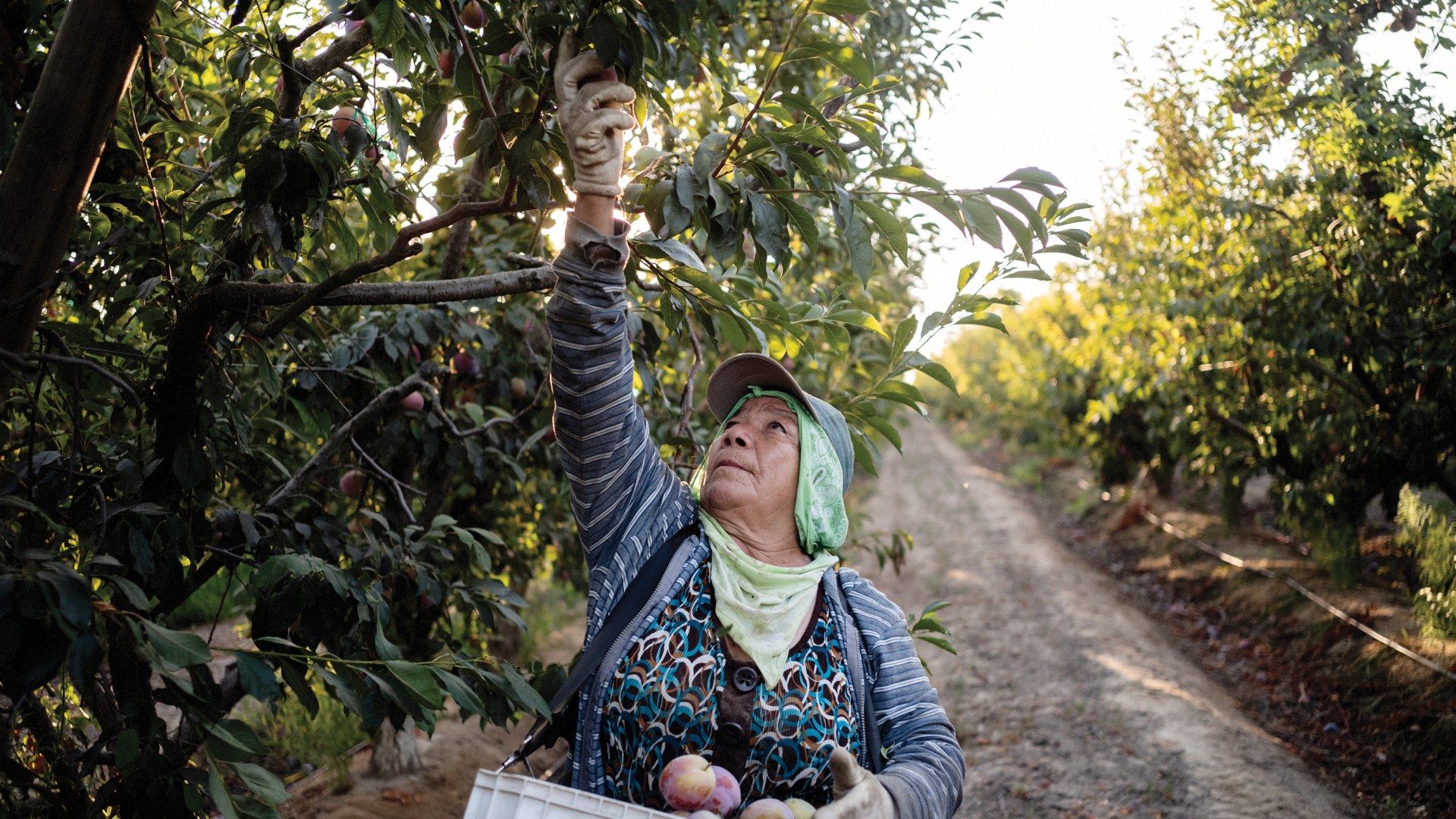
Evangelism and discipleship are built into the Jacksons’ business model. That’s why, in 2015, they hired Rios. Officially, he is the safety manager for Kingsburg Orchards, which grows apricots, plums, peaches, and other stone fruits. Rios has plenty of duties on that front, ensuring workers are trained on their equipment, informed of ergonomic ways to harvest, and following other protocols—all of which help the farm comply with federal regulations and attain various quality certifications.

But Rios’s presence there has a higher purpose: discipleship.

“I consider it one of our best investments—and investing in people—that we can share the gospel with our own employees,” Brent Jackson said.

Brent’s uncle, David Jackson, shares that sense of mission. In a video made for Texas grocer H-E-B, one of the family farm’s customers, he describes farming as the family’s calling. “As Christlike people, we were told to proclaim the gospel,” he told CT.

Rios delivers a weekly midday Bible lesson at one of the Kingsburg Orchards pack houses, with multistory conveyor belts zigging and zagging in the background, ferrying boxes of plums. Lunchtime changes every day, depending on when the workers start harvesting.

Rios limits his message to around 12 minutes, he said, so they can use the rest of their short lunch break to relax and socialize. During the pandemic, it’s one of the only points in the day when workers can take their masks off.

Most, though not all, of the pack house workers are women. A growing number of field workers in the US are women as well. Around 30–40 percent of the workers are women at Family Tree Farms, a nearby orchard owned by David Jackson.

At Kingsburg Orchards, Aida Villaseñor prefers the fields. The pack houses are too quiet, she said. If workers talk on the line, “the supervisor gets mad.”

She loves picking fruit with the other workers, who chat and sing together as they move between trees. The more casual environment makes it worth it to her to be out in the fields, where temperatures regularly top 100 degrees in the summer.

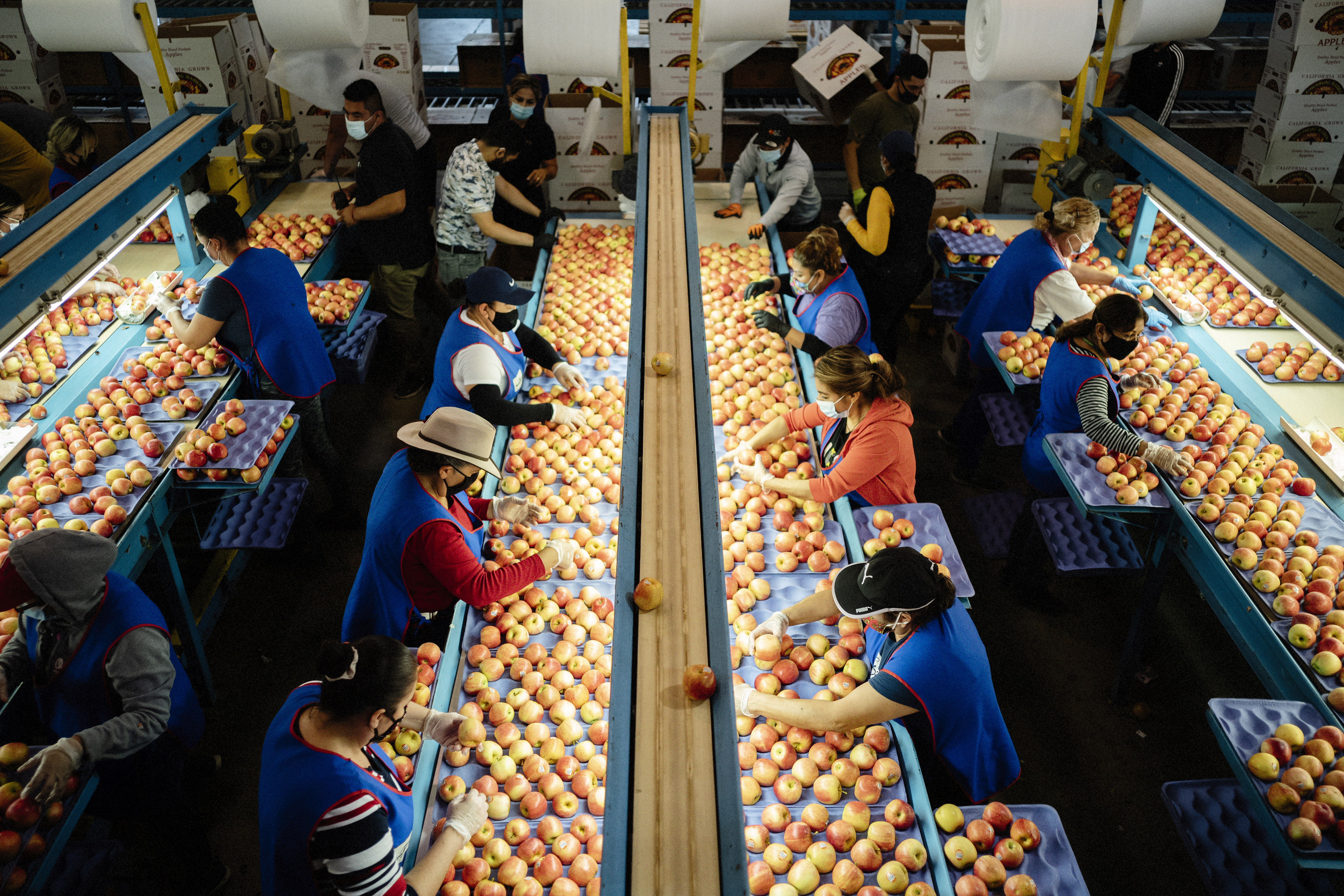
Workers sort apples in California’s San Joaquin Valley. Pack houses, which often employ women to work in tight quarters, are a potential source of rapid spread of the coronavirus. CLICK TO SEE MORE IMAGESBrian L. Frank
Workers sort apples in California’s San Joaquin Valley. Pack houses, which often employ women to work in tight quarters, are a potential source of rapid spread of the coronavirus. CLICK TO SEE MORE IMAGES

Rios interacts with field workers as well. In addition to his regular mingling and safety checks, he preached a gospel message at the end-of-harvest barbecue hosted by Brent Jackson.

One morning in late July, Jackson and his management team—many of them family—lit a huge circular grill, fashioned in their welding shop under the awning of an equipment barn. Workers gathered in the shade, facing a buffet spread atop a flatbed trailer. Jackson stood in front of the trailer as he shared, in Spanish, his appreciation for their hard work over the course of the season. The foreman said a few words of gratitude, and then Rios stepped to the front to share the gospel. Workers were welcome to take paperback Bibles from a large stack at the end of the buffet line.

Villaseñor took one before hopping in the food line. She said she appreciated the message, and the boss’s words of gratitude. “It’s good for everyone to hear,” she said.

Rios said it’s difficult to tell which of the gospel seeds will bear fruit.

Brent Jackson knows that not every person who hears the Word of God will respond, but some will, he said. For those, he’s not just after casual assent: He wants to see changed lives under the lordship of Christ.

“Whenever we think of ourselves as the king, we get into trouble,” he said, “Whenever we serve the King Jesus, then he leads us in peaceful ways, and he leads us out of our bondage to whatever addiction or slavery we’re under.”

He disciples about 16 of his employees directly and has built discipleship into the management structure of the company. He can’t know all 4,000 of his employees, he said, so he has to hire people who will form relationships across the entire company. His mission, he said, is to build the kingdom of God. And to him, that means evangelism.

Workers at Kingsburg make roughly $15 an hour. Brent Jackson knows that in California—even in the San Joaquin Valley, and even with the commissions earned by some workers—they are still considered financially poor. (California’s minimum wage for large employers is $13 an hour and will increase to $14 in 2021.)

The Jacksons chafe at talk of efforts to mandate higher farm wages. It makes some stone fruit fields unsustainable, they explained, because consumers won’t pay enough for peaches or nectarines to support better worker pay. When labor costs climb too high, some farmers convert fields to almonds or other crops that require less manpower.

Instead, David Jackson emphasizes the dignity of work and the wages received for it. “Americans don’t believe it’s good out there” in the fields, he said, “but it’s good out there. It’s honorable.”

Those who have been helped by the Jacksons and the church they attend with Rios, Grace Church of the Valley in Kingsburg, are quick to tell stories of schedule flexibility, financial assistance, and other forms of support as needed.

But David Jackson said that he cannot provide those benefits preemptively or at scale. He doesn’t have the profit margin. His workers often have to rely on charity—his or others. That’s part of the calling of the church, he explained, quoting Matthew 26:11, in which Jesus said, “The poor you will always have with you.”

For some workers, the fields of Family Tree Farms serve as a stepping stone to higher-wage jobs, either within his operation or in other industries. But he can’t guarantee that for everyone. He reasons that he can, however, give them Jesus. “The real riches are spiritual.”

Mercy

Santa Barbara and San Luis Obispo Counties, California

In the span of an hour, four different people showed up at pastor Mario Garcia’s front door in Oceano, California. Visitors hastily donned their protective masks upon entering the house as his wife, Maria, and their teenage daughter gave instructions in English and Spanish. The visitors then grabbed some supplies and went on their way. It was delivery day, Mario explained, when the family coordinated volunteers to distribute boxes of food to pickup sites around the community.

“If I want to serve these people, I need to be able to provide something for them,” he said.

If it weren’t for COVID-19, he explained, things would be much busier. His church usually hosts soccer clinics and yard sales, but most of those activities slowed as California’s stay-at-home orders waxed and waned over the summer.

Despite some adjustments, Garcia’s ministry was not as dramatically affected as others. Funded by Grace Bible Church in Arroyo Grande, his Grace Hispana ministry has decentralized since 2019. It doesn’t meet in the church’s spacious building overlooking the Pacific Ocean. It doesn’t meet in large groups at all.

Instead, Garcia mixes and mingles in the communities on the other side of Highway 101: Grover Beach and Oceano, where the population is majority Latino and the average home prices are $250,000-$300,000 less than in Arroyo Grande.

“I don’t want to be a pastor of a church,” Garcia said. “I want to be a pastor in the community.”

It took some time to find a model that worked in this particular community.

When Garcia came up to interview for a job as a Spanish-language pastor in San Luis Obispo County 18 years ago, the pastor from Grace Bible Church toured him around the expansive fields of Santa Maria, where huge agricultural operations like Bonipak and Teixeira Farms are located. These were the people they wanted to reach, the pastor told him.

It seemed like a natural fit. Garcia had worked strawberry fields in Southern California for years after coming to the United States from Mexico when he was 22.

However, the ensuing years would be a constant lesson in the difference between the culture of his birth and the culture of his second birth. He understood Mexican culture. He understood the fields. But the way he had learned to “do church” in Southern California was not working.

Garcia quickly figured out how to connect with the community—the garage sales and soccer camps were early successes—but getting people to church was more difficult.

Among the broadly Hispanic workforce are members of various Mexican immigrant communities, tightly knit groups from different Mexican states. They work long hours; many field workers don’t get Sundays off. Two groups, those from Michoacán and Guanajuato, Garcia said, were particularly suspicious of him. When he first arrived in 2001, a Catholic deacon told him, “You will feel the resistance.”

He did feel a resistance to evangelicalism, he said, which is seen by many as a white American expression of faith. Catholicism, for some of his neighbors, is as much about home as it is about heaven. When they are urged to trade it for something they found in America, Garcia explained, it feels like they are being asked to give up more than confession and transubstantiation. They’re being asked to give up being Mexican.

The connection he made had to start with service and culture. Yard sales were a huge social activity as well as a sort of mutual-aid endeavor in the neighborhoods, and kids’ soccer camps helped working parents pass on the sport many of them played growing up. Garcia also got involved in the schools and the community. He translated for neighbors who ended up in traffic court for driving without a license, which was more common before 2013, when California stopped requiring proof of legal presence to obtain a driver’s license.

“We found ways to connect with people so that we could build these relationships,” Garcia said.

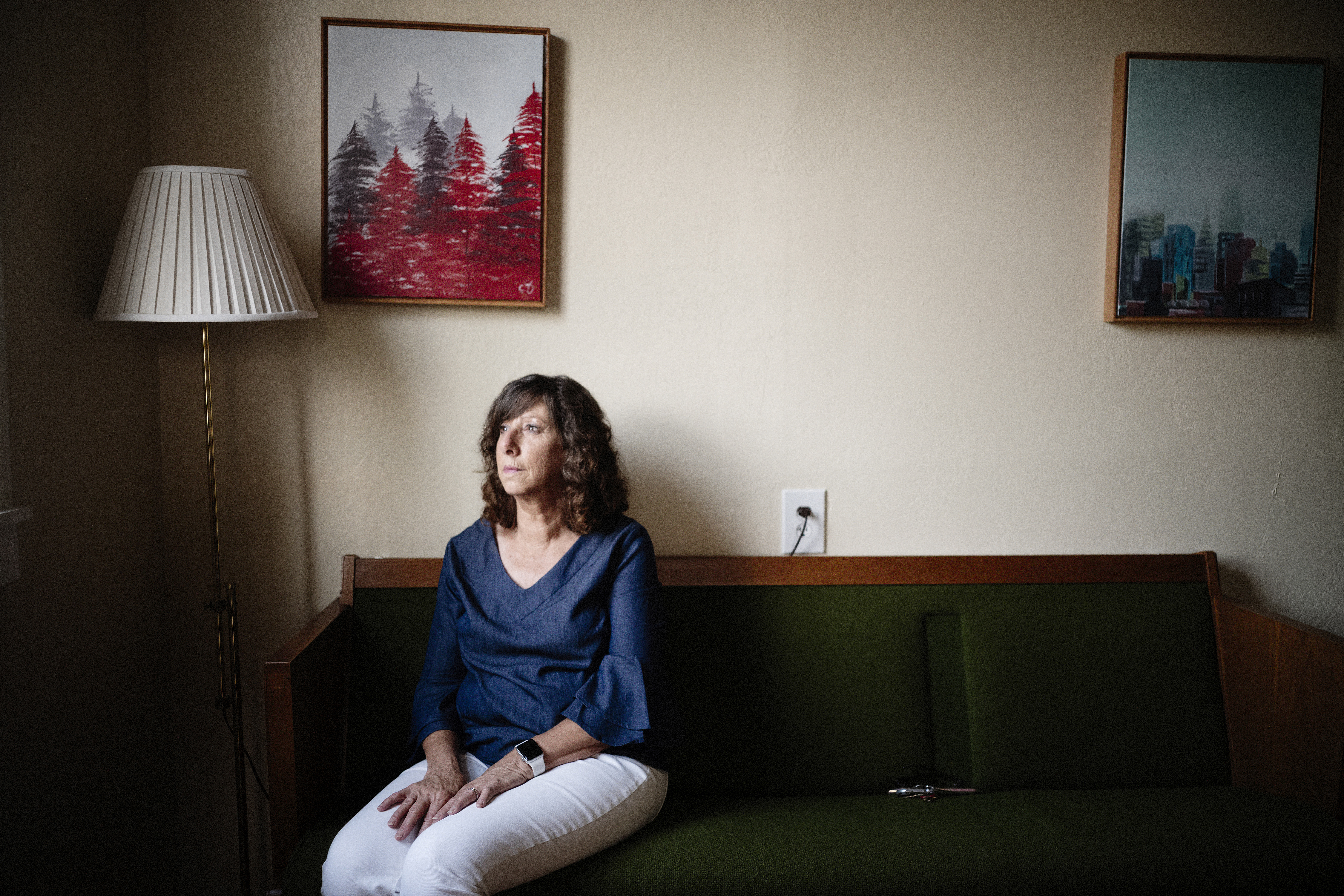
Diane Martinez’s church connected her to a different kind of mercy ministry with farm workers: immigration law.

She didn’t see herself in immigration advocacy at first. “God just surrounded me with the immigrant population,” Martinez said. Her neighborhood in Santa Barbara, Westside, is home to more low-income families than the rest of the famously quaint seaside city. Many do not speak English or are students at Santa Barbara City College, where she was teaching.

Martinez’s church, Shoreline Community Church, had been trying to find a ministry that would meet practical needs of people in the community. (“You always know when it’s your idea and not God’s, because it doesn’t work,” she said.) Finally, her pastor sent Martinez and another representative to an immigration conference in San Diego.

Diane Martinez worked with her church to start an Immigrant Hope legal clinic after other community outreach efforts fell flat. CLICK TO SEE MORE IMAGES Brian L. Frank
Diane Martinez worked with her church to start an Immigrant Hope legal clinic after other community outreach efforts fell flat. CLICK TO SEE MORE IMAGES

That was it, the ministry they had been looking for. “I came out of there just knowing,” Martinez said. “The Holy Spirit lit it up.”

She spent the next two years studying immigration law and earning the necessary certifications to open a legal clinic. Her church connected with Immigrant Hope, a national nonprofit operating legal clinics in eight states. In May 2014, she opened the Santa Barbara chapter, which runs independently of but is housed at Shoreline.

To be truly effective, the clinic could not just wait for clients to come—most work long hours and use city busing for transportation. Martinez started going into immigrant communities in the surrounding county, which eventually led her to New Cuyama, a farming area two hours east on the other side of Los Padres National Forest. Immigrant Hope now works through the community center there to help farm workers and their families apply for legal permanent residency, naturalization, and, until recently, for Deferred Action for Childhood Arrivals status, which allows some immigrants who are brought into the US as children to remain and work in the country legally (the Trump administration has tried to end this program).

About half the people the clinic meets in consultation have a way forward toward legal status. That percentage is high, Martinez said, because those who know they have no options don’t usually schedule a meeting to confirm it.

“There’s many people out there that, because of the way they came [into the US], they have no pathway to legal permanent residency,” Martinez said. However, if one person in a family can become naturalized, pathways sometimes open up for others. For parents and children of a naturalized citizen, the process is short compared to that for brothers and sisters, which can be 20 years.

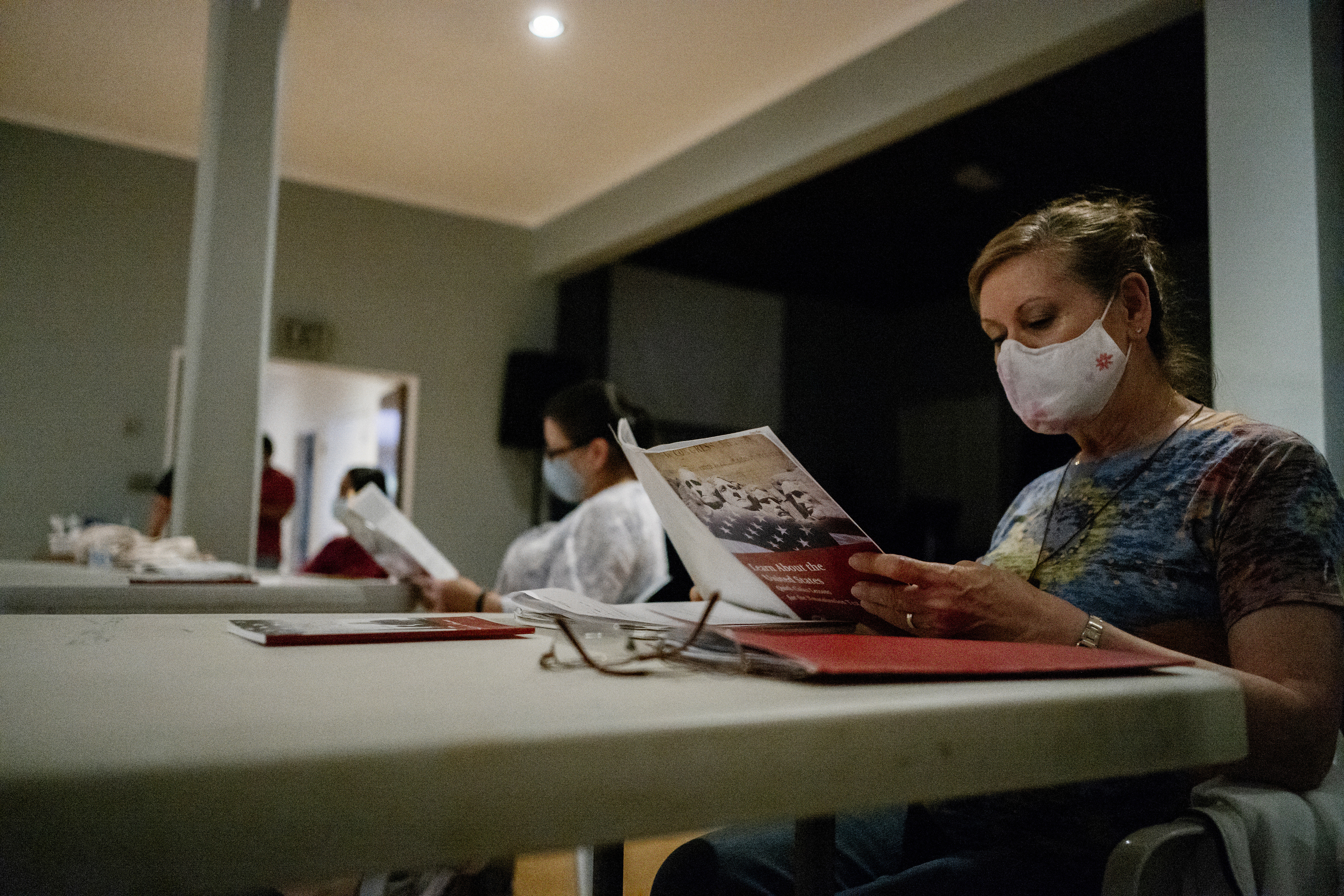
Beyond offering legal services, Immigrant Hope helps clients study for citizenship tests, learn English, and apply for waivers to the naturalization fee, which US Citizenship and Immigration Services recently raised by 80 percent to $1,160.

Immigrant Hope provides civics classes to help farm workers and other immigrants attain US citizenship.Brian L. Frank
Immigrant Hope provides civics classes to help farm workers and other immigrants attain US citizenship.

The clinic also forges relationships with medical clinics, libraries, schools, and public service departments. In Santa Barbara, the local Federal Emergency Management Agency representative worked with Immigrant Hope and the fire department to create the nation’s first Spanish-language Community Emergency Response Team, a volunteer disaster preparedness program.

Though they never require anyone to pray or sit through a gospel presentation to receive help, Immigrant Hope offers spiritual support to its clients as well. “Rarely do we have anybody turn us down for prayer,” Martinez said. Sometimes, clients are curious to hear more. “We get to tell them about a citizenship where applications are never denied.”

Martinez also feels called to another kind of outreach: church education. She tries to help evangelical churches see immigration as more than a social justice issue. It’s about God’s justice, she said. She respects their desire for lawfulness, but her expertise allows her to explain how immigration law has never been immutable or absolute. Policy and politics have dictated the interpretation of law for over 100 years, immigration lawyers explain, and the people most affected—prospective and undocumented immigrants—cannot vote and thus have very little say.

Justice

Dudley, North Carolina

For marginalized people to exert pressure on unjust systems, they must organize, explained union leader Baldemar Velasquez. And they must take good notes.

In his 53 years with the Farm Labor Organizing Committee (FLOC), Velasquez has become very good at documentation—taking the testimony of workers and translating that into campaigns to solve problems.

His relationship with the growers is “very respectful,” Velasquez said. “That’s the way it ought to be.” If a worker complains about wages being docked or breaks not being given as usual, FLOC tries to present the claim professionally, as a human resources issue, not accusing the farmer of ill intent or asking for special favors.

Resolving things “like a family” just doesn’t work, he said, because farmers and laborers don’t come to the table as equal members of the family. “They’re like family until (workers) speak up for their rights,” said Velasquez. “Then you have a bad family feud.”

In Washington, Roy Farms’s chief operating officer John Erb believes labor relations need to be part of an overall healing in the agriculture industry. “Thy kingdom come, thy will be done, on earth as it is in heaven” is why, Erb said, he worked as a consultant helping farmers invest in their workers and their communities before joining Roy Farms, a Yakima Valley fruit and hops producer that markets its ethical and sustainable practices. Erb believes that biblical stewardship of the earth and human relationships can bring some measure of peace and justice to a broken world.

Empowering workers is key, he said. And sometimes that means welcoming labor unions.

Erb said he has often advised growers that “if (workers) want representation, you do not get in the way of that.”

Not that Erb believes unions are the best way to ensure workers are treated well. Standards and enforcement are better safeguards, he said, and grocery retailers and food service buyers can also help through their purchasing choices. “It really comes down to leadership across the supply chain,” Erb said, “starting with a commitment to workers from the buyers.”

Velasquez has similar interests. He views labor organization as a form of reconciliation. The negotiating process can feel litigious and formal at first, as farmers’ eyes are opened to how their workers feel about how they are treated. It is often emotional, and the formal process keeps everyone accountable.

But after about two years of working with unionized labor, Velasquez said, he sees a shift in how growers see their employees. They aren’t surprised when workers want improvements to their working conditions. Migrant farm workers become like any other employees who have expectations.

“That’s when we can start solving things around the kitchen table with a cup of coffee,” Velasquez said. Once the respect is there.

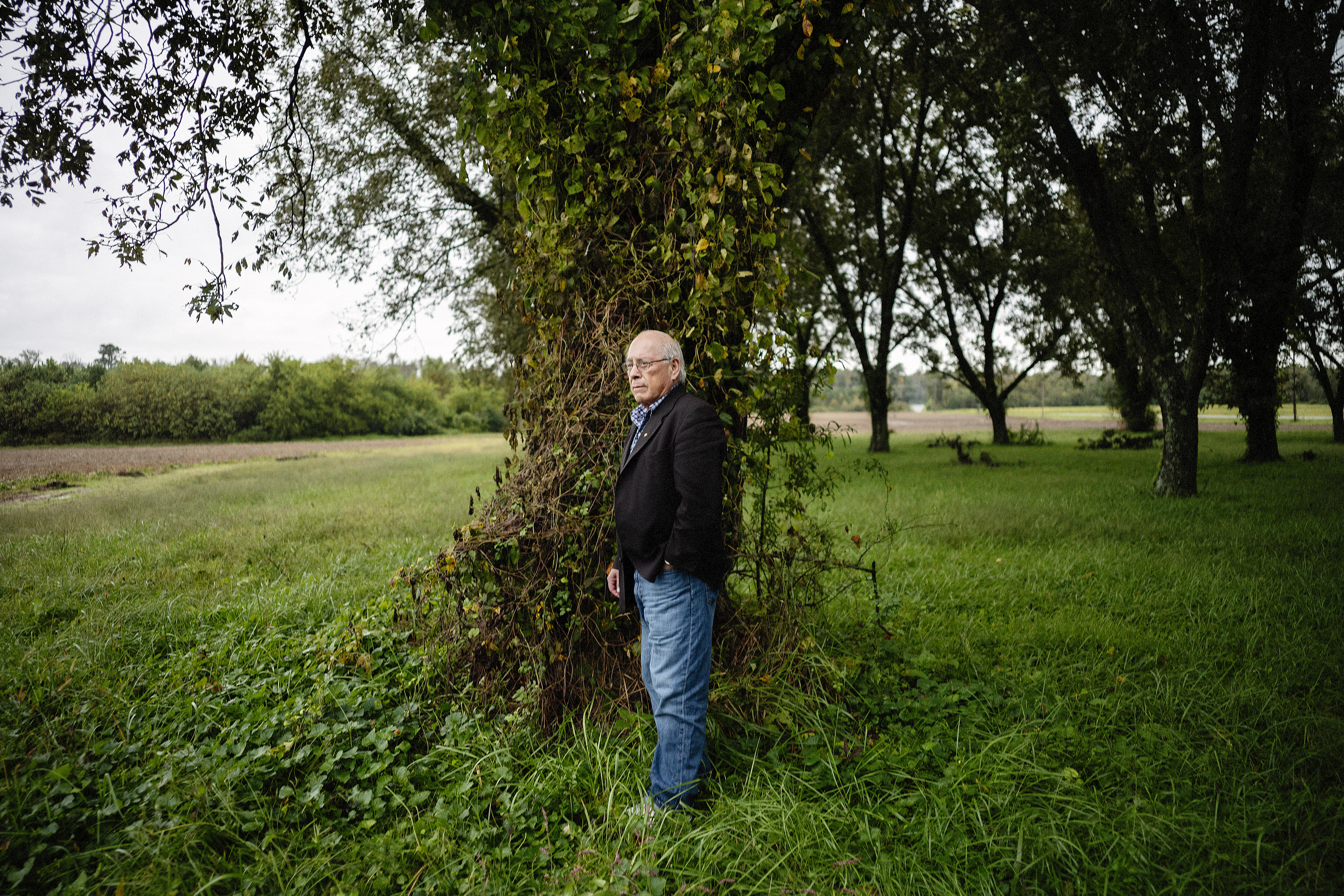
Baldemar Velasquez, FLOC union president. CLICK TO SEE MORE IMAGESBrian L. Frank
Baldemar Velasquez, FLOC union president. CLICK TO SEE MORE IMAGES

Velasquez is not looking to punish anyone. Not after a relationship with Jesus changed his life. As young man, he felt wounded by the abuses he had experienced in the fields of the Texas and Midwest farms where he worked with his family from the age of five. Velasquez first approached organizing with an “attitude of getting even,” he said. “When I came to know the Lord, that sort of flipped upside down. It was no longer about revenge; it was about reconciliation. Reconciliation is harder than being angry and getting even.”

In the mid-1970s and ’80s, Velasquez led the FLOC through a nearly eight-year boycott of Campbell’s soup. That, too, he saw as an act of reconciliation, and a model for bringing small farmers and laborers together for their mutual survival.

“Economically, we’re in the same boat,” Velasquez said. Like Erb, when he looks at a farm labor issue, he looks at the entire supply chain to find the source of the injustice. When it comes to wages, problems do not usually begin with the farmer—they begin with food prices at the retailer.

Farm workers in Ohio wanted to protest wages that they felt were unfair, but Velasquez knew the farmers weren’t getting enough from Campbell Soup Company to increase the wages. If the workers went on strike, farmers could grow simply grow corn or soybeans instead—cash crops that demand little labor.

So the workers went to Campbell, which had the money to pay farmers more, and worked to guarantee the farmers would pass those profits on to people picking in the fields. It was an arduous process that involved, among other feats, a 600-mile demonstration march from Ohio to New Jersey. But in the end, farmers and workers got higher pay, and Campbell also offered health care benefits to the farm workers.

Velasquez knows that farmers and their customers in the food and grocery industry don’t like the high-profile “shaking and moving.” But sometimes, he said, nothing else works. “You’ve got to get people’s attention.”

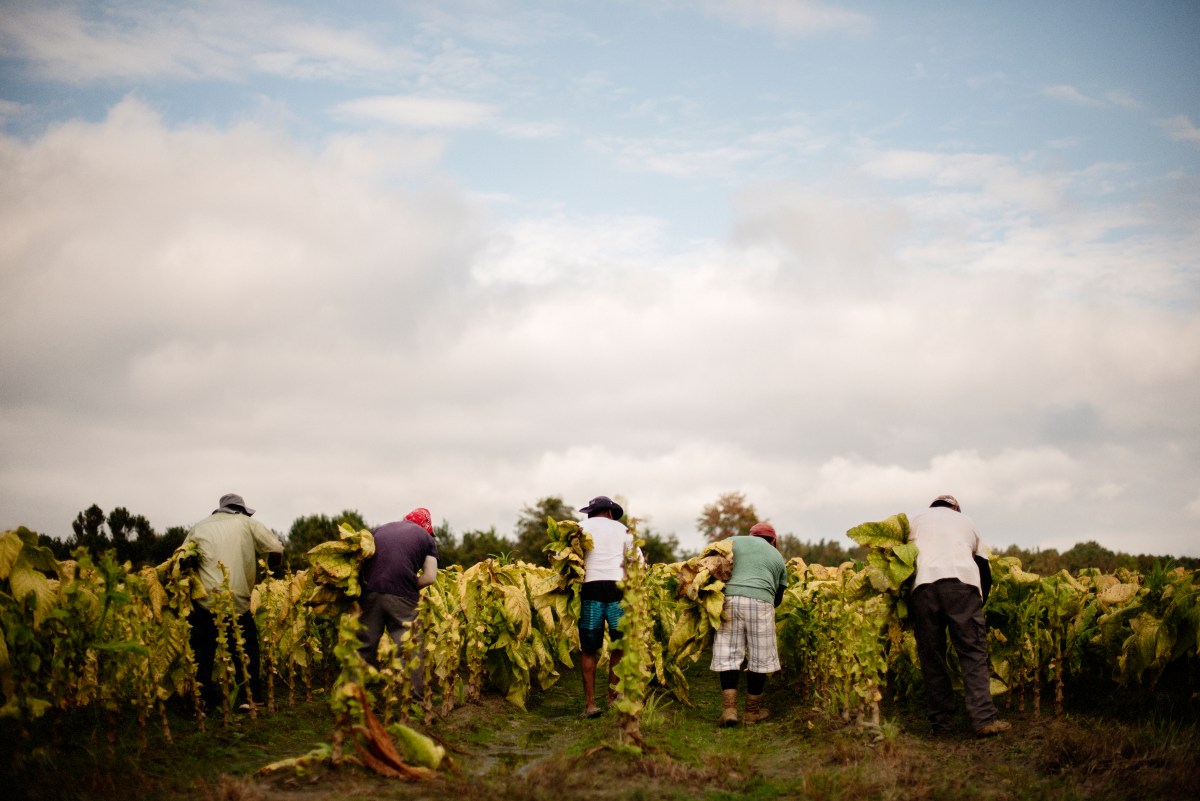
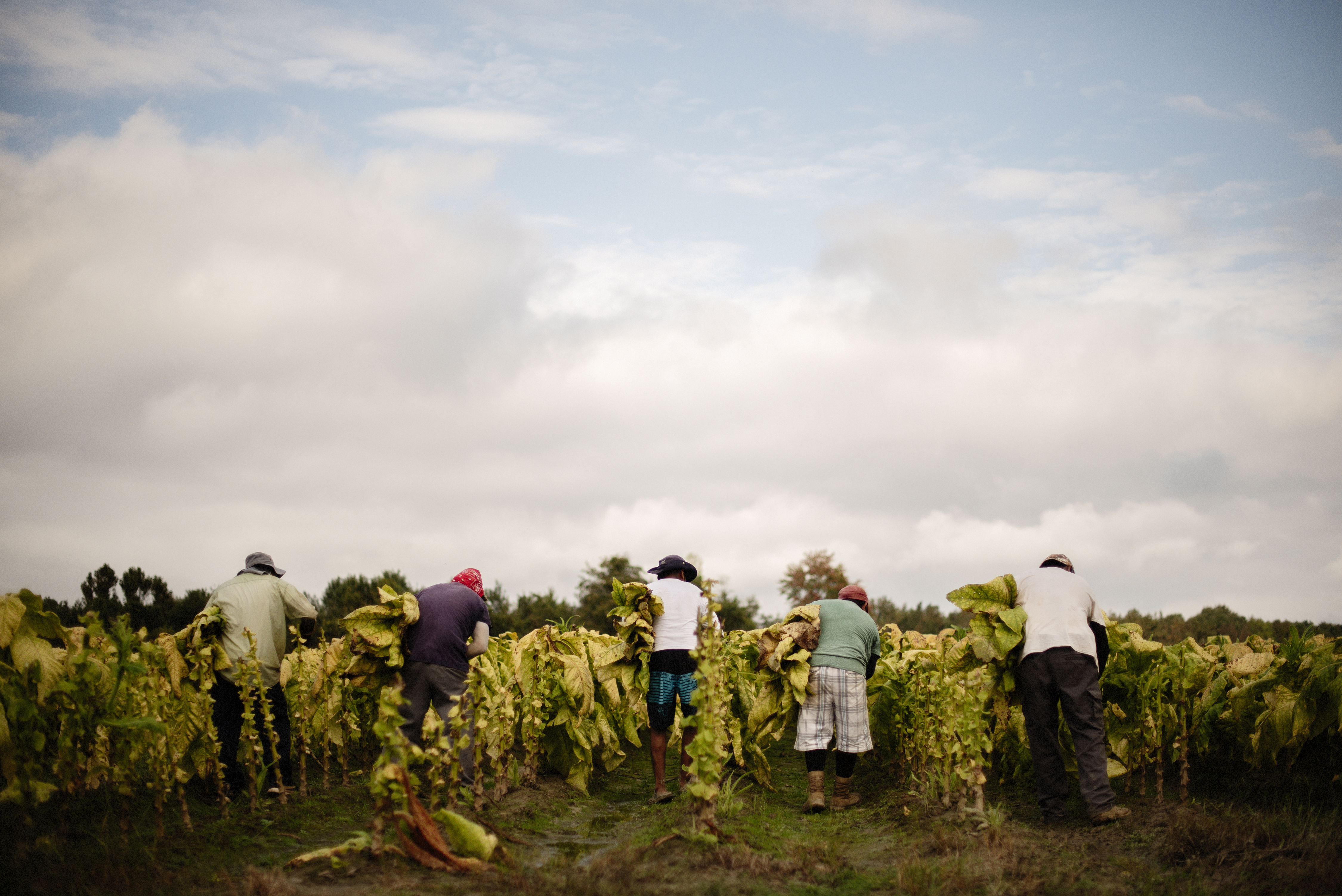
FLOC represents migrant farm workers in the American Midwest and in North Carolina, where many of its members harvest tobacco. CLICK FOR MORE IMAGESBrian L. Frank
FLOC represents migrant farm workers in the American Midwest and in North Carolina, where many of its members harvest tobacco. CLICK FOR MORE IMAGES

Back on the West Coast, John Erb is trying to get someone else’s attention: the consumer. “The market isn’t going to meet a demand that doesn’t exist,” he said. Unless people recognize the value of paying a bit more to help farms care for their workers, their land, and their communities, Erb said, squeezing pennies out of the supply chain will be the only way for small and even midsize farms to survive.

Erb has worked with farmers and their retail clients to raise awareness of efforts like fair trade and the Equitable Food Initiative, which certify foods that were grown and harvested ethically. Getting such certifications can help farmers command a higher price for their goods from socially conscious supermarket customers.

Advocates for migrant workers know that higher wages alone will not resolve every challenge facing low-income Latino families and immigrants.

At a meeting in July, Velasquez and the organizing team in Dudley met at the FLOC North Carolina headquarters. In 2006, FLOC built a large metal building that could serve as a meeting place, distribution center, and hurricane shelter. It’s big enough that the group could stay socially distanced while eight organizers, wearing masks, sat at their laptops. Another 10 joined on Zoom. They discussed the need for bilingual education as well as concerns about interactions with the police. FLOC gets involved wherever their members need protection; they know both well-being and injustice extend beyond the farm.

During COVID-19, the FLOC headquarters has also transitioned into a hub for public health and safety supplies. Pallets are piled high with boxes of bottled bleach and disinfectant. Washing machines line the back wall.

“We’ve been using the center as a place to distribute material to prevent the spread of COVID,” Velasquez said. He referenced Martin Luther, who famously agreed to obey the law during a flare-up of the Black Death but was willing to risk his health in ministry. “We know we’re taking risks. But when you’re a people of the people…when it comes to loving, you don’t count the price.”

Bekah McNeel is a Texas-based reporter who covers immigration and education.

Editor’s note: This article is 1 of 300+ CT Global translations.

Theology

Life and Death in ‘The Land of the Clouds’

In the mountains of Papua, missionaries and Indonesian professionals serve the lost together.

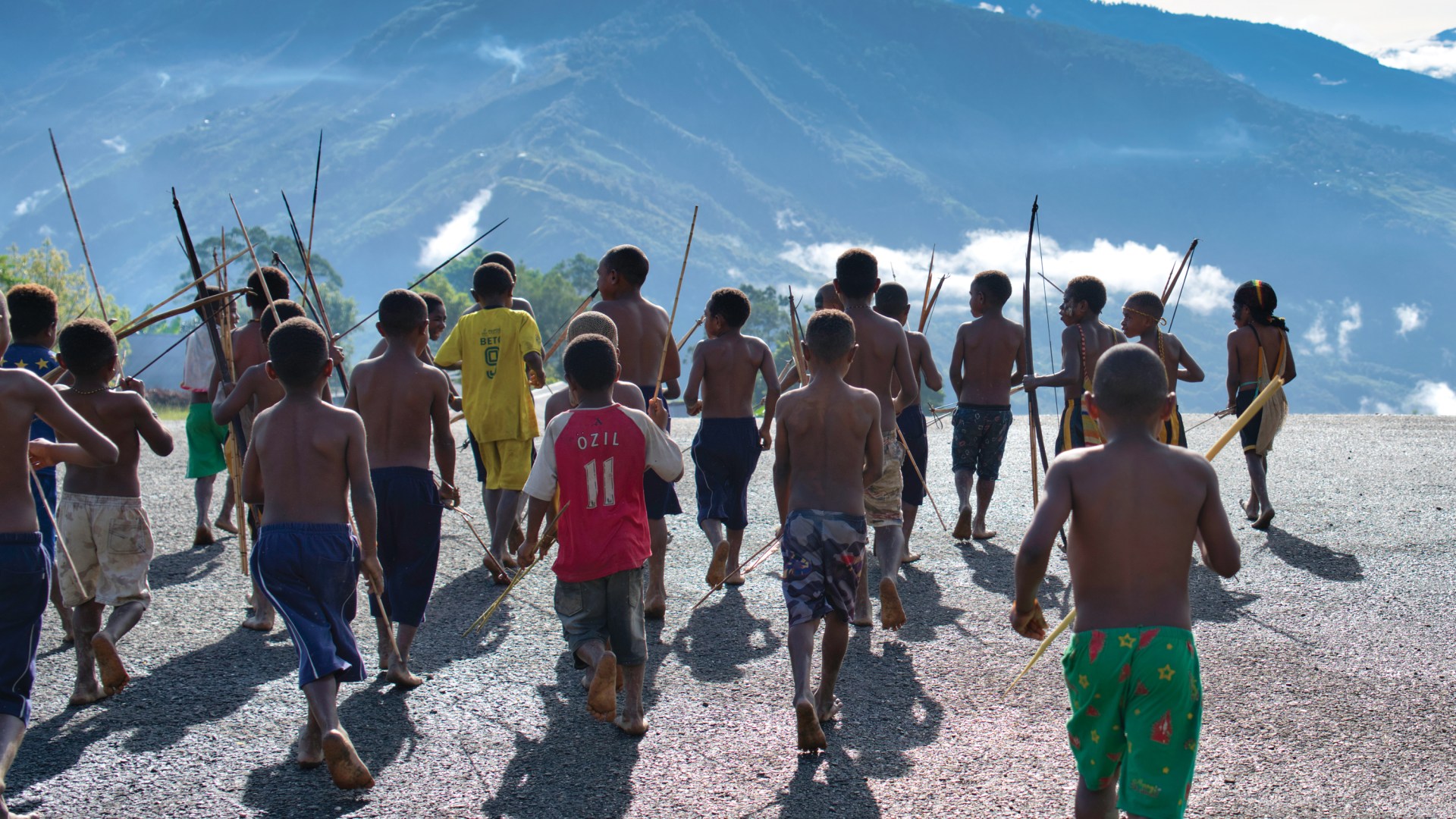
Lani children run down the alpine runway at Mamit, the destination of MAF pilot Joyce Lin on her fateful flight.

Lani children run down the alpine runway at Mamit, the destination of MAF pilot Joyce Lin on her fateful flight.

Timothy Dalrymple

High above the interior of Papua, the pilot is getting anxious. It’s later in the morning than he wanted, and the clouds are thickening. Somewhere below is the tribal village of Mokndoma. Every now and then the clouds part, revealing its dwellings for a moment, perched on a jungle slope. But the small prop plane is running low on fuel and lacks a clear, windless shot at the grass landing strip.

The pilot goes back and forth with his colleague, whose own plane, bearing the other half of a delegation of Christian businesspeople, scholars, and journalists, landed successfully mere minutes before but now might be stuck there until the next morning. Banking in tight circles, he finally calls it. Mokndoma will have to wait.

Such are the challenges missionaries confront in one of the most remote places on the planet. Months after this group left Papua, an American pilot with Mission Aviation Fellowship (MAF) lost her life there. Early on the morning of May 12, Joyce Lin’s Kodiak aircraft faltered and plunged into the waters of Lake Sentani. The MIT and Gordon-Conwell Theological Seminary graduate had been on her way to deliver coronavirus supplies to Mamit, another tribal village in the highlands.

Her death focused many Christians worldwide, if only briefly, on this far corner of the world where missionaries have been working for generations to share the gospel and translate the Bible for hundreds of animistic tribes.

Today, a creative form of partnership between foreign missionaries and native Christians allows both to focus their unique gifts in the body of Christ.

The island where Lin died is the second largest after Greenland and boasts the tallest mountains between the Himalayas and the Andes. Its tribes were once known for their constant warfare and spiritual rituals. The western half, Papua, is the largest and easternmost province of Indonesia and has been slow to be served by its faraway government. (The eastern half, the nation of Papua New Guinea, has even more tribes and more needs.)

An MAF plane flies to Mamit in the mountainous interior of Papua.Jeremy Weber
An MAF plane flies to Mamit in the mountainous interior of Papua.

Missionary activity in Papua has always been laced with risk. As American Christians have honored the memory of Jim Elliot and four fellow missionaries martyred in Ecuador, Australian Christians celebrate the legacy of Stan Dale.

A former commando, Dale plunged deep into the mountainous heart of the island after World War II and reached out to the Yali tribe. One day in 1966, he was attacked and shot with five arrows, but he survived and resolved to continue. In 1968, a different group of Yali warriors attacked him, this time with dozens of barbed arrows.

Dale and his friend Philip Masters both died on a riverbank that day. Yet the gospel spread among the tribe, and the Bible translation that Dale began on the Gospel of Mark was later completed, making the Yali the first of Papua’s hundreds of tribes to have the entire Bible in their language.

After decades of missionary investment from Australians, Americans, and others, most of Papua’s 3.3 million inhabitants are identified in Indonesia’s most recent census as Christians. Thousands of churches dot the hillside villages that were once filled with nomadic animists.

However, many are nominal or syncretistic in their beliefs, and the need remains great for discipleship and Bible translation. Of Papua’s 275 languages, fewer than 50 have a complete New Testament, and a similar number have mere portions translated. Only a handful have complete Bibles.

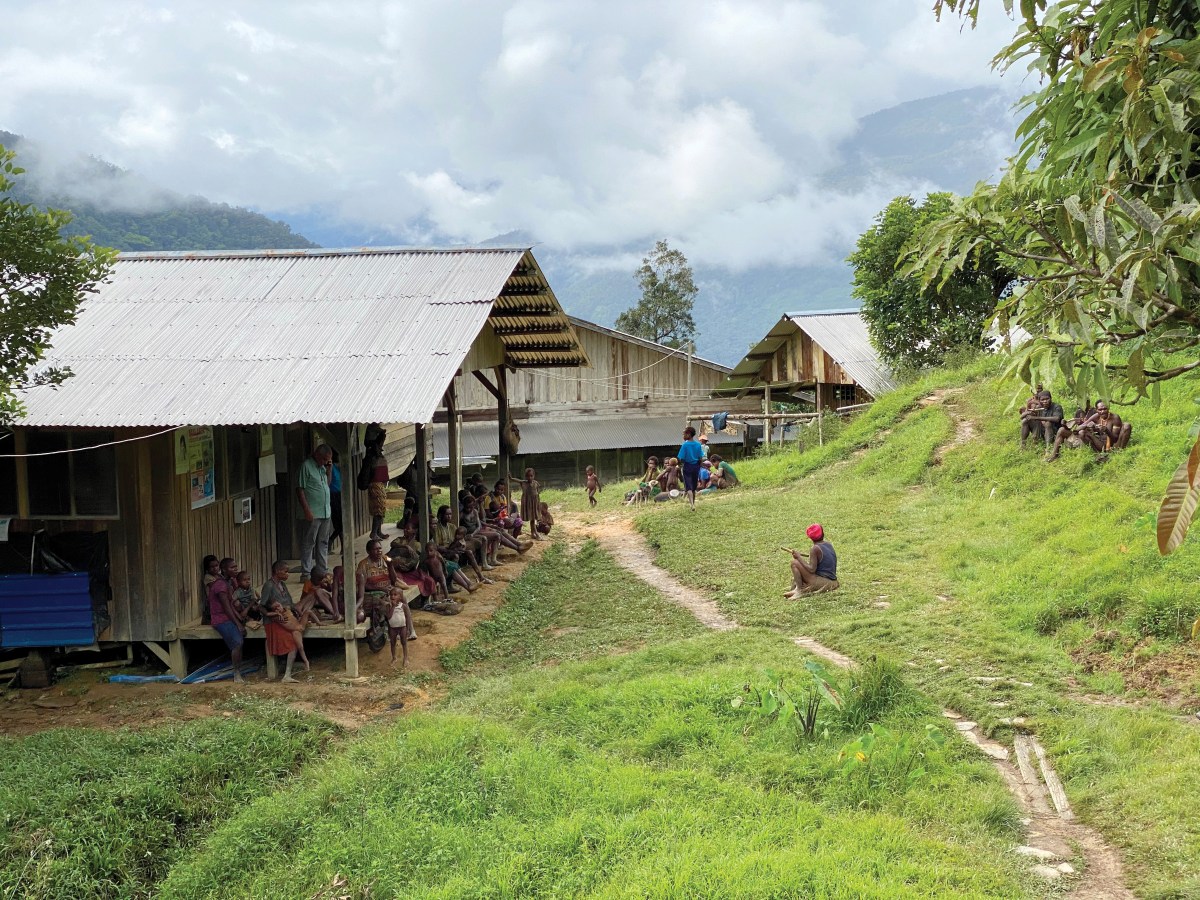
As part of the delegation, CT visited five villages weeks before the World Health Organization declared COVID-19 a pandemic and the government cut off outside access to Papua. According to the missionaries in these villages, the severe education and health needs of the local people are among the most challenging obstacles they face in their efforts at Bible translation.

This YPHP clinic in Daboto offers the remote Moi tribe quality health care.Jeremy Weber
This YPHP clinic in Daboto offers the remote Moi tribe quality health care.

In the village of Daboto, Stephen Crockett and his wife, Carolyn, have served the Moi people since 2000 through Ethnos360 (formerly New Tribes Mission). “Our priority is their spiritual welfare. We want them to hear the gospel and grow into a mature, thriving church,” said the missionary from Ohio. “But we are very much aware of their great needs physically.”

He describes his prayer checklist of needs as “overwhelming.” Many are logistical: obtaining supplies from the coast, coordinating schedules with pilots, interacting with local officials, arranging emergency medical care for remote patients. And the results can come slowly: It took eight years to build the village’s dirt runway. “We spent so many years being woken up at all hours of the night by needy people, not knowing how we could do everything,” he said.

The missionaries were keenly aware of the need for Bibles. “It’d be easy to preach there for all your life and have nobody remember in the next generation,” one missionary said. “But if you leave a Bible behind that they can read, it makes all the difference.”

But how could they translate when there were such urgent and constant needs for schooling and medicine?

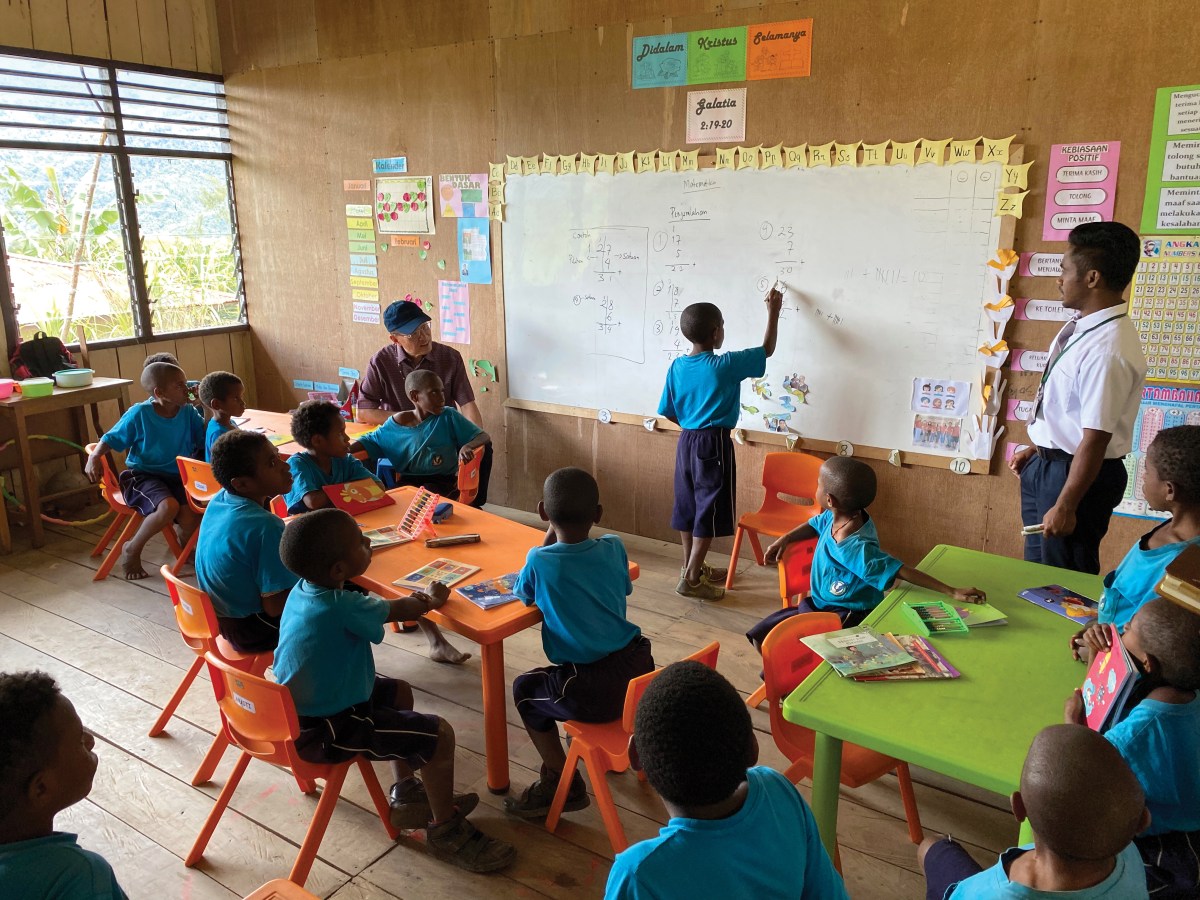
YPHP founder James Riady joins Mek students in Nalca for a math class.Jeremy Weber
YPHP founder James Riady joins Mek students in Nalca for a math class.

Enter Yayasan Pendidikan Harapan Papua (YPHP), a Jakarta-based foundation that provides Christian teachers and health care workers for rural areas. The founder, Indonesian Christian businessman James Riady, saw that the Indonesian government had made efforts to better integrate Papua, most prominently evidenced by a massive new soccer stadium under construction near the Sentani airport. But the government has difficulty staffing the region’s schools and clinics.

Many teachers only appear at schools to administer final exams. The nearest public clinic is often a three-day walk away, with no guarantee that it will be staffed upon arrival. Government workers can be absent for months, waiting in the local capital, Jayapura, for infrequent paychecks to arrive.

“No one will come to Papua to work unless called by God,” Riady said. “Government efforts at education and health care in remote areas fail because those sent are not called.”

Back on the west side of Jakarta on the island of Java, Riady’s family foundation operates a Christian university that includes teaching and nursing colleges. Students from 31 provinces receive free tuition if they commit to five years of volunteer service after graduation. Many of the 2,500 alumni have chosen to serve in the poorest and most remote areas of Indonesia’s 6,000 inhabited islands.

YPHP currently serves eight villages in Papua, operating eight schools and five clinics. In 2020, 50 full-time teachers taught 870 children, while 12 nurses and a doctor treated 8,000 patients.

This Hope Lantern school in Nalca serves 110 Mek students.Jeremy Weber
This Hope Lantern school in Nalca serves 110 Mek students.

“I’m ashamed that with all the [foreign] missionaries who care about the people here in Papua, I’m Indonesian and didn’t even know there were people here without education,” said Henny, a self-described “city girl” from Jakarta who’s now one of seven gurus (Indonesian for teachers) serving 140 students at a Sekolah Lentera Harapan (Hope Lantern School) in the alpine village of Nalca. “I asked to be sent here. My family does not agree, [but] I came here because I know my purpose and my calling.”

And gurus like her—three-quarters of whom are not Papuans—are beloved. In Mokndoma, the YPHP delegation was welcomed with a pig roast—no small gesture in a culture where pigs are so valuable that women used to breastfeed them and fingers would be cut off in mourning when one died. Before visitors depart a village, YPHP teachers and clinic workers often sing “Melayani,” a reflective, repetitive worship song:

Serve, serve more truly;
God first served me.
Love, love more truly;
God first loved me.
Forgive, forgive more truly;
God first forgave me.

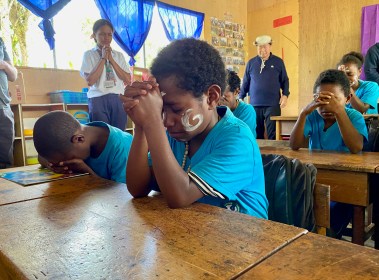
YPHP students pray in Mamit.Jeremy Weber
YPHP students pray in Mamit.

The partnership is essential on both sides. YPHP looks to the long-term missionaries, many of whom have been present in Papua for decades, to build trust with tribes and provide stability for the village schools and clinics. The Papuans, with their dark skin and very curly hair, view the “straight hairs” coming from Jakarta almost as foreigners, even though they are fellow Indonesian citizens.

In turn, YPHP allows the missionaries to focus on their core calling—the spiritual well-being of the people—and to make swifter progress on Bible translation and discipleship. “When YPHP came in 2016 and offered to check off a number of the boxes,” Crockett said, “it was a dream come true—a huge answer to prayer.”

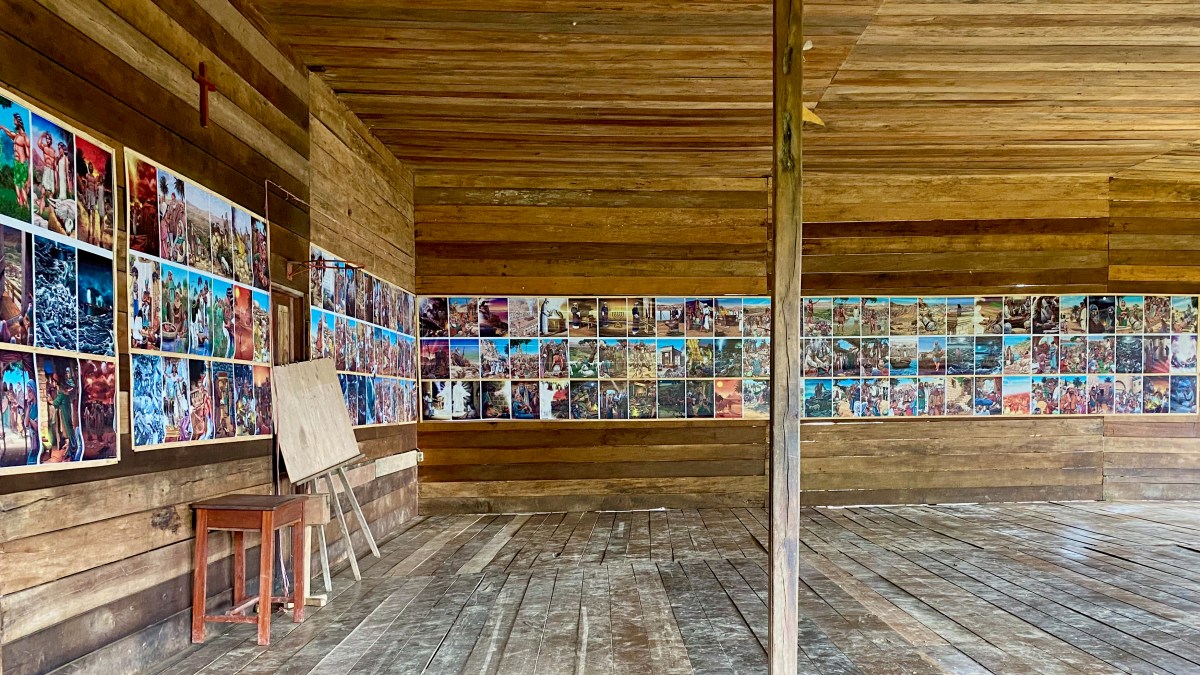
This church in Daboto teaches the narrative arc of Scripture via colorful drawings.Jeremy Weber
This church in Daboto teaches the narrative arc of Scripture via colorful drawings.

He expects to finally complete the New Testament in the Moi language within three years, and then he will focus on augmenting 1,000 key verses from the Old Testament with 4,000 more. The 500-member tribe, which maintains a “stone-age lifestyle” in many ways, is now two-thirds literate, he said. “They use it to read Scripture. They have no other need to read.”

Crockett’s church, lined with vivid drawings that teach the narrative arc of the Bible from Creation to Christ to the early church in Acts, has produced a crop of elders capable of discipling believers once his family leaves. He gestures to the opposite side of the valley. “There’s a village that has been taught the New Testament through Romans, and I’ve never even set foot there.”

The other critical partners are the aviation ministries. Mounted on the wall in the MAF main office in Sentani are plaques honoring seven pilots who died in Papua in the 1970s and 1980s. “In my first two years here, I made 11 caskets,” said Wally Wiley, chief adviser of MAF Papua. Joyce Lin was MAF’s first fatality in 23 years.

A painting in the MAF main office in Sentani.Jeremy Weber
A painting in the MAF main office in Sentani.

Near the plaques are bookshelves filled with colorful Bible translations of all shapes and sizes. “This is what we’re here for,” Wiley said. The pilots are as committed to Bible translations as the translators themselves.

MAF serves dozens of missions and other clients across 150 villages, but the YPHP schools have become one of its top priorities. “Outside of the gospel, the greatest need we have here is education and health care,” said Wiley, who over his four decades in Papua has become an Indonesian citizen and founded the island’s main Hope Lantern School in Sentani. “Producing a new generation of godly men and women to take up their place in society as leaders is key to seeing this province become a shining light to the world.”

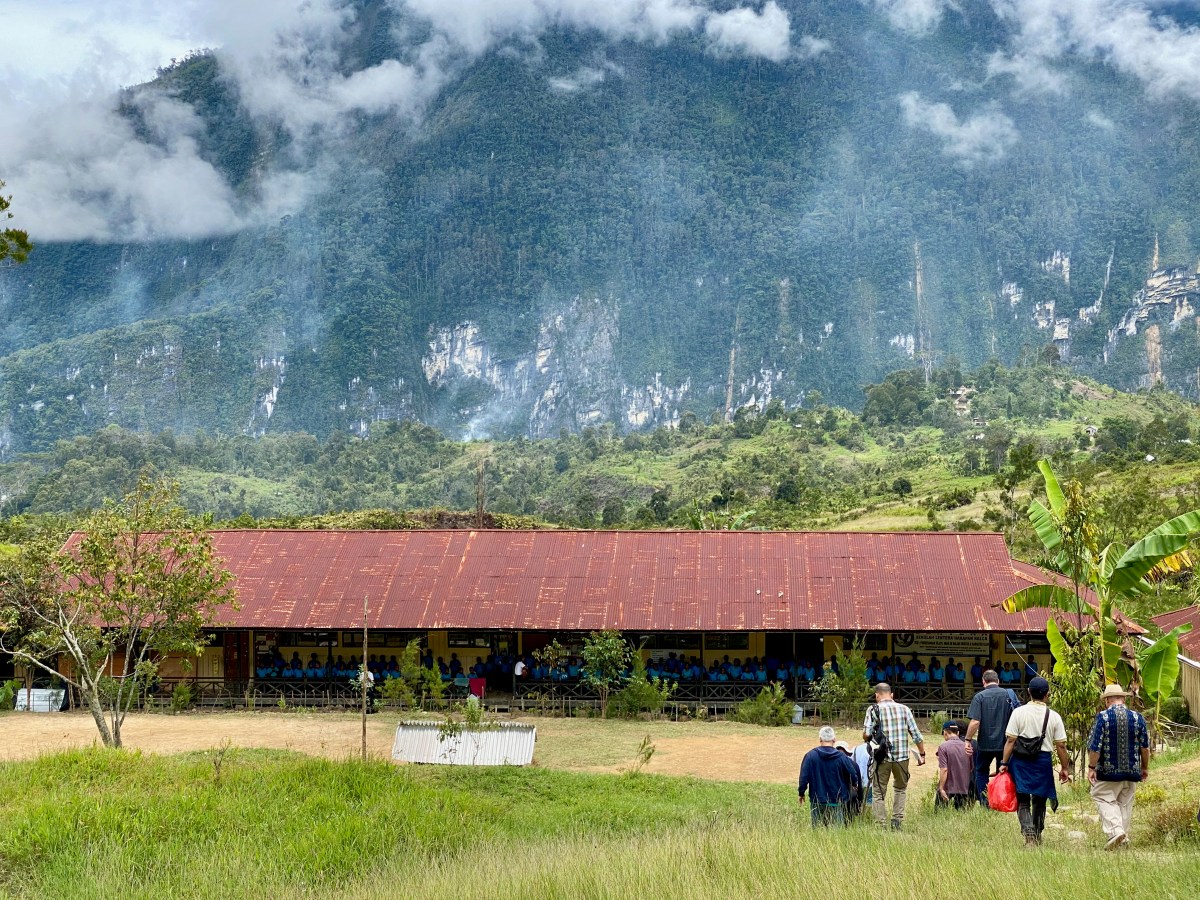
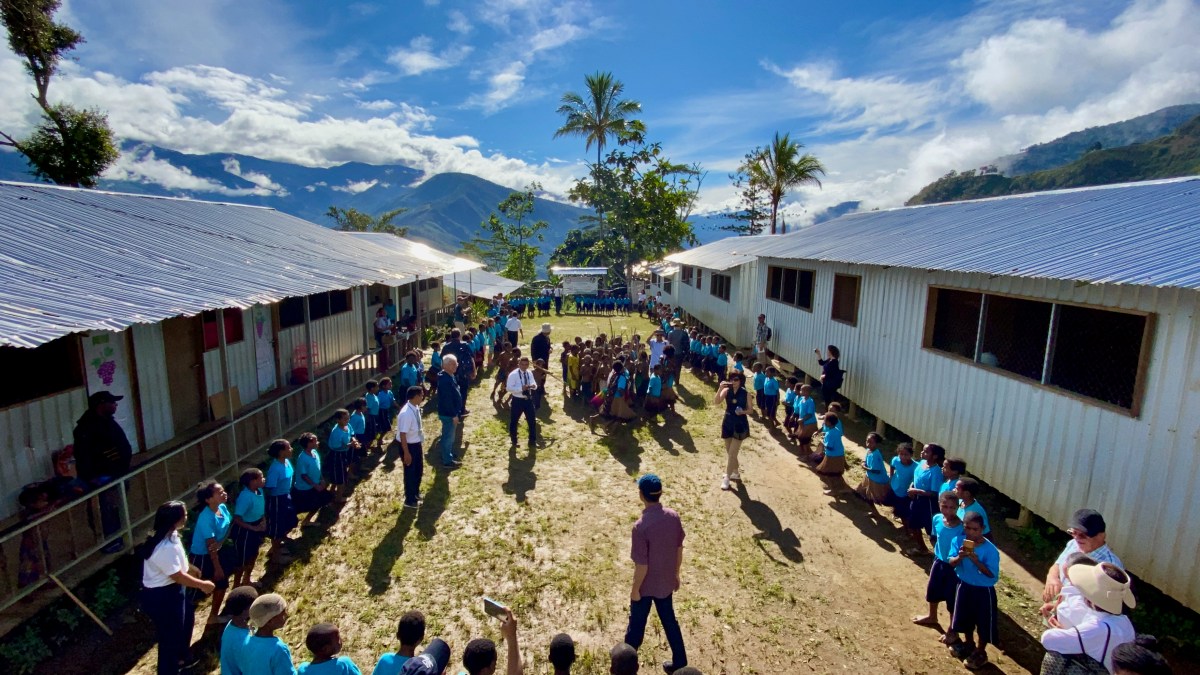
James Riady (bottom center) observes a student assembly in Mamit celebrating 100 days of class at YPHP’s largest school.Jeremy Weber
James Riady (bottom center) observes a student assembly in Mamit celebrating 100 days of class at YPHP’s largest school.

“We are fighting against time,” Riady said. “We have only one generation of opportunity to bring the gospel through education, health care, and moral living.” This is because, as the government develops more infrastructure, it is already evident how greater connection to the outside world has begun bringing in social ills like alcohol, prostitution, and HIV.

Papua has about 400 villages with airstrips, Riady said, so that is the ceiling for the schools and clinics that YPHP could launch. However, only about 70 missionaries remain in the interior today, down from about 250 decades ago, Wiley said. The opportunities for the partnership model are narrowing.

“We see so much work to be done,” Riady said. “It costs almost as much to build in these villages as in Jakarta, due to having to fly in all materials. Is it worth the money? God reminds me every soul is valuable in his sight.

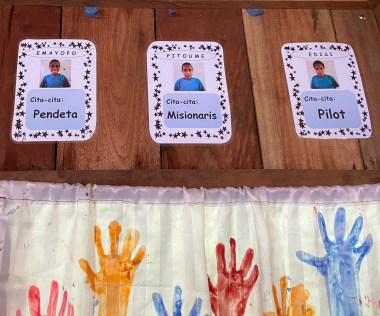
What YPHP students in Daboto want to be when they grow up: a pastor, a missionary, and a pilot.Jeremy Weber
What YPHP students in Daboto want to be when they grow up: a pastor, a missionary, and a pilot.

“The biggest challenge is not the physical. It’s getting missionaries and teachers sent with a heart for the children,” he said. “We can gather the money. But the people called to missions is really God’s work.”

One of them is Wes Dale, who forgave the Yali warriors for what they did to his father, Stan, after reflecting on the words of Jesus often recited during weekly Communion at his church: “Father, forgive them, they know not what they do” (Luke 23:34).

CT met Wes in Mamit, the 4,500-foot-high village where Lin had been headed on her fateful trip. He teaches there at a Bible school for the Lani, the largest tribe in Papua at about 250,000 members. He helped other missionaries complete an entire Bible translation for the Lani. It took them 25 years.

Yali leaders mark the 50th anniversary of the martyrdoms of missionaries Stan Dale and Phil Masters with Acts 1:8.Courtesy of Joy Dale Crawford
Yali leaders mark the 50th anniversary of the martyrdoms of missionaries Stan Dale and Phil Masters with Acts 1:8.

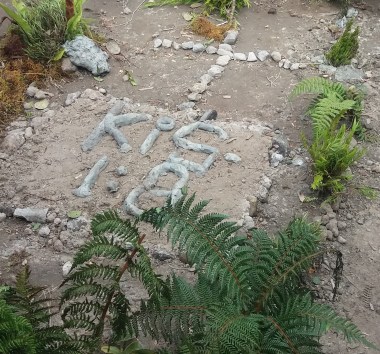
Wes and his sister Joy went on the 50th anniversary of their father’s death to the location where he was martyred. On the ground in clay, the Yali leaders had written Acts 1:8, where Jesus tells his disciples: “You will be my witnesses … to the ends of the earth.”

It is one of several makeshift memorials in Papua to missionaries who lost their lives in order to give life to others. Lin’s memorial service was streamed live on YouTube because even family members could not travel to Papua due to coronavirus restrictions. The camera focused on her casket covered with blue and white flowers while music played and comments streamed in. One commenter wrote, “With sorrow, what is sown on the earth will be a blessing to many people.”

A video tribute honored Lin with a poem called “Your Love Shines,” written by an Indonesian entrepreneur who had visited YPHP’s fieldwork. “I really couldn’t understand how the missionaries, pilots, teachers, and doctors who served in the interior of Papua could get there and survive there in all the conditions that were really not easy,” the author explained, reflecting on the waves of missionaries who have come to “the land of the clouds,” from Dale 60 years ago to Lin in 2019:

From all corners and ends of the earth,
You sent them your beloved.
It didn’t matter the challenge and the distance here,
in a hidden place, somewhere far away.
In the dark corners of Papua,
I see the rays of your love shining brightly….
Sixty? Fifty? Forty? Thirty? Last year.
I can’t imagine how your love took them.
Twenty? Ten? Five? Two or even a year ago,
I can’t imagine how your love would send them.

In one of her last support letters, Lin wrote, “There is a famous verse that Christians like to quote from Romans 8:28, which says God is able to work all things together for the good of those He called according to His purpose.” She marveled at “the many ways in which this verse has been true in this calling to serve in Indonesia.”

Immediately after Lin’s death, a collection of red roses and handwritten notes was placed atop the steep alpine runway in Mamit, where her plane should have landed that day. But the planes keep coming, as she would have wanted.

Jeremy Weber is the director of CT Global.

Editor’s note: This article is part of our 300+ CT Global translations—including Indonesian.

Ideas

Why I Claim the ‘Global Evangelical’ Label

My church identity is tied to the body of Christ abroad.

Illustration by Prixel Creative / Lightstock / Edits by Rick Szuecs

The bishop who ordained me was ordained by African bishops. My priesthood is a gift granted by the global body of Christ. As a result, the rise of the church in the Global South has never felt like a distant sociological fact. It is personal and vital to my work. I identify more with believers who speak other languages, have different skin colors, and live on the other side of the planet than with fellow white Americans who live on my block.

This is a miracle—an ongoing act of grace that would have been unthinkable before the coming of Christ. Jesus made a new family whose kinship trumps cultural, national, and biological ties. But though miraculous, this extended family affects my ordinary day—the way I pray, worship, vote, and think about my neighbors, my church, myself, and the world.

At the beginning of the 20th century, 80 percent of Christians lived in Europe and North America, with only 20 percent in the non-Western world. Now it’s almost the reverse. Two-thirds of the world’s Christians live in the Global South. This reversal is due not so much to the decline of faith in the West but to the explosive growth of the church in the rest of the world. I see this in my own Anglican Communion, which wanes in wealthy Western nations and blossoms in the Global South.

This reality offers me hope. The vanguard of the Christian movement is not on American shores. North American culture, then, does not determine the future of the church. Western secularization, or even the marginalization of Christianity in the West, has about as much power to limit the flourishing of the church as it has to stop a hurricane or change the seasons. The indigenous growth and revival in global Christianity—which would have been unimaginable merely 100 years ago—reminds us that we need not be afraid. God is relentlessly at work in the world.

This global growth also shapes my perspective on how we talk about the church. When my community of primarily educated urbanites criticizes “the church,” we most often mean the American church or even merely the white American church. Given our context, this oversimplification makes sense, but it also subtly centers white American voices and experiences.

Similarly, when younger evangelicals leave “the church” because they are frustrated with certain Western iterations of it, they simultaneously leave behind a global body of largely black and brown people. These global evangelicals often hold together what many white American evangelicals too easily pry apart: a shared commitment to orthodox doctrine and care for the poor and oppressed.

When I think of evangelicals, I think of Singaporeans planting churches in Thailand, or Rwandan families serving refugees in Uganda, or Nigerian seminarians, or the evangélicos of South America—a label widely used by Protestant Latinos. We need to keep these voices front and center in any discussion of the church. They are our future and also our present—the ones who make up the majority of evangelicals on earth.

These global believers also remind me not to give up on the American church. A few years ago, I caught myself thinking, “The American church is dying and probably deserves it, so let’s focus exclusively on what’s happening elsewhere.” I gave us up for lost. But then I was reminded by my brothers and sisters overseas that many of these now-blossoming movements abroad began small. Men and women suffered joyfully for the gospel. They continue to do so. Amid suffering and even persecution, their impulse is to take up the mission of Jesus and love their neighbors. We are called to do the same wherever we are.

During the season of Epiphany, many Anglican churches use the Kenyan liturgy, and each year it reminds me that the church—and even evangelicalism alone—is bigger and more complex than my limited context. Right before we take the Eucharist, the celebrant says, “Christ is alive forever.” The congregation responds, “We are because he is.” Because Christ is alive, we the global church can flourish together as a new family. I am a disciple of Jesus, an evangelical Anglican, and a priest in Christ’s church because we are a global body. And we are because he is.

Tish Harrison Warren is a priest in the Anglican Church in North America and the author of Liturgy of the Ordinary and Prayer in the Night (IVP, 2021).

Ideas

God’s Mercies Redeem Our Guilty Mornings

Columnist

Like Peter, we too are offered freedom, though we deny him.

Illustration by Rick Szuecs / Source Image: DesignPanoply / Envato

When my parents entered their latter years, they took up a new hobby: keeping chickens. At the height of their enthusiasm, they tended 21 chickens in a hen house affectionately dubbed the Taj Mah’Omelette—20 chickens, that is, and one noisy rooster. To be a houseguest during this season was to have, as they say, a rude awakening—albeit one followed by a magnificent breakfast.

The briefest Google search confirmed what I suspected to be true from my own brief exposure to the Taj Mah’Omelette: Roosters crow and crow. They crow every morning, and they crow all morning. They crow to announce another day, but they continue crowing as long as it is called “today.” We just notice it more in the morning because roosters are particularly adamant when they wake up.

Roosters populate ancient fables and mythologies, and they make a notable appearance in the Bible. All four Gospels record Peter’s famous three-time betrayal of Jesus punctuated by the crowing of a rooster, just as Jesus had prophesied. All three synoptic Gospels say Peter “wept bitterly” at the sound.

With each dawn, Peter’s disqualification clamors afresh in his ears.

Our senses are powerful memory holders. The smell of mothballs transports me to my grandparents’ attic where I played dress-up. The taste of pound cake transports me to my mother’s kitchen where I licked batter from a wooden spoon. Sounds, too, attach themselves to memories. From childhood, an old screen door banging shut is the sound of homecoming to me.

I imagine what kind of memory the rooster’s crow evoked for Peter. Every dawn after that first terrible morning of betrayal, the proclamation of his bitter guilt would have rung afresh in his ears. Carried in the crowing would have been the memory of his colossal failure. By nighttime perhaps he would have pushed down the nausea enough to get some sleep. That feathered fiend would at last rest his infernal lungs.

And there was evening, and there was morning. Cock-a-doodle-doo. Guilt for breakfast, again.

Days pass. Jesus dies, is buried, is resurrected. Thomas receives release from his doubts, but Peter’s doubts run a different direction. With each dawn, Peter’s disqualification clamors afresh in his ears. Whatever his relationship had been with Jesus, whatever his calling, it appears to be finished.

Time to get back to work. As another sunset bleeds across the horizon, he trades the unreliable prospect of sleep for a reliable task. “I’m going out to fish,” he announces to his companions (John 21:3). They fish all night and catch nothing. But just as day is breaking, a sound ripples across the water. A voice. The announcement of a miracle: Try the other side of the boat.

Recognition dawns. As the others haul in fish as fast as they can, Peter hurls himself into the sea and thrashes toward shore. There sits Jesus, serving up a fresh breakfast menu: Restoration. Forgiveness. It is finished.

I wonder—as the two conversed, as Jesus made whole what was broken—could Peter hear in the surrounding countryside the sound of roosters shaking off their slumber? I can’t say. But sounds attach themselves to memories, and I suspect that every morning thereafter, Peter affixed a new memory to that clarion call. The sound of homecoming. Fear not. Glad tidings.

Each day, the sound that had announced new-morning guilt now spoke a better word. All hail the rooster, that fine-feathered herald of forgiveness, that nitwitted megaphone of new-morning mercies.

Against all logic, Peter finds himself again seated at the Lord’s table. And so do we. Every sin is a denial of Christ. And frankly, even in our most incapacitating moments of guilt, we have only begun to apprehend the seriousness of our offense.

We break fellowship, yet inexplicably we find it restored through no agency of our own. A rude awakening followed by a magnificent breakfast.

And what a feast it is. There is therefore now no condemnation for those who are in Christ Jesus. What memory of past guilt announces itself to you at every turn? Friend, hear the annunciation of your emancipation: Morning has broken, and with it, fresh mercy. The night is far gone, the day is at hand.

Though we denied him, he yet beckons us to carry forward the good work.

Cock-a-doodle-doo. Good morning. Amen.

Church Life

We Prayed for Healing. God Brought a Pandemic.

A coronavirus outbreak at France’s biggest Pentecostal megachurch changed their view of providence, judgment, and fellowship.

Photo by Paris Match Archive / Getty

One of France’s largest megachurches gathered this fall to remember those lost to COVID-19. The memorial service was intensely personal, “a very trying time” and “a real heartbreak,” said senior pastor Samuel Peterschmitt, because of how dramatically the congregation had been affected by the virus.

Just nine months before, Eglise La Porte Ouverte Chrétienne (the Christian Open Door Church) in Mulhouse, France, held its annual worship conference, where participants prayed for the sick, celebrated miraculous healings, and praised God alongside 2,200 attendees, most from Europe but some from as far away as Africa and South America.

But the four-day event, held weeks before France’s lockdown, spurred one of the earliest coronavirus outbreaks in the region. At least 500 people from Porte Ouverte were infected, 82 were hospitalized—including Peterschmitt himself—and 32 died as a result.

The Pentecostal congregation grappled with the spiritual and physical toll of the aftermath. Worse, Porte Ouverte was quickly blamed by neighbors and the media for its supposed recklessness, though the February conference began before health directives had been made in earnest. While isolated and grieving, church members faced insults and death threats; leaders required security as they returned to the building to livestream services.

Peterschmitt, whose father founded the 54-year-old congregation in northeast France, felt the strain of doing ministry during the pandemic. From his sickbed, he prayed with his congregants over the phone, including a sister in Christ whose husband died in intensive care while she was also hospitalized. It was “meager consolation” just to be able to offer her a video feed of her husband’s funeral, filmed by another pastor.

“This tells you just how difficult the situation was,” the pastor said, “but at the same time how important our fraternal relationship was in those moments.”

Porte Ouverte will not be the same after the outbreak. Peterschmitt asked, like many in his community, why God brought this plague on their fellowship and why he spared some but not others. “My friends who died,” he said, “had a faith as strong as mine.”

As Porte Ouverte nears the end of the hardest year in its history, Peterschmitt spoke to fellow French pastor Jean-Paul Rempp, European regional director of the Lausanne Movement, about how the COVID-19 outbreak affected his church, leaving its people with a deeper understanding of God’s providence, a greater sense of humility, and a more urgent desire to seek God in their grief.

Even though you saw people healed during this conference, what were your first thoughts when you realized that some of the participants had been infected by COVID-19?

At first there was indeed a questioning as I said to the Lord, “Lord, on the one hand, we have seen your glory, and on the other hand, we have also seen your people being affected by sickness.” What is ultimately essential for me at this point is to accept that God, in his sovereignty, does not make mistakes, even when it seems to be a paradox: healing on the one hand and sickness on the other. We believe, and I deeply believe, that even this painful and difficult situation will contribute to the glory of God.

Of course, still today my thoughts go out to all the families who lost a loved one….I lost some of my friends. As brothers and sisters, we had served the Lord together for many years. I really experienced it as a real heartbreak. But at the same time, there was this consolation from the Lord in relation to the hope that we all have of seeing each other again one day.

What were the greatest challenges to ministering to sick, suffering, and quarantined people while you yourself were infected?

I was isolated at home, then I was isolated at the hospital, then I was re-isolated at home, which made it indeed difficult to carry out this ministry toward the sick since it wasn’t possible to go and visit them. It wasn’t possible to lay hands on them, as Scripture teaches us.

In the hospital, I was also on oxygen, so I was out of breath. I had members of the church who were hospitalized at the same time as me— some were on the same floor as me, others two floors down. Others were in intensive care or in the basement wards. What I did, as much as I could, was to pick up my phone. I tried to reach them. They weren’t long calls. We took the time, even very shortly, to pray for each other.

Which passages of Scripture, hymns, or spiritual disciplines were particularly helpful to you?

When I was at my lowest point, I experienced visitations from the Lord, such as I have rarely experienced in my life. Those were times when, both by his Spirit and by his Word, God spoke to my soul. He brought me to an extremely deep repentance, especially when I was reading the Psalms. The Psalms proved to be of extraordinary help. I had the feeling that David had written them for me. They had become literally personal.

And there was a song that accompanied me a lot that our American friends certainly know: Don Potter’s “Show Me Your Face.” It was a song that did me a lot of good, through which I too said, “Lord, reveal your face to me even more, show me who you are in this period when it’s like my soul has been scanned.”

In those moments, I realized that in the end, God didn’t need to say anything to me or reproach me for anything. His presence alone, well, led me to judge myself. It was his presence that brought me to look at myself and finally gave me such a conviction of sin that I said, “Is it possible that I was that man? Is it possible that I could have had those attitudes?” They were moments, paradoxically, of great sadness and at the same time of great hope. Moments of deep desolation for myself and, at the same time, moments of change in my heart and soul that I do not regret at all.

Were there times when you or your church questioned God’s plan that allowed the virus to infect your church?

Yes, of course. I think that if we hadn’t stopped to ask ourselves the question, it would have been abnormal. I started—but not only me, the pastors, and everyone in the community—to ask questions like, “But why did this happen to us? Why us?” I’m not going to tell you that I have all the answers today. I’ve seen all the change in my own heart. I expressed it earlier, and I bless God for it.

It has also brought us a lot of humility, since this infection has reminded us of God’s sovereignty—of which we were already aware before—but it has also reminded us that God acts sometimes in one way and sometimes in another. We were already aware of this, but there we were, brought together as a community to accept this reality—not by just accepting his sovereignty in the life of an individual whom we had walked with, for whom we had prayed, and who had still died anyway, but rather by accepting his sovereignty as a community. Because suddenly we are living it as a community, and we are living it on a relatively large scale. We have many of our church members who have been infected by COVID, and even a large number who have died.

One last thing I would like to say is that when I asked the Lord “Why us?” one of the answers that came to me was “But how would you have reacted if it had happened in another environment? Yes, let’s use the example if it had happened in a mosque. How would you have reacted?” Clearly, and I have to say it with sadness, I would certainly have seen or interpreted it as a judgment of God. And the Lord showed me there that in the end, we judge very quickly, especially when it happens to others.

This has led to a change of perspective, not fundamentally on Islam, but a change of perspective on the judgment that one could quickly have when something bad happens, especially when it happens to others, always trying to conclude with an explanation, with a cause.

If it had happened in another milieu, I would probably have reacted, unfortunately, as some have reacted toward us. We were immediately judged by the Christians themselves; we were blacklisted. Some people immediately tried to explain spiritually why these things happened to us, saying that we don’t do this enough or too much of this, and so on. But I have to say with humility that in the end, today, I can only forgive them because perhaps I would not have been better than them.

You have talked about how you set out to practice forgiveness toward those who put the blame on your church, including the media.

We decided from the very beginning simply to go along with what Jesus himself said when he said that you will all be hated because of my name.

We realized that—beyond the pandemic that had taken place, beyond the disease of which we were accused of being the vectors—there was a truly anti-Christian wave. It was in the face of this that we decided to forgive and to remain in an attitude of forgiveness. We had it from the beginning, and I think I can say that the whole fellowship had that attitude. We also expressed that forgiveness in the media, whether on television or in writing.

How does Porte Ouverte today compare to before the pandemic?

There is one difference that is obvious: The number of people present is very limited since we have to respect social distancing and health guidelines. In a church building in which we used to host 2,400 people, today we put between 600 and 700 people. The second thing is that some of our members have felt a certain fear, which I can easily understand. But at the same time, I also saw a different side of our fellowship. I saw a solidarity being expressed that I would not have suspected.

Even though I knew that the brothers and sisters were standing together, there was a manifestation of love and support in prayer that I found quite extraordinary.

It was, for example, the setting up of a 24-hour prayer chain, spontaneously. It has continued since then and never stopped. We saw our young people during the pandemic, when we were all in lockdown, taking the call to heart. These young people were calling the elderly, seeing them, going shopping for them, etc.

We saw the importance of our house groups. More than ever, we believe that the church of Christ must really reach that maturity where those who are part of it are truly disciples. They must be more than just parishioners and members. They have to be disciples.

And that’s what we are praying for. I sense that there is a deep desire to go in that direction. Moreover, after the lockdown was eased, our first worship service was extremely powerful in terms of fellowship. There was a joy, an explosion of joy. We hadn’t started the service, and people began to applaud. I couldn’t tell you how long it lasted, but it was just a party to get together, a real party.

What do you see as the ongoing spiritual effects of the pandemic on your church?

There is—I feel it deeply and I see it—a movement of holiness. There have been many testimonies from those who have said to me, “You know, this has changed my view of my spiritual life. It has brought me closer to the Lord. There are things that I can no longer do today. I don’t want to waste any more time with what the world stole from me for a while.” There is really a return to a consecration and a surge of love for the Lord, which is extraordinary.

At the same time, you have people who have few roots. A little like in the parable of the sower, some wither away, others are a little afraid of suffocating. But to me, it’s still too early to make an assessment. However, this surge toward holiness, the desire for God’s presence, has been obvious, really obvious.

With Kate Shellnutt. Translated by Andrew Wiles.

News

Where Are the Other Fake Fragments of the Dead Sea Scrolls?

Sixteen forgeries have been discovered so far in the collections of unsuspecting evangelicals. Experts have suspicions about many more.

Illustration by Cornelia Li

Mark Lanier thinks if you were going to fake a fragment of the Dead Sea Scrolls to sell to an unsuspecting evangelical collector, you wouldn’t pick Amos 7:17.

Psalm 23, maybe.

Or Jeremiah 29:11.

Even Proverbs 3:13.

But not Amos 7:17, which says, “Your wife will become a prostitute in the city, and your sons and daughters will fall by the sword.”

Except maybe that’s exactly what a forger—trying to pass off a scrap of distressed leather as an ancient bit of the Bible preserved in desert caves for two millennia—would want you to think. So in 2013, Lanier made sure an antiquities dealer had legal documentation of the authenticity of three pieces of the Dead Sea Scrolls before he bought them to donate to the Lanier Theological Library in Houston.

“We passed up purchasing a number of other fragments on this issue,” said Lanier, a Texas trial lawyer and philanthropist. “We did due diligence and were assured of the provenance.”

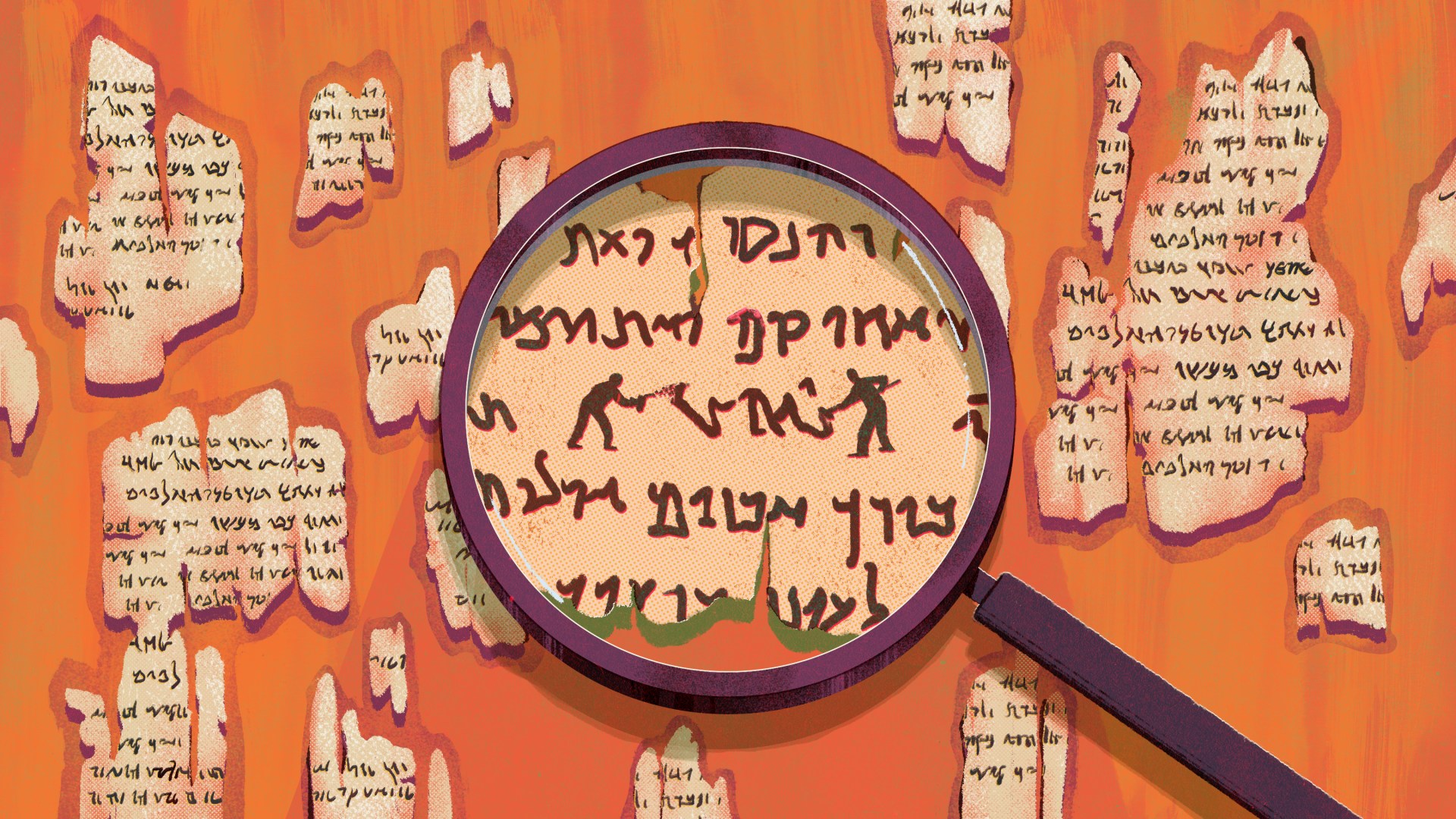
A shadow of suspicion has spread across antiquities collections at US evangelical institutions in recent years as a small team of Dead Sea Scrolls detectives has raised concerns about modern forgeries. The Museum of the Bible reported that all 16 of its prized fragments were fakes, and experts wonder: How many more are out there?

More than 70 pieces of the Dead Sea Scrolls have been offered for sale on the antiquities market in the past two decades. It seems unlikely a criminal would produce and sell 16 forgeries and then just stop.

“Whoever was manufacturing these was responding to the market,” said Kipp Davis, an expert in biblical archaeology and Dead Sea Scrolls forgery. “That market was, for the most part, wealthy evangelicals.”

The Museum of the Bible purchased Dead Sea Scroll fragments in four different lots from four different dealers between 2009 and 2014 as part of its push to collect the most important artifacts from the history of Bible. The scrolls are “the most significant archaeological discovery of the 20th century,” according to Jeffrey Kloha, the museum’s chief curator. They are important to the museum’s mission to tell the story of the sacred text.

The museum invited a team of scholars to study them. When the scholars started to examine them closely, they noticed some of the fragments didn’t look right.

“They looked like they had been written by unpracticed scribes, or scribes who weren’t very good,” said Davis, who was part of the team.

The museum decided to have all 16 tested by Art Fraud Insights. Under the microscope, experts saw that the text had not been written on fresh parchment, which then decayed over time, but on old leather, distressed to look like it was an ancient manuscript. Colette Loll, CEO of Art Fraud Insights, said the ink going into the cracks and over the broken edges was a telltale sign.

The museum announced the findings in March and apologized for poor judgment in building its collection. It launched a new exhibit displaying the forgeries in October, which tells the story of one of the most amazing archaeological discoveries of the 20th century—and a still-unfolding story of greed and deception.

Scholars praised the museum for its transparency. Other evangelical institutions, however, were left wondering about the legitimacy of their own collections of Dead Sea Scrolls artifacts. All of these collections, built in the past few years as new fragments came up for sale on the antiquities markets, now had red flags, according to Davis.

For example, only about a quarter of the fragments found in the caves around the Dead Sea in the 1940s and ’50s contained biblical texts. The majority were copies of texts from the expanding literature of Judaism in the Second Temple period and the community that lived at Qumran. But the fragments that have appeared for sale in recent years have all featured portions of the Bible.

They were not the passages a Christian would most likely choose for a life verse, but they were Scripture nonetheless: 1 Kings 13:22, Isaiah 28:23–29, Joel 3:9–10, and Amos 7:17.

Lanier checked the documentation of the provenance of the fragments at Lanier Library again to reassure himself.

Documentation can be fraudulent, but it creates a legal responsibility for authenticity. Azusa Pacific University has concluded the five fragments it bought for $1.3 million are probably not authentic. The school is suing the book dealer who brokered the sale.

Southwestern Baptist Theological Seminary considered investigating its eight fragments, which it bought with the help of two major donors in 2012, but decided against spending more money on independent authentication. The school recently closed its archaeology program as part of an “institution reset” with a change in administration.

“The fragments are in a secure location and have not been available to the general public in some years,” the seminary said in an official statement. “We would welcome an independent investigation of the seminary’s fragments, although . . . it is not prudent for the seminary to spend further precious funds on them.”

Loll said Art Fraud Insights is doing a number examinations of scroll fragments for worried collectors.

“The only way to really be certain that they are genuine is to, of course, put them through the kind of rigorous testing that the Museum of the Bible did. But that’s expensive,” said Sidnie White Crawford, antiquities expert and professor emerita at the University of Nebraska–Lincoln.

Scholars continue to make discoveries studying the original Dead Sea Scrolls fragments. Earlier this year, the University of Manchester in England announced that some of its seemingly blank pieces—donated to scholarship by the Jordanian government in the 1950s—actually contain words, possibly from the first verses of Ezekiel 46.

For now, though, scholars will have little interest in fragments sold after 2002. And evangelical collectors will be wary of buying any more bits of the Dead Sea Scrolls without having them thoroughly tested. This is expected to have a serious impact on the market for ancient Bible fragments.

Some experts hope the Bible museum’s discovery of fraud will kill the market altogether.

“People should not buy antiquities,” said Christopher Rollston, a forgery expert and professor of Hebrew at George Washington University. “Never buy anything on the antiquities market; it just creates incentives for pillagers and [unscrupulous] dealers.”

Gordon Govier is the editor of Artifax magazine and writes about archaeology for Christianity Today.

News

Gleanings: December 2020

Twenty20 / Envato / Edits by Rick Szuecs

Bible broadcast ends

The radio program Back to the Bible ceased broadcasting in October after 80 years on the air. The program was started in 1939 by Theodore Epp, the son of Russian Mennonites who came to the US as missionaries to the Hopi people. “To be quite frank,” Epp said of the launch on radio station KFOR AM in Lincoln, Nebraska, “I was very afraid.” Back to the Bible grew to be syndicated on more than 800 stations, with a large international audience. Since Epp’s death, its teachers have included Warren Wiersbe, David Platt, and Nat Crawford. In recent years, radio has grown too expensive, a spokeswoman told CT. The ministry will continue as a podcast.

Evangelicals defend religious liberty for Muslims

The National Council of Evangelicals of France is raising concerns that a government plan to crack down on Muslim “separatism” would have a negative impact on religious liberty. The French government, officially committed to secularism, wants to require Muslim children to attend public school, participate in team sports, and integrate into French society. The evangelicals note that their communities are very integrated, but they are nevertheless concerned about the law’s restrictions on freedom of religion, thought, and expression. The proposed law would also crack down on foreign funding of religious groups, which could impact missionaries and church planters from the United States.

Mosul church manuscripts recovered

Police recovered dozens of stolen Syriac Christian manuscripts in the home of an alleged Islamic State (IS) leader. The 32 bound texts were some of the hundreds of artifacts looted from churches in Mosul over a period of three years, as IS turned the city into its de facto headquarters and demanded Christians either convert to Islam or pay a protection tax. About 1.5 million Christians lived in Iraq before the US invasion in 2003. Today there are about 150,000. Some Christians are now returning, and some manuscripts are being recovered. Police found the 32 hidden in a kitchen compartment.

Bible reenacted with Playmobil

A German New Testament scholar at the Martin Luther University Halle-Wittenberg has taken a break from hefty academic tomes for a new project: the Bible in Playmobil. Professor Michael Sommer will stage the biblical narrative with the children’s toys in a yearlong series of YouTube videos. His channel has more than 100,000 subscribers. In 2009, another German attempted to tell the Bible story in Playmobil but was told to stop by the company. The pastor had modified some figures, reshaping Christ’s arms for the Crucifixion and adding breasts to Eve.

Churches ask to partially reopen

Evangelical leaders wrote to Peruvian President Martín Vizcarra, requesting a plan to reopen churches safely. The country has been under lockdown since March to prevent the spread of the coronavirus. With rates of infection declining, Vizcarra started discussing a partial reopening with Catholic officials in October. Evangelicals say they have been “respectful of all the regulations of the state of emergency” but note the restrictions are difficult for poor and rural Christians with limited internet access. The letter was signed by the Assemblies of God, the Christian and Missionary Alliance, the Pentecostal Evangelical Church, the Evangelical Baptist Convention, and others.

Communist Christ casts the first stone

A high school ethics textbook published by the Chinese government includes a revised version of John 8:3–11. In the Christian version, Jesus is presented with a woman caught in adultery and says, “Let any one of you who is without sin be the first to throw a stone at her” (v. 7). In the Communist revision, however, Jesus says the law has to be enforced and stones the woman to death himself. An estimated 60 million Christians live in China, half of whom worship in unregistered churches.

Apple PodcastsDown ArrowDown ArrowDown Arrowarrow_left_altLeft ArrowLeft ArrowRight ArrowRight ArrowRight Arrowarrow_up_altUp ArrowUp ArrowAvailable at Amazoncaret-downCloseCloseEmailEmailExpandExpandExternalExternalFacebookfacebook-squareGiftGiftGooglegoogleGoogle KeephamburgerInstagraminstagram-squareLinkLinklinkedin-squareListenListenListenChristianity TodayCT Creative Studio Logologo_orgMegaphoneMenuMenupausePinterestPlayPlayPocketPodcastRSSRSSSaveSaveSaveSearchSearchsearchSpotifyStitcherTelegramTable of ContentsTable of Contentstwitter-squareWhatsAppXYouTubeYouTube