News

The Pandemic Lockdown Is a Godsend for the Indian Church

COVID-19 took away our usual Easter. But I believe it could also spark the first revival in India in a century.

Christianity Today April 16, 2020
Courtesy of BBCF Delhi

As India continues its attempt at the world’s biggest social isolation effort to halt the new coronavirus outbreak, millions are struggling to navigate weeks of canceled public transit, closed businesses, and therefore no Sunday services.

Many smaller churches have their attendees join the livestreams of larger churches. Our own sunrise service on Easter, conducted on Zoom, drew 250 people—despite its 5 a.m. start.

After greeting Christians and praising “Lord Christ” in Good Friday and Easter tweets, Prime Minister Narendra Modi announced this week his decision to extend the lockdown until May 3, due to the lack of widespread testing for the virus as the death toll rises.

However, despite all the disruption and our inability to worship together as usual, I believe the pandemic lockdown is being used by God to use his church in a new way.

Two things were happening before the pandemic hit. First, the church was severely opposed. Second, because of this opposition, there has been a prayer movement that resulted in great unity among the national Christian community. Churches have begun to overlook their historical denominational divisions, bringing the Indian church to the cusp of revival. There has been news of breakthroughs in the work of the Holy Spirit in places and among people. And in spite of severe opposition, the church has been responding maturely and collectively to its challenges. As a result, the church has been growing spiritually and numerically.

Church leaders across denominations have fostered a misperception in the pews—and in the watching world—that Christians concentrate their efforts solely on Sunday gatherings. Commitment to the church and its goals has been gauged by Sunday morning attendance. Thus, at the initial stages of the pandemic, only a very small portion of churches in India were responding practically to the upcoming challenges.

Following the lockdown, churches began scrambling to put plans together. I asked one congregation how they planned to hold their services, and their response was rather naïve. They said that churches cannot close their doors, believing that the Bible mandates weekly group worship in buildings and that God grants health to the faithful. Because of this general attitude, it took three weeks for many churches to get their feet under them and to provide online alternatives.

When churches started streaming their services online, they were surprised at the audience they received. I know of small churches that normally had less than 100 people attend on an average Sunday now have more than 700 viewers online. Our own church, Bible Bhavan Christian Fellowship, which has been livestreaming for more than four years, saw a 300 percent increase in viewership. People have been watching from all over India, and all around the world. We have received responses from as far as Africa and South America.

Indian churches have been praying for the Lord to enlarge their borders, and the Lord has answered with an unexpected opportunity to reach more people.

The challenge that churches now face is harnessing this new reach and developing tools for follow-up and discipleship in a new teaching model. For example, our midweek ministries have taken on a life of their own as physical attendance is no longer a criteria. Our groups for men, women, youth, and pastoral care have more participants and from farther away, which is good because we are ministering to many more people. While we had to close our Bible schools in seven locations, we are moving our complete syllabus from written materials to audio, visual, and digital versions. We were too busy doing the Lord’s work to think of this before, and we may have missed the bus on such innovations if the lockdown had not happened.

As churches deal with the reality of increased community needs—since many people are unable to perform their jobs during the lockdown—they face complicated decisions. In the past, many churches were apprehensive when responding to the poor, since they could be accused of having an ulterior motive to convert those they were serving. Many churches also did not have adequate resources or tools to help their non-Christian neighbors who had no interest in the church.

Now, I have heard amazing stories from our multisite congregations across North India where neighbors who once were hostile toward us have come forward and supplied the church with free food and aid to distribute to vulnerable community members. At one of our churches, the neighbors even volunteered to come with our team to provide aid to the community, and shared that it came from the local church.

As the Indian church is expressing its love for those who are suffering the most, previously antagonistic neighbors are partnering with the church in our expressions of help. This marks a new day.

For example: I know a local church community in rural North India that has been struggling even in the best of times. Despite showing genuine love and concern for the community around them, they have continually faced opposition and threats. After COVID-19 hit India and a nationwide lockdown was put in place, the local police showed up at the doors of the church. The pastor was apprehensive. The police brought a request from the government for the church to make 1,000 cloth face masks in its center to be distributed among the community. The officers then accompanied the pastor to a local cloth shop, specially opened for them to procure the necessary materials.

What the police did not know was that this church community had been praying for ways to respond during the lockdown. The Lord answered by providing an opening to serve and the potential for better relationships with the authorities.

Finally, a common refrain being heard in all Indian churches and denominations is to repent. Even in our conservative Indian culture where sins are not openly confessed, people are being more transparent. The church is repenting of its own sins, the sins of the city, and the sins of the nation. We pray this prayer regularly: “Jesus Christ, Son of the living God, have mercy on me, a sinner.”

The world we will come back to after this pandemic will look very different. Therefore, the church’s priorities must turn from looking inward to looking outward.

I believe the church has been ushered into a new age of growth and engagement with each other and with the world around us. We are witnessing a huge turning after God. The last revival in India was in 1905-1906. If all the nations of the world repent, then we can anticipate a mighty movement from God in our times.

Isaac Shaw is senior pastor of Bible Bhavan Christian Fellowship.

"Speaking Out" is Christianity Today's guest opinion column and (unlike an editorial) does not necessarily represent the opinion of the publication.


Church Life

The Best Thing I Can Do as a Pastor’s Spouse Right Now? Take Care of the Basics

When we can’t reach out, we have to reach in.

Christianity Today April 16, 2020
DCL Images / Getty Images Plus

Even if I had somehow taken a course on “How to Be a Pastor’s Wife,” it probably would not have included a lesson on what to do when a global pandemic shuts down church as we know it.

On Sunday, March 15, I stood in an almost-empty church in downtown Ottawa, watching my husband, Brent, an Anglican priest, speak to our congregation through his iPhone set up on a tripod, improvising a worship service over Facebook Live.

Like so many other congregations, ours stumbled through the first week of COVID-19. And like so many other people married to pastors, I was called to duty.

Someone else was in charge of filming, but my job was to shush anyone who happened to wander into the church and to post the link to the online bulletin and service guide should anyone ask for it in the comments. I also appointed myself the role of thumbs-up gal, acknowledging the kind feedback that scrolled up under the feed. I felt helpful.

Then, almost overnight, I became not so helpful. The next week, I became like a hysterical cheerleader. I sent multiple articles to Brent on what other churches were doing. What about this? What about that? I thought of a really great idea. Look at this. Read that. Have you considered this, that, and the other thing?

My husband listened patiently, but as I saw the ocean of communication he waded through each and every day, I slowed down. I also recognized that some of my suggestions grew out of my own fear and insecurities about how our church would weather this crisis. Acknowledging my own fears settled my heart.

“This will be a marathon,” Brent said, “not a sprint.” I realized that for all the great ideas out there, no one actually knew what they were doing. This is a new place we haven’t yet visited. Not churches, not pastors, and not the people married to them.

I have always been a do-what-is-needed kind of pastor’s wife. Does the church kitchen need to be swept after the potluck? Hand me that broom. Is there a shortage of Sunday school teachers? I am in.

I have done what has needed to be done, even when I wasn’t very good at it, like ironing out—or trying to iron—those stubborn, stiff creases in the fair white linen used for Communion and then setting things up just so for the Sunday service. (Eventually, Brent encouraged my early retirement from the altar guild because I was poorly suited for work so precise, and because other people stepped forward.)

I have embraced tasks both big and small, some naturally suited to my abilities and some not, partly because I love God and the church, but also as a way to love my husband well. If I could help him, why wouldn’t I? If I could relieve that one stressful thing with the balm of my activity, I would.

As so much of what we know falls away, what remains seems to be very basic things.

But this pandemic has stripped away so much of what we normally do, each and every one of us, to be the church. We are all finding our way forward through this present darkness.

I’m making great meals. I am cooking well and as abundantly as possible for my family, all sequestered here together in our semidetached old house with its narrow upstairs corridor, creaky doors and floors, and thin walls. So, here’s where I’ve settled. It has surprised me with its simplicity. It’s almost old-fashioned.

The two children with us are 19 and 21. The dining room table seems to be the place where we now meet once a day. That is enough. I have lowered my expectations of this being a great time to grow closer as a family to a more manageable “Let’s get out of this still speaking to each other.” That takes the pressure off everybody, including my husband.

I’m also cleaning. Lysol wipes and the vacuum help me feel like I can control something in this world gone mad while also helping to protect my family and keep them healthy.

I listen. And I tell Brent to stop reading the latest COVID-19 statistics at night in bed, as we try hard to drift off to sleep. I’m encouraging him to rest, take time off, and walk with me outside under the sun that seems to be growing warmer every day, if it’s not trying to fool us.

I see my friends doing the same kinds of things for their families, and for their spouses, whatever their daily work would normally be. People are making fresh bread and hauling out the family bicycles a month early to try to get their people moving and breathing in clean air. Because we can’t reach out, we are reaching in even more tenderly, or at least that’s what I am doing.

How can I love you here and now and even better? We are all asking.

As so much of what we know and what is familiar falls away during this crisis—and never have my daily rhythms of life and church and work been so disrupted—what remains true and good and real and important seems to be very basic things . Rise. Breathe. Pour coffee. Pray. Here’s a poached egg with some buttery toast. You deserve butter today.

In the mornings, Brent sits at one end of the table, conducting morning prayer with a diehard group of Zoomers. I am on the other side, reading my Bible more steadily and regularly than ever. A chapter a morning. First it was Ephesians, then Philippians, now it is Colossians. I’m moving through the New Testament exactly like I’m moving through my days, one foot in front of the other, step by step. There is a comfort found in steady and slow.

And if a “How to Be a Pastor’s Wife” course did have a pandemic primer, I think it might say things like that . One step at a time. Keep it simple. Love him well. Trust God, and things will be better someday.

Karen Stiller is senior editor of the Canadian magazine Faith Today. Her memoir, The Minister’s Wife, releases next month.

Ideas

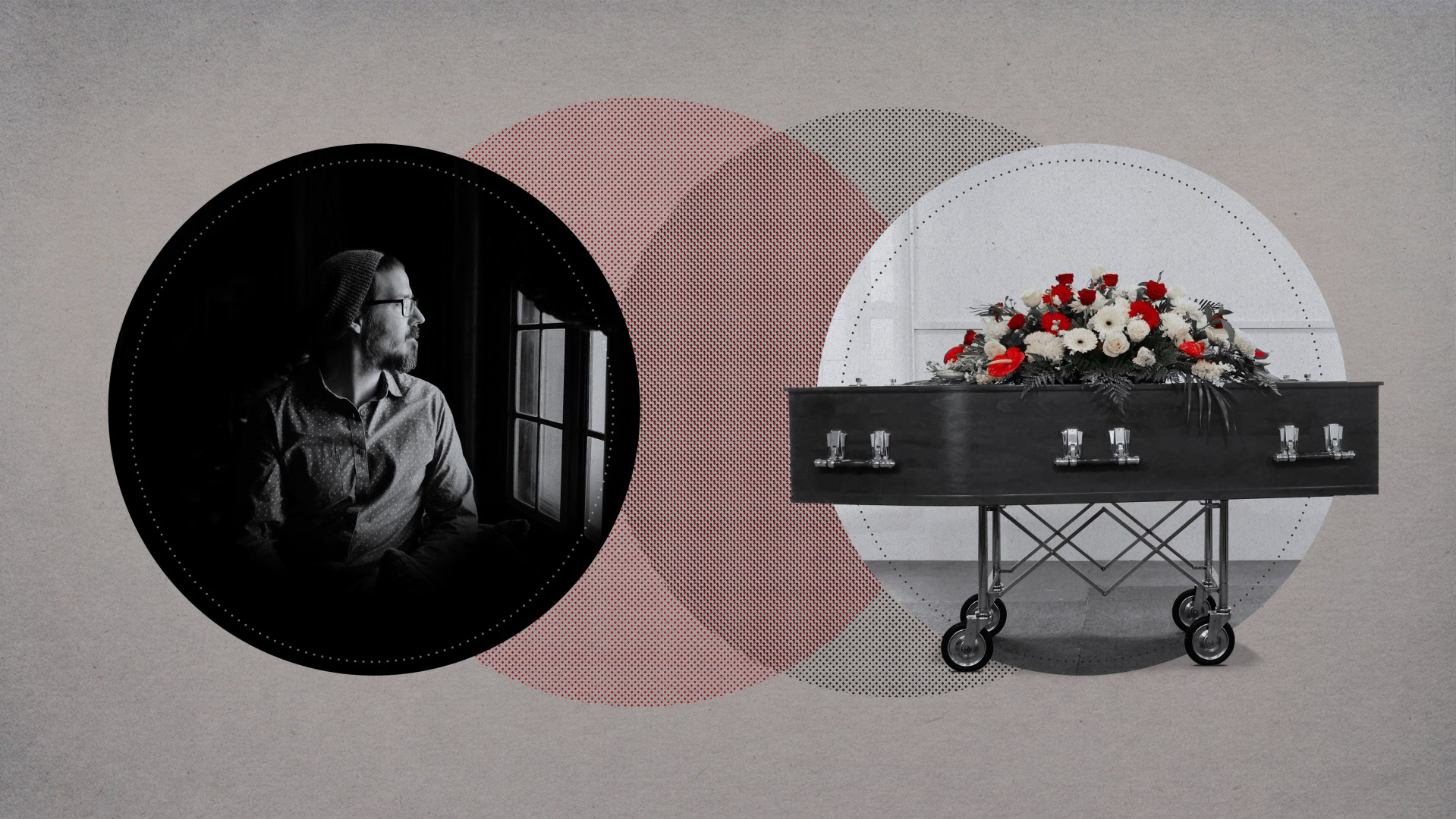
Laying the Dead to Rest During the Pandemic’s Peak

As morgue capacity is stretched, we face our physical fragility yet reach toward hope of true life.

Christianity Today April 16, 2020
Illustration by Rick Szuecs / Source images: Zachary Nelson / Unsplash / GreenAppleNZ / Getty

We live in the shadow of a tsunami. As of Wednesday, 28,000 have died in the US from COVID-19. The bodies pile up so quickly that those who care for the deceased cannot keep up. Last week, New York City Councilman Mark Levine tweeted the news that coronavirus victims will temporarily be interned in city parks to help morgues, hospitals, and cemeteries cope with the death toll (currently more than 10,000 New Yorkers have died due to COVID-19). “Trenches will be dug for ten caskets in a line,” Levine said.

This last week was predicted to be the “peak death week” for the US coronavirus outbreak, though various US regions and other countries have yet to face the foreboding summit. Worldwide, as of Wednesday, the coronavirus pandemic has taken 133,000 from our numbers and infected over 2 million. Projections show that as much as half of the world’s population could catch COVID-19 by August.

We also just celebrated Holy Week, remembering Jesus Christ’s crucifixion, burial, and resurrection. In Christ’s life, we remember that divinity entered into a human body, which shows us that bodies—even deceased bodies—matter. In his death, we remember that our bodies are fragile, mere organic matter like all living things. In his resurrection, we remember that our lives extend beyond a mere physical reality into the age to come.

In this season, as in any natural disaster, death norms have been upended. Evangelicals typically prefer burial to cremation, according to a theological journal. But the pandemic has disrupted how everyone deals with their dead—in New York City and around the world, with cremation emerging as a more practical option. In Wuhan, China, the ground zero of the outbreak, hurried cremations have left the mourning without closure, and relatives wait in long lines to receive the ashes of the departed from funeral homes. In Italy, the center of Catholicism, the number of dead has outpaced any theological stance. Such an influx of the dead and dying left one Catholic priest officiating solitary funerals and storing coffins in his church, each one awaiting cremation instead of burial as the Vatican would prefer.

Furthermore, whether people die of COVID-19 or of other causes amid this time of restricted gathering, they might die alone, their deceased bodies needing services from strained morgues and funeral homes.

In the US, death norms had already been shifting before the coronavirus pandemic arrived. In 2019, the cremation rate was nearly 55 percent, while the burial rate dropped to 39 percent, according to the National Funeral Directors Association. Looking ahead, many fringe options have emerged: In Washington state, people can now opt to be composted after death. Others plan cryonic freezings or look to launch their remains into outer space.

Whether the pandemic will permanently change the way we inter bodies is unclear. But funeral homes have already become more flexible, giving families more say than in previous generations.

Traditionally, a delay occurs between death and burial, so bodies due to be buried are embalmed (bodily fluids are replaced with chemicals) or are refrigerated in a morgue to preserve and prevent decay for the sake of a later funeral service.

As forensic researcher Melissa Connor told CT, “We [humans] try hard not to [be] just part of the [natural] world—the point of embalming is to not decay and to keep our bodies ‘lifelike’ for as long as possible. There are many ways that humans are different from other animals—intelligence, opposable thumbs—but the physical aspect of death is not one of them.”

In cremation, a deceased body is burned within a combustible box in a large metal chamber at nearly 2,000 degrees Fahrenheit for 1.5 to 2 hours, and any bone remnants are then pulverized. The powder left behind is delivered to the family.

Funeral directors have long adapted to a family’s wishes—for example, services are held without or without caskets, and even cremated remains can be buried. Yet during this pandemic, grieving relatives may not have the opportunity to view the body of the deceased before putting it to rest. Will death linger on without closure? Will they receive comfort from viewing the corpse, so unlike the body of the person they knew?

In the era of coronavirus, Martha L. Thayer, program chair of Arapahoe Community College’s mortuary program, said funeral directors are using video conferencing to help grieving families say goodbye to a loved one’s body, regardless of its destination.

But Thayer pointed out that choosing burial or cremation does not fundamentally change the way a family experiences a loss. “No one can outrun grief. Cremation doesn’t fast-track, and burial doesn’t prolong it,” she said.

A tricky point for some Christians, and a position held throughout church history, though, is that burial is the preferred way of laying to rest deceased bodies, even as cremation has become the preferred method in the US.

On one side, believers struggle with cremation for its seeming disregard for the body. Albert Mohler Jr., president of The Southern Baptist Theological Seminary, wrote, “There is no question that God can and will resurrect all human bodies on that day … [but] without … the Christian hope, the dead human body becomes just one more object for disposal.” John Piper, Russell Moore, and others have expressed similar concern with cremation.

Yet others do not see cremation as a spiritual issue at all, including Focus on the Family and John MacArthur. Billy Graham, founder of Christianity Today, pointed out that Hebrews practiced both burial and cremation during their history. Ultimately, he counseled families to make the decision together: “Whether burial or cremation best expresses that appropriate respect [for the body] is a very personal decision. At the resurrection it will not make any difference whether a person’s body has been buried or cremated.” (It should be noted that Graham himself was buried upon his death.)

However, discussing the morality of cremation or burial is a luxury, as health care workers, materials, time, and even gravesites are in short supply. It’s not so much a question of cremation versus burial, but of death: Are we ready to face it when it comes?

Kathleen Tallman, a professor of biology and chemistry at Azusa Pacific University who works with deceased bodies in a cadaver lab, explained how the disciples of Jesus anointed his body and wrapped it in linens. In light of Jesus’ own death, Tallman seeks above all to respect the cadavers in her care. She wrote, “When I work with cadavers, [I try] to care for them as Joseph and Nicodemus cared for Jesus.”

Even though we honor the gift of a body donated to scientific discovery, most of us feel disgusted by a decomposing body. Starting from four minutes after expiration, the body bloats, drains, rots. The skin turns green, then red, then teeth and nails drop, remains liquify, leaving behind only a skeleton.

As Thayer said, “The dead body is a symbol of the essence of the person who lived in it and where their soul dwelled. While the soul has clearly left the body, the physical vessel remains, albeit temporarily, and remains a source of comfort. …I greatly admire people who move toward their discomfort and allow themselves to cry and feel and fully grieve the loss of [what] that body represents.”

In the case of Jesus’ body—crucified on Good Friday, embalmed, and then entombed—he never made it through the stages of decomposition so neatly. When the angel met Mary at the tomb to declare, “He is not here; he has risen,” (Matt. 28:6) Jesus appears to her in a new body. The mystery of that glorified body has befuddled theologians across centuries—Jesus’ body held enough substance to be scarred but passed through locked doors; he ate fish grilled over a fire but disappeared from rooms in an instant.

Though we cannot explain its anatomy, Jesus’ dead and then resurrected body resounds with meaning in the life of a believer. Our God became flesh and experienced the indignity of death, like his creatures. As Tallman put it, “In the anatomy lab … we see on a daily basis the wonder of Jesus’ creation in the human body, the imago Dei. We know that the cadavers we are learning from also had loved ones who miss them and mourn them. We are reminded anew of the sanctity of all life and the source from which it comes.”

We mirror Jesus not only in our bodies; imago Dei means we also share his spirit. As Eugene Peterson said in his memoir, “Resurrection does not have to do exclusively with what happens after we are buried or cremated. … We practice our death by giving up our will to live on our own terms. Only in that relinquishment or renunciation are we able to practice resurrection.” We know the body matters in this life, yet our spirit must experience death, even as our bodies live. And even in physical death, we await the promise of bodily resurrection. For those who believe, death does not mean our end but our beginning, life in the shadow of death.

Liz Charlotte Grant is a freelance writer and Christian speaker in Denver. She has writing published at the Huffington Post, Fathom Magazine, Image Journal’s blog, Ruminate Magazine’s blog, and Geez Magazine, among others. The Collegeville Institute awarded her a residency in 2019 and 2020. Find her at LizCharlotteGrant.com or on Instagram @LizCharlotteGrant.

Theology

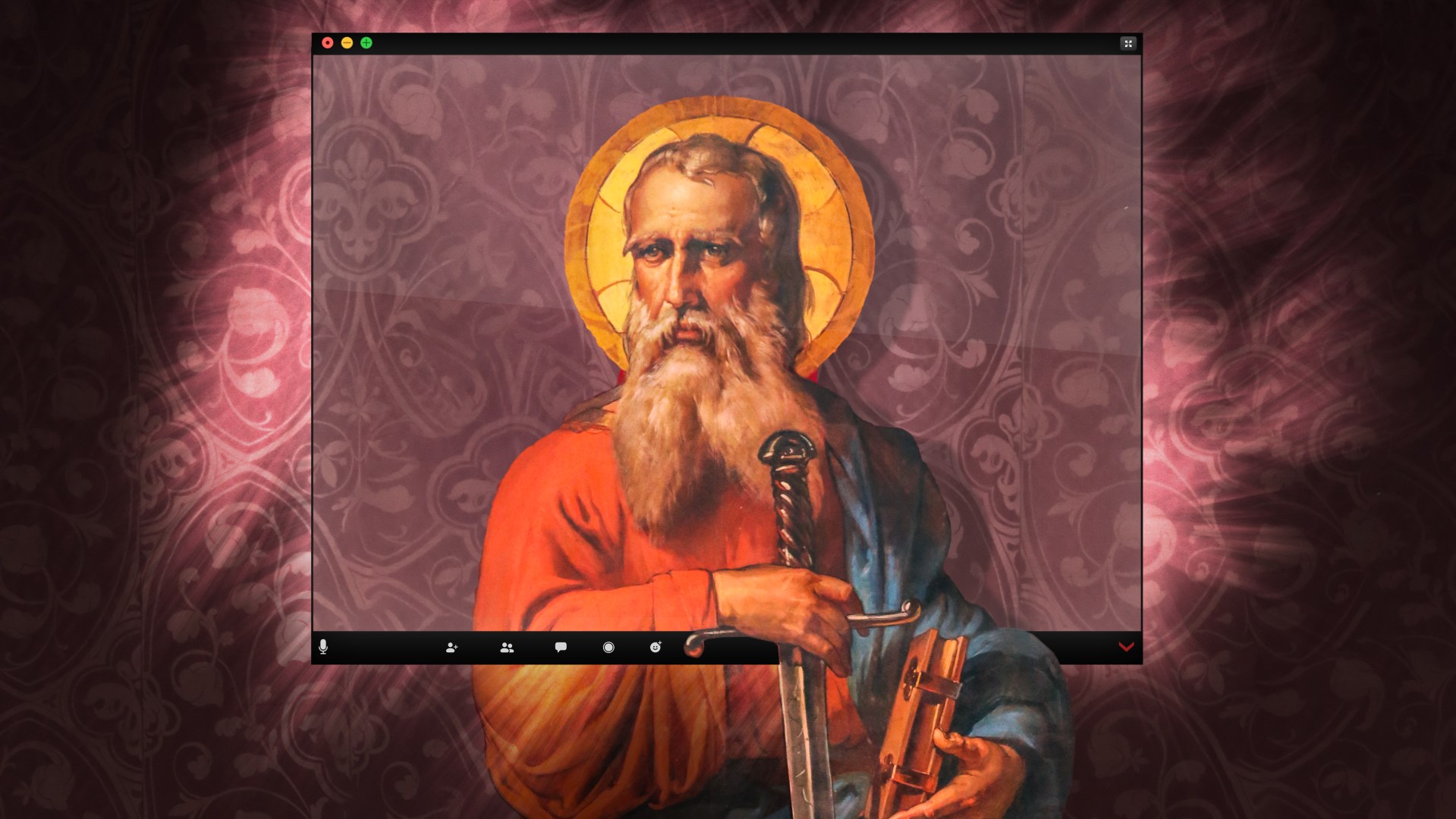
See, I Zoom You With My Own Hand

I don’t like it when technology gets between me and the church. Neither did the apostle Paul.

Christianity Today April 16, 2020
Illustration by Rick Szuecs / Source image: Fred de Noyelle / Godong / Getty

For years, those of us leading churches used social media to tell people what we were doing. Now, during lockdown, social media is all we’re doing. Zoom prayer, Facebook Live sermons, YouTube organ pieces, we’re all very online.

Even clergy who prided themselves on their luddite status are learning how to minister in this purely digital world. Honestly, I hate it.

Even though I’m known—affectionately?—as the TikTok Priest, I love praying the Psalms IRL (in real life) and with people, preferably in an echoey stone building. Now, on Zoom, I mute everyone but the main reader so it doesn't sound like all the demons of hell are screeching their way from the depths.

As much as I hate it, though, I know that adapting to a changing world and adopting new technology is what Christian ministers have always done—all the way back to the apostles. After all, what are the New Testament epistles but remote pastoring with the technology at hand?

Several weeks before the stay-at-home orders began, our small gathering of Morning Prayer faithful started reading through 1 Corinthians. Every day’s readings took our little group through Paul’s directives about divisions in the church, sexual ethics, how to eat together, and how to handle church meetings that got a little rowdy. Even through the differences of time and language, his words spoke directly to our own struggles as a new church plant in the suburbs of Texas.

We were a few chapters in when we started meeting on Zoom instead of at our usual round of coffee shops. Once we moved entirely online, I started to feel an even deeper connection to Paul’s pleadings, commands, and tone, especially as my frustrations with our virtual situation grew.

We got “Zoombombed” by a stranger interrupting our meeting with nude pictures and cackling laughter. I started using passwords to protect the Zoom meeting, and some had trouble getting in. And it wasn’t just our elderly who had trouble with tech. It was hard for everyone, including me.

Because there was a great need for prayer, we prayed three times a day: Morning Prayer at 9 a.m., the Great Litany at noon, and Evening Prayer at 5 p.m. We were praying more than ever, but I felt the ground our fledgling community had gained in the past year was slowly slipping away. My neck hurt from craning it at my iPad screen and also from the stress of our situation.

By the time we got to 1 Corinthians 11, the instructions about the Lord’s Supper, I lost it. We are a liturgical, sacramental church. We receive Holy Communion every Sunday, and we put a lot of effort into making this a sacred and accessible experience for everyone. We talk about the Eucharist, a Greek word meaning “thanksgiving,” in most of our classes and incessantly on Twitter. In my tradition, we wear special vestments for the Eucharist, we say special prayers, and we read books about how to properly position our hands during the prayers.

We believe we are receiving the Real Presence of Jesus, his body and blood, into our bodies for our spiritual renewal and sanctification. So when we read Paul sharing how to eat this sacred meal, I thought about how removed we were from each other and from our communion with Jesus in Holy Communion. The only presence we had on Sunday was virtual—tiny faces on the Zoom screen and tinny voices crackling in and out.

I did not know how many more Sundays we would be doing this. And I did not know how many more Sundays I could do it.

My neck started hurting more. I struggled with being short-tempered during minor technological setbacks. I lost my sense of humor. Worse, I started showing that cynical snark I try to keep to myself. I think I may have started to feel a little like Paul in his epistles to his distant churches.

To those challenging his authority: “Am I not free? Am I not an apostle? Have I not seen Jesus our Lord?” (1 Cor. 9:1).

To those who were not sharing their food: If you are hungry, eat at home! (11:34).

To those who were bragging about which apostle baptized them: “Was Paul crucified for you? Or were you baptized in the name of Paul?” (1:13).

And around a dozen other outrage-tinged rhetorical questions driving home the point that they better listen to him, even though he is very far away at the moment.

His repeated rhetorical questions matched my own inner monologue when the Zoom meeting was over. Was I just asking questions no one was hearing?

I forgot to send the meeting link out one day, and several folks immediately told me so. I had updated Facebook, Instagram, and Twitter, but I hadn’t sent the link out on Flocknote, an app that sends text messages. I could feel a little steam hissing out of my ears. My neck spasmed. I got on the Zoom call and smiled. I knew deep down, my frustration at a few keystrokes was my frustration about my own powerlessness against our estrangement, my lack of trust in my fellow humans that they would do the smart thing to mitigate this disease, and my own fears that this church I helped plant would fall apart.

While we took prayer requests for intersessions and thanksgivings, I had to confess, “I have no idea what I’m doing. I forgot to send the link. I’m sorry.”

In the opening chapter of 1 Corinthians, Paul declares bluntly, “I thank God that I did not baptize any of you except Crispus and Gaius, so no one can say that you were baptized in my name.” And then he corrects himself: “(Yes, I also baptized the household of Stephanas; beyond that, I don’t remember if I baptized anyone else.)” (1:14–16). Sometimes when we are far away, our stress makes us forget.

In spite of all this distance, though, Paul so deeply loved this church that he took the technology he had and worked remotely. With pen, ink, and vellum, he poured his heart out to them in his own special style. Or, as @GrumpyTheology put it on Twitter:

“If you are sitting here thinking that since you can’t meet with your churches you HAVE to set up a livestream, remember that the Apostle Paul couldn’t meet with his churches so he just sent them 20-page rambling letters filled with his every emo thought.”

Paul’s letters, written in a language that could be understood by people from many ethnicities, were carried on the Roman road system, a marvel of ancient and modern engineering. And at the end of this letter, he asked them to do for each other what he could not himself do, to “Greet one another with a holy kiss” (16:20).

I’m glad Paul and his fellow apostles worked with the latest technology of their day, and I know the people who are watching today’s pastors’ Zooms, livestreams, and Instagram stories are thankful we are doing the same.

David W. Peters is the vicar of St. Joan of Arc Episcopal Church in Pflugerville, Texas. He served as an Army chaplain in Iraq from 2005-2006, and is affectionately known as the TikTok priest.

News

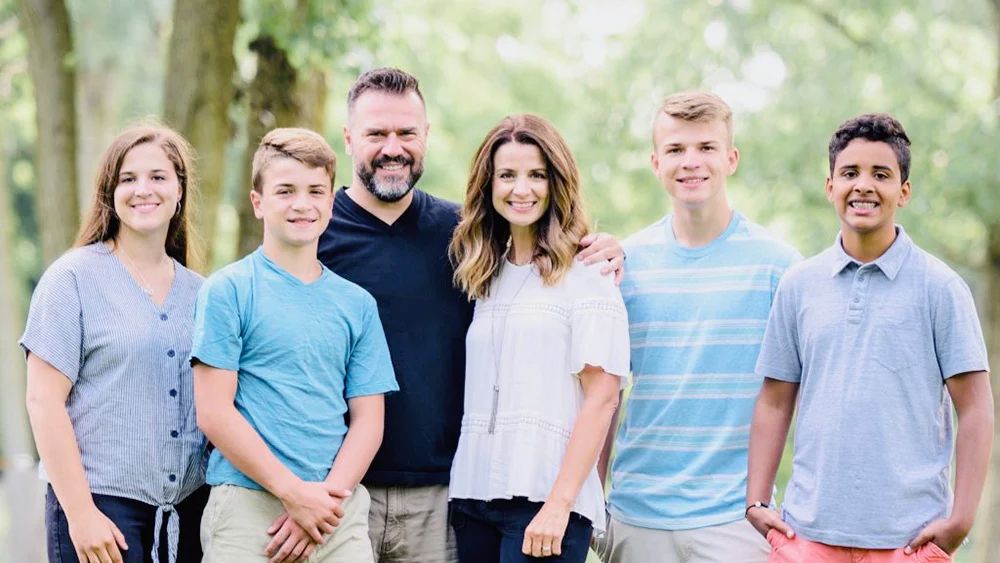
Willow Creek Announces New Senior Pastor

Michigan megachurch pastor David Dummitt, a Wheaton College graduate, will start this June.

Pastor David Dummitt and his family

Pastor David Dummitt and his family

Christianity Today April 15, 2020
Courtesy of David Dummitt

(RNS) — Willow Creek Community Church announced this evening that David Dummitt, a megachurch pastor from Michigan, will be the church’s new senior pastor.

The announcement comes just over two years after founding pastor Bill Hybels resigned after being accused of abusing power and sexual misconduct.

Dummitt, 46, is the founding pastor of 2|42 Community Church, a Michigan megachurch with seven campuses. According to a statement from the Vanderbloemen Search Group, which assisted with the search, the 2|42 Community Church was founded 15 years ago by Dummitt and some friends and now draws more than 10,000 people a week to services.

Willow Creek has eight campuses in and around Chicago and in the past has reported more than 25,000 attenders. Before in-person service stopped due to the coronavirus pandemic, the church averaged 18,000 in attendance. The church now draws about 18,000 livestream views each weekend along with an additional 15,000 on-demand views, said a Willow spokesperson.

It has long been one of the most influential Protestant churches in America.

A graduate of Wheaton College who attended Asbury Seminary, Dummitt said in a statement he has long admired the work of Willow Creek. He called himself a “church kid who played in the handbell choir” while growing up and that Willow Creek taught him church could be different.

“As a freshman at Wheaton College, I’d heard about this church that was doing creative things to reach lost people,” he said in a statement. “We attended, and I can almost point to the seats we sat in that day. The service opened with a Beatles song. … I don’t know of a pastor or leader in America that has not in some way been shaped by the ministry of Willow Creek.”

Ed Stetzer, executive director of the Billy Graham Center at Wheaton College, said Dummitt is the right person to lead Willow.

“David is a great choice for Willow: a Wheaton grad who has led a growing church that seeks to be on mission for its community,” he said.

Willow Creek’s founding pastor, Hybels, was known for his high-intensity personality and his admiration for corporate culture and business practices.

Stetzer said Dummitt is known as a “networker with a kingdom mentality. He loves people and loves connecting people for missional purposes.”

“Dave has a reputation for being a fun guy,” Stetzer said. “He takes the mission seriously but does not take himself too seriously.”

The search firm statement announcing Dummitt’s hire acknowledged that recent years have been difficult for Willow Creek.

Hybels, the church’s entire elder board, and pastors Steve Carter and Heather Larson, both of whom had been named to succeed Hybels, all resigned in the fallout from the mishandling of allegations against him.

“Willow Creek was founded by Bill Hybels in 1975. He led the church for 43 years until retiring early amid multiple allegations of misconduct. The controversy left the church with lower attendance, giving, and multiple staff and elder resignations,” the statement read.

Hybels has consistently denied all allegations of misconduct. A 2019 report from an outside panel concluded that allegations of “sexually inappropriate words and actions” by Hybels were credible.

In a statement, the church’s elders thanked the congregation for their prayers during the search and asked for the church to pray for Dummitt and his family.

“We have spent many hours with Dave and his wife, Rachel, and we are grateful that God has called their family to serve at Willow,” the elders said. “Throughout the evaluation process, we continued to see Dave’s ability to lead with humility and strength, as well as his passion to equip and empower strong teams. His vision for the health and growth of Willow Creek and the kingdom at large, his high-caliber teaching ability, his humble and down-to-earth personality, and his willingness to engage in restorative work made it clear that he would be a strong fit for this position.”

Dummitt begins work in early June. More information about the church can be found at next.willowcreek.org.

Ideas

Lift Your Eyes Up

President & CEO

In a time of pandemic and panic, it’s more important than ever to govern our powers of attention.

Christianity Today April 15, 2020
Illustration by Mallory Rentsch / Source Images: saemilee / Getty Images

The following is the latest in a series of daily meditations amid the pandemic. For today’s musical pairing, consider Andrea Bocelli’s “Amazing Grace” in Milan. All songs for this series have been gathered into a Spotify playlist.

“The Lord said to Moses, ‘Make a snake and put it up on a pole; anyone who is bitten can look at it and live.’ So Moses made a bronze snake and put it up on a pole. Then when anyone was bitten by a snake and looked at the bronze snake, they lived.”Numbers 21:8–9

Meditation 17. 2,016,020 confirmed cases, 130,528 deaths globally.

The journey of the Israelites from Egypt to Canaan could have been short and swift. Instead, because of their own persistent disobedience, it extended over 40 long and arduous years. The people often inveighed against God. In Numbers 21, they are afflicted with serpents in the wilderness. They cry out for mercy. God tells Moses to lift up a bronze snake on a pole and invites them to look for this sign of his provision and healing whenever they are bitten.

It’s a puzzling story. Why a graven image? Why a snake? What message was God sending his chosen people?

Consider for a moment something simpler: the physical posture this required of the sufferer. Imagine a young woman dragging her weary body across the sun-scorched earth of Edom. The snake bites. Where does the young woman look? What would be, in that moment, the most natural thing she could possibly do? The answer, of course, is to look down. To fix her eye on the snake, or on the wound, or to look for more snakes concealed among the rocks.

In order to receive healing, the sufferer has to turn away from the object of her affliction and turn to the object of God’s provision.

The great writers of the Christian monastic traditions reflected often on the power of attention. Many of the spiritual disciplines they developed were intended to shape the believer’s attention toward Jesus, to fill their lives with a prayerful attentiveness to his presence and beauty in all things, and ultimately to shape their souls more into the likeness of Christ.

We become what we attend to. The more we devote our attention to worldly diversions, the more worldly and divided we become. The more we harness all of our attention into attentiveness to Jesus Christ, the more we are united with Christ and conformed to his image.

In this season, countless anxieties and agitations clamor for our attention. Help us, O Lord, to discipline our powers of attention. Help us to lift our eyes away from our passing troubles and to fix our eyes on the one who was lifted up for us.

Sign up for CT Direct and receive these daily meditations—written specifically for those struggling through the coronavirus pandemic—delivered to your inbox daily.

Theology

N. T. Wright: We Mourned Our Alleluias on Easter

The prominent theologian responds to his Time article on lament.

Christianity Today April 15, 2020
Illustration by Mallory Rentsch / Source Images: WikiMedia Commons

In a timely article last month, professor N. T. Wright addressed our collective anxiety as Christians living during the coronavirus pandemic by assuring us our faith offers no answers. At least not the answers we want. He asserts that our quest for reasons results from Christianity’s faulty reliance on rationalism. “Rationalists (including Christian rationalists) want explanations; Romantics (including Christian romantics) want to be given a sigh of relief.” But what do we do when God gives us neither explanations nor relief? Wright says we lament.

Citing T. S. Eliot (in “East Coker,” the second of Eliot’s Four Quartets), Wright speaks about “hoping for the wrong thing.”

I asked Wright how might we better think about hope.

Wright: The point is that we all too quickly hope for “our heart’s desire” without thinking that perhaps we need to let God do quite a job of reordering our hearts. In my tradition we have an old prayer which asks that God would so enable us “to love what you command, and desire what you promise.” Far too much of modernity, including would-be Christian modernity, is wanting God to command what we already love, and promise what we already desire. Eliot, (echoing St. John of the Cross) is challenging that and suggesting we might have to wait on God’s fresh leading before we know what we should really be hoping for.

I’ve experienced deep personal sorrow myself this past year, and I’ve seen lament and grief as gateways to a deeper, though more ambiguous and even mysterious, faith. Is this a kind of “unknowing”, as some Christian traditions would teach?

Lament and grief open all sorts of doorways into parts of our personalities, and I dare say aspects of God’s mystery, which we gain by perhaps no other means.

Wright: Lament and grief open all sorts of doorways into parts of our personalities, and I dare say aspects of God’s mystery, which we gain by perhaps no other means. But I would not let this “unknowing” spill over into a kind of mind-emptying philosophy; any emptying which takes place would then be the prelude to a different kind of filling. Again, Romans 8 would be important here.

I agree with Professor Wright. The eighth chapter of Romans is majestic. It leads off with “no condemnation for those are in Christ Jesus” (v.1), and proceeds to untangle myriad tensions: sin and law, flesh and spirit, life and death. The Holy Spirit assures our true identity as God’s children, and yet childlike faith still isn’t easy. Resurrection demands crucifixion, for Jesus and all who follow him (Mark 8:34). Our souls are forged most intensely and meaningfully by suffering. It’s just how it works.

Though redeemed children of God, we’re not yet who we are. Saved by grace, we still need grace. Resurrection has started, it’s just not yet completed. Creation groans in the meantime, waiting with eager longing like a mother in labor eager for her child to be born (Rom. 8:22). Her new baby takes a breath and finds life and brings life and joy—even more so if the delivery was difficult. The hope for all creation, subjected to futility and pandemics, is set to be freed from bondage and decay, born again, so to speak, “into the freedom and glory of the children of God” (v. 21). No matter how bad it gets, it’s nothing compared to the good that will be. This is our Easter hope and joy.

How this all comes about in the end, God only knows. The Bible speaks to a new heaven and earth (Rev. 21:1), freed from death and decay, and a universe lit up by God’s glory (Rev. 22:5). We’re promised new kinds of bodies too (1 Cor. 15:44). Our faith aspires to realities beyond comprehension, larger than the temporal concerns over security and reputation and success and failure and even health that otherwise dominate our thoughts. From birth, we’ve been wired with a capacity to transcend self-interest and lose ourselves to greater purposes. In the midst of ordinary day-to-day living, we’re beset by the realization that this cannot be all there is to life. Jesus said only by losing your self can you find your real self (Mark 8:35).

Losing your self happens when you take up your cross. Resurrection demands crucifixion. This itself is cause for lament. Paul indicts human sin as the deadly cause and effect of so much evil, physically and metaphysically. Every relational break and breach of faith, every lie and infidelity and murder and theft and hurt and act of oppression and violence against others. Wright describes God as being “grieved to his heart.”

I asked, how does divine lament find resolution?

Wright: I was thinking of God lamenting that he had made humans, in Genesis 6.6; and then – granted a strong Trinitarian theology of course – the grief of Jesus both at his friend’s grave and in Gethsemane, and the ‘groaning’ of the Spirit in Romans 8:22. The New Testament seems to be saying, at quite a deep level, that these all lead up to, and then flow away from, the cross and resurrection. Only at that point does the healing come into view.

Indeed, as, the New Testament teaches, anyone who is crucified in Christ is a new creation already in Christ, “the old has gone, the new is here” (2 Cor. 5:17). We live out our true identity in those moments when we do love our neighbors, when we do forgive those who wrong us, when we do care for the earth and the poor and the refugee and the widow and orphan, when we speak truth and make peace and do right and worship the Lord as living sacrifices to God (Rom. 12:1). And when we fail because of our weakness, we can repent and bear witness to a true transformation of heart, to the deep breath of the Spirit and the resurrection of our bodies and all things made new in Christ, born again yet again until that day when we are fully revealed as we hope, made new andalive in a creation finally set free.

N. T. Wright is the professor of New Testament and early Christianity at the University of St Andrews, a Senior Research Fellow at Wycliffe Hall, Oxford University, and the author of over 80 books, including The New Testament in Its World.

Daniel Harrell is Christianity Today’s editor in chief.

Pastors

Can Social Distancing Reinvent Youth Ministry?

During this pandemic, youth leaders have the opportunity to reexamine discipleship models and measurements.

CT Pastors April 15, 2020
Illustration by Mallory Rentsch / Source Images: Peter Dazeley / Halfpoint / Pollyana Ventura / Mayur Kakade

Before the pandemic, I often drove away from church wishing youth ministry could be different. I yearned for teenagers to be less busy. That hope has become a startling reality as all but a few extracurricular activities are canceled, leaving most young people with unprecedented free time.

I longed for volunteers to stop equating showing up on Sundays and Wednesdays with relational ministry. In this COVID-19 season, volunteers check in with students all week, often building better relationships than before.

I wanted “taillight parents”—family members we see only as they drop off kids and drive away—to become true partners in spiritual formation. Now, parents nationwide are improvising “family church” around coffee tables and kitchen islands every week.

I dreamed that youth ministry and my role as a youth pastor would be admired and valued. Today, many youth pastors are gaining more respect as the adaptability and technological mastery gained on the job is celebrated through online innovations to keep us connected as we social distance. Since the students we serve are so tech-savvy, youth leaders have had a head start in moving our weekly youth program, small groups, and prayer gatherings online. We’re being tapped on the shoulder and asked for help by leaders of other departments and congregation members having a tougher transition.

In these tumultuous moments, the answer to why we need youth ministry doesn’t change; we still hunger to see young people changed by Christ to change our world. But courageous leaders are unsatisfied with merely moving everything we did in person last month onto Zoom this month. Courageous leaders are wondering if this is our chance to change what we do and how we do it.

This pandemic is terrible. But how might keeping apart reinvent youth ministry and draw young people closer to God? Once this crisis ends, we can’t default back to yesterday’s answers that no longer fit the questions of today’s young people. This is youth ministry’s tipping point to move to a new and better normal.

Start with empathy

In this pressing season of adaptation, youth pastors are asking each other mostly questions about virtual connection, ranging from technological hacks to recommended teaching topics. What if we spent less time learning from the leaders we know and more time listening to the students we serve? Empathy pushes us past adaptation to true innovation.

Stars, a neighborhood ministry focused on equipping and emboldening vulnerable young people in Pasadena, California, models this creativity. At the start of the COVID-19 emergency, the Stars staff dove into scenario planning and ministry brainstorming. But they then wisely paused, realizing their strategy was guesswork at best because they hadn’t yet asked what was needed .

Since then, the Stars team has surveyed all volunteers and families across their programs, discovering what each program needs and how each could assist the others. Only by asking did they hear about the neighborhood’s greatest fear: large, intergenerational families living under one roof and leaving inadequate space for social isolation if a family member contracts COVID-19. Mobilized with that knowledge, the Stars team shifted its goal to investigating immediate local quarantine zones.

These leaders knew what to do by asking, not assuming. Empathy that changes both the form and function of youth ministry for the better doesn’t happen by accident. Questions that purposefully challenge our current ministry habits include: How many normal ministry rhythms are devoted to listening to students’ and families’ needs? What needs adjusting so that we hear and respond to actual needs? How might God want to transform us through the gift of hearing students’ stories?

Experiment with discipleship models

COVID-19 has jump-started youth leaders’ imagination. After this emergency ends, let’s preserve the risk-taking spirit that always has beat at the heart of the best youth ministries and launch new experiments. We have an opportunity to boldly reshuffle what we prioritize in our youth ministry schedule. For example, we might focus on what happens in students’ faith journeys between our virtual meetings than during them.

What about handing the keys of ministry to students who have newfound free time? Teenagers can inform us about who needs help and their creative solutions. Some strategic ministries are now training young people to lead online discussions, care for stressed friends, and stretch outside their relational circle to help those most vulnerable to the disease (the elderly, the poor, the already sick). Teenagers can be especially effective in re-engaging other kids who have drifted from church and ministry but in this season might be more open to connecting with a peer. As Reggie Joiner, the CEO and founder of Orange, regularly reminds leaders, “A kid may get over what I teach them, but they will never get over what God does through them.”

With attendance tougher to assess, now is an ideal time to adopt new, creative metrics of success that better reflect our mission and goals of discipleship. During this pandemic, let’s keep measuring students’ attendance at online events, but let’s also start tracking how their relationships with mentors and parents grow, how they tangibly serve others, and how they seek God all week. Shifting what we measure in the present will change our church culture in the future.

As students’ needs multiply and in-person gatherings disappear, it’s obvious there are more students in our ministry than one or two people can personally mentor. This is a moment to multiply our impact by training our volunteers to probe with provocative questions in one-to-one conversations and sensitively press in.

We can also take this opportunity to deepen partnerships with families. As multiple studies over decades affirm, while the church and mentors are vital in a young person’s faith development, they don’t outweigh the influence of parents. With more families at home, we have a ripe opportunity to curate and develop innovative tools to help parents and teens move from conversational doldrums into conversational depth. We can equip parents and stepparents to turn everything from family walks around the block to conflicts over limited wireless access into moments that build family intimacy and faith.

As our churches are forced into new ministry territory, students hold a compass that can guide senior pastors and pastoral teams. The next generation is on the leading edge of technological and relational trends and can point us to a better future—if we are willing to pay attention. A new approach can rise with the markers that have always made youth ministry great: improvisation, empathy, and risk-taking for young people and the cause of the gospel.

Youth leaders, we were made for this moment. But let’s make it so much more than just a moment. Let’s leverage today’s changes to imagine a whole new tomorrow.

Kara Powell, PhD, is the executive director of the Fuller Youth Institute, a faculty member at Fuller Theological Seminary, and co-author of a number of books including Faith in an Anxious World, Growing With, and Growing Young.

Theology

20 More Prayers to Pray as We Approach the Pandemic’s Peak

Petitioning God is still the most powerful way to respond in crisis.

Christianity Today April 15, 2020
Illustration by Mallory Rentsch / Source Images: The New York Public Library / Igor Rodrigues / CDC / Unsplash

Last week, paramedics came for my elderly neighbor across the street as my kids and I watched helplessly from our front window. They donned masks and tied each others’ long blue gowns closed. “Why is the fire truck here, too?” my son asked.

“I think it always comes when an ambulance is called,” I said, trying to be useful when in fact I felt useless.

With more than half the world under stay-at-home orders, many of us are experiencing this feeling of helplessness in the face of other people’s suffering. Under normal conditions, there would be meals to make and hospital visits to pay. But these are not normal days.

And yet, we are not powerless. Not even close. One of the most effective things we can do for our neighbors the world over is to get down on our knees and reach out to God, the source of help itself.

I wrote “20 Prayers to Pray During This Pandemic” to remind us that God is who he says he is: “See now that I myself am he! There is no god besides me” (Deut. 32:39).

In the weeks since the publication of that piece, hundreds of thousands of people around the globe have been reading, praying (presumably), and also sharing those prayers—in seven languages [see yellow links]. The numbers—encompassing more than 100 countries—pay tribute to how the church is coming together in crisis.

As we continue to join hands from a distance, here are 20 more prayers for our neighbors everywhere:

1. For the church, struggling with faith in the midst of global suffering: God, we believe in your willingness to heal and your power to do so. Help our unbelief.

2. For those who have turned to faith in Jesus for the very first time during this pandemic: God, help our new brothers and sisters grow in the grace and knowledge of our Savior.

3. For those who don’t know Jesus yet but find their hearts stirred by spiritual curiosities and eternal longings: God, in your kindness, lead many to repentance and obedient faith in your Son.

4. For first responders and frontline health care workers, especially in epicenters of infection: God, reinforce their ranks and strengthen them with supernatural energy.

5. For companies with the ability (and the mandate) to manufacture much-needed protective equipment for our frontline health care workers: God, establish the work of their hands.

6. For transit workers, police officers, and other public servants working tirelessly, often without adequate protection: God, give them stamina every day and keep them from falling ill.

7. For nursing homes, rehabilitation centers, and other long-term care facilities: God, encourage the lonely residents and strengthen the staff members who help them. Prevent further spread of infection, and comfort families who can no longer visit their loved ones.

8. For the incarcerated, who are particularly vulnerable to the spread of this virus: God, give wisdom to prison officials. Protect inmates and staff from both violence and illness. Deliver them all from fear.

9. For women and children in abusive situations: God, restrain those who commit harm. Provide protection and rescue for victims and comfort them in their vulnerability.

10. For countries in the developing world: God, contain the spread of infection in our world’s most densely populated and poorest cities. Spare countries already burdened with disease and chronic poor health.

11. For Asian Americans in the United States, Africans in China, and other people all over the world subjected to COVID-related racism: God, confront this evil with your swift justice, and deliver our brothers and sisters from cruelty.

12. For everyone anxious about the economic future—how they’ll pay for housing, food, and essential medicines: God, connect them to sources of help through the church, the government, and the community. Enable them to look toward you for provision.

13. For small churches without cash reserves: God, keep their doors open, and urge your people to give generously.

14. For educators, forced to adapt curricula to online learning, and for students, forced to exercise more autonomy: God, make homes a place of curiosity, inquiry, and study. Give special help to children without regular access to the internet and other digital tools.

15. For those disappointed by the cancellation of milestone celebrations like graduations, weddings, or baby showers: God, comfort them in their disappointments, and make it possible for them to gather again with friends and family.

16. For expectant mothers, who face the prospect of labor and delivery without the support team they’d planned for: God, deliver them from fear, and fill them with joy as they witness new life.

17. For women facing unexpected pregnancy in this time of economic crisis: God, help them to find the practical and emotional support they need to keep them from seeking abortions.

18. For churches, parachurch ministries, and other Christian organizations doing online evangelism and discipleship: God, bless our imperfect digital efforts and continue to advance the kingdom of Jesus through your people.

19. For those dying alone in hospitals and for their loved ones: God, draw near to them and, by your mercy, let them encounter Christ, the friend who never leaves and never forsakes.

20. For those involved with politics at every level: God, help our leaders to work collaboratively and communicate efficiently, setting aside self-interest for the common good.

God, we acknowledge that you spoke the world into being and continue to sustain it with your Word. We trust in your wisdom, power, and goodness. Help us at every opportunity to love as you loved and to serve as you serve. Give us courage to speak of our hope in Jesus, who suffered for us, rose from the dead, and is coming again. Amen.

Jen Pollock Michel is the author of Teach Us to Want, Keeping Place, and Surprised by Paradox. She lives with her husband and their five children in Toronto.

Editor’s note: Want to read or share in Spanish, Portuguese, Korean, Chinese (Simplified and Traditional), or Indonesian? Now you can!

In addition, the first set of 20 Prayers to Pray is also available in Spanish, Portuguese, French, Chinese (Simplified or Traditional), and Korean, and Indonesian.

For translations of other select CT coronavirus articles, click here and look for the yellow links.

News

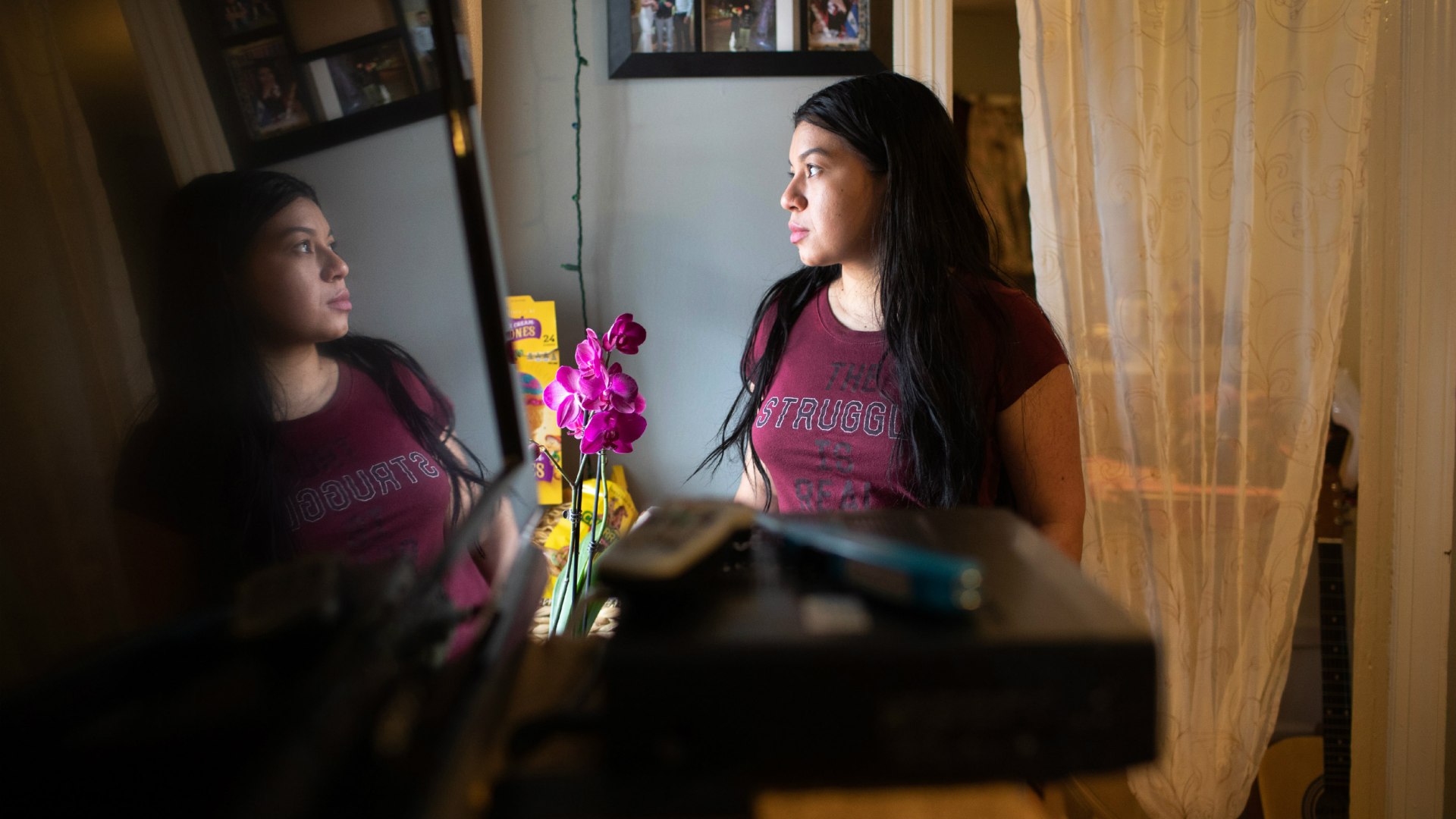
Ministry Leaders to ICE: Release Immigrants and Let Churches Help

As coronavirus shutdowns go on, Christian groups are rallying support for asylum seekers, crowded border camps, and working-class churches.

Christianity Today April 15, 2020
John Moore / Getty Images

This week, evangelical leaders from nine major organizations wrote the Trump administration to urge officials to release detained immigrants during the coronavirus pandemic, particularly those who are elderly or at higher risk for contracting COVID-19.

They are calling on the church and community partners to “provide any assistance they can” including “safe accommodations in which to ‘shelter in place’ for as long as such practices are advised.”

“Our concern is rooted in our Christian belief that each human life is made in the image of God and thus precious, and, like you, we want to do everything possible to minimize the loss of life as a result of this pandemic,” the leaders wrote in a letter sent Monday to Chad Wolf, acting secretary of the Department of Homeland Security.

The letter was signed by Russell Moore, president of the Ethics and Religious Liberty Commission of the Southern Baptist Convention; Walter Kim, president of the National Association of Evangelicals; and Samuel Rodriguez, president of the National Hispanic Christian Leadership Council, among other members of the Evangelical Immigration Table, a group of Christian leaders who support comprehensive immigration reform.

Detention and camps

The coronavirus pandemic has complicated the already precarious position of those being held in detention by Immigration and Customs Enforcement (ICE) while seeking asylum in the US.

Not only do they worry about their health while living in close quarters, they are concerned about what the crisis means for their prospects of a future in the US. With just a year to apply for legal status, the clock could run out while they are waiting for legal clinics to reopen to help them file their paperwork.

“The shutdowns, while clearly the right thing to do, will worsen massive immigration court backlogs around the country,” said Anna Deal, a consulting attorney for National Justice for Our Neighbors (NJFON), a ministry of the United Methodist Church.

The situation changes daily as courts close and re-open after cleaning with no overarching guidance. Asylum hearings have been pushed back, and some cases—mostly of children— that had been removed from the court dockets are being re-opened by ICE.

In some cases, ICE has cited coronavirus concerns as cause for transferring detainees to new jurisdictions, away from their current legal counsel, Deal said. If asylum seekers go to court without a lawyer, their chances of winning asylum or relief are greatly reduced.

Asylum seekers are struggling on the other side of the border too, with overcrowding at the tent camps that emerged as a result of President Donald Trump’s “remain in Mexico” program last year.

People at the Brownsville-Matamoros crossing are desperate for basic health and sanitation supplies, according to Rondell Treviño of The Immigration Coalition. The South Texas site has just three hand-washing stations to serve the 2,500 asylum seekers in the camp, including 500–600 children.

Within weeks, Treviño’s group has raised over $4,000 from a network of churches in Austin and throughout the South to provide more hand-washing stations. So far, they have covered the cost for six $200 stations, their transport, and their maintenance. “Our hope is once we get these first ones there, we’ll be able to purchase more,” he said, with the goal of providing 10–15 stations and covering the ongoing cost for soap, water, and operations.

Immigrant communities and churches

Pastors have also rallied to help refugees and other immigrants in their own congregations. They’ve seen how the destabilization from widespread shutdowns has hit these communities hard.

Immigrants tend fall into the categories most at risk in an outbreak and most affected by a recession. The jobs they lose, the jobs they keep, and the dynamics of their communities make it hard to stay physically, economically, and spiritually well.

Churches are used to providing in-person assistance, helping green card holders with unemployment claims, job searches, aid applications, and monthly bills. But the new normal means everything must be done from afar.

“The system has been not easy to navigate from before the crisis,” said Durmomo Gary, who works with World Relief in the Chicago suburbs. Now, he said, it’s further complicated by mass layoffs and the digital divide among some groups of immigrants and refugees. “Honestly, I am overwhelmed.”

Immigrants who work in factories or service jobs have been likely hit with furloughs and layoffs, said Eric Costanzo, pastor of a large Baptist church in Tulsa, which ministers to hundreds of refugees from around the world.

Those who do still have their jobs are in dangerous situations where, he said, despite employers’ best efforts, they are still more exposed to the virus than those who can stay home. If they contract the illness, not only is their health in jeopardy, but their economic stability is even more precarious.

The irony of this particular crisis, according to Gary, is that the people who lost their jobs because they cannot work from home via the internet now need to hunt for new jobs online. White and middle-class churches can step in to help immigrant workers access the aid and job search tools they need by serving as an ad-hoc digital help desk. “That would be an amazing ministry,” Gary said.

Costanzo is also worried that the language barrier makes it more difficult for these workers to understand the severity of the situation, which also makes them less likely to practice social distancing outside of work. From what he can see, he said, they aren’t regularly monitoring CDC updates, and many report that they are still gathering for various functions.

Ethnic churches are often the primary avenue for immigrants to feel connected to people who understand them. Immigrant ministries in English-speaking churches can help newcomers to engage with the larger community. Virtual connection feels especially inadequate to them. “This is mental torture,” Gary said.

While the international Sunday school group at Costanzo’s church is in constant contact over WhatsApp, Costanzo said, most of their ministries to immigrants relied on open doors and face-to-face connection. Refugees would invite their neighbors, ethnic groups would host meals to share their cultures, and the church offered helpful classes that lose some of their appeal online. “All the momentum has been put on hold,” Costanzo said.

A financial crisis looms for immigrant churches as well, said Matthew Soerens, who serves as the national coordinator for the Evangelical Immigration Table and the national director of church mobilization for World Relief. Without internet access at home, very few congregants tithe or donate online. Paying the bills will be difficult if churches can’t pass the plate.

Soerens is asking those who receive stimulus checks but don’t necessarily need them to make ends meet to consider donating them to immigrant churches. Costanzo and others are promoting the Share Your Stimulus movement, which encourages recipients who do not need the money to donate it and to share their story online to encourage others to do the same. (Undocumented immigrants, in addition to not being eligible to collect unemployment, will not receive stimulus checks.)

“I’m aware that we’re in the middle of a really unprecedented public health crisis,” Soerens said. He acknowledged that every community is feeling pressure from multiple angles as schools and businesses remain shuttered. He hopes that in the midst of this, the church will answer the call to serve a group that is always vulnerable, and now faces grim realities that will not end when the height of the pandemic has passed.

With reporting by the Associated Press’s Elana Schor.

Apple PodcastsDown ArrowDown ArrowDown Arrowarrow_left_altLeft ArrowLeft ArrowRight ArrowRight ArrowRight Arrowarrow_up_altUp ArrowUp ArrowAvailable at Amazoncaret-downCloseCloseEmailEmailExpandExpandExternalExternalFacebookfacebook-squareGiftGiftGooglegoogleGoogle KeephamburgerInstagraminstagram-squareLinkLinklinkedin-squareListenListenListenChristianity TodayCT Creative Studio Logologo_orgMegaphoneMenuMenupausePinterestPlayPlayPocketPodcastRSSRSSSaveSaveSaveSearchSearchsearchSpotifyStitcherTelegramTable of ContentsTable of Contentstwitter-squareWhatsAppXYouTubeYouTube