The Reformation of the 16th century was a revolution of mythic proportions. Scholars and pastors with fresh scriptural insights took advantage of revolutionary changes in the arts, science, humanities, politics, travel, and commerce to turn the Western world upside down. It marked both a return to biblical roots and a leap into the future. In the 21st century, what major changes in the church should Christians be hoping and working for? In the final installment of the Global Conversation, four key leaders from four continents reveal their hopes.
One big surprise of the 20th century was the dramatic growth of churches in the non-Western world. A bigger surprise was that the fastest-growing churches were strongly supernaturally oriented. “In this thought world, prophecy is an everyday reality, while faith healing, exorcism, and dream visions are all basic components of religious sensibility,” religion historian Philip Jenkins has noted. This is true of African Initiated Churches, Pentecostal churches in Latin America, house churches in China and India, and numerous others.
I grew up in a thought world where ancestral spirits, demonic powers, “gods,” and miracles of all kinds abounded. Modern education, the most powerful force behind secularization, almost succeeded in getting me to toss out everything as superstition. Some of these supernatural elements clearly are, but not all. A careful reading of the Bible and the sheer weight of empirical evidence eventually brought me back to a supernatural Christianity. In this, I found myself out of sync with much of Western theology. Here liberals were at least consistent, but not evangelicals. Most liberals denied the supernatural both in the Bible and in the present; evangelicals fought tooth and nail to defend the miraculous in the Bible, but rarely could cope with it in real life.
It is now recognized that much of Western thought has been domesticated by modernity, with its roots in Enlightenment thought. The autonomous rationalism initiated by Descartes and the narrow empiricism pioneered by Hume have so emasculated the modern worldview that a mechanistic universe is all that remains. The resultant denial of the supernatural has crippled much of theology, leading to at least two serious consequences.
First, most present-day Western systematic and pastoral theologies fail to address the demonic at both the personal and cosmic levels. Many scholars deny or ignore the whole subject, explaining away numerous related biblical passages: Paul’s references to “principalities and powers” are reduced to sociological structures; sin and evil are discussed without reference to the demonic. Such theologies sit well with modernity, but they provide no help for evangelists and pastors ministering to people who are under spiritual bondage. If these issues are not properly addressed, many non-Westerners will find the gospel impotent and irrelevant.
The other consequence is that Western Christians often fail to fit the “signs and wonders” of the Holy Spirit into their theological framework. Up until recently, they have treated classic Pentecostalism as some form of aberrant religion, along with various versions of non-Western indigenous Christianity that also take the New Testament teaching on spiritual gifts and miracles seriously. But today, with Pentecostalism and the charismatic movement increasingly accepted in the West, and most of the dynamic non-Western churches taking the miraculous seriously, it increasingly looks as if the real aberration is “mainline” Western Christianity.
A 21st-century reformation will demand reinserting the supernatural into the heart of Christianity. This will result not only in a sounder biblical theology but also a more powerful missional church. The world will then understand what Jesus meant when he said, “But if it is by the Spirit of God that I cast out demons, then the kingdom of God has come upon you” (Matt. 12:28, ESV).
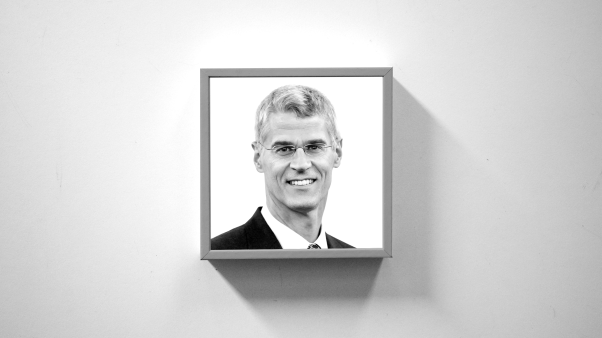
Hwa Yung is a bishop of the Methodist Church of Malaysia and a member of the management team for Cape Town 2010. He wrote Mangoes or Bananas? The Quest for an Authentic Asian Christian Theology.
Copyright © 2010 Christianity Today. Click for reprint information.