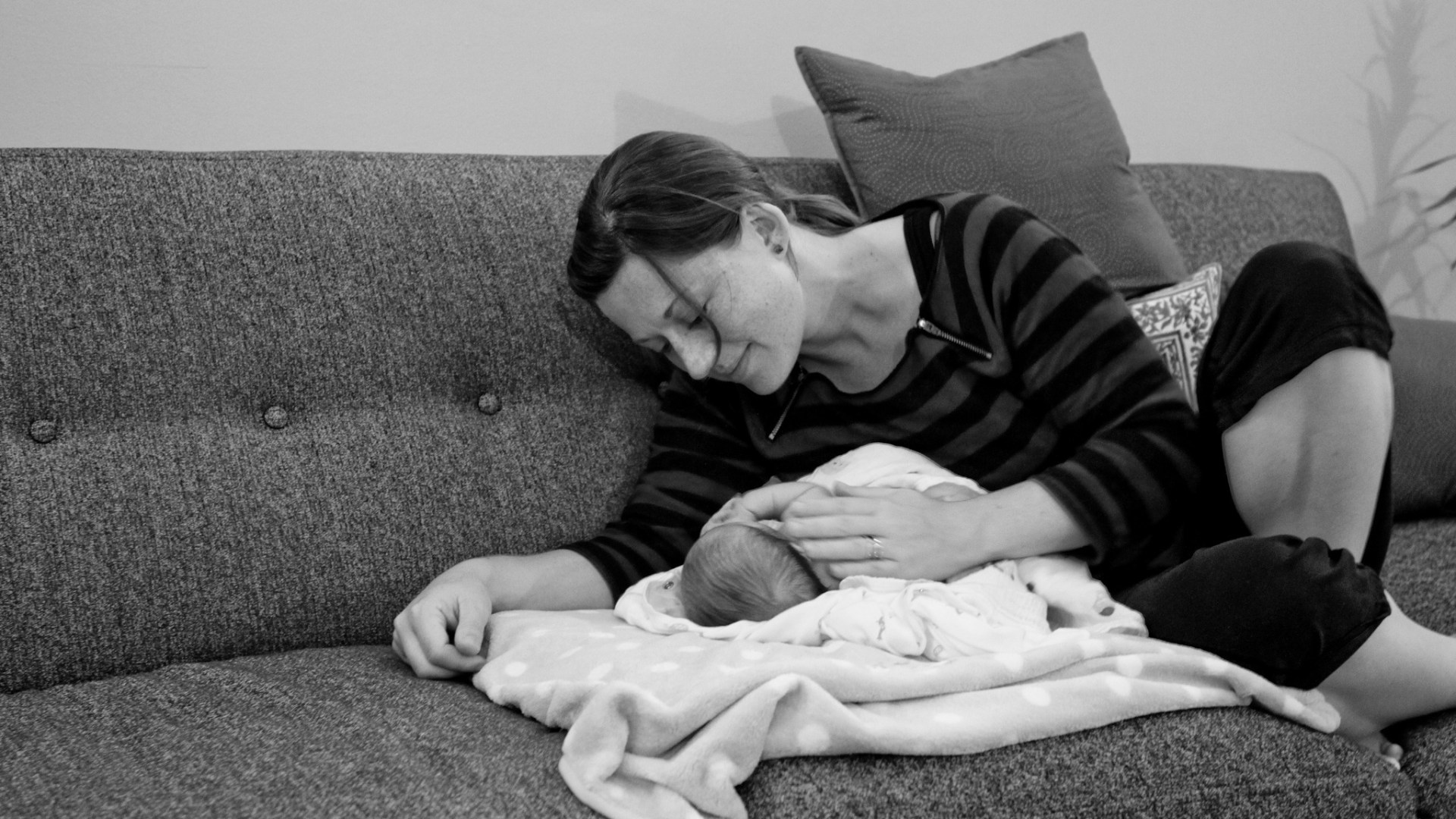
There are a number of reasons for the delay of childbearing on the part of women, who increasingly find themselves pursuing higher degrees, working full-time, and taking on leadership positions.
Babies don’t care if you just made partner, they arrive when they want to. Sick toddlers don’t care if you have an article due today, they need you to clean up their vomit or pick them up from daycare lest they infect everyone else. And back at the office, careers don’t wait for children. They move on without them. For a lot of women entering the workforce, that is a daunting prospect.
In a recent interview on the Today show, Julia Roberts reflected on her choice to slow down her acting when her children arrived. She reached a point in her career where backing away for a period of time wouldn’t really hurt her. She had made her mark and earned her right to stay home.
This philosophy on work and family has become increasingly prevalent in today’s culture, particularly among the educated middle and upper classes. Having kids is something we must wait for and earn. When a woman graduates from college we tell her, “Put your degree to good use, then get married and have kids.” When a couple ties the knot, we sniff around at their family plans, nervously hoping they won’t embark on the parental path too soon.
And women are heeding this advice: The average college graduate turns 30 before she has her first child, according to family life researchers at the University of Virginia.
Even in our Christian circles, we praise new life and fight for the unborn, but cringe when a 20-something has a baby before she could really make something of herself. We might not say it in so many words, but deep down many of us believe that a woman should earn her place as a mom and take advantage of all of the choices our culture has to offer her before she is held back by a baby.
There’s no denying the reality that children change our lives in dramatic ways, especially for mothers, who often are the ones to stay home to care for them. We’ve all been to the baby showers where mothers-to-be are jokingly warned about the upheaval that comes with each new addition. She’s told to forget sleep for the next several years. Her clothes are going fit funny for a little (or long) while, and she might as well stick to T-shirts and sweat pants, anyway, since the messy little bundles of joy will only get poop, pee, or spit-up on them.
In the academic world, children are seen as a “career killer” for women and a “career advantage” for men. Many female professors with children choose a part-time track, rather than a tenured one, either preferring the time with their children or seeing it as the only option available to them. In business, the work-family outlook is not much better. Lean In author and Facebook COO Sheryl Sandberg has made mention of the fact that women “wreck their careers” before they even begin because of their inability to see how they can do both. Some choose children and shrink back from a promising career. Others move forward and delay having children until after they have achieved a measure of success.
In a recent article on her website, Penelope Trunk provided a detailed rundown on how to choose a husband if you want kids someday. These are important matters, so much so that it’s not just about compatibility and love anymore. Babies complicate things, and as Trunk asserts, women need to know how they are going to handle them and their husbands before they arrive on the scene.
But maybe rather than a milestone to be carefully calculated, planned for, and earned, kids serve a different purpose altogether. Whether you stay home with them or not, children are not a status symbol, but a blessing. They aren’t the cherry on top of a life plan, but part of what it means to live out our mandate as image-bearers. God’s command to be fruitful and multiply is part of what it means to image him. We create and bear life. We work and we nurture. The ambient culture encourages creation, cultivation, and work, but often out of selfish ambition—not to the praise of the God who created us.
More than that, when we put off the beauty of children—often in quest for our own glory, status, or feelings of having “arrived”—we are doing it to our peril. The world around us (and unfortunately, even the church) might tell us that we have choices and endless amounts of time, while biology tells another story. Some spend their 20s and 30s growing their careers and have children later on, but some cannot. The biological clock waits for no woman.
Children are not a death sentence to our ambitions and goals. They may change them, postpone them, or even make them more difficult to attain—but they are always a blessing. We don’t earn the right to stay home or have children only after having done something important with our lives. We earn the benefit to have children simply by being created in God’s image.
Children also come to us—biologically or through adoption—at God’s timing. Despite my desire to start a family earlier, I didn’t give birth to my twins until I was 30. Even when we are open to having children, it doesn’t always happen right away and sometimes, they don’t come at all.
But the church should be a place that welcomes expectant mothers regardless of what they have accomplished pre-pregnancy. Even if she never finishes her degree, lands a top client, or wins an Academy Award, bringing life into the world is a beautiful and God-honoring thing.