Ideas

The Sentence from C.S. Lewis That Could Change Your Life

Columnist

Aslan is fictional, but the real Lion of Judah reminds us that we’re forgiven.

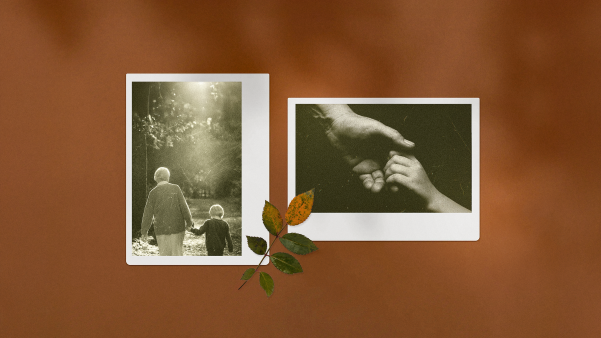
Illustration by Christianity Today / Source Images: WikiArt / Unsplash

Passing around the corner from the dining room table, I heard one of my sons reading aloud from C. S. Lewis’s The Lion, the Witch and the Wardrobe. I stopped and listened, knowing how much those Narnia books have meant to me. He was in the middle of a line, speaking fast and about to move on to the next paragraph. I stepped out into his view and said, “Stop there; read it again. It’s the most important sentence in the book.”

I don’t know that I would always say it’s the most important sentence in the book; I could make the case for at least a dozen options. But I would say it’s the most important sentence for us right now.

Edmund had betrayed his siblings—goaded on by the White Witch and a taste for Turkish delight—and after an entire narrative leading the reader to despise the treasonous brat, Aslan, the lion and rightful ruler of Narnia, appeared and walked a sheepish and defeated Edmund back to the others.

“Here is your brother,” he said, “and—there is no need to talk to him about what is past.”

When a struggling young Christian comes to see me, it’s rarely because he or she wants to flout the holiness of a biblical ethic, as might have happened at the start of my ministry. Now, these tortured ones are actually trying to do their best in walking with Christ—confessing their sin, struggling with temptation, and seeking to live the life Jesus would have them live.

These young Christians often assume that “real” disciples can track their progress in holiness as one does calories on a weight loss app. Instead, they find that (as is the case for everybody) the deeper they go in discipleship, the more they realize how much worse their ongoing sin is than what they thought. Many think God is angry with them, ready to say when they approach the throne of grace, “Well, well, look who’s slinking in …”

The heart can believe and the mouth can confess things the nervous system doesn’t yet feel. Sometimes that part of us—despite all our Sunday learning—panics and wants to perform well enough to deserve the love of God. This can make John 3:16 feel like an advertisement narrator booming, “God so loved the world” while in a low voice speedily saying, “Void where prohibited, some restrictions apply.”

These Christians then withdraw from prayer, and sometimes even worship, until they can “get their lives together.” And, like an addiction to drink or drugs or Turkish delight, the perceived solution only makes their problem worse. Many of them are downcast, not only by their present stumbles but with guilt from their past—things they’ve done, people they’ve hurt, or words they have said.

The picture Lewis presents in Edmund’s encounter strikes at the heart of that problem. First, Aslan talks to Edmund quietly, away from the crowd. Lewis writes, “There is no need to tell you (and no one ever heard) what Aslan was saying, but it was a conversation which Edmund never forgot.”

The wording here echoes the post-resurrection words of Jesus in the garden outside the tomb. When Peter was still in anguish over his denial and abandonment of Jesus, the Lord said to Mary Magdalene, “Go to my brothers and say to them, ‘I am ascending to my Father and your Father, to my God and your God’” (John 20:17, ESV). Even after their weakest, most failing moment, Jesus was not ashamed to call them brothers—to remind them that God was their Father too, and that he was still their God (Heb. 2:11).

“Here is your brother, and—there is no need to talk to him about what is past.” If we could feel the weight of that glory—of who is saying it and why he’s saying it—we would see an entire world lit up with the Good News. Aslan is fictional, of course, but there is a real Lion of Judah, and maybe he wants to remind us of a truth we’ve forgotten, perhaps just when we need it most.

Russell Moore is the editor in chief at Christianity Today and leads its Public Theology Project.

Also in this issue

Where women lead and toil—be it in the church or the home—continues to be a lively debate in ecclesial discourse. Are complementarians and egalitarians as opposed to one another as we think? For our April cover story package, one theologian argues for a resounding no and two female ministry practitioners—a complementarian and an egalitarian—issue a charge to each camp for preserving their respective movements. Also in this issue, staff writer Sophia Lee brings stories of a reconciliation ministry from Israel, news writer Daniel Silliman explains the latest debate within a new Methodist denomination, and theology editor Stefani McDade tells us why theologians are beginning to study the human body more closely.

Cover Story

Will ‘Complementarianism’ Survive?

Danielle Treweek

Cover Story

Egalitarianism Is More Than a PR Statement

Gaby Viesca

Cover Story

Gender Roles Beyond the Western Church

Interview by Kara Bettis Carvalho

Cover Story

Complementarian at Home, Egalitarian at Church? Paul Would Approve.

Gordon P. Hugenberger

Fractured Are the Peacemakers

Where Worship Doesn’t Translate

Kelsey Kramer McGinnis

In Search of Most Beautiful Language, Scholars Turn to ‘Jesus’ Film

Global Methodists Want to Check Bishops

Are the Global Methodists Evangelical?

The Kingdom Demands We Cross Tribal Lines

Joy Allmond

What Kind of Man Is This?

John Koessler

Heaven Isn’t Our Eternal Escape from Work

Our Gender on Earth as In Heaven

Fellipe do Vale

Excerpt

O Ye of Overconfident Faith

Jennifer Michelle Greenberg

The First Apostle’s Unlikely Witness

Jennifer Powell McNutt and Amy Beverage Peeler

Passover’s Promises for My Children

Jennifer Greenberg

Why Your Favorite Theologians Are All Talking about Theological Anthropology

Testimony

I Wanted a Bigger God Than My Hindu Guru Offered

Rahil Patel

Novel Reactions to a Focus on Fiction

Alexandra Mellen

She Wrote Love Stories. Then Her Marriage Ended.

Review

Churches Shouldn’t Outsource Apologetics to Slick Conferences

Timothy Paul Jones

Review

Confronting the 21st-Century Church with the First-Century Church

Ed Creedy

View issue

Our Latest

News

Church Provides Shelter, Aid During Bondi Beach Attack

Amy Lewis

Australian Christians are finding ways to support the Jewish community after an ISIS-motivated shooting killed 15.

News

How Rhode Island Churches Responded to the Brown Shooting

Harvest Prude and Kara Bettis Carvalho in Providence, Rhode Island

God “draws near to us in our suffering,” local pastor Scott Axtmann preached after Saturday’s deadly attack. Area ministries were active too.

The Bulletin

Hanukkah Attack in Australia and Christmas Hospitality

Steve Cuss, Mike Cosper, Clarissa Moll

Shootings prompt a conversation about antisemitism and violence, and Being Human’s Steve Cuss discusses God’s hospitality.

News

Religion on Egyptian Citizens’ ID Cards Enables Christian Persecution

The requirement makes it difficult for religious minorities to get jobs, justice, and opportunities. Advocates are pushing for change.

Review

Personal Preference Is No Way to Judge Faithful Worship

Steven Félix-Jäger’s new volume on biblical, aesthetic, theological, and pastoral considerations in worship will serve many churches.

News

Killed: Acclaimed Gospel Vocalist Jubilant Sykes

The Grammy-nominated singer jumped from gospel to opera to spirituals to jazz; he considered it all sacred.

Review

Union With Christ Means A Responsible Life

Christa McKirland

Theologian Kelly Kapic’s new book Christian Life is a corrective to anxious faith.

In Bethlehem, God Chose What Is Weak to Shame the Strong

Brad East

What is true of Good Friday applies to Christmas too.

Apple PodcastsDown ArrowDown ArrowDown Arrowarrow_left_altLeft ArrowLeft ArrowRight ArrowRight ArrowRight Arrowarrow_up_altUp ArrowUp ArrowAvailable at Amazoncaret-downCloseCloseEmailEmailExpandExpandExternalExternalFacebookfacebook-squareGiftGiftGooglegoogleGoogle KeephamburgerInstagraminstagram-squareLinkLinklinkedin-squareListenListenListenChristianity TodayCT Creative Studio Logologo_orgMegaphoneMenuMenupausePinterestPlayPlayPocketPodcastRSSRSSSaveSaveSaveSearchSearchsearchSpotifyStitcherTelegramTable of ContentsTable of Contentstwitter-squareWhatsAppXYouTubeYouTube