One Veterans Day not too long ago, I was messaging friends on Twitter about sharing the #TenSaintsTenDays blog series from Centurions Guild. In the ten days between All Saints and Veterans Day, I profiled a soldier-saint who blurs the categorization we sometimes overlay onto Christian soldiers; too often, their stories get co-opted to make a point for or against war, as though that sums up the meaning of their lives and service.
One friend, an activist whose work included issues of violence, told me privately that reading their lives was “challenging,” and that he was concerned about receiving “a LOT of pushback” for discussing the merits of just-war traditions.
I reminded him that a theologian he and I both admire attracted numerous ROTC cadets to his classes on pacifism and nonviolence. This theologian managed to communicate effectively across political divides to cultivate conversation despite entrenched disagreements. In response, my friend suggested that I had been disqualified from the pacifist community and that I needed to connect ROTC types with nonviolent activists like him.
Anyone who has read my book Reborn on the Fourth of July knows that I am about as pacifist as they come—but I have also tempered my pacifism with reasonability, with the reality of military service as I lived it for more than six years. This has led me to part ways with pacifists who insist on absolutizing their ethic, of imposing abstract ideas about war onto those who know from experience that military service looks like many different things.
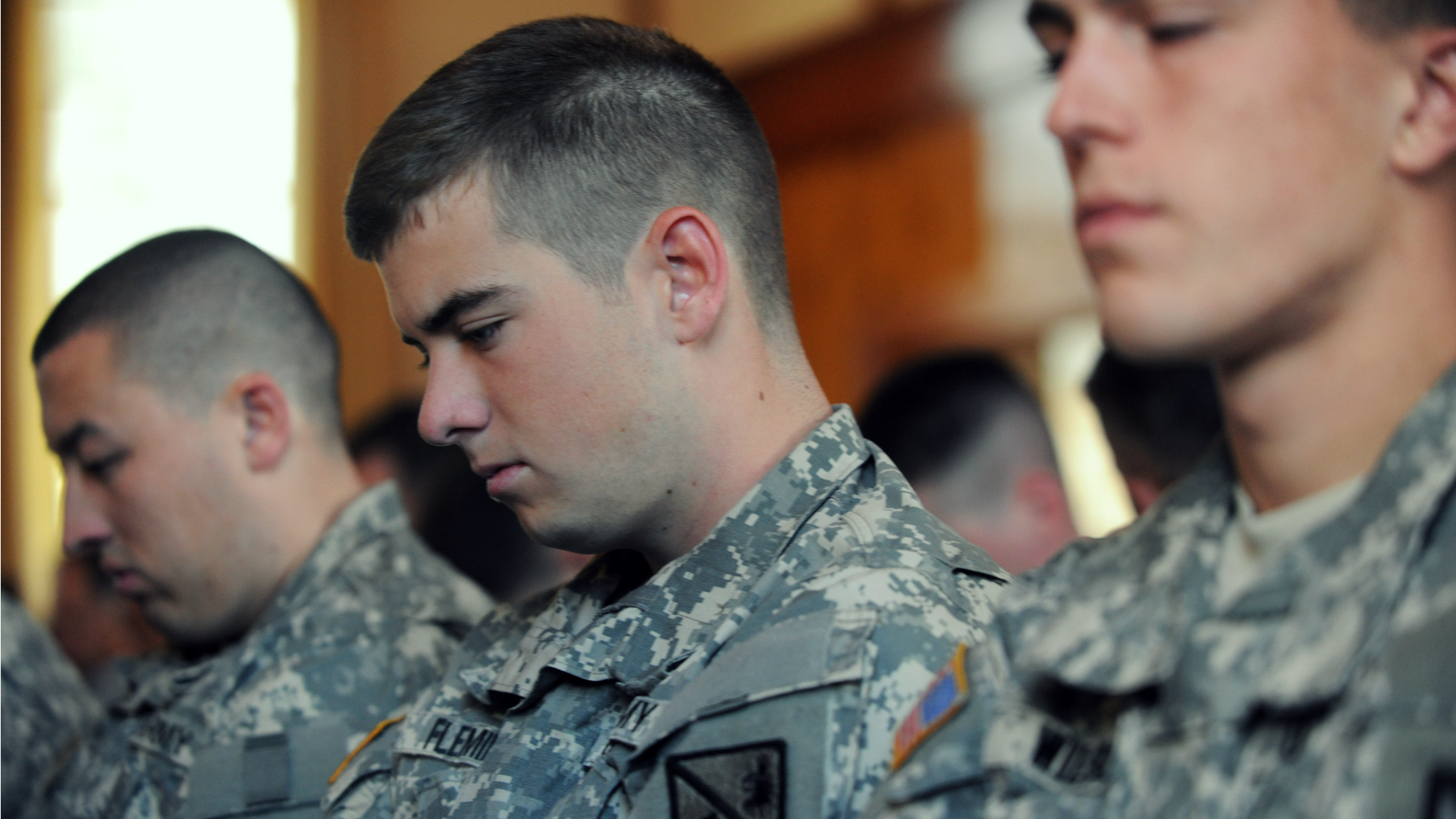
From academics in the ivory tower to activists in the streets, there’s a growing sense that both pacifists and patriots are becoming more and more tribal. Rather thinking about armed service in morally nuanced and complex ways, we often retreat to what we think we know about the military; it is either good or bad. The easy way out of “challenging” conversations, as my Twitter exchange shows, is to categorically dismiss Christian soldiers from our tribal ranks, to excommunicate them if they do not express uncomplicated ideas.
This false dichotomy is precisely the problem Centurions Guild has hoped to address over the course of “Ponder Christian Soldiers,” the blog series we have curated with Christianity Today. We have tried to display the diversity and complexity of voices represented by our military personnel and their communities, which includes civilians.
- We heard from psychiatrist Warren Kinghorn, who reminded us that a mental health diagnosis is double-sided, and that “medicalizing” combat stress can both help and harm veterans.
- I wrote about the importance of reading the lives of the saints, that we take care to interpret their lives with a carefully applied martial hermeneutic.
- Chaplain Terry Coban told of being injured by a suicide bomber in Iraq and the way in which taking the Eucharist reminds him that the church is constituted by broken bodies.
- Lieutenant Colonel Pete Kilner, writing from his post as Academy Professor of Ethics at West Point, complicated the story of war as it is experienced by those who fight, insisting that on the battlefield there is both heaven and hell, both beauty and tragedy alike.
- Another chaplain, Zachary Moon, described ministering to soldiers and insisted we avoid reducing our military personnel to either heroes or “head cases.”
- Air Force Reservist Matt Moorman explained why he wasn’t a conscientious objector but suggested that, since all Americans participate in the violence of war, we all should ask if our faith endorses remotely bombing enemies we are commanded to love.
- Finally, civilian ally Pastor Todd Lovell, a minister in Arkansas, encouraged the church to remember the story of salvation history rightly by letting soldiers and veterans tell us that war is difficult to reduce to either “good” or “bad.”
However excited I am that the series elevated the conversation about God and country, there are more voices we did not hear from. One, the Army was disproportionately represented, with only one enlisted Airman profiled and no Marines or Sailors. While we featured both officers (three) and enlisted (two) and even two civilians, there were no women. The longstanding association between war and masculinity might come to a close with the recent developments in Congress, and we anticipate hearing more from our sisters in arms about their military service and how it intersects with Christian faith.
Further, we need to include family members and dependents in the conversation about military service. Military service is an experience that affects not just autonomous individuals, but also nuclear families and extended communities, including congregations and classrooms. May this series at CT begin many conversations about the Christian soldiers in Scripture, worship, and theology, as well as the soldiers in our midst.
Centurions Guild hopes to elevate the conversation about living For God and Country (in that order). We train clergy and lay leaders to engage in effective ministry with soldiers and veterans by providing resources to congregations thinking about martial ministry, organizing workshops or Bible studies, and by providing direct coaching when necessary. If there is any way we can serve you, your congregation, classroom, or community, email us today at info @ centurionsguild.org.