Update (October 19, 2023): This story has been updated to include newly available information from a US intelligence assessment.
The Arabic word ahli can be translated into English in several ways: family, membership, and people. This family is not limited to nuclear family membership. It’s capacious, expanding to include a wide range of people who belong together.
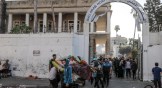
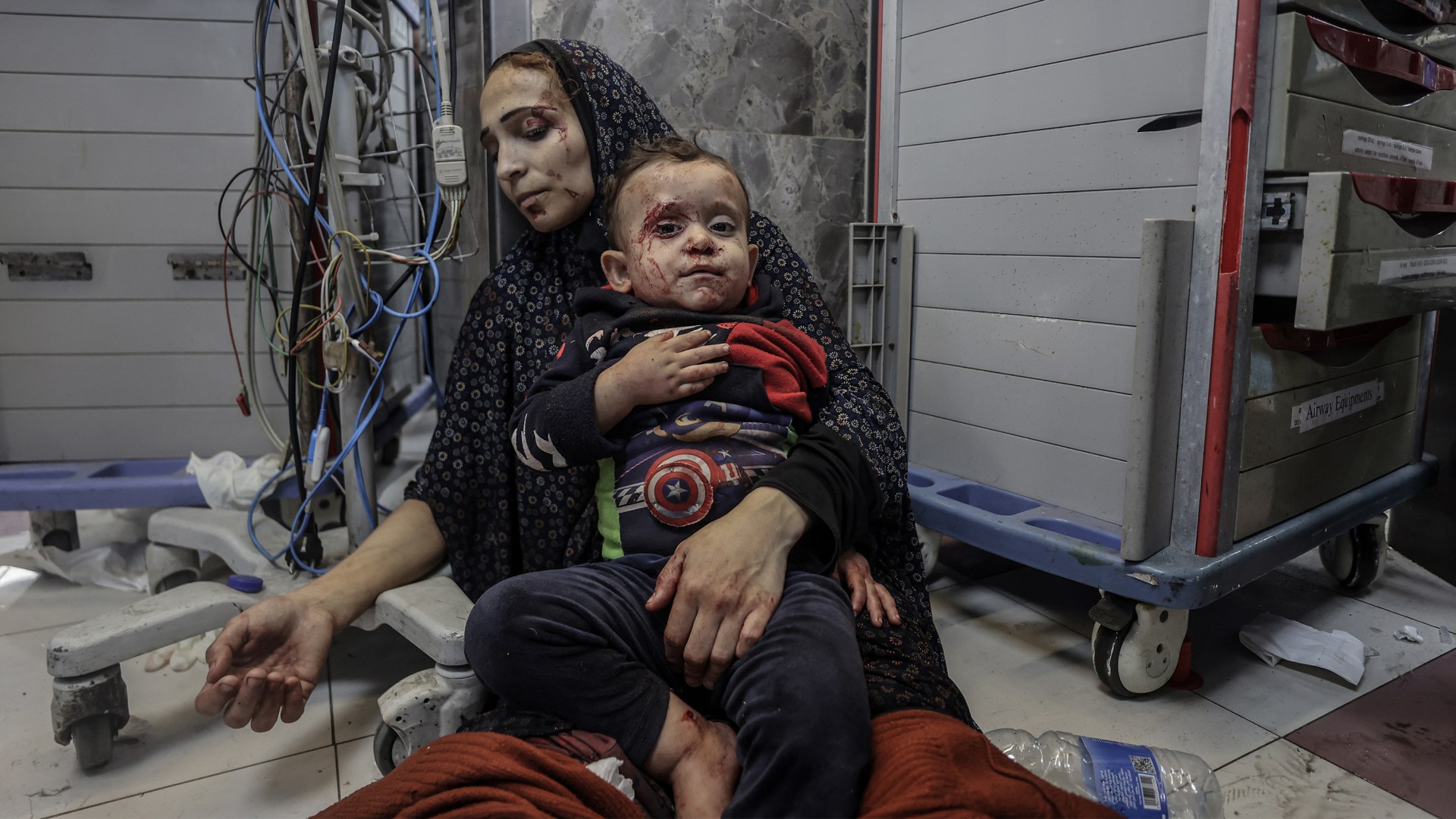
This word, ahli, has appeared in news headlines across the world this week, following the explosion that killed scores seeking refuge at al-Ahli Arab Hospital in Gaza City.
Narratives about who was to blame proliferated before the fires at the hospital were even extinguished. Some claimed an Israeli air strike was resonsible. Others blamed a misfired rocket belonging to Palestine Islamic Jihad. A US intelligence assessment, viewed by outlets including CNN on Wednesday, judged “that Israel was not responsible for [the] explosion that killed hundreds of civilians,” estimated the death toll at the “low end of the 100-to-300 spectrum,” and reported “only light structural damage at the hospital.”
As a historian who has published on al-Ahli Hospital, let me extend an invitation to pause while media debate and intelligence fact-finding continue. Let’s pause to learn. To think. To pray.
Praying about the destruction at this hospital in Gaza needs to start, first and foremost, with knowledge of the people who were affected. Who were the people at the hospital? Why did al-Ahli Arab Hospital experience this tragedy? And how can we turn to God when nothing makes sense?
To more fully comprehend who sought refuge within the hospital, we must start with its history.
The idea of establishing a Christian hospital in Gaza began in 1878, when the British Church Missionary Society (CMS) commissioned Alexander Schapira to relocate his family to Gaza City and determine the feasibility of a medical mission there. Schapira was the ideal choice for the CMS. He was raised in a Jewish family in Ottoman Palestine and spoke Arabic fluently. He became a believer later in life and joined the CMS, where he first served in West Africa before returning to Palestine.
In one of his first letters from Gaza, which I’ve reviewed in the CMS archives, Schapira described difficulty in finding accommodation, but he was nevertheless encouraged.
“What a happy thought it is,” he wrote, “when I think of my work here with its apparent difficulties; for it is His work and I feel sure that He will be with me and bless my labor here.” Shortly after writing this letter, Schapira spent everything he owned to buy medicine, print biblical tracts, and hire Asad Salim, a doctor from Beirut, to dispense free care to all those living in Gaza.
While Schapira trusted in God, distributing free medicine wasn’t a sustainable business model. The cost of medicine and printed tracts exhausted his personal finances. But in 1882, a sympathetic Englishmen donated £500 to ensure the continuation of the dispensary. This date is often cited as the beginning of the Christian hospital.
Focusing on medicine, however, misses one of the most important aspects of this Christian work in Gaza.
In 1891, the dispensary expanded into a hospital building where medical missionaries could perform both out-patient and in-patient procedures. They expected patients to attend the hospital because of their advanced surgical techniques but found that most patients were looking to fill more basic needs: a meal, a bed, a place of refuge.
From the establishment of the Christian hospital in 1891 until the present day, it has offered both healing and refuge for Gazans. It has been a site of courageous hospitality through times of peace and war.
In the 1950s, the CMS sold the hospital to the Southern Baptist Convention, who renamed it the Gaza Baptist Hospital. The Baptist name, al-ma’amadani, still resonates in Gaza due in part to the hospital’s service during the 1967 Six-Day War.
In the weeks leading up to that war, American surgeons Merrill Moore and David Dorr decided to remain at the hospital while their families evacuated. The surgeons and hospital staff continued to open their doors to patients, adding beds to the Baptist church sanctuary to accommodate hundreds escaping violence.
Dorr had little time to write but kept an audio diary which his family shared with me. In the recordings, his voice sounds anxious but resolute. He knew that if Christians abandoned the hospital in Gaza, they might never return.
In the midst of war, when Dorr wasn’t treating patients or offering radical hospitality to those seeking refuge, he paused to pray. He prayed for protection, safety, comfort, and a peaceful resolution to the violence that afflicted the hospital and those sheltered within it. That spirit of hospitality continued when administration came into Anglican hands for the last four decades.
Like many, I’ve felt helpless to comprehend the current situation. The geopolitical forces at play are beyond human understanding. They are rapidly changing, and they call on us to pick sides, to choose enemies. We may never have an answer to why the hospital was struck. But we should not forget to pray.
Pray for God’s work throughout the world. Pray for his protection over the innocent lives in Israel and Palestine. Pray for the hostages and their families. Pray for the people, al-ahli, who sought safety in the protection of Christian hospitality and faced the unrelenting atrocities of war.
Pray with confidence that, while human understanding is limited, full of gaps and inconsistencies, God is omniscient and omnipotent still.
Carter Barnett is a PhD Candidate in the Department of the History of Medicine at Johns Hopkins University. He researches the history of faith and healing in the modern Middle East.