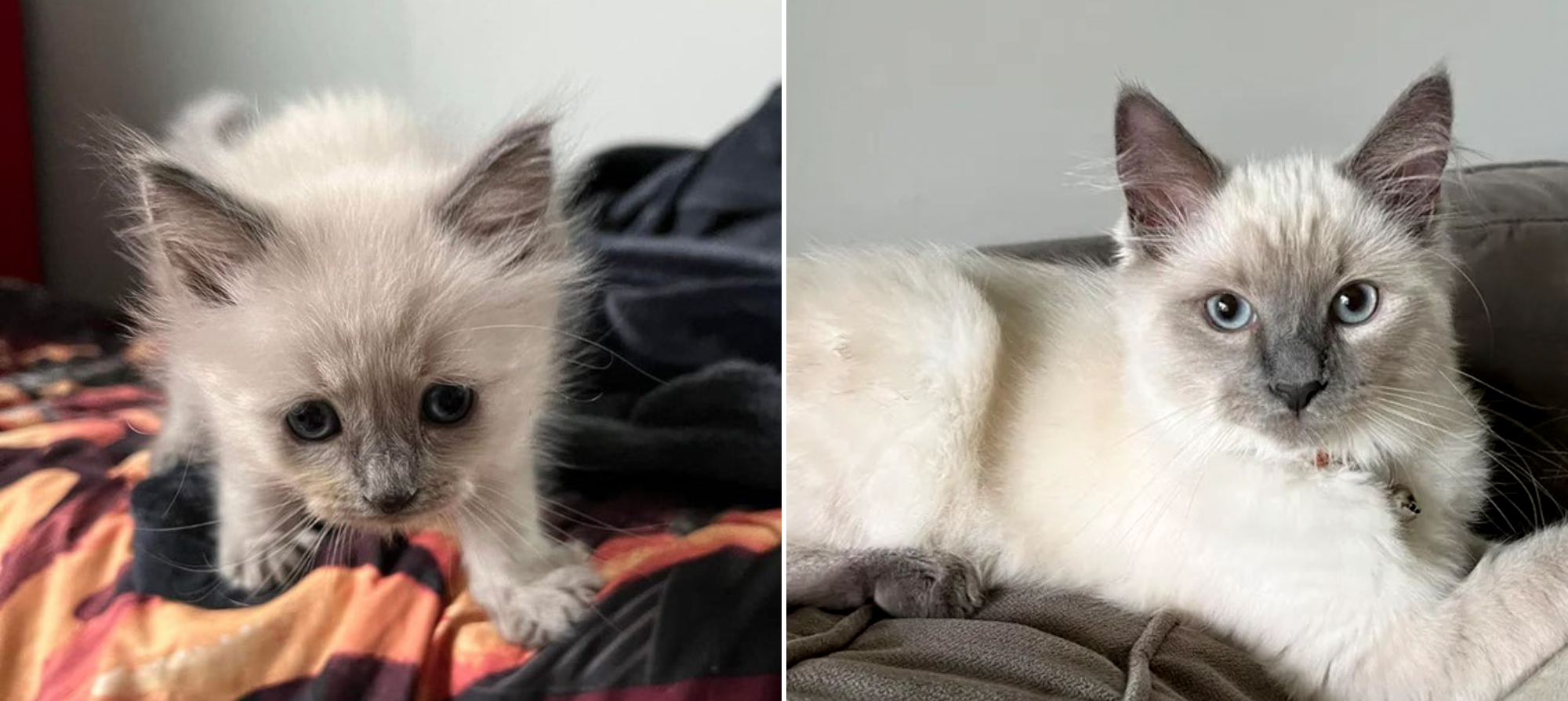
I’ve hated cats all my life. Well, maybe not all my life. My mom has a picture of me, maybe six years old, playing with kittens in my grandpa’s barn, and I remember begging to take that little furball home. But my mom hated cats, and I soon did too.
My husband’s family had a cat, and when we were dating, I shuddered whenever I visited. The creature was unbearably forward and gross. I was convinced the cat tried to kill me one night by sitting on my head while I slept, even though my husband insists she was just being cozy.
My thinking on felines held firm for about two decades. Our sweet dogs were all the pets I ever wanted, while cats, by contrast, were disgusting to me. They walked on tables with their little cat feet. They seemed mysterious and inscrutable.
I rolled all cats together with the evil Snowbell from E. B. White’s Stuart Little: “malevolent, self-absorbed, negative, obstinate, witty, bellicose, evil, loathsome, loquacious, testy, ingenious, narcissistic, kooky, eccentric, relentless, boorish, emotional, loud-mouthed and loco.”

Then our youngest child went full-court press for a pet cat. He sang their praises. Knowing my fears, he researched a cat species bred for their friendliness to both dogs and humans and then found a local veterinarian breeder who raises the things in her home.
His campaign came at an opportune time for him. We were post-COVID, post-lots-of-losses. His older siblings were moving into realms that aren’t yet for him, and I felt like he needed something. Maybe at that moment, I would have given him almost anything. So for the love of my son, I swallowed my apprehension, and we called the breeder and reserved a fluff-some kitten.
That’s the slow part of the story. As soon as I met Dwight (named by my son, for the character in the NBC sitcom The Office), I fell for him.
My love for my son had somewhat prepared me for the transition, but I was changed through my unexpected connection with the cat. I was converted. I became a cat person, in personal relationship with Dwight. (Dwight, of course, is not a person, but I have a personal relationship with him, as I am a person, and so my relationships are personal.) My conversion to cats—or Dwight, more specifically—has informed my view of Christian conversion.
Augustine, who understood human beings to be made up of the deep settings of our wills, said in so many words that we are what we want. Our wills are quite difficult to change. They’re stubborn. They just are.
Why do I love asparagus but not brussels sprouts, a zinnia but not a brown-eyed Susan? These settings, these wantings, pull on us at the core, and we can’t simply decide to switch them out. The will is too personal to be changed at will. I could at least explain to you why I didn’t like cats. But my pull toward zinnias and away from sprouts seems to be without reason—just who I am, without one plea.
If Augustine is right and we are what we want, but what we want is very hard to change, then how do we imagine conversion?
For the Bishop of Hippo, the deepness of our wills means we need supernatural transformation. If I can’t just flip a switch and become a sprouts person, how much less can I simply decide to turn my back on sin and toward God?
Conversion isn’t simply a decision. It’s a revolution and a miracle. Augustine is the great theologian of grace because he emphasizes that our transformation is a gift from God, not something we can ever grab on our own terms.
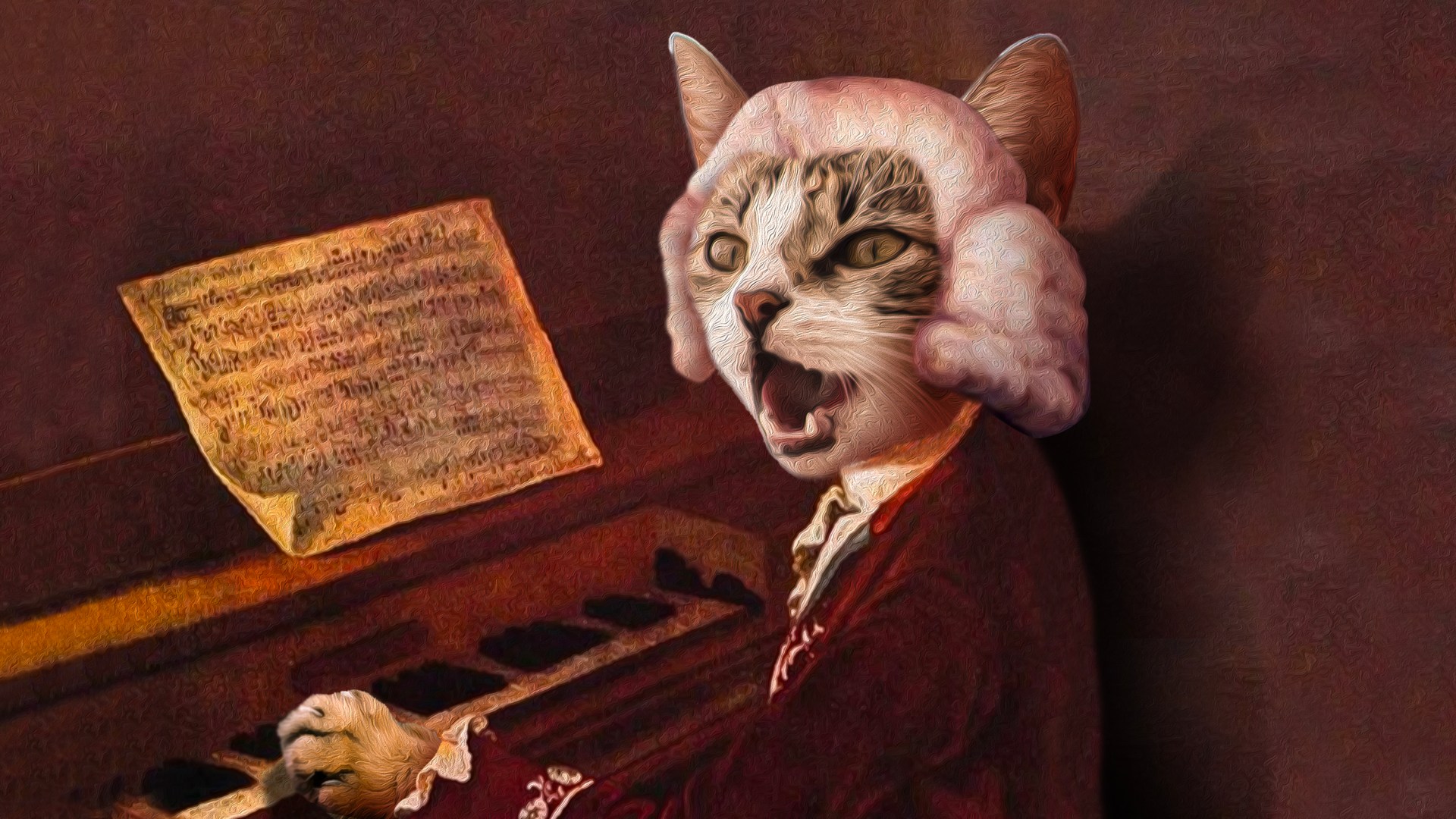
 Courtesy of Beth Felker Jones / Edits by Christianity Today
I believe this with all my heart. Grace is not a magic bullet. It isn’t dispensed through an incantation, nor is it a ticket to heaven. It’s a person, Jesus Christ our Lord, with whom we fall in love and by whom we are changed. This doesn’t mean we simply decide on conversion. I didn’t decide on Dwight. But it does mean that conversion doesn’t happen without us. It’s personal, not transactional. Grace is a cat in my lap.
I did not expect this upset in the deep settings of my being. A cat person? Me? But the upset is changing the way I see the world. If I can become a cat person, what else might God change in my life? What other deep-set prejudices am I clinging to? Where else am I blind to the goodness of God? (Please don’t say, “Sprouts.”)
Now that Dwight has changed the deep settings of my will, I marvel at all he is teaching me about grace. Christopher Smart considers his cat Jeoffry as “the servant of the Living God duly and daily serving him,” while the ancient Irish cat Pangur Bán lives out the theology of work alongside his monk friend:
So in peace our task we ply,
Pangur Bán, my cat, and I;
In our arts we find our bliss,
I have mine and he has his.
Like many a cat lover before me, I marvel at Dwight’s wildness—how he’s exactly like a tiger or a puma, save for his petite size. I wonder that this untamed creature should sleep safely next to me, and I remember with a shiver C. S. Lewis’s dictum that Aslan “is not a tame lion.”
I shudder before the majesties of God’s creation. I marvel, too, at the fact that Dwight has decided to live comfortably with my two goofy dogs, lion and lambs together, an ensign of the peaceable kingdom.
I know he’s just a cat, but Dwight startles me every day with the surprise of my conversion, reminding me of the ways I was once blind to so much in God’s beautiful world.
Beth Felker Jones is professor of theology at Northern Seminary and writes at Church Blogmatics, where you can also find links to all things #theologycat.
Dwight offers his thoughts (and makes theological mistakes) on Beth’s social media feeds, where he often shares #CATechesis (a word which means “teaching the faith”) when he’s not too busy helping with a writing deadline.