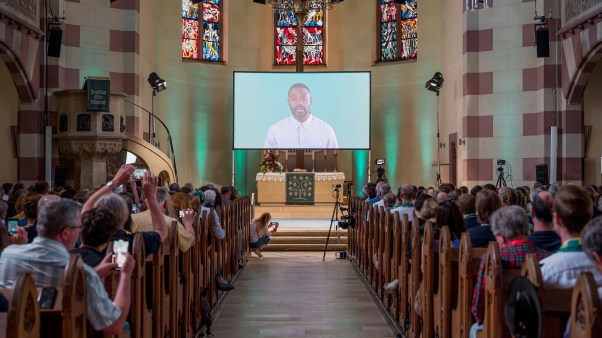
Nearly 500 years after Martin Luther wrote his Small Catechism, Lutherans continue to study and memorize it, because it expresses the gospel so simply and clearly. An excerpt:
The deplorable condition in which I found religious affairs during a recent visitation of the congregations has impelled me to publish this Catechism, or statement of the Christian doctrine, in this brief and simple form.
Alas! what misery I beheld! The common folk, especially those who live in the villages, seem to have no knowledge whatever of Christian doctrine, and many of the pastors are ignorant and incompetent teachers. And, nevertheless, they are all supposed to be Christians; they have been baptized and receive the Lord’s Supper. Yet they cannot recite the Lord’s Prayer, the Creed, or the Ten Commandments; they live as if they were mere brutes, and now that the gospel has come to them, they grossly abuse their Christian liberty.
[Luther then explains each phrase of the Ten Commandments, the Apostles’ Creed, and the Lord’s Prayer. For example:]
The Ten Commandments
The First Commandment: Thou shalt have no other gods before me.
What does this mean? Answer: We should fear, love, and trust in God above all things.
The Second Commandment: Thou shalt not take the name of the Lord thy God in vain; for the Lord will not hold him guiltless that taketh his name in vain.
What does this mean? Answer: We should fear and love God so that we do not curse, swear, conjure, lie, or deceive by his name, but call upon him in every time of need, and worship him with prayer, praise, and thanksgiving.…
The Apostles’ Creed
The First Article of Creation: I believe in God the Father Almighty, Maker of heaven and earth.
What does this mean? Answer: I believe that God has created me and all that exists; that he has given and still preserves to me my body and soul, my eyes and ears, and all my members, my reason and all the power of my soul, together with food and raiment, home and family, and all my property; that he daily provides abundantly for all the needs of my life, protects me from all danger, and guards and keeps me from all evil; and that he does this purely out of fatherly and divine goodness and mercy, without any merit or worthiness in me; for all which I am in duty bound to thank, praise, serve, and obey him. This is most certainly true.…
The Lord’s Prayer
The Fourth Petition: Give us this day our daily bread.
What does this mean? Answer: God indeed gives daily bread to all men, even to the wicked, without our prayer; but we pray in this petition that he would lead us to acknowledge our daily bread as his gift, and to receive it with thanksgiving.
What is meant by daily bread? Answer: Everything that is required to satisfy our bodily needs; such as food and raiment, house and home, fields and flocks, money and goods; pious parents, children, and servants; godly and faithful rulers, good government; seasonable weather, peace and health; order and honor; true friends, good neighbors, and the like.
[Luther then explains baptism and the Lord’s Supper. He concludes with prayer for evening:]
I give thanks unto thee, heavenly Father, through Jesus Christ thy dear Son, that thou hast this day so graciously protected me, and I beseech thee to forgive me all my sins, and the wrong which I have done, and by thy great mercy defend me from all the perils and dangers of this night. Into thy hands I commend my body and soul, and all that is mine. Let thy holy angel have charge concerning me, that the wicked one have no power over me. Amen. And then lie down in peace and sleep.
Copyright © 1993 by the author or Christianity Today/Christian History magazine. Click here for reprint information on Christian History.